COVER STORY: High-Tech Hatching Revolutionary care from day one
By Treena Hein
MILESTONE: Celebrating 40 Years
The Poultry Service Industry Workshop continues to grow
By Kristy Nudds
RESEARCH: Feed Efficiency in Turkeys
Research shows a genetic link between pendulous crop and how turkey convert feed
By Lilian Schaer, on behalf of the Livestock Research Innovation Corporation for the Poultry Industry Council
18
RESEARCH: World’s Poultry Congress 2016
An overview of the Congress, which will be held in Beijing
By Dr. Peter Hunton
NUTRITION: Feed Structure
How corn particle size affects the bird
By David Trott, Ph.D., poultry nutritionist, Wallenstein Feed and Supply
PRODUCTION: Finding a Niche Oranya Farms produces the majority of specialty birds for the Canadian market and the bulk of B.C.’s organic chicken
By David Schmidt
FROM THE EDITOR
BY KRISTY NUDDS
Continuing Battle
Each time a poultry organization or group in North America releases the results of a consumer survey, I’m astounded.
Results consistently show that the facts about chicken production are unknown to the average consumer, or at the very least, misunderstood.
The National Chicken Council in the United States recently released results from a survey it conducted with consumers in September 2015 (see page 6).
The survey found that the majority of respondents (78 per cent) believe chickens are genetically modified; 77 per cent believe chicken contains added hormones or steroids; 73 per cent believe antibiotics are present in most chicken meat; and more than two-thirds (68 per cent) believe most chickens raised for meat are raised in cages.
The myths surrounding hormone and antibiotic usage have been persistent, which is concerning. The fact that the majority of consumers polled feel that chickens raised for meat are kept in cages and are genetically modified is very indicative of how hot-button issues can permeate.
Despite efforts by industry over the years to combat such misinformation, it’s obvious that the message isn’t always hitting the mark.
Why is this happening? Is it the way information is being presented to consumers? The poultry industry in Canada and the U.S. have done a good job of providing more information on rearing practices and have increased transparency in recent years by “opening the barn door” and offering a glimpse of life on the farm.
The National Chicken Council (NCC) has expanded on this concept with it’s new website, ChickenCheckIn (www. Chickencheck.in.). The website offers more
than I have seen in the past with respect to how chickens are raised, from farm to table. What’s interesting about it is that it doesn’t avoid some of the more difficult topics, such as transportation to slaughter, that other poultry groups have been hesitant to tackle.
Tom Super, spokesperson for the NCC said in a release that “we know it’s on us as an industry to do a better job of providing more information on how our food gets from farm to table” and the purpose of ChickenCheckIn is to “invite consumers with open arms to come and take a look at the work we’re doing to progress as an industry in providing safe, healthy and sustainable food.”
Consumers can easily navigate infographics showing how chicken is raised on the “farm to table” page, and can watch videos on the “day in the life” page on topics such as feeding, biosecurity and health, housing, and transportation to processing.
It’s an excellent effort, but the challenge now is to make sure that consumers know it exists. As Super explained when the website was launched, “food is an emotionallycharged topic, and with conflicting information readily available online and on social media, it’s understandable people are concerned.”
The focus of the poultry industry in 2016 should be to continue battling the myths of poultry production on social media, and perhaps take note of the NCC’s efforts and develop more transparent information that consumers want. n
Canada – 1 Year $30.00 per year (with GST $31.50, with HST/QST $33.90)
GST – #867172652RT0001
USA – 1 Year $ 66.00 USD Foreign – $75.00 per year
Occasionally, Canadian Poultry Magazine will mail information on behalf of industry-related groups whose products and services we believe may be of interest to you. If you prefer not to receive this information, please contact our circulation department in any of the four ways listed above.
Scan code to see What’s New at Lubing or go to www.lubingusa.com.
With nearly 70 years of experience developing innovative products for poultry producers worldwide, Lubing has established a reputation of leadership by introducing new, cutting-edge technologies to the poultry industry.
OptiGROW Nipple
The ultimate Broiler nipple Optimized for Growth!
SprayCabinet
Spraying/Disinfecting your chain... Simplified!
DripCanopy
Keep your floors mess-free with a DripCanopy!
Cantilever Drive Unit
Keep the clutter out of processing!
ChainKeeper
It’s like life insurance for your conveyor system!
BaitStation
Keep your rodent problems under control!
Got Lubing? Contact your local Lubing Distributor for more detailed information about our new, innovative products.
Glass-Pac Canada
St. Jacobs, Ontario
Tel: (519) 664.3811
Fax: (519) 664.3003
Carstairs, Alberta
Tel: (403) 337.3767
Fax: (403) 337.3590
J. Dean Williamson Ltd.
London, Ontario
Tel: (519) 657.5231
Fax: (519) 657.4092
Les Equipments Avipor
Cowansville, Quebec
Tel: (450) 263.6222
Fax: (450) 263.9021 Specht-Canada Inc.
Stony Plain, Alberta
Tel: (780) 963.4795
Fax: (780) 963.5034
U.S. Survey on Consumer Perception WHAT’S HATCHING HATCHING
The National Chicken Council (NCC) in the U.S. has released new national survey findings on consumers’ perceptions about chicken production, revealing that nearly 80 per cent of Americans mistakenly believe that chicken contains added hormones or steroids.
The NCC said in a release that consumers indicated they aren’t able to easily access facts on chicken production. According to the survey, 68 percent of Americans believe that the media portrays the care of chicken negatively, highlighting the need for chicken producers to engage in more conversations with consumers about where their chicken comes from. The survey uncovered many concerning assumptions about the care and safety of chicken, including:
• A majority (78 per cent) believe chickens are genetically modified.
• A majority (77 per cent) believe chicken contains added hormones or steroids.
• Nearly three-quarters (73 per cent) believe antibiotics are present in most chicken meat.
• More than two-thirds (68 per cent)believe most chickens raised for meat are raised in cages.
In an effort to recognize and respond to these concerns, NCC announced the launch of Chicken Check In, which provides real answers to questions about chicken production in the U.S., and gives Americans a close look at the lives of the birds and how they get to our tables every day.
“We take pride in the care of our chickens, but we know it’s on us as an industry to do a better job of providing more information on how
our food gets from farm to table,” said Tom Super, spokesperson for the National Chicken Council. “Food is an emotionally-charged topic, and with conflicting information readily available online and on social media, it’s understandable people are concerned. We invite consumers with open arms to come and take a look at the work we’re doing to progress as an industry in providing safe, healthy and sustainable food.”
Chicken Check In is a website offering consumers the opportunity to get a close look at how chickens are raised, from the farm to grocery store shelves. From videos to answers to frequently asked questions, Chicken Check In is a resource for consumers to get the information they are seeking about chicken care. Visit www.ChickenCheckIn.com to see what the NCC is communicating with consumers.
Hi-Pro Acquires Champion
Hi-Pro Feeds acquired Champion Feed Services Ltd, a group of companies including feed mills, stores and an oat processing facility located in northern Alberta.
Hi-Pro Feeds said in a release that the acquisition will allow it extend its
Lebel Inducted into Hall of Fame
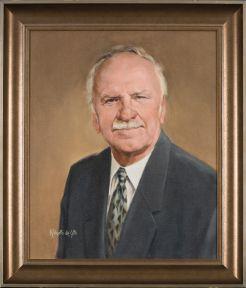
The late Oliva Lebel was inducted into the Canadian Agricultural Hall of Fame at a special awards banquet on November 22, 2015 in conjunction with Canadian Western Agribition. Other 2015 inductees are Dr. Ron DePauw, the Hon. Grant Devine, the late Edgar Ward Jones, and Anthony von Mandl.
business into a broader market. The acquisition adds feed mills at Barrhead, Westlock and Grande Prairie. They join Hi-Pro Feeds’ 12 existing feed mills in the U.S. and western Canada, including Alberta facilities at Lethbridge, Olds, Ponoka, and Sherwood Park.
The purchase also includes
Mr. Lebel was an egg farmer from Quebec. He was a visionary, a trailblazer and an architect of Canadian supply management. In 1964, Ovila founded the first federated, province-wide, table-egg producers’ marketing board in
Poultry Worker of the Year
The Poultry Industry Council (PIC) announced that Debbie Carroll, who acted as the Secretary/Treasurer for the Ontario Hatcheries Association from 1985 until her retirement in April 2015, is the recipient of the Ed McKinlay Poultry Worker of the Year award. The award is presented yearly to outstanding individuals in the poultry industry.
the assets of Champion Oat Processors in Grande Prairie, which Hi-Pro Feeds says ties nicely with its North American business, offering business opportunities in Texas, Oklahoma, New Mexico and Arizona. The company now has a facility that can process, market, and ship double and triple cleaned oats and oat groats to its U.S. and Canadian
Canada – the Quebec egg producers’ federation – and served as its president for 18 years. His efforts to unite provincial egg producers as one group lead to the creation of the Canadian Egg Marketing Agency in 1972 – an organization he served a 10-year term as a board member, and that is now known as the Egg Farmers of Canada. The Farm Products Agencies Act owes its existence to Ovila’s vision and persistence – an act that has grown to regulate chicken, turkey and hatching eggs across Canada.
Mr. Lebel was nominated by Fédération des producteurs d’œufs Québec
JANUARY 2016
January 26-28, 2016
International Production and Processing Expo (IPPE), World Congress Center, Atlanta, Ga. For more information, visit: www.ippexpo.com
January 28-30, 2016
Pacific Agriculture Show, Tradex Exhibition Centre (Abbotsford Airport), Abbotsford, B.C. For more information, visit: www.agricultureshow.net
MARCH 2016
March 9-11, 2016
B.C. Poultry Conference 2016, Westin Bayshore, Vancouver, B.C. The four feather boards in B.C. are hosting a joint conference that will feature breakout sessions, trade exhibits, each commodity’s annual meeting and keynote speakers. For more information, e-mail: office@bcchickengrowers.ca
March 17-19, 2016
Midwest Poultry Federation Convention, Saint Paul RiverCentre, St. Paul, Minn. For more information, visit: www.midwestpoultry.com
Ed Verkley, PIC chair said in a release, “Debbie was instrumental to the operation of the Ontario Hatcheries Association and she coordinated events such as their Convention, Baseball Tournament, Curling Bonspiel, and Golf tournament which brought the entire industry together. She is very deserving of this award.”
Debbie focused her attention on providing assistance to the hatcheries through
educational workshops, labour and property tax legislation advice, biosecurity protocols and served as a conduit to share information on issues impacting the sector.
Carroll was nominated for the award by the Ontario Broiler Hatching Egg and Chick Commission (OBHECC) for her “high level of professionalism, personal integrity and commitment to the industry,” said Bob Guy, OBHECC general manager.
APRIL 2016
April 6-7, 2016
London Poultry Show, Western Fair District Agriplex, London, Ont. For more information, visit: www.londonpoultryshow. com
WHAT’S
HATCHING HATCHING
Integrating Technologies
Canarm AgSystems and Intelia have created a partnership to drive innovative new solutions for barn ventilation systems.
The companies are integrating their technology to create new barn environment control options that they say will lower operating costs for farmers. These products will launch in early 2016.
As well, Canarm AgSystems and Intelia are committed to
long-term, industry-leading customer service that farmers can rely on to keep their barns monitored and working efficiently.
Canarm AgSystems and its dealer network will now market Intelia’s controllers across Canada. Canarm and its dealers will also support previously marketed Intelia controllers. Visit www.canarm.com or www.intelia.com for more information.
Alltech Acquires Masterfeeds
Alltech and Masterfeeds announced that they have entered into a share purchase, under which Alltech will acquire 100 per cent of the outstanding shares of Masterfeeds, Inc., from Ag Processing Inc (AGP). The acquisition creates one of largest animal nutrition offerings in Canada. Alltech, Masterfeeds and EMF Nutrition, another Alltechowned Canadian company, employ approximately 700 Canadians, operating 25 feed manufacturing and premix facilities, nine retail locations and seven distribution centers
in a business spanning the entire country.
Alltech says the acquisition will accelerate product innovation through combined technology, research and onfarm modeling production.
Masterfeeds will continue to be headquartered in London, Ontario, Canada, and led by its current Chief Executive Officer, Rob Flack. In addition, Alltech’s own entity, Alltech Canada, remains headquartered in Guelph, Ontario. The combined company will have a presence in 128 countries with more than 4,700 employees worldwide.
COMING EVENTS
April 25-27, 2016
65th Western Poultry Disease Conference, Vancouver Marriott Down Hotel, Vancouver, B.C. For more information, visit: http://www.cevs.ucdavis. edu/confreg/?confid=778
JUNE 2016
June 15-17, 2016
Canada’s Farm Progress Show, Evraz Place, Regina, Sask. For more information, visit: www.myfarmshow. com
JULY 2016
July 11-14, 2016
Poultry Science Association Annual Meeting, Hilton New Orleans Riverside, New Orleans, Louisiana. For more information, visit: www.poultryscience.org
SEPTEMBER
September 5-9, 2016
XXV World’s Poultry Congress, China National Convention Center, Beijing, China. For more information, visit: www.wpc2016.cn
September 13-15, 2016
Canada’s Outdoor Farm Show, Canada’s Outdoor Park, Woodstock, Ont. For more information, visit: www.outdoorfarmshow.com
We welcome additions to our Coming Events section. To ensure publication, please send your event information at least eight to 12 weeks in advance to: Canadian Poultry, Annex Business Media, P.O. Box 530, 105 Donly Dr. S., Simcoe, ON N3Y 4N5; email knudds@annexweb.com; or fax 519-429-3094.
TIME IS MONEY.
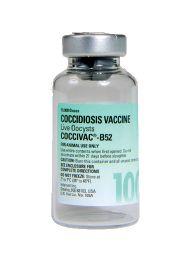
Get faster development of immunity against coccidiosis with Coccivac-B52*
With spray application at one day of age and appropriate management, Coccivac®-B52 provides earlier immunity development against coccidiosis. This early protection helps enable your broilers to reach their full genetic potential, providing you with superior flock performance.
FASTER PROTECTION. SUPERIOR PERFORMANCE.*
Compared
Cover Story
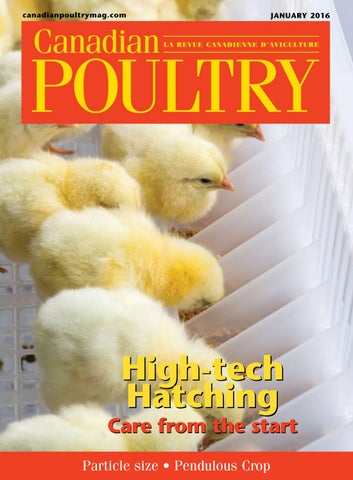
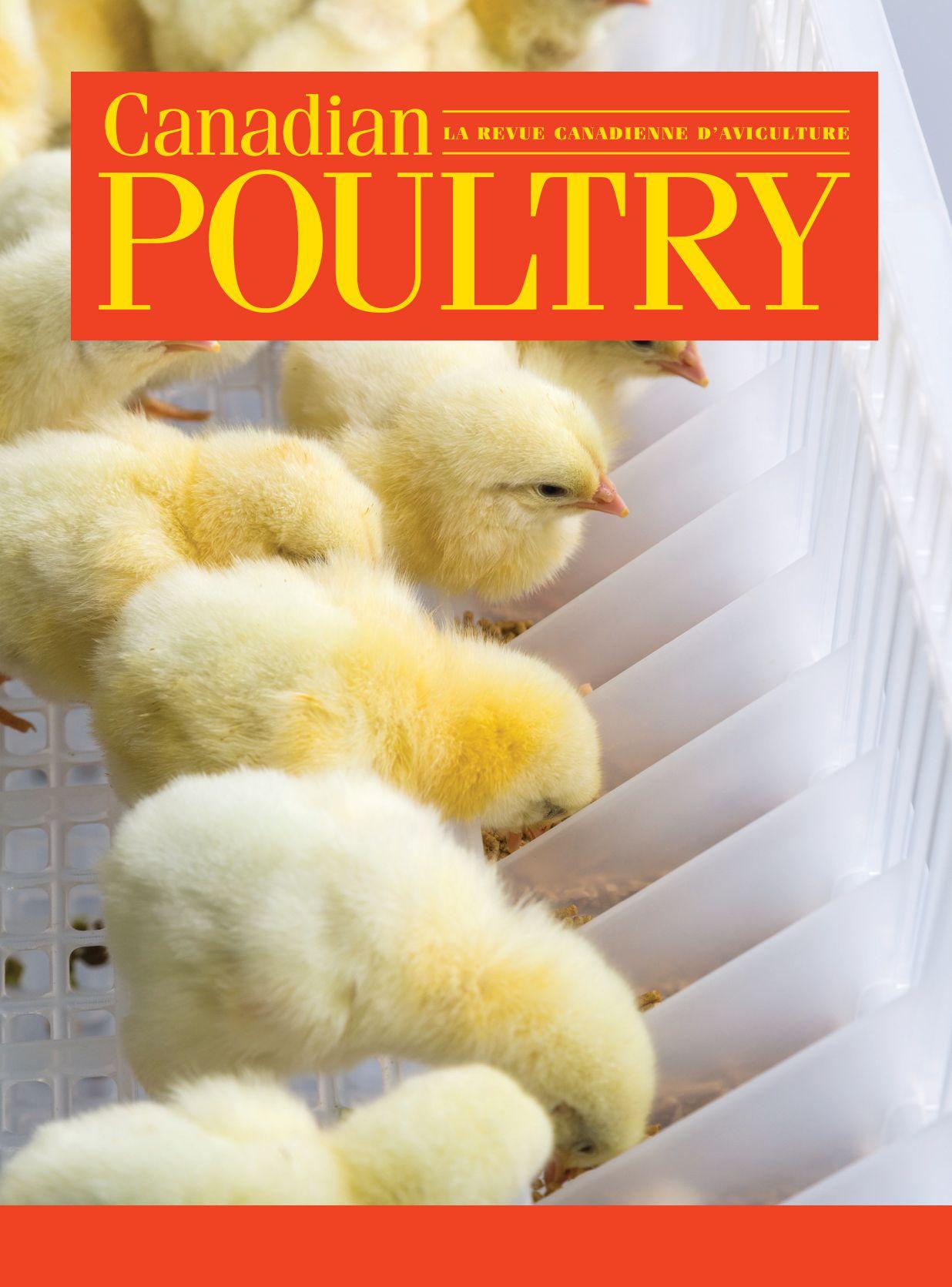
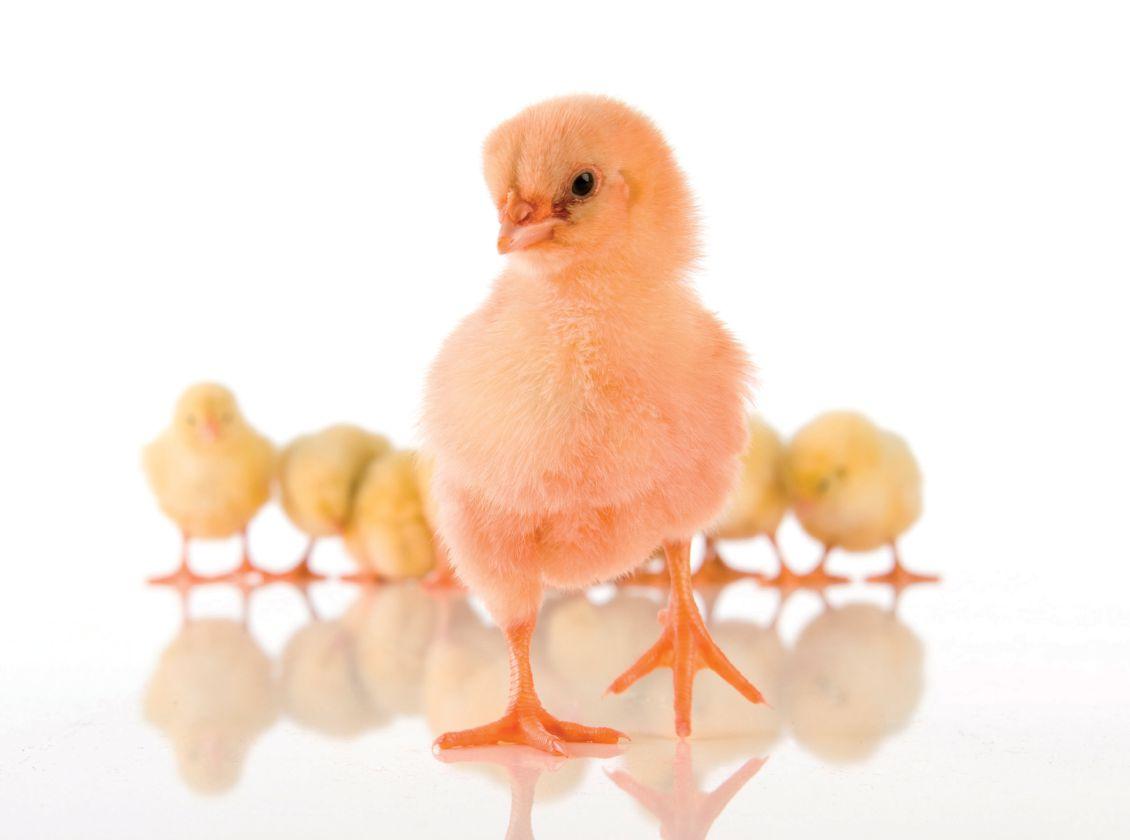
High-Tech Hatching Revolutionary care from day one
by Treena Hein
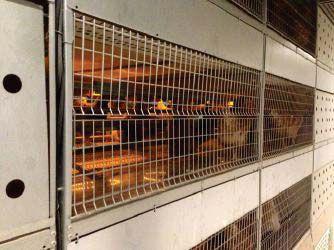
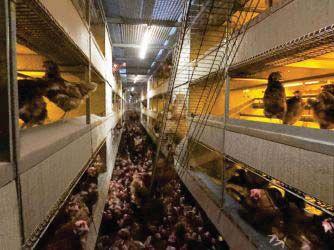
With all their automated controls, sensors and so much more, today’s hatcheries, packing houses, grading facilities and on-farm barns are quite high-tech. But HatchTech of the Netherlands has taken hatchery technology to a whole new level with its ‘HatchCare’ incubation and chick care system, to the benefit of chicks, the environment and poultry farmers. Synergy Agri Group (based in Port Williams, Nova Scotia) recently installed HatchCare – the first in Canada and the fourth company in the world to do so. Erik Helmink of HatchTech says the firm is currently producing 200 000 HatchCare broiler chicks a week.
Once hatched,
are immediately able to have a drink and feed, which research has shown results in higher body weights and breast meat yields in male broilers
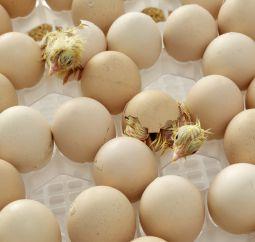
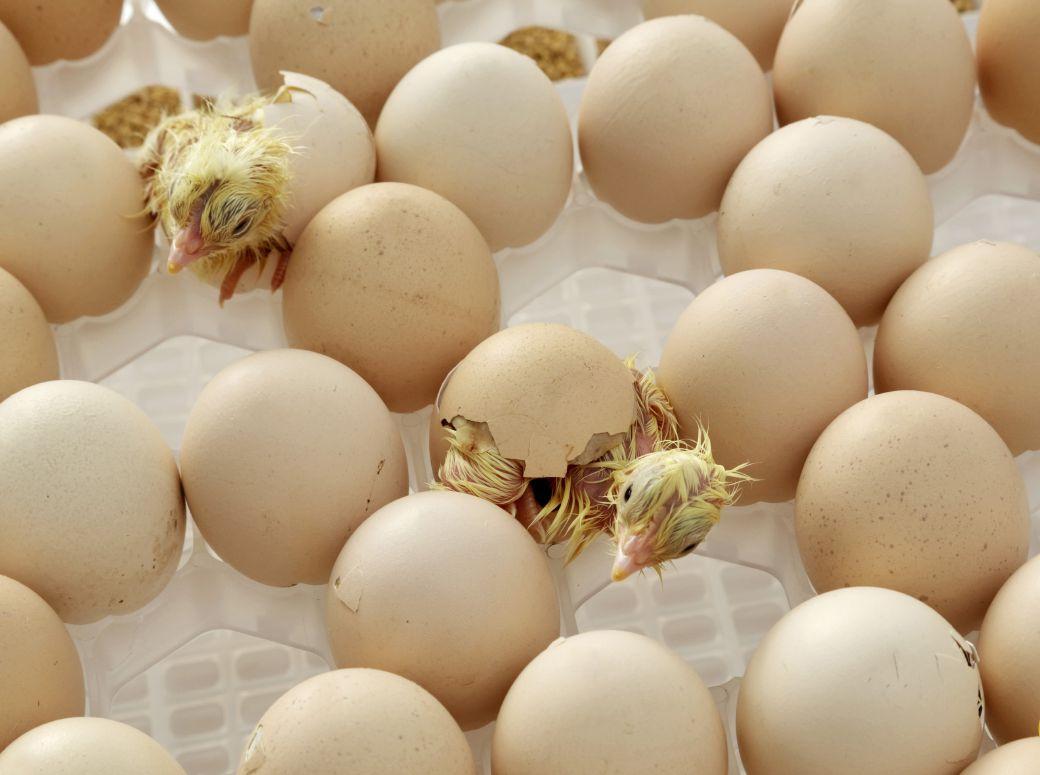
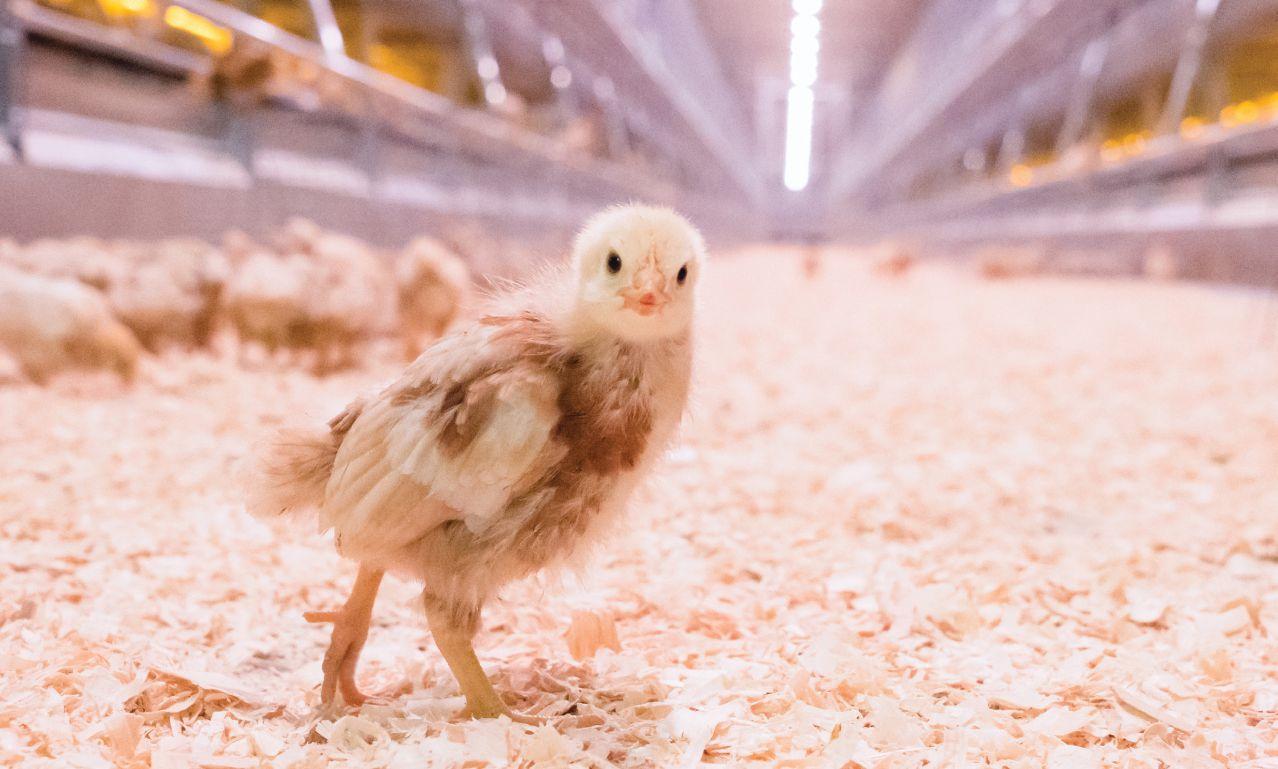
Let’s look at how HatchCare is different by first briefly describing a standard hatchery, where chicks are shipped away after emergence and receive their first food and water after they settle in on the farm – a day later. With HatchCare, firstly the fertility of eggs is checked using new lighting methods so that only 100 per cent viable embryos are incubated. Chicks are vaccinated while still in the egg. Once hatched, chicks are immediately able to have a drink and a feed, which research has shown results in higher body weight and breast meat yield in male broilers. HatchTech also cites research findings showing HatchCare chicks to be one centimetre longer at hatch, which Helmink says is due to “laminair air flow.”
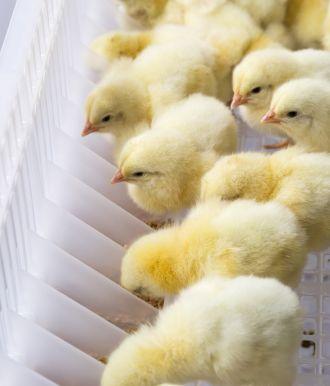
HatchCare also involves a unique and advanced handling system called HatchTraveller, where the chicks stay in small individual crates from hatching until delivery to the farm. The crates are then cleaned and disinfected for
re-use. Helmink says HatchTraveller gives every chick perfect, uniform conditions in terms of temperature, air flow and relative humidity, “like they stay in the hatcher.”
HatchCare also includes several features that enhance bio-security, such as sealed incubators with filtered entry and exit air. Over 95 per cent of fluff is removed from the air before it leaves the hatchery, eliminating the need for a fluff room and reducing the amount of space needed in a hatchery by about 20 per cent.
In terms of energy efficiency, the systems’ insulation levels are very high (Helmink says its insulation value is up to 70 per cent higher than traditional Styrofoam), and its direct-drive motors with sensor-controlled speeds use less power. Anodized water-filled aluminum radiators with very large surface areas reduce heat-up time during startup and cool effectively when needed.
INCUBATION CONDITIONS
Doug Korver has done research showing that incubation temperatures for egg embryos may need to be adjusted depending on the age of the broiler breeder flock and the strain of bird. We asked the professor in the department of Agricultural, Food & Nutritional Science at University of Alberta whether a system like HatchCare would be useful in making these adjustments, compared to previous hatchery system models or current competitor models.
“Single-stage incubation definitely makes it easier to manage conditions to more closely match the requirements for eggs from a particular breeder flock or age or egg size,” he replied. From that standpoint, Korver can’t say that the HatchTech system is any better or worse than any other
CARE FROM THE START
chicks
single-stage incubator, but he notes that “potentially, the benefits of this system are that the chicks will have access to fed and water immediately after hatching. This would increase early intestinal development and potentially reduce stress and susceptibility to disease, while also increasing early growth rate. I think this is the biggest potential advantage of this system over other single-stage systems, and would be additive to the benefits over multi-stage incubation.”
Korver cautions however, that depending on how large the system is and how many different breeder flocks supply a HatchCare system, “some of the same issues regarding variation in egg size (and therefore optimum incubation conditions) might remain…Even with single-stage incubation…mixing different breeder flock ages and/or sizes of eggs can make it difficult to provide the optimum conditions for each egg.”
HatchCare systems by February 2016, so the company will be able to deliver more than a million Hatchcare chicks a week from that point onward.
Probroed & Sloot’s Edwin Paardekooper says his company began working with HatchTech in 2008 as a partner to help develop the new system (known as Hatchbrood at that point). In 2013, they did the first tests with eggs hatching in a hatcher with feed and water. “They have a lot of knowledge and we have a lot of technical knowledge so we worked closely together,” Paardekooper explains. “Two things are important about the system. Vitality of the chick/ reducing antibiotics and animal welfare. For the first is the advantage of early feeding. It means the chicks are growing sooner and they are about 15 per cent heavier at poult. The other factor of importance is the care of the chicks. As soon as they hatch, they are able to drink and eat and then they have a nap. They are so quiet, comfortable and satisfied. It is impressive to see.”
HatchCare was introduced after years of development in 2014. The total number of chicks being reared under the system per year is now at 682 million. However, by the spring of 2016, more installations will be up and running in Australia, China, some European and south American countries, as well as the U.S. and Canada. In one of their hatcheries, Probroed & Sloot in the Netherlands is running five HatchCare systems with a capacity of 90 000 chicks each. This totals about 650 000 HatchCare chicks a week (Probroed & Sloot calls them ProCare chicks). The firm will have installed five more
Although the energy savings provided with HatchCare are also welcome, Paardekooper says it’s the improved performance of chicks that made leaders at his company so supportive of the system. “In this part of Europe, it’s important to reduce the use of antibiotics, and to have high standards for animal welfare,” he explains. “HatchCare chicks are stronger and healthier at first and in their life at the farms. They are so comfortable and this is what convinced me. My opinion is that we are starting with totally new chicks. Our farmers only want chicks reared with this system. These chicks are going to teach us a lot about what chicks need.” n
HATCHCARE IS BORN
IMPROVING HATCHERY CONDITIONS CAN RESULT IN A MORE ROBUST CHICK
Milestone Celebrating 40 Years
The Poultry Service Industry Workshop continues to grow
BY KRISTY NUDDS
The Poultry Service Industry Workshop (PSIW) celebrated 40 years of bringing the latest information and technology to poultry service personnel in Western Canada October 6-8, 2015 in Banff, Alberta.
The workshop has grown considerably since it was first held in the fall of 1976. Founded by Rod Chernos, a provincial poultry service person with Alberta Agriculture, Food and Rural Development (AARD), it began as the Alberta Poultry Servicemen’s Workshop. Its purpose was (and still is) to bring service personnel together to discuss and learn about the latest research and current issues, so that they may share it with farmer clients. The event quickly attracted interest from neighbouring Western provinces, and to reflect this change, became known as the PSIW.
In 1988, the PSIW began recognizing a poultry serviceperson each year for his or her contribution to the poultry industry. The 2015 Poultry Serviceperson of the Year Award was given to Dr. Victoria (Vicki) Bowes, Avian Pathologist with the B.C. Ministry of Agriculture. She was nominated by the poultry industry in B.C. for her outstanding ability as a poultry pathologist, enthusiasm, desire to do the right thing, and her honesty. She is known for always having the health of the industry and birds in mind, and she has been credited for helpong keep the B.C. poultry industry in business through two significant AI outbreaks.
To mark it’s 40th anniversary, the organizing committee decided to grant a Lifetime Achievement Award,
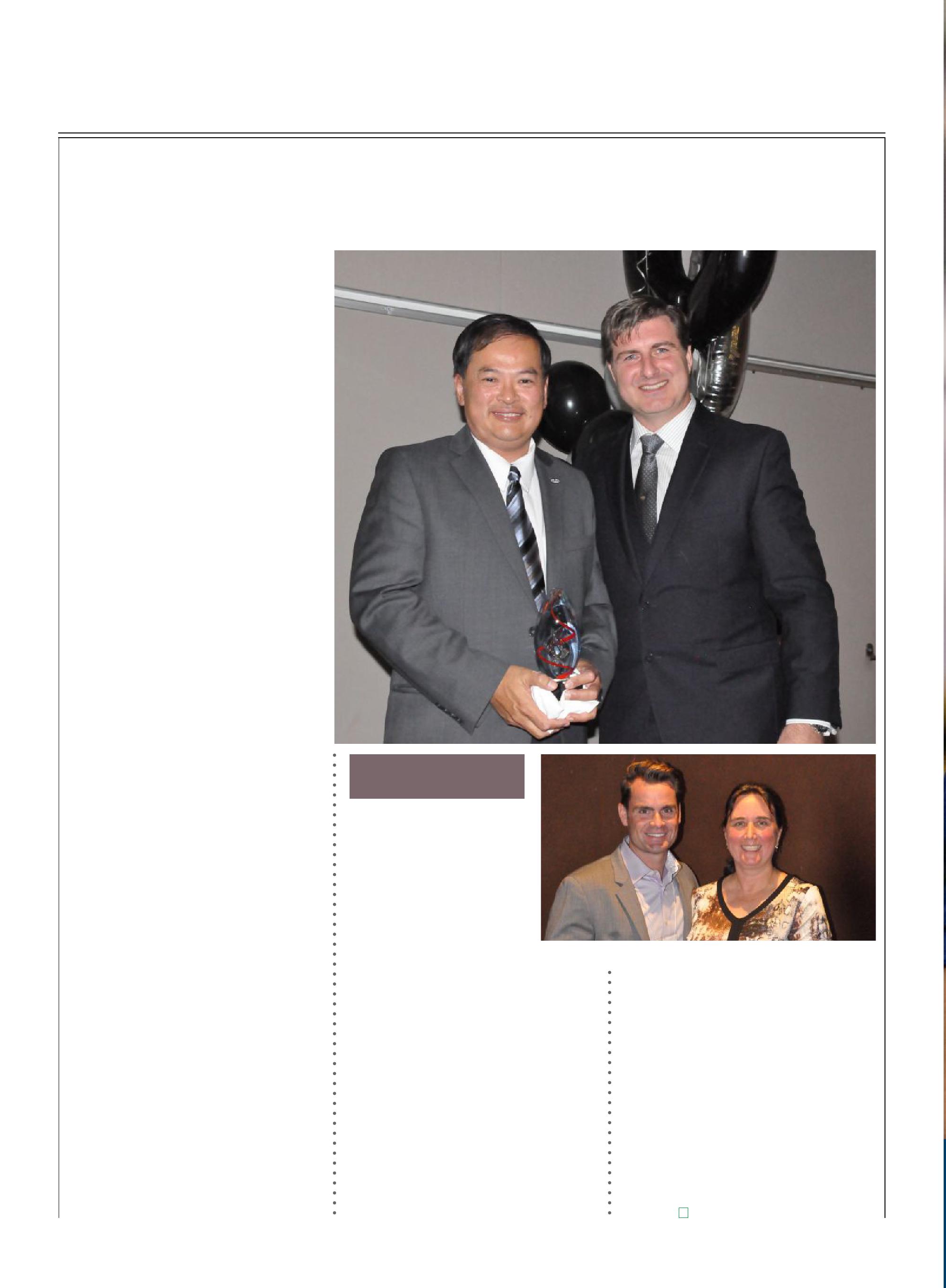
Above: Sunny Mak and Paul McCarten. Bottom: PSIW Vice Chair Don Hanson and Dr. Vicki Bowes AWARD WINNERS
honouring an individual who has played an integral role in advancing the poultry industry in Western Canada.
Organizing committee member Paul McCartan said the committee received so many nominations that choosing the recipient, Sunny Mak, was easy. Mak started his poultry career with Lilydale Inc. in 1985 as a leghorn salesman, and then moved into field service. He was chosen to be a hatchery manager in Lethbridge, and did such a good job that he was moved into a senior leadership position, and
is now Vice President Live Operations & Supply Chain. McCartan noted that Mak is an insatiable leader and is always striving to encourage others in the industry to be the best they can be. Service people who have been attending the PSIW for many years — in some cases decades — were also acknowledged during the banquet dinner. One attendee, Al Richards of Hi-Pro Feeds, has attended each workshop since 1976. He was the 2011 winner of the Poultry Serviceperson of the year. n
Research Feed Efficiency in Turkeys
Research shows a genetic link between pendulous crop and how turkeys convert feed
BY LILIAN SCHAER, ON BEHALF OF THE LIVESTOCK RESEARCH INNOVATION CORPORATION (LRIC) FOR THE POULTRY INDUSTRY COUNCIL
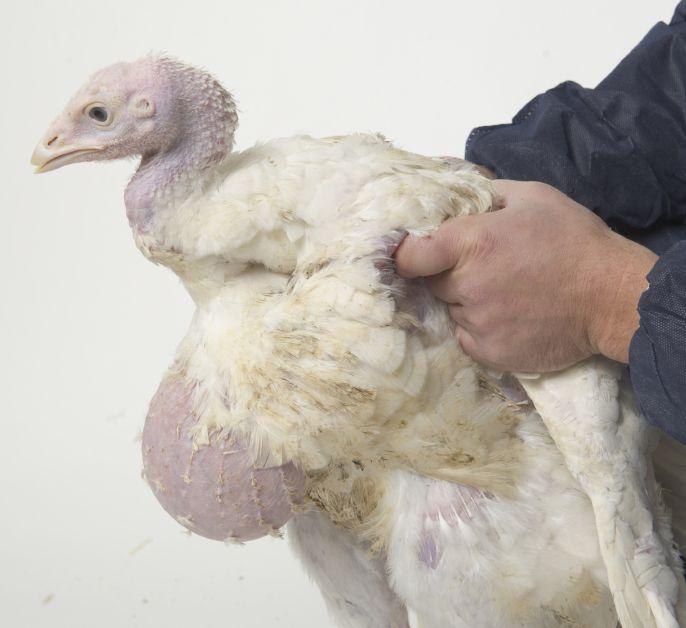
New data analysis has shown there is a genetic link between pendulous crop in turkeys and how well the birds convert feed. This means certain birds may be more predisposed towards developing pendulous crops given their nutrition, management, environments, or combination of these.
This type of correlation is not uncommon in genetics when breeding for certain traits, and geneticists work hard to find balance between desired traits and resulting effects in other areas.
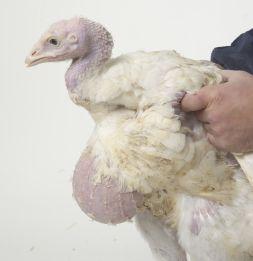
A pendulous crop is a pouch that hangs down lower than it should in poultry and becomes filled with feed and water that the bird can’t digest. Birds suffering from this condition will slow their growth and in some instances can become emaciated.
“Our research was aimed at determining what, if any, genetic relationship there might be between feed efficiency and pendulous crop in turkey, and if there was, whether we might be able to correct for this in a breeding program,” says Owen Willems of Hybrid Turkeys –the company behind the research.
“Avoiding pendulous crops in the turkey population is important to having an
Correlations between pendulous crop and feed efficiency traits show that pendulous crop should be included in the selection index whenever a feed efficiency trait is also included
economically successful flock, as there is no recovery from this affliction,” he adds.
Researchers at Hybrid Turkeys examined eight years of data from their Ontario-based turkey breeding program in both a sire and dam line to come to their conclusions.
They discovered a small genetic relationship between pendulous crops and feed efficiency in the sire line, which over time, could cause a slight increase in occurrence of pendulous crop as the feed
conversion ratios are improved through the breeding program.
In the dam line, however, there was no link, which shows that feed efficiency can be improved through that avenue without increasing the risk of pendulous crop.
Researchers concluded that the correlations between pendulous crop and feed efficiency traits show that pendulous crop should be included in the selection index whenever a feed efficiency trait is also included.
GENETIC LINK
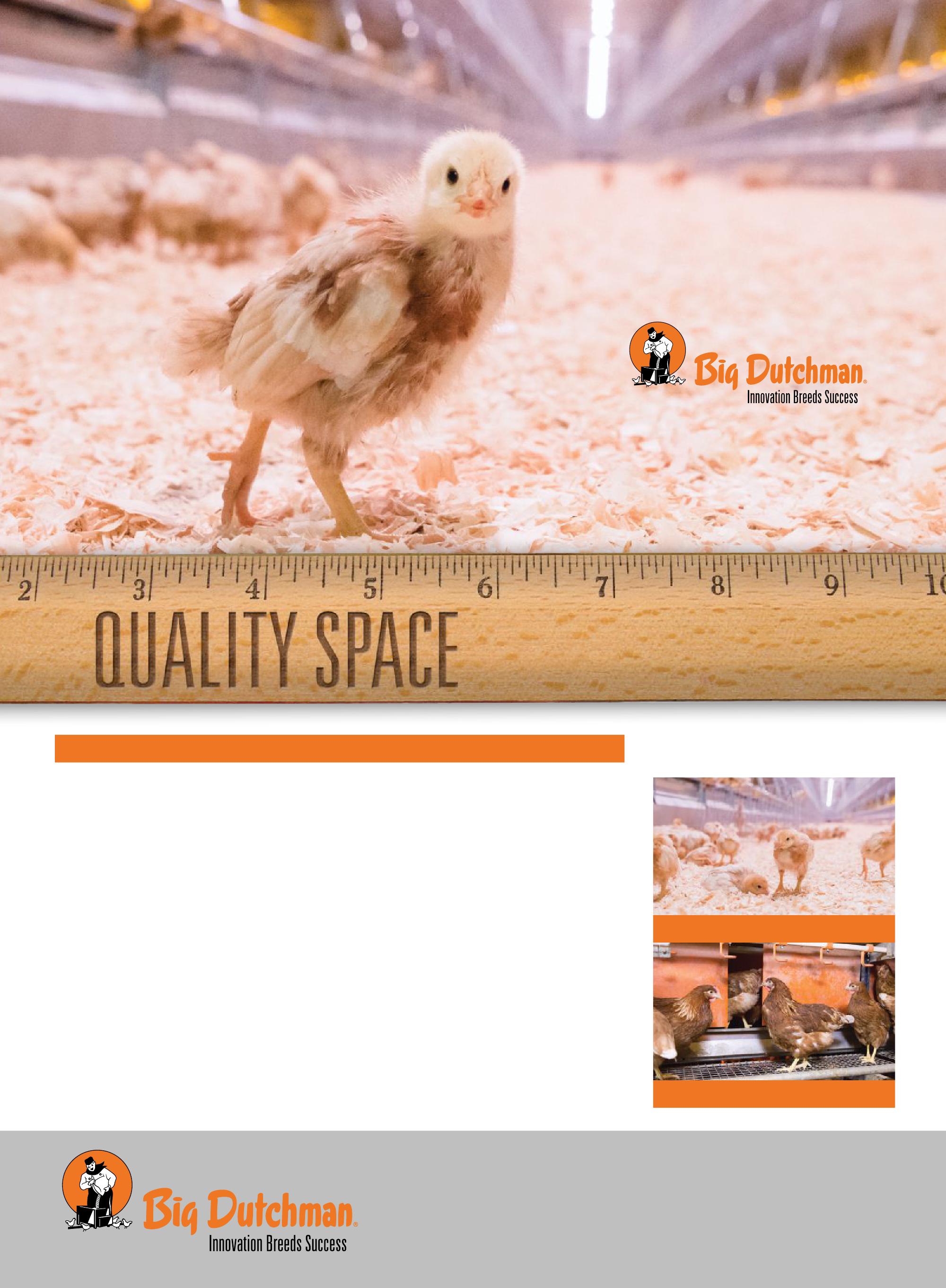
PROVIDE QUALITY SPACE TO MAXIMIZE LAYER PERFORMANCE
A highly productive cage-free flock is no accident. It’s the result of a properly designed rearing system, trained management, and a healthy environment.
Our systems provide your flock with the ideal environment to grow as a pullet, and thrive as a layer.
From rearing to layer, our cage-free solutions will maximize your layer production and improve hen welfare while reducing your management time.
Let one of our cage-free specialists help you to be successful!
Bill Snow // Big Dutchman Cage-Free Specialist 574-265-3241 // bsnow@bigdutchmanusa.com
Research
“Given the results of this work at Hybrid, we now have a clearer idea moving forward on how to decrease the incidence of pendulous crop in turkeys through genetic selection,” Willems says.
Pendulous crop is largely a seasonal problem, occurring particularly during hot weather, and is attributed to overdrinking and over-feeding or gorging.
To minimize the risk of birds developing pendulous crop, producers should:
• Make sure birds have access to clean, cool water at all times
• Sanitize drinkers regularly and monitor chlorine levels in the water
• Monitor water consumption to determine if turkeys are drinking more or less water than usual
• Maintain regular, consistent access to feed
• Ensure poults don’t become overheated. During brooding, room temperatures should be 29-33C Visit www.hybridturkeys.com for additional information.
“Prevention is key here as there is no economically viable treatment available for pendulous crop,” Willems advises. The research was funded by Hybrid Turkeys (a Hendrix Genetics company), the Poultry Industry Council, and the University of Guelph. More information is available from Ben Wood at ben.wood@hendrix-genetics.com, or from the full abstract at https://asas. org/docs/default-source/wcgalp-proceedings-oral/120_paper_3657_manuscript_86_0.pdf?sfvrsn=2. n
Canadians Want Canadian Chicken
Canadians want a steady supply of home-grown chicken, raised by farmers who care. They also want strict food safety and animal care standards. They get that assurance when they buy chicken with the “Raised by a Canadian Farmer” mark. We deliver on consumer expectations. Ask your retailers and processors to sign up for the “Raised by a Canadian Farmer” program.
World’s Poultry Congress 2016
An overview of the congress, which will be held in Beijing
BY DR. PETER HUNTON, FORMER PRESIDENT, WORLDS POULTRY SCIENCE ASSOCIATION
Held every four years, the World’s Poultry Congress is being held in Beijing Sept. 5 to 8, 2016. The Congresses are sponsored and supervised by the World’s Poultry Science Association (WPSA), and organized and operated by local WPSA branches. This year, the Congress is hosted by the China Branch at the China National Convention Centre, part of the Beijing Olympic Park. For complete details, check the Congress website www.wpc2016.cn.
The two most important components of the Congress are the Scientific Program and the Exhibition. The Scientific Program presents various subjects through Plenary Sessions with invited speakers, as well as submitted papers and posters. The scientific sessions are wide-ranging and cover every aspect of poultry science and the poultry industry. The WPSA has worked over the years to make congresses attractive to the widest possible range of visitors — not only to scientists and technologists, but anyone working in or for a supplier to the industry will find parts of the program of interest. Congresses also offer ideal opportunities for networking, making new contacts and forging new business and scientific relationships.
Contemporary issues like Biotechnology and Waste Management
The China Congress will be held in the China National Convention Centre, part of the Beijing Olympic Park, in central Beijing, from Sept. 5th to 9th, 2016
are included alongside more traditional areas such as Nutrition, Incubation, Health and Disease in this very comprehensive program. The Plenary sessions will consist of reviews of recent research, while the submitted papers will include original research and cutting edge science from around the world.
A number of years ago, WPSA entered into a relationship with the Network for Family Poultry Development, and this has led to the introduction of information on
Small-scale Family Poultry Production. In many countries, the proportion of birds kept in industrial systems is much less than those kept in small flocks under “village” conditions. These flocks often provide much-needed protein for families, as well as modest income. Getting science to these flock owners has always been a challenge, and WPSA has helped by including the subject at the last several Congresses.
The Exhibition, an essential part of the Congress, is being run by the Dutch
CONGRESS IN CHINA
Fast Food’s Royal Family
Research
company VIV and is called VIVChina2016. It will run from September 6th to 8th and include exhibits relating not only to poultry, but also dairy, hogs and aquaculture. The venue for the Exhibition is the New China International Exhibition Centre, and the space available is 30,000 m2. It is not part of the Congress Centre but there will be frequent shuttle buses provided between the two locations. A subway connection is also available.
CANADIAN ATTENDANCE
For Canadians going to the Congress, there will be the opportunity to see first hand the developments taking place in Chinese science and in its poultry industry. Like most other aspects of life in China, both the industry and the science world have undergone massive development over the past few years. When I toured China (sponsored by the US National Renderers Association) in the 1990’s, the poultry science community was quite small, but growing. Interestingly, at the end of my visit, I met Dr. Ning Yang, who is now Chairman of the 2016 Congress. Industry at that time was relatively primitive, but preparing for rapid expansion. So today, Canadians can expect to encounter a vibrant scientific community and a very modern industry.
Registration for the Congress is already open (see the website) and reduced rates are available until March 5th, 2016. There is also a significant reduction in the registration fee if you are a member of the WPSA. You can join the Canada Branch and enjoy this benefit, as well as all the other privileges of membership, by contacting the Branch Secretary, Tennille Knezacek at the University of Saskatchewan. (tennille.knezacek@usask.ca. or by phone at 306 966 6597).
As usual at World Congresses, there will be a wide-ranging social program; details are not yet available but are to be announced on the congress web site in January, 2016. The same applies to preand post-congress tours. n
CPRC Update Increasing Long-Chain Omega-3 in Eggs
Omega-3 polyunsaturated fatty acids (ω-3 PUFAs) play a fundamental role in the prevention of cardiovascular disease in humans. Health authorities advise people to consume Ώω-3PUFAs, particularly the long chain (LC) ω-3 fatty acids eicosapentaenoic (EPA) and docosahexaenoic acid (DHA). Consumers’ preference favours whole foods to supplements, and chickens are ideal for efficient transfer of Ώω-3-PUFA from feed to product. Fish oil and marine algae oil are currently used to facilitate enrichment of eggs with LC Ώω-3 PUFA. However, these products are in high demand by various industries, leaving identification of alternate sources of LC Ώω-3 PUFA necessary to ensure sustainability of poultry product enrichment.
A new approach to increase the LC Ώω-3PUFA in poultry is to use a modified form of flaxseed plant, altered to express a high proportion of steriodonic acid (SDA). Table eggs can incorporate a higher proportion of LC ω-3-PUFA than muscles, and as laying hens are capable of depositing LC ω-3-PUFA into a saleable product with less product stability challenges, they were an excellent starting point for this research.
Dr. Doug Korver and his research team from the University of Alberta examined the potential of using SDA-enhanced flaxseed to substantially increase LC Ώω-3 fatty acids in table eggs. This approach examines the effectiveness of bypassing bioconversion of LNA by utilizing SDA-enhanced flaxseed. The goal of the project was to develop an effective SDA-enhanced flaxseed enrichment program and ensure that interactions with other dietary lipids did not interfere with SDA flax as an enrichment source.
THE EXPERIMENTS
Two main experiments were performed to examine the potential of including SDA-
enhanced flaxseed oil in laying hens diets.
The first experiment compared the addition of SDA-enhanced flaxseed oil with conventional flaxseed oil in the diet. Additionally, it investigated the potential metabolic competition among fatty acid sources (including fish oil), and thus potential limitations of the enrichment process. Feed consumption, body weights, egg weights and egg traits were measured, and egg yolks were collected at regular intervals during the course of the 35 day experiment. On termination of the experiment, liver samples were collected to perform fatty acid analysis and ovary weight and follicle size were used to determine the reproductive status of the hens.
The second experiment tested the impact of feed form on the enrichment process of the LC Ώω-3 PUFAs in table eggs. This experiment compared ground SDAenhanced flaxseed with extruded SDAenhanced flaxseed along with addition of enzymes to increase digestibility. Egg weights were measured daily. Feed consumption and body weights were measured and egg yolks were collected at regular intervals during the course of the 35-day experiment. Eggs collected on day 34 were used to determine lipid stability and hence, an indicator of product quality and shelf life.
THE FINDINGS
In experiment one, supplementation of experimental diets had no effect on feed intake, body weight, egg production and egg trait parameters. Egg yolks from hens fed a SDA-enhanced flaxseed diet showed a 1.5-fold increase in LC Ώω-3 PUFA compared with hens fed a conventional flaxseed diet (152 mg/egg vs. 110 mg/egg). Additionally, changing the ratio of fatty acid sources (corn, canola, fish oil, flaxseed, SDA-flaxseed) did not result in lipid
competition for bioconversion enzymes. Therefore, SDA flax can be used to enrich table eggs with LC Ώω-3 fatty acid regardless of other dietary oil sources.
In experiment two, extrusion and enzyme addition had no effect on feed intake, body weight, egg production or egg trait parameters. Similarly, feed processing (including enzymes) did not significantly impact egg yolk fatty acid profiles, however, egg yolk levels of Ώω-3-PUFA were consistently higher in eggs from hens fed SDA-enhanced flaxseed compared to conventional flaxseed. In comparison to other eggs stored for 30 days at 4°C, SDA-enhanced flaxseed enriched eggs had a higher index of oxidation, suggesting additional antioxidant protection may be required in the diets of hens fed SDAenhanced flaxseed to extend storage life of ω-3 fatty acid enriched eggs.
The results of this study show that inclusion of SDA-enhanced flaxseed oil in the diets of laying hens can increase the levels of LC Ώω-3 PUFA in eggs, providing an alternative to inclusion of fish oil.
THE NEXT STEPS
SDA-enriched flaxseed could be adopted by producers as an alternative to other sources of Ώω-3 PUFAs. Future studies will be done to determine the potential economic impact of the results obtained through cost benefit analysis and to improve the efficiency of Ώω-3 PUFA enrichment.
This research was funded by the Alberta Livestock and Meat Agency, the University of Alberta and Canadian Poultry Research Council (CPRC).
For more details on these or any other CPRC activities, please contact The Canadian Poultry Research Council, phone: (613) 566-5916, fax: (613) 2415999, email: info@cp-rc.ca, or visit us at www.cp-rc.ca. n
The original Multi-Carbohydrase.
Superzyme is a complex blend of enzymes designed to target indigestible components of livestock feed. Backed by sound science, Superzyme is at the forefront of enzyme technology.
Nutrition Feed Structure
How corn particle size affects the bird
BY DAVID TROTT, PHD, POULTRY NUTRITIONIST, WALLENSTEIN FEED & SUPPLY
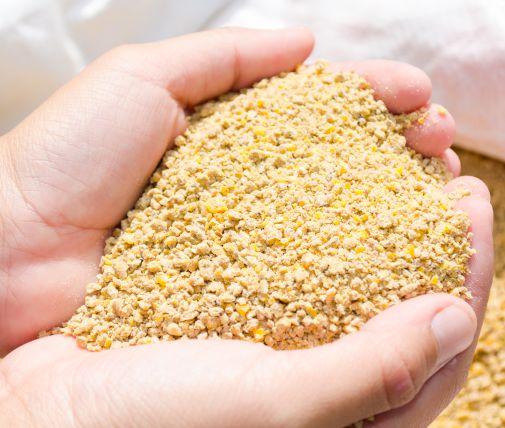
Feed structure is characterized by feed particle size, particle size-distribution and feed form (i.e. mash or crumbled pellet).
Historically, reduction of particle size has been a typical goal of feed milling for all feed forms. During feed manufacturing finely ground feed particles help to improve uniformity of mixing, pelleting efficiency and pellet quality. During transportation and handling, there is less separation of ingredients with finely ground feed particles. In the barn, the natural tendency of poultry to selectively feed is limited by finely ground feed particles. Furthermore, the traditional nutritional perspective is that the increased surface area of smaller feed particles results in improved efficiency of digestive enzymes and increased nutrient digestibility. The only limitations to feeding small feed particles seems to be the cost of fine grinding and the flowability problems of finely ground mash feed.
During the past decade there has been a paradigm shift on the understanding of feed structure for poultry. Research papers studying the effect of feeding fiber, whole wheat, or coarse corn to poultry often propose a common physiologic explanation of the effect of feed structure on poultry. Basically, it is proposed that feed structure stimulates gizzard function which improves gut motility, increases digesta retention time and improves nutrient digestibility. In 2015, Xu et al. published two papers on the effect of feeding pellets containing coarse corn to provide feed structure to broilers from 14 d to market in cages and on
UNDERSTANDING FEED STRUCTURE
Nutritionist David Trott reviews how particle size affects birds
litter. In these studies 25 or 50 per cent of the fine ground corn from a hammer mill (300 µm) was replaced with coarse rolled corn from a roller mill (1350 µm), and broilers had increased body weight and improved FCR. Both studies also noted increased apparent ileal digestibility of energy and nitrogen probably due to enhanced gizzard development and greater digesta retention time. In a third study, Xu et al.(2015) provided coarse corn in mash and crumbled pellets to broilers in cages until 14 days of age. Effects of coarse corn on growth was not as consistent in young birds as in the first two papers. Overall, it was concluded that the coarse corn had reduced impact
on gizzard and growth in crumbled diets as compared to mash diets; however, the crumbled diet produced more consistent feed intake and reduced selective feeding. Providing feed structure prevents the gizzard from merely being a transit organ, and it has been shown that a functioning gizzard improves gut motility by stimulating endocrine cholecystokinin release which stimulates the secretion of pancreatic enzymes and
gastroduodenal refluxes (reviewed in Amerah et al., 2007). The slower passage rate of digesta results in more exposure of nutrients to digestive enzymes and improved digestibility of feed. This benefit of feed structure cannot be defined as a classical nutritional requirement; however, there is still a strong motivation for poultry to seek feed structure. Feathers and litter can provide some stimulation of the gizzard, and may be consumed by poultry as a substitute for highly processed crumbled pellets that are low in fiber. Therefore, it is likely that a functional gizzard is also involved in neuroendocrine signaling that can inhibit feather pecking and potentially induce satiety.
It has become apparent that feed structure is a requirement for poultry, and that feeding coarse grain particles within a pellet or crumb may fulfill this requirement. How much coarse grain and at what size is a more complex question, and may not
Nutrition
have a simple answer. The average particle size (geometric mean diameter) of the complete feeds used in the 2015 Xu et al. papers ranged from 415 µm (0 per cent coarse corn) to 640 µm (50 per cent coarse corn). According to Amerah et al. (2007) there is a general consensus that optimum particle size for broiler diets should be between 600 and 900 µm. It may seem that Xu et al. just recreated the optimum particle size by mixing fine ground corn with coarse corn, but there was a greater particle size distribution with more coarse particles (>1 µm) in these research feeds than is typical with a single grinding method. This observation highlights the fact that interpretation of research literature is further complicated by differences in particle size distribution (geometric mean standard deviation). Replacing fine ground corn with different amounts of coarse ground corn is a useful strategy to research and elucidate the feed structure
requirement of poultry as provided by coarse grain.
At feed mills it may also be possible to add feed structure by mixing fine and coarse ground corn in a pellet or crumb. The challenge for feed mills is to discover the correct particle size for fine and coarse ground corn and the correct mixture to produce the required particle size distribution. Hammer mills, typically used to grind grain, can mill different sized particles by adjusting screens and hammer speed. Roller mills can be used to make coarse ground corn with uniform size distribution. Finally, determining the required particle size distribution may depend on the desired outcome. On a commercial scale it will be difficult to demonstrate growth gains in broilers that can be attributed to fulfilling an imprecisely defined requirement for feed structure. It may be easier to determine the effect of feed structure provided by coarse corn to control feather pecking or to induce satiety in layers and breeders.
REFERENCES
Xu, Y, C.R. Stark, P.R. Ferket, C.M. Williams, W.J. Pacheco, and J. Brake. 2015. Effect of dietary coarsely ground corn on broiler live performance, gastrointestinal tract development, apparent ileal digestibility of energy and nitrogen, and retention time. Poultry Science 94:53-60.
Xu, Y, C.R. Stark, P.R. Ferket, C.M. Williams, S. Auttawong, and J. Brake. 2015 Effect of dietary coarsely ground corn and litter type on broiler live performance, litter characteristics, gastrointestinal tract development, apparent ileal digestibility of energy and nitrogen, and intestinal morphology. Poultry Science 94:692-699.
Xu, Y, C.R. Stark, P.R. Ferket, C.M. Williams, and J. Brake. 2015. Effect of feed form and dietary coarsely ground corn on broiler live performance, body weight uniformity, relative gizzard weight, excreta nitrogen, and particle size preference behaviors. Poultry Science 94:1549-1556.
Amerah, A.M., V. Ravidran, R.G. Lentle, and D.G. Thomas. 2007. Feed particle size: Implications on the digestion and performance of poultry. World’s Poult. Sci. 60:439-455. n
Production Finding a Niche
Oranya Farms produces
the
majority of specialty birds for the Canadian market and the bulk of B.C.’s organic chicken
BY DAVID SCHMIDT
Organic and specialty chicken production may only represent a small fraction of Canadian chicken production, but it’s big business at British Columbia’s Oranya Farms.
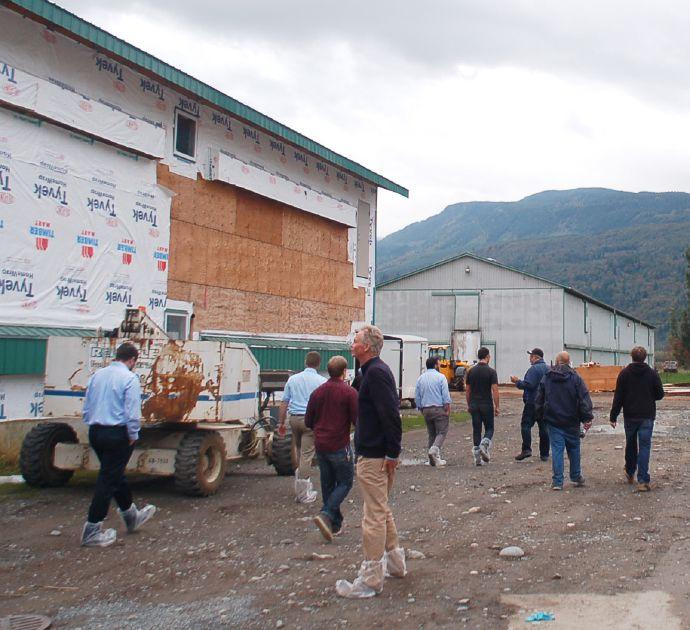
Corry Spitters and his sons Jeffrey and Jordan have over 50 barns (floors) and are building 10 more.
“We now have about 250,000 birds in production at any given time,” they say.
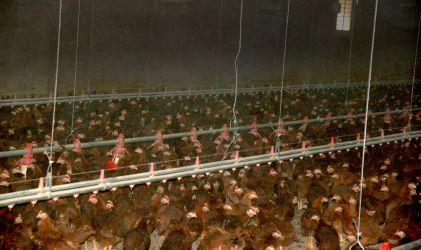
Oranya produces Taiwanese chicken and Silkies on side-by-side farms in Aldergrove and organic chicken on an ever-expanding farm in Abbotsford.
“We grow about 80 per cent of the Silkies and Taiwanese chicken for the Canadian market.”
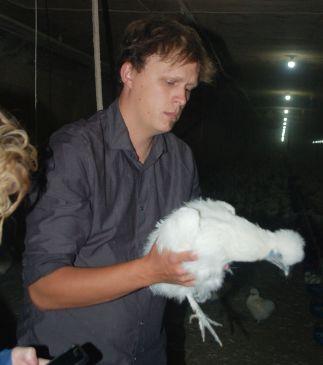
Each flock of Silkies (so named because of their snow white soft silklike feathers which, ironically, cover a jet-black skin) is about 24,000 birds and takes 120 days to reach maturity.
“Silkies eat very little,” the Spitters explain. “We supplement the automatic feeders with paper feed to encourage them to eat.”
They are also not very good at converting what little they eat. A good Silkie feed conversion ratio is only 3.64.2:1 (3.6 kgs of feed produces 1 kg of bird weight), less than half the 1.5 conversion ratio for conventional broilers. As a result, Silkies are mostly skin
OLD
AND NEW COME
Oranya Farms is building an additional 10 two-storey buildings over the next two years to accommodate its expansion in organic and specialty birds (Taiwenese breed shown on right)
and bone, weighing only 1.2-1.3 kgs when shipped. They are, however, very flavourful, and used to make a chicken soup highly prized at Chinese weddings and festivals.
The Taiwanese chickens (TCs) are also destined for the ethnic Chinese market, but as a meat bird. Shipped at 78 days, their meat is more yellow than conventional broilers. Marigold and other ingredients are added to the pelletized feed to enhance both colour and flavour.
“The meat takes on the flavour of what the birds eat,” Corry notes.
Breeders are trying to introduce some broiler genetics into the TCs so they grow faster but that is fraught with danger as it reduces the flavour – the TCs primary selling point.
Oranya has up to 32 flocks of TCs and Silkies on the go at any given time, but that pales compared to their organic chicken production.
“We produce 65-70 per cent of the organic chicken in B.C.,” Corry says,
TOGETHER
noting the farm ships out about 50,000 birds each week. The chicken is grown on demand for three B.C. processors: Lilydale (Sofina Foods), Sunrise Farms and Rossdown Natural Foods.
Although Silkies and TCs have a separate quota allocation, Oranya had to acquire mainstream quota to produce its organic chicken. The B.C. Chicken Marketing Board is grandfathering organic growers until July 2016, but what will happen after that is anyone’s guess. Oranya appealed the BCCMB’s rules governing quota allocations for organic chicken, but the B.C. Farm Industry Review Board has rejected the appeal, telling the two sides to negotiate a solution.
In the meantime, Oranya is moving ahead with expansion of their organic production. They already have 24 barns (each building is two storeys and counted as two barns) and are building another
Production
Oranya Farms grows nearly 80 per cent of Silkies (shown with Jeffrey Spitter) and Taiwanese chicken for the Canadian market and is expanding
10 over the next two years, each about 80X200 feet.
“Costco alone currently markets
25,000 kg/week of organic chicken in B.C. and Alberta and told us they expect to grow that market to 100,000 kgs,” Spitters says. “We intend to grow with them.”
When fully built out, the farm will be capable of producing 50,000 birds/week. Once market demand exceeds that, the Spitters intend to build another farm just like it.
To avoid paying the City of Abbotsford development cost charges of about $5,000/building, the farm built its own water treatment system. It uses two 26-foot-deep wells, producing up to 130 gallons/minute. The system includes state-of-the-art filtration to remove the 5 ppm iron content and soften the water, making it virtually pure.
“Our facility could service a town of 25,000,” Spitters says, noting the farm uses 1000-1200 cubic metres of water/day.
BROILER SIGNALS
Broiler Signals follows the life cycle of these fast growing animals and points out issues specific to each developmental stage.
Broilers are fast growing animals that need constant care. There is no time for correcting mistakes; mistakes mean high costs. The prevention of mistakes is therefore crucial.
Proper management starts with recognizing signals in practice. For broiler-keepers, this means being alert when in the poultry house, watching and listening to the animals, paying attention to their environment and their behaviour as individuals and as a group. This usually provides important information about their animals’ health, well-being and production. This information helps poultry-keepers to improve their economic results, the well-being of their animals and their own.
Production
At first glace, using double decker barns seems to go against organic standards. But the Spitters have found an innovative way to comply. They note the standards only require chicken to have outdoor access after three weeks old. Therefore the birds are raised on the upper floor for three weeks, then sent down a chute to the main floor which does have outdoor access, where they remain for the next seven weeks. This allows Oranya to reduce overall building footprints and helps minimize disease pressure, critical when organic standards forbid the use of antibiotics. Each barn is thoroughly cleaned after each flock and filled with fresh litter.
“Because birds get fresh litter partway through the growing cycles, it arrests pathogen buildup,” Spitters says.
Outdoor pastures are located between two barns and shared by the two flocks. Trees have been planted in the pastures and “toys” placed in the barns to meet the criteria for humane certification.
“Everything we do not only has to be sustainable but meet both organic and humane certification standards,” Spitters explains.
Oranya used to contract out moving and catching but now use their own crews. “When a bird is worth $10 or more, you
can’t afford losses and the contractors weren’t as careful as we wanted them to be.”
By starting one flock while the previous one is still on its way out, the Spitters are able to grow up to 210 flocks per year.
Corry has been in the poultry equipment business since 1977 and lauds the cost and production benefits of using the latest technology. The Spitters use LED lighting in all barns and are the first producers in Canada to start using a SKOV system to manage feeding and ventilation.
“Our older system works on set points,” Corry explains. Vents are opened and closed and fans turned on and off based on specific climate settings.
The SKOV system “is a smart algorithm. It works on anticipation.” It uses current and historical data to predict conditions and manages the barns accordingly. Not only can everything be monitored remotely by smartphone, but the system sends out alerts when it detects an issue. It also monitors load cells on each of the feed bins using the data to communicate with the supplier when feed is required.
“We monitor everything and can sample a lot faster than most growers,” Corry says. “We can see instantly when a flock isn’t performing.” n
•
PERSPECTIVES
CRYSTAL MACKAY, CEO FARM & FOOD CARE CANADA
Some thoughts on the food “free” frenzy
Trends continue to snowball with labels about what’s in a food product being expanded to how that food was grown or processed. Gluten-free, antibiotic-free, hormone-free, cage-free, everything-else-free labels are multiplying.
It seems almost every day I see a new announcement from a company or a grocery store ad or a label on something I go to buy that has a claim like this.
With so much noise, how does one cut through the clutter and make an informed decision about what to buy and eat? Here are a few principles I feel that need some attention:
1. Isn’t choice awesome?
Let’s start here. I think we are extremely fortunate in Canada with so much food that we can have all these choices. For example, the fact that the egg counter at the grocery store can be a 10 minute experience reading about all the options for types of eggs is awesome. Some people in other countries might be happy to have one egg.
2. “Mother Nature” is still the real boss of food
Plants and animals are living things. And farmers work with plants, animals and Mother Nature. A severe hailstorm can wipe out a whole year’s fruit, vegetable or grain crop in minutes. A disease can kill an entire herd or flock and devastate a farm family’s income while it breaks their hearts. These animals and plants can’t be replaced by doubling production in a factory somewhere. We’re allowed the luxury of having social discussions about how our food is grown because of our food abundance — and we should never take that for granted.
or mould, you’ll know that it’s a tough fight (See earlier point about Mother Nature). Now multiply that fight by many football fields for a vegetable or grain farm for scale. Using certain pesticides selectively to save a crop from bugs or disease and multiply the amount of food you can grow by killing out weeds can be a responsible choice. The same applies for organic or conventional farming FYI –with just a different list of options to choose from.
Similarly with antibiotics, the goal should always be to rarely have to use them and maybe even never, if possible. As a farm girl who worked in a vet clinic for several years and studied animal science, I am a huge advocate for improving how we care for animals. Not treating an animal that is sick is the surest way to cause suffering, and goes against the heart for caring for animals that almost every farmer and the generations that farmed before us lives by.
The “no antibiotics ever” trend needs to have the brakes put on it with a reality check and this question – why?
Our collective goal should be to have safe food AND good animal wellbeing
We can’t feed our country with fear-based marketing decisions. The questions and concerns about antimicrobial resistance are serious and complex. We want to preserve antibiotics for humans when we get sick. And we don’t want to eat anything that may have antibiotic residues in it. Our collective goal should be to have safe food AND good animal wellbeing. Researchers, farmers, veterinarians and gov ernments around the world are working on this.
Unfortunately, their answers and science can’t fit easily on a logo, in a tweet, or a headline.
Let’s keep talking. n
This column is reprinted with permission from Farm & Food Care Ontario. It originally appeared on Farm & Food Care’s “The Real Dirt on Farming” blog, www. http://www.realdirtblog.ca
3. Who wants pesticides or antibiotics in their food?
I’m going out on a twig here with this answer – no one. Of course the ultimate aim for growing food should be with as little to no chemicals or antibiotics as possible. For anyone who has ever grown a garden and fought bugs
Crystal Mackay is the Chief Executive Officer (CEO) of Farm & Food Care Canada. Farm & Food Care Canada is a charitable organization comprised of farmers and associated businesses proactively working together with a commitment to provide cred ible information and strengthen sustainable food and farming for the future.
WE GO WAY BACK.
100 years. That’s a good long time to prove our values, our innovations, our service and our breeders. Thank you for being the major part of our success.
•
•
• Easily converts from enrichable to fully enriched
• Flexible nest position for optimal bird behaviour and ease of management
• Flexible colony size optimizes building space & bird population
• Increasesd feed space per bird and second feed access point