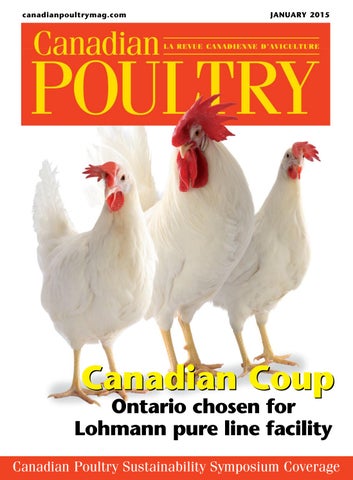
PRODUCTION: Canadian Coup Ontario chosen as site for Lohmann’s newest pure line facility
By Kristy Nudds
INDUSTRY: Adding to the Sustainability Discussion
Looking at a retailer’s view on sustainability, how to start the sustainability conversation and its complexities By
Karen Dallimore
TRENDS: A Close Look at A&W’s Marketing Campaigns
The company says consumers are voting with their stomachs and results are “fabulous” By
Treena Hein
MARKETING: Seeing Is Believing Saskatchewan Egg Producers launch new video series to educate consumers By Treena Hein
FROM THE EDITOR
BY KRISTY NUDDS
Start the Conversation
I’ve been watching A&W’s recent advertising campaigns with great interest over the last several months.
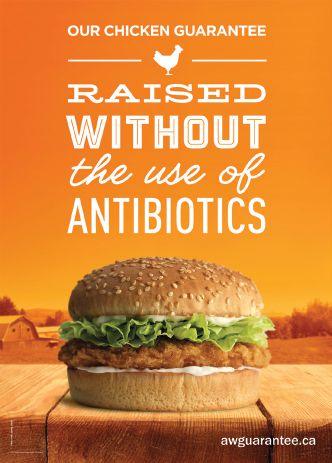
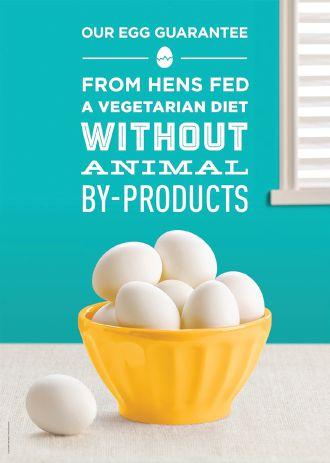
The Vancouver-based fast food chain has developed a “guarantee” to provide its customers with “simple, great-tasting ingredients sourced with care.” This includes the launch late last year of beef raised without the use of steroids or hormones, and most recently eggs from hens fed a vegetarian diet and chicken raised without antibiotics.
When our writer Treena Hein asked how the campaign was performing (see page 24), the answer from A&W was the customer response has been “phenomenal.”
The company says it’s providing customers with what they say they want, according to private data it collected, and customer visits to the chain have since been up.
It is clear that they are essentially focused on beating out their competition on the “taste factor” by linking how the product is raised with its flavour. In fact, A&W was voted as having the best-tasting burger in a recent survey by BrandSpark and recent television and web advertisements show a company store manager (portrayed by an actor) telling customers that the chicken sandwich, egg breakfast or beef burger they are eating on-camera is “naturally” sourced. Perhaps I’m being cynical, but the customer reactions make me giggle a little — their eyes get big with surprise and they say things like “wow,” “really?” and “I’m pleased to hear it.” The biggest focus is on taste — all the customers are shown to really be enjoying what they are eating. Of course any restaurant wants to be known for having food that tastes great, but the ads imply that the taste and how the product is raised/fed are correlated, which represents a significant shift in how food has been traditionally marketed by quick-serve restaurants. Does the campaign rely on customer
ignorance and blurred lines? Definitely, but that’s just good marketing.
But as one customer pointed out in one of the company’s video advertisements when told the chicken she was eating was raised without antibiotics, “No one ever talks about that.” Whether you agree with A&W’s marketing efforts or not, this customer hit the nail on the head.
That’s why Canadian Poultry hosted its first annual Canadian Poultry Sustainabilty Symposium, to start a conversation about the issues (including consumer perception) that will affect the long-term sustainability of the industry (read coverage from the conference starting on page 16). A&W is only one purchaser of poultry, but it’s not the only one looking to show the customers it cares about how and where its products are sourced. This isn’t just another trend; it’s become a major component of the Corporate Social Responsibility plans of all major food companies.
As Jeffrey Fitzpatrick-Stilwell, senior manager, sustainability with McDonald’s Canada told symposium attendees, although customers don’t understand more complex issues, they are very aware of how such a large company can affect change.
Crystal MacKay, Farm and Food Care executive director, says we need to start talking about farming in a real way. She pointed to the situation in the U.K. 20 years ago where farmers and industry didn’t want to talk to consumers about what they do and why (with respect to animal welfare). As marketers tried to out-label one another, no real improvement to animal welfare was realized.
“We need to have a better conversation,” she said. Indeed we do. n
Canada – 1 Year $30.00 per year (with GST $31.50, with HST/QST $33.90)
GST – #867172652RT0001
USA – 1 Year $ 66.00 USD Foreign – $75.00 per year
Occasionally, Canadian Poultry Magazine will mail information on behalf of industry-related groups whose products and services we believe may be of interest to you. If you prefer not to receive this information, please contact our circulation department in any of the four ways listed above.
Chicken Farmers of Canada (CFC) has announced the signing of a new “landmark” allocation agreement that will see 55 per cent of future growth allocated based on provincial comparative advantage factors.
Differential growth has been a critical priority for CFC for some time and its completion is consistent with the organization’s 5-year strategic plan which calls for efforts to improve the efficiency of the value chain, while maintaining production in all provinces. Under the new agreement, all provinces will share in future growth.
Over six years in the making, the new memorandum
of understanding covers the future growth and allocation process by factoring in 55 per cent of future production based on “comparative advantage factors”: population growth, income-based Gross Domestic Product (GDP) growth, Consumer Price Index, quota utilization, Farm Input Price Index (FIPI) and further processing and supply share. The remaining 45 per cent of future production is based on historical provincial shares of the national base allocation.
“The challenges over the years have been many, and have required the whole industry to pull together as a team to overcome the differences, realize the important similarities — our shared vision — and then move forward to
completing this agreement,” said Dave Janzen, CFC chair, in a release. “This is great news for farmers, and indeed for the whole Canadian chicken industry as it shows, yet again, that supply management continues to evolve to changes in the marketplace.”
“I am proud of us all for the efforts that have been made to ratify this new allocation agreement, and to modernize the allocation process for the coming years,” said Janzen. “You have shown tenacity and perseverance in making these changes to show that supply management is indeed a modern, evolving system.”
Alberta, which had withdrawn from the federal provincial agreement last year, was the first to sign the new agreement.
Canadian Feed Research Centre Opens
SASKATCHEWAN
The University of Saskatchewan and its partners officially opened the Canadian Feed Research Centre (CFRC) in North Battleford October 24.
The $13.9-million feed research centre is a major Canada Foundation for Innovation (CFI)-led project and a partnership with the Saskatchewan government, Cargill’s animal nutrition business, and Western Economic Diversification. The centre will research, develop and commercialize new and better high-value animal feeds derived from low-value crops and co-products of bioprocessing and biofuels industries.
Estimates are that increased feed processing from CFRC activities will contribute more than $2M to Canada’s gross
In the December polybag there was a 4-page outsert entitled “Canadian Poultry Sustainability Sympoisum & Award”. At the end of the article on David Brock, Jamie Brock is misquoted as saying “Supply management is a right, not a privilege.” It should have read “Supply management is a privilege, not a right.” Canadian Poultry magazine sincerely apologizes for the error.
domestic product through direct benefits to the crop and livestock industry and indirect benefits through employment.
Building upon the university’s signature area of research titled agriculture: food and bio-products for a sustainable future, CFRC researchers will add value to low-quality crops, improve nutrient availability to animals, reduce antibiotic use, and develop enzymes and other bioactives or nutraceuticals to maintain animal health and improve feed efficiency.
Both graduate and undergraduate students will participate in the research, gaining advanced training for careers in the feed and livestock sectors.
The centre is the first of its kind in North America to install new seed-sorting technology that promises to maximize value, quality and safety.
“Feed accounts for 60 to70 per cent of the production costs of animal protein such as meat, milk and eggs,” said Tom Scott, U of S Research Chair in Feed Processing Technology. “The centre will research the use of processing to improve conversion of low-quality and highly variable ingredients, such as feed grain or co-products of bioprocessing, resulting in safe, high-quality animal feed and providing value to both producers and consumers.”
Funding includes $5 million from the Government of Saskatchewan, $4.88 million from the CFI, $2.46 million from Cargill, $911,544 from Western Economic Diversification (including the seed sorter), and $600,000 from U of S and its suppliers.
Research Chair in Public Policy
Egg Farmers of Canada is pleased to announce a new partnership with the University of Waterloo, establishing Bruce Muirhead as the industry’s first-ever research chair in public policy.
Prof. Muirhead will be developing a research program in public policy that relates to the current and future challenges faced by Canadian egg farmers, providing historical context to the growing conversation about the value of supply management for all Canadians.
“This Chair will allow me to fully engage in the dis-
course surrounding supply management and its obvious benefits to Canadian consumers and processors, as well as farmers,” Muirhead said in a release. “This approach is increasingly important given Canadian involvement in various trade negotiations where supply management needs to be understood for its value and benefits to the entire food chain.”
COMING EVENTS
JANUARY 2015
January 27-29, 2015
International Production and Processing Expo (IPPE), World Congress Center, Atlanta, Georgia. Visit: www.ippexpo.com
Midwest Poultry Federation Convention, Saint Paul RiverCentre, Saint Paul, Minn. Visit: www.midwestpoultry.com
WHAT’S
HATCHING
Turkey Genome Nearly Mapped
Aproject launched in 2008 to map the entire turkey genome is nearing completion, with more than 95 per cent of the genome sequence now in place, according to the Poultry Science Association. Intense genetic selection for increased growth rate, meat yield, and growth efficiency, has enhanced the turkey industry’s ability to roughly double its U.S. annual production of turkeys over the last 30
years, however over this same period of time, a number of economically challenging consequences have developed for producers.
Finding solutions to the challenges associated with heavily-muscled birds has been arduous due to scientists’ limited understanding of the complex genetic factors underlying them, but improved understanding of the genome provides a new tool.
New Combi II System F
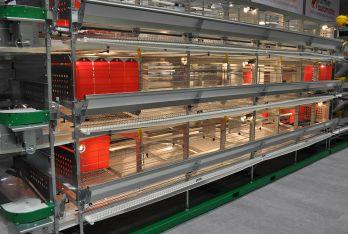
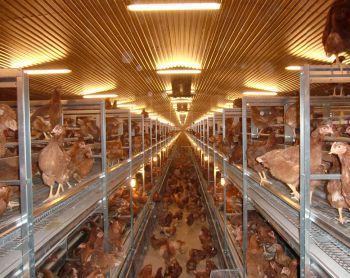
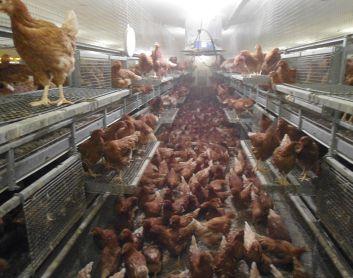
armer Automatic’s new Combi II is a flexible system capable of high production and meets all existing and changing regulations. This new system features three flexible options and easily converts to enrichable, enriched and cage-free. It has been designed to incorporate the same proven aviary concept as the Combi I and when closed meets enrichable and fully enriched regulations. It is a flexible system capable of reaching eight tiers tall and will fit into existing buildings while maximizing bird population. Each level is equipped with feed, water, perches, nest and manure removal to guarantee easy access and optimal bird comfort. All nests
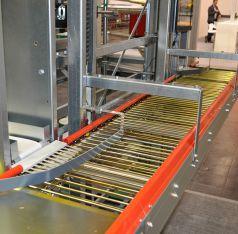
are located close to the egg belts along with the Patented Eggsaver® to ensure gentle egg handling and quality.
The Combi II also offers overhead manure drying options. This unique feature is an added benefit to maximize production efficiencies. Utilizing the same manure belts and minimal house ventilation, drying the manure is easily accomplished resulting in minimal operating costs. Dry manure can provide an additional profit center and increased value to all farming operations. For more information or to see the latest installations in Ontario, tel: (844) 440-3276 or email: sales@ farmerautomaticcanada.com.
COMING EVENTS
March 22-25, 2015
64th Western Poultry Disease Conference, Capitol Plaza Holiday Inn, Sacramento, Calif. For more information, visit: www. cevs.ucdavis.edu
APRIL 2015
April 22-23, 2015 London Poultry Show, Agriplex (*note: new building location), Western Fair District, London, Ont. For more information, visit: www.westernfairdistrict. com
JULY 2015
July 14-15, 2015 North American Manure Expo, Chambersburg, Penn. For more information, visit: www.agannex.com/ manure-manager/manureexpo
July 14-15, 2015
Poultry Science Association annual meeting, The Galt House, Louisville, KY. For more information, visit: www. poultryscience.org
We welcome additions to our Coming Events section. To ensure publication at least one month prior to the event, please send your event information at least eight to 12 weeks in advance to: Canadian Poultry, Annex Business Media, P.O. Box 530, 105 Donly Dr. S., Simcoe, ON N3Y 4N5; email knudds@annexweb.com; or fax 519-429-3094. Please write “Event Submission” in the subject line.
PRODUCTS PRODUCTS
New Agrilamp Bulb
Vencomatic NA is now offering the newest Agrilamp LED light. The 11w multipurpose bulb is a more efficient and durable option than traditional incandescent bulbs. And compared to off-the-shelf LED bulbswhich contain a plastic heat sink and are rated at 30,000 hours when used at 2-3 hours per day - the Agrilamp light achieves a useful life of approximately six years when used 16 hours a day in your barn. Which means you’re buying fewer bulbs, and saving money on energy and replacement costs. Like all of
the Agrilamp bulbs, the 11w is constructed with a polycarbonate lens that will stand up to almost anything. And the LED technology won’t create hotspots in the barn, so the birds will go where you want them to, instead of clustering around lights. Agrilamp continues to provide solutions for poultry producers looking for better lighting options.
Hoof-Print Bedding
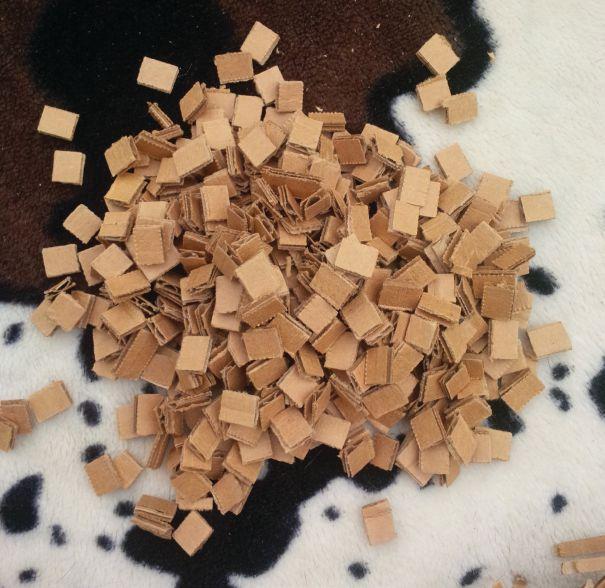
Hoof-Print, made from a chopped cardboard product, enables fluids to flow through versus the “pooling” that can occur with other bedding products. Manufactured by Animal Bedding Company,
NVW –Nutrition Via the Water
NVW ® “Nutrition via the Water” is a poultry vitamin supplement designed for intake through the water supply.
a Woodstock, Ont.-based company focused on providing environmentally sustainable bedding for livestock industries, Hoof-Print provides airflow and keeps livestock high and dry eliminating the major health issues typical with other forms of bedding. Respiratory issues are diminished because the product, made from corrugated cardboard, has a natural byproduct (cornstarch), which absorbs ammonia.
Corrugated cardboard enables fluids to flow through versus “pooling” and as a result, begins to compost from below at a significantly greater rate than any other bedding product. The result is a rich black eco-friendly soil that is not offensive to the environment and can be readily applied to crops.
For more information, please contact Jillian Jasper tel: 877921-9442, e-mail jj@animalbeddingcompany.ca or visit: www. animalbeddingcompany.ca.
As water is a critical nutrient, supplementing drinking water with optimal vitamin nutrition offers an opportunity to provide key nutrients during periods where feed intake and/or absorption may be impaired.
The NVW product line has been carefully formulated to provide key nutrients via the water for optimum health and performance. The line consists of three products; Complex B, Vitablend, and D3. Complex B is a premium multivitamin premix for poultry, Vitablend is a more economic multivitamin premix, and D3 is a premix consisting of Vitamin D3, calcium and phosphate. Complex B and Vitablend are both available in packets of 400 grams and 270 grams respectively, and D3 is available in one litre bottles.
The supplement was created by Canadian Poultry Consultants in Abbotsford, B.C. and is now distributed by Robinson Bioproducts Inc. across Canada. Ask your feed mill or store for inquiries and availability. For more information visit www. robinsonbioproducts.com.
CPRC Update Challenges of On-Farm Trials
Poultry producers have become interested in being involved in onfarm trials to test research discoveries in a commercial production setting. Although conducting research trials in specialized facilities that mimic commercial circumstances is common, they may not provide the variety of conditions that would be found on commercial farms.
Research is designed to further the poultry industry and ensure its longterm viability, and trials on commercial operations are important to meet those objectives. However, on-farm research trials require compromises on the part of the poultry producer. Risks that may have a negative impact on production or product quality are part of all research. Producers have to be aware of potential production and other risks that might result from a research trial on their farm and discuss how those risks will be managed with the researcher.
Poultry producers commit to an on-farm trial for the length of the research project. Generally, research is conducted by changing one or several normal production activities (such as feed formulation, reduction in antibiotics, etc.) and then measuring how the changes impact the research flock. The research flock is then compared to other flocks that are produced under the farm’s normal method of production (control flocks). Changes in flock management or other production activities (feed formulation, lighting, etc.) cannot be made to either the research or control flocks during the research period without consultation with the researcher. Small production or management changes need to be accounted for in the measurement of research impacts, and significant changes can completely derail the project, leading to
wasted money and effort.
Poultry producers who want to take part in on-farm trials can take the following steps to ensure that their experience is positive:
• Talk to other farmers that have been involved in on-farm research trials. What was their experience? How did they prepare? How was the communication with the researcher? What should they have done differently?
• Remember that researchers are not commercial poultry farmers. While they may be very knowledgeable about poultry, few will have a good understanding of how a commercial poultry farm operates.
• Ensure that the research is at an appropriate stage for on-farm trials. Talk to the researcher and industry specialists (provincial poultry specialists, producer organization staff) to make sure that an on-farm trial is the next step in the research process. This strategy will reduce the risk of failure or unexpected production problems.
• Ensure that communication is “twoway” so that the researcher understands how the project requirements may impact the poultry farm operations and management. Compromises may have to be made by both the farmer and researcher to meet both production and research requirements. Research is a specialized and very structured activity and a producer must have a clear understanding of researcher expectations so potential issues are identified.
• Make sure that research requirements are clearly understood by management and that staff are aware of their responsibilities to the project.
• Develop a clear risk-management plan to ensure that problems are identified early, the research team is quickly made aware of a developing problem and the farm business is not unduly damaged if problems occur. The risk-management plan should include details of compensation if the research trials cause negative financial impacts on the farm business.
On-farm research trials are important to proving the value of research discoveries before they are adopted by industry as a whole. Properly designed and managed trials will help industry adopt discoveries quickly and efficiently.
CPRC has begun a consultation process designed to develop recommended guidelines for planning and performing on-farm trials. This effort will involve input from a wide range of stakeholders, including producers, producer organizations, researchers, regulators, statisticians and others. This approach will ensure that potential issues are identified and addressed in the guidelines.
For more details on any CPRC activities, please contact The Canadian Poultry Research Council, 350 Sparks Street, Suite 1007, Ottawa, Ontario K1R 7S8, phone: (613) 566-5916, fax: (613) 241-5999, email: info@cp-rc.ca, or visit us at www. cp-rc.ca. n
The membership of the CPRC consists of the Chicken Farmers of Canada, Canadian Hatching Egg Producers, Turkey Farmers of Canada, Egg Farmers of Canada and the Canadian Poultry and Egg Processors’ Council. CPRC’s mission is to address its members’ needs through dynamic leadership in the creation and implementation of programs for poultry research in Canada, which may also include societal concerns.
Production Canadian Coup
Ontario chosen as site for Lohmann’s newest pure line facility
BY KRISTY NUDDS
For the first time, pure lines of Lohmann Tierzucht’s laying hens are being raised outside of Europe, and the company chose Canada for the task.
The primary breeding company has built two production barns in the Caledonia, Ont., area. The company has existing facilities at its home base in Cuxhaven, Germany, as well as in Denmark.
Not wanting to put all of the company’s eggs in one basket, Lohmann’s chief geneticist and managing director, Dr. Rudolf Preisinger, says it’s important to have a “homogeneous gene pool” outside of Germany in case Germany experiences a disease outbreak (such as avian influenza) and its border is closed to export.
WHY CANADA
“We’ve always had a warm welcome in Canada,” he says, and the company has had a growing presence here since 2000, when Lohmann first looked towards Canada to expand its production capabilities. That year the company purchased a large farm property in Ontario’s Haldimand County, where it established a grandparent and great-grandparent primary breeding facility. When describing the area, Khalil Arar, director of Canadian operations, says that “it’s important to us to be in a very biologically secure area” and that the company wants to ensure it’s a good neighbour. With this in mind, he says, they use the latest ventilation, heating and manure drying to eliminate odours and handle manure in a responsible way.
The company added a single-stage
CANADA CHOSEN
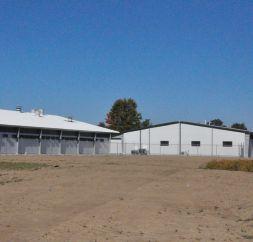
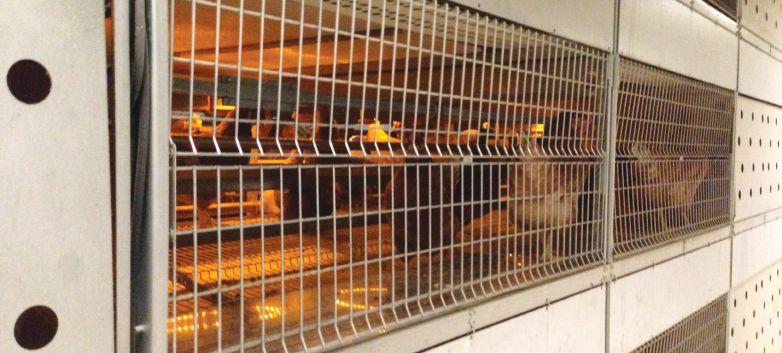
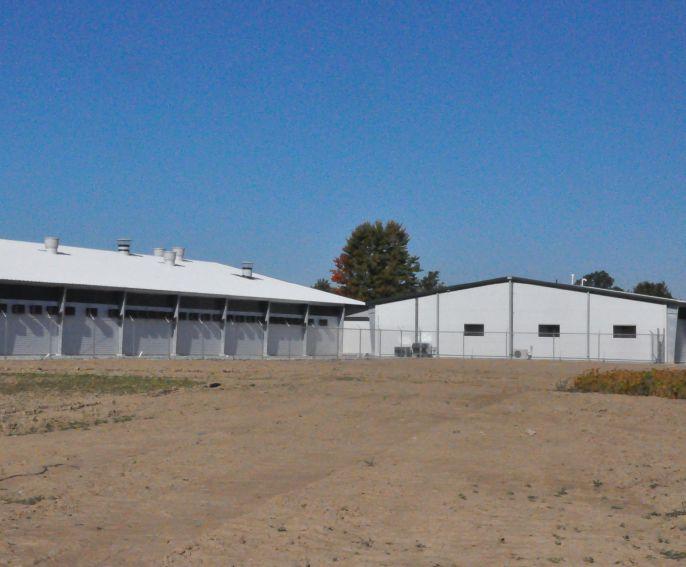
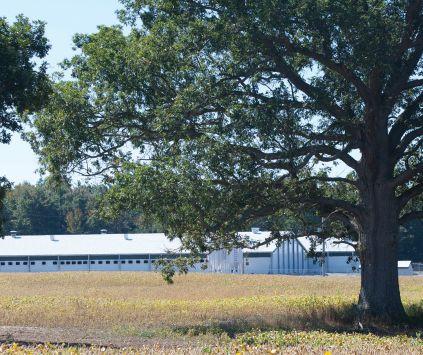
Lohmann Tierzucht has built two production barns in Southern Ontario that house and collect data on the company’s pure line breeds. This is the first time the company has produced its pedigree stock outside of Europe.
hatchery in Brantford in 2007, which is conveniently located halfway between the U.S. border with Michigan (and Detroit International Airport) and Toronto International Airport for ease of shipping day-old commercial stock to customers in North America and around the world. The fact that the company already had a presence in Canada and “we showed them that we could keep the birds clean (free of disease),” encouraged
it to set up its new pure line facility in Canada, says Arar.
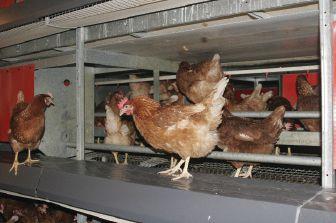
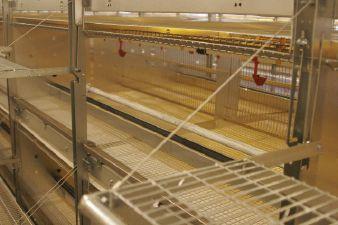
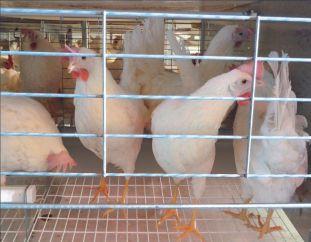
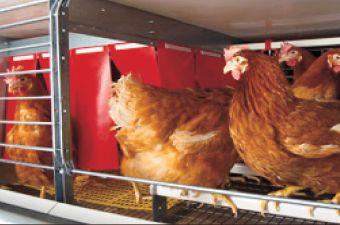
The new pure line operation is located on the opposite side of the same property as the primary breeding facility. It consists of two separate production barns. The first barn became operational in December 2013 and houses pedigree hens and roosters in individual cages (providing approximately 180 square inches per bird) as well as group cages
Production
to house hens from the same families. The second barn, which became operational in October 2014, houses birds in single-unit cages only. Day-old pure line stock birds are flown into Canada from Germany and housed in a nearby quarantine facility at another site until they are production age, at which time they are then moved into the pure line facility.
The purpose of having different types of housing is essential to the company’s breeding goals. Behavioural traits such
as feather pecking and dominance can only be measured in a group setting, says Preisinger. However, gathering data on the most economically important traits of egg production, egg size and quality, and feed efficiency can only be done on an individual bird basis, which is best achieved in single-unit cages.
In fact, the ability to have birds in single-unit cages was another motivating factor for Lohmann to establish a pure line facility in Canada. “Here in Canada, you understand why the chickens must be kept in individual cages,” Preisinger told attendees at the pure line facility’s grand opening. He says that in Germany, it’s become extremely difficult to get research organized that requires chickens to be kept in cages, whether housed individually or in groups. All cages used in the German pure line facility had to be enriched with perches, nests and scratching areas to comply with welfare regulations in the country.
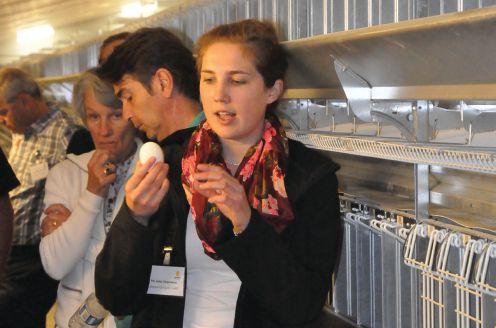
The grand opening of the pure line facilities took place Sept. 24, 2014, a date chosen to coincide with the company’s annual hatchery meeting, which was being held the same week in nearby Niagara Falls. Representatives from almost every country in the world Lohmann serves were given a tour of the second pure line barn. Guests were broken into groups by language spoken and led to different checkpoints, where staff from Lohmann’s head office demonstrated how technical staff on site will measure attributes such as body weight, egg weight, breaking strength, individual feed intake and individual egg weights. Attendees were also provided with information on biosecurity measures taken by the company and a general overview of how the barn operates.
GENETIC DATA
Each bird has a wing band with an individual barcode that is scanned by an employee using a handheld device each time a measurement is taken that is unique to a particular bird. Using Bluetooth technology, the barcode data is sent to a tablet where the employee can then input data such as egg weight
Imke Stegemann shows visitors how eggs are individually marked to track production from individual hens.
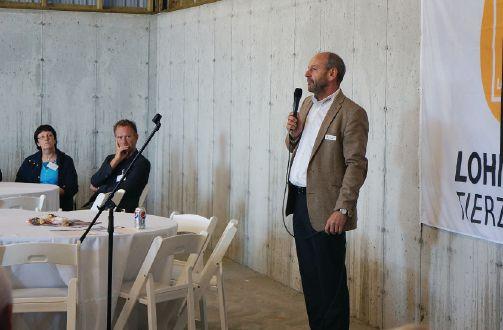
Dr. Rudolf Preisinger welcomes visitors to the new facility.
NUTRITIONAL AND DIGESTIVE DISORDERS OF POULTRY
This text has been prepared to guide veterinarians, laboratory diagnosticians, nutritionists, and students in their professional activities relating to diseases, parasites, and malfunction of the digestive tract of commercial poultry.
The interrelationship of intrinsic and environmental factors in the context of intensive production systems requires an appreciation of the multifactorial etiology resulting in dysfunction. A systematic approach to evaluating production records, clinical signs, lesions, and laboratory investigations is stressed through adoption of a common format for the conditions reviewed.
At CPSI we take pride in being a solution driven company. We are a Proactive, industry leader that provides long-term commitments to our Customers.
We offer over 30 years of experience with a network of crews in various provinces.
We are always looking to expand our network, so whether you operate in British Columbia, Nova Scotia or any point in between, give CPSI a call!
Industry Adding to the Sustainability Discussion
Looking at a retailer’s view on sustainability, how to start the conversation and its complexities
BY KAREN DALLIMORE
Farmers already know what sustainability is. They live it every day, using practices that ensure the land is there for the future. But now they have to define and defend what it means, to put sustainability into words so their customer can understand, while those customers in turn define their own role in practicing and encouraging sustainable production.
The Canadian Poultry Sustainability Symposium, held October 29, 2014 in Guelph, Ont., was an opportunity for all stakeholders in the poultry industry to add to the sustainability discussion. What are the components of sustainability? What have we been doing already? How do we engage people in the conversation?
THE COMPLEXITY OF SUSTAINABILITY
Al Mussell, Senior Research Associate with Agri-Food Economic Systems, recognizes sustainability in the farming industry as steeped in culture. During his tenure at the George Morris Centre, an agricultural “think-tank”, and now as an independent consultant, the agricultural economist has gained a broad view of the complexity of
IT’S COMPLEX
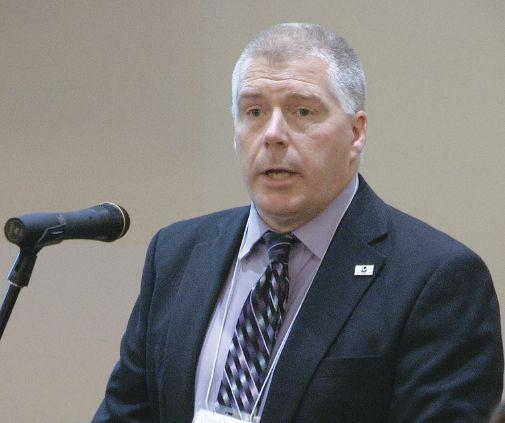
Al Mussell told the audience that when making changes to agricultural practices in answer to market signals it needs to be understood that complex factors are at play.
sustainability, encompassing environmental, economic and social traits.
Mussell asked: What does farming look like? There are several descriptors. It’s complex. By design, farm policy supports farmers as citizens and farms as small business. There are very few corporate entities in primary agriculture; the social organization of agriculture is unique.
Land is scarce. The best farmland is already in use; there is an inherent advantage in using our farmland more intensively than converting new land into production. Since the 1960’s the only increase in production in Canada has been through increases in yield or
food efficiency. Back in his grandfather’s era, people talked a lot about “wasteland” – “now it all has a use,” said Mussell.
Agriculture also has to overcome a lot of uncertainty, from both Mother Nature and the marketplace. In 2012, a pronounced warm spell in Southern Ontario forced the budding of tender fruits that were then wiped out by frost. In 2001 it was aphids that came to eat the soybeans, followed by Asian ladybugs. These weren’t gradual changes, they were episodic, leaving an agricultural production base that Mussell could only describe as “evolving” — sometimes gradually, sometimes not. All of this is happening while
Gilani, President, Gilani Group Food Processing and Distribution
serving a trend-following consumer.
As for the consumer, advances in agriculture have benefitted all aspects of society, said Mussell. As farming has specialized and become more efficient, people have been allowed to do other things besides just producing food. We have leisure time and careers, things we simply did not have time for when sustenance was the focus of our daily lives.
So how do these factors matter to sustainability? We need to understand this complexity when making changes to agricultural practices in answer to market signals.
“People have choices; farmers have rights,” said Mussell. “No one can just be told what to do.” What if consumers decide that restricting use of certain agricultural technologies fits into their definition of sustainable?
No one can go in with certainty and insist that elements be added or removed from a system, said Mussell. Take cagefree laying hens, for example. Can we do that? Sure. The birds are able to perform more natural behaviours, but now they fight. Can we accommodate this? Yes, with perches that allow less dominant birds to escape, or baffles to limit the size of the group. Then what about ventilation? Do the birds need different nutrition? Does exposure to litter create pest control issues? All of these factors can lead to higher mortality and we need to account for all of this, said Mussell. We can’t do everything the same and just take out the cages.
Industry
Is new technology part of sustainable agriculture? Mussell said his dad probably started scuffling corn with horses, so when a product like atrazine came along, “It was a miracle product.” Was it used too much? “We got resistance — we should have known, but now we do know.” If we take Round up Ready technology out of the production chain, what have we accomplished if higher toxicity products are then needed?
Innovation is more than just duct tape and baler twine. Technology is linked to sustainability but the benefits of technology erode over time. As far as Mussell is concerned, “We absolutely must be developing new technology in anticipation of this.”
Everything is connected; change is not always gradual, nor is it always linear. Sustainability is more that just claims on a package: it must be rooted in the agricultural system we already have, allowing for the continuation of farmers’ rights, adaptation of science in agricultural systems, and the food preferences and cultural shifts of the consumer.
SUSTAINABLE SOURCING – A RETAILER’S VIEW
McDonald’s purchases 52 million pounds of chicken and 76,000,000 eggs every year from Canadian farmers. As Jeffrey Fitzpatrick-Stillwell, their Senior Manager of Sustainability in Canada explained, seventy per cent of their carbon footprint is in the supply chain: are there changes
we need to make or encourage to become more sustainable?
That is just one of the questions that has been asked during “a lot of conference calls” as executives try to define what sustainable sourcing will mean to the retailer, said Fitzpatrick-Stillwell. If you think it’s difficult to define sustainable on a farm, try defining it across 121 different countries and cultures around the world.
While they have not yet formulated a plan for poultry, McDonald’s has committed to begin the purchase of Verified Sustainable Beef in 2016. Canada was selected for the beef pilot project that will guide their global commitment; Cargill and Loblaw are partners in the collaborative project that will be used as a learning opportunity to measure, verify and communicate baseline sustainability criteria.
So far they have looked at over 70 potential indicators but will only use approximately 25 for the pilot project, ranging from demonstrating stewardship of natural resources and the environment to supporting animal care, people and communities, as well as improving efficiency and innovation in the production chain.
In 2016, the restaurant will review its sustainable beef goals for 2020 as they travel a journey of continuous improvement. “The rest of our 2020 commitments are firm,” said Fitzpatrick-Stilwell, but they are awaiting the outcomes of the pilot project and several other initiatives globally before determining a 2020 goal for sourcing beef from verified sustainable producers.
All of their espresso-based coffee and a growing portion of their drip coffee is already Rainfall Alliance Certified; fish has been sustainable since 2001, but McDonald’s didn’t leverage that commitment.
McDonald’s wants to maintain significant brand trust with the consumer but they also know that consumer ideals can switch overnight. On the supply side, the restaurant also recognizes the importance of maintaining brand trust with their producers. As a whole, global companies are not trusted, so McDonald’s does look
Crystal MacKay of Farm and Food Care says we need to have a better conversation.
RESULTS DRIVEN. ONE CUSTOMER AT A TIME.
At Big Dutchman, our innovations are results driven. Before we design anything new, we gain a thorough understanding of the application in which the product will be used, and how it will benefit you.
The results are a steady flow of products that are designed to meet the demands of customers, while delivering a positive return to your bottom line, now and in the future.
Big Dutchman delivers results to customers around the world. It’s our first hand experience and technical expertise which allow us to relate to your needs, and provide common sense solutions that give you positive returns.
to the credibility of others to say they’re doing the right thing.
An on-line forum called Our Food, Your Questions started a “powerful” conversation with McDonald’s customers, said Fitzpatrick-Stillwell. From the comments they receive, it’s plain to see that their customers don’t always understand more complex issues (“Why are the eggs in the Egg McMuffin all circular?”) but they do understand the power the chain possesses (“You as an industry leader have the power to effect change.”)
“It’s an opportunity and an obligation,” said Fitzpatrick-Stillwell, but the bottom line remains economic as the retail giant tries to stay in what he described as the ‘smart zone’: just ahead of the public – but not too far ahead –while staying profitable.
The Egg Farmers of Alberta are already celebrating the success they’ve had so far in demonstrating sustainability. As Jenna
Industry
Griffin, Industry Development Officer for the organization explained, they are in the first stage of a journey that started in 2011 when the board began looking at gaps and challenges in the sustainability of their provincial production.
First they went to farmers, and then to consumers, said Griffin, asking them what was important. Farmers wanted less regulatory risks, increased public confidence that would require a strong program to speak out for them, and a good fit with retailer strategies. Consumers wanted freshness and value, animal welfare, and food safety. These factors were already strong.
A SUSTAINABLE PEEP
The sustainability program that has been developed as a result, known as PEEP (Producer Environmental Egg Program), is based on the Environmental Farm Plan (EFP). As an organization they needed
a program that was based on education and gradual improvement, with incentive through funding, and one that could meet the needs of the retailer. With regard to the on-farm administration of the program, Egg Farmers didn’t have the resources to engage one-on-one with the producer, explained Griffin, and took advantage of services already in place with the EFP.
There were some gaps that had to be addressed when piggy-backing on the EFP, such as how to segment poultry on multi-commodity farms and the need to use the information that was gathered to speak out to retailers and consumers when the EFP information was voluntary and confidential.
PEEP is still entirely voluntary and takes field staff about half an hour to complete the required assessment. The program has four key components: a producer manual, an assessment form with
bLACk-beLt PrOteCtiOn AgAinst MArek’s DiseAse
ten questions and a risk rating, on-farm delivery and a follow up letter or certificate or, if the score is low, recommendations for improvement.
As of October 2014, ninety-five of 155 producers in Alberta have participated –not one has declined so far – and their average score has been 60.39. “We’re in a good spot,” said Griffin. “It’s a good starting point. There’s room for improvement.”
Griffin reports that so far their producers are doing well on the subject of water conservation and bird disposal. The key challenges have been manure storage and energy monitoring. Farms are meeting their requirement of nine months of manure storage but when that storage is too close to the barn they don’t want to use it for flock health reasons. Also, dry manure is being taken from the barns and put outside where it is uncovered, losing nutrients and influencing water quality. As for energy, sub-meters would allow a
Industry
closer monitoring of usage and spikes.
A perfect score may not be possible, admits Griffin. A 60 is considered a pass, with farmers encouraged to aim for a 70 score. Over time they will be able to use these scores to chart the progress of producers.
In 2015, the Egg Farmers of Alberta will sit down and evaluate what is working and what is not working in PEEP. Are the right questions being asked? Are the questions being correctly weighted? Are there any missing areas? Is more field staff needed? And as Griffin said, sustainability has to meet the needs of consumers as well, with healthy hens, healthy eggs, and healthy farms and communities.
CREATING A BETTER CONVERSATION
What is agri-food anyway, asked Crystal MacKay, Executive Director of Farm &
Food Care (FFC) in Ontario? Is it a discussion with farming on one side, food on the other and a mountain in between?
Our basic needs have been met in developed countries, she explained, and now we can have social discussions, but have we gone wrong in our communication efforts?
“We need to have a better conversation,” she declared.
Right now MacKay is hearing a discussion in Canada similar to one in the UK twenty years ago. Back then, UK agriculture was arrogant, thinking that everyone needs to eat and everyone likes farmers. Labeling schemes ran rampant, with marketers wrestling to out-label each other, while their efforts were not actually improving animal welfare at all.
The role of FFC is to foster the spirit of sharing the conversation with all agricultural commodities, taking a whole sector approach with a common goal of trust.
“I
am proud of us all for the efforts that have been made to ratify this new allocation agreement, and to modernize the allocation process for the coming years. You have shown tenacity and perseverance in making these changes to show that supply management is indeed a modern, evolving system.”
- Dave Janzen, Chair of Chicken Farmers of Canada
CHICKEN FARMERS OF CANADA SIGNS NEW ALLOCATION AGREEMENT
NEW CHICKEN AGREEMENT ENCOMPASSES DIFFERENTIAL GROWTH
Chicken Farmers of Canada is proud to announce the signing of a new allocation agreement that will see 55% of future growth allocated based on provincial comparative advantage factors.
This landmark agreement has been over six years in the making. Challenges, starts & stops, and roadblocks were ever present but, at the end of the day, have been overcome through this new agreement. Negotiations were most intense from 2012 through 2014.
“The challenges over the years have been many, and have required the whole industry to pull together as a team to overcome the differences, realize the important similarities – our shared vision – and then move forward to completing this agreement,” said Dave Janzen, Chair of Chicken Farmers of Canada. “This is great news for farmers, and indeed for the whole Canadian chicken
industry as it shows, yet again, that supply management continues to evolve to changes in the marketplace.”
Differential growth has been a critical priority for Chicken Farmers of Canada for some time and its completion is consistent with the organization’s 5-year strategic plan which calls for efforts to improve the efficiency of the value chain, while maintaining production in all provinces. Under the new agreement, all provinces will share in future growth.
The new memorandum of understanding covers the future growth and allocation process by factoring in 55% of future production based on comparative advantage factors. Alberta, which had withdrawn from the federal provincial agreement last year, was the first to sign the new agreement and is launching their process at the provincial level to formally rejoin the national agency.
Industry
That conversation is a huge challenge because it’s so big, but so is eating an elephant, said MacKay – just do it one bite at a time.
The FFC strategy to advance the discussion has three components. First, play defense. Second, do the right thing (“We’re comfortable here,” said MacKay). Third, public outreach: let’s talk about farming.
Farming has critics, said MacKay, and that can be seen as a good thing. To her the pressure of environmental and animal welfare activists is a sign that we have so much food we can take time to protest, in some cases even break the law.
What are some of their issues? Take sow stalls, for example. Sows were put in stalls for a reason: so they don’t harm their piglets. While agriculture was developing a Code of Conduct – a plan of continual improvement in the industry – business pressure drove retailers to action without that industry input. Regulations are now in place, but just because you have regulation, it doesn’t mean you have better welfare.
In California, people said ‘no’ to layer cages. Now what happens? The environmental footprint is larger with free range, food becomes more expensive, and workers are in worse conditions. What is the right way?
Through their polls, MacKay knows that two-thirds of Canadians want to know more. That means that we can have a good national conversation, one that includes affordability and economics. Ultimately, the public wants safe, healthy, affordable food before animal welfare but as it turns out, when a cost is put on change, the public doesn’t want to pay. You want dairy cows to graze? In Denmark, a price was put on this practice and the public said ‘no’.
So how do we engage people in this conversation? FFC has several points of contact. They are taking the public to see farms through highly successful initiatives like the ‘Open Barn Door Program’ in Ontario, where visitors have breakfast on the farm and children will have their first chance to hold a chick or touch a cow.
The FFC booklet The Dirt on Farming started out as a print run of 15,000 copies in 2006. The next edition will have 100,000 copies pre-ordered, with grocery chain Leaders in PEI already speaking up for 20,000 copies.
In June of 2014 the Ontario government, locked in election mode, asked FFC to promote Local Food Week. FFC acted as the catalyst to combine food, farming and fun. The celebration saw media tours for ‘foodies’, farmers in Nathan Phillips Square handing out apples, and partners such as Sick Kids Hospital, the Greenbelt Foundation, and Steam Whistle Brewery enthusiastically climbing on board. The twitter hashtag #loveONTfood has been used every day since June. The goal was to reach one million people in one week; even with a small budget and a short time it reached 25 million people.
All of these strategies are helping to draw the public into the food and farming conversation.
“We need to build a bridge and seriously use it between agriculture and food,” said MacKay. “We need to be at the table for this sustainability conversation. Why wouldn’t we be?” n
A Close Look at A&W’s Marketing Campaigns
The company says consumers are voting with their stomachs with “fabulous” results
BY TREENA HEIN
In September 2014, A&W Foodservices of Canada announced itself as the first national quick service (fast food) restaurant in North America to serve eggs from hens fed a vegetarian diet. A month later, the chain became the first in North America to serve chicken raised without the use of antibiotics. These initiatives follow a move made last year relating to the chain’s beef products. In September 2013, A&W (which is 100 per cent Canadianowned and with 819 locations is the nation’s second largest hamburger restaurant company) began serving only beef raised without the use of hormones or steroids. The chain characterizes the consumer response to this change as “phenomenal.” In terms of the response to the chicken and egg campaigns, A&W says that at this point (mid-November)
“Canadians are voting with their stomachs and the response has been fabulous.”
To get the details on A&W’s egg and chicken campaigns, we contacted the chain’s Chief Marketing Officer Susan Senecal. We first asked her when A&W had started planning the move to only serving eggs from hens fed vegetarian diets, as well as chicken raised without antibiotics. “In September 2013, we became the
COMPETITIVE EDGE?
When asked if A&W was trying to stand apart from other fast food chains with its recent marketing campaigns (above), the company said, “Our guests told us that this is what they wanted.”
first national fast food restaurant to serve beef raised without the use of hormones or steroids and our guests loved it,” she says. “We then began asking what other changes they would like to see, and guests told us very clearly that how their chicken and eggs are raised and produced is very important to them.”
We also asked if there were other reasons behind the campaigns – perhaps to stand apart among fast food chains – and the answer was no. Senecal says “Our guests told us that this is what they wanted, and by taking action quickly, we’re now seeing them respond with
more visits to our restaurants.”
When asked why A&W is choosing to promote eggs from hens fed vegetarian diets when chickens are actually natural omnivores (who will eat plant matter as well as insects, snails and so on if foraging outdoors for themselves), Senecal again focussed on customers. “They told us they would rather have eggs from hens fed a vegetarian diet without animal byproducts – and we agreed,” she says. “Our chickens are fed a diet of wheat, corn, soy meal and vegetable oil as well as some probiotics and prebiotics.”
SOURCING EGGS
All of the eggs A&W uses are sourced from Canadian farms across the country. Have there been issues with getting enough of these eggs, or might there be challenges in the future, if demand rises substantially? “The great news is that egg consumption at A&W has gone up because Canadians like the new eggs and are eating more breakfasts with us,” Senecal notes. “Our suppliers and farmers have been fantastic about responding to our changing needs and have worked with us to ensure that we have plenty of supply of eggs from hens fed a vegetarian diet without animal byproducts. We are confident that we won’t run out.”
A&W is also committed to having all of the hens from which it sources eggs living in enriched housing by the end of 2016. A&W has already been sourcing from these facilities for quite some
Trends
time, and right now over half of the eggs they use are from enriched facilities. These are located in several provinces, including Ontario, British Columbia and Saskatchewan. Senecal says their intention is to source only from Canadian farms and that they would like to be able to source from provinces across the country. She acknowledges there have been “some challenges” presented by all the changes A&W has made to their beef, chicken and egg sourcing, but adds that “one of the most rewarding and interesting parts of the process is how it has brought us so much closer to the people who grow and supply our food.”
A&W is also emphasizing the “green” nature of some of their other products. Onions for their onion rings are sourced from Gills Onions in California, which A&W calls “the first operation in the world to produce ultra-clean, renewable electricity from onion waste.” Their
sweet potato fries are processed at a facility that A&W says is the first frozen food manufacturing plant on the planet to have earned LEED Platinum certification, the highest distinction available to green buildings. A&W sources greenhouse tomatoes, which it considers more environmentally friendly than field grown.
EGG GROUPS RESPOND
Regarding the effect the A&W campaign might have on general Canadian consumer preferences for eggs from hens fed a vegetarian diet, Egg Farmers of Canada (EFC) does not feel it is its place to speculate. We also asked EFC how much it sees production of these “vegetarian diet” eggs growing, and how much it has grown over the last five to ten years. “We are very proud at EFC to be producing such a wide range of speciality eggs for consumers,” responds Alison Evans, EFC
COMPETITIVE ADVANTAGE
- Perfectly Balanced
Efficient feed conversion and excellent growth rate assist in the customers goal of achieving market weight in broiler total costs. Cobb achieves the lowest cost of producing a pound (kg) of meat in markets around the world.
The Cobb500 has the best uniformity in the market. Higher uniformity means more birds within product weight ranges. The Cobb500 is a competitive breeder providing both excellent egg and chick numbers.
500
World’s Most Efficient Broiler
Director of Communications and Public Affairs. “Canadian egg farmers respond to consumer demand by offering a choice of eggs at the grocery store as well, including classic white and brown eggs, and specialty eggs such as free-run and freerange, and vegetarian-fed.”
Al Sakalauskas (executive director at
B.C. Egg, the organization that oversees the province’s egg industry) says they are not sure how many farmers in B.C. are producing “vegetarian diet” eggs. “We know Omega-3 eggs have a strong market here compared to the rest of the country, and it’s still showing growth,” he says. “Omega eggs are from both caged and
2014 Poultry Service Industry Workshop
The Poultry Service Industry Workshop thanks the following sponsors for their continued support which allows the planning committee to provide a strong education program as well as various social networking opportunities.
ELITE LEVEL
non-caged housing systems. There are a few different Vitamin D-enriched eggs on the market, and that market is growing as well.”
It’s important to note that B.C. Egg does not define eggs from hens fed special diets to be specialty eggs. “The way a bird can be housed at a facility is not easily changed, but diets can be changed at any time,” Sakalauskas notes. (In the case of organic eggs, they are sourced from hens fed organic feed, but these hens are housed in facilities quite different from conventional facilities in terms of things like more room per bird, access to the outdoors and natural light.) Sakalauskas says there are no eggs available in B.C. so far from hens raised in enriched housing, but notes it is a trend being established across the country and will therefore likely be found in B.C. at some point in the future.
“Egg sales are strong,” he concludes. “We’ve wrestled the cholesterol scare down, and now many dieticians and doctors are saying to the public that an egg every day is ok. With the financial stress on the country since 2008, eggs are seen as an inexpensive protein source, and are being used for more than breakfast. Other proteins such as beef, pork, fish and chicken are getting more expensive.” Sakalauskas also observes that breakfast items are one of the strongest-growing areas for fast-food restaurants. “Meals onthe-go are very popular, and egg breakfast sandwiches are a high-value item for these restaurants as there is very little wastage with them.” A&W is certainly among the fast food outlets that are hoping to maximize on this trend. n
Marketing Seeing Is Believing
Saskatchewan Egg Producers launch new video series to educate consumers
BY TREENA HEIN
It’s not easy to have the public visit a poultry farm. For one, hosting visitors involves dealing with numerous and serious biosecurity and security concerns. In addition, if the objective of hosting visitors is to educate the general public about what happens on the farm, hosting small or large groups – even on an ongoing basis – is ineffective.
Video, on the other hand, is a very effective method of demonstrating something to a huge number of people, especially if the footage is available on the internet. That’s why Saskatchewan Egg Producers (SEP) has created a new videos series that was released in mid-October on their site and on YouTube. SEP was assisted in creating the seven videos through funding from Egg Farmers of Canada, and a federal/provincial agricultural funding program called Growing Together 2.
The creation of these videos, with more to come, had many aims. “We know the public is further removed than ever from where their food comes from, even in the Prairies where we have deep agricultural roots,” says SEP Executive Director Audrey Price. “We undertook the video project to bring viewers to our farms to meet the producers and their families and to see how eggs are produced. We also felt that the broader public would like to know how much focus and attention is put on food safety and animal care as part of egg production.” Things like humane treatment of animals and respect for the environment are highlighted.
The videos also help consumers under-
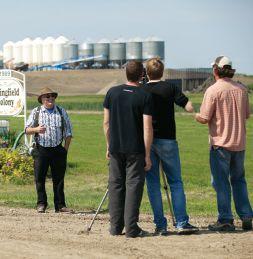
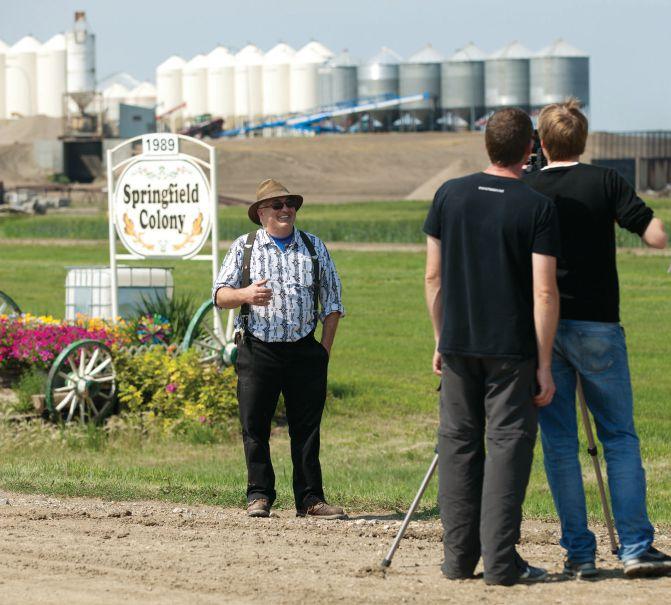
The Saskatchewan Egg Producers filmed a series of videos to help consumers understand specific aspects of production, food safety, grading, and types of barn housing.
stand specific aspects of production, food safety and types of barn housing, and include a look at grading facilities as well. When asked how important it was to show all types of facilities, Price says “Considering our goal to educate and show transparency in egg production, it was very important to show all methods of production to help consumers understand the differences, and how that relates to the many choices they have when purchasing eggs. We show both enriched and traditional housing methods as well as free run (aviary).” The SEP also hopes the videos will be used by teachers to educate students about egg production. “We currently make printed resources available for teachers and the videos are another tool
they can access to make learning more fun and engaging,” says Price.
Getting farmers to agree to take part in the project was not difficult. Price explains that they randomly chose a producer using each housing method to ask if they would participate, and all producers approached said yes. There are 66 producers that belong to SEP, and the vast majority (about 55) are found in Hutterite colonies. Flock size across the province ranges from 3,000 birds to tens of thousands.
RESPONSE SO FAR
Most producers in Canada are aware of the recently launched A&W restaurant
BEING TRANSPARENT
marketing campaign, with the fast food chain now using only eggs from hens fed vegetarian diets. Chickens are actually natural omnivores, and eat plant matter, insects, snails and so on if foraging outdoors for themselves. While the SEP video series does include a look at a farm where vegetarian diets are used, SEP says planning and production of the videos was going on for the past year, long before A&W’s marketing initiative was launched in September. With regard to the importance of showing hens being fed vegetarian feed, Price notes “It is one of the production choices consumers are offered. We didn’t focus on one feed option more than others. Consumers also have other purchase choices such as Omega eggs where hens are fed a diet rich in flax, or Vitamin D-enriched eggs. The primary concern for farmers is that they feed their hens a balanced diet to be healthy in order to produce the best qual-
Marketing
ity eggs.” Non-vegetarian diets for hens can contain things like oyster shells as a source of calcium, and vitamins derived from animal sources.
Although this story went to press about two weeks after the videos were released, Price was able to report at that point that “It has been a really positive response so far. Our YouTube channel is getting a lot of traffic and our farmers are very proud of the videos. We will continue to promote the videos and use them in the upcoming months at events like the Canadian Western Agribition.”
And more videos are coming. “We have 66 registered producers in the province and we realize we can’t complete that many videos, but we would like to add one or two each year for the next few years,” Price explains. “We’re proud of our farmers and would like the public to meet them and have a glimpse into their barns and their operations. Some
are first-generation egg producers, others multi-generation; some have new farms, others older; some have large flocks, others smaller. Each farm and farmer has their own unique characteristics even though they are all egg producers. We’d like to share that.”
SEP launched the videos just as provincial producers began a two-day workshop to learn more about the national mandatory Animal Care Program, spearheaded by Egg Farmers of Canada. During the workshop, producers reviewed program enhancements related to the Employee Code of Conduct. “As well, the Visitor Code of Conduct was reviewed, outlining a visitor’s obligation relative to animal care elements and biosecurity measures when they are on-farm,” says Price. “These measures are in place to ensure our hens are treated correctly and we have the safest egg supply possible.”
Old OrChArd INN & SPA Greenwich, Nova Scotia in the heart of Annapolis Valley February 11 - 13, 2015
Come enjoy the Atlantic Poultry Conference and the tranquil atmosphere of the beautiful Annapolis Valley, Nova Scotia
CONTACT
Bruce Rathgeber
Email: brathgeber@dal.ca
Telephone: 902-893-6654
Fax: 902-895-6734
Egg Farmers of Canada says it is happy to be supporting Saskatchewan in the development of this video series and to partly fund the project. “We also work with other provinces to produce similar videos because we feel it is an important part of sharing our industry story with Canadians,” notes EFC Director of Communications and Public Affairs Alison Evans. “We have good and positive stories to tell, and the provinces are doing great work in showcasing them and the farmers who produce eggs that are among the best in the world.”
To view the educational videos, visit www.saskegg.ca or www.youtube.com/ user/saskegg.ca n
PIC Update
Poultry Industry Council launches new online training course
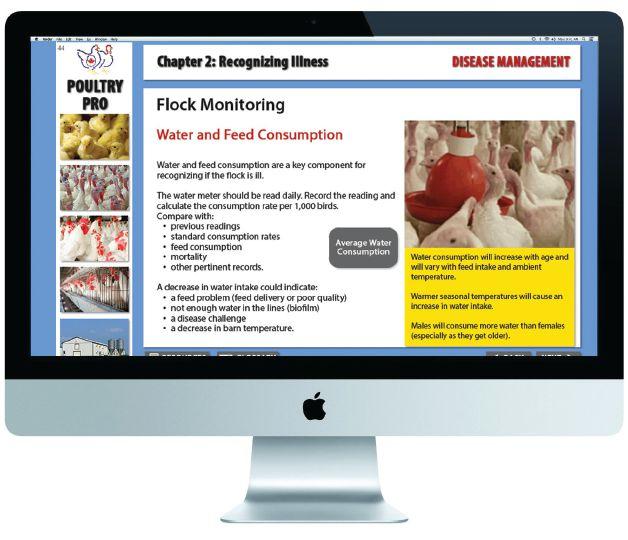
PoultryPro is an interactive training tool designed for the whole industry
BY POULTRY INDUSTRY COUNCIL STAFF
The Poultry Industry Council’s new online production training program, PoultryPro, is ready to accept its first participants.
The practical course was developed in response to training needs that were identified by the sector.
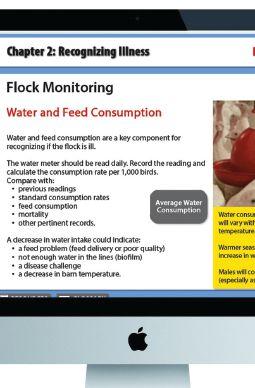
PoultryPro consists of four online modules that focus on Barn Management, Feed and Water Management, Breeder Management, and Disease Management.
Each module delivers a curriculum that was developed by the Poultry Industry Council (PIC) with input from industry representatives and subject matter experts and is aimed at new farmers, new farm/ barn workers, new industry employees, and new graduates either working in or hoping to work in the poultry sector.
Before PoultryPro, there were no industry-wide training courses available focused on poultry production, says Laura Bowers, education and extension programs manager with PIC.
Current post-secondary animal agriculture programs tend to focus heavily on other livestock species but often do not provide significant poultry education.
“PoultryPro is all-encompassing for the poultry sector, it is not specific to any one
MEETING TRAINING NEEDS
The PIC’s Laura Bowers says PoultryPro was developed because there was “a clear need for a basic training and education tool” that is relevant to the entire poultry industry.
company or poultry species,” explains Bowers. “There was a clear need for a basic training and education tool that is relevant to the entire industry, as well as being practical and easy to access.”
“There is lots of information out there, but PoultryPro brings it all together in an online course format that is very practical and useful at the barn level,” she says. “It provides a great foundation in poultry production for new farmers or farm workers, as well as new graduates looking to upgrade their practical knowledge of things that might not have been covered in school.”
PoultryPro isn’t meant to replace onthe-job training; rather, it will introduce those taking the program to important key poultry production concepts and make them familiar with relevant general information and aspects of the poultry industry.
A test must be completed at the end of each module, and a minimum score is required to pass and move on to the next one. A certificate will be issued upon successful completion of the entire course.
It will take participants anywhere from 10 to 25 hours to complete the four modules, says Bowers, which depends on how in-depth they choose to learn.
“Since our target audience encompasses participants with varying needs and backgrounds, the program offers flexibility when it comes to learning,” she explains. “There is critical information that everyone must know, which makes up the basis of the course. But there is also a great deal of “good to
PIC Update
know” or “extra resource” information that participants can choose to spend more or less time on, depending on their background and training needs.”
PoultryPro is being delivered through a partnership with the Business Development Centre at the University of Guelph Ridgetown Campus.
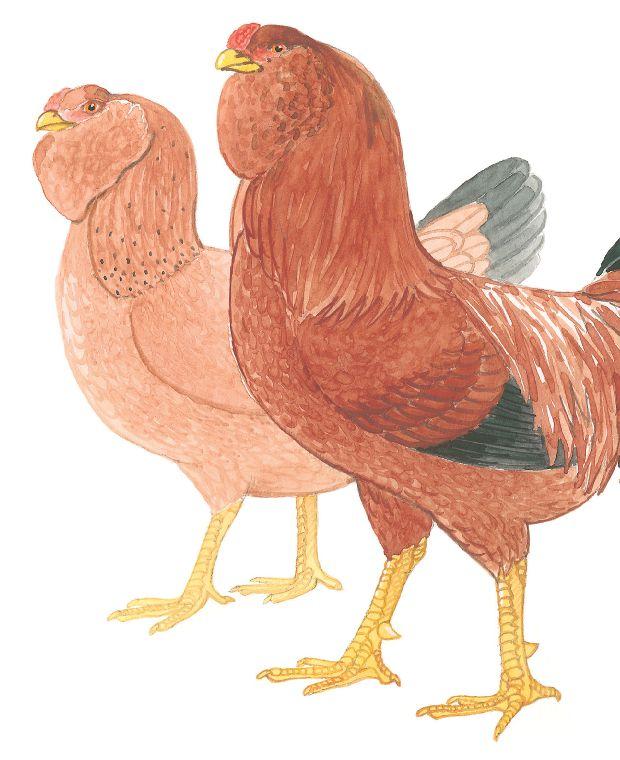
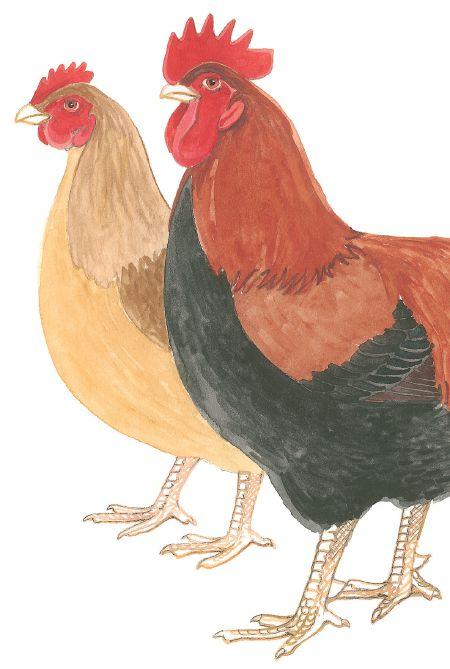
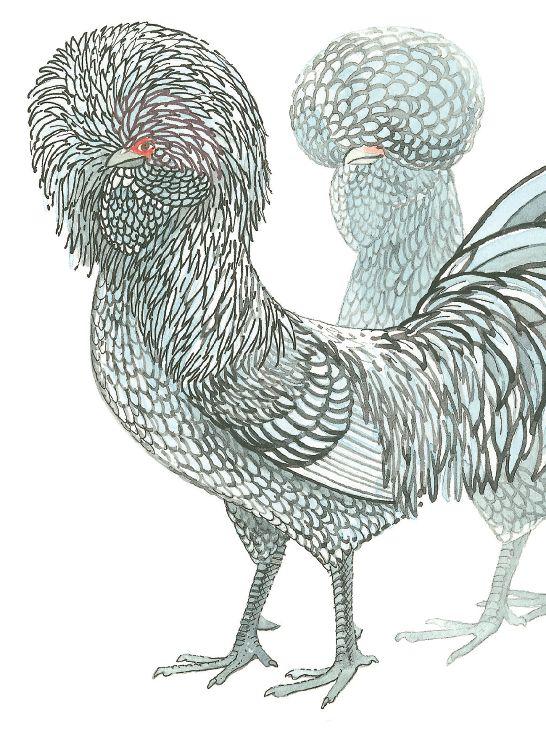
Meet Fast Food’s Royal Family
They were chosen as they already deliver other online courses, and so have the required infrastructure and IT resources in place. Ridgetown also has a staff team experienced in online course delivery and transferring adult education materials into e-learning formats.
Course information, which includes online materials and a textbook, is provided in a variety of ways and is designed to be very interactive, according to Bowers, with participants seeing a lot of interactive learning activities, clickable “did you know” buttons, links to further information on numerous topics and extra resources throughout the modules as they move through them.
“This is a very comprehensive training course, but both the time commitment required and cost are very manageable, and together with our industry partners, we’ve worked hard to make sure PoultryPro is very relevant and useful,” says Bowers.
“This is a unique training opportunity that is aimed at the whole industry as opposed to internal or private training available within specific companies or businesses,” she adds. “For example, if you’re hired as a company rep or to work in a broiler barn, it’s also good to be familiar with other aspects of poultry production.”
The course fee is $150; more information and course registration are available on the PIC website at www.poultryindustrycouncil.ca.
The project was funded in part through Growing Forward 2 (GF2). The Agricultural Adaptation Council assists with GF2 delivery in Ontario.
PoultryPro is helping fulfill PIC’s recently updated strategic directions, which includes developing and delivering extension programs identified as priorities by the Ontario poultry industry.
PIC is always interested in receiving feedback and input from all members of the industry, particularly ideas for future projects that can help address identified needs in the sector, says Bowers.
Comments and suggestions can be directed to PIC via email: lbowers@poultryindustrycouncil.ca or by phone: 519837-0284.
The original Multi-Carbohydrase.
Superzyme is a complex blend of enzymes designed to target indigestible components of livestock feed. Backed by sound science, Superzyme is at the forefront of enzyme technology.
Continued from page 14
or feed intake for each individual bird. Eggs produced are also given identifying numbers so that the company knows which bird laid which egg, a crucial step for measuring egg quality traits such as shell strength and colour within a family of hens.
These measurements are then sent to Lohmann’s head office in Germany over a secure server where they are processed by the company’s genetics department and compared with data from its European operations.
The Canadian facilities will focus primarily on performance data from Lohmann’s white lines, as white eggs are dominant in several major worldwide markets including North America.
However, the Canadian facilities also have stock for all six of the company’s
Production
genetic lines and will be recording data for those breeds.
In Europe, where legislation has imposed mandatory colony and/or aviary-type housing systems and space
requirements, data collection on traits such as nest acceptance and utilization of outdoor spaces is being measured, as well as individual performance when raised in floor housing (this is done using a transponder system rather than by individual barcode).
In its recent Poultry News, Lohmann says captured data from the pure line facilities combined with additional DNA analysis allows the company to collect broad-based performance data, which makes its layers “adaptable to varying housing systems, climate conditions and consumer preferences.”
GOOD FOR CANADA
Scott Graham, chair of the Egg Farmers of Ontario, says the EFO is proud that Ontario offers the kind of environment to attract a breeding company of Lohmann’s calibre: “It’s gratifying to have a global company invest in Ontario’s egg industry.” The EFO also made a policy change in its pricing to make the province more attractive to companies, paying full price for surplus eggs instead of the breaker market price, says Graham.
With the establishment of a Lohmann pure line facility in Canada, says Arar, egg producers here “now have direct access to both major layer breeders” in the world (Hendrix Genetics also has a pure line facility in Canada for its ISA brand) and there is security in having access to supply, he says. n
Attendees from all over the world were present for the grand opening.
Layer Barn For Lease; Great area and easy access to QEW in Niagara Area
60,000 Square feet of full slat floors in 2 barns, one built in 2013 with free run capability and egg belt collection from community nest boxes, barns are metal clad with concrete floors and have supplemental heat and excellent ventilation, Processing room has a grader and two egg packers, a new 2000 sq. ft. egg storage area for cooling. Build and equipment are in good working condition and ready go. Barn could be leased with or without the management team. Please Call Hans at 1 905 957 7618 or
HERE’S THE POINT
BY LESLIE BALLENTINE
The Celebrity Effect
I’m not much of a Hollywood follower. I don’t read entertainment magazines, or see a whole lot of Hollywood movies. So when a celebrity endorses or opposes something I generally draw a blank of who this person is and then question why I should care what they think. Nonetheless, it does really annoy me when we see celebrities pushing a cause they contradict in their real life.
Celebrities are just like many of us. We have our causes. It may be a disease, or third world hunger or civil rights, or agriculture. It may be political, environmental, animal rights … the list goes on. But, people who take a celebrity’s say-so in forming their own opinions always makes me nervous. I am much more likely to accept the opinion of an unknown expert than a publicity-seeking celebrity.
A poll in the Calgary Sun recently asked “Are you more likely to support a celebrity endorsed charity?”
At 80.21 per cent, the vast majority of the 1,870 respondents answered “No, I support what I want.” Granted, this is coming from “sensible westerners,” and I wonder what Vancouverites or Torontonians would answer. But even in Calgary, celebrities have influence. According to this unscientific poll, nearly 20 per cent responded that they are or could be influenced by celebrity endorsements, 6.9 per cent answered “of course,” 10.96 per cent answered “depends on the celebrity,” while a further two per cent answered “probably.”
the most exaggerated estimates by anti-meat proponents. Why he chose to make this pronouncement is beyond me. I doubt his beef consumption ever came close to his airline emissions.
And of course there is a growing list of celebrities who publically announce they have gone vegetarian or even vegan for ethical reasons and then are caught by the paparazzi scarfing chicken wings in the back of a dark bar.
Canada is not immune to the celebrity effect.
Canadian Pamela Anderson is one of a stable of celebrity spokespeople for PETA (People for the Ethical Treatment of Animals) who espouse the PETA mantra: “Animals are not ours to eat, wear, experiment on, use for entertainment, or abuse in any way.” She has been caught with her pants down —figuratively and literally — numerous times, but my favourite was in 2007 when the UGG® fanatic was informed that those boots she seemed to live in were made of sheepskin. To her credit she has stopped wearing them, claiming, as only Pammy can, that she wasn’t aware what they were made of. But she and many other Hollywood types can’t claim ignorance when it comes to denouncing medical research that uses animals — research that has saved or at least prolonged their lives — or in Anderson’s case enhanced her bra size. Yet it seems many people seem to trust her judgment and her opinions.
Rightly or wrongly, celebrities can and do influence public opinion
So I find it startling that some celebrities, at least, can have such influence with the public, particularly when they talk the talk but don’t walk the talk.
This past summer Tycoon Sir Richard Branson announced that he has renounced beef to help save the planet. “Meat consumption today contributes to global warming and environmental degradation,” he told media at the time. According to one accounting, Branson’s airline Virgin Atlantic operates 38 aircraft, creating a carbon footprint of 5.9 million tonnes of the greenhouse gas CO2 each year. Branson also plans to launch Virgin Galactic spacecraft, whose emissions will be the equivalent of a return trip by jet from London to Los Angeles for each passenger. A quarter-pounder, on the other hand, is said to cause 0.0015 tonnes of CO2 emissions, according to even
I consider CBC television star David Suzuki a celebrity rather than an environmental scientist. He is certainly well known and revered for espousing the need to reduce greenhouse gas emissions to save the planet. Yet he is one of many such celebrities who actually contribute to these emissions by flying solo in private jets rather than taking an empty seat on a commercial flight. Environmental scientists say flying by private jet is the most carbon intensive way to move humans next to space travel (take note Mr. Branson). Suzuki was the centre of media criticism several years go for his jetsetting ways and his insistence on driving to his film shoots in a private limo rather than share a ride with the film crew. Yet his following continues to grow.
Here’s the Point: Rightly or wrongly, celebrities can and do influence public opinion. Just as we do with marketing our products, agriculture needs to figure out how to do the same. n
Mopack 150 Farmpacker
Capacity 54,000 eggs/hour Diamond
grading - packing - processing
MR 40 Tray Palletiser
Moba is a global organization that offers total solutions for making egg grading, packing and processing more efficient. Our global team of skilled specialists is there to help you implement and maintain the most innovative and profitable equipment, designed for your future.
Capacity 180,000 eggs/hour (300 cases)
MR 50 De-Palletiser
Capacity 190,000 eggs/hour (530 cases)
The total solution provider
Omnia
Eco II - The Next Generation
The Innovative Combi II
• NEW Colony size to optimize building space/bird population - multiple sizes available
• NEW Innovative center feed trough increases feed space per bird and provides second feed access point
• NEW Flexible nest positions for optimal bird behaviour and ease of management
• NEW Pro Swing Elevator or Finger Elevator egg collection systems available
• Easily converts from enrichable to fully enriched
• Easily convert from enriched to cage-free
• Covered egg belts with inspection flap
• Nest, water and feed on each level
• No new equipment required to convert
• Optimizes bird numbers when enriched
• Better welfare and efficiency for overall flock performance
• Flexibility of nest positions to optimize bird behaviour and ease of management