In 2012 we celebrated the 40th anniversary of supply management in canada. ironically, it was also a year supply management faced some of its fiercest attacks from media and economic groups.
Most of the attacks stemmed from speculation that supply management would be “on the table” if canada was allowed to join the trans Pacific Partnership (tPP). A similar argument was made for canada’s participation in free-trade talks between the european union (eu) and canada, known as the comprehensive economic and trade Agreement (cetA).
Although what is being discussed at the tPP and cetA negotiations has so far remained a secret (at the time of writing this column), our federal government has remained steadfast in its support of supply management.
Many political commentators do believe the federal government when it says it will continue to support supply management, but they also believe that the supply-management system needs to evolve in order for that support to be maintained in the long term.
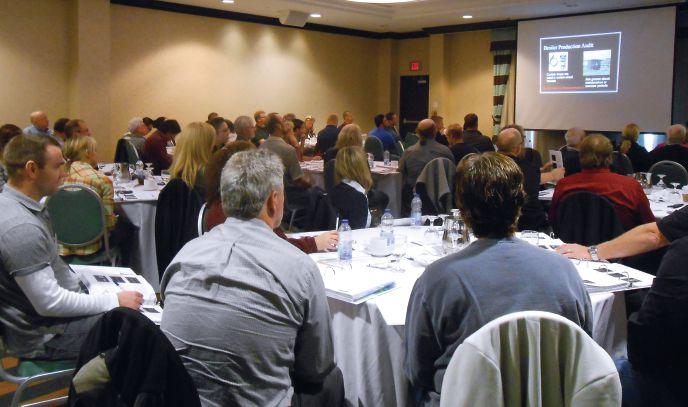
Maintaining both political and consumer support is “ripe for the picking,” according to robin Horel, president and ceo of the canadian Poultry and egg Processors council (cPePc). speaking at the Poultry service industry Workshop in Banff, Alta., last october and at an educational “school” held by Lohmann in Niagara Falls in september, Horel said the government is very receptive to supply management at this time. However, he feels that the system must be modernized and that “we need to take a hard look at where efficiencies can be made.”
in his talk on “supply Management: the Next 40 years”, Horel reviewed how and why supply management began –an important history lesson considering
many farmers today producing under supply management are two to three generations removed from the chaos and “chicken-and-egg war” of the 1960s and 1970s.
But it has had some unintended consequences and the media and detractors are noticing, Horel said. contentious issues such as interprovincial movement of chicken, quota value, allocation and retail prices will be difficult to defend unless we modernize our beliefs and let go of the this-is-the-way-things-have-alwaysbeen-done type of thinking.
that’s why the cPePc has been working with its sector members on a strategic initiative that is attempting to address these issues while building on the trust it has established with customers and consumers, and we will have more information on this in future issues.
one of the greatest benefits of supply management has been the power it gives stakeholders to establish an environment that allows predictable, reasonable returns while tackling emergency preparedness, animal welfare and food safety issues more effectively and easily than other livestock and commodity sectors. However, it is the inability to resolve internal issues in order to clear the way for dealing with cost issues that could prove detrimental, said Horel.
Horel was candid in his comments about the challenges our industry faces, and although he didn’t know at the time of his talk just what results would come out of discussions with sector members, he was firm in his belief that the system needs to evolve and the industry needs to maintain its social licence with consumers or that covenant will be lost eventually. n
JANUARY 2013
Vol. 100, No. 1
Editor
Kristy Nudds – knudds@annexweb.com
888-599-2228 ext. 266
Associate Editor
David Manly – dmanly@annexweb.com 888-599-228 ext. 261
Publisher/Sales Manager
Marilyn White – mwhite@annexweb.com 519-429-5193
888-599-2228 ext 237 • fax: 888-404-1129
Sales Assistant
Mary Burnie – mburnie@annexweb.com 519-429-5175 • 888-599-2228 ext 234
Media Designer
Kelli Kramer
Group Publisher
Diane Kleer – dkleer@annexweb.com
President
Mike Fredericks – mfredericks@annexweb.com
Mailing Address
P.O. Box 530, 105 Donly Dr. S., Simcoe, ON N3Y 4N5
Publication Mail Agreement #40065710
REtURN UNDEliVERABlE CANADiAN ADDRESSES tO CiRCUlAtiON DEPt., P.O. BOx 530, SiMCOE, ON N3Y 4N5.
Canada – 1 Year $30.00 per year (with GSt $31.50, with HSt/QSt $33.90)
GSt – #867172652Rt0001
USA – 1 Year $ 66.00 USD Foreign – $75.00 per year
Occasionally, Canadian Poultry Magazine will mail information on behalf of industry-related groups whose products and services we believe may be of interest to you. If you prefer not to receive this information, please contact our circulation department in any of the four ways listed above.
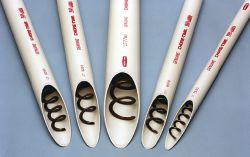
With more than 60 years of experience developing innovative products for poultry producers worldwide, Lubing has established a reputation of leadership by introducing new, cutting-edge technologies to the poultry industry.
Come visit us at the 2013 International Poultry Expo and see what’s NEW at Lubing!
SprayCabinet
Spraying/Disinfecting your chain... Simplified!
DripCanopy
Keep your floors mess-free with a DripCanopy!
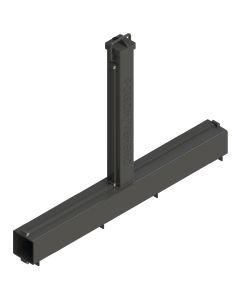
Cantilever Drive Unit
Keep the clutter out of processing!
ChainKeeper
It’s like life insurance for your conveyor system!
Les Equipments Avipor
Cowansville, Quebec
Tel: (450) 263.6222
Fax: (450) 263.9021
Glass-Pac Canada
St. Jacobs, Ontario
Tel: (519) 664.3811
Fax: (519) 664.3003
Carstairs, Alberta
Tel: (403) 337-3767
Fax: (403) 337-3590
Specht-Canada Inc.
Stony Plain, Alberta
Tel: (780) 963.4795
Fax: (780) 963.5034
J. Dean Williamson Ltd.
London, Ontario
Tel: (519) 657.5231
Fax: (519) 657.4092
BaitStation
Keep your rodent problems under control!
WhAT’S HATCHING HATCHING
2012 Poultry Service Worker of the Year
S
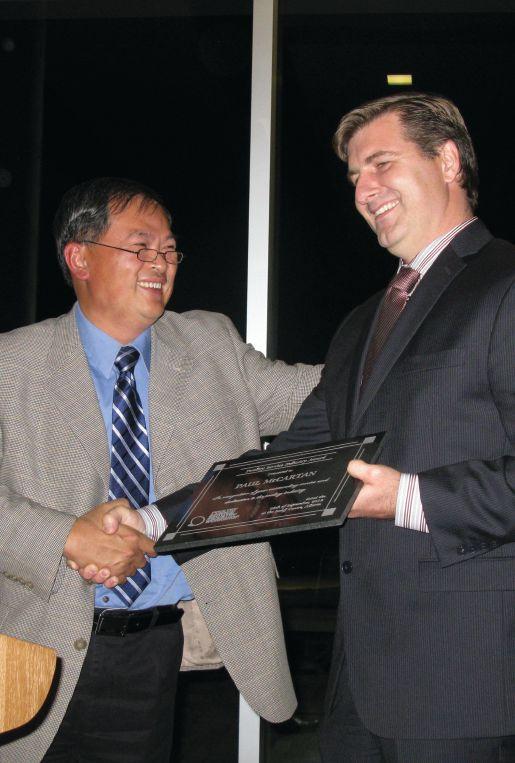
unny Mak, the vice-president of Live operations & supply chains of sofina Foods, recently presented Paul Mccartan, the Live services Manager for Lilydale inc., with the 2012 Poultry service Worker of the year award for outstanding service to the industry.
DEDICATED SERVICEmAN
t he award was presented during the 37th Poultry s ervice i ndustry Workshop (P si W), held this past o ctober in Banff, Alta. t he award is presented to an individual who has made a significant contribution to the poultry industry, demonstrated a high level of skill and knowledge in poultry service work, and gained the confidence and recogni -
tion of the poultry industry. Mc c artan has fulfilled all those requirements set by the selection committee and more.
t he prestigious award was first presented in 1988 and contains an impressive list of past recipients such as Al r ichards, Martin Dyck, c arlyle Bennett, John Petkau, Dr c raig r iddell, Dr. Hank c lassen, Dr. Keith McMilla, r od c hernos and more.
AWARD hISToRY
As Mak said during the ceremony, he has known Paul Mc c artan for over 20 years and has seen him as a dedicated husband and father, loved and respected by his colleagues, and as an honest, transparent, authentic and respectful person.
i n addition, Mc c artan was one of the pioneers to develop an antibiotic-free production program in
Alberta on a wheat-based diet, helped improve footpad quality in high-density barns and refined lighting and ventilation programs to improve barn condition and bird welfare.
“He is no stranger to many of us,” noted Mak. “He is the person that we go to asking for advice when facing different challenges in broiler, turkey and broiler breeder production.”
i n addition to his many projects, Mc c artan also helped develop so P in barns and for field service teams at Lilydale, and is always involved with a multitude of other special projects to utilize his unique skill set and knowledge.
“He is a gentleman with so much knowledge and yet so humble, a good example for every one of us,” said Mak. “ you may not know, besides a long list of accomplishments, he is also a master black belt in karate.”
Sunny mak (left) of Sofina Foods presented the 2012 Poultry Service Worker of the Year award to Paul mcCartan (right) of lilydale Inc.
New Animal Care Initiative Unveiled
AlbERTA
the Alberta Farm Animal care (AFAc) information
Leadership initiative is a communications program designed to help producers and their industry manage information and keep up to date on the bottom line in farm animal care. this includes information on the latest thinking, ideas, developments, best practices, trends and issues, to support the role of producers as front-line managers and decision makers. the initiative includes a number of components:
• Newstream Farm Animal care, a cutting-edge digital news source capturing
Sunnymel Plant Open
NEW bRUNSWICk
Olymel LP and Groupe Westco held an open house and information day in early November to give all managers and employees hired to date an opportunity to view the new sunnymel poultry slaughterhouse and cutting facility at clair. in all, close to 250 people will be involved in operating the processing plant, which opened in late November. the plant was built over a one-year period in the centre of the Village of clair in the upper Madawaska. the new facility, which is equipped with the most advanced, most efficient machinery in the industry, required an investment of more than $50 million. the plant’s weekly slaughtering capacity will be 450,000 chickens once optimal production speed is
latest developments, progress and ideas in farm animal care. includes short items as well as links to longer feature articles that showcase innovative thinking, case studies, best practices and success opportunities.
• Vericare special reports, a specially designed to provide technically competent, expert-driven coverage of important issues in farm animal care.
• carescape initiative, which is using social media to support awareness of farm animal care progress and issues.
• Livestock care
conference knowledge transfer, a customized effort to deliver information from this leading conference on farm animal care, which is hosted annually by AFAc and features top speakers from both within canada and internationally.
An initial phase was delivered out of the 2012 Livestock care conference, hosted by AFAc, and a number of the additional components are rolling out shortly.
Visit www.meristem.com for sign-up information and to receive regular e-newsletter editions of Newstream Farm Animal care.
reached. More than 250,000 chickens from producer Groupe Westco, which have been shipped to Quebec for slaughtering since september 2009, will now remain in the province and form a large part of sunnymel’s supply chain, with the remainder coming from other producers in New Brunswick and the Maritimes. the completion of the sunnymel plant is the result of a business partnership between
olymel, a canadian leader in agrifood processing and distribution in canada, and Groupe Westco, one of the largest poultry producers in the country. in March 2008 the two partners announced plans to create an integrated entity on a model that would bring together the two firms’ specific expertise, generate synergies and create a farm-to-fork link they believe will better serve a market like the Maritimes.
COMING EvENTS
febRUARY 2013
February 5-7, 2013
Canadian International Farm Show, international centre, Mississauga, ont. For more information, visit: www.masterpromotions.ca
February 13-15, 2013 Atlantic Poultry Conference, old orchard inn, Greenwich, N.s. For more information, visit: www.atlanticpoultryconference.com
February 25-27, 2013 Pacific Egg & Poultry Association annual convention, intercontinental Hotel, Monterey, calif. For more information, contact Debbie Murdock: dmurdock@cgfa.org
mARCH
march 6-8, 2013 London Farm Show, Western Fair District, London, ont. For more information, visit: www. westernfairdistrict.com
march 13-14, 2013 Midwest Poultry Federation Convention, saint Paul rivercentre, saint Paul, Minn. For more information, visit: http://midwestpoultry. com/
march 25-27, 2013 62nd Western Poultry Disease Conference, Holiday inn capitol Plaza, sacramento, calif. For more information, visit: www.cevs.ucdavis.edu/confreg/index. cfm?confid=598
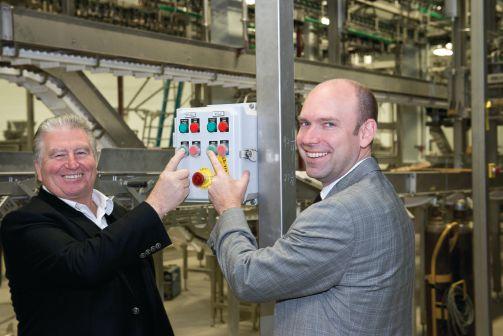
From left to right, mr. Réjean Nadeau, CEo of olymel lP, and Thomas Soucy, CEo of Groupe Westco.
WhAT’S
HATCHING HATCHING
Ceva Begins Operations
Ceva Animal Health has established commercial operations in c anada and is readying to launch its poultry vaccine business in January 2013.
i n preparation for launch, c eva is extremely pleased to welcome Don Hanson as poultry business manager for c anada.
With access to c eva’s wealth of technical, r &D and manufacturing capa -
bilities, Hanson will focus on delivering value to the c anadian poultry industry while helping to bring new vaccine solutions for evolving local disease challenges.
Headquartered in France, c eva acquired c anadian vaccine manufacturer Vetech Laboratories i nc. in o ctober 2011, adding coccidiosis vaccines to its line of existing respiratory vaccines.
burnbrae Donates $250,000
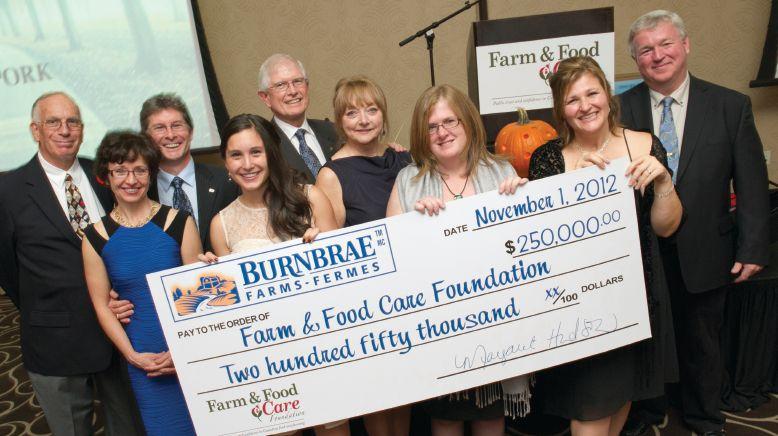
Bburnbrae Farms ltd. and Farm & Food Care Foundation commemorate the donation of $250,000 to the Foundation.
urnbrae Farms Ltd. has announced a $250,000 donation to the Farm and Food care Foundation, the largest the charity has received.
the announcement was made at the Foundation’s annual Harvest Gala in Guelph in November 2012. “We’re excited to announce our commitment to this worthwhile cause,” said Margaret Hudson, president of Burnbrae Farms. “We’re looking forward to working with the Foundation on a series of new and exciting initiatives, all designed to introduce the public to the farmers producing their food and build-
ApRIL
April 10-11, 2013
London Poultry Show, Progress Building, Western Fair District, London, ont. For more information, visit: www.westernfairdistrict.com
JUNe
June 16-18, 2013
CPEPC/CMC Convention, Fairmont Banff springs Hotel, Banff, Alta. For more information, visit: www.cpepc.ca
June 19-21, 2013
Canada’s Farm Progress Show, the co-operators centre, regina, sask. For more information, visit: www.myfarmshow.com
JULY
July 21-25, 2013
Poultry Science Association (PSA) annual meeting, town & country resort & conference center, san Diego, calif. For more information, visit: www.poultryscience. org
ing public confidence in food and farming in canada.” each year over the fiveyear agreement, staff from the Foundation and Burnbrae Farms will meet to determine funding priorities. in 2013, the funds will be put towards expanding the foundation’s Virtual Farm tours project (www.virtualfarmtours.ca). Burnbrae Farms has contributed a significant amount of funding to developing egg farm virtual farm tours on that website. the new funding will add new tours and help to make its design platform tablet and mobile user-friendly.
We welcome additions to our Coming Events section. To ensure publication at least one month prior to the event, please send your event information at least eight to 12 weeks in advance to: Canadian Poultry, Annex Business Media, P.O. Box 530, 105 Donly Dr. S., Simcoe, ON N3Y 4N5; e-mail knudds@annexweb.com; or fax 519-429-3094.
Lubing’s ChainKeeper System
The all-new Lubing chainKeeper system offers peace of mind by protecting your conveyor system from a catastrophic breakdown. As every producer knows, conveyor downtime can translate to significant dollar losses. By sensing the pulse of the conveyor chain, the all-new chainKeeper system is designed to detect, shut down and alert when there is a chain break or drop-out and allow your pro-
duction to get back online as quickly as possible.
For more information,
Canarm Introduces LED Lights
Canarm Ltd. is excited to expand its line of bulbs for use in the harsher environments of most agricultural settings, including poultry barns.
Light levels and duration can affect bird behaviour, appetite, reproductive and egg production cycles
and growth rates. Proper lighting has the ability to calm birds, help them gain weight and be more productive overall. to achieve these different light levels, dimmable LeD bulbs can provide optimum growth conditions for poultry.
LeD lights are quality, long lasting lights that are efficient, durable and environmentally friendly. With a life span now rated at 40,000 hours, their longevity saves
please contact us at info@ lubingusa.com or visit www.lubingusa.com.
maintenance time and costs over the life of the bulb (compared to 60-watt incandescent, based on 9.5 cents/ kilowatt hours over 40,000 hours).
in addition, canarm LeD bulbs work well with all lighting controls and are moisture resistant, making them ideal choices for wet, humid environments.
For more information, visit www.canarm.com or e-mail agsales@canarm.ca.
Temperature Monitoring with DeltaTRAK
DeltatrAK has introduced the new FlashtrAK rFiD temperature Monitoring solution. this wireless solution integrates FlashtrAK rFiD loggers with the existing coldtrAK cloud application, providing new capabilities and improved performance in end-to-end cold chain visibility and traceability. the FlashtrAK solution uses the latest rFiD technology and supports ePcglobal class 1 Gen 2 (c1G2) FlashtrAK loggers, extending the read range and performance through sup-
port of iso/iec 18000-6:2010 standard class 3 Battery Assisted Passive rFiD.
With rFiD technology, the temperature data from the logger is read using DeltatrAK FlashtrAK WAN/ethernet Multi-Protocol (cellular) 3G rFiD readers. these readers are typically mounted in the receiving area but can also be mounted inside vehicles to
provide real-time temperature information during transit. temperature data is automatically uploaded to the cloud-based coldtrAK Data central, where it can be viewed, analyzed and shared. the solution ensures quality product temperature data is recorded and provides traceability, allowing customers to make accurate real-time decisions.
For more information about DeltatrAK, please contact marketing@deltatrak.com or visit www.deltatrak.com.
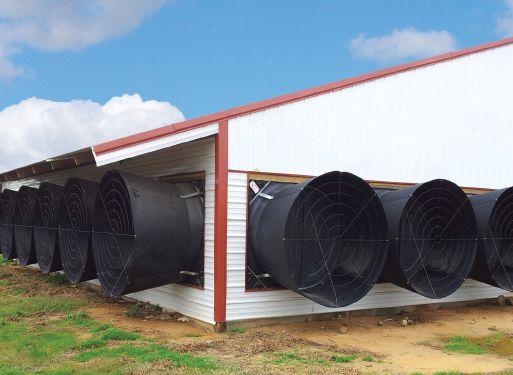
Endura Fan by Chore-Time
Chore-time introduces its new high-performance endura fan. Featuring a long glass fibre composite shroud for durability and corrosion resistance, the patent-pending fan produces 27,100 cubic feet per minute and 23 cubic feet per minute/watt performance at a static pressure of 0.10 inches of water column. chore-time calculates that the “energy-efficient Version” of the 57-inch (145-centimetre) endura Fan could save 14 percent or more in energy costs. exceptional shutter performance contributes to the high energy efficiency of the endura fan. chore-time’s Hyflo shutters do not suffer the typical 12- to 15-percent loss of efficiency and air speed typical of dirty louvrestyle shutters, so air speed is maintained to the end of the flock, when it is needed most. Additionally, the shutters
improve fan performance by minimizing obstructions during operation.
the strategic material selection used to construct the endura fan results in superior durability in both extremely high and extremely low temperatures. the composite shroud and shutter doors contain 35 per cent fibreglass for strength. to further reduce
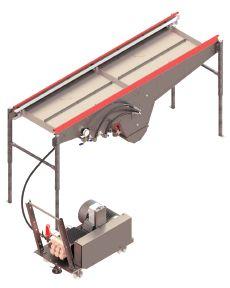
SprayCabinet by Lubing
lubing’s all-new spraycabinet is designed to clean and disinfect the conveyor chain by using valves directed at the chain as it travels through the cabinet. the unit includes a chemical injec-
tor port and a mobile pump, which can service multiple spraycabinets.
For more information, please contact us at info@ lubingusa.com or visit www. lubingusa.com.
maintenance concerns, the fan includes an automatic belt tensioner, rugged air-handler bearings, and a three-wing, heavy-duty fan blade. the unit is engineered to have a slight downward tilt so that it is self-draining.
For more information on chore-time Poultry Production systems, please visit www.choretimepoultry.com.
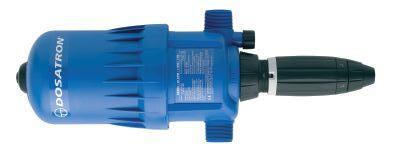
Dosatron 40-gpm Chemical Injector
Dosatron international, inc. has introduced a new 40-gallons-per-minute D8re2 chemical injector that includes a built-in air bleed, has no metal rods and offers an optional bypass.
the new D8re2 offers improved chemical resistant housing, provides enhanced uV resistance, allows injection of corrosive chemicals, and features easy-to-adjust injection rates and easy-toread graduated scales.
the D8re2 can easily inject caustic chemi-
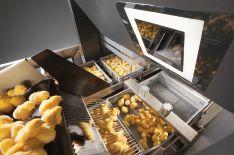
Pas Reform’s SmartCount
Smartcount from Pas reform, a new system for chick counting and quality analysis, applies Vision technology, a complex pairing of digital imaging and pre-defined algorithms, to count and analyze groups of day-old chicks in order to produce significant increases in efficiency, chick uniformity and standards of animal welfare.
With an accuracy of two chicks per thousand, smartcount’s net system capacity is 60,000 chicks per hour.
the same level of intelligence and accuracy defines a range of key parameters, including smart pattern recognition for even, gentle distribution in the right numbers into the chick boxes at the end of the conveyor, and precise, optimized spray vaccination.
cals accurately with a flow rate of 2.2 to 40 gallons per minute, an injection ratio of 1:500 to 1:50, and a pressure range of two to 110 pounds per square inch.
For more information contact Dosatron international’s customer service department at 800523-8499, or visit www.dosatronusa.com.
smartcount’s chick analysis system incorporates calculations for uniformity scoring – and by integrating smartcount statistics with smartcenter hatchery information system data, it equips the hatchery with the most detailed level of data analysis and batch reporting available.
For more information on Pas reform’s visionary chick counting system, please visit www.pasreform.com.
PRODUCTS PRODUCTS
MasoSine Sine Pumps
masosine will be showcasing its unique line of sine pumps at the international Production and Processing expo (iPPe) at booth #6944.
the sine pump’s capacity for pumping large particulates while providing powerful suction and smooth, consistent flow rates provides a solution for pumping marinated boneless poultry products.
unlike typical poultry further processing plants, which
implement labour-intensive methods to place marinated meat products on conveyors using up to ten workers across a 40-inch belt, the Masosine pump eliminates unnecessary labour by mechanically spreading the product directly onto the conveyor. Additionally, the pump eliminates inconsistent production rates due to human error and increases the profitability of a production line.
With a single shaft and
rotor, Masosine pumps are easy to use and quick to maintain or clean, features that reduce production costs. For more information about Masosine, call 800-282-8823 or visit www.masosine.com.
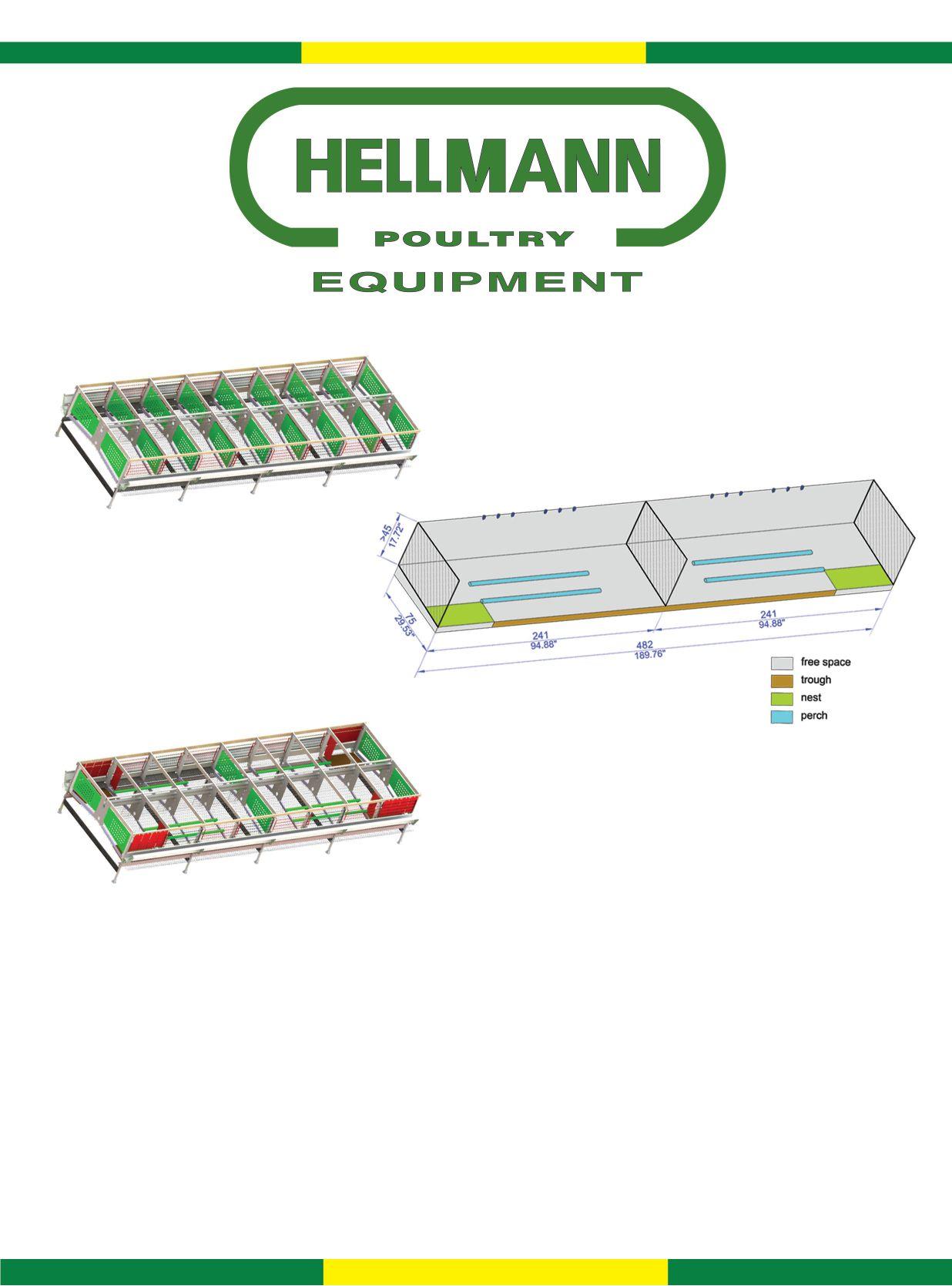
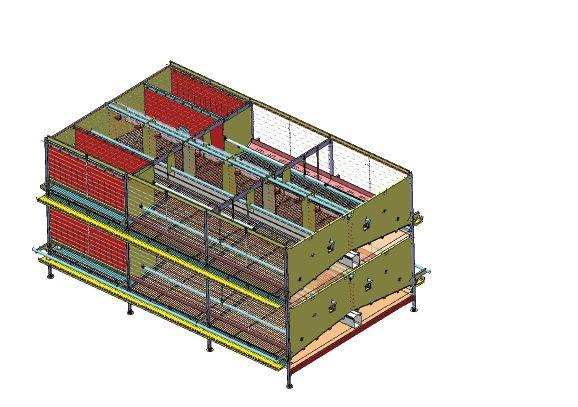
Meller’s New Euro 2012 Enriched Cage
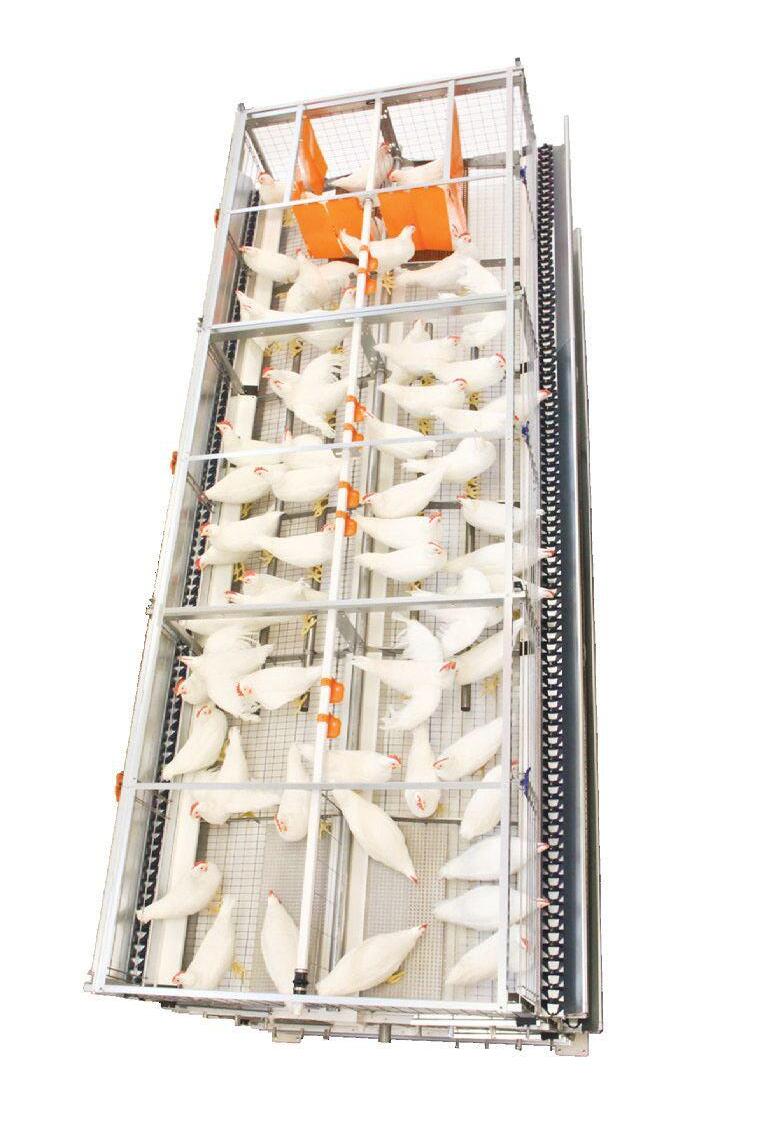
The Meller “ e uro 2012” enriched cage is a unique mixture of the Meller award-winning “ e uro 2000” enrichable cage system and the Meller aviary system.
t he system features a large nesting area near the egg rollout belts. i n the cage, feed troughs, with perches, are in close proximity to the waterlines. t hroughout the system perches are located for the birds’ comfort.
Allowing for 116 square
Rodent BaitStation by Lubing
lubing’s new rodent Baitstation offers a simple solution to two common problems. the Baitstation has a tamper-proof cap, keeping the gravity-fed bait secure, and the compact design can
fit snugly against walls, keeping it directly in the path of rodents.
For more information, please contact us at info@ lubingusa.com or visit www. lubingusa.com.
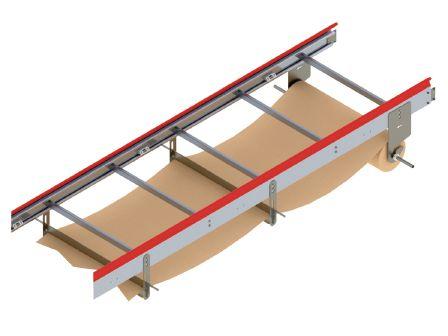
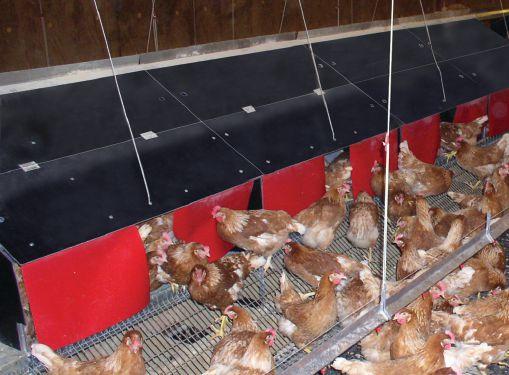
All-new DripCanopy System
The Lubing Dripcanopy system is an excellent addition to any curve conveyor system that helps maintain a cleaner environment and makes end-of-day cleaning easy – simply pull the dirty paper off and roll out a new piece. the Dripcanopy can easily be installed on new
and existing conveyors to offer protection from egg droppings. the Dripcanopy is available for all conveyor widths and can easily accommodate bends.
For more information, please contact us at info@lubin-
inches per bird, plenty of head room, and plenty of perching and nesting area, this enriched system conforms to all the eu standards, making it an optimal choice for North American producers.
For more information, please visit www.meller.ca.
gusa.com or visit www. lubingusa.com.
AVECH III ENRICHABLE / ENRICHED SYSTEMS ALLOW FOR MORE BIRDS, MORE SPACE, AND LESS COST PER BIRD
The AVECH III ENRICHABLE / ENRICHED SYSTEM is one of the most forward thinking and advanced engineered products, and is geared toward both today’s needs and tomorrow’s uncertainties.
Now, in it’s THIRD GENERATION, the AVECH III Enrichable and Enriched systems are designed to allow:
• More space per bird
• Improved cost efficiency
• More birds per house at a lower equipment cost
Trust Big Dutchman’s long history of preparing companies for the future with products that perform. It’s something we’ve been doing longer than anyone else in the industry.
It’s our innovations that help our customers succeed. Because as we invent, you thrive.
NEW PRODUCTS PRODUCTS
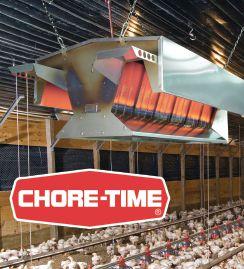
QuadraTherm Heater by Chore-Time
Chore-time’s Quadratherm Heater is now available in a high-pressure (five-pounds-per-squareinch), direct spark, 120-volt model with zone control for use with propane or natural gas, and is certified for use in canada.
Known in the industry for its quadrangular heat pattern, chore-time’s Quadratherm Heater generates 80,000 Btus of efficient infrared heat. its house-
shaped heat pattern is broader and more uniform than the heat pattern of other
Atesco’s Disinfectant Floor Mat
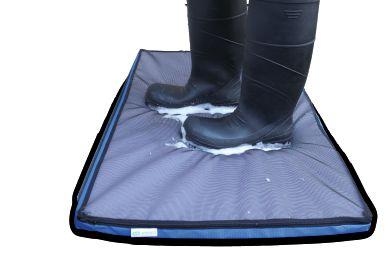
he Disinfection Foot Mat (DFMat90) measures 24 x 35 x 1.6 inches and is designed to be placed outside and inside different buildings in the poultry industry (such as hatcheries and barns), as well as the food industry (slaughter-
houses, food processors, etc.).
the DFMat90 is made up of three parts: a slip-resistant and waterproof sleeve; a 1.6-inch(four-centimetre-) thick, highdensity polyurethane foam inner to withstand heavy loads (removable); and a drained
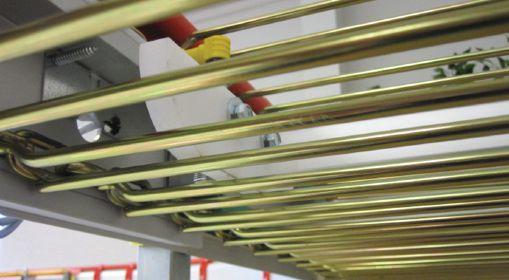
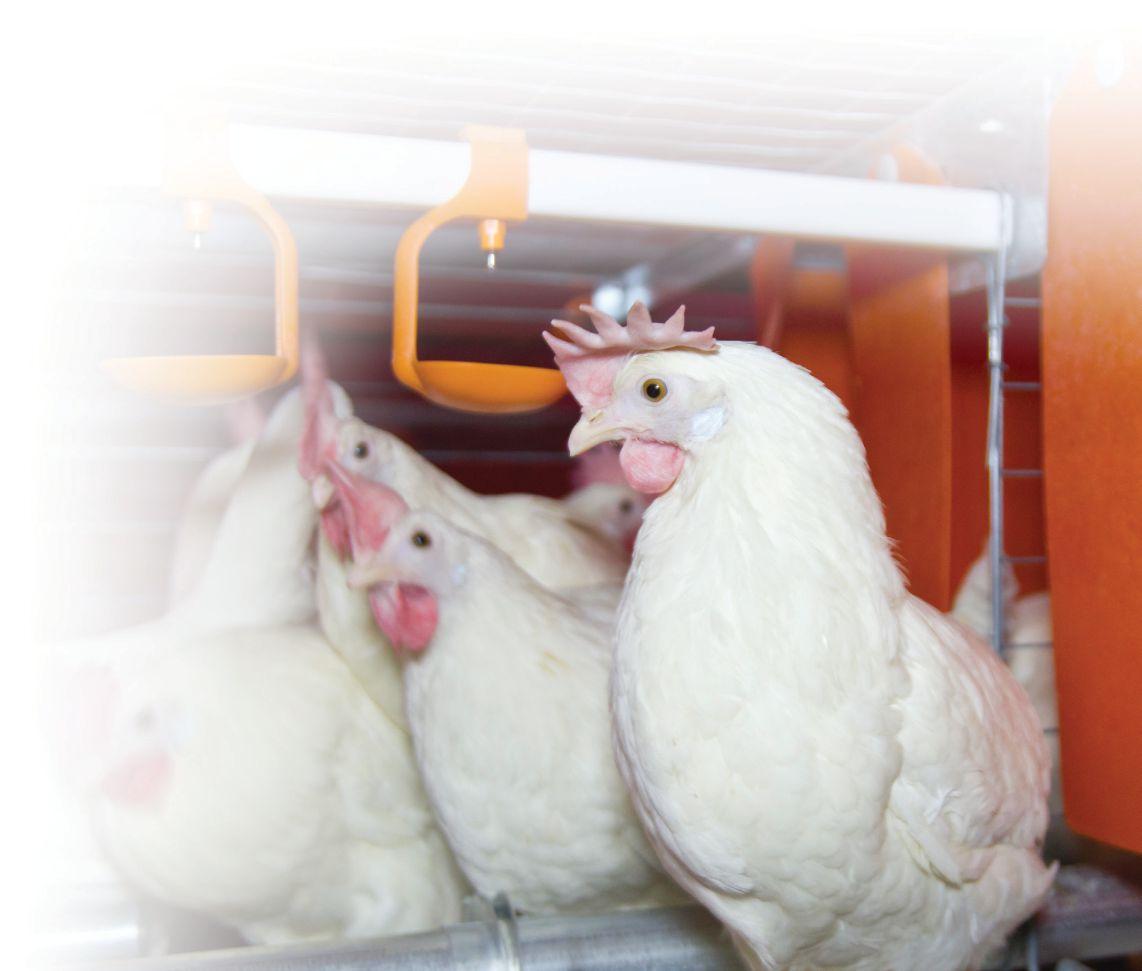
OptiGrow Nipple System
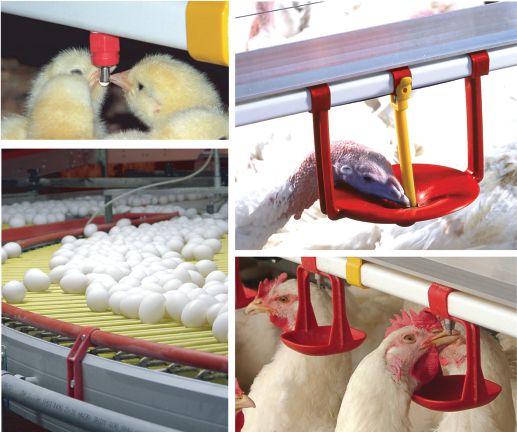
lubing’s optiGroW Nipple is the ultimate nipple for broilers and is uniquely designed to work in today’s challenging poultry environment. Because the nipple has been optimized for growth, you will be amazed by the first-week performance and explosive bird growth. optiGrow nipples offer:
• large body and pin
• acid-resistant design
• easy triggering for day-old birds
heater styles, and its design uses fuel more efficiently. in fact, case studies conducted in 2009 and 2010 demonstrated fuel savings of up to 20 per cent compared with other heaters. individual results may vary depending on house conditions and growing practices.
For more information on chore-time Poultry Production systems, please visit www.choretimepoultry. com.
black slip-resistant grid.
For more information, visit Atesco’s booth at the international Production and Processing expo (Booth 6894) in Atlanta, Ga., in January 2013, or visit www.atescoindustrialhygiene.com.
• increased side-action flow
• larger flow range for jumbo birds
• increased weight gains
• improved feed conversions
For more information, please contact us at info@ lubingusa.com or visit www. lubingusa.com.
Shenandoah’s Quad-Glow Heater
S
henandoah’s Quad-Glow
Heater is now available in a high-pressure (five-pounds persquare-inch), 120-volt version with zone control for use with propane or natural gas, and is certified for use in canada.
Quad-Glow Heaters deliver 80,000 Btus of infrared heat –double the standard output of
some other heater styles, while using less fuel to heat the same area. Based on 2009-2010 case studies, Quad-radiant Heat can save up to 20 per cent in fuel costs over brooder heat and up to 15 per cent over tube heat. results may vary depending on house construction and other factors.
For more details on QuadGlow heaters and more shenandoah products, please visit www.shenmfg.com.
CPRC Update Transporting to the Future
keeping poultry comfortable during transport can be a challenge, especially since trucks loaded with birds run all year long in a variety of weather conditions and temperatures. the current strategy for different conditions is to adjust airflows through the loaded truck trailer by opening or closing air inlets and varying the amount of load covered by side tarps – by, for example, removing tarps when it’s warm outside and increasing tarp coverage as ambient temperatures drop. Generally, flaps and tarps are set at the time of loading based on the average ambient temperature expected during the trip.
the problem is that temperature and humidity levels in a given load can vary greatly. Dr. trever crowe and his team at the university of saskatchewan have shown that as ambient temperatures decrease, the range of temperature and humidity in a load of broilers becomes wider.
For example, a trip made during an average ambient temperature of -22 c ranged from -21 to +22 c in different areas of the load. An estimated 60 per cent of the birds in the load experienced temperatures below 0. roughly the same proportion of the birds likely experienced a buildup of excess moisture during the trip, which is a concern because wet feathers can impair a bird’s ability to maintain its body temperature.
A bETTER WAY?
Dr. crowe’s group wanted to see if supplemental heat and/or active ventilation could improve conditions during transport. they fitted a single commercial trailer with a heater at the front and three fans at the back that draw air through the load. then trips were made to the
processor either with no heat and one fan running or with heat and one, two, or three fans running. None of the birds transported under any of the ventilation strategies experienced temperatures below 0 c during the trips, even when ambient temperatures fell well below the freezing mark.
Additional trips were made in the ventilated trailer to measure temperature effects on meat quality. trips were categorized according to average ambient temperature as: Hot (20-30 c), Warm (10-20 c), cool (0-10 c) and cold (below 0 c). Breast meat from birds transported under “cold” conditions had the highest incidence of a quality defect known as Dark, Firm, Dry (DFD) meat.
More precise temperature control and readings were made using an experimental chamber in which birds were loaded into a drawer much like those used on commercial trailers. these studies showed that small birds (1.9 versus 2.6 kilograms) had a higher incidence of DFD and that males were more prone to the defect than females. Delaying processing after transporting birds in the cold increased the incidence of meat quality issues, even in relatively warm ambient temperatures. As well, live shrink increased when transport conditions dropped below 0 c the culmination of this data points to the potential impact of temperature and moisture on bird well-being and meat quality. Mitigating these negative impacts will require strategies that avoid temperature extremes and remove excess moisture. Dr. crowe’s data suggests that supplemental heat may not be required, even on the coldest days. similar to a broiler barn, effective cold-weather ventilation takes advantage of the fact that warm air can hold more moisture than cold. the strategy is to seal up the load relatively
tightly with tarps and run exhaust fans in order to allow cool and relatively dry air to enter at multiple points throughout the load. As the incoming air warms, it is able to hold more moisture and is exhausted by the fans along with excess moisture. the result is a flow of air that evens out temperature extremes and removes excess moisture, regardless of whether the truck is rolling down the highway or stuck in traffic.
WhAT’S NExT?
this research demonstrates the potential of active ventilation to improve conditions during cold-weather transport and also provides information on the relationship between loading density and a bird’s ability to cope with cold stress. studies are ongoing to assess the impact of feather wetness during cold exposure and to pinpoint when a drop in body core temperature begins to negatively affect bird welfare. While it remains to be seen if active ventilation is a practical solution, ongoing research continues to provide industry with information that can be applied to continuously improve transport conditions for poultry. n
The Alberta Chicken Producers, Alberta Farm Animal Care Association, Chicken Farmers of Saskatchewan, CPRC, Lilydale, Poultry Industry Council, the Natural Sciences and Engineering Research Council/Agriculture and Agri-Food Canada Partnership Program, and Saskatchewan Chicken Industry Development Fund provided funding for this research. For more details on these or any other CPRC activities, please contact The Canadian Poultry Research Council, 350 Sparks Street, Suite 1007, Ottawa, Ontario, K1R 7S8, phone: 613566-5916, fax: 613-241-5999, e-mail: info@ cp-rc.ca, or visit us at www.cp-rc.ca.
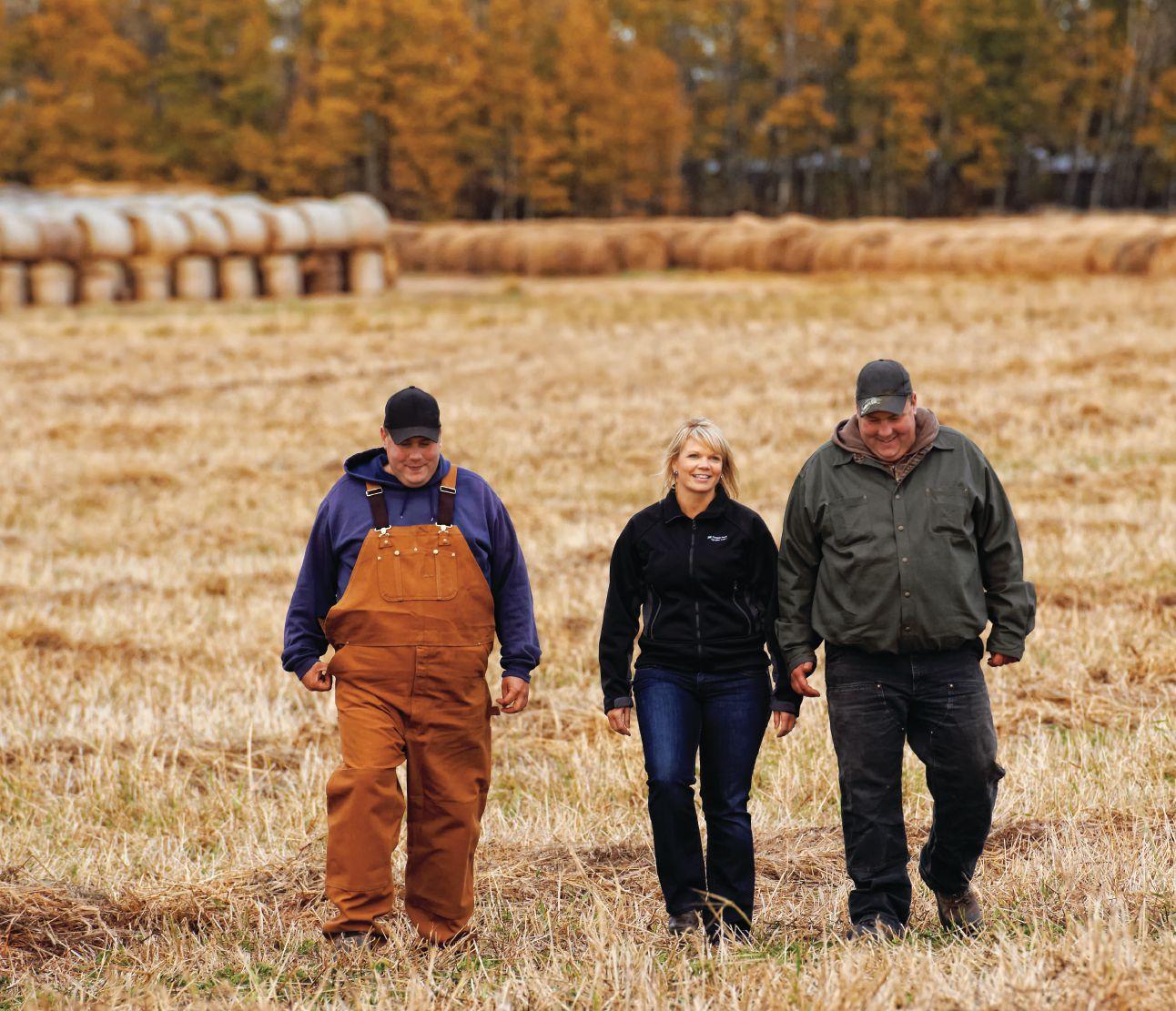
To thrive, a farm also needs the right nancial conditions
Andrew & Robert Franke Grain & Cattle farmers
Jolene Bolding TD Agriculture Specialist
TD is committed to helping farmers build for the future.
The Franke twins rst came to us in 2001 with an ambitious plan to grow their grandparents’ farm. Though they were barely over 20, their TD Agriculture Specialist quickly recognized their potential and backed their plan. Over the years, Jolene has been there for every major nancial decision affecting the farm, helping it grow to thousands of acres and over 250 head of cattle. A personalized approach to agriculture nance, like Jolene’s, is something all TD Agriculture Specialists bring. Maybe it’s time you brought one to your farm.
For more information, visit a branch or tdcanadatrust.com/agriculture
Biosecurity Starting and Staying Clean
getting better production
B Y D Av E vAN WALLEGHEM , B IOSECURITY T ECHNICIAN , v É TOQUINOL C ANADA I NC
According to a 2011 bulletin by the center for Disease control (cDc), salmonella causes an estimated 1.2 million human illnesses in the united states each year involving 23,000 hospitalizations and 450 deaths. People infected with this bacterium most commonly develop diarrhea, fever, vomiting and abdominal cramps, but infections can be avoided with a simple routine of proper cleaning and disinfecting.
Bacteria and viruses can grow quickly when given ideal conditions such as those found in farm buildings. they can reproduce in overwhelming numbers in just a short period of time, which can affect production, and consequently, the quality and quantity of meat or eggs produced.
With today’s high input costs and levels of production, there is less room for error. this article will explore when and how to clean and disinfect your enterprise.
WhEN To ClEAN
the number of opportunities to reduce bacterial and viral loads varies with the type of industry. in the broiler industry, there can be up to eight opportunities per year to perform a thorough cleaning and disinfecting, while on turkey farms there are three, and in the broiler-breeder or layer industry there is only one. therefore, it makes sense to reduce the
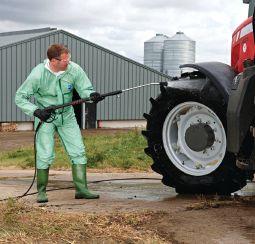
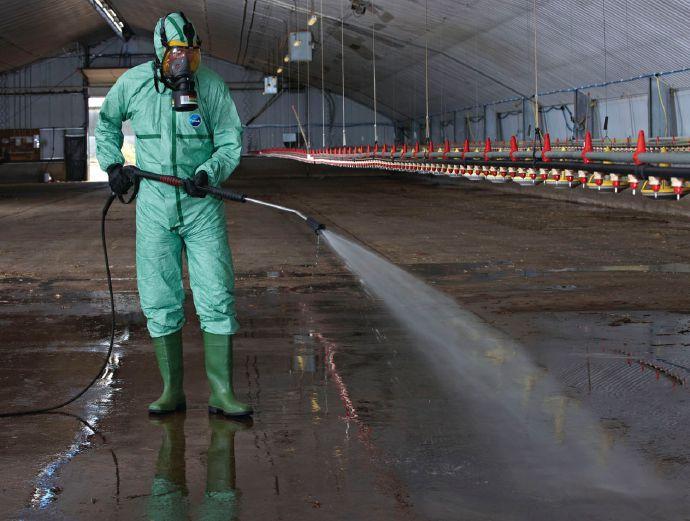
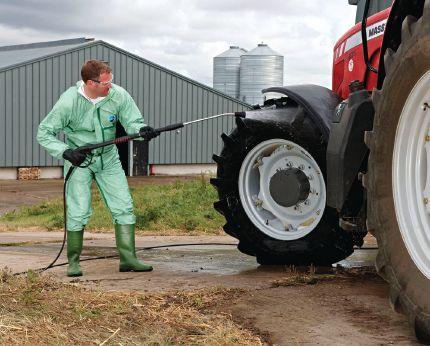
routinely cleaning and disinfecting your barn and equipment can help prevent infections from bacteria in humans and animals.
bacterial and viral load as best we can, whenever we can.
However, bacteria and viruses will protect themselves with an organic barrier known as biofilm this protective barrier allows bacteria and viruses to remain unharmed by disinfection alone and to continue reproducing. As well, the combination of bacteria, viruses and biofilm
can cause surface corrosion, damaging building integrity. in order to get the bacteria and viruses under control, the biofilm will need to be removed through the use of a detergent.
But, which detergent to choose? Aren’t they all the same? Well, no, there are many different kinds of detergents! For example, when cleaning organic
PRoTECTING
YoUR bARN
Biosecurity
matter, it is recommended to use a degreaser or alkaline detergent such as Biosolve Plus®, and for mineral deposit, use a descaler or acidic detergent such as Acid-A-Foam XL®.
Also, in order to get the ultimate response from your detergents, it is a great practice to rotate among detergent types. the rotation ratio could be from a high of 7:1 (seven washes of the alkaline detergent for one wash with the acidic detergent) to as low as 1:1.
in layer and broiler-breeder operations, where there is an entire year between flocks, it would be more efficient to use both types of detergents every few years in the same washing process instead of rotating. simply follow the instructions listed below, and before continuing to step 5, repeat steps 3 and 4 using the opposite type of detergent.
We recommend starting with an alkaline detergent, because filth and grime are usually layered with organic matter on the top level, and mineral deposits on the lower level, directly on the surface. Follow with an acid detergent.
An added bonus when using detergents is an increase in speed of washing. A 30- to 50-per-cent time savings has been documented in washing when using a detergent, as well as a water savings. For example, in 30 minutes with a pressure washer that discharges 150 gallons per hour, 75 gallons of water may be saved. the dual savings in time and fresh water will also positively impact your profitability.
However, the use of different application methods such as power washers, foam guns and inline injectors requires calibration to ensure that the products are being applied at the recommended rate. Application at the recommended rate allows you to obtain best results and to prevent product wastage. Vétoquinol’s Biosecurity technicians are available to help with the required calibrations and calculation of stock solutions. A FIVE-STEP
removing the excess organic waste found on the floors, walls and even ceilings will help the detergent perform a deep surface cleaning. Moreover, when organic materials are mechanically removed before cleaning, the contact time required for an effective cleaning with a detergent is greatly reduced. Many methods, for example, scraping, blowing or using high-volume water can be used to remove excess organic matter, but often a combination of methods is needed. When using a high volume of water, let the barn sit for a while after applying the water and before proceeding so that excess moisture does not hinder the next step.
Step 2 – Sanitize Water Lines
Adverse water quality and soluble medications used in water lines can leave mineral and organic residues, which can harbour unwanted bacteria and biofilm. in order to remove bacterial growth and contamination, start by flushing the water lines, then introduce a detergent through the inline medicator and let the solution sit in the lines overnight. in the morning, flush the lines again and fill them with water. For better results, a second step is recommended, this time using a disinfectant.
Step 3 – Apply Detergent
With a low-pressure apparatus, apply detergent to a state of dripping to all areas that are to be washed, but be sure to follow special label instructions for areas of heavy contamination. Leave the detergent sitting for a minimum of 10 minutes and wash it off before it completely dries. it may be advantageous to perform this action in sections to prevent the detergent from drying.
this step will loosen the biofilm and other organic matter in preparation for the wash.
Step 4 – Wash
Hand scrub or pressure-wash all the surfaces to desired cleanliness.
Step 5 –
Disinfect
Wait until all surfaces are reasonably dry before application and be sure to remove any puddles, as this will
dilute your disinfectant. Apply your disinfecting solution on all surfaces using low pressure until dripping. After desired contact time has elapsed, open up the building and turn on the ventilators so that the area dries up as quickly as possible.
some cleaners and disinfectants are not chemically compatible and may neutralize one another’s effect, so it is important to make sure that your detergents and disinfectants are appropriate for use together by discussing with your suppliers.
Step 6
– Fogging or Second Disinfection (Optional)
When the surfaces are dry, a second disinfection can be executed for extra precaution. it can be done in many ways: with a low-pressure spray (as in step 4), or with a mister or fogger. to ensure best results, always refer to the instructions on the product label.
FRom YESTERDAY To
the poultry industry has come a long way from the first production barns of the 1920s. Average daily gains, meat yields and egg production have increased dramatically, and public expectations of affordable, clean poultry products are part of today’s reality. Although similar calculations are not readily available for poultry facilities, work by John Gadd in swine production units has shown a rate of return on investment (roi) of 12.5:1 for the investment in proper cleaning and disinfection to increased production. this is a great return on investment in such a demanding environment!
Vétoquinol has a complete line of chemically compatible products for all your cleaning and disinfection needs. As an added value service, Vétoquinol has a team of Biosecurity technicians and technical service Veterinarians available for technical product support as well as personalized premise consultations. n
For more information on Vétoquinol products and services, please call 1-800-3631700 in Canada.
TomoRRoW
Global The Future Economy
how it will affect poultry production, exports and marketing
BY PETER HUNTON
Two important plenary presentations by consultants at the XXiV World’s Poultry congress last year gave important insights into the development of poultry production, exports and marketing in the next decades: Gordon Butland and osler Desouzart from thailand and Brazil, respectively.
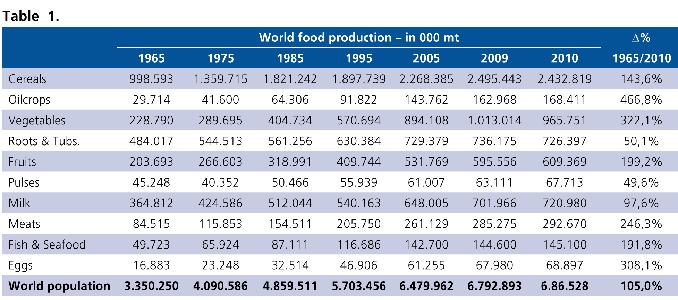
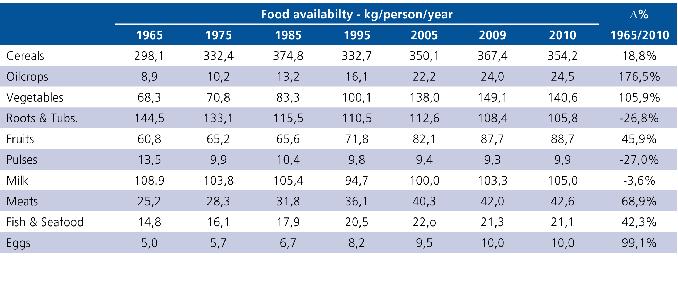
Desouzart began his presentation by pointing out that, to the present day at least, the pessimistic predictions of the 19th-century scholar Malthus, have not been borne out. Malthus suggested that the expected food requirement of exponential increases in the human population could not be met by general geometric increases in food production. Desouzart showed data based on FAo figures demonstrating that in the period from 1965-2010, increasing world food production consistently outstripped population growth. While the human population doubled, production of cereals grew by 143 per cent, oilseeds by 467 per cent, meats (including poultry) by 246 per cent and eggs by 308 per cent. the only food categories that did not grow faster than the human population were roots and tubers, and pulses.
Future increases in food demand are expected to arise primarily in the developing world, as more and more people rise economically to the point where they have discretionary income to spend on food. it was stated that, “until the human reaches an income of $7.00/day, all income increase is used to enhance the diet.” these expenditures are likely to be directed preferentially to increasing
poultry meat will likely predominate in the new meat and protein markets because of price and other factors such as widespread production, lack of religious and cultural prejudices, accessibility and convenience.
meat consumption, in which poultry will play a major role.
While consumers in developed countries are demanding variations in food sources (organic, GMo-free, etc.) the vast majority of “new” consumers entering the market for meat and protein will be much less selective, according to Desouzart. And of course, in order to meet this new demand, up-to-date technology will be required, which will include biotechnology and other hightech methods of growth and processing. the niche markets in the developed world will continue to expand but they will not become the standard worldwide. the majority of undernourished people today, and the potential new consumers of tomorrow, reside in Asia, the Pacific
and sub-saharan Africa. Desouzart states that “science and technology are indispensable for the new green silent revolution that will permit the world to cope with food demand to 2050.” they (science and technology), “should be guided by ethos and not limited by activism normally coming from the full-pockets and full-bellies areas of the world.”
Why is poultry meat likely to predominate in the new meat and protein markets? it is not just price that makes poultry meat the major contributor, but also other factors such as widespread production in almost all countries, lack of religious and cultural prejudices, accessibility and convenience, and availability of a multitude of different products to meet almost all possible demand. there is
PoUlTRY PREDomINATES
also the fact that of all the meat products, poultry is by far the most efficient both in terms of feed conversion and water requirement. Feed-efficiency data are well accepted; Desouzart quoted uN figures showing the litres of water required per kilogram of meat from beef to be almost 16,000 litres, and from pork, almost 6,000 litres. Poultry required only 2,800 litres.
With all these positive messages, one could be forgiven for believing that the industry has few, if any, problems. However, Gordon Butland brought the meeting down to earth in his review of current costs and prices. the best illustration of this is probably the graph drawn from the chicago Board of trade index Mundi for corn, wheat and soybeans. taking 1997 prices as 100, corn in July 2012 was slightly above 200 and soybean meal 220, and both are still rising. this results from a combination of a poor 2011 harvest, increased use of corn for ethanol production and continuing high demand for imported feed ingredients in china and elsewhere. While this affects all meat producers, poultry producers are massively involved, as few feed ingredient substitutes are readily available. the immediate effect has been reduced production, since in many cases chicken prices cannot be increased to cover the extra cost of production. Markets in the united states and europe are still suffering from the global economic crisis of 2009 and consumers have cut back on staple food items.
Another of Butland’s graphs showed sales prices for chicken trending downwards, while feed cost increases skyrocket. He illustrated the size of the “problem” as follows:
• fifty billion chickens/year globally
• about 100 million metric tonnes live product/year
• about 500,000 metric tonnes feed/day
• of which about 350,000 metric tonnes are corn and soy
• every us$100/metric tonne feed cost is us$35 million extra cost/ day for the poultry industry
• us$13 billion/year = about
Global
World food production from 1965 to 2010, provided by the food and agriculture organization of the united nations (fao).
us$200/metric tonne on finished products (20 cents/kilogram)
Adaptation to these new realities will test the viability of many companies. However, Butland also pointed out that he still sees tremendous variation in efficiency between top and bottom quartile companies, and thus there will be those that survive and prosper, and those that fail. it is also a situation that favours the large, efficient companies. Anyone involved in exporting chicken products needs to have as close a relationship with the end consumer as possible and only the largest companies can afford to be represented in most or all of their client countries.
so how will this adaptation to the new prices and cost structure be accomplished?
osler Desouzart says that the use of well-proven biotechnology will be the key. He stated: “science and technology should have their limits determined by ethics and the pursuit of mankind’s wellbeing. Let science do its work and we shall feed the 9.3 billion inhabitants of the planet by 2050.”
Questioned as to the response to the activists who often criticize the unbridled application of science, Desouzart basically advised industry to ignore them, if indeed we are to feed a hungry world. “Activism sometimes assumes the airs of a re-enactment of the spanish inquisition and some attitudes approach neo-Luddism,” he said.
While not everyone agreed with him, such attitudes need to be expressed, because many activist positions are based on incomplete knowledge. the food production industry also generally has a poor record of keeping consumers informed of its practices. one relatively new approach, recently seen in “the Furrow” (a John Deere publication) is that of the u s. Farmers and ranchers Alliance, whose focus is on “improving the conversation between consumers and farmers and ranchers.”
only by using these types of organizations (the canadian Farm Animal councils are another good example) can poultry producers expect to hold consumers’ trust while using legitimate, upto-date technology. n
Our mission is to build a strong, competitive and consumer-centred Canadian chicken industry that meets the challenges of a changing world, and to profitably grow its position as the protein leader in Canada. Our vision is for a Canadian chicken industry that satisfies consumer expectations with domestically produced chicken. With over 30 years of growing great chicken, CFC is proud of its role in an on-going agriculture success story.
Welfare
A Simple option
the Zephyr stun gun could provide a humane way to euthanize birds
B Y K IM WAALDERBOS
Poultry farmers and abattoirs could have a humane alternative for euthanizing spent or market-ready birds.
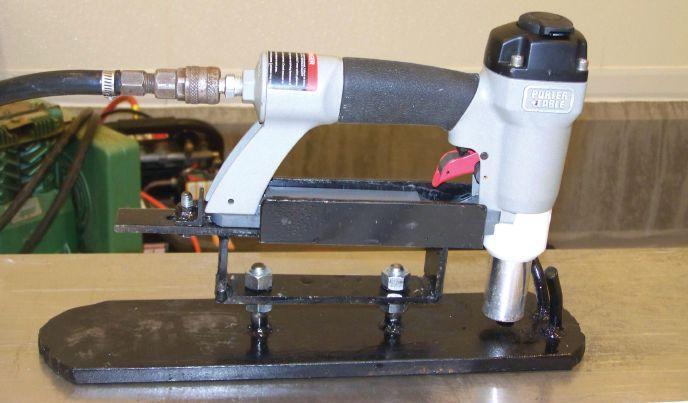
Animal science researchers at the Dalhousie university Faculty of Agriculture (formerly the Nova scotia Agricultural college) have assessed a tool called the zephyr – a nonpenetrating pneumatic stun gun – for use on broilers and layers. they say that the zephyr gun could be a humane method for poultry euthanasia.
“this tool is a win-win,” says Jane Morrigan, co-researcher and animal welfare training and auditing specialist for integrity Livestock services. “it’s humane for the animal, quiet and easy to use for the farm worker or research technician.”
the university of Guelph and the ontario Ministry of Agriculture, Food and rural Affairs developed the tool, based on a model imported from the united Kingdom, to stun rabbits in processing plants. the zephyr is a non-penetrating captive bolt stunner driven by compressed air that has been shown to work for all weights and sizes of rabbits.
After learning about the zephyr, Morrigan first supervised Nichelle Peck for her fourth-year student research project to study its effectiveness for fish euthanasia at the college’s Aquaculture research centre, with very positive results. she then turned her attention to its use in poultry, teaming with fourth-year animal science student samantha canning and Dr. Bruce rathgeber of the Atlantic Poultry research institute to assess its effectiveness.
their primary goal was to determine whether the zephyr could deliver enough
“the tool really proved to be effective, quick and easy to use,” says Jane morrigan, co-researcher and animal welfare training and auditing specialist for integrity livestock services.
force to the skull to render the animal instantly insensible and free of pain – a necessity in ensuring humane euthanasia. Morrigan says they also compared the operator’s experience level, and tried to determine if the positioning of the zephyr on the bird’s head had an effect.
to complete the research, Morrigan says they used 67 birds, a mix of broilers and laying hens. the Animal care committee at the university would not allow the initial research to be conducted on live birds, so the team worked with post-mortem birds just after they were stunned in a conventional electric stun bath.
Morrigan says that while it is unfortunate not to have studied the effects on live birds, their post-mortem work did enable them to assess the severity of trauma to the skull. she reasoned that a fractured skull is a good predictor of instantaneous loss of consciousness – and therefore absence of pain. immediately after the birds were stunned in the electric stun
bath, they were weighed and the zephyr was applied to the top of the head, twice in quick succession, using air compressed at 120 pounds per square inch.
six different factors were compared: the strain of bird, their weight, comb size, operator experience, position on head, amount of skull fracture and damage to the brain (after dissection).
their results show that the zephyr could provide enough trauma to the skull to render the bird instantly unconscious, says Morrigan, and the optimal spot for positioning the zephyr was determined to be behind the comb. Laying hens averaged the largest fracture, though their skulls tend to be smaller, she adds. Also, the experience level of the person operating the zephyr had no significant effect on skull fracture and brain damage.
“the tool really proved to be effective, quick and easy to use,” says Morrigan, adding that the predetermined force takes the guesswork out for the farm worker, which in turn helps to reduce any anxiety
NEW TEChNoloGY
that is experienced when faced with having to perform euthanasia.
Morrigan says they’ve learned that the zephyr works smoothly when two people are working together, one to hold the bird upright with wings held close to the bird’s body and the other to move the head on a solid table or bench and position the zephyr. it’s important to ensure that the head is positioned against something firm and solid to prevent head movement, she says. “We lay the head gently so the chin is resting on a solid table or bench.”
Morrigan says they found that applying one percussive force correctly behind the comb was enough, but applying two in quick succession can provide extra assurance. it is also important to also keep the zephyr clean after the day’s use to prevent it from gumming up, she adds.
Following the zephyr’s trial, Morrigan says their research technicians were so satisfied with its performance that they purchased the stun gun to continue using it in their facility. the tool has also been distributed through a number of programs to rabbit processing plants throughout canada.
“it’s an impressive tool,” she says. “i would love to someday see this tool in every laying house and broiler barn. in addition to the gun itself, all that is needed is a small compressor and five minutes of training.”
researchers at the Prairie swine centre have also recently tested the zephyr and found it to be an effective tool for euthanizing piglets ranging in size from three to nine kilograms. they have also retained the tool for any ongoing euthanasia needs, postresearch project.
the university of Guelph developers are currently seeking a company that can oversee commercial-scale development of the zephyr gun, so that fish farms, poultry and swine operations can purchase their own at an affordable cost. current models have been provided for research projects with support from the canadian Farm Animal care trust. n
North American Lecture Tour stay curious
CURIOUS about branding and building profit from the core? Ideas for building and maintaining an advantage through branding in an increasingly competitive and interconnected world.
CURIOUS about a natural, pure, sustainable source of fatty acids and high quality proteins? Algae, can it revolutionise the way we feed?
Curious about your carbon footprint?
What is a carbon footprint and why is it important to you? The New Zealand Government will subsidise emissions from farmers until at least 2015; how long will taxpayers subsidise the agri-sector which accounts for 50% of its carbon emissions? As carbon footprint comes into the spotlight with consumers and Governments across the world how can we respond to address these challenges ?
CURIOUS about nutritional breakthroughs and solutions? What we must understand to maximise productivity. With a world record of 31,000 litres of milk, why do we settle for 8,000+ litres? Is the grading system out of date? What are the obstacles to maximising EPS (Efficiency, Profitability, Sustainability)?
Tuesday, February 12, 2013 Waterloo, ON
Wednesday, February 13, 2013 Winnipeg, MB
Alltech Canada
800.285.8617
Alltech.com/Canada AlltechNaturally @Alltech
Thursday, February 14, 2013 Lethbridge, AB
Friday, February 15, 2013 Drummondville, QC
Production
Four Years later
We check in with the Big Bend colony, the first to install enriched housing
B Y K RISTY N UDDS
When the Big Bend c olony decided to build a new layer barn with enriched housing in 2009, it was done with the future in mind.
Canadian Poultry magazine visited the colony, located south of Lethbridge, Alberta, this past spring to talk with members about their experience with this new type of housing. Big Bend was the first in North America to order an installation of an enriched system.
“it wasn’t a quick decision,” says Joe Kleinsasser of Big Bend. Although he’s not the chicken boss — that job has been held for the last 11 years by George Gross — Joe Kleinsasser has been involved with the layer operation and currently serves as Vice-chairman of the egg Farmers of Alberta.
Looking to replace its old layer barn, which housed just over 10,000 layers in a conventional caging system, Kleinsasser says the colony knew it didn’t want to have to upgrade in five to 10 years time, so they looked to the types of housing systems being used in europe. Although installing conventional-type cages again would have meant building a smaller barn, “we didn’t want to do that,” he says. the idea of installing an aviary was decided against because it was “too labour intensive” and they were worried about having to deal with floor eggs, which they felt was a food safety concern. Kleinsasser says they also did not feel that the science had proven the benefits of an aviary, and they saw european producers were moving away
from loose housing systems and going back to enriched.
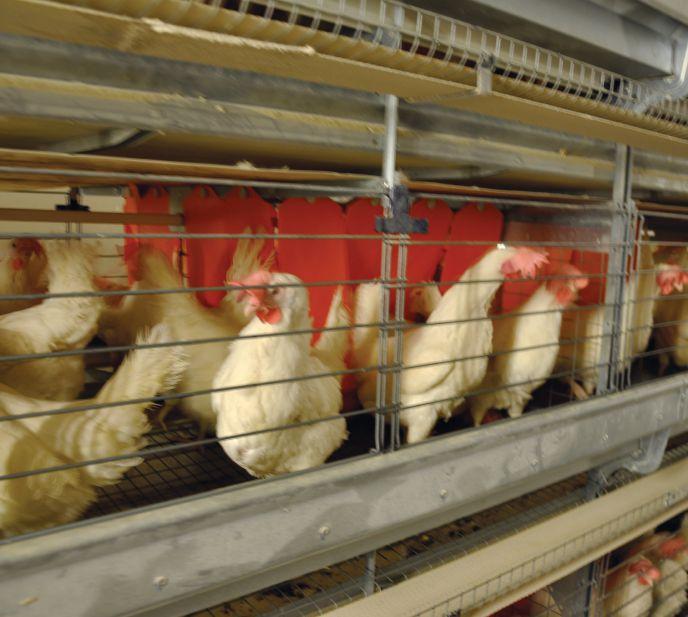
t he colony leased an additional 8,000 birds (bringing the total close to 20,000) and built a new barn with Big Dutchman’s colony cage system (known as Avech), which provides 116 square inches per bird. sixty birds are housed within each 146x46 inch unit, and share a large nesting area and perches.
t he units offered a scratch area through the use of a rubber scratch pad, however Gross and Kleinsasser say that the scratch pads have since been removed because they were collecting too much dirt. they noted that the
birds did use this area, and they would include a scratch area again if the mats were proven to stay clean. After viewing a presentation given by Dr. tina Widowski, an animal welfare professor at the university of Guelph and the current canada chair for Poultry Welfare for the egg Farmers of canada (eFc) at the egg Farmers of Alberta annual meeting, they are considering using a flat plastic scratch mat, something Widowski has been utilizing in her studies on enriched housing. Her preliminary research shows that these mats stay much cleaner than the rubber mats (which have piles that can collect dirt). Gross says that they have had little
Joe Kleinsasser of Big Bend colony says the birds have better feather conditioning and utilize the nest space well.
bETTER CoNDITIoN
DIAMOND 100 CPH WITH STACKER, STAINLESS STEEL
› $39,500
› Variable speed up to 36,000 eggs per hr
› Dispenses eggs packed and stacked 6 high
› Built in flow control
› Manufactured 2007
› Very low hrs.
DIAMOND REMANUFACTURED 60 CPH FARM PACKER
› $24,500
› Variable speed up to 21,500 eggs per hr
› Fully remanufactured
› New powder coat paint
› 90 Degree takeaway belt
› Convenient user interface
› Optional flow control
DIAMOND FP 100 CPH PAINTED
› $29,500
› Variable speed up to 36,000 eggs per hr.
› Fully remanufactured from the ground up
› 90 Degree takeaway belt
› Built in flow control
NEW SIME TEK STAINLESS STEEL FARM PACKER 14.5
› $29,500
› 14,500 Eggs per hr
› European technology
› Built in egg counter
› Small footprint
DIAMOND FP 70 PAINTED
› $25,500
› Variable speed up to 25,100 eggs per hr.
› Fully remanufactured from the ground up
› New powder coat paint
› 90 Degree plastic takeaway belt
› Built in flow control
DIAMOND 2100 EGG GRADER
› Grade wash and sort up to 36,000 eggs per hr
› Call for pricing
problem with eggs laid out of the nesting area, estimating that 95 per cent are laid within the nest area. As for production, over three flocks they have averaged 98 per cent, which is “an improvement over our last system,” says Gross. He says there is little fluctuation in production, and mortality has been reduced by half.
When they placed the first flock, Kleinsasser says, they “tried their own research” and increased the density in several of the colony units to 65 or 70 birds. “We didn’t notice any real changes in bird behaviour or production,” he says. However, the first flock was “flightier” (the birds were a shaver breed) — three subsequent flocks have been Lohmann and H&N, which are calmer, he says.
one of the biggest improvements they have noticed is that the birds have better feather covering than those
Production
housed in the old layer barn, even when only a few weeks away from end of lay. “the birds are in better condition, and they look good,” says Kleinsasser. the birds are also more
relaxed, he says. occasionally he will notice birds with their legs stretched out and he feels “there is no way they would be at 98 per cent production” if they were not relaxed.
the birds are more active within the enriched system, and Gross says that feed consumption has gone up a little, but “not substantially.” However, he says that a learning curve for him was timing the feedings so that the birds would eat enough. He and Kleinsasser feel there is so much for the birds to do, that adding an extra feeding (five times per days versus four times a day in the old barn) was necessary to keep the birds focused on eating.
Big Bend raises about 10,000 pullets, and the other 10,000 are purchased. All are cage-reared, but “have no trouble adapting” to the enriched system, says Kleinsasser. the pullets are placed at 19 weeks of age and adapt to the nest area very well, he says.
When the new barn to house the enriched system was built, the colony also built a feed mill to produce its own feed for the layers as well as its hog operation. the mill uses a micro ingredient feed batching method, blending wheat grown on the colony with purchased canola and soybean meal, canola oil, and premix, which has been formulated by a local poultry nutritionist. Although the feed mill is located near the hog barn, when feed mixed
(l to r) eli Waldner (who helps in the barn), chicken boss george gross, and Joe Kleinsasser, Vice-chairman of the egg farmers of alberta.
the Big Bend colony produces feed for the layers and pullets with its on-farm feed mill
for the layers or pullets is ready, it is transported to the layer and pullet barns underground.
Gross says being able to make his own feed has allowed for greater consistency. Although the initial capitol cost to install enriched housing was high (about 40 per cent greater than that of conventional housing), the enriched housing combined with greater feed control has had “great benefits for production.”
the hens produce about 12,000 dozen eggs per week and cracks are less than two percent, and undergrades are less than three per cent — a great improvement over the old barn, says Kleinsasser.
the colony has also begun receiving a premium for the eggs. their grader, Burnbrae, began marketing eggs from Big Bend c olony’s enriched housing under the brand name “Nestlaid” in safeway stores and some sobeys stores throughout the province.
Although many people who came to an open house held by the colony in 2009 thought Big Bend was rushing into enriched and the industry wasn’t there yet, Kleinsasser says, “installing such a system is a very positive thing for the industry.” n
UNRIVALED AGILITY
The only telehandler designed and built to outperform the tractor Increase of your productivity by 20% to 50% Best fuel economy of the industry
Merlo: undisputed worldwide leader in telehandlers
mERLo IN cANADA: from coast to coast!
QUEBEc manulift
Quebec City, (418) 651-5441
Varennes, (450) 652-5550
Garage Émile Larochelle Inc.
Saint-Isidore, (418) 882-5654
Équipements R.m. Nadeau
Sherbrooke, (819) 846-6828
Les Entreprises
Antonio Laporte & Fils Inc.
Notre-Dame-des-Prairies, (450) 756-1779
Location Blais
Rouyn-Noranda, (819) 797-9292
oNTARIo manulift
Burlington, (905) 315-8881
corbeil Equipment Ltd.
Curran, (613) 673-5184
Hutchinson Farm Supply Inc.
Stouffville, (905) 640-2692
Delta Power Equipment
Essex, (519) 776-7374
Exeter, (519) 235-2121
Forest, (519) 786-5335
Watford, (519) 849-2744
Stoltz Sales and Service
Listowel, (519) 291-2151
Mildmay, (519) 367-2672
Elmira, (519) 669-1561
GJ’s Farm Equipment Inc.
Burgessville, (519) 424-9374
Anderson Equipment Sales Belleville, (613) 969-6246
mANIToBA
Bobcat of central manitoba Ltd. Winnipeg, (204) 633-1058
SASKATcHEWAN E. Bourassa & Sons
Assiniboia, (306) 642-3826
Estevan, (306) 634-9444
Pangman, (306) 442-2033
Radville, (306) 869-2277
Weyburn, (306) 842-6626
meadow Power & Equipment Ltd.
Meadow Lake, (306) 236-4455
ALBERTA manulift
Langdon, (403) 936-8668
Nieboer Farm Supplies
Nobleford, (403) 824-3404
Edmonton Kubota
Edmonton, (780) 443-3800
Kubota country Fairview, (780) 835-5515
BRITISH coLUmBIA meinen Brothers Agri Services Agassiz, (604) 796-3820
NEW BRUNSWITH Valley Sales & Service Ltd. St-André, (604)
Technology Poultry barn meteorology
managing air quality through humidity control
B Y S HAWN C ONLEY
The old saying “it’s not the heat; it’s the humidity” can be tweaked to apply to a lot of problems in poultry barns: it’s not the dust, the ammonia, the carbon dioxide or the carbon monoxide; it’s the humidity. over-ventilating can result in dry, drafty conditions with an unnecessarily high heating cost, while under-ventilating can cause excessive litter and air moisture, and negatively affect bird performance. When it comes to minimum ventilation, monitoring humidity can be the ultimate tool to manage air quality. Maintaining humidity levels of 50-70 per cent can create ideal gas and particulate concentrations in the barn.
one gas that is important to address is carbon monoxide. Although carbon monoxide is generally not lethal to poultry until it reaches levels of 3,000 parts per million (ppm), it can cause measurable distress at 600 ppm, and has been shown to cause ascites around 70 ppm in poultry. it is actually more of a problem for humans than for birds. in reality, heater maintenance will affect the concentration of the gas more than ventilation for two reasons: first, increasing ventilation brings in more cold air, which requires the heater to run more, and second, oxygen levels aren’t reduced enough to allow toxicity to become an issue. since carbon monoxide is linked to oxygen, it is vital to mention that ventilating to ensure adequate oxygen is not necessary. Air is 21 per cent oxygen, and birds require only six per cent to survive.
shawn conley writes that when it comes to minimum ventilation, monitoring humidity can be the ultimate tool to manage air quality. maintaining humidity levels of 50-70 per cent can create ideal gas and particulate concentrations in the barn.
to provide enough for 20,000 day-old birds, only 16 cubic feet per minute (cfm) of ventilation is required, and normal ventilation rates are over 1,500.
For humidity control, we need to look at how the gases that follow humidity will be at acceptable levels as long as we maintain appropriate humidity levels.
the first of two gases that can dramatically affect bird performance is carbon dioxide: a gas that has essentially no effect on performance up to about 6-8,000 ppm. However, at levels exceeding 8,000, performance starts to decline marginally, while above 10,000 ppm, weights can be reduced by over 10 per cent. the target
for carbon dioxide based on these numbers should be a maximum of 5,000 ppm. As seen in Figure 1, if humidity levels are maintained at under 70 per cent, levels above this number should never occur, and therefore, humidity control will result in carbon dioxide control.
it is easy to see in Figure 1 that not only does carbon dioxide follow humidity, but ammonia does as well. i don’t need to rehash all the issues that can result from high ammonia levels, but keratoconjunctivitis and air sac issues are a couple that come to mind. Lesions on the eyes due to high ammonia levels quickly cause blindness, and destruction of the cilia lining the respiratory system make it nearly impossible for birds to expunge particulates and bacteria from air sacs. in inoculated birds, Newcastle disease has been shown to infect 100 per cent more birds at 50 ppm of ammonia than at 0 ppm1 the threshold for live weights also seems to be 50 ppm, with close to eight per cent lower than at 25 ppm, whereas feed conversion rates increase by four per cent and mortality is nearly four times that at 25 ppm. there is a theory that because ammonia increased more quickly (4 ppm / min) in relative terms than carbon dioxide and temperature (0.7 F / min), and because oxygen barely decreased in 20 minutes with no fan activity, in power failure situations it is actually ammonia that causes catastrophic mortality.
Ammonia, by far, is the biggest concern, but it is not a practical method to manage ventilation. Ammonia monitoring equipment is expensive and not consistently reliable, so humidity is looked upon as the management tool.
hUmIDITY SENSoRS
Humidity sensors to attach to a barn controller are relatively inexpensive for the benefits they provide, and allow for accurate tracking of humidity data. if it is established that humidity is too high, ventilation levels can be tweaked higher until
plot of temperature, humidity, carbon dioxide and ammonia. mike czarick, 2012.
Technology
a balance is achieved. using gas to increase heat production and warm incoming air might be a necessary evil to get below 70 per cent humidity. the decision must be weighed against bird performance. An essential piece of information to understand is that increasing temperature by 20 F doubles the water holding capacity of the air as it enters the barn, so boosting the target temperature can more effectively reduce humidity than increasing air exchange, and lessens the chance of chilling or drafting. Keep in mind, however, that humidity’s affect on litter moisture is a cumulative one. taking advantage of higher daytime temperatures and lower outside humidity by reducing ventilation in the nighttime hours and increasing it during the day can save a lot of money on gas.
DUST
But there is another side to this story, namely particulates, or in other words, dust.
there are a few reasons a barn can have dust problems, and there are some facilities where the only solution is to use dust clearing technologies like sprinklers, for example, conventional and aviary layer barns, light restricted breeder replacement barns and heavy activity turkey finishers. But in
• Engineered to Current Building Codes
• Custom Designed to Your Specification
• Barn Straightening, Renovations
• Additions
Tel: (519) 666-0453
Fax: (519) 666-2430
most commercial meat production barns, the majority of dust control can be accomplished through proper ventilation management, and by this i mean humidity management. Not only does dust carry bacteria, but also it can irritate the membranes of the system and increases transmissibility of disease.
High dust levels are also generally an indicator that ventilation levels are too high, and in turn, too much heat is being generated, consuming gas. taking into consideration all the previous data provided about the other factors in air quality – carbon monoxide, carbon dioxide, oxygen and ammonia – if we pull back ventilation enough to elevate humidity above 50 per cent, we should be in good shape. As we do this, we must remember that levels above 65-70 per cent can drastically hurt bird performance, so it is very important not to overcompensate for dust, and consider alternative dust control measures if it is not practical or possible to get levels up.
As with all poultry-related topics, it is difficult to adequately explain all of the ins and outs of ventilating based on humidity, but it is worth the time to do some further research and develop an understanding of what moisture does to a barn. consultation with an expert can go a long way. Making use of monitoring equipment will give you incredible insight into what is actually occurring in your barn, and is an invaluable tool. And don’t forget, when it comes to minimum ventilation, it’s not the gases and the dust, it’s the humidity! n
1 Miles et al., 2004.
Shawn Conley is with Weeden Environments in sales and technical service, internationally and in Canada. He manages projects with many U.S. poultry companies and works frequently with researchers in the industry. Management in pharmaceuticals, a degree in cell and molecular biology and some NCAA and professional basketball preceded his six years working in the poultry equipment and feedadditive industry. Being a former Ontario farm kid, his motivation is to help producers build a strong Canadian poultry industry. He can be reached by e-mail at shawnc@weedenenvironments.com or shawn.d.conley@gmail.com.
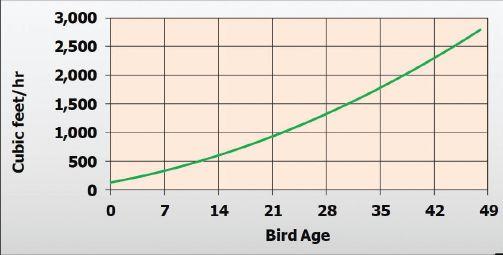
graph of carbon monoxide versus bird age for 20,000 broilers. Brian fairchild, 2012.
figure 2
CHICKEN IN (COMPOST OUT )
BIOvator® turns poultry mortalities to compost in as little as two weeks.
BIOvator® is the environmentally-sound and biosecure solution for mortality management. Cost-effective and easy to use, it’s the big steel tube that turns deads into dirt – fast.
Contact us today 1-701-370-0782
Technology Adding Sunshine to Eggs
Vitala foods has launched the sunshine egg, which provides a full daily dose of vitamin d
B Y D Av ID S CHMIDT
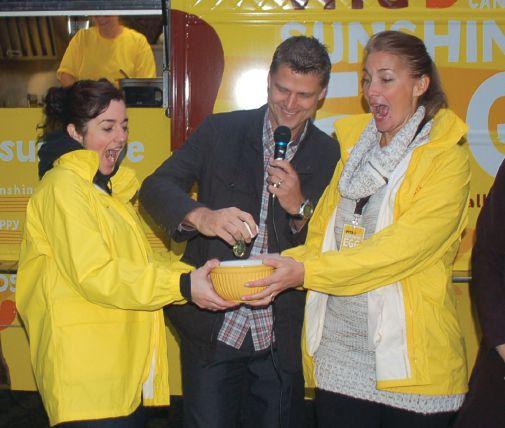
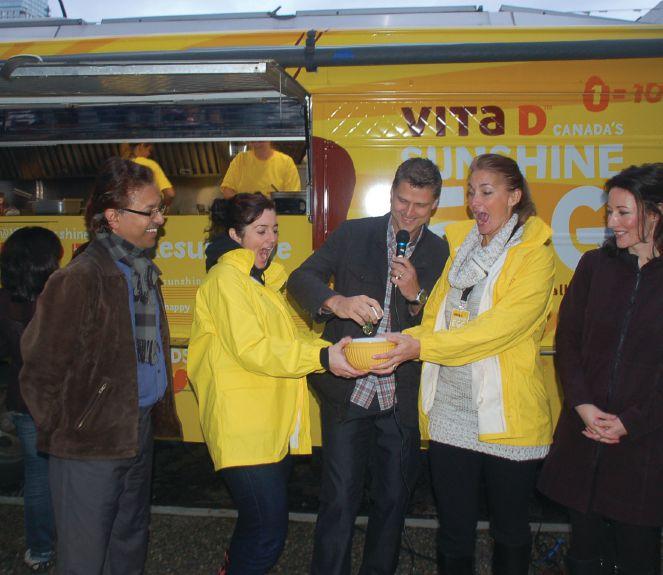
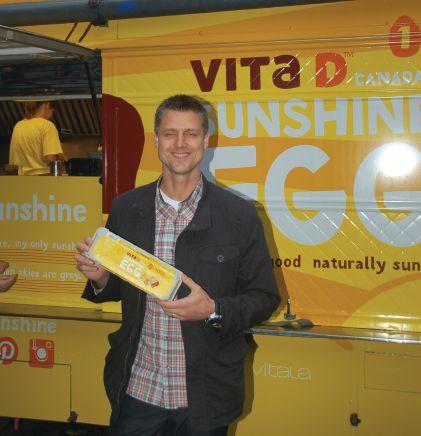
on Vitamin D Day (or Nov. 2), agrientrepreneur Bill Vanderkooi of Vitala Foods in Abbotsford, B.c., launched Vita D sunshine eggs, the world’s first caged layer white eggs to provide 100 per cent of the daily recommended value of vitamin D in a single egg.
He launched the new line of specialty eggs in downtown Vancouver by having the Vita D sunshine crew give people their daily dose of “sunshine” through free Vita D sunshine breakfast burritos. Appropriately, the weather that day contained heavy cloud cover, further emphasizing how common vitamin D deficiency is among people.
“We’re so pleased to make getting your daily dose of vitamin D more convenient and accessible,” Vanderkooi told the crowd.
to boost the vitamin D content in their eggs, hens are fed a proprietary all-natural, plant-based feed additive, which is rich in vitamin D. As a result, each egg contains at least 200 iu s, the current daily value set by Health canada, about seven times that found in regular eggs.
some health professionals are calling for daily diets to include at least 3,000 ius of vitamin D, and Health canada is expected to increase its recommendation to 600 ius/day in early 2013.
EGG-CITING INNoVATIoN
Bill Vanderkooi of Vitala foods (inset, right) launched the Vita d sunshine egg in downtown Vancouver on nov. 2, 2012.
Vanderkooi, who has a degree in animal nutrition, says he will be ready when that happens, saying “We will increase the additive so each egg contains at least 600 ius.”
With a premium of just 50 cents/ dozen over conventional eggs, Vita D
sunshine eggs are the most affordable specialty eggs on the market. they are currently available only at the overwaitea/save-on Foods chain and choices Markets in B.c., but Vanderkooi expects to take the brand national in the near future.
2012 Poultry Service Industry Workshop
The Poultry Service Industry Workshop thanks the following sponsors for their continued support which allows the planning committee to provide a
INSTANT SUCCESS
since the sunshine eggs have gone on sale, they have been flying off the shelves. “sales are exceeding expectations and we anticipate adding an additional flock by the end of November,” Vanderkooi says.
Producing the eggs for Vitala is veteran Abbotsford egg producer Ben Loewen, who has 19,000 birds in two flocks. Loewen also has a 13,000 bird farm nearby run by his daughter and a 14,000 bird farm in the north okanagan run by his son.
Loewen had no hesitation in taking on the new program for one of his flocks when he was approached by his feed company this summer. After all, he remembers when “we used to put vitamin D in the water just for the health of the bird.” since the vitamin D is just a feed additive, Loewen has not had to change his practices, making the transition seamless. Despite believing the diet is “better for the birds,” he admits that they “have seen no change” in their health status.
“it’s not affected my way of farming and the birds’ way of living,” says Loewen.
Vitala pays the extra cost of the additive plus a five-cent/dozen eggs premium for the eggs. Although the premium is welcome, Loewen is just as happy to be part of an effort to increase overall egg sales.
“As producers, we’re businesspeople too. consumers are looking for new products and we want to see our product sold when it’s as good as it can be.”
A NEW mARkET
the sunshine egg is not Vanderkooi’s first foray into the specialty egg market. His company already produces Vitala eggs, a free-run brown egg with omega-3 and 50 per cent of the recommended vitamin D. He intends to boost additive in that diet so that those eggs will
also include a full dose of vitamin D. Vanderkooi is also formulating a third diet that will add omega-3 to the caged white layer sunshine egg, which will allow him to offer a complete line of specialty eggs with added health benefits at various price points.
“our plan is to have three sKus to cover the full demographic scope: Vita D sunshine eggs, Vita D sunshine omega-3 eggs and premium Vitala Free run omega3 Vitamin-D eggs,” he says. “We have been launching the eggs one at a time so we don’t overwhelm consumers with too many claims at once.”
Vanderkooi’s innovations have received the full support of the Bc egg Marketing Board, which has a policy to “keep some birds aside for product innovation and research.
“We have allowed [Vanderkooi] to do his experiments with nonquota birds,” says Al sakalauskas, general manager of the Bc egg Marketing Board. “you can’t do those things in a lab.”
this is part of a deliberate effort by the B.c. industry to meet increasingly diverse consumer demands.
“Anything the consumer wants, we will try to supply,” says sakalauskas, noting B.c. now has 16 product categories in the retail egg case: “more than any other province.” n
We see a flock of numbers that connect us. We see the millions of pounds of feed that together, we have worked to save every year with our birds. We see more secure operations, thanks to our industry leading health status. We see the many lasting relationships we have forged in this dynamic industry.
Together, by understanding the numbers, we understand the industry.
Strength in Numbers.
Economy
The Value of ‘Eggonomics’
British columbia is taking a stand on cross-border shopping
B Y D Av ID S CHMIDT
The Bc egg Marketing Board believes that the industry has lost over three million dollars in retail egg sales due to cross-border shopping in the first 10 months of 2012.
“We’re the only province which has seen a year-to-date decline in consumption and we attribute that to cross-border shopping,” says BceMB general manager Al sakalauskas.
that is because almost all the decline has come in conventional white eggs, which cost more than a dollar less in seattle than they do in Vancouver. “it’s about a two per cent erosion of regular table egg sales to the end of september,” he adds.
the decline does not appear to have had an impact on organic or other specialty egg sales, perhaps due to the fact that those consumers are used to paying a little extra or because they already see the value of supporting local farmers.
the BceMB wants the rest of the Metro Vancouver consumers to appreciate that as well and with this in mind is launching a course in “eggonomics.”
to launch the effort and bring the point across in dramatic fashion, the BceMB, with the help of its advertising agency, DDB, created a media event in downtown Vancouver in mid-september. BceMB and DDB staff built a life-size fire truck with 20,000 B.c. egg cartons at downtown Vancouver’s busiest street corner to demonstrate the amount and value of lost sales.
“the event did what we wanted it to – it
loST REVENUE
the Bc egg marketing Board says that cross-border shopping is negatively impacting the consumption of eggs in the province.
got some attention, a lot of social media and very favourable responses from small business and consumers,” sakalauskas says, noting a youtube video of the event has had close to 700,000 hits.
they backed up the video with a new website, www.eggonomics.ca, which describes how bringing in u s. eggs, a few dozen at a time, takes money out of the pockets of canadian farmers, graders and retailers, thereby negatively impacting the entire local economy.
since egg production is governed by quota, the decline has not had a direct effect on B.c. egg producers. Despite that, the BceMB is footing the entire bill for the campaign.
“We can’t just sit back and ignore the erosion when every other province is experiencing an increase in sales,” sakalauskas says.
Although cross-border shopping occurs
across the country, it is most pronounced in Vancouver and the Fraser Valley, which has about three million people living within an hour of the u.s. border. incidences of this have shot up after local border crossings were vastly improved and the canadian Border services Agency doubled the value of products consumers are allowed to bring back to canada.
the shopping is not restricted to eggs. consumers usually cross the border for bigger-ticket items, as well as such staples as eggs, milk and cheese.
Because of that, the BceMB is now working with the Bc Dairy Association and the retail council of canada to develop an aggressive campaign to combat the issue. to help finance the effort, they are hoping to access $100,000 in matching funding from a $2-million dollar fund the provincial government recently gave agriculture to promote buying local. n
SMITHWAY, INC.
Custom Built Environmentally Controlled Transport Systems
With over 33 years of experience, Smithway can handle your hauling needs no matter the size or age of your birds. Our new curtain sided trailers allow easy side loading of your cages while providing protection from the elements. Smithway continually strives to meet and exceed the needs of our Customers.
SMITHWAY, INC. (828) 628-1756 / 628-2381 PO BOX 188 FAX: (828) 628-7662 HWY 74A EAST E-MAIL: SMITHWAY@ATT.NET FAIRVIEW, NC 28730 WEB: WWW.SMITHWAYINC.COM
IPE BOOTH # A-815 “The Number One Way Is The Smithway”
Contact us today for more information or a quotation.
PIC Update
Canada’s First Poultry Welfare Auditor Course
pic and paaco
focused on husbandry, management and how to audit
BY DAYNA SILLS, POULTRY WELFARE MANAGER AND INTERIM RESEARCH MANAGER
Animal welfare is an issue gaining more attention each year and a great number of research projects are being conducted to determine how we can improve the lives of poultry during the time spent in the barn and during transportation. consumer awareness is also influencing the way restaurants and stores do business and how consumers view their internal animal welfare policies. As well, animal welfare auditors are needed to conduct audits for companies to ensure that the standard of welfare at production facilities meets their requirements.
in september 2012, the Poultry industry council, along with the Professional Animal Auditor certification o rganization (PAA co ), organized canada’s first Poultry Welfare Auditor course held in Mississauga, ont. the course was modified from the u s course to reflect for the difference in the canadian poultry industry structure. the class was sold out shortly after registration opened and there is currently a waiting list for the next course. these trainees were primarily from ontario, but about 25 per cent were from Western canada and one person was from Quebec. there is a great need to have more people become certified poultry welfare auditors and this three-day canadian course will
the poultry industry council, along with the professional animal auditor certification organization, introduced the first canadian poultry Welfare auditor course in mississauga, ont., in september 2012.
help open the doors to get this movement going.
the first classroom day was focused on poultry husbandry and management related to welfare criteria in audits and audit protocols and ethics. these topics were taught by knowledgeable people in the canadian poultry industry (Al Dam, oMAFrA; Dr. stephanie torrey, AAFc; ed Malek, cFiA; Greg Morrison, tFo; Pam Kuipers, eFo; stan Gough, Aviagen; carl stevenson, cFo; Brian Herman, Brian’s Poultry services; cheryl Firby, Maple Leaf Foods; Dr. Mike Petrik, McKinley Hatchery; and George Jeffrey, Vétoquinol). the final session, which focused on audit protocols and ethics, was given by Dr. Karen christensen (o.K. Farms, Ark.), PAAco chairman.
the second day of the course taught trainees how to audit welfare criteria at
a hatchery, farm and processing plant at the broiler breeders, broilers, layers and turkey levels. the second day ended with a group discussion between instructors and trainees, of the many different possible scenarios that an auditor may encounter, what the appropriate response should be and how to work through the scenarios. the instructors for the second day were very qualified and knowledgeable people from the united states, and included Dr. Karen christensen, who covered broilers and broiler breeders, Matt Jones, Validus services, iowa, on layers, and finally Dr. Don Mcintyre, Diamond V Mills, s.c., who addressed the turkey side. they all took the time to explain each concept and thoroughly answer questions.
on the third day, trainees were in the field to put into practice what they had
WoRkING oN WElFARE
Old OrChArd INN & SPA
Greenwich, Nova Scotia in the heart of Annapolis Valley February 13-15, 2013
Come enjoy the Atlantic Poultry Conference and the tranquil atmosphere of the beautiful Annapolis Valley, Nova Scotia
CONTACT
Bruce Rathgeber
Email: brathgeber@nsac.ca
Telephone: 902-893-6654
Fax: 902-895-6734
H. Fedema — Grimsby
PIC Update
learned and go through audit demonstrations at broiler, layer and turkey facilities. this day concluded with a written test based on the classroom teachings.
the trainees must now complete two shadow audits (with a PAAco-certified poultry auditor), which are a very valuable learning tool and mandatory extension of the course to become certified. the audits allow trainees the chance to apply what they’ve learned in the course and gain confidence in conducting their own audits. once this last step is finished, the trainees will become officially endorsed as “PAAco-certified Poultry Welfare Auditors.”
We’ve received much positive feedback from both trainees and instructors, and another poultry welfare auditor course is planned for 2013. this first canadian course was very successful, and we are on the way to filling the need for poultry welfare auditors.
the Poultry industry council would like to thank all the people involved in putting this course together, especially the sponsors (New Life Mills, egg Farmers of ontario, Hybrid turkeys, ontario Broiler Hatching egg and chick commission, sobeys, tim Hortons, turkey Farmers of ontario, university of Guelph – Department of Pathobiology) and the companies and farmers for providing audit demonstration facilities (cargill
cold springs Farm, Maple Leaf Foods, P&H Foods, Jim Holden (turkey farmer), Brian Lewis (chicken farmer) and Dan Veldman (egg farmer)). We appreciate all your expertise and help; the course wouldn’t have been as much of a success without your assistance and sponsorship.
A full list of participants in the canadian PAAco Poultry Welfare Auditor course can be found here: http://www.poultryindustrycouncil.ca/training-and-events/welfare-auditor/ recognition-for-participants. n
Meats,
•
•
ALL THINGS CONSIDERED
bY JIm KNISLeY
election madness
When i was young the world went MAD. schools across North America held drills teaching children to hide under desks. My public school – a classic eight-room, two-storey, brick and concrete edifice built in the 1930s depression – went beyond desk hiding. in the basement there were two large windowless rooms: one was open and used as a recess area on rainy days, while the other had a massive, steel bank-vault-style door that was only opened during drills. inside were shelves of canned goods, containers of water, blankets and first aid kits. on drill days the pupils were led into this room, and once inside, the door was closed. it was, in effect, a massive bomb shelter designed to protect the young from Mutual Assured Destruction. in retrospect. the drills and the bomb shelter were unnecessary.
Although the nuclear arms remain, we have moved away from that edge. But people seem to have a need for MADness, even if the current forms come with less catastrophic baggage. in the recent u s. election campaign, spending exceeded $6 billion and the presidential campaign television ads appeared –by one estimate – a million times, with most appearing in just 10 states. Living across Lake erie from ohio and Pennsylvania, i was able to watch this play out on cleveland, ohio, and erie, Penn., television.
i saw character assassination, misrepresentation, obfuscation, distortion and, not to put too fine a point on it, lies. this was accompanied by demagoguery, deceit, derision and deception. this went on, particularly in ohio, hour after hour, day after day, week after week, month after month. the barrage was so intense that it filled virtually every 30- and 60-second spot and drove other advertisers from the airwaves.
the eyes of voters. if anyone had accepted and acted upon what they had heard in all the ads, the only rational choice would have been to vote None of the Above.
in the end, American voters – if they believed the ads and the broader campaigns – were left with a choice, not between outstanding candidates who disagreed on fundamental issues, but between two destructive ogres.
But for all the ads and all the spending, minds seem not to have changed. the election results in November reflected where the polls were six months earlier. the sole discernible impact was the raised level of cynicism.
Many analysts have concluded that the decisive votes were driven by a modern version of the oldest political strategy: the “ground game,” or neighbour-to-neighbour politics and the ability to get supporters to the polls. the Democrats, at the presidential level and in competitive senate races, had a better ground game.
this has also been seen in recent canadian elections. While there are ads, which can be as bad as those in the u s., the conservatives have been better on the ground, particularly in contests for competitive seats.
The barrage was so intense that it filled virtually every 30- and 60-second spot
one of the lessons from the u s. election should be that trying to outspend your opponents and deploying billions in money bombs is an excerise in futility. if both sides have the capacity to, as they used to say, bomb until the rubble bounces – all you leave is a political and intellectual wasteland.
At times, this became almost laughable. there would be, for example, a 60-second republican ad, followed by a 60-second Democratic ad, followed by a repeat of the republican ad. Making the situation even worse, in my view, is that the people or companies supplying the money to pay for these ads are mostly hidden. they seemingly lack the courage or moral fibre to be accountable.
the end result of all the attacks and all the spending was that both presidential candidates and many candidates for the senate and the House of representatives were diminished in
one analyst, whose name i’ve forgotten and who was taking part in one of the innumerable panel discussions that followed the election, observed that a couple of hundred million in ad spending would have ensured voters were aware of the issues and informed of the differences between the candidates and their parties. the additional billions were wasted.
it could also be argued that a better purpose for all that wasted cash would be direct job creation. or it might have been useful in helping deal with ongoing mortgage problems or assisting schools or students faced with surging tuition costs. the money might even have been squirreled away for a rainy disaster like Hurricane sandy.
Just about any use would have been better than the mutual assured destruction that recently played out on u s. television. n
Research and Development
Introducing the class of 2013! At Cobb we are always looking ahead to serve our customers through the use of innovative research and development. Investing in R&D is the best way for us to create value and deliver it to our customers. We’re the world’s oldest poultry breeding company. We’ve achieved that by listening to our customers, utilizing innovation, and leveraging technology to deliver annual genetic progress.
Genetic Improvement
DNA profiling using genetic markers and computer programs to optimize selection of pedigree stock will enable Cobb to maintain its leadership as a broiler genetics company. Applying these techniques to the key performance and welfare traits will increase efficiency and speed of bringing genetic improvements to the market.
Delivering Continuous Progress In Genetic Potential