EXPANSION PLANS
Renewable

12 EXPANSION PLANS
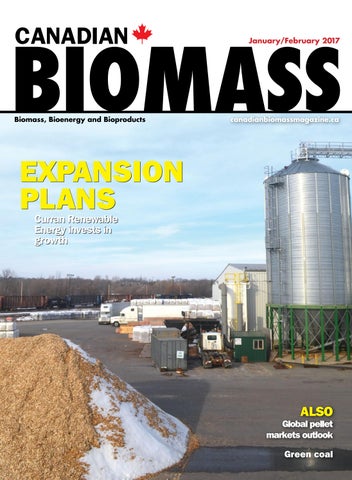
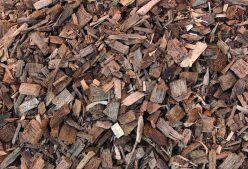
Curran Renewable Energy in Massena, N.Y., is operating with a high-tech furnace that increases the pellet plant’s efficiency and production potential.
14 Green coal
Airex Energy is showcasing the potentials of its unique biochar technology at a demonstration plant in Bécancour, Que.
18 Growing demand for pellets
FutureMetrics’ William Strauss has a 2017 outlook of global wood pellet markets that delves into historic and future demand.
22 Solid standards
An overview of Canada’s involvement in the development of standards for solid biofuels, both at the international and national levels, and of the benefits to the Canadian solid biofuels industry.
24 Bio-education
Coverage of three prominent industry events: BioCleantech Forum, Renewable Industries Forum and Scaling Up Bio.

A reason for optimism
2017 begins with biomass in an advantageous position
Canadian Biomass’ New Year’s resolution is to keep you well informed as we begin what could be a record year for our industry. It’s easy to be optimistic.
We were watching closely in early December as Canada’s provinces and territories signed on to the so-called pan-Canadian climate deal. The deal involves Canada going coal free by 2030, and requires all provinces and territories to implement some form of carbon pricing – a minimum of $10 a tonne – by 2018.
The $10 per tonne carbon price is in line with international standards.
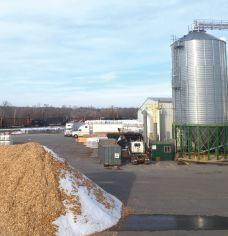
According to the World Bank’s State and Trends of Carbon Pricing 2016, three quarters of carbon prices globally are lower than US$10 per tonne. B.C. already collects a carbon tax of $23 per tonne, and, as of Jan. 1, Alberta is taxing $15 per tonne. Extending the minimum tax across the country will create a favourable environment for biomass producers to offer their solutions to reduce the volume of emissions created by other industries.
Both carbon pricing and the coal-free directive put wood pellet producers in a strong position. There is a case to be made for those remaining coal-fired power plants in Alberta, Saskatchewan, New Brunswick and Nova Scotia to phase-out the coal by co-firing. The Wood Pellet Association of Canada is hard at work convincing governments that co-firing would allow those power plants to remain operational with minimal conversion required.
As FutureMetrics’ William Strauss writes in a global pellet market outlook
on page 18, the industrial wood pellet market is expected to grow significantly over the next several years with new markets opening up in Japan, Korea, and, as a result of the aforementioned policies, Canada. China remains a question mark, but even a nominal interest in wood pellets from the manufacturing behemoth would create massive demand on supply.
North America’s heating pellet market is also looking up as the price of crude oil gradually increases. If the trend continues as expected, wood pellets should soon be the lowest cost fuel to heat homes.
Across the country biomass producers are making steady progress. On the East Coast, Shaw Resources became the first Canadian pellet producer to receive Sustainable Biomass Partnership (SBP) certification, a growing international certification scheme for woody biomass used in industrial large-scale production. In Ontario an algal biorefinery at a cement plant is now in demonstration phase, and the same is true in Quebec for a biochar technology created by Airex Energy. Airex is poised to commercialize an array of biochar products from its torrefaction mill in Bécancour, Que. (read that story on page 14).
There’s a hopeful bioenergy, if you will, gripping Canada and it should lead us to many more exciting success stories over the year to come. Stay tuned.
Maria Church, Editor

Volume 17 No. 1
Editor - Maria Church (416) 510-5143 mchurch@annexweb.com
Editor - Andrew Snook (905) 713-4301 asnook@annexweb.com
Contributors - Gordon Murray, Simon Diotte, William Strauss, Staffan Melin, Maurice Douek, Sebnem Madrali, Pau Giardetti
Editorial Director/Group Publisher - Scott Jamieson (519) 429-3966 ext 244 sjamieson@annexweb.com
Market Production Manager
Josée Crevier
Ph: (514) 425-0025 Fax: (514) 425-0068 jcrevier@annexweb.com
National Sales Manager
Ross Anderson Ph: (519) 429-5188 Fax: (519) 429-3094 randerson@annexweb.com
Quebec Sales
Josée Crevier Ph: (514) 425-0025 Fax: (514) 425-0068 jcrevier@annexweb.com
Western Sales Manager Tim Shaddick - tootall1@shaw.ca Ph: (604) 264-1158 Fax: (604) 264-1367
Media Designer - Mark Ryan
Circulation Manager Carol Nixon – cnixon@annexweb.com 450-458-0461
Ted Markle, COO, tmarkle@annexweb.com
Mike Fredericks, President & CEO
Canadian Biomass is published six times a year: February, April, June, August, October, and December. Published and printed by Annex Business Media.
Publication Mail Agreement # 40065710
Printed in Canada ISSN 2290-3097
Subscription Rates: Canada - 1 Yr $49.50; 2 Yr $87.50; 3 Yr $118.50 Single Copy - $9.00
(Canadian prices do not include applicable taxes) USA – 1 Yr $60 US; Foreign – 1 Yr $77 US
CIRCULATION
Tel: (416) 442-5600 ext 3552 Fax: (416) 510-5170 blao@annexbizmedia.com 80 Valleybrook Drive, Toronto, ON M3B 2S9
Occasionally, Canadian Biomass magazine will mail information on behalf of industry-related groups whose products and services we believe may be of interest to you. If you prefer not to receive this information, please contact our circulation department in any of the four ways listed above.
No part of the editorial content of this publication may be reprinted without the publisher’s written permission ©2017 Annex Business Media, All rights reserved. Opinions expressed in this magazine are not necessarily those of the editor or publisher. No liability is assumed for errors or omissions.
All advertising is subject to the publisher’s approval. Such approval does not imply any endorsement of the products or services advertised. Publisher reserves the right to refuse advertising that does not meet the standards of the publication.
www.canadianbiomassmagazine.ca

BIOMASS
PROVINCES SIGN ON TO NATIONAL CLIMATE DEAL
Canada is moving forward with a climate deal that includes the target of reducing greenhouse gas emissions by at least 30 per cent below 2005 levels by 2030, and the requirement that all provinces and territories have a carbon price in place by 2018.
All provinces and territories, save for Saskatchewan, signed on to the deal at the first ministers meeting in Ottawa on Dec. 9.
In a joint statement, Canada’s premiers said the framework is an “ambitious and achievable plan” that addresses common challenges, will improve quality of life, and build a healthy environment.
“Pricing carbon pollution is an efficient way to reduce GHG emissions, drive innovation, and encourage people and busi-
AIRLINE MAKES FIRST FLIGHT WITH RENEWABLE JET FUEL
Washington state-based Alaska Airlines made history in November flying the first commercial flight using the world’s first renewable, alternative jet fuel made from forest residuals. The alternative jet fuel was produced through the efforts of the Washington State University-led Northwest Advanced Renewables Alliance (NARA).
The demonstration flight departed Seattle-Tacoma International Airport on Nov. 14 for Reagan National Airport in Washington, D.C. The flight was fuelled with a 20 per cent blend of sustainable aviation biofuel. The flight, the first commercial passenger flight of its kind, continues to advance viable alternatives to
conventional fossil fuels for aviation.
“This latest milestone in Alaska’s efforts to promote sustainable biofuels is especially exciting since it is uniquely sourced from the forest residuals in the Pacific Northwest,” Joe Sprague, Alaska Airlines’ senior vicepresident of communications and external relations, said in a news release. “NARA’s accomplishments and the investment of the U.S. Department of Agriculture provide another key in helping Alaska Airlines and the aviation industry reduce its carbon footprint and dependency on fossil fuels.”
While the 1,080 gallons of
Biomass North gets funds for bioeconomy strategy
Biomass North Development Centre has received a funding boost from Ottawa and the Ontario government to implement its Northern Ontario Bioeconomy Strategy.
The federal and provincial governments are investing $216,792 to allow Biomass North, in partnership with Union of Ontario Indians, to establish 13 demonstration facilities across the region to showcase the efficiency and effective-
nesses to pollute less. It is a core element of the framework and governments will work together on its implementation.”
The framework promises to ensure a greater use of renewable electricity, and reduce methane emission from the oil and gas sector.
“A focus on clean technology is a core element of the framework and through the actions identified, we will foster innovation and create new jobs, new technologies and new export opportunities.”
Saskatchewan Premier Brad Wall rejected the framework’s carbon pricing scheme, telling media a price on carbon would create economic imbalance.

biofuel used on the flight has a minimal impact to Alaska Airlines’ overall greenhouse gas emissions, if the airline were able to replace 20 per cent of its entire fuel supply at Sea-Tac Airport, it would reduce greenhouse gas emissions by about 142,000 metric tons of CO2, equivalent to taking approximately 30,000 passenger vehicles off the road for one year.
NARA is a five-year proj-
ect that launched in 2011 and comprises 32 member organizations. Today’s flight represents its efforts to develop alternative jet fuel derived from post-harvest forestry material that is often burned after timber harvest. The forest residual feedstock used to power Alaska Airlines Flight 4 was sourced from tribal lands and private forestry operations in the Pacific Northwest.
ness of various biomass initiatives.
“We are thrilled that the federal and provincial governments recognize the importance of our efforts and are investing to implement the Northern Ontario Bioeconomy Strategy,” Dawn Lambe, Biomass North’s executive director, said in a news release. “Once fully implemented, the strategy will help revive our forestry sector, create business opportunities, enhance First Nations partnerships, reduce energy costs, and support the environmental sustainability of our natural resources.”
WHAT NOW FOR MERRITT’S BIOMASS POWER PLANT?
When the Tolko sawmill in Merritt, B.C., officially closed its doors on Dec. 16, one big question remained. Where will the fibre for Merritt’s biomass power plant come from?
The $235-million power plant, which is being built by Spanish energy firm Iberdrola, had 95 per cent of its construction phase complete as of Dec. 9.
Fengate Capital Management and Veolia are the developers and equity investors of the biomass plant. The Merritt plant is one of two green energy projects in B.C., as part of the Merritt Green Energy Limited Partnership (Merritt Green Energy). The other is in Fort St. James, B.C.
Delays in the Merritt construction process so far were due to one of the subcontractors in the U.S. going through a bankruptcy.
In a past press release announcing the financing closure on the plant, Merritt
Green Energy stated, “Fuel will be provided by local partners, including Tolko Industries, under a long-term fuel supply agreement.”
Canadian Biomass reached out to Fengate Capital for comment and received a statement from Merritt Green Energy.
“The closure of Tolko’s Nicola Valley operation will not affect plans for the Merritt Green Energy Project,” Merritt Green Energy stated.
“The Merritt Green Energy Limited Partnership, a working partnership between Fengate Capital and Veolia, is confident that the fuel required to run the plant will be available through an existing agreement with Tolko,” it stated.
Merritt Green Energy, which first announced the project in 2014, also said the facility requires more than 20 full-time staff to operate it and has supported more than 250 jobs at peak construction periods. The
FREE TOOL CALCULATES WOOD CARBON BENEFITS
The Canadian Wood Council has updated its free Carbon Calculator tool that allows users to plug in wood building material volumes to determine carbon benefits.
With growing pressure to reduce greenhouse gas emissions (GHGs) in the built environment, designers are increasingly being called upon to balance function and cost objectives with reduced environmental impacts.
As the only major building material that is renewable and stores carbon over its lifetime, wood building products and construction systems can contribute to climate change mitigation efforts.
The Carbon Calculator, developed in partnership with US WoodWorks, can be accessed for free online at www.cwc.ca/carboncalculator.
Users input wood volumes and the carbon calculator estimates how much time it would take for Canadian and U.S. forests to grow that volume of wood along with the associated carbon benefits. Carbon benefits refer to the amount of carbon stored in the wood building materials and the amount of GHGs avoided by choosing wood instead of another more emissions intensive building material.
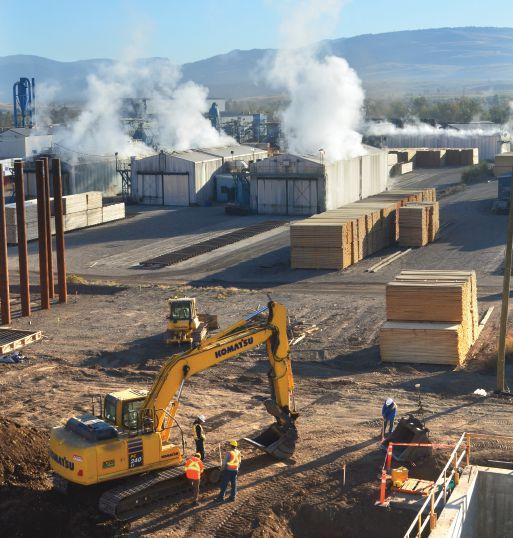
plant will generate more than 285,000 MWh of renewable electricity when it begins operations. That number is enough to power more than 40,000 homes for a year, according to the statement.
The plant is also planning
on reducing its carbon footprint through the use of emissions reduction equipment.
The biomass power plant is scheduled to begin commercial operations and deliver clean electricity to BC Hydro in mid-2017.
ALBERTA SOFTENS RULES AROUND MICRO-GENERATION
The Alberta government has changed the regulations governing how homeowners, businesses or municipalities generate their own electricity.
The new rules allow for more flexibility and a greater variety of configurations for micro-generation, including allowing one system to serve adjacent sites. The size limit has been increased to five megawatts from one.
“These changes will provide even more opportunity for Albertans to reduce their reliance on the grid and benefit from the choice to generate clean electricity. They provide more options and enable larger projects, and will contribute to our province’s target of 30 per cent renewable electricity by 2030,” Margaret McCuaig-Boyd, Alberta’s energy minister, said in a news release.
Lisa Holmes, president of the Alberta Urban Municipalities Association, said in the new release the amendments were the result of feedback from communities.
Micro-generation in the province has increased on average by approximately 70 per cent each year since 2009. Alberta has more than 1,700 micro-generation sites that generate more than 16 megawatts of electricity.
Educating government on biomass benefits

TBy Gord Murray
he Wood Pellet Association of Canada was a sponsor of the Canada Europe Energy Summit that was held at Canada House in London on Nov. 22. The Alberta government and the magazine Alberta Oil were listed as knowledge partners. WPAC’s objective was to raise awareness amongst senior energy industry and government leaders of the benefits of using wood pellets as a coal replacement for power generation. Attendees showed a distressing lack of awareness about the many coal-to-biomass conversions that have taken place in the U.K., the rest of Europe, Asia, and Canada.
The purpose of this year’s conference was supposed to be to examine the policies, technologies and energy mix that will diversify energy production, meet energy security needs and climate change commitments whilst stimulating economic growth. New Brunswick Premier Brian Gallant spoke at the conference, but did not mention renewable energy. Instead he focused on the importance of building the Energy East oil pipeline so that Alberta’s oil could be exported through his province. Baroness Neville Rolfe, the U.K.’s minister of state for energy and intellectual property, emphasized the need for nuclear energy and carbon capture and storage. When asked about the possibility of additional coal-to-biomass conversions in the U.K., she appeared uninformed and answered incoherently. Much of the rest of the day’s conversation was about keeping oil in the energy mix and the future of nuclear energy.
I participated in a panel discussion regarding diversifying Canada’s energy exports and how to ensure a diverse energy mix in the U.K. and continental Europe
and was the only speaker to promote bioenergy. Here is what I said:
I represent the Wood Pellet Association of Canada. Our members produce wood pellets, which are used as a clean, renewable replacement for coal in power generation and as a cost-effective home heating fuel that provides substantially lower carbon emissions than coal or heating oil.
Wood pellets are biomass. Biomass is renewable and carbon neutral if sourced from sustainably managed forests. However, since some fossil fuel is used in the manufacturing and transporting of wood pellets, the overall GHG savings from biomass when compared to coal is normally 80 to 90 per cent. In Canada, we make wood pellets from sawmill and logging residues using what used to be wasted before our industry began.
We began exporting pellets from Canada to Europe in 1998, and to the U.K. 10 years later. In 2016, Canada is on pace to ship 1.8 million tonnes to the U.K. worth $300 million. Total U.K. wood pellet imports this year will be about 7.3 million tonnes with a total value of about $1.7 billion. Most of the rest will come from the United States.
The U.K. has its own pellet production, most of which is used for residential, commercial, and institutional heating. The U.K. government has a target of 12 per cent renewable heat by 2020. The country supports converting fossil heating systems to renewable alternatives, including biomass systems with its Renewable Heat Incentive support scheme.
From 2009 to 2014 Drax Power completed the world’s largest coal to biomass conversion. Drax converted three of six
– 600 MW power units to use wood pellets, spending about 700 million British pounds on the project. There are many other European generators that are producing power using wood pellets including Dong Energy, Engie, HOFOR, RWE, and others. Drax Power alone provides six to eight per cent of the U.K.’s electricity, about 70 per cent of which is produced from wood pellets. The project is saving about 12 million tonnes per year of GHG emissions. According to a study by Oxford Economics, Drax supports 14,000 jobs in the U.K. – direct, indirect, and induced. Drax’s project has also revitalized port facilities at Hull, Immingham, Tyne and Liverpool.
There are two new substantial biomass power projects now under way in the U.K., including the conversion of the 420 MW Lynemouth Power Station and MGT Power – a new 300 MW combined heat and power project at the Port of Tyne.
There are also many coal power plants in Japan and Korea that are now using wood pellets. In Canada, Ontario Power Generation has completely converted its 200 MW Atikokan power plant to wood pellets.
Wood pellets are ideal for power generation. At power plants, pellets are handled much like coal. They are milled into powder, mixed with air, and blown into a boiler for combustion to heat hot water, produce steam, turn a turbine and generate electricity. The required modifications are relatively modest. They include installing covered storage to protect wood pellets from moisture and handling systems to transport from storage to the milling process, and modifying coal mills, burners, and ash handling. The rest of the power

Our competitors say we’re old and slow to change. That our machines are ugly. That we’re not on the cutting edge.
We say, “Yup.”
“Old” means we’ve been around for over 100 years—and we’ll be here for 100 more.
“Slow to change” means we don’t do fads. Oh, we’ll turn on a dime to make changes that our customers need. But fads? Nah. We’d rather protect your investment.
“Not cutting edge” means we’re proven. We build what works and we stick with it.
And “ugly”? Well. You don’t need to be pretty to make a damn good pellet mill.



plant stays the same – the boilers, turbines, generators, cooling system and so forth. And there is no loss of energy efficiency. So, by converting to wood pellets, generators are able to use almost all of their existing infrastructure. Since the U.K. plans to phase out coal power generation by 2025, biomass power generation is a great way to repurpose existing power stations.
One of the benefits of power from wood pellets is that unlike wind and solar energy, it is dispatchable, in other words, available on demand. That means that wood pellet power has the flexibility to be used for base load and for peaking.
Although wood pellets are more expensive than coal, they provide substantial environmental benefits over coal. Besides being renewable and having 80 to 90 per cent lower carbon emissions, they are lower in NOx, SOx, Mercury, other heavy metals and ash.
In the U.K., renewable electricity is supported by the Contract for Difference (CFD) mechanism. Drax Power, Lynemouth Power, and MGT Power were all supported by early CFD contracts, but unfortunately additional biomass power conversions are not eligible to bid in the upcoming CFD auctions. A 2016 study by NERA Economic Consulting and Imperial College showed that when system integration costs are considered, biomass conversions are the lowest cost renewable electricity option and provide the best value for U.K. consumers. System integration costs include providing back up for intermittent sources like wind and solar, and balancing when those sources are not available, which is more than half the time. System integration costs can amount to as much as 13 per cent of the total cost of electricity. According to NERA and Imperial College, if developers of biomass power conversions were allowed to participate, it could save U.K. consumers as much as 2.2 billion pounds in system integration costs. This is a great opportunity for the U.K., which plans to phase out coal power generation by 2025. Drax has told us that they are willing convert a fourth boiler to biomass if allowed to participate in upcoming CFD auctions. For there to be a level playing field, full system costs must be considered and biomass should be entitled to the full 15 years of support that is currently available to other renewable technologies.
On Nov. 21, Canada’s Environment Min-
ister Catherine McKenna announced Canada’s intention to completely phase out coal power by 2030 following Alberta’s lead from November 2015. Alberta intends to replace one third of its coal power with renewables and two thirds by natural gas.
Alberta has 18 coal power stations, some of which are approaching end of life. However, there are five newer units that will not be fully depreciated by 2030. We see an opportunity to repurpose several of those power units to use wood pellets.
Although the Government of Alberta has not yet fully defined its phase-out plan for coal, on Nov. 3 of the year it released a report describing how its renewable energy support scheme will work. It will use an auction process that looks very similar to the U.K.’s CFD mechanism. It will be fuel-neutral. Alberta plans to hold its first auction in early 2017 for renewable energy projects to be in service by 2019. While we like the structure of Alberta’s auction process, we observe that the first auction is to be capped at 400 MW, which is less than 10 per cent of Alberta’s ultimate renewable energy target. This is not large enough to accommodate the biomass conversion of even a single power unit. So, the first auction seems to be targeted at wind and solar.
The schedule for future auctions will be updated as Alberta completes its plan to phase out coal. We are optimistic that there will be an opportunity for biomass conversions of the newer coal units. The province will have grid reliability concerns if the current dispatchable baseload provided by coal is not replaced.
Converting just a single power unit in Alberta would consume about 1.7 million tonnes of wood pellets per year. Between Alberta and neighbouring B.C., the forest industry creates ample raw material to produce those pellets. There is a lot of knowledge that has been gained here in the U.K. from Drax and other biomass power projects that could be transferred to Alberta, further strengthening the relationship between our two countries.
Although I made my remarks passionately, delegates looked at me as though I was from Mars. Perhaps they thought I had come to the wrong conference. It was evident to me that we need to do much more to educate senior government and industry leaders – both in Canada and in the U.K. –about the benefits of biomass. •
























Expansion plans
Curran Renewable Energy invests in growth
By Andrew Snook
WhenPat Curran decided to get into the wood pellet business in 2007, it was to help ensure that the fibre from Curran’s family logging business Seaway Timber and Curran Logging based in Massena, N.Y., always had a home. When the pulp mill across the border in Cornwall, Ont., shut down, the logging business lost a big market for its wood chips.
“We were starting to see some of our markets tightening up,” Curran explains during a tour of his pellet plant operation. “In order for us to be successful as a logging operator we need to have something close by.”
Fast-forward to present day, and not much has changed.
Supplying wood chips for pulp mills makes up a huge part of the family logging business, which mainly harvests the plentiful hardwood species that populate the region of upstate New York the company operates within. Curran’s logging business supplies chips to Domtar’s pulp mill in Windsor, Que.; Fortress Paper’s mill in Thurso, Que.; and International Paper’s plant in Ticonderoga, N.Y., in addition to producing sawlogs for a handful of customers in the area.
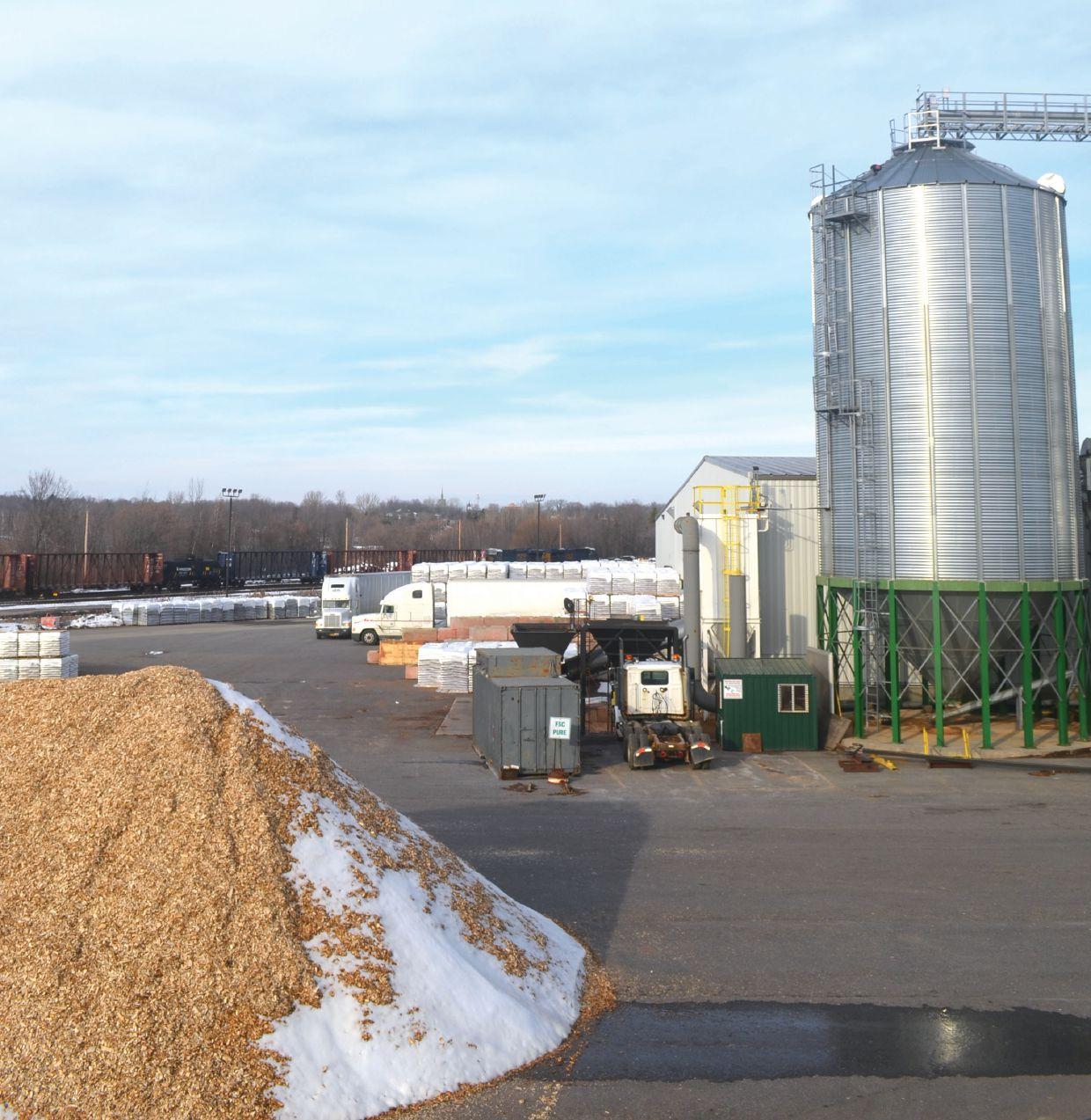
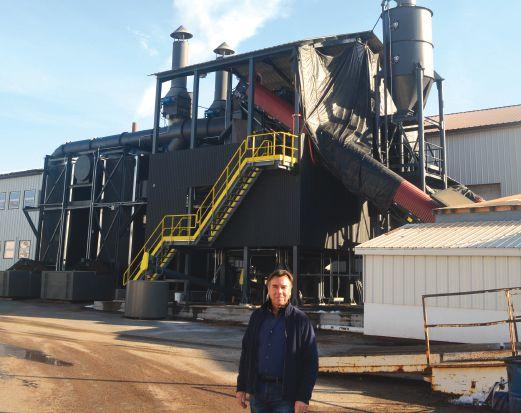
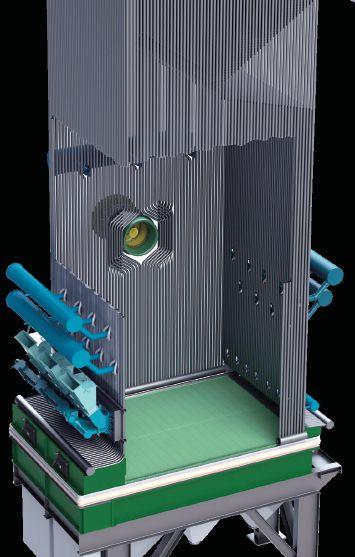
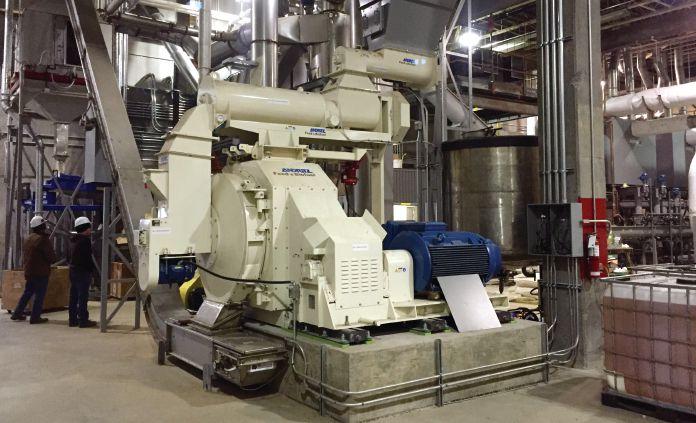
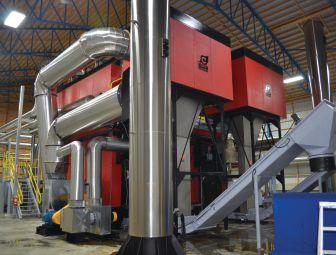
To ensure the company continues to have a variety of options for its fibre, Curran has given his pellet plant a significant upgrade in the form of a $3-million Torbel 15-MW fluidized bed hot gas furnace.
The investment in the new furnace has created multiple opportunities for fibre utilization. One option is to use the furnace to significantly increase wood pellet production at the plant. The plant only produced 60,000 tons of wood pellets this year due to decreased demand in the biomass wood pellet market, but had the capacity to produce upwards of 125,000 tons. With the new furnace and the rest of the plant operating at its current capacity, the plant will experience about a 15 per cent increase in production. This stems from the plant no longer having to burn its high-grade fibre for heat.
“We were burning 15 per cent of our nice clean fibre for energy at the same time that we have an abundance of low-grade fibre,” Curran says.
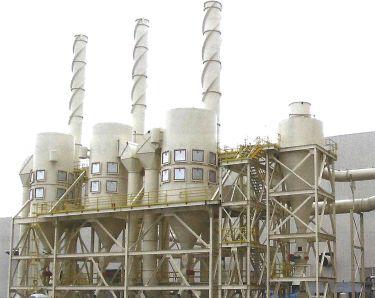
The uptick in efficiency stems from the gas cleaning system in the Torbel furnace. The unit is equipped with four multi-cyclone dust collectors that run in parallel. The multi-cyclones clean the hot gas, and separate ash, sand and burning particles prior to drying the wood fibre in the dryer. This improves the quality of the wood pellets produced, which Curran says is a key reason for the investment.
“It’s about holding on to your market,” he says. “Every producer wants to produce a cleaner, better pellet.”
Increased production potential doesn’t stop at 15 per cent. If the market demand was there, Curran says he could very quickly increase production by installing an additional dryer and doubling the infeed system, number of hammermills and pellet mills in the plant.
“If we ran this furnace at capacity we feel we could produce between 200,000 and 250,000 tons,” Curran says, explaining that the reason for the wide variance is because he hasn’t seen how the furnace will operate in the winter months. “For at least nine months of the year we could double production.”
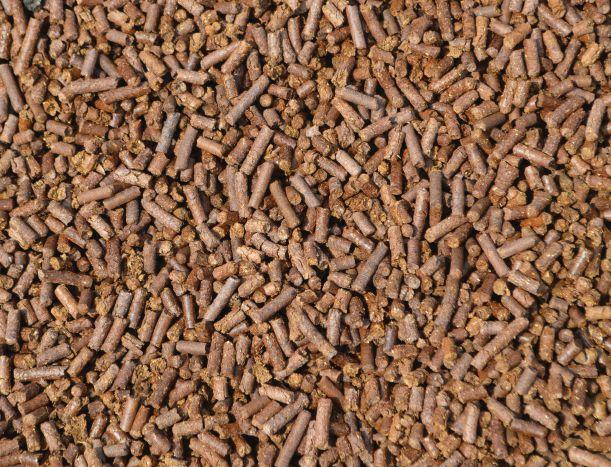
Curran Renewable Energy currently produces five different types of pellets: a 70/30 hardwood-softwood mix, a pure hardwood mix, a pure softwood mix, hickory pellets for barbecues and a pure pine pellet used for animal bedding.
While walking the property of the plant and checking out its current layout, it was easy to see that Curran Renewable Energy definitely has the space to increase capacity if market demand improves. The company has even set itself up with the potential to ship by rail from the tracks that run parallel at the back end of the plant’s
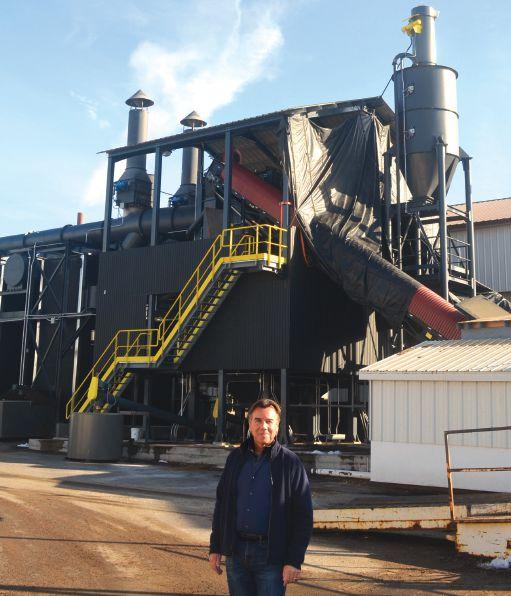
Pat Curran recently invested in a $3 million Torbel 15-MW fluidized bed hot gas furnace to enhance his wood pellet operations.

property; if the market picks up for bulk shipments. That said, Curran isn’t about to invest the cash in increased pellet production.
“Pellet market as it is, we won’t be doubling production right now,” he says, adding that there has been a perfect storm for decreasing demand in the pellet market with the combination of warmer winters, a high U.S., dollar and low oil prices. “It’s hard to see a prosperous position right now.”
STAYING DIVERSE
Increasing wood pellet production wasn’t the only reason Curran decided to invest in the Torbel system. He is also looking at using the furnace for co-generation if he can get a long-term agreement in place with a local utility provider to generate excess energy that can be converted into electricity and be fed back into the grid. That way the pellet plant would have a steady stream of income coming in that isn’t sensitive to fluctuations in currency or oil prices.
Another option Curran has for optimizing his new furnace is to produce briquettes or use it for heating large greenhouses for drying sand – another resource he has an ample supply from his company’s local aggregate operations.
CERTIFIED QUALITY
Another way Curran holds onto his market share in the wood pellet sector is by paying for third-party certification, which is performed by Timber Product Inspections. It is part of the requirements for ensuring a company meets the standards for the Pellet Fuels Institute’s (PFI) certification program.
“There’s a cost to this but it all comes back to quality,” Curran says, adding that third-party certification is extremely valuable to have if a customer that comes back with an issue related to the quality of the wood pellets they have purchased.
By ensuring his wood pellets are produced at the highest levels of quality and continuing to invest in fibre diversification strategies, Curran Renewable Energy is positioning itself to weather the current economic storm and be well positioned for future opportunities for growth when demand in the wood pellet market resurfaces.
“Even though we’re still in the start-up phase with the furnace, we like what we see and we are encouraged by the tremendous support and expertise given by the Torbel company, management and team,” Curran says. •

Timothy Curran Jr. shows off the company’s new Torbel furnace in the operations room.
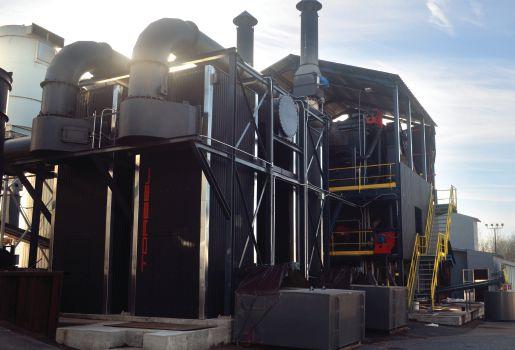
The new Torbel furnace offers the potential to increase the pellet plant’s annual capacity to between 200,000 and 250,000 tons.
Green coal
Quebec company poised to scale up biochar technology
By Simon Diotte, translated by Guillaume Roy
Nearthe St. Lawrence River, a stone’s throw away from the Gentilly nuclear power plant, the old LaPrade mill in Bécancour, Que., has come back to life. In one of the old concrete pools designed to produce heavy water, Airex Energy is testing its unique torrefaction process. Their goal: develop a large-scale biochar technology made with forest biomass and agriculture waste.
Much is at stake in this global renewable resource race against the clock to determine which player will develop the most efficient biochar production technology.
“At this moment, 40 per cent of the world’s power is produced from coal, a heavy greenhouse gas emitting source of energy. Since biochar has the same properties as coal while being carbon neutral, it could easily replace it without making big investments in thermal power stations,” explains Sylvain Bertrand, Airex Energy general manager.
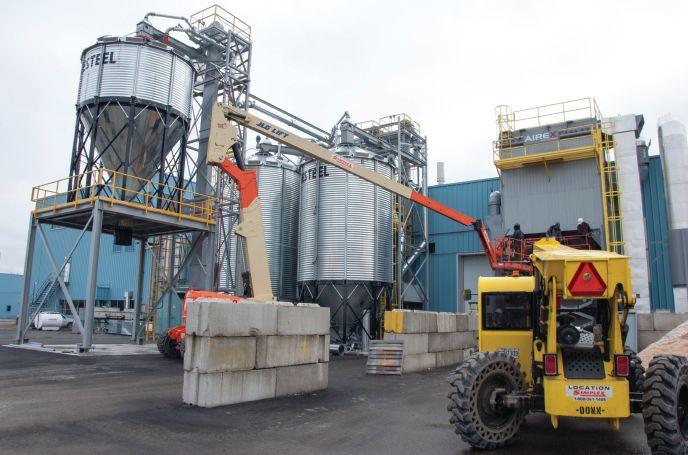
After the biomass torrefaction pilot mill construction in 2011 in Laval, Que., Airex Energy, a dust extraction system manufacturer, recently built a $6.5 million demonstration unit designed to be a technology showcase with the help of financial partners. They aim to sell this patented technology worldwide, while producing 15,000 tons of green coal every year.
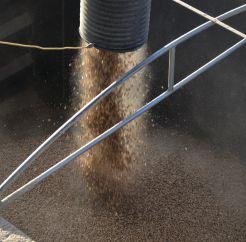
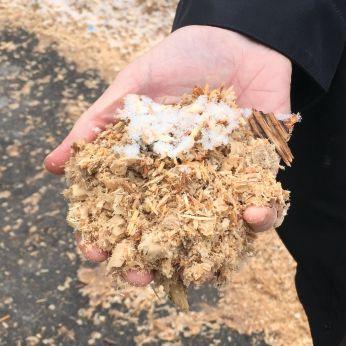
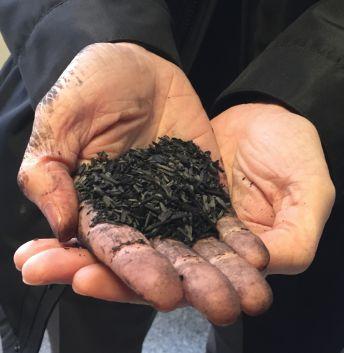
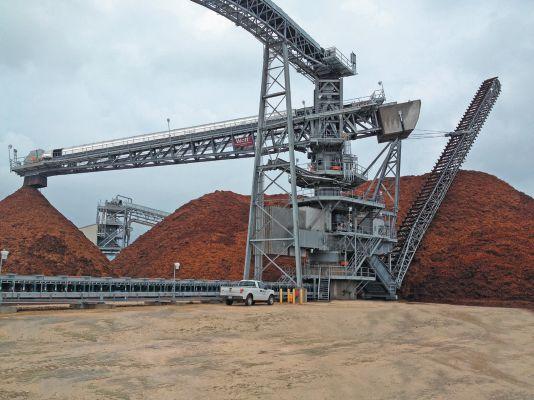
But how does it work? The sawmill residues – chips and sawdust – are heated at a high temperature in an oxygen-free environment. Without combustion, the wood moisture escapes and the matter is transformed, or decomposed, in green coal, a material with 35 per cent higher energy density than wood pellets. The biochar transport cost is thus lowered. The material being more brittle,
of financial partners.

the grinding process is also less energy intensive. The other advantage of biochar is that it is hydrophobic and can be stored outside.
“Our biochar stays only three seconds in the reactor,” Bertrand says.
This is the Carbon FX technology’s biggest strength. During the biomass decomposition process, the volatile compounds emitted are recovered and burned to produce heat reused in the process. “Once the process is started,
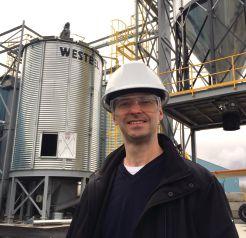
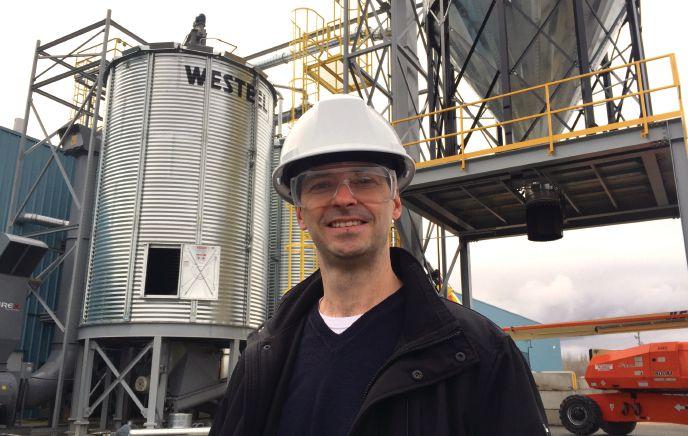
Sylvain Bertrand, Airex Energy general manager, says the company’s unique torrefaction process produces biochar that has the same properties as coal.
Airex Energy built a $6.5 million demonstration unit designed to be a technology showcase with the help
Argus Biomass 2017
25-27
CANADIAN
SAVE 15% - Quote code CANB15* www.argusmedia.com/euro-biomass

Deborah


Fabien



Scott Bax
SVP Operations
Pinnacle Renewable Energy





BioLesProm
RWE Supply & Trading
Jenlor Energy
Clean Electricity Generation
CellMark
Agroenergi Neova Pellets
Quebec Stevedoring
HOFOR
Euronext
Viking Shipping Company
Ecofys UK
Agroenergi Neova Pellets
RC Inspection
Enviva
Fednav International
BioLesProm
BNP Paribas Suisse
Eneco Energy Trade
Drax Power
Cosan Biomassa
Hawkins Wright
Mitsubishi Corporation
Finnshipping
FutureMetrics
Biolesprom
ArbaFollum / Treklyngen
Danske Bank
Port of Sillamäe
OBA Bulk Terminal
ZHD Stevedores
RusForest
Finnish Forest Association
Chubu Electric Power
Viridis Energy
Woodlands Resources
BEA Institut für Bioenergie
Fibreco Export
Vapo
Verdo Renewables
Adriacoke
Port of Ghent
Mitsui & Co
Dong Energy
IFCHOR S.A.
Sigma Solutions
CellMark
Highland Pellets
Gas and Power Company
Morandi Bortot
Ekman Denmark
Arbaflame
the biochar production needs very little energy,” Bertrand says.
Yo ur g l ob a l equ ip men t su ppli e r
f o r th e b i omas s industr y

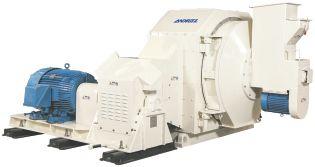
ANDRITZ is one of the world’s leading suppliers of technologies, systems, and services relating to equipment for the biomass pelleting industry We offer single machines for the production of solid and liquid biofuel and waste pellets. We have the ability to manufacture and supply each and every key processing machine in the pellet production line.
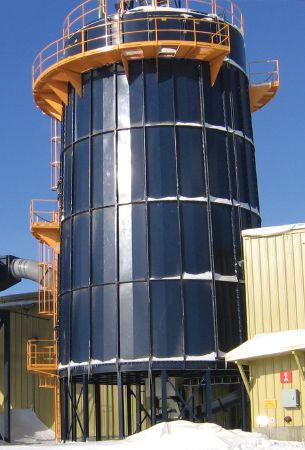
When the raw material reaches the 13,000 square foot mill it is sent in two big silos by conveyor. It allows some flexibility to store different materials such as sawdust, chips, agricultural or construction waste in different areas. A pulling screw under each silo then sends the material to the grinder. After, the matter is pre-dried to a 10 per cent moisture content, before being sent to the third silo. There, it enters a conditioning chamber where it is heated by indirect contact in a water vapour-saturated environment. The volatile compounds are recovered at that moment and burned in the combustion chamber.
The biomass is then carbonized at 450 C in cyclonic reactors. In this unique patented process, rotary valves block oxygen entry while levitation rings control precisely the particle transition in the reactor. When biochar leaves the reactor, it is densified from 200 kg/m3 to 700 km/ m3. Green coal then goes through the chilling room, and leaves the mill before being stored in silos, ready for shipping. When the mill reaches full operation, two 30-ton trucks will be shipped every day.
“The nice thing about this technology is that it is the simplest and the most efficient on the market,” says Andrée-Lise Méthod, founder and associate director of Cycle Capital Management (CCM), the capital management fund behind the project.
CCM finances just one to two per cent of the projects they receive, but they believe so much in the energy-tech startup that they invested $1.75 million in the business.
BIOCHAR, CARBON NEUTRAL?
When using forest resources to produce energy, torrefied biomass is considered as being carbon neutral, which means it does not emit new greenhouse gases. “When we extract bituminous coal and burn it, the carbon in the matter is released in the atmosphere. It is a new source of carbon. The reality is, however, different
with trees, because new trees grow after a forest is cut, thus absorbing new carbon,” explains Sylvain Bertrand.
The carbon neutral qualifier for biochar is not unanimous. Claude Villeneuve, a climate change expert at Université du Québec à Chicoutimi, explains, “Biomass can be considered as carbon neutral if many factors are respected. These factors include forest management, transportation, and process efficiency. This can be evaluated with lifecycle or carbon footprint analysis, where studies take into account all stages of the transformation process.”
ANDRITZ Feed & Biofuel A/S Europe, Asia, and South America: andritz-fb@andritz.com USA and Canada: andritz-fb us@andritz com
www.andritz.com/ft
Airex Energy manufacturers
Dust collector and CarbonFX manufacturing: Airex Industries. Conveyor: Nordstrong. Grinder: Schutte Buffalo Hammermill. Pelletizing: Andritz. Controls: Allen-Bradley. Silo reclaimers: Produits Gilbert.
Wood chips and sawdust are heated at a high temperature in an oxygen-free environment to produce the biochar.
The mill can produce thermal biochar, activated biochar, biocoke, torrefied wood flour and biochar fertilizer for agricultural soils.
This new source of energy is not without concerns; some worry it could encourage forest over-harvesting, which would disrupt ecosystems and biodiversity.
A WIDE VARIETY OF PRODUCTS
The Airex mill is very flexible when it comes down to the final product. Being able to modulate different parameters, like carbonization time, it can produce not only thermal biochar, but also activated biochar, a product used to filter water, gases, gold and other metals. Airex can also make biocoke, used as a reduction component in steel and silicium making industry, torrefied wood flour, used to manufacture composite material, or biochar intended to fertilize agricultural soils.
In North America, coal is still popular because it is a cheap fuel for thermal power stations. But things could change quickly as the fight against climate change grows. Alberta Premier Rachel Notley has announced the province’s intention to replace coal – currently producing 50 per cent of their electricity – with green
energy sources. In Europe, many countries are already reducing their carbon footprint as well.
“The global context is very favourable to this new source of energy,” Bertrand says.
Across the country, newsprint decline makes it even more important for businesses to look for new ways to use forest residuals. At the moment, the fibre
market is in equilibrium, but it is hard to predict where it will go in coming years.
“Biochar production could become an interesting market,” Bertrand says.
In the rest of the world, many players have biomass surpluses, coming from palm oil, sugarcane or corn. If coal was the fuel source for the Industrial Revolution, can biochar become the fuel source for a green global shift? •
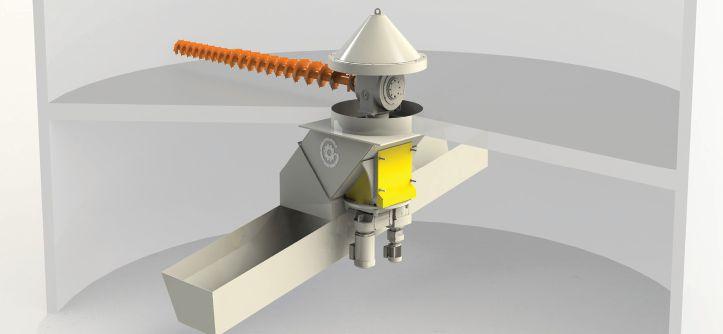
IMPROVE BIOMASS MATERIAL HANDLING WITH THE GILBERT SILO




Growing demand for pellets
Overview of global wood pellet markets: historic and future demand.
By William Strauss
Thepast few years have been challenging for wood pellet producers and pellet production project developers. A temporary plateau in demand growth for new co-firing or full conversion power plant projects in the industrial pellet market has led to an excess of production capacity. A series of warm winters in Europe compounded by low fossil fuel prices have depressed demand for pellets and new pellet stoves and boilers in the heating pellet markets. What will the future bring to the wood pellet markets? This article will try to answer that question.
Wood pellet markets comprise of two primary sectors: industrial wood pellets that are used as a substitute for coal in power plants, and premium pellets used in pellet stoves and pellet boilers for heating.
Global wood pellet markets, both the heating and industrial sectors, have had significant growth in the past decade. Growth rates over the most recent four years of data has been about 10 per cent annually; from about 19.5 million metric tonnes in 2012 to about 28 million metric tonnes in 2015.
INDUSTRIAL WOOD PELLET MARKETS
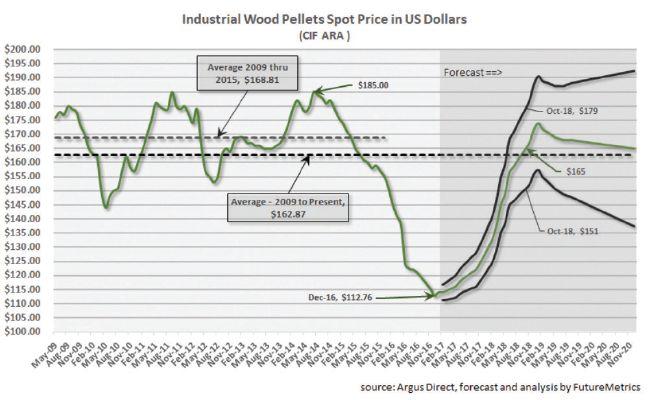
The industrial wood pellet market is expected to grow significantly. Chart 1 shows the historical actual demand and forecast potential demand for the industrial wood pellet markets. Current (2016) aggregate demand for industrial pellets is estimated to be about 13.8 million metrics tonnes per year. That is the equivalent of a large bulk carrier ship carrying 40,000 tonnes about everyday.
Future demand in the U.K., and EU is expected to plateau by 2020. However major growth is expected in Japan, and
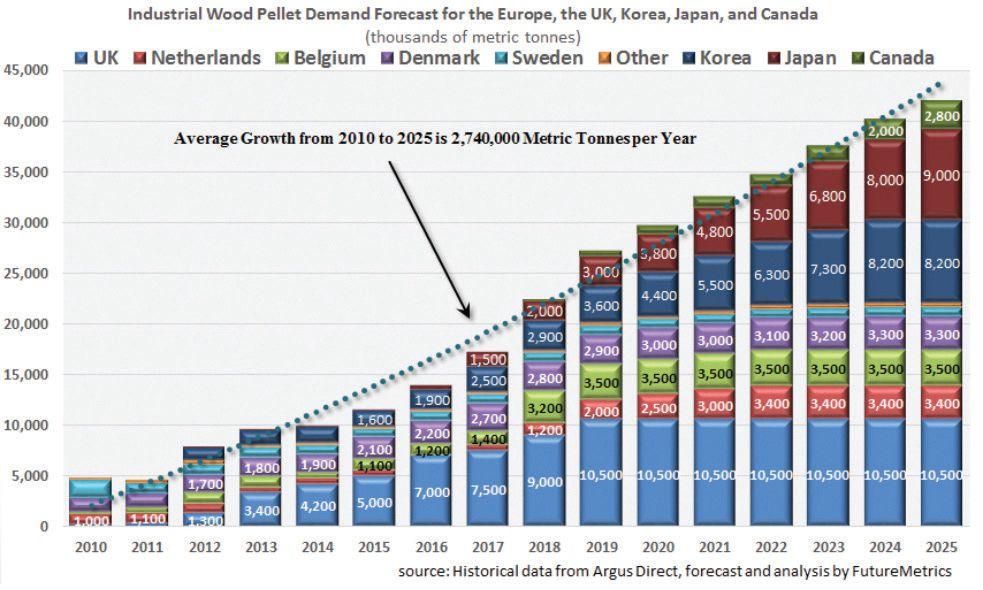
Korea in the 2020s. Canada has the potential to experience increasing demand for industrial pellets. That is due to decarbonization policies from the Canadian federal government and specific policies in provinces such as Alberta. FutureMetrics has two recent presentations with details on the forecasts for Canada and Japan (both are available at www.futuremetrics.com).
Over the 15 years from 2010 to 2025, the average annual increase in demand for industrial wood pellets is expected to be about 2.7 million metric tonnes per year.
Presently, there are too many pellets chasing too few buyers. The buildup of production capacity based on demand forecasts from a few years ago has resulted in a current state of excess supply in the industrial wood pellet sector. As a result, spot market prices for industrial wood pellets have hit historical lows.
The industrial pellet oversupply is compounded by increased production in
eastern Europe and decreased demand for heating pellets in Europe due to above average temperatures the last three winters. But with several large power stations – Lynemouth and MGT in the U.K., and Langerlo in Belgium – coming online in 2018, the oversupply will be soaked up by the new demand. Drax’s unit 1 will be full-firing (from 85 per cent co-firing) very soon, adding about 330,000 tonnes per year of increased demand. As of early January 2017 it is still unclear if the Dutch markets will begin co-firing. If they do, new industrial pellet demand could increase by an additional 3.5 million tonnes per year. That new demand, combined with growth in the Japan and South Korea, will soak up the current excess capacity and is expected to bring CIF ARA spot prices back into line with the long-term averages. (Chart 2)
The forecast assumes that the supply/ demand disequilibrium that currently exists is corrected after several large

Chart 1


projects come on line. The forecast also assumes that production capacity will not exceed demand and that the heating markets absorb normal quantities.
CHINA?
There is major uncertainty regarding the
terms of potential demand and in terms of how much pellet fuel could be produced domestically. On one hand, they have very limited forest resources for producing wood pellets. On the other hand, they have almost unlimited agricultural wastes that could be made into pellet fuel.
Using ag-waste for pellet fuel has many challenges. The big issue is that ag-wastes are high in abrasive silica and corrosive chlorine. Both are highly problematic for utility pulverized coal boilers. At low co-firing levels, those issues might be diluted to a level that is acceptable. But at higher co-firing rates non-purpose built boilers that are not designed for ag-wastes cannot use ag-pellet fuel.
The 2016 to 2020 five-year plan has explicit support for pellets. If China were to embrace co-firing of wood pellets, even at modest ratios, the internal demand would be very large. A five per cent co-firing rate, in 2020 if only 16 per cent of China’s
coal power plants are co-firing, demand would be almost 40 million tonnes per year.
What will happen in China over the next few years with respect to wood pellet demand is uncertain. If that market opens up to foreign imports of wood pellets, it will not only be massive, but depending on their requirements for sustainability (or not) it could be disruptive.
HEATING WOOD PELLET MARKETS
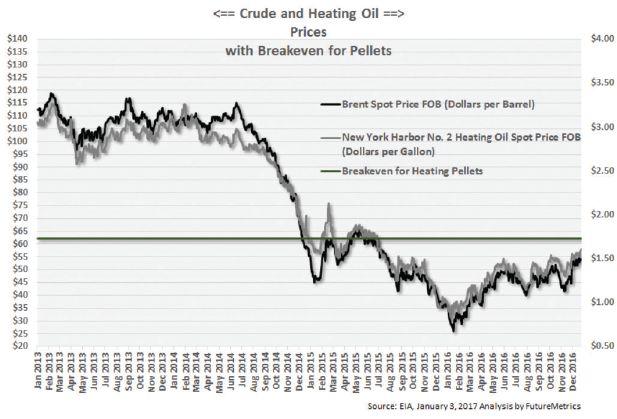
The heating pellet sector has grown steadily in the past decade. Unlike the industrial pellet sector which is policy driven, the heating pellet markets are primarily driven by the comparative costs of heating fuels. Pellets have historically been the lowest cost fuel for heating in most regions. Low crude oil prices and therefore low heating oil and propane prices have recently challenged pellets’ position as the lowest cost heating fuel. Chart 3 shows the recent price history of crude oil and heating oil and further shows that at about $62.50 per barrel, heating oil prices will be about at breakeven with wood pellets for the equivalent energy (assuming $245 per ton pellet price). Retail heating oil prices are at least $0.50 per gallon higher than the NY harbour spot price shown in the chart. In some jurisdictions retail heating oil prices are nearly $1.00/gallon higher than the NY harbour prices. If recent trends in crude oil prices continue, pellets will soon again be the lowest cost heating fuel.
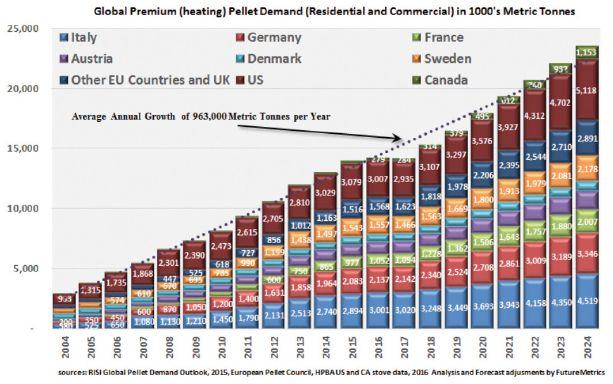
Chart 4 shows historic and forecast demand for heating pellets in the major countries that use pellets for heat. The chart shows the current and expected below trend growth in the global premium heating markets for 2015-2017. The below-trend growth is a result of several warmer-than-average winters and low crude oil and heating oil prices.
Based on expected petroleum prices from 2018 onwards it is likely that the heating pellet markets will resume their traditional growth. The heating markets are forecast to have an increase in demand of about 9.5 million metric tonnes per year from current levels by 2025.
CONCLUSION
The fundamentals for significant growth in the heating markets are sound. The near-term challenge is the cost of
alternative heating fuel. In most of Europe, where many countries have high taxes on heating oil, demand is more driven by weather than by oil prices.
In the U.S., heating pellet market growth is highly correlated to heating oil prices (and to propane prices in the Midwestern states). The larger the gap between the breakeven price of heating oil versus pellets the more demand for pellets grows as pellet stove and boiler sales increase. Weather always will create variation around the mean annual demand; but higher growth depends on oil prices rising above about $63 per barrel. The Canadian heating pellet markets are relatively small. But in a few provinces, there is potential for significant growth.
The industrial pellet markets are all about carbon emissions and renewable energy policies. The EU and U.K. markets are expected to plateau in the early 2020s. The industrial wood pellet market needs to look beyond U.K. and EU demand to find growth in the next decade.
The areas in which 2020s and beyond offer significant industrial pellet demand growth are Japan, Korea, and potentially China. Japanese policy as it stands today will generate millions of tons per year of new demand; and could generate tens of millions of tons per year.
A press release from Argus Direct on Jan. 4, 2017 notes that South Korea plans to increase investment in alternative energy sources by about 25 per cent to almost 14 trillion won ($11.6 billion) this year. According to the Korea Forest Biomass Association, its imports may climb from 1.5 million tonnes in 2015 to more than 8.5 million tonnes in 2022.
The U.S. Clean Power Plan had the potential to generate significant pellet demand by 2030. Under the Trump administration, the CPP is expected to be abandoned. There is still a chance that the U.S. could implement policy that would support the use of pellets in coal-fired power plants.
The expectations for the future of wood pellet markets are optimistic. If our forecasts are correct, more than 30 million tonnes per year of new demand by 2025 will drive more than $7 billion of investment in new production capacity worldwide.•
William Strauss, PhD, is the president of FutureMetrics. Find more FutureMetrics presentations and white papers online for free at www.futuremetrics.com.

Solid standards
Benefits of standards for the Canadian biofuels industry
By Staffan Melin, Maurice Douek and Sebnem Madrali
Theuse of solid biomass – in the form of wood chips, pellets, briquettes, firewood, sawmill residues, bark, or insect-killed trees – for fuel production is rapidly growing worldwide, with the global market for biomass pellets expected to nearly double from $4.5 billion in 2014 to $8.3 billion in 2020. Applications range from home heating, to greenhouses, schools, combined heat and power (CHP) plants, district heating stations and co-firing with coal in industrial power plants.
The varying quality and different applications of the feedstock have created a need for standardization of these materials both for local consumption and to facilitate international trade. In addition, product quality certification schemes have been introduced in order for biomass suppliers to demonstrate compliance with national and international regulations on the quality and sustainability of their products.
ISO Technical Committee (TC) 238 was established in 2007 to develop international standards on solid biofuels. The standards specify and classify all types of biomass and provide specifications for graded solid biofuels traded in the market, including wood pellets, wood briquettes, wood chips, firewood, as well as non-woody pellets and briquettes.
This article provides an overview of Canada’s involvement in making significant contributions to the development of standards for solid biofuels, both at the international and national levels, and of the benefits to the Canadian solid biofuels industry. The impor-
tance of using relevant standards and reliable emission accounting methods for assessing the sustainability of solid biofuels is also highlighted in the article.
INTERNATIONAL STANDARDIZATION ACTIVITIES
The examples below illustrate the importance and benefits to Canada of selected standards, in three main areas, namely fuels specifications, test methods, and safety.
Fuels specifications: For each class of solid biofuels, the specifications for key parameters, such as calorific value, ash, sulphur and chlorine levels are such as to accurately reflect the levels that can be achieved commercially for production of high quality biofuels. Without such rigorous standards, production and trading of biofuels of lesser quality could create unfair competition in markets of interest to Canadian producers and increase air emissions as a result of poor combustion in boilers.
Emerging technologies for producing thermally-treated and densified pellets, by processes including torrefaction, steam explosion, or hydrothermal carbonization are also showing great promise for producing solid biofuels with unique properties. As such, some European countries have recently made a strong plea for introducing international standards based on these technologies. However the proposal was turned down, largely based on arguments by Canada that these technologies have not yet been commercialized and validated, and that introducing new standards prematurely could seriously distort global markets and cause considerable confusion among stakeholders. The proposed standard was instead converted into an ISO Technical Specification (TS).
Test methods: Standards have been developed within this group for the measurement of key parameters, including moisture, ash, calorific value, durability and several others. Two new standards, proposed by Canada, are under development for determining grindability and absorptivity characteristics of solid biofuels. Grindability is of fundamental importance during solid fuel preparation since it affects energy consumption and particle size distribution. The new method will be a valuable tool for biomass power plants for accepting or rejecting pellets based on their grindability characteristics. The absorptivity method will assess the degree of water absorption and resulting durability loss of pellets and briquettes. It will be of particular relevance for plants using steam explosion pellets.
Ash melting behaviour is another critical parameter. The method is designed to assess the fusion and melting behaviour of mineral compounds remaining as residues in the combustion process. If the sintering or melting temperature of these residues is low,
formation of slag or clinker occurs which can cause damage or breakdown of combustion equipment. No internationally-validated method exists at the present time that can be used in case of litigation, thus this proposed method is of high economic relevance.
Safety: ISO/TC 238 is also currently developing a comprehensive series of standards on “Safety of Solid Biofuels”. These include specifications for safe handling and storage to suppress fire and explosion; and for reducing the risks of self-heating, off-gassing, and oxygen depletion in pellets plants and storage facilities. Canada, largely through work conducted at the Wood Pellet Association of Canada and University of British Columbia, has made significant contributions towards the development of these standards and international safety regulations.
NATIONAL STANDARDIZATION
Canada is promoting replacement of coal with renewable biofuels in residential, commercial, institutional and industrial applications. District heating systems have been installed in Quebec, Ontario, B.C., New Brunswick, and Northwest Territories. In Ontario, the Ontario Power Generation (OPG) Atikokan Generating Station was converted from coal to “white” wood pellets. The OPG Thunder Bay generating station is testing “steam exploded” wood pellets for production of electricity as a replacement for coal.
These endeavours have been driving requests for fuel specifications and quality standards – in Ontario, New Brunswick and B.C. – by government agencies and local authorities responsible for certification of combustion equipment and emission regulations. This has prompted the Canadian Standards Association (CSA) Group to consider adopting ISO standards as national standards. As a result, out of 24 published ISO standards on solid biofuels, 16 have now been adopted by CSA Group as Canadian standards, and six more will be adopted in 2016-17.
SUSTAINABILITY
In recent years there has been a growing emphasis on meeting sustainability requirements in all industry sectors, particularly bioenergy. The European commission is planning for sustainability criteria for solid and gaseous biofuels to come into effect in 2020. There is no clear indication yet as to which criteria will be adopted. The new ISO 13065 on “Sustainable Criteria for Bioenergy”, published in September 2015 may provide a common ground for demonstrating sustainability.
Sustainability is also becoming a more pressing issue for users of industrial pellets. As such, a new sustainability certification under “Sustainable Biomass Partnership” (SBP) is starting to get implemented in Europe.
One of the main requirements in Europe for sustainability of solid biofuels is that the overall GHG savings from such fuels be at least 60 per cent compared to fossil fuels. In 2015, the European commission released data showing over 60 per cent GHG savings for electricity and heat for feedstocks from the EU, Russia, and Southern U.S., but well below 60 per cent for feedstocks from Western Canada, particularly those used for heat generation.
Another study on GHG performance of heat and electricity from wood pellet value chains – based on pellets for the Swedish market – was recently published by Hansson, J., Martinsson, F., and Gustavsson, M., from the IVL Swedish Environmental
Research Institute. Pellets from Canada, particularly those that were biomass-dried instead of natural gas-dried, were found to meet the 60 per cent reduction in GHG emissions and thus would well comply with the strict demand for sustainability from a GHG perspective. These results are also in line with GHG life cycle emissions reported in the “British Columbia Wood Pellets Sustainability Fact Sheet”, November 2013. However, they are in contrast with the European Commission report.
These discrepancies show the importance for Canada to ensure the validity and credibility of assumptions for assessing the sustainability of its biomass.
CONCLUSION
This article has highlighted the importance and benefits of standards for the Canadian solid biofuels industry. It has also underscored the need for Canada to be vigilant in ensuring the validity and credibility of assumptions for assessing the sustainability of its biomass operations and products. Rapidly changing trends in international markets for pellets and wood chips, combined with new technologies for pellet production, and the growing demand for international standards and compliance certification, will need to be closely monitored and taken best advantage of, as they will have a profound impact on Canada’s domestic use and export markets of solid biofuels. •
Staffan Melin is Chair of the SCC Mirror Committee to ISO/TC238. Maurice Douek and Sebnem Madrali are co-chairs of the SCC Mirror Committee to ISO/TC238.
BIOCLEANTECH FORUM BRINGS TOGETHER INDUSTRY LEADERS
From supply chains to government regulations to the importance of public opinion, there was something for every stakeholder in the biomass industry at the inaugural BioCleantech Forum.
The two-day event, held in Ottawa, drew more than 270 people from industry, government and research to learn and share ideas about the biomass industry and clean technology.
Matt Jones, director general for the Climate Policy Office of Environment and Climate Change Canada, kicked off the plenary day, speaking as part of the first panel on how Canada can reduce GHG emissions in concert with long-term investments in carbon-based energy systems.
Malini Giridhar, vice-president of market development, public and government affairs for Enbridge, said the company has a plan to introduce biofuels into its operations for heating and transportation, but needs government policy to make it happen.
“We’ve come to the conclusion that biofuels actually make economic sense,” Giridhar told the audience. In Ontario, she
cited that high-cost biofuels are less expensive than off-peak electricity costs. But the company needs a mandate, she said, to find economical ways to procure biofuels and create demand.
Ecostrat president and CEO Jordon Solomon said he believes the demand for biomass is inevitable, and that Canada is positioned to be a world-class supplier because of predictable feedstock costs. The ability to predict the price of feedstock more makes up for the higher wood and transportation costs, he said.
“Canada can become a centre for bioenergy projects,” Solomon said, concluding that the solution is to create a secure supply chain to meet eventual demand.
Jeffrey Jacobs, president and CEO of biocrude-producer Ensyn, agreed that biomass projects will fail with an incomplete or ill-conceived supply chain, which he listed as the second of four challenges to a successful biomass project. The first challenge is technology, he said. When biomass technologies fail it is highly publicized and subject to great public scrutiny. The third challenge is uncertain or
RICANADA FORUM FOCUSES ON A THRIVING LOW-CARBON ECONOMY
Together for a thriving low-carbon economy. That was the theme for the inaugural Renewable Industries Canada forum, which took place in late November at The Westin in Ottawa, Ont.
The forum was designed to engage participants in critical and lively discussions on transitioning Canada to a thriving low-carbon economy, through furthering the role of renewable fuels and bio-based products. Renewable Industries Canada president Andrea Kent welcomed attendees to the forum. “With a national carbon tax coming, I don’t think there could be a better time to have a conversation about this,” she told the crowd.
The first session of the day focused on exploring Canadian public opinion on policy and climate change. The panel consisted of Dr. David Coletto, CEO of Abacus
Data; Paul Vieira of The Wall Street Journal; and MP Will Amos (Pontiac, Que.).
Coletto told the crowd that most Canadians recognize that there is conclusive evidence that climate change is real; however, that doesn’t necessarily make it their top priority. He said that when polled, about eight per cent of Canadians say that climate change is the most important issue, compared with issues like security and the economy, which account for about 50 per cent.
Vieira discussed how Prime Minister Justin Trudeau’s federal government’s decision to place the environment and climate change as a top priority is going to come with significant challenges.
“They’ll have to walk a very delicate balance with a fairly aggressive climate change policy while dealing with an econ-

unfavourable regulations. And the fourth, Jacobs said, is the inability of projects to overcome the above and become bankable.
The audience also heard from Drax Power, Fortum and Enerkem about their large-scale biofuel and bioenergy facilities, and how Canada can learn from them.
Day 2 was dedicated to breakout sessions focused on industry specific issues. Topics included using bio-heat for district energy and distributed systems, meeting process heat demands of heavy industry, leveraging existing infrastructure for renewable natural gas, and biocarbon for green steel alternatives.
For the full list of speakers and subjects they addressed, go to the event website, www.biocleantech.ca.

omy that’s trying to find its feet,” he said.
During the panel session, Ian Thomson of Advanced Biofuels Canada asked the question, “What’s in it for Canadians to get behind climate action?”
One aspect that needs to be considered is that governments need to ensure that all regions of the country are included in the discussions regarding finding solutions to climate change issues, Amos told the crowd.
View the full report at ricanada.org.
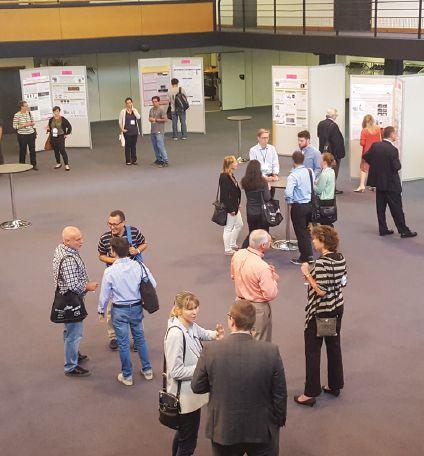
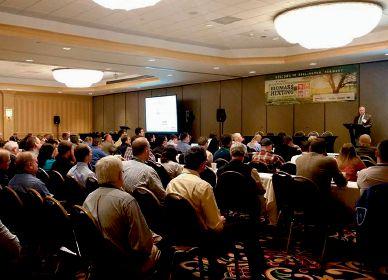
More than 270 people took part the inaugural BioCleantech Forum in November.
RICanada president Andrea Kent gives opening remarks.
SCALING UP CONFERENCE COMES TO OTTAWA
Members of the world’s bio-industry flocked to Ottawa this past November to attend the inaugural Scaling Up Conference at the Fairmont Chateau Laurier.
The event’s founder Jeff Passmore, CEO of the Passmore Group, welcomed attendees to the conference and discussed the potential industry growth across Canada.
“This is an enormous opportunity,” he told the crowd, adding that if developed sustainably, the bioeconomy can grow jobs across the country while protecting the environment simultaneously. He said collaboration between the public and private sectors is key to ensuring a successful bioeconomy in Canada. Passmore identified many of the risks that come with growing the bioeconomy, including technology scale-up risk; supply change risk; entrenched competitors with sunked costs; an uncertain policy environment; high capex and expensive debt financing and uncertain returns on investment.
“Despite the challenges, Canada cannot
ignore its extensive biomass resources,” he said. “We have 160 million acres of crop and pasture land… There’s no shortage of biomass in the country, but it does have to be developed sustainably.”
RENEWABLE CHEMICALS MARKET
Rina Singh, managing director of the Biotechnology Innovation Organization’s (BIO) industrial and environmental section, discussed realizing the potential of the global renewable chemical market. She said that growth in the renewable chemicals industry is “explosive” and that by 2020 global sales will range between $375 billion to $400 billion.
SCALING UP
Brian Foody, CEO of Iogen Corporation – a leading developer of cellulosic ethanol – discussed scaling up cellulosic biofuels and the challenges that many companies experience when scaling up their technologies. He said it took many years and
hundreds of millions of dollars before his company hit its targets and scaled up commercially, and that its been a struggle for many of the big players around the world, not just small start-ups. He said that it’s vital that the investors remain confident in the market a company is tapping into and that they need to have the confidence to see things through to the end.
“It’s super critical that people believe what your after is real,” he said. “Confidence is the mother of investment.”
Find more coverage of these events at www.canadianbiomassmagazine.ca.
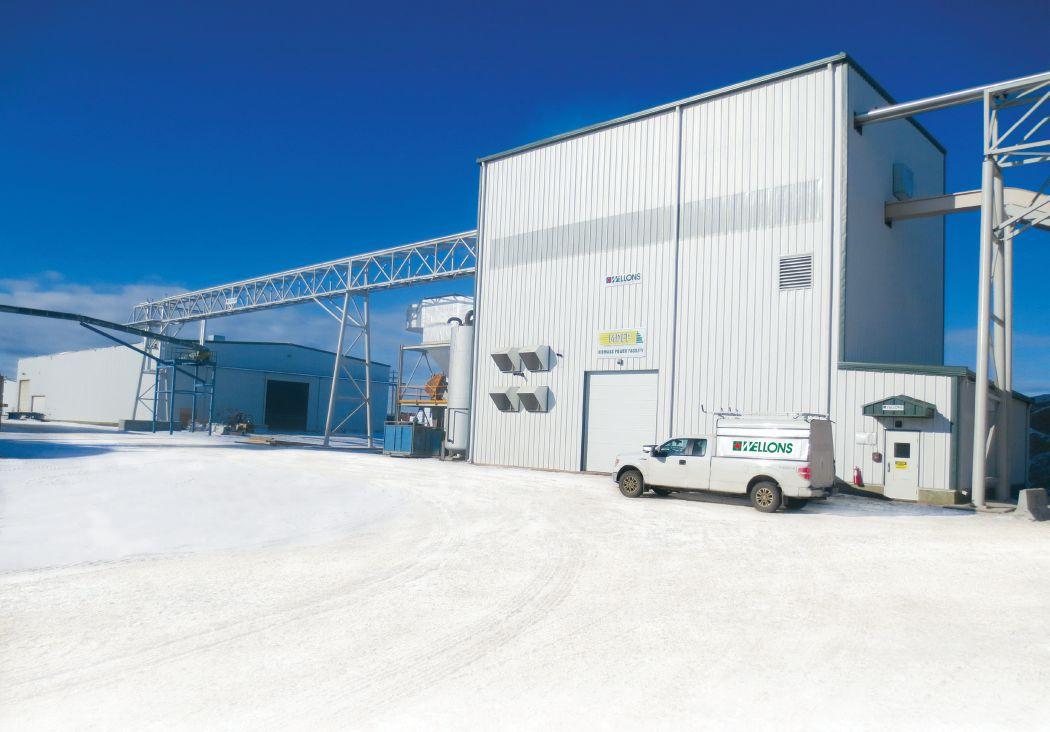
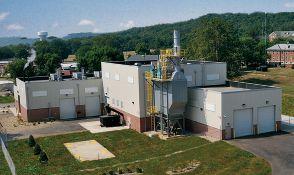
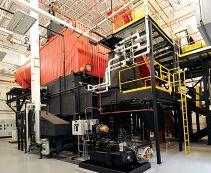
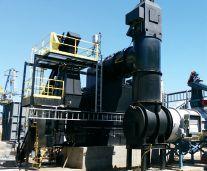
WELLONS GROUP OF COMPANIES
Biomass Fired Thermal Energy Systems
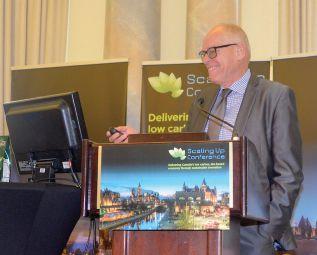
Jeff Passmore welcomes attendees to the first Scaling Up Conference in Ottawa.
Spotlight on boilers
The latest in biomass boiler technology Staff report
UNICONFORT
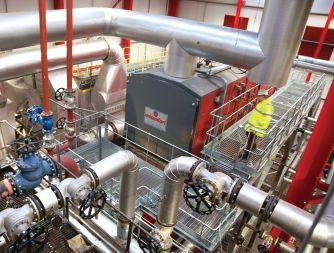
Uniconfort produces biomass boilers from 199 kW to 25 MW and 50 kW to five MW. The biomass boilers work with conventional and non-conventional biomass. Uniconfort’s Incinerator Department founded in 2016. Uniconfort’s North America agent is beloTEQ, based in Quebec. www.uniconfort.com
HURST
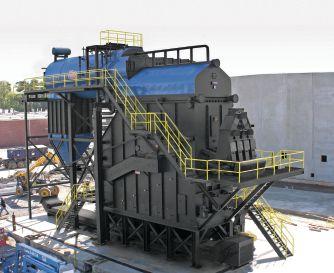
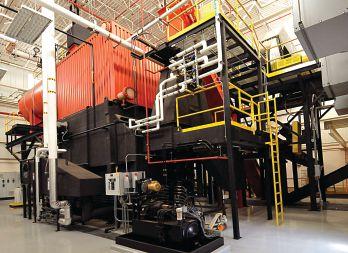
Hurst Boiler & Welding Company, Inc. has been manufacturing, designing, engineering and servicing gas, oil, coal, solid waste, wood, biomass and hybrid fuel-fired steam and hot water boilers since 1967. Also specialized in the manufacturing of modular biomass boiler systems, their boiler vessel designs (CRN registered) include firebox, vertical tubeless, hybrid water/ fire-tube, and water-tube. Hurst manufactures seven
different types of biomass stoker/gasifiers, which have used 2,000 plus different types of biomass fuels. With installations across all industries worldwide, Hurst Boiler is recognized for the highest code standards, innovative engineering and design, Energy Star rating, and renewable, sustainable solutions for green building design and operational efficiency.
www.hurstboiler.com
SÄÄTÖTULI
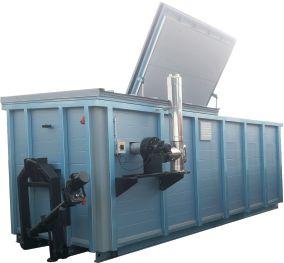
Säätötuli Canada combines the Finnish Säätötuli biomass-burning technology and 30-plus year know-how with Canadian-made ASME pressure-vessels and automation boxes. Säätötuli Canada’s hot-water boilers from 682,000 BTU/hr (200 kW) to 4,000,000 BTU/hr (1,200 kW) are ideal for small heat-networks, agricultural applications, municipal and industrial-building heating. The 1,700,000 BTU/hr (500 kW) hot-air furnace is second to none for durability, efficiency and versatility. It is used for various applications like grain-dryers, process heat, building heating and underground mine heating. All Säätötuli burners utilize woodchips and pellets, as well as other solid biomass. Burners can be adapted for other OEM applications. Containerized solutions are the easiest way to convert an existing system to biomass. www.saatotuli.ca
JANSEN
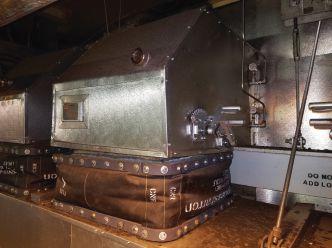
Jansen Combustion and Boiler Technologies, Inc. has served the biomass industry since 1976. Jansen specializes in improving the performance, capacity, reliability, and safety of industrial boilers that burn difficult fuels, such as biomass, refuse derived fuel, and pulping liquors. Over the years, Jansen has provided engineering evaluations of over 70 Canadian boilers and has carried out 15 boiler upgrade projects in Canada. Three biomass boiler combustion air system upgrade projects were completed in 2016 at the following locations: Harmac Pacific, Nanaimo, B.C.; Daishowa Marubeni, Peace River, Alta.; and West Fraser, Hinton, Alta. www.jansenboiler.com
COMPTE-FOURNIER
Compte-Fournier offers customers access to all the experience and expertise of the
group Compte.R. with more than 1,800 medium and large running installations in the world. The Compte-Fournier team designs, manufactures, builds, tests and provides support, on-site installation and maintenance. The company can also support buyers in all types of analysis required for their projects. Compte-Fournier boilers are manufactured in North America while respecting the technology and know-how of the company’s European partner. This assurance of performance, reliability and quality also rests on the vast and solid industrial experience of group Fournier. www.compte-fournier.com
FINK MACHINE
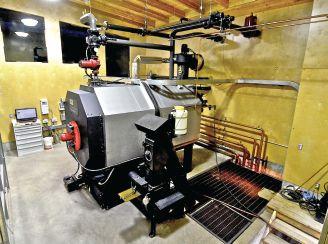
For over 17 years and 100 installed boilers, Fink Machine has been servicing B.C. and other provinces as well as installations in the U.S. Fink Machine has successfully completed Viessmann wood biomass boiler installation projects large and small with utmost customer satisfaction. The company’s expertise, honed by a decade of experience and dedication includes commercial, insti-



tutional facilities, and multi-million dollar industrial based developments. Fink Machine’s mission is to provide cost savings to customers by delivering reliable, cost competitive, clean energy solutions that maximize savings. They consult, design, supply, install and service a turnkey biomass system that can also integrate seamlessly with customer’s existing operations. www.finkmachine.com
VIESSMANN
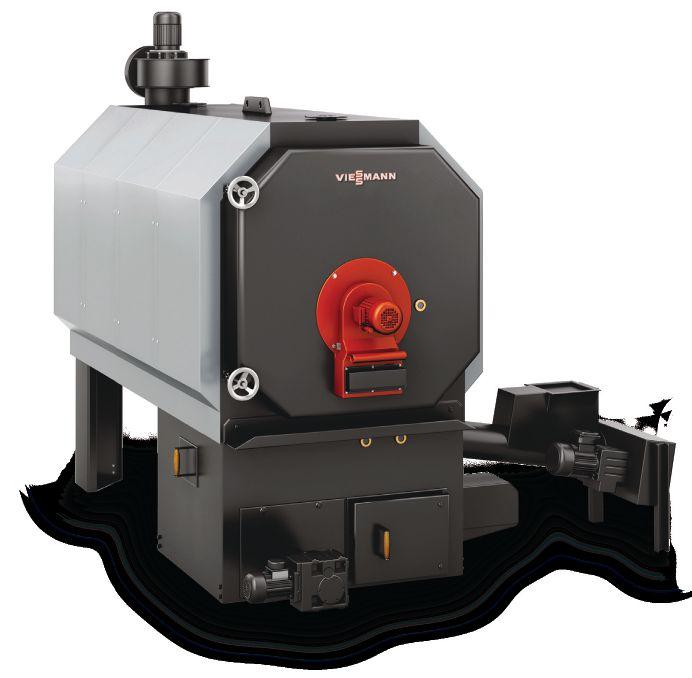
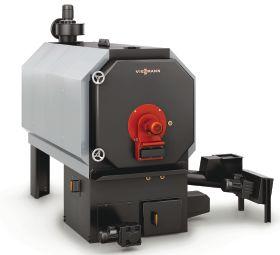
With over 60 biomass heating systems installed in Canada, Viessmann manufacturers high-quality, efficient and reliable wood heating systems with outputs ranging from 512 to 4,268 MBH. The Vitoflex 300-RF from Viessmann is a rotating combustion wood-fired boiler with outputs of 512 to 1,843 MBH, making it ideal for apartment buildings, commercial applications, new buildings and retrofits. Featuring advanced Viessmann-patented combustion technology, the Vitoflex-RF boiler is able to achieve maximum heat transfer and efficiency. Precisely controlled primary and secondary air

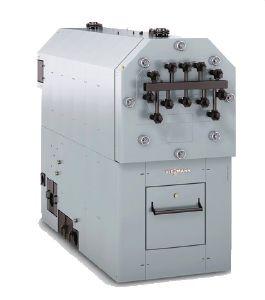
intake ensure ultra-low emissions of CO (<10 ppm), NOx (<75 ppm) and dust particles (<0.06 lb/MMbtu). The Vitoflex-RF is also available as a pre-fabricated portable solution for applications where housing for the boiler is not available or onsite construction costs must be kept to a minimum. This solution includes the pre-installed boiler and all peripheral equipment housed in a special Viessmann Energy Station. www.viessmann.ca
KEDEL
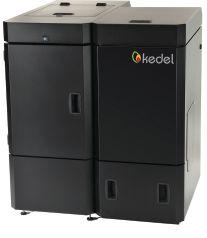
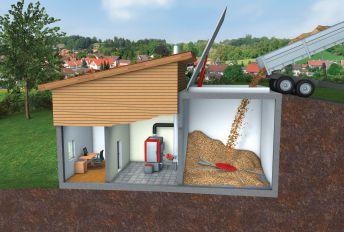
The affordable and reliable Kedel pellet boiler is a fully automated heating appliance that offers 87 per cent efficiency and that can be fully monitored and adjusted from any computer or smartphone. It features a 30-year warranty and its use can result in savings of 20 to 60 per cent on heating costs as well as a carbon footprint reduction of as much as 90 per cent when replacing an oil appliance. This self-cleaning boiler is suitable for new construction or retrofits and can be installed in cascaded designs. Other features include an O2 sensor, 10:1 step-less modulation and a stainless steel burner, and the appliance is manufactured to ISO9001 standards. www.thsdistribution.ca or www.kedelboilers.co

Built on over sixteen years of experience with wood Biomass boilers in North America, Fink Machine has the reputation of being in the fore front when it comes to design, supply, installation and most importantly .... Service!
Biomass-to-Energy Boilers
Customized Engineered Solutions
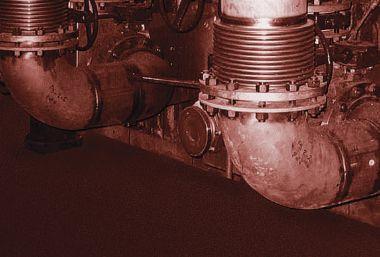
Since 1976, Jansen Combustion and Boiler Technologies, Inc. (JANSEN) has provided customized engineered solutions to owners/operators of boilers in the Forest Products, Independent Power Producers, and Wasteto-Energy Industries.
Our mission is to improve the operating performance (fuel burning capacity and economy, efficiency, and emissions performance) of existing boilers that burn difficult fuels such as biomass, chemical spent liquors, municipal solid waste (MSW), refuse derived fuel (RDF) and tire derived fuel (TDF).


JANSEN has conducted engineering performance evaluations of over 350 boilers, worldwide, and has provided combustion system, superheater, economizer and tubular air heater upgrades for over 100 biomass, chemical recovery, MSW, and RDF boilers.
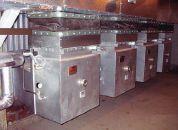
JANSEN has the capability and experience to function as your one-source solution to boiler retrofit projects, including Engineer-Procure-Construct (EPC) capabilities.
A synopsis of our broad range of services:
> Full service engineering design for steam, power, and combustion systems
> Biomass, MSW, RDF, TDF, fossil fuel, and chemical recovery boiler performance evaluations
> Effective overfire air (OFA) delivery system upgrades on biomass and other waste-fueled boilers
> Replacement or upgraded superheater economizer and tubular air heater design and supply
> Boiler circulation analyses
> Computational Fluid Dynamics (CFD) modeling
KMW
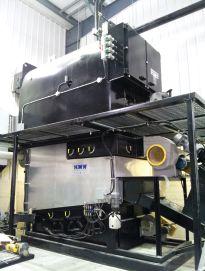
With 35 years’ experience and over 130 systems in operation, KMW has the expertise to offer complete biomass energy systems for any project. KMW supplies custom biomass systems for the production of hot water, hot oil, low-pressure and high-pressure steam for power generation. Boilers range in size from 100 HP to 3,500 HP and complete power plants are available in the range of 250 kW to 50 MWe. Construction cost and time are kept to a minimum by shop building and testing all equipment. KMW’s patented grate system provides great fuel flexibility for utilization of low cost fuel including wet bark, mill sludge, bio solids, and MSW. Recent projects include a 3.5 MW CHP plant in Nova Scotia, 14 MW power plant in Portugal, 600 HP steam plant in Quebec and a 8.5 MW CHP plant in New England. www.kmwenergy.com
VENTEK
WELLONS
Wellons Canada and Wellons FEI are part of the Wellons Group of companies, supplying the North American market with wood fired energy systems for over 40 years. Wellons supplies energy systems using a stepped grate or combustion cell technologies with fully automatic ash-extraction systems. Applications include process and space heating using hot water, steam or thermal fluid. Wellons also offers biomass fired co-generation solutions using steam turbines or Organic Rankine Cycle (ORC) systems. Wellons also provides hot gas generators to send energy to rotary dryers to dry wood fibre for pellet plants.
www.wellonsfei.ca or www.wellons.ca


> Feasibility studies and cost/benefits analyses
> Emissions reduction (CO, NOx, PM, SO2, TRS, VOC)
> Operations support and training
Find out how we can help you:
www.jansenboiler.com (425) 952-2832
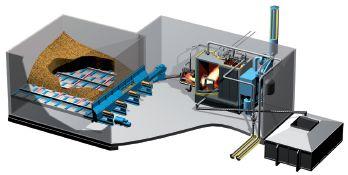
Ariterm is one of Finland’s oldest and largest manufacturers of biomass boilers, ranging from 40 kW to 3 MW. Three series of boilers and four burner designs allow systems to be custom designed and tailored to individual client needs and fuel types. All systems can be designed for wood chips up to 50 per cent MC or wood pellets. Automatic ignition, fuel feed and ash extraction, touch screen panel controls and remote monitoring and are standard features. Control panels are manufactured in Canada with all North American sourced components, and bear CSA approval and certification. Boilers systems can be completely skid mounted or housed in a pre-manufactured boiler house. Ariterm Biomass boilers are represented and distributed throughout North America by B.C.-based Ventek Energy Systems Inc. www.ventekenergy.com
HARGASSNER
Hargassner Canada Est Inc., the Canadian distributor for the Austrian manufacturer Hargassner GmbH, imports and supervises the installation of the boilers and ensures that the maintenance program and customer services meet the high quality standards that Hargassner products are known for worldwide. Hargassner wood chip/pellet boilers are built with ECO-agitators for room extraction. The boilers are energy efficient and cost saving, and are built with Lambda sensors for fuel-quality detection. Automatic fly and grate ash transport ensures ash ends up in a single ash box. Lambda-Hatronic digital control with 3G determines the set temperature. The boilers are fully refractory lined high-temperature combustion chambers. www.hargassner.ca
KRANN
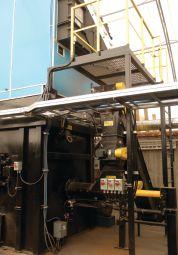
Krann biomass boiler uses a proprietary gasifier/furnace as its heat source. The heating system includes fuel storage, gasifier/furnace, boiler, ash discharge and exhaust and is fully automated. It produces very low particulate emissions with typically no flue gas cleaning equipment, reduces the tendency of particle accumulation on heat transfer surfaces thus minimizing equipment shutdowns and cleaning. The system ranges from 1 MW to 12 MW of heat output and can be used for boilers (steam, water), hot oil heaters, drying, CHP, etc., as a cost-effective alternative to traditional wood burners. It can handle a wide range of moisture and ash content fuels. www.krann.ca
BIOMASS COMBUSTION
EVERGREEN BIOHEAT
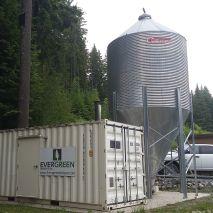
Evergreen BioHeat Ltd. is the Canadian distributor of Fröling GmbH biomass energy systems, a leader in state-of-the-art biomass heating systems for residential, commercial and institutional sectors. Products include wood pellets, wood chips and cord wood systems from 7 kW to 1,000 kW. All products are certified to Canadian standards including ASME, and conform to the strictest emissions standards. Complete systems include feed systems, biomass boiler, automated controls and all ancillary equipment required for modern and highly efficient heating systems. Evergreen also offers contracts for larger institutional installations. www.evergreenbioheat.com
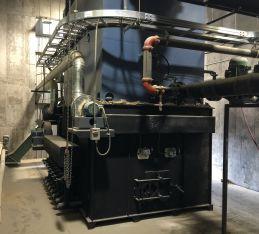
Biomass Combustion recently installed a BCS 300 HP, hot water, wood boiler at Herwynen Sawmill in Rockwood, Ont. The boiler uses Biomass Combustion System’s Horizontal Zoned Grate Combustion System, which strictly regulates under fire air for gasification with low bed turbulence. Oxygen for combustion is supplied by two over fire air fans which are designed to maximize both turbulence (mixing) and residence time above the fuel pile. The boiler burns dry sawdust and chips from the facility to heat dry kilns but green wood fuel can be burned efficiently with adjustments to air and fuel delivery. The fuel storage unloading system was designed by T.S. Manufacturing of Rockwood, Ont.
www.biomasscombustion.com
OUTOTEC
Outotec’s multi-fuel bubbling fluidized bed boilers and advanced staged gasifiers offer fuel flexibility, which ensures users don’t have to depend on a single fuel supplier and enables them to take advantage of seasonal fuels. The technologies are ideally suited to challenging fuel sources due to their superior operating characteristics and emissions performance. Outotec’s unique solution for thermal oxidation combines a refractory lined fluidized bed combustor, in-vessel heat transfer tubes and a proprietary bed-material cleaning and recirculation system, ensuring reliable operation with varying fuel qualities. Outotec’s ability to combine these features allows users to use a broad spectrum of fuels, taking advantage of the changing fuel markets. www.outotec.com
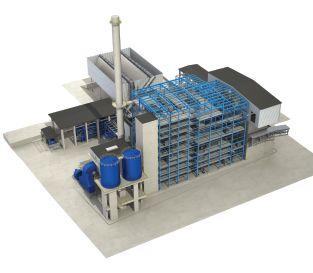
SMART HEATING TECHNOLOGY
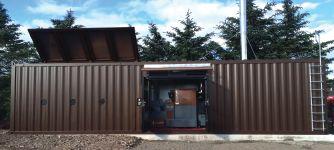
Smart Heating Technology, a leading European biomass boiler manufacturer, offers highly efficient 93-95 per cent multi-fuel automatic biomass boilers, including the Smart Mobile Cabin – Plug & Play Solutions. The boilers burn wood chips, wood pellets or other materials. www.smartheating.cz
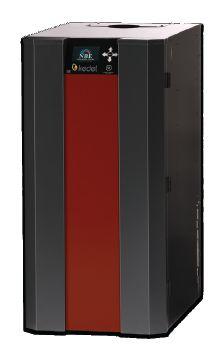

Blessed with biomass
Ontario Power Generation is leveraging the resource for greater economic gain

TBy Paul Giardetti – Regional plant manager for northwest operations, Ontario Power Generation
hree years ago, Canadian Biomass featured Ontario Power Generation’s (OPG) Atikokan Generating Station on its cover (January 2014). Staff at OPG and particularly those in northwest operations look back with pride on the Atikokan conversion from coal to biomass and the many parallel successes enabled by this conversion.
People in northwestern Ontario have seen the downturn of forestry and forest product operations and the resulting im-
vestments of over $150 million, the conversion cost of Atikokan has leveraged nearly equal investment in the pellet sector. Putting these projects into perspective, these expenditures are among the largest investments the Ontario forestry sector has experienced in the last quarter century.
Research has advanced on wood combustion guidelines, assisted in part by OPG’s ongoing support of Confederation College’s Bioenergy Learning and Research Centre. This work is helping to standardize and streamline regulatory approvals for future biomass applications. In addition, the next generation of bioenergy technicians are being trained to support the growth of this industry.
“Refuelling two of our thermal stations with biomass provides Ontario with renewable, dispatchable power and it optimizes the use of existing publicly-owned assets.”
pact on host towns that have relied on these industries.
Over the last few years, renewed activities in the forestry sector, brought in part by a new demand for harvest residuals, has created opportunities for aggregation, logistics, pellet conversion, forest management and much needed jobs back to the region. Many of these economic benefits have had a positive impact on local indigenous communities that are keen participants in sustainable natural resource use.
New Ontario pellet suppliers will consume over 1 million cubic metres of crown fibre, which will add more than 400 jobs in the supply chain. With new private in-
Advanced biomass, as used by our Thunder Bay Generating Station and featured by Canadian Biomass (December 2015), is a viable alternative to coal and provides a low capital conversion cost option for coal generators. That is why this technology has caught the attention of worldwide utilities who are evaluating this option in their future generating portfolio.
OPG produces about half the electricity Ontario homes, schools, hospitals and businesses rely on each day. We’re committed to ensuring our energy production is safe, reliable and environmentally sustainable for today and for the future. In 2014, OPG burned our last piece of coal to make electricity. This was the largest single action to combat climate change in North
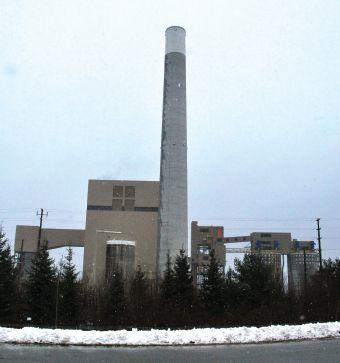
America. Refuelling two of our thermal stations with biomass provides Ontario with renewable, dispatchable power and it optimizes the use of existing publicly owned assets.
With action plans to achieve the Paris COP21 agreement being developed around the world, renewable energy alternatives to fossil fuels are being considered as compliance options. When the value of stranded assets, ease of dispatch and grid balancing requirements are factored in, bioenergy projects can shine even when the sun does not!
As leaders gather to unify carbon reduction approaches, let’s not forget that Canada is blessed with an abundance of biomass. Bioenergy solutions can leverage this resource into greater economic gain while helping to meet global Green House Gas (GHG) commitments. •