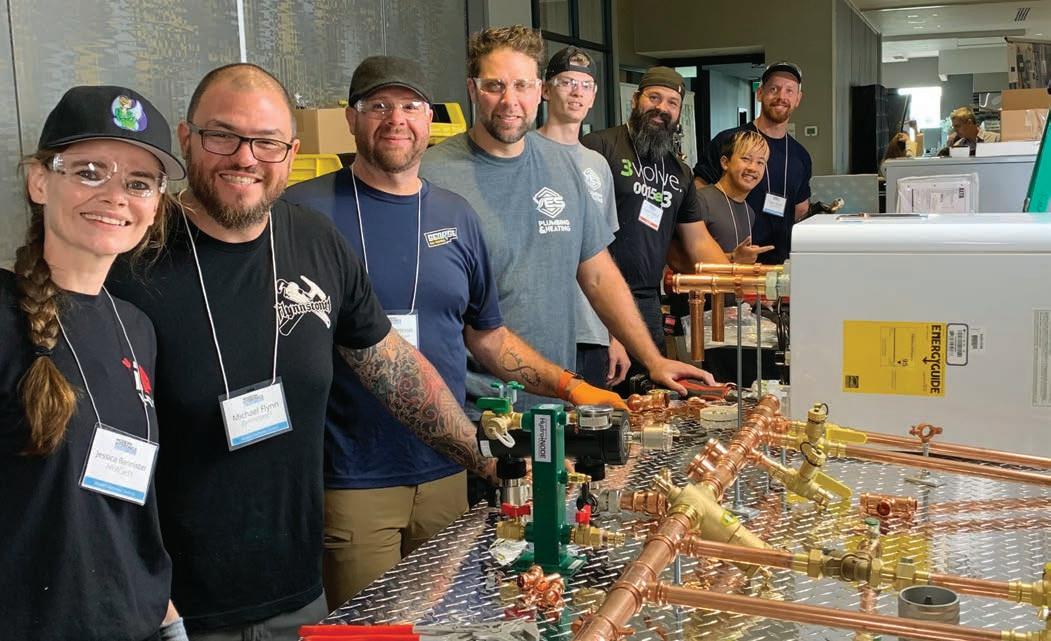
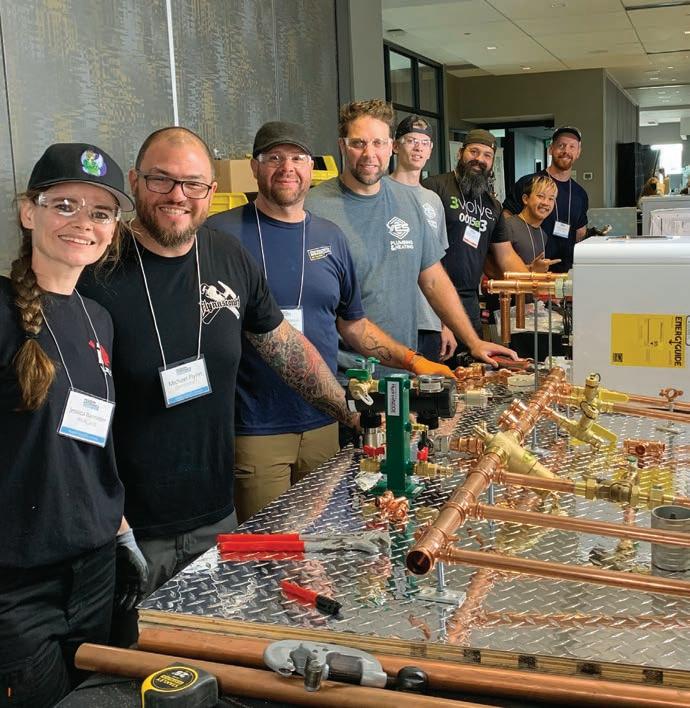
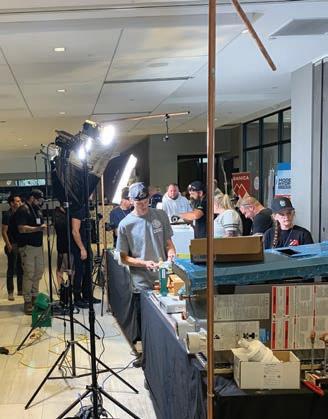
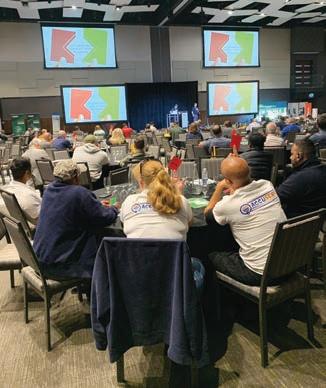
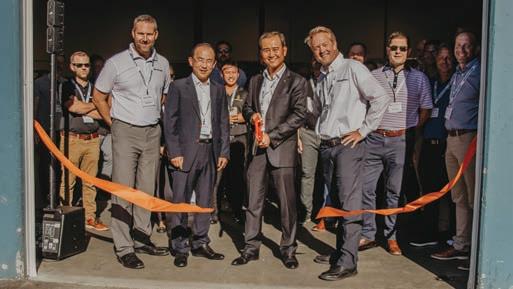
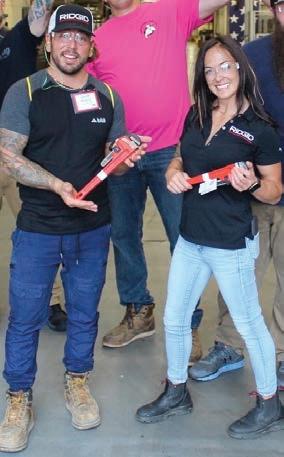
The Modern Hydronics Summit on September 15th featured live pre-fab boiler panel builds by an ambitious crew of social media influencers.
FEATURES
14 COVER STORY
SWEET HEAT
SWEET HEAT 2022
The second annual HPAC Magazine Sweet Heat Awards celebrate excellence in residential and commercial hydronics installations. By Logan Caswell & Doug Picklyk
17
EVENT REPORT
MODERN HYDRONICS SUMMIT 2022
Catering to a growing sector, the sold-out event attracted passionate hydronics professionals and those new to the industry to learn and connect with like-minded individuals. By
HPAC Staff
20
HYDRONICS
CAN BOILERS BE “RESILIENT?”
Don’t write off fossil fuels just yet, as dual fuel options provide a logical bridge to lowering carbon emissions.
By John Siegenthaler
26
30 MECHANICAL MINUTES EXPANSION TANK CONSIDERATIONS
The placement and connection methods of expansion tanks were the topic of discussion in this episode featuring John Siegenthaler. By
Logan Caswell
30 HYDRONICS
RIDE THE LIGHTNING
By managing dual-fuel systems—gas boilers and electric heat pumps— modern controls can help deliver the most cost-efficient and comfortable solutions for your customers.
By Curtis Bennett
33
HVAC
WINTER 2022: CHEAP HEAT DILEMMA
Helping customers achieve efficiency, sustainability and low cost requires balancing existing system replacement alternatives with affordable energy-efficient options.
By Ian McTeer
40
ROAD TO 2030
PART 2: HOW INCENTIVE PROGRAMS EFFECT THE TRADES
Does the industry have the capacity to keep up?
By Doug Picklyk
50 PLUMBING
LEAK DETECTION INNOVATIONS
WORTH KNOWING ABOUT
Digital networks connecting flow sensors and shut off valves can provide new levels of security and peace of mind for property owners.
By Logan Caswell
58 REFRIGERATION
WHAT IS A HEAT PUMP?
Exploring the fundamentals of heat pump operations.
By Dave Demma
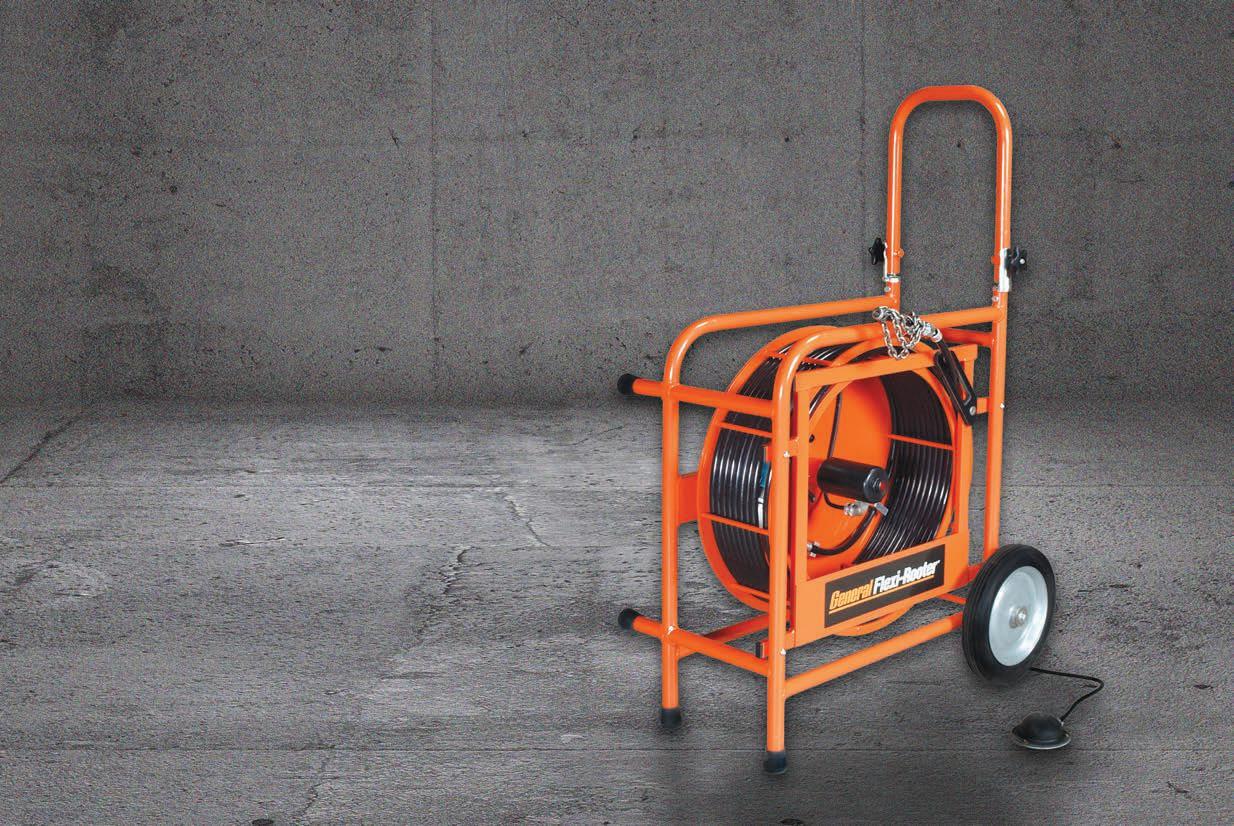
GENERATION FLEXIBLE SHAFT MACHINE
Flexi-Rooter ®
General has rethought high-speed, exible shaft machines. The stronger, stiffer shaft lets you clean a wider range of drain lines, up to 75 feet long. It’s exible enough to negotiate 2" lines yet tough enough to clear roots in 4" lines.
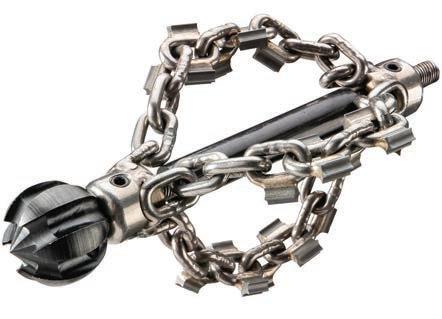
General’s unique ClogChopper ® cutter in combination with the carbide tipped chain cutter makes a formidable combination, capable of clearing the toughest stoppage.
The built-in variable speed motor with foot pedal control makes the machine easier to operate. And the shaft is eld repairable. It’s everything a exible shaft machine should be.
To learn more, visit www.drainbrain.com/Flexi-Rooter, or call the Drain Brains ® at 800-245-6200
with Clog Chopper
CHANGE MANAGEMENT
HUMANS ARE CREATURES OF HABIT. WE ALL HAVE SOME RITUALS THAT WE JUST SEEM TO FOLLOW, like that regular coffee run in the morning, and although we know that maybe changing things up could be good for us, some routines are ingrained and hard to break.
One of the first steps to actually changing a routine is learning and acknowledging that maybe there is a different, or better, way to go. That’s followed by some type of reinforcement from others that say, yes, you probably could go without that double-double every day. Then we have to take action and show that we can switch things up, and once a new habit is formed the process just might start all over again.
I bring this up because of the strong push across Canada, and in most of the developed world, to move away from gas connections for heating and cooling homes and push towards electricity-fueled heat pumps. The Greener Homes Grant program is one of multiple incentive programs encouraging that type of change here at home.
In part two of our Road to 2030 webinar series (see page 40), Kimble Costain, deputy director of the Greener Homes program shared that as of early September, 19,000 homeowners have received funding and just over a third have undertaken a heat pump installation.
So around 6,000 heat pumps have been installed as part of this initiative which began in late May 2021. If the program can hit its target of providing grants for some 700,000 homeowners that could mean a quarter of a million heat pumps may be installed over the next five years through this program alone. That sounds like a lot of product, and it sounds like a lot of people learning about a different way to heat and cool their homes and taking action to make a change.
Yet, there are some 7.8 million single detached houses in Canada, and those make up just over half of the private dwellings in the country which also includes semi-detached, townhouses and apartment building accommodations. In all there are well over 14 million occupied dwellings in Canada, and then there are the large commercial, industrial and institutional buildings coast-to-coast that also need to get on board with electrification.
Change will come, but by all accounts it will be gradual, and as hydronics expert John Siegenthaler notes is his article in this issue (page 20), maintaining fossil-fueled boilers in homes and buildings where they exist while also adding a heat pump makes a lot of sense for the near term, for both cost efficiency and resiliency. There are also other mentions in this issue of dual-fuel options as the way to go for homeowners while our society gets more comfortable with taking action and making a change.
For all of the heating and cooling contractors out there, there will also be a change management process required in this industry as well. While we all realize we need new skilled tradespeople with new trade skills, we also need to re-skill existing workers to take on the wave of new technologies.
So as you hit that next drive-thru, start to consider what other options there may be for you out there. <>
– Doug Picklyk, Editor
Reader Service
Print and digital subscription inquires or changes, please contact
Angelita Potal, Customer Service Administrator
Tel: (416) 510-5113 Fax: (416) 510-6875
Email: apotal@annexbusinessmedia.com
Mail: 111 Gordon Baker Rd., Suite 400, Toronto, ON M2H 3R1
Heating Plumbing Air Conditioning (established 1925) is published 7 times per year by Annex Publishing & Printing Inc. HPAC Magazine is the leading Canadian business publication for the owner/manager of mechanical contracting businesses and their supply partners.
SUBSCRIBER SERVICES: To subscribe, renew your subscription or to change your address or information please visit us at www.hpacmag.com
Subscription Price per year: $44.00 (plus tax) CDN; Outside Canada per year: $112.00 US; Elsewhere: 1 year $123.00 (CDN); Single copy Canada: $5.00 CDN. Heating Plumbing Air Conditioning is published 7 times per year except for occasional combined, expanded or premium issues, which count as two subscription issues.
MAIL PREFERENCES: From time to time we make our subscription list available to select companies and organizations whose product or service may interest you. If you do not wish your contact information to be made available, please contact us via one of the following methods: Tel: 416-442-5600 ext. 3552, Fax: 416-510-6875 or 416442-2191; E-mail: blao@annexbusinessmedia.com; or by mail: 111 Gordon Baker Rd., Suite 400, Toronto ON M2H 3R1 Annex Privacy Officer Privacy@annexbusinessmedia.com Tel: 800-668-2374
HPAC Magazine receives unsolicited materials (including letters to the editor, press releases, promotional items and images) from time to time. HPAC Magazine, its affiliates and assignees may use, reproduce, publish, re-publish, distribute, store and archive such unsolicited submissions in whole or in part in any form or medium whatsoever, without compensation of any sort.
NOTICE: HPAC Magazine, Annex Publishing & Printing Inc., their staff, officers, directors and shareholders (hence known as the “Publisher”) assume no liability, obligations, or responsibility for claims arising from advertised products. The Publisher also reserves the right to limit liability for editorial errors, omissions and oversights to a printed correction in a subsequent issue. HPAC Magazine’s editorial is written for management level mechanical industry personnel who have documented training in the mechanical fields in which they work. Manufacturers’ printed instructions, datasheets and notices always take precedence to published editorial statements.
Proud member of:
www.hpacmag.com
The highest selling brand of condensing combi-boilers takes home heating and DHW to new heights
HEATING UP TO 150,000 BTU/h DHW UP TO 210,000 BTU/h
NCB-H
High capacity, High performance combi-boilers
Navien NCB-H high efficiency combi’s bring the highest level of whole house comfort to any size home...big or small
• Highest DHW maximum BTUs in residential condensing combi-boilers... up to 210,000 per hour
• Highest DHW flow rate @ 70°F rise... up to 5.4 gallons per minute
• Highest number of BTU sizes for the North American residential combi-boilers
• Highest residential combi-boilers domestic hot water turndown ratio...15:1
• Highest residential combi-boilers heating turndown ratio... up to 11:1
• Highest number of built-in zone controls for valves or pumps... up to three
• Highest full lineup 2" venting lengths... up to 65 feet
• Highest number of cascade capable units with up to 15 tankless water heaters
• High altitude certification... up to 10,100 feet (NG or LP)
Aim high with Navien NCB-H combi-boilers... To learn more visit Navieninc.ca
again.
NEWS FEATURE
HYDRONICS CONFERENCE SHINES IN SASKATOON
The Canadian Hydronics Conference, the bi-annual event organized by the Canadian Hydronics Council, returned with an information-packed two days in Saskatoon, September 27-28, and according to CHC Chair, Jerry Leyte (Viessmann), attendance was improved over the last event which was held in Ottawa in 2019.
Attendees enjoyed sunny days and above average seasonal temperatures in the Bridge City, and the conference delivered forward-looking content for the hydronics contractors in attendance, and over 40 exhibitors were on hand to share information and demonstrate products.
The opening keynote, delivered by Robert Bean, focused on electrification and net-zero concepts. Bean commented that carbon reduction will come at a cost, both a societal cost as people need to change their way of living and break old habits, and there will be an economic cost as well as the transition to new technologies will be costly up front but the pay back will accelerate over time.
He encouraged the audience to incorporate an integrated design approach when it comes to heating and cooling buildings. We must consider all facets of the building to improve the performance and comfort level for the occupants and avoid having tunnel vision and just doing things the way they’ve always been done.
“There are huge opportunities for this industry, because as the world moves towards these net zero, green sustainability goals there’s a huge opportunity to fix the buildings that we have … and in Canada the federal government is targeting by 2030 that roughly 3.5 million new homes will be built,” said Bean.
“You guys are sitting at one of the most opportune times in your careers, the marriage between high-performance buildings, the drive for renewable systems, low temperature heating, high temperature cooling, large surface area heat
exchangers—it will never get any better than this, so your timing is excellent.”
Other educational sessions over the two days included topics like: air-to-water heat pumps, chemical and non-chemical water treatment options, snow melt systems, managing home owner expectations, solar thermal for hydronics, a CSA B214 update, and more.
The final session had a Saskatchewan focus with presentations from government and energy officials outlining building code issues and incentive opportunities.
Overall the two days offered plenty of learning opportunities combined with valuable networking time for this passionate group of hydronics professionals.
ciph.com
CAF-FCA LAUNCHES GRANT PROGRAM UNDER CANADIAN APPRENTICESHIP SERVICE
The Canadian Apprenticeship Forum (CAF-FCA) and its partners – the Canadian Construction Association, Aboriginal Apprenticeship Board, Apprenticesearch.com, BuildForce Canada and SkillPlan have launched the Canadian Apprenticeship Service program, distributing grants to employers who hire level one apprentices.
The Apprenticeship Service is encouraging small- and medium-sized employers to hire level 1 apprentices by offering $5,000 grants. Employers may receive $10,000 if they hire a level 1 apprentice from an equity-deserving group.
CAF-FCA research indicates that over the five-year period from 2022 to 2026, an estimated 122,380 new journeypersons will be required to sustain workforce certification levels across the 50-plus Red Seal trades – the nationally recognized standard for skilled trades in Canada. The recruitment of 256,000 apprentices will be required to keep pace with certification demand.
CAF-FCA and its partners are positioned to make this program a success combining employer engagement with high quality training. Through research and consultations with industry, CAF-FCA and its partners understand training best practices and have created a model shaped to meet employer needs, increasing the chances of successful program implementation. Employers will be provided an incentive for hiring an apprentice, training related to mentoring, inclusion and essential skills will also be available providing much needed supports to small- and medium-sized employers who do not have HR staff.
caf-fca.org
Current CHC Chair Jerry Leyte welcomes attendees to the Conference in Saskatoon.
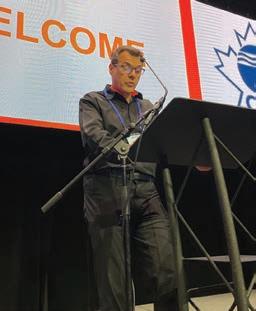
Robert Bean addresses the challenges and opportunities in a future with Net Zero buildings.
ENERCARE EXPANDS IN QUEBEC
Enercare has announced the acquisition of HydroSolution, a Quebec provider of water heaters, heat pumps, electric vehicle charging stations and other household equipment.
The transaction marks Enercare’s first acquisition in Quebec, where HydroSolution serves more than 275,000 customers.
HydroSolution was created by Hydro-Québec in 1958 to promote the use of electricity throughout the province by offering an electric water heater rental service to residents across Quebec. In 2005 it became a privately-owned company, but its original purpose remained the same: to offer water heater rentals, sales and installation services to a variety of customers including homeowners, tenants, condo managers, real estate investors and contractors.
“Today’s announcement is a tremendous milestone for Enercare and HydroSolution, one that signals our shared commitment to growth, sustainability and customer service,” said Nick Perreten, Enercare’s Chief Revenue Officer, in a media release. “Together, Enercare and HydroSolution will unite and grow our expertise to meet the evolving needs of Canadian home and building owners.”
HydroSolution will continue to operate in Quebec under the same name, with the same senior management team and approximately 100 employees.
Enercare’s announcement follows other recent acquisitions including Syles Mechanical, a commercial home services provider from Tecumseh, Ont. and Elite Heating in Edmonton. enercare.ca
STANDARDS MANUAL FOR MECHANICAL INSULATION
The Thermal Insulation Association of Canada (TIAC), Canada’s national association overseeing quality and standards for mechanical insulation, has partnered with the Midwest Insulation Contractors’ Association (MICA) to bring a national standards manual to Canada.
North American Commercial and Industrial Insulation Standards (NACIIS) Manual – Canada’s only standards manual for mechanical insulation – is now available for purchase.
During the initial stages of updating its Best Practices Guide (BPG) in 2017, TIAC’s Innovators Group realized similarities with the MICA manual, then called National Commercial and Industrial Insulation Standards.
The NACIIS manual contains updated information related to the design, specification, and installation of thermal insu -
lation on piping, fittings, ductwork, other equipment, and vessels all found within commercial and industrial heating/ ventilating/cooling and plumbing systems.
Industrial power and process systems information on firestopping systems is also included, and refrigeration and cryogenic systems have been added.
The manual is published as a service to contractors, engineers, designers, owners, and mechanical insulation industry. This resource has grown to be recognized as the authoritative source for specifying and communicating installation details for mechanical insulation systems across the U.S. and Canada. tiac.ca
THE BUILDINGS SHOW RETURNS
The Canadian construction and property management industries will convene again this year at The Buildings Show, a three-day event at the Metro Convention Centre in downtown Toronto from November 30 thru December 2.
The annual show attracts designers, architects, contractors and property owners and managers. The trade show floor in the south building includes vendors displaying all aspects of construction materials, and the educational sessions cover a wide variety of construction topics including: net-zero and carbon neutral buildings; Canadian economic and construction outlooks; energy, sound and comfort improvements through compartmentalization details in net-zero MURBs; how to address labour shortages; and more. thebuildingsshow.com
REFRIGERANT LEAK REDUCTION GUIDE
The North American Sustainable Refrigeration Council (NASRC) has published a free leak reduction guide outlining the main sources of refrigerant leaks in existing super market systems. Using data gathered by members, the document proposes equipment specification measures for new refrigeration systems to minimize leaks and reduce overall greenhouse gas emissions.
Supermarket refrigeration is one of the leading sources of hydrofluorocarbon refrigerant (HFC) emissions. The NASRC estimates the annual climate impact from supermarket and grocery store refrigerant leaks to be 55 million metric tons of CO2 equivalent. nasrc.org.
ONTARIO INVESTS $90 MILLION INTO SKILLS DEVELOPMENT
The Ontario government has added another $90 million into its Skills Development Fund (SDF) bringing the total to $560 million.
The fund supports training projects that upskill workers and jobseekers. This third funding round is open those unemployed or underemployed, and will prioritize programs helping people with prior involvement in the criminal justice
NEW ASHRAE IAQ STANDARDS AVAILABLE
ANSI/ASHRAE Standards 62.1 and 62.2 (residential) are now the recognized standards for ventilation system design and acceptable indoor air quality (IAQ). Expanded and revised for 2022, both standards specify minimum ventilation rates and other measures in order to minimize adverse health effects for occupants.
Standard 62.1 specifies minimum ventilation rates and other measures intended to IAQ that’s acceptable to human occupants and that minimizes adverse health effects. The standard provides procedures and methods for meeting minimum ventilation and IAQ requirements to engineers, design professionals, owners, and jurisdictional authorities where model codes have been adopted.
Standard 62.2, ASHRAE’S consensus residential ventilation and IAQ standard for dwelling units with nontransient occupants, describes the minimum requirements to achieve acceptable IAQ via dwelling-unit ventilation, local mechanical exhaust, and source control. ashrae.org.
system, at-risk youth, people with disabilities, Indigenous people, Ukrainian newcomers, and others facing barriers to employment.
Funding applications will close January 31, 2023. Interested organizations can apply through Transfer Payment Ontario. During this funding round, the province will prioritize applications for projects preparing workers for careers in in-demand sectors including the skilled trades. ontario.ca
SKILLED LABOUR CAPACITY A CHALLENGE FOR SOLVING HOUSING SUPPLY SHORTAGE
In June 2022 the Canada Mortgage and Housing Corp. (CMHC) released a report estimating how much additional housing supply is required to improve housing affordability by 2030.
In a new follow-up report the CMHC notes an important challenge to reaching its initial objectives is the amount of skilled labour required.
Focusing on four markets, Ontario, Quebec, B.C. and Alberta, the research finds that under a best-case scenario, only Alberta will have the skilled labour available to meet its housing supply needs, while the other three provinces will need to double their skilled labour capacity in order to reach the housing affordability targets set for 2030. cmhc.ca
SWEET HEAT 2022
The second annual HPAC Magazine Sweet Heat Awards celebrate excellence in residential and commercial hydronics installations. BY
LOGAN CASWELL & DOUG PICKLYK
In the early Spring of 2022 HPAC Magazine placed the first call for hydronics industry contractors across Canada to enter the second annual Sweet Heat Installation contest, a competition for contractors to share photos, explain the challenges they encountered and the creative solutions they used on projects completed in the previous year.
In total the competition received 30 entries this year, and like the first edition of Sweet Heat held in 2021, the entries were divided into two categories: commercial and residential.
Unlike last year, this year the competition was generously sponsored by EMCO, with the winning entry in each category receiving $3,000 vouchers at their local EMCO branch.
The final evaluations were performed by hydronics expert John Siegenthaler, who also revealed the winning entries live during the final session of the 2022 Modern Hydronics Summit, held at the Universal EventSpace in Vaughan, Ont. on September 15.
FAMILY TRADITION
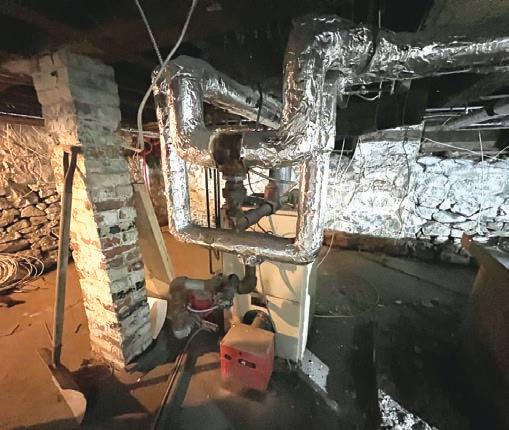
First place in the residential category this year wasn’t handed to a multi-boiler installation in a large new custom home, instead the winning project was a boiler replacement on a dirt floor in the basement of a century home under renovations in Digby, Nova Scotia.
Congratulations to Family Tradition Propane Services of Oakhill, Nova Scotia, a small family-owned company formed in 2019 and specializing in high-quality systems for residential and commercial applications.
As company president Shawn Nolan explains, “We had three main challenges in this installation: space, remote clients and water quality. The original system in the basement was located in the centre of the room, and we were working with a stone foundation, low ceilings and dirt floors.”
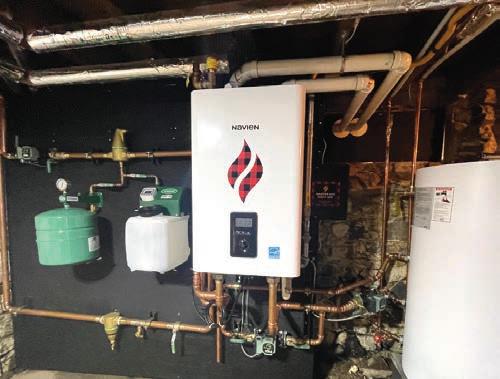
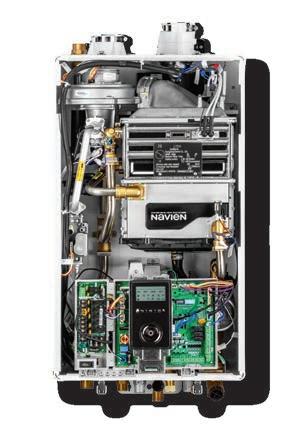
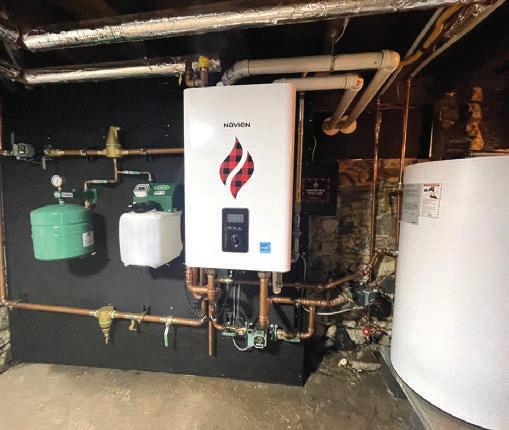
The Family Tradition team removed an old oil-burning system from the middle of the basement and framed a wall moving the new system away from the centre. They installed a propane-burning Navien fire tube boiler along with a Viessmann indirect hot water tank for DHW. The majority of the system was pre-fabricated on black stained plywood in the company’s shop and transported to the site.
The property owners were in Ontario, so the Family Tradition crew was working with the clients remotely. Nolan notes that they added the NaviLink feature to the system for remote management of the boiler.
Nolan also explains how the new set-up uses a system feeder to ensure no contaminated water gets into the closed-loop system. “We also plumbed this system so the clients have the ability to add additional zones if required to facilitate any fu -
This award-winning residential hydronic system install by Family Tradition Propane Services in Nova Scotia was “simple, serviceable and repeatable,” according to the contest judge.
The “before” photo of the residential project located in the middle of the basement in a century home in Nova Scotia.
ture changes and renovations.”
Contest judge, Seigenthaler, gave the Family Tradition Propane Services project his vote for the top spot because of its simple yet repeatable design.
“I’m not as dazzled by super expensive mechanical rooms, even though I greatly respect good craftsmanship and the good use of available space,” says Seigenthaler. “I prefer to see simple, serviceable and repeatable concepts. These are necessary for the hydronics market to expand beyond just affluent clients.”
Seigenthaler also mentioned how Family Tradition was the only entry that showed well-done documentation of the system, a simple nine-page custom boiler manual that allows both the owner and future service technicians to understand the set up and expedite servicing.
SOUTH ISLAND MECHANICAL
The winner of the commercial category was South Island Mechanical, located in Langford, B.C., part of Greater Victoria within the Capital Region District on Vancouver Island.
Company owner Adam Violini founded South Island in January 2018 and the company has grown to 18 people. “We have an amazing team, right from the office to the technicians,” says Violini. The company specializes in mostly service focusing on commer-
2022 Sweet Heat Entries
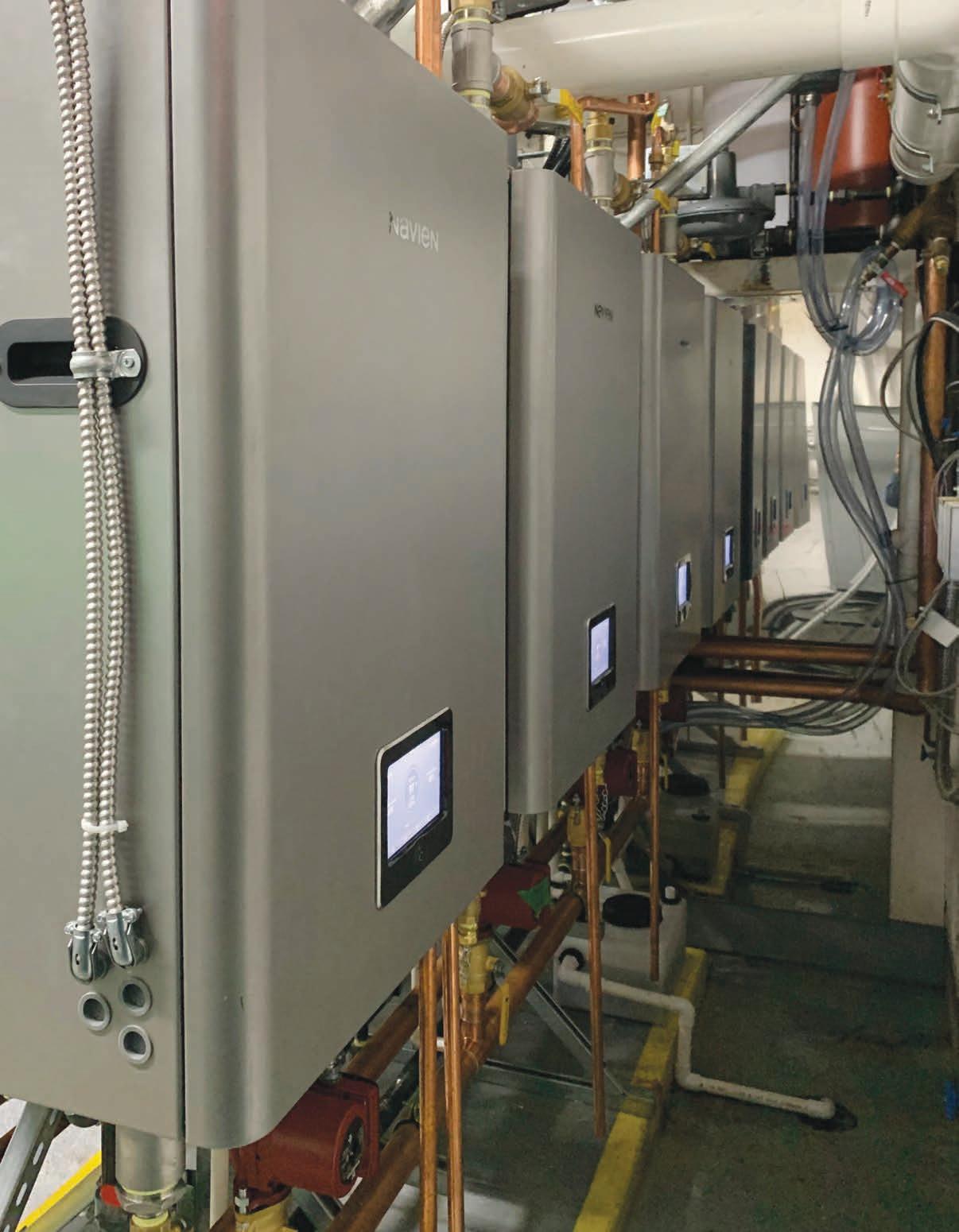
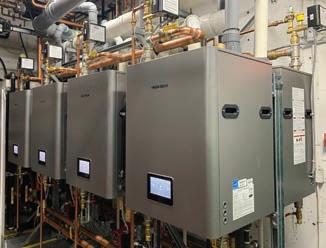
A cascading system of eight boilers provides back-up heating for a geothermal district energy plant in Langford, B.C., installed by South Island Mechanical.
cial along with residential and marine. All the techs hold refrigeration and gas tickets, and they have a residential install team with a niche in geothermal.
Their award-winning project was the replacement of a back-up boiler system for a local geothermal district energy plant. The client, Sustainable Services Ltd. (SSL), operates the district energy system that runs a loop and supplies heating/cooling for over 400 homes of the Westhills masterplanned community in Langford.
Home owners rent geothermal heat pump units in their homes and pay for the energy consumed from the district heating loop. South Island has a contract to maintain and service the units installed in the community homes.
The Sweet Heat project entry included the removal of a single 5 MM
Thank you to all of the contractors who entered the second annual Sweet Heat contest:
Archie Johnstone Plumbing & Heating, Nanaimo, B.C.; All Pro Plumbing & Heating, Niagara Falls, Ont.; ATEL Air, Williamsburg, Ont.; Caledon Creek Mechanical, Orangeville, Ont.; Canuck Mechanical, Prince George, B.C.; Chenier Mechanical, Finch, Ont.; Consumers Energy Management, Maple, Ont.; DenRite Mechanical, Sturgeon County, Alta.; Donaldson Plumbing & Heating, Inverary, Ont.; Express Plumbing & Heating, Red Deer, Alta.; Family Tradition Propane Services, Oakhill, Nova Scotia; Farr Mechanical, Markham, Ont.; G2J Custom Mechanical, Stoney Creek, Ont.; Impetus Plumbing & Heating, Richmond, B.C.; John Sadler Plumbing & Heating, Surrey, B.C.; Johnson's Total HVAC, Caledonia, Ont.; Klimatrol, Brampton, Ont.; MAK Mechanical, Barrie, Ont.; MiLo Group, Red Deer, Alta.; New Era Plumbing & Heating, Squamish, B.C.; POC Plumbing & Heating, Coldwater, Ont.; Riverdale Plumbing, Toronto, Ont.; R.T. Heating & Air Conditioning, Red Deer, Alta.; Shuswap Water Services, Salmon Arm, B.C.; Smart Elements Heating & Cooling, Huntsville, Ont.; South Island Mechanical, Langford, B.C.; Timber Plumbing & Heating, Aldergrove, B.C.; Triple Tech Heating, Air Conditioning & Refrigeration, Midland, Ont.; TT Plumbing & Heating, Caledon, Ont.; and Whistler Mechanical, Whistler, B.C.
Btu/h boiler and installing a new system in the central plant. “It didn’t make sense to refurbish when a new technology solution would be more effective,” says Violini.
“We contacted Jeremy [Young] from Pro West and worked with him to select the right boilers, and he worked with the engineer on system design.”
The solution included a cascade system of eight Navien fire-tube mod/con boilers installed in two back-to-back banks of four.
“Everything is totally uniform, and the way we have it set up we have the pumps on the bottom and the low-water cutoffs were set up at the top, and we have common venting for each group of four,” says Violini.
Each boiler has a 10:1 turndown ratio leading to an 80:1 boiler plant turndown ratio. And the system uses a BACnet interface to connect to the plant’s Delta management system.
The installation was led by South Island Mechanical, and Violini gives a shout out to Anchor Mechanical who also assisted with the project.
For added resilience, each set of four boilers has its own gas valve, and each boiler has its own gas valve. “So if there is a problem we still have four boilers on line, or if one goes down we
Continued on p16
The original single boiler back-up system in the district energy plant was removed for a more efficient and resilient solution.
design envelope tango tm pumps
intelligent variable speed pumps
Unequaled pump and motor efficiency delivering lowest energy costs
Lowest installed cost
smallest plant room space reduced controls scope
Reliable and durable
316 stainless steel impellers ductile iron casing lead/lag pumps in one
< SWEET HEAT
Continued from p15
still have seven other boilers to work with,” adds Violini.
The boilers are strictly a back-up and are available so the district heating plant never loses the set temperature of main distribution loop. “Last year they ran the boilers to see how the system would perform, and they were just blown away,” says Violini, adding, “and you can’t even hear them running, it’s so quiet.”
The project ran about 120 man-hours, including ripping the old boiler out, installing the new system and commissioning. The operators have noted a savings in energy consumption with the increased turndown ratio of the boiler plant leading to less short cycling while it accurately load matches the loop.
RUNNERS UP
This year’s runners-up were Impetus Plumbing and Heating from Richmond, B.C. (residential) and Triple Tech Heating, Air Conditioning and Refrigeration of Midland, Ont. (commercial).
The Impetus project required relocating a system 40 feet away from its original spot and re-working the set-up.
“Given the mess they had to start with I think they made a good decision to do a major overhaul rather than put “band-aids” on the existing system,” said Seigenthaler.
The commercial runner up was in a multi-storey office building, moving from a single two-stage 85% efficient boiler to four high-efficiency condensing boilers, each with a 10:1 turndown, improving efficiency and reducing short cycling.
Overall, Seigenthaler was impressed with the quality of all the entries, but said there was a theme when it came to picking the winner: avoiding the unnecessary extras, while maintaining a well-built hydronic solution.
“The residential winner added value to the system while ultimately providing better comfort to the occupants,” said Seigenthaler. “They didn’t spend a lot of money on purely aesthetic embellishments, but rather provided a solid and serviceable design.
“Many systems showed excellent craftsmanship, but also added considerable cost. While this looks impressive to the owner of a high-end house who has the budget, it can also look discouraging to the “average Joe” whose is more interested in a reliable and reasonably affordable hydronic solution.” He also noted that several systems had many feet of uninsulated piping in the mechanical room—all losing heat to a space that really doesn’t need it.
“Again, the workmanship looks great, but is all the “flash” adding value to the system and ultimately providing better comfort to the occupants? Is it reducing energy use, increasing efficiency, etc.?
“I prefer to see simple, serviceable, and repeatable concepts. These are necessary for the hydronics market to expand beyond just affluent clients.” <>
MODERN HYDRONICS SUMMIT 2022
Catering to a growing sector, the sold-out event attracted passionate hydronics professionals and those new to the industry to learn and connect with like-minded individuals. BY HPAC STAFF
A key attraction at the Summit was a series of live boiler panel builds taking place in the lobby. A collection of HVAC pros who are all social media influencers and Instagram stars #tradesdoneright put in a full day’s work. Thanks to: Jess Bannister (@hvacjess); Aaron Bond (@ bond_aaron); Terence Chan (@the_impetus); George DeJesus (@Georgetheplumber); Tyler Dynes (@dyneshvac); Mike Flynn (@flynnstone1); Gary McCreadie (@hvacknowitall1); Shawna Nicole (@ hvac.optimist); and the YES Plumbing and Heating crew.
Arecord number of attendees— over 430 including exhibitors, speakers and guests—headed to the 2022 Modern Hydronics Summit at the Universal EventSpace in Vaughan, Ont. on September 15.
Between the informative presentations, attendees explored the exhibits and stopped to watch live boiler panel
builds taking place in the lobby, being performed by a group of social media influencers.
Keynote speaker John Siegenthaler gave the day a kickstart and ended the event with an insightful presentation on how hydronic heating and cooling is a perfect fit for modern net zero homes. He identified the advantages of hydron -
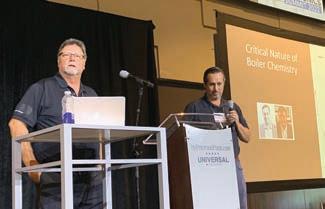
Jeff House of Jefcom Consulting (left) and Brian Morgan of The Morgan Group, the chemical brothers, enlightened the crowd on the critical nature of boiler chemistry.
ics for these comfort-driven energy efficient applications and how to put the systems together.
Other presentations included: Mike Miller of Taco Comfort Solutions discussing the pros and cons of zone valves and zone circulators highlighting the efficiency of modern technology;
Continued on p18
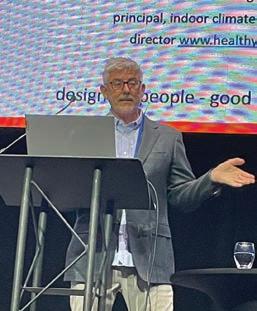
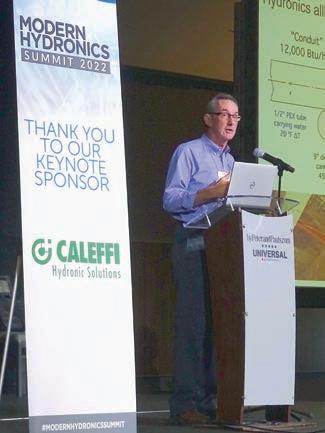
John Siegenthaler delivered the opening and closing keynote address on why hydronics is the optimal solution for comfort and efficiency in modern net-zero homes.
Brian Morgan of The Morgan Group and Jeff House of Jefcom Consulting took a deep dive into boiler chemistry distilling the facts from the myths; and Tom Gervais of Bradford White Canada shared pending technology efficiency standards and how those changes will effect hydronic system installations in the years to come.
Concurrent with the main stage presentations were the Hydronics 101 Sessions—a new addition to the Summit. Sponsored and hosted by NEXT Supply, Hydronics 101 consisted of presentations on boilers, pumps, piping, controls, heat emitters and boiler chemistry for those new to the hydronics industry. Presenters included Craig Demaray of Weil-McLain; Sean Giberson of Taco; Curtis Bennett of HBX Controls; as well as Brian Morgan and Jeff House.
Thank you to the 2022 Summit’s key sponsors: platinum sponsor, Resideo; keynote sponsor, Caleffi; hydronics 101 sponsor, NEXT Supply; tool sponsor, Kane Canada; event sponsors, Lochinvar (Aqua-Tech), Roth, Taco, Uponor, and Viessmann.
This sixth edition of the Modern Hydronics Summit, the largest in the event’s history, was sold-out, and we look forward to taking the show on the road next year with Vancouver as the host city. <>
In a separate room those new to hydronics attended a day-long group of sessions in the Hydronics 101 classroom, sponsored and hosted by NEXT Supply.
by a variety of vendors. While some of the action was live-streamed, the activities were captured and will be appearing on social feeds over the months to come. Gary McCreadie (@hvacknowitall1) was also on hand interviewing vendors.
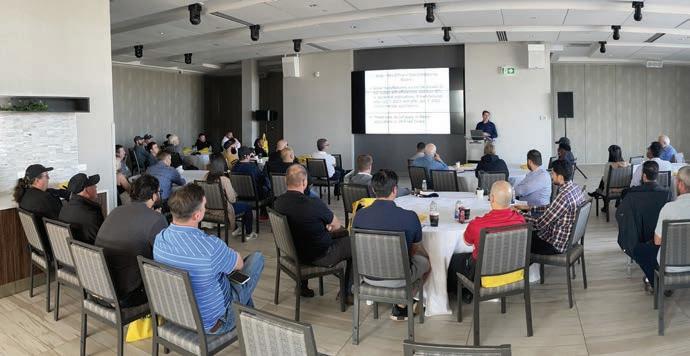
selecting “fact” or “myth” to questions posed by the presenters.
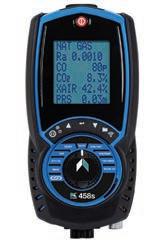
Is our promise you’ll receive the BEST AFTER SALES SUPPORT when you buy a KANE Analyser - here’s what that means:
10 Year warranty with annual recertification. Free Return courier to your location. Theft protection - 25% off* when replacing your obsolete or stolen KANE analyser. All inclusive fixed pricing. Canadian based sales & technical support. Exclusive email offers.
KANE CARE applies to KANE258, KANE358 & KANE458S and all of their configurations *Discount off MSRP
The House and Morgan presentation on boiler chemistry was interactive with the crowd
The crew of social media influencers coordinated by Aaron Bond (@bond_aaron) completed four boiler panel builds using materials donated
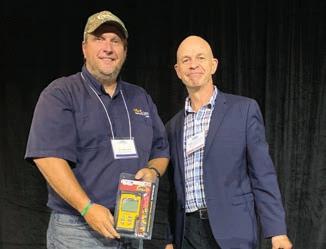
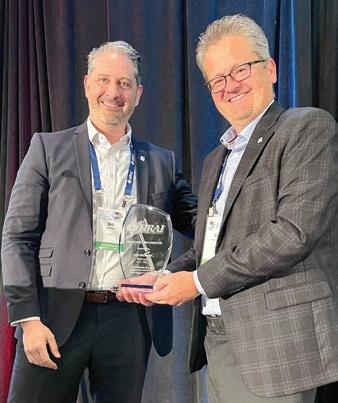
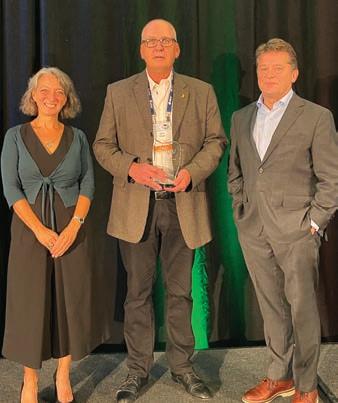
Pierce Akins of Riverdale Plumbing (left) took home a residential combustion analyzer courtesy of Kane Canada, presented by HPAC editor, Doug Picklyk.
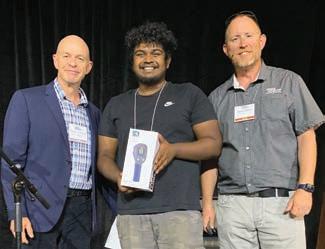
Azad G. of ICON Air Inc. (centre) won a Kane TCam thermal imaging camera, presented by Peter Leonard and Mike Miller.
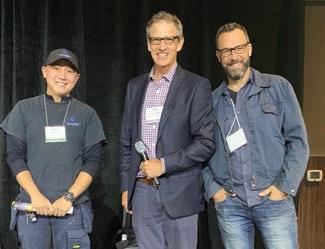
Vince Lau of Stott HVAC Systems (accepted by Benny Li of Stott (left)) and Cam Giroux of I Heart Heating (right) each won a pair of Blue Jays tickets courtesy of (Lochinvar),
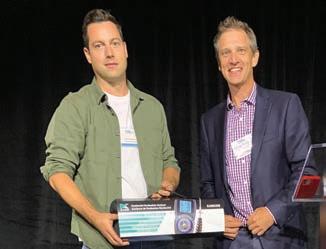
Kent McLellan of Mid-Lam Heating & Cooling (left) won a UEi digital temperature logger, presented by HPAC publisher Peter Leonard.
September 26th, Jays vs. Yankees. Front row, Vince Lau (left) and Matthew Hopkins from Stott HVAC. 2nd row (l-r): Paul Kemboi, AquaTech; Cam Giroux; Dan Grossi, The Hydronics Team. (Photo: Grant Erickson, Aqua-Tech)
CAN BOILERS BE “RESILIENT?”
Don’t write off fossil fuels just yet, as dual fuel options provide a logical bridge to lowering carbon emissions. BY
JOHN SIEGENTHALER
Ever notice how new words or phrases continually slide into our social vocabulary? A few examples that pertain to energy and buildings include: sustainability, energy justice, climate justice, beneficial electrification and decarbonization.
Another contemporary term that’s currently popping up in a variety of communications is “resiliency.”
It’s meant to convey the concept that buildings and their environmental control systems should be able to maintain near normal operation under abnormal conditions such as extended power outages, temperature extremes, strong storms or supply chain interruptions.
Resiliency is a very desirable and rational concept. Think back to the winter of 2020-21 where a strong “polar vortex” storm caused massive damage in Texas knocking out power for weeks.
That storm started a domino effect leading to frozen pipes, natural gas interruptions, inoperable sewer systems, and intolerable temperatures in tens of thousands of homes and buildings. This event and its aftermath demonstrated an abysmal lack of “resiliency.”
NOT THERE YET
The aspirations of those who advocate for a complete and expedited switch from fossil fuels in favour of complete electrification of HVAC systems sometimes overlook situations that are inherently resilient.
One example is a belief, by some, that existing fossil fuel heating systems, such as boilers fired by natural
gas, fuel oil, or propane, should be scrapped ASAP and their function replaced by an electrically-driven heat pump with electric resistance backup.
This concept is short-sighted from several perspectives. First, assuming that the boiler is functional, serviceable, and has been maintaining comfort in the building, leaving it in place allows for supplemental heating.
This helps reduce the emerging peak power demand scenarios that many electric utilities will soon face as more buildings go over to all-electric heating. It also reduces demand charges in commercial buildings.
Based on simulations I’ve been working on, an air-to-water heat pump could provide between 70% to 97% of the total seasonal heating energy in a home equipped with hydronic heat.
The lower end of this range corresponds to buildings in very cold climates with legacy high temperature hydronic distribution systems, and the upper end corresponds to lower energy use buildings in less severe climates, using low temperature hydronic distribution systems (e.g., design load water requirements no higher than 120F).
There are many factors that collectively determine just how much of the seasonal space heating energy can be supplied by the heat pump, but the take-away here is that the majority of this energy is supplied by electricity rather than on-site fossil fuel. Isn’t that the primary goal of electrification?
Second, leaving the existing fossil fuel boiler in place allows for full capacity backup if the heat pump is down for
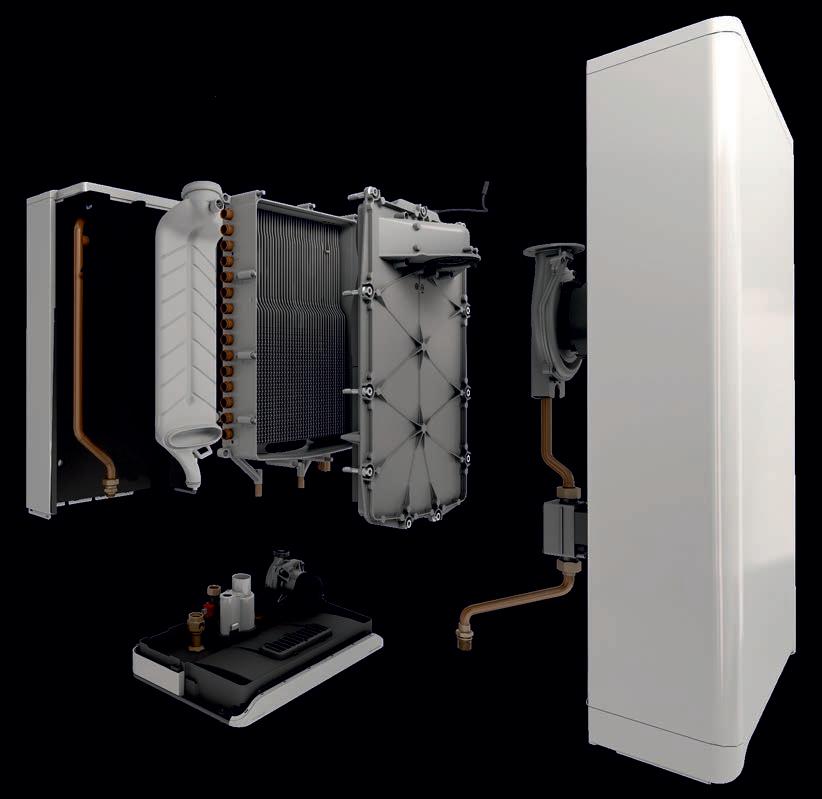
You expect your boiler to provide enough hot water for both your kitchen and bathroom, as well as enough heat to make your home cozy and snug. Combining DHW & space heating in a single compact design featuring two independent copper waterways embedded in a cast aluminium heat exchanger, the SFC Combi is designed to do just that.
The SFC Combi contains cutting-edge, solid-state electronics to control its gas valve, fan and ignition. By doing so, we’ve succeeded in reducing the number of moving parts, made servicing simple, and increased reliability.
< HYDRONICS
service. Granted, heat pumps have improved a lot since their introduction in the 1970s, still, modern heat pumps are a complex assembly of components, many of which are separated from the outdoor environment by little more than a sheet metal cabinet.
It’s unrealistic to think that any device of such complexity, and operating in an outdoor environment, will make it through 15 to 20 years of operation without a single service issue that will temporarily shut it down.
If it’s the sole heat source for the building things are likely to cool off (or worse - freeze up) before the heat pump can be put back in operation, and that’s definitely not resilient.
Third, most fossil fuel boilers and their distribution systems can operate on a few hundred watts of power. A small and relatively inexpensive portable generator could keep most fossil-fuel heating systems in residential and light commercial buildings operating during a prolonged power outage.
Buildings with heat pumps and electric resistance backup can also be maintained by emergency generators, but will require much larger and more expensive systems.
Fourth, the combination of a heat pump (air-to-water or
geothermal water-to-water) with an existing fossil fuel boiler provides time-of-use flexibility. The fossil fuel boiler could be used at times when peak electric rates are in effect, or times when utilities experience peak demand and need to shed load through pre-established agreements.
Fifth, there’s obviously a cost associated with removing a boiler and its piping, fuel supply system, wiring and venting. Why add that to the upfront cost of installing the heat pump?
Keeping a functional fossil fuel boiler in a system as both a supplemental and backup heat source to a heat pump provides a transitional strategy toward increasing electrification.
This approach helps buy the time needed to implement electrification without over-stressing power grids. It also defers the need to upgrade electric services to accommodate heat pumps and electric resistance backup.
When an air-to-water or water-to-water heat pump is added to an existing system, small piping modifications can be made that would allow an electric boiler to eventually replace the fossil fuel boiler without major system reconfiguration.
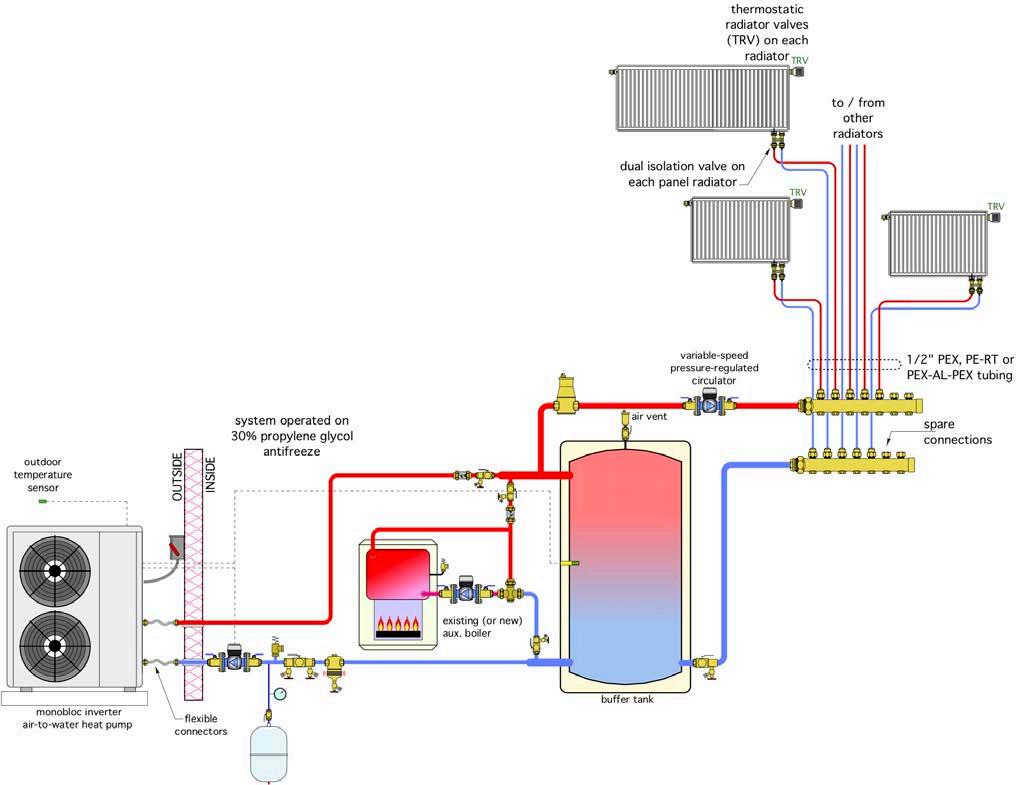
Figure 1: a monobloc air-to-water heat pump with an existing boiler piped in parallel.
< HYDRONICS
PARALLEL HEAT SOURCES
The diagram in Figure 1 (above) shows one possible configuration where a monobloc air-to-water heat pump and an existing (or new) boiler are piped in parallel. If the system operates at lower temperatures (130F or lower) the boiler needs to be protected from sustained flue gas condensation. That’s easily handled by using a thermostatic “anticondensation” valve.
The boiler and its circulator would only be operated when the heat pump cannot maintain an adequate temperature in the buffer tank. Off-the-shelf two-stage temperature controllers could automatically manage both heat sources based on either setpoint temperatures or outdoor reset control.
This system uses several panel radiators sized to provide design heating load at 120F. A simple homerun distri -
bution system with a variable speed circulator creates flow.
Thermostatic valves at each radiator regulate output. It’s a simple and repeatable concept that provides zone control without multiple thermostats.
WE’LL GET THERE
I’m not against properly planned electrification. The eventual transition to heat pumps as the primary type of heat source for hydronic systems is a huge opportunity for the North American hydronics industry, probably the biggest that I’ve witnessed in over 40 years.
However, I’m also a “realist” in terms of rushed or all-or-nothing policies that overlook favourable opportunities.
Fossil-fuel should not be treated as “public enemy #1.” Its use is the underlying reason for the comfortable and arguably luxurious life style most North
Americans enjoy in comparison to much of the world’s population.
Fossil fuel boilers, in both retrofit and new construction applications, complement the use of heat pumps, with the latter increasingly serving as the primary heat source.
Boilers and fossil fuel can “cover” for the vulnerabilities of heat pumps, while still allowing the long term goal of increased use of renewably-sourced electricity. As such they enhance the overall resiliency of the system. Hydronic professionals are in a perfect position to leverage this approach and profit from it. <>
John Siegenthaler, P.E., is the author of the Modern Hydronic Heating (4th edition available now) and Heating With Renewable Energy (visit hydronicpros.com).
Partner With Your Industry Experts.
AQUATECH™ offers innovative Lochinvar® commercial and residential building heating and hot water solutions that empower engineers, specifiers, builders and contractors to use solutions that dependably deliver.
A building is about more than just products. It’s about people. Your customers, who live, learn, or work in the facilities must have heating and hot water solutions that perform and give them peace of mind.
Turn to one of your best resources for heating and hot water solutions, value and people support. Grow your business with AQUATECH.
EXPANSION TANKS
HPAC Magazine spoke with John Siegenthaler about the sizing, placement and proper connection methods for expansion tanks on closed-loop systems.
BY LOGAN CASWELL
Doug
The latest installment of HPAC magazine’s 30 Mechanical Minutes (the free webinar series) focused on expansion tank selection and installation considerations.
In this episode, HPAC editor Doug Picklyk was joined by regular contributor and hydronics expert John Siegenthaler. And this edition was sponsored by Wolseley Canada, national wholesaler in the HVAC/R and plumbing industry.
Siegenthaler explained how expansion tanks are essential to keep the pressure under control in closed-loop hydronic systems. Perhaps one common misconception is that pressure relief valves are a go-to for releasing pressure in a system. “It’s the last resort,” said Siegenthaler. “The expansion tanks should do most of the work handling the expansion and contraction of the fluid.”
Modern hydronic systems typically use a diaphragm-type expansion tank with a flexible rubber diaphragm. Water presses into the top part of the tank as it heats up and expands. This compresses against the air that is captive in the tank’s diaphragm.
As the water in the system cools and
contracts, the diaphragm moves up so that cooler water will move back into the system. At the bottom of the tank, you will always see an air valve that looks like the valve on a tire, this allows the tech to set and ensure the pressure is accurate as per the tank manufacturer’s instructions.
TANK LOCATION
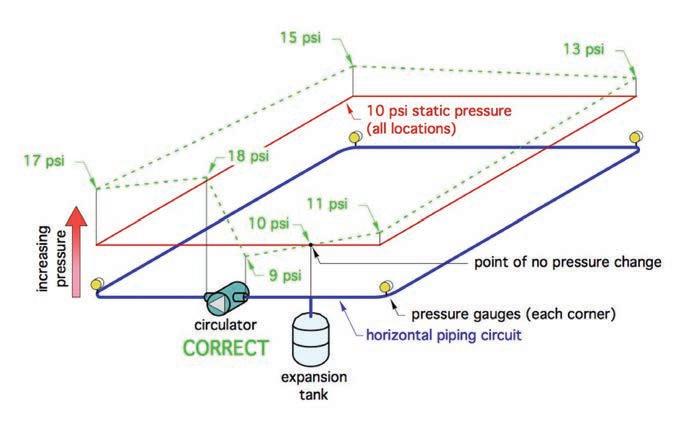
“To determine the ideal place in your system for an expansion tank, it’s essential to acknowledge what is called the point of no pressure change,” said Siegenthaler.
“This occurs where the expansion tank is placed,” he note. As the flow goes through the circulator, friction between the fluid and the piping system is evident as there is a continual drop in pressure through the system.
Siegenthaler went on to say expansion tanks should always be close to and before inlet of the circulator, to minimize the pressure drop between the expansion tank and the circulator. This concept is often referred to as “pumping away” from the point where the expansion tank is tapped into the system.
Siegenthaler noted that if an expansion tank is moved to the opposite side of the system (relative to the circulator), the problem of negative pressures is endemic to the entire system, which means the pressure in the piping is the same or lower than the atmospheric pressure (point of no pressure change).
Negative pressure in a piping circuit is problematic because air could be sucked into the system through flowtype air vents or loose valve packing. So always position expansion tanks before and close to the circulator.
According to Siegenthaler, monitoring the health of tanks is simple. First, unscrew the plastic cap on the valve (at the bottom of the tank), then use a nail or a pin and press the valve's stem. If you notice water spraying, the tank will need to be replaced.
This is because the valve represents the point of captive air volume in the tank, and if the diaphragm has cracked or failed, the makeup water system will feed water into what becomes a waterlogged tank.
Another way to quickly determine if the tank has become waterlogged is by tapping on the tank with your knuckle
Host
Picklyk, editor of HPAC (left), questioned hydronics expert John Siegenthaler about proper expansion tank installation.
— a hollow sound on the bottom of the tank is good. You probably have a failed diaphragm if you rap your knuckle on the tank and hear a THUD.
Furthermore, if you notice water consistently spilling out of the pressure relief valve when the system heats up, it’s probably due to a failed expansion tank.
Corrosion failure is possible when installing inverted tanks, so it’s recommended not to install expansion tanks in this way. This is because the inside of the expansion tank is carbon steel and not stainless steel, making the inside of the tanks susceptible to oxidation, especially if the installation is inverted. The ideal way to install the tank is hanging down from the top of the tank.
Before the days of heat pumps and modular condensing boilers, boilers would often run up to around 160F to 180F. The sizing method for expansion tanks in this temperature range would
be to assume that the entire water volume in the system would have a considerable temperature change, resulting in an oversized expansion tank.
An extensive commercial radiant system could easily have 100 gallons of water in it, especially with several thousand feet of ⅝-in. or ¾-in. tubing.
By accurately calculating the required tank size, you can compensate for a larger temperature change for only a portion of the system experiencing higher temperatures. A smaller tank is not only a cost-saving measure; engineers size the system according to the actual amount of fluid expansion that will occur.
Geothermal earth loops are another system Siegenthaler felt was worth discussing. Since the early ‘80s, one of the schools of thought was that the highdensity polyethylene pipe that is used for the earth loop would have enough elasticity that you didn’t need an expan-
sion tank on that side of the system.
As a result, thousands of installations exist throughout North America without expansion tanks. After a relatively detailed analysis of geothermal installations, the rate at which the pipe expands its volumetric expansion (internal volume) rate of the tube differs from the rate of volumetric expansion of the fluid.
In the winter, the interior volume of the line shrinks at a higher rate than the shrinkage of the liquid, which will push the pressure up in the geothermal system. Usually, this isn’t a problem in a 40-50 psi system; however, if you don’t have any marginal fittings, you might get a leak.
In the summer, the pipe expands faster than the fluid and what that does is cause the pressure in the earth loop to drop when you don’t have an expansion tank, the pressure can fall to the Continued on p28
< HYDRONICS
point where the circulator will cavitate. The circulator is cavitating because the pressure is low enough that the fluid changes to a vapour.
“I am a firm believer in putting an expansion tank in any closed loop system,” said Siegenthaler. “You minimize the pressure variation between winter
and summer by putting an expansion tank in an earth loop. It doesn’t hold the pressure precisely the same, but it reduces the swing to the point where the concern is negligible.”
In summary, anywhere you have a heat exchanger with two circuits, you need an expansion tank on either side of those closed-loop systems. In addition, when you have two closed-looped circuits and have anything that isolates them from each other, for example, a heat pump or a heat exchanger in a heat melt system, you should also have an expansion tank in both circuits. These two independent circuits will not communicate the fluid's pressure, expansion, contraction, or expansion. <>
To view this entire episode of 30 Mechanical Minutes, or see previous episodes, visit hpacmag.com/tech-pulse
The expansion tank should be located before the circulator. Note the pressure drop as fluid travels around the loop. If the tank is located after the circulator negative pressure could occur.
RIDE THE LIGHTNING
By managing dual-fuel systems—gas boilers and electric heat pumps—modern controls can help deliver the most cost-efficient and comfortable solutions for your customers. BY
CURTIS BENNETT
Iused to be a huge golfer. Like 36 holes a day in the summer when I was a kid—back when a junior membership was 50 bucks. Once I was out in Manitoba visiting family and we went golfing, of course. It was getting dark and a big storm was rolling in fast!
My brother and I were sitting on the back of a golf cart as we were all trying to get somewhere safe. I looked over at him, and we both had very fine, blonde, mullety (that’s a word) hair, and it was standing straight up. Not just a few strands, most of the hair.
The scene was super sketchy, trees blowing everywhere, hail coming and hair standing straight up. The electricity was in the air, literally. We made it to
safety without getting hit by lightning, and just in time to miss the golf ball size hail that came thundering down.
Electricity is certainly in the air right now in our industry with the term “electrification” being talked about everywhere. It seems to be the “buzz” word right now. The Wikipedia definition is “the process of powering by electricity and, in many contexts, the introduction of such power by changing over from an earlier power source.”
We see it happening on the roads with the electrification of cars. In our industry it comes mostly in the form of heat pumps, whether water source or air source. Heat pumps, as you may or may not know, use electricity to com -
press gas to provide heating and cooling for a building depending on which way the flow goes inside the heat pump.
Heat pumps are becoming more and more efficient as well, with the advent of modulating compressors and better refrigerants. Coefficients of performance (COP’s), the ratio between the amount of thermal energy transferred and the amount of electrical power required, also have the ability to go higher and higher in new systems.
When I first started seeing heat pumps and we began designing the first controls for them was back around 2006. Europe had been using heat pumps for years by that time, so the
contractors using them in Canada were mostly from Europe and had previous experience using the technology.
Buildings would be designed with heat pumps, but they also needed to be designed with boilers, or at least a secondary heat source. The reasoning for this was that the maximum temperatures the heat pumps could output was around 115F to 120F (46C to 49C). At this temperature the compressor would have to work too hard to produce the pressure needed.
As you well know, in Canada we have some very cold areas and 115-120F supply temperatures will just not cut it, so the boiler system would be there to top up the heat in the winter on the colder days of the year.
The boiler would also need to supplement water-to-water ground-source heat pumps if the ground field became saturated. This means that because the field was undersized (possibly) to
save a little money, the efficiency of the system would decrease drastically and the boiler system would have to supplement even more.
This is not always the case anymore with the new heat pumps and their modulating compressors. And new refrigerants are allowing heat pumps to start putting out 130-140F (54-60C), and at these temperatures it is possible to get away without a boiler as a heat backup in some locations.
Now in very cold climate areas they will still use a boiler for supplemental heat, but it may not always be necessary. I would also like to add a caveat to what I am saying: I know you don’t need as high of temperatures when using radiant heating, but we sell hydronic heating to be comfortable, way more comfortable than typical forced air. It’s very hard to tell someone who bought a heating system for its comfort to put on a sweater.
Now there is a new “trend” — at least I see it as a trend—and it’s something I quite like as the control technology needed for it is very cool.
We know the efficiency of heat pumps is getting better each day, while boiler efficiency is also reaching near 100%, so the next progression comes in the technology that allows a user to choose between them.
Why would we choose between them you ask? It’s easy! Money. I know some of you would say it’s “greener” or it’s more environmentally friendly to use electricity, but I would ask where that electricity comes from. Some regions still burn coal and in many areas we're still burning natural gas at our power plants, and look at Europe and the power crisis it’s experiencing because of gas shortages. Yes, a lot of places have hydroelectric dams, but they still have an environmental impact you
Continued on p32
< HYDRONICS
can’t ignore. Ok, I digress. I get a little passionate about this topic.
Okay, let’s say you could calculate the efficiency of the heat pump at all times, or even better could calculate the COP in real time, and you also knew the efficiency of the boiler at all times. Wouldn’t it be nice to run the device that costs the least amount of money? It’s definitely possible.
Electricity rates are published, gas rates are published. They do fluctuate if you are not on a fixed rate plan, but the coolest thing is that some of the energy providers are allowing access to an API (basically an interface that allows software developers to link into it) so that a control can access real time information to decide between running a heat pump using the electrical grid or a boiler fed from the gas pipeline.
The control can make decisions
based on electrical prices, system efficiency and even system loads.
Some electrical providers put large riders on electricity at certain times of the day when the strain on the grid is already very high. I actually believe this kind of price-per-kilowatt movement during the day will only get worse.
As we bring more and more electric cars on and we plug in four phones and four iPads to charge each night at home the strain can only get worse. So a control that can help out in these situations will become more prevalent.
So the discussion does not have to be heat pumps vs boilers, it should always be about efficiency and comfort. Always. That is who we are in this industry. We should be about “green”, but also about comfort.
Our customers need it, they demand it.
By combining these technologies and
THE ULTIMATE COMFORT IN THE COLDEST WEATHER
adding some overarching controls to provide the most cost-effective solution in real time, I think we have a win-win.
Electrification is not going away. The momentum is only getting stronger. I also don’t think that electrification means the demise of boilers. On the contrary, I believe that we may have the best of both worlds moving forward. <>
Curtis Bennett C.E.T is product development manager with HBX Control Systems Inc. in Calgary. He formed HBX Control Systems with Tom Hermann in 2002. Its control systems are designed, engineered and manufactured in Canada to accommodate a range of hydronic heating and cooling needs commonly found in residential, commercial and industrial building design applications.
Ion™ 98 Variable-Speed Modulating Gas Furnace
• Up to 98% AFUE
• 60,000 – 120,000 BTUh
• Lifetime Heat Exchanger Limited Warranty
• 10-Year No Hassle Replacement™ Limited Warranty
Pair it with a compatible air conditioner for full functionality and a full communicating system using the Ion™ System Control.
For increased efficiency, look for the Ion™ 96 Variable-Speed Gas Furnace with Two-Stage Operation at keeprite.com.
WINTER 2022: CHEAP HEAT DILEMMA
Helping customers achieve efficiency, sustainability and low cost requires balancing existing system replacement with affordable options. BY
IAN McTEER
The term “cost effective” is a wellused starting point for many HVAC system proposals, retrofits and renovations. But what does it mean? A dictionary definition would read: “try to produce a good result without costing a lot of money.”
It’s the “without costing a lot of money” part that confounds most consumers, because modern HVAC systems are expensive. Of course, everything has a cost—monetary or otherwise—associated with it, thus deciding how much must be spent to achieve a good result keeps many of us awake at night.
In my case, as I wrote about late last year (HPAC Dec. 2021), I decided to replace an existing single stage 95% AFUE gas furnace with an all-electric cold climate heat pump at my new home.
Given my circumstances, I could have just as easily, with considerably less expense, simply installed an efficient central cooling unit and likely exercised the “without costing a lot of money” part to maximum benefit.
But, in my previous home, I had the luxury of living with a modulating gas furnace running on propane and controlled by a communicating smart thermostat combined with an outdoor temperature sensor. The furnace would fire at 65% input on a call for heat, and once a flame signal had been established the modulation routine could ramp as low as 40% input or up to 100% input in as little as 1% increments as required.
Only on the coldest days would 100%
input be necessary. The serial port communicating variable speed blower would follow the increasing or decreasing inputs as necessary providing warm air at the temperature rise I had previously selected. A very quiet and delightfully comfortable system.
During the winter of 2018/19, I used 1,904 liters of propane for space heating. At an average cost of 63.7¢ per liter, I paid roughly $1,213 for improved thermal comfort.
• Thus, 1,904 liters of propane @ 24,187 Btu/L = 46,052,048 Btu used to heat my house.
• The average price of electricity in Ontario is 13¢/kWh for the first 1,000 kWh (according to energyhub. org), it would have cost 13,493 x
0.13 = $1,754 minimum to provide the same number of Btu’s using just electric heat.
Cost have increased considerably since then. Propane, as of September in my area, was 71.9¢/L, equipment and labour costs have increased, not to mention shortages of materials and qualified labour further vexing our industry.
Moving to a smaller better-built modular home (half the size of my old one), that is running 100% electric featuring my Mitsubishi ccASHP, I realized a significant savings having used 7,892 kWh as of April 22 this year.
Considering my savings are 71% lower (for all my power needs) as opposed to the old house having a propane and a hydro bill, I’m happy with the way things turned out.
But is it cost effective?
My input costs devoted to get this particular show on the road have been substantial, and not just on the HVAC side. I can’t remember how many dump truck loads of gravel and fill were used to level a garage shed and to prepare pads for a deck and porch, not to mention overseeing installation of the electrical service and plumbing among many other things. It’s not for the faint of heart, but I don’t mind the work.
As mentioned, I have a top-notch HVAC system, yet the average person would be, in my opinion, better off to stick with conventional real estate by investing in a modern property already incorporating the best of HVAC, insulation, glass and other benefits.
WHAT IS EVERYONE ELSE DOING?
Taking a look at the United Kingdom (UK), the shine has really gone off the ubiquitous and, up until recently, the indomitable gas-fired combi boiler.
The Brits, along with the European Union (EU) countries, promised long ago to reduce carbon emissions dramatically by eliminating the use of natural gas (NG) for domestic heating.
This coming heating season, the EU and the UK may have their ambitious climate change policies advanced at an accelerated rate thanks to the war in Ukraine leading to a potentially huge reduction in NG supplies from Russia.
In a document published by the European Heat Pump Association (EHPA) in May 2022, hydronic heat pump sales have grown by 2.18 million units, an increase of 34% over last year.
The EHPA estimates that in the entire EU, there are approximately 17 million units in service to date, but that’s a mere 14% of the heating market.
The incredibly ambitious REpowerEU plan calls for 60 million units in service by 2030.
I have a difficult time dealing with such ambitions, especially when cost
Product class
(i)(A) Split systems—air conditioners with a certified cooling capacity less than 45,000 Btu/hr
(i)(B) Split systems—air conditioners with a certified cooling capacity equal to or greater than 45,000 Btu/hr (and less than 65,000 Btu/hr)
effectiveness seems to be left out of the equation.
Listening to some of our plumbing/ HVAC colleagues posting YouTube videos from abroad, I’m shocked to discover that removing a combi boiler in favour of a hydronic heat pump (mostly air source) imposes significant extra costs onto the homeowner.
In many cases, a buffer tank is required that’s typically installed in the loft (attic); existing piping is inadequate to handle the required flow rate of the lower temperature fluid, and too often, many heat emitters have to be replaced with larger units.
Even though the outdoor units run much quieter than heat pumps of yesteryear, houses in the UK, for example, tend to be closer together and have smaller gardens (backyards) so that several units in operation up and down the yards tend to create objectional noise levels.
And, worst of all, many EU plumbing and heating contractors say they cannot find enough qualified labour to install and service today’s sophisticated
heating systems. Sound familiar?
We are, in effect, rapidly furthering heating system evolution disguised as yet another profligate government spending program. Such spending tends to direct the monetary awards to fellow travelers, yet I’m convinced that market forces would advance the cause of such a gigantic enterprise just as well.
The UK government was offering a piddling incentive to homeowners to help defray added expense, but that program is ending soon. In the UK and elsewhere, the “good heating system result while not costing a lot of money” remains an ethereal concept out of reach for the average household.
WHAT ARE WE DOING?
In North America, the shine has decidedly gone off any fossil fueled heating appliance. Governments have fallen in love with air source and ground source heat pumps. In the U.S., the American Council for an Energy-Efficient Economy (ACEEE) claims “electric heat pumps
Continued on p36
Table1. NRCan, May 2021 - Technical bulletin on amending the standards.
will be the cheapest clean option to heat most U.S. homes by 2030.”
The government of Canada, also thoroughly invested in the electrification of everything, has been working on new energy performance standards for air source heat pumps that will now incorporate a Minimum Efficiency Performance Standard (MEPS) for heat pumps in AHRI Region V starting in 2023.
The Heating Seasonal Performance Factor (HSPF) in previous listings for air source heat pumps always reflected conditions found in Region IV. Thus, an air source heat pump with a Region IV HSPF rating of 7.0 required the rating to be divided by a factor of 1.15 to arrive at its Region V HSPF of 6.0.
Natural Resources Canada has proposed a MEPS for Region V split system ASHP units of 6.0 using the new category of HSPF2. See Table 1
“In North America, the shine has decidedly gone off any fossil fueled heating appliance.”
Among other things, manufacturers would also have to report:
• Rated heating capacity at -8.3C (47F)
• COP @ -15C (5F)
• Rated Capacity at -15C (5F)
NRCan proposes to make these requirements applicable to units manufactured after January 1, 2023. Today’s cold climate air source heat pumps typically produce an HSPF2 in Region IV of the U.S. of 9.0 or better making the cold climate heat pump one of the best heating and cooling choices for
Canadians. (More on the cost-effective part of the equation later.)
EVOLUTION HICCUPS
There is no doubt in my mind that better built buildings that waste less heat, provide better ventilation along with a cleaner indoor environment should be adopted even if, as more than a few skeptics believe, the so-called climate crisis didn’t exist.
I read with interest the efforts of an organization called The Atmospheric Fund (TAF) that got together with the City of Hamilton to pilot a project intended to “advance electrification of space heating in Ontario.”
In the published case study, “Lessons from a Heat Pump Retrofit at CityHousing Hamilton”, three suites in a 40-unit housing project were chosen
Continued on p38
The Royal League
– intelligent high-tech fan system Consumes up to 30% less electricity, savings up to $1600* per year per ZAplus fan, supplies significantly higher air volume flow rates, can be installed at 3 heights (On Top, Semi Flattop and Flattop), provides cost-effective, increased flexibility during installation and assembly With the optional discharge-side diffusor, aimed at low-pressure applications, even greater efficiencies may be realized. www.ziehl-abegg.us
Your Complete
Suite of HVAC & IAQ
Equipment
TSI® is your one-stop shop for ventilation and indoor air quality instrumentation. Simplify your equipment portfolio while working with the most accurate instruments available on the market today.
TSI® Offers a Full Line of:
▪ Capture Hoods
▪ Micromanometers
▪ Hydronic Manometers
▪ Velocity Meters
▪ Thermal Anemometers
▪ Indoor Air Quality Monitors
to have heat recovery ventilation along with a VRF air source heat pump system installed to evaluate the performance of the new system that, if successful, would be scaled up to the entire complex.
It is an interesting read. The well-intentioned project did improve the living conditions for the tenants but, sadly, even though TAF went to great lengths to understand the situation and to engineer a suitable heating system, the pilot project was a failure.
In fact, this statement from Appendix B of the report tells much of the story: “during the 2018-2019 heating season, the heat recovery VRF ASHP consumed 54% (22kWh) more than the electrical baseboard heaters were projected to consume on the average day.”
Data collected by TAF indicated that, even though the vetted project passed the planning stages, it turns out the equipment was oversized and suffered from energy wasting short cycles. Mother Nature does not give up her secrets easily, but kudos to the City of Hamilton and TAF for attempting to improve the HVAC system in the project.
I’m sure that lessons learned will be implemented and a cost-effective renovation for the other suites will be completed. No doubt, other energy saving projects near and far will also benefit from the City of Hamilton experience.
COST EFFECTIVE SOLUTIONS FOR THE AVERAGE HOMEOWNER
Electrification of everything, the supreme energy saving goal, will take decades to implement in Canadian cities.
Some municipalities already have decided to ban any new builds from connecting to the gas distribution system for heating and cooling, leaving builders to adopt cold climate heat pumps or geothermal systems as the
best way to heat and cool exceptionally tight houses. But what about the tens of thousands of existing houses needing a retrofit heating system today?
Today’s heating technology is expensive, and I’d argue it is not cost-effective to replace old blisters like those in Figure 1, with an all-electric cold climate heat pump system unless:
• The existing ductwork can properly handle the additional airflow required, otherwise, can a duct renovation be done at a reasonable cost?
• The house has an existing electrical infrastructure that can handle 100% backup electric heat if the ccASHP can’t handle the entire heating requirement when the outdoor air temperature will consistently approach -25C or lower.
Similarly, replacing like for like doesn’t always ring the cost-effective bell for me either. I’ve argued before that too many houses have secondrate HVAC, and I would go as far to say that it would be cost effective to abandon the existing system in favour of a multi-split ccASHP, for example. Today’s low wall ccASHP terminals look good, provide decent air mixing charac -
teristics are more easily serviced. But I see nothing wrong with offering, when appropriate, a two-stage gas furnace controlled by a smart thermostat as the most cost-effective solution for older homes sheltering cash strapped consumers. But the system must work:
• Prevent oversizing, do a load calculation
• Commission and balance the system – is the second floor well served?
• Provide better air filtration: MERV 8 minimum
• Recommend an HRV or an ERV in humid climates.
Natural gas, even propane, in my opinion, still offers outstanding cost effectiveness for the short term while necessary improvements will be made to houses over the decades to come. <>
Ian McTeer is an HVAC consultant with over 35 years of experience in the industry. He was most recently a field rep for Trane Canada DSO. McTeer is a refrigeration mechanic and Class 1 Gas technician. He can be reached at imcteer@outlook.com
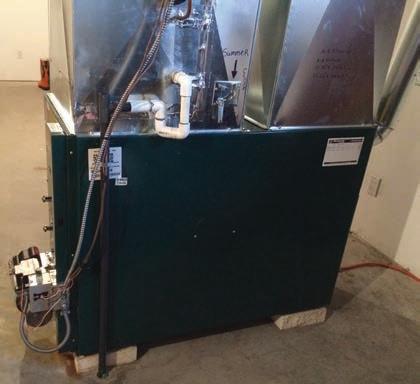
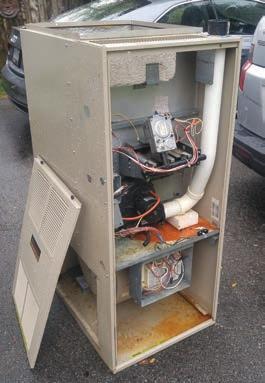
Figure 1. It’s still hard to cost-justify replacing existing oil and gas furnaces like those above unless a home’s existing ducting and electrical can handle the switch to an all-electric cold climate heat pump.
PHOTOS:
ROAD TO 2030:
PART 2: HOW INCENTIVE PROGRAMS ARE BENEFITING PROPERTY OWNERS AND TRADE CONTRACTORS
As
programs drive the adoption of new technologies, does the industry have the capacity to keep up?
BY DOUG PICKLYK
Ilike to joke that we broke the Internet,” says Kimble Costain, deputy director of the Greener Homes division of Natural Resources Canada (NRCan), referring to the initial launch of the Canada Greener Homes Grant which opened its online portal on May 27th, 2021.
The grant program that has $2.6 billion to spend over seven years is designed to incent energy efficiency and resiliency upgrades in up to 700,000 homes across Canada by providing up to $5,000 to homeowners for certain approved retrofits.
“We certainly did crash the NRCan service,” admits Costain, noting that the program received over 9,500 applications on its first day, and by the end of that month [five days later] had 32,000 applications.
Over a year later, as of the first week in September, the program has received almost 200,000 applications, plus another 60,000 from Quebec and Nova Scotia. [Residents from Quebec and Nova Scotia apply directly through provincial programs].
“We’ve issued grants to almost 19,000 homeowners, and so far almost $70 million in grants have gone out to those homeowners,” he says, adding, “We’ve got a long way to go.”
Constain made these comments during a live online panel discussion hosted by HPAC and Electrical Business magazines as well as Energy Manager Canada, the online source for plant and facility managers, building operators and owners who are involved with managing a facility's energy systems.
The online event was held September 8th and was the second installment of the Road to 2030 series which is exploring the implications of the federal government’s 2030 Emissions Reduction Plan for the HVAC and electrical contracting industries in Canada.
The hour-long panel discussion was sponsored by Mitsubishi Electric.
INCENTIVES
Where the initial Road to 2030 event discussed the opportunities available to contractors as the government targets reducing overall greenhouse gas (GHG) emissions by 40% to 45% below 2005 levels by 2030, this second session addressed how existing incentive programs are currently affecting property owners and trade contractors in the race to emissions reductions.
Following the initial rush of the Greener Homes Grant program, the initiative continues to receive roughly 300 applications a day, which is leading to upticks for renovation projects across the country.
But as Martin Luymes, vice president of government and stakeholder relations for the Heating Refrigeration and Air Conditioning Institute of Canada (HRAI) acknowledges, “The HVAC industry doesn't need programs like these to succeed.”
“I only say that because we have to remind government sometimes that they shouldn't think of these programs as job creation measures strictly for our industry—like it's a favour to the sector. But having said that, the industry does like programs of this type.”
Luymes added that the evidence shows that incentive programs like this depend on HVAC contractors to succeed because it’s the HVAC industry that engages with Canadians in their homes on a daily basis.
“They really are at the front end in many ways of programs of this type, and that's just important to recognize,” he says.
With respect to the Greener Homes Grant program specifically, Luymes notes that the initial reaction from the industry was very enthusiastic, although the program did kind of “stumble out of the gate early on.”
There were some concerns about a lack of consultation with industry regarding details about product categories, eligibility and product listings that weren't accurate. “The good news is that almost all of those issues have been resolved satisfactorily,” says Luymes, and he applauded the collaborative work between NRCan and organizations like HRAI and indicated that discussions are ongoing to continue improving the program.
One area he addressed was perhaps the need for better assistance for homeowners in identifying qualified contractors. “We believe that it’s really important that Canadians are dealing with properly qualified contractors. It shouldn’t be just anyone can participate as long as they have a shingle out.
“We do find that when these programs emerge lots of new companies come into the marketplace and begin selling rebates, and they’re pretty good at it. But can they deliver in terms of a quality installation that leaves a satisfied customer? That’s another question.”
Representing an HVAC manufacturer’s perspective, Pushpinder Rana, senior manager, commercial products and industry relations with Mitsubishi Electric, addressed how incentive programs influence the buying decisions of larger commercial and institutional building owners.
And while Rana see’s overall equipment buying decisions in this category not being heavily driven by grants and policies, there are benefits to be found. He points to residential new build con -
Martin Luymes, HRAI
“The HVAC industry doesn't need programs like these to succeed.”
dominium projects in Toronto as an example, where some of these buildings are installing air source VRF systems and different heat pump formats, and these buildings are qualifying for the Toronto Green Standard (TGS) development charge refund program which offers a partial refund on development charges paid if the program qualifies as a sustainable or high-performance development project.
The TGS multi-tiered program for example, now on version or tier 4, provides increasing incentives as more energy efficiency and carbon reduction is included.
“There can be a huge return on your development charges, maybe as high as 20% to 50%, and this is in millions of dollars when considered part of the overall development project,” says Rana.
“So as a developer, if you can meet the higher tier levels just because you pick the right product which can help you to hit your thermal energy demand
intensity (TEDI) level, which is set for each building type and for each tier type, the more money goes back to your pocket, which is certainly a huge incentive or attraction.”
Overall he is seeing the heat pump market evolving in Canada, becoming the primary source of heating or cooling as well as air-to-water systems providing domestic hot water. A market that may be expanding more rapidly on the west coast.
HEAT PUMP ADOPTION
With regards to heat pumps, Costain shared that heat pumps represent the number one retrofit being undertaken by homeowners in the Greener Homes program.
Of the almost 19,000 homeowners that have received funding already, 34% have undertaken a heat pump installation, that’s almost 6,000 heat pumps purchased and installed. And for 75% of those homeowners, it’s the only retrofit they’re doing.
The top three provinces for heat pumps installations are New Brunswick at number one, followed by B.C. and Ontario.
“About 90% of the heat pumps that are being installed through our program are cold climate air source heat pumps, and under our program the homeowner would receive $2,500 if they install a two-head cold climate air source heat pump, and $5,000 if they install a three-head or centrally-ducted airsource heat pump,” explains Costain.
As the program is targeting 700,000 homeowners nationwide, he extrapolates that if the program continues at the current rate, we’re looking at a quarter of a million heat pumps to be purchased and installed over the next five years.
“That's both an incredible opportunity, but also a challenge, and I think we recognize that.”
Continued on p42
Continued from p41
CONTRACTOR ROLE
That federal push towards heat pump technology overall does place the HVAC industry in a critical situation. HVAC contractors and consultants need to be trained, and contracting businesses need to invest in that skill set because they are in the role of raising the level of heat pump literacy among business and home owners.
“I think programs like Greener Homes and the huge numbers we’re seeing in the uptake of heat pumps is sending the market signals that folks need to react to and recognize that heat pump technology, although it’s quickly evolving, is here to stay,” says Costain.
Along with understanding the technology it’s also important that property owners understand the economics of purchasing a heat pump including issues like the cost of maintaining and operating a heat pump versus existing fossil fuel technology.
There may also be the challenge of reconciling that the upfront costs might be a little more, but it’s going to be beneficial and more economical in the long run.
“We come across this dilemma time to time,” says Rana. “I think there is some misconception in the market in general, and to be honest, the installation cost is not high.”
“This is where our training programs play a huge role. We are spending a lot of time, resources, and money to train both the consulting engineers and the
Kimble Costain, Greener Homes (NRCan)
“We’re looking at a quarter of a million heat pumps to be purchased and installed over the next five years.”
Pushpinder Rana, Mitsubishi Electric
“I think there is some misconception in the market in general… the installation cost is not high.”
contractors, and I’m sure other manufacturers also have similar programs.”
He insists that when contractors are sufficiently trained and have the right skills in hand, the installations can be undertaken more quickly without any mistakes, and time is money.
“So when you talk about the cost of heat pumps systems, for a well-trained contractor the overall cost of installation is actually lower than what we think.”
He also notes that manufacturers may offer incentives tied to their training programs, whereby they can offer premiums like an extended warranty on some products installed by qualified professionals, which can be a huge incentive for a contractor.
Educating and training consulting engineers also is key to large projects when considering how to create the best fit with the application, with the building type, and to make sure they are proposing the right product so that builders/developers can meet all the required standards—whether GHG reduction, carbon footprint, running cost, or the total cost of ownership.
TRAINING
Martin Luymes forsees a bigger structural issue for an HVAC industry that's been trained for decades on how to sell gas appliances.
“The structural issue I’m talking about is, we have an incentive program heating up demand for a certain category of products, and really an insufficient number of contractors who are in a position to deliver that product,” he says.
So his concern is not just an issue of how to sell the technology, but it’s the
fundamental ability to work with the technology, to install it and to service it. And like most trades-based industries, there are not enough technicians to begin with and now we have to reskill a lot of people.
Luymes suggests that contractors will adapt over time to new technologies, but they may not be able to do it at a pace that will meet existing targets.
One of the challenges now for installing heat pumps is the qualifications required. Installers with a refrigeration license are more than qualified to install a residential heat pumps, but they’re more likely working in the commercial sector. So organizations are working to establish a residential heat pump installer trade that would allow working on equipment up to five tons. It exists in some provinces, but it’s not nationwide.
“There are not nearly a sufficient number of qualified technicians to do the work, which just leads to the question, who's doing all these installations?” asks Luymes.
In closing, Luymes added that NRCan has asked that the industry channel specific recommendations for their programs through HRAI where possible, as this would allow the association to distill common requests into a streamlined series of suggestions.
“So that’s an invitation,” he says. “If you have specific issues around the Greener Homes Initiative, you can send me an email (mluymes@hrai.ca) and I’ll bring it forward through that process.” <>
To view a video recording of the entire Road to 2030 Part 2 session visit hpacmag.com
Trust Mitsubishi Electric for Smart, Sustainable, Commercial and Residential HVAC Systems.
At Mitsubishi Electric, the innovative thinking that we put into manufacturing satellites for space is the same thinking we put into the sustainability of our HVAC systems. From heating and cooling in the most extreme Canadian climates to the utmost flexibility in HVAC design, we’ve been raising the bar for over 100 years. Because we believe that “amazing” should apply to everything you do.
The Mitsubishi Electric Advantage
• Quality And Reliability You Can Trust
• Efficient Products Designed For The Canadian Climate
• Complete Sustainable HVAC Solutions
• Over 30 Years Of Successful Installation
• Strong Canadian Customer Support Team
Learn more at www.MitsubishiElectric.ca
MECHANICAL SUPPLY NEWS
MANUFACTURERS
WHOLESALERS
INTRODUCING NAVIEN CANADA, INC.
Navien has officially incorporated their business in Canada under the name Navien Canada, Inc.
The Navien business North America has been operating as Navien, Inc. since 2006. With the change, the American territories are now split among the three separate corporations, with the U.S. still operating as Navien, Inc. and Mexico operating as Navien Mexico.
“Our business in Canada has grown exponentially over the previous 16 years, making Navien the number one selling manufacturer of tankless water heaters and wall-hung boilers in the country,” said Scott Lee, CEO of Navien Canada, in a company release.
“By incorporating our business in Canada as Navien Canada, Inc., Navien is demonstrating its commitment to providing nimble, personal and more localized services, and strengthening our partnerships with our customers across Canada.”
The company celebrated the official announcement of Navien Canada on August 29 in Surrey, B.C. along with the grand opening of its first Canadian distribution centre and the launch of a new website dedicated to Canada. navieninc.ca
TRANE TECHNICIAN SCHOLARSHIP AWARDS
Two Canadian were among the 28 students who will share in the US$106,000 Trane Technician of the Future Scholarship program for 2022.
Mark Jommel Santiago from Seneca College in Ontario and John Pratt from the British Columbia Institute of Technology were listed among the scholarship recipients who were rewarded based on academic performance, leadership and participation, long-term career and educational goals, financial need and other criteria. scholarsapply.org/TraneTechnician
DISTRIBUTION
>> Carel and Master Group have announced a new partnership in Ontario, combining Carel’s humidifier and evaporative cooling solutions with Master’s range of HVAC/R products and services. Master Group will maintain a large inventory of Carel products and parts at their distribution centre in Vaughan, Ont. carelusa.com master.ca
>> RLS, manufacturer of the Rapid Locking System line of press-connect fittings for HVAC and refrigeration systems, has announced a new manufacturer’s representative partnership in Ontario with Toronto-based Centric Sales and Marketing. rapidlockingsystem.com centricsales.ca
>> Kerr Controls & Kerr Smart Energy opened a new Saint John, NB branch at 175 Hilyard St., ste. D100. An HVAC/R wholesaler, Kerr operates 12 locations in Atlantic Canada and three in Ontario. kerrcontrols.ca
>> Noble has opened its newest branch at 1796 16th Street E., Suite A, Owen Sound, Ont. The new branch is Noble's 7th location serving Northern Ontario and the 53rd location in its network. noble.ca
DANFOSS CANADA CELEBRATES 70TH ANNIVERSARY
On September 14, Danfoss celebrated the 70th anniversary its Canada office. Initially located in Toronto, the office began as a one-person sales site has grown into a sales and manufacturing operation with as many as 150 employees at one time, and now serves as a sales and service organization, with the office relocating to Oakville, Ont. in late 2020. danfoss.com
Ribbon-cutting ceremony at the new Navien Canada distribution centre: (l-r) Adam Wills, national sales manager, Canada; Ryan Shin, CFO, Navien, Inc.; Scott Lee, CEO, Navien Canada; and Eric Moffroid vice president, Navien Inc.
Rick Sporrer (right), president of Danfoss North America, celebrates with the Danfoss Canada team.
FUJITSU REBRANDS VRF OFFERING
Fujitsu General America has announced a shift in the branding of its VRF and mini-split heat pump product lines, moving all products to the Airstage brand.
Aside from a new teal logo, the Fujitsu J-Series and V-Series VRF products retain their Airstage branding, while the existing Halcyon mini-split line is now known as the Airstage H-Series.
Fujitsu’s unitary and Westinghouse brands are not involved with the rebrand. fujitsugeneral.com
NSI INDUSTRIES ACQUIRES SUPCO
NSI Industries, a provider of electrical, HVAC, and building technology product solutions, has announced that it has acquired SUPCO. The new acquisition designs, manufactures, and distributes parts, components, test instruments, and tools.
SUPCO operates manufacturing facilities in New Jersey, the Midwest, and abroad, maintaining a worldwide network of sales representatives and distributors to serve both domestic and international industries. nsiindustries.com
DUE NORTH ADDS MTL COOL
Commercial refrigeration supply company, Mtl Cool, has been acquired by Due North, a newly created operating company of QBD and Minus Forty.
Under Due North, Mtl Cool will continue to offer products which includes inline horizontal open-air coolers, horizontal sliding glass lid coolers and freezers, vertical open-air coolers and endcap solutions. duenorth.com
TWO CANADIANS INVITED TO RIDGID EXPERIENCE
RIDGID recently hosted its fifth annual RIDGID experience trip, a VIP event that invites members of the skilled trades to gather for fun, camaraderie and hands-on experiences.
The event also serves as a “thank you” to the trades for the role they play in building and maintaining infrastructure.
The contest, which draws entries from tradespeople across North America, concludes with RIDGID treating nine guests to a three-day, all-expenses-paid trip to the RIDGID headquarters.
This year two Canadian plumbing/HVAC tradespeople made the list: Mary-Anne Bowcott, owner of Westcom Plumbing and Gas in Sooke, B.C. and Derek Newton of Chad Plumbing in Kirkland Lake, Ont. ridgid.com
Newton of Chad Plumbing (left) and Mary-Anne Bowcott of Westcom Plumbing and Gas took part in the fifth annual RIDGID experience.
Continued on p46
Derek
HRAI CONFERENCE HIGHLIGHTS INDUSTRY OPPORTUNITY
The Heating, Refrigeration and Air Conditioning Institute of Canada (HRAI) held its Annual Conference in Ottawa from September 18-20, the group’s first in-person national meeting since 2019.
The role of Chair of the HRAI Board of Directors transitioned to Bill Davis, vice president/general manager with Ecco Supply, taking over the role from Scott McDonald of Johnson Controls who served as Chair for 2021-22.
This year's HRAI conference adopted a lighter educational load and encouraged greater networking than past events.
The kick-off reception on the first evening featured Chris Turner, journalist, author and regular speaker on the topics of climate change and the global energy transition, a common theme at the conference.
Turner’s latest book is How to Be a Climate Optimist, and he shared why he’s optimistic about the future, based on the rapid rate of growth in sustainable energy solutions he’s witnessed over 20 years of covering climate change issues.
The global adoption of solar and wind power has exceeded many expectations, the transition to electric vehicles is accelerating fast and re-imagined cities using distributed power solutions and less energy intensive systems— including district energy and heat pump solutions—are some of the reasons he’s optimistic.
Over the course of two days conference attendees heard repeated notes of optimism for the industry while also being faced with the real obstacles to achieving climate goal objectives.
The keynote presentation by Bruce Laurie, environmental leader and influential environmental policy expert, zeroed in on how the HVAC industry is primed to be in the “opportunity business.”
While he acknowledged that Canada’s 2030 emissions targets will be very hard to meet, HRAI members are the ones providing the solutions to help
their customers navigate the complexity of taking on solutions that will benefit both society and the planet.
Laurie shared some details on a new project in which HRAI will be playing a role in collaboration with the Transition Accelerator in a new group called the Canadian Building Electrification Alliance (more details to come).
While Laurie and most every other speaker during the conference accepted the reality that Canada faces a labour shortage when it comes to the skilled workforce required to retrofit and build the green buildings of the “near” future, he is of the belief that there is a realization within the next generation that there is a long-term future in working in fields that are climate positive –and the HVAC industry must be promoting itself as one of those forward-looking industries.
“People are the solution,” said Laurie, and while the role of the technology is critical it’s the delivery of useful information and interacting with customers to support sustainability and resiliency, along with security, comfort and reliability in their homes, that will position the HVAC industry for success.
During the conference the HRAI also recognized members with some special awards. Bruce Passmore of EMCO received the HRAI Award of Merit for outstanding service; the HRAI Life Member Award went to Peter Steffes; and Jim Bolger of Waterloo Energy Products and Mechanical was presented with the Warren Heeley Environmental Award.
President’s Awards were also handed out to Francis Belle, a semi-retired HRAI instructor for residential mechanical design from Regina, and finally the City of Vancouver was recognized for its continuing efforts in pushing and promoting environmental leadership.
Following this year's success, HRAI will be hosting its 2023 annual conference September 17 – 19 in Montreal. <> hrai.ca
Bill Davis (left) takes on the role of HRAI Chair for 2022-23, succeeding past-Chair Scott McDonald (right).
The Warren Heeley Environmental Achievement Award was presented to Jim Bolger of Waterloo Energy Products & Mechanical, a strong advocate of geothermal technology. Pictured (l-r): Julie Dabrusin, MP Toronto-Danforth; Jim Bolger; and Martin Luymes, HRAI.
Bruce Passmore (EMCO) receives the HRAI Award of Merit from colleague Joanna Woo.
After 35 years, Ralph Suppa has announced his retirement from CIPH. Suppa will leave his position of president and general manager on December 31, 2023. He has played a key role in the development of CIPH programs and services since joining the association in 1988 as a program manager. He was appointed to his current role in 2002. CIPH will begin the search for the association’s next president with the intent of having a candidate in place by June 2023.
Bartle & Gibson has promoted Joseph Meier to senior vice president of operations. Meier joined Bartle & Gibson in 2007 as a purchasing agent and progressed from there, moving to purchasing manager, corporate purchasing manager, and most recently vice president of supply chain and logistics.
Superior Radiant Products has promoted Daniel Minniti to the role of customer support manager based in Stoney Creek, Ont. In his new role, Minniti will ensure first rate customer experience in terms of sales support and technical support.
Wolseley Canada has named Candace Woods as vice president, marketing and digital. Woods bring over 20 years of experience in consumer-packaged goods and retail marketing. Most recently she spent four years at Metro as head of marketing in Ontario and led the private label and corporate responsibility marketing strategies nationally. Woods previously held roles at Nestlé Canada in both sales and marketing.
Oatey Co. has named Michelle Newland to the role of executive vice president and chief international business officer, where she will be dedicated to growing Oatey’s international business, effective January 1, 2023. After more than 20 years with Oatey, Newland most recently served as president of the retail and international business unit, and her new role will focus exclusively on international business, with responsibility for sales, marketing and operations in Canada, Mexico and other strategic regions.
Daikin Industries announced that Jeff Drees as chief executive officer and president of Daikin Applied Americas, replacing Mike Schwartz who retired at the end of August after 11 years in the role. Drees joined Daikin Applied in 2020 with responsibility for expanding the portfolio of offerings and growing the company through acquisitions. His previous experience includes commercial engineering, and he held executive positions in private equity and also worked at Schneider Electric.
Systemair North America has appointed Jeff Bredeson as president for all activities in North America, including sales and the company’s three factories (Bouctouche, New Brunswick; Tillsonburg, Ont.: and Lenexa, Kansas) as well as Systemair’s Fantech and Greentek residential divisions. Bredeson’s career includes roles in the HVAC and pump industries, most recently as president of S&P USA Ventilation Systems. Prior positions include president of Hydroflo Pumps and vp sales at Taco Comfort Solutions.
Danfoss has named Sheila Lenss as vice president, head of its Americas drives business, replacing Ian Barrie, who is retiring after 28 years. Lenss brings more than 20 years of executive leadership to the role coming over from Carrier, where she led the industrial fire (oil & gas) vertical business. Prior to Carrier, she held marketing, sales and operations leadership roles with Honeywell.
Suppa
Woods
Meier
Minniti
Newland
Drees
Bredeson
Lenss
LEAK DETECTION INNOVATIONS WORTH KNOWING ABOUT
Digital networks connecting flow sensors and shut off valves can provide new levels of security and peace of mind for home and building owners. BY
LOGAN CASWELL
Imagine a service that would monitor the water flow in your home, a remote cabin or an entire multi-unit condo building and alert you before a catastrophic leak occurs. For many homeowners, their comprehensive insurance may cover water damage if a leak is sudden and accidental, but if it’s a slow leak that only appears after a long period of time it’s not so clear. Now there are smart solutions for home and building owners to save them from wasting water and maybe having to make an insurance claim.
COMMERCIAL SOLUTIONS
“With over $1 billion in paid water damage commercial claims in Canada, wa -
ter has become the new fire,” says Avishai Moscovich, vice president of marketing and development for Eddy Solutions. a business specializing in water leak detection, asset protection, and water conservation.
Seven years old and growing, Torontobased Eddy Solutions helps plumbers and property owners solve domestic water challenges. Installed in commercial or residential properties, their Internet-of-things (IoT) and data-driven technology monitors flow, temperature and pressure in water systems, and it can initiate a remote shut-off to limit or prevent emergency water damage.
Condominium boards, as well as homeowner's associations benefit from
the technology by safeguarding against risks associated with water, reducing operating costs by reducing water consumption, and maintaining the well-being that the plumbing system is in good health by using predictive analytics.
The benefits include water management, cost savings, peace of mind, and insurance benefits through incentives and discounts on insurance premiums.
Kitchener, Ontario-based Alert Labs is another domestic water monitoring technology company with intelligent solutions to help organizations protect assets, lower costs and increase sustainability at their buildings. Like Eddy Solutions, the company produces cellu -
Continued on p52
Alert Labs AlertAQ platform monitors and learns a building’s wateruse patterns and delivers actionable insights.
The Moen Smart Water Network includes (clockwise from top left): Flo smart water monitor and shutoff, sump pump monitor, and smart leak detectors.
FT Series Boilers and Combination Boilers/ Water Heaters
Ultra High Efficiency: 95% AFUE
Modulation: Up to 10:1 turndown
Innovative Technology: Advanced Stainless Steel fire tubeheat exchanger
Easy to Install: Multiple panels give you easy access
FT Series Wall Hung Features:
• Boiler circulator included
• Integrated DHW mini-indirect in combi units
• Cascade up to 20 Heating Only units
• Quick Start control functions
• Available in 100, 140 & 199 MBH
FT Series Floor Standing Features:
• Built-in low loss header
• Industry leading first minute and continuous DHW delivery
• Simultaneously heat space and DHW
• High & low temperature heating demand control
< PLUMBING
lar-connected, smart sensors for buildings that link to a central controller that constantly analyzes the water systems and send alerts when potential problems are discovered.
These systems can track historical and real-time data and the intelligence collects information about the times of day when leaks are more likely to occur, the types of water systems that fail the most often, and the flow patterns associated with certain kinds of leaks.
Both of these companies provide solutions for commercial property owners that includes wireless water sensors that can be placed under pipes, in A/C drain pans, near hot-water tanks, under sinks, beside washing machines, or in hard-to-access mechanical closets. Integrated temperature sensors can also warn of elevated or lower-thannormal temperatures in these environ -
ments. Wireless cellular connections allows the devices to continue working during power interruptions and can be used in more remote areas or buildings under construction.
Flow sensors are also fundamental to their solutions. The Alert Labs Flowie-O sensor is strapped onto water
meters and sends flow data to its AlertAQ platform, automatically recording and analyzing flow. Users are notified if an emergency is detected. The Eddy IQ is an in-line ultrasonic meter that also measures and consistently analyzes flow and can send alerts.
Key to both systems are also their smart automatic shut off valves that can
Eddy Solutions products require in licensed plumber. Eddy has an extensive partnership network of certified Eddy Experts who will complete the installations.
The Kohler H2Wise+ system, powered by Phyn, attaches to the main water line and monitors system flow and pressure.
be activated remotely to stop water flow. Installation of the shut off valves and some flow meters requires professional plumbers, but the process can be quick. Through the flow monitoring and leak detection technology plumbing professionals can gain visibility to waterflow, remote shut-off options, and the predictive analytics that provides peace of mind for their clients.
It can also allow plumbers to provide preventative maintenance. For example, irregular flow could alert that a pressure reducing valve (PRV) is likely to fail and send a service request to repair the diaphragm.
Providing these insights can allow contractors to stay close to their customers, creating more revenue sources, preempting service calls, and being empowered to provide top-of-the-line service.
“Stakeholders who benefit from
Eddy’s technology are contractors, engineers, utility billing partners, and equipment manufacturers who can confirm with real-time data that their system is designed, installed, and operating as intended,” says Moscovich.
WATER CONSERVATION
Aside from the financial costs and personal displacement issues caused by flooding, water-monitoring in buildings can also have an environmental impact. “Alert Labs customers have prevented 45 million pounds of CO2(equivalent) from entering the atmosphere by reducing wasted water. What’s good for the planet is good for everyone”, says Bob Wasserman, Alert Labs CEO.
The company analyzes more than 25 million gallons of water each year and claims it has helped customers save more than $20 million. “We’re con -
stantly refining it to be one of the most effective tools in any professional’s toolkit,” says Bob Wasserman, Alert Labs CEO.
RESIDENTIAL SOLUTIONS
Solutions designed more for the singlefamily homeowner come from more household brands names including Moen and Kohler.
Moen has developed its Smart Water Network, a collection of intelligent devices combined into one integrated Smart Water app for home owners. The network includes leak detection devices including Moen’s Flo smart water monitor and shutoff, smart leak detectors and sump pump monitor, and the app can also provide temperature and flow control from Moen’s collection of smart faucets and smart showers.
Continued on p54
< PLUMBING
Continued from p53
“We know that today’s consumers prefer integrated systems far more than single-room solutions, and Moen’s smart water network features just that,” says Anny Ang, director of wholesale marketing at Moen Canada.
Installed on the water lines entering the home, Moen’s Flo monitor checks pressure, flow rate and ambient temperature, and if the device senses a leak it can be set to close the water valve. The company’s new sump pump monitor connects to a homeowners’ current sump pump to monitor and provide alerts for a potential pump failure to help reduce the risk of flooding.
Earlier this year Kohler launched its new water monitoring systems, the H2Wise and H2Wise+, both powered by Phyn solutions. Phyn was founded in 2016 as a joint venture between Uponor and Belkin (Uponor exited the
venture in 2021) providing leak detection solutions for homeowners. The new partnership with Kohler extends the reach of the company’s technology.
The Kohler H2Wise solution connects under any sink to the hot and cold water lines and works to monitor water pressure and provide real-time alerts. The H2Wise+ system is installed onto the main water line, its ultrasonic flow meter and high-definition pressure sensors analyze a home’s water usage and provides the ability to shut off the main water supply automatically and remotely when a leak is detected.
The products are controllable through the Kohler Konnect app which is also compatible with all existing Kohler plumbing fixtures.
Additional features being included in the Moen Smart Water App include a Winterize solution that will manually
trigger the system to use the Flo smart water monitor and shutoff to shut off water coming into the home, then purge the water line via a smart faucet, and the company's Burst Protect solution will sense that high pressure or low temperatures could put a home’s pipes at risk of freezing, so it will shut off water to the home via the Flo monitor and purge the water line with a smart faucet by using data collected by the devices to know when it’s time to trigger the feature.
Whether it’s remote shut-off capabilities, customized alerts, or a way to help the environment, all of these modern IoT solutions are reacting to market needs. For plumbing contractors, knowing that these technologies exist and making customers aware is a proactive approach to plumbing maintenance and good customer service. <>
• Record and document wirelessly using the MAKO app.
• Bluetooth compatibility provides voice to text input & Geotag location • Measurements mapped to test procedure & assembly type • File, save and share PDF test
PLUMBING PRODUCTS
RIDGID has introduced the RP 115 mini press tool for residential and light commercial plumbing use. The RP 115 can press ½-in. to ¾-in. copper and stainless steel fittings. It is 14.6 in. long, 2.5 in. wide and weighs 5.5 lbs. with battery and jaws. The RP 115 has an optimized trigger for balance and control; one-handed jaw opening and operation; and 210-degree head swivel for access to tight spaces. ridgid.com
LIXIL pressure balance rough-in valves by American Standard, GROHE, or DXV are designed to work with any of the three brand’s pressure balance trims across all collections, making design and functionality changes easy and convenient. The American Standard Flash valves, GROHE GrohSafe 3.0 valves and DXV Flash valves and are all crafted from cast brass for corrosion resistance, to withstand harsh water conditions and to ensure performance and longevity. americanstandard.ca, grohe.ca, dxv.com
Watts has announced the addition of cold expansion fitting tailpiece connections (PEX F1960) for the LFMMV and LF1170 mixing valve series. The new PEX F1960 union tailpieces allows Watts to continue to offer different tailpiece options for these point-of-use and point-of-source thermostatic mixing valves, which also includes threaded, sweat, PEX, CPVC, press, and push-to-connect options. Connections are available in ½-in. and ¾-in. sizes. Watts.com
COMMERCIAL DRAIN PUMP
Powerful and economical with a compact quiet design which makes it perfect for any gray water application.
Pre-assembled system with low inlets. Will discharge up to 14 Ft vertically (Shut-off head: 25 Ft)
Superior water detection system giving a longer life expectancy without any maintenance.
Built with heavy-duty enclosure for chemical drain resistance and with easy access to major components while installed.
Zurn’s new Wilkins 500XL3 pressure reducing valve features a patented integral venturi enabling enhanced flow performance. It has the shortest lay length and is the most compact PRV on the market for easier drop-in installation. It’s all-bronze body, stainless-steel stem and corrosion-resistant cartridge internals withstand heavy wear. It’s available in six sizes from 1-in. to 3-in. and with multiple universal connection options, including single union, double union, female thread, and flanged. zurn.com
BLANCO has introduced two new faucet finishes, matte black and satin gold. The new matte black finish is versatile and works with a variety of colours and design styles and is offered in the Empressa, Rivana and Atura faucet collections. The new satin gold faucet finish offers a modern, soft hue and is offered in the Empressa, Rivana and Linus kitchen faucet collections. blanco.com
Webstone’s new Water Heater Service Valve Kits help simplify the installation of water heaters and isolate the water supply and other peripheral devices for service. Hot and cold connection solutions are available with options for unique installation needs, including isolation valves, vacuum relief valves, and expansion tank service valves. All kits feature FIP dielectric unions for connection to the water heater and press or sweat options for connection to system piping.
webstonevalves.com
or
WHAT IS A HEAT PUMP?
Here are some of the fundamentals of heat pump operations. BY DAVE DEMMA
So, where did the term “Heat Pump” come from anyway???
The invention of the heat pump has been credited to American inventor Robert C. Webber, and it was quite by accident that the concept for the heat pump was discovered. In the late 1940’s Webber was experimenting with his deep freeze and, get this, as legend goes he accidentally touched the “outlet pipes of the cooling system” (the discharge line) and burned his hand. You can almost see the light bulb going off in his mind
Webber decided to see if the mechanics could be reversed. Some minor modifications were in order for the ol’ deep freeze unit, as sources on the internet explain: “He connected the outlet piping from a freezer to a hot water heater and, since the freezer was producing a constant excess heat, he hooked up the heated water to a piping loop.” A small fan was used to transfer the heat from the hot water to the air, and voila the heat pump was born.
According to Lord Kelvin’s Second Law of Thermodynamics, heat will always travel from a warmer area to a colder area. Webber saw this as “pumping” heat from a warmer area to a colder
area, hence the term “heat pump”.
After he saw that his invention was successful, he built a full-size heat pump to provide heat for his entire home. His design used copper tubing buried in the ground through which he ran refrigerant to gather the ground heat. The gas was condensed in his cellar, providing heat for the entire house.
Now, taking Webber’s initial idea and applying it to a typical air-conditioning unit—with the addition of a few modifications—you have the modern residential/commercial heat pump.
Utilizing Kelvin’s Second Law of Thermodynamics, the process of blowing warm air through a fin-tube coil, with a cold fluid (refrigerant) flowing through the tubing, will result in heat transferring from the air to the fluid. This lowers the temperature of the air in the conditioned space and the result is what we know as “cooling”.
The goal of the vapour compression cycle used in a refrigeration/air-conditioning system is to provide a continuous source of cold liquid refrigerant to
a fin-tube coil (evaporator), which will result in a continuing ability to transfer heat from the refrigerated space.
A basic review of the cycle:
1. Low pressure superheated refrigerant vapour, containing the heat from the refrigerated space, flows from the evaporator into the compressor.
2. The compressor “compresses” the vapour into a high-pressure vapour.
3. The compression process adds heat to the refrigerant vapour, resulting in a high temperature (superheated) high-pressure vapour leaving the compressor.
4. The superheated refrigerant vapour exits the compressor and flows into a fin-tube coil (condenser). Air flows through the condenser, transferring vapour’s heat content to the air.
5. The temperature of the superheated high-pressure vapour is reduced and experiences a phase change into a warm liquid.
6. The warm liquid flows to the expansion device and experiences a pressure drop. This lowers its temperature
Figure 1: Four-way reversing valve.
Figure 2: Reversing valve in the cooling mode.
Figure 3: Reversing valve in heating mode.
to the saturation temperature corresponding to the new lower liquid pressure.
7. This low pressure/low temperature saturated liquid flows through a fintube coil (evaporator) located in the refrigerated space. Air in the refrigerated space is transferred to the liquid refrigerant, causing a change of state into a vapour. All of the liquid should change state to a vapour prior to exiting the evaporator tubing, resulting in a cool vapour flowing to the compressor inlet.
Simply put, the cycle transfers heat from the refrigerated space to the refrigerant. In order for the vapor compression cycle to be an endlessly repeating cycle, the heat from the conditioned space has to be transferred from the refrigerant. This occurs at the condenser, located in a space where the temperature is of no concern (outdoors). The refrigerant can then again start the cycle to allow it to be used to transfer heat from the refrigerated space, over and over.
A standard air conditioning system transfers heat from the conditioned (refrigerated) space, lowering the temperature in the space. That heat trans -
ferred to the refrigerant, plus the heat added to the refrigerant during the compression process, is transferred to the outdoor air via the condenser.
The heat pump also transfers heat from the conditioned space, but in a heat pump application the conditioned space is now outdoors. So, the evaporator is now located outdoors. The heat transferred to the refrigerant in that process, plus the heat added to the refrigerant during the compression process, is transferred to the air in the conditioned space via the condenser.
So, the heat pump is nothing more than the basic vapour compression cycle utilized in an air conditioning system, with added controls and valving to allow the system to either remove heat from the conditioned space (and transfer it to the outdoors), or remove heat from the outdoors (and transfer it to the conditioned space).
As such, rather than a distinct evaporator and condenser, we now have two dual purpose coils…an “indoor” coil and an “outdoor” coil.
Same vapour compression process, but the evaporator and condenser have changed places. We’re removing heat from outdoors and transferring it to the indoor space.
When the conditioned space requires cooling, the indoor coil functions as the evaporator, and the outdoor coil functions as the condenser, and when the conditioned space requires heating the refrigerant flow is reversed, allowing the discharge from the compressor to flow to the indoor coil, where it functions as the condenser. Reversing the refrigerant flow is accomplished with a four-way reversing valve (see Figure 1).
The reversing valve is located in the discharge line between the compressor outlet and the outdoor coil inlet. A solenoid coil (not shown), when energized, allows the valve to “shift” from one position to another.
In the de-energized mode the refrigerant flows from the compressor discharge port to the inlet of the outdoor
coil. The other two ports allow the refrigerant vapour from the indoor coil to flow to the compressor suction port (see Figure 2).
When the temperature in the conditioned space falls below the minimum heating temperature setting of the thermostat it will cause the following sequence of events to occur:
1. With the thermostat set in the heating mode the reversing valve will be energized.
2. The “Y” terminal on the thermostat will supply power to the compressor contactor, starting the compressor and outdoor fan.
3. The “G” terminal on the thermostat will supply power to the indoor coil blower motor, starting the motor. The unit is now in the heating mode, and the refrigerant flow through the reversing valve is shown in Figure 3.
THERE’S MORE
There are several other modifications required in the refrigerant circuit to allow for trouble free reverse flow in a heat pump:
Liquid Filter-Drier: The filter-drier should be mounted in the common liquid line between the indoor coil and the outdoor coil. Given the nature of a heat pump, liquid refrigerant will flow from the outlet of the outdoor coil to the inlet of the indoor coil during the cooling mode, and from the outlet of the indoor coil to the inlet of the outdoor coil in the heating mode.
As such, a standard filter-drier cannot be used in this application. It will need to be a special filter-drier capable of removing system contaminants regardless of which direction the refrigerant is flowing—a bi-directional filter drier (see Figure 4).
Bi-directional flow is accomplished with a series of check valves at each end of the filter-drier housing. They allow refrigerant to enter from either fitting, directing it to flow from the outside of the core to the inside, and then exiting
Continued on p60
Figure 5: Suction filter drier.
Figure 4: Reversible liquid filter-drier.
the shell through the opposite fitting.
Suction Filter-Drier: In the case of a highly contaminated system, where a suction filter-drier is needed to assist in the removal of contaminants, the only location for this would be between the outlet of the four-way reversing valve and the inlet of the compressor.
Given the limited space between these two components, a standard suction filter-drier is too large to be piped in. A special “pancake” style suction filter-drier must be used (see Figure 5 ). (note the Schrader access fittings on the inlet and outlet, as these are present to monitor the pressure drop through the filter-drier.)
Expansion Device: The indoor coil and outdoor coil both require an expansion valve. Since standard thermostatic expansion valves (TEV) are not suitable for reverse flow, they must be piped in parallel with a check valve.
This piping arrangement allows (1) liquid refrigerant to enter the TEV when a coil is used as an evaporator, and (2) condensed liquid to exit the coil (through the check valve) when a coil is used as a condenser.
There are also special “reverse flow” TEVs with internal check valves available. The internal check valve provides a reverse flow path (liquid entering the valve’s outlet, flowing around the TEV port via the check valve, then flowing into the common liquid line) when the coil is used as a condenser.
In package heat pumps, where there is a minimal distance between the indoor and outdoor coil, an electronic expansion valve (EEV) can be used in the common liquid line.
GROUND SOURCE
For years, when the term “heat pump” was mentioned it was understood to mean a conventional heat pump as described above: that being a compressor, indoor and outdoor coils, and some form of expansion device for each coil,
and a four-way reversing valve mounted between the compressor outlet and the inlet to the outdoor coil.
Over the years there have been advancements to heat pumps which have allowed them to operate more efficiently and over a broader range of temperatures in the winter. Aside from the air source options there are also “ground source” heat pumps (GSHP) that use either ground water or surface water as the outdoor coil’s heat transfer medium—a heat sink in the cooling mode or a heat source in the heating mode.
Ground source water a depth of 5- to 10-feet will remain at a fairly constant temperature year round. Likewise, water from subsurface aquifers and water from surface bodies will remain fairly constant in temperature (although at slightly greater depth would be required for surface bodies).
This is in contrast to the near 100F temperature difference that the outdoor ambient air temperature may experience between summer and winter conditions. This provides two benefits for heat pump operation:
• In the heating mode, the constant ground water temperature will provide a constant heat load for the outdoor coil, allowing sufficient load on the compressor to generate sufficient mass flow and heat of compression to provide a constant source of heat to the conditioned space.
• In the cooling mode the comparably low water temperature used as the heat transfer medium for the outdoor coil (condenser) will result in lower discharge pressures as compared to an air cooled condenser in the dead of summer. This results in greater compressor capacity and reduced electrical consumption, and can be illustrated by the higher SEER ratings available with GSHPs.
There are various methods available for using the ground source water, can be categorized into closed loop and open loop systems.
Closed Loop: This is an application where the outdoor coil is buried in the earth below the frost line, with the earth or ground water being used as the heat source/heat sink. In essence, the outdoor coil is fashioned into either a vertical or horizontal heat exchanger, and buried in the ground (see Fig. 6).
Horizontal heat exchangers require significantly more land area, but given the fact that they are not buried nearly as deep as vertical heat exchangers, they are less costly to install.
Vertical heat exchangers are normally used on larger buildings where it would be impractical to dedicate the necessary land required for burying a horizontal heat exchanger. These will be constructed of polyethylene and buried in holes drilled approximately 100- to 400-feet deep, and located approximately 20-feet apart. Each hole
Figure 6: Various closed-loop ground source options exist as heat sources and heat sinks for ground source heat pumps.
will have two vertical pipes connected at the bottom with a U-bend, forming a loop. Each vertical loop is connected via a manifold, and then connected to the heat pump.
Surface water heat exchangers can be used if the location has an adequately sized body of water. Depending on the Btu capacity of the heat pump there will be minimum requirements for volume and depth of the water body (in colder climates the water will need to be of sufficient depth such that the heat exchanger can be located well below the freeze line. Additionally, the water quality would need to meet some minimum specifications.
Open Loop: Imagine a system with a water cooled condenser being fed by an endless supply of 60F water. Because it’s an endless supply of supply water, there is no need for a cooling tower to transfer heat from the condenser water.
THE SOURCE
ADVERTISERS IN THIS ISSUE
Or imagine a chiller receiving an endless supply of 60F water at its inlet. The water sees a 10F reduction in temperature in the chiller heat exchanger, but because of the endless supply of water there is no need for a fan coil unit to absorb heat to the chilled water.
That is the essence of an open loop system, an endless supply of water available as a heat sink for cooling or a heat load for winter applications. A pump supplies water to the heat exchanger in the heat pump. Since it is an endless supply, it is simply pumped through the heat exchanger, and then onto another location separate from the source of the water.
One drawback of this method is that there might be an issue with fouling of the heat exchanger due to the condition of the water. As fouling increases, it will then cause a reduction in the efficiency of the process.
In larger commercial applications hy-
brid systems might be employed where the presence of refrigeration equipment using water cooled condensers (and the accompanying water tower) would provide a year round supply of water for the heat pump’s heat load needs in the winter, and supply water for the heat sink needs in the summer.
The embrace of heat pump technologies around the world is growing. With the shift to decarbonization and electrification, it’s best to learn more about how these systems operate and can be applied for your clients. <>
Dave Demma holds a degree in refrigeration engineering and worked as a journeyman refrigeration technician before moving into the manufacturing sector where he regularly trains contractor and engineering groups. He can be reached at ddemma@uri.com
Adrian Steel adriansteel.com p.11
AHR Expo ahrexpo.com p.35
American Standard americanstandard.ca/ bathroom/commercial-toilets p.55
Construction, design and property management professionals will gather at the Calgary TELUS Convention Centre to access continuing education, generate new business and find new products over the two days. buildexalberta.com
NEBB Annual Conference
November 3 – 5
Hosted at Charleston Place in South Carolina, NEBB is an international certification association for firms that deliver building systems. nebb.org
Greenbuild International Conference and Expo
November 1-3
This year marks the 20th anniversary of the Greenbuild International Conference and Expo, taking place this year at the Moscone Center in San Francisco. It’s the largest annual event for green building professionals worldwide. greenbuildexpo.com
The Solar Forum
November 14-15
A new event hosted in Phoenix, Arizona designed for HVAC contractors to educate the community on the value and opportunities available in the rapidly evolving HVAC and solar market.
acca.org
IGSHPA
Annual Conference
December 6-8
Hosted at the Las Vegas Convention Center, IGSHPA is a non-profit, member-driven organization established in 1987 to advance ground source heat pump (GSHP) technology. igshpa.org
ISH
March 13 – 17
The world’s leading international trade show for the HVAC and plumbing industry hosted in Frankfurt, Germany returns after going virtual in 2021. The global showcase offers attendees insights into where the industry is headed for years to come. ish.messefrankfurt.com
2023
AHR Expo
February 6-8
Manufacturers and suppliers from around the world will unveil the latest additions to their product line-ups, demonstrate what is new and innovative about the technologies, provide product details, and answer questions.
ahrexpo.com
MCEE
April 19 – 20
Every two years, MCEE brings together over 400 exhibitors to promote thousands of products for the plumbing and HVAC/R industries. The 2023 event will take place at the Montreal Convention Centre.
mcee.ca
Women in HVACR Annual Conference
November 2 – 4
Women in HVACR is a non-profit organization dedicated to encouraging and supporting career growth in the North American HVACR Industry. The 19th annual conference takes place in Phoenix, Arizona. womeninhvacr.org
The Buildings Show
November 30 –
December 2
The Buildings Show, a leading North American expo, networking, and educational event for the construction community returns to the Metro Toronto Convention Centre. thebuildingsshow.com
BUILDEX Vancouver
February 15 – 16
The West Coast construction industry tradeshow and conference returns to the Vancouver Convention Centre West where contractors can network, learn and discover the newest innovations in the market. buildexvancouver.com
CIPHEX West
October 18 – 19
CIPHEX West 2023 brings a full plumbing and heating tradeshow and conference to the BMO Centre at Stampede Park in Calgary. ciph.com
Compact, 2000 MBH water heater
- Up to 65% less footprint vs. the competition
Advanced Edge® Controller with Trim technology
- Self-adjusts and maintains optimal air-fuel ratios for peak ef ciency, low emissions and maximum reliability
- Fire tube
BUILDING ON A LEGACY. FOCUSING ON THE FUTURE.
Presenting a collective brand family of mini-split and VRF products.
What does this mean to our distributors and contractors? All Halcyon products will now be referred to as AIRSTAGE H-Series, and all VRF products will remain AIRSTAGE V-Series and J-Series. With exciting things to come, AIRSTAGE takes on a much broader meaning, embodying a more unified product line, bold new thinking, dynamic product performance, and a commitment to innovation, sustainability, and electrification. From a strong brand, comes an even stronger promise for the future.