HEATING OPTIONS
SELECTING EFFICIENT AND EFFECTIVE SOLUTIONS







SELECTING EFFICIENT AND EFFECTIVE SOLUTIONS
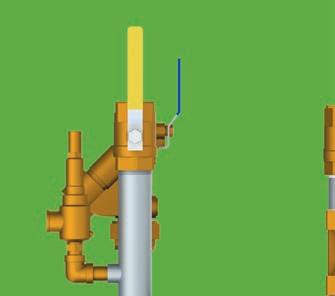

Introducing SmartPlate EV. With its ultracompact 24" x 32" footprint, vertical piping connections and capacities up to 4500 MBH and 300 PSIG, the SmartPlate EV indirect water heater gives you greater design fl exibility for standard and highpressure systems. It also easily integrates with AERCO’s Benchmark boilers and smart Edge Controllers for a powerful combination system. Join the EVolution. SmartPlate EV. 24 x 32














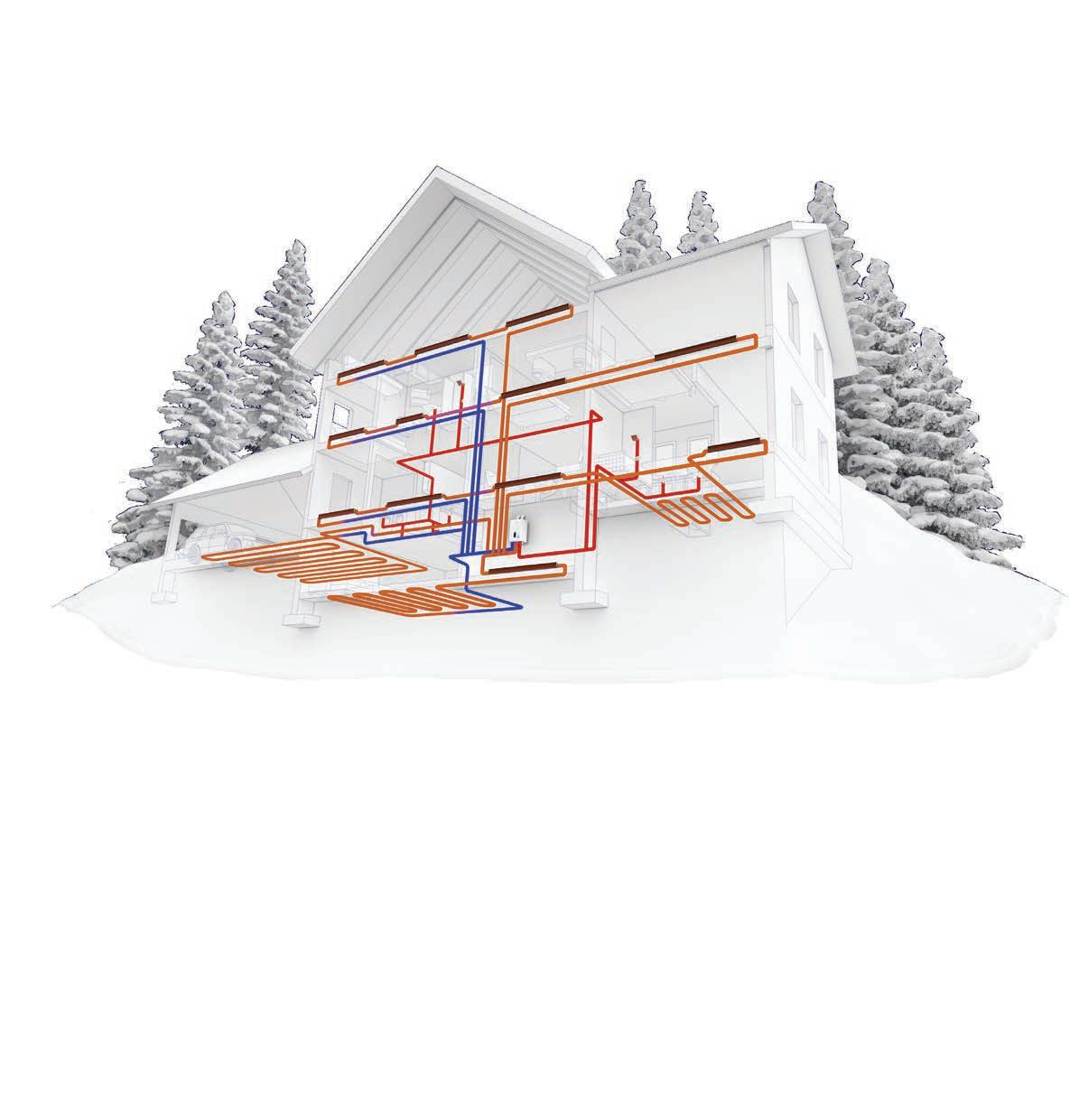
Efficient use of heat emitters in homes.
14 COVER STORY
HYDRONICS
APPROPRIATE EMITTERS
How to combine multiple heat emitters to suit building and client requirements in an efficient and effective way.
By John Siegenthaler
20
HYDRONICS

HIGHER PERFORMING HEATED FLOORS
In this episode of 30 Mechanical Minutes John Siegenthaler talks about how heat transfer plates improve the performance of ‘staple-up’ radiant floor systems.
By Logan Caswell
26
HVAC
ARE ECM UPGRADES WORTH IT?
HVAC service contractors encounter failed fan motors every day and with heating season coming on, it might be the time to stock replacement units for customers interested in saving energy.
By Ian McTeer
46
PLUMBING
KITCHEN AND BATH TRENDS
With home renovations on the rise, here are the trends driving faucet and fixture design.
By Doug Picklyk
FLEET PRODUCTIVITY AND PROFITABILITY
Contractors are using GPS tracking to increase resource efficiency and promote greater driver accountability.
By Del Williams
THE UPS AND DOWNS OF THE EXPANSION VALVE
Revisiting the critical role of the expansion device in regulating the refrigeration cycle.
By Dave Demma
THE BUILDINGS SHOW
The live face-to-face event returns to Toronto after going virtual in 2020.
By Logan Caswell
Guiding a small business through generational and technological change.



IT’S NOT EVERY DAY THAT I RECEIVE CORRESPONDENCE FROM THE READERS OF THIS MAGAZINE, SO WHEN AN E-MAIL ARRIVES WITH THE SUBJECT LINE, “HELLO, HERE IS A RARE FEEL GOOD STORY”, I KNOW I’M GOING TO BE IN FOR A TREAT.
The universe of plumbing, heating and air conditioning contracting businesses in Canada—according to the government industry statistics from 2020—consists of just over 14,850 companies coast-to-coast that report a payroll of at least one employee. Over half (55.7%) of the businesses employ only one to four people, and almost 99% of the plumbing/HVAC contractors across Canada have under 100 employees. So, in brief, this community is made up of a lot of small businesses located across the country that rely on the support of every link in the supply chain to keep them going strong. It’s an industry built on relationships.
Well, this e-mail I received served as a confirmation that the bonds formed over years in this trade between small contractors and their supply chain contacts can prove invaluable and sometimes people step up and go beyond. It's a reminder of how we’re all after the greater good.
Here’s the story in a nutshell: a West coast plumbing/heating contractor who’s been in business since 1998 has an issue with a failed water heating appliance, an expensive product that he’s already replaced once under warranty. This second warranty return was declined by the manufacturer.
That’s the unfortunate part of the story. What prompted the e-mail was how the manager at the wholesaler where this contractor has been a customer for over 20 years offered to cover half the cost to lesson the burden on the contractor, no questions asked.
“The reason I’m writing the letter is the fact that someone is willing to literally take money out of their own pocket with integrity to cover an issue that’s not theirs. It just speaks to a level of integrity that you don’t see in business that often these days. And I’m not talking about a coffee card for $100; I’m talking thousands.
“Anyway, in closing I just wanted to tell you that in business there are still people with a phenomenal amount of integrity, … and I almost cry thinking about the logistics behind this whole scenario. Hey, there’s got to be a story in there somewhere. Thank you, I appreciate it.”
No, thank you Robert Szachury of Turbo Plumbing & Heating in Pemberton, B.C. for taking the time to write in and speak with me on the phone about this experience you had, and thank you Conor McCormack of Emco for shining a light on the understanding and strength required at every link in the supply chain that supports the thousands of small businesses owned by hard-working and skilled tradespeople across this country.
As I mentioned, it's not every day that I receive messages from our readers, but please know that HPAC Magazine is here to play our role as an ambassador for the mechanical trades and share your messages to the wider industry at large. If something is on your mind, let us know, we're here for you. <>
– Doug Picklyk, Editor
Reader Service
Print and digital subscription inquires or changes, please contact Urszula Grzyb, Audience Development Manager
Tel: (416) 510-5180
Fax: (416) 510-6875
Email: ugrzyb@annexbusinessmedia.com
Mail: 111 Gordon Baker Rd., Suite 400, Toronto, ON M2H 3R1
EDITOR
ASSOCIATE EDITOR
ASSOCIATE PUBLISHER MEDIA DESIGNER
ACCOUNT COORDINATOR
PUBLISHER
COO
Doug Picklyk (416) 510-5218
DPicklyk@hpacmag.com
Logan Caswell (416) 728-6209
LCaswell@hpacmag.com
David Skene (416) 510-6884
DSkene@hpacmag.com
Emily Sun
esun@annexbusinessmedia.com
Kim Rossiter (416) 510-6794 krossiter@hpacmag.com
Peter Leonard (416) 510-6847
PLeonard@hpacmag.com
Scott Jamieson sjamieson@annexbusinessmedia.com
PUBLICATIONS MAIL AGREEMENT NO. 40065710
Heating Plumbing Air Conditioning (established 1925) is published 7 times per year by Annex Publishing & Printing Inc. HPAC Magazine is the leading Canadian business publication for the owner/manager of mechanical contracting businesses and their supply partners.
ISSN: 0017-9418 (Print) ISSN 2371-8536 (Online)
Contents Copyright © 2021 by Annex Publishing & Printing Inc. may not be reprinted without permission.
SUBSCRIBER SERVICES:
To subscribe, renew your subscription or to change your address or information please visit us at www.hpacmag.com
Subscription Price per year: $44.00 (plus tax) CDN; Outside Canada per year: $112.00 US; Elsewhere: 1 year $123.00 (CDN); Single copy Canada: $5.00 CDN. Heating Plumbing Air Conditioning is published 7 times per year except for occasional combined, expanded or premium issues, which count as two subscription issues.
MAIL PREFERENCES: From time to time we make our subscription list available to select companies and organizations whose product or service may interest you. If you do not wish your contact information to be made available, please contact us via one of the following methods: Tel: 416-442-5600 ext. 3552, Fax: 416-510-6875 or 416442-2191; E-mail: blao@annexbusinessmedia.com; or by mail: 111 Gordon Baker Rd., Suite 400, Toronto ON M2H 3R1 Annex Privacy Officer Privacy@annexbusinessmedia.com Tel: 800-668-2374
HPAC Magazine receives unsolicited materials (including letters to the editor, press releases, promotional items and images) from time to time. HPAC Magazine, its affiliates and assignees may use, reproduce, publish, re-publish, distribute, store and archive such unsolicited submissions in whole or in part in any form or medium whatsoever, without compensation of any sort.
NOTICE: HPAC Magazine, Annex Publishing & Printing Inc., their staff, officers, directors and shareholders (hence known as the “Publisher”) assume no liability, obligations, or responsibility for claims arising from advertised products. The Publisher also reserves the right to limit liability for editorial errors, omissions and oversights to a printed correction in a subsequent issue. HPAC Magazine’s editorial is written for management level mechanical industry personnel who have documented training in the mechanical fields in which they work. Manufacturers’ printed instructions, datasheets and notices always take precedence to published editorial statements.

Proud member of:


www.hpacmag.com
HEATING UP TO 150,000 BTU/H DHW UP TO 210,000 BTU/H
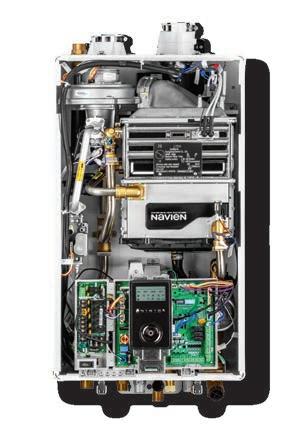
Navien NCB-H high efficiency combi’s bring the highest level of whole house comfort to any size home...big or small
• Highest DHW maximum BTUs in residential condensing combi-boilers... up to 210,000 per hour
• Highest DHW flow rate @ 70°F rise... up to 5.4 gallons per minute
• Highest number of BTU sizes for the North American residential combi-boilers
• Highest residential combi-boilers domestic hot water turndown ratio...15:1
technology...does it again. The highest selling brand of condensing combi-boilers takes home heating and DHW to new heights
The leader in
• Highest residential combi-boilers heating turndown ratio... up to 11:1
• Highest number of built-in zone controls for valves or pumps... up to three
• Highest full lineup 2" venting lengths... up to 65 feet
• Highest number of cascade capable units with up to 15 tankless water heaters
• High altitude certification... up to 10,100 feet (NG or LP)
Aim high with Navien NCB-H combi-boilers... To learn more visit Navieninc.com

Technical Safety BC has launched an Ammonia Safety Awareness Program, a series of free training courses developed due to the rise of ammonia-related incidents and hazards over the past few years, including the tragedy at Fernie Memorial Arena in 2017.
Developed in collaboration with industry professionals, the program provides training and downloadable tools to fill in knowledge gaps and share best practices for maintaining ammonia refrigeration equipment and systems across their lifecycle.
The free courses are targeted to arena owners, managers and supervisors but open to all refrigeration industry professionals.
There is no cost to the training courses or downloadable resources in this program.
technicalsafetybc.ca
Right Time has announced the purchase of Ottawa-based HVAC contractor Anchor Home Comfort.
Founded in 1986, Anchor Home Comfort provides residential HVAC, air qualit, and hot water services in Ottawa and surrounding areas. Part of the acquisition will see management and employees of Anchor Home Comfort join the Right Time team.
Anchor Home Comfort is the ninth acquisition completed by Right Time and the first led by new CEO Craig Goettler who has 15 years of experience in the

Natural Resources Canada has developed a voluntary, self-assessment tool to provide feedback on the impact of HVAC strategies during and after pandemics. The guide highlights key areas and best practices for efficient HVAC operation during these times and help operations teams to respond with greater confidence. More specifically, the tool can provide an assessment and guidance that will:
• Highlight where HVAC operation can be improved to meet energy efficiency best practices without compromising current pandemic HVAC operations guidelines.
• Provide resources and references that can help guide operators in determining an enhanced HVAC operations strategy and plan during a pandemic.
• Emphasize the Existing Building Commissioning (EBCx) approach and its application to help owners undertake HVAC operation changes.
The voluntary self-assessment tool has been tested with a variety of property managers and operations staff. The objective is to share reputable advice on the critical HVAC elements in response to the pandemic period while optimizing energy use in a commercial office, based on recognized sources.
Since each building and HVAC system are unique, with their unique requirements, the tool cannot recommend specific operating parameters. Instead, the tool is based on a series of 10 questions that focus on the most important elements to consider for the efficient operation of HVAC systems during a pandemic. These elements were taken from recognized resources in the HVAC industry as well as the best practices recommended by organizations.
This tool is focused on commercial offices but can be used with caution for other facilities that have similar occupancy.
The HVAC Self-Evaluation Tool and Guide is provided free of charge on the NRCan website. nrcan.gc.ca
residential HVAC market. Goettler, formerly COO, take over the CEO role from Jeremy Hetherington, a co-founder of the company.
“We are very pleased to welcome Anchor Home Comfort to the Right Time team,” said Goettler. “We have been impressed by the business co-owners Darren Parsons and Ken Turner have built. Anchor Home Comfort has built a strong brand with a reputation for premium service, and we look forward to continuing to deliver the Anchor Home Comfort brand promise. Thank you to our partners at Gryphon Investors for
their tremendous support and encouragement as we continue the phenomenal growth throughout Canada.”
Right Time is focused on developing a national brand through acquisitions or partnerships with existing residential HVAC replacement contractors.
Right Time was founded in 2014 and is headquartered in St. Catharines. Previously owned by Canadian private equity firm Clairvest Group, Right Time was acquired in December 2020 by San Francisco-based private equity firm Gryphon Investors. right-time.ca












Kohler is working with Water First to launch a consumer campaign to raise awareness and funds to develop young Indigenous water operators who will acquire hands-on knowledge in the use of water quality equipment, analysis and testing processes. The skills and expertise they gain are expected to be de -
ployed within their local communities.
“13.5% of First Nations communities in Canada cannot drink their own tap water. In Ontario, that number is 40%, which means 4 out of 10 First Nations in Ontario have unsafe drinking water,” said Christopher Bell, vice president and general manager of Kohler Kitchen & Bath Canada. “As a company focused on water, we are committed to promoting access to clean and safe water and are honoured to partner with Water First to develop sustainable solutions to water issues in communities across Canada.”
Kohler’s consumer campaign encourages Canadians to donate directly to Water First. Every dollar donated to Water First will be matched by Kohler. waterfirst.ngo

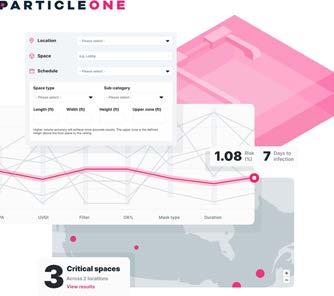
ParticleOne, a new Canadian company, is providing a platform to provide building owners with a better understanding of their buildings’ COVID risk levels.
ParticleOne builds on public health guidelines to address the complexities of specific spaces. Its cloud-based software measures a space and offers science-based guidance and solutions to reduce viral transmissions.
The platform was developed in response to engineering firm RWDI’s own challenge to manage its offices around the world. RWDI developed ParticleOne with University of Guelph genomics scientist, Dr. Steven Newmaster.
At Adrian Steel, we do more than just create high-quality products. We look at the big picture, taking into account all of your business needs and the way you work in and out of the van. Then, we provide you with custom solutions that make your job easier and give you the biggest ROI possible.
To learn more and locate your nearest distributor, go to adriansteel.com/distributors
“Our risk calculations take into account the performance of critical HVAC systems and configurations e.g., air-volumes, O/A fraction, filtration effectiveness, temperature and humidity set-points, among others,” said Mike Williams, lead building-performance engineer at ParticleOne. “Our overall approach allows building operators to understand how to dynamically tune HVAC systems and occupant behaviors to manage viral transmission risks in their spaces on an ongoing basis.”
Focused on reducing the risk of COVID inside shared spaces, the technology will also measure the risk for other common viruses and emerging pathogens. particleone.com



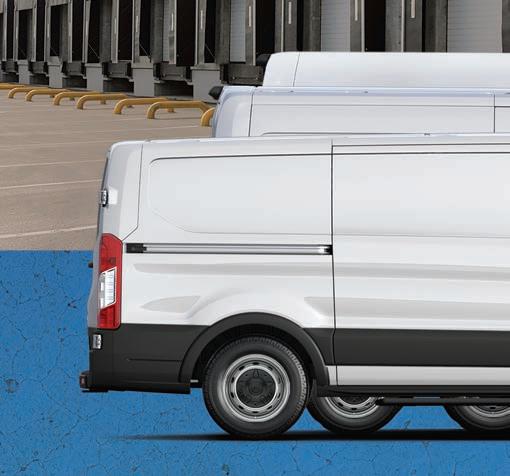
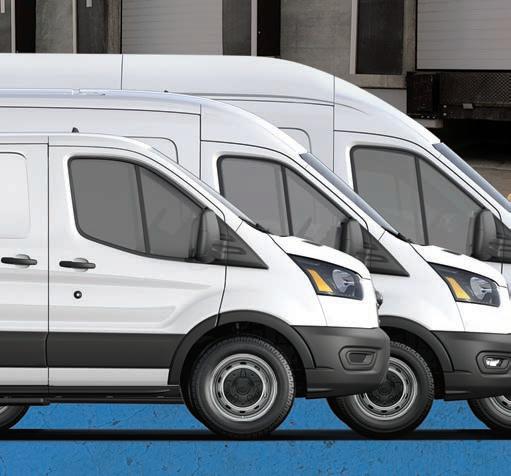

Count on the dependable and versatile Ford Transit to help make building your business easier. We’ve also loaded our cargo vans with an available suite of smart driver-assist technologies*, so when you’re ready to get to work, you can be condent behind the wheel.


3 HEIGHTS 3 LENGTHS MULTIPLE CONFIGURATIONS AVAILABLE ALL-WHEEL DRIVE

Saving you and your customers time and unnecessary cost
Installation of our high quality, custom-sized systems virtually eliminates all drywall, painting and finishing work while delivering, highly efficient, whisper quite comfort!
OUR PRODUCTS ARE:
• Canadian made
• Carry up to 5 year warranties
• Available in both vertical and horizontal configurations
The Government of Canada has announced a new commitment to reach net zero by 2050.
The newly introduced Net-Zero Emissions Accountability Act marks the first time a Canadian government has legislated emissions reductions accountability to address climate change, by setting legal requirements on the current government and future governments to plan, report, and deliver on the path to net-zero emissions.
Included in the Act are the following:
• It enshrines in legislation Canada’s commitment to set national targets for the reduction of greenhouse gas emissions in Canada with the objective of attaining net-zero emissions by 2050.
• It enshrines the 2030 greenhouse gas emissions target as Canada’s Nationally Determined Contribution under the Paris Agreement, 40-45% below 2005 levels, by 2030.
• It requires the Minister of Environment and Climate Change to set the subsequent 2035, 2040 and 2045 targets at least 10 years in advance.
• It requires the Commissioner of the Environment & Sustainable Develop-ment to, at least once every five years starting no later than the end of 2024, examine and report on the Government’s implementation of measures aimed at mitigating climate change.
• Provides for a comprehensive review of the Act, five years after it comes into force.
• Enshrines the role of Indigenous Knowledge in the climate accountability process.
The Minister of Environment and Climate Change will publish an emissions reduction plan for the 2030 target in the coming months. parl.ca
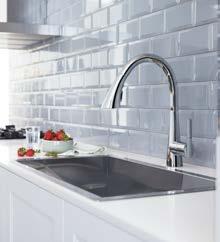
Grohe announced that its Ladylux kitchen faucet collection is rebranding as Grohe Zedra.
The line has been known as Zedra in much of the world outside of Canada and the U.S., and the decision for the shift is to ensure global brand consistency in the future, as well as to better align with Grohe’s corporate values and commitment to gender equality and inclusiveness.
Launched in North America nearly 40 years ago, the model line was the first kitchen faucet to introduce an integrated pull-out spray head. grohe.ca
The Ontario government committed an additional $25 million this summer to further improve ventilation in schools as students were set to return for in-person learning in September.
The added funding, which brought net new investments in school ventilation to $600 million, ensured that all occupied classrooms, gyms, libraries and other instructional spaces without mechanical ventilation had standalone HEPA filter units in place when students were back in class.
Ontario’s Science Advisory Table, as part of its science brief on school-based measures, identified the use of standalone HEPA filter units as a strategy for classrooms and spaces with challenges in achieving normal ventilation.
Approximately 20,000 standalone HEPA filter units were purchased through the Ministry of Government and Consumer Services and were to be deployed to school boards across the province. Remaining funding was to be allocated to school boards to acquire additional standalone HEPA filter units where needed.
In addition, Ontario is expected to provide school boards with a standardized reporting tool on ventilation improvements. This tool will communicate school-level ventilation measures online to ensure that information is publicly available across the province, including inspection, use of standalone HEPA filter units, use of higher-grade filters and more frequent filter changes.
This goal of this investment was to support immediate ventilation and filtration improvements in schools, while also upgrading school ventilation infrastructure where needed. Every year, Ontario also invests $1.4 billion to maintain and renew existing school facilities, including HVAC systems and windows. ontario.ca
Ontario is investing over $600,000 to help 390 young people from underrepresented backgrounds train for and secure apprenticeships in construction. Funding will open doors to careers in the plumbing, steam fitting, and refrigeration trades through programs delivered by Hammer Heads, a non-profit organization that supports underprivileged youth from the Greater Toronto Area.
The investment also includes funding for three projects supporting youth trained through the group's pre-apprenticeship and apprenticeship programs:
• A free pre-apprenticeship program will enable 18 youths, in two cohorts of nine, to participate in Hammer Heads’ 10-week program preparing them for careers in the trades. The program covers health and safety training, helps participants with academic upgrading and provides construction skills training and placement with a union for an apprenticeship.
• The Pinball Clemons Foundation will mentor 300 graduates of the Hammer Heads pre-apprenticeship program in years two through six of their apprenticeships, ensuring they have the support to complete the training. The Hammer Heads program currently guides program graduates through the only the first year of apprenticeship employment.
• The International Brotherhood of Electrical Workers Local 353 will also create and deliver a Virtual Reality Safety Training project, which will help participants travel virtually onto real construction sites to learn about safety hazards and best practices. hammerheadsprogram.com


How to combine multiple heat emitters to suit building and client requirements in an efficient and effective way. BY
JOHN SIEGENTHALER
One of the benefits of modern hydronic heating is being able to use multiple types of heat emitters in the same system. A common example is a heated floor slab in a basement and fin-tube baseboard on the main living level(s) above. When the fin-tube baseboard is sized around “traditional” design water temperatures (170-200F/77-93C), the system is going to need a mixing assembly to lower the water temperature supplied to the floor heating circuits.
I’ve had the opportunity to design many systems using multiple mixing assemblies to create multiple supply water temperatures for different parts of the distribution system. Although this can work, all the hardware required definitely adds to the system’s cost and complexity. This should lead designers to consider if, in some applications, multiple types of heat emitters could be operated from a single supply water temperature.
We recently designed such a project for rather discerning clients. They had definite ideas on how heat would be delivered to each area of their new home. On the main living level they wanted floor heating for the kitchen, dining room and two bathrooms. They also wanted floor heating in the slab of a breezeway that connected the house to the garage.
The bedrooms and living room floors would be finished with padded carpet, which from a practical perspective ruled out floor heating for those areas. After discussing alternative heat emitter options with them, they decided to
“The comfort offered by the individual ‘niceties’ in this system could never be matched by ductless heat pumps or other types of forced air systems.”
use individually-controlled panel radiators in these areas.
This combination of heat emitters would be supplied from a geothermal water-to-water heat pump, the performance of which is strongly influenced by the water temperature leaving the condenser. The lower the load water temperature can be, while still maintaining comfort in the house, the higher the heat pump’s coefficient of performance (COP), and the higher its heating capacity.
The heat pump used in the system was capable of producing water tem -
peratures up to about 125F/52C, but lower is always better when it comes to COP. [reminder: COP is the ratio of useful heating (or cooling) provided by a heat pump relative to the energy required—a higher COP equates to higher efficiency.]
We decided to use a tube and plate radiant panel construction under the subfloors of the kitchen, dining room and bathrooms. The ½-in. PEX-AL-PEX tubing was spaced 8 in. apart. Aluminum plates (5 x 24 in.) were fit over the tubing and tightly stapled to the underside of the subfloor. Fiberglass batts (6-in. thick) were installed directly under the tubing and plates. The basement space beneath these areas was fully heated.
The floors in the kitchen and dining areas would be finished with ½-in.thick engineered hardwood. The floors in the bathrooms would be covered with ceramic tile over 5 16 -in.-thick Ditra XL anti-fracture membrane. The floor areas in the bathrooms were small enough that a single tubing circuit could easily accommodate the entire heated floor area. The finishing touch was a towel warmer in the master bath.
The breezeway is an area where snow and rain will be tracked in from outside, and thus a floor that can rapidly dry is desirable. This area also has a relatively high ratio of exposed thermal envelope area per square foot of heated floor area. There would also be some “cubbies” on the floor to store outside
Continued on p16
clothing, which would partially inhibit upward heat transfer from the floor.
The upward heat flux at design load was about 45 Btu/h/ft2. To handle this we spaced the tubing at 6-in. centres, and decided we could operate this circuit in parallel with (and thus at the same supply water temperature) as the underfloor tube and plate circuits in the kitchen and dining room areas.
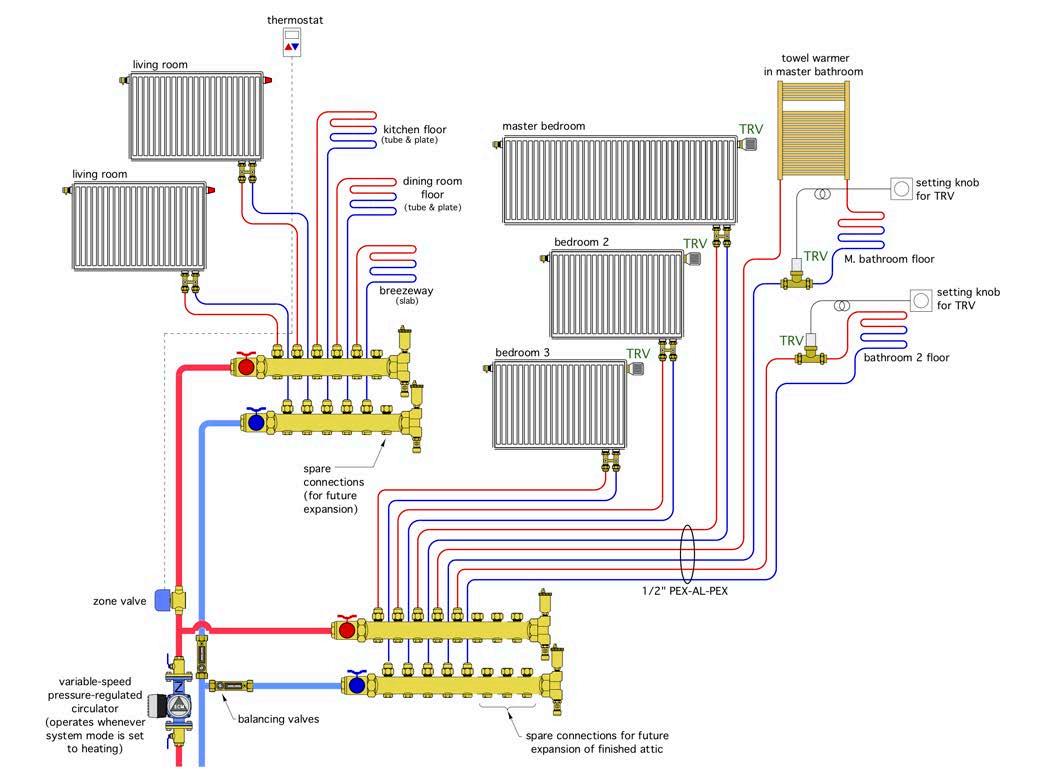
All the heat emitters described above are served by a homerun distribution system using ½-in. PEX-AL-PEX tubing. At design load conditions (-10F/23C outside) all emitters will operate with a calculated supply water temperature of 115F/46C.
Next came the control requirements. The clients wanted a simple “mode” switch with heat/off/cool settings.
When that switch is set for heating, the geothermal heat pump maintains warm water in the buffer tank, ready to flow to any active heat emitter.
The kitchen, dining room and living room are one large open space. As such it made no sense to try to independently control temperature at each heat emitter. The floor heating in the kitchen and dining room areas would operate at the same time as the two panel radiators in the living room. The breezeway circuit would also be operating in parallel with these emitters.
We combined the three floor heating circuits with the two homerun circuits for the panel radiators. All these circuits begin and end at a single manifold station. That manifold station is supplied through a ¾-in. zone valve tied to the living room thermostat. The panel radiators in the bedrooms
each respond to integrated non-electric thermostatic radiator valves.
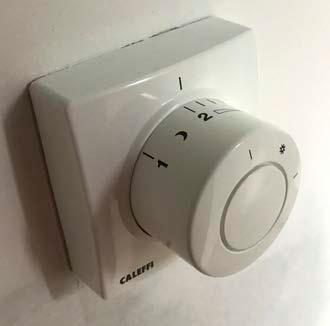
The floor heating in one bathroom is also regulated by a thermostatic valve that’s cut into the supply side of the single floor heating circuit and located under the floor. It can be accessed through a small panel in the basement ceiling. A stainless steel capillary tube runs from this valve to a wall mounted knob (see Figure 1, page 14), which is used to sense and regulate room temperature, just like a non-electric thermostatic valve on a radiator.
The master bathroom floor is also heated by a single circuit that first connects through the towel warmer and then continues on under the floor. Flow in this circuit is regulated by another non-electric thermostatically controlled underfloor valve connected to a wall mounted knob by a capillary tube.
Balancing valves with integral flow meters are installed in both main branches of the distribution system. Flow is provided by a single Taco 0018e variable speed pressure regulated circulator that’s “active” whenever the mode selection switch for the system is set to heating. The input power to this circulator varies from 4 to 44 watts depending on speed. This circulator automatically adjusts its speed in response to the opening and closing of the zone valve on one manifold station, or any of the non-electric thermostatic valves supplied through the other manifold station.
This system is currently maintaining comfortable conditions in all areas using an average supply water temperature of only 105F/40C. The heat pump turns on when the buffer tank temperature drops to 100F/38C and off when that temperature reaches 110F/43C.
Based on manufacturer’s ratings, the heat pump operating under these load side conditions and with fluid returning from the horizontal geothermal loop at 50F/10C, will have an average COP of 3.1 (excluding the power draw of the two high efficiency circulators used on the heat pump, which total to about 250 watts). If the circulator wattage is included the “net” COP is about 2.97.
Continued

You may be wondering why we didn’t use outdoor reset control for the tank temperature, which would allow for lower water temperatures, and higher COPs under partial load conditions.
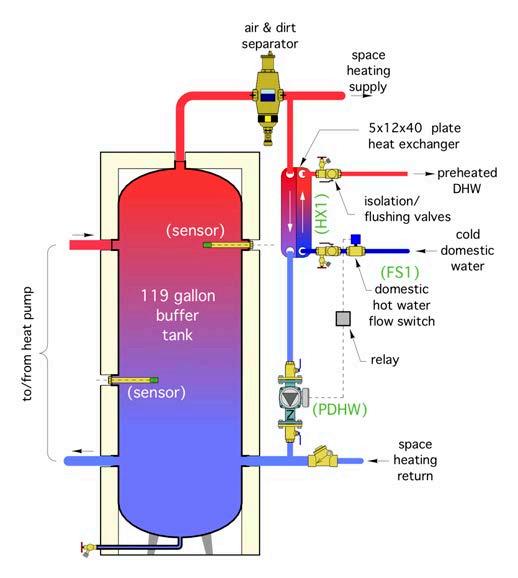
The reason we stayed with the 100110F (38-43C) temperature range was to allow domestic hot water preheating using the thermal mass of the 119-gallon buffer tank.
Whenever there’s a draw for hot water of 0.7 gpm or higher, a flow switch activates a small circulator that routes heated water from the top of the buffer tank through a 5 x 12 x 40-in. plate stainless steel heat exchanger. Cold domestic water makes a single counterflow pass through the other side of this heat exchanger. The preheated domestic water flows to the cold water in -
let on a 40-gallon electric water heater for a “top off” in temperature. The preheating piping components are shown in Figure 3 (page 17)
This distribution system, though unique to meet specific owner requirements and building details, was assembled from off-the-shelf hardware.
The tube and plate floor heating, the heated slab in the breezeway, the panel radiators and the towel warmer, in combination with the design heating loads in the spaces these emitters serve, allowed for a single supply water temperature eliminating the need for mixing. That temperature also ensured that the geothermal heat pump would operate at relatively favorable conditions.
The system can respond to internal heat gains or comfort preferences,
such as lowering bedroom temperature at night, while at the same time maintaining warm bathroom floors and luxurious dry towels.
The comfort offered by the individual “niceties” in this system could never be matched by ductless heat pumps or other types of forced air systems. The owners are looking forward to many years of superior comfort. <>

John Siegenthaler, P.E., is a mechanical engineering graduate of Rensselaer Polytechnic Institute and a licensed professional engineer. He has more than 40 years experience in designing modern hydronic heating systems. Siegenthaler’s latest book is Heating with Renewable Energy (see www.hydronicpros.com for more information).
With RealTimeO 2 Trim, this combustion technology features feedforward and feedback data that ultimately delivers a targeted combustion O 2 range. Commissioning trim allows the user to program the optimal O 2 setting and patent pending learned trim delivers a consistent performance based on past environmental data.
• REALTIME O2 TRIMTM
• 8 MODELS FROM 999,000 TO 6.0 MILLION BTU/HR
• UP TO 96.2% THERMAL EFFICIENCY
• UP TO 25:1 TURNDOWN RATIO


• TM
• OPERATING CONTROL




In a new webinar, John Siegenthaler explains how heat transfer plates improve ‘staple-up’ radiant floors.

BY LOGAN CASWELL
The latest instalment of HPAC Magazine’s 30 Mechanical Minutes, the free webinar series featuring virtual content for real world professionals, shone the spotlight on the improved performance heat transfer plates provide to ‘staple-up’ radiant floor heating systems. This episode of 30 Mechanical Minutes was sponsored by REHAU.
Regular HPAC writer and hydronics industry expert John Seigenthaler joined editor Doug Picklyk to share his insights into the best practices for ‘staple-up’ radiant floor heating systems, and first off, Seigenthaler explained that a staple-up floor heating system essentially consists of tubing and often aluminum plates which are stapled to the underside of a subfloor.
Seigenthaler warned against the use of plateless staple-ups, and he strongly recommends the tube and plate floor heating system where tubes and
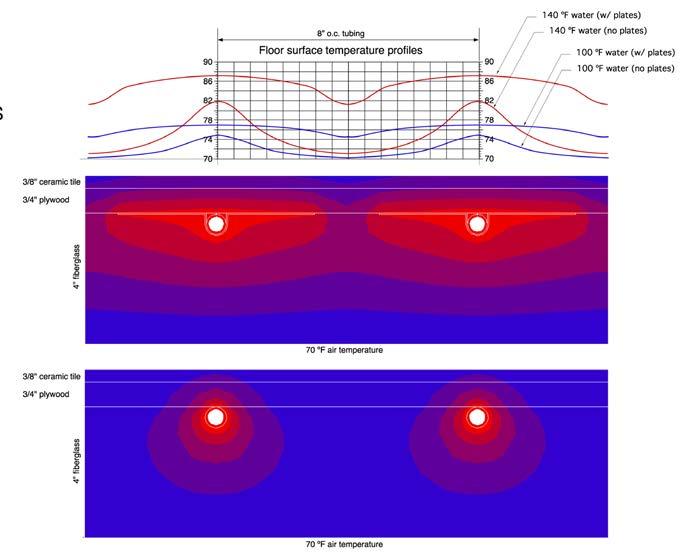
Siegenthaler shared this modeling of the difference between using or not using heat plates.
stamped or extruded aluminum plates are installed below or above the subfloor. The tubing is installed into a groove in the plate which is then fixed onto the sub floor. For above floor applications, plywood strips or ‘sleepers’ are also attached. In both cases a variety of floor coverings can be used on top, including ceramic tile, engineered hardwood or a low pile carpet.
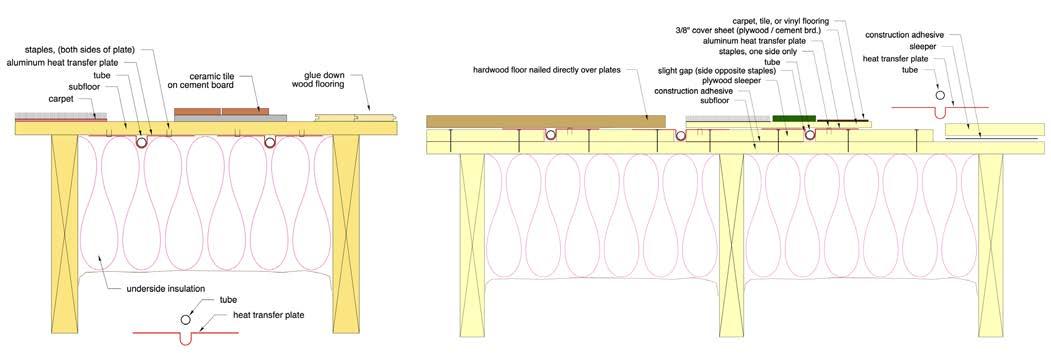
As far as tubing material goes, Seigenthaler recommends PEX-AL-PEX, also called Aluminum PEX. “The reason for that is because the aluminum core in that tube is going to have an expansion coefficient that's roughly the same as the plates, so we don't get a lot of differential movement between the tubing and the plate as they change temperature.” He adds that standard PEX
can work, but that tubing can expand up to 10-times as much as an aluminum plate for the same temperature change, so it sets up the possibility of more expansion/contraction issues and possible ticking sounds in the floor.
As for best practices when installing this type of heating system, Seigenthaler said the plates should be manufactured and precisely formed to
fit the shape of the tubing, and they should be fixed tightly to the subfloor. There should also be six inches of fiberglass insulation fitted tight against the plate system for the underfloor application, and the whole system should be wrapped underneath to prevent pieces of fibreglass falling from the insulation to the ground below. As for the finished
Continued on p22

Continued from p21
flooring types on top, our expert recommended you should limit the total resistance on top of the plywood to R1 with a system like this. “Remember, you have the resistance of the plywood floor itself which is close to R1 itself,” said Seigenthaler. “So, on top of that nothing more than R1 resistance.”
Along with well executed applications, Seigenthaler shared photo examples of less-than-perfect installations usingnon-manufactured plates crudely hammered into shape, and another using only the tubing which he described as ‘thermally constipated,’ meaning the tubing would struggle to transfer heat without the plates.
Some contractors cut costs by going down the plateless route, and while this might save on materials and labour costs the water temperature would need to be increased. The in -
creased fuel consumption and operating costs would soon negate the initial savings and potentially damage the finished floor above.
Conversely, he suggested the optimum practice is to thread the tubing through the floor to the farthest joist bay and then work your way back. Ensure you don’t make any tight bends in the tubing which could pinch or crimp and cause a blockage. The aluminum plates should be placed eight inches on centre and ensure the return bends on the tubes don’t butt up near a band joist as this could be a freezing hazard.
The heat output of the plated system is three times that of a plateless system, noted Siegenthaler, and he illustrated this with a slide showing a thermal image of a cross section of the two op -


posing designs (see page 20). He pointed out the plateless installation could create temperature ‘striping’ on the finished floor surface.
“The purpose of the plates is to pull heat from the tube and spread it across the floor,” said Seigenthaler. “With ‘thermal constipation’ (plateless), the heat does not spread across the floor. It’s important to utilize the lateral heat disbursement and use these plates.”
Does the formation of the metal make a difference? Seigenthaler said he tested this himself by using two different types of plates. He used the same amount of metal but made one plate half as wide but twice as thick. In a test, results showed the thinner plate had a higher performance by about 20%.
The session also included a live Q&A. To view the entire 30-minute episode visit: hpacmag.com/tech-pulse <>






A revolutionary water heating system design and application approach that features greater BTU input for quick reaction, an optimized storage buffer for extra power when needed, the bene t of high water turnover, and exclusive duplex stainless steel AquaPLEX® construction for unmatched performance and longevity. Learn more about PVI’s Dynamic Water Heaters at pvi.com.

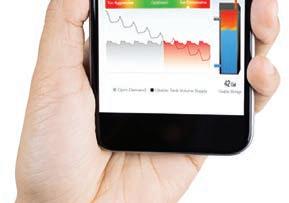



OptiSize® will help you select an optimally-sized water heater for your next project
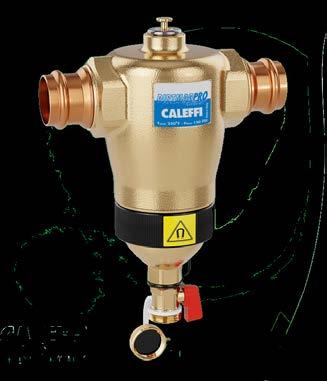
Caleffi has introduced the Dirtmag Pro. The units include unique dual magnetic fields that work to increase ferrous oxide impurity removal efficiency by 40%. A particle separation mesh also captures non-ferrous dirt such as copper shavings. The 5463 series Dirtmag Pro is now available in pipe sizes from 1-in. to 2-in. with sweat, NPT female, and press connection options.
caleffi.us
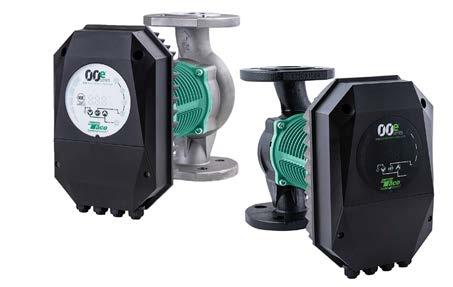
Taco’s new VR Series high-efficiency ECM cast iron or stainless-steel circulators offer a range of low, medium or high head options. 00e VR circulators provide a programmable pump interface with real-time feedback. Modbus, BACnet, 0-10Vdc + pulse width modulation (PWM) are standard. The pumps provide 62 feet max head and up to 320 GPM flow. They're also NSF/ANSI 61 + 372 commercial hot certified. tacocomfort.com
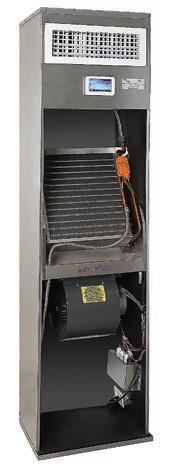
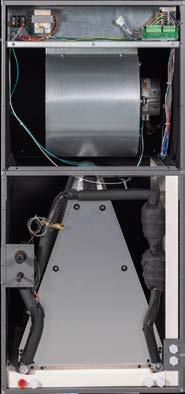
The Rinnai Canadian Air Handler can be integrated with Rinnai’s tankless water heaters or I-series combi boilers to offer home owners a hydronic heating and domestic hot water solution. Designed for use in colder climates, the units provide quality heat while maintaining the necessary humidity. The unit features a compact design and is suitable for low-velocity or mid-velocity applications. Models come with or without an external circulator pump. rinnai.ca
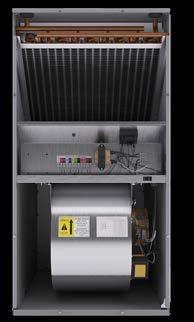
Enertech’s new direct expansion (DX) air handler is optimized for geothermal heat pumps and offers a range of options. Available in sizes up to 6 tons, the units are multi-positional for simplified installation and maintenance. Featuring front facing line set connections and condensate drain openings, the Enertech DX also has adjustable filter racks with easy access for filter changeout, and a single mount snap lock strip bracket for the ECM board and thermostat control.
enertechusa.com
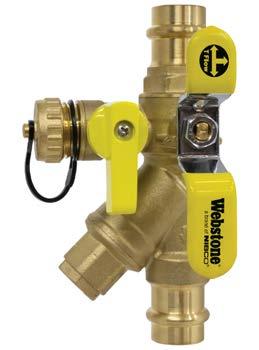
Webstone has two new y-strainer products. The Pro-Pal Ball Drain Strainer is available in ½-in. to 1-¼-in. and features include a multifunction hi-flow hose drain with an integrated y-strainer for diverting fluid into the drain from either side of the ball and isolating the strainer from upstream flow for service. Also available is a new y-strainer in ½-in. to 2-in. sizes. Both products are available in press or FIP. webstonevalves.com
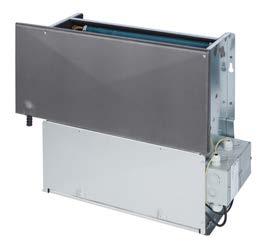
Jaga Climate Systems has introduced its higher capacity Briza 22 and Briza 26 hydronic fan coil unit (FCU) line. The space-saving FCUs can be installed in the wall or ceiling with either ducted or non-ducted systems. Powered by low-maintenance electronically commutated (EC) motors, the units offer quiet but high-capacity heating up to 90 MBH and up to 4 tons of cooling. The new Briza-22 unit is 8.7 in. high and the Briza-26 comes in at 10.2 in. jaga-canada.com



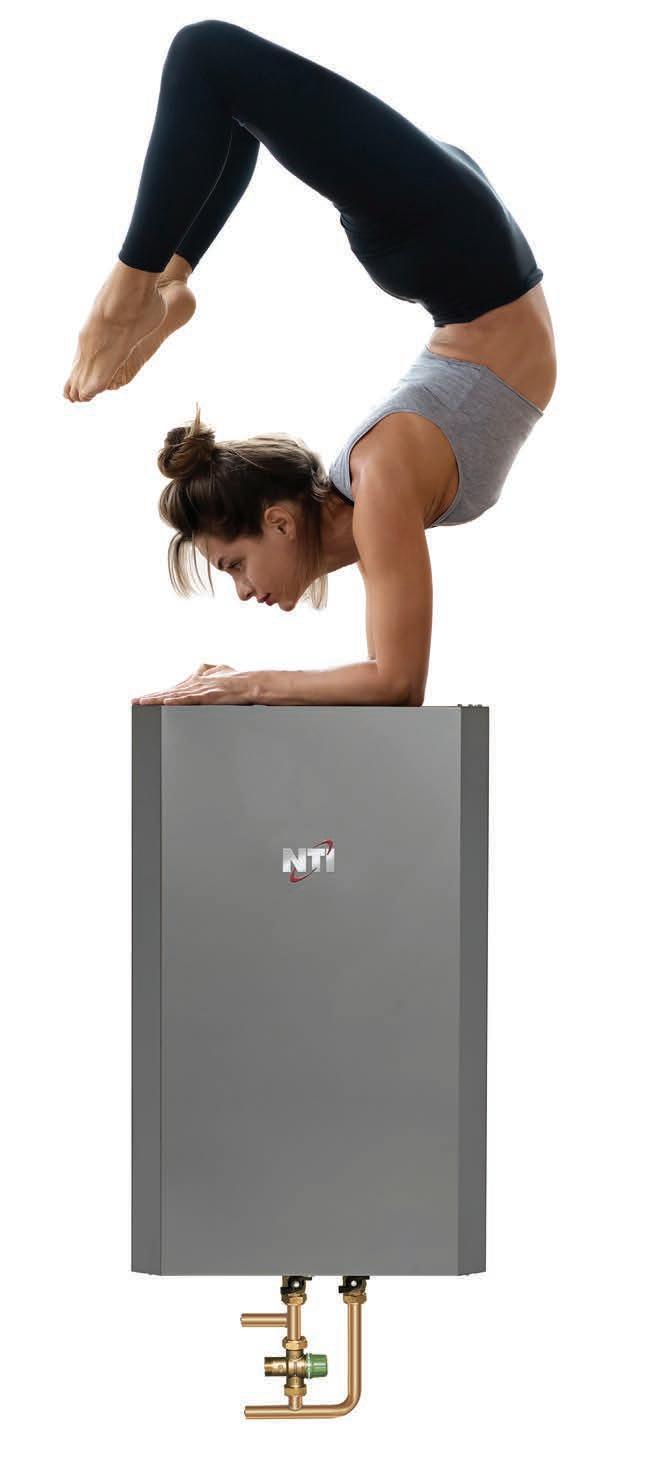
n The industry’s fastest recovery rate
n Easy to install, wall or floor mount
n Small footprint, ideal for tight places
n Works with any boiler, new or retrofit
n Fully pickled and passivated 444 Stainless Steel tank and coil
available now
HVAC service contractors encounter failed fan motors every day and with heating season coming on, it might be the time to stock replacement units for customers interested in saving energy.
BY IAN McTEER
Iknow I’m sounding like a broken record as I’ve made this statement many times in previous articles, but 1973 was a pivotal year for prescriptive Minimum Energy Performance Standards (MEPS) aimed at energy-using devices, not only in the HVAC industry but just about all other industries too. The U.S., shocked by an oil embargo imposed by OPEC nations that year, started an immediate energy conservation campaign. One of the first rulings required all federal buildings to set cooling season conditions at 78F and 50% RH. National energy independence became the driver of efficiency initiatives until, of course, climate change came along. It is not as if the HVAC industry went out of its way to be inefficient. I think it’s fair to examine the route taken and to wonder if such things as 97.5% AFUE gas furnaces would exist without a firm push from the government.
On the topic of HVAC efficiency, there is a hilarious YouTube video I saw of an old radio show featuring the 1950’s comedy duo Bob and Ray who, in a segment called “Wally Ballou at AC Factory,” have Wally interviewing a ficticious Mr. Martin Leppert, president of the Uncomfortable Air Conditioning Co.
At one point Mr. Leppert tells Wally his best customers are motel owners needing to be sure their customers are leaving at the proper check out time. One motel owner had a 10 am checkout time, but too many customers lollygagged past noon. So he installed Uncomfortable Air Units and now “hardly anyone sticks around past four in the morning, and the place is deserted by 6 o’clock.”
Now that’s funny, yet it points to a lingering issue where -
Continued on p28








upon even efficient units can be misapplied or operated inappropriately. Even Mr. Leppert’s wacky AC unit needed electric motors to do the heavy lifting—providing “wind velocity of 38 knots.” The Bob and Ray parody had a lot to say about cooling systems, especially in public places like restaurants, auditoriums or theatres that kept patrons shivering rather than enjoying a well-conditioned space.
Starting in the late 1970’s, residential gas and oil furnaces became the vehicle to move cooler conditioned air throughout a centrally heated house. Older forced warm air appliances were never meant to distribute cooler (denser) air through their unsuspecting duct systems.
Sometimes mixing signals without prior experimental data, cooling system installers were typically told to install a more robust fan motor along with an adjustable motor pulley usually set at 4-in. diameter. Increasing the speed of some early centrifugal blowers did little to improve airflow across bloated heat exchangers, notoriously small evaporator coils and through tight ductwork.
The furnace OEM often supplied a quarter horsepower, 115-volt, split phase AC motor. Often, the quarter horse motor would be replaced by a third horsepower motor and the aforementioned 4-in. motor pulley or drive sheave. Ideally, during the fall furnace maintenance, the drive sheave should have been opened a few turns slowing the fan thus increasing the furnace temperature rise.
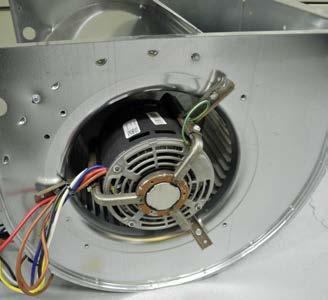
As central cooling became more popular, furnace manufacturers developed furnaces and air handlers more attuned to add-on cooling systems; one of the most important improvements from that era had to be the direct drive fan assembly incorporating a Permanent Split Capacitor (PSC) motor. No more belts or pulleys combined with multiple motor speed taps meant fan speeds could be tailored for heat-
“Older forced warm air appliances were never meant to distribute cooler (denser) air through their unsuspecting duct systems.”
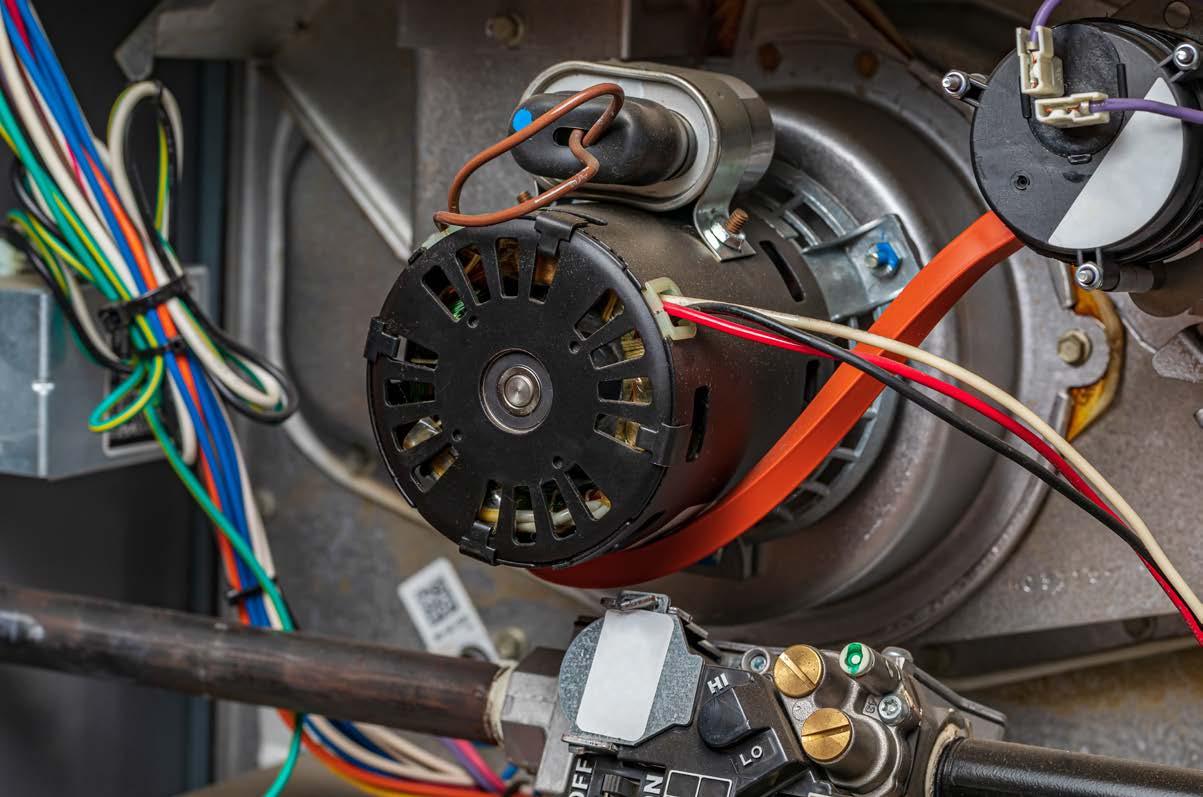
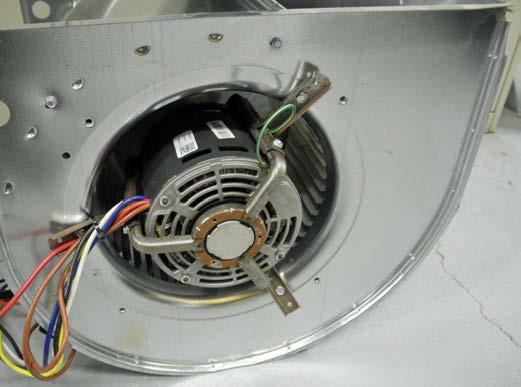
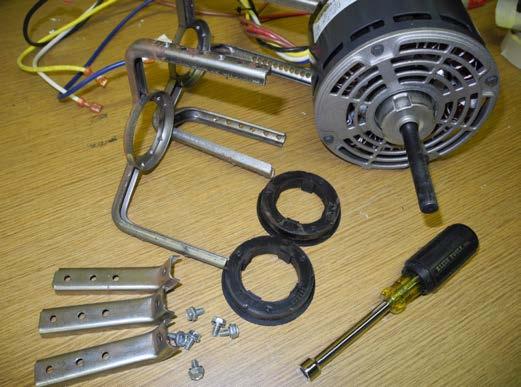
ing and cooling needs. Figures 1 and 2 above show a resilient mount PSC motor drive assembly.
PSC blower motors provided good service for decades. However, PSC motors can, at best, convert roughly 65% of their electrical input into mechanical work. PSC motors suffer from asynchronous alignment, that is, the rotor constantly lags the magnetic field in the stator. Known as slippage, it means that a six pole PSC motor, for example, should turn at 1200 rpm. The equation is: Synchronous Motor rpm = AC Frequency (Hz) x 120, then divide by the number of poles in the motor.
Thus, 60Hz x 120 = 7,200/6 should result in 1,200 rpm; however, slippage means the motor turns at 1,075 rpm. Too much waste heat is the byproduct of slippage. PSC motors start abruptly adding stress to internal motor components and noise to the air handling system. Multi tap PSC motors must be carefully matched to the application as only minor changes in speed are possible.
In 2014, the U.S. Department of Energy (DOE) developed the Fan Efficiency Rating (FER) requiring furnace manufacturers to reduce fan electrical consumption by 40%. The FER standard came into effect on July 3, 2019. Since then, residential
gas furnaces and air handlers have been equipped with lower wattage electrically commutated motors (ECM) or constant torque motors (CTM). To help unload the overburdened electrical grid, DOE estimates efficient furnace fans alone will save approximately 3.99 quads of electricity thus saving consumers more than $9 billion on their electricity bills through to the year 2030.
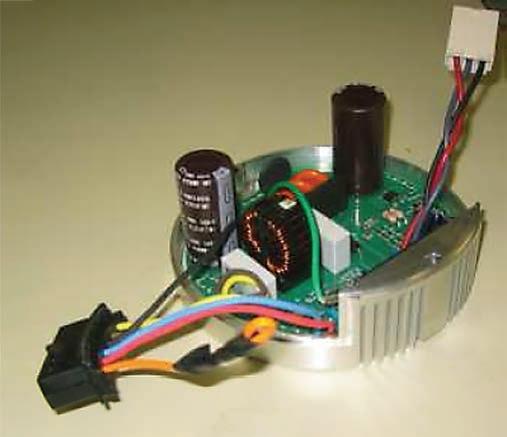
HVAC industry OEM’s have adopted the CTM (also known as a brushless DC motor, or by its original moniker the X13 motor) in furnaces and air handlers since the inception of the FER rating standard in July 2019.
CTM’s are computer controlled and optimized around the principle of constant torque. Manufacturers test their fur-
Continued on p30

Desigo
usa.siemens.com/desigo-optic
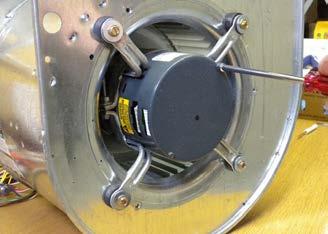
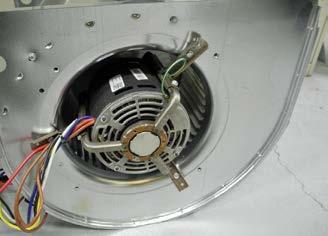
To convert a resilient mount PSC motor to an ECM, an aftermarket belly band motor mount will be required. Accessory belly band motor mount kits are available from the various motor manufacturers. Best to use the mounting kit made by the same motor manufacturer.
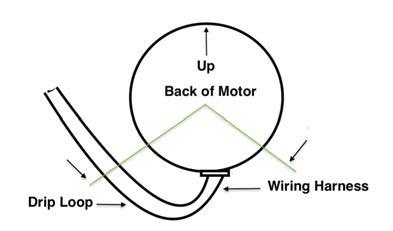
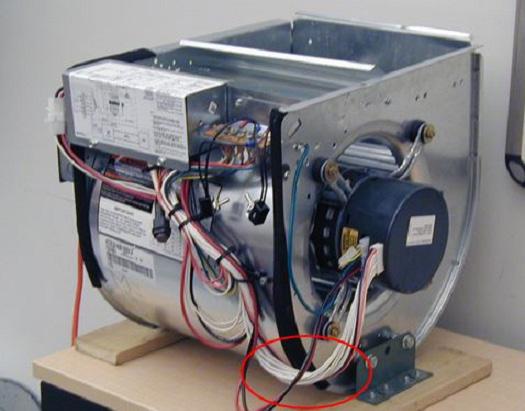
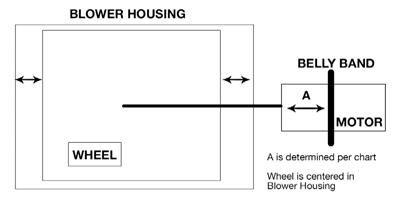
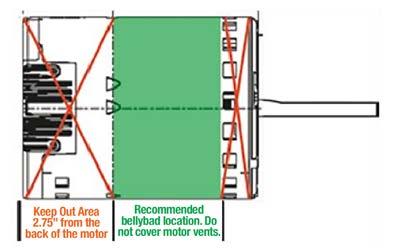
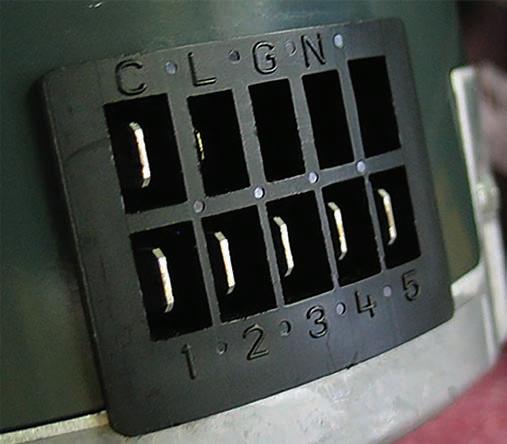
As installed in the air handler the motor should be positioned with the connectors facing down between the 4 and 8 o’clock position, with the wiring harness formed into a drip loop.
Motor connection harness facing down with drip loop on this OEM blower set-up. Drip loop prevents water dripping in the blower compartment from above making its way into the motor electronics.
nace and air handler designs learning exactly how much torque the motor must provide to keep the centrifugal blower moving the necessary amount of air under all rated conditions.
The data collected is programmed into the motor computer. CTM’s provide several benefits over PSC motors and have similar characteristics to the more complex variable speed ECMs.
• CTM’s have the same ECM efficiency.
• Utilize a permanent magnet rotor.
• The CTM module creates a 3-phase power conversion from line voltage.
• Have a soft start capability.
• Use a simpler interface.
• Receive line voltage all the time.
Main differences:
• CTM’s do not ramp, less flexible, providing a fixed airflow as determined by low voltage applied to a specific terminal.
• Cannot be programmed to provide de-humidification mode or reduced speed for heat pump start-up in heating mode.
• CTM’s receive a 24-volt turn-on signal from the control board.
Developed by General Electric in the late ‘90’s, ECM’s have become the gold standard for improved efficiency and more flexible operation in residential HVAC air handling devices. ECM’s have a long list of features:
Motor insertion depth is important. Follow manufacturer’s instructions when installing replacement belly band mounts. Motors inserted too far into the fan, or not far enough, may cause the blower wheel to wobble causing noise, vibration and possible wheel failure.
• Shared with CTM’s, these motors are wound like an industrial 3-phase motor with a computer that “decides” which winding to power at exactly the right time thus optimizing efficiency.
• The rotor consists of three permanent magnets; no energy is wasted in creating an armature magnetic field; low rotor losses mean almost no slippage.
• The motor computer, housed in a replaceable module, can control torque over a wide range of applica -
Heating 1st Stage
3: Example of a manufacturer’s chart showing readings at different rated external static pressures.
tions; provides a much wider range of airflows between lowest and highest settings.
• The motor computer “knows” the rotor position allowing control without the need for mechanical brushes and commutators.
• Motor starts softly and then ramps
to proper speed.
• ECM’s used with furnace fans are optimized to provide constant air volume should the external static pressure change for some reason.
Since X13s, CTMs and ECMs are brush -

less 3-phase DC motors with permanent magnet rotors, I’ll simply refer to all of them as ECM. Who would not want such an efficient motor driving a residential central air conditioning system? Electric motor manufacturers such as Genteq Evergreen, Mars Azure
Continued on p32

Ion™ 98 Variable-Speed Modulating Gas Furnace
• Up to 98% AFUE
• 60,000 – 120,000 BTUh
• Lifetime Heat Exchanger Limited Warranty
• 10-Year No Hassle Replacement™ Limited Warranty Pair it with a compatible air conditioner for full functionality and a full communicating system using the Ion™ System Control.
For increased efficiency, look for the Ion™ 96 Variable-Speed Gas Furnace with Two-Stage Operation at keeprite.com.
Digi-Motor, and Nidec Rescue Select Pro have PSC to ECM field upgrades available for PSC-equipped furnaces and air handlers.
Indeed, HVAC service contractors encounter failed PSC fan motors every day, and with heating season coming on, it might be the time to stock several replacement units for customers interested in saving energy.
Motor manufacturers offer great features, research the product detail sheets for these particulars:
• Meant to replace direct drive furnace motors, not belted fan applications.
• Can replace PSC or X13 motors.
• Has an auto sizing mode, after 90 seconds of operation measuring ESP, it automatically assigns torque values to each speed tap.
• An optional PWM variable speed controller can be added to allow for 2 speed pots (one heating, one cooling) and allows motor speeds to be set at individual points between 350 rpm and 140 rpm.
• Motors are reversible.
• Standard outboard surge protector with dual voltage capability (115 or 230 vac).
• Pre-programmed with option to match OEM profile.
• Bluetooth or Near Field technology allowing for direct programming, customized airflows, and real-time diagnostics.
The value proposition should go both ways; a great line item producing extra revenues for the contractor while fulfilling the promise of better performance, less noise, and reduced energy bills for the homeowner.
Thanks again to YouTube, motor manufacturers have created many useful training videos on how to replace PSC motors with an ECM. However, I would argue that a professionallytrained technician, well versed in the
anomalies of substandard air handling systems, should be able to recognize that a dysfunctional duct system is not a worthwhile candidate for a motor efficieny upgrade.
So, what could go wrong? Moving a commodity like air through a duct system is work—a lot of work. One cubic foot of air weighs approximately 0.075 pounds. A blower moving 1,000 cubic feet of air per minute will move 0.075 x 1000 = 75 pounds of air per minute or 4,500 pounds (2.05 metric tons) of air per hour.
“Moving a commodity like air through a duct system is work – a lot of work.”
Suppose a dirty air filter restricts air entering the blower by 50%, or 37.5 pounds per minute. A PSC motor becomes unloaded, it goes on vacation doing less work: current draw decreases.
The chart in Figure 3 (page 31) shows what happens to a variable speed ECM installed in a restrictive duct system. Notice the difference between motor watts at the manufacturer rated External Static Pressure (ESP) of 0.5inch w.c. using the lowest possible heating speed on first stage, and the watts used in an overly restrictive system at 0.9-in. w.c. In this case, airflow is reduced by a mere 2.7% (745 cfm –725 cfm = 19cfm), but the motor watts increase by 55%.
A constant volume ECM will ramp up in a futile attempt to maintain programmed airflow. ECM powered fans, starved of air, will simply move whatever amount of air they can get at a higher velocity creating more noise.
ECM’s, often promoted as a method of easily overcoming airflow problems, typically operate well beyond rating plate maximum external static pressure in second rate duct systems. Consistent operation at high wattage will likely be noticed by the homeowner who is expecting a lower electricity bill. In the end, we are all fortunate that Mr. Leppert’s ficticious Uncomfortable Air Conditioning Company does not have a contractor’s division around here, yet, far too many HVAC systems could qualify as Uncomfortable.
When it comes to replacing a PSC motor in an orphaned residential application, the technician needs to take basic system health measurements and then ask some important questions:
• When was the last time the furnace blower, secondary heat exchanger, and evaporator coil was cleaned?
• How often is the air filter maintained?
• Is the system noisy throughout the house?
• Are you unhappy with your comfort conditions?
• Would you be willing to sign a maintenance agreement with our company?
Too many negative responses to the above might mean a PSC motor is going to be the best replacement scenario. Even better though, such systems should trigger a sales opportunity to replace the furnace and repair the air handling system so that a well-equipped furnace or air handler utilizing the latest ECM technology can provide the best value for the homeowner. <>

Ian McTeer is an HVAC consultant with 35 years experience in the industry. He was most recently a field rep for Trane Canada DSO. McTeer is a refrigeration mechanic and Class 1 Gas technician.
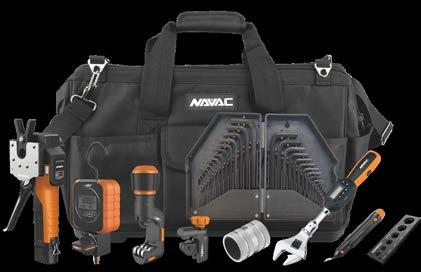
NAVAC’s new nine-piece NKS1 mini-split tool kit includes: the NEF6LM power flaring tool able to create flares in five sizes, ranging from ¼-in. to ¾-in.; the NTW1 digital torque wrench that allows dual direction operation and selectable measuring units; the NRM1D manifold gauge with digital display; as well as a 30-piece hex wrench set, tube cutters, internal/external reamer, tube deburrer and a flare gauge. navacglobal.com
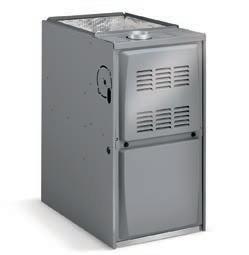
Allied Air Enterprises expanded its gas furnace offering with the Ducane, Concord and Allied 80G2E branded models. The 80G2E two-stage gas furnace features a constant torque ECM blower motor for consistent air flow and even temperatures, a two-stage gas valve that adjusts heat output, and offers easy installation with a removable floor base and left or rightside utility connections and pre-bent and predrilled duct connection for coil and duct work. alliedair.com
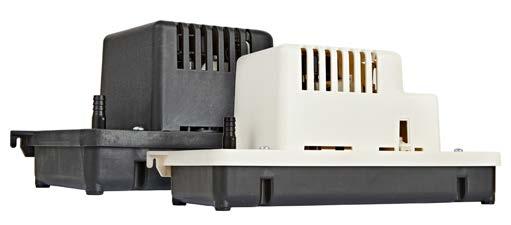
The Little Giant VCCA series of condensate pumps are designed for use in the automatic collection and removal of condensate from air conditioning, refrigeration and dehumidification equipment when gravity drainage is not possible or practical. The VCCA series low tank height allows the condensate pumps to be used tight spaces. The VCCA-20ULS pump is suitable for high efficiency condensing furnace and boiler equipment, and the VCCA-20-P is engineered specifically for plenum applications. littlegiant.com
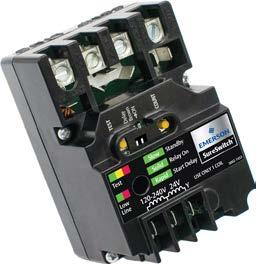
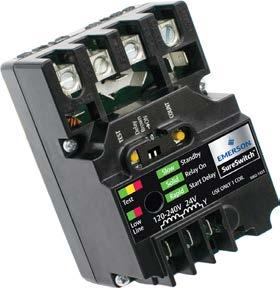
Emerson launched a new multi-volt contactor to offer a replacement for almost any application. The SureSwitch contactor, initially designed for air conditioning applications, has now been designed with expanded coil voltage to extend to refrigeration replacements, ranging from 24 volts to 240 volts. SureSwitch features a microprocessor-controlled switching design to eliminate contact pitting and welding. climate.emerson.com
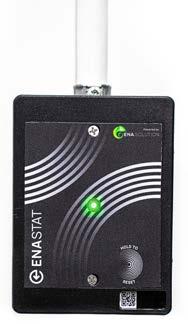
ENA Solution launched a smart thermostat designed for manufacturers, distributors and commercial building operators. The unit includes smart home thermostat features, such as app-based controls, smart scheduling and zone setup. It also includes universal voltage compatibility, backup batteries, both Wi-Fi and cellular connectivity, and an array of sensors that measure both temperature and humidity. Its app-based software allows maintenance managers to authorize additional users and offers advanced HVAC analytics. ENASolution.com
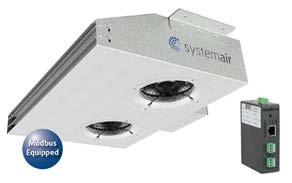
The IV Smart EC Modbus Jet Fan from Systemair, designed for next generation parking garage ventilation, allows built-in modbus communication and an available BACnet accessory for communication with any building management system. The units enable specific control of each zone to improve CO removal while conserving energy. Additional features include electronically commutated (EC) motors with integrated motor protection and large external electrical box with quick-connect terminals for easy electrical connection and service access. systemair.com
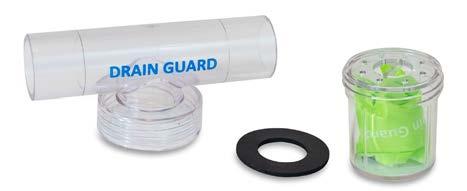
RectorSeal is now a distributor of Drain Guard HVAC condensate drain guard products. Simple one-time installation of a Drain Guard T-Body assembly and cartridge provides a slow-releasing formula for drain protection up to six months. The unit’s transparent design allows for a quick view to ensure the Drain Guard unit is activated and when the next Drain Guard cartridge is needed. rectorseal.com
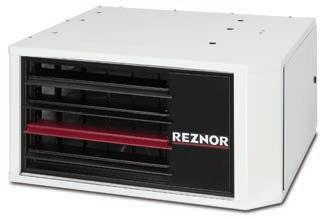
Nortek has redesigned its Reznor brand of commercial/industrial/residential gas-fired unit heaters for the North American market. The redesign applies to Reznor’s UEZ, UDZ, UBZ, UDX and UBX Series, which includes unit heater models up to 400-MBH and up to 93% thermal efficiency. Updates include two-tone white and black cabinetry featuring powder coat paint. Units include external terminal strip for easy access with 24-V wiring connections, technical literature QR Code and easy eternal gas connection. nortekhvac.com
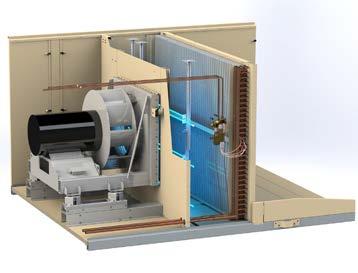
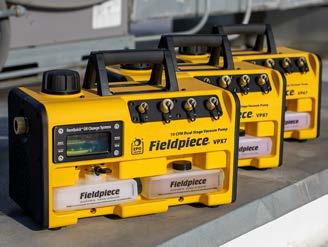
Fieldpiece Instruments introduced a new generation of three lightweight portable vacuum pumps for a variety of applications: the VPX7 is a fast and efficient 10 CFM DC motor for large commercial and refrigeration applications; the VP87 is an 8 CFM DC for light commercial and residential systems replacing the legacy VP85; and for residential service and installation, the new VP67 is a 6 CFM AC model, replacing the current VP55 (5 CFM). fieldpiece.com
Johnson Controls expanded its line of Premier platform commercial rooftop units, now available in 25-80 tons. Offered in standard efficiency (up to 10.9 EER/15.8 IEER), high capacity or high efficiency (up to 11.4 EER/16.9 IEER), Premier units can provide up to 50% greater efficiency at part-load. New optional features to improve indoor air quality include ultraviolet lights, humidifiers and final filters. johnsoncontrols.com
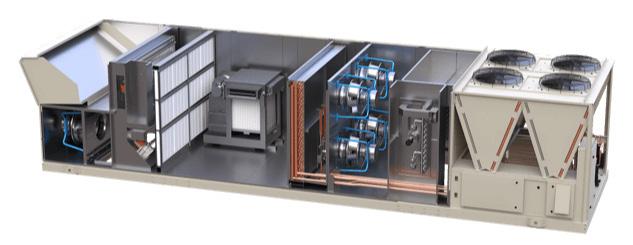
Daikin Applied has upgraded its Rebel Applied HVAC rooftop unit integrating enVerid sorbent ventilation technology (SVT). The integrated system removes CO2, VOCs and other contaminants using sorbent filtration that captures pollutants while allowing oxygen and water to pass through. The system can reduce outside ventilation by as much as 80%, providing greater control of humidity and comfort while trimming annual operating expenses by up to 30%.
www.daikinapplied.com
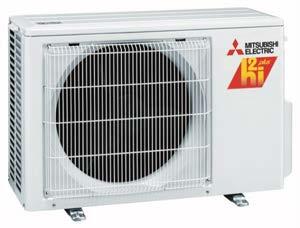
Mitsubishi Electric Sales Canada has introduced the FS wall-mounted mini-split system featuring the company’s Hyper-Heat Plus technology delivering 100% heating performance at -20C, and sustaining high efficiency in temperatures as low as -25C. Units include a dual barrier coating that prevents dust and dirt from accumulating on the inner surface of the heat pump, and the FS model is equipped with nano platinum filters that break down bacteria, mould and odours.
mitsubishielectric.ca
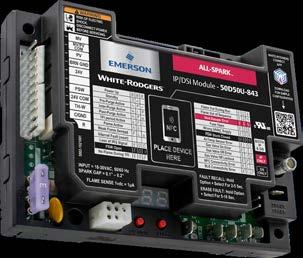
The White-Rodger All-Spark ignition module replaces more than 800 24V intermittent pilot (IP) and direct spark ignition units. The universal control also features near-field communication (NFC) capability, simplifying configuration and diagnostics through the White-Rodgers Connect mobile app. Configuration can be completed through NFC without power applied to the control, which allows contractors to configure from a service truck and prior to installation. A digital display allows for on-board configuration and easy-to-read error codes. emerson.com.

Discover fresh ideas, expand your network, and fine-tune your skills at Western Canada’s biggest show for plumbing, hydronics and HVACR.






More than 30,000 sq ft of exhibits
Thousands of products from North America’s top manufacturers
Information packed seminars
Fantastic prizes
Free Parking for attendees
REGISTRATION
OPENING SOON


EXPERIENCE THE FUTURE OF PLUMBING, HYDRONICS AND HVACR IN PERSON AT
NEW DATE! November 3 & 4, 2021
New products. New ideas. New tools. New tech.
CIPHEX WEST
Pacific National Exhibition - Coliseum Vancouver, B.C
Wednesday, Nov. 4
10 a.m. to 7 p.m.

Thursday, Nov. 5 10 a.m. to 4 p.m.
Pre-registration required for the two-day event
Back and in person, the two-day CIPHEX West trade show is returning to Vancouver for 2021. The largest event in Western Canada for the HVAC, plumbing, hydronics and water treatment industries, this year’s trade show is taking place in the Coliseum at the Pacific National Exhibition, a new location that offers free parking for attendees.
Not only is the parking free, registration for CIPHEX 2021 is also complimentary however preregistration for the event is required. No on-site registration will take place during the days of the show.
Health and safety guidelines for CIPHEX West will adhere to Province of British Columbia directives. Proof of full vaccination status is required to attend the trade show.
Residents of B.C. can download the BC Vaccine Card and Canadian attendees from outside of B.C. will need to provide proof of vaccination, visitors will also require valid photo ID. International visitors can provide the proof of vaccination used to enter Canada along with a passport.
All exhibitors and visitors will be required to wear masks while inside the Pacific Coliseum and will also be asked to respect social distancing policies.
All seminars and workshops take place in the CIPHEX Theatre on the trade show floor, so seating is first come, first served.
WEDNESDAY, NOVEMBER 3
Next Generation Intelligent Pumping Technology and Its Evolution
Time: 10:30 a.m. - 11:30 a.m.
Presented by: Armstrong Fluid Technology
Fighting the FOG (Fat, Oils and Grease): An Overview of Grease Interceptors
Time: 12:00 p.m. - 1:00 p.m.
Presented by: Canplas Industries
Meeting the Needs of the Future: Air to Water Heat Pumps
Time: 1:30 p.m. - 2:30 p.m.
Presented by: Taco Comfort Solutions
Managing Infrastructure Resiliency - The Role of Non-Metal Systems in Plumbing Time: 3:00 p.m. - 4:00 p.m.
Presented by: Uponor
The Changing Landscape of Hydronics in Canada Time: 4:30 p.m. - 5:30 p.m.
Presented by: The Canadian Hydronics Council
THURSDAY, NOVEMBER 4, 2021
Cable vs. Threaded Rod for the Suspension and Bracing of Building Services
Time: 10:30 a.m. - 11:30 a.m.
Presented by: Gripple Canada
Air to Water Heat Pump - The Future of Heating is Now
Time: 12:00 p.m. - 1:00 p.m.
Presented by: Enercall Sales & Services
Municipal Heat Pump Certification (MHPC)
Time: 1:30 p.m. - 2:30 p.m.
Presented by: TECA
•
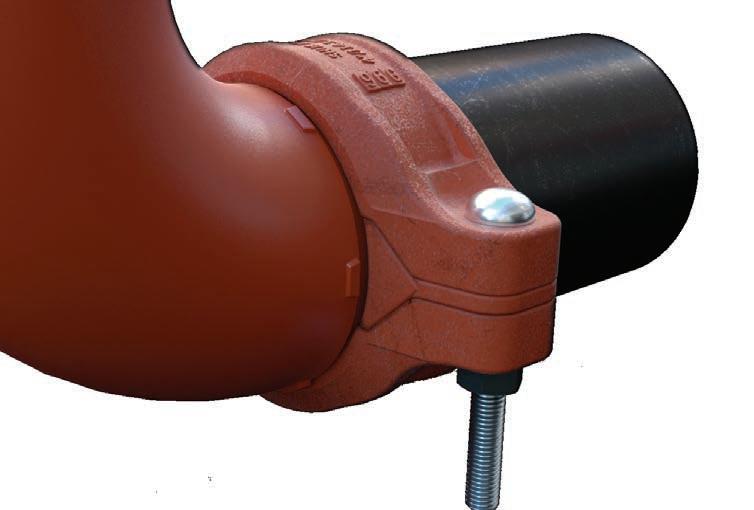
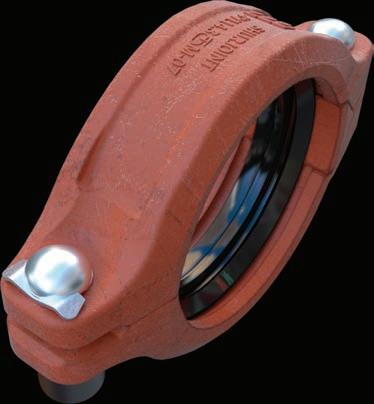
Innovative Design Features
• 1-Bolt Design Saves installation time over conventional Couplings
Integrated Wedge ensures Gasket Compression and prevents pinching

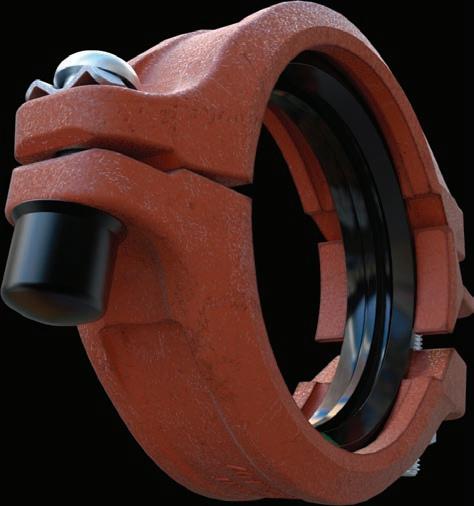
•
Quick Install Gasket
• Pipe Stop: Ensures the Gasket is properly located in the connection, and assists in vertical installations
Gap Seal: The Gasket design is optimized for any sort of installation
Additionally, our Quick Install Gasket design ensures Gasket-to-Pipe contact from the moment you install it

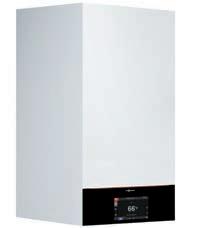
The new Vitodens 100-W and Vitodens 200-W gas condensing boilers from Viessmann feature integrated WiFi, stainless steel heat exchangers, 10:1 turn down ratios and more. The Vitodens 100-W is available in combi or heat only.
CB Supplies will be showing its anti-siphon frost free faucet (wall hydrant).
High Sense Solutions will be showing the PERIJA MINI VPRO and Mini VPick Up acoustic water leak detectors.
Spartan Peripheral Devices will introduce its VN series NSF rated control valve with a G-type connection.
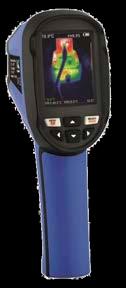
Kane Canada Measurement Solutions will show KANE-TCAM thermal imaging camera that combines surface temperature measurement and real-time thermal imaging.
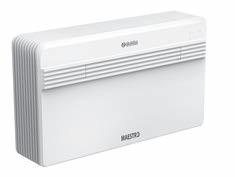
The Olimpia Splendid Maestro PRO 12 HP thru the wall heat pump (distributed by Cool Estate) features an
inverter driven compressor and variable speed motor.
The Fantech HERO heat recover fresh air appliances feature new core design.
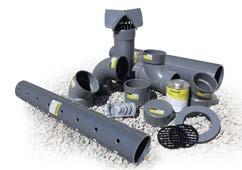
IPEX will show its RadonX Soil Gas Venting products including gas collection and vent pipes, fittings, solvent cement, and termination accessories.
The AP23-S model Axi-Pump condensate pump from Axiom Industries features improved efficiency and flexibility.
The EZB-Edge electric boiler from Electro Industries features a complete hydronic solution in a box.
The VX high-efficiency condensing boiler from IBC is a stainless steel fire tube boiler with a more compact design.
Mitsubishi Electric will show the QAHV, a high volume hot water heat pump for commercial and industrial applications.
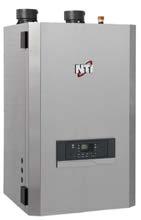
NTI will be introducing its new FTVN condensing boiler that features on-board WiFi connectivity as well as its S20W 20-gallon wallmounted high-performance indirect water heater.
Oatey Canada will be showing the new line of Canadian Masters Pro solvent cements and primers, low VOC products for all types of plastic pipe welding, as well as the MODA Secondary Drain Box, a solution for laundry room set-ups that includes supply connections and a discharge port for the washing machine and an integrated connection and funnel for a recessed condensate drain.
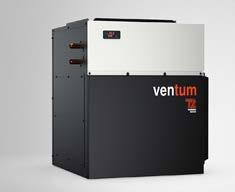
The new VenTum hydronic air handlers from Thermo 2000 provide efficient operation, even with low temperature water, and use highefficiency ECM fan motors.
The Linear-X Actuator from Ultra-Fin is designed to permit intermittent use, requiring power only when the heating or cooling system calls for the opening or closing of a manifold valve.
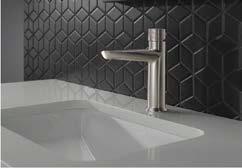
Masco Canada will be showing the new Delta Galeon bath collection faucets available with Lumicoat finishes that wipe clean and resist mineral buildup and hard water stains.
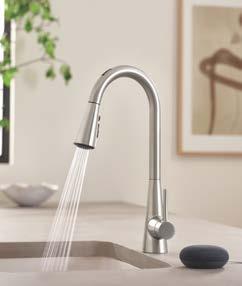
Moen will be showing the U by Moen smart faucet, its voice-activated kitchen faucet that offers hands-free activation.
A.O. Smith Enterprises presents the Envirosense SF high efficiency condensing gas water heater featuring a helical coil heat exchanger designed for residential use.
Brady Canada will be showing its mobile BradyPrinter M611 facility kit with ID software, a printer that pairs with a mobile phone app for printing labels for pipes, valve tags, and more.
Cameron Instruments will introduce the Mako Digital backflow testers from Arbiter, designed for rugged field use.
Gripple Canada introduces its Fast Track and Universal Bracket flexible, fast bracket suspension solution for mechanical and electrical services.
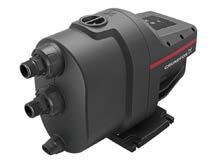
The Grundfos SCALA1 pump is a fully integrated, selfpriming, compact unit designed for pressure boosting in domestic and light-commercial applications. Continued on p40
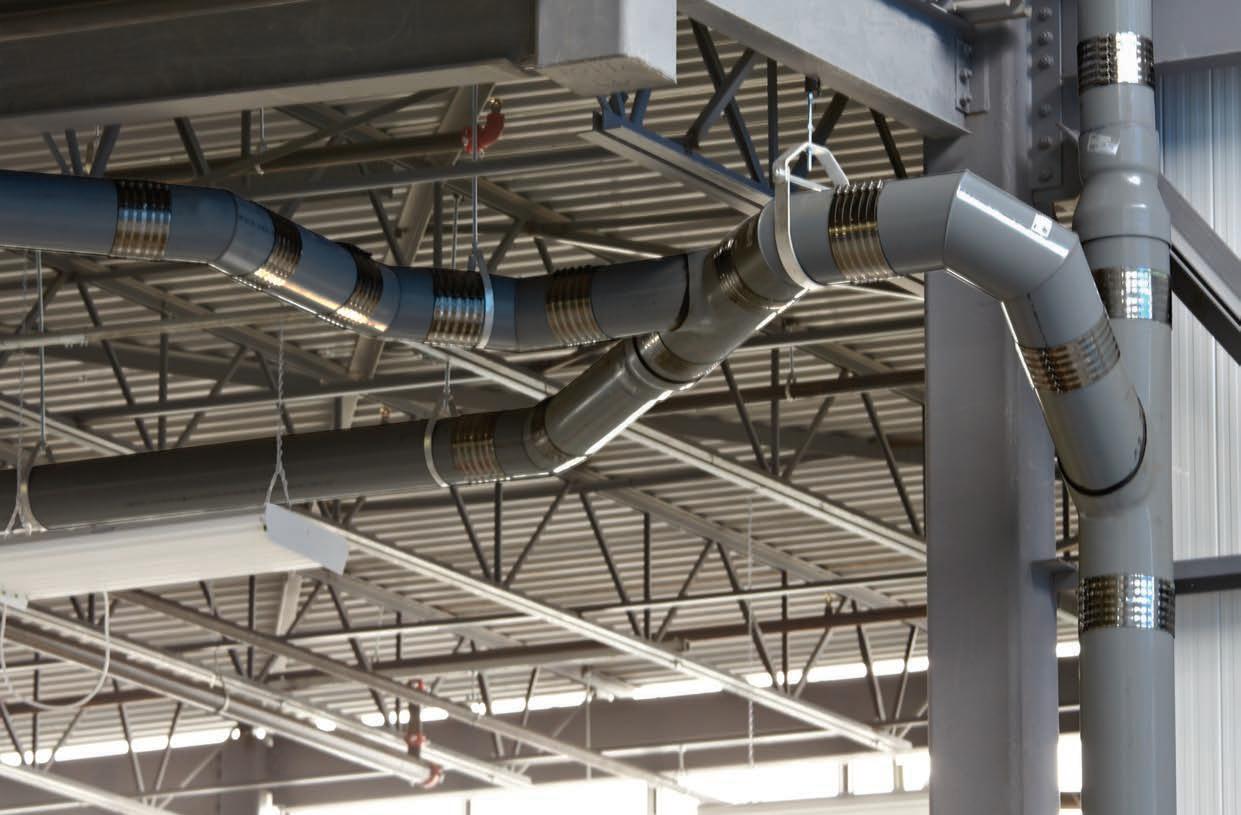
From parking garages to hospitals to high buildings, more and more mechanical contractors and engineers are switching to a long-lasting DWV solution.
As an integrated solution, System 15® and System XFR® meet all code requirements for noncombustible buildings. As a complement to System 15 and System XFR, MJ GreyTM Mechanical Couplings provide an alternative to solvent welding when working in cold weather conditions, from heights in a scissor lift or a bucket.
Drain-GuardTM Double Containment Systems provide safe transport of sanitary or storm drainage in critical areas. Should a leak occur, people, equipment and valuable property will be protected from possible harm.
DWV Systems by IPEX provide the required rugged reliability with all the added benefits:
• Lightweight, Easier to Install
• Corrosion Resistant, Less Maintenance
Contact us to learn more about our complete DWV systems. ipexna.com | 1-866-473-9462
• Overall Project Savings
• Unsurpassed Technical Support
International Power Systems will show the compact Electric Eel eCAM Ace 100Micro pipeline inspection camera system for quick inspections in pipes ranging from 1-1/2-in. to 3-in. diameter, and will be introducing the XPOWER F-16B ULV (ultra-low volume) battery-operated cold fogger.
Pentair Canada will introduce the Smart Sump Pump Controller that pairs with the Pentair Home App and
enables users to operate their sump pump remotely, access performance information and receive real time alerts.
Lixil Canada will be introduce the Grohe SmartControl kitchen faucets offering push-button on/off and hands-free convenience, as well as the American Standard no-touch flush Cadet touchless flushing system with a remote sensor.
Navien will introduce the NPE-A2 tankless water heater offering high efficiency condensing technology and built-in recirculation system.
The new HEPA Filtration Tower from Security Chimneys plugs into a standard outlet and removes up to 99.95% of aerosols, as well as dust, pollen and other contaminants.
Reliance Worldwide Corp. (RWC) Canada will introduce the HOLDRITE 703 series in-slab PEX pipe support.
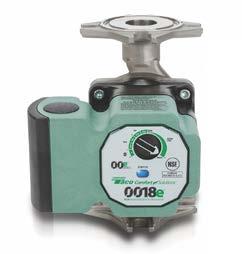
Taco Comfort Solutions will be showing the Taco 0018e Stainless Steel circulator with Bluetooth, a variable speed wet rotor circulator with an ECM permanent magnet motor, and will also show a complete air-to-water heat pump solution.



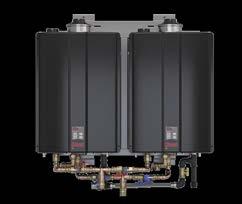
Rinnai introduces its TRX compact preassembled wallmount tankless system to make installation quick and simple.
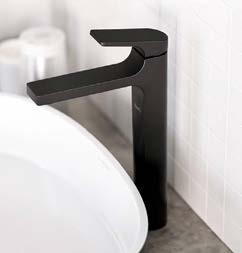
The Ode collection of faucets and shower systems from Riobel offer a modernist art appeal, with a round base that merges with a rectangular spout in one seamless form.
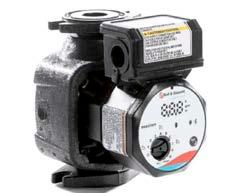
Bell & Gossett introduces the ecocirc 20-18 variable speed ECM circulator suitable for hydronic heating and cooling systems, and potable water systems.
Wassertek will introduce threading machines suitable for workshop or on-site operation for continuous threading of steel pipes from 1/2 – 6-in., and they will show butt fusion welding machines for HDPE, PP, PB and PVDF pipes and fittings from 1 to 100-in.
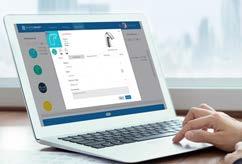
Zurn will show its plumbSMART platform that communicates with connected products via sensors to monitor plumbing performance and update building maintenance teams.
Mainline Backflow Products will show its Top-Check combination automatic backwater valve with manual close and built-in main-sewer clean-out and its Straight-fit Top-Gate extendable backwater valve with manual reset and top suspended gate.
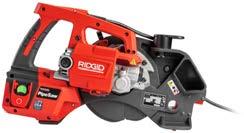
RIDGID will show its new PCS-500 pipe saw, able to cut 1-in. to 12-in. pipe, as well as its new RP 351 standard press tool with a brushless motor.
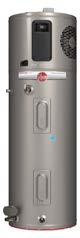
Rheem Canada will show its ProTerra hybrid electric water heater for homeowners with smart features including built-in WiFi.
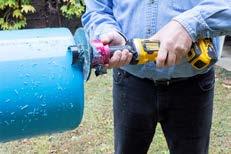
Reed Manufacturing will introduce its Bevel Boss cordless pipe beveler, a lightweight tool for beveling 2-in. diameter and larger plastic pipe.

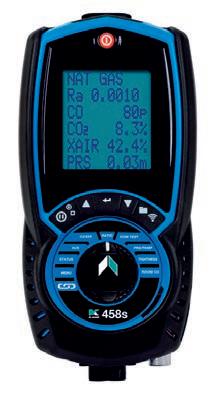
Measures: CO, CO2, differential temperature, differential pressure
Calculates: O2, CO/CO2 ratio, Losses, Efficiency
High Altitude
Compensation
Wireless Airflow Measurement*
Over-range protection pump
Wireless temperature probes* for flow and return boiler and radiator temps.
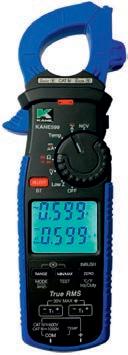
3 Phase Rotation Testing
Low Z / Low Pass Filter
Auto Volts / Amps Selection


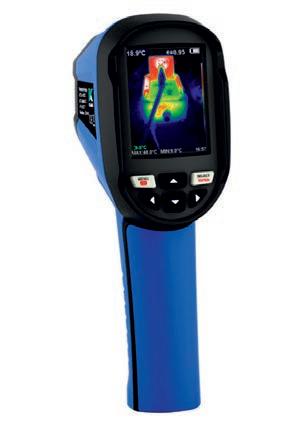
Surface temperature range - 20C to 300C ECM Measurement
Simple, affordable point & shoot technology with high quality thermal imaging.
Ideal for heating, ventilation, refrigeration engineers and automotive & maintenance technicians.
Large LCD colour display 4 surface measurement modes to improve speed & ease of finding problems.

Kohler has introduced two new Canadian distribution partnerships beginning January 1, 2022. Wolseley Canada becomes a partner nation-wide, seeing Kohler Canada expand its reach with Kohler, Sterling, Kallista and Hytec brands through Wolseley Canada’s network of more than 220 locations.
And Andrew Sheret Ltd. in Western Canada will add Kohler bathroom and kitchen products to their inventory in the New Year. Headquartered in Victoria, B.C. Andrew Sheret has a total of 31 branch locations, and 25 Splashes Bath & Kitchen retail showrooms across B.C., Alberta and Saskatchewan. wolseleyinc.ca sheret.com
CIPH AWARDS
DAVID HAMMOND
THE JOSEPH K. SEIDNER AWARD

The 21st edition of the Joseph K. Seidner Award, an annual honour presented by the Canadian Institute of Plumbing & Heating acknowledging the commitment of plumbing industry volunteers who dedicate time and expertise in developing safer plumbing codes and standards, has been awarded to David Hammond in recognition of his contributions to the industry.
Currently vice president and general manager, Canada and export markets, with A. O. Smith Enterprises, Hammond has served on various codes and standards committees and is currently a member of PMAC, TSSA Advisory Council and serves on the CIPH board of directors. ciph.com
Deschenes Group has announced the purchase of Matériaux de Plomberie PMF and PMF Plumbing Supplies, an independent wholesaler of luxury brand plumbing products serving the professional trade and retail markets in Quebec and Ontario from two locations in Montreal and Mississauga.
“This acquisition offers us the oppor-
tunity to expand our luxury plumbing products offering through the PMF brand and welcome a talented and knowledgeable group of people who are passionate about their business,” said François Deschênes, president/CEO of Deschenes Group. groupedeschenes.com
The Ouellet Group, headquarterd in L’Islet, Quebec has acquired DeltaTherm, a heat tracing solutions company based in the U.S.
Distribution of Delta-Therm products is
expected to be carried out from the company’s current location in Chicago, and Delta-Therm will continue to operate under current management as a standalone subsidiary. ouellet.com

Rendering of new RLS building in St. Louis RLS MOVING AND EXPANDING RLS is moving into a new 80,000 sq. ft. multipurpose facility in St. Louis, Missouri, which will serve as its corporate headquarters and will include a manufacturing plant, training centre and showroom. “The larger, upgraded facility will significantly increase our production capacity to meet the growing demand for our products. And the new training centre will allow us to regularly educate HVAC/R contractors and distributors on our patented press technology,” said Paul Schubert, president of RLS. rapidlockingsystem.com
Superior Boiler opened its latest manufacturing facility in Hutchinson, Kansas on September 3. The 75,000-sq.-ft. building was renovated to house Superior’s watertube division.
The new facility, called Plant 3, is located on 18 acres, allowing for further expansion. superiorboiler.com
An electric boiler and instantaneous water heater: a combination without compromise.
TurboMax
The instantaneous indirect water heater with unmatched exchange capacity, exceptional hot water quality and a lifespan of more than 30 years.
VoltMax
Increased temperature control. Increased power control. The ideal electric boiler for your commercial projects.
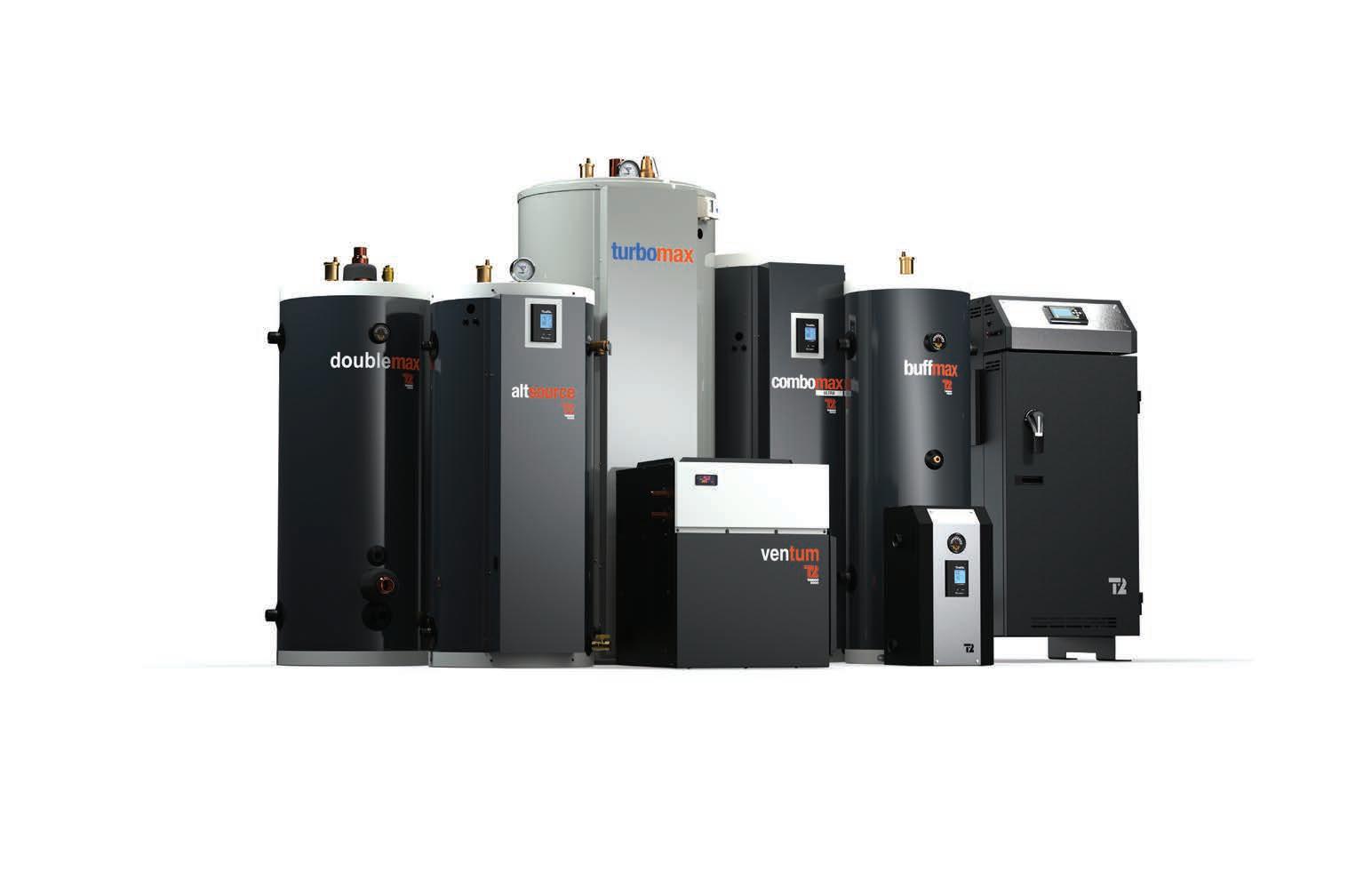
DoubleMax
Equipped with an innovative double-wall copper heat exchanger that offers a thermal conductivity that is 17 times greater than that of stainless steel, it reduces the risk of cross contamination.
AltSource
The only high-volume electric boiler on the market and the perfect complement to renewable energy.
VenTum hydronic air handler conditions the air in a new or existing centralized system with great precision, in any season.
BuffMax
Optimize any type of hydronic system with the BuffMax buffer tank.
The reliable and ef cient electric boiler available in compact sizes for your residential needs.
Ontor Limited has appointed Matt Rafferty as sales representative for British Columbia. Rafferty joins the Ontor team bringing almost a decade of inside sales experience in the HVAC wholesale industry.

Mark Gallant has been named vice president, supply chain at Wolseley Canada. Gallant previously spent the last 12 years at The Home Depot and will be stationed at Wolseley’s head office in Burlington, Ont.


keting departments. He previously worked at Danone, Kellogg Co. and Procter & Gamble in sales management positions. Mackrory is responsible for driving marketing strategy. He brings experience in brand management having worked at Danone and in multiple marketing and management positions at Kimberly-Clark.

Matthew Baranuk has joined Watts in the role of product specialist for backflow preventers and risers. Baranuk will support strategy execution for Watts, Ames and FEBCO branded backflow preventer and riser products. He will also provide training, technical support and oversight of new product development and launches.
Viega has named Scott Wallace as the new Chief Commercial Officer and Jared Mackrory as marketing director. Wallace will set the go-to-market strategy and oversee the sales and mar-
Kurtis Fell has taken the role of central regional sales manager at Navac. Fell will spearhead sales efforts across Ontario and the U.S. Midwest, including onboarding several new representative distributors. He has over 18 years of sales and service management experience, most recently spending two years as director of U.S. sales for Watsco/Gree in the company’s ductless and VRF segment.

Chris Manzara has been promoted to general manager of Deflecto Canada. Manzara has been with Deflecto for 15 years as sales manager and brings a wealth of knowledge relating to the air distribution marketplace. In his new role he takes on responsibility for all day-to-day operations within the Canadian division.

Rinnai America announced that Renee Eddy has joined the organization as vice president of innovation. Most recently, Eddy was director of innovation, methods and operations at Eaton, and prior to developed products across a number of industries including residential and commercial HVAC, transport refrigeration, telecom and aerospace. In addition, Shelley Kiley has joined Rinnai America as its vice president of operations. Kiley has assumed responsibility for manufacturing, supply chain, distribution and logistics.
Armstrong Fluid Technology announced Simone Walzel as global head, data centers. After launching her career with Honeywell, she has worked in progressively senior roles with Schneider Electric, Emerson Network Power, Stream Data Centers and Vertiv.
Mike Cornelius has been promoted to heating manager for Desco Plumbing and Heating Supply. Cornelius will oversee the HVAC and hydronic business for the company. He succeeds Doug Goetz who has retired after 27 years with Desco.



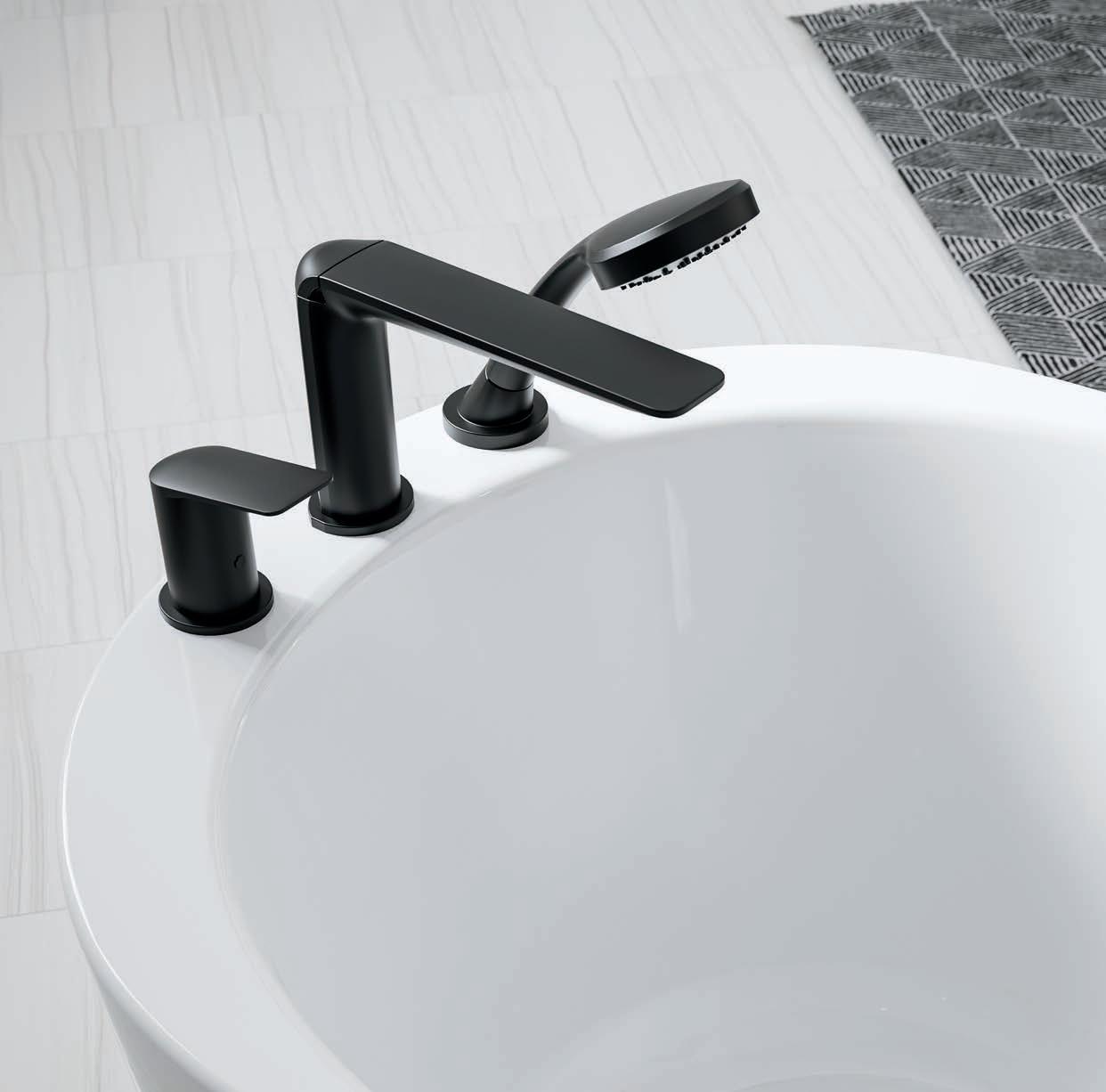

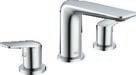
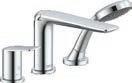
The strong, poised footings and fluid lines of the Portage® Bath Collection bring contemporary elegance to the bath. Featuring a single-handle roman tub faucet with hand shower. Available in Chrome and Matte Black finishes. Learn more at deltafaucet.ca
With home renos on the rise, here are the trends driving faucet and fixture design. BY
DOUG PICKLYK
Home renovations have been on the rise over the last year-and-ahalf across Canada as home owners have been sheltering in place during the pandemic. A 2021 Renovation Investment Report commissioned by RE/MAX Canada earlier this year identified consumer home improvement trends across the country and also addressed where home owners found the best return on their investment (ROI).
The study reports that more than half of Canadians renovated their home last year for personal and nonROI purposes, choosing to renovate for either “lifestyle” reasons or addressing necessary maintenance issues.
Nearly half (47%) of renovating Canadians indicated they wanted to keep their reno budget below $10,000, while 31% would bump up their spending to just under $50,000, and only 4% would consider spending more than $50,000 on reno budgets.
And regardless of the rationale for renovating, the report identified that during the current hot housing market ROI is always a consideration, and when it comes to the renovations that yield the best returns, 70% of Canadians state redesigning kitchens or washrooms is the place to start.
Manufacturer trends in kitchen and bath design are also reflecting the signs of the times. A comprehensive 2021 Moen Design Trends Report released this summer identified insights
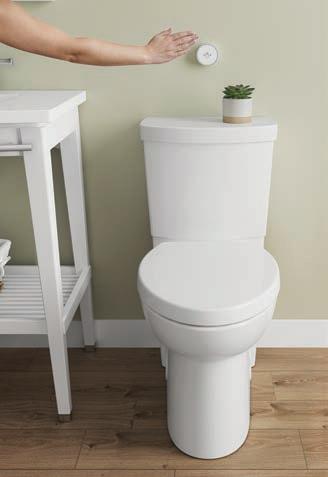

into homeowners’ evolving design priorities. The report called out three overarching design trends: hygiene consciousness, personal expression, and impact revolution (or environmentally conscious design).
Many of these trends were echoed in a recent House of Rohl 2021 design survey where 70% of respondents want their homes to feel like a calming retreat, and half wanted their bathrooms to feel like a personal spa. Also, 53% would consider touchless faucets, and that number increased to more than three-quarters (76%) for respondents with a combined household income of at least $150K.
“In light of the increased focus on hy-
giene during the pandemic over the past year, it’s not a surprise that handsfree solutions in the home are becoming more popular,” said Jessica Birchfield, principal industrial designer, trend strategy, with Moen, commenting on their Trends Report.
Earlier this year American Standard introduced its Cadet touchless toilet with a hand-activated sensor module that can be installed up to 3 feet away. And touchless faucets with coordinating touchless soap dispensers for washrooms in the home are becoming common, as well as hands-free innovations for the kitchen.
“Over the past year and a half, we have witnessed a growing desire among our consumers for products
Introducing the Infiniti® L
With an integrated recirculating pump, the new Infiniti® L provides INSTANT endless hot water to every faucet in the home – even the farthest faucet! The Infiniti® L includes:
• Easy Installation. Built For The Pro® for easier installation and maintenance. Includes built-in flush ports and more room to work under the cover.
• Flexible Venting. Can vent with 2” or 3” PVC or polypropylene up to a max length of 280ft.
• SRTTM Scale Reduction Technology for improved performance, longer life and easier maintenance.
• Steadiset® Technology to keep the water temperature accurate and consistent for an endless supply of perfectly-hot water.
• Outstanding Efficiency. ENERGY STAR® certified up to .96 UEF.
Can’t Wait? Visit bradfordwhite.com/infinitiseries
that increase cleanliness while also reducing touching points around their home,” says Marcelo Mellicovsky, senior marketing commercialization manager with Masco Canada. “Thanks to Delta Touch20 technology, which can be paired with Delta VoiceIQ technology, consumers can now control their faucet hands free with voice commands, reducing the spread of germs.” Delta’s VoiceIQ connects with other smart home devices and can power kitchen faucets to turn on and off and even dispensed set amounts of water.
The U by Moen smart faucet also includes touchless and voice-activated technology and can even be controlled by a mobile phone app. And the Kohler Konnect line of smart home products ranges from touchless toilets to voiceactivated and app-controlled fixtures. User can even fill a tub to a preferred


depth and temperature using an app.
Aside from functionality, kitchen and bath design is also being influenced by social trends, including a nostalgic throwback to the roaring ‘20s, according the Moen report.
“As we approached the 2020s, our team predicted the up-and-coming revival of Art Deco and Art Noveau influence, which has only been accelerated by the atmosphere of almost post-pandemic life in the 2020s,” said Danielle
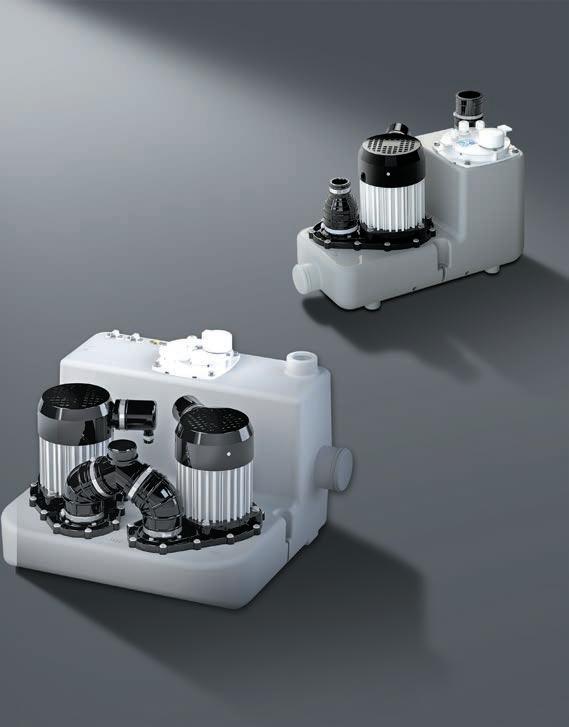
DeBoe Harper, Moen’s senior creative style manager. “Consumers are ready to express their desire for a hopeful future full of vibrant and saturated materials and finishes, taking inspiration from the elegant details, geometric patterns and mixing of black, white and metallics found in the 1930s.”
This influence is being seen in showrooms with a resurgence in gold fixtures. The DXV brand, part of the Lixil family, has introduced its Belshire collection offering a complete suite of
Continued on p50
Designed to pump up to 32 feet vertically (Shut-off head: 53 Ft)*
Capable of handling up to 194° F gray water from multiple fixtures
2-HP motor(s) discharges gray water from commercial kitchens, washing machines, etc.*
Able to handle liquids with highly acidic properties as system activates with air pressure switches.
*Based on duplex system.
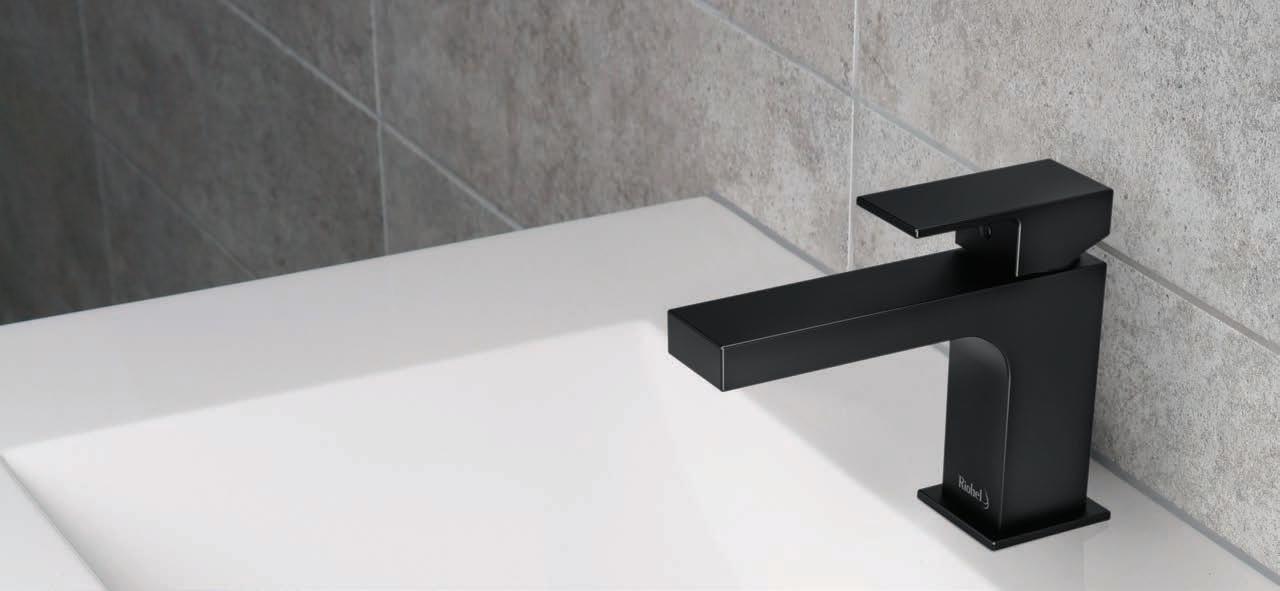
Riobel’s valves have built-in diverters so you don’t have to plumb in a separate shut-off or diverter valve, allowing for more streamlined faucet design that takes up less space on the wall. Furthermore, our thermostatic/pressure balance valves offer the best of both worlds: they stabilize water pressure for steady temperature performance even in the event of a 50% drop in pressure. No wonder this system is known as the RioWise Valves System.
No more worrying about damaging the trim: rough for valves can be purchased separately from trims and are universal for valves and freestanding faucets from all RiobelPro collections.
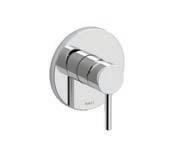
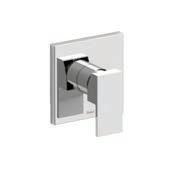
OFFERED IN THREE TYPES OF CONNECTIONS


Continued from p48
bathroom products including faucets, tub, sinks, toilets and vanities that capture an art deco inspired design.
As consumers focus on creating a positive impact on the world, home design is also incorporating more sustainable products and nature-inspired design elements.
“We know consumers want to feel good about the products they bring into their homes, and it’s our job to ensure they have options to not only satisfy their design tastes, but meet their sustainability desires as well,” said Birchfield from Moen.
Water-saving features in faucets and showerheads are addressing environmental concerns, and from a design perspective, the trend is to mimic nature. Organic-inspired faucet designs
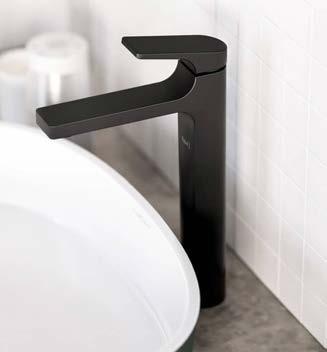
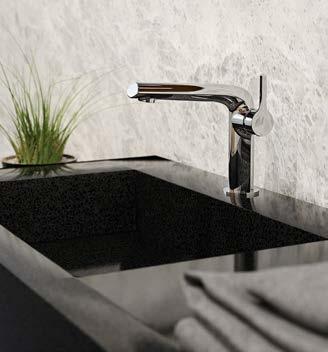
The new Ode collection from
reflects the trend towards flowing, organic, design.
are one common trend. Riobel, part of the House of Rohl, is introducing its new Ode collection of faucets presenting a seamless sculptural shape of line and circle—organic and minimalist.
And Quebec-based faucet manufacturer Belanger’s new Nobua H2Flo Luxx line of nature-inspired kitchen and bathroom products also relies on curves that evoke natural lines without any sharp angles, products that are practical and attractive.
Whether renovating for lifestyle or financial return, consumers are always seeking the latest products to keep their kitchens and bathrooms on trend.
Annually the Kitchen & Bath Industry Show (KBIS) is a new product showcase for manufacturers launching new lines. Keeping up with developments from that event is one way to keep yourself and your customers on the leading edge. <>
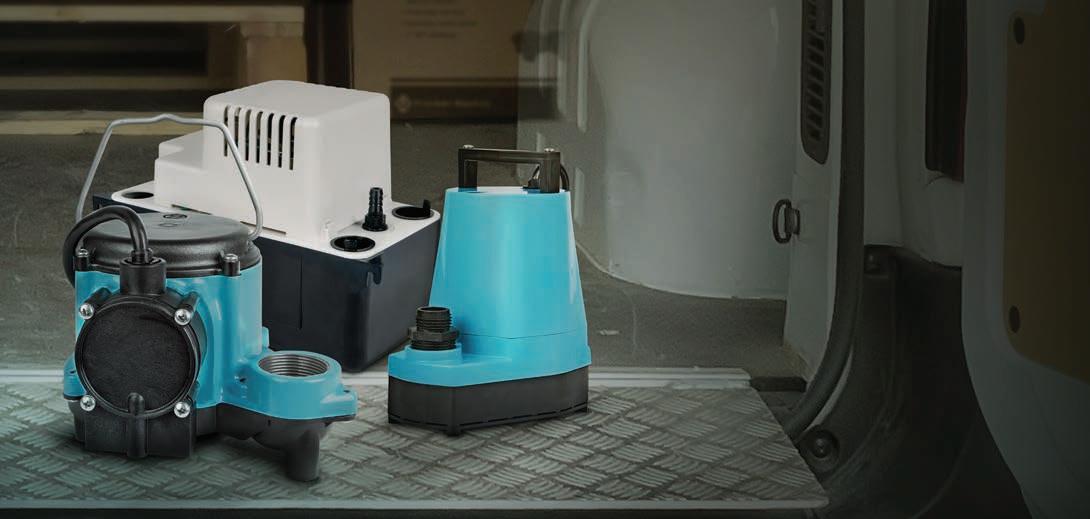

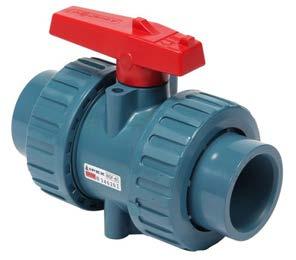
IPEX has added 2-1/2-in. to 4-in. True Union Ball Valves to its AquaRise potable water piping system, extending the ball valve line-up from 1/2-in. up to 4-in. The true union connections allow for valve removal and replacement without having to cut the pipe. The ball valves feature a compact double block design and full port bi-directional operation. The units are certified to 232 psi at 23C and they are rated to 72 psi at 71C. ipexna.com
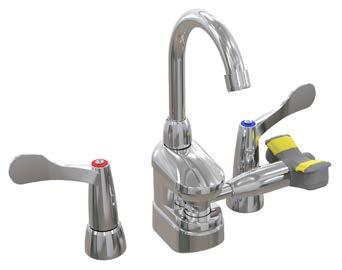
Bradley’s Halo swing-activated faucet and eyewash combines a gooseneck faucet for regular use with a built-in emergency eyewash. Two swing-activated models are available, the S19500 series with the eyewash to the right of the fixture and S19-505 with the eyewash on the left side. The faucet can be activated by three different options: two handle hot and cold ceramic control valves, single tempered water control valve or single lever manual mixing and control valve. bradleycorp.com
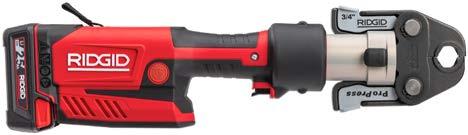
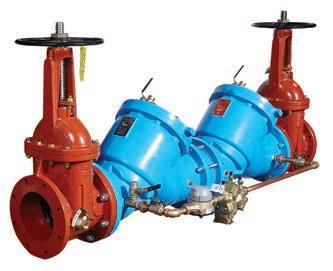
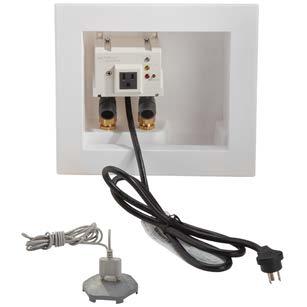
The Watts IntelliFlow automatic washing machine shutoff valve, now connected capabilities, is designed for residential applications for single family, multifamily, or rental properties. The electronic control senses washing machine current flow and automatically turns off water to the machine when it is not in use, protecting a home from potential flooding. Wi-Fi connectivity enables text and email alerts in case of a leak. watts.com
Ridgid has introduced the RP 351, its first in-line standard press tool. The RP 351 offers enhanced balance and control and only weighs eight pounds with battery. Features include a brushless motor, known for maximizing tool longevity, efficiency and durability, an a 360-degree swivel paired with bright LED lights to let users access tight spaces and see more clearly in low and no-light applications. ridged.com/presson
The ArmorTek advanced coating system is now being used on Watts ductile iron backflow preventer valves. The coating technology provides three layers of protection and contains an electrochemical corrosion inhibitor to slow the spread of corrosion if the metal substrate becomes exposed from wear or impact. The formulation also inhibits the growth of bacteria that cause microbial-induced corrosion or MIC. watts.com/armortek
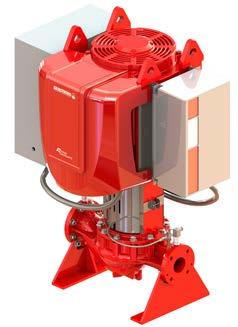
Armstrong Fluid Technology has unveiled its new Design Envelope fire pump unit with self-regulating variablespeed technology along with fire pump manager, a new connected service for tracking pump performance. The new fire pump with the connected service offers improved reliability and safety supported by real-time and historic test and performance data. And the new technology helps with fire systems that have large differentials between static and residual pressures. armstrongfluidtechnology.com
Contractors are using GPS tracking to increase resource efficiency and promote greater driver accountability. BY DEL
WILLIAMS
After homeowners and businesses hunkered down during the initial days of the pandemic, residential, commercial and industrial contractors have experienced a new problem: How will they handle the accumulated pent up demand? Home and business owners who put off maintenance and renovations as the pandemic and national economy worsened left unresolved issues ranging from HVAC, electrical, and plumbing to the full gamut of contractor trades.
As we have witnessed, once the earliest lock-down days of the pandemic passed contractors have welcomed a flood of non-emergency service calls for work customers can no longer delay.
However, contractors who may have reduced service staff during the lean times of the pandemic are now having trouble keeping pace with the increase in business.
Now contractors and specifically vehicle fleet managers who are seeking to maximize the productivity of their existing staff to meet rising demand and boost profits now have tools that can effectively facilitate this aim.
By using technology such as a realtime GPS vehicle tracking via a smartphone, tablet or PC, along with text, email, and voice directly to the driver, contracting businesses can dynamically manage their fleets and work crews to optimize dispatch and routing,
while minimizing downtime.
This approach can not only reduce the cost of employee overtime, but it can also assist in optimizing vehicle operation including fuel use, wear and tear, maintenance, and premature replacement.
“Contractors have to be more efficient than ever today, and real time GPS vehicle tracking can help. With it you can see which technicians you have across the area, including who is nearest and who is experienced and properly qualified for the job. And by accessing real-time traffic data in the software, you can identify who is easiest to send to that location as well,” says Ben VanAvery, director of sales and marketing at Advanced Tracking Technologies (ATTI), a U.S.based designer and manufacturer of GPS tracking products.
According to VanAvery, once a job is complete, it is recorded in the system, so the dispatcher, owner or fleet manager can stay apprised of who is available for the next job. In this way, it can serve as a remote time sheet, which reduces the record keeping burden and promotes productivity.
For example, one GPS vehicle tracking device system transmits 10-second updates, showing precisely where vehicles are the moment the fleet manager or dispatcher needs to know.
The system provides real-time location updates as well as speed and idle time alerts if something is amiss. This data is transmitted via satellite and cellular networks to a smartphone or PC on a 24/7 basis. The system also has access to nationwide speed limits in its database.
Post pandemic, with such a system a contractor, fleet manager, or dispatcher via a smartphone app or PC can display the real-time location of the entire fleet on a map and zoom in on any specific vehicle. At a glance, he or she can see if a vehicle is moving (displays green) or stopped (displays red). By touching a vehicle icon, an app can display where the vehicle has been, where it stopped, and how long it has idled.
By zooming in or out on the map, the contractor can see where all the fleet’s vehicles are and quickly reallocate any to where they are most needed. This can be particularly important whenever job service emergencies arise and must be quickly accommodated.
Since this approach enables contractors to quickly route the nearest available vehicle and qualified work crew to any required service call, it helps to boost customer satisfaction while it also aids in maximizing employee work hours while at the same time optimizing vehicle usage.
As demand for maintenance, repair and construction services continues to rise for contractors, real-time vehicle tracking systems can also help vehicle drivers and work crews take more responsibility for their own productivity.
To instill greater self-monitoring and efficiency, contractors and fleet managers can configure the system to automatically send real-time text or email alerts to individual drivers, groups, or the entire fleet if factors such as traffic congestion, travel route, vehicle speed, starts, stops, or idling pose a concern or deviate from policy.
To take advantage of the most efficient routing determined over time for more established accounts, emailed vehicle tracking reports can be configured to automatically summarize fleet performance on a periodic basis.
For instance, because the GPS system is automated, travel reports can be generated that analyze vital historical data, such as on-time jobsite arrivals, departures, and time on the job can also be emailed without anyone having to open software.
“GPS tracking can also be used to recognize and reward consistently rapid employee response.”
The reports can be customized to include as much detail as needed, such as how many stops, how long per location, top speed, mileage, idle times of the day, etc.
Identifying and implementing more efficient routing and performance, in turn, enables individual drivers and the fleet as a whole to accomplish more in less time.
Such a system can also help individual drivers to drive more safely and take greater responsibility for their own conduct without the need to micromanage. A maximum vehicle speed, of say no more than 8 km/h over the posted limit can be set and drivers informed of this. The system will then track their vehicle speed and compare this with the speed limit in
its national data base, with exceptions automatically emailed to the driver and contractor in a report, if desired.
Implementing real-time GPS tracking can also increase driver accountability by making them less inclined to take unauthorized excursions, such as for personal errands, when not on a job because the system documents actual routes and stops. This can help to further minimize unnecessary vehicle mileage, fuel use, and wear and tear.
Of course, GPS tracking can also be used to recognize and reward consistently rapid employee response, which encourages greater productivity.
As HVAC and plumbing contractors hustle to meet pent up demand in building maintenance, renovation and construction, the bottom line is that today’s advanced GPS tracking systems can help to profitably meet that demand by optimizing vehicle use and work crew productivity. <>
Del Williams is a technical writer, and this article was prepared for Advanced Tracking Technologies. www.advantrack.com.
The live face-to-face event returns to Toronto after going virtual in 2020. BY
LOGAN CASWELL
The Buildings Show, a leading North American expo, networking, and educational event for the design, construction and property management industries returns in person to Toronto from December 1 – 3. This year the three-day event will be hosted entirely in the South Building at Toronto’s Metro Convention Centre. The show is the amalgamation of four combined events: Construct Canada, PM Expo, HomeBuilder & Renovator Expo, and the World of Concrete Toronto Pavilion.
As always there will be opportunities to view the latest products, technologies and services that are directly impacting the future of the built environment.
Although more than 100 different exhibitors are expected at this year’s show, the future of face-to-face events is changing. A poll conducted by The Buildings Show suggests 78% of people would like virtual content for the long term, which should make for an interesting mix of hybrid events in future.
Yet, for 2021, and with COVID-19 still a factor in our day-to-day lives, The Buildings Show has made it a top priority to ensure the event will be organized in accordance with official government and local authority guidelines, as well as any venue or location specific regulations.
The Buildings Show aims to deliver the highest levels of hygiene and safety at the event and has reassured potential attendees they will be in a safe and controlled environment.
As per the announcement made in early September by the Ontario government, as of press time, all patrons attending The Buildings Show at the Metro Toronto Convention Centre will

Wednesday, Dec. 1
Exhibit Hours: 9:30 am – 5:00 pm
Conference Hours: 8:00 am – 5:00 pm
Thursday, Dec. 2
Exhibit Hours: 9:30 am – 5:00 pm
Conference Hours 8:00 am – 5:00 pm
Friday, Dec. 3
Exhibit Hours: 9:00 am – 1:00 pm
be required to be fully vaccinated and provide proof of vaccination and photo identification to access the event.
The educational program organized by the show includes a series of scheduled online sessions being hosted prior to the live event as well as a full slate of talks being held during the expo.
Leading up to the event, a mini-series of webcasts sponsored by Procore are being offered online (registration required). The four session topics include: Make the Most of Construction Technology; Owners Tell All—What’s It Like to Build on a Construction Platform; Planning for Performance; and How We Build Now – Future of Canadian Women in Construction.
There will also be a number of virtual online educational sessions in the weeks leading up to the show beginning Tuesday, November 16. These early online sessions will include industry-relavent topics such as:
• Changes to the National Building, Fire, Plumbing and Energy Codes (expected to be published Dec. 2021);
• IoT Made Simple (energy management and optimization through building technology);
• Net Zero Residential Renovations (an opportunity to make an impact);
• U.S. and Canadian Economic and Construction Outlook; and more.
The in person sessions will run the first two days of the show and will include topcs such as:
• Construction Law Update: The COVID-19 Effect on the Industry;
• Smart Building Management and the Rise of Predictive Maintenance;
• Passive House and the Building Envelope;
• Strategies for Decarbonizing Your Building to Meet City of Toronto Requirements;
• Smart Car Pulling a Dump Truck?— Zero Carbon is More than HVAC Efficiency;
• Strategies for Overcoming the Labour Shortage Today;
• Leadership Skills for Managers;
• How to be a Team in Times of Change;
• A Guiding Path to Safe Air Quality Solutions—Post COVID Market;
• Smart Buildings Evaluation Programs and Overview Essentials to Improve Building Performance;
• How AI and Machine Learning Contributes to Efficient, Sustainable and Healthy Buildings; and many more.
For all of the latest pre-registration details, exhibitor list, complete educational program guide and more visit The Buildings Show website. <> thebuildingsshow.com

Revisiting the critical role of the expansion device in the refrigeration cycle. BY DAVE DEMMA
Refrigeration is a heat transfer process. By removing heat from the space to be conditioned, whether it's a display case in a supermarket or an office space in a commercial building, the result is a reduction in temperature.
While there are multiple methods of accomplishing heat transfer, the most common uses the vapour compression cycle in which the goal is to provide refrigerant at a state/condition that makes it usable as a heat transfer fluid.
I’ve mentioned this before but it bears repeating: there are four major components used in the vapour compression cycle: the compressor, the condenser, an expansion device and the evaporator. In this article I will focus on the role of the expansion device, specifically considering the thermal expansion valve (TEV or TXV) or electronic expansion valve (EEV).
In brief, here are the roles of the four major components:
The compressor receives the relatively cool low pressure vapour and converts it into a high pressure vapour. A byproduct of the compressor process is the addition of heat to the vapour, resulting in a superheated vapour.
The condenser receives the superheated vapour from the compressor where the vapour goes through the following process: (1) desuperheating, bringing the vapour to a saturated condition; (2) change of state, with the vapour transforming into
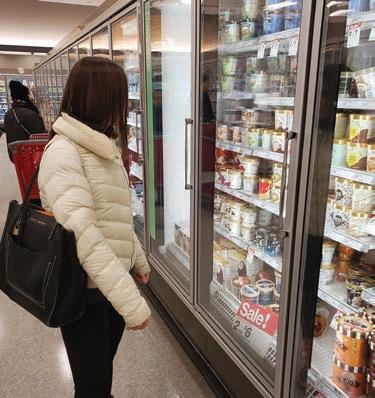
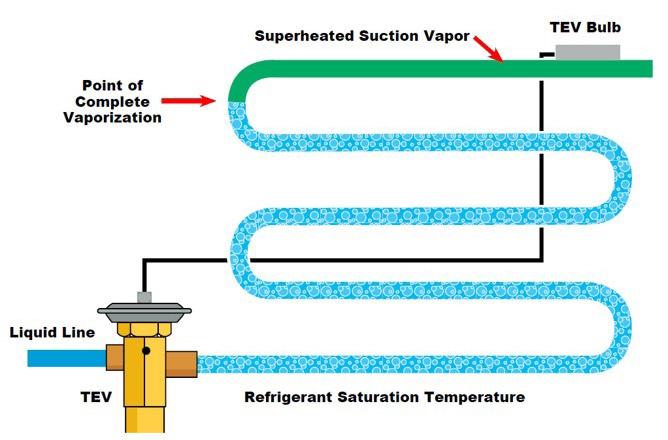
a liquid; and (3) further heat transfer, resulting in some amount of subcooling—end result is a warm high pressure liquid.
The warm high pressure liquid flows through the expansion device’s small port, resulting in a reduction in pressure. When a saturated liquid refrigerant experiences a reduction in pressure, it must also undergo a reduction in temperature and assume the new saturation temperature for that pressure. This is accomplished as a percentage of the liquid refrigerant flowing through the port flashes into a vapour, removing heat from the remaining liquid refrigerant in the process, achieving the temperature reduction. The refriger-
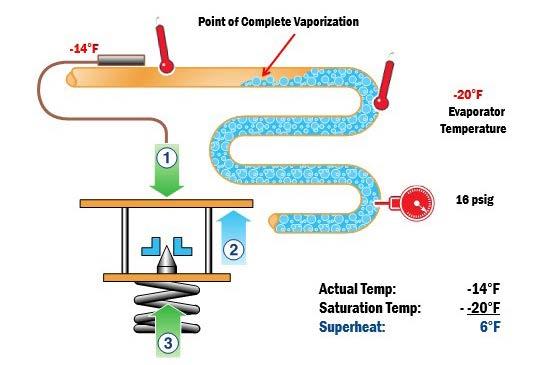
ant leaves the expansion device as a mixture of saturated liquid and vapour, and at a cooler temperature. The TEV/ EEV regulates the refrigerant mass flow entering the evaporator by responding to the superheat at the outlet of the evaporator. As the superheat increases/decreases in relation to the superheat set-point, the valve will throttle close/open in an effort to maintain the set-point.
Finally, the cold saturated liquid-vapour mixture enters the evaporator inlet, and flows through tubing. Fans circulate air in the conditioned space through the evaporator’s fin-tube bundle, allowing the heat in the air to be transferred to the cold saturated refrigerant flowing through the evaporator tubing. This heat transfer process results in the saturated liquid changing state into a vapour. At some point, near the end of the evaporator tubing, the last molecule of saturated liquid boils into a vapour (point of complete vaporization). The remaining portion of the evaporator tubing allows heat to continue to be transferred to the refrigerant vapor, resulting in a superheated vapour.(see Figure 1)
There are several types of expansion devices, with some of them being a fixed orifice (such as a cap tube, or flow rater). While they are less expensive
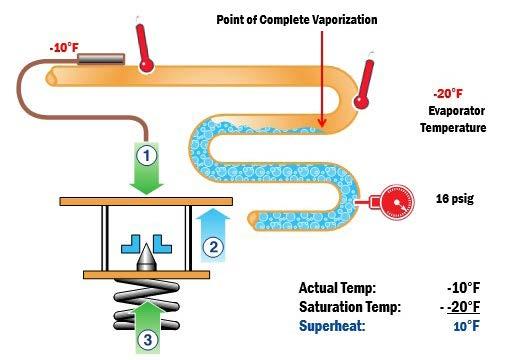
and do not require any adjustment, they do not have the ability to modulate as the heat load and/or system conditions change.
The advantage of the TEV and EEV in comparison to fixed orifice expansion devices include: they do have the ability to respond to changes in the heat load and system conditions. This ability to modulate maintains the proper refrigerant mass flow entering the evaporator under all conditions. As the refrigeration load increases/decreases, the TEV/EEV will open/close in an effort to maintain its superheat set-point. This maintains the correct refrigerant mass flow to the evaporator inlet and maintains the proper superheat at the evaporator outlet, which protects the compressor by preventing liquid floodback.
Most applications are subject to wide refrigeration load variations, commercial building doors opening, heat transmission through walls and windows, walk-in box door openings and many more…there is no such thing as a constant refrigeration load.
While variations in the refrigeration load may be small or large, a refrigeration load that is constantly varying results in a TEV/EEV that is constantly in a state of repositioning itself to meet the new load demand.
When rapid and significant changes to the refrigeration load occur, the previously adequate TEV opening (stroke)
becomes completely inadequate.
The TEV capacity can be best described as the refrigeration effect (heat transfer capacity of the refrigerant at the condition the system is operating at, in Btu/lb) multiplied by the liquid refrigerant mass flow (in lb/min) delivered by the TEV to the evaporator inlet. The heat load being transferred to the saturated liquid refrigerant in the evaporator constitutes the greatest portion of the refrigeration effect. This causes the refrigerant to undergo a change of state; a latent heat transfer process.
It is essential for the TEV/EEV to have 100% liquid (no vapour) at the valve’s inlet to operate at its rated capacity. Otherwise, it can not deliver the necessary refrigerant mass flow to meet the demand of the heat load.
While the TEV/EEV regulates the refrigerant mass flow entering the evaporator, it responds to changes in superheat at the evaporator outlet to determine when the valve opens/closes.
For example: Picture your local supermarket’s lineup of ice cream display cases (with glass doors). The doors are normally closed until product needs to be loaded, or a customer selects some merchandise to be purchased. For ex-
Continued on p58
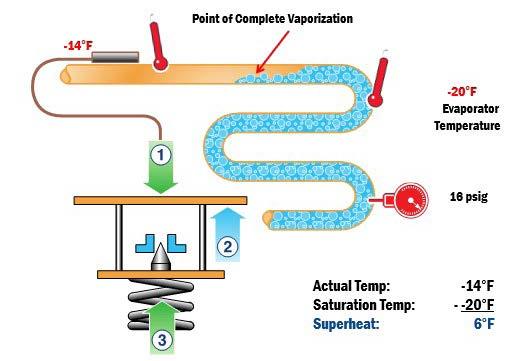
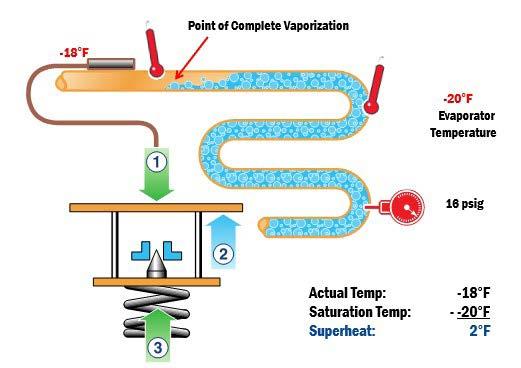
ample, Figure 2 (page 56) shows a shopper arriving at the display case, but the glass door has not been opened. The load is relatively constant. There would be a slight amount of heat transmitting through the glass and framework, but not a lot. The TEV is feeding the -20F saturated liquid-vapour refrigerant mixture into the evaporator, absorbing heat from the air in the space, with the liquid changing state into a vapour. A small portion of the evaporator is being fed by 100% vapour, allowing the vapour to experience a sensible heat gain, resulting in a vapour temperature of -14F and allowing the TEV to maintain its superheat set-point of 6F.
Figure 3 shows the shopper opening the door. The warmer ambient air entering the space would cause a rapid increase to the refrigeration load inside the display case. Ideally, the increased heat load would trigger a simultaneous increase in TEV opening (stroke), resulting in the necessary increase in refrigerant mass flow to meet the demand of the new heat load. In reality, there is a time lag between an increase in the heat load and the resulting change in TEV stroke due to the fact that the TEV cannot directly sense changes in the refrigeration load, but only the result of a change in refrigeration load, and that result is the superheat setting at the evaporator outlet.
The process is as follows: with the door opening, additional heat enters the refrigerated space and is transferred to the saturated refrigerant in the evaporator. The refrigerant then boils at a quicker rate, resulting in a higher superheat condition at the evaporator outlet. The increased superheat then causes the TEV to open, supplying more refrigerant to the evaporator in an effort to reduce the superheat back to the TEV set-point.
After some amount of time, as the door remains open, the system will reach an equilibrium. The increase in refrigerant mass flow will counteract the increase in refrigeration load, and the superheat will once again reach its set-point (as shown above in Figure 4).
At some point the shopper selects the merchandise and closes the door. Once again there is a change in refrigeration load. And, once again the TEV is playing “catch up”.
In Figure 5, with the door closing, and the refrigeration load reduction, the TEV is now open too much. The liquid refrigerant will now boil at a slower rate, with the point of complete vaporization moving closer to the evaporator outlet. This results in a lower superheat setting…in this case, 2F superheat. The sensing bulb senses this, and causes the TEV to throttle closed, reducing the refrigerant mass flow in an attempt to reach the superheat set-point.
As the shopper moves to another location in the store, and the refrigeration load becomes somewhat stable again. After some amount of time, with the door closed, the system will once again reach an equilibrium. With the superheat back at its set-point and life is good again—at least until the next shopper arrives.
This is a representation of what the typical TEV/EEV goes through all day long. The refrigeration load is never constant. The system conditions which influence TEV/EEV capacity are never constant. As such, the life of a TEV/EEV is one that is in constant turmoil, attempting to maintain the superheat setpoint in an ever-changing world.
Finally, while this should be given a more in-depth discussion at a later date, suffice it to say that a motorized valve (EEV) with an electronic controller has a much better ability to precisely and repeatedly control superheat as compared to a mechanical TEV. <>

Dave Demma holds a degree in refrigeration engineering and worked as a journeyman refrigeration technician before moving into the manufacturing sector where he regularly trains contractor and engineering groups. He can be reached at ddemma@uri.com.

Guiding a small business through generational and technological change.
Running a family business takes hard work, passion, and perseverance. And working alongside your own family also brings a whole slew of unique challenges, especially when it’s time for a younger family member to take over.
The story often goes like this: the older generation poured their blood, sweat, and tears into building their own contracting company, sometimes from nothing at all, and now they’re ready to retire or step away from the daily hustle, so they look to the people they trust the most, their family, and a younger member of the family agrees to step into those shoes and lead operations.
As a digital native (someone who has never known a world without the
Internet), the new-generation owner looks to technology to help grow the business, streamline operations and eliminate manual processes that waste time and resources.
The outgoing owner is often skeptical of this new technology. He’s worried about losing touch with the very business principles (and loyal customers) that made his businesses successful in the first place.
Sound familiar?
A family business transition doesn’t have to be a constant battle of who knows best. With good communication, cooperation and patience, a family business can grow by implementing new technology while still honouring the business's foundation.
Following are some suggestions on how to navigate the processes of implementing new tech and creating a smooth family business transition.
1. Find out how involved your family member wants to be in new changes
Set clear role expectations during the transition. Understand and document exactly how involved the outgoing leader wants to be in running the business and implementing new technology. This will eliminate tension, which otherwise makes it difficult to implement changes, and it also builds trust, demonstrating that the incoming boss values their input and expertise from many years of experience.
2. Show the new technology's effect on the business - not its features
This business was built without the help of the many technological resources we take for granted today. As a result, a non-technical business founder won’t show much interest in the flashy features of new technology. Instead, they want to know how it will actually help the business both day-today and long term. Find a way to show them the “why” behind the new technology’s features versus the “what.”
If you’re unsure where to start, reach out to a representatives for the new technology you’d like to implement. They can offer advice for how to position new technology in a results-oriented way.
3. Get buy-in from the rest of the team
Getting buy-in from the outgoing leader is just the first step in a business transition plan. It's also essential to make sure the rest of the team is on board. Employees might be skeptical and see new technology as a threat to their job. Compound this with adjusting to the boss’s kin taking over, and there are plenty of reasons why established em -
Continued on p61





ployees might complain to the former leader. If the former boss finds the team’s loyal members aren’t happy with the new changes, there’s a risk he could step in and try to override any changes.
How do you avoid this chain of events? Show each team member how the technology will make their jobs easier, not take their jobs away. Once your team understands how these changes specifically help them in their role, they will be more likely to support bringing new applications on board.
4. Get references from similar business owners
Sometimes the former boss needs to hear how new technology helped someone else running a family business in the same industry.
This gives them a chance to hear honest feedback on the technology from someone they can relate to and who may be more impartial than a relative or a sales representative.
Ask some of your connections also running a family business or your family member’s trusted contacts for references of technology they use. Likewise, ask for references and customer case studies from the contact or sales representative for the technology you’re thinking about implementing.
“Show
5. Make time to learn how to use new technology
Okay, so now everyone's on board, it’s time to implement the new platform. Fight the impulse to rush. Remember that if you try to push things too quickly or pressure others into using the new technology, you risk them becoming frustrated and shutting the whole thing
Adrian Steel adriansteel.com/distributors p.10
AERCO aerco.com p.2
Amvic amvicsystem.com p.19
AquaTech aquatech-canada.com p.18
Bradford White bradfordwhite.com/infinitiseries p.47
CIPHEX West .................ciphexwest.ca .................................. p.35
CMPX ..............................cmpxshow.com ................................ p.60
Conbraco.........................apollovalves.com ............................. p.37 Delta deltafaucet.ca p.45
Eco-King kingheatingproducts.com p.17 Ford ford.ca p.11
Franklin Electric littlegiant.com p.50 Giant giantinc.com p.40
ICP – Keeprite keeprite.com p.31
Inner-Cool Systems .......inner-coolsystems.ca ...................... p.12
IPEX .................................ipexna.com ...................................... p.39
Kane.................................kanetest.ca ...................................... p.41
Liberty Pumps LibertyPumps.com
from p59
down while also damaging your credibility as the new leader.
Be patient as each team member learns how to work with the new programs. Consider phased implementation, where the team learns about new processes one step at a time versus all at once, which can be overwhelming.
Finally, remember the heartbeat of your business is your people, especially the person who built it. Show them you honour and appreciate all of their hard work by giving them time to adjust to the family business generational transition and new technology.
You’ll be on your way to business growth in no time, and most importantly, you and your famly member can continue to build the business as one unified team. <>
Article courtesy of simPRO Software. simprogroup.com/ca
CIPHEX West 2021
November 3-4
Western Canada’s plumbing, hydronics, heating, ventilation, air conditioning, refrigeration and water treatment show is being held at the Pacific National Exhibition in Vancouver. Pre-registration is mandatory.
ciphexwest.ca
IGSHPA Annual Conference
December 14-16
The International Ground Source Heat Pump Association (IGSHPA) is holding its conference and exhibitor pavilion in Nashville, Tennessee, the first IGSHPA conference since 2018. igshpa.org/conference2021
Performance Analysis Conference (ASHRAE)
November 10-12
This will be ASHRAE’s first hybrid conference. Attendees have the option to gather in-person in Colorado under Covid-19 safety restrictions, or attend via a virtual platform. The conference will address the practices of energy modeling and building performance simulation using simulation tools along with future research and applications.
ashrae.org/conferences
January 31-February 2
The Air Conditioning, Heating, Refrigeration (AHR) Expo returns in 2022 to the Convention Center in Las Vegas. The annual showcase will reveal the future of HVAC/R technology along with plenty of educational and networking opportunities. ahrexpo.com
The Buildings Show
December 1-3
This annual show brings together renovators, contractors, designers and property managers to the Metro Toronto Convention Centre for a three-day trade show and conference.
thebuildingsshow.com
February 8-10
The 2022 Kitchen & Bath Industry Show (KBIS) will be held in Orlando, Florida, where attendees will see the latest product innovations from the leading kitchen and bath brands. kbis.com
BUILDEX Amplified
February 16-17
Following in person micro events and online educational programming in the fall of 2021, BUILDEX Amplified returns with a face-to-face expo at the Vancouver Convention Centre. buildexvancouver.com
March 23-25
Held at the Metro Toronto Convention Centre, CMPX is Canada’s largest trade show for the mechanical and plumbing industries attracting some 500 exhibitors representing products, services, innovations and applications for industry professionals. cmpxshow.com
April 4-7
The National Comfort Institute (NCI) summit is being held in the Scottsdale, Arizona area and will feature breakout sessions designed for different knowledge levels. gotosummit.com
MEET Show
May 4-5
The Mechanical Electrical Electronic Technology Show serves as a venue to bring together professionals from the mechanical and electrical industries from across North America. MEET features hundreds of companies in over 100,000+ sq. ft. of exhibit space in the Moncton Coliseum Complex. meetshow.ca

ASHRAE Annual Conference
June 25-29
This year's ASHRAE Conference takes place at the Sheraton Centre Toronto Hotel in downtown Toronto. The 13th International Industrial Ventilation Conference for Contaminant Control is also taking place at the same venue, beginning on June 22. ashrae.org/conferences
Canadian Hydronics Conference
September 14-15
The conference will bring hydronics industry professionals together in Saskatoon to connect in person and share knowledge and business building ideas. ciph.com/page/chc2021
• Two-tone black and white powder coat, scratch-resistant paint scheme
• Clean metal panels without any visible screws or fasteners
• Tooled rounded vertical corners (30-125 MBH) and edges
• For industrial, light commercial and residential applications
• Capacities from 30,000 to 400,000 BTU
• Available natural or propane gas
• Quick and easy replacement: connections and anchors remain the same
• External status indicating LED blinks if there is a problem that needs service visible from below the unit

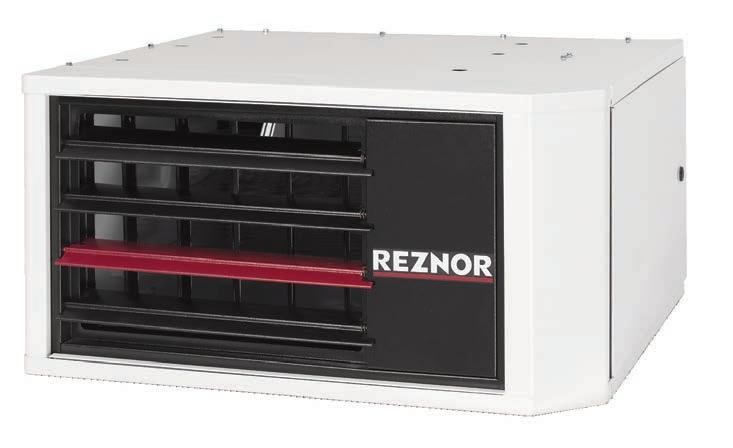
• 7-segment display board shows fault code for quick and easy diagnoses











Complete domestic hot water wellness solution with multi-barrier pathogen mitigation Fits through a standard doorway (75% less footprint) Up to 65% reduction in installation time Automates “clipboard” health monitoring







Safe Sustainably mitigates waterborne pathogens















Smart
Real-time data reporting across devices
Simple
Simplifies design, installation and operation