
PRODUCT SHOWCASE BLOWER DOOR TESTING OFFERS OPPORTUNITY FOR CONTRACTORS WHY USE REMOTE DIAGNOSTICS? WHAT TO DO WITH LIQUID CONDENSATE MECHANICAL SYSTEMS FIND A PLACE IN 3D PRINTED STRUCTURES


PRODUCT SHOWCASE BLOWER DOOR TESTING OFFERS OPPORTUNITY FOR CONTRACTORS WHY USE REMOTE DIAGNOSTICS? WHAT TO DO WITH LIQUID CONDENSATE MECHANICAL SYSTEMS FIND A PLACE IN 3D PRINTED STRUCTURES
The T10 Pro Smart Thermostat with RedLINK™ Room Sensor extends the thermostat’s reach into the rooms that matter – like bedrooms and living spaces. Homeowners can prioritize different rooms at different times of day, or, they can allow each sensor’s motion-detection technology to shift priority automatically as they move around the house. It’s a smart, simple way to help your customers feel right at home.
Visit ForwardThinking.HoneywellHome.com/TSeries to learn more.

BOILERS
DEALING WITH THE PRODUCTS OF COMBUSTION PART II
Handling liquid condensate must be done properly to avoid damage to the building, problems with appliance operation and angry customers.
By Robert Waters
22
HEATING THE OLDEST TECHNOLOGY
Super insulation combined with zoned radiant heating has the potential to push fossil fuel heating into obsolescence.
By Ian McTeer
30
HVAC/R
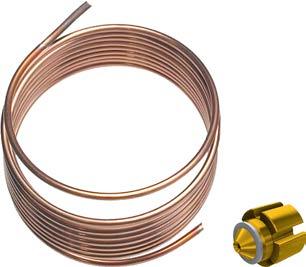
BENEFITS AND ADVANTAGES OF THERMOSTATIC EXPANSION VALVES
By Jeffrey Staub
32
TECHNOLOGY
WITHIN REACH
Mechanical systems find a place in 3D printed structures.
By Jillian Morgan
34
CIRCULATORS
HYDRAULIC DIETING
Think about reducing head loss to reduce the kilowatt•hours of electrical energy required to operate the system
By John Siegenthaler
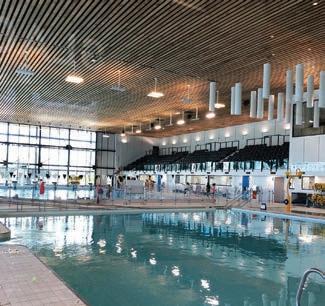
World class sports facility presents unique IAQ and air distribution issues.
By Ralph Kittler
48 TESTING
SEALING BUILDING ENVELOPES
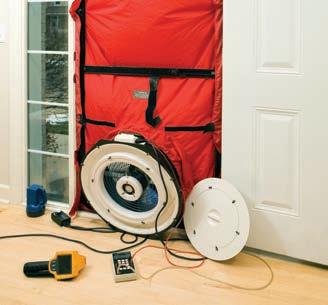
Blower door testing offers opportunity for contractors.
By Jillian Morgan
50
HVAC
AN UNTAPPED ENERGY SAVINGS OPPORTUNITY
The return on investment from re-staging with an active sensing system can be as low as 12 months.
By Steven Graves
60
MANAGEMENT
THEY REALLY HATE US
New prompt payment rules may help mend relationship between gcs, subtrades.
By David Kennedy
66
DIAGNOSTICS
REMOTE TECHNOLOGIES OFFER A WIN-WIN FOR CUSTOMERS AND CONTRACTORS
Remote A/C diagnostics and monitoring systems belong in every technician’s truck.
By George Tsintzouras
68
BIRD’S EYE VIEW
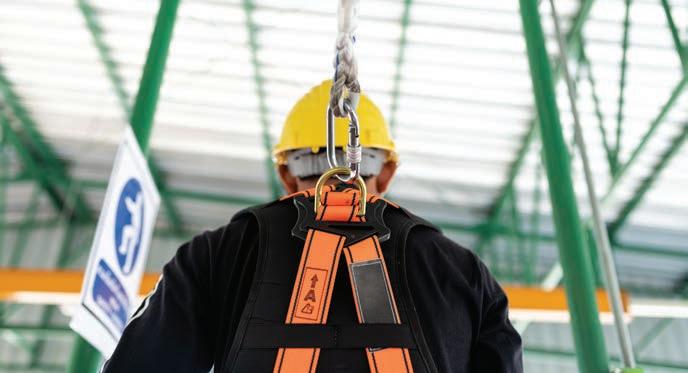
The costly consequences of falls at heights demand a culture shift.
By Jillian Morgan
76
CONTROLS
ENHANCING FACILITY SAFETY WITH INTEGRATED HVAC CONTROLS
HVAC systems are a critical part of an overall connected safety strategy.
By Michael Hugh


I WAS GOING TO CALL THIS COLUMN “NOT THE FINAL CHAPTER” but then I realized that it is the name of a movie centred on resident evil and final strikes, hardly the makings of a graceful farewell.
After writing over 100 Upfronts, this will be my last. I am moving on to other things, including spending time with my family and friends, and undertaking new challenges.
I knew this was going to be a good run from the moment I was elevated to business class on my way to British Columbia for an industry event. It was just weeks into the job and I was traveling with the publisher. I told the flight attendant I couldn’t leave my boss in economy. Fortunately she said they could certainly accommodate him.
After take off, comfortably seated with a beverage in hand the publisher said, “You know that three month probationary thing Kerry? It’s gone.”
So, thank you Air Canada and a nod to that publisher for giving me the opportunity to work in this industry. To everyone who helped me get over the learning curve I am most appreciative. To our readers, thank you for continuing to look to HPAC for industry leading content.
Apropos this is the heating issue – I send warm wishes to HPAC’s readers, advertisers, and especially the wonderful team I have had the privilege of working with.

DOUG PICKLYK has over 20 years of experience in the trade publishing industry, most recently serving as the editor of Canadian Consulting Engineer magazine, the publication for professional engineers in private practice working in the built environment. He’s looking forward to attending industry events and engaging face-toface with the HPAC community in the months and years ahead. Doug can be reached at 416.510.5218 or by e-mail dpicklyk@hpacmag.com.

MEGAN HOEGLER joins HPAC as the associate editor. She holds a Bachelor of Journalism from Ryerson University and has worked as a freelance journalist for The National Post and Toronto Life. Megan lives in Toronto, ON. She can be reached at 416.510.5201 or by e-mail MHoegler@hpacmag.com.
EDITOR
INCOMING EDITOR
ASSOCIATE EDITOR
ASSOCIATE PUBLISHER
ACCOUNT MANAGER
MEDIA DESIGNER
ACCOUNT COORDINATOR
CIRCULATION MANAGER
PUBLISHER
VICE PRESIDENT
COO
PRESIDENT & CEO
Kerry Turner
Doug Picklyk (416) 510-5218
DPicklyk@hpacmag.com
Megan Hoegler (416) 510-5201
MHoegler@hpacmag.com
David Skene (416) 510-6884
DSkene@hpacmag.com
Vince Naccarato (416) 510-5118
VNaccarato@hpacmag.com
Emily Sun
esun@annexweb.com
Kim Rossiter (416) 510-6794 krossiter@hpacmag.com
Urszula Grzyb (416) 442-5600 ext. 3537 ugrzyb@annexbusinessmedia.com
Peter Leonard (416) 510-6847 PLeonard@hpacmag.com
Tim Dimopoulos (416) 510-5100 tdimopoulos@annexbusinessmedia.com
Scott Jamieson sjamieson@annexbusinessmedia.com
Mike Fredericks
their supply partners.
ISSN: 0017-9418 (Print) ISSN 2371-8536 (Online)
Contents Copyright © 2019 by Annex Publishing & Printing Inc. may not be reprinted without permission.
SUBSCRIBER SERVICES: To subscribe, renew your subscription or to change your address or information please visit us at www.hpacmag.com.
Subscription Price per year: $43.00 (plus tax) CDN; Outside Canada per year: $84.50 US; Elsewhere: 1 year $92.50; Single copy Canada: $5.00 CDN. Heating Plumbing Air Conditioning is published 7 times per year except for occasional combined, expanded or premium issues, which count as two subscription issues.
MAIL PREFERENCES: From time to time we make our subscription list available to select companies and organizations whose product or service may interest you. If you do not wish your contact information to be made available, please contact us via one of the following methods: Tel: 416-442-5600 ext. 3552, Fax: 416-510-6875 or 416442-2191; E-mail: blao@annexbusinessmedia.com; or by mail: 111 Gordon Baker Rd., Suite 400, Toronto ON M2H 3R1
Annex Privacy Officer Privacy@annexbusinessmedia.com Tel: 800-668-2374
HPAC Magazine receives unsolicited materials (including letters to the editor, press releases, promotional items and images) from time to time. HPAC Magazine, its affiliates and assignees may use, reproduce, publish, re-publish, distribute, store and archive such unsolicited submissions in whole or in part in any form or medium whatsoever, without compensation of any sort.
NOTICE: HPAC Magazine, Annex Publishing & Printing Inc., their staff, officers, directors and shareholders (hence known as the “Publisher”) assume no liability, obligations, or responsibility for claims arising from advertised products. The Publisher also reserves the right to limit liability for editorial errors, omissions and oversights to a printed correction in a subsequent issue. HPAC Magazine’s editorial is written for management level mechanical industry personnel who have documented training in the mechanical fields in which they work. Manufacturers’ printed instructions, datasheets and notices always take precedence to published editorial statements.





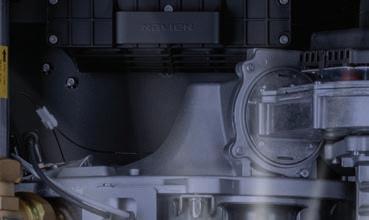










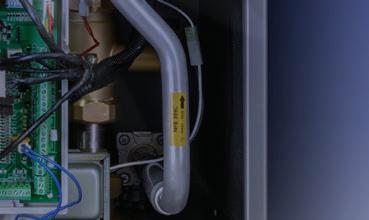


Introducing Navien NFB-C fire tube commercial boilers

Navien designs and manufactures all the key components and uses advanced robotics to assure manufacturing integrity
Discover the new standard for compact high efficiency commercial boilers by contacting your local Navien agent.


• Advanced stainless steel fire tube heat exchanger
• 7" Touch screen and smart controls
• 97.5% Thermal efficiency
• Common venting and cascading capability
• Top and bottom piping connections




BY MEGAN HOEGLER
In the world of refrigeration and air conditioning, it never cools down, the competition just heats up.
At least this is the case for Zach Walsh from Cambridge, Nova Scotia, who was awarded a Medallion of Excellence in refrigeration and air conditioning at the WorldSkills competition held in Kazan, Russia.
The four-day international competition took place from August 22-27, 2019 and had Walsh competing against some of the best students and apprentices from around the world.
“Some of these guys had been training for three plus years, just for this event,” said Walsh, 22. He was selected to compete for Team Canada after his performance in the WorldSkills Selection Event held in conjunction with the Skills Canada National Competition that took place in Halifax May 26-29, 2019.
Walsh was one of 32 members of the WorldSkills Team Canada that competed that week. Prior to the selection event, Walsh won a gold medal at the Nova Scotia Skills competition in 2016, 2017, and 2018, and won a national gold medal in his skill in 2017 (Winnipeg) and 2018 (Edmonton).
SAVE THE DATE FOR THE 26TH SKILLS CANADA NATIONAL COMPETITION
May 28 – 29, 2020
Skills Canada BC will host the Skills Canada 2020 National competition in Vancouver, May 27 to 30, 2020, at the Vancouver Convention Centre.
• Opening ceremonies: May 27
• Competition dates: May 28, 29
• Closing ceremonies: May 30
www.skillscompetencescanada.com
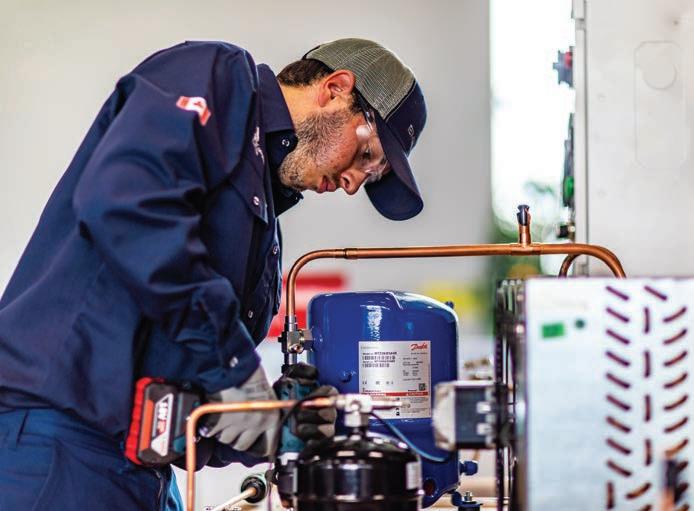
“Being on Team Canada was an amazing and formative experience that I’ll never forget. I’m so grateful for all of the support I’ve received over the years and this week in particular, from family, friends, teachers, colleagues, industry partners and Skills Canada. This medal of excellence is truly an honour to receive,” said Walsh. “I’m proud and honoured to have been able to represent my industry and Canada.”
To prepare for this high-level competition, Walsh spent the several months leading up to the event practicing and training as much as he could. By day, he trained on the job with his employer, Acadia Refrigeration & AC in Kentville, NS and in the shop at Nova Scotia Community College in Dartmouth.
Walsh also practiced as often as he could in his spare time. “I wanted to improve my efficiency and time since I knew that was going to be a big part of the competition,” he said.
“We are thrilled to have brilliant skilled youth like Zach represent our province on the world stage. Zach is one of the most focused and determined competitors we’ve ever had,” said Courtney Gouthro, executive director of Skills Canada –Nova Scotia. “We couldn’t be more proud of him.”
Now back to work with Acadia Refrigeration and AC, Walsh wants to get his Red Seal in Refrigeration and Air Conditioning.
Walsh, who originally planned on becoming a mechanical engineer, is happy he opted for a hands-on career instead.
“I knew I couldn’t be behind a desk all day, I wanted something hands on,” he says. “In this job, there’s always more to learn and you’re doing something different every day.”
To young people considering a career in the trades, Walsh says ‘go for it.’
“You’ll never be bored.”
https://worldskills.org/
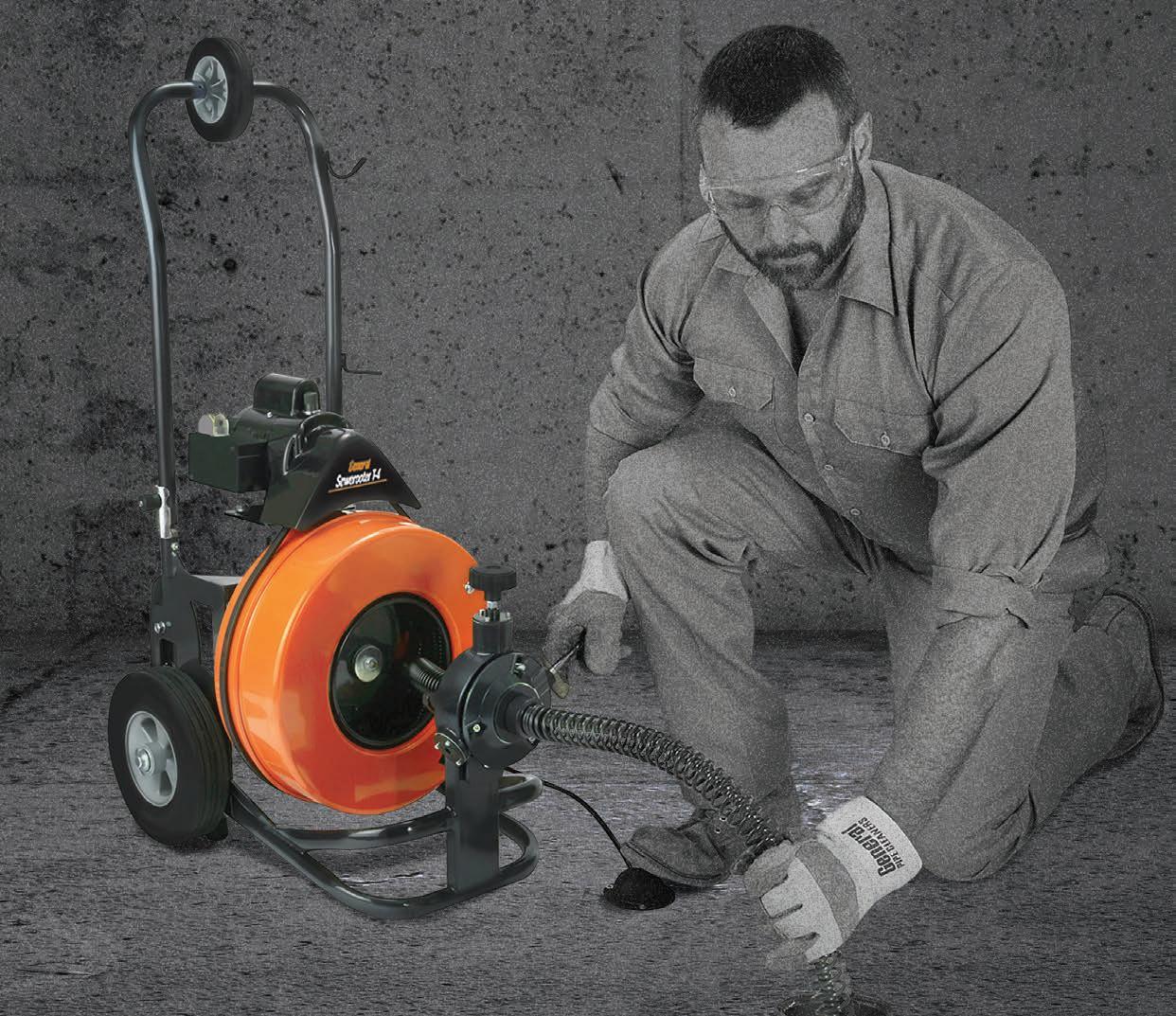
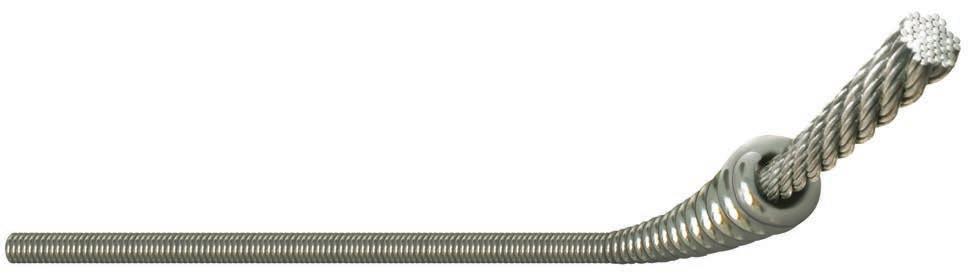
A muscular mid-size machine with more power, the Sewerooter T-4 quickly punches through tough clogs in 3" and 4" lines. A larger 9/16" Flexicore® cable does a better job of transferring the torque than traditional 1/2" cables do.
It gets down the line easier and clears clogs faster. And the portable workhorse is easier to handle in tight spaces, on stairs, and loading into your truck.
Get the whoosh faster—the sound of success. To learn more, call the Drain Brains at 800-245-6200, or visit www.drainbrain.com/T4

The Canadian Commission on Building and Fire Codes invites interested parties to take part in a final opportunity for public review of the proposed changes to the 2015 editions of the National Building Code, the National Fire Code, the National Plumbing Code and the National Energy Code for Buildings. The review runs on the Codes Canada webpage from October 22
to December 23, 2019. Once the public review period begins, more information will be available online, including explanations about the proposed changes and instructions on how to submit comments.
The purpose of the public review is to provide users of the model codes and stakeholders with a detailed look at the changes being considered and to seek comments as to whether proposed changes should proceed as proposed, or be edited, revised or withdrawn. The responsible standing committee will consider each comment in its recommendations on the proposed changes. The final changes are subject to approval by the Canadian Commission on Building and Fire Codes and will be published by the National Research Council of Canada in the 2020 editions of the Codes Canada publications.
On July 17, the Government of Quebec published proposed revisions to its halocarbon regulations in the Quebec Gazette.
The proposed regulation changes will prohibit, effective January 1, 2021, the sale, manufacture, installation and distribution of air conditioning and refrigeration equipment operating with HFCs with a high global warming potential, with the exception of domestic appliances, chiller-type appliances and transport refrigeration appliances. The complete ban on the installation of HFC-based appliances will be applied to certain industries, including food stores and large supermarkets, which may use technologies that use natural refrigerants.
Introduced by Minister of the Environment and Climate Change Benoit Charette, the proposed amendments are intended to reduce the equivalent of nearly 6.6 million tonnes of CO2 emissions between 2021 and 2035. The proposed regulatory amendment was subject to a consultation period which ended August 31, 2019.
The draft regulation also proposes to review the qualifications of persons who carry out operations on devices containing halocarbons. It also specifies the standards related to their recovery, the actions to be taken in the event of a leak, as well as the recovery and treatment of used halocarbons.
Under the proposed regulations, the new prohibitions will apply to new facilities and end-of-life devices only, which would allow the industry “a gradual and orderly withdrawal of the affected products.” The Minister’s announcement also stated that the “government is hopeful that the modernization of equipment will be done quickly enough, as several companies have already demonstrated the profitability of halocarbon-free systems.”
www.publicationsduquebec.gouv.qc.ca/dynamicSearch/telecharge. php?type=1&file=104033.pdf
Contact Codes Canada by e-mail codes@nrc-cnrc.gc.ca or telephone: 613.993.9960.
https://nrc.canada.ca/en/certifications-evaluations-standards/codescanada?utm_source=Openfield& utm_medium=email&utm_campaign= B2726658

Mr. Rooter Plumbing , a Neighborly company, recently held its annual conference in San Antonio, TX where franchisees nominated and awarded top performers.
Franchisee of the year, the company’s highest honour, went to Mike and Vesna Kolakovic – Mr. Rooter Plumbing of Mississauga. The award is presented by each company to the franchisee who has consistently grown through proper training and management of their organization and has had a consistently high level of sales.
“We applaud these individuals and their teams for building a great organization that homeowners can depend on and look forward to their continued success and strong leadership for years to come,” said Doyle James, president of Mr. Rooter Plumbing.
www.neighborlybrands.com
Continued on p12

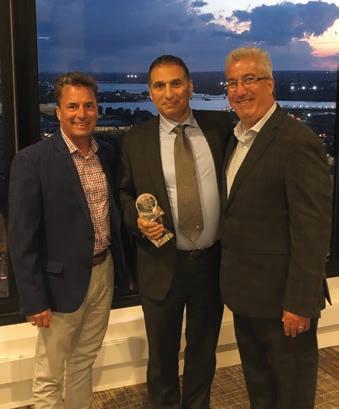
Philip Rizcallah, director, research and development, construction at the National Research Council of Canada is the nineteenth recipient of the Joseph K. Seidner Award.
The presentation took place at the annual Canadian Advisory Council on Plumbing meeting in Ottawa, ON, on August 13th, 2019.
The Canadian Advisory Council on Plumbing provides a forum for industry, regulators, and product certification organizations to share new concepts and ideas, to discuss policy and programs, and to review innovations and new technologies that affect plumbing standards, as well as the certification and testing of plumbing products.
The award is in recognition of Rizcallah’s contributions to Canadian plumbing codes and standards. Rizcallah began his career 30 years ago when he worked as a fire protection engineer for the federal government in Ontario and Atlantic under what was then Human Resources Development Canada. www.ciph.com
Honeywell and 7-Eleven Inc. have announced the adoption of Honeywell Solstice N40 (R-448A) refrigerant as 7-Eleven’s standard for remote condensers supporting its refrigeration cases installed across Canada and the United States.
7-Eleven also selected Honeywell’s lower global warming potential (GWP) alternative for retail refrigeration in Japan last year, becoming the first leading retail chain in the country to adopt the refrigerant.
The convenience retailer set measurable corporate social responsibility (CSR) goals in 2016 to reduce its environmental footprint. The company’s CSR mission has three focus areas – planet, products and people. Using 2015 as a baseline, 7-Eleven committed to continuing to reduce its carbon footprint and increase community engagement in the U.S. and Canada by concentrating on energy, packaging and philanthropy.
It aims to reduce its energy footprint in stores by 20 per cent by 2027. www.honeywell.com
The Honourable Amarjeet Sohi, Minister of Natural Resources Canada recently announced the launch of a new Energy Manager Program. The program accepted project proposals until September 30, 2019. There may be a second application period later in the year if funding remains available.
The Energy Manager Program will help identify and adopt energy efficiency solutions by offering funding to hire energy managers and undergo energy assessments for industrial, commercial and institutional facilities, and fleets.
The Program is available to small- and medium-sized enterprises, municipalities, universities, colleges, schools, hospitals, and non-profit organizations in Ontario, Saskatchewan, Manitoba, or New Brunswick, and are located in one of these provinces — provinces where the federal carbon pricing backstop applies.
The proposed project end date must be no later than March 31, 2021. For more information, e-mail nrcan.emppge.rncan@canada.ca.

HRAI recently announced the addition of a staff position focused on the needs of members in the Province of Ontario. This newly created position of Government Relations Specialist has been filled by Dorothy McCabe.
McCabe is an experienced government relations and notfor-profit professional whose past roles include Chief of Staff for the Mayor and Council of the City of Kitchener, Manager of Stakeholder Relations for the Hon. John Milloy (who held various Ministerial roles with the Ontario government) and most recently as Director of Community and Organizational Development for KidsAbility.
She is reporting to HRAI Vice President of Government and Stakeholder Relations Martin Luymes. The creation of this role focused on government policies, programs and regulations in the Province of Ontario will allow HRAI to dedicate more time and existing staff resources to regulatory matters in other provinces. www.hrai.ca
Trades apprentices and the trades education system in British Columbia are receiving more support through expanded services and regional outreach.
Effective September, the Industry Training Authority (ITA) brought the total number of Apprenticeship Advisors to 20 across the province, with new advisors in the Prince George, Terrace/Kitimat, Abbotsford/Mission, Chilliwack, and Vancouver/Richmond regions.
These advisors will help build knowledge and awareness of the BC apprenticeship system and provide guidance to apprentices and employer sponsors on processes and policies relating to the apprenticeship journey.
The addition was made possible through funding from the Ministry of Advanced Education, Skills and Training.
Through an understanding of their specific regions, the advisors are expected to build relationships with local industry members and apprenticeship sponsors and identify opportunities to remove barriers and boost success rates of apprenticeships.
ITA has also created a new region – North Vancouver Island – which is being staffed by existing advisor Shannon Hanson, who previously supported North Vancouver and the Sea-toSky region. The Sea-to-Sky region is now being staffed by existing advisor Chris Klar.
Training providers such as colleges are expected to benefit from increased Apprenticeship Advisors who will help current trades students navigate the apprenticeship system as well as assist experienced workers (challengers) in their journey to achieving credit for knowledge and skills they already possess.
“ITA’s continued support enables the apprentices in our trades program to be successful in their career path,” said Randy Kelley, Director, Applied and Technical Studies, University of the Fraser Valley. “We’re looking forward to working with the new Apprenticeship Advisors to further the work we’re doing to elevate trades education in the region by increasing awareness of the skilled trades, improving access through innovative program delivery, and guiding students during their apprenticeship journey.”
There are over 70,000 job openings expected for skilled trades professionals throughout the province in the next decade.
The Industry Training Authority (ITA) leads and coordinates British Columbia’s skilled trades system. ITA works with apprentices, employers, industry, labour, training providers and government to fund training, issue credentials, support apprenticeships, set program standards and increase opportunities in the trades. www.itabc.ca

Victor, an ESAB brand, has launched its 2019 “Rulers of the Flame” student contest. It is open to students who are residents of the Canada (excluding Quebec) or the U.S., in cutting, welding and related programs at secondary, post-secondary, technical and vocational schools. Victor will award more than $50,000 in equipment and cash prizes. Entries will be accepted from now until December 2, 2019. Winners will be announced on December 14.
Three winners will be selected in each of the contest’s two categories – individual essay and team fabrication project. Individuals will win $250 and a Victor Medalist 350 Outfit by submitting a 500-word essay that best supports the contest theme. Teams will submit a metal fabrication project that incorporates an oxy-fuel equipment process (cutting, heating, welding or brazing) as one or more of the fabrication steps and must incorporate the Rulers of the Flame logo (obtain the logo, rules and details).
Each member of a winning team receives $250 as well as a Victor Medalist 350 Outfit, while the school associated with the winning team receives a cutting and welding package.
The student contest coincides with Victor’s “Rulers of the Flame” social media campaign, which encourages anyone who wants to share their best work with Victor gas equipment to use #rulersoftheflame for recognition on Victor’s social channels. Or, projects may be submitted online for the chance to win a Victor Performer EDGE 2.0 Outfit. Eligible entries will be entered for monthly drawings. www.info.esabna.com/rulers-contest
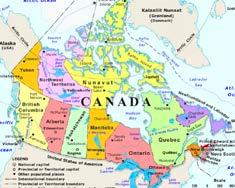
Natural Resources Canada offers an easy-to-use site showing incentives by province. Select a province to see what financial incentives or programs are available. This grouping of incentives related to energy efficiency from provincial/territorial governments, major Canadian municipalities and major electric and gas utilities is updated regularly. It is a useful resource for contractors who want to stay on top of what products the government is incentivizing and what money is available to their customers. www.nrcan.gc.ca/energy-efficiency/energy-efficiencyhomes/financial-incentive-province/4947
Continued on p14
On May 2, 2019, amendments (Ontario Regulation 88/19) to the Building Code regulation (O. Reg. 332/12) were filed. O. Reg. 88/19 further aligns Ontario’s Building Code with the 2015 National Construction Codes and is based on proposals the Ministry consulted on in 2016 and 2017.
The Building Code Compendium published by Publications Ontario has been updated to reflect changes to the Building Code that have come into effect as a result of Ontario Regulation 88/19, and that will come into effect on January 1, 2020 and January 1, 2022.
Electronic updated pages for the Building Code Compendium are available for free download at www.publications.gov. on.ca/510167_U.
Building Code Compendium active subscribers will receive their amendment binder inserts from Publications Ontario. Binder inserts for non-subscribers will also be available for purchase. For more information, please visit Publications Ontario at www.publications.gov.on.ca.
ASHRAE has launched a webpage dedicated to refrigeration technology and its application.
The webpage features standards, design guides and ASHRAE courses. ASHRAE endorsed conferences and events covering refrigeration and refrigerants, refrigerant designations, interviews with members in the field of refrigeration, research and news on refrigeration-related topics are also included. www.ashrae.org/refrigeration
Standata has released an information sheet G-01-17(Rev1) Gas Fired Appliances Used for Heating Buildings Under Construction. The bulletin was developed by Municipal Affairs Alberta and industry representatives to inform stakeholders of the requirements to ensure the installation and operation of gas heating appliances comply with the manufacturer’s certified installation instructions and the CSA B149.1 Natural gas and propane installation code. https://open.alberta.ca/dataset/0cb3696b-4af3-46fcbeea-4c3128485ab8/resource/a1a21008-8c2f-413db407-aebd4fdc6fe4/download/g-01-17rev1-gasfiredappliancesusedforheatingbuildingunderconstruction.pdf
The state-of-the-art
Maison de RadioCanada building in Montreal is set to be completed by the end of 2019.

Johnson Controls is working with Broccolini Construction and Broccolini Investments, through its subsidiary, La Société en Commandite La Nouvelle Maison, to create a new, high-tech Maison de Radio-Canada building in Montreal that will house the Canadian Broadcasting Corporation (CBC)/Radio-Canada. Through a long-term lease, the new building will help meet the CBC/Radio-Canada’s needs in today’s digital and media environment.
The 418,000 square foot headquarters is expected to improve collaboration, innovation, productivity and safety through new critical equipment, systems and infrastructure. It will also meet strict environmental and sustainable development standards, boasting green spaces and rooftops, along with water and energy management.
In addition to providing many technologies and solutions for the building, Johnson Controls will provide lifecycle services to the CBC/Radio-Canada for a guaranteed fixed cost to La Société en Commandite La Nouvelle Maison for the next 30 years.
Construction is set to be completed by late this year, with a move-in date of early 2020.
When move-in is completed Groupe Mach Inc. will begin work on the revitalization of the old Radio-Canada site located at the foot of the Jacques-Cartier Bridge.
The revitalization of the block currently occupied by RadioCanada calls for mixed-use development, including social and community housing, affordable housing, and green spaces. The Groupe Mach proposal also favours reconnecting certain streets to promote greater integration with the rest of the neighbourhood. The Radio-Canada tower will be preserved under the plan, but converted for new use.
Photos of archeological inventory work done on the site of the new Maison de Radio-Canada, including the walls of a former Dominion Metal Works furnace, are available online. http://newmrc.radio-canada.ca/2017/06/08/imagesfrom-the-archeological-inventory-work-on-the-site-of-thefuture-maison-de-radio-canada/

The number of unfilled jobs in Canada’s construction sector outpaced all other industries and the national average in the first four quarter of 2019, according to a recent report by the Canadian Federation of Independent Businesses.
Coast to coast, 435,000 private sector jobs sat vacant during the first four months of the year, up 0.1 percentage points from the previous quarter. Across all sectors, the national vacancy rate reached 3.3 per cent — well below that of the construction sector, which topped out at 4.9 per cent.
“The national vacancy rate has been steadily climbing for the past two years and it reached another record high last quarter,” said Ted Mallett, CFIB’s vice-president and chief economist. “The rate of growth is slowing compared to this time last year, but employers in Quebec, BC and Ontario are having a harder and harder time finding workers, especially in the smallest businesses.”
The Help Wanted report, released June 12, paints yet another unfavourable picture of the tightening labour market in construction.
In January, research organization BuildForce Canada forecast the industry would need to enlist more than 300,000 workers over the next decade to combat lagging recruitment and the impending retirement of some 261,000 workers.
The Canadian Apprenticeship Forum’s 2019 labour report expects some 67,000 journeypersons will be required over the next five years to keep workforce certification levels afloat for key trades in the majority of Canadian provinces.
To meet that demand, Canada’s 10 largest Red Seal trades — excluding Quebec and the territories — will need to attract 167,793 apprentices.
From 2019 to 2023, more than 4,000 journeyperson plumbers and 2,718 journeyperson steamfitters will need to be recruited. The organization determined the industry would therefore need to attract 9,602 plumber apprentices and 4,872 steamfitter apprentices.
Though employment growth for the skilled trades is poised to slow, decreasing demand for construction electricians and plumbers, new recruits will be needed to offset an aging workforce and accelerating retirement rates, CAF-FCA found.
The organized pointed to a decline in new apprentices since 2014, fewer youth entering the trades and the potential erosion of training capacity as other key challenges in the years ahead.
CAF-FCA expects 164,100 apprentices to register in the top 10 Red Seal trades over the next five years. That figure is down nine per cent compared to the previous five years. Across all trades, the demand for skilled workers is strongest in Ontario, British Columbia and Alberta. <> www.cfib-fcei.ca www.caf-fca.org
Dealing with liquid condensate must be done properly to avoid damage to the building, problems with appliance operation, and angry customers. BY
ROBERT WATERS
In Part I of “Dealing with the products of combustion” in HPAC August 2019 we looked at the options and challenges when dealing with flue gas from a condensing appliance. This issue we continue looking at this topic with a focus on the other product of combustion from a condensing appliance that must be dealt with: liquid flue gas condensate.
Contractors who install gas-fired condensing boilers know that dealing with condensate is often a big challenge, especially when retrofitting new modern condensing appliances into old buildings that may have limited access to drainage and old drainage pipes.
Dealing with liquid condensate must be done properly to avoid damage to the building, problems with appliance operation and angry customers. Let’s
start with a little chemistry lesson.
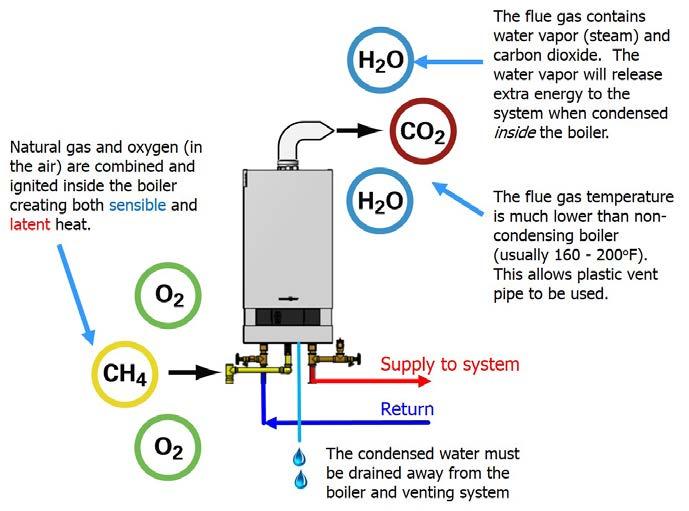
The combustion process is simply a chemical reaction that combines natural gas (CH4) and oxygen (O2) and ignites them inside a condensing boiler. The resulting chemical reaction produces a flame and large amounts of sensible and latent energy. The sensible energy is released directly to the combustion chamber from the heat of the burner flame. The latent energy is locked up in the water vapour (H2O) of the flue gases. In any chemical reaction such as combustion, the elements that go in are the same as those that come out. They are however arranged differently. Going into the combustion process are four oxygen molecules, four hydrogen molecules and one carbon molecule. Coming out in the flue gases are exactly the same molecules,
Condensing boiler operating modes
just rearranged into carbon dioxide (CO2) and water (H2O). You arel probably having high school flashbacks by now so enough chemistry!
Condensing boilers achieve higher efficiencies than standard boilers by capturing a large portion of the energy contained in that high temperature water vapor. By condensing the water vapour inside the boiler’s heat exchanger, we can release the latent energy and make use of it before it escapes up the chimney. The condensing process is maximized by passing the hot flue gases through the heat exchanger where the cooler return water flows back into the boiler.
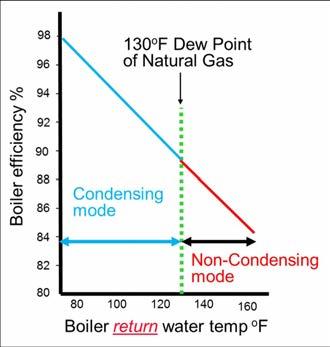
Since over 10 per cent of the energy contained in the natural gas is in the form of latent energy, the result is that a condensing boiler can achieve efficiencies upwards of 98 per cent. The exact efficiency will vary, and is dependent on what water temperature the boiler is being operated at. Flue gas starts to condense when the boiler return water temperature drops below the
dew point of 55C/130F. The lower the return water temperature, the more condensation, the higher the efficiency. That is why condensing boilers work so well with low temperature, high mass radiant floor heating systems.
When a condensing boiler is working optimally the result is a much lower flue gas temperature, and lots of condensed water. Both must be disposed of, and last month we looked at the issues of low temperature flue gas disposal. Here we will take a closer look at how to deal with disposing of the liquid flue gas condensate.
Let’s start by looking at some facts about flue gas condensate. First, there is potentially a lot of it to deal with. A rule of thumb is that when the boiler is operating in fully condensing mode, approximately 3.8 liter/1 usg per hour of condensate is produced for every 100,000 Btus of input. Of course, the amount will vary with boiler operating temperature, and will stop completely if the boiler is operated at high water temperatures. Second, flue gas condensate is basically distilled water, but it is very acidic. It contains concentrations of nitric, sulfuric, and hydrochloric acids and will have a pH value in the range of 3.8 to 4.5. This acidic water can cause serious damage to piping systems, sewage systems, septic systems and other items it may come in contact with, especially metals such as copper, steel and cast-iron.
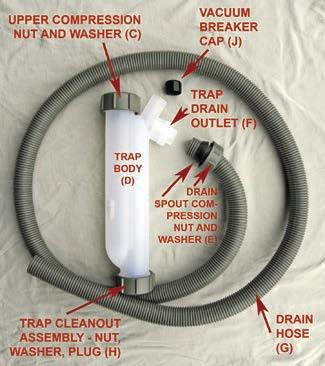
Condensing boilers incorporate a condensate drainage line connected directly to the bottom of the heat exchanger. To keep flue gases from also exiting out this line, an internal P-trap will be installed in this drainage line. After passing through the P-trap the condensate will drain away by gravity from the boiler, either directly into a floor drain in the mechanical room, or into a condensate removal pump to be pumped to a different location.
A malfunctioning condensate disposal system can cause serious problems that can result in a no-heat call or water damage to the building. When the condensate is not able to flow away freely from the boiler, it will back up and flood the combustion chamber. This will eventually block the flow of flue gas or rise to the level of the flame sensor, and will result in a burner lockout. Now you will get a no-heat call from an unhappy customer.
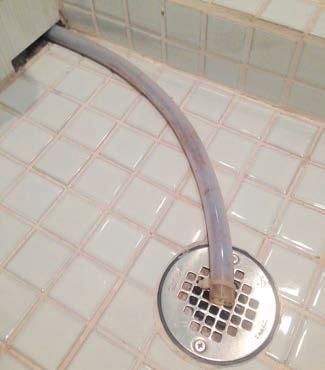
Most appliance P-traps are designed to be easily disassembled for cleaning, and this must be done on a regular basis. The P-trap will tend to accumulate debris, so regular maintenance is the first and probably the most important step in keeping the condensate drainage system functioning properly. Ideally a floor drain is located close to the appliance allowing for easy gravity drainage of the condensate water. Floor drains are not always available however, and are not always close to where they
are needed. Running a drain pipe a long distance across the floor or through the wall into the basement shower is not always going to be popular with the customer.
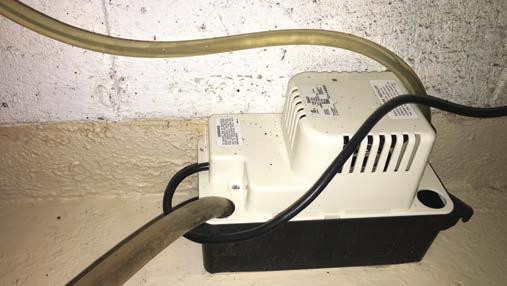
Condensate removal pumps offer the best solution when a floor drain is not readily available, as they work well in tight spaces and allow the condensate to be pumped vertically or horizontally to wherever a convenient drain is found. Take the time to fully discuss all of the condensate disposal options with the customer, so they are fully on board with whatever path you decide is best.
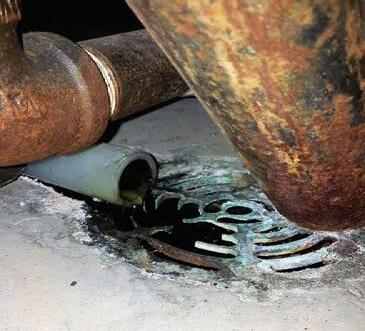
Regardless of where the condensate goes, care must be taken to avoid the corrosive effects that condensate can have on metals. Older buildings with cast iron sewer drain pipes and cast iron drain covers must be protected from the acidic condensate as damaging corrosion will occur rapidly.
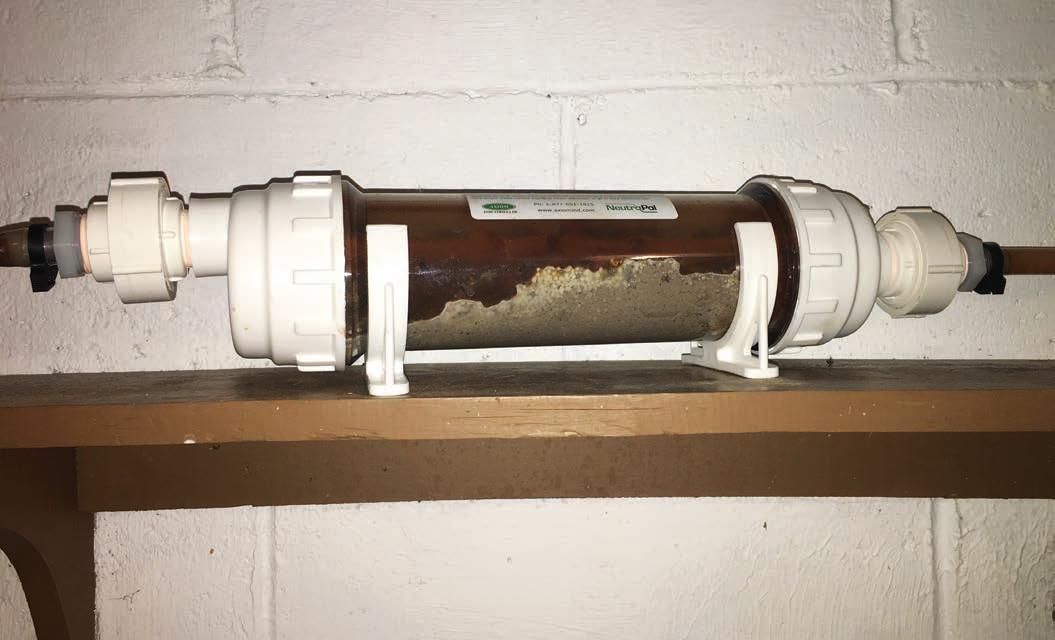
Condensate neutralizers are available to increase the pH of the condensed water to acceptable levels, which effectively neutralizes the acid in the condensate before it goes down the drain.
In some jurisdictions neutralizers are mandatory – check with your local building department. Neutralizers work by running the flue gas condensate through a bed of alkaline limestone chips or pellets. Over time the limestone media dissolves and must be refilled.
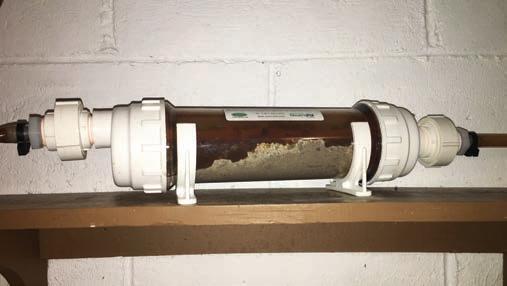
Condensate neutralizers must be serviced on a regular basis to keep them functioning properly. The best way to check if the neutraliser is working properly is to test the treated condensate with a pH meter. If not serviced, they will stop providing protection from acidic condensate, and can get plugged or fouled up over time. Ensure that the customer is aware of the service requirements of the neutralizer.
With both floor drains and condensate pumps, problems occur when the liquid cannot drain properly from the boiler. Under sizing the condensate line from the boiler to the drain can be one reason that this occurs. When sizing these lines, some contractors underestimate the amount of condensate liquid that comes from a condensing boiler. A ½ in. line may be fine for an AC unit, but a minimum of ¾ in. pipe size is usually recommended for a heating boiler. Condensate lines are typically PVC or PEX pipe.
Lack of flow can also result when there is no atmospheric vent in the condensate line. With no vent, a double trap can be created in the line which will eliminate the natural gravity siphoning. It is important to always provide an air gap between the drainage pipe and condensate disposal system.
A trick some contractors use is to install a tee in the line from the appliance with one side open to the air to keep the condensate line vented and flowing properly. With floor drains, problems can occur when the line is pushed too far down into the drain. There must always be an air space between the end of the pipe and the water level in the drain,
“Regardless of where the condensate goes, care must be taken to avoid the corrosive effects that condensate can have on metals.”
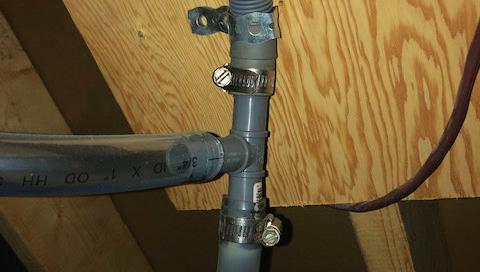
so if a pipe is stuffed too far into the drain the liquid will not flow properly and will back up into the boiler.
This can also happen when using a condensate pump, as the condensate line from the appliance must not be stuffed too far into the reservoir of the pump. Condensate liquid will also back up into the appliance if this happens. For both floor drains and condensate pumps a good practice is to be able to see the liquid drip from the pipe end into the drain or reservoir.
Dealing with the products of combustion from high efficiency equipment must be done very carefully to avoid building and appliance damage and nuisance breakdowns. Contractors have the responsibility to closely examine the unique requirements of each project, and provide the best long term solution for the customer.
Take the time to discuss the condensate drainage options with the customer and make sure they are aware of the service requirements. When quick or inexpensive solutions are used, problems often occur that result in expensive equipment and building repairs for the owner. Everyone should strive to make sure this does not happen by doing it right the first time. <>

Robert Waters is president of Solar Water Services Inc., which provides training, education and support services to the hydronic industry. He has over 30 years experience in hydronic and solar water heating. He can be reached at solwatservices@gmail.com.



95% AFUE, Wall Mounted, Modulating Condensing Boiler with “THINK Intelligence Within”.

Combustion
The THINK combustion management system continuously monitors the gas and air mix and adapts its output to e ciently suit requirements.



You don’t step into the 2019 Ford Super Duty, you step up to it. An absolute beast of a truck, it’s designed to challenge the laws of physics. No matter how tough your task, this truck has your name on it. Depend on the 2019 Super Duty to get the job done, and then some.
It starts with a 6.7-litre Power Stroke V8 diesel engine offering 450 horsepower and 935 lb.-ft. of torque. Super Duty allows you to outwork and outsmart the competition thanks to its mighty capability plus a suite of intelligent features.
ENOUGH MUSCLE TO MOVE MOUNTAINS
You’ll get a maximum gooseneck towing of 35,000 lbs. and a conventional towing maximum capacity of 21,000 lbs. So if you’re looking to tow big, call on none other than the beast that is the Super Duty.

TONS OF TORQUE FOR TONNES OF HAULING
In addition to the 935 lb.-ft. of torque, this truck also comes with a massive 7640-lb. maximum payload rating. When the Super Duty went to a military grade‡ aluminum alloy bed and body paired with a high strength steel frame, the net weight saving‡‡ went into its frame, leaf springs, trailer hitch, rear axles and transfer case, while also coming out up to 24 times stiffer than the outgoing model. This truck doesn’t buckle to even the heaviest payloads.
AVAILABLE CLASS-EXCLUSIVE TRAILER REVERSE GUIDANCE SYSTEM†
The Ford Super Duty is the only heavy-duty truck in its class to offer an available Trailer Reverse Guidance System† to increase its sightlines. Visibility is enhanced via cameras in the side view mirrors and visual guides in the centre dash screen, giving you a clear rear view of where the trailer is going. And with a customer-placed rear trailer camera that seamlessly integrates into the centre stack screen, it turns reversing a trailer from an exercise in futility into an exercise in precision. THE 2019 SUPER DUTY. WORKS AS HARD AS YOU DO, AND THEN SOME.















Super insulation combined with zoned radiant heating has the potential to push fossil fuel heating into obsolescence. BY
IAN MCTEER
Imagine a benighted king travelling back to his drafty castle after a long day of abusing his serfs and annoying the local nobles. It is a cold winter’s day sometime after chimneys became popular but before the advent of central heating.
Servants pile three-foot long logs onto an already roaring blaze. The monarch reclines in front of the crackling source of welcome warmth. How lucky for him that the high-backed chair parked in front of the fire protects his back from the frigid combustion air racing to help feed the fire. As the smoke rises up the newfangled chimney, it takes much of the heat with it. Yet, our monarch gradually overheats in his wingback chair demanding the servants move him farther away from the fire. He had no understanding of why a fire some distance away made him so uncomfortable.
The campfire effect, well known to campers, means whatever side one faces toward the fire gets warm while the other side remains uncomfortably cold. While many people still burn wood
for heat, more efficient stoves and furnaces have replaced the roaring open fireplace. For others, sitting in front of a fire is more of a recreational pursuit.
Incredibly, heat produced in a fireplace is transmitted through space to a body without directly affecting the surrounding air. Thermal radiation is defined as, “the transmission of heat through space by wave motion: the passage of heat from one object to another without warming the space between.”
Consider the largest “fireplace” burning some 93 million miles away: the sun. With a diameter of 864,340 miles (1,380,000 kilometers) and a core temperature of nearly 4,000,000 degrees Kelvin, the sun has been burning for over 4.6 billion years. Every second, nuclear reactions fuse 4 x 1038 protons into helium-4; four million tons of mass are converted into pure energy via E = mc2.
Over its lifetime, about 0.03 per cent of the sun’s mass has been converted to energy, that is approximately the
mass of the planet Saturn. Fortunately for us, there’s plenty more mass left to convert into energy.
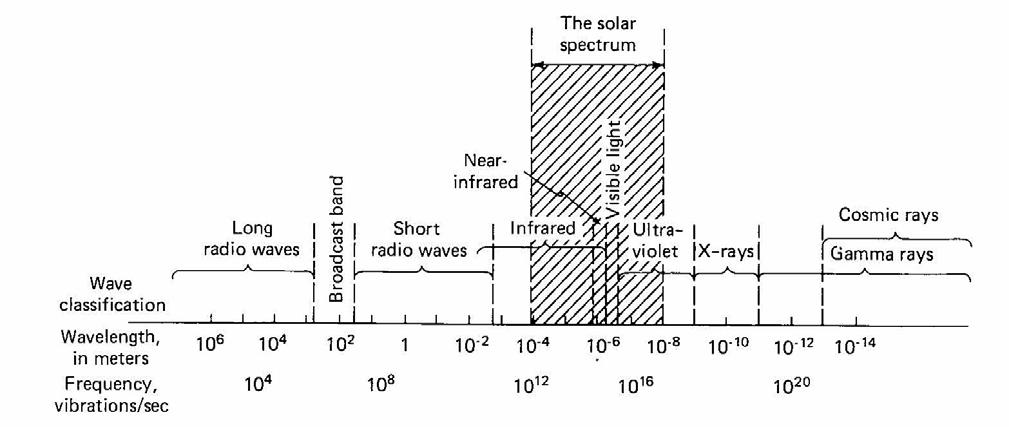
The sun’s surface, known as the photosphere, is composed of hot ionized gases around 6000C generating vast amount of energy. Visible light and infrared radiation emmitted from the photosphere reaches earth in the form of electromagentic waves travelling at the speed of light. The solar spectrum consists of several wavelenth regions distributing energy approximately:
Visible: 54 per cent
Infrared: 43 per cent
Ultraviolet: 3 per cent
Scientists have estimated an average of 58 Btu/hr (17 W) per square foot of solar energy incident on the land mass of the United States is many hundreds of times as great as the annual consumption of energy.
Atoms and molecules in any mass above absolute zero (-460F) have some energy causing motion that creates heat energy.
Heat, for our purposes, is something transferred between two or more objects. When heat transfer between objects ceases, heating ceases. It is the transfer of heat we crave to understand and to promote more efficiently. We understand that heat transfers in three different ways:
1. Conduction: explains how heat moves through solids. The kinetic theory of heat suggests that heat enegy creates increased molecular action. As a substance absorbs heat, the heated, higher energy molecules bump into their neighbours setting them off into violent motion. Thus, heat is conducted from one substance to another.
2. Convection: heated molecules move from one place to another carrying heat with them instead of colliding with neighbouring molecules.
3. Radiation: heat energy transferred by electromagnetic waves. Radiant energy must first be absorbed by a material mass before it can be converted into sensible heat.
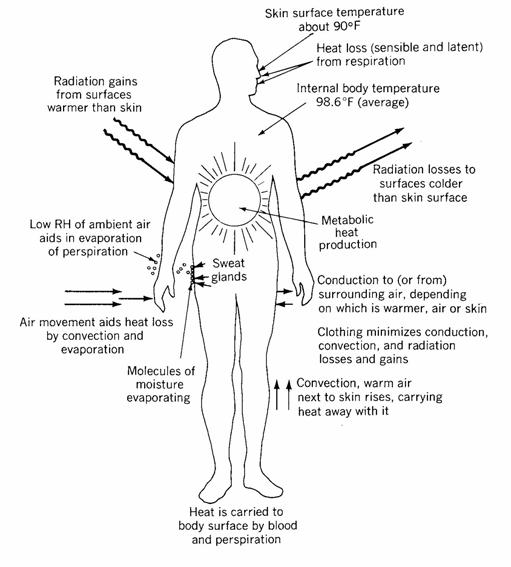
The human body is a fascinating example of heat transfer to and from the environment:
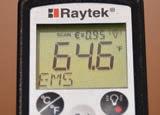
This infrared thermometer defaults to a near blackbody emissivity: ξ = 0.95. Emissivity measures how well a material emits infrared energy.
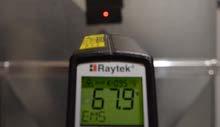

Shiny, very reflective surfaces are not conducive to accuracy. As an example, I placed some flat black tape on the RA ductwork. Notice the temperature variation between the black surface and the shiny surface with ξ = 0.95. This type of thermometer cannot accurately measure spot sizes less than 0.7 in. (1.8cm) in diameter. The farther the distance from the target, the larger the spot size must be. Note that this thermometer cannot be used to accurately measure the temperature of the air inside the duct. Use a thermocouple probe meant for air temperature.
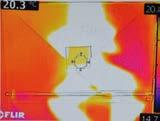
Infrared camera captured the radiant heat from my body reflected to the camera from the shiny RA duct over a distance of 30 inches (76mm).

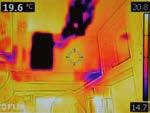
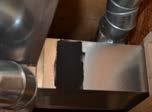
Example of using an infrared camera set at ξ = 0.95, (distance = 4 ft., 1.2m) on shiny ductwork in cooling mode. I painted a flat back spot onto the duct. Note wildly different temperature readings between the black spot and the shiny duct just off to the side of the black surface. Again, use a thermocouple probe when measuring air temperature inside the duct.


Shading of the outdoor unit does not necessarily improve cooling efficiency due to the incredible volume of air constantly passing through the outdoor coil. However, homeowners too often restrict airflow by planting trees and shrubbery closely. There should be a four-foot (1.2m) clear space around the outdoor unit. Lilac (bottom) and other shrubs must be maintained yearly to prevent overgrowth onto the unit. In heat pump applications, an evergreen shrub or tree such as this blue spruce will help to protect the outdoor unit from strong winds during the winter.
It should be noted radiation is not confined to very hot surfaces as all substances radiate heat energy. Hot surfaces will radiate large amounts of energy while cooler surfaces will radiate smaller amounts.
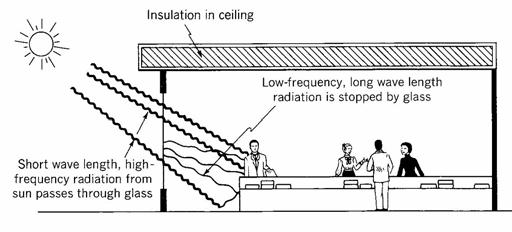
Glass has the peculiar property of transmitting heat energy from the sun directly into a building; however, once the radiant is converted to sensible by the buildings furnishings, occupants or other objects, the low energy heat energy radiation from these objects is blocked by the glass, trapping heat in the structure. Perhaps a desirable trait for the winter, but definitely unwanted during the summer.
Thermal imaging cameras and infrared thermometers have become popular tools in the HVAC industry in the last few years. Seemingly easy to use, it is even easier to make mistakes when accuracy is required unless the user has been trained in basic thermography. An infrared camera will immediately show surfaces at different temperatures but how do you distinguish between hot spots and reflections?
A thermographer needs to account for measurement details such as distance from the target, spot size and emissivity. An object with an emissivity of one absorbs all the solar electromagnetic radiation falling on it and is known as a perfect blackbody. An object that reflects 100 per cent of the electromagnetic radiation falling on it is a perfect reflector having an emmissivity of zero. Perfect blackbodies and reflectors are not typcially found in everyday HVAC applications. A flat black surface
such as a cast-iron stove has an emissitivy of 0.95, a shiny reflective surface such as tin foil registers about 0.10, meaning that only 10 per cent of the radiant energy is absorbed. (See the sidebar on p23 for more on emissivity.)
The Roman Hypocaust, developed as early as 350 BC, was a radiant system that utilized wood burning fires to produce and circulate hot air (and smoke). The hot air circulated through enclosed areas beneath the floors and then up the walls through embedded clay tiles to outlets in the roof.
Hydronic and steam systems favoured cast iron radiators placed around the interior perimeter of a building to radiate heat energy into the surroundings. If left free standing, the rads would also establish a convection current carrying heat further into the room. However, homeowners often enclosed the rads with elaborate structures meant to conceal them,
inadvertently hindering heating efficiency.
Eventually, finned-tube hydronic and electric baseboard convectors replaced radiators and convection heating became the norm.
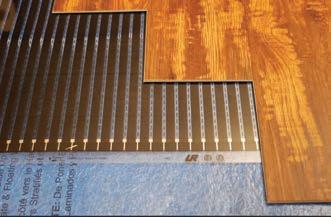
For those who can afford underfloor radiant heating, there is no other system providing such a level of thermal comfort in my opinion. Underfloor radiant allows for multiple zones in both hydronic and electric applications. Should the radiant floor not cover the entire heat loss of the building, it is easy enough to add some baseboard convectors to help cover the load on design days. With net zero or Passivhaus tight construction and controlled ventilation building techniques becoming more desirable, even prescriptive in some building codes, radiant floor warming may be plenty enough heat for such buildings.
Like any other heating device, any radiant application must be designed, in -
stalled and commissioned according to the manufacturer’s instructions and industry practices. Tubing can be punctured; electric cables can be cut or shorted.
Manufacturers make installation as easy as possible, but a proper job continues to require trained and conscientious installers. Electric radiant may be installed under many different floor coverings with heating elements embedded in a roll-out mesh or in single cable format not unlike hydronic tubing.
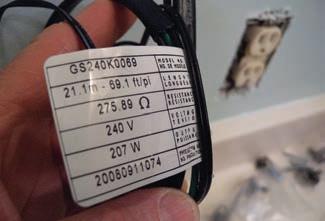
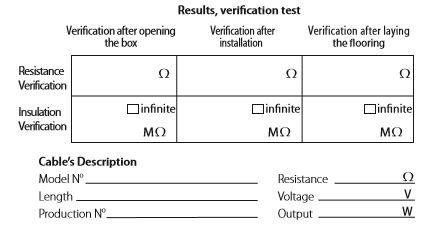
Electric radiant manufacturers provide warranties but the contractor typically is on the hook to provide installation data related to the electrical characteristics of the system measured before and after the installation.
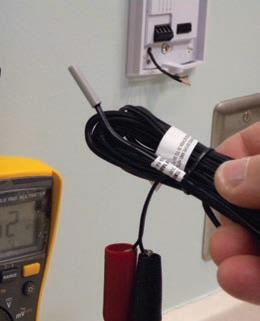
Underfloor temperature sensors may become problematic over time. Perhaps install a second one at the preferred location leaving the wiring tucked into the wall cavity behind the controller in case it is ever needed. Why chop-up the floor just for a wonky sensor?
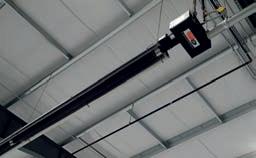
Radiant floors work can well in many types of commercial buildings; others use gas-fired radiant tube heaters such as in the service reception areas of automobile dealerships to great effect.
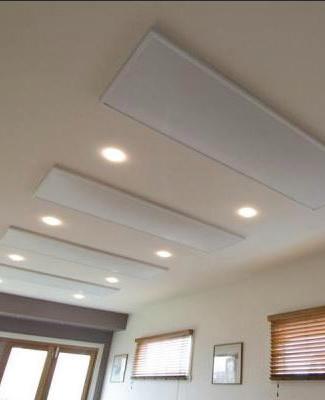
Radiant panel heaters installed below the ceiling or on the walls may not have the desired effect in situations where furnishings and people are in sparse supply to absorb and reflect the radiation. Cool spots may develop that will garner complaints from the inhabitants. Better to do floor warming or baseboard convection.
At one time, industry concensus seemed to favour installing residential condensing units on the north side of a building when possible. The idea was to get the unit out of direct sunlight in the hopes that it will run more effiecienty. A study
conducted by the Florida Solar Energy Center in 2015 concluded the temperature of the air entering the condenser has the pivotal effect on efficiency, not local shading, including shade from trees or shrubbery.
My outdoor unit moves 3200 cfm, if it runs for an entire hour. A staggering 192,000 cubic feet of air will pass through the coilduring this time. No amount of shading will cool that amount
of air enough to be effective at lowering the condensing temperature.
Placing a modern cold climate heat pump (ccASHP) on the south side of the building sheltered from prevailing winds and snow drifts is more desirable. Still, a lot of radiation will be required to warm the entering air enough to make a difference in the unit’s heating efficiency.
Continued on p26

Homeowners often ask about hiding the outdoor unit with plants, shrubs and trees, which is OK but for two important considerations:
1. Vegetation must be trimmed to maintain a four-foot space to the unit. Airflow must not be impeded and falling leaves should not be allowed to enter the unit.
2. Vegetation must not impede service access – rule of thumb: something that is difficult to maintain does not get maintained.
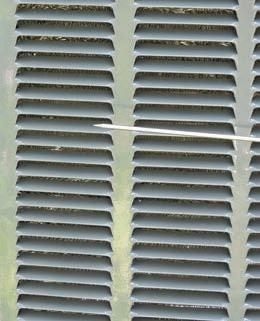
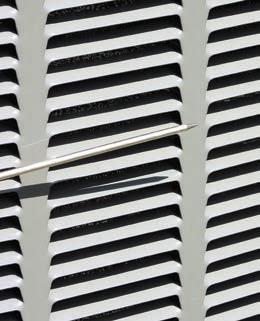
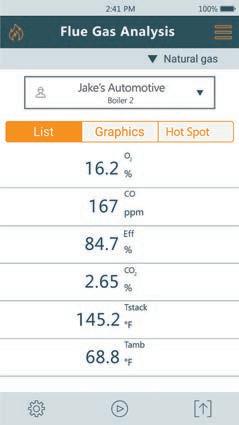
When measuring the temperature of the air entering an outdoor condenser coil, place the thermometer probe on the shady side of the unit or otherwise shade the probe. Solar radiation will be effective in reducing accuracy.
In past articles, I have discussed how we are going to heat buildings, especially residential buildings, as efficiently as possible from now on. Should old forced warm air heating systems designed for yesterday’s furnaces be abandoned in favour of ground source heat pumps or ccASHPs; or inverter driven heat pumps utilizing small duct, high velocity air handlers?
There are many options but in the end the first cost of any system is the primary factor determining equipment selection. Electric radiant heating combined with a ductless cooling unit installed in a net zero or Passivhaus application might be attractive to the upscale set. However, for those looking at improving the bulk of Canada’s leaking old housing already radiantly heating the countryside, I would put my money on better insulation, tighter doors and windows along with a zoned ductless or small-duct high velocity system.
Remarkably, there is abundant solar radiant energy available yet it is not so easy to gather and to control. In 1976, physicist Amory Lovins, founder of the Rocky Mountain Institute, proposed a greater reliance on “soft energy paths” especially those efforts aimed at conserving energy and improving efficiency.
Had the notion of super insulation combined with zoned radiant heating, perhaps solar powered, been intensively cultivated years ago, fossil fuel heating would have become as obsolete as the cranky old king and his primitive fireplace. <>

Ian McTeer is an HVAC consultant with 35 years experience in the industry. He was most recently a field rep for Trane Canada DSO. McTeer is a refrigeration mechanic and Class 1 Gas technician.


Napoleon’s Oakville Series is made up of four models from 24,000 to 40,000 Btus. A robust "H" style burner provides a display of flames across the width of the firebox. Designed with ease of installation in mind, the inserts feature a clean face design, large viewing area and flush finishing faceplates in 2 ½ in. or 5 in. widths. The inserts have a Crystaline ember bed, split oak logset and Bluetooth eFire. www.napoleon.com.
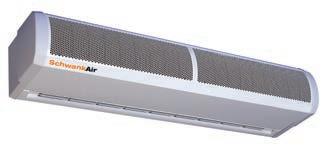
From Schwank, the SchwankAir 500, 2000 and 2500 series air curtains are available in ambient, electric heated, and water heated models. The 500 series is available in a 208V, 12 Amp model or a 208V, 25 Amp model. The 2000 (pictured) and 2500 series are intended for door sizes up to 10 ft. high and 11.5 ft. high, respectively, and are available in 208V, 230V, 480V, and 600V models. www.schwankgroup.com
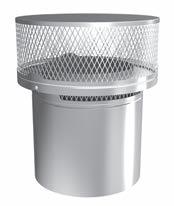
The DuraChimney II cap features a lowprofile design with mesh characteristics. DuraChimney II products are built to stay cool on the outside, provide a hot draft on the inside and offer a fire-safe design intended to protect the chimney and building. www.duravent.com
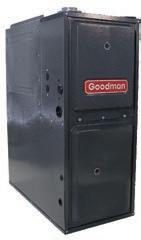
From Goodman Manufacturing, the GMEC96, GMSS96 and GMSS92 gas furnaces feature a 14 in. wide cabinet and 96 per cent AFUE rating. Models range from 30,000 Btu/h to 60,000 Btu/h with a 3-ton airflow. The furnace offers twostage firing and features a two-speed induced draft blower, silicon nitride ignite, self-diagnostic control board, colour-coded low V terminals and low, continuous fan speed options. www.goodmanmfg.com
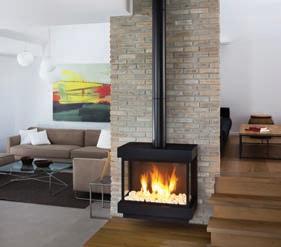
Lyric fireplaces from Ortal feature Cool Wall Technology and a heat barrier screen around the unit. Available models include front-facing, three-sided, corner (left or right), peninsula, see-through and stand-alone. The fireplaces are certified for use with either natural gas or propane gas and are compatible with wood or fabric wall finishes. www.ortalheat.com
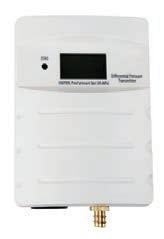
A differential pressure sensor from Sensaphone measures air pressure in two areas and indicates if there is a difference between the readings. Sensaphone offers duct-mounted and wall-mounted sensors that send data to its monitoring devices that accept a 4-20 mA signal. The duct-mounted sensor monitors positive and negative pressure from the two included duct mounts. www.sensaphone.com
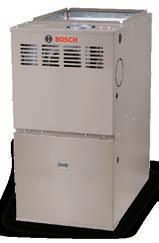
From Bosch Thermotechnology, the 80 per cent AFUE gas furnace features a four-way multipoise design and cabinet height of 33 ¾ in. The unit’s control board is equipped with LED fault codes. All furnaces come standard with a natural gas-to-LP conversion kit. The design features a left- or right-hand connection for gas and electric service. The furnace comes equipped with a removable bottom closure panel for bottom return applications. www.boschheatingandcooling.com
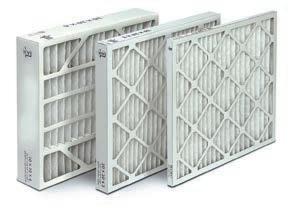
The deep-pleated 4 1/2 in. replacement filters and MERV 13 deep-pleated carbon filter from Clean Comfort Indoor Air Essentials are designed for media air cleaners. Rated MERV 11, the filters can be used in AM11 series CleanFit and AMB11 builder’s model cabinets. The company’s 1-, 2- and 4-in. wide filters are now offered in some nominal sizes for specific applications. www.cleancomfort.com
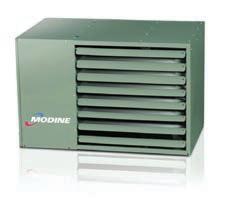
From Modine Manufacturing Company, the Model BTP gas-fired power vented unit heater features 82 per cent thermal efficiency. It comes in seven sizes, from 150,000 to 400,000 Btu. The unit comes standard with a 409 stainless steel primary heat exchanger. www.modinehvac.com
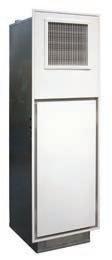
Whispertherm thermal recovery unit from The Whalen Company uses either a two-row or three-row integral hydronic heating air coil. It features a constant torque EC motor, which offers five available motor speed settings. The unit includes internal stainless steel design with a P-trap style rubber drain line. It is intended for new construction and retrofit applications in both low-rise and high-rise buildings. Other features include a flush-mounted, floating design and multiple grille sizes. www.whalencompany.com
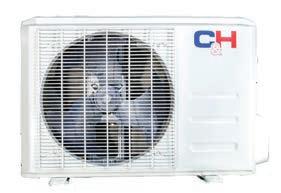
From Cooper&Hunter, the Dakota series ductless mini split heat pump for single zone applications can work in temperatures as low as -22F. When temperatures reach 36F, a built-in heater warms the base of the outdoor unit so condensation does not freeze. The series offers multiple fan speeds, high density silver ion filters, GoldFin anti-corrosive coating and optional Wi-Fi control. Dakota models deliver anywhere from 9,000 to 24,000 Btu/h cooling capacity and 10,900 to 24,000 Btu/h heating capacity. www.cooperandhunter.us
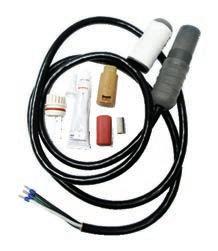
From Britech, the Twisto connection kit is designed for heat tracing connections. It features a 2 m. PVC-Type SJTOW connector cable. The kit offers a nominal voltage of AC 250 V, a nominal current of 20 amps and an ambient temperature range of -40C to 85C. www.britech.ca
The Monterey Plus+ home furnace from Williams Comfort Solutions offers recessed or surface-mounted installation and is available in 25,000, 35,000 and 50,000 Btu/h sizes. It features automatic temperature and safety controls, a resettable vent-limit safety switch and a side-relief opening draft hood design. Thermostat is included. www.ontor.com
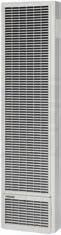
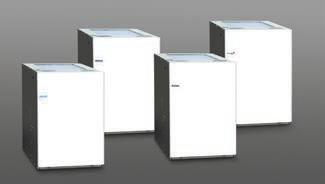
Nortek Global HVAC's model E7 features a 1/2-hp. ECM fan and a control board that facilitates the 16 speeds. The control board’s seven-segmentstyle readout screen expedites troubleshooting by displaying operational modes of cooling, heating, fan circulation, dehumidification, motor fault, lockout and idle. DC relays operate reliably, quietly and reduce service troubleshooting time. Available in a 29-in. high E7EM heat-only base unit, or 60-in.-high E7EU upflow and E7ED downflow models, the latter two come with a coil box for field-installing the optional evaporator coil and accompanying filter. www.nortekhvac.com
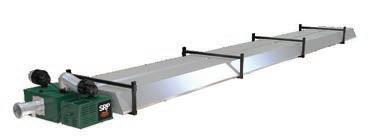
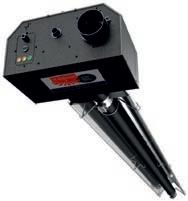
The SRP Stealth from Superior Radiant Products is a condensing system classified as a Category IV radiant tube heater. The vented infrared heater utilizes a microchannel flue gas heat exchanger along with a single canopy over its parabolic reflectors. Model THE14N offers two-stage technology on the high fire 135,000 Btu/hr and steady operation on the low fire 85,000 Btu/hr. www.superiorradiant.com
BY JEFFREY STAUB
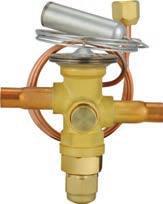
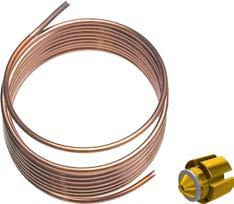
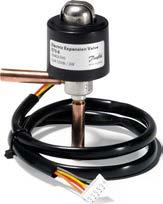
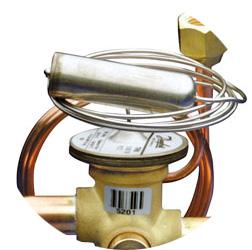
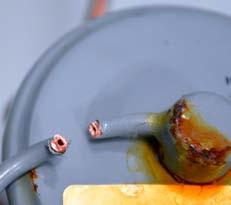
Thermostatic expansion valves (TXVs) are one of the most common type of adjustable orifice throttling device in air conditioning and refrigeration systems worldwide. But how do TXVs compare to other throttling devices? Fixed orifice devices such as capillary tubes or pistons are cheaper and electronic expansion valves (EEVs) offer greater superheat control across a large load range, so why are TXVs popular?
EEVs are top-of-the-line throttling devices. EEVs can be programmed to work with the other components in the system. While EEVs can outperform TXVs, the gains often do not justify the much higher cost. A standard TXV can increase efficiency versus a fixed orifice device by about 30 per cent for only a small increase in cost.
One reason for the greater expense is that EEVs need additional components to work properly, including a controller and sensors. While TXVs have been engineered to be selfcontained, EEVs are best seen as part of a greater whole, operating according to data the sensors collect and the commands the controller and its underlying software sends out. And while a TXV can be a drop-in replacement for a piston or capillary tube, the same cannot be said for an EEV.
Systems that require exact precision, such as those with variable-speed compressor technology, where the load, ambient conditions, and compressor mass flow go through high rates of change, will benefit from having an EEV and complimentary components.
Fixed orifice devices are ideal throttling devices if conditions never change. If the load on the system is constant and the ambient temperature remains steady, then a simple capillary tube or piston would be preferable to an adjustable orifice device such as a TXV. However, outside of a laboratory, static conditions are simply not realistic.
Seasonal temperature changes have a profound effect on system performance, as does increasing the heat load inside. For example, summer brings warmer weather, which increases the condensing pressure of the refrigerant in the air conditioner. Since the throttling device acts as a type of dam within the system, a fixed orifice device will not open more when the load increases to allow more refrigerant through, which increases the superheat on the compressor.
Additionally, once the load decreases (perhaps at night), the back pressure drops, which significantly increases the risk of liquid refrigerant making it to the compressor, damaging it. A TXV will modulate open or closed based on changing conditions and will adjust to maintain a constant superheat. This in turn ensures that efficiency is optimized and the compressor is protected against damage from liquid refrigerant.
Another important factor is reliability. The power element is the most common part of a TXV to fail, so having one that is made from high-quality materials will extend the life of the valve. Laser-welded, stainless steel power elements offer the longest life possible.
Another common point of failure is the sensing bulb capillary tube. Once again, stainless steel offers flexibility and durability not available with other metals. Stainless steel sensing bulb coils can be bent and flexed over and over without fear of cracking.
Finally, TXVs are often used to upgrade a system from a fixed orifice device, so a TXV that is easy to install is most ideal. Retrofitting a fixed orifice device system with a TXV is easy, especially when the valve comes packed with the most common fittings to attach to the evaporator distributor, making upgrades hassle-free. <>
Jeffrey Staub is director, Regional Applications Americas — Danfoss. He can be reached at JeffStaub@danfoss.com.

3D printing has gained traction in the construction industry.

Mechanical systems find a place in 3D printed structures. BY JILLIAN MORGAN
Ateam of researchers at the University of Waterloo in Ontario are steadily working to develop a 3D printing system that will pump out concrete to form homes and buildings.
Far from the first of its kind, the technology will use a robotic printing arm to deposit concrete based on a digital model of the structure.
Led by mechanical and mechatronics engineering professor Amir Khajepour, the researchers are developing the technology for Canadian company AMIDA 3D with plans to unveil a prototype in the summer of 2020.
“I’ve been in connection with [AMIDA 3D] for the past year or so and it has a large program with them in developing technologies both from the robotic aspects and also on the material aspects,” Khajepour says.
Bora Bulajic, president of AMIDA 3D, says 3D printing technology has made serious strides in recent years.
“Already, the applications being used in the world today are tremendous. We believe it’s unstoppable,” he says.
Increasingly, 3D printing has gained traction in the construction industry as a way to quickly and cost-effectively construct homes and buildings.
“The benefits we see are that, first of all, it’s green construction. It has a lower carbon footprint by far compared to existing methods. It’s more cost efficient, so you’ll be able to do more for less,” Bulajic says. “The fact that we can be so mobile is huge because the cost of distance is a big addition to the price of the building or infrastructure project.”
3D printing is poised to disrupt the construction industry, though Bulajic says mechanical contractors are not likely to encounter any serious changes on the job.
“When we’re looking at all the other elements that have to go in, like wiring and plumbing and HVAC, it’s all going to be in there, of course,” he says. “The only thing that’s going to be radically different, in my opinion, is that there’s going to be a very interactive process… but you’ll need all the people, you’ll need all the technicians and tradespeople… It’s not disruptive in terms of replacing people.”
These structures still require the same electrical and mechanical components, Khajepour says. His team is currently researching different methods of installing those systems.
“Some of the questions [are] how to run water or electrical or heating in the walls through the process of this automated printing,” he adds. One solution, according to Khajepour, is to leave space in the design of the structure for electrical or wall pipes to be inserted and covered.
“For the air, the situation might be a little bit difficult because the current approach is to run the ducts mostly through the walls from one floor to the other floor,” he says. “This can also be done in the 3D printing meaning that when you design it you have to leave a larger, open space that the ducts could go through.”
Still, he says the industry will not need to reinvent the wheel.
“It’s just a different way of looking at these new houses,”
he says. “It’s not that we need to completely develop new things or new wires or new pipes for these new buildings.”
3D printed homes and buildings require developers to think about the design and installation of mechanical systems ahead of time – since, unlike other building materials such as wood, concrete is less flexible.
“There’s no way after its built [to] start making holes in the wall,” Khajepour says. “You have to think in advance…. [Currently,] for houses, we don’t need to think in advance about where to run the cables or the heating or the cooling. It’s very easy to add them after the shell of the house is done. For 3D printing, you have to incorporate that into the design.”
While the research team works through those questions, Khajepour says there is one stumbling block.
“We still don’t have any standards or guidelines for this,” he says. “We have to have the standards and the way to add it to the CAD model of the house. So when you print it you have all those conduits, whether it’s the heating, plumbing or electricity.”
Though the technology offers benefits to the construction industry, it could be a while before homes are built with 3D printers.
“3D printing is gaining momentum… How long will it take to become a mainstream construction approach for houses? That’s a question mark,” Khajepour says. “It takes time. We are at the very starting point of this new technology. It’s happening but it takes time, same as autonomous driving… Where it goes and how long will it take? That’s obviously a big, million-dollar question. But it’s happening.”
The structural design of a 3D printed home, such as the roof and the cost of materials, are a few challenges he expects along the way.
“I don’t think that it’s going to replace existing construction practice,” Khajepour says. “One thing that we have to remember is we have to be a little bit more pragmatic and realistic on these 3D printed houses. It’s not something that you click and then at the end you move in.”
Still, for Bulajic, the technology offers opportunity for the construction industry.
“We believe that the market for something like this is really large because it can address so many different things,” he says. “It can used for infrastructure projects, it can used for the emergency rapidly deployed structures; storage, military applications… livestock enclosures, housing – We believe that this is something that is definitely going to have an impact going forward.” <>


BY
JOHN SIEGENTHALER
When designing hydronic circuits most of us focus on what is necessary for that circuit to absorb thermal energy at a heat source, carry it along like a conveyor belt, and release that energy at one or more heat emitters. After all, that’s the principal objective of any hydronic heating system –regulating thermal energy transfer from source to load.
But thermal energy is not the only energy being processed in hydronic systems. Electrical energy is being converted into mechanical energy. The latter is referred to as “head” in the hydronics industry. Circulators convert electrical energy into head energy.
The efficiency of that conversion can vary over a wide range, from single digits to upwards of 60 per cent. Small wet rotor circulators operating near either end of their pump curve have very low electrical to head energy conversion efficiency. Larger, circulator with more efficient multi-horsepower motors, and applied so that they operate near the middle of their pump curve, represent the higher end of the efficiency range.
Head energy is eventually dissipated into heat due to friction between fluid molecules, as well as friction between the fluid and surfaces it flows across.
Every hydronic heating professional understands that there’s
a cost associated with operating a circulator. Every kilowatt•hour of electrical energy “fed” to the circulator comes at a price. In some areas it is only a few cents. In other locations, such as remote locations where diesel fuel is trucked in to power generators, it is over half a dollar per kilowatt•hour. Ouch!
It is not hard to understand that reducing head loss in hydronic systems reduces the kilowatt•hours of electrical energy required to operate them. But do we really think about this enough as we design?
Imagine a closed hydronic circuit constructed of type M copper tubing and having an equivalent length of 200 feet. Assume this circuit needs to convey a flow rate of six gpm along a round trip between a mechanical room and the coil of an air handler. What tube size would you normally select for this circuit?
The usual sizing criteria for copper tubing in smaller hydronic systems is to keep the flow velocity no higher than four feet per second. That flow velocity corresponds to a flow rate of 6.4 gpm in ¾ in. type M copper tubing, so, ¾ in. is likely the common size selected to handle this flow requirement. My guess is that many of you didn’t have to consult a flow velocity versus flow rate chart in order to select a ¾ in. tube for this flow rate. You just knew from previous experience that a ½ in. tube was too small and a 1 in. tube was “overkill” for six gpm, so you picked the size in between.
Let work in a few simple calculations to see if that was a good choice.
Assuming the 200 ft. x ¾ in. copper tube circuit was carrying water at an average temperature of 120F it would have the circuit head loss curve shown in Figure 1
You can make a circuit head loss curve like this by graphing head loss versus flow rate values that can be looked up in many design references. The data in these references is usually listed as feet of head loss per 100 feet of pipe. Since our assumed circuit has an equivalent length of 200 feet, we can just double the head loss values, plot the points on the graph, and draw a smooth curve through them.
Figure 2 shows the same head loss curve along with the pump curve of a typical small wet rotor “zone” circulator. The point where these two curves cross is called the operating point. It’s where the head energy supplied to the water by the
Figure 2 Head loss curve with pump curve of a typical small wet rotor “zone” circulator
circulator exactly matches the head energy being dissipated from the water by friction. If you draw a line straight down from the operating point you can find the flow rate the system will operate at. In this case it's about 5.9 gpm. Since this flow rate is very close to the target flow rate of 6 gpm, this circulator would be an acceptable selection.
Figure 3 shows the same curves as Figure 2, but adds another curve, shown in green, representing the “wire-to-water efficiency” of the circulator, that is the efficiency at which the circulator converts electrical energy into head energy). The efficiency values are shown as decimal percentages on the graph’s right vertical axis.
At the operating point of 5.9 gpm, the circulator has a wireto-water efficiency of 19.5 per cent. That value is not very impressive, but it also not far below the peak wire-to-water efficiency of this circulator, which is about 22 per cent.
The owner of a hydronic system does not pay, at least directly, for head energy. They pay for the electrical energy needed to operate the circulator that imparts head energy to the water. You can estimate that cost by considering the power demand of the circulator, and the total on-time of the circulator.
The electrical power input to a circulator can be estimated using Formula 1:
Formula 1:
head loss of 3/4" x 200' circuit pump curve for circulator wire-to-water efficiency of circulator
rate (gpm) head loss (piping) (ft of head ) head added (circulator ) (ft of head)
Figure 3 Curve, shown in green, representing the “wire-to-water efficiency”
f = flow rate in circuit (gpm)
H = head loss of circuit while operating at flow rate (f) (feet of head)
D = density of fluid circulating in system (lb/ft 3) n = wire-to-water efficiency of circulator operating at flow (f) and head (H) (decimal %)
For the operating point shown in Figure 3 the estimated electrical input to the circulator would be estimated at: w e = 0.003017 () ×
The annual operating cost of any device the requires a specific power input, and operates for a known number of hours can be easily calculated using Formula 2. Formula 2: w e = 0.003017 () × f × H × D n w e = 0.003017 () × f × H × D n = 0.003017 () × 5.9 × 11.9 × 0.195 C annual
Where:
w e = 0.003017 () × f × H × D n = 0.003017 () ×
Cannual = annual operating cost ($/yr)
t = # hours pump is on per year (hours/yr)
P = input power to circulator (watts)
$/kwhr = cost of electricity (dollar / kilowatt•hour)
C = ci (1 + i )n 1 i ⎛ ⎝ ⎜ ⎞ ⎠ ⎟ =
If the circulator represented in Figure 3 operated for 3,000 hours per year, in a location where electricity costs $0.15/ kwhr, its annual operating cost would be:
Continued from p35
head loss of 3/4" x 200' circuit
wire-to-water efficiency of circulator
pump curve for circulator
head loss of 1" x 200 ft circuit
head loss (piping) (ft of head ) head added (circulator ) (ft of head)
pump curve @ reduced speed
How would this operating cost change if the circuit was constructed of one-inch copper tubing rather than ¾ in. copper tubing? I am sure most of you know it would go down, but by how much, and is the reduction worth considering? Back to the math for some answers…
The head loss curve for a circuit constructed of one-inch type M copper tubing, and having an equivalent length of 200 feet is shown (in red) in Figure 4.
If the same circulator, operating at the same speed setting, was used in this circuit, the flow rate would increase to about 10.2 gpm (as shown by the yellow square at the new operating point in Figure 4). But remember, the target flow rate was 6 gpm. We do not need to operate the circuit at higher flow rates. So, the designer now looks for a different circulator, or looks at how the pump curve would change if the currently selected circulator could operate at a lower speed.
Assume the circulator’s speed could be reduced so that its new pump curve is the brown curve in Figure 4. The intersection between the circuit head loss curve for the 200 ft x 1 in. Type M copper circuit and the new pump curve occurs at a flow rate of about 6.2 gpm. This is again close enough to the target flow rate to be an acceptable option.
The head loss at the operating point shown by the yellow triangle in Figure 4 is now about 4.5 feet. Assuming the circulator’s wire-to-water efficiency remains essentially the same at the reduced speed, the electrical input to the circulator is now estimated as:
The annual operating cost of the circulator under the same conditions as previously assumed (3000 hours per year and $0.15 / kWh) would now be $12.02.
The 1 in. tubing combined with operating the circulator at lower speed produces about the same flow rate using 60 per cent less electrical energy.
Although a 60 per cent reduction in energy use should get anyone’s attention, you may still think that the difference in operating cost of $18.22 per year is trivial. However, little differences add up over time.
If we assumed that the cost of electrical energy increased at three per cent per year, and totaled this difference in operating cost over a 20-year period, the total operating cost savings for using 1 in. rather than ¾ in. tubing would be:
Obviously, it costs more to construct the circuit using oneinch rather than ¾ in.-tubing, and this added cost would have to be deducted from the life cycle saving associated with lower operating cost. Still, it is likely that the “net” savings in operating cost would exceed the added installation cost within 20 years, and perhaps much sooner in areas where electricity is more expensive.
If your goal is to maximize the technical advantages of hydronic versus air-based heat delivery, you should always be looking for ways to reduce the pumping power requirements of your systems.
Consider the head loss characteristics of the heat sources, heat emitters, dirt separators, mixing valves, heat exchangers, and other components you select. The lower they are, the lower the potential operating cost of the system. Do not settle on high head loss components if there are competitive options available with lower head loss.
Transition your designs to what is quickly becoming the new normal of higher efficiency circulators with electronically commutated motors.
The automotive and aerospace industries have been working for decades to reduce the drag of vehicles they produce. Lower drag results in high fuel efficiency, and both of these industries have achieved major advances in fuel efficiency compared to 40 years ago.
The hydronic equivalent of this is would be designing components and circuits with lower head loss. If you are a
Continued on p38
Legend® delivers a total radiant hydronic system for almost every project application. Design services, innovative products, engineering support, and training/education are the pillars we use to complete a radiant heating system. Our products are designed and engineered with efficiency in mind, for system layout, installation and operation. Contractors appreciate our labour-saving features allowing them to minimize time on the job site. System designers benefit from Legend's innovative and multipurpose functionality. We design and provide products for projects from single-family homes to large commercial applications, including heating and cooling for floor, wall, ceiling, snowmelt, and turf warming. We’ve got your back®

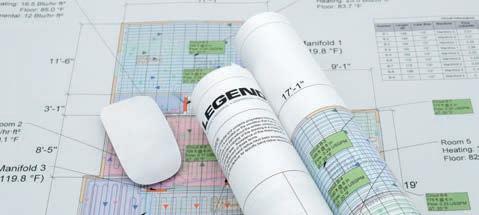
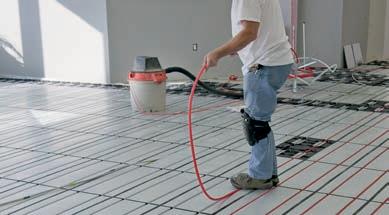
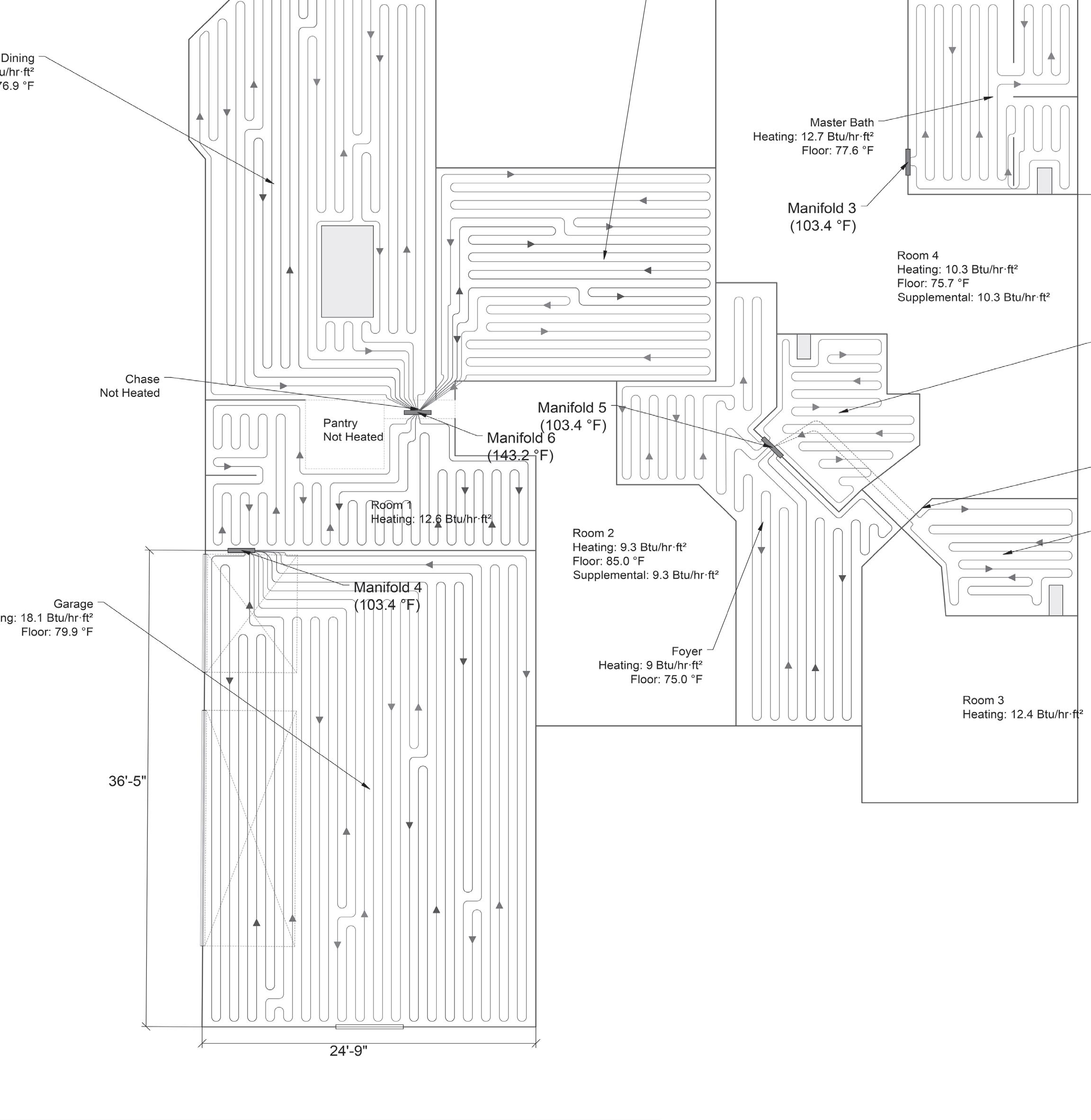
Continued from p36
manufacturer, do not take a dismissive attitude that installers will just have to use larger circulators to accommodate the head loss requirements of your hardware, and thus it is not your problem.
For example, some mod/con boilers require dedicated circulators that draw over 200 watts. The sole function of that circulator is to move flow through the boiler at an acceptable rate. Separate circulators are required for the distribution system.
Several decades ago there was no need for dedicated boiler circulators in single boiler systems. The head loss of a cast iron sectional boiler was low enough that the distribution circulators could easily move flow through the entire system.
That is still the case for cast-iron boilers, as well as some contemporary hydronic heat sources where low head loss was an integral part of the design objectives. In other cases, it appears that hydraulic efficiency has been willingly sacrificed for gains in thermal efficiency, reduced materials, or smaller size.
Such tradeoffs are not limited to boilers. Some water-to-refrigerant heat exchangers used in geothermal heat pumps also have a voracious appetite for head energy. Combine this with long earth loop circuits with minimal pipe sizes, and the
low wire-to-water efficiency of small wet rotor circulators with PSC motors, and you may need upwards of 1,000 watts of circulator input power just to move heat from the ground to a residential size geothermal heat pump.
The unimpressive hydraulic power requirement of geothermal heat pump systems is seldom discussed. Instead the geonarrative focusses on impressive values of thermal efficiency such as coefficient of performance (COP) and energy efficiency ratio (EER). In the end, the owner of that heat pump system does not pay for COP or EER. They pay for kilowatt•hours, whether they go to the compressor, the earth loop circulator(s), or other electrically operated hardware in the system.
As you design hydronic system remember: Head energy is a terrible thing to waste… <>

John Siegenthaler, P.E., is a mechanical engineering graduate of Rensselaer Polytechnic Institute and a licensed professional engineer. He has more than 35 years experience in designing modern hydronic heating systems. Siegenthaler’s latest book is Heating with Renewable Energy (see www.hydronicpros.com for more information).

Maximize your earning potential with Whalen’s Closetline® –the most energy efficient compact family in the industry.
Maximize leasable space with a compact footprint to fit in tight spaces for new construction or renovations.
Maximize service revenue with a unit designed for ease of install and quick service access.
Maximize comfort with quiet and reliable operation.
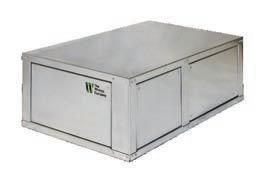
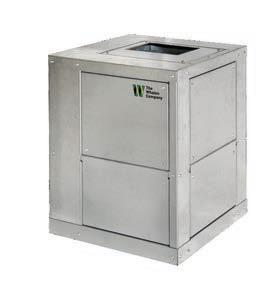



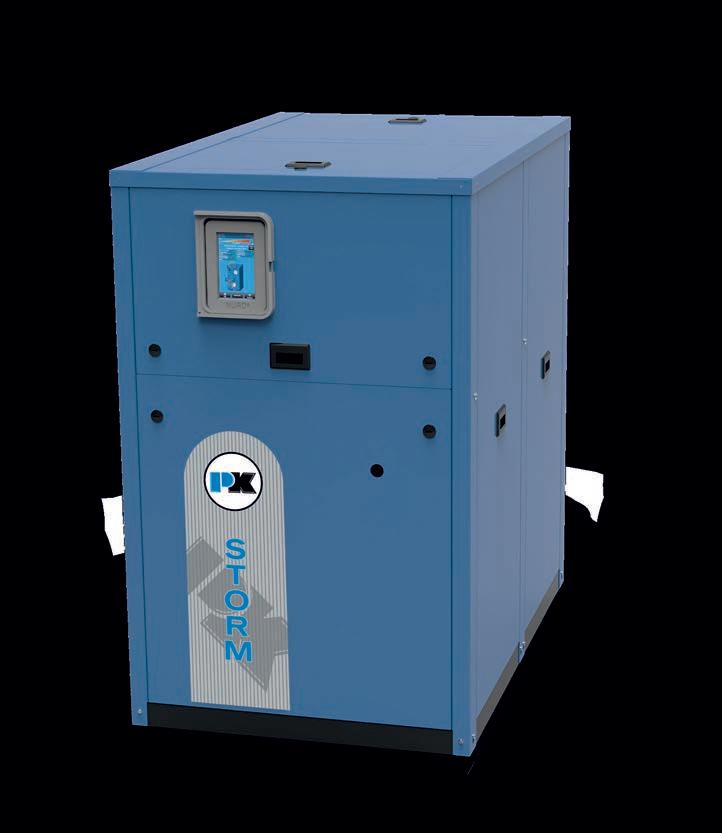
Demanding conditions call for reliable equipment. Patterson-Kelley continues to transform the commercial boiler industry by offering the highest quality, most efficient, condensing products available. Our newest stainless steel condensing boiler is designed for maximized comfort during those long cold winter days, without sacrificing savings, visit harsco.com/p-k-storm to learn how Patterson-Kelley is taking the industry by STORM
BY MEGAN HOEGLER
Arecord number of attendees, including exhibitors, speakers and delegates headed to the 2019 Modern Hydronics Summit at the International Centre in Mississauga, ON on September 19. Between presentations, attendees explored the 70+ booths set up around the perimeter of the room and in the lobby.
John Siegenthaler and Robert Bean kickstarted the day with a presentation on the emerging market of “small scale" hydronic cooling, highlighting the various opportunities this technology offers to HVAC professionals.
The duo wrapped up their session with the presentation of a golden pipe wrench to a “trailblazing woman in the HVAC industry,” none other than Kerry Turner, editor of HPAC magazine. Turner, who is leaving the magazine, will be replaced by Doug Picklyk and Megan Hoegler (see p6 for details).
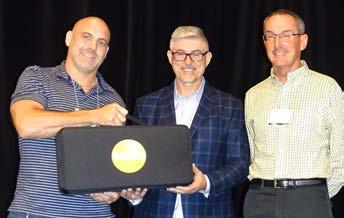
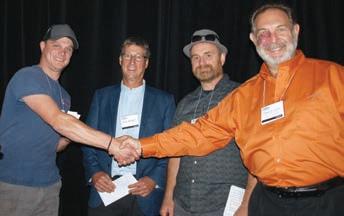
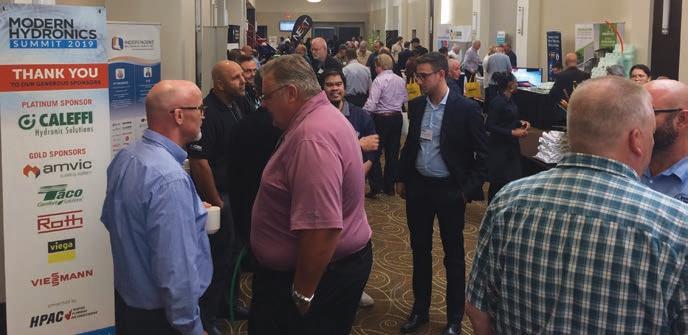
Lance MacNevin, director of engineering for the Plastic Pipe Institute (PPI) Building and Construction Division, addressed the new provisions in the latest Installation Code for Hydronic Heating Systems.
In a later session, “Wireless smart technology is not going anywhere,” was
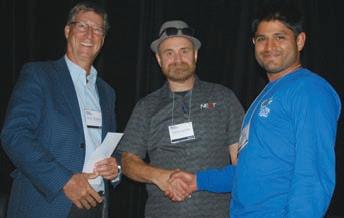

the statement echoed throughout Curtis Bennett’s presentation on the onset of wireless controls and what it means for contractors. Bennett, who is project development manager for HBX Controls, provided examples of how the Internet of Things is being integrated into hydronic heating and cooling.
Rob Waters, president of Solar Water Services Inc., spoke about the challenges, options and solutions to deal with the products of combustion, offering a particular focus on government regulations and trends around the globe.
The presentations ended following Siegenthaler’s keynote address, Future proofing hydronics systems - designing systems today that are relevant for 50+ years, which echoed the theme of the day – when it comes to hydronics in 2019, it is better to be prepared than surprised.
Attendees were then treated to a dinner and time to network with exhibitors, other attendees and speakers.
With attendees from across North America, interactive exhibits and compelling presentations, the fourth Modern Hydronics Summit delivered. See you in 2021!
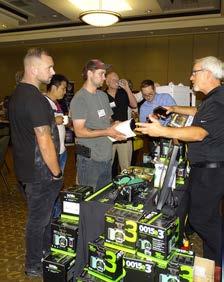















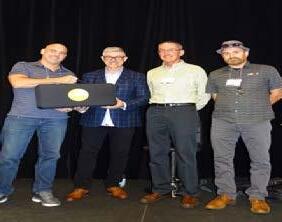







































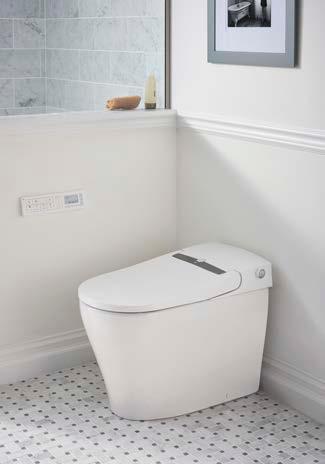
From DXV, the AT200 LS SpaLet electronic bidet toilet features hands-free flushing, an automated lid and seat heating. It has an adjustable two-nozzle water-spray system and integrated air dryer. The dual-flush toilet offers a choice of a 0.92-gpf or 1.32-gpf. The toilet includes an Air Shield deodorizer and Room Refresh. Plasmacluster technology is also used with a blue light, intended to clean the air inside the bowl when the lid is closed. www.dxv.com
Dean, Beluga and Nano collections from THG Paris are available in a variety of finishes. Nano features a widespread lavatory. The collection is available with an angular or curved spout with choice of cross or level handles. A single-hole design is also available. Knurled fasteners are included on each valve base of the Dean collection. Beluga is available in cross or lever handles. www.thg-paris.com
From HTP Comfort Solutions LLC, the Everlast electric mini tank is available in 2 ½, 4 and 8 gallon capacities and can be used for a single faucet or as a booster unit. A cold water line and electrical connection are required for installation. It features a titanium glass lined tank. www.htproducts.com

REHAU PlumbingCAD 2018 takeoff software is available for the company’s PEXa plumbing system. Offered through Avenir Software Inc., the CAD-based software is pre-loaded with REHAU’s plumbing system components. The software allows users to import PDF and AutoCAD drawings, trace the plumbing system and generate a materials list and quotation. Reports and drawings provide the contractor with shop drawings and a bill of materials. www.na.rehau.com/plumbingcad
Thin shower heads from Franz Viegener are manufactured from steel sheets and have an overall thickness of 4 mm. Models include an oval or square rain head, with a surface that ranges from 12 to 16 in., in addition to Dominic Plus and Alesia Plus. All three shower heads include a self-cleaning feature and are available in the following finishes: polished nickel, polished chrome, oil rubbed bronze, brushed nickel, black chrome, rose gold, polished gold and brushed gold. www.franzviegener.us
From Grohe, the Rainshower 310 SmartActive showerhead is available in round or square options. Oval water outlets arranged in a starshaped pattern at the centre of the spray face generate a massage jet. Those are surrounded by an arrangement of nozzles producing a PureRain spray. The showerheads feature the company’s SmartControl push-and-turn buttons. The round option has a 12-in diameter, and the square has a 12-in edge length. The shower faces and SmartControl units are available in StarLight chrome finish. www.grohe.ca
The Pekoe apron front kitchen sinks from American Standard are made from 18-gauge stainless steel and have a rubber padding on the bottom and sides of the sink. It has an insulated undercoating and 10-mm rounded corners, as well as channel grooves at the sink base. Available in 30 in. and 33 in. sizes, the sinks include a coordinated strainer, installation instructions, cut out template, and stainless steel bottom grid. www.americanstandard.ca



































































• Includes everything necessary for a successful installation





• Saves space and eliminates costly field fabrication
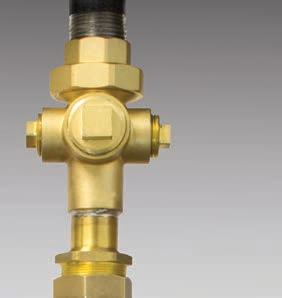



• Avoids precise calculations


• Provides precise spacing for hydraulic separation




• Simplifies future maintenance






• Hydro-Core solutions available for most wall hung, floor standing, and combi boiler installations








































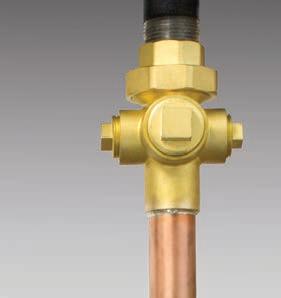



























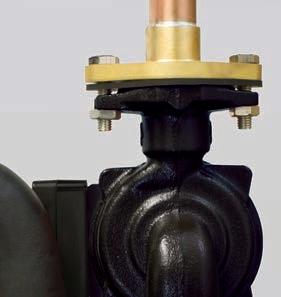












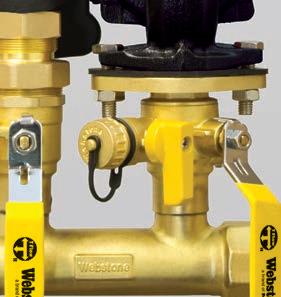


































Orca sinks from Franke feature an integrated ledge and offset drain. Available in six models, the single-bowl sinks can be made from an 18 gallon stainless or sanitized granite colours. The sink can be outfitted with stainless steel or granite Orca faucets and stainless steel filtered water dispensers. www.franke.com
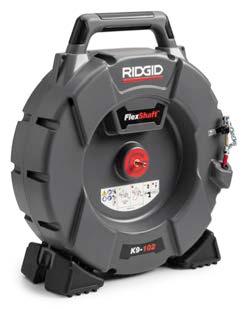
From Ridgid, the FlexShaft drain cleaning machines are designed for 1 ¼ in. to 4 in. residential and commercial pipes up to 70 feet. The machines utilize chain knockers designed to expand the size of the pipe. The chain knockers are connected to a nylon-sheathed cable housed in a fully enclosed drum and powered by a cordless drill attached to the driveshaft. www.ridgid.com
The TD-300 elevator channel drains from Watts are designed to evacuate 100 gpm of water. The stainless steel channel drain aims to keep water from draining through the elevator shaft while fire fighters are extinguishing a fire and evacuating the building. It is available in 36 in., 42 in., 48 in., 60 in. and 96 in. sizes. www.watts.com
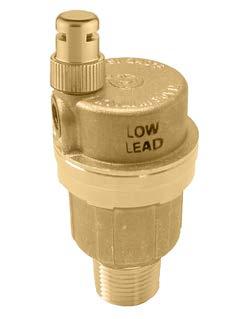
The Plumbvent automatic air vent from Caleffi is designed to vent air from water at high points in plumbing and domestic hot water system piping. Part of the NA5026 Series, the vent is available in ½ NPT male connection and is supplied with a hydroscopic cap. www.caleffi.us

From Riobel, the Ciclo collection for the powder room incorporates the cartridge, seat, manifold and handle into a single cylinder. The collection includes a short single-hole faucet, a long single-hole faucet, a widespread faucet and a series of accessories. The handles are offered in three textures: plain, knurled and fluted. www.riobel.ca
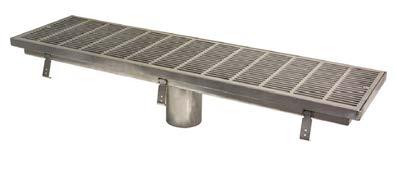
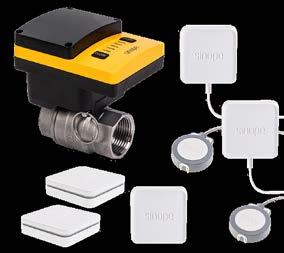
Sedna from Sinopé Technologies is a smart water leak protection system that works as a stand-alone, without requiring an intermediary or central management. When the smart water leak detectors sense water as low as 0.015 inches, the valve shuts off the main water supply and an alert is sent by e-mail or SMS. www.sinopetechn.com/en/sedna
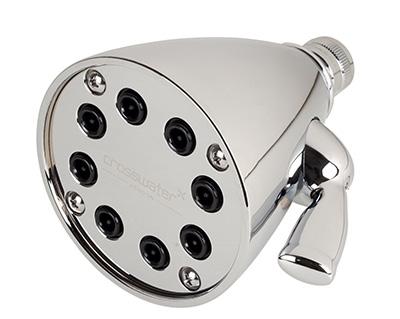
From Crosswater London, the Elements eightjet showerhead is available in polished chrome, polished nickel and stainless finishes. Made of solid brass, the showerhead features 64 individual sprays. It is wall mounted, with a maximum flow rate of 1.75-gpm. www.crosswaterlondon.com
The Moen Annex shower rail system is now available in three additional finishes: matte black, brushed nickel and oil rubbed bronze. The system attaches to the current shower arm connection point in the wall and features a built-in, two-function diverter. The handshower cradle rotates to adjust the angle of the handshower as needed. www.moen.ca

World class sports facility presents unique IAQ and air
distribution issues. BY RALPH KITTLER
Rimouski, a city of about 50,000 in eastern Quebec, has long been passionate about local sports and athletic development. The city is home to the Rimouski Océanic, a junior ice hockey team in the Quebec Major Junior Hockey league, and boasts two major post-secondary institutions with their own sports teams.
The $40-million Desjardins Sports Complex (Complexe sportif Desjardins), which opened in early 2019, is important to the local community with its swimming facilities, plus two ice rinks.
Consortium H20 Architecture created a design that blends into the urban fabric of the surrounding community and conforms to the topography of the site, which
slopes down north to south. The two pools are showcased through a large glass wall for a modern and inviting look.
The LEED Gold design will generate significant energy savings throughout the life of the facility. Contributing some of these savings is the dehumidifier, which controls the space conditions of the pool environment. Using technologies such as heat recovery and purgeeconomizer, it provides serious payback in reduced energy demand throughout the year and contributes to the facility’s overall LEED credits.
Dehumidification is central to any indoor pool. Without a good system in place, the space would be so stiflingly hot and humid it would be unbearable to use. While dehumidifiers have high energy requirements, they can incorporate several key features to reduce


The $40-million Desjardins Sports Complex (Complexe sportif Desjardins)
their demand while recycling some energy for the benefit of the facility.
Take, for example, the pool water heating. Pools are constantly losing heat through evaporation and must be continuously heated to make up for this. This takes a lot of energy — it is not uncommon for large facilities like the Desjardins complex to spend hundreds of thousands a year on heating the pool water alone.
To reduce these costs, mechanical en -
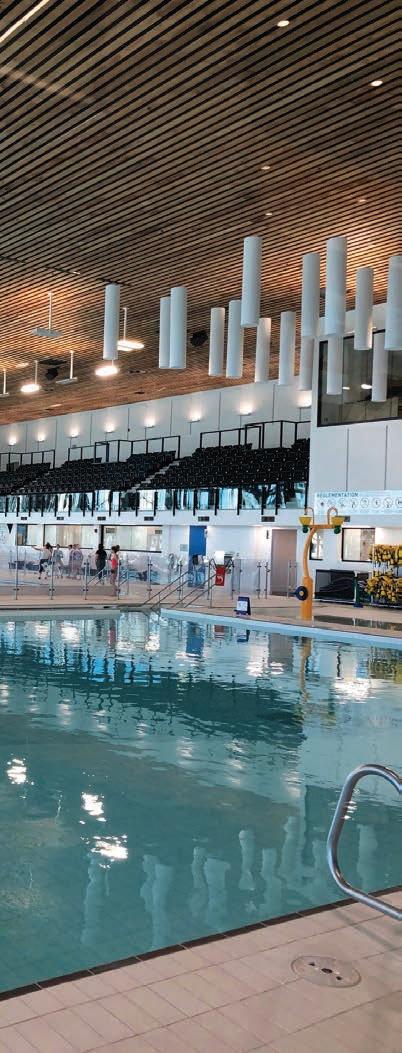
gineer and general contractor, Stantec specified that the dehumidifier include a pool water heating option. Pool water heating mode takes the heat generated by the dehumidification process and puts it back into the pool water. This process basically uses the pool water as a heat sink for the dehumidifier waste heat.
The pool water heater can run any time the compressor is in operation. Given the size of the two pools and the fact they will always present a dehumidification load (even when not in use, evaporation from a pool is significant), that will certainly be much of the year. As a result, the Desjardins com -
“Pool water heating mode takes the heat generated by the dehumidification process and puts it back into the pool water.”
plex will not need to run auxiliary pool water heating as often, resulting in energy savings.
Given the climate in Rimouski the dehumidifier is equipped with purge-economizer mode so it can automatically turn its compressors off at times when the outdoor air alone can control the indoor conditions, without the need for mechanical dehumidification. Even if only used for a few dozen hours a year, this feature can typically pay for itself in about 12 months.
Given the cold temperatures through some parts of the year, outside windows, walls and doors dropping below the space dew point and forming condensation is always a concern. Not only does it look unsightly, but condensation on surfaces can promote corrosion and mould.
While a high-performance dehumidifier is critical to preventing condensation in an indoor pool, it relies on a good air distribution system in order to do its work. Stantec created a network of ducting that delivers the airflow exactly where it is needed. Surfaces where condensation could form, like windows, are covered. As well, the breathing zone — the area where patrons are — gets its share of fresh airflow to ensure there are no stagnant zones. The team even put their design accent on the ductwork, by integrating it with the cedar wood ceiling.
Exhaust air intakes were also strategically placed in the facility to sourcecapture harmful chemicals coming off the water surface, so they can be expelled outside the building before having the chance to diffuse throughout
the space.
Bringing this facility to Rimouski was a public effort in every way. Construction began in 2017, with funding from the City of Rimouski, Province of Quebec and the Government of Canada, plus a $4-million contribution from the local office of the Desjardins credit union. It was built on land contributed by the University of Quebec in Rimouski.
Thanks to the collaborative effort by three levels of government, plus other community stakeholders, citizens of Rimouski are now the stewards and users of a one-of-a-kind athletics facility.
Editor’s note: This project was one of nine in the region funded in part by the New Building Canada Fund, Small Communities Fund–Provincial—Territorial Infrastructure Component. <>
Ralph Kittler, P.E., has had more than two decades of experience in indoor pool design and dehumidification. Currently the vice president of sales national accounts for dehumidified air solutions (DAS), he was formerly the vice president of sales and marketing for Seresco, a dehumidifier company he co-founded, which is now a division of DAS. As an ASHRAE Distinguished Lecturer, he was the reviser responsible for Chapter 25 (“Mechanical Dehumidifiers and Related Equipment”) in ASHRAE’s 2012 Systems and Equipment Handbook.

Blower door testing offers opportunity for contractors.
BY JILLIAN MORGAN
Whether it is a new build or renovation project, air tightness isn’t a given. Pinpointing air leaks in a home or building can save energy and improve comfort – and the green building boom has made constructing airtight structures essential.
Chad Deschenes, head inspector and owner of Albertabased CHP Inspections & Consulting Services, says this has allowed services such as blower door testing and thermography to gain traction.
“Everybody wants to get into it. It’s like the new gold rush,” he says.
The renewed interest in blower door tests, which use a specialized fan to depressurize a structure to locate air leakage, is largely thanks to building codes in cities such as Vancouver that require energy audits when retrofitting an existing building, Deschenes says.
“More and more, with building air tightness, this is where we have a lot of issues with energy efficiency, air infiltration, which cause environmental issues such as mould in buildings, especially in colder climates,” Deschenes adds. “This is where the issues are arising and this is where they’re implemented more from the provincial or federal governments.”
When it comes to blower door, there are two types of tests: building envelope and energy audit. An energy audit tests a structure as it functions on a regular day.
“With a building envelope test, you’ve got to close off all the vent systems, everything. You need to make sure all the steps are taken,” he says. “This includes multiple people at the doors to make sure they’re not open during the test.”
He adds that a building envelope test could take anywhere from one to three days of preparation.
“Depending on the location, you might have to rent heavy equipment to get to these areas if it’s not accessible. You’ve got all your safety gear, your safety harnesses,” he says. “It’s pretty intense.”
For Deschenes, thermography is an essential technology for building envelope inspections. Using a thermal imaging camera, the company’s team can locate energy inefficiencies or property defects.
“With blower door testing on a building envelope, they’re looking for a specific ACH (air changes per hour) number – that means how tight that building is, how much air infiltration is coming into the building,” Deschenes says.
“A lot of firms are wanting to build these homes and buildings very airtight… What happens is, if it fails, people want to
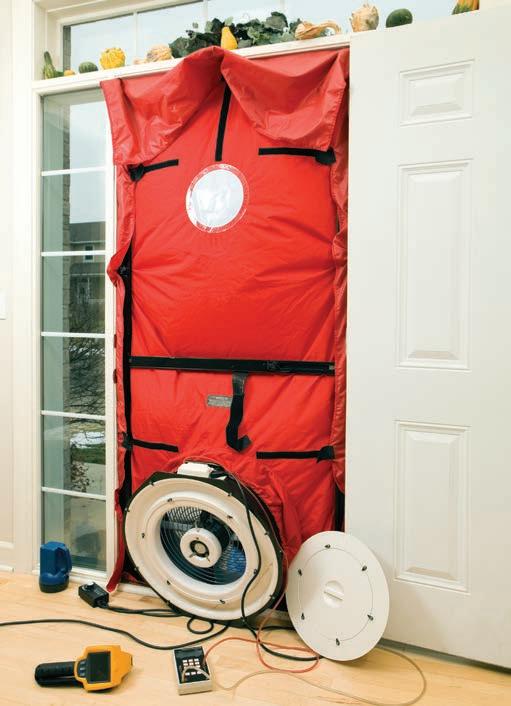
know, ‘How do we know where we failed?’ That’s where thermography comes into place.”
Deschenes, who operates throughout Alberta and British Columbia, says the popularity of blower door testing has a downside.
“There are a lot of people in this industry trying to do blower door testing, but they’re not specifically trained, and there are no requirements that you have to be,” he says.
At the same time, he notes that contractors can’t just buy the piece of equipment and perform the testing without knowing the proper procedures.
The company performs most of its work on commercial buildings and some specialized residential projects. To get the job done correctly, Deschenes says the team invests in training.
“If it is going to affect someone’s life, we want to make sure we’re doing ite right,” he says. <>
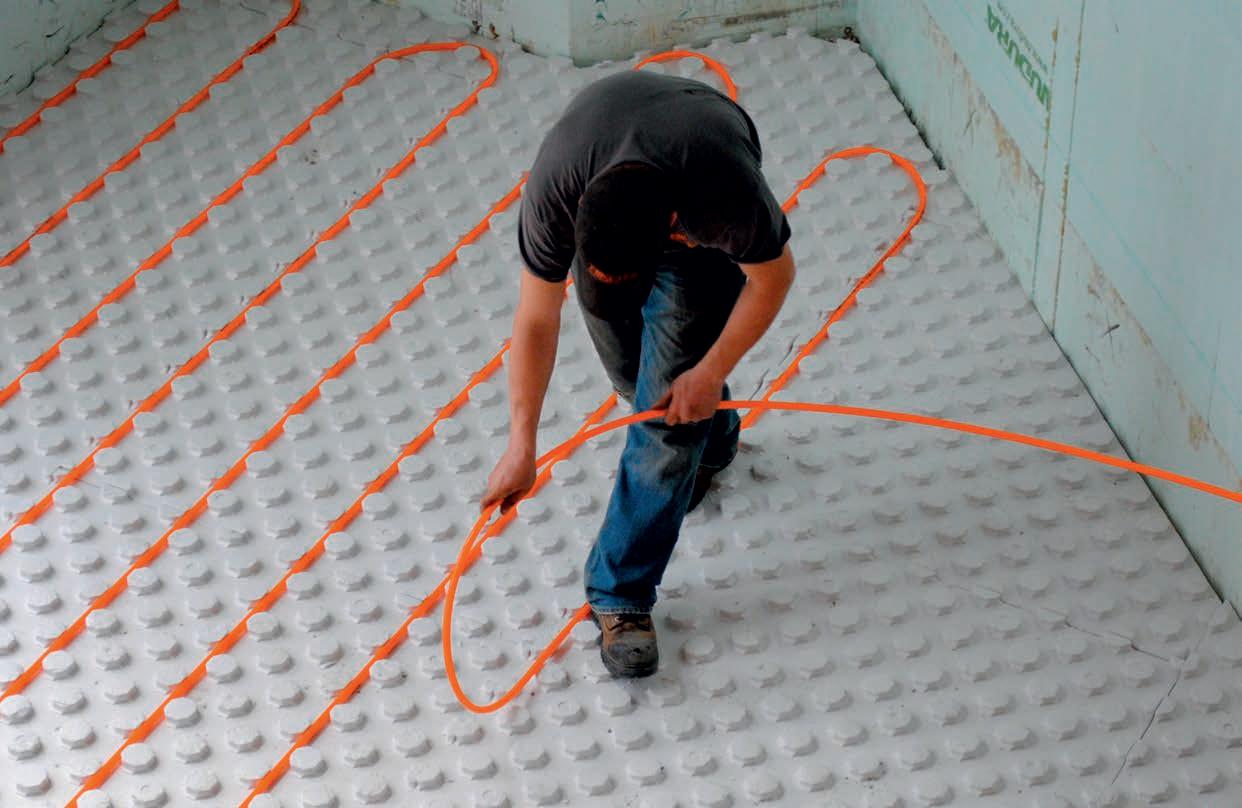
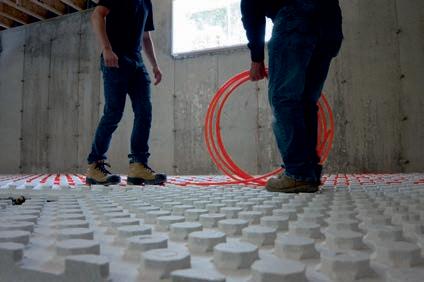
The floor of a building is often the most ignored surface when it comes to insulation. The floor, when insulated with HYDROFOAM®, completes the building envelope and increases comfort and energy efficiency.
HYDROFOAM® maximizes radiant floor heating by ensuring the heat is dispersed evenly throughout the entire floor area, providing building occupants with a comfortable living and working environment.
HYDROFOAM® is the ideal radiant floor insulation product for residential and commercial construction projects. Visit nudura/hydrofoam.com today to start your next project!


The return on investment from re-staging with an active sensing system can be as low as 12 months. BY STEVEN
GRAVES
Laboratory buildings are the largest energy consuming buildings. To date, most of the attainable lab ventilation energy savings are accomplished through lab air change rate reductions. This is especially true in existing labs that were commissioned years ago, with ventilation levels that are excessive compared to today’s standards.
Recently, it was quite common to operate labs at eight to 12 air changes per hour (ACH), or higher. Today, labs are often commissioned at 6 ACH or less. Efforts to reduce ACH values result mostly in energy reductions associated with the air that is supplied to labs, with very little savings associated with lab exhaust.
Although exhaust CFM in a lab may be reduced, the total exhaust through the lab exhaust fan must be maintained. This is to ensure that safe fan exit velocities are maintained to properly disperse contaminants as they exit the building. Many lab exhaust fans incorporate a bypass damper to enable the exhaust fan to maintain its total flow and exit velocity as lab flows are reduced.
Lab exhaust systems frequently incorporate high plume dilution fans, as well utility sets and other fan systems. Their function is to provide safe dilution of contaminants in the lab exhaust air, and to maintain inlet static pressure to support the exhaust flows from the lab.
The standard for safe lab exhaust fan exit velocity is ANSI Z9.5, which states, “The exhaust stack velocity shall be at least 3,000 ft/min (15.2 m/s) is required unless it can be demonstrated that a specific design meets the dilution criteria necessary to reduce the concentration of hazardous materials in the exhaust to safe levels at all potential receptors." In many cases, lab exhaust fans run well above 3,000 ft/min.
A critical assumption is that lab exhaust is always contaminated, therefore requiring these high exit velocities constantly. In reality, lab exhaust air is clean conservatively more than 70 per cent of the time. In some facilities, such as teaching labs, the exhaust air may be clean 95 per cent of the time or more. And lab exhaust air is likely to get cleaner as time goes on.
Many research companies emphasize the use of computational analytics before performing experiments in fume hoods. This reduces the cost of chemical disposal and minimizes safety risks. Most companies and universities use “cleaner and greener” chemicals whenever possible.
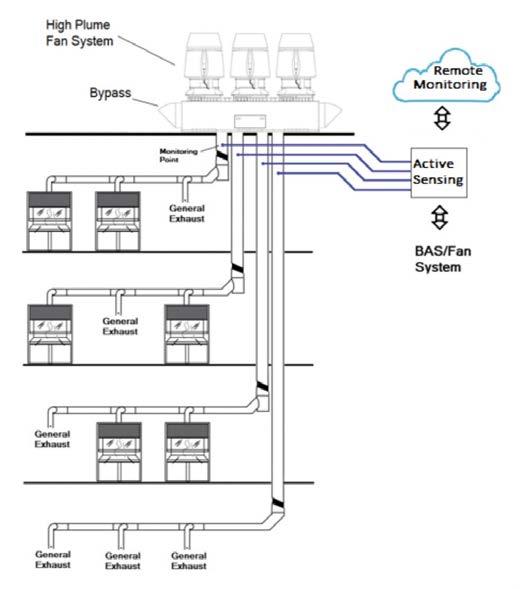
Therefore, the few active fume hoods in labs are exhausting air that is clean the majority of the time.
This substantially clean fume hood exhaust air is typically mixed with the general lab exhaust air either in the exhaust risers or in the plenum of the lab exhaust fan. This mixing with the clean air of the general exhaust provides considerable dilution (conservatively 400:1) before reaching the lab exhaust fans.
As plume height and exit velocities per ANSI Z9.5 are a nonissue when the lab exhaust air is clean, there is a tremendous opportunity for energy savings through active sensing. Active sensing is defined as the process where the cleanliness of the lab exhaust air is continuously monitored for contaminates and the associated exhaust fans are indexed accordingly to drive large energy savings. This is a binary process.
When exhaust air is clean, in which contaminant concentrations are less than a pre-determined threshold, the fan exit velocity is reduced. When the exhaust air is contaminated, that is greater than the threshold setting, the lab exhaust fan is indexed to full dilution.
Active sensing, as shown in Figure 1, typically incorporates a multi-point air sampling approach, which monitors a location on each riser that is manifolded to the fan set. Monitoring at the plenum is possible. However, monitoring the risers is a more conservative approach. There will be additional dilution in the plenum from other risers, which will likely be clean.
Simultaneous spills in multiple fume hoods are highly unlikely. Air samples are continuously drawn from each riser in a sequential fashion and analyzed by the system using a photoionization detector (PID) sensor technology. The PID is capable of detecting hundreds of compounds commonly found in laboratory facilities. It is also a technology that is recognized by health and safety professionals worldwide.
Once all the monitoring points have been verified to be free of contaminants, the system issues a “setback” command to the specific exhaust fan controls to reduce exit velocity. As soon as contaminants are detected in any of the risers, the system immediately switches out of setback, isolates the PID via a sensor protection mode and signals for the fans to go to full dilution.
Isolating the PID from excessive exposure to contaminants is critical and any active sensing system used for this purpose must have this capability to be safe. Without this capability, continuous exposure to a stream of contaminates will cause the PID to rapidly foul.1 When contaminants are detected, the fan system is commanded to full dilution, usually for 20 to 30 minutes to prevent the “fan hunting.”
There are two opportunities for energy savings with active sensing. One way is through the elimination of bypass air. Bypass air is added to ensure adequate exit velocity (e.g., plume height) is achieved without impacting inlet static pressure. As an example, if a lab is exhausting 20,000 CFM, but 30,000 CFM is required through the fan to maintain adequate plume height, 10,000 CFM will be introduced via the bypass air damper.
When the exhaust air is clean, plume height is a non-issue. The bypass air can be eliminated, saving significant break horsepower.
The second opportunity for savings is via fan re-staging. If there are redundant fans, distributing the load to meet the inlet static pressure over the additional fan can drive very large energy savings. For example, an N+1 fan set, that is one fan operating and one in standby mode, has one fan running at 4,400 ft/min to meet the required plume height.
When the exhaust air is clean, the fan set can be re-staged to run two fans at approximately 2,200 ft/min (exit velocity and flow are essentially linear) to drive demonstrable energy savings. The savings via re-staging are from two sources. One is due to fan laws whereby a reduction in fan speed generates a disproportionately greater reduction in energy use.
The other is related to velocity pressure at the fan discharge. High dilution exhaust fans use a discharge stack and a high velocity discharge nozzle to increase the momentum
of the exhaust air to create a high plume for dilution. This high velocity discharge benefit is accompanied by the cost of increased horsepower (hp).
The pressure loss associated with any high velocity discharge is equal to the velocity pressure at the discharge. The velocity pressure is a square function of exit velocity. Therefore, reducing exit velocity by a factor of 2 will reduce velocity pressure by a factor of 4. Depending on the fan hp and local power rates, the return on investment (ROI) from re-staging with an active sensing system can be as low as 12 months, often resulting in a 20 to 40 per cent reduction in fan energy use.
A PID detects hundreds of compounds. However, it does not detect every chemical used in labs. An analysis of the chemical inventory is strongly recommended. The analysis reviews the compounds against NIOSH, ACGIH and OSHA standards for toxicity and odour thresholds. These are based on the ease that the compound may evaporate and become airborne during a spill condition. The analysis categorizes the compound into the three segments: 1) compounds detected by the PID, 2) solids or compounds with low vapour pressure that will not evaporate in sufficient quantities to pose issues in the exhaust air. (As an example, sulfuric acid is a hazardous compound, but because of its low vapour pressure, spills of this compound do not generally require high dilution from the exhaust fan), and 3) compounds that may or may not be detected by a PID that require a quantity limitation protocol, due to their toxicity or low odour threshold. This limits the quantity of the compounds allowed in the lab such that if spilled in its entirety, the air changes per hour (ACH) in the lab room provides sufficient dilution.
Active sensing provides a safe method to drive significant savings in laboratory exhaust systems. It monitors the cleanliness of the exhaust air and indexes the associated exhaust fans accordingly. The savings are primarily through the reduction of bypass air or re-staging of fans.
An important element to ensure reliable operations includes a method to protect the PID from fouling. Additionally, a review of the lab’s chemical inventory is highly recommended to confirm all compounds are either detected by the system, benign for odour and toxicity or have a limitation protocol. <>
Steven Graves is president of Measured Air Performance. He has a B.S. in Nuclear Engineering from the University of Lowell and an MBA from Georgetown University.
Reference
1. Keith A. Daum, Matthew G. Watrous, M. Dean Neptune, Daniel I. Michael, Kevin J. Hull, Joseph D. Evan, Data for First Responder Use of Photoionization Detectors for Vapor Chemical Constituents (Idaho National Lab, November 2006), 5
Canarm Ltd., a global marketer and manufacturer of lighting, livestock stabling, air moving and related products supplying the residential, agricultural, commercial/industrial and HVAC markets, recently broke ground at its expanding Brockville, ON facility.
Viega recently celebrated the opening of a seminar centre in its new headquarters in Broomfield, CO. This is the company’s second training centre in the United States. The Colorado Seminar Center joins the New Hampshire Seminar Center in Nashua in offering training and education.
The seminar centres offer classes ranging from one to five days on topics from pressing technology and radiant system design to PEX plumbing and pathogen prevention. To date, more than 40,000 people, including over a thousand Canadians, from self-employed contractors to employees of large firms, have taken courses at the centres.
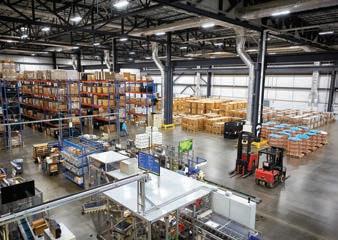
A
In addition to providing training for contractors, Viega’s Trades Education Network (VTEN) partners with trade schools and community colleges to supplement their curriculum on plumbing and hydronic systems. VTEN provides its 95 partner UAs and schools, including institutions across Canada, with
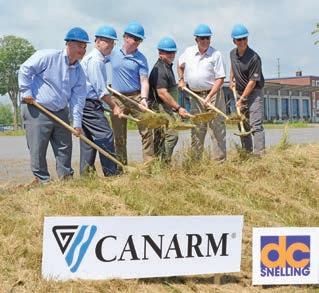
Groundbreaking at Canarm, from left to right are Brockville Mayor Jason Baker, LeedsGrenville-Thousand Islands and Rideau Lakes MPP Steve Clark and MP Michael Barrett, Canarm President and Chief-Operating Officer Jim Cooper, Canarm Chairman and Chief Executive Officer David Beatty and Brad Snelling, of D.C. Snelling Ltd.
Canarm has doubled its HVAC production area at this facility on Parkedale Avenue to 100,000 sq. ft. and invested in state of the art manufacturing technology and robotics to provide the speed, accuracy and quality required for today’s energy efficient ventilation products.
The new expansion will add an additional 90,000 sq. ft. to its existing structure in two phases to be completed over the next several years. Phase one will see the addition of approximately 57,000 sq. ft. Phase two allows for the addition of 32,000 sq. ft. as required.
This first addition will be used primarily for warehousing so existing space can re-focus on the manufacturing of the commercial/industrial ventilation products produced at the facility.
“Brockville is HVAC – we have great people and expertise that we need to put more building around to serve our customers better. We continue to re-invest in assets that are valuable to our customers!” says Canarm president and chief operating officer Jim Cooper.
Canarm is a privately-owned company that has been in business for over 80 years. It employs more than 300 people in North America, while owning the production in nearly 30 China factories. www.canarm.com
tooling packages, access to LoopCAD radiant heating and cooling systems design software and Viega’s eLearning platform. VTEN also offers instructors’ conferences, workshops and curriculum modules that integrate with each school’s program. VTEN also offers credentialed classes for Viega products.
In McPherson, KS, a two-year building program was recently completed. This included: a 90,000-sq. ft. expansion of a manufacturing plant, completed in December 2017; a 205,000-sq.-ft. manufacturing plant, completed in June 2019; and a 25,000-sq.-ft. tool shop and ap-
prentice building, completed in July 2019
Additionally, a 55,000-square-foot logistics expansion is in the works in McPherson where Viega produces its PureFlow line of PEX product, as well as select fittings from the ProPress Copper and MegaPress product lines. McPherson is also home to Viega’s master distribution centre for North America.
Viega has more than 700,000 square feet of manufacturing and warehouse space at the 127-acre campus. It employs 300 people and expects to add more. www.viega.us


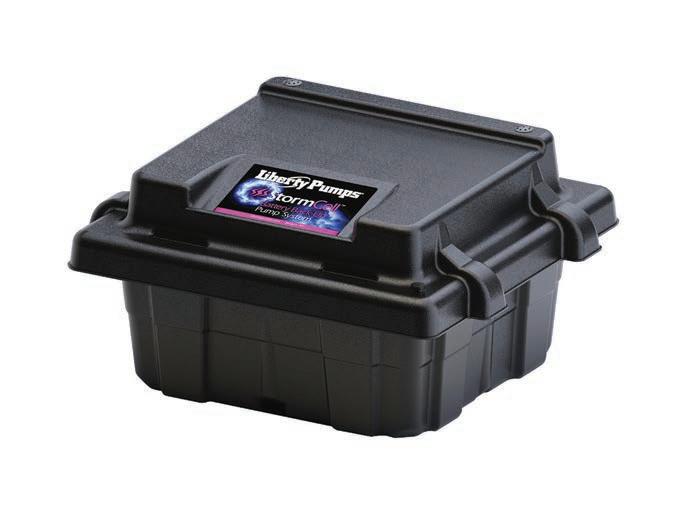

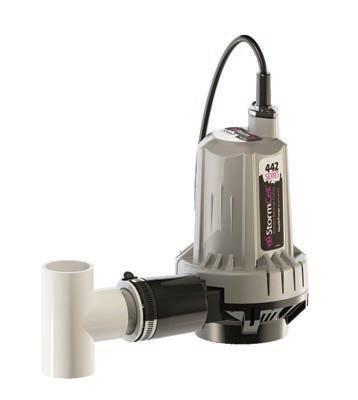
The new StormCell® series of battery backup pumps from Liberty feature advanced professional-grade chargers, energy e icient pumps for longer run times, and optional NightEye® wireless technology for remote monitoring through your smart device.
• Available in both standard and wireless connected models
• Professional-grade chargers (10 amp and high-output 25 amp)
• Single and dual battery systems
• Energy efficient DC pump (manufactured in the U.S. by Liberty)
* Model 442-25A, StormCell® Group

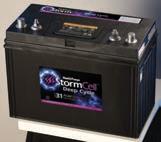
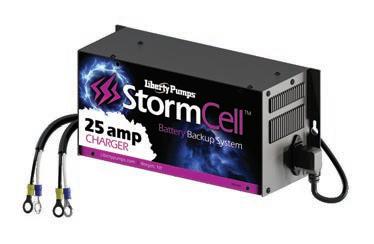




Mifab has been a family owned manufacturer of engineered plumbing and drainage solutions since 1982, and on August 6 the company celebrated the groundbreaking for its 68,000 sq. ft. expansion in Chicago, IL. The planning for the expansion began just over a year ago and has an expected completion date of January 2020.

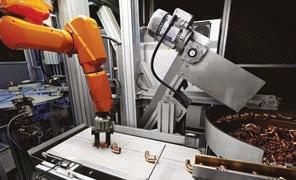
Bonomi Group has acquired the company FRA.BO. S.p.A., headquartered in Quinzano d’Oglio, Brescia, Italy. Celebrating its 50th anniversary this year, FRA.BO is a manufacturer of copper, stainless steel, carbon steel, brass and bronze fittings for plumbing installations. The company’s products are marketed under the Frabo brand. Frabo fittings are used in water distribution, heating/cooling, gas distribution, steam/high pressure, compressed air, industrial applications and OEM solutions.
The Frabo production plant in Bordolano, Italy produces press-fittings, endfeed fittings, compression and threaded fittings. Sixty million pieces are manufactured annually and exported worldwide. The Frabo catalogue includes more than 6000 items. www.bonominorthamerica.com www.frabo.com/eng/
volved in a partnership with SPX Cooling Technologies, Inc. since 2015 to produce the Cube line of forced-draft and induced-draft evaporative condensers designed to support a variety of industrial refrigeration applications.
At the ceremony Mifab president Michael Whiteside expressing his gratitude to everyone who has played a crucial role in the expansion, including long-time Mifab employees. Mifab was first headquartered in Canada and moved to the U.S. in 2006.
The expansion will house some of Mifab’s growing product lines, such as HDPE plastic interceptors that range from holding tanks of 75 to 2,000 gallons. The new space will also provide additional distribution space and testing for BEECO Backflow Preventers. www.mifab.com
SPX Corporation has completed the acquisition of SGS Refrigeration Inc., based in Dixon, IL. SGS is a manufacturer and distributor of industrial refrigeration products in the North American market.
SGS Refrigeration Inc. is a manufacturer and supplier of industrial evaporators and evaporative condensers. Founded in 2010, SGS has been in -
“We are excited about SGS joining the SPX team,” said Gene Lowe, president and CEO of SPX Corporation. “As a leader in industrial refrigeration, SGS has operated as a close partner with SPX Cooling Technologies in the evaporative condenser market. I am very pleased with the progress this partnership has made and look forward to the next phase of our growth together, as we combine our resources to further expand our addressable market and product suite of industrial refrigeration solutions.”
SPX Corporation is a supplier of highly engineered products and technologies within the HVAC, detection and measurement, and engineered solutions markets. Based in Charlotte, NC, SPX Corporation had approximately $1.4 billion in annual revenue in 2018 and approximately 4,000 employees in 17 countries. www.spx.com www.sgsrefrigeration.com
Honeywell and 7-Eleven Inc. have an-
nounced the adoption of Honeywell Solstice N40 (R-448A) refrigerant as 7-Eleven’s standard for remote condensers supporting its refrigeration cases installed across Canada and the United States.
The convenience retailer set measurable corporate social responsibility (CSR) goals in 2016 to reduce its environmental footprint. The company’s CSR mission has three focus areas – planet, products and people. Using 2015 as a baseline, 7-Eleven committed to continuing to reduce its carbon footprint and increase community engagement in the U.S. and Canada by concentrating on energy, packaging and philanthropy.
It aims to reduce its energy footprint in stores by 20 per cent by 2027.
Based on hydrofluoroolefin (HFO) technology, Solstice N40 offers GWP that is approximately 60 per cent lower than legacy HFC refrigerants. In addition, Honeywell reports that Solstice N40 also consumes less energy. In the U.S. and European supermarket trials, in comparison to R-404A, Solstice N40 demonstrated an average of five per cent lower energy consumption in low-temperature applications and between five to 15 per cent lower energy consumption in medium-temperature applications. www.honeywell.com
Continued on p56












Trane has announced that it has acquired Arctic Chiller Group, a Canadian-based HVAC manufacturer, specializing in high efficiency air- and water-cooled, modular and process chillers for commercial HVAC and process cooling applications.
“We are pleased to incorporate Arctic Chiller Group solutions into our leading portfolio of energy efficient systems and services,” said Donny Simmons, president of the commercial HVAC business of Ingersoll Rand. “Arctic is a great brand with great people and high-quality products that serve a growing market. With Arctic, we now offer customers even more choices for reducing energy and operating costs. We look forward to the growth potential we have together.”
“Arctic Chiller Group is proud to join Trane,” said Angelo Troiano, president and chief executive officer of Arctic Chiller Group. “I know Arctic will continue to reach new heights as part of a leading global company. With the support and investments from Trane, Arctic can expand the availability and distribution of our products, and better serve new and existing customers with our highly energy efficient solutions.”
Arctic Chiller Group operates from locations in Ontario and Newberry, S.C. The Arctic Chiller Group acquisition is consistent with Trane’s focus on energy efficiency and sustainability.
In other Trane news, the company recently held a celebration marking significant expansion to its Columbia, South Carolina facility, and ongoing efforts in environmental, social and business sustainability. Local and statewide public officials, and members of the community joined Trane business leaders, employees and customers to:
• Celebrate the more than $100 million expansion of the facility, and the high-performing, energy-efficient HVAC products it manufactures;
• Highlight the facility’s installation of a 1,342 kW solar power system, which reduces over 74,000 metric tons of greenhouse gas emissions over the system’s 25-year lifespan;
• Present a grant from the company’s charitable foundation to further educate and train the next generation of skilled workers and STEM enthusiasts; and
• Recognize employees for their personal commitment to the plant’s expansion.
Trane unveiled more than 1 million square feet of space for advanced manufacturing equipment, maintaining the innovation and production of heating, cooling and ventilation products for the company’s commercial HVAC business. The investment applies Trane’s expertise in environmental technology and energy efficiency to reduce energy use, greenhouse gas emissions and waste-to-landfill.
The Columbia facility expansion, along with workforce initiatives and community donations, are in line with the company’s
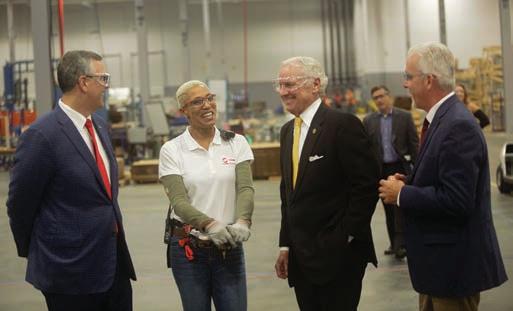
Danica Armstrong, Trane Columbia production leader, discusses operations at its recently expanded facility in Columbus, OH, with Donny Simmons, president, Trane Commercial HVAC North America and EMEA (far left), Governor Henry McMaster (middle), and Trane Columbia Plant Manager Gregg Krick (far right).
2030 Sustainability Commitments, which it announced in May upon accepting the World Environment Center’s 35th Annual Gold Medal for International Corporate Achievement in Sustainable Development. The company designed these commitments to:
• Meet the challenge of climate change including reducing customer carbon footprint from buildings, homes and transportation by one gigaton1 CO2e– equivalent to the annual emissions of Italy, France and the United Kingdom combined.
• Transform its supply chain and operations to have a restorative impact on the environment including achieving carbon neutral operations and giving back more water than we use in water-stressed areas.
• Increase opportunity for all, strengthening economic mobility and bolstering the quality of life of our people including gender parity in leadership roles, a workforce reflective of our community populations, maintaining livable market-competitive wages and broadening community access to cooling comfort, housing and food. www.arcticchillergroup.com www.IngersollRand.com/2030
Silver-Line Plastics has that its shareholders have entered into a Share Purchase Agreement pursuant to which it will be acquired by IPEX. Silver-Line Plastics is a U.S. manufacturer of plastic pipe products with facilities in Asheville, NC, Lawton, OK and Fort Pierce, FL.
With this acquisition, IPEX intends to increase its market position in the U.S. with an expanded product portfolio serving a broader client base.
The sale is subject to regulatory approval. www.slpipe.com www.ipexna.com
Continued on p58



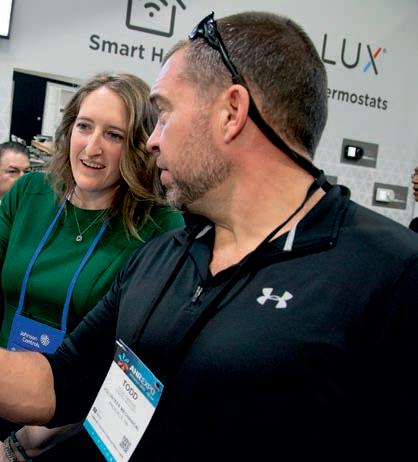
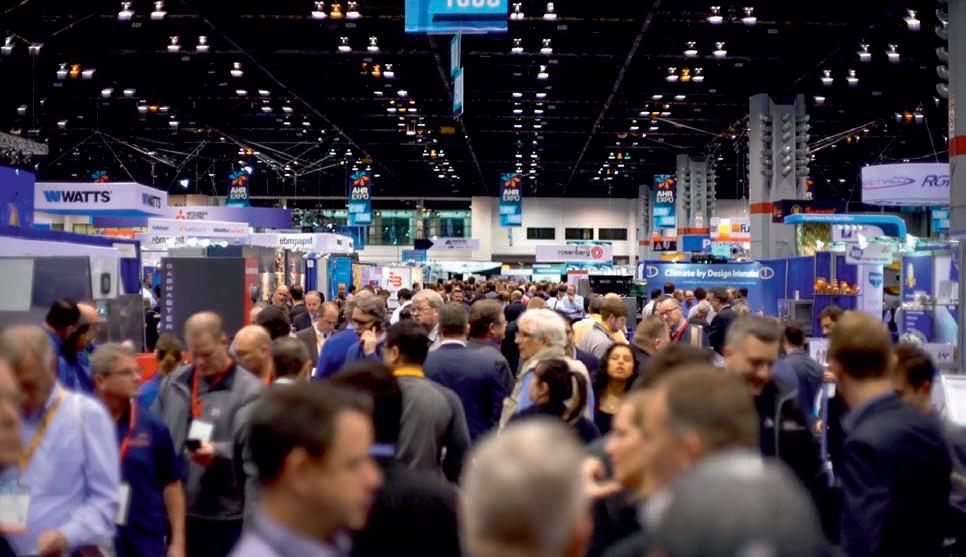

A. O. Smith, a Milwaukee-based manufacturer of residential and commercial water heaters, boilers and water treatment products, recently announced the beginning of its plans for integrating its most recent acquisition into its North American Water Treatment (NAWT) division.
NAWT includes A. O. Smith branded water filtration and softening products, Aquasana based in Austin, TX, Hague Quality Water based in Columbus, OH, and Water-Right based in Appleton, WI, and acquired by A. O. Smith in April of 2019.
Luke Java, the director of sales and marketing for Water-Right, Inc., will assume the role of managing the Hague Quality Water regional sales personnel in addition to the Water-Right regional sales personnel. This move will create a central point of leadership for both sales and marketing teams, allowing better allocation of resources and providing even stronger customer support coverage.
The former sales manager for Hague, Jared Camacho, will be shifting his efforts to become the national manager of water softener Retail Sales Accounts. This role will manage and further expand the retail market channel in North America.
Erik Koglin, formally the field manager of the Clear Choice Water Group at WaterRight, will now assist in managing the dealer networks for both Water-Right and Hague as a national channel manager. All of the dealer’s independently owned businesses dedicated to these branded networks will continue to operate as usual.
Kevin Osborn, the northeast regional sales manager for Water-Right, will be taking on the role of account manager for Hague dealers in the New England territory. This will fill a formerly vacant role in the area while working to facilitate efforts between Water-Right and Hague dealers in that area. www.aosmith.com
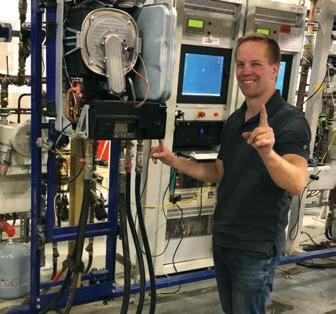
Chad Euverman shows off Eco-King’s first “made in Canada” boiler off the line.
Eco-King Heating Products Inc. held an open house this fall to celebrate completion of its 8,600 sq. ft. manufacturing plant in Surrey, BC. The production line arrived from the Netherlands on December 24, 2018 and it was fully assembled with first boiler tested and ready for sale by March 30, 2019, reports Chad Euverman, Eco-King sales manager.
Eco-King can produce up to 5000 units per year. In addition to the full manufacturing facility, the site has warehouse space and a live fire training room.
The company’s product line now includes: boilers ranging from 99,000 to 499,000 Btu for residential and commercial applications, high efficient unit heaters, stainless steel and glass lined hot water tanks, plastic vent products and more. www.kingheatingproducts.com
>> Central Air Equipment (CAE) will focus on promoting and selling Atlas Copco’s Industrial Air range of products and servicing this equipment with OEM spare parts. In addition to its existing installed base for over 24 years, CAE is focused mainly in the industrial manufacturing and service industries in Alberta. CAE has been an Atlas Copco distributor for the Power Technique business area for many years and now adds compressors to their portfolio. www.atlascopcogroup.com
>> Diverse Electronics has been named the Canadian electronics stocking franchise distributor for WAGO connectors. WAGO’s spring pressure connection technology has been applied to interconnect products including PCB terminal blocks, DIN rail terminal blocks, pluggable connectors, electrical installation products including lever nuts and wall nuts, as well as all accompanying markers and tools. www.diverseelectronics.com www.wago.com


Mestek, Inc.’s Distributor Products Group has made some changes to its marketing services group. Meagan Harrington will be taking on the role of digital marketing manager for all brands under the Distributor Products Group umbrella. Amy Babikyan will be transitioning from sales management and assuming the role marketing manager for all residential products as well as some of our commercial product offerings.
comes to Bradley from Lixil Water Technology. A ten-year Bradley veteran, Vickery will lead Bradley’s commercial washroom business development specification team as well as spearhead the company’s new inside sales and account management team.


Mitch Barton is joining Ridgid as marketing director of the company’s Global Press Connection team. In this new position, Barton will manage product development, partner relations and new business opportunities for the line of press tools. He previously served as director of global product management for Performance Health in Akron.
The ECCO Group has announced the appointment of Bill Davis as vice president and general manager of ECCO Heating Products Ltd. In Langley, BC. Davis joined ECCO in 2018 as director of sales branch operations and has served on the HRAI Wholesalers Division Board of Directors since April 2019. He assumes leadership from Shaine Nobert who recently announced his departure to venture into an opportunity outside of the industry. In his new role, Davis continues to oversee ECCO Supply, while adding overall responsibility for ECCO Manufacturing and ECCO Machinery.

Owen Suchar has been appointed national sales manager for the United States at Ouellet Canada Inc. He has been with the company since September 2015 and was most recently territory manager for the Canadian prairies and Chicago. Headquartered in l’Islet, Quebec, Ouellet Canada Inc. develops, manufactures and markets electric heating products throughout North America, Europe and Asia.



Ariel Rubinstein has been named president and general manager of Atlas Copco Compressors Canada, effective October 1, 2019. Prior to this appointment he was general manager of Atlas Copco Argentina S.A.C.I. He joined Atlas Copco Argentina S.A.C.I in 2004 as a service engineer. Rubinstein will be relocating to Canada.


Avi Kahn, region head and chief executive officer of Hilti North America, has been promoted to the Hilti Group Executive Board effective January 1, 2020. Over his 15-year career, Kahn has held various roles with Hilti, including six years as general manager of Hilti Canada. Martina McIsaac, currently general manager of Hilti Canada’s Canada Market Organization, will take over Kahn’s position. Under her leadership, Hilti Canada has also received numerous recognitions as a best-in-class workplace.


Luis de Leon has been named executive vice president of Bradley. In this newly created position, he will focus on Bradley’s global sales, marketing and operations, while advancing its efforts to align with marketplace needs. With over 15 years of senior executive experience, de Leon will continue developing Bradley’s innovation, distribution and manufacturing strategy. Bradley has also announced that Mark Owens has been hired as director of commercial sales and Mike Vickery has been promoted to commercial business development director. Owens will oversee sales growth by building relationships with industry customers, leading sales teams and strategic management of the wholesale rep channel. He
Brad Snyder has been named senior vice president and president of the Goodman Business Unit for Goodman Manufacturing Company, L.P. effectively immediately. The move coincides with the announcement that Satoru Akama assumes the leadership role as president and chief executive officer of Goodman Global Group, Inc. Previously, Snyder was the senior vice president of North American sales and distribution.
Stelpro has announced the appointment of its new national sales director, Dany L'Heureux. The Quebec-based heating products manufacturer has chosen him to lead and implement solutions that enable it to achieve its strategic objectives and continue its growth in the retail sector. L'Heureux joins Stelpro with training in electricity, along with over 20 years of experience in the retail and hardware industry where he has held various positions from merchandising to sales and sales management.

‘They really hate us’: New prompt payment rules may help mend relationship between GCs, subtrades
BY DAVID KENNEDY
Alittle tension between owners, general contractors and the subtrades is par for the course on a job site. Throughout the construction pyramid, brushing shoulders on occasion is just a natural part of the business.
“It’s been there as long as I can remember to different levels of seriousness,” said Clive Thurston, president of the Ontario General Contractors Association (OGCA).
While parties find a way to work together more often than not, occasionally frustration boils over. In early industry sit-downs aimed at drawing up prompt payment rules in Ontario, for instance, Thurston remembers many of his members going into meetings thinking payment timelines were a non-issue.
It was a startling wake-up call.
“'They really hate us,'” he remembered one GC saying. “'It’s not dislike, it’s not that they’re upset -- they hate us.'”
Over the past 20 years, payment timelines have lengthened from an average of around 50 days to more than 70. Subcontractors, at times, have been made to wait four months or more before getting their due.
The resulting tension has been palpable and new legislation coming into force Oct. 1 in Ontario is designed to fix the long lag time between work being finished and contractors, subcontractors and material suppliers collecting their money. By laying out no-nonsense, nonnegotiable timelines for payment and establishing a new dispute resolution process through adjudication, the

“Disputes over payment trigger the adjudication process, which helps discourage work stoppages and lessen the amount of litigation that’s often built up by the end of a major project.”
changes are also likely to help mend relations between generals and their subs.
“It’s going to be a big change, both with adjudication and prompt payment, but I think working with adjudication brings a lot of transparency to the process,” said Kara Takagi, an Ottawabased construction lawyer with Borden Ladner Gervais (BLG).
“Through the payment hierarchy of a construction project, you know who’s being paid and when, and you know when they’re not being paid, and you know how much and why,” she added. That transparency will give a lot of comfort, especially to subcontractors and suppliers who are down the chain, so to speak.”
Under the new prompt payment and
adjudication rules, the general contractor kicks off the payment process by delivering a “proper” invoice to the owner. Assuming there’s no dispute over payment, the owner then has 28 days to pay the contractor, which in turn has seven additional days to pay its subcontractors. Subcontractors have another seven days to dole out money to their sub-subcontractors, and so on down the pyramid.
Disputes over payment trigger the adjudication process, which aims to solve problems in real-time, help discourage work stoppages and lessen the amount of litigation that’s often built up by the end of a major project. Adjudicators, who are expected to be industry veterans, will have 30 days to make a determination on the dispute. The binding decision will keep construction projects moving when in the past, they may have ground to halt.
Ontario will be the first Canadian jurisdiction to bring in prompt payment and adjudication rules, but there are numerous international examples. The U.K., for instance, has used the process since 1998 and seen litigation decline considerably. Ottawa recently passed legislation that will establish a prompt payment and adjudication process for federal projects starting next June and most provinces are moving on enacting regimes of their own.
The process does have its limitations. Takagi pointed to a big claim for delay damages as one example of an issue adjudicators likely aren’t equipped to resolve within their 30-day window. Overall, however, she expects the clear-cut payment timelines and certain other stipulations included in Ontario’s new Construction Act to improve communications on job sites and even out the balance of power.
“Subcontractors, especially small subcontractors, they’re really kind of waiting for the people above them in the payment line for the money to flow down to them,” Takagi said. “Now, all parties involved have the right to issue a notice of adjudication, all parties are going to know when exactly they should be paid based on when money from the owner flows.”
Backed up by legal recourse, subcontractors that have been forced to keep mum on an issue in the past may be more likely to speak up without jeopardizing the relationship with the GCs they work with regularly.
Martin Luymes, vice-president of government and stakeholder relations at the Heating, Refrigeration and Air Conditioning Institute of Canada (HRAI), which represents both contractors and manufacturers in the HVAC industry, noted keeping these working relationships intact is often vital, particularly for small shops.
“These guys tend to be pretty reluctant to say that sort of thing because it’s their bread and butter business,” he said. “They line up with a handful of builders and they’re certainly not keen to alienate any one of them.”
That does not mean there isn't tension.
Stephen Sell, president of the Ontario Electrical League,
which represents a range of electrical contractors and other industry stakeholders, said the relationship between his members and GCs has been strained at times. Especially when working under a “pay when paid" clause, subcontractors might experience a months-long lag from when the work was finished to when they’re their bank balance shows it, he noted.
“The electrical contractor could be doing a small portion of the job and they could be done and it could be months before that piece of the job is done as a whole for the GC,” Sell said. “So that’s where you start getting into your longer payment cycles.”
In watching payment timelines lengthen over the past two decades, Thurston admits part of the blame rests with the GCs.
“We’re the gatekeepers and we should have been standing up to the owners… but we didn’t, we just passed it on,” he said. “That wasn’t fair to the trades that had to hang on and hang on and hang on. But they too were subject to the contracts they were signing, so we were all part of making the problem worse.”
Like many other construction organizations, the Mechanical Contractors Association of Canada (MCAC) has been pushing the prompt payment file forward for years.
Pierre Boucher, the group’s CEO, did not want to get into specifics, but noted the relationship between GCs and the subtrades has had its share of ups and downs.
“You have great stories and some others that may not be the same outcome,” he said.
Finding common ground on prompt payment has been a step in the right direction. And with the issue essentially settled in both Ontario and Ottawa, as well as making steady progress in other provinces, both generals and subs are keen to keep the clearer line of communications open in the future. Boucher pointed to the newly formed General Contractors Alliance of Canada as a great new resource the MCAC can work with on issues that affect the industry nationwide.
Likewise, Sell is cautiously optimistic about subs and generals taking a more collaborative approach after lobbying jointly on the prompt payment file.
“I just hope prompt payment helps the relationship between GCs and the subs so that we don’t have the adversarial battles going on,” he said. “Time will tell.”
Mending fences is sure to take time, and in the months ahead, all stakeholders in the construction industry -- from owners and consultants, to subcontractors and material suppliers -- will be focused on getting up to speed on unforeseen caveats enclosed within Ontario’s new rules.
"With any new process," Sell said, "as much as you do up front, there’s always stuff that doesn’t happen exactly the way it’s planned in the initial stages and it’ll take a feeling out period before everything’s running the way you hope it’s running." <>
David Kennedy is the editor of On-Site magazine. visit www. on-sitemag.com
Stud finders from Franklin Sensors utilize six to 13 sensors, designed to offer a larger sensing area. The 3- to 7-in. horizontally oriented device includes LEDs spaced across the entire width of the product (usually three lights for standard 2 x 4s). www.franklinsensors.com
Knipex Tools’ wire rope cutter is designed to cut high-strength wire ropes up to 5/32 in. and cable up to 3/16 in. The 6 ¼ in. cutter features a double-bearing box joint design. Other features include a thumb lock to secure the tool when not in use and an opening spring for use during repetitive cutting. www.knipex-tools.com

Winter insulated gloves from Milwaukee Tool are EN 511-rated and rated for protection at ANSI/ISEA Cut Levels 1 and 3. The Cut Level 1 gloves are constructed with 15-gauge nylon outer liner and a 10-gauge inner liner. They also feature a 1/2 double-dipped latex micro finish. The Cut Level 3 gloves are constructed with high-dexterity 15-gauge nylon and a highperformance polyethylene outer liner, as well as a 3/4 double-dipped latex micro finish. www.milwaukeetool.com
GasTrac from Ideal Engineering provides an appliance-by-appliance evaluation of energy use in gas-heated homes without disturbing gas connections. Natural gas use of individual appliances is monitored and recorded over a specific time period. Data is analyzed to create a report showing relative consumption patterns. Energy use outside the normal range is spotted and measures to correct energy waste are apparent. The GasTrac system consists of a high-resolution microprocessor-controlled digital sensor for each appliance and a base station. Each sensor transmits its findings to the base station every six seconds wirelessly over a radio frequency network. The system also monitors weather at the location for the period of the test. www.gastrac.ca

The Interflon Paste HT1200 from Interflon USA is a lubricant and assembly paste with MicPol. The paste is designed to withstand temperatures up to 1200C. HT1200 adheres to surfaces magnetically and possesses a coefficient of friction of 0.12. It is available in aerosol, squeezable tube or pot formats. www.interflonusa.com
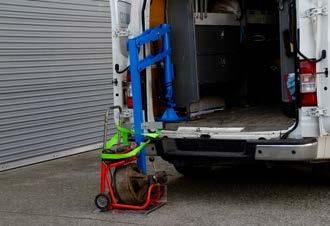
From Atlas Lift, the KA-121 and KA-121-RC lifts are designed to move loads up to 450 lbs. on or off high- to medium-roof vans, 2013-18 standard roof Dodge Rams, box vans, cargo vans and parcel vans. The portable lifts feature wireless remote control, bearing rotation, a safety brake, an adjustable strap bar, aluminum design and four-bolt installation. They have a 16 in. x 20 in. platform and a linear actuator generates power. www.atlasliftinc.com
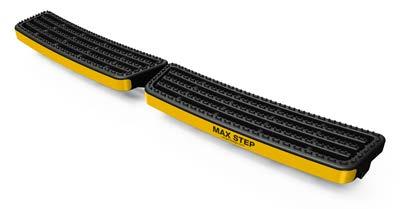
From Ranger Design, the Max Step van step is attached to the frame of the vehicle in the back. Designed to give tradespeople access to the cargo space or roof rack, it is made with anti-slip tread plates and features reflective tape across each step. The step has a 300 lb. weight capacity.
www.rangerdesign.com
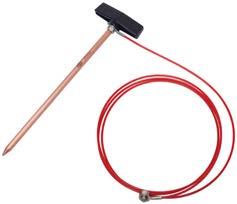
From Reed, the Pegrm static grounding device is compatible with tools for polyethylene including ratchet shears. It features a heavy-duty cable with 7 ft. working distance and a quick-connect magnet attachment for grounding. The magnet is attached to a conductive path and plunged into the ground. www.reedmfgco.com


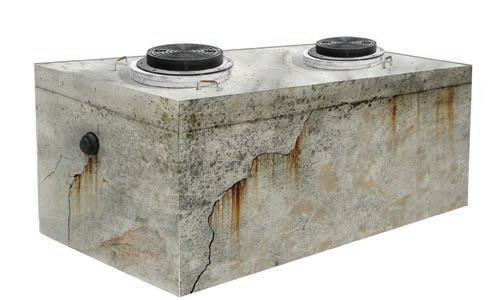
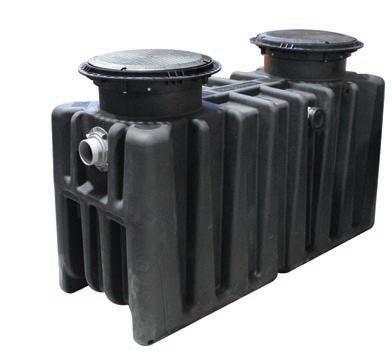



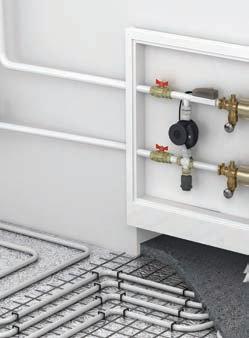

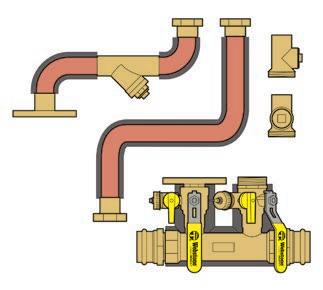
Webstone’s Hydro-Core Complete Near Boiler
Piping Kit is designed in partnership with Lochinvar for its Noble NKB080, NBK110, and NBK150 boilers. This fully-fabricated solution includes everything necessary for installation, including insulated manifold with integrated purge and fill valves, copper supply and return lines, boiler connections, and mesh “y” strainer. Choice of Press, FIP, or SWT manifold. www.webstonevalves.com/hydrocore
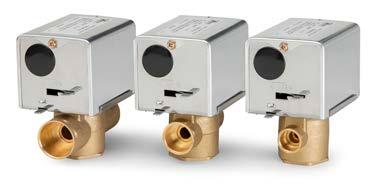
Taco Comfort Solutions has released the QuickTop Zone Valve, a replacement for normally-closed, synchronous motor zone valves. Designed for closed-loop hydronic heating and cooling systems, fan coil units and baseboard systems, the valve features an easily removable actuator and simple installation and wiring. It comes in ½ in., ¾ in. and 1 in. sizes. www.TacoComfort.com
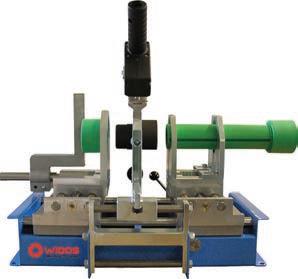
Chemline offers socket fusion welding machines and tools for PP-R thermoplastic pipe and fittings sizes 20 mm (½ in.) up to 500 mm (20 in.). Pipe fusion installation is fume and smoke-free with Widos fusion machines. Chemline offers fusion machine sales and rentals, T.S.S.A approved welding procedures, contractor training, field support and shop fabrication. www.chemline.com
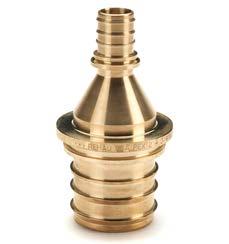
REHAU has added 26 fittings to its Everloc+ compression-sleeve fitting system. The technology is designed for the company’s Raupex crosslinked PEXa pipe in up to 2 in. diameter. Offered in polymer and lead-free brass, the compression-sleeve fittings are designed with four sealing edges and textured PEXa sleeves. www.everlocplus.com

John Siegenthaler, HPAC contributor and principal of Holland Patent, NY-based Appropriate Designs, prepared a design guide for the New York State Energy Research and Development Authority. The guide, available for free, is titled “Design Assistance Manual for High-Efficiency, Low-Emissions Biomass Boiler Systems.” www.nyserda.ny.gov/-/media/Files/EERP/Renewables/Biomass/Design-Assistance-Biomass-Boiler.pdf
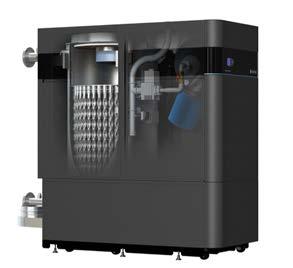
Weil-McLain has added four larger sizes to its Stainless Vertical Firetube (SVF) boiler portfolio to accommodate large commercial applications. The boiler line includes Btu sizes of 1500, 2000, 2500 and 3000 MBH that join the existing 750, 1000 and 1100 Btu configurations. The new boiler line has a stainlesssteel vertical fire tube and shell heat exchanger for corrosion resistance, simple, user-friendly controls and a long-term corrosion resistance solution in the form of a serviceable and replaceable condensate tray. Time-saving installation features include an integrated shipping ramp, heavy-duty roller casters for improved maneuvreability in confined spaces and industrial-grade leveling legs. www.weil-mclain/svf
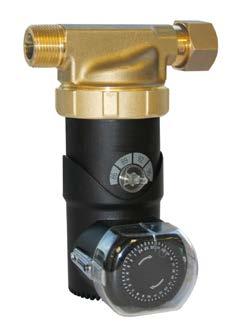
Bell & Gossett’s ecocirc wireless hot water system uses an electronically communicated motor to operate at 20 watts. It is intended for potable plumbing systems without a recirculation line. Installed under the sink, the system’s battery-operated paired valve, equipped with an onboard temperature sensor and wireless RF transceiver, communicates with the circulator pump mounted to the hot-water source to deliver temperature-controlled hot water. www.bellgossett.com
Much like GPS or smart thermostats, remote A/C diagnostics and air conditioning monitoring systems belong in every technician’s truck. BY
GEORGE TSINTZOURAS
We know providing excellent customer service makes perfect business sense. You treat your customers well and they call you the next time their air conditioning needs servicing or when they are considering a new purchase. While providing high quality customer service to encourage repeat business is fundamental to success, the way we provide this kind of service is changing.
More and more HVAC technicians are retiring. Attracting and recruiting talent with the experience you need is timeconsuming. This is especially true when trying to keep up with service demands, run a business, and retain happy customers. Additionally, some HVAC business owners might be thinking about hanging up their manifold gauges and retiring, as well.
When it comes time to sell the business, the number of service agreements that it holds is key to determining the business’ value. As reported in The Globe and Mail, the acquisition of Enercare by Brookfield in 2018 was motivated, in part, by Enercare’s broad customer base.
The industry needs a solution to help HVAC businesses offer improved customer service, to manage the shortage of technicians and to increase the resale value of their business. This solution can be remote A/C monitoring (see sidebar).
The first benefit of remote A/C diagnostics is reduced call backs. When a customer’s condenser unit shuts down, the HVAC technician is relying on that customer to describe the problem.
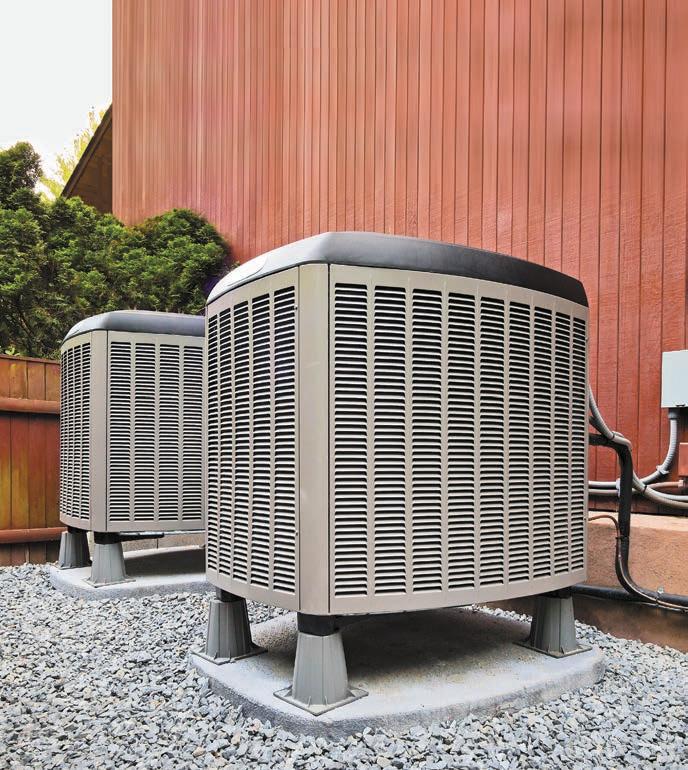
Often, this means the service tech is in the dark about the cause of the service interruption. But when the A/C unit is connected to an air conditioning monitoring system, the tech has a remote historical record of readings for liquid line pressure or power consumption, for example. This data allows the tech to start diagnosing the problem before he arrives on site. The right technician with the right supplies can likely complete the service call in one visit. An HVAC business can also ensure that
they are making the best use of their technicians’ skills, especially as the number of more experienced techs decreases. Reducing call backs (and truck rolls) also provides a better service experience for your customers.
The second benefit is increased customer satisfaction. In the previous scenario, the technician played a passive role; he waited for the customer to tell him there was a problem. Not only does the customer have to tell their HVAC service provider about the problem, they
have to endure a hot house. By the time the service tech arrives on site, a lot of customer goodwill has already been lost.
However, remote A/C diagnostics show the contractor the trends in A/C performance and the A/C monitoring system sends alerts to his/her phone when there is an urgent problem. The customer service experience is greatly improved because the contractor is the one who knows about the problem first. Increased customer satisfaction leads to increased retention and referrals which can lead to more service agreements.
The third benefit of remote A/C diagnostic solutions is the potential for increased sales. The HVAC businesses that are the first to offer new technology have a competitive advantage. As consumers connect more devices to their homes, they look for contractors who can provide technology solutions and make their homes more efficient. Contractors who offer bundled products and services can create new sales growth opportunities with new and existing maintenance contracts.
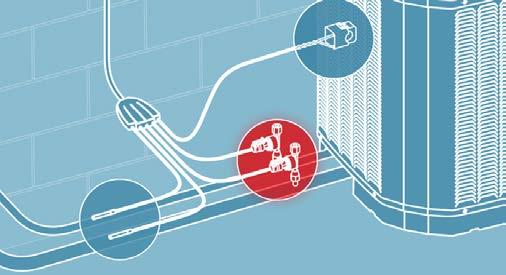
Remote monitoring can provide insight into issues with amperage or liquid and vapor line pressure
Although remote A/C diagnostics technology is fairly new in the HVAC marketplace, there are already out-of-the box solutions providing contractors across North America with new business opportunities and growth. Much like GPS or smart thermostats, remote A/C diagnostics and air conditioning monitoring systems will be available in every technician’s truck in the near future. Investing the time to learn more about this important technology could greatly benefit your HVAC business.
Providing smart A/C monitoring solutions to your customers can increase customer retention and sales, improve operational efficiency for your business, and make it easier to service your customers effectively on the first visit. It is a cool way to keep your customers cool, which sounds like a win-win. <>
George Tsintzouras is CEO and co-founder of Alert Labs, a Kitchener, ON-based.Tsintzouras graduated from the University of Waterloo with his Bachelor of Physics and entered the field of optics. He earned his Master of Business Administration (MBA) degree from Wilfrid Laurier University. Globe & Mail reference article: www.theglobeandmail.com/business/articlebrookfield-infrastructure-buys-into-residential-services-with/
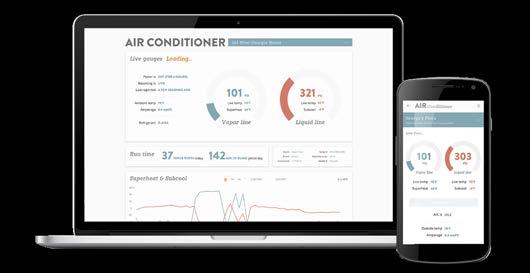
A dashboard can help an HVAC technician remotely diagnose A/C problems on a phone or laptop.
Remote A/C diagnostics or remote monitoring refers to the idea of using a smart air conditioning monitoring system to see information on your smartphone or computer about the A/C unit, such as amperage readings or vapour line pressure. Because the A/C monitoring system connects to the internet through a cellular or WiFi network, the contractor does not need to be at the A/C unit to see the data. Systems vary in the types of readings provided and the way the information is displayed.
More sophisticated air conditioning monitoring systems use machine learning to interpret when A/C readings are abnormal. The HVAC contractor can also receive alerts about potential problems with the unit. Some systems have a homeowner view of the data that displays more general information including running time and an estimate of electricity costs.
In short, an air conditioning monitoring system gives you the information that you get from attaching digital manifold gauges but with the added benefits of a record of historical readings, remote access to the information and alerts when something goes wrong. Furthermore, because there is an up-to-date historical record of all the readings from the A/C, service calls can be pre-emptive and avoid a problem before it impacts your customer. Installation for some systems can take as little as five to 10 minutes.
As part of the smart home revolution that is expanding beyond thermostats, some A/C monitoring systems can also be integrated with other smart sensors that detect room temperature, humidity, water leaks and floods.
For the majority of us, the current service model is based on a firefighting mentality. You have a territory that you look after and if there is an A/C emergency, you respond as fast as possible, almost around the clock. This reactive approach to HVAC service leads to higher operational costs, increased overtime payroll and potential customer service problems.
Truck rolls cost time and money. In an increased climate of competition from big players with massive fleets, HVAC businesses have to get smarter about making service calls as efficient as possible. Remote A/C monitoring and diagnostics have started to change how many contractors think about their business operations.
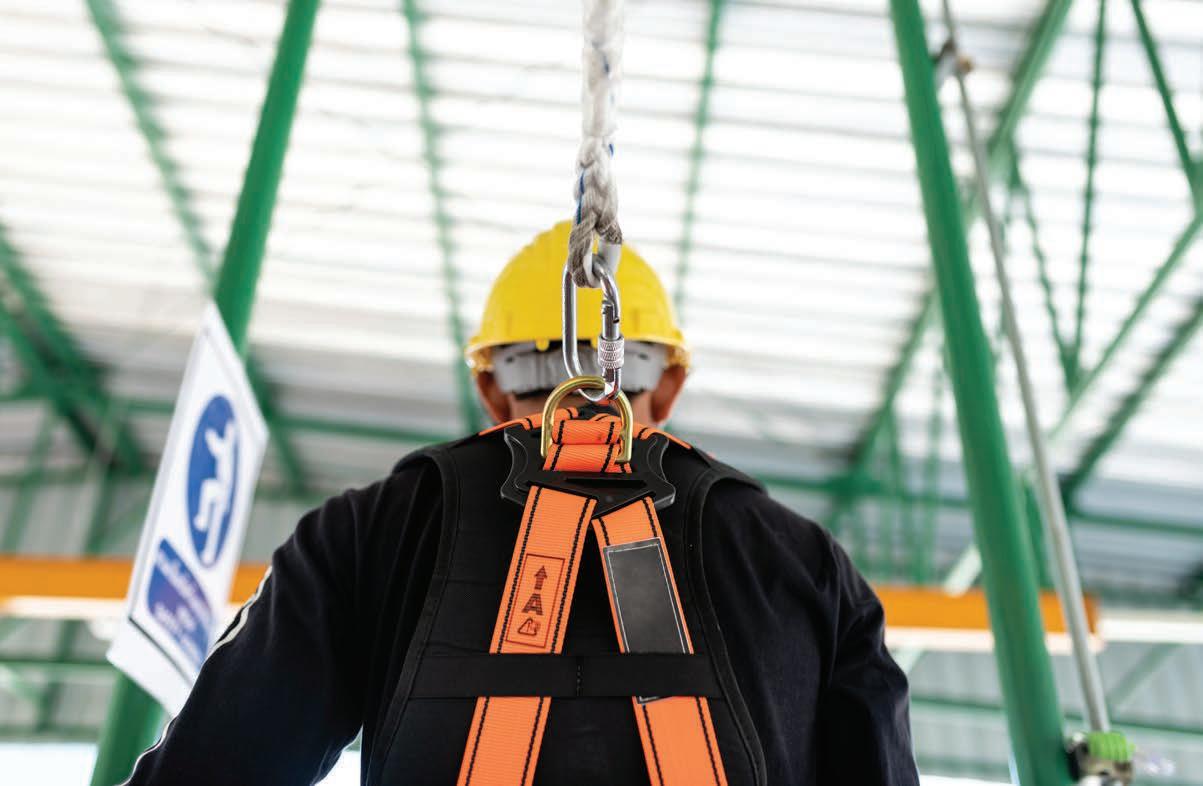
The costly consequences of falls at heights demand a culture shift. BY JILLIAN MORGAN
It may be time to rethink working at heights from the ground up.
Though some provinces have welcomed a marginal decline in accidents, falls remain a leading cause of injury for tradespeople of all stripes across the country.
The most recent data from workers compensation boards tally unfavourable numbers for 2017. In Saskatchewan and Ontario, for example, falls were the third leading cause of injury for the trades. For Alberta and Newfoundland and Labrador, the outlook is gloomier, with falls taking the top spot.
According to WorkSafeBC, falls were the third most common cause of injury for the province’s construction sector between 2013 and 2017, but represented the most significant claim cost, totalling more than $260 million.
Injured construction workers hoping to get back on the job face a unique set of barriers, typically staying on the bench for long periods of time–or not returning to work at all, according to Chris McLeod, co-director of the University of British Columbia and WorkSafeBC Partnership for Work, Health and Safety.
McLeod has undertaken a two-year research project on return-to-work outcomes for the sector in Alberta, B.C., Manitoba and Ontario, with the goal of understanding the little-researched challenges injured construction workers face, and uncovering potential solutions.
“If you have a highly skilled worker who’s injured, and you’re a small- or medium-sized employer, it can have a massive effect on your ability to meet the terms of your contract,” McLeod says. “What that brings into focus is not only the focus on return to work but also the focus on prevention.”
For an industry facing increasingly demanding expectations and a serious labour crunch, fall prevention will be essential to keeping workers on the job–and keeping businesses afloat.
Laying the foundations for a safety-first culture on-site needs to happen before shovels get in the ground, advises Scott Duncan, director of Health and Safety at national contractor Chandos Construction.
“How you start a job is going to dictate the next year or however long the job runs,” Duncan says. “I want safe operation. Not operation and safety.”
Top management is not typically in charge of day-to-day enforcement, however. That responsibility falls to on-site supervisors. Even in a single jurisdiction, under a single company, the buy-in can vary drastically.
“I was facilitating a presentation to a group of senior leaders,” Duncan recounts. “I said, ‘Each of you insist our sites are all

WE ARE MORE THAN EVER YOUR ONE-STOP SHOP FOR ALL YOUR HVAC-R AND HYDRONICS EQUIPMENT NEEDS IN WESTERN
: - 10 locations from Winnipeg, MB, to Nanaimo, BC; - Over 1000 product lines in stock; - 115 dedicated employees to serve you; - State-of-the-art training facility and training events across the network.
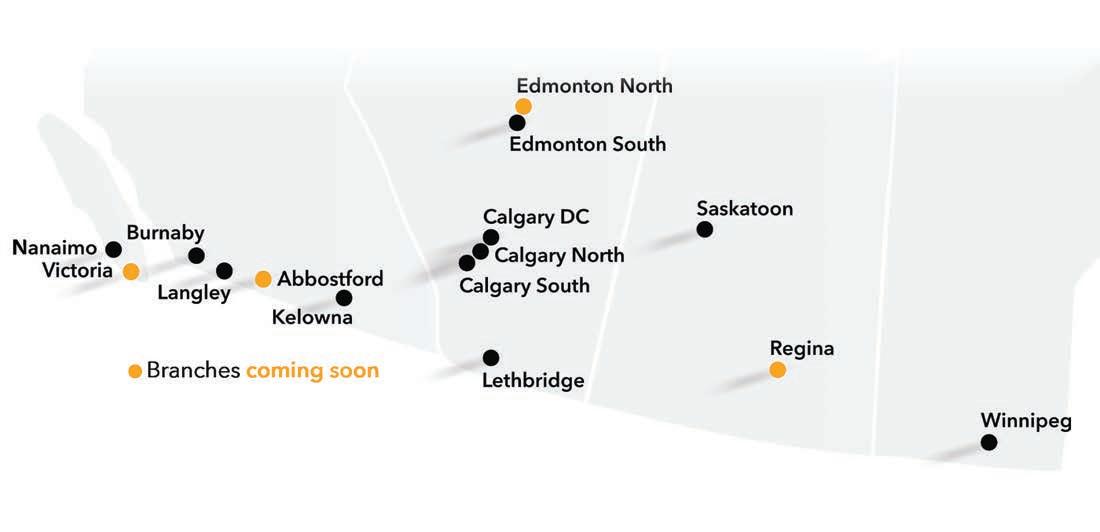
equal. You all have children of working age.’ I looked at one VP and said, ‘Which site would you put your son on today?’ He had to stop and think about it.”
For Duncan, the key to success falls on site supervision.
“Every site, even though they’re following the same book, will be run differently,” he says. “They’ll have a different culture, they’ll have a different way of doing things, and that’s where we run into our challenges.”
Safety standards can quickly get shelved in favour of accelerated timelines or reduced costs. Old-school thinking can influence younger workers who are encouraged to take risks in a misguided effort to impress the experienced boss.
“Experienced supervision on-site will make it very clear to young workers that they’re not impressing us taking unnecessary risks,” Duncan says. “No one at the end of the job is going to thank you for taking unnecessary risks.”
The duty does not end there. A faulty ability to assess risk should be clocked by supervisors, along with untrained workers improperly using fall arrest systems, ladders, scissor lifts and other equipment.
Businesses and supervisors that fail to meet those general duty requirements could be handed a hefty fine, according to Roger Tickner, president of Richmond Hill, ON-based safety consultancy Tickner & Associates.
“It’s not enough and if somebody’s been injured and you’re not taking the necessary precautions, nowadays [corporations] can pay a million for the fine,” he says. “So, a supervisor could face charges of up to $100,000 per count if they’re making incorrect calls or turning a blind eye to safety.”
Filtering safety standards down to the sub trades adds more complexity, making safety offenses difficult to catch.
“You’ll get a top tier sub trade bid the job. They get the job, but then they sub
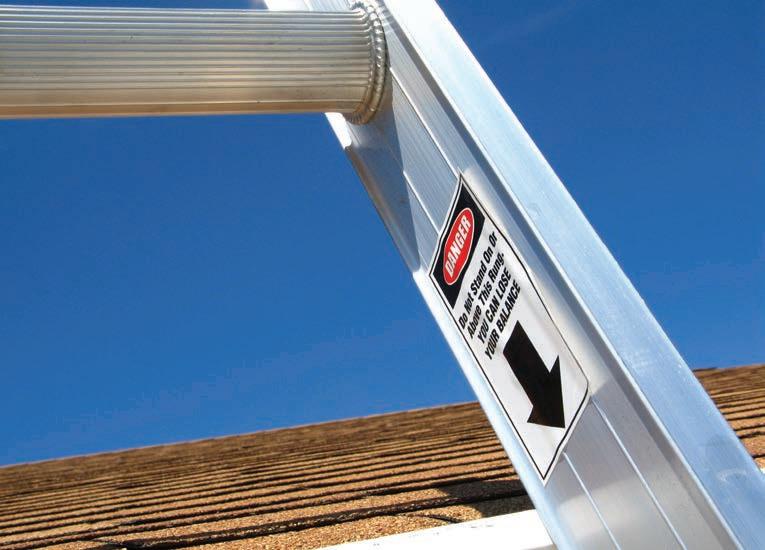
“Rescue is the most overlooked topic with respect to fall arrest and fall protection.”
it to a sub who subs it to another sub,” Duncan says. “In some cases, this waters down the quality of the safety performance… If we don’t manage that, we’re fighting an uphill battle.”
Richard Blais, director of compliance and regulatory review at WorkSafeNB, echoes Duncan. He says laying out expectations will ensure a safety program does not suffer.
“The subs, of course, supervise a lot of the workers that might be working from heights” he says. “Whenever you contract out work, you can’t contract out responsibility.”
Safety gear has come a long way since the days of harness-free lunch breaks atop the Rockefeller Center.
John Fuke, technical services manager at 3M Fall Protection, says those advancements have been primarily driven by regulations.
Most notably, he says the move from lanyards to personal self-retracting lifelines, or SRLs, represents a significant
shift over the past number of years.
“The technology’s gotten better to where we’re now able to do leading edge [work], to do tie off at your feet or below the D-ring,” he says. “Just in the last two to three years this has really become popular, and a requirement, in the personal SRL segment.”
3M upgraded its harnesses, too, to improve the compatibility of SRLs and harnesses, and to alleviate the weight of wearing SRLs. The company’s Smart Lock LE SRLs, designed to prevent unintentional lockups, take the gear one step further.
Other providers, such as Oakville, ON-based Vertemax, have also taken fall protection to new heights.
“We’re trying to implement fall arrest systems, we’re trying to implement edge protection systems, we got also catchfan nets around the building so in-case something happens, in-case any single piece or any single person falls from height, you will be catched and we will be able to avoid any kind of problem,” Jesus Munoz, the company’s Canadian managing director, says.
With customers such as PCL Construction, EllisDon and Ledcor Group, Vertemax is plotting to expand its product line and currently developing a self-contained building system to keep workers safe on high-rise construction projects.
Increasingly, manufacturers are also hoping to provide solutions to meet the unique needs of mechanical and electrical trades working at heights, whether from the third rung of a stepladder or the 30th storey of a building.
3M offers a variety of anchors to address those needs, such as doorjamb anchors, which are of particular benefit to mechanical contractors, Fuke says.
“You can situate an anchor in the doorway to provide anchors further out along an HVAC channel,” he says. “So if you’re working in a penthouse and the HVAC units are outside the penthouse, you can anchor yourself back to the doorway in the penthouse and go out and work on the project as required.”
Overhead fall arrest systems are ideal for mechanical and electrical contractors, Munoz says, since the work is typically in confined spaces.
Using the right equipment is just one piece of the equation, though. Improper use can lead to serious injury or, worse, a fatality.
Neglecting to store and care for gear properly is a common mistake, Fuke says, in addition to failing to tie off or perform a clearance calculation when wearing an SRL.
“Another scary one is that people wear harnesses extremely loosely,” he says. “You have a tendency when you fall in that scenario to squeeze through the harness if you’re falling headfirst. If you’re not falling headfirst, then it’s going to be so loose that once it tightens up there are a variety of different other situations that you get into, like the harness chest strap making contact beneath the user’s chin on impact.”
Over time, he says, blood can pool in the legs, slowing down the flow to the upper body. The worker can grey out and pass out, eventually starving the brain of oxygen.
Job sites should not only develop a rescue strategy but also practice it, he adds. Using tools such as suspension trauma straps are also important, which Fuke says could prolong the rescue period for a short period of time.
“Rescue is the most overlooked topic with respect to fall arrest and fall protection. Even though the provinces mandate it in most of the regulations, people overlook it,” Fuke says.
Despite a tick downward in some jurisdictions, fall statistics across the country paint a less than ideal picture of the dangers workers face at any height.
Paperwork and safety committees imposed on the construction industry
by regulators aim to fix the problem. In practice, they fail to account for the dynamic environment of a job site, Duncan says, adding that the issue demands a fresh approach.
“You have to look at things totally differently,” he says. “I think we’ve generalized safety to a point where we’re not providing the right information and equipment to the workers.”
Enforcement on-site will continue to play a crucial role in keeping workers safe at heights, along with proper equipment use. A shift in culture across job sites presents a bigger challenge–though the pay-off, both the livelihood of workers and the bottom line of construction businesses, could prove substantial.
“You have to make [safety] part of your corporate culture,” Fuke says. “If it’s not part of your corporate culture – if senior management doesn’t practice it, if the people who supervise other people don’t practice it – then it’s of reduced value.” <>
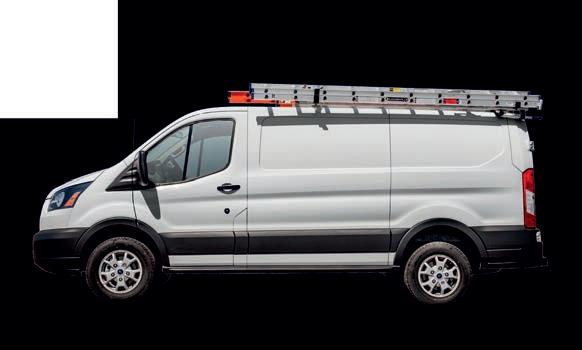
For Fuke, the most common–and potentially dangerous–oversight is an effective rescue plan.
“Everybody thinks that if they fall, they’re okay,” he says. “Well, if you’ve fallen and you’re hanging around for a long period of time, you could be in just as much trouble as you were before you fell because there’s a problem with orthostatic intolerance.”

Adrian Steel’s Grip Lock and Drop Down Ladder Racks are designed with ergonomics and user safety in mind. Whether you’re upfitting a single van or an entire fleet, Adrian Steel has just what you need. Increased efficiency starts now.
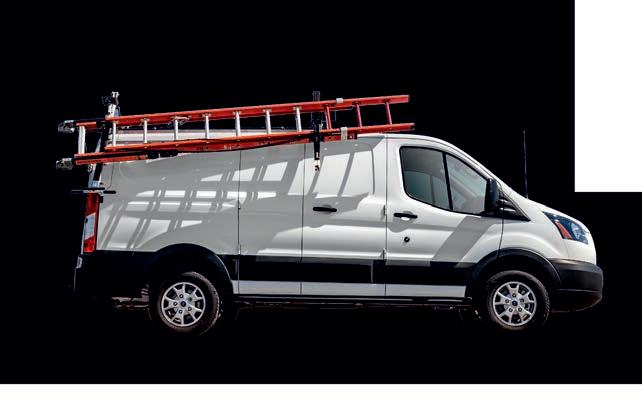


Under agreement with AGSHP, HRAI will be providing IGSHPA training courses for geothermal heat pump system designers and installers in Ontario. The courses are in support of the recently established GreenON Low Carbon Technologies Incentive Program requirements, using IGSHPA certified trainers. The IGSPHA Accredited Geothermal Installer course covers ground-source heat pump systems, while IGSPHA Certified Residential Geothermal Designer course will train attendees on how to properly design a residential geothermal heat pump. For details contact Angie Mantei at 800.267.2231, ext. 237 or e-mail amantei@hrai.ca. www.hrai.ca
The Dollars to Sense (D2$) program has over 30 different modules and is designed to be flexible for organisations interested in energy efficiency, whether you are ready to explore the fundamentals of energy, such as benchmarking or creating an energy efficiency program, or diving into specific measures, such as heating and cooling or lighting systems. www.cietcanada.com
Canada Green Building Council is offering this four-hour course as part of its Green Professional Skills Training (GPRO) program. It teaches the basics of sustainability and provides an overview of the essential strategies and work practices that make buildings more efficient. GPRO covers the “green gap” between standard trade skills and the new awareness required to successfully implement sustainable building practices. It is the prerequisite for all GPRO trade-specific courses. www.cagbc.org
The Canadian Hydronics Council (CHC) has partnered with NAIT and British Columbia Institute of Technology to provide course blocks toward CHC certification for hydronic system designers and installers. At NAIT students can register for online or paper-based learning and have nine months to complete each block. www.ciph.com
HRAI offers a variety of residential and commercial courses. The Small Commercial Air System Design course builds on the Small Commercial Heat Gain & Heat Loss Calculations course. The three-day program includes how to design commercial air distribution systems for applications of up to three storeys and 600 sq. metres per storey. Some cost of educational programs can be reimbursed under the Canada Job Grant Fund Program. For more information tel. 800.267.2231 ext. 237. www.hrai.ca
CEC’s Gold Seal Accredited Advanced Project Management course, offered in partnership with the University of Waterloo, is a four-day program focused on improving leadership, management and advanced project management skills. It is designed for experienced project managers and senior project managers. To register, contact Tania Johnston at tania@mcac.ca.
TECA’s Quality First training programs are developed by the industry, for the industry, setting minimum standards for the residential and light commercial heating, ventilating and cooling trade in BC. Courses provide contractors with the information they need to install equipment that operates safely and comfortably at rated efficiencies. www.teca.ca


Buildex Alberta
November 6-7
Celebrating 20 years in Calgary, the inaugural BUILDEX Alberta (previously Buildex Edmonton and Buildex Calgary) will take place at the BMO Centre. www.buildexalberta.com
Greenbuild International Conference and Expo
November 20-22
Designed for the green building industry, the 2019 event will be held at the Georgia World Congress Center in Atlanta, GA. www.greenbuildexpo.com
The Buildings Show
December 4-6
To be held at the Metro Convention Centre with the HomeBuilder & Renovator Expo and World of Concrete Toronto Pavilion in the North Building and Construct Canada and PM Expo in the South Building. www.thebuildingsshow.com
ASHRAE Winter Conference
February 1-5
ASHRAE is holding its conference in Orlando, FL at the Hilton Orlando and Orange County Convention Centre. www.ashrae.org
MEET 2020
May 6-7
The 2020 Mechanical Electrical Electronic Technology Show will be held at the Moncton Coliseum, Moncton, NB. www.meetshow.com
February 3-5
AHR will be held in Orlando, FL at the Orange County Convention Centre. www.ashrae.org
CMPX
March 25-27
The Canadian Mechanical and Plumbing Exposition will be held at the Metro Toronto Convention Centre. www.cmpxshow.com
ABC 2020
June 28-30
The 2020 Canadian Institute of Plumbing and Heating Annual Business Conference will be held in Mont Tremblant, QC. www.ciph.com
Canadian Healthcare Engineering Society Annual Conference
September 20-22
CHES will hold its 40th Annual Conference at the Halifax Convention Centre in Halifax, NS. www.ches.org
MCEE
April 7-8
Industry professionals will gather at the Montreal Convention Centre, QC for the Mécanex/Climatex/Expolectriq/Éclairage (MCEE) 2021 trade show. www.mcee.ca
CIPHEX West 2020
November 4-5
The Canadian Institute of Plumbing and Heating Exhibition West will take place at the Pacific National Exhibition in Vancouver, BC. www.ciphexwest.ca
HRAI Annual Conference
August 23-25
The Heating, Refrigeration and Air Conditioning Institute will hold its 52nd annual conference in Victoria, BC at the Delta Victoria. www.hrai.ca
2021 AHR EXPO
January 25-27
The AHR Expo, the world’s premier HVACR event, is expected to attract thousands of attendees from across the globe to Chicago, IL. www.ahrexpo.com
HVAC systems are one example of a foundational building component business owners and facility directors recognize as a critical part of an overall connected safety strategy. BY MICHAEL
HUGH

Facility owners and directors have always made the safety of their occupants a priority. Today, with the rise of the Internet of Things (IoT), there are more opportunities to innovate buildings beyond the minimum standards required by Building Codes by interconnecting systems for smarter, more efficient operations. Enhancing HVAC systems to increase building safety is one area where the impact of building integration is more evident.
HVAC capabilities have advanced far beyond typical temperature control and air circulation. By integrating HVAC systems with security and life safety systems, facilities can gain the ability to transform their environment and create a safer space – one that automates itself. Connecting these different building systems can improve security, fire and life safety strategies, energy efficiency and overall occupant comfort.
No matter the industry or building type, there are extensive benefits and opportunities to an integrated systems approach to designing, constructing and maintaining facilities.
Your HVAC system can play a significant role in a more intelligent and safer environment.
Traditional fire and life safety systems, which receive information from remote fire detectors and carbon monoxide sensors, can be upgraded and connected with HVAC controls to automatically respond to smoke, heat and carbon monoxide levels.
Steam and cooking by-products are two common triggers for setting off these sensors. With advanced technology, intelligent sensors can leverage algorithms to compare measurements of different environmental conditions before triggering building wide alarms.
For instance, if there is no carbon monoxide in the air when a smoke detector begins to sense smoke, then a likely cause is something other than smoke, such as steam or dust. As a result, the interconnectivity between the CO sensor and the


smoke sensor helps avoid an unwanted nuisance alarm. In the event of a real fire, integration with HVAC systems can help contain a fire and stop it from spreading. From the moment sensors confirm the presence of smoke, connected HVAC controls can immediately shut down all air-handling units in the affected areas. Halting the airflow can help improve containment of the fire and can potentially save lives by limiting exposure to smoke inhalation.
With enhanced integration between fire alarm systems and HVAC systems used for smoke control, annual testing of these systems can also be executed much easier and faster. Modern smoke control dampers are equipped with damper position monitors and damper motor controls. Through the use of selftest software programs, each and every smoke control damper can be exercised with the touch of a button. Dampers rotate between fully open to fully closed to confirm proper operation – any failures are reported to the fire alarm control system.
The idea of various life-safety oriented building systems working together is not new; what is new is a requirement to test their integrated operation. The National Building Code of Canada now refers to CAN/ULC-S1001 Integrated Systems Testing of Fire Protection and Life Safety Systems to confirm building systems that provide fire protection and life safety functions are properly integrated.
This is a significant change. In the past, individual systems may have just provided inputs or outputs, which were never tested to confirm they acted in unison. The new requirement demands that a test be conducted to ensure all integrated systems which contribute to life-safety functions will work together.
No matter what the building occupancy, safety measures can be improved when different building systems can share data with one another. Many business owners and facility directors understand the advantages of a connected building, but
“In the past, individual systems may have just provided inputs or outputs, which were never tested to confirm they acted in unison.”
some do not realize the improvements can be made without removing and replacing existing technology.
A systems integrator can help pinpoint current infrastructure – such as HVAC, fire and life safety systems – to enhance and produce a greater return on their equipment investments.
A systems integrator can also help discover unrealized inefficiencies within a facility. Through extensive analysis and diagnostics, they can provide insight into what applications need to be upgraded and connected. Findings are presented to owners to then decide which improvements will address their end objectives.
The integrator takes the facility’s goals to build a technology suite that can help maximize productivity and phase out any equipment that is slowing down operations, all within budget. In addition, an integrator takes on planned and predictive maintenance to make certain that all building systems are properly serviced to operate most efficiently throughout their lifecycles.
Processes that were once manual and cumbersome are now automated and streamlined, reducing the possibility for human error. This automation not only helps increase safety, but it also gives employees valuable time back, allowing them to focus on work that can help an organization be more successful in the future.
As the building and life safety industries continue to grow and evolve, so will the conversation around systems integration. From sensors that alert HVAC systems of a fire to HVAC systems assisting with more immediate responses, these cases only showcase a small percentage of how systems integration can lead to safer, smarter and more efficient environments. <>
Michael Hugh is a field sales engineer with Johnson Controls.


Leading manufacturer and innovator –
• Factory-built quality & craftsmanship
• 5" to 48" diameters (ID)
• Stainless steel inner wall with array of outer wall color options and alternate material
• Quick & Easy Installation

Leading brand for Special Gas Vent applications –
• Meets all code requirements
• 3" to 32" diameters (ID)
• Stainless steel single wall and double wall models with options for material grade
• Ease of installation
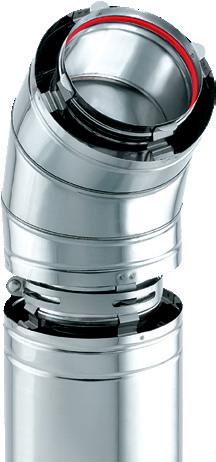
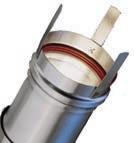
Direct replacement for PVC/CPVC venting approved on all CSA Certified gas burning appliances:
• Much Safer
• More Versatile
• Easier & Quicker to Install
Your customers demand it.
The NEW Vitotrans 300 provides it!
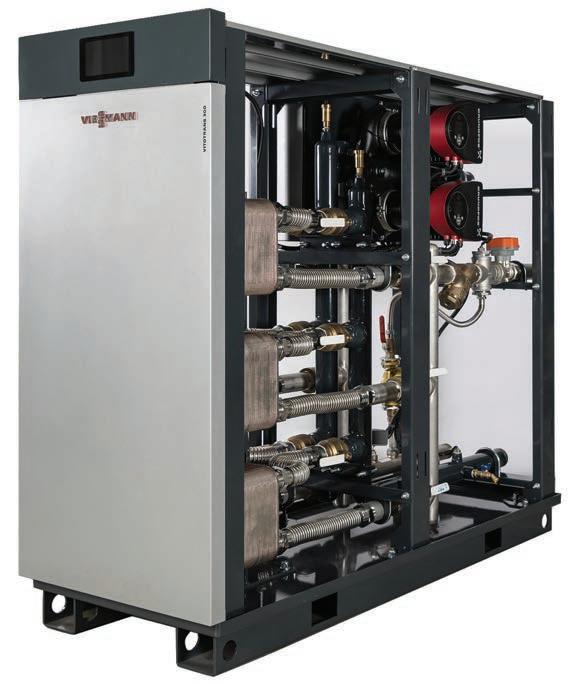
Commercial high-output DHW heating station
The new Vitotrans 300 is a compact, pre-assembled and self-contained DHW heating station, designed to provide large volumes of on-demand hot water to commercial and industrial applications.
Powerful. Cost Effective. No Downtime.
Works seamlessly with any new or existing hydronic heat source to provide a reliable and consistent supply of endless hot water at flow rates of up to 180 GPM.
Eliminates the need for dedicated DHW heating boilers, batteries of direct or indirect-fired DHW tanks, or cascades of tankless water heaters for maximum cost savings.
Multi-heat exchanger design provides built-in redundancy and eliminates costly downtime during service and maintenance.