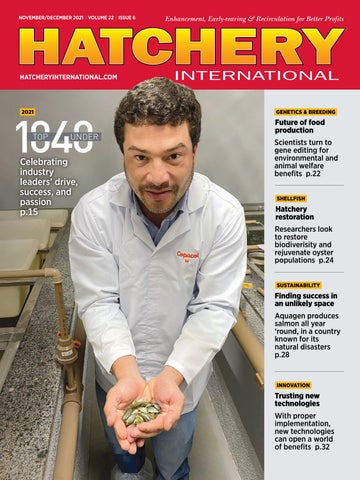
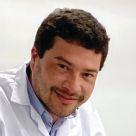
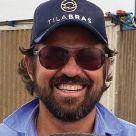
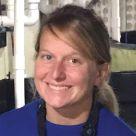
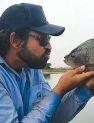
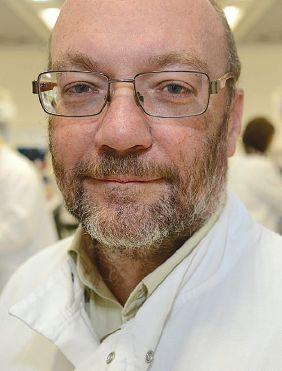
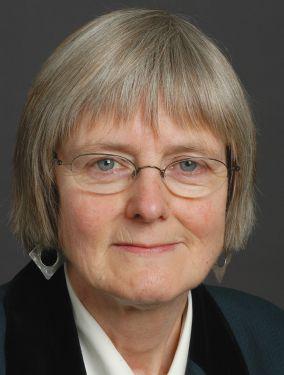
Celebrating industry leaders’ drive, success, and passion p.15
Future of food production
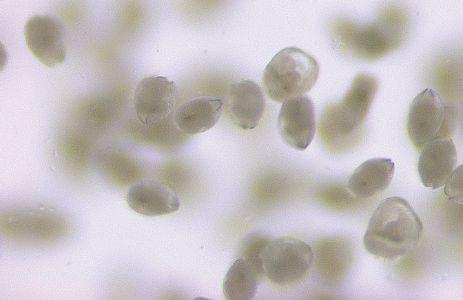
Scientists turn to gene editing for environmental and animal welfare benefits p.22
Hatchery restoration
Researchers look to restore biodiverisity and rejuvenate oyster populations p.24
Finding success in an unlikely space
Aquagen produces salmon all year ‘round, in a country known for its natural disasters p.28
Trusting new technologies
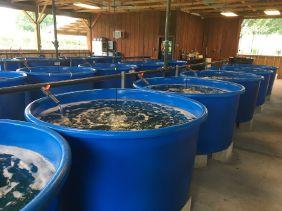
With proper implementation, new technologies can open a world of benefits p.32
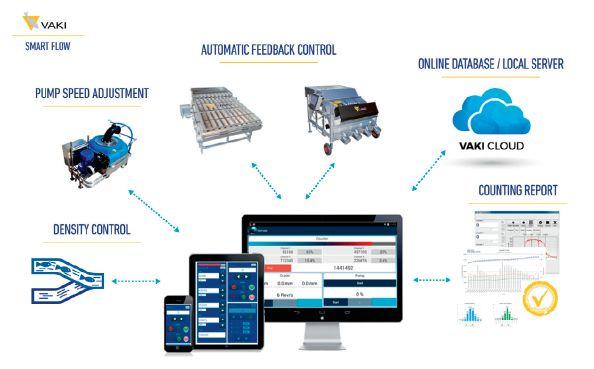
COUNTING AND GRADING REPORT
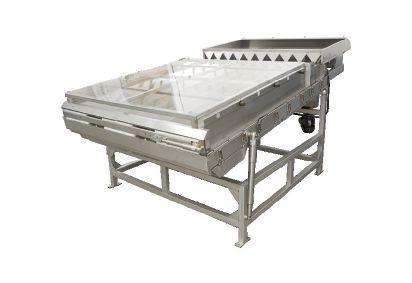
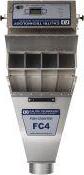
VAKI SMARTFLOW
The SmartFlow System uses software to gather and store information about all measured fish for easy comparison. SmartFlow facilitates the optimization of every operation, as it helps all devices in the VAKI product line to be controlled and fine-tuned to refine the desired output.
FROM THE EDITOR
VOLUME
22, ISSUE 6 | NOVEMBER/DECEMBER 2021
Reader Service
Print and digital subscription inquiries or changes, please contact Urszula Grzyb, Audience Development Manager
Tel: (416) 510-5180
Fax: (416) 510-6875
Email: ugrzyb@annexbusinessmedia.com
Mail: 111 Gordon Baker Rd., Suite 400, Toronto, ON M2H 3R1
Editor Catarina Muia cmuia@annexbusinessmedia.com
Associate Editor Jean Ko Din jkodin@annexbusinessmedia.com
Contributors Nestor Arellano, Ruby Gonzalez, Ron Hill, Colin Ley, Liza Mayer, Vladislav Vorotnikov, Bonnie Waycott
Associate Publisher / Advertising Manager Jeremy Thain jthain@annexbusinessmedia.com +1-250-474-3982
Media Designer Svetlana Avrutin savrutin@annexbusinessmedia.com
Group Publisher Todd Humber thumber@annexbusinessmedia.com
COO Scott Jamieson sjamieson@annexbusinessmedia.com
PUBLISHED BY ANNEX BUSINESS MEDIA 105 Donly Drive South, Simcoe, ON N3Y 4N5
Hatchery International is published six times a year by Annex Business Media. The authority for statements and claims made in Hatchery International is the responsibility of the contributors. Reference to named products or technologies does not imply endorsement by the publisher.
Subscription rates (six issues) Canada: $37.00
Within North America: $48.00 CAD
Outside North America: $62.00 CAD
To subscribe visit our website at www.hatcheryinternational.com
PRINTED IN CANADA ISSN 1922-4117
Publications Mail Agreement #PM40065710
RETURN UNDELIVERABLE CANADIAN ADDRESSES TO 111 Gordon Baker Rd., Suite 400, Toronto, ON M2H 3R1
The advertising deadline for the January/February issue is Nov. 5th. Don’t miss the opportunity to be part of this exciting aquaculture publication. For more information, or to reserve space in the next issue, call our advertising department at +1.250.474.3982 jthain@annexbusinessmedia.com
Next Editorial Deadline
The editorial deadline for the January/February is Nov. 5th. Contact Catarina Muia at cmuia@ annexbusinessmedia.com for details. Material should be submitted electronically with prior arrangement with the editor.
BY CATARINA MUIA
Pushing for growth, innovation, and sustainability
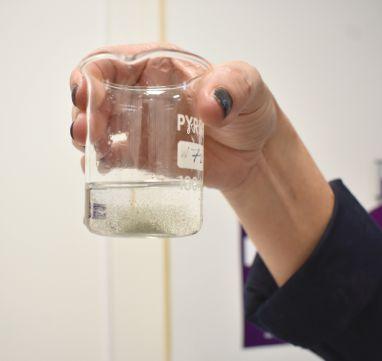
It’s time to celebrate our industry’s passionate and dedicated hatchery professionals, with the Top 10 Under 40 program! In this issue of Hatchery International , you’ll read about 10 individuals who have devoted their time, skills, and knowledge to drive the hatchery industry forward, and will continue to do so, leading by example. Be sure to learn about each hatchery professional, on page 15.
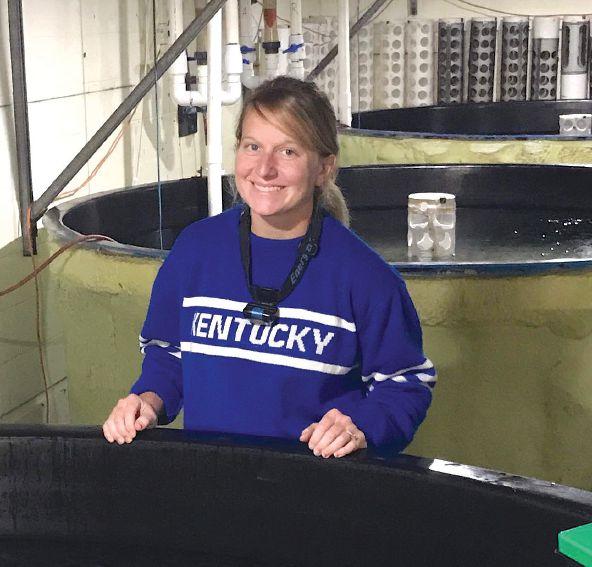
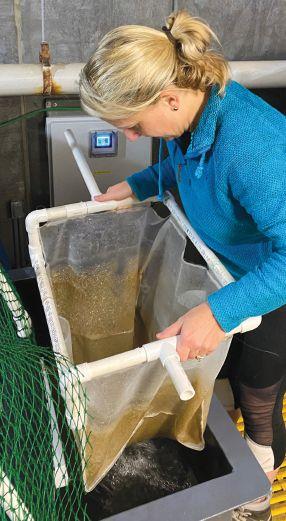
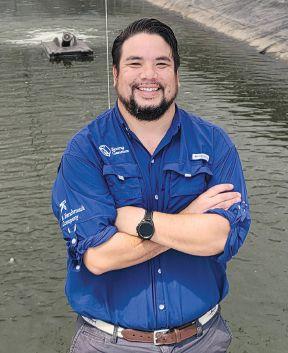
As this year’s Top 10 Under 40 winners were about to be announced, I had the opportunity to sit down with Brittany Peachey, Noelia Rodriguez, Yann Ramirez, and Dan Paynter, all of whom are recipients of the 2020 Top 10 Under 40 award, during the ‘Leading by Example’ webinar, sponsored by MSD Animal Health. Each panelist had the opportunity to discuss how they’ve continued to grow in their professional roles, and how they’re mitigating challenges they face day-to-day, especially when working with lesser-known species in the aquaculture sector.
“A big challenge for us is we don’t really have a reference for striped bass, we’re the only ones doing it. You take the principles from other species, but at the end of the day you’re still playing ‘mad scientist’ and seeing what works and what doesn’t,” said Ramirez, hatchery director at Pacifico Aquaculture located in Mexico. “If I compare what we’re doing now to when we first started, the changes we’re making to production today are just small tweaks. When we started, we were still trying to discover
what was needed in terms of lighting, feeding, and heating. I would say we’re still scratching the surface on striped bass potential, but we’re much further ahead than we were initially.”
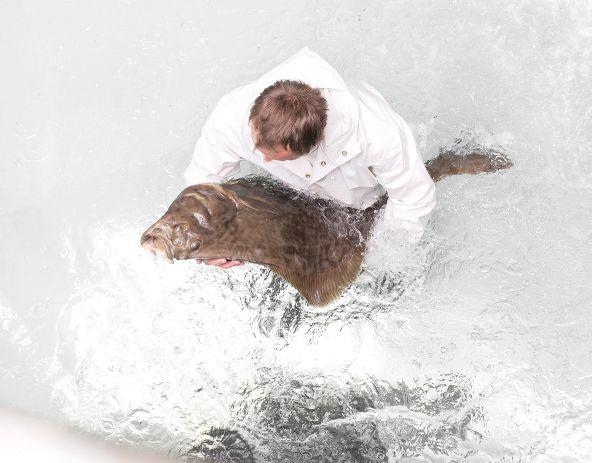
Paynter, who had been working with halibut until recently, was in a similar position. “Much like Yann said, [halibut] is a more novel species so the pros and cons of that are almost one in the same. I enjoy playing mad scientist and not following a ‘handbook’; just figuring it out as I go,” Paynter exclaimed, who is now the manager of hatchery operations at Atlantic Aqua Farms in Canada. “That has its challenges as well. Vets, pathologists and experts don’t have that background knowledge on your species so they’re just trying to apply things from, usually salmonids, which will not have the same challenges as the halibut, a marine species.”
With their knowledge on fish health and welfare, their passion for continuous learning, and the implementation and use of innovative technologies and solutions, these four hatchery professionals will continue to make a significant and impactful mark on the aquaculture industry. Be sure to scan our QR code to watch the full ‘Leading by Example’ webinar.
With that, I leave you to read, learn, and enjoy this issue of Hatchery International magazine. Happy reading, Catarina Muia cmuia@annexbusinessmedia.com
NEWS BRIEFS
PRODUCTION
Multi-species hatchery push in the Philippines
A ₱30million (US $ 594,000) multi-species hatchery project in the Philippines’ Albay province is expected to give the region’s aquaculture industry a boost.
“This hatchery project shall significantly contribute in addressing the deficiency in the supply of fish seedlings to aquaculture sectors of the province of Albay and the Bicol Region,” Hon. Fernando Cabredo, congressman of the third district of Albay, Philippines said in September during the project’s ground-breaking ceremony. It is the first legislated marine hatchery established in the Bicol Region.
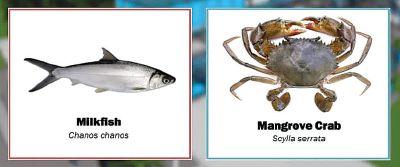
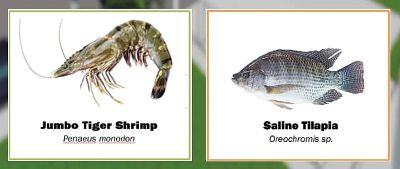
Milkfish, mangrove crabs, saline tilapia, and jumbo tiger shrimp are the major marine species produced in Bicol. These are also among primary species being eyed for the hatchery production.
Once fully operational, the hatchery is projected to produce 5.5 million saline tilapia fingerlings, 4.8 million milkfish fingerlings, 960,000, mangrove crablets and 32 million giant tiger shrimp fry.
Other provinces in the Bicol Region are Camarines Sur, Camarines Norte, Catanduanes,
INVESTMENT
AquaBioTech looks toward international expansion with Bluefront Equity investment
AquaBioTech Group and Bluefront Equity have jointly entered into a letter of intent, stating Bluefront Equity will acquire a significant stake in AquaBioTech Group through a combination of purchase of shares, and new capital to accelerate the company’s growth. This investment will further enable AquaBioTech Group to quickly develop its international plans for expansion, including opening major offices in Norway and Singapore.
Aquaculture farmers in Albay, Philippines,
when the
Masbate, and Sorsogon. There are over 4,000 hectares of earthen fish ponds in the province, including the 173 hectares in Albay.
The project is spearheaded by the congressman, the Bureau of Fisheries and Aquatic Resources (BFAR) and the local government of Ligao City, where the 5,000-square-metre facilities will be built. BFAR, which will supervise the construction, has tentatively set to begin construction works in November, with targeted completion for April 2022, the congressman’s office told Hatchery International.
Some 30 kilometres away in Libon, a multi-species hatchery is awaiting for approval to be enacted into law. The facility would “address the increasing market demand in the whole region,” Cabredo said. Among the species being considered are crab, shrimp and
milkfish. A two-hectare government lot has been earmarked for the project.
BFAR is pushing for multi-species hatcheries in all of the country’s 81 provinces, citing it as a major contributor for economic growth, BFAR National Director Eduardo Gongona said earlier this year during the joint hearing of the Senate Committees on Agriculture, Food, and Agrarian Reform and Finance.
The hatcheries would improve the country’s fish fry supply and boost the local aquaculture sector. In addition to the hatcheries, Gongona cited the need to establish satellite hatcheries, ponds, and other infrastructures dedicated to fisheries production.
The proposed allocated budget for each hatchery is ₱30 million (US $594,000).
– Ruby Gonzalez
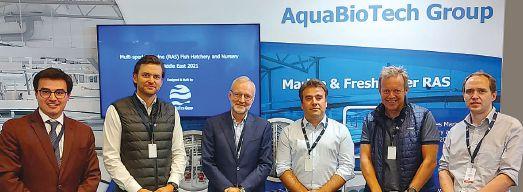
Group business development director), Kjetil Haga (Bluefront Equity founding partner), Jan Sverre Røsstad (Bluefront Equity founding partner), Shane Hunter (AquaBioTech Group CEO), Alf-Helge Aarskog (Bluefront Equity founding partner), Robert Davies (AquaBioTech Group principal aquaculture consultant).
With three main divisions, AquaBioTech Group’s first division focuses on aquaculture, fisheries, and marine environment consulting and training. The second is the Contract Research Organisation (CRO), which consists of more than 50 research recirculating aquaculture system (RAS) units in operation. This division’s facility is used by all major vetriceutical, nutraveutical and aquatic nutrition companies for aquatic vaccines and shrimp/fish feeds testing, development, and certification.
The final division focuses on the engineering and development of RAS turnkey supply for commercial and research focuses, designed for various fish and shrimp species.
will have easier access to their preferred fingerling species
hatchery in Ligao City starts production. PHOTO: ALBAYD3.COM
From the left: George Mantas (AquaBioTech
PHOTO: AQUABIOTECH GROUP
Nornickel to pay billions for three new hatcheries
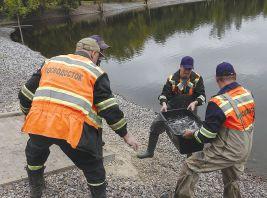
Following the devastating Arctic fuel spill in 2020, Rosrybolovstvo looks to restore grayling, whitefish, and sturgeon populations, with three new hatcheries. PHOTOS: ROSRYBOLOVSTVO
Russian state fisheries agency, Rosrybolovstvo, has filed a claim for 58.7 billion rubles (US $814 million) in damages from the world’s major nickel and palladium producer, Nornickel, over a devastating Arctic fuel spill in 2020.
Nornickel has already paid 2 billion rubles for environmental damage caused by the leak of 21,000 tons of diesel fuel at its power plant in Norilsk. Rosrybolovstvo explained that with the new claim, the regulator is seeking money to be spent on building three new hatcheries and put the cost of restoring the disturbed state of aquatic biological resources at 55 billion rubles (US $805 million).
In total, almost 9,000 tons of fish died due to the fuel spill in two rivers and one downstream lake. The new hatcheries would have to operate for at least 18 years to restore the fish population damaged by the spill, Rosrybolovstvo said.
The fuel spill primarily damaged the local population of grayling (Thymallus thymallus), whitefish (Coregonus muksun), and sturgeon (Acipenser sturio). The new hatcheries are expected to focus primarily on breeding these fish species. Their construction is expected to be started once the dispute with Nornickel is resolved.
Nornickel, however, argued that the estimates provided by Rosrybolovstvo were overstated and promised to challenge the filed claim. In addition, the Russian metal giant announced plans to completely restore the environment damaged by the Arctic spill by 2023.
Besides, Nornickel, for many years, has been steadily working to restore natural resources, including restoring the population of valuable fish species in the regions where the company operates, the company said in a statement on its website.
There is no clarity whether Rosrybolovstvo would succeed in its claim. Vladislav Korneichuk, a lawyer at Savina Legal, said that there are similar cases when giant companies were forced to reimburse huge damages.
“Since the 2010 Deepwater Horizon disaster, BP has spent $21 billion in damages to victims, citizens, businesses, and government agencies. Likewise, the losses of the Fukushima-1 nuclear power plant operator where the explosion took place in 2011, exceeded $12 billion,” Korneichuk said.
– Vladislav Vorotnikov
FEED SUPPLY
BioMar Ecuador announces four new lines for extruded shrimp feed
BioMar Group has announced its investment plan to expand the capacity for extruded shrimp feed in Ecuador.
The two-phased installation will bring a total of four new lines with a combined capacity of 200,000 tons at BioMar’s facilities in Guayaquil. The investment includes new land, a transformation of the current factory layout, an upgrade of existing pelletizing equipment, and four new lines for extruded feed.
The investments are part of preparations for the introduction of new advanced shrimp feed concepts, which are planned to launch in the market in 2022.
“We are planning for a new range of high performing products, as well as new functional feeds targeting the unique farming practice and environmental parameters encountered in Ecuador,” explained Henrik Aarestrup, VP LATAM, Shrimp & Hatchery in BioMar Group.
“We see larger farmers in the market being ready to start up the process of co-designing tailored product ranges towards the markets in the U.S. and Europe focusing on both feed composition and environmental footprint, farming practice and quality of the resulting shrimp, enabling a targeted positioning of the shrimp towards retailers and end-consumers.”
Throughout the COVID-19 pandemic, the Ecuadorian shrimp export has gone through significant transformation and diversification. Aarestrup says this puts the company in an ideal position to continue growing in the coming years.
www.praqua.com
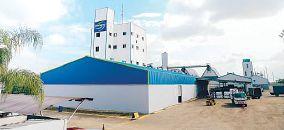
PHOTO: BIOMAR GROUP
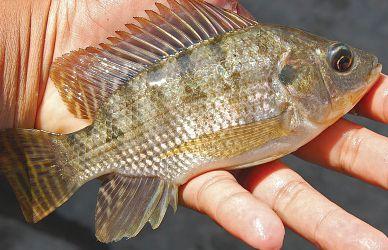
Baker’s yeast as growth promoter in Nile Tilapia
Baker’s yeast can be effectively recommended as an important growth promoter in Nile tilapia, according to S.M. Majharul Islam et al. after they evaluated its supplementation on growth performance, feed utilization and intestinal morphometry on the animal.
Conducted at the Bangladesh Agricultural University, the study, “Probiotic yeast enhances growth performance of Nile tilapia (Oreochromis niloticus) through morphological modifications of intestine,” showed growth performance and feed utilization indices were increased significantly in the fish fed with 4 g kg−1 S. cerevisiae supplemented diet compared to controls.
“The present study was designed to investigate the effects of graded levels of dietary probiotic yeast, Saccharomyces cerevisiae, on growth performance and intestinal health in Nile tilapia,” the study said.
While previous studies showed that S. cerevisiae improved the growth performance, stress tolerance, immunity and disease resistance in Nile tilapia, none had addressed the role of the probiotic yeast in the morphological modifications of Nile tilapia’s intestine. The dietary
Inclusion of baker’s yeast in Nile tilapia (Oreochromis niloticus) diet resulted in positive growth performance, including increase in fillet yield.
provision of S. cerevisiae, they cited, acts as an essential probiotic that enhance the growth performance and feed efficiency of Nile tilapia through improvement of gut morphology.
During the 60-day feeding trial, baker’s yeast was incorporated into basal diets of tilapia fingerlings at zero, one, two and four g kg−1 diet. At the end of this period, all performance parameters improved as probiotics volume increased. These are some of the comparison of results between control and treatment at four per cent: growth rates, 165.71 ± and 210.70 ±;
Crocodile meat meal for juvenile dusky kob
Short or long-term supplementation using omega-3-rich oils is proposed for crocodile meat meal (CMM)-fed juvenile dusky kob (Argyrosomus japonicus).
A preliminary study in South Africa investigated the effect of replacing fishmeal with raw or cooked crocodile meat meal on feed utilization, growth performance, blood parameters, and tissue nutrient composition in juvenile dusky kob (Argyrosomus japonicas). It concluded that crocodile meat has good characteristics as a fishmeal substitute.
“Using crocodile meat as an alternative source of protein for carnivorous fish, such as the dusky kob, could be an ingenious strategy that adds value to the crocodile farming enterprise, while ensuring economically and environmentally sustainable dusky kob aquaculture,” Reginah M. Mdhluvu et al. said in the study published in Aquaculture Reports
As a fishmeal substitute, however, the study showed that CMM compromised growth of juvenile dusky kob. It likewise had an adverse
and food conversion ratio 1.68 ± and 1.18 ±. Fillet yield, which was lowest at zero inclusion and highest at 4 g.
There was 100 per cent survival rate across all diets.
Noticeable variations in intestinal morphology were observed between the treated and control diet groups. The dietary provision of probiotic yeast significantly influenced the gut morphological structure through improving the length, width and area of the gut villus. This development may have facilitated more absorption of nutrients.
“Dietary probiotics can be one of the best candidates for nutritional additive which may not only increase production but also may improve feed utilization,” they said. This is an important factor to consider in an industry where 70 per cent of total production costs is typically earmarked for feed expenses.
As an eco-friendly alternative to antibiotics, they stressed that “antibiotics application appears to have strong potential for improving the sustainability of aquaculture.”
The study was published in Aquaculture Reports
– Ruby Gonzalez
impact on the level of the polyunsaturated fatty acids (PUFA) in fish fillet. PUFA composition is one of the most significant attributes of fish for human nutrition.
“The use of supplemental PUFA sources such as microalgae oil could mitigate the negative impact of feeding CMM,” they wrote.
The team from the University of Mpumalanga took note of the crocodile meat portion that is usually discarded at a time when fishmeal is increasingly becoming an unsustainable aquafeed ingredient.
Crocodile is farmed for skin and meat. Per 2015 figures, an estimated 1,000 tons of crocodile meat were officially traded globally. Only the tender tail fillet, which makes up for 33 per cent of the carcass weight, is used for human consumption. This leaves 67 per cent with scant or no commercial value.
Dried CMM was homogenized into a powder using a blender before being incorporated into experimental diets.
– Ruby Gonzalez
PHOTO: W.A. DJATMIKO VIA CREATIVE COMMONS
Commercial supplement to leaf litter leads to higher growth rate in Bangladesh shrimp
Shrimp in traditional silvo-aquaculture (mangrove aquaulture) feeding solely on leaf litter may show good survival rate. For increased growth rate, however, supplemental commercial feed must be applied.
“We observed that the tested mangrove leaf litter of different species produced natural food for shrimp post-larvae (PL) and the performance of leaf litter was different. But the growth was comparatively low with only leaf litter during the nursery period,” Md. Iftakharul Alam told Hatchery International.
Alam, a PhD research fellow at the Wageningen University and Research at the Netherlands, is the principal investigator of study, “Synergistic effects of mangrove leaf litter and supplemental feed on water quality, growth and survival of shrimp (Penaeus monodon, Fabricius, 1798) postlarvae,” published in Aquaculture.
“The leaf litter of mangrove species can help the shrimp PL to survive. But for profitable operation, the farmers can apply some feed to enhance the growth,” he said. The study was conducted in Bangladesh.
Synergism in growth performance was observed with commercial feed application at five per cent body weight per day. This feed dose is lower than the recommended eight to 12 per cent body weight of PLs and very young shrimp.
Leaf litter-and-feed resulted in 21 to 33 per cent higher weight gain of shrimp PL based on the combined contributions of leaf litter only or feed only. It also posted highest average survival, ranging from 86 to 94 per cent.
Among four mangrove species tested, S. apetala contributed the highest to total weight gain of 23.1 per cent.
In addition to releasing nutrients, leaf litter also provides surface area, where microbial biofilms develop. These add nutritive value
and act as a biofilter in the system. “Finally, the leaf litter and biofilm interact with nutrient provided with the feed, enhancing food
availability and food quality in the system, creating synergism,” he explained.
Mangrove leaves has anti-nutrient properties. One kilogram of freshly collected leaf litter per 1,000 litres of pond stocked with 100 15-day old PL produced a concentration low enough for anti-nutrients to not have a negative impact on PL survival and growth performance.
Many factors contribute to the environmental sustainability of the silvo-aquaculture ecosystem. The carrying capacity of the mangrove-shrimp ecosystem must be considered so that all organic matter entering the pond, including mangrove leaf litter and shrimp feed, can be decomposed in-situ.
“If organic matter accumulated during the culture period in the pond, then the pond should be dried for a short one to two week period, before filling and restocking for the next production cycle. In this way, no oxygenpoor or toxic conditions will develop during the next culture cycle,” he said. Maintenance may include trimming or removing some trees bordering the pond.
– Ruby Gonzalez
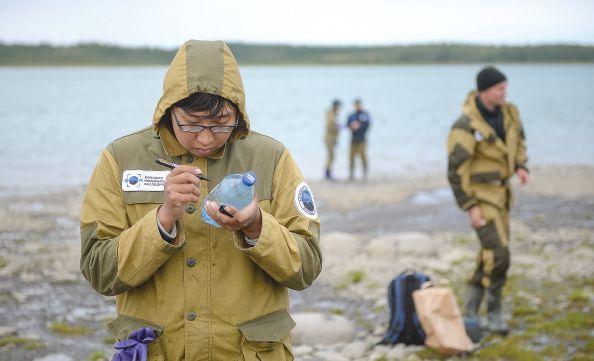
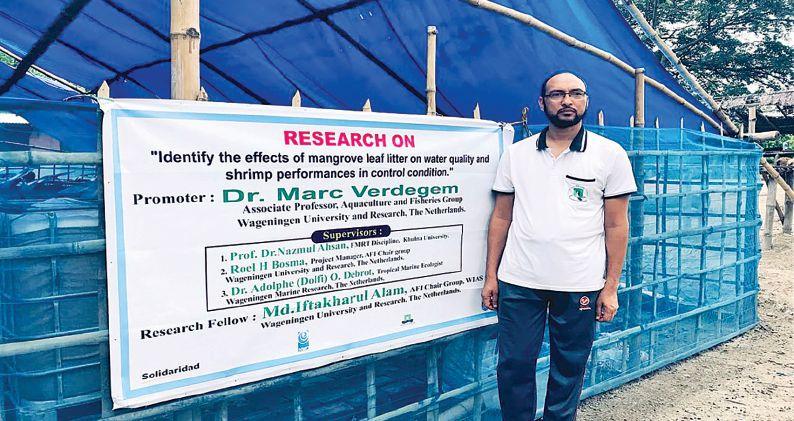
Md. Iftakharul Alam at the temporary experimental unit in Bangladesh.
PHOTO: MD. IFTAKHARUL ALAM
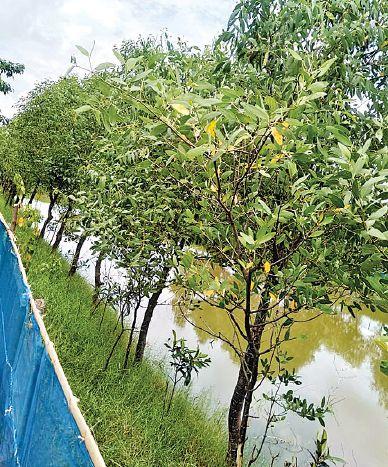
Silvo-aquaculture environment. Mangrove trees on the pond dikes provide natural food to fish.
PHOTO: MD. IFTAKHARUL ALAM
Optimized micro-scale aquaponics systems deliver
A study on micro-scale aquaponics systems in Spain emphasized the necessity of implementing strategies to minimize energy consumption and reduce labour needs.
The study looked at two optimized aquaponics systems for self-consumption, each with 4.56 square metres of cropping area and a one cubic metre fish tank. It yielded an annual production of over 69 kilograms of tilapia and 350 kilograms of vegetables, herbs and fruits. This is equivalent to 155 per cent of fresh fish and 129 per cent of vegetables yearly requirements for a family of four.
“Both aquaponic production strategies in this research, which sought to reduce the energy costs associated to regulating water temperature in cold seasons, were effective. Although, it should be noted that the use of the solar panel allowed higher production using less water and labour,” the study said.
Gina Patricia Suárez-Cáceres et al. conducted a year-long experiment – “Polyculture production of vegetables and red hybrid tilapia for self-consumption by means of micro-scale aquaponic systems” – which is now published in Aquaculture Engineering
The study intended to fill the the gap in studies that evaluate the use of a large number of plant species produced in aquaponic systems for self-consumption.
Over 20 vegetables, fruits and herbs were grown together with tilapia in the nine by five metres wide greenhouse. Red hybrid tilapia (Oerochromis niloticus x Oerochromis mossambicus) was chosen for the experiment. It has a high growth rate that is necessary to maintain the high biomass of plants.
The aquaponic facilities were identical and built according to the Food and Agriculture Organization (FAO) designs of micro-scale aquaponics systems. There were some revisions to improve the performance and handling of the facility. With focus on accessibility, materials used were easily available, low cost or recycled.
Using cheaper, renewable and cleaner energies, such as thermo-solar panels and bio-fertilization alternatives, contributed to minimizing energy consumptions. Automation and sensor reduced labour needs.
Each micro-scale aquaponics system (MAS), had a tank for fish production using
three hydroponic sub-systems; specifically, nutrient film technique, grow bed and deep water culture. The total volume of recirculating water was 1.8 square metres.
MAS1 was stocked with 110 fingerlings (1,616 grams), and MAS2 with 106 fingerlings (1,635 grams). The animals were fed with Skretting TI-3 Tilapia compound feed. Water in MAS1 was heated by a self-constructed thermo-solar panel coupled with the system, preventing water temperature to drop below 13 C. When temperatures outside the greenhouse were close to zero degrees, two submersible heaters were placed in the fish tank, which were in operation for eight to 10 hours at night.
MAS2 stopped working as an aquaponic when the fish were removed to avoid heating the water. It was transformed into a hydroponic installation in which only the grow bed tank, the NFT and the sump were functioning, with a total volume of 180 litres. Biofertilizer provided nutrients for the hydroponic production. There were four fish harvests in both MAS1 and 2. The fifth was only in MAS1.
– Ruby Gonzalez
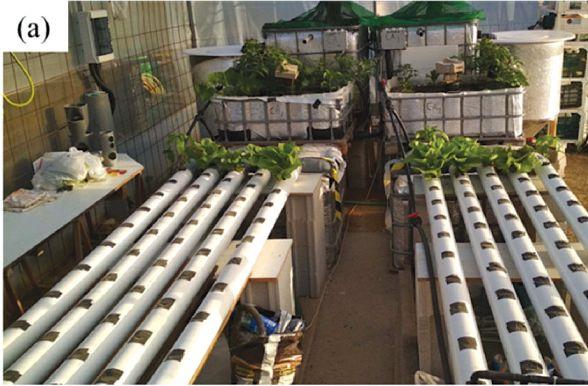
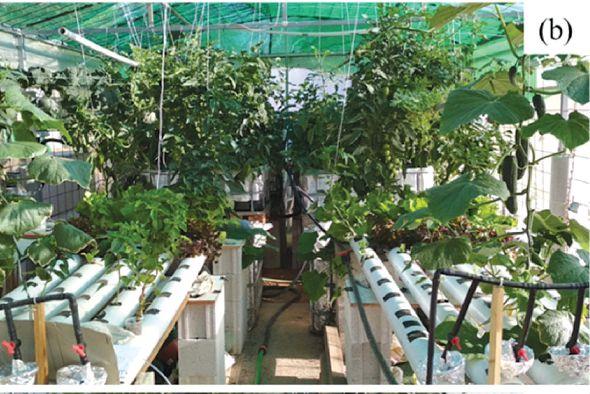
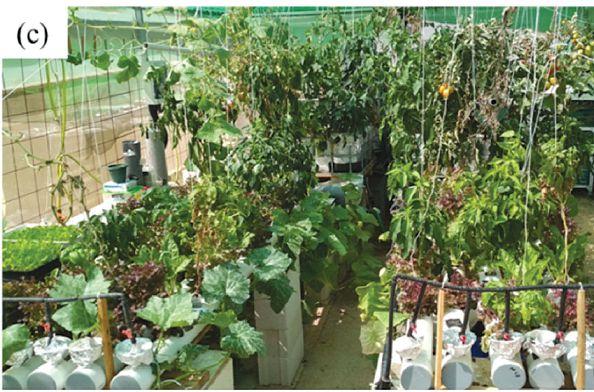
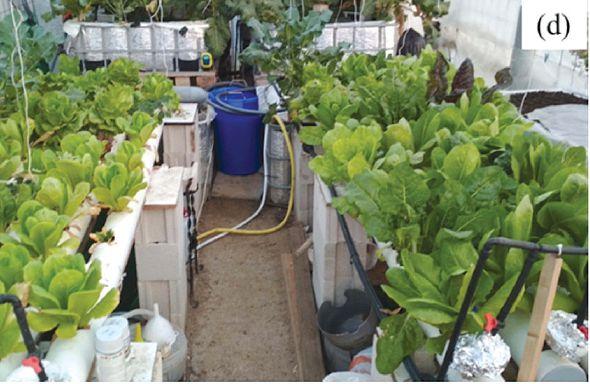
Crop production on different dates: (a) May 17, (b) July 17, (c) Sept. 3 and (d) Dec. 30, 2018. PHOTO: GINA PATRICIA SUÁREZ-CÁCERES ET AL.
Study says “no” to disinfection in European lobster larvae RAS
Everyone agrees that the rearing environment is important for a stable production of good quality juveniles. Does it follow, then, that the cleaner the better? Experts say this isn’t the case.
“The normal assumption is ‘the cleaner the better’ and ‘clean’ includes the number of bacteria,” Olav Vadstein, professor at the Norwegian University of Science and Technology (NTNU) in Norway, told Hatchery International. “We oppose this view, and claim that the right bacteria provide protection of the larvae. And that, in fact, by disinfection just before the rearing tank, we destabilize the microbial community and create a change with dominance of malign species.”
This was demonstrated in their recent study, “UV treatment in recirculating aquaculture systems (RAS) influences the rearing water microbiota and reduces the survival of European lobster larvae (Homarus gammarus),” which was done with two start feeding experiments.
Survival rate of larvae in RAS without disinfection increased with 43 and 275 per cent, in the first experiment, and 64 and 18 per cent in the second experiment, compared to RAS with UV and a conventional flow-through system (FTS), respectively. Just as Vadstein
and his team had predicted, the three different systems developed significantly different compositions of the microbiota in the rearing water and the larvae.
In both experiments, the RAS without disinfection provided a rearing environment with a microbiota that was more stable over time and more reproducible within the system compared to the other systems.
Kari Attramadal, corresponding author and associate professor at the NTNU, used an analogy: “Think about it as trying to get a chair in a crowded restaurant compared to an empty one.”
Killing most of the bacteria going back to the rearing tank, she explained, creates a situation with a lot of bacteria food –from feeding and defecation from the larvae –and low competition between the bacteria for that food in the rearing tank.
“When combined with ample time to proliferate because of the low water exchange rates (hydraulic retention time of more than 30 mins.), this creates an unpredictable development of the species composition and favours blooming of the fast growing bacteria that can also harm the larvae, which are vulnerable to infections because of a still developing immune system and low reserves for resistance due to fast growth and development of organs,” said Attramadal.
Through efficient feeding and removal of organic matter particles, the beneficial properties of RAS are retained, according to the study, creating a stable and high competition environment with a total low number of bacteria. “This is a much better way of controlling both the number and composition of bacteria for the best of the larvae than to try and disinfect the water,” she said.
If UV disinfection needs to be applied in RAS, Vadstein recommended it be used before the biofilter because the high number of microbe in the biofilter will result in competition for the food for bacterial growth and, consequently, low probability of blooms of malign bacteria.
The experiments for this recently published studies were conducted in 2013 and 2014.
–
Ruby Gonzalez
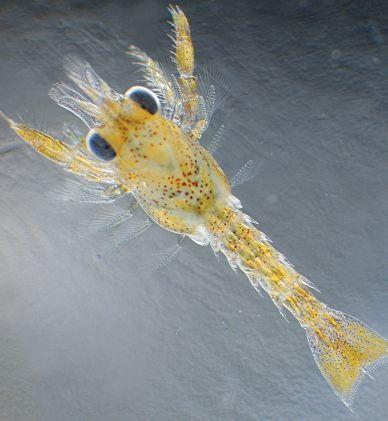
European lobster larvae (Homarus gammarus)
PHOTO: TORA BARDAL, NTNU
A cluster of new hatcheries is on the pipeline on the Russian south The Russian authorities are enhancing efforts to restore the fish population in the Don River and Black Sea tributaries.
Viktor Goncharov, first deputy governor of Rostov Oblast, recently disclosed that part of the rehabilitation and development of the fishery complex of the Don River is to build four new hatcheries.
“If now we release about 20 million fry per year, then with the launch of these hatcheries, we will release about 50 million more annually into the Don River,” Goncharov said, adding that this is needed due to the current environmental situation in the region.
Fish population in the Russian south dwindled in the past few decades due to large-scale poaching, pollution, and poorly designed dam complexes.
Recent research showed that most fish fail to pass through the Kochetovsky hydroelectric complex on the Don River. Therefore, sturgeon (Acipenser sturio) simply does not reach the spawning grounds. For this reason, the recreational campaign in the region brought little to no results in the past years.
“It is impossible to restore the population
of a valuable biological resource without the construction of a bypass fish-passage channel. Its construction is being discussed on the banks of the Barsovka River,” the Rostov government said in a statement.
Besides this, the authorities harbour plans of the Don Sturgeon hatchery modernization. In 2021, it released two million units of fish fry to the Don River, primarily belugas (Delphinapterus leucas) and sturgeons.
Dmitry Bratyakin, director of the Don Sturgeon, commented: “Today, the Don Sturgeon hatchery can produce up to six
million sturgeon units per year, and after reconstruction, this figure is slated to grow to eight million units, which, of course, is a significant increase”.
To date, regional hatcheries have released 13 million fish fry to Don River. Local scientists estimated that this figure must increase to 100 million per year in order to achieve positive dynamics in the fish population. In addition, the authorities are called to enhance control over poaching and introduce tighter restrictions on fish catching in the Russian south.
– Vladislav Vorotnikov
Russian authorities look to restore Don River and Black Sea fish populations, with four new hatcheries. PHOTO: RUSSIAN MINISTRY OF AGRICULTURE
Russia experiences a rise in demand for broodstock
The demand for broodstock on the Russian market is on the rise as the domestic aquaculture industry development builds momentum, according to Ilya Shestakov, director of the Russian federal agency for fisheries, Rosrybolovstvo.
In 2020, Russian aquaculture boosted production by 14 per cent, reaching 320,000 tons. In the first half of 2021, it rose to 21 per cent over the same period of the previous year, Shestakov said, speaking at the IV Russian Fishing Forum.
The production doubled during the past six years, Shestakov said, adding that Rosrybolovstvo expected the production to double again in the next four to five years.
Russian hatcheries indeed report that the fish farms have started ordering more broodstock in recent years.
“In 2020, our hatchery produced 264 million units of broodstock,” said Vladimir Kalgin, director of the Siberian-based hatchery JSC Rybkhoz. “We primarily focus on whitefish, including peled ( Coregonus peled ), nelma ( Stenodus leucichthys ), and muksun (Coregonus muksun). Recently, we have noticed a strong growth in demand for broodstock. We deliver it to our Novosibirsk companies, as well as to other regions, across the country and abroad.”
In this background, a rising number of fish farms in Russia begin growing broodstock both to meet their own needs and for sale.
“We are putting a lot of effort into this direction. Last year, we sold 400 tons of fingerlings,” said Alexey Ershov, director of the Rostov region fish farmers association Bolshaya Ryba. “So far, we produce more broodstock than the market can consume. The demand for our fingerlings will depend on how much broodstock (local hatcheries) would be able to produce in Krasnodar and Belgorod regions, where many of our customers are located.”
In general, it could be safely said that the competition on the Russian market is getting fiercer, Ershov added.
Rosrybolovstvo expected the domestic broodstock production to reach 38,700 tonnes in 2020. However, in some segments, Russia has almost complete import-dependence on broodstock.
LONG-LASTING AQUACULTURE PUMPS
For instance, in the Russian north-west, 95 per cent of salmon is produced from imported caviar. This issue has reportedly been hampering the development of numerous fish farms, pushing on business profitability since the weakening Russian ruble makes all imported products more expensive.
Specialists in corrosion-resistant, reliable and stable propeller pumps, with high uptime and low energy consumption- for a healthy and sustainable aquaculture.
– Vladislav Vorotnikov
Demand for broodstock on the Russian market continues to go up, as results show that 2020, Russian aquaculture production rose by 14 per cent, reaching 320,000 tons. PHOTO: ZVEZDA HATCHERY
PHOTO: ROSRYBOLOVSTVO
TOP 10 UNDER 40
ALPA PANSURIYA
Hatchery Manager
Mainstream Aquaculture Group
CARLOTA CASTANEDA-COBO
Deputy Operations Manager of Barcaldine
Hatchery, Scottish Sea Farms
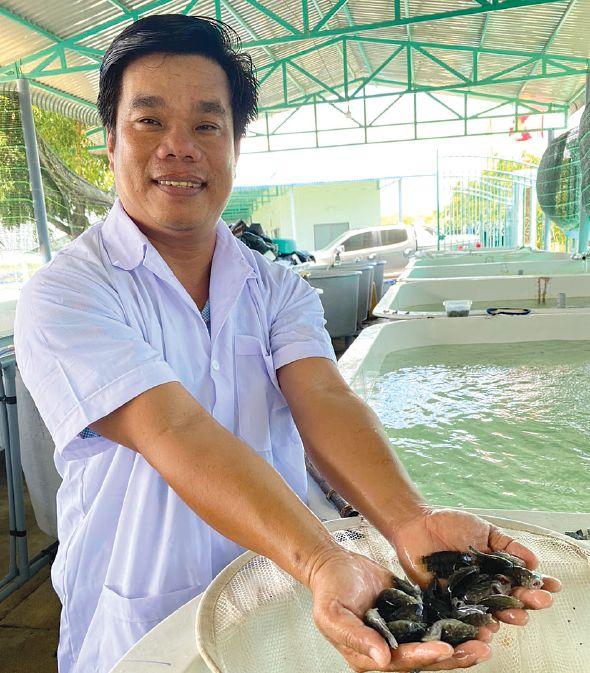
DAO VAN CHUONG
Chief Operations Officer
Tom Giong Chau Phi Company Ltd.
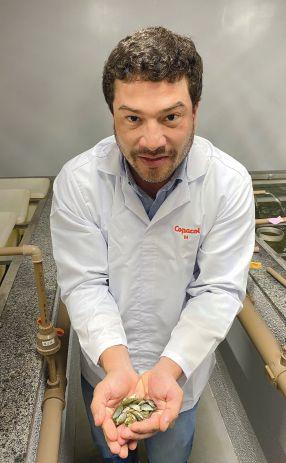
DELCIO GONÇALVES DA CUNHA
Fishery Engineer
Copacol
EMERSON ESTEVES
Biologist and Owner
Global Piexe Vivo
HIDEYOSHI SEGOVIA UNO
General Manager of Spring Genetics
Benchmark Genetics
MARÍA ESTELA BUSTO TALAVERA
Médico Veterinario Zootecnista (UMSNH)
La Noria
MEGAN SORBY
Operations and Development Manager
Kingfish Maine
SIGBJØRN VORREN HJETLAND
Hatchery Manager
Sogn Aqua Juveniles
ZACH JANIAK
Farm Manager
Hudson Valley Fish Farms
Hatchery International’s 2021 Top 10 Under 40
Celebrating the drive, expertise, and passion of our industry’s hatchery professionals
By Jean Ko Din
From overcoming the challenges of a global pandemic, to innovating in recirculating aquaculture systems (RAS), this year’s Top 10 Under 40 hatchery professionals have injected their passion into their life’s work. Their careers may only be just beginning, but they continue to make waves that will ripple throughout the industry.
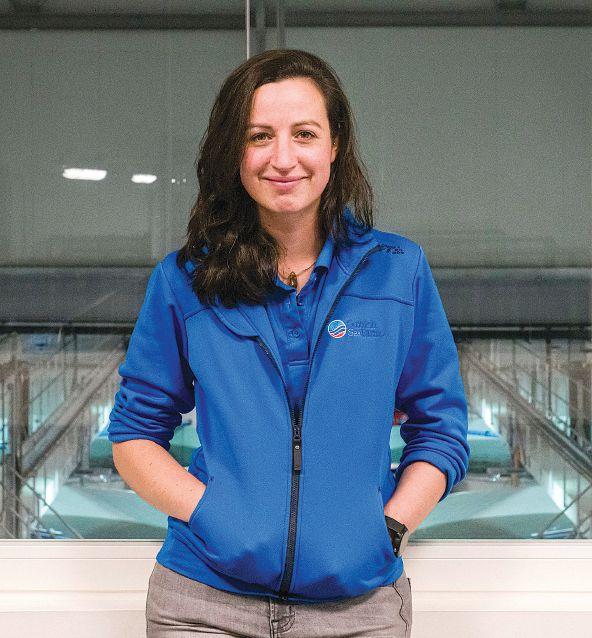
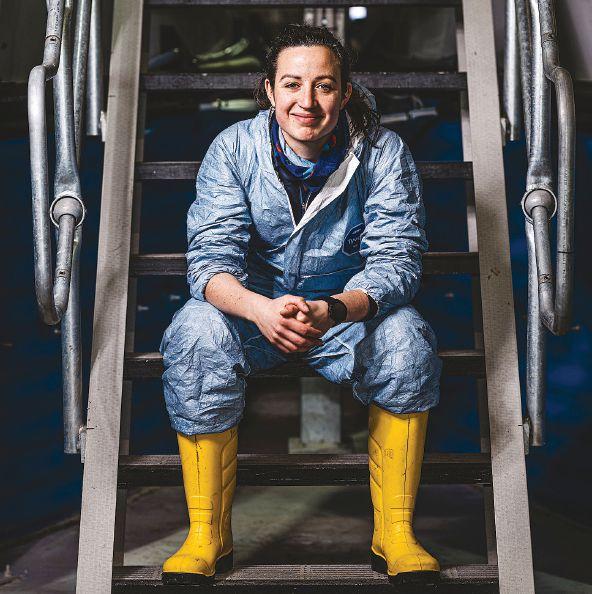
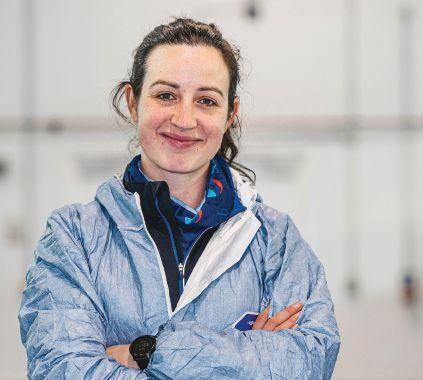
CARLOTA CASTANEDA-COBO Contagious optimism
Since she was a child, Carlota Castaneda-Cobo has always been fascinated by the ocean. When she decided to make the ocean her life’s work, she found a calling within a calling in the world of aquaculture. After achieving her Bachelor’s degree in Environmental Biology at Universitat Autònoma de Barcelona and her Master’s in Aquaculture at Universitat de Barcelona, the 30-year-old decided to cross the continent, from Spain to Scotland.
In three short years, Castaneda-Cobo sailed through the ranks at Scottish Sea Farms, starting out as a health specialist at the Loch Kishorn farm and now as the deputy operations manager at its Barcaldine RAS hatchery. But being promoted to this senior role was not easy, especially during a worldwide pandemic.
Within weeks of her appointment, two senior managers – head of Freshwater Pål Tangvik and operations director Noelia Rodriguez –stepped down from the team after fulfilling their mission to get the hatchery off to a good start.
“Carlota quickly became a key figure in ensuring that the facility continued to run smoothly and the fish remained well cared for while the company searched for its next head of Freshwater – later announced as Rory Conn,” says Lesley Rice, head of communications at Scottish Sea Farms.
Castaneda-Cobo likes to say that she now manages people more than she does the fish. She is described as an attentive leader who implemented “waffle days” for her colleagues who were missing loved ones in other countries during the pandemic.
“I think it was the best thing I’ve done,” she teases. “A small thing, perhaps, but during the most difficult days, the sight of those freshly-made waffles with bacon or clotted cream and blueberries, helped keep everyone’s spirits up.”
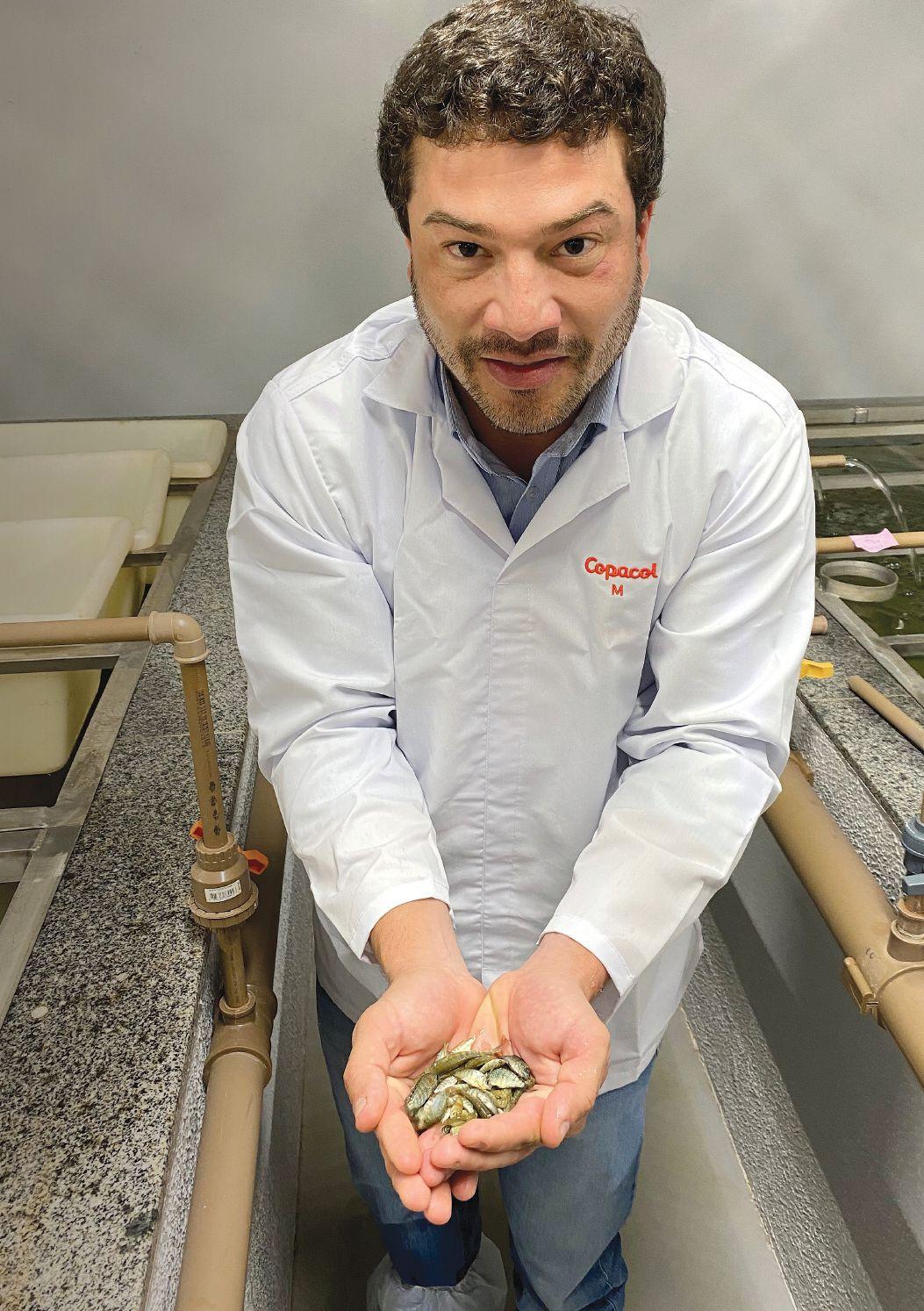
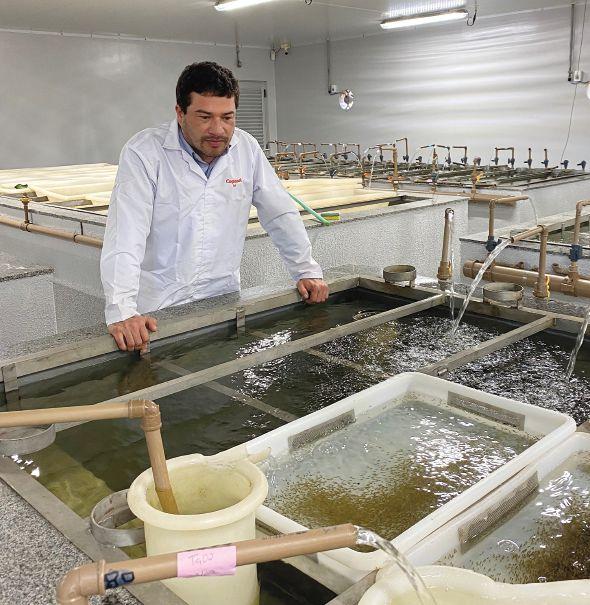
DELCIO GONÇALVES DA CUNHA Growth mindset
In his 12-year career, Delcio Gonçalves da Cunha has learned that innovation is the key to success.
“I would like all young people who have affinity and interest in this field of aquaculture to always seek innovations and solutions for the evolution of zootechnical productivity indices,” says the 36-year-old.
Even before he became supervising manager and fishery engineer at Copacol, one of the biggest tilapia companies in Brazil, Da Cunha cut his teeth at Mar & Terra hatchery, which is also a major tilapia hatchery for Brazilian carnivorous fishes.
It was while he worked at Mar & Terra that he helped develop technology for the successful rearing of Arapaima gigas, which is an endangered species native to the Amazon River.
Da Cunha’s commitment was especially emphasized during the pandemic, as he worked to provide continued supply of fingerlings at Copacol hatchery for more than 500 producers in the region.
“He has a passion and involvement with the reproduction and production of fingerlings on an industrial scale,” says Thiago Ushizima, regional manager in Latin America for Adisseo Latam – Aquaculure.
“During the summer, when everyone travels in Brazil, Delcio is always focused on the hatchery.”
Growing up in the coastal province of Ninh Thuam in Vietnam, Doa Van Chuong learned that the fisheries and hatchery industry was the heart of the region’s economy.
“This area is full of wind and sunlight with over 105 kilometres of coast line. The temperature is high and the precipitation is low whole-year ‘round. Fortunately, this condition is suitable for marine hatchery production,” Dao says, as translated from Vietnamese.
After graduating from the Faculty of Fisheries at Nha Trang University, he quickly realized he wanted to start his own production company. With the help of a former schoolmate, Dao launched Tom Giong Chau Phi Ltd., which produces fry for white-leg and tiger shrimp, clam, cobia, grouper and pompano. In 14 years, he has become chief operating officer for three of his company’s hatcheries at 38 years old.
Another former schoolmate, Dr. Dung Viet Le, is now a professor at the Department of Aquatic Environment and Diseases at the Vietnam National University of Agriculture. He says that Dao has taken great pride in producing quality, disease-free fry and achieving ISO standards for hatchery production.
He has applied probiotics and biofloc technology without the use of antibiotics, and it has earned the company trust from the region’s farmers.
“Starting his career as a poor, young man with little experience, Dao now becomes the boss of the company which requires both good technology and management to survive in the highly competitive world,” Dung describes. “Lots of his schoolmates have given up the fisheries profession, but the way he achieved his status is inspiring young students to follow this less attractive career.”
DAO VAN CHUONG Self-made
Grow your career with us.
Growing premium quality salmon relies on giving our fish the best possible start and maintaining that high level of care throughout their life.
As global demand continues to outstrip supply, we’re working to steadily increase the volume of salmon grown – and, with it, the size of our freshwater team.
From freshwater technicians to RAS specialists, engineers to quality monitors, we’re on the look-out for candidates whose care and attention to detail will help us to continue delivering the highest standards of fish health and welfare.
To find out more about the career opportunities currently available, email recruitment@scottishseafarms.com
RAS technicians
EMERSON ESTEVES
Lead by example
Emerson Esteves is a fish farmer first and foremost.
But with his 20 years of aquaculture experience, he has become an influential leader in the São Paulo region in Brazil. Esteves, 39, is the owner and head biologist of Peixe Vivo, one of the largest tilapia fingerlings producers in the state.
Peixe Vivo manages five hectares of nursery ponds with an overall annual production of one million juveniles for the Northwest region of São Paulo – which also happens to be the second most productive aquaculture state in the country.
According to colleagues, Esteves has a keen eye for detail, especially controlled hygiene and temperature conditions, as well as a thorough perfection of feeding technologies that helps him achieve a 99 per cent survival rate and a solid reputation in the local market.
After the water crisis of 2014 and 2015, there was a sharp drop in the water level that threatened production in the industry. This inspired Esteves to implement a recirculating aquaculture system (RAS) with decantation tanks and biofilters with macrophytes that allow the facilities to reuse 90 to 95 per cent of the source water.
Esteves is a leader in the aquaculture community, serving as president of the Deliberative Council of the Association of Pisciculturists in Água Paulistas and União. He participated in the development of the Environmental Licensing Decree of the State of São Paulo, which helped establish environmental norms and procedures to aquaculture activity in the region.
He is also host and co-organiser of Aquishow Brasil, a hallmark industry event in the region. Earlier this year, he became host of his new podcast, Aquacast.
SIGBJØRN VORREN HJETLAND Sharing knowledge
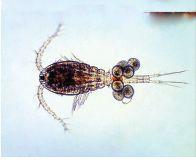
Sigbjørn Vorren Hjetland, 34, came to Sogn Aqua Juveniles (SAJ) in Brekke, Norway straight from completing his Master’s degree in Marine Coastal Development, where he worked with copepods at the Norwegian University of Science and Technology (NTNU).
In his first few years as hatchery manager, Hjetland was working with old and outdated equipment. He worked diligently with his staff and collaborated with researchers to apply best practices in the hatchery’s production protocols, even with his limited resources. With the trust he earned from the company, they began to invest in new equipment – a new live feed and start-feeding department.
“Sigbjørn has been the main driving force for SAJ’s success, enabling a production of 100,000 high quality (Atlantic halibut) juveniles per round, with a potential to produce one million juveniles per year,” says Ole-Kristian Hess-Erga, former colleague and nominator.
Atlantic halibut is one of the most complex and challenging species to grow in aquaculture. However, Hjetland has worked to gain his own expertise in the species and now also shares that knowledge through his YouTube channel, Haliworld. He firmly believes that the industry succeeds when knowledge and experience is freely shared among fellow fish farmers.
“Be open minded and share your knowledge, ask as many questions as possible,” he says. “I have done so many mistakes during these years. But failure will make you work harder and think more carefully on the next challenge. It will be even more satisfying when you reach your goals.”
ZACH JANIAK
Born to RAS
Zachary Janiak believes he was born to grow fish.
And as farm manager of Hudson Valley Fisheries (HVF) in Hudson, N.Y, he is living his dream and everyone he works with knows it. “Passion and dedication are key, it has to be in your heart,” the 28-year-old says.
Senior farm manager Brittany Peachey, who was also recognized as one of the Top 10 Under 40 last year, describes him as someone who leads with passion and tenacity.
“You will be hard-pressed to find someone that is more invested in their fish hatchery operations than Zach Janiak,” she writes in his nomination form. “He eats, sleeps, breathes fish farming. Through challenges and setbacks, he is constantly working to progress and improve farm operations.”
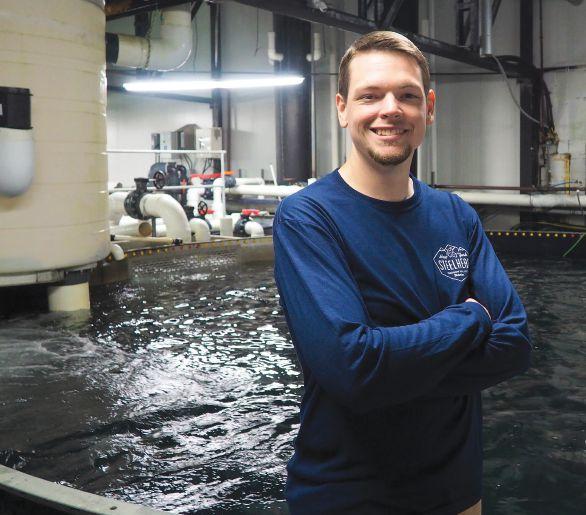
Within his six years at Hudson Valley Fisheries, his work ethic drove him through from being an aquaculture technician to assistant aquaculture operations manager, and now to farm manager. His biggest passion in aquaculture is in RAS technology. Janiak firmly believes that RAS is the future of the industry and he is all in.
“There should be a farm like HVF in every city, supplying locally and responsibly-raised fish,” he says. “You know what your fish ate and what it swam in, it’s a beautiful thing. The U.S. is importing around 80 per cent of its seafood, it’s ridiculous. I have received complaints in the past that our fish are too fresh, never thought that was possible! RAS encourages sustainability, traceability, smaller carbon footprint, waste reuse, water reuse, biosecurity, reduced pressure on depleted wild populations, and year-round production.”
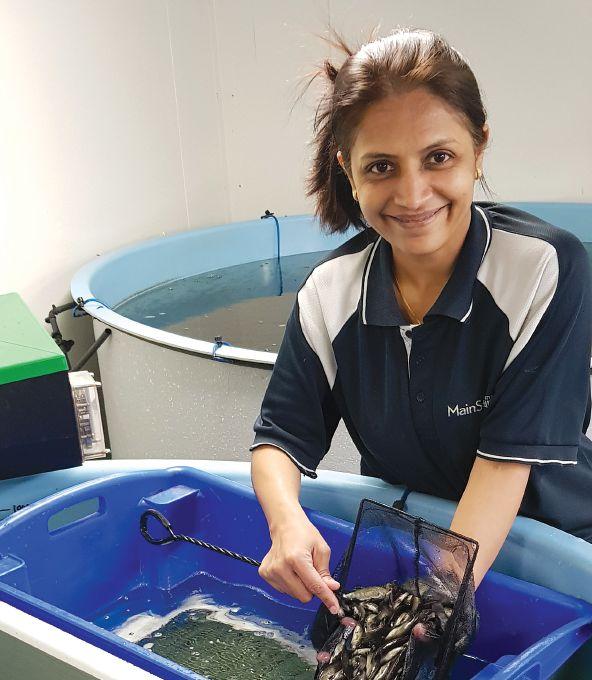
Unlike many of this year’s winners, Alpa Pansuriya did not pursue aquaculture from the very beginning.
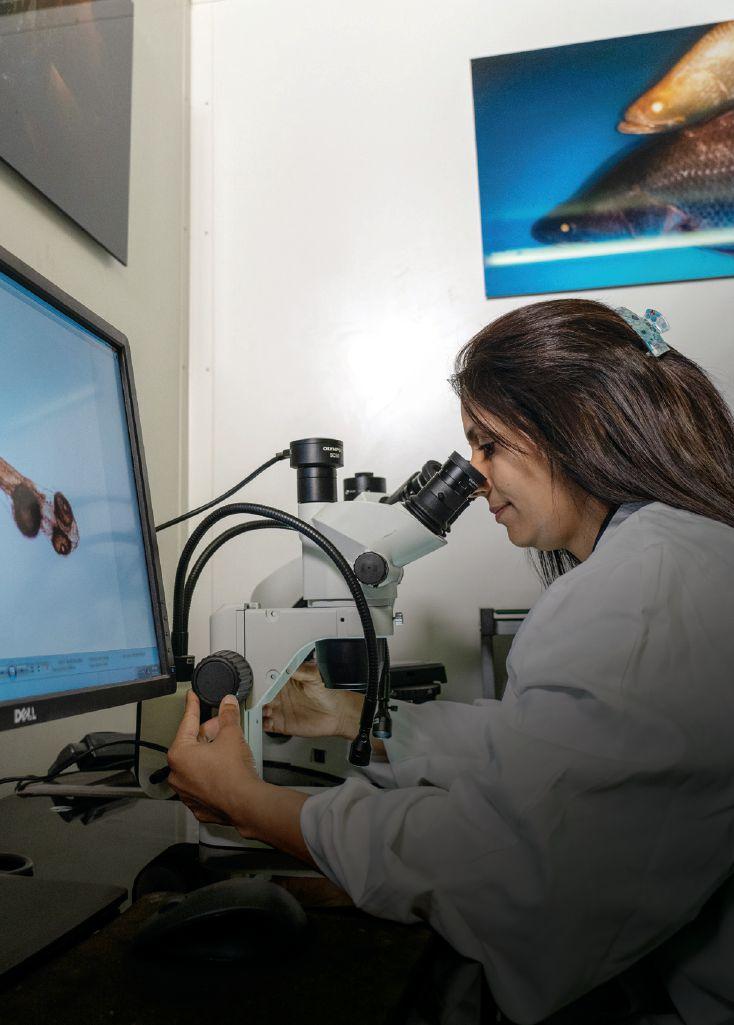
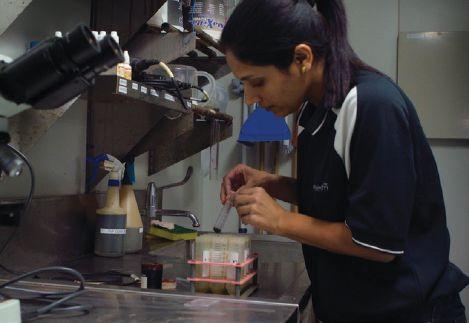
She started off her working life as a successful pathology lab technician, studying the causes and effects of disease and injury in the human body. In a way, hatchery and aquaculture found her. Pansuriya decided on a career change that brought her to Tasmania, Australia in 2013 as a hatchery lab technician in Spring Bay Seafood.
The 38-year-old hasn’t looked back since. She now works as a hatchery manager at Melbourne’s Mainstream Aquaculture Group where she works with the world’s largest Barramundi fingerling supplier.
“This proverb is perfect for me: ‘Choose a job you love, and you will never work for a day in your life,’” says Pansuriya. “I never stop learning. Aquaculture is the field where not everything you do will be successful. Every failure will give you chance to grow both personally and professionally.”
Boris Musa, managing director and CEO of Mainstream Aquaculture, says he nominated Pansuriya because he believes she is a “shining example of the next generation of fish farmers.” She has shown a meticulous work ethic that helped the company hatcheries refine its larval rearing protocols and have grown its overall production year by year.
Musa also credits her for reducing waste and improving efficiencies in the facility by establishing a water usage monitoring and recirculating program. The hatcheries have reduced water waste to below one per cent per day.
“It is no surprise that Alpa is consistently the face of Mainstream Aquaculture,” says Musa.
ALPA PANSURIYA Never stop learning
Love the challenge
Megan Sorby loves the world of aquaculture because there is always something new to learn.
Any given day at Kingfish Maine, she gets to be a biologist, a plumber, a chemist and an engineer. She loves the challenge of improving operations efficiency, increasing survival rates and learning about new technology. No two days are the same, she says.
“I am never finished learning,” says Sorby, 34. “Because of the rapid growth in the sector, there is always something new to understand, whether that be a species, a procedure, or a system design or component. It is important to always stay curious.”
Sorby likes to seek out a challenge. In her 12 years, she has worked with land-based barramundi in Massachusetts, sablefish fingerlings in Washington, then at a sablefish farm in British Columbia. In her previous role, she was recognized at the 15th Annual B.C. Aquaculture Achievement Awards for her “outstanding managers performance.”
Now, she takes on a new challenge with her husband and co-founder Tom Sorby, developing one of the largest RAS hatcheries and grow-out facilities for yellowtail kingfish in the U.S.
MARÍA ESTELA BUSTO TALAVERA Health is wealth
Fish health can be the only measure of success in any hatchery. This is why María Estela Busto Talavera is being highlighted for her meticulous care of the tilapia broodstock at La Noria hatchery in Ingiernillo, Mexico.
The 31-year-old veterinary zootechnician has transformed the local hatchery’s survival rates and egg production rates with diligent practice. In her three short years at the hatchery, the production has seen significant results.
Talavera implemented a methodical vaccination program against streptococcosis, an infectious disease that commonly plagues warm water fish in these tropical regions. This resulted in hatching rates to increase from 28 to 50 per cent and an overall increased survival rate in the first and second fingerling stages from 80 to 95 per cent.
Talavera also spearheaded the installation of a recirculating biofloc system to not only reduce the spread of pathogen but also reduce water usage overall.
“Animal welfare and efficient technical production must go handin-hand with good aquaculture,” she says, translated from Spanish. “That teamwork is of vital importance and aquaculturists must always seek to train and update themselves in this medium.”
HIDEYOSHI SEGOVIA UNO Breeding success
Some of Hideyoshi Segovia Uno’s fondest memories as a child was spending time with his Japanese grandfather, talking about fish production and the benefits of seafood.
“He would take me very early in the morning to the local fish market on the weekends to get the freshest fish possible so he could prepare the greatest sashimi ever,” said the 39-year-old.
They have partnered with The Kingfish Company in the Netherlands to bring their combined aquaculture expertise to build a state-of-the-art facility in Jonesport, Maine. It is the first land-based farm to receive Best Aquaculture Practices certification and the first Aquaculture Stewardship Council certified source of yellowtail kingfish. The facility is projected to produce 6,000 to 8,000 tons annually.
“It is great to see so much growth in RAS in the U.S.,” says Sorby. “We have been really behind the curve of the rest of the world, so it is awesome to see interest and momentum picking up here.”
Uno also always loved the outdoors. He wanted a professional career that would allow him to interact with nature and do something that had a positive impact on the environment. And so, Uno has dedicated his life to aquaculture engineering, believing that aggressive innovation in animal welfare and sustainability are the key to global food safety, generating jobs, and feeding millions of people.
Uno currently serves as general manager at Benchmark Genetics USA (Spring Genetics) in Miami, Fla. He oversees worldwide tilapia operations for Benchmark, including production of broodstock fingerlings, breeding and genetics activities.
Jan-Emil Johannessen, head of Benchmark Genetics, said it was Uno’s strong leadership which drove the company’s tilapia production to success, even in the middle of a pandemic.
“In 2019, Benchmark was in bad financial shape and it was uncertain if we could continue to support our tilapia activities,” says Johannessen. “At the same time, Hide took over responsibility for the company, and he has, during the last two years, demonstrated a clear and strong leadership by doubling the sales during 2021 compared to 2020, establishing new brood stock contracts, increasing sales of sex reversed fingerlings (SRFs) in the U.S. market, and building a strong company culture.”
MEGAN SORBY
GENETICS & BREEDING
THE FUTURE of food production
As public awareness grows for climate change and its effects, scientists look at how gene-editing technologies can create environmental and animal welfare benefits, and sustainability.
By Colin Ley
Gene editing, genetic engineering, and many other forms of reproductive technology will play a major part in putting food on our dinner tables in the future, according to leading Scottish scientist professor Bruce Whitelaw, interim director of Edinburgh’s Roslin Institute.
Speaking on the 25 th anniversary of the creation of Dolly the sheep, the first animal to be cloned from an adult cell, Whitelaw was asked what direction he thought breeding technologies will take over the next 25 years. His answer was ambitious and positive and in no way apologetic, concerning the role that advanced science will play in relation to the future of food production.
“We will see products on our plates that have come from farmed species that have had some form of genetic engineering or reproductive technology applied to them,” he said. “And we will be better as a society for it.”
His argument is that the fish and meat species of the future will be healthier than they are today and will be better equipped to address the climate change and disease concerns, which are currently causing the general public so much anxiety.
Whitelaw’s comments followed the signing of an agreement by his Institute to apply its proven gene editing techniques to fight a major pig disease. Already renowned for its work across many livestock species, Roslin’s gene editing prowess also embodies a strong aquaculture content.
Genome editing progress
“We have made good scientific progress in our research relating to genome editing,” professor Ross Houston, Roslin’s chair of Aquaculture Genetics, told Hatchery International. “It is difficult, however, to say when this technology will be commercially available for aquaculture use, and under what procedures.”
While Roslin’s cloning breakthrough was 25 years ago, the question of what is and isn’t acceptable for commercial application, remains subject to debate. The government in the United Kingdom (UK), for example, launched a public consultation in January, asking anyone who wishes to respond, what regulations should be applied to gene-editing technologies. The process gathered 6,444 responses, all body of opinion which is still being ‘analysed’,
A good example of Roslin’s ambition in this area is illustrated by the Institute’s recently-received funding for two large projects, each of which includes the potential of using gene editing technology to improve resistance to sea lice in salmon. Current research in this area embraces the idea of harnessing cross-species mechanisms to achieve resistance, following an approach which is based on the fact that certain Pacific salmon species are naturally almost completely resistant to lice.
Even if rapid progress is made during these two projects, however, it could be quite a while before the results will be commercially available to salmon hatcheries. After all, Roslin’s hugely impressive gene-editing success in relation to disease-resistant pigs, is still at least five years away from on-farm use. That’s despite the Institute now having a development agreement with Genus, one of the world’s largest breeding companies.
Tipping point
according to the government’s consultations website.
“It was a useful process towards taking a scientific approach to the regulation of gene editing technologies, with regards to its risks and benefits,” said Houston. “The timeframe for any changes to regulation, and therefore use, remains uncertain.
“What we can say at present is that breeding and production companies, especially for salmon, are buying into research and development projects which are using gene editing technology. This suggests they see it as a potential avenue for future commercial application.
“Our view is that the early application of such technology should be for an edit that has significant environmental and animal welfare benefits, in addition to benefits relating to sustainable production.”
There is a glimmer of hope, however, that regulatory attitudes are starting to soften. That’s the view held by professor Joyce Tait, a member of the UK’s Regulatory Horizons Council (RHC), and a contributor to Roslin’s pig agreement presentations to the world’s media.
She described Britain’s development record on similar technology breakthroughs in the past, as being ‘fairly poor’ due to regulatory issues. Currently, however, she believes the global experience of producing COVID-19 vaccines so rapidly in 2020 has perhaps opened the door for a new way of regulatory thinking around the world. She certainly believes this is true in relation to the UK government.
“Perhaps we will see this same approach being extended to other areas of technology, especially with a growing public awareness that animals are also exposed to pandemic diseases,” said Tait.
“While there have obviously been public perception concerns
Professor Joyce Tait, member of the Regulatory Horizons Council (RHC), and contributor to Roslin’s pig agreement presentations.
Professor Bruce Whitelaw, interim director of Roslin Institute.
about species modifications in the past, I believe we are witnessing a sea change in the way people think about this, again due to the COVID vaccine experience. In fact, I believe public opinion is moving ahead of government in this respect.”
All of which has left her with the view that the productive use of gene editing in relation to fish and meat production is at a ‘tipping point’, in terms of future government approval.
Dr. Elena Rice, chief scientific officer at Genus, Roslin’s pig development partner, is similarly upbeat.
“We have already had multiple discussions with customers and others to help them understand what gene technology is all about,” she explained. “We’ve also been addressing international approval processes and making sure our approach is ethical and trusted as all stages.”
Back at Roslin, meanwhile, there is firm belief that once the public and regulatory landscape permits,
editing technologies are likely to be used in commercial aquaculture breeding in the coming years.
“Modern selective breeding programs are both effective and sustainable, and their applications have been expanded to include a focus on improving animal welfare,” said Roslin, in its official response to the UK government’s consultation.
“However, some characteristics of farmed species are not easily improved by genetic selection. Gene-editing technologies offer new opportunities to improve traits of relevance to sustainable production, including improving species’ health and welfare, and reducing environmental impact. These new technologies have the advantage of being specific by introducing a single, planned genetic change, with reduced potential for unplanned negative effects compared to other genetic engineering technologies.”
Selective breeding programs are enabling genetic improvement of production traits, such as disease resistance, but progress is limited by the heritability of the trait and generation interval of the species. New breeding technologies, such as genome editing using CRISPR/ Cas9 have the potential to expedite sustainable genetic improvement in aquaculture. Genome editing can rapidly introduce favourable changes to the genome, such as fixing alleles at existing trait loci, creating de novo alleles, or introducing alleles from other strains or species. The high fecundity and external fertilization of most aquaculture species can facilitate genome editing for research and application at a scale that is not possible in farmed terrestrial.
This is an excerpt from: Potential of Genome Editing to Improve Aquaculture Breeding and Production – co-authored by Remi L. Gratacap & Ross D. Houston, both from Roslin Institute, and Anna Wargelius & Rolf Brudvik Edvardsen, both for the Institute of Marine Research, Bergen, Norway. https://doi.org/10.1016/j.tig.2019.06.006
English researchers hope that a new project to release oysters will restore biodiversity and rejuvenate a oncevibrant oyster population along the south coast.
By Bonnie Waycott
More than 20 years ago, oyster reefs were abundant in the Solent – a strait along the south coast of the United Kingdom (UK) that separates the Isle of Wight from mainland England. Around 450 boats collectively landed about 15 million native oysters (Ostrea edulis) each year at the end of the 1970s and the oyster fishery was once the largest in Europe. But in 2013, it was forced to close due to a combination of over-extraction, intertidal conditions, disease, pollution, and invasive species.
Now, a new restoration project established by Blue Marine Foundation (BLUE) is underway to relay oyster reefs in the Solent. As a collaborative effort with numerous member organizations, researchers and practitioners hope that the Solent Oyster Restoration Project will improve the chances for self-sustaining reefs to recover in order to improve water quality and marine biodiversity.
“This is one of the first large-scale oyster restoration projects established in the UK, which is really exciting,” said Dr. Luke Helmer,
restoration science officer at BLUE. “Oysters have long been an important species for the ecology and industry of the south coast. At its peak at the end of the 1970s, the oyster fishery supported 450 vessels and 700 workers, while the ecological benefits and ecosystem services of oysters were massive. These have now been lost. We are very excited to see how things go in our efforts to restore these benefits.”
England’s first restoration-focused oyster
hatchery
One of the project’s most significant milestones to date is the establishment of England’s first oyster restoration hatchery at the University of Portsmouth’s Institute of Marine Sciences. By providing a steady, reliable source of oysters, the hatchery hopes to overcome a major barrier to oyster restoration and enable research into ensuring disease resistance, without any loss of genetic variation or adaptation to local conditions. Hopes are high that it will play a key role in increasing researchers’ understanding of the ecology and biology of the native oyster and improve rearing techniques to enable more successful restoration across Europe.
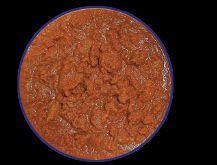
The hatchery takes local oysters from the Solent and provides them with the optimal environmental conditions and diet to encourage them to breed. Oysters are kept at different densities in each 30-litre tank and fed a concentrated algal paste made from five algal species. Four parameters – temperature, salinity, pH and oxygen – are monitored,
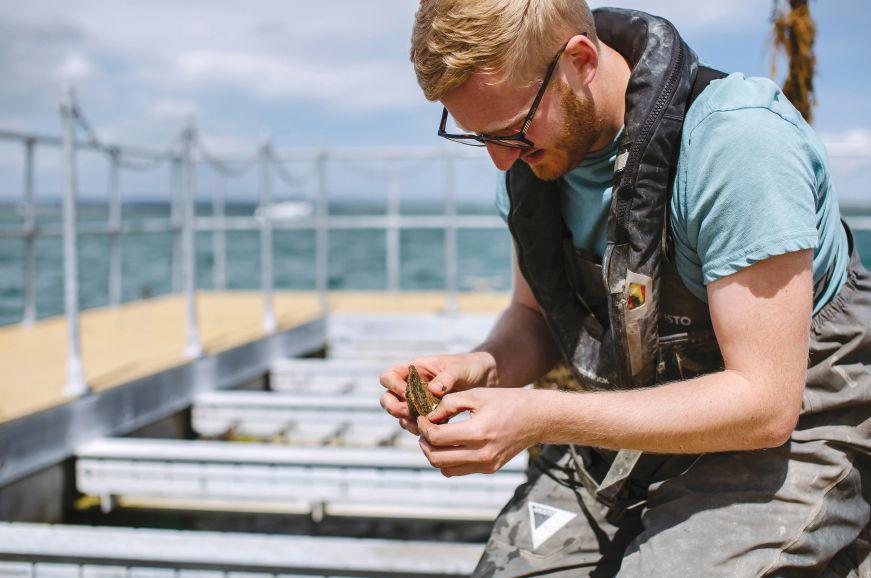
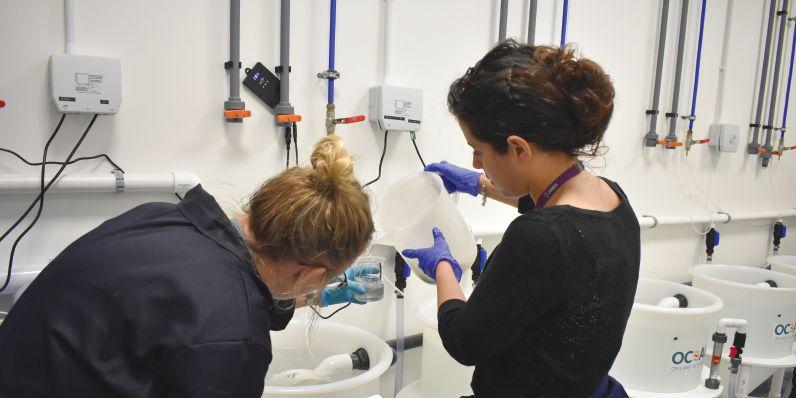
Dr. Luke Helmer monitors oysters, looking to rejuvenate the once thriving and abundant oyster reefs in the Solent straight, located in the south coast of the UK.
PHOTO: UNIVERSITY OF PORTSMOUTH
PHOTO: LUKE HELMER
recorded and adjusted daily in order to maintain stable water conditions.
“The temperature is kept lower than 10 C (50 F) before the breeding season,” said Monica Fabra, PhD researcher and hatchery manager at the Institute of Marine Sciences. “Then, it is increased by one degree a day until it reaches 22 C (72 F). Above 13 C (55 F), the oysters start developing gonads and reproducing, and after a couple of weeks to a month, they begin to spawn. Temperature and food are the main triggers for spawning.”
Larval rearing
Depending on age and size, each oyster releases between one and two million larvae. These are collected with sieves and transferred to conical larval tanks. The water flows from the
Study researchers conduct baseline surveys and screening of the
“Every other day we clean and disinfect the days. The spat set on cultch (called spat-on-
EWOS TRANSFER CLEAR
Utilizing years of research from our R&D centers along with proof of performance from customers worldwide, EWOS now offers revolutionary RAS hatchery transfer feeds that address water quality, biofilter efficiency, and most importantly, performance.
PHOTO: LUKE HELMER
many other stressors such as predation, can reduce the larval survival and recruitment, jeopardising the success of oyster restoration projects. We let the larvae settle on a suitable substrate before deploying them, increasing the chances of them growing and surviving in their natural environment.”
Keys to success
Fabra is also investigating the genetic implications surrounding the employment of locally adapted broodstock from disease-affected areas,
for the hatchery production of oyster seed.
“The Solent is an area affected by the disease Bonamiosis, which is caused by the parasite Bonamia ostreae”, she said. “Our oysters have already been exposed to the disease, therefore they may have adapted, developing resistance on a population-wide level.”
The use of local oysters may also allow a higher post-deployment survival of oyster juveniles, because of the physiological adaptation to local environmental conditions, believes Fabra.
“An oyster may be disease-free and healthy,” she said, “but if it is translocated from one region to another and not adapted to local conditions, there is a higher risk of death.”
Genetic diversity and potential disease-resistance are monitored during the whole production process by collecting samples of larvae and oyster tissues from the adults.
“One of our strengths is that we use broodstock from the Solent and translocate the new spat to the same area,” said Fabra.
Helmer agrees.
Researchers collect samples of larvae and adult oyster tissue to monitor genetic diversity and potential disease resistance throughout the production process. PHOTO: FIONA WOODS
“The oysters that we are using have been exposed to conditions in the Solent for a number of years, and have a genetic line that provides some adaptation to those conditions,” he said. “Local broodstock are much more likely to adapt best and survive.”
Helmer, meanwhile, believes that other marine life will benefit from more oysters in the Solent. A single oyster can clean almost 200L of seawater each day, improving water quality and clarity. They can also act as nursery grounds for fish and
protect saltmarshes and other fragile coastal ecosystems.
“Our research has revealed an incredible diversity, and we have identified up to around 130 different species, including pipefish, sea scorpions, critically endangered European eels, seahorses, common prawns, several crab species, and lots of amphipods,” said Helmer. “Species like barnacles and ascidians also like to attach to oyster shells. Oysters are ecosystem engineers and we have seen this very much over the past few years.”
The Aquaculture industry is vital for establishing responsible, sustainable fish farming and aquaponics systems:
The Aquaculture industry is vital for establishing responsible, sustainable fish farming and aquaponics systems:
The Aquaculture industry is vital for establishing responsible, sustainable fish farming and aquaponics systems:
Dura-Cast is your resource for the durable plastic open top and cone bottom tanks that equip your facility for success.
Dura-Cast is your resource for the durable plastic open top and cone bottom tanks that equip your facility for success.
Dura-Cast is your resource for the durable plastic open top and cone bottom tanks that equip your facility for success.
Visit DuraCast.com or call us today to learn more about the solutions we can provide for you!
Visit DuraCast com or call us today to learn more about the solutions we can provide for you!
Visit DuraCast com or call us today to learn more about the solutions we can provide for you!
800.683.4116
800 683 4116
DuraCast com
800 683 4116
DuraCast.com
DuraCast.com
Next steps
Helmer, Fabra and their colleagues are among the first to attempt a restoration project of this scale in Europe. Going forward, Helmer explained they will be deploying the spat in several ways, conducting more experiments to determine the best way of on-growing the larvae, and assessing the oyster reefs to see how they develop. The team is also aiming for an integrated approach to combine restoration efforts of saltmarsh and seagrass habitats with oysters to benefit the entire ecosystem.
Moving forward, Helmer, Fabra and their team will continue to conduct experiments and assess the oyster reefs to see how they develop. PHOTOS (ABOVE): FIONA WOODS. PHOTOS (RIGHT): LUKE HELMER
Finding success in an unlikely space
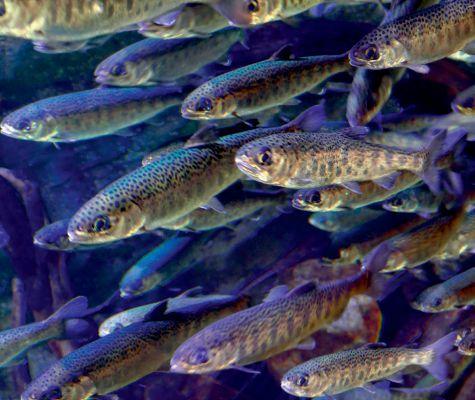
With five land-based farms and two sea sites in Chile, Aquagen has been producing salmon roe all year ‘round, in a country known for its natural disasters.
By Christian Pérez-Mallea
On April 22, 2015, the most recent eruption of the Calbuco volcano, located in southern Chile, took place. This affected eight landbased salmon farms in the surrounding area and represented losses of around 773 tons of the whole local industry. This was a game-changing event for most freshwater facility-owners located in the region of Los Lagos, including Aquagen Chile.
Six years later, the company operates five land-based facilities in the country with a combined total capacity close to 18,650 cubic-metres. Located in separate geographical areas, each of the facilities share similarities and differences. For example, some use recirculating aquaculture system (RAS) technologies, while others run with flow-through water systems.
LOOKING INTO AQUAGEN CHILE’S FACILITIES
PHOTOS: AQUAGEN CHILE
Not only is this the only long-lasting salmon genetics and breeding company in Chile, but it is also the one with the largest share in the domestic market. The firm has been supplying the local salmon industry since 2000.
Multiple eggs in multiple baskets Aquagen Chile had about 70 per cent of its Coho salmon egg production concentrated in the hatchery ‘Río Sur’ until 2015, when the facility was destroyed due to the eruption of Calbuco.
The general manager of the company, Patrick Dempster, explained that following the eruption, Aquagen’s board of directors decided to invest in several operating units in Chile, both owned and leased, to offer its customers certainty regarding the egg supply.
“This is why we have incubation in three sites; the genetic nuclei of Atlantic salmon are tripled; those of Coho and trout, are duplicated; and the breeding stock, duplicated too. Not only in quantity, but also in different locations, so if there is a complete loss of any of them, the impact on the total supply of eggs for the year is not affected,” he said.
Similarly, the company rears breeders at two sea sites, Pumalín and Quetén, whose populations are practically copies of each other, so if one fails, it is possible to take the fish from the other site.
On top of the above, in terms of genetic progress, having two completely different farms allowed a more precise and advanced improvement by selecting those brood candidates that perform the best under those two different environmental conditions.
We have years of experience
Female breeders of Coho salmon, seconds before spawning in the ‘Pangueco’ farm, located around the 38th parallel south.
Breeders at sea sites
A good part of Aquagen’s breeders in Chile have been reared at marine sites like those used by their clients. That means those breeders are exposed to the same challenges that their offspring will face at the farms of Aquagen’s clients (disease pressure, parasites, low dissolved oxygen, algae blooms, toxins, gill problems, smoltification, etc.). However,
being in the real environment might pose some biosecurity risks. These are not assumed by the clients, due to the very intensive screening procedures the Chilean and customers impose; in a case that any disease is found in those breeders, they are eliminated and do not produce eggs. The genetic benefits of a higher and more accurate selection in the real commercial environment, expressed in
Next Generation Spawning
Ovaplant-L
•
better genetic progress, largely outweighs the small chance of screening failures.
“This practice not only allows for us to make a more precise selection, but we can also maintain a larger number of individuals. This capability allows us to apply a much stronger selection intensity than in closed systems, leading to greater genetic gain, generation after generation,” said Cristhian Ortiz, commercial manager of Aquagen Chile.
He continued to explain that this strong intensity selection allows them to achieve a higher rate of genetic progress per unit of time.
“This greater genetic progress translates into a constant influx of improvements to the industry that has been verified in the field, with the excellent results of our strain in recent years, both in terms of growth and in terms of robustness and resistance to diseases,” he said.
“For example, most of those Atlantic salmon farmed in Chile without using antibiotics, belong to the Aquagen strain,” he added.
RAS or flow-through?
One of the main objectives of the company is to produce eggs throughout the year. “To achieve that objective, we use recirculating aquaculture systems (RAS) technology, which allows
Aerial view of the incubation room in the breeding and genetics centre ‘Comau’, located close to the 42nd parallel south.
PHOTOS: AQUAGEN CHILE
us to manage temperature and photoperiod, in order to deliver adequate signals and to control the moment of maturity, thus obtaining eggs when we need,” Ortiz explained.
Moreover, he said that RAS technology allows them to have greater biosecurity control. Since the system requires smaller amounts of water, facility workers can have more control of the entrance of pathogens into the system. “This is how the ‘Comau’ farm has stayed free of pathogens for the past three years,” he revealed.
Meanwhile, Dempster continued to say that “all of our RAS capacity is used to produce off-season eggs. It does not make sense to allocate an expensive infrastructure and operation to produce eggs within the season if you can do it with a system that is cheaper, as in the case of flow-through,” he said.
High performance
Aquagen Chile has been steadily increasing its market share over the past 10 years, from 15 per cent to around 45 per cent in the local market for Atlantic salmon eggs, and up to around 35 per cent for Coho salmon and rainbow trout. Some of its main fully committed customers are Australis, Blumar, Ventisqueros, and Salmones Austral among others
According to Ortiz, their market share has grown because of the excellent genetic performance and implementation of new knowledge in their products, as well as their “strong investment in research and development,” he added.
With investments close to US $16 million over the past eight years, Aquagen has achieved significant progress in resistance to diseases such as Salmon Rickettsial Syndrome (SRS) and infectious pancreatic necrosis (IPN) in Atlantic salmon; as well as SRS in Coho. “Likewise, genetic markers have been identified and implemented to reduce the risks of maturity and, above all, we have managed to implement and validate genomic selection technology that has been applied in our products since 2019,” Ortiz revealed.
In turn, Dempster continued: “Considering that our Atlantic salmon strain has a 45 per cent market share, if the strain behaved the same as any other, one would expect that, by sheer probability, there should be 45 per cent of the Aquagen strain in the best performing farms. However, if you look at the benchmarks selecting the best performing farms in the industry, the Aquagen strain presence is well above 45 per cent,” he stated.
All of the above shows that serious work in genetics, despite slower than other tools, it makes it possible to progressively advance towards a more predictable, efficient and, above all, more sustainable management, even in a country highly exposed and vulnerable to multiple hazards with such as algae blooms, earthquakes, volcanic activity, and tsunamis. Despite all these uncertainties associated with unpredictable natural disasters, Aquagen has committed investments through specific strategic decisions for Chile so that the impact of these risks is minimized.
Fish farming equipment designer and manufacturer
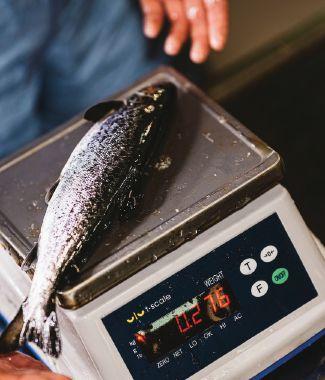
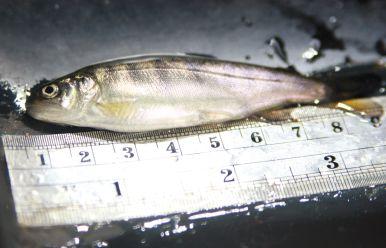
A 5 g fry being weighed and measured in the ‘Tocoihue’ farm. This site is located nearby the 42nd parallel south and is the only facility that belongs to Aquagen on the Chiloé island.
Trusting new technologies
New technologies can be intimidating but when implemented correctly, can open a world of benefits for businesses
By Ron Hill
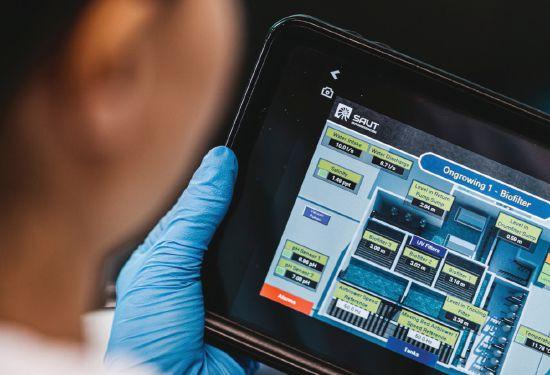
The decision to adopt new technology is not one taken lightly at most land-based facilities. Experienced managers and farmers have nightmare stories about technology upgrade projects gone awry, runaway costs, and underwhelming results. Adopting any new monitoring or control system comes with a
degree of risk that must be mitigated while the new technology comes online, and staff learn how to work with it. Monitoring and control systems represent a significant investment, especially to smaller operators. A mistake in the monitoring and control system setup could be the death of a farm.
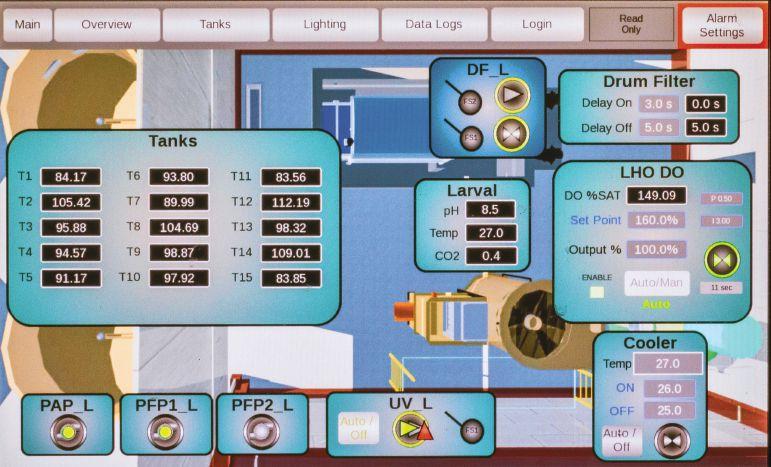
A strong backbone
The critical first step in adopting a new monitoring and control system is evaluating what the farm is doing now, where work is being lost, and what tasks can be automated for maximum gain. Innovasea’s vice president of Aquaculture Services, George Nardi recommends “each farm looking to adopt new monitoring and control systems create a basis of understanding as to what they are doing now and where they want to be. It is important to have an endpoint, a longterm goal, and set up the system accordingly. A monitoring and control system can be built incrementally, as long as you start with a good plan and a good backbone.”
A backbone is the hardware for the central monitoring and control unit that will display all the information from the monitoring system and allow the user to control the systems. It is the core of a monitoring and control system; all monitoring and control should be hooked up to the backbone Monitoring and control systems attached to the backbone are displayed on a computer dashboard program to allow for easy operation and observation by staff. Nardi further suggests, “it is best to have just one dashboard for all sensors and systems when setting up your backbone. Make sure it is an open platform so that all probes and systems can ‘talk’ to each other. Avoid closed platform technologies that need probes and systems to be used with exclusive dashboards and exclusive control units [that will not interface/‘talk’ with the backbone].”
Incremental installations
As a monitoring and control system can be implemented incrementally, farmers can adopt a good backbone system and then prioritize the monitoring and control needs for the rest of the farm. Incremental installation means following a list of priorities so that the most critical systems are installed first. Farmers can take on one piece at a time spreading out the investment and implementation into digestible portions. Monitoring units can be adopted without using controls; thus, monitoring sensors can be installed, and control left to technicians. It is important to pace the implementation at a level staff can keep up with.
“We are always working with the farmers,” comments Mathew Zimola, CEO of ReelData A.I., “We start installing one system at a time, one tank at a time to ensure the system is effective.
Innovasea’s MCAS user interface at a commercial marine fish hatchery. The system monitors and controls O2 levels, pH, temperature, pumps and more. PHOTO: INNOVASEA
We work hand-in-hand with the technicians [of our clients] as we implement, maintaining constant communication, constant testing, and listening to their feedback. Depending on the goals of the farm, some will start using only the monitoring portion of our A.I. system and focus only on the data we provide, leaving the interpretation and control to the technicians [instead of implementing the A.I. control units right away].” As staff get comfortable and the technologies prove themselves, measures of control can be adopted as desired.
Safe implementation
When installing new monitoring and control systems, it is key to have overlap with the current system. When installing new systems for extremely important parameters such as oxygen, significant testing must be done to ensure new systems are working properly over a long period of time to build trust.
During this time of building trust, the current or old way of doing things must be maintained to provide for the fish, and compared to the new monitoring system. “The best way to mitigate risk [when adopting new monitoring and control units] is with a good plan and robust systems,” Nardi suggests. “Monitoring and control systems are highly effective, but not a magic bullet. Every system should have manual override in case the automated system fails. You need to be able to go back to the basics as a last resort.” Disastrous scenarios have played out at farms where an automated valve or switch fails in the open or close position with back up or manual override, thus, no way to move it.
Getting the team on board
One important aspect of adopting a new monitoring/control system is overcoming the reluctance and hesitance that may be present among the staff, especially with long-established practices or older employees, with new technologies. It can be difficult for staff to see the benefits and return on investment (ROI) when it comes to monitoring and control, especially when the facility has other investment needs. Getting staff on board with a new system is critical because they will be the ones operating it and must be made to see the very real advantages, once the system is up and running. The benefit of the system and how it affects day-to-day work performed by your staff needs to be made clear.
Staff and monitoring and control
Using a variable frequency drive (VFD) and pressure sensor to control the speed of pumps makes it much easier to keep consistent water flow. Staff, however, may need a relatable example, not just an explanation of what it does. On a practical day-to-day level, adopting
UNDERSTANDING THE TECHNOLOGY
The sophistication of monitoring and control technology available to land-based farms continues to rapidly increase as new companies develop intelligent monitoring and control systems. The use of A.I. technology to control feeding and greatly increase feed efficiency is what ReelData A.I. offers land-based farmers.
ReelData A.I. offers smart control solutions for feed systems. ReelData A.I. places cameras in the tank that monitor feed and feed waste. By building a dataset through custom algorithms, the ReelData A.I. system maps appetite and feeding habits. Mapping allows the control system to match the feed dispensed with the mapped appetite of the fish, anticipating how much they need to be fed based on the real-time observations of the cameras and the dataset generated by the algorithm. The result is a highly precise, but flexible feed system that minimizes feed waste to a degree unattainable by conventional methods alone. Once a sufficient data set has been mapped, ReelData A.I. can control some or all feeding, maximizing growth while almost eliminating waste feed, and can notify farmers about changes to fish behaviour consistent with stress.
The technology looks to decrease cost, enticing land-based operators to look into streamlining their feeding. “The companies we work with are our partners, we are looking for partnerships. Our partners can see the ROI ReelData A.I.’s technology can bring them. In turn, we work hand-in-hand, tank by tank with our partners to build a custom solution and work with their feedback before and after installation is complete,” said Mathew Zimola, ReelData A.I. CEO.
a VFD means that staff will not have to juggle or “chase” the flow rate in tanks on the same water line. As flow to a tank is changed by the technician, the water flow in the other tanks on the line changes as well. The technician must adjust multiple tanks multiple times to reset the flow correctly across all the tanks, just because one needed adjusting. This can take a lot of time and the technician must come back multiple times, “chasing” the correct flows. The VFD eliminates this chasing process: the monitoring sensors will sense the pressure drop or increase caused by the technician increasing or decreasing flow to tank, and the VFD will adjust the pump speed keeping
all the other flow rates the same. Significant amounts of frustrating, time-wasting work are eliminated and staff will appreciate it once the operation is understood, and their time suddenly not wasted. Staff now have time for other important tasks. Getting staff involved in the setup and implementation is ideal as it provides training and knowledge for future operating and troubleshooting. Starting with a good plan, picking the best backbone, and getting the entire staff involved will set farmers up for success with monitoring and control. The options are endless; start with the greatest need and prioritize add-ons in increments to build familiarity and trust.
Squeezing lemon for all its worth? Peels may be used in fish diet.
PHOTO: ASADAL, INC.
The authors cited the necessity to replace fish meal in aquafeeds with other protein sources that are less expensive and more sustainable. In addition to meeting these requirements, soybean “provides an acceptable amino acid profile compared with other plant protein sources”. There is a caveat though for carnivorous fish, such as the Asia sea bass.
WASTE NOT
Agricultural by-products in aquafeed
Previous studies have demonstrated that intestinal damage, growth reduction, and an increase in liver oxidative levels may occur in carnivorous fish fed with diets containing soybean meal. “Hence, we established the effects of fermented lemon peel supplementation in a diet with soybean meal on growth performance, non-specific immunity, and intestine histology of Asian sea bass, which is one of the more important farmed fish species in Asia and around the world,” they said.
Juice by-products in South Korea
Lemon is primarily used for juice production. Only 20 to 30 per cent of the fruit produces juice, leaving 50 to 60 per cent as waste material, which is mainly the lemon peel. Between 2020 and 2021, the projected global lemon production is 8.4 million tons. This gives an idea of the magnitude of waste generated by the industry.
A percentage of this ends up in the dumpsites, while a certain volume of the remaining waste gets valorized and is kept in the production line which consequently, contributes to environmental protection. Lemon peel is used in livestock feed, fertilizer, pectin extraction, bioethanol, and essential oil extraction, among others.
Fermented lemon peels in Taiwan In Taiwan, lemon peel looped its way into the agricultural circular economy as a fishmeal replacement in aquafeed. The potential was demonstrated in the study, “Effects of fermented lemon peel supplementation in diet on growth, immune responses, and intestinal morphology of Asian sea bass, Lates calcarifer”, published in Aquaculture Reports.
“Our study clearly demonstrated that the agricultural waste, lemon peel, has the
By Ruby Gonzalez
Agricultural by-products, usually cast off as end-ofuse materials, are increasingly finding their way into the loop of the circular economy. They are placed back in the production line, regaining value while minimizing the generation of waste, and serving as alternative ingredients in aquafeed.
potential to serve as a functional feed additive in aquafeed. Diets supplemented with one to three per cent fermented lemon peel may significantly improve intestinal health of the Asian sea bass. However, five per cent supplementation of fermented lemon peels may lead to low immune response and high oxidative stress,” said author Li-Chao Zhuo et al.
Final weight, weight gain, feed intake, and survival were similar among all dietary treatments, indicating that none of the dietary fermented lemon peel supplementation levels had a negative effect on the weight gain on Asian sea bass. Juvenile Asian sea bass in recirculating aquaculture system (RAS) rearing tanks were given feeding trials of experimental diets for eight weeks.
Lemon peel was fermented in Lactobacillus plantarum in order to mitigate negative impacts on fish growth. Lemon peel fiber content is about 15 per cent and poses as a potential negative factor as a feed additive. The fermentation process may be useful in lowering the fibre content.
Lemon is anti-inflammatory and anti-microbial, and has immunomodulatory, anti-oxidative and hepato-protective properties. Its bio-components could provide a variety of beneficial effects, they said.
A team in South Korea turned to plant-based ingredients, sourced from a health juice store, when they investigated the effects on black rockfish, Sebastes schlegelii, growth performance, antioxidant capacity, non-specific immune response, and resistance to V. harveyi. By-product from yacon, ginger and garlic juice processing can be considered functional feed additives in fish aquaculture, author Da-Yeon Lee et al. said in the study published on Aquaculture Reports.
“Recently, new uses for fruit and vegetable by-products have been explored to capitalize on beneficial components such as bioactive compounds, macronutrients, and phytochemicals. Fruit and vegetable juice processing by-products have high potential as alternatives to synthetic antibiotics and antioxidants in fish feed because they are substantially cheaper and more stable than other feed additives and contain vitamins, peptides, and minerals,” the authors explained.
Results showed that supplementation of by-product from yacon, ginger and garlic juice processing increased growth performance and improved the non-specific immunity and antioxidant ability of rockfish. In the challenge test, fish were artificially infected with V. harveyi. Ten days post-infection, the survival rate of fish fed a controlled diet was significantly lower than that of fish fed with experimental diets.
Other by-products used the in the experiment were blueberry, tomato and onion. All by-products were dried, grounded into fine powder and frozen. The experimental diets used one per cent powder and was included at the expense of an equal amount of wheat flour. After drying, these were ground into a fine
Juice extracts from yacon, along with garlic and ginger, improve black rockfish growth performance and immune system. PHOTO: FARMCORE
powder and frozen. For the experimental diets, one per cent plant juice processing by-product powder was included at the expense of an equal amount of wheat flour.
Rockfish is very popular in South Korea and importation figures provide a quick
• Recirculation System Design, Supply and Construction.
• Commercial Farms, Hatcheries, Aquaponics, Research Labs, Public Aquariums, Live Holding Systems – we do it all!
• Representing leading RAS equipment manufacturers.
• WATER TEMPERING FOR EGG HATCHING
• SEMI-AUTOMATIC FEEDER FOR FINGERLINGS
DO YOU PUT OFF GRADING FISH?
Fish sorting can be easy with our portable graders. They float in fresh or salt water and have 30 or 50 quick-to-switch settings instead of multiple baskets to juggle. The large, adjustable bars help fish pass through with little chance of gill damage.
Noni fruit extract for whiteleg shrimp post-larvae
By Ruby Gonzalez
Noni (M. citrifolia) fruit extract supplementation improved growth performance in white whiteleg shrimp ( P. vannamei) post-larvae, an experiment in Malaysia showed. A direct relationship was established between animal growth and concentration of noni fruit extract.
“The result showed increased in P. vannamei post-larvae growth in proportion with the concentration of M. citrifolia fruit extract supplemented throughout the feeding trial. Similar pattern were also observed for average daily growth,” Julia Hwei Zhong Moh et al. said.
Noni is a small shrub tree native to Southeast Asia. Traditional medicine uses whole fruit, juice, seed, leaf, bark and root. Various scientific studies demonstrated that these parts have, among others, nutritional, antioxidant, antimicrobial, anti-cancer, anti-viral and anti-inflammatory properties.
Application of the fruit extract supplement during the 30-day trial was done at a critical time.
“Specific growth rate determined the
The relationships between the digestive enzymes activities and the growth of the shrimp showed that the improvement in the digestive function of the shrimp, indirectly improved their growth.
growth of shrimp in terms of weight per day and is important during the early developmental stage of the animal due to their exponential growth during this time,” as cited in the study. “Effect of noni, Morinda citrifolia fruit extract supplementation on the growth performances and physiological responses of the hepatopancreas of whiteleg shrimp, Penaeus vannamei, post-larvae.”
The authors represent Universiti Malaysia Terengganu in Malaysia and Shantou University in China.
Noni fruit extract was incorporated into commercial shrimp pellet at the concentrations of zero to five per cent.
The Hydrotech Value drum filter series focuses on reduced maintenance, increased component quality and simplified operation – all to give your plant maximum filtration performance at a minimum operational cost. Contact
(0)40 42 95 30
“The relationships between the digestive enzymes activities and the growth of the shrimp showed that the improvement in the digestive function of the shrimp indirectly improved their growth. Similarly, the enhanced antioxidant enzymes activities indicated improved in their immune response, thus increased their resistance towards stress allowing a healthy growth of P. vannamei post-larvae during culture,” they said.
The improvement of animal growth performance may be associated with Improvement of the digestive enzymes induced by noni fruit extract. Other studies have discussed that presence of active compounds
in plant extract stimulates the secretion of digestive enzymes, which leads to improved appetite, food consumption and digestion.
“The increased in growth performances is also associated to the therapeutic effect of the extract as anti-pathogenic and reduces stress in the animal,” they said.
The crude extract of M. citrifolia fruit was obtained through drying and methanol extraction followed by concentration through rotary evaporation.
Whiteleg shrimp is popular among farmers due to its fast-growing nature at the average of one -1.5 grams per week. It is also known to have high tolerance for extreme conditions such as salinities and temperature.
Over the years, the steady entry of players into whiteleg shrimp farming has resulted in surge in global production. Over a 20year period from 1998, harvested volume grew from 200,636 tons to 4,966,200 tons. Demand has also been increasing but the prices have not kept up. The less efficient producers, and FAO report recommended, may not be able to compete with those capable of producing more eco-friendly or cheaper products.
Noni fruit extract has been shown to contribute to the growth performance of whiteleg shrimp PL. PHOTO: WILFREDOR VIA CREATIVE COMMONS
Maintaining solid filtration with rotary drum filters
The main cog in the solid removal system, the rotary drum filter (RDF) is usually an efficient and reliable piece of equipment. Self-cleaning and completely automated, the RDF is a mainstay in many hatcheries. RDFs work great, until they don’t. Heavy, large, and submerged, few pieces of equipment can be more cumbersome to troubleshoot and repair than an RDF. Like all pieces of hatchery equipment, proper setup and maintenance will minimize downtime and maximize performance.
Redundancy and sizing
Due to their large footprint and large cost, farms are hesitant to add redundancy to their RDF setup. RDFs come rated to certain flow rates and filter pore sizes. Most systems only need one RDF to remove solids, and it isn’t until there is a failure that the need for a second filter emerges. When an RDF fails, which is when the drum does not rotate and therefore does not filter, the wastewater continues to pour in and quickly overflows the filter. Not only is solid-filled water going past
THE WORLD OF AQUACULTURE
the filter, solids in the RDF can also wash out, sending chucks into the rest of filtration system. The severity of RDF failure depends on the application, setup, and the concentration of suspended solids in the system.
To ensure full and proper redundancy, two RDFs, each with the capacity to filter all the system water, should be installed. Wear on the units can be shared by rotating, which is in operation, or splitting the flow between them. The systems should be valved such that water can be directed into one filter or the other. If a farm chooses not to install a fully redundant RDF system, which some farms choose, a proper bypass to send water around the unit to allow for maintenance, is critical. The risk of using only one RDF depends greatly on the setup of the system – the ability to bypass and the ease/speed of diagnosis and repair. Because they generally filter wastewater from a collection of tanks, the flow-through of an RDF is generally high, meaning the bypass valves and piping are large and expensive compared to water inflow lines.
Setup
Proper RDF setup and installation is critical to ensuring the filter works properly and maintenance can be performed. The unit must be leveled to the manufacturer’s specification to ensure the waste trough drains. Units can be installed partially submerged in a sump or can be free standing. Because they are gravity-fed and placed at a low point in the system, RDFs are often found partially submerged in a sump. While an advantage for space and footprint, placing the RDF in a sump makes maintenance much more difficult for technicians.
Inspections day-to-day
RDFs should be checked each day during daily equipment inspections. It’s pretty obvious when the unit isn’t working at all but components can and will fail, which reduce operational effectiveness. The spray bar should be looked at to ensure the booster pump is still operating, and the nozzles themselves looked at to ensure there are no blockages. Any nozzles that don’t spray properly need to be removed and cleaned out with a wash and a wire. If the booster pump supplying water to the nozzles fails, the unit will struggle to remove solids and the dirty drum will turn and turn as the unit overflows. A backup booster pump should be on hand. The life of the booster pump is usually much less than that of the RDF itself, and it’s better not to have to look for one at midnight.
The float switch or level sensor should be looked at each day for fouling. Enough fouling
Spray bar nozzles should be check daily to ensure there are no blockages.
An RDF can be placed on the ground or submerged in a sump. PHOTOS: RON HILL
Most systems only need one RDF to remove solids, and it isn’t until there is a failure that the need for a second filter emerges. When an RDF fails, the wastewater continues to pour in and quickly overflows the filter.
and the RDF will either get stuck on or off. A good shot of water with the hose is enough to clean the switch or sensor. The filter screens themselves should also be inspected for holes or tears. Holes and tears in the membrane cannot be fixed and must be patched. The membrane is cut away from that portion and a plastic insert popped in to plug the hole. As long as the insert tightly plugs the hole and sits flush with the membrane, it can stay in place for the life of the RDF. The drum filter should be shut down and properly locked out before any maintenance begins.
The dirty maintenance
The inside of the RDF itself needs to be inspected periodically. The waste trough and waste pipe below the spray bar needs to be inspected for fouling, as does the inside of the drum. A good indication of issues with the waste trough is a change in the amount of solids coming out of the RDF when it cycles. If the water is looking cleaner than usual, solids could be getting stuck in the trough, drum, or pipe. Here is where one will see the affects of an improperly-leveled RDF as the waste is gravity fed out the trough at a low angle. If the booster pump isn’t delivering enough water or the angle isn’t right, the trough won’t be properly cleaned out.
If the RDF is working hard and removing a lot of solids, then the waste trough should be inspected more often. Depending on the model and size of the unit, access to the waste trough and inside of the drum can be easy or difficult. Hopefully, the unit is designed to be inspected without removing the panels, but don’t count on it. Some units are quite accessible, others are very difficult to even look inside. The hose is the best tool for loosening up solids stuck to the inside of the drum or waste trough. A small access pipe in the form of a ‘Y’ fitting, installed on the solid waste pipe outside the filter, can give the technician a port to access the waste trough with a custom brush or other long tool. The drum filter should be shut down and properly locked out before any maintenance begins.
Drum panel removal
Removing the panels for the first time is an eye-opening experience. The drum in the RDF isn’t a solid drum, it’s made up of panels of screen wrapped around a drum frame. To access the inside of the drum fully, a panel must be removed. Because the panels are overlapping, this requires working on several panels to get one open. The panels are under pressure because they are wrapped around the frame. This comes as an unhappy surprise for a technician removing the bolts and trying not to lose them as they work over water. The panels pull away from the frame as they are loosened off. The size of the panels depends on the make and model, but usually they are long enough that the drum needs to be rotated to access all the bolts. Here is another situation where installation in a sump makes maintenance much more
difficult. Proper lockout procedures are absolutely key for safety when removing panels.
Mechanical maintenance
The mechanical pieces of the RDF are pretty simple and designed for ongoing operation. The bearings should be greased at the grease fitting, and an occasional spray of food grade lubricant for the chain is beneficial. The drive chain should last the life of the unit, but if not, it is a common enough component for machinery that a replacement can be sourced locally. Problems with the drive shaft and bearings can develop as the unit is worked and gets tired but these are tough to inspect or diagnose until they occur. Generally, the higher the quality of the RDF, the less mechanical issues will arise. RDF’s are not a place to save money, they are too important and quality scales with price.
Innovation Beyond Measure
Results Beyond Expectation
Nozzles twist off the spray bar and can be cleaned with a spray of water and a small gauge wire.
Maintenance or replacement of an RDF can be problematic.
Anaerobic digestion of sludge from RAS: Challenges and potential solutions
By Abhinav Choudhury and Christine Lepine
Recirculating aquaculture systems (RAS) offer several advantages for fish farmers. Most notably, RAS provide enhanced control of the culture environment, reduce land and water use, and provide increased biosecurity, while also maximizing fish growth performance. Recirculating technology has developed highly effective waste capture and collection systems to maintain optimal water quality. Once removed from the recirculation loop, however, waste solids must be managed, and are currently considered an operation expense. The generated sludge, consisting primarily of fecal matter and uneaten feed, is, in reality, a valuable resource due to its high organic matter, nitrogen, and phosphorus content.
Through the process of anaerobic digestion (AD), organic matter in aquaculture waste can be transformed into a renewable energy resource. The AD process results in the microbial breakdown of the complex organic molecules in the sludge, producing highly valuable biogas, a mixture of methane (CH4) and carbon dioxide (CO2) with other trace gases such as hydrogen sulfide (H2S) and ammonia (NH3). Even though AD processes have been used extensively for manure management on terrestrial animal farms and in the wastewater treatment industry for human
Sludge thickening
Dilute wastewater streams, such as backwash from drum filters, may lack sufficient alkalinity and organic matter for an efficient digestion process in complete-mix and plug flow digesters. The waste sludge may need to undergo dewatering and sludge thickening to increase the solids content. Alkalinity can also be raised through the addition of bicarbonate, which can help prevent sudden drops in pH, as it enhances buffering capacity. Existing sludge dewatering and thickening technologies on RAS farms (e.g., gravitational thickening settlers, geotextile bag filters, inclined belt filters, or membrane reactors) can be used to achieve a solids concentration of 5 to 22 per cent (Sharrer et al. 2009). It should be noted that the dilute wastewater may be anaerobically digested without thickening by using different reactor designs, such as highrate fixed-film or up-flow anaerobic sludge blanket (UASB) bioreactors.
sludge, its utilization in RAS has not been fully explored. Early research has provided insights into the unique challenges that may inhibit RAS sludge digestion, some of which are highlighted below.
Carbon/nitrogen (C/N) ratio and ammonia
The feedstock C/N ratio is an important parameter measuring the fraction of the organic matter utilized for energy production and cell synthesis. Microorganisms use carbon as an energy source and nitrogen for the synthesis of proteins and nucleic acids. Fish waste solids generally have a low C/N ratio, resulting in lowered CH 4 production due to limited carbon availability and elevated ammonia concentrations. The breakdown of nitrogen-containing organic compounds, such as proteins, leads to ammonia formation inside an AD system. Ammonia can exist in two forms (ammonium ion, or NH 4+, and free ammonia, or NH3) inside the digester, depending on the pH of the sludge. As the pH increases (>pH8), ammonium ions are rapidly converted to toxic-free ammonia, destabilizing the AD process, and resulting in low CH 4 production. Fish waste solids can also contain elevated amounts of total nitrogen (approx. 10 to 30 per cent dry matter depending on the fish type and feed) that can mineralize into ammonia within the digester (van Rijn, 2013). Potential solutions include waste sludge dilution, adding co-digestion substrates high in carbon but low in nitrogen balancing the C/N ratio, and utilizing a microbial source adapted to these conditions.
Gravitational settling cones for thickening waste RAS solids at The Conservation Fund Freshwater Institute. PHOTO: THE CONSERVATION FUND FRESHWATER INSTITUTE.
Abhinav Choudhury, PhD, is an environmental research engineer at the Freshwater Institute. He is responsible for research on investigation of strategies for improving the environmental impact and economic viability of intensive land-based aquaculture production, providing waste management and waste conversion expertise for external projects, and assisting industry partners with problems related to waste management and waste conversion.
Lepine is a research associate at the Conservation Fund’s Freshwater Institute, focusing on effluent water quality and wastewater management of recirculating aquaculture systems (RAS). Lepine holds an M.S. in Natural Resources and Environmental Science.
Volatile fatty acids
The breakdown of organic matter in an AD system results in the formation of organic acids containing two to six carbon atoms (collectively known as VFAs). The synergistic activity of different microorganisms within the AD system results in continuous production and consumption of VFAs. However, if the VFAs are not consumed by the methane producers due to inhibitory conditions (e.g., excess ammonia) or if the rate of VFA production far exceeds its consumption rate (overloading the digester with organics), it may significantly lower the digester pH, especially in a system without adequate alkalinity. A pH lower than 6.5 may kill off all the methane producers, resulting in a ‘crash’ of the AD system. Conversely, dilute RAS sludge may result in low VFA production, thereby resulting in low CH4 production (Manchala et al., 2017). Sufficient sludge thickening, appropriate organic loading rates, and the addition of co-digestion substrates may be effective strategies to minimize VFA complications.
Salinity
One of the primary challenges of brackish and saline waste is sodium ion (Na+) inhibition, resulting in dehydration and cell lysis of unacclimated microbes. Excess salinity can also negatively affect the metabolism of acid-producing microorganisms, leading to VFA accumulation and acidic conditions, which are detrimental to the stable functioning of methanogens. Although, recent research has demonstrated that using osmoprotectants to protect microbial cells from dehydration and cell lysis, may be a promising solution (Zhang et al., 2014). Additionally, utilizing microbial sources adapted to highly saline marine environments may provide another level of protection (Quinn et al., 2016).
Hydrogen sulfide
methane production due to excess H2S production. At higher salinities (>15 g/L), H 2S concentrations can be in excess of 15,000 ppm. High concentrations lead to inhibitory conditions for the methane producers, thereby increasing the duration of the startup phase. More concerning is that high H2S concentrations lead to issues during energy generation. An upper limit of 500 ppm for H2S is recommended for most generators utilizing biogas for electricity production. As a result, RAS farms may require additional capital and operating costs for desulfurizing the biogas before its use. Commercially available H2S scrubbing solutions are generally effective in reducing H2S concentrations to below the recommended limits.
With increased investment in land-based RAS production facilities worldwide, waste management and treatment will require additional research to ensure RAS sustainability. Ongoing research has shown potential in using AD processes to treat RAS sludge while providing energy recovery via methane production, but its feasibility is yet to be determined. The Conservation Fund Freshwater Institute, located in Shepherdstown, W.Va., USA, is currently addressing some of the aforementioned challenges to the AD of RAS sludge. To learn more, visit https://www. conservationfund.org/our-work/freshwater-institute/our-projects
References
• Sharrer, M.J., Rishel, K. and Summerfelt, S., 2009. Evaluation of geotextile filtration applying coagulant and flocculant amendments for aquaculture biosolids dewatering and phosphorus removal. Aquacultural Engineering, 40(1), pp.1-10.
• Van Rijn, J., 2013. Waste treatment in recirculating aquaculture systems. Aquacultural Engineering, 53, pp.49-56.
• Manchala, K.R., Sun, Y., Zhang, D. and Wang, Z.W., 2017. Anaerobic digestion modelling. In Advances in Bioenergy (Vol. 2, pp. 69-141). Elsevier.
• Zhang, X., Hu, J., Spanjers, H. and van Lier, J.B., 2014. Performance of inorganic coagulants in treatment of backwash waters from a brackish aquaculture recirculation system and digestibility of salty sludge. Aquacultural Engineering, 61, pp.9-16.
• Quinn, B.M., Apolinario, E.A., Gross, A. and Sowers, K.R., 2016. Characterization of a microbial consortium that converts mariculture fish waste to biomethane. Aquaculture, 453, pp.154-162.
Elevated concentrations of sulfate (SO 4 2-) in brackish and seawater can also inhibit
Christine
aquaManager and Spring Genetics to develop hatchery software
In a new partnership with aquaManager, Benchmark Genetics’ Spring Genetics will begin using the Athens-based company’s Hatchery module to support its production of high-quality and “genetically superior” fish.
aquaManager’s Hatchery module, which is an integrated software solution designed specifically for fish fingerlings or egg production, allows for increased production planning and management while simultaneously providing thorough cost analyses, and biological and financial forecasts.
The Hatchery module is already being implemented by the Spring Genetics and aquaManager teams and will give Spring Genetics the ability to optimize its production performance, control costs, and enhance the company’s efficiency.
Additionally, the software will allow aquaManager to further increase its presence in the tilapia hatchery sector and other warm-water species.
The Hatchery module is just a part of aquaManager’s bigger strategy to develop a more intelligent production process. With the constant progression of technology, aquaManager has become dedicated to creating an intelligent biomass production system through the use of smart devices and equipment, data analysis, Internet of Things (IoT), and artificial intelligence (AI). www.aqua-manager.com
Hydrotech introduces new value drum filters
The new Hydrotech Value drum filters series is a new generation of cost-effective water filtration systems.
The company boasts more than 50 technological improvements on the product design, including better hydraulic design, custom-made profiles, new drive arrangement and automatic lubrication. These features are meant to reduce maintenance and simplify operation.
The remodeled drive system optimizes mechanical operating conditions and reduce chain force, increasing the product’s overall durability. The new, non-corrosive plastic chain design is made to be both robust and lightweight.
The new chemical spray bar is manufactured with a duplex steel pipe to withstand temperature variation. It is designed to improve chemical cleaning by using a new sequence to prevent water from being contaminated by chemical cleaning agents.
The Value drum filter series is built with Hydrotech’s patented ALPHAFLEX filter panel. The panel is designed to increase drum filter capacity by up to 20 per cent and saves 95 per cent of the water.
The filter design is a combination of having some panels lifting and some releasing, as a way to save energy and water while in operation. Angling the horizontal walls make it easy to determine how much water the filter panel should lift into the solids trough. The panel can be oriented to lifting or dropping, depending on the type of application. www.hydrotech.se
FAO publishes report on seaweed and microlgae production
Seaweeds and microalgae production makes up about 30 per cent of aquaculture’s global production, according to a new report by United Nations’ Food and Agriculture Organization (FAO).
The report, titled “Seaweeds and microlagae: An overview for unlocking their potential in global aquaculture development,” is an in-depth look at the algae cultivation sector. It said seaweends and microalge generate socio-economic benefits, primarily in coastal communities.
Potential nutritiona, environmental and economic benefits of algae have increased interest in algae products. The report also analyses the “strong imbalance” production and consumption rights in different geographic regions, implying that there could be great potential of expanding the algae cultivation sector.
“Persistent and painstaking efforts in innovation and fostering close collaborations between the algae industry and the cross-disciplinary research community are needed to transform the extensive potential of seaweeds and microalgae into acceptable, available and affordable food or non-food products,” the report said. www.fao.org/publications
Foods of Norway hits milestone in production
Foods of Norway has successfully scaled up its production capacity for its alternative feed ingredient. The company can now produce 1,600 kilograms of yeast derived from the sugars of Norwegian spruce trees. This specific type of yeast is a high-quality feed ingredient which could replace imported protein, and will be used in large-scale feeding trials with Atlantic salmon and pigs. Foods of Norway is a Centre for Research-based Innovation at the Norwegian University of Life Sciences (NMBU), funded by The Research Council of Norway and 20 industry partners. The centre aims to contribute to growth and increased value creation in the Norwegian aquaculture and agriculture industries by developing sustainable feed ingredients from natural bioresources not suitable for direct human consumption.
“We are proud of this important milestone on our journey towards the development of alternative feed ingredients using local Norwegian resources,” said Mathieu Castex, director of research and development at Lallemand Animal Nutrition. “There is still a lot to be done before commercial development can be realised but this achievement reinforces the technical feasibility of the concept developed through Foods of Norway towards a more sustainable feed production.”
The production was a joint effort by biorefinery company, Borregaard, which produced the sugar; Lallemand Animal Nutrition’s Estonia-based production site, which grew the yeast; and NMBU.
Yeast is a microbial protein source with a protein content of 50 to 60 per cent. A main area of Foods of Norway’s expertise is to develop yeast as a local feed ingredient produced from renewable natural resources, such as by-products from the forestry and food industries.
“The larger-scale trials will provide important information on how these novel feeds will affect the growth, health and product quality of the animals, as well as the production cost and sustainability of using these ingredients,” said Prof. Margareth Øverland, head of Foods of Norway. www.nmbu.no
disc for variable egg sizes, speed, accuracy, egg counts, safety and versatility. VMG Industries Inc. 2972 Bellmeade Way
•
•
•
•
Commercial Filtration Systems
Commercial Filtration Systems
Commercial Filtration Systems
Customized for your fish farm, hatchery or research operation!
Customized
Customized for your fish farm, hatchery or research operation!
Our Commercial LSS Packages are custom engineered to meet your specific needs.
Our Commercial LSS Packages are custom engineered to meet your specific needs.
Our Commercial LSS Packages are custom engineered to meet your specific needs.
• Marine and Freshwater
• Marine and Freshwater
• Marine and Freshwater
• Mechanical filtration
•
• Mechanical filtration
• Mechanical filtration
• Chemical filtration
• Chemical filtration
•
• De-gassing towers
• De-gassing towers
• De-gassing towers
• Wide variety of flow rates
• Wide variety of flow rates
• De-gassing towers
• Wide variety of flow rates
• Flow control valves
• Flow control valves
• Wide variety of flow rates
• Ultraviolet disinfection
• Ultraviolet disinfection
• Chemical filtration • Ultraviolet disinfection
• NEMA enclosed controls
• NEMA enclosed controls
• NEMA enclosed controls
• Bio-filter towers
• Bio-filter towers
• Bio-filter towers
All
• Bio-filter towers
controls
• Protein skimmers
• Protein skimmers
• Variable frequency-drive pumps
• Flow control valves • Protein skimmers • Variable frequency-drive pumps
• Flow control valves • Protein skimmers
• Temperature management
• Variable frequency-drive pumps
• Temperature management All our systems are pre-plumbed and fully water tested prior to shipping.
• Variable frequency-drive pumps
• Temperature management
Rainbow trout eggs
Genetic marker assisted breeding and commercial egg production
Together with our research partners AquaSearch has recently identified genetic markers related to the following traits in rainbow trout:
• No second winter maturation
• Improved resistance against: - Vibriosis
- Furunculosis
- White spot disease and - Rainbow trout fry syndrome
Produced on request for customized improvement of already superior genetics.
WEBINAR SERIES
HATCHERY INTERNATIONAL presents a series of free webinars that feature thought leaders and experts in hatchery management and operations, discussing important topics and best practices on farm management and fish rearing.