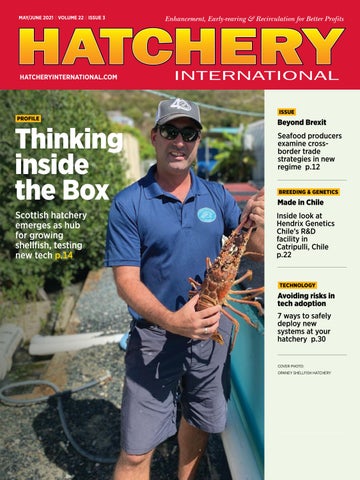
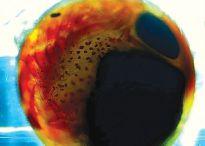
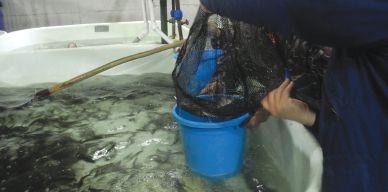
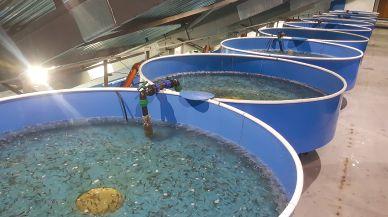
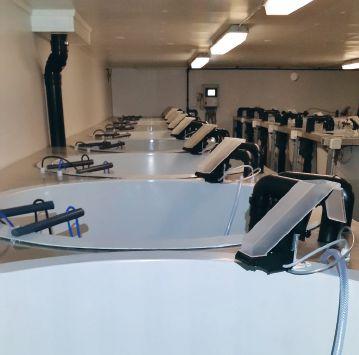
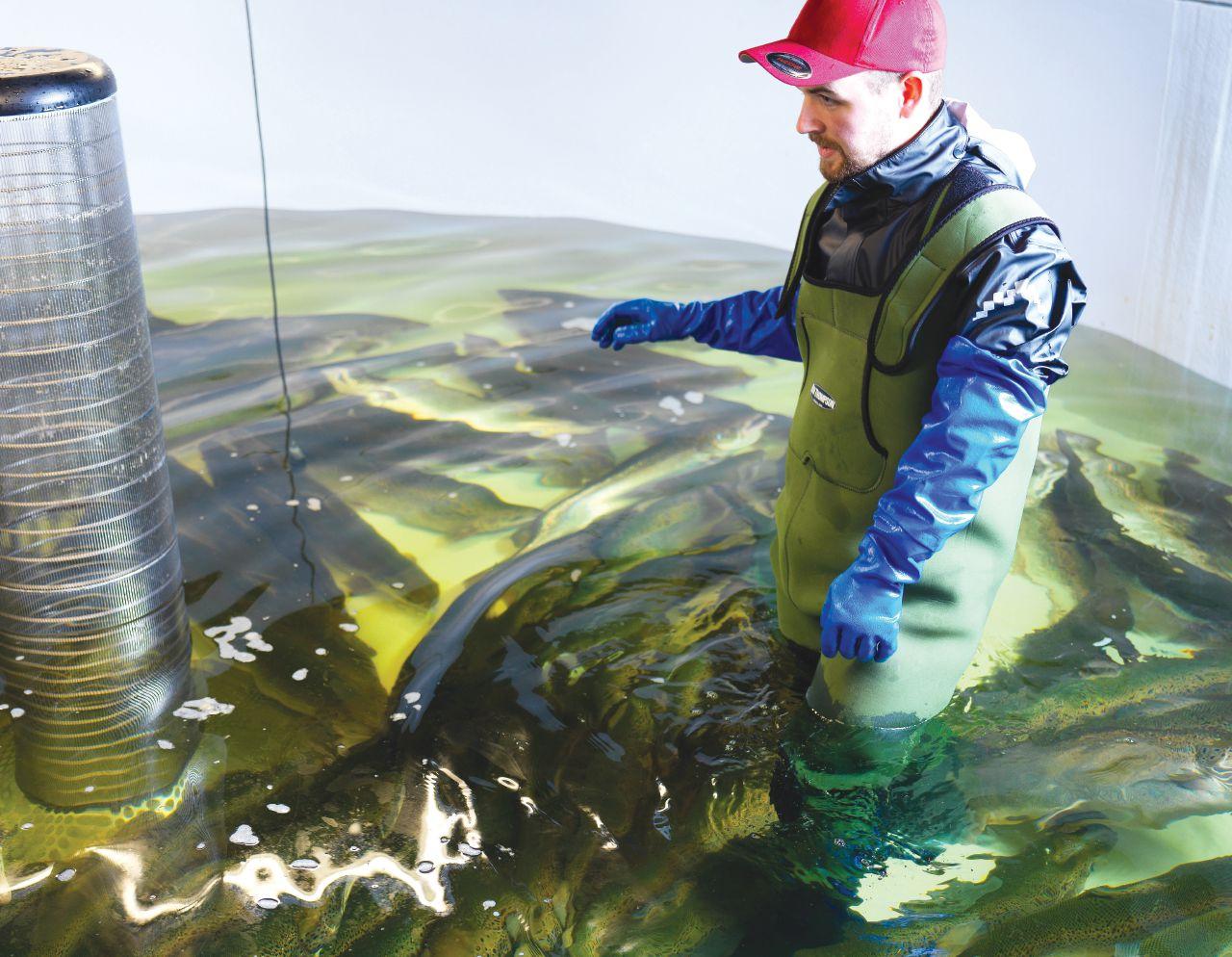
Scottish hatchery emerges as hub for growing shellfish, testing new tech p.14
Beyond Brexit
Seafood producers examine crossborder trade strategies in new regime p.12
Made in Chile
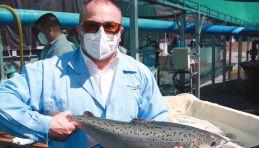
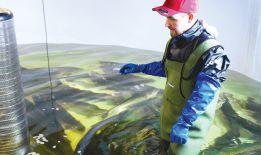
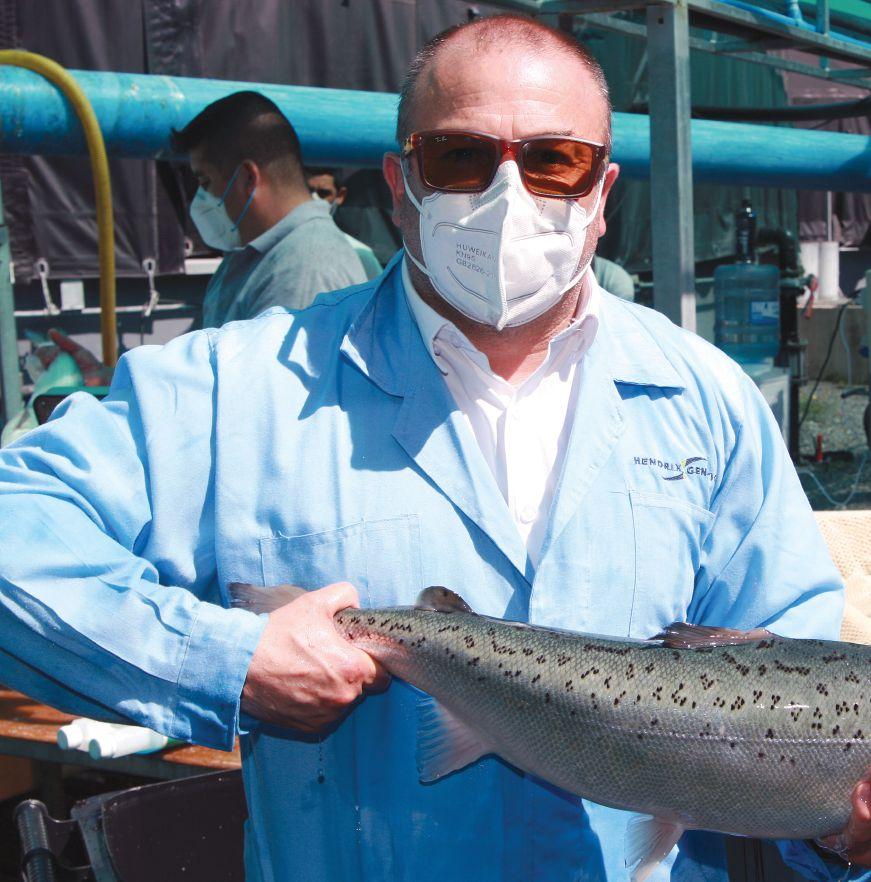
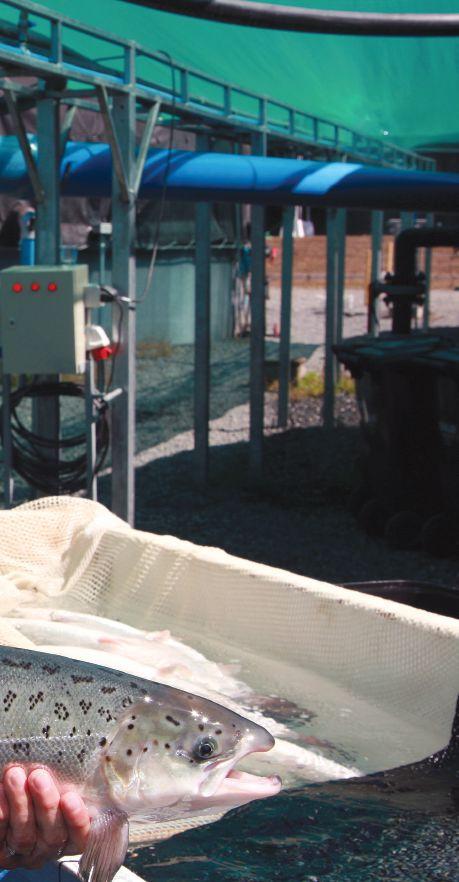
Inside look at Hendrix Genetics Chile’s R&D facility in Catripulli, Chile p.22
Avoiding risks in tech adoption
7 ways to safely deploy new systems at your hatchery p.30
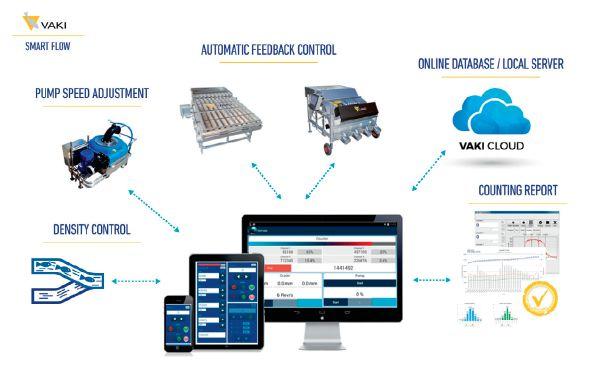
SMARTFLOW
COUNTING AND GRADING REPORT ONLINE DATABASE
VAKI SMARTFLOW
HIGHER QUALITY OF OPERATIONS
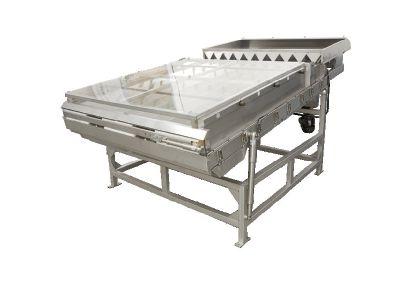
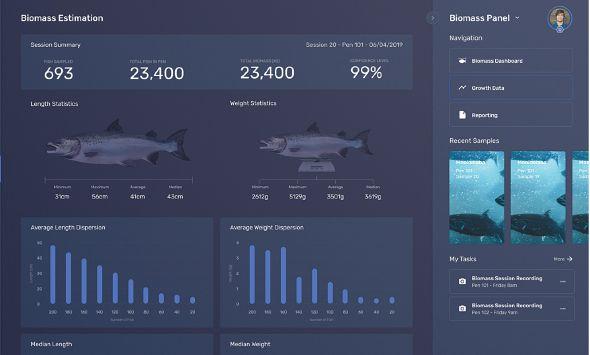
The SmartFlow System uses software to gather and store information about all measured fish for easy comparison. SmartFlow facilitates the optimization of every operation, as it helps all devices in the VAKI product line to be controlled and fine-tuned to refine the desired output.
12 Beyond Brexit
Seafood producers examine cross-border trade strategies in new regime.
By Jennifer Brown
14 Thinking inside the hatchery box
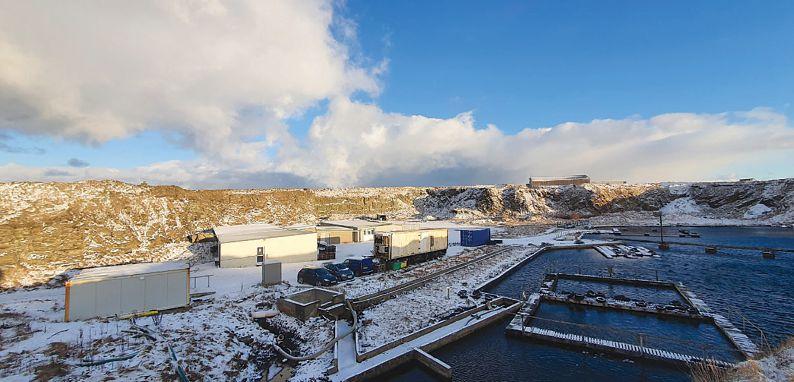
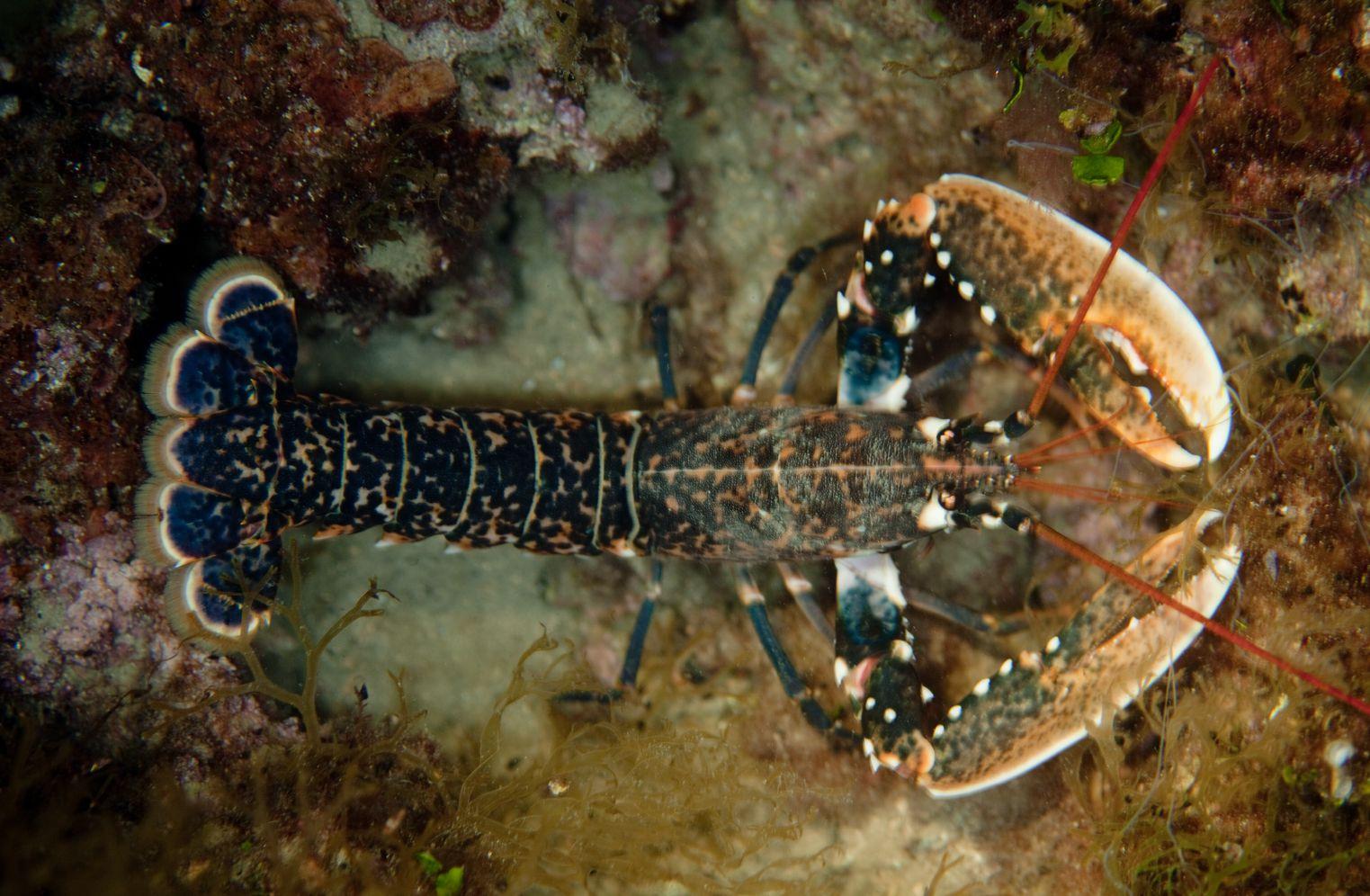
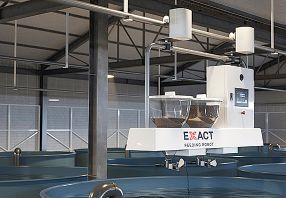
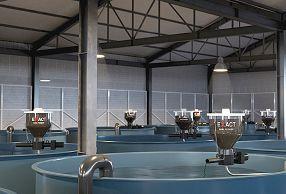
Scottish hatchery emerges as hub for growing shellfish, testing new tech
By Liza Mayer
18 Fighting for flounder
Texas hatchery throws lifeline to southern flounder
By Julia Hollister
20 Return to ancenstry
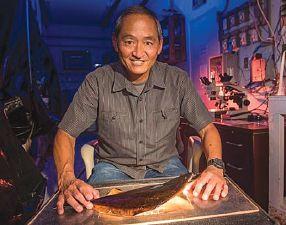
Okanagan Nation Alliance sees new signs of hope for salmon restoration program
By Jean Ko Din
22 Made in Chile
An inside look at Hendrix Genetics Chile’s massive R&D facility in Catripulli, Chile
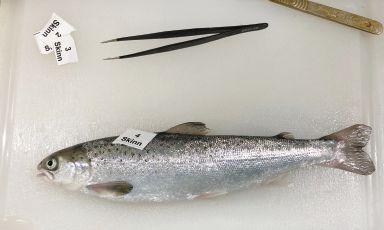
By Christian Pérez-Mallea
26 The science of breeding
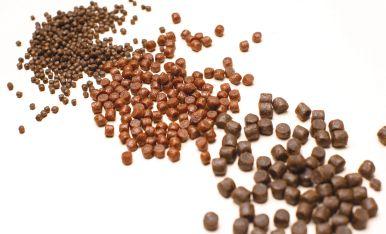
Industry leaders paves way for Benchmark Genetics to produce some of the world’s top breeding programs
By Ruby Gonzalez
30 Avoiding risks in tech adoption
7 ways to safely deploy new systems at your hatchery
By Nestor Arellano
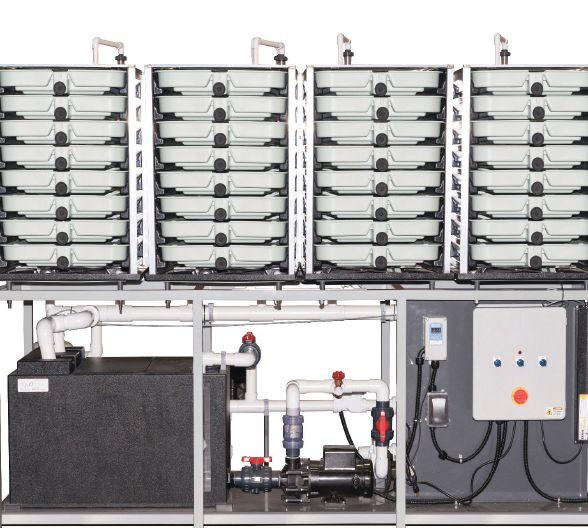
Increased Survival Rate with Significantly Reduced Water Consumption
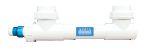
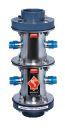
The all-new HydroHatch Incubation System from MariSource gives hatcheries increased efficiency. With recirculation, germicidal UV filter and a titanium heat exchanger, the HydroHatch delivers increased survival rate and significantly reduces water consumption.
Features and Benefits:
65 gallon sediment and recirculation tank
Requires only 150 gallons to completely fill the unit and reservoir
Easily able to increase the dissolved oxygen content of the water
230 volt 30 amp control panel
Insulated titanium heat exchanger
Precise temperature control
Comes standard with four 8-stack incubators
Additional four 8-stack incubator option available
The new HydroHatch Incubation System is idealfor Salmon, Trout, Steelhead,Perch, Channel Cat Fish,Walleye,Eels, Shrimp and Muscles.
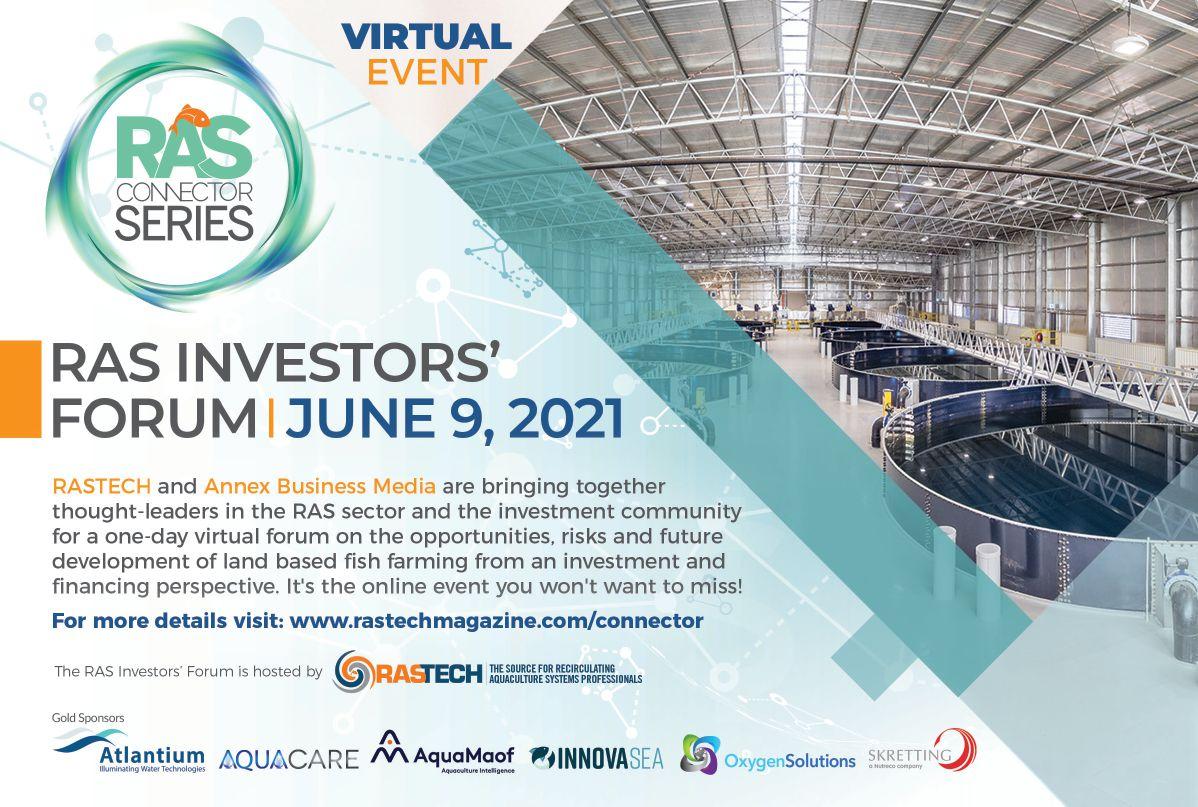
Connecting RAS professionals virtually throughout 2021
SAVE THE DATES
JUNE 9
Investors’ Forum
SEPTEMBER 14
RAS Roundtable
NOVEMBER 3
RAS Virtual Summit
Join us for a series of live virtual events throughout 2021 that offer opportunities for learning and networking with the RAS community. With both live and on-demand speaker presentations and panel discussions, as well as a virtual tradeshow highlighting the latest in RAS technologies and systems, this trio of virtual events is a must-attend.
Learn from subject matter experts, connect with RAS and aquaculture suppliers and immerse yourself in this content-rich, interactive platform. The RAS Connector Series is the online venue for some much-needed networking and engagement with your industry peers.
Register early to reserve your spot for this one-of-a-kind virtual event series!
For more details and to register, visit: rastechmagazine.com/connector Supporting Partners
Presented
FROM THE EDITOR
VOLUME 22, ISSUE 3 | MAY/JUNE 2021
Reader Service Print and digital subscription inquiries or changes, please contact Urszula Grzyb, Audience Development Manager
Tel: (416) 510-5180
Fax: (416) 510-6875
Email: ugrzyb@annexbusinessmedia.com
Mail: 111 Gordon Baker Rd., Suite 400, Toronto, ON M2H 3R1
Editor Mari-Len De Guzman mdeguzman@annexbusinessmedia.com
Associate Editor Jean Ko Din jkodin@annexbusinessmedia.com
Regular Contributors Nestor Arellano, Jennifer Brown, Ruby Gonzalez, Ron Hill, Julia Hollister, Liza Mayer, Vladislav Vorotnikov
Associate Publisher / Advertising Manager Jeremy Thain jthain@annexbusinessmedia.com +1-250-474-3982
Media Designer Svetlana Avrutin savrutin@annexbusinessmedia.com
Group Publisher Todd Humber thumber@annexbusinessmedia.com
COO Scott Jamieson sjamieson@annexbusinessmedia.com
PUBLISHED BY ANNEX BUSINESS MEDIA 105 Donly Drive South, Simcoe, ON N3Y 4N5
Hatchery International is published six times a year by Annex Business Media. The authority for statements and claims made in Hatchery International is the responsibility of the contributors. Reference to named products or technologies does not imply endorsement by the publisher.
Subscription rates (six issues) Canada: $37.00
Within North America: $48.00 CAD
Outside North America: $62.00 CAD To subscribe visit our website at www.hatcheryinternational.com
PRINTED IN CANADA ISSN 1922-4117
Publications Mail Agreement #PM40065710
RETURN UNDELIVERABLE CANADIAN ADDRESSES TO 111 Gordon Baker Rd., Suite 400, Toronto, ON M2H 3R1
The advertising deadline for the July/August issue is May 7th. Don’t miss the opportunity to be part of this exciting aquaculture publication. For more information, or to reserve space in the next issue, call our advertising department at +1.250.474.3982 jthain@annexbusinessmedia.com
Next Editorial Deadline
The editorial deadline for the July/August is May 7th. Contact Mari-Len De Guzman at mdeguzman@ annexbusinessmedia.com for details. Material should be submitted electronically with prior arrangement with the editor.
BY MARI-LEN DE GUZMAN
Hats off to hatcheries
The work that pulbic hatcheries do is critically important not just to provide for the angling community but more importantly, to promote the ecological balance and help restore and maintain fish populations in local waters.
This is something that most, if not all, readers of Hatchery International are aware of. But I think it’s important to recognize the tireless and dedicated staff at hatcheries across the world and remind them that their work matters.
One way we are showcasing the important work that enhancement hatcheries do is by telling their stories through the pages of this publication. In this issue, we feature two of these hatcheries, one in Texas, U.S.A., raising the endangered Southern flounder, and the second one in British Columbia, Canada, which has orchestrated the successful return of Sockeye salmon in the Okanagan Lake. Both species are holding a special place in the hearts of their respective local communities (see stories on pages 18 and 20).
More than the commercial objective of providing healthy and robust smolts to fish farms, hatcheries also serve a sacred purpose, one that will form an essential part in this industry’s sustainability objectives. And sustainability is, after all, the common denominator that binds all aquaculture activities, especially in this 21st century.
Whether you are a hatchery raising smolts for commercial aquaculture production or for stock enhancements, the endgoal is to
ADVERTISERS' INDEX
alleviate the negative impacts of overfishing and restore and revitalize fish populations, whether in the oceans or in local lakes and rivers.
Hatcheries, and the work that they do, need to be part of any public information campaign that aims to promote and elevate public awareness and perception of aquaculture. Hatcheries have the connection to the local communities. They can help instigate the grassroots mobilization needed to raise awareness about fish farming and all the socio-economic benefits it has to offer.
Many aquaculture professionals in this industry began their careers as hatchery technicians or as a volunteer at their local hatchery. Hatcheries are an excellent training ground for future industry practitioners. The opportunities many hatcheries provide for school tours or student visits are priceless and can serve as a catalyst for the youth to consider a career in aquaculture. And the latest data indicate that skills shortage is a real issue in this industry.
We want to continue to highlight the important work of hatcheries by sharing their stories of success, as well as their trials and tribulations. More than to educate, stories also need to inspire, to trigger a sense of purpose and instigate a sharing of ideas. That’s what we aim for with our stories and profiles.
If you have a great hatchery development story you’d like to share, Hatchery International will be happy to tell it for you.
mdeguzman@annexbusinessmedia.com
R&D
New shrimp R&D site in Ecuador
Global feed manufacturer Skretting is building a new facility in Ecuador that will focus on R&D for shrimp diet. The new facility will complement the company’s Skretting Aquaculture Research Centre (ARK) network, and will be dubbed Skretting ARC Guayas Research Station, according to a press release. It will be located next to the recently completed Skretting Ecuador feed manufacturing plant.
The new R&D facility, centrally coordinated by Skretting ARC in Norway, will involve fully equipped laboratories and state-of-the art experimental units to carry out trials under controlled conditions. In addition, green-water tanks will ensure maximum applicability under production conditions, the company said.
“We are committed to supporting the growth of the shrimp industry globally,” said Alex Obach, Skretting R&D director. “We also know the importance of optimal diets, combined with high post-larvae quality and professional farming practices. The development of solutions requires world-class R&D facilities, combined with local expertise.”
Hatchery International welcomes new associate publisher
Jeremy Thain is the new associate publisher for Annex Business Media’s aquaculture division.
In his new position, Thain will oversee the development of three publications: Aquaculture North America, Hatchery International and RAStech Magazine.
Thain started his B2B media sales career in 1999 in the fisheries and aquaculture division of the Oban Times Group in Scotland. In 2004, he came to Victoria, B.C. to work for Capamara Communications, which published Aquaculture North America and Hatchery International
Annex took over the publication of both brands in 2017 and launched RAStech in 2018 to serve the growing recirculating aquaculture systems (RAS) market.
“Jeremy is a proven media professional, with an excellent reputation in the industry and a strong desire to make his publications even stronger,” says Todd Humber, Annex group publisher.
POLICY
Russian authorities keen to end import dependence
Russian authorities are in talks with the aquaculture industry about potentially reducing the country’s reliance on imports for broodstock, fish feed and other aquaculture equipment, according to a source.
“The progress on this issue has stalled due to the coronavirus pandemic, as more pressing issues to deal with emerged. But recently, the government agencies again entered into negotiations with fishermen, asking what measures are needed to support fish farming,” a source from the Russian aquaculture industry told Hatchery International on condition of anonymity.
The Russian government and lawmakers have planned to discuss a new comprehensive import-replacement program in the domestic aquaculture industry, Sergey Mitin, first deputy chairman of the Russian Council’s agricultural and food chamber, told the Russian Parliament’s in-house publication Parliament Gazette in the first half of 2020.
The strong dependence on imported items is one of the bottlenecks in the development of the Russian aquaculture industry, Mitin claimed.
“We need to design a new sub-program of import replacement in aquaculture. We definitely will run consultations on this topic with the government,” Mitin said.
INNOVATION
Early success for Scotland hatchery
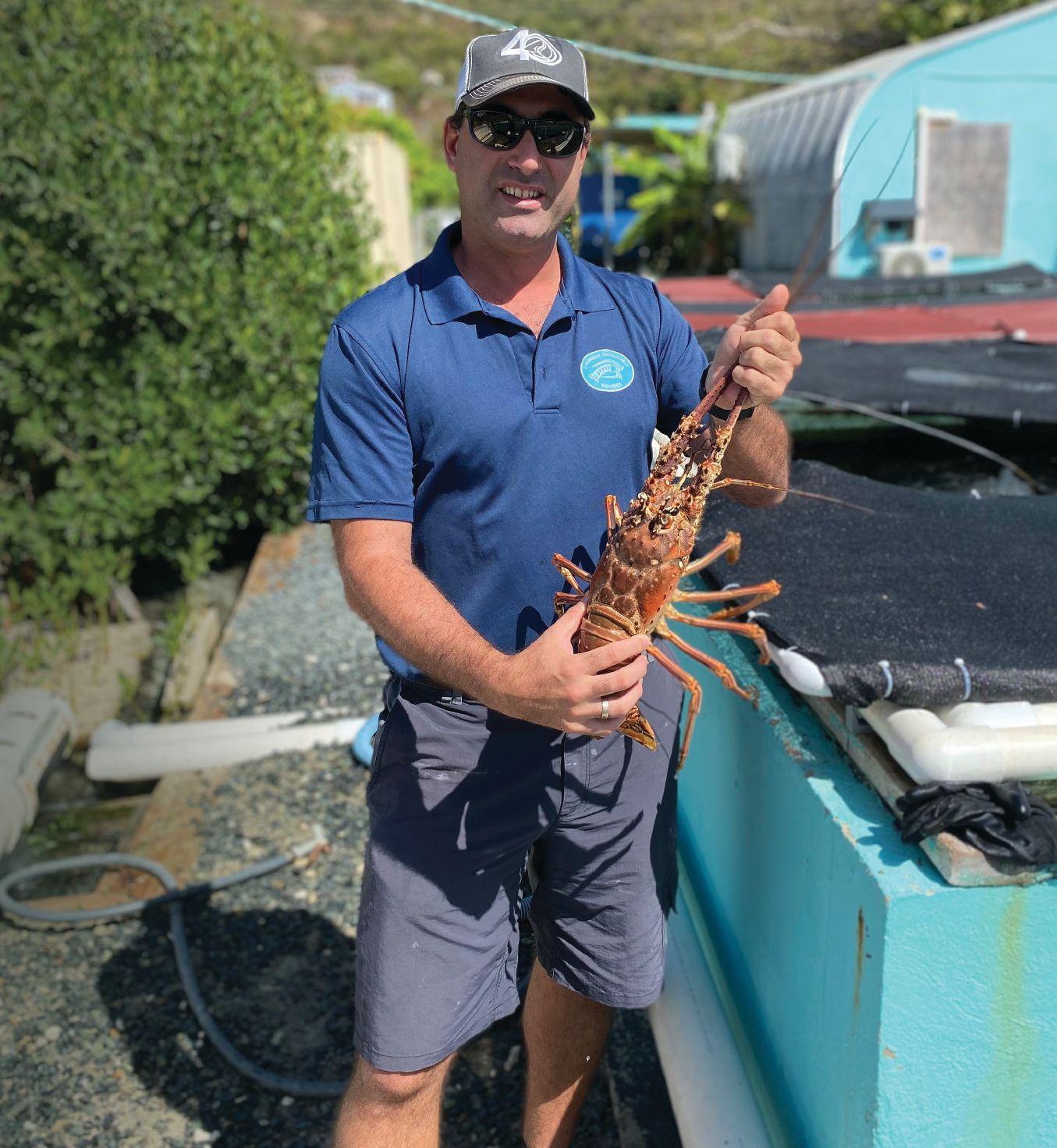
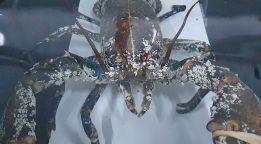
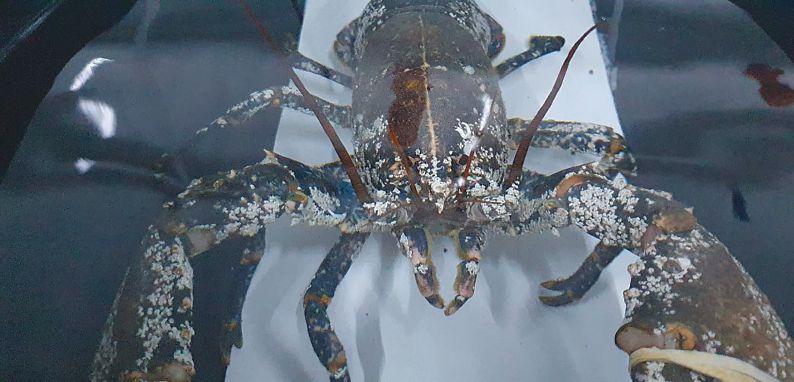
European clawed lobster successfully hatching at Orkney Shellfish
Hatchery PHOTO: ORKNEY
SHELLFISH HATCHERY
Russian fish farmers have a nearly complete dependence on imported broodstock. According to Igor Kuzmin, up to 90 per cent of smolt for growing salmon species in Russia is imported from the Scandinavian region. It is estimated that it takes Rub2.5 million (US$300,000) to purchase enough smolt to produce 10 tonnes of redfish, and this figure is constantly growing due to the Russian ruble depreciation in recent years.
Currently, the Russian government is partly subsidizing purchasing broodstock for Russian farmers. However, market participants believe that developing the domestic industry could be a better way of dealing with this issue.
– Vladislav Vorotnikov
Scotland’s Orkney Shellfish Hatchery has successfully hatched its first run of European clawed lobsters for 2021, a progression that has been achieved almost three months earlier than initially expected, the company announced in a press release.
The hatchery, located on the pristine waters of Orkney, Scotland, announced its plans to trial the on-land production of the species in late September of last year, with the expectation that its pilot run would complete around May 2021.
“Operations at Orkney Shellfish Hatchery continue to amaze us, consistently progressing at a far faster rate than anticipated,” said Dr. Nik Sachlikidis, managing director of the Cadman Capital Group’s Aquaculture portfolio, the hatchery’s parent company. “Having our lobster broodstock hatch larvae so early in the season allows the hatchery to culture juvenile lobsters from January through to November, an extension of four months when compared to the wild hatching season, which runs from March to September.”
This progression means that Orkney Shellfish Hatchery can now consistently produce a higher number of lobsters annually, substantially reducing capital overheads for the hatchery operation and providing much-needed clawed lobster product to restoration projects across Europe, he added.
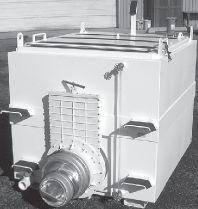
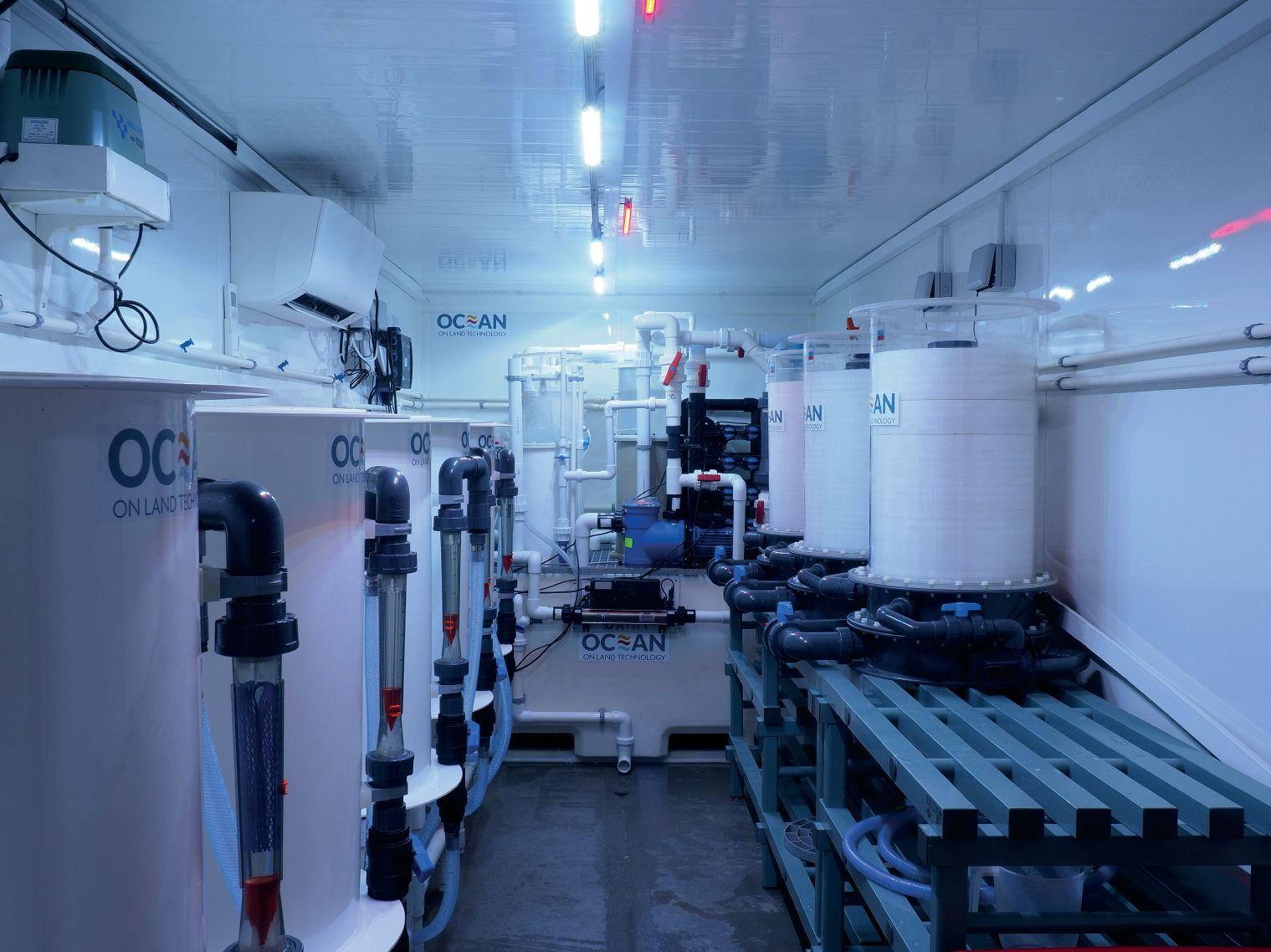
The hatchery is using products from its sister company, Ocean On Land Technology, throughout the trial, including the ground-breaking Hatchery-in-a-Box concept – a containerised lobster hatchery system that can house and culture lobster from broodstock through to post-larvae.
Orkney Shellfish Hatchery first produced native oyster spat at it land-based facility. European clawed lobster is set to be the second species the hatchery will be producing on land to support restoration projects across Europe, as it continues to successfully produce and provide runs of premium native oyster spat.
Bacteriophage as antibiotic-free option
By Ruby Gonzalez
Bacteriophage ticks all the boxes for aquaculture. It has the ability to tackle and eliminate antibiotic resistance range. Being bacteria-specific, it leaves the rest of the microbiota unaffected and intact. It can be used in combinatory schemes for multiple infections at a time.
As a natural component of the environment, it is environmentally sustainable. It is aligned with the public unease with administration of antibiotics. This antibiotic-free option results with a product equated with higher quality, which allows the producers to enter the high-end market.
“Bacteriophages are naturally present in the environment; aquatic environment too. They exist as the natural bacterial predators, able to either kill the bacterial hosts or to integrate inside their genome and passively replicate in time until a stressor triggers their induction,” Dr. Panos Kalatzis explained to Hatchery International
Kalatzis is a post-doctoral researcher on Aquaculture Bacteriophages and Microbiology at the University of Copenhagen in Denmark.
In hatcheries, Kalatzis said bacteriophages can be used as smart disinfectants in order to selectively remove potential pathogens that are present in such environments.
“When we want to isolate bacteriophages in the lab, we take water samples, i.e. from hatcheries, we add the bacterial culture of the species of interest and then we add nutrients to boost its growth,” he said. “If there are phages against the bacterial target in the water, they will take advantage of the availability of the exponentially proliferating host
Cooke’s Kelly Cove gets province nod for new hatchery Digby, Nova Scotia-based Kelly Cove Salmon Ltd. has received approval from the Nova Scotia Department of Fisheries and Aquaculture (NSDFA) for the development of a new land-based salmon hatchery near Centreville on Digby Neck.
The province posted its decision on March 12, 2021, following an extensive administrative review process which included environmental, scientific and technical approvals by multiple provincial and federal regulatory authorities and a 30-day public comment period, a statement from Cooke Aquaculture said. Kelly Cove Salmon is Cooke Aquaculture’s salmon farming division in Atlantic Canada.
“We have been sustainably operating Atlantic salmon farms for over twenty-three years in Nova Scotia for food production, and our aim is to grow responsibly by taking a coordinated, thoughtful, science-based approach and going through all the appropriate licensing and permitting steps,” said Joel Richardson, Cooke Aquaculture’s vice-president of public relations. “We were pleased to see so many of the businesses, organizations and local governments who we have worked with over the years express support of our growth in Nova Scotia.”
Supportive submissions were received by the NSDFA from the Town of Digby, Municipality of Digby, Digby Harbour Port Association, The Digby and Area Board of Trade, Bay Ferries Limited, Atlantic Chamber of Commerce, Town of Shelburne, Canadian Manufacturers & Exporters NS Division, Animal Nutrition Association of Canada, Aquaculture Association of Nova Scotia, and A.F. Theriault & Son Ltd, Cooke said.
The company is currently half-way through its capital investment plan for Nova Scotia, which includes the planned hatchery. This $56.8-million construction project would involve investment in a “world-class” recirculating aquaculture system (RAS) “with significant economic and social benefits for the province and is expected to enhance Kelly Cove’s marine salmon farming operations.”
and then they will hijack it for their own proliferation.”
Targeting multiple infections involves formulating a cocktail of different phages. Promoting prophylaxis over treatment will create healthy larvae by preventing outbreaks at once.
“This will limit the antibiotics administration to the environment and also to the fish market. At the end of the day, it will lead to better feed intake and also decreased food conversion rates because the fish are going to be able to simply utilize better the available feed,” he said during the AQUAEXCEL 2020 webinar in December.
Average larval survival rates from administration of bacteriophages are still hard to pin down because they are host-dependent and not all phages are equally effective. It is for this reason, he pointed out, that phage cocktails are usually preferred: “Not only to maximize efficiency but also to delay the possibility of the bacteria to develop resistance against the administered phages.”
At present, there are no suggested protocols in the administration of bacteriophage in hatcheries because there are no fully developed products, at least in the EU. He said, however, that the simplest way is to a direct application in the tanks either as liquid purified phage concentrate or a lyophilized powder (freeze-dried powder).
Having said this, he stressed that further experimental work is required. Aquatics Biologicals, a start-up in Greece which had him in a pioneering team, is one of the companies that are working on the development of phage products. Aquatics focuses on eco-friendly innovative solutions for aquaculture health.
Richardson said it may take another year to secure all the permit requirements and complete the engineering design of the facility. The company aims to begin construction in 2022, pending permit approvals and pandemic-related market conditions.
It is expected that the hatchery will take three years to build and create more than 450 construction jobs. Once operational, the Kelly Cove hatchery will employ around 16 new full-time, year-round employees, and create another 18 indirect and induced jobs.
Since 2012, Cooke has invested significantly in its Nova Scotia operations, including capital infrastructure on its marine farms, freshwater hatcheries, major expansions at both its feed manufacturing facility in Truro, its seafood distribution facility in Dartmouth, in research and development projects and community and student initiatives, Richardson said.
Bacteriophage expert, Dr. Panos Kalatzis
PHOTO: P. KALATZIS
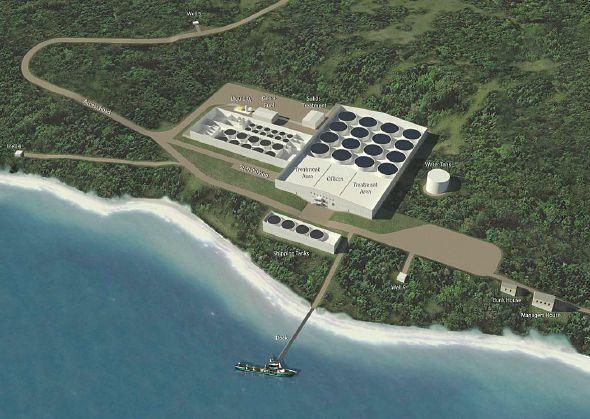
Digital rendering of planned hatchery.
PHOTO: COOKE AQUACULTURE
files injunction, begins culling fish amid pending net pen closures
By Jennifer Brown
Mowi Canada has begun euthanizing hundreds of thousands of juvenile salmon and laying off employees as the reality of the federal government’s decision to end net-pen salmon farming in the Discovery Islands takes hold.
“We’ve started the layoff process and a week ago killed 925,000 fish because they have nowhere to go,” said Dean Dobrinsky, human resources director of Mowi Canada, based in Campbell River, British Columbia.
Transferring the smolts to another location is not possible because Mowi does not have empty farms in other areas as they were slated to go to the Discovery Islands.
“Minister Jordan’s decisions have put our entire company, our industry, our communities into disarray and we are trying to keep our people, but we have started the layoff process,” said Dobrinsky.
As Aquaculture North America reported last month, Effective Dec. 17, 2020, federal fisheries minister Bernadette Jordan ordered the end of salmon farming in the 19 fish farms in Discovery Islands with a deadline of June 2022 because the Indigenous communities where the farms are located don’t want them there. Meanwhile, some First Nations leaders say there wasn’t enough time given to having a proper discussion and consultation about the issue.
Mowi is B.C.’s largest salmon farmer. The company applied for an injunction in federal court this week, asking for time to transfer salmon to grow out the fish to market size at the company’s Phillips Arm and Hardwicke farm sites.
Dobrinksy said Mowi has 12 million fish at different stages of their lifecycle slated to go into the Discovery Islands, but there are no production sites to send them to now.
The government’s decision impacts 30 per cent of the business for Mowi Canada. The job losses at the company will be close to 170
positions. The way the Minister’s decision was written, Mowi can’t farm past June 2022, but they are also not allowed to transfer the fish slated to go into the Discovery Islands sites as part of the production cycle.
“Unless there is a change in the decision or delay or an ability for us to run through the production cycle, we will be killing another 12 million fish – 235 million meals gone,” he said. “It’s absolutely appalling.”
The Cohen Commission from 2012 said eight years of scientific research was required on the number of different pathogens that could affect wild salmon and then the results of that report would make a determination on Discovery Islands.
“The research the government’s scientists did come back and said there was less than minimal risk to wild salmon and we thought based on that we would be able to move ahead,” said Dobrinsky.
Minister Jordan has said she would do consultations with the First Nations and communities impacted, and from the end of September to December last year, discussions occurred but Mowi was not involved. The decision to end fish farming in the area was made Dec. 17.
“All of North Vancouver Island is in turmoil. Our government just said, ‘We don’t think it’s
acceptable for your industry to be there anymore, and there will be no transition; it’s just over,’” said Dobrinsky.
Salmon farmers are especially frustrated because they have not had an opportunity to discuss the government’s decision.
“It’s three months later, and we still haven’t talked to the government. They haven’t told us what sites are gone,” said Dobrinksy.
In an emailed statement to Hatchery International, the office of Minister Jordan said the decision should not have come a surprise for the sectors involved.
“Those in the region and those involved in the sector would have known for months prior, if not years, that a final decision would be made by December 2020 regarding the future of the farms. The Cohen Commission recommended this over a decade ago, and the licenses in that area were only ever renewed on a yearly basis as a result. After DFO completed the risk assessments in the fall, our government announced on Sept. 28, 2020, that the Minister would hold consultations with the seven First Nations in the area regarding the future of the farms prior to the license renewal deadline in December of 2020,” the DFO statement said.
The statement pointed out the decision was made “after much consultation” and considered multiple factors, including the “nine risk assessments on the transfer of specific pathogens, our mandate to transition open-net pens, the consultations with First Nations, and the Province’s land tenure commitment that states all aquaculture licenses as of June 2022 will require agreement from local First Nations.” The DFO also said Jordan and other department officials had “multiple conversations” with industry leaders prior to the announcement on Dec. 17.
Mowi has been conducting town hall meetings with employees, and Dobrinksy saidpeople are asking what’s happening with their jobs and how they will pay their mortgages.
Mowi
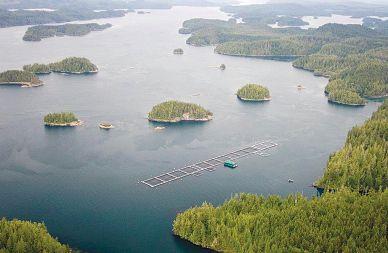
Mowi’s farm site in the Discovery Islands
PHOTO: MOWI
“People are absolutely frightened for what will happen next,” he said. “I still retain confidence and optimism in the industry. Hopefully, we will see some change and decision-making from our government, which will be helpful, but it will be a long slog until then. We haven’t given up hope.”
In late January, Cermaq Canada, which also has operations in the Discovery Islands, issued a statement indicating it had initiated a judicial review of the Department of Fisheries and Ocean’s recent decision on Cermaq’s licenses in the Discovery Islands region.
For Cermaq, the government’s decision means the closure of three salmon farms representing 20 per cent of Cermaq Canada’s overall production.
“This will have immediate implications for our hatcheries, our other farms, processing facilities, our customers, and – most importantly – for our employees and the communities in which we operate,” said David Kiemele, managing director for Cermaq Canada in the statement.
Cermaq spokesperson Amy Jonsson said the company isn’t commenting further at this time as the matter is currently before the courts.
The BC Salmon Farmers Association has called for reconsideration of the Discovery Islands decision. If left unaddressed, the Fisheries Ministry’s decision could eliminate up to 1,500 jobs in British Columbia, CAD$21.5 million in annual tax revenues, and up to 10.7 million juvenile salmon and eggs.
The association is asking for more time to minimize the impact of the decision and transfer millions of juvenile salmon to ocean sites to complete their lifecycle.
Parliamentary Secretary Terry Beech met with representatives from Mowi on March 13 to discuss plans to “transition open-net pens farms in British Columbia, to ensure that all voices are heard throughout this process,” the DFO statement said.
Scientists explore breeding lake char
By Vladislav Vorotnikov
A group of Russian scientists from the Siberian Federal University has begun an experiment of growing lake char (Salvelinus lepechini), a fish believed to provide strong health benefits.
Currently, lake char only dwells in natural bodies of water in Russia, but the scientists are confident they could develop breeding protocols for aquaculture.
“Our task was to study the biochemical and genetic characteristics of the char that dwells in Lake Sobachye on the Taimyr Peninsula, [in Russia] to study its diet, as well as to take biomaterial from males and females to conduct experiments on breeding char in aquaculture conditions,” said Anastasia Rudchenko, associate professor of the department of aquatic and terrestrial ecosystems of the Siberian Federal University.
For most Russians, the taste of lake char is unknown, but this may change soon.
“This fish is rare. If we begin catching it in the northern lakes, we will destroy the entire population very quickly. An alternative solution is to find out what exactly makes char so unique and to try to recreate the necessary conditions, in which the fish will reproduce well to a maximum possible extent, retaining most of its beneficial properties,” Rudchenko added.
The scientists managed to catch two dozen lake chars. They used sparing methods
LONG-LASTING AQUACULTURE PUMPS
to select eggs, and all manipulations were carried out under anesthesia. After the procedure, the donor fish were released back into the lake, the scientists explained.
“The obtained eggs were fertilized in artificial conditions and delivered to the Norilsk hatchery, where after the end of the incubation period – in early spring – the future generation of chars will be grown to participate in subsequent experiments” Rudchenko said.
As explained by the scientists, the main challenge now is to figure out what makes the content of polyunsaturated fatty acids in lake char so high. The scientists plan to figure out whether it is genetic, diet, or something else that helps this fish accumulate the fatty acids so rapidly.
The researchers estimated it takes only 35 grams of char fillet to cover a human’s daily requirement in omega-3. For comparison, one needs to consume nearly 12 kilograms of tilapia (Tilapia nilotica) for a similar result. A research conducted by the Siberian Federal University in 2018 showed that lake char is the fish with the strongest health benefits.
“One of the primary goals for the future is to develop a comprehensive feed solution for lake char to be used in aquaculture conditions,” the scientist noted.
Specialists in corrosion-resistant, reliable and stable propeller pumps, with high uptime and low energy consumption- for a healthy and sustainable aquaculture.
Grassroots approach to disease prevention in Myanmar’s shrimp industry
By Ruby Gonzalez
In order to safeguard the Myanmar shrimp aquaculture industry against major disease, government and non-government labs have adapted tighter quarantine control checks and enhanced diagnostics capability.
Dr. Kevin M. Fitzsimmons, team leader at Myanmar Sustainable Aquaculture Program, said that the Department of Fisheries has quarantine and health certification requirements for imports of shrimp. But movement of larvae and post-larvae within the country is not as closely monitored.
“Biosecurity could be improved with closer control of domestic movements of shrimp and a more complete diagnostics capability within the government and non-governmental labs,” he said.
While Myanmar shares borders with five countries, there is only one quarantine check post, which is at the Yangon International Airport, for imported aquatic livestock.
In order to keep up demand for post-larvae, supply is mostly imported from Thailand and Bangladesh.
Should a major outbreak occur, it would be a farm-on-its-own scenario.
“There is only one federal diagnostics centre and one university-based lab nationally, both based in Yangon, while the intensive farms are quite distant in other states,” said Fitzsimmons.
His proposal faces many challenges. “First, the Department of Fisheries is underfunded and staff are overcommitted to tasks,” he said. “There are a limited number of inspectors able to meet imports and collect samples. There are no dedicated quarantine facilities available so quarantines are typically required on destination farms or at a government hatchery, which raises obvious risks.”
While the Aquatic Animal Health Laboratory has received support from international donors, there still is a need for additional upgrades and training for professional staff.
He has identified investment opportunities in the situation, particularly facilities that hold animals in quarantine or have rapid diagnostic ability.
“Yangon University has been able to develop a fairly sophisticated diagnostics and aquatic animal health lab in their Fisheries and Aquaculture Center. Some of the private sector farms have also instituted their own diagnostics capacity in lieu of government capabilities. Others have provided test kits, primers, and needed reagents so that the government lab can provide needed services,” he said.
Myanmar’s shrimp farming industry has two sectors. The extensive, traditional trap-and-hold farming system, rears mostly native P. monodon, and has relatively few shrimp disease outbreaks. The other is the intensive farming of imported L. vannamei. Initial ventures on this had serious diseases in the early stages. Specific pathogen-free stocks and careful management seem to have controlled significant disease outbreaks recently, he said.
Genome program aims to boost Sockeye salmon populations
By Mari-Len De Guzman
Researchers and conservation advocates in British Columbia, Canada, are collaborating on a development project aimed at saving wild Sockeye populations in B.C. waters.
Funded by Genome BC and other partners, the project seeks to develop a cost-effective, rapid genomic tool to monitor and characterize 118 Sockeye salmon populations in the north and central coast regions of B.C. Researchers from Simon Fraser University (SFU), Fisheries and Oceans Canada (DFO), Coastal Rivers Conservancy and the Wild Salmon Center as well as Indigenous groups will be collaborating on this project, according to a press release from Genome BC.
“Responsible stewardship of wild Sockeye salmon fisheries is becoming increasingly important as human pressures and environmental changes intensify. One of the key challenges in sustainable salmon management is the ability to identify and protect at risk populations within a mixed stock fishery,” Genome BC said in the release.
Sockeye fisheries in B.C. comprise of fish from multiple populations, each with unique life histories, genetic makeup and levels of reproduction. “Current methods for monitoring and protecting less productive, and therefore at risk, salmon populations would benefit from improvements in the speed, accuracy, and sensitivity of genetic tools applied to identify unique populations.”
With the genome tool, the collaborative team will also map migration routes and spawning times of populations of Sockeye from four culturally important fisheries, according to the organization.
“These genomic tools are state of the art for high throughput genotyping and will bring new power to our ability to identify the streams of origin of salmon caught in fisheries,” said project co-lead Dr. Ben Sutherland of the Molecular Genetics Lab of Fisheries and Oceans Canada.
This project will aid in the assessment of Sockeye salmon populations’ biological status in the north and central coast of B.C. Sequencing individual genomes has allowed insight into the incredible diversity that exists amongst populations and this project is able to harness diversity as a genomic tool through an ‘SNP panel’.
“Pacific salmon have an amazing number of locally adapted populations with different local adaptations and genes. This project will help the effective stewardship of this remarkable biodiversity and sustainable fisheries,” said Dr. Jonathan Moore of Simon Fraser University, the project lead.
The team is collaborating with the Lax Kw’alaams fisheries, and the First Nations of Nuxalk, Kitasoo/Xai’xais and Heiltsuk, and the Coastal Coast Indigenous Resource Alliance on the development and implementation of this work.
This work is funded through Genome BC’s GeneSolve program which seeks to foster applied and translational research by connecting the producers of genomics driven technologies with its end-users or consumers in BC’s health, agrifood and natural resources sectors.
Genome B.C. is a not-for-profit organization supporting world-class genomics research and innovation to grow globally competitive life sciences sectors and deliver sustainable benefits for British Columbia, Canada and beyond.
Babine River salmon spawning PHOTO: FRESHWATER ILLUSTRATED
Russian nuclear plants expand fish production
By Vladislav Vorotnikov
Several new Russian nuclear plants have begun growing fish in their cooling ponds, despite the continuing concerns voiced by environmentalists.
In 2020, the Balakovo plant released 1,238 carp fingerlings into its cooling pond. The fish must be grown to marketable size and have a proper and healthy appearance, the plant management said.
The cooling pond at nuclear plants is a technical reservoir designed for cooling water from the nuclear power plant. The pond’s heated water is used to cool the steam turbine equipment and pipelines of the nuclear plant’s secondary circuit.
“The radioactive water remains in a closed primary circuit, and the water in the cooling pond is clean and corresponds to drinking indicators,” the Balakovo plant said in a statement.
Russia’s state nuclear corporation Rosatom – the leader of the world’s nuclear market – is currently operating 11 nuclear plants in Russia, and several more are currently under construction. Numerous plants run fish farms growing fish of various sizes in the cooling ponds, with the biggest one is believed to be at the Beloyarsk plant with a production capacity of 60 tonnes of marketable fish per year.
Stocking of cooling ponds is a common practice for nuclear power plants in Russia. The pond’s warm water causes an intensive growth of algae and mollusks reproduction, which may disrupt the water intake pump operation, clogging the protective systems of the plant’s technical water supply. Most scientists believe the fish from nuclear plants are safe for consumption.
Tritium content
The main problem with marketable fish and broodstock from the nuclear plants’ cooling ponds is that it may be contaminated with dangerous radionuclide tritium, the Russian independent newspaper Versia reported.
As explained by a Russian expert on nuclear energy problems, Alexei Shchukin tritium is the most dangerous radionuclide for humans today – its half-life is 12.3 years, and it is formed in large quantities when ordinary water is irradiated in reactors.
“Tritium is practically impossible to purify. Its danger lies primarily in the fact that it easily migrates, being included in biological chains. You cannot get rid of it even when processing radioactive waste - when water evaporates, it flies along with the steam,” Shchukin said.
Experts point out that the fish becomes the final absorber of radionuclides released into the environment.
“As for the production of tritium at nuclear power plants, it is formed in proportion to the generation of electricity itself,” said the Russian nuclear physicist Lev Maksimov, explaining that fish contaminated with tritium is likely to stay contaminated until it is fully grown, and is expected to remain dangerous for consumers.
“Decaying, tritium turns into helium while
emitting rather intense beta radiation. Tritium can be a serious health hazard. After all, tritium, being an isotope of hydrogen, behaves chemically in the same way as hydrogen and therefore is able to replace it in all compounds with oxygen, sulfur, nitrogen, easily penetrating the protoplasm of any cell. In this case, beta radiation emitted by tritium can damage the genetic apparatus of cells,” Maksimov said.
Recirculation System Design, Supply and Construction.
• Commercial Farms, Hatcheries, Aquaponics, Research Labs, Public Aquariums, Live Holding Systems – we do it all!
• Representing leading RAS equipment manufacturers.
Fish stocking at cooling ponds near nuclear plants is a common practice in Russia.
Beyond Brexit
Seafood producers examine cross-border trade strategies in new regime
By Jennifer Brown
Seafood is big business in Scotland –exports accounted for 57 per cent of the country’s overall food exports in 2019, so it’s no surprise producers are scrambling to find ways to smooth the passage of their product into the rest of Europe in a post-Brexit world.
Since Jan. 1, when the United Kingdom left the Brexit transition phase, exporters have had to deal with the effects of not being part of the European single market. That means finfish and shellfish producers have seen delays and mounting losses as they try to get their fish into the hands of consumers who want the high-quality products.
According to the Scottish Salmon Producers Organisation (SSPO), Scotland’s salmon farmers have lost £11 million (US$15.3 million) due to the red tape, paperwork and time required of export staff as a result of changes brought about by Brexit. That includes lost orders, failed deliveries, unharvested fish and discounted products.
For the month of January alone, salmon producers saw lost sales of 1,500 tonnes and increased overhead costs of £200,000 (US$279,000) more than they would have had before Brexit. Farmers are also delaying the harvesting of 700 tonnes of fish to minimize further losses. While it is hoped the losses will fall as processes are worked out over time, for now, it’s a painful reality for producers who have not had an offer of government assistance to sustain the impact of the financial implications.
“The bureaucratic costs are baked in at the moment – those are extra costs we now have. It doesn’t make any business sense to have these additional pressures when we’re trying to provide a product into a marketplace that wants our product,” says Tavish Scott, chief executive of SSPO. “That’s the deeply ironic side to this whole thing – the French, Swiss, and other European consumer markets very much want the premium Scottish salmon product, but Brexit has made it more difficult to get it to them.”
SSPO represents all eight of Scotland’s salmon producers, including Mowi, Cooke Aquaculture and Grieg Seafood, and several egg smolt producers such as Hendrix Genetics and AquaGen. Collectively they produce
200,000 tonnes of salmon every year, and the majority of that is for export. Of the export volume, 60 to 70 per cent is to Europe. That number has risen in the last year because of restrictions related to COVID-19 and the need to have more locally produced products that can get to market without air transport.
A joint task force on seafood exports began meeting in mid-February and will meet every second week for three months. The goal was to have proposals and recommendations into the European Commission by the end of March.
The taskforce includes a range of industry representatives from the catching, processing and aquaculture sectors. The U.K. government established the Scottish seafood exports taskforce to consider the challenges the industry is experiencing. The hope is it will lead to streamlining the paperwork involved and therefore reducing the costs and other problems of delivery times the industry is facing.
Scott has pulled together a working group of export experts within the salmon sector across member companies to develop proposals and ideas to be tested by the government. He says the main recommendations have to be around arriving at negotiation with the European Commission to simplify the process that accompanies the export of live perishable products into the marketplace.
“It’s not just salmon producing companies; it’s also seafood more generally,” says Scott. “It’s the paperwork around the European health certificates — anyone who has to use a European Health certificate has been enormously affected by the formal withdrawal from the European Union.”
In January, trucks owned by shellfish farmers drove to Britain’s parliament to protest the Brexit-imposed bureaucracy claiming it was killing their businesses. Shellfish from most U.K. waters can only be exported if they are purified before departure and accompanied by a health certificate.
Keeping an eye
At this point, it is mostly business as usual for fish egg producers who ship into the U.K, but they are monitoring the situation closely.
“There have been no hiccups whatsoever with respect to Brexit, and we are optimistic it will continue this way,” says Geir Olav Melingen, commercial director of Benchmark Genetics in Norway. “The politicians see the importance of salmon aquaculture in Scotland. If for some reason, a tax comes in, eggs make up one per cent of the total production costs of the salmon, which means it won’t turn the world upside down on production costs, but the world would be easier and better if we can avoid it.”
U.K. Government website screenshot of new Brexit rules for importing goods into the U.K.
Benchmark has two employees from its commercial team located in Scotland, and they were in close contact with the authorities at Marine Scotland to be current on what changes could come up and how they should deal with them.
“We also made a small test shipment to see if everything went smoothly, and it has worked with no problems at all,” says Melingen. “That is because my colleagues in Scotland and the logistics guy in Iceland were looking closely at what documents would be needed, and then they did the test shipment to be on the safe side.”
Benchmark has also been working closely with the Icelandic Food and Veterinary Authority (MAST) to better understand the paperwork required.
“So far, nothing has gone wrong, and it looks like the flow of products is going fine,” he says.
Now that the U.K. is independent of the EU, Melingen says aquaculture will be an even more critical part of the whole industry in the U.K. and especially for Scotland as it is dependent on getting eggs from the outside to be able to fulfill their production.
“There will be very strong voices from within Scotland to maintain this open export, especially from Iceland,” he says. “If they were stopping shipment of eggs at the borders, then that would be the same as reducing the Scottish salmon production – they would not be self-sufficient, especially at this time of year.”
Keith Drynan, general manager of Hendrix Genetics, says nothing has changed for its operations.
Impact of COVID-19
The timing of the new Brexit red tape collided head-on with COVID-19, increasing pressure on the aquaculture industry in many ways. As a result of the global pandemic, Europe has generally become a much more important market for Scottish salmon and seafood. Much of that has to do with the collapse of air freight worldwide as airlines aren’t flying the same routes or frequency they were a year ago.
“North America is a good example – many of our companies exported fish to the United States, and if you think of the freight options, there was a lot of competition for air freight which ended this time last year. Will it come back? Yes, but not to the same extent that it did,” predicts Scott. “It’s going to be more costly to export fish long-haul out of Scotland or anywhere around the world.”
That means whenever Scottish seafood producers put fish on the back of a truck and take it by road and ferry or tunnel into Europe, it has become more critical.
So far, unlike other areas of the seafood sector, job losses have not been an issue in
“The bureaucratic costs are baked in at the moment –those are extra costs we now have. It doesn’t make any business sense to have these additional pressures when we’re trying to provide a product into a marketplace that wants our product.”
the salmon industry. “Our businesses aren’t laying people off. In fact, they feel employment will rise in this – we need new people to join the industry,” says Scott.
Implications for gene editing
Melingen notes that discussions in the U.K around allowing the use of gene editing
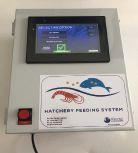
HATCHERY FEEDING SYSTEM
could be a positive impact of Brexit over the long term.
In January, the U.K. Environment Secretary said they were looking to establish consultations around the use of gene editing, which means research could occur on using gene editing in commercialized aquaculture products that is not possible to do today in the EU.
“That is a feature that we as a genetics company would like to apply if it becomes legal to do so and if the market and consumers accept it,” he says.
New strategies
SSPO’s Scott says salmon producers will just have to be a little more creative with their business strategies in this post-Brexit era.
“We need to use everything in the toolbox, and that includes greater marketing efforts by our member companies and greater work by the trade body on behalf of member companies,” says Scott.
That will mean a greater focus on Europe –more than ever before and in conjunction with other food and drink exporters from Scotland.
The global seafood expo in Barcelona, to take place in September, will also be more critical for producers than in the past.
“Flying the flag is going to be that much more important – we hope by the time Barcelona happens in the autumn that things will be smoother and easier, and we have a better story to tell,” Scott says. “I don’t see competition going away, and we will have to work harder than we have in the past to supply the right product at the right time given those competitive pressures.”
Scotland’s Orkney Shellfish Hatchery is on a mission to save and restore populations of European native flat oysters
By Liza Mayer
Thinking inside the Box S
norkelling through the coral gardens of the Great Barrier Reef and discovering marine life was normal for most kids growing up in Cairns, Australia, like Nik Sachlikidis. Early exposure to the need to care for and conserve the worldfamous natural wonder made such an impact on him that aquaculture as a career choice became a no-brainer.
“Everything below the waves interested me,” says the managing director for the aquaculture portfolio of the U.S.-based Cadman Capital Group. Sachlikidis progressed in aquaculture from the ground up, beginning as a teen working on fish farms in North Queensland.
Earlier in his professional career, he held a range of scientific leadership roles in industry-science partnerships focused on the development of lobster aquaculture techniques and technology. “I worked my way as a researcher for the government, through to private enterprise in Southeast Asian aquaculture and then eventually over to the Cadman Capital Group,” he says.
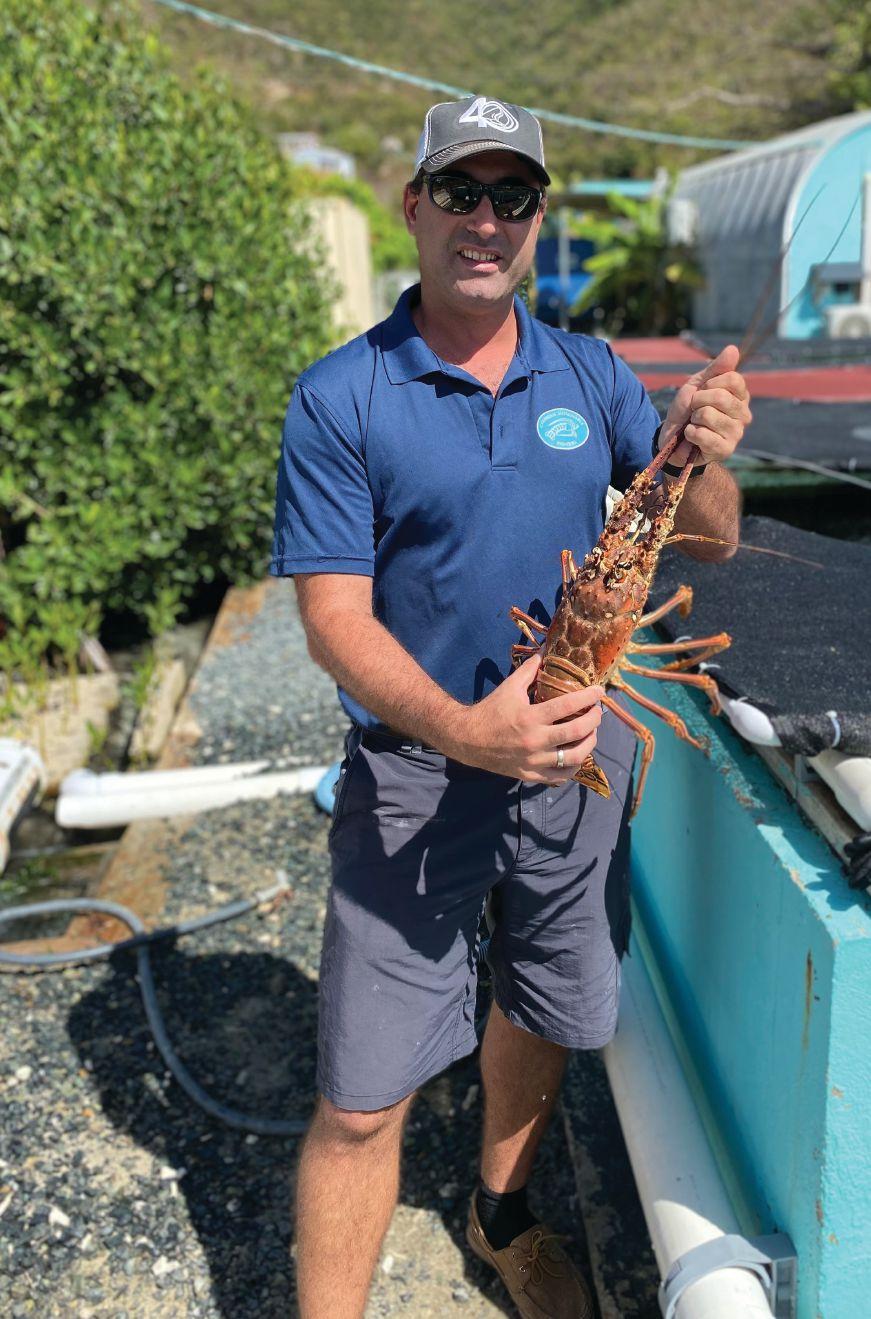
The multinational private equity group’s aquaculture division comprises three core businesses: Caribbean Sustainable Fisheries, a fully operational spiny lobster farm in the British Virgin Islands; Orkney Shellfish Hatchery, a multi-species shellfish hatchery focused on the cultivation of European native flat oysters (Ostrea edulis) and European clawed lobsters (Homarus gammarus) ; and Ocean On Land Technology, an innovator in aquaculture systems technology.
Dr. Nik Sachlikidis, managing director for aquaculture, Cadman Capital Group
Group founder and chairman Giles Cadman says his passion for sustainable aquaculture led him to enter the field. The Group’s first venture into aquaculture, Caribbean Sustainable Fisheries, “exists because I believe that entrepreneurs have to ‘walk the talk’ when it comes to preserving the environment, helping local communities and helping each other,” Cadman writes on his blog.
That mission is what guides Orkney Shellfish Hatchery (OSH), located on the small, uninhabited island of Lamb Holm in Orkney, Scotland. The hatchery, or “Osh” as the staff
ALL PHOTOS: ORKNEY SHELLFISH HATCHERY
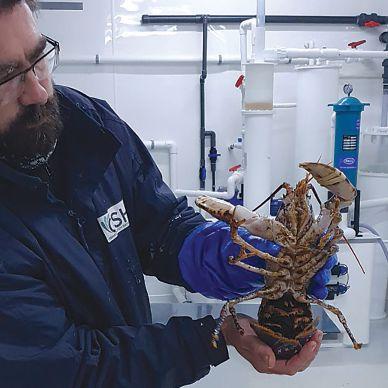
OSH hatchery team member Raimund monitors progress of the egg development of a European clawed lobster broodstock.
calls it, is designed to help restore the population of native European flat oysters, wiped out because of overfishing throughout the 19th and early 20th centuries. The facility is also meant to demonstrate the technical and economic feasibility of tech innovations, such as the Hatchery-in-a-Box, an alternative technology to growing clawed oysters (see side bar).
A 2019 report from Scotland’s Centre of Expertise for Waters (CREW) makes the case for the restoration of the population of the native flat oyster: “The single advantage that the native oyster has over other shellfish with more established production (for instance, the common mussel) is in its ecological, cultural and social value. Unlike the Pacific Oyster
Smarter, stronger, more economical drum filters
More than 50 improvements
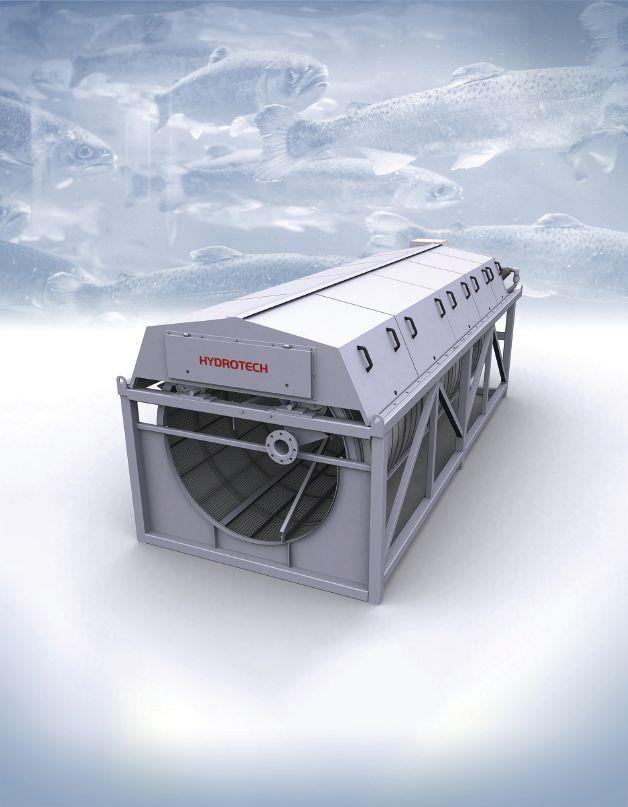
The Hydrotech Value drum filter series focuses on reduced maintenance, increased component quality and simplified operation – all to give your plant maximum filtration performance at a minimum operational cost.
Contact us!
Call +46 (0)40 42 95 30 or visit www.hydrotech.se
Crassostrea gigas, Ostrea edulis is a native and therefore its restoration is likely to enhance, and not to damage, ecosystems. Emotionally, it has a popular appeal as a missing ecosystem from Scotland’s coastal water.”
OSH clearly sees the opportunity to fill this need. The native flat oyster currently accounts for only 0.2 per cent of Scotland’s
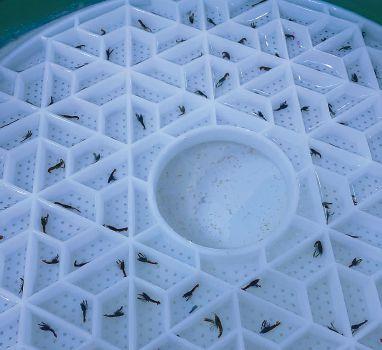
European clawed lobster broodstock are held in incubation tanks at the OSH facility, while eggs develop and subsequently hatch in designated hatching tanks.
shellfish aquaculture, eclipsed by the faster growing non-native C. gigas (4.5 per cent), and even more so by mussels (95.4 per cent), data from the CREW report show.
“We want to be a key player in the development of native oysters in the U.K. and an enabler for those restoration projects that are going to enhance those native environments,” says Sachlikidis.
Trump cards
OSH’s progression into playing a role in Scotland’s restoration efforts followed the same ground-up trajectory, beginning with the choice of the hatchery site. OSH operates in the most northern part of Scotland, its remoteness providing biosecurity and access to pristine seawater, he says.
“It has given us a biosecurity moat. When one is looking at things like native oysters and
other things, one of the main problems is the disease issue for broodstock oysters. Orkney is a place that’s designated as Bonamia-free, which is one of the pathogens that’s impacting the native oyster populations.”
The former hatchery structure had done some work on oysters and lobsters in the past but it was non-functional when the Group acquired it three years ago. “We did a major overhaul of it. The team at Ocean On Land Technology (the same team behind Hatcheryin-a-Box) did a great job renovating the whole site and providing the technology, including the recirculating aquaculture systems and other technology for oyster rearing,” he says.
Now a fully-fledged hatchery building, it features innovative biosecurity systems that control the movement and spread of harmful biological agents both within the hatchery and between the hatchery and the
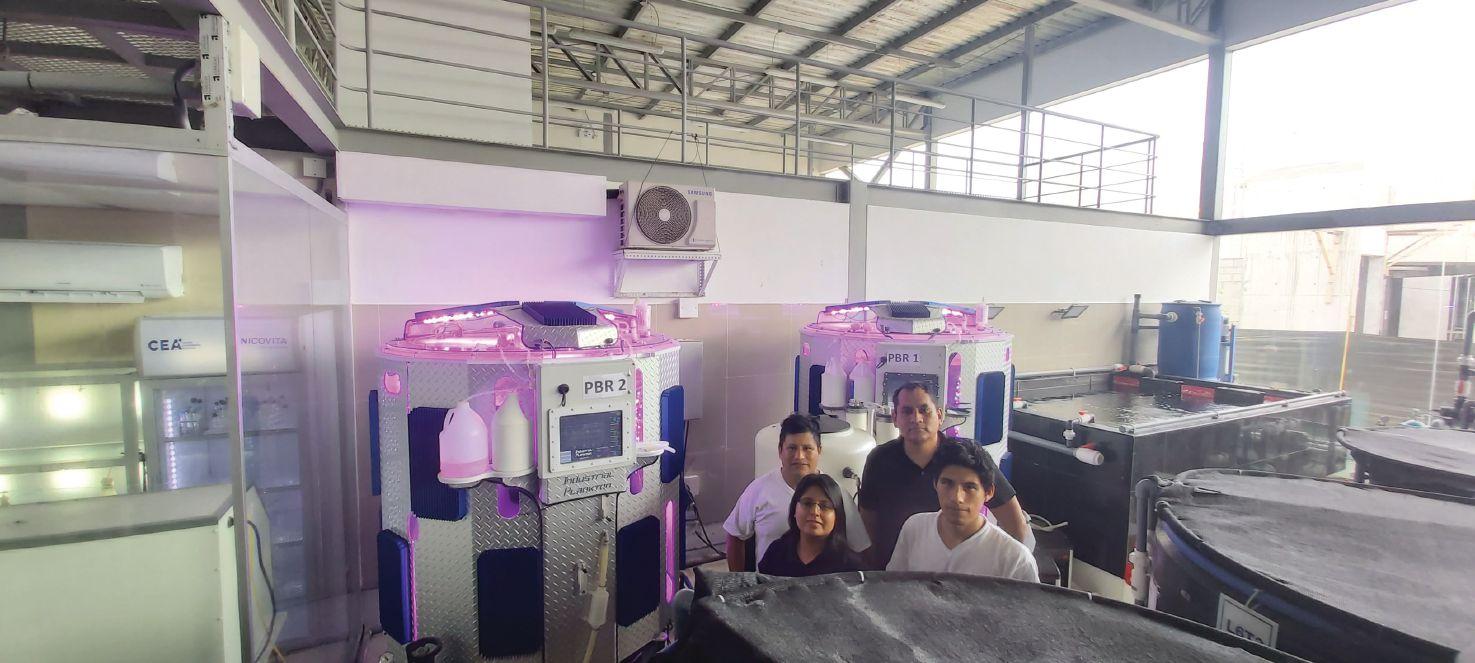
surrounding environment.
Aside from implementing strict movement protocols, the team also has access to specialized equipment. “Broodstock wastewater is treated with a three-step process of micro-filtration followed by ultraviolet filtration and chlorination/neutralization to kill potential pathogens such as viruses and bacteria. Together, these measures integrate successful oyster culture with the safeguarding of the surrounding waters,” OSH said in an earlier statement detailing its progress.
In late 2020, OSH installed a secondary wastewater filtration system designed to treat all of the hatchery’s wastewater for potential pathogens before discharge.
“It provides a substantial barrier between the OSH hatchery and the outside environment. Our hatchery treats all outgoing wastewater through a series of fine filtration and
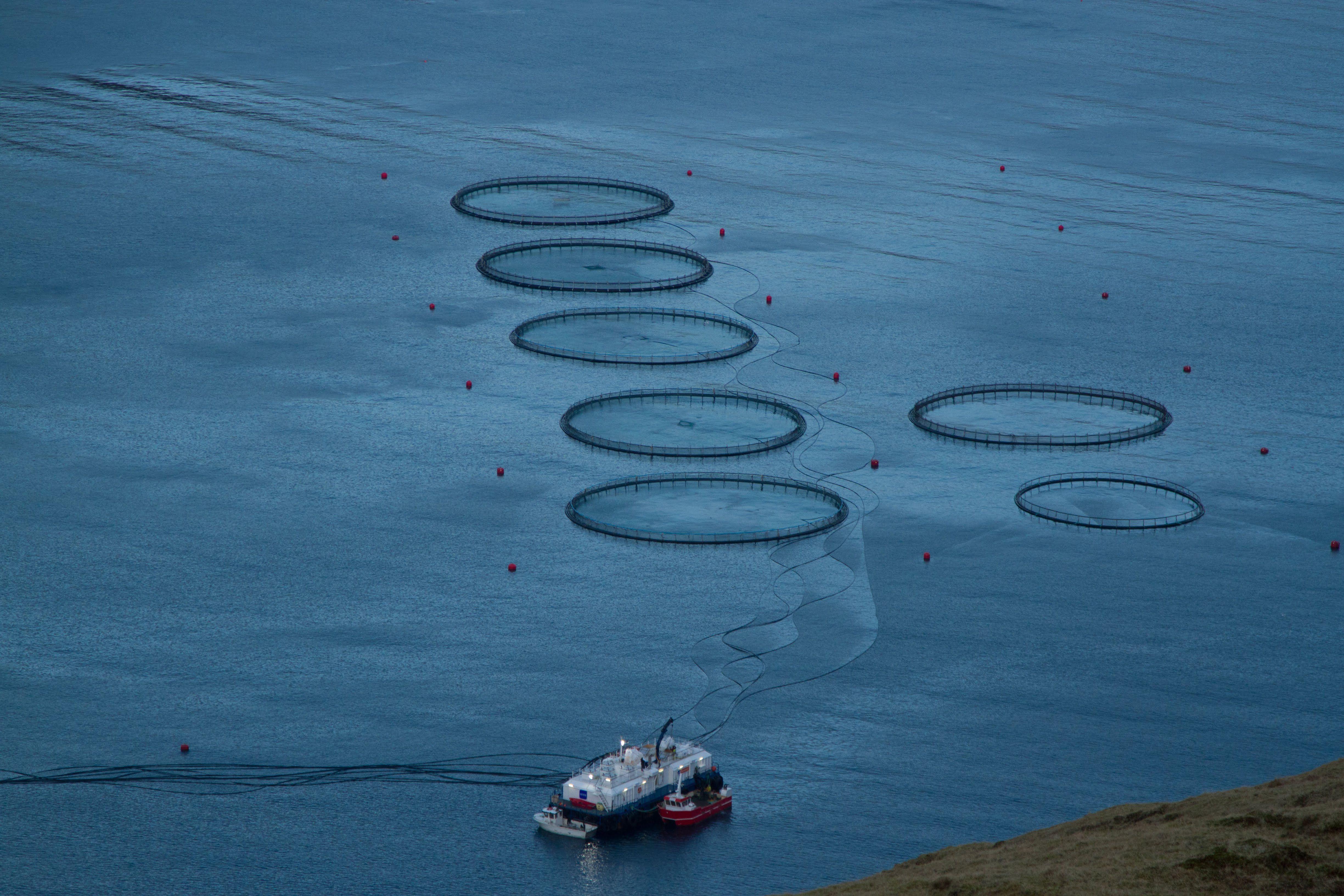
Orkney Shellfish Hatchery operates in the northern part of Scotland. The remote location provides an intrinsic level of biosecurity and access to pristine seawater.
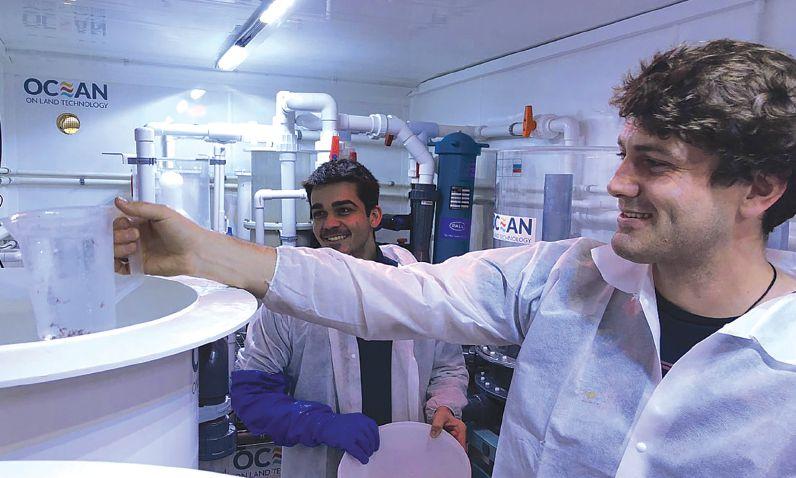
OSH hatchery team members Callum and Jose culture European lobster larvae in the Ocean on Land Hatchery-in-a-Box facility located at the Orkney Shellfish Hatchery.
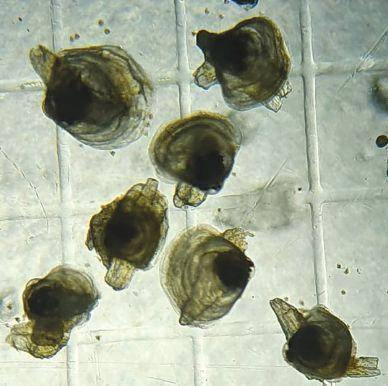
Early stage native oyster spat at the OSH hatchery can be settled on either cultch or shell depending on the client’s needs.
Post-larval lobsters are stocked into the patented Aquahive units. Each Hatchery-ina-Box has broodstock incubation, hatching, larval rearing, and post-larval rearing features incorporated into the design.
heavy UV treatment to destroy any potential pathogens. This means that the hatchery is bio-secure on both the incoming and outgoing seawaters,” Sachlikidis emphasizes.
The strict protocols and the hatchery’s decision to propagate only the native flat oyster species have set OSH apart from others in the market. A private-sector initiative called the Dornoch Environmental Enhancement Project (DEEP) has taken notice.
In the CREW report, DEEP expressed interest in making OSH a part of its supply chain for native oyster spat that will be planted in 40 hectares of native oyster reef targeted for restoration.
“DEEP is interested in working with OSH as part of the supply chain due to the biosecurity aspect of the hatchery. Existing hatcheries that produce both Pacific and native oysters are not able to ensure that the native oyster spat is not commingled with Pacific oyster spat, an invasive non-native species (that) must not be introduced to the DEEP or other restoration sites,” it said.
Gaining ground
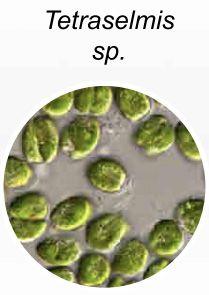
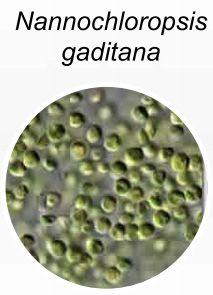
OSH has made headway since moving broodstock from an offsite quarantine area to the hatchery in August 2020. The broodstock successfully fed on a mixed diet of live algae harvested from the two large photo-bioreactors at the hatchery, “clearing more than 80 per cent of their feeds overnight and indicating that they have settled into their new system,” announced OSH that month.
This past October, it saw its first run of native flat oysters production. “We’re at the point now of commercial upscale for production of edulis. We can now start taking on clients and making those arrangements to supply them with oyster spat for the 2021 seasons onward,” Sachlikidis tells Hatchery International.
The quest to further refine their technology to produce “super high-quality” edulis spat remains on the agenda. “Our milestones are improved production capacity and upscaling this year and bringing on some of that technology – we’re looking at our genetics in our broodstock as well. We’re going to incorporate some eDNA technology to make sure our spat are of the highest quality, we’re working on some DNA screening technology to make sure we’re on the cutting edge of that,” he says.
“Our goals are to produce those big numbers of edulis that restoration programs and indeed farmers can rely on and be able to confidently restock in their waters or on their farms. That would be just a fantastic thing not only for our hatchery but for the ocean itself.”
TECHNOLOGY TEST BED
Aside from supporting the restoration of the European native flat oysters in local waters, Orkney Shellfish Hatchery’s (OSH) role is to serve as a resource to test new hatchery ideas and technology, including the Hatchery-in-a-Box (HIB), a complete hatchery solution that requires a fraction of the footprint of a conventional hatchery.
Hatchery-in-a-Box is a 40-ft., portable sea container that’s fully insulated and temperature-controlled, and incorporates hatchery fundamentals. Among these are Ocean On Land’s flagship technology, Aquahive, which houses small post-laval lobsters in a patented bee-hive-like container to prevent the cannibalistic juvenile lobsters from eating each other.
“It’s really an all-in-one solution in that it’s a shipping container that you put on the ground and it’s got everything you need within it including the RAS systems to produce the lobsters,” says Nik Sachlikidis, aquaculture managing director of Cadman Capital Group.
Explaining the setup, Sachlikidis says lobster eggs are hatched in a broodstock container that has a larval rearing capability, and “once they’ve become post larvae, they get transferred into the Aquahive technology where they’re grown to Stage 5/Stage 6, which is a very robust juvenile, and then they can be released for grow-out.”
One Hatchery-in-a-Box is designed to produce around 50,000 juveniles a year, but in January, the hatchery team at OSH got an unexpected result that potentially could
boost this number: they saw the first lobster hatchings for 2021 in January, which is much earlier than the expected March “due date.”
Sachlikidis attributed the good news to a series of conditioning of the broodstock, as well as to the broodstock holding system that the team could manipulate to achieve optimal temperature and environmental condition.
“We were therefore able to bring the season forward. We were able to get regular hatches, in Orkney, for this species for at least 10 months of the year, which is substantially more than in their natural timing. There’s some real advantage to that because we’re able to keep the scale of the hatchery small but produce on an elongated timeline that helps us with capital investment per unit of production.” In other words, one unit of HIB could potentially produce more than the annual 50,000 lobsters expected.
The next step in terms of the HIB technology is to develop a bigger version that’s able to grow the juveniles from Stage 6 to grow-out. In this effort, the Ocean On Land will lean on its sibling “Osh” to test it and showcase a working Hatchery-in-a-Box to give potential users a real-time look at how the technology works.
“Clawed lobsters are a very commercially important species in the U.K. and the rest of the world. We want to support those fisheries and make sure that they are alive and healthy and have the technology they need to continue to be that way,” says Sachlikidis.
Fighting for flounder
Texas hatchery throws lifeline to Southern flounder
By Julia Hollister
“Floundering” at the mouth of the Colorado River in South Texas holds tasty memories for Maggie Carrington who grew up on the Texas gulf coast.
“It was a memorable experience,” she says from her home in Las Vegas. “In the ‘60s my brother, Sonny and I would leave home around dusk and drive 25 miles to Matagorda Island where the Colorado River empties and flounder was plentiful.”
The pair would park their truck, turn on their flashlights and grab two gigs (a multipronged spear). As they walked into the gulf, Carrington was reminded to slide her feet through the ankle to mid-calf water to avoid getting stung by a lurking stingray.
“As we slid silently through the sand, we would shine the flashlight into the water looking for an ‘oval-shaped’ impression of a sleeping flounder, nestled in the sand. When I spotted one I grabbed my pitch fork and
stabbed it. I had to move quickly because they were very fast,” Carrington recalls.
Any ‘slow’ flounders, that averaged about one foot each, went on a stringer. As the pair continue their hunt, they would encounter other locals wading silently through the inlet area in search of that delicious dinner within their reach.
Memories like these from local anglers were becoming few and far between as flounder populations have begun to decline due to mild winters and warmer water temperatures, with added pressure from fishing, especially when females are spawning in the fall and winter.
Hatchery to the rescue
In a bid to rescue the endangered flounder, the Texas Parks and Wildlife Department (TPWD) built a new hatchery in Corpus Christi to start rearing the species.
“Flounder populations are declining and have been for years,” says Ashely Fincannon,
marine development hatchery manager. “There are many factors for the decline, including fishing, but increasing water temperatures is a major concern.”
The new hatchery has been in operation for less than a year. The new flounder building is located at the Marine Development Centre where scientists have also been raising Red drum and Spotted seatrout since the 1980s. Though these are not in decline like the flounder, and are considered in stable populations, the facility continues to stock these species since they are important to anglers and it helps keep populations healthy.
All hatchery operations needed to be in one location where there are staff and appropriate resources for production, according to Fincannon.
The Corpus Christi facility suffered a devastating winter storm in February. The coastal staff was slammed with repairs at the hatcheries as well as fish assessments for the massive
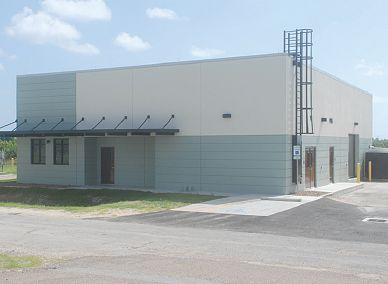
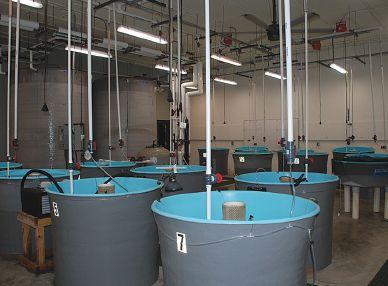
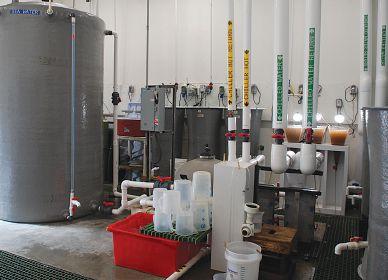
The flounder hatchery (left) in Corpus Christi, Texas, was established to restore dwindling populations of Southern flounder. Fertilized eggs from broodfish are placed in the incubation room (middle) until they hatch. Flounder larvae are initially fed live rotifers (right) before transitioning to artemia.
PHOTOS: TEXAS PARKS AND WILDLIFE DEPARTMENT
fish kills. Fincannon says the true impact to species will not be known until July of this year when the gill net sampling season is complete and it can be compared to previous years.
The Texas Parks and Wildlife Department has three fish hatcheries on the Texas coast located in Lake Jackson, Palacios and Corpus Christi. These three hatcheries combined are focused on producing Red drum, Spotted sea trout, and Southern flounder. These locations allow fish to be easily transported to the upper, middle and lower Texas coasts. The coast is over 350 miles long. The upper coast is closer to Louisiana and the lower coast is closer to Mexico.
In response to substantial declines in Red drum populations and recruitment, the TPWD began operating saltwater fish hatcheries for stock enhancement in 1983, according to Julie Hagen, a specialist with the coastal fisheries division of the Texas Parks and Wildlife Department. The department routinely utilizes stock enhancement to assist in maintaining natural populations impacted by increased recreational fishing pressure.
Today, the program releases between 20 and 30 million hatchery-raised fingerlings annually into eight different Texas bays and estuaries. More than 800 million fingerlings
“Flounder populations are declining, and have been for years. There are many factors for the decline, including fishing, but increasing water temperatures is a major concern.”
have been produced and released into Texas coastal bays to date.
Rearing protocols
At the hatchery, broodfish are placed into tanks and put on a 150-day photoperiod (light) and temperature maturation/spawning cycle. After this conditioning period, broodfish routinely start spawning and can produce tens-of-thousands of fertilized eggs per night. Viable eggs are collected by hatchery staff, incubated and hatched. Larvae are then reared to fingerling size in outdoor culture ponds.
In addition to volitional spawning, Southern flounder are routinely strip-spawned by hatchery staff to maximize production efforts.
COMPHATCH 2020
Our market leading hatchery has been improved! Hatching tray and EasyHatch substrate are molded together in one unit
Less components equals easier service and cleaning
Improved water distribution with increased area of outlet screen and improved EasyHatch
The water pipes have been replaced with built-in water channel
“In regards to spawning fish, there is not much technology involved,” Fincannon says. “We do work with researchers at various universities who use newer technology, such as next-generation sequencing technology to generate Genotyping-in-Thousands by sequencing (GT-seq) panels for Red drum, Spotted seatrout and Southern flounder.”
Staff scientists feed the broodstock three times a week with a maintenance diet at three per cent of their body weight. Southern flounder larvae are fed rotifers as a first food source, then transitioned to artemia.
The facility does not keep flounder it raises until they reach sexual maturity. Staff scientists grow flounder until they have undergone metamorphosis, and then they are released into the wild.
“Flounder are kept in the hatchery for upwards of 60 days because they have to undergo metamorphosis before we release them,” says Hagen of the Texas Parks and Wildlife Department.
“We believe rearing and releasing flounder into our bay systems will be part of the solution in conjunction with management decisions to protect the resource. It will be a two-pronged approach.”
Return to ancestry
New signs of hope for Sockeye salmon restoration
By Jean Ko Din
Water is a sacred element to the Syilx people. They believe that the Okanagan River holds within it a sacred connection to the stories of their ancestry, their descendants and their land. So when Sockeye salmon finally returned to Okanagan Lake in British Columbia, Canada, for the first time in more than 50 years, more than a few tears were shed for this historic moment.
“We had two elders at the experimental release (in 2014). One was a knowledge keeper for the water,” says Ryan Benson, biologist for the Okanagan Nation Alliance (ONA). “She conducted the prayers and ceremony, then they both sang a song as the fish were released.”
Six years later, the first of the released fry have made their way back to the lake as adult fish – the first sign of hope in restoring the region’s salmon populations.
The rescue mission
The Okanagan River is a tributary to the larger Columbia River Basin which is home to Chinook, Sockeye, Coho, Chum and steelhead. In the late 1990s, two Columbia Sockeye populations (Okanagan and Wenatchee) began to dwindle to less than 2,000 returning to spawn. This sounded the alarm for the ONA Fisheries Comission to launch an effort to rescue the species from the brink of extinction.
“This is from decades and decades of destroying the habitat and overfishing out in the ocean and down in the Colombia (River),” says Benson. “And the elders and a lot of the leadership from Okanagan nation bands started to express concern.”
The ONA is a made up of eight First Nations communities – the Okanagan Indian Band, the Upper Nicola Band, the Westbank First Nation, the Penticton Indian Band, the Osoyoos Indian Band, the Lower and Upper Similkameen Indian Bands, and the Colville Confederated Tribes.
In 2003, the ONA began a 12-year experiment that brought together consultants, Fisheries and Oceans Canada (DFO) scientists and ONA biologists for a pilot study to restore the Columbia Sockeye to the Okanagan region. Benson coordinates the different groups involved in the Sockeye Re-introduction Program.
After 10 years of scoping, studying and risk assessment, a new hatchery in Westbank, B.C. was established in 2013 which marked what Benson calls the program’s “production mode.”
Last October, the program saw the first of the returning adults from its 2017 release thanks to a man-made fish ladder that was activated in the Penticton dam the year before. On top of this success, November also marked a record breaking milestone of 38,000 Sockeye fish returning to Skaha Lake, which is located along the course of the Okanagan River.
“Around that creek was absolutely red with Sockeye,” says Norm Johnson, hatchery manager. “There were families down on the riverbank and the elders were crying as they saw it because it reminded them of the old days… Kids are seeing what the elders had told them before about the rivers used to run red and all of a sudden, they’re running red again.”
These first signs of the re-introduction program’s success are turning heads among other enhancement and restoration programs. Lessons learned from ONA’s model could be the key to saving the diminishing fish populations along the west coast.
Inside the hatchery
The kł cpəlk stim Hatchery (which roughly translates to “to cause to come back”) is a 25,000-square-foot facility with the capacity to rear eight million eggs. Currently, it is equipped to handle up to five million eggs from broodstock management until fry release.
Rearing and feeding of the fry is done in 27 fiberglass raceways, each with a capacity for 275,000 fry. Staff will hand-feed the fry to ensure that minimal feed is wasted and
water quality is maintained. The facility regularly achieves 95-per-cent survival rate from egg to fry.
Johnson’s role as hatchery manager is a seven-days-a-week, 8-to-5 job. But as the success of the program began to spread, his work expanded outward.
“We’re consulting with several First Nations around B.C. and into the Yukon,” says Johnson. “We probably have 20 that have asked us for information packages and we are currently working with six. The Upper Fraser is just in such dire need of fish enhancement and conservation aquaculture right now.”
Johnson credits some of the restoration program’s greatest successes to the local First Nations communities. With the exception of himself and the assistant manager, the hatchery staff are made up of local young people from the Syilx community.
Johnson developed his own fish culture training program to educate the young workers. It is a year and a half of training modules, videos, presentations and hands-on work. Every month, they conduct tests to ensure that they follow the hatchery’s regimented routine.
“When we first started this, some people said that First Nations cannot run a large hatchery successfully, and that we should turn it over to the province or the DFO,” says Johnson. “We’ve proven that the best commitment you can get is some person whose family has lived on that river for millennia. And if there’s a mistake, they have to go home and explain that to grandma.”
The Spring chinook salmon (known to the Syilx as “n’titxw”) is one of the four food chiefs. Not only is the animal a main food source for the communities, it is seen as their
Many of the hatchery staff are young people from the Syilx community. PHOTO: KŁ CPELK
relative. Every fall, the community gathers for a three-day salmon feast to honour the traditions of the animal and the sacredness of the river.
The hatchery is located across the street from the En’owkin Centre, a post-secondary education and cultural hub for the Syilx people. Traditional knowledge keepers from the community regularly visit the hatchery to share their knowledge with the staff and educate them on the traditions around the salmon and the sacredness of the river.
“Some of our young people haven’t seen some of these ceremonies before because the fish just haven’t been there,” Johnson explains. “So we have someone like Richard Armstrong and other elders that are knowledge keepers to pass on the information, like the very first fish that comes back, how you treat it, and how you handle it, and the offerings you have to make.”
Although Johnson does not have his own Indigenous roots, he has lived and worked in First Nations fisheries throughout his career. Before coming to kł cpəlk stim Hatchery, Johnson was fisheries program manager for the Council of the Haida Nation in Haida Gwaii, B.C.
Benson traces his own Indigenous roots to the the Blackfoot Confederacy in Alberta
and Montana, but his wife and children are members of the Lower Similkameen Indian Band. As family members in the ONA, Benson places a personal connection to his work.
“All the stuff that I do, I do it for my kids. It’s their fish,” he says.
United effort
Benson emphasizes that ONA’s Sockeye Re-introduction Program is not only a result of cooperation and collaboration by the Syilx community and leadership, but also the federal and provincial governments.
ONA is a member of the Canadian Okanagan Basin Technical Working Group. It works with B.C.’s Ministry of Forests, Lands and Natural Resource Operations and Rural Development (FLNRORD) and Fisheries and Oceans Canada’s science and management divisions.
Benson says a major part of his role in stock assessment and data analaysis is to maintain communications with all interested parties. “We want to be able to say, this is where your money is being spent,” he explains.
“Without the utility districts and funding there’s no way this ever would have got off the ground,” says Benson. “They’re pretty much 99 per cent of our operations. They funded
the building of the hatchery and even 12 years before the hatchery was actually built, they were funding all the monitoring and evaluation.”
The program is mainly funded by the Grant and Chelan Public Utility Districts in Washington State.
Production mode
With the program’s production mode well under way, the Sockeye populations in the Okanagan region become more and more robust each year.
Benson and his team of ONA biologists also continue to study the food web in the lake and what the fish could eat, whether they were getting enough food and looks at other species in the lake.
They have accumulated years of data and stock assessment in order to create proofs and meticulously monitor the progress of their work
“Over time, as we go out there, the data set we have is probably one of the best, richest ones in North America,” says Benson. “We’re preparing to soon publish a 16-year synthesis up to date.”
“Science is the basis of where we go. We’re not just winging it,” adds Johnson.
With a production capacity of close to 50 million eggs per year, the Catripulli CMG currently produces between one and two million eyedeggs every month.
Made in CHILE
Located in the Araucanía region and covers 84 acres of land, the Catripulli Genetic Improvement Center (CMG) is about 140 kilometres east from Temuco and 15 kilometres north of the volcano Quetrupillán. Formerly belonging to Troutlodge, the facility was taken over by Hendrix Genetics in 2015 and was subsequently rebuilt and refurbished until its official opening in November 2017.
Equipped with the latest technologies in genetics development, the Catripulli CMG facility’s focus is on improving its salmon genetics in health, growth and resistance to disease and parasites, according to a statement from Hendrix Genetics when the facility was inaugurated in 2017.
The centre uses the Landcatch strain as the genetic base for its ova. Originating in the 1980s, the strain was formed with genetic material from various Norwegian strains and Scottish wild stocks, and developed through a genetic program that began in Scotland in
An inside look at Hendrix Genetics Chile’s
massive R&D
facility in Catripulli, Chile
By Christian Pérez-Mallea
1996 and in Chile in 1998.
Subsequently, this strain began to be evaluated and improved for the Chilean environment, thanks to the use of sentinel fish in farming conditions and experimental trials and challenges. Traceability from sentinels provides feedback on the fish performance, while experimental farms allow disease challenges and evaluations in fish.
The facility
With a production capacity of close to 50 million eggs per year, the Catripulli CMG currently produces between 10 and 12 million eyed-eggs every quarter. The production facility uses 25 out of the 84 acres that span the property. The land is covered with native forest, while its largest natural asset is a watershed emerging within the premises that serves as the main water source.
This facility has an installed capacity of 4,000 m3 divided into: 184 tanks of 400 litres each in the family room; 12 tanks of 30 m3 in
the smolt room; and 18 tanks of 200 m3 in the fattening terraces. Eight of those largest tanks operate with water reuse of up to 85 per cent, while the rest runs on a flow-through system. The water used in incubation is treated with rotofilters and UV. In turn, the water entering the family room is treated with a dolomite filter to increase the hardness (dissolved calcium and magnesium) of the water; the rest of the input water have no treatment. Meanwhile, a rotofilter and an ozone filter (for the remaining water from the filters) treat the effluent, which contributes to the Huililco river.
Egss are produced year-round, says Christian San Martin, production manager of Hendrix Genetics Chile. “We broke the natural seasonality of this species of fish. Naturally, it spawns from May to August in the southern hemisphere. Now, we produce eggs every single month.” Thermal control of water and photoperiod control are fundamental to this year-round production, he adds.
ALL PHOTOS: CHRISTIAN PÉREZ-MALLEA
Driven by animal welfare, the company performs ultrasound scans on breeders to determine their gonadal development, which can be observed on a smartphone.
The farm is negative for IPNv and ISAv, while the prevalence of BKD is between 0.4 and 0.6 per cent, San Martin says. “The concept of animal welfare is deeply rooted in our process and has to do mainly with the reduction of handlings (in number and duration), which has a positive impact because fish are healthier. We take advantage of some technologies with that purpose, such as ultrasound to check our fish and reduce
“We broke the natural seasonality of this species of fish” says Christian San Martin, production manager of Hendrix Genetics Chile. “Naturally, it spawns from May to August in the southern hemisphere. Now, we produce eggs every single month,” he adds.
palpations. When they are breeders, the team is trained to determine, through ultrasound too, the levels of gonadal development, both in males and females,” he explains.
The product
All research and development activities at the Catripulli CMG are focused on the genetic program, according to Alejandro Alert, genetics and R&D manager at Hendrix Genetics Chile.
“Our commercial product has a high genetic and sanitary standard. For all other non-health traits, the idea is that our product has the best possible performance; that they grow better and have better quality aspects (carcass yield and color) in the process plant,” he says.
To achieve this, state-of-the-art genetics technologies are used at the facility through the application of quantitative, molecular and genomic tools. Molecular genetics is used to determinate IPNv resistance (QTL), for example, while genomic selection helps to
recognize multiple gene patterns related to resistance to Caligus (sea lice) and Piscirickettsia salmonis (SRS), the most challenging headaches for the Chilean salmon industry. Moreover, the company has also started identifying the phenotypes to be measured for BKD associated with resistance or susceptibility, and a similar project is aimed at the complex gill disease.
Overall, the top objectives are to balance improved growth, robustness (disease resistance and optimal fish shape), quality and very low early maturity. This latter aspect gains lots of importance during the COVID-19 pandemic, since several salmon producing companies have been forced to harvest average weights close to seven kilograms per fish due to logistical challenges.
However, because of the significant latitude difference between production regions in Chile, the clients’ requirements are also diverse. “We have sent different sentinels (copies of our genetic nucleus) to the regions of Los Lagos-Aysén and Magallanes for the past four years. This allows us to have an evaluation of the genetic-environmental interactions. In this way, performance rankings will vary in different environments, because other genes
are expressed. This has made it possible to develop products aimed at one region or the other,” Alert says.
Community relations
Engaging with the community from the very beginning is part of Hendrix Genetics Chile’s corporate mantra, according to the company’s people and territory manager, Karen Oyarzo. Some of the nearby residents were involved in building the perimeter enclosures of the first tanks, she notes.
“Half of our workers are from the closest communities. The interaction we have had
with them has prevailed over time and today they are a fundamental axis for us, precisely because of the relevance that neighbours are having in all production units,” she adds.
Currently, the company participates in long-term dialogues with six Indigenous communities, in addition to other social institutions, such as clubs for the elderly, neighbourhood associations and sports clubs.
“What has prevailed over time and has sustained good relations has to do with trust and transparency. For example, they have access to all our water tests,” she says.
The science of breeding
A group of industry leaders paves the way for
Benchmark Genetics
to produce some of the world’s top breeding
Most salmon farmers have to schedule their production around availability of hatchery-produced ova. The window is quite narrow as broodstock naturally spawn between autumn and winter. Then there are farmers who can start a new cycle of production any time, whole-year round. And chances are they are getting their eggs from Norway-based Benchmark Genetics, which delivers salmon eggs every week throughout the year.
The year-round spawning of broodstock leverages Benchmark’s investments in biosecure land-based broodstock production in Norway, Iceland and Chile, and expertise in the use of artificial photoperiods. “As the industry has evolved a lot the recent years, with larger RAS units for smolt and grow-out production, the producers need to have inputs of egg throughout the year to optimize their
programs By Ruby Gonzalez
production plans. Benchmark is in a unique position to fulfill this demand, as demonstrated by growing market shares,” Birgitte Sørheim, marketing director at Benchmark Genetics, tells Hatchery International.
The company describes itself as having “unrivalled breeding and genetics expertise for the aquaculture community.” Benchmark Genetics is composed of acquired companies that are leaders in their fields and have been running breeding programs for Atlantic salmon since the early 1990s. The acquisition of SalmoBreed and StofnFiskur in 2014 paved the way for the new business area of aquaculture genetics.
The portfolio
Expansion went on for two more years, bringing shrimp and tilapia breeding programs to the portfolio.
Akvaforsk Genetics, a leading provider of technical genetics services to the global
industry, was acquired in 2015. Spring Genetics, a world-leading breeding program for Nile tilapia, came with this acquisition. Akvaforsk Genetics was an offspring of the former Akvaforsk research institute, having worked on breeding and genetics for aquaculture as far back as the 70s.
The former Ceniacua shrimp program was acquired in 2016.
Benchmark Genetics Chile was established two years later. It runs a family-based breeding program for Atlantic salmon, and has recently implemented an advanced CryoLab for sperm cryopreservation of the strain’s best performing males.
At present, SalmoBreed Salten AS is the most advanced land-based production facility in the world. StofnFiskur is operating two land-based broodstock facilities in Iceland and is in position to supply the global industry with salmon ova year round.
Grading of broodstock at the SalmoBreed Salten breeding station
Benchmark supplies salmon eggs to all the major salmon producing countries – Norway, U.K., The Faroes, Iceland, Chile, the U.S. and Canada. They are likewise a significant provider of ova to the fast-growing land-based aquaculture segment located in over 20 countries throughout the world.
Their sales pitch has all the key words the customer wants to hear: “Our aim is to provide our customers with the best product available. A fish with high ability to take up and use the nutrition it’s offered, a strong immune system, high resistance to diseases and a low stress level.”
The pedigreed, nucleus breeding program in the three countries are kept in high-biosecurity environments. Balanced programs ensure that each generation is selected for a combination of growth, efficiency, disease resistance and general robustness.
“Siblings of nucleus fish are tested commercially using commercial feed under normal farming procedures. Siblings are also tested for disease resistance using the pathogens of major commercial performance in the significant markets, e.g. sea lice, ISA, PD, CMS, SRS, BKD and others,” says Alan Tinch, Benchmark Genetics technical director.
“Genomics is used to identify the nucleus broodstock with genetic profiles that perform best in commercial conditions and have the best disease resistance. Nucleus and commercial eggs are selected using a balanced combination of growth and performance in the commercial environment and disease resistance.”
GE vs GM
Family links between the programs allow performance information from families to be shared among the countries, increasing the breeding programs’ effectiveness. Benchmark is the only breeding company to have this structure.
“Each breeding program and egg production facility is designed to be big enough to optimize the progress rate in significant traits and produce the number of eggs required by each region and market sector. High biosecurity and multiple programs give Benchmark customers increase the security of supply in case of market disruption by unexpected events,” Tinch says.
The genetic improvements done at Benchmark must not be confused with genetic modification. There are groups from the government and private sectors who believe that there is no difference between genetic editing (GE) and genetic modification (GM).
Benchmark does not use transgenic genetic modification – which involves transfer of genes between species – in their operations. They are researching gene editing, which results in genetic changes that could develop naturally.
• TOUCH-SCREEN TECHNOLOGY FOR MONITORING O2, PH AND TEMPERATURE
“All eggs and juveniles are produced by selective breeding using genetic information to choose the best fish to be parents of the next generation. In the last decade, GE technology has been developed that makes small, precise, targeted changes in the genetic sequence that could be used to quickly improve health and welfare traits.
“Such changes could occur naturally, are indistinguishable from natural mutations
and would be found at a very low frequency in fish populations,” he explains. “Benchmark Genetics believes that gene editing is different from the GM involving transgenesis that was used to define the original GMO legislation.”
He adds that discussions are taking place in a number of countries between concerned groups, including Benchmark Genetics and authorities, to prevent GE from being classified as GM, where the sequence changes could
occur by natural methods. This is considered a responsible approach to using this new technology, making genetic improvements, particularly in health and welfare traits that are difficult to achieve by conventional breeding methods.
“Benchmark Genetics is collaborating with leading research groups to identify the genes that could improve disease resistance using GE. Still, we will only apply the technology when it becomes acceptable to consumers and is appropriately regulated,” he stresses.
Busy year
Year 2021 is another busy year for the company. The breeding program in Chile will start commercializing locally produced salmon eggs and be available for sale in the Chilean market by the second quarter. The SagaChile strain is described as “a new, improved, and high-quality salmon strain, adapted to the conditions and challenges in Chile.”
Construction work on a new incubation centre in Iceland started in December 2020 and is projected for completion by June. It is expected to run at full capacity by the second half of the year, doubling the Iceland breeding program’s ova output from 200 million to 400 million.
Packing of eggs at the SalmoBreed Salten breeding station
On the R&D front, work continues on improving fish growth and robustness.
“Benchmark is a commercial partner in a high-profile, international research collaboration with projects funded by FHF in Norway and BBSRC in U.K. involving experts in Norway, United Kingdom, USA, Canada, Sweden and Australia. These projects aim to find genes for sea lice resistance and use CRISPR Cas-9 gene editing to fight sea lice in salmon,” Sørheim says.
Half-way around the world, Benchmark is tapping some of Asia’s top shrimp-producing countries. After acquiring the Ceniacua breeding program for L. Vannamei shrimp in 2016, Benchmark recently started commercializing specific pathogen resistant (SPR) product in Asia.
“These days, we are launching our BMKShrimp brand in Vietnam, Thailand, Indonesia and China, leveraging on the market insights and relations of Benchmark’s business area Advanced Animal Nutrition, the leading provider of artemia and early-stage nutrition to the global shrimp industry through the INVE brand,” Sørheim says.
Commercial trials began in 2019 in Vietnam, China and Thailand. A soft launch of
sales followed the next year. There are plans to target additional countries.
Benchmark produces what the market needs. For salmon aquaculture, there are organic ova for organic production. They accept specifications for traits for tailor-made ova. There is CrossBreed, “a fusion of the best genetics between Iceland and Norway, using eggs from StofnFiskur strain, fertilized by milt from males of the SalmoBreed strain.” Through modern freezing technology, milt from SalmoBreed are frozen and stored,
making CrossBreed available in off-season. For land-based salmon production, StofnFiskur has developed products with improved growth and optional QTL-IPN, a viral resistance gene.
Responding to the growing land-based aquaculture market means acquiring a new set of knowledge and practices, which Benchmark did by recently hiring two positions in the commercial team with competences on RAS technology and land-based production. These additions provide the company with in-house expertise on RAS production.
Getting their weekly salmon ova deliveries to customers all over the world goes smoothly. But they are prepared for any changes that might arise.
“We believe that the world is getting more unstable for international trading. Brexit is an excellent example of this and the political shift in the U.S. towards more nationalism. So far, we have not experienced any issues with exports to the U.K. post-Brexit. However, we are continuously keeping a keen eye on the situation and are in contact with authorities, regulatory bodies and trade organizations to be prepared for any possible actions,” Sørheim says.
Fertilized salmon eggs at different stages
Avoiding risks in tech adoption
7 ways to safely deploy new systems for your hatchery
By Nestor Arellano
AI, IoT, ROV, M2M. These are some acronyms that have been hurled around in the corporate world, which in recent years have made their way to the waters of the aquaculture industry.
Have you been thinking of betting your money on deploying a high-tech equipment in your hatchery facility? Here are a few pointers that can help you cut the risks associated with high-tech adoption, stack the odds in your favour and protect the old ROI.
There’s no doubt about it. High tech is hot. For instance, some studies estimate that the precision aquaculture market (the concept of using control-engineering to monitor, control and document biological processes in fish farms) will be worth nearly US$800 million by 2024.
Look before you leap
What’s driving this growth? Consider these two examples.
When automated feeding systems are integrated with monitors and other sensors, so-called smart feeding systems are created. These systems can “learn” the feeding behaviour of fish thereby avoiding overfeeding or underfeeding, which improves fish health and helps operators achieve substantial cost savings at the same time.
Monitors and cameras, on the other hand, not only capture data on factors such as fish density, fish count, pump speeds, they
Camera and sensor technologies can capture a variety of data for analysis but can also streamline operational processes.
PHOTOS: INNOVASEA SYSTEMS INC.
“In terms of how they implement new technology, it’s really a case-by-case basis.”
- George Nardi, vice-president of aquaculture services, Innovasea Systems Inc.
also streamline the fish grading process. What’s more, the systems can now be controlled using mobile devices. The data collected can be stored in the cloud for later analysis or future reference. These systems reduce labour cost, increase efficiency, reduce fish stress, and boost yields. The benefits sound so enticing.
However, even smart systems experts recommend a measure of caution to ensure you make the right investment, avoid or minimize disruption of your operation, and protect the health of the fish.
systems (RAS), develops open ocean and land-based feeding systems, environmental monitoring equipment and other monitoring software solutions.
Determine your need. It could be to increase production, improve fish health, or enhance water quality. But, “If it’s not broken, don’t fix it,” Nardi says.
Technology often introduces new challenges for facilities, says Gordon Jeffrey, CEO of Aqualife Services Ltd., a firm that specializes in fish vaccination.
“RAS technology has led to major improvements of smolt production and egg-to-plate farming,” says Jeffrey. “However, this has often meant an increase in stocking densities resulting in higher risks of disease outbreaks and water quality issues.”
He recommends considering these key factors before an implementation:
• need
• benefit
• cost
• maintenance
• usability
• ongoing costs
• technology readiness
2.
1.
Determine what technology your operation needs
Hatchery operators want to know what latest technologies they should adopt.
However, “all hatcheries are pretty unique,” says George Nardi, vice-president of aquaculture services at Innovasea Systems Inc. “In terms of how they implement new technology, it’s really a caseby-case basis.”
Innovasea is an end-to-end aquaculture solutions company. The company designs and supplies recirculating aquaculture
Fish come first
Smaller fish are more susceptible to stresses caused by noise, temperature and water quality fluctuations associated with hatchery repairs and retrofits. Nardi suggests that operators strive to minimize disrupting the fish when installing equipment.
“Installing improved oxygen probes are good,” he says. “But if the implementation is at a larval facility, it’s going to be difficult. That’s why most operations time the installation during a system-wide dry-out period.”
3.
Find userfriendly tech
There’s no denying that today’s technology has advanced to a point where the average user is often at a loss when it comes to understanding how the tools, he or she uses work, says John Holder of JLH Consulting. The Courtenay, B.C., firm designs systems, creates
biological models and even offers mentoring programs for fish farms that mainly rely on RAS.
“Working with our clients, we see a trend towards more user-friendly tech – something that is easy to operate and to trouble shoot,” Holder explains. “When your facility is away from the city, you want your staff to be able to handle it just in case something goes wrong, and the support technician can’t make it right away.”
“If CO2 suddenly spikes, oxygen becomes hyper critical, and with juvenile fish you have very little leeway until they are negatively impacted,” he says. “Mere minutes matter.”
Unfortunately, aquaculture equipment has become very complicated for most users.
Tech providers should be able to provide customers with proper training on the equipment and even ensure top-up instructions on system upgrades.
A good guide, according to Holder: “If it’s something that can be explained to me like I was a 12-year-old and it’s something I can learn to operate and trouble shoot, then it’s good.”
Automated feeding systems can achieve cost savings for hatcheries.
4.
Timely tech support
Make sure that your tech provider has available technicians that can travel to your location and have tech support
personnel that can be contacted by phone or online means. “When your facility is out of the way or you’ve purchased equipment from a foreign supplier, they should be able to send out a technician to you when there’s an emergency,” says Holder.
Invest in people
5.
Cutting edge technology is fine, but a hatchery operation also requires sharp personnel, says Kurt Lang, chief technical officer of InWater Technologies, based in Campbell River, B.C. Lang, who co-founded the company with Stephanie King, has been in the aquaculture and water treatment industries for more than 20 years.
“There are exciting new innovations with automation, however they are not a substitute for highly qualified, curious and driven people with boots on the ground – this includes both farmers and suppliers,”
PHOTO: VARD AQUA SUNNDAL AS
according to Lang. “The key to new tools is to have staff trained properly and to select equipment that comes with excellent support and customer service.”
6.
Pay attention to data
More and more water quality parameters are being continuously monitored by sensors. This data can be a gold mine of information that can help guide decisions to help improve fish health, cut down cost of production and bolster productivity. Operators need to be diligent not only in collecting data but also routinely examining and interpreting them to determine how the collected information can be used, says Lang.
7.
“If it’s something that can be explained to me like I was a 12-year-old and it’s something I can learn to operate and troubleshoot, then it’s good.”
- John Holder, JLH Consulting
Service agreements
Your service agreement with your provider is critical because it’s the defining documents that spell out what to expect
from your vendor. It also lays out the metrics by which service rendered is measured, and the remedies or penalties expected in case things go wrong.
Finally, you also need to make sure you have staff buy-in on the new technology. If your personnel are not keen to learning how to use the new equipment, it’s very likely it’s not going to be used properly. “What we don’t know we are afraid of, and what we are afraid of we don’t want to work with or maintain,” says Lang.
Next Generation Spawning
Kurt Lang, CTO, InWater Technologies
InWater Technologies was established in 2019. PHOTO: INWATER TECHNOLOGIES
TOP TRENDS IN HATCHERY TECH
BY NESTOR ARELLANO
Networked water quality monitors
More and more monitors and sensors will become networked.
Supervisory control and data acquisition (SCADA) is a control system that uses computers, networked data communications and graphical user interfaces to control devices and process data. This architecture is also being used in aquaculture feeding equipment.
For example, InWater Technologies incorporates the concept into its Point4 water quality monitoring product line. The equipment’s remote interface units (RUIs) provide a tank-side interface with internal relays that control devices.
A system back-up ensures that if the SCADA system fails, the facility’s operations are not stalled. The interface keeps operating because control set-points remain stored within it.
Robotics
Robotics will continue to streamline operations, reduce labour cost, and make operations more efficient in the hatchery.
All handling of fish feed create dust, and dust create problems, says Peder Anders Rød, sales manager at Vard Aqua Sunndal AS. The dust created from the handling of the feed has a negative impact on water quality, which in turn is detrimental to overall fish health and welfare.
Vard’s automatic Exact Feeding Robot is an autonomous robot that
cuts the dust created by manual feeding. This reduces the need for cleaning clogged systems which causes stress among fish.
The plug-and-play system calculates feed quantities automatically, based on information about the biomass registered in its control system. The system also uses an RFID-enhanced tracking system that positions the robot for optimal feed dispersion.
AI, remote and mobile integration
The COVID-19 pandemic and its staffing restrictions will only serve to cement the importance of remote sensing devices coupled with artificial intelligence (AI), according to George Nardi of Innovasea.
For example, the accurate assessment of fish weight and length in a pen used to be a labour-intensive manual procedure. Innovasea’s biomass camera is a submersible device. It uses an AI engine that takes a sampling of the fish in a tank and measures the size and weight of each fish. Using stored biological data, the device calculates the overall biomass in the tank.
This data helps users determine efficient feeding formulas and the range of fish sizes in the facility.
Increasingly, devices and monitors such as this will come with mobile integration, which will allow them to be controlled remotely using mobile devices. The data collected are then automatically stored in the cloud.
Algafeed
We
Algafeed
HATCHERY HACK by Ron Hill
Smart feeding
Automated feeder fundamentals
Working with automated feeders allows a farm to make a huge jump in efficiency that can revolutionize business by pushing costs down and increasing growth. Choosing the right system and fitting it into your farm seems like an easy task but often turns out to be filled with frustration and sometimes buyer’s remorse. Finding the right system to work with your farm and stock can be a tedious task, the number of different feed systems available can be overwhelming.
Automated feeders fall into two categories: centralized automated feed systems and non-centralized automated feed systems.
Centralized automated feed systems feature a central feed silo(s), with blowers and hoses
and feeding software to help manage feed and stock. Centralized system have a large price tag and must be customized to the farm but are the most efficient way to delivery large volumes of feed to fish.
Non-centralized automated feed systems dispense feed to the fish through individual, independent feeders located at the tank. There is a huge range of feeders in this category but generally, each feeder is located at the tank with its own silo. Feed is dispensed or spread or shot (lots of variety) to the fish based on a simple timer or control program. These feeders come in all shapes, sizes and price ranges and many different models can be found on a single farm.
seemed like a revolutionary idea but came up short and were abandoned. The right feeder is the one that works best for the needs of the farm, the fish, and substantially reduces work. The farm must carefully evaluate potential feeder and think about how the labour and workflow will be affected. Many farmers get victimized by feeders with one small fault that was overlooked but turns out to be an obstacle. Here are some key considerations when choosing an automated feed system:
• How large is the silo and how often do I anticipate filling it? Each feeder should hold enough feed for the entire day at maximum ration, so it is filled once.
• Does the feeder give effective feed distribution to provide feed over a large surface? How much feed can it effectively deliver?
• What happens when it gets wet? Weather and feeding fish can ruin feed and foul feeders.
• How does it work with different feed sizes? Do you have to change pieces? Do you need to recalibrate often?
• What is the control program and what options does it offer? Can it change speed or schedule feedings? How easy is it to change the feed schedule or suspend the feeders?
• Where can these feeders be mounted? Will they be in the way of other work and can you remove them? Will they be easy to access/load?
• How does their operation affect the fish? Does the noise spook the fish when they feed out?
Eyes on the fish
Working with automated feeders can be a frustrating task and some days it can feel like they are more trouble than they are worth. The biggest mistake farmers make after choosing and setting up an automated feeding system is being lulled to sleep by the automated nature. Furthermore, a wise fish farmer once stated: “I don’t like automated feeders [in lieu of handfeeding] because I want my technicians observing the fish and observing their feeding behaviour.” Herein lies the difficulty in mindset that farmers can have combining old school fundamentals with new technologies. Automated feeders will reduce labour and make it easy to feed out large amounts but without keeping that “old school” mentality that technicians need to be observing the fish, automated feeding
Observing the fish is the essence of feeding. Watching them feed, judging their behaviour, knowing when they need more feed or less feed, is how farmers feed fish – the automated feed system can do none
of these things. Because labour is reduced and the feeders are dispensing most of the feed, novice farmers get the impression that once the silos are full and the program set, feeding is somehow “taken care of” and they should just let the feed system work. Too often this results in waste feed on the bottom, underfed fish, and malfunctioning feeders. Net-pen sites install cameras to monitor their fish feeding and have dedicated technicians that watch the cameras and control the feeders. Most hatcheries do not have the luxury of cameras and must rely on in-person observation by a dedicated technician instead.
Human element
The fundamentals of feeding do not change with automated systems, the technician feeding is still at the core. The automated feed system is setup to assist the technician feed, not the other way around as some might assert. An automated feed system in a farm must be considered as a piece of equipment the technician is operating. Instead of several technicians handfeeding the system all day, one or two technicians operate the feeders. A feeder is told when, where and how much
WATER
FEED
OXYGEN
The fundamentals of feeding do not change with automated systems, the technician feeding is still at the core. The automated feed system is setup to assist the technician feed, not the other way around.
to feed and can usually be trusted to do these things and one does not have to hold it or watch it run all the time. Technicians still need to visit each tank at regular intervals to provide handfeeding to the extremities, observe their fish feeding and observe the feeders working. Handfeeding fish is still essential to gauge behaviour and feed response, and the automated feeders need adjustment based on observations.
Just because there is a preprogramed feed schedule does not mean the fish will stick to
that schedule, their appetite and behaviour still needs to be monitored. Novices with automated systems are often tentative to make changes to their system, with good reason. It is easy to start chasing your feed system, running around, turning it off and on again, overfeeding one day, underfeeding the next – it takes time to find a balanced approach to maximize feed fed automatically without waste and with minimal adjustment. Some farms will determine a percentage of the daily ration they want to handfeed and set a baseline for their automated feeders and supplement with handfeeding as needed. The sophistication of the feeders lends a lot to the ability to make changes. Centralized feeders, with a central feed program, are easy to slow down/speed up and pause, unlike many non-centralized feeders, allowing the operator to easily make subtle changes based on fish behaviour.
With careful consideration and the right feeding system(s) the adaptable fish farmer can come up with a balanced plan to streamline operations and make the most of their technology investment. The correct solution to automated feeding will likely be as unique as the farm.
Solar-powered RAS planned in Taiwan
Aquaculture engineering firm Nocera Inc. is involved in a green energy project in Taiwan that will integrate an indoor recirculating aquaculture (RAS) facility with solar power generating technologies.
Nocera Taiwan has signed an agreement with Linshan Trading Co., Ltd. to cooperate and develop with the Yunlin County Government and J&V Energy Technology Co., Ltd. 60 hectares of land to build a Green Energy Industrial Park in Taixi Township.
Linshan was established in 1999 as a seafood trading company. The company has since expanded into international trade, biotech research, and the general construction business. J&V Energy is a Taiwan-based solar power plant developer.
“The dual use of the land by placing solar panels for power generation above the free-standing fish tanks will allow for greatly increased economic benefits from developing the land,” said Jeff Cheng, president of Nocera, Inc. “This lowers the land utilization by allowing fish production for consumption and the excess power generated can be sold to the electric grid operator.”
The combination of solar polar and fish farm developments onto a single piece of property increases the economic utilization of the property, generates clean solar power, and helps feed the population of Taiwan, according to a press release from Nocera.
Philippines launches urban aquaponics program
BY NESTOR ARELLANO
The Philippine government aims to boost food production during COVID-19 by providing urban dwellers aquaponics kits that will allow them to raise fish and grow vegetables.
The country’s Bureau of Fisheries and Aquatic Resources (BFAR) has begun distributing 10 units of the aquaponics system to 10 beneficiaries in communities in the City of Naga, eight hours outside of the country’s capital of Manila, according to the Philippine Information Agency. Similar equipment were also delivered to Tuguegarao City, a municipality in the northeastern province of Cagayan.
The aquaponics units will be instrumental in enhancing food security in urban areas during the pandemic, according to Nelson Bien, BFAR – Bicol regional director.
“With the equipment and technology, they will have their own vegetables and fish to eat and they don’t need to go out to go to the market,” Bien said.
He said that the project is focused on urban cities like Naga, Iriga and Legazpi City, where space is limited for planting vegetables or for raising fish. The units designed by BFAR technicians combines concepts of aquaculture (fish farming) and hydroponics (soil-less growing of plants) in an integrated system that can be quickly assembled in a small space.
A typical aquaponics unit can accommodate 400 tilapia and about 50 lettuce or bok choy plants.
The equipment are modified by BFAR regional office technicians to suit the needs of users and weather conditions of the area. For instance, in Tuguegarao, while the required height of the tank for the fish is from one metre to 1.5 metre, it was modified to two metres depth to allow a cooler water temperature considering the region’s hot climate during summer.
BFAR has units for small scale backyard operations as well as larger units for large-scale implementation.
Nocera’s RAS construction in Taixi Township in Taiwan PHOTO: NOCERA
The Bureau of Fisheries and Aquatic Resources (BFAR) aquaponics system in Tuguegarao City, Cagayan. PHOTO: PHILIPPINE
University RAS project gets Sea Grant funding
Two University of North Carolina Wilmington research projects will receive part of a US$4.7 million federal fund aimed at addressing the economic and market needs of the country’s aquaculture industry.
A total of $120,452 was awarded to UNCW faculty members Wade Watanabe, Christopher Dumas, Md Shah Alam and Patrick Carroll; Frank López with North Carolina Sea Grant; and partners, according to a press release from the university. The group’s project is titled, “Production Economic Analysis of Market Stage Black Sea Bass in a Recirculating Aquaculture System: Impacts of Improved Fingerling Prices, More Sustainable Feeds, and Faster Growth from Selective Breeding.”
The goal of this research is to develop a generalized spreadsheet economic model of a commercial land-based RAS facility that can be parameterized for alternative locations and scales of production, according to the researchers.
The model created will allow for the production facility to be scaled and configured in alternative ways and allow input of alternative values of the biological and economic parameters to accommodate other geographic areas and species.
UNCW faculty members Troy Alphin and Martin Posey, Diane Durance, director of the UNCW Center for Innovation and Entrepreneurship, Frank López and Eric Herbst of North Carolina Sea Grant, and partners were awarded $205,611 for their project, “Developing Farm and Market Tools for Shellfish Mariculture in North Carolina.”
This research addresses several program priorities including the provision of tools to address the knowledge gaps in business development, focusing on areas of marketing and economics for the shellfish cultivation industry
in North Carolina. The researchers aim to develop tools that will
provide industry participants with the resources they need to address and respond to volatile conditions such as weather changes and uncertain markets.
The money given to the research projects are part of the U.S. government’s Sea Grant, a $4.7 million funding program to support 12 research projects to advance the understanding of the economics of aquaculture businesses.
JUST$75USDFOR3EVENTS
GET YOUR
Stuart R. Borrett, associate provost for research and innovation and professor in the Department of Biology and Marine Biology, said it was “significant” that the two UNCW groups are receiving funding from Sea Grant.
“It reflects UNCW’s overall strength in coastal and marine science, as well as the depth of contributions we are making to support and grow the blue economy,” he said.
Your pass includes unlimited access to the event platform throughout 2021 where you can:
• View pre-recorded on-demand content
• Chat and network with industry colleagues from around the globe
• Access RAS technology information and videos
• View the live event day sessions on demand
• Browse the exhibitor booths Presented by
Dr. Wade Watanabe PHOTO: UNCW
Krill protein improves salmon smolt growth
Study touts rapeseed oil for lumpfish diet
BY RUBY GONZALEZ
SAalmon smolt grow more rapidly if their feed contains hydrolysed krill protein, according to Nofima’s new study.
Experiments conducted at the research institute has found that salmon smolt that feed on krill protein will eat considerably more and their weight will increase during their first days in the sea. Trials were done in cooperation with krill producer, Rimfrost, using OlyPep, a hydrolysed protein made from Antarctic krill.
compounds coating the pellets quickly leach out and mix with the water surrounding the smolt. These compounds stimulate fish appetite and cause them to start eating immediately after seawater transfer.
“We noticed that the smolt quickly start feeding and we saw a greater increase in weight. Larger, more robust fish can quickly improve the economic situation of fish farmers,” says senior researcher Sissel Albrektsen at Nofima.
Feed pellets that have been top-coated with hydrolysed krill seemed to produce the best results and the fish quickly start eating as soon as they are released into the sea. This is because the water-soluble
Hydrolysed krill added as a top coating resulted in smolt growth more than doubling when compared to those fish which were fed a control diet during their first six weeks in the sea. Twelve weeks after being released into the sea, these fish weighed 130 grams more than the fish in the control group.
“By using an advanced fish skin analysis tool in a follow-up experiment involving salmon being released into the sea, we found fewer incidences of injuries and dark pigments in the skin of fish which had hydrolysed krill in their feed. This shows that fish which eat and grow well develop thicker skin at an earlier stage compared to fish that start feeding at a later stage,” says Albrektsen.
t the right ratio, rapeseed oil is an effective alternative for marine oils used in juvenile lumpfish diets.
Rapeseed oil is characterized by substantial levels of MUFA AND PUFA, which are unsaturated fats, and low levels of saturated fatty acids (SFA). It, however, lacks LC-PUFAs – fatty acids such as EPA and DHA, which support somatic growth.
Results of the study, “Total replacement of marine oil by rapeseed oil in plant protein rich diets of juvenile lumpfish (Cyclopterus lumpus): Effects on growth performance, chemical and fatty acid composition,” suggested that dietary inclusion of 50 per cent rapeseed oil in diets where the protein content was derived from marine/plant origin (50/50), did not impair the growth of juvenile lumpfish.
Authors, Dr. Florence Perera Willora and her team, who are from universities in Norway and China, believe their study is the first to investigate the replacement of fish oil with plant oil in feeds for lumpfish. It was published in Aquaculture Reports. Studies on welfare and nutrition of lumpfish have been increasing as it continues to prove its worth as a natural solution to controlling sea lice infestation in open net-pen farming of Atlantic salmon. It is currently second only to Atlantic salmon as Norway’s most important aquaculture species.
With fisheries resources to supply fish oil dwindling, a host of plant oils has been identified as substitutes for marine oil in feeds. Rapeseed oil is the world’s third most produced plant oil after palm oil and soybean oil.
Experimental feeds replaced marine oil with 25, 50 or 100 per cent rapeseed oil, where 50 per cent of the protein was derived from plant concentrates. The protein and carbohydrate ingredients were constant in all feeds.
“Fish fed the CTRL, RO25 and RO50 showed no differences in growth, suggesting that dietary EPA + DHA levels in the range 1.3–2.6%, corresponding to 9–18.5% of total FAs, satisfy the nutrient requirement. Full replacement of MO with RO resulted in lower final body weight and SGR, suggesting too low a level of essential FAs to support growth. Growth arrest is reported in fish fed diets deficient in EPA and DHA,” the authors wrote.
Alan Tinch has been appointed as the new technical director at Benchmark Genetics.
Tinch joins three new members to the board of the Scottish Aquaculture Innovation Centre, including Alan Sutherland, marine director at the Scottish Salmon Company and Pieter van West, director of the International Centre for Aquaculture Research and Development at the University of Aberdeen.
Tinch is an advanced breeding and genetics specialist with more than 30 years of experience managing commercial research and development projects.
“At Benchmark Genetics our key priority is to provide our customers with the best start to the production cycle by providing high quality, healthy and robust animals. Innovation is a key part of this and I believe creating solid partnerships with industry and academia is vitally important in driving progress,” Tinch said in a company statement announcing his new position.
The Scottish Aquaculture Innovation Centre is one of seven innovation centres introduced by the Scottish Government to drive economic growth. The group aims to connect industry with academia to share insights and knowledge, and attract funding into Scottish aquaculture. www.benchmarkplc.com
Study finds microalgae, biomass blend beneficial for tilapia
Researchers have found that a microalgal-based diet blended with defatted biomass improved fish growth and offered a cost-effective alternative feed for tilapia growers.
In the article titled, “Microalgae-blend tilapia feed eliminates fishmeal and fish oil, improves growth, and is cost viable,” researchers carried out the experiment to develop a new aqua feed formula using commercially available, protein-rich, leftover biomass with marine microalgae Schizochytrium sp.
The experimental diets include a replacement of fishmeal (FM) with defatted biomass of N. oculata (N) to replace 33%, 66%or 100% of FM; and whole cell Schizochytrium sp. (S) to replace 100% of fish oil. PHOTO: NATURE.COM
The study showed that a combination of Schizochytrium sp. and defatted biomass of N. oculata in fish feed, promoted improved growth. The researchers also found that the Schizochytrium sp. was highly digestible for tilapia.
“Our results provide a framework for the development of fish-free feeds and the first evidence of a high performing feed for tilapia that combines two different marine microalgae,” the study said.
It further added, “Combining underutilized defatted biomass protein with DHA-rich marine microalgae in the fish-free feed resulted in better tilapia growth compared with fish fed a conventional diet containing fish meal and fish oil.” www.nature.com
Cargill announces new leadership
Cargill is shaking up its executive team with a series of new appointments.
Chief executive Dave McLennan said the new leadership roles are part of a growth strategy to move the company forward.
Jon Nash is the new lead of the global protein and salt enterprise as his predecessor, Brian Sikes, is named the company’s new chief operating officer.
Pilar Cruz is the company’s new chief sustainability officer. She comes from the global aqua nutrition division which recently announced the SeaFurther Sustainability program. She will now have the responsibility of overseeing the company’s sustainability and corporate responsibility initiatives.
Ruth Kimmelshue will lead Cargill’s animal nutrition and health enterprise after five years leading the global business operations and
supply chains. She previously held lead roles in the protein and agricultural supply chain business. Kimmelshue was also the company’s first chief sustainability officer.
Julian Chase will continue to oversee the company’s transformation initiatives, while taking on new responsibilities leading business operations and supply chains.
David Webster, who is based in the U.S., will relocate to the Netherlands in 2022 to lead Cargill’s food ingredients and bioindustrial enterprise. Webster has several years of experience in the global edible oils business and most recently headed the company’s animal nutrition and health enterprise.
All leadership changes became effective April 1. www.cargill.com
Feed extrusion in a compact unit
For maximum flexibility, C. W. Brabender
Instruments Inc. offers the TwinLab-F 20/40 as a standalone solution for feed extrusion and texturisation at lab scale.
The unit was designed to be a space-saving and economical solution to texturize a wide range of different materials, including animal feed, flour, cereals, tobacco, and pasta. With a rotational speed of up to 1200 rpm, the extruder can offer great flexibility when it comes to energy input and throughput.
The cylinder is split horizontally and hinged at both sides to make the segmented screws easily accessible. It has a patented liner removal that makes the unit easy to clean and maintain.
The TwinLab-F 20/40 comes with user-friendly Windows software that allows operating data to be logged and measured according to the latest standards. Online diagrams provide an overview of measurement data and evaluation results. www.cwbrabender.com
After five years of research and development, GenoMar Genetics presents a new disease resistant Nile tilapia species that promises to increase broodstock survivability.
To validate the effectiveness of the genetic selection, laboratory tests and field trials were performed to compare the survival between the selected and non-selected tilapia fish. The relative survival after using two different routes of infection (IP and Cohab) with the bacterium Streptococcus agalactiae were 42 per cent and 25 per cent respectively for the selected fish.
Another experiment was performed in Malaysia under field conditions to see whether improved survival in laboratory challenges also applies in commercial farms or not. Results showed increased survival by around 30 per cent for the selected fish.
From wood to food
A new scientific study commissioned by Arbiom has presented promising results for its wood-derived protein ingredient for Rainbow trout feed.
The study was conducted at the French National Research Institute for Agriculture, Food and Environment. The goal was to evaluate the nutritional performance of SylPro in Rainbow trout diets.
The results indicate that SylPro was a suitable replacement for both plant proteins and fish meal based on feed conversion ratio, specific growth rate, and body weight gain when used in aquafeeds up to a 20 per cent inclusion level. The study results also point to good protein digestibility of SylPro compared to standard protein
“Our geneticists can now accurately determine the genetic component in the DNA of tilapia that codes for increased survival towards streptococcosis, and we used this knowledge to optimize the selection decisions leading to animals with higher streptococcosis resistance without negatively affecting other important traits,” said Rajesh Joshi, senior researcher.
GenoMar Genetics initiated the research back in 2015 with the aim of exploring genetic variation to this deadly disease. Since 2016, resistance to streptococcosis has been routinely included in the selection index of the breeding programs for Nile tilapia. Similar research to increase the survivability in other major diseases like columnaris and francisellosis is ongoing.
www.genomar.com
ingredients. The research team saw no statistical differences in mortality over the course of the study.
“The results of the trout feed study are consistent with previous trial results and once again demonstrate the nutritional and functional performance SylPro offers feed formulators. We are eager to follow-up on these findings, especially as they relate to fish health,” said Ricardo Ekmay, senior vice-president of nutrition and product development for Arbiom.
SylPro is a wood-derived protein alternative developed by Arbiom, comprised of dried inactive yeast cells that that go through a fermentation stage followed by downstream processing to produce the product. www.arbiom.com
Rainbow trout eggs
Genetic marker assisted breeding and commercial egg production
Together with our research partners AquaSearch has recently identified genetic markers related to the following traits in rainbow trout:
• No second winter maturation
• Improved resistance against:
- Vibriosis
- Furunculosis
- White spot disease and
- Rainbow trout fry syndrome
Produced on request for customized improvement of already superior genetics.
V. anguillarum challenge trial with significantly reduced morbidity in genetic homocygotes as well as heterocygotes.
Biomark Provides Advanced Technology Solutions for Broodstock Management
Broodstock management lies at the heart of successful aquaculture production. Man agers work diligently to produce fish that better meets market demand through generations of strategic breeding. Regardless of species or location, monitoring broodstock success requires careful analysis of breeding efforts and the ability to trace offspring.
RFID technology is a popular solution for broodstock management. The ability to track individuals throughout their lifecycle is an effective strategy for observing the heritability of traits related to survival, growth, disease resistance and fecundity, etc. By incorporating genetic data with RFID tracking, managers are able to identify target geno types associated with desirable traits, and then optimize breeding strategies to ensure the expression of those desirable traits in the hatchery population. The use of unique identifiers is critical to separating out fish with traits that foster successful stocks.
barcode) provide a quality assurance link that data are associated to the correct individual.
Once data are all available digitally, standard monitoring tasks become more easily automated. The ability to track growth, survival and maturation can occur in real-time from progression data. Being able to associate all data and metadata to individuals and a variety of groups (e.g., family, sex, rearing conditions, etc.) enables rapid sorting for monitoring and analytics. Upon detection of an existing tag, the DCM will display prior data, allowing managers to evaluate progress in real-time and/or separate out fish of interest (e.g., nearing maturation, target breeders, etc.). Furthermore, these data are easily populated into a spawning matrix for state-of-the-art selection analyses.
Biomark offers a suite of Passive Integrative Transponder (PIT) tags that are a reliable, long lasting (no reliance on battery power), and an effective low-profile technique for associating vast amounts of data to individual fish. Biomark PIT tags provide 100% unique identification and are the highest performing RFID tags on the market today for use in fisheries, aquaculture and wildlife research and monitoring. Tags are available in different sizes, performance levels and packaging options to meet a variety of application needs and budget. The smallest solution, the 8 mm HPT tag, has proven effective in shrimp as small as 8-10 mg, with no visible effect on behavior. In larger species, the 12 mm APT tag is a common solution for tracking individuals and their offspring throughout generations.
Scientific advancements in the mapping of genomes, along with continued development of affordable analytics, has changed the sampling industry—making it easier and quicker for producers to use DNA for parentage verification and genetic selection. The Biomark Tissue Sampling Unit (TSU) is an easy to use, cost-effective, high-performing system that collects a 3 mm fin/tissue notch, includes a DNA stabilization environment (liquid buffer) and transport medium. It is usable in all DNA laboratory settings without any restraints on existing DNA extraction protocols. Vials are marked with a unique barcode that can be read with a Biomark wireless TSU scanner, allowing for digital data association, i.e., the ability to pair a tissue sample to an RFID-tagged fish, developed to minimize sampling error and accelerate data collection.
In a step towards fully digital data collection, Biomark developed the Data Collection Module (DCM) that allows for the seamless pairing of PIT tag IDs and TSU vials with any other desired data by leveraging Bluetooth® functionality on existing devices (e.g., PIT Tag readers, electronic fish board, scale, bar code scanner and label printer). Within a single platform, a fish or a shrimp can be tagged, scanned, measured, weighed and tissue sampled, such that all of the data are associated to the unique PIT tag ID. Relying on digital data collection prevents common transcription errors (both on PIT tag ID as well as measurement error) and provides an efficient way to import associated tagging data. Global identifiers at each step of the data collection process (i.e., unique PIT tag ID, TSU
In production aquaculture, PIT tags are being used for performance evaluations of real-life growing scenarios. Upon harvest, phenotypic traits (growth rate, disease resistance, filet quality, abnormalities, etc.) are documented and associated to the unique ID for analyses. These data can be used to evaluate the effects of an assortment of variables, such as rearing condition, feed and genotype (family) to real-life production standards, providing feedback for broodstock advancement.
Conservation/enhancement hatcheries rely on PIT tag technology for broodstock management. Within the hatchery itself, PIT tags provide a reliable way to sort among individuals. However, the practice of creating a database of genotypes for all spawners (associated with their PIT tag ID) allows for the long-term monitoring of broodstock to guarantee proper genetic variability of the offspring and to prevent a genetic bottleneck. Parentage-based tagging (PBT) is an increasingly popular technique for monitoring the success of hatchery programs. By genotyping each broodstock, every egg produced by a spawning pair will effectively be “tagged.” Genetically “tagged” individuals then can be assigned back to their parents via simple parentage analysis. Whenever any offspring from a program is then reencountered and sampled, at any point in their lifecycle, they can then be traced back to a specific hatchery, or even back to an individual spawning pair. If the eggs of each spawning pair can be reliably tracked through a hatchery system, the performance of individuals can then be associated to rearing conditions, allowing for evaluations of heritability and/or program performance. PBT offers a cost-effective approach to population-level monitoring, offering feedback on long-term survivability of specific hatchery conditions.
Biomark is a worldwide supplier of electronic identification and related monitoring systems to fish and wildlife conservation communities and the aquaculture industry. The company designs, manufactures and markets novel radio frequency identification (RFID) technology for fish and wildlife, specializing in PIT tag technology used in a broad variety of identification and monitoring solutions. Through advanced technology, Biomark develops services that prioritize the short- and long-term health and sustainability of fish, wildlife and aquaculture, designed to deliver quality data necessary for critical management decisions.
Biomark is an Aquaculture portfolio of digital products within Merck Animal Health.
FISH
PUMPS + GRADERS + COUNTERS
Fish farming equipment designer and manufacturer
More than 15 complete grading packs, nursery packs, grow out packs, harvesting packs.