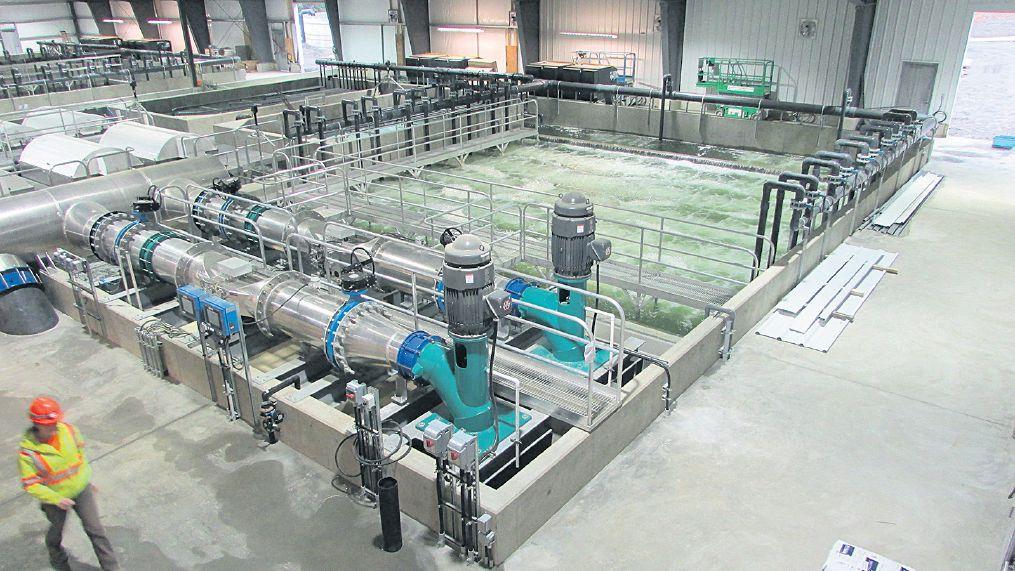
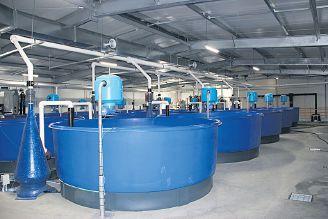
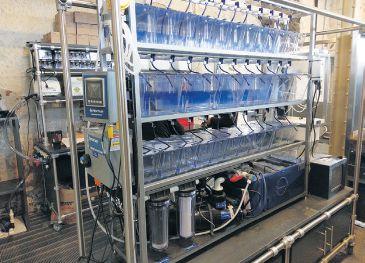
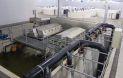
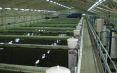
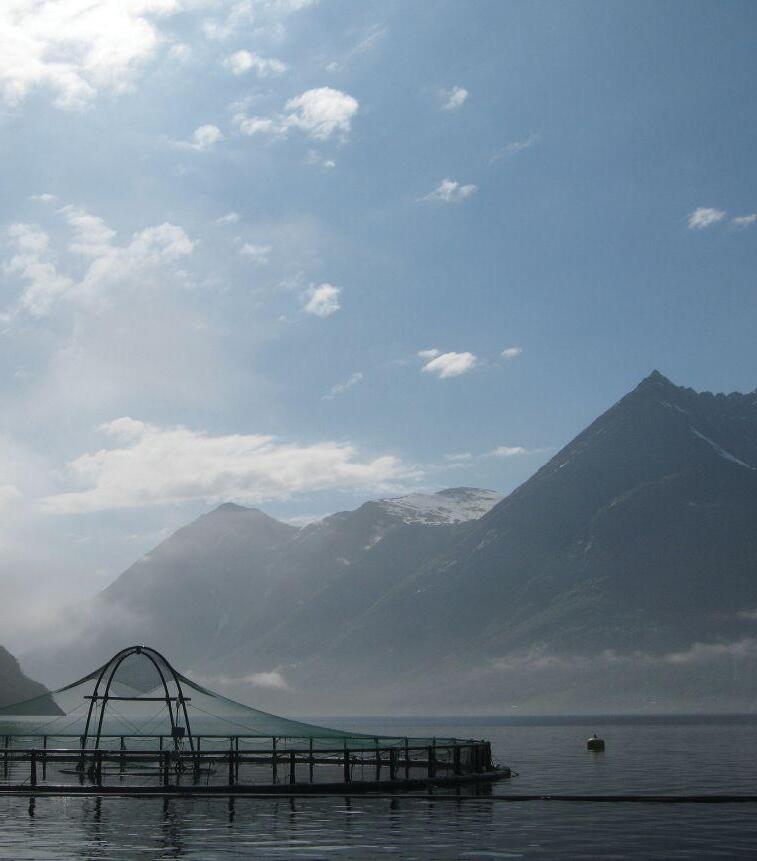
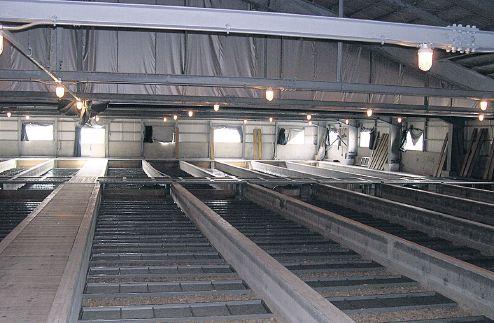
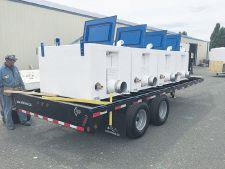
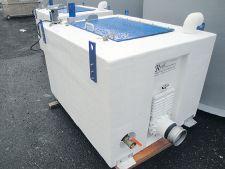
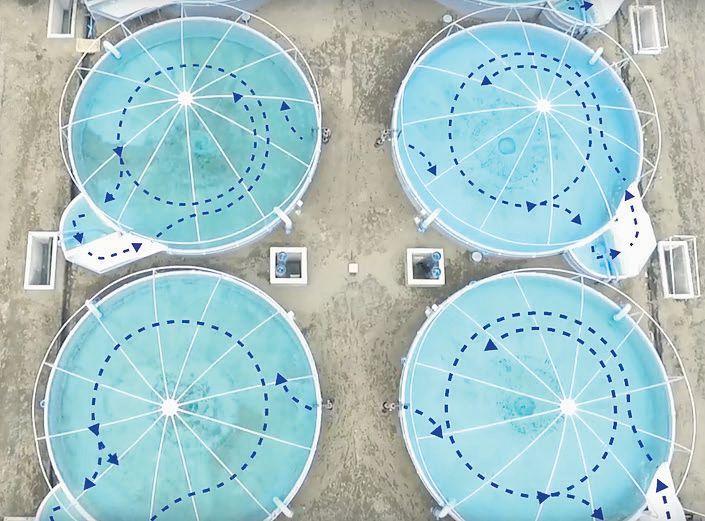
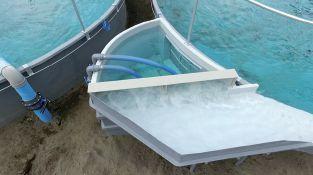
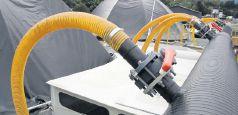
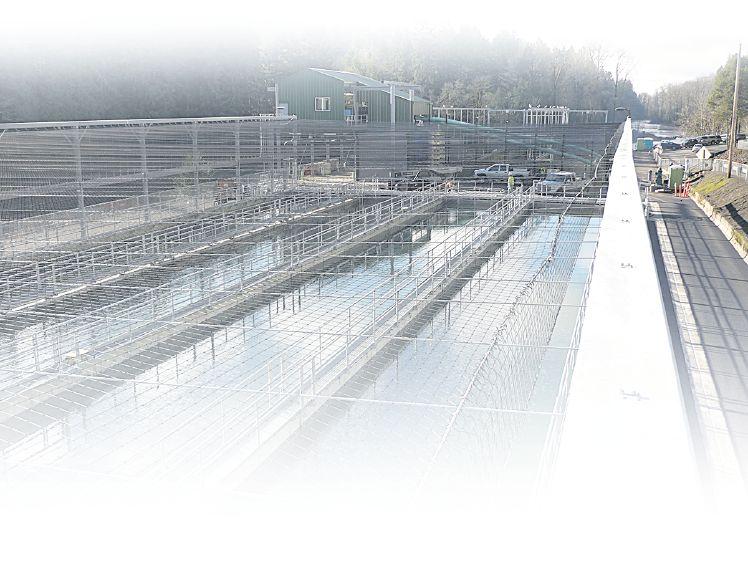
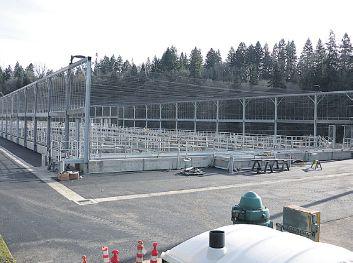
Three years ago, Marine Harvest Canada began expanding two of its BC hatcheries by building scaled-up versions of its best performing RAS, growing more fish using less freshwater.
he Canadian division of the world’s largest salmon producer will soon have spent more than $40 million to build seven recirculating aquaculture systems (RAS) at its land-based freshwater hatcheries near Sayward, British Columbia in western Canada.
TThree years ago, Marine Harvest Canada started expanding the Sayward hatcheries by building carbon copies and scaled-up versions of its best performing RAS.
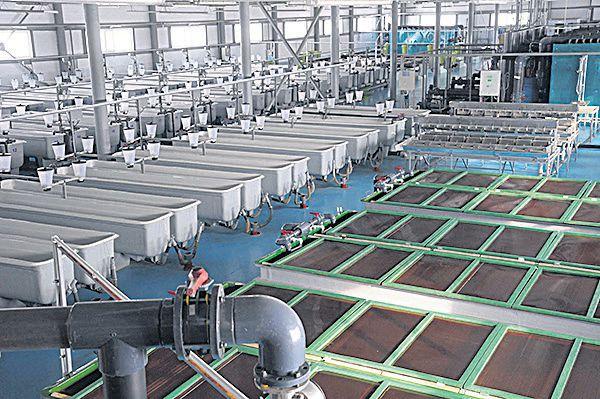
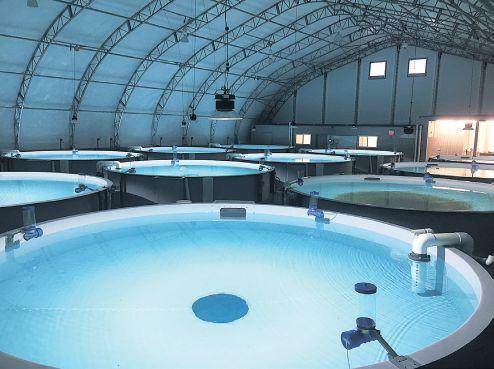
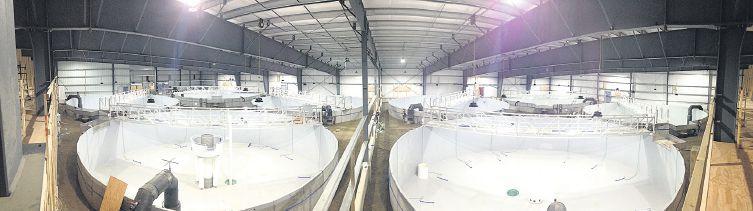
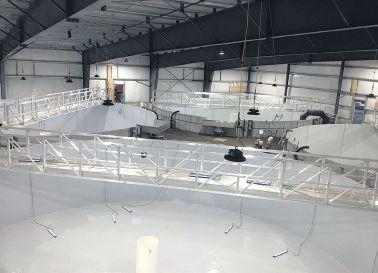
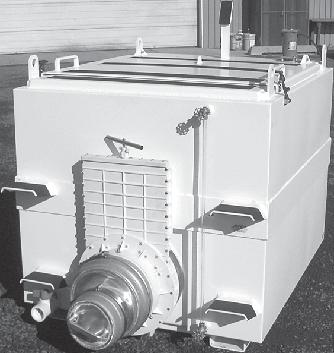
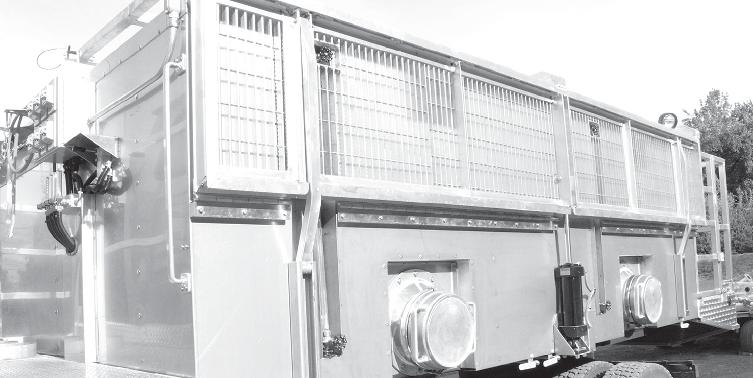
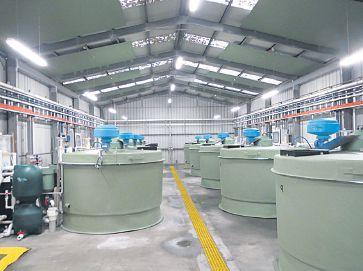
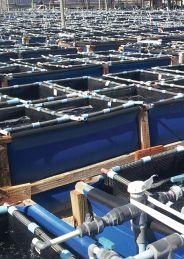
Two smaller RAS will supply water to 6m tanks for first feeders. Five larger RAS will have 14m tanks for raising smolts. In total, the new systems will provide 9000 cubic metres of rearing space, allowing Marine Harvest Canada to become one of the largest producers of salmon smolts in North America.
BEAUTY IN SIMPLICITY
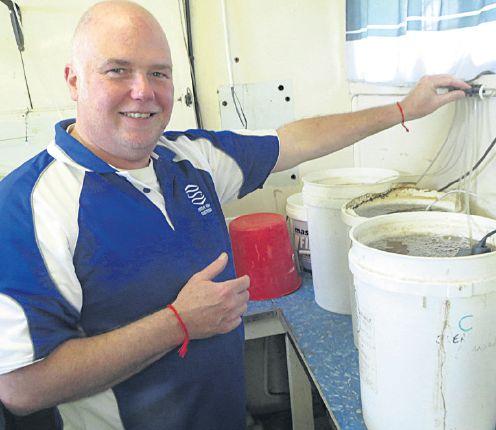
Marine Harvest Canada’s Director of Freshwater Operations, Dean Guest, says the beauty of the system lies in its simplicity.
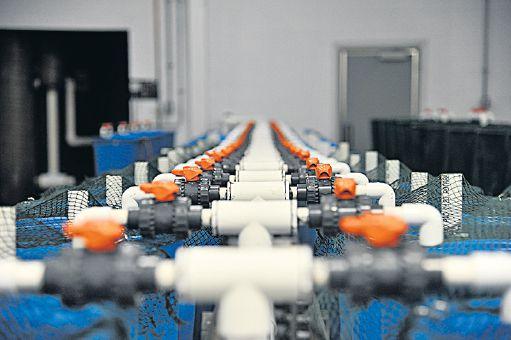
It follows a design where 100% of water passes through 100% of the treatment system. The system was created by Marine Harvest staff, and as Dean boasts, it contains very few bells and whistles.
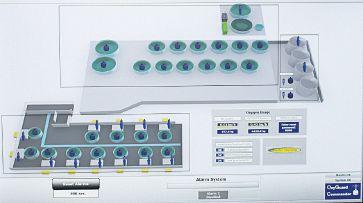
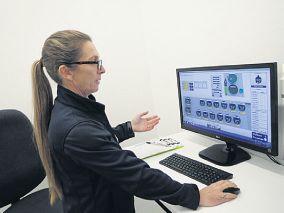
“It was surprising that a simple system that was inexpensive to build uses less energy than competing systems. We designed the system to be very simple and compact and the only automation is the oxygen system and the drum filter,” Dean says.
The design involved input from all our hatchery staff, fish health, and health and safety departments.
on page 8
Our 6 page section starts on page 16
Washington oyster grower builds Hawaiian solution to OA SHELLFISH SPOTLIGHT
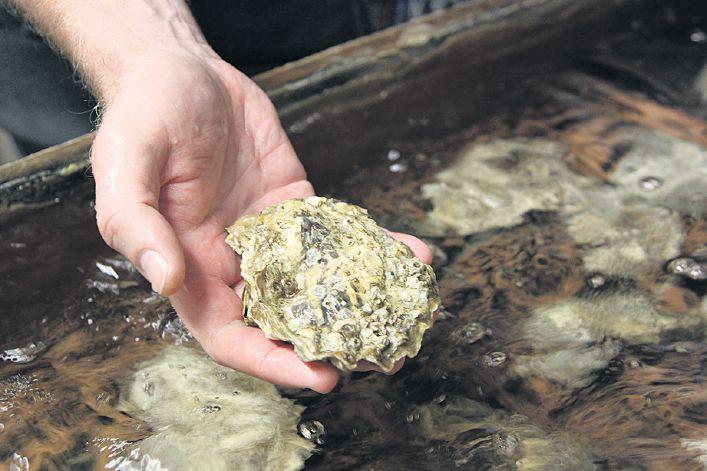
When ocean acidification clobbered seed production at shellfish hatcheries on the west coast of North America a Washington-based oyster producer discovered a solution in the Hawaiian Islands.
BY TOM WALKER
“When I first started growing oysters in Willapa Bay in 1979, we could put out shells and collect seed,” recalls Dave Nisbet, owner of Goose Point Oyster Company. “That’s the way I built up my business.”
“Over the years we moved into using hatchery seed in order have a more stable supply and we began to notice that the natural sets were declining,” Nisbet says.
Wreckfish experiments gain traction
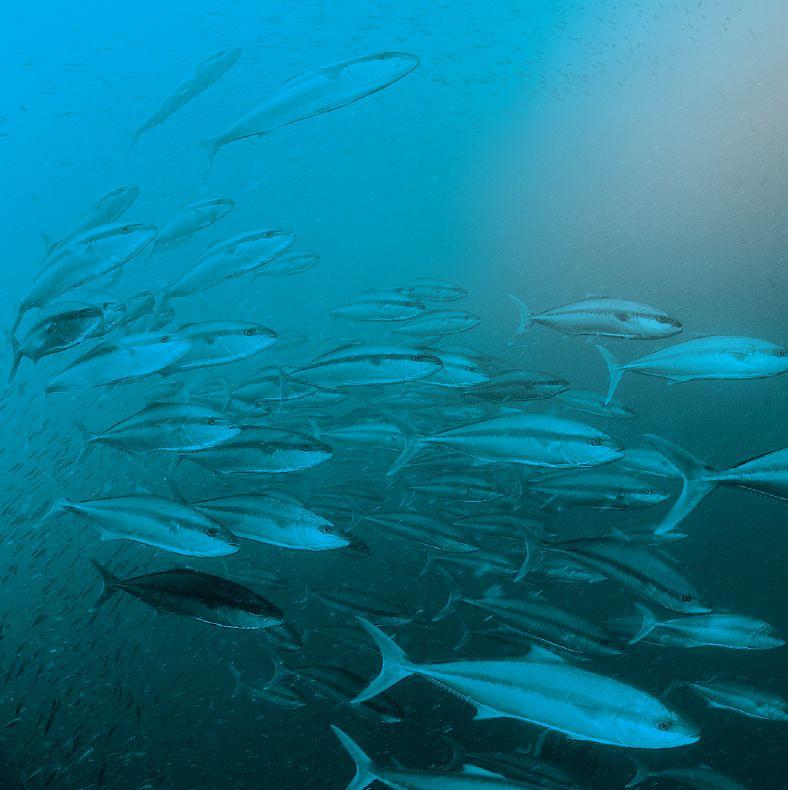
sing data from their experiments, several research teams in Spain and Greece are focusing on key areas for improving the wreckfish breeders’ feeding regimen to ensure better larval survival.
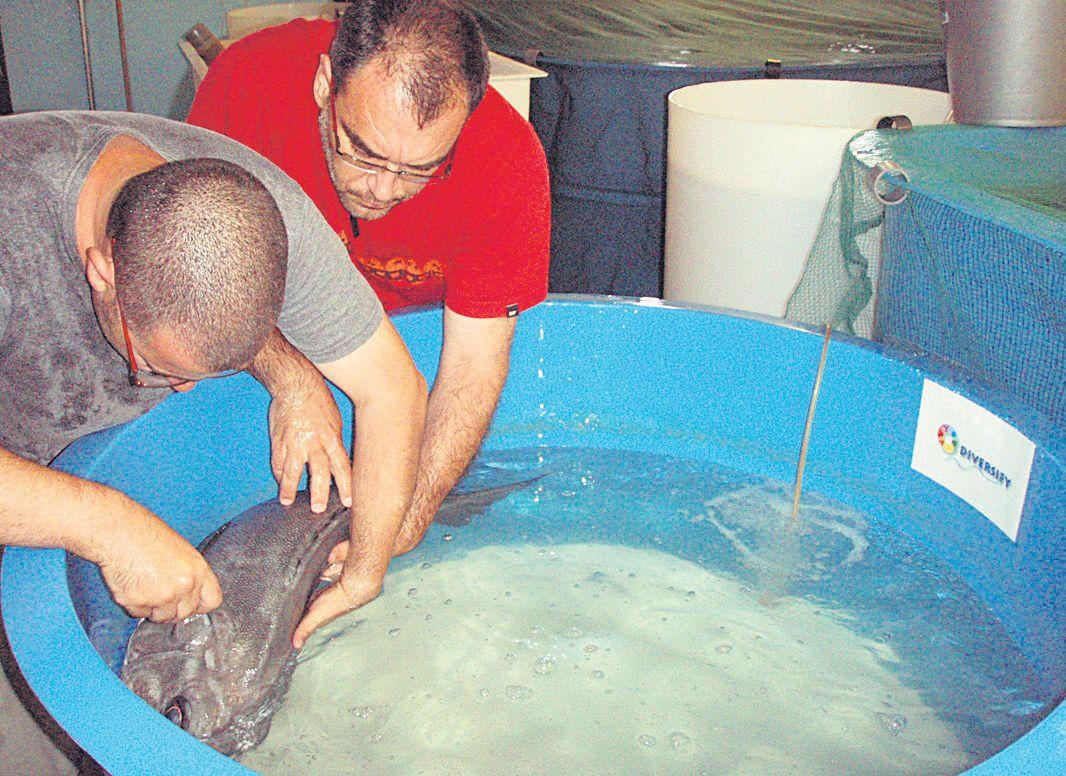
The European project DIVERSIFY included experiments on optimal larval rearing of wreckfish, Polyprion americanus, as well as the development of a general culture protocol that ensures high larval survival.
DIVERSIFY identified wreckfish from among the number of new/emerging finfish species as one with a great potential for expansion of the EU aquaculture industry.
The research teams worked under different conditions, in different facilities, and with different broodstock. The first experiments allowed wreckfish larvae to survive until 24 days post-hatch. They also provided growth data and valuable information on larval ontogeny.
These were discussed in the study, First experiences of wreckfish (Polyprion americanus) larval husbandry in NW Atlantic and East Mediterranean, by B. ÁlvarezBlázquez et al. It was presented at Aquaculture Europe 2016, held last September in Scotland.
At the Hellenic Center for Marine Research in Greece larvae from two spawns were reared in a
on page 15
Mail Agreement #40027115 Registration #9920
UNDELIVERABLE CANADIAN ADDRESSES TO 4623 William Head Rd. Victoria BC V9C 3Y7 email: peter@capamara.com
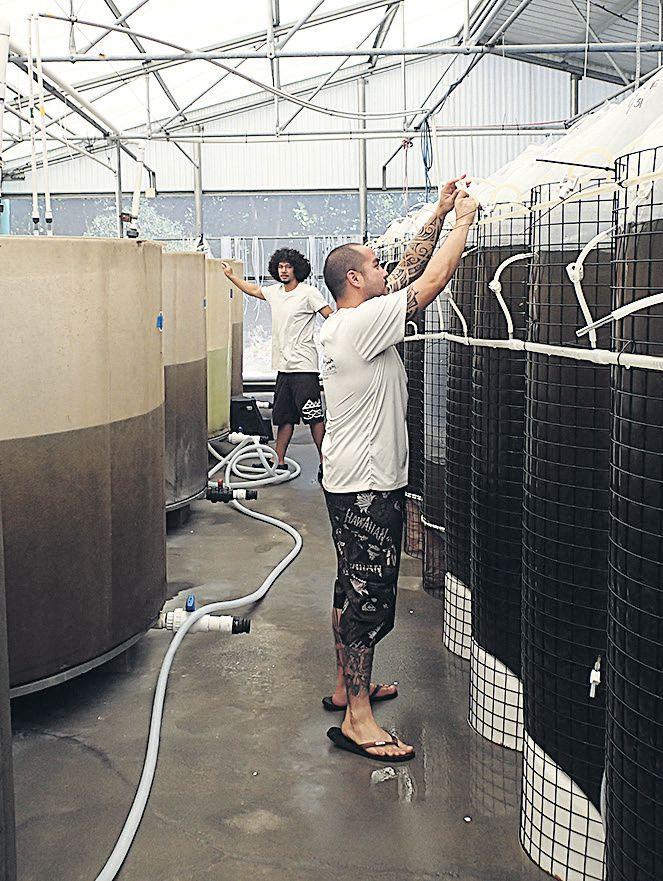
Larval rearing room at Hawaiian Shellfish hatchery.
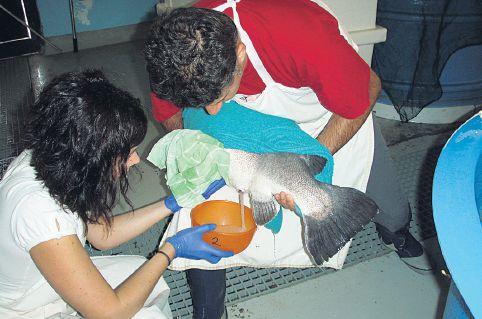
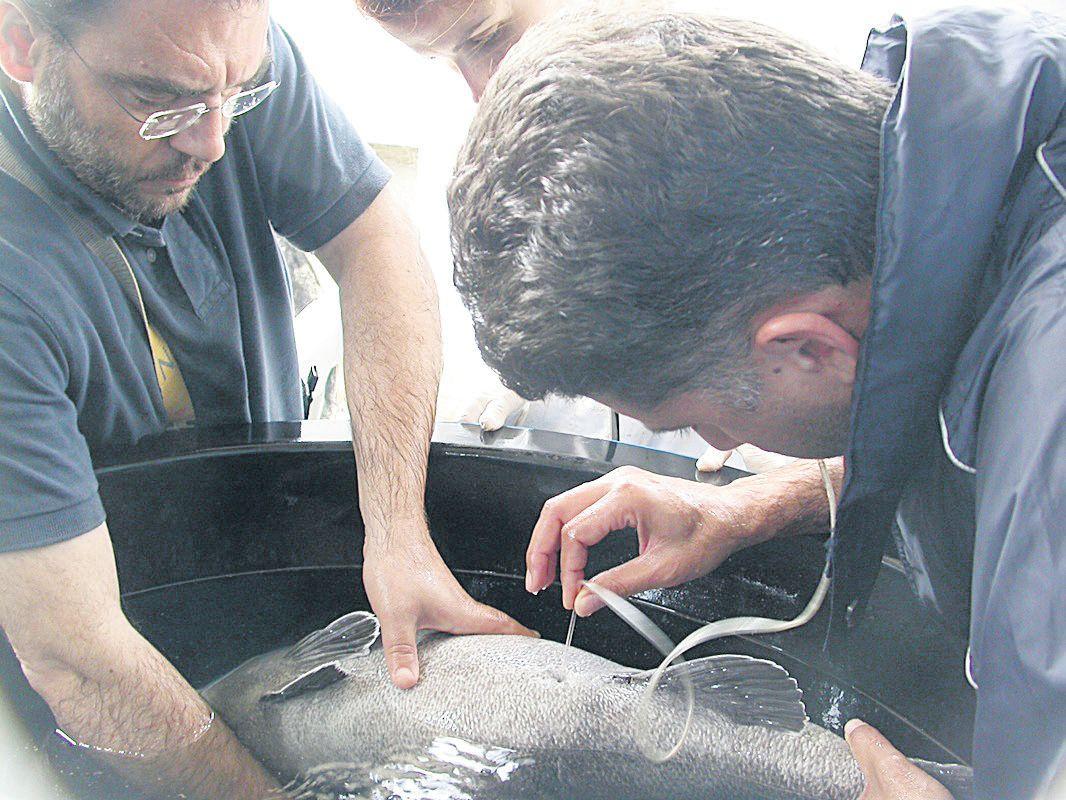
Strip spawning of wreckfish at HCMR, Greece.
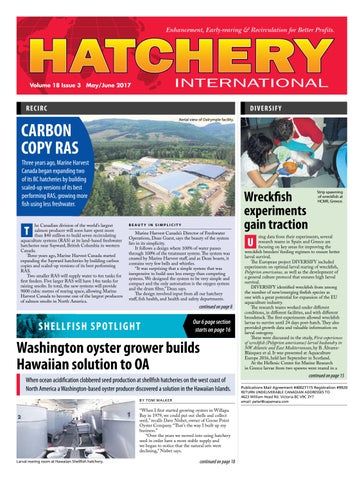
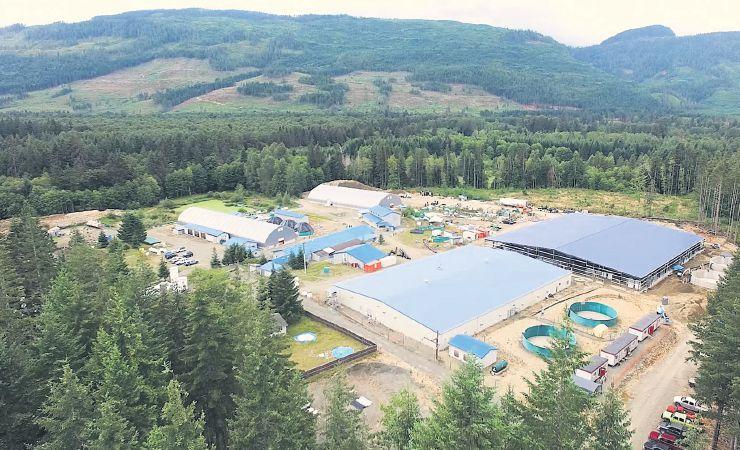
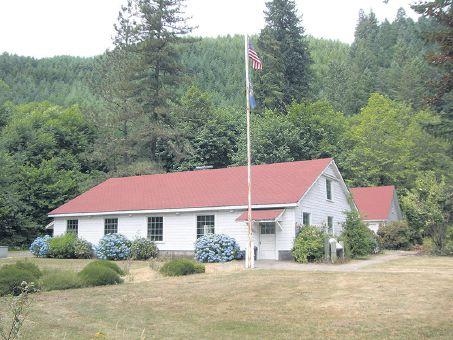
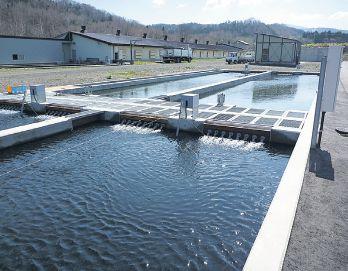
Aerial view of Dalrymple facility.
Disease and poor health are some of the main constraints for sustainable aquaculture.
MSD Animal Health develops environmentally responsible products to maximize fish survival, growth and production efficiency for the major farmed fish species: salmon, tilapia, trout and other marine species.
Every day, in every corner of the world, progressive fish farmers turn to MSD Animal
Health. They ask about our full range of products for managing the most serious diseases in aquaculture. Even more, they come to us for integrated health solutions to help them become more profitable, competitive and sustainable.
For more details please contact your local MSD Animal Health representative or contact us at aqua@merck.com or visit us at www.aqua.merck-animal-health.com.
NEWS BRIEFS
Volume 18, Issue 3 | MAY/JUNE 2017
Editor Peter Chettleburgh, peter@capamara.com
Science Editor David Scarratt, scarratt@ns.sympatico.ca
Regular Contributors: Quentin Dodd, Diogo Thomaz, John Nickum, John Mosig, Erich Luening, Philip Nickerson, Matt Jones, Ruby Ganzalez
Advertising Sales Jeremy Thain: International Marketing Manager
Toll Free 1.877.936.2266 (in North America) Int.Tel. +1.250.474.3982 Fax: +1.250.478.3979 jeremy@capamara.com
Design & Production James S. Lewis, james@capamara.com
Scottish Sea Farms gets green light for new smolt unit
Scottish Sea Farms (SSF) recently announced that it has received planning permission from the local authority to build a new state-of-the-art waterrecirculating smolt facility at Barcaldine, in the county of Argyll.
With the green light from the Argyll and Bute council, the company is to invest £35million ($43.7m USD) in the new unit. The new facility is projected to create up to 25 jobs.
Fish kill linked to electrical malfunction
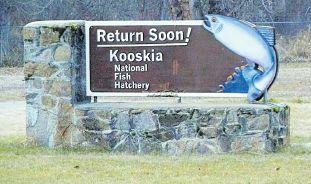
A national fish hatchery in Idaho lost as many as 600,000 spring chinook fry owing to a power outage earlier this year.
A spokesperson for the Kooksia
National Fish Hatchery, run by the Nez Perce Tribe’s fisheries division, is reported as saying the fry died after an electrical breaker that controls one of the water circulation systems at the site tripped. In addition, a siren intended to alert hatchery staff to such power interruptions also failed.
Publisher, Peter Chettleburgh
Hatchery International is published six times a year by Capamara Communications Inc. The authority for statements and claims made in Hatchery International is the responsibility of the contributors. Reference to named products or technologies does not imply endorsement by the publisher. A subscription to Hatchery International (six issues) is $35.00us within North America and $45.00us outside North America.
To subscribe visit our website at www.hatcheryinternational.com
Hatchery International, 4623 William Head Road, Victoria, BC. Canada V9C 3Y7 Fax orders to +1.250.478.3979
Printed in Canada. Canadian Publications Mail Products Sales Agreement #1453556
Postage paid at VANCOUVER B.C..
ISSN 1498-136X REGISTRATION NO. 9920
RETURN UNDELIVERABLE CANADIAN
ADDRESSES TO: Hatchery International, CIRCULATION DEPT.
4623 William Head Road, Victoria, BC V9C 3Y7
Next Ad Deadline
The advertising deadline for the July/August issue is May 8th. Don’t miss the opportunity to be part of this exciting aquaculture publication. For more information, or to reserve space in the next issue, call our Advertising Department at +1.250.474.3982 jeremy@capamara.com
Next Editorial Deadline
The editorial deadline for the July/August issue is May 8th Contact the Editor, Peter Chettleburgh at +1.250.478.3973 for details. E-mail to peter@capamara.com. Material should be submitted electronically with prior arrangement with the editor.
A company statement noted that demolition of current facilities had started at the site and construction was expected to begin within the next few weeks, with the first smolts reared at the new facility slated to enter pens in 2019.
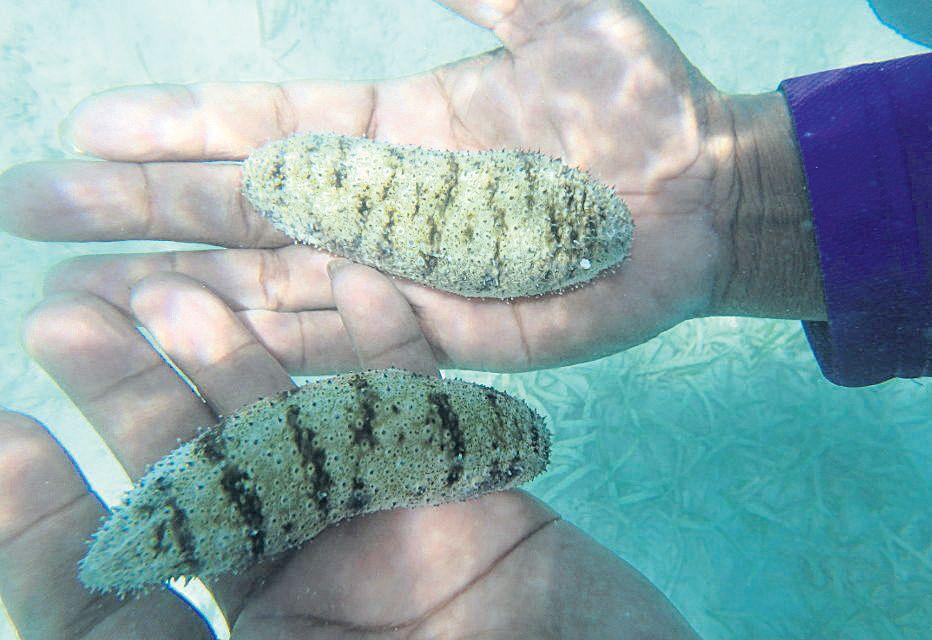
Japan helps Solomon sea cucumber hatchery
The Solomon Islands Ministry of Fisheries has inked an agreement with representatives from the Overseas Fishery Cooperation Foundation of Japan (OFCF) for renewed financial backing and support for a sea cucumber hatchery program in the islands.
According to a report from the islands, the new commitment will see the foundation continue its assistance to the MFMR ministry for another three years. The OFCF has been providing assistance to the MFMR since 2010, when the foundation aided in the establishment of a new sea-cukes hatchery at the islands’ ministry’s headquarters in Honiara.
Sea cucumbers provide an important fisheries resource for the Solomons’ fishers and contribute significantly to the socio-economic well being of the islands’ peoples.
The combination of the two failures sealed the fate of the vulnerable fry, scheduled for release this spring.
Mary Jane Miles, chairwoman of the Nez Perce Tribal Executive Committee, was quoted as saying the tribe intended to work closely with the US Fish and Wildlife Service to identify the mechanical issues involved in the incident, to make sure it never happens again.
Becky Johnson, the tribe’s production manager at its fisheries division, was recorded as saying the tribe was working with officials at the Dworshak and Clearwater hatcheries to move surplus spring chinook to Kooskia.
Alaskan hatchery group to boost chum numbers
The Southern Southeast Regional Aquaculture Association in Alaska is moving ahead with efforts to boost chum salmon production at its Burnett Inlet hatchery near Etolin Island by some 30 million fish in the next two to three years.
According to media reports from the area, the program is still in its earlier stages and some later details such as release sites have not been decided.
Old hatchery eyed for museum site
To look at it, the Old McKenzie Fish Hatchery in Oregon looks pretty much as it did back in 1907 when it was built, according to the president of a nonprofit group dedicated to preserving the aging facility.
The Friends of Old McKenzie Fish Hatchery have worked for many years to maintain the buildings. Now, they’ve decided they want to undertake something much more challenging, raising $43 million to build an interpretive center and museum at the site – one that would honor the history of the McKenzie River and its anglers and enhancers –hopefully drawing more visitors to the area.
• With BIOPLEX®; organically bound trace elements
• Improved gut health with BIO-MOS®
• Strong and healthy fry
• Perfect for intensive farming methods incl. RAS
Oregon state used the hatchery to raise trout and salmon for release into the McKenzie River, until the early 1950s.
That’s when the state decided to replace the old hatchery with a larger modern facility, which is about a half-mile downstream.
The old hatchery closed in 1954 and later became a county park. Now listed on the National Register of Historic Places, the 46-acre property is regularly visited by large numbers of hikers and others each year.
The nonprofit group planning the costly interpretive center and museum has been working on the project for several years.
New hatchery to restore sterlet in Volga
In mid-February the stateowned Middle Volga Fish Plant commissioned a hatchery for production of sterlet sturgeon and jackfish fingerlings in the Ekaterinovka village of Samara Oblast. The new facility is designed to produce two million sterlet and 3.6 million jackfish for release into the Volga river system, according to official information from the regional government.
As explained by Vasily Pavlovsky, director of the hatchery, the population of sterlet once was very large in the Volga, but owing to construction of numerous dams populations have declined. He explained that there is already one hatchery in the region, trying to restore sterlet populations, but this is an uphill task owing to the large-size of the river.
Pavlovsky said that to restart the process of natural sterlet reproduction in the Volga it is necessary to release large numbers of fingerlings every year.
By 2025 the government of Samara Oblast may also consider construction of aquaculture farms for commercial sterlet and jackfish production and the hatchery could be used for that as well.
The Old McKenzie Fish Hatchery building was used to raise trout and salmon for release into the McKenzie River in western Oregon from 1928 until 1953.
Sterlet sturgeon are rare on the the Volga owing to numerous dams that have been built on the river.
The hatchery in Ekaterinovka of Samare Oblast
New salmon hatchery for Russia’s Sakhalin Island
One of the largest hatcheries for the production of Siberian salmon (Hucho taimen) has recently been commissioned on the southeast coast of Sakhalin Island in Russia’s Far East. According to official information the facility is designed for production of 30 million fry per year.
As stated at the opening ceremony by Igor Bystrov, the deputy governor of Sakhalin, the regional government has paid considerable attention to restoration of Siberian salmon over recent years. He suggested that this is especially important for the southeast coast of the island, because it was there that the population has been depleted, so catches remained minimal over recent years.
Bystrov suggested that this is only the first stage of a large-scale initiative, saying that government plans construction of five other hatcheries in various parts of Sakhalin and they will contribute to restoration of salmon populations destroyed over past decades.
At the same time Vladimir Pack, the mayor of Nevel district, where the hatchery is located, stated that the facility is the only one of its kind in this part of the island built by private investors. He also noted that the facility should release up to 21 million fry in local waters by the end of 2017.
– Vladislav Vorotnikov
Australian hatchery veteran dies
With the unexpected passing of Andrei Perez, the Australian hatchery sector lost a loyal and much loved colleague. Trained in the Aquatic Resources Management at the University of Central Queensland, Andrei worked in the prawn and barramundi sectors in that state for several years, before moving to South Australia. He managed the West Beach Aquaculture barramundi hatchery there for 13 years before he had a sea change, running the aquaculture training program at the Kimberly Training Institute. He was greatly respected, and imparted his passion for the industry to everyone he worked with.
The government plans construction of five other hatcheries in various parts of Sakhalin, hoping that it will contribute to restoration of salmon populations destroyed over past decades.
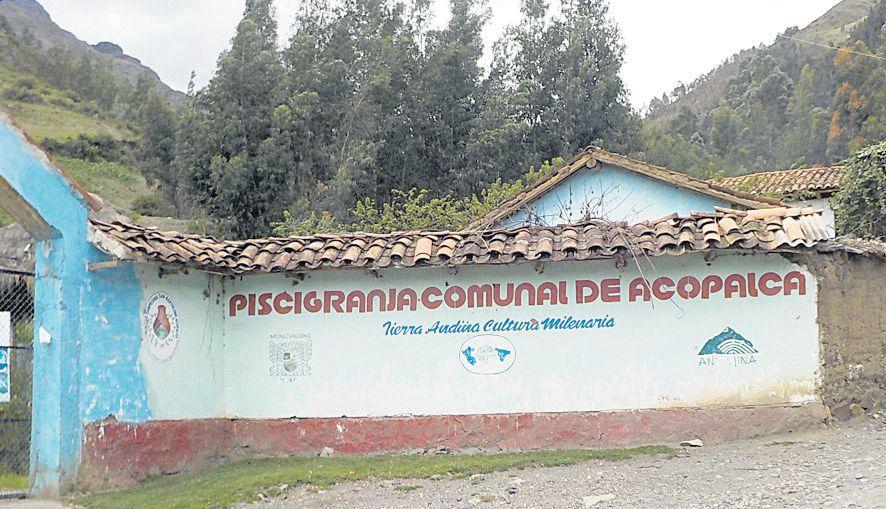
Piscigranja Communal de Acopalca: a Peruvian community-owned trout hatchery and farm
BY DAVID SCARRATT
igh among the Andean mountains of Peru, at 3100m (10,230 ft), in the cordillera popular with visiting mountaineers and hikers, is the small village of San Bartolommeo de Acopalca. It has a population of about 225 families.
The village is different from most others in that its organization is somewhat like a Mexican ejido, wholly owned and operated by its inhabitants. What’s more, the village has the only fully vertically integrated rainbow trout hatchery and growout farm in Peru. The operation includes everything from broodstock selection, egg incubation, larvae, alevins, juveniles, growout and marketing, as well as the development and manufacture of appropriate nutritionally balanced feeds.
The hatchery administration and staff are 100% drawn from the village, and all profits flow back to the community. By contrast, all other fish farms in Peru are managed by private corporations and not by native communities.
INTRODUCED SPECIES
Oncorhynchus mykiss is not native to Peru, having first been introduced as eyed eggs shipped from North America in the mid-1920s, but trout are now extensively farmed in the Lake Titicaca region, eight hundred km to the southeast, where all the fish are raised from imported fertilized eggs. Trout figure prominently in the menus of Peruvian restaurants, particularly in inland areas where it is served fried, broiled and steamed, and very often as ceviche, a Peruvian favourite.
The Piscigrana de Acopalca occupies an area of 3.5 hectares on the outskirts of the village, and has a large pond and some 66 outdoor raceways of different sizes. The smallest ones are used for fingerlings, and the fish are moved into progressively larger ponds as they grow.
CONTINUAL IMPROVEMENTS
The original facility was built in the 1970’s, but was extensively refitted about 25 years ago, and major development has occurred since then.
Financing came initially from “Cáritas Huari,” a Catholic Church charity that “develops and funds programs that help the poor.” According to piscigranja manager Leonidas Amado Morales, Cáritas Huari transferred its interest to the community of Acopalca about eight years later (in accord with an earlier agreement between the
charity and the community) so the facility is now wholly owned and operated by the village.
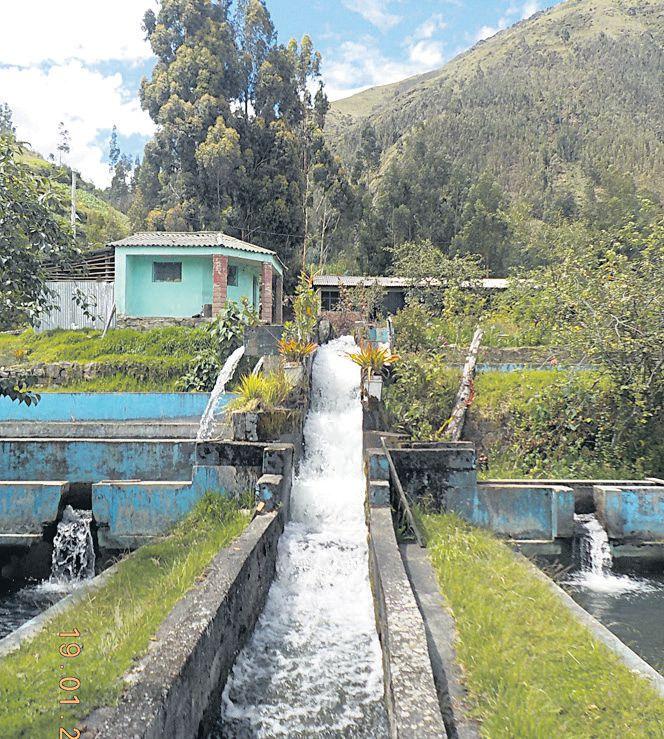
The hatchery draws its water from the River Purhay, which flows from a beautiful Andean lake, Laguna Purhay, some 3 km away and 400m higher up the mountainside. Water is delivered to the site by gravity via a concrete channel and diverted, as required, into the different ponds and raceways, No pre-treatment is required. Discharged water is returned to the stream that runs alongside the site.
IDEAL WATER TEMPERATURES
Water temperature ranges seasonally from 11.5°C in winter, to about 16°C in summertime, perfect for rainbow trout. Laguna Purhay has its own introduced population of rainbow trout, and is the source of broodstock each breeding season. The availability of wild-caught brood-fish eliminates the need for holding brood-fish on-site. The laguna is in a National Park, which is a popular recreational destination, with campsites and picnic tables.
Breeding takes place in April through August when water temperature is falling, and the eggs are incubated through the southern winter in flow-through trays. Once hatched the alevins are transferred to small raceways for weaning, and fingerlings and juvenile fish are later transferred to progressively larger raceways.
SHADED RACEWAYS
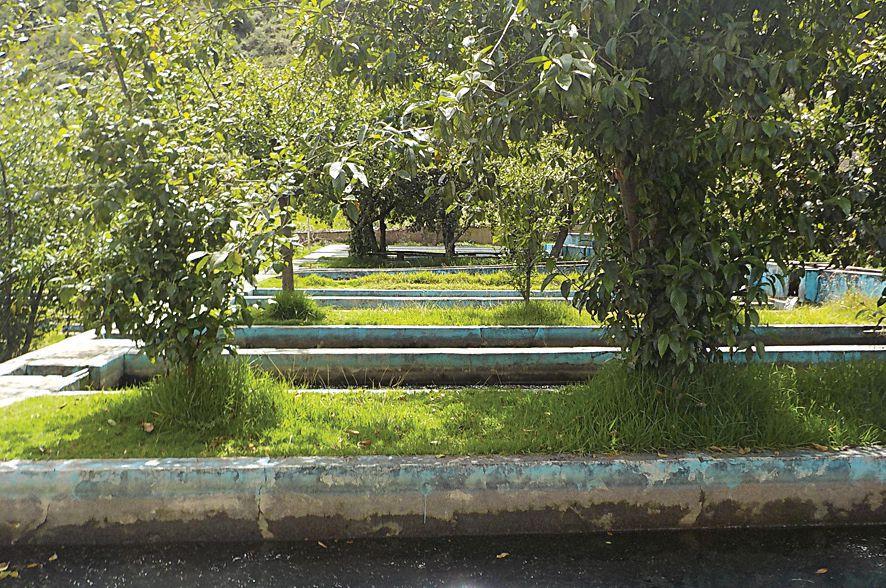
Many of the raceways are shaded by fruit trees, an additional crop for the villagers. Regardless of size, each raceway normally holds 5,000 fish, but stocking density is lowered by about 50% in summer, because oxygen concentrations are lower at high temperature and high altitude. Too high a stocking density results in lower growth rates and increased mortality.
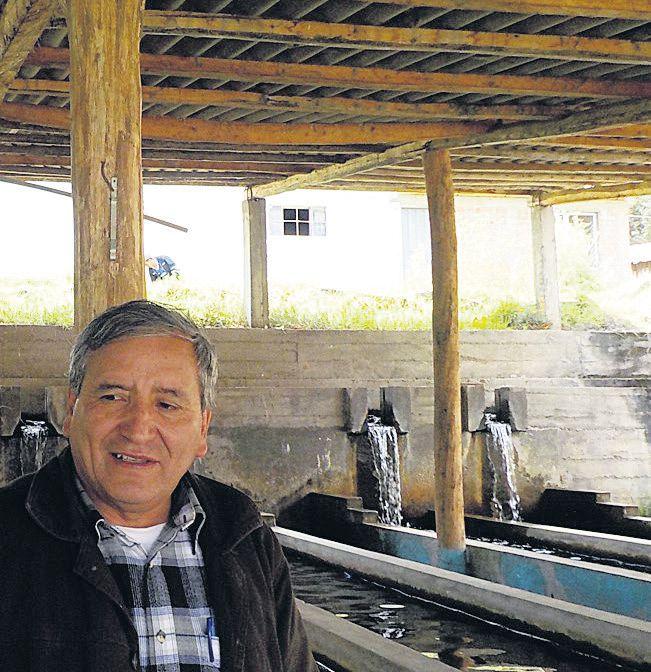
Leonidas Amado with fingerling raceways in background: total fingerling capacity is 200,000 fish in 10 raceways.
Piscigranja Communal de Acopalca.
Growout tanks shaded by fruit trees.
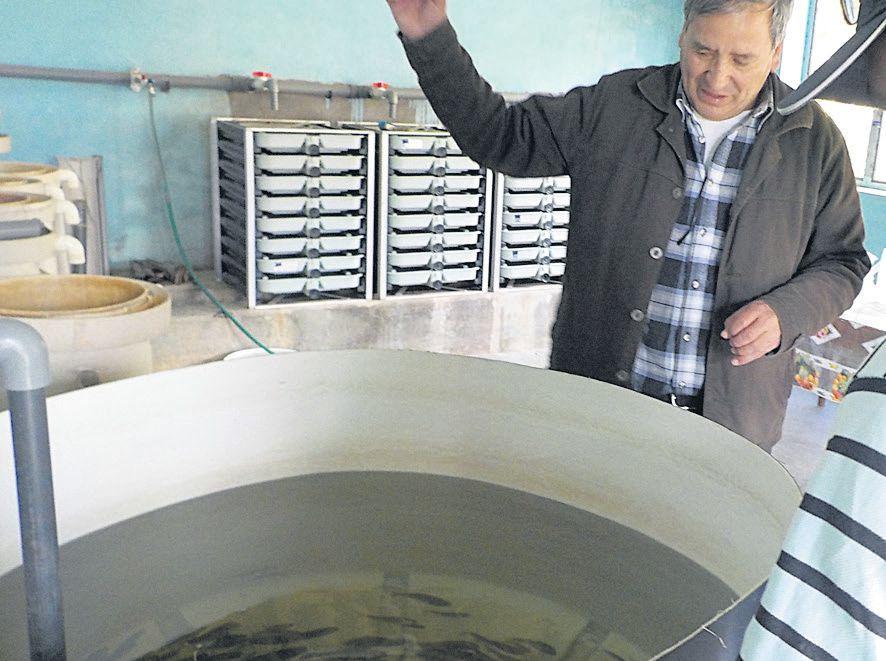
Leonidas Amado Morales explaining their hatchery procedures. Egg incubation trays are in the background. Fingerlings in foreground tank were bred for a disease study to determine if the wild stock is in fact pathogen-free.
Fish can reach market size (200-250 grams) in about eight months. Market-sized fish are sold out of raceways conveniently located close to the gate, and total annual production is in the order of 50 tonnes. The farm sells fish locally and throughout Ancash county. The village also owns a small chain of fish restaurants, which adds to the market potential.
Alevins are weaned, and fish are subsequently fed, with feed formulations developed and manufactured on site, thus reducing costs and improving profitability.
ON-SITE FEED PRODUCTION
The principal feed ingredient is Peruvian fish-meal, complemented by maize and soy beans, roasted, milled, formulated and extruded on site. Lipid is provided by a vegetable oil. Pellet size is carefully controlled to reduce waste. There is no added astaxanthin in the formulation that would provide the traditional salmon pink colouration, so the flesh is a pale yellow, drawing its colour from the roasted maize in the feed formulation. The fish are known locally as ‘trucha blanca’ (white trout), but this pale colouration in no way affects their popularity. Production is increasing year by year, and the future of the facility seems to be in good and careful hands.
I am indebted to Ing. Amado for escorting us through the farm and explaining its working. He may be reached at: leonidasamado@hotmail.com, but I would strongly suggest writing in Spanish.
Sharing your vision of healthier fish.
Healthy fish is our shared commitment. With one small dose of FORTE VII®, you can help protect your fish against six naturally occurring bacterial, and one viral salmon pathogen.
The feed formulation room. Recently extruded pellets are airdried before bagging.
The main inlet channel. Water cascading down the mountainside is fully aerated when it enters the hatchery.
CARBON
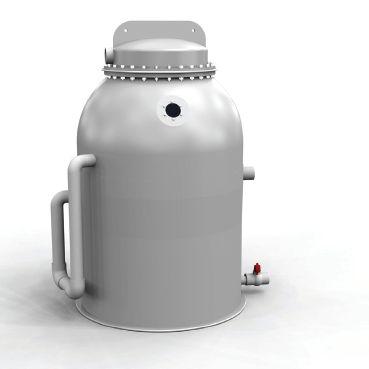
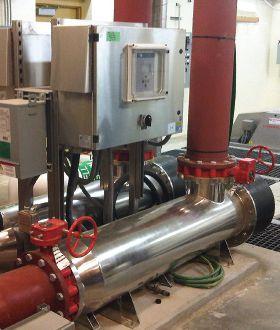
These systems are simple to operate, have no side stream components, and have nearly eliminated the need for salt or other treatments.
InterAqua bio-filters are incorporated into each system owing to their ability to run continuously with vary stable performance. The systems were engineered by Pentair.
“When we realized how well the design worked, it was an easy decision to stick with this system. The only decision left to make was the commitment of significant resources to the freshwater phase of our business,” Dean says.
IDENTICAL SYSTEMS
Building identical systems has created economies of scale for MHC. The construction crews have been able to move seamlessly from one system to another, and go back and forth with stages of the construction.
Marine Harvest has two hatcheries in Sayward some five kilometres apart, Dalrymple and Big Tree Creek. Their proximity and easy access from a main highway allows for sharing of resources required for a major build.
For the small contractors in Campbell River and the north island, the repetition allowed them to hire and retain tradespeople and skilled employees for a longer duration than normal.
FOUR SYSTEMS COMPLETE
To date, four systems are complete and holding fish. The 14m systems at Big Tree Creek are still being built and are expected to receive fish in July 2017.
The improved infrastructure will allow the company to increase the size of smolts at seawater entry up to 150 grams, giving them improved survival and growth rates. The smolts will not spend any more time in freshwater, but with space to grow and improved water chemistry, bigger smolts will be produced, thus shortening their time at sea. Finally it will allow Marine Harvest to grow more smolts and respond to any increase in industry capacity.
This investment in land-based recirculating aquaculture systems will improve Marine Harvest’s environmental performance and contribute to third party certification goals – the company plans to be 100% certified to the Aquaculture Stewardship Council standard by 2020.
GRADUAL IMPLEMENTATION
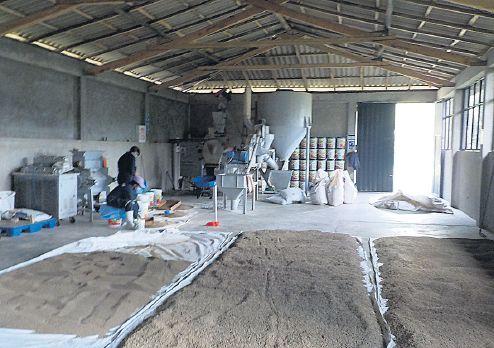
Dalrymple Manager Lance Page says that salmon entering the new systems were introduced gradually, first 500, then 250,000, stepping up numbers as the flow of water and environment in the tanks was deemed suitable.
“Our hatchery employees were excited to get into the new buildings. As far as hatchery infrastructure goes, it is the best we’ve ever had and you can notice the ease of carrying out daily tasks around the tanks.”
“One of the design priorities was to minimize noise and clutter, thereby creating a safe and comfortable workplace. They’ve already measured the level of operating noise with good results.”
Lance talks about how Dalrymple started in the 1980s as a full flow-through site, raising 700,000 smolts per year in many small tanks and employing about 10 people. From now on, Dalrymple may produce up to five million smolts per year. There will be a workforce of 18 freshwater technicians who, thanks to automation and efficiency, can grow 10 times more biomass on the same site.
It will be a similar story at Big Tree Creek, which once construction finishes will grow between four and five
“It is hard to believe it’s a new system. It was the first new system we’ve had here since 2001, but feels like an old friend. We’ve had low mortality and good feed rates.”
–
Chris McNeill , Big Tree Creek Manager
RAS Steps
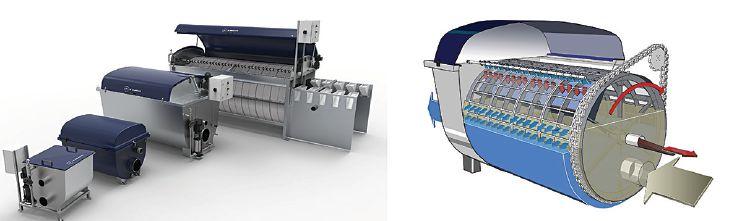
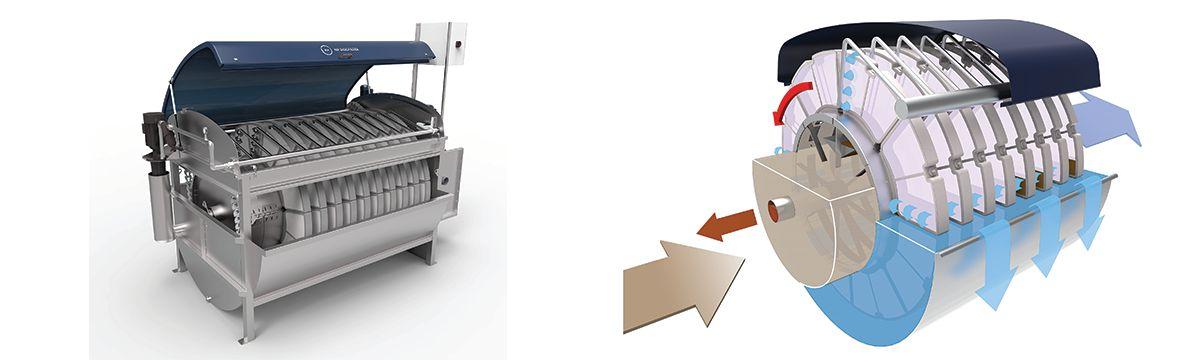
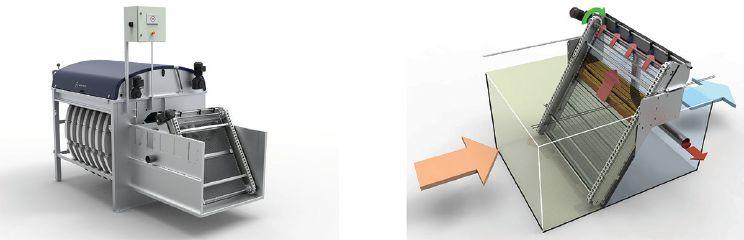
Compared to flow-through systems, recirculation allows Marine Harvest to reduce energy costs and reuse water, providing for more biomass with less use of water. Marine Harvest Canada has developed and used recirculating aquaculture systems (RAS) since the late 1990s and its employees have pioneering knowledge of system design and operation.
There are five simple steps in the water treatment process:
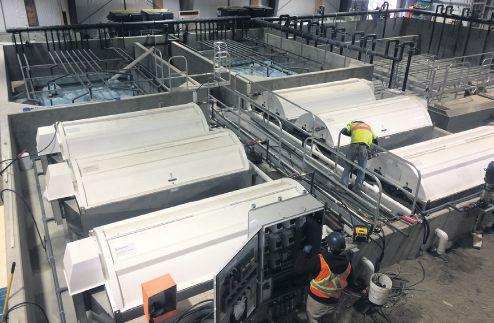
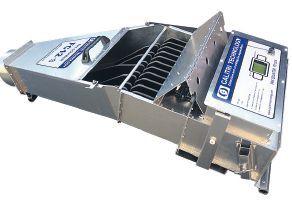
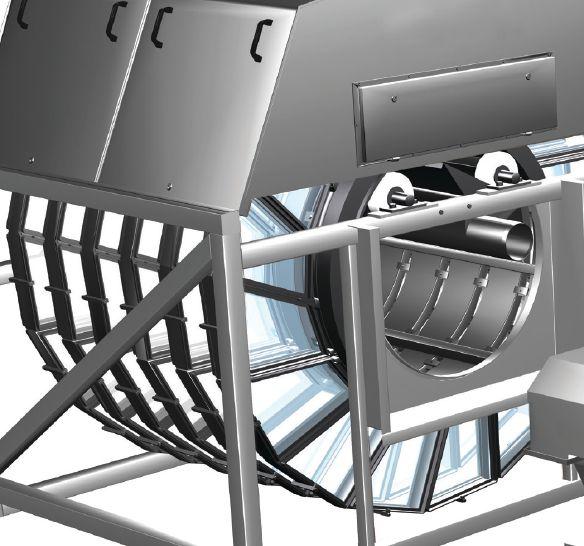
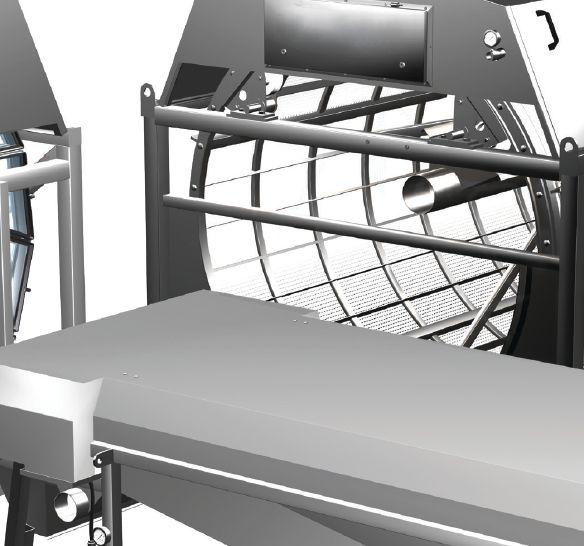
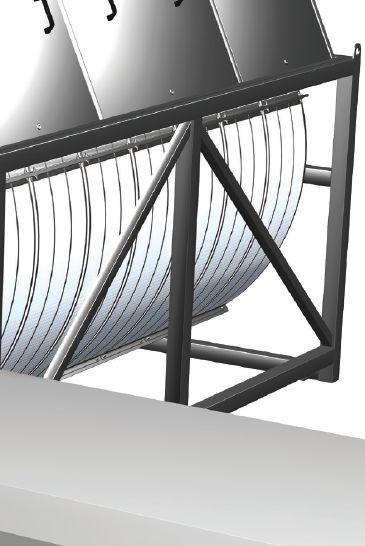
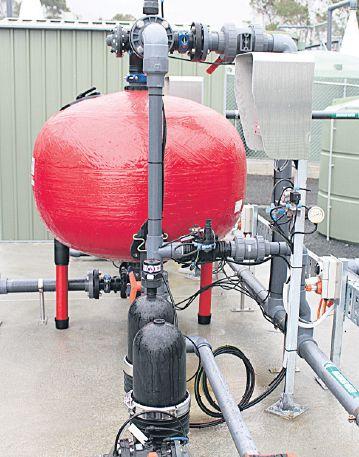
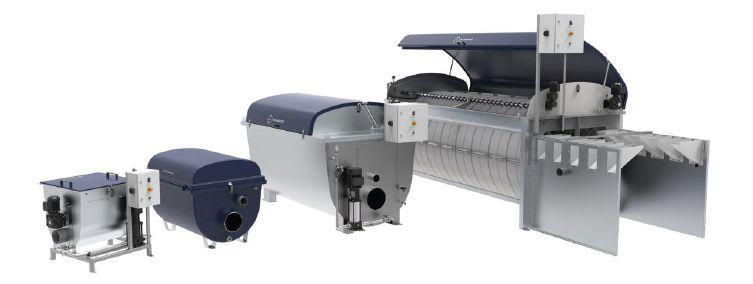
• Drum filter removes particulates down to 30 microns.
• Moving-bed biofilters containing bacteria.
• Carbon dioxide stripping.
• Oxygenation and ozone for disinfection.
• Treatment with ultraviolet to sterilize.
Links: Pentair video of Dalrymple: www.youtube.com/ watch?v=HYNlsjHDoKg
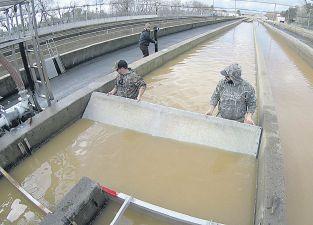
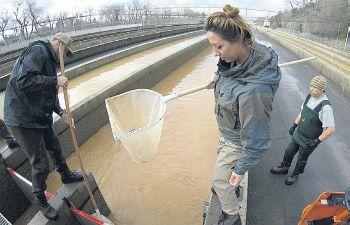
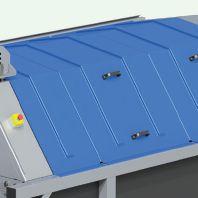
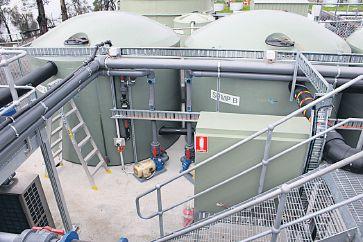
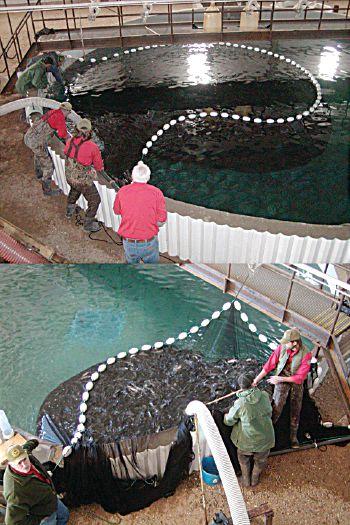
Above: New 6m RAS at Big Tree Creek. Below: Pentair drum filters.
RAS at Dalrymple
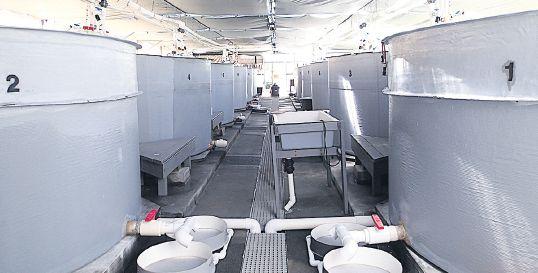
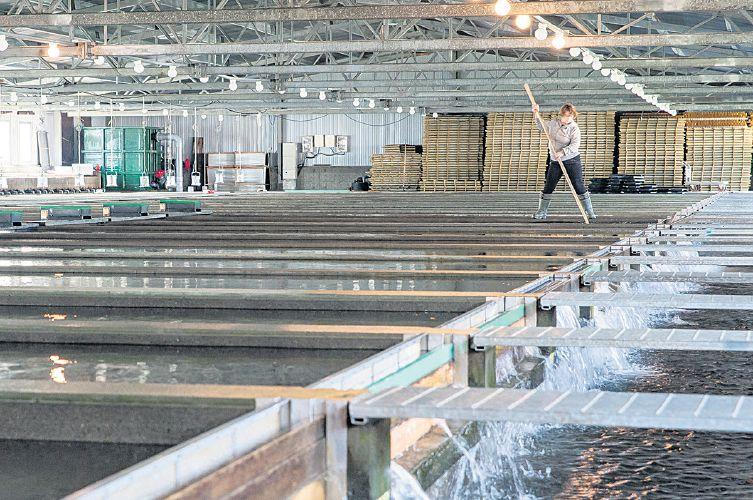
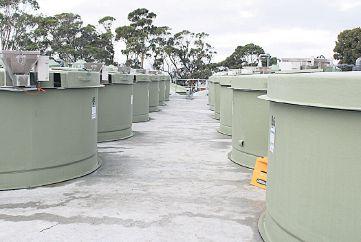
Tanks at the Dalrymple facility: Dalrymple started in the 1980s as a full flow-through site, raising 700,000 smolts per year. Now it can produce up to five million smolts per year.
million smolts per year. Big Tree Creek Manager Chris McNeill says the new 6m RAS they started using in January has surpassed all expectations.
“It is hard to believe it is a new system. It was the first new system we’ve had here since 2001, but it feels like an old friend. We’ve had low mortality and good feed rates,” Chris says. “There sense of excitement is building as we watch three construction teams race to finish the last three.”
Sayward has a small economy and a population of about 300. Between the two hatcheries, Marine Harvest provides stable, full time employment for 40 aquaculture workers.
Prepared for Hatchery International by Leith Paganoni, First Nation & Community Relations Manager, Marine Harvest Canada.
PIT TAGS & SCANNERS
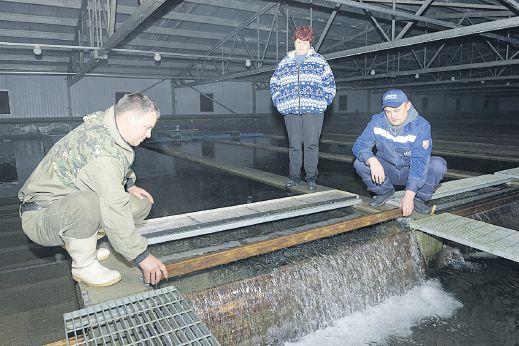
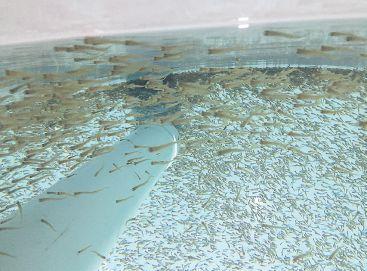
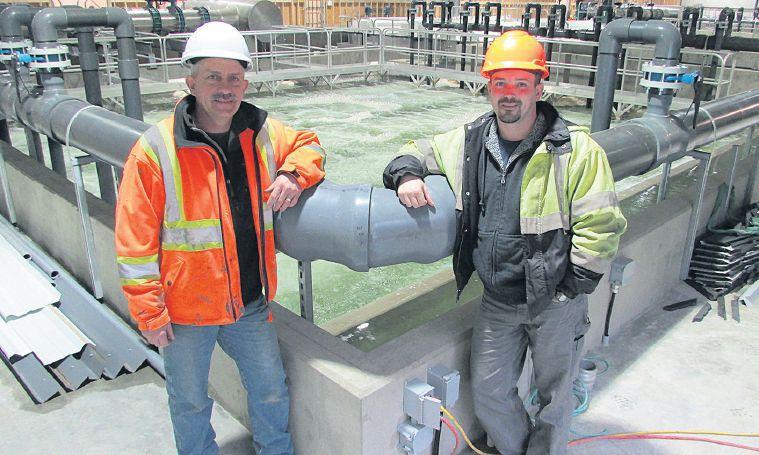
Above left: Catwalks above tanks at Dalrymple. Above right: Fry at Big Tree Creek hatchery. Below: Barry Genoe of Gencoast Construction and Phil Redmond (MHC) in front of the carbon stripping unit.
AUSTRALIA
BY JOHN MOSIG
nhabiting the cool, fast flowing reaches of the Murray River and her tributaries, the ecological niches of the trout cod and Macquarie perch have been disrupted by agriculture and forest clearing, and their migratory routes blocked by dam construction.
What’s more, while the trout cod (Maccullochella macquariensis) responds well to hormone-induced spawning and larval rearing, the Macquarie perch (Macquaria australasica) does not. Thus, in 1981 a group of concerned anglers and conservationists formed Native Fish Australia (NFA) to campaign for the wellbeing of Australian native fish. One of their major projects has been to maintain (and establish) sustainable populations of both species in their natural habitat, as well as some of the equally threatened minnow-sized species such as the southern pygmy perch (Nannoperca australis).
Relying on membership fees, donations and the occasional government grant, NFA runs its own breeding program from a small hatchery donated by La Trobe University in the northern suburbs of Melbourne.
NATIVE HABITAT
The trout cod is a close relative of the Murray cod (Maccullochella peelii), but favours the faster running reaches of the river, right up into its uplands. The Macquarie perch’s ecological niche is similar, but favours the colder upper headwaters. Both are great angling fish, particularly the Macquarie perch. It will take a wet or dry fly, a spinner or bait, and once on the line has fighting capability well above its weight. To cap it all, it is a superb eating fish. The downside is that it’s a threatened species.
Tim Curmi, the President of NFA (Victoria) said the trout cod program had been successful, and the species was now well established in several systems.
“We produced tens of thousands of fry from our conditioned broodstock. Members held them in home aquariums and made sure they wanted for nothing. The Ovens River (a major tributary) and the Murray River
CONSERVING NATIVE AUSTRALIAN FISH: Macquarie perch pose special challenges
In addition to marsupials and the egg-laying, duck-billed platypus Australia boasts many unique aquatic species. Two of them, the trout cod and Macquarie perch, have been rated as endangered. Conservationists and anglers are working to save both.
below Yarrawonga Weir now carry sustainable breeding populations of trout cod.”
There’s a strong argument to open the two regions to recreational fishing so they can be managed – and policed – as such, rather than just locked up as a conservation area. As it is, based on the return of fish tags, a good proportion of the anglers can’t differentiate between Murray cod and trout cod anyway.
A BREEDING CHALLENGE
“The Macquarie perch situation is very different,” Tim said. “Unlike the trout cod, no one has managed to condition broodstock. We still rely on capturing running ripe males and females during the breeding season. We’re fortunate in a way; over the years, inland catchment species have been introduced into the Yarra River. Melbourne, back in the 1850s with the Gold Rush in full swing, was short of protein, so fish were brought across the Dividing Range to the coastal catchment and stocked as a food source. Later, in the 1920s, recreational anglers replenished the dwindling stocks. As the introductions were piecemeal, we have fish with a wide genetic diversity at our doorstep.”
To spawn naturally, the fish congregate in large schools, migrating to the gravel beds of the headwaters of their home tributary. The incubation period of the lightly adhesive eggs is temperature dependent: at 11-14ºC, incubation can take up to 18 days. They normally have higher ranges than that in the atmospherically controlled temperatures of the hatchery.
“In an El Niño year it’s a real battle to keep the hatchery water down below 20ºC. Incubation is normally completed in 7-10 days,” Tim said.
CATCHING BROOD
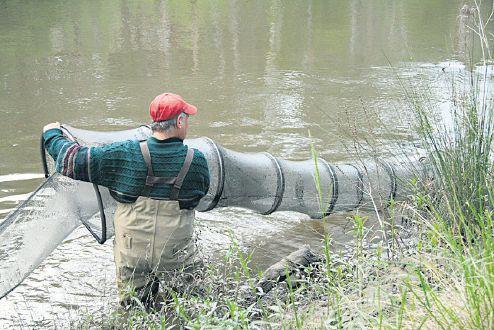
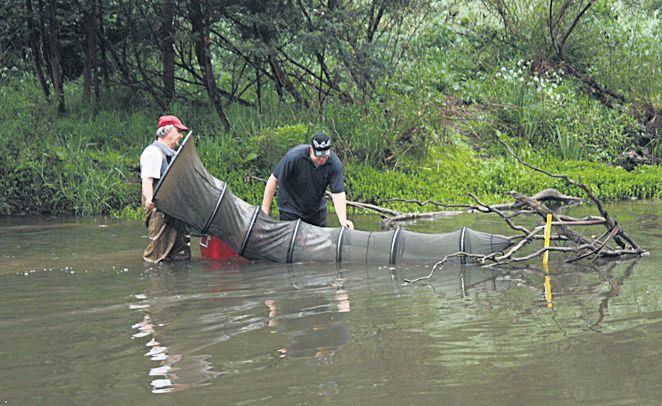
The NFA volunteers set fyke nets to catch broodstock in the Yarra towards the end of October and into November. It’s not been established what triggers maturation and ovulation, but the current thinking is that it’s when the temperature reaches 15.5°C, or when there’s
a quick jump from, say, 13°C to 16°C. Day length doesn’t seem to be a factor, although, it has an obvious connection with water temperature.
Mature males and females are easily identified by the redness of their vents. Females take three years to reach maturity and produce 30,000 eggs per kilo. Males can
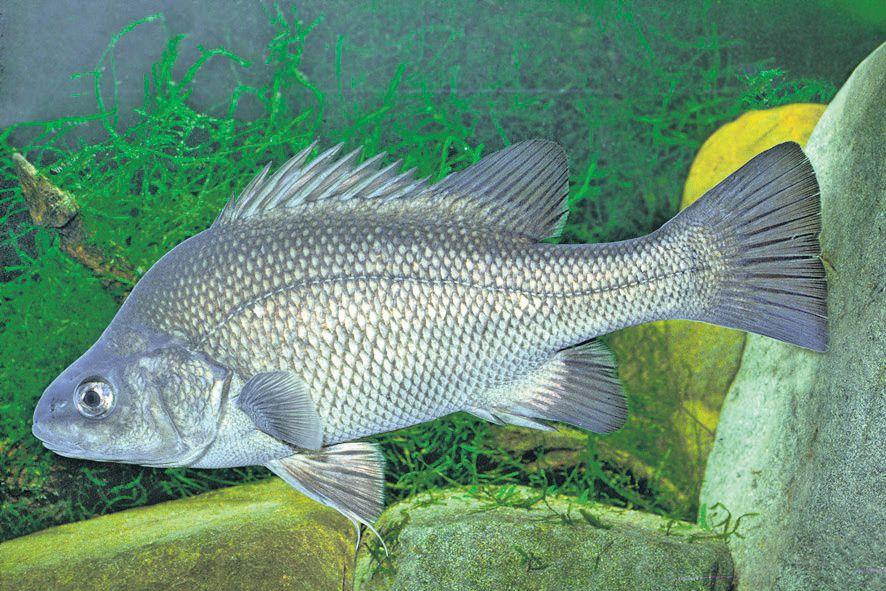
Macquarie perch. (Photo credit Neil Armstrong)
Paul Berner checking a fyke net in Pound Bend on the Yarra River near Warrendyte.
Paul Berner & Tim Curmi checking a fyke net during a broodstock collection trip on the Yarra. (Photo credit: Tim Curmi, NFA)
mature in their second year. The water-hardened eggs double in size to 4mm.
Mature wild fish are taken to the hatchery and a few opaque eggs, withdrawn with a catheter, are cleared with a solution of formalin, acetic acid, alcohol and water. If judged to be sufficiently mature the anaesthetized females are injected with Polygon at the rate of 0.5g/kg. Twentyfour hours later they are given an injection of Overprim at the same rate. If ovulation has been triggered, the eggs are hand stripped into a bowl and mixed with the males’ milt. The fertilized eggs are then placed in Macdonald jars.
FIRST FEEDING
Once hatched, the larvae live off their yolk sacks for three days before feeding commences. They are fed Paramecium for the first two weeks. NFA have been experimenting to find the most efficient culture base for raising the 10-20µm protozoans. They are currently successfully using a lucerne (alfalfa) tea. Tim said that their biggest problem at this stage was providing enough feed for the ravenous larvae. Once the fry are large enough – about 14 days – they are fed brine shrimp (Artemia) nauplii.
“Maccas”, unlike most other recreational Murray Darling species, won’t wean onto a dry feed, which means that on-growing them places a huge strain on the volunteer workforce at NFA. Fortunately, the fish eat just about anything that moves in the aquatic environment. NFA have identified a number of local wetlands and dams from which they can harvest Daphnia and other invertebrates to feed the fish once they outgrow Artemia. Later, they source river shrimp and worms, but it’s a never-ending chore.
IN A PERFECT WORLD
Tim said that in a perfect world they’d grow the juveniles selected for release in their home waters in the Yarra till they measured 50-75mm, which takes
3-4 months on the rations provided by the volunteer workforce. Space is also a problem at the hatchery: they rear what they have space for. In a good year that will be around 10-20,000 fish. Any surplus small fish are passed on to Fisheries Victoria for restocking in suitable areas north of the Divide. NFA members have their reservations as to the survivability of the 0.7g fry when liberated in open waters.
This most recent season hasn’t been favourable. Late rains have kept the Yarra running full to overflowing, and the capture opening has been narrow.
For more information contact Tim Curmi on: timbo42b@yahoo.com.au
POWER! GIRL
The secret behind avoiding early maturation
Experiencing early maturation of Atlantic Salmon?
Experiencing problems with early maturation of Atlantic Salmon?
StofnFiskur’s All-female product consists of a 100% female population, meaning that you no longer need to worry about early maturation of the males.
StofnFiskur’s All-female product consists of a 100% female population, meaning that you no longer need to worry about early maturation of the males.
Having problems with early maturation of females too? Then our All-female triploid consisting of 100% sterile females is the ideal solution.
Having problems with early maturation of females too? Then our All-female triploid consisting of 100% sterile females is the ideal solution.
Our biosecure, all-year-around production in Iceland means that we can supply the products that you need, when you need them.
Our biosecure, all-year-around production in Iceland means that we can supply the products that you need, when you need them.
Solving maturation with breeding & genetics
Tim sampling a female Macquarie perch for egg quality with a catheter tube.
(Photo credit: Tim Curmi, NFA)
Tim Curmi adjusting the air flow in a paramecium culture.
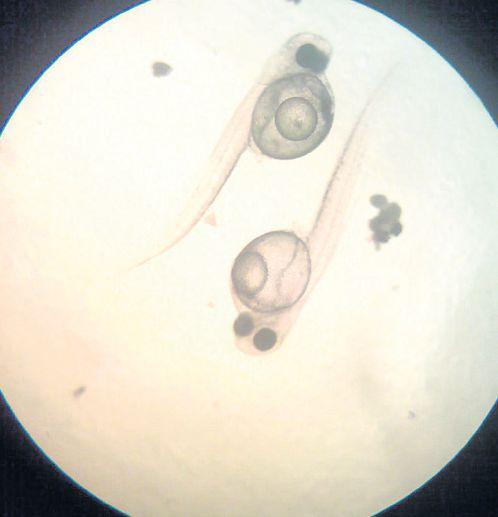
Newly hatched Macquarie perch larvae. (Photo credit: Tim Curmi NFA)
Heroic community effort saves hatchery fish and eggs
The worst is over for the Feather River Fish Hatchery in Oroville, California. Heavy rain in the state early in February prompted Department of Water Resources officials to release water from the Oroville Dam into the Feather River to offset inflows. (The hatchery draws all its water from the river.) A jagged crater in the dam’s main, concrete-lined spillway wasn’t noticed until after the river had been fouled by a torrent of muddy water.
That’s when hatchery manager Anna Kastner was alerted. Releasing the fish into the muddy water was not an option. So she had to come up with a plan – and fast – to save the salmon and steelhead in the hatchery.
Fortunately a nearby facility on well water was empty of fish. Staff and volunteers leapt into action to get all the necessary permits and permission and move as many of the 8.59 million juvenile fish as possible, as well as prepare the facility at Thermalito to receive the fish.
A fleet of tanker trucks successfully transported six million fish to the facility. Another million fry were loaded by hand and evacuated. But that still left Kastner, staff,
volunteers, fish pathologists and veterinarians trying to save steelhead eggs. Aeration, filtration and cooling systems had been compromised by sediment.
Kastner is reported as saying “Over the next two days, a group of very clever team members rigged together a mechanism to dechlorinate water from garden hoses. But that wasn’t sufficient to meet our needs – and time was running out. So they devised a larger aeration and filtration system and connected it to a fire hydrant on the property.” Improvised screens replaced those damaged by mud in order to reduce the chlorine in the substitute domesticwater intake supply to the hatchery.
Kastner appreciatively acknowledged everyone who rallied around to help, working 14-15 hour days and in many cases putting their own safety in jeopardy with the potential collapse of the dam structure.
She commented to the Los Angeles Times,” We’ve got a lot of work ahead of us. But we’ve already accomplished great things: Most of our salmon and all of our steelhead eggs are safe.”
– Quentin Dodd
Hatchery staff and volunteers remove fry from raceways at the Feather River Fish Hatchery after muddy water released from the nearby Oroville Dam flooded inflows at the facility.
(Photos courtesy California Department of Fish and Wildlife).
RESTOCKING
Devastating fire clears path for rare trout’s return
BY CRAIG SPRINGER, USFWS
ear and tear on boot soles and a helicopter – that’s what it took to get 1,033 hatchery-raised Gila trout safely placed in the remote headwaters of Mineral Creek, well inside the Gila National Forest of southwestern New Mexico.
Late last fall, the US Fish and Wildlife Service working with its partner agencies, the New Mexico Department of Game and Fish and the US Forest Service, released two age classes of Gila trout into Mineral Creek ranging up to a foot long.
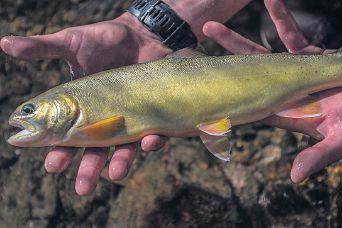
The rare yellow trout were spawned, hatched and raised in captivity in 2015 and 2016 at the Mora National Fish Hatchery. Hatchery fish are carefully paired and spawned to maximize genetic diversity of offspring, which provides a safeguard for their survival in the wild. The captive fish also face rigorous swimming conditions in the hatchery to further ensure their fitness when released.
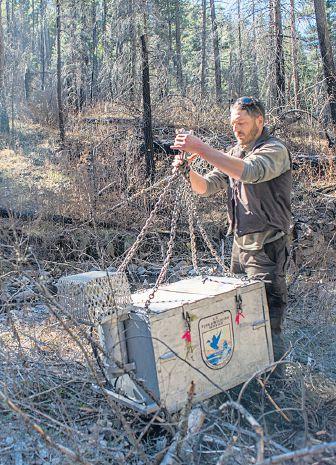
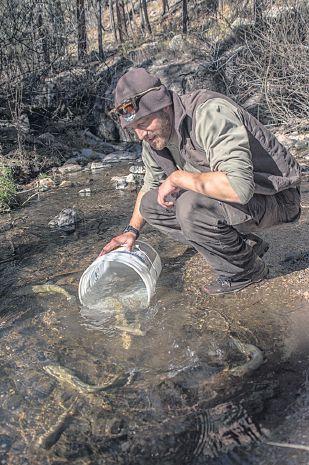
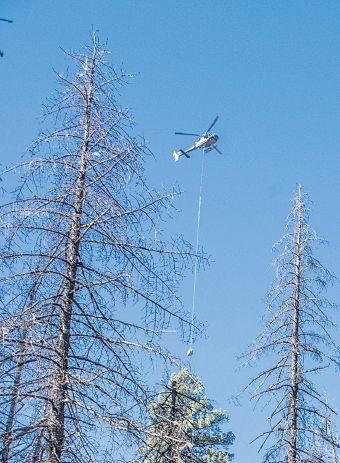
These 1,033 trout traveled by truck eight hours to meet a helicopter at the Gila National Forest’s Glenwood Ranger Station. The aircraft made multiple flights carrying an aerated tank at the end of a long-line, each time full of Gila trout. Biologists from the three agencies had hiked in several miles in the rugged country to meet the trout and place them in the cool, shaded runs and pools of Mineral Creek.
Mineral Creek is tributary to the San Francisco River near Alma, New Mexico. Streams in this watershed harbor one of five known relict genetic lineages of Gila trout. The species lives only in New Mexico and Arizona along the Mogollon Rim, an area of conservation emphasis for the Service.
This release is a large step forward in conserving Gila trout, noted Andy Dean, lead Gila trout biologist with the Service’s New Mexico Fish and Wildlife Conservation Office, based in Albuquerque.
“This re-patriation into Mineral Creek adds another stream to harbor Gila trout, as outlined as a necessity in the Gila Trout Recovery Plan,” said Dean. “Not only does this add a population within the San Francisco River drainage, it also helps establish Gila trout populations across a larger geographical area. More Gila trout over a larger area adds greater security to this rare fish.”
Devastating fire creates rare opportunity
Mineral Creek came to the attention of biologists as a candidate stream to receive Gila trout following the massive WhitewaterBaldy Fire of 2012.
Destructive as it was, the forest fire made Mineral Creek suitable for Gila trout. The fire burned in the headlands of the stream and summer rains washed a slurry of ash and debris down its course, removing unwanted competing non-native fishes. Though the mountain slopes and post-fire streamside vegetation are not fully stabilized, sufficient habitat exists to harbor Gila trout. With so few suitable streams available to repatriate Gila trout, biologists seized the opportunity.
Mineral Creek Canyon is steep to be sure. It’s certainly among the more remote and more difficult Gila trout habitats to reach, but it’s not the only stream to receive Gila trout from Mora National Fish Hatchery this past autumn. Another 8,621 Gila trout have been placed in several other waters to advance the species’ recovery, and should entice anglers to go after native trout in native habitats of southwest New Mexico.
That desired security will be achieved when the Mineral Creek population is reproducing naturally, and multiple year classes swim its waters, perhaps in 2018.
Craig Springer works for the US Fish and Wildlife ServiceSouthwest Region, Albuquerque, New Mexico. To learn more, visit: www.fws.gov/southwest
The trout lie in dark water behind boulders and in the scour pools beneath log jams, waiting for bugs to come drifting by. They also wait for what anglers may throw their way.
The Gila trout is protected under the Endangered Species Act. The species was first listed as endangered in 1973, and through conservation measures, was down-listed to threatened in 2006. A year later select Gila trout populations were opened to angling for the first time in 50 years.
Gila trout stocked into Mineral Creek.
Andy Dean, New Mexico Fish and Wildlife Conservation Office, readies an aerated helitank for pickup by helicopter.
Andy Dean releasing Gila trout into Mineral Creek, Gila National Forest. Gila trout arrive in aerated helitank over the treetops at Mineral Creek.
Gila trout biologist Jill Wick (New Mexico Department of Game and Fish) loads Gila trout from helitank for dispersal in Mineral Creek.
Pacific island develops milkfish breeding program
BY ERICH LUENING
Aproject to develop a milkfish (Chanos chanos) broodstock and breeding program on Palau in the Western Pacific region of Oceana recently produced thousands of fry for outplanting in the tiny archipelago.
About 80,000 milkfish fry were produced from eggs within the months of May, October, and December last year. The survival rate that was achieved during development was 46.25%.
The fry are currently stocked at fish ponds in Ngatpang State for further monitoring and evaluation for growth as well as survival during their nursery and growout phase, according to local reports.
By establishing a local source for milkfish fry, the Cooperative Research & Extension of Palau Community College, which directed the breeding project (PCCCRE), vows to support local commercial fish farms as part of the Palau economy.
The project began in September of 2014 with funding from the College of Micronesia (COM) Land Grant Program and the Center for Tropical and Subtropical Aquaculture (CTSA) based in Hawaii. It is also being conducted in collaboration with the Oceanic Institute of Hawaii Pacific University, Shallum Etpison Aquaculture, and the Ngerdubech Corporation that operates a milkfish farm in Ngatpang State.
The project was initiated by installing a 30x30 ft. floating cage stocked with 44 milkfish broodstock in Ngatpang State. After two years the breeders started to spawn and successfully produced substantial quantities of milkfish eggs. The eggs were transported to the PCC MultiSpecies Hatchery in Ngermetengel, Ngeremlengui State where a series of larval rearing trials were conducted.
Now researchers hope that the technology and knowledge transfer on how to grow milkfish from egg to fry will assist other entrepreneurs around the island to start their own businesses and invigorate the local economy.
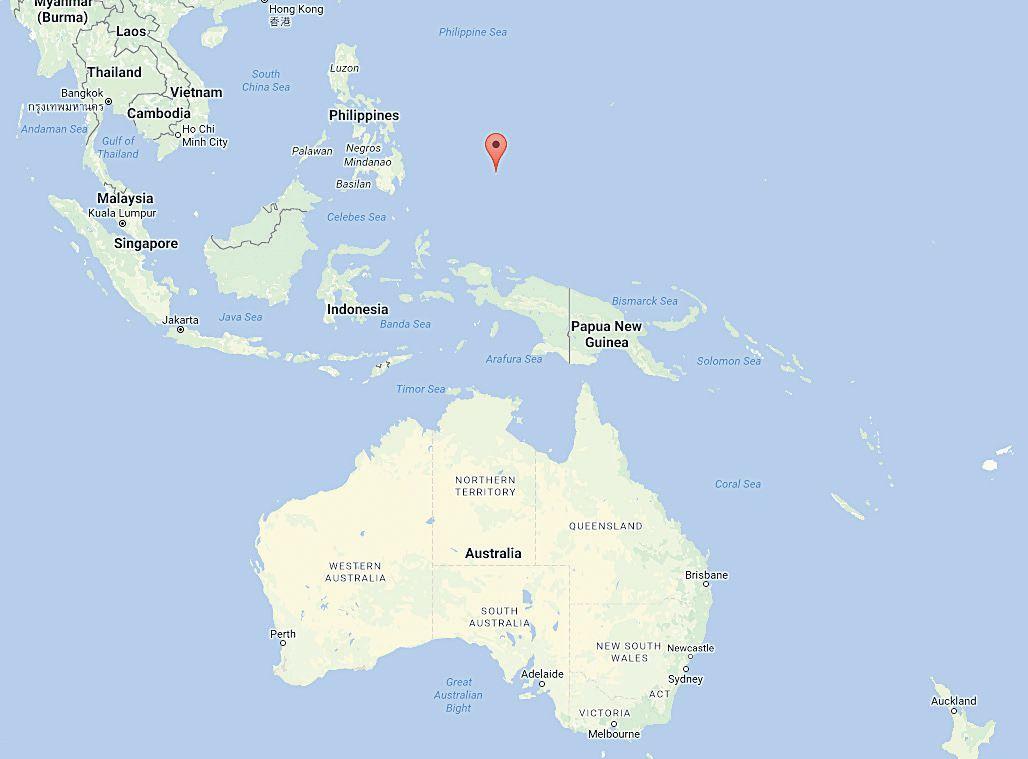
Palau
Wreckfish experiments gain traction
continued from cover
closed recirculating system and fed with enriched rotifiers from 10 dph, overlapping with Artemia AF from 13 dph and Artemia EG from 24 dph.
At the Spanish Institute of Oceanography three experiments with a batch of larvae from an artificial fecundation of its own stock and two batches of larvae from two natural spawn of MC2 broodstock were conducted. The culture system was traditional, and the feed was rotifer enriched with T-Iso (Isochrysis galbana).
The Aquarium Finisterrae (MC2) facilities in Spain worked with six viable spawns from their broodstock, with water renewal from the time of culture. Feed consisted of a mixture of rotifers and copepods enriched with microalgae.
The research abstract summarized the experiment details. “Egg fertilization was between 81 and 97%; the obtained hatching rate ranged from 4 to 56% and larvae survived until 14 dph (IEO), 22 dph (MC2) and 24 dph (HCMR). Total larval length was between 4.1 mm (0 dph) and 7 mm (22 dph). Malformations were observed in the three places, and were associated with consumption of the yolk sac.”
It was explained that causes for this could be owing to a syndrome known as Blue Sac Disease (BSD) or Swollen Yolk Sac Syndrome (SYSS), described for Murray cod, and is related to inadequate nutrition of the broodstock.
Researchers said these preliminary results are important because “artificial, spontaneous and induced spawns were obtained and the first trials of wreckfish larval rearing, with encouraging results, were performed.”
They will continue to work towards reaching the final stages of larval culture and determine the optimum conditions in terms of larvae growth, food and environmental conditions.
Ruby Gonzalez
People who care about your stock and results
Above and below: The European project, DIVERSIFY, commissioned the Hellenic Center for Marine Research in Greece and Spain’s Galician Institute for Aquaculture Training, Aquarium Finisterrae, and Spanish Institute of Oceanography to perform experiments on optimal larval rearing of wreckfish. (Photo credit: www.diversifyfish.eu)
SHELLFISH SPOTLIGHT
City raises “working” mussels
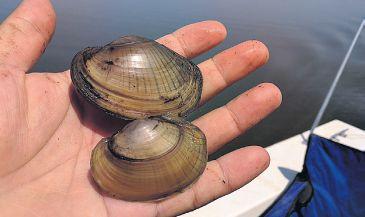
he world’s first city-owned hatchery for freshwater mussels (Elliptio complanata) opened recently in Philadelphia, PA.
The hatchery is part of an exhibit at the Philadelphia Water Department’s Fairmount Water Works. The department worked with the Partnership for the Delaware Estuary to create “The Mussel Hatchery,” demonstrating how scientists can breed freshwater mussels to improve waterways.
Apparently each adult mussel filters as many as 75 litres (20 gallons) of water per day for up to a century. Today the shellfish are one of the most endangered animal groups in North America.
“Healthy mussel beds were once abundant in most streams and rivers, helping to keep the water clean and enriching the ecology in so many ways,” said Dr. Danielle Kreeger, science director at the Partnership for the Delaware Estuary. “Our goal is to rebuild those mussel beds to put nature back to work for us, and this new exhibit will show the
Shellfish hatchery recovers lost ground with careful OA monitoring
The Whiskey Creek Shellfish Hatchery at Netarts Bay in Tillamook Oregon produces a third of all oyster larvae on the West Coast of the US, according to Alan Barton, Production Manager. It is the state’s only shellfish hatchery. Owner-operator, Sue Cudd confirmed for HI that 2016 was the hatchery’s best year yet for production of oyster (Crassostrea gigas) spat. After such a banner year, it could be easy to forget that the operation nearly shut down a decade ago.
world that we now have the technology to do it.”
Funding for the hatchery exhibit was provided by the Pew Center for Arts and Heritage and the Philadelphia Water Department with additional support from the McLean Contributionship and the Pennsylvania Department of Conservation and Natural Resources.
It was in 2007 and 2008 that something changed and output was reduced by 75%. At first hatchery staff believed the die-offs were caused by biological problems or the wrong type of alga for food. Barton remembers arriving to work one morning and everything was dead. That became the turning point for them and they looked to Oregon State University for help. The problem was not because of a virus or feed, it was a lower pH in the water caused by ocean acidification. Ocean acidification occurs when increased carbon dioxide (CO2) in the ocean changes the chemistry of the water making it less acidic, and more difficult for organisms to make shells and survive.
Now the hatchery constantly monitors for the carbon dioxide and acid levels in
the ocean and the intake water, and immediately takes counter measures at the first sign of compromise in the chemistry of the water. Doing this, Cudd said, has enabled Whiskey Creek to reestablish a lead position in the region.
“Last year, I believe we produced more than we ever have,” she said. “We produce mainly larvae and (last year) did more than 10 billion. We treat all the water now. You can’t just pump the water in any more, the way we used to.”
Provifeed NoSpot
• White spot syndrome virus/EMS/AHPND
• Increased survival rate and weight gain
• Improved feed conversion ratio
Provifeed Microalgae
ProvifeedTM Nannochloropsis and ProvifeedTM Isochrysis
• Marine fish GWT, Mollusc, shrimp hatcheries
• Absolute pathogen free
• Single cell dispersion, no sedimentation
“It’s definitely more complicated than we thought and first realized,” she said.
Fortunately the cost of treating the water has not proved to be overly expensive for the hatchery –though the cost of the water-monitoring equipment has required investment.
Barton is cited as agreeing that in the short term prospects are looking good, but his view of the long term is less optimistic. “… Within the next couple of decades we’re going to cross a line I don’t think we’re going to be able to come back from. A lot of people have the luxury of being sceptics about climate change and ocean acidification. But we don’t have that choice. If we don’t change the chemistry of the water going into our tanks, we’ll be out of business. It’s that simple for us.”
– Quentin Dodd
CAN YOU FEEL THE CHEMISTRY BET WEEN US?
provifeed@proviron.com / www.proviron.com
The hatchery is part of a demonstration exhibit to show how freshwater mussels can be used to clean and enrich local waterways.
SHELLFISH SPOTLIGHT
Study identifies oyster spawning triggers in Mediterranean lagoon
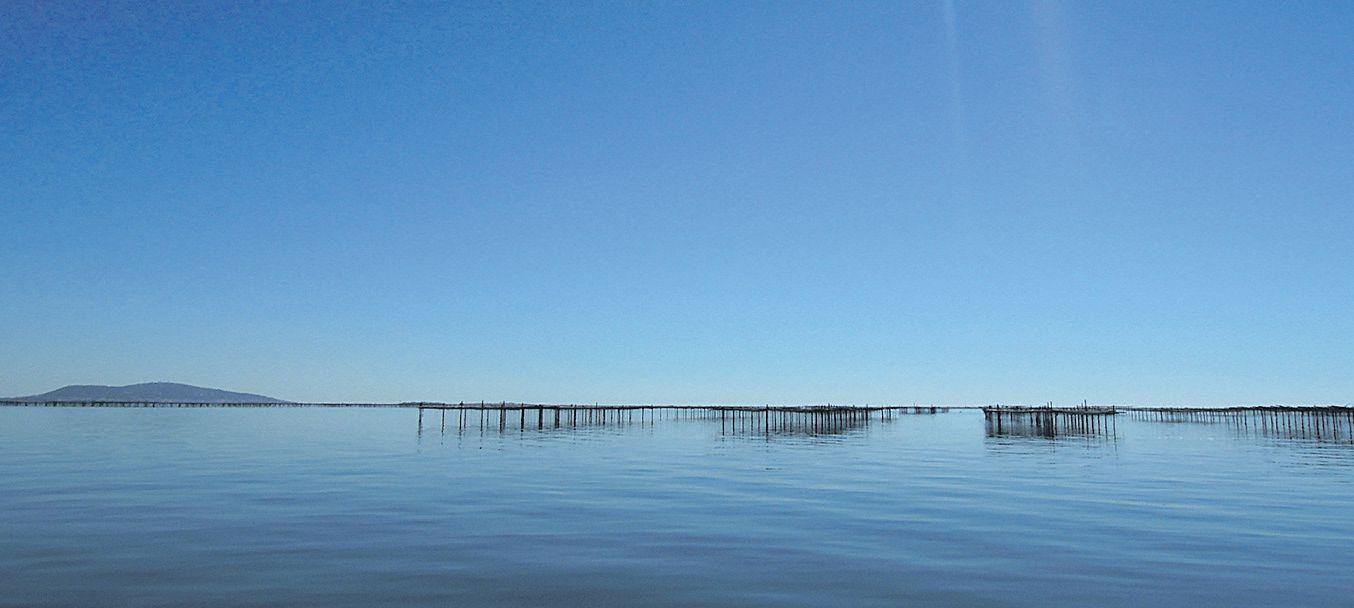
The Thau lagoon, the biggest in the South of France, provides 9.5% of the total French C. gigas production. Despite this, the larval recruitment of oysters within the lagoon is still misunderstood and spat collection remains highly variable.
Shellfish farmers using the largest lagoon in southern France can now hope for better oyster recruitment following release of a study by French researcher Dr. Martin Ubertini entitled “Gametogenesis, spawning behavior and larval abundance of the Pacific oyster Crassostrea gigas in the Thau lagoon: Evidence of an environmentdependent strategy.”
“The study was released in February, and we truly hope that it will benefit oyster farmers by highlighting favorable temporal windows for post-larvae harvesting,” Dr. Ubertini told Hatchery International. “Following our description of oyster gametogenesis/spawning, they could deploy harvesting devices at the moment with the highest probability of oyster recruitment.”
Ubertini et al are from Ifremer/ UMR MARBEC, Eureka Modelisation and Ifremer/ UMR LEMAR, all located in France.
Temperature may not be the only factor involved in Crassostrea gigas (Pacific oyster) reproduction according to the study, which was conducted during the first two years of a three-year project, from 20122014.
“It appears from our study that the reproduction window within the Thau Lagoon stretches from the beginning of June to the end of September, and is characterized by multiple, asynchronous and partial spawning events.”
“From a quantitative point of view, gametogenesis intensity – GSI, fecundity – was correlated to the abundance of diatoms. Once gametogenesis is complete, spawning can occur according to three types of spawning triggers,” the authors cited. These are locking, synchrony and stressful triggers.
Temperature should be considered as a “locking trigger” with a threshold value above 22°C.
The moon – both full and new – appeared as a “synchrony trigger” that maximizes chances of gamete matching.
Research highlights:
The reproduction features of Crassostrea gigas were assessed for the first time in a non-tidal Mediterranean lagoon.
Phytoplankton concentration and assemblages affected gametogenesis, diatoms having a positive effect.
No spawning event was observed below 22°C, and 23°C appeared as a critical temperature for significant spawning events.
Full and dark moon in combination with high temperature did enhance spawning events.
A hierarchy of spawning triggers was established, which can help shellfish farmers to better forecast spawning events.
conceptual pattern of C. gigas reproduction in non-tidal Mediterranean,” note the researchers.
With a hierarchy of spawning triggers established, they said shellfish farmers in Thau could better forecast spawning events.
The Thau lagoon, the biggest in the South of France, provides 9.5% of the total French C. gigas production. Despite this, the larval recruitment of oysters within the lagoon “is still misunderstood and spat collection remains highly variable.” The situation leaves shellfish farmers to rely mostly on hatchery spat.
The third is an additional trigger, like thunderstorms that act more like a stressful trigger because they may increase the gamete release.
“These new findings should play a part in the
The lagoon is about 280 km2 and is almost closed. It is linked to the Mediterranean only through Sete Channel and other small connections that are negligible in terms of water exchange.
The study, the first in this field, aimed to describe reproduction features of C. gigas within the Mediterranean, as well as to explore spawning triggers of this species. It followed the reproduction cycle from gametogenesis to spawning in several locations within the Thau lagoon.
“Temperature was insufficient alone to explain spawning, highlighting other potential triggers such as the moon or lightning strikes. We made the hypothesis of a hierarchy of events triggering spawning, encompassing locking, synchrony and intensifying triggers,” the authors said.
– Ruby Gonzalez
25 hp Titanium Air-Cooled Chiller
• Performance of our shell and tubes are unbeatable due to low TD between water and refrigerant required
• Easy Install: Just connect power and water
• Lifetime Warranty on Chiller Barrel
• CRN Pressure Vessel Certification
• Fresh or salt water
• Accepts hatchery or RAS water without fouling Call (902)-746-3855 for pricing and availability! www.AquaProduction.ca
Photo credit: Laure Maton
Photo credit: Franck Lagarde
SHELLFISH SPOTLIGHT
Washington oyster grower builds Hawaiian solution continued from cover
LARVAL DIE-OFF
In the mid 2000’s larval oysters began dying in hatcheries along the US west coast. It was determined that low ph was the cause of larval death in the first 10-15 days after hatch. Ocean upwelling brings up lower ph water.
“In the spring and summer when the northwest winds blow, they drive nutrient-rich water off the bottom onto the continental shelf,” Nisbet explains. “Just when the hatcheries are getting cranked up in the spring this acidified water is coming into their water sources.”
“By 2009 we were totally dependent on Whiskey Creek (an independent hatchery in Oregon), for seed as our natural set had vanished.” Nisbet says. “And then it hit the wall.” Whiskey Creek, and Washington-based Coast Seafoods and Taylor fish farms, were suffering loses of more than 60%. “The integrated companies weren’t going to sell to outside customers,” says Nisbet. “That put pressure on Whiskey Creek. We could see that our seed supply was going to dry up here.”
“We had a conversation with Lee Hanson who we consider the father of west coast hatcheries and we determined that this was largely a west coast
Solar Efficiency
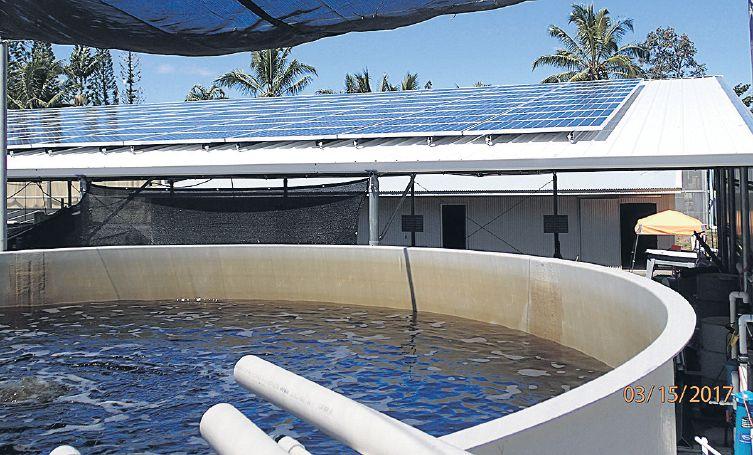
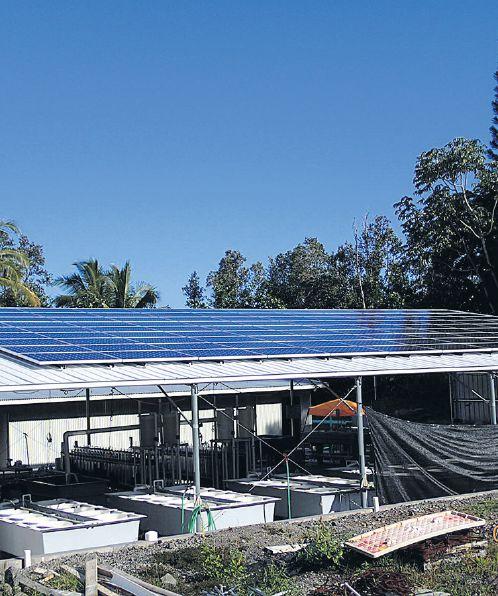
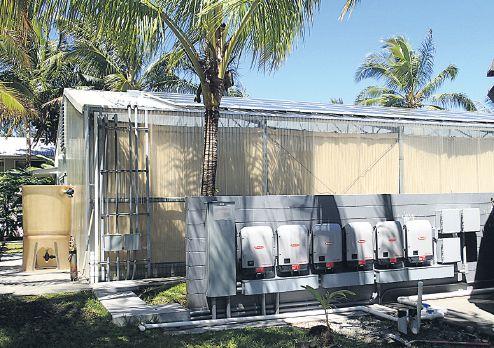
“The hatchery is designed to be very energy efficient,” says Provan Crump, Hawaiian Shellfish LLC Hatchery Manager. “We don’t do a lot of heating; we don’t use artificial light for our algae.”
“We grow a little slower and really focus on increasing larval health as opposed to getting things through really quickly,” says Crump. “We are constantly striving to make a higher quality oyster.”
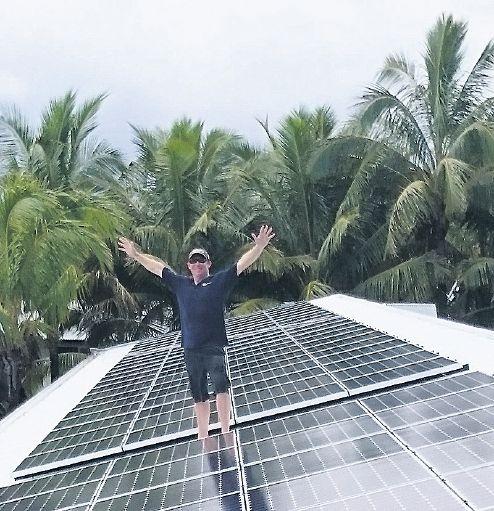
“The operation is run entirely on solar using 5000 sq feet of solar panels on the roofs,” Crump explains. “We just finished an 18 month project bringing in 3-phase power and solar.” Crump adds that they have a 32kw and 64kw propane generator for back up.
“We think as result of all the design and engineering approaches that we take, we are probably one of the, if not the most, energy efficient hatcheries in the world.” Crump adds.
phenomenon,” Nisbet explains. “It doesn’t happen in equatorial waters and it doesn’t happen in Hawaii.”
MOTHERLOAD
Goose Point Oyster company started working with Maria Haws from the University of Hawaii at the Pacific Aquaculture and Coastal Resources Center (PACRC) facility on the Big Island and they discovered a key to the motherload of sorts.
“PACRC has a saltwater well,” Nisbet says. “That appealed to me because it was contained; it wasn’t a flowup from the ocean.”
“We were able to figure out hatchery and algae protocols over two years,” says Nisbet. “We got a bit of seed that was setting okay, so we decided to purchase an acre of land, drill our own salt and freshwater wells, build a hatchery and get our feet wet.”
Hawaiian Shellfish LLC is just outside of Hilo at a site approximately a quarter mile inland. “I wouldn’t recommend drilling a salt water well to anyone,” says Nisbet. “It was a lot of work.” But it is the key to their operation.
NATURAL ROCK FILTER
The island’s lava rock acts as a natural filter for the water, which comes in at a salinity of 33-34 ppt and 22°C year-round. The advantage of the saltwater aquifer that they have tapped is that the water has a constant water
Nursery algae tanks and nursery building with half of solar installation.
SHELLFISH SPOTLIGHT
chemistry that’s perfect for growing shells on oyster larvae. The chemistry of the aquifer is likely to remain steady for years to come, regardless of changes to the surrounding ocean. “We like what we’ve got,” says Nesbit.
It’s also a bio secure source. “We don’t have any disease issues,” says Senior Biologist and VP Brian Kingzett. “We follow the same biosecurity approach as a salmon smolt or shrimp hatchery and we really work on it.”
MAINLAND BROODSTOCK
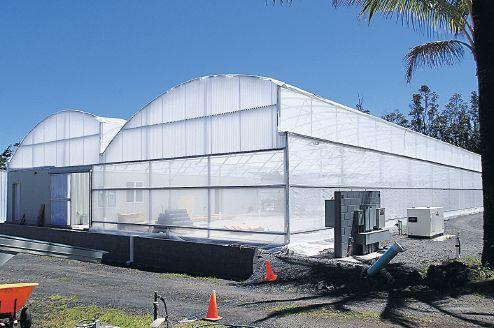
They began with a 7,600 square foot building that was operational in 2011. “We bring the gigas broodstock in from Willapa Bay rich in glycogen and ripen them in Hawaii,” Kingzett explains. “It’s a more expensive approach, but it works for us right now. We do have the ability to hold broodstock in winter conditions and recycle them in Hawaii and we expect in the future we will do that.”
The larvae are reared in 5000 gallon tanks on continuous flow. Algae is raised in a bag system, in a greenhouse, that uses only natural light. Seed is grown in a bottle nursery to a range of sizes. Setting larvae are shipped back to the mainland to supply the company’s own 2000 acres of farm. “Single seed is settled in Hawaii and at 3-4mm, after about 6-8 weeks, they are ready to be shipped to farms in Alaska, Washington, Oregon and California, for growout,” says Kingzett.
That initial build was expanded to a footprint of about 30,000 square feet. “We are set to increase our output by 40%,” says Nisbet. “We expect to be able to ship to more growers over 2017/18. We are just getting the bugs out now.”
BREEDING PROGRAM
The company has a breeding program and works closely with Dr. Chris Langdon and the Oregon State University Molluscan Broodstock Program. “I believe in genetics and performance for Pacific oysters, says Nisbet.
On-going ocean monitoring now helps west coast hatcheries predict OA events and avoid in-take of overly acidic water. That practice has contributed to restoring survival rates. “We’ve been told that this acidification off our coast is increasing,” says Nisbet. “The next question is how much an escalation in acidification is going to affect oysters as you move up later stages of development?”
“We wonder if metamorphose and set-on-shell will create issues in the future. I don’t think this is mission accomplished, lets move on,” Nisbet warns.
Cryogenetics® has extensive experience with cryopreservation and fertilization - our technologies are used by the leading egg producers in
Nursery building with solar installation on roof.
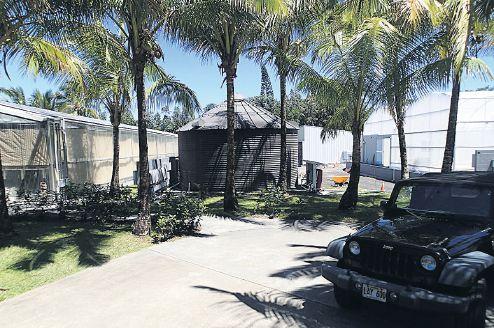
Main hatchery building to left of new algae greenhouse.
New algal greenhouse.
Technicians Kahi Spencer and Zack Chang in old algal area.
Main hatchery building and solar inverter installation
SPOTLIGHT
Sardinian researchers fine-tune hatchery techniques for sea urchin
BY TOM WALKER
t’s an all too common story. As a wild shery becomes depleted, researchers begin the study of hatchery techniques in e orts to restore the resource and provide an alternative to wild harvest.
Such is the case in Italy and Sardinia, where the sea urchin Paracentrotus lividus is widely consumed. A team of scientists at the International Marine Centre IMC –Foundation, on Sardinia claims that it has perfected urchin hatchery techniques, and Gianni Brundu, a researcher at the center, shared information on their work with Hatchery International
INTENSE HARVESTS
over shing in many coastal areas, causing a sharp decline of the stock.”
“During the last several years, my colleagues and I have focused on the optimization of sea urchin production, enhancing survival and growth of larvae and juveniles,” says Brundu.
ey also analyzed the production costs and found them to be high. “According to our studies, the production of adult individuals in laboratory controlled conditions is a very expensive activity (in terms of feed, energy and manual labour),” says Brundu. “ erefore we aimed primarily for enhancement of natural populations.”
BROODSTOCK COLLECTION
Despite regional regulations restricting shing periods (from November to April), minimum size (larger than 50 mm in test diameter) and daily catch quotas per sherman, the harvesting of P. lividus in Sardinia is intensive, Brundu explains. “Natural populations are exposed to
But Brundu cautions that enhancement is more than simply perfecting techniques in the lab. “Restocking should be realized in a general resource management framework, based on an ecosystem approach,” he maintains. “It is fundamental to consider natural recruitment of the species, the habitat carrying capacity, the interaction of the species with environment (other species, coastal habitats and human activities) and the shing e ort.”
e IMC collects wild broodstock for each trial. “We prefer to employ di erent broodstock, generally ve males and ve females,” says Brundu. “We use wild fertile individuals, with a test diameter larger than 40 mm for reproductive trials, and we collect gametes after dissection of the animals.”
e fertilized eggs are stocked at a density of 20/mL until they assume the typical shape of echinoid larvae (echinopluteus), about 40 h after fertilization takes place.
e echinopluteus are reared in a static system using ltered (1 µm) natural
seawater at 36.5 ± 1 ppt of salinity, 20 ± 2°C and continuous light. e larvae are stocked at density of 1.5/mL, but higher densities could be employed, Brundu says.
FEED FOR LARVAE
Larvae are fed with phytoplankton every two or three days, either as monospeci c diets or mixtures of two or more species.
“ e diet type, as well as the quantity, in uences the survival and growth of larvae and post-larvae, up to the juvenile stage,” Brundu explains.
“Larval rearing ends within 18-25 days post-fertilization, when larvae reach
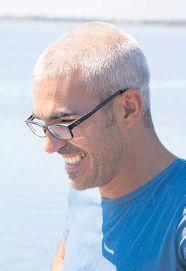
Gianni Brundu
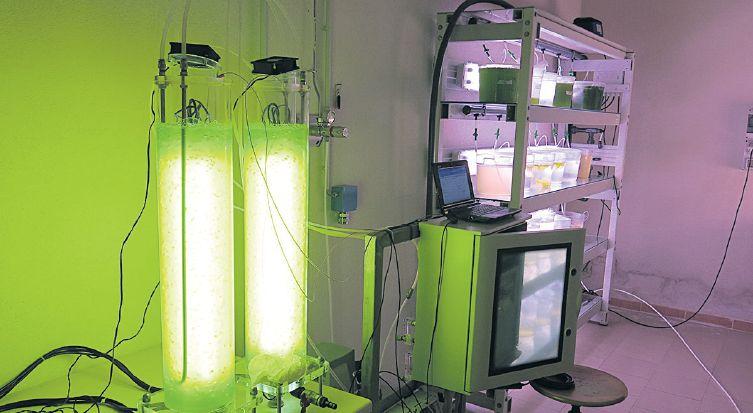
Cultures of microalgae in controlled photo bioreactors (foreground) and pre-culture inocula in Erlenmeyer flasks (background).
SHELLFISH SPOTLIGHT
competence for settlement and acquire the ability to metamorphose to a benthic animal,” Brundu says. “At this stage, we induce the larvae to metamorphose by using a stimulus of a natural biofilm of diatoms, macroalgae or adult conspecifics.”
IMC cultivates phytoplankton in natural seawater at 30 ppt salinity, using either Erlenmeyer flasks of Pyrex glass (2L volume) or by using bubble column photo bioreactors (6L and 120L). Seawater for the erlenmeyer flasks is sterilized through filtration (1 µm filter paper) and autoclavation at 121°C for 30 min. Water for the photo bioreactors, is sterilized chemically with sodium hypochlorite. A modified Guillard f/2 culture medium is added to enrich the sea water for both systems. Cultures are maintained at 23°C, exposed to a 16 h L/8 h D photoperiod and supplied with gentle aeration.
SETTLEMENT CUES
In hatcheries, the transition from planktonic to benthic life is typically promoted by plates colonized with diatoms, which are believed to provide a good settlement cue and represent the initial feed for juveniles, Brundu says.
“During our studies, we evaluated the effect of an alternative settlement cue, the green macroalgae Ulvella lens, and we compared it with diatoms,” Brundu explains. “Moreover, we evaluated the effect of these settlement cues with natural filtered seawater and seawater previously “conditioned” by adult conspecifics.” Brundu says that they obtained similar
BIO-BLOK®
The Intelligent Fixed Film Media
results in the settlement rate by using diatoms or Ulvella lens, while higher settlement rates were obtained by using seawater “conditioned” by conspecifics than natural seawater.
Juvenile individuals are maintained in natural seawater at 36.5 ± 1 ppt of salinity, 20 ± 2°C of temperature and 14/10 h (L/D) photoperiod. Juveniles are reared in a recirculating system (RAS) supplied with biological and mechanical filters. The seawater flow rate is sufficient to exchange more than 100% of water daily. When individuals have a test diameter of 3-4 mm, the macroalgae Ulva sp. is added to the Ulvella lens (or diatoms).
STOCKING DENSITY
“According to our investigations, stocking density influences the growth of juveniles,” Brundu points out. “Therefore increasing density decreases the somatic growth rate. However, the stocking density we adopted is usually lower than 400 individuals/m2.”
“The major problem for the production of sea urchins is the production cost,” Brundu says. The individuals grow slowly (about 1 cm per year) and eat very high amounts of feed. “The production of adults for market is very long (3-4 years) and expensive, mainly in terms of feed consumption, energy and manual labour,” he says. “You must also consider the high mortality rates registered during the first life period (larval planktonic and postmetamorphosis stage).”
Exhibition: Visit our stand at Aqua Nor in Trondheim 15-18 August 2017
Fields of application:
Recirculating systems for fish farms for both freshwater and marine fish species
Aeration and degassing systems
Wastewater treatment plants for industrial and domestic sewage
- R-value insulation option to reduce energy costs.
DC INTERNATIONAL 75 De Vaudreuil, Boucherville, Quebec Canada J4B 1K7 - Ph: +1 (450) 449-6400 www.dc-inter.com dctank@dc-inter.com
The BIO-BLOK ® filter media is a Danish manufactured and patented product.
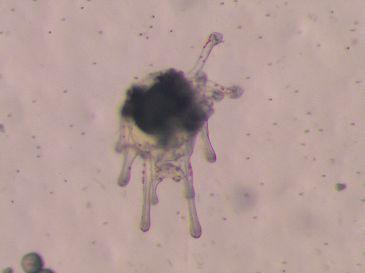
Larva of Paracentrotus lividus during metamorphosis stage.
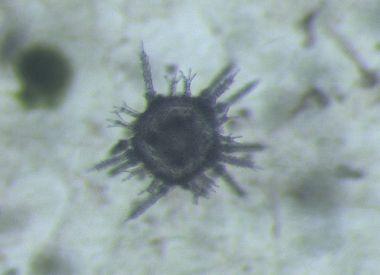
Post-larva of Paracentrotus lividus a few days after metamorphosis.
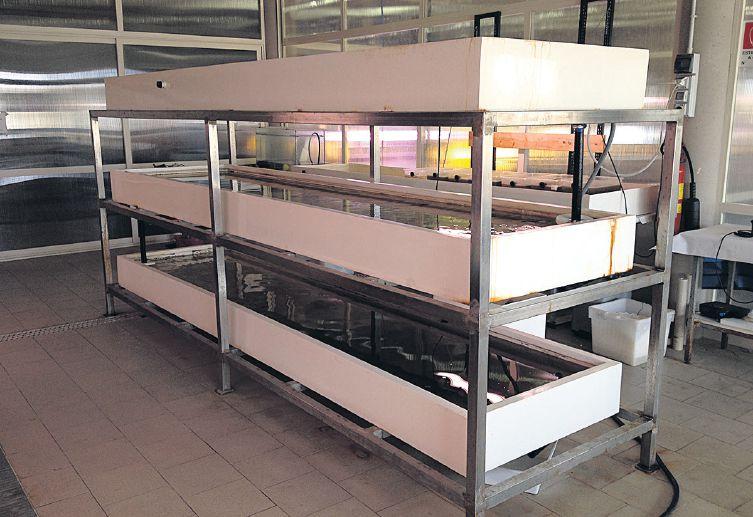
600 L tanks for growth of Paracentrotus lividus juveniles.
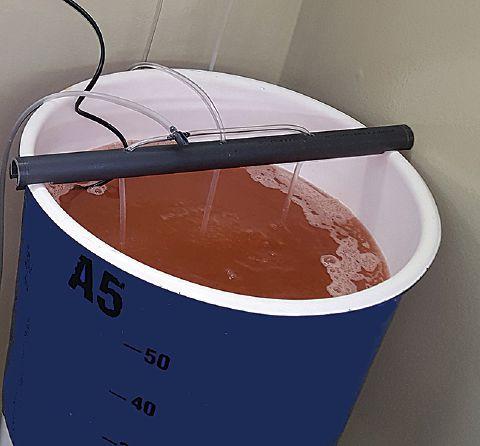
ORI-N3: Elevating the DHA content of hatchery Artemia through increased flexibility
Commercial production is now underway of Skretting’s Marine Hatchery Feeds’ (MHF) latest concept in Artemia enrichment that delivers a highly efficient incorporation of the essential docosahexaenoic acid (DHA) omega-3 fatty acid into the live feed as well as far greater flexibility in this essential marine hatchery process.
Although Artemia nauplii are used in the hatchery rearing of some marine fish larvae, by themselves they do not contain a lot of nutrition essential to young fish development; crucially, they are lacking in the highly unsaturated fatty acids (HUFAs) DHA and EPA (eicosapentaenoic acid) that are essential to marine fish growth and development. Therefore, to increase the DHA and EPA content, Artemia is subjected to an enrichment phase before it is fed to fish, whereby it is placed in an enrichment suspension that it will proceed to ingest and incorporate into its biomass.
efficiently than traditional methods, as well as being easy to use – it is supplied in 2kg foil stand-up spout bags. The dosage is simply weighed, mixed with water and then administered to the Artemia tank.
Because it is algal-based there are no superfluous oils, while the risk of oxygen level challenges are much less likely than with standard enrichments. The Artemia also maintain a good protein base. A direct outcome of these benefits is a greatly reduced mortality rate and a much cleaner enrichment.
“It was also important to provide a solution that is adaptable to each hatchery’s specific requirements rather than just a single general application protocol,” says O’Brien. “Each hatchery is different and has different needs and motivations; it is vital that the products made available to them meet those flexible needs.”
There are, however, two key problems associated with this standard model, explains Eamonn O’Brien, Product Manager for Skretting MHF. Firstly, not all Artemia are the same – as a live animal, there are fundamental disparities between its different strains and their ability to incorporate enrichment as well as variances in quality and strength from year-to-year, which is termed as ‘enrichment kinetics’.
“Despite what can be significant inconsistencies, the aquaculture industry has an unfortunate tendency to look at Artemia as a constant standard,” says O’Brien.
“There is also the added complexity that the metabolism of Artemia will very efficiently break down DHA into other fatty acids, in particular EPA, thereby depriving the marine larvae of their very high DHA requirement.”
Hatcheries typically want a DHA-EPA ratio of 2:1 in their Artemia, which can often be difficult to achieve because of this ability, he says.
To mitigate these and other constraints associated with Artemia, a number of hatchery operations have replaced it with a formulated diet. But recognising that Artemia substitution is not an option for every marine hatchery and that it is important that the many hatcheries that continue to follow this protocol make their Artemia as nutritionally rich as possible, Skretting MHF has invested considerable R&D into the delivery of a feed expressly focused on optimising the level of DHA in the live feed.
Developed at MHF’s Centre of Excellence in Vervins, France, ORI-N3 is an algae-based liquid that is aligned with its other ORI range concepts in that it is designed to be ingested by the animals more
Based on what hatchery managers want to achieve with their Artemia as well as what best suits the operations within their facility, ORI-N3 offers everything between 12- and 24-hour enrichment. If a medium level n-3 HUFA content and highest DHA-EPA ratio is the target, for example, then a single-dose 12-hour enrichment tends to present the best option. Conversely, if a hatchery is more interested in achieving a maximum HUFA entry, it should elect for a 24-hour enrichment and two doses.
Because ORI-N3 establishes a much more efficient intake of DHA, the use can be as low as 400 ppm with very good incorporation into the Artemia and excellent DHA:EPA ratio. Such low dose application also assists in keeping the enrichment clean and of course very costeffective
“In addition to providing unmatched DHA content, we wanted to make ORI-N3 as flexible and as easy-to-use as possible – to allow each hatchery to tailor the product to its own specific requirements.
“With commercial trials imminent, our goal is to have the market fully up to speed ahead of the new season, starting in September,” says O’Brien.
ORI-N3 is an innovative algal based DHA enrichment for Artemia which allows maximal uptake of DHA into the Artemia in a very flexible and convenient manner. ORI-N3 is also free from fish oils resulting in a cleaner, more natural and sustainable enrichment.
For more information, please contact your local feed consultant.
www.skretting.com
TRIPLOIDY TESTING
CLIMATE CHANGE
Your Partner in Recirculation Systems for Aquaculture
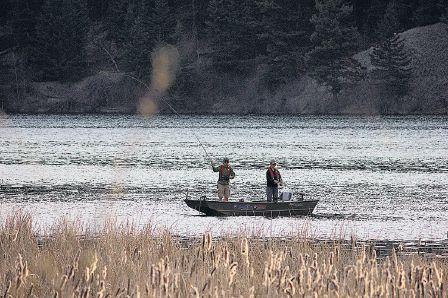
Of the approximately 800 lakes stocked in BC each year, biologists are closely monitoring the pH in 160 of them. Water pH levels fluctuate up and down during climate cycles but biologists believe they may be slowly increasing. Climate change is one driver, but not the only factor.
Navigating warmer waters
New genetics research will help Canadian hatcheries ensure long-term success for lake stocking programs
BY TREENA HEIN
Anew $4+ million research project in British Columbia, Canada will result in identification of genes that will help trout better survive future conditions, including warmer lake water temperatures and perhaps higher alkalinity.
“It is important to do the critical research now, to identify resilient strains of rainbow trout and support stocking programs into the future.”
Dr. Patricia Schulte, professor in the Department of Zoology at the University of British Columbia, is leading an interdisciplinary team that will use genomics tools to assess genetic diversity in wild rainbow and steelhead trout and identify appropriate strains of fish for improving the effectiveness of stocking programs. The team is working together with hatchery managers in both government and industry.
Genome British Columbia (Genome BC), a major funder of the project, notes that record high temperatures in rivers and streams during summer 2016 forced temporary closures of popular fishing locations, and within the next 50 years, more than 30% of habitat for cold-water fish like rainbow trout and steelhead are projected to be negatively affected.
“This has the potential to impact Canada’s $8-billion recreational fishing industry and the many jobs it supports,” the organization states. “In order to manage these impacts, we need to better understand why some wild populations of fish are still able to thrive and why others aren’t able to survive in these altered environments.”
Adrian Clarke, vice president of science at the Freshwater Fisheries Society of BC, says that “of the approximately 800 lakes we stock each year, biologists are closely monitoring the pH in 160 alkaline lakes. Water pH levels fluctuate up down during climate cycles and we think they may be slowly increasing right now. Climate change is one driver, but not the only factor involved.”
Schulte says survivability of fish in various lakes may worsen in the future, and that the speed at which this may come about is also not yet known. “It is important to do the critical research now,” she explains, “to identify resilient strains of rainbow trout to support stocking programs into the future.”
Beyond Genome BC, other key partners and co-funders in this research include the Freshwater Fisheries Society of BC, Mission-based Miracle Springs Aquaculture, the BC Ministry of Forests, Lands and Natural Resource Operations, Fisheries and Oceans Canada, the Pacific Salmon Foundation and the Columbia River Intertribal Fish Commission, which coordinates fisheries management policy and provides fisheries technical services on traditional lands. Research team leaders include Ben Koop (University of Victoria), Tony Farrell, Eric Taylor and Kai Chan (all at UBC), Steven Cooke (Carleton University), and Nathan Young (University of Ottawa). Other team members include John Post at the University of Calgary, and UBC’s Scott Hinch, Chris
~ Dr. Patricia Schulte, Department of Zoology, UBC
Photos: Steve Olson, Freshwater Fisheries Society of BC
The team has already shown that different strains of rainbow trout have different abilities to tolerate warmer water, as well as water with lower oxygen or water with altered pH. “In addition, within a strain there is clear variation between ‘elite’ families that have high resilience to these stressors and other families that are more sensitive,” Schulte explains. “We are now beginning the research needed to identify the genetic variants associated with these differences.”
Schulte says that identifying the genetic factors associated with the ability to tolerate environmental change is challenging because these traits can be related to multiple genes. Careful experiments with large numbers of fish are needed to detect the associations between genetic variation and variation in tolerance. Schulte believes this kind of research is only possible through close collaboration between hatchery managers and research scientists.
She expects production of hatchlings with better tolerance to changing water conditions to be likely within five to ten years.
The team is also developing low-cost tools for fisheries managers to monitor the genetic health of rainbow and steelhead trout populations.
“Specifically, within the four-year time frame of this project, we will develop an assay that will allow the Freshwater Fisheries Society of British Columbia to monitor the genetic integrity of their broodstock,” says Schulte. “Its stocking program utilizes a variety of wild-type strains of fish that are maintained in wild broodstock lakes. A key goal for the Society is to monitor this broodstock to ensure that it maintains its wild characteristics. The low-cost tool that we will develop will allow them to make sure that their wild broodstock remains wild.”
Schulte adds that in a broader sense, the catalog of genetic variation and trait variation that the scientists will develop through this project can be used to identify broodstock with the DNA profiles that are best suited for particular environments. “In the years following the project,” she says, “we will be developing the tools to allow hatchery managers to perform this selection to assist in selecting the best broodstock for different environmental conditions.”
REI NVESTI NG IN R&D MAKES TH E DI FFERENCE
World leaders in aquaculture nutrition
Ewos is a world leader in the research, development and manufacture of feed and nutrition to the international aquaculture community
Above: Blackwater rainbow trout. Below: Fly-fishing on an interior lake.
WE MAKE AQUACULTURE PROGRESS
Change of management for Army Corps hatcheries
The US Army Corps of Engineers has put operation of the Cole Rivers Hatchery on the Rogue River out for competitive bid.
The Cole Rivers facility is the first of the Corps’ seven Oregon hatcheries to move toward the new contract approach, and the agency is soliciting bids according to a notice published earlier this year.
A recent review of the Federal Acquisitions Regulations has convinced Corps officials that the contract approach is more appropriate than the current cooperative agreement. The Department of Fish and Wildlife has operated the hatchery under a cooperative agreement with the Corps since it opened in 1974. Cole Rivers is a mitigation hatchery built to help replace salmon and steelhead lost when the Corps built Lost Creek and Applegate dams.
Corps district contracts manager Tracy Wickham and district communications officer Michelle Helms noted that the changeover would not alter the Corps’ commitment to meeting its dam-mitigation requirements in the area.
Helms also confirmed that the Rogue River Basin’s Cole Rivers Hatchery will be the only one of the seven Corps-owned facilities that would see its operations put out for competitive bid in the system changeover. Whatever entity wins the bid will take over July 1 with a one-year contract that will include a clause allowing two one-year extensions.
Helms also confirmed that officials have selected five other hatcheries that would likely remain under state operation through the Oregon Department of Fish and Wildlife (ODFW), while a sixth, the Leaburg Hatchery in the Willamette Valley, would probably be shuttered and its trout production sent out for public bid.
“We’re still dedicated to fulfilling our mitigation responsibilities,” Helms said.
– Quentin Dodd
Notice of intent to sue
The US Army Corps of Engineers (ACE) in Oregon received formal notice of intent to sue from conservation groups the Willamette Riverkeeper and The Conservation Angler. The organizations want to halt the release of hatchery-raised summer steelhead and other trout in the upper Willamette River basin.
Local Corps communications section leader Matt Rabe confirmed that the notice, under the Endangered Species Act (ESA), was served early in March. Targeted in the action are hatchery-bred and raised trout going into the North and South Santiam rivers, both tributaries of the Willamette.
The groups say the hatchery fish “compete with, prey upon and/or interbreed with (native) winter steelhead” in the rivers in the upper Willamette, which are listed as threatened under the ESA.
Raba confirmed that the notice is directed at releases of summer steelhead from the Corps’ Marion Forks, South Santiam and other hatcheries, operated by the Oregon Department of Fish and Wildlife on behalf of ACE.
The conservation groups claim ACE violated the ESA by failing to consider and take into account the potential harm to native winter steelhead and spring chinook salmon populations by releasing rainbow trout into Foster Reservoir and Detroit Reservoir, both popular recreational fishing spots in the area.
The notice allows the Corps 60 days to respond before the intended suit is filed. It also invites the federal agency to enter into negotiations with the two environmental groups on a possible settlement. ACE legal counsel and fisheries management staff is considering their response.
Cole Rivers Hatchery on the Rogue River.
INNOVATION
The splash plate advantage
In the US state of South Dakota hatchery staff demonstrate the advantages of a new system to replace conventional raceway dam boards and screens.
BY ERICH LUENING
n a recent paper published in the January issue of the World Journal of Engineering and Technology, staff at the McNenney State Fish Hatchery described the thinking behind their new aluminum raceway splash plates:
“The idea came about because the 65-year-old concrete raceway walls had started to move, which meant our existing screens no longer fit,” McNenney hatchery manager Mike Barnes told Hatchery International. “We were going to have to either buy/make a number of new screens, or refabricate the existing screens to fit specific raceways. Because the walls on each raceway were moving differently, each screen would have to be unique for each raceway slot; standardized sized screens could no longer be used.”
The hatchery staff were looking at having to either purchase or remanufacture 48 screens (three screens of different bar sizes – increasing bar sizes as the fish grow – for each affected raceway section), or come up with some kind of unique and more permanent solution, he explained.
RACEWAY BACKGROUNDER
Serial reuse raceways are sequential rectangular units commonly used during rearing of salmonoids where water enters an upper raceway before subsequent discharge into a sequentially lower raceway. The raceways in the series are typically separated from each other by dam boards or vertical walls, with vertical screens placed at the head end of each raceway to prevent fish from jumping from one raceway into another.
Vertical screens in raceways are susceptible to plugging from aquatic vegetation or airborne debris such as leaves or litter particularly when rearing fish requiring small screen mesh sizes. Such plugging of raceway screens restricts water flows, potentially leading to decreased oxygen levels and increased physiological stress, resulting in an increased probability of disease outbreaks and a general decline in fish rearing performance.
As fish grow, plugging issues can be reduced by increasing screen mesh sizes, although considerable labor may be required to remove and replace screens depending on the number of raceway sections.
A NOVEL SOLUTION
Considering the issues facing the standard serial raceway, Barnes and team (Eric Krebs, Patrick Nero, and students Kelby Torgerson and Dan Johnson) built their novel aluminum splash plates and installed them on eight serial raceways used at the hatchery.
The splash plates were evaluated during hatchery operations with multiple rainbow trout and brown trout strains, at fish sizes ranging from 30 to 2000 g, and under raceway water inflows ranging from 600 to 2000 L/min.
No fish movement between raceways was observed and in addition, the use of these splash plates increased dissolved oxygen levels in the incoming water up to nearly 1.8 mg/L. The increases in dissolved oxygen after the water flowed over the splash plates was similar to that observed in serial reuse raceways using triangular notch weirs, and greater than the increases observed during the use of sharp crested weirs, the researchers wrote in their paper.
SPLASH PLATE ADVANTAGES
The use of the splash plate is advantageous and an improvement over typical designs used in trout and salmon hatcheries. Labor is reduced because screens do not have to be monitored and cleaned. In addition, the need to change screen sizes in relation to fish sizes is eliminated, not only reducing labor, but also decreasing the numbers and sizes of screens in inventory. The large risk to fish health of having screens plugged is reduced.
“We’ve been using this new splash plate for a couple of years now, with no issues except for an occasional brushing during extremely heavy loadings to remove organic matter,” Barnes said. “I think we were all surprised by how much time these new splash plates have saved us.”
Eric Krebs and Patrick Nero making adjustments to splash board mechanism for serial raceways.
Splash plate prior to raceway installation.
MariSource Vertical Incubators
New Vanuatu hatchery to help commercialize sandfish stocks
he first privately owned and operated sandfish hatchery has opened on the South Pacific Ocean nation of Vanuatu.
Situated in Havannah Harbour, it is hoped that the hatchery will provide a sustainable model for expanding the commercialization of sandfish (a type of sea cucumber) as well as increasing the country’s nearly-depleted stocks.
Sandfish, a popular dish in south Asia, are found in many tropical and sub-tropical areas of the Indo-Pacific region
Aquaculture Solutions Vanuatu (ASV) confirmed that the new hatchery is designed to have a capacity of tens of thousands of juveniles, for release into nearby shore habitats around Havannah Harbour and Moso. The hatchery was built in partnership with the Vanuatu Fisheries Department, the secretariat of the Pacific Community organization (SPC), with support from the Australian federal government.
Vanuatu’s Department of Fisheries is now working on a Memorandum of Understanding (MoU) for work with ASV in the future. The MoU will enable the company to harvest sandfish while keeping in reserve a portion of the stock for natural breeding.
SPC mariculture and aquatic biosecurity specialist Dr Michel Bermudes is quoted as saying the hatchery took just six weeks to complete.
“Benefits from this arrangement will flow to coastal communities which will be engaged in the harvest of sea cucumbers after they are released,” he’s recorded as saying.
Currently most sandfish, either captured or cultured, are harvested for processing into beche-de-mer. This dried product accounts for an estimated 95% of all sea cucumber species traded annually in mainland China, Hong Kong, Singapore, Taiwan, Malaysia, Korea and Japan.
At present, average retail prices in Hong Kong are in the $300 (US) range per kilogram, but can fetch up to $1,600 a kg depending on the quality of the product.
Bermudes is reported as saying that the hatchery provides a sustainable and low-tech, low-cost template for stockenhancement and marine-aquaculture purposes that can be readily copied in other parts of Vanuatu or elsewhere in the southern Pacific, where sandfish stock enhancement is also needed.
Bermudes noted the secretariat already has a sandfish hatchery project in the Republic of Kiribati, farther out into the Pacific.
It is hoped that the hatchery will provide a sustainable model for expanding the commercialization of cultured sandfish as well as increasing the country’s nearly-depleted wild stocks.
Eleventh hour purchase of grouper hatchery saves the day
Astruggling Australian aquaculture and fish export company has been purchased by a subsidiary of Hong Kong’s Aquaculture Technologies Asia (ATA) Company. The move will save up to 30 jobs in the Cairns suburb of Portsmith, in Queensland.
Company One director, Don Wong, said in a statement to media, that he signed off on a contract to manage the facility early in February, triggering a sigh of relief from former Finfish Enterprise general manager Richard Knuckey.
The company, which breeds and stocks giant grouper from its research centre in Portsmith went into voluntary liquidation this past December, when most personnel were made redundant and emergency funding was sought from the Department of Agriculture and Fisheries to keep the premises running until the end of January, or a buyer was found.
ATA said in a statement to various media in Hong Kong and Australia that it will re-employ all previous employees, during the coming months.
Knuckey was cited as saying in one report, that ATA is taking what he described as “an investment approach, with the company looking beyond just taking the technology overseas. They [the company] sees the facility becoming an R&D hub within the aquaculture industry in the region.”
“The hatchery is a really good fit for the business,” he reportedly said immediately after the takeover was signed, adding that 100 boxes of grouper fingerlings would be shipped to growers in Hong Kong later that day, with more to be sent in the coming weeks.
He also noted that, as the owner of the Northern Fisheries Centre Building and a Finfish creditor, the state government in Queensland had been very flexible in working with liquidators to help the company in finding a buyer.
Restocking Japanese Style: Inside Hokkaido’s massive chum salmon hatchery program
BY BONNIE WAYCOTT
Hokkaido’s hatchery stock enhancement program began in the late 19th century and has continued for over 120 years. The first facility to be constructed was the Chitose Central Salmon Hatchery, built in 1888 on a tributary of the Ishikari River in northwestern Hokkaido.
Today, there are 150 private and 10 national hatcheries operating in Hokkaido. Of the private hatcheries, 100 incubate eggs and alevins. The rest receive chum as emerged fry or larger juveniles for subsequent rearing. The hatcheries produce 1.2 billion eggs, from which 1.0 billion fry are released each year. The Hokkaido Prefectural Government also plays a part by developing annual salmon enhancement plans, which prescribe the number of adults to be captured for broodstock, the number of fry to be reared in each hatchery and number of fry to be released.
POACHING FOLLY
“Before 1868, chum salmon numbers decreased considerably owing to poaching so the government cracked down and came up with measures to protect stocks in the wild,” explained Dr. Yasuyuki Miyakoshi of Hokkaido’s Salmon and Freshwater Fisheries Research Institute, Hokkaido Research Organization. “As a result, in the 1880s the number of chum salmon went up to 500700 thousand and by 1889 had reached 11 million. The Chitose Central Hatchery was built in 1888 to maintain these numbers, and this marked the start of hatchery production.”
With an annual production of over 100,000 tonnes, Japan’s Hokkaido Island chum salmon (Oncorhynchus keta) fishery is the highest volume chum fishery in the world, and relies on hatchery production to meet its catch targets.
Another objective of the hatcheries is to increase commercial catches following the destruction of forests and wetlands and a loss of access to natural spawning habitats, which have extirpated many native wild salmon populations.
HATCHERY OPERATIONS
Broodstock are collected between September and December from weirs installed in around 75 rivers. Depending on the hatchery and area, eggs are incubated at temperatures between 6-9°C from September to January in box-type incubators that are capable of holding 500,000 eggs each.
Newly-hatched alevins are then incubated in shaded raceways, fed artificial dry pellets from February to June before being moved to raceways with water temperatures of around 4-12°C and fed for around a month.
In southern Hokkaido, where the climate is warmer, the incubation period starts earlier and releases end in May. In cooler, eastern areas, the release period begins at the end of April and finishes at the start of June. Iodine agents are used to prevent any virus or bacterial diseases at the egg stage and the use of salt and/or vinegar at the fry stage is also important in preventing parasites.
MULTIPLE RELEASE POINTS
Hatchery-reared juveniles are released in the downstream reaches of 145 rivers and at 74 net-pen sites. The hatcheries are encouraged to rear fry to 5cm in length and 1g in weight at the time of release by expanding
Since 1958, Faivre has been developing and manufacturing high quality equipments for the aquaculture industry
Live stock management
management
Above: Newly-hatched alevins are incubated in shaded raceways. Below: Broodstock are collected between September and December from weirs installed in 75 rivers around the island.
FISH TRANSPORT TANKS
rearing facilities and controlling the temperature of the water.
The average weight of juveniles that were released across Hokkaido in 2015 was 1.2g (releases from rivers) and 1.6-1.7g (releases from net pens). Such transplants are conducted within the same geographic region to minimize genetic disturbance and focus on efforts to conserve the genetic structure of Hokkaido chum salmon (genetic analyses have identified five genetically distinct groups in the area). Using a large variety and number of different adults for broodstock also helps to maintain genetic diversity.
In order to run the hatcheries efficiently, the Hokkaido Prefectural Government reduces releases that are deemed ineffective, such as those involving unfed fry or released at unfavorable times. Juveniles released from national hatcheries receive otolith thermal marks, but those from private hatcheries are only marked when scientific research has been conducted.
CRUCIAL PROGRAM
For Dr. Miyakoshi, it’s important that hatchery production continues to be the main management tool for chum salmon in Japan.
“Although some scientists deny the program, it’s crucial,” he said. “Human activities such as agriculture, flood control and urban development have had great impacts on land in Japan. For example, bank protection, the straightening of rivers and construction of dams has degraded riverine spawning habitats for chum salmon, and without effective hatchery production, we cannot maintain salmon stocks. It’s also important to recover and conserve naturally spawning populations and spawning habitats. Non-profit private salmon enhancement associations have crucial roles to play and must be further supported.”
With topics like sustainable seafood and environmental conservation drawing increasing attention, Hokkaido’s chum salmon hatcheries are gathering new scientific information, incorporating it into hatchery programs, improving operations and protecting the natural environment, as well as assuring domestic and international markets of a steady supply of sustainably caught high-quality produce.
•
•
Globally Trusted UV Experience
Proven bio-security; over 35 years, 380 installations, more than 740 million gallons per day
Lifetime Disinfection Performance Guarantee Aquafine Genuine parts program provides this peace of mind
Long-term Industry Commitment
Collaboratively advancing UV research in aquaculture
aquafineuv.com
Weir for catching broodstock in the Chitose River.
Outdoor raceways where fry are held prior to release.
Hokkaido's hatcheries produce 1.2 billion eggs, from which 1.0 billion fry are released each year.
Feeding in the outdoor raceways.
Box-type incubators used in Hokkaido's hatcheries.
Tasmania’s Institute of Marine & Antarctic Studies focuses on climate-related research
BY JOHN MOSIG
limate change has become a major issue for aquaculture around the world. Extreme weather events are triggering water and atmospheric instability not previously experienced. The impact has placed enormous pressure on producers, none more so than marine farmers. One region that has tackled the challenge head-on is the Tasmanian aquaculture industry. Australia’s CSIRO’s (Commonwealth Scientific & Industrial Research Organization) Oceans & Atmosphere Department has clearly identified the reality of climate change (CC), and the Institute of Marine & Antarctic Studies (IMAS) has been established, in part, to help meet the challenge it represents to the industry. Based in Hobart, the capital of Tasmania, IMAS is playing an important role in the development of the aquaculture industry in that state. An institute of the
University of Tasmania (UTAS), IMAS has three core research themes –fisheries & aquaculture; marine ecology & biodiversity; and oceans & climate.
Tasmania is home to Australia’s Pacific oyster and sea-cage salmonid aquaculture sectors –worth $24m & $665m respectively – and has had to deal with increasing water temperatures and extreme weather events. Part of the front line response has been the construction of $6.5m Experimental Aquaculture Facility (EAF) at the University’s Taroona precinct.
EXPERIMENTAL AQUACULTURE FACILITY
The facility has three main components: two rows of six 7000-l tanks, mirrorimaged outdoor lines on a recirculation system, which interestingly is designed to maintain two different temperatures; an indoor unit consisting of 12 individual 2500-l recirculation systems; plus an intermediate “stocking” system that can hold fish for provision to all the other systems.
Incoming seawater from the Derwent Estuary is conditioned as thoroughly as possible, and like so much of the functionality at EAF the system is in duplicate. Water first goes through a 70µm disc filter, a 35µm sand filter and a further 5µm polishing before going through a 1µm
bag filter and UV treatment. Each of the duplicate systems operates independently. Water is processed at the rate of 2.5 l/sec and held in two 50m3 tanks. There’s enough water in the two tanks to give the EAF five days of water security.
OUTDOOR TANKS
The outdoor, 7,000-l tank system was specifically designed for feed and temperature trials, and it was important that the two rows (A and B) of six tanks
Water is cleaned of suspended solids to the nth degree – AGF 35 micron filter and Arkal
could be operated as one common water body but at two different temperatures simultaneously.
Water from each row of tanks flows to a central filtration system consisting of a Faivre 4/80 drum filter HDPE model with 316 internals and 36µm screens, and then to two sumps, one for each row. To reduce temperature loss, each row has a dedicated recuperative (or reclaim) heat exchanger with water passing through it on its way to being mixed at the 23m3 MBBR, which
Research opportunities welcomed by industry partners
Feed formulations are considered an important tool in helping salmon thrive in temperatures that may exceed their normal tolerance limits. The EAF facility is designed to further such research. Dr Leo Nankervis is the Marketing Manager at Skretting Australia, and oversees Skretting’s research and development in Australia and New Zealand.
“Skretting Australia has long been looking for opportunities to work with large salmonids in a temperature-controlled environment to focus on developing feed formulations that support fish during hightemperature conditions. Controlled feed trials at the EAF will further build upon our knowledge of large salmon exposed to high temperature conditions to optimize our specific feed solutions.”
Disease research
Amoebic gill disease has been a problem on the Tasmanian marine farming leases when warmer seawater has compromised the fishes’ immune systems. Industry has been selecting for strains of diseaseresistant salmon, which can be tested against controls in the 12 individual recirculation systems. The EA facility provides an option to test potential treatments with large sea-water salmon.
Dr. Pollyanna Hilder is the Manager at the Experimental Aquaculture Facility (EAF). “We’re very proud of the facility. It’s extremely powerful in what it can achieve in the way of data. At the
moment the outside system has two lines (A and B) with space to add a third line – Line C – to give us even more comparison within a given trial.”
“We share the facility with our industry partners – Skretting and Huon. They tell us what parameters they want tested and we tell them what we can provide, then agree on a protocol. Even though our data loggers provide us with real-time data collection on parameters such as pH, DO or temperature, the work in itself is very challenging. We can show our industry partners what was happening to their fish in precise detail so they can have confidence in the information we are providing. On top of that, the place is fully alarmed and someone is on call around the clock. Apart from myself, we have two full time employees on the staff. There are predetermined threshold alarms built into the logging program that alert the duty officer of any functional breakdown.”
A key component is the ability to benchmark and contribute to global salmon research. For this reason the EAF outdoor system was modelled on the one used for similar work at Skretting’s research station at Lerang, Norway.
For more information contact Dr Nankervis at: Leo.Nankervis@skretting. com and Dr Hilder at: pollyanna.hilder@utas.edu.au
Dr. Leo Nankervis
Dr. Pollyanna Hilder
The outdoor tanks at IMAS’s Taroona facility.
Prof. Chris Carter explaining the workings of the Experimental Aquaculture Facility.
Part of the water conditioning plant at IMAS.
The indoor facility at IMAS.
Oxyguard monitoring system control panel showing schematic of plant layout.
5micron disc filter.
The O2 cones. The tops of the water conditioning tanks and the Derwent Estuary can be seen in the background.
contains 10m3 of C1 NitroBio media (air supplied via a duty and standby blower) and common sump.
The flow is split again with water returning to each row of dual drain tanks via their respective reclaim heat exchangers, and a 960watt Emperor Aquatics UV, C58T-C SS Oasis Heat Pump. A Fresh By Design (FBD) swirl separator/pellet collector used in feed trials, improves water conditioning efficiency. LED lighting on each tank is photoperiod-controlled centrally by an Oxyguard Monitoring System. MDM Genesys Pumps from the USA were used for their efficiency and compatibility with the saltwater application.
DISEASE RESEARCH UNIT
The 12 x 2,500-l replicated indoor systems each comprise insulated dualdrain fibreglass tanks, with FBD swirl separators, and MBBRS (Moving Bed Biological Reactor Sump), which is a HDPE-constructed, compartmentalized, MBBR and sump. Looping within each sump is an FBD clear acrylic protein fractionator. The MDM Advance 1000 pump draws water from the sump and directs it through the AST Bubble Bead Filter (BBFXS6000), a C13 Oasis heatpump for temperature control, and an 80Watt Emperor Aquatics UV system, and 3kW Electro Titanium Heaters that serve the heat-pump defrost function, before entering the tank via a BOC Solvox A. A 70Watt LED light mounted into the lid of each tank is controlled by the Oxyguard monitoring system. A central DBMX200 230Watt Kamair air pump provides aeration to all 12 MBBR’s.
THE STOCK CONTROL SYSTEM
This consists of two 13,000-l insulated fibreglass tanks each with an FBD swirl separator that is gravity fed through a Faivre 4/80 HDPE drum filter with 36um screens, a 23m3 MBBR containing 10m3 of C1 media and aerated by a 1.1kW duty- and standby blower configuration. The water is collected in the 23m3 capacity sump. An MDM Genesys pump supplies water to the RK300PE Protein Fractionator. Water is returned to the fish tanks via the 960Watt Emperor Aquatics UV, a C58T-C SS Oasis Heat Pump, and BOC’s Solvox Stream. LED’s provide photoperiod control.
THE BENEFITS TO LOCAL AQUACULTURE
In the words of Associate Director, Professor Chris Carter, “IMAS is a good place for fisheries and aquaculture to be, in the sense that we have scientists working on areas we can pull into aquaculture issues. That gives us a broad intellectual resource base upon which to draw. Tasmania is at the world vanguard of future-proofing its aquaculture stocks.”
“EAF was jointly funded by the University of Tasmania’s industry partners Skretting Australia and Huon Aquaculture, and the Federal and State Governments. Huon Aquaculture and Skretting Australia have a partnership commitment with the University to access
the facility for the next 10 years in sixmonth blocks.”
The blocks run from April to September and October to March. This allows smolt to be grown in the stock tanks at the facility for six months so they reach 1kg, ready for release into the experimental systems for the next six months.
The next batch of smolts is then brought to the stock tanks. Beside giving blocks of time in summer and winter, the scheduling matches the two main smolt production runs. That means, every eighteen months each partner will be able to conduct an experiment on large Atlantic salmon in each of the two experimental systems.
Huon Aquaculture’s General Manager of Fish Performance, veterinarian Dr Steve Percival, says “Huon has long advocated for the development of a facility such as the EAF. The EAF provides a unique opportunity for Huon, in conjunction with its collaborators, to investigate improved diets for summer water conditions and potential innovative measures for improved control of amoebic gill disease.”
Having the identical [outdoor] split system enables investigators to run a control trial against one with elevated temperatures. The key to having a system like this is that many variables can be eliminated in order to focus on the effects of, say, temperature or DO. Another design feature is the common treatment plant –the water in the two systems is mixed after treatment and, after a daily water exchange of 10%, is ‘readjusted’ so that it differs only in the variable being tested. “Very complicated in terms of the technology, but worthwhile in terms of scientific outcomes,” said Chris.
“We’re quite happy to have a RAS. The time it takes to get something like this in place has seen the rhetoric ‘we’re never going to go anywhere near recirc’ change. We’re okay that recirculation technology is relevant to the future direction of aquaculture.”
RANGE
OF SIZES
WMT Microscreen Filtration
WMT DRUMFILTER
Innovative design delivers improved structural integrity, reduced weight and increased submergence. These innovations reduce investment and ownership cost.
• Increased Drum length to diameter ratio
• Support Shaft and slide bearings at each end.
• Peripheral drive with lubricant-free non-metallic chain
• Single FRP access cover
• Integral emergency bypass
• Modular design
WMT DISCFILTER
Compact modular microscreen for high flows and fine filter openings.
• Applications - Intake, E uent, RAS
• Delivers 3X lter area as a Drum lter occupying the same footprint
• Up to 65% submergence
• Moving spray bar, Non-Metallic chain drive
WMT INCLINED SCREEN
ideal from RAS applications
Roughing filter installed upstream or Drumfilter or Discfilter.
“One of the other big drivers was being able to work with near market-size fish as well as juvenile cohorts,” said Chris. We’ve already taken 1kg fish up to 4kg. This is crucial in evaluating feed profiles with economic performance. We can look at diet efficiency at any set of circumstances the fish are likely to encounter on the farms, such as spikes and sustained elevated temperatures. This capacity gives researchers and industry a much stronger basis for understanding the facts upon which to base their decisions. For instance, elevated temperature has an effect on pigmentation. PUFA storage requirement could be another element that changes with temperature.
From the above, it can be seen that the Tasmanian aquaculture industry is in good hands. Only time will tell if the science can stay ahead of the climatic shifts.
For more information on the EAF project contact Prof. Chris Carter on chris.carter@ utas.edu.au. For further information on the engineering of the facility contact Lindsay Hopper on lindsay@freshbydesign.com.au
• Reduces load and permits ner lter element openings
• Interchangeable wedge-wire screens
• Shared sludge discharge
• Satis es a wide range of applications
• Can be employed as a standalone unit or paired with either microscreen
• Enhances bio ltration, O2 injection and disinfection
The Cost of Leaks…
BY PHILIP NICKERSON
What crosses your mind when you discover a leak at your hatchery or farm? …..the mess, safety, effect on production, and the cost – each of these are legitimate concerns.
Afish or shellfish hatchery uses many different fluids: Oxygen, air, fuel, water and more. Pumping or delivering these fluids through pipes, hoses, tanks and treatment systems provide a myriad of opportunity for leaks to develop. What do these leaks cost a hatchery?
FLUID COST
Perhaps the easiest cost to calculate is the cost of the fluid that is leaking. A 1/16th inch (1.5mm) diameter leak in a 50psig (3.4 bar) oxygen line will create a leak of 25 Lpm. This cost could be about $750 CAD per month ($560 USD at this time) if supplied by liquid oxygen.
Water leaks will vary in cost based on the level of treatment the water has undergone. Has it been filtered, UV treated, ozonated, heated or cooled, or pumped? The fish farmer has paid for this water to some degree and a leak is equivalent to throwing money away.
One expensive leak that is often not recognized is the loss of water from tanks or drains prior to heat recovery. Water is expensive to heat and cool, and heat recovery will typically account for more than 50% of the load when well designed and maintained.
Refrigerant leak costs are starting to become included when considering capital costs of refrigeration systems. This is one of the reasons why many grocery stores are converting to transcritical CO2 refrigeration. While the efficiency
What causes leaks?
One farm I know of had five new pumps that all developed leaks owing to incorrectly installed seals from the factory. Another had pumps develop leaks owing to cavitation.
Oxygen and water lines and fittings that are exposed to ambient temperatures will expand and contract leading to fatigue over time. Exposure to sunlight can cause UV damage to some types of lines and fittings.
Concrete tanks are notorious for developing cracks or not being watertight from day one.
The majority of leaks are a symptom of two things: human error and deferred maintenance. That is, assuming we attribute poor material selection (aka cutting corners and costs) to human error.
payroll to a Workman’s Compensation program if they have an excellent safety record. Then there is the cost of lost time or productivity, and in more serious cases, cost of temporary or permanent replacement.
Most fluids are handled at relatively low pressure and cool temperature (relative to industrial processes). A water leak for example, is likely going to get you wet at worst. However, there are some fluids that come with hazards.
Ozone can be lethal to staff and leak detectors must be used in conjunction with staff training. The ability to turn off the ozone generator from a distance is a key part of an ozone safety plan. Get your ozone safety plan reviewed by experts and by your own staff at safety meetings.
that is flammable… including clothes, hair, and the hatchery itself. Smoking or the use of any open flame should not be permissible in a room with oxygen being generated or used or with oxygen lines passing through it. And, if you are exposed to an oxygen leak, your clothes and hair will hold much of that oxygen in the fibres for extended time periods … do not smoke or use open flames until you have changed and washed clothes that could have been exposed to oxygen leaks.
Water leaks lead to a possible slip hazard. From a biosecurity standpoint, water leaks and their associated pooling does not reflect favourably on a hatchery and introduces one more risk.
advantage is nominal if any, the cost of the refrigerant is only 10% to 30% of the commonly used freons.
MISSED OPPORTUNITY COSTS
A leaking fluid is not going to reach its intended destination. This could translate into a lack of water or oxygen available at the tank furthest from the equipment room.
Ozone generators, for example, often require a certain oxygen pressure to perform properly. Drum filter nozzles also require a certain pressure for effective cleaning of the drum screens. Leaks are capable of dropping line pressure downstream of the leak.
EFFECTS ON PRODUCTION
Leaks on the suction side of a pump can create critical conditions at a fish rearing facility. Air that gets sucked into the water is then pressurized and dissolved into the water by the pump creating supersaturation of nitrogen, potentially fatal to fish.
The same leak can also cause a pump to lose its prime and create a very long day for staff trying to prime a pump with a suction leak. There is also the cost of replacing the seal and some of the PVC pipe and fittings if the pump runs dry for too long. Of course, we all have water levels alarmed and systems in place to prevent loss of fish in this case.
SAFETY HAZARDS
Costs associated with workplace injury can be significant. In Canada now, a hatchery is typically paying 3% of its
Oxygen is possibly the most common leaking fluid at a hatchery. Two main reasons for this are firstly the sheer number of fittings in a typical hatchery oxygen system, and secondly, it is a colorless and odourless gas. The leak does not create a puddle on the floor or soak you as you walk by. Unless you hear it, an oxygen leak may go unnoticed for months.
Oxygen, while not flammable itself, greatly enhances combustion of anything
ENVIRONMENTAL HAZARDS
In our age of environmental awareness, the environmental costs of a leak are becoming more tangible… and more likely to be passed on to the “leaker.”
Fuel oil leaks should be a significant concern for both land-based farms and ocean pens whether considering the fiscal costs or the PR costs to the industry as a whole.
How to Prevent Leaks?
The good news is that leaks are somewhat manageable through maintenance and operations processes.
Oxygen systems should be searched for leaks on a monthly basis. Two methods for leak detection are ultrasonic sensors (common for compressed air system leak detection) and the more manual soapy-water-in-a-spray-bottle method. Spray each joint and watch for foaming action.
An oxygen line pressure alarm will serve as a leak indicator in case of extreme leaks. Locate it at the far end of the oxygen distribution system from the oxygen source.
Water leaks are far easier to detect and should be addressed as they occur. Again, alarms are called for. Flow switches will detect loss of prime situations (as well as pump failure). Water level alarms are also commonly used to alert operators of these risks.
Refrigerant leaks occur in proportion to the age of the equipment and the number of joints. In many cases, a quarterly inspection with an ultrasonic leak detector will pay for itself many times over.
Ozone leaks should be considered during the installation of any ozone system. Ambient ozone monitors and alarms, leak protocols, remote shut-down, and staff training are all part of a full ozone installation.
Fuel oil leaks can also be mitigated during installation. Fuel tanks are now being built with no drains, double walls, leak indicators between inner and outer skins, and innovative materials all designed to eliminate the risk of leaks from human error and corrosion. In some cases, fuel tanks are being installed inside a concrete tank.
In all cases, material selection for lines and fittings will affect the number of future leaks. After selecting the proper materials, remember that the proper care and installation of joints matters!
A fishmeal-free diet for post-smolt
Atlantic salmon in RAS
The convergence of two recent trends in aquaculture has spurred research into the development of sustainable feed ingredients that meet the needs of fish grown in a RAS production setting.
BY JOHN DAVIDSON, STEVEN SUMMERFELT, RICK BARROWS, BRETT KENNEY, CHRISTOPHER GOOD, AND KAREN SCHROYER
ising costs and a static supply of ocean-harvested fishmeal have spurred decades of research to identify sustainable feed ingredients for salmon diets. There has been substantial progress.
The amount of fishmeal and fish oil used in commercial diets has declined and there is now a long list of alternative ingredients. And these advances in nutrition have been central to securing a more sustainable future for the farmed salmon culture industry.
NEW STORYLINE
Meanwhile, a new storyline has been quietly unfolding – adoption of state-of-theart recirculating aquaculture systems (RAS). Salmon farmers around-the-world are now producing smolts and post-smolts in large land-based RASs, and a few facilities have begun to raise salmon to market-size in these systems. The convergence of these trends has spurred research into the culture requirements of Atlantic salmon raised in RASs and has led to the development of diets that simultaneously meet the needs of the fish and the production setting.
Considering these trends, researchers from the Conservation Fund’s Freshwater Institute (TCFFI), the USDA Agricultural Research Service, and West Virginia University collaborated to study a fishmeal-free diet fed to post-smolt Atlantic salmon in RAS.
In the diet, nut meal, corn protein concentrate, and poultry meal proteins were used to replace fishmeal, and oil was sourced from a fisheries by-product. Performance attributes of Atlantic salmon fed the fishmeal-free diet were compared with those of salmon fed a commercial-type diet containing fishmeal and menhaden oil. Resulting water quality, waste discharge, and salmon fillet quality were also studied.
According to the researchers the fishmeal-free formulation, developed by recentlyretired USDA/ARS nutritionist Rick Barrows, provided exceptional results. Salmon performance metrics were nearly identical for each diet.
The fish grew from 0.28 to 1.72 kg in six months, feed conversion ratios were < 1.0, survival was > 99%, and histopathology data indicated normal health. The author’s report that to their knowledge this was one of the first published studies to demonstrate uncompromised health and performance in an RAS of Atlantic salmon fed a diet without fishmeal.
Water quality ideal for salmon health was maintained, but the fishmeal-free diet resulted in four times more dissolved phosphorous in the tank water, and greater total suspended solids, and higher biochemical oxygen demand and phosphorous concentration in the effluent.
Depending on local discharge regulations, elevated phosphorous could be a problem for land-based fish farmers. For example, in states with strict discharge standards, expensive waste treatment technologies could be required to mitigate high phosphorous levels. On the positive side, high phosphorous concentrations could be an important nutrient if the effluent was used for aquaponics.
In either case, the authors note that they are confident that excreted phosphorus could be managed by fine-tuning the amount of dicalcium phosphate included in the fishmeal-
free diet. Less could be added to match the biological requirement of the fish and thereby limit phosphorous excretion, or more could be added to produce extra phosphorous for aquaponics.
SIMILAR FILLET QUALITY
The fishmeal-free diet also resulted in similar fillet quality to that of fish fed the standard fishmeal diet. No differences were found in fillet yield, composition, texture, or color. The fillet fatty acid profile was also similar, indicating that omega-3 fatty acids, such as EPA and DHA that are important for human health were maintained. The fishmealfree diet also resulted in a fish-in to fish-out ratio (FIFO) of 0:1 and a “best choice” sustainability score, as per Monterey Bay Aquarium’s Seafood Watch criteria, due to its fishmeal-free status and the use of fisheries byproduct for oil.
This research was published in Aquacultural Engineering, Vol. 74, 2016, and has been presented at industry conferences such as Aquaculture America and the International Conference on Recirculating Aquaculture in Roanoke, Virginia. All of TCFFI’s research articles, including the one highlighted here, are available online at no cost (http://www. conservationfund.org/).
Based on this research, a similar fishmeal-free research diet was produced by EWOS and fed to Atlantic salmon in TCFFI’s near-commercial scale, recirculating growout system. Salmon were successfully raised to market size (4-5 kg) with this diet. The results of these trials indicate that increased use of fishmeal-free diets for Atlantic salmon could be on the horizon.
The senior author, John Davidson, is with the Conservation Fund Freshwater Institute in Shepherdstown, WV. For more information contact John at: jdavidson@conservationfund.org
Market-size Atlantic salmon harvested from CFFWI’s commercial scale recirculating grow-out system (photo courtesy CFFWI).
SHOWCASE
FEED TECH CHALLENGE
Innovation finalists show hatchery potential but further testing needed
utreco’s Feed Tech Challenge, designed to identify a ‘breakthrough innovation for feeding the future that simply cannot wait,’ resulted in a win for innovative fish hatchery development, alongside a line-up of finalists which featured several other strong aquaculturerelated products.
Hatchery International contributor Colin Ley asked competition judge Professor Johan Verreth, head of Aquaculture and Fisheries at Wageningen University & Research in The Netherlands, and expert competition ‘observer’ Alex Obach, Managing Director of Skretting Aquaculture Research Centre, Norway, to assess the challenge results from a focused hatchery perspective.
The winner, MicroSynbiotiX’s oral vaccine development and delivery process, created in San Diego, USA, and Cork, Ireland, topped the 10 finalists for the Feed Tech challenge. The development (already profiled in Hatchery International) centres on the use of a genetically modified microalga as a delivery vehicle for administering vaccines to farmed fish. Developed by co-founders Antonio Lamb and Simon Porphy, the process potentially enables producers to move away from injection-based vaccination.
According to Professor Verreth, it’s “an excellent development which obviously drew our support as judges, even though it is not yet at the necessary level for commercial progress. It needs further validating and the team behind it will require additional tests and undertake research to establish ‘proof of principle,’ over and above what we learned during the Feed Tech final.”
Joint runner-up was Biocomplex from EKO GEA of Slovenia. It’s a prebiotic biostimulant which is derived from the seaweed, Ascophyllum nodosum. The product’s inventor, Goran Ðorđič, said that the product is capable of enhancing human and animal health, promoting crop and plant growth, while also helping to clean the environment.
Professor Verreth noted that, “This has potential value
Feed Tech Challenge jury members with the winning team. (Left to Right) Adam Anders, managing partner at Anterra Capital; Viggo Halseth, Chief Innovation Officer at Nutreco; Kwang-Chul Kwon, MicroSynbiotiX; Antonio Lamb, MicroSynbiotiX; Prof. Daniel Berckmans of KU Leuven; Prof. Johan Verreth, Wageningen University & Research, and Dr. Jason Clay, senior vice president market transformation at WWF.
for use in hatcheries and nurseries, especially if it’s able to perform a cleaning role within recirculation water systems. It remains to be seen what it really does, however, partly because it looks a bit too good to be true. Having said that, it should be properly tested as it probably works somewhere and somehow. If it actually proves to be capable of reducing ammonia in water systems, for example, then it has real potential.”
The other joint runner-up, USA-based KnipBio, featured a series of microbes which the company said will ‘convert low-cost feedstock into premium, nutritious, single-cell proteins laden with pigment-enhancing carotenoids to produce healthier, more vibrant fish.’
Also in the running was LifeBioencapsulation of Spain which has developed ‘solutions to microencapsulate functional molecules and microorganisms in order to increase their efficacy in the case of oral administration.’
“This development appears to be capable of accommodating different particle sizes which have a key item inside them, even at a very small particle size,” said Verreth. “This might be of interest for use during the early stages of fish husbandry. It depends what items can be put into the particle, of course. However, if the process can deliver highly nutritious or very specific items to early feeding larvae then it could have real interest for hatcheries.”
LINERS
• Alloyed polyethylene
• UV stabilized
• Resist puncture and tears for a more secure system
• Lightweight and easy to handle
•
•
Another finalist, eFishery of Indonesia, has created an integrated feeding solution for fish and shrimp farming, based on an internet-connected machine that the company says ‘can feed fish automatically, sense the fish’s appetite and adjust the amount of feed given according to the detected appetite.’
“This idea utilises sensors to measure the sound of shrimp in the water or the movements of fish when they are searching for food,” notes Verreth. “Although I don’t think this has immediate value for feeding larvae, I want to check it out for myself. I want to know if it works and, if so, to find out how. The mechanism behind the claim could be very interesting for us to research.”
One of five specialist judges at the Feed Tech Challenge, Professor Verreth’s role was to quiz the finalists from both a scientific and aquaculture perspective. As such, he was also exposed to the broad range of food, farming, fish farming and technology ideas on show.
“In addition to the hatchery-specific ideas on which I’ve already commented, the overall contest threw up other ideas which we should certainly be considering from an aquaculture stand-point,” he said.
“At least a couple of the groups we studied, for example, are working with robotics and artificial intelligence systems. While these areas may not appear obviously specific for hatchery use, we should also be careful not to dismiss them. Anything which could help farmers compare data and share information; possibly creating a virtual learning environmental through software links, could be of value in the hatchery environment.”
“As for being involved in this challenge in general, I found it inspiring and enriching as a scientist, giving me a few new research ideas of my own.”
While not part of the official judging panel, Skretting’s Alex Obach attended the Feed Tech final as an expert observer, being invited to ask aquaculture-specific questions, once the judges had finished their interrogation.
“Taking a hatchery view of the 10 final items, I was struck by the potential value of the sector of achieving better biomass control in hatcheries and the improved use of raw materials and developments for health and welfare purposes,” he said.
“While we saw proposals relating to such controls for both cows and chickens, the offer of something similar for the hatchery sector was missing.”
“Within a hatchery, for example, it is sometimes difficult to know the exact biomass present in any one tank. When the eggs hatch, the manager has an indication of how many larvae are present on day one but once some have died, as they always do, it’s becomes difficult to access the number of larvae which are left and what level of feeding to apply.”
“Are you feeding one million fish or 500,000, for example? In addition, in terms of weight, are you dealing with fish which are a few micrograms at that stage, or double that?”
“While we’re seeing developments in this context with cows in barns and chicken in broiler houses, we haven’t yet seen this in aquaculture; certainly not in the hatchery sector.”
“The more accurate the biomass calculation becomes, the more accurately managers will be able to feed their stock. We talk a lot about people wanting to move towards precision farming and this one of the tools we need to have available to aquaculture.”
“As a feed company we’re constantly working to develop new nutritional solutions. We also need to make sure the fish are actually eating what we are producing, however, and that they are eating it at the correct intake levels needed to extract maximum potential from our solutions. Feed management is extremely important and biomass control is all part of that.”
“As for developments linked to stock health and welfare, everyone knows that this is the biggest challenge we face in aquaculture today. Looking for innovative solutions to improve the health status of fish stock is therefore essential.”
Nutreco
SHOWCASE
AquaGen affiliate buys tilapia breeding company
EW Group, the holding company which owns AquaGen, has concluded an agreement to acquire 100% of the shares in GenoMar Genetics, a leading tilapia breeding company.
GenoMar Genetics is a part of the Norway Fresh Group and the owner of the GenoMar Supreme Tilapia (GST) Strain which company management notes has been developed through 25 years of selective breeding.
“As a leader in tilapia breeding, GenoMar Genetics has built a strong, scientifically based breeding program with well documented superior performance in the traits important to the industry,” said Odd Magne Rødseth, Group Director in EW Group.
“This transaction is positive for the tilapia industry because it makes advanced technologies, research resources, and best practices available horizontally across aquaculture industries around the world,” said Tor Vikenes, Chief Executive Officer of Norway Fresh.
EW Group recently entered the tilapia genetics industry by acquiring Aquabel, a Brazil-based breeding and distribution company. These acquisitions form the basis of a genetics and distribution network serving the major production centers in the Americas and South East Asia.
GenoMar Genetics, based in Oslo, Norway with its main operation in Luzon, Philippines has invested in a long term selection program to improve farmed tilapia.
SalmoBreed announces joint-venture
The Benchmark Holdings’ subsidiary SalmoBreed AS of Bergen, Norway recently announced that it will form a 50/50 joint venture with SalMar Farming AS for production of Atlantic salmon ova. The announcement was made by SalmoBreed CEO, Jan-Emil Johannessen.
This joint venture, to be called SalMar Genetic AS, will be formed by a demerger of SalMar’s salmon production facility in Reistad, Norway. Benchmark
will take responsibility for managing the breeding programme through its subsidiary Akvaforsk Genetics Center AS, said Johannessen.
The agreement also includes sales of eggs from Benchmark’s own breeding programmes, SalmoBreed/SalmoBreed Salten and StofnFiskur. The Benchmark group will provide fish health services, diagnostics and health product.
LARVIVA ProStart is a complete diet for early feeding and co-feeding of shrimp, with Bactocell®, the only probiotic approved by the European Food Safety Authorities, with recognized effect on Vibrio prevention*.
In the picture from left: Trond Tuvstein, CFO SalMar ASA; Olav-Andreas Ervik, Director Farming SalMar ASA; Jan-Emil Johannessen, CEO SalmoBreed AS; Håvard Bakke, Business Development Director, SalmoBreed AS; and Bård Skjelstad, Head of Biology and Nutrition SalMar ASA.
The agreement on the acquisition of GenoMar Genetics was signed by Odd Magne Rødseth, director of aquaculture in EW Group (left) and Tor Vikenes, CEO of Norway Fresh.
SHRIMP
SHOWCASE
New drumfilters from WMT
WMT of Baton Rouge, Louisiana is now offering a new line of microscreen drum and disc filters branded under the WMT name.
The new filters were designed and developed by a pioneer in the development of modern drum filters, Nils-Åke Persson, founder of Hydrotech, who eventually sold the company to an American firm in 2002.
In 2013 Nils and partners re-entered the microscreen market as NP Innovation, introducing several key innovations which WMT says will lower the capital cost of drum and disc filters and also lower the cost of ownership. Nils is private-labeling his filters in North America (USA & Canada) and Mexico under the WMT Brand.
The new WMT Drumfilter is built on the proven benefits of the microscreen drumfilter now used extensively in various aquaculture and wastewater applications around the world.
It utilizes a mechanical, self-cleaning microscreen filter designed for high performance in water-treatment systems where it’s essential to minimize particle break-up.
According to WMT, “it’s ideal for use in aquaculture applications as well as industrial and municipal water and waste-water treatment. The filter design ensures careful handling of solids, essential to achieve the high filtration efficiency required in many applications.”
Some features include:
• Improved structural integrity
• Increased submergence (Up to 65%)
• Non-metallic chain drive
• Two styles of filter elements (PG or MR)
• No lubrication required, and
• Moving spray bar
For more information go to: www.w-m-t.com
Troutlodge of Bonney Lake, Washington recently announced that it has been successful in producing trout eggs with enhanced resistance to Flavobacterium columnare the bacterial pathogen that causes what is commonly known as columnaris disease.
Kyle Martin, Troutlodge’s research geneticist noted, “Our ability to offer these eggs to our customers is the culmination of several years of collaboration and cooperation with US Department of Agriculture’s Agricultural Research Service and should improve survival and growth of trout wherever columnaris is an issue.”
trout growers more efficient and thus make the production of trout more sustainable, which ultimately benefits consumers and the environment.”
Troutlodge notes that it is offering limited numbers of these eggs in May and June and they will be all-female triploid eggs.
Keith Drynan, Troutlodge’s newly appointed General Manager, noted that, “These trout eggs should help make
Troutlodge produces over 500 million trout eggs each year and sells those eggs into 60 countries around the world. The company operates seven trout hatcheries in Washington State, one trout hatchery in Idaho and two trout hatcheries on the Isle of Man (British Isles). Sister companies, Landcatch (Scotland) has selectively bred Atlantic salmon in Scotland for over 30 years, and produces salmon eggs in the three main salmon producing countries while, Hendrix Genetics Aquaculture, SA (Chile) produces both Atlantic salmon and trout eggs and has been in business in Chile since the early 1990s. For more information go to: www.troutlodge.com
New line of UV systems
K2 Systems of Escondido, California recently introduced its new line of Pro-Tect UV systems.
According to RK2, the units offer a range of features including an option of power enclosures with either a Basic Control Package or the company’s more advanced PC Control package.
The basic package includes individual lamp status indicators, resettable main hour meter, main power indicator light, and over-temperature safety switch. The more advanced package includes AC voltage meter, total lamp hour meter, individual lamp hour meter, lamp status
indicators, internal temperature monitors for both the UV reaction chamber and power enclosure, UV intensity meter and alarm relays.
The units are fabricated of UV stabilized, noncorrosive Schedule 80 PVC materials which will not corrode in seawater environments. Another feature is single-end glassware assembly for ease of maintenance and reduced labour costs.
All models are UL Listed.
For more information go to: www.RK2.com
Syndel and Heliae announce algae distribution partnership
wo US-based companies, Heliae and Syndel, recently announced the signing of an exclusive distribution agreement to supply the aquaculture market with Nymega™, a new DHA ingredient for feed formulators.
“Nymega is a DHA-rich algae that provides a precision tool for targeting DHA levels in feed,” said Len Smith, Chief Business Officer at Heliae. “Nymega’s simple profile allows formulators to target specific DHA content, providing key benefits across fish species and at multiple growth stages – at a price that is finally affordable.”
“This agreement allows Heliae to focus on what we do best: producing algae at low cost,” added Smith. “Syndel’s experience and expertise in product development and marketing will allow this new ingredient to reach consumers quickly and efficiently.”
From its head office located in Ferndale, Washington, Syndel manufactures and markets a portfolio of products for the global aquaculture industry that are specifically dedicated to fish health and biosecurity.
Heliae is an applied life sciences and technology company located just outside of Phoenix, Arizona. It focuses on researching and developing algae and other underdeveloped biological platforms.
Aquamor and Europharma announce global agreement
Aquamor, the Veterinary Unit of STK Stockton, recently announced a strategic global collaboration agreement with Europharma AS of Norway. Stockton STK specializes in the development and marketing of botanical based biopesticides, and Europharma AS develops, produces, packages, and distributes pharmaceuticals and fish feeds.
The announcement notes that the companies have entered a Global Exclusive development and distribution agreement of the Aquamor products’ family. It covers various botanical-based solutions for the salmonid industry.
Under terms of the agreement, the products will be manufactured and supplied by Aquamor, and Europharma AS, headquartered in Leknes, Norway, will distribute and sell under Aquamor brands. Aquamor will continue to manage all product registrations.
The partnership is intended to leverage both companies’ strengths, and innovative capabilities in the development, manufacturing and distribution of a combined new products, based on existing technologies. The two companies also plan to join their research and development activities in manufacturing antibacterial feed additives.
“We are excited to have opened a strategic distribution agreement with Europharma AS,” explained Guy Elitzur, CEO of Stockton STK. “The company is well established in the geographical regions where Aquamor products are in high demand, allowing aquaculture producers easier access to purchase our innovative sustainable solutions to meet those challenges fish farmers face today in vaccination, transportation and stress reduction. We believe that our technologies will have a significant impact in the aquaculture industry.”
New App from YSI
YSI offers an App for monitoring water quality in a variety of aquaculture applications. The AquaViewer II displays real time sensor and auxiliary data acquired from YSI continuous monitoring and control instruments (5200A, 5400 and 5500D).
“The App makes it easy for aquaculture and aquatic life support system operators to monitor the water quality of their facilities,” notes a press release from YSI,” even when they are away from the facility.” Data is logged every 10 seconds, “giving the operator precise, real time data, and also allowing them to view historical data.”
YSI notes that the App can send alarms via email and/or text if necessary. A cloud-based system stores data and a user can easily view the status of a facility’s tanks using color-coded icons.
For more information go to: www.ysi.com
Larval
feed for cleaner fish
Pacific Trading Aquaculture of Dublin, Ireland recently released information about a new larval feed for cleaner fish, specifically lumpfish (Cyclopterus lumpus).
Trade-named Atlantic Gold, Pacific Trading notes that the new feed contains krill and is RAS compatible. It is available in three sizes (1.0mm, 1.5mm and 2.0mm) and contains Aquate, an Alltech premix, which the company says will optimize growth, support immune response, optimize digestive function and contribute to mucous barrier protection.
Pacific Trading has developed it together with Coppens /Alltech and the company’s own consultant Erlend Waatevik (formerly director of marine feed sales at Skretting). The formulations from Alltech are aimed at boosting and strengthening the fish and its immune system in order that it can survive well at sea.
For more information go to: http://www.ptaqua.eu
Accreditation for Fish Vet Group lab in Chile
Benchmark’s Fish Vet Group in Chile recently announced that it will join the list of official fish health laboratories recognized by the country’s National Fisheries and Aquaculture Service (Sernapesca). This means that in addition to performing the usual clinical examinations, the laboratory can now make the appropriate official analysis for specific Sernapesca programs related to major disease challenges in the production of salmonids.
The official programs include ISAv, SRS (Piscirickettsia salmonis), Epidemiological Surveillance Programs and Screening for broodstock (BKDIPNv-ISAv).
Speaking from the Fish Vet Group laboratory in Puerto Montt, Commercial and Operations Manager, Javier Moya commented: “Obtaining ISO 17025 accreditation for our analyzes and veterinary samples guarantees the highest level of quality for our customers and Sernapesca. Our reports are analytically correct and reliable, giving customers a full understanding of their actual health status.”
SHOWCASE
Plant-based sedative for finfish and crustaceans
STK Aquamor, a subsidiary of the STK Stockton Group in Israel, recently introduced a nonresidue natural anesthetic which goes under the trade name, STK SedamorTM
According to the manufacturer, STK Sedamor is the new generation of sedatives for handling procedures in aquaculture. It’s a sedative based on a plant extract developed by AquaMor, the veterinary unit of the Stockton Group. According to the manufacturer, “STK Sedamor offers rapid sedation and recovery time and minimizes stress levels that can be used by fin fish and crustacean farmers.”
“STK Sedamor is a ready-to-use formulation which is introduced directly into water. The required quantities of product depend on the desired effect and varies from 10 to 600 mg/l. Lower doses are used for light sedation. Higher doses can be used to achieve rapid and deep anesthesia. Response depends on the species, size of organisms, general condition of the animals and environmental factors.”
The company also notes that STK Sedamor is rapidly metabolized. As such, it can be used effectively during harvesting.
For more information go to: www.stockton-ag.com
Genomic tool enables improved production traits for coho
n a recent announcement the Norwegian salmon breeder, AquaGen, notes that the first genomic tool for assaying whole-genome variation in coho salmon (Oncorhynchus kisutch) has been developed.
“This achievement,” claims AquaGen, “will be crucial for genetic improvement of production traits such as growth rate and SRSresistance in this increasingly important aquaculture species.”
The new tool, a so-called SNP-chip, is based on wholegenome sequencing of animals from the coho breeding population of AquaGen Chile, established on the basis of superior strains of domesticated coho acquired by AquaGen Chile between 2013 and 2014.
while also increasing general knowledge of the species biology.”
The SNP-chip came into being through a collaborative research project with Blue Genomics Chile, Favet-Inbiogen, University of Chile, AquaGen Chile and Affymetrix and was funded in part by FONDEF-IDEA and CORFO.
AquaGen said that, “by creating a de novo genome reference for the coho salmon, and utilising the recently published genome references for Atlantic salmon and rainbow trout, researchers were able to define a set of SNPs (genetic markers) that captures the variation within the coho genome in a more precise manner. The SNP-chip will serve as a tool for future studies of the coho salmon, strengthening the ability of the coho to cope with diseases and other challenges presented by aquaculture,
Dr. Matias Medina, General Manager of Blue Genomics Chile, says: “This is a significant step for the Chilean salmon aquaculture. Specifically, by using this new tool, AquaGen Chile will now be able to be more precise in the selection of broodstock with certain characteristics.”
Dr. Thomas Moen, Research Director in AquaGen Norway, says: “We made good use of our earlier experiences from Atlantic salmon and rainbow trout when we made this SNP-chip. Also, the published reference genome sequence for Atlantic salmon and rainbow trout were crucial resources in the process – without those reference genomes we would not have succeeded. SNPchips have led to entirely new possibilities in selective breeding and also to ground-breaking insights into salmonid biology.”
Coho eggs.
EVENTS CALENDAR
MAY 2017
May 20- 24, International Association for Aquatic Animal Medicine, Cancun, Mexico. www.iaaam.org
May 28-31, Aquaculture Canada 2017, Halifax, NS www.aquacultureassociation.ca
JUNE 2017
June 5-7, SeaWeb Seafood Summit, Seattle, WA, USA www.seafoodsummit.org
June 6-8, National Aquaculture Extension Conference, Boise, Idaho USA
June 26-30, World Aquaculture 2017, Cape Town, South Africa, www.was.org
JULY 2017
July 3-7, Annual Symposium of the Fisheries Society of the British Isles, Exeter, UK www. fsbi.org.uk/events/symposia
July 12-16, Annual Larval Fish Conference, Austin, Texas
July 16-20, World Recreational Fishing Conference, Victoria, BC, Canada, www.wrfc8.com
July 24-27, Asian Paci c Aquaculture 2017, Kuala Lumpur, Malaysia www.was.org
July 24-27, 2017 • Kuala Lumpur, Malaysia
Hosted by: Department of Fisheries, Ministry of Agriculture & Agro-Based Industries, Malaysia
For More Information Contact: Conference Manager P.O. Box 2302 | Valley Center, CA 92082 USA Tel: +1.760.751.5005 | Fax: +1.760.751.5003 Email: worldaqua@aol.com | www.was.org
AUGUST
August 15-18, AquaNor, Trondheim, Norway, www.aqua-nor.no
Aug 20-24, American Fisheries Society Annual Meeting, Tampa, Florida www.fisheries.org
SEPTEMBER
September 18-21, PCSGA Annual Conference and Tradeshow, Welches, OR, www.pcsga.org
OCTOBER
October 3-6, GOAL 2017, Dublin, Ireland, www.gaalliance.org
October 17-21, Aquaculture Europe 2017, Dubrovnik, Croatia, www.easonline.org
NOVEMBER
November 14 – 17, Latin American & Caribbean Aquaculture 2017, Mazatlan, Mexico
November 29-30, Aquaculture Innovation Workshop, Vancouver, BC, www.conservationfund.org
DECEMBER
December 5-7, 68th Annual Northwest Fish Culture Concepts, Redding, CA, https://s01.123signup.com/ home?Org=NFCC
World Aquaculture
Sustainable Aquaculture New Frontiers for Economic Growth Spotlight on Africa
June 26-30, 2017
Cape Town International Convention Centre Cape Town, South Africa
The Annual International Conference & Exposition of World Aquaculture Society Hosted by Aquaculture Association of Southern Africa Department of Agriculture, Forestry and Fisheries, Republic of South Africa
Associate Sponsors Aquaculture Engineering Society International Association of Aquaculture Economics & Management WorldFish
For a more productive future in the aquaculture industry, we have to raise feed standards. There are two key factors to making exceptional aquaculture feed: The right ingredients, and the optimal combination and handling of the ingredients. We start with the very best ingredients, analysing every potential component of our feed, and finding out how to preserve its nutrients as effectively as possible and then treating them as gently as possible. At our state-of-the-art research facility we have been able to create a hatchery feed that preserves the all important nutrients while still being easy to handle, ship, store and use.
The future of hatchery feed is only for the pros Thats where ProCheate comes in
Read more about our new range of hatchery feed at prochaete.com
Artemia
Optima
Excella
Nurser y
Semi Moist
DESIGN
Pentair Aquatic Eco-Systems designs sustainable Recirculating Aquaculture Systems (RAS), offering economic and production benefits including, biosecurity, scalable operations, excellent water quality and contaminant-free products. In addition, our RAS are also environmentally sustainable with a small water requirement and space footprint. For design consultation and services for your RAS project – ASK US!