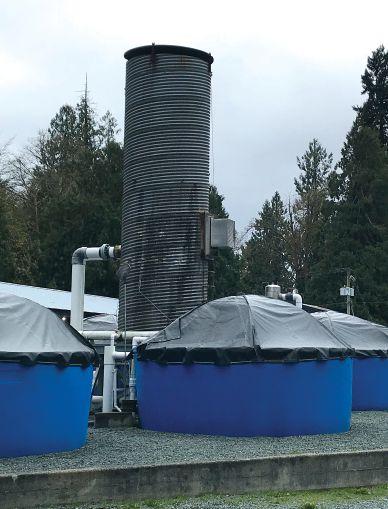
Addressing water quality challenges in the face of climate change p.28
COVER PHOTO: GEORGE NOVAK,
HATCHERY
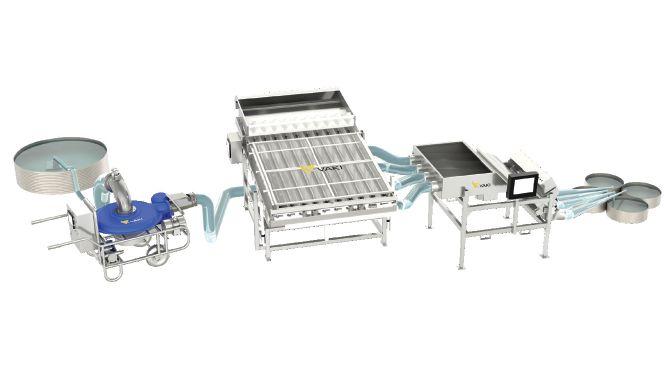
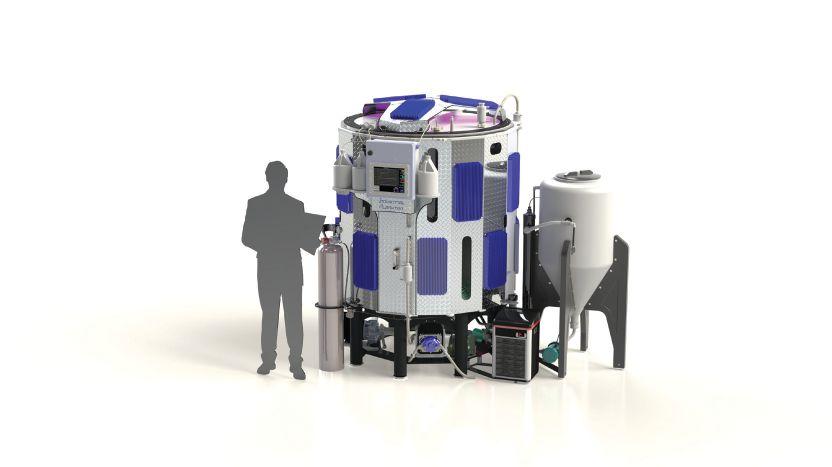
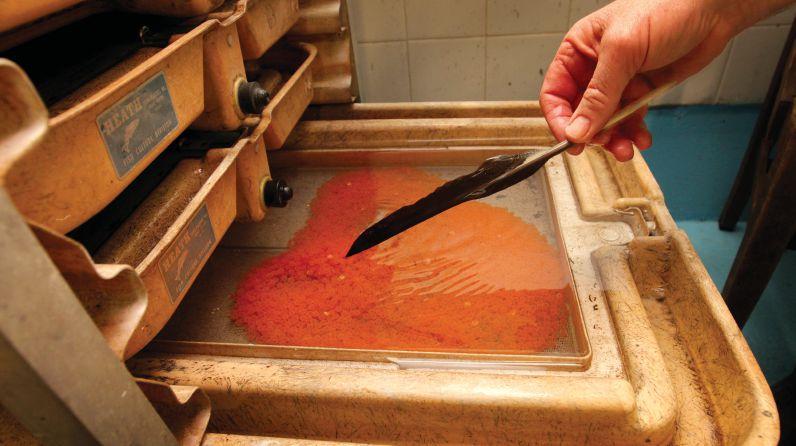
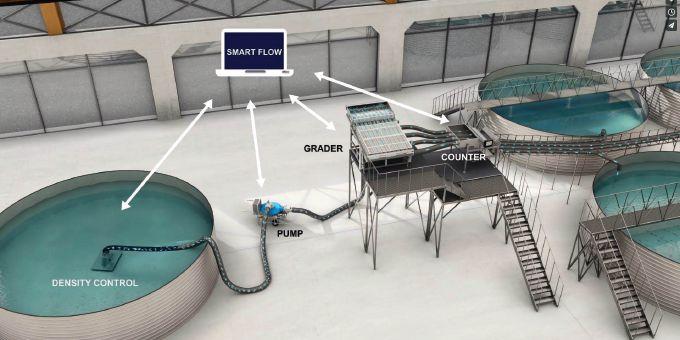
VAKI CLOUD
14 Taking stock
New Zealand’s Taranaki Hatchery’s successful stocking program continues to strengthen trout fishery in local streams. By Bonnie
Waycott
18 Blue evolution
One U.S. company pioneers efforts to sustainably farm bluefin tuna. By Bonnie Waycott
22 Profile: Kootenay Trout Hatchery
Pandemic-driven angling boost props up hatchery operations. By
Liza Mayer
26 Canadian scientists look at climate change impacts on aquaculture production By Quinn Bender, Local Journalism Initiative Reporter
28 Keeping watch on the water source
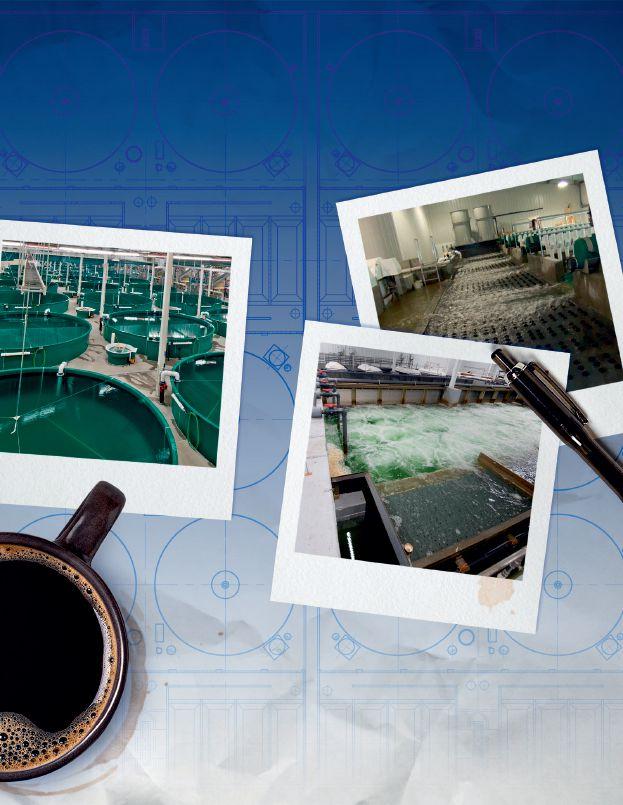
Finding ways to improve and protect water quality and reduce operating costs focus for hatchery operators. By Jennifer Brown
37 Philippines’ Cagayan Valley prepares to re-enter elver export market By
Ruby Gonzalez
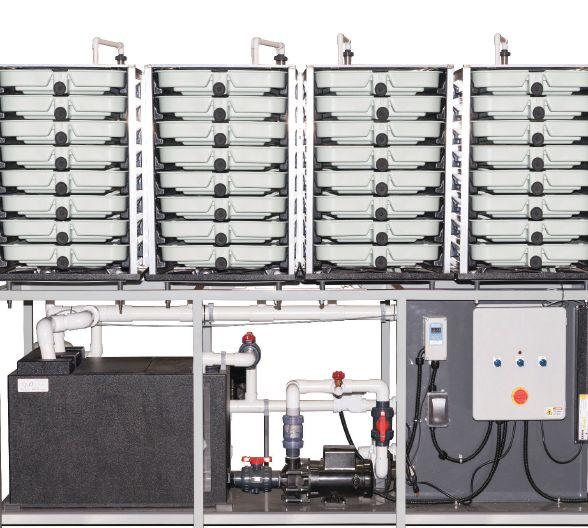
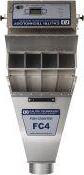
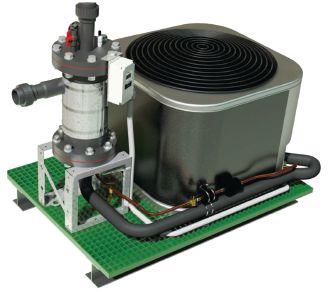
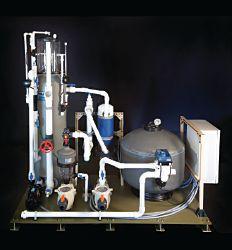
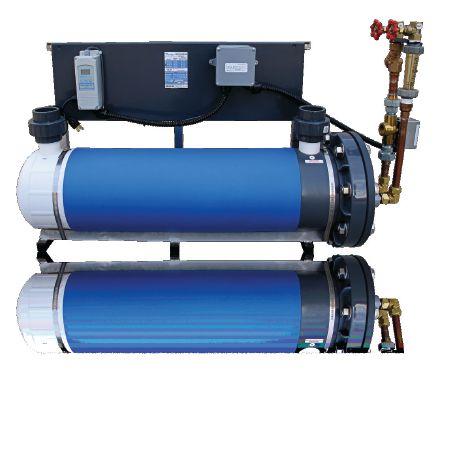
Increased Survival Rate with Significantly Reduced Water Consumption
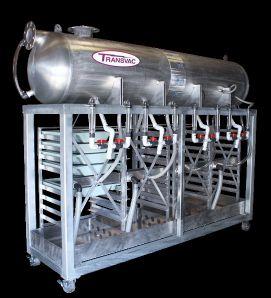
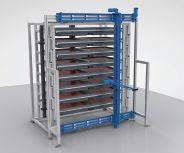
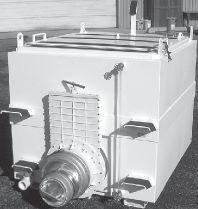
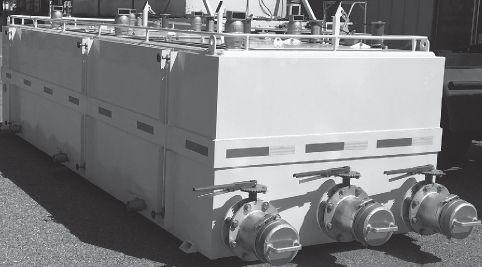
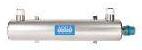
The all-new HydroHatch Incubation System from MariSource gives hatcheries increased efficiency. With recirculation, germicidal UV filter and a titanium heat exchanger, the HydroHatch delivers increased survival rate and significantly reduces water consumption.
Features and Benefits:
65 gallon sediment and recirculation tank
Requires only 150 gallons to completely fill the unit and reservoir
Easily able to increase the dissolved oxygen content of the water
230 volt 30 amp control panel
Insulated titanium heat exchanger
Precise temperature control
Comes standard with four 8-stack incubators
Additional four 8-stack incubator option available
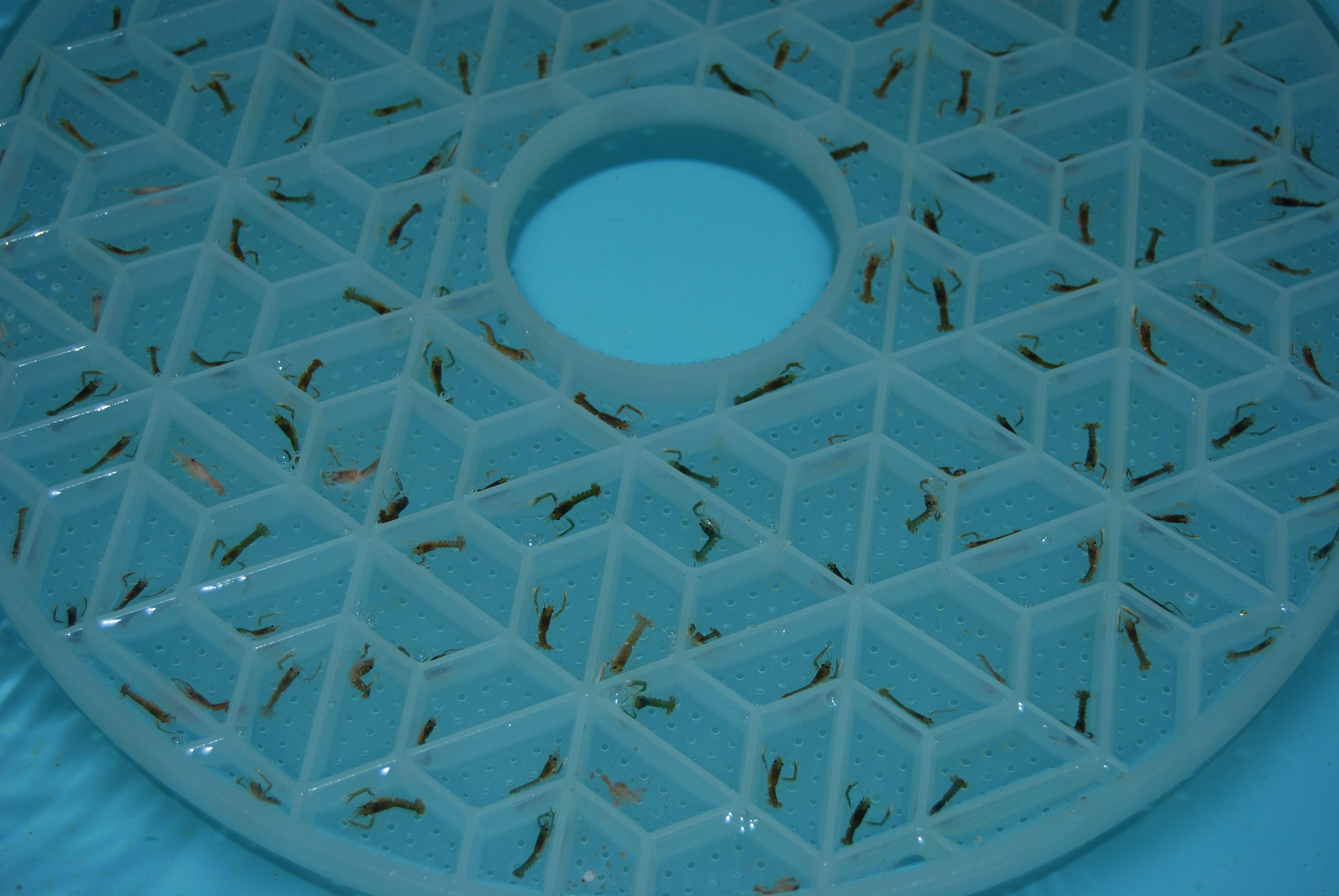
The new HydroHatch Incubation System is idealfor Salmon, Trout, Steelhead,Perch, Channel Cat Fish,Walleye,Eels, Shrimp and Muscles.
SUSTAINABILITY
Nofima project eyes nanotech to solve plastics problem
A Nofima scientist is embarking on a research project that aims to find new solutions for more efficient recycling of plastics used in seafood and other food packaging.
Jawad Sarfraz was awarded NOK 7.7 million (US$901,000) by the Research Council of Norway for his project Nano Functional Packaging (NanoFunPack). The research has two main objectives: increase recycling of plastics in food packaging and reduce food waste.
“The aim of the project is to use nanotechnology to find smart solutions so that plastics used in food packaging can be more easily recycled. We also want to develop even smarter food packaging to increase its overall shelf life and reduce food waste,” Sarfraz said in post on Nofima’s website.
Some 1.3 billion tonnes of food produced worldwide are wasted, according to United Nations data. A study published in Science Advances in December 2018 revealed that out of 8.3 billion metric tons of plastic that have been produced, 6.3 billion metric tons have become plastic waste, and only nine per cent of that has been recycled.
Hatchery International launches webinar series
Hatchery International is hosting a series of webinars aimed at providing valuable insights and best practices for hatchery managers and fish farm staff.
From February through November, Hatchery International will feature thought leaders and experts in hatchery management and fish rearing to provide insights and discussions on topics vital to the healthy operation of your hatchery facility.
From water quality management and fish health to technology and innovation, the four-part webinar series will offer relevant content and an opportunity to engage with some industry experts.
Sponsored by Oxyguard, the webinar dates are: Feb. 11, April 20, July 15 and Nov. 4. For more details visit: hatcheryinternational.com/webinars
PROJECT
Cooke plans new hatchery on Canadian East Coast
Cooke Aquaculture is seeking approval from the Nova Scotia government to establish a salmon hatchery on Digby Neck, N.S. over the next five years.
The $58.6-million project is expected to produce three million smolts per year, to supply Cooke’s 13 net pen farms across the Canadian province.
Cooke already has a pending application to the Nova Scotia government to expand its Liverpool Bay, N.S., farm site by adding 46 new pens and increase capacity to 1.8 million salmon, according to a report from Canadian news organization CBC News.
Cooke’s application for the Digby hatchery, submitted through its subsidiary Kelly Cove Salmon, is for a 10-year licence. The Nova Scotia Department of Fisheries and Aquaculture is reviewing the application. A 30-day
EDUCATION
Scholarship opportunity for women in aquaculture
Asian women seeking a postgraduate degree in aquaculture can now apply for scholarship under a unique program offered by the University of Stirling in Scotland.
The university has partnered with the British Council to launch a program that will be provided within the University of Stirling’s Institute of Aquaculture. The scholarship targets women from South East Asia who can demonstrate their need for financial support and “who wish to inspire future generations of women to pursue careers in the aquaculture industry,” according to a release from the university.
To be eligible for this scholarship the applicant must:
• Be female (cis-gendered or trans) or identify as non-binary;
• Be a passport holder and permanent resident of one of the following countries: Cambodia, Indonesia, Laos, Malaysia, Myanmar, Philippines, Thailand, Vietnam;
• Have applied and received an offer to study at one of the following degrees
public comment period, which closed Feb. 12, was conducted prior to a decision from the minister.
Cooke plans to grow salmon smolt longer on land at the proposed Digby hatchery – up to about 500 grams, Cooke spokesperson Joel Richardson told CBC News.
Traditionally, smolt are transferred from the hatchery to ocean net pens at about 125 grams. Growing them longer on land, allows the fish to get stronger and bigger, and therefore more healthy, when transferred to the ocean. It also shortens the time fish spend at sea, reducing the risks for disease.
at the University of Stirling by the time of application submission and be due to start a degree in: MSc Sustainable Aquaculture, MSc Aquatic Pathobiology, or MSc Aquatic Veterinary Studies.
Applicants also need to:
• Have completed an undergraduate degree that will allow the applicant to meet the academic requirements of one of the eligible degrees listed above, before the application is submitted;
• Have not previously studied at degree or higher level in the U.K. or recently lived in the U.K.;
• Be able to take the degree in the academic year from Sept 2021 – 2022;
• Meet the English language requirements for the course (IELTS 6.5 with no element less than 6.0, or equivalent, or expect to meet the requirement after undertaking one of the pre-sessional English language courses at the University of Stirling);
• Demonstrate a need for financial support;
• Agree to return to the applicant’s country of citizenship for a minimum of two years after the scholarship award has ended.
The scholarship covers the full costs associated with studying at the University of Stirling, including tuition, living costs, travel costs, equipment and study costs.
Applicants are required to complete the application form and send it to the organizers at international@stir.ac.uk by 12:00 noon (GMT) on March 24.
PHOTO CREDIT: BRITISH COUNCIL
Scotland hatchery’s waste recycling process earns recognition
Scottish Sea Farms’ pioneering work to recycle hatchery waste into nutrient-rich agricultural fertilizer has been recognised with a VIBES Scottish Environment Business Award.
The VIBES invited businesses this year to share their stories on how they have adapted products, services or their way of working, as a consequence of COVID-19 or how they have continued to pursue low-carbon opportunities despite the pandemic.
Scottish Sea Farms, which operates along the west coast of Scotland and in the Northern Isles, was recognized by the award organisers for its work to capture fish waste from its new £58-million (US$79-million) salmon hatchery at Barcaldine, near Oban in Scotland, and recycle it as fertilizer for farmlands.
The project is part of the company’s drive to set a new benchmark for sustainability in the sector and contribute to the Scottish Government’s ambition to be net zero by 2045.
Throughout the growing process, the hatchery’s innovative recirculating aquaculture system (RAS) ensures that fish have a continuous supply of clean, oxygenated water that’s maintained at a steady temperature.
During this same ongoing cycle of cleaning and recirculating water, any waste material, such as fish feces or uneaten feed, is removed and captured for recycling.
“Using technology by Norwegian engineering company Scanship AS, we first aerate the waste to prevent any unwanted bacteria from germinating, then we bind it together into larger particles via the addition of a cationic polymer,” explained Ewen Leslie, lead engineer for the Barcaldine RAS Hatchery.
“That done, the waste is filtered to separate the solids from the water. These solids, which are now of a sludge-like consistency, are then collected in a storage tank.”
Invergordon-based waste management company Rock Highland, part of the Avanti Environmental Group, ensures the sludge is both safe and suitable for agricultural land.
Once the sludge has been certified as being safe for use on agricultural land, the nutrient-rich byproduct is then uplifted by tractor and barrel for use on farmlands.
“We first started out by working with one or two of Scotland’s whisky distillers, helping recycle nutrient-bearing effluent originating from barley into fertilizer,” Rock Highland divisional director Neil Barker said.
“Recent years have seen us diversify and apply the same sustainable service to Scotland’s salmon farmers, with our proven model now collecting sludge from most of the salmon hatcheries across the highlands and islands of Scotland,” he said.
a
Responsible for bringing the two companies together was Northern Light Consulting, which project managed the new hatchery from feasibility study through the final construction.
“After working closely with Scottish Sea Farms to investigate every viable option to
deal with the hatchery waste sludge, we were delighted to recommend Rock Highland’s sustainable back-to-land solution,” said Northern Light consulting director Sarah Riddle. “As the aquaculture industry continues to work hard to reduce its environmental impact, new opportunities arise and we look forward to working together on innovative solutions towards achieving zero waste.”
Scottish Sea Farms’ freshwater team is now developing phase two of its fish waste recycling plans, with the goal of removing the remaining water content and converting the sludge into dry pellets.
“The benefit to the environment of moving from wet to dry form longer-term would be a reduction in the volume of waste material, thereby reducing the number of tankers and road miles required to transport it from hatchery to farmland,” said Leslie. “For land farmers, dry form would provide an even more nutritional and valuable natural fertilizer alternative that’s easy to handle.”
As a primary food producer, Scottish Sea Farms has continued to operate throughout the COVID-19 pandemic, adapting shift patterns at its farms and introducing social distancing precautions at all workplaces, including on shore, helping to safeguard job security for people living in the remote areas of the U.K., the company said.
Crym-Agro ramps up shrimp hatchery in Russia
Crym-Agro recently announced plans to expand its production facilities in a move to provide more active supplies of its products for the domestic and international markets. Company founders, the Shubaev brothers, have also confirmed that the company is looking to expand its hatchery capacity.
The Shubaev brothers became the world’s only producers to use live feed in their production, using primarily bloodworms collected in Crimea. According to them, the use of live feed improves the quality of the products with the same costs as conventional feeds.
“In China, Iran and some other countries, producers cannot use live feed because it is expensive and impossible to get the required amount. They try to produce it artificially. The Crimean Republic, however, is a unique place for aquaculture cultivation, as the local water is very rich in terms of feed. It is presented in the Black sea itself, as well as some major local lakes, such as Sivash and Kirleut,” said Dmitry Shubaev, one of the founders of the hatchery.
Most of the company’s production facilities are located on the coast of the Black Sea, which has the required salinity (17-18 ppm) for shrimp growing year-round. The same can be said for the Crimean climate in general.
The main hatchery consists of a fry feed laboratory as well as several pools full of phytoplankton, where either young shrimp or their parents are kept depending on the season. Feeding usually takes place four times a day (with the largest feedings in the morning and during the evening) with bloodworms and phytoplankton used as the main feed types.
The hatchery currently specializes on Vannamei white-footed shrimp. However, Shubaev is not discounting the possibility of expanding to other species in the short-term.
“Growing of such fries is usually associated with less difficulties for us, as we have been able to create all the conditions for such production,” said Shubaev.
Currently, the farm employs 50 workers, but there are plans to grow its personnel by four times over the next several years. The majority of the farm’s produce is supplied to the domestic market, and some are exported, particularly to the Asia Pacific region.
– By Eugene Gerden
Freshwater team at Barcaldine Hatchery works in
‘bubble’ to maintain COVID-19 protocols.
First commercial tropical rock lobster hatchery ready for prime time
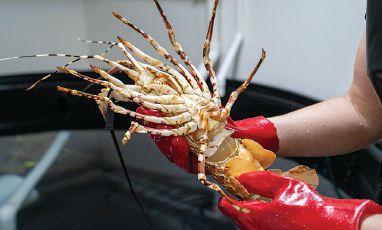
Following the successful launch of its much-awaited tropical rock lobster (Panulirus ornatus) commercial hatchery, Tasmania-based Ornatas is now focused on growing the species to commercial quantities.
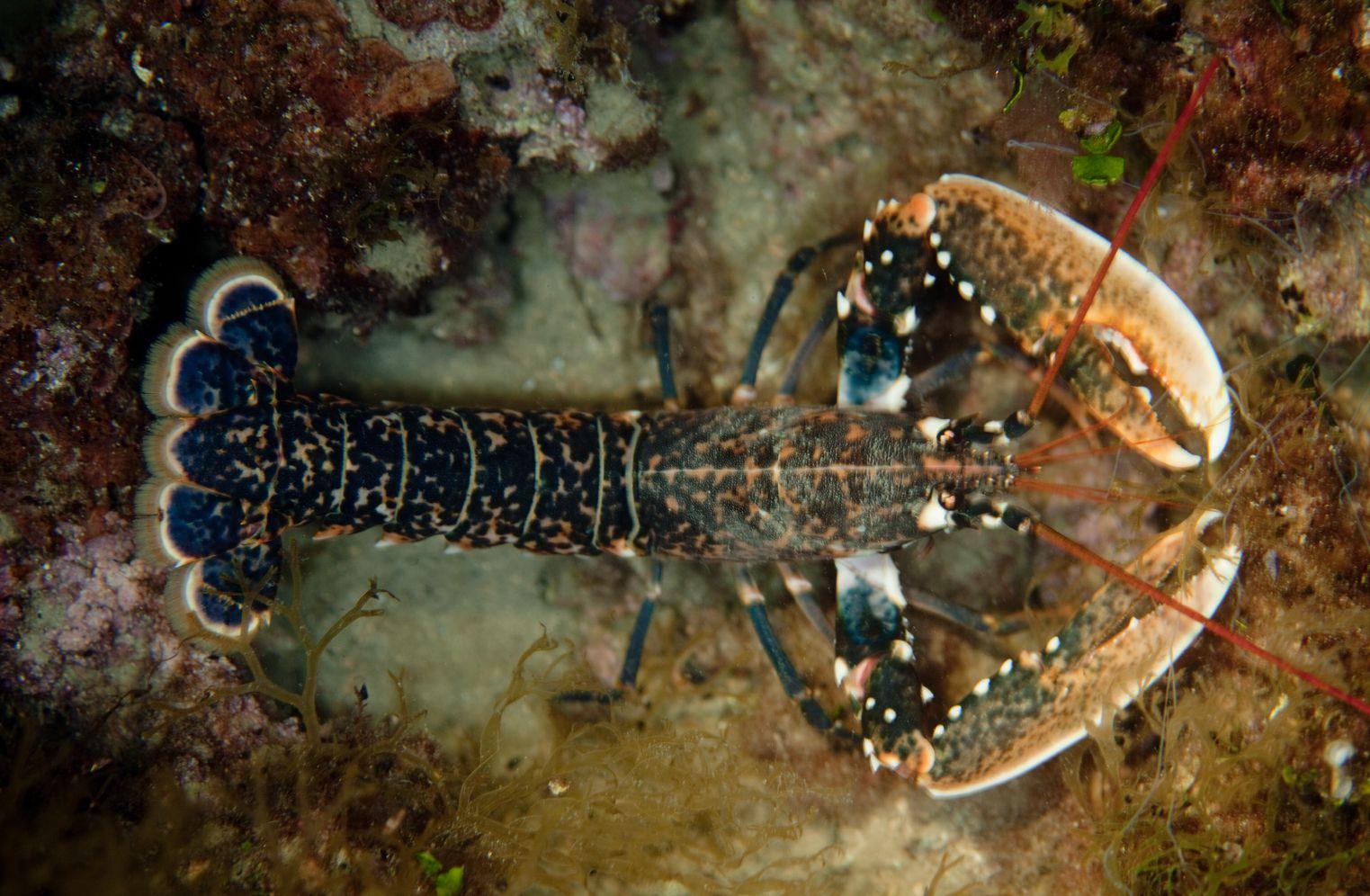
Dubbed as the world’s first commercial hatchery for tropical rock lobster, Ornatas’s Toomulla Aquaculture Facility received its first tropical rock lobster broodstock last October. They have since successfully acclimatized to the hatchery with some of them already carrying eggs. The first group of lobster larvae hatched over Christmas.
“Scaling up the technology to support a production of 1,000 tonnes of lobsters annually over the next 10 years will be the focus, with sustainability and biosecurity the top priority,” said Scott Parkinson, CEO of Ornatas, in a post on the company’s website. Ornatas is the commercial brainchild of
research from the University of Tasmania Institute for Marine and Antartic Studies, which successfully closed the breeding protocols for tropical rock lobster.
The Toomulla hatchery has been undergoing field trials since March 2020, using Moreton Bay bug broodstock.
“Our bugs are the quiet heroes this year, serving as a pivotal part of trialling the Ornatas Aquaculture systems and preparing the team for the tropical rock lobster hatchery operations. Over the course of the year, the continual progress and improvements of the Moreton Bay bug hatchery have led to some strong runs now progressing through to grow-out phase,” the company report said.
Hatchery manager Anna Overwater said the focus of the hatchery will now shift to the commercial grow-out of the lobsters.
– Mari-Len De Guzman
Tilapia growth rate no impact on major pathogens resistance: study
Growth rate does not contribute to the resistance of Nile tilapia (Oreochromis niloticus) to S. iniae and S. agalactiae capsular type Ib, according to the team that pioneered studies that evaluated Nile tilapia families for resistance to these pathogens.
The two streptococcus species, commonly reported by U.S. tilapia producers, cost the global industry US$1 billion annually from mortalities and treatment expenses.
“Our results demonstrated that there are no significant relationships, favorable or unfavourable, between growth and survival to both S. iniae and S. agalactiae type Ib,” Dr. Benjamin LaFrentz, research molecular biologist at USDA-Agricultural Research Service (USDA-ARS), told Hatchery International.
“Although selection for a single trait may lead to a higher response – i.e. faster improvement – no response will be obtained for the other
Streptococcus iniae and S. agalactiae capsular type Ib in Nile tilapia (Oreochromis niloticus),” by LaFrentz et. al. was published in the journal, Aquaculture, and a collaboration between USDA-ARS, Spring Genetics in Miami and Benchmark Genetics Norway.
Data from eight generations of tilapia were used, including growth data for all generations, S. iniae mortality data from three generations, and S. agalactiae Ib mortality data from five generations.
“The main engine driving the long-term sustained improvements is balanced, multi-trait selection taking place in the breeding nucleus,” LaFrentz wrote.
traits. Thus, in order to improve all three traits, they must all be selected for at the same time.”
The study, “Genetic (co)variation between harvest weight and resistance to both
Parameters considered for multi-trait selection are the genetic architecture of the traits, genetic correlations, and long term needs of the target market.
–
Ruby Gonzalez
The Toomulla hatchery team has been growing Moreton Bay bugs as a trial for the hatchery’s commercial-scale operations PHOTOS: ORNATAS
Tropical rock lobster broodstock that arrived at the Toomulla hatchery last October.
Spring Tilapia selectively bred for fast growth and resistance to Streptococcus agalactiae and S. iniae. PHOTO: DR. BENJAMIN LAFRENTZ
New California law to boost efforts of white seabass hatchery
By Bonnie Waycott
A legislation passed in August 2020 by the California state legislature in the U.S. is expected to make key contributions to a white seabass hatchery program in Carlsbad.
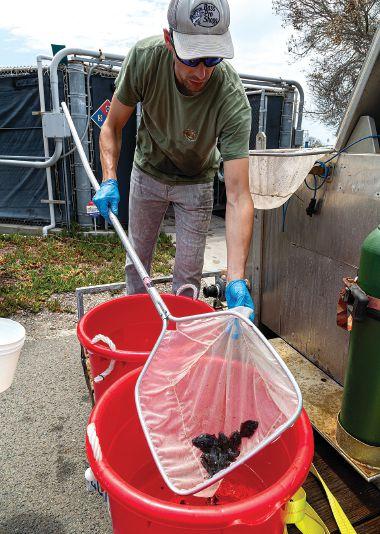
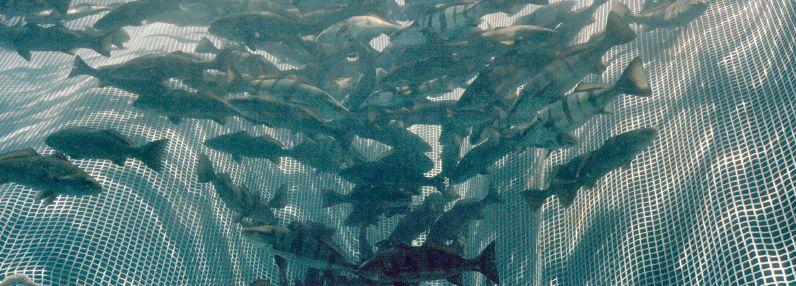
Established in 1995, the Leon Raymond Hubbard Jr. Marine Fish Hatchery releases between 80,000 and 100,000 white seabass into the ocean each year. The hatchery is owned and operated by Hubbs-SeaWorld Research Institute (HSWRI), which is contracted by the California Department of Fish and Wildlife as part of the Ocean Resources Enhancement and Hatchery Program (OREHP). The OREHP is a partnership between California state resources agencies, public utility companies, volunteer user groups and the scientific community. Its aim is to address the depletion of coastal marine fisheries through stock enhancement. In 1986, the first juvenile white seabass were released into Mission Bay in San Diego. Since then, over 2.6 million have been tagged and released into coastal waters off southern California.
“The OREHP is one of the few stocking programs that assesses the biological and economic impacts of its releases and the only program of its kind on the west coast of North America. Its main focus is to improve survival rates so that more tagged fish enter the fishery. Some release areas have been better than others and larger fish survive better,” explains Mark Drawbridge, senior research scientist and director of Sustainable Seafood Program at HSWRI in San Diego.
The new legislation will affect fisheries management, setting out guidelines on how stock enhancement is applied for any given species, among others. It will also be possible to continue investing in the necessary research to adapt to changes in the marine
environment, and conduct studies on other potential marine species.
“Assuming there is funding and authorizations to do so, we’ll be looking to continue refining our culture practices for seabass and testing release scenarios that have shown promise in previous years, such as releasing larger fish in productive areas,” said Drawbridge.
Drawbridge and his team are currently collaborating with other agencies to develop a genetic marker for white seabass that will
inform and assist the hatchery’s breeding and release programs.
“We have also initiated research on California halibut, including pilot releases over the last year, Drawbridge says. “We collaborate with other agencies and universities but there are no other marine fish hatcheries (non-salmonid) on the west coast of the United States, so our facility is quite unique. We do communicate regularly with state agencies in Texas, Alabama and South Carolina, who are stocking similar species to ours.”
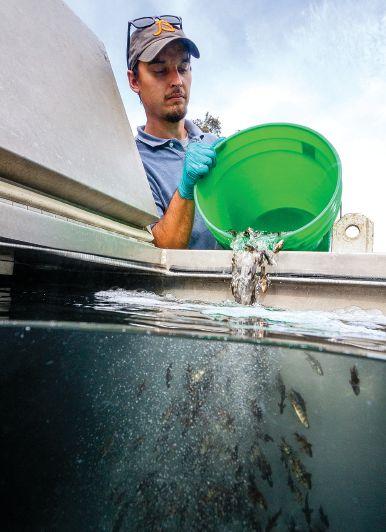
HSWRI researcher loads a hauling tank with juvenile seabass for transport to net pens. PHOTO: MARK DRAWBRIDGE, HSWRI
Juveline seabass are placed in acclimation cages before they are fully released.
Transferring juvenile halibut to grow-out raceways. PHOTO: MARK DRAWBRIDGE, HSWRI
Q&A
CRAIG COPELAND, FISH
CULTURE MANAGER, ALBERTA ENVIRONMENT AND PARKS
Out with the old
Government funding ushers new era for Cold Lake Hatchery
By Jean Ko Din
High-fives were flying around when Canada’s Alberta government announced last August it will be investing $10.3 million into Cold Lake Fish Hatchery.
The provincial government’s investment will go towards a full upgrade from its current flowthrough system to a state-of-the-art recirculating aquaculture system (RAS). Craig Copeland and his hatchery team have been working on proposals for a re-use system for many years, so this green light from the government comes with both a sigh of relief and a buzz of excitement.
“You have to wait your turn, when you’re working for the province. There’s only so much cash to go around,” says Copeland, who has been working for Alberta’s Ministry of Environment and Parks for almost 40 years. “So when it finally is your turn, you make sure that you do your due diligence and you have the right proposal and the right concept plan.”
Cold Lake Hatchery is one of four government-run hatcheries in Alberta that Copeland oversees. This particular hatchery rears and stocks about 900,000 Tiger, Rainbow, Brook and Brown Trout per year. It is also the only provincial hatchery that is designed to raise walleye.
Copeland splits his time as fish culture manager at the Ministry with his duties as mayor of the City of Cold Lake. First elected in October 2007, he is currently serving his fourth consecutive term as mayor.
Still, Copeland admits that his work at the hatchery is his first love. He worked as a technician when the hatchery was built in 1984, and now he shares his thoughts with Hatchery International on what it means to oversee the beginning of a new era for Cold Lake.
Hatchery International: How many of you among the team have been working at the hatchery since Day One?
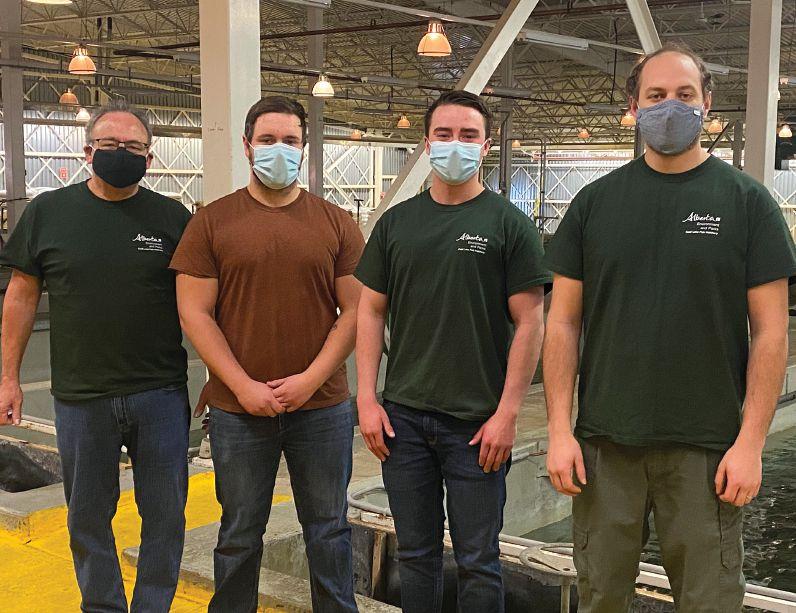
and Harvey Pollock (manager of Cold Lake Hatchery).
Of the 19 people that work for me among the four hatcheries, there are maybe four that are members of that old guard, if you will. The rest of the staff are anywhere from 23 years old to their early 40s. But we’re all going to have to learn a new way of raising fish because it’s going to be uniquely different. We’ve got a really, really good team. And so, yeah, they’re all looking forward to the challenge of the RAS.
HI: What is the main impetus that’s driving this new build? What are the main things you want to achieve with this system upgrade?
Craig Copeland: One of the big issues for Cold Lake is the lake, of course, is frozen for like five to six months of the year. And so, if you’re raising your fish at 10 degrees Celsius, let’s say, you have to heat up a lot of water. We’re bringing in from the lake about 300 litres per second of flow and so one of the reasons, if not the primary reason why we’re moving from flowthrough to reuse, is to reduce our natural gas utility bill in a huge way.
We’re really looking forward to studying our cost reduction, in terms of utility on the gas side now, with the new pumps and drum filters and stuff that will have to be installed with the RAS. We may experience a little bit more electrical charges but we don’t think it’s going to amount to much because we’re going to save on our ozone generator utility costs.
HI: You have a unique perspective as hatcheries manager for Environment and Parks, and as mayor of Cold Lake. What would you say is the role that this hatchery plays in the local community?
Craig Copeland: Alberta is kind of challenged for lakes. It’s not like Ontario, or some of the States like Minnesota. And so in our area, we’re called the Lake Land Area. There’s lots of lakes in our area that have walleye and
Craig Copeland: Just me
Hatchery staff at Cold Lake Fish Hatchery PHOTOS COURTESY: CRAIG COPELAND
Cold Lake Mayor Craig Copeland releasing a sixyear-old Male Tiger into the lake.
northern pike and lake trout. So we have five stocking trucks that will put on 100,000 kilometres every year.
The economic impact in Alberta through the stock fisheries is estimated to be about CAD$166 million a year. Especially this year under COVID, it’s just crazy the amount of people that are out fishing right now. It’s great to see a lot of people enjoying the outdoors, a lot of new fishermen taking up the sport. We’re seeing an about 30 per cent lift in fishing in Alberta right now. That’s really quite exciting.
And, you know, I think Alberta (government) deserves a lot of credit, to invest in its hatcheries and infrastructure.
HI: Now that planning for the RAS facility is underway. What do you see is the biggest challenge?
Craig Copeland: The RAS building is going to be built right alongside our existing hatchery. It’s going to take all of the flow from early rearing and from the final rearing. The water effluent all goes to this one pit at the back of the hatchery and we’re going to come in and tie into that flow and bring it into the RAS building. The water will eventually be brought back to the early rearing and final rearing systems. And that is where Stantec has to figure out how they’re going to tie it into our existing systems.
The only time we’ll have some interruption is when we plan to shut the water off in the summer of 2022. We’re going to be repairing and retrofitting a lot of internal componenents. The hatchery was constructed in 1984 so we’ll be doing some modernization. We’re going to shut down for about 60 to 90 days.
HI: What is it like for you, as someone who has worked in this hatchery since the first day, to now see it turn into something new?
Craig Copeland: For me, it’s pretty exciting to sort of end your career on all four hatcheries being upgraded. Three of the hatcheries will be upgraded. And we’ll have a brand new fish hatchery at Raven Creek. Finally, Cold Lake is going to have RAS. Now, we’ll be reducing our water intake significantly and lowering our operating costs, just on the natural gas alone. And we’re pretty confident that we’re going to be lowering our our electrical power utility bill, also.
As the manager of fish hatcheries, and the whole team here in Environment and Parks, [we] are trying to reduce our price per fish, so that we’re making sure that we’re spending the taxpayers’ dollars prudently.
• Recirculation System Design, Supply and Construction.
• Commercial Farms, Hatcheries, Aquaponics, Research Labs, Public Aquariums, Live Holding Systems – we do it all!
• Representing leading RAS equipment manufacturers.
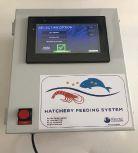
• TOUCH-SCREEN TECHNOLOGY FOR MONITORING O2, PH AND TEMPERATURE
facebook.com/fish.transfer A system built to work in extreme condtions over 4500 meters above sea level.
We can eat our fish and fight climate change, too
By Philip A.
Kwan Phayao, a large crescent moon of a lake in Northern Thailand, is home to about 50 fish species, several hundred small-scale farmers and fishers, and the city of Phayao, where 18,000 people live.
The lake has always been important to local people for fishing, but today, the lake’s fisheries are at the centre of the local economy and food system.
Fish are a highly nutritious and, in many cases, a very sustainable source of protein. Following the release of the latest climate change report by the International Panel on Climate Change (IPCC), many are talking about reducing their meat — and therefore protein — consumption. For some reason, fish and other seafood are repeatedly left out of conversations about how to build more sustainable and climate-friendly food systems.
Closing the loop
We are both part of Too Big To Ignore, a global partnership dedicated to raising awareness of small-scale fisheries around the world. During a recent conference in Chiang Mai, Thailand, we visited a small farm in the northern region of the country that successfully connects production of rice, vegetable crops and fish in a nearclosed loop.
The farm is run by a local known as Uncle Plien. He follows Thailand’s “sufficiency economy philosophy,” a system of sustainable development conceived by the late Thai King, Bhumibol Adulyadej. The philosophy emphasizes long-term benefits over shortterm gains, and puts values such as moderation, prudence, honesty and the application of local knowledge at the fore.
Leaving fisheries and fisherfolk out of the discussion limits the discussion of viable solutions. These issues are not uniform and cannot be solved by fix-all, high-tech solutions.
Facing a difficult drought in the early 2000s, Plien decided to diversify from fishing. He built a farm that grows rice and vegetables and uses locally-grown aquatic plants and rice to feed his fish and frogs. Much of what he raises is for home consumption, and the excess is sold to local markets.
It’s a modest farm, roughly four acres in size, but Plien reports earning roughly US$10/day year-round from his land, which he harvests daily with his wife, who is in charge of the marketing. He also operates the farm completely debt-free and provides the basic food he needs for his family. Both of these outcomes are virtually unheard of in North America.
Climate-friendly fish
Kwan Phayao is just one example of many that illustrate how small-scale fisheries and aquaculture can be key to our collective future. Globally, fish is among the most consumed and traded foods in the world. It represents about 17 per cent of the animal protein consumed globally. For people in small island nations and the Arctic, fish can account for as much as 80 per cent of the protein being consumed.
Fish are also a crucial and accessible source of Omega-3 fatty acids, vitamins and minerals, especially for the world’s poorest people. Sardines, for example, are highly nutritious and hugely important to food and nutritional security for millions of people in Africa.
carbon footprint than agricultural protein, making them a viable alternative for people looking to reduce their carbon footprint. Sardines and other small pelagic fish could therefore be key to developing more sustainable and climate-friendly food systems.
Currently, sardines are mainly used for animal feed and fish oil products. While start-ups and agribusiness giants are clamouring to develop insect- and lab-based proteins, sardines offer an existing alternative that, if developed in a way that empowers local fishing communities and redirected for human consumption in Europe and North America, could help reduce emissions and lift people out of poverty.
Toward sustainable fisheries
Globally, we have made great strides in making fisheries more sustainable. In 2014, the United Nation’s Food and Agriculture Organization (FAO)‘s 194 member-states endorsed guidelines for the protection of small-scale fisheries that emphasize human rights, social justice and environmental sustainability.
Additionally, more than 25,000 seafood products are labelled by the Marine Stewardship Council (MSC) as sourced from sustainable
fisheries. (The transparency, accuracy and social impacts of the MSC process is debated, and much work remains to be done.) But there is momentum: if we invest in small-scale fisheries, and commit to reforming currently overfished stocks, we can increase wild harvests and food security, improve conservation outcomes and empower small-scale fisherfolk, including women.
There are multiple dimensions of environmental and human health that need to be considered when looking at the sustainability of food production, from carbon to biodiversity, dietary preference to social justice.
Leaving fisheries and fisherfolk out of the discussion limits the discussion of viable solutions. These issues are not uniform and cannot be solved by fix-all, high-tech solutions.
Source: The Conversation (theconversation.com)
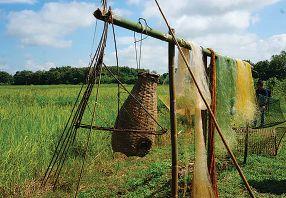
Fishing gear hangs in front of a rice field on Uncle Plien’s farm.
PHOTO: PHILIP A. LORING
Uncle Plien mixes fish feed with locally harvested ingredients.
PHOTO: PHILIP A. LORING
Philip A. Loring is an associate professor and Arrell chair in food, policy, and society at the University of Guelph in Ontario, Canada.
Ratana Chuenpagdee is a university research professor at Memorial University of Newfoundland in St. John’s, Newfoundland, Canada.
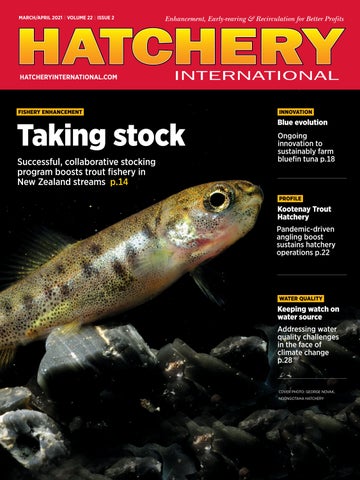
Taking stock
New Zealand’s Taranaki Hatchery’s successful stocking program strengthens trout fishery in local streams.
By Bonnie Waycott
In New Zealand, salmon and trout aren’t native species. Wild populations arose from intensive stocking programmes and more than 100 years of management by 24 acclimatisation societies and what was known as the Central North Island Wildlife Conservancy. The early societies operated trout hatcheries to stock streams, rivers and lakes.
In Taranaki, a region in the west of the North Island, three local societies – Taranaki, Stratford and Hawera – believed that the streams running off Mt. Taranaki did not have sufficient natural recruitment to
sustain a trout fishery, so work continued to raise trout for stocking. The Taranaki Trout Hatchery was established in Hawera in 1979 by the Hawera Acclimatisation Society. It was then inherited by the Taranaki Fish and Game Council in 1990 when the acclimatisation societies were amalgamated as a result of the Conservation Law Reform Act.
“In 1990, the hatchery was receiving up to 40,000 ova and raising up to 15,000 yearling Rainbow trout mainly for release into Mt. Taranaki ringplain streams – in particular, the Waingongoro River and Kaupokonui and Kapuni Streams,” says Allen Stancliff, fish and game officer at Taranaki Fish and Game. “Over time, stocking successfully established a Rainbow trout fishery in these streams in addition to resident Brown trout, but the return of hatchery fish to the angler was generally poor. In recent years Taranaki Fish and Game has focused on raising fewer but larger Rainbow trout for release into local lakes, which have limited or no natural spawning.”
Egg source
The hatchery process begins in mid-July each year when 3,000 Rainbow trout ova are driven from the Ngongotaha hatchery near Rotorua
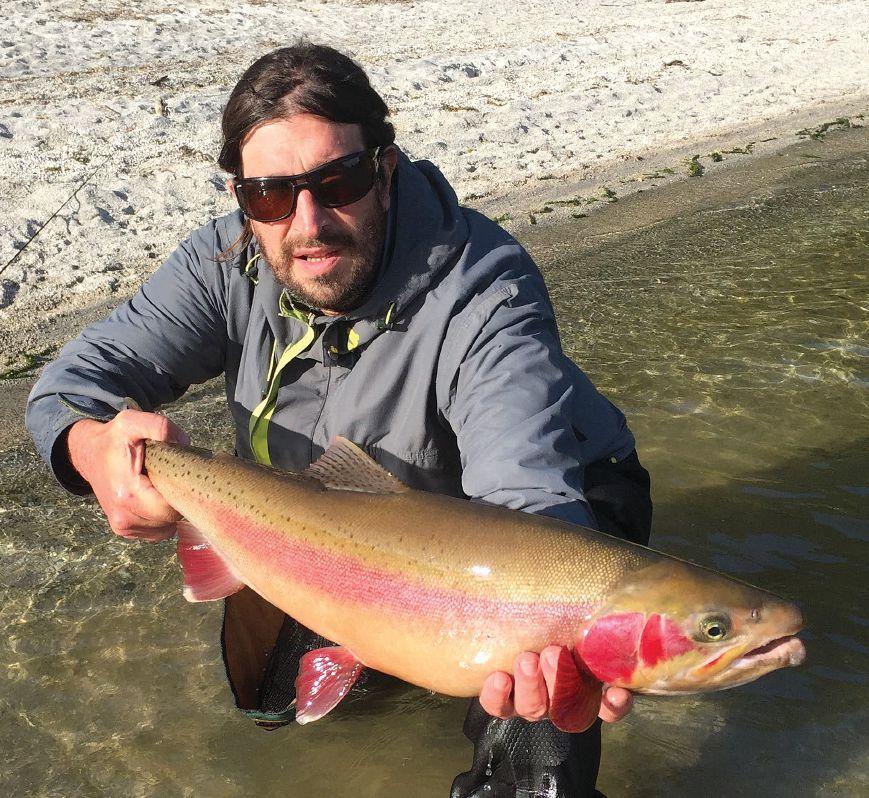
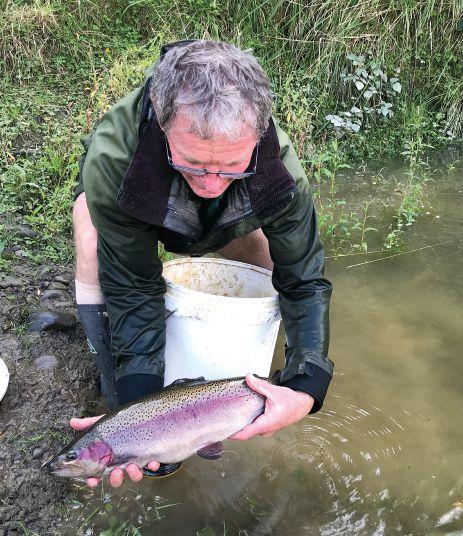
Hernan Diego Guerra Ortiz with an eight-and-a-half-pound Lake Okataina, Rotorua Rainbow trout
PHOTO: NGONGOTAHA HATCHERY
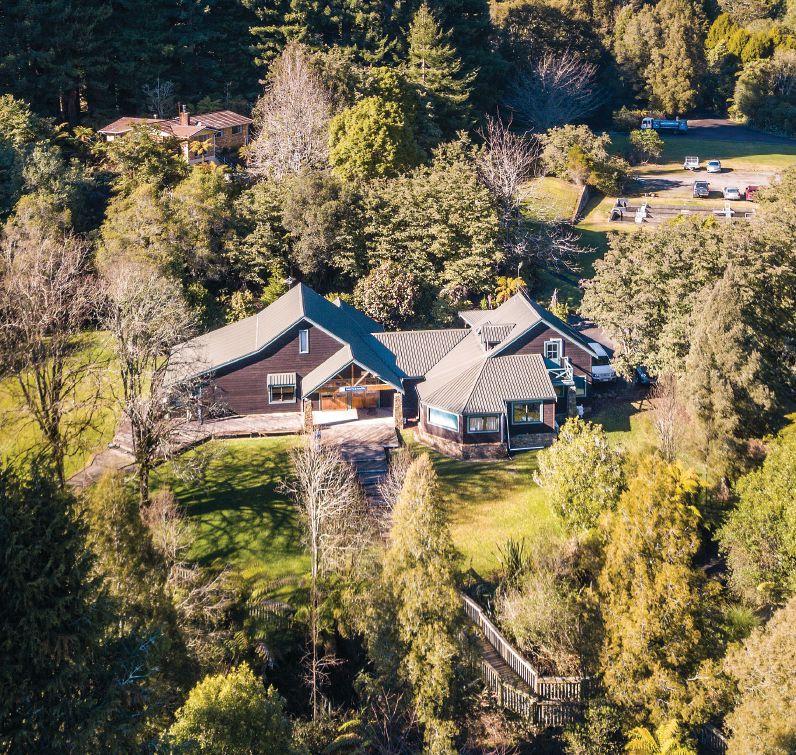
The Ngongotaha Hatchery was established in the 1900s. PHOTO: NGONGOTAHA HATCHERY
on the North Island’s Bay of Plenty. The Ngongotaha hatchery obtains its broodstock each year from Lake Tarawera and checks for ripening twice weekly. When the broodstock are between three and four years old, the ova are stripped manually under anaesthetic using an air pump.
“The Ngongotaha hatchery was established in the 1900s to enhance the local sports fishery,” says Mark Sherburn, fish and game officer at Ngongotaha. “It produces around 90,000 fish a year, 98 per cent of which are Rainbow trout, the remainder Brown. A small number of Brook char and Tiger trout are also produced. Rainbow trout suit the local habitat well. They grow at an impressive rate and are popular with anglers.”
Ngongotaha also runs a selective breeding program to enhance specific genetic traits from the broodstock, according to Sherburn.
“A combination of wild and hatchery-reared broodstock are selected and scored based on desired traits. Hatchery fish are released as yearlings and have to survive two to three years before spawning but wild fish are recognised as being genetically robust and are therefore valuable for the breeding programme.”
Sherburbn says the biggest change to trout
growth recently has been environmental factors. Increased nutrient levels from localised human activity affects the lake’s water quality and the trout’s size – a key element in angler satisfaction.
“We monitor water quality and how it affects trout growth, and work with various agencies and landowners to ensure the best possible outcome for trout,” he says.
Optimal growing conditions
The Taranaki hatchery receives water from three 150-mm slotted PVC pipes, which gravity-feed water from a weir in the nearby Tawhiti Stream. Inside the hatchery are ten 300-litre ova troughs and eight 540-litre fingerling troughs, which all discharge into a central channel. Outside the hatchery are three concrete raceways of 8,250-, 9,900- and
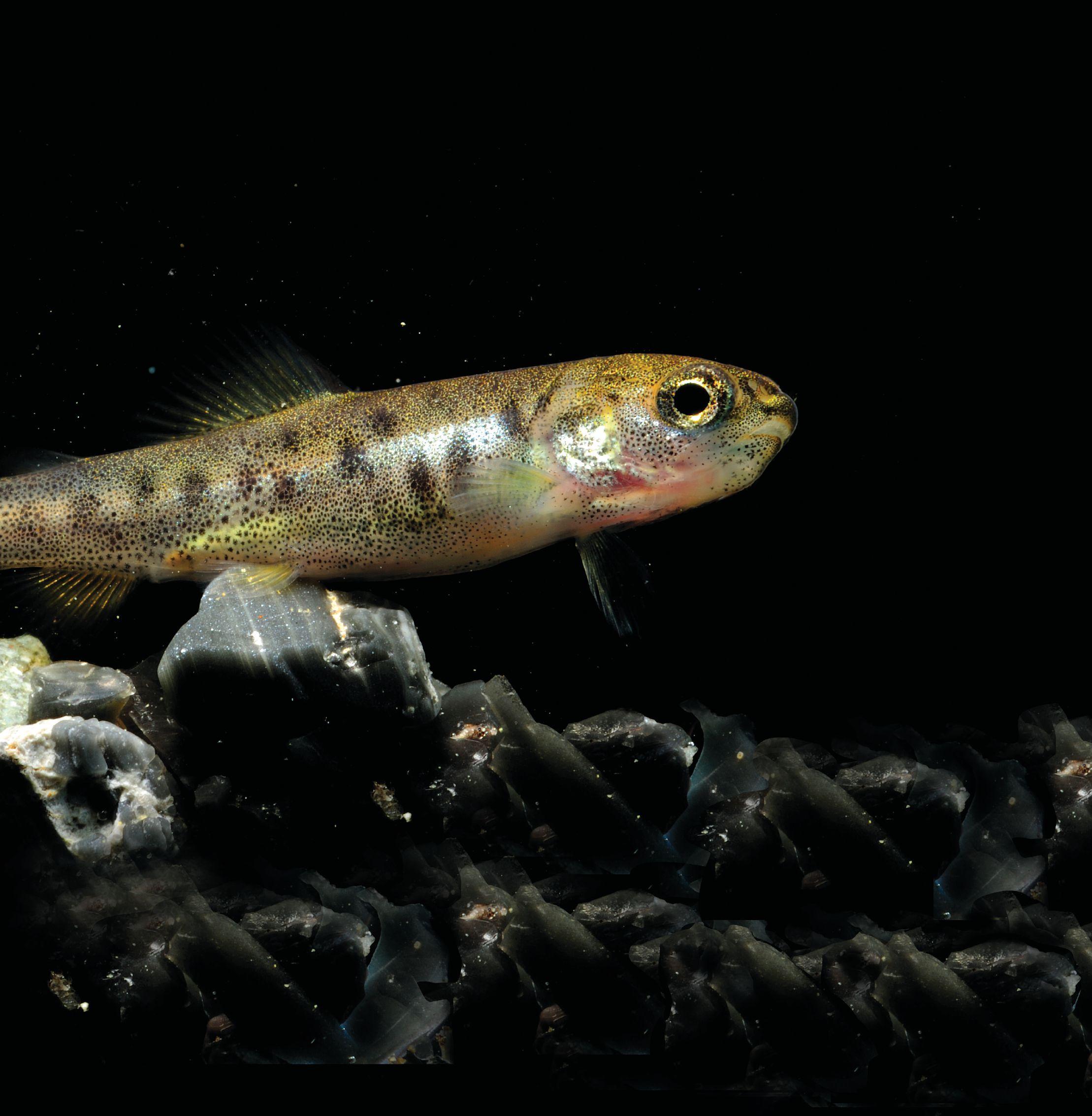
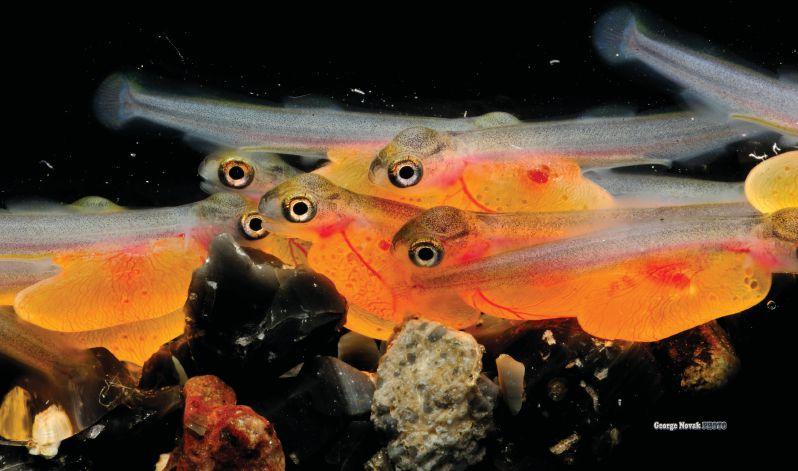
PHOTO: GEORGE NOVAK, NGONGOTAHA HATCHERY
11,500-litre capacities, respectively. The lowinput system is run by 11 volunteers with oversight from Stancliff and volunteer team leader Malcolm Hurley.
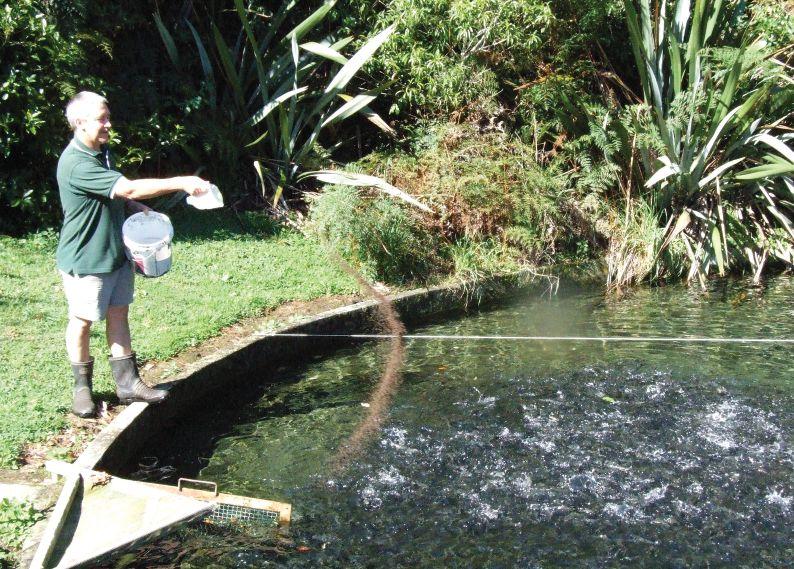
The ova from the Ngongotaha hatchery are placed in wire mesh baskets suspended in troughs. Any opaque/dead ova are picked out each day. As they hatch (without inducement), the alevin or yolk-sac fry drop through the ova basket mesh and settle on the bottom of the ova trough. They’re kept in dim light until they begin to swim up. The fry are then hand-fed once a day with a fine pellet starter feed from Chile. They are held in the ova troughs (two troughs, approximately 1,500 fry in each) for several weeks before being transferred to two of the 540-litre fingerling troughs. When they start threatening to jump out, they are transferred to the smallest outdoor raceway. As they grow, they are hand-fed progressively with larger pellet feed.
“To ensure that the fish are bred in good condition, we monitor water temperature closely,” explains Stancliff. “In peak summer (late January-early February), it can exceed 20 C in the Tawhiti, at which time the fish can be susceptible to fungal (saprolegnia) infection if there is fin damage. Rock salt can be added to the raceways to increase salinity and prevent infection. Occasional treatment with KMn04 (potassium permanganate) is also possible. We catch a sample of fish periodically with a hand-net for inspection and increase feed as necessary to maintain growth.”
Taranaki Fish and Game has an approved Exotic Disease Response Plan for the hatchery, which outlines the procedures to take if an exotic fish disease is suspected on-site.
Raceway brushes and nets are soaked in
Rising yearlings being fed at the Ngongotaha Hatchery. PHOTO: NGONGOTAHA HATCHERY
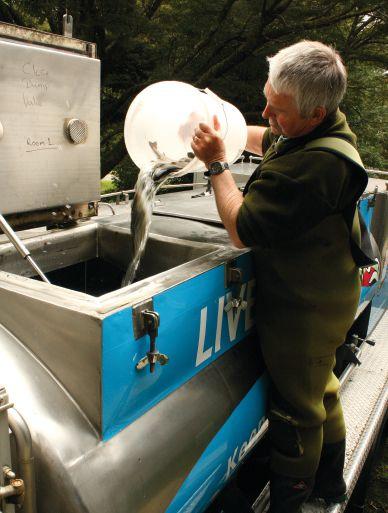
Loading up Ngongotaha’s tanker for fish release PHOTO: NGONGOTAHA HATCHERY
Ova are checked and cleaned manually several times a week. PHOTO: NGONGOTAHA HATCHERY
potassium permanganate as a disinfectant. Troughs and raceways are inspected daily for signs of sick fish, with samples taken and sent for analysis, if necessary. An outbreak of the whitespot disease Ichtyophthirius multifiliis in the hatchery has occurred on two occasions in the last 30 years, probably originating from native bullies in the Tawhiti Stream. Volunteers keep a lookout for signs of this disease, while each raceway is water-blasted and cleaned when emptied.
Ready for release
Before the first release from the hatchery, the fish’s adipose fins are clipped in April or May. This allows anglers to recognize a hatchery fish when they catch one. At fin clipping, the smallest fish in excess of stocking requirements are discarded. The fish are released progressively to reduce densities in the hatchery and allow the continued growth of the remaining fish. Early releases are around 150mm in length.
“Each year the staff produce a proposed release schedule, which is approved by the Council and focuses on release to lakes that have limited or no natural spawning but which provide a valued angling resource.” Stancliff says. “After more than 100 years of releases, almost all of our streams and rivers are managed for wild trout. The hatchery’s main focus now is on maintaining angling opportunities.”
Asset to anglers
Today, hatchery operations remain vital to the thousand-odd freshwater anglers who fish in the Taranaki region. Following their release, the growth and survival of hatchery fish is monitored through an angler diary scheme and angler satisfaction surveys are carried out to ensure that licence holders are happy, says Stancliff. There is no minimum size limit in Taranaki, but experience has shown that few anglers keep small fish. Bag limits are set at two fish per day for both lakes and rivers. Now, with a new project underway, Stancliff is optimistic about the future and grateful for the number of volunteers who have been key to their work.
“We’ve been focusing on raising 700 larger Rainbow trout for kids’ trout fishing events and for release into the Stony and lower Patea rivers,” he says. “The volunteers have been excited to see how large the fish can get to, and the hatchery’s running is undoubtedly reliant on their efforts. Without them it simply wouldn’t be economic to run.”
Fish and Game officer Allen Stancliff releases a 20-month Hawera Rainbow trout into the Patea River. PHOTO: TARANAKI HATCHERY
BLUE EVOLUTION
By Bonnie Waycott
Bluefin tuna are a viable commercial species that command great prices, such that wild populations are overexploited to supply the lucrative sushi and sashimi markets. The Pacific bluefin tuna (Thunnus orientalis) population, for example, is now just about three per cent of what it was when records started (circa 1930). Now, one U.S. firm is developing solutions to bolster the bluefin supply and remove limitations for closed-cycle bluefin farming in North America. Based in San Diego, California, Ichthus Unlimited (IU) LLC began as a consulting firm in 2005 to serve the needs of a UK/Canadian/Japanese venture in La Paz, Mexico. The company has since reached milestones in solving several key challenges with bluefin farming. The company successfully developed a hatchery technology for bluefin, eliminating reliance on wild-captured fish to stock net pens. It has also replaced baitfish feeding with sustainable tuna feeds, which use renewable, nutritious ingredients.
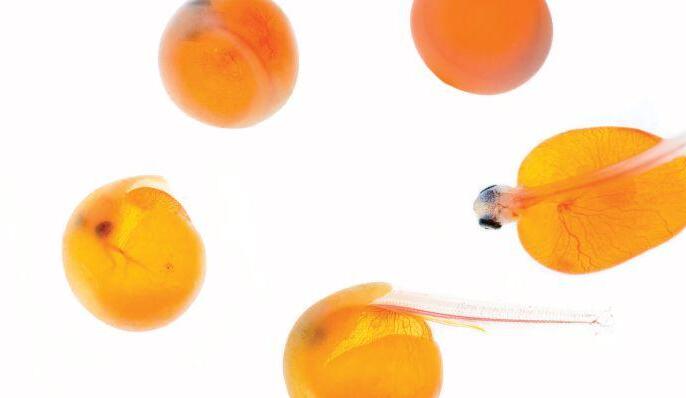
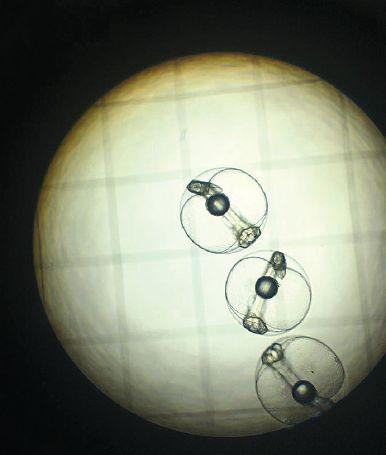
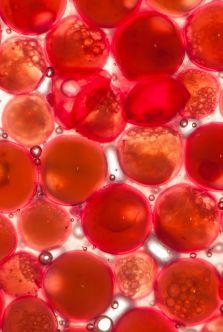
Recently fertilized bluefin tuna eggs and embryo development
One U.S. company is pioneering efforts to sustainably farm bluefin tuna
ALL PHOTOS: ICHTHUS UNLIMITED LLC
“Current tuna feeding practices worldwide are unsustainable and can result in the collapse of natural fisheries,” says IU president Alejandro Buentello. “As a premium feed company, we incorporate novel agricultural raw materials into our feed and have over 50 different ingredients. IU’s diets have been successfully tested and validated in commercial and laboratory settings.”
In addition to feed, and with a pilot level hatchery about seven miles from the coast in Miramar, San Diego, IU is now planning to build a commercial hatchery closer to the ocean in San Diego.
Hatcheries are key
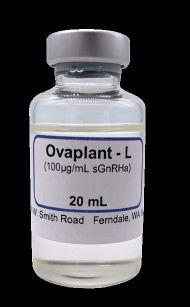
Since the U.S. does not allow the establishment of finfish farms in federal waters, IU’s cages will be deployed at its concession site in Coronado Island in Baja California, Mexico. From there, around 20 miles from its current hatchery, fertile eggs will be collected following summer spawning events. If necessary, spawning can be induced in bluefin that are more than three years old with slow-release implants of a gonadotropin-releasing hormone agonist (GnRHa).
Although implants may be used to induce
final ovulation and spermiation, Buentello believes that these will be seldom required as IU’s patented technology can create suitable
conditions for natural maturation. Only larviculture will be conducted in land-based facilities.
“Our hatchery protocols last (approximately) 30 days before juveniles are transferred to nursery cages. However, this year, we have developed novel applications that allow us to keep them safely in tanks for over five months,” says Buentello.
Four phases have been planned for the commercial hatchery to attain a maximum production of approximately two million juveniles per year. Plans are also underway to sell advanced juveniles to maximize adaptation to marine conditions in northwest Mexico and southwest California.
With the tuna ranching industry constrained by a stringent quota system that
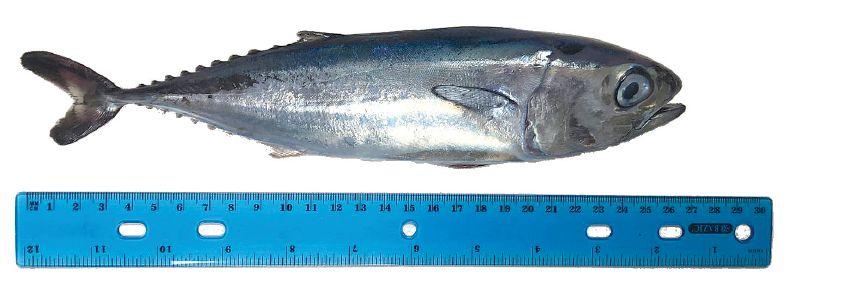
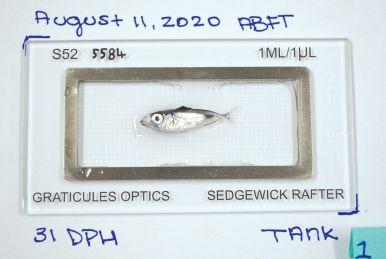
Bluefin tuna of 30- (23 mm), 40- (150 mm) and 110-days (270 mm) post hatching, respectively
management options. Because the buoyancy of the particles is controlled, observing fish behavior is easier, while uneaten feed can be retrieved and re-offered later on.
Future development
IU’s vision is to contribute to sustainability and permanence in tuna farming by continuing its work to solve many of the challenges that limit the industry’s full potential. Coupled with other developments such as responsible stock enhancement efforts and strong genetic monitoring, Buentello believes that IU can restore a critically overfished population.
“The solutions are simple and the scientific knowledge we now have is strong enough to get those solutions started,” he said. “We have developed some very interesting applications that enable us to keep bluefin for much longer in land-based settings. If we can release them at a certain size, their survivability rate increases greatly.”
Buentello is also offering investment opportunities in his bluefin tuna feed business and commercial hatchery in San Diego, as well as his tuna feed business in San Diego and in the western Mediterranean.
“Through strategic partnerships with pet
food manufacturers in southern California and Spain, we have structured asset-light investment options with great potential margins and significant upsides,” he said. “We are ready with vetted information including agreements to buy and sell, financial models, market analysis, provisional patents, customer description, pricing structure, de-risking options and due diligence level documents which can be made available to serious investors.”
Reason #22
With
Nutritionally
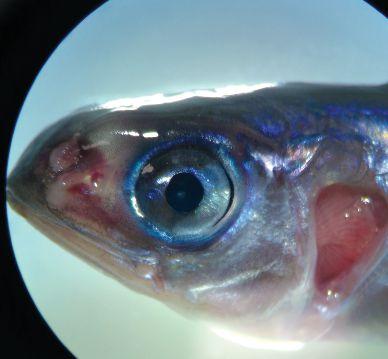
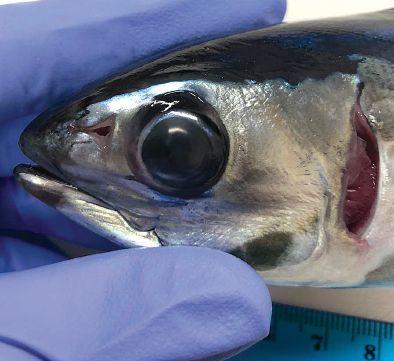
Bloodied snout from a tank collision (A) and two examples of operculum malformation (A and B)
Kootenay Trout Hatchery
Pandemic-driven angling boost props up hatchery operations By Liza Mayer
Fishing is a hobby for the patient – like watching paint dry. But to any avid angler, fishing is a respite from life’s stresses. They’ll talk about fishing as an escape from reality and a chance to be enveloped by the sound of calming water and breathe in fresh air. The catch, many will say, is just the icing on the cake.
This is most likely why fish farmers who cater to the recreational fishing market reported an increase in sales since the start of the COVID-19 pandemic, which is a stressful period for most. Sales of angling licences in the United States, Canada and the United Kingdom have increased.
“People who haven’t fished in years are going out and catching fish,” says Katie Mackey-Harris, a second-generation trout farmer in Paynes Creek, California. She says sales of trout to the recreational market are “as strong as it has ever been, if not more so, with this pandemic.”
Recreational fishing licences went up by 30 per cent in Alberta and Manitoba; 20 per cent in Ontario, and 15 per cent in British Columbia and Saskatchewan, CBC News has reported.
Owen Schoenberger, hatchery manager at the Kootenay Trout Hatchery (KTH), located in the town of Bull River in British Columbia, says angling license sales at KTH reflect the provincial trend. While sales to non-residents went down significantly due to border closures, he notes the rise in license sales to B.C. residents somehow made up for the slack.
“The increase in resident angling licence sales provincially is one of the silver linings to the pandemic. Fishing is one of the many other outdoor activities that allowed for social distancing. Hopefully, the people that bought licences because they renewed their interest in fishing, and the ones that started fishing for the first time, will stay interested in the activity and keep buying licences in the future,” he says.
The hatchery raises fish – primarily Rainbow trout, and some Cutthroat trout, Kokanee and Eastern Brook char – to stock local lakes. It is one of the six hatcheries owned and operated by the non-profit Freshwater Fisheries Society of BC (FFSBC). Every year, KTH and FFSBC’s other hatcheries, located in Abbotsford, Duncan, Summerland and Clearwater, release a combined five million to six million fish into around 800 lakes throughout British Columbia to support the provincial recreational fishing program.
The COVID-19 pandemic has highlighted the role that hatcheries such as KTH play in the community. Schoenberger notes that close to 50 per cent of freshwater angling in B.C. occurs in lakes stocked by FFSBC. “There would be a significant reduction in angling opportunities in all regions without the provincial stocking program,” he says.
Going green
The Kootenay Trout Hatchery has implemented major retrofits since it opened in 1966. In the early 80s, fish health concerns prompted a switch of the water source from surface water to groundwater.
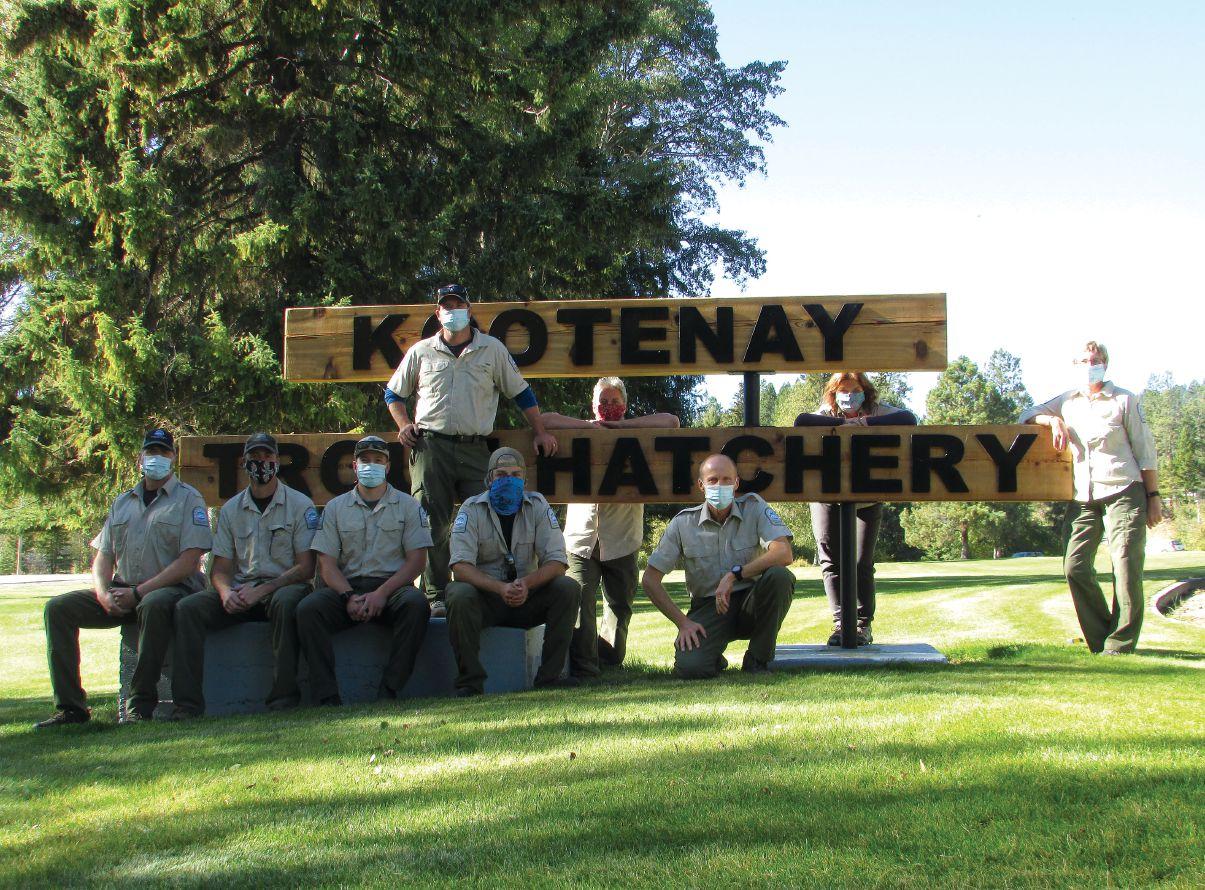
Site manager Owen Schoenberger (right, kneeling) with the rest of the team at Kootenay Trout Hatchery in Bull River, B.C.
PHOTO: KOOTENAY TROUT HATCHERY
Schoenberger recalls that the original water supply was surface water from the nearby Norbury Creek, which was diverted to the hatchery through a kilometer-long pipe. The switch in the mid-eighties meant a more consistent water supply. And because it was a groundwater source, fish were not exposed to disease or pathogens that could come with river water.
In 1987, decision was made to put a cover over the raceways that housed the fish because the open raceways would often freeze over in the winter. This also provided protection from predators such as ducks, herons and king fishers. The enclosure also virtually eliminated the transmission of pathogens by these predators from the creek to the hatchery fish. Being now shielded from the sun, algae growth is also prevented.
“The hatchery has evolved over the years. We originally had 20 concrete raceways that contained the bulk of production rearing, and then in 2015, we had a major retrofit where 10 of those concrete raceways were demolished and the round tanks were installed,” explains Schoenberger. Today, the hatchery has four 20 ft. round tanks and five 16 ft. round tanks for grow-out. Annual biomass is around 11,000 to 12,000 kilograms, but some of that come from other rearing containers.
That 2015 modernization effort, budgeted at roughly $900,000, was focused on reducing energy usage and enhancing operational efficiency. The installation of the circular tanks to replace the fish rearing raceways was projected to significantly reduce water consumption, and thereby reduce water pumping cost.
The aeroboost units installed inside those tanks were key to wateruse reduction, says Schoenberger. “We pump atmospheric air into
Staff fertilizing and triploiding kokanee eggs. All fish raised at KTH and released into the Kootenay Region are triploid or all-female triploid (non-reproductive), except those used for brood replacement. In some years, KTH raises reproductive fish to be released into other regions of
British Columbia. PHOTO: KOOTENAY TROUT
the water through these aeroboost units to supplement the oxygen, so we’re able to reduce water use by between 50 and 60 per cent in each tank. That significantly reduces our water pumping cost, which is one of the major costs at our site here.”
The groundwater water comes at an ideal temperature of 8.7 C in the winter, but this cools to less than 7 C, or closer to six degrees, by the time the fish are released in May.
“Our aquifers are on a six-month delay so we actually have our warmest water in December and January. This makes it difficult to finish off the last few grams of growth to reach target release sizes,” explains Schoenberger. While the water used for incubation could be heated in order to push the fish to grow a bit further, this takes a lot of energy, so the hatchery eschews it.
“We try to get to our target release size using the best husbandry and fish culture practices we can,” says Schoenberger, who joined KTH in 2004 as senior fish culturist.
Besides, “higher temperatures can also lead to higher risk of bacterial infection or other pathogens to establish,” he says. “So the cold water is kind of a curse and a blessing for us. When we don’t reach target size, it doesn’t mean we have inferior fish; the fish are in excellent health, they’re just not up to the size that we like them to be by the time they need to be released into the lake. And that’s not all the time. But one of the challenges certainly is to try and meet those goals by the time for us to release the fish.”
In terms of energy consumption, the retrofit was projected to reduce electricity use. In
2020, the hatchery used 876,000 Kwh, down from 1.18 million Kwh in 2015.
“The improved tank design constantly moves waste out of the system, reducing the time required to clean the tanks. With better access to feed throughout the tank, fish are better able to convert food to body mass, reducing variance in fish size. The result is more
consistent, better-conditioned, healthier fish released into rivers and lakes throughout the region,” the hatchery announced following the renovation.
In subsequent tweaks in the years that followed, the hatchery installed other technological innovations that have made processes less energy-intensive and more environmentally friendly.
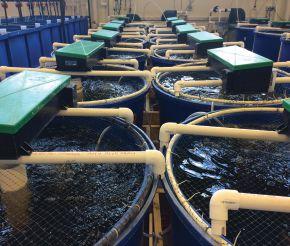
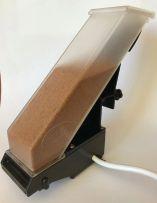
About 75 per cent of the feeding system in the hatchery is now automated. “Our Arvotec feeders are computer-operated, which helps to reduce day-to-day manpower needs and also gives us a much better and consistent feed delivery to the tanks.”
Temperature and dissolved oxygen are digitally monitored in these tanks as well and linked to the alarm system.
“Our water supply systems are controlled primarily by a digital control panel that enables us to turn our wells on and off. Also, in conjunction with that, we have a PLC (programmable logic control) program, which is a panel that will signal any alarms for our system.,” Schoenberger says. “Almost all of our rearing or incubation areas tanks are alarmed in some way whether it’s a low-level in aeration tower or low oxygen in some of the tanks or some kind of failure in the system. We’re alerted through that computer program.”
The alarm system is also linked through the local phone service provider to notify staff of alarms through their cell phones.
The system allows for remote access to the wells. “Most of our wells are several hundred meters from the actual hatchery site but we can actually turn them on off and on inside the building with a click of a mouse,” Schoenberger says.
Variable frequency drives are installed in four of the five groundwater wells, allowing each to only pump the water according to what is needed at a time. “So if we’re only demanding a little bit of water, one of our wells can now pump only as low as about 50 per cent capacity. Whereas in the past, it was either on or off, and it used the same amount of power regardless of how much water is actually needed. So that’s been a huge cost savings.”
The greening of Kootenay Trout Hatchery is an ongoing initiative. And while technology has allowed these innovations at the hatchery, Schoenberger knows they could only do so much without the skills and competences of his team of six full-time staff, a part-time office manager and two seasonal fish culturists.
“Our staff’s ability to weather the storm and willingness to achieve results, regardless of what gets thrown at them whether it’s a low fish run or a pandemic, and our flexibility and the disposition to do what needs to
be done to accomplish our goals is fantastic,” Schoenberger says.
“We have a very competent team; each of them has been here for quite a few years –even our seasonal staff. We’ve been hiring
the same people these last four to five years. Everybody is well-versed in the systems and our operations from our egg collecting through incubation, early rearing and our releases,” he says.
Commercial Filtration Systems
Commercial Filtration Systems
Commercial Filtration Systems
Commercial Filtration Systems
Customized for your fish farm, hatchery or research operation!
Customized for your fish farm, hatchery or research operation!
Customized for your fish farm, hatchery or research operation!
Customized for your fish farm, hatchery or research operation!
Our Commercial LSS Packages are custom engineered to meet your specific needs.
Our Commercial LSS Packages are custom engineered to meet your specific needs.
Our Commercial LSS Packages are custom engineered to meet your specific needs.
Our Commercial LSS Packages are custom engineered to meet your specific needs.
• Marine and Freshwater
• Marine and Freshwater
• Marine and Freshwater
• Mechanical filtration
• Marine and Freshwater
• Mechanical filtration
• Mechanical filtration
• Chemical filtration
• Chemical filtration
• De-gassing towers
• De-gassing towers
• Wide variety of flow rates
• Wide variety of flow rates
• Flow control valves
• Flow
• Mechanical filtration
• Chemical filtration
• Ultraviolet disinfection
• Ultraviolet disinfection
• Chemical filtration
• NEMA enclosed controls
• NEMA enclosed controls
• Ultraviolet disinfection
• Bio-filter towers
• Bio-filter towers
•
•
• Protein
All our systems are pre-plumbed and fully water tested prior to shipping. Call us today at 206.937.0392 www.AquaticEnterprises.com
Aeroboost units helped tanks reduce water use by between 50 and 60 percent per tank
PHOTO: KOOTENAY TROUT HATCHERY
KTH operates its own egg collecting station at Connor Lake for westslope Cutthroat. PHOTO: KOOTENAY TROUT HATCHERY
Man fishing in Surge Narrows on Read Island, BC. Data show British Columbians are fishing more during the pandemic, a trend seen elsewhere PHOTO: LIZA MAYER
The new rearing tanks that were installed during a major retrofit in 2015 PHOTO: KOOTENAY TROUT HATCHERY
Canadian scientists look at climate change impacts on aquaculture production
By Quinn Bender, Local Journalism Initiative Reporter
As climate change causes more extreme temperature events, heat waves have the potential to hit marine environments especially hard. The impacts could be especially dire for humans, as we increasingly turn to aquaculture as the best hope to feed a global population speeding toward 10 billion people.
Researchers at Vancouver Island University in British Columbia, Canada, are leading an investigation to study the effects of heat waves on farmed finfish and shellfish to learn how farmers can improve crop security in an uncertain future.
“The world is changing, and we must make informed decisions to change with it successfully,” Dr. Dan Baker, a VIU Fisheries and Aquaculture Professor said. “British Columbia has a crucial part to play in providing food to Canada and the rest of the world in this future, and we believe we can help by addressing challenges in aquaculture industries hit hard by problems created by climate change and other anthropogenic activities.”
Baker, along with two other lead researchers, VIU professors Dr. Spencer Russel and Dr. Timothy Green, are designing research projects with $549,000 in funding from the
DESIGN | EQUIPMENT | SOLUTIONS
By identifying how marine heat waves alter finfish and shellfish behaviour, physiology and immune responses, we will improve our knowledge on how these warm water events increase the susceptibility of aquatic animals.
Canada Foundation for Innovation and BC Knowledge Development Fund.
Green is investigating how marine heat waves can cause death in farmed oysters. Baker will examine how heat waves may alter how wild and farmed salmon and sturgeon respond and adapt to higher summer temperatures. Russell is investigating the impact on gill health of farmed salmonids.
The professors said many previous studies have focused on higher average seawater temperatures, but this general approach doesn’t improve understanding on impacts to food security. By looking at aquaculture specifically, the professors hope to provide information on how different species can adapt to climate change.
The United Nations’ Food and Agriculture Organization places a high value on aquaculture for the global food supply. The agency found that of the 156-million tonnes of fish products the world ate in 2018, 52 per cent already comes from aquaculture.
In B.C., just 17,500 metric tonnes of wild salmon was harvested for human consumption, compared to 87,000 metric tonnes of farmed salmon.
Provincial shellfish farming is also on the rise, but is among the first to experience impacts of climate change. In recent years, harmful algae blooms and marine biotoxin incidents have spiked in frequency while ocean acidification, caused by an increase of carbon dioxide in the environment, devastated the industry in the Pacific Northwest as young shellfish were unable to form shells.
Going forward, heat waves lasting between a few days to a few months are expected to increase in frequency.
“By identifying how marine heat waves alter finfish and shellfish behaviour, physiology and immune responses, we will improve our knowledge on how these warm water events increase the susceptibility of aquatic animals to disease and make significant advances in the management of finfish and shellfish health and welfare,” Russell said.
Finding ways to improve and protect water quality and reduce operating costs focus for hatchery operators
By Jennifer Brown
As climate change and general concerns about the environmental impact of mass food production facilities increase, the aquaculture industry is looking inward and to scientific advances to improve operations, fish health and guarantee future growth.
Hatcheries located within regions severely affected by climate change could face issues concerning flooding or lack of consistent groundwater sources. Those in more stable areas will be able to rely on technology and new advances in operations to keep things stable.
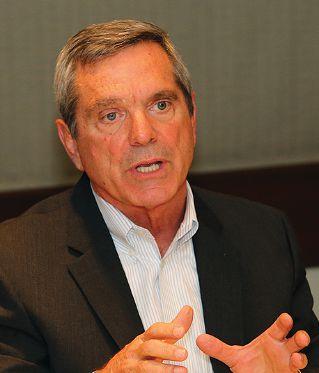
“Hatcheries located outside of severely affected regions should be able to manage climate-change-related water quality fluctuations using standard control systems for temperature, salinity, pH and alkalinity,” says George Chamberlain, president of the Global Aquaculture Alliance in Portsmouth, New Hampshire.
Water treatment systems for hatcheries must be designed to provide consistent water quality year-round, despite wide seasonal variations. Chamberlain says there’s often a
tendency to develop facilities for the typical or average conditions, but this leads to variations in water quality and reduced hatchery performance during seasonal extremes.
Plan for the worst
Instead, hatcheries should be designed for worst-case conditions. For example, many hatcheries in China must begin operating during the winter when air temperatures are near freezing and continue during the summer when temperatures approach 35 C. Greenhouse enclosures that may have been appropriate during the winter can become too hot during the summer.
In another example, coastal hatcheries in India and South Asia can expect seasonal monsoon conditions with high winds and heavy rains. During this season, coastal waters will be impacted by reduced temperature and salinity and significantly increased turbidity from suspended sediments.
“To minimize these variations, water intake pipelines should be deep enough to capture high salinity water; reservoirs,
sedimentation, and filtration systems must be scaled to eliminate monsoon turbidity; and temperature controls must be designed for such cooler conditions,” says Chamberlain.
Overtime, Chamberlain says there will be a trend toward installing systems that provide greater control and consistency.
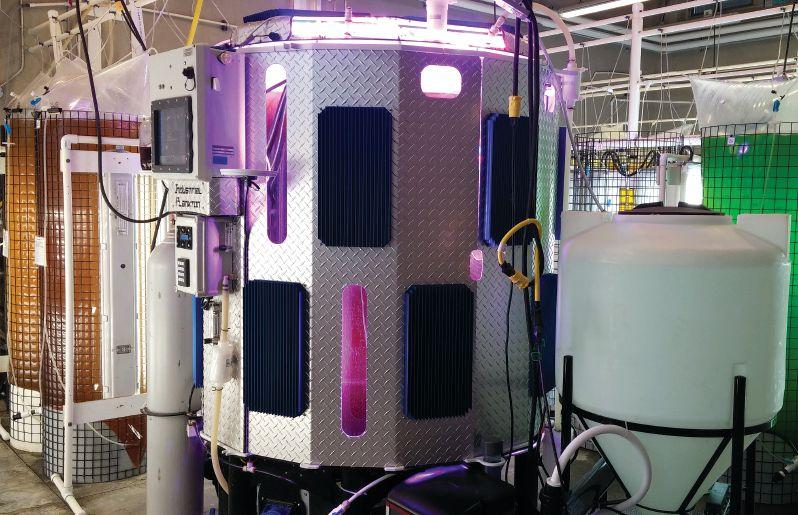
“For example, outdoor algal mass culture systems do not perform properly during overcast conditions. Consequently, most hatcheries have installed indoor algae culture systems under artificial lighting, and some have even installed indoor continuous culture algae systems to avoid the ups and downs of batch culture systems,” he says.
Marine hatcheries attempt to simulate the conditions in nearshore oceanic waters where reproduction and larval development typically occur. Water quality monitoring and control are critical for maintaining those ideal culture conditions. To go a step further, each component of the hatchery (preconditioning of broodstock, maturation, spawning, hatching, larval rearing, nursery, algae culture, artemia hatching) often requires slightly different water quality conditions (temperature, salinity, dissolved oxygen, pH, alkalinity, ammonia, nitrite, nitrate) for optimal performance.
Indoor algae culture systems are increasingly used in hatcheries for a more consistent supply.
PHOTO: JULIE VANDENBOR, VANCOUVER ISLAND UNIVERSITY DEEP BAY MARINE FIELD STATION
Åse Åtland, research director at the Norwegian Institute for Water Research in Norway, says RAS is the way the industry is going in Norway and Chile with a focus on taking in as little new water as possible.
“I would generally say recirculation farms using groundwater are the most robust way to deal with climate change challenges,” she says. “Water quality is surely a critical factor, but if it is not suitable, it’s not so much due to climate change but often based on groundwater and the local geology. The limiting factor is very often toxic metals and a natural phenomenon.”
The institute does inlet water quality testing and works on assessing water quality when a company is in the process of choosing a new site or water source. It has been analysing inlet water quality in Norway since the 1990s and they have a large database from Chile and from the U.K.
“With salmon, how climate would change water quality is dependent on the technology the hatcheries are operating on. The RAS systems take in very little new water and are much more robust in terms of climate change effects because you can more easily treat the incoming water. And since you take in so little water, you won’t see the fluctuations.”
Åtland says water quality in Norway is improving, but they are seeing more browning of water due to higher humic content. That’s an issue for the salmon hatcheries as the higher the humic content, the more complicated it is to have UV disinfection.
Impact of feeding
How fish are fed also impacts water quality. This is recognized as enough of an issue that major feed companies are designing feeds for RAS systems to minimize the adverse effects on water quality.
“These parameters must be routinely monitored, recorded, and managed to maintain them within appropriate ranges. Ideally, monitoring and control processes are automated with alarms and backup systems, but manual processes can also work well if water quality is carefully monitored, recorded, and managed,” says Chamberlain.
The rise of RAS
To make better use of resources and maintain controls, hatcheries are increasingly implementing technologies that reuse water. George Nardi, vice-president of aquaculture services at Innovasea Systems Inc., says incorporating
recirculating technology into operations addresses other concerns brought on by global warming. Before joining Innovasea, Nardi was the founder of Great Bay Aquaculture, a hatchery in Portsmouth, New Hampshire.
“Climate change affects temperature and pH in coastal waters, and RAS allows further control of those conditions so you can produce a warm water species year-round in a temperate environment or vice versa. With RAS, you can afford to control temperature and have control over pH, and ammonia is directly related to the level of pH in the culture tank. Hence, controlling pH is important in hatchery or nursery operations,” says Nardi.
“If you feed once or twice a day, you can imagine the impact on the water quality and what your system has to deal with and recover from, only to get hammered again six hours later. But if you feed every other hour, that influence is flattened out so that your system and water quality is more consistent and is not affected by temporary pH and ammonia effects in the water,” Nardi explains.
Monitoring and control
Today’s hatcheries are relatively intensive operations with hundreds of thousands of fish in the tanks, which means monitoring is critical.
“I can tell you from experience it only takes an hour or two to lose all of that if things aren’t properly monitored and controlled,” says Nardi.
As monitoring becomes more sophisticated, operators have to be properly trained.
Recirculating aquaculture systems (RAS) are increasingly being used in hatcheries to have better control of fish rearing systems and more efficient use of water resources. FILE PHOTO: CREATIVE SALMON SEA SPRING HATCHERY ON VANCOUVER ISLAND IN BRITISH COLUMBIA, CANADA
“Back in the day, I would have to have an on-site technician 24 hours a day – there was too much at risk if, through monitoring, I couldn’t make an adjustment within minutes,” he says.
Today automation has become less expensive and more robust, so 24-hour human coverage isn’t required because the monitoring systems can control oxygen levels and control pumps and temperature.
“You can see what’s happening from your kitchen table rather than being there at 2 a.m.,” he says.
Oxygen and gas management
Nardi says Innovasea is working to develop efficiencies that improve production, especially gas management, which he says is “the unseen danger” – primarily nitrogen and CO2.
“What we see in the hatchery world is a lot of triedand-true technology,” he says. “We see some new, but we also want to improve upon what’s there – can we make it lower cost, more efficient and improve productivity?”
The U.S. Fish and Wildlife Service announced in May 2020 that it is installing Moleaer Inc.’s Neo nanobubble generator to improve water quality at the Garrison Dam National Fish Hatchery in North Dakota. The nanobubble generator will increase the dissolved oxygen levels and water quality by reducing nitrogen levels and suppressing waterborne pathogens. The hatchery started with a system that covered two raceways and has purchased more to do a proper retrofit of the whole facility.
Nanobubbles increase productivity in agriculture, horticulture
Dura-Cast
and aquaculture by increasing dissolved oxygen levels and water quality by reducing nitrogen levels and suppressing waterborne pathogens.
“Aquaculture is one of our newer markets, but it is a fairly seamless extension of what we have been doing in horticulture,” says Warren Russell, co-founder and chief commercial officer of California-based Moleaer Inc., adding the nanobubble generator can be applied to a range of operation sizes.
“We have some customers doing aquaponics in 5,000-gallon tanks and some large salmon hatcheries doing millions of gallons a day,” he says.
One of the critical parts of aquaculture is how to get oxygen into an ideal rearing environment and consequently reduce operational costs.
“We started down this track by force of circumstance in Chile in the salmon industry where most of the hatcheries are either using oxygen cones or diffusers as their principal method of oxygenation,” says Russell. “In those cases, we are looking at retrofitting existing conventional aeration or oxygenation equipment. The sole purpose is reducing operational costs.”
Where Russell sees the most potential for nanobubbles related to salmon is optimizing the oxygen mixing system in sea lice prevention.
“The evidence to date based on various trials in Canada, Norway and Chile is that we are demonstrating not only can we provide a more optimal rearing environment, but we can reduce the operations costs too,” he says.
+46 (0)40 42 95 30, or
The trend will move toward installing systems that provide greater control and consistency, says Chamberlain.
TURNING WASTE INTO ENERGY
There is increasing pressure on all industries to deal with any unwelcome byproducts of production effectively, and the aquaculture industry is no different. As the industry expands to meet the global demand for fish protein, there will be heightened interest to manage wastewater in environmentally responsible ways that can also be profitable.
“Whether in the United States or Europe or anywhere else, eventually you’re going to need the social license to operate, and having a wellthought-out solution for dealing with sludge that will be produced, whether from a hatchery or a farm, is smart and required,” says George Nardi, vice-president of aquaculture services at Innovasea Systems Inc.
The wastewater from aquaculture operations can be converted into energy and return value to the companies that produce the waste. Some are exploring ways to recycle their waste and have it benefit production.
In northern Norway, salmon farming company Cermaq has been testing a commercial-scale anaerobic digestion plant that creates biogas that they use for running boilers, a system developed by the Institute of Marine and Environmental Engineering at the University of Maryland. Sludge waste from smolt production is used to make the biogas. It is estimated that about 500,000 kWh per year will be extracted from the waste from nine million smolts. The gas is used to heat water at the facility, so the fish grow larger.
“We are collaborating with the group at the University of Maryland to look at how we might develop that solution further,” says Nardi.
Dealing with waste should include viewing it as a potential revenue source and not something that is a cost because it contains value,
including nitrogen, phosphorus and organic matter.
“If it is in a location that allows for land application as a fertilizer, particularly if from freshwater or near freshwater – it becomes a win-win,” says Nardi.
At larger-scale operations and in colder climates, there needs to be a more creative approach, such as those that grow vegetables, taking the nutrients from the fish producing side of the operation and applying them to the growing of plants and vegetables.
The technology that can be applied often comes from the water treatment sector and other agricultural industries with a more in-depth history in the production of waste. Examples are the swine and dairy industries that use aerobic and anaerobic digestion to reduce volume by as much as 80 per cent. That process creates biogas that can be used for energy – methane.
Nardi says Innovasea is looking at the various solutions it could work with and suggest to clients.
“There will be options based on scale of operation, location of operation and salt versus freshwater,” he says.
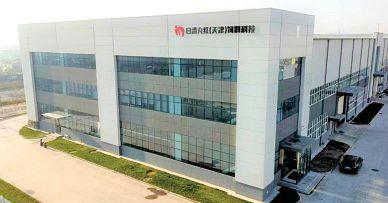
Marubeni Corp. has watched the rapid growth of the aquaculture industry in China and so far, the Japanese conglomerate likes what it sees. The market has been so enticing that Marubeni has decided to kick off operations of its aqua feed operations in China in January.
The company’s aqua feed manufacturing and sales business will be run through Marubeni Nisshin Feed Co., Ltd., a Marubeni subsidiary.
“Marubeni Nisshin Feed has been researching and keeping a close eye on the marine aquaculture market in China since 2015 in anticipation of expanding their business into the large Chinese market,” a press release from the company said.
Marubeni Nisshin Feed has been producing high-quality aqua-feed in Japan for more than 60 years. It holds the largest share in domestic aqua feed sales volume.
The company has increased its brand
awareness and the reputation of its products in the Chinese market by manufacturing aqua feed at factories owned by a partner company in China.
“As a result, business feasibility has been confirmed and Marubeni Nisshin feed has established Marubeni Nisshin Feed Technology (Tianjin) Co., Ltd., which is the first fullyowned Japanese aqua feed manufacturer in China. Commercial operation and supply are scheduled to begin in or after January 2021,” the company said.
As of 2019, the production scale of marine aquaculture in China has reached about 6.5 times the production in Japan.
The Chinese marine aquaculture market is expected to expand further in the future, partly due to growing health consciousness, and the demand for aqua feed is expected to increase accordingly. Marubeni Nisshin Tianjin aims to achieve an annual sales of about $24. 2 million.
The recirculating aquaculture system
(RAS) industry has also caught the Japanese company’s eye.
Early last year, Marubeni partnered with marine products firm Nissui Europe, a wholly owned subsidiary of Nippon Suisan Kaisha, to take over the RAS operations of Danish Salmon A/S.
Marubeni said it intends to grow its business in Europe, and expand its RAS operation to countries outside of Europe as well. – Nestor Arellano
Study finds microalgae, biomass blend beneficial for tilapia
Researchers have found that a microalgal based diet blended with defatted biomass improved fish growth and offered a cost-effective alternative feed for tilapia growers.
The fish feed industry has been weaning itself away from using fishmeal and fish out. Feed producers have been turning to grains and oilseed crops such as canola, corn and soy.
The problem with this is that plant-based ingredients have low-digestibility issues and contain less essential amino acids. They also lack eicosapentaenoic acid (EPA) and docosahexaenoic acid (DHA) which are important for growth.
In an article published in Nature.com, researchers Pallab K. Sarker, Anne R. Kapuscinski, Brandi McKuin, Devin S. Fitzgerald, Hannah M. Nash, and Connor Greenwood said they carried out the experiment to develop a new aqua feed formula using commercially available, protein-rich, leftover biomass with marine microalgae Schizochytrium sp
The study showed that a combination of Schizochytrium sp. and defatted biomass of N. oculata in fish feed, promoted improved growth. The researchers also found that the Schizochytrium sp. was highly digestible for tilapia.
“Our results provide a framework for the
development of fish-free feeds and the first evidence of a high performing feed for tilapia that combines two different marine microalgae,” the study said.
It further added, “Advancing the use of microalgal defatted biomass in aqua feeds would improve the sustainability of aquaculture by reducing its reliance on FM extracted from forage fisheries. Combining underutilized defatted biomass protein with DHArich marine microalgae in the fish-free feed resulted in better tilapia growth compared with fish fed a conventional diet containing fish meal and fish oil (FMFO).”
– Nestor Arellano
Marubeni Nisshin Feed Technology (Tianjin) Co.
PHOTO: MARUBENI
Thai researchers’ feeding regime result in low production cost, high flesh yield in Nile tilapia
Aresearch team in Thailand says it can decrease the production cost of Nile tilapia while also incresing yield.
According to a new study, this can be achieved by an every-other-day feeding regimen. Among four treatments, this diet produced the highest percentage of edible flesh, growth performance and protein utilization.
The right confluence of factors triggered the compensatory growth (CG) response, said Dr. Rungkan Klahan, the corresponding author of “The evaluation of growth performance, feed utilization and flesh quality of Nile tilapia (Oreochromis niloticus) fed with different feeding regime”.
“CG is a phase of accelerated growth when conditions are restored after a period of growth depression from the starvation or receiving the malnutrition feed,” explained Klahan, assistant professor at the Aquaculture Faculty of Agricultural Technology at Phetchaburi Rajabhat University.
“At the optimal nutritional and period from feeding, fish will show the great response of feed utilization and growth performance. On the other hand, if it is not balanced or suitable to nutrition and period, the compensatory growth will not appear.”
The decrease in feeds volume resulted in a 33 per cent cut in production cost.
Fish with initial weight of about 18 grams were cultured for three months in net cages in an earth pond. Malnutrition feeding was used on the first month, followed by the every-other-day starvation feeding regime for two months.
Monosex male Nile tilapia fingerlings were cultured in net cage on earth ponds.
rate and production cost of red tilapia with different feeding programs
Feeding programs: T1 - twice a day; T2 - every other day; T3 - twice a day with weekly switch to every other day feeding; and T4 - twice a day with weekly switch to half of the twice a day meal.
IMAGE: YUANGSOI ET AL
All four treatments had the same diet on the first month: 18 per cent protein supplemented with five percent protein concentrate (35 per cent protein). During the second and third months, protein was reduced to 32 per cent.
Control (T1) was fed twice a day; T2 every other day; T3 twice a day per week and switching to every other day per week; and T4 twice a day per week and switching to half of meal twice a day per week.
“Percentage of edible flesh of T2 was highest (P<0.05). But proximate analysis of fish flesh of each groups were close (P>0.05). Thus, the appropriate protein and feeding management for Nile tilapia culture is important and necessary for high growth performance and cost-effectiveness,” Klahan and his team cited in the abstract.
“The perfect protein and feeding regime have no negative effect on fish health and flesh quality in fish fed with 18 per cent protein supplemented with five per cent protein concentrate only first month and followed with 32 per cent protein feed and feeding every other day.”
The study was presented at the virtual 7th Conference on Fisheries and Aquaculture in November 2020 inThailand.
Evaluating peracetic acid and hydrogen peroxide for reducing opportunistic pathogen-associated mortality in juvenile Atlantic salmon
By Anna DiCocco and Christopher Good
Salmonids, including Atlantic salmon (Salmo salar), are susceptible to opportunistic infection during early lifestage production. Developing salmon
fry generally position near the bottom of tanks, where uneaten feed and waste solids can accumulate and lead to gill irritation and subsequent infection by ubiquitous opportunists.
HATCHERY FEEDING SYSTEM (HFS)
Complete feeding solutions for aquatic hatcheries
• Microdiets
• Weaning Diets
• Micro Algae
• Live Feeds
One such opportunistic pathogen group commonly observed during the fry culture stage at The Conservation Fund Freshwater Institute (FI) is oomycetes of the Saprolegnia genus, which can colonize damaged skin and gills and ultimately lead to osmotic and/or respiratory failure. A spike of Saprolegnia spp. infection during juvenile Atlantic salmon production can be associated with increased mortality, exponential loss of fish, and severe economic consequences if not properly controlled.
Previous treatment options for saprolegniasis (i.e., a Saprolegnia spp. outbreak) included the use of malachite green, which was subsequently found to be carcinogenic and is now banned from use in food fish production. Currently, a range of alternative compounds, including benzoic acid, acetic acid, iodoacetic acid, copper sulfate, peracetic acid, and hydrogen peroxide, are being evaluated for their efficacy in combating saprolegniasis. An ideal treatment compound would not only control saprolegniasis but would also prove to be environmentally benign.
Researchers at FI recently began to evaluate the treatment efficacy of peracetic acid (PAA) and hydrogen peroxide (H2O2). Both of these compounds degrade to non-toxic byproducts such as water (H2O), thereby reducing concerns related to facility discharge. Currently, PAA and H2O2 have differing approval statuses for aquaculture, depending on region. In the European Union, for example, PAA is approved for use in aquaculture settings with food fish present; however, in the U.S. PAA has only been approved by the Environmental Protection Agency (EPA) for use as a surface disinfectant on fish tank walls and aquaculture equipment in the absence of fish. H2O2, on the other hand, is approved by the U.S. Food and Drug Administration (FDA) to
PHOTO: FRESHWATER INSTITUTE
RECIRC IN ACTION
treat a number of diseases in freshwater-reared coldwater finfish. Considering the limited treatment options available for saprolegniasis, research that seeks to identify optimal dosages of these environmentally-friendly compounds is highly important.
To study the effects of PAA and H2O2 for decreasing mortalities associated with opportunistic infection, twelve replicated flow-through tanks housing juvenile Atlantic salmon (60 days post-hatch; 0.47 ± 0.02 g) were exposed to daily stressors including i) over feeding (120 per cent of typical daily ration) and ii) periodic netting and handling of fish. Treatments consisted of a 30-minute static bath of 15 mg/L H2O2, 0.2 mg/L PAA, 0.5 mg/L PAA, and a no-treatment control (n=3) administered five days per week. Survival was tracked daily by removing and counting deceased fry, and water quality parameters including total ammonia nitrogen (TAN), total suspended solids (TSS), temperature, DO, pH, carbon dioxide (CO2), alkalinity, and total phosphorous were assessed once weekly. At weeks 2 and 4, skin and gill samples were also collected for histopathology. Water samples were collected pre-treatment and at week 2 and 4 to quantify Saprolegnia spp. concentrations.
IMPORTANT FINDINGS
H2O2
Atlantic salmon exposed to the H2O2 treatment demonstrated a significantly higher survival rate of 83.7 ± 1.7 per cent compared to the control at 69.5 ± 5.2 per cent. These results demonstrate that a relatively low H2O2 dose can effectively combat opportunistic infection during juvenile Atlantic salmon production. Currently, H2O2’s approved use by the FDA allows three alternating-day 75 mg/L treatments for 60 minutes in a flowthrough system or static bath, which has been shown to be effective against saprolegniasis. It is established that relatively high doses (e.g., >60 mg/L H2O2) can be damaging to recirculation aquaculture system (RAS) biofilters, and although the present study was carried out in flow-through tanks, our results show promise that a low-dose H2O2 treatment (15 mg/L) could be effective for controlling saprolegniasis in RAS (although further research is required to confirm). H2O2 did not show any compelling effects on water quality.
PAA
Survival rates of Atlantic salmon exposed to 0.2 and 0.5 mg/L PAA were 76.6 ± 0.6 per cent and 77.4 ± 3.0 per cent, respectively, and were not found to be statistically different when compared to survival demonstrated in
Considering the limited treatment options available for saprolegniasis, research that seeks to identify optimal dosages of these environmentally-friendly compounds is highly important.
the control (69.5 ± 5.2 per cent). However, both PAA treatments significantly reduced TSS in the tank water. Previous on-site research has shown that a semi-continuous low dose (0.05-0.30 mg/L) application of PAA in RAS yielded no reduction of TSS. The reason for this discrepancy is that the semi-continuous application approach likely promoted biofilm growth and proliferation of certain bacterial populations through semi-constant addition of dissolved carbon.
Histopathological evaluation of gill and skin tissue showed overall good health across all treatments despite the observed mortality. A general decrease in Saprolegnia spp. counts in the culture water was observed over the course of the study, but this did not correlate with survival differences between treatments or trends in mortality. It is possible that other opportunistic pathogens were involved with or responsible for the observed mortality., and that these other potential pathogens may have been more susceptible to H2O2 than PAA. This could explain the observed differences in survival rates among treatments. Although microscopic examination of gills from euthanized moribund fish showed the presence of organisms resembling Saprolengia spp., it is important to note that infection by Saprolegnia spp. does not always result in disease and death.
This research adds to the body of knowledge regarding use of H2O2 and PAA in aquaculture applications, but additional research is still required to identify the proper dose and application method for both H2O2 and PAA for various Atlantic salmon life stages. Additional research may also be required to more broadly evaluate its effect on the microbiome of aquaculture systems, including RAS, with particular focus on effects to a broader range of pathogens.
There are still many more possibilities for the use of H2O2 and PAA in aquaculture that need to be explored, but in the meantime this research has shown the potential that these environmentally-friendly compounds have, whether it be treatment of pathogens or improvement of water quality. Overall, these findings provide additional guidance for producers and legislators to consider relative to the use of H2O2 and PAA for water quality control and maintenance of optimal Atlantic salmon health.
Find the full publication in Aquaculture Research.
Christopher Good is director of research at The Conservation Fund’s Freshwater Institute.
Innovation Beyond Measure
Anna DiCocco is a fish culture technician at The Conservation Fund’s Freshwater Institute.
Nordic Aqua Partners begins work on China facility
Construction work at the Nordic Aqua Partners’ (NAP) land-based facility in Ningbo, China, kicked off in January, according to the company.
The Denmark-based firm is billing the facility as “the first fully integrated and commercially viable RAS facility in China.” The land-based fish farm will have an initial capacity of 8,000 metric tons of Atlantic salmon. There are plans to expand that to 16,000 MT and later to 40,000 MT in the future.
In a recent press release, NAP said it has signed a five-year agreement with Benchmark Genetics to be the genetics provider for the facility. The first eggs will be delivered from Benchmark’s Icelandic operations in the fourth quarter of 2021, as soon as the hatchery facilities are up and running in Ningbo.
Ragnar Joensen, chairman of the board of NAP, said Benchmark’s “R&D capabilities and product offering, adapted for land-based RAS production add to the benefits of signing longterm agreement” with Benchmark.
“We have already supplied eggs to China since 2002 and have established a logistic system that so far has worked successfully, even during the challenging times of COVID-19,” said Geir Olav Melingen, commercial director at Benchmark.
– Nestor Arellano
Stolt completes first RAS production cycle in Spain, eyes IPO
Turbot and sole producer Stolt Sea Farm announced that its recirculating aquaculture system (RAS) facility in Spain has just finished its first production cycle. Now, the company is looking into releasing an initial public offering (IPO) of its land-based fish farming business.
Stolt Sea Farm has engaged ABG Sundal Collier ASA and Pareto Securities AS as financial advisers to explore a potential listing in Oslo in 2021, subject to prevailing equity capital markets conditions.
Stolt Sea Farm is a specialist land-based aquaculture business sustainably producing turbot and sole at 14 different locations in Spain, Portugal, France, Iceland and Norway. The turbot and sole is sold under the brands of Prodemar, King Sole, and King Turbot. The company is also a leading provider of premium sole, turbot and sturgeon for caviar.
The company’s annual production capacity is 5,700 tons of turbot and 1,570 tons of sole with 100 per cent of the juvenile supply provided by its own high-performing broodstock.
In 2019, Stolt Sea Farm sold 8.3 million kilograms of turbot.
“Stolt Sea Farm is now well positioned to leverage its proven technological advantage and significantly grow its position in both turbot and sole with plans to grow production capacity (combined turbot and sole) to 9,600 tons by 2025 and 23,300 tons by 2035,” according to a press release from the company.
The company also continues to develop its position within land-based aquaculture and roll-out its RAS and flow-through technology
Artist’s concept of Nordic Aqua Partner’s RAS project in Shanghai, China. (PHOTO: AKVA)
STOLT SEA FARMS
PHOTO: STOLT SEA FARM
Philippines’ Cagayan Valley eyes elver export market play
The Philippine government wants to boost its juvenile eel export with its new program.
The Philippine Bureau of Fisheries and Aquatic Resources-Region 2 (BFAR-2) is spearheading a government-private sector program to increase juvenile eel production in Cagayan Province.
“The aim is to verify technologies with the ultimate aim of finding locally adaptable technology on eel culture,” Dr. Evelyn Ame, eel focal person for BFAR-Region 2, told Hatchery International.
Best protocols and technologies “borrowed” from different countries are being used in the trials, Ame said. These include establishing protocols for nursery culture. Decreasing mortality rates is a key point.
Historically, Cagayan Valley has been the primary area of Anguilla fishing within the country. Five of the world’s 16 Anguilla species are found in the region. A. marmorata, A. bicolor, A. japonica, A. celebesensis and A. luzonensis have been described as being “all economically important.”
The pilot program participants are members of the newly registered Cagayan Valley Aquaculture Producers Cooperative located in Northern Luzon, a major source of wild-caught elvers. The Isabela State University-Echague serves as the main technology source.
Some 180,000 pieces of elvers (young eels), procured from gatherers, were given to the cooperators. For their part, the latter are responsible for logistical expenses. To make the program commercially sustainable, requirements in the selection of participants included their financial capability.
BFAR said glass eels are cultured in tanks until they reach 15 cm. Stocking density is at 5,000 pieces per cubic meter. Tubiflex sp, which are small aquatic worms, is an ideal first feed. After two or three days, commercial feed is added progressively. Diet changes to pure paste of minced fish on the tenth day. When it reaches the development stage, glass eel can be fed with high-energy and protein-rich artificial feed.
Export size is reached within six to 12 months of culture period.
Culture techniques of each cooperator will be monitored and documented by BFAR 2. Data from the best technology in terms of profitability will be disseminated. Allowable size
Increased production from using locally developed technology will help the Philippines re-enter the elver export market
for export is over 15 cm. Trials are still ongoing. Increased production from using locally developed technology will help the Philippines re-enter the elver export market, Ame said.
As a conservation measure, the government
reimposed in May 2012 the ban on the export of elver smaller than 15 cm. Huge export demand at that time had spurred over-harvesting of glass eels in the wild. In 2011, glass eel price was P2,500 (about $50) per kilo. Between January to March 2012, the price had spiked from P17,000 to P28,000. The price kept getting higher, reaching P45,000 a kilo at one point. As of 2020, export-sized elver sold for P25-P50 a piece in the market. Philippine elver exports are mostly bound for China, Japan, Taiwan and South Korea. From a stable four per cent representing total glass eel exports to the region between 2004 and 2010, the volume skyrocketed to almost 30 per cent between 2011 and 2012.
Ninety per cent of global Anguilla production comes from eel farming, which relies on wild-caught elver.
– Ruby Gonzalez
Global demand for elver exports continues to grow PHOTO: BFAR
Ron Hill
The human factor
Keys to daily water quality testing, management
Monitoring and managing water quality daily is a key process to running any aquaculture facility, especially with recirculating aquaculture systems (RAS). The importance of excellent water quality cannot be overstated, but the gap between knowing its importance and setting up a proper water quality monitoring program is immense. Equally immense is the gap between employees that can take and measure water quality, and those that can interpret water quality and choose when to act. These two keys – a proper monitoring schedule and employees that can use monitoring information to manage water quality – are essential to the health of stock and farm.
Testing
The most important water quality parameters to test are well known; choosing when to test these parameters is as important as choosing
which parameters to test for. The basis of a testing system is the testing schedule. The schedule ensures what is most important is properly monitored and creates a valuable database. There are two maxims to help decide when to test: a) the more important a water quality parameter, the more frequently it should be tested for; b) the more a parameter can fluctuate or historically fluctuates, the more it should be tested for.
Oxygen, which is consumed directly by the fish and is essential to life, is the most important parameter and, therefore, monitored in real-time. After oxygen, (which is a topic on its own), un-ionized ammonia is the most important water quality parameter that affects animal health. Un-ionized ammonia is toxic, produced from fish waste, directly related to feed given and, with its toxic partner nitrite, must be monitored daily in a RAS facility.
PUMPS FOR AQUACULTURE
Fluctuations in pH change the toxicity of other metals and metabolites. Though pH in a system may be historically stable, the detrimental effects of pH changes to toxicity and the ease of testing pH, warrant daily monitoring. Other water quality parameters and how often they are tested will be specific to the farm, species, system, water source, etc., and should be decided upon based on their importance and fluctuation. CO2, hardness, alkalinity, and known heavy metals may or may not need to be monitored daily but should be scheduled for testing at some interval. Consistent testing to create a good data set, good data keeping, along with historical data complete a water quality testing system, the tool used to manage water quality.
Daily interpretation
Having a proper water quality testing schedule in place is essential. But to manage water quality, humans must be able to interpret the data to make day-to-day decisions. Taking the water quality is generally a simple job and any employee should be able to do it. Running
Taking the water quality is generally a simple job and any employee should be able to do it. Those who take that next step and can interpret the data to make decisions based on trends is key to an effective water quality testing and management system.
through the tests and analyzing the water is straightforward with clear instructions, and probes are simple to use. Employees who take that next step and can interpret the data to make decisions based on trends is key to an effective water quality testing and management system.
Identifying trends and knowing how to react separates the top employees from their peers. This requires both education and experience with the system and is where a formal education in aquaculture or biology is a major benefit to the employee. To recognize trends in water quality, the employee must first overcome complacency. It’s easy to run the tests, record the data and then move on to other tasks, without taking a few minutes to ask if the numbers make sense and if there are changes or trends. Each day, the water quality tester must look through the numbers from the last few days and ask themselves what parameters are fluctuating and what the detrimental thresholds are. Is the pH of the system slowly rising over the last week? Is the hardness slowly diminishing? Did the un-ionized ammonia spike?
Managing based on water quality
Having identified the trend, the next and most difficult step is to adjust the system to restore desired levels. This step is where experience is the most valuable. The water quality changes for a reason. Knowing the
system and the historical solutions to similar problems is invaluable for troubleshooting water quality. Knowing how different systems and tasks affect the water quality give the technician clues where the issue may be coming from. Is the pH dropping each day because the buffering capacity of the water is diminishing? Has the metering pump lost flow and isn’t providing injections, allowing hardness to decrease? Is a biofilter failure allowing un-ionized ammonia to spike? Are the fish being overfed and overwhelmed the biofilter? Are the solid filters working properly? Use the clues and data to find the root cause by exploring the system.
Choosing how to act once the problem has been identified depends on the problem, the farm and the options available to the technician. There are few instant solutions to water quality issues because the system and water are always in motion. Many problems can be corrected right away but the affects of correction won’t be seen until the system runs for a time. Fixing the metering pump will correct the hardness issue but will take some time for the hardness to right itself. For immediate results sodium bicarbonate and/ or calcium chloride can be added directly to the system to restore hardness and buffer the pH right away. Again, this is where experience is so valuable- knowing how much to adjust is as important as choosing what to adjust. Over adjustments to water quality are easy to make and can create a situation where staff are chasing the desire parameter range. A tech can find themselves endlessly making adjustments to correct previous adjustments, extending the length of the issue.
Problems with un-ionized ammonia and nitrite must be solved under the stress of choosing to reduce or discontinue feeding, though the addition of chloride ions can lower nitrite toxicity if the chloride concentration is high enough. Un-ionized ammonia is removed by flushing and biofiltration and takes time to diminish. The most important act is to determine where the extra un-ionized ammonia is coming from or why the biofilter is unable to keep pace and correct accordingly. Time will drop the un-ionized if the source of the problem is corrected.
Whatever the issue with water quality, the three most important qualities for technicians – system experience and skill, problem solving and the will to act – are key to managing a water quality testing system and essential to a productive hatchery. Without both experienced staff and a proper testing system, these shortcomings can cause minor issues to become large problems and large issues become catastrophes.
Aller Aqua eliminates South American soya in feed
Aller Aqua has taken measures to stop buying South American soya for their European fish feed production.
The Danish-owned company announced that it will be taking big steps toward its sustainability strategies this year by fully transitioning its production to only use regionally-produced soya from Europe and surrounding countries.
Aller Aqua group vice-president Henrik T. Halken said part of the decision to eliminate South American soya has been related to the increasing concern of deforestation in the region.
“This deforestation issue has been an increasing concern, not least during 2020, and as we had the opportunity and organisational setup to make the choice of eliminating South American soya from our European production – this is what we have done,” said Halken, who also serves as chief production officer.
According to the company website, FiBL (Research Institute of Organic Agriculture) on behalf of the Donau Soja organization has calculated that replacing South American soya in a typical salmon feed with soya from Europe, can reduce the CO2 emission by as much as 41 per cent.
Aller Aqua will be CO2-labelling the fish feed it produces at their three European factories. www.aller-aqua.com
Moleaer launches IoT for nanobubble tech
Moleaer has launched new monitoring technology to complement its line of nanobubble generators.
The company will offer new real-time water quality and equipment remote monitoring services with all of its nanobubble systems, starting first with its second-generation Clear nanobubble generator.
The Clear provides an alternative to traditional chemical and aeration methods for treating water against pathogens, bacteria, biofilms and harmful algae blooms. The new services package is the latest in Internet of Things (IoT) technology to offer end-users 24/7 monitoring online and via mobile devices, with automatic text and email alerts and the ability to stop the unit remotely.
“With our technology, we’re enabling communities, farmers, and recreational facilities to restore the aquatic health and ecosystems, providing a chemical-free solution that eliminates harmful pathogens and contaminates,” said Nicholas Dyner, Moleaer CEO. www.moleaer.com
PREFER READING A DIGITAL ISSUE?
SHOWCASE
Benchmark Genetics names new head of digital technologies
Bara Gunnlaugsdottir is Benchmark Genetics’ new lead of Digital Technologies.
In her new role, Gunnlaugsdottir will be responsible for the company’s digital strategy and innovation programs, including strategic management systems within production quality and environment.
“I am very excited to have been given the responsibility of bringing Benchmark Genetics further into the digital age,” said Gunnlaugsdottir in a company statement. “Our most advanced customers are already utilizing technologies such as blockchain and AI, and I am convinced that these technologies will play an important role in aquatic breeding looking forward.”
Gunnlaugsdottir has worked at Benchmark since she joined the company’s Icelandic operations, StofnFiskur, as production manager in 2004. In the last few years, she has been heading the division’s strategic business systems. www.bmkgenetics.com
Kvarøy Arctic appoints new VP of sales
Chris Cumming is the new vice-president of sales for Kvarøy Arctic’s U.S. team.
Cumming will collaborate with the existing Kvarøy Arctic sales team, Lisa McCune and Bill Hewitt, to grow the company’s footprint in American retail stores, online grocers, restaurants and other food service providers.
Kvarøy Arctic launched its U.S. brand in February 2020 at U.S. Whole Foods Market locations and through FultonFishMarket.com. Last year, the brand worked with Santa Barbara Smokehouse to introduce two flavours of sustainable salmon dogs and salmon burgers.
“We are at a stage in the growth of our business where we require a larger coordinated effort to meet the demand for sustainable and nutritious seafood,” says Kvarøy Arctic CEO Alf-Gøran Knutsen. “With Chris, we’ve found a leader who understands the importance of what we do.”
Cumming joins Kvarøy Arctic from Pacifico Aquaculture where he served as the senior sales manager for more than 15 years. www.kvaroyarctic.com
New BioSystems lighting with dimmable LED
BioSystems has launched an ultra low-level dimming light system for early stage hatchery applications.
The new Biolumen CV MiniTile Natural Daylight was developed with low-level dimmable LED drivers and fixtures that can generate stable light levels as low was 0.1 per cent of potential output. This allows hatchery managers complete control of the light environment.
Photoperiod can be fixed, or variable, tracking either user-defined lighting profiles or seasonal variation by geolocation. The system also offers “drift” photoperiod values over time to reduce negative effects of “light shock.”
This new lighting system is also compatible with the BioLumen range, with modular, plug-andplay architecture that can be full scaleable for multi-stage systems. www.biosystems-tmc.co.uk
Next Generation Spawning
Tunatech touts novel technique to save costs in caviar production
Tunatech now offers a new diagnostic service for early sturgeon sex discrimination.
In collaboration with aquaFUTURE, the company has developed a new technique in identifying molecular-biological sex tests for three sturgeon species.
Many commercially relevant fish species, such as sturgeon, have no externally visible sexual dimorphism, which makes female-only breeding in aquaculture more difficult, minimizes the production yield and increases production costs.
Early sexual identification can significantly decrease costs by increasing the number of females (caviar production) in the production facilities while maintaining a balance of male animals for intensive fattening (meat production) and use in continuous propagation.
The sampling for the company’s research and development was performed in Aquatir, one of the world’s largest modern sturgeon farms. AquaFUTURE took blood, tissue and mucus samples of sexually mature Belugas (huso huso), Russian sturgeons (Acipenser gueldenstaedtii) and sterlets (Acipenser ruthenus) with known sex.
These samples were then taken to Tunatech laboratories and performed comprehensive analysis for female and male beluga, sterlet and Russian sturgeon samples. From these analyses female reference data were designed, onto which all other data were mapped.
This novel and customized solution for sex discrimination for multiple sturgeon species at early life stages will be made available in 2021 for a limited number of clients. Based on both laboratory and field experience in analysis, sampling and tagging using a range of products, it has been made possible to provide a customized service package to suit all aquaculture facilities, be they large or small. www.tunatech.de
Xelect to develop new tilapia strains with FirstWave
Xelect Genetics Ltd.is working with with Africa’s largest tilapia producer, FirstWave, on a new breeding program venture.
The two companies are working to develop high-performance Nile tilapia that will increase production efficiency for FirstWave’s operating companies, Yalelo Zambia and Yalelo Uganda.
“We are excited to partner with Xelect as they apply their global expertise and cutting-edge, data-driven tools to our local husbandry practices in Zambia and Uganda,” said Tembwe Mutungu, FirstWave Group co-CEO. “This will allow us to breed tilapia pedigrees adapted to our local production environments, while avoiding the use of foreign genetics that present a risk to ecological balance.”
Mutung said the breeding program will lay the foundation for precision aquaculture farming that could address the large fish deficit in the region. www.xelect-genetics.com
NWFE to be exclusive distributor for FloNergia
Nothwest Fisheries Enhancement (NWFE) has signed a deal with FloNergia to be the exclusive distributor of its FloMov airlift pump systems for the Pacific Northwestern region of the United States.
FloNergia’s FloMov airlift pump technology is used for water circulation and aeration in a number of commercial applications, including aquaculture, aquaponics and water/wastewater industries.
The FloMov system is designed to reduce energy costs associated with pumping/ aeration systems by 50 to 70 per cent when compared to conventional systems. It can disrupt thermal stratification, improve oxygenation, strup carbon dioxide and facilitate recovery of solid waste.
“Northwest Fisheries Enhancement is excited to add FloNergia’s FloMov airlift pumps to our suite of solutions available to strengthen and build the community fisheries organizations we work with here in the Pacific Northwest,” said Larry Pryor, NWFE founder and president of the board. www.nwfe.org
VAKI® PROVIDES STRONG FOCUS ON FISH HEALTH AND WELFARE
For more than three decades, VAKI®, now part of MSD Animal Health Intelligence, has provided technology and solutions for farmers from hatcheries to harvesting. The company is a leader in fish farming and wild fish conservation monitoring equipment and real-time video monitoring technology to advance fish health and welfare.
The VAKI® technology includes innovative products with a focus on fish counting and size estimation to help facilitate planning and realtime decision-making for fish farmers. Our innovative products, Vaki SMARTFLOW and RIVERWATCHER, provide a higher level of automation and contribute towards increased efficiency and improved welfare in both fish farming and wild fish research.
“Fish health and welfare are an important and necessary part of our business,” said Vaki managing director Benedikt Hálfdanarson. “We consistently work to ensure that fish farmers have the technology and solutions to contribute to the ongoing sustainability of fish farming, which ultimately leads to animal welfare and well-being.
”Years ago, we developed BIOMASS DailyTM to continuously measure the size of fish in water automatically without taking them out of the water and weighing them. Through this innovative process, which is still used today as the main source for size estimation in the salmon industry, we are able to cause less stress to the fish from being netted and handled. Today, we are looking to further advance in the space through vision technology using artificial intelligence to measure fish size.”
Another standard in fish monitoring is the Vaki RIVERWATCHER system, wwhich is an all-in-one unit that counts, measures, identifies and records videos of each fish in fish ladders even in turbid waters. It has a proven track record over years of reliability and accuracy in monitoring fish migration patterns in more than 400 rivers worldwide. “The RIVERWATCHER is one of our core products and we work to stay on top of new developments in advanced technology. For example, the RIVERWATCHER Daily is our latest web-based application that is an interactive feature, where customers can access real-time data to
monitor fish activity in the river, including the ability to analyze silhouette images of individual fish, as well as data that sorts fish into different groups to verify the final count,” said Hálfdanarson.
Another process that can be stressful for fish is grading and counting. The VAKI SMARTFLOW software enables fish farmers to make the counter automatically control the whole grading process. The solution includes the pump, grader and counter. The pump speed and the grader settings are automatically controlled by the counter and shortens the process of grading and counting, putting fish welfare in the focus. “In general, we have been increasing capacity, creating bigger pumps and counters than we did before. Our focus has been on the welfare of the fish to make sure that moving fish is efficient, seamless and as stress-free as possible,” said Hálfdanarson.
There are always opportunities to innovate. “Our latest feature in the SMARTFLOW system is automatic water levelling in fish tanks that helps farmers lower the water level of the tank as they pump. That part of the process can be more stressful for fish than grading. By getting information into the SMARTFLOW system, there is an automatic level sensor which provides information on how crowded the fish are in the tank. Then, the tank can be levelled to get the optimum numbers of fish through the pump,” he said.
Vaki is currently working on an exciting project that counts sea lice on salmon with camera technology using real-time monitoring and predictive analytics. “We are exploring ways to further automate this process as this technology takes images of the fish, identifies the sea lice on the images and automatically rather than manually counts them.”
Another technology addition to the Vaki product line is an aeration system for use in net pens. “There are compressors to pump air down to a certain depth of the cage and up comes a cloud of small air bubbles. The clouds pull water and create better movement and a better mix of seawater. Often the surface water has less oxygen, more sea lice, some algae or different temperature. By moving water from deeper depths, it’s a better environment for fish,” he said.
The work is far from finished as Vaki looks to the future. “We continue to add leading technology and services which extend the range of solutions that we can provide to our customers, focusing on the health and well-being of fish,” said Hálfdanarson.
VAKI
AQUACULTURE SYSTEMS LTD.
Tel (+354) 595 3000
Email vaki@merck.com vaki.is
Rainbow trout eggs
Genetic marker assisted breeding and commercial egg production
Together with our research partners AquaSearch has recently identified genetic markers related to the following traits in rainbow trout:
• No second winter maturation
• Improved resistance against: - Vibriosis
- Furunculosis
- White spot disease and - Rainbow trout fry syndrome
Produced on request for customized improvement of already superior genetics.