Media Designer Svetlana Avrutin savrutin@annexbusinessmedia.com
Audience Development Manager Urszula Grzyb ugrzyb@annexbusinessmedia.com 416-510-5180
Group Publisher Anne Beswick abeswick@annexbusinessmedia.com 416-410-5248
President/COO Scott Jamieson sjamieson@annexbusinessmedia.com
PUBLISHED BY ANNEX BUSINESS MEDIA 105 Donly Drive South, Simcoe, ON N3Y 4N5
Hatchery International is published six times a year by Annex Business Media. The authority for statements and claims made in Hatchery International is the responsibility of the contributors. Reference to named products or technologies does not imply endorsement by the publisher.
Subscription rates (six issues) Canada: $37.00
Within North America: $48.00 CAD
Outside North America: $62.00 CAD
To subscribe visit our website at www.hatcheryinternational.com
PRINTED IN CANADA ISSN 1922-4117
Publications Mail Agreement #PM40065710
RETURN UNDELIVERABLE CANADIAN ADDRESSES TO 111 Gordon Baker Rd., Suite 400, Toronto, ON M2H 3R1
The advertising deadline for the Sept/Oct issue is July 14. Don’t miss the opportunity to be part of this exciting aquaculture publication. For more information, or to reserve space in the next issue, call our advertising department at +1.250.474.3982 jthain@annexbusinessmedia.com
Next Editorial Deadline
The editorial deadline for the Sept/Oct issue is July 19
Contact Jean Ko Din at jkodin@annexbusinessmedia.com for details. Material should be submitted electronically with prior arrangement with the editor.
Handle with care
Irealize now that when thinking about hatchery stories, I have not really thought about the harrowing journey that sometimes lie ahead for the young fish that leave the hatchery.
Transporting fish is such a crucial part of the process and it is one that often has too many moving parts. The editorial team and I really enjoyed looking at the unique ways that hatchery fish are being transported to its next destination.
For example, I originally found the idea for the cover story after finding a viral video of Utah’s plane stocking. The video explained that because of the the lake’s unique geography, releasing fry by plane was the most practical method. Then, our writer, Lynn Fantom, discovered that New York was doing something similar.
The cover story was great to explore, learning about the amount of skill and coordination it takes to execute such a thing. I hope you enjoy reading the story as much as we enjoyed investigating it.
Another story we explored for this issue is on the complex challenges that come with
ADVERTISERS' INDEX
JEAN KO DIN
shipping eggs across the United States. Hatchery managers and operators share their experiences in the meticulous planning involved.
Everyone has their own way of solving the many challenges that come with transport, but even then, there are so many things that can be out of anyone’s control – namely the weather.
Fish handling and transport is an incredibly fascinating subject and if you agree, I’d like to explore more solutions and best practices for this part of the hatchery work. I intend to handle my role with as much care as the fish that you care for.
So, I’m thankful for the editorial advisory team for sharing their ideas. But I’d also, like to welcome reader participation as much as possible.
If I may, I’d like to also continue to invite you to consider submitting nominations for this year’s Top 10 Under 40 program. We want to feature young professionals from all corners of the globe. The key is diversity of backgrounds and experiences. More details can be found on our webiste.
I’d also love to hear your ideas at jkodin@ annexbusinessmedia.com.
Industry movers and shakers awarded at Aquaculture Ghana 2023
The Chamber of Aquaculture Ghana awarded this year’s movers and shakers of aquaculture industry at a colourful gala held at World Trade Centre in the capital Accra.
The winners were rewarded for their outstanding contributions and achievements in different aquaculture fields at a dinner and awards night organized under the auspices of the country’s Ministry of Agriculture and the Fisheries Commission.
The Young Aquapreneur Award focused on a startup with less than three years in operation and has identified a market gap to launch a new business. In this category, Frank Owusu of Aquamet Technologies was the winner while Shadrack Amponsah of Wontesty Ventures was named runner up.
Amponsah also scooped best award for Aquaculture Sustainability Award and Aquaculture researcher of the year 2022. His research on aquaculture is widely published in recognized journals and his findings have been adopted by the aquaculture industry and with a significant impact.
Wontesty Ventures a company that specializes in the setup of recirculating aquaculture fishponds, production was awarded for Aquaculture Innovation and Technology Award. This was in recognition because of its innovative solution that has made a huge contribution to processing, product development, fish health, biosecurity, sustainability, production performance, and protecting the ecosystem in the country.
Female Aquapreneur of the Year 2022 was awarded to Mabel Quarshie of Aquatic Foods Ltd.
The Unsung Hero Award recognizes individuals who have contributed behind-the-scenes to find solutions to a key challenge in Ghana’s aquaculture industry and Jacques Magnee, commercial director at Raanan Fish Feed West Africa, was the winner.
Tropo Farms scooped up Aquaculture Farm of the Year 2022 for being the best licensed commercial fish farm with a sustainable business model.
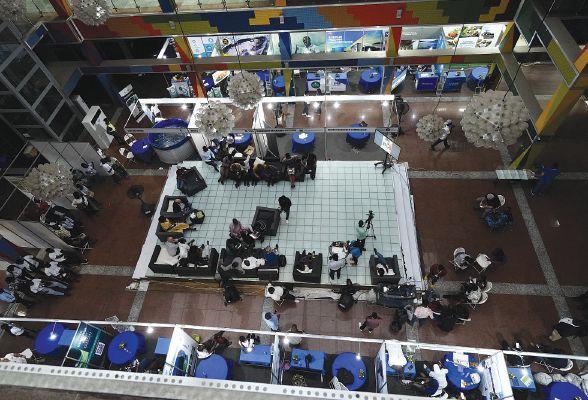
The event also marked the end of long week of the Aquaculture Ghana Exhibition 2023 (April 26-27) which attracted dozens of aquaculture exhibitors from across Ghana. Stakeholders got opportunity to share ideas and looked at new technologies in fish farming.
Chairperson of the Chamber for Aquaculture Ghana, Ruby Asmah, noted that the maiden edition of the Aquaculture Awards was to acknowledge stakeholders that have survived the turbulence of the sector and industry players that have contributed to the recovery process.
LONG-LASTING AQUACULTURE PUMPS
Moses Anim, deputy minister of the Ministry of Fisheries and Aquaculture Development, spoke at the event and pledged to adequately support local fish farmers in order to boost fish production in the country. This, the minister says is aimed at stopping the importation of fish into the country which buys about 50 per cent of its fish for its consumption from outside countries.
The country now aims to increase its fish farming to 200,000 tonnes by the year 2027 from over 89,000 tonnes as of 2021 which is about 136 per cent increase. About 25 per cent of this will be targeted from commercially farmed fish from 14 per cent in 2021. The West African nation also projects 50 per cent improvement in the performance of farmed fish by 2027.
Aquaculture in Ghana is one of the businesses that are currently limping as a result of the challenges of post-Covid. As a result, many fish farmers went down and never came up again while others that survived are struggling with high costs of running business mainly very high feed prices.
Jacob Doe Adzikah, CEO of Chamber of Aquaculture Ghana, says there is low investment in fish farming in the country because of difficulty in accessing funding from financial institutions and insurance firms.
“We need to bring financial institutions and insurance companies closer to the industry and then they will understand how it looks like, opportunities available and how the industry can have assets to attract funding and grow,” Adzikah says.
However, authorities say despite the turbulence of the sector and industry, key players are fighting hard to ensure its full recovery.
– Bob Atwiine
PHOTO: BOB ATWIINE
Russia’s Inarctica announces new acquisition, following the Norwegian hatcheries sell-off
Inarctica, Russia’s largest aquacultural company, has acquired the Mulinsky fish farm in the Nizhny Novgorod region, according to the data from Russia’s state database.
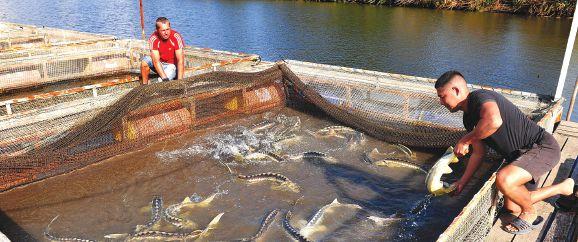
As reported by the Russian press, the farm is engaged in breeding sturgeon (Acipenser) and also has an opportunity to produce Australian crayfish (Palinurus vulgaris), shrimp ( Pandalus), and trout (Salmo trutta trutta) for commercial purposes as well as breed fish fry for stocking freshwater reservoirs. Mulinsky fish farm occupies a 5,700 sq. metres land plot and consists of a hatchery, a RAS unit, fish processing capacities and a feed mill.
In 2021, Mulinsky fish farm’s net revenue stood at 21.8 million roubles (US$275,000) and a net profit of 344,000 roubles ($4,400).
This is not the first Inarctica’s acquisition in 2023. In February, the company purchased the Arkhangelsk algae plant. Inarctica explained that that deal allowed it to enter the growing market of algae and products of their processing.
The Arkhangelsk algae plant is the only enterprise in Russia for growing and deep processing brown algae from the White Sea.
Inarctica, formerly known as Russian Aquaculture, is engaged in breeding Atlantic salmon (Salmo salar) and trout in the Barents Sea in the Murmansk region, as well as trout in several lakes of the Republic of Keralia. The company operates 35 salmon and trout farming sites in the Russian northwest, with a potential production capacity of around 50,000 tonnes.
In January 2023, Inarctica sold three smolt plants in Norway to local management. The company reportedly was forced to do that, even though these facilities provided its Russian farms with necessary broodstock, due to regulatory restrictions Russian business face in Norway. It is not clear whether these hatcheries will continue working with Inarctica.
HI_Reed Mariculture_MayJune23_CSA.indd 1
Russia scales up recreational campaign in Siberia
Russian hatcheries in Siberia, primarily engaged in regional recreational programs, have rolled out plans to scale up operations in the coming years.
For example, Chernyshevsky fish hatchery in the Yakutia Republic plans to expand the geography of stocking and, in addition to chir (Coregonus nasus) and peled (Coregonus peled), start breeding whitefish (Coregonus williamsoni), white salmon (Oncorhynchus kisutch) and omul (Coregonus autumnalis).
As explained by Vasily Cherepanov, general director of the hatchery, the production technology is currently being worked out. The eventual target is to expand the stocking campaign to the entire Western Yakutia, covering the Lena, Anabar, and Vilyui rivers.
In 2021, Russian state-owned hatcheries released a record-breaking 2.8 billion units of broodstock across the country, 200 million units up compared to the previous year.
More than half of that figure falls for Siberia, primarily the area of the Baikal Lake. Last year, the Baikal hatcheries reportedly released nearly 1.5 billion units of omul and sturgeon (Acipenser) fry into the lake.
Sanctions have not derailed the Russian aquaculture industry development
In the first quarter of 2023, Russia saw an 18.4 per cent hike in aquacultural industry production compared with the previous year to 181,400 tonnes, the Russian federal agency for fisheries Rosrybolovstvo reported. Market participants said that Russian fish farmers had overcome most of the challenges brought on the back of Western sanctions last year and even benefited from a slump in fish import to the country.
Most growth comes from the salmon (Salmo salar) segment, where production jumped by 28 per cent to 71,000 tonnes. In addition, the seafood segment also experienced a 13.5 per cent rise in output to 63,300 tonnes. Russian aquaculture production has the potential to grow to 1 million tonnes per year, Rosrybolovstvo said, adding that the country has a vast opportunity to scale up this industry thanks to access to 14 seas and three oceans.
In 2022, Russian aquaculture production totalled 383,500 tonnes, rising by 7.5 per cent compared with the previous year, Rosrybolovstvo estimated. Last year was the first since Soviet times when salmon production became the largest segment of the Russian aquacultural industry. In the earlier decades, the industry was dominated by pond-type carp (Cyprinus) farms, but recent years saw a surge in investment activity in new segments.
Andrey Golokhvastov, general director of the Russian think tank Agroconsult, told local publication Agroinvestor that the salmon segment remains of the greatest interest to investors seeking new opportunities in the Russian fish farming industry, as imports to the country slumped due to sanctions. On the other hand, he added, it is not clear how the product performance in the industry is estimated, echoing concerns expressed by other market participants that the production and sales figures on the Russian fish market often don’t add up.
The Russian agricultural bank Rosselhozbank has recently issued a forecast under which the Russian aquacultural production will reach 430,000 tonnes in 2023 and 620,000 tonnes by 2030. On the other hand, Agroinvestor reported, citing local market participants, that the industry still faces substantial challenges, and its high dependence on imported broodstock, fish and technology still persists.
PHOTOS: (BOTTOM) DINSKY FISH FARM; (TOP) BELSKY HATCHERY
PHOTO: KORYAZHEMSKY HATCHERY
5,000 fish cages to take Philippine milkfish industry to next level
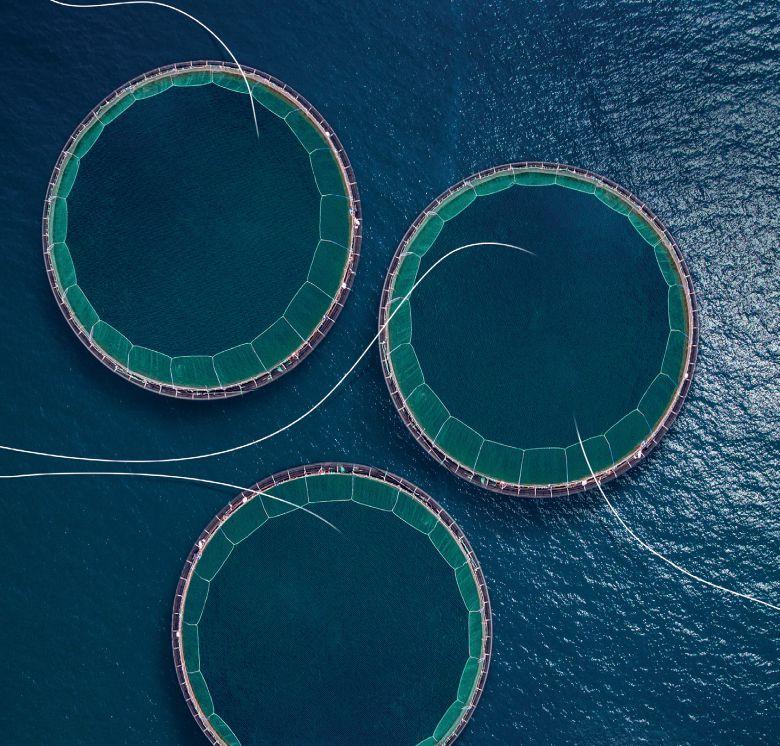
Five thousand fish cages are what it takes to further push the Philippine milkfish industry, said Manny Piñol, a former Philippine agriculture chief. This recent social media post once again reignited the topic on further improving the Philippine milkfish industry.
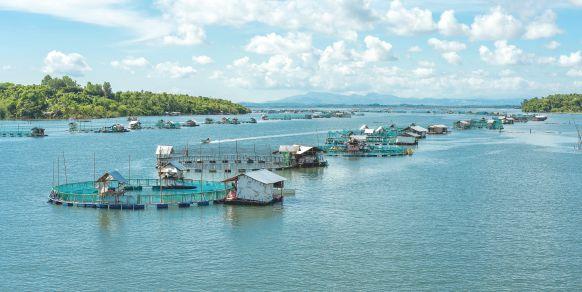
Each of the circular fish cages, made of fiberglass and PVC pipes, could accommodate 80,000 milkfish fingerlings. Total production yield of the 5,000 fish cages is an estimated 100,000 metric tons.
Reaching this point necessitates a holistic approach – addressing the perennial shortage of Philippine-produced fry, funding support by government and government financing institutions, affordable aquafeeds and having a ready market.
Similar points were stressed in the Philippine Milkfish Industry Roadmap 2021-2040, a government-private sector collaboration.
Milkfish a popular food fish in the Philippines. However, production is perennially hounded by lack of locally produced fry. Heavy importation, especially from Indonesia, is the industry stop-gap. Imported fry are priced lower but have higher mortality rates.
The roadmap cited one of the biggest threats by dependence on Indo-fry: “If Indonesia will stop fry exportation, they can solely dominate in exporting marketable milkfish.”
There is an availability of farms breeding milkfish in the Philippines but broodstock supply continues to be inadequate. Technology and R&D on milkfish breeding is available. Investment interests in establishing hatchery/nursery facilities, however, are deterred by high operations costs, particularly when it comes to cost of electricity.
Among the factors identified for pushing cost of Philippine fry is the “unabated price increase of feeds and other farm inputs.”
The unregulated importation of milkfish fry, coupled with the cost factor, makes it a popular choice for a lot of farmers.
Wild-caught fry contribute to the Philippine inventory. But concerns have been raised due to absence of folding facilities.
Piñol’s push for fish cage might be practical given the growing scarcity of inland and coastal areas to sustain the industry’s physical expansion. But, critics cite its negative environmental and ecological impact, mostly traced to the excess fish feeds falling on the seabed. Advocates say that multi-trophic aquaculture may minimize the impact. Piñol visited a fish cage was stocked with milkfish fingerlings, rabbitfish and spadefish. The last two animals were bottom dwellers that eat excess feed landing on cage bottom.
– Ruby Gonzalez
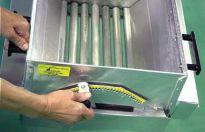
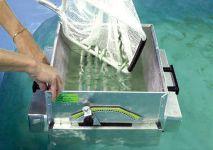
Smarter, stronger, more economical drum filters
The way to become a market leader in any industry is to give customers a quality product that fits their exact requirements at the best possible price. That’s why we have developed the Hydrotech Value series of drum filters.
The Hydrotech Value drum filter series focuses on reduced maintenance, increased component quality and simplified operation – all to give your plant maximum filtration performance at a minimum operational cost.
There are more than 50 technological improvements in the new Value series, compared to the previous series, that make these filters excellent value for money.
California salmon season in jeopardy
By Julia Hollister
Although the majority of the salmon community is alarmed by the closing of the 2023 season, the California Department of Fish and Wildlife has some encouraging news.
The not so good 2023 projection for Sacramento River fall Chinook salmon is the second lowest stock forecast on record. The first was in 2008.
The season’s closure was overwhelmingly endorsed by the Pacific Fishery Management Council and likely will be approved in mid-May by the Marine Fisheries Service.
At a press conference in San Francisco April 7, representatives from various segments of the fishing community came together with state officials, politicians and U.S. House Speaker Emerita Nancy Pelosi (D-CA).
Gov. Gavin Newsom, Pelosi, state officials, hotels and recreational and commercial salmon fishing are calling for help. This disaster declaration would provide relief to those who will likely be faced with mounting financial damages from the closures.
John McManus, senior policy director for the Golden State Salmon Association said there is “fear and panic” up and down the coast with families trying to figure out how they are going to pay bills.
Closure effects
Andy Giuliano owns Fish Emeryville Company and he has boats in the Pacific Ocean and San Francisco Bay since 1971.
“King salmon, represents approximately 40 per cent of our gross revenue, and we hope that the closure will not last into 2024,” he says. “But it will depend on how many fish return to the freshwater in the next 10 months.”
He heard reports that few fish were returning to the main Sacramento and Feathers rivers in November and December, so the closure was not a complete surprise.
“Hatcheries were built to mitigate habitat loses from the construction of Shasta and Orville dam in the late 1960/’70s,” Giuliano says. “Without them, there would be little or few salmon in California.”
“In most years they supplement the natural spawners and support healthy returns. In the past several years many of the smolts have been tricked down to the San Francisco Bay to avoid low warm water and hazardous predator fish in the Delta,” he adds.
Salmon captain, Sarah Bates, from San Francisco said salmon are a resilient species that have been swimming up these rivers for about as long as humans have been walking on two legs. They have survived landslides and droughts.
“What they can’t survive is some water management policies that are putting their breeding habitat at risk,” she says.
Reason for hope
There is better news coming. Information officer, Peter Tira, explains that the California Department of Fish and Wildlife’s (CDFW) Sacramento Valley salmon hatcheries continue to support California’s salmon populations and have modified some operations this year to take advantage of favourable environmental conditions and to offset impacts of the drought and low
river returns the past few years.
“CDFW is conducting in-river releases of salmon smolts once again in the Feather and American rivers,” says Tira. “There were no in-river releases in 2022 due to poor river conditions and the smolts were taken directly to the ocean and points within the San Francisco and San Pablo bays. We will continue to do ocean and bay releases again in 2023.”
In Feather River, CDFW has coordinated some smolt releases with “pulse flows” out of Oroville Reservoir by the California Department of Water Resources. This extra burst or release of water replicates natural surges in water flows that would occur in wet years such as this and helps carry the smolts into rearing habitat within the Sacramento-San Joaquin Delta and speeds their migration to the Pacific Ocean.
“For the second year in a row, our Nimbus Fish Hatchery and Feather River Fish Hatchery have increased their production of fall-run Chinook salmon to offset impacts of the drought, poor river conditions, and a thiamine
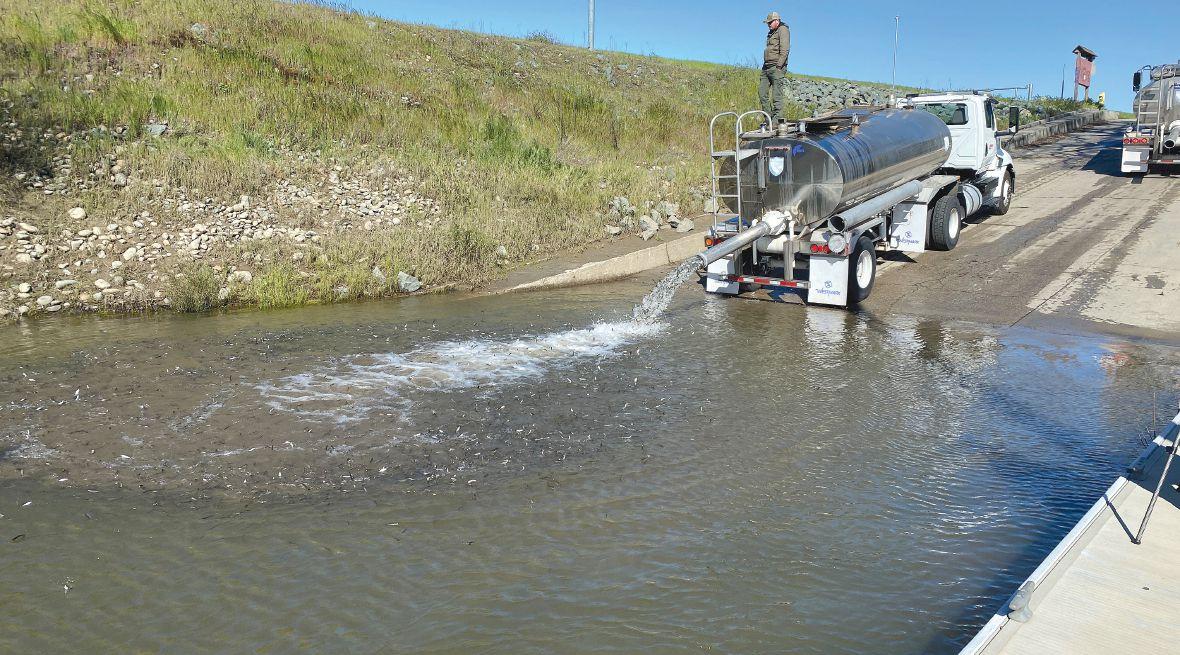
California Department of Fish and Wildlife releasing Chinook salmon smolts in Feather River
“Given the favourable river conditions, we are also experimenting with pre-smolt salmon releases in-river and parentage-based tagging. Outside of our hatchery operations, we continue to support salmon habitat restoration efforts.”
CFDW Sacramento Valley fallrun salmon hatchery production totals:
Feather River Fish Hatchery:
• 2023: 9.1 million fish (smolts/ juveniles)
• 2022: 8 million smolts
• Typical production goal is 6 million smolts
Nimbus Fish Hatchery:
• 2023: 5.5 million fish (smolts/ fry)
• 2022: 4.5 million smolts
• Typical production goal is 4 million smolts
Mokelumne River Hatchery :
• 2023: 6.5 million smolts
• 2022: 6.5 million smolts
• Typical production goal is 6.5 million smolts
Salmon strongholds
The CDFW announced nearly US$36 million in projects to benefit salmon and their habitats, and to further support climate resiliency, wildlife corridors and wetlands restoration.
Saving salmon and rebuilding their populations for future Californians involves many key actions including investing in and restoring salmon strongholds as climate refuge, increasing partnerships, working with local Indigenous tribes, doing more large-scale restoration at a faster pace, modernizing old infrastructure and creating fish passage around migration barriers. Today’s awards invest in those types of salmon projects.
CDFW is awarding $20 million in Drought Emergency Salmon Protection Grants to 10 projects demonstrating support from and collaboration with Tribes and landowner interests in the Shasta and Scott rivers and their watersheds. These include
habitat improvement, removal of barriers to fish passage and groundwater recharge projects.
CDFW is also awarding $9 million from the same fund to Tribes in the Klamath River mainstem for post-McKinney Fire debris flow damage remediation, slope and sediment stabilization, and restoration for salmonids.
“The Klamath, Scott and Shasta rivers are historic salmon strongholds where this kind of restoration investment will make a big impact,” said CDFW Director Charlton H. Bonham.
“The investments to support these 10 projects is happening in parallel to the largest river restoration in America’s history now underway to remove four dams on the mainstem of the Klamath River.”
Nature-based solutions
Additionally, CDFW is awarding $6.9 million to nine projects to further support nature-based solutions, climate resiliency, wildlife corridors and wetlands restoration.
“Each week, each month that passes by on the calendar, California’s climate challenges increase, change and present a need to implement projects designed to keep pace,” Bonham said. “We are matching this pace with ongoing funding commitments to new projects, moving away from a once-a-year announcement of awards to fund more projects, toward sustained momentum.”
Projects funded with these grants will go toward planning and implementation of wetlands and mountain meadows including expanding habitat for Lahontan cutthroat trout habitat on the Upper Truckee River, addressing urgent degrading water and habitat conditions due to climate change impacts in Shasta and Sonoma counties, and creating habitat connectivity through wildlife corridors funding for species such as Clear Lake hitch and newts, among other projects.
Water is our element!
Aerator Minimax
• Latest aerator development
• extremely economical motor
• speed-controllable direct drive
• High efficiency
• Ready for use delivery
• Clean Design
LINN Gerätebau GmbH
An der Sauerlandkaserne 1 D-57368 Lennestadt (Oedingen) Telefon: +49 2725 22021-0 info@linn.eu . www.linn.eu
Portable system to democratize sustainable aquafarming in the Philippines
By Ruby Gonzalez
There is such a thing as having too much or having too little. And then, there is the case of having it just right.
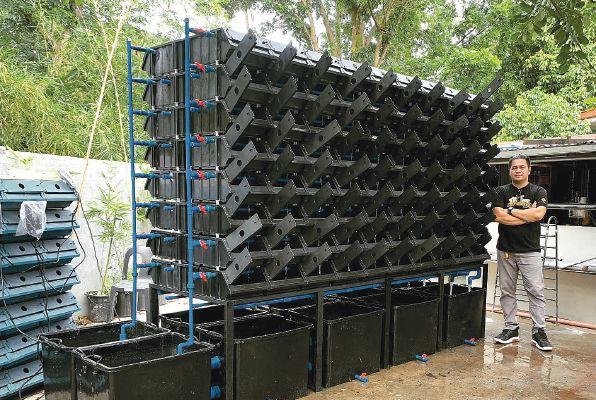
An architect-farmer in the Philippines seems to has struck the right balance with an “aquatecture” system he developed called the portaSHIP. An acronym for Portable, Sustainable, Smart, Holistic, Healthy, Integrated & Interactive Product for aquafarming, the system was designed and developed for community-scale aquafarmers by Agritektura Enterprises.
“The concept came in when I thought of an affordable sustainable aquafarming system,” Francis (Ran) Quijano, prime mover at Agritektura, told Hatchery International.
“So, the portaSHIP fits the idea of making aquafarming sustainable in the urban settings. Considering that urban spaces are expensive, the system I created must be
impermanent,” he said, implying that the unit could be easily relocated should the space be up for redevelopment.
Farming potential
With the ever-increasing demand for fish, together with the favourable environment in the Philippines, many have cast their eyes to fish farming. At the onset, though, ground-zero financial requirements keep these aspiring aquafarmers at bay.
“Start-up communities and associations find it hard to operate aquafarming due to the fund requirements,” he said. “The idea of the portaSHIP paved way for aquafarmers to start small and in a controlled environments that ensures quality and user-friendly monitoring system.”
Quijano said interested parties have access to government grants, angel investors and
Commercial Filtration Systems
Commercial Filtration Systems
community seed funds. The company, which has an established track record, is working closely with government agencies such as the Bureau of Fisheries and Aquatic Resources and the Department of Science and Technology.
Prototyping
The portaSHIP features specialized modular construction system, solar energy system and automation for the systems on aeration, filtration and nutrition.
The structure’s frame uses Schedule 40 steel pipe with steel matting wall support, turnbuckle top support and flatbar bottom support. The pond is made of high-grade tarpaulin with net cover. Filtration uses stone filter composed of filter cloth, filter brush, Japanese mat, K1 media and stone filter. For aeration, there are Venturi bottom aerators and support top aeration using smart aquapumps and degas aerator.
“I am partnering now with DOST Metals Industry Research and Development Center and the Mindoro State University in developing an automated water quality monitoring gadget,” he said.
The portaSHIP has already been applied in three design prototypes.
The circular portaSHIP is designed for mass production/bulk production fit for communities. It has the capacity for 10,000 pieces if tilapia and 30,000 pieces of shrimps.
The box portaSHIP might be ideal for restaurants and can produce 3,000 pieces tilapia and 9,000 pieces of shrimps.
The third design is a vertical system for crab-fattening and softshell production.
Commercial Filtration Systems
Commercial Filtration Systems
Customized for your fish farm, hatchery or research operation!
Customized for your fish farm, hatchery or research operation!
Customized for your fish farm, hatchery or research operation!
Customized for your fish farm, hatchery or research operation!
Our Commercial LSS Packages are custom engineered to meet your specific needs.
Our Commercial LSS Packages are custom engineered to meet your specific needs.
Our Commercial LSS Packages are custom engineered to meet your specific needs.
Our Commercial LSS Packages are custom engineered to meet your specific needs.
• Marine and Freshwater
• Marine and Freshwater
• Marine and Freshwater
• Mechanical filtration
• Marine and Freshwater
• Mechanical filtration
• Mechanical filtration
• Chemical filtration
• Chemical filtration
• De-gassing towers
• De-gassing towers
• Wide variety of flow rates
• De-gassing towers • Wide variety of flow rates
• Wide variety of flow rates
• De-gassing towers
• Flow control valves
• Flow control valves
• Chemical filtration
• Mechanical filtration
• Ultraviolet disinfection
• Ultraviolet disinfection
• Flow control valves
• Protein skimmers
• Wide variety of flow rates
• Protein skimmers
• Ultraviolet disinfection
• Chemical filtration
• NEMA enclosed controls
• NEMA enclosed controls
• Flow control valves
• Protein skimmers
• Variable frequency-drive pumps
• Variable frequency-drive pumps
• NEMA enclosed controls
• Ultraviolet disinfection
• Bio-filter towers
• Bio-filter towers
• Bio-filter towers
• NEMA enclosed controls
• Bio-filter towers
All
• Protein skimmers
• Temperature management
• Variable frequency-drive pumps
• Temperature management
•
• Variable frequency-drive pumps
• Temperature management
All our systems are pre-plumbed and fully water tested prior to shipping. Call us today at 206.937.0392 www.AquaticEnterprises.com
All our systems are pre-plumbed and fully water tested prior to shipping. Call us today at 206.937.0392 www.AquaticEnterprises.com
Stocking to harvest time takes four to five months for tilapia and between three to four months for shrimp. Survival rate in circular and box systems have been between 70 to 80 per cent.
Logistical factors add to the attractiveness of the portaSHIP. Onsite installation of a unit takes only one to two days of fabrication. To compare, construction of a concrete pond could consumer two to three months. Based on the volume of harvest, cost of portaSHIP can be anywhere from 25 to 50 per cent lower than the construction cost of concrete pond. One to two persons are enough to operate one unit of portaSHIP
Quality is one of the anchors of sustainability. Quijano said he referred to the Philippine Bureau of Fisheries and Aquatic Resources (BFAR) as well as other feed company resources to formulate his own “user-friendly system for feeding protocols for fingerlings.
The vannamei and tilapia parameter guide for morning and afternoon enumerates acceptable levels for pH, dissolved oxygen, salinity, total ammonia, nitrite and transparency. For tilapia there are additional for parameters for stocking and temperature.
“The portaShip is portable but highly intensive,” Quijano stressed.
Starting up
Since the launch, portaSHIP clients have mostly been startups. “We are still in the prototype stage. We partnered with clients who understand that we are perfecting the product,” he said.
After the first product launch, Quijano and his team didn’t ease up on research and development. One particular focus was the filter system.
“Concerns such as the effective filter system that will enable the cooperators to access to a technology that is affordable and efficient,” he said. “Prototype sites not necessarily assured us of the success but it gave us the opportunity to continue perfecting the technology.”
Agritektura is currently working with the Philippine provincial government of Mindoro to bring the latest portaSHIP model online.
In the beginning of this year, an oil tanker sank in the province of Mindoro, causing massive oil spill. Fisherfolks were among those seriously impacted. The province hopes that portaSHIP could be the key to its livelihood intervention project to generate additional income through smart aquaculture and prevent environmental contaminants from compromising production.
Ambassador program
Agritektura is looking to develop a holistic approach to educating its clients throughout the installation process.
The company has designed an “ambassador program” to create provisions of consultants and availability of inputs, specifically fingerlings and feeds.
There are different groups of ambassadors.
Influencers are meant to educate and to sell the products under the Agritektura brand, journeying with clients through programs and trainings offered by the company. Installers will provide construction and maintenance assistance to clients from site selection, site development and site installation. Integrators will be endorsed as partners of the infrastructure.
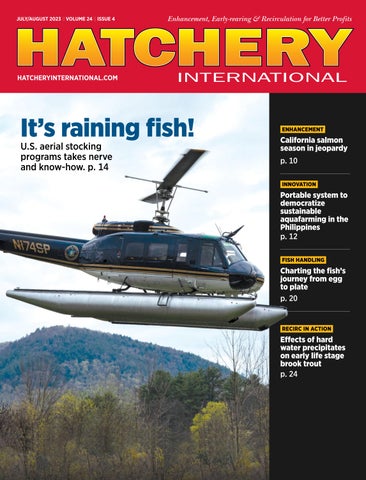
It’s raining fish!
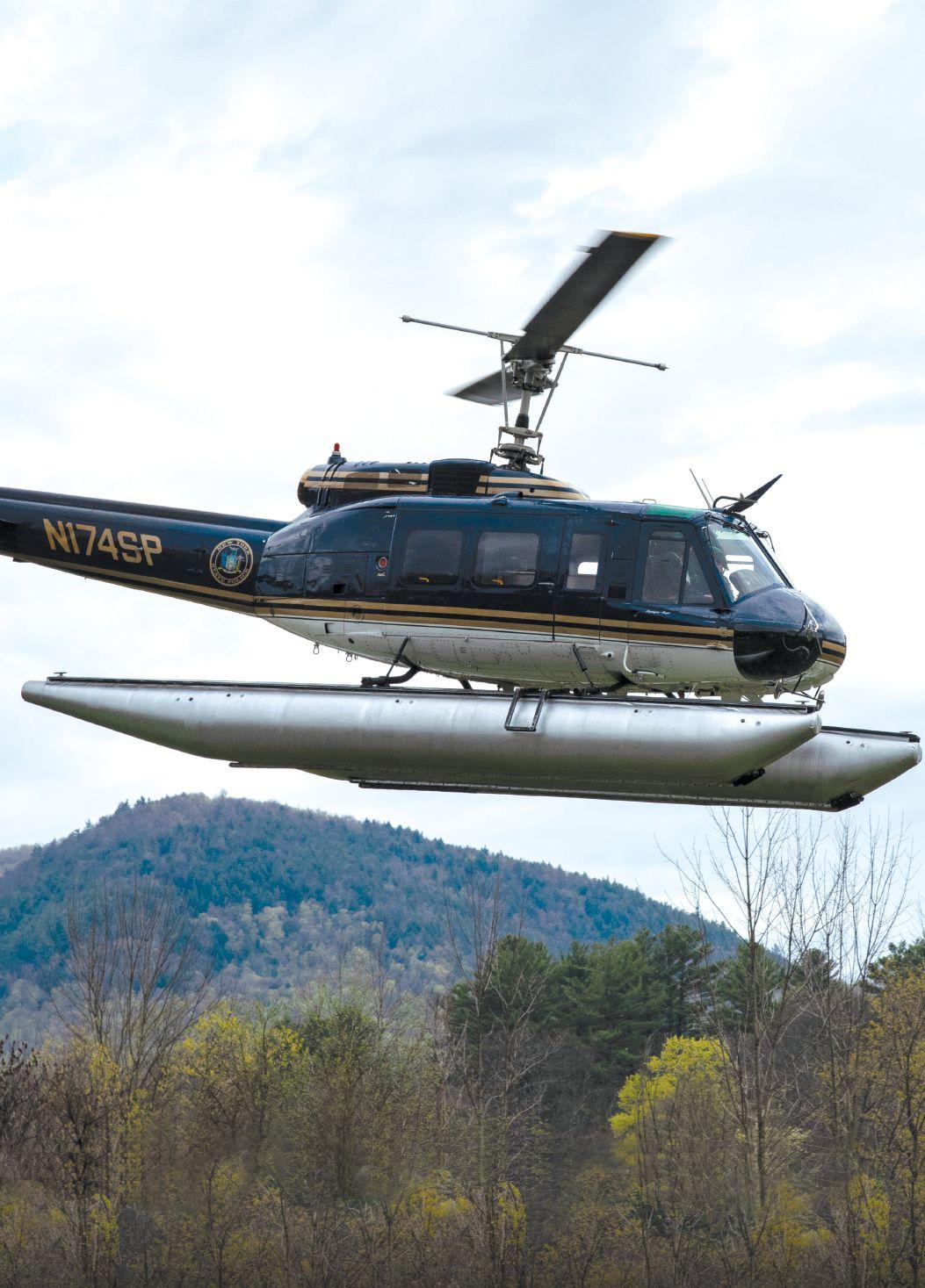
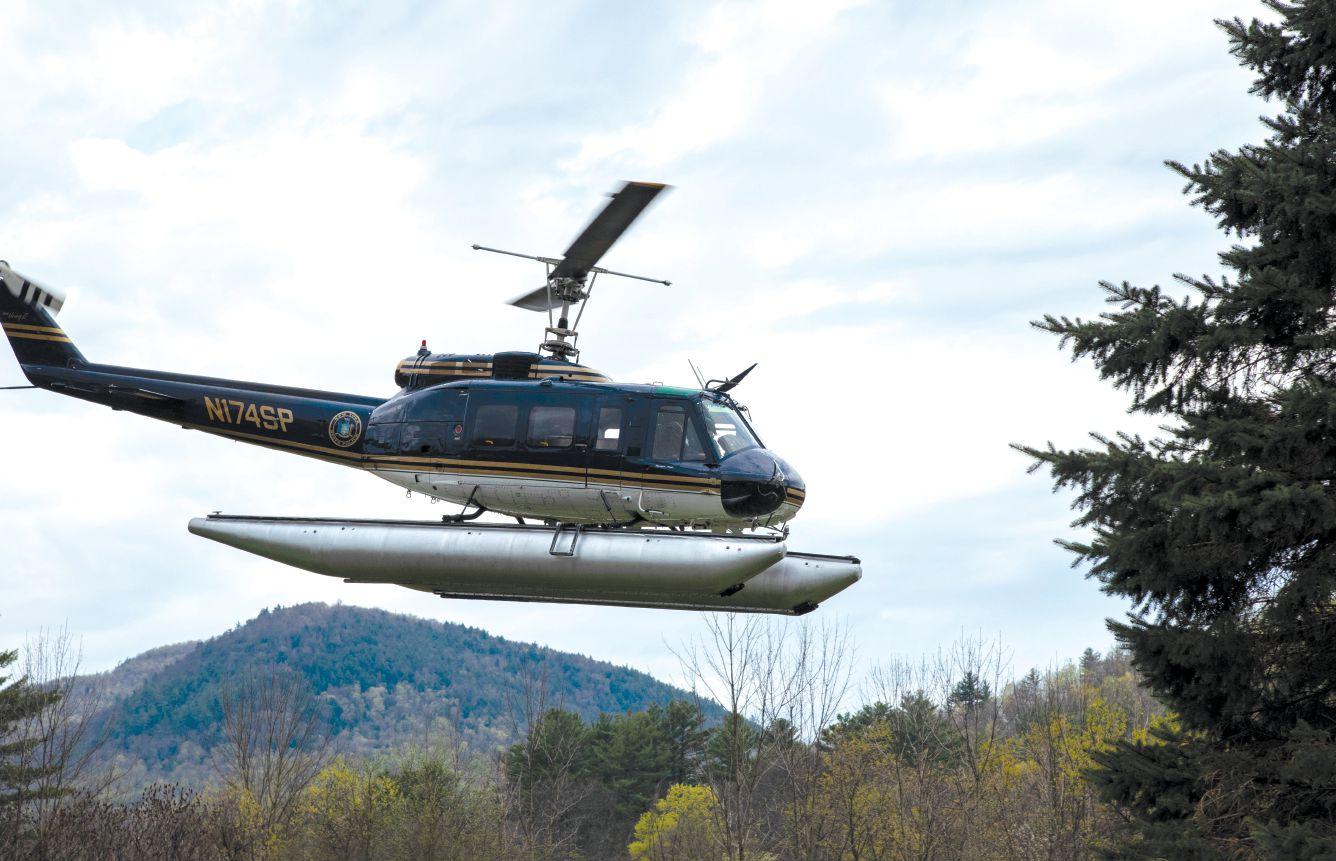
New York State helicopters used for aerial stocking are part of a consolidated aviation unit with duties that include transporting the state’s governor.
U.S. aerial stocking programs show nerve and know-how. By Lynn Fantom
Adecade ago Ted Hallows, hatchery supervisor in Kamas, Utah, first attached a GoPro camera to the bottom of a plane to show fish raining into a Utah lake below. Since then, as one Tweeter said, these videos have become “famous.”
Millions have viewed them on social media, amazed by the novelty of aerial fish stocking and calling the work “a dream job.”
But no one appreciates the expertise of Utah’s hatchery professionals – and those like them around the U.S. – more than the avid anglers whose reverence for fishing in remote lakes and streams is almost religious.
Over decades, hatcheries have honed skills in fish handling and aerial delivery in Alaska, Colorado, Maine, Minnesota, New Hampshire, New York, Oregon, Utah, Vermont, and Wyoming. How the fish are
flown to their destinations depends on the locale. Operations are technical, efficient, and sometimes very high risk. “We’ve come back to the airport and had tree branches stuck in the tires,” says Hallows.
Destination: Utah
Utah is known for trout fishing in high mountain lakes. In the northeastern part of the state, mountains over 13,500 feet boast some 2,000 lakes. Attracting passionate anglers in the south is an 11,000-foot peak, with heavy forests and views of Utah’s desert palette.
“It’s amazing to me how many people will hike to these lakes,” which might be 15 miles from the nearest road, says Travis Dees, the assistant supervisor at the Kamas hatchery, part of the Utah Division of Wildlife Resources.
Not only are these lakes inaccessible by vehicles but the air is so thin that helicopters can’t get the lift they need to fly there efficiently and safely. And with the cliffs and tall trees surrounding lakes, planes must keep 50 to 150 feet above the water.
When helicopters have a large load of fish, pilots set down on the water. If not, they may drop them from 15 feet.
“For aerial stocking, five or six different hatcheries provide different fish that will meet what different areas need at different times of year,” says Hallows. They include brook trout, Arctic grayling, tiger trout, splake, and golden trout when available. To protect the native cutthroat species, the majority of what’s stocked is triploid.
The aerial stocking of 400 to 450 lakes statewide occurs every year in late June and then again in September/October. The program, which started in 1956, is funded almost exclusively through fishing license
sales and is primarily to support recreation.
The Division of Wildlife Resources owns two Cessna 185 Skywagons, the single-engine aircraft prized for being able to lift more than its own weight. Like the bush planes that carry backpackers into the Arctic, these planes can carry up to 10,000 trout fingerlings at a time.
“We have our own pilots who are skilled in low-level flying that’s very high risk,” says Hallows. “They’re flying at 12 to 13,000 feet where the air’s thin. It’s hard on the plane to get lift and/or power to pull out.” But these
pilots have experience in the bush, crop dusting, and pipeline surveillance.
Hallows estimates he has made about 800 flights during his 39-year career. “We’ve had to dump some tanks of water places just to get out of spots so we don’t crash into the hillsides. It gets pretty exciting sometimes,” he adds.
In addition to seeing wildlife like moose, deer, and mountain lions from the air, they also sometimes see people. “We’ve dumped fish on them float-tubing in the middle of lakes – covered ‘em with fish,” Hallows says.
Handle with care
During aerial stocking, the pilot maneuvers the plane as the co-pilot releases its stock of fingerlings through a hatch door. The fish are not hurt because, at one to three inches, they are so small the air slows their drop. The survival rate, cited as 95 per cent by the wildlife division, is higher than ground methods of stocking.
But even before the drop, a lot of special handling occurs, starting with loading the fish on to trucks early in the morning and then
driving to the airport 20 miles away. Over the years, the team has streamlined loading operations at the plane which, in place of a backseat, holds a custom-built tank with seven compartments to stock seven lakes on each trip.
The hatchery professionals first load the water onto the plane and pre-measure fish to minimize stress. They know how many pounds of fish can exist comfortably in the small compartments and carefully manipulate growth to keep them small – under three inches – for both the plane trip and the ultimate drop.
The fish are not fed the day before so they won’t defecate in the tank and raise ammonia levels. Because they are not metabolizing food, they use less oxygen. Plus, they are hungry and active when they hit the lakes.
Hallows keeps the hauling water very cold, around 42°F (5.56°C), to hold more oxygen. During the flight, the co-pilot also monitors the performance of air stones in the tanks, which provide oxygen and circulate air by producing tiny bubbles.
“We can do between 50 and 60 lakes every morning before the wind blows us off,” says Hallows.
When in Rome, New York
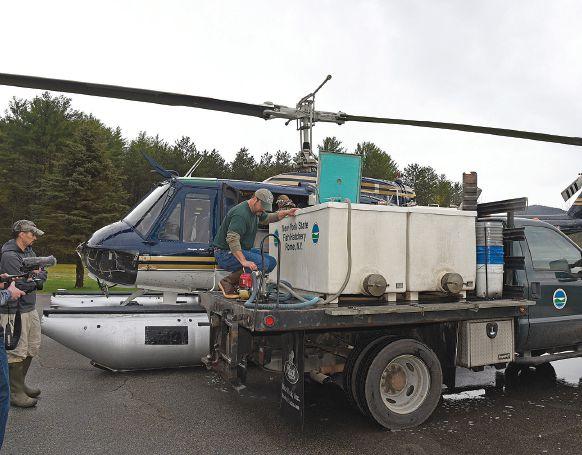
Because the highest peak among the Adirondacks’ 46 mountains is 5,344 feet – modest by Western standards – New York State’s aerial stocking program can use helicopters. In fact, they may be the same ones transporting the governor around the state, which is large and rural in many places.
Like in Utah, aerial stocking garners enthusiasm in New York where the brook trout is the state fish. The Department of Environmental Conservation (DEC) air delivers brook, brown, and rainbow trout, as well as some landlocked salmon and round whitefish (endangered in New York), according to Albany-based fisheries biologist Jim Daley, who oversees the state’s 12 hatcheries. One of the largest is the Rome Fish Hatchery, a cold water growout facility in central New York State that produces the lion’s share of trout for aerial stocking.
In the spring, yearlings are carried by helicopter to remote stretches of river and bigger ponds for the “put and take” fishery. In the fall, when airplanes are also contracted for stocking, fingerlings “of four inches or so” are stocked for “put, grow, and take.” Most of these are Temiscamie hybrids, a cross between a domestic brook trout and a wild Canadian strain, which survive better in the more acidic waters of the Adirondacks.
and Ian Roberts, Director of Communications at MOWI Canada, Scotland, Ireland
with Mari-Len De Guzman, Aquaculture Writer and Editor
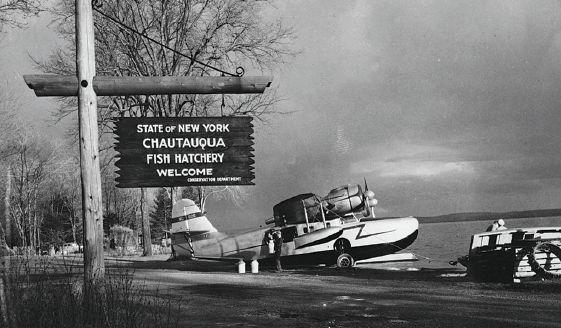
In the late 1940s, NYS Department of Environmental Conservation purchased a Grumman Goose seaplane for aerial stocking, a program that dates back to the 1930s. PHOTO: NYSDEC
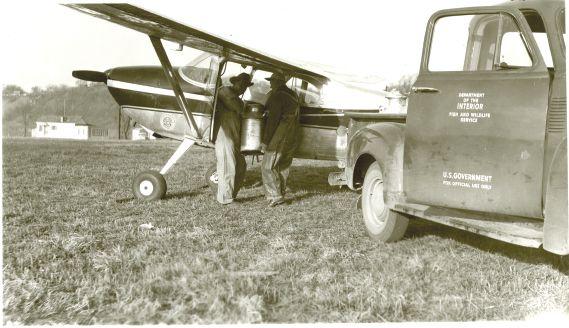
The U.S. has a long history of aerial fish stocking. The former Guttenberg Fish Hatchery, established in 1939 in Iowa, transported fish in this small airplane. PHOTO: NATIONAL FISH & AQUATIC CONSERVATION ARCHIVES/USFWS PUBLIC DOMAIN
JOIN US ONLINE
OCTOBER 18, 2023
The 1st World Trout Culture Summit will bring together trout culturists from around the globe including:
• trout farmers & hatchery technicians
• fish & wildlife professionals
• enhancement/restocking technicians
• trout nutrition and health experts
• freshwater fisheries associations
• industry suppliers, investors, academia and more!
AGENDA*
(UTC-5:00 Eastern Standard Time)
11:00 AM to 11:50 AM Genetics & broodstock
11:50 AM to 12:00 PM Break
12:00 PM to 12:50 PM Growth performance
12:50 PM to 1:00 PM Break
1:00 PM to 1:50 PM RAS technology
* Agenda is subject to change
Featuring live presentations, Q&A sessions and panel discussions, plus a host of on-demand presentations from some of the industry’s leading experts, this new virtual event promises to give trout culturists some valuable take aways to consider.
MAKE A SPLASH with one of our Sponsorship packages at the online trout event of the year!
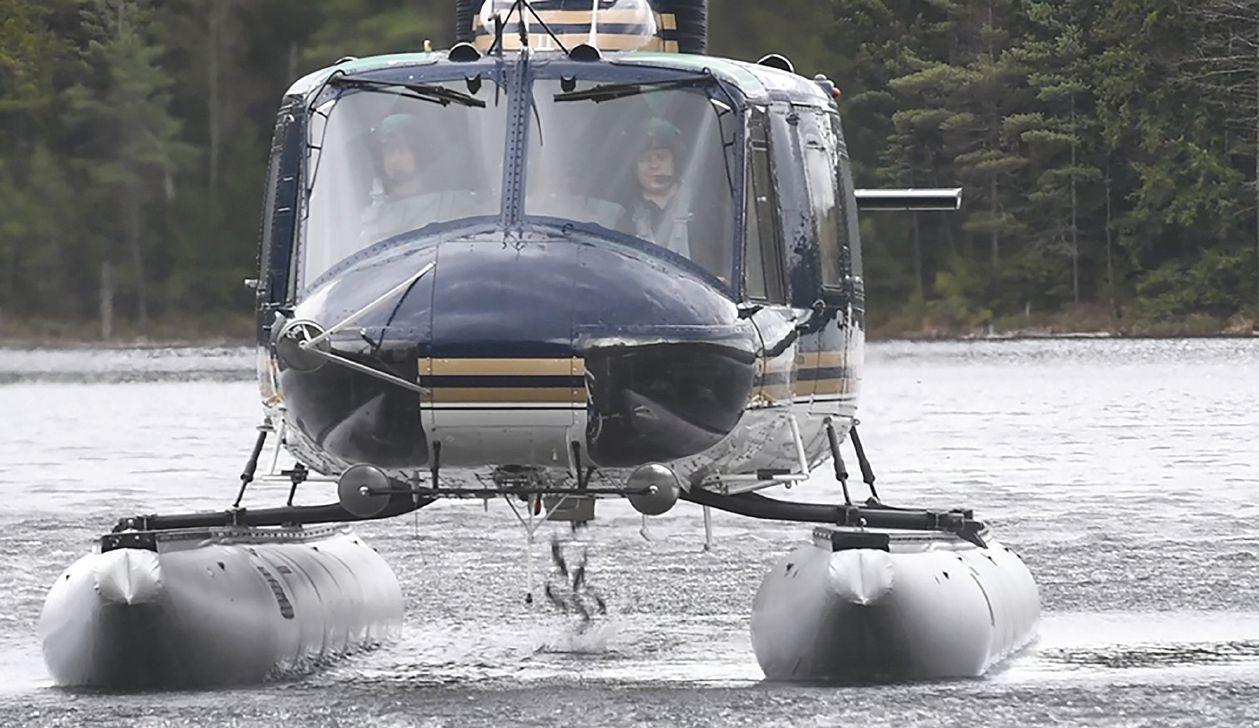
Pontoons are a feature of helicopters used by the DEC. If a lot of fish are going into a bigger lake or a pond, the pilot will set down on the water. But for a small number, stocking is done from 15 to 20 feet. Aeration in the helicopter is a physical agitator aerator that whips the water around, mixing oxygen in with it. On the airplane oxygen is used.
Although helicopters are more expensive, they have about 50 per cent more capacity than the airplanes. Airplane stocking is “a little more time consuming for not as many fish,” says Rome hatchery manager Steve Grabowski. Because helicopters can hover closer to the water, fish survival is also higher. According to a 2020 PBS
WHO WILL BE THE NEXT
DO YOU KNOW A HATCHERY PROFESSIONAL UNDER 40 WHO:
• Shows deep understanding and knowledge of fish culture?
• Demonstrates a strong work ethic?
• Demonstrates an ability to lead and innovate?
• Has a strong passion and commitment to sustainable and responsible production?
• Commits to the highest standards of hatchery practices?
Nominate them for Hatchery International’s Top 10 Under 40 and shine a spotlight on these exceptional young leaders.
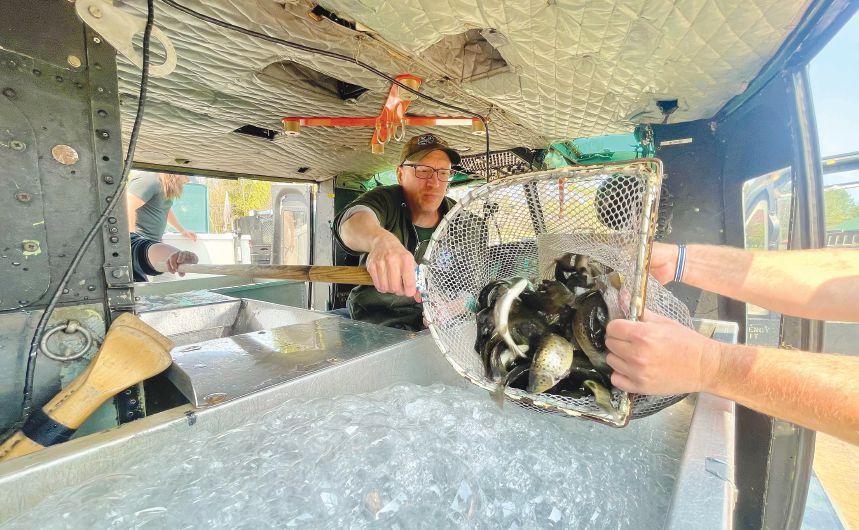
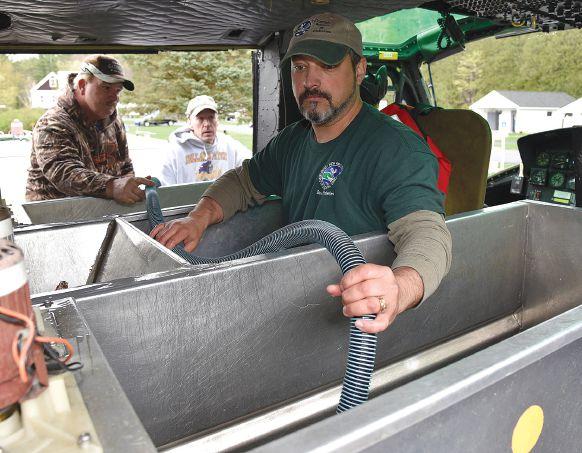
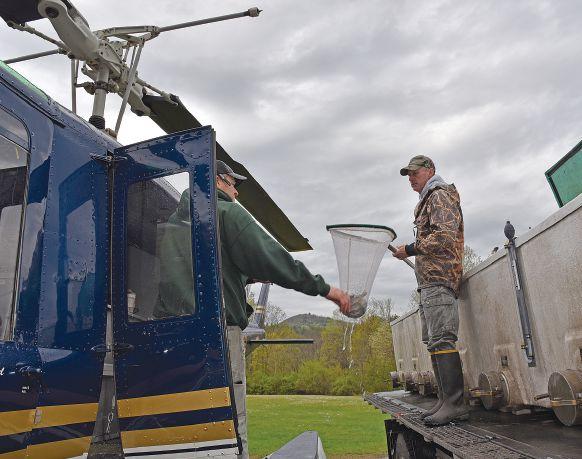
Aerial fish stocking on the ground, with loading water onto the aircraft. Inside a New York State helicopter, reconfigured with two compartments for fish. A chute to the water below is in the middle.
handling.
report, Minnesota hatcheries went from 85 per cent survival with plane stocking to 100 per cent after adopting helicopters.
The DEC has published a YouTube video that shows what goes on inside a helicopter. Midway along each side are two long, narrow tanks. A hatchery professional sits between them and nets fish into a chute for the final stage of delivery.
Stepping back, Grabowski says, “Logistics is huge.” A 24-year veteran of the hatchery, he has devised a system that efficiently maps a helicopter’s flight among ponds with a schedule of how much weight is to be stocked in each. Nets marked with poundage are key. “It’s quicker and better for the fish. Plus, less time, less money,” Grabowski says. It’s no surprise that he studied electrical engineering, while majoring in aquatic science in college.
Both Daley and Grabowski emphasize the value of building a good rapport with pilots and staff, who must be flexible during stocking season when weather and mechanical issues can cause delays. “It can be tough. People get there at 5 a.m. to load trucks and travel over to the landing zone. Then things get cancelled, and it’s back to the hatchery with trucks full of fish,” says Daley.
But on good days when they’re waiting for a helicopter to complete its delivery, Grabowski has a football or Frisbee to throw around. He’s been known to buy ice cream for the team on the way back to the hatchery. Staff motivation and training are never to be discounted among hatchery managers. Grabowski mentions he has four new staffers this year.
For operations like aerial stocking, where there isn’t enough demand for equipment to be mass produced, management can also require ingenuity in adapting nets, tanks, and other equipment. “We come up with a better way, and we build it,” says Grabowski.
Documentation is a best practice in the corporate world, but Grabowski applies it to his work. Every year he logs fish per water body, stocking routes sequences, and special notes, like when a pilot reports overgrown trees at a river that will require a work-around. “It makes it easier for me, for the pilots, and if somebody had to take over,” he says.
Grabowski wrote a book about deer hunting in the Adirondacks, but it sounds as if he could write one about hatchery management, too.
Transportation of fish from hatchery to helicopter requires careful
Charting the fish’s journey from egg to plate
By Nancy Erickson
Most people think of how to properly cook their freshly-caught fish when hearing the term “fish handling.”
But that term takes on a whole new meaning when presented to hatchery workers raising everything from wild salmon to baitfish to ornamental species.
I talked with several individuals across the U.S. regarding challenges of rearing different fish species – from spawning to sale or release – and methods used to insure fish safely arrive wherever that destination might be.
From egg to plate
Jesse Trushenski is the chief science officer for the Riverence Group, a family of landbased farms that are the largest producer of farmed rainbow trout and steelhead in the Americas, with operations based in Washington and Idaho. Riverence is also the only commercial supplier of Atlantic salmon and Coho salmon eggs located in the U.S.
The company ships Atlantic salmon, steelhead and Coho fertilized eggs worldwide from their Washington facility. Eggs are also
safely transported to their growout farms, located along the Snake River in Idaho, where they are hatched and raised for consumers.
“It’s always best to be moving eggs rather than moving fish if you’re doing transport across jurisdictions or across long distances, because you can disinfect those eggs when you receive them to make sure there is nothing on the outside of the eggs,” Trushenski said.
Eggs are shipped in coolers wrapped in moist towels with ice to keep the cold inside the coolers, she said. Even though no water is involved, shipping has its challenges.
Riverence works with a company that helps manage logistics. One of the biggest limiting factors for a successful arrival of product is insuring all accompanying paperwork is in place, both on the shipping and receiving end.
“As you can imagine when you’re shipping a live product, there’s a lot of fish health verifications that have to go with that to prove your fish are clean and healthy,” said Trushenski. “So making sure that info is in the hands of the people that need to review it and approve it on the receiving end – that’s a perennial challenge.”
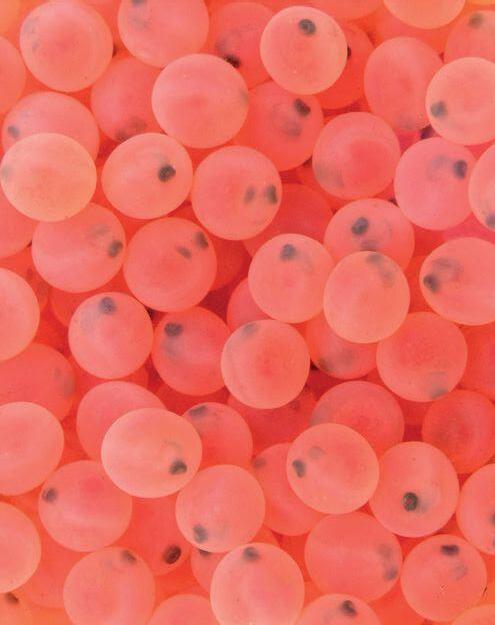
In preparation for shipping, fertile trout eggs are wrapped in wet cloth, packed in trays and stacked in coolers with ice packs before sealing and sent on their way.
PHOTO: RIVERENCE BROOD LLC
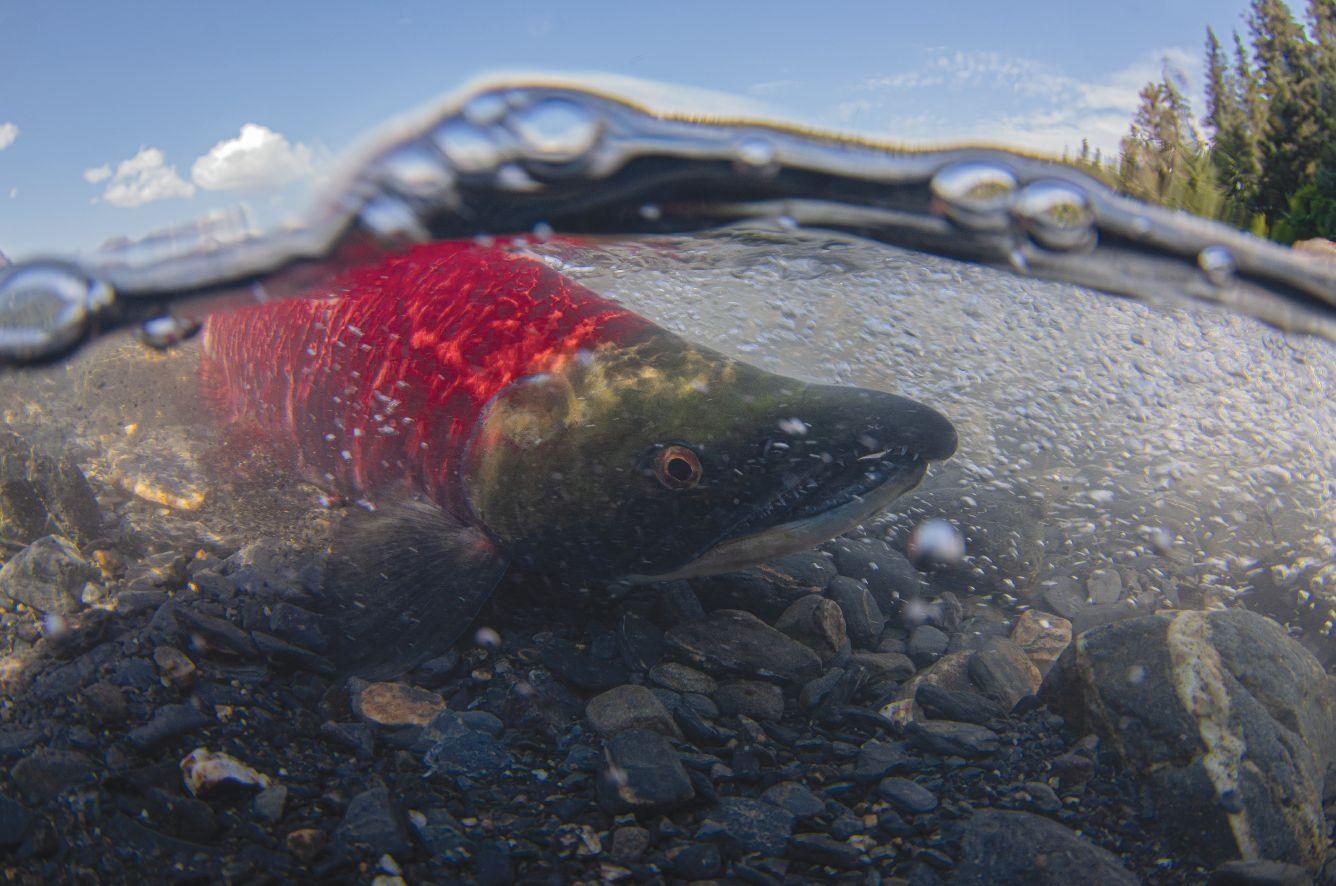
A sockeye salmon languishes in the shallow waters of a small lake it was released into after being reared at the Trail Lakes Hatchery.
PHOTO: KENNY REGAN
“There’s a lot of fish health verifications that have to go with that to prove your fish are clean and healthy.”
Easy on the eyes
They may not be anywhere near the size of a salmon, but rearing ornamental fish presents another side to the fish handling story.
Eric Wagner is the owner of Proaquatix LLC, a top-rated ornamental fish farm and wholesaler of captive-bred clown fish and other marine ornamentals. The Florida-based firm produces more than 40 species of marine ornamentals and sells to distributors, retail stores and public aquariums all over the world.
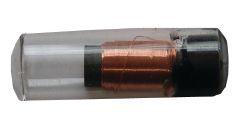
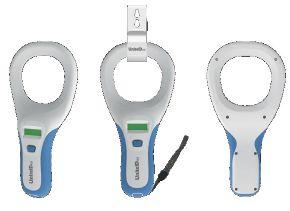
PIT TAGS & SCANNERS
Ideally, Proaquatix fish are only moved and handled a couple of times before leaving the farm, Wagner said.
“Fish handling always adds stress and can amplify existing issues,” said Wagner. “Unlike a food fish farm, we don’t need to continually sort our fish by size to maintain ideal culture scenarios. Our fish do need to be carefully inspected and sorted before sale and this is always done by hand. We do our best to minimize handling and maintain the healthiest fish.”
Nets are used to capture the fish, which are then placed in floating baskets for sorting. Every handheld fish is flipped over to check for deformities and examine the pattern.
Proaquatix ships via UPS domestically and airline cargo for international destinations.
The fish are shipped in plastic bags holding one third water and two-thirds oxygen in Styrofoam coolers with a cardboard shell, inscribed with handling instructions including desired temperature and content descriptions.
“There are unique challenges for each destination that can change with the time of year,” said Wagner. “We generally pack for a 48-hour transit – although it is usually less than 24 – and add heat or cold packs accordingly.”
Wagner said planning for the ship-out and destination conditions is the easy part, with little control over the transit.
“UPS and our airlines generally take good care of our fish, but there can be unforeseen challenges at times,” he added. “Blizzards and severe cold are the most troublesome. There have been a couple of occasions where an airline worker put our fish in the freezer section of the plane, thinking they were frozen food-fish.”
Recirculation System Design, Supply and Construction.
• Commercial Farms, Hatcheries, Aquaponics, Research Labs, Public Aquariums, Live Holding Systems – we do it all!
• Representing leading RAS equipment manufacturers.
Guided by Christian Pérez-Mallea
Rise and shine
Everyone gets excited when it’s springtime in Alaska – even sockeye salmon eggs that have hatched over the winter and lay snuggled in their substrate beds at the Trail Lakes Hatchery on the shores of Upper Trail Lake outside Moose Pass in the southcentral part of the state.
It’s time for the juvenile salmon to move outside.
Brett Jenkins is hatchery operations manager for Cook Inlet Aquaculture Association, one of five regional associations throughout Alaska responsible for the protection of self-sustaining salmon stocks and rehabilitation of those stocks and their habitat for use by personal, sport, subsistence and commercial users.
During the summer and fall, hatchery staff collect salmon eggs, fertilize them and put them in incubators where they remain until early spring. The salmon are raised in the hatchery until they reach the size as fry or smolt and then either seeded into lakes or released to the ocean to complete their lifecycle.
“Tides are another factor for our fish transports that take place by boat, as they impact access to some of our locations, proper planning and density management of the transport tanks are the keys to our success.”
Fish are transported by truck, boat and floatplane.
“Smolt are definitely easier to transport than fry, because smolt are larger and more robust and can tolerate more handling,” said Jenkins. “We are also able to run aerators in our transport tanks with smolt that cannot be used with fry as they are often too small and can slip through the aerator screens, resulting in mortality. Aerators help manage saturated gasses in the water, making longer transports easier to manage than those without aeration.”
DCSLinkstream is low-cost sh-data software. It runs on low-cost waterproof Android tablets.
* Shrink your Labor and Overhead Costs
* Grab data from weight scales, PIT readers, length boards.
* Easy to customize. Make many study types.
* Instant Data-Access. No Transcribing
* PIT Tag features like Real-Time Alerts & Tag History
* Sub-Samples
* Real-Time Analysis
* Now Compatible with VodaIQ PIT Readers.
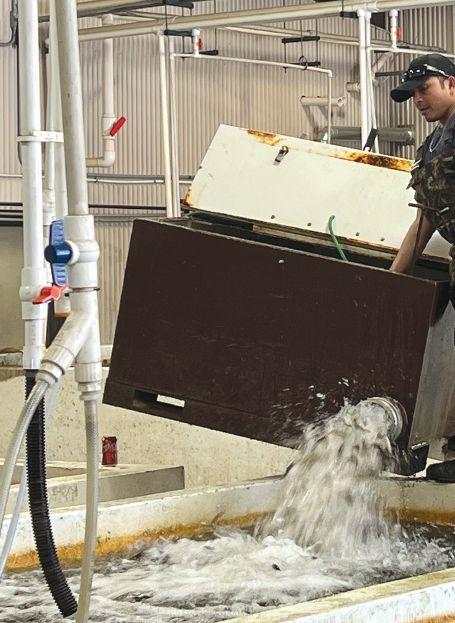
Baitfish are drained from a tractor tank into warehouse runways after being seined from outside ponds. The fish will be sized, measured into barrels and loaded onto transport trucks, headed to market. PHOTO: BEN GOLLON
Bigger challenges involve distances fish are transported and weather they encounter.
“Tides are another factor for our fish transports that take place by boat, as they impact access to some of our locations,” Jenkins added. “Proper planning and density management of the transport tanks are the keys to our success.”
Fish on!
Many fish bites if you got good bait, goes a line in the song sung by Taj Mahal.
Gollon Bros. Wholesale Live Bait has been at the forefront of the North American Live Bait industry for more than a century.
Located in Stevens Point, Wisc., the family-owned business is one of the few baitfish wholesalers to have direct experience in farm-raising minnows, importing/exporting, and harvesting direct from the wild.
“Baitfish are harder to handle than your normal trout, salmon or walleyes,” said company president, Ben Gollon. “They’re not as strong as far as holding up to mechanical handling; a lot more challenging and they’re small – one-to-five inches at most.”
“My feelings are every time a fish touches a net, its harmful to them. Their scales and slime coat come off,” Gollon said. “Our main tool is a five gallon bucket.”
Bait size is important. Rather than using the industry-popular grading boxes, Gollon Bros. uses panel graders that do not require fish to be handled manually, but allows them to simply swim through on their own, reducing stress, Gollon said.
The panel graders also help detect trash
fish that can end up mixed in with baitfish in outside ponds, often deposited there by birds. And that’s a challenge when transporting minnows across state lines – there’s regulations against it, said Gollon.
The company has a large fleet of trucks equipped with fish transport tanks and oxygen, but that also presents challenges during long hauls when drivers are only allowed to drive 11 hours a day, Gollon said.
“You can’t sit with a load of fish,” he said. “You have to put two drivers on or figure something out.”
Anglers are picky and being able to supply the right baitfish at the right time is crucial.
As an example, “There’s a perch run in Lake Erie that, if they don’t have the right kind of minnow, they won’t go,” said Gollon of participants.
“You try to do everything right,” he added.
Effects of hard water precipitates on early life stage brook trout
By John Davidson, Freshwater Institute
With co-authors Brandon Keplinger (WVDNR), Clayton Raines (USGS), Curtis Crouse (FI), and Christopher Good (FI)
The Conservation Fund’s Freshwater Institute (FI) is focused on the research and development of recirculating aquaculture systems (RAS) to facilitate the expansion of sustainable food fish production. However, we have also utilized the controlled environment provided by RAS to supplement trout for recreational angling programs and for fisheries conservation research. For example, we recently completed a collaborative project with West Virginia’s Division of Natural Resources (WVDNR) to determine if natural hard water precipitates, also referred to as marl, inhibit brook trout egg and alevin survival. Findings from this research, which were published in the Journal of the Southeastern Association of Fish and
Wildlife Agencies 1, are guiding native brook trout restoration efforts in West Virginia.
Background
Although the brook trout is the official state fish of West Virginia, native populations have been extirpated from many local streams. Loss of streamside canopy, increasing water temperature, and adverse land use practices, among other factors, have contributed to the Eastern brook trout’s decline 2. In addition, sedimentation stemming from logging, agriculture practices, and runoff has reduced spawning habitat 2 and can inhibit brook trout recruitment through entombment and/or asphyxiation of developing eggs and fry 3. While sedimentation is typically related to anthropogenic factors, hard water environments also produce natural sediments that could cause similar harm to juvenile brook trout. For instance, streams fed by springs from limestone aquifers release carbon dioxide (CO2) across riffles and waterfalls, which increases pH and shifts chemical equilibrium, resulting in the deposition of silty marl precipitate 4. This water chemistry reaction is common in Rockymarsh Run, which flows adjacent to the Freshwater Institute and is one of several hard water streams in the Eastern Panhandle of West Virginia where native brook trout once thrived but are now absent 5. Curiously, Rockymarsh Run maintains suitable year-round water temperatures and has microhabitats with upwelling springs and gravel substrate that are ideal for spawning 6 suggesting that this stream should otherwise sustain brook trout.
Research capacity
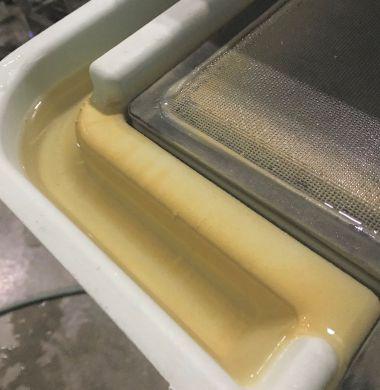
With this background in mind, FI and WVDNR scientists hypothesized that calcium-rich marl could, in part, limit juvenile brook trout survival in Rockymarsh Run and similar hard water environments. Moreover, the Freshwater Institute has ideal conditions to test the impact of hard water precipitates, including source water from a karst-geology spring with hardness >300 mg/L as CaCO3 and gas conditioning technologies that constantly remove dissolved CO2. Crystalized calcium commonly coats the submerged surfaces of fish tanks and
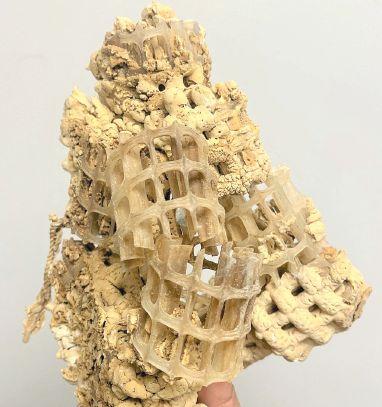
1 Calcium-rich precipitate adhered to a Heath tray used for these studies (top) and calcified media removed from a gas conditioning column at the Freshwater Institute (bottom).
hatching trays at FI (Fig. 1). Under extreme circumstances, packed media within gas conditioning columns has morphed into stalactite-like structures (Fig. 1). Observationally, precipitate formation begins in FI’s RAS at a pH of approximately 7.7. This is corroborated by the Langelier Saturation Index, which considers input values for water hardness, pH, and temperature to determine the scaling potential of a water source.
Study 1
Methods - Utilizing these resources and our understanding of this water chemistry reaction, two controlled studies were conducted. During the first study, brook trout eggs obtained from a local hatchery were fertilized and stocked in 15 replicate hatching trays receiving water from three aeration treatments (n=5), including raw untreated (RU) water without marl precipitate, once-aerated (OA) water that produced very little precipitate, and continuously aerated (CA) water with pH >8.0 that produced
FIGURE
copious amounts of marl. Average water temperature was maintained between 13.5 and 14.5°C to match conditions at a WVDNR hatchery where heritage strain brook trout eggs are hatched for reintroduction. A thin layer of gravel was also placed in each tray to simulate a natural environment. Additionally, extra brook trout eggs were kept in a chilled Heath tray system maintained at 8°C without gravel where standard salmonid hatching protocols were followed. This system, which is prone to calcium scaling, also produced significant amounts of marl.
Results - Cumulative brook trout survival was negligible for all three water types after 53 days and >700 accumulated temperature units (ATU). However, mortality occurred faster in CA water where marl coated egg surfaces, and no surviving alevins remained. Interestingly, extra eggs maintained in the marl-producing hatching system at 8°C demonstrated >50% survival. The results of this study were surprising given WVDNR’s success hatching heritage strain brook trout at maximum temperatures of 14.9°C, albeit in softer water with hardness 80 mg/L as CaCO3. Therefore, a second study was conducted to investigate whether gravel presence or water temperature may have contributed to the general mortality trend.
Study 2
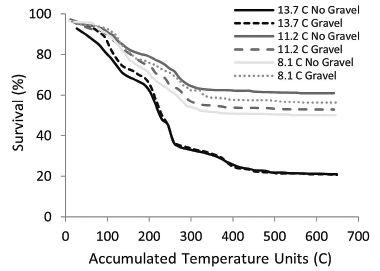
Methods - Brook trout eggs from the same provider were fertilized and stocked in Heath-tray stacks maintained at 8.1, 11.2, and 13.7°C via independent chillers. Replicate trays within each system either included gravel or were maintained without this substrate (n=3). A coating of marl was created in all systems due to continued aeration and maintenance of pH levels 7.9.
Results - Increased prevalence of alevin deformities and significantly lower survival were observed at 13.7°C versus 8.1°C and 11.2°C, but gravel inclusion did not negatively impact juvenile brook trout (Fig. 2). Further, the mortality trend observed at 13.7°C notably mirrored that of the CA treatment during Study 1, which utilized similar temperature and produced marl. Although survival was higher during Study 2,
potentially harmful effects of marl were suspected due to the observed adherence of precipitate crystals on the surface of eggs. This condition, which may have interacted with warmer temperatures, likely impeded oxygen and nutrient diffusion across the egg membrane.
Conclusions
These experimental results provided important information to biologists at the WVDNR and USGS regarding habitat suitability for brook trout. This research suggests that hard water precipitates likely create an additional challenge for juvenile brook trout survival in karst-geology streams, particularly at temperatures 13.7°C. It’s important to note, however, that in a natural setting, brook trout will select ideal spawning habitats with preferred temperatures. And although karst-geology streams are usually dominated by stretches with significant sediment accumulation, these waters typically have marl-free zones that are suitable for spawning. Rockymarsh Run, for example, is fed by at least 16 upwelling springs that create microhabitats characterized as having cooler water and gravel substrate 5. To culminate this project, WVDNR deemed Rockymarsh suitable
for brook trout reintroduction, and heritage strain fingerlings were recently stocked in this stream with the hope that these fish will survive and reproduce in these microhabitats.
References
1. Davidson, J., Raines, C., Crouse, C., Good, C., & Keplinger, B. 2023. Evaluating brook trout egg and alevin survival at different temperatures in simulated karst environments with marl sedimentation. Journal of the Southeastern Association of Fish and Wildlife Agencies 10, 27–35. https://seafwa.org/ journal/2023/evaluating-brook-trout-egg-and-alevin-survival-different-temperatures-simulated-karst
2. Hudy, M., Thieling, T.M., Gillespie, N., & Smith, E.P., 2008. Distribution, status, and land use characteristics of subwatersheds within the native range of brook trout in the eastern United States. North American Journal of Fisheries Management 28, 1069–1085.
3. Franssen, J., Blais, C., Lapointe, M., Bérubé, F., Bergeron, N., & Magnan, P. 2012. Asphyxiation and entombment mechanisms in fines rich spawning substrates: experimental evidence with brook trout (Salvelinus fontinalis) embryos. Canadian Journal of Fisheries and Aquatic Sciences 69, 587–599.
4. Herman, J.S. & Hubbard Jr., D.A., 1990. Travertine-marl: stream deposits in Virginia. Commonwealth of Virginia, Charlottesville, Virginia.
5. Petty, J.T. & Merriam, E., 2010. Rockymarsh Run report. West Virginia University Division of Forestry, Natural Resources, and Design, Morgantown.
6. Webster, D. A. & Eiriksdottir, G. 1976. Upwelling water as a factor influencing choice of spawning sites by brook trout (Salvelinus fontinalis). Transactions of the American Fisheries Society 105, 416–421.
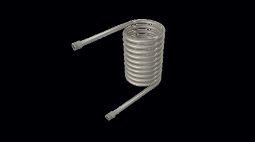
• Available with Tube Sheet, Helical Coil, or Plate
• Compact Designs
• Easy Installation
• Salt & Fresh Water Safe
• Chiller & Heat Pump Packages
• Electric Heaters & Gas Boilers
Where Water Drives Innovation.
FIGURE 2
SHOWCASE
Benchmark announces new leading commercial roles
Benchmark has promoted Kate Furhovden Stenerud as the new commercial director for salmon, while Thommy Holmvåg is the new commercial lead for genetics in Norway.
Stenerud takes over the commercial responsibility from Geir Olav Melingen, who will become the new head of Benchmark Genetics starting June 1. Stenerud previously worked with regional customer responsibility in South Norway and has collaborated closely with the global sales team. In her new role, she will report to Melingen.
“Kate has proven to be a strong candidate for this role, and we are delighted to have her take on this new responsibility. Her contribution will continue the great work that has been done in genetics and health for salmon worldwide,” said Melingen.
Benchmark’s commercial teams for Atlantic salmon are located in Norway, the U.K., Iceland, North America, and Chile.
To support Stenerud in her new role, Thommy Holmvåg has been appointed as the commercial lead for genetics in Norway, a newly created position, and will report directly to her. Holmvåg previously held the responsibility of managing regional customers in Northern Norway.
“Thommy is a dynamic and collaborative team player who effectively communicates with both our customers and the team. These strengths will help us further develop our work both internally and externally,” said Stenerud.
The commercial team and genetics marketing department were reorganized in June 2022 to focus more holistically on sales and marketing of the company’s Atlantic salmon-related products. www.bmkgenetics.com
Garware strengthens international teams in Norway, Chile and Spain
Garware Technical Fibres has recently hired three executives to support the management of the Norwegian, Chilean and Southern European markets.
Olav Kolbjørn Øvereng, a former Mowi collaborator, joins the Garware Technical Fibers team in Norway as a technical advisor.
“As a local manager at Mowi for many years, he has valuable operating experience and knows what works in practice. He knows the issues and the language of salmon farmers,” said Pål Korneliussen, manager of Garware Technical Fibres Norway.
Øvereng has international experience as regional director of Andromeda (Avramar) in Spain, and has worked on the supplier side at Meox.
“It is my desire to work closely with customers to help solve challenges related to offshore production,” said Øvereng.
Ramkhrisna Borse has extensive professional experience in the areas of net manufacturing and processing, export marketing, new product development, and net workshops.
“I arrived in Chile as technical manager, to be a support and link between the requirements of our Chilean clients and the making of networks at our headquarters in India,” said Borse.
Sylvamo, Cirkular announce sustainability partnership on ‘Tree-To-Feed’ project
Sylvamo announced a new partnership at its Nymolla, Sweden, mill with industrial biotechnology company Cirkular.
The “Tree-to-Feed” project is powered by Cirkular’s proprietary technology, which ferments pulp by-products from the paper manufacturing process to produce Cirkulein, a sustainable feed protein ingredient.
Cirkulein is one ingredient in aqua feed. The Swedish University of Agricultural Sciences will conduct feeding trials to evaluate the digestibility and growth of fish fed Cirkulein.
“We look forward to collaborating on this innovative project. Our purpose is to produce paper in the most responsible and sustainable ways,” said Michael Lindemann, mill manager at Nymolla. “By providing our by-products as a raw material, we can reduce waste and contribute even more to the circular economy.”
Eduardo Wolff joins the Garware as a sales consultant and will take care of the business in all segments for southern Europe: France, Spain, Germany, Greece and Italy. Wolff has experience in the area of sales and marketing, previously working at Redes Mar Adentro S.L. as sales and marketing manager and before as export manager at Grupo Tecnología Deportiva SA.
“We want to get closer to customers and develop business for our products in the aforementioned countries, so Eduardo will support us to get there,” said Kanwal Malik, manager of Garware Technical Fibres Europe. www.garwarefibres.com
If successful, the project could provide a sustainable, locally produced ingredient for the aqua feed industry while reducing the emissions and supply chain costs of producing and transporting feed.
“We offer a sustainable feed solution, in large volumes, at a competitive price point, supporting the growing demand for aqua feed in the Nordics and globally,” said Eric Oste, CEO of Cirkular.
“We are also very enthusiastic to be able to create impactful sustainable industrialization in our regional community in the Skane region and look forward to seeing what ripple effects this can have.”
The project, partially funded by Sweden’s innovation agency Vinnova, will begin as a pilot in September.
www.sylvamo.com
Kate Furhovden Stenerud
Thommy Holmvåg
BioMar and Agronutris partner on insect meals
BioMar and Agronutris have signed a long-term partnership to develop the next generation of black soldier fly meals specifically designed for the needs of the aquaculture industry.
“Black soldier fly meal has always been an interesting prospect that could be well suited for aquafeeds. In Agronutris we have found a partner that shares our mission and dedication to reducing the environmental impacts of our aquafeeds. They have developed a scalable model for black soldier fly able to meet the nutritional and sustainability profile required by us and the industry,” said Fernando Norambuena, global category manager –Novel Raw Materials at BioMar.
The Agronutris solution is bringing a stable product with a high sustainability performance demonstrated by a robust life-cycle assessment. Agronutris has created an approach by which there is a clear vision of moving from a novel source of protein into an ingredient from a circular economy that has an impact at a scale relevant to the aquaculture industry.
“A truly sustainable insect meal should be decoupled from the human food supply chain and fed off a substrate based on waste foods and by-products. With Agronutris, we see a viable, scalable model for producing black soldier fly meal that could see this product become a good source of nutrition in aquaculture,” said Vidar Gundersen, global sustainability director at BioMar.
There is an alignment between Agronutris’ mission to supply low environmental impact alternatives and BioMar, which has placed sustainability at the heart of its future strategy with the aim of 50 per cent of ingredients from a circular and restorative economy and lowering its feed carbon footprint by one third by 2030.
“As novel raw material manufacturers continue to evolve their product offerings, we will see more collaborations in BioMar like this,” said Norambuena. www.biomar.com • www.agronutris.com
PREFER READING A DIGITAL ISSUE?
Sign up at hatcheryinternational.com
REALLY DOES MATTER
SERVICE
Producers like you for over 40 years
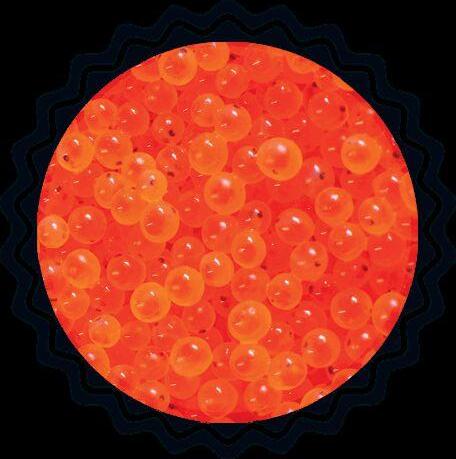
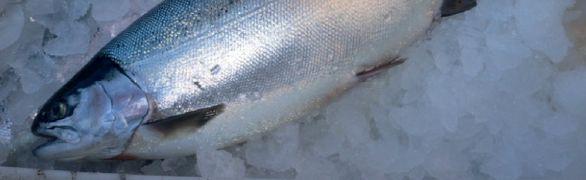
Rainbow trout eggs
Selected AquaSearch products can now be ordered in a premium version, where a “no 2nd winter maturation” genetic marker has been applied.
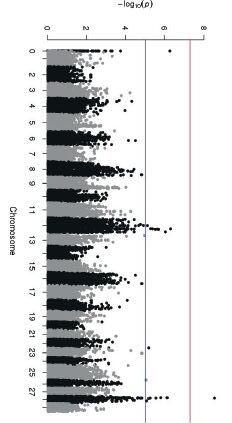
Combining DNA sequencing technology and field phenotypes in genome wide association studies has enabled AquaSearch to identify a highly significant genetic marker on chromosome 28 correlated with 2nd winter maturation in Rainbow trout. Applying this genetic marker in breeding and commercial products, has been patented, and is now routine in the AquaSearch LATE breeding line and offered as an additional feature with selected AquaSearch products. Efficiently reducing the risk of 2nd winter maturation in these products.
FILTERS
15 different packs, made to manage fish from 0.03 oz. to 8 lbs.