Media Designer Svetlana Avrutin savrutin@annexbusinessmedia.com
Group Publisher Todd Humber thumber@annexbusinessmedia.com
COO Scott Jamieson sjamieson@annexbusinessmedia.com
Many people around the world will likely celebrate the holidays in a slightly different way this year. It is certainly unprecedented in my friends and family circle, as we try to do our part in lessening the COVID-19 infection rate by limiting in-person interaction.
The year 2020 will certainly go down in history as one of the most challenging years of our time. The coronavirus pandemic has gripped the world and brought economies and health-care systems on their knees. Despite its status as an essential business, the aquaculture industry faced some economic impacts as businesses along its supply chain – hotels, bars, restaurants, the transportation sectors – suffer significant losses.
BY MARI-LEN DE GUZMAN
eventually, into people’s arms. It might be a while before the vaccines can change our trajectory in a meaningful way but the prospect of finally being able to take these COVID-19 shackles off is refreshing.
It’s easy to just focus on everything that went wrong in 2020. Despite this difficult year, however, we also saw some silver linings; the most notable was the showcase of resilience and innovativeness of the aquaculture industry. The pandemic has forced aquaculture producers to rethink and pivot their distribution strategies, fast-track vertical integration plans, and re-imagine the workplace.
Hatchery International is published six times a year by Annex Business Media. The authority for statements and claims made in Hatchery International is the responsibility of the contributors. Reference to named products or technologies does not imply endorsement by the publisher.
Subscription rates (six issues) Canada: $37.00
Within North America: $48.00 CAD
Outside North America: $62.00 CAD
To subscribe visit our website at www.hatcheryinternational.com
PRINTED IN CANADA ISSN 1922-4117
Publications Mail Agreement #PM40065710
RETURN UNDELIVERABLE CANADIAN ADDRESSES TO 111 Gordon Baker Rd., Suite 400, Toronto, ON M2H 3R1
Annex Privacy Officer Privacy@annexbusinessmedia.com Tel: 800-668-2374 PUBLISHED BY ANNEX BUSINESS MEDIA 105 Donly Drive South, Simcoe, ON N3Y 4N5
The advertising deadline for the March/April issue is January 12th. Don’t miss the opportunity to be part of this exciting aquaculture publication. For more information, or to reserve space in the next issue, call our Advertising Department at +1.250.474.3982 jthain@annexbusinessmedia.com
Next Editorial Deadline
The editorial deadline for the March/April is January 12th. Contact Mari-Len De Guzman at mdeguzman@annexbusinessmedia.com for details. Material should be submitted electronically with prior arrangement with the editor.
Behind enemy lines are the hatcheries. Other than changing operational procedures to comply with social distancing measures, businesses shutting down seemed to have little consequence to hatchery production –but that was short-lived. As seafood farmers slowed down production, so did their fry and smolt orders. Even public hatcheries are feeling the impacts, with precious government funding redirected toward stimulating the economy and traditional fundraising activities by hatcheries were limited.
As we end this nightmarish year, we begin a new one with renewed hope of recovery as news of highly effective vaccines make their way through regulatory approvals, and
ADVERTISERS' INDEX
Martin Fothergill, board director at Pure Salmon, summed it up accurately at our RAS Virtual Summit last September. “Changes that we were expecting to see over three to four years happened in three to four months.” Agility should be the word of the year for 2020. It’s easy to focus on the negative, but it’s never helpful in the long run. Taking stock of what went wrong gives us the ability to learn from them and be better. But the positive, the uplifting moments are the ones that inspire us and remind us that the best is yet to come. However you celebrate this holiday season, I hope you take some time off to enjoy the company of loved ones – whether physically or virtually – and reflect on the good moments more than the bad.
Happy Holidays!
BUSINESS
Benchmark lands egg supply deal in Norway
Benchmark Genetics Norway has secured a seven-year deal to supply salmon eggs to Norwegian aquaculture firm, Salmon Evolution, for its planned land-based salmon farm in Indre Harøy in western Norway.
The agreement includes collaboration on genetics, ova, product deliveries and expertise development related to land-based salmon farming, a joint press release from the companies said.
The salmon genetics will be optimized for land-based farming with an emphasis on growth, robustness and properties such as fat content, colour and fillet quality, the statement said. Salmon Evolution’s land-based farm is projected to become Europe’s largest of its kind when completed, with production capacity of 36,000 metric tons. The first construction phase will have a capacity of 9,000 metric tons.
“Our collaboration with Benchmark Genetics will ensure a stable, year-round supply of high-quality genetic products, and thereby a steady and predictable production of salmon to the highest quality standards,” says Håkon A Berg, CEO of Salmon Evolution.
The seven-year agreement, from 2020 to 2027, makes Benchmark Genetics the main supplier of ova to Salmon Evolution during this period. The contract also includes collaboration on research and development projects for breeding and land-based aquaculture.
“Last year, we opened SalmoBreed Salten, the most modern and advanced land-based broodstock facility in the world. Being designed to keep the nucleus of our broodstock on land throughout its life cycle, it provides the highest standard of biosecurity in the industry. Our production model gives full control of the breeding season and puts us in a position to deliver ova according to customer orders every week of the year, ” says Geir Olav Melingen.
REGULATION
New Hampshire hatchery permit could lead to costly upgrade
The U.S. Environmental Protection Agency has issued a water permit for a New Hampshire hatchery that aims to lessen its environmental impact, according to local news outlet, Insurance Journal
The new permit obtained by the Powder Mill Fish Hatchery in New Durham, lowered the limit on the amount of phosphorus it can discharge to the lake from 25 to 12 parts per billion.
The hatchery is the subject of a federal lawsuit filed by environmental group Conservation Law Foundation, accusing the Powder Mill Fish Hatchery of polluting the Merrymeeting River.
According to the state’s Department of Fish and Game and Environmental Services, which operates the hatchery, the Powder Mill hatchery has already implemented changes to lessen its environmental discharge, including using fish food with lower phosphorus, reducing the number of fish at the hatchery by relocating them to other facilities and storing their waste for conversion to fertilizer, the news report said.
The permit could take effect as early as 2021, and will require the facility to undergo upgrades to its wastewater system.
RESEARCH
PEOPLE
New hire at Aquacare
Dr. Nick Brown joins Aquacare Environment Inc.’s team in Bellingham, Wash., U.S.A.
The company announced on Oct. 19 that Brown will be bringing his designing, building, managing and operator training experience to support clients from the Bellingham office. He will also be working with remote office team members, including JLH Consulting Inc. in Courtenay, B.C. in Canada and FOX Oxygenation France in Brittany, France.
Brown was previously the director of the University of Maine’s Center of Cooperative Aquaculture Research in Franklin, Maine from 2001 to 2014. He was responsible for managing the facilities and programs at a commercial-scale, land-based aquaculture facility used for applied research and development, aquaculture demonstration projects and business incubation.
He also spent some time as a consultant for a variety of projects in the aquaculture industry – advanced RAS facilities for a multitude of species from hatchery through grow-out.
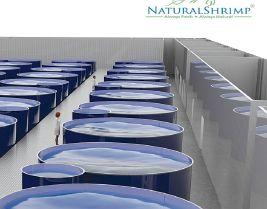
NaturalShrimp to study fish health in RAS
Natural Shrimp will embark on a study of fish health in recirculating aquaculture systems, a move that signals the shrimp producer could be entering the fish market.
The short-term validation study looking into the effects of hyper-antioxidant technologies on oxidation and fish health will be undertaken at the at the Marineholmen RASLab, in Bergen, Norway.
“The focus of the study will be specifically on freshwater salmon production and, if proven as effective as the pre-study data has indicated, the technologies could open the door for NaturalShrimp to enter various freshwater fish markets,” the company said in a press release.
The study will also test technologies that create antioxidant environments that reduce the redox reaction in fish gills and counteract fish susceptibility to the harmful effects of ammonia.
NaturalShrimp is funding the RASLab research through its market development partnership with Hydrenesis Inc.
“These platform technologies could be a real breakthroughs for NaturalShrimp because they could prove to reduce mortality and increase growth rates for our existing shrimp production, but also enable us to enter the freshwater farming business with a significant differentiation,” said Gerald Easterling, president and chief executive of NaturalShrimp.
“New technological approaches to land-based farming and RAS technology are critical if the industry is to progress,” said Mark Powell, CEO of RASLab. “The Hydrenesis technology has the potential to offer a real breakthrough in managing water quality and fish health in fish grow-out systems. RASLab was built to undertake such tests and support the development of these technological innovations. We are delighted to be a part of this project.”
Dr. Nick Brown
Russian government regulator wants more hatcheries after Norilsk oil spill
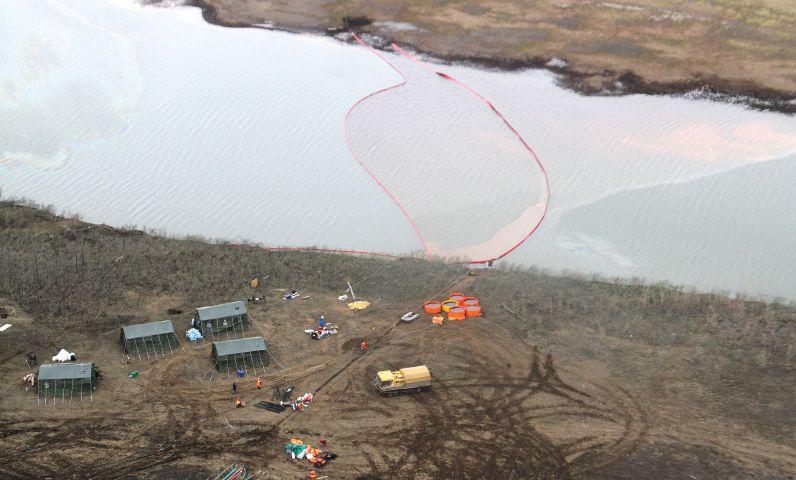
At least three new hatcheries must be built in order to restore the environment in Norilsk, Russia, following a devastating large-scale oil spill earlier this year, said the Russian state agency for fisheries Rosrybolovstvo in a statement in early October.
The new hatcheries will need to produce record-breaking 9,000 tonnes of grayling ( Thymallus ), cisco ( Leucichthys), and sturgeon (Acipenser), the population of which was nearly completely destroyed from the the Norilo-Pyasinskiy basin as a result of the oil spill, Rosrybolovstvo added.
It will take Rub40 billion (about US$523 million) and 18 years to restore the region’s fish population, Rosrybolovstvo estimated.
“Under the full designed operational performance, taking into account the production recommendations given by scientists, it would be possible to restore the previously existed reserves within 18 years.” said Ilya Shestakov, director of Rosrybolovstvo.
“We also found the presence of oil products in the fish, which makes it unfit for consumption. We also do not exclude mutational changes. Our scientists will monitor this process.”
The hatcheries’ construction may begin in 2021, but it will depend on whether the Russian giant mining company Norilsk Nickel would agree with the Rosrybolovstvo’s plan.
“Work can begin once we understand that Norilsk Nickel itself agrees with our assessment and whether they will sue us [over the investment cost of the recovery plan]. If they go to some other events and disagree with our assessment, then of course, it will take much longer. So, in 2021, we would be able to start designing and even perhaps, construction,” Shestakov said.
Norilsk Nickel will build two new hatcheries
to eliminate the damage from the Arctic fuel spill, the company’s owner Vladimir Potanin said earlier this year. The company also planned to work with local hatcheries to mitigate the
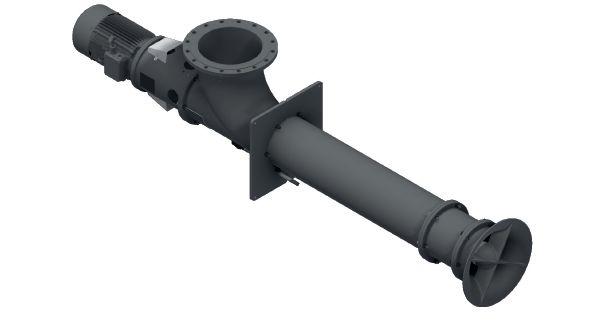
PUMPS FOR AQUACULTURE
damage to the environment caused by the fuel spill, but their capacities would be clearly insufficient to beat that goal.
–
Norilsk fuel spill killed almost the entire fish population in the area.
Environmentalists will have to work for decades to overcome the consequences of the Norilsk fuel spill.
Vladislav Vorotnikov
Kazakhstan ramps up subsidies for broodstock
The Kazakh Environmental Ministry has approved a support program for the domestic aquaculture industry, aiming to boost domestic fish production nearly tenfold to 600,000 tonnes per year.
The country’s fish farmers are currently subsidized for purchasing aquafeed and farm equipment, but this list is about to be expanded with broodstock, Environmental Minister Magzum Mirzagaliev said recently during a government meeting.
The ministry plans to reimburse 50 per cent of costs associated with broodstock purchases, Mirzagaliev said. This measure should provide a boost to the Kazakh aquaculture industry.
The government also plans to enhance its fight against poaching, which is choking the fish farming industry. Kazakh fish farms have to import almost all broodstock. According to Denis Mushtakov, director of Karaganda Balyk LLP, one of a few local hatcheries, the problem was that the government has been subsiding the cost of aquafeed for fish farms, but not for hatcheries.
“They are trying to build the first floor, forgetting about the foundation,” Mushtakov said, adding that the government expects hatcheries to take advantage of growing demand, but without the financial support, they fail to increase production.
It is yet to be seen whether the government will reimburse the cost of aquafeed for hatcheries under new rules. The authorities, however, promised to improve market conditions for aquaculture producers.
“Alongside supportive measures, we need to establish favorable conditions for industry development, including a fair market competitive environment. The poached fish will always be cheaper than legally produced since poachers pay no taxes or other fees, legal business is subjected to,” Mirzagaliev said.
For this purpose, the Kazakh Digital Development Ministry is currently working on establishing an electronic traceability system on the country’s fish market.
“The size of the shadow segment of the domestic fish market is believed to reach 190,000 tonnes, for KZT 40 billion (US$94 million),” Mirzagaliev said.
– Vladislav Vorotnikov
Blue Ridge Aquaculture builds new RAS nursery
Blue Ridge Aquaculture (BRA) has earmarked US$2.5 million for the completion of a new, state-of-the-art nursery facility to support its existing farming operations and future growth plans.
The nursery expansion aligns with the company’s vertical integration strategy, and will produce healthy, disease-free fingerlings for the grow-out operations. The company expects the new nursery will be commissioned by January 2021.
The new nursery is located adjacent to existing operations on the company’s property in Martinsville, Va. It is approximately 16,000 square feet, and uses recirculating aquaculture systems (RAS) to reduce wastewater and improve operating efficiencies, a press release from Blue Ridge Aquaculture said. The filtration system will constantly filter and disinfect the culture water, and allow up to 95 per cent water reuse. The nursery was designed to create the ideal conditions for raising tilapia fry and fingerlings.
“By reducing stress and creating ideal conditions, BRA is able to raise tilapia without the use of antibiotics or hormones,” the company said.
The nursery expansion is part BRA’s vision for large-scale domestic aquaculture. The company is currently in its 19th generation
of a genetics program, using non-GMO husbandry techniques to develop an improved strain of tilapia ideally suited for BRA’s operating systems. In 2000, the company formed a trucking subsidiary to control distribution of its product to market. In 2017, it launched Blue Ridge Aquafeeds to ensure a consistent supply of high-quality aquafeed that is formulated especifically for RAS.
“As a vertically-integrated company, Blue Ridge Aquaculture is now positioned to expand into other product categories, including fresh and frozen fillets for the North American market,” the company said in the statement. “Blue Ridge Aquaculture is the largest producer of tilapia in the United States, and has developed a innovative method of farming that allows for the cost-effective production of seafood with several key advantages.”
These advantages, according to the company, include: domestic production of a healthy seafood product free of antibiotics, hormones or contaminants; environmentally sustainable production with high water reuse and no environmental discharge; very high quality products with uniform characteristics and consistent delivery, distributed without seasonality.
Blue Ridge Aquaculture is a vertically-integrated aquaculture company that pioneered the development of RAS. Founded in 1991, the company is the longest continuously operating commercial RAS farm in the world. Its infrastructure includes 90,000 square feet of indoor RAS facility, a broodstock/genetics operation, a hatchery/nursery operation, a feed mill, and a distribution company. The company currently produces five million pounds of live tilapia per year. BRA is an ESOP majority company headquartered in Martinsville, Va. and employs 45 people.
Hatcheries in Kazakhstan to benefit from expanded government subsidy for broodstock purchase
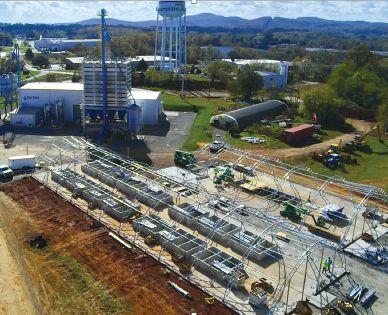
Blueridge’s 16,000-sq.-ft. nursery in Martinsville, Virginia
has been a smolt supplier for Kuterra since 2014. (PHOTO: CERMAQ
Cermaq Canada lands supply deal with Kuterra
Cermaq Canada closed a three-year deal with Emergent Holdings LLC to supply smolts to the latter’s land-based salmon farm, Kuterra, located in ‘Namgis First Nation traditional territory on northern Vancouver Island, near Port McNeill, B.C.
Cermaq is not a new supplier to Kuterra, as it’s been steadily supplying smolts to the company since 2014. The formalized contract merely solidifies the business relationship, according to Cermaq Canada’s managing director David Kiemele.
“The pandemic has illustrated how important local food security is and emphasizes the importance of working together for the benefit of local communities and the province,” Kiemele said in a statement.
“In investigating possible options, it made sense to formalize the purchase of smolts from Cermaq Canada as we have been happy with the quality of the smolts provided, and the overall health, growth and performance of the smolts provided to date,” said Jacob Bartlett, CEO of Emergent Holdings LLC, operator of Kuterra Salmon.
The agreement is in effect from October 2021 to October 2024. Cermaq Canada has 25 salmon farm licences and operates four hatcheries across northern Vancouver Island.
– Mari-Len De Guzman
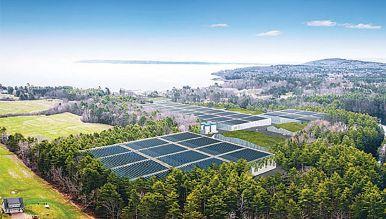
Nordic Aquafarms receives state permits in Maine Nordic Aquafarms has made significant headway on its plans to build large-scale land-based salmon production facilities in Maine and California in the United States, with both reaching some major milestones on the projects.
The Maine Board of Environmental Protection has voted unanimously on Nov. 19 to approve Nordic Aquafarms’ state permits, which include permits for the National Resources Protection Act, Site Location Development Act, Maine Pollutant Discharge Elimination System and minor air emissions permit.
In California, the salmon producer has also submitted the coastal development permit application and the initial study for the California Environmental Quality Act to Humboldt County, where Nordic Aquafarms plans to build its second U.S. land-based facility. These submissions were in addition to applications already submitted to the Regional Water Quality Control Board and the California Coastal Commission for national pollutant discharge elimination system permit and coastal development permit, respectively.
In a statement, Nordic Aquafarms president Erik Heim thanked the Board of Environmental Protection and the Department of Environmental Protection for the approval.
“Nordic Aquafarms is comfortable with the permit conditions that have been included in the permits. Permitting RAS Aquaculture facilities of this scale is uncharted territory in Maine and Nordic Aquafarms strongly believes that strict regulations and conditions will ensure that land-based aquaculture can be safely developed in Maine both now and in the future. The BEP has set a precedent that will ensure that the Maine seafood industry will continue to represent the highest quality in the market,” Heim said.
Over the last year-and-a-half Nordic Aquafarms has gone through a thorough permit application process. Following the approval of these state permits, the company expect the city and federal permits “to be resolved shortly,” noting that it has a strong case in the legal intertidal dispute.
“We are looking forward to conclusions on the outstanding issues and are ready to move forward with construction as soon as we are comfortable with the way forward” said Marianne Naess, external vice-president of commercial for Nordic Aquafarms.
In Humboldt County, the last permit application for the development of the site were submitted on Nov. 18, 2020. Naess said her company has worked closely with local and national vendors to develop the permit applicatons, and was able to reach this milestone on schedule despite the challenges of the global pandemic.
Nordic is also very encouraged by the engagement in the community and is especially satisfied with the collaboration on workforce development with College of the Redwoods. “One of the reasons we chose Humboldt is the great community for future employees to live and work. With institutions like HSU and CR and their academic programs, we are confident that we will find most of our future employees in Humboldt,” Naess said.
– Mari-Len De Guzman
Cermaq
CANADA)
Digital rendering of Nordic Aquafarms’ planned facility in Belfast, Maine (PHOTO: NORDIC AQUAFARMS)
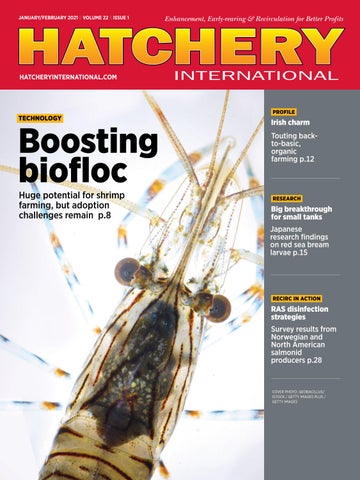
Boosting biofloc
Technology has huge potential for shrimp farming, but adoption challenges remain.
By Lynn Fantom
Biofloc technology shines as an example of perfect symbiosis.
When intensive shrimp farming systems limit water exchange and increase stocking density, nutrients develop into a community of microbes. Bacteria multiply in so-called flocs, which also contain fungi, protozoans, algae, and nematodes – a food fest for shrimp. In turn, bacteria get their energy and nutrients by detoxifying shrimp waste products.
“But sometimes, it works. Sometimes, it doesn’t,” says Belgian shrimp producer Eric De Muylder.
That is because biofloc technology (BFT), used especially in Asia and South America to raise tilapia as well as shrimp, relies on expertise more common among water treatment specialists than fish farmers, says De Muylder. Before more hatcheries can adopt BFT – applauded as environmentally-friendly but appraised as challenging – producers will need a greater comfort level.
Emerging tech
In the mid-1970s, as Americans, Japanese and Europeans grew ever-hungry for shrimp, large-scale commercial shrimp farming multiplied in Ecuador and Taiwan. These early leaders served as technology role models for the Americas and Asia as farming expanded. By 1989, China had emerged as the dominant producer, according to the Global Aquaculture Alliance.
But in the early 1990s, shrimp farming hit a roadblock as viral diseases, saltwater intrusion, pond effluents, and environmental destruction mounted. Biofloc technology offered a big part of the solution, according to Bob Rosenberry, the retired publisher of Shrimp News International who wrote about aquaculture for 40 years.
Rosenberry described biofloc technology as “a marriage of Asian intensive shrimp farming and American science… with bits and pieces of successful technology from around the world,” including France and Israel.
Benefits
Today, for farmers seeking to intensify production but minimize disease, bioflocs are an option to increasing antibiotics, a more costly and riskier alternative. Also seen as a more natural production system, biofloc technology helps conserve water.
In essence, this approach allows farmers to produce more seafood with fewer resources, including water, feed, space and money for filtration systems. In addition to being more environmentally-friendly, it earns kudos for profitability.
In fact, research with shrimp and tilapia suggests that for every unit of growth derived from feed, an additional 0.25 to 0.50 units of growth are produced from microbial protein in biofloc systems, writes Dr. John Hargreaves, an independent aquaculture consultant, in his 2013 article, Biofloc Production Systems for Aquaculture. “This benefit is reflected in improved feed conversion, one of the best predictors of system profitability and business sustainability,” he adds.
Global research
Although biofloc production dates back decades, in more recent years, scientists worldwide have been exploring its application to closed hatchery culture, especially of shrimp.
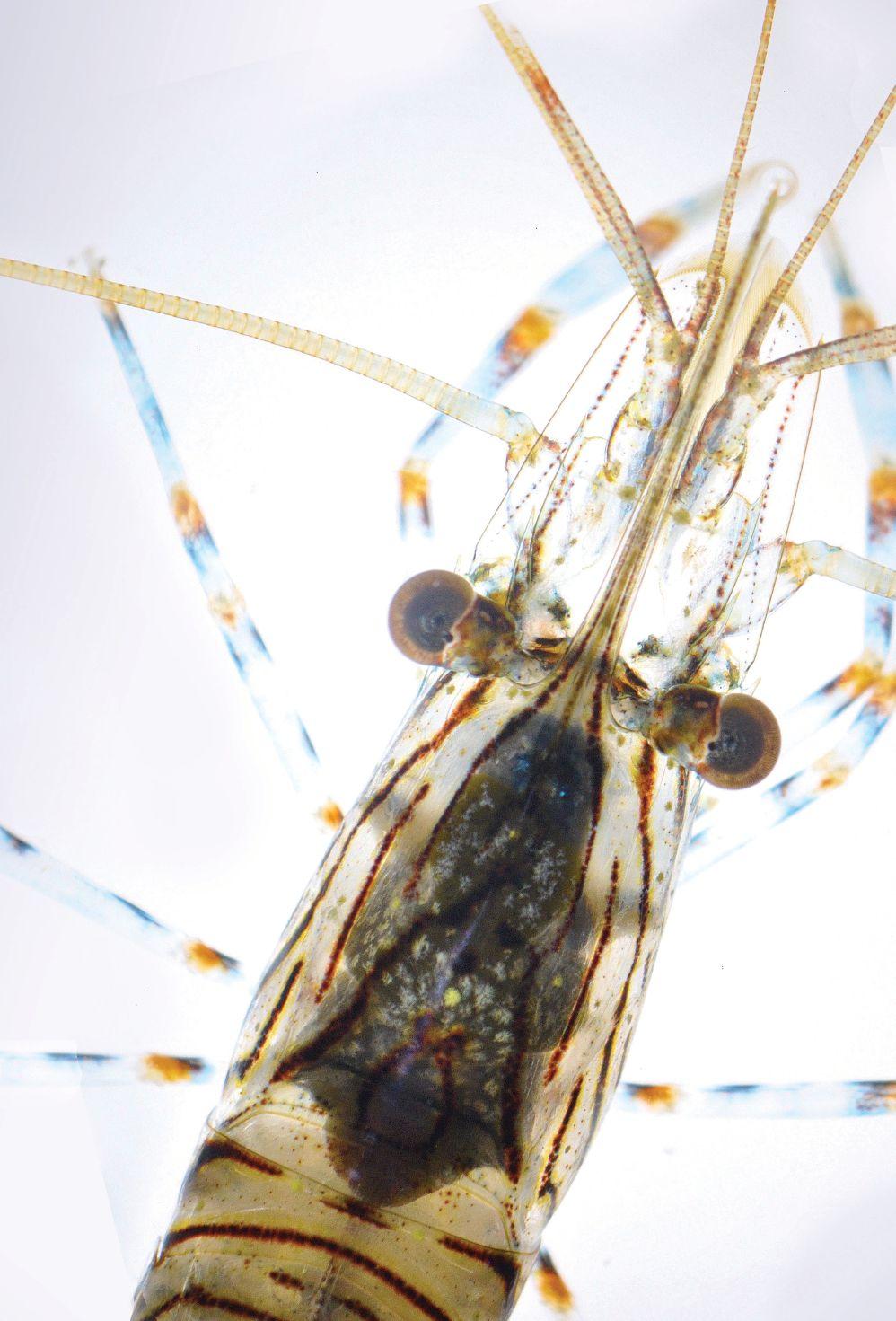
From egg to adult, the development of Pacific white shrimp (Litopenaeus vannamei), also called white leg shrimp and King prawn, occurs in only 120 days, yet there are many distinct phases throughout its lifecycle.
After hatching, a shrimp experiences a metamorphosis period – six nauplius stages, three zoea, three mysis – and a postlarvae (PL) >
Biofloc has provided solutions to some of the biological challenges of shrimp farming.
period identified with a number that indicates the days it has been in that post-metamorphosis phase. (Age signifiers, such as PL10, PL15, PL20, are also shorthand for size.)
“Little is known about shrimp at larval stages including nauplius, zoea, and mysis, when shrimp are susceptible to bacterial diseases due to their underdeveloped digestive and immune systems,” according to British researcher Dr. Corey Holt and his colleagues, who are seeking to understand the role of the shrimp gut microbiome in health and disease.
At the critical hatchery period, shrimp are susceptible to physical, chemical and biological stressors, note Dr. Marco Antonio de Lorenzo and his fellow researchers in Brazil. Then, when they are sent to the culture farms, they must be strong enough to withstand the processes of transfer, stocking and adaptation to a new environment.
In 2015, these Brazilian researchers honed in on the period between mysis and PL5 and found that hatchery performance for
Pacific white shrimp in a zero-exchange biofloc system is equal to that of a conventional system.
Confirming those results recently, Dr. Felipe Vieira notes, “This is a very good result, in my opinion, since the water use in biofloc was lower than the traditional system. For adults, we know that the biofloc can improve shrimp health.”
In 2016, Malaysian scien tists followed up with a study on the microscopic composition of bioflocs in a closed hatchery culture system, providing insights into what happened in 105 days. They concluded that the microscopic organisms served as food supply, algae grazers, water stabilizers, and decomposition agents and maintained the water quality “in
optimal condition.”
A 2018 study in Mexico assessed the effect of adding commercially available probiotics during the nursery phase at a zero-exchange biofloc shrimp farm. Although controlled laboratory tests had yielded promising results, this trial on a commercial farm did not improve the shrimp production.
Commenting recently, Dr. Anselmo Miranda-Baeza, one of the researchers in this study, notes that today some companies in Mexico and parts of Latin America carry out a pre-growth phase in BFT systems that have better production results than those that do not. Although it is difficult to estimate precisely, he cites a 30 per cent improvement.
“These producers guarantee greater survival and can reduce the cultivation times in open ponds, thus reducing risk,” he adds.
Many researchers say BFT is effective in this nursery phase between hatchery rearing and grow-out because continuous consumption of biofloc provides better nutrition.
HATCHERY FEEDING SYSTEM (HFS)
Complete feeding solutions for aquatic hatcheries
• Microdiets
• Weaning Diets
• Micro Algae
• Live Feeds
The ammonia challenge
On the other hand, a point of dispute among researchers is how to manage ammonia in biofloc systems. One school advocates adding inexpensive carbohydrate sources, such as molasses, dextrose or tapioca, to foster proliferation of heterotrophic bacteria, which will synthesize ammonia and maintain water quality.
The manipulation of the C/N ratio has been the focus of much study.
The drawback of that approach, experts agree, is that it heightens production and accumulations of bacterial solids, which may ultimately cause gill clogging. To resolve the issue, a system must add capacity to remove, treat and dispose of accumulated solids.
Shrimp feed specialist Eric De Muylder launched the first commercial shrimp farm in Belgium after years of research into an alternative to this method of ammonia
Biofloc technology application requires expertise from water treatment specialists.
Eric De Muylder’s shrimp farm in Belgium
management. He favors nitrification.
This approach uses the nitrifying bacteria that are attached to suspended solids and the culture unit itself. If the biofloc system is well mixed and aerated, this mechanism of long-term ammonia control develops naturally without carbon supplementation.
“There are a lot of ways to run a biofloc,” De Muylder notes.
In addition to growing out shrimp at his farm, which is called CreveTec, De Muylder also uses biofloc in the PL2 and PL3 stages during the last week of the hatchery process. At this point, most operations would opt to change the water, he says. “It is too complicated for them.”
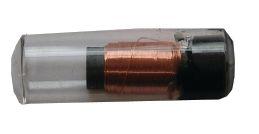
PIT TAGS & SCANNERS
But, working in a zero-exchange environment, De Muylder deploys biofloc during this stage.
“It works when these small shrimp are consuming plankton,” he says, referring to the phytoplankton, zooplankton and nematodes grazing on the bacteria.
Compared to clear-water culture that utilizes antibiotics, De Muylder believes this approach builds stronger immune systems and better survival of shrimp. He says, “Shrimp like a bit of turbidity. It gives them something to do.”
Adoption hurdles
Among the main limitations for the growth of this technology are the lack of trained personnel, the level of investment necessary to install biofloc systems, and the low price of shrimp in the international market, says Miranda-Baeza.
Hatcheries could gain the expertise to culture shrimp more effectively using biofloc technology through a stronger understanding of the biology of water treatment systems, according to De Muylder.
Dr. Andrew Ray echoes the concern about the skills needed to make biofloc technology successful. With colleagues at Kentucky State University, he has studied clear-water RAS versus biofloc systems to raise shrimp.
In contrast to the large-scale outdoor shrimp farms in Asia where external biofilters would not be economically feasible, he counsels small, artisanal U.S. farmers operating in well-ventilated, insulated facilities. For them, he says, operating an external biofilter is the simplest way to resolve the issue of ammonia accumulation, although biofloc is an alternative some farmers use.
“Due to the relative complexity of the biofloc approach, it has been difficult for new aquaculture farmers to implement,” Ray says. “Putting on that external filters gives them a lot more control. And I’ve seen that work better for them.”
• Recirculation System Design, Supply and Construction.
• Commercial Farms, Hatcheries, Aquaponics, Research Labs, Public Aquariums, Live Holding Systems – we do it all!
Around the time salmon aquaculture in Europe began more than three decades ago, Ireland was producing roughly the same volume as its neighbour, Norway, which is around 20,000 tonnes of Atlantic salmon per year, according to The Irish Times. Today, Norway’s production is in excess of 1.2 million tonnes, making it the world’s largest farmed salmon producer. Ireland meanwhile has been relegated to the “others” category in rankings of the world’s top salmon producers by volume.
Such is the environment that Irish salmon farmers like Gareth Murphy find themselves in. Murphy’s Irish Salmon Smolts company, based in Cork, Ireland, supplies smolts to local salmon grow-out operations and to Scotland.
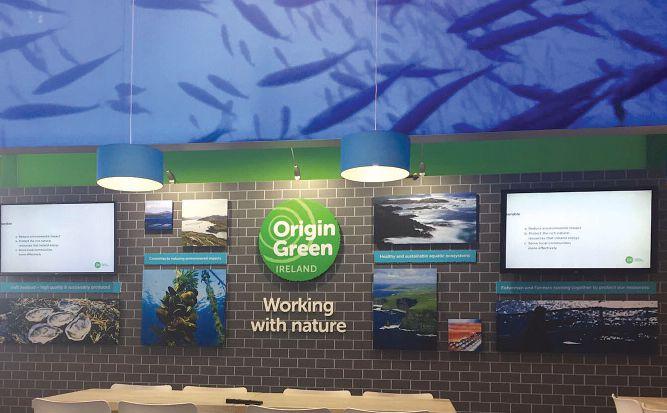
Ireland produces only organic salmon, thanks to the “Origin Green” initiative, a government and private sector sustainability program launched in June 2012 to make Irish food and drink the first choice globally. There is no other program worldwide that’s similar to this Irish initiative, which now includes more than 53,000 participating farms around the country, including salmon producers.
“Two of the main consistencies with organic produce is the level of organic feed fed to the fish and also the stocking densities. And we don’t use any chemicals in our production,” says Murphy, who runs two salmon hatcheries: one in Bantry in West Cork and the other in Galway.
The wild side
At the Irish Salmon Smolt’s hatchery in Bantry, stocking densities are below even the organic standards, says Murphy.
“We, normally, as a policy are trying to keep densities below five kilogram per cubic meter, which is well below the organic standards of roughly 20 kilograms per cubic meter. Keeping them in such densities allows us to get good growth, good farming conditions and fewer mortalities,” says Murphy, who was recently named among Hatchery International’s Top 10 Under 40.
That decision works so well that the mortality rate at the hatchery is below three per cent. Murphy attributes this also to the lack of commercial activity around the hatchery, which leaves the waters exceptionally clean.
“The Bantry hatchery has evolved since my uncle started it. It is a great facility in that it is high up in the mountains. There is no commercial activity or other farming of any sort further afield so what we get is as natural environment as you can get in the wild.”
Running on a flow-through system (the less moving parts, the better, he says) Murphy also decided against heating the water at the hatchery. Heating the water would have hastened the growth of the smolts, but Murphy opted for substance over speed.
So while other farms could take as little as eight or nine months to produce a 100-gram smolt, it takes Irish Salmon Smolts 11 months to get its fish to that weight and ready for delivery to clients’ grow-out pens.
“Our concept is to keep them in an environment as close to the wild environment as possible,” stresses Murphy.
It’s not complicated
Good old gravity is doing its job at Irish Salmon Smolts. Both of Murphy’s hatcheries in Ireland run on flow-through systems.
At the Bantry site, gravity-fed system feeds the hatchery with spring water. “We have no operational pump on site; everything is gravity fed,” says Murphy.
“The only automatic inputs into the farm are the automatic feeders. Everything else is natural and just pipe work. The design is very basic, very rudimentary. But it’s very efficient in how it’s running and it’s just a great hatchery.”
The self-taught hatchery manager believes that the more important factor in running the hatchery is consistency, not the technology.
“It’s all about consistency on how you manage lines,” he explains. “If you put in the time and you get the basics right – a lot of that is managing an animal and understanding what needs to be done. You need to be consistent in your work and you need to do it when it needs to be done. Otherwise, you will suffer consequences from it. And that’s evident across all different species that we’ve grown before.”
He acknowledges there’s been a big push for a recirculation aquaculture technology around the world, but “unfortunately in Ireland, we’re just not there yet,” he says.
He admits he considered “revamping everything” by putting in pumps and alarms when he first took over the hatcheries, but he changed his mind.
“These are all the different things that would be advised when you go read all the different documentation (on salmon farming). But with all of these, there’s a cause and effect and there’s more moving parts and more things that can potentially go wrong.”
He circles back to the simplicity of the flow-through system. “Water in, water out are basic in any fish farm. If you keep everything as simple as possible and as straightforward and consistent then to me you get a better result.”
(PHOTO: IRISH FOOD BOARD)
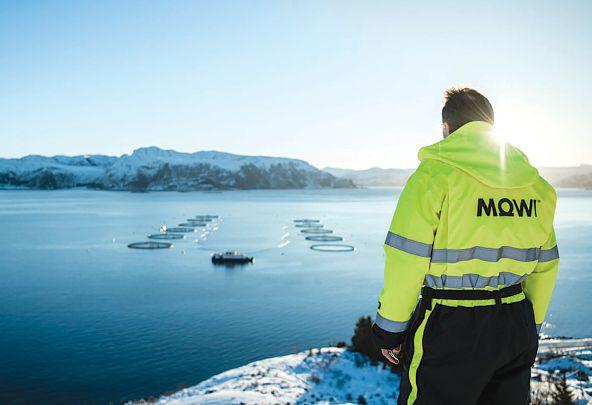
Mowi has anounced plans to expand in Ireland but the country’s licensing system may hold up the plan (PHOTO: MOWI IRELAND)
Missed opportunities
While his hatcheries and smolt production are performing as well as can be expected, Murphy laments the potential opportunities lost under the current state of affairs in Ireland’s aquaculture industry. It is even more regrettable especially considering the reputation of Irish salmon as a premium quality organic produce.
With its moderate climate, relatively mild winters and abundantly clean spring water flowing freely from its mountains, Ireland is well placed to supply the world with sustainably caught wild and farmed seafood.
Latest available figures show the sector contributed €1.25 billion (US$1.49 billion) to the Irish economy in 2018, up more than three per cent from the year before.
But the growth belies the troubles of its salmon aquaculture industry. A closer look reveals Irish farmed salmon production was a paltry 12,200 tonnes in 2018, down by 39 per cent from the year before. By value, production fell by roughly 20 per cent to €199 million (US$240 million), according to The Business of Seafood 2018, a report published by Ireland’s Seafood Development Agency, the Bord Iascaigh Mhara (BIM).
BIM attributed the decline in production volumes to production cycles and the limited production sites. But that’s just scratching the surface.
The obstacle for Murphy is the same one that has prevented the expansion of Ireland’s farmed salmon industry: an archaic licensing system. In dialogues with the Department of Marine and Natural Resources, the licensing and regulatory authority for marine aquaculture in Ireland, farmers have expressed the need for reform and their frustrations over the lengthy licensing process. Uncertainties over the tenure of licenses have soured potential investors on committing to the investments or partnerships needed to grow the industry. It is something that Murphy knows all too well.
“The licensing issue is the single biggest issue we have in Ireland in relation to fish farming. It’s the main reason we don’t get any finances (from investors) to farm in the sea,” he says. “Our licensing scheme and obviously the supports around it are limited because it isn’t up to date. We’re far behind any other country.”
Case in point: Ireland’s authorities have not granted licenses for a salmon farm for 11 years, according to a report from Salmon Business
The world’s largest farmed salmon producer, Mowi, has 13 farm operations in Ireland. It says the processing of a marine finfish licence takes between 87 and 216 weeks. Appealing licenses to the Aquaculture License Appeals Board could take “at least a further 168 weeks to determine” and the process of renewing expired finfish licences takes as long as a new application, the company noted in its Salmon Farming Handbook 2019.
While an independent review of Ireland’s aquaculture licensing system was initiated in 2017, the pace of enacting the recommendations of that review had been slow.
Increased Survival Rate with Significantly Reduced Water Consumption
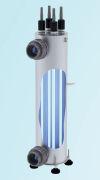
The all-new HydroHatch Incubation System from MariSource gives hatcheries increased efficiency. With recirculation, germicidal UV filter and a titanium heat exchanger, the HydroHatch delivers increased survival rate and significantly reduces water consumption.
Features and Benefits:
65 gallon sediment and recirculation tank
Requires only 150 gallons to completely fill the unit and reservoir
Easily able to increase the dissolved oxygen content of the water
230 volt 30 amp control panel
Insulated titanium heat exchanger
Precise temperature control
Comes standard with four 8-stack incubators
Additional four 8-stack incubator option available
The new HydroHatch Incubation System is idealfor Salmon, Trout, Steelhead,Perch, Channel Cat Fish,Walleye,Eels, Shrimp and Muscles
Ireland’s Origin Green sustainability program has given Irish organic salmon market advantage. (PHOTO: IRISH FOOD BOARD)
PROFILE
The COVID-19 pandemic has only exacerbated the situation. “The salmon farming industry in Ireland is very small; a lot of it is based on personal relationships. Pre-COVID, I would have always come and sold my fish after meeting potential clients. They come to Ireland, we talk about the quality of the product, we go out for a meal, and we sign on the basic conditions of the contract, and you’d be done. Now there’s just so much uncertainty. All contracts are lengthier, everyone feels uncertain and a bit scared to make commercial decisions,” says Murphy.
Big dreams, big hopes
Despite the challenges, the 30-year-old proprietor and hatchery manager remains, hopeful for the industry’s future.
“How long is a piece of string?” he asks rhetorically when asked about his expectations on the farm-licensing reforms. “We’re always optimistic. You wouldn’t have got into fish farming unless you’re an optimistic person.”
In 2018, increased demand for Irish organic salmon boosted prices by seven per cent. This helped partly offset the decline in export value for that year, says BIM.
Murphy, and the industry, knows being organic has given Ireland an advantage. “Irish salmon commands a hefty premium over Norwegian salmon, mainly because of the name of Ireland and also our organic conditions. You’re talking about a premium of €3 (roughly US$4) per kilo over Norwegian salmon,” he says.
But even the organic competitive advantage may not be for long as more countries increase their organic production to respond to market demand, according to BIM.
Murphy hopes that one day he can add a grow-out operation to his business.
“We’re just not at that level yet,” he says about making that dream a reality. “Farming at sea is big money and it’s not a resource I have yet. We’re looking into it. I hope that maybe in the next 12 to 14 months, we would be able to go down that line, but it’s something we’re just not kitted out financially yet. We’re hopeful. We have a potential partner on this but we’re not over the line yet.”
“I have big dreams of one day doing a large post-smolt unit. We’re still ways away from that. So in the short term, the important thing is to maintain what we have, keep the fish growing nicely and get the fish out. Fish in, fish out,” he adds.
As for realizing Ireland’s vast aquaculture potential, Murphy believes it’s just a matter of time.
“I think the Irish people just need to slowly wake up to the fact that we have an industry here that’s waiting to take off and there’s many opportunities to come out of it that are to be seen.”
Big breakthrough for small tanks
Japanese research shows good survival rate for red sea bream larvae.
BY RUBY GONZALEZ
AJapanese study’s highest survival rate of 55 per cent bodes well for the larviculture of sea bream (Pagrus major) in small tanks.
“Survival rate of sea bream larvae in the large tanks of the private hatcheries are quite high (>90 per cent), but it has been thought that small tanks are not preferable for larviculture experiments,” Dr. Yoshitaka Sakakura told Hatchery International.
“We believe that our results are pretty good considering the smallscale in our study… Of course, hatcheries skim the water surface and ensure the swim bladder inflation. But our point is we can expect swim bladder inflation without skimming in the small rectangular tanks.”
Sakakura is with the Graduate School of Fisheries and Environmental Sciences in Nagasaki University. Sakakura and his research team published their study in Aquaculture Reports last August.
Sakakura and his team examined the effects of tank shapes and aerations, which were assumed to influence the larval survival, growth and swim bladder inflation. They recommended rectangular tank with one air stone. Cylindrical tanks were also used in the study.
“We actually conducted this study aiming at the laboratory-scale larviculture experiment with replications,” Sakakura said.
“Rectangular tanks are advantageous when you consider the limited space in a laboratory.”
Both shapes of tanks were filled with 50 litres of seawater. An air stone with 100ml/min aerations at the bottom was placed in the bottom centre of cylindrical and rectangular tanks. The other group was composed of rectangular tanks, where two air stones with 50ml/ min aeration rate were set at the half bottom centre.
Five hundred eggs were distributed into each experimental tank. Rotifers were fed to larvae and their distribution in tanks were measured. Survival rate at 14dph were higher in the cylindrical-rectangular group, which had an average of almost 55 per cent. Survival rate of the other group was less than 30 per cent. Growth rate in all tanks didn’t significantly vary. Low-flow regions were observed along the side walls of the tanks and bottom areas in the cylindrical-rectangular tank shape group. This was caused by a single-pair vortex system and formed at the centre, between air stones.
“These low-flow areas were coincided with higher rotifer distribution areas at the tank bottom indicating that measuring rotifer density can estimate the flow in a tank,” the authors said.
WATER
FEED OXYGEN
Never worry about the reliability of your oxygen supply again. Generate your own.
With a Best Choice award under its belt, Gindara Sablefish on Canada’s Vancouver Island continues to dedicate its efforts to culturing a unique and unusual species.
By Bonnie Waycott
Found throughout the Pacific Ocean, sablefish (or black cod) has a rich, buttery flavour and dwell near the bottom of the ocean during their adult life. They feed on nutrient-dense fish such as pollock, herring, Pacific cod, jellyfish and squid.
In British Columbia, Canada, wild sablefish have been harvested off the west coast for many years. But commercial sablefish farming was only initiated about 15 years ago to fill a niche in the market for farmed, native species white fish that’s also well-suited to sushi. Today, sablefish aquaculture is a key industry in
British Columbia where farming the species is quickly becoming a sustainable model.
Gindara Sablefish in Kyuquot, northwest Vancouver Island is the only one that’s producing sablefish at a commercial level. Established in 2007 and branded as Gindara Sablefish in 2014, the farm exports primarily to Japan (almost half of its production volume), the United States, several countries in Europe, and supplies a domestic market in Canada. And thanks to its cold, clean water and brisk tidal flow, Vancouver Island offers the ideal environment for sablefish farming.
Hatchery staff monitors oxygen levels in the rotifer tanks.
Gindara Sablefish is located near Kyuquot Sound on Vancouver Island.
Hatchery manager Taylor Daniel uses a grader to gently separate the smaller fish from the larger ones.
ALL PHOTOS: GINDARA SABLEFISH
“Our main customers are sushi restaurants and white tablecloth restaurants,” says Claire Li, sustainability director at Gindara Sablefish. “Our sablefish are particularly suited to sushi restaurants because they’re the only sablefish that can be eaten raw without freezing due to their commercial feed diet. This ensures that they ingest no live parasites, unlike fish that feed from the ocean food chain.”
Broodstock to juveniles
Gindara Sablefish’s hatchery is where it all begins.
The hatchery has a dedicated recirculating aquaculture broodstock system, incubation and early larval rearing stages, and a facility for fry grow-out and transportation staging. Approximately 80 per cent of the hatchery’s broodstock are wild B.C. sablefish.
The remaining 20 per cent are the F1 progeny. All broodstock are kept at very low densities and maintained in environmentally-controlled tanks. This ensures that temperature, photoperiod and salinity can be controlled precisely in order to aid in proper egg development.
“In this way, we can mimic natural spawning conditions as accurately as possible,” says Li. “Egg incubation is also temperature and salinity controlled, and in total darkness. Ponding is determined by degree days.”
Eggs are held in incubation for up to 50 days before they are transferred to photo-controlled larval tanks with green water. At this stage, live feed of rotifers and artemia are cultured and enriched at the hatchery and fed throughout the larval stage.
Later, the fry are able to consume a dry, micro-diet. Standard water treatment is applied to all water at the hatchery using ozone, UV and filters. Once on dry feed, and once they reach 30 grams, the fry are held until they’re transferred to grow-out facilities.
Grow-out
Gindara Sablefish has two farm sites off the coast of Kyuquot Sound. One is comprised of eight open net pen cages and the other of 12. All cages extend to a depth of 125 ft. The ocean floor is at 350 ft.
As sablefish are cultured in their native environment, the necessary parameters are those that are already present in the ocean. Stocking density is kept low at 8 to 10kg/m3 to give the fish plenty of space.
Feed is comprised of wild forage fish (anchovies, menhaden), fish byproducts (hake, pollock), land byproducts (poultry, porcine sources), plant proteins such as wheat, corn, peas, beans and seeds, along with vitamins and minerals. Feed is pumped underwater
• TOUCH-SCREEN TECHNOLOGY FOR MONITORING O2, PH AND TEMPERATURE
using automatic feeders so the adults are fed at depth, as sablefish are a groundfish species that don’t usually come to the surface.
“The fish are then harvested at two sizes: 4 to 6lbs and 6 to 8lbs,” says Li. “They spend about three months at the hatchery and another 20 months in the net pens. In all, they take approximately two years to grow to harvest size.”
Quality control is assured, while industry-standard biological protocols are used during all stages of the production process. All government-mandated standards and internal standards for areas such as size, colour and quality are also met.
Pioneers
Because it’s a new aquaculture species, says Li, one of the most difficult aspects of growing sablefish is pioneering the research and development of a cold-water species.
For the hatchery team in particular, developing its own nutritional protocols, such as determining the crucial life stages and their nutritional needs, has also been difficult. But by working with the fish every day, the team has developed new techniques to build on its knowledge.
“Since we were the first to produce commercially-viable farmed sablefish, the staff at the hatchery pioneered the research and
development necessary to take the wild sablefish species and make it suitable as a commercial farmed fish,” says Li. “Our understanding of salmon aquaculture was used as a baseline, and the methodology was gradually tailored to sablefish. Of note, the larval stage of the fish was the most challenging in closing the loop on sablefish culture.”
For the hatchery, other than producing a new commercial species, understanding the lifecycle and growing needs of sablefish in a controlled environment has been an invaluable addition to the team’s knowledge of the species within the scientific community.
A WINNING COMBINATION
Feeding at the hatchery
Juvenile sablefish
To that end, the hatchery has collaborated with the National Oceanic and Atmospheric Administration (NOAA) on sablefish aquaculture research for knowledge sharing. The company has shared written papers on various aspects of sablefish culture. They’ve also collaborated with the Vancouver Island University to offer co-op positions to aquaculture students so they can gain hands-on experience working at a sablefish hatchery.
“The hatchery’s success in rearing sablefish up to their juvenile stage allows the grow-out farm to continue the process and produce what is ultimately a Gindara Sablefish,” says Li. “Without the efforts of the hatchery, the farm would not exist and neither would its partnership with the Kyuquot-Checleseht First Nations.”
Bright future
In June 2020, Gindara Sablefish made headlines when it was awarded a Green, Best Choice seafood rating from Seafood Watch, Monterey Bay Aquarium’s sustainable seafood program. In a press release, it described the rating as “an objective measurement of Gindara Sablefish’s operations that defines
the seafood as well-managed and caught or farmed in ways that cause little harm to habitats or other wildlife.”
Hot on the heels of the award, Gindara Sablefish is building on its experience by coming up with new, innovative ideas including sustainable packaging, and is looking to the future with optimism.
“One thing we’re excited about is a move to an eco-friendly box in which our fish are packaged,” says Li. “Reducing our footprint by using compostable packaging is a change we’d like to make.”
Broodstock are checked for gonad development.
Through magnetic technology, the shells of the artemia are removed before they are fed to the sablefish.
Aquaculture’s got talent
Strategies for successful recruitment in a competitive hiring market
By Ron Hill
Successful companies understand they need to sell their company to prospective workers, particularly in a competitive market. The workforce and the minds of the people entering the aquaculture industry have changed drastically in the last 10 years. It is an insightful exercise to examine what these new breed of aquaculture workers are looking for and how they are weighing their life choices.
Compensation
Compensation is important to everyone but it is often only one priority for those entering the workforce. It’s important to have a competitive package. Low salary rates are likely to push students away, but higher salaries don’t necessarily attract them, either. Students may accept less money to work for a company that appeals to them, but only to a certain point. While employers may not be able to offer the highest salary in the industry, the whole employment offer package must be competitive.
Opportunity
Workers must be able to see progression and advancement in their career with the corresponding increases in compensation. Many of the larger companies have a structured “tech level” system of advancement to make sure that employees are compensated for advancing
their role, responsibility and skills – even if they’re not moving to a management or specialized role. Smaller operations, where there aren’t many different roles and different pay rates, can have difficulty providing a path of advancement for their workers. While some students may not envision a role to grow into, others will see small operations as an opportunity to learn a larger skillset and gain experience on a wider range of jobs on the farm. Many students will consider entry level jobs at smaller operations because they feel they can learn a lot of transferable skills and make a big impact.
Impression
From when a company is first introduced to a student, the impression made on them can make or break the recruitment process. Perception is reality. Great presentations or site tours by knowledgeable and energetic individuals can entice students toward a company. To a student, how potential employees are treated during the recruitment process is a reflection of how they will be treated as an employee. Thus, if their emails and questions go unanswered or avoided, if they receive an offer verbally and receive a different offer in the written form, they will assume this is how the company operates and may cause them to take another offer.
People
The people who work for your company can be a huge draw for workers and are an often-overlooked resource for recruitment. Students want to talk with farmers. They want to see the quality of the people working with them and leading them. One of the reasons that Mitch Eisan (Manitoulin Trout Farms) chose his placement in 2020 was the quality of the people around him. “The Ontario industry is led by many astounding farmers which grow high-quality, local seafood. Being from Ontario, I saw it as a unique opportunity to begin contributing to the
Young workers can be particular about the company they decide to join.
ALL PHOTOS: RON HILL
province’s seafood sector. I chose to pursue a placement in Ontario [to put] myself in a position where I can learn and continuously advance my knowledge towards aquaculture.” Highlighting former students and showing where they are now and how they have progressed are excellent recruitment strategies to help students envision a career path.
Environmental stewardship
Young people are extremely concerned by the state of the environment and will not tolerate a company that does not live up to their personal standard of responsibility. Students want to be part of the solution to the environment, food security and sustainability challenges. Third-party certifications like BAP or ASC are a good way to display corporate social responsibility, as are contributions/donations to local stewardship and restocking programs. Mayah Mahabeer chose her placement at Cermaq Canada because, “I loved the values of the company. They have such a close connection with indigenous people, they care so much about the environment and try their best to decrease their environmental footprint as much as possible. When I had my interview, I had the same vibe as my interviewers so I knew that I would work well with them.”
Employment security
Many students will generally not apply for positions that are seasonal, term-based or not permanent, unless they have a specific interest in that position. Government and funding-based jobs are notorious for offering an uncertain future. These jobs are usually well paying and interesting but the uncertainty of continuing will turn away all but the most passionate or those willing to chase term contract positions over a period of years.
Reputation
Despite the rosy pink smoke that some interviewers may blow to sell their company, students would typically have some idea of the company’s reputation before they sit down for the interview. Students may also reach out to former students to get an unofficial impression of a company from the inside.
Safety
Skills programs stress safety, protective equipment and making it home safe each day. Being able to make choices, students will avoid companies with low safety standards. In fact, many students will choose to have no job rather than work for a company with low safety standards.
Adventure
Often overlooked is the adventure and non-work experience associated with many aquaculture facility locations. Most people who get into
aquaculture love the outdoors, hiking, fishing and can be enticed into remote locations when there is a lot of outdoor fun to be had. Students from inland regions are often interested in the adventure of living and working on the coast. If a facility is in a remote location, sell the remote location’s strengths and fabulous sights. Always mention fishing opportunities. Ryland Clarke, who took a co-op position at Icy Waters in the Yukon Territory, explains, “I chose this placement because it seemed like a great opportunity for me to grow in the aquaculture industry. I also liked the location. I love the outdoors and I had never been [to the Yukon] before, so I saw this as a good opportunity to experience the Yukon and all it has to offer. The fishing is also excellent.”
Selling it
Whatever the situation, make sure to send the best people to sell your farm/facility on the recruitment mission. The effort a company puts into recruitment is directly proportional to the quality and number of students they can attract. The labor market is very competitive and new workers are in a position to make choices and they know it.
Ron Hill is an aquaculture professional with 15 years of experience with production farms and RAS systems. For the last five years he was the lab coordinator and operations manager at Fleming College’s hatchery in Peterborough, Ontario. He is the owner and director of Velocity Aqua based in Ontario, Canada.
Remotely educational
How aquaculture skills programs are navigating COVID-19
By Ron Hill
Educational institutions across the world have faced major challenges as the COVID-19 crisis has forced people to physically distance and avoid congregating in groups. The nature of education has been forced to change as institutions modify their delivery to keep students and staff safe.
Aquaculture skills courses that focus on providing hands-on aquaculture learning have been forced to make a myriad of changes to keep people safe and contain the spread of the virus, without diminishing the quality of the program or losing hands-on training time. Canadian colleges providing aquaculture skills have first and foremost been guided by local health authorities and their guidelines on masks, physical distancing and group gathering limits.
To that effect, each institution has chosen to minimize the amount of in person classroom time. Lectures have been moved online, with professors delivering material and lessons via remote software. Video conferencing technology has allowed presentations and lectures to be delivered without loss in lecture quality, and still facilitate discussion and group forums.
Despite remote learning, enrollment is down across Canada, most significantly because of the vast decline in international students. Between travel restrictions around the world and the unknowns of COVID-19,
Reason
ALL PHOTOS: RON HILL
Student interactions with farms have gone virtual, and aquaculture companies have halted farm tours and short-term co-op placements due to COVID-19
international students are not entering Canada for training. Many domestic students are choosing to take a year off and work, rather than entering post -secondary in the current environment.
Hands-on and hybrid
Providing hands-on training for aquaculture is the most difficult and dangerous facet of learning during the pandemic. Operating within local guidelines, Canadian colleges have adopted a hybrid model for skills training. Everything that can be done virtually is done online, while the most essential skills are identified and then taught in person under a modified system.
Wherever possible, colleges have moved labs and activities outside.
In British Columbia, Vancouver Island University (VIU) professor Dr. Duane Barker explains how VIU has approached operating in the COVID-19 environment: “Here at VIU, we spent the summer deciding what skills are must-haves to be taught in-person. We conducted risk assessments course by course and made modifications to provide the safest environment while providing quality education and meeting course outcomes.
“It was clear we needed to minimize the time students are on campus. We dropped the group sizes for labs and moved everything we could out of the lab and into the field, using parks, shorelines and beaches for field labs and activities.”
For laboratory activities that need to be in the lab, the labs themselves have been modified and controls put in to keep people safe. “Staff and students are required to wear facemasks and glasses. We have modified
COMPHATCH 2020
Our market leading hatchery has been improved!
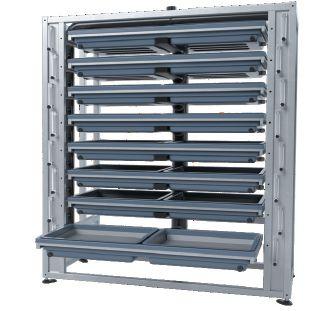
Hatching tray and EasyHatch substrate are molded together in one unit
Less components equals easier service and cleaning
Improved water distribution with increased area of outlet screen and improved EasyHatch
The water pipes have been replaced with built-in water channel
our space so that we are only using one laboratory and rotating all students and activities through it. It has become a one-way lab, where students enter through one door, following a path as they move through the lab, performing the lab activities and moving through stations until they reach the exit door. Guidelines and arrows have been put on the floor and ‘cells’ have been created for students and staff to stay within to ensure physical distancing. Disinfection stations have been installed at the entrance and exit of the lab,” Barker says
Industry and co-ops
With the risks of COVID-19, businesses have shut their doors to tour groups and on-site activities. To support the aquaculture programs, business have provided support from afar in the form of virtual farm tours, online lectures and speakers.
Barker explains, some of its VIU partners have also had to change their protocols for student placements and cooperative programs.
“Our partners are obviously not welcoming students for their weekly co-ops and placement, because of the virus risks as they have in past years, but are still being very supportive of the program. Instead they have offered to interview students each week so the students can network and learn about the different operations around Vancouver Island,” Barker says.
All institutions are reporting that co-op semesters and long-term placements are going ahead, with many businesses asking co-op students to self isolate for 14 days before working at the farm.
AutoTend® in action at alvestad.com/en/produkter/autotend/
Size does matter
Philippines wild-caught crablet regulations may boost hatcheries, but will they bite? By
Ruby Gonzalez
The Philippines is among the world’s leading producers and exporters of mangrove crab, Scylla serrata. Production in 2018 was 21,680 metric tonnes, a 14-per-cent increase over the previous year. Of the total volume, almost 96 per cent came from the aquaculture sector.
Mechanisms are put in place to boost the industry’s sustainability. The latest of these came in January 2020 with the Fisheries Administrative Order (FAO) 264.
With the exception of hatcheries and registered gatherers and traders, there is a ban on catching, possession, transport, selling,
trading and exportation of mangrove crablets, juvenile mangrove crabs and gravid mangrove crabs. The FAO requires a bigger allowable size for crablet caught and transported.
Conservation
Arsenio Bañares has observed that previous practices of catching crablet from the wild leaned more towards indiscriminate catching. All sizes were up for grabs as soon as they hatched. “This is not sustainable. The wild stock will be depleted,” he tells Hatchery International.
Bañares is the chief at the Fisheries Management, Regulatory and Enforcement
Division of the Bureau of Fisheries and Aquatic Resources (BFAR), Region 2. Located in Northern Luzon, the region is a major producer of crablets and crabs.
Geronimo Tavas, a fishpond owner in Cagayan in Region 2, implies that it would finally give locals like him the opportunity to expand to crab growing. Wild-caught crablet traders have been prioritizing buyers from outside of the province, leaving them scant.
A mangrove crab expert acknowledges the conservation strengths of the new regulation: better conservation of the remaining crab resources and lesser damage to the habitat.
“The active gears being used to collect crablets scrape the bottom,” says Dr. Emilia Quinitio, a retired official at the Southeast Asian Fisheries Development Center.
The new regulations also encourage the establishment of hatcheries to supply the requirements of the farmers, she adds. Hatchery production ensures the identification of species and year-round production.
“Since there are three to four Scylla species in some areas in the country, identification is difficult when size is small. However, the buyer is assured of the species’ identification if it is sourced from the hatchery,” she says. She notes, though, some hatchery operators may find the registration of their hatcheries with BFAR “bothersome.”
A crab-fattening RAS farmer, Gerry Balingit Jr., notes that the supply chain has been disrupted, citing a 30-per-cent decline in crabs sold in the market. His stock is composed of king crabs, S. seratta, which he exports.
Regulatory impact
Liners Aquaponic
Balingit sources post-molt water crabs and class “B” crabs from traders/suppliers, seafood buying stations and fishpond operators. Lower supply means higher prices, which is passed on to the buyers. He is confident, though, that the export demand indicates it will never be priced out of the market.
FAO 264, Balingit says, has good intentions in general. The downside, he notes, is “very limited supply of crablets for fishpond operators, and the price has increased.”
The limited supply has been triggered by the new allowable wild-caught crablet size that could be sold and transported. The 5-cm carapace is much bigger than what was previously allowed and there are much fewer of these to catch.
Crablet stakeholders in Gubat, Sorsogon in Region 5, also appreciate the conservation efforts and understand the impact on the supply chain order only too well. Like their counterparts elsewhere in the Philippines, gatherers said the lower catch is economically crippling them. Diving deeper into the
Declawed crablets being prepared for delivery
PHOTO: PURE BULIK CRABLETS
topic, the nursery owners explained why 1.5 cm – and not the required size of 5cm – is the good size for grow-out.
A documentary and public documents provided insights on the nature of their town industry, roles of frontliners and impact of the 5-cm requirement. Gubat is a major producer of crablets.
Declawed
Crablets are declawed before delivery to prevent cannibalism and easier handling. As 5-cm crablets grow in the grow-out ponds, there is the tendency for the claws to develop slower, asymmetrical and disproportionate to the body size – qualities that are not agreeable to export standards. The survival rate is also lower.
Grow-out farms prefer sizes between 1.5cm and 3cm. At these sizes, they can survive 72 hours without water. The survival rate is high. When the claws are removed, they eventually develop proportional to body growth.
Mud dike pond nurseries rear 0.5-mm megalopa which is about the size of a fly. This is caught just off the town’s shores facing the Pacific Ocean. Growth of 1.5cm is reached in one month with an average survival rate of 60 per cent. Out in the ocean, the megalopa survival
rate is only two to three per cent, mainly because of predation. In the pond, aside from protection from predators, it gets proper diet.
The town’s industry began almost 50 years ago with the traditional practice of catching and selling crablets. It took off in 1994 when a local, Fernando Policarpio, thought of inserting a step between consolidating and selling. Rearing in mud dike nursery ponds improved survival rates. This innovation made it possible to increase production and, eventually, establish Gubat as a reliable year-round source of quality crablets for the entire Philippines.
Theirs is a structured commerce composed of gatherers, consolidators, crablet raisers who run nurseries, and traders who deliver all over the Philippines. The town’s high water salinity discourages grow-out operations.
Commerce aside, they have stewardship and sustainability programs. These include responsible catching practices, mangrove reforestation, shore clean-up and buy-andrelease of gravid broodstock to the sea. They observe a closed season to allow population to recover. To maintain biodiversity, they have developed a catching method that uses light to attract megalopa to the surface before being scooped up, eliminating the inclusion
of non-targeted animals.
Crablet take three months to reach 5cm in nursery ponds, with survival rates of only 10 to 20 per cent, it was explained. Along with feed costs and other related expenses, crablet prices has increased by 100 per cent. Michael Estargo, a nursery owner and trader, said each piece now sells for 40 Philippine pesos (US$0.83). Meanwhile, supply in the town’s nurseries is significantly dwindling.
Gubat stakeholders’ concerns and appeal for the crablet size to be reduced to 1.5cm were elevated in October to the Philippine Congress and Office of the Secretary of the Department of Agriculture (DA), which has jurisdiction over BFAR.
DA-BFAR is receptive to the position presented by the Sorsogon industry, said Joeren Yleana, aquaculturist at Capture Fisheries Division, BFAR Central Office. In November, at presstime, an initial internal meeting has been scheduled between central and Region 5 offices of BFAR.
Quinitio said that Philippine hatchery production can cope with demand if all the establshed crab hatcheries and additional hatcheries under construction will be fully operational.
Louisiana mussels rebound from ‘threatened’ status
By Julia Hollister
The freshwater pearlshell mussel has a distinction. It is found in only two places on the planet –both are in Louisiana parishes.
“It is a federally listed threatened species of the United States,” says Brett Hortman, project leader, Natchitoches National Fish Hatchery (NNFH) in Louisiana, U.S.A. “This oblong species (measuring 100mm long) is threatened by the loss and degradation of its habitat. These habitat changes are caused by impoundments of the waterways, road maintenance, livestock grazing and gravel mining may also cause increased sediment.”
Years of research has determined that it was necessary to find the Louisiana pearlshell mussel host fish to be able to propagate it. During the first few years, the hatchery collected native fish from the streams to check to see if they were carrying the larval mussels, called glochidia.
Hatchery staff determined that the grass pickerel was the host fish. Researchers culture them at the hatchery so there was no need to remove them from the streams in case there is a population problem that would impede natural reproduction.
Researchers have discovered that 40 per cent of all fish species live in freshwater, and most amphibians, countless insects, reptiles, plants, birds and mammals live in or on it. Out of this diverse and critically important resource, 40 per cent of America’s rivers are unfit for various human needs. It is in the context of this scarcity that the Louisiana pearlshell mussel is important.
Louisiana pearlshell streams are located within upland narrow stream forests of the Lower West Gulf Coastal Plain. These pearlshell mussels usually occur in shallow water
Controlled propagation
“Methods for controlled propagation of the Louisiana pearlshell were first developed in 2016 and have been improving through research,” says Hortman. “Beginning in February around the onset of spawning, NNFH staff visit potential source populations to examine the gills of the pearlshell for signs of gravidity using a prior established non-damaging method.”
Gravid females are temporarily removed from the native location and brought into captivity at the hatchery to supply glochidia for captive propagation. After
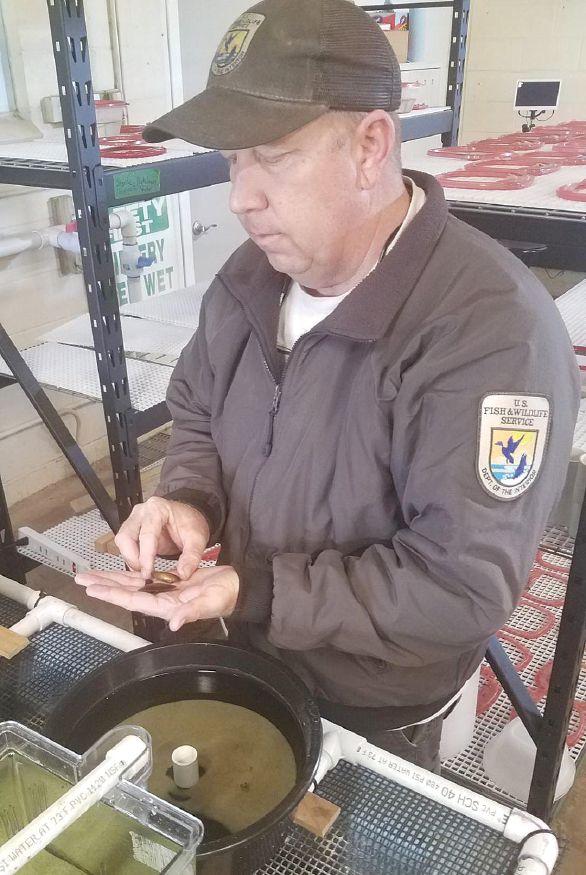
Brett Hortman, project leader, NNFH in Louisiana, examines a pearlshell mussel. PHOTO: USFWS
“Methods for controlled propagation of the Louisiana pearlshell were first developed in 2016 and have been improving through research.”
glochidia are naturally released, they are put into controlled containment with grass pickerel, where they readily attach to the host fish until they are transformed into Louisiana pearlshell juveniles. All maternal females are uniquely marked for identification and contained separately from each other; thus, progeny can be directly traced back to the mother.
Once glochidia are released, the maternal mussels are expeditiously transported back to their capture location and repositioned naturally into the substrate near the periphery of the mussel aggregation to limit disturbance to the other mussels, Hortman says.
Unique identifiers on the females allow post-release monitoring and preclude the repeated collection of a single specimen. Wild stock, hatchery-born Louisiana pearlshell juveniles are successfully propagated and reared in captivity, with all juveniles uniquely marked for identification and monitoring.
Reintroduction sites will be selected based on consideration of genetic management and location-specific recommendations: analysis of historic, current, and desired future distribution of the species within the natural range; status of current on-site habitat conditions; analysis of known or expected current or future threats; and the ability for longterm, on-site habitat protection, habitat management, and access for reintroduction and monitoring activities.
All reintroductions within a particular drainage will be focused on limited sites until conditions best suited for survival are verified. This helps eliminate inadequate reintroduction areas and to provide valuable information for future site selection through analysis of survival rates within and among
individuals in reintroduction areas.
“All of these sites are on U.S. Forest Service Lands and these habitats are protected,” Hortman says. “We partner with the USFS to recover these mussels. They have historic data that they have been recording for years that helps us determine the most needed creeks to work in. We also have worked closely with the U.S. Forest Service and the Ecological Services Office in Lafayette, La.
to ensure compliance with the Endangered Species Act.”
Reintroducing juveniles over several years at a given location will mimic a more natural situation by allowing for various age classes and different parental stock, while increasing the number of Louisiana pearlshells to an adequate number to exhibit natural reproductive behavior and produce viable offspring. The mussels raised
and released are two years old.
“We do not raise them to maturity,” he says. “We only remove sexually mature mussels for a short time to get them to release glochidia at the hatchery. We immediately place them back in the mussel bed and into streams with good habitat so we can monitor them in the future.”
He adds it is important to ensure that these mussels continue to survive in the wild.
RAS disinfection strategies
Survey results from Norwegian and North American salmonid producers
BY CHRISTOPHER GOOD AND CARLO LAZADO
Disinfection is an important component of any aquaculture facility’s biosecurity protocols, as it plays a critical role in minimizing the likelihood of pathogen entry and spread within fish farms. Despite a consensus among producers regarding the overall importance of disinfection, and the availability of several published recommended guidelines, there is a general lack of documentation on the current status of disinfection strategies in aquaculture. This is particularly relevant in salmonid aquaculture, in which production technologies have advanced significantly in recent years. For example, many Atlantic salmon facilities are intensifying production by adapting recirculating aquaculture system (RAS) technologies during the land phase of the production cycle, which is a significant shift from traditional flow-through or partial water reuse systems.
To gain insight into the present status of disinfection strategies at such facilities, a survey was conducted targeting selected salmonid producers in Norway and North America. The questionnaire covered key aspects of disinfection of materials and equipment in a RAS facility, including: general information about the disinfection protocols, information on the disinfectants in use, disinfection
protocols of tanks and pipelines, disinfection of ancillary equipment, floor disinfection, disease outbreaks, and health and safety of staff. The facilities were selected based on their known use of land-based RAS technologies. The survey did not specify the type of RAS technology being used in each site, was limited only to disinfection of materials and equipment, and did not include water disinfection.
While it is not feasible to present all survey results in this short article, some interesting information was revealed regarding different disinfection strategies currently in use by major land-based RAS salmonid producers in Norway and North America. Some of the key similarities among the facilities between the two regions include the following: while the majority of facilities possess standardized disinfection protocols, disinfection efficiency has generally not been experimentally validated; the majority of facilities continually appraise their disinfection protocols, which highlights the dynamic nature of disinfection practices in RAS operations; when selecting disinfectant types, efficacy against pathogens and user safety are the most important criteria for producers; different disinfection approaches are used for different types of ancillary equipment, based on the actual equipment materials and specific disinfection requirements; although disease outbreaks within the past five years were uncommon among respondent facilities, immediate disinfection was carried out after each outbreak; and, facility staff are welltrained to carry out disinfection procedures, including proper use of protective gear and adherence to specific occupational health and safety guidelines.
Important differences between Norwegian and North American respondents were also revealed when assessing survey results. These differences included: most Norwegian facilities do not have a set of criteria in assessing cleaning, disinfection, and rinsing strategies, unlike in the majority of North American sites; peracetic acid and hydrogen peroxide are the most commonly used surface disinfectants in Norwegian RAS sites, whereas chlorine/sodium hypochlorite and quaternary ammonium compounds are most common in North America; and, there is significant variability between Norwegian and North American RAS producers regarding the specific practices for disinfecting tanks and pipelines, floors, and ancillary equipment, especially concerning the actual disinfectant used, and pre- and post-disinfection application and contact time, among other things.
Despite the limited number of sites surveyed, the range of respondents included those from all major salmon companies using RAS technologies. Therefore, it is likely that the survey data obtained provided a representative picture of how the current industry approaches facility disinfection. Overall, the information gained through this survey can be valuable not only for RAS producers, but also for policymakers and governmental entities, and can be used as foundational knowledge in benchmarking disinfection strategies. This, in turn, can support the eventual establishment of universal guidelines, particularly for producers utilizing RAS technologies.
For a more comprehensive summary of the disinfection survey results, the full peer-reviewed article is available as an open access publication and can be downloaded, free-ofcharge, from the Aquaculture (Elsevier) website. The title of the article is: “Survey findings of disinfection strategies at selected Norwegian and North American land-based RAS facilities: A comparative insight” (Aquaculture, Volume 532). This study received funding from the Research Council of Norway and from the Centre for Closed-Containment Aquaculture (CtrlAQUA) (Project No.: 237856/O30).
The authors wish to extend their sincere gratitude to all survey participants for their time and effort in completing and returning the survey. We hope that our findings represent a first step towards the establishment of efficacious best management practices and standard operating procedures for disinfection approaches in salmonid RAS facilities, regardless of geographic location
Chris Good is director of research at The Conservation Fund Freshwater Institute, in Shepherdstown, West Virginia.
Carlo Lazado is a scientist with Nofima, The Norwegian Institute of Food, Fisheries and Aquaculture Research, based in Norway.
PHOTO CREDIT: KATA SHARRER, THE CONSERVATION FUND
Nofima probes LED light impact in RAS
In the last few years, the energy efficiency and brightness of LED lights have allowed the replacement of the ubiquitous incandescent bulb in many homes and buildings. With LED light prices continuing to drop, it’s becoming widely used in aquaculture facilities as well.
There is, however, very little information on how LED lighting affects fish in closed containment environments such as recirculating aquaculture system (RAS) facilities.
Recently, Norwegian fisheries and aquaculture research body Nofima conducted a study on the effect of LED light on salmon performance. Existing lighting conditions in RAS facilities appear not to have a negative impact on growth and mortality rates of salmon, according to Jelena Kolarevic, a senior scientist at Nofima, and the project leader of the research on light being done by CtrlAQUA.
“However, we still know little about how the light affects salmon physiology and how they cope with the change in lighting condition after transfer to sea water,” she said in a post on the Nofima website.
CtrlAQUA is a centre for research-driven innovation. It aims to develop technological and biological innovations that will make closed-containment aquaculture systems a reliable and economically viable technology in aquaculture.
Typically, RAS are managed without inloop disinfection. With this method, more particles and organic substances are present in the water. This has the tendency to prevent light from penetrating the water column.
Light is traditionally used in salmon farming to regulate the timing for smoltification. In their study, the scientists used two light intensities (0,25 and 1,9 µmol/m2/s) and two light qualities (white LED and full-spectrum LED).
Post-smolt salmon that have passed the smolt stage, were illuminated for 90 days, after which the scientists measured the water quality and salmon growth and mortality.
The researchers found that a light intensity higher than 0.25 µmol/m2/s does not affect the fish’s growth and survival in the RAS facility.
However, Kolarevic said deep tanks presented a challenge. “In the current large tanks with a depth of up to five metres, it will be difficult for the fish farmer to be able to distribute the light evenly without major investments. It’s a challenge the industry has begun to look into.”
– Nestor Arellano
Billund nets deal to build RAS for Mowi’s Norway farm
Billund Aquaculture has signed an agreement to complete the RAS installation work at Mowi’s fry production plant in Haukå, Norway.
The facility’s permit covers the production of 7.5 million fish annually.
Billund is working on the project with civil contractor Veidekke, a major player in the Norwegian market.
“This is a milestone in our history. For it will be the largest task since our Norwegian based company’s inception in 2017,” said Billund director and chief technology officer Marius Hægh.
The deal will involve the construction of two equal production lines. Each line will have fish tank volume of approximately 5,000m³ and feed capacity of 4,400kg. Both
(Front, L-R) Sondre Høidalen, CEO Billund Aquaculture Norway and John-Ivar Sætre, production manager freshwater Mowi. (Back, L-R) Jesper Nissen Nielsen, project manager Billund Aquaculture, Marius Hægh, CTO Billund Aquaculture Norway, Tilla Øygard, process engineer Billund Aquaculture Norway, Paul Henning Haugom, area operational manager freshwater, Mowi.
production lines will use moving bed biofilm reactors for treating process water.
“The choice of biological treatment method depends on several factors such as the consumption of water and experiences from other facilities and more,” said John-Ivar Sætre, Mowi’s freshwater production manager for the region. “In our judgment, we are best served by moving bed – also in terms of continuity associated with existing installations.”
The Haukå facility will use brackish water with salinity up to 20 per ml.
“It’s not applicable now,” Sætre said. “But in the long term, it may be desirable to use seawater. And then we have to take into account, among other things, materials that can withstand salt water.”
PHOTO: BILLUND AQUACULTURE NORWAY
Brown seaweed prebiotics for Asian sea bass fingerlings
New research published in Aquaculture Reports has found that brown seaweed sargassum (S. polycystum.) exhibited prebiotic potentials when used in an experimental diet formulation on Asian sea bass fingerlings.
Analysis showed addition of graded quantities of seaweed to the diets led to significant modification of the content of minerals (ash), particularly the monitored iron concentration.
Graded levels of seaweed powder at 0, 1.5, 3 and 4.5 per cent were added to the diet formulations and fed to fingerlings for 55 days. Compared to the control, results showed that survival, feed consumption and efficiency, and growth performance were better in fish fed with 1.5 and 3 per cent seaweed-supplemented diet.
“Adding prebiotics to fish diet stimulates the growth of beneficial bacteria in the GIT and to enhance feed efficiency and growth performance in reared animals,” lead researcher,
Dr. Muhammad Farzan Nazarudin, told Hatchery International. “Such prebiotic feed supplement is presumed to be useful in normalizing the bacteria flora in the GIT, to exclude invasion by opportunistic pathogens –which cause diseases – while enhancing the bio-availability of trace elements and minerals to the reared animal.”
Prebiotic powder from Sargassum sp. brown seaweed.
The report, titled “Brown seaweed Sargassum polycystum as dietary supplement exhibits prebiotic potentials in Asian sea bass Lates calcarifer fingerlings,” was conducted from Universiti Putra Malaysia and Ibrahim Badamasi Babangida University (Nigeria).
PHOTO: DR. MUHAMMAD FARZAN NAZARUDIN
Considering the potential benefits to health and performance, as noted in various terrestrial animals, Nazarudin said the use of
Broodstock, aquafeed
Russian fish farmers are caught in a perfect storm of low demand and skyrocketing costs amid the continuing national currency’s devaluation.
The Russian national currency lost 30 per cent in value since the beginning of the year due to COVID-19, pushing up the cost of imported broodstock and aquaculture feed.
“In the Republic of Karelia, Alania, and Osetia, 95 per cent of fish is grown from
prebiotics in fish and shellfish farming has been less investigated and it wasn’t until 1995 when the first study in the use of probiotic in aquaculture was reported.
He cited advantages that could encourage more fish framers to use prebiotics in fish diet: “It promotes reduction of drugs and chemical residue in farmed aquatic species. It results in improved survivability, feed efficiency and growth performance during farming of aquatic species, e.g fish and shrimps.”
“It improves carcass content of quality protein, iron and other trace minerals. It potentially improves immune response potentials of fed animals leading to healthy products,” he said. – Ruby Gonzalez
prices soar in Russia due to COVID-19
imported eggs. Our breeding system is nearly completely in ruins,” said Victor Golod, director of the Russian St. Petersburg-based federal breeding center.
The picture is similar on aquafeed. Russian fish farmers have long complained of the poor quality of aquaculture feed available in the domestic market. “Only imported feed is good. Domestic products are available on the market, but we don’t use them,” commented
Yulia Ivanova, owner of a trout farm in Vartemyagi, Leningrad Oblast.
In addition to the rising costs, they are also struggling to keep their customers as the HoReCa (hotel, restaurant and catering) segment is barely operating in Russia.
“Although they have been allowed to restart their operation, only 20 per cent of our customers approached us,” said Anton Alekseev, general director of the St. Petersburg fish farm Aqua Farm.
This may be a good time for Russian hatcheries to replace imports, but many of them are not optimistic. “There is a lot of uncertainty about the restaurants and the demand on the fish market, since the Russian population’s purchasing power is falling,” commented a source at a Russian hatchery who wished not to be named.
“The demand for broodstock is lower than usual, and in times like this, no business would invest in capacity expansion,” the source added.
– Vladislav Vorotnikov
Food ration-water flow combo best for European flat oyster larval production: study
AEuropean Commission SETTLE project in Spain has found the combination of food ration and water flow produces a reliable protocol for broodstock conditioning of European flat oyster (Ostrea edulis, Linnaeus 1758)
“The best larval production results were obtained when the three-per-cent food ration was combined with a water flow rate of 2 L h−1 oyster−1,” Dr. Verónica Maneiroa and her team said in the study, “Effects of food ration, waterflow rate and bacteriological levels of broodstock on the reproductive conditioning of the European flat oyster (Ostrea edulis, Linnaeus 1758).”
Thirty oysters in this group, conditioned in a tank, produced almost eight million larvae. Larval release started four or five weeks after the beginning of conditioning in all the oyster groups. At size 320 to 330µm, the larval survival rates were between 65 to 75 per cent.
Other groups had food rations at six and nine per cent, and water flow rates at 1 L h−1 and 3 L h−1.
Oyster, which are filter-feeding organisms, were fed continuously with microalgae.
Food availability is closely related to the reproductive performance of oyster species and can decrease flat oyster conditioning time and increase larvae release. Most often, ration is determined using the weight of the broodstock animal.
Water flow rates have significant impact on broodstock mortality. Broodstock mortality in the best performing group was at 20 per cent. Across all groups, oyster conditioned at a flow rate of 3 L h−1 oyster−1 had the highest mortality rate. Authors said this coincided with the highest levels of vibrio and heterotrophic bacteria in both meat and intervalvar fluid.
Conditioning broodstock and growth, the authors explained, are influenced by the
European flat oyster: Seven decades of declining global production
amount of food in the water.
“In bivalve culture, feces and detritus accumulate and modify the characteristics of the water, and can adversely affect the health, gametogenic development and maturation of bivalves,” the study said.
“Thus, the water flow rate has to be taken into account during broodstock conditioning; a high water flow can initially increase the clearance rate until bivalves are unable to ingest more particles and low flow could increase sedimentation of organic material and induce bacterial proliferation.”
While demand has continued to increase for native flat oyster, global supply has been dwindling. From the 2,823 tons in 2010, it was down to 1,703 tons in 2017, according to FAO FishStat. The peak output was in 1961 with almost 30,000 tons.
Dwindling supply was traced to overfishing, shift to rearing Pacific cupped oysters (Crassostrea gigas) and diseases. Hatchery production of seeds also lags behind demand.
This backdrop has encouraged projects and numerous research on optimizing oyster production and establishing a reliable protocol for broodstock conditioning in hatcheries in order to get the best number of viable larvae whole-year round, especially outside the natural season.
This study is the first report to examine the relationship between food ration, water flow and bacterial load, and their influence on the conditioning and survival of flat oysters. This study was published in Aquaculture Reports.
As a luxury seafood, European flat oyster usually costs 3.5 times higher than Pacific cupped oyster, according to the FAO.
– Ruby Gonzalez
by Ron Hill
No fish left behind
The core of commercial aquaculture is feeding. Feeding and growing your stock is where money is made, and feed is one of the biggest expenses at any farm.
There is a wide range of feeding strategies across the industry, and techniques vary even between farms growing the same species. Indeed, it is often said that no two farm managers feed the same way. Successful farmers use the same principles, even if the individual techniques vary, to get the best growth.
Feed distribution
Getting the best growth and largest biomass is dependant on the ability of the farmer to deliver feed to each fish, making sure the maximum number of fish gets access to feed. Getting feed to fish in a tank or cage seems like a simple task but fish being left behind, uneven growth and too many undersized fish at harvest are common at many struggling farms.
Many technologies and sophisticated strategies costing thousands of dollars exist to help farmers get the best feed distribution,
but these must be employed strategically and correctly to increase growth and be a boon to the farmer. Understanding fish populations and fish behaviour in the tank or pen is the first step to minimizing uneven growth and maximizing feed efficiency and biomass.
Fish in any tank or pen will set themselves up in a feeding hierarchy. The biggest and strongest fish will take position to give themselves the best access to feed and will exclude the smaller fish, forcing them to the margins where feed access is more difficult.
The farmer must outflank the feeding hierarchy to get the best biomass growth out of the stock by ensuring the lowest fish in the hierarchy have access to feed and growth. If feed is too concentrated in one area the fish must compete harder for access and can injure each other as they collide, losing their slime coat and scales.
Good feed distribution, by spreading the feed out across the whole tank or pen, will allow more fish access to feed allowing better biomass growth. Fish who are “left behind” start as fish that access less feed and therefore, grow much slower than the rest of the population. Slow growth increases their competitive disadvantage to access feed as the other fish grow. Eventually, the size difference between these marginalized fish and the average fish becomes so great that the marginalized fish are too small to keep up with the average-sized fish in the tank.
Having no fish left behind is close to impossible but minimizing these fish and maximizing biomass growth across the population is a huge financial concern. In large operations, fish left behind can be thousands of fish potentially worth thousands of dollars.
Coefficient of variation
Farmers use the term CV (co-efficient of variation) to describe the size variation found within a population of fish. The smaller the CV number, the less variation occurs in the population.
ALL PHOTOS: RON HILL
The larger the CV, the larger the variation in the population size – more fish of different sizes.
CV = standard deviation / average weight
The CV calculation yields a number that farmers compare to their own current and historical data, or those of similar operations. Because of the diverse nature of aquaculture, fish species and rearing methods, apples to apples CV comparisons are the most valuable to the farmer.
The farmer needs a data set of individual weight measurements to calculate the standard deviation, thus, CV is infrequently calculated in real time. Farmers will talk about CV in general terms day-to-day based on observation: “The CV in this tank looks high.” A low CV in a tank or pen indicates good feeding practices as most of the fish are growing at the same rate and are accessing feed.
Strategizing in 3D
Technology is a huge factor in feeding and ensuring proper feed distribution. Many farmers without the benefits of modern equipment feed based on what their eyes tell them – judging hunger and satiation on surface reaction. Feed blowers, spinners and modern feed systems are excellent tools for distributing
feed across the surface of the pen or tank, but the farmer must still consider the three-dimensional nature of the tank or pen.
It is too easy to assume that fish will simply rotate through the surface to get food and drop down once they are satiated. Even if fish are circling in a cage or tank, there is still a feeding dominance hierarchy. Dominant fish aren’t necessarily getting out of the way to let other fish feed, even if they are satiated. Some fish that are lower in the water column will come up to access feed but they must push their way through and fight for space and feed. Some fish stay below the surface and take what comes to them.
Feeding is often based on surface feeding and daily ration calculations. However, the advent of underwater cameras (and the use of viewing windows) gives farmers the ability to observe fish eating below the visible surface and to ensure that feed is not being wasted.
Frequent camera-based feeding allows fish to become accustomed to feeding within the water column as they realize they don’t need to compete at the surface for feed, since farmers don’t stop feeding once the surface reaction has diminished and feed can be given at a faster rate without waste.
Ensuring a widespread feed distribution, grading and a strategic feeding regime to outflank the feeding hierarchy will get the best out of the tank. Handfeeding to complement automated feeders allow the technician to supplement the feeder and provide feed to spots in the tank that receive less feed, “top up” any hungry fish at the surface or at depth, and to judge the amount of feed being dispensed by the automated feeder. Whatever techniques are used to get the best feed spread, attention to detail and knowledge of fish behaviour are the best allies to get feed to the most fish.
Hendrix Genetics goes to Indonesia
Hendrix Genetics has formed a new company to expand its global shrimp breeding activities in Indonesia.
Hendrix Genetics’ shrimp breeding is already well-known under the name of Kona Bay, which operates in Hawaii, Ecuador and Malaysia. With the addition of a new facility in West Java, the company hopes to expand its market share and volume in the Indonesian market. The company says the Kona Bay brand currently holds approximately 60 per cent of the market share.
“We are delighted to announce this latest development in the expansion of our global shrimp breeding activities,” said Neil Manchester, managing director of aquaculture for Hendrix Genetics. “Indonesia is a key market for us, and we are committed to providing all our valued customers with the very best broodstock.”
Within two years, the company also plans to move to brand new facilities in North Bali, capable of producing over 100,000 specific pathogen-free Vannamei broodstock per year. www.hendrix-genetics.com
Binders Are Created
New In-Situ handheld DO monitor
RDO Blue is the latest In-Situ innovation in optical rugged dissolved oxygen technology.
Using the company’s patented technology, this new device is an EPA-approved dissolved oxygen (DO) measurement method that is ideal for use in even the harshest environments. Its low-maintenance design is made suitable for handheld use or long-term deployment in fresh or salt water.
“It was essential to retain the accuracy we get with our replaceable Smart Cap and abrasion-resistent foils. But we also knew that a more cost-effective design would be ideal for customers who require DO monitoring in multiple locations,” said In-Situ project manager, Kate Haga.
RDO Blue requires no calibration or conditioning prior to deployment and doesn’t use membranes. A three-layer system provides chemical and abrasion resistance. The high-quality Ryton construction results in enhanced reliability, the company said.
A Modbus/RS485 communication protocol is included to support easy integration with PLC systems and telemetry. Paired with In-Situ’s HydroVu data dervices, it provides real-time feedback and process control. www.in-situ.com
Aquatech Eco Consultants is working with Aquaticus Plants on a new restoration project to revive its historic submerged aquatic vegetation (SAV) nursery.
Everglades Aquatic Nursery was the first in Florida to raise tropical fish in dirt ponds and aquatic plants in concrete vats. The facility, now called Aquaticus Plants, has been certified by the Florida Department of Agriculture and Consumer Services as an aquaculture facility. When completed, it will be the largest fresh and saltwater “restoration aquaculture” facility in Florida.
“We are very excited about this renovation project and look forward to continuing our mission to help restore these vital resources for generations to come,” said Beau Williams, AquaTech’s founder and CEO. “With the decline of SAV worldwide, this nursery will allow us to grow SAV for planting in various estuaries, rivers, and lakes across Florida.”
Aquaticus Plants, the aquaculture facility, will be able to grow hundreds of different ecotypes of SAV, including Thalassia Testudinum (Turtle Grass), Syringodium Filiforme (Manatee Grass), and Halodule Wright (Shoal Grass), and freshwater Vallisneria Americana (Eel Grass). As the renovations allow, more aquatic vegetation will be grown, such as mangroves and marsh plants. www.aquaticusplants.com
Breakthrough in salmon genetic variation
New Xelect research into Atlantic salmon has found that many structural genetic variations were located in brain-expressed genes that influence behaviour. Farmed salmon appear to have accumulated more of these variants than their wild relatives. This is presumably a result of selective breeding for domesticated strains. These findings show that there is a potential for structure variations to increase trait gains using natural genetics.
“One of the greatest challenges we faced was filtering out the many false variants that were not true structural variations,” said Dr. Alicia Bertolotti, who spearheaded this study. “None of the automated systems were accurate enough, so in the end, we did it manually which was an enormous task.”
The paper is a key output from Bertolotti’s PhD in Bioinformatics/Zoology at Univeristy of Aberdeen in Scotland, and later published in Nature Communications, as the first major study into structural variants in any farmed fish. Bertolotti and her fellow researchers sequenced genomes of 492 Atlantic salmon. The project was led by Prof. Dan Macqueen at the Roslin Institute at the University of Edinburgh, the Univeristy Aberdeen, the Norwegian University of Life Sciences, Xelect Ltd., and a few other international collaborators. www.xelect-genetics.com
Aller Aqua upgrades fry feed
Aller Aqua’s latest product development promises to improve performance for its fry feed products.
According to a recent press release, the company has found a new way of adding polyunsaturated fatty acids, or PUFA, as phospholipids to fry feed. Phospholipids, derived from krill oil or purified fish oil, are essential for maintaining membrane homeostasis, gene expression, hormone synthesis, neurological development, and inflammatory response. PUFAs presented as phospholipids are digested and metabolised more efficiently than PUFAs in other lipid classes.
Extensive studies with trout fry at Aller Aqua Research and at a test farm showed improved growth when fish were fed Aller Infa EX GR and Aller Future EX GR, exceeding that of fish fed with competing brands, the company said. Fish fed with Aller Aqua fry feeds were also found to be more uniformly-sized, showed no deformities and had lowered mortality – down to one per cent in trout fry up to three grams.
“We consider this another milestone in the evolution of fry feeds at Aller Aqua in the recent years, focusing on the needs of the fish and benefits for the farmer,” the company said in the press release. “The upgrade applies to all of Aller Aqua’s fry feeds helping all of our fry feed customers to improve performance.” www.aller-aqua.com
Aker BioMarine releases new research on astaxanthin krill oil
Astaxanthin krill oil can result in a significant advantage for the Pacific whiteleg shrimp in the post-larval stage, according to a new study from Aker BioMarine and Instituto de Ciências do Mar, Brazil (Labomar).
“Overall, our findings reveal that dietary inclusion of 30-50 grams of astaxanthin krill oil per kilogram of diet, combined with 80 grams of krill meal, has a strong effect on the growth and survival of post-larval Pacific whiteleg shrimp raised under high density conditions,” explained one of the authors of the study, Dr. Alberto J.P. Nunes from Instituto de Ciências do Mar.
“In addition, we saw that the shrimp receiving the diet of 50 grams of krill oil showed zero mortality after a 30-minute exposure to acute osmotic stress.”
Five different diets were prepared for the indoor test group and four diets for the outdoor test group. The outdoor set received varying levels of astaxanthin krill oil (QRILL AstaOmega Oil from Aker BioMarine), along with a control diet devoid of any krill oil.
The indoor set’s diet included varying levels of both astaxanthin krill oil and krill meal, to evaluate their effectiveness as substitutes for fish oil and fish meal. These diets were compared to a control diet without krill oil or meal.
www.akerbiomarine.com
ARCTIC CHARR OVA
Hatch something new and watch your profits grow.
• Higher densities for higher profits
• High Market Value
• Low maturation, high survivability, triploid, disease-free
• Available 3 times / year: Spring, fall, and NEW winter season
Helping you feed the world.
New study reinforces efficacy of nanobubble technology
A new study by nanobubble technology firm, Moleaer, and Virginia Tech has found evidence that oxygen-filled nanobubbles, when combined with ultrasound, are successful in reducing seafood-borne pathogens.
Vibrio prahaemolyticus and Aeromonas hydrophilia are leading causes of fish and shellfish disease. The study, published on Oct. 1, observed that nanobubbles effectively reduces Aeromonas hydrophilia bacteria by more than 6 log cfu/mL.
“We welcome the findings from Virginia Tech and are excited to be at the forefront of developing new, sustainable alternatives for treating and preventing bacteria and harmful pathogens in our food supply,” said Moleaer CEO Nick Dyner. “The latest results are another testament to our capability to restore aquatic health, improve water quality, and reduce the usage of traditional chemicals for treating water.” When combined with ultrasonication, nanobubbles 2,500 times smaller than a grain of salt, collapse and produce oxidants that inactivate pathogens and remove microbial biofilms. This technological process is a chemical-free solution to sanitize and treat food for human consumption. It could also be used to enhance conventional sanitizer’s efficacy.
Arizona State University’s National Science Foundation Nanosystems Engineering Research Center for Nanotechnology Enabled Water Treatment (NEWT) published a similar study in September 2020. www.moleaer.com
• All female, triploid and enhanced disease resistance options
• Selectively bred for high performance
• Dependable year round supply
• Independently tested health status
Skretting introduces new Vitalis fry feed Skretting has launched a new marine broodstock diet as part of its Vitalis feed line.
Vitalis PRIMA was developed to support the health of parent fish and young fry in a hatchery system. It will replace Vitalis CAL and incorporates new Skretting technology from more than 25 years of broodstock feed development.
“As well as seeing increased fry survival through improved embryo vitality, hatcheries wanted diets that were much more compliant with the recirculation systems that they use. They also asked for the feed to be much more appealing to broodstock that can often stop feeding during the spawning window,” says Eamonn O’Brien, Skretting product manager.
In addition to being suitable for recirculating aquaculture systems, this new feed formulation promises increased fry survival through improved embryo vitality. It is meant to increase appeal for broodstrock when feeding slows during spawning.
This new diet has been optimised for a number of marine species, including amberjack, turbot, cobia, sea bass and seabream, the company said. www.skretting.com
Rainbow trout eggs
Genetic marker assisted breeding and commercial egg production
Together with our research partners AquaSearch has recently identified genetic markers related to the following traits in rainbow trout:
• No second winter maturation
• Improved resistance against: - Vibriosis
- Furunculosis
- White spot disease and - Rainbow trout fry syndrome
Produced on request for customized improvement of already superior genetics.