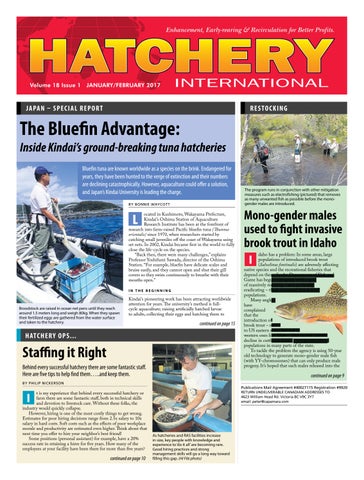
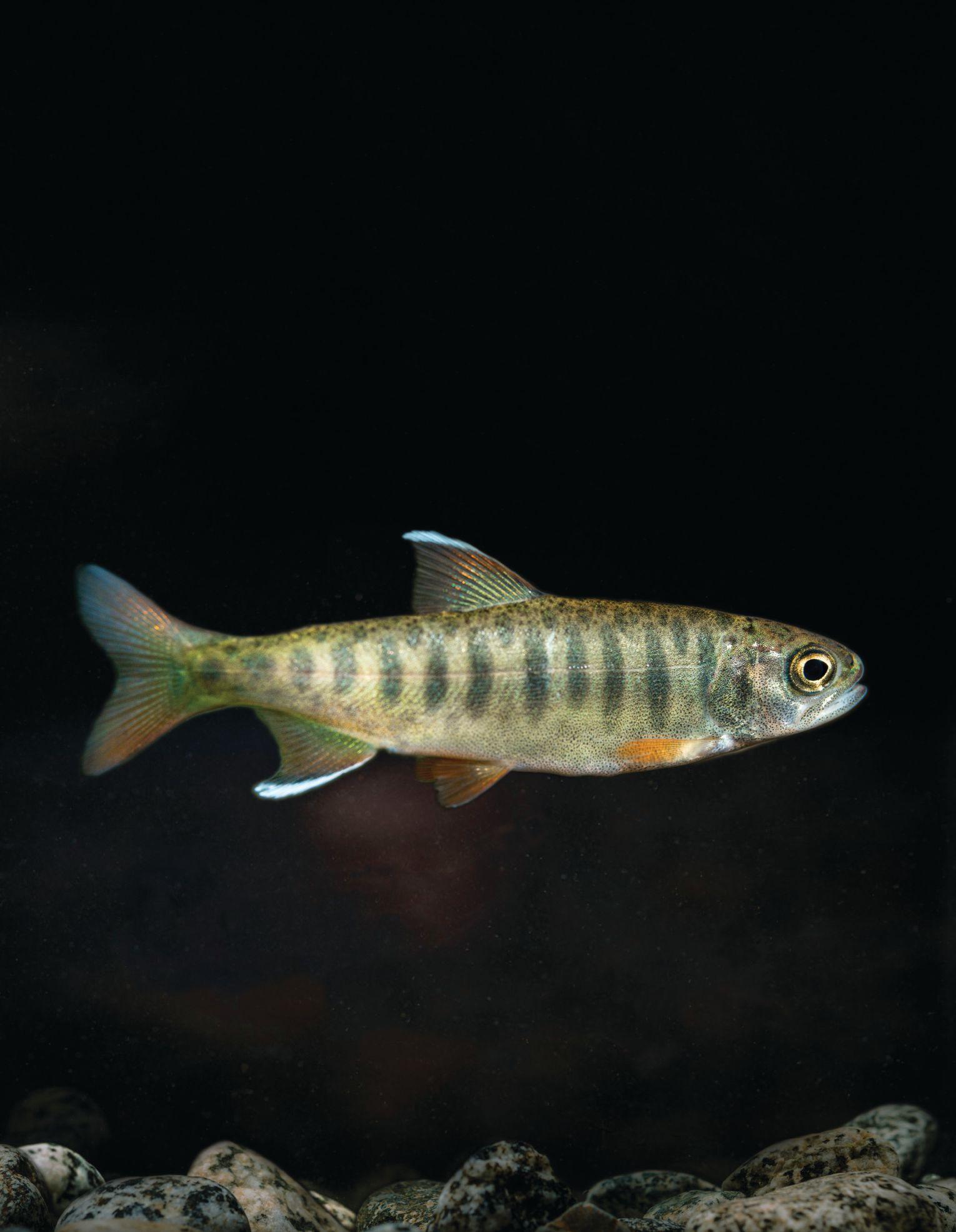
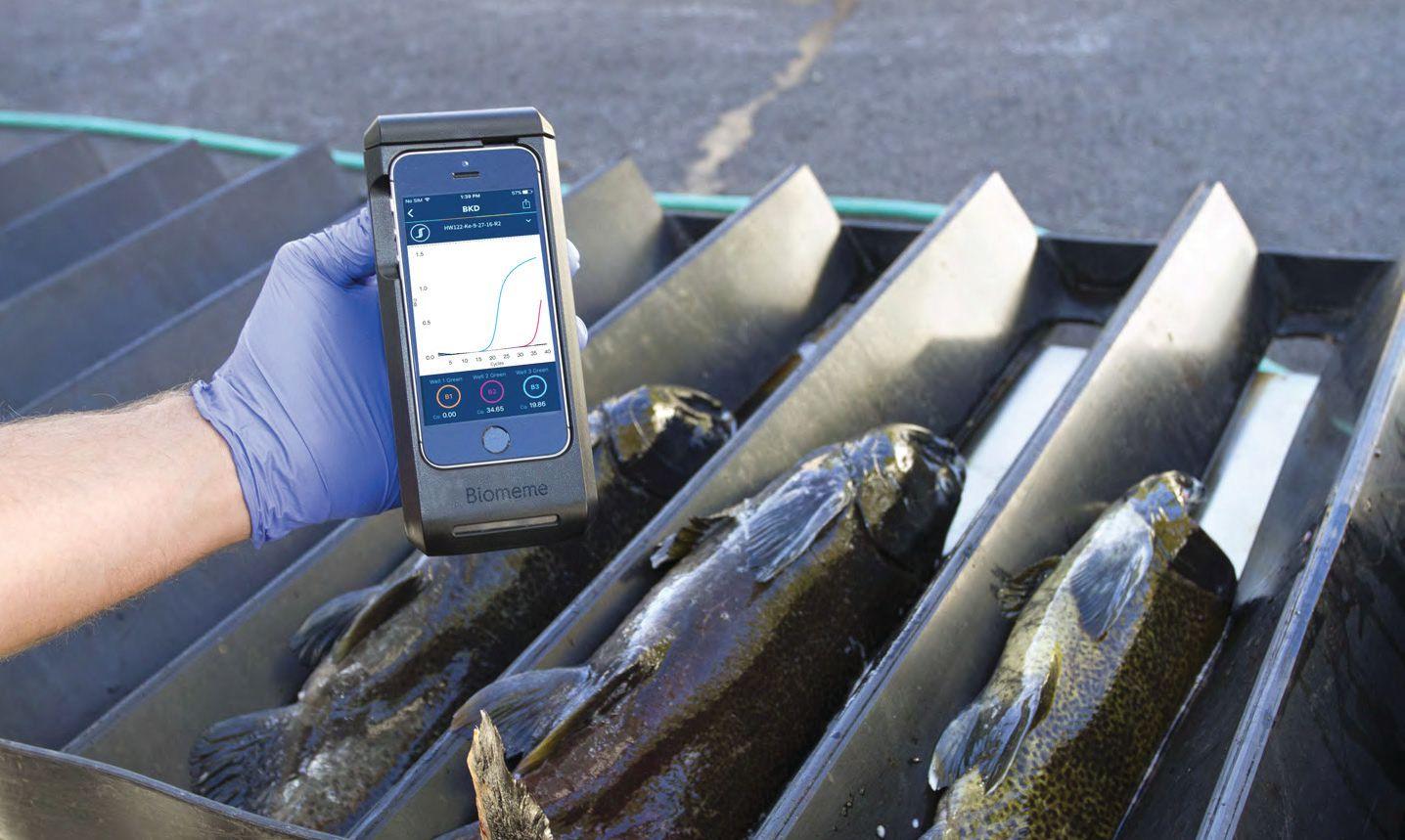
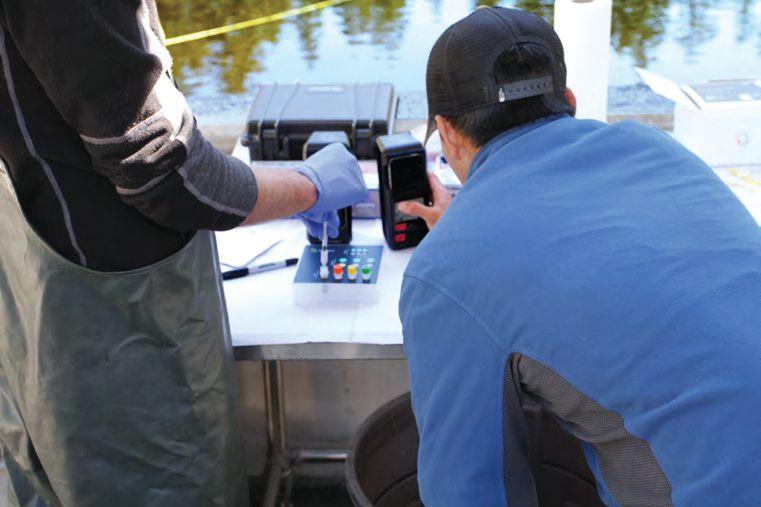
Bluefin tuna are known worldwide as a species on the brink. Endangered for years, they have been hunted to the verge of extinction and their numbers are declining catastrophically. However, aquaculture could offer a solution, and Japan’s Kindai University is leading the charge.
BY BONNIE WAYCOTT
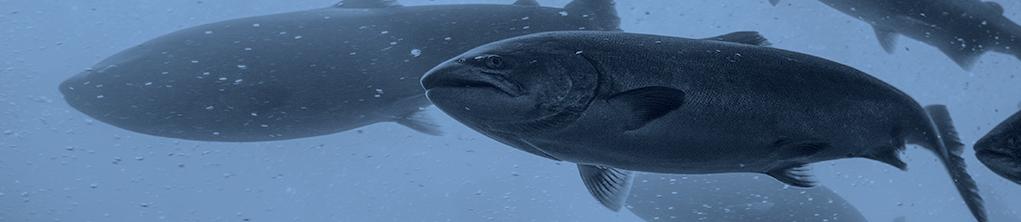
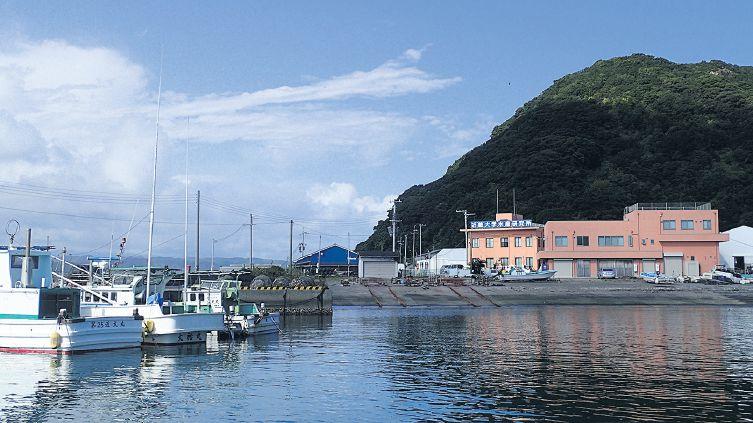
Located in Kushimoto, Wakayama Prefecture, Kindai’s Oshima Station of Aquaculture Research Institute has been at the forefront of research into farm-raised Pacific bluefin tuna (Thunnus orientalis) since 1970, when researchers started by catching small juveniles off the coast of Wakayama using set nets. In 2002, Kindai became first in the world to fully close the life-cycle on the species.
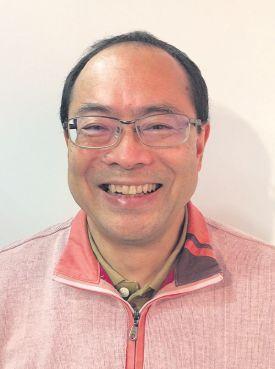
“Back then, there were many challenges,” explains Professor Yoshifumi Sawada, director of the Oshima Station. “For example, bluefin have delicate scales and bruise easily, and they cannot open and shut their gill covers so they swim continuously to breathe with their mouths open.”
IN THE BEGINNING
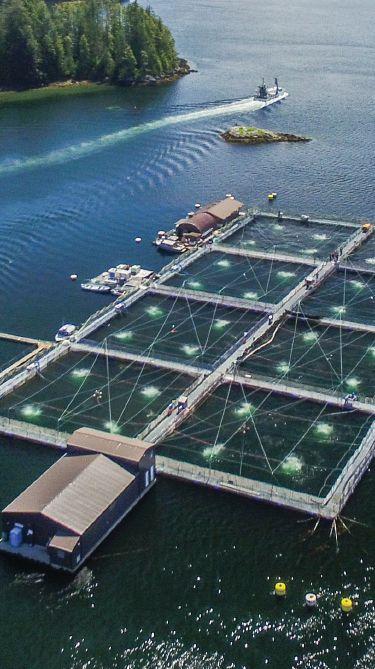
Broodstock are raised in ocean net pens until they reach around 1.5 meters long and weigh 80kg. When they spawn their fertilized eggs are gathered from the water surface and taken to the hatchery.
Staffing it Right
Kindai’s pioneering work has been attracting worldwide attention for years. The university’s method is fullcycle aquaculture; raising artificially hatched larvae to adults, collecting their eggs and hatching them to
Behind every successful hatchery there are some fantastic staff. Here are five tips to help find them…..and keep them.
BY PHILIP NICKERSON
I
t is my experience that behind every successful hatchery or farm there are some fantastic staff, both in technical skills and devotion to livestock care. Without these folks, the industry would quickly collapse.
However, hiring is one of the most costly things to get wrong. Estimates for poor hiring decisions range from 2.5x salary to 10x salary in hard costs. Soft costs such as the effects of poor workplace morale and productivity are estimated even higher. Think about that next time you offer to hire your neighbor’s best friend!
Some positions (personal assistant) for example, have a 20% success rate in retaining a hiree for five years. How many of the employees at your facility have been there for more than five years?
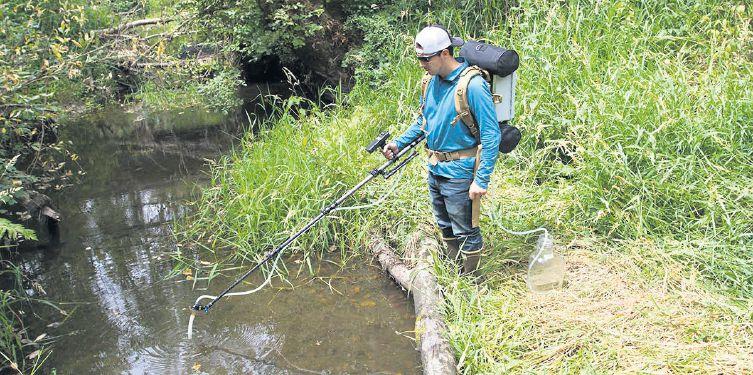
The program runs in conjunction with other mitigation measures such as electrofishing (pictured) that removes as many unwanted fish as possible before the monogender males are introduced.
Mono-gender males used to fight invasive brook trout in Idaho
Idaho has a problem: In some areas, large populations of introduced brook trout (Salvelinus fontinalis) are adversely affecting native species and the recreational fisheries that depend on them. So the Department of Fish and Game has begun a program with a goal of massively reducing – and preferably eradicating – these unwanted brook trout populations.
Many anglers have complained that the introduction of brook trout – native to US eastern states but not to western ones like Idaho – had caused a severe decline in cutthroat trout (Oncorhynchus clarki) populations in many parts of the state.
To tackle the problem the agency is using 50-year old technology to generate mono-gender male fish (with YY-chromosomes) that can only produce male progeny. It’s hoped that such males released into the
continued on page 15 continued on page 9
As hatcheries and RAS facilities increase in size, key people with knowledge and experience to ‘do it all’ are becoming rare. Good hiring practices and strong management skills will go a long way toward filling this gap. (HI File photo)
Disease and poor health are some of the main constraints for sustainable aquaculture.
MSD Animal Health develops environmentally responsible products to maximize fish survival, growth and production efficiency for the major farmed fish species: salmon, tilapia, trout and other marine species.
Every day, in every corner of the world, progressive fish farmers turn to MSD Animal
Health. They ask about our full range of products for managing the most serious diseases in aquaculture. Even more, they come to us for integrated health solutions to help them become more profitable, competitive and sustainable.
For more details please contact your local MSD Animal Health representative or contact us at aqua@merck.com or visit us at www.aqua.merck-animal-health.com.
NEWS BRIEFS
Volume 18, Issue 1 | JANUARY/FEBRUARY 2017
Editor Peter Chettleburgh, peter@capamara.com
Science Editor David Scarratt, scarratt@ns.sympatico.ca
Regular Contributors: Quentin Dodd, Diogo Thomaz, John Nickum, John Mosig, Erich Luening, Philip Nickerson, Matt Jones, Ruby Ganzalez
Advertising Sales Jeremy Thain: International Marketing Manager
Toll Free 1.877.936.2266 (in North America) Int.Tel. +1.250.474.3982 Fax: +1.250.478.3979 jeremy@capamara.com
Design & Production James S. Lewis, james@capamara.com
Cargill opens new research facility in Chile
Cargill Inc. recently opened a large fish health and diseaseprevention research facility in Chile.
The new facility represents Cargill’s most recent investment in the world-wide aquaculture industry since it purchased the major fish feed producer EWOS in August, 2015.
Botswana hatchery project ‘on course’
A report from the African country of Botswana indicates that a program is now underway to refurbish the country’s Mmadinare Fish Hatchery, which was constructed in 2006 and now forms part of an ongoing government initiative to promote fish farming throughout the country.
The report says the upgrade was a result of the need to produce sufficient quantities of good quality fish “seed” to enhance reservoir fisheries and the country’s developing aquaculture industry.
Publisher, Peter Chettleburgh
Hatchery International is published six times a year by Capamara Communications Inc. The authority for statements and claims made in Hatchery International is the responsibility of the contributors. Reference to named products or technologies does not imply endorsement by the publisher. A subscription to Hatchery International (six issues) is $35.00us within North America and $45.00us outside North America.
To subscribe visit our website at www.hatcheryinternational.com
Hatchery International, 4623 William Head Road, Victoria, BC. Canada V9C 3Y7 Fax orders to +1.250.478.3979
Printed in Canada. Canadian Publications Mail Products Sales Agreement #1453556
Postage paid at VANCOUVER B.C..
ISSN 1498-136X REGISTRATION NO. 9920
RETURN UNDELIVERABLE CANADIAN
ADDRESSES TO: Hatchery International, CIRCULATION DEPT.
4623 William Head Road, Victoria, BC V9C 3Y7
Next Ad Deadline
The advertising deadline for the Mar/Apr 2017 issue is Jan. 11th. Don’t miss the opportunity to be part of this exciting aquaculture publication. For more information, or to reserve space in the next issue, call our Advertising Department at Toll Free +1.250.474.3982 (in N.A) jeremy@capamara.com
Next Editorial Deadline
The editorial deadline for the Mar/Apr 2017 issue is Jan. 6th. Contact the Editor, Peter Chettleburgh at +1.250.478.3973 for details. E-mail to peter@capamara.com. Material should be submitted electronically with prior arrangement with the editor.
The Cargill Innovation Center is located in the Pacific coastal town of Calico, and is equipped primarily to research and improve the health and well being of farmed salmon.
Cargill said the center will serve as a research hub for experts from both EWOS and Cargill, as they focus on developing fish diets and set about studying diseases that affect farmed salmon not just in Chile but also in other countries developing their aquaculture sectors.
Also serving as a research and demonstration centre, its facilities include ponds, a water recirculating system, greenhouse, and an administration block – as well as staff housing.
The hatchery was originally built with the intention of producing around 400,000 to 500,000 tilapia and catfish fingerlings per year, for distribution to fish farmers around the country.
US invests $1.2 million in Aquaculture Research
The US Department of Agriculture’s National Institute of Food and Agriculture (NIFA) recently announced four grants totaling $1.2 million to support the development of environmentally and economically sustainable aquaculture in the nation.
Projects funded include research conducted by scientists at Michigan State University, who will identify strains of a common bacteria that threaten farmed rainbow trout as a step toward improved disease prevention and control. Other funding will go to Virginia Tech researchers who will work with commercial farmers to compare profitability of both pond and recirculating-water commercial business models; an Auburn University project
that will evaluate and optimize the economics, biology, and food safety aspects of a high-yield aquaponics system; and the Research Foundation of the State University of New York, Stony Brook which will use molecular genetics techniques to identify disease-resistant shellfish stocks.
•
Whirling disease in Canada
There was more sad news from government agencies and hatchery operators in Alberta, Canada late last November as more instances of whirling disease were detected in fish at Banff National Park and at least one private fish hatchery in the province.
The parasitic fish disease was confirmed by the Canadian Food Inspection Agency, which also acknowledged finding the disease in fish upstream from its confluence with the Bow River at the park.
It is known that the disease, which can be brought in by birds and carried in their waste, can affect several fish species found in Alberta, including bull trout, cutthroat trout, rainbow trout, mountain whitefish, brown- and brook trout.
Of those, the native bull trout are listed as “threatened” provincially and west slope cutthroat are listed as “threatened” federally.
Three stars for King Salmon
New Zealand King Salmon has now become eligible to offer three-star Best Aquaculture Practices (BAP) salmon, following the certification of its three hatcheries, the Global Aquaculture Alliance recently advised.
Three stars approved for the company show that that product originates from a BAP-certified processing plant, farm and hatchery.
Funding shortfall in Fiji
Early last year half of the Fijian government’s fish hatcheries were either destroyed or severely damaged by Tropical Cyclone Winston.
Worse, it has now emerged in a report in the Fiji Times, that the budgetary allocation the government made for rehabilitating the facilities was inadequate.
The department’s principal research officer is quoted as saying that over half the hatcheries were “completely razed to the ground,” and the government allocated the equivalent of about $1million to rehabilitating them – only to find that the restoration of one at Caboni, Ra, which was completely destroyed, cost almost double that to rebuild.
An inventory assessment of the facilities nationwide is expected to help the department set priority areas.
The Bow River
Taking a new look into an old problem
Study indicates that stressed Atlantic salmon eggs may have impaired fitness later in life
BY RUBY GONZALEZ
Pilot data from a study on Atlantic salmon eggs and alevins indicate that stress experienced during embryogenesis may have fitness implications later in life.
The Effect of early stress on disease resistance of Atlantic salmon, a study spearheaded by Prof. Carlos Garcia de Leibniz, Prof. Sonia Consuegra and Dr. Tamsyn Uren-Webster at the Center for Sustainable Aquatic Research at Swansea University in Wales, examined how epigenetic mechanisms can help manage stress and disease resistance in Atlantic salmon.
The study, funded by Research Council UK, is the first one to apply epigenetics to disease management in fish farming.
The funding allowed Garcia de Leaniz and his team “to take a new look into an old problem.” He said, “It has long been known that conditions experienced during development can have profound effects later in life, for example, by making animals more or less susceptible to parasites and diseases.
The problem is that we don’t really know why or how, although we suspect that epigenetic changes may be involved.”
He presented the study at Aquaculture Europe 2016 in Edinburgh, Scotland last September.
THERMAL STRESS
“Aquaculture intensification is likely to be constrained by the capacity of species to cope with stress, particularly under predicted scenarios of climate change, because thermal stress has profound effects on fish reproduction and early development. Stress experienced at critical times during embryogenesis, at a time when the immune system is still developing, is likely to affect the ability of fish to cope with pathogens and respond to subsequent stressors later in life,” Garcia de Leaniz cited in the abstract.
The team looked into the effects of early stress on fish health and fitness, and assessed the role of epigenetic programming and the expression of immune-related genes on subsequent resistance of Atlantic salmon to Saprolegnia parasitica, a pervasive pathogen of salmonids under aquaculture conditions in freshwater.
“Our general hypothesis was that stress during early life would impair the health and fitness of Atlantic salmon, and subsequently compromise their ability to resist infections by altering the expression of immune-related genes through changes in the epigenome,” he cited.
As part of the study, Atlantic salmon eggs were temperature-shocked during embryogenesis and monitored over four to five months.
“The salmon eggs were incubated at 9°C but were then briefly cold-shocked and exposed to air over a week,” he told Hatchery International (HI).
IMPACT OF EMBRYO STRESS
Asked about the ideal temperature range for Atlantic salmon eggs during embryogenesis, Tamsyn Uren-Webster said, “Temperature varies considerably throughout the geographical range of Atlantic salmon, and the thermal tolerance of different populations may also vary. Faster development occurs at higher temperatures, eight to 10°C, while larger alevin size is typically achieved at lower temperatures, two to 4°C.
Several studies have reported that survival decreases above 12°C.”
The impact of stress on health and fitness was assessed by monitoring growth rate, and measuring the extent of fluctuating asymmetry in salmon alevins.
Gut health was also investigated using 16S rDNA sequencing to examine potential stress-induced changes in gut microbial community diversity and structure. 16S rDNA is a section of the prokaryotic DNA that codes for a gene found within all bacteria.
The effect of stress on disease resistance was tested by investigating susceptibility of salmon fry to experimental infection with a bacterial lipopolysaccharide.
Alevins derived from temperature-shocked eggs had significantly lower body mass and lower expression of the ghr1 gene that regulates the growth hormone receptor, and of the dnmt1 gene, the gene that encodes enzymes responsible for cell maintenance and global de novo methylation activities.
Preliminary results indicate that exposure to bacterial lipopolysaccharide had a noticeable effect on expression of immune-related genes.
REDUCTION OF GROWTH RATE
While the temperature shock they applied had no effect on embryo/alevin survival or hatching rate, Swansea University researchers found evidence of “reduction of growth” and “some modulation of the immune system.”
Uren-Webster told HI, “at three months post-hatch, we also found a considerable effect on gut and skin microbial community composition, with increased relative abundance of specific groups of bacteria known to be related to stress.”
Overall, the pilot data indicated that stress experienced during embryogenesis may have fitness implications later in life, suggesting a potential role for epigenetic programming.
“Embryogenesis is a sensitive period to stress, in part, because it includes reprogramming of the epigenome. We hypothesized that the effects we observed on the immune system, at three months post-hatch, may be due to disruption of the epigenome caused by stress during embryogenesis, and we are currently investigating this,” said UrenWebster
She stressed that the knowledge of the effects of the stress on the epigenome and how this is involved in regulating the immune system will be beneficial for management in aquaculture in several ways.
“For example, this may help identify periods of development that are particularly sensitive to stress and epigenetic disruption. It is also possible that mild stressors may have positive effects on future health by boosting the immune system through epigenetic regulation,” she said.
Long-term Industry Commitment
Collaboratively advancing UV research in aquaculture aquafineuv.com
Photos: Dr. R. Stringwell, CSAR
Individual assessment of salmon embryos.
Incubation of salmon eggs.
The study showed that alevins derived from temperature-shocked eggs had significantly lower body mass.
Advanced
breeding programs deserve to be supported by the best cryopreservation
Our unique and patented SquarePack® is the ideal container for storing milt in liquid nitrogen ensuring fast and effective fertilization with proven results.
Cryogenetics® has extensive experience with cryopreservation and fertilization - our technologies are used by the leading egg producers in the world.
Hatchery-raised fish listed under the Endangered Species Act
Afew weeks ago the National Marine Fisheries Service (NMFS) released a document that supports adding some hatchery-raised fish to the 28 Pacific Coast salmon and steelhead stocks currently listed under the Endangered Species Act (ESA). The agency identified 23 hatchery programs producing fish genetically similar to their wild counterparts and proposed that these fish should have the option of federal protection. The 23 programs are primarily in Oregon and Washington, but there are some in Idaho and one in California.
NMFS recently completed a required five-year review of listed species and plans to make no changes to the threatened or endangered status of salmon and steelhead populations found in California, Oregon, Washington and Idaho.
The review included 330 hatchery programs in the four north-western states. About half of these programs are enhancing listed salmon and steelhead populations, while others are producing fish for anglers. The NMFS document proposes eliminating five of the hatchery programs from ESA listings, and adding the 23 identified for a net increase of 18.
Rob Jones, with the NMFS oversight program for hatcheries throughout the region, said that there has been an evident shift in hatchery and fishery managers’ approach to enhancing ESA-listed stocks.
www.cryogenetics.com
Jones explained that to help “endangered” or “threatened” wild stocks of salmon or steelhead, western hatchery managers could go in one of two directions. They
The agency identified 23 hatchery programs producing fish genetically similar to their wild counterparts and proposed that these fish should have the option of federal protection. The 23 programs are primarily in Oregon and Washington, but there are some in Idaho and one in California.
could make the juveniles they produce genetically similar to the ESA-listed wild stocks and then release them back in among these wild stocks. Or, they could put less effort into genetics and release the juveniles into separated areas, so they wouldn’t “water down” the ESA-listed fish’s gene pools. The hope was that these implants would “take” and produce new populations separate from the ESA-listed stocks.
The trouble with the second (separation) option was that steelhead and salmon have a habit of straying into other watersheds, thus potentially watering down the gene pool.
Even though it’s generally understood that hatchery fish are not as resilient in the wild as wild fish, science, as well as trial and error have increased the knowledge of how to produce hatchery fish that are not only genetically similar but stronger and better able to survive.
Public comments on the federal proposal were being accepted through December.
– Quentin Dodd
SHRIMP
More hatcheries, more growers needed for booming Marron industry
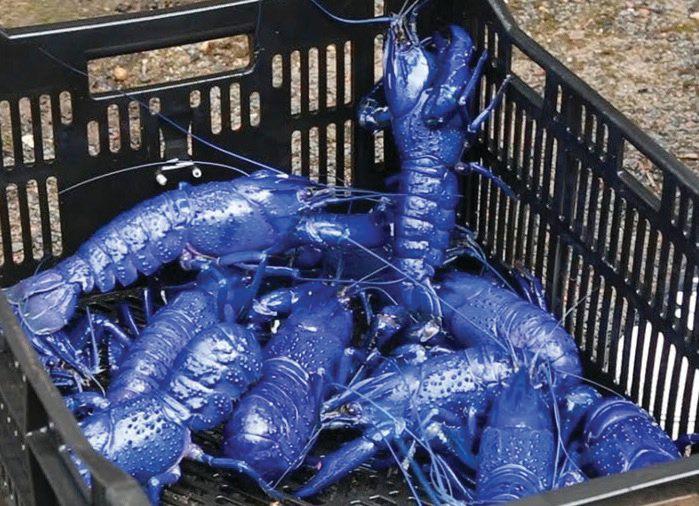
estern Australia breeds and produces more marron crayfish (Cherax sp.) than anywhere else in the world. And according to the WA Marron Growers Association the sector could grow even more.
“As an industry you could never oversupply the demand that’s potentially out there,” said incoming association president Stephen Vidovich in a media interview. It is hoped that the industry will be able to meet demand from existing markets in Hong Kong and Singapore.
Ray Harris, a senior official with the association, is cited as saying that it’s not as simple as growing more marron. The industry needs to take “giant leap of faith” and invest in new facilities, operations and systems to efficiently increase output, supply and transport. Harris has been breeding and producing marron for 12 years at the Hey Ray Retreat in Northcliffe. He explained to Hatchery International that marron breed and grow without requiring much attention.
Each female produces eggs for the male to fertilize. The marron emerge from the eggs under their mother’s tail as tiny crayfish.
After they are hatched the crayfish are moved to ponds which are approximately1,000 square metres in area and1.3 m to 1.9m deep. The addition of many small flowerpotshaped shelters that are about 10 cm across, provide ‘hides’ for them. As many as eight or nine marron will occupy a ‘hide.’
The first grading is done in June when each pond is drained and the marron sorted and moved into other ponds.
“You wind up with the babies in one third of the ponds, one-year-olds in another third, and the two-year-olds (ready for harvest) in the other,” he explained.
Harris harvests an average of about 180-200 kg of market-size marron per pond.
– Quentin Dodd
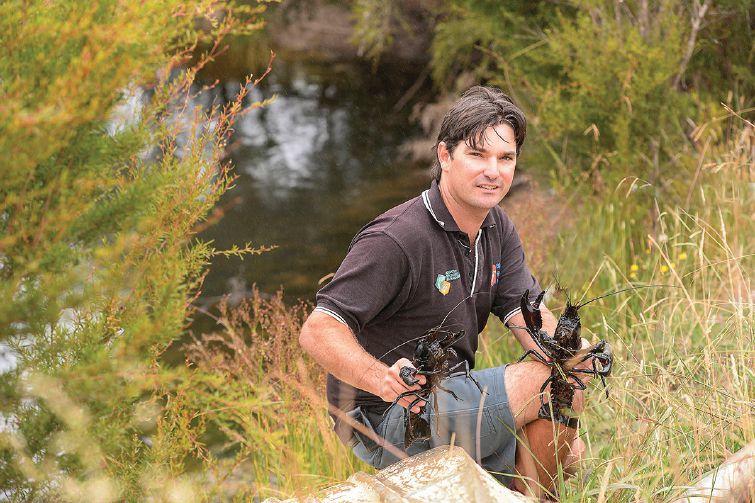
Stephen Vidovich at Blue Ridge Marron in Western Australia.
Leonardo da Vinci
ORI-ONE is a ground breaking product that revolutionizes rotifer production. Enrichment of the rotifers is incorporated into the culture procedure giving an improved nutritional profile, enhanced rotifer bio security and simplified processes. For more information, please contact your local feed consultant.
www.skretting.com
IIlustrations
Susana Rodriguez
Mono-gender males used to fight invasive brook trout in Idaho continued from cover
wild will ultimately eliminate the female population.
Dan Schill, fisheries research supervisor for IDFG, said that to his knowledge it’s the first time that anybody has developed a program to produce YY-male fish for controlling a wild-population.
The technology involves use of the natural female hormone estradiol which might prove to be somewhat controversial, but Schill said that to date that hasn’t proved to be case, though the program has attracted the attention of scientists, fishery managers and other observers. He stressed that this is still a pilot project that’s being tried in several locations across the state. It hasn’t eradicated any populations to date, and might take several years to show whether it will achieve the objective.
The project garnered public attention after an article was published in the North American Journal of Aquaculture, about a year ago, followed by a presentation to a Western meeting of the American Fisheries Society.
HISTORY OF THE PROJECT
Schill said the development and use of YY males in aquaculture goes back something like a half-century, and the pilot Idaho project began in 2008, with the “salting” of four trial streams with YY males. The department researchers monitored these populations over several years to see what effect a limited program might be having. The IDGF was sufficiently pleased with the results that it began releasing more YY males into problem lakes, streams and rivers, sometimes on an annual basis. This is done in conjunction with pre-release electro-fishing that removes as many females as possible and other nonmarked, non-hatchery, non-YY males.
Overall, Schill said, the department has been quite pleased with what it’s seen from this two-pronged approach, but he acknowledged that it may take another four to six years before any of the brookie populations have been totally erased. That will be the point that the department can begin to enhance native cutthroat trout numbers in the treated areas.
Comparison of hatchery supermale brook trout (top) and wild brook trout in central Idaho stream.
Loading hatchery supermale brook trout to be stocked in alpine lakes.
Staffing it Right
How many have come and gone over the past two years (or five if you can remember that many)?
There are two overarching areas to look at in order to mitigate these pain-points and costs. The first is to implement better hiring processes. The second is to develop a system of comprehensive standard operating procedures (SOP) with feedback to (and from) management. Notice that the second is NOT to install sleeping pods (per Google headquarters) or implement radical employee incentive programs. While these things may have a positive effect on employee retention or performance, most reports I have seen show that the effect of these incentives is negligible as compared with simply providing meaningful work to an employee.
1. Make work meaningful
What is meaningful work? There is an old story about a man who asked three bricklayers what they were doing. The first one said he was “putting one brick on top of another.” The second said he was “making six pence a day.” The third replied, “I am building a cathedral – a house of God!” Which one would you expect to show up every day? Which one would you expect take the most pride in his work?
Aquaculture employers are blessed with the ability to provide very meaningful jobs. Fish may not be the most cuddly creatures, but there is an inherent joy in interacting daily with creatures that depend on your care and nurturing to thrive and to grow – and then there is the miraculous gift of reproduction we can be part of almost every day in a hatchery position.
Even the most menial job at a hatchery can be linked to the well-being of the fish. If that is not enough, many aquaculture facilities can claim to be taking pressure off of wild stocks, or to be providing good jobs in rural communities, or to be feeding the world with high value protein that requires less water than beef to produce.
Conserving endangered species, conserving water, feeding the world! When you and/or your employee shows up for work are they putting one brick on top of another or
feeding the world? It may not be feasible to dictate to your employees what the meaning is in their jobs, but our own passions for what we do are going to be picked up by those around us.
These concepts are widely applicable and could be adapted to almost any industry. If you take one thing away from this article, let it be that hereafter you only hire people that are smarter than you and conscientious. Those two criteria will take you far. These employees will bring you solutions rather than problems. They will have your back. At the end of each day they will walk out the door backwards with both eyes on the fish rather than on the clock.
2. Job postings that work
Many job postings are filled with vague and broad language. This is a costly error. A job posting that says “cleaning, grading, monitoring, ability to work alone or as a team, experience an asset” will get hundreds of applicants with an equally vague and broad work and skills experience. Take the corporate-speak vocabulary out of the posting.
Rather than trying to cover every base, write a job posting that is polar opposite. Describe as specifically as possible and in as great a detail as possible what the successful applicant will be doing on a daily basis. If you can’t do that, you are not ready to hire somebody! Rather than “cleaning,” say “cleaning fish tanks to meet biosecurity
standards.” Rather than monitoring say, “Daily check that water treatment equipment is functioning properly” and “Daily check and manage water quality such as oxygen, temperature, pH, ammonia and record values.” These are some examples of how your job posting can discourage applicants who really have no experience or skills for the position.
There is one more key piece of a job posting that is simple but very powerful. Ask the applicant to do something very specific. For example, “Submit resume and cover letter by email to hr@fishfarmlifer.com with subject ‘Attention Hiring Manager Hal Abbott.’ No calls please.” If an applicant cannot follow this simple instruction and submits a resume via a different method, there is no need to consider it. He or she has just demonstrated how well they follow directions at a time when there is the most incentive to do so.
I heard of one company which knew there would be a lot of interest in a position and charged $25 for each applicant to submit their resume. Powerful disqualifier, but for a good paying job, it meant only candidates with relevant experience and skills would be applying.
3. Make the interview count
The next step in the hiring process is the interview which should be followed by a thorough reference check. However, the most successful way to hire the right person is by audition. Have the top two or three candidates join you for a day or for however long is needed for you to observe if they are a good fit. Why shouldn’t they demonstrate that they can do the job you are hiring them for? If it costs you $100 to bring them in for the day and discover they think “fish poo is icky,” I call that money well spent.
4. The role of SOPs
Standard operating procedures (SOP) are a useful tool to accelerate training, to prevent loss of IP should an employee move on, to maintain standards, and to transition from an entrepreneurial job to a “real business” that could be operated even if the entrepreneur was ‘out sick’ or sold the business.
What should be written up as an SOP? The answer is not ‘everything.’ Focus on daily tasks. These could be checklists on the wall next to a piece of equipment where the operating pressures are recorded, or in each culture area where oxygen and temperature are recorded at set times each day.
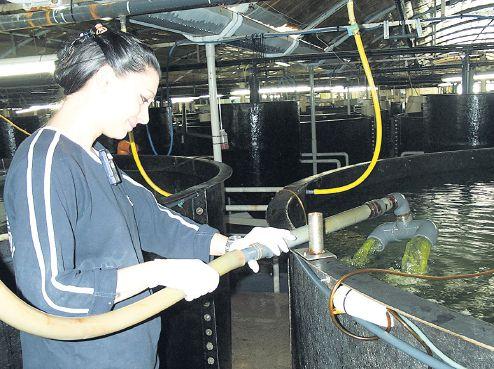
Staff member feeds tank at Italian sea bass/sea bream hatchery. (HI file photo)
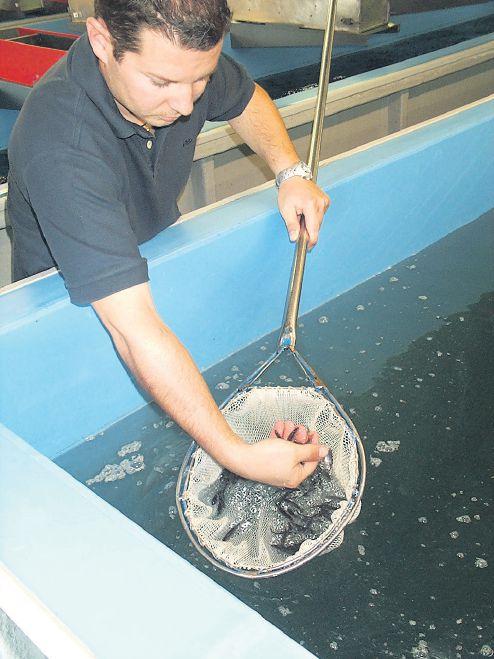
(HI file photo)
If a new employee is unable to do the task without asking a question, the SOP should be revised to answer that question.
If an employee is able to complete the task successfully the first time, without asking a question, a $50 incentive should be paid to the SOP author. This measure creates a robust SOP the first time around. You may also discover that an SOP does not have to be text only! Charts and pictures are powerful tools for creating an effective SOP. If a breakdown occurs (anything that goes wrong), take a moment to ask staff how it could have been avoided and correct the SOP.
Other than the obvious elements of an SOP (how and when to do task X), every SOP should have a feedback mechanism. This is as simple as a sheet that the employee initials when the task is completed. Perhaps time and date would be included as well. I suspect that as farms become larger, the feedback will become electronic. Farm management software exists and will be an asset and a necessity on all but the smallest operations.
5. Advanced hiring tools
It has been said that “every problem is a people problem.” Everyone is unique. You may hire somebody to replace an employee that moved on and find that the same job gets done in a much different way. Perhaps better, perhaps worse, but entirely different. For example, one manager I had would approach most problems by first saying, “let’s go for a walk” and head off to the section of the farm that needed some attention. Given that we were both very hands-on in our approach to problems, this worked very effectively. Another manager had a ‘shotgun approach’ and would download me with a multitude of ideas in a five minute conversation. This method became effective over time as I realized that I was not being told how to do something, but being left to determine which ideas had merit and select or advise on what could be followed through to completion.
It is my understanding that there is no right or wrong way to approach “problems” or “tasks” or “jobs.” In my own company, we use a tool called the Kolbe A index to determine in which areas we are weak or strong as a group. The Kolbe A index “measures your instinctive way of doing things and the Result is called your M.O. (method of operation)” (quoted from the Kolbe A website www.kolbe. com). If you are a manager, go take the test now. There is an established industry of hiring consultants. Some now use the Kolbe tool to help companies hire staff appropriate for both the company and the given position. It has been found that in a business with one principal owner who is heavily involved in the daily operations, the combined scores of the staff will match the owner’s Kolbe score. This means everyone likely gets along, but if everyone is high “quick-start” (common in entrepreneurs), but nobody is a high “follow-through,” there will be a multitude of projects started and a rare few finished. The reverse scenario, may lead to projects being completed simply because they were started… even when they should have been dropped at the first sign of low or negative ROI.
For example, my office manager and I are both high in the “fact finder” category and low in the “quick start” category. As a result of being aware of our Kolbe index, we now know to set a deadline for making decisions. Our previously often repeated cycle of researching for 80% of the project time and then making last minute decisions has evolved to a more balanced approach where we set a time limit on the research or fact-finding phase.
As RAS farms are increasing in size, key people with knowledge and experience to ‘do it all’ are becoming rare. This may become a severe bottleneck if there are only two or three key individuals to operate a large 24/7/365 operation. Good hiring practices and tools will have to be implemented with good management tools to successfully fill this gap.
UNITED STATES
Redfish a good choice for new hatchery
When the Claude Peteet Mariculture Center (CPMC) in Gulf Shores, Alabama was completed a couple of years ago, the first project for the hatchery was to breed redfish, a popular species for in-shore anglers in the region. Also known as red drum (Sciaenops ocellatus), the fish was chosen because there’s been extensive research on the
species; it has been successfully spawned in a hatchery setting, and it stands up well to being transported and released.
A report from the Alabama Marine Resources Division (MRD) confirms that this was a good decision. The largest release to date occurred recently when almost 18,000 fry were released into the marsh connected to Little Lagoon in Gulf Shores.
MRD director Chris Blankenship said the division has been releasing redfish fry since the hatchery reopened two years ago. “We’re also working to spawn Florida pompano and flounder for restocking efforts,” Blankenship commented. – Quentin Dodd
Norway’s Nofima is breeding “super eater” lumpsucker families
hile lumpsuckers have become a popular green option for managing sea lice in salmon farms, not all eat lice.
“Currently, there is a great deal of uncertainty about the proportion of them that will lice. Some estimate 30 to 40%. Others believe that well over 50% have this trait,” said Atle Mortensen, senior scientist at the Norwegian Institute of Food, Fisheries and Aquaculture Research (Nofima).
There are indications that eating salmon lice seems to be hereditary and Nofima recently noted on its website that they have started breeding a family of “super eaters.”
The specific family was identified by Akvaplan-niva, a research-based company, when it was allowed access to nine different lumpsucker families that Nofima had produced at is Center for Marine Aquaculture at Kraknes in Tromsø. These were set out in salmon cages at Gildeskål Research Station (GIFAS) in Helgeland.
The other eight families were observed to prefer eating pellets intended for the salmon.
Nofima took siblings from the keenest lice-eating family and used them as broodstock for some new lumpsucker families. The scientists have also produced some based on families that did not eat lice.
As of last August, Nofima has 63 families that will be used to validate Akvaplan-niva’s findings on a larger scale.
Nofima is the first to have produced its own lumpsucker families from broodstock. It had breeding in mind from day one and now they have full control of the pedigree of the this fish, said Mortensen.
Having achieved positive results, they have elevated efforts to concentrate on applications. On top of the list is finding methods that would make it easier for them to quantify how many lice the individual lumpsucker eats.
“Lumpsuckers obviously don’t view eating salmon lice as foraging; perhaps they define it more as snacks that they like the taste of or that they think it is fun to eat. Some eat only two or three, while others may have more than 50 lice in their stomachs,” he said.
The broodstock will be released in salmon cages once they reach the ideal size “to test their lice-eating abilities under conditions that are as close to authentic as possible.”
According to Nofima, lumpsuckers are released into salmon cages when they weigh 20 grams and are retired once they hit 500 grams.
Once harvested, lumpfish are usually ground up into animal feed, though there are those who believe that there should be better use for the
It was estimated that the yearly harvest of farmed lumpfish used against sea lice in Norway may reach 10,000 tons a year.
Lumpsucker roe is considered a Norwegian delicacy. The fish itself, however, is not part of the Norwegian diet.
Ruby Gonzalez
Since 1958 Faivre company develops and manufactures high quality equipments for the aquaculture industry
Nofima took siblings from the keenest lice-eating family and used them as broodstock for some new lumpsucker families which it is hoped will have an increased appetite for the tiny parasites.
fish.
A clear solution to the hidden threats of BKD
Producing high quality fish in freshwater requires a great deal of time, care and consideration. Widespread and often undetected presence of Bacterial Kidney Disease (BKD) poses a threat to your investment. Chronic and long-lasting, BKD infection commonly leads to higher background mortality and lower performance. Renogen® is a vaccine specifically designed to aid in the prevention of BKD and reduce the need for later treatment, leading to healthier fish at a lower production cost.
New regulations could spell trouble for Maltese tuna breeders
The Maltese government is considering the implementation of new regulations that would require tuna farmers to move some of their growout sites five kilometres off shore. Dr Chris Bridges, recognized for his knowledge of the spawning induction of north Atlantic bluefin tuna (Thunnus thynnus), is concerned that this action could have consequences for the tuna spawning business on the Mediterranean island.
Moving the sites this far offshore would make the already difficult process of collecting eggs almost impossible. There is likely to be a loss of many of the millions of eggs that are needed by the hatcheries where staff are working on the incubation and hatching process, and boosting fingerling production.
Complaints from a lucrative tourist trade about the smells from inshore cages owing to an accumulation of sludge and waste prompted the move from government.
But counters, Bridges, “… the tuna farming industry in Malta is four farms that have a total revenue of about $114 million a year.” If this disappears, a lot of people are going to be out of work. Some of the main tuna research and breeding companies and organizations, such as Malta Fish Farms and the Malta Aquaculture Centre, may have to look into other options to maintain their revenue streams.
As if this wasn’t enough cause for concern, apparently there is a possibility that there will be another increase in the tuna-harvest quota in the Mediterranean. This will push down selling prices for the island’s hatcheries and breeders, putting them in an even more tenuous position.
– Quentin Dodd
Moving Maltese tuna farms from their current inshore locations to offshore sites could create logistical problems for spawning.
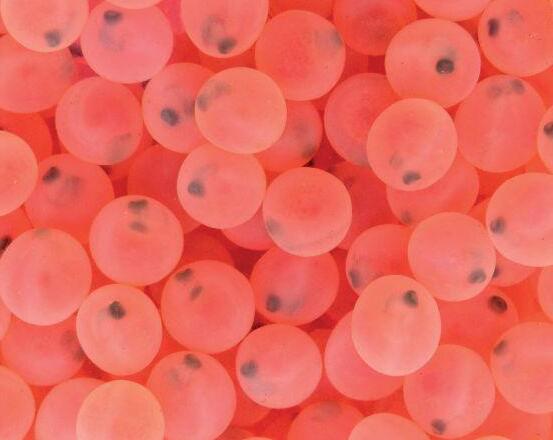
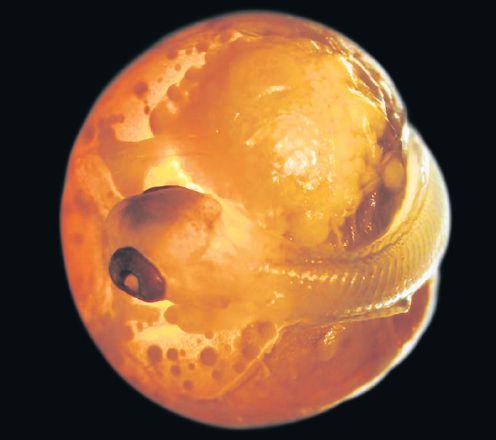
Moving grow-out sites farther offshore would make gathering tuna eggs (pictured) more challenging.
COVER
The Bluefin Advantage
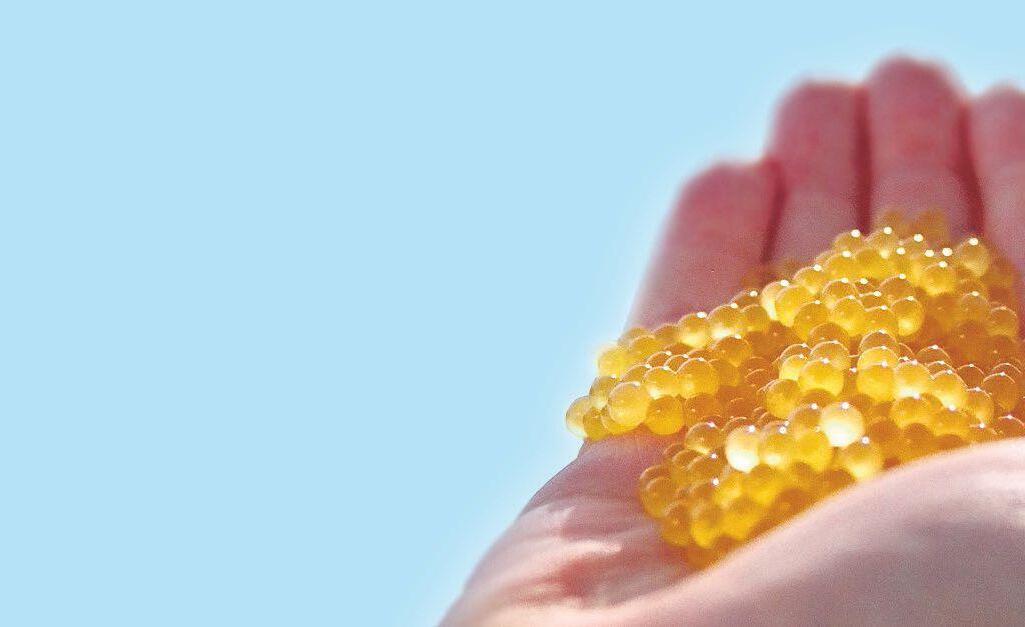
create subsequent egg-laying generations. Broodstock are raised until they reach around 1.5 meters long and weigh 80kg, at which point their fertilized eggs are gathered from the water surface. One female lays several million eggs, each about 1 millimeter in diameter.
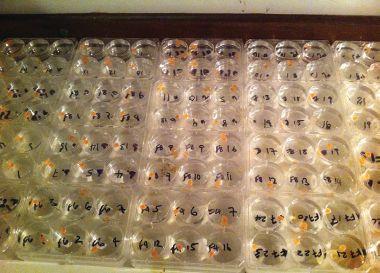
“VNN (Viral Nervous Necrosis) can be a huge problem,” Professor Sawada explained. “Once the eggs are collected we disinfect their outer layer using ozone bleach water, by immersing the eggs in it, just once, for around 3 to 5 minutes.”
Two million eggs are put into large tanks with one-cubic-meter nettings for incubation. Later they are collected and transferred to rearing tanks, or transported by air to another station. The most important thing to watch for at this stage is oxygen concentration in the water.
“We saturate the water (seawater) by oxygen aeration, but fertilized eggs are less dense than the water so they rise to the surface,” Professor Sawada said. “Sometimes, they form a high concentration egg layer, where oxygen consumption occurs as the eggs breathe. The eggs absorb oxygen and release carbon dioxide but this can have a bad effect on egg development. If there is an oxygen deficiency and high carbon dioxide concentration during transportation, the fish could end up with problems like spinal defects after hatching.”
REARING LARVAE
Once the eggs have hatched into larvae, they’re around 3mm in length. They are then reared in tanks on land until they’re about 6-7 centimetres long. They are given DHA-enriched rotifer two times a day, morning and afternoon, from three days after hatching until around 15 days.
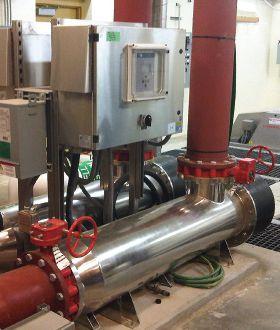
The seawater comes from coastal areas in front of the hatcheries, where it is pumped and filtered before being disinfected with UV. Adding microalgae helps stabilize water quality. The algae also provide enrichment for the rotifers.
The ideal water temperature for bluefin is around 21-29°C (24-25°C is the most suitable during early stages), pH around 8 or 8.5 and dissolved oxygen over 90%. But Professor Sawada says that when it comes to feed there are still some challenges.
“We are not sure why this is. We tried to cultivate copepods but this is difficult because wild copepods contain a lot of DHA from eating DHA-containing phytoplankton and as a result, accumulate DHA in their bodies. One day we may be able to cultivate copepods, although cannibalism makes this hard. Copepods are particle feeders and often eat the nauplii that they spawn.”
Other issues to address, he said, include preventing death during the larval stage.
“What we call floating deaths occur mainly during the day, about three days after hatching. Aeration in land-based tanks creates an upwelling current that traps the larvae at the surface. As a result, they die. Egg quality is a factor. The higher the quality, the lower the death rate. What we call sinking deaths occur at night among 3-7 day-old larvae. These have a
continued from cover
high body density compared to seawater and their swimming decreases at night, making them sink and die.”
To prevent floating deaths, the university decreases aeration and creates an oil film on the water surface but this inhibits swim bladder inflation in the larvae. As a result, their body density rises and they sink and die. To address sinking deaths, a surface skimmer is used to remove oil from the water at a particular time. The challenge is achieving the right balance between adding and removing the oil.
FROM FRY TO ADULTS
About 30 days after hatching, the larvae grow into fry and are moved from land-based tanks to ocean net cages.
“These have more space and are better suited to bluefin that swim all the time,” Professor Sawada said. “In tanks the fish collide with the walls, and land-based operations incur huge maintenance and electricity costs. Once the fish are big enough, the rest of our farming is done at sea.”
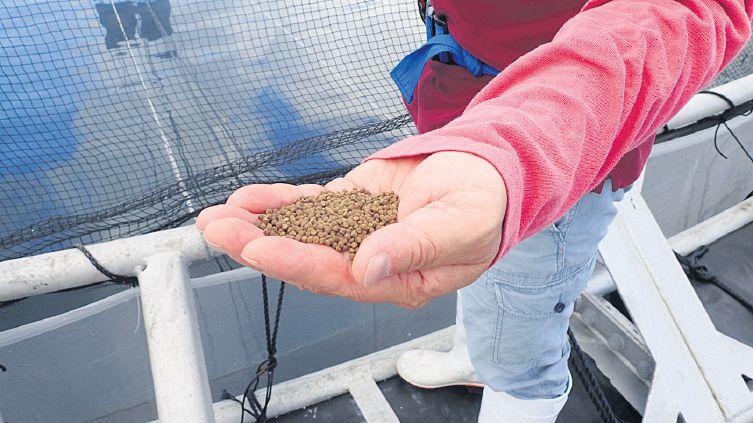
The fry are first given an artificially formulated, enzyme-treated fishmeal diet every 15 minutes through a feeder machine. The diet, developed five years ago with Japanese feed manufacturers, is a special combination of vitamins, oils and proteins. One fairly urgent issue for Kindai is moving from fishmeal to plant protein for the sea stage. This is owing to recent increases in the price of fishmeal.
As the fry grow big enough to be moved to ocean net cages, they continue to receive the enzyme-treated fishmeal diet every hour from sunrise to sunset.
“Feed costs are half the total costs of tuna production, so we need cheaper materials like plant protein to bring costs down,” said Professor Sawada. “It’s possible to address the issue of feed in two ways. The first is developing plant protein feeds, and the other is producing a breed of tuna that can digest plant proteins more effectively.”
Plant protein is also key to ensuring sustainable operations.
“It’s the most realistic way,” Professor Sawada explained. “Soybean, corn meal and sugar cane are all possibilities. Although the enzyme-treated fishmeal works, sometimes the fish don’t eat it because the contents have been altered. We need to create alternative diets.”
TOWARD THE FUTURE
Despite the challenges, Kindai is looking toward further cultivation. While striving to continue its research and increase production, it is sharing information and emphasizing areas such as safety and biosecurity. Professor Sawada is confident that his research can make a difference.
“Thanks to our control over all processes of the bluefin lifecycle,” he said, “we can offer a stable supply of tuna without depending on fish stocks in the wild.”
“Thanks to our control over all processes of the bluefin lifecycle, we can offer a stable supply of tuna without depending on fish stocks in the wild.”
Photos provided by Kindai and Bonnie Waycott.
- Professor Yoshifumi Sawada, director of the Oshima Station.
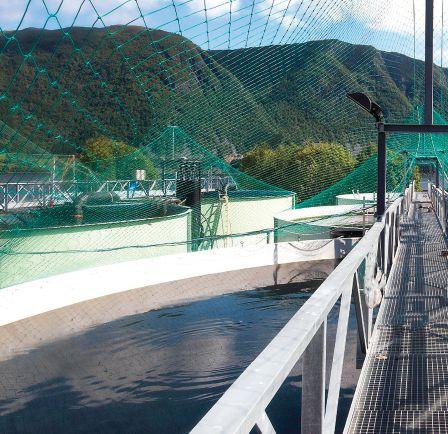
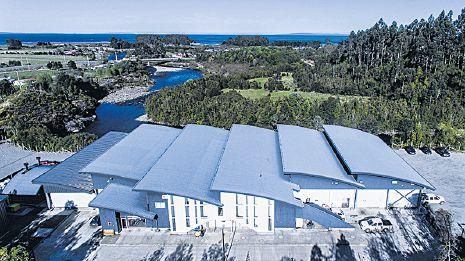
Much of the ground-breaking research has been carried out at the Oshima Station Aquaculture Research Institute (pictured).
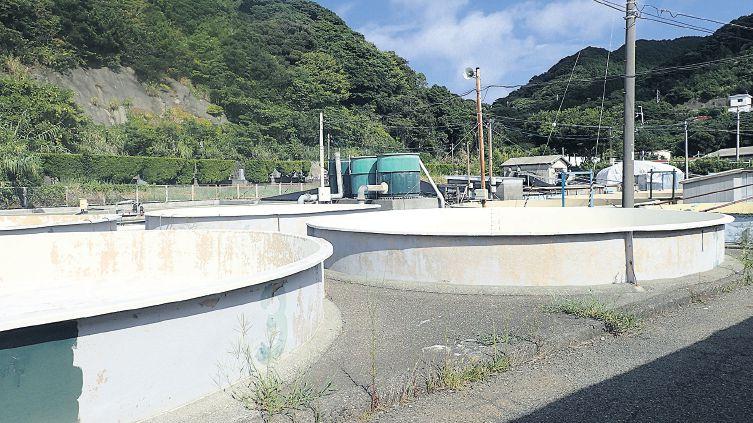
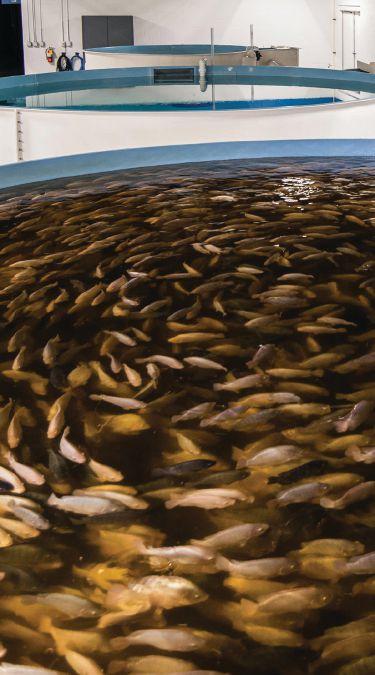
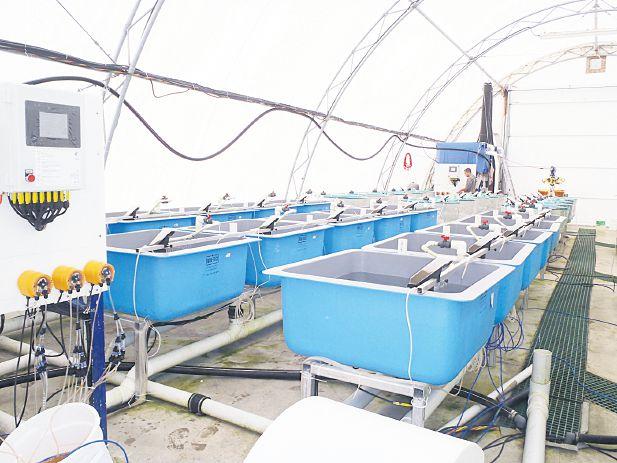
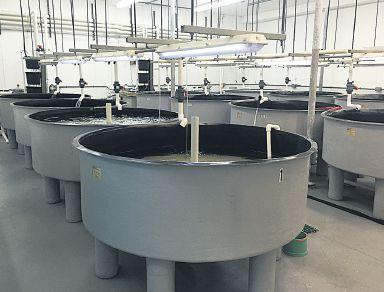
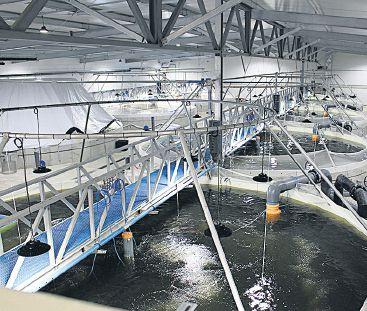
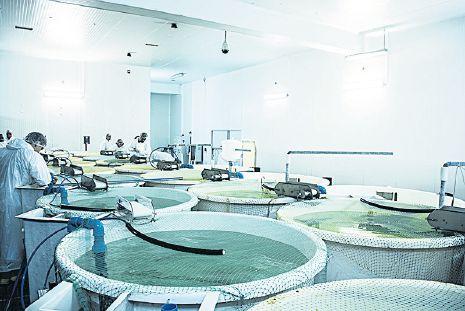
Rearing tanks at the hatchery.
The researchers are investigating alternative feed ingredients, notably plant proteins, in order to reduce production costs.
PROFILE
Former salmon hatchery has new role as a research hub for endangered species
BY TOM WALKER
The Richard Cronin National Salmon Station has a new role as a regional center to research, rear and restore threatened aquatic species. “This is very much a cooperation to develop resources and research facilities,” says David Perkins of the US Fish and Wildlife Service, who is director of the re-named Richard Cronin Aquatic Resource Center.
Originally built as a state trout hatchery some 60 years ago, the facility had been culturing Atlantic salmon for restoration in the Connecticut River basin since the early 1980s until its closure in 2013.
“The salmon restoration programs were not successful for a number of reasons,” says Perkins. “Neither the science nor the results supported continuing the work and the funds were redirected.”
An MOU has been signed between the US Fish and Wildlife Service, the US Geological Service, Massachusetts Fish and Wildlife and the University of Massachusetts to work on shared conservation interests. Renovations are ongoing at the hatchery to transform it into a research and education facility.
“We have had to retrofit and re-plumb. We needed new discharge and treatment facilities for our water,” says Perkins. “We are permitted as a research facility which has different requirements from a salmon hatchery.”
He adds that the salmon station was not large with just 7 adult holding tanks. “We’ve actually been able to use the cement for the tanks as a foundation and build up walls and a roof to turn them into lab space.” says Perkins.
The Resource Center is helping to develop techniques for state agencies and wildlife managers to use in conservation.
One of the initial species to be studied is the federally endangered dwarf wedge mussel Alasmidonta heterodon. “This is the first large effort in the northeast to culture fresh water mussels,” says Perkins. “The culture techniques have been developed in other regions in the US, but we find they are very species – and very facility-specific.”
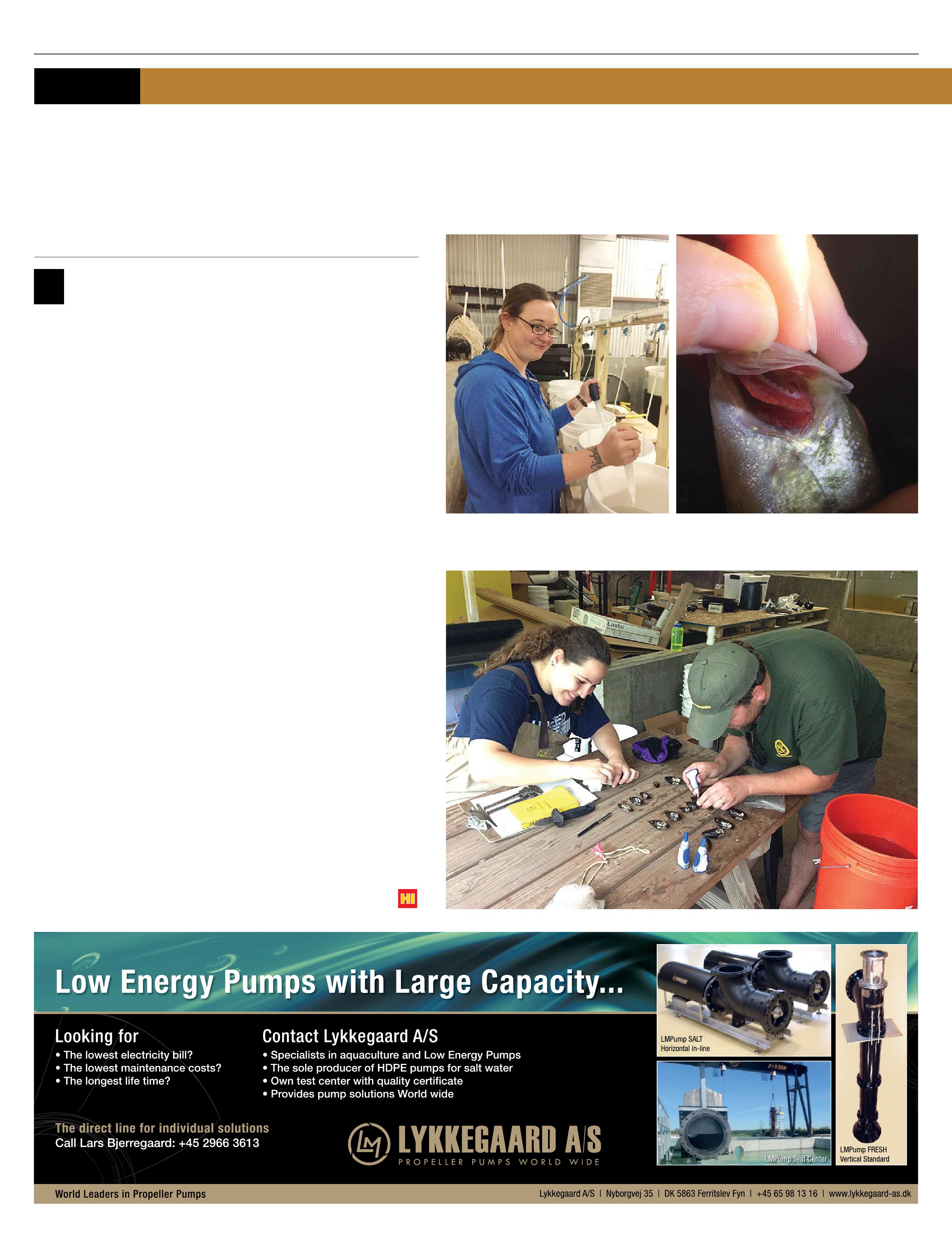
Wild female broodstock is gathered after they have naturally fertilized in the wild. The eggs hatch and are carried in special chambers in the female’s gills. The mussel larvae called glochidia, are extracted and either inoculated onto the gills of a host fish using a pipette or through a water bath where the glochidia and host fish are mixed. Tissue on the host fish grows over the glochidia, which after several weeks transforms into a microscopic juvenile and drops off the host. Those juveniles are collected and reared.
“A lot of our studies right now are determining which host fish are optimal and which rearing techniques work the best,” says Perkins. “They are very species-specific.” He adds that they have worked with slimy sculpins, tessellated darter, and even Atlantic salmon parr. “It also depends on what you can gather and what you can culture for hosts.”
“It’s interesting and challenging work,” says Perkins. “You not only have to culture the mussels but you have to figure out the host fish piece as well.”
The cooperation offers a wealth of experience and opportunity to develop watershed and regional programs Perkins says. Researchers at the center are also propagating the endangered puritan tiger beetle. There is lots of student participation through the University of Massachusetts Amherst, something that Perkins says is quite invigorating.
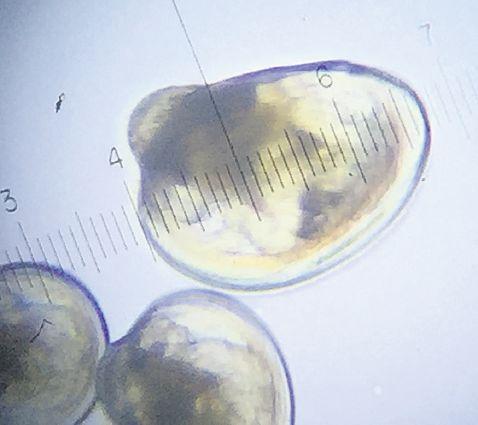
Above left: Senior University of Massachusetts student Virginia Sowers pipettes water containing thousands of glochidia onto fish gills. Above right: Once glochidia are attached they are visible on the gills as tiny white dots. Below: Stephanie Gill, also a senior UMASS student, works with Dr. Peter Hazelton to tag mussels for a growth study.
Above
Today’s modern aquaculture farmer needs a partner that is able to help with the scope and variety of challenges they face every day. That is why Pentair AES has assembled a team of experts with diverse backgrounds in aquaculture, biological and technological engineering that is grounded in decades of research and commercial industry application experience. We help our customers run successful operations by providing the design expertise they need, a responsive service team and the largest selection of equipment and supplies in the industry. Trust in a team that’s here to help you—ASK US!
New Zealand researchers report success with flounder program
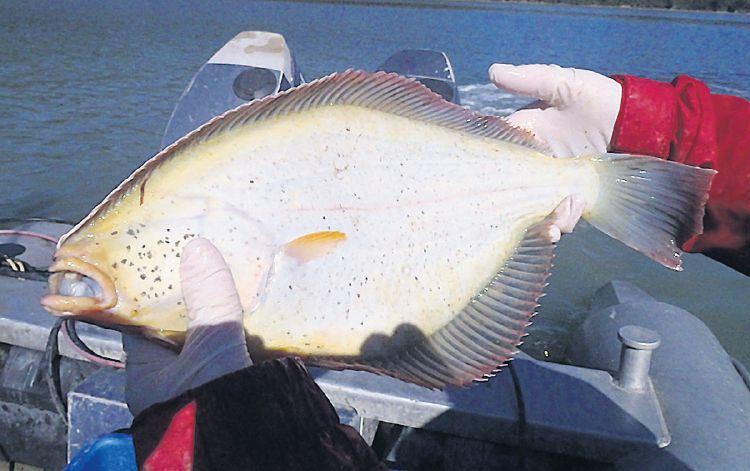
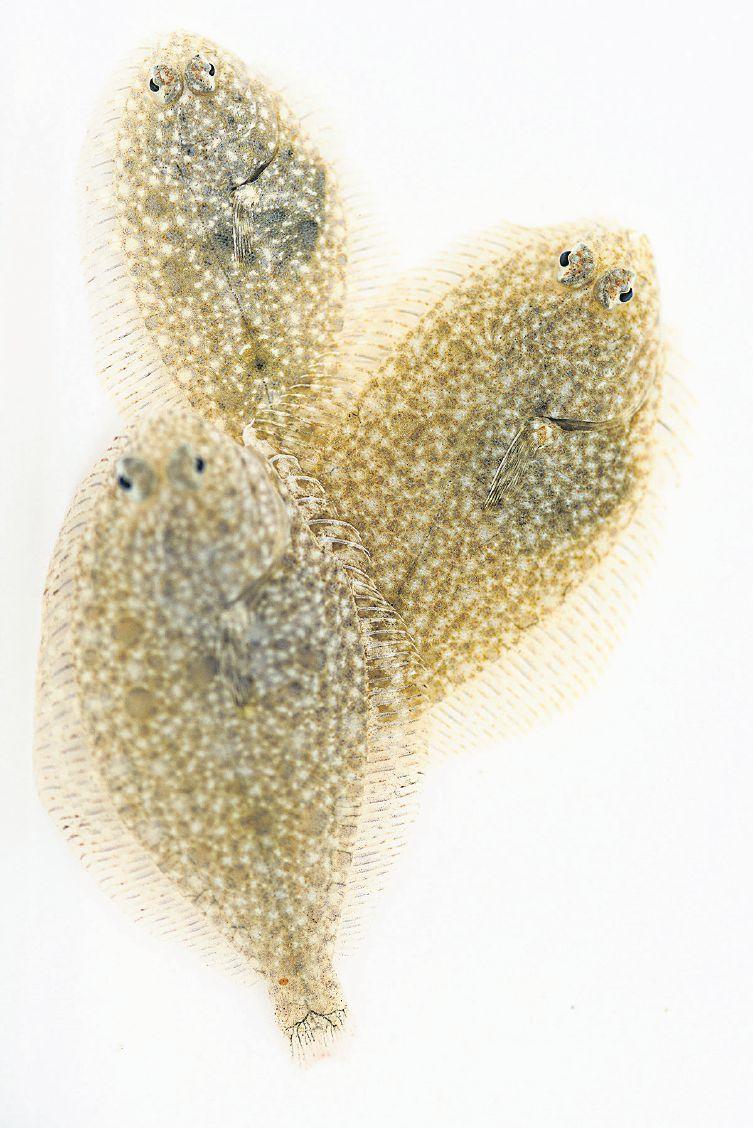
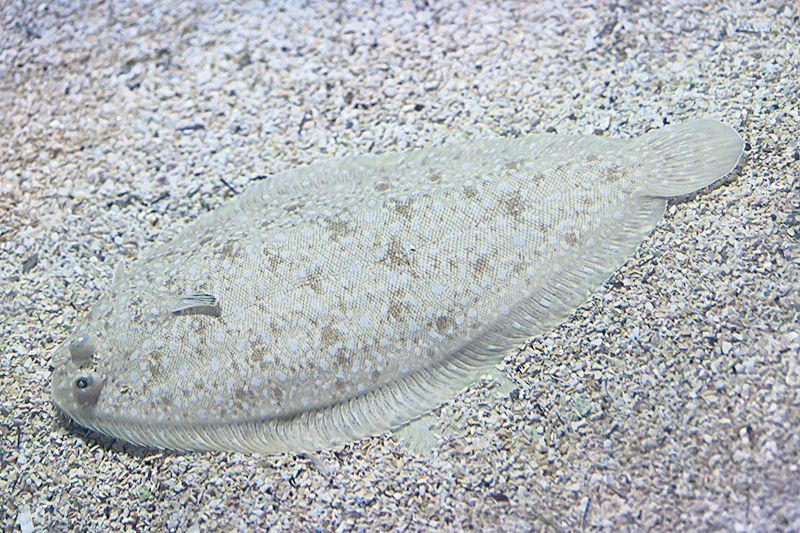
progress report from the Plant and Food Research (PFR) organization in Nelson, New Zealand, is buoying hopes that an ongoing breeding program for yellow belly flounder (Rhombosolea leporina) will lead to replenishment of wild stocks in Marlborough Sounds.
The plan to breed the fish in a hatchery setting was launched following an initial grant from the New Zealand Ministry of Business, Innovation and Employment of $180,000 over two years, which supported research into breeding the fish in captivity. The idea is to produce sufficient quantities of juvenile flounders for release into Pelorus Sound so that they can effectively boost wild stocks.
A mid-way progress report from the Crown research institute indicates the project is on track – with another 12 months to go.
Asked about the project, Alistair Jerrett, leader of the PFR seafood production group, acknowledged that there are many questions and information gaps still to be resolved, not all of which will be fully determined in the time remaining. One item is to identify the best feeds for the fish at different stages of their development in order to optimize growth and fish health.
They are also figuring out, as quickly as possible, the best management strategies for ensuring that the stock supplementation program can work to best advantage.
Jerrett confirmed that the researchers are pleased with the results to date, but stressed that it’s been a limited experiment with only small numbers of brood-fish taken, and relatively small numbers of juveniles produced. It showed that the fish would breed in captivity and produce sufficient quantities of eggs for the team to work with.
“We are starting to get some good numbers of eggs to work on now,” Jerrett said, adding that many juveniles have been weaned off rotifers and Artemia onto artificial feeds to test some different formulations.
To date the team has just put the broodstock into tanks and let them “do what comes naturally” rather than trying to manipulate their spawning. He said it was generally felt the natural approach produced the best results. One of the scientific staff was cited as saying it had taken the team three months to get the right diet and environment for the 100 or so brood-fish being held at the institute.
The yellowbelly flounder project is one of the first of its kind, and is being carried out in cooperation with one of New Zealand’s groups of Maori in the Marlborough Sounds area, and with the aid of fishermen from the region.
Jerrett said that at this point there is little known about the fish; their natural spawning season is believed to last about one-and-a-half to two months beginning in early November.
Altogether, he said, there were four or five scientists working on the project with him at PFR, plus another three people working in the hatchery.
– Quentin Dodd
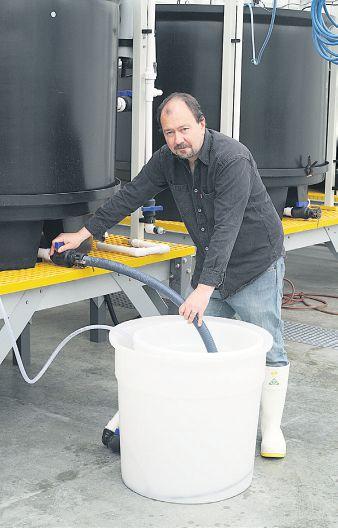
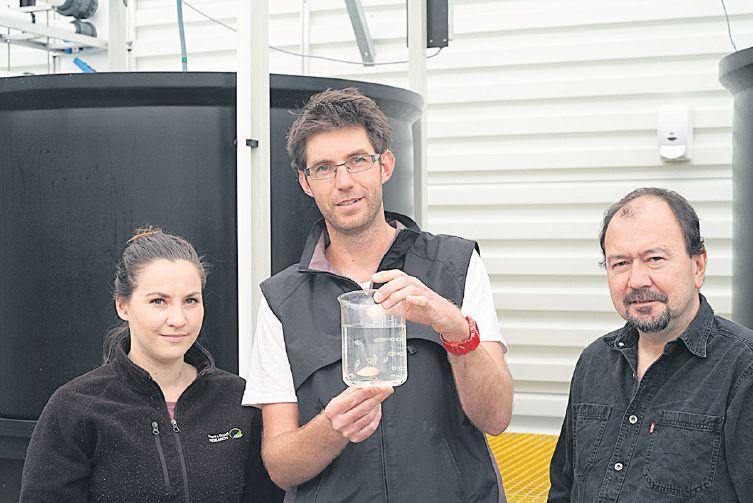
Above: Staff at the New Zealand Institute for Plant and Food Research, Seafood Production Group. From left: Adrianne Jerrett, Culture and Husbandry Technician; Dr Denham Cook, Scientist; Warren Fantham, Culture Research Technologist.
Left: Warren Fantham, working at one of the tanks.
Photo: Robert Lamberts (Plant and Food Research, Seafood Production Group)
Photos: Denham Cook (Plant and Food Research, Seafood Production Group)
PROFILE
North Carolina hatchery good for economy
The key to your future in aquaculture is here.
“Trout fishing in west North Carolina is big business,” says Adam Moticak. “These communities in western North Carolina rely on these fish to be stocked in the various bodies of water.”
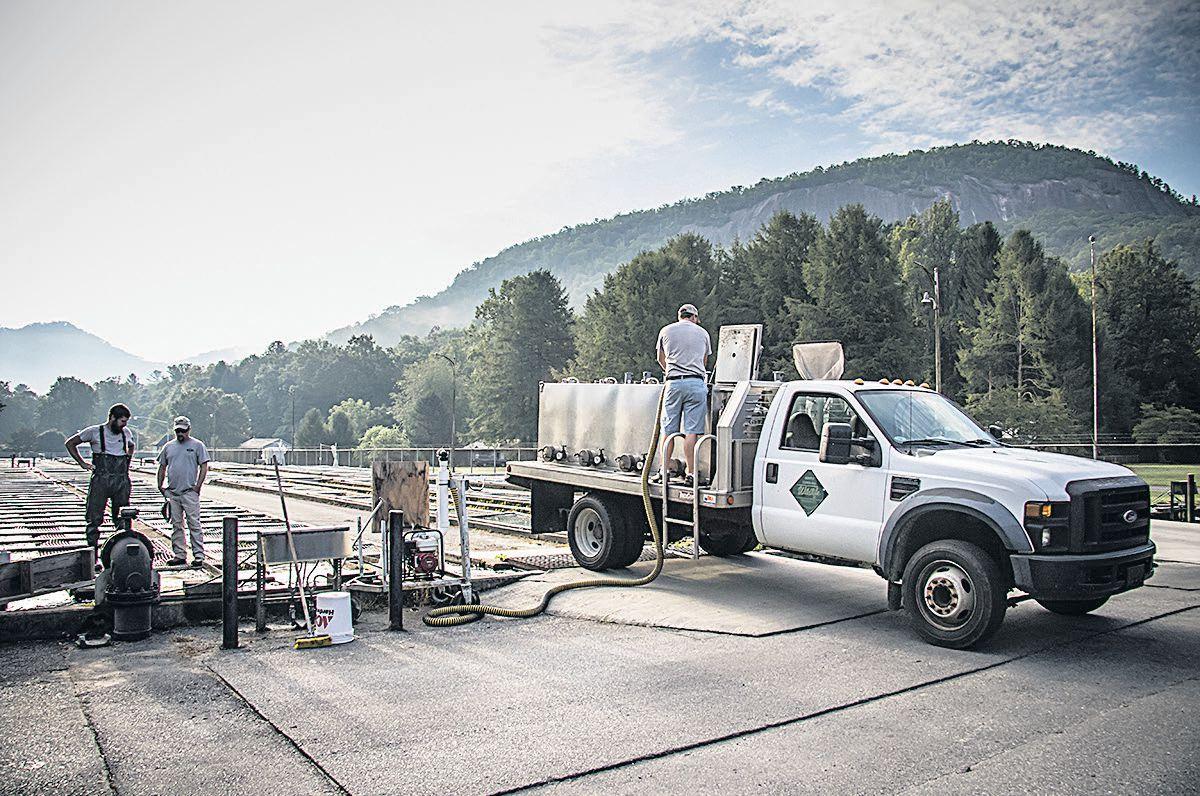
Moticak is the fish hatchery superintendent at the Bobby N. Setzer Fish Hatchery, located in the Pisgah National Forest. The hatchery has been supporting the local trout fishery since the early 1950s when it was constructed by the United States Fish and Wildlife Service. In 1983 the hatchery was turned over to the state and the North Carolina Wildlife Resources Commission. Today, it is estimated that the economic impact of trout fishing on local economies is in the range of $174 million.
“We raise between 500,000 and 600,000 fish a year and those are brook trout, brown trout and rainbow trout.”
Moticak says that the hatchery’s system brings in surface water from two intakes. That water then passes over low head oxygenators through four different series of 200foot raceways.
“We’re able to do that because of our soft water here,” says Moticak. “We have no minerals, no alkalinity, which in turn means there’s no ionized ammonia buildup that would potentially kill fish in other situations. A lot of fish hatcheries in this part of the country use that method.”
The hatchery’s operation is a mix of indoor and outdoor components. Egg incubation and early fry rearing takes place indoors and when the fish reach three to four inches
(7.5 - 10cm), they are moved outside to grow to 10 inches (25cm), which is the catchable size of fish they produce. They also stock some fish larger than 14 inches (35cm).
Moticak says that the hatchery continues to face certain challenges. The hatchery struggles with enormous pH swings during rain events and certain times of the year. They have also seen sedimentation issues rise as public usage of the national forest increases.
“The wildlife commission is planning on rebuilding this facility, hopefully in the next two to three years,” says Moticak. “We are starting the process of going through scoping work to determine what it’s going to take to rebuild this place and to incorporate technologies into it that would help mitigate some of these issues that we see.”
Bobby N. Setzer Fish Hatchery
Photos: Jennifer Rowe
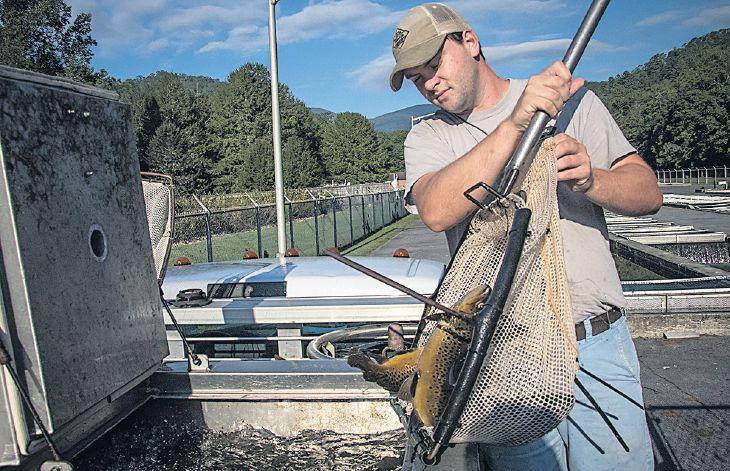
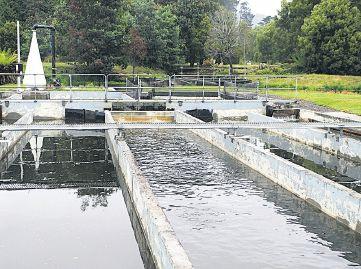
An employee of the Bobby N. Setzer Fish Hatchery moves trout from one tank to another.
Sneaker males lose out to nest-tenders in wrasse sperm study
Ovarian fluid favours the home-body
emale fish which successfully choose the best males to fertilize their eggs have been identified in trials by scientists at Santa Cruz University in California.
The fish involved are ocellated wrasse (Symphodus ocellatus), a species which is native to the eastern Atlantic Ocean but also seen throughout the Mediterranean, the Black Sea and the Sea of Azov. The female of the species lays her eggs in nests prepared by nest-tending males, who also take care of the fertilized eggs as they develop.
Once laid, however, the eggs are also prey to being fertilized by so-called “sneaker” males which hang out around the nest and move in to release large amounts of sperm when a female is spawning.
The key discovery by the Santa Cruz team is that to increase the chances of her eggs being fertilized by nesttending males, rather than sneaker males, the ocellated wrasse female also releases an ovarian fluid during spawning which has the effect of assisting, or favouring, the sperm from the nest-tenders.
“The sneaker males release more sperm than the nesting males which you’d think that would give them a better chance to fertilize the eggs,” said Suzanne Alonzo, professor of ecology and evolutionary biology at UC Santa Cruz. “There is something in the ovarian fluid, however, which removes that advantage.”
Using petri dishes with and without the identified ovarian fluid, Professor Alonzo and her colleagues ran trials to study the comparative effect on sperm progress between the two competing male groups.
This led to the conclusion that while nesting males produce less sperm than sneaker males, the nesting version progresses more rapidly towards its target, thanks to the
WISCONSIN
ovarian fluid tipping the balance towards sperm quality over quantity. As a result, the sperm from nesting males moves fast and straight to fertilize the waiting eggs, a fact which more than overcomes the numbers advantage held by sperm from the sneaker males.
Another discovery point which suggests the fluid development may also have a genetic base, in evolutionary terms, is that the nesting males are older and grow more
New stocking strategy results in hatchery closure
he Thunder River Rearing Station in Wisconsin’s Marinette County closed late last year after raising brown trout (Salmo trutta) fingerlings for 76 years. The last fish were released late in the fall.
The closure came about as a result of a new strategy for stocking fish in Lake Michigan.
“There are too many predators, and not enough prey,” said Fisheries Bureau deputy director Todd Kalish. “We really want to promote a strong diverse fishery in Lake Michigan.” Kalish is cited as explaining that stocking into the lake will continue for species such as chinook salmon (Oncorhynchus tshawytscha), but others like the brown trout will be reduced.
Since that strain of trout is raised only at the Thunder River hatchery, that facility is being closed and the two full-time workers there will be transferred.
The rearing station, also known as “Little Falls Hatchery” was created to supplement the fishing boom of the 1930s by stocking trout in Marinette County.
The Thunder River Hatchery became a showcase fish hatchery under President Roosevelt’s New Deal Program of 1936. For most of the year there were around 140,000 brown trout on site.
“I am pretty proud of this place, as I have been here since 1989,” Amy Gardon, Hatchery Foreman is quoted as saying. “I’ve met a lot of interesting people that have come through here as visitors and as former employees, and most have had a sentimental attachment to the place. It’s a small production facility, but because it is so beautiful and has been here for so long, that is worth a visit in itself.” The future of the facility remained undecided as HI went to press.
– Quentin Dodd
quickly as juveniles than sneaker males.
“We know that the nesting males grow faster and have survived into their second year, so if either of those has a genetic basis it makes sense that females would prefer their offspring to carry those genes,” said Prof. Alonzo.
Following on from their work at Santa Cruz, the research team told Hatchery International that they are currently looking at various plans to continue their investigations.
“First, we are exploring additional mechanisms in the ocellated wrasse to determine how and what components of the ovarian fluid affect fertilization,” said Prof. Alonzo.
“We’re also looking to see whether other species exhibit the same potential for cryptic female choice and, if so, what mechanisms they use.”
She also commented that the selection traits which her team had discovered in relation to ocellated wrasse could certainly apply to other fish species, with previous studies based on salmon clearly being worth revisiting.
Co-authors with Professor Alonzo of a scientific paper on their findings are Kelly Stiver of Southern Connecticut State University and Susan Marsh-Rollo of UC Santa Cruz. The work was supported by the National Science Foundation.
Colin Lew
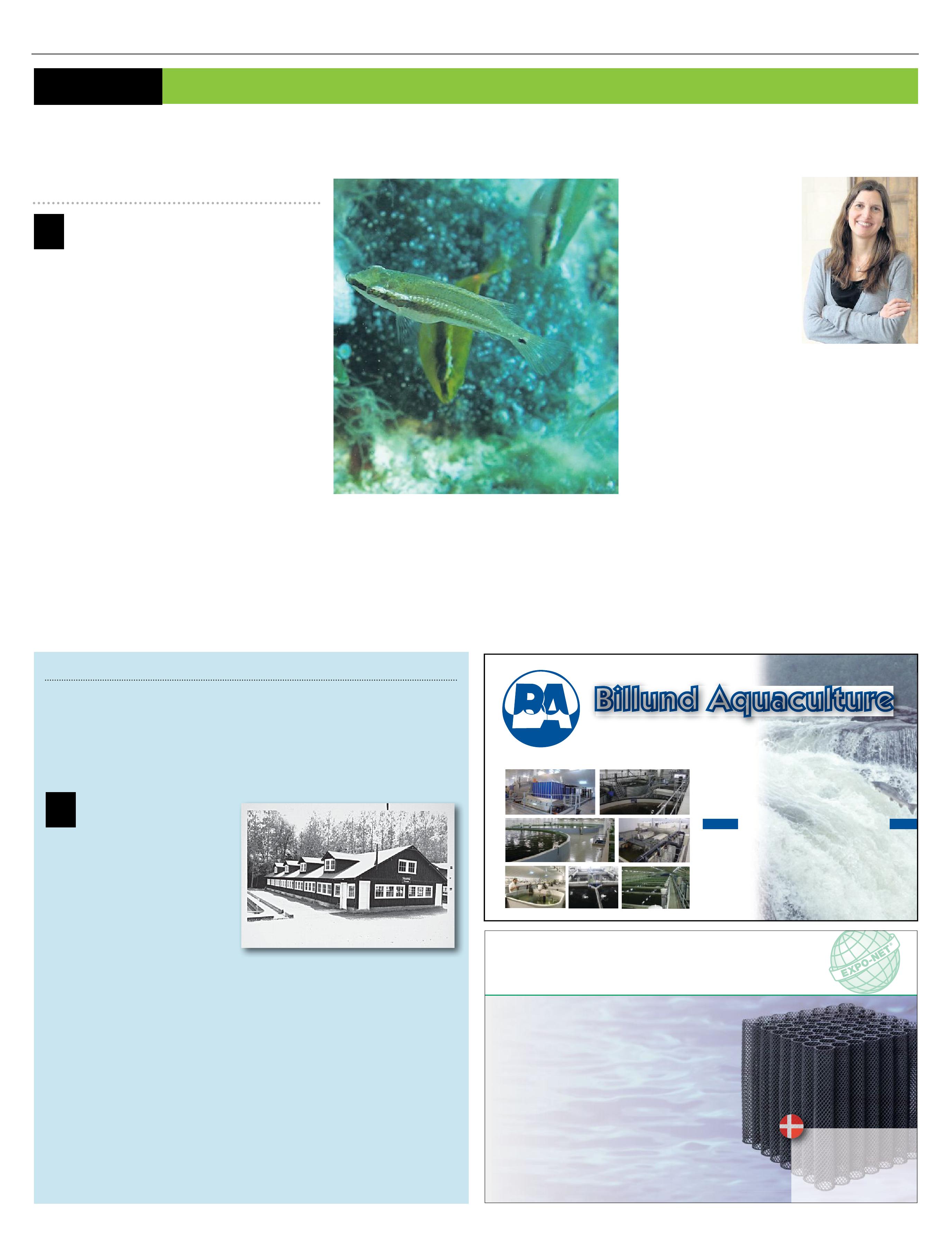
Sneaker males are smaller than nesting males and do not provide parental care. Credit: Susan Marsh-Rollo
Suzanne Alonzo, professor of ecology and evolutionary biology at the University of California, Santa Cruz.
New scallop hatchery gearing up for production
ust over a year ago Hatchery International reported on a new shellfish project being built by Aquaculture International just south of Powell River, British Columbia, on Canada’s west coast.
Since that time substantial progress has been made, and CEO Xi Ping Ding confirmed recently that the company is ready to obtain its first broodstock of Japanese scallops (Mizuhopecten yessoensis). They will come from two leases on Nelson Island, not far from the Hummingbird hatchery complex.
Although the hatchery was not quite completed in time for the official launch held last fall, Ding confirmed that the company is pressing ahead with finishing development of a large but sustainable operation on the 40 acres purchased from Hummingbird Cove Resort.
Several buildings have been built, and the company was preparing for installation of the seawater intake system. Only small quantities of water will be required so the pipe to the complex from the ocean won’t be large. The water will go through sand and biofilters before it’s stored in a large water-storage tank building.
Ding explained that the storage tank building is large enough that if the water intake has to be shut down, it can supply the entire complex for at least a week.
Foundational pads are being put in place, as are various sizes of tanks in the hatchery building in preparation for collection of the broodstock.
The complex also includes a large research laboratory, education unit and algae-production operation, to feed the scallops. A water-warming facility will raise the water-temperature a few degrees to put the scallops into reproductive mode at spawning time.
A sizeable nursery unit and processing section will also be added to handle the many millions of scallop seed Ding intends to produce for her farm sites and for other companies.
Ding is confident that the company will be able to obtain a high survival rate for the scallop larvae the hatchery will produce. She is anticipating that the 2,000 or so broodstock scallops the operation plans to start with could produce as many as several billion larvae, of which she expects half – or more – could survive to become juveniles for growout.
Ding based her estimates on previous experience with a massive on-land hatchery, farm and processing plant she owns with the Linghai Shenziting Sea Cucumber Hatchery in China’s Liaoning province.
– Quentin Dodd
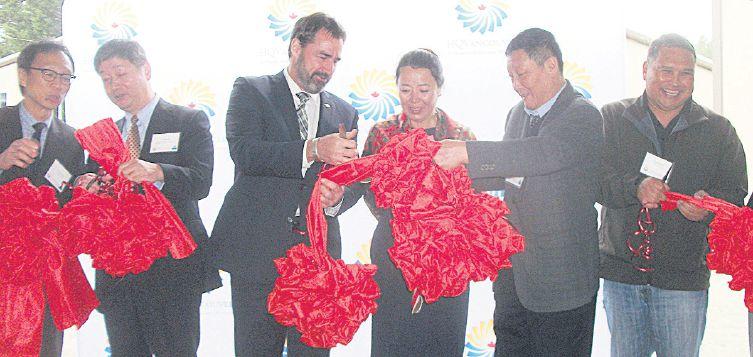
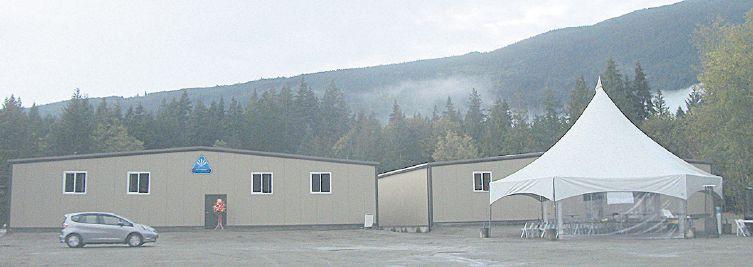
ABOVE: Aquaculture International CEO XiXi Ding in centre, plus a number of Chinese dignitaries at the hatchery's official opening last fall. On Ding’s right is West-Vancouver and Sea To Sky MLA Jordan Sturdy, lead dignitary from BC and Canada. Below: Two of the hatchery buildings.
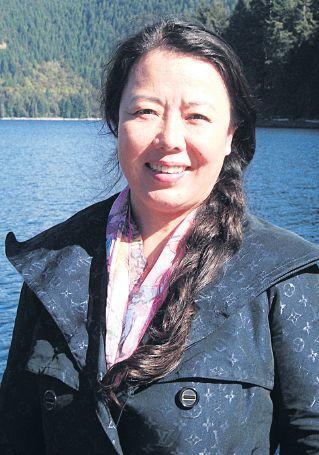
Company CEO XiXi Ping Ding.
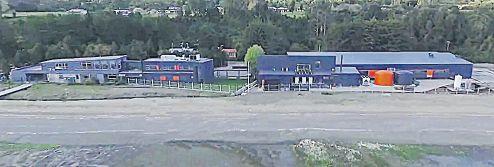
Artists rendering of the yet-to-be completed complex. Several buildings have been built, and the company was preparing for installation of the seawater intake system last fall. The facility was also preparing to receive its first broodstock of Japanese scallops.
Quick action, emergency power save fish at big Idaho hatchery
recent power outage that threatened the survival of some 4.5million salmon at the Dworshak National Fish Hatchery complex in Idaho was finally resolved after almost two weeks of emergency-power installation and supply.
A spokesperson for the US Fish and Wildlife Service at the complex confirmed that teamwork and quick thinking alongside outstanding cooperation from the Clearbrook Power Corp through Bonneville Power saved the day.
In total, said Dworshak project leader Mark Drobish, the entire complex lost only about 5,500 spring chinook salmon during the emergency, all of them dying in the initial few hours of the outage.
Drobish said the complex, which also had about two million spring chinook salmon eggs and around a million coho eggs in incubators, saw an excellent response from staff to the alarm early in November.
“A power transformer blew at the local substation,” said Drobish, adding that the failure knocked out pumps supplying water to the hatchery. In turn, that quickly began driving down crucial levels of oxygen and some of the weaker fish began to suffer.
Drobish said staff who responded to the alarm managed to fire up the emergencygenerator system which was enough to power four of the six pumps, to keep the water sufficiently oxygenated. After several hours Clearbrook Power also hooked up the complex to a residential-area power feed.
And Drobish said that after more than a week Bonneville Power managed to install a 40-tonne “portable emergency substation” to tide the hatchery complex over. It’s expected to remain on station for a year while the regular substation is repaired or replaced.
USFS complex overseer Steve Rodgers said the complex had to spend almost two weeks with four pumps on the emergency power system and the other two pumps powered by standby diesel generators before the site was brought back to the usual commercial power feed.
The generators’ tanks had to be topped up with diesel by the local distributor every afternoon to ensure they had enough fuel to keep them going.
– Quentin Dodd
State makes big investment in steelhead hatchery
he Michigan Department of Natural Resources (DNR) is preparing to invest $11 to improve facilities at the Thompson State Fish Hatchery in Manistique and $1million to upgrade the weir on the Little Manistee River.
Scott Heintzelman, Central Lake Michigan Management Unit manager for the DNR, explained that the two upgrades done together will boost the agency’s ability to rear more steelhead (Oncorhynchus mykiss) to a larger size. Space in the hatchery will be increased, as well as the unit’s warm-water raceways which will be brought up to capacity for more, and bigger fish.
Heintzelman said it’s been demonstrated over the years that if the steelhead can be stocked out at a yearling size of 20 cm (8 to 9 in.), the survival rate is much higher than that with fall fingerlings of 8 cm (3 or 4 in).
Heintzelman indicated he expects the upgrades for the Thompson hatchery system to yield up to 300,000 yearling steelhead a year. He also confirmed that the improvements will mean higher capacity at the hatchery for muskellunge, walleye, and sturgeon, that will go to rivers, lakes and other systems all over Michigan.
The Little Manistee Weir (built in 1967) is an egg-take facility, for steelhead in the spring and chinook salmon (O. tshawytscha) each fall. Some of the steelhead eggs are sent to the Thompson hatchery. The funds earmarked for the weir will go to exterior lighting, new and improved machinery, rebuilding the holding ponds, and replacing the electric infrastructure.
Construction is slated to begin at the end of next spring’s steelhead egg take and be completed by the time the chinook egg-take starts in the fall.
Overview of the Dworshak facility.
Thompson State Fish Hatchery.
Former barra farm becomes new home for prawn broodstock
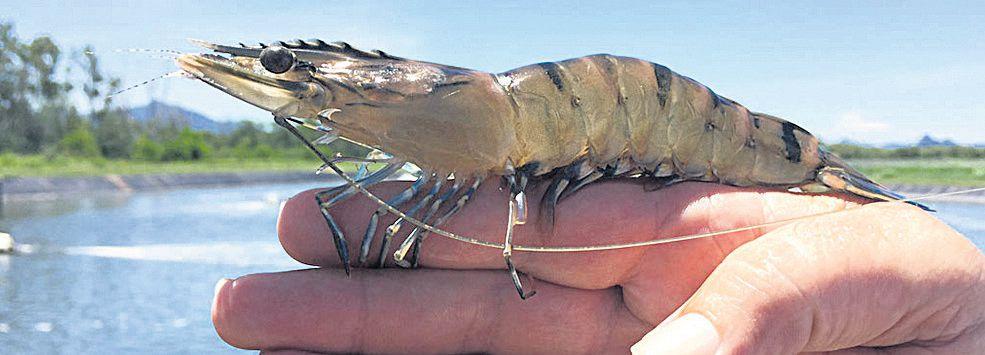
The Seafarms Group in Australia has completed an AUD $1.3 million transformation of a former barramundi farm into a quarantine and broodstock facility for black tiger prawns (Penaeus monodon). This refurbishment is part of Project Sea Dragon, an integrated, landbased prawn undertaking for export markets.
Broodstock will be introduced, held, reared, and screened against pathogens. Once they’ve been certified free of pathogens they are moved to Sea Dragon’s main breeding facilities.
Seafarms executive director Chris Mitchell is recorded as saying that the company chose Exmouth in Western Australia as the “ideal location” for the quarantine facility because of its geographic isolation well removed from all other aquaculture activities, including the company’s own hatchery and growout facilities.
“The Exmouth quarantine facility is an important element of Project Sea Dragon and confirms Seafarms’ strong commitment to create a world class, biosecure project,” Mitchell is cited as saying.
Seafarms estimates Project Sea Dragon will end up producing some 120,000 metric tonnes of premium-quality black prawns a year for the Asian market.
– Quentin Dodd
BETTER BREEDING
Personality tests for fish could help boost reproduction rates
quaculture experts from the UK’s University of Stirling and the Institute for Food and Agricultural Research and Technology (IRTA) in Catalonia, Spain have found that the way fish cope with stress is determined by their personality and remains consistent regardless of the situation they are in.
They hope that the first study to test stress-coping in mature Senegalese sole (Solea senegalensis) will lead farmers to screening fish from a young age to help them reproduce in captivity and improve aquaculture production.
Scientists found that when faced with confinement, restraint or a new environment, younger fish and older fish had similar behavioral patterns and levels of activity, showing consistent responses in animals of different ages.
There was also a correlation between how individuals with the same sort of personality acted across the various tests, suggesting that those who are reactive and fearful or proactive and curious, maintain this behavior.
Dr Sonia Rey Planellas, Research Fellow at the Institute of Aquaculture, said: “Senegalese sole is a very valuable fish farmed across Europe, however first generation males’ failure to reproduce is still a problem affecting production of the species. Animals which are proactive, and try to explore, are likely to reproduce in captivity so it’s important these fish can be identified at a young age.”
“The three tests we used to simulate life in captivity was easy to apply and required no special equipment. We hope this can be replicated by fish farmers, large and small, to help establish selection-based breeding programmes and easily identify fish that deal best with stress and will be able to reproduce more successfully in a variety of environments.”
“These Operational Behavioral Screening tests (OBST) can be used for other species of interest facing similar problems on domestication and production.”
The research, which also involved researchers from the Spanish Institute of Oceanography, was published in Royal Society Open Science.
Around 120 Senegalese sole took part in five individual behavioral tests and two grouping tests. Cortisol, glucose and lactate in the blood was measured at the end of the tests to measure the stress response.
The study formed part of Zohar Ibarra-Zatarain’s PhD thesis who is now working in the Nayarit Centre of Technology Innovation and Transfer (CENIT2) in Tepic, México.
Individual fish which are proactive and deal best with stress are more likely to reproduce in captivity so it’s important to identify these fish at an early age.
A genetic map for Asian sea bass
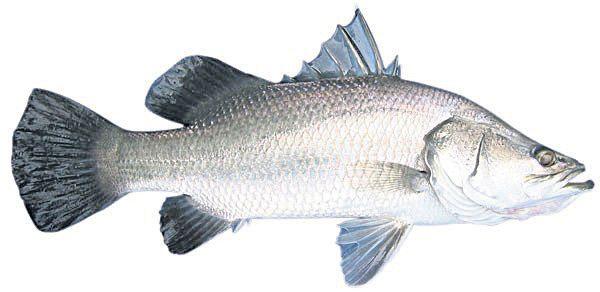
ecause Asian sea bass, aka barramundi (Lates calcarifer), is such a popular food fish in India, there is increasing pressure to breed and grow the fish.
BHowever, breeding the fish is tricky: It is very difficult, reads a report out of the Central Institute of Brackishwater Aquaculture (ICAR) in New Delhi to get the fish to mature in captivity because of inherent problems in controlling factors such as salinity, temperature and hormonal levels.
The report states that the first of these difficulties was overcome almost 20 years ago when 10 years of effort at the institute resulted in staff being able to
standardize the conditions for broodstock development and the breeding of seabass in a controlled environment.
“Over the years,” reads a recent report from the institute, “we have improvised these conditions and helped several farmers by producing and supplying seed to culture this fish at their farms.”
“We realised that the solution to a second problem, relating to body weight, lay in initiating a study to unravel the difference among the fish at different locations. As some of these fish grow up to about 3 kg, we know that the other fish also had the genetic potential to grow faster and larger. We needed to start a selective breeding programme to ensure superior progeny.”
The report by Gopikrishna Gopalapillai, Shubha Vij, Vinaya Kumar and the rest of the team at ICAR, CSIR and the Temasek Lifesciences Lab, says as a first step towards genetic improvement, they needed to map the genetic makeup of the species, to determine whether the fish in different regions are different genetically.
Samples were collected from the west and east coasts of India, and Andaman Islands at the juncture of the Bay of Bengal and Andaman Sea, and those were then compared to those from Australia and southeast Asian countries.
The samples revealed that the Asian sea bass in India were indeed very distinct from others in the southeast Asian region and also Australia.
“The present project has unravelled a lot of information on the genetic makeup of these fish,” says the recent report. “The information flowing from this project will be helpful in initiating a selective breeding program.”
The report adds that such a program would also involve improving various desirable characteristics, such as increased growth rate and heightened resistance to diseases, without the introduction of any “new” genes.
“Asian sea bass is the first marine fish in India whose genetic map has been prepared,” concludes the report.
– Quentin Dodd
Scottish and Kiwi researchers come together for shellfish projects
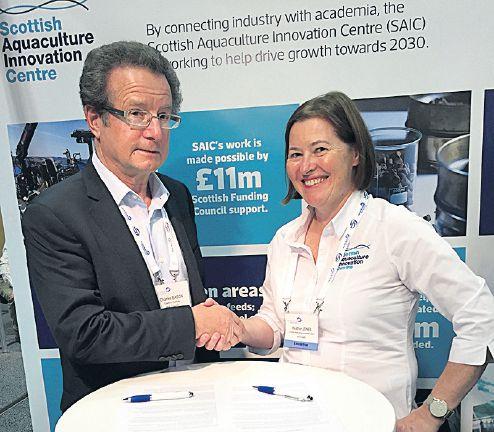
At Aquaculture Europe 2016 in Edinburgh last fall the Scottish Aquaculture Innovation Centre (SAIC) signed a Letter of Intent with New Zealand’s largest independent science organization, the Cawthron Institute, to explore research projects of mutual interest – in particular, projects that could lead to higher productivity in the shellfish industry.
SAIC CEO Heather Jones commented, “Supporting new shellfish production systems is one of SAIC’s four priority innovation areas; areas identified by the Scottish aquaculture industry as being key to the sustainable growth of the sector. This new, more formal relationship with the Cawthron Institute will enable us to pool our combined knowledge of the challenges of selective breeding for mussels and oysters, amongst other issues, to make more advances, faster.”
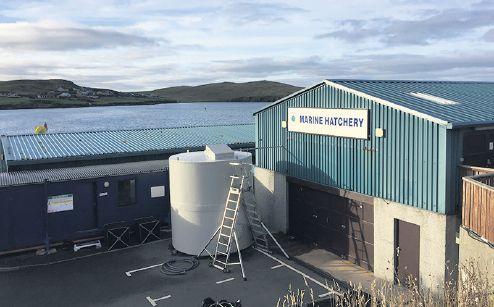
SAIC first connected with the Cawthron Institute and SPATnz in 2015 when researching the viability of a similar facility in Scotland. Today, a £1.7m multi-partner hatchery is being piloted at the NAFC Marine Centre at the University of Highlands and Islands, with additional expertise from Australia’s Spring Bay Seafoods.
SAIC marketing and communications manager Lesley Dougall told Hatchery International that the Scottish
government and the mussel-farming industry in Scotland believe that the industry has enormous potential. Such is the confidence in the future of aquaculture, that the government announced funding of 2.5million BPS, 1.76 of that to go to the SAIC mussel hatchery project.
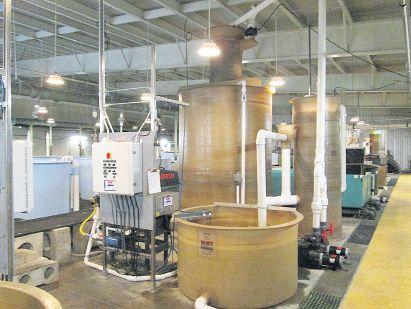
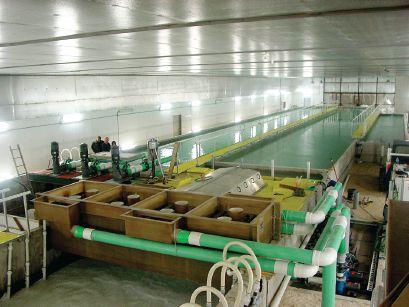
All the equipment is in place at the new facility in the Shetlands and trials have begun. The trials are part of a two-year research and innovation project to test commercial viability under a multi-partner collaboration.
A recent press release noted that if the pilot project is successful it will help build the business case for a national hatchery or series of regional hatcheries, a development that would boost mussel producers towards achieving the Scottish government’s targets of 13,000 tonnes a year by 2020. The shellfish sector has ambitions of pushing that up to 21,000 tonnes a year by 2030.
Jones confirmed that currently, Scotland produces just over 7,000 tonnes of mussels a year, with the Shetlands accounting for nearly 80% of that.
DESIGN BUILD GROW
SAIC CEO Heather Jones and Cawthron Chief Executive Professor Charles Eason.
A multi-partner marine hatchery is now being piloted at the NAFC Marine Centre at the University of Highlands and Islands in Scotland.
Norwegian salmon hatchery to double capacity
ust a year after the Nordnorsk Stamfisk (NST) hatchery in Steigen, Norway was officially opened, the board of the AquaGen-operated company has ordered the construction of Phase 2 at the facility. A statement from AquaGen says the expansion was pre-planned, in order to meet increased demand.
JThat happened, according to AquaGen operations manager for northern Norway, Truls Theting, to an extent and with a speed not entirely anticipated. What’s more, he said, the introduction of the egg-production program at Steigen went smoothly, almost entirely without problems, and yielded good-quality eggs.
The expansion is budgeted to cost 18 million krone ($2.2million US), and will almost double production capacity to 200 million eggs per year. Expanding the broodfish hall will raise its holding capacity from the current 4,000 to 7,000 salmon.
Theting said that part of the decision to move ahead with the expansion – slated to open in spring 2017 – is increased demand by salmon farmers wanting to produce what he termed “ecological” (organic) salmon that are more in line with salmon production in the wild. In Norway that requires a special licence, and for the fish to be produced at much lower stocking densities. This also applies to broodstock where production standards allow for a biomass of only a third of what would normally be stocked, thus requiring much more space to produce as many fish. The expansion of the broodfish capacity will make it possible to produce organic salmon eggs in northern Norway for the first time.
Theting anticipates that no changes will need to be made to the water supply. The hatchery, which is just above sea-level draws its water by gravity from a lake about 2.5 km away at an altitude of 330 metres. To date, the system has shown itself to be effective and trouble-free in supplying the hatchery with pure, cold freshwater.
“Now we need to repeat the success (of the first production season) this season,” Theting said in a company statement.
AquaGen’s announcement also notes that plans for a third construction phase are already being drawn up. That will enable the production of land-based broodfish, and so boost Steigen operation’s capacity for “off season” AquaGen eggs. “We have established a production line for eggs from land-based broodstock which currently covers the demand for this type of eggs,” says the company.
Theting said that no firm decisions have been made about Stage Three to this point.
– Quentin Dodd
The expansion will almost double production capacity to 200 million eggs per year and raise holding capacity in the broodfish hall from the current 4,000 to 7,000 salmon.
AquaGen's Nordnorsk Stamfisk hatchery in Steigen, Norway.
Cormorant control halted in the US
“If I have a thousand cormorants on the farm and they all eat a pound of fish, I have a 1000 pounds of fish disappearing every day.”
- Mike Freeze, Keo Fish Farms
BY TOM WALKER
he aquaculture industry in the eastern United States is caught in the middle while an environmental advocacy group questions the Environmental Assessment (EA) practices of the US Fish and Wildlife Service (USFWS).
US hatcheries and fish farms faced major losses last fall after a US District Court ordered the USFWS to stop issuing depredation orders that allow farmers to control cormorants that prey on their stock.
“We feel we are being punished because US Fish and Wildlife didn’t do their job,” says Mike Freeze co-owner of Keo Fish Farms in Arkansas.
FISH HEALTH
Scottish researchers claim progress in combatting Amoebic Gill Disease
Research findings in Scotland indicate that genomic selection will “markedly improve” the rate of genetic progress in selective breeding to promote resistance in salmon stocks to Amoebic Gill Disease (AGD).
A highly problematic and costly condition, AGD is currently the focus of joint research by specialists at Hendrix Genetics and scientists at Edinburgh’s Roslin Institute, who are investigating AGD resistance and the application of genomic selection to help tackle the disease.
“Selective breeding for AGD resistance has been underway for several generations in Australia, where a reduction in treatment frequency of around 12% per generation has been achievable,” said Dr Ross Houston, Group Leader in Aquaculture Genetics at the Roslin Institute.
“Our research has shown that genomic selection will markedly improve the rate of genetic progress in selective breeding for disease resistance compared to family-based approaches. Our collaboration, therefore, will have positive financial and animal welfare implications by reducing the potential negative impact of AGD outbreaks.”
Alastair Hamilton, Head of Genomics at Hendrix Genetics Aquaculture, Stirling, who has also been working on genomic selection for AGD resistance, added: “We started dedicated challenges of all elite families in closed conditions in 2015, and our initial results showed a moderate to high heritability. The trait is clearly highly polygenic so a textbook case for the application of genomic selection.”
The joint research is co-funded by Innovate UK and the Biotechnology and Biological Sciences Research Council (BBSRC), whose commitment to find fresh solutions for AGD is driven by current industry estimates that controlling the disease in the UK could cost up to £100 million a year.
– Colin Ley
Keo Fish Farms has 1000 acres of ponds, ranging from one half to 20 acres. They are the largest hatchery of hybrid striped bass (Morone saxatilis) fry and fingerlings in the world. Freeze says. “We will spawn 100 to 130 million hybrid striped bass a year. We supply the US and we ship 20 to 30 million to Taiwan and other countries,” says Freeze.
“Our biggest customer has already cancelled $150,000 worth of orders for the rest of the year. He says he’s not going to put the baby fish in the ponds to let the cormorants eat them.” Freeze says. “If he can’t protect them he will just wait through the winter, and providing I don’t lose them, he will buy them next year.”
Freeze says he kills fewer than 300 birds in a bad year. “We used to be under a depredation permit specific to our farm, which was quite regulated including an inspection from USDA Wildlife services,” says Freeze. “About 12 years ago they decided to go to a depredation order which allowed us an unlimited take of the birds and then they created a second order to include sport fishing interests.”
Freeze recounts some culling practices led by state game and fish agencies (20,000 birds over two years in South Carolina for example), that would have caught the attention of environmentalists. Advocacy groups in the US routinely sue wildlife management agencies, arguing that management practices such as the cormorant depredation, are not adequately grounded in current science.
In the spring of this year, Public Employees for Environmental Responsibility (PEER), sued the USFWS over not completing an up-to-date environmental assessment before issuing its latest depredation order.
While the judge ruled against the USFWS and sent them off to up date their EA, he realized the impact that halting cormorant depredation would have on the aquaculture industry and he left the door open for the Service to return to the practice of issuing individual permits, Freeze explains.
“Initially we were told that USFWS would issue individual permits by the end of September and we weren’t worried because that’s what the judge allowed,” says Freeze. “In October, USFWS called and said that they can’t issue permits because the EA that supports the aquaculture depredation order would be the same one that supports the permits and the judge had found that EA lacking.” Freeze says USFWS was afraid of another suit.
“We are hopeful that the Department of Justice can talk to the judge and he will allow them to re-institute the orders or do something to assist us.”
Freeze says they have always had scare programs in place to comply with permits and support the depredation process. “We put out jack–in-the-box figures that pop up and scare them,” he says. “We have at least two men out on our farm all day long to chase birds and interrupt their feeding behavior.”
“The birds become habituated,” Freeze explains. “Some birds learn pretty quick that the propane cannon going off every 10 minutes and the guy driving around shooting off fire crackers is not going to hurt them.”
“If I have a 1000 cormorants on the farm (and that is really common) and they all eat a pound of fish, I have a 1000 pounds of fish disappearing every day,” Freeze says. Depending on the size of the fingerlings, those fish are worth between $5 and $50 a pound.
He says they are looking at stringing monofilament over the ponds to restrict landing and take off, but some of the birds squeeze underneath.
“Cormorants are very smart,” says Freeze. “A couple hundred can get together on a pond, herd all the fish into one corner and feed on them until they are full.”
“If it wasn’t my fish they were eating they would be really neat to watch,” Freeze concludes. “It’s almost like they are laughing at us. I’m afraid some farmers are going to go bankrupt.”
innovative Automated Microdiet Dispensers (AMD), peristaltic pumps and a touch-screen PLC controller
Features include:
Moulded feeders with a splash-proof hopper and air knife to prevent clumps
Delivery of small adjustable accurate quantities of microdiets (as low as 0.1 g per shot)
Splash-proof peristaltic pumps
Fully programmable touch screen
• Individual control for each feeder/pump and/or group together
• Several different Feeding schedules during the day (‘rush’ hour feeding in the morning, less in the evening etc.)
• Unlimited options of feeding protocols including; amount per feed, number of feeding events etc.
US hatcheries and fish farms faced major losses last fall after a US District Court ordered the USFWS to stop issuing depredation orders that allow farmers to control cormorants that prey on their stock.
NEW ZEALAND
Mt Cook Alpine Salmon’s Clearwater Hatchery
A unique location, warm spring-fed waters and easy low-tech solutions allow this well tended New Zealand hatchery to produce out-of-season smolts for a growing market.
BY BEN NORMAND
estled within earshot of the international airport in Christchurch, New Zealand, Mt. Cook Alpine Salmon’s Clearwater Hatchery is, to say the very least, unique. Whether one is analyzing its 30 year history, or admiring the extraordinarily dense population of Long Fin Eels that live in the outflow pond, it’s difficult to come to any other conclusion.
The hatchery lies within the bounds of the Isaac Conservation and Wildlife Trust Lands, which is, itself, contained within the Isaacs Quarry. This situation is made apparent by the plethora of native flora and fauna that surrounds the property.
EARLY DAYS
Sir Neil and Lady Diana Isaac constructed the hatchery throughout the early 1980s. It was originally intended to provide a hobby business opportunity for construction magnates, but also to complement their conservation efforts. These efforts continue to this day in the form of the Isaac Conservation and Wildlife Trust (www.isaacconservation.org. nz/).
Sir Neil reared market-size king Salmon (Oncorhynchus tshawytscha) and aspired to also grow rainbow trout (O. mykiss). This was not, however, possible owing to a national ban on commercial trout rearing which was introduced through the early 1970s. At its peak as a full life cycle facility, the farm was producing 150 tons/year of fresh king Salmon, sold both at the farm gate and beyond. In 2009, Benmore Salmon took out a lease on the site with the intention of supplying smolt to its freshwater growout sites near Twizel, New Zealand, as well as other commercial and charitable organizations. Then, in 2016, Mount Cook Alpine Salmon purchased Benmore Salmon, which included taking over the lease for the Clearwater hatchery.
TANKS & RACEWAYS
In its current form the hatchery consists of 12 in-use, gravity fed, flow-through raceways, one of which contains seven enclosed circular tanks, and 15 currently dry, pumpfed raceways. Raceway volumes range from 144 m3 to 240 m3. The early rearing facility is comprised of 11 troughs, four heath stacks, 24 bucket incubators, and six fry tanks. The site is spring-fed and enjoys warm-water status with year round-water temperatures between 10.5 and 13.5°C.
Clearly, such reliably clean and warm water is an enormous asset when it comes to rearing the 350,000-500,000 fish they produce annually. David Sutherland, the current site manager, likes to point out that he is able to spawn in December and having smolt as large as 300 grams by the following October.
This consistent growth is due mainly to the warm water, partly to careful husbandry, and partly to the very nature of the hatchery’s design.
KEEPING IT SIMPLE
Simplicity is the M.O. at the Clearwater Hatchery. From inflow screens fashioned neatly from chicken wire and produce baskets, to raceway water levels being controlled by stacking dam boards at the outflow, every piece of this hatchery has been thoughtfully built, assessed and improved, time and again, by critically resourceful minds.
This driving principle was born from the shoestring budget that Benmore offered the manager when they took over the facility. It has matured because of its effectiveness. Since the facility is compact and simply built, the staff are able to effectively assess their stock, allowing for the flourishing of best husbandry practices. Also, by allowing problems to be diagnosed and fixed promptly and easily, the facility has come through lean times because it can be staffed minimally and maintained cheaply.
OUT-OF-SEASON SMOLTS
The effectiveness of this facility is highlighted most apparently by its out-ofseason smolt program. The program begins with growing brood up to 4-11 kg, then assessing and sorting them into their final tank groups. From here, a powerful submersible light is introduced, and the tanks are carefully sealed to prevent any unwanted light from shining in. In essence this allows David to have complete control over the photoperiod that the broods are exposed to, meaning that he can induce growth or sexual maturation when he chooses. This can result in the growth of exceptionally large broods of superior fecundity.
Keeping in line with the hatchery M.O., it is the simplicity of this program that makes it
High water temperatures allow fast growth at Clearwater. (Photo: David Sutherland)
One of 11 troughs in the hatchery. Clearwater raises 350,000-500,000 fish/ year. (Photo: David Sutherland)
so effective. The tanks are made from rainwater tanks, with a section cut out and recovered with thick, black rubber sheeting. Any holes are sealed using tapes and bonding agents.
LOW-TECH
SOLUTIONS
The photoperiod is controlled using a basic plug-shutoff timer. David and his staff are able to closely monitor the fish, and quickly and easily solve any issues before they affect the growth or maturation of the broodstock. David is also able to easily plan the next steps and maintain highly detailed records because everything is happening right in front of him, without the use of any hard-to-maintain high-tech devices. In theory, David could spawn his fish at any time of year, but he typically chooses to do so during the height of New Zealand’s summer (December/January). While some of the technical approaches implemented in this hatchery may not be the most modern, in an environmental sense, this hatchery is helping to lead the way into new best practices. The Clearwater Hatchery has always been run in such a way as to minimize the impact on the surrounding environment because of where it is located and what lives in that locale. Rare birds, eels and fish populate the waters and land around the hatchery, and the raceways flow into the water source for a number of rare bird breeding programs.
Mt Cook Alpine Salmon, including the Clearwater Hatchery, have stepped forward, along with other companies, to help create and implement a new, modern, New Zealand-specific sustainability framework known as A+.
A+ is, “a world class sustainable management framework which enables the New Zealand Aquaculture industry to better engage with [its] communities and continuously improve [its] environmental practices while strengthening global demand for [their] seafood.” This new framework allows for farms to claim various levels of sustainable achievement based on which of a prescribed list of steps they are willing to undertake. It will be a first for New Zealand, both in its scope and the fact that it addresses the unique concerns and challenges inherent to aquaculture in New Zealand.
To quote David Sutherland, he wants to reduce Clearwater Hatchery’s, “environmental footprint as much as practically possible.” So far, he has done well, but there is always more to do and A+ is an exciting new tool that he will use to help him towards his goal.
Effective in its simplicity, built for sustainability and operated by caring hands, a positive future for this hatchery is as clear as the waters after which it was named.
• Performance of our shell and tubes are unbeatable due to low TD between water and refrigerant required
• Easy Install: Just connect power and water
• Lifetime Warranty on Chiller Barrel
• CRN Pressure Vessel Certification
• Fresh or salt water
• Accepts hatchery or RAS water without fouling Call (902)-746-3855 for pricing and availability! www.AquaProduction.ca
A+ SUSTAINABILITY FRAMEWORK
The outflow of 9 of the 12 raceways currently in use. This pond contains a number of rare species, which have not been harmed by the operation of the hatchery.
(Photo: Dave Bradshaw)
Moving smolts out to the customer. Simplicity is the M.O. at Clearwater Hatchery. (Photo: David Sutherland)
Feeding the smolts. (Photo: Dave Bradshaw)
Genetics of gender in Gadus morhua
ew genetic-mapping research at the University of Oslo has succeeded in tracking down the likely location of genderdetermining genes in Atlantic cod.
The report notes that until now it has not been possible to locate the sex-determining genes of Atlantic cod, but now it’s possible by the development of new gene-sequencing technology at the university. This has been a priority since the cod’s genome was first sequenced five years ago.
In the present study, the complete genome sequence of more than 200 Atlantic cod was used to investigate the genetic difference between the males and the females “in great detail.” A total of six different genes were linked statistically to the gender of the individual fish being studied. “However,” says the statement, “it is only a small, single gene on chromosome 11 that can be used consistently to accurately predict gender.”
UOslo scientist Bastiaan Star (a member of the team) is quoted as saying, “The gene is perhaps coding for a very small protein or is regulating another gene, but so far this gene is not known in any [other] fish we know of, so we have no idea of what it does…We still have to find out the biological mechanism and what we can use this for.”
Star also added that knowing the gene’s location is a good starting point.
Russian oil producers revive largest hatchery in Urals
ccording to reports from the region the Ugra Hatchery in the Russian autonomous district of KhantyMansiisk released up to 70 million fingerlings into the Ob and Irtish rivers last year. This was nearly three times the number that was released in 2015 according to the report.
The Ugra Hatchery produces white salmon (Oncorhynchus tshawytscha), broad whitefish (Coregonus nasus), sturgeon and Siberian sturgeon (Acipenser baerii) for recreational purposes, but within the coming years production may be expanded to sell fingerlings into commercial markets.
Urge Hatchery was launched during the Soviet regime, but was abandoned in the 1990s. In 2012, with the adoption of new environmental legislation, national oil companies were forced to conduct restoration of fish populations in regional rivers and pumped nearly US$ 35 million to revive the hatchery.
RESTOCKING
Authorities fight to restore populations of Arctic
cisco in Lake Baikal
opulations of Arctic cisco (Coregonus autumnalis) in Lake Baikal, Russia are on edge of disaster owing to poaching and the unwillingness of regional hatcheries to deal with this species of fish, said Ilya Shestakov, head of the Russian Fisheries Agency.
To cope with the challenge authorities are considering transferring hatcheries from regional to federal control, with additional funding in 2017, Shestakov said.
According to data from the Fisheries Agency, populations of cisco in Baikal have declined for almost two decades and in 2008 declined below 20,000 tonnes. In 2014 it amounted to 13,200 tonnes and in 2015 – to 10,000 – 12,000 tonnes. Not surprisingly, volume of legal fishing of cisco collapsed from 2,400 tonnes in 2001 to only 790 tonnes in 2015.
According to Shestakov, the capacity of regional hatcheries for cisco is about 3.7 billion fingerlings per year, but they are not at full capacity. Several years ago these hatcheries were transferred to the property of the regional organization, East Siberian Fish Center, and this move nearly caused their destruction, Shestakov admitted.
As explained by Anatoly Myanyakalo, chief expert of the local environmental firm HydroBioConsulting, since 2009 regional hatcheries have not released even a single cisco fingerling in Baikal waters as at current market prices it is more profitable for them to produce grayling and peled.
Environmentalists warn that government should start dealing with this problem now and in addition to restoration of hatcheries, they also call for a ban on fishing cisco in Lake Baikal.
– Vladislav
Vorotnikov
Ilya Shestakov, head of the Russian Fisheries Agency.
Inland RAS helps to restore Mississippi oyster industry
In the wake of Hurricane Katrina and the Deep Water Horizon oil spill this southern state chose a safe inland finfish hatchery to grow spat for coastal oyster restoration.
BY TOM WALKER
The Mississippi oyster industry has been devastated by what Kelly Lucas calls “a triple whammy” over the last ten years.
Hurricane Katrina hammered the coastline in 2005 and disaster struck again with the Deep Water Horizon (BP) oil spill in 2010. While clean-up was continuing from the oil spill, engineers had to open the Bonnet Carre Spillway in 2011. (The spillway eases flooding in the Mississippi river but directs fresh water through a lake that drains directly over Mississippi oyster beds).
“We lost about 86% of our most productive reefs in the western part of the sound,” says Lucas, Chief Scientific Officer for Mississippi. “We spent 40-something days under fresh water conditions and low to zero on the dissolved oxygen.”
“We have seen the state harvest dwindle from 500,000 sacks to just 26,000 sacks in 2014-15,” says Lucas,
When the Mississippi Governors Oyster Council recommended investing money in hatchery facilities to help re-grow the industry, they chose to do something different. They are contracting space for oyster culture in an existing inland recirculating finfish hatchery.
As Read Hendon, Associate Director of the Gulf Coast Restoration Laboratory at the University of Southern Mississippi (USM) points out, it makes sense to invest in hatcheries and it makes sense to locate
“We lost about 86% of our most productive reefs in the western part of the sound,”
~ Kelly Lucas, Chief Scientific Officer for the Mississippi Department of Marine Resources.
them away from the coast.
“If this fishery that is such a part of our coast is going to remain viable then we have to do something to restore and supplement it,” says Hendon. “We don’t have a choice but to move away from mother nature.”
“Negative events such as we have been through make you step back and ask is there a better way to build a mouse trap,” says Hendon. “Once you have that infrastructure on the coast it is very expensive to either abandon that or try to move it inland.”
The Oyster Restoration and Resiliency plan has been supported by a partnership with USM and a private inland recirculating finfish hatchery, Aqua Green.
“Our research focused on oyster aquaculture early on,” says Hendon. We transitioned to focusing primarily on recirculating artificial sea water systems starting with shrimp and then moving into finfish culture.
There has been no stand-alone oyster hatchery in Mississippi says Hendon. “Being the designated marine lab for the state, and us having a successful RAS program it made sense for us to be the ones who took this first pilot study and this public-private collaborative.”
AquaGreen is 40-50 miles inland away from the immediate impacts of hurricanes, Hendon points out. “With an artificial salt RAS system we are not dependent on the local waters which has been quite an issue in years past with shore-based hatcheries along neighboring coasts.”
“Its not just the changes in water chemistry from flooding,” he says. “If you have a red tide outbreak; if you have dermo issues it means you either shut down or you go to recirculating.”
“We are taking our recirculating experience from USM,” says Hendon. “We are going through the research and
“If
this fishery that is such a part of our coast is going to remain viable then we have to do something to restore and supplement it, we don’t have a choice but to move away from mother nature.”
~ Read Hendon, Associate Director of the Gulf Coast Restoration Laboratory at the University of Southern Mississippi
development steps to figure out the right ‘cocktail,’ the right salinity, the right temperature and what agency water works best to optimize spawning, production, survival and growth.”
Working in a finfish hatchery is not that complicated Hendon says. “You can raise oysters in tanks to the eyed larval stage and at that point you will be limited in terms of how much algae you can produce to feed them,” he says. “You can package them on a wet cloth and ship them overnight to be set on any type of material you want.”
“There are up-front costs, but if you
do it responsibly in both an economic and ecological way it is a pretty stable resource,” says Hendon.
“Just because you are supplying to cage culture right on the shoreline it doesn’t mean your hatchery has to be there,” he says. “If you can get the buy-in, take what we do and figure out the right cook book it can be transferred to anywhere throughout the country that has a good water supply.”
“This summer with different runs and different trials we have produced 500 million eyed larvae using various local virginica broodstock,” says Hendon. “The proof of concept is there. Now we have to look at incrementally scaling up to where the state would like to be, at 10 billion eyed larvae annually.”
“To expand we will need more tanks, more systems, more algae,” Hendon says. “We started with low density algae systems and we are looking at going to bag systems to increase algae supply. That is going to be the limiting factor. We have an algologist who is working through USM on that.”
They have been testing. “With each run we take a small sample of those eyed larvae and we have developed some remote sets in the wild,” says Hendon. “There is good survival and growth so far.”
“There were a lot of questions from folks who have had the shore-based hatcheries that this can’t be done,” Hendon admits. “Having done it and being the only state on the gulf that has been able to produce those numbers with the water quality issues we have had this year, it has been satisfying.”
“It may change the way other folks look at how they produce shellfish larvae.”
“We hope these efforts will help us reach the goal of harvesting 1 million sacks of oysters by 2025.” says Lucas. “We have a large processing industry here, in fact one of the largest processors in the country, that process from all over the gulf states.”
Hurricane Katrina (2005) and the Deep Water Horizon oil spill in 2010 (top left) caused major losses to formerly productive oyster beds in Mississippi. The new hatchery-based initiative at an inland RAS facility (top right) hopes to re-build the industry.
How climate change is affecting RAS in hatcheries
BY JOHN MOSIG
ou don’t have to be Einstein to realize that hatchery production underwrites aquaculture. Without reliable sources of seedstock, the supply chain of aquaculture products would have more gaps than a politician’s promise.
And while the cause of global warming is still a political football, the outcomes are irrefutable. Climatic instability is a reality. The operative word is instability.
THE HOT AND THE COLD
While monitoring points are recording their highest temperatures ever – the five hottest years recorded since records were first kept in the 1800s have been in this century – there’s a new factor in play. Last February Canada set new records for both maximum and minimum temperatures. On the third of the month, Toronto ‘basked’ in 16°C sunshine. Ten days later the mercury had plummeted to -14°C, both new records for those dates The town of Beatrice, in the Muskoka area 200 km north of Toronto, also set three new records – in just 10 days. True, neither Toronto nor Beatrice are seedstock producing centres of the aquaculture industry, but the phenomena should be noted for the extremes they represent.
The new factor in climatic impact on our activities is that we appear to be entering a solar minimum. NASA observations have revealed a period of zero sunspot activity; the sun had lost its spots. Meteorologist and renowned sun-watcher, Paul Dorian, recently said: “For the second time this month (June) the Sun has gone completely blank (sunspot-free). [This] is a sign that the next solar minimum is
approaching and there will be an increasing number of sunspot-free days over the next few years. He added that the duration of the blankness will stretch and could last for months at the nadir of the cycle, which is expected around 2019 or 2020.”
These phenomena are cyclical and have been given a name: the Maunder Minimum Phase. A well-documented Maunder Minimum began in 1645 and is referred to as “The Little Ice Age.” It lasted for a pitiless 70 years, in which time the river Thames in England, and other important otherwise ice-free waterways, froze over on several occasions. A shorter, and slightly less intense cooling period ran from 1790 to 1830.
BACK TO AQUACULTURE
Where does this leave our industry?
On one hand we have greenhouse gases firing up a blowtorch; on the other we have reduced solar activity turning the air conditioning down to zero. It’s safe to say we need to climate-proof the industry in some way.
Naturally, the most obvious candidate for our attention is the hatchery sector. Young fish are just not able to cope with temperature extremes in both range and volatility. Nor is hatchery management able to predict, other than their inevitability, when they will occur. The answer is twofold, and neither comes without cost.
The first step is immediately available: moving both hatchery and nursery sectors into recirculation systems. RAS technology has come a long way over the last quarter century. Systems have been streamlined and their efficiency boosted. Operating costs per unit of production, and reliability, have made them the operating system of
A modern smolt rearing facility.
choice in many hatchery sectors, when compared with open systems that rely on seasonal spawning and plankton-pond larval rearing, Being able to condition broodstock and raise larvae year-round has given hatchery operators greater control of stocking timetables.
In Australia, most barramundi seedstock production is now done in closed systems, and has been for quite some time. The salmon sector in Tasmania has even moved its smolt production indoors, and doubled the average size of the fish put to sea – from 100g to 200g.
Both prawns and molluscs are produced on-shore, some in RAS and some in flowthrough systems. Ocean acidification is a by-product of atmospheric CO2 increases, and is a potential hazard for any animal that has its skeletal structure exposed to critically dangerous pH levels.
While this discussion focusses on hatchery production, it should be noted that farm operators are faced with the same adverse conditions in their open systems. Already steps are afoot to build salmon farms in underutilized cargo vessels using deep sea flow-through operations. Farming them in RASs can’t be too far off.
NICK OF TIME
The move to recirculation technology by the Tasmanian salmon sector was done in the nick of time. Hatcheries there were originally located downstream from hydro power stations for a reliable supply of water, but 2015-16 brought an El Niñocaused drought in the Southern Pacific, and before the change to La Niña conditions Tasmanian water storage was down to 12%. Water was so scarce that the power
Once the low-cost option, flow-through smolt raising systems are rapidly moving to recirculation.
companies were producing electricity with diesel generators! The last of the salmon hatchery and smolt production facilities changed to closed systems over that period. At first glance, the move to closed systems appears to be a defensive position, but it’s actually worked very much in the favour of the sectors that have made the switch. The move indoors in the salmon sector is global, and some hatcheries are growing smolt out to 600g. This allows them to stock more robust fish into open water sea-cages: fish that are better able to cope with the rigours of capricious and extreme weather patterns.
AN ADDED BONUS
The added bonus that has come with this undeniably costly shift has been the power that greater control over outcomes has given the industry. Genetic selection is at the front line of climate-proofing the fish we farm. With genetic selection targeted beyond growth and feed efficiency, program managers have been able to test for greater temperature tolerance and disease resistance.
In the face of climatic change the hatchery sector, entrusted with reliably supplying seedstock to an expanding growout sector, will have to consider the strategic move to the bio-secure and temperature-controlled advantages that recirculation technology offers.
Without doubt, the efficiency of 21st century RAS technology will be an invaluable weapon for an industry under siege. Water use is minimized, organics in suspension are captured for use as fertilizer, and water is denitrified anaerobically before being sterilized and re-cycled.
Are rice hulls a suitable media for bio-filtration in RAS?
t the 11th International Conference on Recirculating Aquaculture held last summer in Roanoke, Virginia, Steven G. Hall from the Department of Biological and Agricultural Engineering, at NCSU, Raleigh, North Carolina, presented a paper co-authored with colleagues from Louisiana State University on the use of rice hulls (RH) as a media in biofiltration.
Bio-filtration is used in recirculating aquaculture systems (RAS) to remove nitrogenous compounds (ammonia, nitrite, and nitrate) at an acceptable rate to prevent toxicity. A large surface area is required to culture the appropriate naturally occurring bacteria. This may be mineral (e.g. sand), artificial (e.g. plastic beads or fiberglass surfaces), or organic material such as rice hulls or wood chips.
Rice hulls (RH) are comparable in shape and structure to floating synthetic plastic beads (“enhanced nitrification” or “EN” media) used in PolyGeyser® or other similar tank filters. The oblong shape and large surface area of RH facilitate biofilm protection, and bacterial growth. Their high silica content also minimizes decay.
Hall and his colleagues Marlon A. Greensword and Ronald F. Malone selected rice hulls as a versatile, low-density, sinking media that differed from floating EN media. It was used within a three-phase reactor (air, water, and media), and could be aerated with less air volume (cfm), potentially requiring lower horsepower and energy costs.
As opposed to plastic beads, RH production costs are negligible, as they are a byproduct of rice production in both developed and developing nations across the globe. The study included a system design for both media, and measured and compared the nitrification capacity of both RH and EN media in a mesotrophic RAS. Earlier work elsewhere had shown that rice hulls were superior to some wood chips in that they decayed more slowly, and were more consistent in size for culturing nitrogen-converting bacteria.
Comparing the RH system with EN plastic media showed ammonia daily removal rate of 90% by the RH system, which was loaded with gulf killifish (Fundulus grandis). This was not significantly different from similar systems operating with EN beads.
Both RH and EN beads had a daily removal rate of approximately 90% over a period of 58 days. In some cases, acclimation was quicker with rice hulls than with EN media, but the statistical significance of those differences was not confirmed. Acclimation took approximately three to six weeks for both reactors.
Removal rates increased upon acclimation for both systems and were comparable with other commercially viable bio-filtration systems and published bio-filtration rates elsewhere. Ongoing research is focusing on heavier loading in the eutrophic range.
Initial results suggest that rice hulls constitute an adequate media for mesotrophic environments (usually associated with biofilters in fingerling culture) in which TAN/nitrite concentrations typically range between 0.3 mg-N/m3 and 0.5 g-N/m3
Engineering design to use airlift for water and media movement has been shown to be effective at the lab scale, and full-scale studies are in process. Engineering studies have also addressed removal of small, spent media (chips of RH and bacterial biomass) at a rate of <10% per week, and the introduction of new, replacement media at a similar rate. At the end of a two-month study the rice hulls were still functional for bio-filtration.
Analysis has shown that RH can be costeffective compared to EN media for three phase reactors. Ongoing statistical analysis will provide both the organic removal rate for BOD5, and the nitrogen reduction capacity VTR (in g of nitrogen per m3 of RH per day). Results will allow quantification of rates of removal of ammonia and nitrite and hence allow engineering techniques to size reactors using this media.
Results should also help investigate the feasibility of media substitution, especially in developing nations where aquaculture industries are in need of a more affordable integration of modern biofiltration techniques.
For more information contact Steven Hall at: sgh1@cornell.edu or shall5@ncsu.edu
Bench-scale testing shows rice hulls used for biofiltration in an engineered bioreactor. An airlift in the central compartment promotes circulation of both media and water.
SHOWCASE
New home for ProSorter
IMV Technologies of France recently announced that it has acquired the Danish salmonid eggssorting technology known as ProSorter.
Invented in 2011 by Torben Nielsen, CEO of Aquasearch, the ProSorter machine is able to rapidly remove glass eggs, pin-eyed and other non-viable eggs. Based on image processing technology, the sorter is a speedy alternative to manual egg picking without damage to the eggs.
“IMV has brought high-quality technologies and innovation in terrestrial species farming for years and we wanted to bring the same to our aquaculture clients,” said Richard Le Boucher, Aquaculture Manager of IMV Technologies.
IMV Technologies designs, manufactures, and distributes the technical and material solutions to help breeders improve their populations. In aquaculture, IMV is known for solutions in preservation, activation and cryopreservation of aquatic species semen, but also in egg sorting.
For more information go to: www.imv-technologies.com
Pentair buys Vaki
Pentair Aquatic Eco-Systems, Inc. of Apopka, Florida recently announced that it has acquired Vaki Aquaculture Systems Ltd., an aquaculture equipment manufacturer based in Kópavogur, Iceland.
Vaki is focused on the design and manufacture of fish handling, counting and grading solutions for a variety of aquaculture applications. The company also develops and offers technology for biomass estimation in aquaculture systems; providing users with information to maximize operational efficiencies, facilitate resource planning and optimize decision-making. Vaki products have widespread global adoption, with utilization in more than 50 countries.
“As the aquaculture industry continues to experience rapid growth, the addition of Vaki Aquaculture Systems complements our ability to meet the increasing market demand for advanced solutions, technology and equipment,” said Karl Frykman, President of Pentair’s Aquatic Systems Business Unit. “Vaki also helps to strengthen our position as a comprehensive single source provider.”
New funding for AquaBounty
AquaBounty Technologies has scrapped plans to use a broad equity offering to raise the money it needs to bring its genetically engineered salmon to market. Instead, it has inked a deal to raise funds by selling securities to synthetic biology company Intrexon, its largest shareholder.
The deal with Intrexon (NYSE: XON), announced early in November, will raise $25 million for Maynard, MA-based AquaBounty. With the funds, AquaBounty says it will have enough money to keep operating for two years as it charts a course to bring its FDA-approved salmon to market.
A report on the deal says it came about as AquaBounty was seeking the cash it needed to keep going. Interim financial results reported in July, noted that AquaBounty had $1.9 million in cash through the end of the second quarter, plus a further $5 million remaining in a convertible debt agreement with Intrexon. That would be enough, AquaBounty indicated, to carry the company through the first quarter of 2017.
The report on the deal notes that AquaBounty could have raised money by selling stock to the public. But the financial outlay needed for the legal and regulatory work involved in a public stock offering made this route impractical and costly. So, rather than selling to a broad field of investors, AquaBounty is raising the money it needs from one.
SHOWCASE
MARIANAS ISLANDS
College opens aquaculture wet laboratory
Late last October, Northern Marianas College (NMC) President Carmen Fernandez announced that NMC’s Cooperative Research Extension and Education Services (CREES) was preparing for the opening of its aquaculture wet laboratory in November.
“The new aquaculture lab will help residents explore new sources of nutrition and revenue and is part of an overall effort to help ensure that aquaculture becomes a major contributor to the economy,” she added.
The aquaculture facility comprises the main hatchery site which includes broodstock tanks, larval tanks, spawning tanks and growout tanks. These facilities are supported by a training/classroom, a lab and office space.
NMC-CREES aquaculture extension agent/program leader Michael Ogo said the facility will breed rabbit fish, mafuti (Lethrinus rubrioperculatus), shrimp, and snapper, adding that the broodstock tanks can hold up to 50 breeders while the larval rearing tank can hold between 50,000 and 100,000 larvae.
He said NMC-CREES, in collaboration with the Oceanic Institute of Hawaii, is also working on the rabbitfish development program, which aims to catch rabbitfish from the lagoon and have them grow and produce eggs.
“The hatchlings will be given to local farmers who are interested in growing rabbitfish, which is tasty when fried or steamed.
Placement: Hatchery International | Size: Half Page | Dimensions: 260mm X 165mm The aquaculture facility includes the main hatchery site which contains tanks for broodstock, larvae, spawning and growout.
New Australian-made chiller
Toyesi of New South Wales in Australia recently released information on its new Trident Aquaculture Mini Chiller-heater TAC150.
According to Toyesi, the TAC150 is a standalone system that allows users to control hatchery & RAS tank water temperature by controlling heating and cooling all in one system. “Just set your upper and lower temperature range and the system does the rest,” notes a press release from the company.
Some features of the Australian-built chiller include: Titanium tube-in-tube heat exchangers; Reverse-cycle heating and chilling; Onboard CPU control board; In-Built Programmable Thermostat; Water balance valve and COP control gauge; Designed to work with 2000L to 5000L tanks; Balancing for heating and chilling between 18oC to 24oC output. For more information go to: www.toyesi.com.au
Mariculture, Inc. | 2016-17 Hatchery Ad Campaign | Theme: All-in-One Rotifer Feeds Ad |
SHOWCASE
World conference goes to Africa
The World Aquaculture Society has announced plans to take its annual conference to Cape Town, South Africa in June. (June 26-30, 2017).
The society has said that it intends to spotlight “the potential of aquaculture production to support economic development and investment opportunities… in the world’s second-fastest growing regional economy.” The location of the conference is also expected to provide valuable insights into the benefits and technology of RASs (recirculating aquaculture systems).
The conference and accompanying trade show is projected to bring together 3,000 industry, academic and government delegates from WAS’s 100 member countries.
The keynote addresses will be delivered by leading sustainable aquaculture advocate Dr. Rohana Subasinghe, Feeding the Nine Billion: The Role of Aquaculture and by Dr. Sloans Chimatiro, program manager of Fish Trade at the World Fish Centre in Zambia, who will speak on African Perspectives on Aquaculture.
The conference will be hosted by the Aquaculture Association of Southern Africa and the South African Department of Agriculture, Forestry and Fisheries.
For more information go to: www.was.org
SEEDSTOCK DIRECTORY
BioMar expands research opportunities in Chile
BY ERICH LUENING
he Danish aquaculture feed company, BioMar, has expanded its international reach with the recent purchase of 30% of the Lenca research center from Aquinnovo, Chile.
As part of the deal, the Chilean contract-research center will be renamed the Aquaculture Technology Center Patagonia (ATC Patagonia), and based on its current flexible design BioMar hopes to increase its ongoing focus on the development of functional feeds and fish welfare.
The deal makes a strong move in South America and falls in line with BioMar’s global strategy announced last June. The plan, called “Shaping the Future,” established three market divisions; Salmon, Emerging Markets, and EMEA, covering Europe, the Middle East, and Africa.
According to a press release from the company, ATC Patagonia will assist in the knowledge transfer of BioMar’s Salmon Division and thus provide solutions in every area of development for their customers. Existing technology at the center will allow BioMar R&D to do research based on genetic resistance challenges and pathogen and parasites trials for therapeutic and preventive treatments.
In addition, the center allows the company to gain more knowledge on recirculation technology systems, assessment of chemical products, development of vaccines and product registration studies in general.
“Aquainnovo has a state-of-the-art infrastructure and proven record of applied trials,” said Matias Del Campo, General Manager of Aquainnovo.
Created in 2011, the ATC Patagonia is located 33 kilometers from Puerto Montt, on the banks of the river Lenca.
“Our research center is strongly specialized on trials for product development and validation,” explained Havard Jorgensen, Global Director of R&D of BioMar. “I am convinced that this will enhance our current offer of contract research services, which will remain open for the global aquaculture industry producers and suppliers.”
BioMar’s team of researchers and scientists will use ATC Patagonia for their trials, focusing on the development on functional feeds and fish welfare. More than16 trials can be run simultaneously at the facility.
The Aquaculture Technology Center Patagonia (ATC Patagonia) in Chile.
CALENDAR
JANUARY 2017
January 9-11, Coolwater Fish Culture Workshop, South Bend, Indiana, USA
January 11-13, Northeast Aquaculture 2017, Providence, RI, USA www.northeastaquaculture.org
FEBRUARY 2017
February 5-7, China Fish 2017, Beijing, China www.chinafishshow.org
February 5-8, Midwest Fish & Wildlife Conference, Lincoln, Nebraska, USA www.midwestfw.org
February 6-8, Midcontinent Warm Water Fish Culture Workshop, Olathe, Kansas USA
February 19-22, Aquaculture America 2017, San Antonio, Texas, USA Includes annual meetings of numerous national and international associations. www.was.org
MARCH 2017
March 14-15, International Conference on Marine Science & Aquaculture, Sabah, Malaysia
March 19-21, Seafood Expo North America, Boston, MA, USA www.seafoodexpo.com
March 20-24, Giant Prawn 2017, Bangkok, Thailand, www.giantprawn.org
March 26-30, National Shellfisheries Association Meeting, Knoxville, TN, USA www.shellfish.org
March 29-April 1, Salmonid Restoration Conference, Davis, CA USA www.calsalmon.org
APRIL 2017
April 10-12, AquaME, Dubai, UAE, www.aqua-middleeast.com
April 25-27, Seafood Expo Global, Brussels, Belgium, www.seafoodexpo.com
MAY 2017
May 20- 24, International Association for Aquatic Animal Medicine, Cancun, Mexico. www.iaaam.org
May 28-31, Aquaculture Canada 2017, Halifax, NS www.aquacultureassociation.ca
JUNE 2017
June 5-7, SeaWeb Seafood Summit, Seattle, WA, USA www.seafoodsummit.org
June 6-8, National Aquaculture Extension Conference, Boise, Idaho USA
June 26-30, World Aquaculture 2017, Cape Town, South Africa, www.was.org
SHOWCASE
Smartphone-based DNA detection platform provides speedy on-site results
Biomeme, of Philadelphia, PA, has developed what it says is the world’s “smallest and most portable DNA detector” which operates via a simple iPhone interface.
According to Biomeme, samples can be prepared for testing using a patented DNA purification process that allows users to extract DNA in minutes.
“What this means is that you no longer have to wait for lab test results to know if a sample is positive for a particular species,” says Biomeme.
Biomeme has also enabled the device to automatically upload results to personal Data Portals in real-time.
In an aquaculture setting it means that a technician can use a simple, on-site swab test to determine the health of their fish?
Biomeme works with existing species-specific tests (assays) that labs run on benchtop qPCR equipment. For technicians working with a laboratory facility on environmental DNA or fish health diagnostics, those same tests can be ported into the Biomeme platform for field use.
Thus, for fisheries-related work a project manager could coordinate multiple field crews sampling simultaneously and see the species detection results mapped in real-time as crews generate data.
Smith-Root in Washington state sells the Biomeme device and has developed what it describes as an “eDNA sampling backpack,” that pairs with the Biomeme device to achieve a complete eDNA sampling and detection system.
For more information go to: www.smith-root.com or www.biomeme.com
Cold water chiller
The new 3.5 Ton Titanium Cold Water Chiller from Aqua Production Systems of New Glasgow, Nova Scotia chills water from -1.8°C to 10°C.
According to the manufacturer, it produces 42,000 btu/hr of chilling in 2°C water while operating at a COP=4.0... “a 40-60% improvement over typical units.”
Available only in 220V single phase, 60Hz models, this 3.5 ton chiller is built for cold water applications. Its evaporator (the titanium coil) has a lifetime guarantee against manufacturer defect.
Typically in stock at Aqua Production Systems, these units are sold at a list price of $7900 Canadian dollars.
For more information go to: www.aquaproduction.ca
New face at AquaGen
AquaGen recently announced the appointment of Dr. Thomas Moen as research director for the company. Moen will be responsible for “continuing the company’s focus on research and development in fish breeding, production optimization and product development.”
Moen, who has a doctoral degree in breeding and genetics from the Norwegian University of Life Sciences, along with an MSc in biochemistry from the University of Oslo, has worked with AquaGen since 2008 and has been “central in the introduction of molecular methods to fish breeding.”
Moen and breeding director Sven Arild Korsvoll are to lead a research team of 12 people. Six of whom have doctoral degrees, and two are PhD students.