CANADIAN WOMEN IN AVIATION & AEROSPACE
Brought to you by
Brought to you by
Canadian Women Making a Difference in Aviation and Aerospace
BY MATT NICHOLLS
BY ANNA PANGRAZZI

EDITOR
Matt Nicholls mnicholls@annexweb.com 416-725-5637
MEDIA DESIGNER Jaime Ratcliffe
ACCOUNT MANAGER Kory Pearn kpearn@annexweb.com 519-902-8574
ACCOUNT CO-ORDINATOR Stephanie DeFields sdefields@annexweb.com 1-888-599-2228 ext. 257
NATIONAL ACCOUNT MANAGER Mena Miu mmiu@annexweb.com 905-713-4351
GROUP PUBLISHER Martin McAnulty mmcanulty@annexweb.com
WINGS & HELICOPTERS MAGAZINES P.O. Box 530, 105 Donly Dr. S., Simcoe, ON N3Y 4N5 Tel: 519-428-3471 Fax: 519-429-3094 Toll Free: 1-888-599-2228
| By Anna Pangrazzi
Not just a glorified
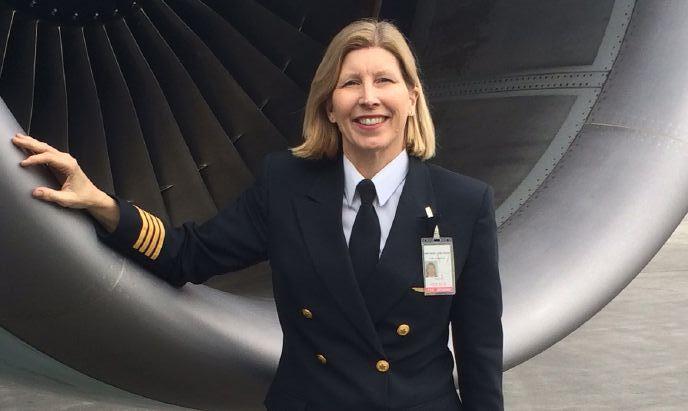
Air Canada’s Cathy Fraser loves the challenge of her diverse career path
People say the darndest things! I have actually heard someone say flying for an airline is just like driving a bus! I have also heard it is not a good career choice for women because there is too much travel involved. Cathy Fraser, a captain on the 767 and a director on the board of the Northern Lights Award Foundation, would debate both statements.
Fraser has been flying with Air Canada since 1989 and for several years commuted from Houston when her husband worked for NASA. And according to her, there isn’t a better job on the planet. Flying for an airline offers you the challenge of operating big, complex machinery and the pleasure of visiting exotic destinations. And if everything goes well, you also get to make a whole lot of people happy every day. Wings caught up with Fraser to discuss the nuances of her role and the challenges women face in a maledominated industry.
Why did you choose a career in aviation?
CF After a visit to a flight deck when I was 10 years old I was hooked! It’s sad that young kids can’t see you working at your job, because I think there is a real lack of visibility of women in the cockpit.
Do you recommend airline flying to young girls?
CF Absolutely! I talk with young women all the time at Career Day presentations and through my involvement with the Northern Lights Award Foundation and an organization called Women in Aviation. I always give them a long list of reasons why I love my career choice and encourage them to consider aviation.
What advise do you give them?
CF I encourage them to visit their local airports and take a familiarization flight. There is also an organization that offers women free flights to promote flying during the week of International Women’s Day in March. It’s called WOAW, Women of Aviation Week. I tell them about the Air Cadets, a great Canadian program that offers leadership programs and flight training for young people. I also encourage them to check
Obviously she put in the effort, but I was proud that I might have had a small role to play in her success!
out the college programs and the military.
What is it about your job that you love so much?
CF I love that every day I go to work is different: the weather, the aircraft, the crew, the destination. I enjoy every takeoff and landing. There is an immense sense of satisfaction from completing a flight. Not to mention, the immediate feedback from a landing.
Did you have any role models or mentors?
CF When I was learning how to fly, I met Kathy Fox and Lorna de Bliquy, both professional pilots who encouraged me along the way. I remember that when I saw an article in the newspaper about Judy Cameron being the first woman hired by Air Canada, I cut out the article and kept it in my scrapbook. I also joined the Ninety-Nines, an international organization of women pilots, and have met many amazing women pilots.
Is it hard working in a predominantly male profession?
CF I would have to say no. I have found the people I work with to be very
professional and supportive. I have had many mentors in the airline also. I never really think about the job along gender lines so I am always surprised to get comments from the passengers (mostly positive!) after 26 years.
How do you describe your professional style?
CF I try to treat people the way I want to be treated, with respect and courtesy. I hope that is how I come off. I prefer a collaborative approach rather than a directive.
What else can be done to get more women into the field of aviation? Do you feel it is important to be a mentor?
CF I wish I knew the answer to that first question. I have been surprised that the number of women in this field has not been increasing over the years. I do think mentoring is important and I try to be one any chance I get! Recently, I had a pilot come up to me and ask me if I remembered her. She told me she had been a flight attendant and that I had challenged her to pursue a career as a pilot. There she was, a couple of years later in an Air Canada uniform. It made me smile. Obviously she put in the effort but I was proud that I might have had a small role to play in her success! | W
By Anna Pangrazzi |
When I broke into the aviation fraternity in the 1980s, my generation of female aviators was considered quite a novelty. It was an exciting field, full of adventures, and we did not mind being “one of the boys.” Years later, however, many of my female colleagues are finding it hard to understand why more women did not follow in our footsteps. One explanation may be the lack of visible role models youngsters had and although we tried to make a difference, it was difficult to make a significant impact.
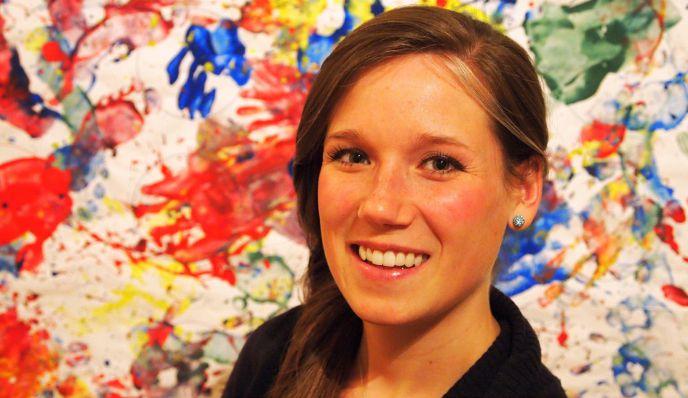
Fortunately, there’s now a new breed of young women entering the field who are changing the landscape in many exciting ways. Natalie Panek, for example, the 2013 Northern Lights Rising Star Award recipient, is an aspiring astronaut working for MDA Corporation. She blogs, tweets, hosts a website called the Panekroom.com and uses every opportunity to speak and engage young women about aviation and aerospace.
Panek holds a degree in Mechanical Engineering and a Masters of Applied Science in Aerospace Engineering from the University of Toronto Institute for Aerospace Studies. She has driven a solar-powered car across North America, has done two internships at NASA, completed her pilot’s licence and now works on robotic kinematics. Beyond her day job, Natalie is an ambassador for young women in engineering and aims to inspire the next generation.
Why did you choose a career in aerospace?
NP I have always been driven by a sense of adventure, the ability to push limits, and learning. Combine these with a desire to travel to space and a career in aerospace is a natural fit. Space travel is the ultimate for me. Aerospace engineering offers amazing learning opportunities with so much involvement in science and technology.
Did you have any role models?
NP Unfortunately, in my early school years, I really did not have many mentors (aside from my family). As I progressed through school, I learned to take
advantage of opportunities for mentorship, especially with the female mentors I connected with in university – female professors, my instructor for my pilot’s license, or even a mentorship program through the Women’s Executive Network (WXN).
What kind of challenges have you dealt with and how have you overcome them?
NP The biggest obstacle I have had to overcome is leaving behind my family and the city that I love (Calgary) to pursue a dream of travelling to space. I can honestly say that I have had equal opportunity throughout my career in engineering. While there are certainly challenges in any industry, I think women need to focus more on why we love what we do – flying, working with robots, designing spacecraft – rather than the challenges.
Have you ever felt overwhelmed? Do you have certain strategies to help you affect change?
NP Sometimes I am overwhelmed by the number of incredible youth accomplishing amazing feats to really revolutionize the world. I often feel like I am not making enough of an impact. At times like these, you just have to take a step back and consider a wider perspective. Sometimes inspiring just one young woman to consider an engineering career is enough. Those moments when a father tells you that he visits
How do you describe your professional style?
NP My professional style is a combination of determination, efficiency, ease, and rebelliousness (to create positive change!). I love the opportunity to get my hands on a very diverse cross-section of Canadian space initiatives. I try to enjoy each day and put in my best work for the time I am in the office. But for me, travel, adventure, and exploration are just as important as my day-to-day job. Making time for these has to be priority in my life – and I think being an engineer teaches you very well how to manage priorities.
Would you recommend aerospace engineering to other young women?
NP Yes, I would definitely recommend aerospace engineering to other young women. It’s not that I love what I do; it’s that I love engineering change and using innovation and creativity to find solutions to complex and advanced problems or interacting with transformative technology. I have witnessed firsthand the positive impacts that technology can have on society. How we can revolutionize the way we live and work using innovation. | W
| By Anna Pangrazzi
There are plenty of wise cracks about aging but there are some really great things about it too. One of them is contemplating relationships that span more than 30 years.
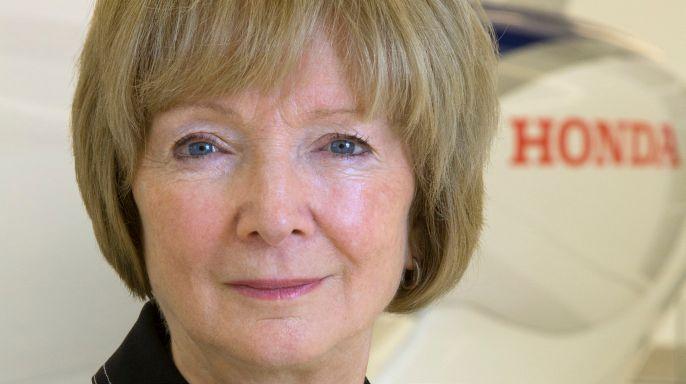
One of my long-time pilot friends is Lyn Shinn, vice-president of business development at Toronto’s Skyservice Business Aviation. Shinn is a veteran in the business aviation world and has been with Skyservice since 1999.
She currently heads up the HondaJet sales team. It’s a competitive business with long hours and plenty of stress but, she loves the work.
In the past, we have often shared a laugh over the old joke about the guy who cleans the airplane lavatories, sometimes referred to as the honey boxes. Although he would get dripped on occasionally, he remained jubilant over the fact that at least he got to work in aviation! Sometimes this business is like that and yet most of us feel lucky to be a part of it. I caught up with Lyn recently to discuss her long career in the industry.
Why did you choose a career in aviation? LS Aviation chose me in a way I was not expecting. I graduated with a degree in physical education and worked for the City of Toronto for 10 years but needed a change. I had achieved a private pilot licence during that time and when I needed work, a friend told me about a job opening at Pearson Airport working for an air ambulance company. It sounded like fun. It was less than half of my previous salary and included being on call 24 hours a day, five days a week. What did I know?
Did you have any role models and/or mentors?
LS I was fortunate to have outstanding role models at Skyservice. Russ Payson is an icon in the aviation industry with an incredible entrepreneurial spirit and a passion for service.Tim Casgrain provided both wisdom and a strong business sense. To give you an idea of the calibre of mentors I had access to, Tim was also the chairman of the CBC. Last but certainly not least, Marshall Myles who was CEO of Roots for more
than 26 years, brought an entirely different skill set with a strong sales and marketing background. All three shared the same belief that the business starts with valuing your employees.
What kind of challenges have you had to deal with and how have you overcome them?
LS I’ve been through a bankruptcy with an aviation company and it was a very painful experience. At another company, I had a salesperson who did not speak to me for two years because I was outselling him. I just kept doing what was expected of me and eventually we became a great team. I’ve been through many changes in leadership and held many different positions within the same company.You need to embrace the change and look at change as a new opportunity. Fight it and you might as well get off the bus.
Have you ever felt overwhelmed? Do you have certain strategies to help you affect change?
LSMost of us feel overwhelmed on a daily basis. Our industry is small but very complex, especially in business aviation where virtually every trip is handcrafted. We could be asked to fly to any country in the world. There may be a different language, culture, customs, aviation regulations, different monetary requirements, or crew and passenger visas.
One time we were en route to a Middle Eastern country only to discover that the female flight attendant could not enter the country without a burka. We could not find a burka, so we flew a male flight attendant in to complete the leg in and out of the country. Then, we needed to coordinate getting the original flight attendant back on the aircraft. All this needed to happen without affecting the passengers.
How do you describe your professional style?
LS
Consultative. Over the years, leadership style has changed from top down to a more inclusive approach. Good leadership does not dominate employees. It engages and involves them in the process. The consultative style is a more natural style for women. It produces longer-term rewards and results, and is highly effective for most organizations.
Would you recommend flying to other young women?
LS Absolutely yes. Why should men have all the fun?!
What advice would you give them?
LS Expect to work twice as hard and be twice as good as your male counterpart but most of all, remain professional at all times. That is sometimes easier said than done. | W
By Anna Pangrazzi |
Passion, curiosity, and a sense of adventure . . . aviation attracts a lot of people with these amazing qualities and Nachelle White has them all in spades.
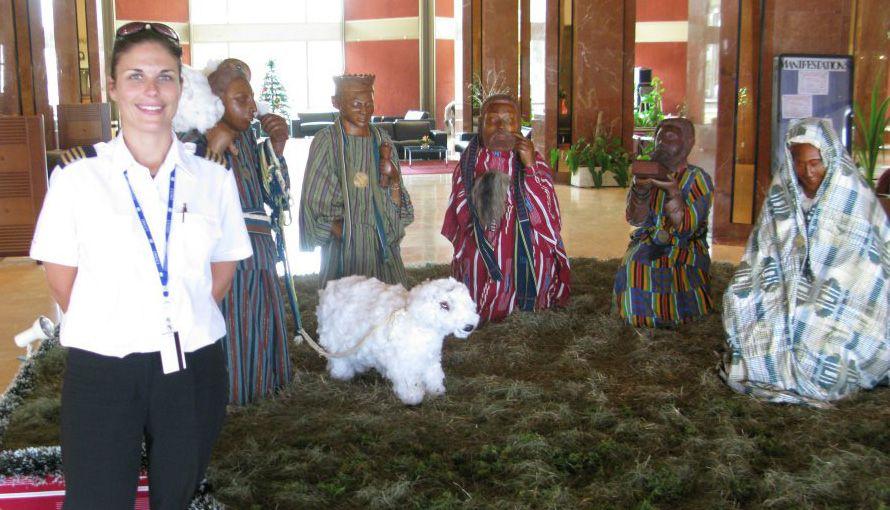
A past recent recipient of the Northern Lights Award in the flight ops category, White began her career as a flight instructor and followed a typical Canadian path of bush flying, survey work, forest fire suppression support flying, and flying night cargo runs. She has spent the past seven years flying for a humanitarian organization in Africa and Afghanistan. It’s certainly not the typical career path for your average young Canadian woman, but White is far from typical or average.
White has visited more than 54 countries and has an amazing enthusiasm for life and flying. She has flown across the Atlantic and surveyed the wild life from 300 feet over Central Africa. She has flown through the jungles and mountain ranges of the DR Congo and Uganda, across the deserts of Sudan and up the Cote d’Ivoire of West Africa.
Yet, it is her compassion for the people she has met along the way, which animates her conversation. She talks fondly of the air traffic controllers she got to know in Darfur and the guy who brought her bags of fruit in the Congo and the Persian rug dealer she shared tea with in Afghanistan.
She is indeed a collector of “life experiences” and the flying – although interesting and challenging – was also her ticket to travel the world and really experience life.
Wings caught up with White during her magical mystery tour and asked her to share some insights into her life, challenges young women face in the aviation business and more!
What advice would she give all you budding young aviators?
NW Dream Big, dream outside the box and then follow your dreams and they will lead you to magical, amazing places!
Wow, Nachelle. What a life! What is your next adventure?
NW After many years away, I decided to come back to Canada to
spend time with my family and friends. Now, I am flying a corporate jet around North America. It’s a big change in my flying and a huge adjustment returning to life in North America but I am enjoying it very much.
Why did you choose a career in aviation?
NW I grew up around airports and airshows. My mother was a private pilot, my father flew commercially and eventually worked at Transport Canada and my uncle flew Hercs and then went on to fly for Air Canada. Aviation was just in my DNA. My parents tried to encourage me to take a different career path but my mind was made up fairly early.
Did you have any role models and/or mentors?
NW Exposure to aviation was the biggest influence of all. I took a familiarization flight at 13 and was lucky enough to fly in a jet with my dad. I read a few books like “West with the Night” by Beryl Markham about flying in Africa and the biography of Jaqueline Cochrane, a famous American aviatrix. I also joined the Women in Aviation Chapter in Toronto and met a few Air Canada pilots, Lisa Graham and Cathy Fraser, and they were very encouraging.
Was it hard being a woman pilot in Africa?
NW To be honest, the work was challenging but not particularly because I am female. The uniform gets a lot of respect over there no matter who’s wearing it! I find that most flying jobs require an initiation into the group. I like to think of it as a wolf pack; once they decide you are okay, you are accepted into the pack and treated as an equal. All the pilots become protective of their group and we help each other out. I think it was very important to show confidence in my flying abilities and also confidence in getting along in that part of the world.
What kind of challenges have you encountered?
NW Well, once my team tried to sell me for some cows! I didn’t think four cows were quite enough! Kidding aside, in aviation, you encounter all kinds of personalities and cultures and you need to figure out the best way to work with people. That can be the most challenging aspect.
Would you recommend a career in aviation to other young women?
NW Certainly, but you do need to have a sense of adventure and a free spirit. It helps if you like to travel obviously. Other helpful qualities are resourcefulness, resilience and flexibility of course. | W
| By Anna Pangrazzi
As a wife, mother and grandmother with a career in aviation that spans more than 50 years, it’s not farfetched to use the word “remarkable” when describing Thunder Bay-native, Liz Wieben. Wieben’s journey in aviation began at a time when there were few women in the workplace let alone flying in the bush. She worked in an era when a woman’s pregnancy meant it was time to retire. Wieben has witnessed significant change in so many realms and has always been at the forefront of those changes. Wieben is a past recipient of the Elsie MacGill Northern Lights award for education for her contributions to aviation. As a professor at Thunder Bay’s Confederation College from 1986 to 2005, Weiben was an outstanding role model to many young women in the flight program. This was after a lifetime of flying.
Wieben shared with Wings her insights about working in male-dominated field.
You started flying at 11 and by high school, it had become your passion. How did that happen?
LW I was born into an aviation family. My father, Orville Wieben, was a test pilot on the Hell Divers and Hurricanes at the Canada Car and Foundry in Thunder Bay during World War II. After the war, he started Superior Airways Ltd. and the whole family worked in the business. All my siblings were pilots at some point. I flew with my brother, Don, all over northwestern Ontario and although I was airsick most of the time, by high school the word was out . . . don’t try dating her, she’s only interested in flying!
You solo’d at 16, became a licenced pilot at 17, a commercial pilot at 18 and an instructor at 19. What kind of challenges did you encounter?
LW I started in the aviation business when it was legal for companies and the government to say, “We don’t hire women,” and there was no recourse . . . that closed the doors to the airlines, ATC and the military. As long as I was in the family business, however, my job was protected

By high school the word was out . . . don’t try dating her, she’s only interested in flying!
but that didn’t prevent passengers from refusing to fly with me, or the poor treatment I encountered away from base. When I married my husband, Robin Webster, we moved to Australia, back to Canada and to the U.S. before finally settling in Thunder Bay. During that period, we had four kids and I encountered many challenges. I was constantly being tested everywhere I went and even though legislation was changing, attitudes about employing women were not.
You are a small woman. Were there other challenges flying in the bush?
LW When we finally settled back in Thunder Bay, Robin and I started our own air charter business called Wiebenair Ltd. My longest stint flying in the bush was in a DHC-2 Beaver on the shores of Lake Superior and I faced all the challenges other pilots face such as advection fog, big waves and long days of heavy physical work. I also had to watch out for my own personal safety in some of the remote areas we flew. Then there were the comments about my height: “Sure, they send a woman, but why such a little one?!” As our children grew up, we thought it was important that
at least one of us try to be around, so I eventually took a job teaching at Confederation College.
Who has influenced your career? Did you have any mentors?
LW It would have helped greatly if I had known other women pilots. At the time, I wasn’t even aware that women flew in World War II. My father was a big mentor and actively promoted my flying. Even my mother supported me, although she was afraid for my well-being. And there were some fellows who helped me along the way. There was one guy in the U.S. who helped me get hired on a DC-3, cloud seeding, and another guy, Frank Bayne, a retired army helicopter pilot, who gave me a chance at Confederation College. In the mid-’80s, I received a substantial Amelia Earhart Scholarship from the 99’s and would never have gotten an ATP without their help.
What advice would you give a young woman pursuing a career in aviation?
LW Get the best aviation education you can get at an aviation college and get to know some women who have been in the industry for a long time. It can really help your confidence to have those positive influences. I also think it is important to choose a supportive mate. | W
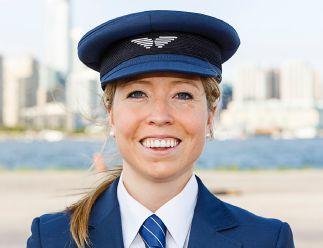
From a very young age, Mallory Deluce has had a keen interest in aviation. Mallory’s passion for aviation has deep roots that run within the family, starting with the foundation, her uncle, Robert Deluce. Robert is the president/CEO of Porter Airlines and a past executive with several other airlines. Her father and brother are also commercial pilots.
Mallory started working on obtaining her pilot’s license after graduating from university. She obtained her private license at St. Thomas Flight Centre in St. Thomas, Ont. For her multi-engine and instrument ratings, she went to the Professional Flight Centre at Boundary Bay Airport, just south of Vancouver, then came back to St. Thomas Flight Centre to acquire her commercial license and build flying time.
In June 2013, Mallory was hired by Air Georgian as a first officer. Mallory’s Air Georgian training began with ground school where she learned about the company operation and about the Beechcraft 1900. After ground school, she trained on a Beech 1900 simulator. She has since moved to Porter Airlines as a pilot.
Mallory has worked hard at combining athletics with flying. She is an accomplished hockey player and has excelled on a number of top levels. She is also a strong advocate for grass roots development, having done numerous media interviews talking about her experiences both as a pilot and a hockey player.
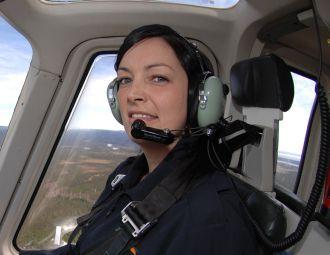

Christa Glover is the chief pilot of Universal Helicopters Newfoundland and Labrador LP, owned and operated by the Nunatsiavut Group of Companies. UHNL is one of Canada’s oldest helicopter companies operating a fleet of 19 light and intermediate helicopters in some of Canada’s most challenging environments.
Christa grew up in a small Coastal Labrador town (Pinsents Arm) of 75 people and had a passion for aviation since a very young age. She started her career 10 years ago with Universal Helicopters and continues to pursue her love for aviation with the company, earning respect and a strong working relationship with both her colleagues at UHNL and its clients.
Her flying career has taken her to all parts of Newfoundland and Labrador and north of 60, into Canada’s High Arctic. She has also honed her skills doing her time in the bush, conducting long line drill moves, wildlife capture and forest fire suppression.
As chief pilot and a senior aviation manager – and being an aboriginal as well – she has become a role model for others in the industry and those contemplating an aviation career. At a young age and being the only female pilot in the company, this environment may be intimidating to some, but Christa is first to acknowledge that she has an experienced support team of aviation professionals, maintenance and flight crew who support her 100 per cent.
Moving a company forward isn’t possible unless you yourself are forward thinking – and Milena Kohanenko fits this description.
Kohanenko oversees the regulatory compliance of Ledcor’s Aviation division – both fixed and rotary wing – as its aviation compliance manager.
Constantly raising the bar has been a hallmark of Kohanenko’s leadership style and those that have worked with her quickly realize she is a passionate leader who knows the regulatory environment inside and out.
Kohanenko holds a law degree from the Ukraine and is an IRCA certified ISO auditor and COR auditor. Previous to her current role, she was the director of compliance for the Summit Air Group and the compliance manager for Arctic Sunwest Charters reporting to the accountable executive.
She designed, implemented and maintained a best in class Quality Assurance Program (QAP) at both companies.
Kohanenko is well respected by both her peers and colleagues at Ledcor for her unwavering professionalism and commitment to safety in aviation.

General Manager, Edmonton FIR, NAV CANADA
Diana Kelly continues to rise to position of prominence within NAV CANADA.
The former manager of ACC Operations at the Winnipeg Flight Information Region –and new general manager of Edmonton FIR – is one of the rising stars in NAV CANADA’s operations.
Diana was appointed to her role as manager of ACC Operations at the Winnipeg Flight Information Region in April 2014. She is one of the first women (and among the youngest) ever to hold this leadership position at NAV CANADA, leading the way for other women in a traditionally male-dominated field.
Diana’s outstanding leadership abilities, work ethic and initiative come shining through in a number of ways:
• As manager of ATC Operational Requirements from 2012-14, she led the transition from flight-data strips to a paperless environment within high-level specialties and at Flight Service Stations across the region.
• Her team developed highly successful “safety bear pit” sessions that bring together frontline operational staff and pilots to discuss safety issues and to break down barriers – a collaborative approach that has been identified as a national best practice.
• Diana studied education at the University of Alberta (with a minor in German), before becoming a terminal controller and later enroute controller at NAV CANADA’s Winnipeg Area Control Centre. In 2008, she became a unit procedures specialist, and soon after was named shift manager – the youngest at the time and the first female shift manager at the ACC. She has continued her training to complement her various ATC roles and hone her management skills at NAV CANADA.

From concept to completion, it takes a driving force to get the job done, and for 13 years, Jocelyn Lebell has quietly helped to build the Hawkair brand.
As a young honours graduate from the BCIT Marketing Management program, Lebell joined the airline industry and has thrived on the complexities and challenges of her various roles.
Upon joining Hawkair shortly after graduating from BCIT, she took on the challenge of revenue management and was instrumental in modernizing the process. She was a key innovator of the Ultra-Econo fare, and in 2014, she entered Hawkair’s Women in Leadership Program as the pioneering woman. She also became director of corporate services, where she translates corporate strategy into business strategy enabling the team to attain personal development goals. Today, she is a senior executive and leads the Corporate Business Services Business Unit.
A passionate speaker and active member of several industry associations including BCAC, NATA and ATAC, Lebell is committed to giving back to her community. She recently was named to the Board of Directors of the Northern Savings Credit Union in Prince Rubert, B.C., providing valuable input into key initiatives as well as acquiring business intelligence to help foster the development of Hawkair.
Confident, attentive and innovative, Lebell is very conscious of her roles and is an active participant in advocating for young women seeking to grow in aviation and aerospace.

Legal Counsel, Element Aviation Finance
Carel possesses outstanding interpersonal skills and has a great team ethic, which helps her handle multiple tasks under pressure, in a context of tight deadlines and constantly shifting priorities. As she will attest to, a lawyer or legal counsel must, in addition to being an advisor who provides legal expertise, take on a strategic role and excel in developing pragmatic solutions. Carel thrives in her current work environment where entrepreneurial spirit, originality and audacity are encouraged and supported by the company’s senior leadership team.
Carel has a multitude of roles at EFC including:
• Acting as main counsel with respect to aircraft finance (commercial loans and equipment leasing agreements, as well as the purchase and sale of large-ticket equipment, syndications and portfolio acquisitions)
• Leading and managing a variety of fixed wing and rotary wing commercial and business aviation transactions originated by the Element Aviation Finance vertical
• Identifying potential risk areas arising from the complex and diverse financing arrangements (which often involve cross-border components) extended by the company and issue recommendations in order to minimize the same.
It’s a large portfolio to be sure, but Carel still finds room to donate her time to speak at various events including the Equipment Leasing and Finance Association’s Legal Forum, and to appear as a panellist in the “Winter is Coming: Advanced Roundtable on Cross-Border and Canadian Finance Issues.”
Carel was a finalist in the category “Lawyer of the Year” (in house practice), Young Bar Association of Montreal “Leaders of Tomorrow” Gala in 2012 and continues to generate accolades from clients and staff.

Heather McGonigal is Transwest Air’s director of flight operations, a training captain, and SAAB 340 line captain.
Heather has always had a strong interest in aviation. In her high school years, her attainment of her PPL was financially assisted by a scholarship that she was awarded by the Ninety-Nines Inc. and also by working as a swimming pool lifeguard. She continued this work while completing a bachelor of arts degree and worked towards her CPL and Instructor Rating.
Heather accepted a job at Morgan Air in Calgary and was soon flying charters and teaching multi-IFR. She became chief flying instructor, and in May of 2000, accepted a Jetstream first officer position at Air Sask in Saskatoon.
Shortly after she joined the team, Air Sask and Athabaska Airways merged to form Transwest Air in September 2000. Heather was named a Jetstream captain and a training pilot and was promoted to the SAAB 340 four years later. She was further appointed to senior management positions, which she has now held for several years.
Heather’s ability to inspire loyalty and to lead others as part of a team approach to the organization’s operations is perhaps best illustrated in the development of Transwest Air’s SMS program. Under Heather’s leadership, Transwest was one of the first operators in its category grouping to develop and implement a viable SMS.
Heather takes a particular interest in mentoring young women who are interested in an aviation career. She is also the first vicechair on the ATAC board of directors and is expected to become chair in November of this year.
Heather is an excellent ambassador of Canada’s air transport industry and a strong role model for aviator’s everywhere.
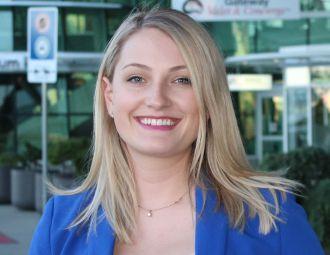
Director, BC Aviation Council
Candace McKibbon has always understood the importance of “doing a little bit extra” no matter what the task. She did so as a student at BCIT and she’s showing the same kind of commitment and initiative in her role as executive director with the BC Aviation Council (BCAC).
McKibbon graduated from the BCIT Airport Operations diploma program in February 2014. As a student, she brought passion, leadership ability and determination to the industry in a number of ways, volunteering for key events such as the CHC Safety & Quality conference and working as a mentor for other students.
In her role as executive director, she works tirelessly to find new ways to connect key players in the B.C. aviation and aerospace community, with a particular emphasis on helping young aviators in career development. An engaged volunteer for a number of organizations, McKibbon still works closely with Aviation Leadership Foundation and the BCAC, connecting young aviators to established professionals to share experiences.
McKibbon has been honoured with a bevy of important awards for both community and scholastic achievement, and continues to impress both co-workers and other industry leaders with her ongoing commitment to B.C. aerospace.
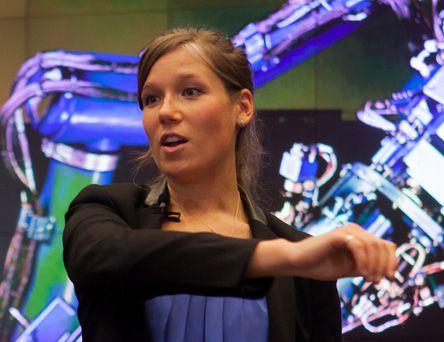
Change agent. Leader. Influencer. Mentor. These are just some of the words that aptly describe Natalie Panek.
Panek is a Member of Technical Staff with MDA’s Robotics and Automation Division in Brampton, Ont. Her accomplishments are visible through her trailblazing work on non-traditional projects, and she has been making her mark on the Canadian aerospace industry ever since she set her sights on a career in space.
Panek graduated with a degree Mechanical Engineering with distinction from the University of Calgary in 2007 and participated in the university’s inaugural solar car project. She attained a VFR private pilot’s degree during her undergraduate studies, and went on to complete her Master’s of Applied Science in Aerospace Engineering from the University of Toronto in 2009, before accepting two back-to-back internship programs at NASA in 2008 and 2009.
Since 2010, Panek has worked at MDA performing robotic analysis for various space programs, and currently is working on MDA’s contract with ESA’s 2018 ExoMars program.
Community service and helping mentor young women in career development is something Panek is passionate about, and she is very giving of her time to support a variety of initiatives. She is a mentor for Cybermentor, a University of Calgary program that promotes women in science and engineering, and is also a member of their advisory council. Panek also mentors through the 4-H Canada’s Leadership Excellence Awards of Distinction (L.E.A.D.) program and has worked as a judge and volunteer for important organizations such as the Ninety-Nines and Women of Aviation Worldwide.
Panek possesses a unique combination of skill, dedication and insight, helping Canadian aerospace reach new heights.
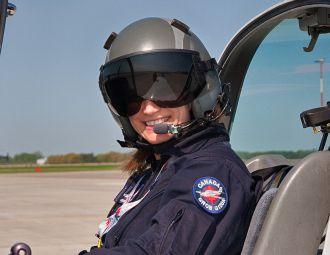
For Chrissy Perry, teaching aspiring fighter pilots the nuances of their craft is a rewarding and exciting experience.
Perry joined KF Aerospace Defence Services in Portage la Prairie, Man. as a class 1 instructor in the fall of 2008. KF Aerospace Defence Services is the primary flying training school for the Royal Canadian Air Force (RCAF). Perry was employed as a line instructor upon joining the operation, but within a few years, she moved to the role of assistant chief flying instructor.
In fall 2010, Perry was promoted to chief flying instructor, and has done an outstanding job guiding the careers of aspiring military pilots. She supervises a staff of 25 instructors, has developed – with Transport Canada – one of four instructor refresher courses in Canada, worked with the DND as a liaison in the policies and procedures of the flying program and so much more.
In addition to providing her students with the skills and knowledge to advance their careers as military pilots, Perry has still found time to carry out a BA at the University of Manitoba with a strong base in psychology. Always learning and honing her craft, Perry is a professional, dedicated leader who excels in all aspects of her role.
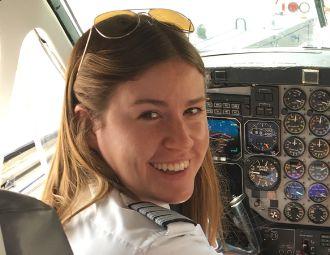
Stephanie Robinson was trained to be at a pilot at Seneca College in the Bachelor of Aviation technology program and she continues to share her passion to aspiring aviators learn to soar.
Robinson is a B1900D Captain with Mississauga, Ont.-based Air Georgian and is a spokesperson for the Seneca Career Pathway Partnership. A dedicated member of the aviation community, Robinson has already won several awards for her positive outlook and enthusiasm for her craft, including the Russ Bannock Award and the Lloyd Cripps Memorial Award. She has also participated in numerous career events to promote and educate the next generation of pilots.
One of the main messages Stephanie likes to share with aspiring aviators is there are many avenues you can follow to attain your final role as a commercial pilot, just don’t get discouraged if things don’t work the first time. Persistence, commitment, hard work and dedication will eventually pay off. Robinson is living proof of all of these sentiments. Robinson recently took the role of Captain and has set a future goal of being part of the training department either on the flight line or in the simulator. Igniting the passions of young adults in both high school and public school is one of her goals.
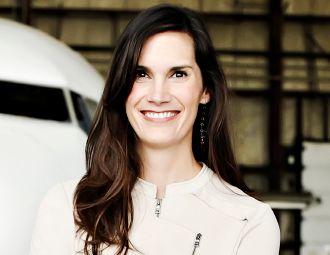
Amanda Sarginson began her career in aviation as the sole human resources manager at First Air in June 2005. Amanda now practices law with Emond Harnden LLP and represents more than 30 aviation clients across the country.
As a member of the First Air team, Amanda never shied away from a challenge, was the chief spokesperson for negotiations with the dispatch group and supported the negotiation teams for the pilots, maintenance employees, flight attendants and ticket and cargo agents. She played an active role in the grievance and arbitration process for all of the unionized groups.
Ever seeking a challenge, Amanda made the difficult decision to leave First Air to conquer her next mission, law school. Excelling in this endeavour as well, she graduated on the Dean’s Honour List from the University of Ottawa in 2011. During law school, Amanda continued to work for First Air and joined Emond Harnden LLP as a student after her first year to deepen her understanding of the legal environment.
Amanda is now an associate with Emond Harnden LLP and provides employee and labour relations advice. Her practice includes assisting employers in hiring and terminating employees, drafting policy manuals, defending human rights applications, conducting investigations and representing the employer at mediation, arbitration and collective bargaining. She has also appeared before a Coroner’s Inquest, Human Rights Tribunal/Commission both federally and provincially, Small Claims Court, and the Superior Court.
Amanda is passionate about educating those in the industry. Over the past several years, she has provided numerous practical workshops to operators attending the annual conferences for HAC, NATA and ATAC.
Attracting more women to aviation and aerospace fields is a goal many organizations and associations nationwide have, and fortunately, there are several worthwhile initiatives leading the way that are achieving this objective.
The Ninety-Nines, the International Organization of Licenced Women Pilots, has been in existence since 1929 promoting women’s interests in aviation and preserving their history. Women of Aviation International, a U.S. based organization, is working on advancing the careers of women in aviation. The organization has hosted an annual convention for more than 26 years and handed out more than $10 million in scholarships and type ratings to aspiring pilots. Both organizations have chapters in Canada where their members can connect and network.
“Women of Aviation Worldwide Week” is another great initiative introducing thousands of women and girls to the thrill of flight through its “Fly It Forward” events every March. Women in Aerospace Canada has mentorship and networking events throughout the year, and the Northern Lights Award Foundation (NLAF) hosts an annual gala in the fall to recognize and celebrate women who are making significant contributions to aviation and aerospace across the country. The goal is to bring more visibility to women, young and old who have made their mark in this male-dominated arena because, believe it or not, there are people who still don’t understand that girls really can fly.
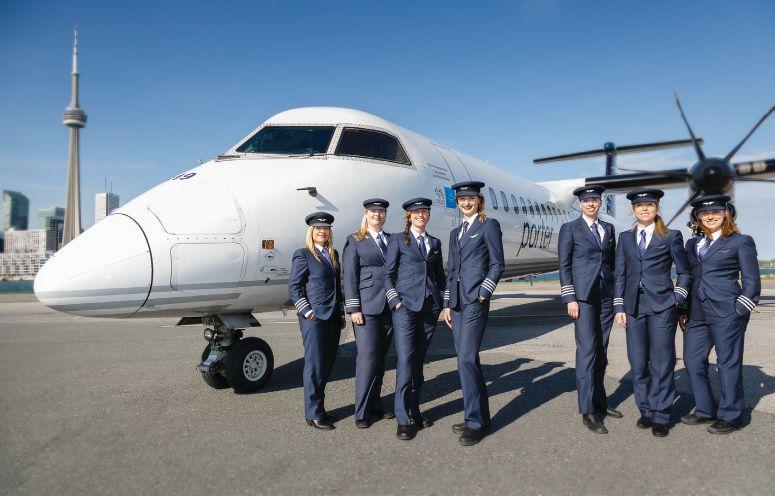
Porter Airlines is one Canadian company that is also doing its part. The Toronto-based airline has an initiative to increase the percentage of women pilots at the airline, even though it already stands at an impressive 12 per cent of the workforce. President and CEO Robert Deluce has audaciously tasked his staff with increasing that percentage to 50/50 by 2020, a lofty goal, but one, as he contends, an attainable one.
Deluce recognizes that with pilot shortages looming in the near future, there is a real opportunity for Porter to take a leadership role in the recruitment of women pilots. And for the first time in its history, Porter hit
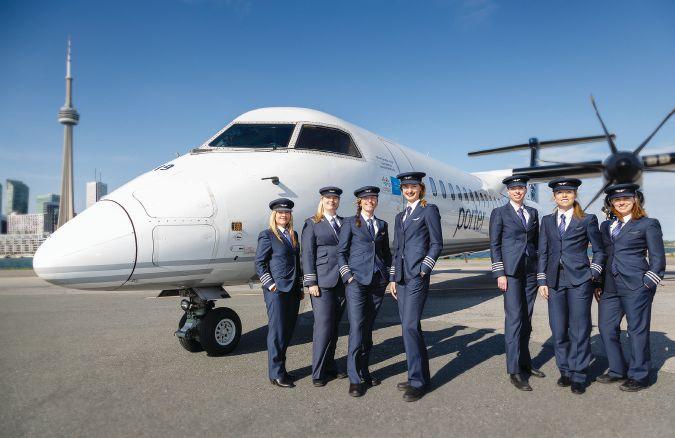
a 50/50 percentage split this past April in its new hires.
The number of women at Porter is more than double the North American average. For the women of Porter, the working atmosphere, camaraderie, flexibility of scheduling and the ability to be home most evenings, allows for a lifestyle where they can fly a great airplane and still have a family life. For the airline, it gets competent, confident employees and the business case for hiring women is reflected in the relatively high retention rates. Less training costs ultimately looks good on the bottom line.
Porter began hiring women the first year it launched the airline in 2006, and Paola Fierro was the first woman hired. Fierro took her first familiarization flight at 14 and credits her parents for giving her the gift and encouraging her along the way to pursue her dreams. She joined a Private Pilot Ground School course that same year and started flying in 1988. At the same time, she went to university to study to be an urban planner but aviation kept calling her back. She took a job at Skyservice as a supervisor, and in 1998, met a pilot who offered her a job flying
right seat on a Piper Cheyenne.
In 2001, Skyservice offered her a job flying the Jetstream in Europe and then the Lear Jet doing Medivacs across North America. When she took maternity leave, she realized that she would not be able to return to medivac flying because of the crazy hours and on-call work. Luckily for her, Porter was just starting up and offered her dream job.
“Porter offered me the ability to balance my family life with my passion for flying,” Fierro told Wings. As a single mother of two, such work/life balance is critical. On top of that, she had great mentors in her fellow pilots and the airline management.
Piyush Gandhi, Porter’s vice president of flight operations, encouraged Fierro to advance to captain after her first year, then to training captain. Currently she acts as an approved check pilot. Gandhi has been a mentor to many of the pilots and is enthusiastic about increasing the numbers of women flying at the airline.
Stephanie Watson was the second woman hired by Porter during that first year of operation. She also took a FAM flight when she was 18 and loved it. The pilot on that flight
By Anna Pangrazzi
told her about the Seneca College Aviation program which she enthusiastically applied to and completed. Watson got an instructor’s rating and a job at Burlington Airpark near Toronto, and then was offered a part time job back at Seneca.
In 2004, she was offered a job to fly a Pilatus PC-12 out of Buttonville Airport and eventually found work on a King Air 350. She accumulated some 2,000 hours when Porter started up. She applied and was hired in fall 2006. Watson also credits her parents for giving her the perspective that everything is possible. And although the Seneca program is quite competitive and rigorous, she says she always had plenty of positive mentors around to help.
Watson’s advice to other young pilots is to stay focused on the goal, network and develop relationships with people who are willing and able to help and balance your time. Watson likes to manage the flight deck with a quiet confidence and thinks that people around you excel when they also feel comfortable and relaxed. It seems Porter management encourages a laid back but professional attitude. Watson became captain several years ago and is currently also a training captain.
Monica Bourque took a completely different route to the airline. She also had very supportive parents and a dad who was crazy about airplanes. Bourque’s parent’s would even drive her up to Pearson International on weekends to watch the planes land. Bourque had a major challenge when she started her training. She took on a student loan to pay the flight school and had the loan absconded. She had to regroup, find some more money and another flight school.
Bourque’s passion for flying prevailed and she completed her commercial, multiengine IFR. She moved up to Yellowknife and got a job at Air Tindi. Newcomers to the airline were expected to work (at least) two years on the ground before moving into the right seat, but Bourque was keen to experience the northern lifestyle and jumped at the opportunity. She stayed for 10 years, loved the flying and met her husband up there.
“The Chief pilot at Air Tindi was a big mentor and helped me move past a take off accident,” she recalls. “Even though I was just sitting in the right seat as a dock hand, it really shook my confidence. All the pilots at Air Tindi were great guys and trained us
well.”
Before moving back to the city in 2013 when both Bourque and her husband were both hired by Porter, the couple moved even further north to Cambridge Bay for a few years. And despite the culture shock of moving back to the big city and working for a much bigger airline, they both have felt welcomed and comfortable at the airline.
Julie Beverstein was hired by Porter in 2009. She wanted to fly for Air Canada and continued to submit her application every six months, but over time, she also realized that Porter offered her plenty of opportunity. Recently, Beverstein was named the airline’s pilot recruitment ambassador, a new role created to establish relationships with colleges and flight schools. The position was also created to promote Porter and mentor pilots to select Porter as a long-term career. Beverstein has also been tasked with increasing the number of women hired by the airline – and it’s no small task.
Beverstein actually started her career path in Pre-Med at the University of Toronto but decided the medical profession was not for her. Her father had worked at Air Canada (AC), and was always a big role model. Beverstein started taking flying lessons while at university and then decided to take the Aviation Course at Seneca College. With diploma in hand, she worked two jobs, one as a dispatcher for a flight school at the Toronto City Centre Airport and eventually as a flight instructor. She also went back to Seneca as a flight instructor during the busy summer season and then was offered a full time position for five years.
In 2006, she became a first officer on the Beech 1900 with Air Georgian and then was hired by Porter in 2009. Beverstein continues to work part-time at Seneca College managing the college’s simulator, military training program and management hiring and scheduling.
Claire Lemiski was one of the Northern Lights Award Foundation recipients in 2015 in the Rising Star category. Right after the event, a pair of airline recruiters gave Lemiski their cards. One of them, Porter’s John Grunland, contacted her to get her ideas on how to attract more women to aviation. After a few email exchanges he also offered her a job interview.
Lemiski’s path to the airline had a fairy tale beginning. She had her first introductory flight at 12, and was initially inspired by Peter Pan – she wanted to figure out how to fly without the fairy dust. Lemiski took the private pilots ground school and then started flying lessons at 13. She soloed as soon as legally possible (at 14), received her recreational pilot’s licence at 16 and then her pilot’s licence at 17. She then attended Trinity Western University in B.C. and graduated with a degree and a multi-engine rating, IFR and Commercial Licences.
During her summers, Lemiski interned at Bombardier and, upon graduation, was offered an opportunity to work in the company’s Flight Test Department. Lemiski has an attitude and a work ethic few can match. She always wanted to fly, and eventually was offered a position on the Dash 8 company shuttle where she was able to rack up the hours. Once she had her time, she happily interviewed at Porter, and the airline is indeed happy to have her on the flight line.
The five women profiled above are just some of the remarkable talent the airline has developed over the past few years. And why is it succeeding in attracting and developing female aviators? Much of it has to do with Deluce’s leadership and commitment to a family-friendly environment. Deluce was raised in an aviation family. He watched as his mother and father worked side-by-side to start and run an air service. The whole family pitched in. Porter is a young airline and it seems to reflect his early aviation experience.
There is also professionalism and camaraderie across the flight line where gender is a non-issue: everyone pitches in to make the airline thrive. A new company-wide initiative called “Women Soar at Porter” was introduced this year, which aims to bridge the gender gap within all areas of the organization including pilots, leadership and ground operations.
Says Deluce: “It’s an initiative that’s about influencing change and breaking down barriers.” Already this year, Porter has supported two Fly it Forward events and became the title sponsor for the Northern Light Award Gala on October 1.
It’s commitment to women in aviation was driven home at the successful Wings and Helicopters Careers in Aviation event in April at the Porter hangar, and it’s a message that the company will continue to embrace.
| W