








Building
Building
LOUIS ANDERSON
PHIL LIGHTSTONE

Printed in Canada ISSN 0701-1369
READER SERVICE
Print and digital subscription inquires or changes, please contact Angelita Potal, Customer Service Administrator Tel: (416) 510-5113 Fax: (416) 510-6875 apotal@annexbusinessmedia.com
Mail: 111 Gordon Baker Rd., Suite 400, Toronto, ON M2H 3R1
EDITOR
Jon Robinson jrobinson@annexbusinessmedia.com • 647-448-6188
FLIGHT DECK
Louis Anderson, David Carr, Scott Henderson, Kendra Kincade, Phil Lightstone, Carroll McCormick
NATIONAL ACCOUNT MANAGER Mena Miu mmiu@annexbusinessmedia.com • 416-510-6749
ACCOUNT CO-ORDINATOR Barb Vowles bvowles@annexbusinessmedia.com • 416-510-5103
AUDIENCE DEVELOPMENT MANAGER Serina Dingeldein sdingeldein@annexbusinessmedia.com • 416-510-5124
MEDIA DESIGNER Brooke Shaw
GROUP PUBLISHER AND VICE PRESIDENT OF SALES Martin McAnulty mmcanulty@annexbusinessmedia.com
CHIEF OPERATING OFFICER Scott Jamieson sjamieson@annexbusinessmedia.com
WINGS MAGAZINE
P.O. Box 530, 105 Donly Dr. S., Simcoe, ON N3Y 4N5 Tel: 519-428-3471 Fax: 519-429-3094 Toll Free: 1-888-599-2228
PUBLICATION MAIL AGREEMENT #40065710
Published six times per year (Jan/Feb, Mar/Ap, May/Jun, Jul/Aug, Sep/Oct, Nov/Dec) by Annex Business Media
SUBSCRIPTION RATES
Canada – 1 Year $ 34.50 (plus GST - #867172652RT0001)
USA – 1yr -$ 78.50 CDN (USD $60.50) International – 1yr - $90.50 CDN (USD $69.50)
Occasionally, Wings magazine will mail information on behalf of industry-related groups whose products and services we believe may be of interest to you. If you prefer not to receive this information, please contact our circulation department in any of the four ways listed above.
Annex Privacy Office privacy@annexbusinessmedia.com • Tel: 800.668.2374
No part of the editorial content of this publication may be reprinted without the publisher’s written permission.
©2022 Annex Business Media All rights reserved. Opinions expressed in this magazine are not necessarily those of the editor or the publisher. No liability is assumed for errors or omissions.
All advertising is subject to the publisher’s approval. Such approval does not imply any endorsement of the products or services advertised. Publisher reserves the right to refuse advertising that does not meet the standards of the publication.



By Jon Robinson |
This issue of Wings, closing out our 2022 print schedule, evolved into a couple of themes, which are in fact two of the most pressing issues to face the near- and long-term future of aviation in Canada and around the world: Supporting a new generation of the aviation workforce and figuring out how the industry can develop a more environmentally progressive position for business sustainability.
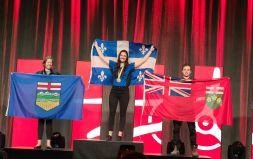
Future workforce coverage includes a Q&A feature article with the Gold medalist of the 2022 Skills Canada’s Aircraft Maintenance Engineer competition, Laurie Breton, who was set to take on other competitors from around the world in Wales over five days at the start of November. Wings in mid-October held the second leg of its Career in Aviation Expo for the first time in Manitoba at the Southport Aerospace Centre, where the growing need for workforce retention and recruitment was on full display. Darryl Dowd, Chief Operations Officer of Southport Aerospace, provided the opening keynote for the event, covered in this issue with a pictorial report, and offered attendees his list of critical trends, which in turn should be top of mind for the new generation as they develop their careers. The business of sustainable aviation was one of the primary trends on his list.
In this issue, we provide a look at a range of potential environmentally progressive solutions for commercial aviation, most of which are now shared through the lens of the 2050 net zero carbon position spearheaded in 2021, which for now appears to be the industry’s global sustainability target. Related topics covered in this issue range from climate-optimal routing and formation flights to longer term propulsion alternatives like hydrogen fuel and battery power.
prediction capabilities
are key to find the right design that meets both the fuel efficiency and the acoustic targets.
Airbus back in September 2021 cemented its position of developing hydrogen fuel alternatives through its ZEROe program, which it officially plans to launch in 2025 with the goal of entering the first zero-emission commercial aircraft into service by 2035. It introduced three concept aircraft each with a different approach to achieving zero-emission flight, in terms of technology pathways and aerodynamic configurations, but they all rely on hydrogen as a primary power source via combustion or fuel cells. Hydrogen holds what Airbus describes as exceptional promise as a clean aviation fuel, as used in synthetic fuels (combustion) or as a primary power source (fuel cells), noting it is likely to be a solution for aerospace and many industries to meet future climate-neutral targets. Both of these
1. The 737-10 is being built to cover 99 per cent of the world’s single-aisle routes. P. 8. 2. The Leonardo AW609 program has logged 1,900 flight hours. P.9. 3. Jet fuel can hold about 50 times more energy compared to batteries per unit mass. P.12. 4. Aviation contributes 2.5 per cent to the global CO2 burden. P.14. 5. There are 247,000 aircraft powered by fossil fuel. P. 20.
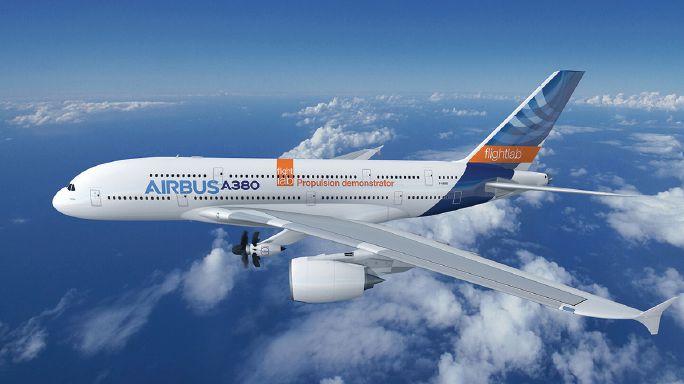
propulsion alternatives are covered in depth in this issue. Then in July 2022, Airbus and CFM International, a 50/50 joint company between GE and Safran Aircraft Engines, announced they are collaborating to flight test CFM’s new open fan engine architecture. The Flight Test Demonstrator aims to mature and accelerate the development of advanced propulsion technologies, as part of CFM’s Revolutionary Innovation for Sustainable Engine (RISE) demonstration program, on board an Airbus A380. The flight test campaign will be performed in the second half of this decade in Toulouse, France.
Airbus explains the test program will achieve several objectives that could contribute to future engine and aircraft efficiency improvements, including: enhanced understanding of engine/wing integration and aerodynamic performance, as well as propulsive system efficiency gains; validating performance benefits, including better fuel efficiency that would provide a 20 per cent reduction in CO2 emissions compared to today’s most efficient engines (estimated with Jet-A fuel); evaluating acoustic models; and ensuring compatibility with 100 per cent Sustainable Aviation Fuels. Airbus and CFM in a joint release explain how they share the ambition of fulfilling the promise they made in signing the Air Transport Action Group goal in October 2021 to achieve the “ambitious timeline” for net-zero carbon emissions by 2050. | W

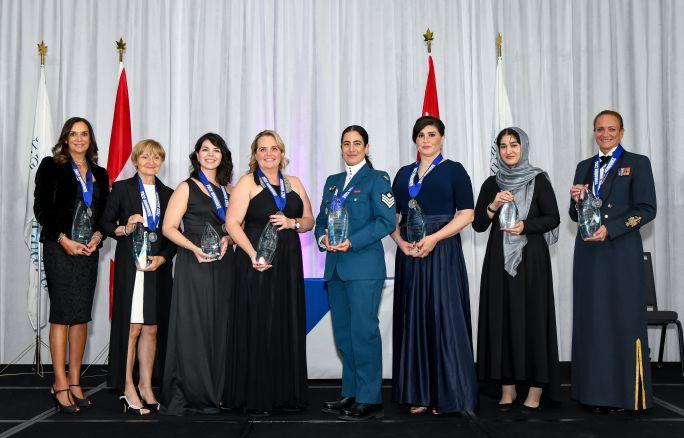
commercial pilot, Government Award; Marlene Shillingford, Chief Warrant Officer, 2 Canadian Air Division, Trailblazer Award; Donya Naz Divsalar, CEO, Caidin Biotechnologies,Rising Star Award; Zainab Azim, who holds a ticket to space with Virgin Galactic, Rising Star Award.
The 13th annual Elsie MacGill Awards Gala was held at the Sheraton Parkway Toronto North Hotel on Saturday, October 22, 2022. The Elsie MacGill Awards program was established in 2009 by the Northern Lights Aero Foundation (NLAF). Named after aviation pioneer and human rights advocate Elsie Gregory MacGill, the awards program recognizes eight women across seven categories, including: Business, education, engineering, flight operations, government, trailblazer and two rising stars.
This year’s Elsie Award recipients include: Arielle Meloul-Wechsler, Executive Vice President, Air Canada, in the Business Award category; Stéphanie Angrand, instructor, Canadian Forces Leadership School, Education Award; Damineh Akhavan, CEO of Global Women in STEM, Engineering Award; Kim Winsor, Training Captian, Air Canada, Flight Operations Award; Gisele Garceau, professional engineer and
WestJet Group reached an agreement with Boeing to purchase an additional 42 737 MAX aircraft, along with options for 22 more. This order is in addition to WestJet’s remaining 23 MAX orders and extends the airline’s fleet growth plans out to 2028. WestJet CEO Alexis von Hoensbroech notes the company will accept delivery of no fewer than 65 aircraft in the next six years and that at least 50 will be 737-10 aircraft.
As the largest model of Boeing’s MAX family, the 737-10 is being built to cover 99 per cent of the world’s single-aisle routes, fitting WestJet’s growing domestic and international network, while it is said to reduce fuel use and carbon emissions by at least 20 per cent per seat when compared to previous generations. WestJet Group has a current fleet size of approximately 170 aircraft, with 110 active 737s. WestJet Group’s fleet, with an average age
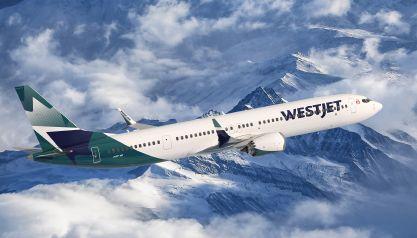
under 10 years, is among the youngest of established North American carriers.
Air Canada converted options for 15 Airbus A220-300 aircraft into firm orders, bringing to 60 the total number of the Canadian-built aircraft it will acquire for its fleet. Air Canada placed its initial order for the A220, then known as the Bombardier C Series, in 2016, with a firm order for 45 aircraft and 30 options. The first Air Canada A220 entered service in January 2020 and the airline currently operates a fleet of 31 A220s, with two more deliveries expected in 2022. Six more will be delivered in each of 2024 and 2025, with the 15 additional aircraft scheduled for delivery in 2026. All of Air Canada’s A220s are built in Mirabel.
Lynx Air on October 18 announced Jim Sullivan joined the company as Chief Operating Officer. Sullivan brings more than 30 years of airline operations experience, as both a pilot and an airline executive, most recently as Vice President of Flight Operations at JetBlue Airways.
Lynx explains Sullivan is joining the airline at a critical time with its plans to expand into the United States and grow its fleet to 10 aircraft over the next 12 months. He will lead a team of nearly 200 pilots, cabin crew and other airline professionals and will have accountability for all aspects of the airline’s operations, including flight operations, cabin crew, airport operations, technical operations and safety and security. Previously based
out of Huntington, New York, Sullivan will move to Calgary to join the executive team of Lynx, which is now in its seventh month of operations. Holding six Boeing 737 aircraf, the airline currently flies to 10 destinations across Canada. This winter Lynx plans to expand service to Phoenix, Las Vegas, Orlando and Los Angeles.
Air Canada and CAE will work together to support diversity in aviation and effectively double the number of available 2023 Captain Judy Cameron Scholarships for young Canadian women studying to become commercial pilots or maintenance engineers. Launched in 2019, the Judy Cameron Scholarships were previously awarded to four recipients, which is now increasing to eight with the support of CAE and its Women in Flight ambassador program. Up to four aspiring commercial pilots will be invited to join the CAE Women in Flight program as an ambassador.
The annual Captain Judy Cameron Scholarships, established in honour of Air Canada’s first female pilot to help foster the next generation of women, are awarded in conjunction with the Northern Lights Aero Foundation. Scholarship applications for the 2023 program were scheduled to open on Nov. 1, 2022.
Sunwing is set to return to Atlantic Canada this winter with weekly flights from six airports beginning in January until May. Sunwing’s resumption of winter flights from airports in Nova Scotia, New Brunswick and Newfoundland comes after more than two years as a result of the pandemic and travel restrictions. Sunwing describes the new schedule as a signal of its ongoing commitment to Eastern Canada.
Sunwing’s winter schedule announcement for Halifax in Nova Scotia, Moncton and Fredericton in New Brunswick, and St. John’s, Deer Lake and Gander in Newfoundland comes on the heels of the tour operator’s recent winter schedule announcement for four larger airports across the country. The company explains it has seen increasing customer demand for
winter travel resulting in capacity growth of more than 140 per cent over last year.
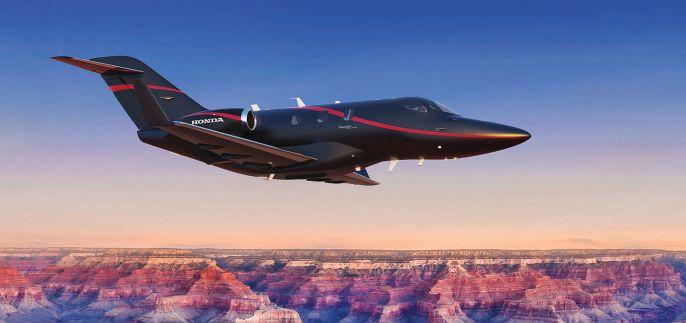
Honda Aircraft Company in mid October revealed the HondaJet Elite II at the 2022 National Business Aviation Convention and Exhibition, which it describes as an upgraded aircraft with new automation technologies. With an expanded range of 1,547 nm, the Elite II now extends HondaJet’s reach to more destinations while the addition of ground spoilers is designed to optimize takeoff and landing field performance.
Honda Aircraft also plans to introduce Autothrottle and Emergency Autoland to the HondaJet Elite II by the end of 2023. The company explains the Elite II features a fully redesigned cabin and the introduction of two new interior design options – Onyx and Steel, with new surface materials and colours. The cabin redesign includes a nose to tail acoustic treatment.
Skyservice Business Aviation expanded its Fixed Base Operation in Oregon with the completion of a business jet centre at Redmond Municipal Airport-Roberts Field (RDM) and the opening of an aircraft hangar at Bend Municipal Airport (BDN). Skyservice in 2022 also doubled its footprint at Pierre Trudeau International Airport in Montreal (YUL) and opened a
second location at Toronto Pearson International Airport (YYZ), two of Canada’s busiest airports.
Skyservice’s recently constructed, 32,000-square-foot facility in Redmond features a hangar designed with 28foot doors and a large ramp, expanding the company’s ability to accommodate aircraft like the Bombardier Global 7500 and 8000. In Bend, Skyservice has constructed an additional 16,000 square-foot hangar to join the operation’s 10,000-square-foot maintenance, repair, and overhaul services complex.
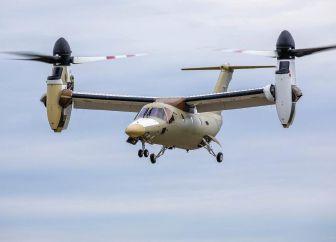
Leonardo reached a significant milestone in its multirole tiltrotor program with the first flight of its first AW609 production aircraft on October 13 in Philadelphia. Designated as AC5, the aircraft’s first flight focused on general handling and systems testing. Leonardo explains the AW609 will introduce unprecedented capabilities under a dedicated “powered lift category” civil certification now under development. The AW609 excels at providing fast pointto-point transportation at long ranges and can transport up to nine passengers in the comfort of a pressurised cabin.
This first production aircraft, AC5, joins a prototype based in the U.S. and two more located in Italy, all currently involved in the last stages of testing activities ahead of FAA certification. To date, the Leonardo AW609 program has logged nearly 1,900 flight hours in the U.S. and Italy. AC5 will be retained by Leonardo for customer demonstrations, mission capability
evaluation and expansion. Currently, three customers’ production AW609 aircraft are on the program’s final assembly line at various stages of construction in Philadelphia.
Earlier this year, the AW609 launch customer in the United States, Bristow Group, participated in a demonstration flight in Philadelphia. Also, in March 2022 the AW609 user base was expanded with the addition of an undisclosed long-established European operator of Leonardo helicopters who will aim to introduce four tiltrotors for transport missions.
Bell Textron back in August delivered the first Bell 505 to a customer in Greece via the Bell Prague Service Center in the Czech Republic. The aircraft is privately owned and will be operated by Bellavia Ltd. for commercial flights throughout the mainland and islands of Greece for
business, VIP, leisure and charter flights. Bellavia will operate and maintain the aircraft under its organization certifications with pilots and technicians trained at the Bell Training Academy.
Bellavia has operated and maintained Bell aircraft since 1991. The third-generation family business began its operation with a Bell 47 providing more than 3,500 flight hours in fertilizing, mosquito spraying and aerial filming. It continued operations with the Bell 206 JetRanger, Bell
230, Bell 206 LongRanger and currently has a fleet of Bell 206, Bell 407, Bell 429 and now the Bell 505 aircraft.
Bell Textron Canada is providing a $500,000 contribution to the First Nations Technical Institute (FNTI) located in Tyendinaga Mohawk Territory in Ontario. The funds will be used to support skills development and training resources for students in the school’s aviation program. This will include providing uninterrupted flight training across FNTI’s three-year advanced diploma program, following a fire that destroyed the school’s aviation hangar, including its entire fleet of training aircraft, at the Tyendinaga Mohawk Territory Airfield in February. The FNTI aviation program is the only training program of its kind in Canada, with an enrollment of 53 per cent First Nations women.

“We are fortunate to have resilient staff who pivoted to provide students with training options, ensuring minimal program interruption,” said Suzanne Brant, president of FNTI. “Generous support from Bell will provide FNTI students with continued on-site and off-site training, and student support services. The aerospace sector stepped up and offered muchneeded contributions toward maintaining uninterrupted pilot training.”
Eviation Aircraft in late September completed the first flight of its all-electric Alice aircraft. Alice lifted off at 7:10 am from Grant County International Airport (MWH), flying for eight minutes at an altitude of 3,500 feet. The flight of the technology demonstrator, according to Eviation, provided data to further optimize the
aircraft for commercial production.
Eviation Aircraft in late September completed the first flight of its all-electric Alice aircraft. Alice lifted off at 7:10 am from Grant County International Airport (MWH), flying for eight minutes at an altitude of 3,500 feet. The flight of the technology demonstrator, according to Eviation, provided data to further optimize the aircraft for commercial production.
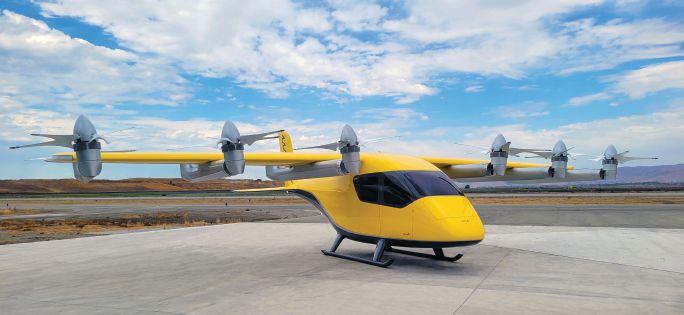
Wisk Aero, a leading Advanced Air Mobility (AAM) company and pioneer in autonomous, electric flight, today revealed the world’s first self-flying, all-electric, four-passenger vertical takeoff and landing

(eVTOL) air taxi. As Wisk’s go-to-market aircraft, Generation 6 represents the firstever candidate for type certification by the FAA of an autonomous eVTOL. The most advanced air taxi in the world, Generation 6 combines industry-leading autonomous technology and software, human oversight of every flight, and an overall simplified design to deliver one of the safest passenger transport systems in commercial aviation.
“In 2010, we set out to find a way to skip traffic and get to our destination faster,” said Gary Gysin, CEO of Wisk. “That inspiration evolved into a mission to deliver safe, everyday flight for everyone. Over the past 12 years, we’ve pursued that mission through the development of five different generations of full-scale aircraft. | W


By Gökçin Çınar |
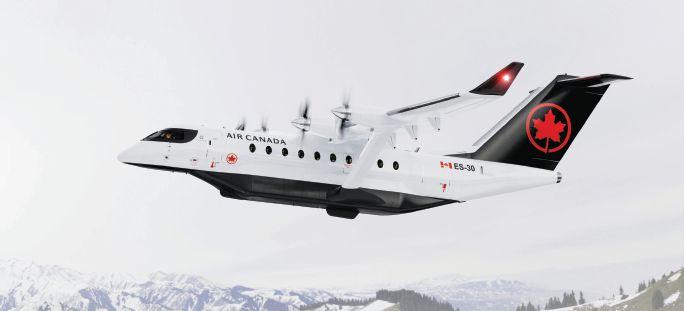
Aircraft are some of the most complex vehicles out there, but the biggest problem for electrifying them is the battery weight. If you tried to fully electrify a 737 with today’s batteries, you would have to take out all the passengers and cargo and fill that space with batteries just to fly for under an hour.
Jet fuel can hold about 50 times more energy compared to batteries per unit mass. So, you can have one pound of jet fuel or 50 pounds of batteries. To close that gap, we need to either make lithium-ion batteries lighter or develop new batteries that hold more energy. New batteries are being developed, but they are not yet ready for aircraft. An electric alternative is hybrids.
Even though we might not be able to fully electrify a 737, we can get some fuel burn benefits from batteries in the larger jets by using hybrid propulsion systems. We are trying to make that happen in the short term, with a 2030 to 2035 target for smaller regional planes. Hybrid electric aircraft are similar to hybrid electric cars in that they use a combination of batteries and aviation fuels. The problem is that no other industry has the weight limitations that we do in the aerospace industry. That’s why we have to be very smart about how and how much we are hybridizing the propulsion system.
Using batteries as a power assist during takeoff and climb are very promising options. Taxiing to the runway using just electric power could also save a significant amount of fuel and reduce local emissions at airports. There is a sweet spot between the added weight of the battery and how much electricity you can use to get net fuel benefits. This optimization problem is at the centre of my research. Hybrids would still burn fuel during flight, but it could be considerably less than just relying entirely on jet fuel. I see hybridization as a mid-term option for larger jets, but a near-term solution for regional aircraft.
For 2030 to 2035, we’re focused on hybrid turboprops, typically regional aircraft with 50 to 80 passengers or used for freight. These hybrids could cut fuel use by about 10 per cent. With electric hybrids, airlines could also make more use of regional airports, reducing congestion and time larger planes spend idling on the runway.
Using batteries as a power assist during takeoff and climb are very promising options.
Shorter term we’ll see more use of sustainable aviation fuels, or SAF. With today’s engines, you can dump sustainable aviation fuel into the same fuel tank and burn it. Fuels made from corn, oilseeds, algae and other fats are already being used. Sustainable aviation fuels can reduce an aircraft’s net carbon dioxide emissions by around 80 per cent, but supply is limited, and using more biomass for fuel could compete with food production and lead to deforestation.
A second option is using synthetic sustainable aviation fuels, which involves capturing carbon from the air or other industrial processes and synthesizing it with hydrogen. But that’s a complex and costly process and does not have a high production scale yet. Airlines can also optimize their operations in the short term, such as route planning to avoid flying nearly empty planes. That can also reduce emissions.
Hydrogen fuel has been around a very long time, and when it’s green hydrogen –produced with water and electrolysis powered by renewable energy – it doesn’t produce carbon dioxide. It can also hold more energy per unit of mass than batteries.
There are two ways to use hydrogen in an airplane: Either in place of regular jet fuel in an engine, or combined with oxygen to power hydrogen fuel cells, which then generate electricity to power the aircraft. The problem is volume; hydrogen gas takes up a lot of space. That’s why engineers are looking at
methods like keeping it very cool so it can be stored as liquid until it’s burned as a gas. It still takes up more space than jet fuel, and the storage tanks are heavy, so how to store, handle or distribute it on aircraft is still being worked out.
Airbus is doing a lot of research on hydrogen combustion using modified gas turbine engines with an A380 platform, and aiming to have mature technology by 2025. Australia’s Rex airline expects to start testing a 34-seat, hydrogen-electric airplane for short hops in the next few years. Due to the variety of options, I see hydrogen as one of the key technologies for sustainable aviation.
The problem with aviation emissions isn’t their current levels – it’s the fear that their emissions will increase rapidly as demand increases. By 2050, we could see three to five times more carbon dioxide emissions from aviation than before the pandemic.
The International Civil Aviation Organization, a United Nations agency, generally defines the industry’s goals, looking at what’s feasible and how aviation can push the boundaries. Its long-term goal is to cut net carbon dioxide emissions 50 per cent by 2050 compared with 2005 levels. Getting there will require a mix of different technologies and optimization. I don’t know if we’re going to be able to reach it by 2050, but I believe we must do everything we can to make future aviation sustainable. | W
Gökçin Çınar is an Assistant Professor of Aerospace Engineering at the University of Michigan. This article was originally published by The Conversation.

By Kieran Tait |
Commercial aviation facilitates over a third of all global trade by value and supports 87.7 million jobs worldwide. The 80-tonne flying machines we see hurtling through our skies also carry serious environmental baggage. My team’s recent review paper highlights some promising solutions the aviation industry could put in place now to reduce the harm flying does to our planet. Simply changing the routes we fly could hold a key.
Modern aeroplanes burn kerosene to generate the forward propulsion needed to overcome drag and produce lift. Kerosene is a fossil fuel with excellent energy density, providing lots of energy per kilogram burnt. But when it is burnt, harmful chemicals are released: mainly carbon dioxide (CO2), nitrogen oxides (NOx), water vapour and particulate matter (tiny particles of soot, dirt and liquids). Aviation is widely known for its carbon footprint, with the industry contributing 2.5 per cent to the global CO2 burden. While some may argue this pales in comparison with other sectors, carbon is only responsible for a third of aviation’s full climate impact. Non-CO2 emissions (mainly NO x and ice trails made from aircraft water vapour) make up the remaining two-thirds.
Taking all aircraft emissions into account, flying is responsible for around five per cent of human-induced climate change. Given that 89 per cent of the population has never flown, passenger demand is doubling every 20 years, this number is predicted to skyrocket. Commercial aircraft spend most of their time flying at cruise altitude (33,000 to 42,000 feet) where the air is thin. At these altitudes, aircraft NOx reacts with chemicals in the atmosphere to produce ozone and destroy methane, two very potent greenhouse gases. This aviation-induced ozone is not to be confused with the natural ozone layer, which occurs much higher up and protects Earth from harmful UV rays. Unfortunately, aircraft NO x emissions cause more warming due to ozone production than they do cooling due to methane reduction. This leads to a net warming effect that makes up 16 per cent of aviation’s total climate impact. Also, when temperatures dip below -40 degrees and the air is humid, aircraft water vapour condenses on particles in the exhaust and

Carbon is only responsible for a third of aviation’s Full climate impact.
freezes. This forms an ice cloud known as a contrail. Contrails may be made of ice, but they warm the climate as they trap heat emitted from the Earth’s surface. Despite only lasting a few hours, contrails are responsible for 51 per cent of the aviation industry’s climate warming. This means they warm the planet more than all aircraft carbon emissions that have accumulated since the dawn of powered flight.
Unlike carbon, non-CO2 emissions cause warming through interactions with the surrounding air. Their climate impact changes depending on atmospheric conditions at the time and location of release. Two of the most promising short-term options are climateoptimal routing and formation flight. Climate-optimal routing involves re-routing aircraft to avoid regions of the atmosphere that are particularly climate-sensitive – for example, where particularly humid air causes long-lived and damaging contrails to form. Research shows that for a small increase in flight distance (usually no more than one to two per cent of the journey), the net climate impact of a flight can be reduced by around 20 per cent.
Flight operators can also reduce the impact of their aircraft by flying in formation, with one aircraft flying one to two kilometres behind the other. The follower aircraft
surfs the lead aircraft’s wake, leading to a 5 per cent reduction in both CO2 and other harmful emissions. But flying in formation can reduce non-CO2 warming too. When aircraft exhaust plumes overlap, the emissions within them accumulate. When NO x reaches a certain concentration, the rate of ozone production decreases and the warming effect slows. And when contrails form, they grow by absorbing the surrounding water vapour. In formation flight, the aircraft’s contrails compete for water vapour, making them smaller. Summing all three reductions, formation flight could slash climate impact by up to 24 per cent.
The aviation industry is fixated on tackling carbon emissions. But current plans for the industry to reach net zero by 2050 rely on an ambitious 3,000 to 4,000 times increase in Sustainable Aviation Fuel (SAF) production, problematic carbon offsetting schemes, and the introduction of hydrogen- and electric-powered aircraft. All of these could take several decades to make a difference, so it’s crucial the industry cuts its environmental footprint in the meantime. Climate-optimal routing and formation flight are two key examples of how we can make change happen faster, compared with a purely carbon-focused approach. W
Kieran Tait is a PhD Candidate in Aerospace Engineering at the University of Bristol. This article was originally published by The Conversation.



BY LOUIS ANDERSON
On May 26 and 27, 2022, the 2022 Skills Canada National Competition took place in the Vancouver Convention Centre.
More than 40 skilled trades were represented over the two days of competition, some at the secondary school level and others, such as the Aerospace Technology competition, focused on post-secondary students. This annual event is well known within the confines of community colleges across the country as a pinnacle of a highly skilled education, which similarly inspires students across the globe.
This year’s Gold Medal winner of Skills
Canada in the Aerospace Technology (Aircraft Maintenance) competition is 23-yearold Laurie Breton. Based in Saguenay, Quebec, Breton at the start of November was set to represent Canada at the 2022 WorldSkills Special Edition Competition.
Running for five days in Cardiff, Wales, at the International Centre for Aerospace Training, Breton is one of 12 competitors in the global compeition for Aircraft Maintenance Engineers (AME), who also represent United Arab Emirates, France, South Africa, Sweden, Korea, Chinese Taipei, United Kingdom, Iran, Japan, Finland and Singapore.
Shortly after winning the 2022 Skills Canada competition, I spoke with Breton about her achievements, AME goals and how she is preparing to take on the world in the United Kingdom.
Which Transport Canada Approved Training Organization did you attend for your basic training as an AME?
I had the chance to attend school at ENA [École nationale d’aérotechnique] on the south shore of Montreal. I pursued a college degree in aircraft maintenance and added a full year of internships with companies to ease my way into the job market.
What is your favourite thing about being an Aircraft Maintenance Engineer?
My favorite thing about being an aircraft mechanic has to be the challenge of complying to tight norms and rules, while having to be creative in troubleshooting situations. Those two things do not usually go well together so it makes every day special,
I’m a very artistic person and finding a way to channel that in my career is very important to me. People tend to think that there is not much room for creativity in aircraft maintenance, but it is the opposite. Solutions to problems are not always obvious. Taking time to analyze a situation and think of the best solution is an interesting part of my job.
Where are you working now?
I currently have the amazing opportunity to be part of the Top Aces family. We provide in-flight advanced combat training to the different branches of the Canadian forces all over Canada and the U.S. My role in this organization is to maintain serviceability of the aircraft flown, thus ensuring the safety of our very precise flight operations.
What aircraft are you primarily working on?
I mainly work on two types of airplanes: The Dornier Alpha Jet and the Bombardier Learjet 35. I usually work on heavy inspections and, from time to time, I also work on the flight line, fixing last-minute snags and preparing jets for their flights
Do you have any aircraft maintenance type endorsements and how did you earn them?
Throughout my journey with the Skills competitions, I have had the chance to earn a couple endorsements. I currently have a Bombardier Challenger 605-650 advanced avionic course, an Airbus A220 100-300 type endorsement, a Bombarider Learjet 35-36 endorsement and a Rolls-Royce M250 engine course. All of these trainings were provided to help me better understand my role as an aircraft technician and to help me give my absolute best at the WorldSkills scheduled for November this year. In Canada, we are lucky to [be known as] as Capital of aviation. I find it is my responsibility to represent this tittle the best I can and to show that our expertise is true and founded.
You competed and won the Skills Canada Competition in 2019 and again this year. What is your most memorable moment?
Climbing on the podium for a second
time was a good moment. That said, my absolute best memory of my competitions is not even a moment, but more of a general feeling. The atmosphere present at the competitions is incredible.
My favorite thing is to have the chance to meet young and passionate people who have the same dedication as me in making their trades shine. The energy we all share together drives me even after the competitions and seeing the light of passion in the eyes of other extremely qualified workers makes me even more passionate about my own field.
What is next for you, as Canada’s representative of the trade of Aircraft Maintenance and how will you prepare for the WorldSkills Special Edition 2022?
As the representative of Canada to the next level of international skills competition, I need to show how great the culture of aviation is here. I want to represent the years of technical accomplishments we have in our history and honour our nation’s aeronautical trail blazers.
I already was doing the trip between Saguenay and ENA every weekend to practice

for the last competition and I think I will continue down that path to ensure I can give my 110 per cent best at the next event. I will continue working will highly qualified mentors and coaches such as Gregoire Michetti to help me reach my full potential, and I will be looking for new specialized trainings in different precise skills, such as rotary-wing inspection and conventional sheet metal work, to better myself at those skills. Time management will be key, as the WSC 2022 is coming quite soon.
How have you benefitted both personally and professionally because of your participation in the Skills Canada Competitions?
Skills competitions have taught me a lot throughout the years. I have been able to work on my stress management quite a lot, for instance, as the competitions tend to be quite nerve racking. I also have learned the importance of not giving up, as well as precision and work quality when working under pressure.
Being responsible for my training, week by week, showed me the crucial aspect of being consistent and constant in my life choices. A lot of other things come to mind, but I would say that the most important benefit I had from the competitions was

to learn how to have fun in every situation. The adage When life gives you lemons, make lemonade applies here quite well. Competitions are hard and can leave you defeated and disappointed with yourself

very often, but you cannot let that ruin the amazing experience. You must get over yourself and learn how to have a great time, whatever the situation may be.
What advice would you offer to young Canadians who are considering their own participation in future Skills Canada Competitions?
My greatest advice to new competitors –and anybody in the aircraft maintenance field – is to never compare yourself to others. It is very easy to fall into a negative mindset that others around you are better and will succeed more than you. More often than not, you are killing all of your best chances by doing so.
We all have had great training to show us the best ways to accomplish certain tasks. It is crucial to trust ourselves and know that our abilities are strong enough to beat anyone, A good example happened during my last competition. I did not have time to finish my sheetmetal fabrication project and I got really bummed out by the fact that the other competitor next to me had time to finish.
Little did I know that his project was all crooked and he had a lot of mistakes, whereas mine was straight and looking sharp even though it was not finished. From far away, I was scared of a competitor that seemed to have it all for him, when in reality, there was nothing to fear. If I had trusted myself more, and had not compared myself to others so much, I would have had more time to concentrate on my own project and maybe would have made fewer anxious mistakes
A very special thanks to the numerous volunteers who give many hours of their time to enable the regional, national and international Skills Competitions to operate. This includes a dedicated group of people who comprise the National Technical Committee (NTC) of the Skills Canada National Competition. Without these dedicated, generous professionals (all of them AMEs), this competition would not be possible. If you are interested in helping on the provincial and/ or national level competitions, or to help sponsor or train young Canadians like Laurie Breton, please reach out to myself (louisanderson23@hotmail.com) or Patrick LeClair (patrickl@skillscanada. com).
And thank you to the companies that sponsor the competitions and training events for Team Canada’s international level competitors. There are aspiring AMEs across this vast country who benefit from your drive to help develop the best of the best here in Canada. | W
BY PHIL LIGHTSTONE
In North America, there are 247,000 aircraft powered by fossil fuel. Electricpowered aircraft are in their infancy, but, as with electric cars, ongoing research and development will deliver more e-aircraft. Hydrogen fuel cells are currently under development both by automotive and aviation manufacturers such as Toyota and Hydroplane. Fossil fuel powered aircraft, however, delivers the best power-toweight ratios over other power sources. No doubt, that over the course of time, research and development efforts will deliver new power technologies which can power intercontinental flights while using less resources and delivering better useful loads. But that day is not here yet and, sadly, my crystal ball is out for repair. United States aviation fuel production in 2021 was 3,969,000 barrels according to the U.S. Energy Information Administration.
There is no doubt that the environmental impact of high lead concentrations in aviation fuel is bad for our environment, people and aircraft engines. 100LL was developed in the 1970s, before engineers and business pioneers were tuned into the impacts to the environment. In Canada, as of December 31, 2021, there are 37,073 aircraft on Transport Canada’s aircraft registry, with 34,903 aircraft weighting under 12,500 pounds, most burning 100LL aviation fuel. Research indicates that there are over five million people living near airports in the U.S. (no such statistics are available for Canada). 100LL aviation fuel has a maximum of 0.56 grams of lead per litre (2.12 grams per US gallon). The EPA and the FAA are concerned about the impact of lead and are studying fossil fuel alternatives to lead.
In North America, there are roughly 146 refineries, of which there are 15 in Canada.
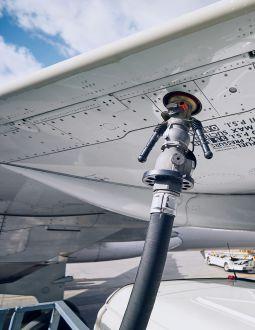
The refined aviation fuel is either trucked or piped for distribution to Canadian airports. Clearly, there is a lot of carbon dioxide which is expelled into the atmosphere to facilitate this supply chain. Moreover, in 2017, many Canadian FBOs were compelled by Transport Canada to stop selling 100LL fuel based upon a concern of contaminated fuel from the refiner. This caused operators to change their procedures and processes to ensure that they were able to support aviation fuel from the airports which they flew into.
Electrofuels, or eFuels, can be categorized into two categories: Biofuels and hydrogenbased fuels. Biofuels are biomass-derived fuels, from plants or waste and depending on which type of biomass is used, they could lower carbon dioxide emissions by 20 to 98 per cent when compared to conventional jet fuel. The first test flight using blended biofuel was in 2008 and in 2011 blended fuels with 50 per cent biofuels were allowed in commercial flights by the FAA. In 2019, the International Air Transport Association (IATA) was planning for a two per cent penetration by 2025. Biofuels are also known as Sustainable Aviation Fuel (SAF).
There are several discussions and strategies relating to the replacement of fossil aviation fuel: Replacements fuel sources whose production and distribution reduces carbon dioxide emissions, like SAF; the move to electric aircraft; and hydrogen fuel cells. Mining carbon dioxide to manufacture aviation fuel will help with the global emissions problem.
Fungible fuel is a process that utilizes natural resources to create fuel which is completely compatible with current aviation infrastructure, including engine propulsion systems and airport fueling infrastructure. The process utilizes carbon dioxide in the air and renewable electricity to manufacture any type of fuel which the manufacturer wishes to generate. In 2021, there was more than 35 billion tons of carbon emissions worldwide. Canada contributed 1.8 per cent and the United States contributed 13.54 per cent of the total worldwide carbon emissions. Aviation contributes to 2.5 per cent of the worldwide carbon dioxide emissions. In other words, our atmosphere has an ample supply of carbon dioxide to be used as the base element in the fungible fuel process.
Sustainable Power to Liquids (PtL) or electrofuels is a family of synthetic fuels that can be manufactured utilizing several well-known chemical reactions, including the Fischer-Tropsch process. To put it simply, hydrogen is produced using renewable electricity from water and then combined with carbon dioxide, either from industrial exhaust gases or mined out of the air. The product is a drop-in replacement for legacy hydrocarbon aviation fuel of your choice with low or zero net greenhouse gas emissions. In fact, this process can manufacturer
automotive as well as aviation grade fuels. Unlike biofuels, electrofuels do not compete with foodstuffs, require cutting down forests, or require the logistics of moving large quantities of feedstock to create a biomass. Just as important, unlike biofuels, eFuel is not technically different than the conventional counterpart (100 LL or JetA) it is replacing. Electrofuels can be created to fill the tank of a classic car, an existing 18-wheeler truck, a ship, a Cessna 172, an Airbus 320, or a SpaceX rocket. Electrofuels can fit into the existing network of filling stations, clean product pipelines and tank storage systems for standalone delivery or the can be blended seamlessly with existing fuels.
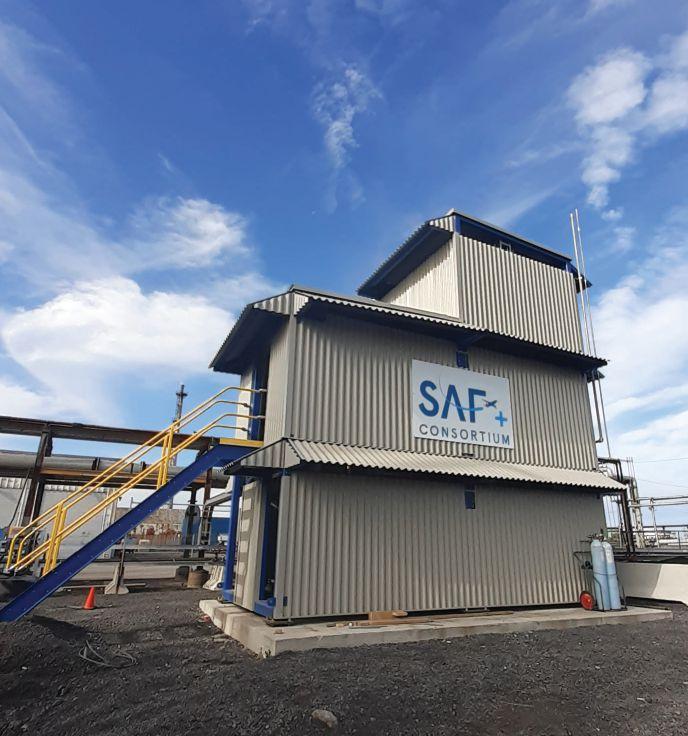
Fortunately, the manufacturing of fungible fuel is not a visionary concept short of delivery capabilities. Two pilot plants are operational in Quebec and in British Columbia. SAF+ Consortium (SafPlusConsortium.com) completed and operated its pilot plant in 2021 and is currently in the development of full scale commercial plants in Quebec and other regions in Canada.
Alexandru Iordan, VP of Technology at SAF+ reports: “Green hydrogen is easily produced using conventional and well known means. Co-locating our eFuel plant near large, industrialized carbon dioxide emitters, potentially near large airports, delivers the carbon dioxide that we need for our e-Fuel process, in a cost-effective manner. At production, each plant should be able to produce more than 80 million litters of fungible SAF that reduce aviation’s carbon dioxide emissions by 90 per cent compared to regular jet fuel.” SAF+’s beta plant located near Montreal can produce 750 barrels of eFuel per day.
Their production plant is forecast to manufacture 100 million liters of JetA per year depending upon SAF+’s ability to secure a block of hydroelectricity (three terawatts per year) from Quebec Hydro. With Canadian aviation consuming annually just under nine billion litres of fuel, SAF+’s approach is to scale production plants, doubling output while building plants near large Canadian airports. Based upon its current economic calculations, and its ability to fit into hydro
provider tariff categories, SAF+ expects the cost of its finished product to be more expensive than current JetA fossil fuel prices. The SAF+ team is currently on the hunt for capital funding to fund the transition from pilot to production plants. While being guarded on the economic numbers, SAF+ feels that the capital cost of each plant would be more than $500 million and has a goal of implementing six plants worldwide.
In addition to capital funding requirements, are significant operating costs associated with fungible fuel. A major cost component of the process is clean electricity. According to the International Hydropower Association, Canada is the fourth largest producer of hydroelectricity in the world. In 2018, Canada had an installed hydroelectric
The SAF+ Consortium has a goal of implementing six plants worldwide, estimating the cost of each would be around $500 million.
capacity of 76,843 MW with more than one half of Canadian hydroelectricity manufactured in Quebec. New hydroelectric projects are planned to add 6,419 MW taking the total to 83,262 MW. The average cost of hydroelectricity in Quebec and BC is $0.073 and $0.126 per kWh, respectively.
I’m curious if the cost of capital could be balanced with operating costs and access to carbon dioxide sources, to one day see a plan where eFuel is manufactured at the point of consumption – airports. This would eliminate the transportation costs associated with refined fuel, as well as environmental issues associated with pipelines. In Canada, a large percentage of aviation fuel is consumed at six airports. It would make sense to implement micro fungible fuel plants at airports such as Toronto Pearson, Ottawa, Montreal, Quebec City, Halifax, Winnipeg, Calgary, Edmonton and Vancouver, to name a few. But only time will tell, as fossil oil prices increase to where an economic tipping occurs allowing eFuel to be cost effective while returning an appropriate Return on Investment to those entrepreneur’s investing into the environmental future for aviation. | W

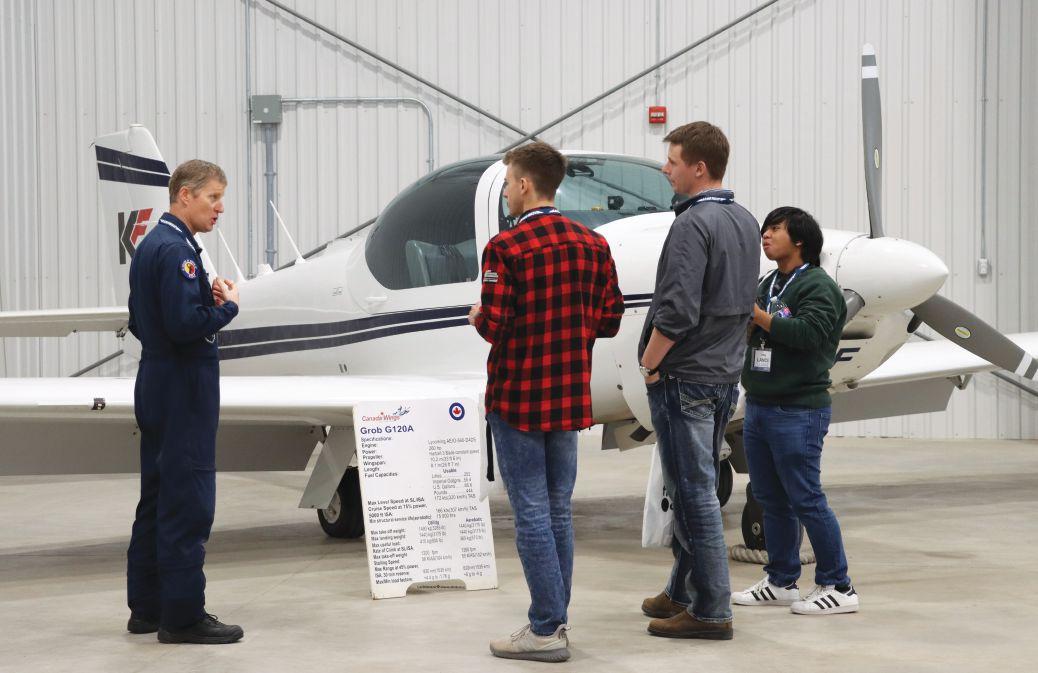
BY JON ROBINSON AND ANYSSA GATES
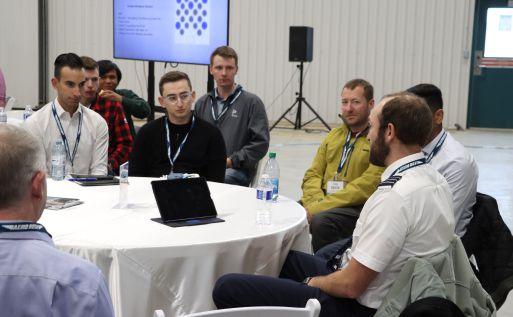
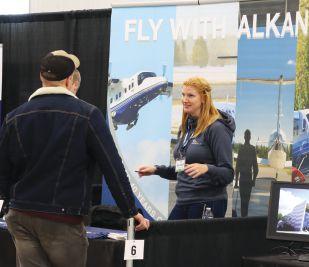
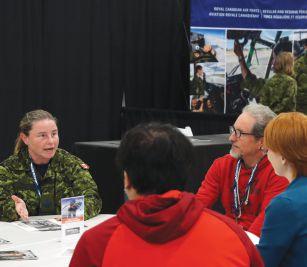
More than 170 people attended the second leg of the Careers in Aviation Expo program held in mid-October at Manitoba’s Southport Aerospace Centre, just outside of Portage la Prairie and situated on one of the country’s most historic airfields, CYPG. The one-day event took place in Southport’s new Hangar 5, built in 2020, with 25 exhibitors on hand to help inspire a new generation of aviation professionals.
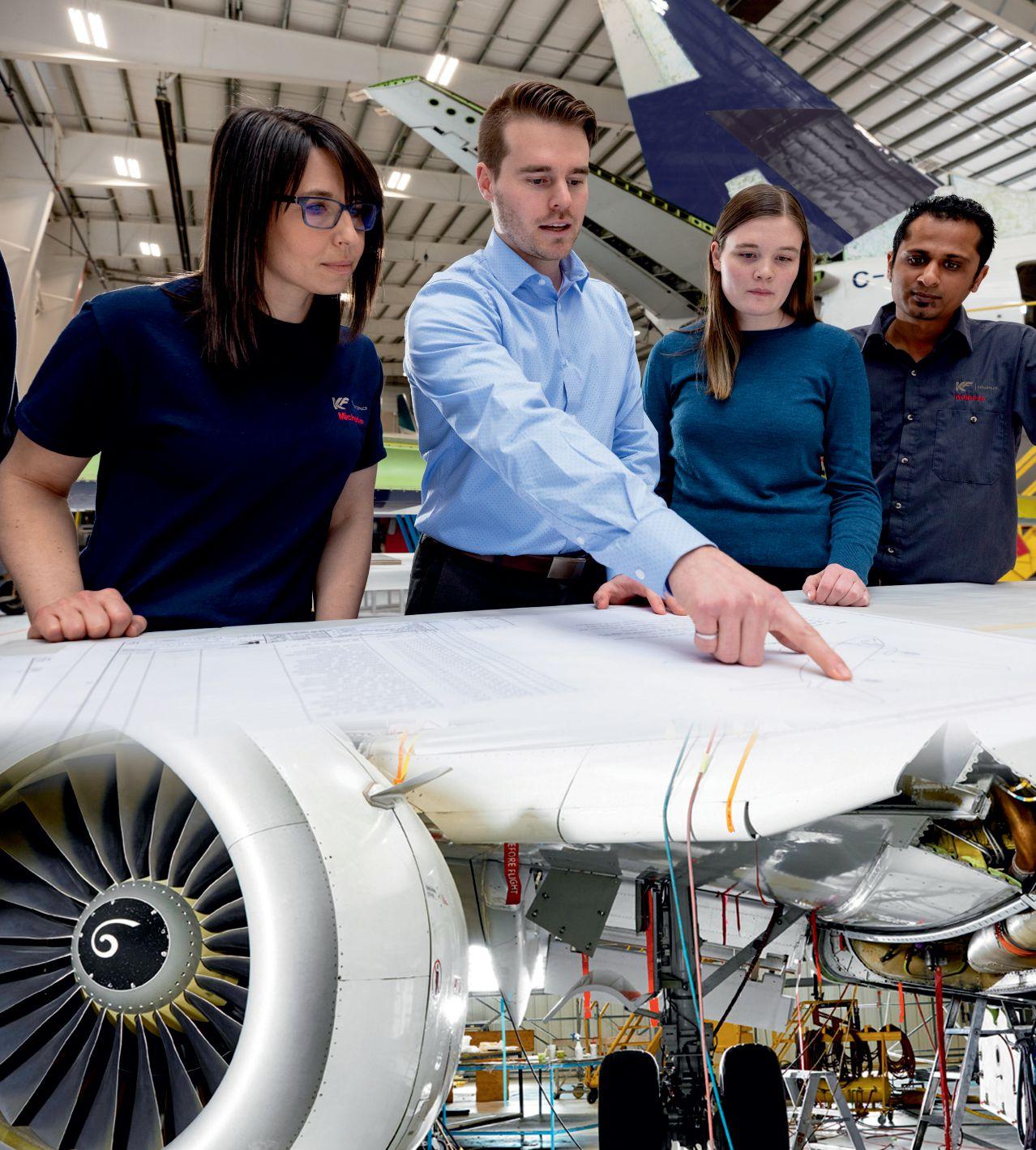
Following the first leg of the program held in May 2022 at Diamond Aircraft’s facility in London, Ontario, the second event was sponsored by Southport Aerospace Centre, Levaero Aviation, WestJet, KF Aerospace, Algoma University, Centennial College and Fanshawe College. With photography provided by Anyssa Gates, here are scenes from the Careers Expo in Southport, which for the first time welcomed this annual event, produced by Wings and Helicopters, in the province of Manitoba.

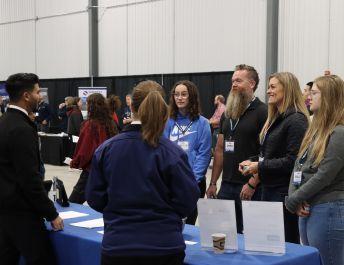
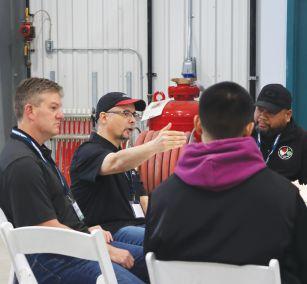
Team members from Mount Royal University discuss their aviation program in Alberta, which in October received a $8.1 million funding injection.
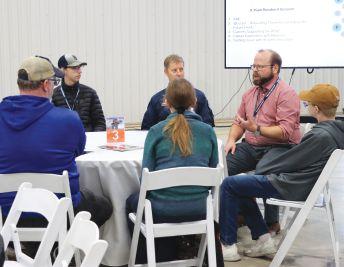
Denis Vandermeulen, KF Aerospace’s Maintenance Manager in Southport, hosts a mentoring session about supporting the Canadian Armed Forces.
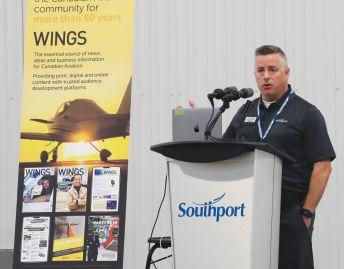
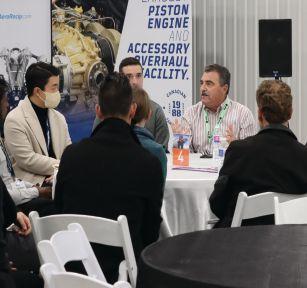
Darryl Dowd, Chief Operations Officer, Southport Aerospace Centre, describes the growth of the company’s activities at CYPG.
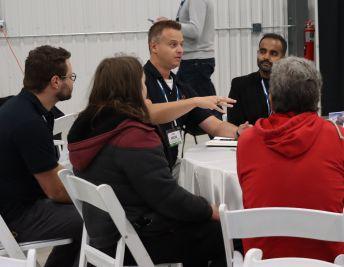
Nick Van Aalst of Level Flight describes the company’s approach to commercial pilot ground training during a mentoring session.
For over 30 years, AeroCourse has been a leader in advanced aviation training in Canada. We provide aviation ground school seminars and courses for advanced training along with publishing manuals and workbooks. The courses include IFR and ATPL seminars, online courses, and advanced aviation courses with flight colleges, schools and airlines. Our instructors are professional pilots and flight examiners with thousands of hours experience. We pride ourselves on providing exceptional materials and training.
opportunities





CONDOR AIRCRAFT ACCESSORIES
Hgr 5, 620A McTavish Rd. NE
Calgary AB T2E 7G6
Tel: 403-250-3032
Fax: 403-291-9439
Website: condorac.com
Email: viki@condorac.com
Personnel: Victoria Reeves
FLYRITE ACCESSORY OVERHAULS LTD.
101, 9615 - 56 Avenue NW
Edmonton AB T6E0B2
Tel: 780-439-6020
Fax: 780-439-6106
Toll Free: 888-439-6020
Website: flyrite.ca
Email: flyrite@incentre.net
Personnel: Peter Jenkins

PROPWORKS PROPELLER SYSTEMS
#38, 27018 SH 633, Villeneuve Airport Sturgeon County AB T8T 0E3
Tel: 780-457-1910
Fax: 780-457-1939
Toll Free: 888-457-1910
Website: propworks.ca
Email: carntson@propworks.ca
Personnel: Cliff Arntson, Manager; Codie-lyn Maki, Office Manager

SKYSERVICE BUSINESS AVIATION INC.
575 Palmer Road NE Calgary AB T2E 7G4
Tel: 905-362-5592
Toll Free: 888-759-7591
Website: skyservice.com
Email: maintenancesales@skyservice.com
Personnel: Paul Weeks, VP of Maintenance; Patrick Canuel, Director, Business Development Maintenance; Glenn Williams, Director, Business Development Maintenance; Pedro Carvalho, Director, Business Development Maintenance

KF AEROSPACE
5655 Airport Way
Kelowna BC V1V 1S1
Tel: 250-491-5500
Fax: 250-765-1489
Website: kfaero.ca
Email: mro@kfaero.ca

Repair, overhaul and sales of aircraft components and accessories. These components would be categorized as Fuel, Hydraulic, Pneumatic, Electro-Mechanical, and Electronics. Supporting Dehavilland, Boeing, Bombardier, Metro, Bell, Beech, HS748, and various other aircraft.
Specialists in starter generator overhauls, repairs and modifications. We work with our Customers professionally and personally, to help them achieve their goals of reliability and economy. Centrally located in Edmonton Alberta since 1997. AMO 90-97.
n n n
n Aircraft propeller overhaul, repair and sales. Component overhaul and NDT services. Transport Canada and EASA approved. Hartzell, McCauley, MT Propellers and Sensenich. Authorized MT Propeller Service Centre. Authorized BLR Aerospace Dealer.
n Skyservice is Canada’s leading facility for Maintenance, Repair and Overhaul (MRO) services for business and commercial aircraft. For over 35 years, we have been providing Airframe Maintenance, AOG support, Non-Destructive testing (NDT), Avionics, Pre-Purchase Inspections, Interior Refurbishment, Exterior Paint, Aircraft Part and Repair and more, to both Canadian and International clients.
Personnel: Kevin Kolenc, MRO Planning Manager; Bryan Akerstream, Director of Business Development; Gregg Evjen, Chief Operating Officer n
CANADIAN PROPELLER LTD.
462 Brooklyn St. Winnipeg MB R3J 1M7
Tel: 204-832-8679
Fax: 204-888-4696
Toll Free: 800-773-6853
Website: canadianpropeller.com
Email: dwills@canadianpropeller.com
Personnel: Maurice Wills, PRM and President; Debbie Wills, VP and Owner
KF Aerospace is Canada’s largest commercial Maintenance, Repair and Overhaul (MRO) provider and celebrates over 50 years of innovative aircraft solutions for corporate, commercial and military customers worldwide. With over 1,000 highly skilled staff across Canada, KF specializes in a wide range of aviation services including: maintenance, engineering and modifications, air cargo operations, military pilot training, and aircraft leasing. Our MRO facilities in Kelowna, BC and Hamilton, ON support 19 lines of concurrent maintenance and are industry recognized for their quality and on-time delivery.
EASA Approved. Specialized support, MRO, sales and exchange of propellers, governors and components. MT Propeller distributor. NDT services. On wing maintenance and 24/7 technical and AOG support. Metal and composite propellers, turbine and reciprocating governors. Servicing across North America and worldwide. Western Canada’s Factory Authorized Service Centre for Hartzell & McCauley. Now an authorized BLR dealer. ** DASH 8 & ATR Blades & Component, MRO***

PROPWORKS PROPELLER SYSTEMS
53 Bannister Rd.
Winnipeg MB R2R 0P2
Tel: 204-837-4961
Fax: 204-779-3085
Toll Free: 888-679-2965
Website: propworks.ca
Email: mhudec@propworks.ca
Personnel: Mike Hudec, Manager; Debbie Schmidt, Office Manager; Jim Ross, President

DUNCAN AVIATION
15745 S. Airport Rd.
Battle Creek MI 49015
Tel: 269-969-8400
Fax: 269-969-8432
Toll Free: 800-525-2376
Website: duncanaviation.aero
Email: webmaster@duncanaviation.com
DUNCAN AVIATION 3701 Aviation Rd. Lincoln NE 68524
Tel: 402-475-2611
Fax: 402-475-5541
Toll Free: 800-228-4277
Website: duncanaviation.aero
Email: webmaster@duncanaviation.com

CHARTRIGHT AIR GROUP
2450 Derry Road East, Hangar 3 Mississauga ON L5S 1B2
Tel: 905-671-4674
Toll Free: 800-595-9395
Website: chartright.com
Email: mro@chartright.com
Personnel: Constantine Tsokas, Vice President, Maintenance; Wilson Rodriguez, Director of Maintenance (PRM); David Richardson, Fleet Manager

D.W. ELECTROCHEMICALS LTD.
97 Newkirk Rd. North, Unit 3 Richmond Hill ON L4C 3G4
Tel: 905-508-7500
Fax: 905-508-7502
Website: stabilant.com
Email: dwel@stabilant.com
Personnel: Betty Gordon, Sales Manager
n Propeller and governor overhaul and repair. Full service propeller and governor overhaul facility. Transport Canada & EASA approved. Factory trained technicians. Avia, Dowty, Hartzell, Hamilton Standard, Hamilton Sundstrand, McCauley, MT Propeller, Sensenich propellers. Authorized MT Propeller Service Centre. Authorized BLR Aerospace Dealer.
service, and preowned aircraft sales and acquisitions. Duncan Aviation also has international aircraft components experts available 24/7/365 at +1 402.475.4125 who can handle any aircraft system problem with immediate exchanges, rotables, loaners or avionics/instrument/accessory repairs and parts.
n Chartright is a Transport Canada Approved Maintenance Organization with an approved FAA Supplement. As a leading maintenance provider to business jets in Canada, Chartright has maintenance facilities in Toronto and Kitchener and is capable of performing maintenance on a wide array of fixed and rotary wing aircraft offering a full services from line maintenance servicing to heavy inspections, avionics and structures. Chartright also maintains the largest fleet of Bombardier aircraft in Canada capable of handling any heavy maintenance requirements. Whether it’s a 24 month inspection on your Challenger, or a 120 month inspection on your Global, contact us to discuss your maintenance requirements and benefit from the value that Chartright delivers to its customers. Chartright can provide in-depth expert analysis, records review, and pre-purchase inspections to ensure you are making an informed aircraft purchase.
D.W. Electrochemicals Ltd manufactures Stabilant 22 Electronic ContactEnhancerproducts. Stabilant 22 is used to ensure the conductivity, reliabilityand performanceof electronic contacts and connectors. Stabilant 22 is an easy to use,cost effective,active resident treatment when assembling or servicing aircraftequipment.

ENTAIR INC.
1190 Keith Ross Dr., Oshawa, ON, L1J 0C7
Tel: 905-721-1109
Toll Free: 800-668-4382
Website: enterpriseair.ca
Email: mproulx@enterpriseair.ca
Primary contacts: Martin Proulx, Kevin Duncan, Jamie Lee

FLYING COLOURS CORP.
901 Airport Rd
Peterborough ON K9J 0E7
Tel: 705-742-4688
Fax: 705-742-8861
Website: flyingcolourscorp.com
Email: info@flyingcolourscorp.com
Personnel: Scott Duncan, Richard Dabkowski, Ryan Kinahan


HOPE AERO PROPELLER & COMPONENTS, INC.
7605 Bath Rd.
Mississauga ON L4T 3T1
Tel: 905-677-8747
Fax: 905-677-5935
Toll Free: 800-268-9900
Website: hopeaero.com
Email: goodtogo@hopeaero.com
INNOTECH-EXECAIRE AVIATION GROUP
Toronto Pearson International Airport, 2450
Derry Road East, Hangar 7 Mississauga ON L5S 1B2
Tel: 905-677-2484
Fax: 905-673-8733
Toll Free: 888-483-7070
Website: innotech-execaire.com
Email: info@innotech-execaire.com
Personnel: Logan Brown; Sales Director, Aircraft Maintenance & Technical Services

LEVAERO AVIATION
2039 Derek Burney Dr
Thunder Bay ON P7K 0A1
Tel: 807-475-5353
Fax: 807-475-5405
Toll Free: 844-538-2376
Website: levaero.com
Email: info@levaero.com

SKYSERVICE BUSINESS AVIATION INC.
6120 Midfield Road
Mississauga ON L4W 2P7
Tel: 905-678-5682
Toll Free: 888-759-7591
Website: www.skyservice.com
Email: maintenancesales@skyservice.com
EntAir Inc. (Enterprise) is a full service, Transport Canada Approved Maintenance Organization with newly expanded maintenance and avionics facilities in Oshawa (CYOO). Approved to certify work on commercially operated Beech King Air, Falcon 10/100 & 20/200, Pilatus, Piaggio P-180 Avanti, Douglas DC 3, Phenom 300, DHC-6 Twin Otter, Dash 8, Cessna single turbo propeller and small piston aeroplanes. Capable of performing specialized and non-specialized work, including welding. Extensive parts resources and supplies. Equipped for aircraft salvage and insurance repairs.
Flying Colours, established in 1989, is a global leader in all aspects of aircraft MRO with North American facilities in Peterborough, ON, and St. Louis, MO. Flying Colours supports a range of aircraft types from light through to ultra-long-range models including Bombardier, Dassault, Embraer, Gulfstream, Hawker, Pilatus and Textron. Its team of experts are dedicated to providing the highest quality standards. We specialize in light to heavy maintenance and repairs, special mission modifications and design engineering, avionics installations and upgrades, component overhaul and repair, completions, refurbishments, executive conversions and exterior paintwork. Flying Colours is a Bombardier Authorized Service Facility and Bombardier Preferred Completion Centre as well as a GE Aviation Approved Service Centre. A dedicated Flying Colours interiors facility is located in the Bombardier Aerospace facility at Seletar Airport.
Hope Aero specializes in the sales and service of propellers, governors, wheels, brakes and Honeywell Dynamic Balance Equipment and Non-Destructive Testing.
Since 1955, INNOTECH-EXECAIRE AVIATION GROUP has been serving customers a comprehensive range of MRO services for a variety of aircraft models including Bombardier Challenger & Global platforms as well as the Cessna Citation family of jets.We are your Citation Jet Experts. Maintenance & Inspections, Avionics Installations, Interior Refurbishments, Textron Authorized Service facility for all Citation Jets, Transport Canada, FAA & EASA approved facility, Fully trained & qualified AMEs, Avionics Technicians & In-house skilled trades, Fully qualified to support both in-production and aftermarket activities, FANS, ADS-B/C, CPDLC, Connectivity, IFE, CMS, Non-Destructive Testing, Honeywell Channel partner, Collins Aerospace Dealer, World-class aircraft interior refurbishments.
Levaero Aviation delivers a full complement of turnkey and mission-specific solutions to the aviation marketplace and is the exclusive Authorized Pilatus Aircraft Sales & Service Centre for Canada. Levaero Aviation is an accredited dealer member of the International Aircraft Dealer Association (IADA), the global standard of aircraft brokerages. Headquartered in Thunder Bay, Ontario, with a National Sales office based in Toronto, Ontario, Levaero provides its customers with leading aircraft brokerage expertise and extensive MRO capabilities.
(Please see full listing on page 29) n n n n n n n n n n n n n n n n Skyservice is Canada’s leading facility for Maintenance, Repair and Overhaul (MRO) services for business and commercial aircraft. For over 35 years, we have been providing Airframe Maintenance, AOG support, Non-Destructive testing (NDT), Avionics, Pre-Purchase Inspections, Interior Refurbishment, Exterior Paint, Aircraft Part and Repair and more, to both Canadian and International clients. (Please see the company’s full listing on page 29.)
SKYSERVICE BUSINESS AVIATION INC.
1004 Airport Road
Gravenhurst ON P1P 1R1
Tel: 888-759-7591
Website: skyservice.com
Email: maintenancesales@skyservice.com
Personnel: Paul Weeks, VP of Maintenance; Patrick Canuel, Director Business Development Maintenance; Glenn Williams, Director Business Development Maintenance; Pedro Carvalho, Director Business Development Maintenance

VOYAGEUR AVIATION CORP.
1500 Airport Road
North Bay ON P1B 8G2
Tel: 705-476-1750
Website: voyav.com
Email: info@voyav.com
Personnel: Chas Eveson, Vice President, Aerotech; Georges Dubytz, Director, Engineerin; Aaron Brodhagen, MRO Sales Manager
n Skyservice is Canada’s leading facility for Maintenance, Repair and Overhaul (MRO) services for business and commercial aircraft. For over 35 years, we have been providing Airframe Maintenance, AOG support, Non-Destructive testing (NDT), Avionics, Pre-Purchase Inspections, Interior Refurbishment, Exterior Paint, Aircraft Part and Repair and more, to both Canadian and International clients. As Authorized Service Center for Bombardier, Gulfstream, Falcon/Dassault and Hondajet, and as an approved AMO by TCCA, FAA, BDCA, HK-CAD, 2-REG, Aruba, CAAS and EASA, we understand aircraft. Our certified and trained technicians set-us apart and ensures quality, thoroughness and service excellence.
Voyageur Aviation Corp. supports the regional aircraft marketplace as a Canadian licensed Air Operator, Approved Maintenance Organization, Design Approval Organization Parts Supplier and Lessor. We provide customers with all levels of heavy maintenance services from standard checks to aircraft modification. Voyageur offers in-house design and certification services, including sensor integration and Supplemental Type Certificate (STC) approvals for aircraft modifications. reconfigurations, and obsolete components. Our 200,000 sq. ft. maintenance and parts inventory facility in North Bay, Ontario is home to all MRO, design engineering, and parts support activities backed by our in-house Structure, Composite, Avionics, and Accessory shop which boasts top-notch component repair and overhaul services including Dash 8-400 landing gear. We evolve the ordinary into the extraordinary, continuing to deliver innovative solutions to customers with unique aviation requirements.



INNOTECH-EXECAIRE AVIATION GROUP
10225 Ryan Avenue
Dorval QC H9P 1A2
Tel: 514-420-2900
Website: innotech-execaire.com
Email: info@innotech-execaire.com
Personnel: Logan Brown, Sales Director, Aircraft Maintenance & Technical Services

M1 COMPOSITES TECHNOLOGY INC
2460 Michelin
Laval QC H7L 5C3
Tel: 450-686-8864
Website: m1composites.com
Email: info@m1composites.com n
PREMIER AVIATION
800, 8e Rue de L’Aéroport
Quebec City QC G2G 2S6
Tel: 418-800-1325
Fax: 418-948-8616
Toll Free: 888-578-3369
Website: premieraviation.ca
Email: sales@premieraviationqc.ca
Personnel: Sylvain Perron, President & CEO; JC Tewfik, VP Sales, Marketing & Services; Philippe Perron, Marketing Manager, Communications & Customer Relations

SKYSERVICE BUSINESS AVIATION INC.
9785 Ryan Avenue
Montreal QC H9P 1A2
Tel: 514-420-2405
Toll Free: 888-759-7591
Website: skyservice.com
Email: maintenancesales@skyservice.com
(Please see full description on page 29)


USA BORESCOPES
2055 Bearden Road
CLARKSVILLE TN 37043
Tel: 931-362-3304
Fax: USA BORESCOPES
Toll Free: 931-362-3304
Website: USABorescopes.com
Email: bill@usaborescopes.com
n
n n Since 1955, INNOTECH-EXECAIRE AVIATION GROUP has been serving customers a comprehensive range of MRO services for avariety of aircraft models including Bombardier Challenger & Global platforms as well as the Cessna Citation family of jets.Maintenance & Inspections | Aircraft Paint | Avionics Installations | Interior Refurbishments. Center of Excellence for Bombardier Challenger & Global business jets, Transport Canada, FAA & EASA approved facility, Fully qualified AME’s, Avionics Technicians & In-house skilled trades, OEM production support & in-production and aftermarket activities, State-of-the-art paint shop having painted over 225 aircraft to the highest quality standards since its inception in 2009, STC approved for KU/KA system installations on Bombardier Global aircraft, FANS, ADS-B/C, CPDLC, Connectivity, IFE, C
n n n M1 Composites serves the commercial and military the aerospace industry with engineering, certification, manufacturing, and repair of advanced composite and sheet metal structures including: nacelles, flight control surfaces, radomes, interiors, and more. M1 Composites is ISO9001/AS9100/AS9110 certified, a Transport Canada Approved Maintenance Organization (AMO 23-12), Design Approval Organization (DAO 14-Q-01), and Canadian Controlled Goods Program (CGP) accredited.
n n n n Premier Aviation is a full-service provider of airframe heavy maintenance (MRO). Located at the Jean-Lesage International Airport in Quebec City (YQB), we are certified to maintain a wide variety of regional types aircraft such as ATR, DeHavilland, EMBRAER, MHI RJ and SAAB. Thanks to our five (5) maintenance lines, our team is more than ready to welcome and maintain your aircraft to the highest industry standards.
n Skyservice is Canada’s leading facility for Maintenance, Repair and Overhaul (MRO) services for business and commercial aircraft. For over 35 years, we have been providing Airframe Maintenance, AOG support, Non-Destructive testing (NDT), Avionics, Pre-Purchase Inspections, Interior Refurbishment, Exterior Paint, Aircraft Part and Repair and more, to both Canadian and International clients.As Authorized Service Center for Bombardier, Gulfstream, Falcon/Dassault and Hondajet. (Please see full description on page 29)
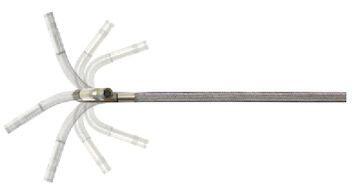
Personnel: Mike Costello n USA Borescopes is a global supplier of world class remote visual inspection equipment. We offer a wide selection of borescopes and videoscope systems that are designed for today’s aviation, rotorcraft and aerospace professionals. In addition, we can perform borescope repairs on any make or model borescope with free repair estimates. All work is guaranteed to meet OEM standards.
DUNCAN AVIATION
262 South 3800 West
Provo UT 84601
Tel: 801-342-5600
Fax: 801-342-5506
Website: duncanaviation.aero
Email: webmaster@duncanaviation.com
certifications, engine and avionics AOG service, and preowned aircraft sales and acquisitions. Duncan Aviation also has international aircraft components experts available 24/7/365 at +1 402.475.4125 who can handle any aircraft system problem with immediate exchanges, rotables, loaners or avionics/instrument/accessory repairs and parts.

EAGLE COPTERS LTD.
823 McTavish Road NE
Calgary AB T2E 7G9
Tel: 403-250-7370
Website: eaglecopters.com
Email: sales@eaglecopters.com
FLYRITE ACCESSORY OVERHAULS LTD.
101, 9615 - 56 Avenue NW
Edmonton Alberta T6E0B2
Tel: 780-439-6020
Fax: 780-439-6106
Toll Free: 888-439-6020
Email: flyrite@incentre.net
Personnel: Peter C. Jenkins

HELIWELDERS CANADA LIMITED
Building 47, Unit #1, 21330 56th Avenue, Langley Airport
Langley BC V2Y 0E5
Tel: 604-530-5225
Fax: 604-530-5226
Website: heliwelders.com
Email: jasmin@heliwelders.com
Personnel: Jasmin Hart, General Manager; Jasen Gerein, Director Of Operations
SELECT HELICOPTER SERVICES LTD.
200 - 6220 Lapointe Drive
Kelowna BC V1V 2S2
Tel: 250-765-3317
Website: selecthelicopter.com
Email: info@selecthelicopter.com
Personnel: Marty Luksts; General Manager / PRM; Dana Washington; Quality Assurance Manager / Sales; Dell Luksts; Production Manager

NAMPA VALLEY HELICOPTERS INC.
1870 West Franklin Road
Meridian ID 83642
Tel: 208-362-0851
Fax: 208-362-9726
Website: www.nvhelicopters.com
Email: chris@nvhelicopters.com
Personnel: Chris Rekemeyer, Manager, Support Services
n Eagle Copters Ltd. is your one-stop-shop for Helicopter Maintenance. With many service offerings including but not limited to; Overhauls, New & Used Part Sales, Helicopter Sales & Leasing, and Airframe Upgrades. Since our beginnings in 1975, Eagle has successfully transitioned from a small, family business, to a global team of experts with a network of affiliates in North America, South America, and Australia, with capabilities spanning multiple OEM platforms. To learn more about our company and our service offerings, please visit our website, or contact our Sales team.
Specialists in starter generator overhauls, repairs and modifications. We work with our Customers professionally and personally, to help them achieve their goals of reliability and economy. Centrally located in Edmonton Alberta since 1997. AMO 90-97.
Heliwelders is a Transport Canada, FAA, & EASA regulatory approved facility. In addition, we are a Fully Authorized AIRBUS “D Level”, maintenance facility. We carry out maintenance, structural repairs, composite repair, avionics, and paint for Airbus, Sikorsky and Bell Aircraft. We specialize in major inspections, and structural repairs to Airbus AS350/ H125, AS355, EC130/H130, Bell 205, 206, 212, 412, and 407, Sikorsky S61 & S92 Helicopters. This includes full Interior refurbishments, and in-house paint capabilities. Heliwelders is also an OEM approved SAFRAN Certified Maintenance Center (CMC) for Arriel & Arrius Level 1&2 engine support. Our wholly owned subsidiary, Nampa Valley Helicopters, located in Meridian, Idaho, is a fully authorized AIRBUS “D Level” AS350/H125, AS355, & EC130/H130 Dynamic Component overhaul facility. Nampa carries a large inventory of rental and exchange AIRBUS Dynamic Components to support the global helicopter markets, including Canada.
n Highly qualified, reliable and always on time. At Select, we specialize in repairing and overhauling helicopter hydraulic components and cargo hooks, so you can get back in the air with confidence. We can support the hydraulic flight controls and hydraulic components on your Bell lights and mediums, Airbus H125 (AS350)/AS355, UH-1 fleet and cargo hooks/equipment manufactured by Onboard Systems, Dart, Mechanical Specialties and Cargo Aids. Your helicopter components deserve a superior level of specialized care. We work meticulously with great attention to detail, ensuring lasting quality and value.
n Nampa Valley Helicopters Inc. (NVH), is a wholly owned subsidiary of Heliwelders Canada Ltd. NVH is a fully authorized Airbus “D Level” MRO facility, specializing in the Repair & Overhaul of the AIRBUS AS350/H125, AS355, & EC130/H130 Series Dynamic Components. NVH also carries a large inventory of rental and exchange Components to support our global customers. Please ask us about Servo Exchanges. Heliwelders Canada is also a SAFRAN Approved Arriel, and Arrius Certified Maintenance Center. NVH certifications include FAA, and EASA regulatory approvals.

ADVANCED COMPOSITE STRUCTURES INC.
43 Muir Rd.
Winnipeg MB R2X 2X7
Tel: 204-982-6565
Website: acs-composites.com
Email: sales@acs-composites.com
Personnel: Bruce Anning, VP of Technical Operations; Slobodan Oravec, GM
CUSTOM HELICOPTERS LTD.
706 South Gate Road
Saint Andrews MB R1A 3P8
Tel: 204-338-7953
Fax: 204-663-5037
Toll Free: 800-782-0780
Website: customheli.com
Email: info@customheli.com
Personnel: Jed Hansen; President & CEO; Jude Berard, Director of Maintenance
570 Ferry Road
Winnipeg MB R3H 0T7
Tel: 204-318-7544
Website: standardaero.com
Email: helicopters@standardaero.com
Personnel: Brian Hughes, Vice President of Sales And Marketing
2450 Derry Road East, Hangar 3
Mississauga ON L5S 1B2
Tel: 905-671-4674
Toll Free: 800-595-9395
Website: www.chartright.com
Email: mro@chartright.com
Personnel: Simon Lareau, Rotary Manager And Leonardo Service Centre Manager
D.W. ELECTROCHEMICALS LTD.

97 Newkirk Rd. North, Unit 3
Richmond Hill ON L4C 3G4
Tel: 905-508-7500
Fax: 905-508-7502
Website: http://www.stabilant.com
Email: dwel@stabilant.com
Personnel: Betty Gordon, Sales Manager
HOPE AERO PROPELLER & COMPONENTS, INC.
7605 Bath Rd.
Mississauga ON L4T 3T1
Tel: 905-677-8747
Fax: 905-677-5935
Toll Free: 800-268-9900
Website: hopeaero.com
Email: goodtogo@hopeaero.com
n Since 1988 Advanced Composite Structures (ACS) has been a world leader in Rotor Blade and Composite Structure repairs. ACS’s success can be attributed to a comprehensive and ongoing research and development program resulting in new and enhanced repair procedures. ACS strives to provide customers with “Sound-SolidSolutions” and focuses on fixing problems not symptoms. ACS provides repairs on components such as: helicopter rotor blades, cowlings, fairings, door and floor panels, radomes, ailerons, elevators, rudders, flaps, flight controls, engine nacelles, landing gear doors and interior panels.
Custom Helicopters is a first-rate Maintenance, Repair and Overhaul facility located in Winnipeg, Manitoba. Our services include: aircraft modifications and refurbishing; sheet metal work and structural repairs; component overhauls and repairs (transmissions, tail rotor gearboxes, freewheel units, rotor heads).
Founded in 1911, StandardAero has become one of the world aerospace industry’s largest independent maintenance, repair and, overhaul (MRO) providers. Our company’s success is the outgrowth of the synergistic merger of businesses with complementary specialties that have exponentially increased our capabilities and generated unprecedented customer commitment and value.StandardAero offers extensive MRO services and custom solutions for business aviation, commercial aviation, military, and industrial power customers. Nearly 6,600 professional, administrative and technical employees work in 55+ major facilities worldwide, with additional strategically located regional service and support centers as well as mobile service teams all across the globe.StandardAero serves a diverse array of customers in business and general aviation, airline, military, helicopter, components and energy markets. The StandardAero Helicopters Business Unit holds major OEM licenses for Airbus Helicopters.
Chartright is a Transport Canada Approved Maintenance Organization (AMO #196-92) with an approved FAA Supplement. Chartright has maintenance facilities in Toronto and Kitchener and are capable of performing maintenance on a wide array of fixed and rotary wing aircraft offering a full array of services from line maintenance servicing to heavy inspections, avionics, and structures. Chartright is an authorized Leonardo Helicopters Service Centre. Contact us to discuss your next maintenance event.
D.W. Electrochemicals Ltd manufactures Stabilant 22 Electronic Contact Enhancer products. Stabilant 22 is used to ensure the conductivity, reliability and performance of electronic contacts and connectors. Stabilant 22 is an easy to use, cost effective, active resident treatment when assembling or servicing aircraft equipment.
n n Hope Aero specializes in the sales and service of propellers, governors, wheels, brakes and Honeywell Dynamic Balance Equipment and Non-Destructive Testing.
BELL TEXTRON CANADA LTD.
12,800 rue de l’Avenir
Mirabel QC J7J 1R4
Tel: 450-971-6500
Website: fr.bellflight.com/company/canada
Email: mirabelmaintenance@bellflight.com

USA BORESCOPES
2055 Bearden Road
CLARKSVILLE TN 37043
Tel: 931-362-3304
Toll Free: 931-362-3304
Website: usaborescopes.com
Email: bill@usaborescopes.com
AEROBRIGHAM
351 Airport Rd. Bldg. 500 Decatur TX 76234
Tel: 940-626-4849
Website: aerobrigham.com
Email: david@aerobrigham.com
Personnel: David Brigham, President, Danny Brigham, VP; Stacy Keith, Quality Director;
n For more than 80 years, we’ve been reimagining the experience of flight – and where it can take us. We are pioneers. We were the first to break the sound barrier and to certify a commercial helicopter. We were a part of NASA’s first lunar mission and brought advanced tiltrotor systems to market. Today, we’re defining the future of on-demand mobility.
n USA Borescopes is a global supplier of world class remote visual inspection equipment. We offer a wide selection of borescopes and videoscope systems that are designed for today’s aviation, rotorcraft and aerospace professionals. In addition, we can perform borescope repairs on any make or model borescope with free repair estimates. All work is guaranteed to meet OEM standards.
n AeroBrigham is a full service maintenance and customizing facility focusing on rotorcraft and medium fixed wing aircraft. We are located on the Decatur Texas airport in a 15,000 sq. ft. facility. We are an approved vendor for Bell, AirBus, MD, Sikorski and Air Tractor. We are also a registered DOD contracting agency. West of the Dallas/Fort Worth Metroplex, AeroBrigham is conveniently located to both Bell Helicopter and Airbus Helicopters.
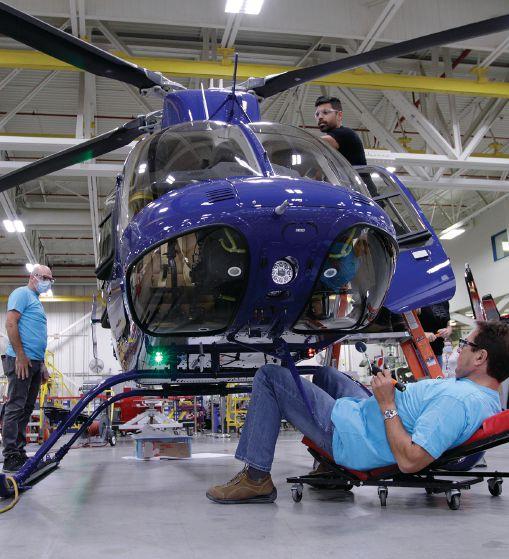

In 2005 the Air Transport Association of Canada signed with Transport Canada the very first voluntary aviation emissions reduction Memorandum of Understanding in the world between a government and an industry. We have always been a strong supporter of more environmentally efficient and sustainable aviation in Canada. With the current state of research and available technology it is very evident that for the foreseeable future the only viable solution for mid-size and large airline type aircraft involves the use of Sustainable Aviation Fuels (SAF). The aircraft manufacturers have certified its use for our operators’ aircraft types and operators are using SAF whenever and wherever it is available. However, in Canada this is where the solution has run into a potential huge roadblock. There is an important lack of infrastructure in this country to support the goals accepted by Canada at the recent ICAO Assembly in October.
The current goals are 10% of aviation fuel used in Canada by 2030 to be SAF with the ultimate goal of net zero emissions by 2050. ATAC supports these lofty goals, but they can only be successfully reached if the Government of Canada steps up quickly with providing the necessary infrastructure and financial support. A mechanism must be put in place providing for the availability of SAF throughout the country and not just at the major hubs.
ATAC is prepared to work with the Government of Canada and our operators to find viable solutions to this serious problem, we just need all parties to show the serious willingness to do so.
ATAC is happy to welcome members and guests at its annual Conference in Vancouver on November 15 to 17 in Vancouver. This conference marks the first in ATAC’s renewed effort to broaden its commercial appeal and attract new exhibitors and participants from some of the branches of the aviation sector that have not had strong participation in the past. The objective is to widen the scope of industry partners and welcome them in ATAC activities and membership.
In 2021, the ATAC Board of Directors (BOD) created a Strategic Planning Committee with numerous mandates to review, including ATAC Events, Membership, and Governance. Subcommittees were created to oversee the work done by ATAC
personnel in each of these areas. The Subcommittee on Governance (GSC) mandated to review the workings of the BOD and propose changes in its size and structure.
This revision was prompted by many objectives which are meant to:
1. Make the BOD more efficient.
2. Concentrate the mandate of the BOD on the governance of the association, strategic planning, government and public relations, communications, budget, finances, and the oversight of the President’s management of the association.
3. Formalize the link between Member Committees and the BOD.
4. Make the Member Committees responsible for managing key issues, proposing ATAC’s official positions, and communicating them to the BOD.
5. Increase member participation in ATAC’s Member Committees.
6. Demonstrate that the organization is nimble on all fronts.
7. Improve director’s experience.
The GSC proposed that ATAC be governed by a Board made up of fourteen (14) duly elected Directors.
The 14 Directors would be elected as follows:
• Nine (9) Directors from Carriers
• Three (3) Directors from the Training Organizations
• Two (2) Directors from Industry Partners.
Directors will be nominated for election by Members of their respective member categories and by the Industry Partners. To offer Members and Industry Partners greater opportunity to run for the BOD, Directors would be limited to two consecutive terms. Directors would be eligible to run again in the following calendar year.
All ATAC Members will be invited to participate in the Member Committees of their choice but can only run for a BOD position in their respective category.
To elect a new BOD as recommended by the GSC, clean slate elections must be held this fall. Consequently, all current directors officially resigned their positions effective November 16, 2022.
On June 27, 2022, the ATAC BOD approved these changes in order for ATAC to proceed to the election of the BOD as proposed. The law allows these changes to be enacted by the BOD and they will be formalized when approved by Members at the next annual meeting to be held on November 16, 2022.












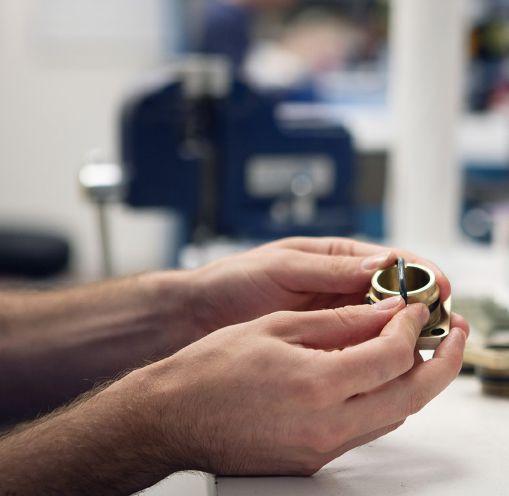
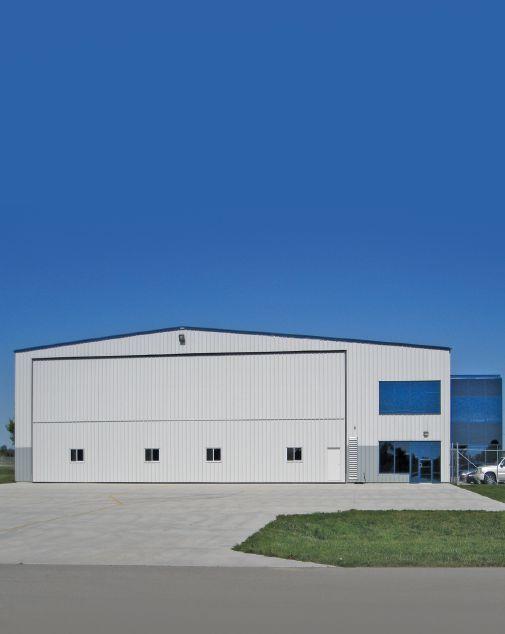











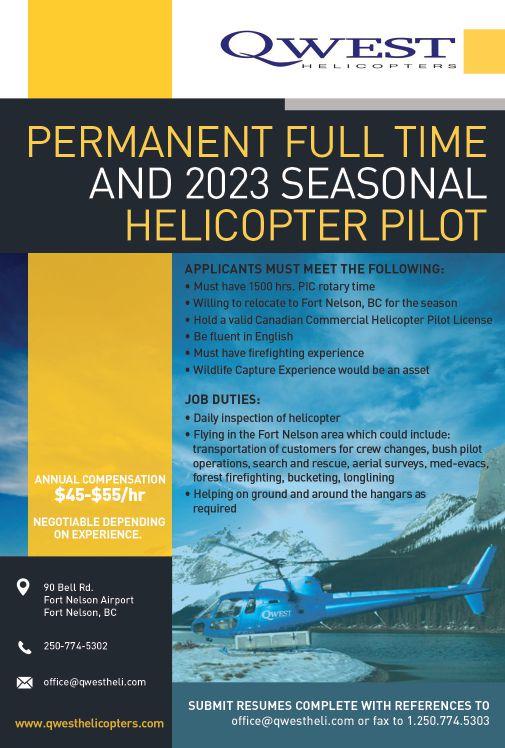



Scott Simmie | guest columnist
The 42-kilometre Montreal Marathon was held in late September and three InDro Robotics engineers were there. They weren’t running, but were instead providing live feeds from drones. Those live feeds were being monitored by research assistants, who were assessing the quality of the feeds and their usefulness in detecting runners who might be in need of medical assistance.
InDro became involved with this project through Dr. Valérie Homier, an emergency physician at McGill University Health Centre. She has collaborated with InDro on two previous research projects. One of those projects evaluated whether drones or ground delivery could transport simulated blood products more efficiently to Montreal General Hospital. Drones were faster. The second project studied whether drones could help identify swimmers in distress at an Ironman event.
With the Montreal Marathon coming up, Homier knew there would likely be medical events. There generally are. “In these long-distance sporting events there are usually some significant injuries, including cardiac events and heat strokes,” she says. Homier was interested in whether two drones in the air, covering two critical segments toward the end of the marathon, could provide useful data. Specifically, would the live video feed be consistent enough in quality and resolution to be a useful tool?
There was a lot of planning required for the mission to ensure the drones could provide continuous coverage and be safe for flying in an area with so many people. Project Manager Irina Saczuk, who happens to also be an RN, worked closely with Homier to figure out the nuts and bolts of the InDro side of things. InDro assigned three employees from the Area X.O facility to the project: Software developers Ella Hayashi and Kaiwen Xu, along with mechatronics specialist Liam Dwyer. All three hold Advanced RPAS certificates and took part in planning meetings to understand the mission and their roles. They also optimized the drones’ video feeds to ensure the best quality would reach those monitoring remotely on large screens.
“At big-scale events such as this
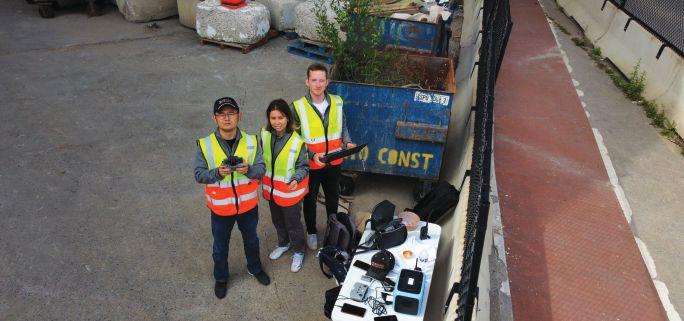
Three drones were used in rotation so that two drones were always in the air providing live video at any given time.
marathon, lots of people could go down with injuries,” says Hayashi. “But it can be hard to get timely support because roads are blocked. So drones have the potential to really help with sharing the precise location and other information when a person may need help.”
For this pilot project, the InDro engineers/pilots were not actively looking for people in medical distress. Their role was simply to pilot the drones at assigned locations and maintain a video feed that offered good situational awareness. In the event of an emergency, the pilots were to follow instructions, including moving in closer to a runner in distress. The team took four DJI Mini 2 drones to Montreal. Though InDro has a fleet of much larger and sophisticated drones the company has built, these consumer drones were perfect for the job. That’s because the Mini 2 is a sub-250 gram drone that can be flown near and over people. In the exceedingly rare event of a failure, the small device is unlikely to cause any substantial injury to someone on the ground. They’re also capable of very good video quality.
The team also used a third-party app – Airdata – to carry the video streams via secure links for each drone’s feed. Three drones were to be used in rotation so that two drones were always in the air providing live video at any given time. A fourth
drone was onsite for backup.
“We modified the parameters and were streaming in 720p,” explains Dwyer. “We selected a lower resolution because on the bigger screen it didn’t have to be crystal clear but it needed to be smooth.”
There was, initially, some concern over whether the local LTE network would be able to handle the feed due to the large number of people using cellphones to capture and stream from the finish line. “The night before the mission, a medical person told us there were going to be 20,000 people around the stadium,” says Xu. “We were worried about network connectivity, it was possible that our video streaming would not work. But actually the network was pretty good that day.”
When athletes are moving together en masse, Homier says there’s a certain flow that can be observed from the drone. Because that flow is consistent and smooth, a runner in distress literally pops up as looking out of place. And it happened. Those watching the live feed spotted someone who appeared to be in distress. They had stopped, were hanging on to a railing on the side of the course. Then they fell over the railing, dropping to the grass. A drone pilot was asked to move in for a closer look. It was clear this runner needed help. In fact, while the pilots were intended to simply hover their drones, Homier had anticipated such a scenario, and built it into the protocol for the pilot project. Suddenly, an InDro pilot had become part of a First Responder team, providing much-needed situational awareness. | W