
› 10 Instrument Panel Configurations from Basic Mechanical to Integrated Glass
› Air Conditioning*
› New Cockpit 4K Video Camera* Enables Training Flight Reviews
› Derated Power Provides Increased Performance Margins at Higher Altitudes
› 2400-Hour Time Between Overhaul


How a year of major commitments positions
Top Aces F-16 AAF, WestJet names CEO, civil Black Hawks
Are you legal to fly, how new Transport Canada exemptions impact ADB
Confusion reigns in international air
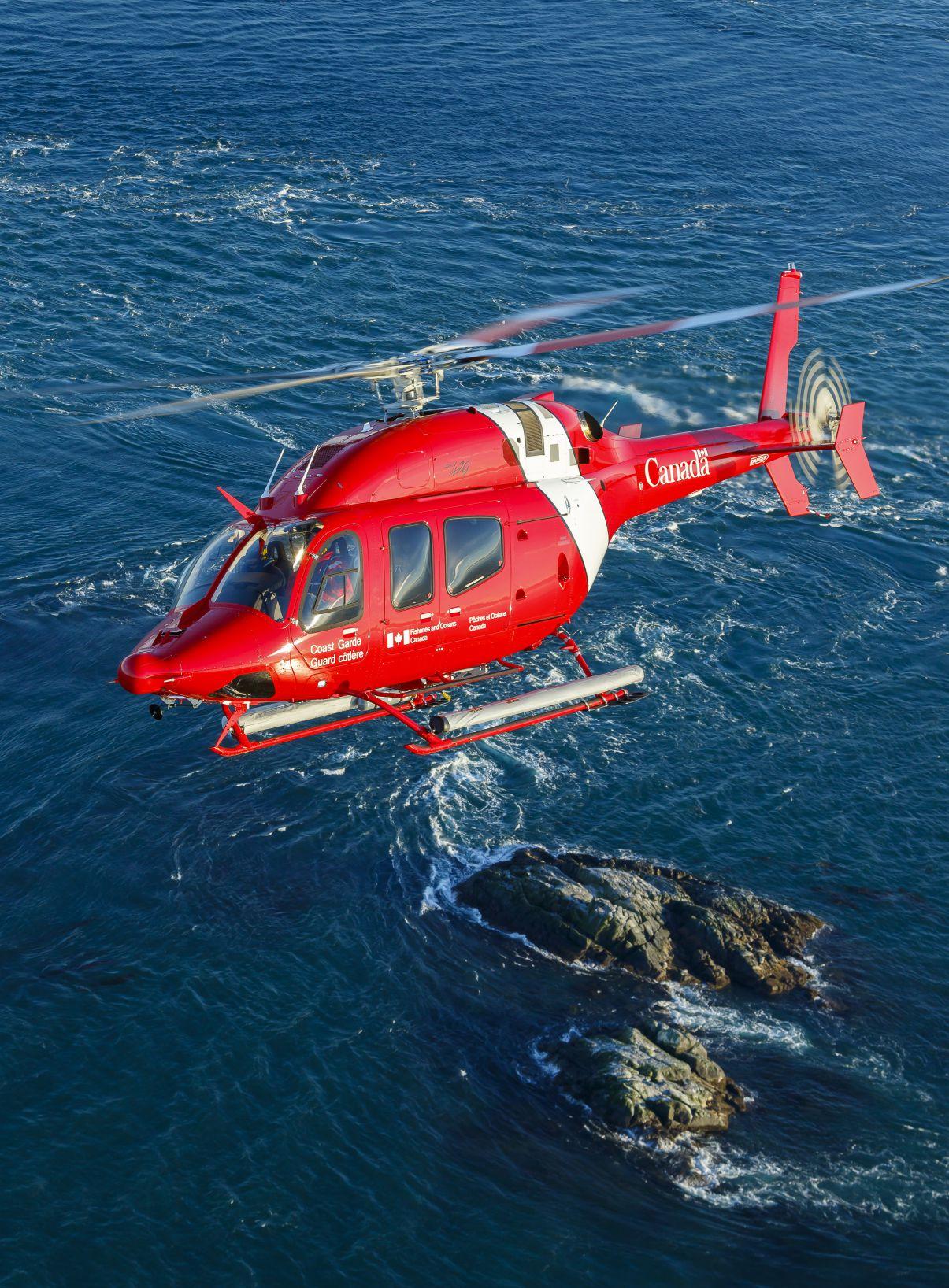
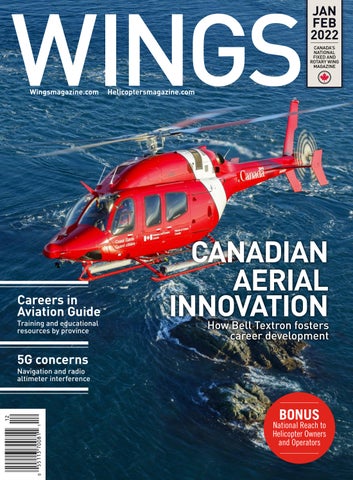
A look inside Bell Textron Canada and how it has fostered the development of Canadian aviation and aerospace engineering for more than 35 years
BY JON ROBINSON
A provincial breakdown of flight and AME training resources for Canada’s fixed wing and rotary wing sectors, as well as top university engineering programs

How serious is the potential for mid-band interference on the navigation and radio altimeters for airplanes and helicopters
PHIL LIGHTSTONE
Printed in Canada ISSN 0701-1369

READER SERVICE
Print and digital subscription inquires or changes, please contact Serina Dingeldein, Audience Development Manager
Tel: (416) 510-5124 Fax: (416) 510-6875 sdingeldein@annexbusinessmedia.com
Mail: 111 Gordon Baker Rd., Suite 400, Toronto, ON M2H 3R1
EDITOR
Jon Robinson jrobinson@annexbusinessmedia.com 647-448-6188
FLIGHT DECK
David Carr, Louis-Philippe Coulombe, Kendra Kincade, Phil Lightstone, Carroll McCormick, Steven Sitcoff
NATIONAL ACCOUNT MANAGER Mena Miu mmiu@annexbusinessmedia.com • 416-510-6749
ACCOUNT CO-ORDINATOR
Barb Vowles bvowles@annexbusinessmedia.com • 416-510-5103
MEDIA DESIGNER Brooke Shaw
GROUP PUBLISHER AND VICE PRESIDENT OF SALES
Martin McAnulty mmcanulty@annexbusinessmedia.com
CHIEF OPERATING OFFICER Scott Jamieson sjamieson@annexbusinessmedia.com
WINGS MAGAZINE
P.O. Box 530, 105 Donly Dr. S., Simcoe, ON N3Y 4N5 Tel: 519-428-3471 Fax: 519-429-3094 Toll Free: 1-888-599-2228
PUBLICATION MAIL AGREEMENT #40065710
Published six times per year (Jan/Feb, Mar/Ap, May/Jun, Jul/Aug, Sep/Oct, Nov/Dec) by Annex Business Media
SUBSCRIPTION RATES
Canada – 1 Year $ 34.50 (plus GST - #867172652RT0001) USA – 1yr -$ 78.50 CDN (USD $60.50) International – 1yr - $90.50 CDN (USD $69.50) Occasionally, Wings magazine will mail information on behalf of industry-related groups whose products and services we believe may be of interest to you. If you prefer not to receive this information, please contact our circulation department in any of the four ways listed above.
Annex Privacy Office privacy@annexbusinessmedia.com • Tel: 800.668.2374
No part of the editorial content of this publication may be reprinted without the publisher’s written permission.
©2022 Annex Business Media All rights reserved. Opinions expressed in this magazine are not necessarily those of the editor or the publisher. No liability is assumed for errors or omissions.
All advertising is subject to the publisher’s approval. Such approval does not imply any endorsement of the products or services advertised. Publisher reserves the right to refuse advertising that does not meet the standards of the publication.


Eve Storm President




By Jon Robinson |
Aviation and aerospace companies built on fundamentals of innovation continue to inspire amid the pandemic gloom. When it is difficult to trumpet success in the face of so much destruction, innovation quietly presses on because it is the nature of industry to seek out the future. In 2021, as much of the fixed-wing world settled into the business of trying to support the weight of its infrastructure, the future of vertical lift took on disruptive shapes with propulsion kits mounted in exciting places.
Through Wings’ parent company, Annex Business Media, we have been able to explore many of the advances in vertical lift with our partner media brand Helicopters, which has been at the forefront of Canadian aviation for more than 40 years. To begin 2022, Annex Business Media is continuing its innovation by merging the readerships of Wings and Helicopters magazines to build a more robust print platform as Canada’s aviation authority. The entire Annex aviation team would like to welcome the readers of Helicopters to our newly merged magazine. As you can see from this issue, we will continue to provide essential news and business information to support your critical rotorcraft efforts in the Canadian aviation industry. We recognize your content needs are unique and also aim to provide more of the strategic insight that Annex has provided to the fixed-wing sector for more than 60 years. The two brands continue to hold their online platforms to help Annex Business Media innovate in important areas like industry events and analytics.
To borrow a term from Airbus Helicopters CEO Bruno Evan, 2021 was a year of ‘major commitments’ for many in aviation, including Annex Business Media, in planning for a brighter future. In releasing its 2021 order and delivery statistics, Airbus Helicopters
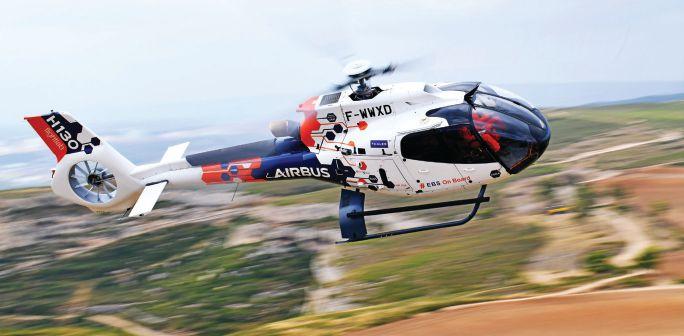
Airbus describes its Flightlab as a fundamental first step on its road to hybridization, a key step in environmental progress.
in January 2022 described its past year as a ‘bounce back’ with solid signs of recovery from the 2020 market environment. In 2021, Airbus Helicopters logged 419 gross orders, and 414 net orders, a significant increase when compared to its 2020 year with 289 gross and 268 net orders.
Airbus Helicopters over the past 12 months also introduced or expanded upon a range of important products and services, which is ultimately why Evan described 2021 as a year of major commitments. This includes delivery of its first next-generation H160 helicopter to All Nippon Helicopter to be used in news gathering. Airbus notes it also ramped up five-bladed H145 deliveries in 2021, while also delivering the first fivebladed H145 retrofit to DRF Luftrettung, a German helicopter emergency medical services operator at the end of May. In August 2021, Canada’s STARS operation received
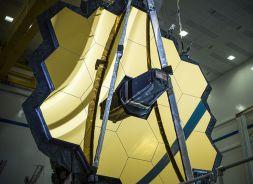
1. Dash 8-400 aircraft have transported more than 550 million passengers. P. 8 2. Transport Canada suggests starting the ADB renewal process 90 days in advance. P. 12 3. There are now more than 400 aircraft in the Bell 429 helicopter fleet. P. 13 4. Safe interference limits may be exceeded by 5G transmissions up to 500 feet AGL for airliners. P. 37 5. James Webb holds 6.5-metre mirror. P. 46
North America’s first fivebladed H145. Airbus Helicopters deliveries increased from 300 in 2020 to 338 in the 2021.
In its year of major commitments, Evan also pointed to how Airbus is embracing its duty to pioneer sustainable aerospace, which in 2021 included the use of sustainable fuels for both fixed- and rotary-wing (H225) aircraft and the development of electric propulsion aircraft like CityAirbus NextGen. This new prototype, designed to deliver zero emissions flight in urban environments, is one of the primary reasons Airbus is looking to recruit 500 people in 2022.
Airbus notes 2021 was especially instrumental for its decarbonization road map. Its Flightlab platform, for example, began testing new technologies in 2021, including an engine back-up system designed for flight safety in single-engine operations by providing emergency electrical power in case of a turbine failure. By integrating electric motors and autonomous technologies, Airbus also describes Flightlab as a fundamental first step toward hybridization for its commercial rotorcraft. One of the most interesting innovation directions from Airbus over the past year has been its growing focus on alternative fuels and zero-emissions, which includes recommitting to its September 2020 introduction of three potential zeroemission aircraft – all relying on hydrogen as a primary power source. Airbus plans to launch this ZEROe program by 2025 with the first resulting aircraft’s entry into service set for 2035. | W
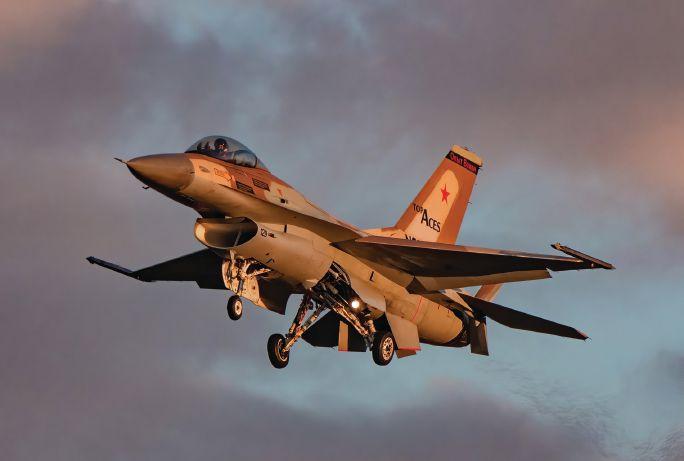
Top Aces Corp. in mid-Jan. completed the initial test flight of its F-16 Advanced Aggressor Fighter (F-16 AAF), equipped with its proprietary Advanced Aggressor Mission System (AAMS) to replicate the capabilities of contemporary air-to-air combat opponents. The F-16 AAF will help train the United States Air Force. Representing four years of research and development with technology partner Coherent Technical Services, the AAMS system today is fielded with: Active Electronically Scanned Array airto-air radar; Helmet-Mounted Cueing System; Tactical datalink communications between aircraft and other entities; Infrared Search and Track systems; High Fidelity Weapon Simulation, allowing for the replication of adversary tactics; Advanced Electronic Attack pod employment and passive RF detection capabilities; and a range of tactical functions coordinating the above systems to provide realistic adversary effects.
Last year, AAMS was certified for use on Top Aces’ fleet of A-4N Skyhawks and is currently in service with the German Armed Forces and other European customers. Now the same system is installed on Top Aces’ F-16A aircraft by M7 Aerospace of San Antonio, TX.
Lynx Air in Jan. launched its booking website with a promotional campaign to provide two Canadians with one roundtrip flight per month to any Lynx destination for 12 months. Lynx introduced itself to the market on Nov. 16, 2021, with the goal of beginning flights in 2022, running Boeing 737 aircraft.
Formerly charter airline Enerjet, which in 2018 announced plans to transform into a commercial discount carrier, Lynx was founded by an investor group led by Tim Morgan, a former executive at WestJet. Lynx’ first CEO Merren McArthur is former CEO of Tigerair Australia, Virgin Australia Regional Airlines and Virgin Australia Cargo. Lynx is to be based at Calgary International and, at the time of its introduction, had firm orders and lease agreements for a total of 46 aircraft over the next seven years.
The WestJet Group in Dec. announced Alexis von Hoensbroech as its next CEO, with Harry Taylor expected to remain in the role of interim CEO through the company’s first quarter of 2022 and then

Holding a doctorate in physics,
resume his role as CFO. von Hoensbroech has served as CEO of Austrian Airlines since in 2018, while also taking on CFO responsabilities.
After obtaining a doctorate in physics, von Hoensbroech spent his early career at The Boston Consulting Group with clients primarily from aviation. He joined the Lufthansa Group in 2005, responsible for the strategy and subsidiaries of Lufthansa airline, before moving to Lufthansa Cargo AG.
Powertrain innovator ZeroAvia and aircraft maker De Havilland Aircraft entered into a Memorandum of Understanding to develop a line-fit and retrofit program for De Havilland’s aircraft models, using hydrogen-electric propulsion. As part of the MOU, De Havilland will be issued options to purchase 50 ZeroAvia engines.
The new program will target the use of ZeroAvia’s 2MW+ powertrain (ZA2000) for Dash 8-400 aircraft, one of the world’s most popular turboprops with more than 625 delivered. The global fleet of Dash 8-400s has logged more than 11 million flight hours and transported more than 550 million passengers.
The FAA at the end of 2021 completed its certification of the S-70M Black Hawk – a new type designation – by issuing Sikorsky with a Restricted Category
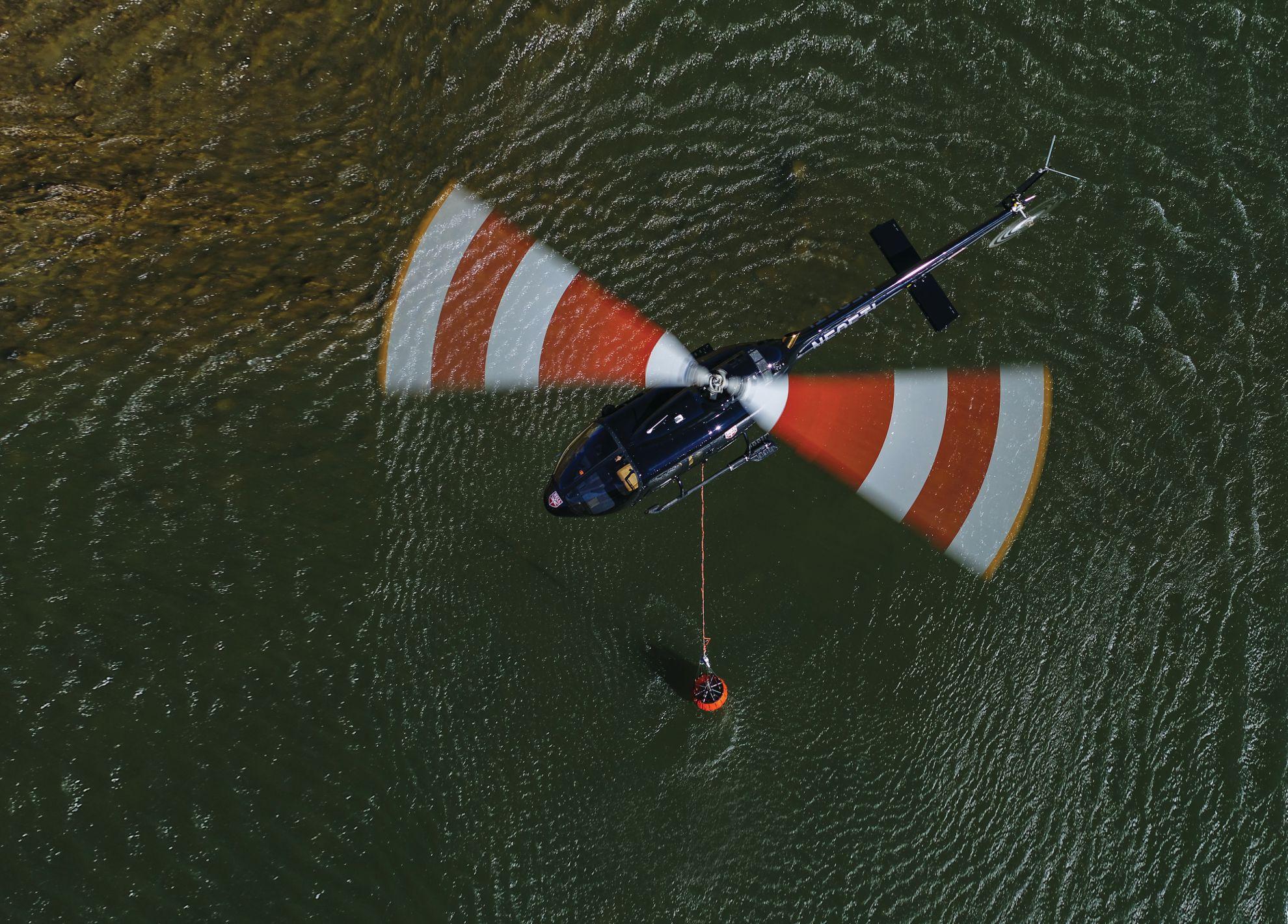
Special Airworthiness Certificate. This allows U.S. civil and commercial operators to purchase new Black Hawks direct from the factory, with international certifications expected to follow.
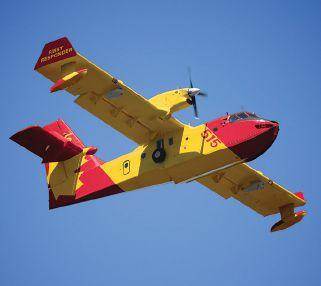
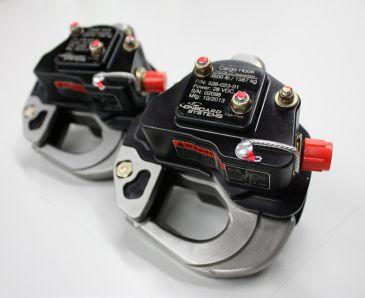
California public utility San Diego Gas & Electric took delivery of the first S-70M Restricted Category helicopter on Nov. 18, 2021, and will modify it to the Firehawk configuration at United Rotorcraft. Sikorsky holds three Restricted Category approvals, including: Agricultural operations; External Cargo, which allows usage of the aircraft’s 4,082 kg external lift cargo hook; and Forest and Wildlife Conservation, which includes the dispensing of liquids on wildfires.
Canadian entrepreneur Charles Tremblay became the first customer in North
Airbus has been a proud member of Canada’s aerospace industry since 1984 Headquartered in Fort Erie, Ontario, Airbus Helicopters Canada is the leading supplier of helicopters used throughout Canada in various roles
Airbus Helicopters Canada completes, customizes and delivers aircraft to customers throughout Canada and is the centre of excellence for engineering and composite manufacturing within North America as well as the solesource supplier of composite parts for eight different helicopter models in the
of
is
Airbus Helicopters activities in Canada are focused in five primary areas:
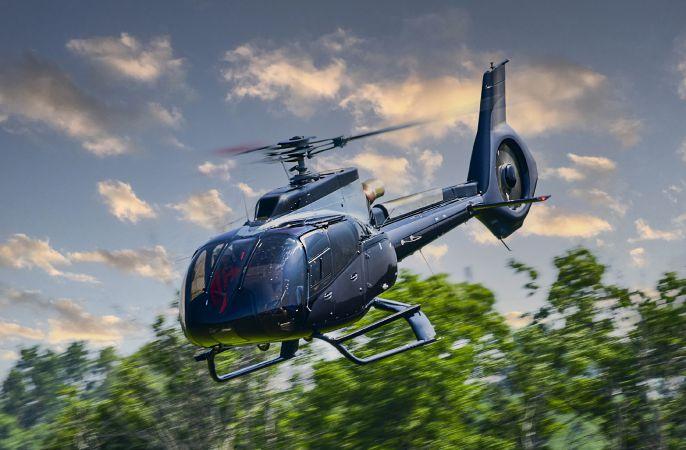
America to take delivery of an ACH130 Aston Martin Edition helicopter. A licensed fixed-wing and helicopter pilot, Tremblay owns a construction company in Gatineau, Quebec, and will personally fly the helicopter for both personal and business uses.
The ACH130 Aston Martin Edition is a collaboration between the aeronautical designers at Airbus Corporate Helicop-
at Aston Martin. The Aston Martin Edition helicopter was completed at Airbus’ facility in Oxford, UK, which manages this configuration.
Additional mission equipment, including Canadian manufactured cargo pods, and avionics were installed at Airbus Helicopters Canada in Fort Erie, ON, prior to customer acceptance. Airbus Helicopters has operated its Canadian




By Phil Lightstone |
We live in a world of expiration and best-before dates. In aviation there are a lot of things with expiry dates like pilot medicals, navigation databases, app subscriptions, charts and maps, Canadian Flight Supplements, aircraft annual reportings, aircraft radio licences; NAV Canada master flight plans, critical supplies like ELT batteries and the Canadian Aviation Document Booklet (ADB). In July 2008, Transport Canada (TC) began the transition from paper licences to passport-style documents, based upon a determination by the Canada Border Services Agency (CBSA) that the old paper licences and medical certificates fall
into a high-risk category. Originally, ADBs were issued with five-year expiry dates, but in September 2016 TC transitioned to 10-year expiry dates. If you forget or neglect to renew your licence after the expiry date you may lose your flight privileges (CARs 401.03(1), 401.12(2), 402.08(2) and 402.08(3)). With an expired ADB, you are able to count dual instruction time in your logbook and towards a rating, when flying with an instructor.
The ADB has an expiry date to meet the photograph identity requirements suggested by the CBSA. Adhesive labels that represent permits, licences and medical certificates, are issued to reflect changes in licencing or medical fitness status. Labels will only be considered as valid Canadian aviation documents

once they are permanently affixed into the your ADB. Due to the constraints which the COVID-19 pandemic has placed on TC, a series of exemptions have been issued to deal with expired ADBs. Under the current exemption, NCR-0592021, pilots with ABDs that were valid on March 12, 2020, can continue exercising the privileges until June 30, 2022. On May 25, 2021, TC issued NCR Exemption NCR 20-2021 extending temporary privileges until January 31, 2022, which has been replaced by NCR-064-2021.
TC is able to provide a temporary licence to allow pilots to continue to exercise their flight privileges. The process to renew an ADB must be started before a temporary licence can be issued. The temporary licence is valid for 90 days, is normally sent by mail or email in a PDF format, and resembles the old paper style licence. Pro tip: Contact your nearest TC office to speak live with an individual. Try calling around until you can find a TC staffer who you can schedule a face to face appointment with to physically provide them with your renewal application form. TC’s current time to process a renewal ADB is up to 40 business days, but TC recommends starting the process 90 business days before expiry.
Renewing your ADB is simple with the process availble at tc.canada.ca. TC does not charge a fee to renew your ADB, using their standard process. It also has a process to replace a lost, stolen or destroyed ADB with a onetime cost of $35.
There are many other factors to determine if you are legal to fly, such as physical factors and alcohol consumption time limitations, but paperwork can be a file it and forget it tendency. Many, if not most pilots, use tablets, smart phones and computers in their day to day lives. Setting up a reminder for each critical expiry date, again at 90 days for an ADB, could help avoid flying with an expired ADB or other necessities to keep your flight safe and legal. Creating and updating a simple Excel spreadsheet or Word file is good technique to organize your renewal activities. After all, an ounce of organization is worth a pound of cure. | W

EDUCATION AND TRAINING RESOURCES FOR CANADIAN FIXED- AND ROTARY-WING INDUSTRIES
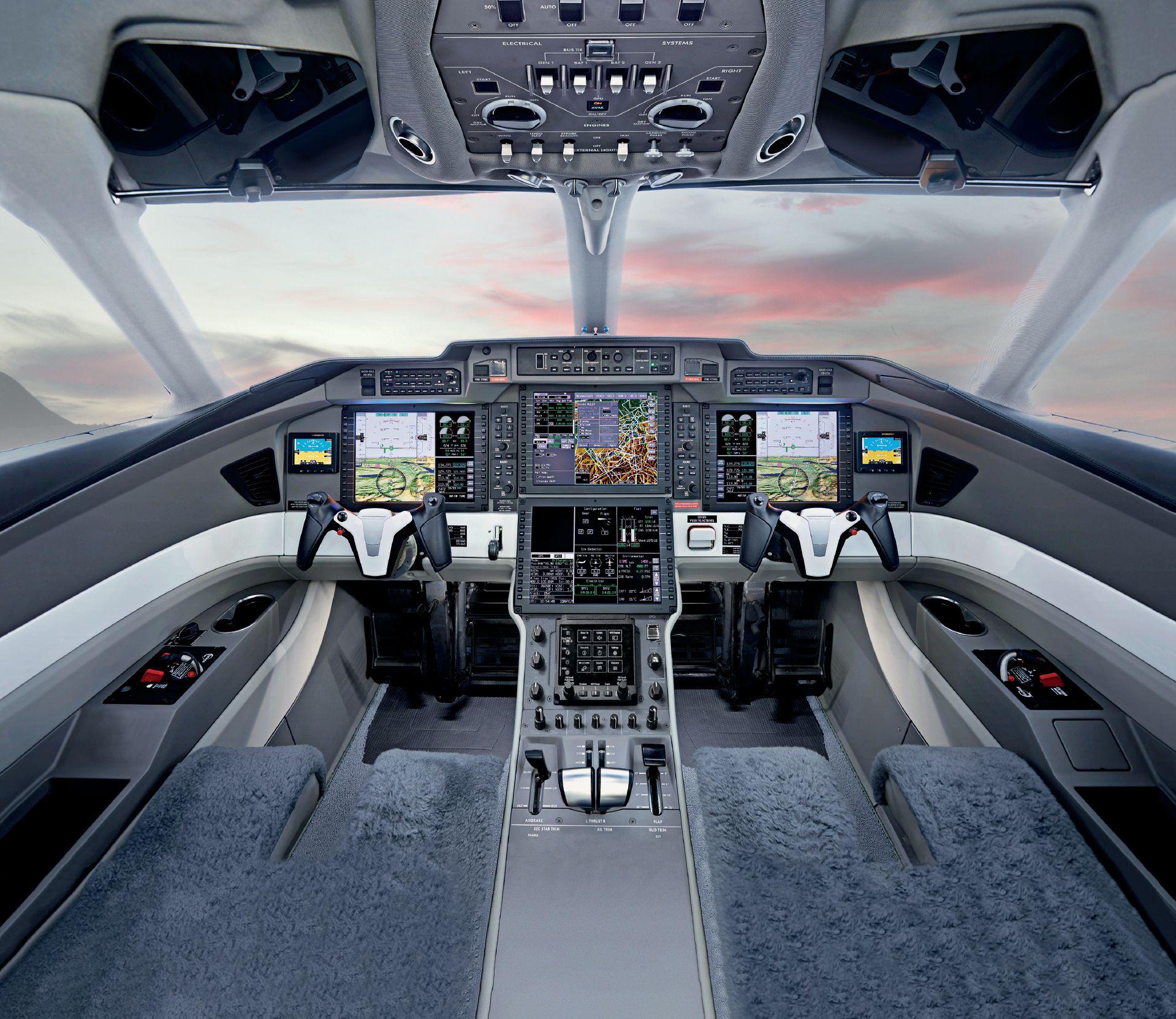
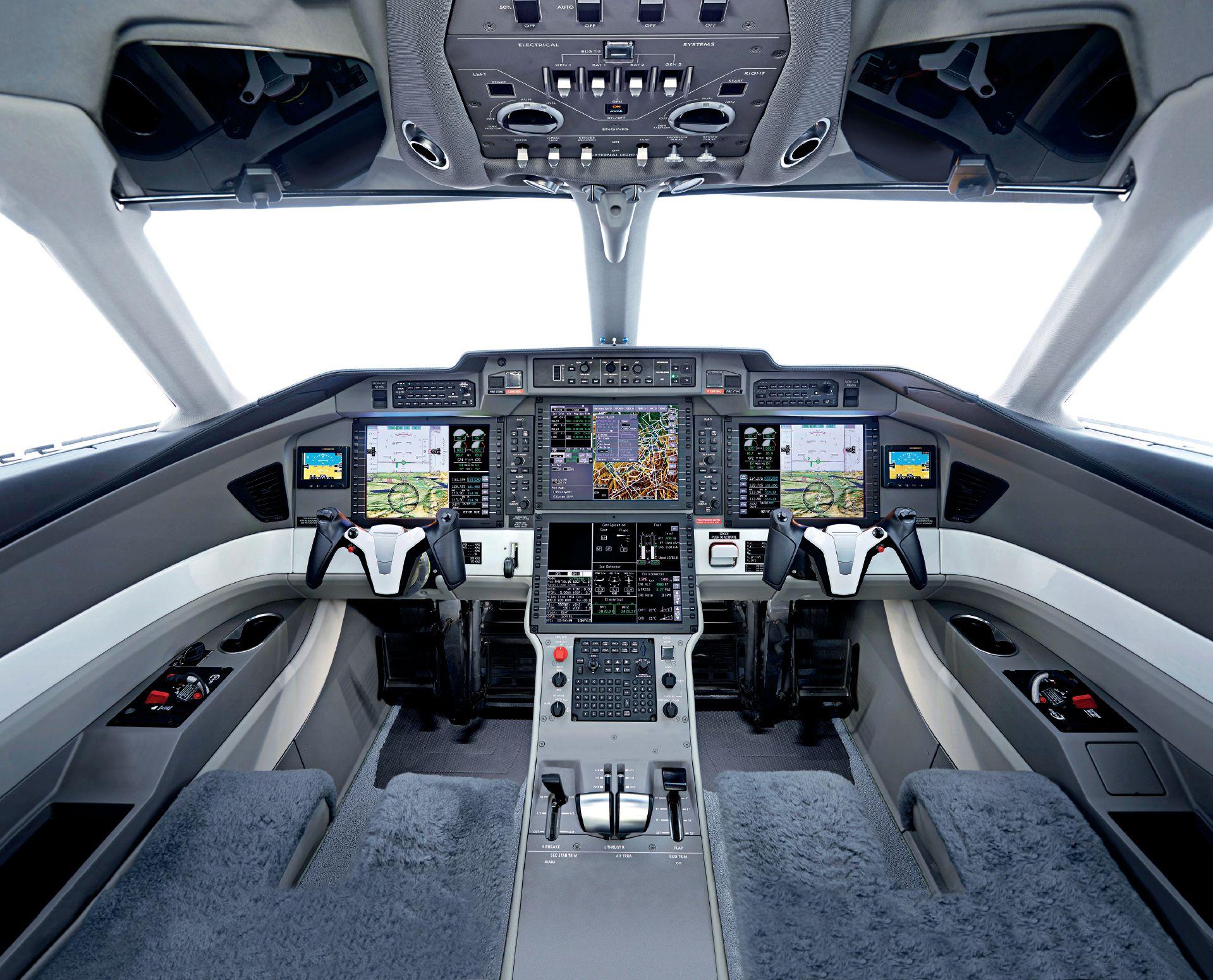
pilatus-aircraft.com

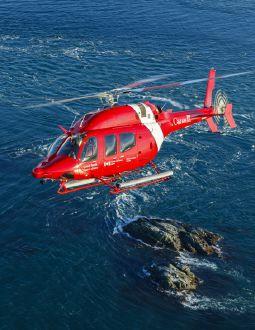
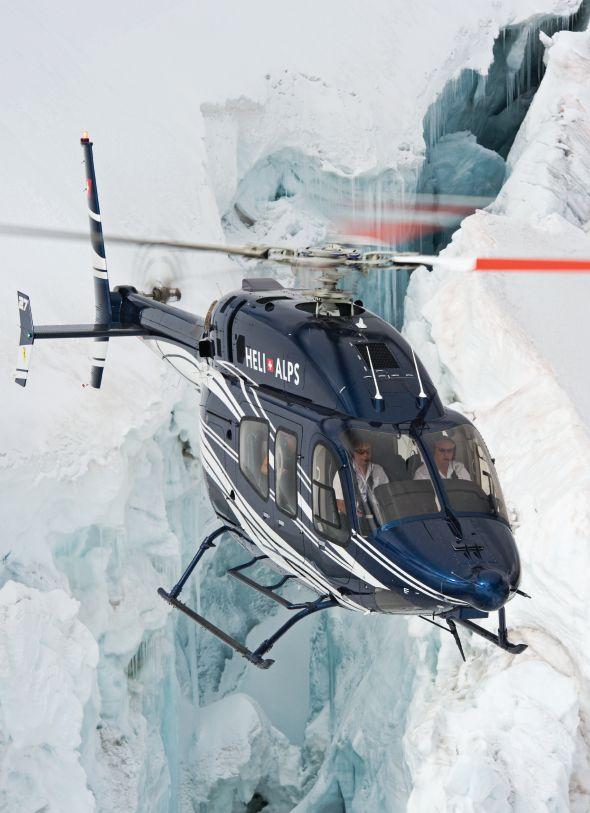
ell Textron Canada began 2022 with series of recent milestones under its belt, which includes seeing the Bell 429 helicopter surpass 500,000 global fleet hours. The 429’s light twin-turbine flexible platform – fitting a range of missions from corporate and HEMS to law enforcement and utility – is matched by its capabilities to navigate complex missions with demanding global customers from the Swedish National Police and New York Police Department to Air Zermatt’s famed Swiss Alps rescue team and the Canadian
There are now more than 400 aircraft in the Bell 429 helicopter fleet, since the platform first received Type Certification from Transport Canada Civil Aviation on July 1, 2009, quickly followed by U.S. clearance on July 7. The 429 GlobalRanger was primarily designed at Bell’s Centre of Excellence in Mirabel, Quebec, where the first prototype flew in February 2007 after teaming up with powerplant provider Pratt & Whitney Canada. The 429 helicopter is arguably Bell Textron Canada’s most successful commercial program, with the company in September 2021 celebrating 35 years of operation. “Today, the Bell team is a driving force for aerospace innovation in Canada and throughout the aviation industry, delivering safe and reliable aircraft, and offering superior customer experience,” said Steeve Lavoie, President of Bell Textron Canada, reflecting on the anniversary. Certifying single- and twinengine helicopters over the last 35 years, Bell Textron Canada has produced more than 5,600 commercial aircraft operating around the world, among which 1,000 are
The 400th Bell 429 was actually delivered to the Canadian Coast Guard (CCG) in Nov. 2021, completing a light helicopter renewal program launched in 2014 and worth more than $338 million with seven Bell 412EPI and 16 Bell 429 helicopters. The delivery made CCG the world’s largest 429 operator, with the helicopters providing a range of support to ships engaged in critical maritime work, including aids

to navigation, environmental response, search and rescue, and even icebreaking operations – flying in a radius stretching as far as five kilometers to report ice conditions back to vessels. The CCG’s Bell 429s also featured some of the aviation industry’s first applications of bubble windows for greater vertical visibility, which are now common in challenging helicopter support environments. Every year, the Canadian Coast Guard’s 16 Bell 429 helicopters fly more than 5,500 hours.
“There’s definitely a great sense of pride and accomplishment around the 429 aircraft,” says Thuva Senthilnathan, who, as a young aerospace engineer in his late-20s, was tasked with leading a highvisibility project in 2016 to enhance the capabilities of the CCG’s new Bell 429s. He joined Bell’s Mirabel facility in 2012 after completing his Bachelor of Engineering at McGill University, beginning as an Airframe Design Engineer before moving into roles such as Production Supervision
and Program Management. In 2015, along with 13 colleagues from a pool of 100 applicants across four Bell sites (Mirabel, Amarillo, Fort Worth and Mexico), Senthilnathan was selected for the Bell Front Line Leadership program. This mentorship training served him well in taking on the CCG project, organizing the engineering team to find a solution for this important client, on-time and on-budget, and allowing the CCG to complete its critical missions in 2017. This same work also allowed for the on-time departure of the C150 Global Odyssey 429 tour later that year – the first Canadian helicopter circumnavigation of the globe by a father and son team.
“One advantage of being at Bell in Mirabel, at the Centre of Excellence, is that not only do we get to design aircraft, we see how they are built and we see them fly,” Senthilnathan says, describing the opportunities for career development provided by Bell. “There is no proper description for
the feeling of pride – and maybe even a little bit of fear – you have as a young engineer coming in, being able to design something and getting raw feedback from pilots and people who are working around the aircraft. It’s a dream job.”
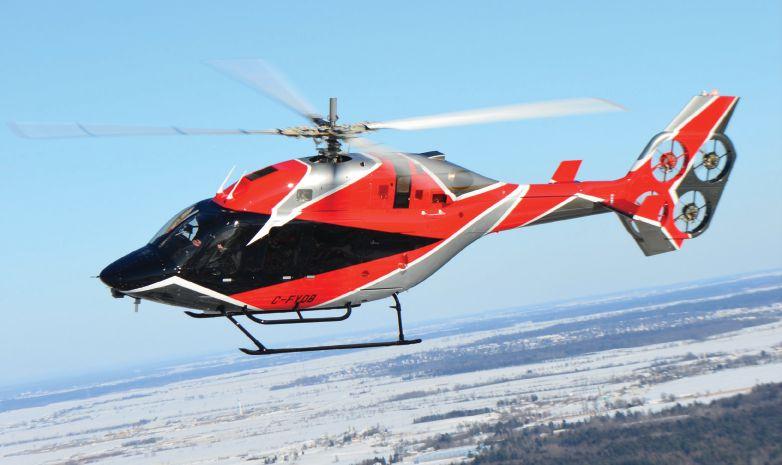
In 2018, Senthilnathan was promoted to Engineering Manager and tasked with directing a team to develop, build and fly the remarkable Electrically Distributed Anti-torque (EDAT) system on a twin-engine 429 test bed, derivatives of which are likely to one day change the face of Bell’s commercial helicopters and possibly the entire vertical-lift industry. EDAT is composed of four small fans within a tail rotor shroud in an offset two-by-two pattern. Each of the rotors contains four blades, which are powered by separate motors with the electrical energy provided through generators driven by turbine engines. This design effectively reduces noise and offers lower operational and maintenance costs compared to an aircraft with a conventional tail rotor.
“The great thing about this project is that it changed our mindset, our mentality for what we thought was possible. It changed my personal mentality for sure,” says Senthilnathan. “One of our values at Bell is to make the impossible possible and, in this project, we were really able to do that. The idea is not to force yourself to do something that’s infeasible. The idea is to challenge your assumptions, challenge what you think you can do, and push yourself and the people around you to do incredible things.”
Parent company Bell Textron of Fort Worth, Texas, has been operating for 87 years and is renowned for its innovation of flight, as the first aircraft company to break the sound barrier – with the Bell X-1 flown by Chuck Yeager – and also the first to certify a commercial helicopter. Purchased by Textron in 1960, Bell Aerosystems was also instrumental in driving NASA’s first lunar mission by delivering two Lunar Landing Research Vehicles (LLRV) in 1964, well before the space agency had even determined how it would get to and land on the moon. Described by NASA then as the first pure fly-by-wire aircraft to fly in Earth’s atmosphere, the LLRVs would become critical trainers under the new Lunar Orbit Rendezvous concept.
Today, Bell is preparing to certify the 525 Relentless, designed to carry two pilots and up to 16 passengers, as world’s first commercial helicopter with fly-by-wire flight controls. The company is also heavily focused on defining the future of advanced air mobility with a strong push into electric propulsion. This is highlighted by marquee programs like the Nexus eVTOL aircraft, which includes key input from the Mirabel facility, and – amid the ambitions of Urban Air Mobility startups – will help form the backbone of future vertical lift aircraft. Bell’s Autonomous Pod Transport 70 drone serves as the lead technology partner in NASA’s Systems Integration and Operationalization (SIO) demonstration program and in late 2020 completed a key 10-mile BVLOS trial using prototype Xwing detect-and-avoid technology in an urban environment. Bell AerOS, introduced in January 2020, is being designed under SIO to track all future aircraft types during passenger flights and logistics operations.
The Bell Mirabel EDAT team in 2019 completed its first flight of the test bed and Senthilnathan along with three of his colleagues were awarded the Lawrence D. Bell Pioneer Award for Innovation for the test program, all while completing his MBA at McGill in the same year. He was promoted to the position of Program Manager with a mandate to build entirely new business and revenue streams for Bell. EDAT was shown publicly for the first time in early 2020 and the demonstration phase wrapped up later that year. Now Senthilnathan and his team of engineers are working on product road maps for many of Bell’s products.
“I had no idea of the breadth of different work scopes that we do here, in terms of all of the different disciplines of engineering that are here, the actual amount of production we do, the amount of flight testing we do, and the amount of new development that’s done here,” Senthilnathan explains, relating to when he first
joined the company. There are currently four commercial helicopter types being built in Mirabel, including the 429, 412EPI, 505 Jet Ranger X and most recently the 407GXi, which in late2020 surpassed 50,000 flight hours in less than two years after commercial release. Bell Textron Canada has made an enormous impact on parent company’s all-important commercial segment and its pursuit of innovation of flight.
“Bell has always very much valued Mirabel in terms of our capabilities in the commercial space. We are expanding our skill sets in terms of the engineering disciplines that we’re taking on,” Senthilnathan says, pointing to, for example, the facility’s growth in avionics expertise.
Bell sold its first helicopter into Canada in 1945, a Bell 47 to Lundberg-Ryan Air Exploration, and established its Canadian footprint with a supply centre in 1969. Bell Textron Canada has partnered with the Canadian and Quebec governments for more than 50 years, most prominently seen in the Royal Canadian Air Force’s H-146 Griffon fleet comprised of 85 militarized multirole Bell 412 CF helicopters, the Canadian Coast Guard, and the Sûreté du Québec. In 2018, Bell was chosen to perform the first phase of the Griffon Limited Life Extension (GLLE) modernization project. Bell has also offered the Bell 429 for the Future Aircrew Training (FAcT) program.
Bell Textron Canada’s supply chain, according to analytics firm OMX, sustains more than 6,200 jobs in Canada, involving around 550 suppliers across the country and contributing $848 million to Canada’s GDP per year. The company itself, including Mirabel and a supply centre in Calgary, Alberta, holds approximately 1,300 highly skilled employees focused on innovation, product development, airframe design, world-class composite production, complete integration, certification, and service and support for customers around the globe. | W
AND ROTARY-WING
BY PROVINCE AND TERRITORY
Alkan Air Flight Academy | Whitehorse
Alkan Air is partnered with Yukon College to offer one year or 30 credits toward the school’s two-year Aviation Management diploma program. The majority of ground school courses occur during the evening at Alkan Air and flight training must take place during daylight hours (exception is night time flight training). Alkan Air itself provides Private Pilot and Commercial Pilot License training. The operation provides a unique environment to learn in a northern climate, with access to an international airport and gravel strips in remote areas.
Canadian Flight Centre | Boundary Bay & Kamloops
Canadian Flight Centre opened in 1979 at B.C.’s Boundary Bay Airport, near Vancouver, and became one of the first flight schools to specialize in instrument flying and other advanced training. CFC has trained thousands of pilots and today its students come from six continents (Antarctica excluded). Kamloops proximity to the mountains provides the opportunity for mountain checkouts.
Canadian Helicopters | Penticton
Canadian Helicopters operates its flight school under the name HNZ Topflight, providing training programs to both company pilots and external clients. The school traces its origins to 1951 when it was known as the Canadian Helicopters School of Advanced Flight Training.
Chinook Helicopters | Abbotsford
Chinook Helicopters began training operations in 1982 at the Abbotsford Airport, from where it continues to operate. The Abbotsford area is well suited for yearround helicopter training. Chinook utilizes the expansive Fraser Valley for all initial flight exercises, and the Coastal Mountain
Range for intermediate and advanced exercises.
Coastal Pacific Aviation | Abbotsford
Coastal Pacific Aviation, located at Abbotsford Airport, partners with The University of the Fraser Valley to combine a diploma or degree together with a Commercial Pilot’s Licence with multi-engine and instrument rating. Its programs also include Seaplane Endorsement, Private Pilot Licence, Commercial Pilot Licence, Multi-Engine Rating, Instrument Rating, Night Rating and Instructor Rating.
The Pacific Flying Club (PFC) was formed in 1965 as the Canadian Pacific Airlines Employees Flying Club. Students train at Boundary Bay Airport, where it has been located since 1985. The not-for-profit organization has a fleet of 27 aircraft and three simulators. It is a partner with the British Columbia Institute of Technology’s flight program.
Southern Interior Flight Centre | Kelowna
Southern Interior Flight Centre is located at Kelowna International Airport in the Okanagan Valley, which allows for exposure to every level of controlled and uncontrolled environments a pilot might encounter. The Southern Interior Flight Centre provides a range of flight training programs.
The Victoria Flying Club has been training professional pilots since 1946. VFC works with its students to develop a customized training program that will help you achieve any of your flying goals. It operates a fleet of 10 Cessna 172SPs, a Piper Seminole, and three recreational rental aircraft (C172N, PA-28-140, & PA-28R-200) for CPL time building. It also offers training and private rental of a Redbird FMX simulator. The VFC is accredited as a Private Training Institution with the Ministry of Advanced Education, as well as a Designated Learning Institution federally. As such, VFC’s
students can seek student aid as well as using their RESP and/or VETB funding towards their post PPL flight training.
The Calgary Flying Club (CFC), based CYBW Springbank Airport, provides a range of flight training, including Private Pilot Licence Commercial Pilot Licence, Multi-Engine Rating, and Advanced IFR Program. Its advanced IFR program is designed for either single or multi-engine aircraft.
Centennial Flight Centre | Edmonton
Centennial Flight Centre, in operation since 1967, is located at Villeneuve Airport, approximately 20 kilometres northwest of Edmonton. It provides training for Recreational Pilot Permit, Private Pilot Licence, Commercial Pilot Licence, Multi-Engine and Instrument Rating.
Edmonton Flying Club | Edmonton
Edmonton Flying Club, home of the Edmonton Flight College, is located just west of Edmonton, operating out of Parkland Airport in Parkland County. Originally founded in 1927 as the Edmonton and Northern Alberta Aero Club, the club’s first president was Canadian World War 1 flying ace, Wilfrid R. May. Today, the Edmonton Flying Club is a member-owned organization with a diverse fleet of aircraft and providing flight training at all levels from recreational pilots to Commercial MultiInstrument rated, career-ready pilots.
Mountain View Helicopters (MVH) has trained pilots for commercial or private helicopter licences from its Springbank Airport location since 1995, near Calgary International. MVH is able to provide flying weather found on the prairies and also proximity to mountains.
Super T Aviation | Medicine Hat
Super T Aviation is one of the premier flight

Imagining yourself flying an aircraft or a drone but feel like it’s out of reach? The Canadian Owners and Pilots Association (COPA) is offering three scholarships (total of seven awards) valued at nearly $25,000 to help Canadians pursue their dreams for flight.
$14,000 scholarship to put toward your dream to fly!
Through COPA’s Neil J. Armstrong Ab-Initio Scholarship, one worthy applicant between the ages of 16 and 21 will be given the opportunity to earn their Private Pilot Licence (PPL). COPA will cover the cost of the online ground school which provides the theoretical lessons for safe flying as well as contribute toward instructor-led flight training hours to help the recipient practice and master the required skills.
This longstanding scholarship was created in honour of Canadian Aviation Hall of Fame inductee and COPA past President, Neil J. Armstrong. COPA will provide up to $14,000 to support the successful applicant in pursuing their PPL (see guidelines for conditions).
Already a private pilot and would like to advance your flight training?
The COPA Advanced Flight Training Scholarship supports COPA members, 18 years of age or older with a PPL, interested in pursuing advanced licences (Commercial Pilot Licence) or
ratings (IFR, multi, float, night, etc.). Through the generous contributions of the former WestJet Pilot Association, this new scholarship helps to remove financial obstacles for COPA members with big flying goals. There are three (3) awards available, valued at $2,500 each. (See guidelines for conditions.)
Fly toward an interesting new career or hobby with a COPA RPAS Scholarship
Did you know that remotely piloted aircraft systems (RPAS), aka drones, have many uses? They can be flown recreationally for racing in tournaments; they can be flown to protect wildlife and assist forest fire fighting services, safeguard the environment, used for photography, and so much more!
Through the new COPA RPAS Pilot Scholarship, three (3) COPA members 18 years of age and older will receive training to obtain their Advanced RPAS Certificate to explore the many applications available for drone use in Canada. The scholarship includes ground school, flight review and exam expenses.
Applications Due by March 1, 2022
Whether you’ve always dreamed of becoming a pilot or have goals to soar to new heights, submit your application today by visiting copanational.org/copa-scholarships.

“I have a part time job to help contribute to my own expenses, but flight training has been out of reach for me.
The COPA Neil J. Armstrong Ab-Initio Scholarship
made all the difference for me in obtaining my private, and eventually commercial pilot licences.”
– Erik Yaremkewich, Squamish, BC, a past COPA Scholarship recipient

Founded in 1952, the Canadian Owners and Pilots Association (COPA) is a federally registered not-for-profit association that fosters the advancement of General Aviation (GA) in Canada. As the leading voice for the flying community nationwide, our mission is to advance, promote and preserve the Canadian freedom to fly. COPA is proud to represent close to 15,000 members from every province and territory who recognize the need for strong, effective representation resting on our core principles of integrity, commitment, unity and leadership.
As the largest aviation association in Canada, COPA is well-positioned to represent the growing needs for General Aviation
in Canada. Our efforts focus on keeping GA accessible and affordable, addressing the pilot shortage, promoting safety and lifelong learning and ensuring that Canadian skies are shared safely.
Visit the copanational.org/copa-scholarships webpage to learn more about each scholarship;
1. Read the COPA Scholarship Guidelines to ensure you meet the qualifications;
2. Complete the online form hyperlinked to each individual scholarship page;
3. Attach any Letters of Recommendation required per scholarship to the online form; and
4. Submit before March 1, 2022.
schools in Western Canada. Serving southern Alberta since 2008, Super T Aviation is a family owned operation and part of the Bar XH Sales group of companies. In 2019, Super T purchased a modern ALX simulator from Alsim. This is Super T’s second Alsim simulator after purchasing an AL200, which has been in operation since 2014.
Mitchinson Flight Centre | Saskatoon
Mitchinson Flight Centre’s Professional Pilot Course consists of three categories, including: Private Pilot License with a one year estimated length of program; Commercial Pilot License with a one year estimated length of program; and Multi Engine Instrument Rating, which is included in CPL program above. Mitchinson also operates an Advanced RPAS Training program consists of online ground school instruction that meets Transport Canada Requirements and the practical exam portion once the candidate completes the written exam through Transport Canada. All flight training, including RPAS, is conducted in and around the YXE John G. Diefenbaker Airport in a controlled environment.
Brandon Flying Club | Brandon
The Brandon Flying Club’s Flight Academy has served the region since 1936. Located at Brandon Municipal Airport, just outside of Winnipeg, BFA offers a continuous ground school, as well as Recreational, Private, and Commercial courses. Night VFR Over the Top and Instrument Ratings are also available. Transport Canada Written Recreational, Private, Ultra Light, and Helicopter exams can be completed at the centre as well.
Harv’s Air | Steinbach
Harv’s Air is a family owned and operated air service with locations near Steinbach and St. Andrews, both in the Winnipeg, Manitoba, Canada area. Our air service offers flight training, air taxi, and aircraft maintenance service since 1973 with the current owner and operator. Having two locations allows us to offer amazing resources for flight training including examiners, instructors, aircraft maintenance engineers. We offer accelerated but very comprehensive courses for pilot licences both for a career in aviation and for personal enjoyment.
Prairie Helicopters | Gimli
Prairie Helicopters, which also provides charter helicopter services, describes itself as Manitoba’s only turbine helicopter flight school. Its head office and main hangar are located at the Gimli Airport approximately 45 minutes north of Winnipeg. The operation holds a fleet of Bell 407, Bell 206L3 and Bell 206B helicopters.
Aerocourse | Oakville
AeroCourse provides advanced pilot ground school training. IFR and ATPL ground school seminars are conducted across Canada virtually and in-person which are designed to lead students through the knowledge necessary to be successful on their Transport Canada exams and to become better IFR and airline pilots respectively. We work with several flight schools and offer an Advanced multi-crew Training Program. The advanced program is a six- to seven-month course with over 270 hours of ground school training covering all the requirements for airline transition. It includes over 30 hours of multicrew simulator training. We are also part of the BFC Integrated ATPL Program designed to meet the flight crew skill needs of airlines. Students receive training in flight and ground school subjects approved by Transport Canada and cover the requirements of air carriers for new hire pilots as well as, providing trainees with insights into getting a job in the industry.
Brampton Flight Centre | Brampton
The Brampton Flight Centre, which includes the Brampton Flight College, has been training pilots since 1946. It provides training for those interested in pursuing a career or for recreational purposes, as a recognized Private Career College and Designated Learning Institute. Its most extensive program provides graduates with a Commercial Pilot Licence with Group One Instrument Rating. Ground school for the airline training for this program is provided by Aerocourse.
Brantford Flight Centre | Brantford
As one of the oldest flight training schools in Canada, the Brantford Flight Centre (BFC) has been providing quality flight training in Brantford, Ontario since 1929. Its instructors hold a vast history of experience from the aviation industry, offering students extensive knowledge of the Airline, Corporate and Instructor fields. Located in uncontrolled airspace, BFC allows students to avoid costly delays due to airspace congestion.
Canadian Flight Academy | Oshawa
Toronto Airways, through its Canadian Flight Academy subsidiary, provides an Integrated Airline Transport Pilot Licence curriculum, which also inlcudes support for new flight instructors. Based at Oshawa Executive Airport, the Canadian Flight Academy (CFA) provides opportunities through new collaborations with Seneca College.
Diamond Flight Centre | London
Diamond Flight Centre has been training pilots at the London International Airport since 2009 and, as a registered Private
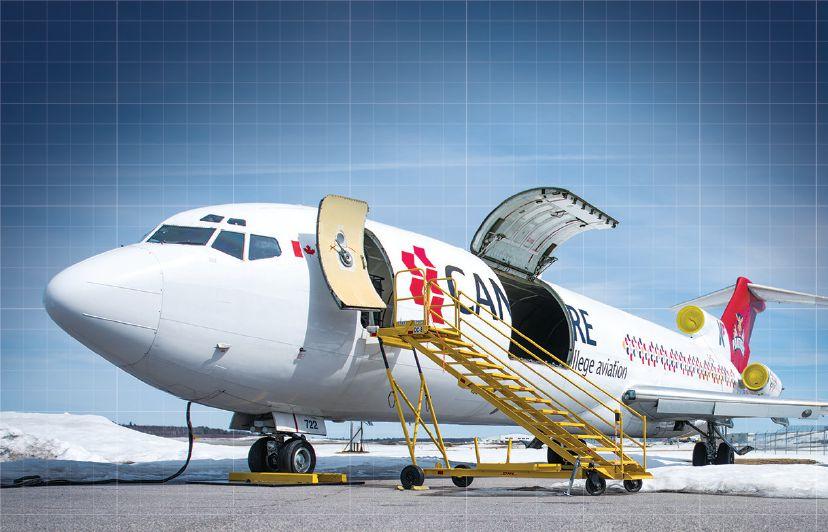



Largest number of aircraft out of any Ontario college
Over 40,000 sq. ft. of premium aviation lab training space
17,000 sq. ft. hangar filled to capacity with aircraft
The campus is located next to Jack Garland Airport’s 10,000 ft. runway
• Aircraft Structural Repair
• Aircraft Maintenance – Technician/Technology
• Avionics Maintenance –Technician/Technology
• Helicopter Flight Training
• Aviation Fundamentals
Canadore Aviation Hangar Tour canadorecollege.ca/tours
Career College (PCC) in the province of Ontario, holds a full-time staff of certified flight instructors. The school also holds a fleet of 10 training aircraft manufactured in London, ON, by Diamond Aircraft, which develops modern glass-cockpit aircraft like the 2-seat DA20 and the new 7-seat DA62.
Flight College | Collingwood Genesis Flight College is a registered Private Career College providing an emersive oneyear commercial pilot diploma program. Located at Collingwood Regional Airport, students can enjoy the surrounding landscape and many activities available in the region. The most significant advantage of the Genesis is that 100 per cent of the flying is in advanced aircraft with glass cockpits.
Helicopters Canada | North Bay Helicopters Canada for approximately 20 years has provided commercial and private flight training to both domestic and international students. Its training area is situated at the Jack Garland Airport, which provides access to heavily forested areas with lakes and rivers for developing the skills needed for a large sector of the helicopter industry.
St. Thomas Flight Centre | St. Thomas Established in 1996, the St. Thomas Flight
Centre offers flight training from Recreational Pilot Permit through to Commercial Pilot Licence and Multi-Engine Instrument Ratings. The centre holds Private Career College status and operates out of St. Thomas Airport in an uncongested flight training environment. School offices are located in the main terminal building and ground school classes are held on site.
Waterloo Wellington Flight Centre (WWFC) is located at the Region of Waterloo International Airport, offering a range of aviation training programs for fixedwing aircraft, as well as its Remotely Piloted Aircraft Systems. Specific fixed-wing programs, licences and ratings available at WWFC include: Recreational Pilot Permit, Private Pilot Licence, Commercial Pilot Licence, and Integrated ATPL, as well as Multi-Engine Rating, Instrument Rating, Night Rating, and Flight Instructor Rating. WWFC has partner programs with aviation programs of the University of Waterloo and Conestoga College.
The Windsor Flying Club (WFC) was incorporated in 1944 and has been in continuous operation since – now entering its 77th year
Certificates
•Aircraft Structural Repair Technician
•Flight Services
Diplomas
•Aviation Technician – Aircraft Maintenance
•Aviation Technician – Avionics Maintenance
Advanced Diplomas
•Aviation Technology – Aircraft Maintenance and Avionics
•Commercial Flight and Aviation Leadership
Graduate Certificates
•Applied Aerospace Manufacturing
•Composites and Advanced Materials
Aerospace Manufacturing
•Remotely Piloted Aerial Systems
Commercial Operations

of high-level training for pilots as one of the longest serving original flying clubs in Canada. The club holds approximately 280 members and is also home to the Canadian Historical Aircraft Association.
Air Richelieu is an accredited flight training centre with facilities that include multimedia classrooms and flight preparation rooms. The school is located at St-Hubert Airport, approximately 20 minutes from Montreal, and controlled by the Montreal Flying Club.
Laurentide Aviation has been providing professional flight training since 1946. Based at Les Cedres Aerodrome, an uncontrolled airport, approximately 25 kilometres west of Montreal, Laurentide offers bilingual inflight and ground school instruction, as well as recreational, private and commerical pilot lisence courses.
MFC Training | Moncton
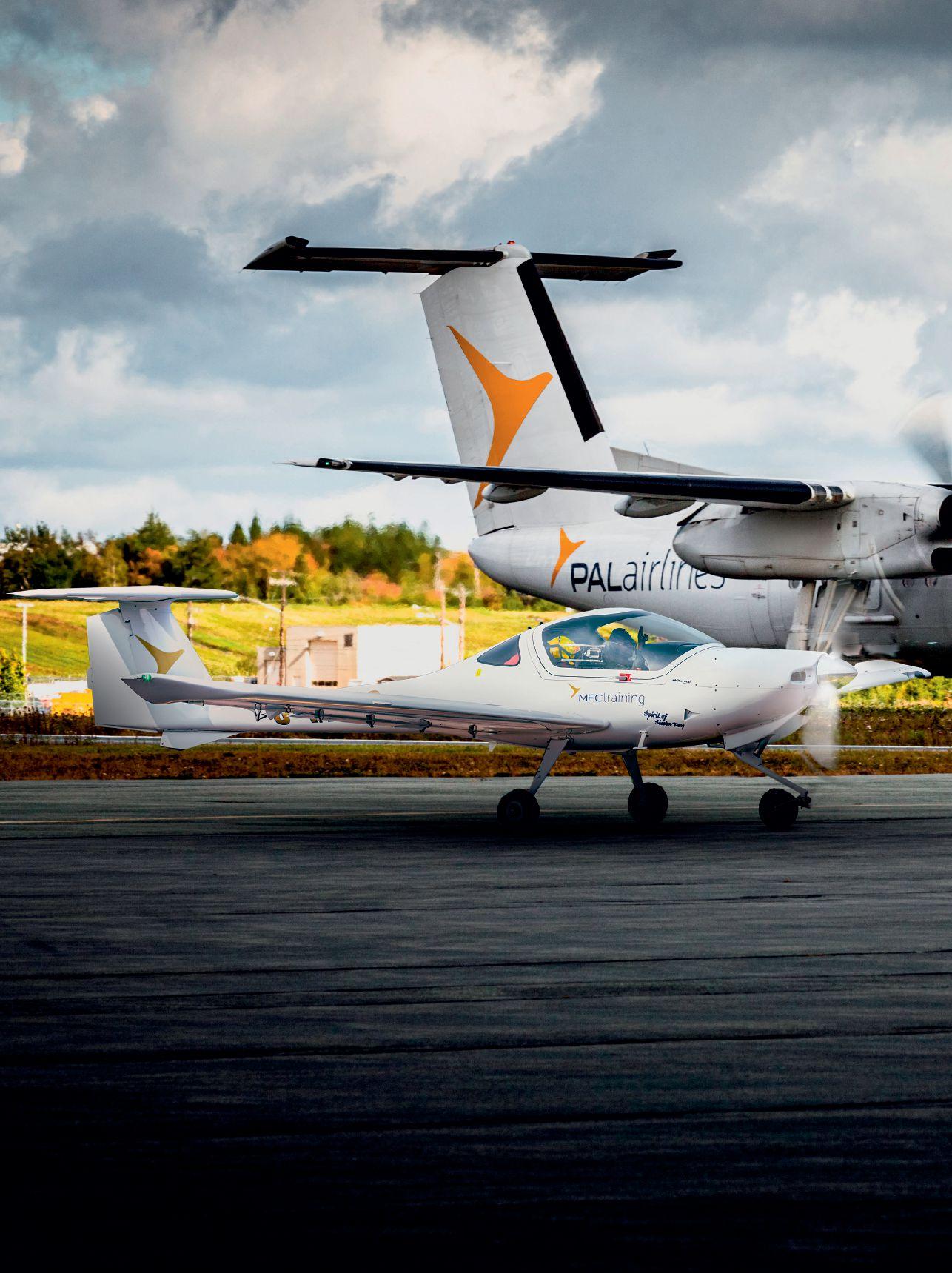
MFC Training’s industry leading career pilot programs provide all the required flight hours and examinations to graduate with a Commercial Pilot License, MultiEngine and Instrument ratings. This program structure is designed to achieve maximum learning efficiency by ensuring that both flight training and in-class content is integrated through all training phases. These programs allow future pilots to move through the modules in a condensed time frame and provides a quickertransitiontobecomingCaptains.
Debert Flight Centre | Truro
Debert Flight Centre is part of the Truro Flying Club and operates out of Debert Airport, which has been home to the club since 1972. Debert Airport is in an uncontrolled airspace
GFT Aerospace College | Gander
GFT Aerospace has provided flight training since 1992, evolving from its roots as EVAS Air. Its facility is located at Gander International Airport. The aerospace college provides a fleet of 17 aircraft, including a helicopter, a flight simulator, large classrooms, individual briefing rooms, and a large technical library for students. | W

The Bombardier Centre for Aerospace and Aviation at Downsview Campus is a dedicated training ground for aerospace and aviation mechanics. With focused courses, cutting-edge equipment and industry professionals guiding our programs, your aircraft are always in good hands with a Centennial College graduate. centennialcollege.ca/downsview
Yukon College | Whitehorse
The Aviation Management diploma program at Yukon comprises a block transfer of pilot training credentials earned at Alkan Air (or other recognized flight schools) that equals one year or 30 credits and an additional 30 credits earned at Yukon. Students are expected to earn a Commercial Pilot License while concurrently earning academic credits. However, students may enter the program with some pilot training (a Private Pilot License, for example) or a completed commercial license. Students may complete the ground school and flight training component of the Aviation Management diploma in a flexible manner.
British Columbia Institute of Technology | Burnaby
The British Columbia Institute of Technology (BCIT) is partnered with Pacific Flying Club to provide students with the skill set to become airline pilots. The program is fully integrated, combining flight training with industry focused academic training. Flight training for fixed-wing aircraft is conducted at Pacific Sky Aviation’s flight school at Boundary Bay Airport, outside of Vancouver. Rotary-wing flight training, for those interested in becoming helicopter pilots, is provided by Chinook Helicopters in Abbotsford. BCIT’s Airport Operations diploma program is designed for the demands of airport operation environments. The 16-month Airport Operations program provides students with a comprehensive, interdisciplinary program of study. BCIT also offers an online Airport Operations Part-time studies Associate Certificate.
College of New Caledonia | New Caledonia
The College of New Caledonia provides an
Aviation Business diploma program, which accepts applications for continuous intake. The program is designed to provide trained single engine VFR pilots for entry-level pilot in command positions with Canada’s northern air carriers and with similar air taxi companies operating in difficult conditions around the world. The program centers around a PilotPlus approach to providing a supply of pilots to Canada’s northern air carrier industry. If taken in the minimum possible time, the ABD is a five semester program running over 24 months, with a four month break between semesters two and three.
Douglas College | New Westminster Douglas College’s Associate of Arts Degree for Future Professional Pilots is a program for students who wish to continue to a career in the aviation industry. This program is jointly offered with Professional Flight Centre, located at Boundary Bay Airport in Delta. Douglas provides the academic instruction leading to the Associate of Arts Degree and Professional Flight Centre provides the ground and flying instruction with enough flight experience to obtain a Commercial Pilot License and Multi-engine Instrument Rating.
Okanagan College | Kelowna
The Commercial Aviation diploma program at Okanagan College consists of two distinct and separate areas of study: flight training and business studies. The business portion is completed at Okanagan College and normally consists of two business courses per semester for a total of eight courses over two years. The flight-training portion taken with Southern Interior Flight Centre, out of Kelowna Airport, and consists of flight training, theory and exams.
Red Deer College | Red Deer Red Deer College’s (RDC) partnership with

Sky Wings Aviation Academy combines a foundation in business with flight training. The 1-year Certificate program holds its business management courses at the Donald School of Business. Sky Wings Aviation Academy is located in Penhold, Alberta, near Red Deer and halfway between Calgary and Edmonton. Sky Wings states its students can expect a wide variety of flying conditions during their training. Flight training is provided approximately ten minutes from the RDC campus at Red Deer Regional Airport. Sky Wings Aviation Academy has providing flight training since 1982. Highlights of the Aviation Diploma Program include a transcontinental flight crossing the Canadian/ U.S. border, familiarization training for a regional or national airline and crew resource management. Most RDC courses are university transferable.
The Saskatchewan Polytechnic is a member of Polytechnics Canada, an alliance of 11 research-intensive, industry-responsive post-secondary institutions. The Polytechnic’s Commercial Pilot program is offered in partnership with the Saskatchewan Aviation Council, a membership-based association. The Commercial Pilot diploma program provides a strong foundation in the basic principles of aviation. Students study aviation-related topics such as the theory of flight, advanced aircraft systems and flight. Flight training takes place at a student’s home flying school.
Algonquin College | Ottawa
Algonquin College’s Aviation Management is a two-year diploma program designed to provide students with the knowledge and skills required to become a commercial pilot.

















Learn to maintain, repair and troubleshoot complex aircraft systems - everything you need to know to prepare for the Transport Canada Aircraft Maintenance Engineer (AME) license.
EMPLOYERS: Facilitate opportunities for career advancement and skills development. Support your employees to apply. Hands-on Co-op program | Highly Trained Instructors | Earn up to 21 months toward your AME licence
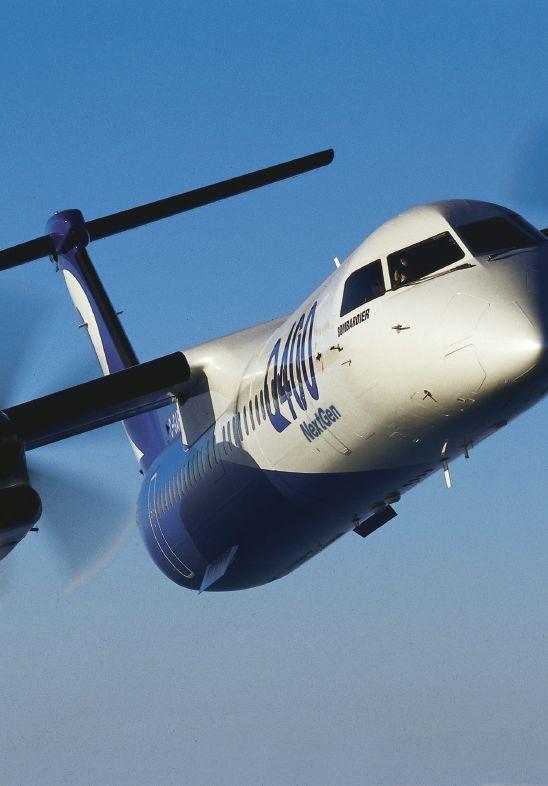
Flight Centre is recognized as one of the top-flight training schools in Canada and is proud to offer an Integrated Airline Transport Pilot Licence (IATPL) as one of our Professional Pilot Diploma programs. The 20-month IATPL program is designed to provide students with the skills required and sought after by airlines. It includes over 900 hours of instruction. The IATPL program covers the basics to advanced training delivered by industry experts. It focuses on advanced airline operational knowledge and uses a state-of the art full-motion airline simulator. Graduates from our program are eligible to apply to airline pathway programs.
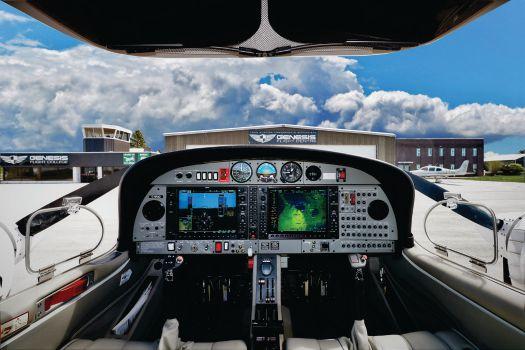

Genesis Flight College is a private career college offering specialized flight training programs which expose students to the most advanced equipment available in the industry Graduates of the one year program achieve a COMMERCIAL PILOT DIPLOMA and have the credentials required to begin flying as a career immediately
Through a series of classroom courses and practical labs, students have the opportunity to complete the Transport Canada Commercial Pilot Licence written examination (CPAER) and practical flight test. Algonquin has contracted the Ottawa Flying Club and Ottawa Aviation Services to provide up to 250 hours of flight time experience. During the final term, students can select one of the following areas of specialization: flight instructor, Initial Airplane Type Rating (IATRA) or seaplane rating. Flight Training is a non-funded activity and is an additional cost to complete this program of study.
The partnership between Canadore and Helicopters Canada offers a unique blend of academic, operational and hands-on rotary wing training. The college-structured classes combined with extensive practical training, both on the ground and in the air, will provide you with the skills, knowledge and attitude necessary to operate helicopters safely and efficiently under various flight conditions and remote geographical locations. Graduates will receive a Transport Canada Commercial Helicopter Pilot Licence, Canadore College Pilot Preparedness Certificate and numerous industryrecognized courses.
Conestoga provides the opportunity to earn an Ontario College Diploma in its twoyear Aviation, General Arts and Science, program. The pilot training portion of the program provides students with a choice between flying airplanes at Waterloo Wellington Flight Centre or flying helicopters at Great Lakes Helicopter. Training takes place at the Region of Waterloo International Airport. In addition to the regular Conestoga College tuition costs, fees for the Waterloo Wellington Flight Centre and Great Lakes Helicopter training are additional. The pilot training of Conestoga program is designed to allow students to undertake the Transport Canada commercial pilot license testing.
The Aviation Flight Management program at Confederation College combines business, management and flight training into one program. The 2 1/2-year program has been running at Confederation since 1973. The business and management training provide students with background knowledge to complete a detailed and comprehensive understanding of today’s aviation industry, while the college operates its owns aircraft (13) and three advanced flight simulators at
its Aviation Centre of Excellence hanger at Thunder Bay International Airport.
A student’s private pilot flight training begins in the first week of the first semester right from our hangar at the Thunder Bay International Airport. This training provides the opportunity become a commercial pilot. Confederation College explains its graduates have found aviation employment in northwestern Ontario, as well as with major (international) airlines, medevac and charter operations, scheduled services, flight instruction and the Canadian Armed Forces.
Fanshawe College’s Norton Wolf School of Aviation and Aerospace Technology provides a range of programs, including: Aircraft Maintenance Engineer, Structural Repair Applied Aerospace Manufacturing; Aircraft Maintenance Engineer, Maintenance; Aircraft Maintenance Engineer, Avionics; Aircraft Maintenance Engineer, Maintenance & Avionics; Commercial Flight and Aviation Leadership; Composites and Advanced Materials Aerospace Manufacturing; Flight Services (including Flight Attendant/Cabin Crew training); and Remotely Piloted Aerial Systems Commercial Operations.
airline-ready training program offered with one of our flight school partners, AeroCourse is here to help AeroCourse seminars feature excellent instruction with highly trained pilots, all working for Canada’s airlines and aviation colleges Seminars are held in person as well as virtually

The school’s Commercial Flight and Aviation Program provides a three-year diploma, focusing on safety management systems, Canadian air regulations, flight operations and logistics and airline operations. This program allows students to complete a fixed-wing Canadian Private and Commercial Pilot license with Multi Engine and Instrument Ratings.
Georgian College | Barrie Georgian’s three-year Aviation Management advanced diploma program consists of 38 courses, and students graduate with both a management and aviation skillset. Management courses are designed to give students an understanding of marketing, human resource management, communications and project management. A variety of aviation courses provide a solid understanding of the aviation industry in Canada and around the world. Students will also complete the examination to receive their Restricted Aeronautical Radio Operation License. The program, which has a fall 2022 intake, includes three hands-on co-op opportunities within the aviation industry..
The program has a very active advisory committee that helps maintain program relevancy by keeping the course content current – reflecting industry trends – and
ensuring graduates are job ready with the required skillset. There are several educational pathways for graduates. Georgian’s Aviation Management program is the only three-year program in Canada that allows students direct entry into Griffith University’s Master of Aviation Management, which can be completed with only an additional one-and-a half years of study. Students can also choose to complete one of four Bachelor of Science degrees with Embry-Riddle Aeronautical University, with only one additional year of study.
| Sault Ste. Marie Sault College`s Aviation Technology – Flight program is designed to prepare students for a career as a professional pilot. Graduates of the program who meet qualification criteria established by Transport Canada, will have successfully completed the requirements for the Integrated Commercial Pilot License Aeroplane, including the multi-engine instrument rating (CPL(A)IR). This licence meets all the requirements for a student to be a commercial pilot. Individuals with previous flight training start with a modified flight training program in the beginning; however, all students will be at the same level by second year. Students gain handson training with the college’s own fleet of
aircraft, including 10 Zlin and two Seminole Piper planes. These aircraft are supported by advanced flight simulators. Each aircraft includes advanced radio navigation systems and real-time aircraft tracking systems.
Seneca College | Peterborough
Seneca College, through its School of Aviation, is now educating students at the degree level with its 4-year Honours Bachelor of Aviation Technology program, which provides a technology-based curriculum and application of this theory to aviation. Flight training and classroom instruction for students in year’s two to four of the program takes place at Seneca’s Peterborough Campus. As a graduate, students may pursue future career options like professional pilot, flying instructor, air traffic controller, and civil aviation inspector. Seneca’s Airline Pilot Operations program focuses on the study of airline operations and administration.
Offered at its Toronto campus, Seneca’s Flight Services program encourages students to develop career-related skills, knowledge and behaviours needed for passenger service. Seneca has a range of partnerships with industry partners like Toronto Airways, CAE, Sunwing Airlines and Jazz Aviation, including direct entry into airlines. | W

Fraser Valley University | Fraser Valley
Completion of the program provides students with a university degree, private and commercial pilot licenses certified by Transport Canada, supplemented by both night and multi-engine instrument ratings. In fourth year, students have the option to specialize in either heavy jet transport operations or professional flight instruction.
University of British Columbia | Vancouver
University of British Columbia does not offer a specific aerospace engineer program, while offer a range of programs within its engineering department, including Mechanical. However, the school supports a range of aerospace-oriented, student-led teams.
MacEwan University | Edmonton
MacEwan’s partnership with Transport Canda allows allows students to earn a Business Management diploma with a specialization in aviation management. To complete the Aviation major, students must apply to the Business Management program. Upon graduation students declare the Aviation major. Students can block transfer credits to the third year of MacEwan’s Bachelor of Commerce.
Mount Royal University | Calgary
Mount Royal University’s Aviation Diploma program combines an academic diploma with the flight training needed to become a commercial pilot. Students require a completed Private Pilot’s License in order to begin the program. Practical flying experience is accumulated on Mount Royal’s fleet of aircraft consisting of Cessna single-engine aircraft and Seneca multi-engine aircraft.
Carleton University | Ottawa
Carleton’s Aerospace Engineering program
emphasizes the development of analytical, computational, and hands-on engineering and design skills related to the aerospace field.
Queen’s University | Kingston
Engineering and Applied Science provides opportunities geared at aviation and aerospace design. Mechanical engineers are needed wherever there is machinery. They drive every stage of design, manufacturing, construction and research.
Ryerson University | Toronto
Ryerson’s Aerospace Engineering bachelor’s program provides students with the opportunity to study aerodynamics, stress analysis and structural design, flight mechanics, stability and control, aircraft performance, propulsion, avionics and systems. Students also learn to design, test, manufacture and maintain aircraft or spacecraft, as well as vehicles for transport on land and water.
University of Toronto | Toronto
Students who wish to study Aerospace Science and Engineering at the University of Toronto enroll in the four-year undergraduate Engineering Science program. In the first two years, this program emphasizes mathematics, chemistry, physics and computing.
University of Waterloo | Waterloo
Established in 2007, Waterloo’s Aviation program allows students to earn a Bachelor of Science degree and, working with the Waterloo Wellington Flight Centre, a Commercial Pilot Licence. Welcoming approximately 45 new people each year, Students in the Aviation program have a choice of pursuing.
University of Windsor | Windsor
Windsor’s Aeronautics Leadership program combines a liberal arts and leadershipfocused education with commercial flight training. Students enroll in a Bachelor of Arts, Liberal Arts and Professional Studies.
Western University | London
Western’s Commercial Aviation Management program allows students to earn a Bachelor’s degree in Management and
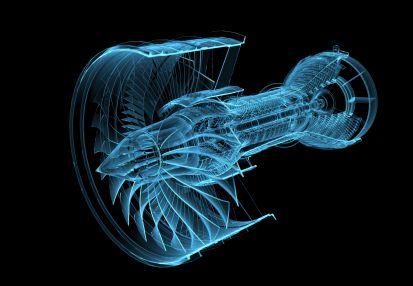
Organizational Studies, with specialized courses in aviation management. Within the program, students have the option to combine a degree with professional pilot flight training, ultimately receiving a Transport Canada approved Integrated Commercial Pilot License with Multi-Engine and Instrument Ratings.
York University | Toronto
The Space Engineering program at York’s Lassonde School of Engineering provides an Beng degree. It focuses on areas of study from orbit control and space-based optics to ground station communications and robotics. Students learn about the management of complex multidisciplinary projects, including missions within the solar system.
Concordia University | Montreal
Concordia’s Aerospace Engineering (BEng) program is offered by the Department of Mechanical, Industrial and Aerospace Engineering, Gina Cody School of Engineering and Computer Science. The program allows students to specialize in Aerospace and Propulsion, Aerospace Structures and Materials, or Avionics and Aerospace Systems.
École Polytechnique de Montréal | Montreal
Ecole Polytechnique de Montreal provides undergraduate and graduate Aerospace engineering programs. Students in the graduate program follow at least two specialization courses given by the other participating institutions. Candidates who complete the professional master’s in Aerospace Engineering program obtain an MEng degree.
Mount Allison University | Moncton
The Aviation program is a degree-level platform with professional flight training. The flying portion of the program is offered through a partnership with Moncton Flight College. In the first year, students take introductory courses in mathematics, computer science, physics and geography. | W

British Columbia Institute of Technology | Vancouver
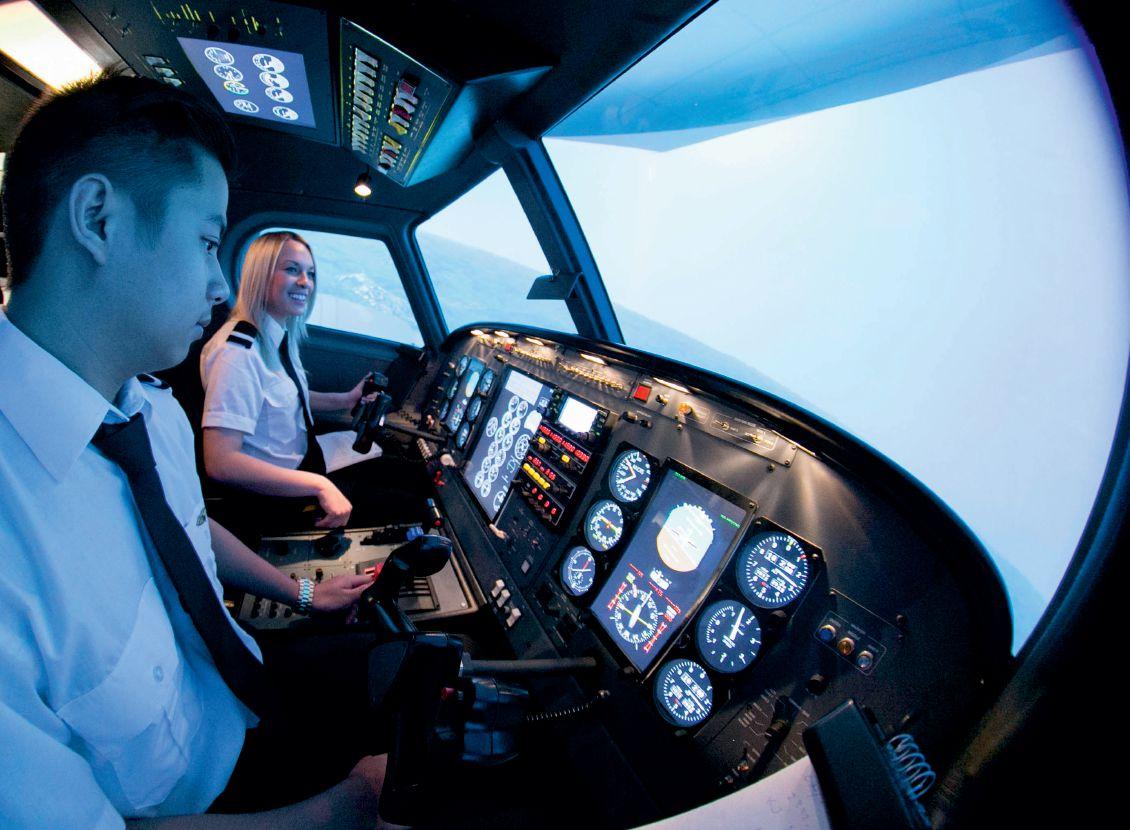
British Columbia Institute of Technology (BCIT) School of Transportation prepares students for careers as Aircraft Maintenance Engineers, Aviation Maintenance Technicians (Avionics) and Gas Turbine/ Jet Engine Technicians. Its Aerospace Technology Campus is located at the Vancouver International Airport and features a 40,000-square-foot hangar that holds BCIT’s fleet of light piston, turboprop, corporate and jet transport aircraft, as well as light and medium helicopters.
BCIT’s Airport Operations diploma program is designed for the demands of airport operation environments. The 16-month Airport Operations program provides students with a comprehensive, interdisciplinary program of study. BCIT also offers an online Airport Operations part-time studies Associate Certificate. BCIT’s Aerospace facility is the largest provider of human capital resources to the aviation industry in British Columbia. In addition to category M and E technician programs, the school also provides courses for fixed- and rotary-wing pilots, and unmanned aerial vehicles.
Southern Alberta Institute of Technology | Calgary
The Southern Alberta Institute of Technology provides two primary programs, Aircraft Structures Technician and Avionics Technology. The Avionics Technology program offers the student the knowledge and skills required to start a career as an aircraft maintenance engineer (AME) E. As an E-licensed AME, you will be responsible for the servicing and repair of aircraft electrical and electronic systems and maintaining the aircraft communication, navigation and data systems. The Avionic Technology program
covers all the aspects of aircraft avionics systems used in general aviation, corporate, charter, transport category aircraft, and helicopters. The program is four semesters in length with a break between semesters two and three.
The Aircraft Structures Technician program offers the student the knowledge and skills required to enter a career to become an aircraft maintenance engineer (AME) S. As an S-licensed aircraft maintenance engineer, you will be responsible for the manufacture and repair of aircraft and aircraft components. The Aircraft Structures Technician program covers all the aspects of aircraft structure repair to general aviation, corporate, charter, transport category aircraft, and helicopters.
The Saskatchewan Indian Institute of Technologies | Saskatoon
The Saskatchewan Indian Institute of Technologies (SIIT) was created in response to the need for quality, post-secondary education for First Nations people. The SIIT Aircraft Maintenance Engineer program is open to First Nation and non-First Nation students, and delivers the knowledge and skills required for eligibility to apply as an apprentice in the aircraft maintenance industry. This includes learning to troubleshoot, maintain, repair and overhaul aircraft to meet Transport Canada’s standards.
Red River College | Winnipeg
Red River College (RRC) Aircraft Maintenance Engineer program is designed to develop the knowledge and skills in maintenance of both large and small airplanes and helicopters. It is designed to develop skills in maintenance of both airplanes and helicopters. Time in the program is split between the study of aircraft maintenance theory
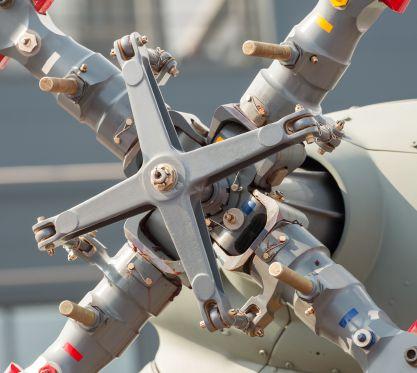
and practical projects. Upon graduation, if the student attained Transport Canada approved training status, they will be granted 19 months of the 48 months aviation maintenance experience and the three technical examinations required to obtain an AME license.
Algonquin College | Ottawa
The School of Advanced Technology at Algonquin College features With 23 laboratories, including precision machining, automotive, electronics, optical fiber, highpowered laser labs, mechanical modeling and element analysis, industrial controls, aviation maintenance and robotics labs. The includes two diploma programs in the school’s Transportation Technology segment called Aircraft Maintenance Technician and Aviation Management, General Arts and Science – both running for two years.
Canadore College | North Bay
Canadore Canadore College’s programs includes: Aircraft Structural Repair Technician; Aviation Technician – Aircraft Maintenance; Aviation Technician – Avionics Maintenance; Aviation Technology – Aircraft Maintenance and Avionics; Aviation Technology – Aircraft Maintenance and Structures; First Peoples’ Aviation Technology – Flight; Aviation Fundamentals; and Helicopter Flight Training.
The Aircraft Structural Repair Technician program allows students to specialize in repair, upgrading and the modification of an aircraft. Graduates receive 10 months accreditation towards a Transport CanadaIssued Aircraft Maintenance Engineer’s Licence, Category S. The Aviation Technician – Aircraft Maintenance program trains students how to troubleshoot vital aircraft components and systems, including piston and turbine engines, electrical systems, hydraulics, and navigation and communication
systems. Study the challenging complexities of fixed and rotary wing aircraft while gaining the theoretical knowledge you need for apprenticeship employment. The program is approved by Transport Canada. For Helicopter Flight Training, a partnership between Canadore and Essential Helicopters offers a unique blend of academic, operational and hands-on training. The college-structured classes combined with extensive practical training, both on the ground and in the air, will provide you with the skills, knowledge and attitude necessary to operate helicopters safely and efficiently.
Centennial College | Toronto Centennial College’s aviation technician programs offered within the School of Transportation include: Aviation Technician (Aircraft Maintenance), Aviation Technician (Avionics Maintenance), Aviation Technology (Aircraft Maintenance & Management), and Aviation Technology (Avionics Maintenance & Management).
The Aircraft Maintenance program provides mechanical, electrical, electronic and other science skills related to aircraft maintenance. It emphasizes the repair of electrical and mechanical systems within the aircraft. Students will study hydraulics, fuels, environmental systems, engines, flight
controls, landing gear system and airframes and structure. The Avionics Maintenance program covers aircraft communications, navigation and data systems, and inspection and troubleshooting of basic electronics circuits.
Confederation College | Thunder Bay Confederation Confederation College’s Aviation Center of Excellence is located at the Thunder Bay airport and includes the flight management and aircraft maintenance programs. The school’s Aviation Technician – Aircraft Maintenance program has been running strong for over 50 years. New for the program is a mandatory paid summer Co-op work placement between years one and two that provides our graduates with direct industry experience. The program is well known for small class sizes and accessible, experienced Faculty. Students train on helicopters, fixed wing, piston & turbine engines, all while learning about safety, standard practices, electrical, and structural repair. Approximately half of the program is delivered hands-on in various shop classes. Enjoy your lunch break in our student lounge with a spectacular view of one of Ontario’s busiest airports in one of Ontario’s most scenic locations.
Eligible graduating students of the
two-year program receive a minimum of 18 months of accreditation towards earning their Aircraft Maintenance Engineer (AME) license (M category). Up to an additional three months of accreditation, time may be earned depending on the length and type of co-op work term completed. In total, 21 months credit towards Transport Canada’s 48 month AME licence requirement can be earned through this program.
Fanshawe’s Norton Wolf School of Aviation and Aerospace Technology provides a range of programs, including: Aircraft Maintenance Engineer, Structural Repair Applied Aerospace Manufacturing; Aircraft Maintenance Engineer, Maintenance; Aircraft Maintenance Engineer, Avionics; Aircraft Maintenance Engineer, Maintenance & Avionics; Commercial Flight and Aviation Leadership; Composites and Advanced Materials Aerospace Manufacturing; Flight Services (including Flight Attendant/Cabin Crew training); and Remotely Piloted Aerial Systems Commercial Operations.
Its Aircraft Structural Repair program prepares students to repair, overhaul, and modify commercial aircraft in accordance with high standards of aviation safety. The hands-on, project-based curriculum in this



program provides students with technical training for material and component assembly, fabrication, manufacturing, and repair. In its Aircraft Maintenance program, you’ll learn about all aspects of aircraft systems used in general aviation, corporate, charter transport category aircraft, and helicopters. In its Avionics Maintenance program, you will learn about all aspects of aircraft avionics systems used in general aviation, corporate, charter transport category aircraft, and helicopters. You will also study aerodynamics, safety and flight control systems.
École nationale d’aérotechnique | Montreal
Located in the suburbs of Montreal, École nationale d’aérotechnique (ÉNA), the aeronautical institute of cégep Édouard-Montpetit is the largest aeronautical educational center in North America. The institute’s five hangars house 39 aircraft, including 28 airplanes and 11 helicopters. .
ÉNA is the only school in Quebec that offers programs in Avionics, Aircraft Maintenance, and Aerospace Engineering Technology, all of which combine practice and theory. In addition to these three-year programs in French, Aircraft Maintenance
is also offered in English. Graduates from two programs, Avionics (in French), and Aircraft maintenance, (in English), also benefit from an official Transport Canada recognition when they apply for the Aircraft Maintenance technician license to certify aircraft airworthiness.
The Nova Scotia Community College’s (NSCC) Aviation Institute is located in a 43,000-square-foot training facility. The school provides a two-year Aircraft Maintenance Engineer, Mechanical, diploma program. Courses focus on aircraft servicing and ground handling functions, Canadian Aviation Regulations, using specialized equipment to repair and maintain aircraft systems, interpret wiring diagrams and aircraft drawings, and assess sheet metal damage and appropriate repair procedures. The school provides a one-year Aircraft Maintenance Engineer, Structures, program.
Holland College | Summerside Holland College provides a one-year
Aircraft Turbine Technican certificate program at its Summerside Waterfront Campus in PEI. Aircraft turbine technicians inspect aircraft engines, troubleshoot issues with mechanical systems, and modify, repair, and test turbine engines.
Students learn techniques, procedures, and documentation requirements with an emphasis on practical training using a variety of turbine engines.
The College of the North Atlantic (CNA) is part of the Lufthansa Technical Training network of approved schools. The two-year Aircraft Maintenance Engineering Technician program is located at the school’s Gander campus in Newfoundland.
Graduates of this program earn North American and European certification and can attend the Institute of Technology in Carlow, Ireland, to earn an undergraduate degree in Aircraft Systems Maintenance with only one additional year of school. The one-year Aircraft Structural Repair Technician program also takes place at the Gandar campus. | W

Headquartered in Calgary, Alberta, Canada. Eagle has been providing complete fleet management support to operators since 1975 and successfully transitioned from a small family business to a global team of experts, with a network of affiliates in North America, South America and Australia and across multiple OEM platforms including Bell, Leonardo, Sikorsky and Airbus.
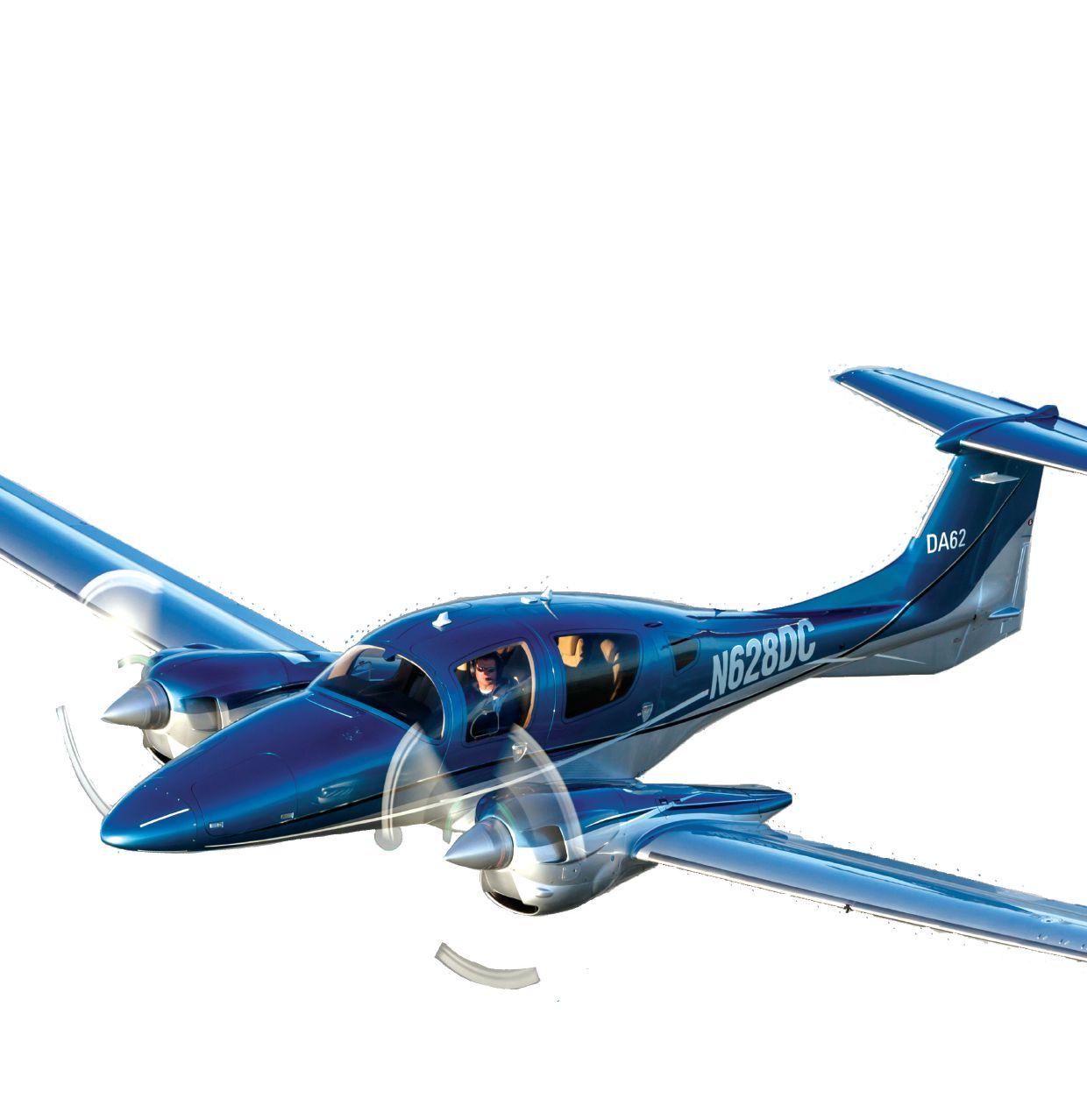
We take efficiency and luxury as seriously as you do. Have your passengers experience aviation as it was meant to be with the comfort of more space, while maximizing your savings and time. Fly fast. Fly farther. Burn less fuel.
Experience the DA62.


BY PHIL LIGHTSTONE
Over the past decade, air navigation and runway approaches have transitioned from ground based VOR, NDB and DME technologies to satellite based Global Positioning Systems (GPS and GNSS). Satellite technologies have cost efficiencies over ground systems, as demonstrated at home by NAV Canada decommissioning ground systems in favour of satellite. With the transition to GPS-based enroute and approach navigation, pilots and regulators are concerned with a number of issues impacting GPS services while airborne, including: Jamming, interference and loss of
signal based upon military operations. The GPS signals are transmitted and received over 1.3 GHz radio spectrum. The assignment of this licensed radio spectrum is designed to ensure other radio transmitters do not create Radio Frequency (RF) interference. Licensed guard channels have been set aside by the FCC and Innovation, Science and Economic Development Canada (ISED) to ensure that GPS signals are protected. RF interference can be caused by many factors, including, but not limited to: Other hardware transmitting on nearby RF bands; sun spots; and shifts in the Van Allen radiation belt. GPS signal anomalies can be
caused by factors impacting coverage areas of the GPS system and hardware anomalies within a specific aircraft. As aircraft GPS navigation receivers, cabling and antennas age, outages in a specific aircraft can occur. Redundant GPS technologies installed in the an aircraft, however, should minimize a complete loss of GPS signal to a specific aircraft (with the exception of GPS infrastructure issues).
GPS jamming is a relatively uncomplicated technique that involves producing an RF signal strong enough to drown out transmissions from GPS satellites. Typical consumergrade GPS jammers have limited range, but can be purchased by individuals, who, for example, might want to defeat GPS tracking devices installed in corporate vehicles. These portable GPS jammers are small and can be operated within an aircraft. More disruptive and sophisticated GPS attacks involve GPS spoofing (also known as a denial of service attack), which is designed to transmit false GPS data to a GPS receiver.
Over the past four years, there has been great debate regarding the ability of a GPS satellite network to maintain robust connectivity to GPS receivers, especially when airborne. GPS service disruptions are communicated by the FAA and NAV Canada via NOTAMs. The FAA created a GPS Anomaly Reporting form designed to aide it in correlating specific GPS events with any other GPS anomalies and assist with investigations. To facilitate pilot operational requirements, the FAA created a webpage displaying current operational readiness of the GPS WAAS system, depicting real-time and daily 24-hour plots. The system is designed to geographically depict various GPS delivered navigation service levels inclusive of LPV, RPN, WAAS satellite status, and others.
Ligado Networks (with its acquisition of LightSquared), AT&T and Verizon have found themselves at the centre of the 5G, GPS and radio/radar altimeter interference debate. This includes Ligado’s desire to build a ground 5G network using L-band spectrum and the 5G C-band expansion of both AT&T and Verizon. In April 2020, the FCC approved Ligado’s application to use the new L-band spectrum between 1 and 2 GHz for a terrestrial 5G network, to provide cellular and data services. The history of Ligado – via LightSquared – goes back to 2004 when the FCC allowed LightSquared to augment its satellite network with terrestrial cell phone towers. In January 2011, the FCC approved a conditional waiver for the company to use its spectrum for LTE communications if it resolved GPS interference. The GPS industry, aviators and the military claimed that the use of LightSquared’s spectrum would interfere with GPS communications. Testing had shown LightSquared’s ground transmissions may overpower the relatively faint GPS L1 signals from space.
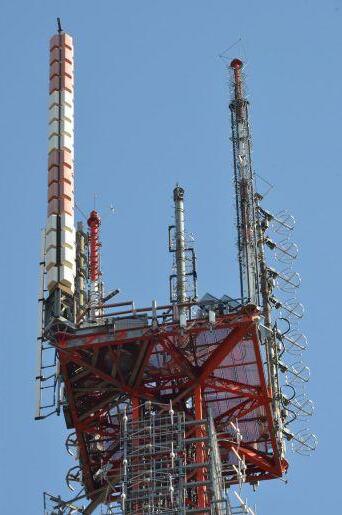
Although LightSquared would operate in its own authorized band, the band was so close to GPS signals that many devices could pick up the stronger LightSquared signals and become overloaded. In February 2012, the FCC proposed to indefinitely suspend the authorization due to these interference issues
The familiar antenna platform sitting at the top of Mont Royal in Montreal, bristling with telecommunications antennas to take advantage of altitude in one of Canada’s busiest cities and air traffic zones.
with satellite services. Now, the years 2021 and 2022 are subject to ongoing 5G debate between the FCC and FAA regarding interference to radio/radar altimeters and the impact to aviation safety.
According to The Wall Street Journal, in early November 2021, both AT&T and Verizon agreed to delay the roll out of their new 5G C-band wireless networks, after collectively spending nearly US$70 billion earlier in 2021 to acquire the frequency licenses. The FAA and members of the aviation industry are concerned about the utilization of C-band and the impact on aircraft radio/radar altimeters. Aviation industry leaders are concerned by studies indicating there is serious risk of interference from mid-band 5G transmissions impacting radio altimeters used by aircraft and helicopters. Safe interference limits may be exceeded by 5G transmissions up to 500 feet AGL for large jet airliners and up to 2,500 feet AGL for other aircraft groups. Adding to the debate, a demonstration by the Radio Technical Commission for Aeronautics (RTCA) indicates spurious emission levels are lower than what the FCC order permits,
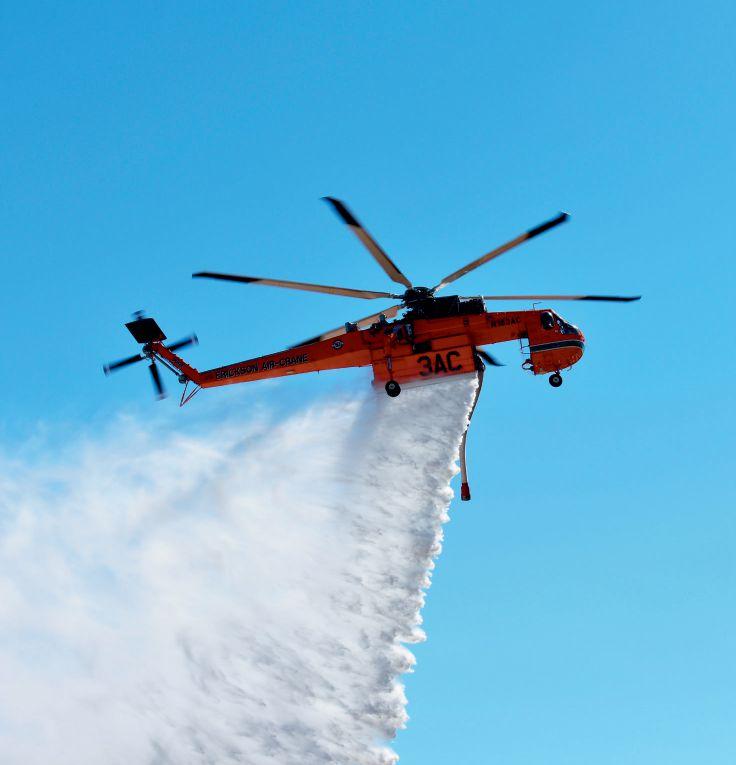
THE S-64 AIR CRANE® HELICOPTER
creating a potential interference with radio/radar altimeters. Transport Canada (TC) advises that erroneous radio altimeter information may impact a variety of aircraft systems, such as Terrain Awareness Warning, Traffic Alert and Collision Avoidance, Airborne Collision Avoidance, Wind Shear Detection, Autoland and flight control systems.
On August 6, 2021, the Coalition of Aviation and Aerospace Stakeholders (CAAS) made a presentation to the FCC about its concerns regarding the implementation of 5G C-band networks and the potential of wireless interference impacting radar altimetry, asking the FCC and FAA to convene a forum to advance 5G and avoid any undesired impacts on the National Airspace System.
In a letter to the FCC, Edward Yorkgitis, Counsel to Collins Aerospace, writes: “Previous efforts by the aviation and aerospace industry to pursue mitigation solutions with the commercial mobile wireless industry after the RTCA MSG Report, and with the imminence of the 3.7 GHz Band flexible use in December 2021, have been abject failures. Any inchoate discussions that might be occurring today between the two industries have a longer focus and are not pathways to the much needed near-term solutions that should be in place beginning in four months [January 2022]... The Commission and FAA should step in, each in the dual roles of mediator and regulator, to engineer appropriate solutions with the two industries to keep aviation and public safety as well as ubiquitous aeronautical capacity at the high levels the nation’s citizens, businesses, and institutions have come to expect and on which they rely.”
Dick Knapinski, Director of Communications, Experimental Aircraft Association, a member of CAAS, explains, “We need to get the technical folks from the FCC, FAA, and the telecommunications and aviation industries together, without political/economic pressures, in order to collaborate and determine a solution to these interference issues.”
Addressing the issue, TC published a Civil Aviation Safety Alert, POTENTIAL RISK OF INTERFERENCE OF 5G SIGNALS ON RADIO ALTIMETER (CASA 2021-08): “Transport Canada was drawn to a recent [RCTA] report, which concludes to a likelihood of disturbance for certain radio altimeter models by 5G radio waves in numerous operational scenarios and most notably at low height (less than 1000 ft) in the frequency band 3700 to 4000 MHz. The most undesirable outcome of interference is the indication of an undetected wrong height information given by the radio altimeter.”
In an October 2020 letter addressed
www.spidertracks.com

to ISED, Robert Sincennes, Director Standards, Civil Aviation, TC, writes: “There are liability concerns with 5G implementation and ISED needs to consider the seriousness of harmful interference to aircraft onboard radar altimeter equipment that may be caused by 5G telecommunications systems in the 3.7–3.98 GHz band implementation in Canada with the potential loss of lives if an Aviation accident would occur due to 5G interference with Radar Altimeter or WAIC.”
Sincennes also recommends to ISED that “Frequency band selection should not be swayed by economic reasons or harmonization with the USA, rather human safety should be the priority. ISED should also consider reducing the 5G operational bandwidth in some geographical areas near airports to increase the frequency guard band with the aviation frequency band in order to ensure aviation safety.” In jurisdictions where there are no mitigation measures established, operators need to confirm their radio altimeter is sufficiently robust against potential 5G interference before relying on its information below 200 ft AGL.
In late 2021, ISED imposed a number of mitigation measures regarding the usage of 3500 MHz around airports, creating exclusion zones and protected zones and utilizing
power limitations, as well as antenna down tilt requirements. ISED has identified 26 Canadian airports where spectrum licensees (wireless telecommunications providers) may not to operate 3500 MHz 5G stations within these exclusion and protected zones. Licensees with existing 5G stations are required to conduct analysis to ensure compliance with all of ISEDs technical and operational requirements. It is important to note the 3500 MHz spectrum auctioned in Canada (3.45 to 3.65 GHz) is a lower band than the U.S. C-band spectrum (3.7 to 3.98 GHz), and further away from the spectrum used by radar altimeters (4.2 to 4.4 GHz).
A Canadian Wireless Telecommunications Association (CWTA) spokesperson reports: “The safety of Canadians is paramount. However, just as mid-band spectrum is being used in approximately 40 countries without any reports of aviation altimeter interference, we are confident that the use of 3500 MHz spectrum for wireless communications will not impact aviation safety in Canada. Our members will continue to work with ISED to ensure that any technical requirements regarding the use of mid-band spectrum are evidence-based.”
In December 2021, the FAA issued Airworthiness Directives 2021-23-12 and 2021-23-13. These ADs require operators
to revise the limitations section of their aircraft flight manual to include limitations prohibiting certain operations requiring radio altimeter data when in the presence of 5G C-Band interference as identified by NOTAMs. The FAA has created a Report a Radio Altimeter Anomaly website. Key data in reporting an anomaly is the location, magnetic heading and altitude. To deal with these potential interference issues, 5G mobility carriers could disable C-Band transmissions in and around airports, while utilizing 4G LTE transmissions for customer device connectivity and data transmissions.
As of the first week of January, U.S. mobility carriers AT&T and Verizon voluntarily implemented some mitigation measures (power limitations) near 50 airports for six months. After the six months, they can utilize the spectrum as licensed without these mitigations. This should provide the FAA time to issue AMOCs for individual altimeters and airports. The 5G safety issue is fraught with bureaucracy, science and economics as many government agencies, telecommunications providers, aviation aerospace companies, and trade associations communicate facts in an effort to balance aviation safety with 5G innovation and profits. Perhaps 2022 will deliver quantifiable actions as seen in back 2012. | W



Air carriers and airports have been caught in the whirlwind confusion that surrounds air transport heath regulations for months but never as much as right now. Blamed for its slow uptake at the beginning of the COVID-19 pandemic, the Canadian Government is now throwing science-based logic and operational capacity aside in favor of what could be described as politically motivated reactions to the latest variant, regardless of the cost to carriers, airports and passengers.
Carriers and airports are concerned with government expectations that are unrealistic. To announce that all international passengers arriving at the 18 Canadian airports, authorized to receive these flights, will be tested without first checking the feasibility of such an undertaking is irresponsible and demonstrates either a lack of concern for the implementation of a promise made by a politician or a complete disregard of logistics and practicality.
Passenger confusion and concerns are resulting in massive cancellations of travel and vacation plans. ATAC strongly encourages the Government of Canada to follow a science and data-driven approach in dealing with the COVID-19 Omicron variant and not a political motivated populist approach. The logical and safe approach proposed by the subject matter experts within the International Civil Aviation Organization (ICAO) and the International Air Transport Association (IATA) is fully supported by ATAC and is elaborated upon in their following statements:
ICAO Bulletin: In line with the latest recommendations of the World Health Organization (WHO), ICAO issued a new global bulletin on December 1st urging a more measured and evidencebased approach to countries’ national air transport restrictions due to the emergence of the SARS-CoV-2 Omicron variant. Until more detailed assessments are available, the UN aviation agency is encouraging countries to continue combatting the spread of COVID-19, and specifically the Omicron variant, using the recommendations and guidance contained in the ICAO Council Aviation Recovery Task Force’s (CART) Take-off Guidance for Air Travel through the COVID-19 Public Health Crisis, in addition to the third edition of ICAO’s Manual on COVID-19 Cross-Border Risk Management. The new bulletin was issued under the authority of ICAO Secretary General Juan Carlos Salazar, who commented that “It’s critical that we continue to respond to this disease and its variants on the basis of the best available science and evidence.”
Statement from IATA's Director General: Governments are responding to the risks of the new coronavirus variant in emergency mode causing fear among the traveling public. As quickly as possible we must use the experience of the last two years to move to a coordinated data-driven approach that finds safe alternatives to border closures and quarantine. Travel restrictions are not a long-term solution to control COVID variants.
In addition to adopting actions that are based on data-driven evidence to address the ongoing practical travel concerns, ATAC strongly recommends that alternatives, ignored up until now, such as rapid antigen testing which is acceptable in the US and many other jurisdictions with its associated accessibility and cost effectiveness, must be seriously considered and adopted in Canada. This would provide an equivalent level of testing and better cater to the airport infrastructure inability to deal with current testing requirements.
ATAC looks to the government to find safe and practical solutions as quickly as possible. Consulting with airline and airport operators, rather than simply informing them minutes before press releases are issued, would go a long way in getting it right from the start.
The Government must be commended for setting up effective communication working groups to inform and gather comments from stakeholders. The problem lies in the fact that little or no delay is granted and this transforms into dictating directives that are a fait accompli. Treating operators like partners in the resolve of what is practical would greatly clear up operational issues before the fact and not push everyone in complete chaos.
Concerns and real implementation problems raised during government-industry calls are politely received with little if any follow-up. Does Transport Canada not sit at the Government COVID-19 Crisis Center and get to raise operational concerns? Hopefully, its role is not that of conduit to inform stakeholders of the decisions made by people with no operational knowledge whatsoever.
This is not the first time that industry has made this point. Why is it too much to ask to have invested stakeholders’ input upstream of the decision rather than scramble to deal with an impractical directive?
John McKenna President and CEO



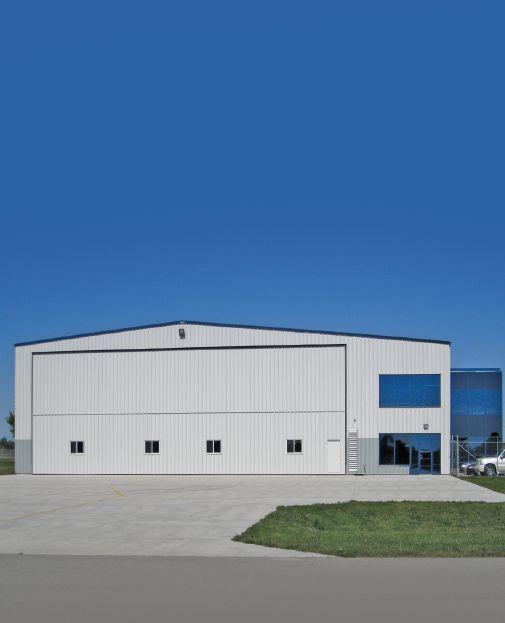

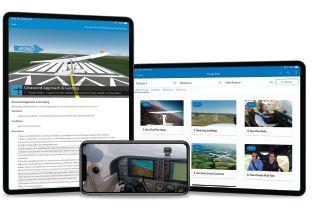







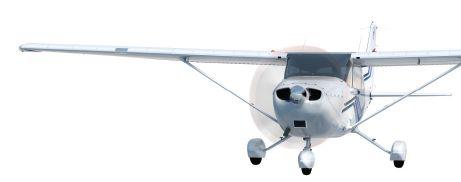










By Louis-Philippe Coulombe
The closest exoplanet to us, Proxima Centauri b, is 4.2 light years away, or 265,000 times the distance between the Earth and the sun. To the naked eye, the planets in our solar system appear as bright spots. Using a telescope, these dots stand out from the stars and reveal structures like Jupiter’s Great Red Spot, Saturn’s rings, or the ice caps of Mars. Although the presence of such phenomena is expected on exoplanets, their distance from the Earth prevents us from directly resolving their surfaces. Nevertheless, there are ways to learn more about the structure of their atmospheres. I am a PhD student in astrophysics at the University of Montreal. My work is related to the characterization of exoplanet atmospheres. More specifically, my research focuses on the development of tools to map the atmosphere of exoplanets using observations from the James Webb Space Telescope.
The majority of exoplanets are detected using indirect methods, primarily observing the effect of the planet’s presence on the light emitted by its star. The transit method has led to the greatest number of exoplanet detections. A transit occurs when an exoplanet passes in front of its host star, which means light from the star decreases as its surface is partially obscured. Light is divided into a spectrum of wavelengths that correspond to different colours. When a transit is observed at several wavelengths, it is possible to measure the atmospheric composition of the exoplanet. For example, water molecules strongly absorb light in the infrared wavelengths, making the planet appear larger, since its atmosphere blocks a larger fraction of the light from its star. In a similar way, it is possible to measure temperature of the atmosphere and to detect the presence of clouds.
In addition, a transiting planet can also pass behind its star. This phenomenon, in which only the light from the star is observed, is called secondary eclipse. By observing this, it is possible to isolate the light coming only from the planet and thus obtain additional information about its atmosphere. The transit method is more sensitive to the presence of clouds, while secondary eclipse provides more information about the temperature of the atmosphere.

The Fine Guidance Sensor, built by COM DEV in Ottawa along with NIRISS, allows Webb to determine its position, locate celestial targets, track moving targets, and remain locked on.
In general, the atmosphere of an exoplanet is considered a one-dimensional object when analyzing it. That is, its composition and temperature are considered to vary only with altitude and not with its position in longitude and latitude. To take these three dimensions into account simultaneously would require complex models and observational accuracy. But solely considering altitude may produce approximations that are not valid. On Earth, for example, the temperature at the equator is much higher than at the poles.
Although it is impossible to observe the surface of an exoplanet directly, it is possible to measure the spatial variation of the atmosphere using two methods: phase curve analysis and secondary eclipse mapping. The phase curve is the variation of light from the star-planet system during a period of revolution. Since the planet rotates on itself during its orbit, different sections of its atmosphere are successively visible to us. From this signal, it is possible to map the intensity of the light emitted by the planet
in longitude. In the case of hot Jupiters, whose day side is generally hotter, the maximum of light from the planet is near the secondary eclipse. Similarly, the minimum of the curve is near the transit, since it is then the night side that is observed. In secondary eclipse mapping, the day side of the exoplanet is resolved. As the planet moves in and out from behind its star from our point of view, sections of it are hidden, allowing us to isolate the light emitted by a given section of its atmosphere. By measuring the amount of light emitted by each individual section, it is then possible to map the day side of the atmosphere against longitude and latitude.
To date, phase curve analysis has been applied to several planets using space telescopes, including Hubble, Kepler and TESS. Secondary eclipse mapping has only been applied to one exoplanet, Hot Jupiter HD189733 b, from observations with the Spitzer space telescope. However, these observations are usually made at a single wavelength, and don’t provide a complete picture of the atmospheric processes at work on these exoplanets.
With a 6.5-metre mirror, compared to the Hubble’s 2.4-metre mirror, the Webb telescope will provide unprecedentedly precise observations over a wide range of wavelengths. Four instruments, including Canada’s NIRISS (Near-infrared Imager and Slitless Spectrograph), will observe in the infrared range and characterize the atmospheres of a multitude of exoplanets.With the Webb telescope, it will be possible to apply the mapping methods available to us to measure the three-dimensional variation of exoplanet atmospheres. These measurements will allow us to deepen our knowledge of atmospheric processes. | W
This article was originally published by The Conversation.


• CRFT Your source for comprehensive, tip-to-tail aftermarket support
ENGINES
• GE T700/CT7
• Pratt & Whitney Canada PT6T
• Rolls-Royce M250 & RR300
• Safran Arriel 1 & 2
AIRFRAMES
• Airbus H120/EC120, H125/AS350, AS355, EC135, H130/EC130, H215/AS332
• Bell B204/205, B206, B212/412, B214, B407, B427, B222/230/430, UH-1 series
• Sikorsky S-76 & S-61
DYNAMIC COMPONENTS
• Airbus H125/AS350 & H130/EC130
AVIONICS
• AutoPilot
• ADS-B
• Glass cockpit FUEL SYSTEMS