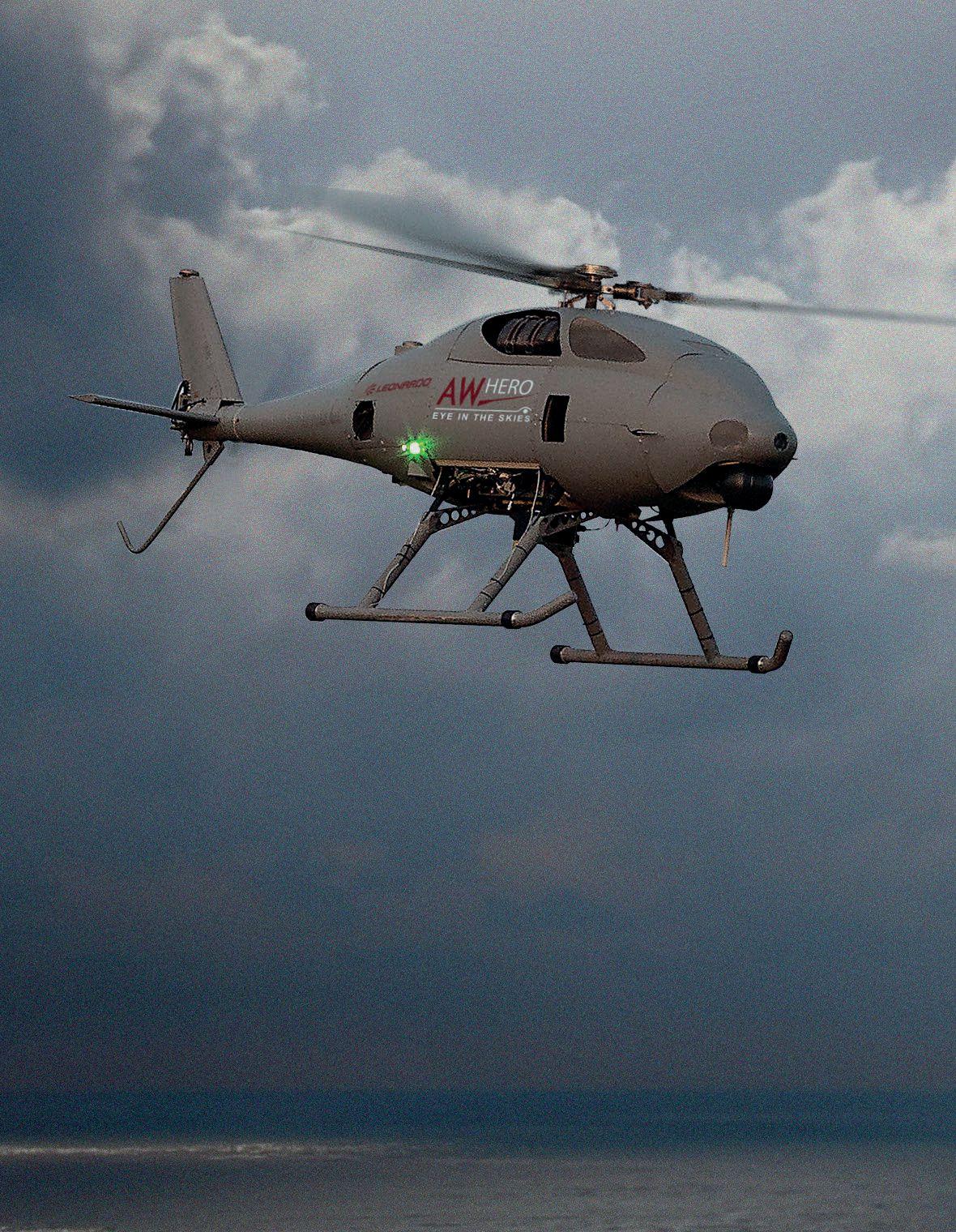
The AWHERO is a leading-edge Rotary Unmanned Aerial Vehicle (RUAV), designed for maximum reliability, maintainability and operational flexibility. Designed for operation in the harshest environments, on land and at sea; the dual-use AWHERO features a modular payload configuration, ensuring capability across the medium-range civil and military mission spectrum, including: ISR/ISTAR, border surveillance, vessel detection and monitoring, migration monitoring, piracy and smuggling, mapping and environmental monitoring. Inspired by the vision, curiosity and creativity of the great master inventorLeonardo is designing the technology of tomorrow. Visit us at HAC, Booth 401-403



JON ROBINSON, editor
The unmanned air systems industry continues to be buoyed by estimations and projections of unfettered growth. Unmanned Systems Canada, for example, estimates $1.6 billion in revenue will be generated by Canada’s UAS sector in 2018. Earlier this year, a Federal Aviation Administration report projected “phenomenal growth” for the UAS industry to 2022, predicting fourfold growth in the U.S.
The FAA estimates hobbyist drone volumes will more than double from 1.1 million in 2017 to 2.4 million in 2022 and the commercial UAS fleet could increase from nearly 111,000 in 2017 to more than 450,000 by 2022. In line with vehicle growth, the FAA expects the number of UAS pilots to grow from 74,000 in 2017 to more than 300,000 by 2022. UAS is largely developing its power in the ability to disrupt any number of commercial, military and industrial sectors. By 2022, there will be dozens of entirely new applications driving the expansion of drones, including a greater capability to integrate the strengths of both unmanned and manned systems into a single cooperative system.
Through May and June 2018, Blue Line magazine, which is controlled by UAV Canada’s parent company, Annex Business Media, surveyed Canadian law enforcement about its current drone use. When asked, What is the most popular use for your law enforcement UAV?, the response “collision reconstruction” led the way at 35.7 per cent. Search and rescue was the second most popular response at 21.4 per cent, followed by crowd monitoring and crime scene analysis both at 14.3 per cent.
An August 2018 Drone Efficacy Study issued by DJI, the European Emergency Number Association (EENA) and Black Channel sent randomly-selected teams of searchers to find simulated victims in the rugged landscape of Ireland and Wales. Thirty teams used off-the-shelf drones with standard visual cameras, while another 20 teams searched on foot using traditional protocols. Seventeen ground search teams
found their victims, compared to 23 drone teams. The researchers conclude drone-assisted SAR procedures have not advanced enough to maximize the benefits of the technology, but the drone searchers did find their victims an average of 191 seconds faster. Supporting these findings of a developing ecosystem, when Blue Line asked, When did your law enforcement agency begin using an UAV system?, 42.9 per cent of respondents indicate in the past year. Sometime over the past 24 months was the second most popular response at 28.6 per cent.
Privacy concerns was by far the largest response from Blue Line's question, What is the biggest concern with UAV systems being utilized in law enforcement today? Licensing and regulations, along with the speed of development came second, both at 26.7 per cent, while the price tag of the drones only reached 6.7 per cent. This low number around pricing, however, may be the view of public versus private investment.
Skylogic Research LLC, an advisory firm for commercial drones, in September 2018 released its third annual 2018 Drone Market Sector Report based on some 2,500 respondents representing more than 60 industries worldwide. One of the key findings of the report, according to the Skylogic’s Drone Analyst Website, is that commercial drone fleet sizes are smaller than most people think. The survey found that the average commercial user has just two drones that are flying two projects a month. Most of those flights, according to Drone Analyst, consume less than three flight hours.
An August 2018 report by market intelligence firm Tractica forecasts that global drone-enabled services revenue will increase from $337.6 million in 2017 to $22.7 billion annually by 2026, with cumulative revenue for the 10-year period totaling $62.1 billion. The firm anticipates that the three leading industries in the drone services market will be the film and media industry; the utility, energy, and infrastructure sectors; and the agriculture industry.
EDITOR JON ROBINSON jrobinson@annexbusinessmedia.com 647-448-6188
MEDIA DESIGNER JAIME RATCLIFFE
CONTRIBUTING WRITERS
DAVID CARR, BRIAN DUNN, WALTER HENEGHAN, FRED JONES, JAMES MARASA, CARROLL MCCORMICK, COREY TAYLOR
NATIONAL ADVERTISING MANAGER MENA MIU mmiu@annexbusinessmedia.com 905-713-4351
ACCOUNT MANAGER KORY PEARN kpearn@annexbusinessmedia.com 519-902-8574
ACCOUNT COORDINATOR BARB VOWLES bvowles@annexbusinessmedia.com 416-510-5103
GROUP PUBLISHER MARTIN MCANULTY mmcanulty@annexweb.com
PRESIDENT & CEO MIKE FREDERICKS
Printed in Canada ISSN 0227-3161
No part of the editorial content of this publication may be reprinted without the publisher’s written permission ©2018 Annex Publishing & Printing Inc. All rights reserved. Opinions expressed in this magazine are not necessarily those of the editor or the publisher. No liability is assumed for errors or omissions. All advertising is subject to the publisher’s approval. Such approval does not imply any endorsement of the products or services advertised. Publisher reserves the right to refuse advertising that does not meet the standards of the publication.

The digital and online vehicles of WINGS, HELICOPTERS and UAV CANADA, controlled by Annex Business Media, are where aviation and aerospace professionals go for their daily industry news and business information. All Annex Business Media’s e-products are CASL-compliant.
• Daily news
• Weekly e-newsletters
• Job boards
• Digital editions
• Sponsored content
• Aviation Bookstore
• A-List Aviation Directory
• Careers in Aviation
• Aviation This Week
Wingsmagazine.com
Helicotpersmagazine.com UAV-Canada.com









Boeing will build the U.S. Navy’s first operational carrier-based unmanned aircraft, the MQ-25 Stingray aerial refueler, through an US$805 million ($1.1 billion) contract. After a competitive process, Boeing was awarded the engineering and manufacturing development contract to provide four initial aircraft –out of its St. Louis facility.
The U.S. Navy expects the first airframes to begin flying by 2021, according to Usni.org, and the first four Stingrays should reach operational capability on carrier decks in 2024. After this contract is complete, covering the design and pro-
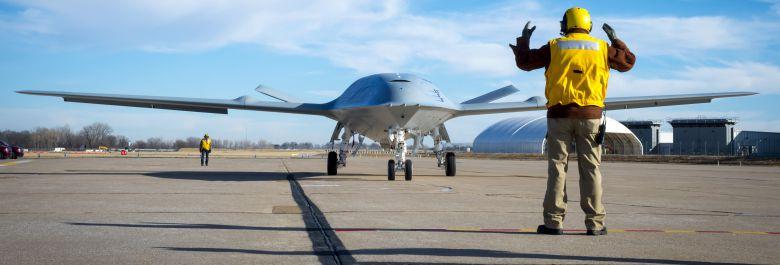
duction of the four Stingray airframes for testing, Usni.org reports the navy plans to buy 72 more vehicles with a total program cost of about US$13 billion ($17 billion).
The MQ-25 Stingray is designed to provide the U.S.
Navy with what Boeing describes as a much-needed refueling capability. It will allow for better use of combat strike fighters, according to the Navy, by extending the range of deployed Boeing F/A-18 Super Hornet, Boeing EA-18G
Growler, and Lockheed Martin F-35C aircraft. The MQ-25 will also integrate with a carrier’s catapult and launch and recovery systems. Boeing has been providing carrier aircraft to the U.S. Navy for more than 90 years.
Safran, at a facility near Pau-Pyrenees Airport in France, passed a major milestone in its hybrid electric propulsion development with the first ground test of a distributed propulsion system.
Stéphane Cueille, senior executive VP for R&T and innovation at Safran, described technology EP as the foundation of future propulsion solutions.
Safran plans to bring hybrid electric propulsion (HEP) to market by 2025. The successful ground test in July came a few weeks after announcing a new
partnership with Bell around mobility on demand.
Hybrid propulsion systems, explains Safran, should contribute to the emergence of new vertical takeoff and landing (VTOL) and short takeoff and landing (STOL) aircraft, by enhancing flight capabilities and expanding their mission range.
The company explains, that in a distributed hybrid electric propulsion system for aircraft, a turbo-generator – a gas turbine driving an electrical generator –is coupled to a bank of batteries.
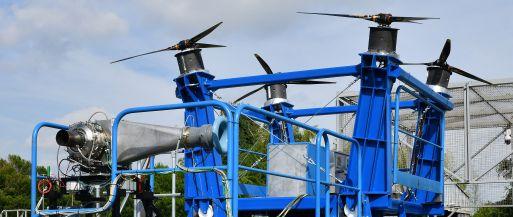
This system then powers multiple electric motors turning propellers to provide propulsion.
The power is distributed by a new-generation power management system and the motors are controlled by a smart power
electronics assembly. Several operating modes were tested and validated by Safran, with the electric motors powered only by batteries or by a combination of batteries and turbogenerator.
Boeing in August announced plans to open the Boeing Aerospace & Autonomy Center in Cambridge, Mass., focusing on the development of autonomous aircraft, becoming the first major tenant of the Massachusetts Institute of
Technology’s (MIT) new mixeduse district in Kendall Square. The facility is scheduled to open in 2020.
Boeing will lease 100,000 square feet of research and lab space inside a new 17-floor building at 314 Main Street in Cambridge. The centre will
house employees from Boeing and subsidiary Aurora Flight Sciences, who will work on designing, building and flying autonomous aircraft and related enabling technologies.
The investment in the new centre follows the recent creation of Boeing NeXt, which
aims to unite researchers and projects across the company to shape the future of travel and transport. This includes the development of a next-generation airspace management system to enable the safe coexistence of piloted and autonomous vehicles.
Canadian UAVs, an unmanned aviation solutions provider for enterprise and military applications, received approval issued by Transport Canada to inspect remote oil and gas assets beyond line of sight for environmental integrity in civilian airspace. The project, which is based at Canadian UAVs testing facility west of Calgary, Albt., will enable Canadian UAVs to validate its proprietary technology and advanced airline-grade safety infrastructure at scale. The project is in collaboration with Canadian oil and gas companies, which will provide direct feedback on data output from the trials.
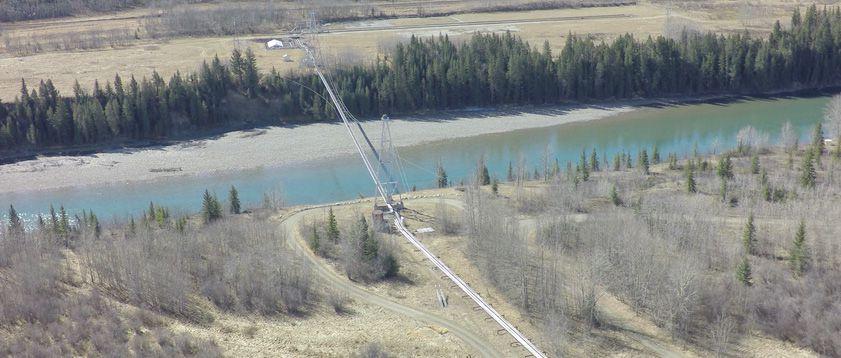
“Canadian UAVs is an aviation first, unmanned airline company which has been working with local and federal stakeholders, to commercially scale up our remote asset monitoring services,” said Sean Greenwood, CEO of Canadian UAVs. “Our ability to reduce costs of inspection for our clients will lead to greater understanding of remote assets and their environmental conditions. This is a massive achievement for our team and stakeholders,
Deepak Chopra, after leading Canada Post as CEO for seven years, joined Drone Delivery Canada (DDC) as strategic advisor, commercialization, as the Vaughan, Ont., company focuses on the national and international roll out of its drone delivery business and looks toward revenue generation. Under his leadership, Canada Post became the country’s top ranked parcel delivery service in 2015, reaching 16 million addressees across Canada. The crown corporation built this position working with large retailers like Amazon, Walmart, Best Buy and Hudson’s Bay.
remote communities. In addition to remote healthcare, Chopra will advise DDC on identifying commercial opportunities in the areas of transportation and logistics, as well as critical, time-sensitive package delivery with a particular focus on rural and northern communities in Canada.
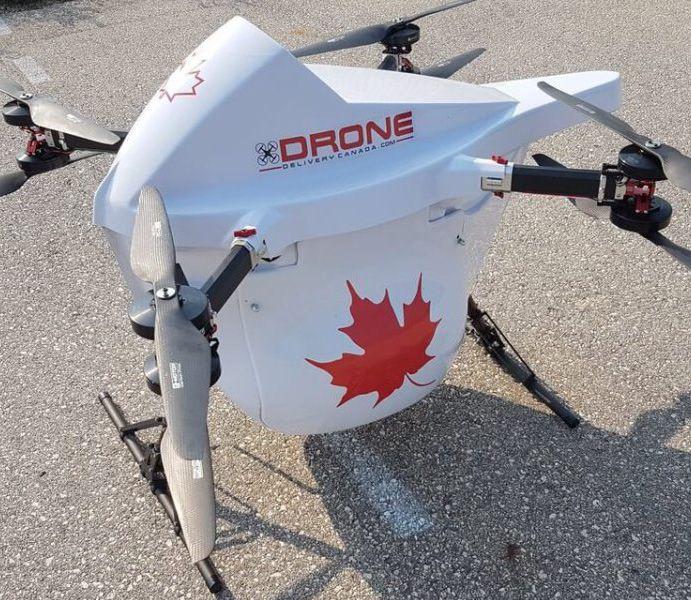
Chopra describes DDC’s potential in the healthcare space, for example, providing broadband access and drones create a strong mix in delivering tele-health for rural and
In the summer of 2018, DDC was selected to participate in Transport Canada’s Beyond Visual Lineof-Sight Pilot Project, with a focus on the Moosonee and Moose Cree First Nation communities in Northern Ontario. The Pilot Project is utilizing DDC’s drone delivery platform, including its FLYTE management system, DroneSpot technology and its Sparrow X1000 delivery drone, which was deemed compliant by Transport Canada in late 2017.
proving that Canada is a world leader in environmentally conscious resource development and aerospace technology.”
Highlights of the project include: The first of its kind Transport Canada permitted civilian airspace BVLOS trial; the largest up-stream and mid-stream oil and gas companies as stakeholders; industry-wide standard operating procedures for BVLOS oil and gas operations; and industry inspection data output standardization.
Close to $600,000 will be invested by various pillars of government to support the development of aerial systems technology at the Foremost Unmanned Air Systems (UAS) Range, based in the Village of Foremost, Alberta. The Western Diversification Program in September placed an investment of $225,000 to support the purchase of specialized safety equipment primarily around BVLOS.
Investments also comes in the form of $300,000 from the Government of Alberta, $35,000 from the Palliser Economic Partnership, and $30,000 from the Village of Foremost – to purchase equipment and help establish safety requirements at the range. The goal of the investments is to establish the Foremost UAS Range as a leader of BVLOS technologies and applications. The facility offers UAV operators 700 square nautical miles of restricted airspace up to 18,000 feet above sea level. It is anticipated this project will assist 12 companies, support six prototype demonstrations and help commercialize new UAV technologies.
General Atomics
Aeronautical Systems (GA-ASI) launched the new Team SkyGuardian Canada as a solution to address Canadian Armed Forces’ work toward finding a Remotely Piloted Aircraft System (RPAS) Project platform. The team is comprised of CAE Canada, MDA, and L3 WESCAM. It will focus on combining the best of Canadian industry with the MQ-9B SkyGuardian advanced medium-altitude long-endurance (MALE) RPAS for the Royal Canadian Air Force (RCAF).
The project has been designed to deliver a MALE RPAS to the Canadian Armed
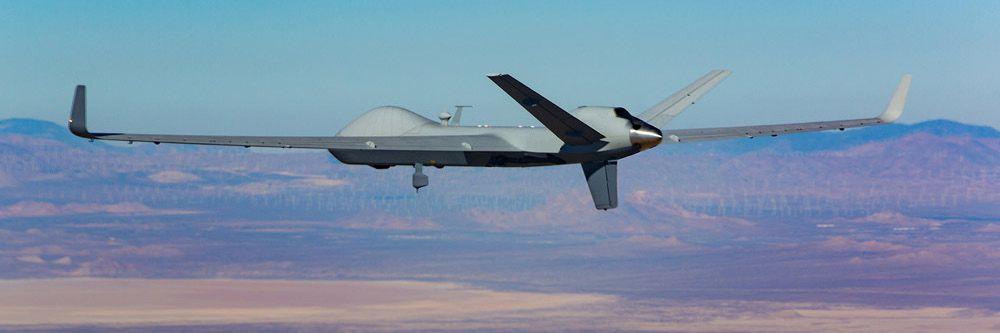
Forces, in addition to providing new capabilities and generating job opportunities in the high-technology sectors of the country.
The RPAS initiative, open to a range of bids, was put into place in mid-2018, replacing the JUSTAS program that began in October 2000, as the
Government of Canada moves toward building its drone platform. The examination of uninhabited aerial vehicles for Canada has been ongoing since 2001.
In July, General Atomics made the first-ever transatlantic flight of a MALE Remotely Piloted Aircraft with its
MQ-9B SkyGuardian flying from the company’s Flight Test and Training Center in Grand Forks, North Dakota, to Royal Air Force’s centenary celebrations in Gloucestershire, UK. The flight leveraged Inmarsat’s SwiftBroadband SATCOM system for ground support.
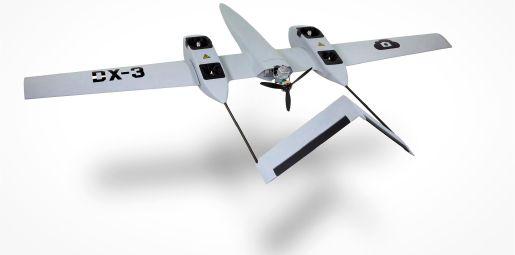
In August, drone operator and developer The Sky Guys, with operations in Toronto and Vancouver, received a Special Flight Operations Certificate (SFOC) for its DX-3 Vanguard, described as a landmark project, aimed at NATO Class 1/ DoD Group 2 Class UAVs.
The new permit allows for commercial Unmanned Aircraft System (UAS) flights to perform testing of the DX-3 Vanguard. This will include
putting the DX-3 through what the company describes as critical elements of integrated flight testing, including performance benchmarking and evaluating Vertical Takeoff and Landing (VTOL), transition, forward-flight, endurance, systems safety, and various aspects of human factors.
The SFOC approval, explains the company, comes after months of testing and evaluation in a controlled laboratory environment. Initial
flight testing, to be conducted at Toronto Markham Airport CNU8, will consist of Line of
In September 2018, Canadian Automated Vehicle Institute (CAVI) was established to server as a national organization to help develop, foster and implement national strategies in the automated vehicles (AV) and connected vehicles (CV) ecosystem.
CAVI will be an industryled not-for-profit association open to all public and private sector organizations involved in any way with the AV/CV ecosystem. The formal launch is planned for early 2019.
The organization will be led by Unmanned Systems Canada board member Barrie
Kirk, who is a co-founder and the executive director of CAVCOE (formerly the Canadian Automated Vehicles Centre of Excellence). In his capacity as a consultant and speaker, Kirk has assisted many public and private sector organizations prepare for the automated vehicles era.
Sight (LOS) and simulated Beyond Visual Line of Sight (BVLOS) only.
CAVI holds six founding partners: Alberta Council of Technologies (ABCtech), CAVCOE (formerly the Canadian Automated Vehicles Centre of Excellence), DOT Technology, Kanata North Business Association, Invest Ottawa, and movmi.
In September, Bell Helicopter, at the National Press Club in Washington, D.C., on September 22, provided updates around the development of its V-247 Vigilant tiltrotor, an unmanned aerial system (UAS) that, according to the company, will combine the vertical lift capability of a helicopter with the speed and range of a conventional fixed-wing aircraft.
Introduced in a ship-borne design, Bell states the unmanned aircraft could be available for production as early as 2023. The company says it leveraged decades of applied tiltrotor experience to develop this next generation UAS. This includes design and capabilities experience gained from the V-22 tiltrotor program and UH-1Y/AH-1Z programs, while leveraging the V-280 Valor’s design and performance standards to support ship-board compatibility.
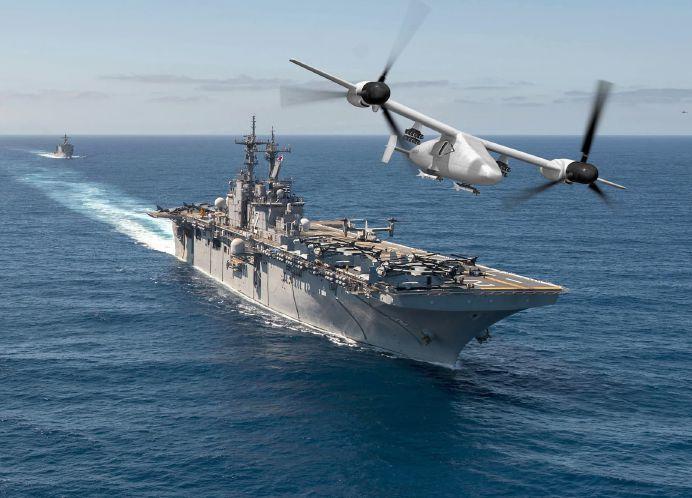
Bell explains the V-247 Vigilant is designed to provide “unmatched longendurance persistent expeditionary and surveillance capability and lethal reach.” The aircraft will also hold runway independence to operate in maritime environments and locations with -
out available secure runways. The V-247 Vigilant is designed in large part to satisfy the capabilities outlined in the 2016 Marine Corps Aviation Plan, addressing the demands of the military and transportation sectors for a shipborne UAS platform.
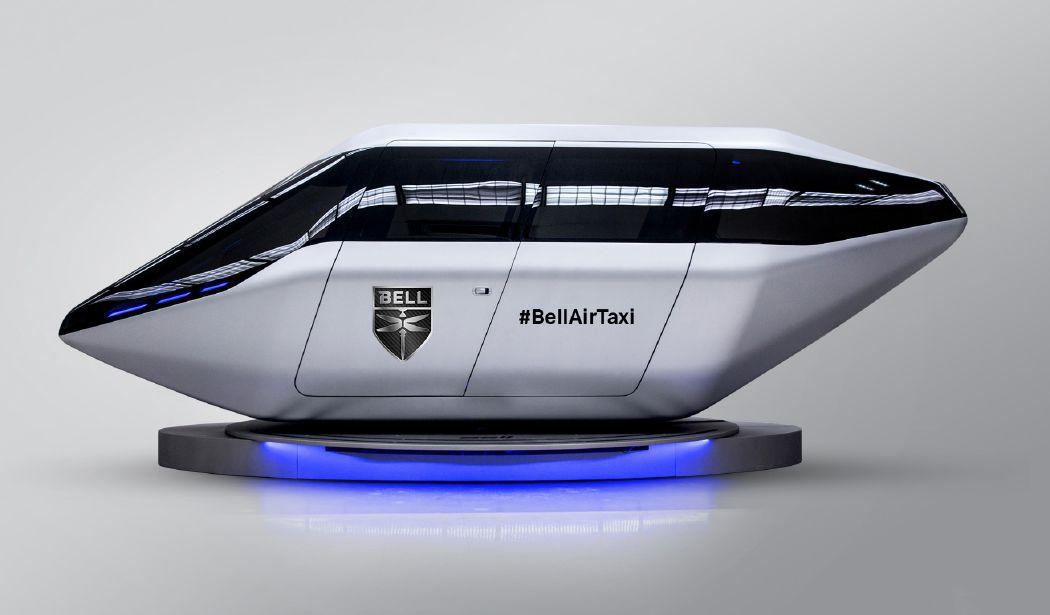
is one of many concept vehicles, including future UAV models, spurred on by Uber's Elevate program. (Photo: Bell)
By David Carr
Supersonic passenger transport is mounting a come back. Even so, flying at twice the speed of sound is old news. The next frontier will be on-demand aviation in an urban setting, meaning the arrival of the long promised flying car. In 2016, Uber, the global ride share company, floated the idea of small, jet-powered, electric vertical takeoff and landing (VTOL) aircraft zipping first between suburbs and cities, and eventually within cities themselves. The company estimates that the average San Francisco resident spends 230 hours a year commuting between work and home. It also says on-demand aviation can cut an approximately two-hour commute to 15 minutes.
Uber, which would monetize rather than develop the technology and infrastructure,
expects a first generation of air taxis to be airborne in Dallas and Dubai by 2020, with intra-city air tax service available after 2023.
In February, Vahana made its first flight from the Pendleton UAS Range in Pendleton, Oregon. Developed at A3, a Silicon Valley outpost of Europe’s Airbus, Vahana is seen as a milestone in launching urban air mobility, aka, the flying car. “In just under two years, Vahana took a concept sketch on a napkin and built a full-scale, self-piloted aircraft,” said Zach Lovering, the project executive of Vahana. Demonstrating that there is more drone than chassis in the evolution of the flying car, the vehicle spent 53 seconds in the air without passengers, reaching a height of five metres.
Even if the aircraft is viable (and there are
some huge technological challenges), what of the ecosystem needed to support an urban flying network, including vertiports and a regulatory framework? Uber estimates it would need 1,000 aircraft and 83 vertiports with 12 charging stations each to support a sustainable service in up to four cities (Los Angeles was recently added to the list).
“UberAIR will be performing far more flights over cities on a daily basis than has ever been done before,” Jeff Holden, Uber’s chief product officer said in a statement. That means integrating a fleet of air taxis with other aircraft, including police and news helicopters that occupy the skies in many urban areas. São Paulo, Brazil, for example, experiences hundreds of helicopter movements a day.
Uber has signed an agreement with NASA to develop software to support a taxi network. The agreement aims to solve issues involved in operating hundreds or even thousands of driverless aircraft over urban areas and allow them to co-exist with existing air traffic control systems, reports Reuters.
The agreement tacks onto work NASA has completed with a number of industry partners to develop UAV air traffic management systems. NASA has already tested driverless air traffic management over sparsely populated regions. This year, the agency plans to test services over moderately populated areas, followed by testing in high-density urban areas in 2019, when Uber will become directly involved.
Even after 2023, highways are not going to morph into makeshift runways to rise above traffic snarls, and while a fleet of air taxis may cut commute times, it is not going to be driveway to doorway service. For the flying car industry, a sufficient
number of spots to land and takeoff (with charging stations) will be the biggest operational challenge. “A small number of cities already have multiple heliports and might have enough capacity to offer a limited initial VTOL service,” Uber reports. But these will have to be in the right locations, easily accessible from street level, with the space for up to 12 charging stations.
NASA has studied VTOL air taxis operating in dense urban environments, using San Francisco as the model. The solution appears to be vertistops – or single vehicle landing locations where aircraft can pick up and drop of passengers – supported by a network of larger vertiports where up to 12 VTOL aircraft can park, re-charge and receive services. Uber is partnering with ChargePoint, the world’s largest charging network to create rapid-charging stations for its fleet of flying cars. “Rapid recharging is essential to this vision,” Nikhil Goel, Uber’s head of product for advanced pro-
grams said. “ChargePoint has proven their unmatched ability to build and support electric vehicle charging networks.”
Then there are the aircraft themselves which will have to be quiet enough to blend into the urban noise-scape, and deliver zero operational emissions. Both concerns can be met by electronic propulsion, but what about keeping the payload in the air? Existing battery technology cannot support the gross weight (which will likely include a pilot, at least for the first few years of operation) needed to transport passengers over long distance commutes, and cannot be recharged fast enough to support a sustainable, high-frequency ridesharing operation. Uber expects battery technology to advance to support intracity ridesharing over the next five years.
And what of the cost? Uber estimates the per passenger cost of a 91-km trip (one hour, 40 minutes) to be US$129, or
only 17 per cent more than a similar distance covered by Uber X. Over the long term, that would drop to US$20.
Manufacturers will develop a series of vehicles to support different speeds, range capabilities and passenger capacity. There is a lot of work to do between now and 2020, including creating a regulatory environment to prevent the industry from descending into the wild west, similar to what happened during the dawn of the first motorized traffic age.
According to Jaiwon Shin, NASA’s associate administer for the aeronautics research mission directorate; the sky remains the limit. Speaking at a White House workshop on drones and the future of aviation, Shin said, “Fully autonomous air taxi operations, especially in very populated and heavy traffic areas… I think it’s an exciting possibility. A lot of new chapters in aviation are possible – it’s a dawn of a new era in aviation.”

DTI, having spent the last 15 years helping develop and deliver training to Transport Canada, NASA and the U.S. DoD, on Quality Assurance, SMS and Surveillance Procedures, is now ready to help you achieve all you can.The workshops are designed to familiarize the participants with the basics of a QA/SMS system and what Transport Canada, the FAA and other governing bodies will be looking for, as they implement their system. It is being taught by the same group (DTI) that has helped Canadian Regulators develop the QA & Surveillance portions of the SMS, and has spent the last ten years facilitating the implementation of the new process to all its inspectors.
Three Ways to Attend the Workshops!
1) Sign up to the workshops at a location most convenient to you below!
2) Host our workshops and receive incentives and discounts.
3) Bring DTI to your Enterprise for Company Specific workshops! Receive Discounts, Incentives and more! (this applies to even a single workshop!)
EDMONTON AREA
- HOSTED BY DELTA HELICOPTERS (ST. ALBERT HELIPORT # 13 26004 TWP RD 544, STURGEON COUNTY, ALBERTA T8T 0B6)
Basic Quality Assurance - October 16, 2018
Developing an Acceptable Corrective Action Plan
- October 17, 2018 (am session)
Basic Auditing Principles - October 17, 2018 (pm Session)
VANCOUVER AREA
- HOSTED BY LONDON AIR SERVICES
(4580 COWLEY CRESCENT, RICHMOND, B.C. CANADA V7B 1B8 )
Basic Quality Assurance - November 6, 2018
Developing an Acceptable Corrective Action Plan
- November 7, 2018 (am session)
Basic Auditing Principles - November 7, 2018 (pm Session)
Dennis & Sol Taboada of DTI Training. To Register for a Workshop goto: dtitrainingcanada.ca/ workshops
CALGARY AREA
- HOSTED BY CANADIAN NORTH
Basic Quality Assurance - December 4, 2018
Developing an Acceptable Corrective Action Plan
- December 5, 2018 (am session)
Basic Auditing Principles - December 5, 2018 (pm session)
The town of Alma is becoming a leader in prequalification and certification for Unmanned Aerial
By Carroll McCormick
The approval of Beyond Visual Line of Sight (BVLOS) flying and Standard Operating Procedures (SOPs) are major milestones in becoming an international go-to facility for unmanned aerial vehicles (UAV) research and development and operator training in Alma, about 230 kilometres north of Quebec City.
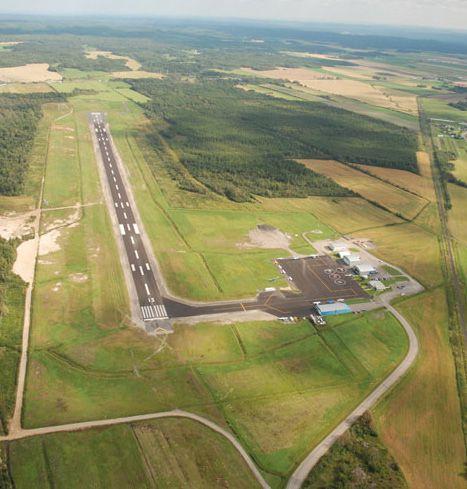
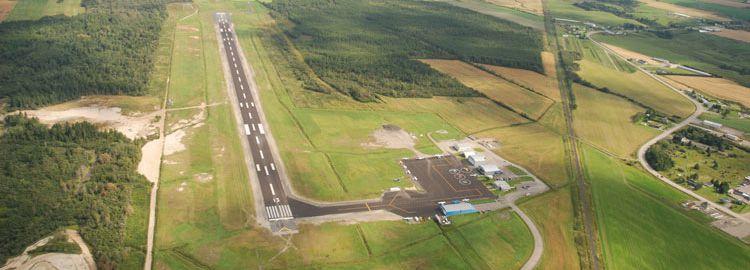
Alma conceived of the UAV test facility, named the Unmanned Aerial System Centre of Excellence (UAS CE), in 2011 as an economic project and registered it with Quebec’s Registraire des entreprises in June 2011. Located on the town’s airport, it has access to its 5,000-foot runway and services such as de-icing, snow removal, fuel and office space.
Infrastructure specific to the UAS CE includes a building built in 2013 with an
8,400-square-foot hangar and over 6,000 square feet of office space. Support equipment includes a mobile ground control station, vehicles, 3G internet access and a generator. UAS CE also built eight special flight zones – restricted airspace, or CYRs for short – extending from the surface to various heights, including one to 18,000 feet. The key feature of CYRs is that they can be closed to non-authorized planes for specific blocks of time, creating safe zones for unconventional aircraft activity.
The UAS CE also has access to CYR airspace belonging to nearby Canadian Forces Base Bagotville. “What we have is access to over 125,000 square kilometres, ranging up to 30,000 feet - about one-fifth the size of France,” says Marc Moffatt, director general of UAS CE.
While there remain infrastructure projects poised to leap off the drawing board, the successes to date of the UAS CE are very much of note. For example, the BVLOS approval is important for any UAV operator, since simply flying around the corner of a building turns a Line of Sight flight into a BVLOS flight, which Transport Canada tightly regulates. “I find that operators are focused on Line of Sight operations. I tell them that they need to get organized, from a Transport Canada point of view, and get ready for BVLOS,” Moffatt says.
Completing the SOPs was also a big coup, considering the UAS CE started with a blank sheet of paper. “I have a letter from NAV Canada and the Department of National Defence accepting our SOPs, and that Transport Canada has approved them.
Transport Canada gave us a letter that lets us activate [our] CYRs through these SOPs. This is the final approval so UAS can manage these airspaces,” Moffatt says.
Looking back at the past few years, Moffatt says, “We couldn’t build the UAS without consulting Transport Canada, NAV Canada, and the Department of National Defence. We briefed them, then we shopped around to see if there was an interest in building the UAS. We talked to universities, for example. When we saw that we had interest in it, we registered and built it.”
And interest there is. Just this May, for example, the Texas Lone Star UAS Center of Excellence and Innovation and the Texas A&M Engineering Extension Service penned an agreement with the UAS CE to work together to integrate unmanned aircraft and aerial systems into North American airspace. Other companies and organizations, such as General Atomics, Aero Montreal, SparksDrone and Drone Helix are also working with UAS CE. Other players include Arctic UAV Inc., which conducted a mission there this summer, and a company from Spain that wants to do 500 hours of circuits, beginning this fall.
The UAS CE is also making its new presence felt internationally. In February 2014, for example, it, in collaboration with the UAV test and service centre in Bordeaux, France; the Oklahoma State University Multispectral Laboratories in Ponca City; and the National Aeronautical Centre in Wales, UK, created the International Consortium of Aeronautical Test Sites (ICATS). Said by UAS CE to be the first international organization of its kind, ICATS’ mandate is to enable the development, testing and certification of UAVs. ICATS currently has 11 members.
Involvement in military research has been another goal. The 80-by-100-foot hangar was intentionally sized to hold two Predator UAVs. “We needed to be sure that the Predators could fit into it. That was our target. We are working to follow the military procurement process,” Moffatt says. The UAS CE was built in anticipation of the procurement and testing of UAVs at CFB Bagotville, and handling military as well as civilian contracts.
“If we were to have any hope in getting the United States involved, we had to meet their access regulations. So the areas of the building are card-controlled. We can restrict a visitor to just the administration area or allow access to the hangar too,” Moffatt explains.
The UAS CE has had to assemble many other pieces as well, such as getting local buy-in, driving the development of new air traffic control procedures and educating gov-
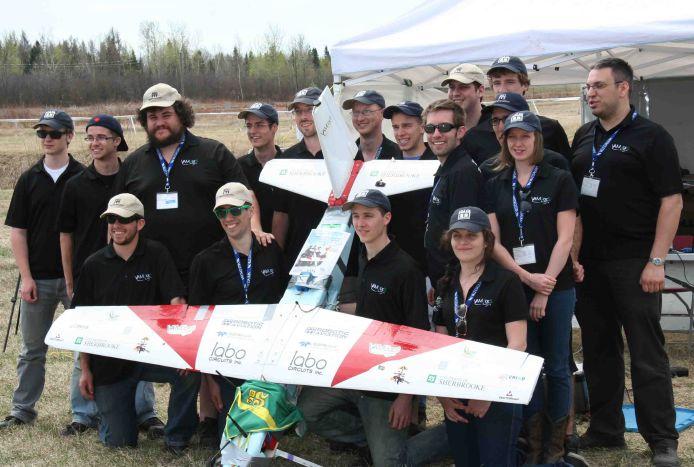
ernment people in Quebec City and Ottawa. The Quebec government granted $800,000 to the UAS CE under its Aerospace Strategy, announced in 2016, and provincial and federal politicians, including Prime Minister Justin Trudeau, have toured the facility. However, to paraphrase Moffatt, both governments are still in the early stages of appreciating the potential, importance and value of the emerging UAV world to Canada.
Locally, pilots had to be assured that the restricted airspace would not interfere with their flying. “We have a very large focus on social acceptance from citizens and operators [airport users]. We inform operators through emails and NOTAMS. We respect their needs and freedom to fly,” Moffatt says.
Before its own CYRs became active, UAS CE had permission to use the CFB Bagotville restricted airspace. And even though its own CYRs are now ready, UAS CE can still use Bagotville’s, in a collaboration that is becoming institutionalized in some unique ways. For example, Moffatt says, “We are proposing controls of UAVs by military air traffic controllers in Bagotville, and then transferring control to NAV Canada air traffic controllers for Quebec. This will be the first time that a [military] air traffic controller will pass control of a UAV to a civilian air traffic controller. We haven’t tried this yet. We have to define the rules for [this].”
Air traffic control and the UAS CE’s hardwon SOPs intersect in ways that have never been defined before, Moffatt explains. “The biggest part with a UAV is, if you lose link with the system, how [is it] going to behave? With manned planes, air traffic controllers clear the airspace if there is an emergency. But with UAVs, if you lose that link, how do you clear the airspace? How do you define it for a UAV? We are starting to define these procedures, in general. We need to get orga-
nized on training air traffic controllers on SOPs.
“We are a test site, a test bed. We are breaking ground to satisfy Transport Canada inspectors and refining the SOPs as we go along. It’s a huge issue. There are no Transport Canada guidelines or guidance on how to write the SOPs,” Moffatt says.
Issues covered by the SOPs include takeoff, landing, communication, conflict detection and avoidance, altitude, separation from other UAVs and from regular traffic, flight termination points, emergency communication and lost link. Take, for example, a lostlink emergency. “As soon as you lose control of the system, it must be able to go to a specific place and hold, or come back automatically and land,” Moffatt says. Or communications. “One of the restrictions we impose is having on-board relay communication so the operator can hear and communicate with manned traffic that may try and communicate with a UAV,” Moffatt adds.
The UAS CE’s capabilities and influence will continue to grow. As funding becomes available, for example, it will build a minivillage where developers and operators can work in controlled settings and pre-qualify UAVs for various clients. As well, Moffatt explains, “Clients will be able to reproduce accidents and fires, and [do] search-and-rescue and firefighting training. It will include roads, houses made of different materials, power lines, railroads, pipelines, and hydroelectric lines.”
Last fall, Moffatt organized a meeting of 70 organizations in Quebec to develop an action plan and continue to encourage Ottawa to development a federal strategy to support the UAV sector.
The UAS CE is well on its way to bringing the Canadian UAV industry and its customers into this new slice of aviation.
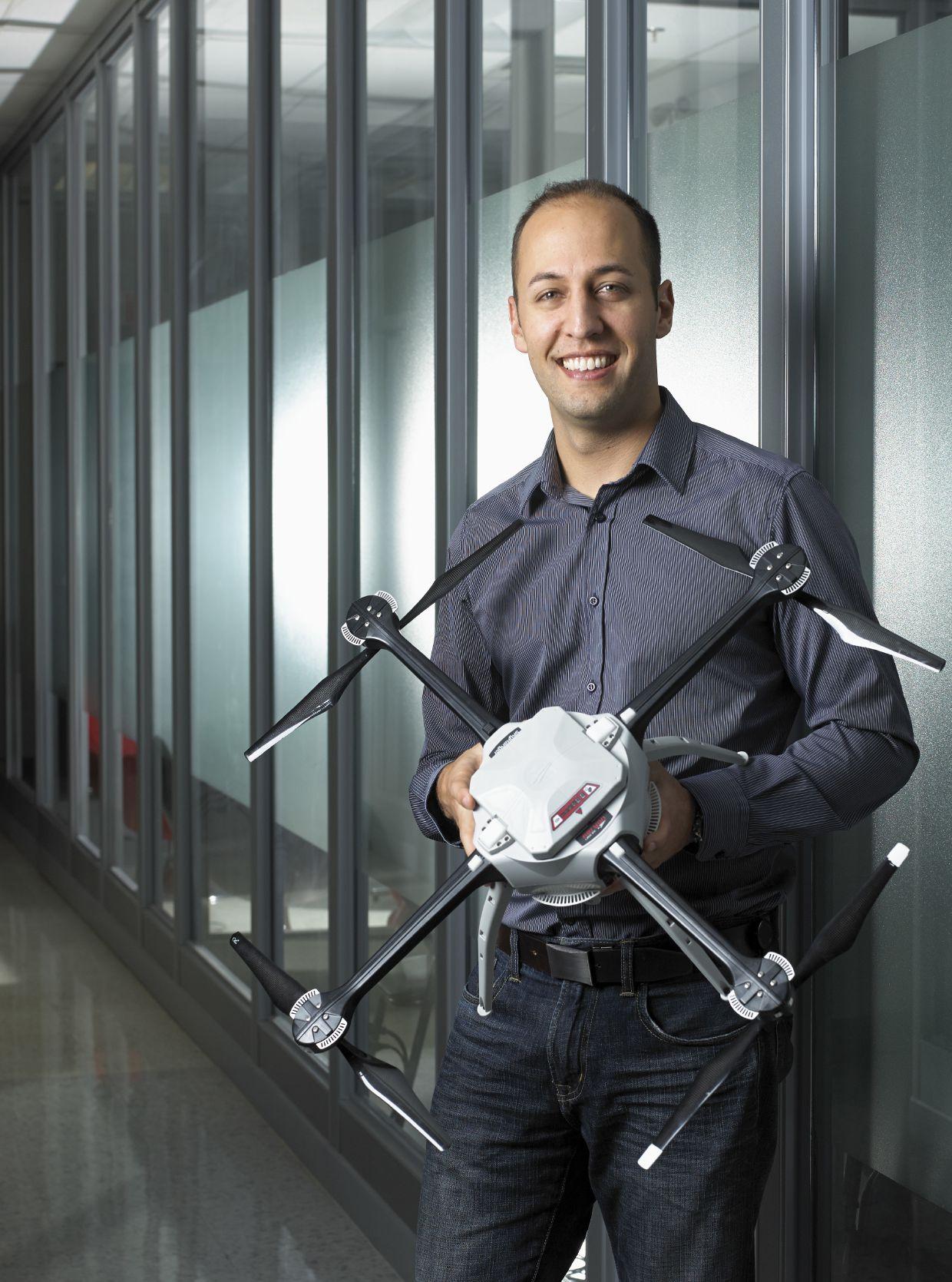
Dave Kroetsch, co-founder and CTO
leverages a
By Stephen Law
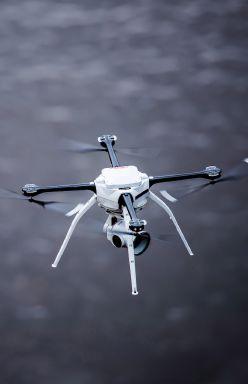
Aeryon Labs Inc. is trusted by military, public safety and energy customers around the world for small Unmanned Aircraft Systems (sUAS) and end-to-end solutions that deliver life and resource saving, actionable aerial intelligence. Headquartered in Waterloo, Ont., Aeryon’s industrial-grade, field-proven sUAS solutions are used across a range of applications.
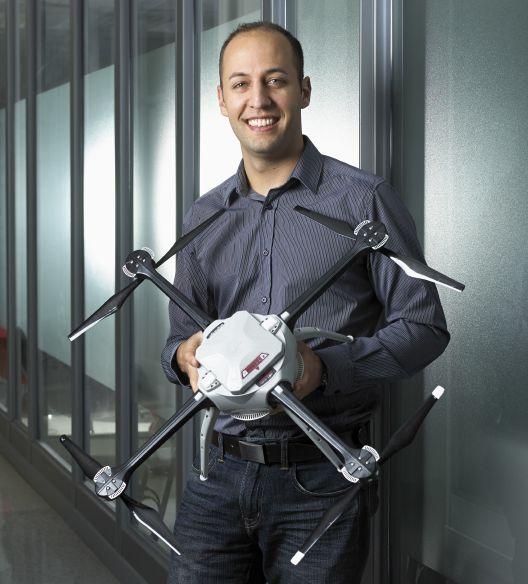
The Aeryon team has a wealth of experience in applicable fields for sUAS development, including: computer and electrical engineering, video processing, digital video compression, telecommunications, mechanical and mechatronic system design, software development and expertise in robotics and image compression. Dave Kroetsch, co-founder and CTO of Aeryon, describes the company’s position.
How do you manage a range of engineering disciplines?
DK: Just as it takes many systems functioning in unison to enable a drone to fly in some of the harshest environments on the planet, so too does it require many engineering disciplines working well together to design and build a reliable, high performance, technically complex aircraft.
Aeryon Labs has an architect assigned to each technical development area who is responsible for its subsystems on Aeryon’s aircraft. They ensure that their subsystem meets all of its objectives and requirements without adversely affecting other subsystems. This group of subsystem architects, along with a chief architect, work together to ensure product design and development schedules align.
In many ways, building a drone has the integration complexity of building a cell phone. Keeping systems small and lightweight drives the need to build many subsystems from scratch, as opposed to using off-the-shelf modules. This requires Aeryon to have subject matter experts in various fields and specialties. Aeryon balances the rigour of building a high-performance Unmanned Aircraft System while trying to remain nimble in order to keep pace with the development of advanced component technologies and consumer drones.
What are your key challenges attracting talent?
DK: Building a drone requires touching almost every area of engineering – software, AI, computer vision, mechanical engineering, aerodynamics, electrical design and of course the manufacturing engineering capabilities that bring a product to life. Given the
advanced nature of the product, it also means that Aeryon needs some of the brightest minds in each design area.
We, of course, need to focus on the culture to ensure Aeryon is an enjoyable and rewarding place to work. But, what really helps attract and maintain such brilliant minds is the autonomy we try to give developers to build the best product they can and the mastery of their field they can show by pushing the bounds in their fields of interest. It also doesn’t hurt that are drones are used for some pretty amazing and meaningful applications.
In 2017 Aeryon Labs Inc. was recognized by The Globe and Mail and Mediacorp Canada Inc., organizers of the 4th annual Canada’s Top Small & Medium Employers competition, as one of Canada’s best workplaces among small and medium enterprises. Aeryon was recognized for its forward-thinking human resources policies, including its health spending account that provides greater flexibility and
tax-free savings for qualified medical expenses. Being recognized as a leading workplace is an honor that stems from having great, talented people as well as a solid benefits program. Aeryon has steadily grown over the past ten years and enjoys being an integral part of the vibrant Kitchener/Waterloo and larger Canadian business community. Our talented and diverse team continues to grow, and we will continue to strive to retain and attract the best and brightest minds.
What initiated the formation of Aeryon?
DK: Aeryon had three co-founders – [myself], Mike Peasgood and Steffen Lindner, all of who were passionate about robotics prior to forming the company. The beginnings of Aeryon were borne out of academic robotics competitions run by the Association for Unmanned Vehicle Systems. These competitions focused on pushing the development of unmanned air, ground and water robotics technologies since the early 1990s. Dave began competing in these AUVSI student competitions in 1996 and Mike joined in 2002.
The group then worked together at a Waterloo startup called PixStream, designing digital video systems for the TV broadcast industry. This laid the foundation for how the group would approach the drone robotics business. Coming from a high-tech, enterprisegrade technology background – as opposed to many other drone companies that evolved from either the toy market or military industries – Aeryon took a unique approach to building its products. The team knew their products needed to be easy to use and deploy at scale. This led the team to developing and delivering a digital encrypted network that could fly multiple drones.
How important is automation for future tech design?
DK: As corporations and the defense industry recognize the value in safety, efficiency and cost effectiveness of robotics and drones, we believe the demand will exponentially increase. We will continue to see robotics replace humans in many dull, dirty and dangerous operations in the future. This begins by being an extension of a human –a remote control set of eyes or hands to get a job done. Humans are, in many ways, limiting the capability of these remote robotics. These machines are often capable at moving faster and more precisely than humans are able to control them, while not requiring sleep or breaks for meals. They are able to generate far more data than their human operators can consume.
This is where autonomy and AI come to play. As machines become more autonomous, they will be able to carry out much of their mission requirements without human intervention, and only involve humans for critical decision making. We’re already seeing this come to pass with drones. For example, Aeryon began by making simple remote-control drones, which have evolved over the last decade to drones that are automatically able to map an area, track a target with the camera or automatically come home in case of a malfunction. These capabilities will expand to include on-board AI that can recognize things and automatically conduct missions.
DK: Aeryon is growing every area of the business, from customer support to manufacturing, as the markets increase their adoption of drones. The past few years saw customers trial a small number of drones to demonstrate the applicability of drones to their missions and prove the utility of Aeryon’s aircraft. These trials have matured into large deployments... In the last 12 months, Aeryon has launched a dedicated U.S. defense company to serve its U.S. military customers, added sales and support staff, and is in the process of adding local manufacturing capabilities in many of its major markets.
More customer deployments drive more customer requirements. Aeryon prides itself on being able to deliver rapid solutions development through a hands-on, agile team that is able to quickly respond
to customer requests. This has led to an expansion of R&D to fulfill these customer requests – customized payloads, software features and system integrations. The product team is also busy innovating. We’re always working on our next-generation aircraft and expanding the team to build systems that are even more autonomous.
DK: Aeryon has customers in over 35 countries, covering six of the seven continents. While the company was founded with the intent of bringing drones to the commercial market, we have experienced the most growth in military markets, with over 20 militaries possessing Aeryon products. As regulations enabling non-governmental use have opened up domestically, we’re seeing our public safety and energy market customers expand their use of drones. We are also seeing experimentation with consumer drones culminate in the need for industrial-grade aircraft – and this is where Aeryon excels.
DK: Production in Canada is a strong selling point for many international customers. Aeryon’s products are not encumbered by US ITAR restrictions, like many other military drones, and Canadian technology and companies are very well received worldwide. As many highvolume, low-tech jobs have moved overseas, what has remained in Canada is high-tech, high-quality manufacturing. Aeryon is able to benefit from this trend and makes extensive use of local manufacturing companies for its components. By maintaining control of final assembly and testing in-house in Waterloo, Aeryon can ensure product quality as well as a tight control on intellectual property.
This article was originally published in EP&T’s March 2018 issue.
With 72 years of experience providing high quality flight training programs that have enabled thousands of pilots to fulfill their dreams in aviation, The Brampton Flight Centre is thrilled to offer TP 15263 Compliant UAV Training Programs.
Industries such as filmmaking, agriculture, engineering, construction, and even media have employed hundreds of UAV pilots. Be a game changer in your industry with training from one of Ontario’s most reputable flight schools!
Promo Code : FLYUAV 10% off 1 and 3 day courses when you mention this AD f 1 and 3 course or register online


Contact: 905 8381400 ext 214 UAVprograms@bramfly.com
By Jon Robinson
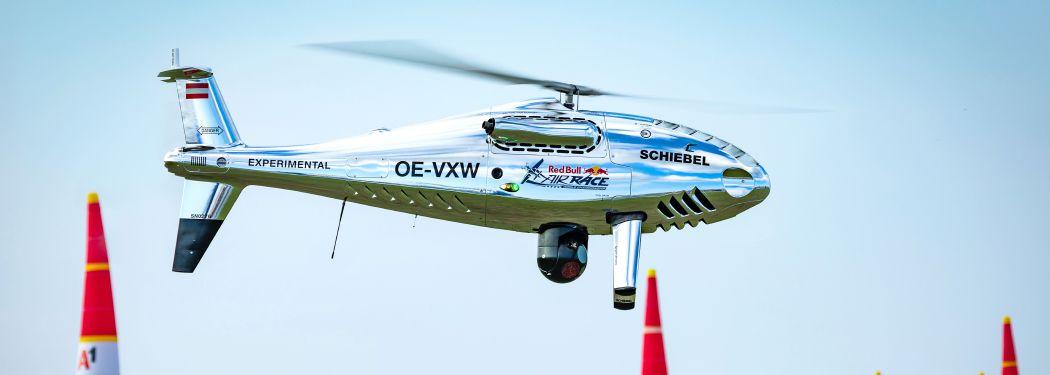
In September 2018, Schiebel helped bring the Red Bull Air Race World Championship to in Wiener Neustadt, Austria. Schiebel is based in Vienna, a 45-minute train ride north, but the company in 2006 opened up its primary production facility dedicated to the CAMCOPTER S-100 unmanned air system (UAS) in Wiener Neustadt.
It was the first time for Red Bull to hold one of its aerobatic fixed-wing races in Wiener Neustadt, but the series actually began in Austria 15 years ago this past June. The event allowed Red Bull and Schiebel to highlight a hotbed of Austrian aeronautical history and the S-100. An international audience watched Schiebel’s Vertical Take-Off and Landing (VTOL) UAS operate two flight displays per day. It also allowed the S-100 to show off some of its intelligence, surveillance and reconnaissance (IRS) power by simultaneously broadcasting an aerial overview of the venue on big screens. The Red Bull flight displays capped off an important year for the S-100 in terms of market acceptance.
Originally designed for the United Arab Emirates (UAE) Army, where Schiebel also maintains a production facility, and then the German Navy, the S-100 now has total orders of around 200, including the UAE’s original order for 40 aircraft. The S-100 has now logged more than 30,000 operational flight hours worldwide, as more country’s test this disruptive technology for a range of mission models like general surveillance, facility inspections, border patrol, re-supply, fire control, damage assessment, search and rescue operations, aerial photography and crowd control, among others.
Developed between 2003 and 2005, based on earlier UAV R&D conducted by Schiebel, the S-100 now has a beyond line of sight capability out to 200 km, over land and sea, night or day. With a payload of 25 to 50 kg, the aircraft holds a flight time of around six hours. Flights can be extended to more than 10 hours with optional external AVGAS fuel tanks, carrying around 35 kg. This capability finished testing in March 2012 based on an
internally developed heavy-fuel engine that is interchangeable with the standard Diamond engine. The heavy-fuel engine allows for the use of fuels that are standard on marine vessels and safer to store and handle than gasoline. The standard 55 horsepower (41 kW) Diamond engine has a maximum speed of 220 kilometres per hour (140 mph) and a ceiling of 5,500 metres (18,000 ft).
The S-100 can launch in 15 minutes in the most rugged environments, with the system predominantly still geared toward marine use. Ultimately, the S-100 has a relatively small logistical footprint, which helps with its high-value, flexible and rapid deployment.
The Belgian Navy in July 2018 spent three weeks testing the S-100 as part of its goal to acquire new maritime-surveillance and search-and-rescue equipment. The flights were the first S-100 customer demonstrations with the recently integrated PT-8 Oceanwatch payload. This wide-area maritime search capability aims to solve issues around searching for small objects
over vast areas. Oceanwatch autonomously detects small targets on the ocean surface. Most conventional cameras systems are restrictive for large-area searches when zoomed in and unable to pick up nearinvisible targets when zoomed out.
Oceanwatch was used together with the L3 Wescam MX-10 primary payload to test coastal security applications. The technology is well suited for Belgium’s confined airspace and relatively straight coast line of around 70 kilometers, but the S-100 is also being tested by large-coast countries.
Weeks earlier, Schiebel demonstrated the heavy fuel variant of the S-100 for the Royal Australian Navy (RAN), which is looking for a shipborne ISR platform. Equipped with Wescam MX-10S, RAN tested the S-100 in operational ranges of up to 60 nautical miles (111.12 km) and altitudes above 10 000 feet (3,048 metres) to showcase its imaging capabilities.
The clearest sign of positive RAN testing came in September 2018 when the UAS maker founded Schiebel Pacific Pty Ltd (SPL) in Shoalhaven, a small Australian city between Canberra and Sydney. With existing defence contracts in the region, the new Schiebel entity is designed to provide the Pacific region, Australia in particular, with a permanent program, logistics and sales hub.

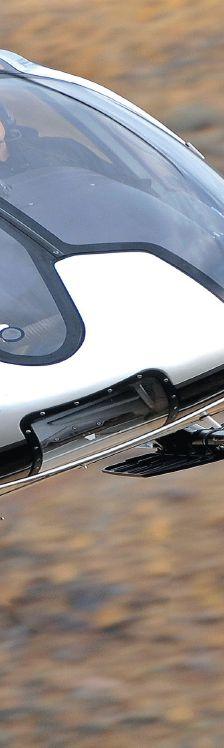
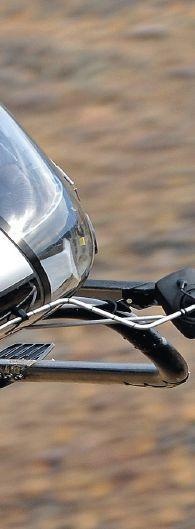

In March 2018, MDA, primarily operating out of Brampton, Ont., as a Maxar Technologies company, commissioned a fleet of S-100s to fulfill a contract with an international customer. Domestically, Canada is in the process of evaluating UAS platforms under its Remotely Piloted Aircraft System (RPAS) Project, which has attracted attention from the likes of MDA, CAE Canada, L3 WESCAM and General Atomics, among others. MDA explains it chose the S-100 platform, for its international customer, based on Schiebel’s record in supporting sea- and land-based ISR missions.
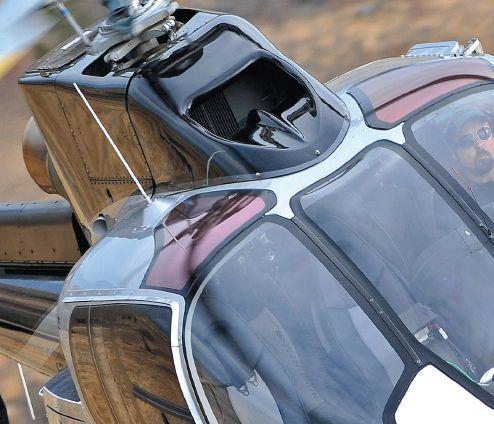
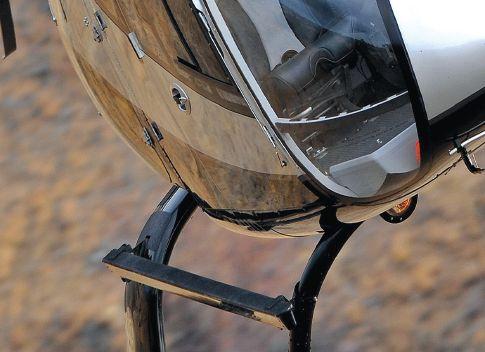
Another key test took place at Wiener Neustadt in April 2018 when an S-100 worked with an Airbus H145 helicopter. Defined as Level 5 interoperability, this test provided the user onboard the manned H145 with full control over the UAS and its payload, including launch and recovery. The testing targets what Schiebel calls highly valuable, mission-enhancing MUM-T flight operations. It leverages the strengths of both manned and unmanned systems by allowing pilots of manned aircraft to take full advantage of the IRS capabilities of the UAS, which ultimately improves safety and decision-making in complex, contested missions.
FASTER TURN TIMES INCREASED CAPABILITIES
ENHANCED CUSTOMER SERVICE
For over a century, customers have relied on StandardAero and Vector Aerospace as the industry experts for operational efficiency, innovation and custom MRO solutions. Today, we’re one company – Bigger…Better…and Bolder – committed to providing best-in-class rotary-wing support for our customers! Contact us to see how we can help you.
Engines
• GE T700/CT7
• Pratt & Whitney Canada PT6T
• Rolls-Royce M250 and RR300
• Safran Arriel 1 and 2
Airframes
• Airbus AS350/EC130 series and AS332/H225 Super Puma
• Sikorsky S-92, S-76 and S-61
www.standardaero.com/heli helicopters@standardaero.com +1.204.318.7544
By Carroll McCormick
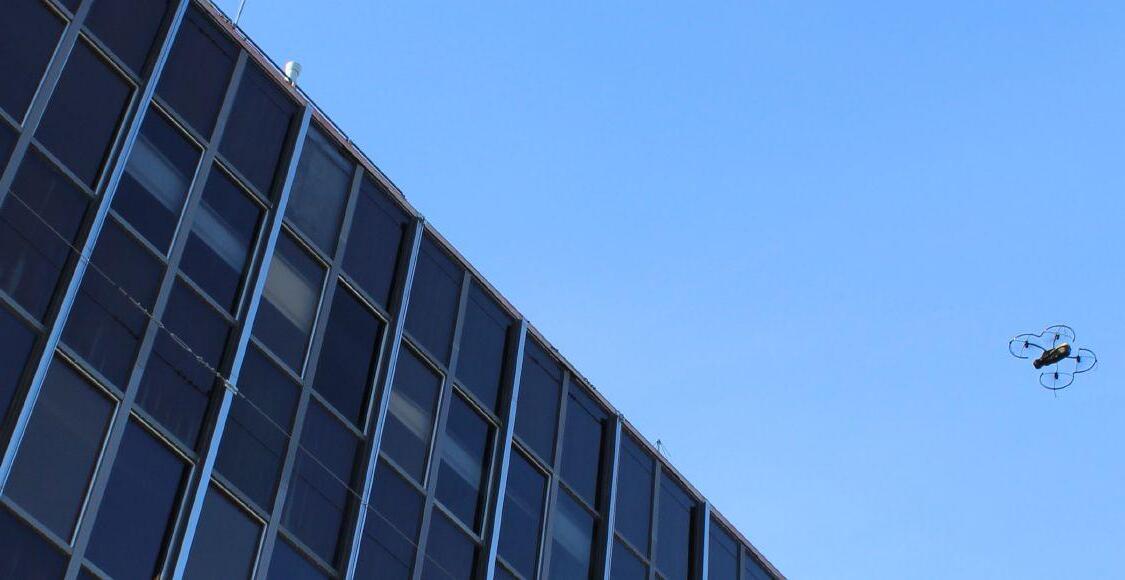
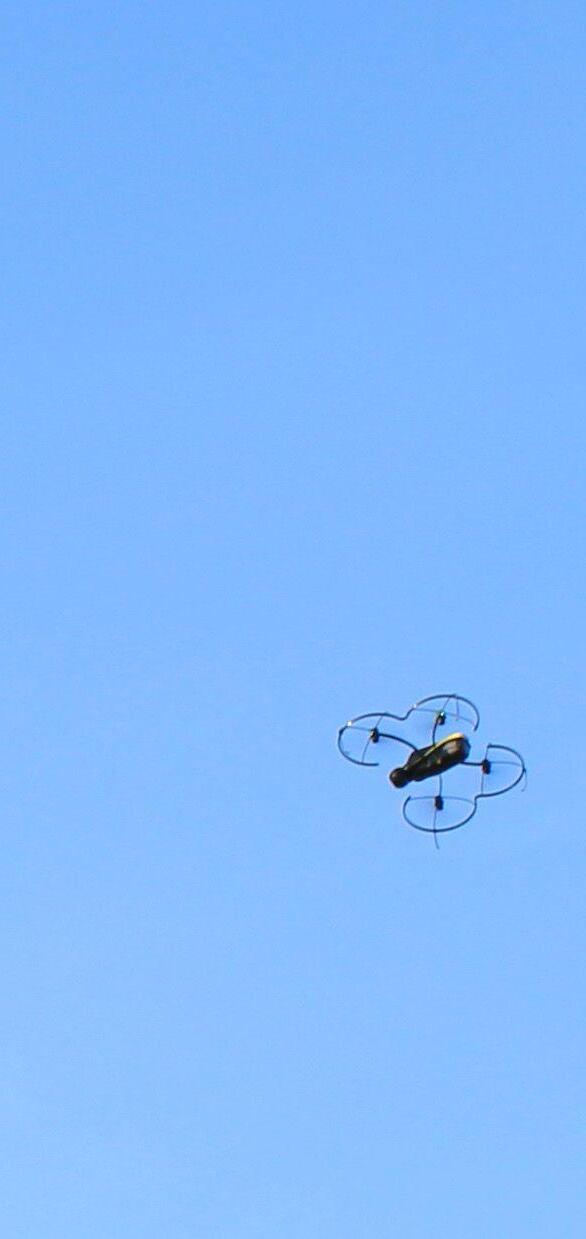
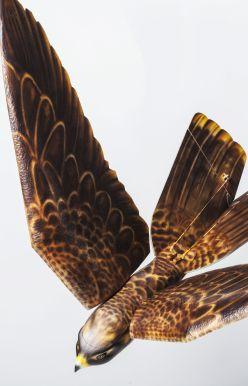
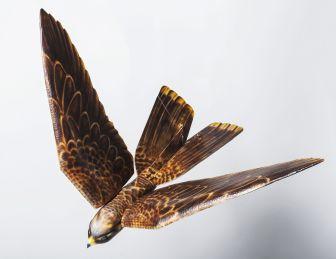
An Unmanned Aerial Vehicle (UAV) masquerading as a peregrine falcon was the star flyer in a successful three-month trial last year of its effectiveness in bird scaring at the Edmonton International Airport (EIA). Its combined use with propeller-driven UAVs are a world first, according to Calgary, Canadabased Aerium Analytics, which operated the machines. Aerium holds more than 30 years of project management in the energy and forestry sectors.
By trial’s end in mid-October 2017, the airport had concluded that the use of the falcon, called Robird by its developer, Netherlands-based Clear Flight Solutions, had been safely incorporated into the dayto-day operations of the airport, and did scare away birds.
“There were no safety or operational concerns at all,” says Steve Maybee, vice president of operations, EIA. EIA does not have enough data yet to do a cost-benefit analysis, compared to its traditional bird scaring methods, but, says Maybee, “We will be continuing the program next year to compile more data on spring, summer and fall conditions, as well as operating in areas of the airport that were not made accessible this year.”
Tens of thousands of birds, representing around 170 species, visit the airport’s 7,000 acres (2,800 hectares) a year. Higher priority species for management include larger birds such as hawks and owls, and especially larger flocking birds such as gulls, and waterfowl.
The birds are drawn to the airport’s buildings, managed grasslands, agricultural fields, ponds, drainage ditches, woodlots, creek and riparian zone. Maybee
describes the basics of its integrated wildlife management program. “Passive controls are primarily habitat manipulations or removal of food sources. Active controls used include pyrotechnics, propane canons, falconry, decoys, lasers, and trapping.
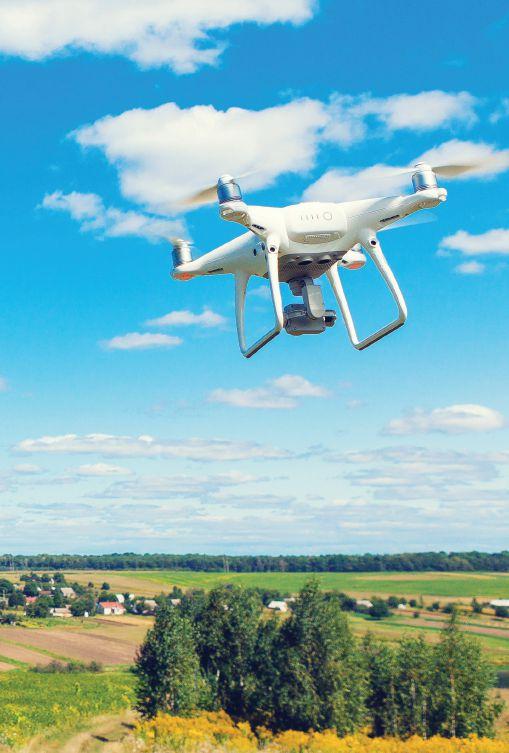
“No one tool does everything and the trial of the drone was looking at its suitability as a new tool in the toolbox for bird control. Aerium has a varying number of UAVs located at the airport - a combination of numerous Robirds and multi-rotor drones for various purposes.”
EIA contracted Aerium Analytics, which has a use agreement with their partner, Clear Flight Solutions, to operate the drones. “Currently there are only two airports in the world which utilize the Robird. As this technology has only been recently adopted into airports, EIA was the first in the world to integrate both Robird and other quadcopter UAVs into daily operations,” says Jordan Cicoria, a managing director with Aerium Analytics.
Robird looks and flies like a falcon. “The Robird is a true ornithopter. The only means of propulsion are by the flapping of the wings, which scoops the air to propel the Robird forward. The V-tail design is utilized for steering and control of the Robird. The frequency of wing beats per minute is similar to that of an actual peregrine falcon as well,” Cicoria explains.
Safety features in the UAVs, and safety protocols developed by Aerium Analytics and EIA Operations, in consultation with NAV CANADA and in respect of Transport Canada regulations, kept the comfort level with the trial high. “NAV CANADA air traffic control was actively involved in the development of all procedures from the
start of planning for these operations,” Maybee says.
UAVs have various fail-safe features, such as automatic return-to-home or autoland features if operator communication with a UAV is lost, or if there is a loss of GPS connection. UAV flights can be classified in two ways: line of sight (LOS) and beyond visual line of flight (BVLOS) flying. BVLOS is strictly interpreted, and included going out of sight behind a tree or a building. Aerium Analytics did no BVLOS flights.
“BVLOS flights are generally not allowed by Transport Canada and we did not want to make an already complex operation more complex until all the procedures and protocols were proven to work,” Cicoria notes.
Two months were invested in an indepth Hazard Identification Risk Assessment, which involved identification or any potential risk and the procedures, and protocols put in place to prevent them. “Three of the risks assessed were Robird interaction with fixed-wing aviation, Robird interaction with rotary [aircraft] and Robird interaction with buildings,” Cicoria says.
All operations were approved by EIA Operations and NAV CANADA in advance. “Daily operations adhered to a strict schedule and air traffic control was aware of all UAV operations at all times. No flights occurred within the approaches of each runway and all operations remained outside of Critical Area B [164 feet or 50 metres from edge of runway],” Cicoria explains.
“Airport staff were aware of all operations and in communication with Aerium
operators daily,” Maybee adds.
Flights began in mid-July. Aerium flew both the Robird, and quadcopters manufactured by Switzerland-based senseFly and Shenzhen, China-based DJI. Cicoria describes some of the action: “Overall, the Robird chased over 6,500 birds during the three-month operation and Aerium’s team interacted with over 13,000 birds. We did encounter other predatory birds who may have felt threatened but our pilots know how to interact with these birds to minimize any risk to them.
“The understanding of avian behavior is critical and all our pilots and observers are trained in this. In order to be successful at flying the Robird, not only do you have to have great control of the Robird but you also have to think like a falcon. You need to understand how the birds will react to your presence and how to effectively disperse them and “herd” them in the right direction out of harm’s way. Lastly, there are two distinctive techniques we utilized. Those were to chase birds, and then to change behavior and make birds stay away, which takes time and vigilance.”
Too, Cicoria adds, “Coupling Robird with traditional bird scaring methods like pyrotechnics and acoustic hailing devices showed good success.” Aerium Analytics
also conducted inspection and survey operations for the airport. (While the Robird had no on-board camera, the quadcopters did.)
Maybee adds, “At this point it is fair to say that Robird is effective at keeping birds away from the airport. Robird would not replace all other methods, but works well in concert with them. For example, waterfowl will typically stay on the water if they see a falcon hunting. If the water fowl are first scared in to the air by pyrotechnics, the Robird then becomes effective at driving them away from the area.
“The drone is also more controllable than a live falcon. Its principle limitation is that it cannot be used in high winds. At this point the regulatory requirements limit its use to only under the control of two humans, but in future it may eventually become automated. There is also a height restriction on Robird operations, but this could conceivably be lifted, which would make the drone more effective, because birds would be more concerned if they see what they perceive to be a hunting falcon above them, able to strike quickly.”
Aerium Analytics and EIA cite numerous factors that contributed to the trial’s success: “The key aspects to our work
were safety, communication and trust. It took a long time to ensure that everyone felt comfortable in the procedures that were in place, and we all agreed that we must leave no stone unturned before we could proceed safely,” Cicoria says.
Maybee adds, “Aerium draws experience from over 50 years of field operations in numerous industries such as oil and gas, and forestry, and has high standard of safety. These qualifications along with the professionalism shown during the planning process are why this project proceeded.”
Looking forward, Maybee comments, “Like most technology, there is an initial investment but after it is in widespread use, the cost will come down. We view this pilot as a long-term investment.”












It’s no surprise the H145 is the helicopter of choice for rescue missions. Whether at sea, on a mountain or in a blizzard, it can bring help to where it’s needed. Compact and versatile, it provides outstanding flight performance under the most extreme conditions.


Resilience. We make it fly.


