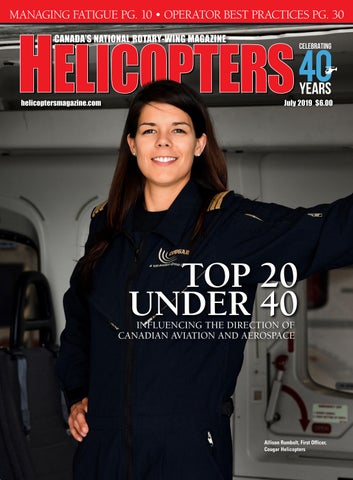
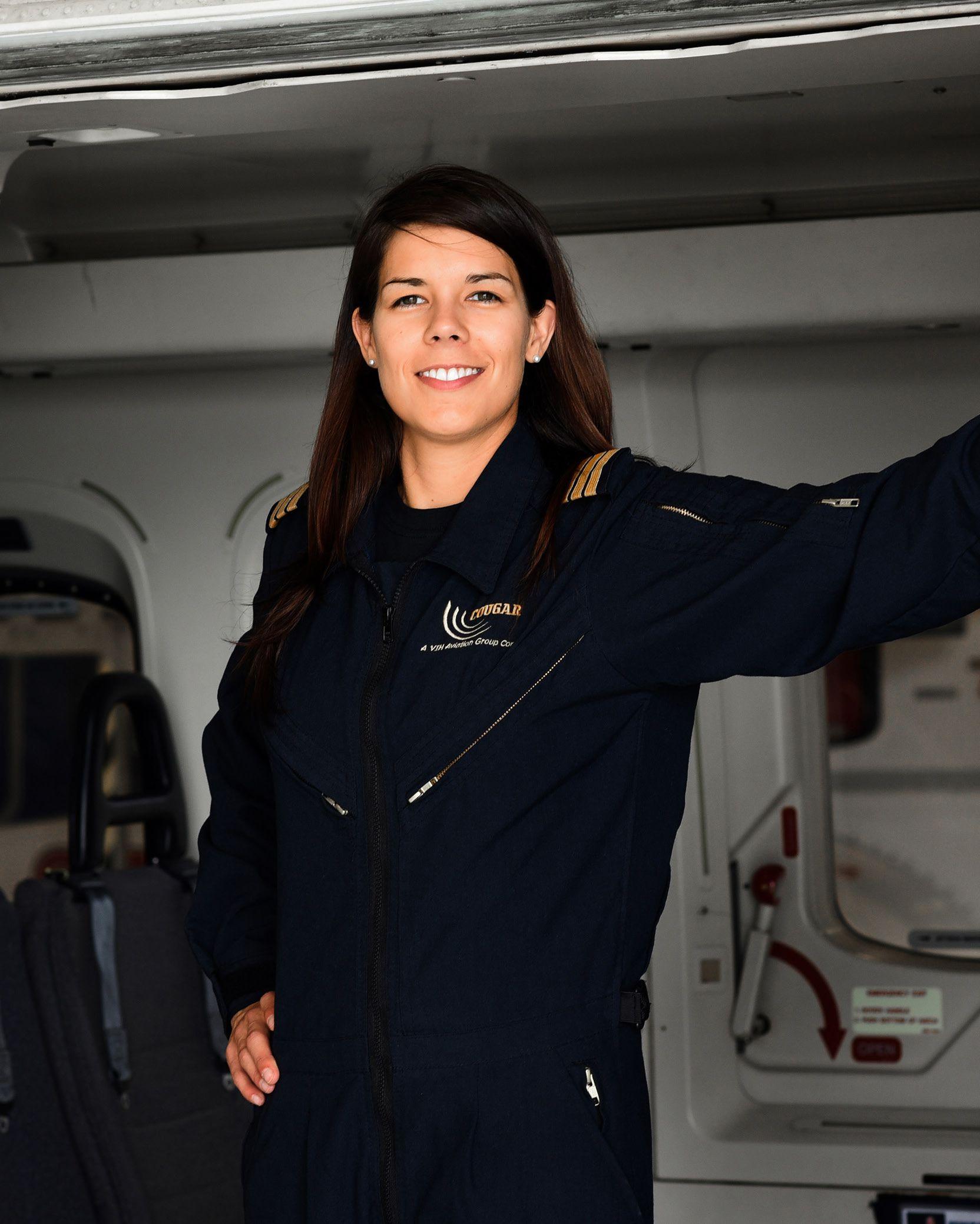
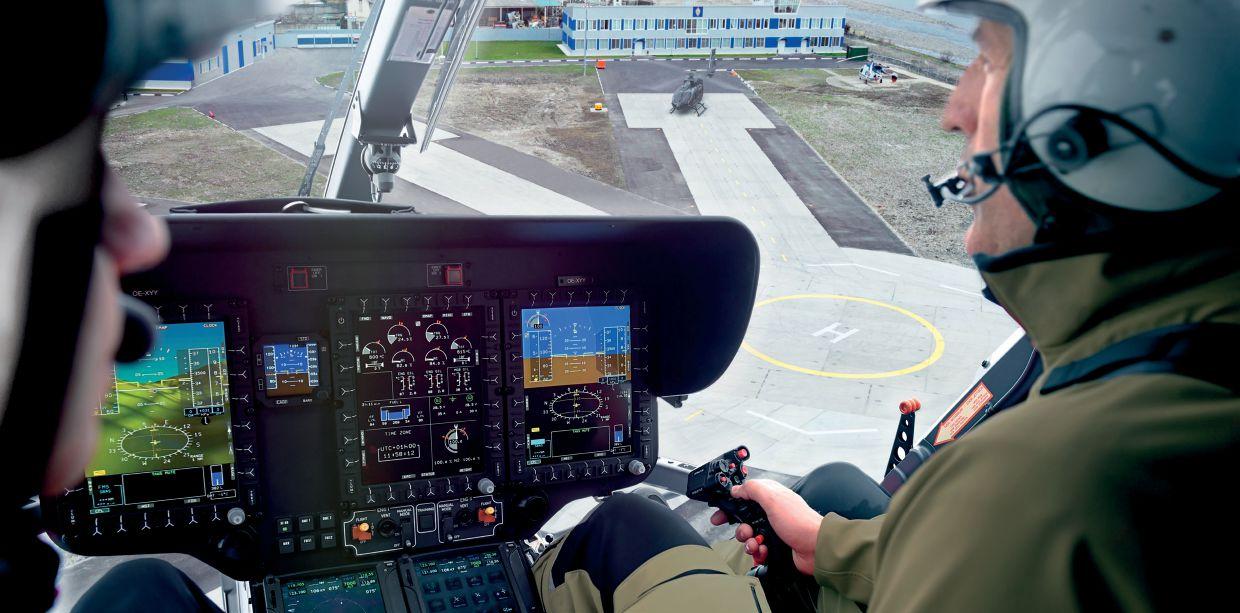
Allison Rumbolt, First Officer, Cougar Helicopters
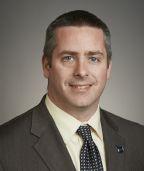
Allison Rumbolt of Cougar Helicopters, Toby Spitzer of Slave Lake Helicopters, and Jason Doell of Chinook Aviation are among this year’s young leaders influencing the growth and direction of Canadian aviation by Jon Robinson 25 Generational Defence Investment
The Government of Canada commits billions to a 20-year defence plan to reshape the Canadian Armed Forces, with the RCAF standing to gain the most from a generational investment into equipment and training by Jon Robinson
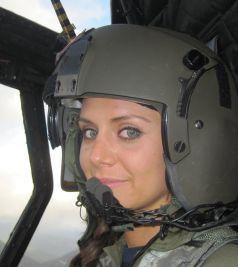
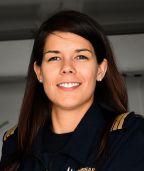
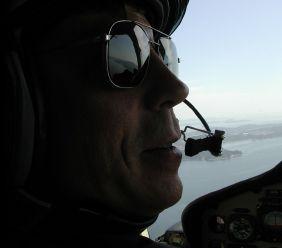
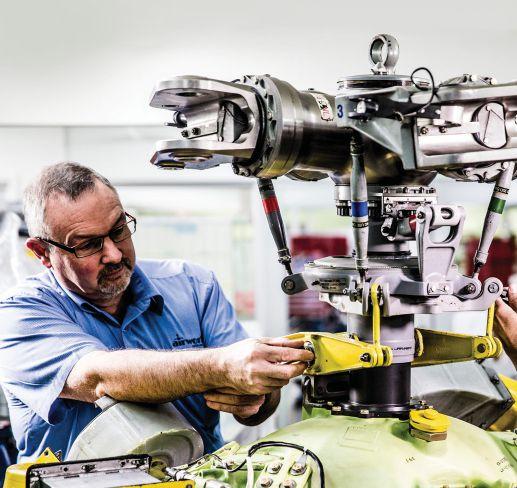
Allison Rumbolt, a S92 first officer with Cougar Helicopters of St. John’s. (Photo: David W. Hebbard)
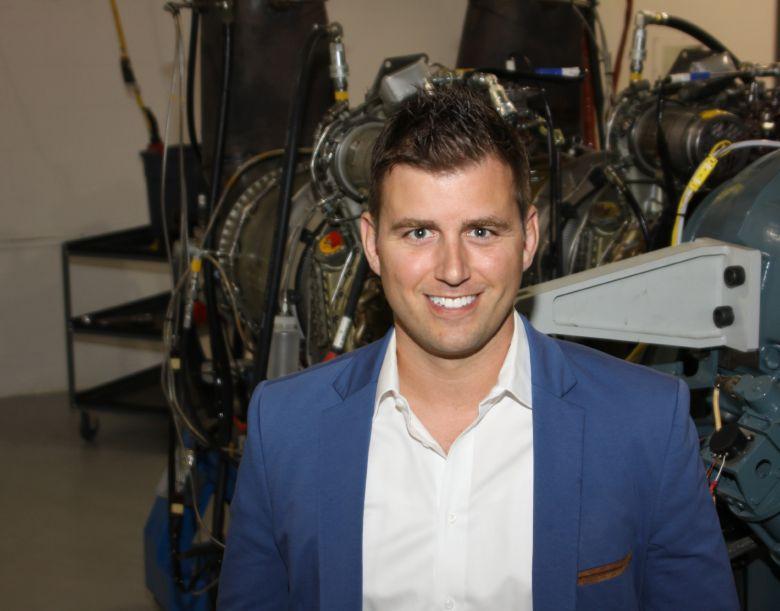
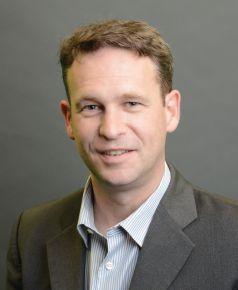
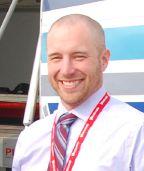
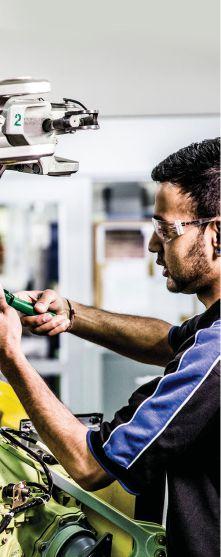
Peter Wheatley, Director of Sales Operations, Airlines & Fleets, StandardAero.
JON ROBINSON, editor
The road toward tomorrow’s smart cities is starting to take shape and, according to a recently released report by Bell Helicopter, will lead to sustainable Urban Air Mobility systems around the world. The Bell report begins by explaining more than half of the world’s population lives in cities, compared to rural areas, and that this number is expected to climb to 68 per cent by 2050. By 2030, the world is expected to have 43 megacities, with more than 10 million inhabitants each. These statistics present significant new challenges for building smart-city infrastructure from housing and energy systems to healthcare and transportation.
Companies from a range of sectors around the world are keen to capitalize on these infrastructure needs, including some of the largest aerospace players that continue to invest in the potential of Urban Air Mobility (UAM) – to sell thousands of the right aircraft to fit the market. Aircraft manufacturers and related UAM suppliers are starting to think beyond the world of flight into the needs of smart cities, where money to be made from a greenfield aviation industry that can leverage decades of experience, knowledge and trust.
Bell’s report explains the smart-cities industry is expected to be worth more than US$400 billion globally by 2020, pointing to an article called Urban Mobility at a Tipping Point, published by McKinsey and Company: “Congestion is already close to unbearable in many cities and can cost as much as two to four per cent of national GDP, by
Mobility in Tomorrow’s Smart Cities
largest cities as they outgrow transportation systems routed in infrastructure that was often established decades ago.
As an example, Bell points to New York City’s subway system that was initially designed more than 100 years ago when its population was just over 5.5 million people. Today, 8.6 million people live in New York, which experienced a 4.6 per cent gain in population from 2010 to 2016 – based on census periods. The population of existing and emerging megacities will grow exponentially over the next several years. As Bell points out, the aging and slowing transportation network in New York is now costing the city time and money while reducing the quality of life for its residents.
Bell’s report cites an economic phenomenon called induced demand, which relates to megacity transportation in that building more roads to address congestion only makes traffic worse. As Bell notes, a recent study released by the Transportation Research Record found that for every one per cent increase in highway capacity, traffic increases .29 to 1.1 percent in the long term and up to .68 percent in the short term. An air taxi system, explains Bell, could reduce a one-way, 90-minute daily commute in a congested city to 30 minutes and give each commuter 500 hours back per year.
Bell takes this concept a step further, invoking how AI and data is driving smart-city design, explaining how utilizing on-demand mobility transport could potentially put 1.8 billion man-hours of productivity back into the economy. “We could cut peak commute times by more than 50 per cent and reduce our energy use by a factor of 10,” said Mark Moore, director of vehicle systems for Uber Elevate.
An air-taxi system could reduce a one-way, 90-minute, daily commute in a congested city to 30 minutes.
measures such as lost time, wasted fuel and increased cost of doing business.”
Bell also cites a recent global research project, conducted by GlobeScan and MRC McLean Haze, focusing on the individual megacity level to gather objective data and perspectives on local infrastructure challenges. The project surveyed more than 500 public- and private-sector experts from 25 cities across the globe, explains Bell, exploring the key challenges and trends that will shape those cities in the coming years. Transportation emerged as the project’s top megacity infrastructure challenge. This is a common problem for the world’s
Bell argues the biggest framework that must be addressed for smart-city UAM is the operational system, which encompasses all aspects of the vehicle like navigation, flight trajectory, fleet management, multi-aircraft traffic control and the vehicle’s interaction with ground infrastructure for fuel charging, landing and security.
Bell states the regulatory side must meet early and often to identify any gaps and establish a timeline that will allow for a launch of the technology. Bell explains that establishing a consistent regulatory will mitigate risk management of the aircraft while helping to establish standards for noise, emissions and regulation of vertiports. The manufacturing framework for UAM, according to Bell, is focusing on issues like production volume, cost, weight, impact, safety, noise and emissions to fit tomorrow’s smart cities. | H
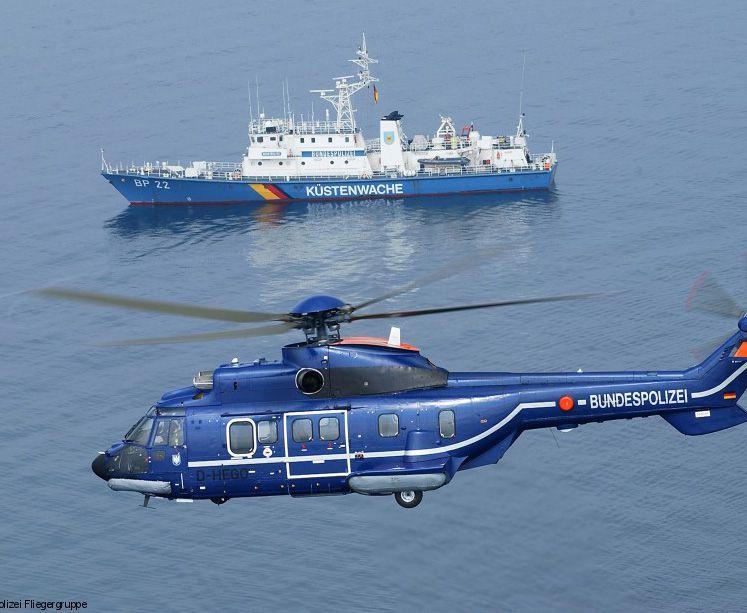
Heli-One awarded German contract
Heli-One has been awarded a helicopter upgrade contract with the German Federal Ministry of Interior to modify its incoming Airbus H215 fleet and existing AS332 aircraft. The upgrade project covers four H215s with an option for an additional 16 AS332L1/H215 aircraft and in its entirety will take up to eight years. Each aircraft will have dozens of modifications, explains Heli-One, with the latest technology to make them flexible and mission-ready for their complex operational use. The German Federal Ministry of Interior is leveraging HeliOne’s experience in developing and implementing modifications with a focus on crew requirements.
The fleet is operated by the Federal Police (Bundespolizei) who provide public safety services for German citizens and participate in international missions. Its large and diverse fleet will welcome four Airbus H215 helicopters into service in 2020 and join the existing
Heli-One’s new contract focuses on installing post-delivery mission equipment to harmonize an H215 with Bundespolizei’s existing fleet to make them mission-ready as soon as possible.
19 AS332L1s, 42 H135s (and variants), 19 H155s, and 10 H120s. The aircraft perform a range of missions including search and rescue, border security, maritime protection, disaster response, transportation, counter-terrorism, and supporting international and regional efforts for the United Nations and European Union.
The contract focuses on
installing post-delivery mission equipment to harmonize the H215 with the existing fleet to make them missionready as soon as possible. Each H215 will receive over 50 modifications, including cabin installations, communication/navigation equipment, search lights, cameras, and rescue equipment. Additional AS332L1/H215s will also
have upgrades to bring them up to operational conformity with the fleet. Heli-One explains it has worked closely with the Bundespolizei for years and is currently performing a modernization program for the AS332L1s –installing a glass displaybased cockpit solution with a complementary multi-mission flight management system.
DDC AGREEMENT WITH AIR CANADA CARGO
Drone Delivery Canada (DDC) entered into a 10-year agreement with Air Canada, whereby Air Canada Cargo will market and sell DDC’s drone delivery services in Canada. Subject to DDC obtaining the required approvals, the company plans to build and operate up to 150,000 drone delivery routes in Canada. As part of the agreement, DDC explains Air Canada Cargo will not use or engage
with any other drone delivery service providers over the term.
In June, DDC made changes to its management team and board, with Michael Zahra being appointed CEO, succeeding Tony Di Benedetto, who takes on a business strategy position. Vijay Kanwar, who currently serves on the board of the Business Development Bank of Canada, has joined the DDC board.
Eight 2019 Elsie Award winners
The Northern Lights Aero Foundation announced the 2019 winners of its 11th annual Elsie MacGill award program, honouring Canadian women who have made outstanding contributions to aviation and aerospace.
HELICOPTERS MAGAZINE
P.O. Box 530
105 Donly Drive South Simcoe ON N3Y 4N5
Tel.: 519-428-3471 Fax: 519-429-3094
Toll Free: 1-888-599-2228
Website: www.helicoptersmagazine.com
EDITOR JON ROBINSON jrobinson@annexbusinessmedia.com
MEDIA DESIGNER CURTIS MARTIN
CONTRIBUTING WRITERS
Major Alexia Hannam, commanding officer of 417 Combat Support Squadron, is to receive the 2019 Flight Operations Award from Northern Lights.
The 2019 honourees include: Wendy Tayler (Business Award), president and majority owner of Whitehorse-based Alkan Air; Dr. Suzanne Kearns (Education Award), associate professor of aviation at the University of Waterloo; Lyndsey Poynter (Engineering), project engineer for MDA; Major Alexia Hannam (Flight Operations), RCAF helicopter pilot and commanding officer of 417 Combat Support Squadron in Cold Lake, AB. Kathrine Stewart (Government), Special Constable Helicopter pilot with RCMP; captain Mary Cameron-Kelly (Pioneer), the first female non-commissioned member to become a CP-140 Aurora pilot, among other firsts; Dr. Joelle Thorgrimson (Rising Star), a pilot, physician, physicist and future flight surgeon; and Lauren Egglestone (Rising Star), who is flying 737s for Air Canada.
Raytheon and UTC to merge into a giant of aerospace and defence
Raytheon Company and United Technologies Corp. entered into an agreement to combine into what the companies describe as an allstock merger of equals. The merger of Raytheon, one of the world’s largest defense companies, and United Technologies, one of the world’s largest aerospace companies, comprised of Collins Aerospace and Pratt & Whitney, will create a combined company with approximately US$74 billion in pro forma 2019 sales.
The combined company, to be headquartered in the greater Boston metro area, will be named Raytheon Technologies Corporation and it will exclude Otis and Carrier, which are expected to be separated from United Technologies in the first half of 2020, as previously announced.
Upon completion of the merger, , United
Technologies shareowners will own approximately 57 per cent and Raytheon shareowners will own approximately 43 per cent of the combined company. The merger is expected to close in the first half of 2020, following completion by United Technologies of the Otis and Carrier separations. Together, the companies will have a combined annual company and customer funded seven technology Centers of Excellence, and over 60,000 engineers. Areas of joint advancement include, but are not limited to: hypersonics and future missile systems; directed energy weapons; intelligence, surveillance, and reconnaissance (ISR) in contested environments; cyber protection for connected aircraft; next generation connected airspace; and advanced analytics and artificial intelligence for commercial aviation.
Safran unveils Add+ with 3D-print
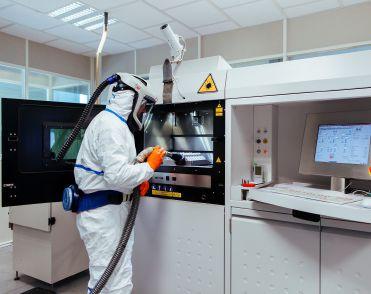
Add+ makes use of additive manufacturing capabilities at Bordes, Saclay and Corbeil.
Safran Helicopter Engines at the Paris Air Show introduced Add+, an engine technological demonstrator with 30 per cent of its components made using additive manufacturing – 3D-printing – techniques. The result of a partnership between several Safran companies, the company explains Add+ will enable 3D-printed parts to be used in Group production engines.
Development of the process started in early 2018, primarily at Safran’s facility in Bordes (PyrénéesAtlantiques), and assembly is now in progress. The demonstrator will be ground-run next autumn. Based on an Arrius helicopter engine, Add+ evaluate major components made using Selective Laser Melting (SLM) techniques.
DAVID CARR, BRIAN DUNN, WALTER HENEGHAN, KENDRA KINCADE, FRED JONES, JAMES MARASA, CARROLL MCCORMICK, COREY TAYLOR
NATIONAL ADVERTISING MANAGER MENA MIU mmiu@annexbusinessmedia.com 416-510-6749
CIRCULATION MANAGER JAY DOSHI jdoshi@annexbusinessmedia.com 416-442-5600 ext. 5124
GROUP PUBLISHER, VP SALES MARTIN MCANULTY mmcanulty@annexbusinessmedia.com
COO SCOTT JAMIESON RETURN UNDELIVERABLE CANADIAN ADDRESSES TO ANNEX PUBLISHING & PRINTING INC., 111 Gordon Baker Rd., Suite 400, Toronto ON M2H 3R1
subscribe@helicoptersmagazine.com
Published four times a year by Annex Publishing & Printing Inc.
Printed in Canada ISSN 0227-3161
CIRCULATION apotal@annexbusinessmedia.com
Tel: 416-510-5113
Fax: 416-510-6875 (main) 416-442-2191
Mail: c/o Circulation, 111 Gordon Baker Rd., Suite 400, Toronto, ON M2H 3R1
SUBSCRIPTION RATES
Canada - 1 year $31.50
USA- 1 year $57.00
Foreign - 1 year 63.00 plus applicable taxes
www.helicoptersmagzine.com/subscribe
Annex Privacy Officer
Privacy@annexbusinessmedia.com
Tel: 800-668-2384
Occasionally, Helicopters magazine will mail information on behalf of industry-related groups whose products and services we believe may be of interest to you. If you prefer not to receive this information, please contact our circulation department in any of the four ways listed above.
Northern Vietnam Helicopter Company has launched the first ever helicopter tourism flights in Vietnam’s Ha Long Bay, a UNESCO World Heritage Site (1994) and, according to Lonely Planet, northern Vietnam’s number one-tourism hub. With an area of around 1,553 square kilometres, Ha Long Bay holds up to 2,000 islets, most of which are limestone, commonly seen by boat.
Northern Vietnam Helicopter (NVH), a subsidiary of state-owned helicopter operator Vietnam Helicopter Corporation, will leverage Bell 505 JRX helicopters for its new tourism flights. The operation, together with its parent, also provides a range of utility and transport services across industries like oil and gas, air ambulance, search and rescue, and VIP transportation.
NVH plans to offer point-to-point transfers from Hanoi to Ha Long Bay, charter flights, wedding photography and aerial surveys with its Bell 505 helicopters. With a speed of up to 125 knots (232 km/h) and a
useful load of 1,500 pounds (680 kg), the Bell 505 is equipped with forward-facing seats and large windows to provide visibility for passengers.
Kopter SH09 completes 34 flights in Sicily
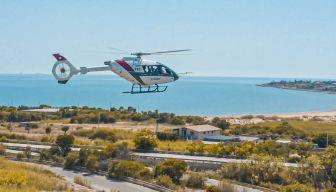
Kopter has completed 34 flights in Sicily with the third prototype of its SH09 helicopter, opening the aircraft’s flight envelope beyond 10,000 feet and hitting an airspeed of 135 knots. In March 2019, transferred its third prototype (P3) together with a team composed of 20 flight test engineers, pilots and mechanics to Sicily to set up the additional flight test base in the town of Pozzallo.
The company explains Pozzallo provides perfect operational conditions to conduct the SH09 flight test campaign needed in the frame of certification. It offers very limited restrictions and favourable weather conditions throughout the year, explains Kopter, while giving the opportunity to experience a demanding climate with hot temperatures, high humidity, strong winds and a salty atmosphere.
Since its arrival and over a period of
two months, Kopter reports it reached an overall 100 flight test hours with P3 and the first major inspection has been carried out successfully. The company states its major outcome is the opening of the SH09 flight envelope up to 10,000 feet altitude and up to a speed of 135 knots. P3 performed as expected, states the company, and the tests generated data that is being used to finalize the design of the serial production SH09. 2020 remains the target for SH09’s EASA certification.
FIRST GROUND RUN OF TECH TP DEMONSTRATOR
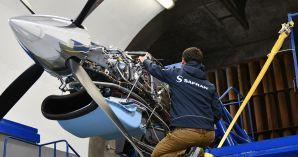
Safran Helicopter Engines has made the first ground run of its Tech TP, a turboprop technological demonstrator based on an Ardiden 3 turboshaft. The test took place at Safran Helicopter Engines’ facility in Tarnos, France, on June 12. More than 20 European partners are contributing to this technological demonstrator.
Safran explains the Tech TP aims are to validate the technologies required to develop a new-generation turboprop, featuring a compact, lightweight architecture and offering 15 per cent lower fuel consumption and CO2 emissions than current engines. Tech TP would then form the basis for developing a turboprop derivative of the Ardiden 3, explains Safran, ready for integrating into future aircraft designs.
The Tech TP test campaign will validate the behavior of a complete propulsive system, integrating a gas generator, nacelle, air intake and propeller.
Safran describes the Ardiden 3 as featuring a compact modular architecture, a best-in-class power-to-weight ratio, and low cost-of-ownership.
Safran explains it will evaluate the case for more electric technologies, notably in the accessory gearbox and propeller controller components. The Ardiden 3 is a new-generation turboshaft in the 1,700 to 2,000 shp power range. Two EASA-certified models, the Ardiden 3C and 3G, have completed over 10,000 hours of tests. More than 250 Ardiden 1 engines are already in service, with over 200,000 flying hours.
A VNH North Bell 505 helicopters flies over Ha Long Bay in Veit Nam.
Kopter’s SH09 third prototype flies higher and faster in Sicily.
Airbus Helicopters Canada celebrates 35 years
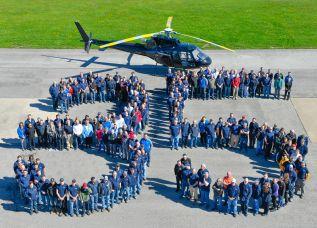
Airbus Helicopters Canada, based in Fort Erie, ON, celebrated its 35th year in Canada, noting it is now supporting approximately 200 customers operating more than 700 aircraft in the country. Over the past 35 years, Airbus Helicopters explains it has supported regional and national law enforcement agencies, emergency medical services, utility operators, government and corporate customers to supply, operate and maintain the fleet of Airbus Helicopters aircraft in Canada.
Airbus employees pose with a recently delivered H125 utility helicopter to mark 35 years in Canada.
As part of the open house at its Fort Erie, facility on June 1, Airbus supported local charities Heartland Forest and Wellspring Niagara, both of which had representatives onsite to collect donations.
Airbus Helicopters Canada is well known internationally for the manufacture of composite parts for approximately seven helicopter models. This key segment runs in a dedicated 50,000 square foot space within the 138,000 square foot Fort Erie facility. The operation employs more than 240 people, providing engineering, design, tooling and buildto-print services for the industry, in addition to repair & overhaul, flight testing and training solutions for Airbus rotary wing aircraft.
Polish Defence reaches $571M Leonardo deal
Leonardo signed a contract valued at approximately 380 million EUR ($571 million CDN) with the Polish Ministry of National Defence (MoD) to enhance the Polish Navy’s helicopter capability. Through its fully owned Polish company and main industrial presence in the country, PZLSwidnik, Leonardo will supply four AW101 helicopters and an integrated logistics and training package to the Polish MoD.
With deliveries to be completed by 2022, Poland’s four AW101s will perform Anti-Submarine Warfare and combat search and rescue missions.
PZL-Swidnik, acting as the prime contractor and responsible for the entire contract execution, was selected in a multi-stage process, explains Leonardo, meeting all the requirements of the Polish MoD. The AW101 maritime multirole helicopter is already in service with some of the key NATO nations, among others. Leonardo states the Swidnik facility plays a significant role in the production of all the AW101s ordered worldwide. Deliveries to the Polish MoD are expected to be completed by 2022.
The newest Leonardo contract was signed in the presence of the Prime Minister of the Republic of Poland, Mateusz Morawiecki; the Polish Minister of National Defence, Mariusz Błaszczak; and Leonardo CEO, Alessandro Profumo, during a ceremony at Leonardo’s facility in Swidnik.
Leonardo states it is establishing a new legal entity headquartered in Warsaw to further consolidate its presence and develop its business in Poland. The entity will be led by Marco Lupo, who becomes president of Leonardo Poland. It will support the customer during the programs’ life cycle to develop partnerships with Polish industry.
Pacific Heliport receives $1.3 million grant
The Vancouver Harbour Heliport, located on the city’s downtown waterfront and operated by Pacific Heliport Services Ltd., has been granted $1.3 million in funding from the Province of British Columbia’s B.C. Air Access Program. Earmarked for airside improvements at the heliport, the funding is subject to customary negotiation and contractual execution. Pacific Heliport Services (PHS) explains, that each year, the B.C. Air Access program announces grants that fund up to 75 per cent of the cost for approved airport infrastructure upgrades to maximize safety and convenience for the travelling public.
The grant will be used for several improvements to the facility located on Waterfront Road next to the Vancouver SeaBus terminal. PHS is a wholly owned subsidiary of Helijet International. The airside and core infrastructure improvements will include new ramp and bridge structures to the floating heliport. Upgraded dual fuel dispensing systems will also be fitted, along with permanent containment booms and fences in-between the heliport and shoreline to collect debris. The total project is valued at an estimated $1.7 million, with PHS intending to fund the balance of the project.
In 2018, 15 different helicopter air operators completed more than 14,000 passenger flights at the heliport – 90 per cent of the flights were for business purposes. A total of 228 of the landings were performed by dedicated BC Ambulance Service helicopters, which use the heliport to transport patients to and from health facilities in the Lower Mainland. The Vancouver Harbour Heliport, explains PHS, has operated without incident or accident throughout its 33-year history.
“Vancouver’s waterfront heliport plays a vital role in facilitating government business travel, private sector commerce, tourism and emergency life-saving medical services and serves as a significant generator of economic benefits,” said Aleks Powell, GM, PHS. The heliport generates more than $40 million in direct and indirect annual economic benefit annually and contributes more than $2 million in government tax revenues. Ongoing operations also generate more than 70 direct person years of employment and nearly $5 million in direct wages each year. H
COLUMN
Managing fatigue
Looking at a critical issue on the Transportation Safety Board Watchlist
ne third of Canadian adults indicate they sleep less than the recommended seven to nine hours per night, according to a 2017 Statistics Canada study. Fatigue is pervasive in our modern societies, which rely on 24/7 industries like transportation. Insufficient quantity or quality of sleep degrades aspects of human performance in ways that may lead to accidents. In the transportation industry, fatigue is even more likely because of challenges to the human body’s circadian (daily) rhythm caused by shiftwork and travel across time zones.
Fighting fatigue when it occurs is better than doing nothing, but managing the risks for fatigue before it occurs is much safer. This is why Fatigue Management in Rail, Marine and Air Transportation is on the Transportation Safety Board (TSB) Watchlist 2018. In the transportation industry, crews often work long and irregular schedules – sometimes in challenging conditions or crossing multiple time zones – that are not always conducive to getting sufficient restorative sleep. As a result, the TSB has identified sleep-related fatigue as a contributing factor or a risk in at least 90 occurrences since the early1990s – 43 of them in the aviation sector.
Perhaps the most-recent, high-profile occurrence involving fatigue took place in July 2017 at San Francisco International Airport (SFO), when an Air Canada flight cleared to land on runway 28-A lined up instead at the adjacent, parallel taxiway. The aircraft was just
awake for more than 19 hours and the first officer for more than 12. The report also found that Canadian regulations at the time did not always “allow for sufficient rest” and could result in “pilots flying in a fatigued state.” Among the subsequent recommendations was one for Transport Canada to revise its regulations “to address the potential for fatigue for pilots on reserve duty who are called to operate evening flights that would extend into the pilots’ window of circadian low.”
In December 2018, Canada’s Minister of Transport, Marc Garneau, announced that changes to Canada’s flight and duty time regulations had been finalized. Those changes introduce lower limits on annual, monthly, and weekly flight times, as well as reduced duty-time maximums.
Although it remains to be seen what effect these new measures will have, the Watchlist makes it clear that other steps are needed. More specifically, Canadian air operators must implement Fatigue Risk Management Systems (FRMS) to address fatigue-related risks specific to their operations.
What will these systems look like? Well, they will require a profound change in how companies, their managers, employees and even their families, think about fatigue so that the risks can be minimized.
First, all employees in safety-sensitive roles must be made aware of the risks of fatigue and how to minimize its effects. Whether through education or awareness training, employees need to understand what can happen if they work when fatigued. They also need to know what factors can make it worse; and what countermeasures might make it better.
Sleep-related fatigue is a contributing factor or a risk in at least 90 occurrences since the early-1990s.
100 feet above the ground when the crew recognized the situation and initiated a go-around. Meanwhile, below them, four other aircraft were lined up on that same taxiway, awaiting departure. The investigation found that minimum separation between the occurrence aircraft and those on the taxiway was between 10 and 20 feet.
The subsequent investigation into that near miss, and the report by the U.S. National Transportation Safety Board (NTSB), found that the aircraft’s captain and first officer were both fatigued “due to the number of hours that they had been continuously awake and [to] circadian disruption.” The captain – a reserve pilot – had been
Second, employers and operators need to develop a FRMS plan – and not just a general plan, either. It won’t cut it to just tell employees, “Get more rest.” Rather, the plan must be specific to the elements that create or exacerbate fatigue within their specific operations.
In the meantime, TSB will continue to look for signs of fatigue and its effects on human performance – in all occurrences it investigates. Where we identify that progress has been made to combat the risks of fatigue, we’ll be sure to say so. Where more still needs to be done, we’ll say that too. The safety of passengers everywhere, people on the ground and, indeed, the entire aviation community, depends on it. | H
Missy Rudin-Brown, Ph.D., CCPE, is a senior human factors investigator and the Manager of the TSB’s Human Factors and Macro Analysis group.
MISSY RUDIN-BROWN
COLUMN
RCAF Honorary Colonels
The first time I ever heard of the term Honorary Colonel was when I was introduced to a lovely lady named J’lyn Nye. We met at a networking event and she struck me as a tall, formidable women with fiery red hair and a strong voice. I wondered if she worked in radio or TV. Turns out she is a radio host by day, but more interestingly, she also serves as an Honorary Colonel (HCol) in the Royal Canadian Air Force (RCAF). I was intrigued. What is an Honorary Colonel? How do you become one and what is the job description? There were just a few of the questions that instantly popped into my head.
If you don’t know what an Honorary Colonel is, let me explain: An Honorary Colonel, by definition, is an integral member of the Royal Canadian Air Force family. An Honorary Colonel is an officer on virtually all issues except operations. They work behind the scenes and provide a much-needed connection between the community and the Canadian Armed Forces.
How do you get an honorary rank in the military? Each unit decides who they want as an Honorary Colonel. The appointment of an individual to an honorary rank starts with a nomination from a commanding officer. The person may be a former RCAF officer or a distinguished Canadian citizen from a diverse range of backgrounds, including many well-known public and community figures. Radio broadcaster/author J’lyn Nye is such an individual.
Honorary colonels are honorary and advisory. They are vital to
also pretty nervous to begin this new journey in my life. After all the paperwork was done, I could not wait to get started. I took on the role of Honorary Colonel at my March 1, 2019, investiture in Cold Lake in front of family, friends and my new unit. Now, that I have been in the role a few months, I am more honoured than ever.
I have been travelling the country and meeting new people quite a bit this last year and being in this new role has provided me with fascinating experiences. For example, I have just returned from the Canadian Women in Aviation conference in Ottawa, Ontario, where I had the privilege to sit, in my new uniform, with other military members and meet some of the many incredible women who are so proud to serve our country. A particularly fun moment was when I went to my first ironing party – yes, an ironing party – where I was taught how to iron my shirt to military standards. This bonding became a sharing session where other female members of the military described their experiences.
Recently, I traveled to Yellowknife for my first annual gathering of all of the Canadian Honorary Colonels in the RCAF. The conference location was a perfect setting by which to introduce the Honorary Colonels to expert speakers who introduced us to the life and ways in Canada’s North. I learned the importance of looking at Canada as a whole and to not forget the role that northern communities play in not only our history, but also today. One presenter, who particularly resonated with me politely, suggested that when decision-makers in the “south of Canada” make decisions they should remember how sometimes those decisions effect the northern regions, too. Looking at Canada from the North Pole down, rather than just a lateral approach, might be a more inclusive way of decision-making.
I learned the importance of looking at Canada as a whole and to not forget the role northern communities play.
fostering moral within the family. They mentor the unit and help build relationships through the Honorary Colonel network. By their very presence, they build and develop community support for their units by providing a public profile – a public face – for the unit.
I never in my wildest dreams ever considered one day I would be taking on this honoured leadership role. My path to becoming an Honorary Colonel began with a surprise phone call from a friend, Major Alexia Hannam, Commanding Officer of the 417 Combat Support Squadron in Cold Lake, Alberta. She had nominated me as the Honorary Colonel of her helicopter squadron. I was excite, and
The first gathering with my fellow Honorary Colleagues included brainstorming discussions on how we could help the members of the military. They must relocate a lot and it affects the entire family. My learning curve is huge… and I still cannot believe I am counted among the RCAF family and I am fully committed to learning, listening and making a difference. Who knew that my curiosity at a networking event and my question, “What is an Honorary Colonel?” would lead to not only challenging my leadership skills in a whole new way, but to also serve my country. | H
Kendra Kincade is the founder and director of Elevate Aviation; Employer Brand Specialist and Air Traffic Controller for NAV Canada.
KENDRA KINCADE
COVER STORY
TOP 20 Under 40
Influencing the direction of Canadian aviation
BY JON ROBINSON
In the annual Top 20 Under 40 program, sponsored by the Seneca School of Aviation, HELICOPTERS and WINGS recognize inspiring young leaders influencing the direction of Canadian aviation and aerospace. These 20 individuals, who are all under the age of 40, were initially put forward through a nomination process lasting over several months and ultimately honoured based on their demonstration of leadership, innovation, influence, achievement and/or dedication to their organization and the Canadian aviation industry. The Top 20 honourees presented here, begins with our primary leaders from Canada’s rotary-wing industry.
ALLISON RUMBOLT
First Officer, S92, Cougar Helicopters, St. John's, NFLD
Allison Rumbolt, age 29, grew up in Mary’s Habour, a town of around 400 people in Southern Labrador where aviation serves as a regular means of transportation in and out of the isolated community. Her mother worked part time for the local airline, Air Labrador, and her father took a position with the provincial government as the airport operator in Mary’s Habour. From a young age, Rumbolt regularly met pilots flying into the community and she remembers a particular helicopter flight, arranged by her father when she was about 10 years old, up a popular salmon-fishing river that got her hooked on the dream of becoming a pilot.
Before graduating high school, with her love for aviation wellknown in the community, she was approached to become a junior dispatcher for Canadian Helicopters in Goose Bay. At the time, Rumbolt was also preparing to attend flight school that summer. She eventually began flying AStars at age 18 for Canadian Helicopters.
She has now been with Cougar Helicopters for five years and has already amassed 3,700 flight hours. She is a first officer on the operation’s heavy S92 helicopter, primarily flying to fulfill Cougar’s contracts
with oil-and-gas companies operating offshore in Newfoundland. “Our biggest challenge in Newfoundland is the weather. It is always changing,” she says. “When you go to flight school they teach you about weather and basically that fog does not exist with winds over a certain strength. But in Newfoundland you will get an 1/8th of a mile of fog and 120 kilometre per hour winds. We are lucky to have a great support system that keeps us on our toes and informed.
“I like the challenge that every day is something different even though we might go to the same rigs,” continues Rumbolt, who explains she is still excited to get back into the helicopter after a rest period, which, as a member of COPA flight 97 and Whirly Girls, a mentor with Elevate Aviation, as well as volunteering for the local minor hockey association, is often filled with giving back to the communities that provided her with so much opportunity. “I have had a great career so far and I’ve been given lots of opportunities. I try to jump on the ones that I can.”
Rumbolt explains she holds a natural goal to become a captain with Cougar and that she is also interested becoming involved with its training programs, to share the wealth of experience she has already gained, and potentially to fly for the search-and-rescue sector. “One of the things I am most proud of is flying into my home town of Mary’s Harbour, landing and going home to have dinner with my parents.”
TOBY SPITZER
Aircraft Maintenance Engineer and Pilot, Slave Lake Helicopters, Slave Lake, AB Toby Spitzer, age 39, grew up in Squamish, BC, where he discovered a love to both fly and fix helicopters. He took his first solo flight at age 16 and had his private fixed-wing license completed at age 17. Two years later, he acquired his commercial rotary-wing license, but his true passion was still focused on engineering. “I always wanted to be a pilot-engineer,” he says. “That way I can take care of
Founded in 1986 by Helge Kirmse and located at the Springbank Airport in Calgary, Chinook is a Bell Authorized Customer Service Facility, holding certified airframe fixtures from the OEM and a 7,000-square-foot hanger built in 2002 to accommodate several medium-sized machines. “I'm like a pig in mud there, completely immersed in it. Everything about Helge’s hangar and his tooling is airframe. There is no deviation from that and I feel really blessed to be part of that team,” says Doell.
Doell has been the lead hand at Chinook for around 10 years, currently working with four fully equipped, licensed technicians with the skills needed for parts fabrication, fuselage fixes and mobile Maintenance Repair Parties. “No one can predict airframe problems and we are the company that fixes the serious ones,” Doell says, noting his need to travel at a moment’s notice could only be possible because of the support of his wife, Amber.
my own machine. The ability see this piece of technology fly, and make it do what it can, to be a part of that is great.”
Spitzer attended the British Columbia Institute of Technology on his way to gaining an AME license in 2005 at the age of 24. In 2011, he joined Slave Lake Helicopters where he focuses on rotary-wing aircraft repairs and heavy maintenance, as the operation’s lead hand. His willingness to tackle and trouble-shoot issues and his out-of-the box, creative ways to strategize, have made him an indispensable asset to the everyday operations at Slave Lake, which primarily focuses on the forestry industry, as well as holding contracts with a prime electrical company in the region.
Spitzer still flies from time to time, particularly if the operation, which runs seven modern helicopters (two B3s, three B2s, a 120 and a 206), is short a pilot. “I've been an engineer for most of my career. I haven’t done the most flying, but I enjoy all of it,” says Spitzer, who has around 20 years of accident-free operation.
Slave Lake has five technicians and Spitzer enjoys passing on his engineering knowledge on to the younger generation. “You are treated like family here, with a small group of people who get along well together,” he explains.
JASON DOELL
Lead Hand, Chinook Aviation, Calgary, AB
Jason Doell, age 38, discovered his love for airframes during the threeyear aeronautical engineering program at the Southern Alberta Institute of Technology. He then joined one of North America’s leading helicopter airframe repair specialists in Chinook Aviation, where he continued to learn about the unique skill, obtaining his structures license, also from SAIT, in 2003.
“I will go out to some far-flung base and be the hero, but there is a lot of support that goes unrecognized,” he says, also noting the importance of logistics when it comes to on-demand structural repair. “We are surrounded by enthusiastic airframe techs. It’s hands-on learning with a small shop, even with our high-water mark of 10 technicians.”
Doell also serves as treasurer with the Classic Aircraft Restoration Society, which is unique in its goal to make machines fly, including the group’s current de Havilland Chipmunk project. “It differentiates us a little bit from museums, where there are just static displays. That is really how we pride ourselves. We are the one who are restoring to flying condition.”
BRANT ARNOLD-SMITH
Director, Security and Terminal Operations, Victoria Airport Authority, Victoria, BC
Brant Arnold-Smith, age 37, is the youngest member of Victoria Airport Authority’s executive team. Although he has been always drawn to the wonder of flight from a young age, he has been directly involved in aviation for just nine years, after focusing the early part of his career in emergency services, beginning as a volunteer firefighter in his home town of Victoria.
Arnold-Smith moved to the mainland to serve as an on-call firefighter with Surrey Fire Service and in 1995 had his first opportunity to work in aviation when Vancouver International Airport (YVR) put out a competition for its Aircraft Rescue Team.
The airport decided to move these services inhouse and ArnoldSmith was one of 24 successful applicants, among some 3,000, to join the team. His role soon expanded as an airfield operations specialist, but he decided to leave YVR to join the Vancouver Police Department, where he served as a constable and sergeant for nine years. He was then approached to oversee YVR’s aviation security program. “It really helped with relationships at the airport with [Canada Border Services Agency], U.S. customs, RCMP, CSIS... I walked a mile in their shoes as a police officer, so you have that instant connection and credibility,” Arnold-Smith explains.
His responsibilities included managing YVR’s Integrated Operations Centre/Emergency Operations Centre where he was the primary management representative responsible for safety, security and efficiency of all airport facilities and operations (terminal, airside and groundside)
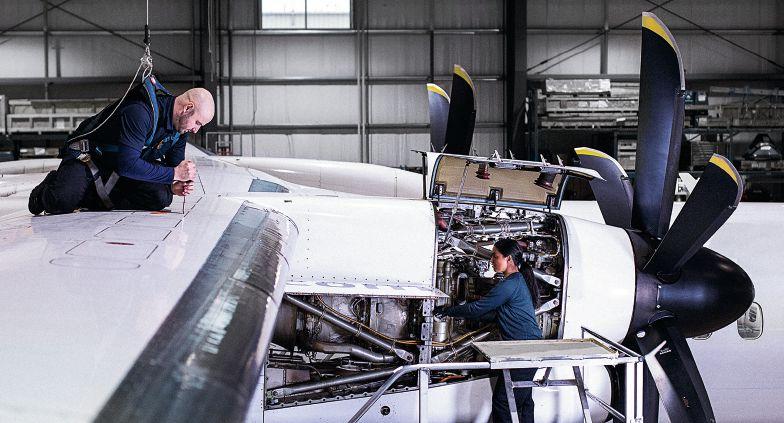
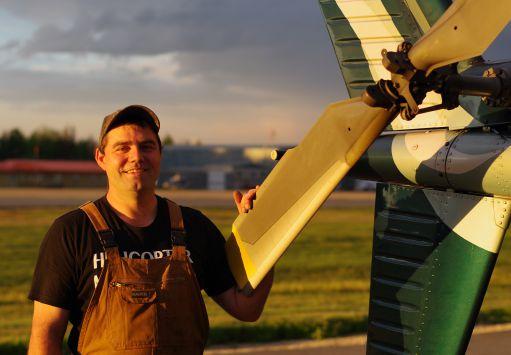
ABOVE: Travis Burrows, Standards Captain, WestJet Encore. RIGHT: Jason Doell, Lead Hand, Chinook Aviation.
COVER STORY
and managing all aircraft and airport emergencies. In late 2018, Arnold-Smith returned home to join Victoria International Airport (YYJ), which is also experiencing exponential growth, reaching above two million passengers last year (December 2018) – 5.9 per cent growth year over year.
“You never know what is going to get thrown at you in an airport and that is the beautiful thing of working in airport operations. It is a very dynamic and challenging environment – every day is different,” he explains. “Safety and security is the core of the aviation business. It is what passengers and employees expect. It is the cornerstone of what we do.”
Currently underway at YYJ is a $19.4 million terminal building expansion. This 27-month project that began in January of 2018 is the largest singular capital investment to date and the third phase of a multiphase terminal and apron expansion. “YYJ is one of the best airports in North America. We are the only one of two airports in Canada that have zero debt,” explains Arnold-Smith, noting how much he has already learned joining the airport’s seasoned executive team.
YANNIC BOILY
Maintenance Manager, Premier Aviation, Québec City, QC
Yannic Boily, age 38, found his passion for aviation growing up near Québec City Jean Lesage International Airport (YQB). He graduated in 2003 from the National School of Aerotechnics in St-Hubert, Quebec, in aeronautical construction. Following his studies, he began his career at C&D Aerospace Canada (Zodiac) as a programmer/operator of CNC machinery, focusing on corporate aircraft interior furniture manufacturing. With his knowledge of software like CATIA V4-V5, Mastercam and his leadership, Boily quickly distinguished himself and became a team leader.
Returning to Québec City in 2007, Boily earned his S license and became a Licensed Structural Engineer, then team leader at Exceltech Aerospace and Discovery Air Technical Services. During these years, he performed several major structural repairs on regional aircraft such as Bombardier CRJ and Dash-8, Embraer and Saab 340 aircraft. “The structures side is more heavy work. When you do a preparation on the airplane, some people are stressed about it, but I really liked it,” he explains. “The bigger the repair was, the happier I was.”
In 2013, after less than two years as a
structural supervisor, he progressed as a base maintenance manager overseeing maintenance, avionics, sheet metal and interior technicians, as well as painters. Having been in the field of aviation for 16 years, Boily has quickly asserted himself as a key leader on the Premier Aviation Quebec team, which took over the Discover Air operation in 2016. He now leads a team of more than 100 people for Premier Aviation.
“We have a really nice core. We are experts on regional aircraft and I really like the culture of the company and the vision of the owner,” he says. Holding six lines for aircraft, Premier aims to turn four lines per month, explains Boily, which equates to working on approximately 40 to 48 aircraft per year.
LOGAN BROWN
Business Development
Lead, InnotechExecaire Aviation Group, Toronto, ON Logan Brown, age 34, grew up in the world of aviation, primarily because of his father, who recently retired as an aircraft mechanic after 30 years with Air Canada. Brown holds a breadth of aviation knowledge from taking on a range of roles early in his career. This includes his beginnings as a certified AME and licensed pilot, but extends to experience in aircraft design. During his time at Diamond Aircraft, Brown worked on helping to design modern avionics for the D-JET, which included handling power distribution and the needed regulation requirements.
He then joined Air Canada and ultimately took on responsibilities for setting up all of its international stations for the 787 cabin design. “I spent four years in the airline industry and it is a different life style. I wanted to go back to what I love and that’s private aviation or general aviation,” he says. “And Innotech-Execaire has such a vast share in the marketplace… I wanted to see what I could do to grow the company.”
Brown for the first time took on a sales position, which in April 2018 turned into his current business development role with the ability to leverage his maintenance experience. He has helped grow Innotech-Execaire Aviation’s third-party maintenance partnerships within the commercial airline sector, primarily around non-destructive testing. Brown’s extensive knowledge on international regulations, requirements and certifications, helps him serve as a consultant for IEAG’s clients looking to import aircraft for operations within Canada. IEAG is now
managing approximately 50 aircraft across the country.
TRAVIS BURROWS
Standards Captain, WestJet Encore, Calgary, AB Travis Burrows, age 31, grew up in a small town and found his way into aviation from a neighbour who was building an airplane in his garage and eventually took Burrows on a flight down the Red Deer Valley toward the badlands of Drumheller. Today, he often takes aspiring pilots for discovery flights along the same route in his co-owned 1948 Cessna 170.
“I would never have been able to get into flying as a career if it wasn’t for people who took the extra time and put that into mentorship to be there for me, and then for other people,” Burrows says. “Part of it is paying it forward, but on the other side, it is just super important for the growth of our business to help out new people coming along.”
Burrows joined WestJet Encore five years ago as one of the first pilots to start with the regional airline. At the time, WestJet Encore had five airplanes and it now has 47 and some 600 pilots, many of which he is in direct contact with as a Standards Captain, trainer, recruiter and ambassador for the company – the fourth largest operator of the Bombardier Q400 series, reaching international destinations and running regional routes across the country.
In addition to being on the WestJet Pilot Selection Team, as a standards captain, Burrows is heavily involved in improving WestJet Encore’s flight procedures, which recently included a major project to implement RNP approaches that will save huge amounts on fuel, among other operational efficiencies, as well as a new flight data monitoring program. “I get to work on some cool projects, which is amazing from a career standpoint, but at the end of day, I love being in the airplane, being proficient in the flight deck,” he says, “and I can't see my life without that either.”
Darryl Dowd, age 39, initially wanted to become a pilot, following a passion learned from his grandfather who flew for Air Canada, but his direction changed on the morning of September 11, 2011, when he was sitting with his flight examiner watching
COVER STORY
the tragic events unfold in New York. Instead, Dowd has built a successful career in airport management and is now responsible for the on-going operation of Winnipeg James Armstrong Richardson International Airport (YWG), which welcomed approximately 4.5 million passengers in its most recent year. He has been with the Winnipeg Airports Authority (WAA) for over six years, after building a wealth of knowledge for 10 years with the Greater Toronto Airport Authority.
When he first came to YWG, Dowd focused on revamping the airport’s integrated operations centre. “I work here with a great team and we are able to put the right people in place to provide a good system for the dayto-day operations and incident management. Now we are starting to see the benefits of that to get much better data,” he explains. “We are using a product called IBM Maximo and we are really excited about what the next few years will bring with artificial intelligence and machine learning. We think we can get very predictive in the day-to-day factors that drive operations.”
WAA continues to invest in its airport campus, including ongoing construction of a $27 million Ground Services Equipment Building set to open this fall. In March 2019, YWG introduced Otto as the first autonomous airport snowplow in North America. The specially designed ATI Snow Mauler is about 30 per cent of they way there, explains Dowd, understanding this winter will be a critical testing point for its ability to remove snow from the airfield.
LAURA FOOTE
Air Traffic Controller, NAV Canada, Operations, and Branding, Elevate Aviation, Edmonton, AB Laura Foote, age 34, served in the artillery branch of the Canadian Armed Forces for 13 years. After moving to Edmonton from the East Coast, she became instrumental in the development of Elevate Aviation, a non-profit designed to inspire youth to join the world of aviation, with an emphasis on attracting women.
Foote took on many of the administrative roles during Elevate’s rise, including her work on grant proposals that secured approximately $700,000 in funding over the past two years for the program.
“We now have a couple hundred women in the mentorship program. As of last year, we estimated that we have reached about 5,000 people [primarily through its cross-country
tours] in those previous years, and this year alone we are probably going to double that,” Foote says. Because of its meteoric growth, Elevate is starting an ambassador program to develop provincial leadership. This will also help in the group’s goal to lead more learning centres across the country, after starting its first such centre at Edmonton International Airport earlier this year.
Foote also began training as an air traffic controller in 2015 and took her place in the Edmonton control tower focusing on arctichigh routes. She remains focused on Elevate, however, and currently leads its Status of Women Project, which involves the primary grant from the Federal government, as well as Elevate’s branding, Website and the annual fundraising gala.
DARREL FOREST
Production Manager, CF34/CFM56 Business Unit, StandardAero, Winnipeg, MB Darrel Forest, age 38, joined StandardAero as a technician 16 years ago, rising through the ranks to reach a leadership role within the company’s CFM56/ CF34 business unit. He joined StandardAero Winnipeg as a repair and overhaul technician in 2003, initially working on the company’s Rolls-Royce T56 turboprop team.
The focus of his four years working on the T56 was in the reduction gearbox (RGB) cell, contributing to the high-quality MRO services delivered by StandardAero to military operators of the C-130 Hercules and P-3 Orion.
In 2007, Forest moved to StandardAero’s Plant 6 facility in Winnipeg, home to its GE CF34 and CFM International CFM56 engine lines. He worked in various roles as a technician supporting the CF34 and CFM56 for eight years, the CFM56 line being introduced under a contract signed in June 2009. In 2014, Forest was recognized through StandardAero’s True Blue Award for being part of a four-person team to tackle a CFM56 Fuel Leak Reduction at Test project, thereby improving test cell first time pass-off rates.
Since 2015, Forest has served as production manager within the CF34/CFM56 business, which represents the highest value production line within the Airlines & Fleets sector, itself the largest of StandardAero’s four divisions. He oversees a team of 38 technicians. “StandardAero is a great family and the opportunity for growth is giant… A huge impact for me personally is watching my team become better.”
GINNY KOSERUBA Program Manager, Cascade Aerospace, Abbotsford, BC Ginny Koseruba, age 38, found her passion for aviation through an uncle who was a career pilot. She has progressed rapidly through various roles at Cascade Aerospace, where she began as an AME-E apprentice in 2004. Her technical knowledge and organizational skills soon resulted in a promotion into a maintenance planner role. She then became a planning supervisor, helping to lead a diverse team focused on maximizing productivity in all of Cascade’s operations. She then received a promotion to her current role as program manager, overseeing all aspects of program delivery for key customers. She manages the third line maintenance in Abbotsford for Lockheed Martin supporting the CC-130J Super Hercules program for Canada.
Also for Lockheed, she oversees a Contractor Maintenance Team and group of Field Service Representatives who provide support at CFB Trenton, as well as to deployed troops requiring technical support. Another key current program for Koseruba involves overseeing the Boeing 757 Large Display Screen speed line modification program for a large freight carrier, with 75 aircraft conversions to an upgraded cockpit configuration.
“I’m most grateful for the mentors, both personal and professional, I’ve had the opportunity to work with during my 15 years at Cascade,” says Koseruba, who is also the company's leader for the Girls Fly Too event that takes place at the Abbotsford Airport.
CONNOR HART
Ground Operations Manager, WestJet, Calgary, AB
Connor Hart, age 27, was studying marketing at university and found his way into aviation through a family friend’s Facebook post about a ramp job at Westjet. After graduating, he continued with WestJet as a frontline ramp agent and quickly became a daily shift manager to take on more responsibilities with ground operations in Calgary. This included helping to introduce new ground equipment for the airline’s towing team.
As operations manager, he is now a senior operational leader for WestJet’s hub airport with more than 150 flights per day and 700 employees. He liaises with the airport author-
LET US BE YOUR SMS MANAGER!
Annex 19 SMS, Regulatory SMS,
Concierge SMS:
• Monitors all Safety Reports
• Facilitates all Risk Assessments
• Facilitates all Root cause Analysis
• Monitors all Corrective Actions
• Much more
Let us tell you how?
Customer Based SMS
Get all that was promised from your SMS at 50% or less than it is costing you now!
DTI has been developing and working with governments and private enterprises for years and has found a way to eliminate all the obstacles!
Some questions we have been asked!
Q: Do I need to buy expensive software or anything else?
A: No, we work using your existing system.
Q: Who will talk to our regulator when they have questions?
A: We will. Think of us as your SMS manager!
We know what it takes!
SMS, when deployed and worked properly is the golden ticket to achieving the safest, most predictable service or product you can. Unfortunately, many enterprises cannot find the “expertise” needed to accomplish this. Contact us and we’ll explain it all to you!
“After years of working with hundreds of enterprises we have come to realize that the constant meeting and endless paperwork often associated with SMS have caused it to lose its effectiveness. We’ve figured a way to get great results, cut the work load of the enterprise and saved a ton of money…”
-Dennis Taboada, CEO
COVER STORY
ity and external agencies, as well as internal safety and standards teams, and follows up on incident and hazard reports. He is heavily involved with leading continuous improvement for ground handling operations, including a new Auxiliary Power Unit (APU) fuel savings initiative, which adds another task to the staff – immediately plugging an arriving aircraft into the bridge, before accessing baggage, to turn off the APU – but saves on fuel and environmental impact.
His focus on continuous improvement is also steered toward training with a workforce of around 700. “We were able to decrease our training budget by 20 per cent within the first three months [of my taking on that role], working with my training manager who was a huge help.” In addition to making better training products, Hart was also tasked with helping to oversee a new Widebody Performance Team, specifically created to look after the full turn of WestJet’s new 787 Dreamliner aircraft, which was also a major focus on the new ground-operations training; and subsequently expanded Hart’s role beyond below-the-wing tasks to above-the-wing customer service.
In Memory of our Friend and Colleague Roman Bejnar
Life’s greatest gifts, like the fleeting golden shimmer of the morning sunrise, are but passing moments in our lives to be cherished and memorialized with our heart and soul.
Our dear friend Roman Leon Bejnar passed away in the early morning hours of Sunday, May 26th, 2019 at Royal Jubilee Hospital in Victoria, where he had previously taken many patients in need of help as a Medevac pilot.
An aviation enthusiast, especially when it came to helicopters, Roman’s aviation career spanned over four decades. In the late 80’s and early 90’s, Roman worked at Helijet Airways in Vancouver, where he eventually became a training captain. After his work at Helijet Airways and a short Thailand offshore flight tour with Canadian Helicopters, Roman joined Vancouver Island Helicopters in 1994, where he was promoted to Chief Pilot and Program Coordinator position for the
Medevac program. Roman’s last aviation contribution was at Cougar Helicopters as the Operational Control Centre Manager, Flight Dispatch.
Roman always excelled at every undertaking. He was an avid athlete who enjoyed workouts at the gym, bicycling, golf, reluctantly swimming, as he trained to compete in an Ironman event in his fifties and lately dancing.
Roman’s brilliant mind and sharp intellect will be missed by all of us. His legacy and lasting memory will remain in the many lives he touched with generosity and selflessness.
In lieu of a funeral ceremony and with the help of Roman’s friends, a self-perpetuating memorial fund in Roman’s name will be initiated that will allow one helicopter student pilot each year to receive a small but meaningful sum to help with educational costs.
Please join us in celebrating Roman’s life on August 25th, 2019 at the Cordova Bay Golf Course – Bill Mattick’s Restaurant, from 2 to 5 pm. Please RSVP to Roman.COL@yahoo.com with your attendance confirmation.
“My team takes a lot of pride in making sure the [787] is working well. Even if we take a one-minute delay it definitely does not sit well with my team. It is great to see people riled up about a really minor miss on something that might have been completely out of our control, but we do not get flustered – one aircraft at a time.”
KEVIN LAWES
Chief Pilot, Vanguard Air Care, Winnipeg, MB Kevin Lawes, age 33, grew up around aviation with his mother recently retiring from Transport Canada. His first aviation job, while he was going to university, was working in ground operations at Keewatin Air, where Lawes would eventually take his first flight line position running charters into the north. Six months later, by October 2011, he joined a medevac flight crew, initially to gain more hours, based out of Nunavut.
Lawes then joined Fast Air in mid-2014 and eventually became the Winnipeg operation’s chief pilot in the 703 sector, before serving for a short stint at Sky Regional Airlines operating out of Toronto. When he rejoined the Fast Air team in late-2017, Lawes brought a wealth of knowledge with him as both a turboprop and jet captain, with experience in 604, 703, 704 and 705 operations.
His return to Fast Air was actually to
become the chief pilot for the operation’s Vanguard Air Care division, which now operates from four bases to primarily cover the needs of Manitoba, once again taking on the demanding role as a medevac pilot. “Even if you have an urge to go help that person, you have to make sure the safety of the crew is maintained,” explains Lawes.
As chief pilot for Vanguard Air, he is responsible for 18 pilots, in addition to regular roles in flight training for Fast Air. One of the primary administrative functions in which he excels, Lawes is also responsible for ensuring all company Minimum Equipment Lists are current and relevant to the Fast Air/ Vanguard operations, which includes serving as a conduit to Transport Canada.
SUKHVIR MAVI Manager, Projects and Facilities Management, Nieuport Aviation Infrastructure Partners, Toronto, ON Sukhvir Mavi, age 30, began his career in aviation by focusing on becoming a commercial pilot, which included finishing his flight
training in Miami. He then went back to India to get his license there, before joining an airline in the Philippines for about five months. Mavi came to Canada in 2013 with the goal of becoming a flight instructor in Ottawa, but instead joined Georgian College Aviation Management program, which ultimately led to jobs with Air Georgian then and Air Canada as a SOC duty manager.
Around two years ago, Mavi joined Nieuport Aviation, which owns and operates the passenger terminal at the Billy Bishop Toronto City Airport, helping to enhance customer service for the airport’s 2.8 million passengers. The airport accounts for more than $2.1 billion in economic output each year and supporting 6,500 jobs, including 1,960 associated directly with airport operations. Over the last four years, Nieuport Aviation has invested more than $50 million in the airport, including the recently completed terminal upgrade.
“We completed the project within two years time, under the date that was promised, so it feels great part of the project itself,” Mavi says, who started with Nieuport in a project coordinator role, serving more on the construction-team side of the terminal
DYNAMIC COMPONENT
INSPECTION • REPAIR • OVERHAUL
upgrade project. This involved leveraging his aviation background to establish a milestone schedule for the operations team and the other stakeholders. Based on his performance, however, Mavi last year was promoted into a project manager to help oversee the completion of the terminal upgrade.
KEITH MCCORMACK Manager, Global Partnerships, Air Canada, Mississauga, ON Keith McCormack, age 31, received his Bachelor’s degree in Commercial Aviation Management at Western University, which allowed him to experience the global aviation industry by participating in international studies at the European Business School near Frankfurt, Germany. His career began in 2011 with Lufthansa and he has remained in the airline sector for eight years, including the past six within Air Canada’s growing cargo department, where he has had multiple jobs in operations, sales and most recently global account management.
COVER STORY
His current role is to manage Air Canada’s top cargo customers on a global scale, engaging with the world’s largest logistics companies to ensure Air Canada is a top-of-mind partner. “Cargo is a company within company. You get to touch all of the departments that you find in the airlines, such as revenue management, sales, finance and operations,” he says, noting how this structure helps him ensure Canadian products have access to markets around the world.
In 2018, McCormick participated in a trade mission to Shanghai to improve product knowledge of Canadian seafood in China and to increase efficiencies for product going there by way of air freight. Air Canada ships about 40,000 kilograms of freight per day to China. “We have gone into business with a company in China that is an ecommerce platform, which is quite advanced – people are buying everything online,” he explains, focusing on Canadian lobster. Customers in China can now order lobster online, as it gets packed in Halifax and moves onto Air Canada to the destination. “From there it is basically sent out to market by this e-commerce company and it is delivered to the door of the person who orders it.”
McCormick recently received the Award of Excellence from Air Canada, the company’s highest honour for its employees. During his time at Air Canada, he completed his Masters in Business Administration in 2018 at Embry Riddle Aeronautical University. McCormick is a licenced commercial pilot and flies small aircraft in his spare time.
ANTHONY NOREJKO
President and CEO, Canadian Business Aviation Association, Ottawa, ON Anthony Norejko, age 39, took on the leadership of the Canadian Business Aviation Association (CBAA) in August 2018, four years after he joined the organization’s board, when he focused on strengthening membership, which currently includes some 400 members located across the country. He also played a pivotal role in working with the Greater Toronto Airport Authority (GTAA) on slot restrictions, helping to establish the CBAA/GTAA Technical Working Group.
Norejko provides a strong blend of avia-
tion and strategic planning knowledge. His leadership in business aviation largely began when he served as director of aviation and chief pilot for Walmart Canada; and later as the principle of his own aviation-service company, CrewSked. Norejko then left the aviation world to hone his financial and strategic planning skills as vice president, strategy and operations, north, at FirstService Residential.
Norejko is now injecting a new mandate to promote and simplify business aviation. “The association needs to play a role foundationally about public perception about the use of business aviation… it is a tool that a business uses to conduct its work,” he says, describing the promotion side of his mandate as CEO, noting there are approximately 250 operators in the sector providing positive economic impacts.
“Simplifying business aviation sounds simple, but when you think about the amount of complexity and the busy lives of our chief pilots and directors of flight operations… how can we make the lives of our operators easier,” he says. “I know from firsthand accounts what it is like to manage Safety Management Systems, to take best practices, and to promote good ideas.”
TYLER PERIN Manager, Hub Operations, Air Canada, Mississauga, ON Tyler Perin, age 28, received an introductory flight out of Kingston Airport as a high-school graduation gift and realized his passion for aviation within minutes of lifting off the ground. He attended Algonquin College’s relatively new aviation management program at the time, and earned a multi-engine rating to fly floats and a commercial pilot’s licence. He landed a job in Yellowknife with Air Tindi hoping to get on its flight line and eventually took a second job with Strategic Aviation, where he would come to manage their ground-handling operations.
In 2012, Perin then moved back to Ontario for a job with Air Canada’s cargo operation, where he would quickly rise through three positions to now help manage the company’s largest and busiest Hub in the country. Approximately one million kilograms of cargo moves through the hub on a daily basis, 1.3 to 1.5 million during peak periods. Ultimately, Perin and his team of 10 direct-report managers are responsible for the safe and swift movement of this cargo. With flights to over 150 destinations around the globe in over 50 countries, Air Canada Cargo is Canada’s largest provider of air cargo
services as measured by cargo capacity.
“I love the challenges of being the hub, being the centre of attention, managing the largest cargo operation in Canada,” Perin says, noting the cargo operation’s main facility is 265,000 square feet in addition to recently acquired second facility of 60,000 square feet to accommodate the operation’s growth. “Last year, Air Canada grew the second fastest out of any cargo belly carrier in the world.”
JESSALYN TEED
First Officer, Sunwing Airlines, Mississauga, ON Jessalyn Teed, age 24, found her passion for aviation at age eight when her parents saw an ad in a newspaper and took her to a kidscan-fly event at Muskoka Airport. In 2017, she graduated from the University of Waterloo, Geography and Aviation BES, completing a four-year degree in three years, while also volunteering her time in a range of ways for the school’s aviation program. This set Teed on path of focusing on mentorship programs for her peers.
“I was a little intimidated by that at first, because I am young. Was I ready to give back – do I have that knowledge? I do not think it is necessarily about that. I want to be a resource for people,” she says. “My path is so relevant to students graduating today… The industry has very much accelerated in the past few years, so it is important for me to be able to share my experiences with them and being able to prepare for what they are getting into.”
To this end, Teed has been working with a Sunwing colleague and the Waterloo Wellington Flight Centre to develop a new course focusing on multi-crew environments. This summer will also see the launch of a Sunwing Mentorship Program that Teed has developed with the encouragement of her employer. This program focuses on pairing up experienced pilots with new pilots being introduced to Sunwing.
Still, Teed who crews the 737-8 for Sunwing is focused on the pure enjoyment she gets out of flying. “When I do the walk around and I’m at the tail of that aircraft and I look up – ‘Oh my goodness, I just landed this thing.’ And it may have been into a very mountainous terrain area with a short runway, and bad weather. Looking back five years, [when I was] landing a little Cessna 152 in a cross-wind and struggling with that, to see where I am today is just fantastic.”
PETER WHEATLEY
Director of Sales Operations, Airlines & Fleets, StandardAero, Winnipeg, MB
Peter Wheatley, age 34, has 15 years of experience in the aerospace
MRO industry, having initially joined StandardAero’s Winnipeg team as a summer intern in 2004 while studying for his BSc in Mechanical Engineering at the University of
Manitoba. He graduated in 2007, after completing the five-year program one year early.
Upon graduating, Wheatley joined StandardAero full time as a production engineer, participating in numerous high-visibility projects, including a redesign of the method for tracking rework components using capacity modeling. Two years later, he accepted a role as quality manager, providing strategic direction for the quality function within the Turboprops and Fleets (TPAF) team. In 2011, he was appointed as a senior
DELIVER on what you value the most. For over a century, customers have relied on StandardAero to provide best-in-class rotary wing support with excellent operational efficiency and innovative custom MRO solutions. We’ve significantly expanded our industry-leading helicopter support capabilities to include new turboshaft engines and new airframes on civil & military rotary wing aircraft – capabilities that are backed by certified technicians and experienced aerospace professionals who have a passion for delivering awardwinning customer service. Contact us today to learn how we can support you!
Engines
• GE T700/CT7
• Pratt & Whitney Canada PT6T
• Rolls-Royce M250 and RR300
• Safran Arriel 1 & 2
Airframes
• Airbus AS350/EC130 series & AS332/H225 Super Puma
service engineer within the TPAF Service Centre function. Two years later, he was promoted to the role of service engineering manager within the TPAF group, leading 12 direct reports. He successfully led the PT6A-68 First Article Inspection process, and helped increase TPAF’s First Test Pass Rate to historical highs. Wheatley also completed his MBA at the University of Manitoba while in this role.
In 2018, Wheatley was appointed as director of sales operations for StandardAero’s $2 billion Airlines & Fleets team, managing the global sales and operations planning process for the division’s transactional sales team. He has spearheaded a revamp of the team’s Salesforce CRM system. “Through each of my different roles, I found a way to drive change and improvement within that area and I think that would be what I am most proud about in my career,” he explains.
OLENA ZAGOSKINA
Senior Mechanical Engineer and TCCA Delegate, Cascade Aerospace, Abbotsford, BC
Olena Zagoskina, age 32, joined Cascade in 2011, and quickly reached her current role by looking after the development and certification of system-related aspects for highly complex modification programs. She was a leader in the challenging, five-year conversion of a Bombardier Q400 to a multi-mission role. The modification added large auxiliary fuel tanks essentially doubled its mission time.
As a technical lead for fuel-tank safety, she was responsible for meeting the extremely challenging aviation safety in case of a lightning strike, electrostatic discharge, and other ignition sources. This included the responsibility to develop subject-matter expertise in the design and certification of fuel systems and leading high complexity developmental and certification ground and flight tests.
Zagoskina was a member on the FAA Aviation Rulemaking Advisory Committee, developing recommendations for new regulations to enhance aircraft safety in case of emergency landings. In early 2019, she was authorized by Transport Canada as one of its youngest ever Delegate Engineers. The authorization represents maintaining the highest commitment to safety for the Canadian public. “When I was granted delegation by Transport Canada it was validation that all of my hard work paid off and that they believe I am strong enough to actually have the privilege to approve design,” says Zagoskina, who became a Canadian citizen four years ago. | H
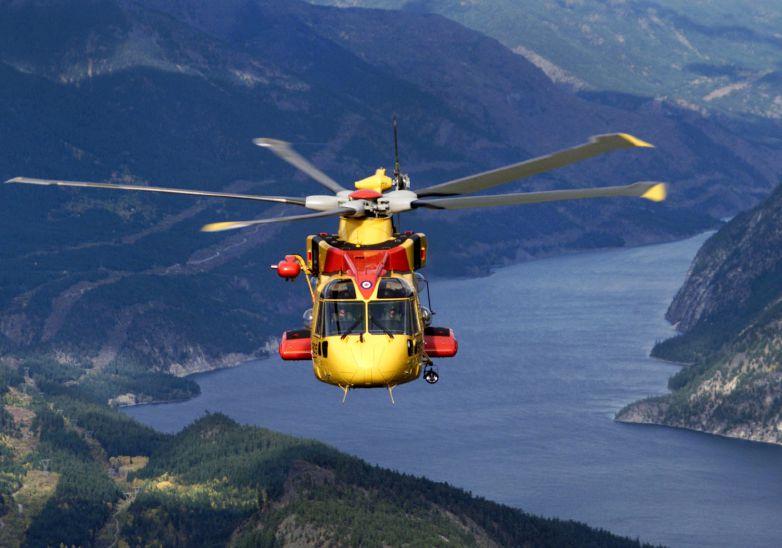
LEFT: Since its introduction into service in 2002, the CH-149 Cormorant has successfully carried out a number of SAR missions in Canada. (Photo: Leonardo)
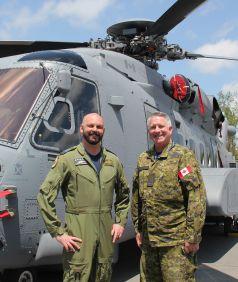
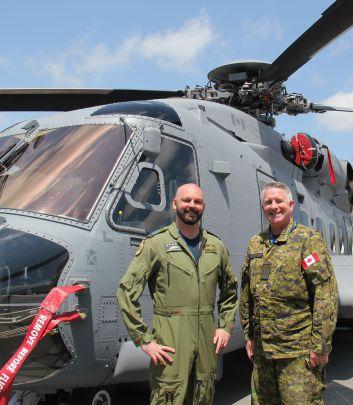
BELOW: Cory Kwasny (left), commanding officer at 423 Squadron, with the Sikorsky CH-148 Cyclone helicopter developed for the Canadian Armed Forces. (Photo: Jon Robinson)
Generational defence investment
What the RCAF stands to gain in Canada’s 20-year plan
BY JON ROBINSON
TA few straightforward statistics – among mountains of convincing data available to be pulled – describe Canada’s need for its historically aggressive Strong, Secure, Engaged policy first introduced in mid-2017 for the Canadian Armed Forces. This includes the pending, marque procurement of a new-generational fighter fleet, given the age of Canada’s current CF-188 Hornets first procured in 1983, and a range of programs to upgrade and extend the life of Canada’s helicopter fleet.
The Canadian Armed Forces (CAF) pegs its responsibility as covering an area greater than 15 million square kilometres. Statistics from the Department of National Defence (DND) indicate approximately 600,000 aircraft enter and exit Canadian air-space annually, among some 4.3 million total flights, including 90,000 transpolar flights. There are 800,000 ship movements annually within Canadian waters, according to DND, and more than 8,000 search-and-rescue call outs per year.
At the Canadian Aerospace Summit held in Ottawa in midNovember 2018, Brigadier-General Michel Lalumière shared these statistics on the opening slide of his presentation to members of the Aerospace Industries Association of Canada, along with succinct
words about the importance of the Royal Canadian Air Force (RCAF): Canada’s defence and security depends on air power –Geography determines; history proves it. From search and rescue (SAR) missions and disaster response to NORAD cooperation and NATO commitments, the RCAF in terms of spending allocation will be the biggest benefactor of Strong, Secure, Engaged (SSE) among all branches of the CAF.
SSE is built on a 20-year horizon to meet more than 200 CAF objectives, but it is being driven by a significant, initial 10-year increase in defence cash spending from $18.9 billion in 2016/17 to $32.7 billion in 2026/27 – an increase of more than 70 per cent. The government of Canada’s total defence spending over the next 20 years is projected to reach $553 billion on a cash basis.
By 2024/25, defence spending in Canada will grow to 1.4 per cent of GDP, while the expenditure on major equipment will also reach 32 per cent, exceeding the NATO target of 20 per cent. These near-term projections are largely based on the timeline of CAF’s Future Fighter Capability Project, targetting a commitment to acquire 88 advanced fighter aircraft with first deliveries anticipated in 2025.
SSE is now organized under the government’s Defence Investment Plan, which was made public for the very first time in late May 2018
FEATURE
by
Defence Minister Harjit Sajjan. For continued transparency, the Investment Plan will be refreshed annually and approved by the Treasury Board every three years.
The 20-year plan for the RCAF with new investments alone will reach $46.5 billion, which accounts for 49.4 per cent of the CAF’s total spend of $93.9 on capital projects. This will be focused on what is described as 52 critical equipment, infrastructure and information technology projects. There are some discrepancies in the numbers with SSE being introduced in 2017 and the Investment Plan launching in 2018. The latter document pegs total spending on capital projects at around $107.9 billion, when also including services and goods, with $47.2 billion earmarked for the RCAF.
The increase in capital project spending outlined in SSE is attracting the attention of domestic and international suppliers from every facet of aviation and aerospace; largely because the policy moves well beyond the Future Fighter program to touch on 16 other large projects, including: Acquiring space capabilities to improve situational awareness and targeting; integrating new command and communications systems; replacing air-to-air tanker transport, utility transport and multi-mission aircraft fleets; investing in medium-altitude remotely piloted systems; modernizing air-to-air missile capabilities; upgrading air navigation, management and control systems; acquiring new aircrew training systems; recapitalizing existing capabilities until the arrival of next-generation platforms; sustaining domestic SAR capabilities; and operationalizing a new fixed-wing SAR fleet.
The majority of SSE spending on capital projects, when categorized by asset class under the Investment Plan, is earmarked for equipment, accounting for approximately $76.9 billion, followed by
what the government labels as “other” at $14.1 billion; IM/IT at $12.1 billion; and infrastructure at $4.9 billion.
“You need to fully understand the size of the challenge… by and large our geography can be described as four and a half time zones, or six and a half time zones depending how far out to sea, including the economic exclusive zones we care deeply about. We are 45 degrees of latitude north to south,” explains Lalumière. “When you are in defence you do not wait for what is fast and easy to come at your border. Of course, we look much further than this and [therefore] we are quickly interested in a quarter of the planet at all times.”
The new SSE vision for Canadian defence translates Strong as Home, Secure as North America, and Engaged as World. The Secure portion of the policy outlines Canada’s intent to eliminate threats in North America primarily through its NORAD partnership with the United States. The opening of the Arctic – and clear intentions from Russia and Nordic countries to gain control in the polar region –places more emphasis on developing defence capabilities in tandem with the U.S. But this cooperation can also be found in SSE surveillance and communications projects.
SSE does not expressly account for a North Warning System Replacement, but it is on the table as a NORAD project. The Defence Investment Plan also holds a range of measures for improved sensors and control. BGen Lalumière in October describes these as SSE highlights, including the acquisition of new Tactical Integrated Command, Control and Communications, radio cryptography, and other necessary systems (Tic3Air), as well as upgraded air navigation management and control systems (MFATM); space-based development projects like the RADARSAT constellation mission; medium earth orbit search and rescue (MEOSAR); defence enhanced surveillance from Space (DESS-P); and Surveillance of Space 2 (SofS 2).
REGIONAL ACCOUNT MANAGER
Canada based role now available WANT
Airwork is a globally recognised Helicopter engineeringng, sales and leasing company locateed a at Arddmore Airporort in n Au A ckland New Zealandd.
• Be part of a fa Globa a o lS l Sales T Teaeam
• Cre Create at a a pososititive Cus Cu tomer er Experi r ence
• Enhnhaancnce Helicopter and MRO sal sales in Canada a
• Develolop meananing n ful and long-te -t rm customer e relatitionships
• Bring youur s stroong g undnderstan t di ding o gof f the h
Hel e ico c pte p r i indu d stry
• Be e pro r rooacct a ive an a d organissed e to m meet sales tar ta t ge gets
For or r moore r inform r a attiioon and an ap a plicat attioion i de d t tails ls ple leease e vis v it www.ai.airwo r r rkggrourooupcp.com
New Zealand www.airworkgroup.com
Lalumière points to SSE highlights directly affecting the future of CAF aircraft (around 350 among all Canadian military fleets). The new Strategic Tanker Transport Capability project to replace the CC-150 and CC-130T is to provide a first draft proposal in 2027, although CAF has expressed a desire to accelerate that timeline. The fixed-wing SAR C295W project expects to see its first proposal in 2019. The Utility Transport Aircraft project to replace the CC-138 Twin Otter is expected to begin in 2025 and the Canadian multimission aircraft project, to replace the CP140 Aurora, is expected in 2033. The timeline for the Remotely Piloted Aircraft System project for medium-altitude ISR & Strike capabilities is to be determined.
The Cormorant Mid-Life Upgrade modernization project is currently ongoing and noted by Lalumière as a key part of SSE. The Future Fighter program also relates to major investments in training, defined in part as the Fighter Lead-In Trainer project. Current training is provided under contract with CAE for what is defined as NFTC (NATO Flying Training in Canada). The CFTS portion for advanced flight training of both multi-engine and rotary-wing is currently under contract with KF Aerospace. A third component for Air Combat Systems Operators and Airborne Electronic Sensor Operators is currently provided by 402 Squadron, which will be rolled into an overall SSE training project called Future Aircrew Training (FAcT).
The CAF is clearly putting an emphasis people as the ultimate SSE ingredient to achieve its objectives. This includes programs around health and wellness, civilian life transition, tax relief and diversity. SSE targets an increase to the CAF’s regular force by 3,500 personnel, as well as an increase of 1,500 in the reserve force. Approximately 12,000 personnel are currently in RCAF’s regular force, as well as 2,100 reserves and 1,500 civilians. “People will be the limitation in our ability to move at this pace,” explains Lalumière. “Twenty years, 10 years happens very quickly when it is all dependent on people.” | H
COLUMN
Operator best practices
Real-world insight into what works from visiting bases across Canada
ne of the things I love most about my role at HAC is the opportunity to visit with many operators. Our industry is full of colourful characters and I regularly meeting with them at their bases. One of the benefits from this mandate is a chance to compare the way they all carry out similar missions, using a variety of different tools.
Below are some of the ops-related items that impress me as being better practices in the field. Some of you will say, “We have been doing that for years” to the whole list. Most of these practices, however, are not as common as you might think. Naturally, there is more than one way to skin a cat, but across multiple operators, these practices seem to be some of most commonly used.
Satellite phones – Back in the day, when I started flying in the industry in the late eighties, you were lucky to have an HF radio and now satellite phones allow flight and maintenance crews to contact just about anyone at any time to resolve maintenance or ops-related issues. Most companies have portable Pelican case-based units, and others have units integrated with the aircraft – some have both.
A duty officer – Experienced employees who are available 24/7 by phone to assist deployed crews with everything from the location and status of caches, to routing advice for new pilots or unfamiliar areas, to the advance booking of hotel rooms and airline bookings and taxi cabs.
Standardized tool kits – Kits that hopefully stay with the aircraft
Satellite tracking – The provincial fire agencies have seen to it that virtually all our aircraft now incorporate this technology, but it has revolutionized the standard of Flight Following in our industry. Whether the aircraft has stopped owing to an inflight emergency, or simply as result of the need for a bio-break, this technology – when combined with satellite phones or satellite texting technology and automated alerting services – has virtually eliminated the uncertainty around delayed or overdue aircraft. Often times it will allow nearby company aircraft to respond on-site in a timely manner;
A Wobble-Pump backup – Paranoid, you say – maybe – but that electric pump is a pretty significant single-point-failure item. I have never seen a wobble pump failure.
Standardized GPS – The cost of commonly used, older (but perfectly serviceable) GPS units has plummeted in recent years in favour of a GPS-type that is standardized across the fleet. Many operators have moved to iPads and Foreflight or Foreflight-like Apps. Some operators are experimenting with real-time telemetry of engine parameters and electronic log books based on GPS data.
Extendable bar – An extendable bar is now commonly on hand for righting fuel drums, without slipping a disk.
Pre-packed spares – Aircraft-specific covers and plugs and snow scoops (suitable-to-season); oil, hydraulic fluid, grease gun; aircraft soap, window cleaner, rags, Start-Pac for extended deployed or coldweather operations, fuel sample container, and more.
Satellite phones allow crews to contact just about anyone, at any time, to resolve ops-related issues. ‘‘ ’’
allow pilots to perform elementary maintenance tasks without having to rely on their own (sometimes questionable or non-existent ) collection of tools and lockwire. We know a set of onboard tools, and a sat phone can make the difference between being grounded by a chip light, and being on your way
Tasking sheets – These include basic information about the job like customer contact information, GPS coordinates, Ops Gear required, brief job description, duration, accommodation and more.
Fuel cache locations – An up-to-date listing of fuel cache locations (naturally, contents may vary) and procedures.
Company-issued firearms (to FAC Holders, under prescribed operational circumstance) – There are those of us who have been chased by a polar bear and those who haven’t been chased by a polar bear, yet.
More ops-related items I seen as better practices in the field, include: An annual and documented inspection cycle for sling gear; John’s Ambulance training (First Aid, CPR, AED); FAC course training; a searchable online reference site for company ops memos; online company documentation; crew position reports (often paperbased); company email addresses; online reporting for Flight & Duty Time; and flight tickets.
This list is not intended to be exhaustive but to provide examples of operational procedures, equipment, and training that are commonly in use. Newer technology is becoming widely available, but it is most often found in newer generation aircraft, such as Helicopter Flight Data Monitoring and Lightweight Flight Data Recorders. | H
FRED JONES
TRAINING.
The H135 & H145 are the helicopters of choice for military pilot training around the world. Exceptional safety and efficiency make them ideal for both basic and advanced training. There’s a reason we call it future aircrew training. Packed with technology such as the HELIONIX® flight control system, today’s new pilots will be armed with the skills needed for tomorrow. Superiority. We make it fly.