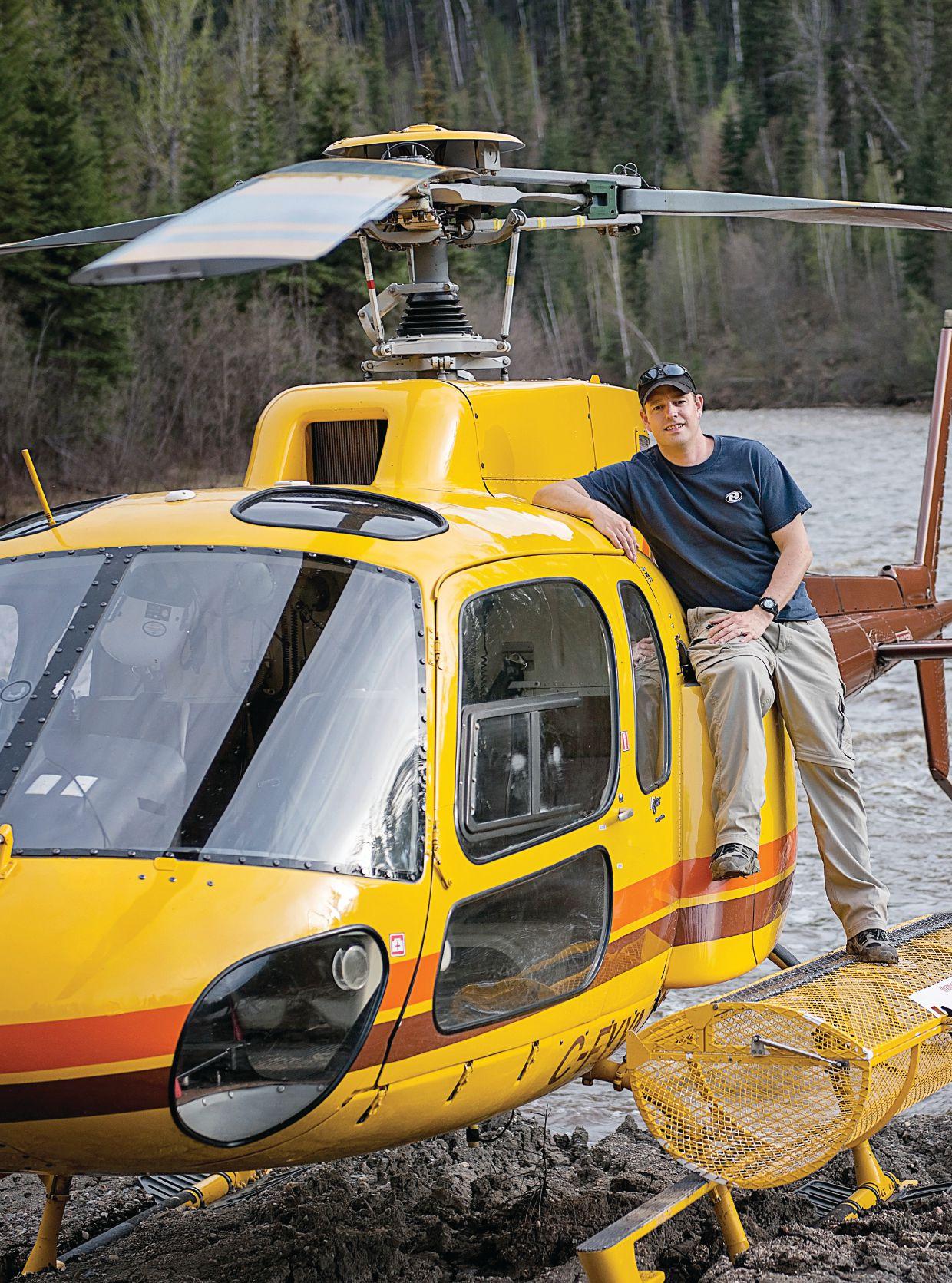

LEADING THE FUTURE


LEADING THE FUTURE

MATT
NICHOLLS is editor of Helicopters
Spring is a time for high-profile entertainment awards –from the hoopla of the Oscars and the dressed-up divas on the red carpet, to the brilliant performances of rockers at the Grammy’s, to the sophistication of the Tony’s, and more.
It’s a celebration of excellence on a grand scale, the crème de la crème of many of our entertainment leaders. For the nominees – and of course the lucky winners – it’s a time to chronicle excellence for another year, to mark the time in an industry that inspires and excites the masses.
At Helicopters and Wings magazines, we certainly can’t match the pomp and circumstance of the red carpet pizzazz or the spectacular performances of Hollywood’s top performers, but no matter – we wholeheartedly embrace the chance to shell out the hardware with our own awards in important verticals within our impressive markets. Call them the “Oscars of Canadian aviation,” if you will. These awards highlight excellence and achievements in the Canadian industry.
One of our most important award programs is our annual search for top aviation and aerospace talent with our Top 10 Under 40 program – a chance to highlight up-and-comers in several important aviation streams. As many top executives in both fixed- and rotarywing operations nationwide will attest, finding and retaining top talent is a top priority, especially given such a competitive business landscape. Employees with initiative, humility, courage and a good
We Don’t Have a Red Carpet, But Our Awards Rock Too
variety of professions, including pilots, AMEs, aviation executives, COOs, aviation lawyers and more.
All winners share a commitment to the growth of their firms, but they also show a high devotion to aviation and aerospace as a whole and a desire to help Canada continue to make its mark in the global marketplace. Often, their leadership skills extend to mentoring and nurturing the youth of tomorrow, helping them see the relevance of an aviation career and the value this brings on so many levels.
Such dedication and commitment to the growth of Canadian aviation and aerospace is of course very good news. Aviation and aerospace firms are facing a critical personnel shortage in the years ahead in a number of key professions, from pilots to AMEs and more. The fact that so many capable young minds are ready in the pipeline and able to replace aging workers is extremely comforting.
I am also happy to report that participation in this year’s awards program was so overwhelming that we included 10 additional winners – a Top 20 Under 40 – with many more highly qualified competitors just missing the mark. The achievements, goals and influence within the industry of these outstanding young aviators are chronicled in “Flying Above the Crowd” on page 14. In editing the piece, it was hard not to be inspired by the achievements of all participants and marvel at their dedication and devotion to the cause at such a young age.
Their leadership skills extend to mentoring and nurturing the youth of tomorrow. ‘‘ ’’
old-fashioned work ethic are hard to find, but they are out there –and every operation that finds these dedicated leaders is laying the groundwork for a successful future.
Our second annual Top 10 Under 40 program pays homage to young leaders just like this. I am very pleased to report that this year’s program grew by leaps and bounds, as fixed- and rotarywing operators and firms nationwide jumped at the chance to recognize their most influential employees under the age of 40. Nominated in most cases by top members of a firm’s management team, the inspiring individuals represent overachievers in a
This year's group of winners represent a wide cross section of the aviation industry: AMEs, pilots, lawyers, sales associates, chief operating officers, managing directors and more, each carving out their own special niche in their respective fields. Success has been attained not only through a solid educational progression but in most cases, through good-old fashioned hard work and perseverance. It's positive affirmation that if you work at your craft hard enough, you will experience success.
In the end, it’s all about a high commitment to excellence – flying above the crowd to deliver results that exceed all expectations. It’s the driving force that all of our Top 20 Under 40 award winners –and nominees – share. And no, winning these awards won’t get you the glitter of a red carpet appearance . . . but it’s still a special achievement, one that needs to be recognized and celebrated within the industry. Congratulations to all of our winners, very well deserved!






I like to stay ahead of my aircraft. So if I’m 40 miles out with weather rolling in, I’m listening to what’s happening in front of me. AWOS. Pilot chatter. A quick check with flight service. Sometimes, there’s a lot to decipher. But I need to hear it clearly. Because when I do, I feel confident. Prepared. In the moment. And that allows me to just





























MORE NOISE REDUCTION. LESS DISTRACTION.




























Better sound can make all the difference, especially where you go. Which is why, with 30% greater noise reduction than conventional noise reducing aviation headsets, the A20 headset lets you hear more of what you need to hear. While proprietary cushions and minimal clamping force let you fly comfortably for hours. Meets or exceeds TSO standards.




The controversial CH-148 Cyclone Maritime Replacement project came under more fire in June when a CBC News report outlined that the new machines fail to meet a key requirement recommended by the country’s safety investigator.
A renegotiated deal between the government and United Technologies Corp. (Sikorsky) was announced June 18 for 28 new CH-148 helicopters at $7.6 billion. But in order to finalize the deal, the government agreed to forego a formerly mandatory safety measure: a 30-minute run-dry standard for its main gearbox. The importance of this key safety feature was reinforced by an investigation into a deadly 2009 crash of a Sikorsky-built Cougar S-92A off the coast of Newfoundland.
According to the CBC
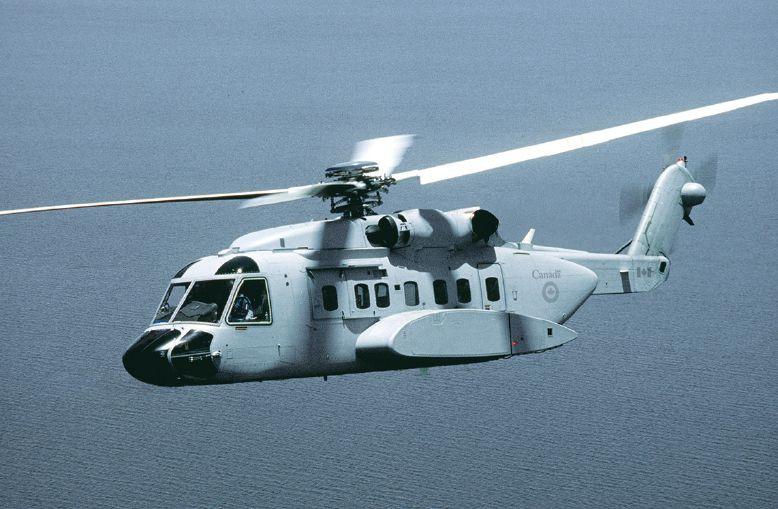
The much-maligned CH-148 Cyclone has cost the government billions of dollars to date.
report, Defence Department spokeswoman Ashley Lemire said in an email that the main gearbox on Canada’s new Cyclones is designed to ensure the total loss of oil lubrication is “very remote.”
“The Cyclone gear box lubrication system has many safety features, including a bypass valve than can be used to isolate the gearbox case from the oil cooler in the unlikely event of an external leak, to prevent further loss of trans-
mission oil,” Lemire said.
The CH-148 program has been plagued with problems since the initial deal was announced in 2004. The program is severely over-budget and years behind schedule. Last December, the federal Conservatives almost abandoned the deal in the hopes of finding a new vendor. Hitachi Consulting was hired by the government in 2013 to evaluate all options for the project, and after extensive analysis,
is once again reaping the rewards of its summer foray into the sportfishing industry. The B.C.-based helicopter service has renewed contracts with world famous fishing resorts in the Haida Gwaii Islands located on the northwest coast of B.C. Together, the three-year service contracts with renewal options exercised are valued at more than $12 million. Helijet will provide summer-season helicopter service to the resort lodge locations utilizing twin-engine Sikorsky S-76 helicopters, which will be operated and maintained by a Helijet team located from both the
Sandspit and Masset airports.
found it to be viable to proceed. The announcement in June reflects the conclusion of the process and a new timeline for completion of the project.
“Sikorsky and the Canadian government have agreed on all technical requirements for the CH-148 Cyclone helicopter,” Sikorsky’s Paul Jackson told the CBC. “The gearbox meets all FAR Part 29 requirements by the FAA, including those related to loss of primary lubrication.”
The 13-passenger helicopters will fly resort guests and supplies to and from these remote lodges, which are situated along some of most beautiful and rugged wilderness regions of B.C.’s west coast. The S-76 helicopters will also be available for general charter to other clients at times when they’re not scheduled to serve Helijet’s resort clients. Helijet also operates a year-round operating base located at Sandspit Airport, with a hangar and office infrastructure, mission specific helicopters and experienced flight crew, in support of all business sectors.
After opening the frontiers of flight during a record-setting test program, Airbus Helicopters’ X3 is now ready for its place in history. It will now be displayed at the French national musée de l’Air et de l’Espace (Air and Space museum) of Paris-Le Bourget.
The X3 will be exhibited in the musée de l’Air et de l’Espace’s hangar facilities at Paris-Le Bourget airport, strategically located with other high-speed legends, including Europe’s supersonic Concorde jetliners.

Airbus Helicopters’ experimental X3 aircraft has a new home.
(Photo courtesy of Anthony Pecchi, Airbus Helicopters)
“We welcome this illustrious addition to France’s leading aviation museum, where our collection includes other historic rotorcraft from Airbus Helicopters’ lineage – like the S.A. 3210-01 Super Frelon, which 50 years earlier set a world speed record of 350 km/hr,” said Catherine Maunoury, CEO of the musée de l’Air et de l’Espace and twice world aerobatics champion. “The X3 continues a tradition of excellence at Airbus Helicopters, building on decades of innovation, research and development.”
Airbus Helicopters pursued the X3 development as part of self-funded company efforts to evolve rotorcraft that offer new ways to perform missions, fly faster and farther, and reduce operating and maintenance costs. The X3, known as a hybrid helicopter, demonstrated the company’s high-speed, longrange, Hybrid Helicopter (H3) concept.
“It is appropriate that the X3 is joining other renowned aircraft at the Musée de l’Air et de l’Espace that have helped shape the aviation industry, especially since from its conception, it showed Airbus Helicopters’ entrepreneurial drive to deliver a viable demonstrator to serve our customers’ high-speed requirements,” said Dominique Maudet, Airbus Helicopters Executive VP Global Business & Services.
From its maiden takeoff in September 2010 to its retirement in 2013, the X3 fully validated Airbus Helicopters’ hybrid concept, using a pair of turboshaft engines to power both a five-blade helicopter main rotor and two propellers installed on short-span fixed wings.
During the more than 155 hours logged by the aircraft in 199 flights, milestones achieved included a level flight speed of 255 knots (472 km/hr) on June 7, 2013 – surpassing previous high speeds reached by a helicopter. While exploring the full flight envelope in cruise, climb, at altitude and during descent, the X3 validated this high-speed concept’s qualities – including outstanding stability, intuitive piloting characteristics, as well as low vibration levels without the need for anti-vibration systems.
There are a wide range of potential applications for a hybrid helicopter configuration that may be developed from the X3 concept. Its applications could include long-distance search and rescue (SAR) operations, coast guard missions, border patrol flights, passenger transport and offshore airlift, along with inter-city shuttle services.
Industry veteran and Wings and Helicopters correspondent Walter Heneghan has a new role.
Heneghan has moved on from Canadian Helicopters to join the team at the Summit Group as VP Health, Safety & Environmental Protection. Based in Edmonton, he will be located at Ledcor head office until the company’s new hangar space in Edmonton is complete.
As a member of the senior leadership team, Heneghan is responsible for overseeing and growing the safety program for both Summit Air and Summit Helicopters. He will provide
tactical and strategic leadership on the implementation, development, and use of HS&E programs as well as develop short- and long-term operational safety objectives to meet the needs of the growing company.
Heneghan brings more than 35 years of experience within the aviation industry to the Summit team. For the past four years, he held the position of Vice President, Safety & Quality with Canadian Helicopters Ltd. Prior to that, he worked as the Safety Manger for their EMS Division, flew as an EMS pilot
HELICOPTERS MAGAZINE P.O. Box 530 105 Donly Drive South Simcoe ON N3Y 4N5 Tel.: 519-428-3471 Fax: 519-429-3094
Toll Free: 1-888-599-2228 Website: www.helicoptersmagazine.com
EDITOR MATT NICHOLLS email: mnicholls@annexweb.com 416-725-5637
MEDIA DESIGNER KELLI KRAMER
CONTRIBUTING WRITERS
RICK ADAMS, MICHAEL BELLAMY, DAVID CARR, BRIAN DUNN, PAUL DIXON, WALTER HENEGHAN, FRED JONES, JAMES MARASA, CARROLL MCCORMICK, NATIONAL ACCOUNT MANAGER MENA MIU email: mmiu@annexweb.com 905-713-4351
ADVERTISING SALES JARAH STEFEK email: jstefek@annexweb.com 519-429-5191 • 1-888-599-2228 ext. 246
ACCOUNT COORDINATOR STEPHANIE DEFIELDS email: sdefields@annexweb.com 1-888-599-2228 ext. 257
GROUP PUBLISHER SCOTT JAMIESON email: sjamieson@annexweb.com
PRESIDENT MIKE FREDERICKS email: mfredericks@annexweb.com
RETURN UNDELIVERABLE CANADIAN ADDRESSES TO ANNEX PUBLISHING & PRINTING INC., P.O. BOX 530, SIMCOE, ON N3Y 4N5 CANADA. email: subscribe@helicoptersmagazine.com
Published five times a year by Annex Publishing & Printing Inc.
Printed in Canada ISSN 0227-3161
CIRCULATION email: subscribe@helicoptersmagazine.com Tel: 866-790-6070 ext 208 Fax: 877-624-1940 Mail: P.O. Box 530 Simcoe, ON N3Y 4N5
SUBSCRIPTION RATES Canada – 1 Year - $25.00 (all taxes included) USA – 1 Year $35.00 Foreign – 1 Year $45.00
throughout Canada and worked in the North. A graduate of the Royal Military College with a Bachelor of Engineering degree, he served for 13 years as an Air Force pilot including an overseas peacekeeping deployment in Egypt, and instructing at the Air Force Helicopter flight school before joining the civil aviation industry.
As an experienced pilot, mentor, check airman, and safety advocate, Heneghan has more than 6,000 hours of flying experience including in both fixed wing and rotary aircraft.
Occasionally, Helicopters magazine will mail information on behalf of industry-related groups whose products and services we believe may be of interest to you. If you prefer not to receive this information, please contact our circulation department in any of the four ways listed above.
No part of the editorial content of this publication may be reprinted without the publisher’s written permission ©2014 Annex Publishing & Printing Inc. All rights reserved. Opinions expressed in this magazine are not necessarily those of the editor or the publisher. No liability is assumed for errors or omissions. All advertising is subject to the publisher’s approval. Such approval does not imply any endorsement of the products or services advertised. Publisher reserves the right to refuse advertising that does not meet the standards of the publication.
Helicopters Magazine is a corporate member of the

Helicopters Magazine is an associate member of the following Canadian aviation associations:
Irecently had a discussion with a former colleague about what drives “safety” in aviation. Is safety a by-product of a sound Quality Assurance (QA) program, or does a sound Safety Management System (SMS) fertilize the ground for a good QA program?
For all of you for whom the elements of a Safety Management System (SMS) is not old hat, Safety Assurance is identified as a key component, indicated as the third pillar of an ICAO compliant system. Specifically, Safety Assurance is “…an important monitoring function that allows the company to monitor compliance with regulatory, client and internal requirements. The Safety Assurance process monitors compliance with any company procedures that have been designed and implemented to ensure safe operating activity.”
Within this third pillar are such things as policies, accountabilities and KPI’s; management of change processes; QA; senior management buy-in; and review and continuous improvement. Quality assurance is identified as a sub-component of the larger Safety Assurance mandate. Safety – the identification of risks and the introduction of controls so as to minimize these risks to a level that is as low as reasonably practical (ALARP) – cannot be achieved if an organization does not hold itself to account. An effective safety system needs people to be accountable through active measuring and management of performance indicators. Risk is often manifested during organizational change so “change management” processes are important. Senior
Which is the Chicken and Which is the Egg?
Assurance.” While specifically targeting transport by road accident and fatality cause factors, the report stated: “. . . A culture of ‘Quality Assurance’ must be developed for public and commercial transport services . . . it is understood that individuals should play an active part in placing demands on society and manufacturers for safe road traffic.” A strong commitment from the individuals (employees) to place demands on society (employers) for safe road traffic (aviation operations). This creates some interesting parallels.
But what about the other point of view? Many successfully safe companies have strong leadership that demands safe behaviour, safe work practices and insists that safety permeates every aspect of decision making. Doesn’t a solid, top-down commitment to safety drive a company’s culture? When senior leadership commits and communicates a safety mantra that defines how it conducts its affairs, isn’t this the keystone to an effective SMS? When this leadership ensures that sound risk-management principles are in play for all phases of a company’s operations – growth, acquisition, and steady state – doesn’t this drive the corporate culture? This commitment drives safety policies and best practices, which in turn drives employee commitment. This commitment then makes setting KPI’s a much easier task and pride of ownership demands a sound safety assurance process.
Furthermore, with this form of leadership, it becomes much easier to drive the safety culture into the everyday activities of the workforce. So, in this case, doesn’t quality assurance end up being driven by the safety system? I have written in earlier columns about active risk management, the hierarchy of risk controls and the need for sound safety management systems.
Risk is often manifested during organizational change so ‘change management’ processes are important. ‘‘ ’’
management buy-in and commitment and review of KPIs drives continuous improvement and QA provides the validation and confidence that the identified safety processes are clicking along, functional, and effective – and that the controls that have been implemented are being followed so that, again, risk is lowered to ALARP.
Reviewing the aforementioned items could lead one to conclude that safety is clearly derived from a functional quality assurance system. On point, I reference a panel from the European Conference of Ministers of Transport that also reached this conclusion in a 2003 report entitled, “Safe & Sustainable Transport – A Matter of Quality
We both found the discussion to be illuminating in that either perspective can work in attaining the goal of achieving “safety.” We can ensure that our prescribed processes are followed diligently in order to reduce risk or, alternatively, commit, through unwavering leadership, to driving a company culture to ensure that everything is done to reduce risk to “ALARP.”
I will leave you with this quote from Jerome Lederer, NASA’s first director of Manned Flight Safety: “Risk management is a more realistic term than safety. It implies that hazards are ever-present, that they must be identified, analyzed, evaluated and controlled or rationally accepted.”
Walter Heneghan is the Vice President for Health, Safety and Environmental Protection with the Summit Air Group of Companies, Ledcor Resources and Transportation, based in Edmonton and throughout Western Canada.



19th Annual HAC Convention & Trade Show November 7-9, 2014 W Montreal, Q.C.

reaCHing tHe operators of tHe WorLd’s 2nd Largest HeLiCopter fLeet
tHe WorLd’s Leading ManufaCturers & suppLiers
speCiaL training & eduCation sessions
PAUL DIXON
f W.O. Mitchell were still alive today, I could tell him that I had seen the wind. Oh yes indeed, for I was at the Unmanned Systems Canada Student UAV Competition May 2-4 at Southport, Man.
On the heels of what may have been the harshest winter on record, the weather was a tad brisk for a visitor from the pineapple groves of the West coast, not to mention the challenges for the intrepid students. The competition has grown like Topsy since its humble beginnings in 2007 at Happy Valley-Goose Bay in Labrador. Due to popular demand, what started out as a biennial event is now on a yearly schedule, with the event rotating between Alma, Que. and Southport.
This year’s competition took a huge step forward with the teams presented with a commercial challenge, whereas previous years had focused on the technical aspects of UAV operation. This year, the teams were given a series of missions taken from everyday examples of commercial aviation. In the scenario, a local authority hires the UAV team to conduct a series of flights over a pipeline right of way (ROW) and the surrounding area to determine if there was any encroachment on the pipeline ROW or illegal activities, collecting photographs and other data. Then, the teams had to determine if there has been any damage to crops in fields abutting the pipeline ROW and map the area, and finally, locate a rockslide on the pipeline ROW and calculate the volume of the slide and its geo-location.
moments of reflection, a unanimous decision was made to create a redesigned course that could survive the weather. A special shout out to Marc Sharpe is deserved for drawing on his forensic skills in the creation of a most sublime “victim” in the middle of the course.
The Friday was supposed to have been a practice day for students, but discretion proved the better part of valour. It was a monumental task simply putting up the popup shelters that each of the 12 teams were to use as their airside operations centres. Saturday brought the same biting wind and offered up a bit of snow, some rain and for a change late in the afternoon a few minutes of hail with a threat of lightning.
Several teams made an attempt to fly but paid the price with a broken or bruised UAV. The one team that flew the course with some degree of success on the Saturday was the Team Dronolab from école de Technologie supérieure (ETS) in Montreal, not incidentally the only team flying quadcopters. Dronolabs’ two quadcopters took off easily in the wind and appeared to have little problem maintaining an even keel as they navigated to course. But the effect of the wind on the quadcopters became apparent when one was forced to land prematurely because the effort to maintain stable flight under such tough conditions cut the battery life in half.
Sunday was a beautiful day, a high blue sky with barely a hint of a breeze. Everyone was off and flying, though we’ll leave it at saying that some flew well and others were more in the “oh well” category.
It was a real-world challenge for a group of students representing the future of Canadian aviation.
The wind on the opening Friday blew at a steady 25 knots, with frequent gusts well above that and temperatures in the low single digits. The windsocks at the four corners of the airfield were straight out for the day, often pointing in three different directions and it wasn’t uncommon to see two of them pointed directly at each other. This played havoc with the organizers as they tried to lay out the course across the infield of the airport. It was certainly a page out of real life, where dealing with the unexpected, unwanted and unneeded are all too often in your face at the most inconvenient of times. Suffice it to say that, after a few
Team VAMUdeS from Université de Sherbrooke maintained its dominance by taking home the trophy yet again. It was a real-world challenge for a group of students representing the future of Canadian aviation and they gave it their all.
When you consider that, for most of them, the competition came a couple of weeks after final exams, it was an incredibly intense time. Let’s also give a big “attaboy” to those crazy kids who drove literally halfway across the country to be there and were headed home at six in the morning the next day. What particularly impressed me was the overall positive attitude displayed by all competitors. I am very pleased to report that the planning for next year’s event is well underway, and I am very much looking forward to seeing which way the wind blows next year!
Paul Dixon is freelance writer and photojournalist living in Vancouver.

For more information on sponsorship and exhibitor opportunities, please contact:
Mena Miu I 905-713-4351 I mmiu@annexweb.com
Jarah Stefek I 519-429-5191 I jstefek@annexweb.com
MICHAEL BELLAMY
Many years ago, one of our pilots experienced an engine failure en-route to a job. He handled it well and was soon on the phone to the owner. After acknowledging that the machine and pilot were OK, the owner asked in retrospect if he would have done anything differently to handle the emergency. The pilot told me later how annoyed he was that his boss had insinuated that somehow he had erred.
So, you are flying along, as the expression goes – fat, dumb and happy – when suddenly, the turbine starts to surge erratically, and then, with a loud bang, quits altogether. Your adrenalin goes into full rich as you drop the pole and scan the instruments. Airspeed! Watch your airspeed! Back to 60 Kts. Mind the rotor speed! There’s a clearing. The ground is rushing up. Trees are going by. Hold off on the flare. Get ready to run it on if you run out of pitch. Now pull! The machine levels, then slumps the last few feet into the scrub and you’re down. The helicopter rocks gently on the uneven ground as the blades coast to a stop. The hum of the gyros and your heavy breathing are the only sounds.
The machine is undamaged and, flushed with relief, you acknowledge to yourself that you pulled it off. You can almost hear the chorus of “Attaboys” back at the hangar.
Is this the end of story? It shouldn’t be. What you just demonstrated was airmanship, but what follows is professionalism. To walk away without further contemplation ignores the value of the
It’s Hard to Discount Experience in Accident Prevention
and flying over inhospitable terrain are often unavoidable, but they can be minimized. Most importantly, could you honestly attribute the successful completion of this emergency to just being lucky?
I once nonchalantly chose a final approach path crossing a maze of pipe at a gas plant coping with a strong wind. Settling onto the pad, the machine de-celled, the result of a fractured “B” nut on the fuel control. The engine operation had been normal up until then. Realizing how catastrophic the outcome could have been had the engine let go crossing that network of pipe led me, from then on, to accept a quartering wind under similar conditions. For most of you, this lesson seems like a “No Brainer” but when you are fairly new to the game, it was important. It established a determination to analyze future incidents and responses more critically.
Pilots are all graded on how well they respond to critical situations as defined in the “Emergency Procedures” section of the Aircraft Flight Manual (AFM). This training is done under controlled circumstances where a specific simulated emergency is anticipated. For most of our operations, it’s the most practical way we have of determining a pilot’s response capability without endangering the machine or putting lives at risk. What happens later, under actual circumstances in the field, is where that training and the pilot’s own ability come together.
How well the pilot can identify and therefore avoid potential emergency situations is the result of intuitiveness obtained from analyzing past experiences. As an example, experiencing a momentary hung start on a Jet Ranger might be ignored as inconsequential. But the recollection of losing an engine shortly after take off due to an engine driven fuel pump failure would certainly be there to warn the pilot if that circumstance was repeated.
What you just demonstrated was airmanship but what follows is professionalism. ‘‘ ’’
experience. As the aforementioned owner asked, “What would you have done differently?” It’s a query that was probably the result of a similar experience. The owner wasn’t condemning the pilot’s performance; he was encouraging him to critique the performance to be better prepared for the next time.
For example, what subtle indicators did the machine provide before the catastrophic failure? Were engine instruments deviating from the norm? Having to repeat the autorotation, would you choose to be at a higher altitude or would you alter course slightly to provide more landing opportunities? I know that low altitude
I have always been a proponent of “There I was stories” – a pilot or engineer sharing a past experience that may have led to a crash or caught just in the nick of time, prevented one. The dialogue usually exposes warning signs that at the time may have been misinterpreted or ignored.
Experience is invaluable but in order to benefit from it, you must be paying attention at the time.
A native of Spruce Grove, Alta., Michael Bellamy has been flying fixed- and rotary-wing aircraft in a variety of capacities since 1971, and is an accomplished author of several books, including Crosswinds.

RICK ADAMS
You can lead a horse to water but you cannot make it drink. You can lead a pilot to safety information but, apparently, you cannot make him or her . . .
Over the past few years, the International Helicopter Safety Team (IHST) and its affiliates, aircraft manufacturers, the International Civil Aviation Organization (ICAO), and other safety-minded groups have issued a sling-load full of bulletins, pamphlets, brochures, videos, guidance documents, and other educational materials in the effort to reduce rotorcraft accident rates.
In addition, there are hundreds of presentations at conferences such as the annual CHC Safety & Quality Summit, the American Helicopter Society’s Forum, the Helicopter Association of Canada convention, the EASA Rotorcraft Symposium, Royal Aeronautical Society events, oil and gas industry aviation seminars, and other specialty groups.
But are operators and their pilots paying attention? Of 300 pilots who responded last year to an Airbus Helicopter Training Services survey, all of whom had received IHST safety leaflets and toolkits in paper or electronic format, 80 per cent admitted they never read or used the material. Appalling, discouraging, maybe not surprising.
Last year’s rising accident rate would seem to confirm that too many pilots are not paying attention. In the United States, for example, where the number of accidents had declined from a 190 rolling three-year average between 2001 to 2003 to an average of 138 by 2009 to 2011 – a more than 27 per cent drop – the accident rate has begun to creep up again: from 148 in 2012 and 147 in 2011. More alarming, the number of fatal
If You Haven’t Read Safety Bulletins Lately, Maybe You Should
some degree of implementation occurred yet did not produce any improvement. Unfortunately, there is also the possibility that implementation may never have occurred at all,” the JHIMDAT group lamented.
One thing the data does show is that personal, instructional, and agricultural flying continue to top the accident list and their share rose to 57 per cent of all accidents in the 2009 to 2011 time period. But we also know commercial large aircraft operators are not immune.
The IHST, which had last year shifted its goal from an 80 per cent overall accident reduction by 2016 to “zero tolerance,” is now asking its worldwide partners “to establish an additional focus regarding the steps that can be taken to prevent fatalities in helicopter accidents.”
The recommendation of the IHST volunteer subject experts – which includes representatives from the U.S. Federal Aviation Administration (FAA), Bell Helicopter, Sikorsky Aircraft, Boeing, NASA, a major city police department, and an aviation university – is either “more rigorous implementation measures” or “a more effective plan for ensuring that operators are actively using the implementation resources already available.”
As the majority of accidents are in the under 12,500-pounds gross weight category, should the regulatory authorities require that pilots have type ratings, as with larger aircraft? AgustaWestland’s Roberto Caprarella says yes, because, “helicopters can do more in more challenging conditions.” But Sara Monger, representing Bell Helicopter, notes, “the FAA and the industry itself have not thought this to be a need. The insurance companies do a pretty fair job of ensuring pilots are training in model before they extend insurance.”
One thing the data does show is that personal, instructional, and agricultural flying continue to top the accident list. ‘‘ ’’
accidents jumped from 19 in 2011, to 23 in 2012, and 30 in 2013, the worst single year since 2008 when there were 35 fatal helicopter crashes.
The IHST says globally the average is trending downward about two per cent a year, now at slightly more than 500 total accidents per year.
A March 2014 report by the U.S. Joint Helicopter Implementation Measurement Data Analysis Team (JHIMDAT), comparing accidents in 2009 to 2011 with a previous analysis of accidents in 2000, 2001 and 2006, tried to ask the proverbial “why” questions: “Why is stagnancy and regression so prevalent?” or “Why have implementation measures been less effective?” The available data did not yield clear answers. “Perhaps
Steve Phillips, vice president, communications for FlightSafety International, views the current regulatory structure as “more than sufficient” and is concerned a “formal type-rating process could potentially burden single-engine helicopter training programs with excessive requirements that could not contribute to safer operations.” FlightSafety would, however, “recommend some regulatory structure that included formal initial and at least biannual formal training be required.”
The ultimate improvement in safety, of course, must come from the operators and pilots themselves through a safety attitude, an embedded safety culture, and the flight-by-flight vigilance of attention to even the smallest detail.
Rick Adams is Chief Perspectives Officer of AeroPerspectives, an aviation communications consultancy based in the south of France. He has been writing about technology and training for 30 years.
of the industry’s brightest
BY MATT NICHOLLS
Finding (and retaining) dynamic employees who can lead, innovate and transform corporate cultures is a goal management teams nationwide are always striving to attain. And with a looming crisis of retiring pilots, maintenance workers and other skilled aviation and aerospace professions, the search for these multidimensional all-stars is suddenly paramount.
Fortunately, Canada is blessed with talented young aviation and aerospace personnel and many are under the age of 40. In Wings and Helicopters second annual next-gen leaders special report, we proudly highlight some of these top achievers – men and women who have helped transform their organizations in maintenance, business operations, flight operations and more. And this year, we’ve taken it up a notch – highlighting 20 top achievers who are making their marks in their respective organizations.
The 20 individuals featured here were carefully selected by our editorial team following an online voting process that ran earlier this spring. Candidates were nominated by colleagues based on their influence to drive change, leadership skills, commitment to clients/colleagues, and their forward thinking towards the industry as a whole. In most cases, nominators had several years of experience working with the candidates, observing how they cultivated their skills and grew in their respected spheres.
Featured alphabetically, our Top 20 Under 40 achievers represent the resourcefulness, commitment and dedication organizations are

craving in today’s marketplace. On behalf of the nominees, candidates and winners, we thank you for your support and salute the achievements of all who participated.
LOCATION: VANCOUVER
James Ball, 34, is a licensed commercial pilot, author of the book, “So, You Want to be a Pilot, Eh?” and an aviation lawyer at Whitelaw Twining Law Corporation in Vancouver.
A graduate of Seneca College’s Aviation and Flight Technology
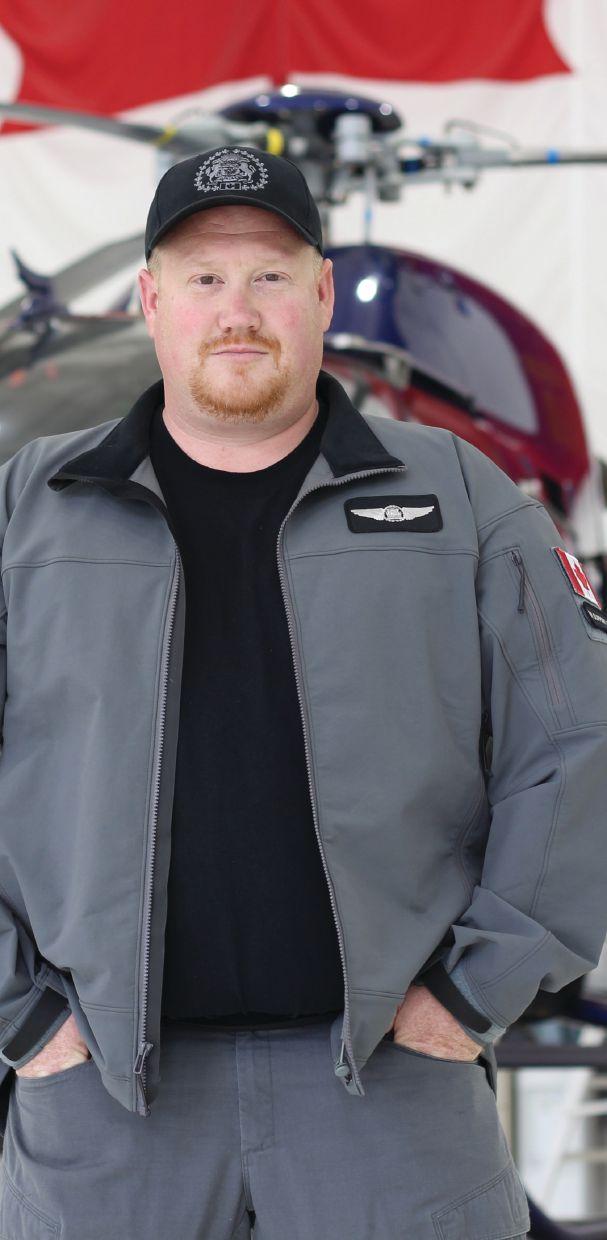

program, Ball was previously a first officer on fixed-wing medevac aircraft and then a captain and training captain on charter aircraft in Northern Manitoba and Nunavut.
Having had his fill of the life of a northern pilot, Ball returned to school and completed a Bachelor’s degree in Geography and his law degree. While in school, he wrote the book, “So, You Want to be a Pilot, Eh?” which provides career advice for aspiring pilots. The book has sold more than 2,000 copies and has been a valuable resource for many aspiring men and women entering the profession.
Ball is now a key part of the aviation legal team at Whitelaw Twining, and he’s helped build a law practice defending mostly operators and pilots in legal actions arising from aircraft accidents. In addition to providing career advice to readers of his book, Ball regularly writes and speaks on various aviation law topics. He also continues to contribute articles to various industry-specific magazines.
Ball’s commitment to the legal and aviation communities is commendable, particularly given his young age – he has achieved more than most could hope for before turning 40.
It’s fair to say that Brenden Beaudoin lives and breathes aviation . . . and has for his entire life.
Beaudoin, 31, is a pilot with Air Canada (AC) and is living a life many only dream of – working as a commercial airline pilot with Canada’s national airline. He started his career journey on one of the most vaunted days in history – Sept. 11, 2001 – at the Centennial flight school in Edmonton.
Working diligently, Beaudoin attained his commercial pilot’s licence in 2005 and commenced a career path that has taken him all around the globe with a variety of different aviation firms. He has worked in a wide range of capacities, from loading cargo, to fueling and marshaling jets and has flown tourists in the world-famous Okavango Delta and different parts of Southern Africa, before
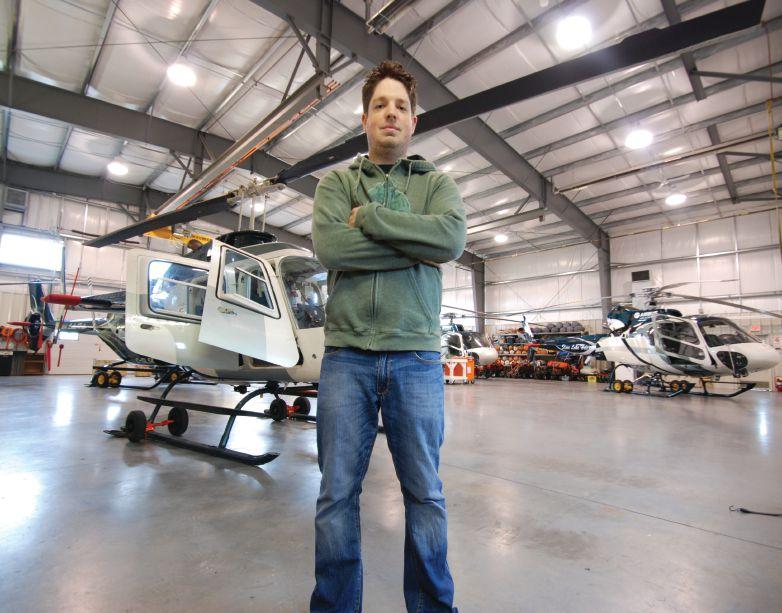
Scott Conlin (above), James Ball (below left) and Brenden Beaudoin (below right) are some of our Top 20 Under 40 winners.
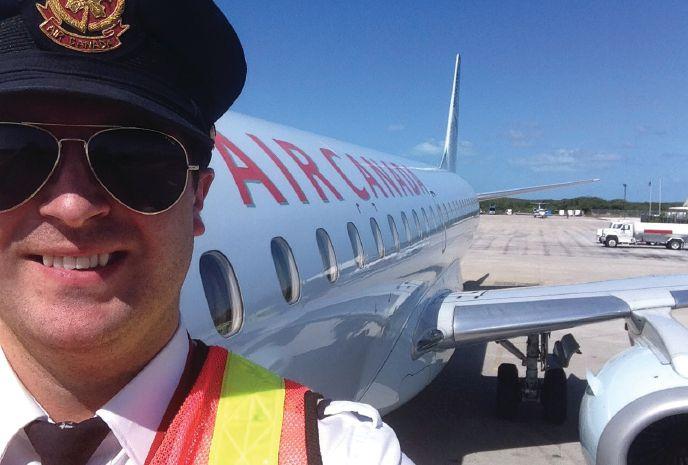
returning to work as a bush pilot in Canada.
Beaudoin’s career path has also taken him to the charter business for five years, and flying medevac flights before joining AC in 2012 at age 29. Beaudoin is also starting his own aviation consulting company and is very active in Edmonton’s remote-control airplane community.
An active advocate of Canadian airports – and a strong proponent of Canada’s rich aviation history – Beaudoin is the perfect example of a young pilot who is willing to do anything to reach his or her ultimate career goal.
LOCATION: SLAVE LAKE, ALTA.
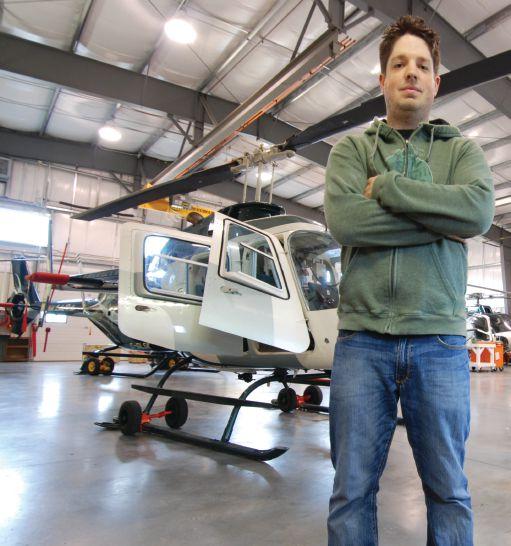
Peter Betz prides himself in consistently keeping the blades turning at Slave Lake Helicopters.
For the past seven years, the 33-year-old Betz has been the Director of Maintenance for Slave Lake, initially earning the position at the young age of just 26.
Betz graduated from Northern Northern Lights College in 2000 and began his apprenticeship with Northern Mountain Helicopters (NMH). He subsequently moved to Vancouver Island Helicopters (VIH) along with the assets of NMH when the company went out of business. Hardly skipping a beat, Betz performed field and heavy maintenance for VIH and also managed remote bases such as Ft. Nelson and Sandspit on the Queen Charlotte Islands for extended periods of time.
As a 25-year-old, Betz was in the process of settling in as Heavy Maintenance Shop Supervisor at VIH’s Prince George facility – and had just finished completing a pair of pre-purchase inspections in northern Manitoba – when he received a call from a trusted colleague. He was told a “friend” had just toured Slave Lake’s brand new hangar (still in final construction) and the owners were looking for someone to come on board and “pick the colour of their new office.” The “friend” immediately thought of Betz to pick the colour.
After Betz and his wife met with the owners, they decided to take the plunge. The plan was to have Betz work as a contract engineer under Tempest Maintenance Solution’s AMO, the company’s
maintenance partner at the time. Slave Lake had every intention of creating an AMO position for Betz, but he was too young to legally hold the Director of Maintenance designation. In 2007, however, he successfully completed his AMO designation and gained Transport Canada approval to become Director of Maintenance for Slave Lake.
A tremendous mentor with a terrific attitude and vast knowledge of his role, Betz is an integral part of the Slave Lake team and a shining light in the industry.
TITLE: CHIEF ENGINEER, CALGARY POLICE SERVICES AIR SUPPORT UNIT
LOCATION: CALGARY
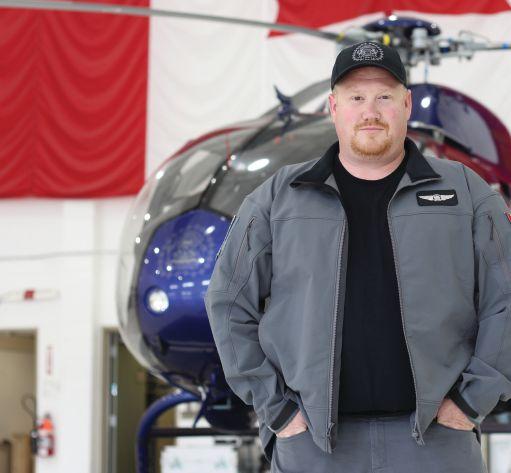
If anyone in Canadian aviation deserves the label “unsung hero,” Scott Conlin just might be it.
Conlin, 36, is the Chief Engineer of the Calgary Police Service (CPS) Air Support Unit in Calgary and like many aviation personnel working behind the scenes, he is one of the critical elements that contribute to the success of the organization.
The Calgary Police Service operates two helicopters in support of police operations for a city of 1.2 million. The CPS Air Support Unit was created in 1995 after the tragic line of duty death of Cst. Rick Sonnenberg and has been operating ever since thanks to the Helicopter Air Watch for Community Safety (HAWCS) program. Four years after its inception, Conlin joined the operation as a contract engineer.
Conlin began his permanent career as a Line Engineer, and in 2004 was promoted to the position of Chief Engineer. Since then, his unit has grown from a single helicopter operation flying less than 1,000 hours per year to an operation flying more than 2,500 hours a year. He has strived to ensure the unit’s maintenance requirements meet or exceed the commercial standard and is committed to the unit’s safety above all else.
Conlin is always on the lookout for new technologies and continually tries to ensure that his unit is operating at the highest technological level possible. He has worked tirelessly to understand the mission of Airborne Law Enforcement and continually goes above and beyond to ensure his crews have the tools they need to execute their missions effectively. His dedication to his role and commitment to incorporate the highest safety standards possible are certainly worth celebrating.
LOCATION: EDMONTON
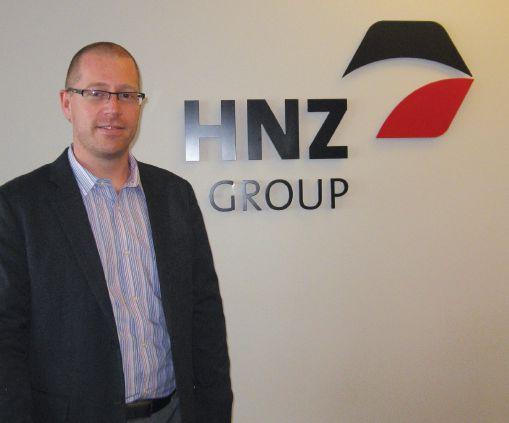
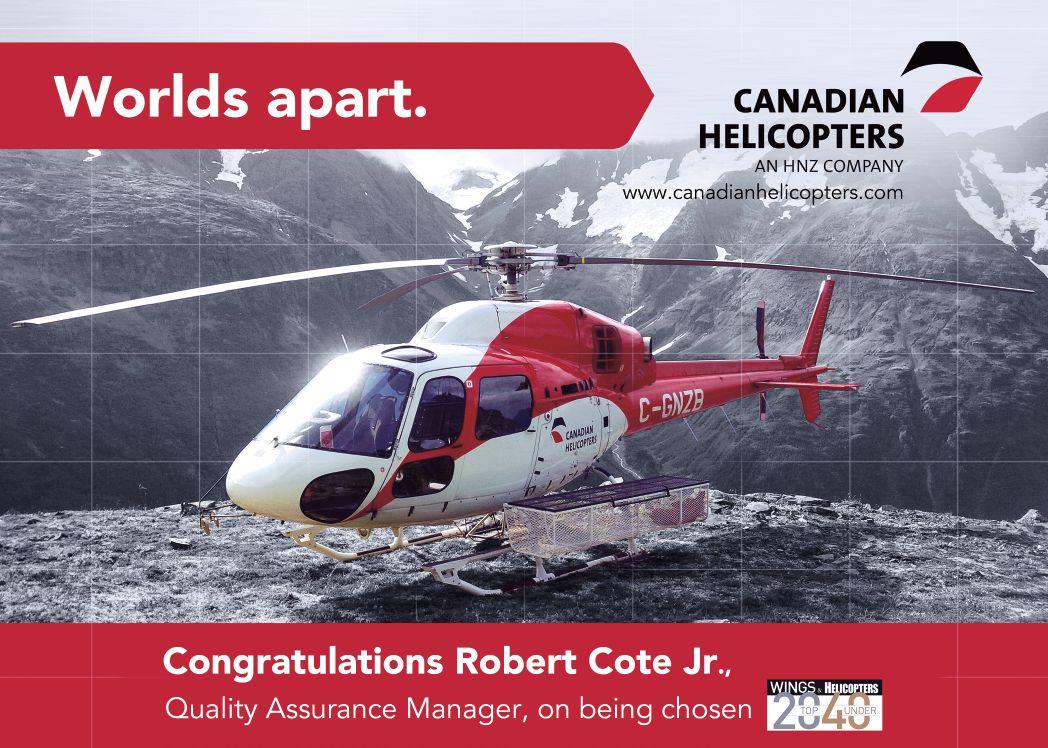
Robert Cote Jr. perfectly embodies the concept of “work ethic.”
Never content to accept “good enough,” the 37-year-old Quality Assurance Manager with Canadian Helicopters Ltd. is driven on a daily basis to perform to the highest standard and to encourage and mentor both peers and subordinates in the same goal.
Since his first days as an apprentice aircraft maintenance engineer, Cote Jr. has demonstrated a strong intellect and a desire to learn. Whether working as a Product Support Engineer for Bell Helicopter or working as the Bell Maintenance Manager for Canadian Helicopters, he knows the importance of customer service. His work with thirdparty suppliers and with Canadian, has allowed him to leverage his skill sets to create a valuable toolkit and reputation as a top-notch AME. And his unwavering personal high standards have helped him to ascend to the role of Chief AME for Western Canada within Canadian Helicopters and subsequently to his current position.
Cote Jr.’s interpersonal skills are a big part of his success. His relationship with a variety of OEMs, third-party vendors and regulators has facilitated the company’s success on many levels. These relationships have expanded to tripartite discussions with airworthiness inspectors from the U.S., Australia, New Zealand and Canada and have greatly enhanced Canadian Helicopters and its parent, HNZ Group Inc., in its operations worldwide.
Professional, smart, driven, keen to learn, and reliable, Cote Jr.’s work speaks volumes as it epitomizes the phrase “industry best practice.”
TITLE: PILOT, FLIGHT
LOCATION: HALIFAX
For the past 10 years, Darryl Cross has been a shining star for Halifax-based Bell Aliant.
The 36-year-old’s resume is certainly an impressive one. Private Pilot’s licence from the Interlake International Flight Centre, check. Class A Licenced Dispatcher from Air Canada Jazz, check. Commercial Pilot’s Licence from the Moncton Flight College, check. Multi Engine IFR rating from Greenwood Flight Centre, check. Cross also holds a diploma in Aircraft Mechanics.
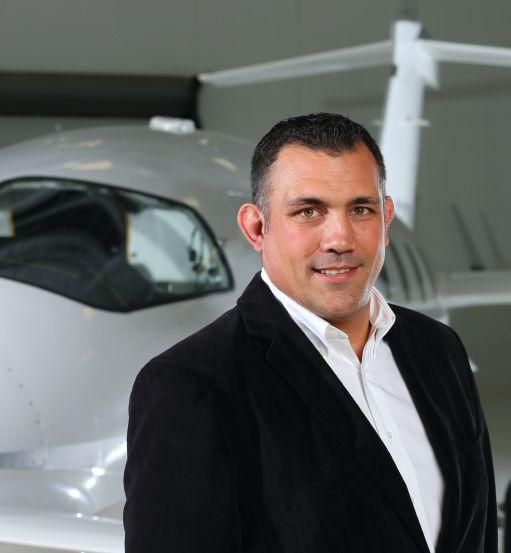
From a professional standpoint, Cross has demonstrated a strong work ethic and outstanding leadership qualities throughout his career. He kicked things off as a Line Service Technician with Provincial Airlines in the late-1990s before moving to Air Canada Jazz as a Certified Class A Flight Dispatcher with Air Canada Jazz in the early-2000s. He moved to Bell Aliant in 2004 and has held various roles for the firm, including Flight Scheduler, Pilot and Flight Logistics Manager, Apprentice AME and more.
Cross continually leads by example through the development of new initiatives and procedures to assist and guide others in making informed decisions. He demonstrates excellent project management skills and exhibits strong leadership and organizational skills in the completion of many critical projects.
Active in the aviation industry in a variety of roles, Cross inspires others with his positive attitude, exceptional work ethic and interest in developing and expanding his knowledge in the industry. He is truly a shining star when it comes to the next generation of aviators, engineers and aviation professionals.
NAME: CHRIS DAVENPORT
TITLE: AIRCRAFT MAINTENANCE ENGINEER, ORNGE
LOCATION: LONDON, ONT.
Juggling a variety of different tasks in high-tempo, demanding environment is something Chris Davenport thrives on.
Davenport, 26, is an Aircraft Maintenance Engineer based in London, Ont., with Ontario medical transport provider Ornge. He has spent the past seven years keeping S-76 and AW139 helicopters in the skies and, at times, the work can be quite demanding. Time is of the essence with Ornge, where seconds saved in maintaining the aircraft can mean lives are saved as well – and that can’t be done when the birds are on the ground. Aircraft need to be available for dispatch and Davenport works hard to ensure this is the case.
Davenport has a wide range of responsibilities at the base including technical records, storing shipping and receiving requests, computer/IT issues, general housekeeping, training and much more. If there’s an avionics snag at the base, Davenport is your man – he will find a fast, effective solution for safe rectification. The ever-evolving
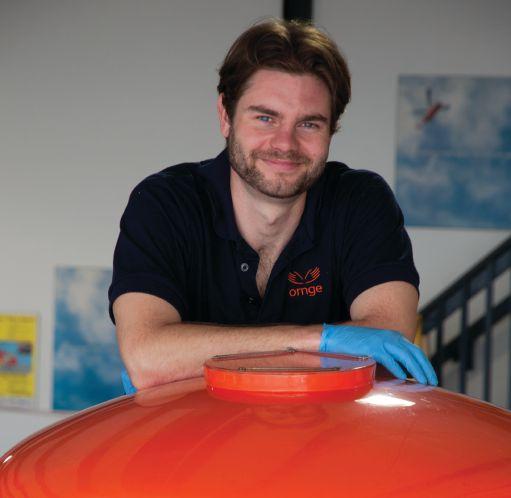
computer-based aircraft systems at Ornge require an IT-like finesse job, and Davenport certainly has the acumen to deliver.
Proactive and thoroughly on board with the team concept, Davenport instills a “happy-go-lucky” attitude and positive vibe that keeps the Ornge team in London focused and ready for action.
NAME: JOSHUA DERISH
TITLE: AVIONICS ENGINEER, AVMAX AVIONICS
LOCATION: RICHMOND, B.C.
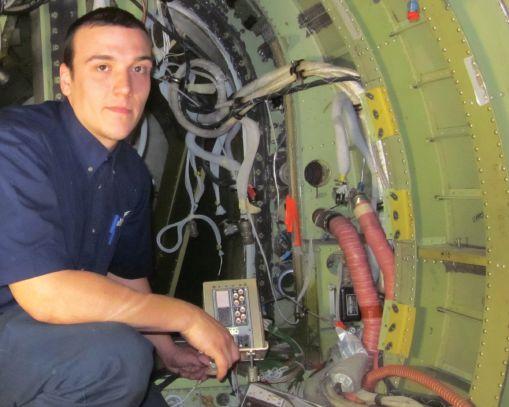
Joshua Derish is rapidly building a solid reputation as a “go-toguy” at Avmax Avionics.
At just 28, Derish has managed to attract clients from all over the world to Avmax’s Richmond, B.C., location, as customers fly in from locations throughout the globe with assurances that their avionics needs will get looked after with the highest degree of reliability, knowledge and experience.
One of the best examples of Derish’s accomplishments took place during the 2010 Winter Olympics in Vancouver. He was instrumental in his role during the Games, supporting all of the corporate aircraft that flew into the city. For two weeks, he provided 24-hour support and troubleshooting for Learjets 35/36, 45, 60, Challengers, Falcon 50EX, Globals, Gulfstreams and more.
It may have been only two weeks, but these busy days created a lasting impression with customers . . . and he hasn’t missed a beat since. He classifies his greatest strength as an ability to troubleshoot pretty much any problem and never giving up until it’s rectified.
LOCATION: WINNIPEG
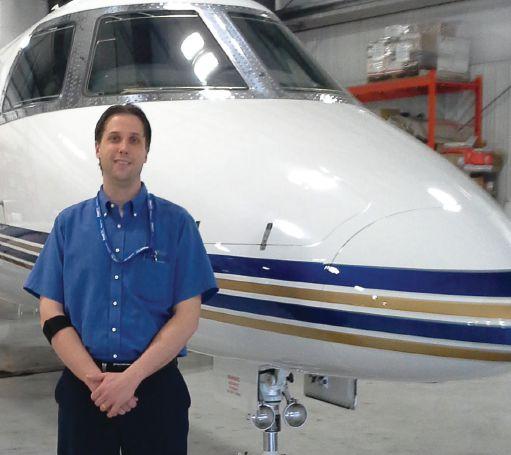
For Anthony Dyck, leading by example is simply a way of life. The 33-year-old has spent the past decade honing his skills as an Aircraft Maintenance Engineer with Winnipeg’s Fast Air Ltd. and has developed into one of the company’s brightest young talents.
Dyck has been instrumental in helping the company expand its third-party maintenance capabilities by providing aircraft upgrades with Garmin and HALO products. He has also been recognized by Gulfstream to sit on its Customer Advisory Board, in which he has been an active member for the past two years.
Respected as a true leader within Fast Air’s dynamic and broad maintenance business, Dyck manages the complexity of a charter fleet, medevac fleet, multiple managed jets, as well as Bell Jet Rangers. He does it all with a focus on teamwork, the customer, and maximum efficiency.
Dyck is a member of the Central Aircraft Maintenance Association (CAMA) and promotes the benefits of its membership to all AME’s and apprentices. He was also responsible for encouraging Fast Air to become a member of the Canadian Council for Aviation and Aerospace (CCAA), and sees the value in occupational standards for the industry.
He is also active in supporting and developing the Fast Air team and has been instrumental in the growth of the company fleet and its AMO capabilities. He is a fine example of the emerging leadership in the Canadian aviation industry.
LOCATION: CALGARY
James Elian has certainly made the most of his developing aviation career.
Elian, 34, joined AirSprint in 2001 as a Pilatus PC-12 first officer and has since held various positions including Vice President, Operations, Director of Flight Operations, Chief Pilot, Special

Projects Manager, Flight Coordination Manager, Health & Safety Chairman and Training Captain.
His impressive education includes a diploma in aviation technology from Selkirk College, an MBA from the University of Calgary’s Haskayne School of Business, and he is currently finishing up a Master’s of Aeronautical Science degree from Embry-Riddle Aeronautical University.
In 2011, Elian led AirSprint’s operational expansion to the U.S. by attaining FAA 91K fractional ownership approval. It was this experience that allowed Elian to work with Transport Canada in developing the current Canadian Fractional Ownership national exemption.
In April this year, Elian was appointed Chief Operating Officer. In each of his roles, he has made innovations and improvements to the inherent processes of each department and, as a result, AirSprint is now recognized as one of the best-run aviation companies in North America.
In the larger aviation community, Elian is an active member of the Selkirk College Aviation program advisory committee and has volunteered with the CBAA Government and Regulatory Affairs committee. Elian also holds an Airline Transport Pilot Licence and is qualified as Captain on the Citation XLS and CJ2+ jets.
A gifted leader and manager, Elian’s strong work ethic and drive for success make him an invaluable part of the AirSprint team.
NAME: AURIOL MARASCO
TITLE: AVIATION LAWYER, BLAKE, CASSELS & GRAYDON LLP
LOCATION: TORONTO, ONT.
As an associate at Blake, Cassels & Graydon LLP, Auriol Marasco has focused on aviation law for the past five years.
Marasco is developing into one of Canada’s leading aviation law experts. She has gained significant experience negotiating and drafting aircraft purchase agreements, credit agreements, leases and security agreements. Liaising with counsel for several airlines and aerospace companies, she frequently provides advice relating to aircraft financing and regulatory matters. Her experience also includes working for Porter Airlines in various departments including contracts and marketing, as well as for Hope Air, a not-for-profit aviation organization which partners with airlines and private pilots to ensure

Canadians have access to medical resources.
Marasco is the author of several legal papers in the aviation field on such topics as the Cape Town Convention and its implementation in Canada, aircraft leasing in the United States, and airline consumer protection legislation.
As a current commercial multi-IFR pilot, Marasco is always looking for an excuse to take to the air. She is a member of the NinetyNines, an international female pilots organization, where she is the Secretary of the Constitutional Committee and a volunteer with the annual Poker Run flying competition. She is also an enthusiastic member of Women in Aviation, a volunteer for Women in Aerospace and an executive member of the Canadian Bar Association Air and Space Law section.
Marasco’s passion for flight is complemented with a degree in Commercial Aviation Management, a program that combined an analysis of the business of the aviation industry with the technical aspects of flight. Beyond all of her many accomplishments, she is a pleasure to work with – smart, funny and dedicated to law and to aviation. She is a true leader in her field.
When opportunity knocked, Shane Menzel definitely knew how to respond.
Although considerably less experienced than helicopter pilots usually considered for the substantial responsibility inherent in effectively managing a multi-helicopter base in northern British Columbia, Menzel, 38, seized the opportunity when it was presented to him.
He immediately set about rectifying a variety of shortcomings in base procedures, facilities and staff, reorganized and improved numerous functions, and originated several highly effective new ones.
In an exceptionally trying environment, and a hotly competitive market, he guided the base to an exemplary status and regained solid profitability in his first year. Duly acknowledged by management and fellow employees, he was also highly commended by major clients.
Always seeking and ready to seize new opportunities for both personal growth and company benefit, he is rated among Highland Helicopters’ exceptional employees. Upper management is unanimous in affirming they would be thrilled to have one or two dozen more employees like him – and there’s no higher corporate honour than that.
NAME: HELEN PAPATHANASAKIS
TITLE: CHIEF OPERATING OFFICER, SKY REGIONAL AIRLINES
LOCATION: MISSISSAUGA, ONT.
Helen Papathanasakis is a skilled leader who fully understands the importance of developing an effective corporate culture.

Papathanasakis, 35, is the Chief Operating Officer (COO) at Sky Regional Airlines in Mississauga, a regional airline operating a fleet of five Bombardier Dash 8 Q400 aircraft as well as 15 Embraer 175s on behalf of Air Canada Express. The company provides 30 scheduled flights daily between Toronto City Airport and Montreal’s Pierre Elliott Trudeau International Airport, and approximately 100 flights a day to various airports in the U.S. Northeast out of Lester B. Pearson Airport and Montreal’s Pierre Elliott Trudeau International Airport. It is Papathanasakis’ job to provide requisite leadership and direction. Papathanasakis has been with Sky Regional since the inception of the airline in 2010 and has been actively involved in employee relations and building a strong company culture, with the emphasis of putting people first.
Her accomplishments throughout the last few years include the successful implementation of the Safety Management System (SMS) for the airline, leading regulatory audits and organizational development. She has also played a key role in the expansion of the E175 program in the past year.
Focused, determined and professional, Papathanasakis is certainly an emerging force in the Canadian fixed-wing community.
Jean-Philippe Pomerleau, 30, is a customer-focused problemsolver with a tremendous capacity to learn and integrate new ideas and processes to improve production efficiencies and better address customer needs.
Pomerleau is a graduate of Quebec’s école nationale d’aérotechnique in Construction Aéronautique. He began his career in 2005 with Bombardier Aerospace as a Methods Agent on the Global XRS. After gaining experience in special projects such as the integration of swift broadband high-speed Internet service, and Satcom relocation, he participated in Bombardier’s ECCB (Engineering Change Control Board), and EMT (Effectivity Management Team) before joining the GAL Aerospace Group in 2011.
His participation in the leadership team has been critical in establishing the following processes at GAL Aviation: a lean manufacturing production flow; logistics control processes; AS9100 and NADCAP accreditations; and the development and implementation of a company-wide ERP system. He has also greatly contributed to
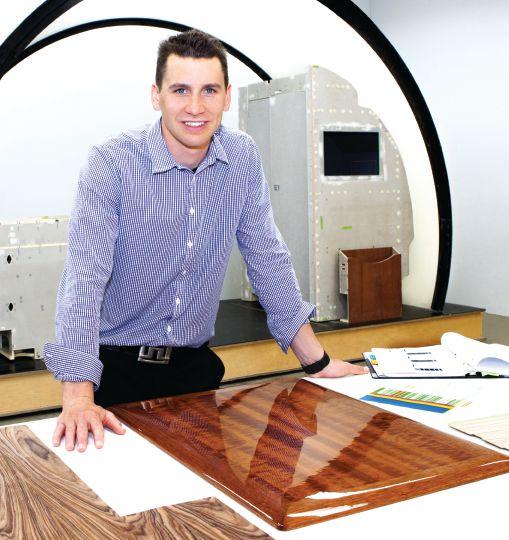
the efficient start-up of a production facility now employing more than 50 people south of Quebec City.
Pomerleau is an achiever and energetic young leader who has established his reputation with aircraft manufacturers and tier level suppliers. His no nonsense, straightforward approach has made him an invaluable member of GAL Aviation and the GAL Aerospace Group.
NAME: CHRYSTAL ROBERTSON
TITLE: HEAD OF PARTS SALES, SKYLINE
LOCATION:
LIVELY, ONT.
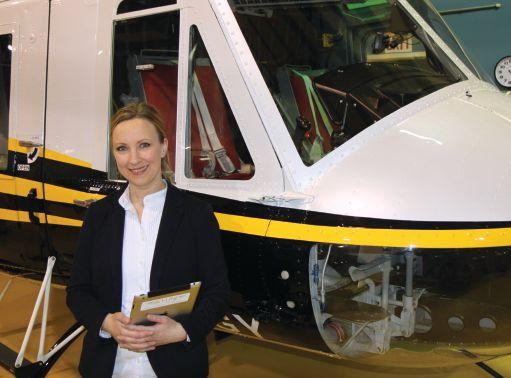
Since graduating from Northern Lights College’s AMT program in 2008, Chrystal Robertson has been working hard to make an indelible mark on the Canadian helicopter industry – and she’s definitely succeeding.
The 39-year-old Robertson began her career at Bailey Helicopters in Fort St. John as an apprentice before moving to Ontario in 2010 where she joined the maintenance team at Skyline Helicopter Technologies in Lively, Ont.
An expansion in the sales department at the firm created an opportunity for a full-time sales position and the opportunistic Robertson jumped at the chance. A neophyte to the sales world, she quickly turned out to be a natural. With a nice blend of hard work and dedication, Robertson became a driving force, making consistent sales while forming strong business relationships with new and existing customers.
Robertson’s background in maintenance has proven to be a Godsend, as she can bring a detailed understanding of helicopters to the sales arena in a way few sales professionals can, consistently putting the right part in a customer’s hands. And she does all of this while expertly maintaining a home and a young 16-month-old son.
Robertson’s skills have helped keep Skyline going strong during slow operational periods and she has drawn significant praise from customers and operators alike. She also shows considerable leadership skills by volunteering outside of the industry in a number of realms, working on the shop floor and diligently pursuing her AME licence.
Robertson is proving to be an invaluable member of the Skyline team.
Providing outstanding technical support is something Martin Simard prides himself in.
Simard, 39, has been working at CAE for 16 years in a variety of functions. His latest responsibility is to manage the technical training group for the CAE Montreal Training Centre, one of CAE’s 50 aviation locations worldwide. In his role, his focus is to enhance the structure and delivery criteria with regards to flight simulator maintenance.
In the eyes of his management team, Simard consistently provides
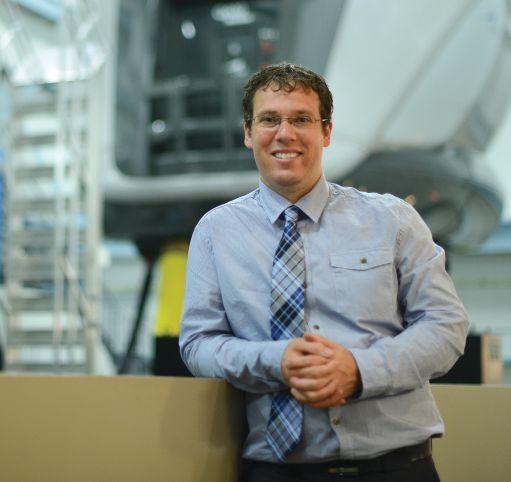
world-class support and technical expertise in all aspects of flight simulation to help his clients be ready to fly safely. He works countless hours and provides substantial expertise in resolving customer issues, performing integration on site and supervising the company’s aviation training centre in Montreal.
Hi excellent communication skills make him the perfect leader to motivate employees and help customers in resolving problems as well as achieving their goals.
Simard’s technical expertise, structured approach and outstanding performance are of paramount importance to CAE. His contribution has been appreciated by customers of CAE Training Centre and other centres worldwide where CAE products are used. Simard and his team help clients operate their simulators efficiently and as a result enhance their operational safety.
When ENSCO Avionics, Inc., of Endicott, N.Y., a wholly-owned subsidiary of ENSCO, Inc., hired Sean Smith as a systems analyst in 2006, it was to support a Canadian customer on-site for six months. That time frame certainly changed in a hurry.
Smith’s leadership skills and determination became apparent as he converted this contract into a long-term, multi-person project in
his first year. His dedication and entrepreneurial spirit would lead ENSCO Avionics to become a sought-after commodity in the Canadian aerospace industry.
Smith was instrumental in growing his firm’s operations in Canada by putting in long hours and bringing high-value projects into the company. He inspires his staff and those who work with him toward a singular vision by effectively communicating his ideas and sharing his creative approach.
As a Systems Analyst, he developed scripts to simplify data review and new control logic for a geared turbofan fuel system. He also took the lead in establishing ENSCO’s Controlled Goods Registration program and dedicated himself to understanding the program and ensuring compliancy. As a result of his resourcefulness and dedication, Smith was promoted to managing director of the Canadian operation in 2011.
Smith was integral to the establishment of ENSCO Avionics Canada (EAC) in Dorval, Que., in 2012, opening ENSCO’s first international office and subsidiary. His innovative and creative leadership introduced new internal processes and systems to streamline complex activities and reduce cost for the customer.
Today, Smith, 32, is the managing director of ENSCO’s Canadian subsidiary. In 2010 and 2011, he was awarded and recognized by a customer for his innovation, efforts, dedication, and technical support in resolving highly-visible engine production and field issues.
A member of the CADSI SME Advisory Committee and a strong advocate for Canadian aerospace, Smith is one of the up-and-coming names in Canadian aerospace.
NAMES: LUKAS
THISTLEWAITE, ADAM BOYKO
TITLES: SHOP SUPERVISOR, MAINTENANCE MANAGER, AVIONICS MANAGER, EUROTEC CANADA LTD. LOCATION: MILLGROVE, ONT.
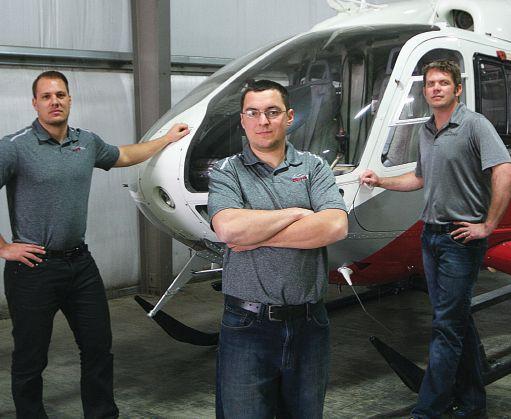
As an international leader in helicopter maintenance, repair and overhaul, Millgrove, Ont.’s EuroTec Canada Ltd. relies on its dedicated team to keep its client’s aircraft in the air. Three of the firm’s top employees are all shining examples of what the Top 20 Under 40 is all about – dedicated, hard-working, budding leaders who inspire and earn the respect and admiration of not only colleagues but existing customers and potential clients alike.
LUKAS VELDMAN - Lukas Veldman, 30, EuroTec’s Shop Supervisor, leads a highly skilled group of technicians. As a young apprentice AME, graduating from the Canadore College aviation program in 2005, he apprenticed at Heli Lynx Helicopters and soon
moved to Gateway Helicopters to experience the “bush life” and gain more field experience.
Looking out west for different opportunities, he soon found himself in Peru working for Calgary’s Abitibi Helicopters, enjoying the international travel and work experience he had craved for years. Setting his sights on his M2 licence, he applied to Canadian Helicopters Air Evac program in Toronto and was introduced to the Sikorsky S-76 and soon thereafter the newly acquired AgustaWestland AW139 helicopters at Ornge. With his M1 and M2 licence and currently endorsed on the Airbus Helicopters’ AS350 and the AW139, Veldman continued at Ornge and the air ambulance division.
Veldman then moved to EuroTec Canada and has been a galvanizing force on the shop floor.
BENTLEY THISTLEWAITE - Growing up around helicopters and coming from an aviation family, a career in helicopters was something that Bentley Thistlethwaite was destined to pursue.
Born in Australia and living in PNG (Papua New Guinea), Thistlethwaite always hung around his father and the flight crew at Talair and Pacific Helicopters. His father’s love and passion for aviation has set a strong foundation within Thistlethwaite and has propelled him to be one of the finest helicopters AMEs in Canada.
At 33, he is currently the Maintenance Manager at EuroTec Canada. He leads a very talented team of individuals from the QA department to the apprentices on the hangar floor and provides guidance and feedback to help everyone succeed at the task at hand.
Having graduated from Canadore College in 2002, he moved to southern Ontario to continue his passion for the aviation industry. He started at the Brampton flying club as an AME apprentice and worked until the opportunity of moving into the rotary-wing side of things presented itself. Accepting a job at Heli-Lynx Helicopter Services as an apprentice engineer, he started to experience the completion side of the business. Everything from striping and painting the complete aircraft, to structural repairs, component O/H, composite layups to major STC incorporation, and regulatory documentation, he is now a well-rounded engineer that can take on anything that is handed to him.
ADAM BOYKO - From the simplest wiring harness installation to a full glass cockpit and complex integrated avionics completion, Adam Boyko, EuroTec Canada’s Avionics Manager, has the natural ability to plan and design exactly what the customer requires to deliver the quality they expect in the finished product.
Boyko’s career and technical accomplishment started in 2005 when he graduated from the Avionics Maintenance Engineer course at Canadore College. After finishing at the top of his class with honours, Boyko found himself at Heli-Lynx helicopters working on their FX program as a young apprentice AME.
Growing up in southeastern Ontario, Boyko has always been technically strong and loved working on his snowmobiles and cars. His love for electronics and avionics started at a young age with him working around his mom’s airplanes, and he soon realized that aviation was the right career path for him. In his spare time, he volunteers and helps the local EAA and RAA aviation chapters with Vintage and Experimental aircraft. He provides technical guidance and support with a large number of aircraft owners throughout southern Ontario.
As Avionics Manager, Boyko attends yearly avionics training seminars, and has been instrumental in helping EuroTec Canada set up their Avionics Aircraft Maintenance Organization, as well as several key distributorships including Technisonics, Avidyne, AEM, Cobham, Garmin, Freeflight, DSS MicroVibe and many
others. He is continuously watching the current trends and the newest equipment that is available on the market.
Veldman, Thistlewaite and Boyko all have the technical skills and accomplishments that meet the standards of the “next generation leaders” of the Canadian helicopter industry.
LOCATION: KLEINBURG, ONT.
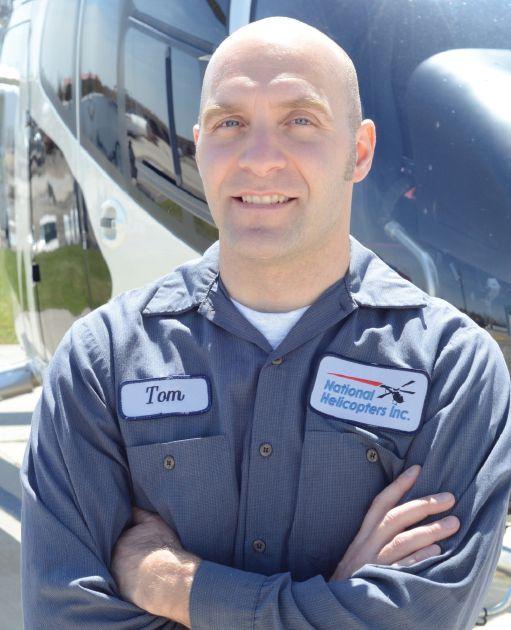
Since joining the team at National Helicopters in 2010, 34-yearold Tom Woerlen has become an invaluable asset to not only his company but the Canadian helicopter industry.
Woerlen joined the National Helicopters’ team as Quality Assurance Manager in June 2010, but it didn’t take him long to establish himself as a true leader at the firm. Through good-oldfashioned hard work and determination, he was promoted to Director of Maintenance and now oversees one of the largest helicopter maintenance organizations in the Greater Toronto area. It’s anything but an easy task – he holds maintenance destinations for a varied fleet of some 20 helicopters including key brands such as Robinson, Bell, Airbus, and AgustaWestland aircraft.
Woerlen leads a growing team of highly-skilled AMEs who are mobile between the company’s numerous bases in southern Ontario and across international borders. In a market with constantly changing priorities and tight deadlines, Woerlen and his team always get the job done on time and with high efficiency.
But Woerlen’s skills transcend the maintenance realm. Since joining the company, Woerlen has attracted numerous new clients to the firm, especially in the twin-engine market. He has also been vital in positioning National as an authority in exporting aircraft to one of the world’s largest and fastest growing markets for privatelyowned helicopters: China.
Definitely a force to be reckoned with, Woerlen is one to watch as he makes further strides in his career and in the helicopter industry as a whole.
LOCATION: STURGEON COUNTY, ALTA.
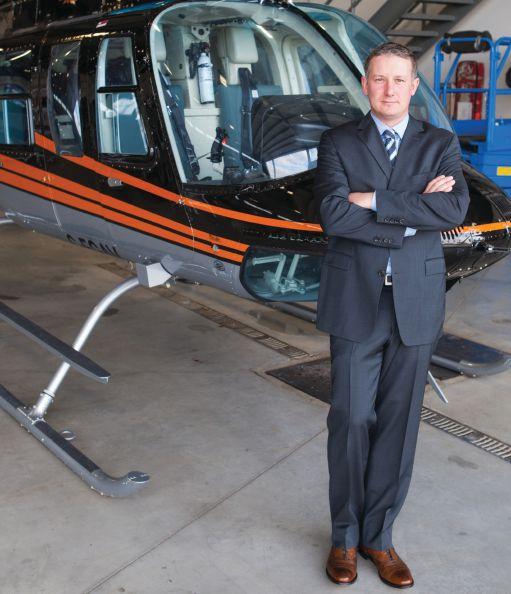
It’s safe to say Maury Wood has always been a well-rounded aviation enthusiast.
Born in Yellowknife, Northwest Territories and a graduate of NAIT with a diploma in Petroleum Technology, Wood, 35, has always had a keen eye on the skies.
Wood began his aviation career as student pilot with Great Slave Helicopters at its flight school at the Villeneuve Airport outside of Edmonton in 2002. Upon graduation, he accepted a flying position based out of Yellowknife, flying various missions “North of 60.” He worked his way through the ranks, gaining valuable experience and flying different types of aircraft and then moved over to Great Slave’s flight training school as a full-time flight instructor during the winter months.
Wood worked in the field during the summer months, anticipating that his valuable experience would be better suited to helping low-time pilots get much-needed experience before they set out on their own newly-found flying careers. He has now accumulated more than 3,300 accident-free flight hours and has earned his Class 2 instructors training rating.
As customer support at Avialta, Wood attacks his role with great pride and enthusiasm. He ensures customers receive the full benefit of the services offered and directs them to many of the new types of STC’s and evolving avionics in the marketplace, especially with private helicopter owners. His training background has proven invaluable, enabling clients to save precious time and expense in many stages of the avionics implementation process.
A keen advocate of the industry, Wood has also served on the board of the Helicopter Association of Canada as an associate member.
Attentive to detail and safety conscious, Wood is certainly one of the up-and-coming young guns in the industry.
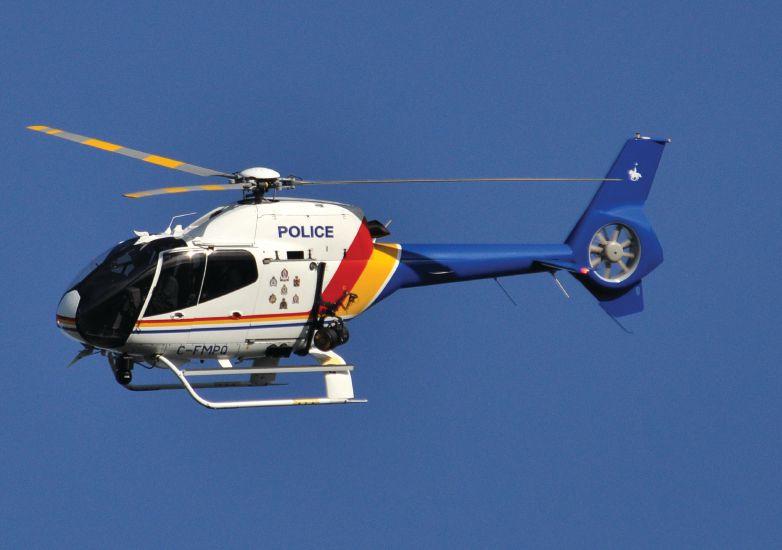
LEFT: A highly co-ordinated attack from a variety of sources helps the RCMP’s Air 1 nab suspected laser criminals. (Photo courtesy of RCMP)
BELOW: FBI laser cockpit simulation of green laser striking cockpit. (Photo courtesy of the FBI)

BY PAUL DIXON
Lasers are a critical part of our everyday life, born out of post-war research at Bell Labs and Columbia University. An extremely simply definition of a laser would be to describe it as a device that produces an intense, directional, coherent beam of light. Aviation as we know it today would not be possible without the laser, but one small niche of the laser market is rapidly becoming a threat to aviation.
The proliferation of laser strikes on aircraft around the world has grown exponentially over the past decade, across North America, Europe and Australia and New Zealand. While no crashes have been linked to laser strikes, laser strikes on aircraft have had an impact on operations and there exists the potential for serious and possibly permanent vision damage to pilots and air crew.
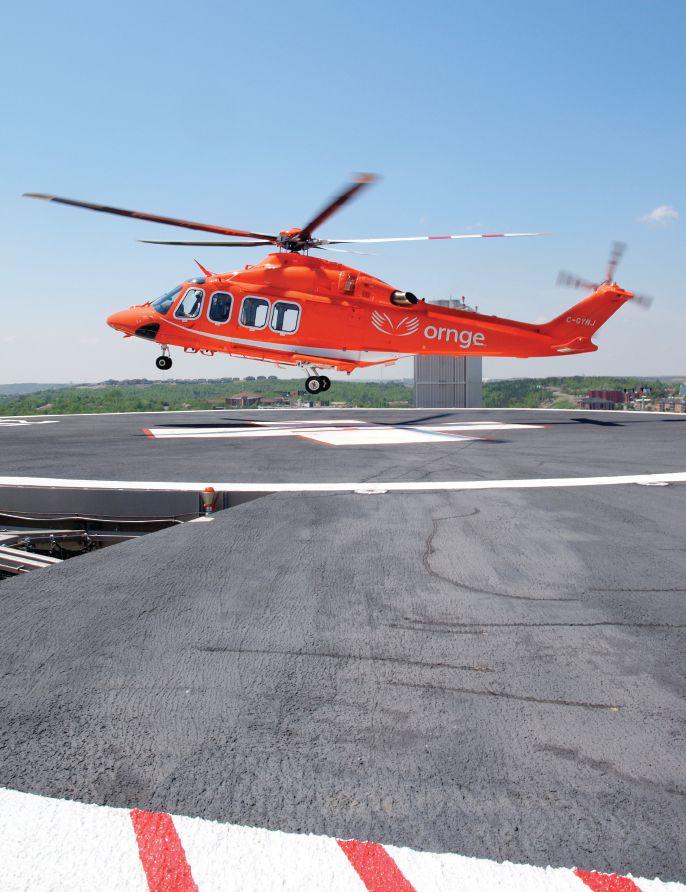
In Canada, police helicopters, air ambulance and news helicopters have been the main focus of laser strikes, but there are a number of reported strikes on commercial helicopters and several instances of eye damage resulting in time off work for pilots. Earlier this year, an Ornge air ambulance service was targetted twice by a green laser beam northeast of Ottawa airport. A similar
2009 lasing incident left an Ornge pilot with serious eye damage and grounded him for several weeks after he was hit with a laser beam while flying at about 2,000 feet over the Gatineau Hills.
Fortunately, there is relief in sight for this very real and serious threat to pilots and operators alike. Action is being taken across a wide front, as technology is being developed to mitigate the effect of lasers; industry groups are banding together to lobby Ottawa for legislation to address the threat, and various police forces and NAV Canada are working together to apprehend culprits and bring them before the courts.
The first laser strikes on aircraft were reported in the mid-1990s, with Transport Canada (TC) establishing a reporting system in conjunction with Health Canada in 2000. There were 384 reported incidents in 2013, compared to 3,492 in the U.S. during the same period.
The number of incidents has grown exponentially since then, with almost 3,500 reported by 2013 and the expectation is that 2014 could easily see an increase to 4,500 incidents. TC, in conjunction with Health Canada, established an incident reporting
system in 2000, with 461 reported strikes in 2013. The lasers used in many of these incidents are sold as toys or novelties, but they are anything but mere toys.
A laser differs from other sources of light in that it emits light coherently , which results in the laser beam staying tightly focused over great distances. When aimed at an aircraft from the ground, the beam of light from an inexpensive handheld laser can easily travel many kilometres and illuminate a cockpit, disorienting and temporarily blinding pilots. Pilots who have been subject to such attacks have described them as the equivalent of a camera flash going off in a pitch black car at night.
Lasers are divided into a number of classes depending upon the power or energy of the beam and the wavelength of the emitted radiation. Laser classification is based on the laser’s potential for causing immediate injury to the eye or skin and/or potential for causing fires from direct exposure to the beam or from reflections from diffuse reflective surfaces. Here’s a breakdown of laser types:
• Class I lasers are the lowest powered and are considered safe, as they are usually fully contained within a device such as a CD player.
• Class II lasers emit up to 1mW and are safe during normal use in such devices as keychain laser pointers. If
they are shone directly at a person, the blink reflex of the eye will prevent damage.
• Class IIIa lasers emit up to 5 mW and involve a small risk of eye damage within the time of the blink reflex. Staring into such a beam for several seconds is likely to cause damage to a spot on the retina.
• Class IIIb lasers cover a range from 5 to 500 Mw and have scientific uses. They are also used in entertainment light shows. Direct exposure is hazardous to the eye and even diffuse reflections of the beam can cause damage.
• Class IV lasers are used in laser surgery and industrial applications such as drilling, cutting and welding. Class IV lasers can cause severe eye damage, burns to skin and can be a fire hazard depending on the actual strength of the beam.
Class II and Class IIIa laser pointers are typically used by lecturers to highlight presentations or by amateur astronomers to point out stars and constellations in the night sky. In the U.S., federal regulations limit hand-held pointers to an output of 5mW, while in Canada, Health Canada advises that Class IIIb and Class IV lasers should only be used in a controlled environment by those who have the appropriate level of training.
Many countries have outlawed the importation and possession of Class 3a and Class 4 laser pointers by the general public, but this may do little to stop the problem. Laser pointers are freely available for sale over the internet, for a small fraction of what they cost a few years ago. Canada Border Services and U.S. Customs have audited shipments on several occasions and have reported that customs labels from the point of origin have listed the contents of the package as “flashlights” in more than than half the instances. In 2013, the U.S. National Institute of Standards and Technology (NIST) tested 122 laser pointers obtained via a wide range of sources. All the pointers were labeled as being Class 3a and 90 per cent were found to emit more than the allowed visible light, up to 10 times the stated limit. A lack of quality control by manufacturers, coupled with the indifference of distributors and ignorance on the part of the purchaser can turn a supposedly harmless toy into a lethal weapon.
One reason for the proliferation of laser pointers has been the drastic drop in prices
in recent years. Units that would have cost hundreds of dollars even 10 years ago are available over the Internet for a fraction of that today. Further compounding the problem is the mislabelling of lasers, often deliberately, with the result that even if a person is legitimately buying a Class IIIa laser pointer, the product they receive is many times more powerful.
Most critically, the majority of these lasers are green lasers, which can have a devastating impact on the human eye with only brief exposure. This adds up to create a serious threat to aviation. Pilots are generally targetted at the worst possible time for them, when the aircraft is at low altitude during critical phases of flight. The effect of the laser can range from being a distraction, to momentarily blinding a pilot with the glare and even potentially cause temporary or permanent damage to the eye if the laser is powerful enough.
The majority of reported incidents in both Canada and the U.S. are commercial airlines in close proximity to airports, when

the aircraft are at a level that allows the laser to easily enter the cockpit. There have been several reports of pilots forced to conduct a missed approach due to the
laser interference. The most extreme instance to date was reported in April 2011, when a U.S. Air Force C-17 reported receiving a laser strike as it transited







Canadian air space at 31,000 feet over Riviere-de-Loupe, Que.
Laser strikes on aircraft are reportable incidents for TC’s purposes and any time a pilot or crew member is on the receiving end of a laser strike, it becomes an occupational health and safety issue, as well as reportable within the company’s SMS framework. Air Canada and WestJet now have mandatory eye exams for pilots who have been lasered.
The U.S. Coast Guard has reported numerous incidents of lasering directed towards their helicopters, even during rescue missions, in numerous locations. Across the U.S., police helicopters have become favourite targets of laser attack, largely due to the fact that they fly close to the ground and are an easy target. In Canada, police helicopters operating in urban areas across the country have also been lasered. What sets the police helicopter apart from the other victims in the sky is that, by the nature of their mission, they have the very equipment required to go on the offensive and hunt the laser thugs – IR scanners, video and highpowered searchlights are the tools of the trade.
A report from the U.S. states that of 17,725 reported laser incidents between 2005 and 2013 there were only 135 arrests, suggesting that the chances of getting caught are virtually nil. What the report fails to consider is that when a police helicopter is the target, the chances of locating and apprehending the culprit are very good. Arrests in the U.S. have increased dramatically as the FBI has taken the investigative lead in laser incidents and police

air units are actively targetting laser incidents. The air unit of the LA Country Sheriff’s Office, for example, announced earlier this year a 75 per cent arrest rate in incidents where their helicopters had been targetted.
Being able to locate and identify the position of the offender on the ground is one thing, but it takes teamwork between the air unit and the police officers on the ground to actually catch someone with the smoking laser. Sgt. Cam Kowalski is a supervisor at Richmond RCMP, the Vancouver suburb that is home to Vancouver International Airport. One night in 2011, the RCMP dispatch received a call from the tower at YVR, reporting an aircraft had been lasered as it passed over Richmond as it was inbound to the airport. So what are we going to do about it, thought Sgt. Kowalski.
About the same time, Greg Down, a Shift Manager with NAV Canada at YVR, was experiencing frustration with trying to report laser strikes as in-progress events to police agencies in metro Vancouver. Kowalski and Down knew each other from working together during the 2010 Olympics as members of the aviation security unit and were able to draw on the relationships they had established with the agencies involved with aviation and public safety in Canada.
Education is the key to attacking the laser strike issue, and prior to the past few years, most people in law enforcement had little knowledge of how serious the problem of laser strikes was becoming. They also had very little idea of what to do with someone they caught using a laser. Enhanced communications and sharing information amongst departments is critical, both internally and externally.
To help the situation, Cpl. Paul Hayes, working as a Tactical Flight Officer (TFO) on RCMP Air 1 in metro Vancouver, became involved with the program. Presentations were made to patrol officers across the region and once the front-line police officers understood the impact that lasers could have on a resource – one they depended on themselves – they were committed to protecting that resource. Kowalski organized training days that brought together police, air traffic controllers and prosecutors. Educating the prosecutors to the seriousness of the problem was critical, as it gets them firmly on board in approving charges and then taking the case to court.
Greg Down of NAV Canada, worked with E-Comm, the agency that dispatches for most of the Vancouver police agencies, to develop a protocol for reporting laser strikes to police when they were happening as “in-progress” incidents. Previously, NAV Canada personnel would call 911 and work through several timeconsuming steps, literally starting from scratch with each call. Now, tower staff at YVR can call an E-Comm supervisor on a direct line and the call is handled with the highest priority. Police are dispatched to the area, along with the air unit if available.
In the first 10 months of this coordinated approach, there were 13 police responses with four arrests. In cases where Air 1 is the primary target of the laser, the helicopter will go on the offensive. Pilot and observer don protective eyewear and initially attempt to locate the source of the emissions and suspects on the ground using their infra-red and video equipment. When the air unit locates the suspect(s), ground units are directed to the location and the arrest is made, with the incident captured on video from start to finish.
Of the arrests that have been made to date in Canada, these are a few of the convictions to date:
• In April 2011, a Langley, B.C. resident pleaded guilty to three charges under the Aeronautics Act after pointing a green laser at RCMP Air 1. He received a conditional sentence with a nighttime curfew and a ban on possessing lasers.
• In June 2012, a Winnipeg man was sentenced to 15 hours community service after being convicted under the Aeronautics Act for shining a laser pointer at a police helicopter, temporarily blinding the pilot. He had purchased the device on eBay for 99 cents.
• Also in June 2012, a Calgary man pleaded guilty to a count of criminal mischief and a second count under the Aeronautics Act after Calgary Police HAWC 1 was lasered. He received a conditional sentence and a year’s probation.
• In April 2014, three men in Edmonton were each fined $3,000 after they admitted pointing a green laser at Edmonton Police Air 1. The prosecutor described the incident as a “continuous, relentless attack,” with the helicopter being targetted for more than two minutes. American authorities have taken a zero-tolerance approach to laser incidents interfering with aviation, with the FBI taking the lead on investigations and federal prosecutions. In March 2014, a 26-year-old California man was sentenced to 14 years in prison for aiming a laser pointer at a police helicopter and a medical emergency transport helicopter. His girlfriend received a two-year prison term and there are scores of other cases currently working

their way through the American court system.
Technology provides some relief as several companies are marketing eyewear specifically designed to neutralize the damaging effects of lasers by blocking the radiation in the specific wavelengths that can damage the eye. Airbus announced in June that it would be testing a film made by Lamda Guard of Dartmouth, N.S., under the name “metaAir”. The adhesive film can be engineered to either absorb or reflect the desired wavelengths without interfering with normal visibility. A number of universities in North American and around the world are actively involved in research on similar methods of screening or blocking laser light.
Australia banned the importation and simple possession of lasers greater than 1 Mw power in 2008. The United States, European Union and other countries are actively working towards adopting regulations banning lasers above 5Mw, without a permit. In Canada, the Helicopter Association of Canada and the Canadian Association of Chiefs of Police are two of the many organizations lobbying the federal government to enact stricter regulations. Enacting legislation may make it more difficult for the average person to purchase a laser pointer, but there’s an old adage about turning people into criminals.
With lasers to date, the vast majority of incidents involving aircraft have involved individuals who really didn’t understand the implications of what they were doing. It was just a neat toy. In the future, however, what’s going to happen when the people who are pointing the lasers are doing it deliberately and the instruments they are using are not toys?
BY CARROLL MCCORMICK
Thousands flocked to the grand opening of Complexe
Capitale Hélicoptère in Quebec City this past April.
The 65,000-square foot (6,039-square metre) facility brings under one roof a number of existing helicopter divisions, founded and owned by Quebec City businessman Stéphan Huot. The facility is located just around the corner from the Jean Lesage International Airport.
As well as touring the huge facility, many visitors got a taste of one of the more publically accessible services the Complexe offers: helicopter tourism. Some 1,200 people enjoyed free flights over Quebec City, a for-fee activity available to any visitors to the city by the company division called GoHelico.
Huot’s core company is Capitale Hélicoptère, which he founded in 2010. Capitale does aerial work in sectors such as mining, petroleum, firefighting and government services, as well as providing charter, air taxi and VIP transportation. Its 25-plus helicopters include the Eurocopter EC120 Colibri, EC130B4, AS350B3, AS350B2 and the Robinson R44 Raven II.
Contractors broke ground for the new Complexe in November 2011. In addition to being the new home base for Capitale, the Complexe also has a helicopter maintenance and repair department that, with the VIP hangar space, occupies 30,000 SF (2,787 SM) of the building.
Capitale Hélicoptère is a Transport Canada Approved Maintenance Organization and a Robinson service centre. The aircraft that Capitale is certified to work on, and for which it carries a wide variety of spares, includes the Robinson 44 and 66, the above-mentioned Eurocopter types and the Bell 206. The company recently gained approval for the AgustaWestland 109. Ten staff mechanics maintain the Capitale fleet, as well as providing maintenance and repair services for private helicopter owners.
Complexe has short- and long-term inside storage for rent for approximately a dozen helicopters. There are 14 helipads outside
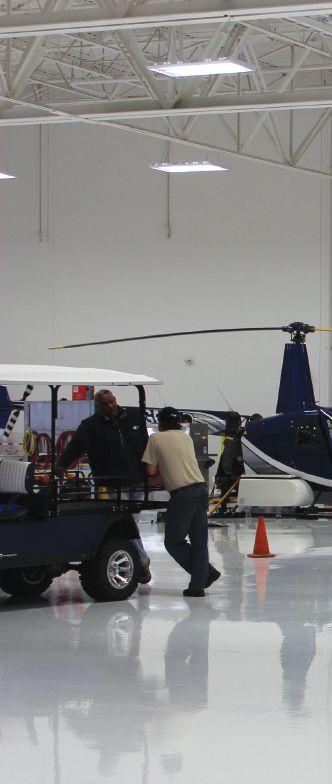
for company and visiting helicopters. Complexe also has an FBO. VIP services include WiFi, private and secure areas, equipment preparation, maintenance, helicopter and car washing, shuttle service and event organization. A restaurant and bar is scheduled to open in the late spring of this year.
“Providing services to the private helicopter market is a compliment to our business,” Huot says. “We want the owners to know that we exist and offer a whole different experience from what they are used to. An owner can now come to Quebec for lunch while his aircraft gets washed and serviced. Why not shop while we service the aircraft? I believe what we offer is unique and there is a void for this type of service.”
The Complexe also includes a helicopter pilot school that accepted its first students in 2011. As well as training new pilots, it offers recurrent training and specialized programs for licenced pilots, including night flying, sling work and firefighting. The school also handles the conversion of foreign licences and annotation.
“Presently, we can accommodate 20 students for different pilot licences: commercial, private and special training,” Huot says.
The Association québécoise des transporteurs aériens (unofficially translated as the Quebec association of air transporters) awarded the school the 2014 Roland-Simard trophy in recognition of the quality of its theoretical and practical helicopter training.
Airmedic, a private EMS service company, of which Huot is the principal shareholder, also calls the Complexe home. “It is with enthusiasm that in April 2012 I committed myself to contribute to the development of emergency medical services at heliports and airports in Quebec,” Huot notes.
Airmedic has a team of 100 medics and pilots. It has carried out more than 475 missions since it was founded. It also operates two Pilatus aircraft that are equipped with the latest medical equipment. Also part of the fleet are two Eurocopter EC130 B4 helicopters from Airbus Helicopters Canada and two AgustaWestland 109
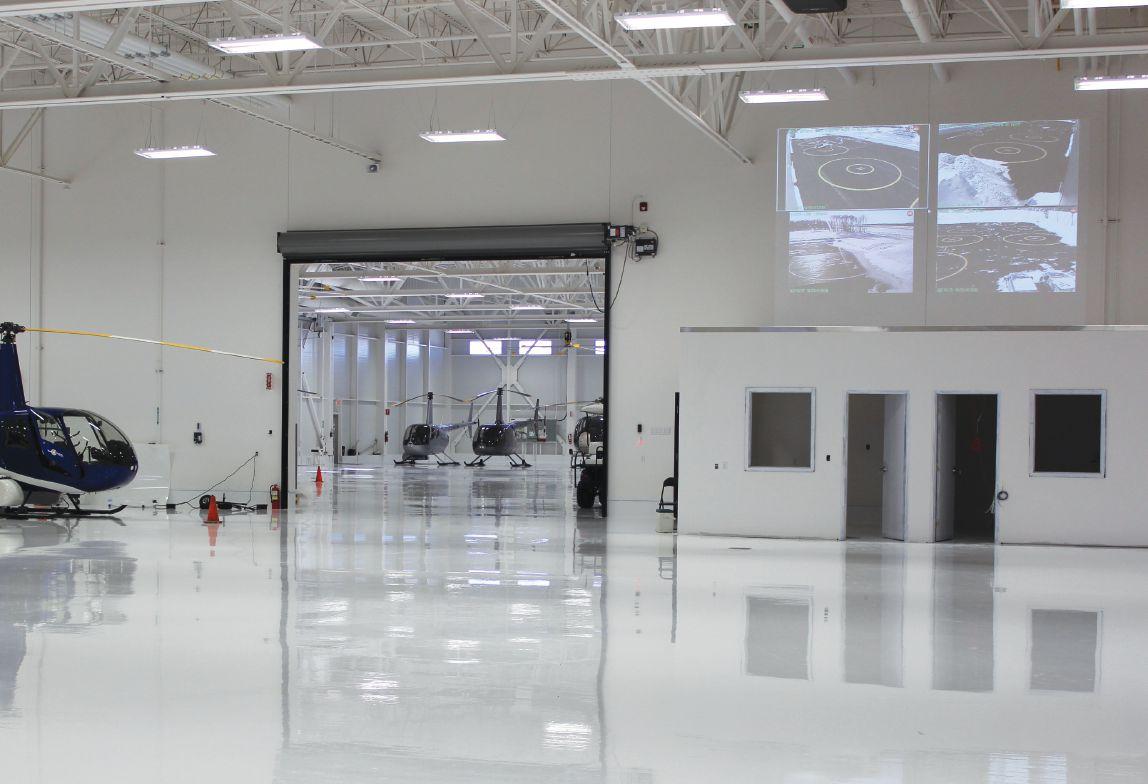
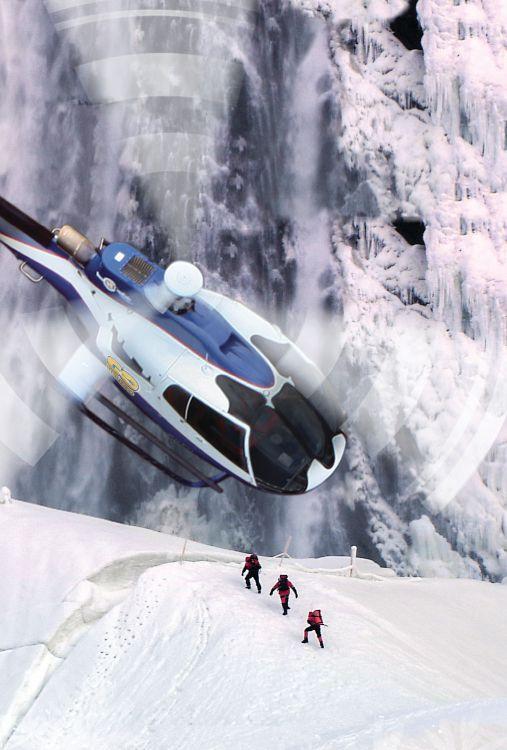

(Photo
SP machines, configured as air ambulances – a first for Quebec, according to Complexe Capitale Hélicoptère. Airmedic also has access to the Capitale Hélicoptère fleet, renting aircraft from it on an as-needed basis.
In addition to its traditional corporate and commercial business services, the Complexe also has tasked itself to bring the wider public into what the company likes to call “the helicopter universe.” “We want to offer a place [so] that younger people can explore the helicopter world. Yes, the Internet today has all the information, but here the groups get the chance to actually see and touch a helicopter,” Huot says
In the air, the company offers 12- to 15-minute helicopter tours

of Quebec City and the surrounding area. “The Helicopter tour business is something every operator in the region dabbled at,” Huot says. “None of them were able to furnish definite timetables in the past. As you know, when summer comes around, the machines are out flying. It is a tough market to commit too. GoHelico offers three aircraft that are committed to tours 12 months a year. Many tour agencies are happy to see that there is finally something stable and attractive to offer their clients.”
Inside the Complexe is an attraction called the Discovery Space. The newest business under the Complexe umbrella, along with the restaurant, the Discovery Space is a helicopter showroom for the public, the first of its kind in the world, according to the company website.
“What’s new is the opening to the public of our Discovery Space, which consists of a boutique with a clothing line developed in Quebec City for those passionate about helicopters, but adapted to the wider public,” Huot explains. “Our showroom offers an exhibition of helicopters, flight simulators, interactive games and a virtual reality room. [There is also a] kiosk with soft drinks, GoHelico tours of the city, an ‘X-ray’ that demystifies the components of a helicopter and interactive terminals that offer quizzes and animations.”
The flight simulators, one of which was built by Switzerlandbased Elite Simulation Solutions, and the other by the Complexe
Capitale Hélicoptère team, offer several flight missions over areas of Quebec City. They are strictly for entertainment, not as supplements to training. The simulators include a helicopter seat, collective and pedals and flight instruments.
The 1,000 SF (93 SM) clothing shop offers a variety of products, from sunglasses to radio-controlled helicopters. However, the clothing line stands out. Designed in Canada and under the label Stephan/H AeroStyle, the line runs from technical clothing, such as pilot jumpsuits and jackets, to clothing that is clearly intended to be street wear for the fashion conscious.
For those looking for a special rush, the Discovery Space offers what it calls “Pilot for a day.” This taste of the pilot experience offers the basics of flight planning, mechanics, use of the controls and manouevers such as takeoff, hovering and autorotation. Students spend time in a Robinson R44 with an instructor.
From guided school tours to the red-carpet treatment of private helicopter owners, Complexe Capitale Hélicoptère will raise the profile of the role of helicopters, while adding to the choice of services for helicopter owners and users.
“As a child, I was fascinated with aviation and helicopters,” Huot says. “Other than looking up at the sky when one passed by, and pictures in a book, there wasn’t much more to feed my passion. The Complex allows people, young and old, to get close to something that has been for a long time reserved for the rich and famous.”
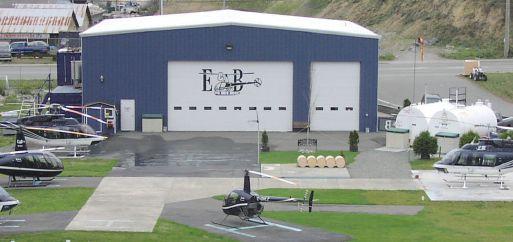
Commercial Charter Services
• Astar 350, Bell 407 and Bell 206
• Robinson R22, R44, R66
Approved Robinson Dealer
• New & Used helicopter sales
Campbell River Base e-mail: info@ebhelicopters.com www.ebhelicopters.com
Gold River Base
Tel: 250-283-7616
Fax: 250-283-7555
Port Alberni Base
Tel: 250-720-8915

• Complete overhaul facility R22, R44 and R66
Avionics
• Helicopter and Fixed-wing complete avionic services
Fax: 250-720-3641 RR300 parts distributor and service center Flight Training Available


This book tackles the understanding of Rotary-Wing aerodynamics with contributing text on the subject of Physics for Safer Flying in a helicopter.
While the differences between flying fixed wing and helis may seem obvious at first, there are numerous helicopter-flight scenarios where taking the seemingly logical course of corrective action will only make things worse.
Arm yourself with the information contained in this book for a safer and smarter helicopter flying experience.
Contains:
• Newton’s laws of motion and their relevancy to helicopter flight
• How airflow dictates the function and design of aerofoils, rotor blades and flight controls
• All the lift and drag “forces in flight” you’ll encounter while flying and how to respond safely
• Types of stability, ground effect, translational lift, tail rotor drift and correcting them effectively
• A study of demanding scenarios, such as auto-rotations, vortrex ring and dynamic rollover
• How types of power and aircraft and load weight and balance effect all of the above plus much more





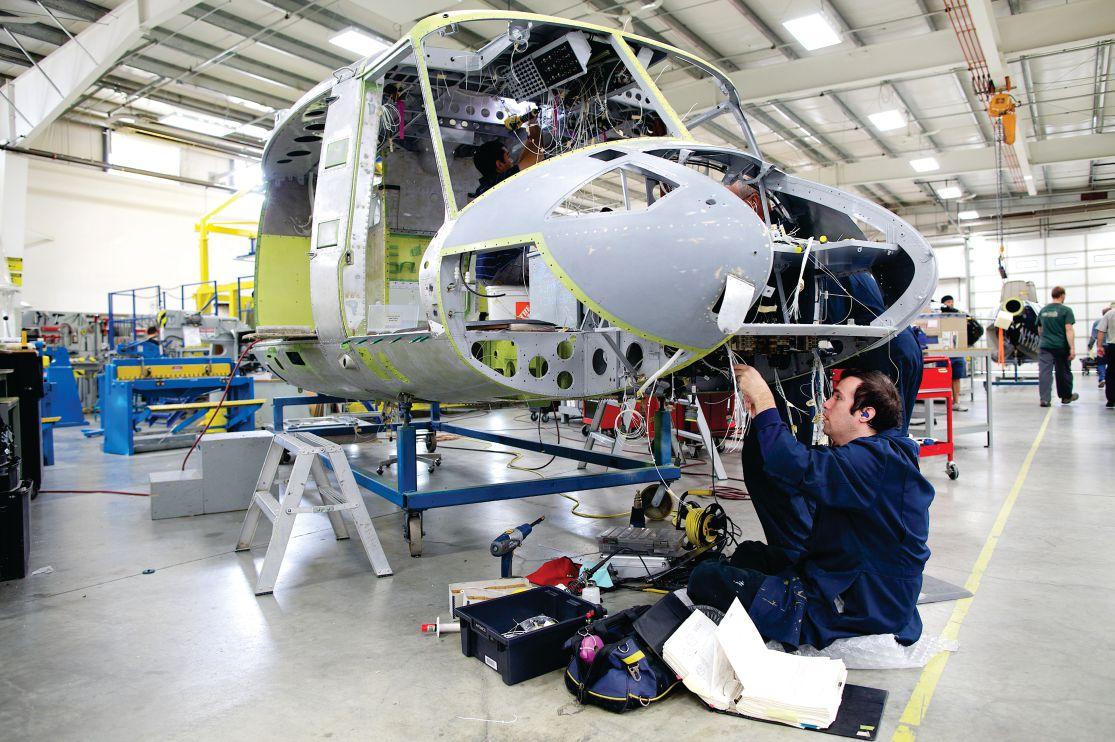



Aircraft
Major
Component
Complete
Composite
Import
Manufacturing






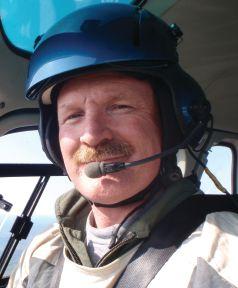
FRED JONES
Iattended a wake in early June as one of my flight instructors from Canadore College, Wayne Bolen, had passed away. He had been ill for some time, but these things are never expected.
Wayne instructed at the College for 15 years and worked for a wide variety of Canadian operators –often doing some training and testing. I also had the pleasure of working for him for two-and-half years at Huisson Aviation in Timmins, Ont.
I always admired him – and not just for his experience and skill as an instructor and a pilot. Like most other instructors and training pilots, Wayne in the course of his long career probably had a couple of hundred students – like me – trying to kill him every day, but his legacy in the helicopter industry is much more significant.
I admired Wayne, and other instructors like him, who can spend a career training and instructing in the industry, and he inspired a generation of helicopter pilots. As is often the case when someone passes away, there was a flurry of emails to alert friends and acquaintances to his death and to pass on the details of his wake.
The pilots who “Replied to All” and who commented on the positive effect that Wayne had on their lives and careers were part of Wayne’s legacy in the industry, and a salute to instructors everywhere who devote their lives to passing on the skills and knowledge they have acquired.
A Tribute
immense satisfaction when looking back. Most instructors, who are in it for the long haul, really love what they do. They relish the challenge and the fraternity of the helicopter community. It must be satisfying to watch your students grow and excel.
Like Wayne, they often love to party with other people in the business as well. We work with each other all day, and then socialize all night. Such is the life of a pilot in the Canadian helicopter industry – long periods of time away from home, and a relatively small community where you are always running into people you know with shared experiences and history. It all makes for a closely knit group where friendships often last a lifetime – and even competitors can be loyal friends.
The wake was a bittersweet experience, where I had a chance to reminisce with some old friends about Wayne. But I must confess, I found it hard to speak to his wife, Nancy. Oddly, between a year at Canadore, and two-and-a-half years at Huisson’s, we had never met. When I did meet her at the entrance to the wake, there were a hundred stories I wanted to tell her. I wanted to make her understand that Wayne had made a difference in my life, and in the lives of many other Canadian pilots. Sadly, I only had a few minutes with her, but I tried my best to tell her that Wayne was well-respected in the industry, and that he would be remembered fondly by his many friends, but particularly by the pilots and wannabe pilots like myself who had the pleasure of flying with him.
Like many instructors, he seemed larger-than-life, and he was one of the industry’s many characters. ‘‘ ’’
What I read, and felt myself, was a genuine respect and affection for someone who had significantly changed my life and the lives of others, in a very positive way. Like many instructors, he seemed larger-than-life, and he was one of the industry’s many characters. To this day, when I make an error while flying, I can still hear him say in his trademark gravelly rasp, “I wouldn’t have likely done it that way, Fred,” which loosely translated, meant, “You sure screwed that up.”
Instructing is admittedly not the most glamorous career in our industry, or the highest paid, but it’s one that must provide some
He helped introduce us to the helicopter community and its culture, in a way that we would never forget. Wayne brought the strength of his personality, and his personal work ethic and life experience, to leave an enduring and unique mark on an industry for which he had a passion. What more could any of us ask for?
As I finalized this issue’s column, I heard about Jeff Sullivan’s sudden passing. I saw Jeff last at Wayne’s wake where we reminisced about Wayne and Jeff’s father. Jeff was the driving force behind Helicopters Canada, and the son of the late Colin Sullivan – another one of my Canadore flight instructors and mentors, that I will remember fondly. Like Colin, and like Wayne, Jeff was a passionate flight instructor who dedicated most of his adult life to helping others find their way in our industry. They will all be remembered by many in the helicopter community who had the pleasure of knowing them – but particularly by those that flew with them.

When it comes to gaining a competitive edge in commerce, you simply need the best. With our helicopters, you will fly faster and more safely, while enjoying greater comfort and reliability. Invest in an EC130 T2.