






JON ROBINSON, editor
s the start of 2019 ushered in momentous technology breakthroughs in Urban Air Mobility, the year closed with a range of new partnerships that will help push the sector toward realizing what still seems very much like science fiction turning toward reality. Last year, concepts became prototypes and infrastructure wish-lists turned into regulatory priorities.
Beyond the amazing vehicle and systems advances of 2019, there is so much work to be done on critical Urban Air Mobility (UAM) issues like air traffic management and standards for noise, emissions and vertiports that it remains hard to predict when UAM will begin to make true market impacts; when manufacturers will be prepared to move from incredible prototypes into committed production frameworks designed for vehicle volume. Certainly, many of their existing manufacturing lines and processes can be leveraged for UAM, but they are not revolutionizing widgets.
Still, the new decade begins with Bell Textron returning to the Consumer Electronics Show (CES) in Las Vegas with another vehicle concept in the Nexus 4EX – a model designation standing for four ducted fans, E for Electric and X for experimental. This introduction comes one year after Bell dominated CES headlines with a full-scale design of its first Nexus air-taxi concept, which incorporates six tilt-
Sticking with the world’s major helicopter manufacturers, which clearly hold the best position to impact UAM based on decades of vertical flight and propulsion IP, Airbus at the end of 2019 made the first untethered flight of its CityAirbus vehicle in Donauwörth, Germany. CityAirbus is an all-electric, four-seat, multicopter demonstrator. Airbus also at the end of 2019 made the final flight of its Vahana demonstrator, which launched company’s UAM interests around four years ago as concept literally sketched out on a napkin.
The Vahana project itself has come to an end, but the company remains focused on UAM development, as illustrated in a statement announcing the end of Vahana: “The early sceptics can be forgiven: 2016 was a different time. Back then, no one could have predicted that leveraging the sky to improve urban mobility was practical. And yet, Urban Air Mobility is no longer the stuff of science fiction. Today, it is one of the most exciting and promising markets in aerospace. And the extraordinary progress of Vahana has undoubtedly played a key role in bringing this vision closer to reality.”
Obviously meant as tongue in cheek, in part, this statement sums up the pace of UAM development, considering 2016 was yesterday in the world of designing and building completely new air-taxi aircraft. Airbus points to many key questions about how to develop an eVTOL business case, including: What is the total operating cost of eVTOLs? How does it compare to traditional helicopters or taxis? What is the value for the community? How should they be certified?
Early skeptics can be forgiven... No one could have predicted leveraging the sky to improve urban mobility was practical.
ing ducted fans. Bell explains this new design unlocks the key for all-electric technology, but expects to introduce vehicle as propulsion agnostic – hybrid. In introducing the Nexus 4EX, Bell CEO Mitch Snyder said, “The vision for the Bell Nexus remains the same, but by taking a mature system level approach to design for an objective market vehicle, we believe this configuration unlocks a capable, certifiable and commercially viable product.”
Many new UAM partnerships made at the end of 2019 hold the same ambitions to answer these questions. In October 2018, Hyundai created a UAM division and hired one of NASA’s former aeronautics directors to lead it. Toyota in early 2020 announced a new collaboration with Joby Aviation to develop and commercialize an eVTOL aircraft.
Porsche and Boeing signed a Memorandum of Understanding at the start of 2020 to explore what the companies describe as the premium UAM market, which will include implementing and testing a prototype. A 2018 study by Porsche Consulting forecasts that Urban Air Mobility market will pick up speed after 2025. | H

The fourth AW609 tiltrotor, fully representative of the final production configuration, performed its first flight at Leonardo’s Philadelphia plant in late December, entering what the company describes as the final program development and ground/flight testing stages.
Leonardo explains this flight of the world’s first multirole commercial tiltrotor achieved a major milestone on its path to FAA certification. The AW609 will be certified under the FAA’s new Powered Lift category, which the company describes as the first new category of aircraft certified by the FAA in decades.
The AW609 carries up to nine passengers in a comfortable pressurized cabin, has a maximum cruise speed of 275 knots and can travel up to 700 nautical miles — about twice as fast and twice as far as the typical heli-
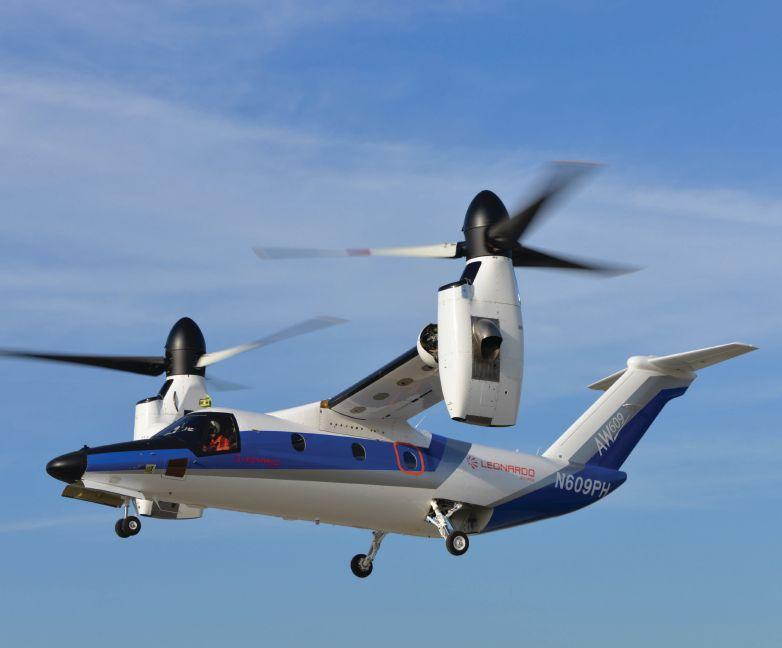
copter, according to Leonardo. It climbs to 25,000 feet, helping to fly above inclement weather and known icing conditions.
The AW609 features fly-bywire flight controls, Collins
Aerospace Pro Line Fusion avionics and two Pratt & Whitney PT6C-67A engines. The first two production AW609s are currently being assembled in Philadelphia. Era, one of the
largest helicopter operators in the world and the longest serving helicopter transport provider in the United States, will be the first customer to receive the aircraft.
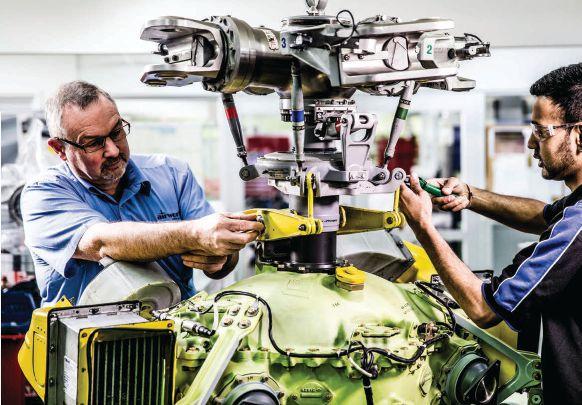
StandardAero on November 14 celebrated the opening of its newest helicopter Maintenance, Repair and Overhaul (MRO) facility in Richmond, BC, which the company explains will provide comprehensive aftermarket services to both the dense helicopter industry in the Pacific Northwest and global community alike. The company explains the opening of its new StandardAero Vancouver facility is the culmination of its efforts to establish dedicated Centers of Excellence to streamline helicopter support operations across its varied engine and airframe MRO businesses.
StandardAero explains the new 24,000-square-foot facility brings together similar work previously completed at separate
locations. The new facility also now houses all support shops including machining, cleaning, painting and non-destructive testing (NDT) for GE T700/CT7 engines, Rolls-Royce M250 engines and Airbus Helicopters dynamic components.
The new facility in Richmond has received Transport Canada validation across all of the supported product lines and maintains StandardAero’s commitment to OEM-aligned services through its designation as an authorized GE T700/CT7 Authorized Maintenance, Repair and Overhaul Provider (AMROP), Rolls-Royce M250 Authorized Maintenance Repair & Overhaul Center (AMROC) and Airbus Helicopters approved Maintenance and Repair Center.
Bell Textron Inc. delivered Canada’s first Bell 407GXi to Municipal Enterprises Limited, a subsidiary within the Municipal Group of Companies based in Bedford, Nova Scotia.
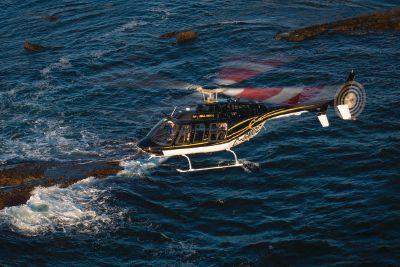
The Bell 407GXi for Municipal Enterprises was completed and delivered at Bell’s facility in Mirabel, Quebec. (Photo: Peter Handley)
Led by Dexter Construction, described as the largest civil contractor in Atlantic Canada, the Municipal Group is comprised of diversified business units focused on sectors like construction, environmental, asphalt and quarry, utilities, emulsions, demolition, mining and disposal, among others.
Founded more than 40 years around, Municipal Group today has a presence in New Brunswick, Newfoundland and Labrador, Northern Quebec and the Caribbean. Bell explains the 407GXi for Municipal Enterprises, which itself focuses on providing aggregate and asphalt construction materials, is outfitted in newly certified on-board equipment and features a custom designed interior.
In 2018, Bell introduced the enhanced Bell 407 platform at the Helicopter Association International’s annual Heli-Expo. The 407GXi features the Garmin G1000H NXi integrated flight deck and a new Rolls-Royce M250-C47E/4 engine with dual channel FADEC, which delivers better high and hot performance, fully automatic relight, and the ability to cruise at 133 knots.
The Women’s Executive Network announced its 2019 list of Canada’s Most Powerful Women, recognizing 100 outstanding women across Canada who advocate for diversity in the workforce and inspire the next generation of leaders. Among this year’s female leaders are: Teara Fraser, CEO, Iskwew Air; Cathy Press, CEO, Chinook Helicopters; and Arielle Meloul-Wechsler, senior VP, people, culture and communications, Air Canada.
The British Columbia Aviation Council (BCAC) released a statement congratulating the achieve-
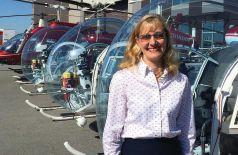
ment of its two members Fraser and Press. “Cathy and Teara are courageous changemakers, strong role models, and brilliant entrepreneurs who are boldly making a difference in the aviation industry,” said Heather Bell of BCAC.
Fraser, who is Métis, was named in the Women’s Executive Network (WXN) Trailblazers and Trendsetters Award Category, which recognizes women who have broken new ground with landmark achievements forging pathways for future generations and making a great contribution to Canadian society.
Press was named in the Industry Sector and Trades category, which recognizes leaders who have made significant contributions to the advancement of women through their inspiring work and advocacy in underrepresented sectors. MeloulWechsler has been a member of Air Canada’s executive team since 2013.
Sikorsky in October introduced RAIDER X, its concept for an agile, lethal and survivable compound coaxial helicopter that will compete for the U.S. Army’s Future Attack Reconnaissance Aircraft (FARA) program. This introduction closely follows Bell Textron’s October 2 unveiling of a new rotorcraft concept, the Bell 360 Invictus, as its FARA competition entrant.
To date, Sikorsky X2 aircraft
have achieved speeds in excess of 250 knots; high-altitude operations in excess of 9,000 feet; lowspeed and high-speed maneuver envelopes out to 60-plus degrees angle of bank; ADS-33B (Aeronautical Design Standard)
Level 1 handling qualities with multiple pilots; and fight controls optimization and vibration mitigation.
The X2 rigid rotor provides increased performance including;
HELICOPTERS MAGAZINE
P.O. Box 530
105 Donly Drive South Simcoe, ON, N3Y 4N5
Tel: 519-428-3471 Fax: 519-429-3094
Toll Free: 1-888-599-2228
www.helicoptersmagazine.com
EDITOR JON ROBINSON jrobinson@annexbusinessmedia.com
MEDIA DESIGNER BROOKE SHAW
CONTRIBUTING WRITERS
MASSIMO BERGAMINI, DAVID CARR, MARIO CYWINSKI, TRACEY FREDRICKSON, KATHY FOX, FRED JONES, KENDRA KINCADE, CARROLL MCCORMICK
NATIONAL ADVERTISING MANAGER MENA MIU mmiu@annexbusinessmedia.com 416-510-6749
ACCOUNT COORDINATOR BARB VOWLES bvowles@annexbusinessmedia.com 416-510-5103
CIRCULATION MANAGER JAY DOSHI jdoshi@annexbusinessmedia.com 416-442-5600 ext. 5124
GROUP PUBLISHER, VP SALES MARTIN MCANULTY mmcanulty@annexbusinessmedia.com
COO SCOTT JAMIESON
RETURN UNDELIVERABLE CANADIAN ADDRESSES TO ANNEX PUBLISHING & PRINTING INC., 111 Gordon Baker Rd., Suite 400, Toronto ON M2H 3R1 subscribe@helicoptersmagazine.com
Published four times a year by Annex Publishing & Printing Inc.
Printed in Canada ISSN 0227-3161
CIRCULATION
Email: jdoshi@annexbusinessmedia.com Tel: 416-442-5600 ext. 5124 Fax: 416-510-6875 (main) 416-442-2191
Mail: c/o Circulation, 111 Gordon Baker Rd., Suite 400, Toronto, ON M2H 3R1
SUBSCRIPTION RATES
Canada - 1 year $31.50
USA- 1 year $57.00
Foreign - 1 year 63.00 plus applicable taxes www.helicoptersmagzine.com/subscribe
Annex Privacy Officer
Privacy@annexbusinessmedia.com
Tel: 800-668-2384
Occasionally, Helicopters magazine will mail information on behalf of industry-related groups whose products and services we believe may be of interest to you. If you prefer not to receive this information, please contact our circulation department in any of the four ways listed above.
highly responsive maneuverability, enhanced low-speed hover, offaxis hover, and level acceleration and braking. State-of-the-art digital design and manufacturing is already in use on other Lockheed Martin and Sikorsky production programs, such as CH-53K, CH-148 and F-35, and will enable the Army to not only lower the acquisition cost, but enable rapid, affordable upgrades to stay ahead of the evolving threat.
No part of the editorial content of this publication may be reprinted without the publisher’s written permission ©2020 Annex Publishing & Printing Inc. All rights reserved. Opinions expressed in this magazine are not necessarily those of the editor or the publisher. No liability is assumed for errors or omissions. All advertising is subject to the publisher’s approval. Such approval does not imply any endorsement of the products or services advertised. Publisher reserves the right to refuse advertising that does not meet the standards of the publication.

Helicopters Magazine is an associate member of the following Canadian aviation associations:
Enstrom Helicopter Corporation celebrated its 60th anniversary on December 22, 2019. Founded in northern Michigan, Enstrom today has produced more than 1,300 aircraft operated in more than 50 countries around the world. The company describes its origins by Rudy Enstrom, a mining engineer living in Crystal Falls, Michigan, who throughout the 1940s and 1950s constructed a number of helicopter prototypes in his garage, hovering them in a local quarry. Jack Christensen was a tool salesman from Menominee, MI, who called on Rudy’s mine. In the late 50s, Christensen moved to put the Enstrom pro-
totypes into production, raising funds from local businessmen to start a company. The R.J. Enstrom Corporation was founded in December of 1959 with Christensen as CEO. Engineer named Alb Balaur was then brought in to refine the design, explains the company, along with Paul Shultz and a handful of other talented engineers. Despite the early departure of Rudy Enstrom, the engineering team worked throughout the early 1960s to develop the F28. In the meantime, Christensen continued to funds for the company by selling stock at county fairs, primarily in northern Wisconsin and Michigan’s Upper Peninsula.
The F28 was FAA certified in 1965, and won Michigan Product of the Year. It was the same year the Ford Mustang was introduced. Enstrom Helicopter explains the late-1970s were the heyday for GA production, and Enstrom would build more than 100 aircraft per year out of its relatively small Menominee factory. The company went on to develop the 480 series turbine helicopters in the 1990s. Today, Enstrom continues to produce its turbocharged piston F28F and 280FX siblings, and the turbine 480B. The Enstrom Helicopter factory, still based in Menominee, is now 160,000 square feet and an FAAapproved production facility.
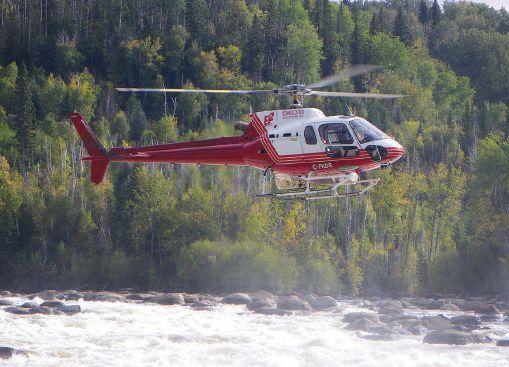
Delta Helicopters upgraded to WinAir Version 7 after using previous versions of WinAir’s aviation-management software for the past 16 years. In late December, WinAir’s Product Implementation team visited Delta’s headquarters in St. Albert, Alberta, to complete the on-site training and go-live phase of the software implementation, which is more robust and browser-based.
Delta Helicopters to boost Efficiency with WinAir Version 7 upgrade, which will be applied to the company’s fleet of 25 helicopters, including an AS 350 B2. (Photo: Delta Helicopters)
Delta Helicopters was established in 1972 and now holds six bases across Alberta, employing approximately 50 staff. It offers a range of services to clients within the province and throughout Canada, such as the oil and gas industry, forestry industry, mining industry, and government. These services consist of chartering staff, equipment transportation, stand-by evacuation, fire suppression, aerial seeding, land surveying, thermal imaging, pipeline inspection, powerline inspection, search and rescue, wildlife population counts, air ambulance/medevac services, and sightseeing expeditions. In terms of its fleet, Delta Helicopters operate with 25 light intermediate and medium-lift helicopters. This includes Bell 204B, 205A1++, 206B, 212, Airbus AStar 350BA, and AStar 350 B2 helicopters. Delta Helicopters began working with WinAir in 2003 when the company was seeking maintenance and inventory control software to replace manual processes. It signed on with WinAir Version 4 and leveraged WinAir’s Aircraft Services team to develop aircraft templates for its Bell 206B and Airbus AS350 helicopters. After years of growth, the decision was made to upgrade to WinAir Version 5.5 in 2007.
Dr. Frank Rubio on January 10 joined NASA’s first class of astronaut candidates to graduate under the Artemis program. The graduation ceremony took place at the agency’s Johnson Space Center in Houston. Rubio, a U.S. Army lieutenant colonel, was born in Los Angeles and now lives in Miami, Florida. He earned a bachelor’s degree in international relations at the U.S. Military Academy at West Point, New York, and a doctorate of medicine from the Uniformed Services University of the Health Sciences, Bethesda, Maryland.
Rubio has accumulated more than 1,100 hours as a Blackhawk helicopter pilot, including 600 hours of combat and imminent danger time. He was serving as a surgeon for the 3rd Battalion of the Army’s 10th Special Forces Group at Fort Carson, Colorado, before coming to NASA. After completing more than two years of basic training, Rubio will become eligible for spaceflight assignments to the International Space Station (ISS), Artemis missions to the Moon, and future missions to Mars.
The class includes 11 NASA candidates, as well as two Canadian Space Agency (CSA) candidates, Jenni Sidey-Gibbons and Joshua Kutryk. All of these candidates were selected in 2017 from what NASA describes as a record-setting pool of more than 18,000 applicants. This graduating class is significant for NASA as it prepares to once again launch astronauts from American soil for the first time since 2011, when the agency shut down its Space Shuttle program, thereafter relying on Russia’s Soyuz program to get people into space and to the ISS.
Bell Textron in October introduced a new rotorcraft, the Bell 360 Invictus, as the company’s entrant for the U.S. Army’s Future Attack Reconnaissance Aircraft (FARA) Competitive Prototype program. Bell states the 360 Invictus meets or exceeds all requirements as laid out under the FARA contract.
Bell points to the 360 Invictus’ rotor system as an example of how it is leveraging proven technologies to fulfill the Army’s FARA requirements at an affordable cost and on schedule. The Invictus design is based on Bell’s 525 Relentless rotor system, which has been tested and
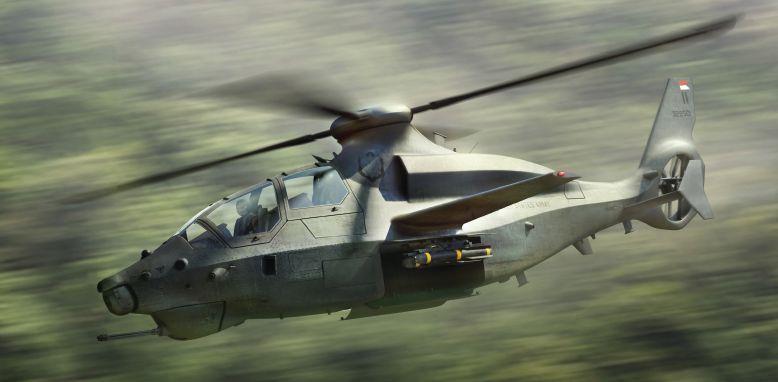
proven at speeds in excess of 200 Knots True Air Speed (KTAS). Bell states this approach delivers a low-risk path to a FARA program of record.
Bell describes some of the key 360 Invictus features as including a lift-sharing wing to
reduce rotor lift demand in forward flight, enabling highspeed maneuverability
Supplemental Power Unit increases performance during high power demands; Robust articulated main rotor with high flapping capability
enabling high speed flight; Flyby-wire flight control system; Speed greater than 185 KTAS; Combat radius of 135nm with greater than 90 minutes of time on station; and Achieves 4k/95F Hover Out of Ground Effect (HOGE).
Safran in late 2019 celebrated a milestone for its Arrius engine range by reaching 10 million flight hours flown since its introduction in 1996. The company celebrated this achievement during the China Helicopter Exposition in Tianjin. With more than 3,800 units delivered to 430 customers in 60 countries, the Arrius family covers a power range of 450-750 shp
and flies in both single- and twinengine light helicopters.
Safran explains the Arrius range has maintained its status as the most competitive and robust engine solution for the light helicopter market, and it continues to be selected for new models. First installed in the EC135 in 1996, the latest Arrius 2B2Plus variant entered service on the Airbus H135 in 2014,
which the company describes as particularly popular for operators conducting emergency medical services (EMS) and military training missions.
In 2016, the Arrius 2R became operational on the single-engine Bell 505. Featuring a dual channel FADEC (Full Authority Digital Engine Control), and assembled at Safran’s Grand Prairie Plant in
VR-Technologies, part of Russian Helicopters, and Pratt & Whitney Canada signed a contract for fitting the VRT500 helicopter with gas-turbine PW207V engines.
The VRT500, featuring design collaboration from Italdesign, was introduced as a true concept back in 2017 and its maker expects to fly the first prototype of the coaxialrotor aircraft in 2020.
PW207V is the advanced modification of PW200 family engines with the capacity of up to 700 hp designed for light-class
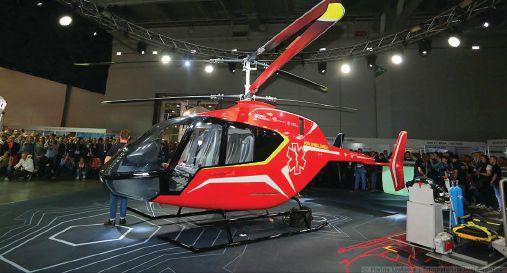
Russian Helicopters’ new VRT500 prototype is being developed by subsidiary VR-Technologies with close design collaboration provided by Italdesign. (Image: Italdesign)
Texas, more than 200 units are now in service. Another variant, the Arrius 2G1, powers the Russian Helicopters Ka-226T. It is in service in Russia and part of a major military contract currently under negotiation between Russia and India.
Safran states the Arrius range will remain at the forefront of its propulsion offerings for the next 20 years.
rotorcraft. More than 5,000 powerplants of this type have been produced, clocking more than 11 million total flight hours. For the powerplant to be installed on VRT500 helicopters, the PW207V will be adapted for powering single-engine rotorcraft with a corresponding amendment of Type certificate. VRT500 is a light, single-engine helicopter with coaxial rotor scheme and takeoff weight of 1,650 kg. | H

How Canadian aviation can leverage crisis for the benefit of change
During a November 2004 venture-capitalist meeting in California, noted American economist Paul Romer said, “A crisis is a terrible thing to waste.” The New York Times covered the implications of the phrase in a 2009 article, noting how Romer was referring to the rapidly rising education levels in other countries compared to the United States, but the quote became a rallying concept for economists and consultants looking for constructive opportunities amid the Great Recession.
In other words, every once in a while an event shines a light long enough on things previously obscured in a way that creates an opportunity for change that should not be squandered. It appears the Canadian aviation industry is on the precipice of such an opportunity in 2020. Over the last three years, Canada’s aviation industry witnessed a level of policy, regulatory and political activity it has not seen since the transportation reforms of the mid-1980s and 1990s. From the federal government musing about airport privatization, to a passenger bill of rights, to a carbon tax on air travel and, most recently, the offloading of airport security screening; it was an avalanche of politics, policy and regulations that hit the industry.
Did the impact of the adoption of any of those various policies represent a crisis for the industry? As wrong-headed and poorly
Then, as well as today, decisions with significant bottom-line implications for the industry and for air travellers are more likely to be made in the office of the Minister of Finance than that of the Minister of Transport.
Moreover, and more troubling still, because such decisions are routinely draped with the cloak of budget confidentiality, there is rarely any meaningful opportunity for engagement or consultation before they are sprung on Canadians in a budget speech.
After a federal election where airplanes and air travel became newsworthy only after it was learned that the Liberal campaign –unlike the others – used two planes instead of one, it is fair to ask whether that will change. I believe it can. But the industry must stop focusing on symptoms and begin tending to the root of the problem.
The old tactics of quiet diplomacy and discreet engagement, whether on the golf course or in the boardroom, while sometime effective in dealing with transactional issues affecting one company or another, have not worked in fixing the major structural issues affecting the industry as a whole.
The reason these issues have frustrated our industry’s efforts for so long is that they carry significant financial and political implica tions for the Government of Canada. Addressing them will require the federal government (under a Liberal minority) to consider the
Canadian aviation has witnessed a level of policy, regulatory and political activity it has not seen since the mid-1980s and 1990s.
designed as some were, the answer is likely not. The reason is that the real crisis is found not in the policies themselves, but in the manner that they came about, driven political and fiscal considerations that have precious little to do with the kind of policies that have to be fixed if Canada is to have the kind of commercial aviation system it needs to continue to prosper.
This is not something new. Transport Canada’s policy influence has been waning since the Chretien government’s “commercialization” of airports and air traffic control and the introduction of 100 per cent-plus cost recovery.

In a recent interview, Air Canada president and CEO, Calin Rovinescu, said that the ingredients of long-term business success were an entrepreneurial mindset, being nimble and innovative; and the willingness to disrupt the status quo. Our entire Canadian avia tion industry should take those words to heart. The crisis is now in front of us – let’s not waste it. |
Massimo Bergamini is an Ottawa-based policy entrepreneur, advocate and writer. He recently stepped down as president and CEO of the National Airlines Council of Canada.

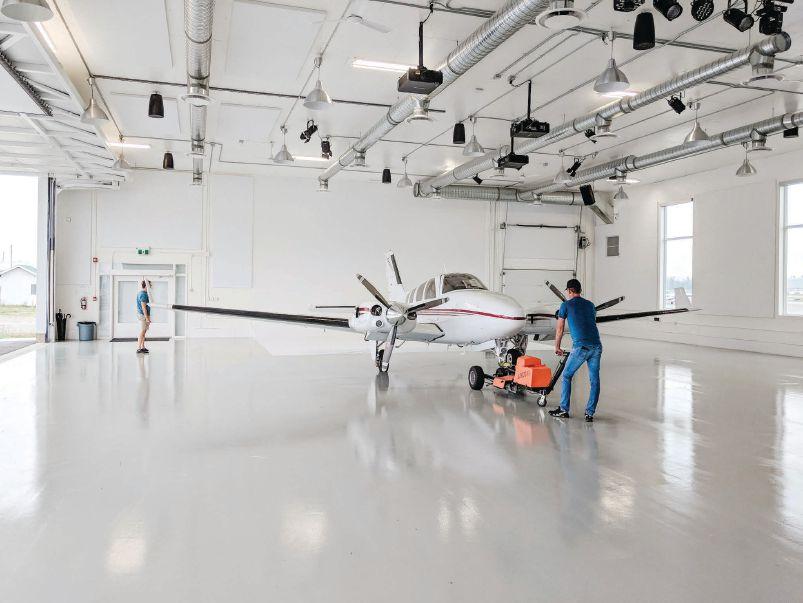
Airside is an intentionally renovated multi-purpose hangar at the Abbotsford International Airport. With multiple spaces and a white modern finish, its the perfect venue for product launches, business events, meetings
• 24 person meeting room

Balancing life and work with a helicopter pilot
Passion. From the Greek verb meaning …to suffer. Passion is an intense emotion, a compelling enthusiasm or desire for something. Many of us know what being passionate about something is all about. We are passionate about books and literature, food and cooking, our children, poverty and helping the unfortunate, animal liberation and the environment…the list goes on. When one is passionate about something, though, it rarely comes without its woes, as the Greeks say. Still, we simply cannot live without it.
He lives it and he breathes it. He loves it with his core. At times he has a deep resentment for its demands and for the sacrifices he must make, however, he is translucently in love. He is in love with the machine, the power and sense of control that rumbles inside him as he starts the rotors, buckles in and rests his hand on the collective. He has an insatiable hunger for the freedom of flight and a determination coupled with the satisfaction of getting the job done. He is a helicopter pilot.
The passion he has running through his veins is undeniable. It must be acknowledged, though, that the career of a helicopter pilot is a lifestyle, a lifestyle which can be unpredictable and erratic, rewarding and exhilarating, definitely exhausting and doesn’t come without sacrifice. It is not all exciting joy flights and roses. Those who love him must understand and accept this.
A day in the life of an agricultural helicopter pilot...? Well, it’s difficult for me tell you about that as such, not just yet, however, I can tell
hours, enable him to perform duties only a handful of people are worthy of achieving. He flies with humble confidence and flair and is exceptionally professional. He works long hours and at times will vacate a family occasion and be gone in a flash.
The challenge for this ag pilot, and perhaps most ag pilots, is maintaining balance in his life. His days begin before the sun. The sound of the alarm causes him to stir and without opening his eyes he pulls me closer to him. But he must get to the airfield and launch just after sunrise. Coffee is brewed, the weather is analyzed and the shift to work mode arrives. I have only an inkling of the responsibilities and thought processes that consume his mind on a daily basis during ‘work mode’, and yet he still manages to express clearly his appreciation, respect, consideration, desire and love for me and that of his children.
He takes nothing for granted, for with this career he understands clearly how precious time is and what it can offer and what he must take advantage of to maintain the quality of life within his family unit and his work environment. I will not suggest for one moment that this is an easy feat for him, and he cannot do it alone. A helicopter pilot benefits greatly from the understanding, love and communication he receives from his wife because, do you not think that with his high moral standard, integrity and pride that he wouldn’t feel a somewhat bittersweet feeling when he is required to be away from the people he loves, often in an unpredictable circumstance, at the drop of a hat, in order to do what he loves, adores and what he is amazingly good at? How can he be in two places at once? He cannot. And there inlays the element of sacrifice he must endure because the call to work, the call to fly, simply will not be ignored.
He is in love with the machine, the power and sense of control as he starts the rotors.
’’
you about the character of a man who is. It’s a certain special breed who can be a successful agricultural helicopter pilot, as he also expresses compassion, generosity, optimism, strength, benevolence and love.
Me, personally, I don’t fly, however, to fall in love with one who does is quite an experience. I cannot say that all helicopter pilots are the same, but what I can say is that the one that I know is a man of strength and integrity and that I admire him enormously. He would be quick to brush this compliment off with his humble attitude, which just makes me admire and love him more. He is driven and focussed; his work ethic is highly acute. The skills he has acquired, during countless invested
He does what he does because it’s a part of who he is. Would you take a surfer from the beach and expect them to live happily in the country?
I am in love with this helicopter pilot and adore him for everything he stands for. His passion, zest and optimism, his conversation and modesty, his ability to manage stress, and, yep, this helicopter pilot can indeed cook and perform like a domestic god. Is this a day in the life of an ag pilot…? Perhaps not, but it is an expression of the character of an exceptionally true gentleman who just happens to be one. | H
Tracey Fredrickson is an Australian-born freelance photojournalist living in New Zealand. She has written for magazines such as Coast and Country and Runners World.


BY JON ROBINSON,
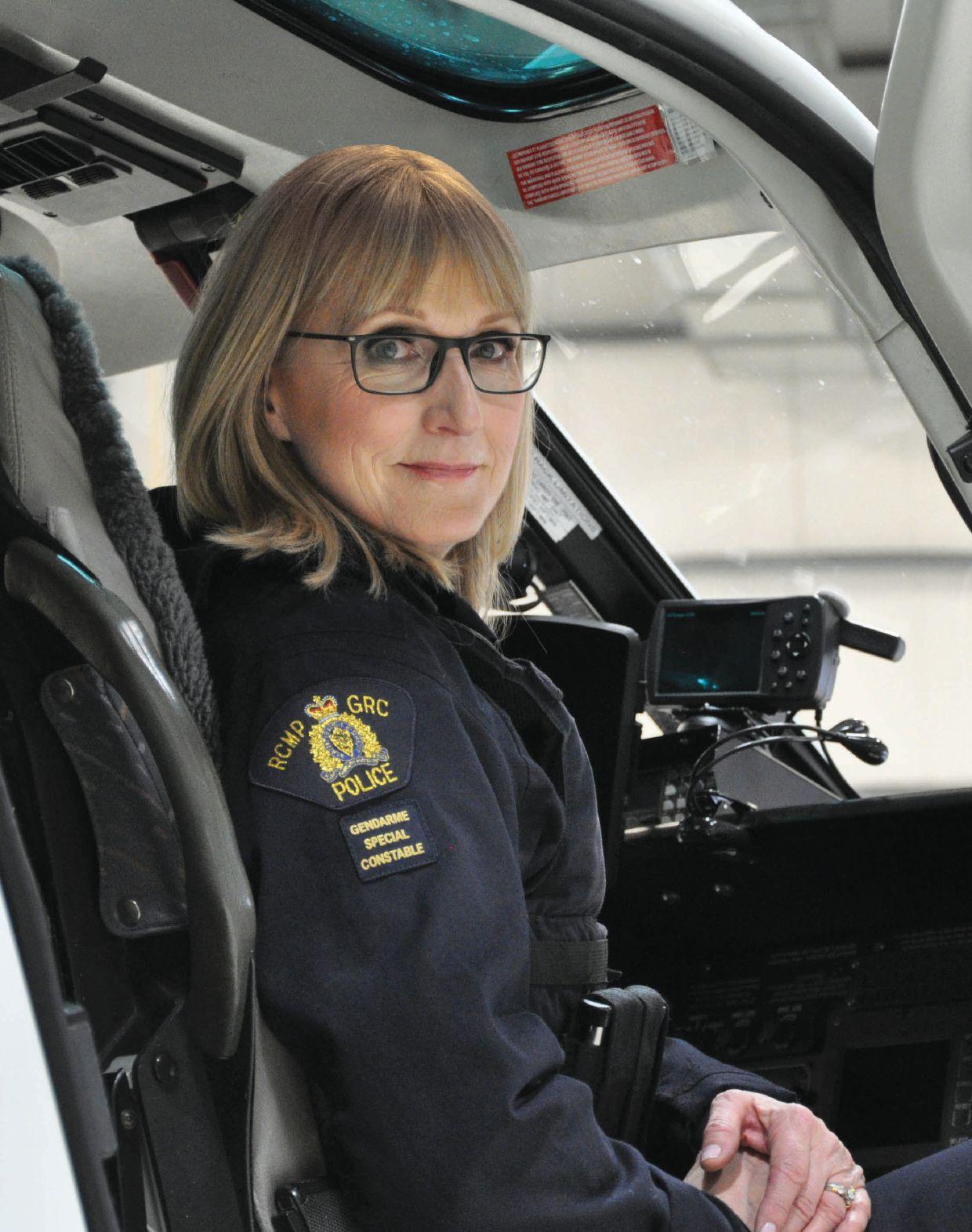
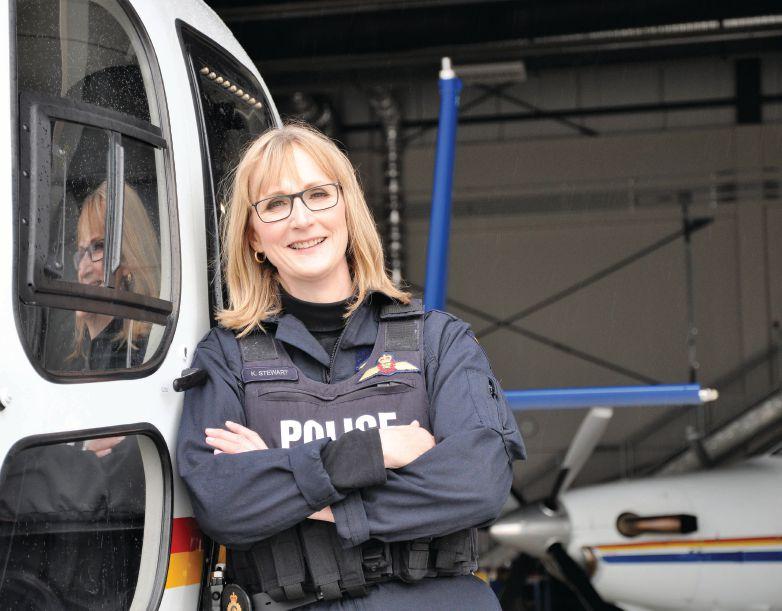
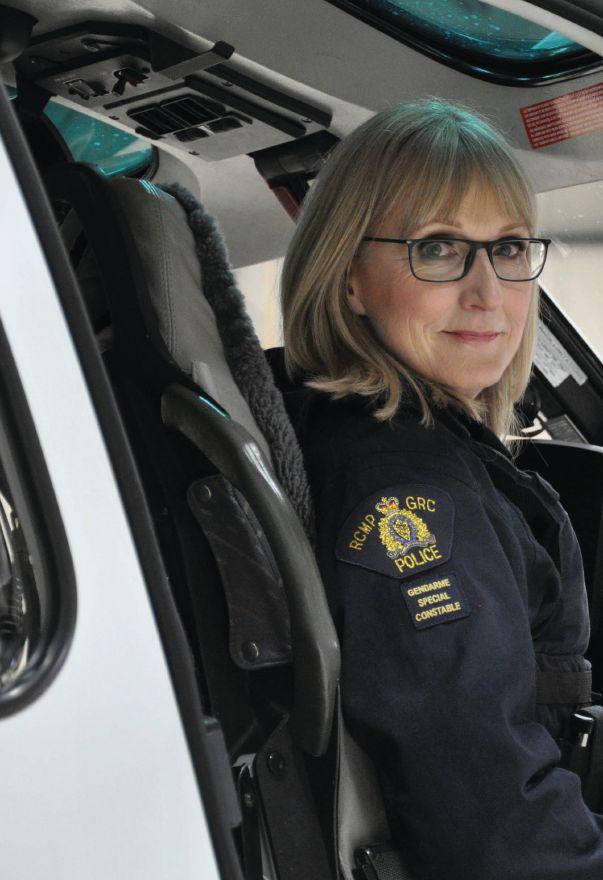
athy Stewart first began thinking about becoming a helicopter pilot at age 19 after finishing up eight months of work in the Northwest Territories, including four months in a forestry camp. She was born and raised in Toronto, but the remoteness of Canada’s North appealed to her, as did the Bell Longranger based at the camp just outside of Yellowknife.
Stewart’s first concrete step toward an outstanding career began in 1980 when she obtained a Private Pilot Licence (PPL). Now a Special Constable with the Air Services Branch of the Royal Canadian Mounted Police (RCMP), based out of Edmonton and with more than 13,000 flight hours, Stewart explains her sights were always set on the dynamic world of rotorcraft – “That ability to land virtually anywhere and to hover… your hands are on the controls and you are actively working the machine.”
The fixed-wing PPL was a means to an end, completed just days before Stewart’s application interview to attend Canadore College’s aviation program, where she would eventually complete a Commercial Helicopter license. Stewart – despite checking all of the boxes – was not admitted to the program after being told it would be a waste of time and money because she would not find a job. She persevered and was admitted to the program, along with another female student, in her second attempt a year later.
“Alexia Hannam at the NLAF gala said that she had never encountered any barriers to flying and I thought that is fabulous. That is the way that it should be,” says Stewart, recalling Hannam’s speech from the Northern Lights Aero Foundation annual event in September 2019, when both women were honoured for their inspiring contributions to the aviation industry. “People should be able to do what they want if they have the interest, the talent, and the skill set… there has been steady progress since I started.”
Stewart would soon prove her piloting skills during a checkride with Okanagan Helicopters Ltd., at the time one of Canada’s largest
and most-progressive commercial operators. After graduating from Canadore there were no jobs in the helicopter industry, which was reeling from the effects of the 1979 oil crisis and Canada's ill-timed 1980 National Energy Program. Stewart returned to the University of Toronto to finish her Bachelor of Science degree, which she initially interrupted to pursue her dream of becoming a helicopter pilot. By the late-1980s, however, the industry once again needed pilots and Okanagan, which was transitioning toward new ownership as Canadian Helicopters, not only hired Stewart, but also made significant investments to elevate her skills. “I was over the moon to be hired by them, because they had everything from very small helicopters to the biggest operating in Canada and around the world,” says Stewart. “They had bases across Canada and the opportunities were tremendous for me at that time, that I could gain various endorsements and work in a variety of situations.”
Stewart recalls being one of 18 low-time pilots hired in 1988 by Okanagan, which provided 72 hours of additional training on Jet Rangers. “It was not only a mountain course, but also an advanced operational course, and it just gave you a background to make you very strong as a low-time pilot getting started – exposure to a huge variety situations and skills,” says Stewart, who became a pool pilot on the Jet Ranger. In a matter of months, however, she was flying in northern Alberta and up into the Territories, quickly receiving an endorsement on an AStar. She flew with Canadian Helicopters into the year 2002 supporting a range of missions from fighting forest fires and wildlife management to powerline patrols and high-Arctic work. She earned a 500 endorsement working the diamond patch, followed by a twin-engine Bell 212 endorsement, and then a Sikorsky S-61 after obtaining an American license under NAFTA for
Kathy
completed con-
RIGHT: Stewart in September 2019 was one of two helicopter pilots honoured by the Northern Light Aero Foundation, which also recognized the contributions of Maj. Alexia Hannam, 417 Squadron, RCAF. (Photo: Andy Cline)
mately three years, adding critical career skills like budgeting, crew scheduling, and asset usage, but her love for flying led her to take on a new role with the RCMP in 2002. “I looked at the RCMP as being a dream job, very mission-oriented flying, flying that makes a difference most of the time,” says Stewart, who had one young son with a second on the way when the opportunity came up. “I wanted to be a mom but I also wanted to be a pilot; and with the RCMP I saw an opportunity to do both.”
To support her new role, Stewart took initiative to earn her instrument rating, because the RCMP at the time was flying nights unaided, without Night Vision Goggles (NVGs). “I recognized that if I got in over my head, having an IFR and those skills might help keep me and the operation safer,” says Stewart, noting the RCMP is now heavily leveraging NVGs. “It’s really important with the RCMP to bring skills with you. You will build a lot of skill on NVGs, but you probably won’t do a huge amount of specialties like mountain flying, low-vis ops or long-line. If you’re looking at the RCMP, it’s important to have a well-rounded career before you join.”

seismic work in the U.S., which also led to wildfire missions.
Stewart recounts one of her most-memorable mission experiences in working the disaster zone of Hurricane Andrew when it reached south Florida in August 1992 as a Category 5, destroying more than 63,500 houses, damaging another 124,000, and killing 65 people. Canadian Helicopters sent two rotorcraft down initially to supply food, water and ice to survivors, before their mission changed to restore power. Hundreds of aircraft were working the disaster zone with little Air Traffic Control, because it had been wiped out by the storm. “Helicopters were between the ground and 500 feet; and fixed-wing were 500 feet and above,” explains Stewart, recalling how any sound surface from parking garages to playgrounds turned into makeshift helipads. “You didn’t lift-off without doing a 360 and having your head on a swivel because machines were flying by at 200 feet. It was organized chaos.”
Stewart’s experience gained over these diverse missions was eventually leveraged by Canadian Helicopters when she was promoted as operations manager. She served in this role for approxi-
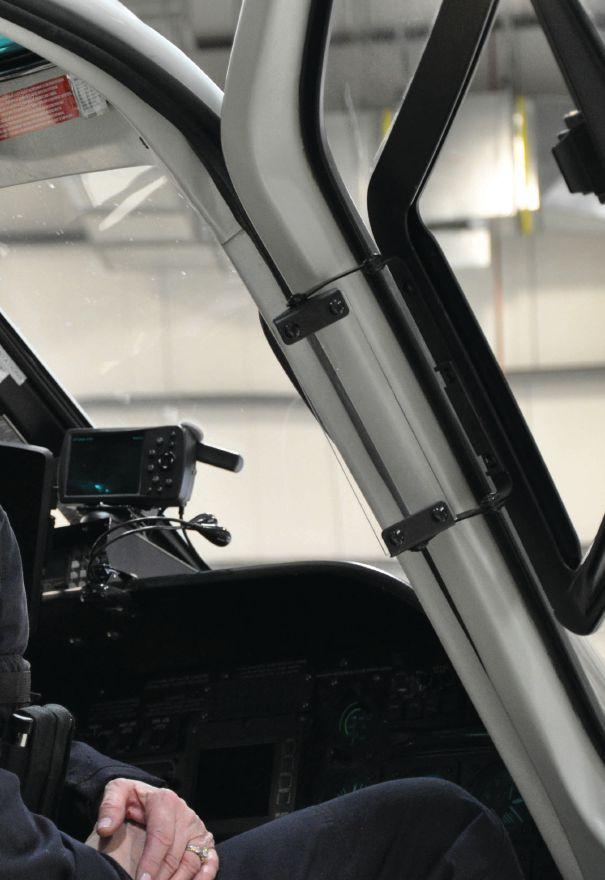
Stewart feels police agencies more than ever recognize the efficacy of helicopters, even if they are constrained by budgets. The RCMP received its first twinengine about a year ago. While more such investments are likely, she finds the AS350B3 to be a strong airframe for supporting the frontline members served by the Air Services Branch. “It is a proven platform for aerial support and being that eye in the sky. Our tactical flight officers and mission equipment provide tactical operational support to a command post or frontline members as situations unfold. The helicopter is a critical part of managing high-risk scenarios, as well as regular missions.” Most of the RCMP’s helicopter time involves a two-person crew – the pilot and a tactical flight officer on operational flights. “Approximately 10 to 15 per cent of the time, you wish you had a larger helicopter, primarily to support the Emergency Response Team or to haul a larger payload.”
Stewart enjoys the tactical nature of the RCMP, as well as their search-and-rescue missions. In late-2019, her team found a lost person who had been missing for 36 hours in sub-zero temperatures. He was located in a remote, heavily wooded, snow-covered area with no trails or cutlines for ground access, using NVGs and FLIR to pick up the heat signature from a small campfire. This allowed the crew to guide a SAR team on the ground into the area in the middle of the night to rescue him. “We made a difference between him being found and successfully rescued versus the alternative,” says Stewart, who also participated in last summer’s extensive search in remote Manitoba for two murder suspects.
“Each day is different and each mission is unique, so it keeps things young and fresh,” says Stewart. “Watching events unfold and contributing to a successful outcome by using the helicopter to its maximum effectiveness and supporting the frontline members is very rewarding.” | H
BY KENDRA KINCADE
As I look around at the people strapped in beside me, I think one thought before I’m flipped upside down underwater, “I’m not ready to die.” The water rushes in around my feet and I take a huge breath and hold it in as the helicopter spins, driving us all underwater.
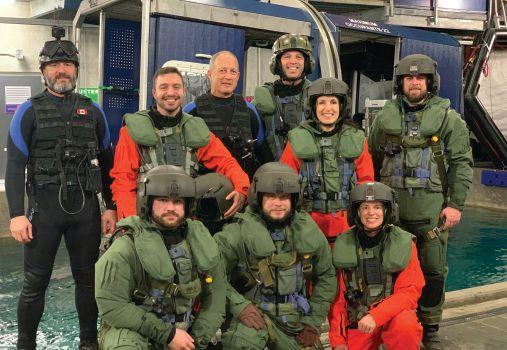
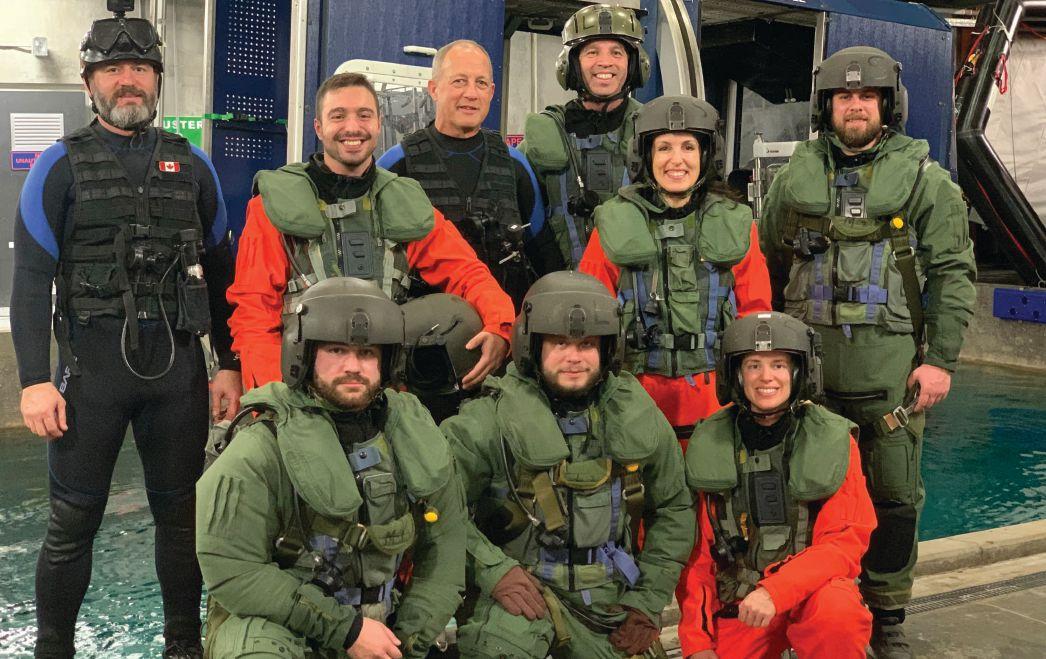
I never imagined I would one day find myself in this position – but here I am. I have joined a group of six military members of the Royal Canadian Air Force on a Rotary Wing Underwater Egress Training (RUET) course. The company providing this extreme training to our team is RelyOn Nutec, which sells its simulators all over the world. We are taking our training where the company was founded, Halifax, NS. All military members who work on a helicopter have to take the RUET course. Over the course of two days, we learn how important this training is in order to increase the likelihood of any possible survival in the event of ditching a helicopter. The training is broken up into two parts:
The mornings in the classroom and the afternoons in the simulator. The classroom covers several lessons, including (1) hazards of overwater operations; (2) what to expect in the rollover phase; (3) the importance of proper equipment; (4) how much time you may have to prepare in the event of an emergency that results in ditching; and (5) threats and survival facts. On day two we learn about potential complications with getting snagged underwater, training approaches, cold-water effects, and scenario briefings. All this information was strategically designed for one thing: To prepare us for what was about to come.
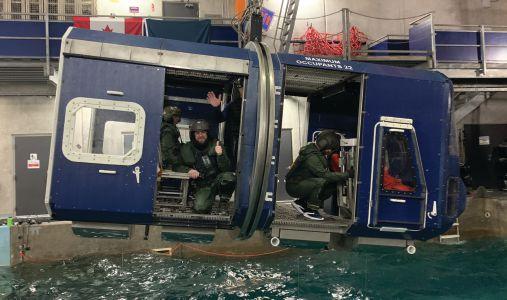
I walk into the simulator and look around. It’s housed in a huge cement pool with a crane dangling the body of a helicopter in the air over the middle of the pool. The lights are on, the pool is calm. It looks innocent enough.
The training is designed to build egress skills one step at a time. Step one turns out to be educating us on what it would feel like if we landed in cold water. They suit us up and dunk us into what they affectionately refer to as the hot tub, which is kept at a balmy 4-degrees Celsius. Ever wonder what that feels like – ice water. It feels like freezing cold ice water. Our instructor said that this course builds transferable skills, but I think this skill must be if you want to prepare for a polar bear dive.
Once the tub activity is complete, we jump into the pool to start our egress training. They teach us how to breathe through the emergency breathing system (EBS), essentially is a cylinder filled with pure air supplied through a mouthpiece. We then lay in our instructor’s arms so he can promptly dump us upside down and backwards under the water. Learning to flush and breath through your EBS upside down is a whole new skill – and it hurts. This pain is a prelude of what’s to come. After preparing in the pool, it’s time to go live in the helicopter.
We watch, some with a little anxiety, as the helicopter lowers down to water level allowing us to climb in. I look over at the two scuba divers who will jump in the water ahead of us. They are here to watch us and help out if we struggle. It makes me feel a bit better. This is how I come to find myself strapped in a seat watching water flood around me.
I start spinning sideways and I see the water flood the pilots a second before it rushes over me. The painful burning fills my nose immediately and I am completely disorientated. Okay, what am I supposed to do? I need to follow the directions from my instructor. I wait until we stop moving, knock out the window with my elbow, place my hand on the windowsill, so I know where to exit, unbuckle my seatbelt with the other hand, and escape! As I surface that first time I’m in a bit of shock. I did it. The pain in my nose and sinuses is harsh, but the thrill of completing the activity outweighs it all. I look around and see everyone else popping up as well. We all survived.
The scenarios get more and more intense over the two days. Mastering the EBS is important because the instructors add hazards and obstructions forcing people to stay under longer. During the last run, I’m amazed at how far we have come. This time I’m sitting on the helicopter and trying to look around. It’s dark now and hard to see, but I know one person is sitting on the side with a gun, another is on his knees by the side door. The pilots in the front have to work around scenarios designed to trip them up. I look sideways and see the waves pounding in the pool below. It really looks like we are in the ocean, with the sound of booming thunder. Lighting is flashing through the sky as the rain pounds down. This time, finally, I’m excited to go under. I know it’s the last run and I’m trained enough to know exactly what to do.
I see the water rush up and I’m not filled with dread. I do what I have been trained to do. Upon surfacing, I feel strong winds hit my face and the waves are crashing over me. I hear yelling. The pilots are calling to us from the front of the helicopter. I start swimming over to them but I’m very slow in the waves. All of a sudden, I feel myself being pulled quickly to the group. As soon as I am within reach, a member of our team grabbed my vest and pulled me toward them. ‘One!” I hear yelled out through the storm, followed by, “Two! Three! Four!”. “Five!” I yell quickly, proud to be a here with them. I feel like part of this team now and that indeed they would leave no man behind.
As a reward for all our hard work, we get to jump off a 15-foot platform into the raging, tempestuous water. From below I look up and think, easy! Then we climbed up. I watch as one team member after another jumps exactly as instructed into the water and swims to the raft. Hands crossed on their chest, looking straight ahead, crossing their ankles as they jump. They are so impressive to watch. They look exactly as you might imagine them to be – professional, strong, brave, well trained
military members of the RCAF. I’m going to jump just like them, I think to myself waiting in line for my turn, which comes all too quickly. I go to the edge and get ready to jump. I can’t. My body won’t go. My heart is pounding and I can feel it in my ears. I am so scared. I don’t want to do this. I know I have to. I can’t walk away no matter how much I want to. I attempt it again.
The instructor behind me is yelling at me, “We’re going down! Jump! The helicopter is going down!” I look down and see my team in the water, the wind is blowing so strong, whipping water in their faces. They are hanging onto each other, waiting for me. I have to go. I try again but my body won’t do it. I actually want to cry because I’m so mad at myself. Faintly, and then louder, I hear my name being chanted from below. They are calling my name, cheering me on even while they are being thrown around by the waves. They are not inflating the raft yet; they are going to wait for me. I can’t make them wait any longer. I jump. I want to say I was as professional and looked just like they did but that would be a lie. It was not pretty. I would describe it as more of a flailing around jump with arms and legs waving about, perhaps made even more distressing by the unintended scream that belted from my body. I smacked into the water, swam to the team as fast as I could, and link arms with them. They waited for me. They are my team. I truly believe they would leave no man behind.
Back in the class for wrap-up I ask Capt. Susan Ireson if she thought the course was fun. “Absolutely not,” she says and we all laugh. “I’m thankful for the training. I really am because I’m not sure what I would have done in a real ditching. But truly, there is not a single part of this I enjoyed.” Maj. Martin Jean had a different point of view, “Actually, I do enjoy it because it’s in a safe environment with divers all around, so I can try some things that might make me more comfortable in a ditching.”
Whether you like this training on not, everyone is much more likely to survive an underwater ditching should they ever be in one. This course has allowed me to be exposed to a part of what our Canadian military members in the RCAF go through; and to have the opportunity to gain another level of understanding of just how much the military members put their lives on the line to serve our country. I salute you all.
Being an honorary member of the military, I didn’t know how I would be received on this course. I didn’t know if the people on the course would welcome me or if they would think that I was in the way of their training. Now that it is complete, I want to say thank you to the brave and strong military members who became my team for two days. Thank you for looking out for me like you do for each other. By simply being yourselves, you have given me a gift to be able to experience the military loyalty, dedication, teamwork and perseverance. | H
Figure S1. Total number of accidents and fatalities involving Canadian-registered aircraft by operator
2000 to 2017 (Source: TSB)
Total number of accidents and fatalities involving Canadianregistered aircraft by operator type, 2000 to 2017 (Source: TSB)




BY KATHY FOX
he Transportation Safety Board of Canada on November 7 published its much-anticipated Safety Issue Investigation report called Raising the bar on safety: Reducing the risks associated with air-taxi operations in Canada. This in-depth Safety Issues Investigation (SII) was started by the Transportation Safety Board of Canada (TSB) back in May 2015 to identify persistent underlying safety issues in the air-taxi sector.
TCanada’s aviation industry is as diverse as the country itself, and nowhere is this better illustrated than in the air-taxi sector. These smaller fixed- and rotary-wing aircraft provide Canadians with a broad array of services: Helicopters to transport patients to hospitals; floatplanes to take commuters from harbour to harbour in coastal cities or to hunting or fishing camps; and aircraft to bring workers to remote areas, and deliver food, equipment, and passengers to small communities on a daily basis.
Commercial air services in Canada are defined in Part VII of the Canadian Aviation Regulations (CARs). There are four different catego-
ries based on an aircraft’s takeoff weight, the type of work being performed and the number of passengers it is configured to carry. These include: Subpart 702, Aerial Work; Subpart 703, Air Taxi; Subpart 704, Commuter; and Subpart 705, Airline.
Single-engine aircraft, multi-engine aircraft that have a maximum takeoff weight of 8,618 kg or less and are configured to carry nine passengers or less, and multi-engine helicopters certified for operation by a single pilot operating under visual flight rules (VFR), would fall under the air-taxi regulations.
Common airplanes used in air-taxi operations include: Beechcraft King Air 100, Cessna 185, Cessna 208, de Havilland DHC-2 Beaver, Pilatus PC-12, Piper Navajo. Common helicopters used in air-taxi operations include: Augusta A109, Bell 206, Bell 412, Eurocopter AS-350, Sikorsky S76.
Jet aircraft are not included in air-taxi regulations in Canada. These are generally regulated under subpart 604 of the CARs if privately operated, or under subpart 704 or 705 of the CARs depending on aircraft weight and passenger capacity, if operated commercially. There are
approximately 500 companies providing air-taxi services across Canada.
The air-taxi sector has more accidents, causing more fatalities, than all other sectors in commercial aviation in Canada combined. To find out why, the Transportation Safety Board conducted this exhaustive fouryear study on air-taxi operations in Canada. After studying more than 716 occurrences, interviewing 125 individuals, and analyzing approximately 300 hours of recordings, we determined that the answer was partly because of the nature of the work.
Air taxi operations take place in a very different context from other sectors of commercial aviation. They often have no set schedule and fly into remote areas in uncontrolled airspace with few or no aerodromes. Flights tend to be shorter, resulting in more takeoffs and landings. Access to basic weather information, or the latest aircraft technology, may be limited.
But the larger reason for so many accidents is more insidious, and boils down to two things: an acceptance of unsafe practices, and the inadequate management of operational hazards. Examples of the former include: flying overweight, flying into forecasted icing, not recording defects in the aircraft log, flying with unserviceable equipment, “pushing the weather,” and flying with inadequate fuel reserves. Examples of the latter include sub-optimal crew pairing, dispatching a flight with a different pilot after a first pilot has refused, or not having scales available to prevent aircraft from taking off overweight.
But why would these occur in the first place? The short answer is
because certain practices have become accepted as the “normal” way to conduct business. As these unsafe practices become more entrenched, and as flights are carried out successfully (though not necessarily safely), the associated risks become just “part of the job.”
Like any business, air taxi operators face competing pressures –operating pressures, sector pressures, and safety pressures – and these pressures must be managed in order to deliver a service, stay economically viable, and also stay safe. As long as those pressures stay in relative balance, a flight should operate safely.
But in the real world, those pressures are always shifting, pushing the operation toward boundaries, and toward a space that is not necessarily safe. That doesn’t mean that the result is always an accident, but it almost always means a reduced margin of safety –and an increased likelihood of an accident. Amid these three competing pressures, a flight would ideally operate in middle of what we describe as the Safe Operating Envelope model.
The SII could not draw conclusions on the accident rate in the air-taxi sector in Canada by hours flown or by number of movements (takeoffs or landings). This data is currently collected or reported for commercial aviation as a whole, but not for particular sectors (such as air taxi) or aircraft types (such as floatplanes or helicopters). Furthermore, movement data are not captured for locations where air-taxi operators are more likely to go, such as uncontrolled airports, remote locations with unprepared landing sites, or lakes.
INSPECTION • REPAIR • OVERHAUL
AS350 | AS355 | EC130 | BK117 Turbine
Design,
Getting clients, passengers, crews, and operators to reject unsafe practices – and to speak up to prevent those practices from happening – will be difficult. Doing so will require strategies, promotion, and education tailored to the sector to change values, attitudes, and behaviours and create a culture where unsafe practices are considered unacceptable. To help with this, the TSB issued four recommendations to Transport
Canada and industry aimed at: Eliminating the acceptance of unsafe practices; promoting proactive safety management and a culture of operating safely; updating aviation regulations to reduce identified safety gaps; and tracking data so that mitigation strategies can be better assessed.
Raising the bar on safety
In order to raise the bar on safety in air-taxi


operations, all stakeholders, together, need to change to a culture where unsafe practices are unacceptable. At the TSB, we plan to follow up by: Communicating these key messages to stakeholders; conducting outreach to help stakeholders understand their responsibility in creating a culture where unsafe practices are unacceptable and operational hazards are adequately managed; and monitoring air-taxi accident investigations and trends and communicating the results publicly.
In recent years, organizations such as the Floatplane Operators Association (FOA), the Air Transport Association of Canada (ATAC), the Helicopter Association of Canada (HAC), the Medallion Foundation, the Federal Aviation Administration (through its Circle of Safety program), and the Tour Operators Program of Safety have come together to improve safety in sectors with a high number of accidents. The initiatives they have organized go beyond the regulations and set high standards for members. These initiatives can provide a roadmap for improving safety in the air-taxi sector in Canada and participation by operators can also provide confidence and incentives for clients and passengers.
Associations within the air-taxi sector are well positioned to influence safety within the industry. They have a responsibility to their members and the industry and can play a role in positively influencing the three competing pressures described in the SII. Industry associations can provide seminars, training and tools, as well as documentation and guides. As an example, industry associations have worked together successfully in the past to address a critical shortage of skilled personnel in the Canadian aviation maintenance sector.
In 2016, the TSB recommended that TC require all commercial aviation operators in Canada to implement a formal safety management system (SMS). While individual employees routinely make decisions about risk, SMS focuses on organizational risk management, yet includes and supports the decision makers at the sharp end. An SMS is scalable and can be designed to meet the needs of a given operation in a way that respects the nature of the sector.
Associations can play an important role in making available to operators modern tools on safety culture and proactive safety management that will advance safety in their operations. This will foster the development of a culture of operating safely that is supported by all stakeholders.
Together, it is our goal for everyone to raise the bar on air safety in this vital sector, across Canada. | H
















BROUGHT TO YOU BY:











Secure your space now at the Innovation Hub at CANSEC and don’t miss the opportunity to showcase your innovative technologies to 12,000 Industry, military and government delegates from Canada and around the world.
Reserve before March 31, 2020 and get two complimentary tickets for the CANSEC evening reception.

GET YOUR PRESTIGE LEVEL TURNKEY KIOSK AS PART OF OUR ALL-INCLUSIVE PACKAGE FOR ONLY $4175
To find out more about the package details, contact: exhibits@defenceandsecurity. ca
Innovation Hub exhibit space is available to companies not traditionally involved in the defence sector, such as robotics, training & simulation, engineering, advanced manufacturing, advanced infrastructure, artificial intelligence, autonomous vehicles, new cutting-edge technologies, etc. The Innovation Hub is available to companies that have never exhibited at CANSEC nor been a member of the Canadian Association of Defence and Security Industries (CADSI).
PRESENTED BY:
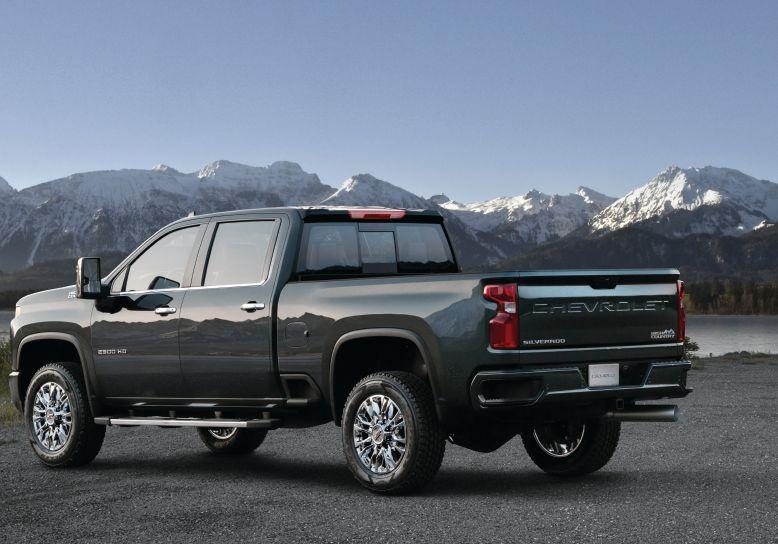
LEFT: The High Country is one of five trim levels for the newest Chevrolet Silverado HD – each offering a different level of design, features and technology to meet the demands of HD owners. (Photo: General Motors)
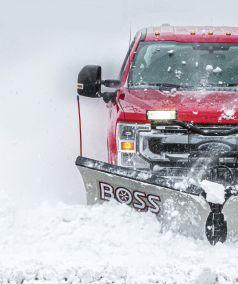
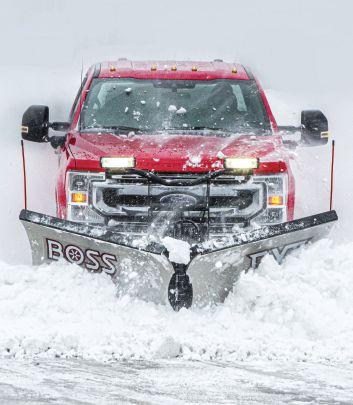
BELOW: The Snow Plow Prep Package on the new 2020 Ford F-Series Super Duty delivers 1,400pound maximum snow plow rating. (Photo: Ford)
In the market for a new work truck: Discover what is new in this year’s pick-up and van models
BY MARIO CYWINSKI
After an influx of new products hit the truck market in 2019, this model year is more of a transition year for many brands Once exclusive to heavy duty pick-up trucks and a selection of full-size vans, trucks brands are now adding diesel engines to their light duty trucks. While FCA added one to its Ram 1500 a few years ago, it is now introducing a new version on its 2020 truck, General Motors is also adding a diesel option to its Chevrolet Silverado and GMC Sierra, while Ford added a diesel to the F-150 in 2019.
Safety and technology also takes centre stage for 2020, as many brands are adding features not usually seen on pick-up trucks and vans in the past. These include cameras to better see around the vehicle, auto-
matic emergency braking, adaptive cruise control, and options to help with towing.
For 2020, a new player is added to the mix, as the Jeep Gladiator makes its debut in the mid-size segment. Heavy Duty models also see updates for 2020, as both Ford (Super Duty) and General Motors (Chevrolet Silverado HD and GMC Sierra HD) are all-new. Nissan has updated its Titan and Titan XD. Here we take a look at what is new, updated, and available in the pick-up truck and van market for 2020.
Ford Super Duty, Transit Ford has updated the Super Duty for 2020, with engine, capability, design, and technology changes. A new engine is added to the line-up, as a 7.3 litre V-8 gasoline engine with 430 horsepower and 475 foot/ pounds of torque make its debut. The 6.7L
Power Stroke diesel engine gets an update and now offers 475hp and 1,050 ft/lbs of torque. The standard engine continues to be a 6.2L gasoline engine. A new 10 speed heavy duty automatic transmissions is also added to the Super Duty and features drive modes that include normal, tow/haul, eco, slippery, and deep sand and snow.
The updated diesel engine allows the Super Duty to now offer gooseneck towing of 16,783 kilograms, fifth-wheel towing of 14,742kg, and conventional towing of 10,977kg. Maximum towing numbers are increased for all Super Duty models for 2020 (F-250, F-350, and F-450).
Ford has optimized the front end of the Super Duty to help with cooling, including a new front bumper and air dam. The rear tailgate, taillights, and rear bumper are all updated. LED headlights are also updated,
as are DRLS on higher trims.
Technology and safety changes also occur, as Pro Trailer Backup Assist is now offered on and allows the truck’s Trailer Reverse Guidance to be compatible with fifth-wheel and gooseneck trailers. Automatic emergency braking, lane-keeping alert, and blind spot monitoring are now standard on XLT trim and above. Other standard features, now include FordPass Connect with 4G LTE modem, available wireless charging, and Ford Telematics.
A new Tremor off-road package is also added to the line-up for 2020, featuring an upgraded suspension, running boards, 35-inch tires, and Trail Control (described as cruise control for off-road driving by Ford).
For 2020, the full-size Transit van gets a new 3.5L V-6 gasoline engine (replacing the 3.7L engine), it joins the 3.5L EcoBoost gas engine with 310 hp and 400 ft/lbs of torque and now with automatic start/stop function. Both engines are mated to a new 10-speed automatic transmission. An all-wheel drive system is also added as an option for 2020.
Safety is enhanced for 2020, with new standard automatic emergency braking (with pedestrian detection), forward collision warning, post-collision braking, lane keeping system, and automatic high beams. New available safety options include adaptive cruise control, front and rear camera, and a speed limiting device.
Minor changes occur to the exterior of Transit, including available HID headlamps with LED DRLs, unique grille designs for different models, and an available power sliding door for cargo and passenger vans. Interior is updated with subtle changes and improvements, and addition of available swivel front seats. FordPass Connect model with Wi-Fi hotspot (for up to 10 devices) is now standard.
Other vehicles: Canada’s top selling pick-up truck, Ford F-150, goes into 2020 with only minor package and colour changes. All-new in 2019, the mid-size Ranger carries over into 2020 with minor changes. Ford Transit Connect mid-size van is also available for 2020, albeit minus its diesel engine.
Carrying over into 2020, Chevrolet has announced an all-new Colorado to come for 2021 model year. It will offer updated lower fascia, front skid plates, and centre bars, new logos, embossed tailgate, and unique looks for each trim. The ZR2 model will feature a lettered Chevrolet front fascia.
After being all-new for 2019 model year, the 2020 model gets a new 3.0L turbocharged inline-six diesel engine that offers 277hp and 460 ft/lbs of torque, with maximum towing for four-wheel-drive models of 4,218kg and maximum payload of 848.2kg. A 10-speed automatic transmission is now available on 5.3L V-8 models. Silverado will also receive available 15 camera views and adaptive cruise control with camera.
As both the GMC Sierra HD and the Chevrolet Silverado HD are all-new for 2020, and share many changes, we will focus on the GMC model to save space. The Sierra HD features an all-new design that makes it taller, longer, larger and with a longer wheelbase. Redesigned lighting is prominent as headlights, taillights, fog lights, roof marker lights and DRLs are all available in LED. Additionally, the grille is larger and hood scoops are more functional.
In the back, cargo bed volume is improved, 12 corner tie-downs are included, a 120v power outlet is available, cargo bed steps are new and in addition to the current corner steps, and the MultiPro tailgate, which debuted on the Sierra in 2019 is available on HD models
Technology is also front and centre, as GMC’s ProGrade Trailering system is now available on HD models, as is an available 15 camera views. Additional technologies available are an automatic electric parking brake, park grade hold assist, and tow/haul mode that stays on for the next time the vehicle is turned on (up to four hours).
Power wise, Sierra HD now offers a 10-speed automatic transmission on its 6.6L turbocharged diesel engine that outputs 445hp and 910 ft/lbs of torque. An AT4 off-road version is also added for 2020.
Other vehicles: General Motors also offers two full-size vans, GMC Savana and Chevrolet Express. GMC Sierra models also receive the 3.0L diesel engine as all-new for 2020. GMC Canyon sees the addition of AT4 off-road variant for 2020. A max towing capacity of 13,607 kg is expected.
All-new for 2020, the Jeep Gladiator is the newest member of the mid-size pick-up truck market. It brings Jeep’s off-road pedigree, so when it is driven off the main road, something that many contractors, job site workers, and others, experience on a daily basis, it doesn’t miss a beat. It has a wheelbase of 3,487 millimetres, a fivefoot cargo box (1,531 millimetres with the tailgate closed), and towing capacity of 1,814kg to 3,469kg (depending on how its equipped).
Power for the Gladiator comes from the Pentastar 3.6L V-6 with 285 hp and 260 ft/lbs of torque mated to an eight-speed automatic transmission or a six-speed manual transmission. A 3.0L diesel engine will also be available and offer 260 hp and 442 ft/lbs of torque, mated to an eight-speed automatic transmission as standard.

The vehicle is available with trailer sway control, the cargo box offers standard cargo lights, dampened tailgate, tie-down loops, and optional spray-in bedliner and roll-up tonneau cover.
Three sizes of FCA’s uConnect system are available, a standard five-inch screen, a seven-inch, and an 8.4”. The instrument cluster comes with a standard 3.5” screen, or an optional seven-inch. Gladiator is available in Sport, Overland, and Rubicon models.
All-new for 2019, the Sprinter sees minor changes to packages and available equipment for the 2020 model year. All crew vans now come standard with wood floor with six d-rings; rear window defroster, storage compartment with net in rear doors, and windows in rear doors; satellite radio now available on all models; and all cargo models now offer a full window package.
Sprinter comes outfitted with a V-6 diesel engine that provides 325 ft/lbs of torque and 188 hp mated to a seven-speed automatic transmission, a four-cylinder gas engine provides 258 ft/lbs of torque and 188hp and is mated to a nine-speed automatic transmission.
Four body types are available (cargo, crew, passenger and cab chassis), two roof heights (standard and high), three wheelbases (144”, 170” and 170” EXT), three rear wheel types (single, super single, or dual), and standard rear-wheel drive and available 4×4.
Mercedes-Benz Canada also offers a smaller mid-size van, Metris. The Metris is available in both cargo and passenger variants. In addition to new colour, wheel and equipment options, the Metris receives a new instrument cluster design as standard for 2020.
For 2020, Nissan has updated the exterior styling of the Titan, which it dubs the Powerful Warrior design. The new design now offers a unique grille for each of its three trim levels, PRO-4X and Platinum grades now offer standard new headlights, LED DRLs, and available LED fog lights. The bed now has all-LED lighting with four light sources, also the rear of the Titan now has LED lighting. The exterior changes also include an updated front bumper, fog lights, badging and wheel designs.
On the interior, Titan now offers an available nine-inch touchscreen (an eight-
inch screen is standard) as part of its integrated command center, which also includes Apple CarPlay, Android Auto, and a Wi-Fi router (subscription required). A seven-inch driver information display is also included. With a new NissanConnect on the 2020 Titan, it now has over-the-air software updates.
For 2020, Nissan has also updated its 5.6L V-8 engine, which now offers 400 hp and 413 ft/lbs of torque, and is mated to a new nine-speed automatic transmission. Nissan Safety Shield 360 technology is now standard on all Titan models. It offers: automatic emergency braking (with pedestrian detection), blind spot monitoring, rear cross traffic alert, lane departure warning, automatic high beams rear emergency braking.
The larger Titan XD model shares the updates of the smaller Titan. It will now be offered in a crew cab body with a 6.5’ bed and four-wheel-drive as the only configuration available in SV, PRO-4X, and Platinum Reserve trims.
Other vehicles: Nissan offers two cargo van options. NV full-size cargo van now has navigation package standard on SV models. While the mid-size NV200 van has a new seven-inch colour touchscreen display unit on S and SV trims with NissanConnect with Apple CarPlay and Android Auto, with satellite radio and Bluetooth, iPod Interface, and USB inputs. A mid-size pick-up, the Frontier is also still available.
Introduced as an all-new model in 2019, for 2020 a diesel engine is added to the lineup. The 3.0L EcoDiesel V-6 engine offers 260 hp and 480 ft/lbs of torque, and has a towing capacity of 5,697 kilograms (12,560lbs). It joins the 3.6L eTorque Pentastar V-6 with 305hp and 269 ft/lbs of torque; and the 5.7L HEMI V-8 (with or without eTorque) outputting 395hp and 410 ft/lbs of torque.
Added for 2020 is a Night Edition model that offers monochromatic design with black wheels (22” on Laramie, 20” on Big Horn), black badging, and a variety of colour options. The Rebel model offers a Black Appearance package with black wheels, black skid plate, and a black interior (red is optional). It now has a safety package with adaptive cruise control, automatic emergency braking, lane departure warning, and automatic high beams.
For 2020, the HD models also get a new Night Edition, with similar options. Ram also adds lane keeping and adaptive steer-
ing as available equipment on all trims. Additionally, trailer tire pressure monitoring and blind spot monitoring (including coverage for trailer) are added, as is an auxiliary camera system that can have two cameras added. Crew cab with eight-foot bed now comes standard with an 187L fuel tank. Colour and wheel changes also occur.
Other models: Ram also offers two van models, ProMaster and ProMaster City, both carryover into 2020 with minimal changes.
The mid-size Tacoma see incremental changes for 2020, with all models now offering Toyota Connected Services Audio with seven- or eight-inch touchscreen, and Apple CarPlay and Android Auto. Some models get multi terrain view monitor and birds eye view monitor; TRD Pro models get new colours and features; while other trim levels get equipment updates.
Tacoma is available with a 3.5L V-6 engine with 278hp and 265 ft/lbs of torque, mated to a six-speed automatic transmission, with a six-speed manual transmission available on several TRD models. Access cab and double cab are available in 4×4 configuration.
Toyota Safety Sense P is standard on all Tacoma models. It offers adaptive cruise control, lane departure warning, automatic high beams, and automatic emergency braking (with pedestrian detection). All 4×2 and four-cylinder models are discontinued for 2020.
The Tundra full-size pick-up is a carryover for 2020, with Connected Services Audio offered just like with the Tacoma. It also comes standard with Toyota Safety Sense P. Added for 2020 is a Premium trim for TRD Sport and Off-road models. It offers premium audio with a remote and has embedded navigation with destination assist, leather seat cladding and leatherwrapped steering wheel, dual zone automatic climate control, blind spot monitoring with rear cross traffic alert and a sprayin bed liner. Also, for 2020 is standard Smart Key with push button start on TRD Sport/Off Road trims and above. | H
Mario Cywinski is the Editor of Machinery and Equipment MRO magazine, a member of the Automobile Journalists Association of Canada, and a judge for Canadian Truck King Challenge. He has over 10 years of editorial experience and over 15 years of automobile industry experience, as well as small business industry experience.

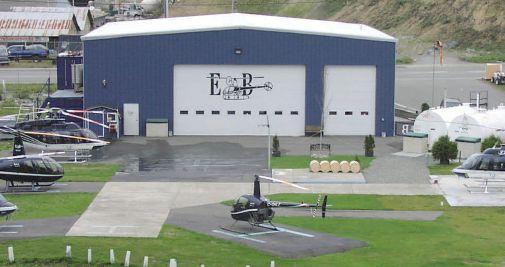
Campbell River Base
e-mail: info@ebhelicopters.com www.ebhelicopters.com
Gold River Base
Tel: 250-283-7616
Fax: 250-283-7555
Port Alberni Base
Tel: 250-720-8915
Fax: 250-720-3641

•
• Robinson R22, R44, R66
• AW 119KE
• New & Used helicopter sales
• Complete overhaul facility R22, R44 and R66
Avionics
• Helicopter and Fixed-wing complete avionic services




Abbotsford International Airport, Airside Event Spaces, Abbotsford, BC A one-day conference designed to provide operators and fire agencies with critical business information on the direction of aerial firefighting
•
•
•
• Air Traffic Management
•
•
•
•


Why cockpit discipline must extend to ground procedures
Let’s be real – there is no statute of limitations on being stupid, but I am going to tell this story anyway. In our business, I have always said, “Little things, become big things”, and the discipline we apply (or lack thereof) can mean the difference between a safe and uneventful flight, and major problems.
Years ago, I was goose banding on the coast of Hudson’s Bay in the late Spring, between Cape Henrietta and Churchill, Manitoba –the area, generally, is referred-to as Polar Bear Alley. At that time of year, the bears are coming off the melting sea ice to spend their summers on the mainland. I have seen a hundred, or so, bears along that stretch of coast. On a warm Spring day, they can be seen sunning themselves or swimming. As the Apex Predator in the area, they are largely oblivious to presence of the helicopter and its occupants – in the air or on the ground. They are most often seen on the beach or in the coastal grass, raising their heads to observe the helicopter and Goose Banding crew, with idle curiosity.
As many of you know, Canadian Geese molt while they are raising their young – and become flightless during this period. Every year, the geese wander in large groups with their young, on the mud flats along the coast of James Bay and Hudson’s Bay. It’s a great opportunity to band the birds, because they can be herded, like cattle, with a helicopter. Once the geese have been herded in to a tight group, four occupants are placed by the helicopter around the group – to
one-by-one as they are banded. Setting the net takes about 15 to 20 minutes for two people. It should be said that the helicopter is equipped with a shotgun and slugs, but usually the first round in the magazine is a “cracker” shell, intended to scare the animal before resorting to the more lethal force of the slugs. One person is always identified to keep watch for bears.
On this particular day, it was sunny with almost calm winds. Under normal circumstances, once the helicopter lands and shuts down, the last two occupants begin the process of moving the net, the decoys (placed at the entrance of the corral, to leave the geese with the impression that their “friends are already here”), and the bands and paperwork to the nearby netting site. It takes two or three trips. The shotgun should be carried by the pilot each time a load is moved. It varies, but in this case the helicopter was located fairly close-by, about 50 metres from the netting area.
I sprinted toward the helicopter, but I could see the bear was planning to converge with my trajectory. ‘‘ ’’
keep them from dispersing, again. The helicopter, its pilot, and its one remaining passenger, usually a Conservation Officer (CO) with a handgun, then lands on nearby dry ground – adjacent to the mud flats – and they set up a circular net corral. That means setting aluminum poles in the ground, with netting between them, with the side facing the coast left open.
Notionally, after the four people surrounding the geese have herded the flock in to the corral’s entrance, the entrance is closed behind them with more netting and poles. The geese are removed one-by-one and the banding process begins. They are also released
After landing, while the aircraft was cooling down, the CO took the net to the nearby netting site and began to set up. After coolingdown the aircraft and shutting down, I started to unload the remaining equipment and paperwork. Notably, given the near-calm winds, I did not tie down the blades. On the first trip to move the gear, I did not bring the shotgun. As I arrived at the netting site, the CO remarked with some alarm, “There is a bear approaching us from the West – and he’s running!”. Sure enough, there was an adult bear running directly toward us. Realizing now, that I was without the shotgun, I sprinted toward the helicopter, but I could see the bear was planning to converge with my trajectory at the helicopter. (He’s probably done that calculation a million times.) I could see that he would likely arrive there slightly after me. I can still remember thinking, “Do I get the shotgun out of the baggage compartment – still in it’s case, but unlocked and unloaded – or do I try and start the helicopter and hope that the movement and noise slows him down? I imagined myself struggling with the soft case and the shells – I opted for the helicopter and an abbreviated start procedure… As soon as I hit the starter and the engine began to whine, I could see the bear slowing down, and rethinking his lunch plans. He slowed to a stop about 40 metres away, and began to retreat as I lifted the helicopter into the air. I learned to apply cockpit discipline to procedures on the ground, too. | H
Fred Jones is CEO of the Helicopter Association of Canada.


WE DELIVER on what you value most. For over a century, the helicopter industry has relied on StandardAero to provide best-in-class rotary wing support with excellent operational efficiency and custom MRO solutions. Through our innovative, safety driven approach, comprehensive helicopter support capabilities and reliable service provided by our expert technicians, it’s no wonder why we are the trusted service partner.
Engines
• GE T700/CT7
• Pratt & Whitney Canada PT6T
• Rolls-Royce M250 and RR300
• Safran Arriel 1 & 2
Airframes
• Airbus H125/AS350, H130/EC130, H135 and H225/AS332
• Bell 204/205, 206, 212/412, 222, 230, 407, 427 and 430
• Sikorsky S-76, S-92 and S-61 Dynamic Components
www.standardaero.com helicopters@standardaero.com +1.204.318.7544


It’s no surprise the H145 is the helicopter of choice for rescue missions. Whether at sea, on a mountain or in a blizzard, it can bring help to where it’s needed. Compact and versatile, it provides outstanding flight performance under the most extreme conditions.
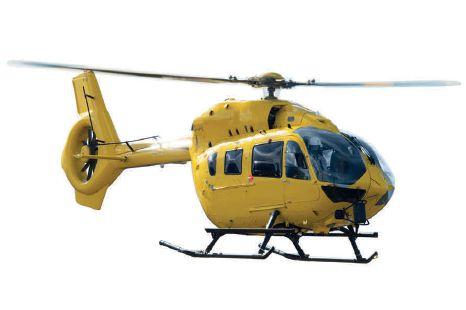
Resilience. We make it fly.