Going Digital
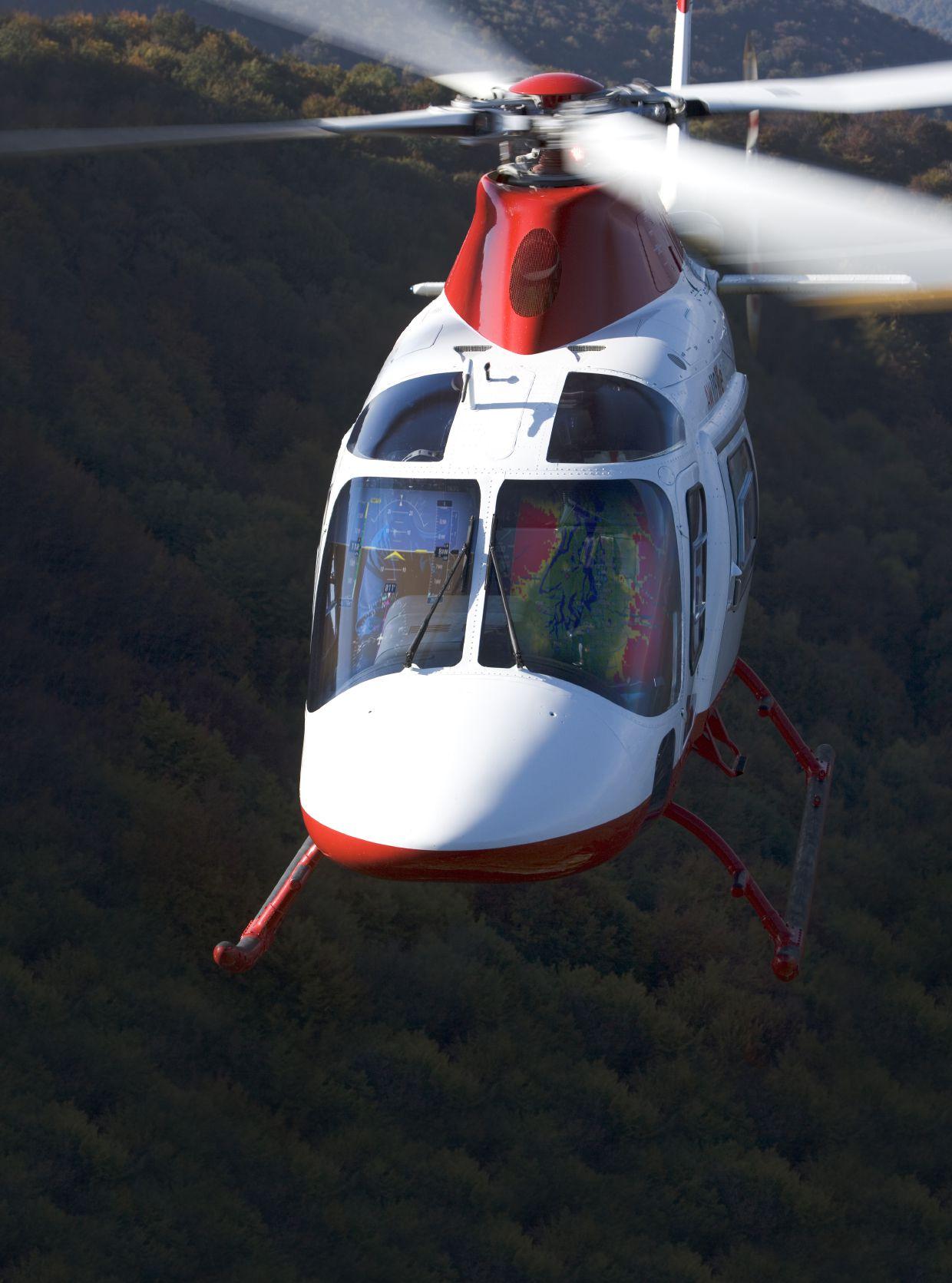

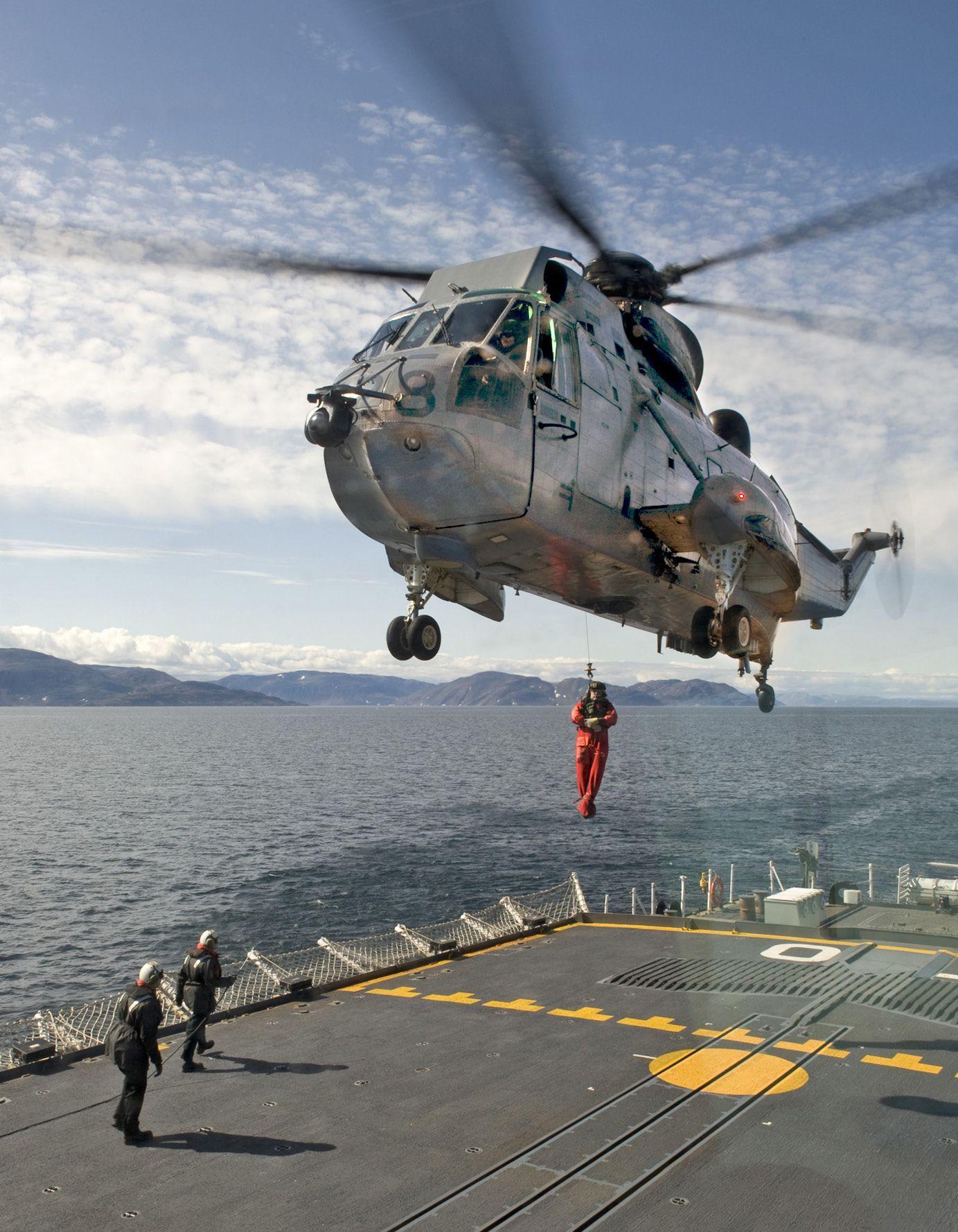
The largest and most powerful single engine multi-role helicopter in the marketplace is now enhanced by advanced digital avionics.
As the latest evolution of the AW119 “Koala”, the AW119Kx features a state of the art Garmin G1000HTM-integrated cockpit; critical flight information is shown on two large multi-function displays in real time, allowing the highest levels of safety with ultimate situational awareness and reduced pilot workload.
LEADING THE FUTURE
agustawestland.com
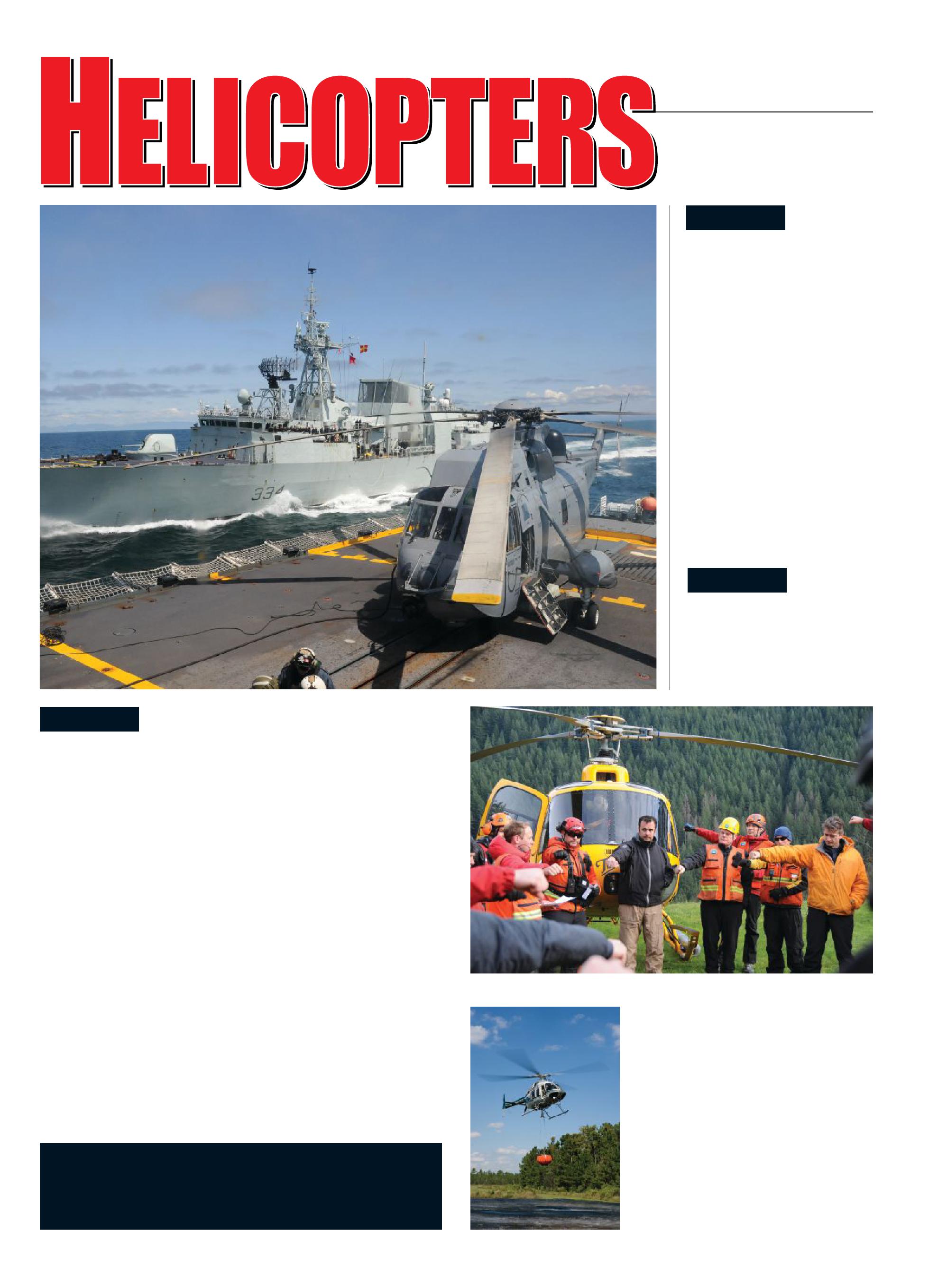

CMatt niCHolls is editor of Helicopters
all me a little odd, but unlike many, i am not one to partake in the annual revelry at my local tavern when the big red ball drops at times square in new York City on new Year’s eve. no, i prefer a more reflective approach to the annual passing of time, which is one of the reasons why i like analyzing the top stories and/or news highlights of the previous 365 days. with that in mind, i am happy to present a few of the stories that piqued my interest in the Canadian helicopter industry over the past year. And while not everything hit a home run for industry, some of these items will no doubt be on our radar for months and years to come:
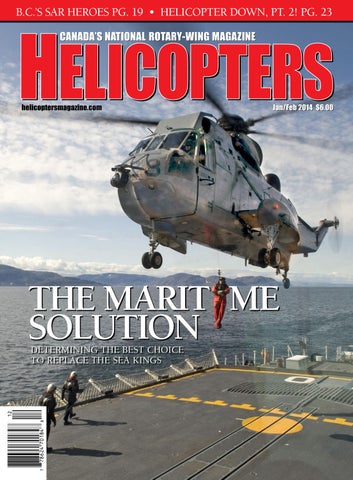
Maritime Madness – almost replacing the replacement As the year came to a close, the federal government finally made a decision on what to do to replace its aging sea King fleet. in a relatively quiet announcement on the last day of the year, the Harper conservatives decided to follow through with recommendations made by consulting firm Hitachi Consulting to stick it out with the muchmaligned sikorsky CH-148 Cyclone after major oeMs presented their best solutions for the maritime project in november. (For more on the replacement, see “the Maritime solution, page 14). sikorsky is woefully behind on the project and has incurred millions in late fees, which frankly, is not acceptable. now that the political posturing has seemingly been put to rest on what may be the worst procurement in
Pause For Reflection
Some Newsworthy Happenings From a Busy 2013
the crash. Details on the cause have not been officially determined. this tragic event, coupled with ongoing reports of financial impropriety by former Ceo Christopher Mazza, as well as operational concerns and other issues, casts a negative light on the organization. with such a critical service in such a vast province, it’s imperative some level of stability ensue going forward; ontario residents deserve it.
it’s a Bird, it’s a Plane . . . it’s a uaV in an online poll at www.helicoptersmagazine.com, some 64 per cent of respondents said the implementation of unmanned aerial vehicles (UAVs) will not be a boon to operators. However, the helicopter landscape could very well change in a drastic way. UAVs could be used for a number of civilian projects currently within the purview of commercial operators including surveillance, law enforcement, film work, arctic patrol, pipeline inspection, and construction. will this spell the loss of contracts for some operators? Create opportunities for those that implement them? Mess up already crowded regulatory issues and air space? will UAVs be buzzing around in 2014? in widespread civilian uses, no, but they are coming – and Helicopters will be watching; operators should, too.
sikorsky is woefully behind on this project and has incurred millions in late fees. ‘‘ ’’
Canadian history, let’s hope this decision breathes new life into the important project.
Painting a Fresh new ornge ontario’s medical transportation service, ornge, continued to grab headlines nationwide, mostly for the wrong reasons. tragedy struck on May 31, when one of the firm’s s-76 helicopters went down after taking off from Moosonee to pick up a patient in Attawapiskat. Pilot Don Filliter, a friend and contact of mine, first officer Jacques Dupuy, and paramedics Dustin Dagenais and Chris snowball were all killed in
Come Together – right now . . . in the name of Safety industry trade shows are often a barometer of the state of the industry and the CHC Quality & safety summit in Vancouver last March and the Helicopter Association of Canada’s Annual Conference and trade show in november were strong events brimming with salient education aimed at finding solutions to make the industry stronger, more cohesive, and most importantly, safer. the CHC safety & Quality summit continues to be the most informative show of its kind in the industry for collaborative intelligence, while HAC’s new fall format was a hit, for suppliers and exhibitors alike (for more, see, “Realizing the Dream,” page 34.) As client demands continue to escalate, collaboration and exceeding all levels of operational integrity remain paramount. so there you have it, a few notes and trends worth mulling over in 2014 and beyond. Here’s hoping your new year is a successful one, dominated by strong relationships with clients, united internal operational teams and open dialogues aimed at establishing new paradigms and industry best practices that continue to make the Canadian helicopter industry safe and productive!
MARCH 31ST – APRIL 2ND 2014 Come to Explore Safety and Quality in the Real World; Turning Theory into Best Practice
Westin Bayshore Resort & Marina, Vancouver, BC, Canada

40 Sessions
Exceptional value
World-class speakers
Outstanding networking
Unprecedented training opportunities
A valuable event and excellent platform to improve individual knowledge and exchange ideas. Stephan Koehler, AIR-TEC
This is absolutely the best conference series that I have ever attended.
Bill Rankin – Technical Fellow, Boeing
Operational Growth: It’s
All About Retention
More than 81 per cent of canadian aviation sector owners and managers rate staff recruiting and retention as the key issue facing the growth of their operations. in a november 2013 survey conducted by both Wings and Helicopters magazines, human resources rated above all other potential hurdles to future growth, with only finding and retaining new markets in the same ballpark. so how does the sector recruit and retain high-calibre staff? while many in the industry believe that a higher wage is the main weapon to win this battle, recent research into employee preferences shows other options. according to an extensive standard life survey of both employees and managers at small to medium enterprises (sMes), employees and potential hires give a lot more weight to factors like group
savings and retirement (gs&R) plans than many managers believe. that disconnect factors large in industries like aviation, where companies in the 50 to 100 employee range make up a large part of the landscape.
eMploYees Value plans?
For starters, almost 90 per cent of employees say that a competitive gs&R plan is a major factor when considering new job opportunities, while 82 per
cent with a plan would recommend their company to friends and family. that compares to just 69 per cent in companies without plans.
Yet what do employers in sectors like ours believe? tellingly, when offered a list of potential perks and asked to choose those that they feel their employees would most like, managers are wide of the mark. only five per cent believe employees would choose an employer-
contributed pension plan, despite the fact that more than 33 per cent of employees rate the matching pension plan as their top perk.
Most importantly from an employee loyalty perspective, almost 80 per cent of employees say that a good gs&R plan decreases the likelihood of them leaving the company. in uncertain economic times, it appears employees at sMes increasingly value help in saving for retirement.
deFeCtiVe Blade Caused KapusKasinG CRasH
The Transportation Safety Board (TSB) has confirmed a defective rotor blade caused a deadly helicopter crash near Kapuskasing in 2011. The Bell 206 was conducting a timber survey when it went down, killing the pilot and two Tembec employees on board.
The TSB determined the rotor blades on the helicopter had flaws as they were manufactured with a defect. The report also said the helicopter manufacturer was aware of the problem. The same issue caused a fatal helicopter crash in 2008 in Indiana that killed three people on board. As a result, in 2009, the TSB said Bell Helicopters came up with a new inspection procedure for the blades.
The TSB approved the inspection procedure, but has since revised its regulation for the affected rotor blades, limiting how long they can be used on a helicopter, rather than relying on inspections, notes The Canadian Press. The president of Sunrise Helicopters, a North Bay company that operated the fatal Kapuskasing flight, said doing an inspection was common practice. “But evidently, something fell in the cracks,” Chris Selk told The Canadian Press. “It’s been really hard. I’ve lost one of my key staff members. One of my best friends. It’s definitely been very hard on the staff and family members.”
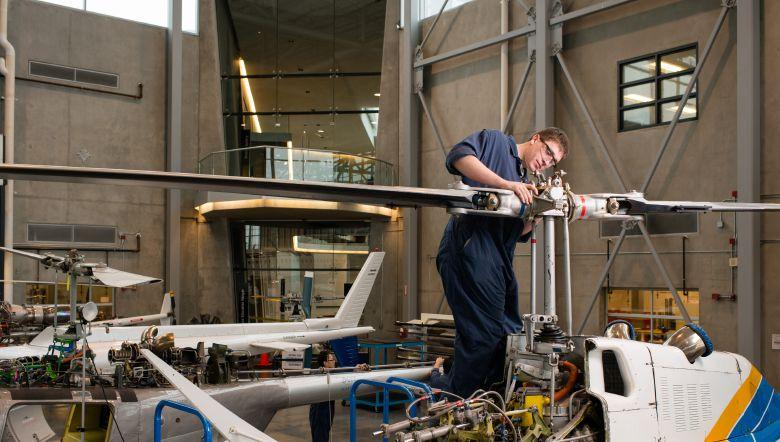
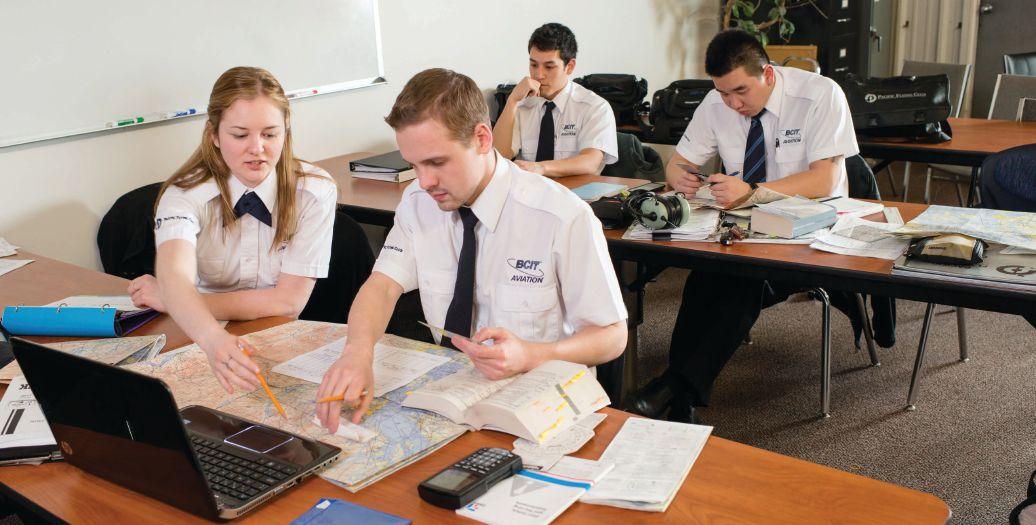
Salary isn’t the only drawing card for workers ready to enter the workforce. (Photo courtesy of BCIT)
Regina Heli-port Will Help save time
The Shock Trauma Air Rescue Society (STARS) will be able to land at Regina General Hospital now that Transport Canada (TC) has certified the new $3.4-million rooftop heliport for use.
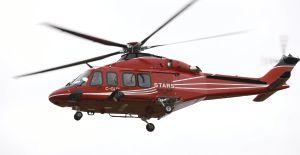
Critically ill patients in Regina will receive much better care now that STARS will be able to land at the new helipad at Regina General Hospital. (Photo courtesy of STARS)
“Landing directly at Regina General will allow our emergency services to get patients in southern Saskatchewan to a critical care team about 15 minutes faster,” Health Minister Dustin Duncan said. “For a patient, that can make a significant difference. This enhances emergency services for people in rural and remote areas in southern Saskatchewan.”
“The Regina Qu’Appelle Health Region is proud to be home to the first rooftop heli-port in Saskatchewan, saving precious minutes for those with critical care needs,” Regina Qu’Appelle Health Region president and CEO Keith Dewar said. “With the heliport in place, we look forward to enhancing our critical care program in the region, including implementing a critical care team leader program, which we are discussing with the Ministry of Health.”
The hospital was ready to receive patients at the heliport in mid-December 2013, as soon as all hospital staff involved in helicopter landings have completed training.
The provincial government provided funding for the new heliport. A similar heliport will be installed on the roof of the new Children’s Hospital of Saskatchewan to allow quick access to that hospital and the adjacent Royal University Hospital. Completion of construction is expected by the end of 2016.
The Ministry of Health plans to support the development of future helipads in Saskatchewan by monitoring patient call volumes, by carrying out evaluations from helipad consulting engineers and by identifying strategic locations that can be most effectively served by a helicopter.
With the helicopter air medical progrm, Saskatchewan continues to enhance access to emergency medical services. This service, along with the province’s fixed-wing air ambulance program and other emergency medical services, is an essential component of the total patient care system.
Industry Leaders Honoured at HAC Event
several key members of the Canadian helicopter industry were honoured at the annual Helicopter Association of Canada’s annual convention and trade show this past november in Vancouver for their outstanding contributions to the industry.
Paul spring, president of Fort mcmurray-based phoenix heliFlight, was named the winner of the 2013 eurocopter Canada innovation in safety Award for his long-standing efforts to raise safety standards not only in canada but around the globe. Active in the industry for more than 37 years, spring has been an early adopter of innovative safety management systems in Canadian helicopter operations and a strong advocate for new safety monitoring technology. spring has worked to transform the safety management culture at phoenix heli-Flight to align with the
aviation safety guidelines of the international oil and gas Producers (ogP) and also acquired satellite-based communications, flight tracking systems and twin-engine helicopters. He is also a pioneer in the implementation of flight data monitoring systems in his aircraft and worked tirelessly in the industry to promote the use of HFDM to hundreds of industry professionals as a founding member of the Flight Data Monitoring steering group. geoff goodyear, long-time HAC leader and safety advocate who is president and Coo of Universal Helicopters, and Al eustis, who during an illustrious career as both a fixed- and rotary-wing pilot was a tremendous advocate for safety, were each recipients of Honorary life Member Awards. in goodyear’s case, it was suggested by luncheon host sylvain seguin of Canadian Helicopters that
HELICOPTERS MAGAZINE
P.O. Box 530 105 Donly Drive South Simcoe ON N3Y 4N5
Tel.: 519-428-3471 Fax: 519-429-3094 Toll Free: 1-888-599-2228
Website: www.helicoptersmagazine.com
EDITOR MATT NICHOLLS e-mail: mnicholls@annexweb.com 416-725-5637
MEDIA DESIGNER GERRY WIEBE
CONTRIBUTING WRITERS
MICHAEL BELLAMY, DAVID CARR BRIAN DUNN, PAUL DIxON, WALTER HENEGHAN, FRED JONES, JAMES MARASA, CARROLL MCCORMICK, ROB SEAMAN
ASSOCIATE PUBLISHER WENG NG e-mail: wng@annexweb.com 519-429-5191 • 1-888-599-2228 ext. 246
ADVERTISING SALES JARAH STEFEK e-mail: jstefek@annexweb.com 1-800-265-2827
SALES ASSISTANT STEPHANIE DEFIELDS e-mail: sdefieldsi@annexweb.com 1-888-599-2228 ext. 257
GROUP PUBLISHER SCOTT JAMIESON e-mail: sjamieson@annexweb.com
PRESIDENT MIKE FREDERICKS e-mail: mfredericks@annexweb.com
RETURN UNDELIVERABLE CANADIAN ADDRESSES TO ANNEx PUBLISHING & PRINTING INC., P.O. BOx 530, SIMCOE, ON N3Y 4N5 CANADA. e-mail: subscribe@helicoptersmagazine.com
Published five times a year by Annex Publishing & Printing Inc.
Printed in Canada ISSN 0227-3161
HAC should consider “retiring his number” for the illustrious years of service he has dedicated to the board.
three other prominent industry stalwarts were also honoured as 2013 Agar stringer award winners. this award is given to industry trailblazers who stand out amongst their peers for dedication and achievement. the 2013 winners: Keith ostertag (Ko), Chinook Helicopters, for his dedication in training development; Aviation insurance guru John ward from north saanich, B.C.’s Pacific Adjusters; and CHC’s greg whyte, who has been instrumental in the development of the successful CHC safety & Quality summit.
this year’s conference was the first full late-season event and proved to be a hit among attendees and exhibitors alike. For more on the event, see “Realizing the Dream,” page 34.
CIRCULATION e-mail: subscribe@helicoptersmagazine.com Tel: 866-790-6070 ext 208 Fax: 877-624-1940 Mail: P.O. Box 530 Simcoe, ON N3Y 4N5
SUBSCRIPTION RATES
Canada – 1 Year - $25.00 (all taxes included)
USA – 1 Year $35.00
Foreign – 1 Year $45.00
Occasionally, Helicopters magazine will mail information on behalf of industry-related groups whose products and services we believe may be of interest to you. If you prefer not to receive this information, please contact our circulation department in any of the four ways listed above.
No part of the editorial content of this publication may be reprinted without the publisher’s written permission ©2014 Annex Publishing & Printing Inc. All rights reserved. Opinions expressed in this magazine are not necessarily those of the editor or the publisher. No liability is assumed for errors or omissions. All advertising is subject to the publisher’s approval. Such approval does not imply any endorsement of the products or services advertised. Publisher reserves the right to refuse advertising that does not meet the standards of the publication.
Helicopters Magazine is a corporate member of the

Helicopters Magazine is an associate member of the following Canadian aviation associations:
european air and defence company eADs, the parent company of Airbus and eurocopter, is cutting some 5,800 jobs over the next two years as part of a major overhaul to reduce costs and refocus on civil aviation.
the company said in a statement that the jobs would be eliminated from its corporate and space and defence divisions by the end of 2016. the many space and defence divisions will be combined into one arm, to be called airbus Ds
eADs, which is changing its overall name to Airbus, is also getting rid of its corporate headquarters, just outside Paris, and moving staff to another site, also outside paris.
the company had once sought to become less depen-
big changes at eaDs
dent on its civil aircraft business with a goal of increasing its defence business, maker of the A400M european freighter, to around half of total revenue. A major part of that plan was a proposed merger with British defence company BAe systems. the merger would have created a company with a market value just shy of Airbus rival Boeing’s and one with a more equal balance of civil aviation and defence. Currently, the civil aircraft business makes up almost 70 per cent of eADs’ group sales.
objections from the French, german and british government scuttled the merger, and the global economic downturn, which forced governments to drastically cut military spending, has made the defence business a
Mazza Received almost $10 Million in public Money
As the end of 2013 drew to a close, the fallout from the Ornge scandal continued.
much more difficult one. but ceo tom enders said that the cuts were necessary if the company is going to compete and attract defence and space customers in growing markets outside europe, which is not doing as well.
eADs said it would offer up to 1,500 of those laid off positions at Airbus or eurocopter. Another 1,300 positions will be eliminated by non-renewal of temporary contracts. the company, which has most of its operations in France, germany, spain and Britain, did not specify where the cuts would be made. Under the new name, eurocopter will be known as Airbus Helicopters. eurocopter canada will under the name change on a gradual basis early in 2014.

According to a report in the Toronto Star, Ornge founder Dr. Chris Mazza received $9.3 million in public money from the air ambulance firm during his six years there, according to new documents obtained by the newspaper.
The accounting by Ornge, prepared for a provincial audit team, reveals that Mazza was paid much more than the public previously knew and details his entire compensation, not just payments in his past two years before losing his job as president and CEO.
By 2007, the second year Ornge was in operation, Mazza was already taking in $1 million, though that information was never disclosed publicly. Instead, the public was told through the provincial sunshine list that Mazza received $298,254 that year. The next year, the public lost sight of all payments to Mazza because a series of legal moves stopped almost all public disclosure by Ornge.
In a written statement, Ornge noted “it would be inappropriate to comment on the actions of individuals who have not been affiliated with Ornge for nearly two years.” Ornge spokesman James MacDonald said the current leadership of the air ambulance firm is “committed to transparency, accountability and respect for public dollars.” Ornge receives about $150 million in taxpayer money each year.
Throughout the Ornge controversy, provincial bureaucrats and ministers have said that news in 2011 of Mazza’s high salary came as a shock. The accounting documents detail the steady progression of Mazza’s receipt of Ornge dollars beginning in 2006. The amounts include his salary, a medical “stipend,” bonuses and some loans that he never paid off.
Mazza lost his job as CEO and president in early 2012 when, following a Star investigation, the province made several decisions that caused Ornge board of directors to resign and most of the air ambulance firm’s top executives to be shown the door. Ornge has gone through a top-to-bottom housecleaning since that time.
BiG nuMBeRs
4,900 to 5,600 – the number of new civilian deliveries expected worldwide from 2013 to 2017, up from 4,300 in the 2008-2012 period
27 per cent – the percentage of north American deliveries from 2013 to 2017
72 per cent – the estimated total number of purchases from 2013 to 2017 that will be light single-engine and twin-engine helicopters.
47 per cent of these will be light singles.
38 per cent – number of operators that will use new helicopters for corporate missions
22 per cent – number of operators that will use new helicopters for general utility missions
Some 22 per cent of North American Helicopter operators will use their new helicopter purchases for general utility missions. (Photo
19 per cent – number of operators that will use new helicopters for emergency Medical Services (eMS)
15 per cent – number of operators that will use new helicopters for law enforcement
9 per cent – number of operators that will use new helicopters for oil and gas
1 per cent – number of operators that will use new helicopters for news and television
Source: Honeywell’s 15th Annual Turbine-Powered Civilian Helicopter Purchase Forecast
Former Ornge founder and chief executive Chris Mazza received $9.3 million during six years at the helm. (Photo courtesy of Ornge)
courtesy of VIH)
lead, Follow or Move along
More Responsiveness Needed From Our Federal Regulators
don’t usually write about any one topic that is biased toward one operator or one segment of the industry but i feel compelled to take some space to throw a dart at the regulators who set, monitor and shift the goalposts against which we work in the field. one of the more frustrating aspects of being part of the helicopter industry is dealing with nAV CAnADA, transport Canada (tC) and their brethren. Most operators understand the role of the regulator; they accept that certain limitations need to be in place to ensure safety. no issue here . . . maybe.
nAV CAnADA’s published vision – [to] “facilitate the safe movement of aircraft efficiently and cost-effectively through the provision of air navigation services on a long-term sustainable basis” marries nicely with tC’s published aims to be “…responsible for advancing the safety of all aspects of civil aviation in Canada.” great stuff. now, when it comes to the practical execution of policy to meet these aims, sometimes these agencies fall short. A great example happened this summer to several western Canadian-based operators tasked with providing support to the oil and gas industry.
with activity ratcheted up in the western Canada pipeline corridor, these operators formed a working group to discuss increased risks and potential mitigation strategies. this was a mature, proactive step that put aside competitive interests to develop protocols, soPs, and communications strategies to assure safety was at a high level. they met
transiting pilots (and especially the light, fixed-wing community), about the increased air traffic. the result? Crickets. there was no buyin from the regulators and just bureaucratic intransigence.
“Can’t do it.” “Doesn’t meet the criteria.” “not our file.” the response was underwhelming and, quite frankly, unbelievable. Here we have a coalition of the willing stymied by the government agencies of laurel and hardy. Does not a broad reaching notam detailing increased aviation activity aimed at increasing hazard awareness and aviation safety meet the criteria specified in the Canadian notAM Procedures Manual? therein is noted that “The basic purpose of NOTAM is the distribution of information that may affect safety and operations in advance of the event to which it relates…” But it also details specific criteria for non-aviation activities such as blasting; if blasting can be notAMed, why can’t pipeline construction activity?
this summer, dozens of helicopters operated in the grande Prairieterrace corridor flying thousands of passengers, often at low levels, in challenging terrain and variable weather conditions. Any leg up that the “system” can provide our pilots improves safety. Period. the failure of both tC and nAV CAnADA to adequately action a safety-related and reasonable request by a coalition of air operators only serves to reinforce the overwhelming impression out in “the real world” that transport is broken.
so, i say, it is time. it is time for tC, nAV CAnADA and all the other regulatory bodies to lead, follow or get out of the way so that the helicopter industry can get on with the business of providing support to canadian industry.
Here we have a coalition of the willing stymied by the government agencies of laurel and Hardy. ‘‘ ’’
among themselves and with their clients to try to address their clients’ concerns with safety in the air corridor surrounding their projects. Perfect.
one of the solutions put on the table was to approach nAV CAnADA and have it issue a notice to Airmen (notAM) that addressed the increased activity in the corridor, that set communications procedures for traffic in the area and that detailed a protocol for both transit and local operations. this was a great idea – a cooperative step to enhance safety for the helicopter pilots, a strong mitigation strategy that addressed the concerns of the client base and a caution to
our industry, our companies, are business enablers economic enablers. gDp enablers. we readily accept that we work within a legislative framework with regulatory oversight. And most of the operators have little quarrel with that.
However, the inability of the regulators to move with sufficient diligence, sufficient energy and sufficient haste to support the helicopter industry is unacceptable. whether one is concerned with an answer from the national office or a local interpretation of a regulation, the regulator must do better. when a coalition of aircraft operators, concerned with improving safety and mitigating risk, calls, for safety’s sake – answer the phone.
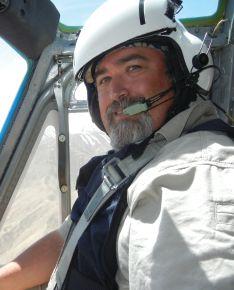
Walter Heneghan is the VP of Safety and Quality at Canadian Helicopters. A passionate advocate for aviation safety and sound risk management, the veteran pilot presents his regular column for Helicopters magazine.
WalteR HeneGHan

MiCHael BellaMY
Recently, i received a call from an old friend and flying cohort from my early Yukon flying days. when i was starting out in this business, Ray Conant was the “go-to guy” for many of the helicopter operations that were still in their infancy.
with more than 14,000 hours, Ray is practically a legend in the Yukon, so when he asked me to critique his book, i was flattered to say the least. what i initially expected was an autobiography, but what arrived was Helicopter Flying for Fun and Profit written in lesson form. Ray was offering to share his experiences and introduce prospective students to all manner of perils and lessons he had learned during his long career.
i thumbed through the book, identifying people and places and pausing to read a few paragraphs that captured my interest. My first impression was not entirely enthusiastic. it was my early experience that operators often oversold the capabilities of the helicopter in the interest of company survival, leaving the pilot to devise a modus operandi that could get the job done. Unfortunately, it left little room for error. instructing pilots on this process and presenting the material in lesson form, would not go over too well with strict safety procedures that are now in place. But i continued reading.
As the book progresses, Ray selects worthwhile experiences from his career, describes the job, tools or type of helicopter he worked with, and even describes the weather conditions he encountered. he then goes on to describe how the task progressed, teaching himself in the
Sharing lessons
A Veteran Pilot Chronicles Tales From the Cockpit
this is especially true when we are prone to accept more risk when someone’s life is at stake. As i progressed further into the book, i became more interested in the sequence Ray used to evaluate risk and what he did to mitigate the hazards. in spite of marginal weather conditions, basic flight instruments and very limited performance from the helicopter, Ray managed to complete flights safely, without fanfare, again and again.
it brought up an intriguing question: was reliance on good airmanship so much more prevalent then, or have we become so immersed in rules and regulations that we are now removed from this tactic, replacing it with strict adherence to formal directives?
Manufacturers have responded with ever more powerful helicopters enhanced with redundancy and all manner of safety devices not available just a few short years ago. in many cases, this affords pilots the luxury of being able to replace skill and cognitive judgment with automation. i was reminded of a report i had read from airline manufacturers stating that in spite of ever increasing capability with computer automated flight systems, lack of basic flying skills were being identified in more and more accidents. Case in point was the Air France A330 that crashed into the Atlantic ocean on June 1, 2009. in this accident, the pilots were unable to identify a stall. Another example was the Colgan Air Dash 8 crash in Buffalo on Feb. 12, 2009, in which the pilots mishandled the airplane in icing conditions. what is abundantly implied here is that airlines had become safer mechanically, but the pilots were so overloaded with interpreting extraneous information in an effort to comply with published procedures that flying skills were abandoned.
As inheritors, we can disregard the past lessons as no longer applicable, but is that good risk management? ‘‘
process how to safely determine the limits of his machine and role as a pilot. the lessons and procedures learned are openly shared with the reader. with every page, i found i was modifying my first impression as i was learning about the development of some of the operations i was to participate in just a few years later. An old cliché came to mind: “learn from the past to avoid making the same mistakes in the future.” the actual flying experiences Ray discusses are quite interesting. with northern mining operations, for example, he recounts more than a few medevac experiences. Most of us can identify with the apprehension felt when confronted with flights into very marginal conditions.
For day-to-day helicopter operations, computerization is still a long way away. i have witnessed operators mandating online safety questionnaires that once completed, now dictate whether or not a flight should be undertaken. this exercise, however, should remind the pilot of typical considerations, not make the decision for him.
it’s clear that Ray’s experiences vividly demonstrate the process by which a pilot gains the ability to accurately evaluate risk. As inheritors, we can disregard the past lessons as no longer applicable, but is that good risk management? no, it is not.
A native of Spruce Grove, Alta., Michael Bellamy has been flying fixed- and rotary-wing aircraft in a variety of capacities since 1971, and is an accomplished author of several books, including Crosswinds.

paul dixon
he first piece i wrote for Helicopters magazine was entitled “Post Disaster Preparation: Are You Ready?” it’s five years later and the question still stands: are you prepared?
that article was based on the premise that commercial helicopter operators have a critical role in the hours, days and weeks following a disaster, while at the same time they are just as much at risk as the rest of their community. in order to be ready to respond, you must survive the event. that won’t happen unless you understand the threats that you, your employees and your business are exposed to, take steps to mitigate those threats and make planning part of your ongoing business plan.
in 2013, the insurance Bureau of Canada released a study that outlines the likely impact of a major earthquake on Canadian communities and the canadian insurance industry. the study looked at the impact of two hypothetical earthquakes – a 9.0 super quake off the west coast of Vancouver island and a 7.1 quake underneath the st. lawrence River. in both cases, the physical damage predicted would be devastating across large areas and the financial impact would be crippling for individuals, governments and especially the insurance industry. the conclusion of the study is we are woefully unprepared as individuals and as a society in general to deal with disaster.
Don’t hide behind the argument that earthquakes don’t happen where you live or work. wherever you live, work or play, there are a number of potential disasters that could happen. the people of slave
Better Safe Than Sorry
Operators Must Be Emergency Planning Experts
say you told me so. Your challenge – your responsibility and duty to your family, employees, co-workers and community at large – is to take simple steps that will give you the resilience to survive the initial event and the ability to carry on afterwards.
the first step is to accept the fact that sooner or later something is going to happen in your life that is going to knock you flat on your back. think about it now, prepare for the moment and maybe you’ll be able to step out of the way. this could be something as simple as getting a proper medical checkup, which is just simply looking out for yourself. in terms of a slave lake-type event, ask yourself this: do you have an emergency kit (food, clothing, water) for yourself and your family?
if you are not home when something happens, and not able to get home, will your family know what to do and have the resources available? this is the time to start working on that plan. it’s the same thing for your company or operation – will you be able to carry on business? Do your employees know what’s expected of them if communications go down? Do you have alternative sources of fuel and if the power is out across the region do you have generators for your critical infrastructure? Does your operation have an ironclad emergency crisis plan?
emergency planning needs to be a necessary part of how you live your life and how you carry on your business.
lake didn’t expect their town to be overrun by wildfire, just as the people of Calgary and southwestern Alberta didn’t expect to be flood victims last summer. who could have imagined the catastrophe in lac Megantic?
it’s easy to shrug it off by thinking it can’t happen where you are and people will come up with a thousand validations for that argument. the grim reality, however, is every corner of this country has the potential to be devastated by something. Yes, i will concede there will be disasters for which no amount of preparation will be enough. it could happen, but it’s not likely and if it does (if, not when) you can
How about your business records? if your office burned down tonight and everything in it was destroyed, how would that affect your ability to carry on? Do you back up your records regularly and store them off-site (up in the clouds)? How about your insurance? in the aftermath of Hurricane Katrina, the overwhelming majority of businesses that did not survive failed due to no or insufficient insurance. now is the time to talk to your insurance agent and understand exactly where you stand. e mergency planning needs to be a part of how you live your life and how you carry on your business. Helicopter operators, being first responders, must carry out all aspects of proper preparation, and it doesn’t hurt to review company procedures and evaluate on a personal level your role and responsibilities under stress.
the bottom line? it’s simply good business and ultimately, will save lives. As you may recall, it wasn’t raining when noah started building the ark.
Paul Dixon is freelance writer and photojournalist living in Vancouver.
CoVeR stoRY
the Maritime solution
Determining the Right Answer to Replace the Sea Kings
BY paul dixon
it was almost 10 years ago that Helicopters saluted the awarding of the contract to replace the venerable CH-124 sea King helicopters in an article entitled, And the winner is . . .” with this opening sentence:
“the name for Canada’s new ship borne helicopters, the Cyclone, is the most suitable moniker the Department of national Defence (DnD) could have chosen, considering the whirlwind of controversy that has battered the project since its inception.”
since then, the project that was to see deliveries of the CH-148 Cyclone starting in late 2008 has yet to see a single aircraft accepted by the Royal Canadian Air Force for operational duties, leading former Conservative defence minister Peter MacKay to say publicly in 2012 what many were thinking when he deemed it “the worst procurement in the history of Canada.”
in october 2013, the government undertook a “data gathering engagement” request to ensure it was on the right track for selection a replacement. in november, it asked major original equipment manufacturers (oeMs) sikorsky, eurocopter and Agustawestland to make their “best case” for the contract for 28 maritime helicopters. three finalists were included in the bidding: sikorsky’s CH-148 Cyclone; the Agustawestland Aw101 (CH-149 Cormorant); and eurocopter’s nH-90. After a series of meetings in December 2013 with the major oeMs – including Hitachi Consulting, a third-party consulting firm – the federal government decided to endorse Hitachi’s report and commit to sikorsky to fulfill the Maritime deal. on January 3, the federal government and the sikorsky Aircraft Corporation announced a Principles of Agreement (PoA), which will form the basis of formal contract negotiations to put those recommendations into place, was concluded on December 31, 2013.
“the decision to continue with the Maritime Helicopter Project is consistent with our goals of getting the Canadian Armed Forces

the equipment they need while protecting the investments taxpayers have already made in this program,” said Rob nicholson, Minister of national Defence. “the Royal Canadian Air Force (RCAF) has been providing guidance in determining operational priorities through the newly established integrated Product teams comprised of team leaders from sikorsky and general Dynamics Canada, as recommended by the third party.”
Under the terms of the PoA, Canada will see delivery of helicopters with operational capability sufficient to begin retirement of sea Kings in 2015, and a program to enhance those capabilities
culminating in a fully capable CH 148 Cyclone Maritime Helicopter in 2018.
“Under the new terms established in the Principles of Agreement, sikorsky has committed to deliver the needed helicopter capability at no additional cost to Canada,” said Diane Finley, Minister of Public works and government services. “in addition, the government of Canada will only issue further payment to sikorsky upon capability delivery. this is the right path forward for the Canadian Armed Forces and taxpayers.” sikorsky has also agreed to pay Canada $88.6 million in liquidated damages for non-delivery.
Mick Maurer, president of sikorsky was stoic in his response to the announcement. “As the pre-eminent helicopter manufacturer in the world, we regret that we have not executed this program to the satisfaction of the government of Canada and that no aircraft were delivered in 2013,” he said. “we recognize that we and our subcontractors must do better. we have completely restructured our approach, and added considerable new resources and technical expertise. As a result of the third-party review commissioned by the government of Canada, we believe we have the right plan in place to deliver the most capable maritime helicopter in the world.”
the restructured program will see the continuation of the initial training and testing of the Cyclone now underway in shearwater, nova scotia. Hitachi Consulting will remain engaged in the project to ensure delivery of a fully capable maritime helicopter.
a MaRitiMe HistoRY lesson
the journey to find a suitable replacement for the sea Kings has indeed been a long one; they have been slated for replacement since the mid-1980s. the Conservative government led by Brian Mulroney announced in 1987 that 35 eH-101 Merlin helicopters would be purchased to replace the sea Kings. in 1991, another 15 eH-101s
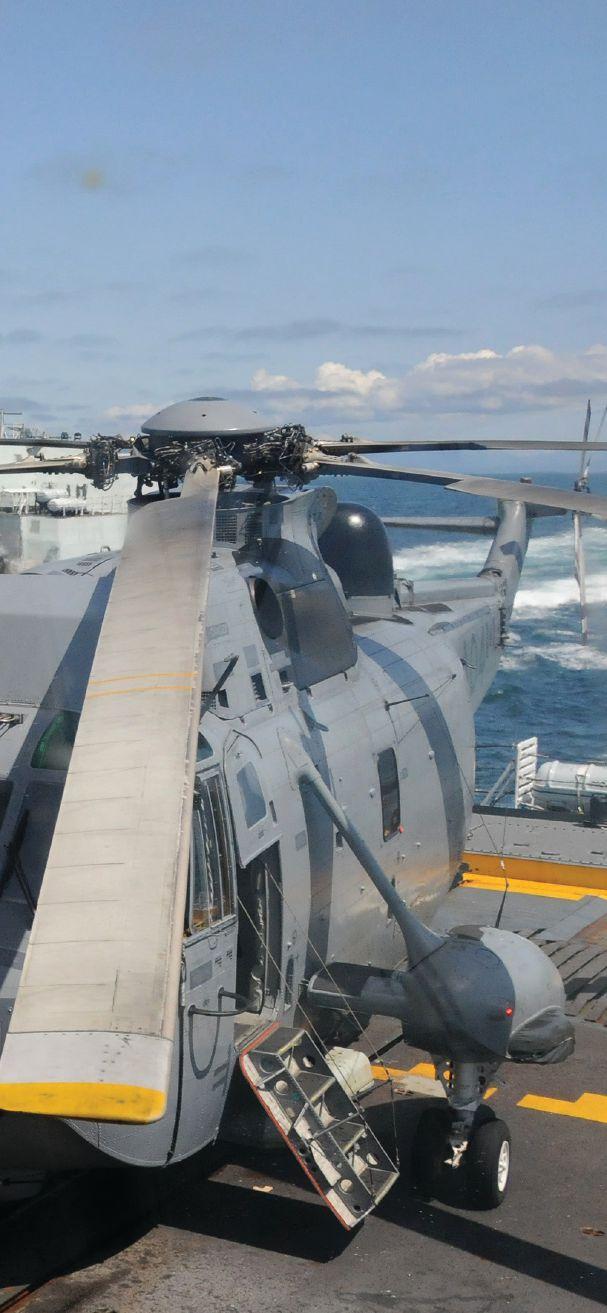
MAIN PHOTO: A Sea King perched on the deck of the HMC Calgary during an exercise with the HMC Regina. (Photo by Paul Dixon)
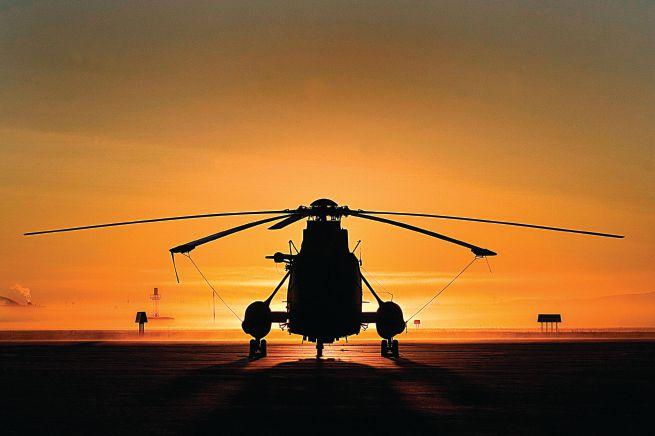
BELOW RIGHT: As the sun sets on the Sea King, the time is now to provide a reliable alternative. (Photo courtesy of RCAF)
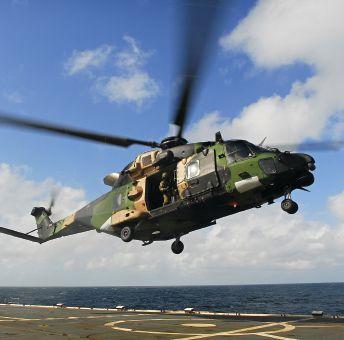
BELOW LEFT: The Royal Australian Navy (RAN) conducts the world’s first maritime trials of the MRH90 helicopter off HMAS Manoora. (Photo courtesy of Royal Australian Navy)
CoVeR stoRY
were added to the order to replace the CH-113 in the search-and-rescue (sAR) role, for a reported $5.8 billion for the 50 aircraft. in 1993, when Jean Chretien’s liberals swept the Conservatives from power, one of his government’s first acts was to cancel the helicopter contract in the name of fiscal restraint, invoking a $500-million cancellation penalty. some 15 civilian versions of the eH-101s were ordered to replace the labradors, entering service in 2002 as the CH-149 Cormorant.
As the cost of maintaining the sea Kings escalated, the Maritime Helicopter Project reappeared in 2002. the contenders were Agustawestland’s eH-101 once again, nH industries nH-90 and sikorsky’s H-92. the nH-90 was declared non-compliant early in the process and in June 2004, sikorsky was named to deliver 28 aircraft to be known as the CH-148 Cyclone. the first aircraft were set to arrive in 2008, with all 28 delivered by the end of 2010. in 2007, sikorsky advised the government they would not be able to meet the 2008 delivery date. the government amended the contract with a
new schedule of deliveries, with the first “interim” helicopters to arrive in november 2010 and the delivery of “fully compliant” helicopters beginning in June 2012, includ-
ing a new price on the contract, not pegged at $1.9 billion, to acquire the helicopters, and $3.4 billion for long-term in-service support.
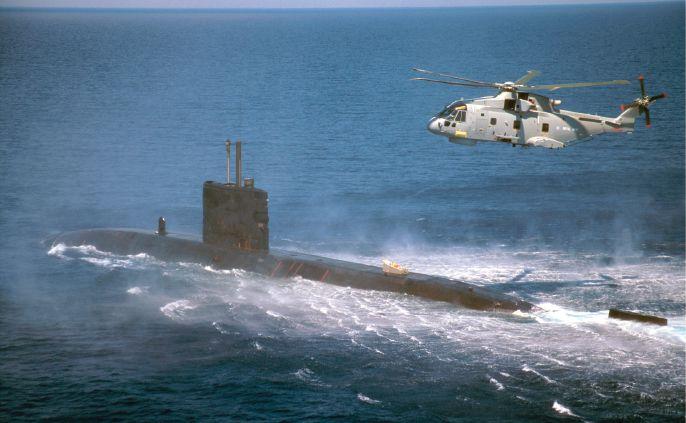
The versatile AW101 was one of the leading contenders to replace the Cyclone as Canada’s Maritime replacement choice. (Photo courtesy of AgustaWestland)
Marine Helicopter Replacement Fast Facts
CH-148 Cyclone
• Crew: 4
• Capacity: up to 22 in utility configuration
• Length: 68 ft. 6 in. (20.9 m)
• Rotor diameter: 58 ft. 1 in. (17.7 m)
• Height: 15 ft. 5 in. (4.7 m)
• Empty weight: 15,600 lb. (7,070 kg)
• Max. take-off weight: 28,650 lb. (12,993 kg)
• Powerplant: 2 × General Electric CT7-8A7 turboshaft, 3,000 shp (2,238 kW) each
• Fuselage length: 56 ft. 2 in. (17.1 m)
• Fuselage width: 17 ft. 3 in. (5.26 m)
• Max. speed: 165 kn (190 mph, 306 km/h)
• Cruise speed: 137 kn (158 mph, 254 km/h)
• Service ceiling: 15,000 ft. (4,572 m)
• Rate of climb: N/A
CH-124 sea King
• Crew: 4
• Capacity: 3 passengers
• Length: 54 ft. 9 in. (16.7 m)
• Rotor diameter: 62 ft. (19 m)
• Height: 16 ft. 10 in. (5.13 m)
• Empty weight: 11,865 lb. (5,382 kg)
• Max. takeoff weight: 22,050 lb. (10,000 kg)
• Powerplant: 2 × General Electric T58-GE-8F/-100 turboshafts, 1,500 shp (kW) each
• Maximum speed: 144 knots (166 mph, 267 km/h)
• Cruise speed: 90 knots (104 mph, 167 km/h)
• Range: 621 mi (1,000 km)
• Service ceiling:14,700 ft. (4,481 m)
• Rate of climb: 1,310-2,220 ft./min. (400-670 m/min.)
the auditor-general investigated the Cyclone purchase process in 2010 and concluded that the DnD had underestimated the complexity of developing the helicopter for the role it was intended to fulfil. these remarks were echoed by Hitachi Consulting, which was hired by the government in June 2013, in its report released in september. Hitachi looked into the basic issues – is there a reasonable chance the project will
succeed and will the project deliver what the RCAF needs from the aircraft in the environment it will be working in?
the consultant’s report states that the government thought it was buying an “off the shelf” helicopter when the contract was initially signed, but in reality, the aircraft was still in development and the government and sikorsky were clearly misaligned. All said, the report concludes there is a

reasonable expectation that the project is still viable and could be achieved within an acceptable time frame.
the government has so far refused to accept the handful of Cyclones that have been delivered on the basis that they are non-compliant, which would seemingly put this aircraft back in the company of the eH-101 and nH-90. now of course, the challenge facing the government is to
TURBINE
CoVeR stoRY
decide what it really requires from this helicopter and when it is finally ready, will it be able to ensure its precisely the helicopter it thought it was ordering.
the CH-148 Cyclone is the Canadian name for sikorsky’s H-92 superhawk, the military version of the s-92, which evolved from the s-70/H-60 family of “hawks.” the first s-92 flew in 1998. in 2010, the s-92
was selected as the new U.K. search and rescue helicopter, and in 2012, the irish Coast guard chose the s-92 as its maritime sAR helicopter, to replace its fleet of s-61s.
All three helicopters that were under consideration for the deal – the Aw101, the nH-90 and the H-92/CH-149 – have had some problems in their development. the Aw101s Canada purchased to replace the





labradors had issues with tail rotor hub cracking in all 15 aircraft, which resulted in the aircraft being placed on limited flight status until a new tail rotor design was adopted.
the nH-90 program had a slow start in the 1990s and has experienced delivery delays in recent years, which have resulted in some countries buying other helicopters to fill the gap. Finland, sweden and norway signed a joint contract in 2001 to purchase a total of 52 helicopters. in 2011, learning that it would have to wait until 2020 for the last of its nH-90s to be delivered, sweden purchased 15 UH-60M Black Hawks. Australia also purchased 24 Black Hawks when its order of nH-90s fell three years behind schedule.
After 10 years of active service, the CH-149 Cormorant fleet had surpassed 50,000 hours, with a reported 99 per cent dispatch availability. However, for Canadians, the s-92/CH-149 will forever be remembered for the 2009 crash off the coast of newfoundland that killed 17 of the 18 people on board.
which brings us back to the eye of Helicopters’ perfect storm, 10 years on. if there was a cyclone of controversy then, where does that leave us now? this is a project that has been kicked around so long it looks like a soccer ball with half the air gone. Count back from the first time someone in ottawa thought about replacing the sea King and we’ve had too many elections to remember, eight prime ministers and several squadrons of defence ministers. the sea Kings have more than proven themselves and deserve the rest they so richly earned, as the helicopters that made the royal canadian navy the scourge of Cold war submarines.
so now the decision has finally been made, will the CH-148 Cyclone rise like the Phoenix from the ashes of non-compliance? in 2003, there was widespread speculation that the nH-90 was the choice of the military, before it was deemed noncompliant. then, when the Cyclone was chosen, it was felt by many that the prime reason it was chosen was that it was not the Aw101, as the fallout from the previous contract cancellation was still too hot to handle. this may well be the worst military procurement in Canadian history. the sad thing is that so many people in government have had the opportunity to turn it around by simply saying “enough,” but they haven’t and it’s not because they haven’t had the opportunity.
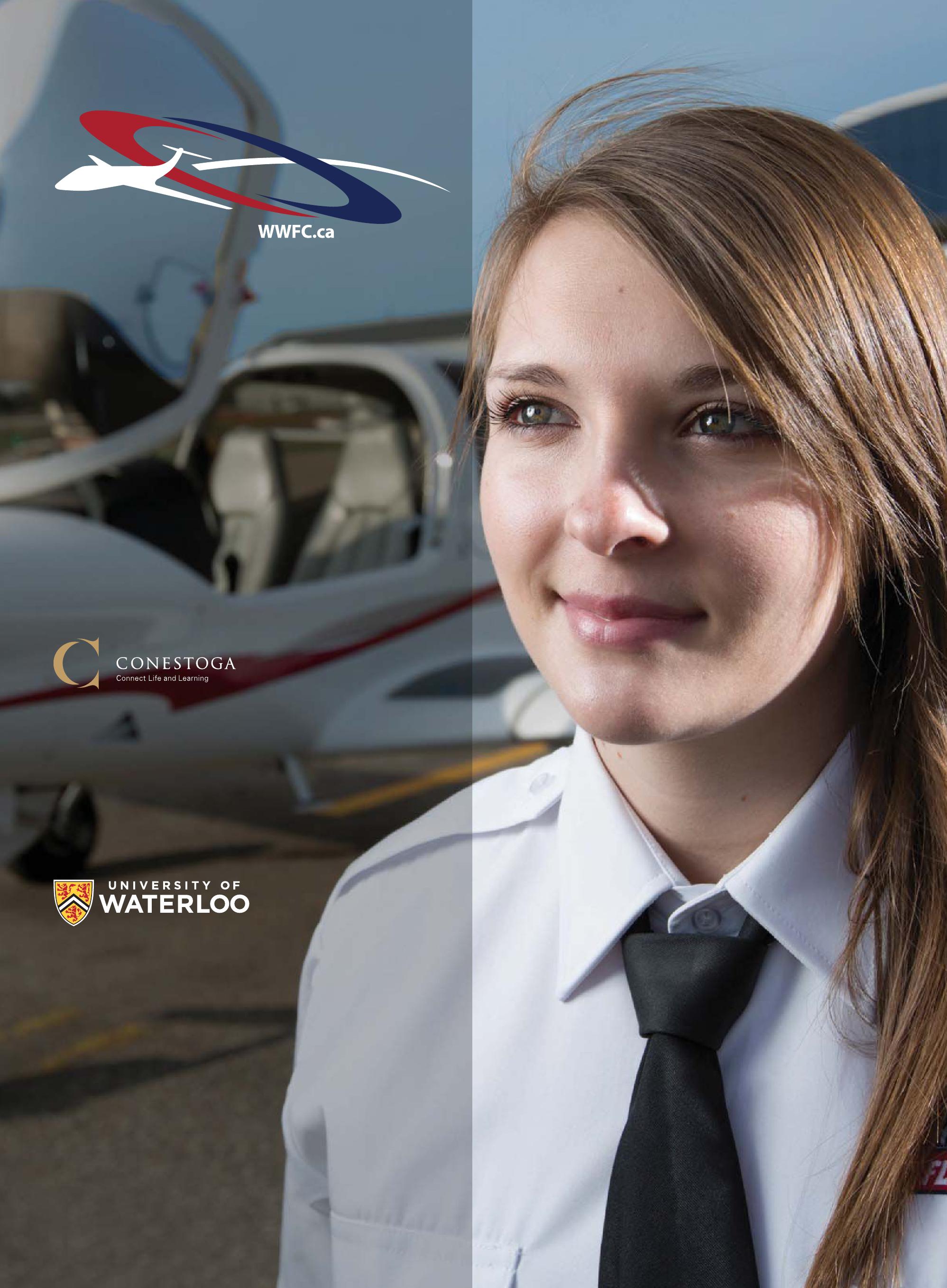
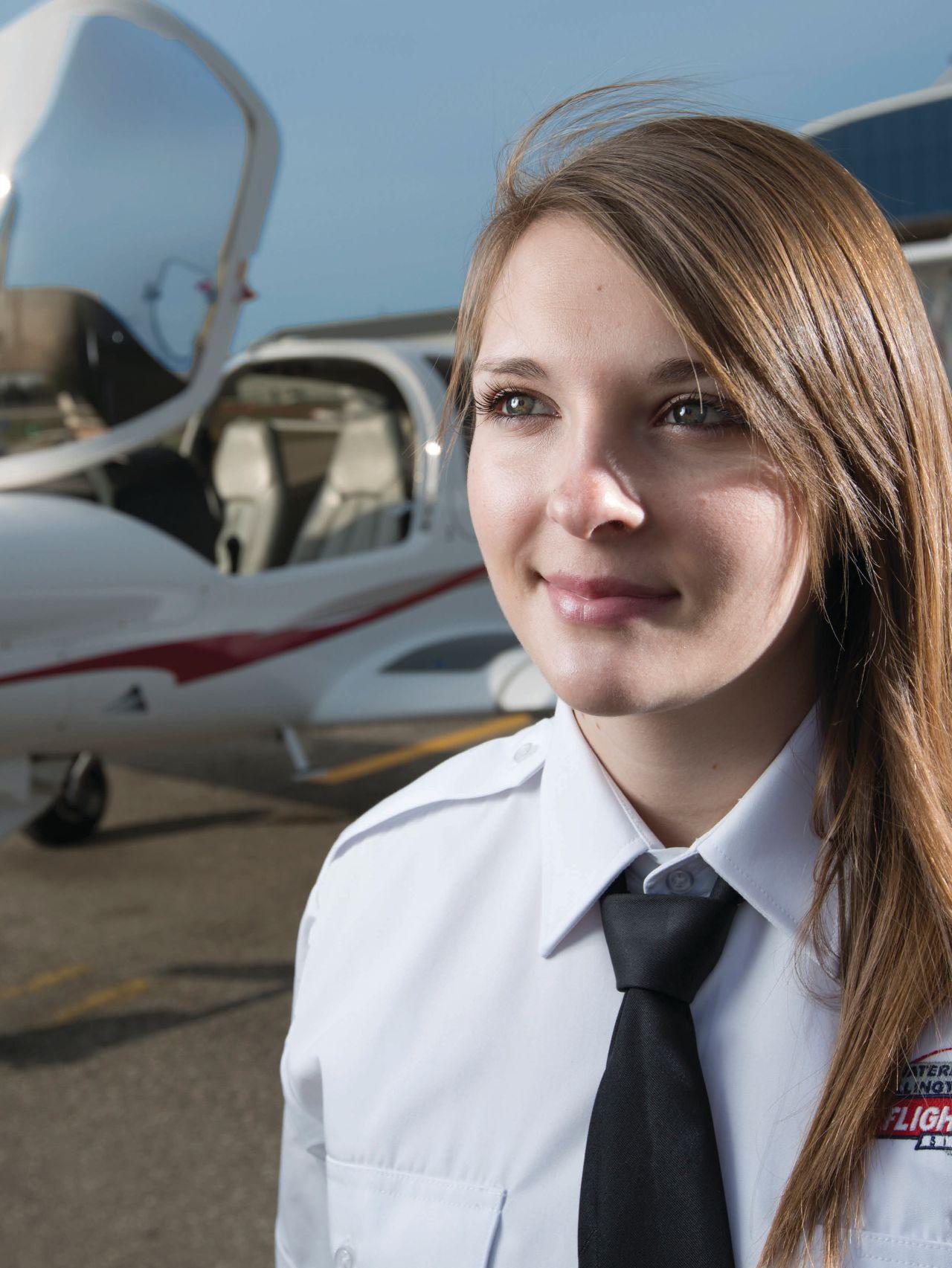
Train at the , one of the lar est i ht schools in ana a. ith o er ears of pilot trainin ehin s o ll learn to with the e perts while a in o r rea of in a realit
hoose fro e professional i ht trainin pro ra s, access a i erse eet of aircraft, an ra ate as a lea er in a iation rea to wor coast to coast in the in str .
ith aca e ic partners at two lea in post secon ar instit tions an a iation e ree or iplo a i es o the e e o nee to stan o t in the a iation in str .
Two ear iplo a
ra ate fro the e win pro ra with a eneral rts cience iplo a fro onesto a olle e an the pilot trainin to n erta e the Transport ana a co ercial licence testin A rotary-wing option is also available. conestogac.on.ca
- o r-year egree
- o r-year egree
ra ate with a o ercial ilot icence, ltiengine instr ent rating, an either a achelor of cience or a achelor of nviron ental t ies egree fro the niversity of aterloo. waterloo.ca/aviation
CAREERS IN AVIATION 2014
EducAtioN, trAiNiNg ANd JoB prospEcts coNtiNuE to trENd upWArds iN sEvErAl KEY AviAtioN ANd AErospAcE sEctors
BY dAvid cArr
thinking about landing a well paying job in a high-tech industry? Consider a career in aviation and aerospace.
Canada is one of the world’s leading aerospace nations.
According to the Aerospace Industries Association of Canada (AIAC), Canada’s aerospace manufacturing sector is ranked fifth among the Organization for Economic Co-operation and Development countries, and first in terms of relative importance to the manufacturing economy.
In addition, Canada has a strong air transport industry, including the awardwinning Air Canada, one of the world’s 20 largest airlines, busy international airports such as Toronto’s Pearson and Vancouver International – both ranked in the global top 50 – and a thriving business aviation sector.
Aviation and aerospace is a diverse industry with a common challenge: from the cockpit to research and development (R&D), to the shop floor, the industry needs to constantly replenish skills to stay ahead in an increasingly competitive global environment.
What does this mean to the student
considering a career in aviation? As Wings Careers in Aviation 2014 reports:
• The North American airline industry will need 69,000 new pilots by 2030, or 3,450 per year, including approximately 350 new pilots per year in Canada.
• Flight school may no longer be enough to secure a job flying, and should be linked with a college degree or university diploma.
• More than two-thirds of the total aerospace industry is qualified as skilled labour. The average salary for all employees in aerospace manufacturing is about $63,000, while the average across all manufacturing sectors is $51,000.
• There are opportunities across the country, including design, assembly and integration of aircraft and engines in central Canada; parts manufacturing in Atlantic Canada; and maintenance, repair and overhaul (MRO) in the west.
According to Transport Canada, there are more than 800 on-demand aviation service providers in Canada. The AIAC estimates that more than 400 aerospace
firms employ more than 80,000 Canadians. This adds up to strong demand for hundreds of thousands of skilled professionals to keep aircraft flying and maintain Canada’s position as a lead manufacturer and exporter of airplanes, aero engines, landing gear, avionics and flight simulators, and as a top provider of higher-end and more sophisticated MRO services.
Wings Careers in Aviation 2014, is your one-stop resource to launching a rewarding career in aviation. It contains brief descriptions of several leading aviation and aerospace sectors, as well as valuable information on education and training. The listings are intended as an introductory snapshot of the types of flight schools, and college and university courses, that are available; they do not reflect every option out there. More information can be found on the Wings Careers in Aviation micro site (www.careersinaviation.com).
In addition to the 2014 Careers in Aviation supplement, Wings and Helicopters magazines will be following up on last year’s successful 2013 Careers in Aviation Expo in Toronto, with three career expos in Toronto, Calgary and Vancouver. | W
FLIGHT OPERATIONS – PILOT
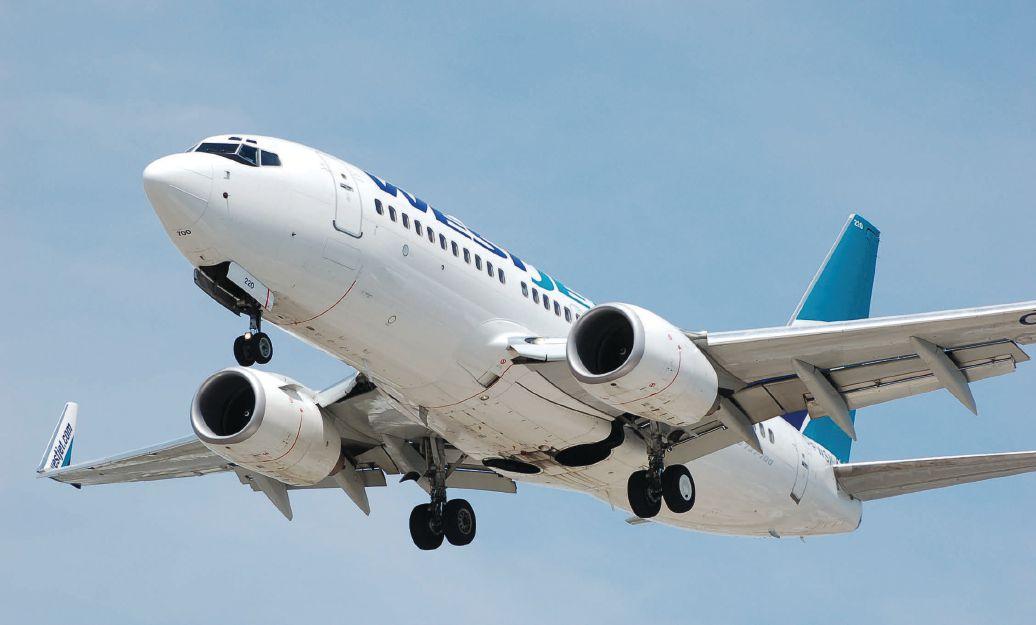
Boeing estimates that the world’s total airliner fleet will have more than doubled to 39,500 aircraft by 2030 – an increase of more than 3,000 airplanes in North America alone. This represents a lot of empty cockpit seats without an accelerated push to train more pilots. And it’s all within the early career span of students graduating from high school this year.
At the same time, the industry is seeing an increase in the number of experienced pilots retiring from the cockpit.
T he Montreal-based International Air Transport Association (IATA) estimates that the North American airline industry will need 69,000 new pilots by 2030, or 3,450 per year. The airline industry is very cyclical and there will be at least one downturn in the next 17 years, which will slow demand for new recruits. The industry also tends to roar back from every slump and is very quick to recapture lost growth, which means, on average, the Canadian airline industry will need approximately 350 new pilots every year
until at least 2030.
With the military no longer the primary source for new pilots it once was, it will be left to Canada’s flight schools to plug potential gaps. And here is where the tightening of the market for new pilots takes its toll.
Airlines are only one piece of the Canadian aviation industry, albeit a significant piece. In addition to large carriers such as Air Canada, WestJet and Air Transat, Transport Canada estimates there are more than 800 on-demand aviation service providers such as the lucrative business aviation sector, where aircraft are every bit as sophisticated as the larger airplanes flown by the majors, helicopter operators (see Helicopter Pilot on the page opposite) and instructors, which is another sector where the IATA identifies a looming shortage.
It adds up to a lot of career and lifestyle options for licensed commercial pilots in Canada, especially now when younger generations have been shown to have a decreasing interest in aviation.
Still, aviation is a highly technical and safety-driven industry that will continue
to put experience and the right skills first. It takes, for example, up to five years training to earn an entry-level position flying commercially. Most airlines are also looking for more than just a pilot’s licence in their hires, which means that recruits should think about a university degree or aviation college diploma program in addition to flight school.
Aviation also runs on a “pay your dues” culture. Most pilots work toward the 1,500 hours flying time necessary for an Airline Transport Pilot Licence, which means there is a lot of time to fill from the less than 200 hours that the average flying school student graduates with. Entry-level jobs at this stage would include flight instructor, air taxi pilot or general aviation pilot as potential hires build up flight time.
Aviation is the only source of yearround access for many northern communities. As Canada’s resource-rich North continues to develop, students can also expect northern-based passenger and freight carriers will be aggressively recruiting larger numbers of pilots. | W
HELICOPTER PILOT
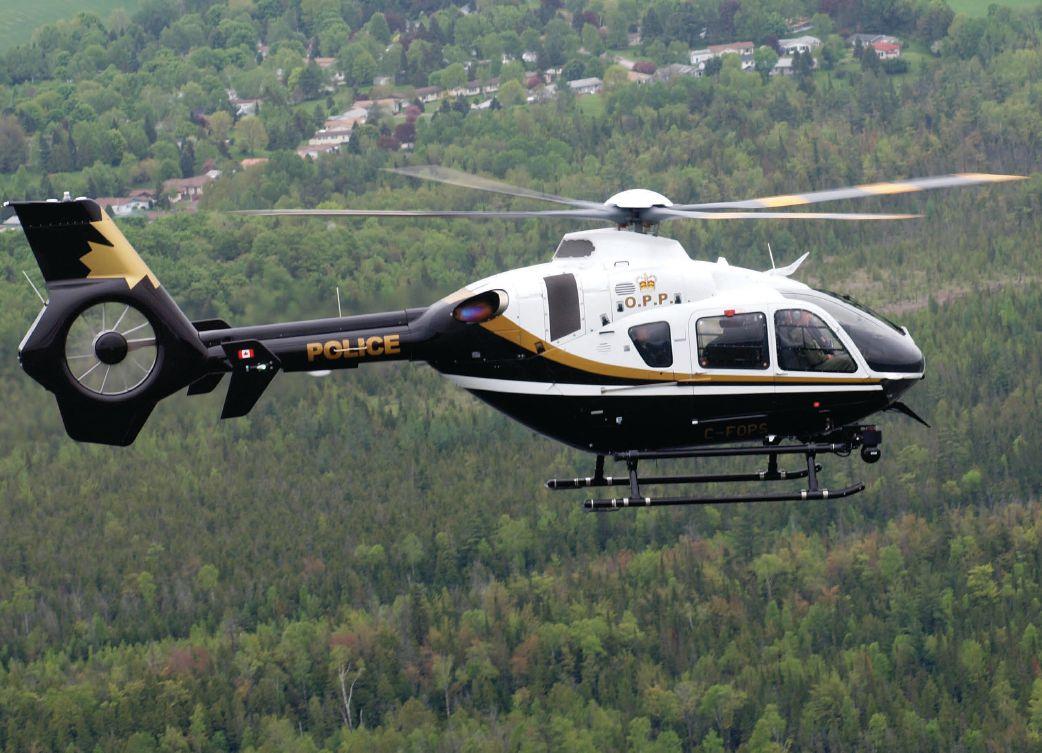
With an estimated number of approximately 1,700 registered rotary-wing aircraft, Canada has the second largest fleet of helicopters in the world. The backbone of the sector remains resource-based, although opportunities in the executive sector market are opening up as demand grows at resource company flight departments and in major urban centres.
Competition for experienced helicopter pilots in Canada is fierce although students need to be aware that it is a gradual climb from the 100 flying hours most will rack up at flight school and the 1,000-plus hours many operators are on the hunt for. There are a lot of operators who will hire lower-time pilots, but are also looking for individuals who can bring more than just flying skills to the company.
Career-minded rotor rookies bridging the “900-hour gap” are likely to travel great distances for short-term jobs, low pay and long stints away from home,
especially for pilots flying out of camps in the Canadian North. Even with these hardships, helicopter pilots are less likely to swap the “hands-on” flying for a fixedwing airplane, where most began their flying career. They thrive on the unpredictability of the industry and learning how to put machines down on unprepared sites in poor visibility. As such, operators are looking for pilots who are quick studies and can make on-the-spot decisions.
Many flight schools have commercial businesses such as tour operations that
help students to build up flight time and gain more experience. Some hire instructors from within. Entry-level positions such as flight instructor or first officer in a two-crew operation often require 175 to 200 hours flying time. Students are also advised to spend their time in flight school networking with industry veterans to get the “inside scoop” on where the jobs are.
Some of the higher paid jobs available to the skilled helicopter pilot include exploration missions for oil and mining companies, transporting workers and cargo in and out of remote communities, providing heavy lift support such as helilogging and aerial construction, dropping skiers on the side of a mountain, and fire suppression.
Like the fixed-wing sector, Canada’s helicopter industry is facing a looming pilot shortage, especially at the high end, where percentage wise, experienced pilots are retiring at a higher clip than their fixed-wing counterparts. It means real opportunities for ambitious and resourceful graduates who can build up the hours. | W
FLYING HIGH: STRATEGIES WHEN PICkING A FLIGHT SCHOOL
canada has many excellent flight schools with different specialties for both fixedwing and rotary-wing pilots.
Picking the right school, however, can be intimidating, especially with little or no aviation experience. Novices can be excused for thinking they are flying blind. There is no association of accredited flight schools in Canada, and Transport Canada does not rank individual schools. So, where to begin?
As anybody who has spent time in a cockpit will attest, aviation is a checklist driven industry. That is also a good starting point when selecting a school. Write down your aviation goals. If considering a career with a major airline, for example, you may want to look at flight schools with links to colleges that offer diploma programs. Students who prefer a career flying in Canada’s North or up the British Columbia coast will want to look at schools that specialize in bush and floatplane flying.
Once your career path has been set, begin talking to as many professionals as you can in your preferred field. Ask about how they entered the industry and what schools offer the best training. As last year’s Careers in Aviation Expo in Toronto illustrated, there is no shortage of industry professionals who love what they do and will take the time to talk about it.
The flight school listings in Wings Careers in Aviation 2014 offer a snapshot of schools across Canada and some of their advantages and aircraft. They represent just a small sampling of what’s out there, however, and are meant to give you an idea of what’s in the market. More options can be found at careersinaviation.ca. Please consider all of your requirements and options before making the decision that’s right for you.
Industry associations such as the Air Transport Association of Canada (ATAC),
Canadian Business Aviation Association (CBAA) and Helicopter Association of Canada (HAC) are also excellent resources for information on education, training and job prospects.
Once your list of schools has been made, visit as many as possible. Arrive with questions for the instructors, insist on looking at the equipment and make certain you learn more about the school by talking with students. There are several things to consider when visiting or researching a flight school:
• Training aircraft available: Ideally, you are looking at a school that has one training aircraft for every four or five full-time students, although that ratio changes with part-time students.
• Maintenance: Training aircraft clock a lot of airtime and are often put through tough manoeuvres. Maintenance is an important consideration for both safety and scheduling.
• Financing: Learning to fly is expensive. Ask if a school offers financing or has links with financial institutions that offer loans for flight training.
Most flight schools in Canada are cost
competitive but the final cost will depend on what you want to get out of your training. Aircraft rental and instructor time, for example, is typically based on when the airplane is running and not just in the air. Some flight schools may charge for specific instructors.
There are approaches to minimizing costs. Most schools allow students to “pay as you go” and one option to lower costs is to pay for “blocks” of instructor and aircraft rental time in advance. Many schools also offer simulator training to build up skills, which can be a very attractive option that avoids the constant cost of renting a training aircraft.
Be careful that your eye on the bottom line does not shortchange your career prospects. For example, at helicopter school some students choose to learn on piston machines only to reduce costs, but given that the bulk of Canada’s helicopter fleet is turbine-powered, that is a career-limiting strategy.
Finally, avoid a common mistake of forgetting to factor in transport, accommodation and meals when assessing the cost of learning how to fly








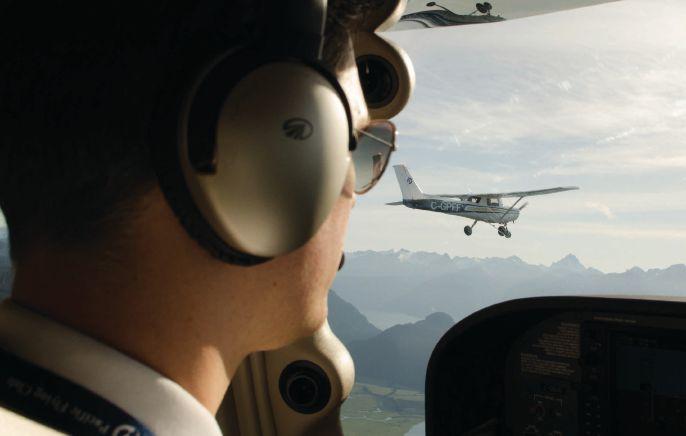
ocean Air Floatplanes | Victoria
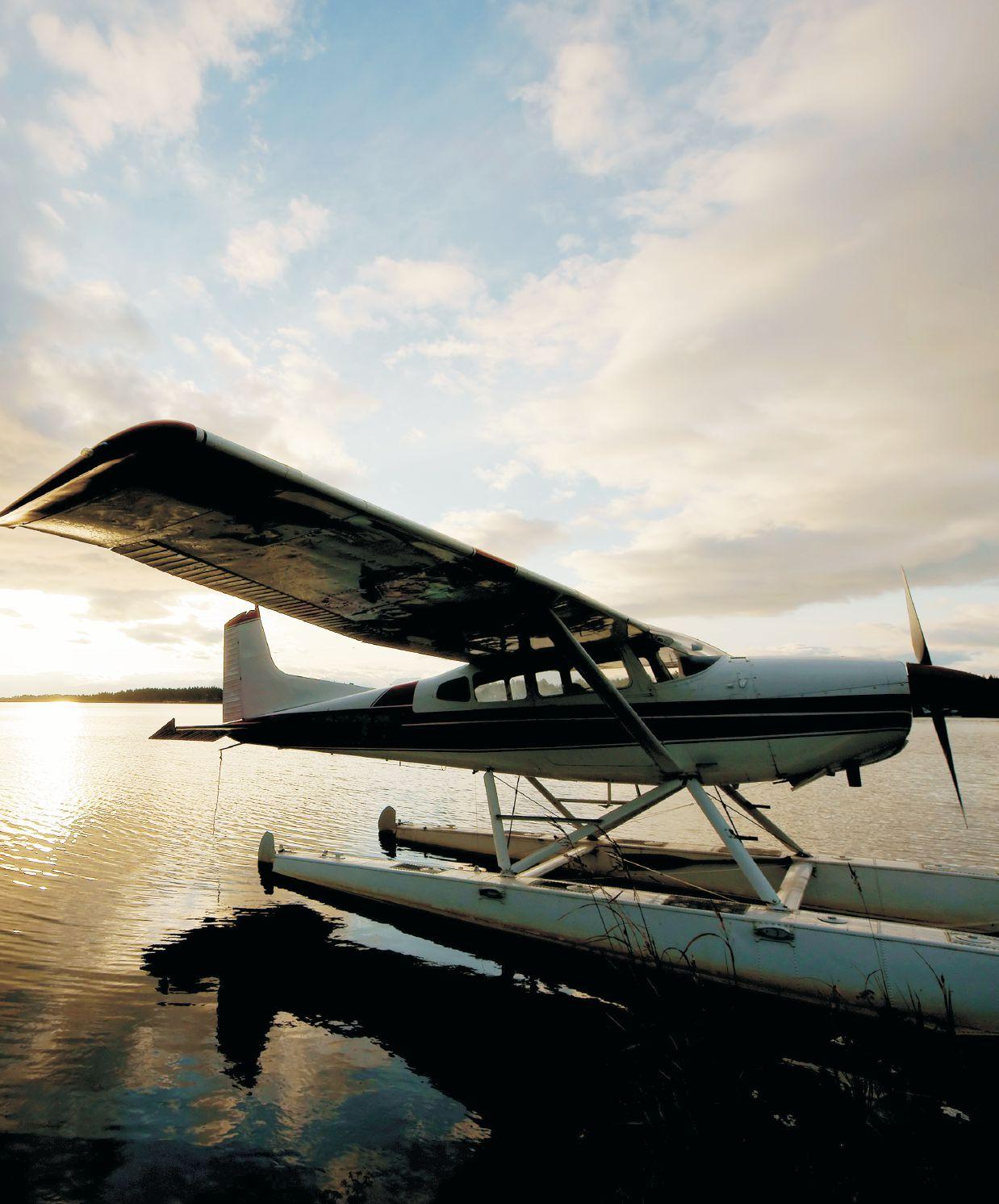
Seaplanes are a way of life along coastal Canada where water is the runway. Coastal jobs require high levels of experience because of the many challenges that the coast offers. Ocean Air Training offers both a 15-hour course and 50-hour professional pilot course. The Professional Seaplane Training Course is designed for the ambitious student seeking a career in seaplane piloting.
Advantages: B.C. is the world’s seaplane capital. Ocean Air has two highly experienced instructors with an extensive background in float operations across Canada. The school’s Gulf Island setting just outside of Victoria and in close proximity to Vancouver is a perfect training environment.
Fleet: Cessna 180H equipped with Edo floats
Learn more: www.oceanair.ca
pacific Flying club | Boundary Bay
The Pacific Flying Club was formed in 1965 as the Canadian Pacific Airlines Employees Flying Club. The club is now recognized as an industry leader in flight training with a fleet of 25 aircraft and three simulators, including Boundary Bay’s only Level 5 King Air flight training device, plus a full-motion simulator, delivering a realistic sense of flight. The club is a not-for-profit organization and is continuously investing in upgrading facilities and equipment and offering no-charge seminars. The club offers an introductory flying lesson for $55.
Advantages: The club is the largest flight training centre in Western Canada. It is also partnered with the British Columbia Institute of Technology (BCIT) to offer an Airline and Flight Operations college program.
Fleet: Cessna 152, Cessna 172 and single- and dual-engine Piper aircraft. The club also has the largest number of flight simulators in the Vancouver area.
Learn more: www.pacificflying.com
AlBErtA
Absolute Aviation | Edmonton
Formerly Westaskiwin Air Services, Absolute Aviation is a flight training and aircraft maintenance facility with more than 40 years’ experience. Located at the Westaskiwin Regional Airport, less than 50 kilometres from Edmonton International Airport, Absolute Aviation offers students immediate proximity and uncongested access to both controlled and uncontrolled airspace, short to no waiting time to access the runway, a high student-to-instructor ratio and great flying weather. Absolute Aviation
offers proficiency and knowledge of all flying conditions, including the distinct Canadian season, and flying in the Prairies with the option of the Rocky Mountains.
Advantages: The school offers flight training at Camrose Airport, 100 kilometres southeast of Edmonton, and Lacombe Airport, north of Red Deer.
Fleet: Cessna 172 aircraft for single-engine training and the Twin Comanche for multi-engine training.
Learn more: www.absoluteaviation.ca
mountain view helicopters | Drumheller, Springbank Mountain View Helicopters (MVH) has been training pilots for commercial or private helicopters licences since 1995. The company also provides advanced and recurrent training for pilots working in Western Canada. Springbank Airpor t is 10 minutes west of Calgary. The MVH hangar houses a state-of-theart FLYIT simulator. Students gain additional practical knowledge observing maintenance inspec tions during their ground time at the authorized Robinson [Helicopter] Service Centre.
Advantages: The Springbank facility provides several advantages, including exceptional flying weather, the proximity to the mountains for use as a valuable training tool and the experience gained through frequent contact with air traffic controllers in nearby Calgary. For the uncer tain student, MVH offers a discovery or familiarization flight, which offers the oppor tunity to pilot a helicopter.
Fleet: Robinson RH22, RH44 and Bell 206 JetRanger helicopters. Learn more: www.mvheli.com
sA s KAtch EWAN
m itchinson Flying s ervice | Saskatoon
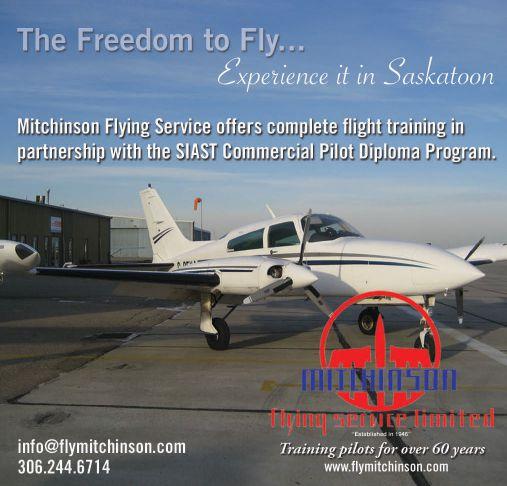
Mitchinson Flying Service has been training people to fly since 1946 and is Saskatchewan’s largest flight school. The school offers recreational and professional pilot training on single- and twin-engine aircraft. The company also operates an approved maintenance facility. In October, the company was sold to five Canadian airline pilots who learned to fly with Mitchinson Flying Service.
Advantages: Mitchinson Flying Service is associated with the Saskatchewan Institute of Applied Science and Technology (SIAST) Commercial Pilot Diploma Program. The program is a partnership between SIAST and the Saskatchewan Aviation Council.
Fleet: Cessna 310, 152 and 172 aircraft, and an Elite 1000 flight simulator L earn more: www.mitchinsonflyingservice.com
A GUIDE TO FLIGHT INSTRUCTORS
In Canada, there are four classes of instructor.
• Class 1: This is the highest level of instructor. A Class 1 instructor is a supervising instructor who not only trains people to be pilots, but also trains people who wish to become instructors. To become a Class 1, you have to have 750 hours of instructing time, pass a written test and pass a flight test to the Class 1 Standard.
• Class 2: This is also a supervising instructor. To become a Class 2, again you must pass a written and flight test and complete 500 hours of instructing.
• Class 3: An instructor becomes a Class 3 after having completed all requirements from Transport Canada while they are a Class 4 instructor. This includes a specific number of students who have gone solo and successfully passed flight tests, and completed 100 hours of instructing (in most cases have done more).
• Class 4: This is the most novice of instructors, having recently completed their training with a Class 1, and successfully passed the written and flight tests. They are under direct supervision of a Class 1 or 2 instructor and cannot send anyone solo or on a flight test without the approval or a Class 1 or 2.
All instructors are accountable to the chief flight instructor (CFI), who has been deemed suitable to fill the position by Transport Canada.
mAN ito BA
c anada
Wings | Southport
Serving as a pilot in the Canadian Forces is a demanding and rewarding career. Canada Wings services the Canadian Forces Primary Flight Training (PFT) program from its facility at Southport, Man., a one-hour drive from Winnipeg. The PFT program at the Canada Wings Aviation Training Centre is designed to introduce candidates to military flying and training procedures. This program is required to advance to the Basic Flying Training program operated at the Canadian Forces Base in Moose Jaw, Sask. Candidates then return to the training centre for advanced flying training.
Advantages: Canada Wings employs 180 staff and operates and maintains a fleet of 39 aircraft/helicopters utilized for
training in combination with flight simulators. In addition to flight training, Canada Wings also operates the entire airfield including air traffic control, navigation services and runway maintenance.
Fleet: A fleet of 39 fixed- and rotary-wing aircraft consists of Grob G120A and King Air C-90 aircraft, and Bell 206 and 412 helicopters.
Learn more: www.alliedwings.ca
oN tA rio
Brampton Flight c entre | Brampton
The Brampton Flight Centre (BFC) has been conducting flight training since 1946. Located just northwest of Toronto’s Pearson International Airport, BFC teaches students to fly in a variety of airspace classifications, experiencing both controlled and uncontrolled environments. BFC is owned and operated by the Brampton Flying Club (which also owns the Guelph Flight Centre) and is the only training school in Canada to own its own airport. With a staff of more than 30 instructors, BFC offers a broad base of courses from recreational flying up to commercial career starters. Top graduates in each class are offered jobs with BFC as instructors.
Advantages: Brampton Flight Centre has a tie-in with Sheridan College’s Bachelor of Business in Global Business Management, described as a strong fit for an ambitious professional pilot. College flight and ground school instruction is primarily provided by aviation college graduates, supported by active airline pilots for Advanced Airline Training Courses.
Fleet: Cessna 172 and Piper Seminole aircraft. Learn more: www.bramptonflightcentre.com
helicopters canada | North Bay Helicopters Canada offers a wide variety of flight training courses, including introductory, private, commercial, advanced flight training, type endorsements and night ratings. The training centre is situated at the busy Jack Garland Airport, a former military installation just a few hours north of Toronto.
Advantages: Minutes north of the airport are heavily forested areas that contain a multitude of lakes and rivers, providing the ideal setting for giving a student real-life industry experience. Students can expect one-on-one flight instruction with some of the industry’s most experienced flight instructors. Helicopters Canada offers flexible start dates to accommodate student requirements.
Fleet: Bell Jet Ranger and Long Ranger, and Robinson R22 and R44 helicopters. Learn more: www.helicopterscanada.com
ottawa Aviation services | Ottawa Ottawa Aviation Services (OAS) provides aviation professionals and enthusiasts with flight training based on the values of the “golden age” of aviation, including “back to basics,” “stick and rudder” and practical training. Based at the Ottawa International Airport, OAS provides customized, pay-as-you-go flight training programs that accommodate a student’s pace. Students will experience flying in adverse weather conditions and strong crosswinds. They will learn to operate within the environment of international airports as well as small grass strips.
Advantages: OAS operates a Pilot Assessment Centre that provides pilot aptitudes and skills assessment testing. The assessment tool is designed to improve the comfort level for parents, students, pilots, flight training and commercial operators. Air Georgian has a partnership agreement with OAS to assist with its pilot recruiting and selection needs.
Fleet: Cessna 172, Grob G115, Katana DA-20 and DA-40 and Piper Seneca II.
Learn more: www.ottawaaviationservices.com

Mitchinson
CONSIDER JOINING THE AIR CADETS
Want a jump-start on an aviation career? Then check out the Royal Canadian Air Cadets. Operated by the Canadian Forces, the Air Cadets are open to Canadians 12-18 years old. As Air Cadets, students get to take part in a variety of flight opportunities. Top cadets can even earn their glider or Private Pilot’s Licence through the program. The Air Cadets program also offers sports, model aircraft building and music. And although being an Air Cadet can help students get ahead in aviation, joining in no way obligates them to serve in the Canadian military. Learn more at www.cadets.ca.
Waterloo Wellington Flight centre | Waterloo
The Waterloo Wellington Flight Centre (WWFC) is located at the Region of Waterloo International Airport and is one of the largest flight training centres in Canada. WWFC is a not-for-profit operation with facilities that are ideal for both the general aviation enthusiast and careerminded aviation students. WWFC has 20 flight instructors on staff, including 12 who hold a Class 1 or Class 2 rating. For potential students who would like to first experience piloting an aircraft, WWFC offers a special test the skies Introductory Flight, including 30 minutes at the controls of a Cessna 152 aircraft with one of the centre’s qualified instructors.
Advantages: WWFC is partnered with Conestoga College and the University of Waterloo to offer diploma and degree programs in combination with a Commercial Pilot Licence and Multi-Engine Instrument Rating. It also offers a Fast Track Professional Pilot program for students who already have postsecondary education. WWFC has a well-developed network among entry-level aviation employers across the country.
Fleet: Cessna 152, 172N 172S, 172RG Cutlass, Diamond DA 40, Katana DA 20 and Piper PA44 Seminole. Learn more: www.wwflightcentre.com
QuEBEc
saint hubert Flying school | montreal
Saint Hubert Flying School is located at Saint Hubert Airport, Canada’s second busiest general aviation airport, approximately 20 minutes from Montreal’s Trudeau International Airport. The base
is both a civilian and military airport, providing a busy environment for training young pilots and helping facilitate their eventual transition into a career in aviation.
Advantages: Saint Hubert Flying School offers an Integrated Program. Unlike “at-your-own-pace” training where the student learns at their own pace, all instructional stages are completed as one continuous course, and in which ground and flight training elements are interrelated and sequenced to provide for efficient achievement of the learning objectives.
Fleet: Cessna 152, 172, Piper Arrow, PA-28, PA-28R and Warrior aircraft. The school also has PS-1 Pro Sight single engine, MAP 101 multi-engine, IFR and Ascent JX multi-crew simulators. Learn more: www.sainthubertflyingschool.com
NovA scotiA
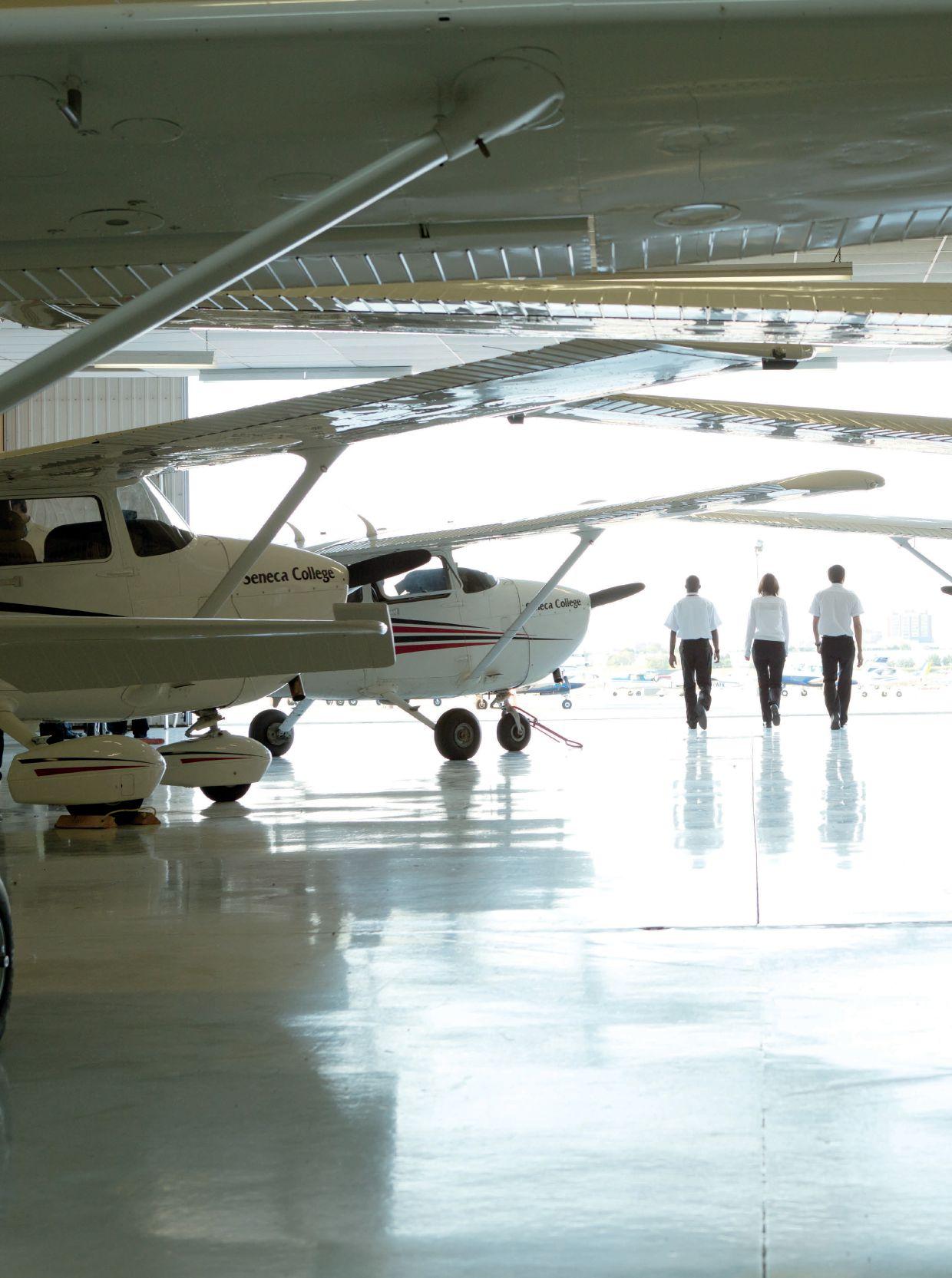
greenwood Flight centre | Kings County (also known as Waterville) The Greenwood Flight Centre is located in Nova Scotia’s Annapolis Valley, approximately one hour’s drive west of Halifax. Greenwood Flight Centre has been training pilots since 1958 and offers courses from Recreational Permits to Multiengine/Instrument Flight Rules Rating, including Integrated Programs.
Advantages: Students often gain subsequent employment with the Greenwood Flight Centre. In addition to Kings County Municipal Airport, the school operates two satellite sites at Digby Municipal Airport and Yarmouth Airport in southwest Nova Scotia.
Fleet: Cessna 172 and Piper Seneca. Learn more: www.flygfc.com
NEWFouNdlANd
gander Flight training | Gander Gander Flight Training (GFT) provides a full range of professional flight training programs in fixed-wing aircraft. Strategically located at the Gander International Airport, GFT prepares pilots for the real world of aviation. GFT students experience four seasons, which exposes them to experience real-world weather conditions in one of North America’s harshest climates.
Advantages: EVAS-Air, GFT’s sister company is a Tier 3 Carrier for Air Canada in addition to the operator’s charter and Medevac operations, providing students with transition opportunities into airline operations.
Fleet: Cessna 150, 172, 172S, Piper Seminole PA44-180, Beechcraft 1900D airliner. Learn more: www.gft.cawww.evasair. com | W
AVIATION COLLEGES: ADDED BENEFITS
holding an Airline Transport Pilot Licence and having the requisite flying hours used to be the entry ticket into the flight deck of an airline or smaller operator. But candidates for employment will discover that, even in a skills shortage, today’s highest flyers are on the lookout for more.
Even in the private aviation sector, for example, corporate flight departments are operated like regional airlines and are looking for value-added in their hires.
Canadian colleges with aviation programs teach essential skills not found at flight schools. These colleges help shape the raw pilot into an industry professional with courses on technical aspects of aviation, critical decision-making and communication skills.
Colleges also offer career counselling and expose students to broader networks so it becomes easier to make the right connections to that critical first job.
At the very least, a diploma from a Canadian aviation college should expedite the hiring and is essential for ambitious candidates with longer-term career goals such as transitioning from the flight deck to airline management. Even those who want to spend their entire career in the front seat of the airplane need to consider a college degree as protection against an unexpected grounding such as a failed health check.
Many of the larger flight schools in Canada are associated with colleges, and depending on your career goals, should be a consideration when picking a school.
selkirk college
Castlegar, British Columbia
www.selkirk.ca
Aviation professional pilot program
Selkirk College’s Aviation-Professional
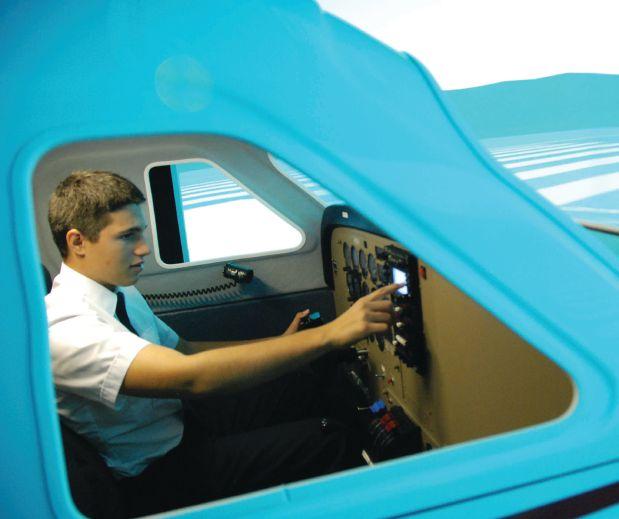
Pilot program is designed to prepare students for commercial pilot positions in the Canadian and international airline industry. This intensive two-year flight training diploma program focuses on succeeding in a technology-driven environment. The program is an intensive two-year diploma program certified by Transport Canada and supported by the British emphasis on multi-crew co-ordination training and Airline Transport Pilot Licence (ATPL) standards. Selkirk’s multimillion dollar aviation facility offers students a state-ofthe-art classroom environment and dispatch area. The facility houses FRASCA 142 and ALSIM 200MCC flight training simulators. Flight training is completed in-house at the West Kootenay Regional Airport using a fully equipped fleet consisting of Cessna 172P and Beech Travelaire (BE-95) aircraft. Selkirk Aviation instructors are all ATPL rated pilots with a wide variety of flying experience. A comprehensive two-year diploma with Selkirk can be transferred to an aviation degree at Embry Riddle Aeronautical University in the U.S., the only aviation-oriented university in the world.
red deer college | Red Deer, Alberta www.rdc.ab.cawww.skywings.com Aviation diploma program
Red Deer College and Sky Wings Aviation Academy have designed an Aviation Diploma Program that has been providing pilots for the aviation industry for almost two decades. This two-year course of studies enables the student to earn a certificate in Business Management while obtaining an Aviation Diploma. Most courses are university transferable, which gives students the ability to move up their chosen career path. Sky Wings Aviation Academy has been in operation at the Red Deer
Regional Airport since 1982, providing flight training, charters, and maintenance and storage services. Students will train on Cessna 172, Piper Seneca and Navajo aircraft. Ground training is conducted in a large, multi-media classroom. Instrument and Multi-Engine preparatory training is provided on an ALSIM 200 Flight Simulator. Applicants for the Aviation Diploma Program apply through Sky Wings Aviation Academy.
saskatchewan institute of Applied science and technology (siAst) Saskatoon, Saskatchewan www.gosiast.com, www.saskaviationcouncil.ca, www.leadingedgeaviation.ca commercial pilot program
The Saskatchewan Institute of Applied Science and Technology’s (SIAST) Commercial Pilot is a diploma program offered in partnership between SIAST and the Saskatchewan Aviation Council (SAC). Potential recruits apply for admission to the program while training for a private licence. Session 1 begins with the commercial pilot ground school program. Upon completion, students return to an SAC member flying school to complete flying requirements. Session 2 includes ground school training for multi-engine aircraft and Instrument Flight Rating ground school. Students will also be prepared to write the Transport Canada IATRA examination. MultiEngine flying and Instrument Flight rating requirements and flight tests will be completed at any SAC member flying school. The program draws instructors from the leaders in Saskatchewan’s aviation industry, and students will meet experienced personnel who will provide the knowledge for success in the aviation field. SIAST is also partnered with
Leading Edge Aviation flight school on a diploma program to provide students with a commercial licence and diploma. Flight training is completed at Leading Edge Aviation’s facilities at Yorkton Airport, while the required ground school is to be completed over a two-year period at the SIAST during the normal school term.
Centennial College | Toronto, Ontario
www.centennialcollege.ca
Professional Pilot training Program
Centennial College is Toronto’s first public college, established in 1966. Centennial’s School of Transportation has an accelerated Professional Pilot Training program for students to develop the skills employers demand to pursue a career in various sectors of the aviation industry, including commercial and private aircraft pilot, and flight instructor. The program provides s tudents with appro ximately 330 hours of ground school training, both in class and simulator time, in addition to up to 200 hours of flight time, both dual and solo. The program is operated out of Oshawa airport and is approximately one year in length from September to August, although this could var y due to weather conditions. The program is divided into three phases: Private Pilot, Commercial Pilot and Multi-Engine IFR Rating. Advancement into each phase is dependent on maintain a minimum high-grade average and successfully completing all ground school and training requirements during each phase time frame. Students will pilot Cessna 150, 172 and Piper Aztec aircraf t.

seneca College | Peterborough, Ontario
www.senecac.on.ca
Seneca College offers a range of aviation diploma programs, including the Bachelor of Aviation Technology program. This program provides a rigorous aviation technology-based curriculum and the application of this theory to aviation. Students gain the skills and knowledge to operate safely in a complex aircraft, to understand the technologies and human factors that affect the successful operation of an aircraft and to assume the professional responsibility associated with being a commercial pilot. Seneca’s flight of 19 aircraft consists of the Beechcraft Baron and Bonanza, G1000 Baron (glass cockpit), Cessna 172 and G1000 172 (glass cockpit). Students begin their training in the single-engine 172 before moving on to the Bonanzas. Training in the Bonanzas includes long distance flights to places such as Burlington, Vermont, and Fredericton, New Brunswick. Students then progress to the twin-engine Baron. In 2014, Seneca will offer flight training and classroom instruction for years 2 to 4 of the program at a new state-of-the-art Peterborough Campus. Third-year Bachelor of Aviation Technology students are eligible for the Jazz cadet program that includes direct entry into the airline’s hiring pool. All qualified students are offered an interview with Jazz, Canada’s third largest airline. Successful candidates can become Jazz/ Seneca cadets in their fourth year. As they maintain the required academic and flight line achievement throughout their fourth year, upon graduation and successful completion of Jazz Aviation’s standardized tests and evaluations, they will be entered into the Jazz hiring pool. | W In less than a year, the hands-on Aircraft Structures Technician program at UFV prepares students for well-paid work with major airlines, aircraft manufacturers, fixed base operations, large repair and overhaul organizations, and specialty repair shops. Repair and overhaul airplane structural components including sheet metal, composites as well as wood and fabric.
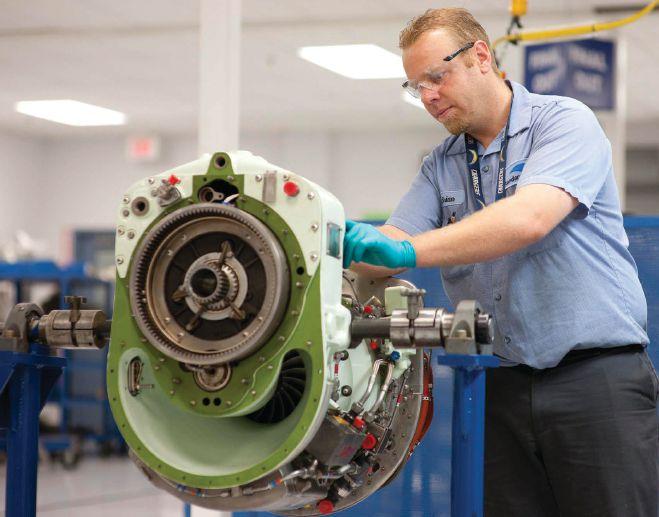
AVIATION mAINTENANCE ENGINEERS
canada is home to the world’s fifth largest aerospace industry, and a strong and safe airline sector. It relies on a highly diverse and skilled talent pool to keep the airplanes flying and design and build innovative airplanes and aircraft components that drive exports.
According to the Aerospace Industries Association of Canada (AIAC), more than two-thirds of the total aerospace industry is qualified as skilled labour, with the average salary for aerospace manufacturing close to 40 per cent higher than other industries. Maintenance, repair and overhaul (MRO) is approximately 20 per cent higher.
While Quebec and Ontario account for the majority of aerospace manufacturing in Canada, Atlantic Canada has been the fastest growing region in both manufacturing and MRO, and Western Canada is the dominant player in MRO services.
Some of the main activities for the aerospace manufacturing sector include:
• Aircraft assemblies, subassemblies and parts
• Aircraft engines and engine parts
• Flight simulators
• Avionics
• Research and development
On the MRO side, Canadian companies specialize in:
• Aircraft heavy maintenance, servicing and repair
• Engine heavy maintenance, servicing and repair
• Aircraft component and other systems, maintenance, servicing and repair
It is challenging and rewarding work. New-generation aircraft, carbon composites and more complex systems will require sophisticated skill sets and more education than once was the case. Aviation technical personnel must possess a strong knowledge of aircraft systems, aerodynamics and aircraft structures along with a clear understanding of the interrelationship among components on an aircraft. Aircraft maintenance is also a very
AVIATION TECHNICAL CAREERS
Qualified Aircraft Maintenance Technicians have found challenging careers in all areas of Canada’s airline and aerospace sectors. Below is a brief description of several specialized roles.
Avionics maintenance technician
In the past 10 years, avionics has penetrated every aspect of an aircraft’s operation and has ensured a strong demand for Avionics Maintenance Technicians. An Avionics Maintenance Technician installs, repairs and maintains various complex aircraft computers and subsystems, including “fly by wire,” auto flight, global positioning and satellite navigation. Avionics technicians are involved in integrating avionics systems into the aircraft, technical writing and troubleshooting. An avionics technician is eligible to obtain an Aircraft Maintenance Engineer License and release aircraft for service.
Aviation machinists
Aviation machinists fabricate, repair, rework or modify aircraft parts and components to exacting specifications. Aviation machinists must be familiar with exotic and specialized materials used in aviation, and will often be called upon in the design phase of a project because of their knowledge of materials, processes and fabrication techniques. Newer carbon-fibre composites such as those being used in the Boeing 787 will bring new opportunities for aviation machinists.
Aerospace Engineers
In Canada, aerospace engineers are at the core of a vibrant industry, developing new systems and aircraft that meet the highest standards for safety and performance. Each year, more than 1,200 new and modified aeronautical products are built or operated in Canada. A day in the life of an aerospace engineer could include developing new aircraft flight systems, designing new propulsion systems, or studying and analyzing aircraft aerodynamics.
Aviation maintenance inspector
An Aviation Maintenance Inspector inspects the structural and mechanical systems of an aircraft to ensure it complies with Transport Canada, operator and manufacturer performance, and safety standards. In some organizations, the Aviation Maintenance Inspector plans and implements every aspect of inspection techniques to make sure the quality of aircraft repairs and maintenance performed meet industry standards. An inspector can also be an AME who releases aircraft.
Aircraft line maintenance
Aircraft Line Maintenance involves technicians who diagnose and correct troubles on the aircraft and conduct major aircraft checks and effect repair
manual-driven industry that requires a high level of literacy and numeracy skills and the ability to follow technical drawings and blueprints.
With the re tirement rate playing a key factor, AIAC expects strong demand over the next five years for:
• Engineers, scientists and R&D specialists
• Advanced manufacturing technicians
• MRO highly skilled personnel | W
AME ASSOCIATIONS IN CANADA
• The Canadian Council for Aviation & Aerospace (CCAA)
• www.avaerocouncil.ca
• Canadian Federation of AME Associations
• www.cfamea.com
• Central AME Association
• www.camea.ca
• Western AME Association
• www.wamea.com
• Atlantic AME Association
• www.atlanticame.ca
• Ontario AME Association
• www.ame-ont.com
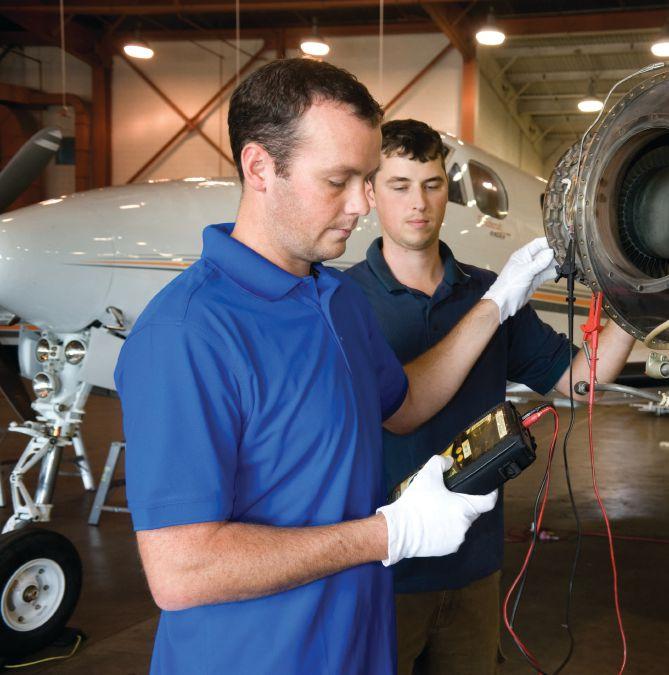
Our Aviation programs can help you take flight.
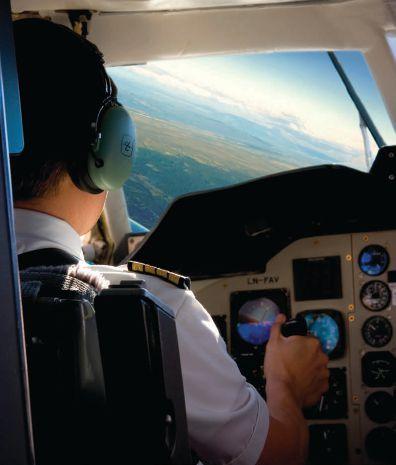

Our leading-edge programs in Aircraft Maintenance and Avionics Maintenance are taught at one of the largest aircraft maintenance training facilities in Canada. Our instructors are equipped with years of experience, and our program offers an intense mix of theoretical learning and hands-on training that will get you career ready.
If you’re thinking about about sitting in the pilot seat, our flight training training program may be just the thing to help you earn your “wings”.
For more information, contact: Mike Barleben, 416-289-5000 ext. 7280, mbarleben@centennialcollege.ca or James Passant, 416-289-5000 ext. 7510, jpassant@centennialcollege.ca or visit us at centennialcollege.ca/transportation
See where experience takes you.
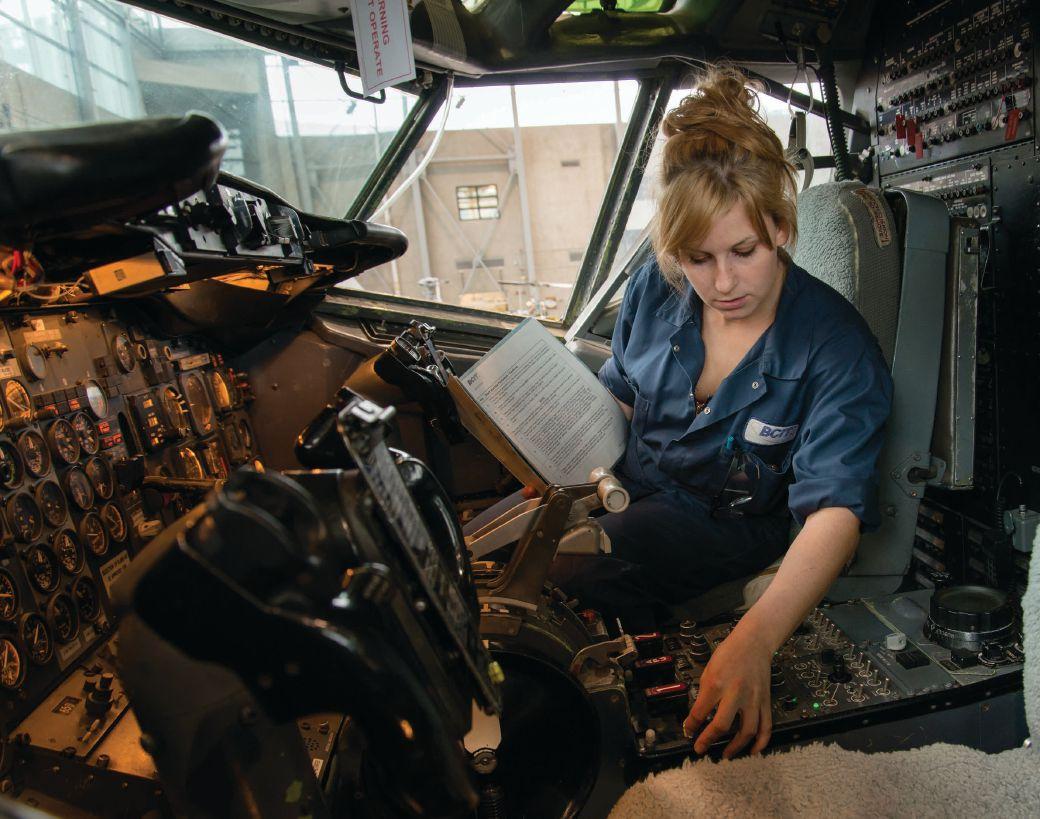
AVIATION COLLEGES: mAINTENANCE
British columbia institute of technology | Vancouver, British Columbia www.bcit.ca
Aircraft maintenance Engineer
The British Columbia Institute of Technology (BCIT) is Canada’s largest aerospace training facility. The Institute offers aircraft maintenance-engineering programs in avionics, maintenance and structures at its state-of-the-art Aerospace Technology Campus (ATC) located at Vancouver International Airport. The Aircraft Maintenance Engineer program consists of 16 continuous months. Approximately 50 per cent of the day is spent on theory discussions in a classroom setting, followed by hands-on practical training. The program is designed to follow a national/international set of standards and is approved by Transport Canada and the Canadian Council for Aviation and Aerospace. Successful completion of the diploma program will result in an experience credit of 18 months of the 48 months required by Transport Canada to obtain an AME M licence.
okanagan college | Kelowna, B.C.
Aircraft maintenance Engineer, m licence www.okanagan.bc.ca
Okanagan offers a 62-week (approximately 15 months) program in partnership with Northern Lights College (NLC) in Dawson Creek, B.C. The first 48 weeks of training take place at Okanagan College Aerospace Campus in Vernon B.C. while the final 14 weeks of training take place at Northern Lights College in Dawson Creek. The diploma is conferred by Northern Lights College and all curriculum and entrance requirements at Okanagan College align with the AME program at Northern Lights College. The crux of the program is designed to take a student with little or no previous experience in the aircraft maintenance trade and supply him/her with the necessary skills to seek employment in that industry as an apprentice Aircraft Maintenance Engineer. The curriculum follows Transport Canada’s guidelines and upon successful completion of the program, Transport Canada will grant graduates 18 months of experience credits toward the 48-month
experience requirement for an Aircraft Maintenance Engineer license. Graduates also receive a diploma in Aircraft Maintenance Engineering from Northern Lights College. Okanagan also offers a 37-week Aircraft Maintenance Engineer Structures program. In this program, some 50 per cent of the day is spent on theory discussions in a classroom setting, followed by hands-on practical training in the shops located in OC’s Aerospace Campus at Kelowna International Airport. The program follows a national set of standards and is approved by Transport Canada.
sAit polytechnic | Calgary, Alberta www.sait.ca
Aircraft structure technician, Avionics technology and Aircraft maintenance Engineers technology
SAIT Polytechnic offers three full-time aviation programs at its Art Smith Aero Centre, located at the Calgary International Airport. The Aircraft Structure Technician, Avionics Technology and Aircraft Maintenance Engineers Technology programs cover all aspects of aircraft structure repair, including general aviation, corporate, charter, transport category aircraft and helicopters.
red river college | Winnipeg, manitoba www.rrc.ca
Aircraft Engineer maintenance
Manitoba is home to the third largest aerospace sector in Canada. Red River College (RRC) offers training in all aspects of the aviation and aerospace sector. RRC has a number of courses that can lead to careers in overhauling aircraft engines, maintaining aircraft, building components or management positions. Introduction to Aircraft Engineer Maintenance uses a combination
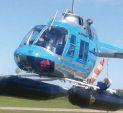
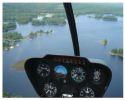
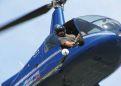
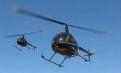
WORLD CLASS HELICOPTER TRAINING
Located at the Jack Garland Airport in North Bay, Ontario
- Private Career College
- Commercial Helicopter Pilot Training
- Private Helicopter License
- Type ratings
- Instructor rating
- IFR training
- Year round flight training
- Training on Robinson and Bell Jet Ranger Helicopters
- Highly qualified ground staff and class #1 flight
Instruction available
- Specializing in Industry Training in:
. Short line slinging
. Long line training
. Hover exiting
. Water bucketing
. Winter and summer flying operations
Interested in learning more or have more questions, Contact Helicopters Canada at 1-877-688-HELI (4354) Or email info@helicopterscanada.com www.helicopterscanada.com

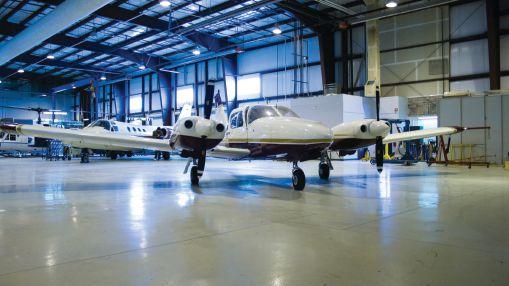
of classroom and practical training on a fleet of fixed- and rotary-wing aircraft to provide the necessary foundation for entrylevel positions in the aircraft maintenance industry. The Aircraft Maintenance Engineer diploma program is designed to develop the knowledge and skills in maintenance of both large and small airplanes and helicopters, with time split between the study of aircraft maintenance theory and practical projects.
confederation college | Thunder Bay, Ontario www.confederationc.on.ca
Aviation technician – maintenance
The Confederation College School of Aviation is located at Thunder Bay International Airport. The college has a well-established Aviation Technician – Maintenance Program designed and developed in consultation with the industry and Transport Canada. Confederation College also offers Aerospace Manufacturing Engineering Technology and Technician programs at its Aviation Centre of Excellence. The centre has a sizeable fleet of non-flying, fixed-wing and rotary-wing aircraft, including a McDonnell Douglas DC9, Cessnas, and Bell 47 and 206 helicopters.
canadore college | North Bay, Ontario www.canadore.on.ca
Aircraft structures technician, Aircraft maintenance technician
Canadore College’s School of Aviation celebrated its 40th year in 2013, and is a leader in aviation training. Canadore’s Aviation Campus is home to top of the line, industry-standard training tools and dedicated staff and faculty. The College’s hangar includes 17,000 square feet of prime training space, filled to capacity with fixed- and rotary-wing aircraft to give students work hands-on experience. Canadore’s Aircraft Structures Technician curriculum focuses on the maintenance, repair and fabrication of aircraft structural components. In addition, students will be prepared with job-entry skills that include sheet metal layout; blueprint reading; and structural repair of fuselages, wing and empennage sections; and heat and corrosion treatment. Students of the Aircraft Maintenance Technician program will study the complexities of fixed and rotary-wing aircraft while gaining theoretical skills necessary for apprenticeship employment. This program also prepares graduates to write the Transport Canada Aircraft Maintenance Engineer examinations. Canadore also has a two-year Aviation Technician – Avionics Maintenance program where students train to repair and maintain aircraft electrical and electronics systems, including communication, navigation and radar systems.
mohawk college | Hamilton, Ontario www.mohawkcollege.ca
Aviation technician
Mohawk’s two-year program offers students an excellent balance of theoretical knowledge and practical application. Students have an opportunity to work on a variety of aircraft including, a helicopter, vintage aircraft and heavy jet transports. In addition,



in Advanced Aviation Training
AeroCourse offers both IFR and ATPL groundschool seminars and refresher courses taught by professional pilots specialized in training. The ATPL and IFR groundschools are three-day courses, designed to lead students through the steps and knowledge necessary to obtain their IFR or ATPL ratings.
Recently, an online IFR course has been added to enhance our IFR training. Workbooks are also available that significantly contribute to your success in obtaining the IFR and ATPL ratings. Courses are available across Canada and in conjunction with leading flying clubs.
Kelowna Flight Craft recently donated a Boeing 727-100 for the Aviation Technician program, bringing the fleet up to 13. The Mohawk program is a living laboratory that focuses on developing key skills students will need to maintain aging aircraft as well as understand rapidly changing technologies.
renaissance Aeronautics Associates inc. | London, Ontario www.raacomposites.com
Advanced Aircraft structure repair
In 1996, Transport Canada designated Renaissance Aeronautics Associates Inc (RAA) as an approved training organization for advanced composites. RAA’s Module #1 and Module#2 Advanced Aircraft Structure Repair courses are accredited and audited by the Canadian Council for Aviation and Aerospace (CCAA). Thirteen of the Advanced Composite Training courses are approved by the U.S. Federal Aviation Administration for Inspector Authorization Renewal training.
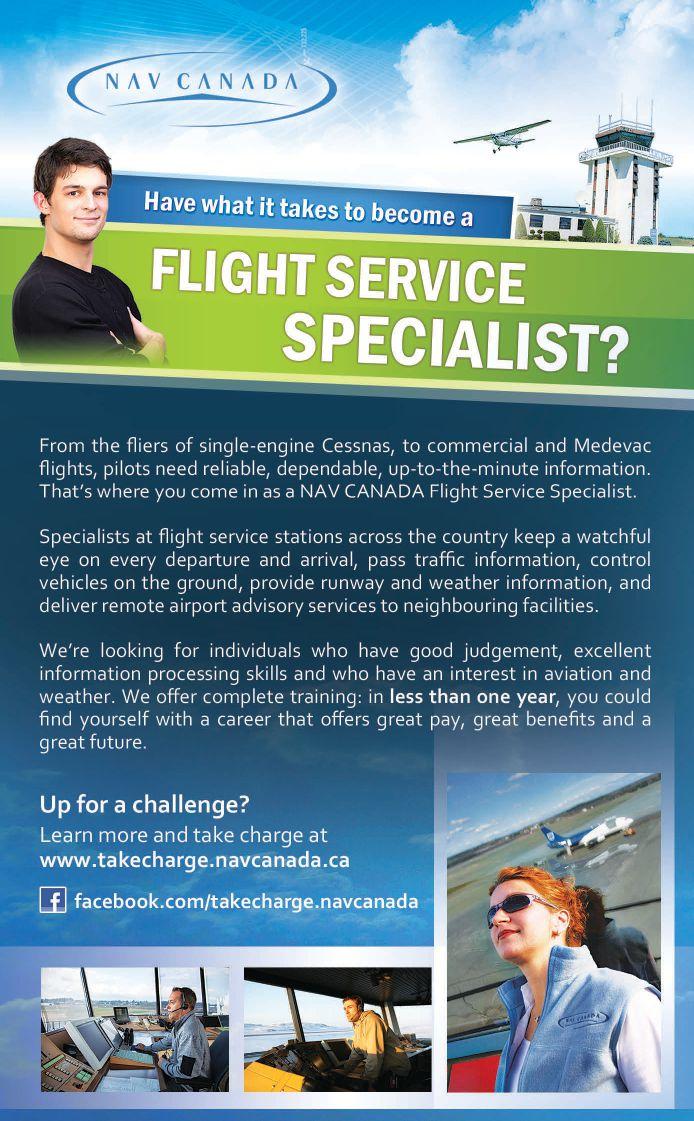
Nscc | Dartmouth, Nova Scotia
www.nscc.ca
AmE Avionics
NSCC’s Aviation Institute is a modern 43,000-square-foot training facility where students build their skills using the latest technology applied to real aircraft. The AME Avionics program provides the skills needed to service, maintain, repair, overhaul and inspect and test aircraft systems.
holland college | Summerside, Prince Edward Island
www.hollandcollege.com
gas turbine technician
Holland College’s Aircraft Gas Turbine Engine Repair and Overhaul Technology program is CCAA accredited. In this program, students will learn the techniques, procedures and documentation requirements necessary to perform the disassembly, inspection, repair, reassembly and testing of the turbine engines used to power today’s aircraft. The program consists of approximately 60 per cent practical and 40 per cent theory. Handson, practical training is carried out on a variety of turbine engines including the Pratt & Whitney 100 series turbine engine used on the de Havilland Dash 8 aircraft, the Pratt & Whitney PT6, one of the world’s most popular turbine engines and the Rolls-Royce 250 for light turbinepowered helicopters.
college of the North Atlantic | Gander, N.L.
www.cna.nl.ca
Aircraft structural repair technician
The College of the North Atlantic Gander campus is part of the Lufthansa Technical Training network of approved schools. The two-year Aircraft Maintenance Engineering Technician (AMET) program offers training in the inspection, maintenance and repair of aircraft, and aircraft components. Topics include the role of the AME as being responsible for aviation safety and airworthiness. Courses cover all aspects of aircraft maintenance for both fixed-wing and rotary-wing aircraft, and include safety practices, ground handling, inspection techniques, power plant, structural repair, aircraft systems and avionics. Graduates are granted 21 months experience credit toward the 48-months’ requirements for the licence. An optional semester allows graduates of the AMET program to carry on and also meet the training requirements for the issuance of a European Aviation Safety Agency Aircraft Maintenance Licence. This standard is currently recognized in 33 countries in Europe. | W
UNIVERSITIES WITH AVIATION DISCIPLINES
the University of Waterloo scored a major coup last year, announcing that high-profile Canadian astronaut Chris Hadfield would be joining the institution’s aviation department in 2014. Professor Hadfield, who studied at the university’s Faculty of Engineering, where he specialized in aircraft fuel bump design, illustrates the increasingly important role that Canadian universities play in aerospace research and development.
Aerospace is the second most researchintensive industry in Canada. Over the next three years, collaboration on basic research between the Canadian aerospace manufacturing sector and universities will be greater than with government research institutes, suppliers and customers, according to the AIAC. Universities will also be involved in applied research.
Complex aircraft and aviation systems researched at the university level are going to require specialized academic skills to understand them. In addition, a university degree is regarded as a valuable asset by the airline industry when hiring pilots. Many excellent Canadian universities have Aerospace Engineering programs at the undergraduate, graduate and PhD levels to support the aerospace and air transport sectors with those skills.
university of Fraser valley | Abbotsford, British columbia
The University of Fraser Valley (UFV) offers one-, two- and four-year aviation training programs in cooperation with Vancouver-based Coastal Pacific Aviation. Aviation subjects are taught by Coastal Pacific instructors and academic courses are taught by instructors at the university’s Abbotsford campus.
mount royal university
| calgary, Alberta
Mount Royal’s comprehensive two-year program combines flight training with business, technology and human resources training. Mount Royal also offers non-credit private pilot training that is focused on preparing students for the Aviation Diploma program. Some courses in the program are transferable to the prestigious degree program at Embry-Riddle Aeronautical University in the U.S., the only aviationoriented university in the world.

university of manitoba | Winnipeg, manitoba
The University of Manitoba’s Mechanical Engineering program offers courses in aerodynamics, propulsion systems, engineering and aircraft/spacecraft dynamics. This program is aimed at students wanting to be part of designing and redesigning aircraft and spacecraft components.
university of Waterloo | Waterloo, ontario
Waterloo’s Bachelor of Environmental Studies and Bachelor of Science programs have been designed to provide a strong base for careers in a diverse array of aviation and aerospace industries and provide students with a comprehensive grounding in aviation-relevant subjects such as geometrics, climatology, cartography and remote sensing.
university of Western ontario
| london, ontario
Commercial Aviation Management (CAM) at the University of Western Ontario (UWO) was launched in 1999. Within the CAM program, students have the option of combining their four-year bachelor’s degree with professional pilot flight training. CAM students graduating with the flight option would receive a bachelor’s degree in Management and Organizational Studies and a Transport Canada approved Integrated Commercial Pilot’s Licence with Multi-Engine and Instrument Ratings. Students in the commercial aviation stream pursue courses in human factors in aviation, aviation law, airport planning and management, and more. A non-flight option of this degree is also offered.
ryerson university | toronto, ontario
Ryerson University offers comprehensive, accredited undergraduate and graduate degrees in conjunction with conducting leading edge research in diverse aerospace fields. Ryerson’s Bachelor of Aerospace Engineering degree includes directly related studies in aerodynamics, stress analysis and structural design, flight mechanics, stability and control, aircraft performance, propulsion, avionics and systems, together with courses in the fields of Mechanical and Electrical Engineering. The program is one of only two Canadian undergraduate programs in Aerospace Engineering accredited by the Canadian Engineering Accreditation Board.
university of toronto
| toronto, ontario
The University of Toronto Institute of Aerospace Studies (UTIAS) includes undergraduate and graduate studies. The scope of UTIAS research includes aeronautical engineering (aircraft flight systems, propulsion, aerodynamics, computational fluid dynamics and structure mechanics) and space systems engineering (spacecraft dynamics and control).
concordia university
| montreal, Quebec
The John Molson Executive Education Centre’s Aviation Management Institute (AMI) at Concordia University offers non-credit courses in leadership development and aviation management. AMI also offers two public programs: Aviation Security Professional Management in response to the growing demand to maintain aviation security, and the Airport Executive Leadership Program, targeted at future airport CEOs, Deputy CEOs and vice-presidents.
mount Allison university
| moncton, New Brunswick
Mount Allison University’s Bachelor of Science (Aviation) is offered in partnership with the Moncton Flight College and is targeted at students wanting to earn a university degree while preparing for a career in aviation. The major is an interdisciplinary science program, featuring in-depth study of geography, mathematics and physics, together with professional flight training. | W
FLIGHT OPERATIONS DISPATCH
in August, Air Canada opened a new global Operations Centre in Brampton, Ont. close to Toronto’s Pearson International Airport. The new state-of-the-art facility, which will be fully operational in 2014, will serve as the nerve centre for the airline’s operations, with 400 employees keeping a watchful eye on nearly 600 Air Canada flights every day on a 24/7 basis.
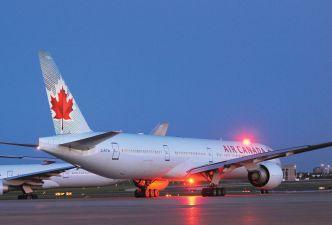
The new mission control centre incorporates the latest in technology and houses all areas of the operation. To enable Air Canada to meet its regular schedule, the Operations Centre is responsible for:
• Decision-making on operating flights within 48 hours of scheduled departure
• Schedule changes and cancellations, including aircraft changes or extra flight additions, in response to unforeseen circumstances
• Leading preparations for disruptions, such as winter storms, and developing and implementing recovery plans Juggling so many flights is the responsibility of a flight
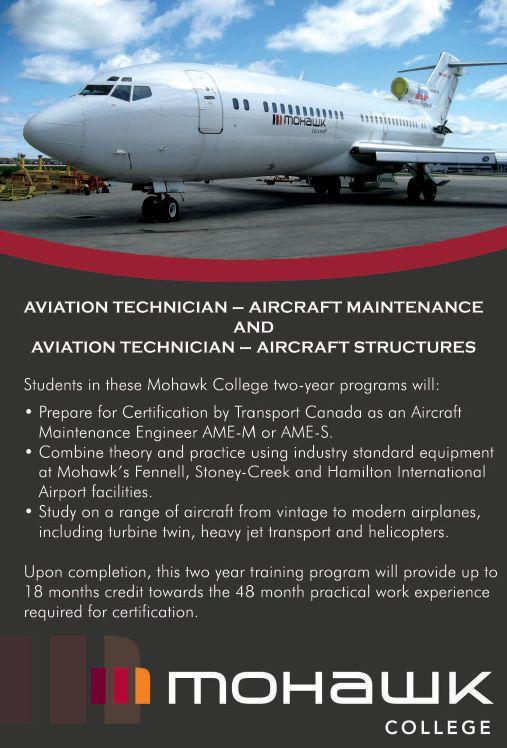
dispatcher. A dispatcher makes joint decisions with the flight captain to ensure a safe and efficient flight, including giving the crew a situational update prior to departure and feeding critical data to the flight deck en route. But whereas a captain is responsible for a single flight, a dispatcher can be responsible for up to 50 aircraft in a single shift, including charting routes and alternatives, calculating fuel loads and aircraft weight, monitoring flights and taking decisions whether to divert or cancel flights. A dispatcher is also plugged into air traffic control to ensure the most efficient routings and minimize costly air traffic control delays.
An airline flight dispatcher must be Transport Canada licensed, scoring at least 70 per cent on every exam. The dispatcher is also expected to demonstrate the same level of knowledge and proficiency in decision-making as the flight crew. A commercial pilot licence, flight services specialist experience, air traffic control experience or related experience within a flight operations centre can improve career prospects, especially with larger airlines. | W
AIRCRAFT mAINTENANCE CREW
cNN once compared aircraft maintenance crew with a car racing team “pit crew.” The analogy is not far off the mark. They were talking about the men and women who descend on an arriving aircraft and race against an LED countdown clock to turn the airplane around and get it back in the air.
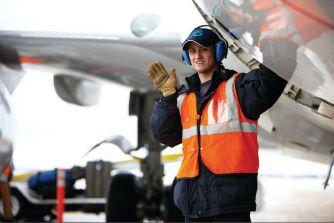
For those looking for a career in aviation but not interested in becoming a pilot or aircraft maintenance technician, the airport ramp is a busy hive of worthwhile career opportunities.
Depending on the size of airplane, a team of up to 35 ramp attendants will offload the arriving flight and ready the airplane to receive a new load of passengers. They marshal aircraft to and from the gate, manoeuvre the air bridge, operate a fleet of vehicles including tow trucks and catering trucks, attach nozzles to the aircraft to pump lavatory waste out, unload hundreds of passenger bags and tonnes of air freight, refuel, and clean the cabin. The computerized bar codes that are placed on a bag at check-in
The sky isn’t the limit – it’s just the beginning
At Ryerson University, you can earn an accredited degree in aerospace engineering and follow your passion.
The program offers industry experience through the Ryerson Institute for Aerospace Design and Innovation (RIADI). Work on real industry design projects for companies like Bombardier Aerospace, Pratt & Whitney Canada, Goodrich and Honeywell.
Learn more at ryerson.ca/aerospace
are scanned and the bag deployed to its next destination, whether that is the luggage carousel in the terminal building or to a connecting flight.
There is more to the job than meets the eye. Each aircraft is different, and the weight of an aircraft changes daily. The way freight and baggage is distributed will have a direct effect on aircraft performance and fuel consumption. For this reason, the attendant must keep in close communication with the aircraft dispatcher, who will have already calculated how much weight can be placed in the hold.
Airlines, third-party air service providers and airport authorities employ most ramp attendants. It is demanding physical work and airlines typically have standards on how much a candidate is able to lift on a regular basis. Other essential skills include document use, excellent oral communication, time management and decision-making skills. The job involves working around loud aircraft and machinery in all types of weather, and includes shift work, weekends and holidays. | W

AIR NAVIGATION
NAV CANADA’s Gander Area Control Centre (GACC), at Gander International Airport in Newfoundland, is the busiest air traffic control service provider in the world. International airspace over the North Atlantic is divided into seven sections.
GACC provides oceanic air traffic control services from the east coast of Canada to about halfway across the North Atlantic. Approximately 270 staff, including 150 Air Traffic Controllers guide up to 1,000 flights a day, most of which will never touch down in Canada.
Air navigation is a high-performance business providing air traffic control, weather briefings, aeronautical information services, airport advisory services and electronic aids for navigation.
NAV CANADA’s 40,000 customers range from the weekend recreational pilot to the biggest international airlines. The Gander Area Control Centre (GACC) operated by NAV CANADA is the busiest oceanic air traffic control service provider in the world.
What is often overlooked is that NAV CANADA can be considered a logistics specialist. By helping pilots fly the most efficient routes, traffic controllers also help reduce fuel consumption, having a positive impact on airline operating costs and the environment.
NAV CANADA has approximately 4,800 employees and is expected to recruit up to 80 air traffic controllers and flight service specialists a year. It also has demand for technologists
and engineers. NAVCANatm, a marketing subsidiary, has sold and installed Canadian made ANS technology around the world, including Australia, Hong Kong, Dubai, the U.K. and Europe.
Area air traffic controllers coordinate the safe, efficient and orderly flow of air traffic from seven Area Control Centres across Canada.
Airport air traffic controllers operate from one of 41 air traffic control towers at airports across the country, keeping an eye over every approach, departure and taxiway.
Flight service specialists provide reliable, dependable and up-to-date information to pilots operating everything from a single-engine Cessna to the Airbus A380.
Candidates for air traffic and flight service positions do not need aviation-related experience, but will be subject to an intense and comprehensive screening process. Training for a career in air traffic services takes eight months to two-and-a-half-years, depending on the career. Air traffic control recruits that enter the area controller system will be posted at one of seven ACCs in Canada. Most of these towers are in large communities. Flight service specialists are most likely to start their career in smaller or northern communities.
NAV CANADA also supports youth enrolled in academic programs by offering work experience through a Summer Student Enrolment Program. | W




• Whether you are looking for a career change or just about to start one, come learn about different career paths the aviation industry has to offer: airplane pilots, helicopter pilots, maintenance engineers, aerospace design & engineering, aviation business management, air navigation, flight operations and more.
• Meet with Canada’s leading aviation colleges, universities, flight schools and hiring managers from Canada’s largest aviation operators and aerospace companies.
• Find out what it takes to get hired!
YOuR REgistRatiOn includEs: speaker sessions covering a variety of aviation career paths, networking with Canada’s top training programs and hiring managers, luncheon with keynote speaker, coffee breaks and the Careers in Aviation exhibit hall.
For information on sponsorship and exhibitor opportunities, please contact: Weng Ng 905-713-4351 wng@annexweb.com



The sky is calling








Air Canada and Air Georgian are looking for the next generation of pilots.
This is not a career path for underachievers. We’re looking for applicants who want to train with the best, and pursue a career with an industry-leader in commercial aviation.
Through our training and development program we offer young people a fast track to becoming a commercial pilot. In just 50 weeks we can put you in the cockpit of an Air Georgian airplane, a member of the Air Canada Express family, with future progression to a position with Air Canada.
If you’re a high school graduate or a college or university student with an excellent academic record, a history of community involvement, and a desire to take on new challenges, we invite you to contact us and learn more about joining our team.


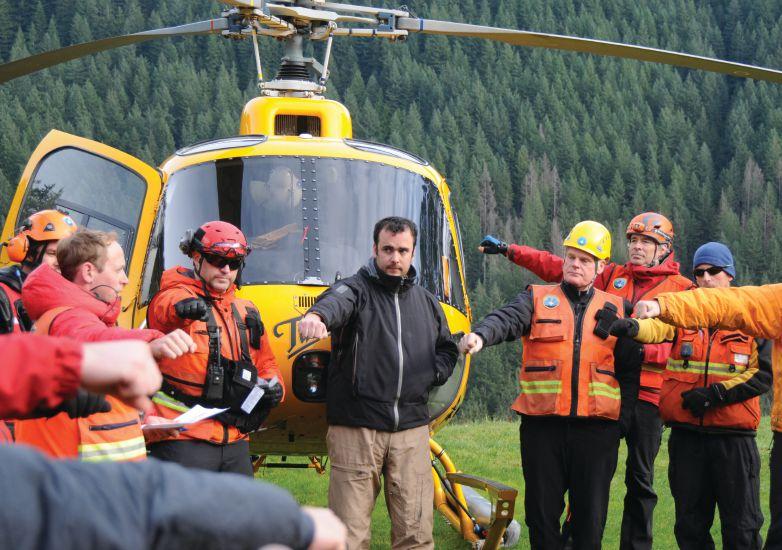
saluting B.C.’s saR angels
LEFT & BELOW: SAR training starts with a run-through of hand signals to make sure everyone is on the same page; Talon pilot Derek Riendeau (black jacket) leads the group. (Photos by Paul Dixon)
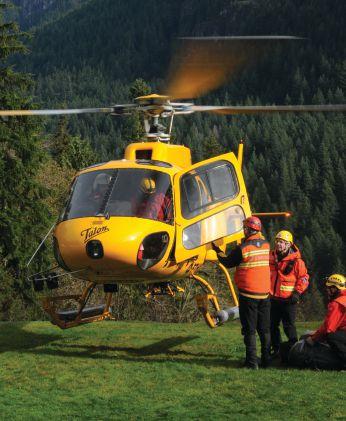
North Shore Rescue’s Volunteer Brigade Keeps Bringing ’Em Home
BY paul dixon
search and rescue (sAR) in Canada is a responsibility shared across all three levels of government. the Royal Canadian Air Force (RCAF) is responsible for all incidents involving aircraft, the Canadian Coast guard is responsible for marine incidents in areas of federal responsibility and Parks Canada is responsible for incidents in federal parks. the provincial and territorial governments are responsible for sAR in the rest of the country, generally under the auspices of the police force having jurisdiction: RCMP, provincial or municipal force. sAR conducted under provincial mandate is a volunteer endeavour.
For 2011, the British Columbia search and Rescue Association reports that of the 1,933 sAR missions conducted in Canada, 1,308 were in B.C., two-thirds of the national total, a statistic that repeats year after year. why does B.C. have such a disproportionate number of sAR missions compared to the rest of the country? the reasons are as varied as the number of incidents each year, but it boils down to a combination of the rugged terrain across the entire province, the attraction of outdoor activities year-round within easy reach of urban areas, a huge influx of adventure-minded tourists and what David letterman delicately describes as “stupid human tricks.”
in B.C. today there are approximately 4,700 volunteers that make up the 80 volunteer community-based sAR teams that provide coverage across the province. the fact these people are unpaid volunteers makes their level of expertise all the more remarkable and is testament to their dedication. over the past 20 years, call volumes in the province have risen from approximately 400 in 1991 to 900 in 2002 and 1,308 a decade later. searches and rescues have become increasingly complex and technical, requiring a high degree of expertise on the part of volunteers. given B.C.’s difficult terrain, the use of helicopters to transport search teams members into remote areas and to remove vicitms by means of long-line rescue (Helicopter external transport system or Hets) is becoming widespread.
b c.’s sar commnity had its genesis in the outdoor movement of the 1950s and ’60s. teams formed on an ad hoc basis, training was self-initiated and equipment was limited to what was at hand. today, sAR is under the direction of emergency Management BC, part of the Ministry of Justice. teams have become highly skilled to meet the challenges presented by geography, with formal training in a wide variety of disciplines including advanced first aid, mountain rescue, swiftwater rescue, and increasingly, working with helicopters.
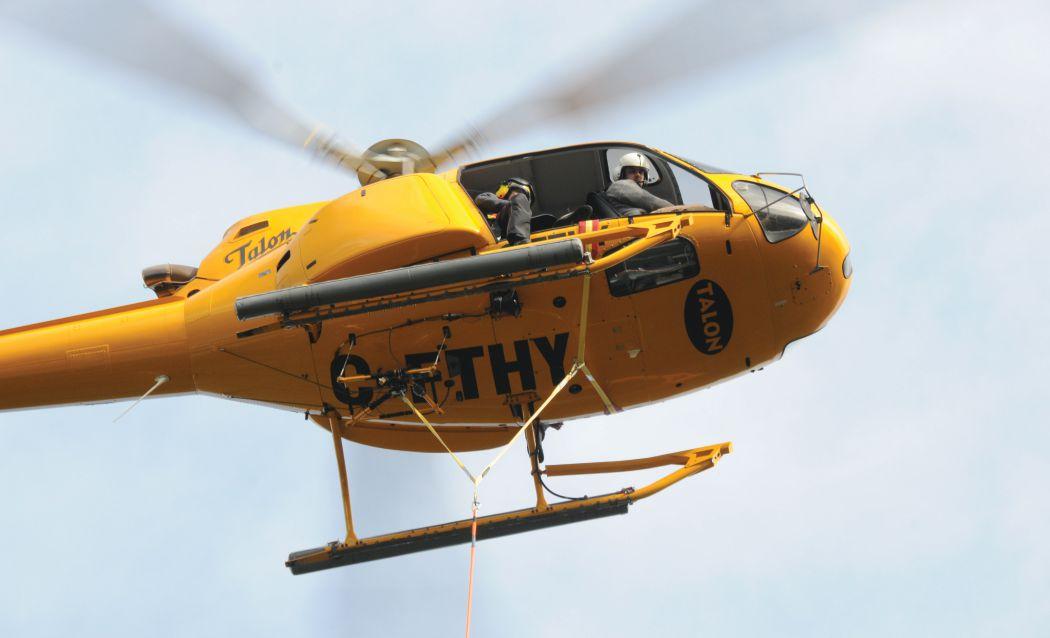
A large percentage of B.C.’s sAR missions take place on Vancouver island or in a crescent around metro Vancouver that extends from Pemberton, 160 kilometres to the north out through the Fraser Valley for another 160 km to the east. the area that north shore Rescue calls home is a microcosm of the B.C. sAR environment. the mountains that tower over the communities of west Vancouver and north Vancouver are but a short drive from downtown Vancouver. Home to three ski resorts, Cypress (setting of the 2010 olympics’ freestyle skiing and snowboarding events), grouse Mountain and seymour. the mountains that draw skiers and boarders in winter also include major provincial and regional parks that stretch back through the mountains, presenting hundreds of kilometres of trails for hikers and mountain bikers. the myriad streams that are fed by the deep winter snows, become swift-flowing rivers in their short but tempestuous runs to the sea, drawing whitewater kayakers and canoeists.
the following represents a small sample of the sAR calls recorded in B.C. during August, september and october 2013:
• three hundred twenty seven sAR members from teams throughout the province of B.C., along with 20 Canadian Rangers and many convergent volunteers searched for seven days trying to locate two missing mushroom pickers in the lorne Creek area near terrace. After searching for seven days, the subjects had not been located and the sar teams stood down. the search was reactivated a week later when one of the two was found alive. some 35 sAR members then spent several days searching before the second subject was found dead.
• ten members from Kent Harrison sAR and Chilliwack Hets teams responded to assist with an injured male after his AtV had
gone off a bridge. Rope rescue was required to retrieve the subject, who was then airlifted out of the park.
• eighteen members of squamish sAR responded to rescue a crashed para glider pilot. the subject was located deceased. sAR members used a helicopter to recover the body on behalf of the coroner.
• Five members of Hope sAR and four Chilliwack Hets team members responded to rescue an injured hiker in Manning Park. the subject was packaged and rescued via Hets and delivered to a waiting ambulance.
• Fifteen squamish sAR members responded to rescue an injured climber who fell 300 metres from the grand wall on the Chief. the climber was located deceased and at the request of the coroner the body was recovered.
• nine north shore Rescue members responded to assist two hikers believed to be near Coliseum Mountain, in the north Vancouver area. Both subjects were located and brought out of the area by helicopter.
• ten lions Bay, five squamish and six north shore Rescue members responded to rescue an injured hiker on lions trail above lions Bay. the subject was brought out to BCAs via Hets
• six golden sAR members responded to investigate a report of a spot beacon sounding in the Bugaboos as requested by the RCMP. the sAR team located three climbers. one climber was found deceased and the other two were uninjured. Hets rescue was performed and the subjects were rescued. the deceased subject was transported to the B.C. Coroner service.
Helicopters have always had a role in sAR activities in B.C. given the mountainous terrain. Most sAR teams in the province have
Talon pilot Derek Riendeau and HETS spotter practise during a recent SAR training session. (Photo by Paul Dixon)
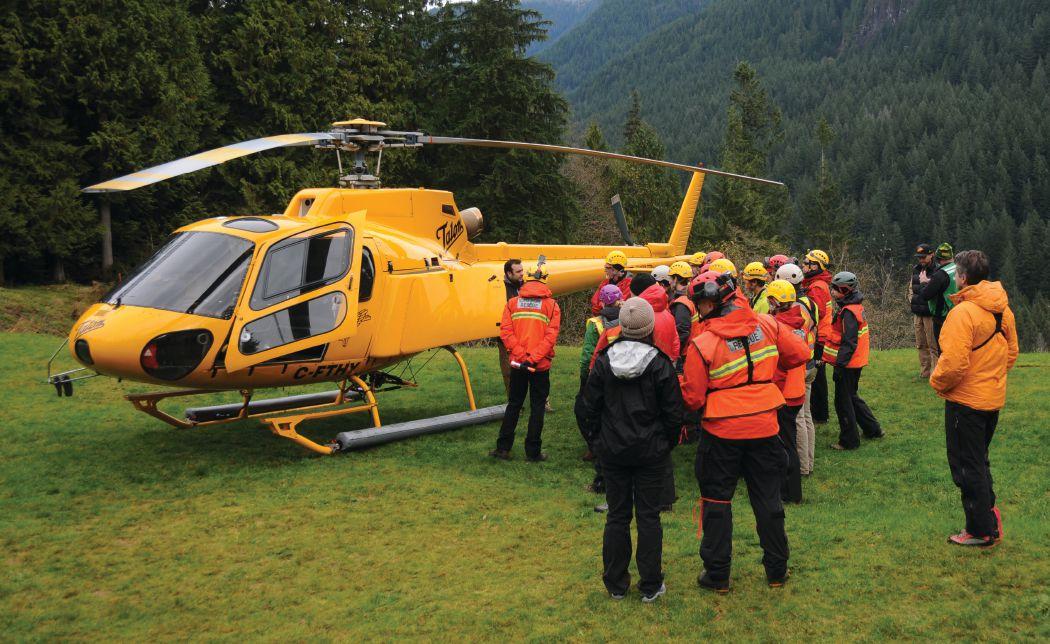
training in hover entry/exit, sling loading and patient transport, but for the past decade, the use of long-line techniques for rapid insertion and extraction of sAR members and patients has become more commonplace. today, about 15 of the 80 teams in the province have Hets-qualified members.
north shore Rescue, which serves the communities of north Vancouver and west Vancouver, has developed a reputation as a leader in this area of expertise. north shore team leader tim Jones may well have the most time on the end of a long-line in B.C. sAR. His introduction to a helicopter long-line came in February 1997. three teenagers were snowboarding out of bounds on Cypress’ Mount strachan, when a snow slope collapsed and a 17-year-old female was swept down a 300-metre gully before coming to rest. she survived the slide, but for reasons unknown, walked away from where she had come to rest.
when north shore Rescue team members arrived on the scene, they followed her footprints downhill for some distance until they discovered she had fallen while trying to cross a creek and was lying unconscious in the water in a severe hypothermic state. Daylight was rapidly fading and rescuers were facing a herculean task in trying to extricate the victim from the mountainside. As Jones recalls, there had been some discussion about using helicopter long-lines in the sAR community at the time, but Blackcomb ski Patrol and Blackcomb Helicopters were the only ones in the province actually doing it. A phone call was made to Blackcomb and in short order, a helicopter arrived with a member of the Blackcomb ski Patrol on board. Jones was harnessed alongside the ski patroller and they were long-lined into the site.
“i intubated the girl and secured her airway,” says Jones. “i could
see that we had to get her out right away for any chance of survival. she was in hypothermic arrest, but we felt that the hypothermia was saving her. so, the two of us were long-lined out with her in a Bauman bag.” the evacuation had taken minutes, versus the hours that it would have taken to extricate her by ground. Unfortunately the young woman did not survive her injuries, but the incident underscored for Jones the value of using a helicopter long-line.
“everyone was there trying to save her and it was my introduction to Hets,” he says. “it was stepping into the unknown and there was about a good 30 seconds where it scared the living @#@# out of me.”
in December 2012, Jones and north shore Rescue returned to the same area for a protracted search for another out-of-bounds snowboarder. the fellow had deliberately crossed the boundary fence on a sunday morning and almost immediately was in trouble, finding himself in a situation where he could only go down, a common situation on the north shore mountains where skiers and boarders who venture out-of-bounds find themselves trapped in a world of steep gullies, frozen waterfalls and avalanches chutes. He was not reported missing until after Cypress shut down that night and his car was still in the parking lot. He did have a cellphone and eventually Jones was initially able to talk to him, but he kept shutting the phone off and would not stay in one place, making it difficult to locate him.
Avalanche risk in the area was high and ground searchers found the going tough – and there was no sign of him. this went on for two days. on the Monday night, RCMP Air 1 and a Cormorant from 442 squadron flew overhead, scanning the area with night vision goggles (nVg) and FliR, but heavy snow and thick tree cover defeated the technology. Finally, on the tuesday afternoon, his tracks were
Talon pilot Derek Riendeau conducts a helicopter orientation briefing with NSR trainees. (Photo by Paul Dixon)
discovered by ground searchers who followed them as far as they could, to the top of a 300-foot frozen waterfall. Jones and another team of rescuers was long-lined in with a load of equipment. they rappelled down the waterfall and finally had their man. it was late in the day, darkness was falling and it was their determination that he would not survive a third night on the mountain. their only hope for extraction was the Cormorant crew from 442 squadron. the line on the Cormorant’s winch is 290 feet in length and every inch was played out due to the height of the trees and the depth of the gully. while the Cormorant and its winch are nice, two rescues this past July highlight the flexibility of using smaller helicopters. on a sunday afternoon, north shore Rescue received a call for a hiker who had suffered a severe ankle facture after a fall on Cypress Mountain. within minutes, an initial team of three was on scene after hover-exiting the helicopter. shortly thereafter, the helicopter returned with a fourth team member who is also an advanced care paramedic. the patient was treated on scene and was extracted by means of a 150-foot long-line and delivered to a waiting ambulance crew at the Cypress parking lot.
As the team members were debriefing the incident, they were requested to respond to a medical rescue at granite Falls on indian Arm, 25 km to the east on the far side of north Vancouver. Arriving on scene by helicopter, they found the Coast guard hovercraft siyay on scene with the Royal Canadian Marine sAR lifeboat from north Vancouver and members of Coquitlam sAR. the patient had fallen above the waterfall, suffering possible spinal injuries. Rescuers had reached the patient, but required assistance in extricating him. the helicopter was quickly rigged and north shore Rescue members long-lined the patient directly out to the hovercraft which had B.C. Ambulance paramedics on board. this call, in particular, was a great example of the level of cooperation that is possible between different agencies.
an eVolution oF Co-opeRation
the level of training for sAR volunteers today has evolved from the self-taught pioneers of yesteryear to a high level of professionalism based on continual self-improvement. they are volunteers in the true sense because they are unpaid. they are, however, professional in every sense of the word when it comes to the level of training required and the personal commitment required. there is a basic requirement for most sAR teams in the province of 400 to 500 hours per year, just for the training. generally, it’s one evening a week and one weekend a month. A day spent with north shore Rescue during one of its four helicopter training days this year gives an observer a taste of the depth of the training as well as the breadth, which is the ongoing development of the next generation of leaders.
Mike Danks, helicopter rescue co-ordinator for north shore Rescue, talks about the level of preparation and layers of involvement in play took place on that day, which included training for hover enter/exit, Hets observers and Hets technicians.
“i had to figure out all the rotations, who was going to be on what team, and how that would work over the course of the day,” he says. “the other two co-ordinators are still in training, so they each took a group in hand and went through the dry land training, covering the quick-release device and screamer suits. they went through the fine details of how that works. the other portion of their training was the hover entry and exit, the safety briefing with the pilot, going through everything on the helicopter, then going through the stepby-step procedure of the ideal way of how to move when entering or exiting the helicopter. we’re not trying to give them hard and fast
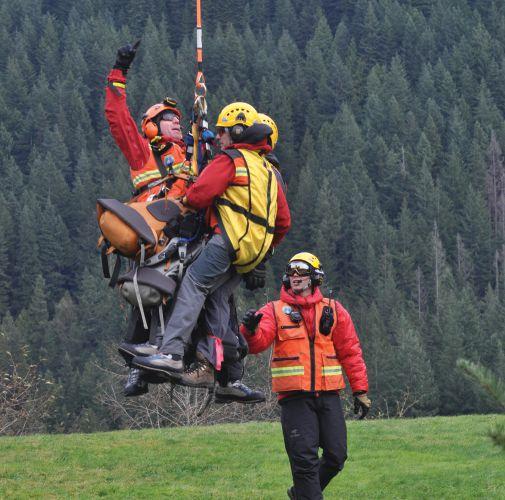
is a basic requirement for most SAR teams in the province of 400 to 500 hours per year, just for the training.
ways of doing it, it’s more like demonstrating what works best –we’ve got the experience and this is how we’d like to see you do it.” when it’s time to work with the helicopter, it’s a matter of emphasizing the importance of being aware of your environment and always staying balanced, Danks says. “A lot of people don’t have experience around the machines, just the noise itself heightens their senses and they start to panic – that’s what we’re really trying to avoid. we’re trying to get them the experience of being around the helicopter in these types of conditions. it’s a training scenario and they’re in a safe environment.”
within days of their training scenario, nsR team members were called on to make two difficult helicopter rescues. in the first instance, two young hikers had set out on a day hike into a remote area. they became disoriented and found themselves stranded on a cliff in late afternoon. Had they not been able to use their cellphone, they would have been in serious trouble as they could not extricate themselves from their perch; they were not properly dressed, and no one knew where they were going for the day. they were saved largely because the helicopter and Hets techs were available immediately. Four days later, talon Helicopters’ pilot Derek Riendeau deposited Hets techs through a small opening in towering tree canopy to rescue two hikers who were stranded on the backside of grouse mountain.
on nov. 28, 2013, the Justice institute of B.C. Foundation (JiBC) at the institute’s annual gala awarded the Dr. Joseph H. Cohen Award for outstanding contributions in the field of public safety north shore Rescue. Presenting the award, JiBC Chair John Chesman said, “north shore Rescue is an invaluable resource in our community and we are grateful to this team of volunteers for their dedication in helping keep members of our community safe.”
For more features, visit www.helicoptersmagazine.com
There
(Photo by Paul Dixon)
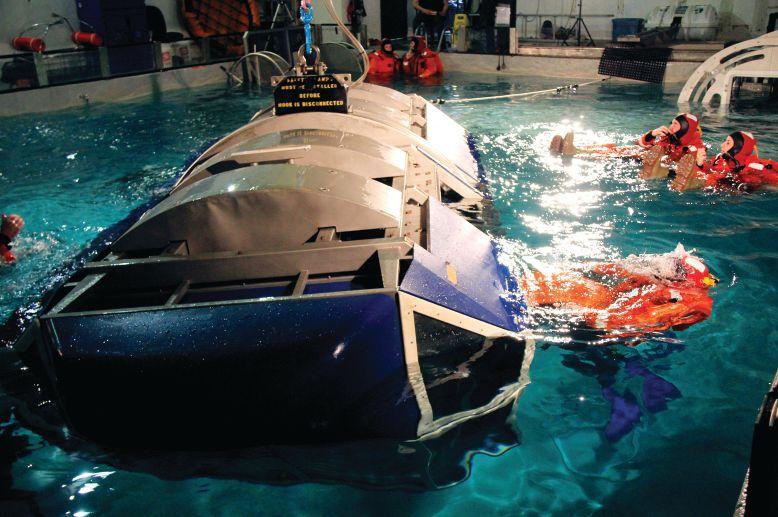
Helicopter down, pt. 2!
ABOVE: A group of oil and gas industry workers practise how to survive a real helicopter ditching. (Photo courtesy of Horizon Line Films)
BELOW: Raising the roof of the life raft is difficult in a simulated nighttime storm. (Photo courtesy of Horizon Line Films)
Helicopters’ Quebec Correspondent Trains to Survive a Ditching
BY CaRRoll MCCoRMiCK
s
trapped into an upside down ditched sikorsky s-92 helicopter, i struggle to draw a breath of good air. i blow to clear my regulator and take in a bubbly mouthful of water. i bite down and blow again, but suck in another gurgling mouthful. The third time won’t be the charm. I’m going to need air soon and I don’t want to spoil my afternoon with a lungful of water. i put my hands on my head and an instructor pops my harness and knocks out the window next to me. i wriggle out of the submerged machine.
i surface and wallow over to the instructor, John stone, for counsel. “if you can’t clear your regulator by blowing through it, purge it with air from your air cylinder,” he says. instantly, i recall those very words from his morning lecture. Why didn’t I remember that? Well, that’s why it’s called learning.
what i was learning was how to escape alive from a helicopter that has ditched in the ocean – something that plenty of people have failed to do after surviving the initial crash.
stone is the director for military and aviation programs at survival systems training limited (sstl) in Dartmouth, n s., where i spent a day this past May taking sstl’s offshore Helicopter safety HUet/ HUeBA course. HUet stands for Helicopter Underwater egress
training. HUeBA stands for Helicopter Underwater emergency Breathing Apparatus.
sstl has been teaching survival training courses since 1982 and has taught tens of thousands of civilians and military personnel. it works to the training standards and practices of the Canadian Association of Petroleum Producers, and is the only Canadian training agency that meets the standards of the United Kingdom’s offshore petroleum industry training organization.
Many Canadian companies and government departments require that all of their employees – pilots and passengers alike – who fly over water have this certification. workers on offshore oil platforms must take a five-day basic survival training course, of which the offshore Helicopter safety HUet/HUeBA training is a component.
on this day, i was with six other trainees, including an engineer, an oil worker from Alberta and non-destructive testing specialists from scotland and newfoundland. we began with a morning of classroom theory with stone, a 30-year veteran of the Canadian Army who has extensive air, land and underwater skill sets.
stone covered a lot of bases, including the critical phases of flight, emergency equipment inside helicopters and underwater breathing apparatuses. He drove his points home with visuals such as a clip
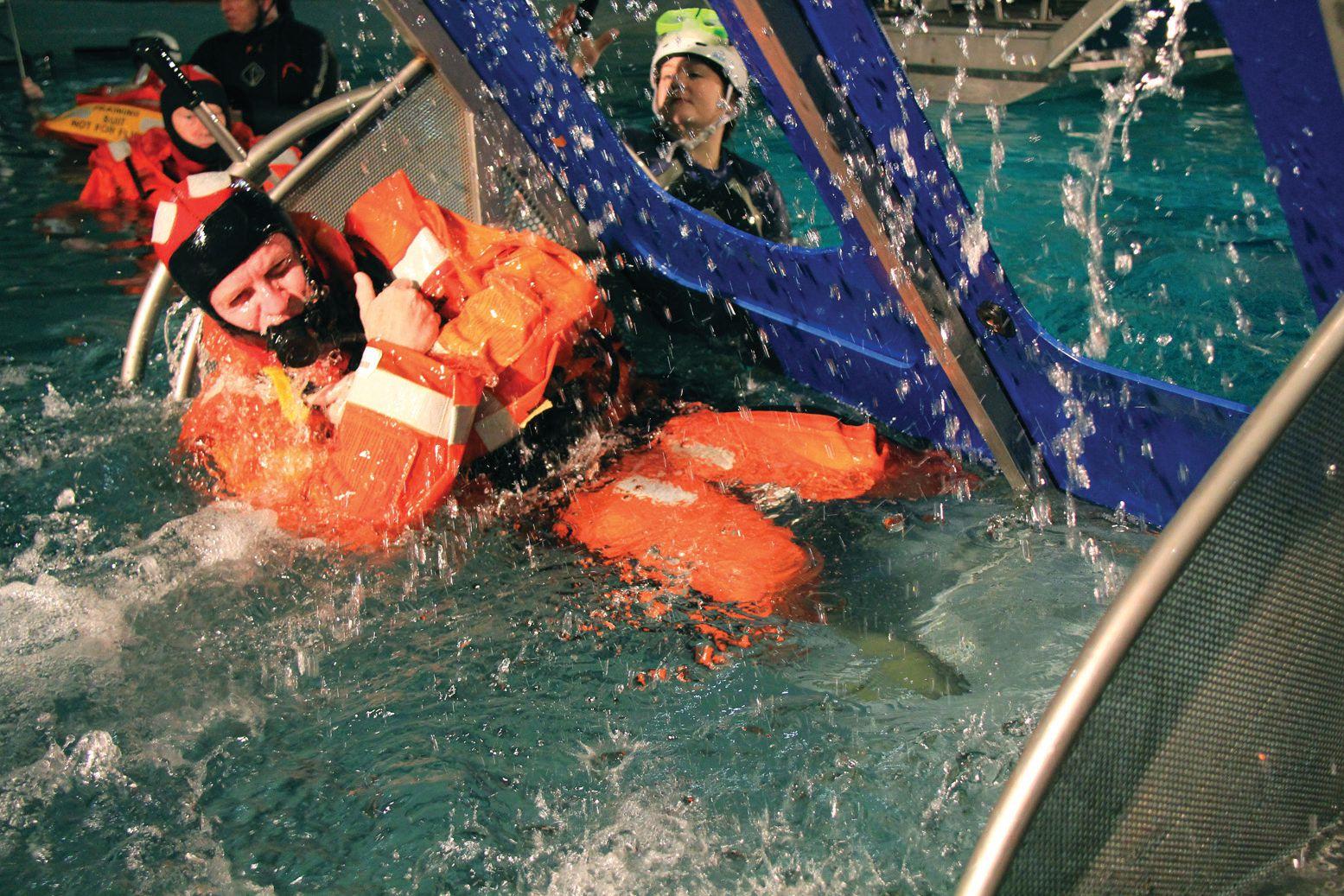
showing a helicopter ditching, a training video of how to deploy and enter a life raft in high winds and a smart phone video of people abandoning a super Puma that ditched immediately after takeoff from an oil and gas platform in nigeria.
we became familiar with the features of a Helly Hanson nautilus Hts-1 cold-water immersion suit. it is de rigueur for everyone who flies to and from rigs off Canada’s east Coast.
when in the helicopter, stone tells us, “Review the steps you will take if there is a ditching. where are the exits? Are they push or mechanical release windows? where are the primary, secondary and tertiary exits? get in the habit of reviewing this. things can go wrong very quickly.”
Really? stone rolls a Youtube showing a Marine CH-46 sea Knight helicopter clattering toward a fast-moving ship, and its doom. i review the clip later with a stopwatch. From the time the CH-46 crosses the stern, dips, backs off, catches a wheel on a heli-deck safety net, keels over, drops like a piano into the water and vanishes, only seven seconds elapse.
“if there is a problem in the landing phase, the pilot does not have a lot of options. You are likely going in the water,” stone says. He warns us to be alert to mechanical emergencies, including fire, smoke and engine failure. “if you hear or see something unusual,” he admonishes, “Zip up, put your hood up. Don’t wait to be told. that may never come. Don’t worry about whether the next guy is doing it. Just do it and review your primary, secondary and tertiary exits.”
After lunch our little group heads for the indoor pool. this is where theory gets put into action, where we get an opportunity to develop some motor memory of what we must do, without panicking, in a real ditching. we pull on survival suits. A helicopter abandonment exercise is first
on the menu. we climb into a full-scale simulator of an s-92 that a technician has lowered a foot or two into the pool water. sstl uses the s-92 because it is Canada’s airframe of choice for ferrying offshore oil and gas workers. stone and Peter gibbs, a decorated ex-Royal navy aircrew and now an aviation safety consultant, join us. Divers in the water watch us closely.
sstl technicians turn on big fans, a wave generator and a rainmaker. it’s all Hollywood, but the Force 8 (35-knot, or 56 km/h) winds, two-foot waves and driving rain in the darkened pool room quickly force me to engage fully in the task.
i push down on a release lever and push out the big window over a reserve fuel tank, crawl out and roll into a bucking yellow life raft. As i hold it close to the s-92 fuselage, a student sails by. Recalling a scene from a video stone played, i call out: “should one of us go to the other side of the raft to keep it from flipping?” “no,” the student replies. I’m sure that’s not right, but this isn’t the time to argue.
we all pile in and wrestle the roof over us. Having lived through the ditching and abandonment of what stone refers to as a “really bad boat,” we are now in the third phase of a ditching: survival. gibbs asks, “now what do you do?” someone replies, “get some seasickness pills into us.” Another student adds, “turn on a couple of personal locator beacons.” (But not all of them. save some batteries for the long haul.) the fourth phase, were this a real accident, would be to await rescue. next up is a practice session with the little air cylinders attached to our survival suits. these are called HUeBA lV2 seA (low Volume second stage survival egress Air), mandatory survival gear for the offshore oil and gas industry and the Canadian military. A HUeBA
The author surfaces after shallow water training with compressed air. (Photo courtesy of Horizon Line Films)
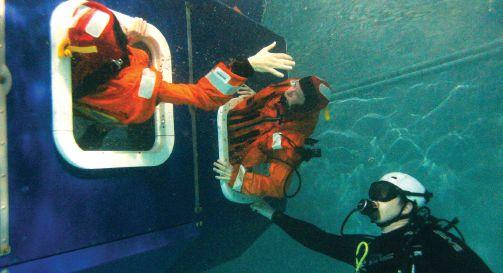
contains 1.5 cubic metres of air, enough for about 21 breaths. emergency breathing systems are intended to give occupants of a submerged helicopter more time to egress. therefore, it is remarkable that although the military has been using emergency breathing systems since 1988, the oil and gas industry kicked and screamed for nearly a decade before finally allowing HUeBA to be part of the survival kit in 2009. And only beginning in 2013, thanks to sstl, have students begun training with HUeBA in full-scale simulators.
one by one, we strap into a shallow water trainer to try out the HUeBA. while waiting my turn to be rolled upside down, i play with my HUeBA. Breathing compressed air is utterly new to me. i roll face

down, bite down on the mouthpiece and violate a lifetime habit of holding my breath underwater. in a huge leap of faith, i breathe in, and eureka! i get air! when my turn in the shallow water trainer comes, i pull in a few breaths before being rolled upright to sputter happily at a grinning gibbs.
we will do four ditching runs in the s-92 simulator. in the first run we land on the water, jettison our windows and simply hold our breath before we roll inverted and egress. we use the HUeBA for the other three runs.
on my knees in my sopping wet survival suit, i loosen my seat straps, climb up on the stroked-out seat that “collapsed in the crash” and buckle up. it is slow, deliberate work in the simulator’s dim interior. gibbs hollers, “Ditching, ditching, ditching,” and the simulator drops into the water. Keep a hand on the seat as a reference point. Push out window, don’t bang on it. Then keep hand on the windowsill so I don’t get disoriented.
Another one of stone’s lessons crosses my mind only later: “if you inflate your suit in your aircraft, you have signed your own death warrant.” no matter, because that little yellow pull-tab buried somewhere in my survival suit was not even on my list of priorities.
the s-92 settles, and then rolls upside down. i find and fit my regulator between my teeth, start breathing and push out my little window. i egress. This is like leaving the Gemini spacecraft to do a spacewalk! i corkscrew, weightless, through the water. survival!
The author (right) and Jasmine Lacoste-McCormick egress the inverted S-92 simulator. (Photo courtesy of Horizon Line Films)
FeatuRe
Bell’s Slick 407 is a Nimble, Quick Firefighting Tool
BY Matt niCHolls
the taskmaster s
avvy operators realize that having a variety of aircraft in their fleets for myriad clients and missions is sound business acumen – and that’s precisely the perspective of three Canadian firms operating out of Quebec, labrador and newfoundland. one of the aircraft common to each of these fleets, the Bell 407, proved to be invaluable this season for each operator, particularly in its role of fire fighting and suppression.
the fire season in Canada this year was particularly harsh in some areas with more than 5,790 wildfires burning more than 3.6 million hectares of land. in the late summer, significant fires had spread across more than 350,000 hectares in northern Quebec (150,000 more than the 10-year average for Canada) and several helicopters were commissioned for rescue and to help contain the outbreaks.
Jimmy emond, general manager of Alma, Que.-based Panorama Helicopters, commissioned crews to battle several unprecedented wildfires in northern Quebec. His fire teams operated the 407 successfully for a number of these missions, making the aircraft the first of its type to perform utility in this region. two of the most significant fires were located some 100 miles northeast of Alma, and emond says the aircraft’s nimble manoeuvrability, speed and versatility made it an ideal fit for the mission.
“last year, we used the 407 almost exclusively for ViP purposes – mining and government,” notes emond. “But we started using the machine for fire patrol because of its capabilities, such as high visibility windows on the doors, for example. And because of its speed, we soon adapted it for other aspects as well such as bucketing and initial attack. it proved to be very capable with all aspects of fire suppression and fire fighting.”
Panorama purchased its 407 in the spring of 2011 and quickly adapted the four-blade, single-engine civil utility machine for ViP use in the northwest Passage. it wasn’t long before emond figured out new ways to utilize the 206-l4 long Ranger derivative. “the advantages the 407 can bring for fighting fires and fire suppression are actually quite significant,” he says. “the speed, extra passenger capability and fuel consumption are all great advantages over some
other aircraft. the fuel consumption for us is about 15 litres less per hour than other aircraft types and when you are in the north, fuel is often hard to find – and prices can be astronomical. it’s very expensive. if the market comes back this year, we will definitely be offering this one up for clients and thinking seriously about getting another one.”
emond says that perhaps the only problem with the 407 in his fleet is its popularity – everyone on the team wants to fly it. to alleviate the problem, he notes, Panorama carefully coordinates its training procedures to give everyone a shot at flying the aircraft. “we have to choose who will be trained on this machine because there is such a demand,” emond says. “when someone has 100 hours, we put another low time pilot a chance. we want all of the crew checked on this machine because we want them to have the experience.”

Denis simard, vice-president of operations at Héli-inter (as well as vice-president of marketing for sister company Héli-excel), says the 407 was used last season by Héli excel and other sister firm, Mustang Helicopters, during the peak period of the fire season. it is a fairly new tool in the fire suppression and firefighting arsenal but it performed very well.
the 407 had to perform considering the amount of activity in the province. the fire season in Quebec was particularly active in 2013, with some 70 helicopters fighting fires at one point. “Between Quebec and labrador, which have common boundaries, the wabush area was extremely intense for a large period of time,” simard says.
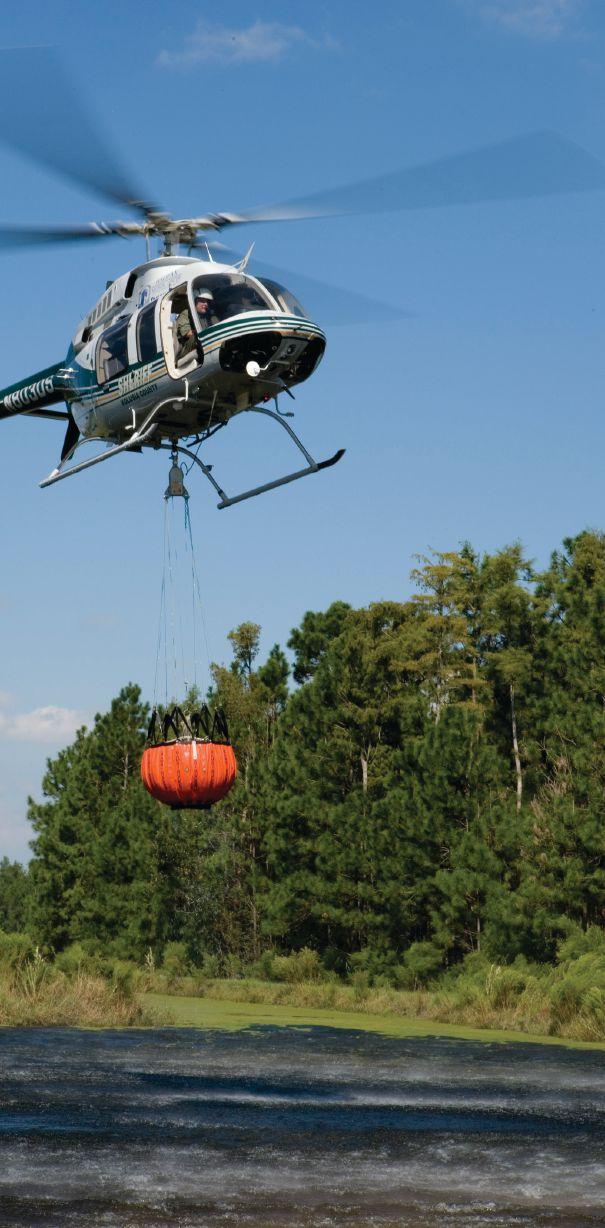
MAIN: Canada’s firefighting season was quite vibrant in 2013, particularly in Quebec and Labrador. Up to 70 helicopters were fighting fires in Quebec at one point.
BELOW: With a seating capacity for six crew members, the Bell 407 offers operators several crew configuration options.
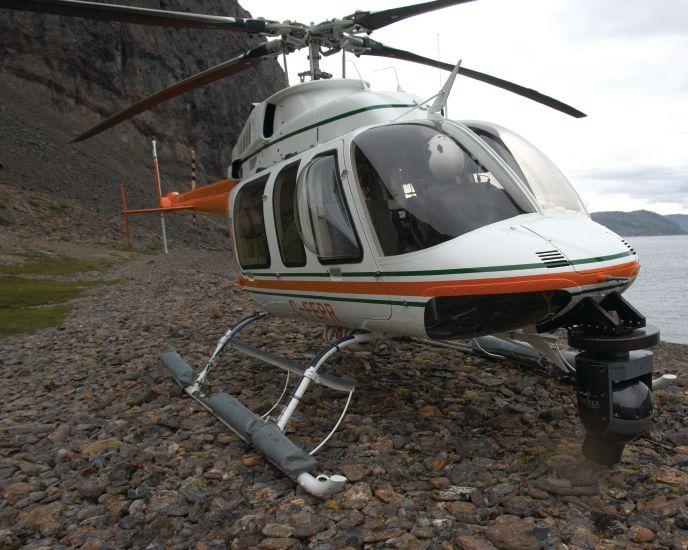
“Héli-excel has a base in shefferville and in goose Bay, labrador, so we covered both sides of the border. And both areas had increased fire activity this year.”
like emond, simard maintains the key advantages of the 407 in the firefighting mix are its speed and manoeuvrability. A fairly new aircraft to the company’s group in the east, it has quickly shown its value, especially given the extra capacity up front and its efficiency in bucketing procedures.
Fast Facts about the Bell 407
• engine: Rolls-Royce 250-C47B turbine FADeC
• Crusing speed: 140 knots (259 km/hr)
• range: 324 nm
• Seating: Five passengers in main cabin plus pilot and additional passenger
• rotor diameter: 35 ft. (10.67 m)
• length: 41 ft. 8 in. (12.7 m)
• height: 11 ft. 8 in. (3.56 m)
• useful load: 2,347 lb. (internal) (1,065 kg)
“the main advantage of the aircraft is the fact it is a nimble aircraft – both fast and rapid,” simard says. “it has a very quick turning ability as compared to some of our competitors aircraft which are a bit slower to react. the payloads are also good and the range is great. Bell has supported us on it – we are a Bell service Centre with the group, so overall, the machine was kept on fires as long it could, and we had a very experienced crew on them.
“overall, the service of the aircraft and its performance, particularly when it comes to bucketing, is outstanding,” simard continued. “the flight crew figured out by the number of litres they were putting on the fire per hour was very good, the best if you compare categories. this is why we kept them at the beginning of the season and we held on to one for five weeks – we kept using it from fire to fire to fire.”
the other important aspect is the extra seat. it makes all the difference when you are allocating crew members. “if you have a crew
of three you can fit two crews to a site per trip, so at the end of the day, you can plan more efficiently,” he says. in addition to its firefighting attributes, the extra seat is very helpful when it comes to mining support. notes simard: “if you have a crew of three you can fit two crews per trip, so overall at the end of the day you can reduce the number of people allocated . . . when added to the speed of the aircraft, it’s just another plus.”
adaptable and flexible is what counts, simard says.
“Mediums are used on a very small scale in Quebec because, here, the main focus is on using water bombers,” he says. “they have a large fleet of Cl-415 bombers which are primarily used for a heavy shell attack; then they like to follow up with intermediates – the B2s, B3s, and 407s. in ontario, they don’t have as many water bombers so they have about 10 mediums as their dedicated firefighting aircraft. these are scattered across the province, with different companies and different contracts. we have three out of those 10. in Manitoba, it’s also a different approach.
with fire contracts in Manitoba with the Department of Forestry, the Ministry of natural Resources in ontario and the société de protection des forêts contre le feu (soPFeU) in Quebec, the Héli-inter, Héli-excel and Mustang Helicopters team must use just the right resources under the directives of a specific firefighting body. light and medium helicopters are used in tandem with other aircraft in different strategic configurations depending on the fire, topography and jurisdiction’s firefighting philosophy. in the end, staying



“the bottom line is, it’s very much indicative of the equipment you have in place, including the topography and the accessibility of open large lakes or water sources. this is why if there are enough big fires in Quebec, they will add one or two or three mediums because they need to carry more people. After that when the situation is under control, they will have maybe three smaller aircraft assigned to a specific fire. this is their approach. in ontario, they will stay with the mediums for a longer period of time over and above their 10. they can easily add 10 to them so, that’s their preferred aircraft. the mediums they primarily use are 205s and 212s. these are the two they like.





Adding the 407 to the mix enabled the team to expand its firefighting footprint.
“Although it was new to us, it gave us an opportunity to test the performance of the aircraft with soPFeU. the feedback we received from them was very positive, so we are very happy with the outcome.”
VeRsatilit Y to tHe Max
At goose Bay, labrador-based Universal Helicopters, the Bell 407 is used in a variety of firefighting tasks including infrared scanning on the perimeter of a fire, moving crews to and from remote areas within the fire footprint, bird-dogging, and water bucketing.
“it’s only limited by horsepower and imagination,” notes Universal president and Ceo geoff goodyear. Universal has five 407s in its fleet and was one of the world’s first operators of the aircraft when they rolled off the assembly line at Bell’s Mirabel, Que. facility in 1996.
“we were one of the first operators in the world to have purchased the 407,” goodyear says. “we had a long and happy history with the 206l and our missions and our clients missions had evolved to the point that though it’s a venerable aircraft, it just didn’t have the horsepower to carry six people all the time of work in a hot environment or carry that much water. so, when there was an option that historically is an effective configuration what with literally twice the carrying capacity obviously, we were enthusiastic right out of the gate. we initially bought two and have
added three since.”
And while fire fighting is a key mission for the 407, the aircraft is equally useful in construction and infrastructure development, wildlife management, sling work, diamond drilling and more. Universal also has a dedicated 407 for medevac work. in the future, should the market dictate aircraft acquisition, the 407 will be a strong consideration, he says.
“it’s versatility tends to evolve within our company and within our local marketplace,” goodyear says. “Any pilot, yours truly included, agrees that when the conversation includes more manoeuvrability and more horsepower, it’s a good situation. when you get a chance to use the aircraft over time, you realize it is such a reliable and stable platform that the feedback is invariably positive. And to be able to have that horsepower when you aren’t riding on the edge of the limits all the time, and the performance to be able to conduct wildlife management duties, firefighting . . . even something as basic as personnel transport. . . it’s a very good feeling.”
with client demands on the rise, choos-
ing the right machine for the job is paramount, and Universal is constantly seeking ways to raise the bar. goodyear, a strong advocate for safety and exceeding industry standards, embraces the new approach. “our client base these days is far more educated then they were even a decade ago – to the point where they actually drive industry standards more so than the regulator,” he notes. “Another real pleasant pattern i see is clients are actually involved in the generation of those best practices, so it’s very much a cooperative and consensus process which, at the end of the day, doesn’t require any more input from the client because they were actually involved in the process.”
working to put out fires with the right equipment for the task at hand, while exceeding industry standards in the process. it’s an excellent recipe for success, and the 407 is but one capable tool in a successful operator’s toolbox.

Fast and highly manouevrable, the Bell 407 is a very flexible tool for fighting forest fires.
(Photo courtesy of Bell Helicopter)
Campbell River Base e-mail: info@ebhelicopters.com www.ebhelicopters.com
Gold River Base
Tel: 250-283-7616
Fax: 250-283-7555
Port Alberni Base
Tel: 250-720-8915
Fax: 250-720-3641

Commercial Charter Services
• Astar 350, Bell 407 and Bell 206
• Robinson R22, R44, R66
Approved Robinson Dealer
• New & Used helicopter sales
• Complete overhaul facility R22, R44 and R66 Avionics
• Helicopter and Fixed-wing complete avionic services
Flight Training
helicopter instructor’s handbook
Illustrated throughout with detailed, full-colour drawings and photographs, it covers both aeronautical knowledge and skills for operating the aircraft and the FAA’s official helicopter-instructing methods, procedures, and regulations.

MARKETPLACE
COMPONENT OVERHAUL SPECIALISTS

ColuMn
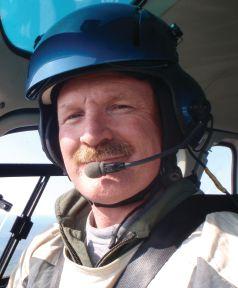
the helicopter approaches closer than any other (vehicle) to fulfilment of mankind’s ancient dream of the flying horse and the magic carpet.” – igor sikorsky
i’d like to begin my first column of the new Year by extending a big thank you to our corporate and convention sponsors, our associates and exhibitors, and our delegates for their support of our 2013 Vancouver Helicopter Association of Canada (HAC) convention.
HAC’s largest tradeshow ever boasted some 90 exhibitors and 730 delegates in the association’s first full-format fall event. the solid turnout and strong corporate support bodes very well for the future of our fall format. the mood throughout the event was upbeat, and if you were fortunate enough to attend the After-Hours event at the Blackbird Public House and oyster Bar, you well know that the mood was more than upbeat – it was positively out of control. what can you say . . . helicopter types are the life of the party!
while most of HAC’s professional development sessions were well attended, the courses dealing with the implementation of our new HAC Template Offers of Employment and Averaging Agreements, and our new HAC Policy Manual for Helicopter Operations were standing-room-only affairs. Both of these products were developed by HAC with the assistance of our operator-members, and both of these courses were offered free-of-charge by the ottawa-based law firm of emond Harnden llP. some concerns were raised about the movement of our oeM
realizing the Dream
Sergei
Sikorsky Adds Special Touch to
Lively HAC
Event
like to welcome one new operator board member, Ron ellard of ops mobil inc.
Also re-elected to the HAC board are sylvain seguin of CHl, Candace Moakler of Cougar Helicopters, gary McDermid of Helifor and Brad Fandrich of Valley Helicopters. Jen norie of ViH and teri northcott of Resource Helicopters will serve one more year on the board before their positions are up for election. stepping down from the board were grant louden of skyline Helicopters and Maury wood of Avialta.
the new HAC speaker series presentations at this year’s event were well received, as were the HAC committees.
last, but certainly not least, sergei sikorsky’s luncheon presentation was one of the highlights of the convention. our thanks go out to sikorsky, a United technologies Company, for sponsoring the event. sergei made his presentation to a full house, and his memories of his father, igor sikorsky, and the early days of the helicopter industry clearly resonated with the crowd.
there were a couple of moments that were particularly memorable for me. some of the photos of igor “teaching himself to fly” in the Vs-300 while tethered to the ground caused me to break into a cold sweat – it was scary enough for me, with an instructor. there was also a short video clip that evoked gasps from the audience – it showed igor operating the Vs-300 at low-level, and we could plainly see the “travel” in the cyclic was about 12 inches every second or two – and in all directions. it impressed me that maybe some of the cables were a little loose. But naturally, there wasn’t any reason to be concerned – igor’s trademark bowler hat would certainly have provided him with protection.
igor’s trademark bowler hat would certainly have provided him with protection. ‘‘
’’
technical Briefings from their traditional slot on Committees Day, so this is an issue that HAC has undertaken to resolve for our Montreal 2014 Convention taking place nov. 7-9 (mark your calendars, now).
HAC has a brand new set of by-laws – effective sept., 1 2014 – to bring us into compliance with the new Canada not-for-profit Corporations Act (CnCA). seven new board members were elected at the show, including two new associate board members. Joining the team as new associates are Randy simonneau of executive Flight Centre and steve williams of emond Harnden llP. HAC would also
i must confess that your chair, Canadian Helicopters’ sylvain segui, and i had the pleasure of sharing a meal with sergei and his wife, elena. During the convention, we were regaled with stories of sergei’s childhood, including meetings with visitors to the sikorsky home, such as Howard Hughes, the lindbergh family and ginger Rogers.
And let’s not forget, as igor sikorsky so aptly pronounced: “if a man is in need of rescue, an airplane can come in and throw flowers on him, and that’s just about all. But a direct lift aircraft could come in and save his life.” so it goes for those who choose to work in and support HAC and the dynamic Canadian helicopter industry.
Fred Jones is the president/CEO of the Helicopter Association of Canada and a regular contributor to Helicopters magazine.
Fred Jones

( THINK SERVICE )
Because you need your helicopters to be available around the clock, we have the largest network of helicopter training, logistics and maintenance centers across the globe. Eurocopter — Ready to serve you 24/7.
Thinking without limits