








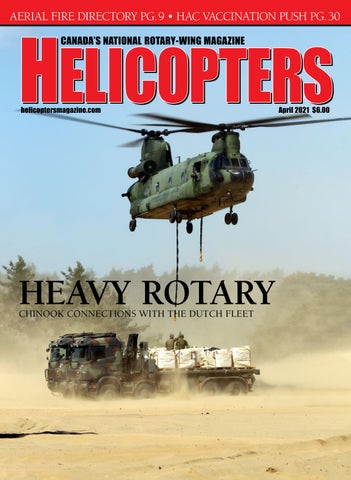












Heavy Rotary with RNLAF pg 24
April
9 Aerial Firefighting Directory 2021
Leading North American wildfire operators and resources organized by supplier and operator categories, as well as government agencies
24 Double Dutch Heavy Rotary
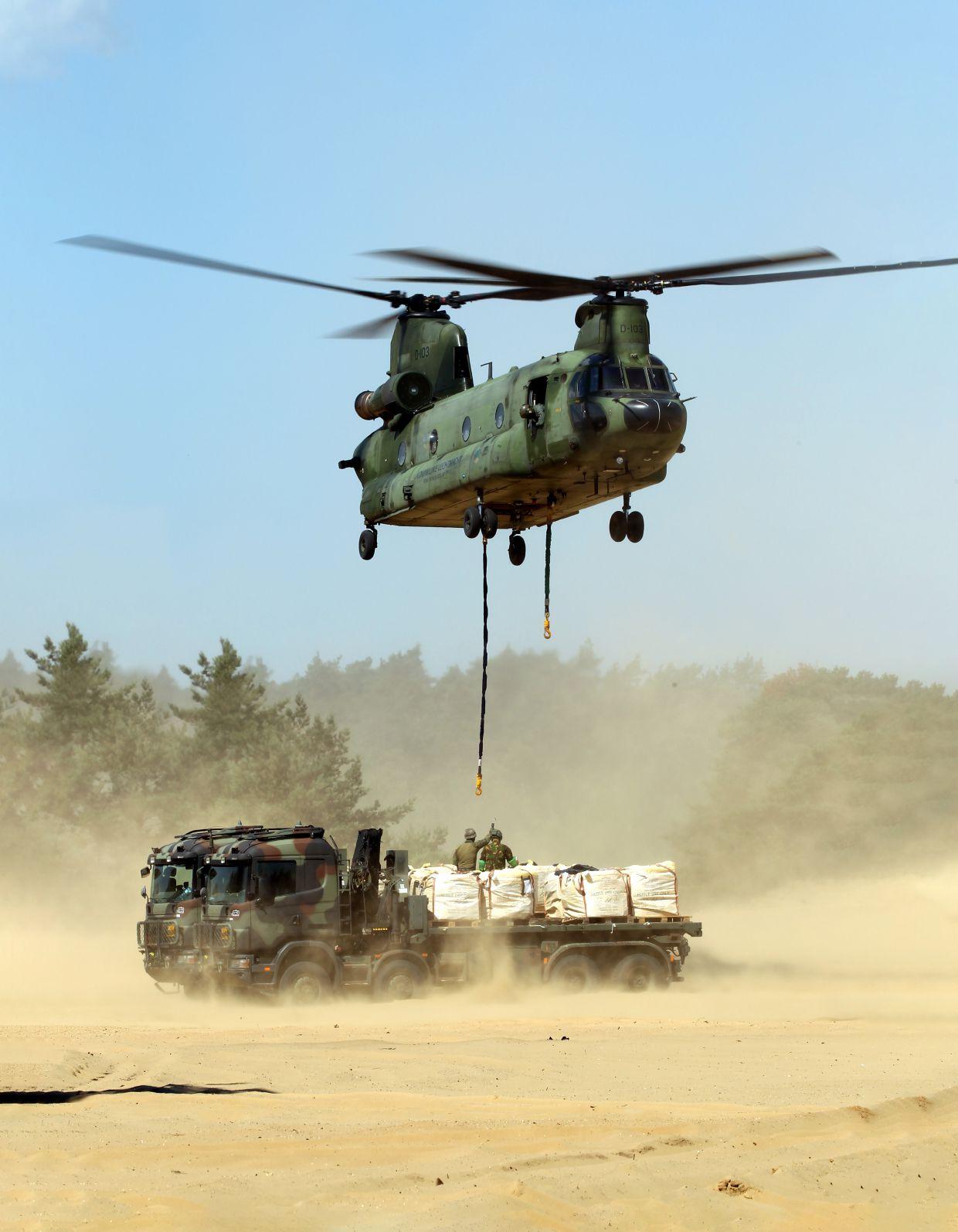
The 298 Heavy Rotary Squadron of the Royal Netherlands Air Force transitions from once Canadian-owned CH-47D Chinooks into modernized CH-47F variants By Carlo Kuit and Paul Kievit, Bronco Aviation
26 Rotor Tales, Training in Oshawa
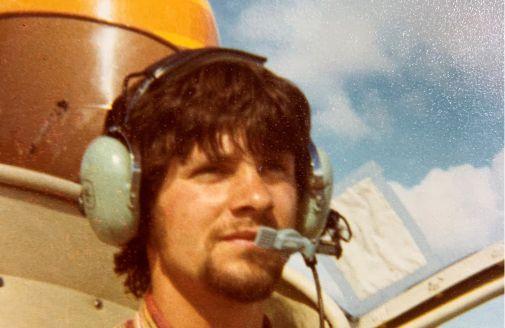
After more than 40 plus years in the Canadian helicopter industry, pilot Dan Ireland shares excerpts from the first drafts of his autobiography By
Dan Ireland
4 Editorial Hydrogen and helicopters
6 On The fly
Black Tusk receives K-MAX, SAR Queen to Norway, Lilium 7-Seater eVTOL
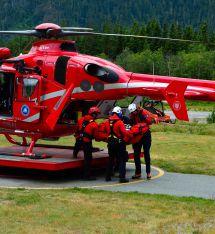
8 Advancing TEEAM Rescue service to operate out of Prince George By Mark Nielsen
30 Remain Vigilant HAC pushes for provincial essential crew vacciaton By Fred Jones
COVER
Airmobile Supply Company (Bevocie) specializes in moving and supplying units by air. (Photo: Phil Nijhuis)
Pilot Dan Ireland shares insight from his autobiography pg 26

JON ROBINSON, editor
n the January 2021 edition of Airbus Helicopters’ internally published magazine, ROTOR, CEO Bruno Evans wrote an article to reflect on the difficulties of 2020 for both suppliers and operators of the global helicopter industry. He introduces the issue with its purposeful theme dedicated to innovation: “Innovation is all about hope, optimism, new challenges and preparing the future… Engineering the future cannot be improvised.”
The issue focuses on a range of innovations from Airbus illustrating, that even as the industry continues to suffer through the pandemic with third-wave lockdowns across the globe, leading aircraft and systems manufacturers continue to move forward with critical research and development. For Airbus Helicopters this includes milestone achievements with its VSR700 program validating autonomy of operating to and from a moving platform; electric and hybrid-electric propulsion through programs like CityAirbus; the Flightlab testbed, which began operations in the spring of 2020; and five-bladed H145 and H160 development.
aerodynamic configurations, but they all rely on hydrogen as a primary power source via combustion or fuel cells. Hydrogen holds what Airbus describes as exceptional promise as a clean aviation fuel, as used in synthetic fuels (combustion) or as a primary power source (fuel cells), noting it is likely to be a solution for aerospace and many industries to meet future climate-neutral targets.
The company’s helicopter arm is also involved in this hydrogen push, as outlined in the January issue of ROTOR, in an article called Speed Up the Power, discussing a range of alternative fuels and hybrid engines. Airbus explains the ultimate step could be the use of hydrogen by replacing kerosene on modified turboshafts (a direct H2 burn, zero CO2 solution) or, second, by feeding a fuel cell to produce electric energy for a full electric propulsion system (a zero-emission solution).
Airbus notes this technology has made significant advances, particularly in the fixed-wing segment, but the power requirements and the integration on a helicopter remain a challenge. The company, however, projects hydrogen technologies could be mature enough to fly on a helicopter demonstrator as early as 2029.
A mid-hybrid solution is being developed as a back-up for single-engine helicopters in the event of an engine loss: the electric engine can intervene for about 30 seconds of power to let a pilot manage a safe descent.
One of the most interesting innovation directions of Airbus over the past year has been its growing focus on alternative fuels and zeroemissions, which includes the parent company’s September 2020 introduction of three potential zero-emission aircraft. The company plans to launch its ZEROe program by 2025 with the goal of entering the first airplane into service by 2035. This includes a blended-wing concept aiming to leverage two hybrid hydrogen turbofan engines with liquid hydrogen storage tanks located underneath the wings.
Each of the three concept aircraft represent a different approach to achieving zero-emission flight, in terms of technology pathways and
Airbus outlines why it believes in the importance of developing sustainable alternative fuels for use on in-service rotorcraft and for future fleets, which will ultimately help the industry develop a healthy business environment. In the immediate future this will involve focusing on hybrid propulsion development, as Airbus outlines: “A mid-hybrid solution is being developed as a back-up for singleengine helicopters in the event of an engine loss: the electric engine can intervene for about 30 seconds of power to let a pilot manage a safe descent. The system is the first concrete application of hybridization on a light helicopter, and will be tested on the Flightlab in early 2021.”
Airbus Helicopters, through the resources of its parent company, will be a leader in understanding the potential for true CO2 reductions and the transition to sustainable energy sources will be both a significant challenge and opportunity for the entire aviation industry. Fully electric helicopter and eVTOLs are still challenged by energy storage, even with the amazing breakthroughs over the past year and ambitious 2024/2025 commercialization plans by some start-ups. Hybrid solutions could provide a bridge to the future. | H

Kaman Air Vehicles, a division of Kaman Corporation, delivered a new medium-to-heavy lift K-MAX helicopter to Black Tusk Helicopter Inc. of Squamish, BC. Black Tusk performs various external lift projects ranging from aerial timber harvesting, ski tower setting, firefighting, and hydroelectric projects. “Our primary business goal is to offer our clients quality helicopter services and to ensure the longevity of our company through repeat and referral business by continuing to provide customers reliable and safe performance in all areas of our business. Adding a K-MAX to our fleet is an impor-
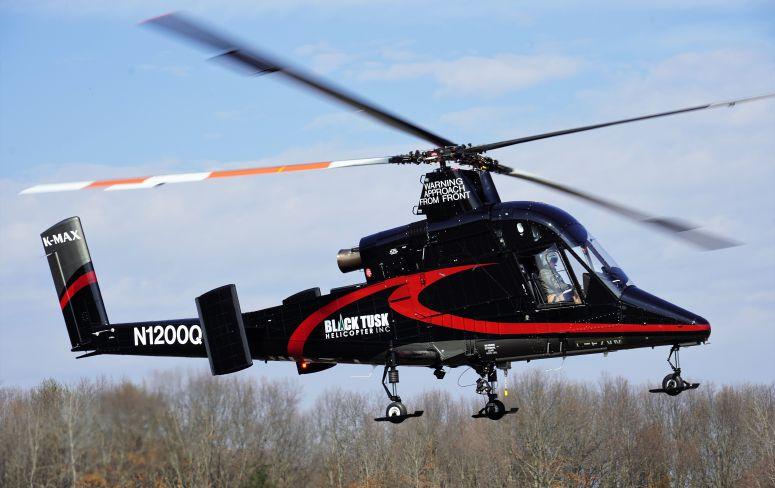
tant step towards ensuring we can continue offering our customers the most appropriate and efficient aircraft for their requirements and particular job needs,” stated Black Tusk Helicopter Inc.
Black Tusk Helicopter stated
that adding a K-MAX to their fleet is an important step towards ensuring they can continue offering customers the most appropriate and efficient aircraft for their requirements and particular job needs. The K-MAX is a rugged, low-main-
Leonardo delivered the 10th AW101 AllWeather Search and Rescue (AWSAR) helicopter to the Norwegian Ministry of Justice and Public Security. The remaining six aircraft out of 16 are currently being assembled, integrated and tested at Leonardo’s site in Yeovil, UK. The 330 squadron of the Royal Norwegian Air Force, which operates the platform, has completed more than 200 flight hours, largely on SAR operations, which have included several life-saving missions, such as a night mountain rescue, an offshore rescue, as well as a challenging emergency transportation. In addition to the go-live of Sola in September 2020, further bases in Ørland and Banak are expected to become operational this year.
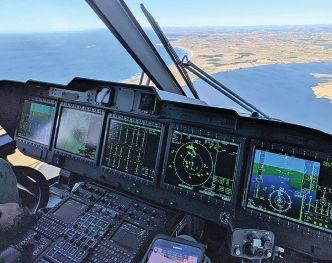
Norway will ultimately receive 16 AW101 All-Weather Search and Rescue (AWSAR) helicopters. (Photo: Norwegian Ministry of Justice and Public Security)
Leonardo explains, that back on March 4, a flight crew comprised of Lee Evans, Senior
tenance aircraft that features a counter-rotating rotor system and is optimized for repetitive external load operations. The aircraft can lift up to 6,000 pounds (2,722 kg) with unmatched performance in hot and high conditions.
(UK), and Miles Barnett, Senior Test Pilot at Leonardo Helicopters (UK), delivered the AW101 AWSAR helicopter, while utilizing an innovative helmet and oxygen mask integration, developed on-site at Leonardo in Yeovil. This technology, explains Leonardo, allows the crew to operate the aircraft while in close proximity to each other in the cockpit. It is based on an existing oxygen mask that is compatible with existing helmets/visors, and has a built-in microphone for comms, and hose, which is connected via a standard filter from an RPE facemask. The crew employed additional procedures specifically for this transit including immediate return via a chartered aircraft and ensured negligible contact with the Norwegian customer.
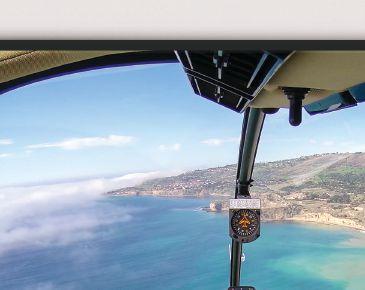
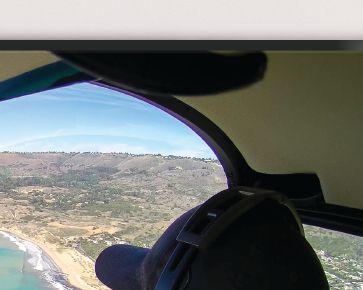
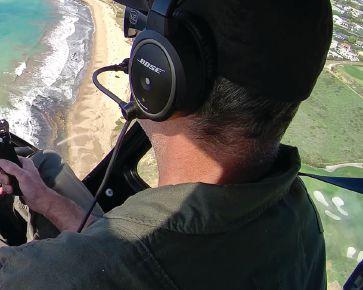
Robinson Helicopter’s Cockpit Video Camera, which was introduced at Heli Expo 2020, is now an available option on R22/R44 helicopters and a standard on R66 helicopters ordered after January 15, 2021, priced at US$2,500. The Cockpit Video Camera is mounted in the ceiling, explains Robinson, for minimal vibration and optimal field of view. The 4K Ultra HD (3,840 x 2,160 pixels) video camera records video, intercom audio, radio communications, and GPS position to a removable 128 GB USB flash drive. Recording starts automatically when the helicopter is turned on and stops when it is turned off.
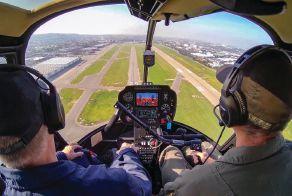
Recording video and/or audio to the flash drive can be independently controlled with separate switches.
Recording video and/or audio to the flash drive can be independently controlled with separate switches, explains Robinson. The flash drive, supplied with each camera, stores approximately 10 hours of video and when the drive is full, the newest video automatically overwrites the oldest video. Robinson explains the recordings can be used as a training tool, maintenance aid, or aerial-tour souvenir to share with family and friends.
Spectrum Aeromed recently outfitted the interior of a Bell 407 aircraft with a patient stretcher, base assembly and medical floor for Haiti Air Ambulance, a non-profit organization dedicated to providing emergency helicopter services to the people and visitors of Haiti. The project was completed and delivered to Haiti Air Ambulance in late 2020.This marks the first time Spectrum Aeromed has worked with Haiti Air Ambulance.Haiti Air Ambulance is the leading provider of emergency medical helicopter services in Haiti; it is the only service in the country flying critically ill or injured patients to emergency medical care providers. Cory Oaks, Program Director with Haiti Air Ambulance said, “Haiti Air Ambulance is excited for the completion of our new aircraft and our return to service for the citizens of Haiti. The configuration and interior components allow us to transport patients in our unique environment and stand up to its rigorous demands.”
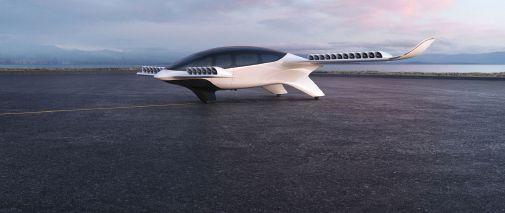
Lilium GmbH of Germany entered into a definitive business combination agreement with Qell Acquisition Corp., a publicly listed special purpose acquisition company, with the intention of being listed on the Nasdaq exchange. Qell, led by Barry Engle, a former president of General Motors North America, is focused on developing next-generation, sustainable mobility. Upon closing of the transaction, the company will be called Lilium,
and it is anticipated that ordinary shares will be listed on the Nasdaq under the ticker symbol LILM.
“Qell set out to find an exceptional and ambitious technology company, with significant growth potential – and in Lilium we have found that,” said Barry Engle, Founder and CEO, Qell. “Lilium has unique technology and one of the most accomplished engineering and commercial teams in electric aviation. The 7-Seater Lilium Jet is a game-changer for
HELICOPTERS MAGAZINE
Reader Service
Print and digital subscription inquires or changes, please contact Jay Doshi, Audience Development Manager
Tel: (416) 510-5124
Fax: (416) 510-6875
Email: jdoshi@annexbusinessmedia.com
Mail: 111 Gordon Baker Rd., Suite 400, Toronto, ON M2H 3R1
www.helicoptersmagazine.com
EDITOR JON ROBINSON jrobinson@annexbusinessmedia.com
MEDIA DESIGNER BROOKE SHAW
CONTRIBUTING WRITERS
DAVID CARR, KATHY FOX, FRED JONES, KENDRA KINCADE, CARROLL MCCORMICK
NATIONAL ADVERTISING MANAGER MENA MIU mmiu@annexbusinessmedia.com 416-510-6749
ACCOUNT COORDINATOR BARB VOWLES bvowles@annexbusinessmedia.com 416-510-5103
GROUP PUBLISHER, VP SALES MARTIN MCANULTY mmcanulty@annexbusinessmedia.com
COO SCOTT JAMIESON sjamieson@annexbusinessmedia.com
RETURN UNDELIVERABLE CANADIAN ADDRESSES TO ANNEX BUSINESS MEDIA, 111 Gordon Baker Rd., Suite 400, Toronto ON M2H 3R1 email: subscribe@helicoptersmagazine.com
Published four times a year by Annex Business Media
Printed in Canada ISSN 0227-3161
SUBSCRIPTION RATES
Canada - 1 year $31.50
USA- 1 year $74.00 CDN funds Foreign - 1 year $82.00 CDN funds plus applicable taxes
www.helicoptersmagzine.com/subscribe
transportation.”
During the announcement of its merger plan, Lilium also revealed its 7-Seater Lilium Jet targeting regional Urban Air Mobility service with access to more landing sites and, therefore, the opportunity to build a higher network density while avoiding expensive ground infrastructure. The 7-Seater Lilium Jet will be the company’s first aircraft to go into serial production. The Lilium 7-Seater Jet has a projected cruise speed of 175 mph at 10,000 feet and a range of 155-plus miles, including reserves. The company describes the aircraft as the culmination of five years of technology development across four generations of technology demonstrators, including Lilium’s full-scale 5-Seater. | H
Annex Privacy Officer Privacy@annexbusinessmedia.com Tel: 800-668-2384
Occasionally, Helicopters magazine will mail information on behalf of industry-related groups whose products and services we believe may be of interest to you. If you prefer not to receive this information, please contact our circulation department in any of the four ways listed above.
No part of the editorial content of this publication may be reprinted without the publisher’s written permission ©2021 Annex Business Media. All rights reserved. Opinions expressed in this magazine are not necessarily those of the editor or the publisher. No liability is assumed for errors or omissions. All advertising is subject to the publisher’s approval. Such approval does not imply any endorsement of the products or services advertised. Publisher reserves the right to refuse advertising that does not meet the standards of the publication.
Helicopters is an associate member of the following Canadian aviation associations:



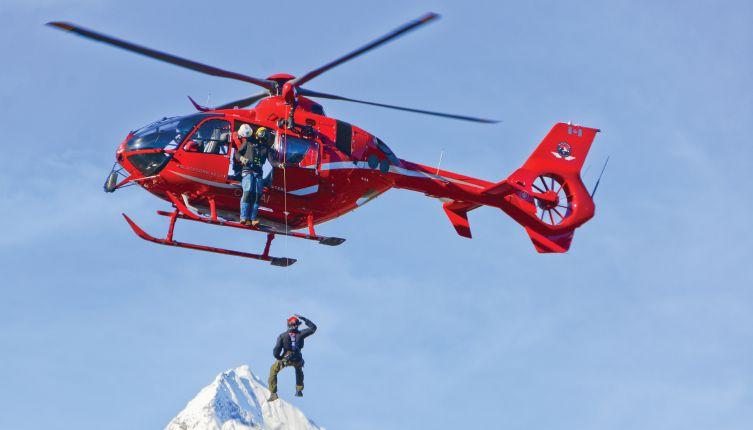
Abranch of a helicopter-based rescue service that caters to resource-based industries could be ready to fly out of Prince George by the early summer.
Miles Randell, president of Squamish-based Technical Evacuation Advanced Aero Medical (TEAAM), says he has nearly 20 people signed up to take the training this April and aims to have the branch take to the sky by sometime in June, if not sooner.
He said what TEAAM provides differs from B.C. Ambulance Service in that a crew will be able to reach remote locations, and differs from search and rescue in that each flight will carry two members capable of providing advanced life support.
In the three years it has been operating out of Squamish, Randell said the non-profit has attracted strong support from the forest industry in general and treeplanting companies in particular.
“It’s financed in part through what we call a patronage program
respond to calls from the RCMP whenever there is a need for a higherlevel of medical care or mountain rescue that a traditional search and rescue group cannot provide.
Including Prince George, he said TEAAM is in the process of establishing in five more communities across the province – Fort St. John among them.
It was launched after Randell and TEAAM vice president Jordan Lawrence lost a friend to cardiac arrest while in the backcountry.
“I kind of found myself on a journey with a crew of other guys that were involved in trying to fill that gap,” Randell said. “We’ve travelled to Switzerland to see how they do it. They’re 53 years ahead of us in Switzerland. We travelled to New Zealand where they’re 50 years ahead of us.
“We’re behind, but we’re catching up quickly and we’ve already made a huge difference in patient care which is first and foremost with our program. But there’s also the financial benefit to the financial system and to WorkSafe from the service that we provide.”
which is based on the model they use in Switzerland,” Randell said. “It’s kind of like a membership, so you pay an annual fee to be a patron of our program and that sort of helps us keep the lights on and pay our bills. And then we offer an insurance-based program that covers the cost of rescues when you do need a rescue.”
He said patrons in need of help contact TEAAM directly.
“Our air-ops will answer the call and dispatch the appropriate resources,” Randell said.
TEAAM also works with the Canadian Armed Forces’ joint rescue centre on an as-needed basis. Likewise, he said TEAAM can also
The Prince George branch will rely on a helicopter provided by Bailey Helicopters on a pay-as-you-go basis. About $350,000 has been budgeted to outfit the staff, who will be paid on a per-mission basis.
“It’s about $1.4 million a year to have an aircraft sitting and available. That’s why we’re not dedicating an aircraft right now, we just don’t have that budget,” Randell said. “So paid, on call, we start with about $350,000 worth of equipment and training and then build from there.
“If we were to fully fund the base, it’s about $3.6 million and that includes paid, full-time staff, dedicated helicopter, the complete entire setup.”
Randell said TEAAM is welcoming resumes from people interested in joining.
“Primarily people with medical skill sets so life-support paramedics, primary care paramedics with rescue backgrounds, emergency or critical care nurses, respiratory therapists with pre-hospital care backgrounds, emergency physicians, anesthesiologists or critical care physicians,” he said when asked for the skills sets TEAAM is seeking. | H
Mark Neilsen's reporting for the Prince George Citizen is funded in part by the Local Journalism Initiative.

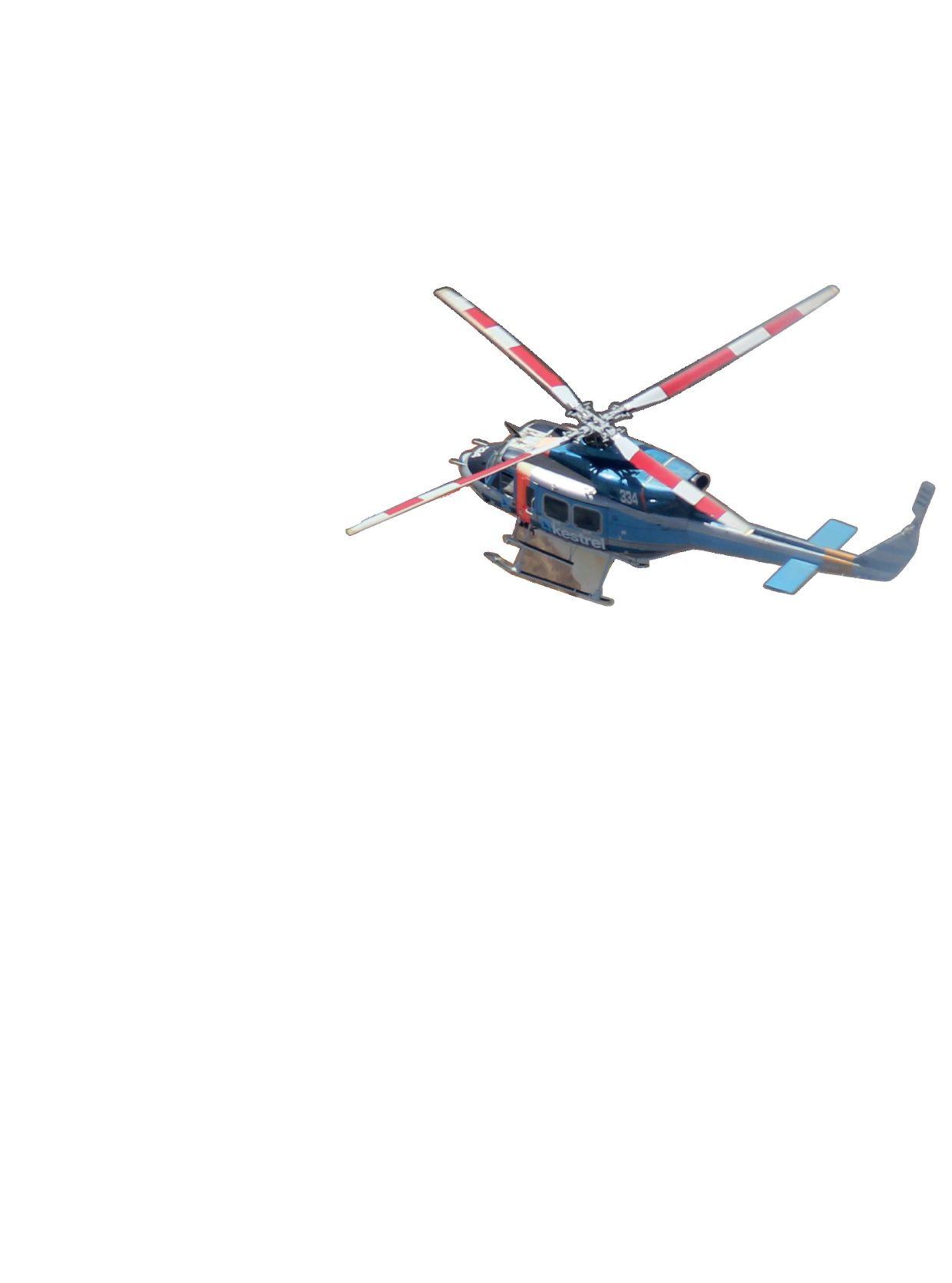
As a leading global engine and component maintenance provider, TAE Aerospace has the knowledge and exper tise to turn your next event around quickly.
As a TAE Aerospace customer, you have access to the highest quality maintenance, including overhaul, repair or exchange of engine fuel control, fuel metering units, power turbine governors and starter generators.
We are an Honeywell Authorized Warranty and Repair Station (AWARS) for the:
• Honeywell LTS101
• Pratt & Whitney Canada PT6A and P T6T
• Rolls-Royce M250/300
We are also a CASA, FAA and EASA Par t 145 approved repair station.
To find out more about why our customers rely on TAE Aerospace, visit our website for your local sales representative or email sales@taeaerospace.com
The Aerial Firefighting Directory, presented by WINGS and HELICOPTERS, features key suppliers of aircraft, equipment and services for the aerial firefighting sector. The directory also includes a range of rotary- and fixed-wing operators invovled in emergecy forestry services, as well key North American agencies and associations for the sector. As many companies involved in aerial firefighting, such as Babcock, Conair and Coulson, provide a range of services from developing and modifyng aircraft to also operating and maintaining both rotary-and fixed-wing fleets for fire suppression, as well as training, they have been included here in their primary operating category.
Olney, TX, airtractor.com
> Tracing its root back to 1951 when founder Leland Snow designed his first ag airplane, Air Tractor today focuses its firefighting production around two aircraft, including: The AT-802F Initial Attack Firefighter, powered by powerful a Pratt & Whitney PT6A-67AG turbine, and the AT-802F Fire Boss Amphibious Scooper Air Tanker designed to deliver up to 14,000 gallons per hour for extended attack or ground support.
Marignane, France, airbuscanada.ca
> Airbus Helicopters employs approximately 20,000 people worldwide. Its fleet in service includes nearly 12,000 helicopters operated by more than 3,000 customers across 150 countries. Its U.S. affiliate is headquartered in Grand Prairie, Texas, while Airbus Helicopters Canada operates out of a 138,000-square-foot facility in Fort Erie, ON. In addition to hundreds of older-generation platforms in use to fight fires, the company's full range of helicopters can be integrated for fire suppression.
Fort Worth, TX, bellflight.com
> Bell, a wholly owned subsidiary of Textron, is an industry-leading producer of commercial and military, manned and unmanned verticallift aircraft. It serves Bell customers in more than 120 countries, with its Canadian facility in Mirabel, QC, serving key contributor to Bell’s 505 production chain. In addition to a large legacy fleet fighting fires, Bell in 2018 introduced its 407GXi as a new platform for potential fire suppression integration.
Portland, OR, ericksoninc.com
> Erickson has been a world leader in heavy
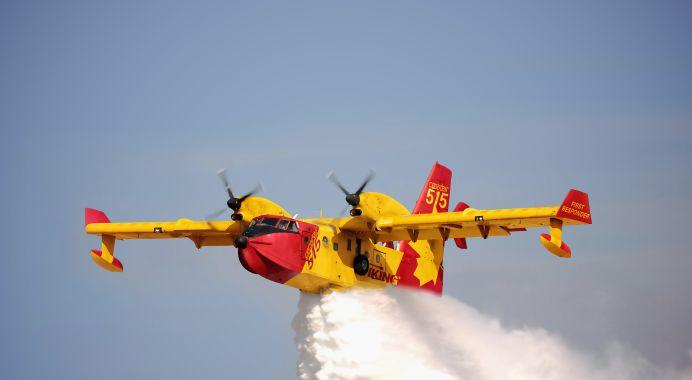
lift and aerial firefighting for more than 20 years. This includes its S-64 Air Crane Helitankers, equipped with fire suppression systems, which can drop more than 95,000 liters every hour.
South St. Paul, MN, firebossllc.com
> Fire Boss LLC is the manufacturer of the Fire Boss water scooping system exclusively installed on the Air Tractor AT-802. The Fire Boss system combines airframe modifications, performance enhancements and a pair of Wipline 10000 amphibious water-scooping floats that enable the AT-802 to scoop up to 800 gallons in 15 seconds.
Noosaville, Australia, helitak.com.au
> Helitak develops a range of systems for aerial firefighting, including its underbelly Fire Tank featuring a new design to allow a flexible bladder to expand while being filled; and then retract within its housing when empty. These tanks are custom built with a carrying capacity from 1,000 to 10,000 litres.
Bloomfield, CT, kaman.com
Kaman Air Vehicles, a division of Kaman Corp., manufacturers the K-MAX helicopter platform, described as a rugged, low-maintenance aircraft with a counter-rotating rotor system that is optimized for cyclical, external load operations. The aircraft can lift up to 6,000 pounds (2,722 kg).
Bend, OR, kawakaviation.com
> Kawak Aviation engineers and produces aerial firefighting products focusing on tank-
ing systems, related pumps and hydraulics. Its tank systems, refill pumps and hydraulic power solutions are leveraged by a range of platforms like Bell, Kaman and Firehawks.
Bend, OR, isolairinc.com
> Isolair has been manufacturing helicopter systems for aerial firefighting, agricultural, and forest industries for more than 30 years with a range of certified equipment, from torches and buckets to tanking systems. Its Eliminator II Fire Fighting Systems, integrating tank, pump, doors and control, can be found working throughout the world.
Josephine, WI, recoil-usa.com
> Established in 2008, Recoil Suppression Systems, a division of Recoil Aerospace, designs and manufacturers lightweight, carbon fibre composite Tsunami Wildland Fire Suppression tanks.
Delta, BC, sei-ind.com
> SEI Industries first introduced the original Bambi Bucket to the firefighting community in 1982. This lightweight, strong, flexible firefighting bucket – with its relatively low-cost plugand-play capability – promoted usage of helicopters on wildfires and saw immediate success as a firefighting tool. SEI today services more than 90 per cent of the world’s aerial firefighting water-bucket market. Globally, the Bambi is now used in more than 115 countries and by more than 1,000 helicopter operators.
Stratford, CT , lockheedmartin.com
> Sikorsky, a Lockheed Martin company, is a Aerial Firefighting Directory I 11
world leader in helicopter design, manufacture and service, with longstanding Canadian ties through its operation in Ottawa, ON. Its new-generation S-70i FIREHAWK helicopter, using United Rotorcraft’s aerial firefighting system, features a 1,000-gallon belly water tank, extended landing gear, 600-pound rescue hoist and NVG compatible digital cockpit. The multi-role FIREHAWK can carry up to 13 firefighters and their gear, drop 1,000 gallons of water with precision, and perform at a dash speed of up to 140 knots.
Tucson, AZ, uasc.com
> Universal Avionics, an Elbit Systems Company, develops commercial avionics systems offered as retrofit and forward-fit solutions for a range of aircraft. Its combined Enhanced Flight Vision Systems (EFVS) and HeadWearable/Helmet-Mounted Displays (HWD / HMD) provide enhanced situational awareness during the aerial fire suppression.
Victoria, BC, vikingair.com
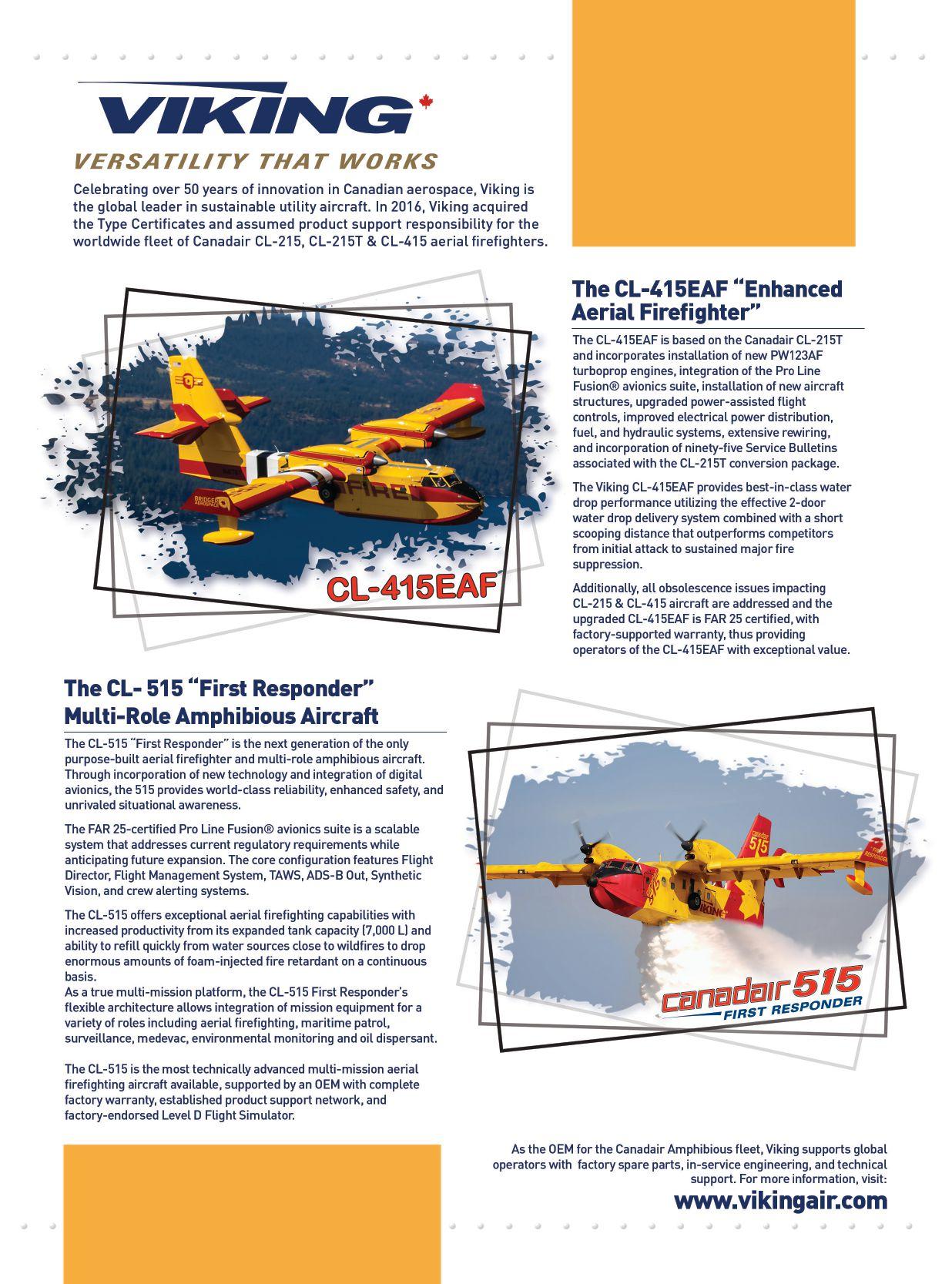
> Viking Air, a subsidiary of Longview Aviation, is a global leader in buildng utility aircraft, including the Canadair CL-215, CL-215T and CL-415 amphibious aerial firefighters. Viking supports global operators with factory spare parts, in-service engineering and technical support. The CL-415EAF (Enhanced Aerial Firefighter) is a limited-edition upgrade of select CL-215 Series V airframes chosen due to their low times and outstanding maintenance history. The CL-515 is the next generation of purpose-built aerial firefighter and multi-role amphibious aircraft currently under development, designed to hold a tank capacity of 7,000 litres.
Boulder, CO, churchillnavigation.com
> Churchill manufactures systems to capture and record video, provide real-time augmented reality mapping, and to archive and index recorded video. Its systems are used by a range of operators in law enforcement, SAR, emergency management services, security, fire suppression, military agencies, and media.
Nelson, New Zealand, flightcell.com
> Flightcell International is a global producer of airborne integrated-mobile communications and manufacturers the DZMx as an allin-one Iridium and cellular solution for voice, data, and aircraft tracking. The DZMx is used by CAL FIRE, Erickson and Kestrel Aviation, among others, leveraging its built-in ATU and
its broadband capabilities with fall-back to satellite. A range of bucket/tank configurations and reporting options are available.
Ottawa, ON, guardianmobility.com
> Guardian Mobility develops technology and solutions to empower aircraft fleet managers and owner-operators with fundamental operational data for making timely decisions. Established in Ottawa in 2002, its flight tracking solutions include hardware, airtime, software and support. The technology is leveraged for mission critical environments like fire suppression, EMS, utilities and law enforcement. The Guardian Mobility ATU solution provides a complete end-to-end system supporting ATU, AFF, text messaging and more all in a single box. The company is backed by parent Metro Aviation, a world leader in EMS and related aircraft modification.
Squamish, BC, iqonboard.com
> IQonboard was founded by engineers and pilots aiming to add a new level of safety to the helicopter industry. It developed the IQtag and app as wearable technology to provide a real-time view of crew, cargo, and total payload, accessible through a web browser, including Fatigue Risk Management tools.
Hood River, OR, overwatchimaging.com
> Overwatch Imaging designs and manufactures thermal imaging systems with custom onboard AI software for both piloted and unmanned aircraft. Its systems can detect small spot fires, map large complex fire perimeters and provide decision makers with real-time situational awareness.
Kelowna, BC, Skytrac.com
> SKYTRAC Systems is a leading provider of satellite communications and intelligent connectivity. It develops cost-effective technology to provide operators with real-time information for fast-moving wildfires. This includes SDL-350 and IMS-350 satellite communication terminals, working with recently launched Iridium Certus, allowing aircrews to send live video transmission, EO/IR imaging data, and more, directly to the ground.
Auckland, New Zealand, spidertracks.com
> Spidertracks, a leading provider of satellitebased real-time flight tracking, active flight following and communication solutions, recently launched its next-generation Spider X to make flight data monitoring (FDM) accessible as a lightweight and affordable solution. Expanding on the power of Virtual FDR, it
introduces an attitude and heading reference system (AHRS) with data transmitted wirelessly over the air, providing information about an aircraft’s orientation and position.
Mississauga, ON, til.ca
> Founded in 1990, Technisonic focuses on the development of aeronautical band VHF ground equipment and Special Mission Airborne RF and audio communications systems. Its tactical airborne VHF, UHF and multi-band communications systems are used for air ambulance, electronic news gathering, fire suppression, and law enforcement.
Dunedin, New Zealand, tracplus.com
> TracPlus is one of the world’s most versatile and adaptable tracking and communications providers, offering real-time tracking, event reporting and messaging. TracPlus is unique in that it enables multiple asset types to be tracked and integrated into one cohesive system, meaning contractors can use their own tracking systems but send their data to TracPlus when working alongside others. With more than 1,000 customers in 40-plus countries, TracPlus has more than 7.5 million recorded operational hours.
CASCADE AEROSPACE
Abbottsford, BC, Cascadeaerospace.com
> Cascade Aerospace, an operating unit of IMP Aerospace & Defence, supports a diverse range of airframe platforms and operational needs. This includes supporting military, government and commercial aircraft. Cascade is well-known for its aerospace engineering services for custom product design, manufacturing and certification. In mid-2019, Viking Air announced Cascade would serve as a partner for its newly launched Avionics Upgrade Program (AUP) for the Canadair CL-215T and CL-415 fleet of aerial firefighting aircraft.
Calgary, AB, longviewaviation.com
> Longview Aviation Services, located at Calgary International Airport, was established in 2018 in partnership with Viking Air to launch the CL-415EAF Enhanced Aerial Firefighter conversion program. In mid-2020, Longview delivered the first CL-415EAF to Bridger Aerospace Group.
Kelowna, BC, selecthelicopter.com
> Select Helicopter Services specializes in the repair and overhaul of hydraulic components and cargo hooks. It offers support of hydrau-
lic flight controls and components installed on light and medium Bell helicopters, as well as Airbus H125 (AS350) and AS355 aircraft.
Queensland, Australia, taeaerospace.com
TAE operates facilities throughout Asia-Pacific and the Americas to service a worldwide customer base, providing a range of aerial firefighting products and services for both fixedand rotary-wing applications. The company specializes in OEM-backed fuel controls, power turbine and overspeed governor and starter generator services.
Englewood, CO, unitedrotorcraft.com
> United Rotorcraft is the products division of Air Methods with more than 25 years of experience installing airframe accessories on rotor and fixed-wing aircraft. The company designs, integrates and installs medical equipment, avionics, and accessories for EMS, medevac, firefighting, airborne law enforcement, and SAR operators.
Calgary, AB, efcaviation.ca
> Executive Flight Centre’s core business has been aviation fuel for more than 40 years. It holds an established network of infrastructure, dedicated aviation trucks, and long-term relationships with Canada’s primary fuel refiners to ensure a dependable fuel supply of Jet A1 and Avgas (100LL) to customers throughout Western Canada. The company has been a provider of aviation fuel to aerial firefighting operations for over 20 years.
Mississauga, ON, pearcanada.com
> With a distribution centre in Richmond, BC, PEAR Canada provides a range of aviation fuel handling needs, which includes filtration, fuel sampling/testing, aviation hose, filtration, single point and over-wing fueling nozzles, pressure/delta P gauges, hose reels, bonding reels, pumps, meters, filters and pipe fittings/valves, fueling cabinets and related products.
49 NORTH HELICOPTERS
Campbell River, BC, 49northhelicopters.com
> Founded as a flight school in 2005, under the name of Coast Mountain, 49 North’s pilots hold years of in light and medium helicopters throughout western Canada providing a wide variety of services including, fire suppression, longlining, forestry operations, bird towing, surveying and patrols.
> Prince George, BC, aberdeenheli.com
Aberdeen is a multi-mission provider including fire suppression and a range of forestry applications, as well as missions for mountain climbing, back-country hiking, skiing, fishing, wilderness photography, mining exploration and powerline maintenance.
Vernon, BC, advantageheli.com
> Founded in 1994, Advantage Helicopters is an owner-operator driven company holding Bell aircraft that are fire-suppression ready. The company primarily provides helicopter charter services, in addition to its aircraft maintenance organization status.
AHLSTROM AIR
Nordegg, AB, helinordegg.com
> Founded in 1997, Ahlstrom provides commercial helicopter services with an emphasis on forestry, including fire suppression in addition to fish and wildlife survey, and animal tracking. In addition to seismic, oil and gas work, the operator provides support for remote access and SAR.
AIRSPAN HELICOPTERS
Sechelt, BC, airspanhelicopters.com
> A Transport Canada-approved maintenance facility, Airspan holds a fleet of six helicopters providing a range of services with an emphasis on forestry work, including aerial firefighting support.
ARROW HELICOPTERS
Revelstoke, BC, arrowhelicopters.com
> Founded in 2005, Arrow, which provides Vertical Reference Training for high- or lowtime pilots, specializes in SAR services. The Class D approved company also provides fire suppression in addition to mountain missions like avalanche control and heli-ski charters.
ASCENT HELICOPTERS
Parksville, BC, ascenthelicopters.ca
> Ascent is a Class D approved operator pro-
viding fire suppression in addition to a range of sectors like utilities, construction, film and television, heli-skiing, air ambulance and natural resources. With a second base in Fernie and a fleet or around eight helicopters, including NVG capabilities, Ascent holds a Transport Canada approved hoisting program.
AURORA HELICOPTERS
Vernon, BC, auroraheli.com
> Aurora Helicopters provides fire suppression and pre-suppression, which includes transporting firefighting personnel and equipment to pre-determined locations, as well as carrying out aerial smoke patrols to detect forest fires in high hazard areas. The company’s suppression activities include scene transport, airborne reconnaissance and communication, and water bucket drops.
Ottawa, ON, Babcockcanada.com
> Babcock provides critical services, technology and support solutions for assets in the defence, emergency services, and civil nuclear domains. Babcock holds civil and defence, fixed and rotary wing, training, and operational aviation expertise and experience across several countries. The company has more than 30 years of providing aerial firefighting services, with more than 90 Babcock-owned aircraft in service, serving on more than 5,000 firefighting missions per year, accounting for more than 15,000 firefighting flight hours.
Fort St John, BC, baileyhelicopters.com
> Founded in 1989, Bailey provides a range of services across multiple industries and sectors, including forestry support and fire suppression, from operations centres in Fort St. John, Fort Nelson and Prince George, BC, along with Edmonton and Calgary, Alberta.
Cranbrook, BC, bighorn.ca
> Founded more than 30 years ago, Bighorn provides a range of services, including fire
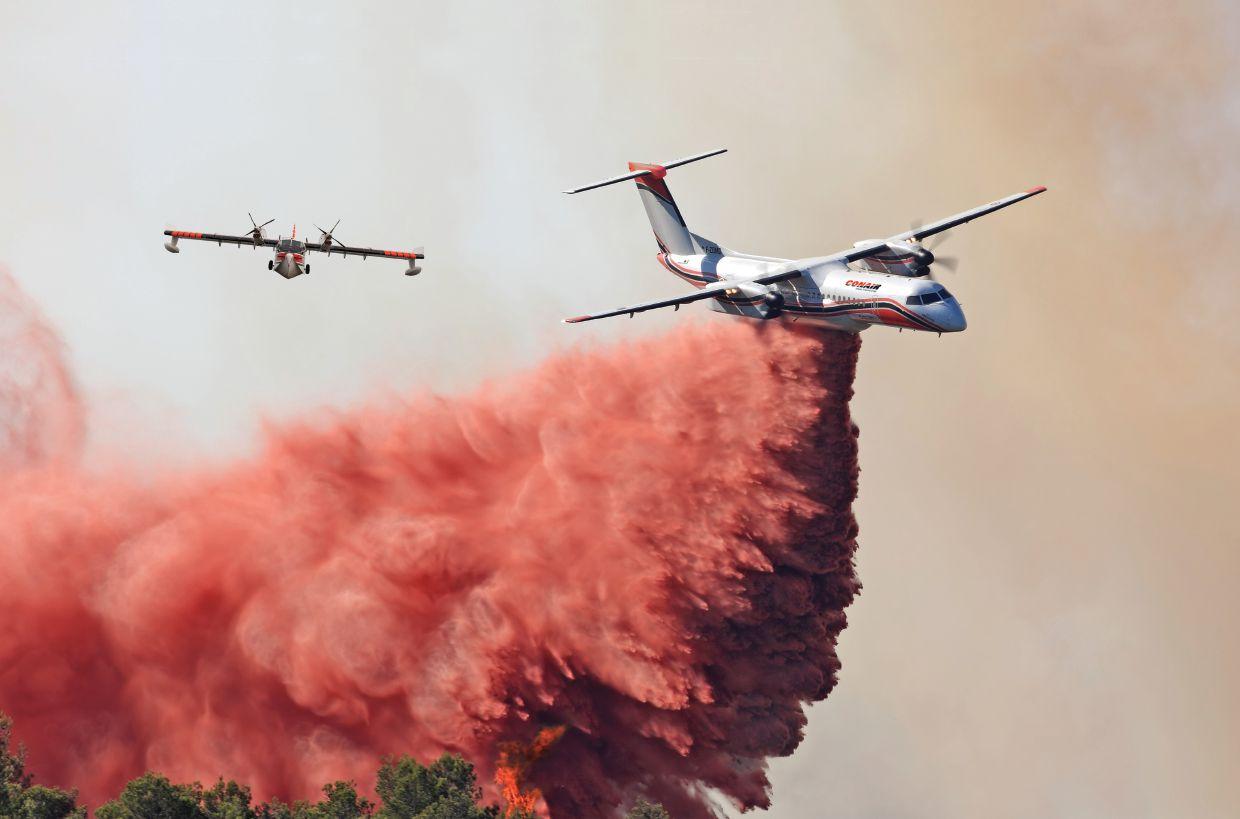

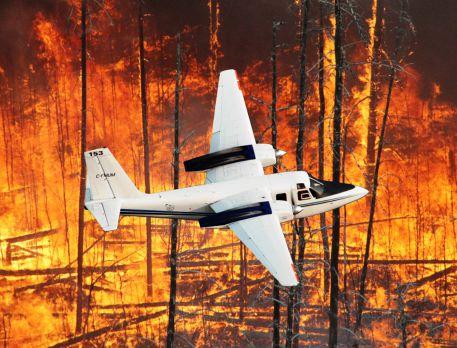
Conair is a global leader in aerial firefighting, operating the largest privately-owned fixed-wing fleet of specialty aircraft in the world. Operating in Canada, the US, Europe, Australia and beyond, the organization provides a comprehensive range of aircraft, crew, maintenance, training and expertise to support government agencies fighting wildfires.
Conair’s versatile fleet of 70 aircraft includes Bird Dogs, Land-Based Airtankers and Amphibious Aircraft, including the CL215T, CL415 and AT802 Fire Boss. Flying up to 12,000 flight hours per year, a team of 330 professionals ensures all aircraft are maintained and equipped with the latest technologies, proactively going above and beyond to ensure aircraft are ready to dispatch, keeping firetrucks in the sky when the call comes. With a focus on safety, Conair offers its pilots a specialized Training + Tactics Centre, the only one in the world of its kind, ensuring crews have access to training tools and simulators that produce successful missions in real world operations.
A Next Generation turboprop offering a proprietary Retardant Delivery System, with a 10,000 litre capacity to drop suppressant over diverse geography. While its mission is fire suppression, it is its environmental performance that is setting the standard for future airtankers, producing 30% less emissions than aircraft of similar size. A modern airtanker with strong OEM support to keep the firefighter flying for decades. The future of aerial firefighting.
The world’s most versatile airtanker, a multi-role aircraft suited to a variety of emergency response roles. Capable of reconfiguring within hours between aerial firefighting airtanker (10,000 litres retardant, water or gel), cargo (9t), passenger (64 pax), combi-transport, or medical evacuation missions (6 stretchers with clinical team and medical equipment). Designed with the capacity, speed, and performance required for crisis situations.
Conair provides aircraft for purchase, lease or contract and offers specialized services including engineering, flight operations and fleet maintenance related to aerial firefighting.
CONTACT Jeff Berry, Director of Business Development jberry@conair.ca | Phone: 604 557 2777 | conair.ca
suppression, as an authorized operator for the provinces of Alberta, BC, Saskatchewan, Manitoba and Ontario. The company is AOC and AMO certified and has access to a fully equipped SAR mobile treatment station.
Whistler, BC, blackcombhelicopters.com
> Blackcomb has provided firefighting assistance across BC and Canada for more than 30 years with services such as human transport, water bucketing, Bird Dog flights, and equipment transportation. The company is built on the concept of the Multi-Mission Helicopter, with an emphasis on rescue and medevac.
Berwyn, AB, blackswanhelicopters.com
> In addition to charter and maintenance services for Airbus, Bell and Robinson helicopters, Black Swan’s forestry focus includes surveying, longlining and fire suppression. The company was founded in 2003.
Brackendale, BC, blacktuskhelicopter.com
> Black Tusk has provided fire suppression for various agency and centres from BC to Quebec, with experience in longlining and water drops. Its fleet is equipped with Bambi Buckets and automated flight following sys-
tems to meet requirements of both BC and Alberta Wildfire agencies. Its Bell 214B and AStar are equipped with foam-injection systems. Certified to transport dangerous goods and to use two 16,000 plus litre fuel trucks and two 18,000-litre tanks to transport aviation fuel in support of aircraft fighting fires.
Les Cedres, QC, canadianhelicopters.com
> Tracing its roots back to 1947 in Penticton, BC, Canadian Helicopters specializes in the transport of personnel and cargo to remote locations, fire suppression, conducting seismic surveys, aerial lift for construction and high voltage transmission line projects. The company, with associated flight training and maintenance operations, including Heliwelders, is located in eight Canadian province and territories.
Kelowna, BC, coldstreamhelicopters.com
> With bases in BC and Alberta, Coldstream specializes in emergency helicopter services like fire suppression, mountain rescue and disaster support, as well as longlining.
Abbotsford, BC, conair.ca
> Founded in 1969, Conair is a global leader
in aerial firefighting, operating the largest privately-owned fixed-wing fleet of specialty aircraft in the world. It operates in Canada, the U.S., Europe, Australia and beyond. Conair’s fleet of around 70 aircraft includes Bird Dogs, Land-Based Airtankers and Amphibious Aircraft, including the Q400AT, CL215T, CL415 and AT802 Fire Boss. Flying up to 12,000 flight hours per year, the company has developed more than 15 new aircraft types and over 175 individual aircraft for the airtanker and firefighting markets.
COUGAR HELICOPTERS
St. John’s, NL, cougar.ca
> Cougar has been providing SAR services since 1991, primarily focusing on its core offshore oil and gas clients with Sikorsky aircraft. The company also holds a Transport Canada Approved Maintenance Organization facility.
COULSON AVIATION
Port Alberni, BC, coulsonaviation.com
> With more than 36 years of experience in aerial fire suppression, Coulson is one of the world's largest players in the sector with operations in Canada, Australia, Chile and the United States. In addition to its leading modification of fixed-wing aircraft and helicopters for fire suppression, Coulson’s other rotary-
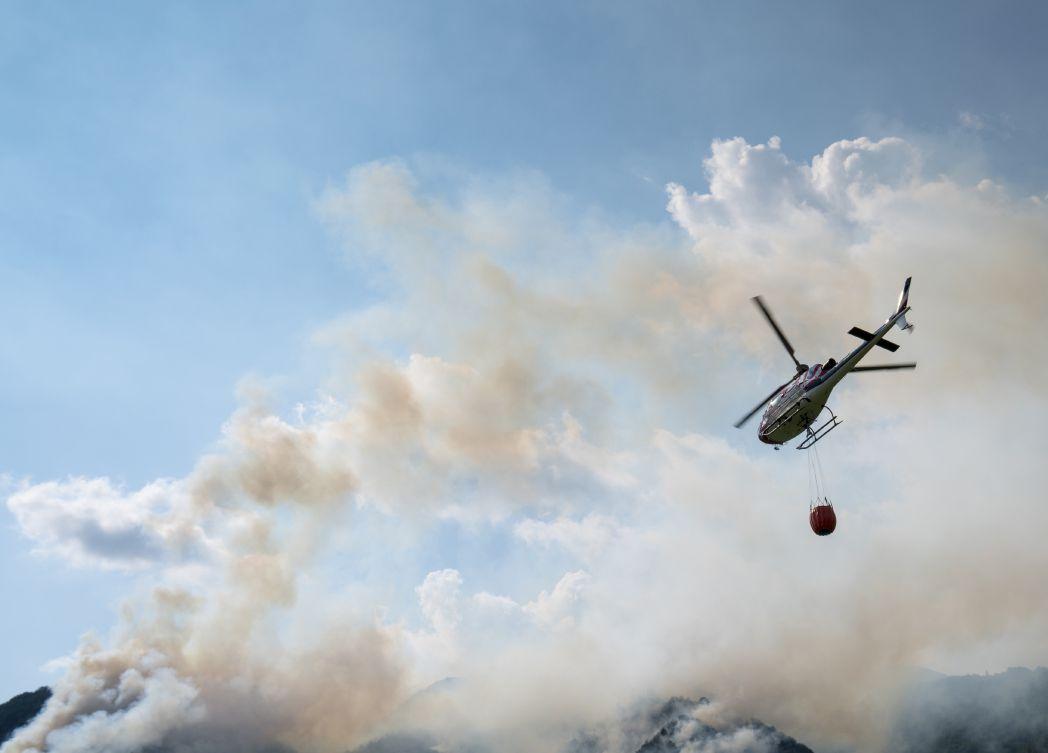
Resources and strategies for fixed-wing and rotary-wing operators, government and fire agencies
| OCTOBER 27, 2021
Platinum Sponsor
Sponsorship Available
• Reach both operator and fire-agency decision makers
• Leverage special media buy opportunities
• Present a case study to attendees (limited availability)
• Sponsored Content opportunities available
• Event content distributed to the full readership of WINGS or HELICOPTERS

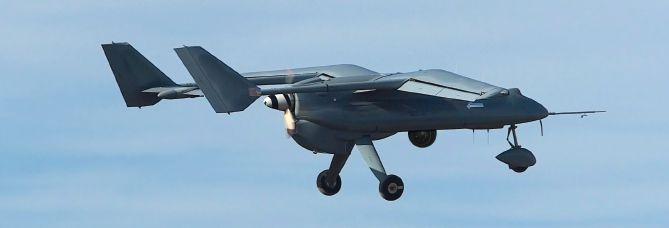
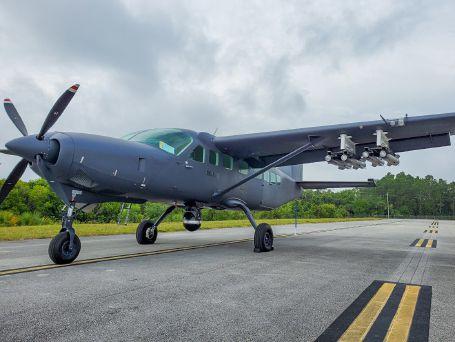
MAG Aerospace Canada is a specialty aviation company that has been active in the Canadian aviation industry for over 70 years. We provide real-time situational awareness to Wildfire and Emergency Response Agencies through Aerial Wildfire Detection, Air Tactical (Birddog), and Manned ISR & Imagery services.
MAG Aerospace Canada is an industry leader in providing and enabling real-time situational awareness to help our customers make the world smaller and safer. MAG provides site operations, logistics support and program management. Multi-intelligence data collection and processing/dissemination services include electro-optical infra-red (EO/IR), full motion video (FMV), multispectral imagery (MSI), and satellite data downlink.
MAG offers a wide range of aviation training programs on both manned and unmanned aircraft.
MAG will provide the skills to ensure your organization is fully capable in instructing, planning, debriefing, technical and tactical training, and operational support. At MAG, we have a team of seasoned industry experts, who know what is needed and will certify success.
OPERATIONS: We can provide the best in tactical support and use our advanced technologies and techniques to aid in research and development, environmental assessments, or a wide variety of other non-standard applications. MAG utilizes a fleet of specialized aircraft both manned and unmanned. MAG’s global operations use mission capable aircraft with enhanced visibility to support birddog (air tactical) operations, aerial fire intelligence, surveillance, & reconnaissance services. Need to move people and equipment quickly? MAG also provides a variety of chartered fixed and rotary wing operations for federal, international, civilian, and commercial customers worldwide.
MAG has become the leading independent provider of manned/unmanned capabilities. With 200+ platforms, we fly over 150,000 flight hours annually on 6 continents. MAG offers turnkey Wildfire Tactical Management, C5ISR services (ISR Operations, ISR Training, ISR Technical Services) and other specialty aviation products, using a technology agnostic approach.
Every day is unique. At MAG, we have a team that thrive in a high-performance environment, where challenges are the norm and success is expected.
wing operations include heli-logging, powerline construction, passenger transport and heavy lift. Its fleet is geared for mobility and self-sufficiency with support by mobile fuel tankers and aircraft maintenance service vehicles staffed with qualified engineers.
St. Andrews, MB, customheli.com
> Founded in 1977, Custom holds a fleet of around 25 helicopters providing a range of services, including fire suppression, as well as applications for powerline, construction, mining exploration, oil and gas (utilities, including offshore), medevac, SAR, Class D external loads and wildlife surveys, among others.
Sturgeon County, AB, deltahelicopters.com
> In addition to its Edmonton head office, Delta holds five other base locations and has more than 45 years of experience working with the forestry industry across Canada. For fire suppression support, Delta provides sling gear, longlines, nets, drip torch, water bucket, infrared and video scanning equipment.
Atlin, BC, discoveryheli.ca
> Founded in 1990 as a family-owned company, Discovery’s helicopters are fire suppression capable with satellite-based flight following systems, satellite phones, Bambi buckets, and longlines. Its crew members are trained in mountain flying and fire suppression.
E&B HELICOPTERS
Campbell River, BC, ebhelicopters.com
> Founded in 1990, and serving as one of Canada’s largest Robinson Helicopter suppliers, E&B holds two helicopters with foam injection systems. In addition to fire suppression, the operator also provides related services like wildlife surveys, longline/external load, medivac and SAR (HETS trained).
Salmon Arm, BC, eastwesthelicopters.com
> Founded in 1997 to focus on logging operations, East West Helicopters holds vast longline experience and work in aerial firefighting. The company specializes in precision lift work, holding a self-contained service facility and its own tanker for helicopter refueling.
ECLIPSE
Penticton, BC, eclipseheli.com
> With bases in Penticton and Cranbrook, BC, Eclipse provides a range of services including aerial firefighting, as well as SAR and U.S.-based operating experience.
Edmonton, AB, erhelicopters.com
> A privately held operator, Edmonton Regional holds a main base at Edmonton International Airport (CYEG), with offices at Executive Flight Centre Terminal 1. The company provides a range of forestry services throughout central Alberta, including west to the Rocky Mountains.
Kenora, ON, foresthelicopters.com
> Founded in 1997, holding an AS350focused fleet, Forest Helicopters supports all aspects of fire suppression. With decades of aerial firefighting experience, its pilots’ proficiency extends beyond baseline requirements for crews to hold in-depth knowledge of fire behaviour, logistical support, and tactical applications like aerial ignition.
FRONTLINE HELICOPTERS
Williams Lake, BC, frontlinehelicopters.ca
> With its main base located just south of Williams Lake, Frontline provides wildfire suppression and related services like air taxi, infrared scanning and mapping, as well as wildlife capture and survey. The company is a Transport Canada AMO.
Yellowknife, NT, gsheli.com
> Great Slave Helicopters operates a diverse fleet of more than 30 single- and twin-engine helicopters, with more than 20 per cent being aboriginally owned, through partnerships with a range of operators. As a result, this Northern Canadian group runs around 15 bases with a range forestry services including wildfire suppression.
Campbell River, BC, grizzlyhelicopters.com
> Founded in 2008 as a family owned and operated business, Grizzly flies ASTAR350 B2 helicopters out of bases in Campbell River and Port McNeill, providing firefighting services in the region, as well as forestry applications like remote access, medevac, powerline patrols and wildlife management.
GUARDIAN HELICOPTERS
Calgary, AB, guardianhelicopters.com
> Guardian was founded in 1995 in Fort Nelson, BC, before relocating its head office at Springbank Airport. Beyond its oil and gas work, Guardian provides a range of forestry services for management and protection, as well as fire suppression with expertise in aerial ignition, infrared scanning, cone collection, GPS and video mapping.
Red Deer, AB, helisourceltd.com
> Heli Source provides a range of services for the forestry sector including fire suppression,
aerial seeding and fertilizing, logging support, heli-torching and more. This includes mountain flying and vertical reference (longline) operations, while being equipped for water delivery and crew transport.
HÉLICOPTÈRES HÉLICARRIER
Royale, QC, helicarrier.com
> Founded in 2010, Hélicarrier holds heavy lift capabilities and provides a range of forestry services including firefighting by both bucketing or deploying retardant. The Sikorsky-equipped company provides fire suppression throughout North America and internationally.
HELIQWEST AVIATION
Sturgeon County, AB, heliqwest.com
> With a second base near Duncan, BC, in addition to its Edmonton-area location and Colorado international headquarters, HeliQwest is a charter company specializing in external load and operations like fire suppression, as well as seismic, aerial harvesting, inspection and surveillance, mapping, photography, survey, and general transport.
HIGH TERRAIN HELICOPTERS
Nelson, BC, highterrainhelicopters.com
> Serving the Kootenays since 1992, High Terrain operates Bell and Airbus helicopters out of Nelson, Nakusp and Kaslo following aerial firefighting guidelines set-out by CIFFC and HAC. Its capabilities include longline slinging, water bucketing, bird dogging, and crew transport.
HIGHLAND HELICOPTERS
Richmond, BC, highland.ca
> Founded in 1959, Highland provides a range of forestry services like fire suppression, cone picking, silviculture (seeding, aerial spray, fertilization, tree planting), mapping, broadcast burning, crew transport, infrared scanning /video imagery, and drip torch.
HORIZON HELICOPTERS
Whitehorse, YT, horizonhelicopters.ca
> Based at Whitehorse Airport with a satellite base in Dawson City, Horizon since its founding has provided wildfire support within Alberta, BC and the Yukon, leveraging a fleet primarily comprised of AS350 helicopters.
HY-RIDGE HELICOPTERS
Coleman, BC, hyridge.ca
> Also flying out of Sparwood, BC, Hy-Ridge provides a range of mountain-focused services, including fire suppression, leveraging an AS 350 B3 throughout Western Canada.
MAG AEROSPACE CANADA
Dryden, ON, magaero.ca
Founded in 1950, MAG operates, deploys,
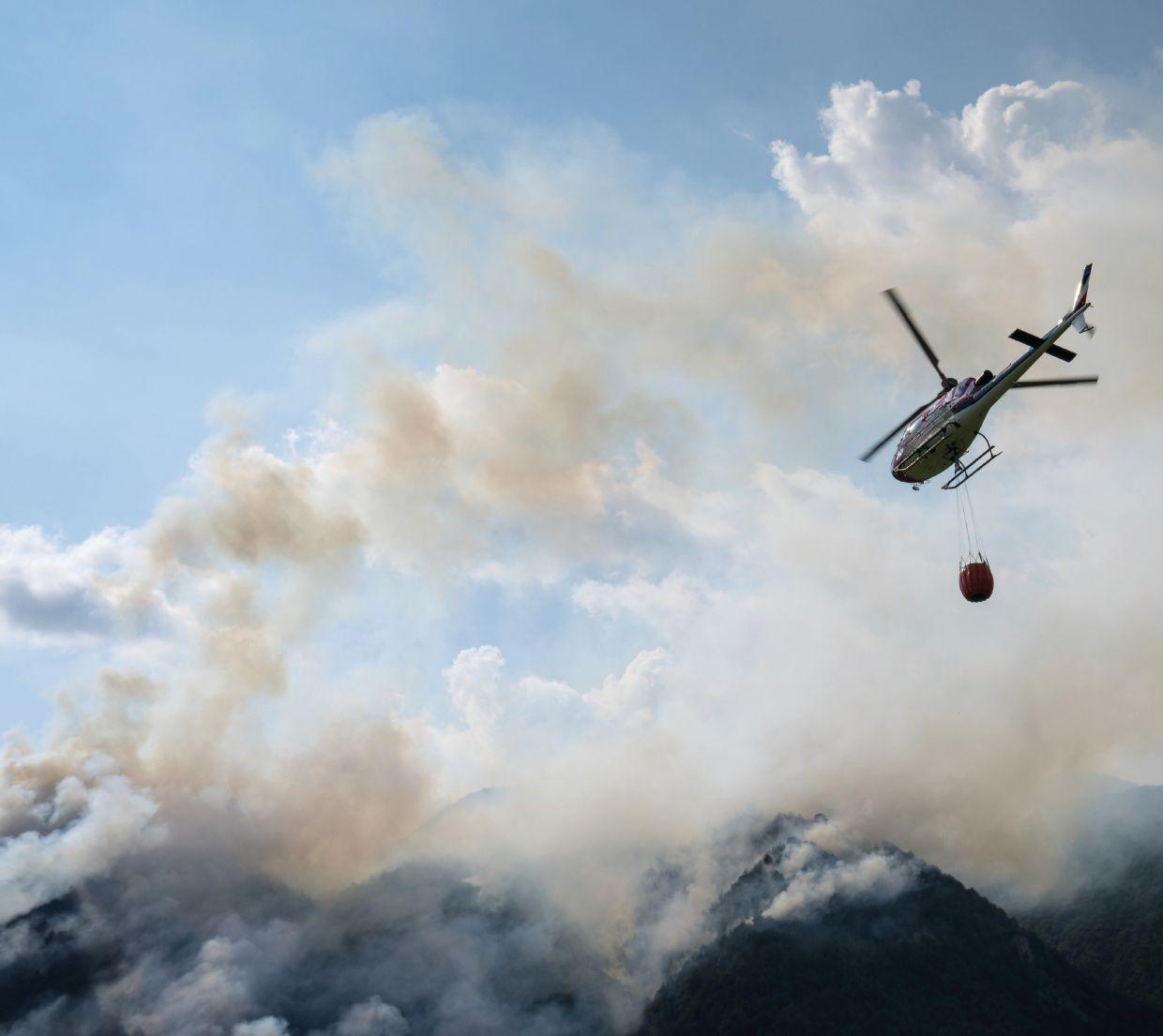
Guardian Mobility Inc. (GMI) has introduced the G4MX2 as an enhanced single box solution for helicopter and fixed wing aerial firefighting with new features:
• Iridium Only or Dual network modes, with automatic & manual switching between Iridium and Cellular Networks, for areas that have Cellular coverage, providing lower cost and if required faster Additional Telemetry Units (ATU) and Automated Flight Following (AFF) update rates;
• Expanded I/Os allowing support for multi-region ATU Combo contracts and custom ATU with external input generated Mapping event operations; and
• Support for both US Forestry, NAFC OPS-014 and custom ATU contracts out of the box for Buckets, Tanks, Combo and non-ATU operations.

What positions Guardian Mobility as a leader in aerial firefighting?
• GMI developed one of the first ATU systems prior to US Forestry contract requirements and tested it with several Helicopter and fixed wing companies, and GMI has continued to adapt the product to support both USDA and OPS-014 evolving ATU requirements; and
• Aerial firefighting is a major company focus for GMI and is a core capability of the cost effective, compact G4MX2 product and service. GMI continues to evolve the G4MX2 product and end-to-end solution to support evolving Aerial firefighting technologies.
How is Guardian Mobility’s flight tracking system unique?
• The G4MX2 is a single box low-cost solution allowing for AFF/ATU/FDMS/Mapping Events/Comms/Mark fire position/Alerting and more with a dual network capability.
Why is Guardian Mobility’s platform a true end-to-end solution?
The G4MX2 solution encompasses all that the User needs:
• Single box G4MX2 aircraft installed provides automated AFF/ATU/FDMS/Alerting/Mapping events and supports 2-way texting and mark position of fire locations;
• GMI Connect APP for Aircrew comms and User Admin & Maintenance support available for android and iOS smart devices; and
• GMI Connect App provides ATU installation and verification support to ensure installation is correct.
and maintains fixed-wing and RPAS aircraft for fire surveillance (detection and mapping) and airspace management (air attack/lead plane) services. It provides civilian operators with a spectrum of aerial fire services: pilots and mission systems operators; maintenance for the aircraft, sensors and mission equipment; logistics and support; and site and program management. The company’s multiintelligence data collection and processing/ exploitation/dissemination services include electro-optical infra-red (EO/IR) full motion video (FMV), multispectral imagery (MSI), and satellite data downlink.. It has been a key supplier of fire suppression to the Ontario government for 30-plus years.
Vernon, BC, monasheehelicopters.com
> With a new base in High Level, AB, to better serve the north, in addition to its existing Vernon home base, Monashee provides firefighting, construction, film and movies work, and passenger transport services.
Calgary, AB, mvheli.com
> Based at Springbank Airport since 1995, and with a newer location at Drumheller, Mountain View provides a full time Commercial Helicopter Pilot training program, including a hangar that houses a stateof-the-art FLYIT simulator, in addition to its onsite AMO.
Blackfalds, AB, mustanghelicopters.com
> With a multi-type fleet of around 30 helicopters, including lights, intermediates, mediums, heavy lift and twin-engine Cat A & Class 1 capabilities, Mustang provides a range of forestry services like transporting crew, water bucketing, belly tank, running an aerial ignition device or moving cargo.
PANORAMA HELICOPTERS
Alma, QC, helicopterespanorama.com
> Founded in 2000, Panorama provides a range of aerial firefighting services like detection, logistics (transportation of personnel and equipment), bucket watering (Bambi), IR imaging and related services like medevac.
Fort McMurray, AB, phoenixheliflight.com
> Phoenix provides a range of light and intermediate helicopter firefighting services like initial attack, sustained action and heli-torching on fires of all sizes, as well as experience in using aerial ignition techniques.
PRAIRIE HELICOPTERS
Gimli, MB, prairiehelicopters.com
> In addition to its flight training, Prairie
Helicopters offers a full range of helicopter charter services including fire suppression. The company operates Bell helicopters and was founded in 2000.
Drayton Valley, AB, rangeheli.ca
> Range Helicopters provides fire suppression services including crew/camp moves, infrared scanning, water bucketing, GPS mapping and drip torching.
Blue Ridge, AB, ridgerotors.com
> Ridge Rotors provides services primarily in Northern BC and Alberta for the forestry sector through timber cruising, VRI surveys, mountain pine beetle surveying and extermination projects, as well as fire suppression, emergency evacuation and SAR.
SARVAIR AVIATION
100 Mile House, BC, sarvair.com
> Operating out of Williams Lake, BC, and 100 Mile House, Sarvair specializes in longline and vertical lift missions like heli-logging, drill moves, tower and cone construction, and fire protection, as well as general charter, medivac, heli-hiking or fishing.
Revelstoke, BC, smheli.com
> Founded in 1991, Selkirk provides aviation services to heli-skiing operations as well as SAR support, while also aiding in avalanche snow safety and firefighting across the region, including drip torch and Class D certification.
Abbotsford, BC, sequoiahelicopters.com
> Founded in 2004, Sequoia Helicopters is active with provincial forestry agencies across Canada aiding in fire suppression, utilizing Bambi Buckets with foam kits and extensive longline experience.
SIERRA HELICOPTERS
Pitt Meadows, BC, sierrahelicopters.com
> Sierra provides a range of services throughout Vancouver’s lower mainland and beyond, including fire suppression and other forestry missions like LiDAR imaging, logging, tree planting and wildlife surveying.
SILVER KING HELICOPTERS
Smithers, BC, silverkingheli.com
> Silver King provides a range of services for the forestry and mining sectors, including fire suppression by working with initial attack crews and water bucketing. The company also specializes in providing emergency services.
SKY HELICOPTERS
Pitt Meadows, BC, skyhelicopters.ca
> Founded in 2011 and now holding six helicopters in its fleet, SKY has relationships with provincial governments to assist in wildfire management and forestry work. This includes holding year-round wildfire suppression pilots. The company also provides thermal imaging to detect hot spots and fire perimeters to help prevent further fires.
SKYLINE HELICOPTERS
Kelowna, BC, skylinehelicopters.ca
> Founded in 1996, Skyline operates from its main base in Kelowna and a satellite base in Terrace, BC, specializing in longline mountain operations with a strong focus on oil and gas, forestry and heli-skiing. The company has long been involved in firefighting operations for multiple agencies across Canada.
Slave Lake, AB, slheli.com
> Founded in 1998, Slave Lake specializes in providing services for the forestry sector, including fire suppression and related services like LiDAR and infrared scanning, as well as crew transport. The company is also equipped for SAR, medevac and Class D external cargo.
Cold Lake, AB, starhelicopters.com
> Star has been involved with the forestry industry since 1982, carrying out operations from firefighting to wildlife surveys, including infrared scanning of hot spots with Flir cameras, longline and drip torch services.
Kamloops, BC, summithelicopters.ca
> Summit delivers remote helicopter aviation solutions in Western and Northern Canada with bases in BC, Alberta and Northwest Territories. The company holds a fleet of intermediate Bell 407s and AS 350 aircraft, as well as an intermediate Bell 412, to support wildfire suppression and forestry research.
Winnipeg, MB, taigaheli.com
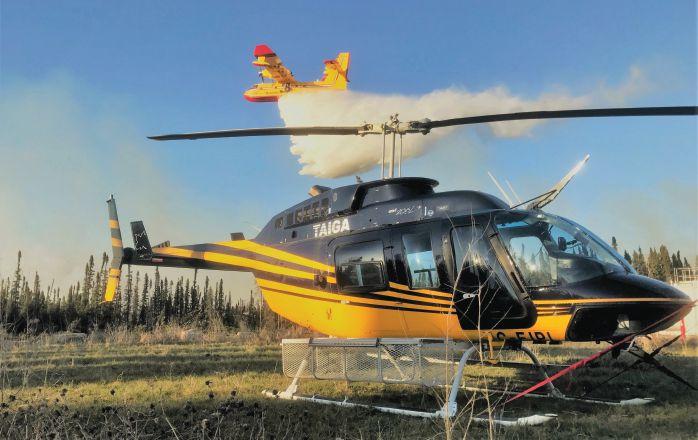
> Taiga specializes in providing strategic thermal scanning for fire suppression, as well as environmental and biometric analysis, powerline and pipeline integrity, infrastructure management and maintenance. This includes detection and mapping of hot spots, hotlines, and risk areas to effectively deploy resources.
Kelowna, BC, valhallahelicopters.com
> Valhalla has more than 20 years of experience supporting ground forces in fire suppression. The company leverages SEI water buckets that are Aqualaunch/Powerfill foam equipped. Valhalla explains its retardant delivery system can be used for a variety of fire
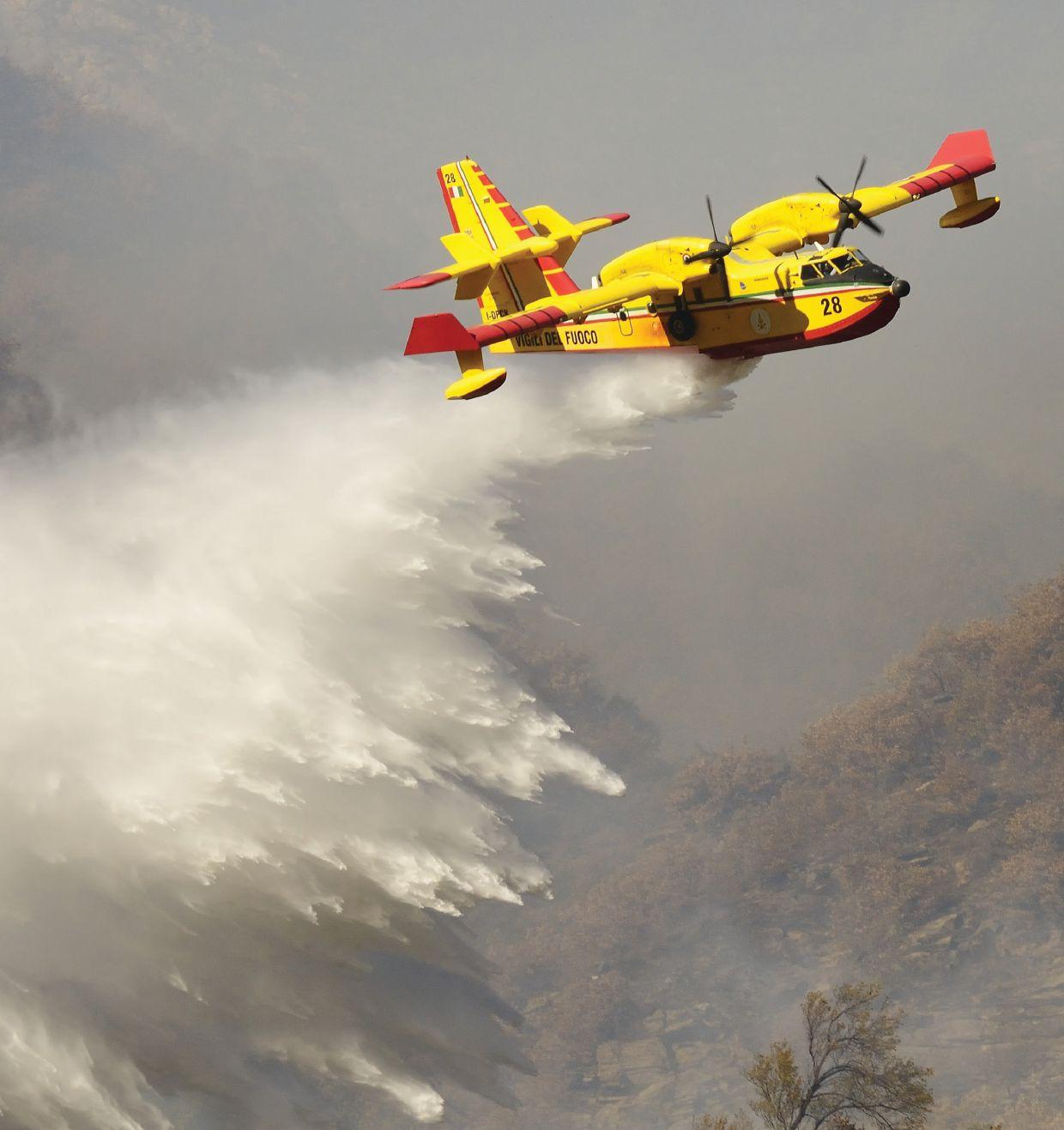
When dealing with fast-moving, life-threatening wildfires, realtime information and decision-making is key. Until recently, receiving important information in real-time was either extremely cost-prohibitive or wholly unavailable. As aircrews flew over blazes and captured images, firefighters on the ground would have to wait for the data to be processed before they could act on the information.
Today, with the launch of Iridium Certus and the development of the SKYTRAC SDL-350 and IMS-350 satellite communication terminals, aircrews can send live video transmission, EO/IR imaging data, and much more, directly to the ground in real-time.
Though broadband satellite communication networks have existed prior to Iridium Certus, none have been capable of truly global operations. Now, aerial firefighting operators can move their assets seasonally, for example, between Australia and California, as needed. The Iridium Certus satellite network, which operators on a Low Earth Orbit (LEO) constellation, offers a much lower size, weight, power (SWaP), and cost point than legacy solutions.
The technology isn’t limited to a particular type of aircraft, either. SKYTRAC’s new line of Iridium Certus satellite communications terminals are suitable for fixed-wing, rotorcraft, and unmanned aerial vehicles, ensuring seamless fleet commonality and process efficiencies.
“Increasingly, electro-optical, infrared, and other camera systems are being utilized to create fire-perimeters, fuels analysis, and more. With Iridium Certus and SKYTRAC’s new line of Satcom terminals, the data is processed and sent in real-time with a latency of ~0.5 seconds and 99.9% uptime reliability,”
For more information on SKYTRAC’s broadband satellite communications terminals, please visit go.skytrac.ca/certus or contact sales@skytrac.ca.
mentions Jan van der Heul, Vice President of Sales, SKYTRAC.
“This is truly the future of aerial firefighting.”
Enabling aircraft to capture video and livestream it back to firefighters on the ground is in itself a major shift for aerial firefighting operations. Going beyond, these onboard Satcom terminals are also capable of sensor fusion and artificial intelligence capabilities, which enable incident commanders to consider multiple factors to make informed judgements.
In addition, as UAVs become more prominent in aerial firefighting, Iridium Certus can also enable BVLOS and C4ISR applications for these unmanned systems using the SKYTRAC IMS-350.
“Traditionally, a fire-behavior analyst would synthesize weather information, topographical mappings, and historical data to compute likely scenarios,” concludes Van der Heul. “Now, it can all be accomplished in seconds through onboard mission-critical servers.”
Although this data isn’t a replacement for experienced decision makers, the additional insights are invaluable in lifethreatening scenarios.
Combatting a wildfire by air requires aggressive, reliable, and rugged technology. Operators have traditionally relied on Satcom connectivity for surveying, aircraft tracking, voice communications, operational loads monitoring, fire attack, tank drop data, telemetry, and more.
With SKYTRAC’s new SDL-350 and IMS-350 terminals, capable high-resolution multi-spectral imaging and video transmission at 352 kbps of bandwidth from and 704 kbps of bandwidth to the aircraft, aerial firefighting organizations can add new, innovative tools to their combat arsenal.
applications, and allows us to deliver shortterm gel retardant without requiring traditional mix-tank support.
VALLEY B AVIATION
Manning, AB, valleybaviation.com
> With Robinson and Airbus helicopters, Valley B Aviation provides a range of services for the forestry sector, including thermal spotting, hot spot detection, wildfire suppression, aerial photography, forest management, wildlife survey and pipeline patrol.
VALLEY HELICOPTERS
Hope, BC, valleyhelicopters.ca
Founded in 1985 and leveraging a Bell fleet, Valley Helicopters has provided firefighting services for more than 30 years. Its pilots are trained in fire suppression with water bucketing, aerial ignition and crew transport. It provides heli-logging, tree planting, environmental and wildlife surveys and mining support.
VIH HELICOPTERS
North Saanich, BC, vih.com
> Founded in 195l, VIH provides a range of services for the forestry sector, including fire suppression and heavy lift for pipeline and logging based on a diverse fleet of Sikorsky, Kamov, Eurocopter and Bell helicopters.
WEST COAST HELICOPTERS
Port McNeill, BC, westcoasthelicopters.com
> West Coast is a light and intermediate service provider with bases in Nanaimo, Campbell River, Port McNeill and Bella Coola, as well as a fleet of around 18 helicopters. It provides forestry services like fire suppression, tree planting and faller support.
WILDCAT HELICOPTERS
Kelowna, BC, wildcathelicopters.com
> Wildcat holds a fleet of Bell 412 and 212 mission-modified aircraft for a range of emergency services like fire suppression, including a Bell 412EP configured for extended search, rescue, and medical missions. Its aircraft are configured for day/night VFR and IFR.
WILDERNESS HELICOPTERS
Wawa, ON, wildernesshelicopters.com
> Wilderness Helicopters is a full-service operator with more than 25 years of experience flying in Northern Ontario, which includes fire suppression, wildlife and values survey, longline slinging and powerline work.
WISK-AIR HELICOPTERS
Thunder Bay, ON, wiskair.com
> Wisk-Air provides a range of services from firefighting and powerline support to mining and medivac. Its helicopters can be equipped with Bambi Buckets, longlines, cargo baskets, sling gear, and specialized equipment.
YELLOWHEAD HELICOPTERS
Prince George, BC, yhl.ca
> Operating out of more than 10 locations in BC and Alberta combined, Yellowhead provides a range of forestry services like fire suppression, cone harvesting, aerial seeding and fertilizing, tree planting, drip torching, infrared scanning, GPS mapping, telemetry, crew and camp moves, and heli-logging supply.
Blenheim, ON, zimmerair.com
> Founded in 1975, Zimmer Air has focused on the forestry sector since its inception providing a number of services to the sector in Ontario and out of the province. The company provides applications like drip torch and slash pile burning services.
Edmonton, AB, awcc@gov.ab.ca
> Agriculture and Forestry Wildfire Management Branch. 780-415-6460.
Kamloops, BC, prov.fire@gov.bc.ca
> Provincial Wildfire Coordination Centre, BC Wildfire Service, Ministry of Forests, Lands, Natural Resources Operations & Rural Development. 250.376-6777.
CANADIAN INTERAGENCY FOREST FIRE CENTRE
Ottawa, ON, ciffc.ca
> The Canadian Interagency Forest Fire Centre (CIFFC) is a not-for-profit corporation operated by federal, provincial and territorial wildland fire management agencies to coordinate resource sharing, mutual aid and information sharing. CIFFC serves as a facilitator of wildland fire coordination nationally and internationally in long-range fire management.
HELICOPTER ASSOCIATION OF CANADA
Nepean, ON, h-a-c.ca
> The Helicopter Association of Canada is the sector’s primary voice for operators and suppliers, working closely with Transport Canada, TSB, and other key government agencies. HAC provides a range of resources for its membership. 613-231-1110
MANITOBA WILDFIRE SERVICE
Winnipeg, MB, hqfire@gov.mb.ca
> Department of Conservation and Climate. 204-945-5252
NEW BRUNSWICK
Fredericton, NB, provincial.firecentre@gnb.ca
> Forest Fire Management Branch. 506-4533335
NEWFOUNDLAND AND LABRADOR
Corner Brook, NL, forestfire@gov.nl.ca
> Fire Management and Coordination Section, Forestry Services Branch, Department of Fisheries and Land Resources. 709-6372328.
NORTHWEST TERRITORIES
Fort Smith, NT, duty_officer@gov.nt.ca
> Forest Management Division Dept. of Environment and Natural Resources Government of NWTP. 867-872-7710.
NOVA SCOTIA
Shubenacadie, NB, wildfire.centre@novascotia.ca
> Fleet and Forest Protection Department of Lands and Forestry. 902-758-7230.
PARKS CANADA
Gatineau, QC, pc.feu-fire.pc@canada.ca
> Natural Resource Management Branch, National Fire Management Division.
RCMP AIR SERVICES BRANCH
Ottawa, ON, rcmp-grc.gc.ca > 613-993-7267
U.S. DEPARTMENT OF AGRICULTURE, FOREST SERVICE
Washington, DC, fs.usda.gov > 800-832-1355
PRINCE EDWARD ISLAND
Charlottetown, PE
> Department of Environment, Water and Climate Change Forests, Fish & Wildlife Division. 902-218-9076.
ONTARIO
Sault Ste. Marie, ON, meoc-mail.mnr@ontario.ca
> Ministry of Natural Resources sand Forestry, the Aviation, Forest Fire and Emergency Services. 705-945-5751
QUEBEC, SOPFEU
Quebec City, QC, .cpl@sopfeu.qc.ca
> Société de protection des forêts contre le feu (SOPFEU). 418-871-3341.
SASKATCHEWAN
Prince Albert, SK, FFMBDispatch@gov.sk.ca
> Saskatchewan Wildfire, Saskatchewan Public Safety Agency. 306-953-3430
YUKON TERRITORY
Whitehorse, YT, YDO@gov.yk.ca
> Wildland Fire Management Branch
Protective Services Division. 867-667-3128 | H
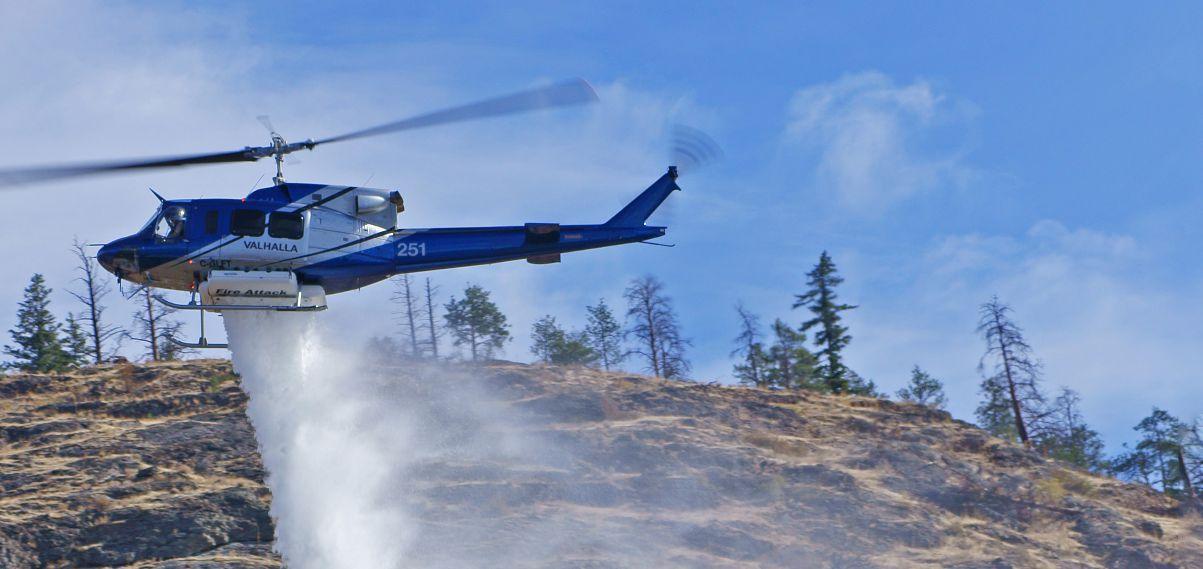
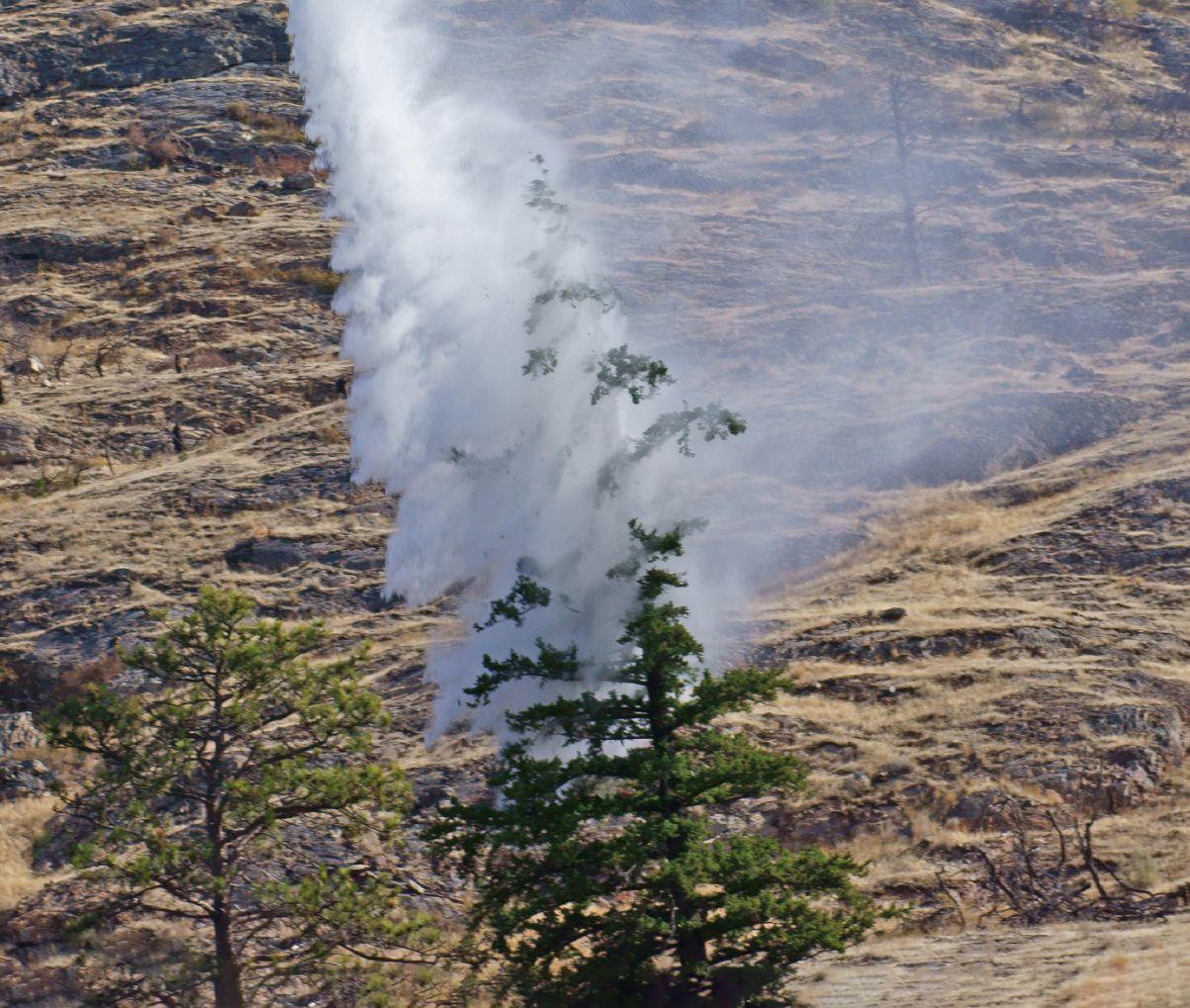
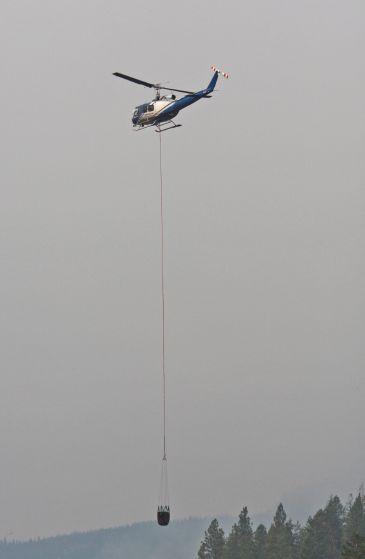
Valhalla Helicopters has earned an exemplary reputation for the quality of its wildfire suppression support services. Our team of pilots and engineers are highly skilled and have over 30 years experience fighting wildfires in Canada and Australia. All Valhalla pilots are proficient in precision long line operations, tank fire bombing, water bucketing, aerial ignition/drip torch, aerial thermography/mapping, hover exit and crew transport.
Valhalla Helicopters operates Bell 212HP, Bell 205A1++ and Bell 206B3’s. The Bell 212HP and Bell 205A1++ are equipped with a Simplex Fire Attack Tank or SEI Industries Bambi Max Bucket with variable activation valve, powerfill and foam capability.
Aerial wildfire suppression has become an indispensable tool for protecting lives, infrastructure and natural resources. Valhalla Helicopters has played a major role in many high-profile wildfires and supporting agencies across Canada and Australia.
Valhalla Helicopters believes that providing a highly mobile and rapid response to any emerging situation is a key factor to success.
1100 Stevens Road West Kelowna, B.C. V1Z 1G1
Ph: (250) 769-1486
BY CARLO KUIT AND PAUL KIEVIT, BRONCO AVIATION
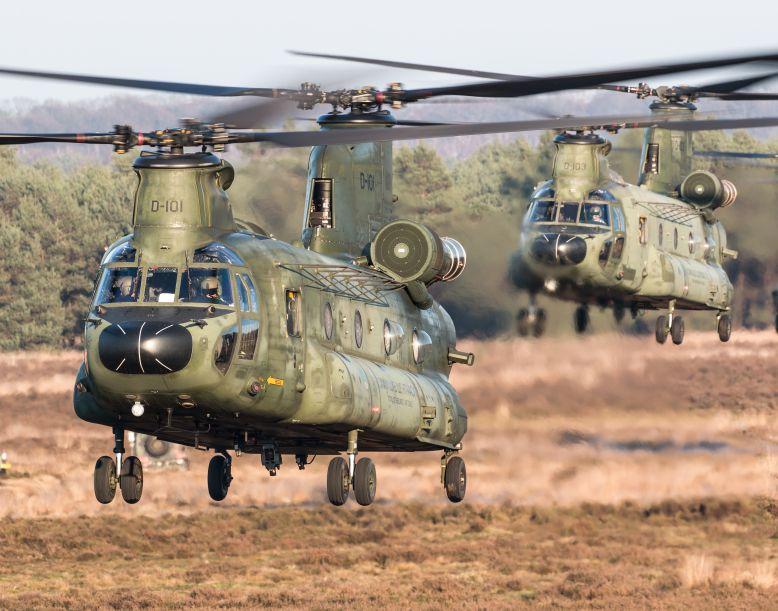
pril last year marked the 75th anniversary of the Royal Netherlands Air Force’s 298 Squadron, which at the time was operating 10 CH-47D Chinooks that were previously owned by the Canadian Armed Forces, as it waited for delivery of 20 replacement CH-47F MYII CAAS Chinooks. The first two CH-47Fs arrived in The Netherlands in December 2020 through Boeing Philadelphia. Fifteen of the CH-47F MYII CAAS helicopters will be assigned to 298 Squadron at Gilze-Rijen Air Base and five will remain with 302 Squadron at Fort Hood in the United States.
The 298 Heavy Rotary Squadron is one of four flying squadrons that are part of the Defense Helicopter Command (DHC). Since the establishment of the DHC in July 2008, 298 Squadron transferred to GilzeRijen Air Base from Soesterberg Air Base. The purpose of the DHC is to integrate all of the helicopter units of the Royal Netherlands Air Force – AH-64Ds, AS532U2s, CH-47D/Fs and NH90s – under one central command structure across two airbases to save costs. Only the NH-90 fleet of 860 Squadron is based at Naval Air Station De Kooy in the northern part of The Netherlands. The other three units reside at Gilze-Rijen.
The 298 Squadron’s heritage dates back to April 16, 1945, when it was operating at Gilze-Rijen as No. 6 Dutch Auster Squadron with six Austers. Soon after the end of World War II, the Squadron was transferred to the Dutch West Indies. On March 1, 1950, 298 AOP (Air Observation Post) was established. Over the years, 298 has flown various types of aircraft and helicopters. The Austers were replaced by L-18C Piper Cubs and L-21B Super Cubs to support the role of artillery spotters. Its first helicopter arrived in 1955, a H-23B Raven. The Alouette II followed in 1959 for search and rescue. These were replaced by Alouette IIIs from 1964 onwards. Twelve Bo-105C (Bolköw) helicopters were also part of the 298 from 1975 to 1979.
In early 1993, the Dutch government signed an agreement with
Canada to acquire seven Boeing CH-147 C-models that were in use by the Canadian Armed Forces between 1974 and 1991. In December 1993, a contract was signed with Boeing for the purchase of 13 modern CH-47D Chinooks with a digital Honeywell Avionics Control and Management System (ACMS) cockpit, as well as improved T55-L-714 engines.
Seven were remanufactured ex-Canadian C-models, delivered between 1995 and 1996, with the other six brand new aircraft, featuring a one-piece-machined airframe structure, delivered to the Royal Netherlands Air Force (RNLAF) between 1995 and 1996. Ten of the CH-47Ds were still on strength in 2020 having lost two Chinooks to accidents in 2005 during operations in Afghanistan, while the oldest CH-47D (D-661) was withdrawn from service in late 2019.
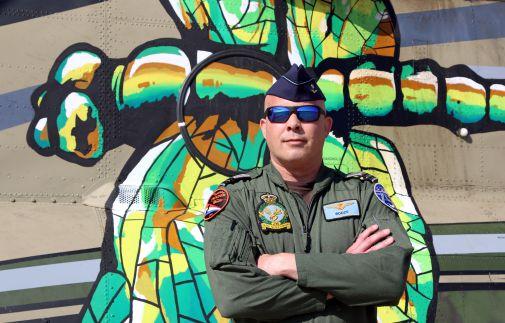
“The accidents in Afghanistan made us realize we had to further improve and hone the training and capabilities of our crews,” explains Captain Roël Boezen “Booze”, Liaison Officer for 298. “Both lost helicopters suffered from a hazardous mountainous and brownout landing during reduced visibility operations, where wind and loss of engine power due to the thin air conditions had impact on the performance of the Chinook. Circumstances we do not encounter when operating in The Netherlands.”
Captain Boezen explains, that as a result of the accidents, RNLAF implemented a new training program consisting of High Blaze exercises, for dedicated mountain flying, and Hot Blaze, for practicing operations in a hot, high and dusty environment. “One of the most challenging conditions to fly in [is] snow, in which you can easily lose your reference orientation,” he says. “Therefore, we have cold weather operations in snowy conditions in the Nordics trained during Cold Blaze... The fourth
training (segment) is TAC Blaze with a focus on tactical maneuvers and electronic warfare.”
To cater for the loss of the two CH-47Ds, and for the additional demand for Heavy Rotary Capacity, the Dutch Ministry of Defense signed a new contract with Boeing in 2007 for the delivery of six CH-47Fs, equipped with updated ACMS cockpits (Block6 with partly colour displays), improved self-protection kits, and CHASE (Chinook Aircraft Survivability Equipment). The main purpose of the CH-47F fleet is to serve as a platform for Special Forces Operations.
The configuration includes fast-rope capabilities, new attachment points for on-board weapons, a long-distance communication radio and a Forward Looking Infrared System (FLIR) under the nose. With the latter system, the pilot has improved situational awareness of the surroundings under poor visibility conditions.
The F variant has GPS navigation connected to a radar altimeter. Initially, 298 Squadron had three CH-47Fs (D-890/891/892). To complement 302 squadron in Ford Hood, CH-47F D-891 was transferred to the U.S. during 2015. The remaining two F models were shipped back to Boeing in March 2019 in support of the current RNLAF Renew Program.
Two of the CH-47Fs (D-894/895) assigned to 302 Squadron were ferried to Boeing in April 2020, with the last two (D-891/893) following in early June 2020. In anticipation of the arrival of the new CH-47F MYII CAAS fleet, 300 hours of base maintenance inspections are dimin-
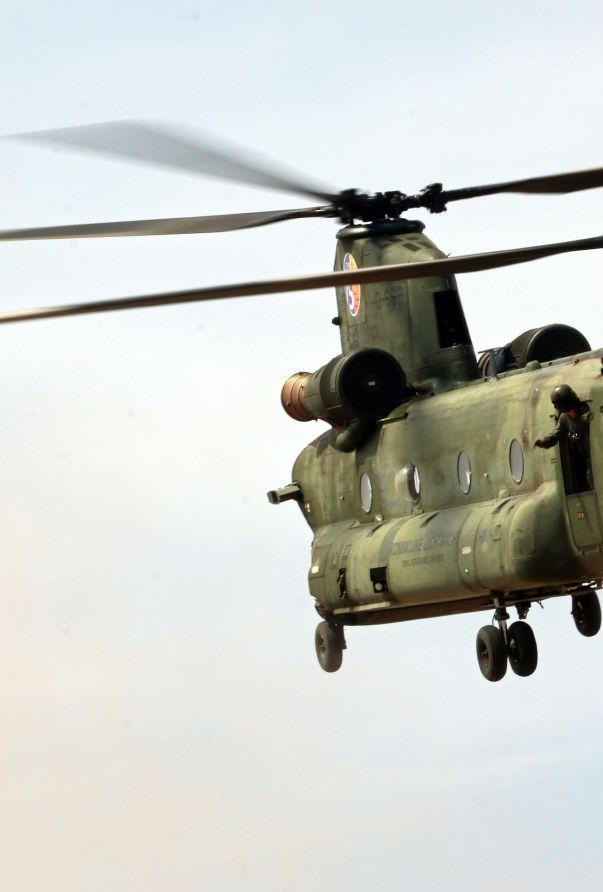
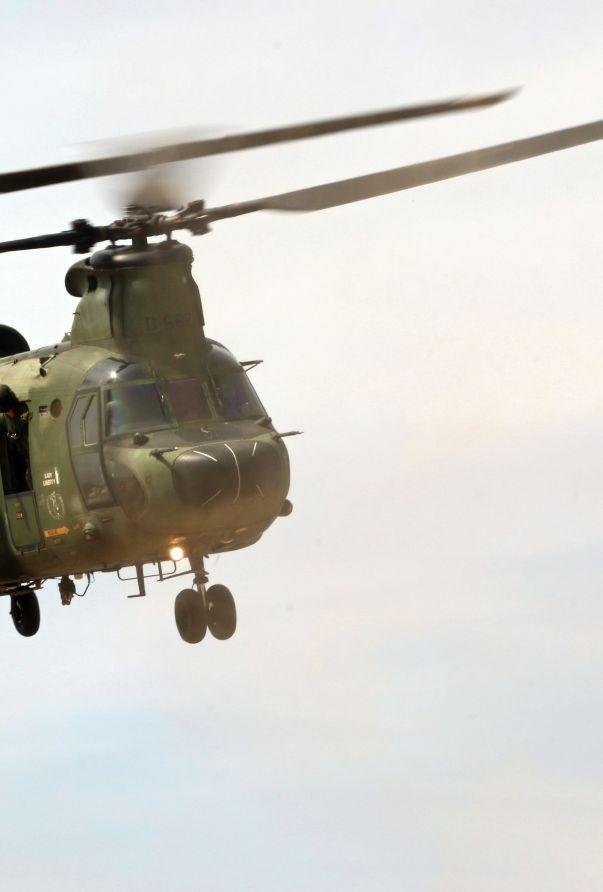
LEFT: Across the Netherlands multiple low flying areas exist in which crews can train with brown-out landings, being performed here by Chinook D-662 Lady Liberty.
BELOW: To mark the 75th anniversary of 298 Squadron, CH-47D D-666 received a special dragonfly painted addition. (Photos: Phil Nijhuis, Mediacentrum Defensie)
ishing for the existing CH-47D fleet, but will continue until Initial Operation Capability of the new CH-47F fleet. It is currently uncertain what the fate will be for the remaining CH-47Ds. Two are foreseen to be used as instructional airframes and one is planned to be delivered to the National Military Museum at Soesterberg.
In the period from 2010 to 2015, The Netherlands prepared for the replacement of the ageing D-models, as well as the expansion of the Chinook fleet with three helicopters. After extensive deliberations, the standard U.S. Army MYII CAAS configuration was considered to be the most efficient choice as a successor. The Netherlands was able to utilize options in the existing MYII production contract between the U.S. Army and Boeing. For that, the Letter of Offer and Acceptance with the U.S. Army for 14 new CH-47F MYII CAAS Chinooks was signed on November 12, 2015.
On April 14, 2016, the U.S. Department of Defense awarded Boeing a contract to build 12 CH-47Fs followed by an additional order on April 28, 2017, for the remaining two new CH-47Fs. In order to prevent a mixed fleet of CAAS and ACMS Chinooks, which would have been costly during the sustainment of the fleet, it was then decided to renew and modernize the six ACMS F-models. On December the 14, 2017, The Netherlands and Boeing signed the Direct Commercial Sales contract for the Renew Program, converting the six ACMS F-models into the exact same configuration as the 14 new Chinooks.
Operating the standard MYII CAAS Chinook will allow for further optimization of operations, training and maintenance. “We have had a lot of contacts with the U.S. Army and the Australian MOD being existing operators to understand potential challenges we might encounter when fielding the new Chinooks,” says Colonel Koen van Gogh, Senior Project Manager Defense Material Organization (DMO), who is responsible for the replacement and modernization program. “When we deliver them to the RNLAF, we want to make sure that there are no obstacles and that they will be able to operate and sustain the helicopters during the first three years. This period will allow the RNLAF to become self-supporting when it comes to in-service support.
“Around 2,500 parts of the legacy CH-47Fs will be reused. These parts will be overhauled (zero hours status) before being installed on brand-new MYII CAAS airframes,” adds Colonel van Gogh. “This option turned out to be more efficient and affordable than modifying the legacy CH-47F fleet. The first idea was to just replace the ACMS cockpit of the legacy Fs by a MYII CAAS cockpit. We concluded the risk was too big in terms of certification and costs. The legacy CH-47Fs are now sent to Summit Aviation who is tasked by Boeing under the Renew contract to remove the usable parts from the helicopters and have them delivered into the overhaul process.”
The new CH-47F MYII CAAS Chinook comes with the short nose, which differs from the current F version in appearance. This meant there is no room for our current Weather Radar. Also, the FLIR system under the nose will not be implemented. Another striking difference is the Woodland Desert Sage Color Scheme, instead of the current grey scheme. Additional Dutch requirements include Crashworthy Crew Seats with ballistic protection, leading to modified Multi-iFunctional Control Units, a LH removable escape hatch, a Hook Load Measuring System, an Ice Detection System, a Pitot Heater Failure Indicator, Fast Rope Ingress and Egress System, and a minor change to electrical. | H
BY DAN IRELAND
It was the fall of 1976 in Oshawa, Ont. I had just turned 19 and was heading to the Oshawa airport in the north end of the city. Arriving early in the afternoon, I presented myself to a group of men loitering around the “Pilot`s Lounge”. They were all at least 10 years older than me. They all shaved and weighed more than my 150 pounds. Not a bad weight I suppose, for someone who was not six foot two. To say I stuck out would be kind, like calling the place we stood in front of a “Lounge”.
I asked to speak to the Chief Flight Instructor and was told he was out flying, a good sign I thought. I did meet Stu eventually and discovered he was a Veteran of the U.S. Forces. He had flown countless missions in Vietnam and was a wonderful guy with a real talent for instructing. Larry and Brent filled out the instructor ranks at Alpha Helicopters. Pipe smoking Frank fixed what we flew. A crusty old Aircraft Maintenance Engineer with a yellow tinged moustache starting three inches up his nostrils. He had a heart of gold and skills to match.
After brief introductions I was ushered out onto the pad to look at my first helicopter upclose. It was not a thing of beauty, at first blush at least. It had a skeletal frame, spindly legs and a greasy look about it. I’m not sure if I flew the helicopter that first day or not. I do remember her registration, CFGUT. I have the tail rotor from that very machine hanging on the wall of my shop today. It had wooden blades, a grossly underpowered but thoroughly affordable Franklin engine, and a most excellent panoramic view. The huge plexiglass bubble afforded this wide-eyed student pilot a wonderful view of the intended landing site, if that site was the size of a football field. I couldn`t wait to get my hands on her.
The next day in Oshawa dawned bright and sunny with a nice breeze off Lake Ontario. About six knots, perfect for my first day of lessons. Hey maybe I’ll get to solo today, I
thought. Establish some kind of world record, I could see the headlines: “19 year old Campbellford boy Solo’s in helicopter after one lesson.” It can`t be that hard I thought.
I was a bit of a sports guy, like my Dad. I skied, played tennis, swam and could run for miles and figured with this skill set flying would be a breeze. I would have been wrong, I was wrong, I remain wrong… Flying you see, is hard. Learning to fly a helicopter is harder. Kind of like driving a standard with your ski boots on, or playing the piano wearing oven mitts, succeeding only in making a lot of noise, (like a helicopter). Like many hard things, one can (with much practice) learn to do them well.
I was about to test this theory. After a lengthy briefing with Stu regarding flight characteristics, I clambered into the waiting helicopter. “Where you going Dan?” Stu asked with a look of chagrin on his 30-something face. “I’ll be the pilot in command for this flight, get in the other side…” “You moron” was undoubtedly uttered but I didn`t quite catch it. And so it went. A great start to my introduction to the aviation world.
The exact details of that first flight are a little fuzzy four decades later. I do remember the feeling however. It was like my flying dreams as a seven year old, the almost magical sensation of lifting, indeed levitating off the ground. We got into a low hover slowly floating towards the edge of the helipad. The machine gained speed and with surprising shudder we climbed into the wild blue, south towards the Lake Ontario shoreline.
Stu was at the controls (obviously) for this flight. More correctly, it was made perfectly clear to me before the flight, that I was “to keep my hands OFF the controls until such time as we were established in the training area”. “Roger” I replied, Wow, my first pilot speak and I nailed it! It even made sense, ”10-4” I quickly added to put a finer point on it. Stu gave me another one of his “dumb kid” looks, but was far too nice a guy
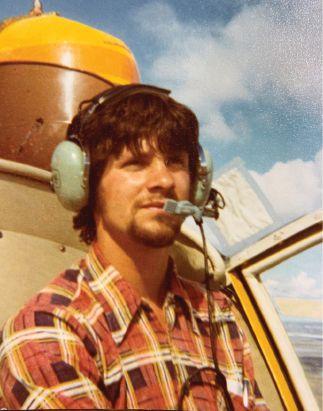
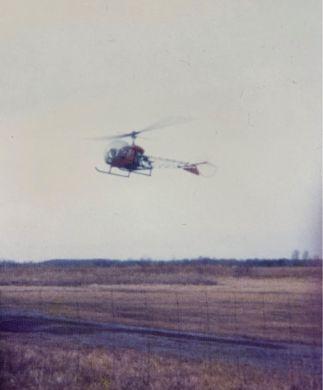
TOP: Dan Ireland, age 19, begins his pilot career in the late-1970s with Alpha Helicopters in Ontario.
ABOVE: Flying the Bell 47 in Oshawa.
to really tell me what he thought of me. We approached our training area just south of the city. It was squeezed between the wave pounded shoreline of a blustery Lake Ontario and the mighty multi-lane 401 highway. This area was known (in local circles) as CAMP-X, a World War II POW camp. We made many sorties to this training area over the next four months. We would practice circuits, no-hover landings, hover maneuvers and sloped ground landings. I would pass the first of many milestones here, with my first solo flight. It didn’t happen in record time I must admit as I was not exactly the sky king sort of student. My old dreams of flying did not require any sort of hand-eye coordination.
I wasn’t the worst student pilot, either, although Stu would say, “Hey, Dan, as a helicopter pilot you would make an excellent shoe salesman” or some similar sentiment. I did, in time acquire a modicum of knowledge and was keen to share these tidbits with friends and family, or anyone else who happened to wander by. And wander by they did, in October on a beautiful fall day outside the hanger in Oshawa. I was just
tying the blade down on the old bird when I noticed these two kids loitering around the fence outside the ramp. They must have been 16 or 17 (far younger than me) and seemed very interested in the helicopter, and made that clear when they asked me “Hey how do you fly that thing?” A very good question as I had been wondering about that myself.
I, being eager, though somewhat naïve, proceeded to tell them everything I knew about flying a helicopter. After my 45 second spiel, they asked me if I could take them for a spin. I politely declined and told them they could come back tomorrow and book a familiarization flight. Well, it turns out they did come back the next day (around two in the morning) and broke into the hangar. They liberated a Bell 206 Jet Ranger Flight Manual. Our Bell 206 helicopter was away flying somewhere, a stroke of luck as it turned out.
They had no interest in the old two-seater, piston-powered Bell 47. Their sights were on a turbine-powered, five-seat Jet Ranger. The next day was spent reading through the manual and gleaning what they could from it. The following night they made their way to the downtown Toronto Spadina St. helipad and climbed into a Jet Ranger. They managed to get the engine started and ran it up to flight speed. A quick pull of the collective and the boys found themselves air born and over the waters of Toronto harbour. It was an overcast, cold night in October. The helicopter pitched and rolled wildly, crashing into the water mere seconds after taking off. They had neglected to turn on the hydraulic system. One boy survived. I testified at the inquest several months later.
My flight training progressed more or less on schedule, with my first solo flight coming at 25 hours. Not a record, I know but I remember the day, October 7, 1976, quite well. I had no idea that this was the “Day” as Stu was a man of few words other than “Holy crap Ireland!” and “ Look Out!” on occasion. We flew around on that unseasonably warm fall day with the doors off, a real thrill that added to the sensation of flying. We landed in the middle of the training area. When Stu climbed out I thought he had dropped his car keys out of the doorless helicopter and was going to fetch them.
“Where ya` goin` Stu ?” I yelled over the pounding blades and engine cacophony.” You lose something?” I added, hoping this was in fact the case. “Just fly a normal circuit Dan, Stu yelled.. the winds are out of the,.,.,, don`t turn downwind until you have... feet.”… or something like that. All I heard over the din was…” Don`t turn downwind…”
Now this I found somewhat confusing. Yes, I was not a seasoned pilot, or a pilot at all, but I did know that turning downwind was pretty much a requisite maneuver when flying circuits. NOT turning downwind would eventually take me to the point of fuel starvation and the parking lot of the Scarborough Town Centre. My not yet fully formed “pilot brain” engaged its erratic synaptic output and visualized what would tran-
spire. I completed several peddle turns, a half turn too many as it turns out, and launched into the wild blue. Man – it’s taking a long time and a lot of power to get this thing to altitude, I thought. Well… at least I avoided the dreaded, "Turning downwind too soon in a circuit” thing. Oh my. Did I mention I was 19? I was full of the thing that kept young people young and us old guys remembering that hope does spring eternal. | H





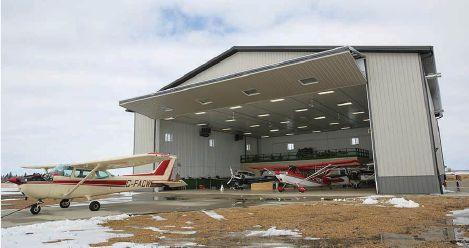

• 7,400 sq.ft.± total space available
• Forced air heating in the hangar bay and office
• 60’ x 24’ Diamond Door, fully automated (fits King Air) with 20’ wide approach
• Building is full insulated with metal cladding and many more features!






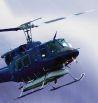










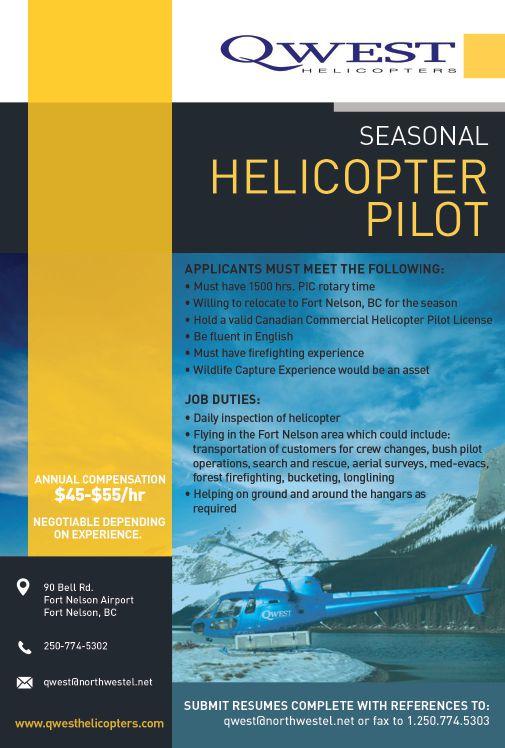
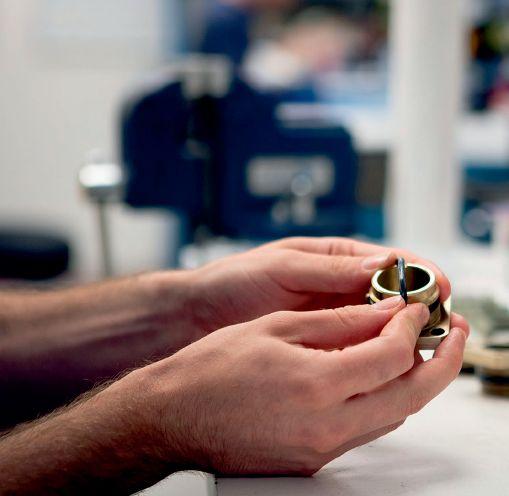

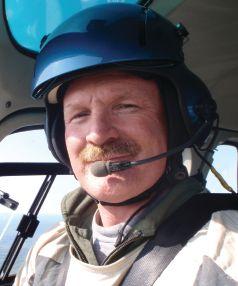
FRED JONES
ven as many provinces return to the lockdown in the face of new COVID-19 surges, there are glimmers of hope that we may be starting a long road to recovery from the pandemic. Recovery from the disease is one thing, but the recovery of the commercial aviation community is another thing altogether, and may take much longer.
Even for those air operators who have thus far managed to survive the pandemic, many of them will take years to dig themselves out of the debt that they have accrued in the last year. The same will apply to many of their employees who have been laid-off as demand for air services precipitously declined.
What’s more, helicopter operators must continue to remain vigilant for their workers who are largely operating on the frontline in all of this. The helicopter industry must continue to press PHAC and the Provincial Ministers of Health to ensure that our helicopter crews (flight crews, ground crews, and maintenance personnel) are provided with priority to receive the vaccine. Even the WHO and ICAO have recently declared that air crew should have a priority for vaccinations. HAC has focused its efforts on both the Federal Ministers of Health and Transportation and the Provincial Ministers of health, since the prov-
Demanding essential service vaccinations, even with some light at the end of the tunnel
flight crews and maintenance crews. (Contact me at fred.jones@h-a-c. ca to receive a copy.) We don’t often stand up to claim priority, but in this case we need to – particularly in the face of more infectious variants. During the summer season, our crews may be working anywhere in the country; and the vaccine could also go a long way to providing some comfort to provincial and regional authorities, who are establishing restrictions of their own, to complicate our lives even more.
I would argue, the pandemic may very well change the complexion of commercial aviation forever. Recently there has been an interesting dialogue with government over the “benefits” of being fully vaccinated while traveling by air. Even as the CDC declares that fully vaccinated people can travel with low risk of COVID 19, our government is hesitant to provide any relief from its conservative entry restrictions on any level. Even for domestic travel, but particularly for transborder or international travel, there is concern from our regulator that vaccinated individuals may still unknowingly be infected and transmitting the virus to others while traveling by air. It follows that the precautions that are currently in place – at least masks and social distancing, and potentially some mandatory Covid testing and some period of quarantine –may be with us for some time, yet.
The helicopter industry must continue to press PHAC and Provincial Ministers of Health to ensure that our helicopter crews are provided with priority to receive the vaccine.
inces have been given authority over priorities for distribution of the vaccine.
Furthermore, much of what we do as helicopter operators are essential services from firefighting ops to powerline and pipeline patrol to freeze-up and break-up operations and police services to moving vaccine to remote communities – to name only a few. Our crews often transition from non-essential to essential services in the course of the same day’s operations on short notice. HAC has released a template letter to its members and encouraged them to contact their Provincial Ministers of Health to obtain priority for vaccinating their crews – both
Couple that with some recent discussions about how long the different vaccines are effective for, before requiring subsequent boosters (and a significant percent of the population who will remain unvaccinated), and we may never be able to let our guard down. Some will say, that in time, COVID-19 will be the new flu that individuals may elect to vaccinate against, but COVID-19 has a higher fatality and hospitalization rate – particularly for at-risk populations; and we all know the surges can reoccur at any time until a significant percentage of the population is vaccinated.
I know it is difficult to accept these circumstances, but I am eternally an optimist when it comes to banking on the resilience of the commercial aviation community; and particularly the resilience of Canadian commercial helicopter operators. This is a time when our industry must claim a priority for vaccinations. We must continue to pressure federal and provincial governments to provide some measured relief from travel restrictions for fully vaccinated passengers and crew members. It is clear that this is going to be a long road to recovery on every level. | H
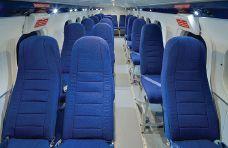
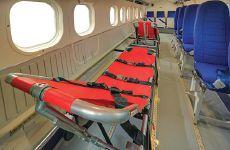
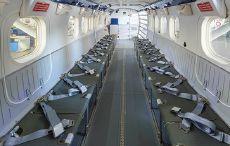
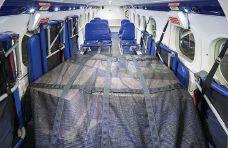
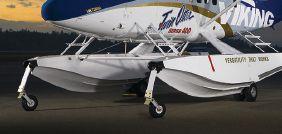


























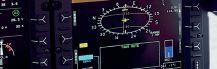





















The H135 is the helicopter of choice for military pilot training around the world. Exceptional safety and ef ciency make it ideal for both basic and advanced training. There’s a reason we call it future aircrew training. Packed with technology such as the HELIONIX® ight control system, today’s new pilots will be armed with the skills needed for tomorrow.

Superiority. We make it y.