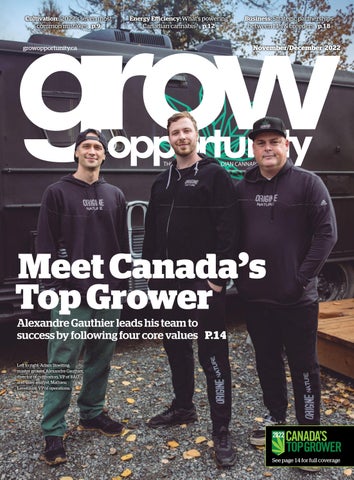
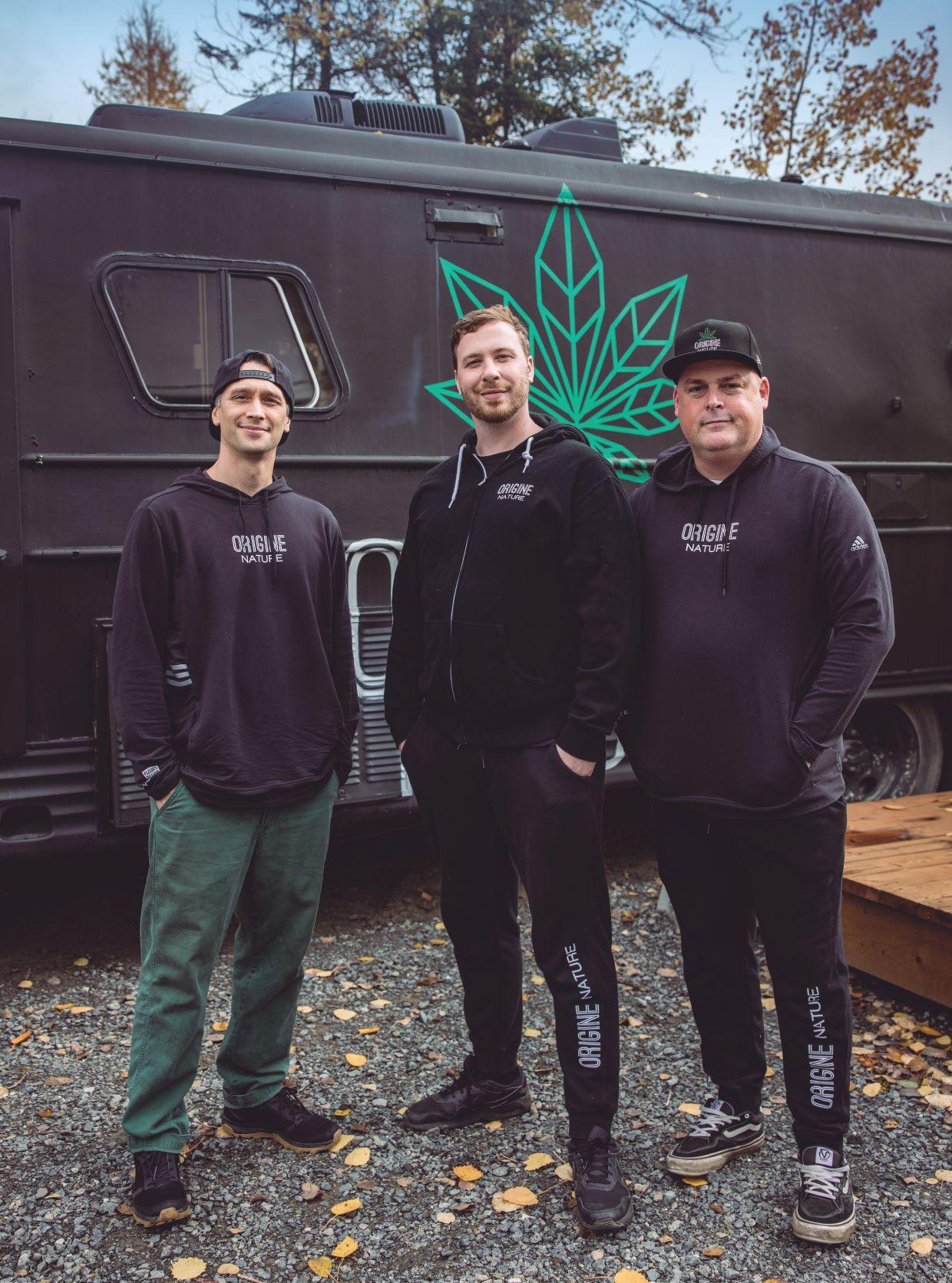
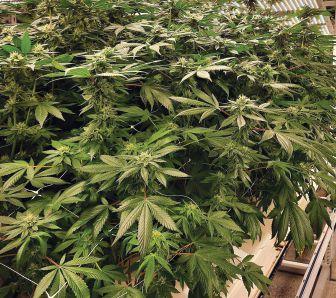
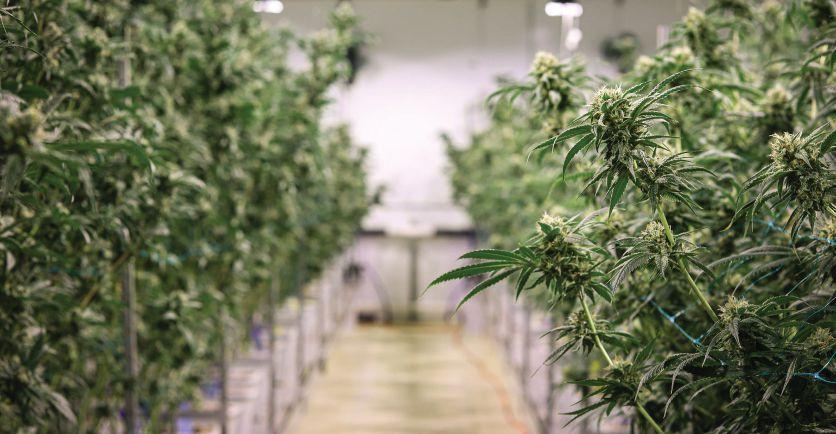
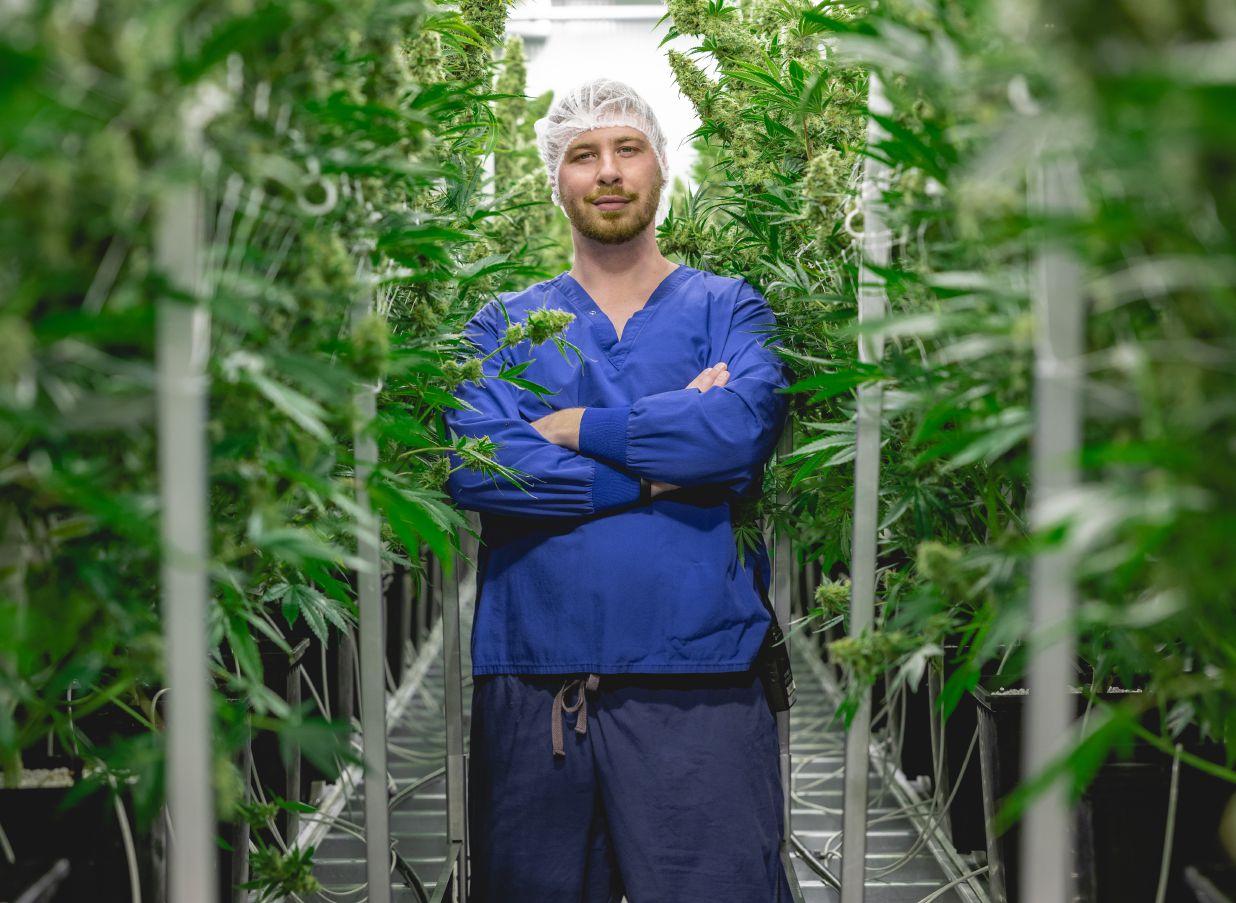
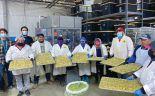
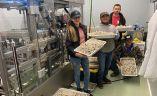
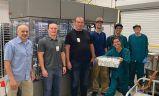
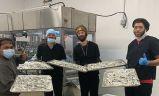
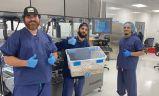
Left to right: Adam Stoelting, master grower, Alexandre Gauthier, director of cultivation, VP of R&D, and sales analyst, Mathieu Laverdure, VP of operations.
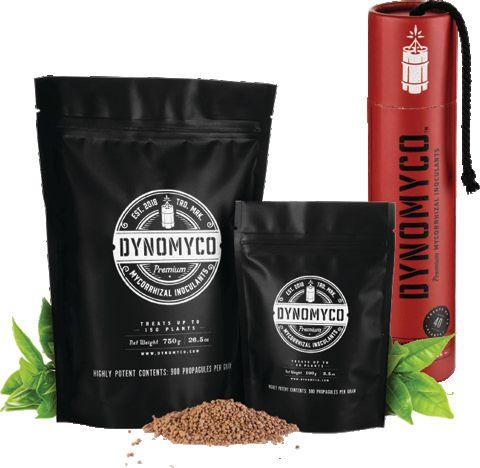
MYCORRHIZAL FUNGI
Extend the root system of plants, enabling more access to water, nutrients, and trace elements.
Based on over 30 years of R&D. The most cost effective mycorrhizal inoculant on the market.
COLUMNS
8 | Legal Matters
Cannabis companies must brush up on the difference between litigation & arbitration 9 | Cultivation
People not plants are the problem: Seven mistakes of 2022
18 | Business
Exploring strategic partnerships between LPs & breeders
20 | Vantage Point
What cannabis companies need to correct over the next 12 months
DEPARTMENTS
Circular economy is business 3.0
Reduce-reuse-repair: Take note of this alternative packaging method BY MIKA UNTERMAN
12 What's powering the lights? Cannabis companies are shifting focus to more energyefficient solutions BY
Meet Canada’s Top Grower Alexandre Gauthier steps into the spotlight this year as Grow Opportunity's 2022 Top Grower Award winner BY HALEY NAGASAKI
From the editor
By Haley Nagasaki
Congratulations, Alexandre!
Three months after the contest submission deadline, we are excited to finally announce the winner of Grow Opportunity ’s Canada’s Top Grower Award. Congratulations to Alexandre Gauthier, director of cultivation at Origine Nature, for stepping up as an exemplary figure of cannabis cultivation excellence.
Two new judges joined the panel this year for a total of five — Dr. Mohyuddin Mirza, David Kjolberg, Jayson Goodale, Stacie Hollingworth, and George Dickinson — whose combined talent and decades pioneering in the industry goes without saying. This year we received 23 nominations in total for a comprehensive representation of Canada’s cannabis growers from coast to coast.
The lengthy evaluation of each submission concluded with virtual facility tours guided by the three contest finalists. Alas, Gauthier was chosen as the face of Canada’s Top Grower upon the basis of innovation, leadership, sustainability, profitability, ethics and work culture.
In addition to the Top Grower cover story and the accompanying podcast with Gauthier (visit growopportunity.ca), this issue encompasses some other major themes pressing on the industry. As we look back on 2022, the significance this year has had on the cannabis market is paramount, particularly with regards to production costs.
Toronto journalist Jack Burton brings forth three distinct voices on the issue of energy efficiency — Nadia Sabeh, Dr. Greenhouse, Brigitte Simons, CEO, Safari Flower, and Adam Clarke, CEO, Stratus Designs. The topic is further supported by the Q&A with facility designer Clarke where he explains the interdependence between building design and energy cost.
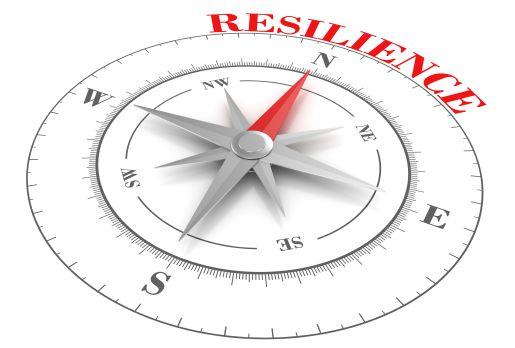
Producers must fully embody company resilience and operational excellence should they wish to weather the headwinds in the coming months and years.
Mitchell Osak offers an expert opinion from his vantage point regarding company resilience and operational excellence that producers must fully embody should they wish to weather the headwinds in the coming months and years. This includes cost management, though it is not only financial books battening down the hatches, but the environmental implications at the hands of the collective that also demands immediate action.
Closely related to the thread of resilience is that of sustainability. Mika Unterman offers potential solutions to single use plastics in cannabis beneath a circular economy model. Unterman urges the repurposing of packaging before ever being sent to landfill.
On the cultivation side of things, Dr. Mirza shares the most notable errors he encountered this year while consulting with growers (you may be surprised by his findings!). And balancing on the point where business meets cultivation, we’d like to welcome Nick Sosiak, CFO of Quebec’s Cannara Biotech and our Business Section columnist this issue, as a new voice in the magazine. Sosiak’s fresh perspective as successful brand builder offers insight into the strategic partnerships between LPs and cannabis breeders.
Finally, as the winds continue to howl through this chilled market, coloured by four years of regulatory gymnastics and the repetitive call on government for reform, Legal Matters columnist Matt Maurer offers a straightforward breakdown of the differences between litigation and arbitration when it comes to settling the legal disputes increasing in frequency.
I’d like to thank each of our contributors, the voices of Grow Opportuntiy, for assisting in the advancement of this industry and for sharing their valuable intellectual property. And to those interested in contributing, pitchs and prose are always welcome. From our team to yours, we wish you a warm holiday season with loved ones — the beacons of light in our lives and reminder of what matters most.
A toast to the hard slog so far and to the eternal optimism for tomorrow. Happy 2023!
November/December 2022
Vol. 6, No. 6 growopportunity.ca
Reader Service
Print and digital subscription inquiries or changes, please contact Angelita Potal, Customer Services Administrator Tel: (416) 510-5113
Email: apotal@annexbusinessmedia.com
Mail: 111 Gordon Baker Rd., Suite 400, Toronto, ON M2H 3R1
Occasionally, Grow Opportunity will mail information on behalf of industry-related groups whose products and services we believe may be of interest to you. If you prefer not to receive this information, please contact our circulation department in any of the four ways listed above.
Made possible with the support of
One less thing to worry about.
Easy to use • Consistent clean quality input
Traceability of all products • Growing support provided
CANNA is an established and serious partner for the Green Market. We provide solutions to growers of all sizes, including Canadian Licensed Producers.
CANNA nutrients, additives and growing mediums are manufactured from the highest quality source materials. We understand the importance of a clean, consistent and traceable input as well as keeping it simple.
CANNA loves to share its knowledge and experience, our team is there to support you.
Summary: Cannabis Act review
In the Act, it is stated that the review should focus particularly on the health and cannabis consumption habits of young persons, the impact of cannabis on Indigenous Persons and communities, and the impact of the cultivation of cannabis plants in a housing context.
The panel will broaden that focus to include:
• Economic, social and environmental impacts of the Act;
• Progress towards providing adults with access to strictly regulated, lower risk, legal cannabis products;
• Progress made in deterring criminal activity and displacing the illicit cannabis market;
• Impact of legalization and regulation on access to cannabis for medical purposes;
• Impacts on Indigenous Peoples, racialized communities, and women who might be at greater risk of harm or face greater barriers to participation in the legal industry based on identity or socio-economic factors.
— DEEPAK ANAND
Open the farm gate
The shift towards regenerative inputs and conscientious cultivation in general speaks to the needs of people seeking connection and a clean end product.
The artisan experience of growing prized cannabis or visiting a consumption lounge on the land upon which it was grown, the premise of farmgate, speaks to the experiential needs and joie de vivre that we crave.
The potential of this industry still in its infancy means change is welcome, and Canadian connoisseurs and tourists hope to soon see cannabis products for sale at the health food store, spa, local bakery, or during an LP tour as a Ganjier kind of experience we are ready for in the north. — HN
3
Days of Lift&Co.
The Lift Expo returns to Vancouver in January 2023 after a three-year hiatus for a business conference and two industry days.
Industry calls for immediate relief in the face of crisis
Delta 9 receives Manitoba distributor license
Through its wholly owned subsidiary, Delta 9 has received a cannabis distributor license from the Liquor Gaming and Cannabis Authority of Manitoba, making it the first licensed distributor of cannabis products in the province.
The Cannabis Council of Canada gathered leaders from across the cannabis industry to call on the government of Canada for urgent action to protect the public health, public safety, and job gains of cannabis legalization.
“Four years since legalization in Canada, the cannabis industry is at a crossroads and is calling on the federal government to enact changes that will enable it to compete with the unbridled, untaxed and unregulated illicit market,” said George Smitherman, president and CEO of C3.
The industry is asking the government of Canada to work with its provincial counterparts to restore the cannabis excise tax to its original premise of 10 per cent and is asking Health Canada to immediately suspend collection of the annual regulatory fee.
“If government does not intervene with emergency relief on the way to broader reform, expect the continued failure of cannabis firms and consequences – lost jobs, investments, and rural economic renewal,” said Mark Ripa, CEO of A B Laboratories and a C3 member.
Mohawk Chief asks senate for Indigenous recognition
The federal government needs to carve out a space for Indigenous communities in terms of the way the federal cannabis law is administrated between the federal and provincial governments, an MCK chief told the standing senate committee on Indigenous Peoples.
“Indigenous communities have been shut out of the cannabis industry,” said Mohawk Council of Kahnawake Chief Tonya Perron. “Health Canada issues permits,
while the provincial governments are in charge of retail sales of legal product leaving Indigenous communities caught in the middle,” she said.
Perron said the MCK’s responsibility of the protection of health and safety of the community is just as important, and that the community has had to deal with the fallout of legal cannabis sales outside of the community.
— MARC LALONDE,
LJI
Legal Matters
By Matt Maurer
Cannabis companies must brush up on the difference between litigation & arbitration
When people negotiate and draft contracts, the dispute resolution section is often only considered in passing as the parties are more focused on the business terms of the deal. However, the significant differences between litigation and arbitration must be considered at the outset since once a dispute has arisen, it is often too late to come to an agreement as to how the dispute will be adjudicated.
One of the most significant differences between litigation and arbitration is privacy and this is especially pertinent in the cannabis industry.
While no company enjoys airing out its dirty laundry, cannabis companies in particular often have business information which, if made public, would be harmful to the company’s competitive position in the marketplace.
Litigation 101
Litigation, within the context of this article, is defined as the pursuit of a legal dispute through the court system. While most jurisdictions in Canada have similar processes, this article will discuss the process in Ontario as example.
Litigation begins with one party (the plaintiff) preparing a statement of claim, which is a document that outlines what the plaintiff is seeking as a remedy and the factual basis upon which the plaintiff says they are entitled to it.
After the statement is “issued” (stamped by the court and given a court file number) it is then served on the defendant. The defendant then has typically 30 days to prepare a statement of defence in which it sets out its own side of the story. There may be a counterclaim, or what is known as a reply, from the plaintiff, too.
After the pleadings have been exchanged, the parties are then obligated to compile, list, and produce all of the documents in their power, possession or control which are relevant to the lawsuit, whether helpful or harmful.
After the productions have been exchanged, the parties proceed to oral examinations for discovery, which is when the lawyers of each party get to question a representative of the opposite party. No judge is present for the examinations, but a transcript is taken which can be used at the trial.
Once the matter is ready for trial, the plaintiff “sets it down” for trial. A pre-trial conference
with a judge is scheduled to see if the matter can be resolved and if not, to address any trial related procedural issues. The trial date is then set.
While there may be some additional interim motions and case conferences, the foregoing is generally how a lawsuit proceeds in Ontario. From the time a claim is prepared until a trial occurs typically takes two years or longer.
Arbitration 101
Arbitration occurs when there is an agreement to resolve a dispute privately rather than through the court system. The agreement to arbitrate is usually contained within a contract between the parties that is drafted before either party knows that a dispute will actually occur. In some instances, parties who are not subject to an arbitration clause will mutually agree to arbitrate a dispute after the matter has become contentious.
In some instances, the procedure to be followed for the
arbitration is set out in the contract. In other instances, the contract stipulates that the arbitration will follow a set of domestic or intentional arbitration rules. In many instances, the procedure is not mandated at all and the parties, their lawyers and the arbitrator agree upon a procedure to be followed.
An arbitration is commenced when one party sends the other party a notice that they intend to arbitrate. From there, the parties need to select an arbitrator to hear the dispute. If an arbitrator cannot be agreed upon, the court appoints an arbitrator for them.
As indicated above, the procedure in an arbitration can vary wildly. In some instances, it follows the procedure in litigation very closely, in others there are modifications to the normal litigation rules.
Instead of having to produce every relevant document as is the case in litigation, parties may only produce documents they intend to rely on. In some cases, there are oral discoveries before the hearing, in others there are not.
As it relates to the hearing, sometimes the evidence in chief (each side’s own evidence) is entered via written affidavit as opposed to oral testimony. And in almost every instance, the ability to cross-examine the other side on their evidence is built into the process.
Visit growopportunity.ca for the key differences between litigation and arbitration.
Matt Maurer is a partner and co-chair of the Cannabis Law Group at Torkin Manes LLP in Toronto, Ont.
By Dr. Mohyuddin Mirza
Dr. Mohyuddin Mirza, PhD, is an industry consultant in Edmonton, Alta. He can be reached at drmirzaconsultants@gmail.com.
People not plants are the problem: The seven most common mistakes of 2022
Let me begin by saying that cannabis plants do not lie about their health status or performance, it is the human caregivers who often cannot interpret their language or read their distress signals. Eventually AI will be equipped to translate those signals so that we may act accordingly, but until then, we should train ourselves to read the plants and take corrective action sooner rather than later.
The integral reactions that occur through respiration, highly dependent upon day and nighttime temperatures, may be misinterpreted and cause hinderances to the plants’ metabolism and energy creation, slowing their developmental processes.
That is to say that the respiration equation must be understood and all inputs planned accordingly. Any deficiency of raw materials can derail the entire manufacturing process. For example, elemental molybdenum is an important mineral required in small quantities for nitrogen assimilation. Any one of the plants’ needs, if not properly met, becomes a limiting factor for growth and development as well as bud yield and quality.
These are the most common mistakes I encountered in 2022:
1. CO2 SHORTAGE
CO2 is the first raw material required, however plants have been growing for centuries outside without the addition of CO2, so why it should matter now? With indoor growing, plants display light coloured leaves and lower yields to express this lack. In one case, the grower was attempting to remedy lower yields and when I looked at the CO2 data, the levels were lower than ambient. In another case, the grower was using CO2 during the dark period as well, causing crop damage.
2. CHRONIC WATER SHORTAGE
Over the entire life cycle of the crop, one grower was so fearful of root rot that not enough water was supplied to the plants. There were tell-tale signs of dehydration, such as dark, thick leaves, persistent wilted plants, and overall reduced yields. THC levels were very good, 28 per cent with a fine terpene profile, but consistently low yields reduces company sustainability.
3. HYDROPONIC MISHAPS
In hydroponic growing systems where plants were fertigated using only water with dissolved nutrients, plants displayed several problems. They had soft, thin stems and slow vegetative growth. The growers were afraid of using higher electrical conductivity (EC) values to create modest water stress on the plants.
4. LIGHT MANAGEMENT
While there are different light recipes for indoor and greenhouse cultivation, the general agreement is that light levels between 400 to 700 micromoles/m2/second are optimal, but occasionally growers use over 1000 micromoles. Some research indicates that cannabis plants can tolerate high light levels, but it must be accompanied by adequate water and nutrient management. Problems occur when growers adopt research findings about the use of elevated light intensity to increase production and yield but do not match the nutrient and water input levels.
5. WARM TEMPERATURES
Overly warm temperatures during the day and night, such as 25-to-28 °C during the light period and 25-to-26 °C during the dark, are not conducive for optimal growth. The thinking behind this is that it will keep plants compact because the temperatures do not fluctuate as much. However, that is not the case as high nighttime temperatures hinder respiration.
6. LOW RELATIVE HUMIDITY
The practice of high day and nighttime temperatures combined with low relative humidity exposes the plants to high vapor pressure deficits. This increases environmental stress on the plants, and the energy that should be used for flower growth and volatile oil production is now being utilized for evapotranspiration.
7. NUTRITIONAL ISSUES
Observed nutritional problems were generally attributed to a lack of understanding about the importance of pH in the root zone. Some growers created perfect nutrient solutions but did not realize that the uptake of nutrients depends on the pH, which must be monitored daily and adjusted up or down depending on plant conditions.
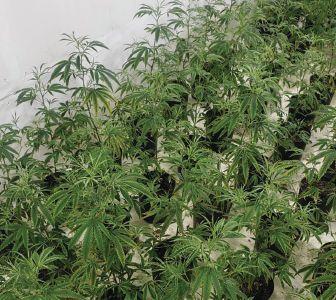
TOP: 800-1000 ppm of CO2 BOTTOM: No supplemental CO2
Circular economy is business 3.0
It is time for the cannabis industry to take note of an alternative packaging method: reduce-reuse-repair.
By Mika Unterman
We live in a take-makewaste society. We extract materials from the earth in a damaging way, we consume huge amounts of energy, water, and other materials to create a product that we want, and generally anticipate using it only once.
Regulators across North America are starting to take action around the issue of single use plastics. The Canadian government, for example, recently announced they will ban common single use plastics — checkout bags, plastic cutlery, six pack rings, straws — thereby eliminating an estimated 1.3-million tonnes of hard-torecycle plastic waste.
In the U.S., states like California have also recently passed laws to reduce plastic, increase recycling and shift the economic burden of waste disposal to plastic producers and packagers. Even cannabis regulators are starting to implement
change. For example, Vermont now has a requirement that cannabis consumer packaging must be reusable.
Prioritizing environmental issues is becoming increasingly critical for companies across all industries, and the cannabis industry likely uses more than its fair share of single use plastics.
In an already environmentally taxing industry — what some have dubbed a “climate villain” — shifting to more sustainable practices is a necessity.
It’s my view, as a practitioner of sustainability and social impacts in the cannabis space, that the industry needs to face these issues head on, and transition from that “take-make-waste” system to a circular economy model.
Breaking down a circular economy
Circular economies intend to eliminate waste and circulate materials at the highest value, which means reusing and re -
pairing several times before we ever need to recycle.
When we live in a circular economy, the approach shifts to “reduce-reuse-repair,” where circular packaging products are designed to be reused. There are many models around circular packaging, including both consumer and corporate ownership, and case studies from corrugated cardboard to aluminum bottles led by global companies like Pantene and ZeroBox.
We use a lot of plastics in the cannabis industry and the majority is intended to be disposed of after a single use. While some of the packaging conversation has focused on using recyclable materials, which is a necessary part of a circular economy, it shouldn’t be relied on as our primary initiative towards sustainability.
Recycling products that have only been used once is not the most efficient use of that material, especially a plastic or glass
A circular packaging model, where plastics in cannabis are reused before they are recycled, has the potential to save money and improve margins.
container for cannabis. Also, consider that the track record of efficiency in recycling isn’t overly optimistic — 40 per cent of plastics are mismanaged. This means that after they make it to the recycling facility many plastics are then taken to landfill.
We also lose a lot of material as part of the recycling process. To create one jar of recycled plastic, 2.2 jars will need to be recycled. Recycling has a low material conversation rate, but when you are able to reuse that jar, you are able to retain 100 per cent material conversion.
Are there alternatives?
Others might say the answer is found in the transition to hemp plastics or compostable plastics, but I’m not convinced.
Despite the fact that bio-based (made from organic material such as hemp) and compostable (degrading within a specific timeframe) materials are often championed as the solution to our industry’s
plastic waste problem, a similar issue remains: both of these solutions are still single use.
It’s also important to consider that biobased plastics such as hemp plastics are often touted as biodegradable, which they are before they are mixed with resin.
The carbon sink created by the organic material growing is negated by the carbon footprint of the production process. And compostable plastics, despite being biodegradable, will often end up in landfill as consumers don’t always have the knowledge or confidence to know which plastics can go into the compost.
When biodegradable plastics end up in a landfill, they procedure eight times the amount of methane (more harmful than CO2) than traditional plastics in a landfill. Plastics are incredibly durable and can withstand anywhere from 50-80 uses.
While there are clear environmental benefits of shifting to a circular model, we
Cultivation Facility Design
also know that environmental justifications, such as drastically reducing the manufacturing footprint or the rate of petroleum extraction, won’t convince everyone alone. And the strict cannabis packaging regulatory environment often closes the door to exploring alternatives.
There are also direct cost savings alongside relatively little-to-no lift for businesses to make the change. Collecting and sanitizing the packaging already in use by manufacturers represents a huge potential for cost savings.
As our sector faces mass layoffs, from cultivation to tech, and as the industry seeks to “rightsize” their businesses, a circular packaging model has the potential to save money and improve margins.
Mika Unterman has been commercializing cannabis products since 2018, with 60 brought to market to date. Since founding Apical Ethical Cannabis Collective in 2019, she’s made it her mission to work with companies, demonstrating how sustainability can support profitability.
What ’ s powering the lights?
Companies are shifting focus towards better management of energy inputs in their operations.
By Jack Burton
Among the wide array of variables and operational goals integral to successful commercial cannabis production is energy efficiency. While once an overlooked factor, its impact on navigating market shifts, optimizing production demands, and increasing overall profits has companies placing an increased focus on managing energy inputs as the industry progresses.
Expanding priorities and profits
Nadia Sabeh, CEO of Dr. Greenhouse — an agricultural engineering firm with a focus on growing facilities — has witnessed firsthand this shift towards an increased focus on energy efficiency and its driving influences.
“When I started Dr. Greenhouse almost six years ago, energy was almost always at the bottom of the list [of client priorities],” she says. “Now what we’re seeing is that it’s almost always third or fourth place, and I think that’s a really good trend for
the industry as a whole.”
Energy efficiency’s growing role in facility designs and processes, Sabeh believes, comes partially from the opportunity it offers companies to increase profits in an industry marked by turbulent fluctuations in competition, costs, and pressures to maximize production outputs.
“When it comes to cannabis, we often hear these conversations about the race to the bottom: that prices are dropping, and that there’s more supply than there is demand. The kneejerk reaction by a lot of investors and owners is to grow more.”
The yield from this increased production remains vulnerable to further price drops, instilling in companies a need to create balance between the decrease in retail price and the increase in production costs by maximizing profits in other areas. Among the most recognizable of solutions that may satisfy the need for profit increase, Sabeh believes, is through the optimization of onsite energy efficiency.
“I think that’s one of the reasons why
energy is floating to the top, is that growers, investors, and owners are asking themselves how to reduce the cost of production, with energy being that biggest piece,” says Sabeh.
An energetic shift across Canada’s industry
Strengthening relationships between operations and energy efficiency becomes more necessary when considering the unique circumstances faced by Canada’s industry. For the majority of its lifespan, production has occurred under pandemic-influenced markets and the resulting nonstandard energy rates, meaning a number of adaptations are needed as the industry returns to a new normal.
“In Canada, we were provided rebates along with off-peak times, provisions, and less costs overall,” relays Brigitte Simons, CEO of Niagara Region’s Safari Flower. This has left companies with a history of data and expectations regarding energy usage that is statistically incompatible
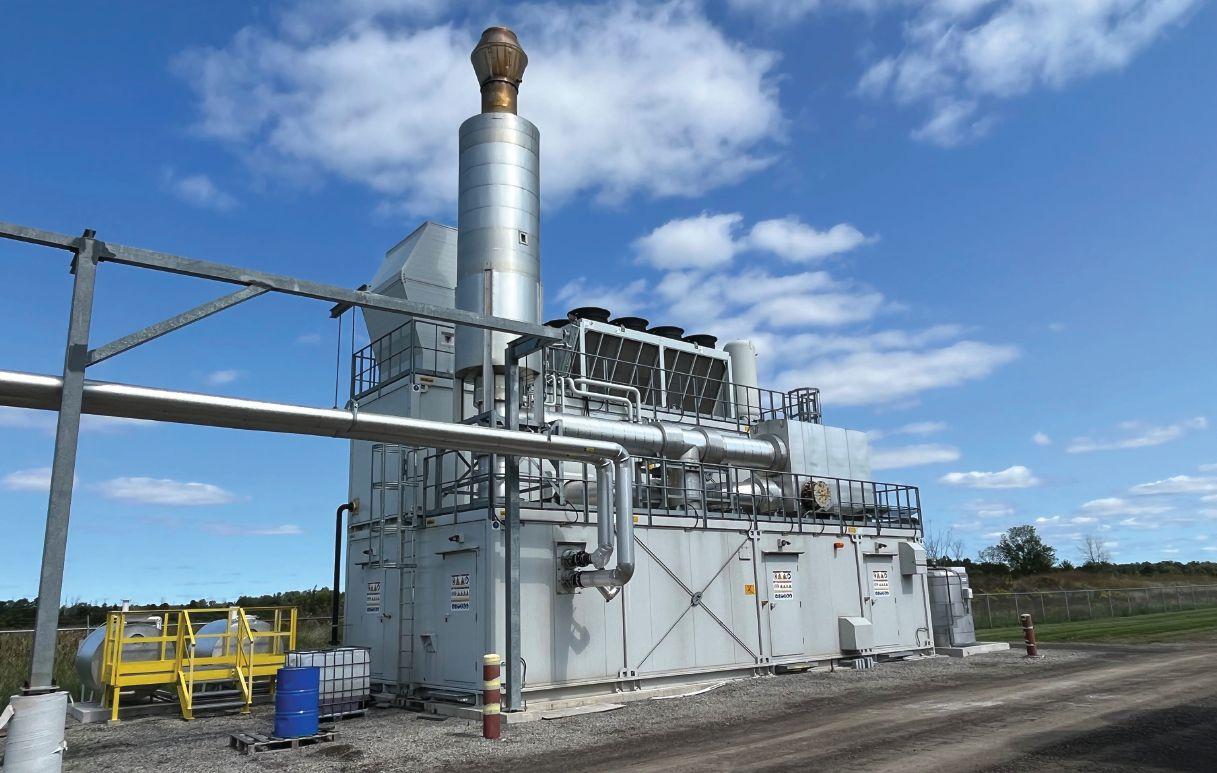
Safari Flower’s cogeneration technology is designed to produce heat and power — the most essential components of cannabis production.
PHOTO: JEFF GOARLEY
with current rates and market trends.
Simons estimated that producers across the country are set to see a 70 per cent increase in operational costs heading into the 2023 fiscal year as energy costs shoot upward post-pandemic — a reality that she believes many are unaware of or illequipped to deal with.
“Looking at it in 2022 and then looking back, there aren’t enough cycles of consistency where you could have actually made that decision on how much the cost per gram is,” says Simons. “So, now we’re faced with the realities of what is truly the cost of energy to produce cannabis in these facilities, and what we are seeing is that it is alarmingly increasing.”
Data: the doorway to efficiency
The key to curbing these impending hardships while fully optimizing energy use, Simons believes, is a robust data collection system: “I would say, as of today, that data is more powerful than the technology we have that builds and moderates energy.”
To fully unlock data’s ability to increase efficiency, Simons recommends simplicity and consistency. The changing, around-the-clock demands of energy in cannabis, including the seasonality of growing, peak and off-peak rate changes, and multiple meters within a single operation creates a large number of variables, and with them, a wider margin for error in data collection.
For navigating these factors and their fluctuations, Safari has developed their facility to operate on a single-source power supply. Among other benefits, this streamlines the number of variables when it comes to tracking data on operational costs and energy outputs, thus increasing the clarity and utility of the information collected.
“Data is powerful when it’s accurate,” Simons states. “If you can move to a single energy source and you know how much it takes to run all of the equipment, such as HVAC, boilers, chillers, co-generators, and air handling units, that data now gets to be more valuable than the actual acquisition of the energy molecule itself.”
“I would say, as of today, that data is more powerful than the technology we have that builds and moderates energy. ” – Brigitte Simons
Design for energy success
The increased need for Canadian cannabis producers to focus on energy is furthered by the facilities these companies own, many of which were not outfitted with the appropriate designs and equipment for producing quality cannabis in energy efficient ways around the time of legalization.
Many companies, according to Adam Clarke, CEO of Stratus Designs, “were behind before they even started from an energy production standpoint.” The issue within their facility design, is “too many engineers treated it like a commercial building rather than an industrial building. You can’t use commercial grade equipment because it will break, it costs more to operate, and it doesn’t last as long.”
The number of facilities across Canada impacted by these design misunderstandings, and the ensuing energy obstacles, is widespread. Clarke estimates the number of buildings unaffected to only be between five and 20 per cent. The integral role of facility design in energy efficiency means that companies may be struggling not only to adapt to increasing rates, but also to create quality product and make profit.
“Cannabis buildings have to grow cannabis to make money; without good quality cannabis, you don’t make money,” says Clarke. “So, what’s the most important thing for a company? Grow quality cannabis. What makes quality cannabis? Having a properly designed HVAC system that maintains the temperature, humidity, and all other conditions in that space.”
Clarke adds that facilities must review their energy sources, offering an alternative perspective whereby redundancy is key. “Often energy costs different amounts at different times and using gas at one time and electric at another could be more efficient.” Clarke believes redundancy acts as a buffer where if one system
fails, another is available, therefore “backup generators should be on a different energy source than the base building,” he says.
Streamlining through automation
For those with efficiency gaps in their own energy systems, Clarke recommends considering equipping facilities with automated energy management systems, which grant growers total control over many variables present on a grow site and the ability to optimize their energy usage right from their phone screen.
“The lowest hanging fruit for someone who, right now, wants to become more efficient while at the same time save money on power and increase the ability to fine tune their crop in order to increase yield, is to do automation,” affirms Clarke.
Clarke explains that using automation, “any of the processes we run, I can implement anything my clients allow me to do while on my phone from anywhere in the world.” The benefits of this solution, he says, not only allows for more precise room conditions and grows, but also, through the data these systems collect, illustrate specific trends and the solutions needed to decrease overall energy levels.
Optimal energy efficiency starts at the facility level, and an automation system, unifying the array of onsite equipment for maximum control, provides companies with the best defense for rising rates and market fluctuations, Clarke believes.
“Realistically, the single biggest savings you can have in growing cannabis is properly designed HVAC, and even more importantly, properly designed refrigeration, in conjunction with a robust building automation system to make sure everything is functioning as intended,” he concludes.
Jack Burton is a freelance writer in Toronto.
Meet Canada ’ s Top Grower
Judges vote to push Alexandre Gauthier into the limelight this year as Origine Nature’s director of cultivation combines leadership and innovation.
By Haley Nagasaki
Origine Nature, Sainte-Agathesdes-Monts-based LP and thought leader of the Quebec cannabis community, reaches educational goals through government funded R&D, strategic partnerships with sustainability incentivized companies, and by embarking onto the global stage not only for provincial recognition, but for all of Canada.
Alexandre Gauthier, the winner of Grow Opportunity’s 2022 Top Grower Award, was raised in Montreal, understands the Canadian cannabis market, and is seeing to the stabilization of the market by driving a farsighted company with core values that match his own. According to the winner, Origine Nature seeks to leave behind a legacy rather than capitalizing in the short term, and to grow a family dynamic within the company and the cannabis community at large.
Gauthier’s most prominent message revolves around the shared victory that this award represents. Finding the right people and fostering a healthy work environment, where colleagues are eager to spend their waking hours and are looked after in the face of personal adversary, has established an admiral dynamic of close-knit individuals. Gauthier says that “showing someone you truly care about them is more than forty hours per week.”
you to our dedicated sponsors
Nothing without teamwork
When it comes to working as the director of cultivation at Origine Nature, Alexandre Gauthier would be nothing without the dedication of his teammates.
Stacie Hollingworth, master grower at Safari Flower and panel judge for the Top Grower Award, also drew attention to Gauthier’s “dedication to education and knowledge sharing,” noting that he helps propel this industry forward by “elevating those around him and their understanding of the plant and process.”
ORIGIN STORY — HISTOIRE D'ORIGINE
Gauthier joined Origine Nature in 2020, at the same time they received their cultivation license, and quickly moved from master grower to director of cultivation and vice president of R&D.
Hailing from Montreal, Gauthier spent his formative years developing his passion for cannabis in Canada, as well as in Europe where he lived and learned about the intricacies of cannabis culture and cultivation in Germany, France, and the Netherlands.
Friends in Amsterdam assisted his personal growth as well, helping him to see that upon returning to Canada, his pursuit into medical and eventually recreational cannabis was still worthy of his efforts. Spurring this realization, too, was the substance abuse he witnessed overseas where 14- and 15-year-olds were regularly purchasing cases of alcohol, developing addictions and destructive behavioural patterns because opioids and alcohol were acceptable, while the consumption of cannabis was criminal.
“The defining moment in my life,” expresses Gauthier, “is that call I got from Aurora Cannabis to say I was hired,” which is something that occurred to a number of those pioneering in the legal space. “We got the call and we started crying. We called our moms and said, ‘mom, you can be proud that I finally have a legal job.’ It was really a turning point for us.”
From Aurora Cannabis in 2017 to Tidal Health in New Brunswick, followed by a brief stint at Montreal Cannabis, Gauthier finally landed at Origine Nature and has been leading the talented team ever since.
Consultant, cultivator, and Top Grower judge Jayson Goodale had this to say: “Alex exemplifies the evolution of legal cannabis cultivation through the application of data driven processes and techniques, alongside his passion for the plant, the industry, and his co-workers who assist Origine Nature in achieving success.”
LEADING, LEARNING & TEAMWORK
In addition to his work at Origine Nature, Gauthier teaches online courses in Europe — exemplary of his desire to distribute knowledge and share his passion.
He does not believe in hoarding information—“there’s no secret sauce,” he says. Only carefully formatted SOPs that he and his team follow and monitor closely. Origine Nature also plays by the rules and listens to the demands of clients and the needs of consumers.
When consulting with the SQDC Quebec retailer, the team asked what products they needed: “they said a sativa at five dollars, so that’s exactly what we gave them, and it worked,” smiles Gauthier. Due to the low cost of electricity, Quebec has a leg up as the province potentially producing the highest quality cannabis for the cheapest cost, at three cents per kilowatt of energy.
As director of cultivation, Gauthier’s team consists of five growers and one master grower. Currently there are seven cultivation technicians, and he predicts an eventual total of 12 — one grower for each of the 10 active commercial flower rooms and two R&D phenohunters.
In addition to the leadership and innovative traits upon which he was judged for the award, Gauthier has also dialed in the consistency of the grow at Origine Nature, the profitability of a small scale, 40,000 square foot space, and the ride-or-die team that’s making it all happen.
Mathieu Larverdure is the vice president of operations at Origine Nature and Adam Stoelting is the master grower. Christopher Arnold works as the alternate master grower while Karolane Leclerc takes on the role of head of propagation, caring for the mothers and the clones. Markus Ineichen is the scout and eyes of the operation — their IPM specialist.
While cultivation is the name of the game, the culture of the company is rooted in four core values that Adam Stoelting and Christopher Arnold both explicitly addressed: passion, family, street smarts, and social consciousness.
“We want our employees to feel great,” said Stoelting. “We are actively finding ways to cultivate a healthy work environment, whether that’s through free social pro-
grams, insurance, profit sharing, or monthly staff parties. Our culture is to kick ass and it shows with our staff!”
Checking off the social aspect of work culture, when it comes to the logistics that Arnold oversees, the consistency of their operation lies in the control methods.
“It’s about understanding the correlation of all the equipment in the room. You need to understand the equipment and you must maintain it,” shares Gauthier.
At Origine Nature, the team uses colloquial “workhorse equipment from the 1990s,” which has been validated by an engineer and is running 24 hours per day, seven days a week.
“If something breaks down, we replace it within minutes,” says Gauthier. That’s because there’s no such thing as a weekend when it comes to cannabis cultivation, and none of the equipment is headquartered in, say, Germany. “If it breaks down, and you have to wait three days to replace it, the entire crop is lost,” he says.
Arnold uses a systematic approach to the controls of cultivation. He monitors everything and knows which parameters influence the crop. Here, proactivity
rather than reactivity is key.
“If you react too quickly, you might alter something. A good master grower will systematically let problems go on until he has a solution,” Gauthier dishes.
This of course is difficult to do because of the elevated risk factor. But producers must understand the return on investment involved in finding real solutions rather than a band aid solution — the director of cultivation calls this “the secret to consistency.”
STABLE & SUSTAINABLE
The Canadian government provides annual funding to Origine Nature for the purposes of research and development. Dominique Laverdure, VP of marketing, established a collaboration with the Quebec organization Synergie Économique Laurentides. Together with Gauthier, they focus on innovative solutions to waste management, such as reusing industry inputs through a circular economy model.
Gauthier looks to see the stabilization of the industry that he suspects might realistically encompass the closure of
some 40-to-70 per cent of producers in the coming 24 months, but more on point is seeing to the education of the consumers.
Once consumers find desirable medical and recreational products at price points they can afford, only then will more niche markets and products emerge, such as organics. For now, Canada is not the United States — there is no demand for 250-dollar 24k gold joints and biodynamically grown premium priced bud. The push is for more suitable price points and high-quality products, the success of which will eventually lead to benchmarking in the industry.
Gauthier suspects the Canadian market is well on its way to achieving these targets with the education of consumers, the dialing-in of operational costs and company workflow, and a lower THC value coupled with greater terpene profiles.
There will always be a need for high THC, like there is for 80 proof alcohol, but the market requires a standardized understanding of one unit of cannabis, “because,” he concludes, “when there’s a race for the highest THC, the only thing we’re promoting is drug abuse.”
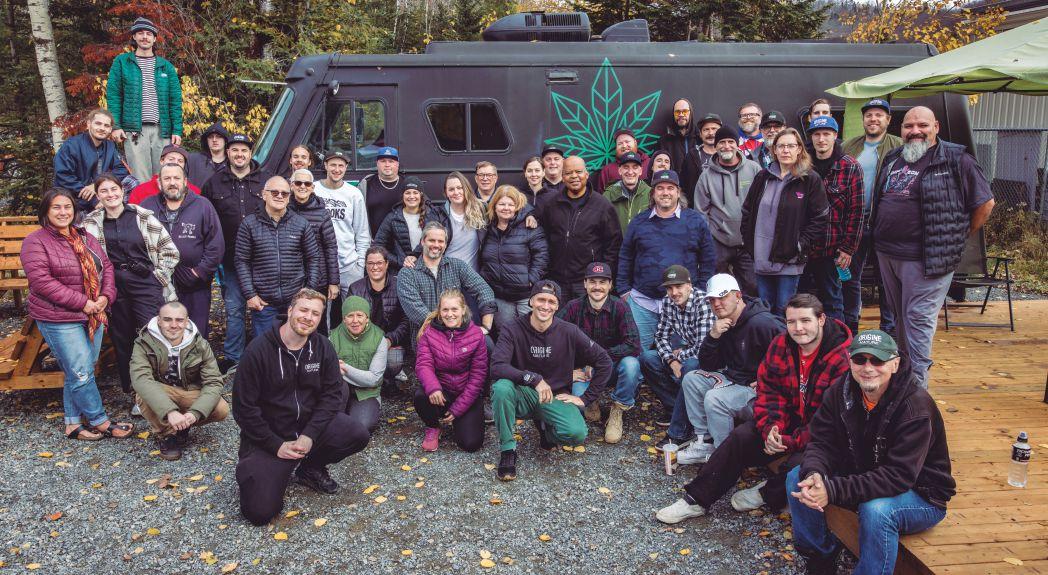
The Origine Nature team resemble family and friends first, and colleagues second.
Business Section
By Nick Sosiak AKA Niko Dank
Exploring strategic partnerships between LPs and cannabis breeders
Cannabis as an agricultural crop has a wide breadth of variability related to its bred genetics and growth environments. When controlled properly, these varieties or cultivars offer a multitude of sensorial experiences that seasoned consumers actively seek out, exploring new tastes, effects and overall experiences.
LPs may approach cannabis production using specific CPG tactics to be successful, but I believe a more critical element of success lies in cultivation and the natural properties of the plant itself.
The breadth of genetic variation encourages exploration and differentiation not found in many other industries. For this reason, I don’t believe cannabis will always be commoditized because consumers continue to seek out nuanced products to evolve their personal relationships with the plant.
For now, and the foreseeable future, genetics are key to propelling cannabis brands and businesses to the next level. However, it is not as simple as choosing any genetic (branded or not) and believing you will succeed; there are other factors to consider, like building a partnership between plant breeder and LP.
Phenohunting is long, complex & not guaranteed
The possibilities involved in breeding and genetic creation informs its complexity, where a brand’s kneejerk reaction in hopes of capitalizing off a new consumer trend or insight will not be achieved by simply planting a seed.
Take, for example, a genetic such as Runtz — currently a hot genetic on the market. When trying to cultivate a particular Runtz genetic from seed, producers will notice various expressions even within the same seed pack due to genetic variability. Producers must then plant many seeds of a single genetic to find the
right phenotype that works for them and the consumer.
The “phenohunt” — finding the right phenotype of a genetic to assure market success — is lengthy, taking over nine months to complete, and is not guaranteed. In addition to time, there are cultivation costs and the opportunity cost of using grow space for non-revenue generating crops.
Furthermore, each phenotype will require different environments to thrive, and will also express themselves differently depending on the environment. Once you’ve found one that works in your grow, maintaining consistency is key.
Since cannabis consumers differ from many CPG consumers, wanting variety and top shelf quality, LPs must continuously repeat the phenohunt process, costing more time and money, and finally, by the time you grow out and perfect your Runtz cultivar, the consumer has most likely moved on to the next hot new genetic.
Breeders & their genetics set industry trends
Cannabis is a versatile plant. Early on, I noticed pioneers in the U.S. marketplace
taking advantage of the opportunity to build their name and skillset in genetic breeding. They developed proprietary genetics and carved out their presence in the industry with a following to vouch.
As the market evolved, new cannabis cultivators entered the space and began competing, saturating the market, and forcing consumers to navigate their buying decisions based on the reputation of the breeder or brand, rather than the cultivator.
Successful breeders who partnered with experienced growers have created a significant following in the industry — setting trends and influencing purchasing behaviours. For this reason, I always urge LPs to listen closely to experienced breeders, to constantly stay on top of genetic trends and opportunities, and to invest wisely in the phenohunt process.
For the previously stated reasons, I believe it’s extremely important for licensed producers to be ahead of the curve when focusing on the cultivation and development of premium dried flower products. One way this can be done is by partnering with cannabis breeders.
Securing a licensing arrangement to use a breeder’s brand, and gain knowledge and insight into their curated genetics, can absolutely help a cannabis brand pull ahead of their competition. Partnering with a breeder can also significantly reduce the phenohunt process and cut down time spent testing to only those specific genetics proven successful through previous trial and error.
Finding a cannabis breeder that develops their genetics under similar conditions as your current grow operation will help eliminate some of the variables met by underexperienced phenohunters. And the involvement in trend setting in this dynamic industry only enables further brand, breeder and grower recognition, in addition to synergizing top talent across the market for the betterment of the industry and the gene pool at large.
Nicholas Sosiak is a chartered professional accountant. As CFO of Cannara, he is responsible for overseeing the finances, treasury and is a key decision maker in the company. Prior to working in cannabis, he practiced auditing at two of the big five accounting firms.
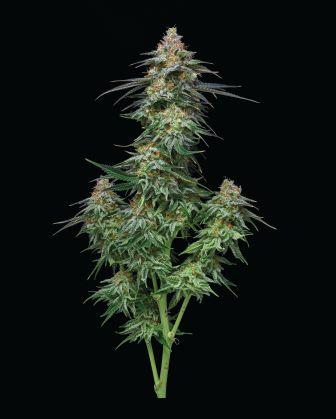
Fresh terminal bud grown by the team at Cannara.
By Mitchell Osak
What cannabis companies need to correct over the next 12 months
Is it brand Image? No. THC levels? Nope. Retail distribution? Nada.
While all are important, the one thing that matters right here, right now, is resilience. If organizations do not focus on this trait, they may not be able to weather the incoming economic storms.
I define resilience as the ability of an organization to adapt to difficult and adverse situations. These might include deteriorating economic conditions (e.g., inflation or a recession), or rare and devastating ‘Black Swan’ events such as wars, accidents, and environmental disasters. (Of note: Nassim Nicholas Taleb, the scholar who coined the term Black Swan, contends that they are increasing in their frequency and severity).
Corporate resilience consists of a number of traits including management perseverance, operational speed and flexibility, ability to change and risk pre-emption and mitigation.
Any insider let alone casual observer knows that the cannabis industry is being buffeted by a host of headwinds. These include, but are not limited to, inflation at the hands of fiscal stimulus, the Russia-Ukraine War, and Covid-triggered supply shortages that have led to the highest inflation rate in 40 years.
The overall rate increases to eight per cent annually with many major cannabis inputs
rising well into the double digits. Particularly hard hit has been energy, labour and transportation costs. In turn, high inflation has led to rapid and significant increases in interest rates, which in turn has driven up borrowing and financing costs for cannabis companies and their suppliers.
Two issues are throwing gas on the inflationary fire. First is the rapidity at which these costs have risen over the past quarter, making forecasting, procurement and budgeting very challenging. Secondly, an industry in the throes of hyper competition and overall retail price declines do not have the luxury of easily raising its prices. Even without the recent spike in costs and rates, many companies won’t have enough of a cash flow runway to weather the storm.
Unfriendly capital markets
Cannabis firms rely on external capital to fund cash flow and expansion. During the salad days, there was a lot of money flowing into this sexy industry. Now, much of that
capital is no longer available.
Three developments have led to a virtual turn-off of the capital spigots for cannabis companies:
1) Falling cannabis valuations has made it difficult to attract risk capital and execute transactions (where shares are used as currency).
2) After an unprecedented 14-year bull run, overall equity markets have substantially pulled back, resetting to more realistic levels and investment return expectations. Many investors are now seeking safe asset harbours, leading to a pullback in available risk capital. Markets are also no longer burnished by the ongoing uncertainties associated with the Russia-Ukraine War and Covid.
3) Despite hopes of liberalization, the chance for U.S. federal cannabis legalization, or even banking reform, is slight in the short term. This reality has doused the expectations of many investors who anticipated the Biden Administration to move quickly and comprehensively towards
legalization. In Germany, touted to be the largest legal adult use market when it opens, most boosters have now put aside the hype and accept that legalization won’t happen until 2024 at the earliest.
Employee gaps
Unhappy workers across every industry have been resigning in droves (the Great Resignation), spurred by Covid-induced social changes and government wage stimulus. Like other industries, the cannabis sector is challenged to attract and keep all types of labour. But unlike most other industries, cannabis must also overcome the unfair stigma of the unprofitable or dysfunctional industry to attract staff, including senior leaders. At the same time, working in cannabis is not for the faint of heart. The industry suffers from chronically low employee engagement and corporate instability.
Recession
Cannabis is regarded as a recession-proof industry; sales did increase during the pandemic. However, this assumption has never been tested during an actual recession. We really don’t know what will happen if our economy slides into a deep recession. For many recreational consumers, cannabis is a discretionary purchase. They may cut back their purchases or shift their consumption to lower cost brands. These potential shifts create a degree of revenue uncertainty and the
Mitchell Osak is the CEO of Quanta Consulting Inc. He has supported more than 210 cannabis clients around the world with their strategy, operations and capital market needs.
possibility of big inventory fluctuations and product- market misalignments.
At the risk of stating the obvious, we are living in difficult, unique, and uncertain times. Things could get even worse if possible Black Swan events like wars in the Middle East or South China Sea break out.
The way forward is by building organizational resilience and there are many ways to do this:
Become more situationally aware: You can’t adapt if you don’t see threats coming. Create early warning mechanisms and practices that include having real time financial transparency while regularly speaking with key outsiders like suppliers and customers.
Maximize human capital potential: Only motivated and well-
Cannabis is regarded as a recessionproof industry; sales did increase during the pandemic. However, this assumption has never been tested during an actual recession.
trained staff can get you through difficult times. Remove pain points that limit employee engagement. Foster a culture of continuous learning to improve your key capabilities. Cross train your staff to enhance flexibility and reduce turnover risk.
Reduce complexity: Organizational inertia is a barrier to adaptability and speed. Simplifying your product portfolios, your operational processes and practices, and organizational structure makes it easier to address problems and respond faster to threats.
Better manage your costs: Every penny counts, especially in difficult and unpredictable economic conditions. Improve your cash management by converting fixed costs into variable costs through outsourcing,
negotiation with vendors, as well as getting a better handle on discretionary spending.
Implement revenue management: Difficult to raise prices does not mean throwing away achievable revenue. Companies can maximize revenues by closing revenue leakages (e.g., unapproved discounts, free but chargeable services) and take selected product/ service price increases where your competitive position and value proposition are superior.
Pre-empt threats: Prudent companies anticipate business interruption and unforeseen problems. They will proactively diversify their supplier base, build up financial reserves and create business continuity plans for key operational and IT systems.
Q&A with Adam Clarke: Facility designer talks building flaws
While completing his engineering training, Adam Clarke began designing ice rinks with world-renowned designer, Art Sutherland. This experience fast tracked his knowledge of custom design and refrigeration work, which eventually landed him designing the drying equipment for Tilray’s dry rooms in Nanaimo, B.C. — the third legal facility built in Canada. From age 20, Clarke also learned the cultivation side of the industry and went on to synergize the two disciplines under his current company, Stratus Designs.
GO: Tell us a little about Stratus Designs and your work history. AC: Stratus is about four years old. Previously I had a consulting company I operated for eight or nine years. In 2015, when I was working for Accent Refrigeration in Victoria, B.C., we won the ASHRAE Category Five Public Assembly award, which basically means the most efficient recreation-style building in North America. This was awarded based on the ultra-efficient ammonia refrigeration design using only natural refrigerants.
GO: Are you focusing more on cannabis/hemp or other crops?
AC: I’ve begun transitioning more outside of the weed world and into food production and indoor farming. Prior to the last couple years, my focus would have been on indoor growing, which turned into more of an expertise in designing indoor extraction facilities. It seemed the growers were asking for
less assistance than in extraction, which I always thought was interesting because the extraction environment is easier to design than the growing environment. I think some of the design flaws we’re seeing now is just a lack of communication between the growers and the engineers, which ended in flawed designs and too much money invested into building.
GO: What facility design recommendations do you have for other Canadian LPs?
AC: Don’t do the job if you think the grower is telling you the wrong information. These buildings are all different, but you always fall within a certain parameter when it comes to designing — there’s only so much water they can feed the plants; only so much temperature and humidity they can handle — but I’ve found there’s never enough humidity at the beginning and there’s never enough dehumidification at the end. Often people aren’t willing to spend the money to achieve what they actually require. The biggest problem this industry has is people leaning towards commercial style solutions rather than industrial style solutions.
GO: What’s the difference between commercial and industrial style solutions?
AC: For example, the Molson brewery in Chilliwack is a new design with a low charge ammonia system and chilled water distribution throughout the entire building, which is super energy efficient and far less likely to break. Whereas the systems that have been imple -
mented, even in some of my designs, are people wanting to save money by using smaller refrigeration compressors in each air handler. That gives you more points of failure and the facility energy consumption increases because running ammonia over freons is about 18 per cent more efficient.
It’s also a lot harder to implement facility automation control with many compressors. But on a 5-million-dollar mechanical setup, you might save a million dollars; so, people did it. Then they’re spending 20-30 per cent more on utility bills the rest of the time. The environmental footprint is substantially worse using cheaper equipment but air handling companies were pumping them because they were cheaper. I think the industry missed the mark – they really needed to learn more from food, beverage and pharmaceutical design.
GO: Do you think these systems are going to fail?
AC: They’ve already started. So now between three or four years of opening, they will have spent the differential of capital between energy and replacing broken equipment. The cost of producing cannabis should be driven down by the optimization of buildings; I think people are going to start running into problems. When I go into a building without proper HVAC, I can smell the mould almost from the moment I enter the building.
GO: Are you remediating issues now or building from scratch?
AC: It’s up to them. I tell clients we’re not acting as engineers; we’re acting as representatives of the owner and facilitating communication between the client and the engineers. Some clients want us to fix their buildings, they know it won’t be cheap, but that it’s going to pay for itself in six or 12 months.
I think some of the design flaws we’re seeing now is just a lack of clarity between the growers and the engineers.
Adam Clarke CEO, Stratus Designs
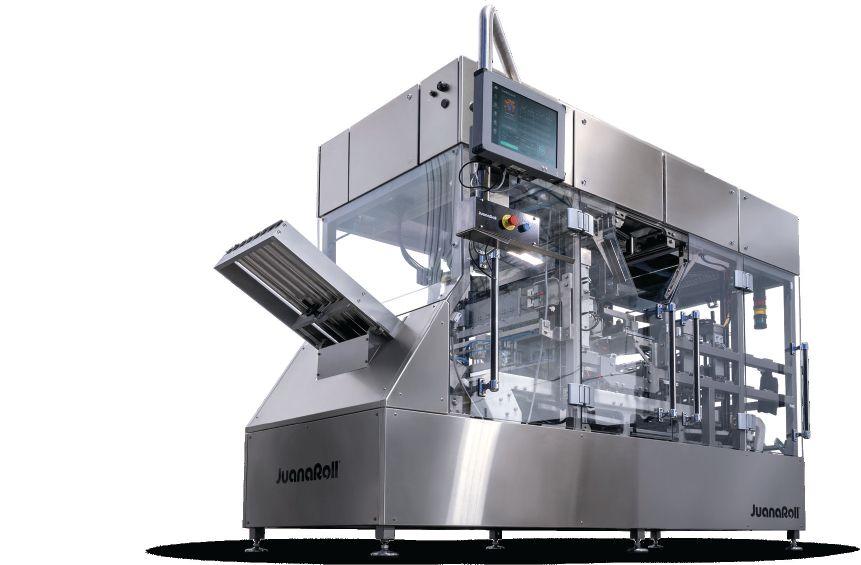
Expandable from 1 channel to 8 channels as your
1 channel up to 3,500 / shift
2 channel up to 7,000 / shift
4 channel up to 14,000 / shift
8 channel up to 28,000 / shift (3, 5, 6 & 7 channels available)