

Labor-Saving
Shim It Once and Done. SAVE
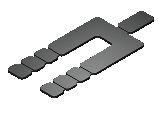
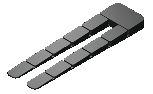
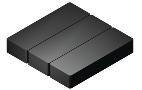
Grove Shims™ has the perfect shim for every job every time. Our 3”x 4” Horseshoe Shims are available in 9 thicknesses.

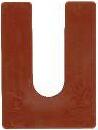

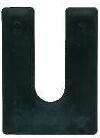





Looking for the right shim?
Grove Shims™ has the perfect shim for all your shimming needs.
With color-coded shims and solid thicknesses, the right shim can be easily applied for perfect alignment. No guesswork or realigning. Our shims save you time and money. Need help? Just ask! We’re here to help. 978-534-5188
Visit us online to see all of our available solid 3x4 Shims. www.groveshims.com Free Samples are Available Upon Request.
Grove Shims™ is the leading producer of plastic structural shims. We have been in business since 1962, making shims since 1975, our family-owned business provides prompt, personalized attention to each order. In addition to our large line of in-stock shims, we will custom fabricate parts to meet your unique requirements. Unlike many competitors, our shims are solid and do not have hollow voids, so you can depend on them in crucial, load-bearing conditions.



Certificates of Recognition showing a contractor’s adherence to a safety program are a growing part of the landscape. Here’s what you need to know.
Future-facing
We all know there’s a new world coming, but what will it look like? Francis Pomerleau, chief executive for national strategy at one of Canada’s largest construction contractors, has some ideas. Pomerleau has launched a brand initiative for Pomerleau locating the company’s focus in three key areas: collaboration, innovation and sustainability. He joined GlassTalk to share his insights with Canada’s glazing community, and weigh in on some of the big issues we’re all discussing.
Canada Premium Sand is working hard to bring back float glass manufacturing to Canada.
The right endmill can make all the difference in aluminum machining.


Humanity wins
EDITORIAL
On June 6, a very bad person drove his truck into a family out for a walk in London, Ont., killing four of them and leaving a nine-year-old boy orphaned and fighting for his life in hospital. A man has been arrested and charged with murder and terrorism. Police are confident his motive was hatred of Muslims.
This one struck rather close to home, as I’ve spent most of my life in London and live and work here now. Our whole family followed the story closely and watched at least parts of the heart-wrenching vigil and memorial service broadcasts. We made our donations to the support of the boy, Fayez Afzaal. The attack has sparked a lot of conversation with my daughters, both of whom have Muslim friends. When I heard about the attack, the first thing I thought of was how common it is in this city to see women in hijab and their families out for walks, together, as a family. Much more common than seeing families who are not identifiably Muslim. I think it speaks to the strength and importance of the family bond in that community, which is pretty nice to see in this era where tearing your teenager away from the smartphone is like pulling teeth. I sincerely hope this incident doesn’t in any way discourage them from continuing to go for their walks.
GLASS CANADA
August 2021
Volume 33 • Number 4
Annex Business Media
P.O. Box 530, Simcoe, Ontario N3Y 4N5
READER SERVICE
Print and digital subscription inquiries or changes, please contact
Shawn Arul, Audience Development Manager
Tel: 416.510.5181
Fax: 416.510.6875
Email: sarul@annexbusinessmedia.com
Mail: 111 Gordon Baker Rd., Suite 400, Toronto, ON M2H 3R1
EDITOR | Patrick FLANNERY pflannery@annexbusinessmedia.com 226.931.0545
ASSOCIATE EDITOR | Sukanya RAY GHOSH srayghosh@annexbusinessmedia.com 647.203.7031
PUBLISHER | Danielle LABRIE dlabrie@annexbusinessmedia.com 519.429.5187
ACCOUNT COORDINATOR | Barb COMER bcomer@annexbusinessmedia.com 519.429.5171
MEDIA DESIGNER | Curtis MARTIN
NEXT ISSUE
Since the magnitude of the tragedy for the family and London’s Muslim community is beyond description, I won’t try to describe it. Instead, I’ll describe the reaction and response, because there may be lessons there for all of us when faced with terrible events in life and work.
• Passive construction
• Metalworking
The outpouring of grief over the event has been unlike anything I’ve ever seen in the city. There was a huge pile of flowers at the intersection where it happened, even though I suspect some were regularly taken away. The crowd at the vigil was huge – thousands. The leaders of every national party were on hand, as well as Ontario premier, Doug Ford and the mayor. The London Free Press contained little else for days, and the attack got nightly coverage in the national news.
My first takeaway from this incident is that tragedy, no matter how horrific, can be mitigated simply by giving people a chance to come together and express their feelings about it. It often brings out the best in people, and avoiding the negative and the difficult usually creates more problems than it solves.
The second is that the attack was the senseless act of one person. But the reaction has exposed what lies in the hearts of most people. By and large, people are not racist monsters who want to hurt others. Canadians of all stripes can see the fundamental humanity of a family out for a walk, whatever their cultural differences. Much has been made of the bigotry that still exists in society that might have inspired this attacker and his predecessors. However much of it there is, and however pervasive it is, it is as nothing compared to the goodwill and decency of the overwhelming majority of people. There is certainly racism in Canada, but Canada is not a racist country.
As business leaders, I think we should acknowledge and celebrate this fact in our corporate culture. I haven’t seen a workplace yet in Canada that isn’t a hodgepodge of colours and accents and ethnicities and backgrounds. None of this is to say that challenges don’t remain. But we can point to the huge crowds at the London vigil, and the diverse faces in our offices, and say “This is who we are. Not the other thing.” •
VP SALES/GROUP PUBLISHER | Martin McANULTY mmcanulty@annexbusinessmedia.com
COO | Scott JAMIESON sjamieson@annexbusinessmedia.com
SUBSCRIPTION RATES
Canada - 1 Year $37.00 (plus tax) U.S.A. - 1 Year $85.00 (in CDN dollars)
Publication Mail Agreement #40065710 Printed in Canada ISSN 0843-7041
Occasionally, Glass Canada will mail information on behalf of industry-related groups whose products and services we believe may be of interest to you. If you prefer not to receive this information, please contact our circulation department in any of the four ways listed above.
Annex Privacy Officer privacy@annexbusinessmedia.com Tel: 800-668-2374
No part of the editorial content of this publication may be reprinted without the publisher’s written permission. ©2021 Annex Business Media. All rights reserved. Opinions expressed in this magazine are not necessarily those of the editor or the publisher. No liability is assumed for errors or omissions. All advertising is subject to the publisher’s approval. Such approval does not imply any endorsement of the products or services advertised. Publisher reserves the right to refuse advertising that does not meet the standards of the publication.
www.glasscanadamag.com

GLASS HAS A NEW DAY JOB

Generate clean energy. Replace building envelope materials. Give glass something new to do. Produce CO2-free power. Customize aesthetics and performance with any Vitro Glass product. Potentially replace typical building enclosure and exterior elements. Next-generation, energy-efficient design is inevitable with new Solarvolt™ BIPV modules by Vitro Architectural Glass.
For more information, contact an architectural representative. Find yours at vitrosolarvolt.com.
NEWS

AGC to sell North American architectural glass business to Cardinal
AGC has announced it will sell its North American architectural glass business to Cardinal Glass Industries for approximately $450 million. The deal was expected to close in July at the earliest. AGC began architectural glass business in North America in 1988, as it made capital participation in AFG Industries (now AGC Flat Glass North America). Since then, AGC has supplied various energy-saving and high-performance glass products for over 30 years. AGC noted in its statement: “AGC has strived for improvements of the profitability and asset efficiency of its architectural glass business which have been designated as one of theAGC Group’s prior-
ity issues.Regarding the operations of the architectural glass business in NorthAmerica, AGC has concluded that it will create further growth opportunities by transferring it to Cardinal Glass Industries, which has business trading experience withAGC in the past and is expected to make the most effective use of AGC’s assets and personnel.”
The transaction includes three U.S. glass production facilities: a float glass furnace in Spring Hill, K.C., a float glass and coater facility in Greenland, Tenn. and a coater plant in Abingdon, Va. Cardinal is headquartered in Eden Prairie, Minn., and has over 40 locations across the America.
Canadian Premium Sand closes stock offering
Canadian Premium Sand has announced that, due to investor interest, it has closed an upsized, nonbrokered private placement. Pursuant to the offering, the company issued an aggregate of 20,799,200 common shares at a price of $0.25 per common share for gross proceeds of $5,199,800. After giving effect to the offering, the company will have 42,043,660 common shares issued and outstanding. The corporation’s two significant shareholders and certain directors and officers participated in the offering. On a combined basis they subscribed for an aggregate of 8,330,700 common shares for $2,082,675. The net proceeds of the offering will be used to fund the initial phase of the frontend engineering and design for a glass manufacturing facility in the greater Winnipeg area, initiate permitting applications and other key activities to progress the business plan, as well as for general working capital purposes. The company is evaluating the potential for sustainable manufacturing of high-clarity flat glass through a company-owned facility in the greater Winnipeg area that utilizes the high-quality silica sand from its wholly-owned Wanipigow silica sand deposit.
CANADA’S GLASS ASSOCIATIONS
AVFQ
Aftertwo years of absence, the Omnium AVFQ is back on Sept. 9, 2021, at the magnificent Le Blainvillier Golf Course, near Montreal. Our 288 golfers are enthusiastic to meet up as are the many sponsors. Let’s hope that the sanitization rules in effect at that time will not hinder the dinner with 350 attendees.
It’s also time to book Feb. 10 and 11, 2022, for the AVFQ’s annual conference at the spectacular Chateau Frontenac in Quebec City. The program and registration will be available in early September at avfq.ca. The Prix Lumieres Gala will be back to reward the most beautiful projects in the industry. It will also be an opportunity to launch the AVFQ’s 60th anniversary celebrations.
The labour shortage continues to trouble Quebec, hitting door and window manufacturers as well as the glaziers. The AVFQ supports its members in this issue through various communications and government representations. Combined with the unavailability of certain materials and the increase in their prices, the challenges are major for managers despite an economy that is running at full speed.
In collaboration with the Fenestration and Glazing Industry Alliance and the Fenestration Association of British Columbia, AVFQ is working with other associations related to our industry to develop an educational piece on the two compliance thermal performance pathways for fenestration products in Canada. The target audiences for this publication are homeowners, builders, architects and other
specifying authorities, building code officials and even the fenestration industry itself. There is a lot of misinformation surrounding the U-factor and ER path and this publication is being developed to address this misinformation and market confusion about what each pathway represents and when it is appropriate to use one or the other. The work is well advanced.
AVFQ has collaborated with Transition Energetique Quebec as part of the re-evaluation of the Novoclimat program. This program encourages the construction of new homes with high energy performance, according to specific construction requirements. It targets houses, small residential buildings and large residential buildings with four to 10 floors. For the part of the program dedicated to large buildings, discussions with TEQ will allow more types of windows to qualify and thus increase the use of energyefficient products at a reasonable cost.
Architectural Glass and Metal Contractors Association
AsOntario slowly begins to re-open, our unwavering member glazing contractors are ready to respond.
They have truly stepped up and outperformed to combat the spread of the virus on their jobsites and in their shops. AGMCA members have always placed health and safety as priority number one and this has led to some impressive numbers. Workplace transmission of COVID from construction sites accounts for just 0.065 percent
of the total number of reported cases.
But combating the virus has come at a significant cost to our glazing contractors. The industry is highly competitive, projects are won to a significant degree on the lowest bid and profit margins are thin. It’s been tough sledding over the past 18 months. Our members have embraced the stringent but necessary health and safety protocols, absorbed the increased costs of PPE and workplace sanitation and accepted reduced worker productivity caused by the necessary health and safety measures. Some sites have reported that with elevator restrictions it takes up to an hour just to get glaziers to the floor they are working on. If your site has on-site testing, count on losing at least a half hour per man. Our members are also faced with expensive de-mobilization and re-mobilization costs as the industry and specific sites rotate in and out of shutdown. Rental equipment costs escalated as delays continued. Other issues being faced are delay claims for not meeting contract schedules, along with large price increases on glass and aluminum products. The supply chain issues continue to add another roadblock to productivity. None of this could have been anticipated when our members entered into their contracts at the outset of the pandemic. It certainly has been a long journey,and coming out healthy on the other side has been goal number one. Unlike the Maple Leafs (sadly), our glazing contractors have gone hard into the corners and gutted this thing out.
Ontario’s unionized glazing
contractors stand ready to do their part to rebuild the economy once this virus has been defeated. We will be called upon to build out new and expanded manufacturing facilities and transportation infrastructure and to adapt office workplaces to the postpandemic way of working.
The good news is that at the time of this writing second doses of vaccines have started to be administered. Case counts have dropped. Patios have reopened and things are starting to look up for our battle-tested members.
Ontario Glass and Metal Association
Tentative plans are in place to hold our fall golf tournament on Wednesday, Sept. 22, 2021, at the Hidden Lake Golf Club. If COVID-19 restrictions have been lifted by early August and we are able to facilitate an indoor dinner we will be proceeding and members can expect to receive a flyer in their inbox by mid-August. If we are unable to host a dinner we will postpone our golf outing until the spring of 2022.
Mark Thursday June 2, 2022, in your calendar now so you have our spring golf tournament at Pipers Heath Golf Club to look forward to over the winter and so that you do not make any plans that could conflict with this most important event.
We are hopeful to be able to hold our fall seminar in early November this year. More news will follow as COVID-19 restrictions are relaxed.
New recruiting network for manufacturing
Anew recruiting network has been launched targeted specifically at Canada’s diverse manufacturing sector. ManufacturingJobsite.ca has been launched by business media leader Annex Business Media, publishers of Glass Canada, along with 19 other leading manufacturing media brands. Annex partnered with recruiting professionals NetHire, experts in online recruiting and candidate management, to launch and run the site.
The service and career opportunities are being promoted across all 20 of Annex’s manufacturing media brands, in print, web, email, and social, including Glass Canada and Fenestration Review. That offers a combined reach to a very specialized and targeted audience, including over 185,000 qualified monthly website visitors; over 135,000 industry emails using Canada’s
largest CASL-compliant list; and social media promotion across all brands and all networks. In addition, the service and its jobs will be promoted via NetHire’s network of specialized job boards.
“The partnership leans on the strengths of both companies,” explains Annex COO, Scott Jamieson. “Annex brings exclusive and unparalleled reach into almost every corner of Canada’s massive manufacturing sector through our omni-channel brand networks. We’re very excited about this network’s ability to help our audiences simplify their recruiting challenges.”
Glass industry managers can post job openings for a fee by creating an account at manufacturingjobsite.ca.
Alumicor’s Steve Gusterson elected to CSC College of Fellows Glaston Innovation Days premiers

Construction Specifications Canada has elected Alumicor‘s Steve Gusterson to the College of Fellows. On May 4, he was honoured for his outstanding achievements and inducted into the prestigious Fellowship. According to CSC, “Fellowship is an honour conferred on members singled out for their dedication, service and long-standing contribution towards the betterment of the design and construction community.” The College of Fellows acts as a resource for the organization’s executive council and board of directors, and provides input and guidance in the direction and operations of the association. For more than 40 years, architects, contractors and installers have turned to Gusterson for support with their architectural aluminum product selections and specifications. He has held numerous roles in his many years with Alumicor and currently serves as the company’s vice-president of sales for the central region. Based in Toronto, he works most closely with design teams and customers located in Ontario, helping them with their commercial building projects.
“There’s nothing more rewarding than working with a design team; being a part of the conversations that help them realize their sometimes challenging goals,” said Gusterson. “From schematic design through construction documentation and the final build, it’s incredible to see or to visit the final result knowing that you played a part, albeit very small, in its creation.”
Throughout his career, Gusterson has remained an active member of CSC. During more than two decades of involvement, he has volunteered on numerous CSC committees and has served as the Toronto Chapter‘s chair and director. He is a certified technical representative and is the instructor of the CTR coursework for the Toronto Chapter. CSC twice recognized his leadership with a Chapter Award of Merit and presented him with a Programme Director’s Award for his contributions to the education program. In addition to making “a significant and conspicuous contribution to CSC,” candidates for fellowship must maintain continuous membership for at least 10 years. Nominations must be received by at least seven people, including a minimum of three Fellows and representatives of three or more chapters. Gusterson’s nomination exceeded all requirements. Gusterson helped write the book on glazing system specifications. He assisted with the creation of the Ontario version of the “British Columbia Glazing Systems Specifications Manual,” which became the basis of the 2010 national version that is still referenced today. His dedication to industry education and professional development also extends to the Ontario Glass and Metal Association, where he served on the board of directors and its awards committee. Supporting the educational advancement of the industry beyond CSC and OGMA, Gusterson has been a contributing external member of the Architectural Technology and School of Science and Engineering Technology Program Advisory Committee for Durham College since 2017.
Glaston recently organized its firstever Glaston Innovation Days, a virtual customer event on the latest innovations and trends in architectural, automotive and display glass processing. Several hundreds of Glaston’s current and potential customers from all over the world registered for the total of six sessions in which Glaston’s product and industry experts shared their insights on the latest developments in glass processing technologies. Hosted from a production hall at Glaston’s premises in Neuhausen-Hamberg, Germany, two live stream sessions were run daily: one on the latest developments in architectural glass and the other focusing on the latest news from Glaston’s automotive and display glass technologies. In the architectural glass session, the digitalization of the flat tempering process was demonstrated with the latest innovations such as online fragmentation prediction for every glass and white haze detection using Artificial Intelligence (AI). In addition, integrated lines and a tempering process autopilot were introduced. The autopilot reduces the operator’s influence and offers process control without parameters. A higher degree of automation is also on the agenda for the laminating process and, with the autopilot, the furnace will learn to achieve the most optimal way of running instead of operators having to do adjustments manually.
Ontario College of Trades replaced by
Skilled Trades Ontario
The Ontario government has passed Bill 288, which replaces the Ontario College of Trades with a new Crown agency called Skilled Trades Ontario. The new agency is designed to consolidate training and certification of apprentices and certified tradespeople under one organization while leaving enforcement of compulsory trades to the Ministry of Labour, Training and Skills Development. The Ministry press release stated:
Under the proposed legislation, Skilled Trades Ontario would become the province’s industry-informed training authority to lead the promotion, research and development of the latest apprenticeship training and curriculum standards. It will also provide a seamless one-window experience for client-facing services – including apprentice registration, issuance of certificates and renewals and conducting equivalency assessments – all in one place with many services offered digitally. As recommended by the Skilled Trades Panel’s first report, Ontario will streamline and simplify the apprenticeship system by establishing a new Crown agency. The Ministry will provide system oversight and be responsible for regulatory decisions, financial supports and take on responsibility for compliance and enforcement of the skilled trades, building on existing expertise, best practices and a robust inspector network that is already in place across the province.
FGIA releases new technical manual for IG units
The Fenestration and Glazing Industry Alliance has released a new technical manual providing generic design considerations for cavity compensation for insulating glass units and determining conditions which impact the pressure in the IG unit cavity. IGMA TM 3200-21, “Design Considerations for IG Unit Cavity Pressure Compensation,” is FGIA’s newest technical manual.
“The TM-3200 document is helpful for anyone who is interested in or involved with the installation of IGUs at an elevation that differs from the elevation at which they were built,” said Dan Haglin (FDR Design), chair of the FGIA design considerations for IG cavity compensation task group. “The committee has done an excellent job listing and explaining the different ways that are known for altering the internal cavity pressure in an IGU. Thanks to all who were involved in making this comprehensive and thorough document.”
Insulating glass units are dynamic assemblies in which the cavity can change dimensionally based on environmental factors (temperature and barometric pressure), dynamic load factors (wind load) and location (elevation). Since the cavity of a standard IG unit contains air, a fill gas or a mixture, the pressure and volume within the cavity are subject to these factors. As the IG unit temperature increases, or the elevation is higher than point of manufacture, or the barometric pressure drops, the volume of gas inside the IG unit increases relative to its original volume, causing outward deflection of the glass panes. Similarly, if the temperature decreases, or the elevation is lower than point of manufacture, or the barometric pressure rises, the volume of gas inside the IG unit decreases relative to the conditions external to the IG unit, causing inward deflection of the glass panes. The amount of deflection is dependent upon the IG unit dimensional geometry, glass thickness, edge seal design and materials, glazing or framing design and materials and other factors. IGMA TM-3200-21, as well as other IGMA documents available from FGIA, may be purchased from the online store at the discounted member rate of $125 or the non-member price of $250.
Conestoga to develop showcase facility for trades education
Local politicians, industry partners and friends of Conestoga College in Cambridge, Ont., joined college employees at a special event las fall where president John Tibbits announced the development of a new Skilled Trades Training campus to be developed in Cambridge. The college has completed the purchase of a 250,000-square-foot facility at 25 Reuter Drive, in the heart of Cambridge Business Park, with visibility and proximity to Highway 401. Originally constructed in 2003 with substantial renovations completed in 2009, the facility includes upgraded office and manufacturing areas ideally suited to unique requirements of trades education and training. The land parcel of 41.2 acres provides future expansion opportunities.
“I am tremendously pleased to announce that Conestoga is now working on the development of a premier, comprehensive Skilled Trades Campus in Cambridge that will play a key role in addressing workforce needs here in our community and across Ontario,” Tibbits said. “This new, state-of-the-art facility will be instrumental in our efforts to deliver an outstanding learning experience and attract more students to trades-based careers.”
Planning for the campus is now underway, with the facility expected to open by September 2021. According to Ray Tanguay, retired president and CEO of Toyota Motor Manufacturing Canada and a member of Conestoga’s board of governors, training more individuals for skilled trades careers is essential for business. For more than 10 years, skilled trades positions have consistently ranked as the most difficult roles to fill, both locally and across the country. In 2017, the Ontario Skilled Trades Alliance reported that up to 41 percent of its members would hire more employees if they could find people with the right skills. According to BuildForce Canada, the construction sector in Ontario alone will require 104,000 new construction and maintenance workers by 2028. The provincial government predicts that one in five new jobs in Ontario over the next five years will be in trades-related occupations. Attracting new entrants into trades education and training programs is an essential first step towards addressing Ontario’s skilled trades talent shortage.

by
The many facets of curtainwall construction
Curtainwall design, fabrication and installation is many-faceted – an echo of the many options it offers for creative expression. Glass and metal curtain walls are highly engineered and built to close tolerances. The result is a gridwork of lightweight metal, assembled either from individual pieces in the field or as part of factory-preassembled panels and fitted with some combination of transparent and opaque infill panels. Installation requires the placement of these precision-built parts on a skeleton built to much greater dimensional tolerances, involving the work of numerous trades. Thus, proper and timely communication among the members of the project team – architect, specifier, wall manufacturer, general contractor, installation contractor and the glazier – is essential for a successful installation. There are generally five matters of chief concern for the design and erection of metal curtainwall.
Structural integrity and wind loading: A curtain wall must withstand wind loads, transferring them through anchoring devices to the floor or columnar elements of the building framework. Appropriate design wind loads for most situations are determined from ASCE/SEI 7, “Minimum Design Loads for Buildings and Other Structures,” or, in Canada, the National Building Code of Canada. Special requirements for snow or ice loads on projecting wall elements are often applicable. In Canada, aluminum work should be according to CAN/CSA S157, with deflection under loads limited to the industry consensus maximum of L/175 of an unsupported span length (L) of up to 4.115 metres, or, for longer spans, a maximum of L/240 plus 6.35 millimetres. Glass design should be according to CAN/CGSB-12.20.
“Proper and timely communication among project team members is essential for successful curtain wall installation.”
Provision for movement: Seasonal heating can induce thermal expansion of the aluminum framing members that is roughly twice that of contiguous sheets of glass. This relative movement must be accommodated without causing undue stress on the glass, joints and anchors, or without excessively reducing the frame’s “bite” on the glass.
Weather-tightness: Weather-tightness means protection against both water leakage and excessive air infiltration. Two methods have been developed for preventing leakage through the wall. One simply provides for minor leakage to be drained to the outside. The more sophisticated pressure equalization method, based on the rainscreen principle tends to be preferred in Canada. Industry recommendations limit air infiltration through the wall to 0.3 litres per second per meter squared of fixed wall area when tested at an air pressure difference of 75 Pascales.
Energy Efficiency: Although aluminum framing has inherently low resistance to heat flow, improved thermal performance is usually achieved by using high-performance insulating glass. In Canada, energy performance targets are determined according to the National Energy Code for Buildings, or ASHRAE 90.1 criteria. The glass area of the curtain wall must have an overall maximum thermal transmittance U-factor stipulated by applicable codes based on project location. The resistance of curtainwall framing to condensation is particularly important in a cold climate. In Canada, using the test and calculation method defined in CSA-A440.2 yields the Temperature Index (I).
Sound control: Using laminated insulating glass, in addition to minimizing air infiltration, generally improves sound attenuation, which is of particular interest near airports and in metro areas.
Most of these concerns are addressed by several industry-consensus guide manuals, which offer recommended tolerances, model specifications and testing methods for confirming design performance levels. In North America, the comprehensive resource is the AAMA CWM-19, Curtain Wall Manual, which covers various aspects of curtain wall design, specification, testing, and installation, as well as the typical responsibilities of all players in the design-through-installation sequence. Other publications specific to the Canadian market reference traditional Canadian versus international standards for specific materials and testing. •
FGIA
FGIA director of Canadian and technical glass operations
AMY ROBERTS

FGIA Hybrid Fall Conference - October 18-21
Blended experience - virtual and in-person
Sheraton Grand at Wild Horse Pass, Phoenix, AZ
Registration open now at FGIAonline.org/events. Early bird discount ends Sept. 24.
Whether you are ready to meet in person again or prefer to gain invaluable insights to grow your business from the comfort of your office, our inaugural hybrid conference offers two distinct, but blended experiences: in-person and virtual. Separate schedules will integrate live sessions from the in-person event with virtual participation.
The in-person experience will feature unique opportunities and hands-on sessions.
� The virtual segment will accommodate various time zones and offer engaging networking opportunities.
SAFETY CERTIFIED

COR requirements are coming to a bid process near you. Be ready.
by TREENA HEIN
Again this year in Canada, adoption of the Certificate of Recognition safety program is growing in the glazing sector, especially in Ontario – not just for its many benefits but because it’s becoming a standard expectation across the construction industry.
COR is now frequently used as a pre-qualifying and/or condition of contract by both public and private project owners across Canada. Therefore, to ensure successful bids, contractors increasingly only want to work with subcontractors that are also COR-certified. In addition, having everyone on the job site COR-certified ensures that all health and safety activities are aligned.
COR started in Alberta over 20 years ago and has grown substantially in western Canada, but demand is catching up in Ontario and the rest of Canada. According to Jeffrey Makimoto, plant and quality manager at TAGG Industries and a National Construction Safety Officer, the question of whether parties are COR-certified does come up on estimates.
For her part, Sobi Ragunathan, an external COR auditor for the Infrastructure Health and Safety Association (which administers COR in Ontario) at 4S Consulting Services in Markham, Ont., notes that there is a huge demand for COR certification across Ontario. She says many municipal infrastructure projects require COR certification or ISO 45001 registration for bidding. “It began with the city of Toronto,” she notes, “and has expanded from there.”
But in B.C., COR participation has also increased substantially in recent years, almost doubling since 2010, notes Vernita Hsu, director of COR and Injury Management at the BC Construction Safety Alliance. “Our sense at the BCCSA,” says Hsu, “is that COR demand will continue to grow, particularly because the program has been empirically proven to reduce injuries. There is no other system that can claim that.”
COR is overseen by the Canadian Federation of Construction Safety Associations

but implemented by provincial agencies such as BCCSA. The BCCSA also serves as the current contact for CFCSA and COR inquiries.
COR 101
COR is an accreditation program that verifies companies are meeting national occupational health and safety standards. While the bulk of COR firms are in construction, the standard is also used by other business sectors in some western Canadian provinces.
COR aims to provide employers with an effective safety and health management system to reduce safety incidents, accidents and injuries as well as their associated human and financial costs. Its effectiveness at lowering injury rates has been proven though recent independent impact evaluations in B.C., Alberta and Saskatchewan conducted by researchers at the University of British Columbia School of Population and Public Health in collaboration with BCCSA and WorkSafeBC (see the CFCSA website for the research briefs).
To achieve COR certification, companies demonstrate many aspects of workplace health and safety, culminating in an external audit, including policies and procedures, training, hazard assessment, emergency response and incident investigation. Companies must train their own internal auditors to ensure compliance between external audits (generally every three years).
A range of benefits
The benefits of COR certification are many, including lower annual insurance premiums. In Alberta, for example, COR qualifies employers for Workers Compensation Board premium refunds of up to 20 percent. In B.C., Hsu notes that besides the
Companies without recognized safety programs can find themselves on the outside looking in when it comes to larger bids, especially for municipal projects. That’s the stick; the carrot is the potential for lower insurance and Workers Compensation premiums along with fewer jobsite injuries.
annual 10 percent savings from WorkSafeBC for OHS COR certification, “over time, with lower injury rates and lower claim costs, insurance premiums will reflect additional savings.”
In Ontario, COR is being migrated to COR 2020 to help workplaces qualify for financial rewards and recognition from the Ministry of Labour, Training and Skills Development and the Workplace Safety and Insurance Board. COR2020 has a new format and the audit tool has a reduced number of elements.
Hsu also stresses that COR-certified firms generally achieve more success with worker recruitment. “In an increasingly competitive labour market where workers have more options for employment, they will choose to work for companies who have their best interests at heart,” she explains. “If you have the option of working for an employer that has a system in place that will ensure you have a close-to-20-percent-better chance of avoiding injury and, more importantly, serious injury, all things being equal, the choice becomes obvious.”
COR is also a practical way of demonstrating to the public that a company takes safety seriously, adds Hsu. “COR certification makes a strong statement about a company’s commitment to protecting the well-being of workers and maintaining a culture of safety on jobsites,” she says. “Having a third-party audited system shows the world that someone beyond the company thinks your safety system is good.”
Timeline and costs
The length of time required to achieve COR certification depends on the status of a company’s existing occupational health and safety management system when it starts the process. That is, with B.C. as an example, companies that achieve certification must have sufficient evidence to demonstrate the development and implementation of a function-
PHOTO CREDIT: ©
Ikonoklast_Fotografie / Getty Images
COVERSTORY

In order to receive their COR certification, companies have to demonstrate several aspects of workplace health and safety and also participate in an external audit that verifies its policies and procedures, training, hazard assessment, emergency response and incident investigation.
ing system that meets the elements in BCCSA’s OHS COR National Audit Document – and while some companies already have systems in place that meet all the requirements, others will need to augment what they have or develop other aspects of their system from scratch. However, many resources are available to assist companies through the process.
Cost of certification will vary depending on existing systems and also the
size and complexity of operations. “This being said, in most cases the program pays for itself over time with the annual insurance rebates,” adds Hsu. “In addition, our subjective sense is that once a company adopts COR, it helps to increase productivity and also improves other business processes such as procurement and HR. Companies see the benefits of a formal documented system, continuous improvement through the plan-do-check-act cycle, and so on, and
Provincial organizations that offer COR certification related to construction
COR certification is granted by various authorities in each province/territory. A straightforward process is available to companies that have achieved COR and would like to request equivalency in another jurisdiction. See the program overview at cfcsa.ca/cor.php
B.C. - BC Construction Safety Alliance (bccsa.ca/COR)
Two COR programs offered depending on company size.
Alberta – Alberta Construction Safety Association (youracsa.ca/cor-secor) offers COR and SECOR (Small Employer COR).
Saskatchewan – Saskatchewan Construction Safety Association (scsaonline.ca/programs/cor) and the Heavy Construction Safety Association of Saskatchewan (hcsas.sk.ca/programs-courses)
apply them to other areas of operation.”
When asked about the extent of COR certification among members of the Ontario Glass and Metal Association (of which TAGG is a member and which also encompasses the Architectural Glass and Metal Contractors Association), Makimoto isn’t sure. He knows that they include TAGG, Flynn and OBC. But looking forward, he believes “there will be a time in the future where all sub-contractors on all sites will need to be COR-certified to work.” •
Manitoba – Manitoba Heavy Construction Association (mhcaworksafely.ca/cor-program) and Construction Safety Association of Manitoba (constructionsafety.ca/cor-program)
Ontario – Infrastructure, Health and Safety Association (ihsa.ca/cor-home)
Quebec – ASP Construction (asp-construction.org)
Newfoundland and Labrador – Newfoundland and Labrador Construction Safety Association (nlcsa.com/cor)
New Brunswick – New Brunswick Construction Safety Association (nbcsa.ca/programs/cor)
Nova Scotia – Construction Safety Nova Scotia (constructionsafetyns.ca/cor)
PHOTO CREDIT: © Alex Potemkin / Getty Images


by DAVID HESKA
David Heska, P.Eng. is a director with WSP’s building sciences team in southwestern Ontario. He oversees the operation of the Hamilton, Kitchener and Windsor offices. David has been involved on window simulation projects as well as the design and replacement of windows. He can be reached at David. Heska@wsp.com.
All wet
Shopping malls have re-opened and back-to-school shopping will be here before you know it. Retail employees have returned to their once-vacated stores and there have been a few surprises for some. A month ago, I got a call from a client asking for help investigating why water was coming into the back storage room of their paint store. Both front and rear elevations of this small building have beautiful storefront window systems installed in 2013. Now, eight years later, the baseboard trim and drywall is damaged, not to mention the other products that had been in the area that were completely saturated.
I’ll jump to my findings. Both the front and rear aluminum storefront double doors were not rated to withstand water penetration during high wind-driven rain events. These doors were only designed to provide limited air and water leakage resistance and the rear elevation especially is exposed and highly susceptible to wind-driven precipitation. Six-millimeter-wide joints were measured around the head and jambs of the doors, and when we water-tested the doors the hinges leaked instantly. There is also a 12-millimeter opening at the bottom threshold. Even though it is somewhat protected with exterior weather-stripping, water penetration under the door was still visible.
In addition to the door deficiencies I also observed that the surrounding aluminum curtainwall assembly was designed to be a drained system. Water that entered the system is intended to drain out through holes in the pressure plates and cover caps. These holes also allow for pressure equalization within the assembly, preventing additional leakage. Unfortunately, in this case, the
“When it’s raining inside your building, you know something is wrong.”
THE ENGINEER
bottom joint was completely sealed with a continuous bead of sealant covering the drainage holes and trapping moisture within the assembly.
The client has chosen the cheaper repair instead of fully replacing the door and has installed a new aluminum threshold with an upturn and interior weather-stripping. They have also installed an aluminum extruded rain drip at the head of the door, a continuous aluminum geared hinge and neoprene weather-stripping at the door head and jambs.
When it’s raining inside your building you know something is wrong. So I ask, who made the mistake in this instance? There’s lots of blame to go around. The designer who selected an unsuitable storefront door system bears some responsibility. The supplier and installer who knowingly allowed their unsuitable product to be installed in a configuration that was very likely to leak are also partially to blame in my mind. It was Benjamin Franklin who once said, “Beware of little expenses. A small leak will sink a great ship.” He also said, “An ounce of prevention is worth a pound of cure.” Let’s work together for more prevention and less leaks!
The relevant standard for air/water penetration in these situations is the Canadian Supplement to the North American Fenestration Standard, AAMA/WDMA/CSA 101/1.5.2/A440-17. The standard calls for testing for four basic kinds of water penetration: between the frame of the assembly and the surrounding wall; between the frame, glazing, operable elements and any adjoining windows and doors; penetration into the assembly allowing accumulation inside; and leaks from the frame into the construction below. In the Toronto area, assemblies need to be able to withstand 150 Pascals of driving wind pressure without leaking, and there was no way the product I described above was going to be able to do that. A simple reference to the standard might have prevented a lot of heartburn. NAFS also mentions that the only way to address the first problem (leakage between the frame and the surrounding wall) is through proper installation methods outlined in CSA A440.4. I might also suggest that using a certified installation professional, like someone who has passed the Architectural Glass and Metal Technician course, for instance, could go a long way toward avoiding mistakes of the kind we found here. •
On May 13th, Annex Business Media’s Manufacturing Group teamed up to host Women in Manufacturing, a one-day virtual summit that brought together industry experts and thought leaders to promote gender equity, diversity and inclusion in Canadian manufacturing. Visit womenincanadianmanufacturing.com to view on-demand content.
THANK YOU TO OUR SPONSORS PLATINUM SPONSOR







Coming back to Canada?
A proposed float glass plant in Manitoba could curb some supply chain issues.
Canada Premium Sand is in an advantageous position to begin float glass manufacturing as it already owns a high purity silica deposit.

Manufacturing of float glass may be coming back to Canada, and it’s about time.
Canadian Premium Sand is looking to build a float glass manufacturing facility in Winnipeg, which would mark the first time Canada had a plant of this kind in more than a decade.
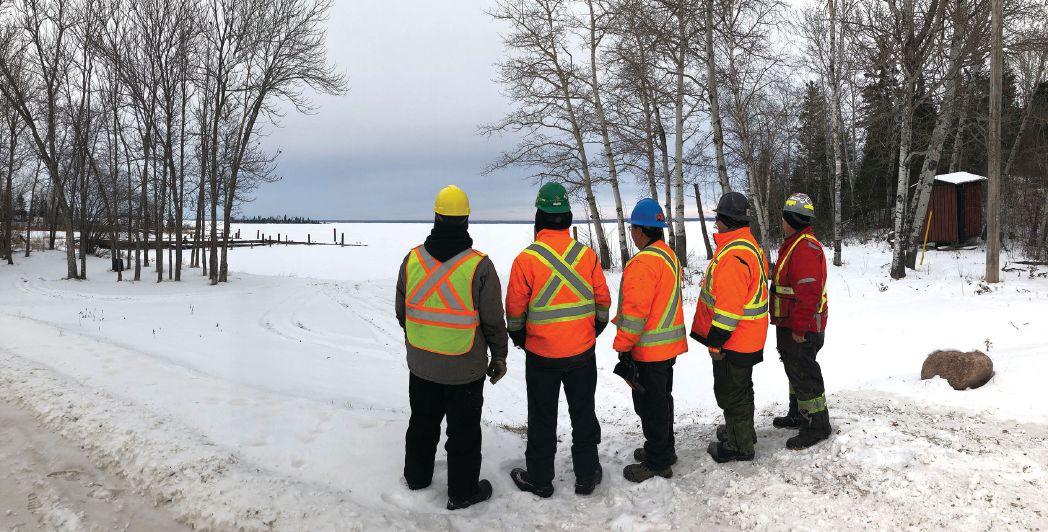
The Calgary-based company originally started up as a small gold mining company, but shortly afterwards, CPS turned its attention to a silica sand deposit in the Winnipeg area. The company owns a high purity silica deposit located fairly close to where it is planning to build its float glass manufacturing facility – about 160 kilometres north of Winnipeg in the Wanipigow region near the communities of Seymourville, Hollow Water First Nations and Manigotagan.
CPS had originally slated the silica sand for extraction for use as frac sand supplying the oil and gas sector in Alberta and Saskatchewan, but those plans were curtailed when the industry took a nosedive several years ago. With frac sand no
longer a financially viable option, CPS went back to the drawing board to find a way to make the most of their high-quality resource.
“The oil and gas sector was not a great place to be, so we refocused to look at our deposit for other industrial uses,” says Glenn Leroux, Canadian Premium Sand president and CEO.
What makes this silica deposit particularly valuable? It’s one of only a few low-iron sand deposits in North America, according to CPS.
“Due to some lab work we got done in Germany and Australia, we realized just how good this sand was for glass making,” Leroux says. “It has a low-iron deposit with very little processing work.”
Having the silica sand site close to the proposed manufacturing plant in a major distribution hub with reasonable labour and hydro rates is a very appealing combination, Leroux says.
“Winnipeg is one of the best distribution hubs in North America,” he says. “It has direct access to the U.S. and eastern
and western Canada.”
Depending on the types of glass being manufactured, either for the solar panel industry and/or high-end architectural glass, the number of jobs this plant will generate will vary. That said, CPS believes they will be a significant employer in the area.
“This will be very good for the province,” Leroux says.
CPS is in the process of doing detailed market research to figure out the ideal products to manufacture at the plant.
“We need to know exactly what the next five to 10 years of the market are going to look like, so we know which type of plant to build,” Leroux says.
The company is also in the process of raising capital to complete the engineering designs for the float glass plant.
“We believe if we can get the cash in the door in a timely manner, then we can complete this process within the calendar year,” Leroux says. “We believe we can start construction in 2022 in the second quarter, as long as we raise the funds.” [The first stage of this process has been successful. See Industry News, pg. 6 - ed.]
Ideally, Leroux would like to have the float glass plant constructed and operational by mid-2024.
“It’s in everybody’s interest to have this project move at a good pace.
That depends on a whole bunch of people believing in it and pushing it at that pace,” he says.
Leroux believes that CPS could eventually serve additional industries that require highquality, low-iron silica sand. Other industries that utilize this type of sand include foundries for casting, kitchen and bath products such as countertops and grout, sandblasting, sand filter media, golf courses and construction sand (in addition to the oil and gas market). According to the company’s website, CPS owns 100 percent of a large and contiguous series of 41 quarry leases issued by Manitoba Mines branch encompassing approximately 5,300 acres.
“Because of the size of our resource, we do believe that there is scope to grow the silica sand-based glass business significantly larger than what we’re planning out of the gate,” Leroux says. “With the market growing and the jurisdiction open to it, why would we collectively want to stop at one single plant if the market could have two or three – or other industries based on silica sand?”
Canadian fabricators are excited at the thought of having a float glass plant return to Canada.
Leroux says that it’s an embarrassment that Canada doesn’t do enough to take advantage of its abundant resources, and instead often chooses to sell the raw resources to other countries to be developed, losing out on significant employment opportunities.
“We have to stop doing this in this country,” he says. “We’re starting to see the supply chain fragility, overall.”
Consent from the surrounding community is necessary to make the dream of this float glass plant a reality.

Keywords
ManufacturingJobsite.ca is Canada’s premier online job portal for the growing manufacturing sector. A laser focus on the right people across the country’s largest manufacturing media audience means you get the right applicants the first time. No more massive piles of unqualified applicants, just professional employers reaching qualified professionals.
Powered by the top manufacturing media brands in Canada, the reach to over 500,000 industry professionals on ManufacturingJobsite.ca is amplified by:
Website advertising to 185,000 qualified monthly site visitors
A comprehensive and magnifying reach across multiple associated job boards
Email promotion and job alerts to 131,000 industry emails using Canada’s largest CASL-compliant direct access to manufacturing professionals
Social media promotion to all brand networks on Facebook, Instagram, Twitter and LinkedIn

INNOVATIONS
Leroux says that he has spoken with some solar panel manufacturers in North America and that they like the idea of the float glass plant coming to Canada. Currently, there are about 20 float glass plants across the U.S.
“They aren’t looking at us as added competition. They’re looking at us as surety in supply,” he says. “They’re quite excited about having a supplier here… we need to do this for CPS and do this for Canadians. It’s ridiculous where we sit.”
Social license
Even if CPS are able to raise the funds necessary to build the plant, the company will also need the social license to get the project off the ground. This is something that Chinese glass manufacturing company Xinyi Glass Holdings discovered during its attempt to get a plant constructed in Ontario.
Xinyi Canada had proposed to build a $400-million float glass plant in Stratford, Ont., that would have provided about 380 jobs, but was met with stern opposition
from a small number of residents largely related to concerns about the amount of groundwater that would have been used at the plant, as well as the carbon footprint of the plant.
In 2018, the Township of Guelph/Eramosa also rejected the float glass plant on the basis of groundwater consumption. This decision didn’t sit well with Frank Fulton, president of Fultech Fenestration Consulting and the former president of the Ontario Glass and Metal Association.
“There was an irate group arguing a lot of ridiculous arguments, including that it would use up too much water,” Fulton says. “The reality was that the amount that was going to be used fell within the framework of dry industrial use.”
Fulton says that the timing of the decision was unfortunate since there was also an election being held in the Township of Guelph/Eramosa at the time, and there were threats from some members of the public that they would not vote for councillors that supported the construction of the new glass plant.
Ridiculous arguments or not, these two attempts to construct a plant by a world-leading glass manufacturer show that you need to have the public on your side if you want to succeed in building a facility in Canada.
“If you look at it, Xinyi had everything else. They had the cash. They had the technology. They had places to train people. They had it all. But that doesn’t matter if you can’t get the social license,” Leroux said during an interview with Glass Canada editor Patrick Flannery during a podcast episode of GlassTalk. “I can’t sit here and say we have it, but we’re in a different part of the country and a different attitude. We maintain a pretty good relationship with the First Nations where the deposit is, we have an agreement in place with them. We have an agreement in place with the community that’s right next door to us. We have a good relationship with the Manitoba government. We believe we’ve got some fundamental steps towards that social license in place already.” •
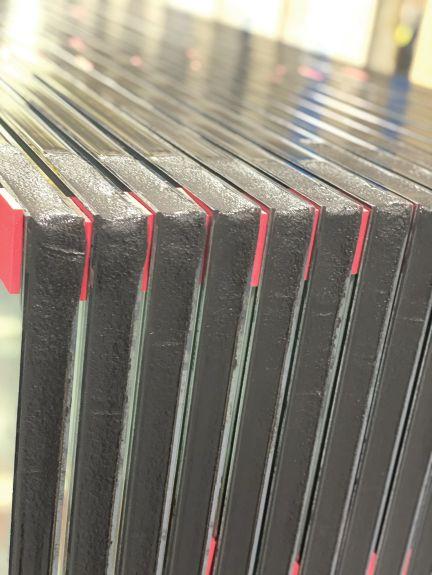
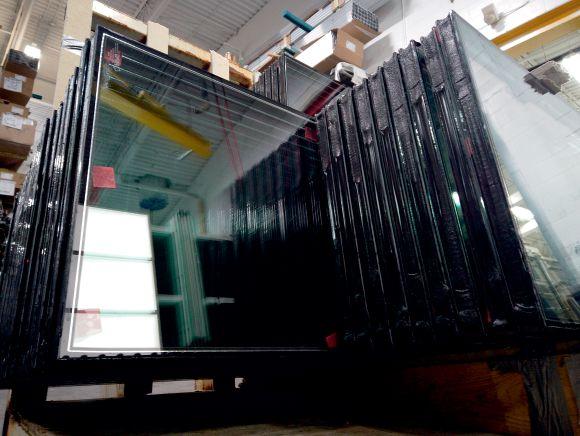
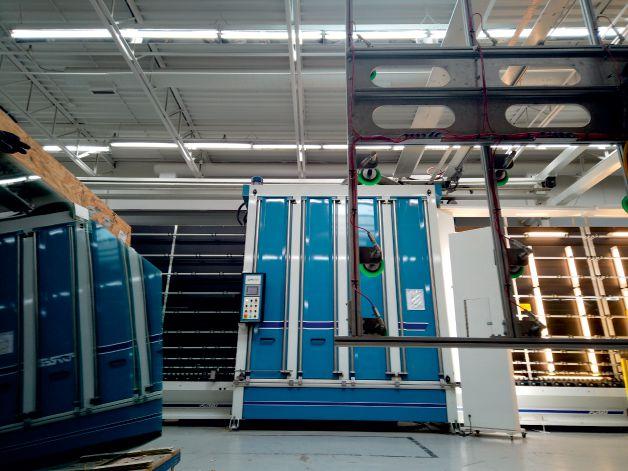

by JAMES HONG
The future of PPE
As the world streaks forward into the future of smart technology and the internet of things, so does the safety protection value of personal protective equipment. Not only is protection much higher, there’s a possibility for multilevel efficiency factors. PPE innovations are most commonly in the form of “wearables”: sensors attached to existing PPE or newly built into the product design. The end result collects and transmits data focussing on tracking, communication and warning alerts. These devices and systems enhance safety, increase work performance efficiency and provide on-demand scheduling. Here’s a list of technologies being developed and currently available.
Decibel level monitoring and speech identification: Sensors send LED light signals detected in the user’s peripheral vision indicating impending noise hazards. The same sensor will send evacuation alerts and enable two-way communication with a smart phone app. Coupled with the general noise on jobsites, wearing hearing protection further diminishes the ability to communicate worker to worker. Noise blockers are now part of the ongoing improvements found in smart headsets and smart earplugs, blocking out noise and doubling as speech-capable ear microphones.
Charge-sensing boots: There’s no limit to what these types of in-boot sensors will do. GPS sensors track the location of workers, monitoring chemical and gas leaks and are also capable of sensing when a worker falls. The boot itself receives kinetic energy from walking, which powers the sensor system as well as charging for talk time on an iPhone. Even individual fatigue alerts can be programmed into these sensors.
“PPE innovations are most commonly in the form of ‘wearables’ that have sensors attached to them.”
SAFETY
Leather gloves: New supercharged work gloves made from leather have eight times the protective value of standard leather work gloves. Shrink-proof with inherent softening longevity, the gloves use Kevlar stitching to increase the glove’s lifespan.
Tags: Tags attached to PPE and mobile equipment detect and send alerts to the operator and crew, preventing accidents by using GPS coordinates. Alerts provide proximity warnings and each tag ID records the date, time and location of the alert, providing data for factors contributing to near struck-by and incidents as they happen.
Real-time learning: Emergency evacuation confirmation and instruction alerts can be delivered in real time while monitoring the evacuation itself, tracking workers at muster stations and finding those who are still in the building. All of these advantages diminish evacuation time, impacting worker safety and possibly lives saved. Communication to first responders provides the location of people left inside and tracks life signs, heart rate, pulse and emotional state.
Just-in-time training: The standard for safety training is training conducted prior to deployment. Taking this approach does not guarantee workers will have the ability to translate that training into action or habit. The use of technology to train on the job in real time has superior advantages by sensing work activities, worker safety and potential hazards. By providing corrective actions and instructing occupational first aid treatments, the net effect is to maximize safety.
AI: Now trained not only to detect and alert for hazards, artificial intelligence can also analyse job types, detect missing PPE and provide social distancing alerts for group workers. Mitigating risks by using analytical data to compare and create benchmarks in real time is a jewel in the sand for the entire sector.
Adoption and training pose the most deterrent barriers for integrating smart technology. Latency issues are currently barriers for real time learning and just-in-time training because of the potential lag time. 5G infrastructure combined with Edge technology will eventually take care of any time inaccuracies to ensure there are no delays in communication. As with the history of all new technology, it’s expensive during the initial research and development phase presenting a disincentive for acquisition. Until it leans toward being widely used, we’ll just have to wait. •
James Hong is an OHS chief for the construction industry.
Efficient machining
The right endmill can make all the difference.
If you need an endmill for a variety of tasks but purchase one that is specialized to do just one job, then you will need to buy more and end up losing money.
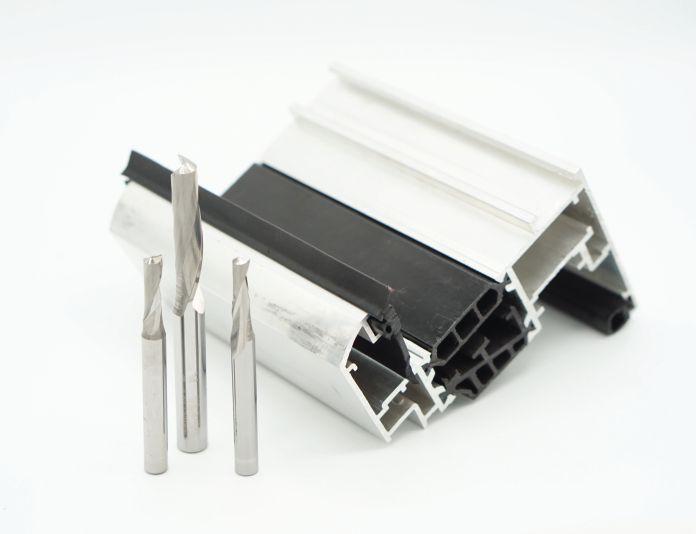
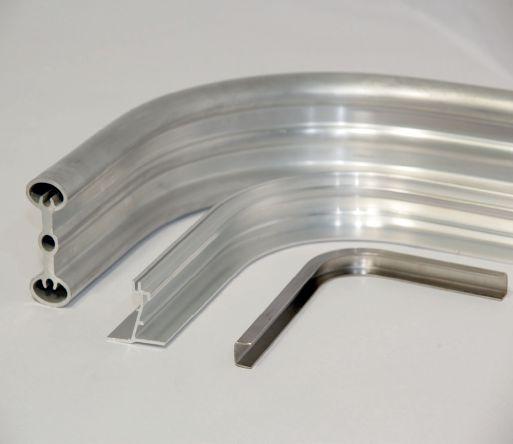
Aluminum extrusion is a manufacturing process used for aluminum forming, which involves the forced flow of a cylindrical billet through a desired cross section’s die. The extruded parts are then pushed out through a hydraulic or mechanical press. Aluminum extrusion involves machining. In recent years, one of the most popular cutting tools used in the process happens to be the endmill. Endmills are available in a wide variety of designs, and the most popular ones are ball endmills; corner rounding endmills; finishing endmills; roughing endmills; and square endmills.
In this article, you will find out all you need to know about buying the appropriate endmill for aluminum extrusion.
Choosing the right cutting tools
Cutting aluminum with the right tools can make the aluminum machining process much more efficient while maintaining accuracy. Aluminum is popular for two reasons; its ductility and malleability. However, problems begin to appear when the material is undercutting in aggressive conditions. Under such conditions,
aluminum becomes quite gummy and the fact that it sticks to flutes makes it bad news for cutting tools that are not fit for the job. The aluminum casting or melting process results in aluminum’s oxidation and causes all metal grades to develop abrasives. For the aluminum machining process to be smooth and accurate, the abrasives must be done away with.
The chip formation process often sees chips curling and this can result in them occupying more space than their pre-cut condition. As the chips stay firmly rooted in the flutes, they can be more difficult to cut for a second time. However, with an aptly designed endmill, there will be an extra evacuation area. If you want topnotch finishes, you have got to invest in cutting tools whose geometries are suited to work with aluminum. Without the correct tools that complement aluminum’s natural characteristics, you are bound to end up with poor finishes.
Buying the right endmill
In this article, we will talk about buying the best endmills for aluminum extrusion machining through 11 secrets that many
people do not know about the process.
Secret 1: The key to aluminum machining is in knowing its consistency. The consistency of aluminum and its alloys can make the machining process a difficult one. Some of the commonly faced challenges during the aluminum milling process include chatter, aluminum’s abrasiveness, controlling the chips and quick machining. Aluminum is also one of the stickiest metals.
Ideally, an endmill created specifically for aluminum should have unevenly spaced flutes and should ideally have one or two flutes. Endmills with such flute design ensure that the harmonic vibrations created by flute impacts are kept to a minimum. The sticky and gummy nature of aluminum results in its chips sticking to endmills’ flutes. It is ideal to opt for endmills with the right radius. Even though extra finish passes may be required with such endmills during grinding, they ensure that sticky aluminum chips can be avoided even when using common lubrication. The abrasiveness across all grades of aluminum is also a common problem during the extrusion process. To avoid it, endmills that are coated with significant aluminum oxide concentrations are recommended.
Ultimately, when it comes to aluminum extrusion, the most perfect endmill is one that can slot, plunge, rough, profile and finish – and that n just one pass, too.
Secret 2: The aluminum grade you choose impacts the endmill you need to use. Even though the core characteristics of all aluminum grades are alike to some extent, there are several differences between them as well. Some of the factors that are commonly taken into consideration before deciding on a particular aluminum grade include corrosion resistance, formability or workability, heat treating, machining, strength, end-use applications and weldability.
There are two categories of aluminum alloys; cast alloys and wrought alloys. Aluminum’s cast alloys contain up to 22 percent alloying elements and wrought alloys contain up to four percent. While the difference may not seem to be a great one, the amount of alloying elements in a particular grade’s composition can significantly affect the material’s properties. Some of the common characteristics of cast alloys include tensile strength and low melting points. However, most aluminum products are wrought aluminum alloys, especially those manufactured from rolling and extrusion processes. Different grades of aluminum have different characteristics, which means that you need different endmills to work with them.
Secret 3: Carbide is not the only endmill
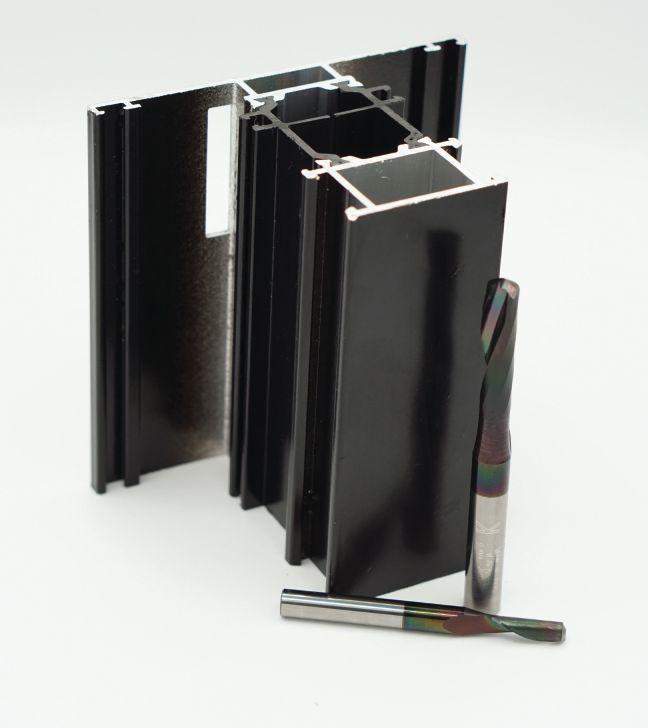
A few benefits of using carbide endmills for aluminum extrusion are excellent surface finish quality; greater rates of stock removal at high feeds and speeds; and extended tool life.
material, but it is the best choice for machining aluminum extrusion. The endmills typically preferred for working with aluminum are made from solid carbide, which offers great rigidity and heat-resistance and is perfect for highspeed applications. However, carbide is not the only endmill material.
Cobalt endmills provide toughness, high hot hardness, and excellent wear resistance. However, cobalt endmills are not ideal for aluminum applications and are mostly used with steel, cast iron, and titanium alloys. Some endmills feature steel bodies with their tips made of carbide. They are known for their cutting prowess and are used on a wide variety of ferrous and nonferrous materials such as steel alloys, steel and cast iron. Typically used across general-purpose milling applications of a wide variety of ferrous and non-ferrous materials, high-speed steel endmills cost less than both carbide and cobalt endmills. A synthetic diamond – polycrystalline diamond – has excellent wear and shock resistance properties. However, despite being a good
INNOVATIONS
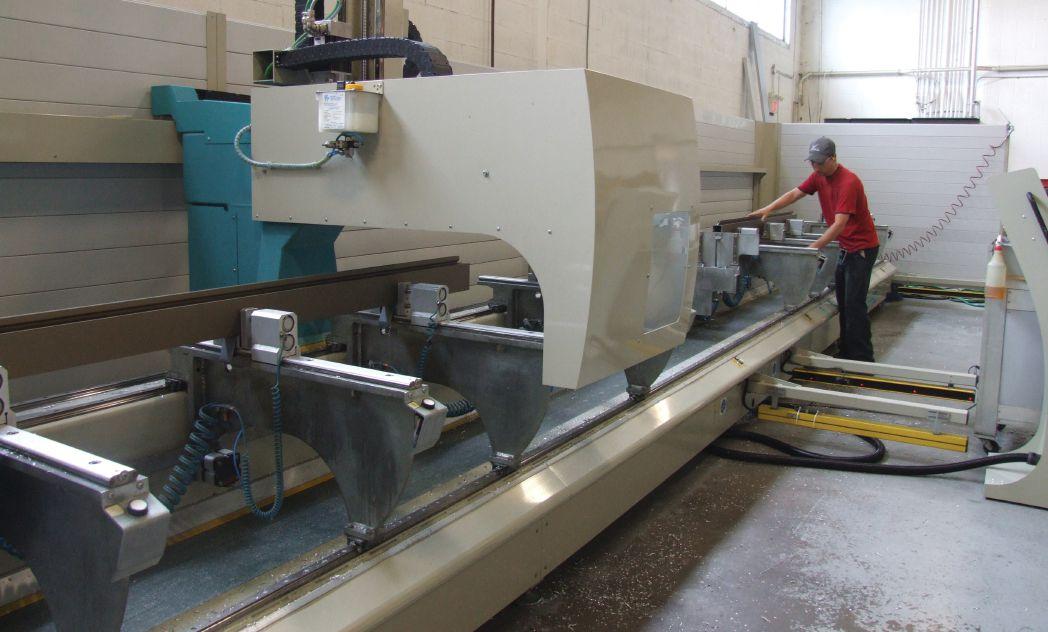
option, its associated costs are significantly higher than those related to solid carbide. Powdered metal endmills are incredibly tough and less breakage prone. PM endmills are ideal for high-stock and highshock applications like roughing. Vanadium high-speed steel endmills are made from carbon, high-speed steel, vanadium carbide and a wide variety of other alloys. They are ideal for working with high silicon aluminum and stainless steel.
While different endmill materials offer various properties, solid carbide endmills are the most highly rated in aluminum milling and extrusion as they can cut through aluminum smoothly and can last a long time as well.
Secret 4: You cannot use the same endmill for each extrusion machining scenario. Aluminum extrusion presents several different scenarios, such as contouring, finishing, high-efficiency milling, plunging, slotting and traditional roughing. In addition to these scenarios, there is the issue of metal thickness as well. What endmill you should use is dependent on these scenarios as different endmills are designed to perform various functions.
Square end (centre hole) endmills are heavily used for applications such as
slotting, shoulder milling, and side milling. However, plunging is not possible using such endmills. Square end (centre cut) endmills too are ideal for slotting, shoulder milling, and side milling. However, plunging is possible using such endmills. The geometry of ball end endmills makes them ideal for curved surface milling. Corner radius end endmills are used for corner radius milling and radius profiling. Standard (straight shank) is the most widely used type of shank and neck part. Long shank is ideal for shoulder and deep pocket applications. Long neck is best suited to boring and deep slotting. Endmills with tapered neck features are perfect for mould draft and deep slotting applications.
Traditional flute geometry is typically used for applications such as roughing, shoulder milling, slotting and finishing side milling. Tapered flute geometry is ideal for applications such as applying taper angles post-completion of straight-edged milling. It is also used in mould drafts. Roughing flute geometry features a wave-like form and is used when the material needs to be broken into small chips. Regrinding is also possible thanks to the flute’s inside face. Formed flute is typically used to produce various components’ corner radii.
Secret 5: Your rookie endmill mistakes are costing you money. Losing money on endmills is mostly down to inevitable rookie mistakes. Not every endmill can handle all types of machining tasks. If you choose an endmill that can handle different tasks well, you will end up saving a lot of money in the long run. Highquality endmills will obviously require you to shell out more money than average tools. However, in the long run, you will have to spend less on maintenance. The kind of features that an endmill offers to users often dictates its price. Premium quality endmills boast of features such as a high-quality source of carbide, diamond polished flutes and preparatory edge geometry. Every endmill comes with the problem of chatter or vibration - it is something you just cannot avoid. However, with advancements in the technology that goes into the creation and design of endmills, there are many high-quality tools now that vibrate less.
Secret 6: Have you checked your energy footprint? It is this way because of your endmill. Minimizing endmills’ energy consumption will go a long way to reduce their carbon footprints and enhance their economic viability. Ninety percent of the
The same endmill cannot be used for the different scenarios in the aluminum extrusion process.
environmental burden created by endmills is down to their electrical energy consumption. Most energy consumption studies conducted in the sphere of machining have been concerned with endmills and other cutting tools working at low speeds. However, in recent times, the focus has shifted to high-speed cutting because it is at the highest speeds that cutting tools consume the most energy and affect the environment. Along with cutting speed, the rate of metal removal also impacts how much energy an endmill will consume. The ideal way to reduce the environmental impact of endmills is to combine low to average cutting speeds with high metal removal rates.
Secret 7: Has your endmill got the right coat and geometry? You must consider the coats and geometries of endmills when selecting one for your machining purposes.
Coatings can significantly improve the performance of endmills. However, the chemical composition of a particular coat that works well with one endmill is not guaranteed to work with another endmill the same way.
Geometry is one of the key determinants of an endmill’s performance. Highhelix and low-helix are two of the most chosen geometries, but both have their advantages and disadvantages. Endmills with high-helix geometries reduce tool deflection as the cutting forces are more vertical and less horizontal. Quicker chip evacuation, better shearing, durability and incredible strength are other advantages of the high-helix geometry. On the downside, high-helix endmills generate a lot of vibration or chatter and they are known for “biting” into the material, which can be problematic with soft materials. Lowhelix endmills do not chatter or vibrate frequently and when it comes to machining soft materials, low-helix endmills are the preferred choice of machinists. However, low-helix endmills struggle to work with challenging and hard materials.
The most state-of-the-art endmills in today’s times are the variable-helix endmills that feature unevenly spaced flutes intending to reduce chatter. Many manufacturers use a “ski-flute” technique that involves providing as much rake as possible at the edge while keeping the characteristics of designs with a lower rake. Chamfer and corner-radius endmills are known for enhancing the surface finish and prolonging tool life.
Secret 8: Higher flute endmills do not
always yield the best results. Flutes are an endmills’ deep spiral grooves facilitating chip evacuation and formation. How many flutes an endmill has determines on several things, such as the piece’s surface finish; the chip-clearing ability of the tool; and the machine’s feed rate. Feed rate is directly proportional to the number of flutes, so, the greater the number of flutes, the higher the feed rate must be. More flutes are recommended for smoother cuts. However, with more flutes comes the problem of chip evacuation, as there is very little space for the chips to be evacuated. It is recommended to use endmills with one and two, or a maximum of three flutes when working with aluminum. Using an endmill with three, four or five flutes while machining aluminum is not recommended as the chips will progressively jam and eventually cause the tool to break. It is best to use endmills with one or two flutes when it comes to working with aluminum, as such endmills will create a lot of chip evacuation issues.
Secret 9: Want to know what the finishing will be like? Just check your endmill’s helix angle. An endmill’s cutting force consists of an axial and a radial component. While the radial component is responsible for bending the endmill, which results in chatter or vibration, the axial component is responsible for pressing the endmill against the holder. An endmill that has a higher helix angle delivers radial forces that are low, ensuring a smooth cut and fewer vibrations. This results in better chip evacuation and surface finish. However, the cutter strength is low and there is a high amount of deflection. To improve cutter strength, you have the option of lower-helix-angle endmills, but they do not deliver as smooth a finish as higher-helix-angle endmills. The best tooling manufacturers have found the right helix angles to give the benefits of both higher and lower helix angles.
Secret 10: You’re killing your endmill with all the chipping. Metal chipping is one of the most commonly faced issues by manufacturers. As more metal chips are generated, the quality of the cut may be hampered, and the life of the cutting tool may be cut short as well. Continuous chips are formed owing to the smooth flow of chips up the tool face. Continuous chips with built-up edges have built-up edges at the tool face that are not smooth. Discontinuous or segmental chips easily break into small segments, making them

Keep the cold at bay.
The warm edges of the innovation leader set standards in terms of energy efficiency, comfort and dimensional stability. So your windows become real energy savers. More about our products and our calculation tool on swisspacer.com
INNOVATIONS
easily disposable. As chips can contribute significantly towards reducing an endmill’s life, it is necessary to take steps such as using mist systems, flood coolants, vacuuming, and air blasts to deal with excess chip buildup. The best endmill manufacturers have found a way to optimize chip removal and issues with chip sizes.
Secret 11: Lubrication – the endmill secret which many extrusion companies do not know about. Lubrication using coolants is an essential part of endmill maintenance and failing to lubricate endmills can result in reduced tool lifespan. Dry machining is performed without any use of lubricants, whereas wet machining is performed with appropriate lubricants and cutting fluids. A lubricant delivery system is not required in dry machining. However, it is necessary for wet machining. No lubricant delivery accessory is required in dry machining, whereas accessories such as pumps, pipelines, storage tanks and nozzles are required for wet machining.
Dry machining is not environmentally hazardous. However, wet machining can be
hazardous not just for the environment but also for the operator. The lack of lubricants ensures that there are no corrosion issues in dry machining. However, lubricant use may result in tool corrosion when it comes to wet machining. During dry machining, cutting temperatures are high. During wet machining, cutting temperatures are low thanks to the use of lubricants.
Chip colour may be affected by dry machining’s high temperatures, but there are no such issues with wet machining. Cutting tools and workpieces are subject to thermal damage in dry machining, but wet machining significantly reduces the risks of thermal damage to components. Dry machining is ideal for soft metals and materials such as polymer and wood. However, when it comes to cutting hard metals, wet machining is recommended.
Conclusion
Even though machining and extrusion are incredibly complex concepts, we have nailed down all the points that you would need to select the best aluminum cutting tool based on your needs and re-
IN MEMORY

quirements. Before you buy an endmill for machining aluminum, it is important that you know all about aluminum’s properties and the properties of its various alloys. It is also important to know what applications you would require an endmill for. Quality of finish, chip evacuation and tool life are some other factors that you will need to consider so that your purchase is cost-effective in the long run. After all, you do not want to purchase an endmill only to replace it after a short while, which can be an expensive proposition. The best option is to invest in a high-quality endmill that is capable of handling multiple aluminum machining and extrusion applications. •
Jonathan Chauvette has been working in the high-tech machinery and industrial equipment industry for more than 10 years. He is the CEO of his own high-tech machinery and industrial equipment distribution company, StarlightCorp, operating out of Quebec.
Editor’s note: This article has been adapted and reprinted with permission from the author.
Glass has manufactured tempered glass for showers, railings, entrance systems, interior partitions and architectural glass applications since 2007.
Tempered up to 96 x 144 • Custom Laminated up to 86 x 144
Bent Tempered Laminated to 66 x 96
Back Painted Glass
Harry Buhler founded All Weather Windows on June 5, 1978 in a small 10,000 square foot facility in Edmonton, Alberta with 9 employees. By 1988, the new business had grown 10 fold with locations across western Canada.
Window and Door pioneer Harry Buhler remembered by family, employees, and industry










by RICH PORAYKO
Rich Porayko is a professional writer and founding partner of Construction Creative, a marketing and communications company. richp@constructioncreativecom
Video killed the radio star
With recruiting an ongoing pain point, last month we discussed meeting Millennials and Gen Z where they are. This issue we jump into creating a message that resonates with young Canadians. At the recent B.C. American Marketing Association (re)Vision Virtual Conference, Michael Cheng, CEO and co-founder of Lumen5, presented “The rise and fall of the blog: The evolution of thought leadership in the new decade.”
Over the last 10 years or so, there has been a shift online to social, mobile and video. “Mobile is one of the most significant changes that has happened in the past decade,” said Cheng. “The introduction of larger and higher definition screens has allowed us to communicate information in ways we were never able to before.”
Cheng told attendees that static images communicate extraordinarily little information and that adding text explains the concept. “The evolution of mobile devices and the increasing size of screens is not a coincidence. With mobile phones, high-definition screens and mobile data that is more affordable, people are watching videos more than ever before.”
According to Cheng, if you are still building strategy around text and photos, then you are missing an entire decade of what has happened. “YouTube is the second largest search engine on the internet with more than three billion searches a month. It is bigger than Bing, Yahoo, Ask and AOL combined.”
When people are searching for information, the preference is to learn from video. If I want to learn new software, do I want to read a blog post about it or do I want to watch a video?
“Video posts get three times more engagement than image, text and link posts.”
THAT’S RICH
Video posts get three times more engagement than image, text and link posts. It’s a trend you can prove with data. “People are much more likely to engage with video content,” said Cheng. “To like it. To share it. To post comments on it. Videos are much more natural to the mobile experience. They stop your thumb as you are scrolling through a newsfeed because there is activity and motion.”
Cheng says that videos perform well on Facebook because they are incentivized to close the ecosystem. “They don’t want you to leave Facebook to go to a Google property. As a result, news will prioritize posts that are natively social. These posts are served more often and load faster than external content, so it performs better in the newsfeed.”
If your communications strategy includes blogging and white papers, Cheng says it’s more important than ever to recognize that mobile is a mega-trend that is happening around the world. “There are entire countries that completely bypassed the desktop era and went straight to mobile,” said Cheng. Often, reading a long blog post on a mobile phone is not the most natural experience. You can still create the long form blog but, as Cheng recommends, start thinking about how to turn that blog into a series of bite-sized videos.
Cheng says the two major challenges are quality and quantity. “It’s not about production value. Social media is very organic. Focus on delivering relevant and valuable insights.”
“Social is ephemeral,” says Cheng. “Your post disappears after 24 hours. Content needs to be fresh, frequent and consistent.”
How does someone that has never touched video before start creating video content? There is a new generation of video creation tools including Lumen5 (lumen5.com) and Rich Media video testimonials (mediarichness.com).
Reaching the prospective employees that you want to recruit for your business is evolving and a common fear is that video is a completely new strategy. It’s the same message but with a new delivery. Cheng recommends to focus on bite-size, frequent and consistent touchpoints. Diversify your video content. Empower employees to localize and personalize video content. Set boundaries to maintain message and branding. •



How will you inspire the futurescape?
Want to make a mark on the future? We want to make one with you. Whether you aim to create visually stunning new buildings that perform at the highest level or bring new life to existing structures, put more than a half-century of building science innovation and proven performance on your side.
Let’s sit down at the design table together.