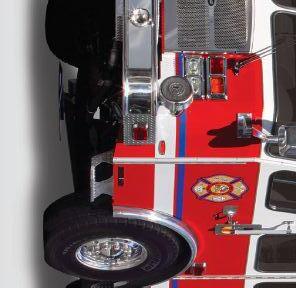
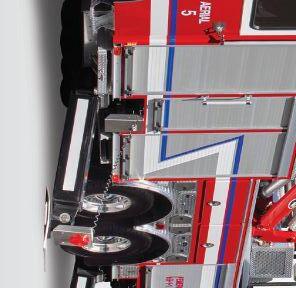
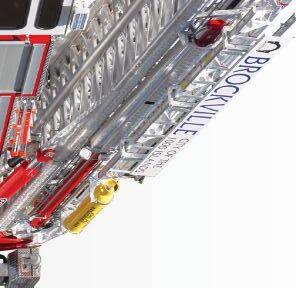
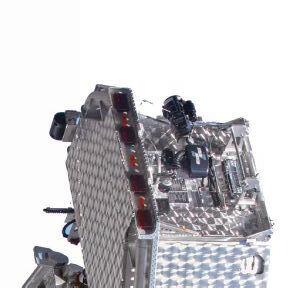
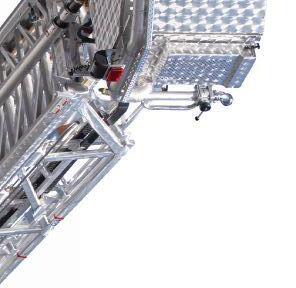
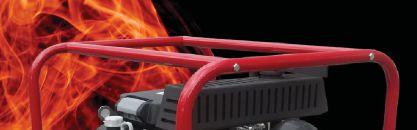
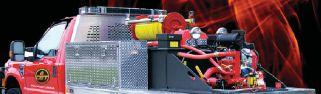
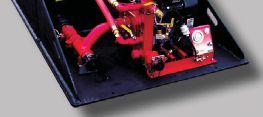
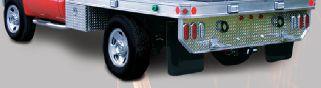
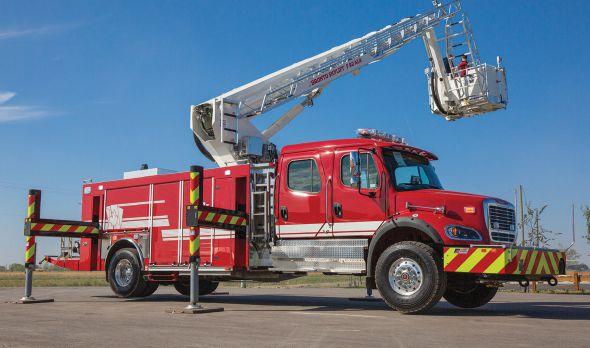
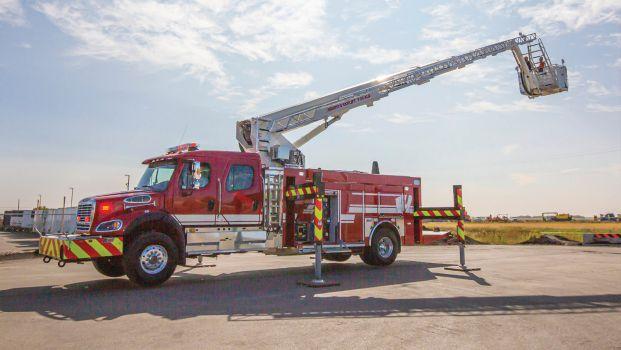
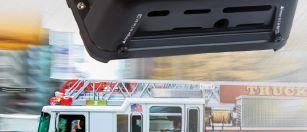
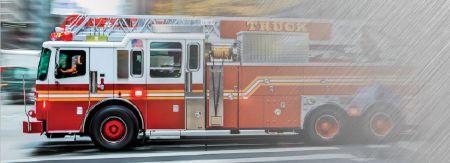
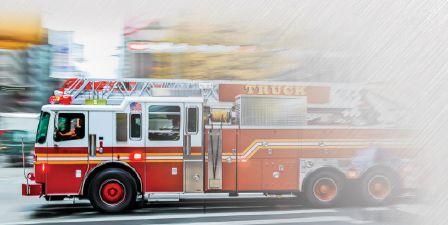
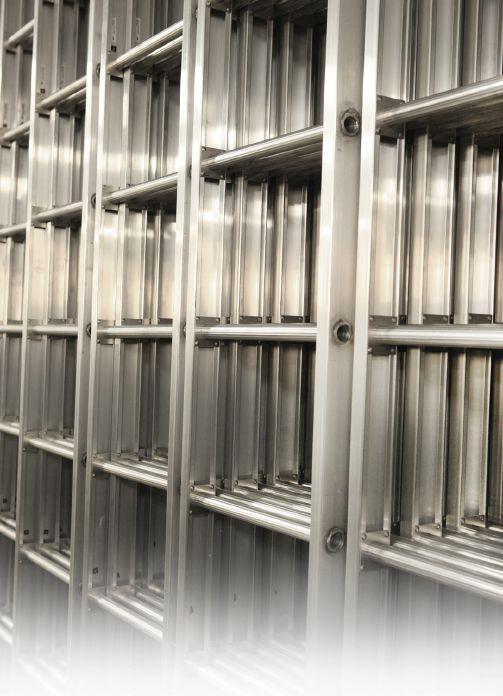
1305 LB PLATFORM CAPACITY WITH 18.9 SQ FT OF FLOOR SPACE
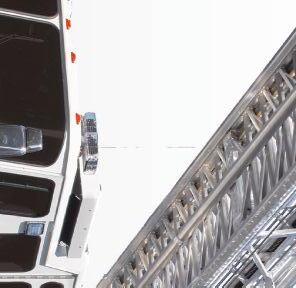
The E-ONE HP 100 Platform looks like a rock solid beast. And it acts like one too. This aerial, with a 2.5 to 1 structural safe ty factor is 25% stronger than NFPA requires. But this rig isn’t just a powerhouse, it’s also versatile. With crisscross under-slung outriggers that deploy to a tight 15’6” spread, the HP 100 Platform sets up unrestricted where others can’t. Whatever the job calls for, the E-ONE HP 100 Platform is up to the task! For more info, please visit e-one.com
FEATURES
10
REDUCING FALLS
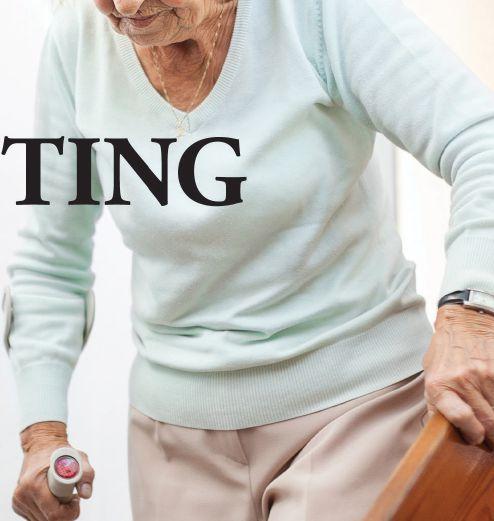
Could your fire department reduce falls? The Saskatoon Fire Department’s experience with the NFPA’s Remembering When program shows how .
By Dori Krahn and Roslyn M. Compton
22
HEAT SIGNATURES CAN BE MASKED
Looking at the specifics of what you can see and what be hidden. By
Manfred Kihn
26
MAKING MENTAL HEALTH A PRIORITY
A unique program is having success for members of Barrie Fire and Emergency Service in Ontario. By Maz Atta 33 BEYOND WILDFIRES
Tips for how mass notification systems can be used to improve overall emergency preparedness and beyond. By Lauren Telfer 36 MANAGING OUR THOUGHTS
Part 3 in this cognitive lifestyle series looks at good ways to build resilience in our thinking. By
Nick Halmasy
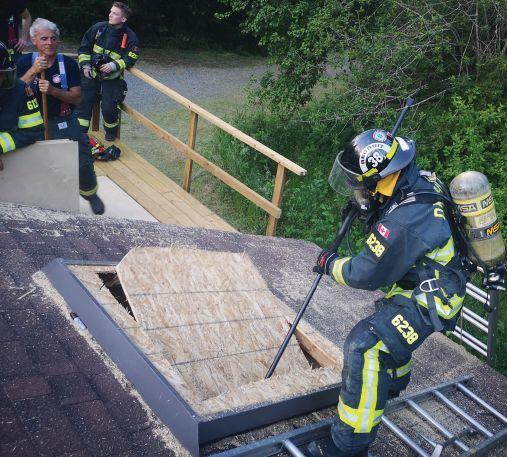
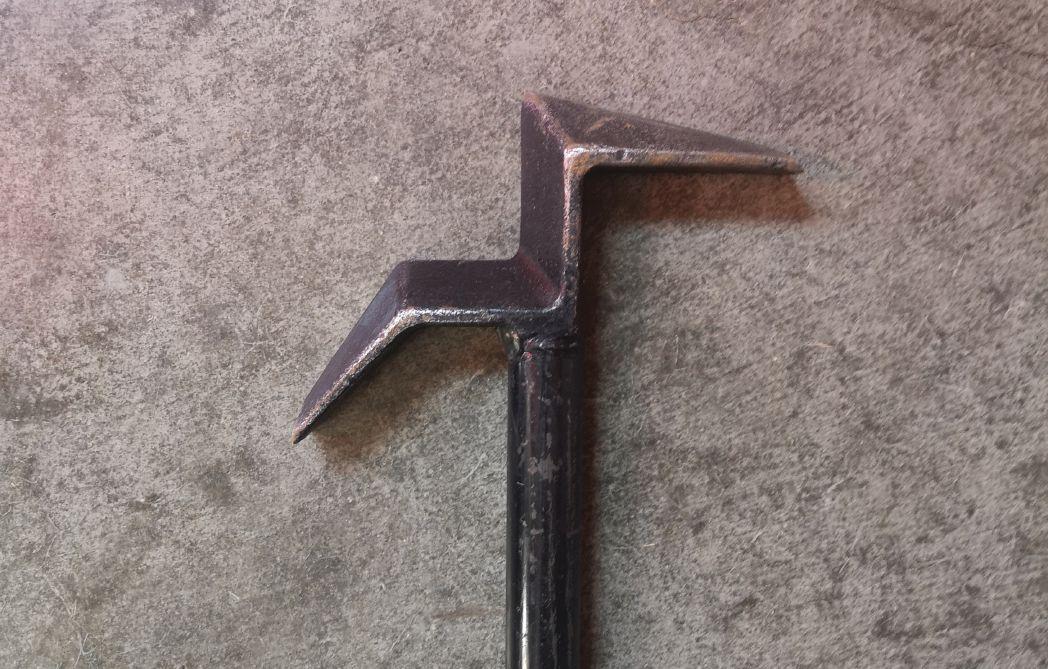
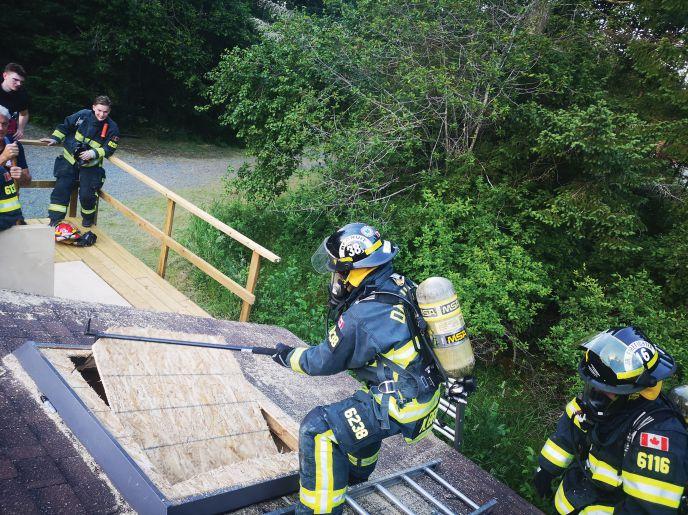
40 THE ROOF HOOK
Taking a look at the many uses for a roof hook, a tool that’s popular in America, but lesser known in Canada.
By Nathan Pocock
BY LAURA AIKEN Editor laiken@annexbusinessmedia.com
DCOMMENT
Great expectations
uring the pandemic, uncertainty has made expectations a particularly difficult thing for leaders to manage. Public expectations of their governments have been met or missed. Employee expectations of their employer have been met or missed. Same storm, different boats, individual experiences, however you want to slice it, leaders have been challenged to meet the needs of varying personalities, perspectives and circumstances in a novel and often remote way as change unfolded in sometimes unexpected or surprising directions. So has gone the pandemic: Uncertainty, met expectations, missed expectations, wash, rinse, repeat. Certainty hasn’t been a player, but such is the sport of life.
Things are settling, somewhat, though the arrival of a fourth wave seems certain as I write this. Expectations are still evolving, the landscape of this changed world is morphing.
ON THE COVER
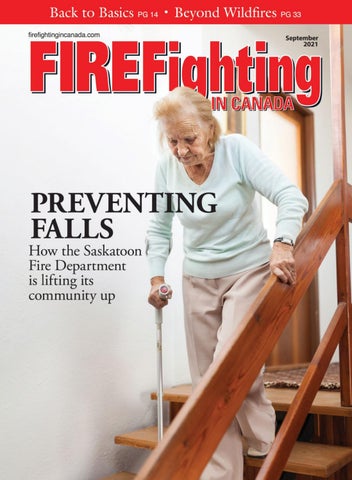
The Saskatoon Fire Department is having success with a program focused on preventing falls in the community. For more, turn to page 10.
In Fire Chief Chris Harrow’s Leadership Forum on page 12, he talks about the need to meet the new expectations of volunteer firefighters in particular through a new sensitivity to their time and how it is spent. The new politics of socializing may be complicated by people’s status as unvaccinated or vaccinated, which is sure to impact workplaces. A July survey by Angus Reid among those who have received at least one dose of vaccine so far only half (53 per cent) say they’re likely spend time around those who have not received their jabs. This, even after they are fully immunized themselves and have built up their immunity.
The fire service is amongst many workplaces facing an insurgence of new expectations. A global report on the changing expectations and the future of work by Steelcase shares the synthesis of eight primary studies designed to measure how the COVID-19 pandemic will change the future of work. The quantitative and qualitative studies deployed methodologies based in the social sciences and were conducted in multiple countries, including over 32,000 participants. Individual experience accounted for a lot, with the Canadians surveyed reporting a 16 per cent drop in engagement when people were not fans of working from home and 25 per cent expected a more fully hybrid model of two to three days a week still spent in their home office. Will their employer meet their expectations? It isn’t possible to please everyone, but the catchword “pivot” has pivoted to become the new buzz “hybrid” and the end game of all is flexibility. But that too has its own end –there is only so flexible things can be before dysfunction erupts. Clarity in communications, the anchor during the pandemic, will be just as needed in a post-pandemic Canada. It’s a time of great expectations, but also of great opportunity to lead with clarity and care through a time of change.
ESTABLISHED 1957
SEPTEMBER 2021
VOL. 65 NO. 6
Reader Service
Print and digital subscription inquiries or changes, please contact Beata Olechnowicz, Audience Development Manager Tel: (416) 510-5182 Fax: (416) 510-6875
Email: bolechnowicz@annexbusinessmedia.com
Mail: 111 Gordon Baker Rd., Suite 400, Toronto, ON M2H 3R1
EDITOR LAURA AIKEN laiken@annexbusinessmedia.com 416-522-1595
PUBLISHER ADAM SZPAKOWSKI aszpakowski@annexbusinessmedia.com 289-221-6605
Occasionally, Fire Fighting in Canada will mail information on behalf of industry-related groups whose products and services we believe may be of interest to you. If you prefer not to receive this information, please contact our circulation department in any of the four ways listed above.
All advertising is subject to the publisher’s approval. Such approval does not imply any endorsement of the products or services advertised. Publisher reserves the right to refuse advertising that does not meet the standards of the publication.
www.firefightingincanada.com
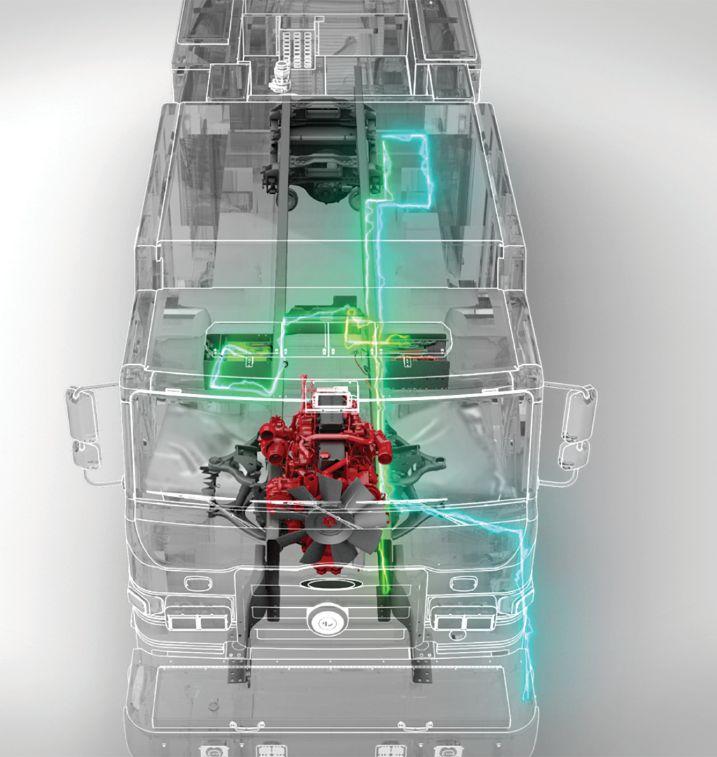
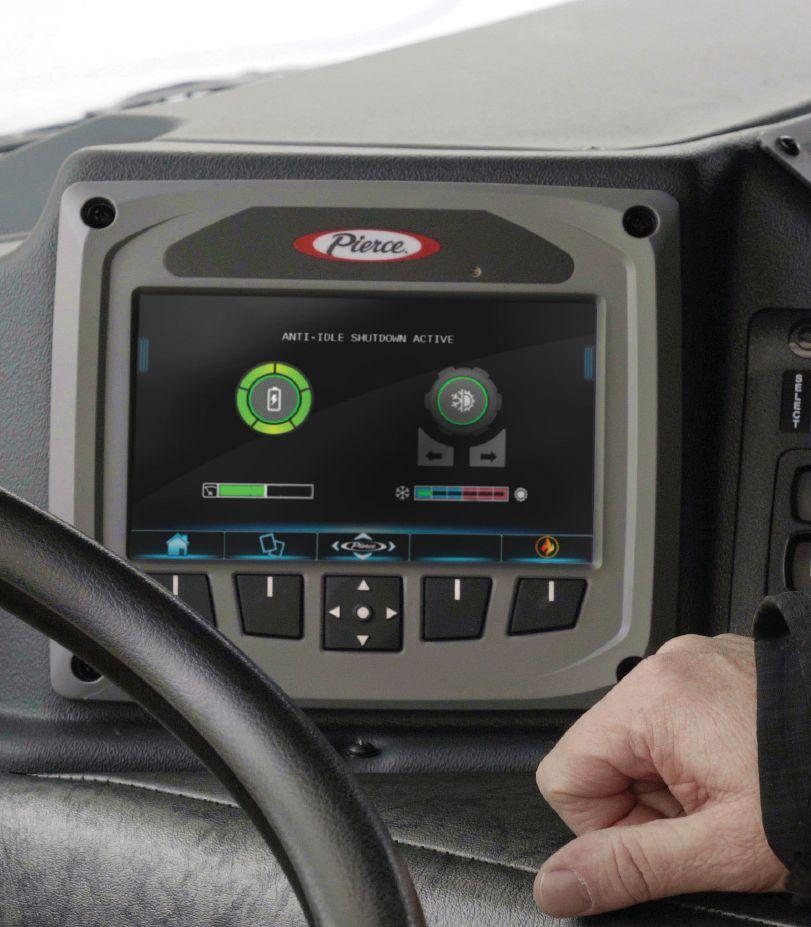
PIERCE® IDLE REDUCTION TECHNOLOGY
INNOVATION THAT NEVER SITS IDLE.
LESS FUEL. LESS ENGINE HOURS. LESS EMISSIONS. LESS NOISE.
PIERCE’S PROPRIETARY IDLE REDUCTION TECHNOLOGY SHUTS DOWN THE MAIN CHASSIS DIESEL ENGINE AND USES LITHIUM-ION BATTERIES TO POWER NFPA-REQUIRED DEVICES, MISSION-CRITICAL ON-SCENE OPERATIONS, AND HVAC CLIMATE CONTROLS
HELP MANAGE YOUR VEHICLE’S CARBON FOOTPRINT WITHOUT INTERRUPTING THE MISSIONCRITICAL FUNCTIONALITY YOU DEPEND ON WITH PIERCE® IDLE REDUCTION TECHNOLOGY. AVAILABLE ON NEW APPARATUS AND AS AN AFTERMARKET SOLUTION.
FIND OUT MORE ABOUT IDLE REDUCTION TECHNOLOGY: piercemfg.com/irt
STATIONtoSTATION
ACROSS CANADA: Regional news briefs
Firefighter takes aim at the stigma around mental health to help others in Ontario
You would think that after 29 years in the fire service, acting platoon chief Rob Leathen would have seen it all and nothing would affect him any longer. This couldn’t be further from the truth, as he would come to learn with his diagnosis of Post Traumatic Stress Disorder (PTSD) in 2019.
As Fire Fighting in Canada has reported, firefighters struggle with mental illness and suicide rates at levels that are higher than what is found in the general population and those the most at risk have 15 or more years of service.
“Unfortunately, there is still a lot of stigma surrounding mental health and having challenges caused by traumatic incidents experienced at work. The culture is changing but like many things in the fire service, that change is slow,” Leathen says.
Leathen says from his own experience he’s seen that many
people aren’t comfortable coming forward in the workplace. With no outlet to speak about the traumas that one sees and experiences on the job, there comes the risk of this emotional weight impacting firefighters in their outside world and lives.
The loss of a member of his platoon to suicide was personally devastating to Leathen in addition to impacting his team. Leathen recognized with urgency the struggles being faced by his peers.
“I learned early on in my own mental health journey the important role that organized and effective peer support plays in a recovery journey. I wanted to be able to provide that kind of compassionate support to other first responders,” says Leathen.
That’s why Leathen volunteers and answers calls for Boots on the Ground. The
THE FIRE HALL BULLETIN
Promotions & appointments
JACEY BROCKMAN is the new assistant deputy fire chief for Essex Fire and Rescue Services on. Brockman has over 20 years of experience as a firefighter in Essex, Ont., and was promoted to captain in 2016. where he earned a diploma as a
primary He has obtained a number of National Fire Protection Certifications, including NFPA 472, 1001, 1006, 1021 and 1041.
DEANNA KIRWIN is the new fire chief for the municipality of Zorra, Ont. Kirwin has been a volunteer firefighter for six years in Zorra and is also currently a training officer. Kirwin will be overseeing 60 volunteer firefighters and three fire stations.
not-for-profit organization, began two years ago to offer a 24-hour peer support help line (1-833-677-2668) by and for first responders across Ontario. Leathen is one of the trained volunteers who assists other first responders including firefighters looking for a place to call and somebody to listen.
Boots on the Ground had one of its busiest months ever in March and is expanding its services to include other first responders including nurses, who have faced huge mental health challenges because of the COVID-19 pandemic.
Boots on the Ground also launched a public awareness campaign called “First Call”. It highlights how firefighters and other first responders are often the first call in emergencies but also need a place they can call for anonymous and confidential support.
From Leathen’s point of view, the peer support it offers
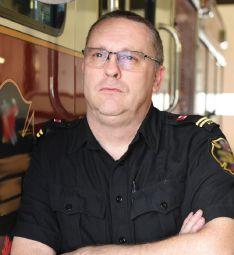
Rob Leathen is one of the trained volunteers for Boots on the Ground who assists other first responders, including firefighters, looking for a place to call and somebody to listen.
is crucial.
“Boots on the Ground shines because the call takers are first responders with first responder experience. Many also have lived experience with operational stress injuries. The Boots on the Ground volunteer call takers actually understand and ‘get it’ which is vital for peer support to be effective.”
Leathen adds one final thought.
“With Boots, there is hope.”
By Teddy Katz
Additionally, she will be the township’s community emergency management coordinator.
CHRIS WOOD took on the role of fire chief in Dryden, Ont., on July 12. Wood joined the Dryden fire department in 2015 and has served as captain for the past two years. The Dryden Fire Service is a volunteer fire department operating out of two fire halls.
KENT READMAN is the fire chief in Kenora, Ont. Readman, formerly the chief in Dryden, officially began is post on June 7. He has worked throughout Canada for the last 19 years in various capacities, including volunteer firefighter, captain, training officer, director of emergency services, health and safety coordinator, deputy fire chief and fire chief.
New report shows First Nations children in Ontario 86 times more likely to die from a fire
First Nations children aged zero to nine years have a fire mortality rate 86 times greater than non-First Nations children in Ontario, making them the group with the highest death rate studied in a new data report.
The Ontario Chief Coroner’s Table on Understanding Fire Deaths in First Nations (OCC-UFDFN) released its data that examined underlying systemic issues of fire-related mortality for First Nations.
The OCC-UFDFN looked at deaths over a 10-year period spanning from 2008 to 2017, finding 56 deaths in 29 fires that happened in 20 Ontario First Nations communities. The research found that communities without year-round road access had the highest number of fatal fires and deaths. Seventy per cent of First Nations fatalities happened in the colder months and 70 per cent occurred overnight.
The vast majority, 86 per cent, of fatal fires had either no or non-working smoke alarms in the home. The report also showed that more investigations into fatal fires in First Nations communities result in a finding of undetermined as the causes when compared to non-First Nations areas. The review also looked at structural differences and building materials used in First Nations communities, noting that the Ontario Fire Marshal’s office is researching this further.
“This study is a most welcomed tool for our reference,” said Blaine Wiggins, executive director for the National Indigenous Fire Safety Council (NIFSC). “The leadership by chief corner’s table is appreciated. We hope to replicate this work for all indigenous communities in Canada at some point.
As noted in the study, “Education and prevention are key to reducing fire fatalities. Appropriate education and funding must be considered for the use, installation, and maintenance of smoke alarms” said Len Garis, director of research for the NIFSC.
Garis further highlighted in the report: “It is important to note that emergency response and fire suppression on their own are known to have a limited impact on survival. Early detection and escape are paramount”.
Garis’ own research estimates that fire risk of death due to
Retirements
The fire chief in Kenora, Ont., TODD SKENE, is retiring. Skene will be hanging up his helmet after 27 years in the fire service, leaving behind a career full of achievements with both the Ministry of Natural Resources and the City of Kenora. Todd has a passion for training and had a lifelong dedication to FireCon planning
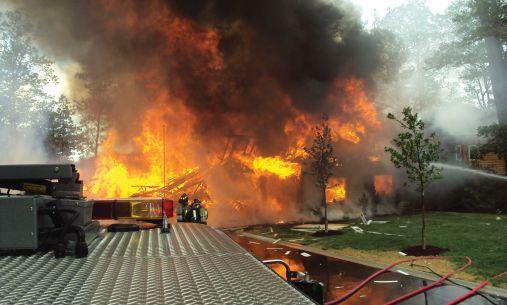
The OCC-UFDFN looked at deaths over a 10-year period spanning from 2008 to 2017, finding 56 deaths in 29 fires that happened in 20 Ontario First Nations communities. This image was captured by Rama Fire Rescue, serving Chippewas of Rama First Nation.
fire can be cut by nearly 50 per cent as opposed to not having an alarm as was the case in the study, nearly 85 per cent of the indigenous fatalities had no working smoke alarm.
The OCC-UFDFN, whose goal was to obtain the data and information that could properly inform an understanding of First Nations fire deaths in Ontario, was formed in the wake of two tragic fires in 2016 in Pikangikum First Nation and Oneida Nation of the Thames. While the deaths to occur from these fires were not isolated events, they did become a catalyst for the OCC-UFDN, which is made of a governance team, working group of technical experts, and an advisory group of knowledge keepers. The First Nations Fire Template (FNFT) was developed to capture the data that is presented in the report.
The OCC-UFDFN’s report makes special reference to the historical basis for First Nations fire risk in Canada, and states at the end of its executive summary that the “information provided cannot be meaningfully understood without considering the historical context and present-day realities of First Nations communities.”
and educating members across the province.
Fire Chief JOHN MCFARLAN is retiring from the Zorra fire department in Ontario. McFarlan began his service with Zorra Fire on Jan. 1, 1981, and worked his way up through the ranks. He was appointed as Thamesford Station Chief on Jan. 24, 2012. McFarlan was then appointed as Zorra’s second fire chief and
is retiring after nine years in this role.
Last alarm
Colwood, B.C., Fire Chief JOHN CASSIDY passed away suddenly on June 23 after members of the Colwood Fire Department along with BC Ambulance Services responded to a medical emergency call and provided care for the Colwood, who later died in hospital. Chief
Cassidy contributed 22 dedicated years to the health, safety and quality of life for the people of Colwood.
JOHN ALLAN REID, fire chief for the Central Manitoulin department in Ontario, died on July 1 at the age of 66. Reid has been the Central Manitoulin Fire Chief since February 2005 and spent 30 dedicated years in volunteer fire fighting.
PHOTO CREDIT: FIRE CHIEF
JEREMY PARKIN
STATIONtoSTATION
BRIGADE NEWS: From departments across Canada
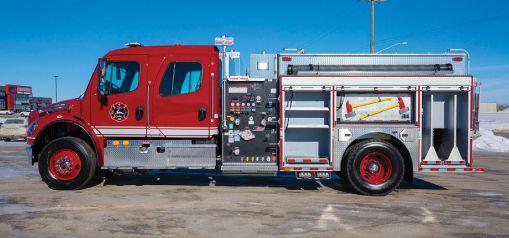
Fort Garry Fire Trucks has delivered this new pumper to DeBeers Gahcho Kué Mine in Yellowknife. Equipped with a Cummins L9 350 HP engine and Allison EVS 3000 automatic transmission, this MXV pumper sits on a Freightliner M2-106 chassis. It also features a Waterous CX 1500 GPM water pump, Waterous Aquis 6 / Class A foam, and a Copoly 1000 G tank with a capacity of 800 imperial gallons.
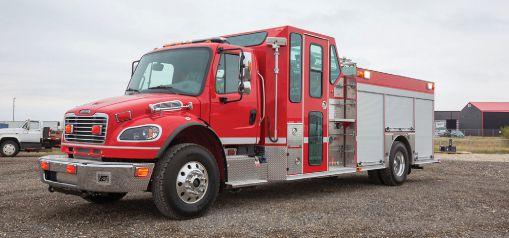
Red Deer County in Alberta took delivery of this 4-man crown aluminum rescue pumper from Fort Garry Fire Trucks. Built on a Freightliner M2-106 chassis and powered by a Cummins L9 350 HP engine and an Allison EVS 3000 automatic transmission, this pumper’s features include a Hale DSD 1250 pump, Co Poly 800 IG tank, and a Foam Pro 2001 Class A system.
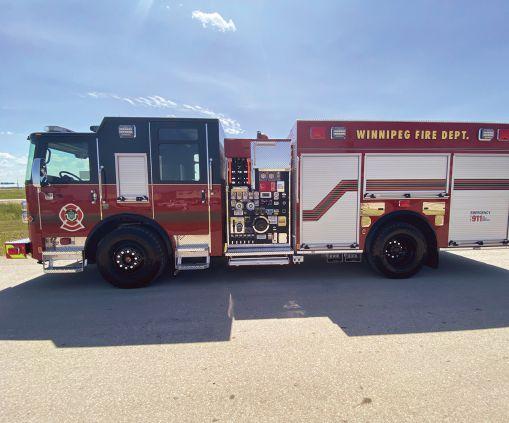
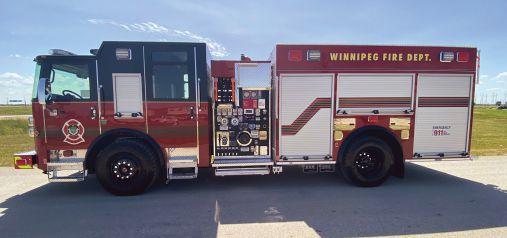
The City of Winnipeg took delivery of this Pierce Manufacturing pumper from Commercial Emergency Equipment. Built on a Pierce Enforcer chassis and powered by a Cummins L9 450 HP engine, this pumper features a Hale QMAX-XS-175, 1,750 GPM pump, Husky 3 foam system and a 500 USG water tank.
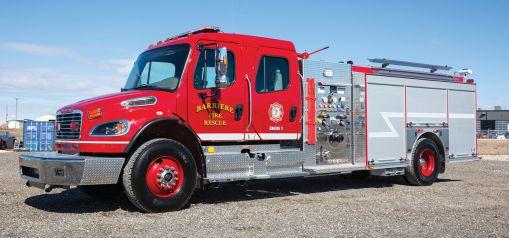
Barriere Fire Department in British Columbia has received this new pumper from Fire Power Plus. Manufactured by Fort Garry Fire Trucks, this emergency rescue pumper is equipped with a Cummins L9 350 HP engine and Allison EVS 3000 automatic transmission. Sitting on a Freightliner M2-106 crew cab chassis, the pumper features a 1,250-GPM Hale DSD pump, 1000-imperial-gallon CoPoly tank, and Foam Pro 2021 foam.
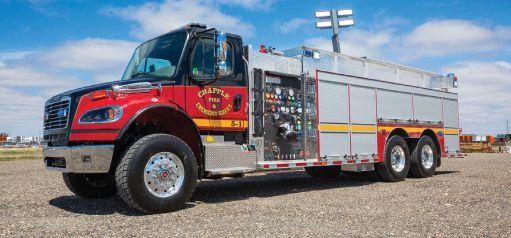
Chapple Fire Department in Ontario took delivery of a pumper tanker from Fort Garry Fire Trucks. Built on a Freightliner M2-106 chassis, and powered by a Cummins L9 350 HP engine and an Allison 3000 EVS transmission, this pumper tanker body is made of a black powder coated 5083 salt water grade aluminum. Features include a Hale RSD 1250 pump, 2300 IF Co-Poly tank and Foam Pro 2001 Class A system.
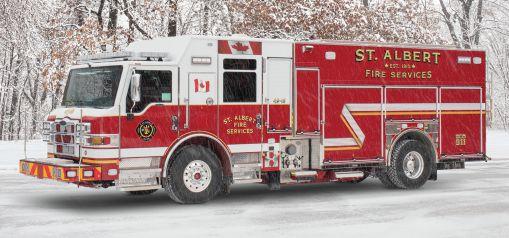
The fire department in St. Albert, Alta., took delivery of this Pierce UC pumper from Commercial Emergency Equipment. Built on a Pierce Velocity chassis and powered by a DDC DD13 505 HP engine, this PUC pumper features a Husky 12 foam system, Pierce 1,500 GPM pump, and 750 USG water tank.
RED DEER COUNTY
DEBEERS GAHCHO KUÉ MINE
BARRIERE
REDUCING FALLS
Could your fire department reduce falls? The Saskatoon Fire Department’s experience says yes
By DORI KRAHN and ROSLYN M. COMPTON
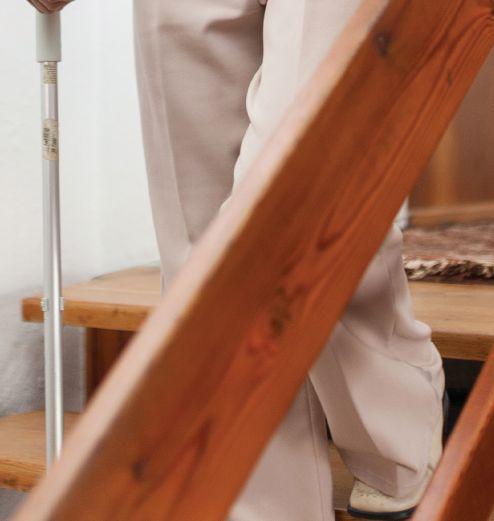
Imagine you are an 84-year-old man living with your wife of 63 years in a building that provides you with meals and house cleaning. One day, you fall on your way to the easy chair and can’t get up; this is the first time and you call the fire department for help. The firefighters are professional and kind, and carefully lift you back into your chair. The firefighters are primary care paramedics, so they also take your vitals to ensure there are no signs of other emerging medical conditions. When they leave you think, this is such a wonderful service. A week later you fall in a different location and the story repeats itself. During the next year, firefighters come back 19 times to lift you after a fall. Although everyone is kind and helpful, this seems a bit excessive, even to you.
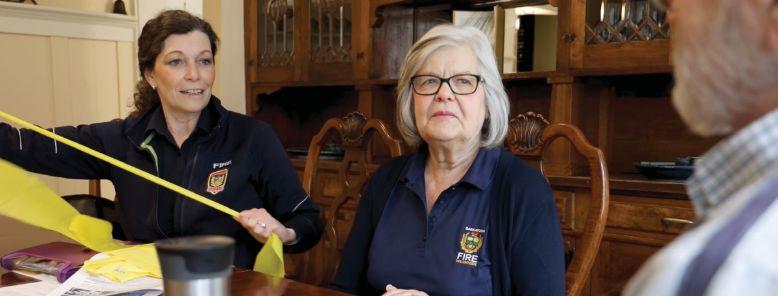
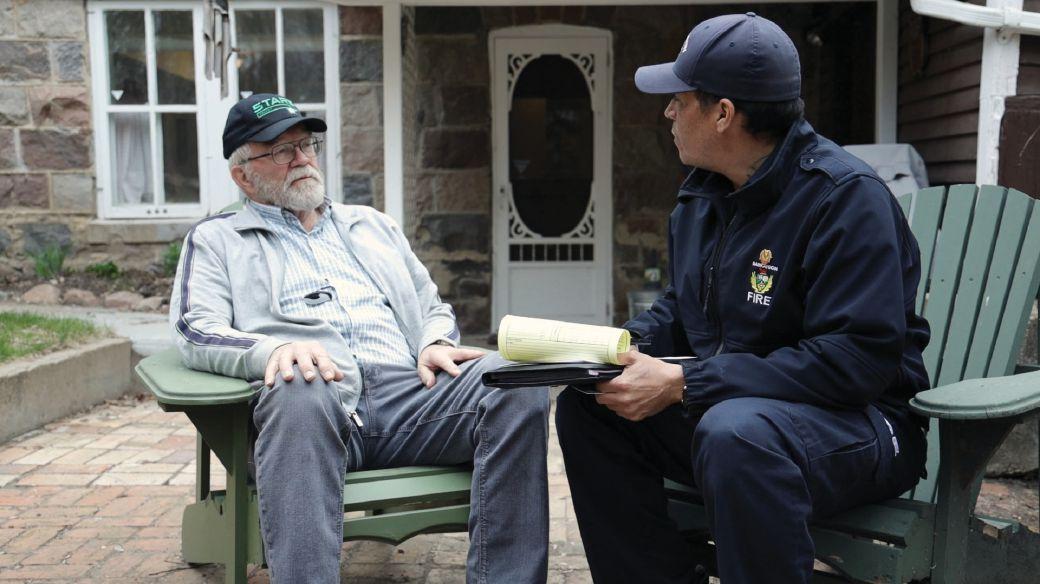
One day the firefighters tell you about an option, a program called Remembering When. The fire department is offering this program to help older adults stay in their homes by working to prevent fires and falls. You take the chance to explore the program further. When the fire department asks if you would like to have a home visit you agree and are pleasantly surprised that the experience has the same professional and kind vibe as the friendly firefighters who came to lift you. Volunteers from Remembering When came
to your home, they cared, they offered suggestions to help prevent falls, most of which you implemented. The volunteers called back in three months to see how you were doing. The experience made a difference because you managed to eliminate some trip hazards, started exercising more and installed grab bars in the bathroom and a Sask-a-Pole by your bed to help you safely transfer into and out of your bed. The falls quit happening – for now.
The Saskatoon Fire Department has been lifting people up throughout the community since 2007. Over the years the department has tried to get help for people who obviously needed it, with varying degrees of success. In 2017, the department partnered with the Saskatoon Council on Aging (SCOA) to implement the NFPA’s Remembering When program to enhance the lift-assist services offered in the community.
Remembering When was developed around 16 fire and fall prevention messages. Canadian older adults are 2.5 times more likely to die in a fire compared to their younger counterparts. Canadians over the age of 65 make up 14 per cent of the Canadian population, but account for about one-third of the fire-related deaths each year. According to NFPA, people over 85 years have the highest risk of
In 2017, the department partnered with the Saskatoon Council on Aging (SCOA) to implement the NFPA’s Remembering When program t o enhance the lift-assist services offered in the community.
death from fire, with cooking being the leading cause of fire-related deaths among that age group. Falls are another concern for older adults. The prevalence of falls among older adults was 34.5 per cent based on data collected in Ontario in 2019. Out of almost 600 participants, at least 20.2 per cent of the older adults who fell needed medical attention. Falls have increased the medical burden on the Canadian health care system and caused physical injuries and trauma for older adults who experience a fall.
Once local fire departments are trained in the Remembering When program, they begin the process of customizing the program for their communities. In Saskatoon, this included:
• Using volunteers who are mainly retired health care professionals. Volunteers receive six hours of training, including motivational interviewing techniques.
• Demonstrating during group presentations and home visits how to get up if you’ve fallen and haven’t hurt yourself. The process used is based on the Public Health Agency of Canada’s guidelines.
• Focusing on the people the fire department had already lifted and helping them prevent the next fall, in addition to doing proactive group presentations and home visits throughout the community.
• Making a three-month follow-up call after a home visit to connect and to find out whether the person provided with the lift assist was able to implement the suggestions provided by the volunteers.
• Asking people to write an “I will . . .” statement after group presentations to encourage participants to personalize the information they heard and for program personnel to evaluate what information is most important to people.
• Establishing partnerships with the Saskatchewan Health Authority, and agencies that focus on older adults and/or provide services in people’s homes.
• Installing smoke alarms during home visits if the smoke alarm either doesn’t work when tested or is outdated.
In April 2021, a research project completed by the University of Saskatchewan determined that Saskatoon’s Remembering When education and intervention approach was effective in improving the quality of life of community dwelling older adults.
The information collected in this study came from people who accessed Remembering When between Jan. 1, 2018, and Dec. 31, 2019. Older adults aged 85 to 89 accounted for 19 per cent of the lift assists, followed by 80 to 84 (17 per cent) and 90 to 94 (15 per cent). More than 50 per cent of the people the Saskatoon Fire Department lifted were 80 years of age or older. During this timeframe, 64 per cent of the people were lifted once, with just four per cent lifted five or more times. In many instances, there was no record of exactly why someone fell, but the most common reason recorded was loss of balance while walking or falling out of bed.
Remembering When uses group presentations and home visits to reach older adults in the community and prevent fires and falls. The most common fire-safety related takeaways identified in the “I will . . .” statements collected after each group presentation were:
• smoke alarms save lives
• stay in the kitchen while cooking
• general fire safety knowledge
The most common takeaways related to fall prevention were:
• engage in regular exercise
• use non-slip mats in the bathroom
• take your time
Home visits proved to be the most effective technique to reduce
the number of reported falls. The most common recommendations at a home visit were to:
• exercise regularly
• add/replace smoke alarm
• use non-slip mats in the bathroom
In a phone call three months following the initial home visit, people told program volunteers they had implemented 67 per cent of the provided suggestions.
In interviews with participants, the Saskatoon Fire Department found that Remembering When was:
• a reciprocal learning experience with the volunteers and older adults learning from each other
• more than a safety program – there was a social aspect that was valuable in combating social isolation
• focused on home safety and helped older adults spot safety hazards in their homes
• an opportunity to teach people how to prevent a fall and what to do if they fell
• a gateway program through which people could be referred to appropriate resources
The genius of Remembering When is that it focusses on both fire and fall prevention. The Saskatoon Fire Department has found that fire safety is generally the impetus for older adults to ask for a group presentation, and that fall prevention was viewed as a bonus. However, it flipped when it came to home visits – older adults saw fall prevention as the priority and fire safety as the bonus.
In many jurisdictions throughout Canada, the fire department needs to be invited into people’s homes. Remembering When gets department personnel into people’s homes and allows staff to test smoke alarms and make sure they are not expired, discuss specific home escape plans, and talk about other fire safety topics such as staying in the kitchen when cooking.
Although program administrators knew experientially that Remembering When was an effective tool to prevent fires and falls among older adults, it is helpful to have the data to reinforce the success of the program.
Remembering When is an exciting addition to the Saskatoon Fire Department’s public education initiatives. The positive outcomes for the firefighter and volunteer teams are that we can prevent fires and falls among a population that needs and appreciates help, and on a workload level, we are able to decrease repeated lift assists.
If your department is involved in lift assists, the Saskatoon Fire Department encourages you to explore the NFPA’s Remembering When program and see how it can make a difference in your community. Visit nfpa.org/Public-Education/Teaching-tools/ Remembering-When. Note that the program is being updated and online training modules are being created. For more information about the Saskatoon Fire Department’s Remembering When program, please contact Dori Krahn at dori.krahn@saskatoon.ca. For more information about Remembering When in Canada, contact Laura King at nfpacanada@gmail.com.
Dori Krahn works for the Saskatoon Fire Department as their community relations coordinator and since 2017 has been the impetus behind the department’s implementation of Remembering When. Roslyn Compton is an assistant professor with the College of Nursing at the University of Saskatchewan, whose research focuses on supporting older adults to age in their choice of place.
BY CHRIS HARROW Director of Fire Services
PLEADERSHIPFORUM
Time for change
andemic: I know all of us are getting sick and tired of that word and all that comes with it. For better or worse, this word has changed the way we do things and will force us to change more as we move along. True leaders will step up and recognize the need to change and adapt to the new world we are living in.
The time spent in lockdown or living through restrictions has given many the opportunity to re-evaluate their lifestyle. I have spent a great deal of time looking at my work-life balance and how much time I have spent away from my family. The pause in what was everyday life has enabled people to look at the balance between work and family, “me” time and time dedicated to others. Many people realized that taking time out to breathe and do activities for yourself is actually not that bad.
There is also a part of the population who worked their tails off during the pandemic because of various reasons and they now need to take time to themselves to recover both physically and mentally. Either way, both of these scenarios will change the way we need to do business in the fire service.
The fire service, specifically the non-full time fire service, are going to have to evaluate how they do business. Volunteer and part-time firefighter’s expectations are going to change. Their ability to dedicate a large amount of time might be difficult. Coming out of the pandemic, people’s priorities have changed and the ripple effect through the fire service could be huge.
Leaders in the fire service will need to step back and reassess how things are done. No longer can you expect firefighters to dedicate two or three nights a week to the department or spend a lot of their weekend time at the fire halls. Expectations from senior fire service members may need to be adjusted or schedules changed to better suit the expectations of firefighters.
number of sessions. Many of us would train on pumper operations at a practice session. This involved many people standing around the pump panel reviewing the operations of the truck. The key was a number of people were standing around watching and not participating. By combining topics, you can have one group doing one thing and other groups tackling another skill. Eventually a session can accomplish so much more and you are not wasting anyone’s time.
Leaders in the fire service should always be keeping this in mind: how well am I using the volunteer firefighter’s time? Whether it is at a training session, a meeting, a course, how well are you using the time they are dedicating to you? Time is a valuable commodity, one even more valuable coming out of the pandemic. The fire service needs to adapt to ensure we are able to keep our members and recruit new ones. It will be very interesting to see in future recruitment endeavours by various departments the feedback they receive from potential recruits. My humble prediction is there will be a lot more questions about how much of a time commitment is it and how will my time be used.
Take a look at the number and frequency of meetings you currently have in your department. Is there a way to streamline them or maybe
Coming out of the pandemic, people’s priorities have changed and the ripple effect through the fire service could be huge.
An example of this is training. Many fire departments train once a week, 52 weeks a year. The pandemic obviously changed this and the fire service realized that training using other means had to become an option. Many changed to online training using various courses and learning management systems. Others started looking at their training nights and realized that by combining drills and topics, you could accomplish much more on one night allowing you to decrease the
Chris Harrow is the director of fire services for the Town of Minto and Township of Wellington North in Ontario. He is a graduate from fire programs at Lakeland College and Dalhousie University and holds a graduate certificate in Advanced Care Paramedics from Conestoga College. He can be reached at c.harrow@mintofiredept.on.ca.
condense them to make the meeting more efficient so you are only asking the firefighter to give up one night instead of two? Take a look at your methods of communications and is there a way of improving on them or bringing different technology in to improve up on it? Can you get the same amount accomplished in less time? A lot of questions to ask your team, but you will be surprised at their answers.
Every fire service leader should be looking at their processes and talking with their teams about how they can do things better. All procedures should be on the table for discussion and use the pandemic as an excuse to reset some things around the station. People have been going through change now for over a year and a half, so it should be nothing new to them. Take the opportunity to talk to your people and involve them in meaningful change. It won’t be easy, as we all know, the fire service resists change. However, I am afraid anyone who is not willing to adapt to the new world we are in will get left behind.
Town of Minto and Township of Wellington North, Ontario
AUTOMATIC SCBA DECON WASHER
PROTECT YOUR FIRE FIGHTERS FROM CANCER CAUSING AGENTS
Developed to help firefighters fight cancer: p firefightersfight cancer:
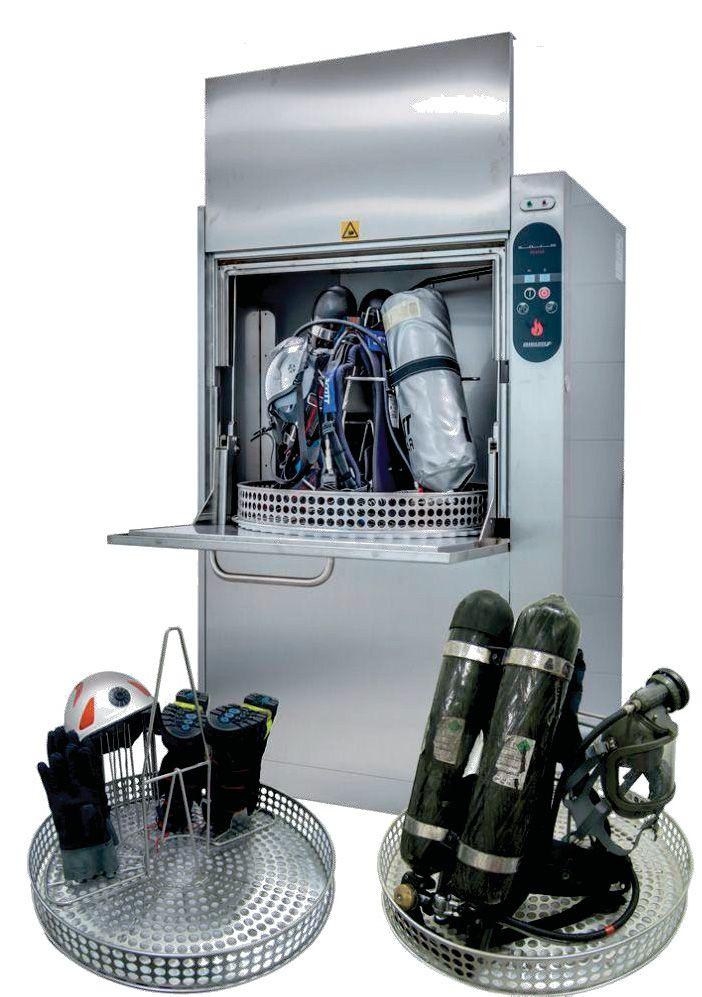
Studies show that firefighters run a significantly higher risk of being diagnosed with, and dying from, various forms of cancer than the general population This is due to the hazardous chemicals and carcinogenic particles they are exposed to in the line of duty To reduce this exposure and the resulting cancer risk, it is essential to thoroughly, safely and efficiently clean and decontaminate all protective equipment after every use That is exactly what the Solo Rescue® Decon W asher does Cleaning gear in the Solo Rescue means less exposure to cancer causing PAH particles and a safer work environment for you and your fellow firefighters
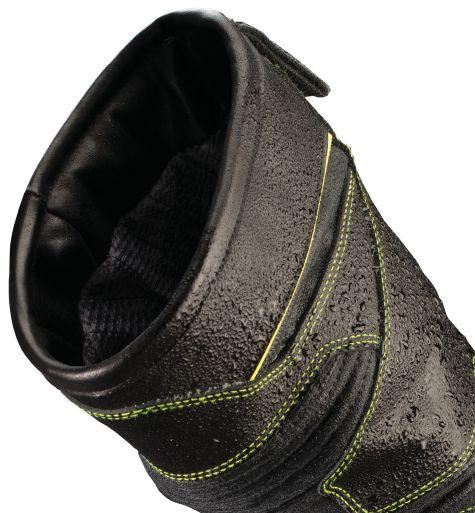
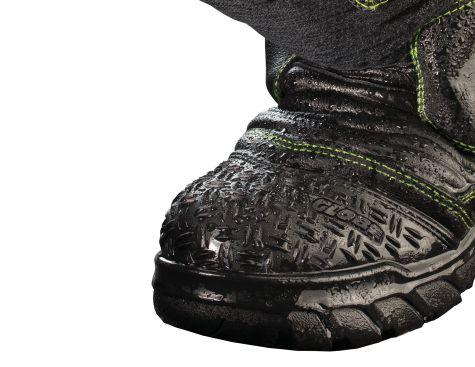
Rather than try and re-purpose existing un-related washing equipment, Rescue Intellitech worked with a number of Fire Departments across Europe to develop and manufacture a purpose-built machine to clean and sanitize SCBAs, boots, gloves and helmets This resulted in a machine designed with a minimum of moving parts, minimal power requirements , lowest cost of ownership and the ability to clean more than just SCBAs
IN ONE HOUR YOU CAN CLEAN/DECON: 14 SCBAs W/MASKS and CYLINDERS
Using a Solo Rescue® heavy duty SCBA washing machine helps avoid exposing the crew to combustion gases, soot particles, toxins and carcinogens released in the maintenance process and also substantially lowers the time spent decontaminating firefighter equipment.
•A mild and low-foaming detergent specifically designed to remove soot and dangerous carcinogens from SCBA used by firefighters and first responders.
“We were thoroughly impressed by the Machine’s ease of operation, efficiency and performance The contaminants thaat were removed from our SCBA’s that had tha d previously y remo been oved n cleaned m d by SCBA u y hand s tha d was t prrevio h s astonishing. The Solo Rescue washer w a will wiill be an integraal integra part par of our exposure reduction program, not only for its superior quality and efficiency of cleaning, but in the reduced exposure to contaaminants throughout the cleaning process”
Qualified by MSA to clean the MSA G1 SCBA f y
IN ONE HOUR, YOU CAN ALSO CLEAN and DECON:
21 HELMETS or 60 PAIRS OF GLOVES or 30 PAIRS OF BOOTS
The Solo’s unique washer/sprayer system provides 360° of coverage ensuring every part gets washed.
BACKtoBASICS
The ‘paper hat’ captain
BY MARK VAN DER FEYST
Afew years ago, while at a training conference in Canada, myself, along with fellow instructors, were having an afterclass debriefing session following our day of instructing that included discussing the day’s events and other fire related topics. During that conversation, the topic of officers and promotions came up and during that conversation, the term, the “paper hat” captain, was blurted out by me. It was a laughable moment when it was said and never really thought of again until recently.
What does this term mean? What is a “paper hat” captain? When I blurted out that term a few years ago, I was describing a person who wears the hat of an officer, but really is not an officer because of what they do not do. The hat that they wear as a lieutenant or a captain is for show only and is paper thin in terms of its value to them and for the organization. It looks like an officer, looks shiny and nice like an officer’s hat, but is full of nothing.
I am writing this to address the issue of the “paper hat” captains that are out there in numbers across the country in all types of departments, both small and large, from the perspective of the firefighter who must serve under them. Sort of like a reverse performance appraisal, but on a generic level.
How does someone become an officer in their department? It comes down to two options for the career side: competition or by seniority. For the volunteer or combination departments, competition or appointment based on favouritism, seniority, or relation can come into play. The “paper hat” captain syndrome is a direct result of seniority only promotion or from appointments based upon favouritism or relation. With the seniority only system, it breeds laziness and a lack of desire to be the best because all the individual has to do is wait for their turn to get promoted. Just sit and wait, and you too will become a lieutenant or a captain!
Why is this system in place? There are many reasons that are given from proponents of this type of system to help sell the idea of it, but the main reason focuses on money. Career department members want to ensure that they have a good pension when they retire and one way to ensure that is to have their “best” years’ salary as high as possible, which is by being an officer. In the volunteer style departments, it can be based around money as well as politics for keeping the kingdom keys in the hands of one person.
How does this tie into the concept of Back to Basics, which is what our column focuses on? Being an officer is all about the basics, not just for themselves, but for the subordinates that they are responsible for. I want to highlight four traits that I have witnessed over my career that the “paper hat” captain exhibits.
First, they are not involved with training. The job of an officer is to train their crew and to develop them. They are not trying to develop them to be an all-star team but rather develop their
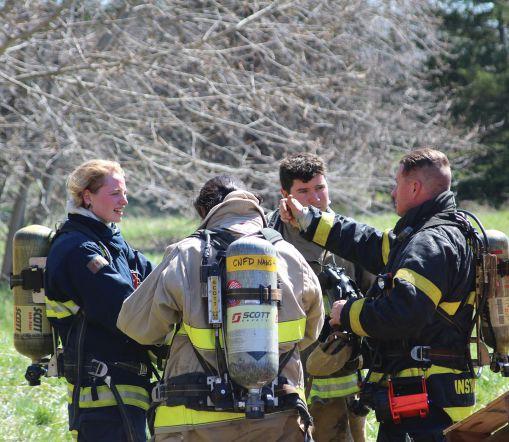
Photo 1: A leader up front leading the crew. Knowing what to do and passing it on to the crew members is essential for an involved officer.
Photo 2: Take the time to debrief or discuss with the crew how the call went so that all can learn from the experience.
BACKtoBASICS
skill level and skill-sets to become proficient with them and develop mastery of skill. Training the crew means that the officer has to train with them. Leading by example is a big part of skill development and also develops the team dynamic. I have witnessed too many officers who are willing to support training, but not take part in it themselves. They are content in watching only, if they are even present at the training to begin with. For some people who are promoted, they think that when the stripes are on the shoulder or the gold leaves are on the collar, they are exempt from training.
Secondly, they are not involved with professional development. This is more so directed towards the officer’s own professional development. Becoming an officer needs to be approached in the same manner as when hired or accepted as a firefighter. In the beginning of a firefighter’s start, they are learning lots about being a firefighter. The same thing goes for the officer. They need to learn about being an officer just like a recruit firefighter and this will involve professional development. Instead of learning how to roll hose, they are going to learn about tactics, strategies, being a leader, command structure, running an incident, etc. Professional development can be attained in many ways with online learning, reading, attending conferences, small group chat discussions or watching videos.
Thirdly, they are not involved with current changes in the fire service. The fire ground is a dynamic environment as it is always changing, for worse. The same thing applies to changes in the fire service. There are constant changes taking place based on past practice, lessons learned, and science proving methods. An officer being responsible for the crew they are assigned or for the fire ground that they are in command of, needs to be on top of current changes in the fire service as it will fall on their shoulders and head to make good decisions. If they don’t make good decisions, it will fall upon them to explain and justify why they did what they did.
Lastly, they are not involved; they are there in body only. This is the worse part of being a “paper hat” captain – being a lifeless body at the helm. This is where the individual shows up when they have to, occupies the seats they have to and does nothing more than what they have to. All they are doing in counting time is in fact wasting time, everybody’s time. It can be analogized to a rudderless ship just floating along. This is an extremely dangerous situation and phenomenon as not caring about their job will transfer onto the fire ground, onto the crew they are overseeing, and the department as an organization. In the end, they are doing an act of injustice to the community that they serve.
In closing, what has been written and read by the reader does not apply to them because only people who are involved with their professional development will be reading this article, so I am preaching to the choir! But for those who are a “paper hat” captains, it is not too late to shed the paper hat and instead don the hat of respect by becoming involved.
Mark van der Feyst has been in the fire service since 1999 and is currently a firefighter with the FGFD. He is an international instructor teaching in Canada, the United States, FDIC and India. He is a local level suppression instructor for the Pennsylvania State Fire Academy and the lead author of Fire Engineering’s Residential Fire Rescue book and other DVDs. He can be contacted at Mark@FireStarTraining.com.
TRUCKTECH
Let’s talk tires
By CHRIS DENNIS
Let’s talk tires. Wait don’t go away! I have often bypassed tire seminars as a technician only to find myself learning something every time I do go.
What is a tire, really? The quick answer is that it’s the round black thing full of air mounted on a rim that allows the vehicle to roll down the road with ease. But there’s a lot more to tires than allowing the vehicle to roll easily down the street.
Cavemen may have invented the round wheel, but in 1888 it was John Boyd Dunlop invented a pneumatic tire (though, according to the National Museums of Scotland, he was unaware that Robert Thomson had already patented a design for a pneumatic tyre in 1846). Dunlop’s tire was installed on a bicycle. Before Dunlop and Thomson’s inventions, there were tires of wood, wood with steel wrapped around, as well as leather. Dunlop’s invention was designed to help his son who suffered from headaches while riding his bicycle on rough roads. This new tire would help to cushion the blows of rocks and pot holes. Paved roads were not in the mix yet. From this era came patent after patent. What became of it this is the tires we drive on today.
Whether it’s tires from way back or tires of today, they all wear out. The difference today is the science behind compounds, tread design, side wall strength, load and speed ratings and air pressure that all come into effect. The size of a tire can also affect the total overall weight the vehicle is able to carry.
Now, let’s talk fire trucks. The trucks of yesteryear were horse drawn pumper units with steel wrapped wooden wheels. The horse pulling the cart also had “tires”, better known as shoes. These were also made of steel. Regular inspection of wagon wheels as well as horseshoes had to be done to keep the wagon on the road as well as the horse healthy and able to work. The tires on the rigs are the same.
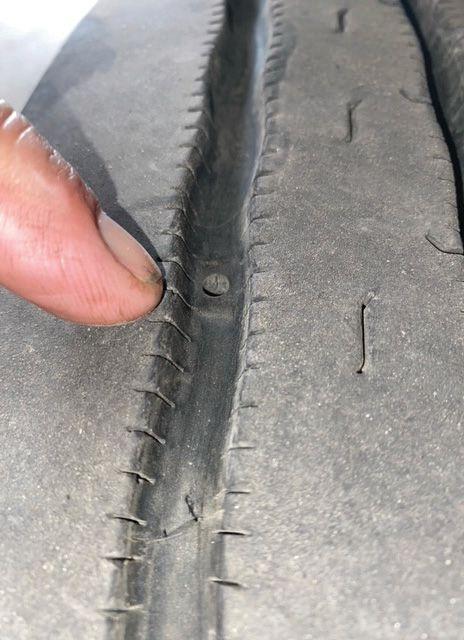
Vaughan Fire and Rescue Services (VFRS) does all its own in-house driver training. During this training, the newest drivers are given direction on a full circle check. The tires are not overlooked. Starting at the tread, the area that contacts the road, we look for things like irregular tread wear. Tread blocks or tread shape that are not the same, cuts, snags, bulges, cupping, feathering, or foreign material stuck in the tire should all be noted (could be a nail, screw, glass, or a piece of steel). Once the visual is done, run a gloved hand over the entire tread starting at twelve-o-clock and moving down to where the tire makes contact. Do the same thing in the opposite direction. Feel for irregularities such as a separation or tire bulge. Careful, if you missed a sharp piece stuck in the tire, your hand may find it — hence a gloved hand. Move slowly down the tread face. Once this inspection is complete then look at the side wall. Starting at the tread, work down to rim bead
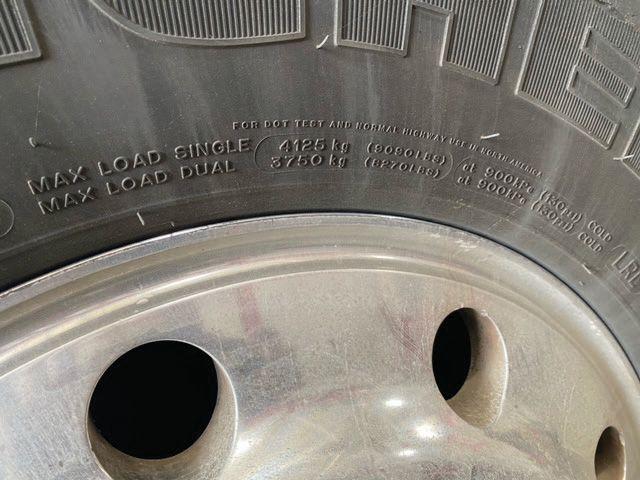
Here is the location of tire inflation and load information.
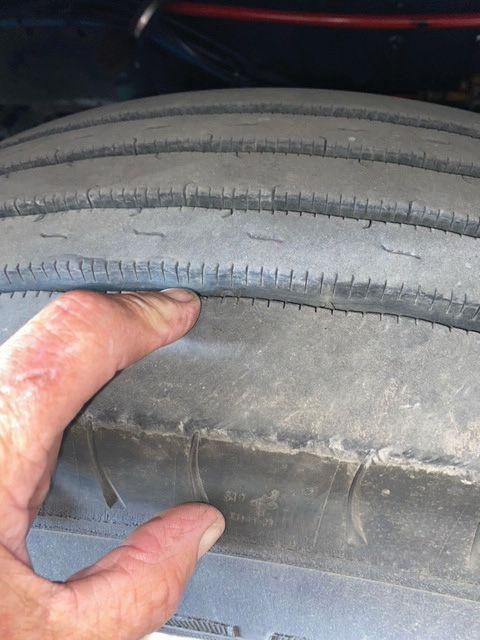
Here is where you’ll find the TWI tread wear indicator.
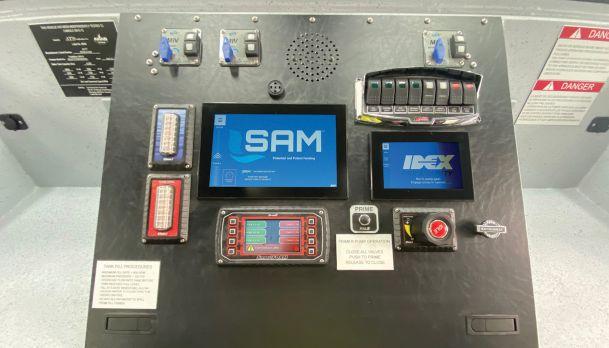
FGFT INTRODUCES ITS LATEST SAM UNIT THE ER-X 4-MAN CROWN PUMPER
Fort Garry Fire Trucks is proud to introduce our new SAM ER-X 4-MAN Crown Pumper. SAM is an integrated total water control system that manages your truck’s pump, tank, intakes and discharges freeing up the pump operator to focus on the scene. The SAM system replaces your pressure governor and takes care of opening and closing valves based on operator settings all from a 10 inch touch screen display or by using the system’s mobile tablet.
We are also a proud distributor of sales, service, and parts for the versatile Bronto aerial platforms that are designed for easy maneuvering, operation. Last year we unveiled our . This resourceful apparatus features a 92-foot articulated ladder platform built on a single axle Freightliner chassis and measures exactly 12.96 feet tall, 41.66 feet long, and and it is available for
immediate possession. Scan the QR on either truck or call our sales department for pricing information.
TRUCKTECH
area, this is where the tire meets the rim. Looking for bulges, deep cuts (long or short), and if tire cording is evident the tire is dangerous. You may find a long line that goes concave on side wall from tread section to bead area of rim. To find one of these lines on a side wall is common on a name brand tire. Multiple concaves with indents are common on less expensive tire brands. This is not a worry because this is actually where the tire side wall was joined. It’s heated and then when it cools it shrinks, sucking inward. This is actually a very strong part of the tire. There are more of these joins on less expensive brands of tires. My rule of thumb is two spaced out is okay, more than that or too close is not acceptable. If you find a join moving outward, that’s not a good thing. Take the tire out of service. A side wall bulge is easy to spot when it starts to show itself. How does a side wall bulge happen? Well, in my experience, the manufacturer will rarely say it’s the tire at fault so don’t hold your breath for warranty based on manufacturer’s defect. Circle the area, tag it out of service, and call a tire technician. This bulge can be caused by the low tire pressure. Driving on the road with low tire pressure causes poor handling, poor braking, poor performance and early tire wear. The outside shoulders of the tire are carrying the load so the middle of the tread sits somewhat concave. The side wall is now also exposed to more of the road surface. The side wall was designed to carry a vertical rotating mass while the tread was designed to handle the road
•
conditions. Thicker rubber and multiple layers of product in the tread area of tire contact to the road. If under inflated, the sidewall where it meets the tread now starts to wear on the pavement. This puts undo stress on the side wall. Hit a rock, drive through a pot hole, drive over a curb, scuff or pinch the tire side wall on a curb and the side wall is now being subject to things it was not designed to do. The rim on the inside of the tire starts to cut into the inner side wall of the tire. As layers of rubber start to get shaved away inside, the rubber becomes thinner while the outside of the side wall wears away against the road. Once a few internal layers are shaved away, air can now get in between the layers of rubber inside and will show as a bulge on the outside. If you hit a pothole low on air pressure just hard enough, the side wall meets the bead of the rim and damages the tire internally, creating bulges. This is also known as an impact break. Have you ever had a flat tire and noticed a very black line running total circumference of the tire? That is the part of the tire almost worn through running on the road. Once tire is off the rim it will be full of tire shavings. This is known as run flat. Poor inflation pressures. Tire pressure monitors help as a first line of defense to slow leaks, but you should still check with a gauge regularly.
TIRE IDENTIFIERS
There is a lot going on with the side wall of a tire in the way of
information, so much so that when you are looking for a tire pressure rating you sometimes end up going around the tire two or more times before you see it amongst all the other information. Consider DOT information, tire size, tire pressures (single and dual), total tire loads (dual or single), as well as warranty information, tread wear indicators and direction of rotation. If you have a directional tire, Michelin in, this case, says it’s okay to run the tire in the opposite direction for the last usable amount of tread life. I know this because we had a technician notice the tire was going backwards and felt it was going to be a problem. Whether it is depends on make, model of tire and manufacturer. To get the utmost wear safely out of my directional tire, I flipped it to go the other direction for the last 25 per cent of usable tire life. The tread blocks are worn, the belting has taken on such a memory inside the tire as well as the science of building it — if anything it may just be noisy and a rough ride. There are no issues with the tire itself. I have been able to maximize tire life with crew, truck and tire safety in mind and get more for the dollar. Tire rotations often will help with tire life. Even if alignments are perfect, tight turns and backing up in tight areas all cause tire scuffing and can cause irregular tread wear. It’s cheaper to do rotations than buy new tires because a couple are scrubbed off. Over inflation of tires or under inflation will also cause poor tire wear as well as poor performance and handling. Assuming alignment is bang on, CONTINUED ON PAGE 44
In this photo, you’ll see the tread wear indication built into the tire between tread.
PHOTO CREDIT: CHRIS DENNIS
Heat signatures can be masked
The importance of using your TI and your eyes
By MANFRED KIHN
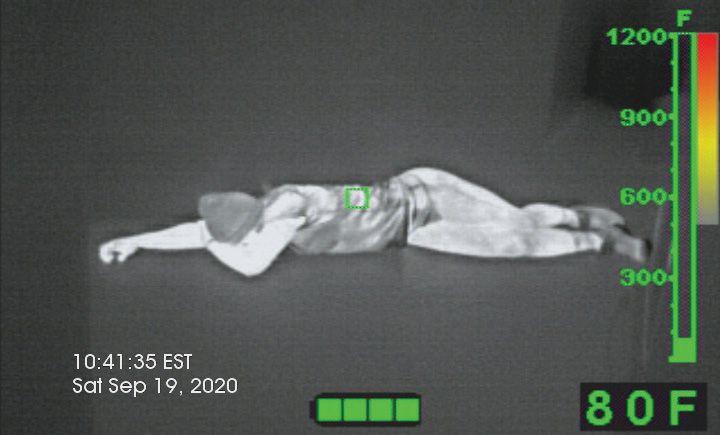
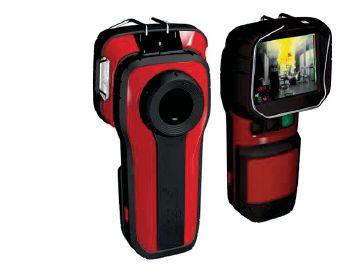
When looking through the lens of a thermal imager (TI), what is it that you are looking at? We know the basic TI’s shades are white (objects are hot or warm) black (objects are cold or cooler) and everything else is different shades of gray. But that was not the question. The question was, “what is it that you are looking at?”
In answering this question, consider that infrared radiation (I/R) is heat that comes from many sources of molecular activity:
1. Passive emitters: These primarily absorb and dissipate IR energy from active or direct emitters (inanimate objects such as tables, chairs, beds, or other furniture).
2. Active emitters: Emit IR energy in low to medium strength and varying intervals (living organisms such as humans, animals and plants).
3. Direct emitters: Constant high strength IR energy emitters (energy sources such as televisions, kitchen appliances, clock radios, cordless phones chargers, or computers).
When conducting a victim search, you are looking through the lens of a TI to aid you, but you should still you use your naked eye too, if conditions permit. Look for obvious forms or shapes of victims as they could be in different configurations like sitting, laying down or curled up. Not all are going to be visible as they could also be varied in different colours from white, black or grey depending on the temperature of the room or environment that they are located in.
In a bedroom, heat signatures can be masked depending on the type of bedding being used, such as a thick duvet, and Mrs. Smith, who is a frail elderly woman with not a lot of body mass, can be easily missed. You cannot rely on the TI alone. To be on the safe side, you must also conduct a manual search of the bed on top and under it. You could also be picking up what I call nuisance heat signatures that will be produced by direct emitters found on night stands next to the bed, but since you practice lots with your TI you would understand what those will look like…right?!
In elevated temperature situations, you must understand the difference of the sensitivity modes or gain states that your TI can produce and is indicated by a small green box with a green triangle inside found in the upper left-hand corner of your display screen. In the wrong mode you could easily miss your victim as they will not be as visible to you or masked. I call it “tricking the imager” by lowering or pointing the imager at the floor to get it to switch modes from low gain back to high gain so it’s sensitivity will be more focused at lower temperature objects such as your victim, and not the heat from the fire or unmasking the heat signature this time.
Another heat signature that is masked is that of a fellow firefighter due to the wearing of PPE. Looking for the shape of a helmet, SCBA and facepiece are important notes for the RIT team.
If your TI is in the wrong mode, you could easily miss your victim as they will not be as visible to you or will be masked.
We can unmask some other heat signatures by scanning with our imager slowly and methodically. If you scan too quickly, how can your brain compute what it is that you are looking at? I would love to hand you a silver platter with different shapes, sizes and colours of said heat signatures for you to look at and figure out, but I can’t. You’ll know this because you practice lots…right?!
Another area where heat signatures can be masked is when conducting size-up of a structure. Let’s say that the structure is made up of red rough brick on all four sides and has an asphalt shingle roof (both materials have a high emissivity value to them). Let’s make it a sunny day and you have a challenge on your hands. It is vitally important to conduct a thorough 360 of this structure as any heat from the fire inside can now be masked by the angle and direction of the sun on the walls outside exposed to the sunlight.
TIs may also miss detecting a basement fire when scanning the ground level floor. This is because the wood flooring, along with carpet and laminate floor covering, tend to insulate and prevent heat transfer, again masking the heat signature. It is imperative to try to gather as much information with the TI and your naked eye.
Remember these key firefighter safety objectives when using a TI: Identify hazards, personnel accountability, identify emergency egress points and evaluate structural integrity. A TI is absolutely useless in the hands of an inexperienced operator as you have it to interpret it The imager cannot do it for you.
Until next time practice, practice, practice and stay safe.
Manfred Kihn is a 19-year veteran of the fire service, having served as an ambulance officer, emergency services specialist, firefighter, captain and fire chief. A member of Bullard’s Emergency Responder team since 2005, he is the company’s fire training specialist for thermal imaging technology. E-mail him at manfred_kihn@bullard.com.
For more fire safety information, visit firepreventionweek.org
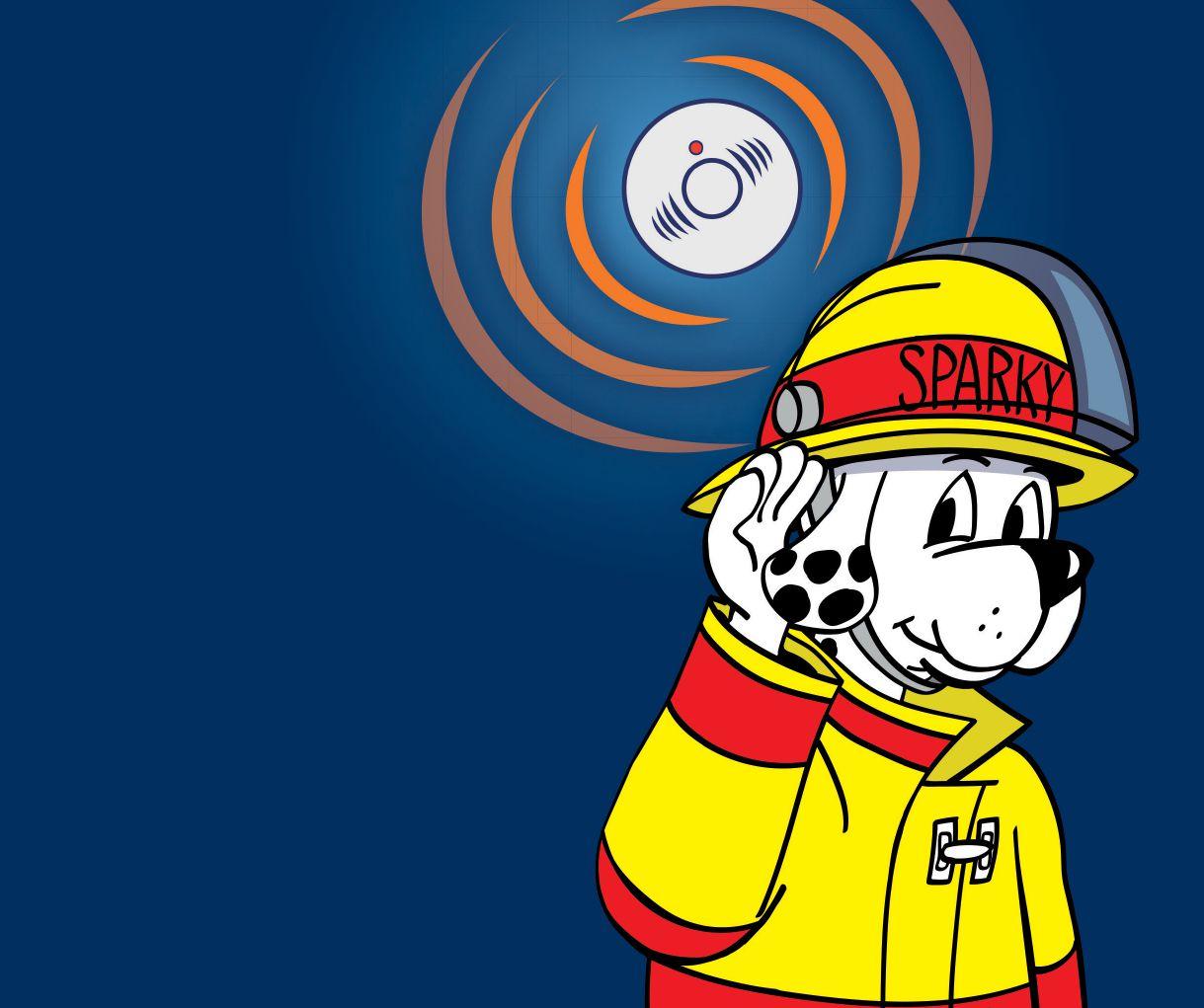
Learn the of Fire Safety Sounds ™ Fire Prevention Week™
October 3-9, 2021
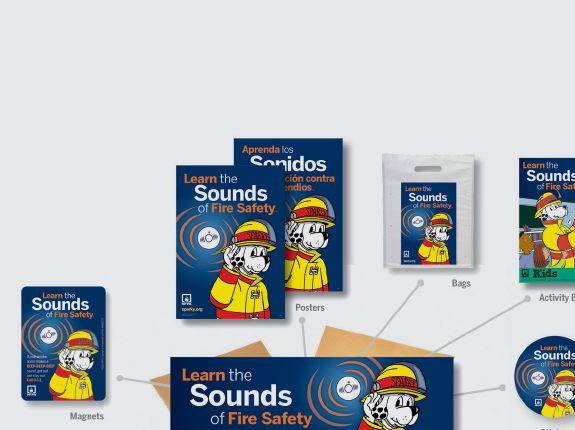
This year’s FPW campaign, “Learn the Sounds of Fire Safety™” works to educate everyone about the different sounds the smoke and carbon monoxide alarms make. Knowing what to do when an alarm sounds will keep you and your family safe. When an alarm makes noises – a beeping sound or a chirping sound – you must take action.
Everything you need to educate your community
Fire safety education isn’t just for school children. Teenagers, adults, and the elderly are also at risk in fires, making it important for every member of the community to take some time to make sure they understand how to stay safe in case of a fire during Fire Prevention Week and year round.
Sparky The Fire Dog® Products
• Colouring/Activity Books and Sets
• Crayons, Pencils
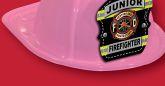
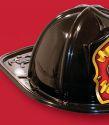
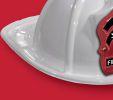
• Fire Hats
• Stickers, Tattoos
• Story books
• ….and the popular Sparky Stuffy
Lots More Available
• School Items & Handouts
• Brochures, DVDs
• Tattoos
• Kids Turnout Gear
• Stuffies
• and More!
Kids Fire Hats
Custom Shields Also Available
Fire Prevention Week
In A Box
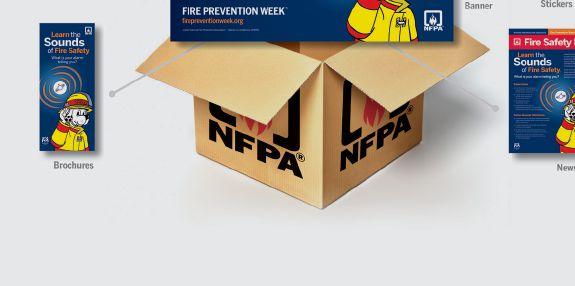
This top-selling value pack for groups of 100, 300 or 500 has everything you need to engage your community this October and throughout the year. Having the right handouts and giveaways are sure ways to increase engagement and help get your messages out far and wide. The products in the FPW in a Box™ are bright and colorful, easy to read and understand, and feature everyone’s favorite, NFPA mascot, Sparky the Fire Dog.®
Making mental health a priority
A unique program finds success for members of Barrie Fire and Emergency Service
By MAZ ATTA
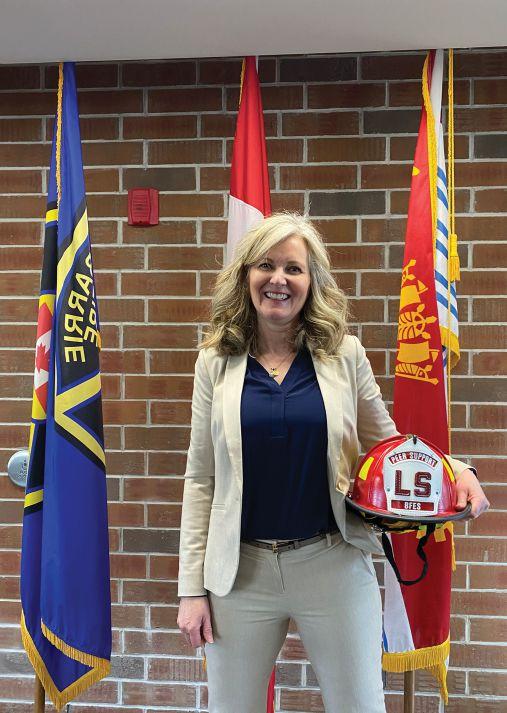
Mental health has changed from taboo to a top priority in fire departments. In Ontario, the Barrie Fire and Emergency Service (BFES) operates a mental health initiative that aims to create a healthy and supportive environment to benefit firefighter mental health. The program has been ongoing for a year and a half.
The program began with the training of 12 volunteer members to comprise a peer support team. The training, which took from six months to a year, taught the members on how they can support their co-workers and promote mental health.
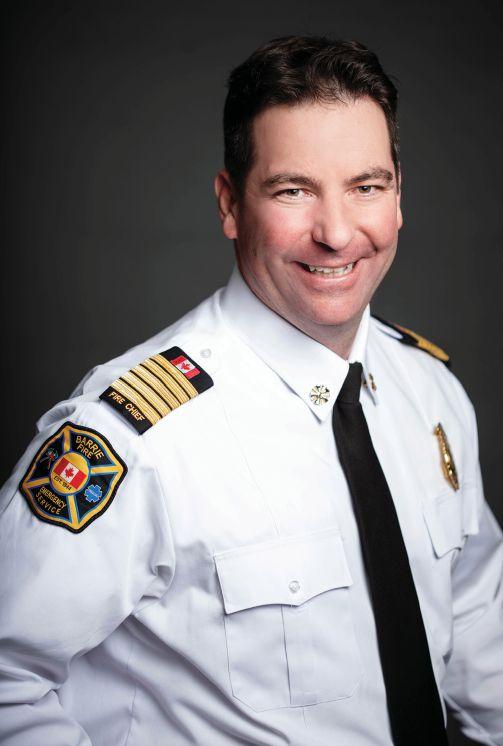
Barrie’s fire chief, Cory Mainprize, said the team selection process was based on who wanted to volunteer first and also had the qualities needed for the position. The trained team then reached out to their colleagues “slowly and gently” to help them open up more about their mental struggles.
“We really tried to strategically pick champions of the program to have them go first. When we were recruiting members for our peer support team, we wanted to make sure that they were the right people who are resilient and had the capacity to assist other people,” said Mainprize.
Members who went through the testing have learned more about themselves and how they could be “better and stronger,” said Mainprize, adding that some members were willing to volunteer on their own, while others met the program with reluctance.
Besides capital items and salaries, Mainprize said this mental health program has “the most resources they’ve ever committed to any program in the history of this department.”
“When we recognized we wanted to do more, we knew it really had to be driven internally by the peers and invited in by everyone’s colleagues. I think I would say to anybody, if you show me your budget, I will show you your priorities.”
The program’s lead psychologist, Lara Sigurdson, said her main goal is to “catch people early” before their mental health declines further. She said every member, from management, fire prevention, to administration, has the option to get a mental health assessment each year.
“They don’t show up until they’re really sick, maybe five to 10 years into an incident. They lost their partners. They started drinking, or they’re not disciplined in their job. Getting somebody like that back to work takes way longer because there’s way more to get out from under.”
Sigurdson said she formed prevention resiliency training groups, which consist of eight modules that can include 10
“When we recognized we wanted to do more, we knew it really had to be driven internally by the peers and invited in by everyone’s colleagues. I think I would say to anybody, if you show me your budget, I will show you your priorities.”
Fire Chief Cory Mainprize
members at a time. She aims to catch mental illness at its early stages by doing frequent psychological assessments and therapy sessions. Some of those assessments include trauma treatment, cognitive processing therapy (CPT), prolonged exposure therapy, and work-well assessments that measure distress, anxiety, and depression levels.
The results are then stored and tracked for five years to monitor any sudden changes in members’ mental health. By storing and tracking these results, interventions happen much faster.
“If I’m seeing somebody, and they’re having a nice baseline, and all of a sudden their distress score is through the roof, I can actually have a conversation with them about what’s going on.”
Given the COVID-19 pandemic, Sigurdson said she was struggling to fit everyone into the program, which had “enormous” waitlists. For Sigurdson to support her region, she said she has to treat five thousand people to meet the mental diagnosis criteria alone.
“If they don’t get what they need, they can have a consultation with me, and I will either try to get them into my practice, which has a huge waitlist, or I will find someone in the community to serve them.”
BFES’s mental health initiative has also benefited 911 dispatchers. Joan Farrow, acting officer of the dispatch division, is responsible for teaching her team resilience around people with crisis, but she is also normalizing the ability to talk about bad calls in the workplace.
“When the chaos erupts, my immediate response is to stay calm. It takes years of experience to stay calm. If I can stay calm, it helps other people stay calm.”
Farrow mentioned that one of the biggest barriers she experienced with checking on her colleagues is their initial resistance to talking about their mental state. She said the new initiative’s goal is not to chase, but to have the help needed readily available for them. Her method revolves around “persistence without aggression.” Farrow said one of these coping resources is an activity similar to an Easter egg hunt within the department to get their minds off difficult calls.
“We have these two little Simpsons figurines that we hide all over the room. Each platoon hides them, and the other platoon finds them so they can hide them again. We send out little riddles about the Simpson figurines. That just keeps us not focused on the calls and the crises going on.”
The mental health initiative focuses on major mental health themes among first responders, such as PTSD, suicide, and operational stress injuries. Those themes share common elements, but Steve Higgins, assistant coordinator of the department, said there is a ‘significant’ disconnect between views on operational stress and mental health diagnoses. Higgins said there is confusion within his department between regular mental health issues, such as financial and marital challenges, and more serious diagnoses, such as PTSD and depression.
“I’ve had some conversations with our members who think that anybody who is off on stress has PTSD. We’re trying to educate our members, some key leaders, captains, and platoon chiefs that not every mental health issue is PTSD.”
While PTSD and suicide are major concerns targeted by the initiative, Higgins said he would like to have a focus on a broader range of mental health topics, such as substance abuse. He recounts a ‘great idea’ during a team meeting that can appeal
Lead psychologist Lara Sigurdson said she aims to catch mental illness at its early stages by doing frequent psychological assessments and therapy sessions.
more to the department’s individual needs.
“In our last meeting, one of our team members came up with a great idea of having an anonymous email thread where people can send topics or issues that they want to learn about, and then we can work that into our education.”
While some department members are experienced in providing professional mental health assistance, others with less experience in that field have something of different value to offer: leadership and support. As the president of Barrie Professional Firefighters Association, which represents 175 members, Kevin White’s role is to support and promote the cause, but he said there is much more to his role.
“As the president, I offer time, which is my support. There are administrative people that are running the team and making sure that we have our meetings and our training sessions. I just want to make sure that, emotionally, I’m here for our members not only as their president, but as their peer support assistant and friend to help them with that.”
White said he hopes the program will eventually be expanded to other departments across Ontario.
“If I can promote it on behalf of the Ontario Professional Firefighters Association side, and our fire managers promoted it on behalf of the Ontario Fire Chiefs Association side, we’ll be able to find a program that will work not only in Barrie, but across the province.”
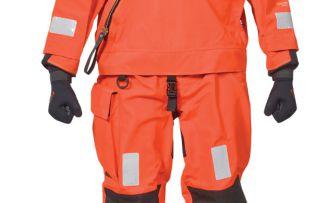
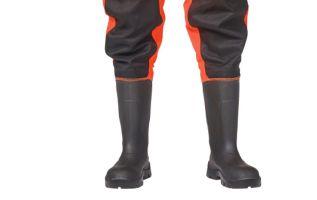
New to Canada and distributed out of Gravenhurst ON and Levis PQ, Ursuit OY has been THE choice for professionals like fire departments, rescue teams, military forces and other professionals.
Hand sewn in Finland since 1964, design the suit you have always wanted.
CUSTOMIZE your Immersion & Diving suits for your teams’ requirements.
BY ELIAS MARKOU Naturopathic Doctor
Mississauga, Ontario
AWELLBEING
Priority testing for your physical exam
t the Halton Hills Fire Department, where I have been the chief medical officer for the firefighters for 18 years, we have made firefighter physical exams and baseline testing a key component of the monitoring and maintenance of our firefighters. New recruits joining the department go through a comprehensive physical exam that includes extensive blood work. Veteran firefighters will visit me every two years to run new blood work data to compare old values with new blood work values. This is an ongoing process for our firefighters.
We know the fire fighting profession engages in extreme physical performance, daily risk from injury, and severe illness. A regular firefighter physical exam should be a critical health data exercise for all fire departments. Just collecting the health data is not enough, analysis of firefighter health, wellness and performance should be the hallmark of such a process.
Every firefighter physical exam should incorporate the 2018 National Fire Protection Agency (NFPA) Standard 1582 on Comprehensive Occupational Medicine Program for Fire Departments to help firefighter perform their jobs at their best. These physical exam standards are minimal requirements but considered appropriate for both career and volunteer firefighters.
The NFPA, although having no enforcement or punitive authority, is the agency that has gone on record to highly recommend fire departments incorporate some or all of these health standards to keep firefighters safe.
Under the NFPA 1582, firefighters should have the following done during a physical exam.
1. Health history and physical exam
2. Urinalysis
3. Blood analysis (metabolic profile and lipid profile)
4. EKG and cardiac risk calculator
5. Pulmonary function test (spirometry)
6. Infectious disease screening (tuberculosis and hepatitis)
7. Chest x-ray
8. Cancer screening
9. Audiometric exam
10. Vision testing
11. Sleep apnea assessment
12. Vaccination review and update
Dr. Elias Markou is one very busy naturopathic doctor. He is in private practice in Mississauga, Ont., and is the chief medical officer for the Halton Hills Fire Department. Dr. Markou was a firefighter for six years; he has a special interest in firefighter health, is a writer and blogger who is regularly featured on television and radio and in print. Contact him at drmarkou@mypurebalance.ca
In our firefighter physical exam at Halton Hills, we make cardiovascular health screening a major priority. Many studies have looked at cardiovascular health in firefighters. A February 2020 NFPA study called the “U.S. Fire Department Profile”, determined the cause of death in 47 per cent of volunteer firefighters was a cardiovascular incident (health attack, heart event). The study went on to say that fire departments need an aggressive reduction plan to address the cardiovascular risk factors to improve physical fitness to reduce cardiovascular related deaths in the line of duty. In these situations, the first step is properly identifying the risk and having fire departments implement programming that helps address cardiovascular health.
A 2018 study in the Journal of Emergency Medical Services examined firefighters with coronary health disease (CHD). This group of firefighters represent the majority of cardiac deaths found in firefighters. The study went on to point to the need of more in-depth cardiovascular screening by the fire service and services.
Here’s what fire departments can do to address cardiovascular risk in firefighters:
1. An annual electrocardiogram for all firefighters
2. Physical exam with health history
3. Blood analysis looking at all cardiovascular related testing. Examples of the cardio blood tests include apolipoprotein A, apolipoprotein B, homocysteine, CRP, CK, cholesterol panel, glucose, insulin, serum B12, serum folate and ESR
4. Heavy metal testing (often connected to arteriosclerosis issues).
5. Public health testing for the viruses CMV and coxsackievirus (connected to cardiovascular disease)
6. Annual nutritional training
7. Annual detoxification programming
8. Educational training on cardiovascular disease
9. Access to physical fitness equipment and time for exercise
10. Stress management courses and training
11. Sleep assessment and training
As a result of these findings, we know that firefighter’s risk of cardiovascular disease with in the fire service is high. More lobbying by NFPA to continue to improve is imperative, as is the fire service’s shift to implement comprehensive cardiovascular screening and program implementation is key.
REFERENCES
• A Fire Department’s Guide to Implementing NFPA 1582
• U.S. Fire Department Profile. National Fire Protection Association. February 2020.
n May 25, I celebrated one year of service with the Nipawin Fire Department, an occasion that has given me considerable pause for reflection. I began my time in the fire service with the immense good fortune of spending 26 years as a volunteer with the Malahat Fire Department on Vancouver Island, several of them as fire chief. My first career position was in Fraser Lake in B.C.’s central interior followed by Golden, B.C. I have, through the blessing of my 35 years of participation in the fire service, observed many changes. I’ve been fortunate to sit shoulder to shoulder with chief officers from fire departments of all calibers and learned a great deal from every one of them.
Sadly, I learned of the recent passing of a colleague from Maple Bay on Vancouver Island, Chief Andy Hutchins, who was a member there for nearly 50 years. That is a ton of service to give in a community. Hutchins’ passing led me to muse about the consistency of the fire service, even as I write this from two provinces east of where I began this profession that I remain passionate about. I’ve had the pleasure and honour of serving alongside some amazing mentors – far too many to mention here. They have, and continue to, impart lessons that I have carried forward with me. Every fire department I’ve had the honour, pleasure and joy of serving with has taught me lessons. Part of me is incredibly proud of the diversity blended with consistency I’ve seen through my tenure through four fire departments. I also can’t help but admire the dedication and commitment to one’s community over several decades –I too would be in the same place if not for my desire to pursue this amazing profession on a career basis.
FIRELINES
folks that get out of bed at 3:15 a.m. to help their fellow residents is paramount. Ultimately, I am responsible for the safety of each and every one of our members here. Every one of us, whether in a formal leadership role or not, must recognize that ‘formal’ leadership may exist by virtue of appointment or position, but every one of us is responsible for influencing and leading our colleagues regardless of rank. It’s also incumbent on us to learn what we can from every one of them.
I’ve also seen several of my fellow chief officers retire, something that gives me occasion to reflect on my own longevity in this wonderful profession. My zeal for the work I’m privileged to do remains undiminished and as long as I am a relevant and inspiring influence, I will continue.
Lessons learned are a gift of my incredibly valued time served in the fire service. There have been many for me – work life balance, ongoing professional improvement and healthy habits among them. I truly believe it’s incumbent on me to do what I can to pass these along to my co-workers. I reflect on the notion that the best thing I can do is teach a young firefighter to become an old firefighter. These
One of the biggest lessons I’ve learned is that people, above all else, matter – a lot ‘‘ ’’
One of the biggest lessons I’ve learned is that people, above all else, matter – a lot. Of course, we’re here to ‘put wet stuff on red stuff’, but it’s so much more than that. We’re here to help people, most often when they’re enduring the worst day of their lives. When I began in the fire service, like so many of us, it was all about tactical stuff – kicking in doors and putting out fires. Now it’s about lending a hand, making a difference. Does that sound a little sappy? I’d suggest Chief Alan Brunicini would say otherwise. Further, our own people are of utmost importance. Purchasing, maintaining equipment, managing emergency scenes and defending budgets all matter enormously to me, yet I’ve come to learn that doing my utmost to look after the welfare of the
Dave Balding joined the fire service in 1985 and is the fire chief with the Nipawin Fire Department in Saskatchewan. Contact Dave at d.balding@nipawin.com and follow him on Twitter at @ FireChiefDaveB.
aren’t hard tactical sign offs, they are part of caring for the folks we work with. Make no mistake, I am so very far from having any of this completely figured out. If I’ve learned nothing else, it’s that I too am a work in progress. I’m fortunate to have amazing people around me, both on a personal and professional basis. Engaging with them helps me grow and become a better firefighter.
Aside from operational qualifications, my time in the fire service has taught me many things: ethics, trust, belief in people and so much more. These aren’t qualities taught in fire schools or learned from text books, they are the blessings of working alongside amazing folks, regardless of formal rank in our fire service.
I’m incredibly proud of the diversity blended with consistency I’ve experienced in my fire service career and intend on learning and sharing as long as I’m able.
Beyond WILDFIRES
Are mass notification
systems good for more than just emergencies?
By LAUREN TELFER
There’s no question that streamlined communications can help keep people alive, safe, and alert in high-risk moments. That’s why most communities leverage technology like mass notification systems (MNS) for emergency alerts and critical events.
But when you use a MNS exclusively for emergencies, are you missing out on a valuable opportunity to engage your community? To increase enrolment numbers? Or to generate trust, which ultimately contributes to your emergency preparedness?
There may just be more to mass notification technology than you think.
COMMUNITY ENGAGEMENT DRIVES HIGHER ENROLMENT RATES FOR MNS
The facts are in the numbers. Communities that issue one or more notifications per month experience an organic registration rate of five to 10 times higher than communities that issue notifications one to two alerts per year.
A recent case study revealed that over a six-month period, higher usage-rate communities average an enrolment growth rate of approximately 10 percent month over month, whereas lower usage communities experience about one to two percent growth per month.
The key takeaway is that people talk.
MNS are far more practical beyond emergency alerts. When used responsibly to communicate relevant day-to-day information, more value is added to the com-
munity by boosting public awareness of the system and drives increased registration through word of mouth.
To maximize results, communities should engage with citizens on everyday matters that affect their well-being so that when an emergency does occur, more people will recognize you as a trusted authority and are more likely to pay attention to your message, which strengthens your emergency preparedness.
Day-to-day communications can include fire bans and pandemic updates to localized notices for service interruptions, vehicle accidents, garbage, and recycling reminders. There’s no shortage of informational notices that benefit the public, so long as it’s relevant to their proximity and circumstance, and not sent just for the sake of it.
Internally, fire departments can use a MNS as their communication tool for team collaboration, staffing requirements,
PEOPLE GO HUNGRY FOR INFORMATION DURING TIMES OF CRISIS
As a best practice to further drive community enrolment and engagement, emergency and crisis communications should be accompanied with updates beyond formal evacuation orders and alert zones. That’s because during a crisis, the public goes hungry for information.
One of the most frequently asked questions made during crisis support calls is, “Why did a neighbour or family member receive an alert, but not me?”
Usually, the answer is because one individual resides in an evacuation zone while the other may just be outside of that area. The lack of direct communication to the broader audience during a critical incident can create unnecessary anxiety among the community, and cause them to question whether or not the system is working as it should.
GAIN TOTAL CONTROL OVER YOUR MESSAGE
To ensure the public makes informed choices, you need to carefully consider how much information you provide them with and whether it’s relevant to your audience.
Send too many notifications, and they’ll dismiss your messages, which can jeopardize their safety. Send alerts with not enough information, then you risk public frustration or increased harm from incidents.
Fortunately, a MNS can help eliminate message fatigue by honing in on the right message to the right people at the right time.
In seconds, you can send tailored messages to people who face varying levels of impact based on their location across several chan-
To ensure the public makes informed choices, you need to carefully consider how much information you provide them with and whether it’s relevant to your audience.
nels
to captivate their attention.
Tiered communications and geofencing allows you to differentiate the level of growing concern in real-time. And enriched alerting provides your audience with visual and audible alerting cues such as personalized maps, photos, and any additional context they need to recognize the severity of the incident and to initiate the appropriate actions to get them out of harm’s way.
What you do in between to prepare for an emergency is just as important as the communications you implement when you’re in the heat of a response.
Mass notification systems provide a way to quickly reach your residents with localized messages that are relevant to their well-being. And when leveraged for both emergencies and day-to-day informational notices, a MNS can help you foster greater trust in your community, increase your emergency preparedness, and drive higher enrolment.
Lauren Telfer is the director of marketing for VoyentAlert! By ICEsoft Technologies.
Invest in Emergency Communications to Build a More Resilient Canada
Our nation’s firefighters are facing an unprecedented wildfire situation as catastrophic events like floods, droughts, heat waves, and powerful storms become more frequent and increasingly dangerous. Still, our firefighters continue to respond, supporting all hazards situations.
Unify
Freedom to unify communications across agencies, divisions, or field teams while maintaining control of information.
Connect
Freedom to connect across devices, systems, applications, and data sources to drive collaboration and information sharing.
Shouldn’t we ensure they have the tools they need to communicate in an emergency?
Early situational awareness and comprehensive, interoperable communications across all levels of government and emergency response are critical for agencies across Canada. Mutualink’s LNK360™ platform, recently released in the United States and Canada, delivers on the vision of voice, radio, IoT, and data communications interoperability across jurisdictions and includes cross-border coordination amongst emergency responders.
Now available in incident response every day and every emergency:
• Secure end-to-end integrated communications that include disparate Land mobile radios (LMR),
Freedom to act by automating processes and response, drive decisions with actionable data and real-time communications. Act
LTE devices, voice, pictures, video and IoT from multiple sources.
• Real-time mapping and location services.
• Invitation-based incident management with mutual-aid talkgroups that feature push-to-talk (PTT) capabilities across any device.
• Multi-agency, cross-border, and interagency communications.
• Sensor and IoT integration to automate response and provide real-time situational awareness.
Mutualink, public safety’s trusted technology leader, supports several Canadian Police and Fire services to enhance readiness posture, unify communications, and overcome their most advanced interoperability challenges.
Managing our thoughts
Part 3 in this cognitive lifestyle series looks at why Stoicism and cognitive behavioural therapy are good ways to build resilience in our thinking
By NICK HALMASY
Our last stop on why the philosophy of Stoicism and cognitive behavioural therapy (CBT) are good approaches for resilience lies with our thoughts. This is purposeful — often thoughts are the first place people wish to look when trying to address mental health and other problems in their personal life. For me to hear, “if only I could stop thinking about…” is almost a guarantee. This is likely because of the ease for which we can access them. Yet, as we have discussed in Part 1 and Part 2 of this series, the influences of our emotions and behaviours are an equal force in determining how we think, feel, and act in situations.
Actions, as Massimo Pigliucci and Gregory Lopez identify in their book, A Handbook for New Stoics, still depends heavily on internal workings. Meaning, of course, that our thoughts and emotions are inextricably linked with our actions. Or, if you’d rather, what you think of a situation lends to how you’ll manage it.
First, you are not the author of your thoughts. You don’t choose the majority of the things you think. We have all had the experience of finding ourselves in some corner of our minds wondering how we landed there. Or worse, we think of ourselves as horrible people because of the thought(s) we just had. Yet, if we are paying pretty close attention, we’ll notice that we didn’t choose to think that. As neuroscientist and philosopher, Sam Harris identifies this in Free Will: “If you pay attention to your inner life, you will see that the emergence of choices, efforts, and intentions is a fundamentally mysterious process.”
To effectively practice and build resilience through cognitive behavioural therapy, it’s important to accept that you are not the author of your thoughts and there are many ways in which our thoughts may be skewed incorrectly.
In The Meditations, Marcus Aurelius writes: “Take away those opinions— dismiss your judgements that this is something terrible — and your anger goes away as well.”
In CBT, thoughts are obviously important as marked by the word cognitive. Yet, our thoughts are susceptible to many failings and errors, skewing our perception and influencing our actions. This happens both explicitly and implicitly. A quick Google search can land you on “problematic thinking styles” (or cognitive distortions in CBT language), which is a working list of common ways we think, well, problematically. For instance, consider the “all or nothing” approach. This way of thinking about reality ignores that most situations have numerous answers or interpretations. Emotional reasoning is another approach that suggests we mistake emotional states for reality. If I feel “embarrassed” it’s because I’m “stupid”. But our emotions are not always the most reliable narrators and we should probably act suspiciously of them. There are many more thinking traps for us to fall into.
As therapists, there are a few fundamental rules that we must accept, I believe, in order to effectively practice CBT, which is the largest, most well-researched, reliable and valid approach to mental health that we have. Almost any “new” approach comes reliably from the philosophy of CBT and its approach to treating mental health.
In Mind over Mood, Dennis Greenberger and Christine Padesky write, “… we all have automatic thoughts that influence our behaviour. These are words and images that pop into our heads throughout the day.” Understanding that thoughts and images will enter the mind without conscious consent is paramount to understanding that we didn’t author them. We can choose both what to think next (creating balanced thoughts), or how to act in spite of the thoughts (acting opposite).
Secondly, your thoughts don’t have real power. While this one is a bit harder to reconcile than the first, the reality is that a thought is just a thought. Of course, it is — what else could a thought be? Yet, we let it be much more than that often. If we have a thought such as, “I don’t like the probie,” well, if we aren’t careful with how we use this thought we will find ourselves quickly acting in accordance with this thought. That’s where the power comes from, not the thought, but the action associated with it. And this conflation is exactly where we get the idea of “good” and “bad” emotions. It’s not because emotions are fundamentally organized this way, but because our actions associated with them produce “good” or “bad” outcomes.
Practically, I’ve had the experience of having firefighters and other first responders reach out because they feared they were “going crazy.” Now, “going crazy” isn’t an emotion, it’s a thought. It’s a judgement. And with this judgement is a whole slew of other cascading thoughts and emotions, none of which are likely to be all that helpful. We can see that this thought may be the catalyst to other unhelpful thoughts that further lead to more unhelpful thoughts and actions. A thought is just a thought. If we can recognize this, we can also end a lot of our own suffering and pain.
COMPACT STRUCTURAL FIRE HELMET F11 C DRAGONFLY
KEVLAR REINFORCED SHELL
Extremely comfortable
Lightweight and Compact
Internal drop-down eye protection
External detachable face shield
Optional Earmuff clips and earmuffs
Custom logo available
Also suitable for Auto Extrication, Confined space, High Angle Rescue, etc
NFPA APPROVED
BullDog Hose Company (formerly ANGUS hose) proudly designs and manufactures industry-leading firehoses that are unmatched in quality and performance. Hundreds of North American fire departments depend on BullDog to get the job donesafely and efficiently fficiently. done s
The most advanced thermal imager for firefighting just 830g (1.8Ibs)
scene detail in larger, hotter fire scenarios. Enhanced feature set including laser pointer to aid communication, electronic compass for greater scene awareness and heat/cold seeker technology. NFPA approved
As Ward Farnsworth notes in The Practicing Stoic: “The pain of whatever is coming is not yet here, so we can’t feel it unless we impose it on ourselves by thinking about it… what is here is probably bearable.”
Thoughts are more problematic when they are intrusive. This is a key symptom of post traumatic stress disorder (PTSD), but is common with a lot of other anxiety and depressive disorders as well. With an intrusive thought, the emotional experience that comes with it is more the issue. This is what causes the grief, after all. Treatment here, broadly speaking, is to expose ourselves to this thought (imaginal exposure, for instance) to take the power away. There needs to be an effort to see that the thought itself is not dangerous and that the person having the thought is not in danger in the here and now. In The Cognitive Behavioural Coping Skill Workbook for PTSD, Matthew Tull, Kim Gratz, and Alexander Chapman reflect that, “In the end, however, no matter how real or true they feel, these are just thoughts and just a symptom of your PTSD.” Lastly, Donald Robertson, in Stoicism and the Art of Happiness, reminds us that while automatic thoughts are common, “… our conscious ‘assent’ [saying yes, or agreeing with] to impressions is free and voluntary, giving adult humans the ability to self-consciously question their own impressions.” In other words, we can challenge our initial thoughts and question whether they were accurate or not.
We can easily demonstrate the power of a thought. If you find yourself angry, ask what specifically is angering you. You’ll likely find judgement at the base. If I get cut-off in traffic and become angry I attribute it to the “idiot” driving in front of me. I blame
their character not the circumstance, known as the fundamental attribution error. This judgement creates my anger. Without judgement, I have only facts. That car cut in front of me. And that truth is boring and free from anger. Which is why “fact checking” our thoughts is a staple in the CBT approach.
Ultimately, we give too much credit to our thoughts. They do have power, though, if we believe them to be true and allow our emotions to be taken with them, therefore producing actions incongruent with what we want. Stoic students would be wise to be suspicious of their thoughts, skeptical of their accuracy, and consistent in challenging them to ensure they are as “truthful” as possible prior to action.
This three-part series was an effort to suggest that a path towards resilience and wellness doesn’t necessarily require deep pockets and niche training. Instead, there are practical, realistic, and easily accessible ways to increase personal resilience, work towards wellness, and ultimately achieve thriving. Whether this is through Stoicism, formal CBT training, or casual perusal of either or both, your wellness is reliant on you. Resilience isn’t something mysterious. We are all capable of it. Like our physical wellness examples, there is no magic bullet of a five-minute mind workout or special diet of cognitive foods to ensure it. Instead, it is achieved through the consistency and vigour of putting in the work.
Nick Halmasy is a registered psychotherapist who spent a decade in the fire service. He is the founder of After the Call, an organization that provides first responders with mental health information. Contact him at nhalmasy@afterthecall.org.
The Roof Hook
A look at Hugh Halligan’s lesser known invention
By NATHAN POCOCK
TOP Hugh Halligan, who also invented the halligan, designed the rook hook for multiple prying applications to be used both inside the structure and on the roof.
The roof hook is also known to many as the New York hook. The roof hook was invented by Hugh Halligan. Halligan also invented the halligan tool, and due to its overwhelming success, it seems to have overshadowed the roof hook. Throughout the United States, the roof hook is in many fire departments in a large capacity and yet in Canada we seem to have not adopted this amazingly effective tool.
I will introduce you to the roof hook and its great design, along with debunking several of the misconceptions that can surround it, and in doing so I hope this can help the firefighters I know who are currently working in Canada trying to bring this great hand tool north of the border to become a staple on our apparatus as it should be.
Halligan invented the roof hook in the 1950s shortly after creating the halligan tool. Originally it was named the halligan hook, but soon after was referred to as the roof hook and is now commonly referred to as the New York hook or the New York
hook. Halligan designed this tool for multiple prying applications to be used both inside the structure and on the roof.
The bottom chisel tip end can be used for easily removing baseboards while checking for extension. The same end can be put into a door frame along with your halligan tool and greatly increase your leverage to force a difficult door, both inward and outward swinging.
The top end of the roof hook is an unmistakable shape that has had thought and care put into every part of it. The whole head is beveled only on one side, allowing for the flat edge of the hook to be slide up or down along a wall to wedge in behind crown moldings. This same beveled edge to the top point will allow the head of the hook to be rammed through a material to gain a purchase point.
The 1 ½” ledge out to the 45 degree angle allows for the 90 degree hook to be slid in behind sheeting and other building materials letting the ledge rest on the
roof
PHOTO
structural members (floor joists, rafters, wall studs, etc.). The room allowed with the 45 degree angle lets the user pry down in a controlled fashion with a large force multiplier to remove the materials.
The tool has the strength to remove many of the security bars found in our towns and cities, by either using the 90 degree angle when working up high or swapping over to get the 45 degree angle in behind the window bars when working lower to the ground and needing more room to push the tool down to pry the bars from the building.
The shaft of the hook is made up of tube steel, which allows for a strong but lightweight shaft. The lightweight aircraft steel gives strength while only making the 6’ version of this hook three to four ounces (85 to 113 grams) heavier than a fiber glass hook of the same length. The shaft dictates the tool’s length, which is commonly between eight and four feet in length. As the tool was intended to be used for prying and leverage, it is important to have this steel shaft to give strength and also a controlled pry. The fiber glass versions of these tools will bend significantly before either breaking or snapping the object you are prying free very fast and in a uncontrolled way. The steel shaft will allow a smooth pry and plenty of force where the shaft will bend if you exceed its prying abilities before it snaps and fails. Once you have a small bend in the tool, it is still completely functioning and after the incident can be simply bent back into place for the next call.
There are many that worry that the shaft itself being made of steel will mean an increase in firefighter death and injury due to electric shock. There are a few things to point out in this case:
• Even a fiber glass handled tool, when you are covered in water, will conduct electricity.
• Halligans are made of solid steel and yet firefighters are using them to tear apart structures regularly.
• In the approximately 70 years the roof hook has been in service, there has been many people looking into trying to find a injury or LODD with a roof hook being the cause of an electrocution of a firefighter inside a building and not one can be found.
• If the electrical hazards are that high and apparent in your structure, no matter what tool you are using the power should be cut to the building prior to any over-
haul operations.
In B.C., we have a rule within WCB in section 31.39 regarding plaster hooks and pike poles that states: “Plaster hooks and pike poles must be fitted with electrically non-conductive shafts.”
This causes some departments to worry, but consider that a roof hook is a roof hook, it is neither a plaster hook or pike pole. Let’s go back and review the very design of the tool as Halligan intended and see that its features are that of a lightweight crow bar and prying tool not that of one used to pull plaster or drywall. Can it be used to pull drywall? Yes, absolutely and it does it fairly well, but the mere fact it can pull dry wall does not make it pike pole. I can pull drywall with a shovel if I want, and as mentioned before, due mostly to low quality pike poles and the convenience of the halligan, it is often the tool you see firefighters taking to the front door and inevitably also working over head with. A halligan tool is not a pike pole and yet I would argue for many departments, no tool pulls more plaster or dry wall than the solid steel halligan.
WCB does not have a definition for pike pole and when I spoke with a member from WCB on the phone regarding the hook and the definition, I was told that in the event of needing to look into a definition would be looked up from somewhere such as Webster’s dictionary: “A fire hook having a head with a sharp point at the tip.” Now, I think it goes without saying but also must be said, this definition can easily be swayed into including a lot of things, such as a halligan or even a shovel. Talking further with the member about my dilemma that this very
vague definition and rule within the WCB regulations, I was reassured that when it came to firefighting, we were the professionals. We are the ones who should know what tools hold value on a fire ground to make our members’ tasks easier, faster and more efficient to ultimately translate to quicker access to save lives and property.
The roof hook is by far one of the most forgotten tools this side of the 49th parallel. I am encouraged constantly as I see departments across our country starting to acquire the tool and immediately fall in love with it. I have yet to meet a person that has taken this tool into a structure and not come out with a smile on their face. The tool was invented by a firefighter for firefighters as a lightweight prying tool that could be used both inside and outside of the structure for a multitude of tasks. I wish we could ask Halligan what his true intent behind the roof hook was, but I believe it is clear with the other work he did that he wanted to make our day to day lives in the fire services easier. Halligan built the roof hook after his halligan bar and it is hard not to believe it wasn’t designed to be a perfect complement. The man who invented the halligan tool, which is easily one of the most iconic symbols in today’s fire service, also invented this hook, which by all means should sit right beside it on every fire truck.
Nathan Pocock is the captain of training and operations for the Dashwood Fire Department. He spent 10 years with Vancouver Fire and Rescue Services, five years on Canada task force one HUSAR team, and three years before all that with the East Sooke fire department.
The steel shaft of a roof hook will allow a smooth pry and plenty of force where the shaft will bend if you exceed its prying abilities before it snaps and fails.
AquaEye®
“AquaEye® is absolutely amazing! One location we spent two hours searching on a previous recovery and with AquaEye® I was able to locate in a manner of minutes.”
— Devin Redding, Heber Springs Fire Department
TRUCKTECH
CONTINUED FROM PAGE 21
under inflation will wear the outside tread off and over inflation will wear out the middle of the tires tread. As well side walls are not able to carry total advertised load. Unlike water, air is still free. Well, most of the time. When purchasing tires, be sure gross vehicle weight rating (GVWR) is taken into consideration. The total tire inflation pressure as well as load rating of the tire will assist helping GVWR, which is the total weight of a truck full of all liquids equipment and passengers. This is most critical. Have an idea when spec-ing new tires or a new truck for that matter. There is also a marking that says DOT. NFPA 1901 tells us how to read it, and NFPA 1911 gives us the standard for the inspection, maintenance, testing and retirement of in-service automotive fire apparatus.
The entire Chapter 8 in this standard about tires is a very touchy area. If you are running your department to this standard to the best of your ability and as a guideline, great stuff. If you were to ever have an issue with your fleet, say tire related, and your tires were well within the wear limits, looked brand new, yet were over in age, this may be a challenge if it goes to court or if your driver is knowledgeable and challenges you on this. In smaller departments, especially volunteer departments, you may only respond to small amount of calls in a year. Those tires may look brand new, however it leaves you open for the “what ifs”. Tire technology today has come a long way. They advertise high mileage, smooth ride and being able to withstand the rigors of driving and weather. I am an advocate for preventative maintenance. In my own department we would never be able to make a tire last the guideline of seven years based on how many calls we run a year on front run apparatus. We do, though, have apparatus such as a field support unit (rehab), a hazmat truck and command post that would for sure would be a seven year change out. We budget for this as it is an expansive hit. Be sure you are registered with all major tire manufactures as a national account. Being a fire department, municipalities are entitled to fleet discounts on both product and labour. A tandem axle truck now with 16 ply drive tires and steers can be well north of $10,000 retail so be sure it’s in the budget.
I once sat in on a presentation done by an American lawyer name Jim Juno on investigating fire department accidents. He told one story of a used tanker truck purchased by a U.S. volunteer department. The department purchased and old U.S. military 6x6
Tread blocks or tread shape that are not the same, cuts, snags, bulges, cupping, feathering, or foreign material stuck in the tire should all be noted.
water tanker. The truck was a late 1960s to mid 1970s vehicle. It had been outfitted by its previous owners as a fire truck and was an in-service tanker. The new department owners were very diligent about fire apparatus mechanics and safety. When the fire chief picked the vehicle up from auction, he was excited and en route to the mechanics repair shop to have it inspected for his department. What I remember is that this department was rural and drove on dirt roads. At some time during the road trip a steer tire blew out. This resulted in a crash killing the fire chief. When an investigation was done it was determined the tire failed. The pictures of the tires still on the vehicle were over 24 years old. They even looked to be the same kind of aggressive tire the military used. They also looked amazing. This is extreme but possible. So, what I am saying is use your best judgment and budget for tires. This for sure is where the rubber meets the road for safety.
Fire truck front end alignment is critical in tire wear. New independent front suspensions allow for more adjustments so tires can last longer. The firefighters driving these rigs are always our front line of mechanical defense. Prior to any trip, the trucks are inspected. Tires as well. Something as simple as a tire air valve missing a valve cap could be cause for a slow leak and tire failure. It’s happened where ice build-up against the valve stem core pushes it over and ever so slowly a tire leak. All things that can be prevented.
See that was not so bad! Stay healthy my friends and rubber side down!
Chris Dennis is the chief mechanical officer for Vaughan Fire & Rescue Service in Ontario. He can be reached at Chris.Dennis@vaughan.ca.
BY TOM DESORCY Fire Chief Hope, British Columbia
AVOLUNTEERVISION
Moving forward
t a recent Fire Fighting in Canada Virtual Summit, I was part of a panel of colleagues from across Canada. We were asked to consider, in advance, some of the challenges that face our department in the transition back, or return to, more normal operations. I immediately thought of a lesson I got in fire truck operations when I was new member of the department back in the early 1980s.
The lesson came as many often do — from an older member — and arrived in a very simple phrase that has stuck with me to this day. He said, when driving any vehicle, not to mention a large truck, remember, “never back up, when you can go ahead.” This statement that rings true today more than ever.
Many discussions have centered around the “return to normal” and post-pandemic activities. But too much time has passed for us to simply return to the way it was. We have no choice but to embrace what we’ve learned and build back better in everything we do.
Here’s an example to consider. Say, you drive an older vehicle and it needs to go for repairs. The shop needed it for at least a month but would let you borrow a new car as a replacement in the meantime. Brand new car for a month? Sounds great. So, what happens when that month turns into two? Or three or more?
How would you feel when they return your vehicle and ask for the loaner to be given back? By now you’ve gotten used to the new car, got it set up the way you like it. You’ve got personal items in the trunk, the pre-sets on the radio are programmed; this is your car. You really aren’t interested in getting the old one back.
of things right. For example, we’ve always done decontamination well to begin with. Now that we’ve spent more than a year of sanitizing trucks and gear after every use, there is no reason in my mind to discontinue this practice. The pandemic has forced us to take “clean cab” practices to the next level and a seemingly “clean” run is treated like all the others when we return.
Every other industry will take a lot more out of this past year. Working from home makes sense for many and will likely continue in one form or another. Work life balance has definitely shifted for many. So, why would you even consider running a fire department the way you always did?
At this year’s Fire Chiefs’ Association of British Columbia’s (virtual) conference, I learned that a few career departments in B.C. moved to a 24-hour shift schedule in the beginning of the pandemic, the reason give to primarily to limit contact with others. It was a very interesting presentation and one of those changes that will more than likely be considered moving forward.
There it is: Moving forward. Not backing up if you can go ahead. Are you thinking, now, about the opportunities in front of
Are you thinking, now, about the opportunities in front of you instead of a return to what used to be? ‘‘ ’’
The pandemic has taught us a lot and in the firehalls, what have we missed besides in-person training in a classroom and social gatherings? Sure, we can bring that back in but what about the remote opportunities and smaller groups in training that many seemed to benefit from? Will we simply throw that opportunity away?
From a response perspective, the fire service already does a lot
Tom DeSorcy became the first paid firefighter in his hometown of Hope, B.C., when he became fire chief in 2000. Originally a radio broadcaster, Tom’s voice could be heard in the early 1990s across Canada as one of the hosts of Country Coast to Coast. Tom is very active with the Fire Chiefs’ Association of British Columbia as communications director and conference committee chair. Contact Tom at TDeSorcy@hope.ca and follow him on Twitter at @HopeFireDept.
you instead of a return to what used to be? If I may say, I personally think that ship has sailed. The return to “normal” has left the building. I’m looking not as to how we can go back, but instead at continuing our current practices with enhancements or expansions. Simply put, going backwards is not practical and in a lot of cases, maybe not the wisest or safest decision.
I’ve been thinking about the post pandemic world a lot and it will be interesting to see what society does in the aftermath.
This are many things to consider concerning life around the firehall. New recruits coming into our world will have come from a pandemic world. They should expect certain safety protocols post-pandemic, and for that reason alone we should stay the course to a certain extent. This will help us build back better and with purpose.
In Norway, we changed the way fire fighters work
We pondered for a long time why this critical sector has lagged behind when it comes to digitization and automation of processes. We saw the same manual routines, and random inefficient document management everywhere.
– So we decided to do something about it.
Now, we have made professional applications as user-friendly and efficient as entertainment apps.
Cubit Fire is an ‘end to end’ solution for fire inspections and related processes. Developed in close cooperation with fire departments.
Cubit Fire integrates with the rest of your eco-system and offers unparalleled user experience and performance.
Cubit Fire – Developed in close cooperation with fire fighters cubitfire.com
Working under pressure, in a race against the clock, first responders need equipment they can fully rely on. It is for these men and women that we have developed our new Pentheon Series: High-tech rescue tools that are miles ahead of all other equipment on the market, cordless and hose tools alike.
Only the Holmatro Pentheon Series offers you the unrestrained performance, unparalleled speed and ultimate control you’ve never experienced before.