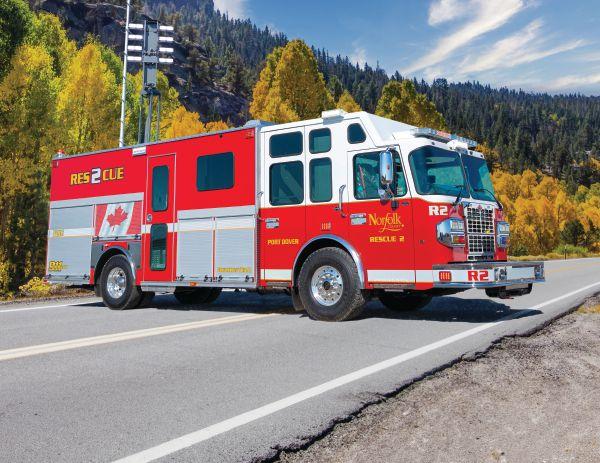
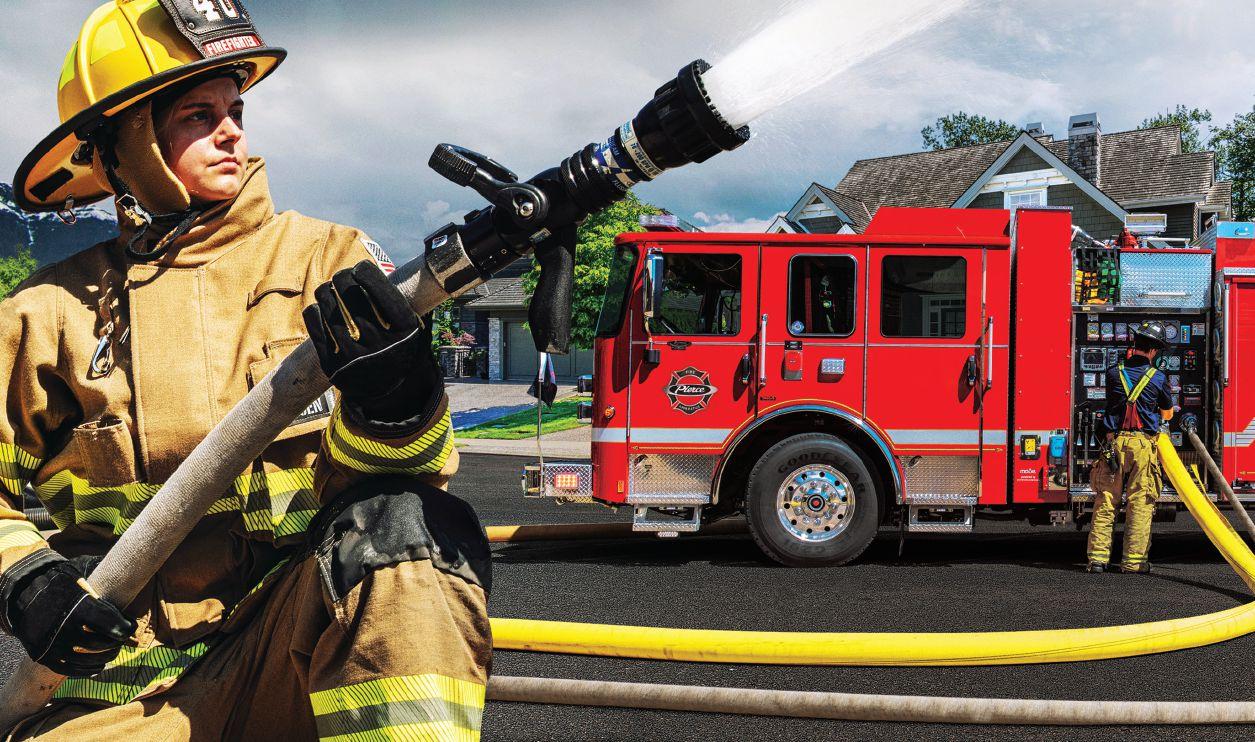
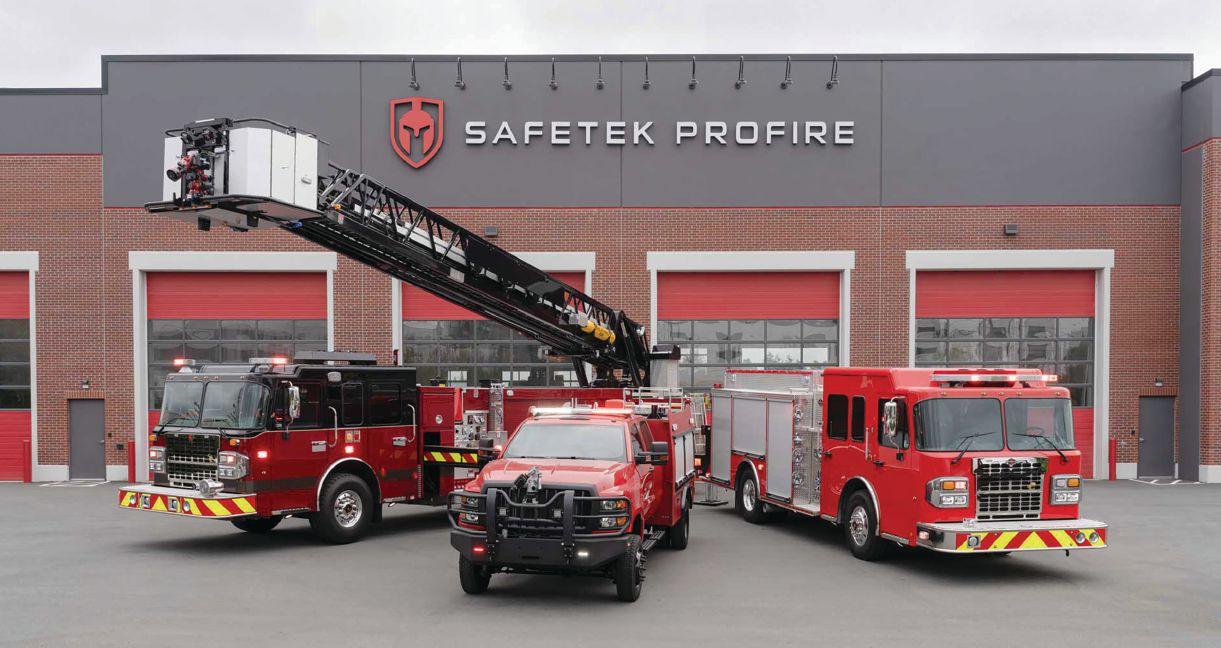
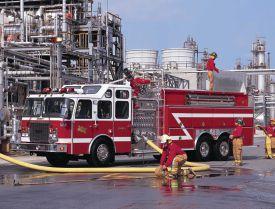
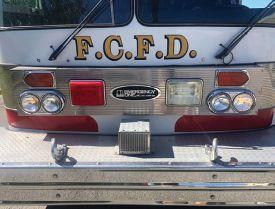
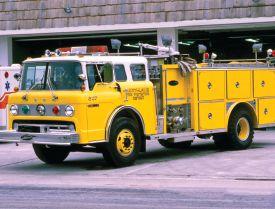
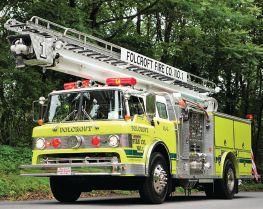
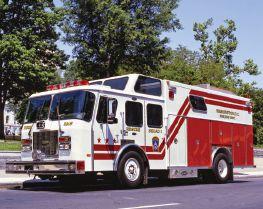
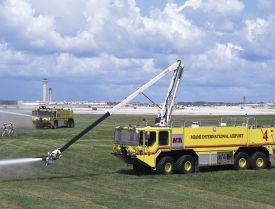
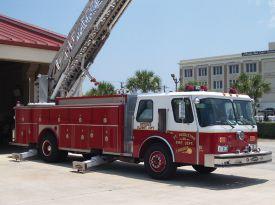
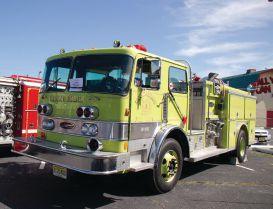
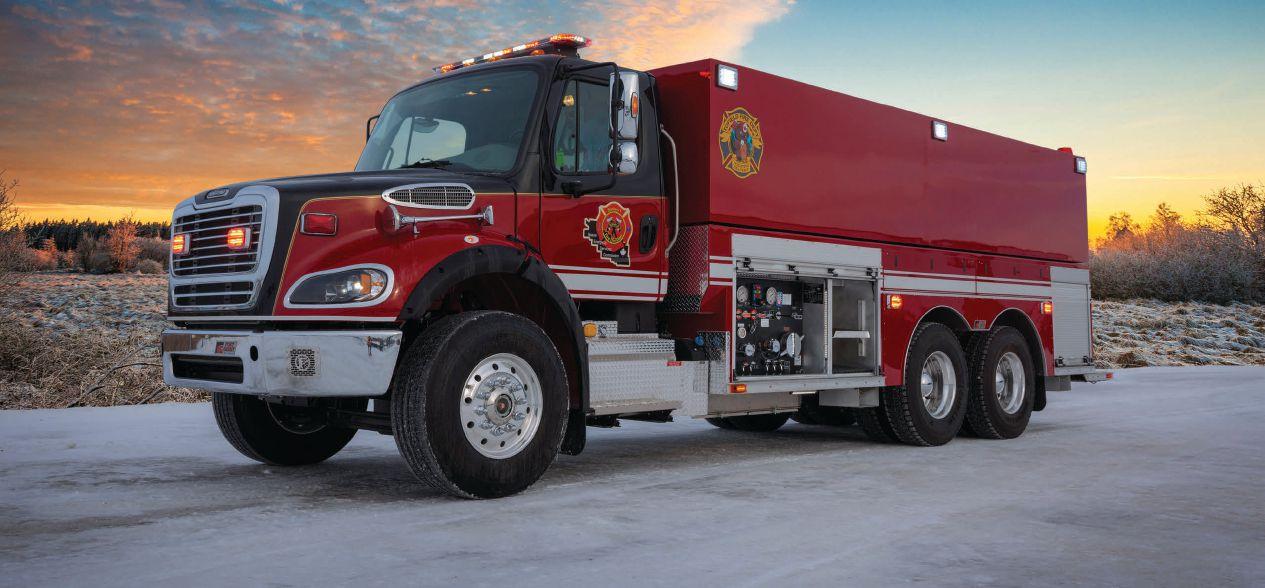
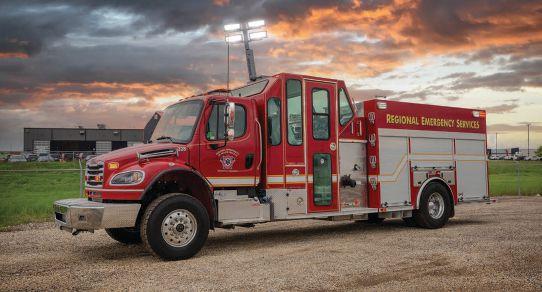
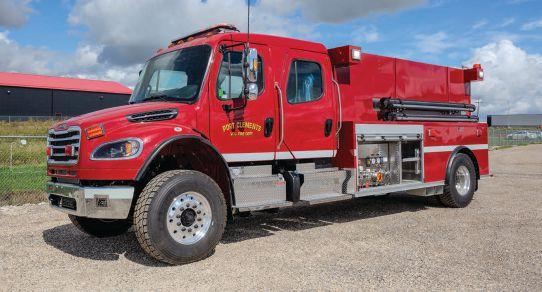
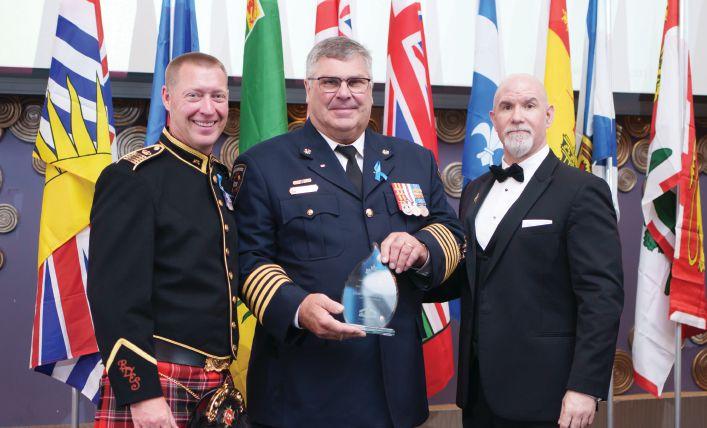
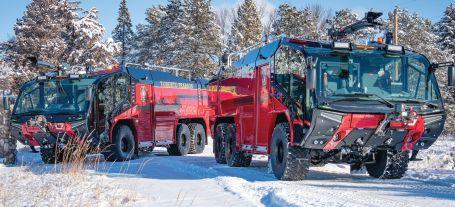
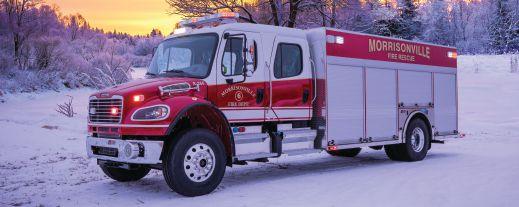
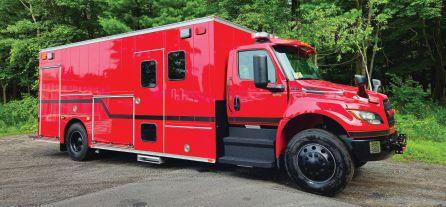
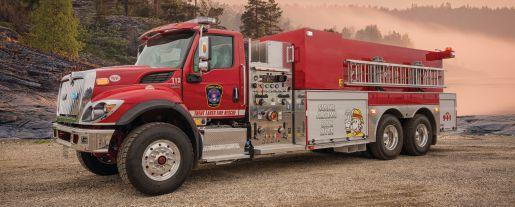
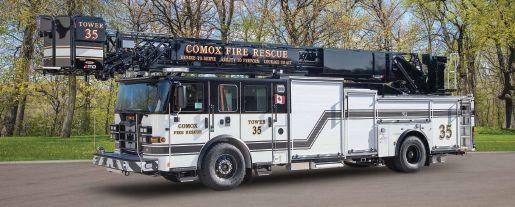
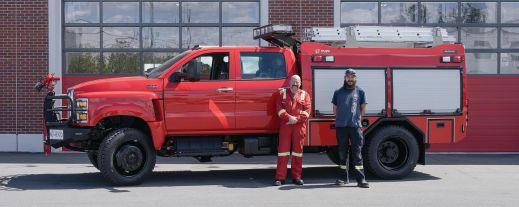
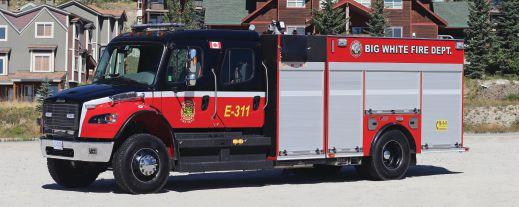
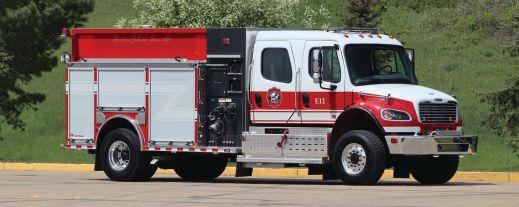
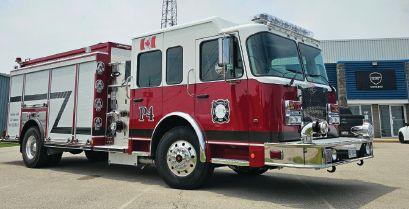
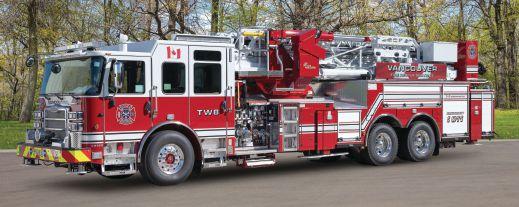
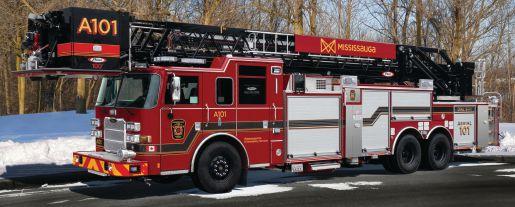
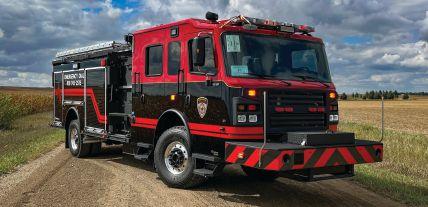
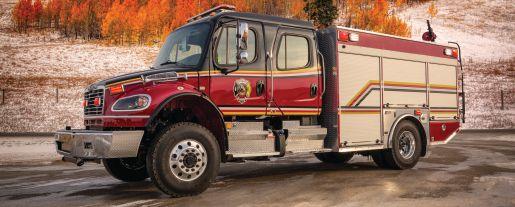
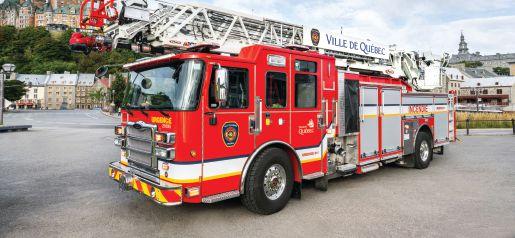
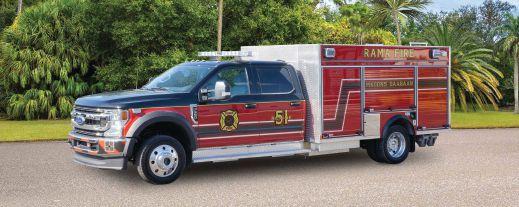
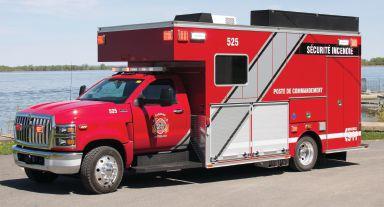
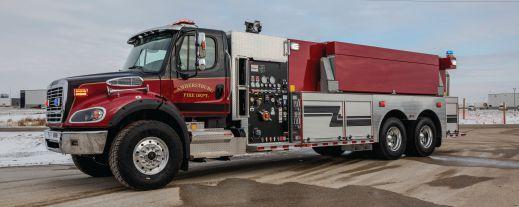
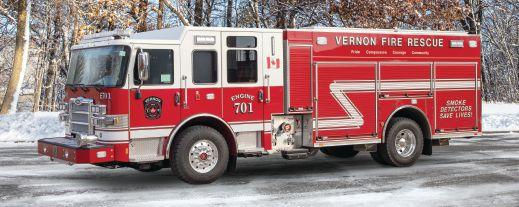
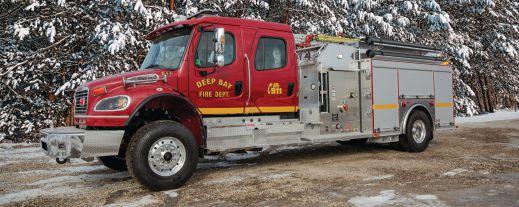
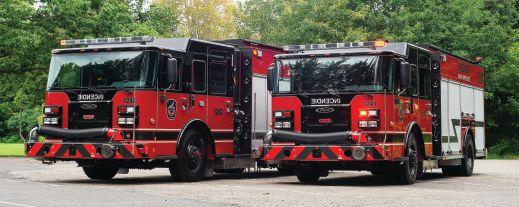
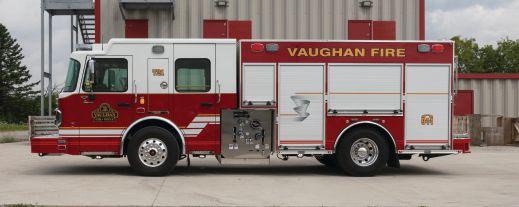
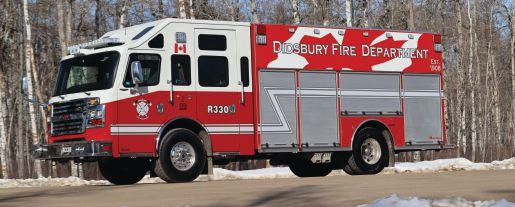
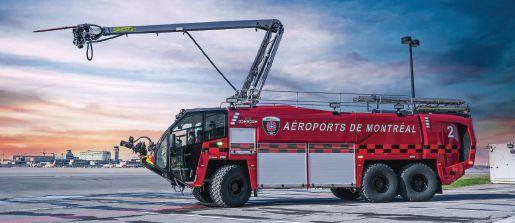
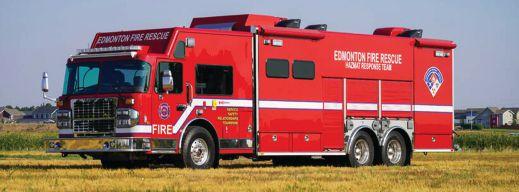
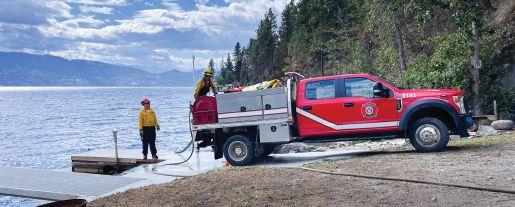
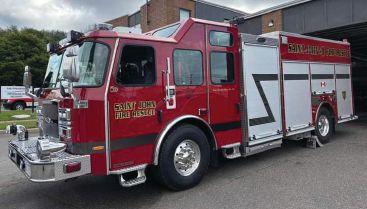
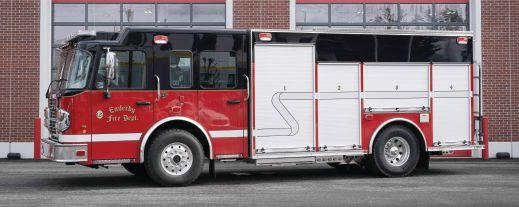
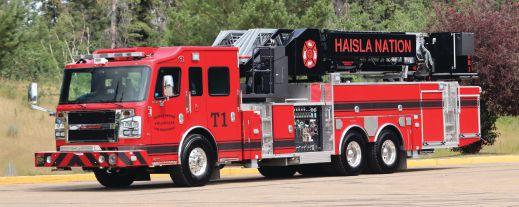
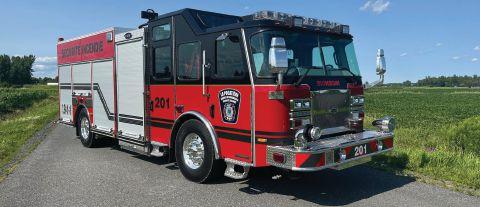
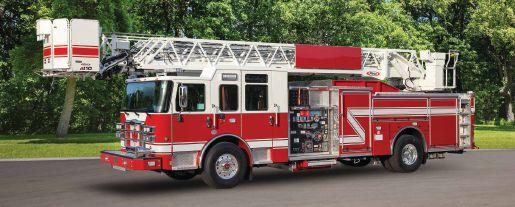
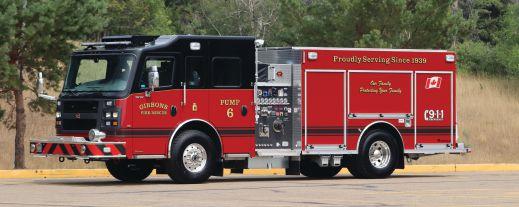
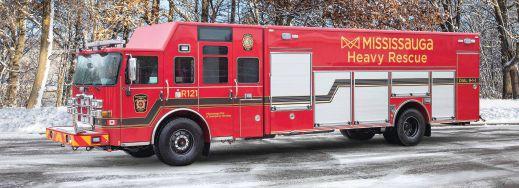
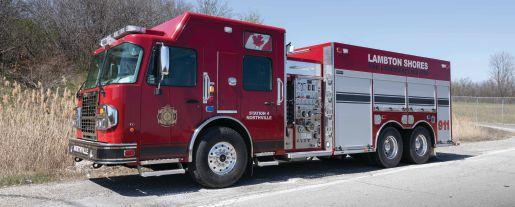
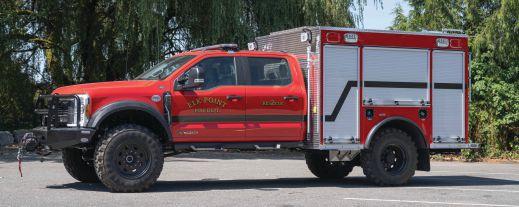
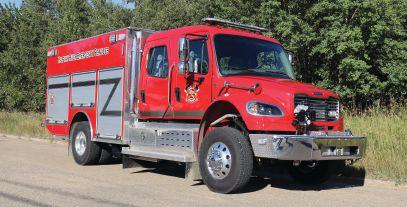
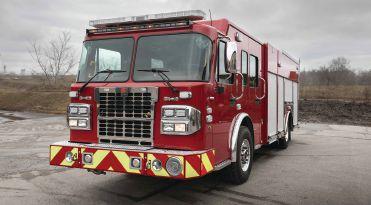
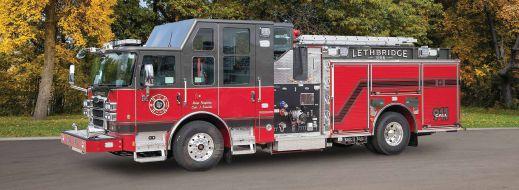
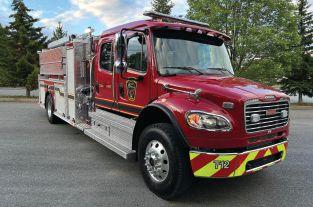
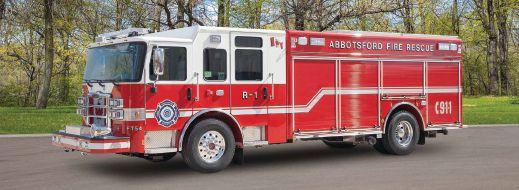
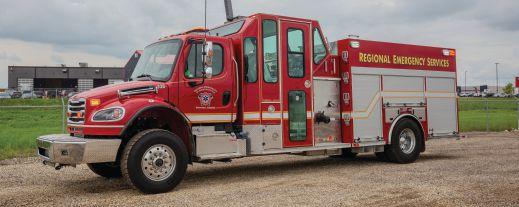
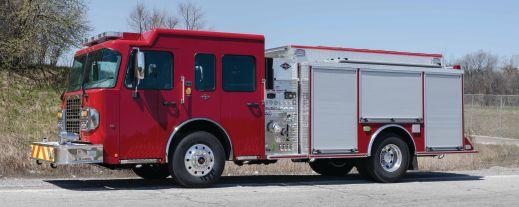
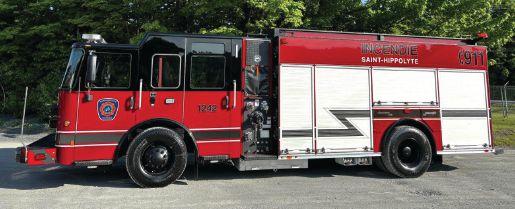
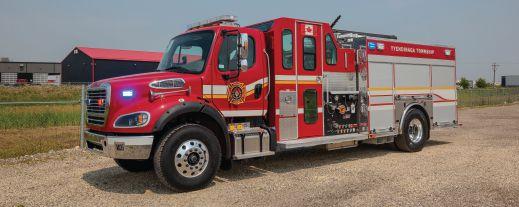
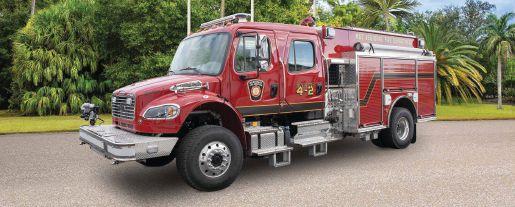
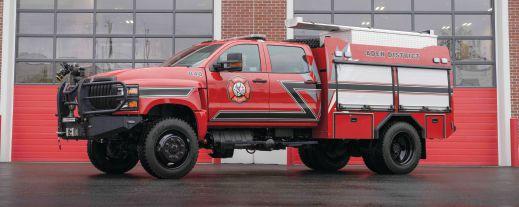
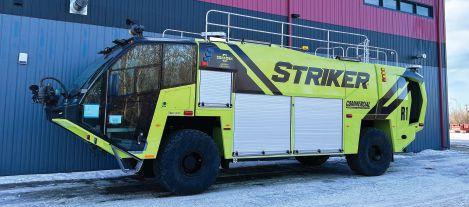
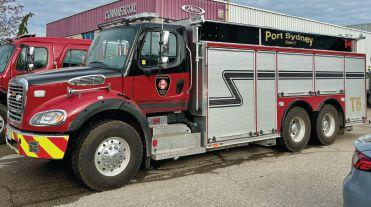
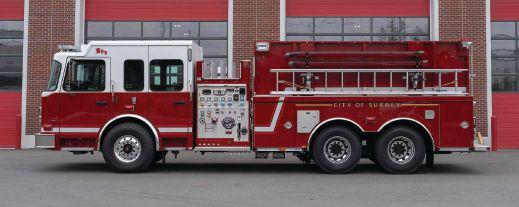
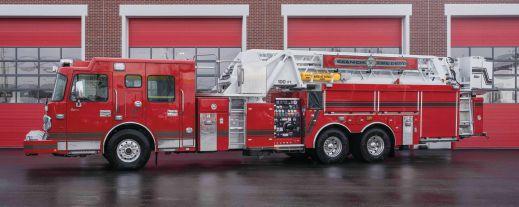
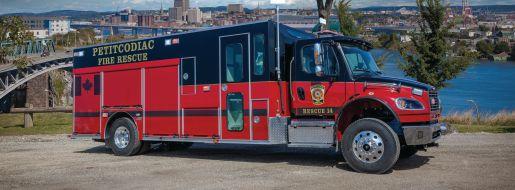
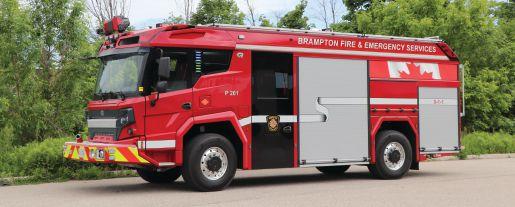
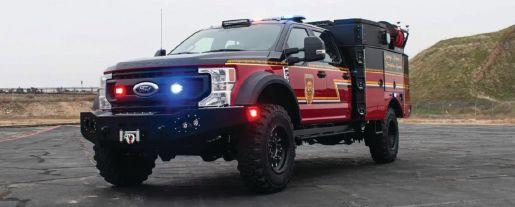
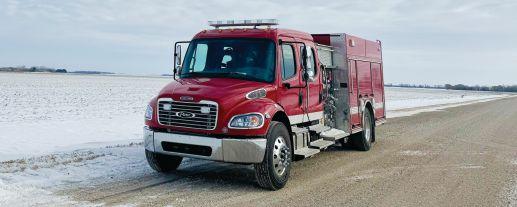
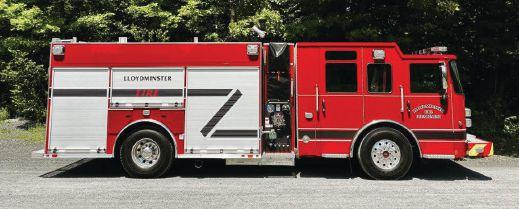
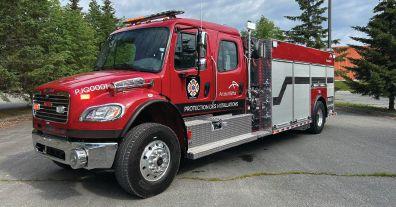
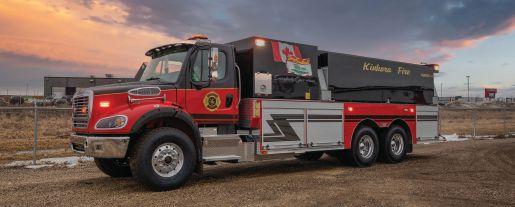
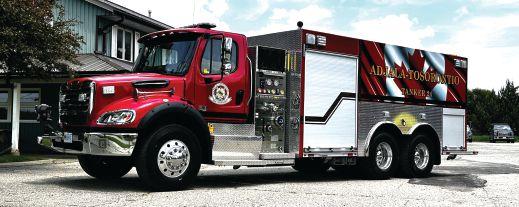
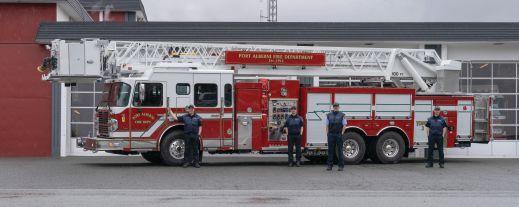
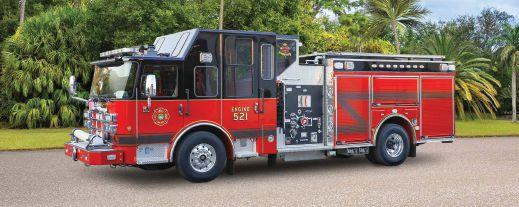
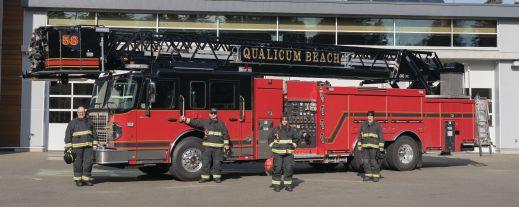
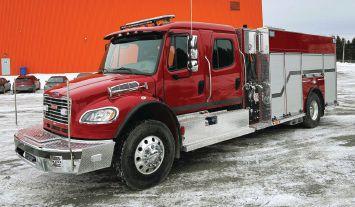
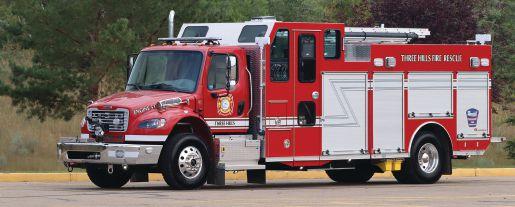
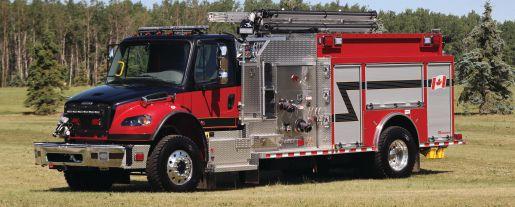
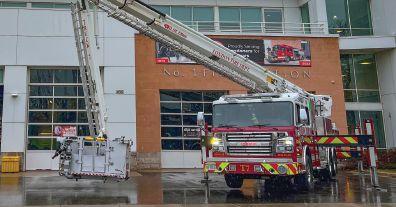
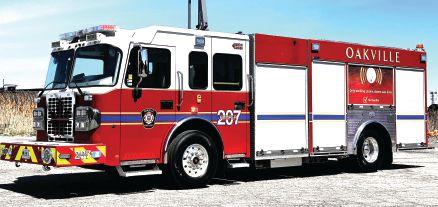
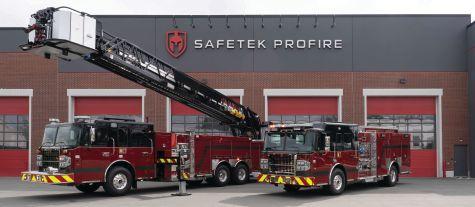
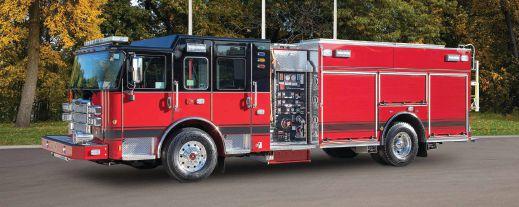
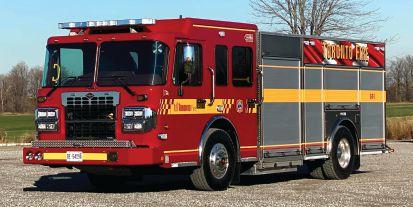
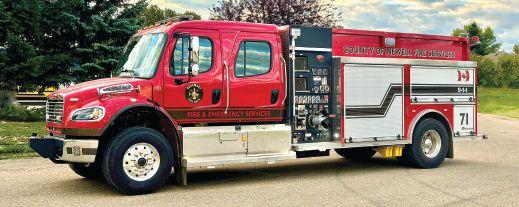
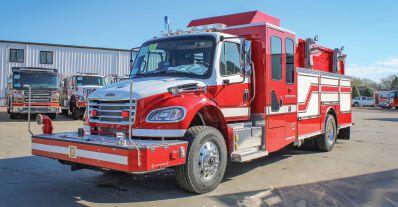
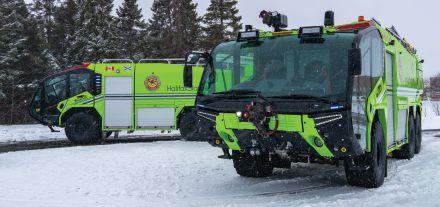
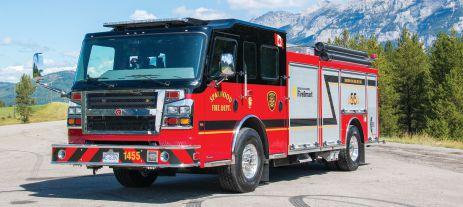
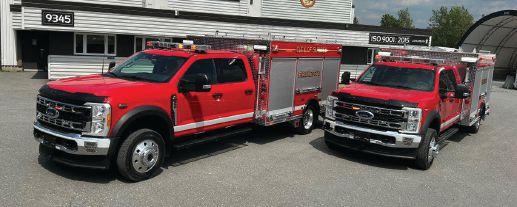
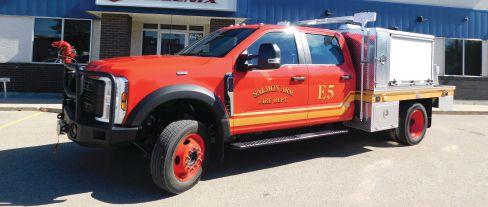
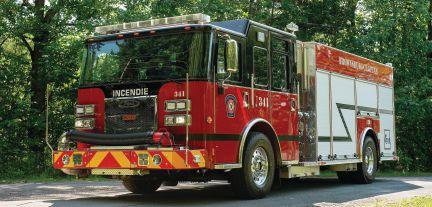
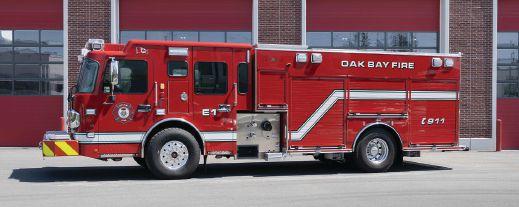
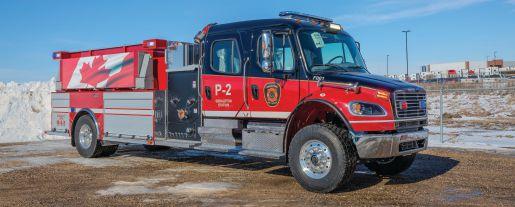
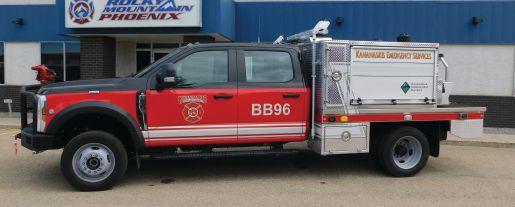
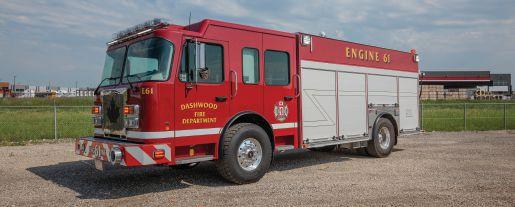
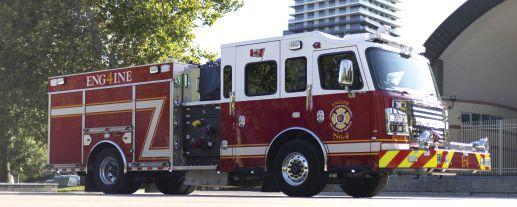
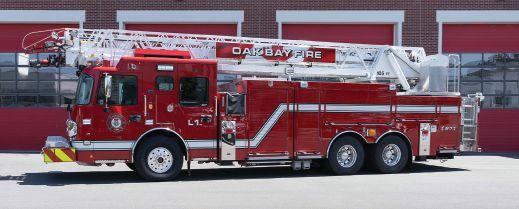
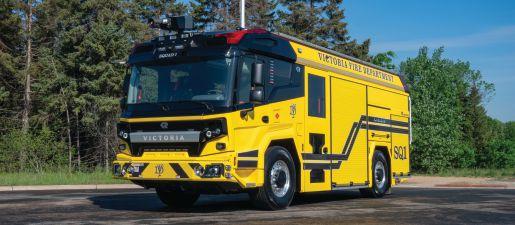
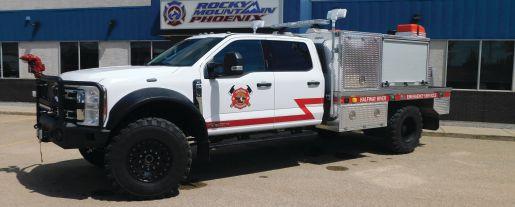
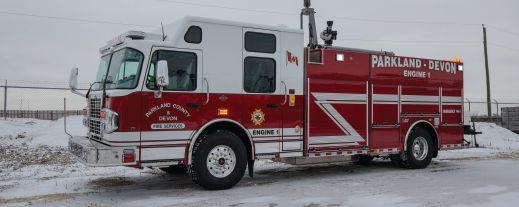
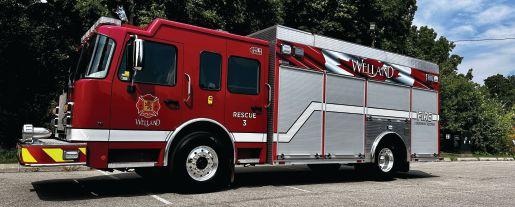
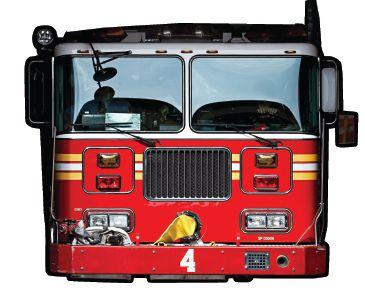
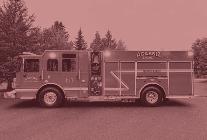
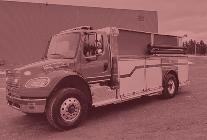
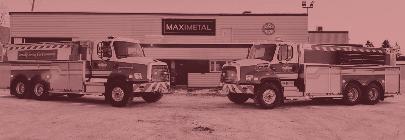
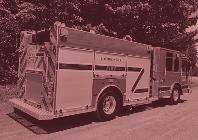
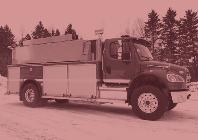
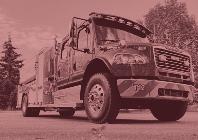
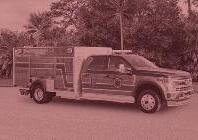
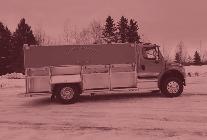
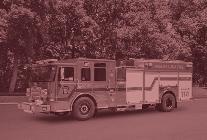
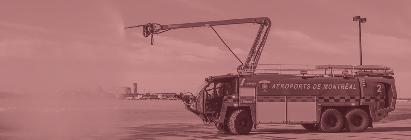
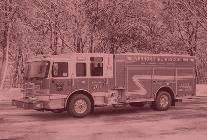
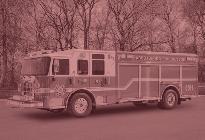
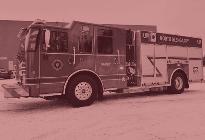
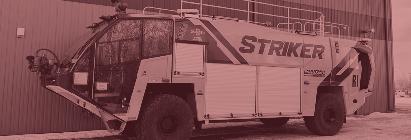
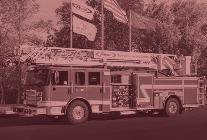
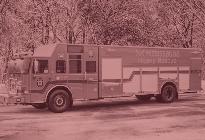
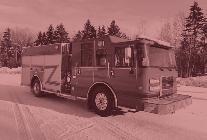
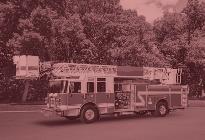
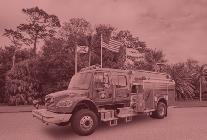
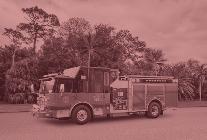
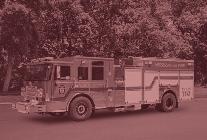
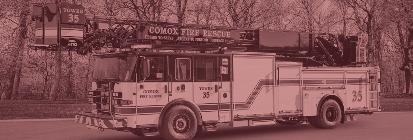
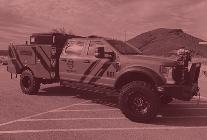
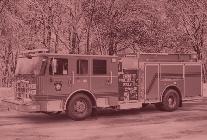
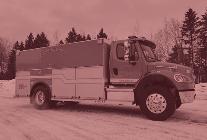
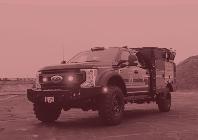
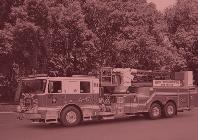
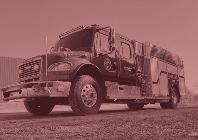
Fire truck manufacturers are getting creative and strategic as they prepare for growth By Laura Aiken
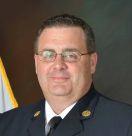
Talking tornado response with Chief Robert Shantz By Jared Dodds
Responding to tough questions about leadership education and management By Tony Rusinak
ANSWERING THE CALL
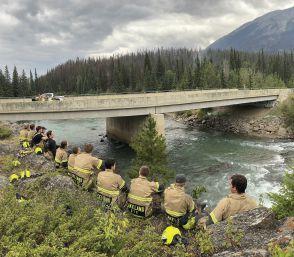
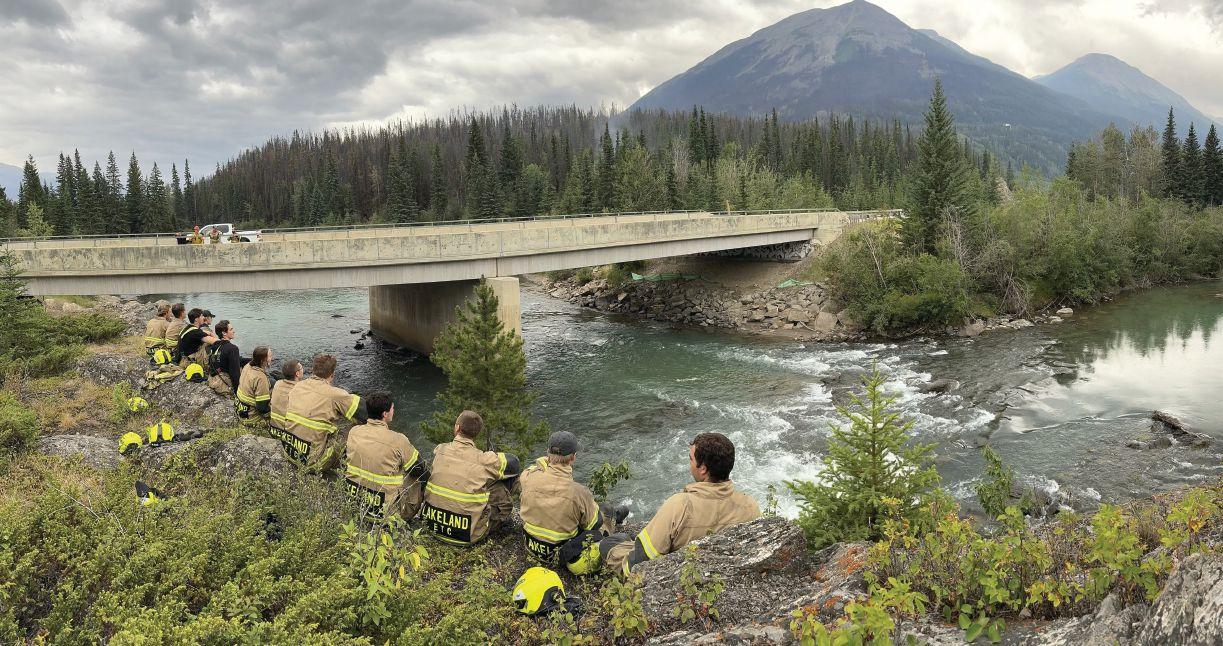
Lakeland students were on scene to protect and help rebuild Jasper By Lakeland College
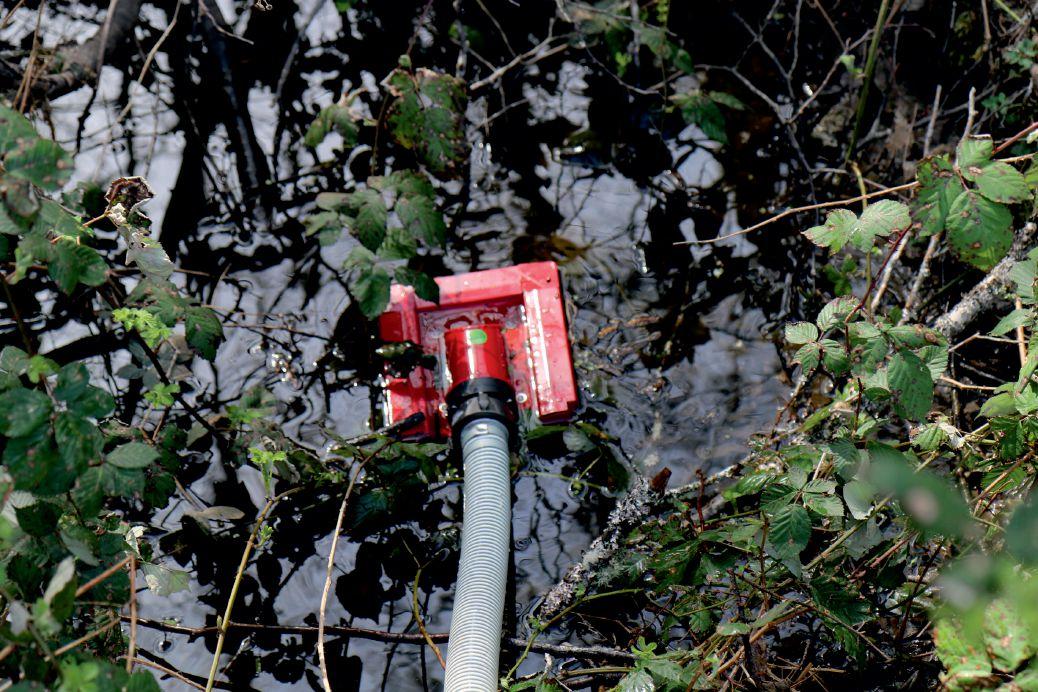
How to have a bon voyage on your fire boat purchasing journey By Rob Anselmi
CAFC SHOW SHINES IN MONTREAL
A recap of the Canadian Association of Fire Chiefs’ annual education conference By Laura Aiken
KEYS TO FIRE MASTER PLANNING
In conversation with Fire Chief Paul Boissonneault on Oakville’s recent fire master plan and the critical CRA that informs it By Laura Aiken
COLUMNS DEPARTMENTS
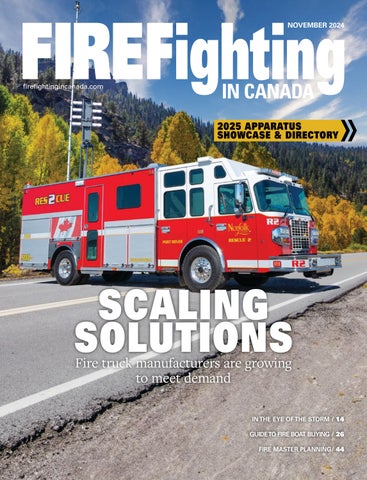
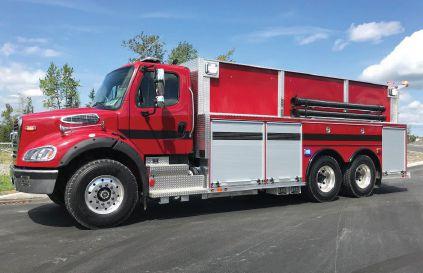
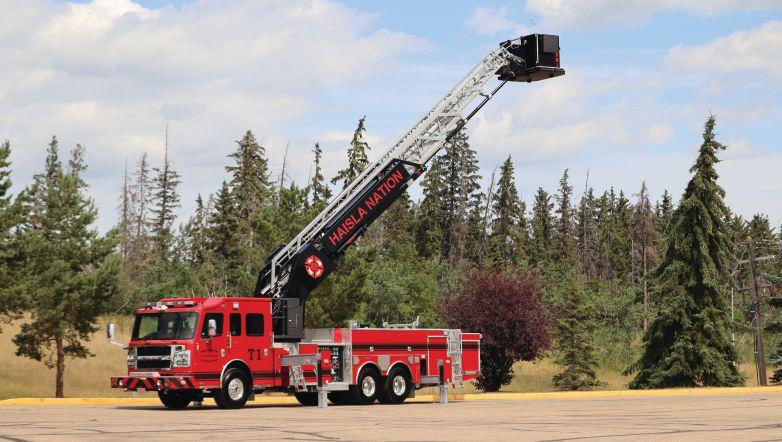
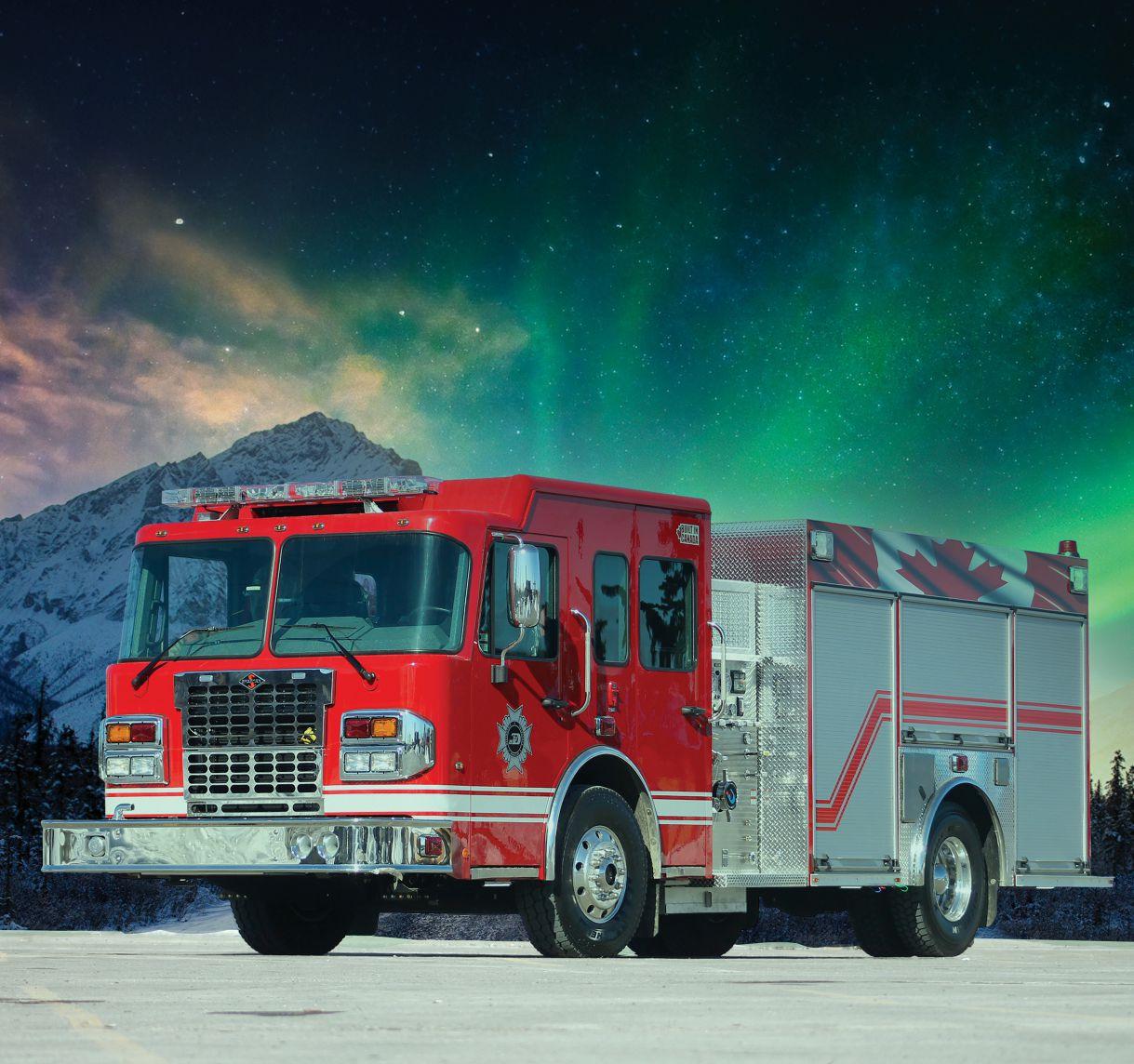
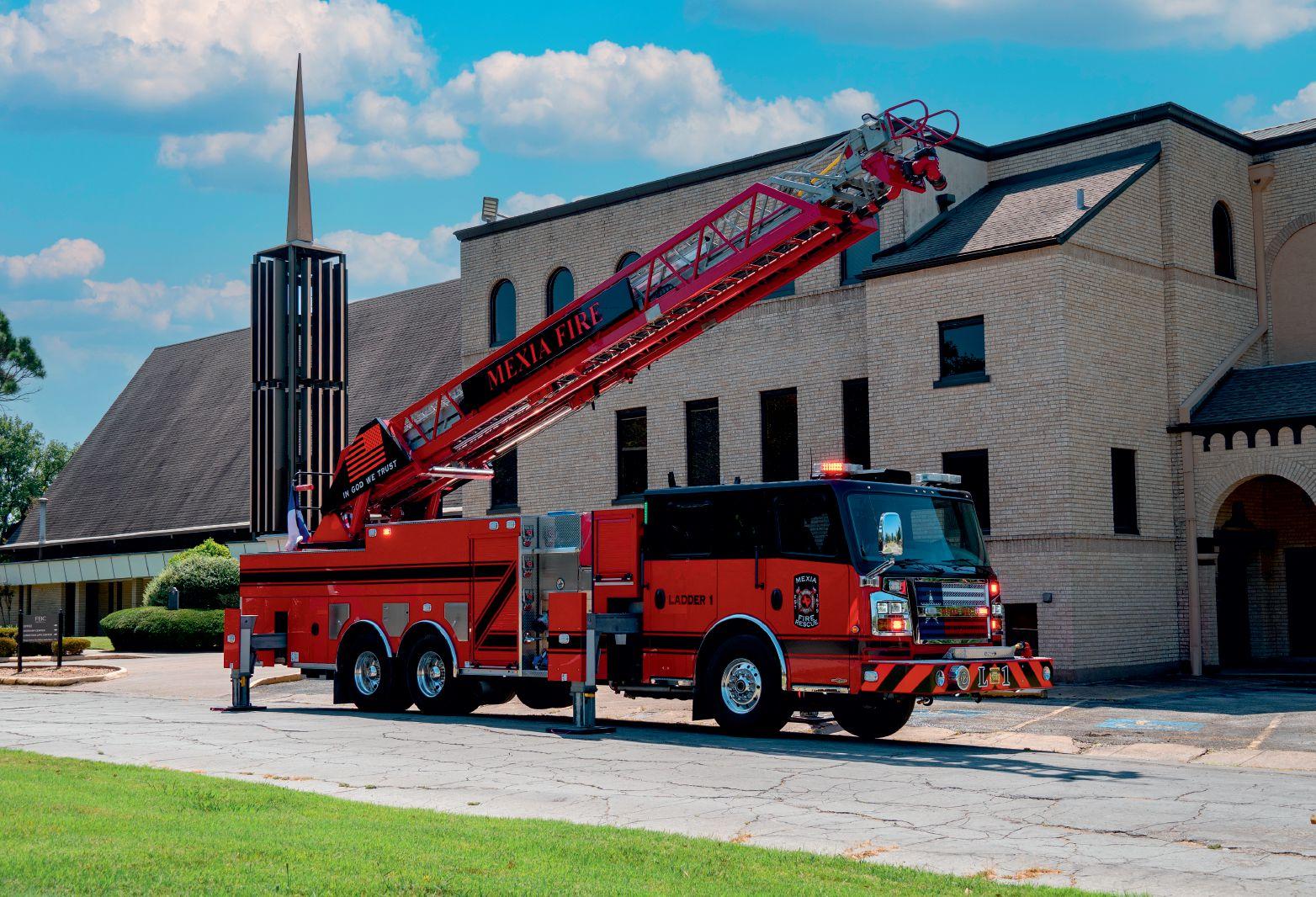
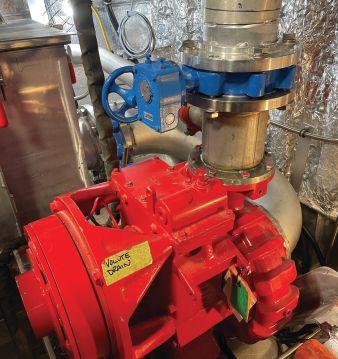
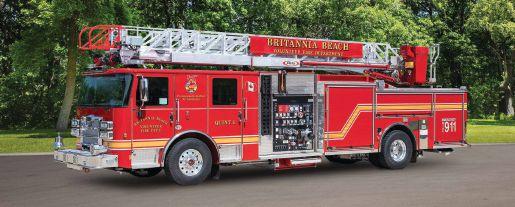
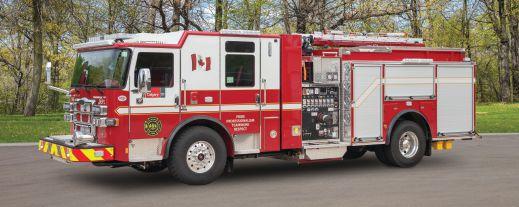
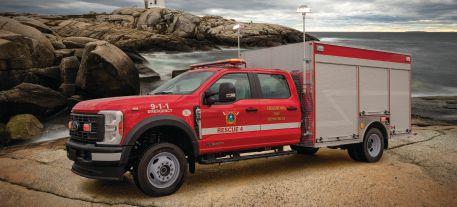
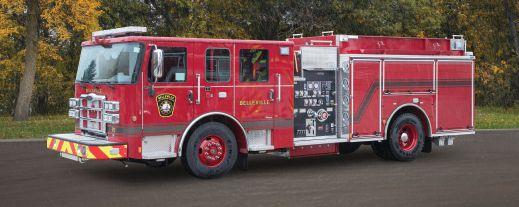
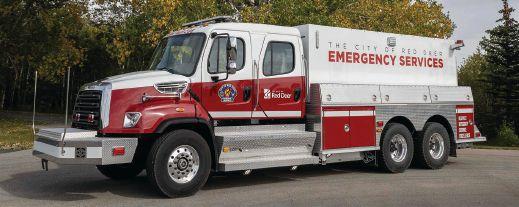
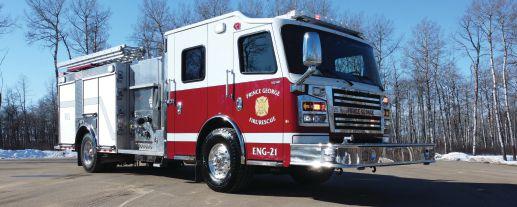
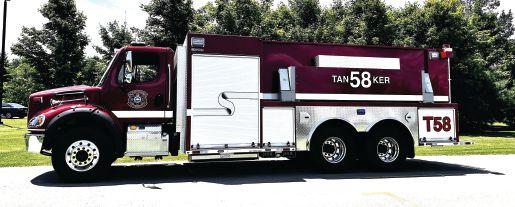
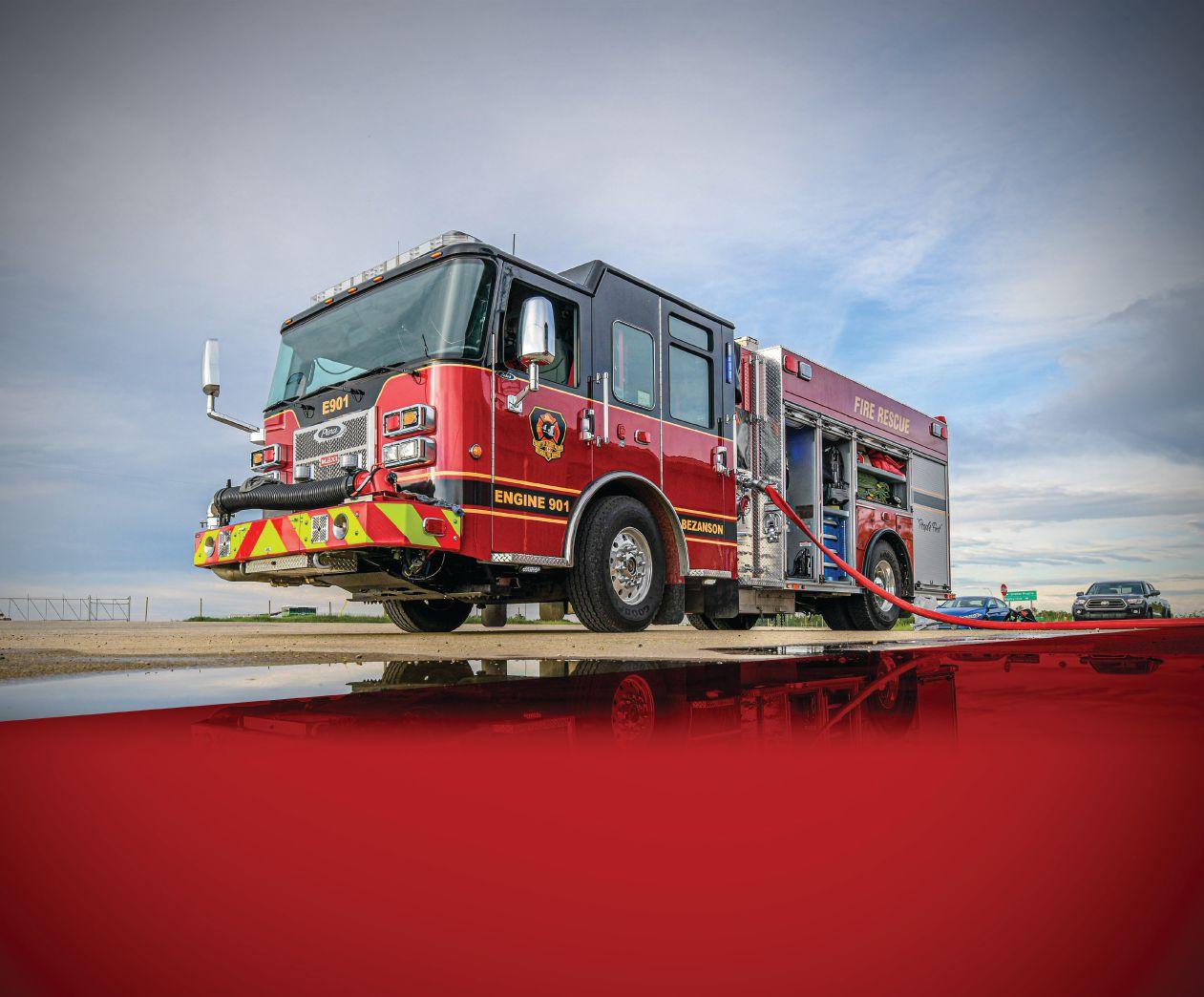
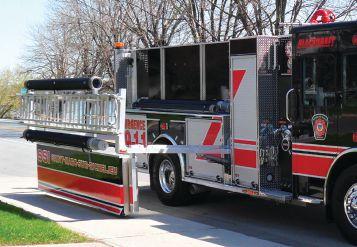
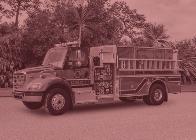
Cover photo: Fort Garry Fire Trucks delivered this beauty to Port Dover, Ont.
Labour shortage is Fire-wide
I’m going to make a daresay, and feel you may be inclined to agree with my summation: The number one challenge facing the fire service today isn’t climate change, money, or training — it’s labour. I have heard coast to coast to coast of the crisis (tipping?) point in volunteer numbers. I have listened to chiefs of career departments yearn for a larger pool of high quality candidates during interviews. I have conversed on the challenges finding firefighters desiring the chief’s role. I have caught wind of fewer applicants for wildland fire fighting. And, for those in service to the service, the hard-working minds and hands building your fire trucks…they too are facing prohibitive labour shortages that are contributing to those long lead times for delivery.
Roughly 700,000 of the four million trades people in Canada are expected to retire by 2030, reported Employment and Social Development Canada. The shortage of automotive service technicians doubled from 2021 to 2022, stated the Automotive Industries Association of Canada. The association also published that apprenticeship program completions dropped by almost 30 per cent, which is the biggest drop they’ve seen in almost 30 years.
Statistics Canada reported, “the number of working-age apprenticeship certificate holders has stagnated or fallen in three major trades fields—construction trades (+0.6 per cent), mechanic and repair technologies (-7.8 per cent) and precision production (-10.0 per cent)—as fewer young workers replace the baby boomers who are retiring. Job vacancies in some industries related to these trades, such as construction and fabricated metal product manufacturing, reached record highs in 2022. In 2021, three in 10 employed people (30.2 per cent) with an apprenticeship in mechanic and repair technologies or precision production were aged 55 or older.”
In terms of trades, consider the nearly 85,000 job vacancies in the construction sector, which contributes 7.5 per cent of Canada’s GDP, stated the Canadian Construction Association. There is $3.9 billion worth of monthly building permits ready to go, a 17 per cent increase since the record level set in 2019, reported the association. There is a significant mismatch between the aggressive home building plans of governments and the labour available to execute. Fire departments are all too familiar with the fallout of the housing shortage and homelessness crisis in Canada.
Climate change resiliency is hailed as another serious priority of governments. It is certainly a concern for fire chiefs. I’d say there is also a mismatch in what will be required of emergency response due to climate change and the long-term plan to ensure those systems are ready in the labour force. No matter where you look, skilled people are needed and they seem to be in short supply.
Canadian governments need to do a better job addressing the employment gaps where needed, whether via bursary, storytelling, education, subsidies or any other incentive program, that will strengthen emergency response in the long-term, and our country overall. But Fire need not wait around for governments to do more. Companies like Fort Garry Fire Trucks, running English classes for staff, are increasingly taking matters into their own hands. There are no quick fixes to the challenge, no easy solutions to be had, but grassroots groundwork attended to now will lay the foundation for a stronger future.
LAURA AIKEN Editor laiken@annexbusinessmedia.com
54% of departments deferred purchases in 2023, reported by the CAFC in the Great Canadian Fire Census.
86.6% of firefighter fatality claims analyzed from 2007-2021 were due to cancer, reported a study by BC Injury Research and Prevention Unit.
THE CANADIAN FIREFIGHTERS MUSEUM estimates the first fire engines for the Canadian Prairies were purchased in 1845 by The Hudson’s Bay Company.
In the U.S. about 2,500 vehicles crashed into fire trucks parked as blockers in 2019, reported Work Zone Barriers.
VANCOUVER FIRE RESCUE SERVICES
became Canada’s first completely motorized department in 1917, reported by vancouverhistory.ca.
33 %
of departments are using tankers older than 20 years, amounting to 1087 units, the CAFC reported
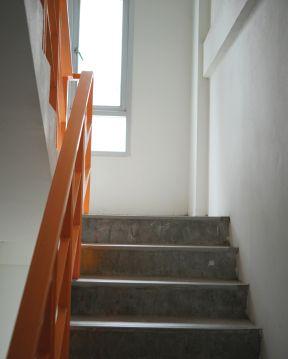
B.C. updates building code to allow single egress stair designs
The government of British Columbia updated the B.C. building code to allow for single egress stair (SES) designs in buildings up to six storeys.
The change, announced on Aug. 29, has been met with concern from the Fire Chiefs Association of BC (FCABC) and the BC Professional Fire Fighters Association (BCPFFA).
“Circumventing the code development process jeopardizes the public, building occupants, and first responders,” said Dan Derby, president of the FCABC, in a joint statement with the BCPFFA.
The Canadian Association of Fire Chiefs (CAFC), the International Association of Fire Chiefs and the Ontario Association of Fire Chiefs have also released positions opposing singlestair multi-family buildings.
The government is making the change to facilitate housing projects on smaller lots and in different configurations, allowing more flexibility for multi-bedroom apartments, they said in a press release.
To combat fire risk, buildings will introduce safety measures including sprinklers, smoke-management systems and wide stairwells.
Ret. Fire Chief Len Garis, an adjunct professor with the University of Fraser Valley, published a report highlighting concerns with the transition to SES designs.
The first was the shift in process surrounding this potential change to building code, which traditionally involved a consensus process to ensure all parties’ interests are reflected.
British Columbia rapidly amended their building code against the advice of fire safety experts, a change in approach noted by the CAFC.
“If a decision is rendered prior to the federal consultation results, it could render a national or federal consultation
Firefighter associations have highlighted the negative impact on safety introduced by single egress stair designs.
moot, deny British Columbians of its benefits, and begin a dangerous legacy,” the CAFC statement said.
In a separate UFV report, Garis found that nine per cent of fires in apartment buildings originated in the means of egress, including hallways or stairwells, and that smoke affected primary egress routes for more than 42 per cent of residential apartment fires.
Garis also highlighted the need for redundancy in fire protection to account for system failure, as research on Canadian apartment fires showed problems with smoke alarms in almost nine per cent of fires, as well as automatic extinguishing equipment not working in 7.3 per cent of fires.
The statement from the BCPFFA and the FCABC called for the changes to be reversed or paused, as well as recommending the decision be deferred to the National Building Code revision process with the involvement of the National Research Council.
OAFC launching chief peer support program
The Ontario Association of Fire Chiefs (OAFC) is rolling out the Chief Fire Officer Peer Support Program, a mental wellness program specifically designed for chief officers.
The government of Ontario is providing $190,000 to the OAFC over the course of the program for funding.
Rob Grimwood, president of the OAFC, said discussing firefighter mental health initiatives with the OAFC Health and Safety committee, which he chairs, demonstrated the need for a chief specific program.
“Having that discussion started to lead to fire chiefs reaching out to me privately, saying that they didn’t feel as though the resources that were available for firefighters were necessarily appropriate for them,” Grimwood said.
He said they identified several unique problems facing fire chiefs, including accumulated trauma over their career and the pressure associated with decision making on the fire ground.
OAFC executive director Mark MacDonald said the way chiefs had dealt with trauma in the past was not working and required change.
“How you dealt with trauma back in the day was just being exposed to more of it,” MacDonald said. “Chiefs are always taking care of the troops but who takes care of the chief?”
This led to the creation of the Chief Fire Officer Peer Support Program, made up of 15 fire chiefs who have committed to supporting other chiefs through times of crisis.
One of the delivery methods for this support is the new PeerOnCall app.
OAFC program and policy advisor Shaun Cameron said using an app allows users to start conversations anonymously and introduces a proactive element to mental wellness.
“A chief might actually do some of the checks and realize they aren’t doing as well as they thought,” Cameron said.
With the framework for the program now set, Grimwood said the OAFC is focused on continuing to evolve as more research and education becomes available and creating an infrastructure to support their peer support team.
To access the OAFC Chief Officer Peer Support Program, visit oafc.on.ca/ oafc-chief-fire-officer-peer-supportprogram-public.
PROMOTIONS & APPOINTMENTS
DAVE TARINI transitioned from acting to full-time deputy fire chief for Thunder Bay Fire Rescue in Ontario. He filled the position left open by current Chief Dave Paxton, who was promoted earlier this year. Tarini began his tenure with the department as a firefighter in 2004 before transitioning to the service’s suppression division.
Banff Fire Department in Alberta selected KERI MARTENS as their new fire chief. Martens has over 30 years of experience in the fire service, including 18 years spent as fire chief for the Lake Louise Fire Department. Martens is the vice-president of the Canadian Association of Fire Chiefs.
ROCCO VOLPE is the new fire chief for Central York Fire Services, serving the communities of Newmarket and Aurora in Ontario. Volpe joined the department as a deputy fire chief in 2015 and has led the operations and support services divisions. He was the acting fire chief since December 2023 and brings 25 years of experience to the role.
JASON NESBITT is the new fire chief for the town of Stony Plain in Alberta. Nesbitt joined the fire service in 2005 as a volunteer firefighter with the Peace River Fire Department. He has contributed to the International Society of Fire Service Instructors, and provided training across North America as the only Canadian lead instructor for the live fire instructor program credential.
The city of Brampton in Ontario welcomed NICK RULLER as their new fire chief. Ruller has been the acting deputy fire chief in Brampton since 2022 and has over 20 years of experience in the fire service, working with departments including Niagara-on-the-Lake and Toronto.
RETIREMENTS
JOHN OKUM, fire chief for the municipality of North Grenville in Ontario, is retiring after 35 years of service. He joined the department in 2017 as their fire chief and director of emergency and protective services, after beginning his career with the Arnprior Fire Department in 1988, holding positions including community safety and fire prevention officer, firefighter and fire chief.
Deputy Fire Chief NORM
MACLEOD retired from White Rock Fire Rescue in British Columbia after 36 years of service. Beginning his career as a paid on-call firefighter for the Mission Fire Rescue Service in November 1988, MacLeod progressed to assistant fire chief before transitioning to White Rock in 2020. He has also worked closely with the Greater Vancouver Fire Chiefs Association, the Fire Chiefs Association of BC and the Canadian Association of Fire Chiefs.
Fire Chief MATTHEW PEGG retired from Toronto Fire Services on Oct. 4 after over 32 years of active service. Pegg began his career as a volunteer firefighter in Georgina and worked his way to the interim chief position of Canada’s largest fire department in 2016. After being given the role permanently in April 2017, he found himself in the national spotlight after he was tasked with being Toronto’s COVID-19 incident commander.
LAST ALARM
Deputy Chief CRAIG MACARTHUR from the Hanover Fire Department in Ontario passed away on September 26 at the age of 58. His 35-year career with the department began as a volunteer firefighter, and he held positions including captain and platoon chief before being promoted to deputy chief for the last seven years of his tenure.
LEADERSHIP FORUM
By Matthew Pegg, Ret. Fire Chief, Toronto
JUDGE AND JURY
I find myself in a unique headspace these days, as for the first time since 1992, I am no longer an active member of the fire service. Friday, Oct. 4 was my last day on duty as the chief of Toronto Fire Services and I am filled with gratitude for all that I have had the privilege to be a part of.
I have been thinking about some of the most important leadership lessons I’ve learned over the past 32-plus years, and especially the lessons I will take with me as I embark upon my next adventure.
Specifically, I have been thinking about the answer to this question: “What are the leadership truths that ended up being different than I assumed they would be?”
This edition, there is one that I want to share with you that has been both powerful and impactful for me, especially as my experience, exposure and perspective as a leader have continued to grow and develop.
When I first assumed the fire chief role for Toronto Fire Services, I felt confident that I would ultimately be judged by the things I did and achieved, by my actions, and based on what I attended and engaged in.
I have long believed that leaders should be visible, engaged and connected with those they serve and those they serve alongside. That belief has guided and informed much of my personal approach to leadership, and I don’t regret a single minute of that approach as it has served me very well.
But, with the benefit of the
rear-view mirror and the 20/20 clarity it brings, I now know that I wasn’t entirely right.
As leaders, we aren’t solely judged by what we attend, by what we say nor by what we do. Rather, we are also judged by the things we don’t attend, by the things we fail to say and by the things we ought to have done but didn’t do.
There were many times when it was beyond hard to get up in the middle of the night and head out to the scene of a major emergency or to a scene where someone had been killed or critically injured by fire.
There were many times when it was hard to head out to an incident in the driving snow, pouring rain or freezing cold.
There were many times when the last thing I wanted to do was to attend yet another after-hours public event when all I wanted to do was go home and rest after a long day.
Being candid, if a major incident,
critical injury, or fire fatality doesn’t matter to the fire chief, who should it matter to? If being the face and voice of your organization at public events isn’t a top priority for the leader, then who should it be a priority for?
Let me be clear: None of us can do it all, and there must be both down time and personal time for leaders. After all, you can’t pour tea from an empty pot and I have known all too well what exhaustion and fatigue are all about.
But the satisfaction that comes from being a leader who shows up, especially when others don’t think you will, is extremely rewarding.
In my experience, every time leaders show up and personally engage, especially when it isn’t fun or convenient to do so, trust credits are placed in your personal trust bank. Those trust credits are what we use when we don’t get it right, when we make mistakes, or when we simply can’t do
everything that is asked of us. When we have earned and deposited more trust credits than we have used, people give us the benefit of the doubt. There is no overdraft in a personal trust account, meaning we can’t use credits we haven’t yet earned.
As you continue to establish and define the legacy you will earn and own as a leader, take time to consider that those whom you serve and serve alongside will pay close attention to the things you didn’t attend, didn’t do, or didn’t say.
Leadership is not a spectator sport. If you are unable or unwilling to meet the demands and expectations that come with the position you seek, think carefully about how you will be judged, and how you will impact those who will need to depend and rely on you before you accept that role.
In the end, perhaps the toughest judge and jury of all, are those who live in your rear-view mirror.
Matthew Pegg served 32 years in the Canadian fire service, with the last eight as chief of Toronto Fire Services. He is now a professional keynote speaker with Speakers Spotlight.
By Laura Aiken
SCALING SOLUTIONS
How fire truck manufacturers are meeting needs in a high demand market.
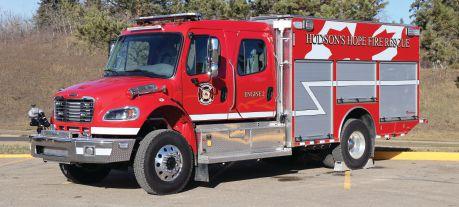
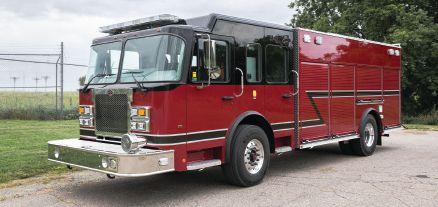
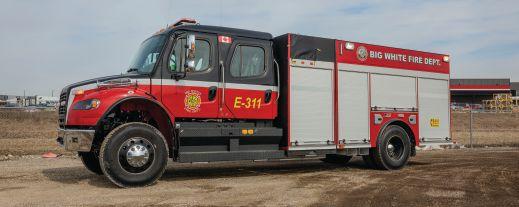
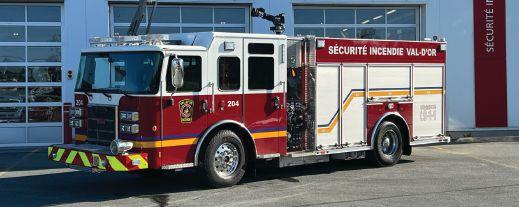
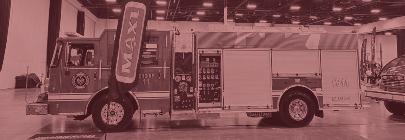
Last year, Canada’s population grew faster than any other year since 1957. From Jan. 1, 2023 to Jan. 1 of this year, we grew by 1,271,872 people. There is a solid demand for apparatus, a growth trajectory for fire halls, and aging out fleet that is requiring more service. Here’s how some fire truck manufacturers are planning for growth, managing their post-pandemic backlogs, and tackling labour challenges.
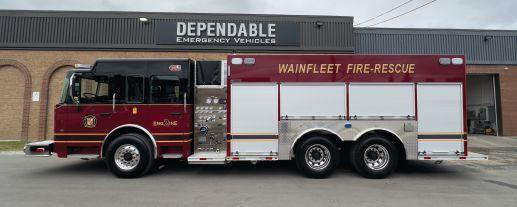
DEPENDABLE EMERGENCY VEHICLES
It’s an exciting November for Pino Natale, chief of operations, and his team at Dependable Emergency Vehicles. At the dawn of winter, this Ontario-based fire truck manufacturer, a family-run business celebrating its 50th birthday in
2025, will be expanding its services into Dartmouth, N.S. Further expansion is planned for Woodstock and North Bay in Ontario.
“We want to service more areas. Our main focus is customer service. We want to be there when people need us. Instead of people taking trucks for a three- or four-hour drive, they are going to have someone there to service the trucks in a timely manner,” said Natale.
This path means Dependable is in a hiring splurge, seeking service techs, EVTs, and customer support staff. Natale is watching the population growth and urbanization, which comes along with increasing complexity in these areas where emergency response will be needed. The company is expanding its capabilities to meet the growth in demand — vehicle repairs, reliability, delivery — to align with the future. Ultimately, Natale plans to have a dealer and a repair facility in every province. To this end, Dependable recently expanded beyond its Ontario roots and inked a dealer in Quebec.
Long lead times have long been an industry challenge, and Natale is working to shorten these by streamlining manufacturing processes. While delivery times are surely top of mind, budget is the number one concern he hears from clients today. He said Dependable is always at the table, working with on the affordability piece with smaller departments by seeing how the cost of the unit can be brought down. Natale is keen to continue developing the technology, sustainability and knowledge to be an eco-friendly solution for fire departments through energy efficient fire trucks and cleaner cabs.
FORT GARRY FIRE TRUCKS
At Fort Garry Fire Trucks, CEO Rick Suche said his number one challenge is hiring new people, getting them trained and into the plant to address not only future growth, but the twoyear backlog the Winnipeg-based company is working through post-pandemic.
The backlog challenge is not unique to Fort Garry. In North America, the number of fire trucks delivered were typically 6,000 a year up until around 2010, then they dropped down to 4,000 a year until 2020 when they jumped back up to 6,000 (numbers are approximate). Over those 10 years, manufacturers geared down to produce the 4,000 trucks a year, Suche explained. When the numbers jumped back up, so did the backlog, and many manufacturers are operating on a two to four year one, plus managing new orders.
Scaling up requires people, and he said labour is a common pain point amongst his fellow manufacturers. Suche took a novel approach in the past year and began running English language classes twice a week after hiring a number of Ukrainians. Winnipeg has one of the largest settlements of Ukrainian speakers outside of Ukraine.
“It’s a little different for a fire truck manufacturer, but you got to do what you got to do,” he said.
Labour shortages is a recurring theme across discussions with fire truck manufacturers interviewed here. Despite the hiring
challenges, Randy Boissonnault, Minister of Employment, Workforce Development and Official Languages, announced measures in August to reduce the scope and access of the Temporary Foreign Worker program on the basis of curtailing misuse by business.
The latest data from the Labour Force Survey as of August showed the overall unemployment rate rose to 6.4 per cent following two consecutive monthly increases in May and June. A higher unemployment rate isn’t necessarily translating into an influx of labour for manufacturers to hire. Suche said finding labour is the biggest obstacle to growth facing Fort Garry. There is a need to attract service techs and one is competing against auto dealers “where they don’t have to go outside and do service work on fire trucks in Timbuktu.”
The end result of the catch-up and grow game is more fire departments keeping trucks on the road longer, spending more on maintenance, and purchasing more stock trucks to speed up the delivery time when the overdue engine comes to peril. Suche said he sees much of the post pandemic sticker shock on fire trucks dissipating, and there’s less inquiry about cost in favour of chiefly saying, “When can we get it? Yes, we’re in crisis, when can we get it?” How fast is the big question. Fort Garry is ensuring stock trucks are in their schedule to help their customers out, and producing wildland engines that are increasingly of interest to Canadian communities.
PIERCE MANUFACTURING
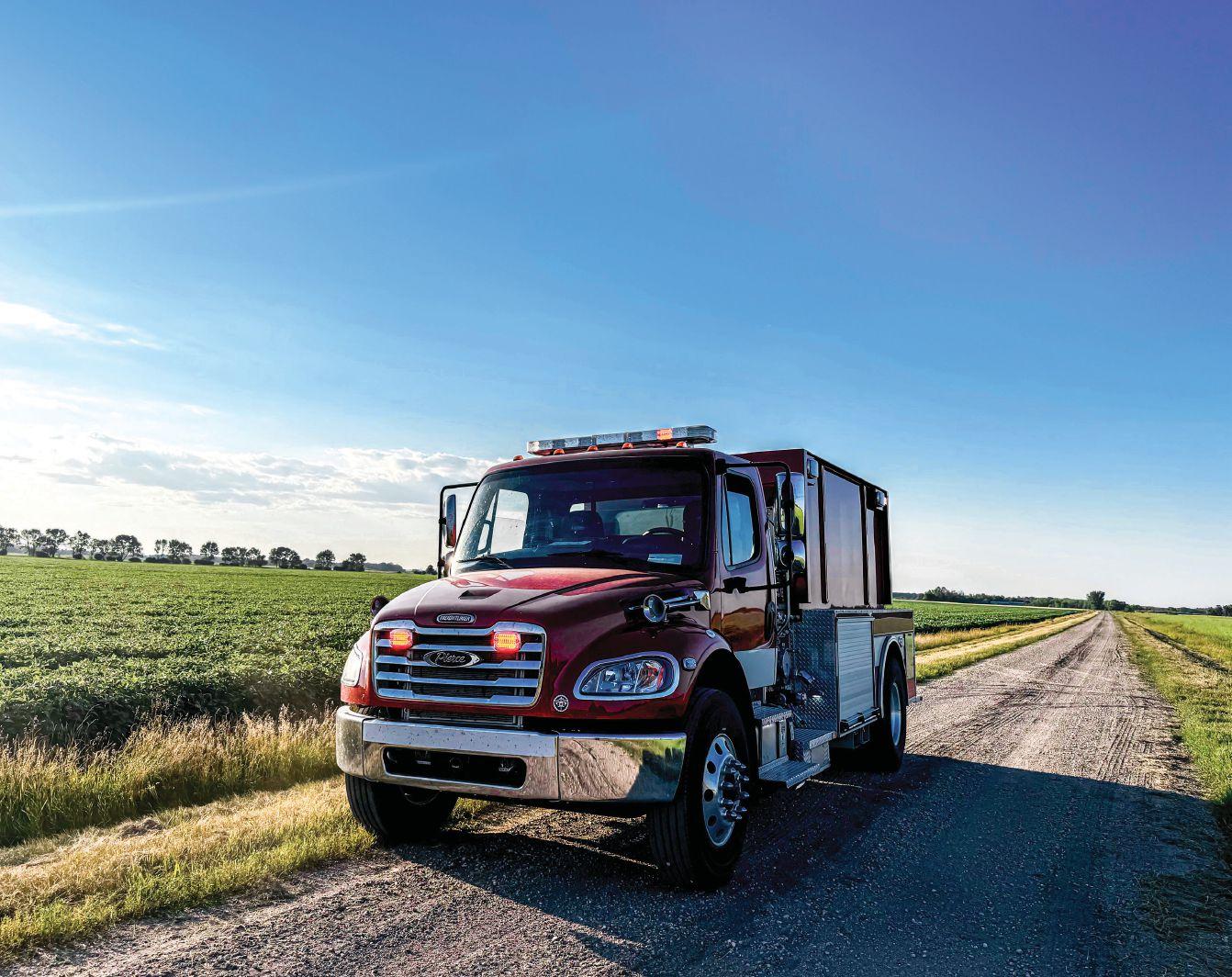
Bob Schulz, president of Pierce Manufacturing, said they have added about 200,000 square feet of manufacturing space to address the substantial growth in demand they are seeing across North America. Pierce has also made significant investments in product flow, he said, meaning across all of their manufacturing locations — Wisconsin, Tennessee, Florida, and in their Canadian sister company MaxiMetal. This includes investments in automation (not with the goal of replacing people, he noted), but to supplement the resources and skill sets that exist.
Schulz finds Pierce in a fortunate position, noting that recruitment and retention efforts have put them into the position of obtaining the company’s highest employment in its history. Those people investments have been in training, development, skill set, growth and opportunities across the organization. In terms of capacity, Schulz said that is focussed around three things: safety (internal and external facing team), quality and delivery.
“We will not sacrifice quality to increase delivery, because in the end, these are emergency response apparatus and they need to have significant uptime.”
In terms of backlog, Schulz said that depends on the time horizon over the last five years and when the pandemic challenges really hit the supply chain hard. He sees the substantial uptick in demand in the industry and feels the
lead time challenges. Pierce has grown their capacity, and now he points to the supply chain — it needs to grow as well.
Canada is a key market for Pierce, said Schulz, as evidenced by the acquisition of MaxiMetal and strategic dealer partnerships, who in turn are expanding their capacity. He pointed to Commercial Emergency Equipment as one who expanded their Edmonton facility twofold to better serve Western Canada.
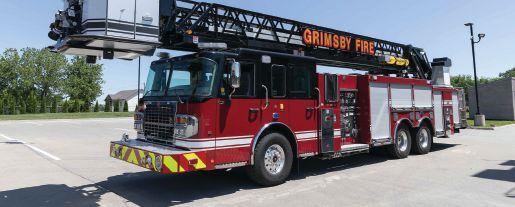
Alongside growth, comes innovation. Pierce has been strategically placing its Volterra electric fire truck in varying climates and geography — such as chilly Calgary and sweltering Arizona — and optimizing solutions for the locale. Pierce has invested in idle reduction technology, and heavily in their aerial portfolio with their ascending class, he said.
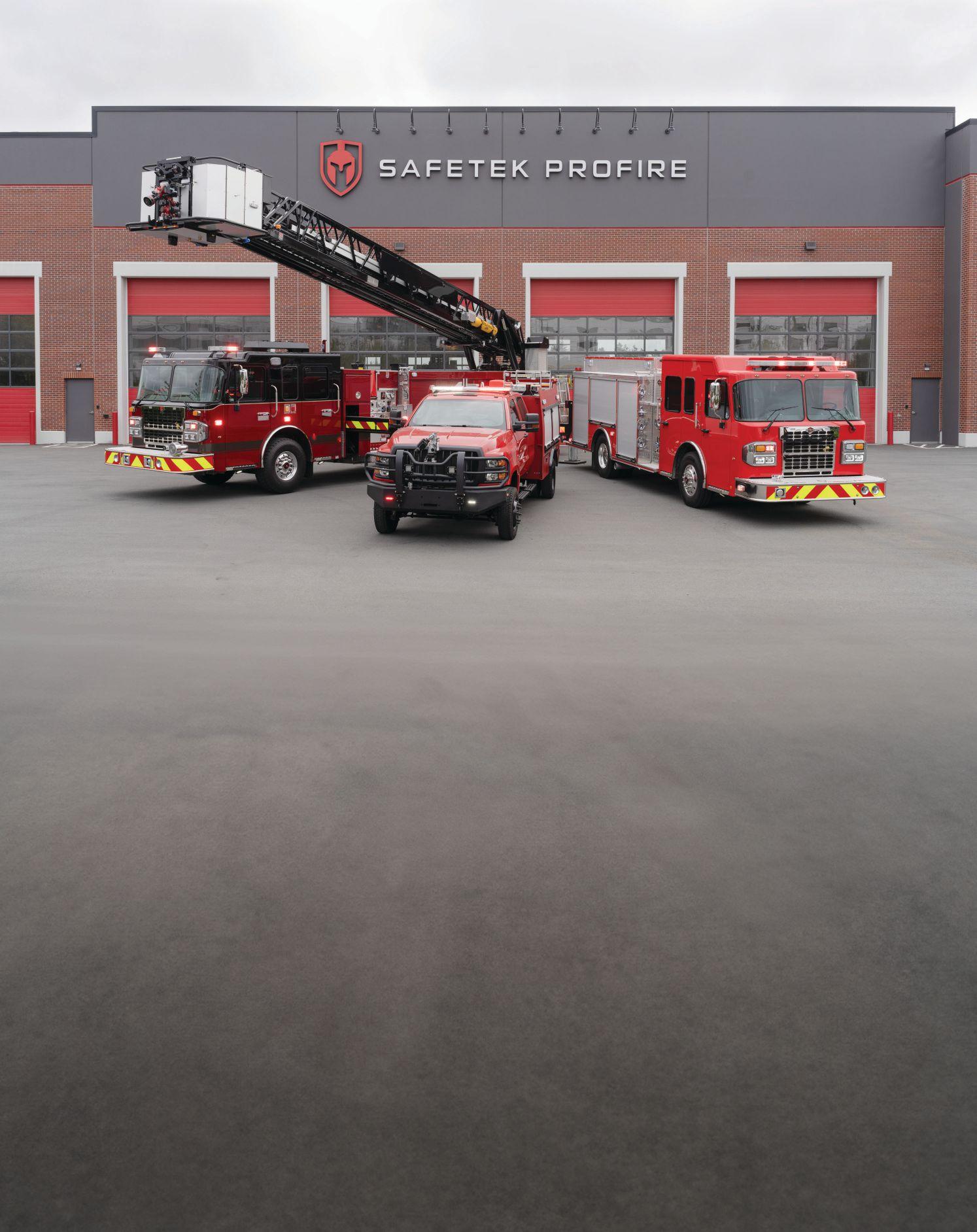
SAFETEK PROFIRE
Wayne Stevens, president of Safetek Profire and Hub Fire Engines, looks out the facility window and sees fire trucks from large urban departments; ones in for service from those who might have done more of their own service in days gone by. Safetek Profire is fielding an increase in request for parts and service, he said, which is being driven in part by fire departments keeping their fleets on the road for longer due to extended lead times for new apparatus, alongside a widespread shortage of techs and EVTs.
Safetek Profire is exploring opportunities to collaborate with trade schools, which they believe will help them recruit new technicians who are younger and at the start of their careers. Labour shortages remain an internal challenge, contributing to longer lead times. In addition to these delays, rising costs of new apparatus in a post-pandemic environment have become a major concern for their customers. Delivery times and pricing are the most frequent
concerns they hear from them, Stevens said.
“What is the new norm? I don’t see us getting back to pre-pandemic delivery times of 12 to 14 months anytime soon. The market has reset, and what I mean is there are 380 to 400 new trucks bought in Canada every year and that’s still happening on top of the two to four-year backlog.”
Fire departments fell behind in their replacement cycles during the pandemic, as many decisions paused in the uncertainty of it all. This also contributed to backlogs for manufacturers, and a new norm of 18 to 24 months, he said.
“Safetek Profire is securing production slots for ready-to-deliver stock pumpers, aerial and rescue trucks in as little as 30 days to help meet our customers’ needs and address the growing demand.”
Safetek Profire is in growth mode to address the needs of its customers. In the past year, it made the strategic acquisition of Hub Fire Engines to expand its market, particularly among medium to smaller departments in B.C. New sales reps have been hired in Ontario, Alberta, and B.C. A modern facility was built in B.C., with a new parts and customer service centre in Abbotsford. The new facility was purpose-built from the ground up with lots of input from the team and designed to meet the increased demand for service.
“Looking ahead, we are planning to expand our after-the-sale parts and service support in both Ontario and Alberta to meet the growing demand and continue supporting its customers effectively.”
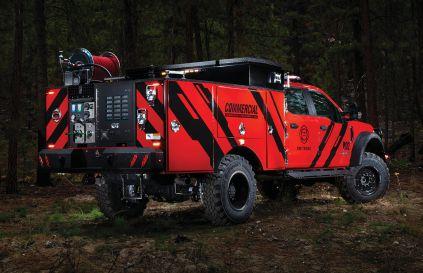
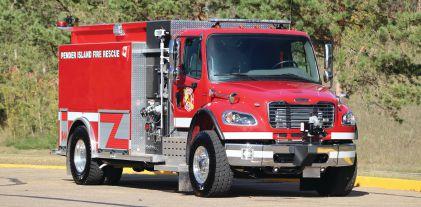
Safetek Profire has made significant investments in developing a line of custom wildland engines specifically designed to help address the growing wildfire crisis across Canada. This year, they will deliver 20 units, with approximately 20 more on order. To meet the increasing demand, they have established
a dedicated manufacturing team focused on building remarkable wildland engines, he said. This specialized team allows Safetek Profire to streamline production, enabling them to build and deliver these trucks in as little as 90 days.
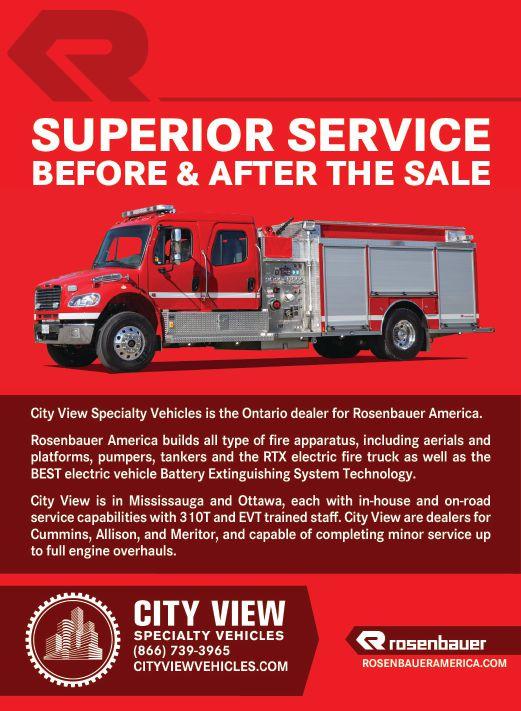
ROSENBAUER AMERICA
Roger Parker, director of sales for Rosenbauer America, said they are working with lead times of about two years and have plans to hire between 50 and 125 people in the next year and a half to gear up for more production. Parker noted continuing issues in the supply chain that are frustrating at times, but said things seem to be stabilizing somewhat.
Joe Lichtscheidl, director of inside sales for Rosenbauer America, said the company’s main goal is to ramp up strategically. This means hiring the right people in the right areas, for example, where bottlenecks are, or as materials come available, so the people solution is a trained one done systematically and avoids a drop in production. Training the needed skill set can take six months, so strategic hiring, and scheduling, is key.
Parker noted truck sales are fluctuating up and down a bit, but cost is not. That remains “through the roof.” But, they said they feel the sticker shock has worn off. Delivery times are the driving concern for their buyers, said Lichtscheidl. Some of the cost concern is negated by the fact that they are planning to buy apparatus that they aren’t going to have to pay for until it’s delivered in a couple years, so they budget it that way.
Buying trends are changing, said Parker. Rosenbauer has stock units in production that “have been really good sellers for us because they’re buying a quicker delivery but it’s more of a stock truck design. The days of customizing have really gone by the wayside because they just can’t seem to wait three years, or whatever the delivery time is.” Although each city operates a little differently, Parker said he sees they are willing to give up a few options for a quicker delivery and perhaps a better price too.
The challenges of backlogs, labour shortages, supply chain and cost are persistent, but manufacturers are well positioned, strategically and creatively, to grow and continuing meeting the needs of their customers.
By Jared Dodds
IN THE EYE OF THE STORM
In conversation with North Dumfries Fire Chief Robert Shantz on their department’s tornado response.
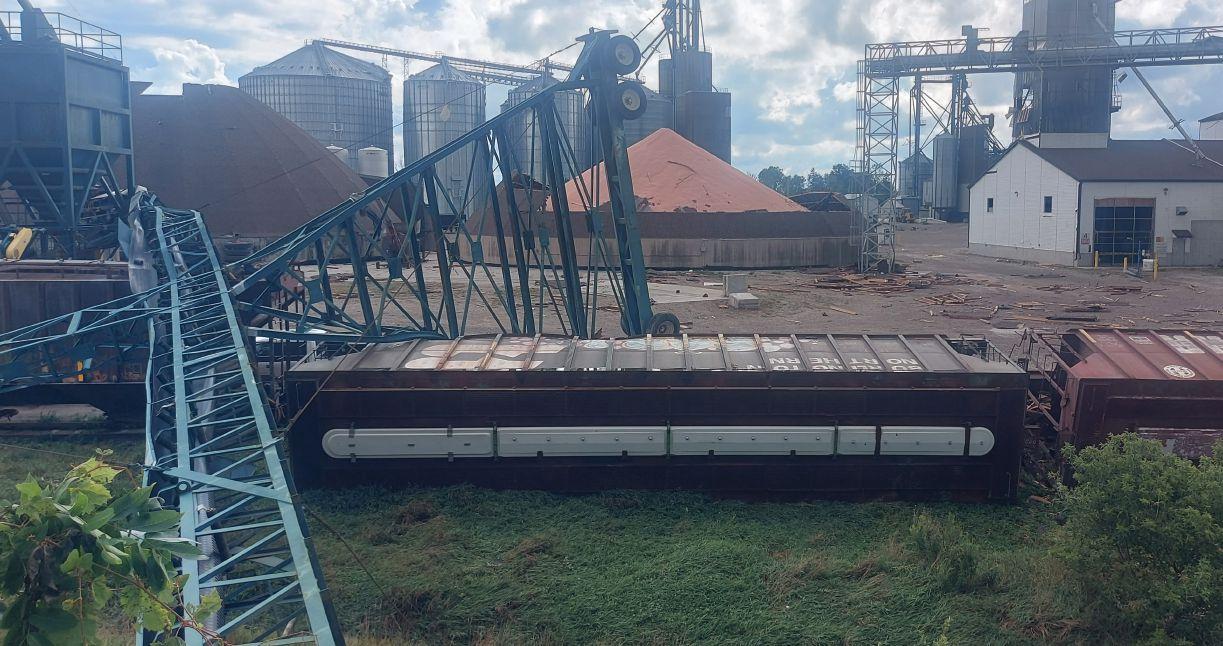
On August 17 a tornado touched down in Ayr, Ont., a small village in the Township of North Dumfries. Robert Shantz, the fire chief for the Township of North Dumfries Volunteer Fire Department, spoke with Fire Fighting in Canada associate editor Jared Dodds to go over the department’s response, the aftermath and the lessons he learned from the incident.
Jared Dodds (J): Prior to the actual event, was your department trained for tornado calls?
Robert Shantz (R): We were trained. I’m also the community emergency management coordinator for the community,
and last year our emergency exercise was a tornado that hit Ayr. Our tornado actually went through town just a kilometer and a half to two kilometers further south of where we trained for. Our area has a high probability of tornadoes, so I believe it ranked number three on our list because of past history and near misses.
J: On the day of the tornado, how many firefighters responded?
R: We are a single-station municipality, with five trucks and a complement of 35 firefighters. I think it was 20 firefighters who responded to this. There was a lot of luck involved because it was a Saturday, so we had many firefighters available. We had pretty much a full response and were able to fill all of our trucks. The calls started coming in rapidly and, luckily, we were able to disperse the trucks accordingly.
J: What did your department’s initial response look like?
R: There were two businesses hit: Home Hardware, which was open for business that morning, and the Central Ontario FS grain elevator across the street. They normally have many employees on-site, but due to the rain, they didn’t.
One of the trucks was assigned to check the Home Hardware for any casualties or entrapments. They made contact with two employees and two customers, and luckily everyone was accounted for. If we had to go inside, that would have been a different ballgame because we wouldn’t have known the stability of the structure.
J: What were some of the hazards or concerns that you either experienced directly or were prepared for through the training you mentioned?
R: Traffic congestion was a big issue because Northumberland St. is a main artery
LEFT The tornado caused significant damage to structures and led to a wide spread of debris across the village of Ayr.
in and out of town. We had road closures already due to construction, which created extra traffic through town. When the tornado hit, it killed power to the town, causing people to leave. We also had many sightseers wanting to come through, so traffic management became a problem.
In retrospect, should have we closed the main road? Yes, absolutely. That would have created some other congestion problems, but nonetheless, it would have gotten rid of some of the sightseeing traffic.
And then the debris. It was a debris field, and you didn’t know what was on the ground, we even saw evidence of the lumber driven right into the ground. Greenfield Road was absolutely devastated with the tree damage and there were hydro lines that were affected.
And then, of course, there was the hydro issue. There were some houses that hydro did not give us the okay to go in there, because of the risk of hydro issues. There was one house in particular that had a generator running, and they were concerned that it might be back feeding into some hydro lines that were down there. So, we certainly had to be very careful and wary, and we were working very closely with our hydro partners on this.
J: Did you engage in mutual aid with other departments or services?
R: No, we did not. In our initial assessments, when we checked the businesses, there were no injuries or fatalities. We continued with wellness checks and found nobody hurt throughout the Greenfield district, despite the devastation of the trees. They seemed to be placed around the houses without landing directly on them.
J: What took place in the aftermath of the tornado after you had confirmed there were no injuries or fatalities.
R: There were police on scene, and we mobilized our Public Works crews, they called in the Region of Waterloo, their tree removal people, and we also had a couple of contractors that we brought in to clear the debris on the road so the hydro crews could get through. It was amazing how quickly they were able to clear that road and get power back up.
J: Now that your department has actually experienced a tornado, will there be changes to your training approach moving forward?
R: Yes, we were planning on having a totally different exercise this year, but because of the tornado and our experience with it we are going to do a follow up. I want a reminder for all our emergency operations centre staff to know what we did, what those lessons were, and also add in some what ifs to challenge them a bit more.
J: What would be the largest change you would implement in your response approach?
R: I’m sure you hear this all the time, but better communication. It was a very good response, but we could always do a little better on communicating between our command centre and the boots on the ground.
Also, traffic control. I think we could have done better in requesting the police to assist us more with road closures.
J: What would be your biggest piece of advice surrounding tornado response for fire chiefs across the country?
R: Be prepared. Conduct your training and exercises. There’s no better way to be ready for this type of response than making sure your team is prepared, no ifs, ands or buts about it.
By Tony Rusinak
THE STATE OF LEADERSHIP EDUCATION
Responding to tough questions about leadership education and management
For over 100 years, the Maritime Fire Chiefs Association (MFCA) has brought together fire leaders in the region for an annual conference. This summer’s conference converged on the sandy shores of Summerside, P.E.I, and didn’t disappoint.
Amongst topics like wildfire suppression, interoperability, mental health, and staffing, a subject that garnered much attention was leadership upskilling. Given the demanding, ever-evolving nature of being a fire chief, the right leadership skillset is paramount. With this in mind, the MFCA executive members, along with members of Dalhousie University Fire Leadership Program, staged a panel session to address just that.
The value of the session drew on the collective intelligence of those present. This comprised expert panelists as well as the over 200 fire service leaders in the room. To ensure the participation of everyone, an interactive mobile app and a roaming microphone were employed. The format worked and rich discussion ensued.
Discussion topics were framed around three areas — the imminent training/education needs of fire departments, the barriers to training/ education, and the challenges of recruitment and retention.
The first topic covered the training and education fire departments need most. The room responded by stating that training in the areas of change management, trust-building and effective decision-making were very important. Also noted was a need for leaders to be capable in managing human resources like
BELOW The annual Atlantic Fire Leadership Conference hosted by the Maritime Fire Chiefs Association brought hundreds of chiefs together in Summerside, P.E.I., this year.
strategic planning and staff/firefighter compensation. Communicating well, interpersonally and interculturally, was further seen as a critical skill.
While all agreed on the need to upskill, there was also agreement that this was not always easy to do. The most common response was financial. With budgets stretched and strained, it’s hard to make training/ education a priority. Other items take precedence. Fleet maintenance, fire apparatus, emergency equipment, insurance, facility operations - the expense list is extensive.
Another barrier of note was time. Station leaders’ schedules tend to be overstretched as it is. Many echoed that chiefs can hardly find time for basics like family, exercise, and sleep. So, how can chiefs justify enrolling in a demanding professional development program? One chief complained that the only viable way he could do this was to use his vacation days as study days.
A final point raised on this topic was resistance to change. The stubbornness of “doing things as they’ve always been done” has led to an aversion to upskilling. Appeals to tradition, unawareness of the benefits of training/education and lack of confidence in programs were some of the explanations.
The spirit of this conference session wasn’t only about identifying issues station leadership faced, but also about mapping a way forward. Members of the MFCA executive team drew strong connections between
Strong, SMART & Safe. The torque box and outriggers of every Rosenbauer aerial are protected inside and out from corrosion with our hot-dip galvanization process.
Rosenbauer’s SMART AerialTM technology creates the easiest aerial operation in the industry with a single, soft-touch joystick.
Equipped with advanced CAN-Bus electronic systems, the Rosenbauer Viper ensures collision prevention with the apparatus. Knowing your SMART AerialTM will keep you safe, operate confidently on the short-jacked side of the apparatus.
Contact your local dealer.
how training/education can be a significant net positive for a station. A chief who won a budget plan approval after a well-written, evidenced-based presentation to the municipality was the memorable example. The skills and know-how the chief had learned through training helped her deliver a winning proposal.
Another well received point was for departments to “put their money where their mouth is.” Even if it’s a small amount, anyone in the fire service who is undertaking training and education should be compensated. Payments act as an incentive and a recognition that targeted learning is valuable. This extended to more recommendations, such as making training/education part of collective agreements, exploring cost-sharing programs with partner stations and leveraging low-cost technology solutions (i.e. holding training sessions online).
Moving on from training/education, questions surrounding recruitment and retention rounded off the hour-long session. Attracting, finding, and retaining the right candidates for the job has been a major challenge for years. A multitude of
reasons accounted for this. In Atlantic Canada, there is the rural reality — young people tend to leave their country homes in search of opportunities elsewhere. One chief called this “the twoyear hump exodus,” where twenty-somethings join the fire service and skill up, only to leave for a city job two years later. Other chiefs spoke about the cultural divide, where some stations unintentionally deterred newcomers, women, and youth because the station seemed exclusive to older white males. Some chiefs in the room simply stated they can’t even deliver the basics. Recruiting and retaining takes time, expertise, and resources which they just don’t have.
Though these recruitment and retention challenges were daunting, there were plenty of ways to move forward. One chief spoke about how successful mentoring works. His program created a cycle of buy-in for both the mentor and mentee. Older mentors benefited from getting to know the new recruits, while also having the satisfaction of passing on a career’s worth of knowledge. The younger mentees had a role model helping them navigate those tough
early years in the service, all while learning the essentials.
Another success story in recruitment told how the fire service was as much about community building as it was about fire fighting. This recruitment and orientation plan emphasizes this broader definition of a fire service member, in turn attracting more applicants — more of the right applicants.
Other comments centred around how departments have to adapt to the reality of Canadian demographics in 2024. We now live in a world that is much more diverse. This means the pool of tomorrow’s recruits need to be approached in a way that appeals to them. Ensuring this is a critical component to a recruitment and retention program. This includes everything from the images on a station social media, to the language used in station policy.
Though no shortage of issues and concerns were raised by the hundreds of chiefs in the room, the collective response to these challenges was positive, hopeful, and collaborative. Yet another fantastic session at the MFCA!
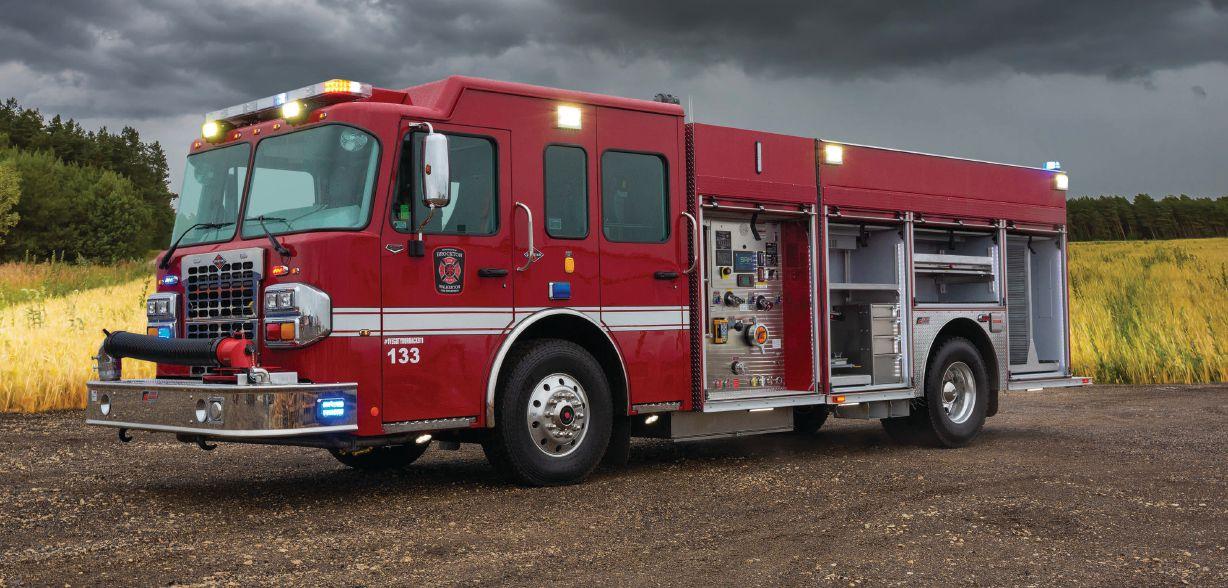
You need reliable fire apparatus that are up to the task at a moment’s notice. Look no further than the Spartan S-180 Custom Pumper. Built in half the time*, we configure it to your specifications—no compromise. It’s the industry’s fastest delivery of a custom fire apparatus. Less time, same Spartan strength and safety.
Discover how Spartan ER is helping first responders answer the call with new apparatus—IN 12 MONTHS OR LESS.
Scan for more information, contact your Spartan Emergency Response dealer or visit spartaner.com today.
Photo credits: Larry Shapiro, Jeff’s Photography, LLC, Tom Rinelli
Jasper is near and dear to Canadian hearts and is one of UNESCO’s Canadian Rocky Mountain Parks World Heritage Site.
By Lakeland College
ANSWERING THE CALL
Lakeland students helped protect and rebuild Jasper
When word spread among the fire fighting community that a wildfire was threatening the town of Jasper, it felt personal to Shawn McKerry. The dean of Lakeland College’s Emergency Training Centre and Class of 2006 alum of the emergency services technology (EST) program has personal experience with the sort of devastation a fire like this can leave on a community. McKerry fought the fires that destroyed Slave Lake in 2011 and Fort McMurray in 2016. Jasper, though, felt different.
“It’s so important to Canada,” McKerry said. “That’s what motivated me to get out and help. But it’s more than that. The fire chief in Jasper, Mathew Conte is a graduate of Lakeland. He’s one of us, one of our people that needed our help.”
McKerry led a taskforce of his EST students to the front lines to assist in managing the wildfire and protecting whatever parts of the community they could. Together, 34 students and faculty with four fire engines answered when the Alberta Emergency Management Agency called for assistance. One crew drove through the night and the other arrived the next day, after wrapping up exams and projects in July.
This was the second such deployment for Lakeland EST students. Last year, an EST class assisted with a wildfire in Parkland County, spending three days putting out hotspots, assisting with incident command, and doing their best to minimize the damage.
“When I was a student in the program, I would have loved to have a real-world experience like this, on the scale of opportunity we’ve been able to provide for the past two years,” McKerry said. “There’s so much room for professional and personal growth through an opportunity like this one. It changes who you are as a person and you leave as a better person – as well as a really great firefighter.”
THE POWER OF FIRE
As they traveled to Jasper, McKerry warned the students about the potential disaster they were walking into. The last class had dealt with a fire in a rural area with minimal structures at risk. With Jasper being an urban centre, it had the potential to be much worse.
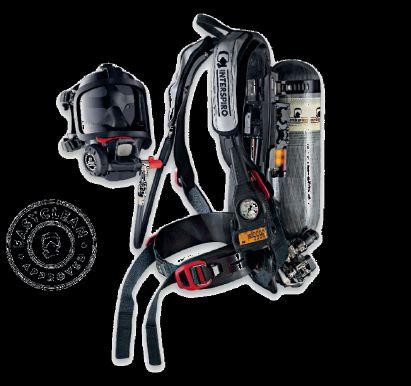
CANADIAN SAFETY EQUIPMENT IS PROUD TO BE A DISTRIBUTOR FOR THE INTERSPIRO RESPIRATORY PROTECTION LINE. THEIR STATE OF THE ART S9 INCURVE IS ONE OF THE MOST COMFORTABLE SCBAs YOU WILL EVER WEAR. GIVE US A CALL AT 0182 OR EMAIL US AT INFO@CDNSAFETY.
No company has a richer history in respiratory protection than . Their innovations have become industry standards, time and time again.
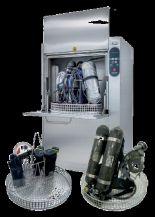
The Solo SCBA Decon/Washing machine was designed and built for one purpose only…to protect Fire Fighters from Cancer causing agents found in the Smoke and residue left on their SCBAs. As an added bonus it can clean Gloves, Boots and Helmets. In addition, it substantially lowers the time spent decontaminating firefighter equipment. The SOLO is the only SCBA decon machine that meets both NFPA and CSA standards.
ü REDUCED HEALTH RISK ü SAVES TIME 2/PKS IN 8 MIN ü EASY TO USE
Qualified by MSA, SCOTT, DRAEGER & INTERSPIRO for cleaning their SCBAs.
WASH/DECON TWO SCBAs In 8 minutes. Also cleans, boots, gloves Aand helmets.
NOW AVAILABLE IN SINGLE OR THREE PHASE
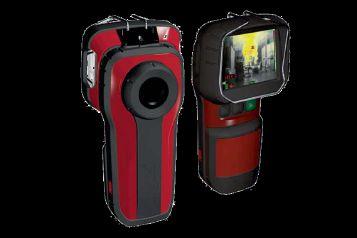
forfirefighting
Themost advanced imager
Larger 3.5″ display for viewof thefire sceneand lightweight at just 830g(1.8 Extended dynamictemperature range to 1100˚C (2000 greaterscenedetail hotter fire scenarios
Enhancedfeatureset laser pointer to aid communication, electronic compass for greaterscene awarenessandheat/coldseeker technology NFPA approved
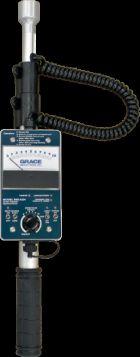
MODEL 950-ASH ACCELERANT AND HYDROCARBON DETECTOR
TheModel 950 -ASH is used for thedetection of hydrocarbons, accelerants, petroleum volatiles, and various gases This instrument is battery powered and designed to be rugged The 950 -ASH is used as a generalpurposehydrocarbon gas detector for applications including gas leak detection, landfill outgassing, leaking storage tanks and many others
Model 950 -ASH features an array of illuminating ultraviolet and white LEDs to assist the investigator in locatingaccelerants orotherevidence in situations wherevisibilityislow and detection areas become visibly difficult Otherbeneficial features include a mute function to silence the audible detection sounds for discreet investigation and a purge feature for rapid sensor recovery from encounteringhigh concentrations
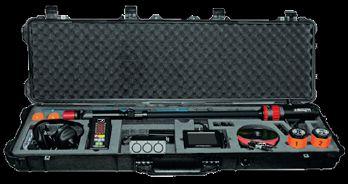
Hasty Search Kit™ has been specifically configuredfor urban searchand rescue teams, “enhanced" rescue squads, regional forces and SUSAR teams who are seeking a highquality, easy costeffective, all-in-one technical search system for their standardequipment cache. The Hasty Search Kit™ comes complete in one easy tostore caseand is designed to be both easily transportable and rapidlydeployable anywhere disaster strikes.
The kitincludes the Delsar® LifeDetector® Mini system that provides seismic detection of victims and the all new SearchCam Recon III for visualsearchand location operations
“After Slave Lake and Fort McMurray, I was worried it would be levelled to the ground,” McKerry recalled. “So, when we pulled in, I was so grateful that there was so much left. I have so much appreciation and respect for the people that fought the fire overnight while we were driving out there. I know the effort it took for them to save as much as they did.”
Even with so much of Jasper still standing, the amount of damage was still devastating to see, he said. It was an important experience for the students.
“It’s humbling when you see the power of fire, when you see a whole chunk of the town gone. It really hits you and you have a greater level of understanding for the world we’re going to be working in and the possibilities of that world. But it also emphasized the other side of that coin – fire fighting is also about helping to rebuild that community.”
Lakeland was the largest work force onsite, able to split into two taskforces and work 24-hour days. The dayshift spent a lot of their time putting out hotspots and dealing with major burning areas to slow the spread of fire. At night, a crew patrolled the perimeter, working to increase the safe zone buffer between the townsite and the wildfire.
PROTECT AND REBUILD
At one point, while systematically searching for hotspots in the debris, a student noticed smoke whispering from an intact yellow house across the street. After reporting it to incident command, the group of students were deployed to investigate and mitigate as much damage to that house as they could. They
found that fire had already burnt up along the side of the building and had gotten into the wall and the ceiling space.
“We knew it was somebody’s home and we could try to save it,” McKerry explained. “If we left it alone, it was ultimately going to burst into a larger fire and likely burn the house down. So, we got the students over to the house, exposed a bunch of walls and roof spaces and put out the fire. The students were instrumental in making sure that there was no damage. We saved that yellow house.”
That house became a landmark to the students during the rest of their deployment and an important symbol of what it means to be a firefighter and what they were there to protect.
Being a firefighter, McKerry said, is more than just putting out the fire, however. It’s also helping to rebuild. Staff and students spent one afternoon cleaning up the main street in Jasper, putting up fences and cleaning up patios in an attempt to help get things back to normal.
“It brought a sense of control, order and pride back to the community. It’s not just about putting water on a fire. It’s caring and taking responsibility for a community.”
When he and an instructor were sorting through the rubble of a church that had burned to the ground, they found the church’s bell buried in the debris. Together, they dug it out and set it aside carefully, already looking forward to the community rebuilding the church and reincorporating that bell into the new structure.
“Bells are an important part of the fire service world and of course they would be to a church as well,” McKerry said. “When they
rebuild, they’ll have that bell for the next building. In the fire service, that would be extremely important to us, so we were glad to be able to salvage it and make sure it was safe and sound.”
ALUMNI HELPING ALUMNI
The concept of community in the fire service is more than what they protect, however. It’s the other firefighters they work alongside, and McKerry was glad to give his students a greater understanding of the importance of that bond.
It was especially impactful when he realized just how many of the firefighters they were working alongside were Lakeland Emergency Training Centre alumni.
In addition to the fire chief of Jasper, there was also Ken McMullen, the incident commander in Hinton and president of the Canadian Association of Fire Chiefs, Class of 2012, as well as Trevor Sutherly, task force leader with Parkland County, Class of 2012. McKerry and the students ran into a number of other EST alumni from the past three or four years as well – including some who had fought the Parkland fire with McKerry last year.
“It really helped me appreciate how many people out there have Lakeland on the backs of their uniforms,” McKerry said. “Getting out there and working alongside other alumni was great. Knowing that we could set up these students to be really great alumni and ambassadors after they leave Lakeland was amazing as well.
“It’s alumni helping alumni. At Lakeland, we talk about learning in action and being ready for the real world, and that’s what this is.”
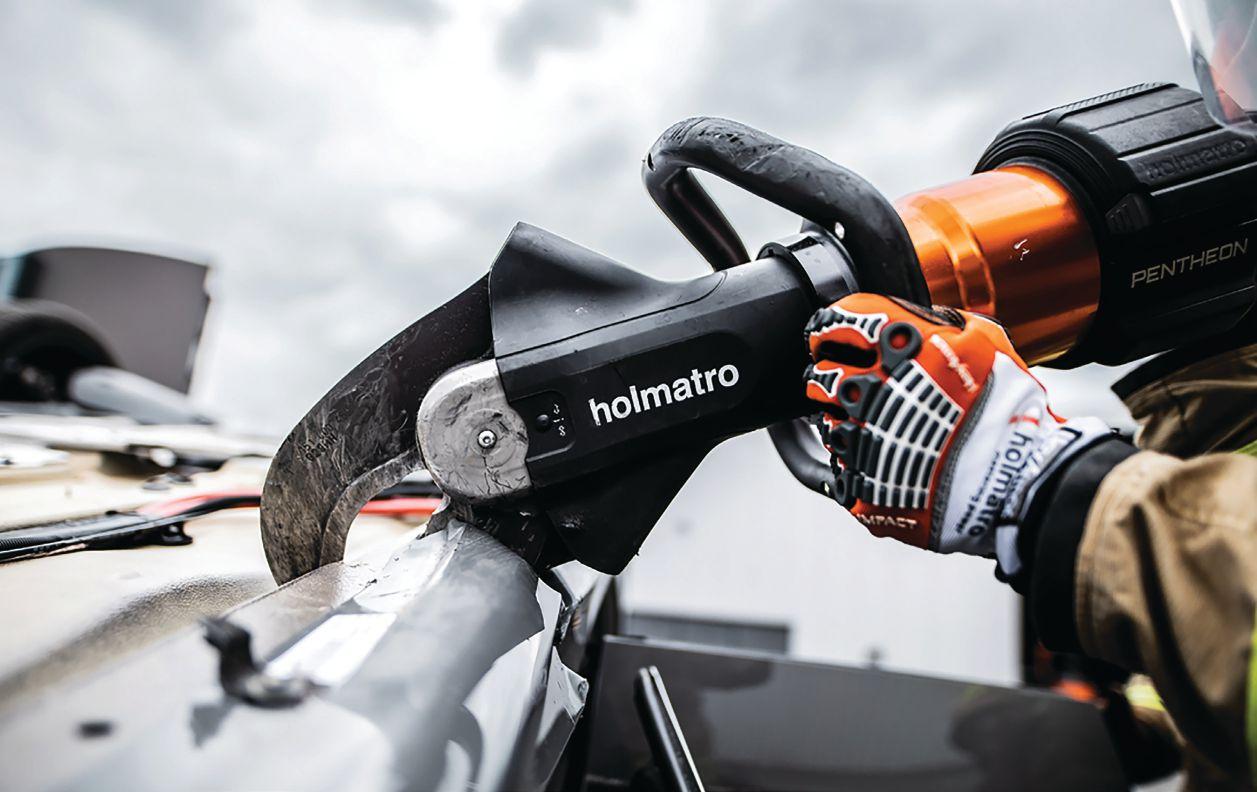
Pentheon PCU 50 Cutter
By Rob Anselmi
SO, YOU WANT TO BUY A FIRE BOAT...
How to have a bon voyage on your boat purchasing journey
Toronto Fire Services (TFS) operates two emergency response vessels. The 1964 vintage William Lyon Mackenzie (WLM) is an 82’ steel hull tug that uses twin diesel-powered Worthington fire pumps providing tremendous fire fighting and emergency response capabilities on the waterfront. Its secondary but no less important role is to provide ice breaking duties to keep the ferry services running and reduce ice pressure damage within the harbour.
The WLM is a heritage vessel that has had virtually every
system on board modernized within the past 10 years, including new propulsion engines, new pump engines, new generators, a renovated 12v/120v/240v electrical system, a rebuilt wheelhouse, new deck guns, and new search and emergency lighting. It’s an essential piece of apparatus that will serve the city for years.
The William Thornton (WT) is a 1982 former Canadian Coast Guard vessel that helped to prove the need for a second vessel able to provide a faster response to the outer reaches of the city’s waterfront. Its primary role is for medical emergencies and quick response to vessels in distress. Its limitations are the large wake produced, meaning it’s required to proceed slowly within the harbour, and the limited capacity of the portable fire pump system.
A SOLUTION FOR THE FUTURE
A specific type of vessel to replace the WT was the best solution for the future. The criteria were strict: fast response with as little wake as possible, require as little draft as possible, have superior pumping capacity, provide a safe water-level work platform, and offer an enclosed medical room for patient care.
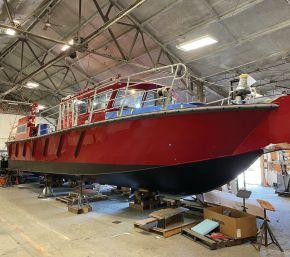
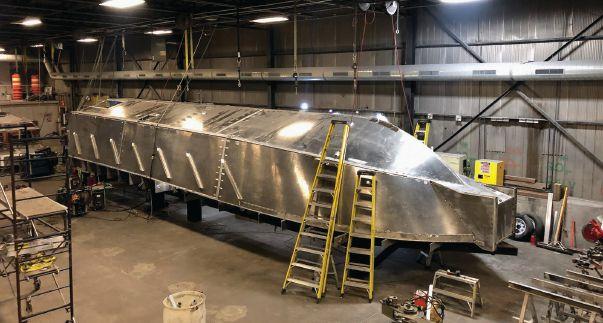
ABOVE Insider’s view of boat construction: fully ribbed, then fully skinned, from the starboard side and an elevated stern view.
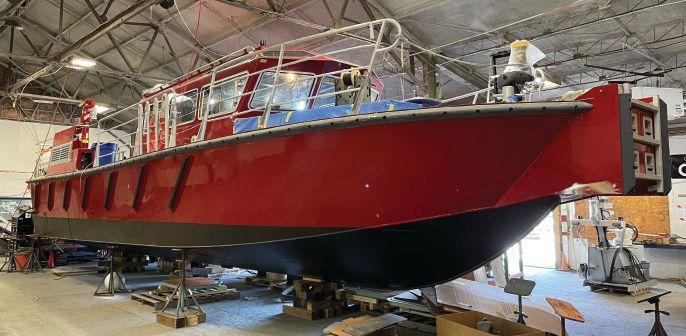
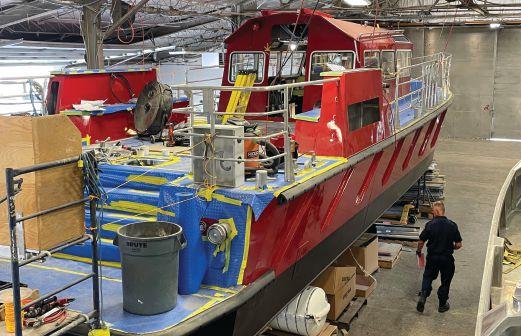
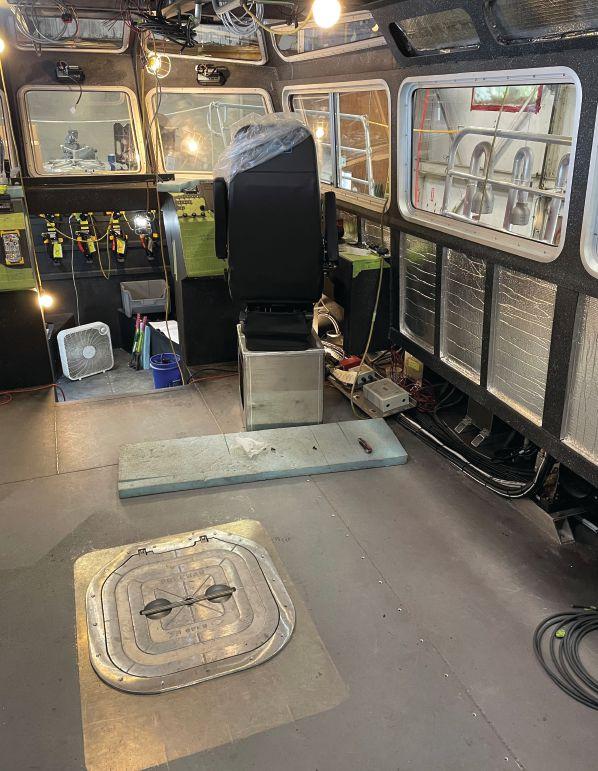
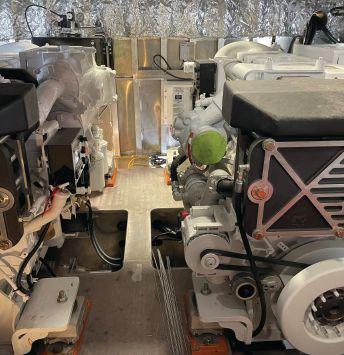
Our Marine Division’s web-search investigation indicated the “Firestrom-55” built by Metal Craft Marine in Kingston, Ont., satisfied all those requirements as a purpose built fire fighting emergency response vessel. The eventually ordered 55’ aluminum hull fire boat is powered by twin 1136HP Caterpillar model C18 engines driving twin Hamilton Jet drives and twin 11,360LPM (3000 USGM) Darley fire pumps. A 3000 USGP roof monitor, a 2000 USGPM bow monitor, and twin 1250USGPM manual side mounted monitors coupled with various deck hydrants provide a total realistic flow of at least 26,500LPM @1000kPa given there’s no lift to the water supply. The wheelhouse provides belted seating for TFS crew members as well as space for two EMS personnel to attend to a patient.
The boat only requires a 0.85-metre draft and produces very little wake allowing a full speed response directly from the dock and far more penetration to the various Toronto river mouths and areas within the channels of Toronto Island than before.
To properly search the market for similar vessels being produced and obtain the best value for the city, TFS worked with our purchasing and materials management staff to create a Request for Information (RFI) process, with the intent to write a specification and solicit open bidding for the lowest bid meeting the specification in case other vendors produced a similar product.
The RFI document stating the basic requirements of the intended vessel was sent to every North American company that could be identified as possibly manufacturing this type of vessel. Given the fact that Metal Craft Marine has produced this exact vessel in various sizes for years, and they’re proximity to Toronto reducing delivery and inspection costs, they were the only respondent. The results of this process gave TFS the validity to request a non-competitive purchase process eventually passed by city council.
If we learned anything in the design and purchase of a new fire fighting vessel, it was that Transport Canada, being the regulatory board and authority having jurisdiction for ship building, has a lot to say about the build design, componentry, and safety features of vessels registered under Canadian title.
The first hurdle was the engine model we
wanted to use versus the model Transport Canada has in their system. Understandably, they list engines with the highest emission standard possible, but the design of engine they approved requires large and heavy exhaust system componentry that takes up too much space in the small engine room and would negatively affect the ability of the vessel to get up on plane. After much negotiation, we were able to have Tier-2 engines incorporated in the design. These are still very clean engines but allow for the use of conventional fiberglass “wet” marine exhaust components, not a heavy diesel particulate filter, selective catalyst reducer, and diesel exhaust fluid seen in the heavy truck market.
The market for marine componentry is quite small, so the jet drive systems were the next issue. We couldn’t lock in the jet units produced in New Zealand until the engine issue was settled with Transport Canada. Within that timeframe, we lost the hold on the two initial drive units. By luck, the build slot for a set of drives was released by the
manufacturer after a customer backed out. With an increase in the budget authorized, we were able to purchase these units that were a newer style using electronic controls instead of mechanical. This will provide far more intricate maneuverability when working near other vessels, during patient/body recovery, and docking.
Fortunately, with the engine and jet drive issue not settled at the time, the basic structure of the raw hull and wheelhouse/upper deck could continue. All parts were CAD designed and individually marked as per their location. Hull construction started by laying out the full deck upside down. Bulkhead divisions were welded vertically along the deck to give the basic outline of the finished hull. Each bulkhead was precut with recesses designed to accept longitudinal framing running bow to stern. With the framing welded, the entire hull was sheeted with 5/16” (bottom) and 1/4” (sides) aluminum for the finished surface. Once welded, the entire structure was rotated so all welds could be
completed from the inside as well.
The wheelhouse structure was built concurrently as a separate unit. Once the hull was fully welded, the wheelhouse and hull were welded into a single unit to create the raw aluminum vessel structure. The deck was roughly sandblasted to create a natural antislip surface.
The unit was transferred from their fabrication facility to the paint vendor for prep and a full paint process including an anti-fouling coating below the waterline. Once painted, the structure was moved to their facility at the waterfront. The jet drives were the first item installed, followed by the engines and fire pumps once delivered. For obvious reasons, there’s a watertight compartment between the drives and the engines, so once installed, both items are lined up to close tolerances so the “chalk-fast” epoxy can be poured to define the engine mount locations permanently, and the fire pumps connected to the front of the engine crankshafts.
Like any construction project, the last 20 per cent takes significantly more time than the first 80 per cent, and a fire boat is no different. There were numerous decisions along the way on deck component layouts, fittings, custom railing designs, plumbing, extensive
wiring requirements, internal fire protection systems, patient care and transfer, decal design, emergency lighting, radio pre-wire, electrolysis protection, seating locations, and all the mandatory marine system requirements. All these decisions came to fruition at this stage. To complicate things further, most decisions were either time related as they meant something else had to be done first, or they had a financial impact that had to be considered.
The manufacturer dealt with the various regulatory bodies and kept TFS informed at every step. The proximity of Kingston to Toronto meant TFS staff were able to regularly travel for site inspections and clear up inevitable small decisions as they came up.
The anticipation of delivery is like chasing the Stanley Cup; the thrill of winning comes with a great deal of work. Once the vessel completes sea trials and certification by Transport Canada, TFS and Metal Craft Marine staff will make the journey to Toronto. The official hand-off from manufacturer to owner involves a legal process to register and name the vessel with Transport Canada once delivered. A training manual will be created along with an extensive component service manual to be sure warranty is maintained and all service points are captured. Staff training will be a two-part process; the marine captains will each become proficient operating the unique controls involving both throttle and thrust operation, and the marine engineers will learn all mechanical, fluid, and electrical systems.
ABOVE A few from inside the wheelhouse, which will allow buckled seating for TFS crew and space for two EMS personnel.
A November delivery creates a unique problem for Toronto Fire. The dock at Station 334 has neither the space or electrical service to bubble and heat all three vessels over the winter, so a storage plan for one of the vessels will be devised. There aren’t too many Canadian cities requiring a fresh-water 55’ jet drive fire boat, but if I can provide any advice, buying a fire boat of any size is the same as purchasing any large asset: identify your needs, do your research by identifying the market options, know the regulations to be followed, and pick a reputable vendor with extensive experience to build the vessel you need.
The Tier-2 engines are very clean while allowing for the use of conventional fiberglass “wet” marine exhaust components. TFS selected twin 11,360LPM (3000 USGM) Darley fire pumps.
Rob Anselmi is the division chief, equipment and asset management, for Toronto Fire Services. He achieved Master EVT level and is responsible for the design, procurement, and acceptance of all vehicles and most equipment purchased by TFS.
By Laura Aiken
CAFC SHOW SHINES IN MONTREAL
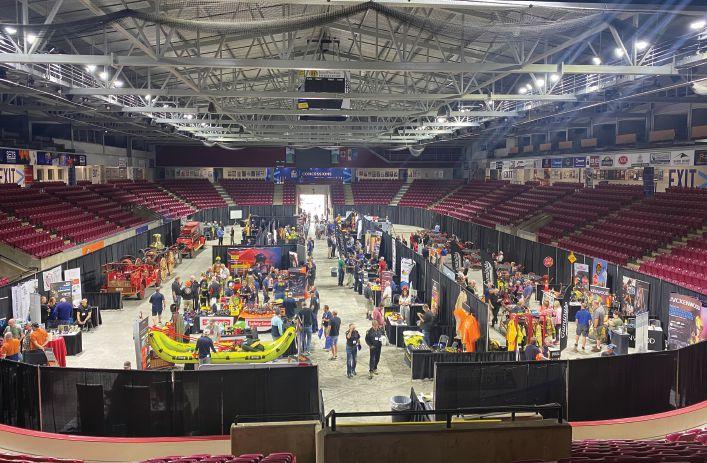
Once a year, chiefs from all over Canada converge for the Canadian Association of Fire Chiefs’ Fire-Rescue conference and trade show. This year’s annual coast to coast to coast exchange of insights landed in lively downtown Montreal from September 22 to 25. About 365 attended.
The event started with a full day Women Chiefs and Company Officers meeting, followed by the opening ceremonies and evening’s welcome reception and hospitality suite. The plenary sessions kicked off on the 23rd with a “cross-country check-up.” Thematically, climate change and wildfires were concerns echoed nationwide and from rural and urban chief
perspectives. Firefighter cancer, from expanding presumptive legislation and recognized cancers to more funding for prevention, was expressed by multiple voices. Recruitment, retention and budget constraints were widely expressed.
Lester Rich, deputy superintendent of the United States Fire Administration, shared highlights from the inaugural World Fire Congress, hosted in Washington, D.C., in May. The vision for the congress was to form a “baby” United Nations to establish a global fire service leadership network, and this meeting of minds discovered common challenges of firefighter health and safety, risks with emerging technologies, climate change driven wildfires and structural
fire response. The next World Fire Congress will be in 2026 in London.
An emergency management think tank provided a run down of interagency success and Fire Chief Jason Brolund spoke on 2023’s massive McDougall Creek fire in West Kelowna that saw 50 apparatus from 30 departments deployed alongside the HUSAR team from Vancouver at the height of the fire. Chantal Bibeau, Montreal’s deputy chief for prevention and risk management, presented on lithium battery fire public education and response. Montreal had responded to 40 Li-battery fire calls as of July, and on Monday of the CAFC show, a shipping container holding about
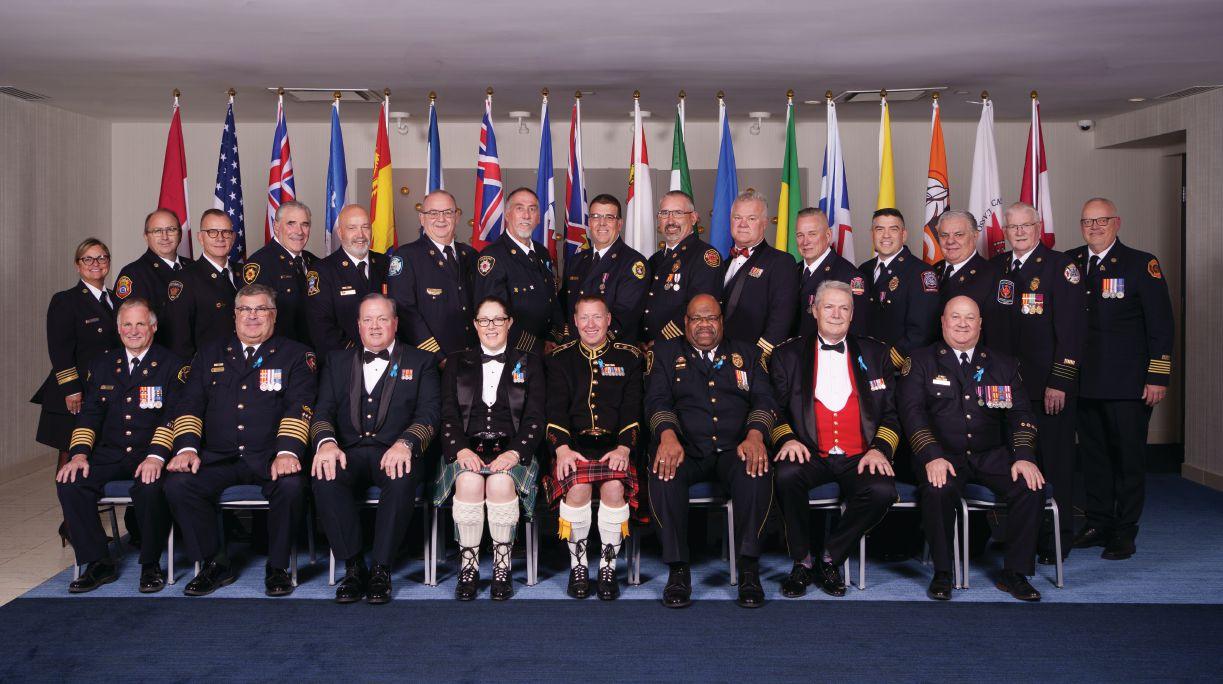
ABOVE The Canadian Association of Fire Chiefs board and National Advisory Council at this year’s Fire-Rescue
15,000 kilograms of lithium batteries broke out around 2:45 p.m. at the Port of Montreal.
The CAFC’s Government Relations week is Dec. 2 to 4, and Tuesday began with a government week boot camp featuring pundits from the Liberal, Conservative and NDP camps. While the parties have different messaging, climate change and appropriately resourcing communities is a focus for all. The collective pundit prediction was a spring election.
A serious and important plenary was held on considerations for a framework when responding to a death by suicide in your department, including how to communicate on social media and with news outlets (being prepared to answer questions about things you can’t talk about, like a person’s mental health or state), death notification training, keeping your contact records up to date, and taking care of yourself and department during such a difficult tragedy.
Homelessness and the housing crisis also hit the docket on Tuesday. The federal government’s housing plan is a strategy to unlock 3.87 million new houses by 2031. This plan needs to align with climate adaptation strategy, as you don’t want to be building homes in harm’s way, said Jason Clark, the chair for Climate Proof Canada. Homes need to be built in the right way in the right places and clear investments are needed in municipalities for infrastructure, he added.
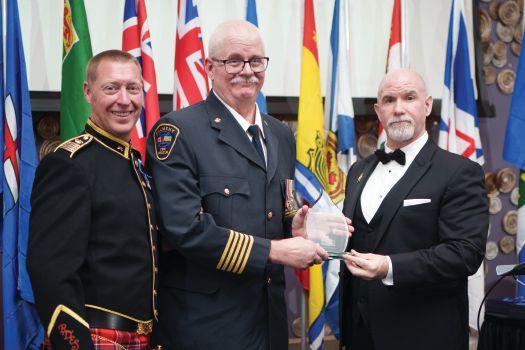
CAFC president Ken McMullen with Volunteer Fire Chief of the Year Rick Elder and Micheal Currie, vice president of Fire Underwriters Survey.
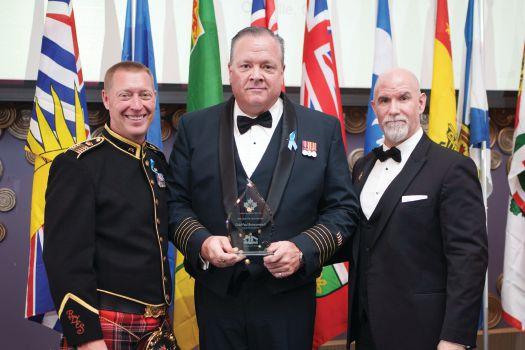
Oakville Fire Chief Paul Boissonneault with his Career Fire Chief of the Year award.
NFPA IMPACT
By Laura King, NFPA Regional Director Canada
THE DEBATE OVER SINGLE-EGRESS STAIRWAYS
Two architects have proposed building-code changes in Canada and the United States to allow construction of six-storey multi-family dwellings with one stairway instead of two.
Ostensibly, the proposals are about more affordable family-friendly buildings. The single-staircase model accommodates three-bedroom suites and better layouts, improved climate controls, smaller lots and increased fireand life-safety measures.
But to fire personnel and organizations, the proposals go against decades of consensus codes, circumvent long-established standards-development processes, and increase risks.
The British Columbia government, based on a report by fire-protection engineering firm Jensen Hughes, has already opted to permit six-storey buildings with one stairway, but with sprinklers, wider stairwells, smoke management systems, and restrictions on occupant loads and units per storey.
NFPA invited proponents and opponents of the single-egress stair (SES) model to discuss and debate the proposals in September.
Representatives of the Canadian Association of Fire Chiefs (CAFC), the Council of Canadian Fire Marshals and Fire Commissioners (CCFMFC), the National Research Council, and some municipal building officials participated along with other interested parties.
New York-based architect Stephen Smith (centerforbuilding.org) and Canadian intern architect Conrad
In Canada, buildings of three or more storeys have required two exits since the modern building code was developed in 1941.
Speckert (secondegress.ca) spoke articulately about their proposals, citing European models and dated North American codes. During a facilitated discussion, both acknowledged fire-service concerns and said they are open to amendments and collaboration.
Speckert, with LGA Architectural Partners, and David Hine, with David Hine Engineering Inc., submitted the code change request on April 18, 2022.
Opponents of the proposals (as they are currently written) to the International Codes Council and the Canadian Board for Harmonized Construction Codes include the International Association of Fire Fighters, the National Association of State Fire Marshals, the International Fire Marshals Association, the CAFC, and the CCFMFC.
Those in opposition were frustrated that the code change requests can lead to legislated amendments rather than use longstanding, collaborative code-revisions processes. Some were blindsided by the proposals and concerned about the lack of consultation.
The day after the NFPA symposium, the National Research Council of Canada began its consultations for research on the SES model.
The Canadian Board for Harmonized Construction Codes indicated in its review of the code change request that the proposal “presents a strong case” but careful analysis is needed to consider whether blocked exits or slow movement of people with disabilities pose an
unacceptable risk.
In Canada, buildings of three or more storeys have required two exits since the modern building code was developed in 1941.
Jensen Hughes recommends that six-storey SES buildings have no more than four units on each floor; that fire sprinklers be installed not only in the interior spaces but also on all outdoor balconies, decks, and covered patios; and that smoke detectors be required in suites instead of smoke alarms.
Other recommendations include pressurization of public corridors and/ or egress staircase shafts, additional fire separation enclosure for egress staircases, increased fire durability for unit doors opening into public hallways, magnetic hold-open devices for suite doors opening into public corridors, direct access from egress stairs to the outside rather than through the lobby, wider staircases and a maximum travel distance of 25 metres to the exit.
Jensen Hughes notes that municipalities with small, volunteer or paid on call fire departments “may be less likely to have the resources or the response time to adequately deal with SES buildings.
“It may be advisable to restrict SES buildings to jurisdictions with full-time professional fire services.”
NFPA was to issue a summary of the symposium in October at nfpa.org.
The Jensen Hughes report is available at jensenhughes.com.
The SES code-change proposals are on the architects’ websites.
Wanye Stevens / President
On Ready-to-Deliver Pumpers, Aerials, Platforms, Rescues & Wildland
Engines
For too long, fire departments have faced the frustration of long wait times for critical fire and emergency vehicles. At Safetek Profire, we understand that waiting up to 800 days for a new unit is not an option when your community's safety is at stake. That ’s why we’ve taken a different approach.
How do you reduce delivery times?
We keep a range of vehicles in stock and in production, cutting the usual wait times. This ensures departments get critical equipment fast so you can stay prepared and ready to respond.
Q: A: What units do you have ready for delivery?
Q: A:
We provide pumpers, aerials, platforms, rescues, and wildland engines for immediate delivery or with reduced wait times. Our inventory meets various needs with fast access.
Can I customize a ready-to-deliver unit? Q:
A:
Yes, we offer customization for our ready-to-deliver and in production units to meet your specific needs. From specialized equipment to tailored features, we’ll ensure your unit is upfitted—without the long wait.
TRAINER’S CORNER
By Ed Brouwer
Tactics and tips for chimney fires
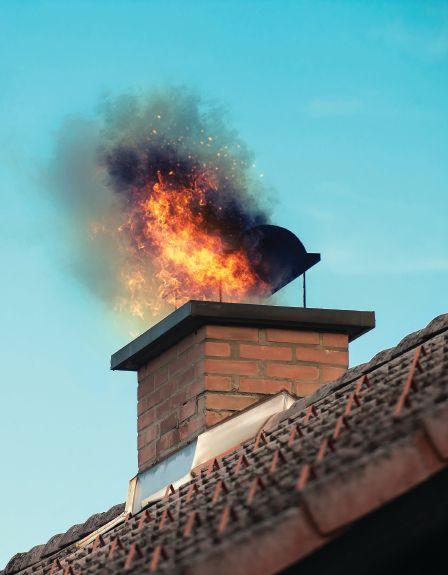
Chimney fires usually happen in the fall and spring. In the fall, chimneys don’t get hot enough to burn off the creosote because people are just trying to warm up, not heat the whole house. In the spring it’s a similar story, but by that time, most of the good firewood is gone, and people start burning whatever they can find in the woodshed.
The terms chimney and flue are used interchangeably in many jurisdictions; however, they do not mean the same thing. Chimney describes the entire structure designed to route heat, smoke and vapours from a heating device to the exterior. Flue describes the internal portion of the chimney through which the products of combustion flow to the exterior.
One critical point to remember during the wood-burning season from fall to spring is that chimney fires should never be regarded as routine. All fires are inherently unpredictable, including those that appear to be contained within a chimney. Personnel must don SCBAs and appropriate turnout gear. Fires within masonry chimneys can reach temperatures of up to 1093 C, potentially causing damage such as melting mortar, cracked tiles, or collapsed liners. This damage can create pathways for fire to spread to combustible wooden frame components, leading to a house fire, which may remain concealed within the walls.
In contrast, prefabricated metal chimneys are engineered and tested to endure flue temperatures of up to 1148.9 C without incurring damage.
A common cause of a chimney fire is the ignition of residue within the flue. This residue is formed when fires are routinely burned at less than free-burning levels. This may be due to insufficient oxygen flow to the fire
One critical point to remember during the wood-burning season from fall to spring is that chimney fires should never be regarded as routine.
fire.
Incomplete combustion produces low heat levels and large amounts of fire gasses. As these gasses travel up the flue, they begin to cool and behave much the same way that petroleum does as it is separated at a refinery. When the gasses reach their condensation temperature, the liquid clings to the inside surface. This substance is called creosote. Creosote is highly flammable and can ignite easily!
Creosote build-up is commonly found at three locations: sharp bends, long horizontal runs and the top onefourth of the flue.
Hot, free-burning fires that have plenty of oxygen create very little smoke or residue. These fires develop high levels of heat, ensuring that any residue created makes it out of the top of the chimney. If fires are allowed to
Ed Brouwer is the chief instructor for Canwest Fire in Osoyoos, B.C., a retired deputy chief training officer, fire warden, WUI instructor and ordained disaster-response chaplain. Contact aka-opa@hotmail.com.
free-burn, few problems are encountered. I will do several free burns in my own chimney to knock down any creosote build-up at the start of this season and throughout the winter months. Chimneys operate on the principle that hot air rises because it is less dense than cold air. When a chimney is filled with hot gas, that gas tends to rise because it is less dense than the air outside the house. This creates a pressure difference called draft which draws combustion air into the appliance and expels the exhaust gas outside. The hotter the gas compared to the air outside, the stronger the draft. Another cause of chimney fires is the ignition of combustible materials near the chimney or heating device. These fires often start between the walls and may burn undetected for a long time. It should be noted that these fires are extremely difficult to fight. Firefighters may be required to completely tear off the drywall or ceilings and perform extensive salvage and overhaul to put out even the smallest fire.
Indicators of a working chimney fire include:
• Sparks or flames exiting the top of the chimney.
• A whistling or buzzing sound in the chimney.
• A back flow of smoke through the heating device into the structure.
• Discoloration on the walls adjacent to the chimney.
• Smoke in the attic.
• Smoke emanating from the cracks in the wall or electrical outlets near the chimney.
Fire departments have different philosophies on what assignment of personnel and apparatus should be sent to chimney fires. Some send a full,
box, or adding large logs to a small
first-alarm assignment because of the potential for the incident to turn into a full-blown structural fire.
The minimum response to a chimney fire should be one engine company, one ladder company and an EMS unit (NFPA 1500). The engine company is required for extinguishment; the ladder company is required to supply tarps, ventilation fans, overhaul tools and ladders. (Smaller departments may have this equipment on the engine).
The EMS is there for the firefighters, since they will be working on the roof, often in freezing or otherwise inclement weather. NFPA 1500, Standard on Fire Department Occupational Safety and Health Program, requires an EMS unit on fire responses.
Follow your department’s SOGs regarding establishing command and size ups, both initial and continual.
The following should be considered when establishing an SOG for chimney fires:
1. Advanced preparation: Your department should equip each apparatus with a chimney kit. This kit should include a handled mirror, heat-resistant gloves, a length of weighted chimney chain, several chimney bombs (plastic bags filled with dry-chemical powder), a small fireplace shovel, and fireplace tongs all stored in a metal bucket. You may also want to invest in an infrared laser temperature gun.
2. Spread a runner or salvage cover on route to the stove or fireplace. Not only does the cover catch any ashes/embers that may fall when and if the wood is removed from the fire box, it also keeps bunker boots from tracking dirt onto the carpet (good PR). Plastic tarps fail quickly when they are exposed to hot embers, so you may want to consider fire-resistant cloth tarps.
3. Stop the flow of oxygen to the flue. Hopefully, the occupant will have shut off the oxygen before your arrival. However, if this is not the case, the first fire personnel on the scene should immediately shut off the oxygen supply. Reducing the oxygen flow decreases the intensity of the fire in the flue and in some cases will extinguish it completely. This step may not be possible on open fireplaces.
4. Extinguish the fire in the firebox. Before you just put the fire out, consider using the fire in the box to extinguish the fire
in the flue. Sometimes even a cup of water thrown on the fire will produce enough steam to put the fire in the chimney out.
Multipurpose dry chemical agents will put the fire in the firebox out but will not usually extinguish anything further up. ONLY remove fuel from the fire box if it has been extinguished and if absolutely necessary (there are very few good reasons to take this step).
5. Establish horizontal ventilation. Some of the extinguishment activities, particularly the removal of wood from the firebox, may create a smoke condition in the dwelling. This can be minimized by establishing ventilation before other fire fighting activities take place.
Chimney fires can cause the flue to fail, allowing CO and other byproducts of combustion into the walls, ceilings, attics, and other hidden spaces. If the interior of the house is filled with smoke, use a positive pressure fan to perform horizontal ventilation.
Positive-pressure ventilation is the method of choice in these situations. The ventilation entry point should be at a location remote from the stove or fireplace. The ventilation exit point should be as close to the heating device as possible, thereby minimizing the spread of smoke within the structure.
6. Ladder the roof. With enough personnel on the scene, this step should be underway while Steps 1-4 are being completed. If an aerial device is used, it should be extended to the chimney opening. If ground ladders are being used, an extension ladder should be placed at a good roof mounting point, and a roof ladder should be extended to the roofline adjacent to the chimney. DO NOT place or secure the ladder to the chimney!
If the roof is covered with combustible material, a charged hose line should be advanced onto the roof as soon as the ladders are in place. All firefighters on the roof must be wearing full PPE, including SCBA. Consider the extra weight and limit the number of firefighters on the roof.
7. Extinguish the chimney fire. With all other tasks accomplished, the chimney fire may then be extinguished, assuming it has not already extinguished itself during the process. There is some opposition to using water based on the fear that the water will rapidly cool the flue causing it to fracture. These fractures may then go undetected, and subsequent
use of the chimney may result in heat and products of combustion being released into the walls or attic, which may create a more serious fire situation later. The key is in the amount of water used and how it is applied.
There are special nozzles (6 LPM) designed to apply water inside the chimney.
Cautiously remove the chimney cap, bird screens, or spark arrestors with a hand tool. Visually inspect the flue with a mirror. If there is fire present, drop the chimney bombs down. The bag will burst as it hits the fire, and the normal draft will carry the powder up to extinguish the creosote.
Slowly lower the weighted chimney chain from the top of the flue to the firebox. Spin the chain to knock the creosote from the walls onto the firebox (or clean out box) where it can be extinguished with water or a dry-chemical extinguisher.
Perhaps the most overlooked step is checking the clean out box. Clean out boxes are found both inside and outside the house. They are usually covered by an 8” x 8” metal plate with two handle tabs mounted on the wall in line with the chimney. You should be aware that there may be more than one; I found three at one fire. After locating the box use a small shovel and a metal bucket to clean out any burning embers. Once this is done, you can place a small, handled mirror into the box to look up into the flue.
Before leaving the scene inform the resident that the chimney and or heating device must be inspected by a qualified inspector before it is used again. Getting the resident to sign a statement to that effect and informing dispatch that the resident has been informed will help reduce your department’s liability.
Check the CO levels one more time before terminating the incident.
The fire department is obligated to put out the fire; therefore, any damage caused in the process is a reasonable risk. However, the fire department is not obligated to clean the chimney, so damaging the chimney in this process is not a reasonable risk.
There is a bit more to this topic, but this is certainly a good start. I hope this info will help you establish guidelines that lead to successful fire operations. Stay safe, and please remember to train like lives depend on it, because it does. 4-9-4, Ed
TESTED & PROVEN
Our KrakenEXO® attack hose is built to outperform and outlast when it matters most. Lightweight. Flexible. Durable. UL approved. Tested and proven time and again to get the job done just like you.
WHY FORT GARRY FIRE TRUCKS?
Our emergency rescue-max bodies provide fire departments with the performance of a pumper and the storage of a rescue and are customized for flexibility and maximum performance with side-mount, topmount, and top mount enclosed 3-man and 4-man crown options available. Be confident knowing you’re properly equipped for nearly any possible situation with our full-framed 6061- T6 aluminum extruded sub-frame utilizing 5083 saltwater marine-grade aluminum compartments.
ER Pumper - Side Mount with SAM Walkerton Fire Department
ER Pumper - 3-Man Crown
Tyendinaga Township Fire Department
ER Pumper - Side Mount
Christina Lake Fire Rescue
WHY FORT GARRY FIRE TRUCKS?
Our Crusader bodies are among the strongest and corrosion-free in the industry featuring a complete welded body and full 6061-T6 aluminum extruded sub-frame structure combined with 5052 freshwater marine-grade aluminum panels. Our Crusader pumpers deliver pump panels and controls designed with firefighters in mind while using the highest quality pumps and plumbing in the industry. Our tankers feature a wide range of tank capacities from 1500 to 3500 imperial gallons along with a variety of porta-tank options making for One Tough Truck your fire department and community can rely on.
Wet Side Tanker 3000 I.G. Tofield Fire Rescue
Crusader Pumper 4-Man Crown Fort Chipewan Fire Department
Wet Side Tanker 2000 I.G. Port Clements Fire Department
The conference included regular breaks to visit with the trade show vendors and sponsors. The opportunity arose to visit Innotex’s Montreal facility in the city’s famed garment district, and this editor took the tour invitation. Innotex has a clean, comfortable facility where a diverse staff speaking 27 languages work to cut and sow the turnout gear that takes 12 to 15 hours to make per set, at a production rate of 200 sets per week. There are many human hands involved on the floor, with different aspects of production requiring specific skillsets and exhibiting great craftsmanship.
The gala reception included the bestowment of several awards. The Fire Chief of the Year Awards were presented in partnership with Fire Underwriters Survey.
The Volunteer Fire Chief of the Year Award went to Rick Elder of Dalmeny Fire and Rescue in Saskatchewan. Chief Elder made significant strides modernizing and improving the Dalmeny department during his 34 years, a great
personal expense of time as he only became part-time chief a few years ago. In April 2023, Chief Elder was diagnosed with a large brain tumor, that has now been successfully removed but he faces significant rehabilitation.
There were two winners for the Career Fire Chief of the Year. Paul Boissonneault, chief for the Oakville Fire Department and a member of the OAFC and CAFC board of directors, has contributed greatly on fire service issues at the international, national, provincial, regional
and local levels. Keven Lefebvre, fire chief for Leduc County Fire Service and member of the CAFC board, has been entrenched in all areas of the fire service, including being involved in the development of Alberta’s provincial safety codes, addressing Canada’s Senate and assisting with national fire service code related issues.
Congratulations Chief Elder, Chief Boissonneault, and Chief Lefebvre!
Next year’s Fire-Rescue conference will be hosted in Winnipeg.
CAFC president Ken McMullen with Keven Lefebvre, Career Fire Chief of the Year, and Micheal Currie, vice president of Fire Underwriters Survey, who sponsors the Chief of the Year awards.
PHOTO: ANDREW VAN BEEK
BACK TO BASICS
By Mark van der Feyst
Mark van der Feyst has been in the fire service since 1999 and is currently a Battalion Chief with the Six Nations Fire & Emergency Services as well as a part time firefighter with the Fort Gratiot Fire Department. Mark is an international instructor teaching in Canada, the United States, FDIC, Africa, and India. He is the lead Author of Fire Engineering’s Residential Fire Rescue & Tactical Firefighter books. He can be contacted at Mark@FireStar-Services.com
The rescue sequence, part 4
In the fourth part of our series on the rescue sequence, we are going into detail on ladder rescues. In part three we mentioned the option to use a ladder to rescue the occupant from a window after they have been dragged there by the search team.
Dragging to the window is an excellent option for the search team – it may be the nearest exit point to head towards. This will remove the need to drag the person all the way back through the structure, alleviating the heat and exposure to contaminates that will cause further harm.
Where the occupant is in the structure during the search will dictate if there is a window nearby. For example, every bedroom will have at least one window as required by the local building code. The window of the bedroom is usually opposite the bedroom door. If the door can be closed, this will prevent a flow path from being created when the window is opened. It will also separate the rescue team from the fire and buy more time to perform the rescue.
LIFTING FROM FLOOR TO SILL
Once the occupant has been located and dragged to the nearest window, the hard work begins with getting or lifting the occupant from the floor to the sill. In low heat, high visibility situations, there is not much danger present and there is time to get the lift accomplished. The rescue team can stand up to perform this as there is low heat in this ideal environment.
In the worst-case situation, which is high heat, low visibility, the rescue team must work low (on their knees) and quickly due to the conditions of high heat. Lifting the occupant from the floor up to the sill can be accomplished by one firefighter if need be or two firefighters if present and available.
The one firefighter may be the VES firefighter that has entered the room, with the other firefighter on the ground ladder waiting at the window to assist and keep an eye on the conditions and the search firefighter. If the interior firefighter needs assistance, the firefighter on the ground ladder can enter in the room as well to help with the lift, and once the occupant is slumped over the windowsill, they can crawl over the occupant back onto the ground ladder to receive.
One method to lift to the sill is to have the feet of the occupant facing towards the window. Bring their buttocks up close to the window so that their knees bend, their heels touch the buttocks and are compressed. This will assist with creating a fulcrum lift when the rescue firefighter sits the upper torso up, grabs the arms in a chicken wing fashion and positions themselves right behind the occupant ready for a dead lift.
Once ready to go, they will lift and use their body to help
Photo 1
Aim to position your ladder right beneath the windowsill to allow for the easiest rescue procedure.
Photo 2
Two ground ladders placed side by side can be used to remove an occupant when required.
keep the occupant’s body from sliding down to the floor. This will be done by placing the rescuer’s knee right under the occupant’s buttocks and in-between their legs (crotch area). The occupant can then be positioned over the windowsill ready for removal.
The firefighter on the ladder can reach in to grab the occupant’s arms and assist with pulling toward the window during the lift.
LADDER THE WINDOWSILL
When using a ground ladder and laddering the building, it is always best to position the ladder tip right below the windowsill lip. In Photo 1, you will see an example of the ladder tip extended slightly inside the window and above the windowsill. This slight extension is enough to create an obstacle that must be overcome by the rescue team when removing the occupant. It also presents an obstacle for any firefighter trying to get out quickly when using the ladder to exit.
ONE FIREFIGHTER LADDER RESCUE
There may be times when the 360 walk around reveals a person at a window needing to be rescued or slumped over the windowsill. In this case, one firefighter can affect the rescue using a ground ladder on their own. This will necessitate proficiency with carrying and raising a ground ladder with just one firefighter.
Once the ladder has been raised to the windowsill, the one firefighter can climb up to assist with the conscious occupant or grab the occupant and bring them down if they are unconscious. One firefighter can make multiple rescues with the same ground ladder if there are multiple occupants needing to be rescued from their windows.
In our world of staffing limitations, this is an excellent example of being effective and efficient with the available working hands on scene.
TWO FIREFIGHTER LADDER RESCUE
There may be times when two firefighters are needed to bring down an occupant. This may be due to the size of the occupant in weight and height. If this is the case, the two firefighters can use two ground ladders as shown in Photo 2, placed side by side to assist with bringing down the occupant across both firefighter’s arms.
CROSS ARM RESCUE METHOD
The easiest way to bring the occupant down on the ground ladder is to use the cross-arm method. The occupant will lay horizontally across the ladder with the firefighter having their one arm placed in-between their crotch and around the beam of the ladder and the other arm underneath their arm pit and around the beam of the ladder. With both hands on the back of the
beams, they can slide the person down as they step down rung by rung to the ground. There is a lot more detail that can be explored and explained surrounding ground ladder rescues, and it can all be found in Residential Fire Rescue from Fire Engineering. This book can be purchased from Firehall Bookstore and can be signed by the lead author if you ever meet him!
TIPS FOR FIRE MASTER PLANS
In
conversation with Fire Chief Paul Boissonneault on Oakville’s recent Fire Master Plan and the critical CRA
that informs it
Answering the “why” generally involves a fact-finding expedition, reflection and rational prose. Selling the answer is a matter of evidence. Municipal councils are increasingly looking for data driven explanations to support why a fire department needs the budget it does.
“I think the days of saying something’s old, I need it replaced; I think those days are gone,” said Paul Boissonneault, fire chief for the Oakville, Ont., fire department and board member for the Canadian Association of Fire Chiefs and Ontario Association of Fire Chiefs. “A proper business case in any sector is evidence based and supported by solid data and a plan to move it forward.”
Sometimes laws provide the impetus. In 2019, Ontario legislated the requirement for “every municipality, and every fire department in a territory without municipal organization” to finish and review a community risk assessment (CRA), and use its assessment to guide decisions on the delivery of fire services. This can be a challenging, work-intensive undertaking, but it is also an opportunity to build the framework that properly gauges a community’s needs.
In Oakville, Boissonneault spent a year on his community’s new 10-year Fire Master Plan that
Rather than simply replacing outdated equipment, a CRA provides data-driven insights to justify budget requests and guide strategic decision-making within a fire department.
was approved in spring. The community risk assessment (CRA) forms the foundational component of any fire master planning process, he said, whereby corporate priorities become more focused when guided by it. The plan is underpinned by a focus on the three lines of defence: public education and prevention, fire safety standards and enforcement, and emergency response (suppression).
To gather good, meaningful data is a lot of work. Oakville’s CRA was about 300 pages and the final Fire Master Plan was 384. The CRA made good data a necessity. Oakville has significant resources at its disposal to assist with the information gathering, and enlisted Dillon Consulting to execute the Fire Master Plan, but CRA and fire master planning are scalable in size and scope, he said, noting it is important to tell the story of the fire service well beyond the highly visible emergency response aspect by quantifying the public education and fire prevention divisions, how they relate to suppression, and how to plan for actual and planned growth.
The role of a consultant is to take the compiled data and quality information provided by the fire department and then measure that through industry standards, best practice and comparators.
“I’m not suggesting someone can’t do it themselves,” he said, in regard to the use of a consultant. “An organization can absolutely complete their compliance for community risk assessment. With the level of comprehension that ours has done at almost 300 pages, we as an internal group can look at it and really take an objective approach to compliance on a yearly basis once it’s created. The consultant role on a fire master plan is your objective approach to be able to give options and a level of certainty and or confidence to the executive leadership team and for council to understand that.”
Oakville is anticipating significant growth. The municipality has a current population of 235,000, but planning documents forecast the population to be 485,000 by 2051. Thus far, Oakville’s growth has been largely driven by a single detached sprawl. This burgeoning population will need to move into new homes and condos.
It’s key to understand the fire fighting needs and tactics because they are different for a subdivision-based city versus an intensified urban core of many connected buildings, he said. “What is the response time not just to the address, but up to the 10th floor?”
The ethnic diversity and demographics of Oakville are also shifting, and the CRA/Fire Master Planning process highlighted just how much.
“We think that we’re doing well because we distributed public education materials in eight languages, which is great. But we have 31 languages in the
PXG for Heroes™ is designed to provide the world’s fi nest golf equipment and gear to our nation’s fi nest, the men and women of the Canadian Army, the Royal Canadian Navy, the Royal Canadian Air Force, and Firefi ghters, Coast Guard, Law Enforcement and EMTs.
All current and past Military, Veterans and First-Responders are invited to purchase PXG clubs and gear at a very special price as a thank you for your service.
To join the Canada PXG for Heroes program for free, simply scan the code below or visit www.pxg.com/en-ca/heroes-program
Verifi cation can also be done in-person at a PXG Fitting HUB or alternatively, you can contact PXG Canada direct at caheroes@pxg.com or by calling 1.866.937.4794
town of Oakville. And that came through loud and clear from our community risk assessment.”
In addition to language, there is building a trust and relationship with these communities to educate them, and in some cases, getting people interested instead of afraid of a uniform. In some countries, a uniform is not necessarily seen as someone there to help.
“Understanding identity and the differences of everyone will lead to success in how you go about doing things…Northwest Oakville, as an example, has a significant South Asian community. And so there has been many emergency responses associated with religious type oils and or fires associated with burning candles or incense, that kind of thing. Whereas Southeast Oakville has a completely different demographic. Through the community risk assessment and fire master planning piece we found out that there is a significant difference from community to community. And there is not a one size fits all programming piece.”
Boissonneault advised surrounding yourself
with individuals smarter than yourself, and that you “can’t go wrong with a sound decision based on evidence-based data. It’s harder for council to say no when you’ve given them good data based on best practice standards. Councils decide the prioritization of funding.”
The process required cutting through the acronyms and internal language familiar to most in the fire service to communicate and translate to Dillon Consulting and the various municipal divisions succinctly so the plan could be approved by executive leadership and subsequently seek the buy in of council on a 10-year commitment with investments in the tens of millions.
“You need the data to support why you need the land to build the fire hall. The station location study for Oakville was based on NFPA standards and coverage in relation to other stations via geo mapping with the consultant to show you will meet the timeframes based on at least a five-year average, supported with good GIS information.”
The focus on the three lines of defense is in part to better prepare individuals to help themselves in the event of an emergency as call volume is escalating at a high rate.
“They are still going to need us, but their safety can be very contingent on the ability to help themselves.”
The Fire Master Plan is a living document, noted Boissonneault. Some things might not happen when they were intended, and other priorities may become more urgent and supersede them, but you need to tell the story and educate the staff right away to initiate and execute the plan.
“You might be stepping outside the traditional ways of doing things, staff may be resistant to change…it’s important to articulate the “why” behind the change.”
For the modern day fire department, a meaningful Fire Master Plan will be underpinned by quality data and a thorough understanding of risk in the community; the definition of an evidence based approach.
APPARATUSDIRECTORY
AN ALPHABETICAL LISTING OF MANUFACTURERS, SUPPLIERS AND DEALERS OF APPARATUS AND COMPONENTS TO THE CANADIAN FIRE SERVICE.
1200 Degrees Ontario
402 Harmony Road
Ayr, ON N0B 1E0
Tel: 1-800-254-0249
Toll free: 1-800-254-0249
Company Email: jclimie@1200-degrees.com
Web: www.1200-degrees.com
1200 Degrees Ontario offers a comprehensive service offering: trucks, service, and equipment. It has several representatives on the road and a fleet of mobile maintenance vehicles. 1200 Degrees Ontario works in conjunction with the Quebec team to provide the same high standards that have made the 1200 Degrees group famous, while also possessing its own expertise specific to Ontario.
A.J. STONE COMPANY LTD.
62 Bradwick Dr. Vaughan ON L4K 1K8
Tel: 416-785-3752
Toll free: 800-205-3473
Fax: 416-781-2827
Company Email: order@ajstone.com Web: www.ajstone.com
A.J. Stone has proudly served the needs of the First Responder Services of Ontario since 1972 by featuring quality products, knowledgeable sales team, and training support.
A.J. Stone supplies equipment from MSA, Task Force Tips, LION Protects, Paratech Rescue, FireBull, Enforcer, Streamlight, Innotex Bunker Gear, ProTech Gloves, Safe-T-System, CET and much more! We service what we sell!
AIR TECHNOLOGY SOLUTIONS CANADA INC.
251 Queen St. S., Ste. 512 Mississauga ON L5M 1L7
Tel: 905-826-6682
Toll free: 866-735-1480
Fax: 866-511-6904
Company Email: info@airmation.ca Web: www.airmation.ca
Air Technology Solutions is dedicated to our Clients, offering updated, timely, full service Indoor Air Quality (IAQ) solutions. Air quality concerns are mitigated using a unique combination of professional indoor air quality assessment coupled with solutions. Off the shelf or customized site specific air cleaning equipment is available to resolve IAQ issues. Our technical experts review client requirements and budgetary availability. The finest appropriate air cleaning systems are provided. Air Technology Solutions is a leader in
Diesel Exhaust Remediation and is the ONLY environmental tested and proven filtration system to exceed standards: NFPA, NIOSH, OSHA and ASHRAE. Building and facility managers, business owners, contractors, architects, and engineers have been working with Air Technology Solutions since 1986 to resolve IAQ needs. Employee and personnel safety and health are key issues. Breathing safe air in the workplace is of utmost importance. We provide global customized
AIR VACUUM CORPORATION
PO Box 517
Dover NH 03821
Tel: 603-743-4332
Toll free: 800-540-7264
Fax: 603-743-3111
Company Email: sales@airvacuumcorporation.com
Web: www.airvac911.com
Breathe Clean Air with AIRVAC 911®
The AIRVAC 911® Engine Exhaust Removal System provides 24/7 protection by controlling the spread of hazardous contaminants in your station so that everyone can breathe clean air. Protect 100% of the apparatus bay area by constantly monitoring and automatically removing diesel exhaust and particulate matter from your station without interfering with daily operations or affecting emergency response time. AIRVAC 911 is fully automatic. At the heart of our four-stage filtration system Is the High-Efficiency “HEPA MAX 3000” (MERV 16) filter that has the ability to remove particles 0.3-1.0 microns in size at an efficiency of greater than 95%. Our system also removes off-gassing and engine exhaust that re-enters the building.
• No hoses, vehicle attachments or tail pipe connections
• No building modifications, ducting or external exhaust fans
• Address Hot Zones within your station
• Remove off-gassing of turnout gear, hoses and parked vehicles
• Counter off-gassing of secondary pollutants
• Remove engine exhaust that re-enters the building
• Flexibility to move vehicles from bay-to-bay
• Half the cost of hose systems
• Energy efficient LEED/Green design
• NFPA 1500 / OSHA / GSA Compliant
• Made in the USA
For a free quote: www.airvac911.com sales@airvacuumcorporation.com 800-540-7264 BEARSPAW
927A Goldstream Ave
Victoria British Columbia V9B 2Y2
Tel: 778-404-7385
Company Email: info@protectapump.com
Web: protectapump.com
Rural Firefighters… ever wish you could Draft in the Shallows, directly in weeds, sand & silt without vortex or debris destroying your pump?
It’s now reality! Simply replace your strainer with BearsPaw Separators ® Benefits
• Unlimited choices — any Lake, River, Swamp, or even the Ocean.
• Draft in as low as 4-inches (10 cm) water depth.
• No more silt, pebbles, debris in your tanks, nozzles & sprinklers.
• Environmentally friendly — no fish consumption... (some might say it’s Vegan!)
• Made in Canada with top-quality materials & workmanship
Our #1 focus is to ensure that you experience 100% satisfaction using our patented products.
We will take the time necessary to determine and meet your equipment needs.
For more information & testimonials by fire chiefs: ProtectaPump.com
BULLDOG HOSE COMPANY
141 Junny Road
Angier, NC, 27501 USA
Tel: 416-436-4910
Company Email: mike.calderone@bulldoghose.com
Web: https://www.bulldoghose.com
BullDog Hose Company is proud to be the leading fire hose manufacturer in North America. From Hi-Combat, Firepower, Hi-Vol, Hi-Power, Red Chief, and Ultima, our dedication has positioned us as the premier in fire hose products.
The BullDog name stands for high performance, durability, safety and quality, with American-made products that are built to last.
CANADIAN SAFETY EQUIPMENT INC.
#3 – 2865 Argentia Rd. Mississauga ON L5N 8G6
Tel: 905-826-2740
Toll free: 800-265-0182
Fax: 905-272-1866
Company Email: info@cdnsafety.com
Web: www.cdnsafety.com
We supply Industrial and Fire SCBA’s, SCBA Decon Washer, Thermal Cameras, CAF Systems, Fall Protection, Bunker Gear, Fire and Rescue and Ballistic helmets, Fire Hose, Communications Equipment, Nozzles, Fittings, Hazmat Suits, Ventilation Fans, Gas
APPARATUSSHOWCASE
This Pierce Enforcer 75’ Quint was built on an Enforcer chassis, is powered by a 450HP Cummins L9 and has a 500 G water tank, a 1750 GPM Waterous CSU single-stage pump, a Husky 3 foam system, TAK-4 Independent Front Suspension, Pierce Command Zone electronics and Whelen emergency lighting.
DEPARTMENT: Brittania Beach Fire Department, B.C.
The Pierce Volterra electric pumper was built on a Pierce Enforcer custom chassis with a Waterous CMU 1500 two-stage pump. It features a TAK-4 Independent Front Suspension, a 500 G water tank and Husky 3 foam system. The patented parallel-electric drivetrain, with a 244kWh-battery solution, includes an internal combustion engine for extended operations.
DEPARTMENT: Calgary Fire Department, Alta.
These two PANTHER 6x6s are powered by 700HP Volvo Penta D-16 engines. Their 2100 GPM Rosenbauer N80 pumps are supplied by 3170 G water tanks and 400 G foam cells. Their roof mounted Rosenbauer RM35 turrets feature air aspiration extensions. Mounted on the bumper are Rosenbauer RM35 high-volume, low attack monitors.
DEPARTMENT: Toronto-Pearson International Airport, Ont.
Built on an International MV607 chassis with an aluminum 22’ custom body, this rescue truck includes a Cummins diesel generator, three rear-facing SCBA seats, a light tower and ample storage.
DEPARTMENT: St-Cyrille-de-Wendover Fire Department, Que.
This fire tanker is built on an International HV607 regular cab chassis and is powered by a Cummins L9 380HP diesel engine and an Allison 3000 EVS transmission. This 5083-salt water marine grade aluminum unit is equipped with a Hale Midship DSD1250 pump, a Zico electric fold down ladder rack and a 2900 IG Husky porta tank.
DEPARTMENT: Trent Lakes Fire Rescue, Ont.
Built on an Enforcer chassis, this single-axle quint is a 110’ rear-mount platform powered by a 510HP Paccar MX13 engine and driven through an Allison 4000 EVS transmission. The apparatus includes a 400 G water tank, a 2000 GPM Hale QMAX-200 single-stage pump, and a FoamPro 2001 foam system. The truck also has TAK-4 Independent Front Suspension, Pierce Command Zone electronics, and Whelen
This Wildland 3 MAX was built on an International CV 515 crew cab 4X4 chassis with a 350 HP engine and an Allison 2750 transmission. The Wildland features a Darley HM350 pump with a 500 IG water tank and is equipped with a Trident Foam ATP foam system. DEPARTMENT: Adams
Indian Band, B.C.
APPARATUSDIRECTORY
Detectors, Confined Space Rescue Equipment, Water and Ice Rescue equipment, Industrial and Municipal Safety and Lone Worker Protection systems.
CARL THIBAULT FIRE TRUCKS INC.
38 Thibault St. Pierreville QC J0G 1J0
Tel: 450-568-7020
Fax: 450-568-3049
Company Email: mthibault@thibaultfiretrucks.com
Web: www.thibaultfiretrucks.com
We are a Canadian based company and we manufacture a full line of fire apparatus which includes aerial ladders, pumpers, tankers, rescue units and vacuum tankers. We provide parts and other related products.
CITY VIEW SPECIALTY VEHICLES
5945 Ambler Dr. Mississauga, ON L4W 2K2
Tel: 416-249-4500
Toll: 1-866-739-3956
Fax: 416-249-6665
Company Email: inquiries@cityviewvehicles.com
Web: https://cityviewvehicles.com/
City View Specialty Vehicles is the Ontario dealer for Rosenbauer America. Rosenbauer America has a Canoe Procurement Group of Canada/Sourcewell contract for direct purchases of all type of fire apparatus, including aerials and platforms, pumpers, tankers and the RTX electric fire truck. City View is in Mississauga and Ottawa, each with in-house and on-road service capabilities with 310T and EVT trained staff. We are dealers for Cummins, Allison, and Meritor, and capable of completing minor service up to full engine overhauls. City View has extensive experience with hybrid-electric vehicle repairs, and is a dealer for electric vehicle charging infrastructure.
Commercial provides its customers access to industry-leading service and support including mobile EVT’s, pump testing, annual inspections and maintenance, a significant stock of on-the-shelf parts, 24/7 emergency service and more. We warehouse an extensive inventory of OEM and aftermarket parts, tools, and equipment ensuring quick delivery and reduced downtime to our customers.
CSE INCENDIE ET SÉCURITÉ INC.
5651 Chemin St-Francois
St. Laurent QC H4S 1W6
Tel: 514-737-2280
Toll free: 866-737-2280
Fax: 514-737-2751
Company Email: info@cseis.com
Web: www.cseis.com
We supply Industrial and Fire, SCBA’S, SCBA Decon Washers, Gear Extractors and Dryers, Thermal Cameras, CAF Systems, Fall Protection, Bunker Gear, Fire, Rescue and Ballistic Helmets, Fire Hose, Communications Equipment, Nozzles, Fittings, Hazmat Suits, Ventilation Fans, Gas Detectors, Confined Space Rescue Equipment, High Angle Rescue Equipment, Ice and Water rescue equipment, Boots and Gloves. Everything for Fire Fighting, EMS, Law Enforcement, Industrial and Municipal Safety and Lone Worker Protection Systems.
DARLEY
325 Spring Lake Drive
Itasca IL 60143
Tel: 630-735-3500
Toll free: 800-323-0244
Company Email: jimdarley@darley.com Web: www.darley.com
You serve others. We serve you.™
Founded in 1908, Darley provides the highest quality pump, technology, and equipment solutions for first responders around the world. With origins in Midwest manufacturing, Darley offers a complete line of unmanned systems, immersive training technology, equipment and pumps. More information is available at www.darley.com.
COMMERCIAL EMERGENCY EQUIPMENT CO.
591 Chester Road
Delta BC V3M 6G7
Tel: 877-443-2626
Toll free: 800-665-6126
Company Email: info@comemerg.ca Web: www.comemerg.ca
Commercial Emergency Equipment is Canada’s expert supplier of emergency equipment. Commercial is the authorized dealer for Pierce, BME Fire Trucks, Maximetal, and Oshkosh Airport Products apparatus from Ontario to BC including all Canadian Territories. With a 75-year history, 350+ employees across Canada in six main branches, and 250,000+ sq. ft. of combined production and service space, Commercial has an unmatched parts, service, training, testing, and support network for emergency apparatus.
DEPENDABLE EMERGENCY VEHICLES
250 Clarence Street, Unit #2
Brampton ON L6W 1T4
Tel: 905-453-3473
Company Email: sales@dependable.ca Web: www.dependableemergencyvehicles.ca
Dependable Emergency Vehicles builds high-quality, cost-effective emergency vehicles that have been proven in the emergency response industry for over 45 years.
Our facility includes multiple vehicle bays, sandblasting & paint facilities, indoor pump testing bays, a CNC laser cutting machine for custom metal projects, and a full-service repair shop for body work and refurbishment on all makes and models.
Our showroom provides a comfortable environment for our customers to get a hands-on experience with our emergency vehicles on display. Dependable is proud to be a part of the REV Family, through being the authorized dealer for Spartan Chassis, KME in Ontario, and the Ferrara line in all of Canada. Dependable Apparatus Partners, our newest division, is established to strengthen our customers relationship with the brands that we represent.
DEPENDABLE FIRE EQUIPMENT
250 Clarence St Unit 4
Brampton ON L6W 1T4
Tel: 905-453-3473
Company Email: sales@dependable.ca
Web: dependablefireequipment.ca
Dependable Fire Equipment is proud to aid those who protect and serve our communities by providing equipment and parts from top of the line suppliers in the industry. We have a wide range of in stock products, and those hard to find parts readily available. We invite you to explore our Equipment Showroom and get a first-hand look at all that we do.
DRAEGER SAFETY CANADA LTD.
2425 Skymark Ave., Unit 1
Mississauga ON L4W 4Y6
Tel: 905-212-6600
Toll free: 877-372-4371
Fax: 905-212-6602
Company Email: susan.yu@draeger.com
Web: www.draeger.com/en-us_ca/Safety/Firefighting
With over 130 years of experience, Dräger is a trusted leader in firefighting safety equipment. Our portfolio includes SCBA, live fire training systems, fixed and mobile gas detectors, flame detectors, thermal imaging cameras, and drugs and alcohol testing equipment—all designed to keep first responders safe in the most challenging environments.
Contact us at +1 877-372-4371 or visit draeger. com to learn more. Our product services and technical training courses are available year-round at our Mississauga, Ontario, and Edmonton, Alberta locations. Schedule your SCBA and gas detector service today, and experience the quality and reliability that has been safeguarding firefighters worldwide for generations.
APPARATUSSHOWCASE
This 12-foot walk-around rescue is built on a Ford F350 4x4 crew cab chassis and is equipped with a 6.7L Power Stroke V8 diesel engine and a Torqshift 10 speed automatic transmission. This 5083-salt water marine grade aluminum apparatus features two FRC LED floodlights, a 1000lb dual direction slide out tray with pegboard style tool board and a Whelen lights package.
DEPARTMENT: Holyrood Fire Department, N.L.
This emergency rescue pumper is built on a Freightliner M2 106 4x4 crew cab chassis that is powered by a Detroit DD8 7.7L 375HP diesel engine and an Allison 3000 EVS transmission. This 5083-salt water marine grade aluminum apparatus is equipped with a Hale PTO RSD1500 pump, a poly 800 IG tank and a FoamPro 2001 Class A foam proportioning system.
DEPARTMENT: Big White Fire Department, B.C.
Built on a Freightliner M2 106 chassis, fitted with a Detroit DD8 375HP engine and an Allison 3000 EVS transmission. Features a Rosenbauer NH55 1250 IG dual pressure pump, a 1250 IG water and a 20 IG foam tank, a Rosenbauer FixMix Class A foam system, a Whelen LED Warning Light package and a Deploy Pro ladder lowering system.
DEPARTMENT: South Galiano Fire Department, British Columbia
Built on an Enforcer chassis, this apparatus is equipped with a 510HP PACCAR MX-13 engine and a Waterous S100 2000 GPM single-stage pump. The tower has a 300 G water tank, a Husky 3 foam system, TAK-4 Independent Front Suspension and Pierce Command Zone advanced electronics.
DEPARTMENT: Vancouver Fire Department, B.C.
Built on an Arrow XT chassis, this rear-mount apparatus is powered by a 505HP Detroit DD13 engine paired with an Allison 4500 EVS transmission. The aerial has a 400 G water tank, a 2000 GPM Hale QMAX-200 single-stage pump, and a Husky 3 foam system.
DEPARTMENT: Mississauga Fire and Emergency Services, Ont.
This pumper was constructed on a 4x4 Rosenbauer Commander chassis, powered by a 450 Cummins L9, as well as the Rosenbauer FX body. It features a 1250 GPM Rosenbauer NH55 and a 1365 G water tank and 26 G foam cell. It also incorporates Rosenbauer Green Star idle reduction technology.
DEPARTMENT: Oujé-Bougomou Fire Department, Que.
APPARATUSDIRECTORY
E-ONE
1601 S.W. 37th Ave.
Ocala FL 34474
Tel: 352-237-1122
Fax: 352-237-1151
Company Email: info@e-one.com
Web: www.e-one.com
E-ONE. STRENGTH THROUGH EXCELLENCE.
E-ONE, a full spectrum builder of fire apparatus, is the pioneer and recognized leader in extruded aluminum and stainless-steel construction. With their advanced engineering, fully integrated manufacturing and highly engaged dealer network, the proud customer focused E-ONE team delivers strength through excellence. E-ONE is recognized in the fire industry as the cutting-edge builder of:
• Aerial ladders and platforms
• Custom and commercial pumpers and tankers
• Rescues of all sizes
• Industrial trucks
• Aircraft rescue firefighting vehicles
50 YEARS OF INNOVATION: Founded in 1974, E-ONE celebrated a half century of designing and manufacturing fire apparatus in 2024. E-ONE introduced the first modular extruded aluminum fire truck body, launching the company’s reputation in the fire industry for pioneering innovation, still evidenced 50 years later in the fire apparatus it produces for fire departments around the world. From its first aerial in 1981 and platform in 1983 to the DND Air Transportable ARFF in 2020 and the all-electric Vector fire truck in 2022, E-ONE continues to lead the way with advanced engineering and innovative design.
E-ONE’S SUPERIOR AERIAL DNA: The DNA of E-ONE aerials consist of a unique design that gives E-ONE the advantage of stability and brute strength. The welded extruded aluminum construction will never rust or need repainting, resulting in a lower cost of ownership. Key design features include a 2.5 to 1 structural safety factor, crisscross under-slung jacks, integral torque box chassis, and the strongest cab in the industry.
SAFEST CAB IN THE INDUSTRY: Keep your crew safe with the cab that withstands over 5 times the static roof load and over twice the frontal impact required by NFPA 1901. The structural roll cage type design provides maximum protection and comfort for firefighters.
INTEGRAL TORQUE BOX CHASSIS: The integral torque box chassis is a unique design that provides a solid foundation and low center of gravity for the truck. This provides outstanding stability and strength, with the same 2.5 to 1 structural safety factor as the aerial device.
For further information on E-ONE apparatus or to find an E-ONE dealer near you, visit e-one.com
• Darch Fire (Member of 1200 Degrees) 9-402 Harmony Road, Ayr, Ontario N0B 1E0 800-254-2049
Territory: Ontario
• SAFETEK EMERGENCY VEHICLES
2122 Peardonville Road
Abbotsford, BC V2T 6J8
Territories: Alberta, Saskatchewan, Nunavut, British Columbia, Northwest Territories www.firetrucks.ca
Ferrara Fire Apparatus is a premier manufacturer of fire trucks and emergency response vehicles offering a full line oof pumpers, aerials, industrial, wildland, and rescue apparatus. Working hands-on with both municipal and industrial fire departments, the Ferrara team thrives on understanding response needs to custom design fire apparatus that will stand the test of time.
Taking crew safety and apparatus durability very seriously, Ferrara uses a fine-tuned construction process and heavy-duty materials to build the strongest fire trucks in the industry. We offer a custom chassis product line that exceeds minimum requirements, making them the safest available. With its extra-heavy-duty construction, you can take command with Ferrara.
For more information on Ferrara apparatus or to find a Ferrara dealer near you, visit ferrarafire.com
Dependable Emergency Vehicles
250 Clarence Street #2
Brampton, ON L6W 1T4
INFO@DEPENDABLEEMERGENCYVEHICLES.CA 905-453-3473
Company Email: info@firehallbookstore.com
Web: www.firehallbookstore.com
Firehall Bookstore is your headquarters for training & public education materials, providing resources to the Canadian Fire Service and its professionals including textbooks, DVDs, NFPA standards, and fire safety & prevention educational materials for community outreach. Product lines include: NFPA, IFSTA, Jones & Bartlett, Fire Engineering Books, Action Training Systems, Pearson/Brady, Exam Preps from Dr. Ben Hirst/Performance Training Systems as well as our Firehall Mall section offering gloves, lights, tools and accessories from A.J. Stone and ResQTech.
PO Box 530, 105 Donly Dr. S.
Simcoe ON N3Y 4N5
Tel: 289-221-6605
Fax: 888-404-1129
Company Email: aszpakowski@annexbusinessmedia.com Web: www.firefightingincanada.com
Canada’s National Fire Publication since 1957.
FORT GARRY FIRE TRUCKS LTD.
RR 2, 53 Bergen Cutoff Rd. Winnipeg MB R3C 2E6
Tel: 204-594-3473
Toll free: 800-565-3473
Fax: 204-694-3230
Company Email: brian nash, bnash@fgft.ca
Web: www.fgft.com
Fort Garry Fire Trucks is Canada’s oldest and largest manufacturer of high-quality fire apparatus, offering a complete line of pumpers, tankers, rescues, aerial devices, and custom-designed and engineered specialized units. With headquarters in Winnipeg, Manitoba, Canada, our customers emanate from cities, towns, and municipalities throughout Canada, the U.S., and abroad with the harshest weather, climates, and terrain. We have one of the largest fire apparatus engineering departments among our competitors, dedicated to designing and producing equipment for the most extreme conditions in the world. We are the exclusive Canadian distributor of Sutphen Corporation aerial ladders and platforms. We truly build ‘One Tough Truck’ and boast over 105 years of quality.
COAST TO COAST SALES AND SERVICE NETWORK:
• Brian Nash — Vice President – Sales – bnash@fgft.ca
• British Columbia — Al Anderson & Bryan Anderson – Fire Power Emergency Apparatus – alan@firepowerplus.com or bryan@firepowerplus.com
FIRE FIGHTING IN CANADA/CANADIAN FIREFIGHTER
APPARATUSSHOWCASE
Built on a Spartan Metro Star 10-inch raised roof chassis, this MXV pumper is powered by a Cummins L9 380HP diesel engine and an Allison 3000 EVS transmission. This 5083-salt water marine grade aluminum unit features a Darley PSP1250 PTO pump, a poly 1000 IG tank, an Elkhart Sidewinder rooftop monitor and a FoamPro 2001 Class A/B foam proportioning system.
DEPARTMENT: Leduc County Fire Services, Alta.
Build on an Enforcer Single Axle chassis, this aerial ladder is powered by a Cummins L9 450HP engine. It is equipped with a PUC Midship 1500 GPM pump and has a water capacity of 415 IG.
DEPARTMENT: Quebec City Fire Protection Service, Que.
This Pierce Initial Attack Mini Pumper is built on a Ford F550 Super Duty chassis. This 4x4 vehicle has a 330HP 6.7L PowerStroke with 250 G of water on board. A 1000 GPM Waterous CX single-stage pump is at the heart of the truck, and it has both a Husky 3 foam system and Hercules Compressed Air Foam System. The Mini also includes a lighting package with HiViz LED scene lights.
DEPARTMENT: Rama Fire and Rescue Services, Ont.
This wet side tanker is built on a Freightliner M2 112 6x4 regular cab chassis and is fitted with a Cummins L9 450HP diesel engine and an Allison 3000 EVS transmission. This 5083-salt water marine grade aluminum unit is equipped with a Waterous PTO CXPA1250 pump, a 2500 IG tank, a Zico electric fold down ladder rack and a 2500 IG Husky porta tank.
DEPARTMENT: Amherstburg Fire Department, Ont.
This PUC pumper is built on an Enforcer chassis with a 455HP Cummins X12 engine paired with an Allison 4000 EVS transmission. The apparatus is equipped with a 750 G water tank, a 1500 GPM single-stage pump, a Husky 3 foam system, TAK-4 Independent Front Suspension, Pierce Command Zone advanced electronics and Whelen emergency lighting.
DEPARTMENT: Vernon Fire Rescue, B.C.
This side-mount pumper/tanker is built on a Freightliner M2-112 chassis and the Rosenbauer FX body. It’s Darley PSM 1050 IGPM pump is supplied by a 1400 IG water tank and 20 IG foam cell. Also featured is a ZICO-Quic-Lift portable folding drop tank as well as a rear-mounted 180-degree swivel dump.
DEPARTMENT: Service de Sécurité Incendie de Grand-Remous, Que.
Built on an International CV515 chassis with an 16’ custom aluminum body, this rescue truck features air conditioning in the crew area, storage on roof, an awning, scene lights and a refrigerator.
DEPARTMENT: Entrelacs Fire Department, Que.
This MXV pumper is built on a Freightliner M2 112 crew cab chassis that is powered by a Cummins L9 360HP diesel engine and an Allison 3000 EVS transmission. This 5083-salt water marine grade aluminum unit is fitted with a Hale Midship DSD 1250 pump, a poly 1000 IG tank and a FoamPro 1600 Class A foam proportioning system.
DEPARTMENT: Deep Bay Fire Rescue, B.C.
APPARATUSDIRECTORY
Phone: 1-250-668-2673 or 1-250-327-1904
• Northwest Territories — Rick Penner – rpenner@fgft.ca
• Yukon — Gil Bradet – Nordique Fire Protection sales@nordiquefire.ca; Phone: 867-334-6603
• United States (West) — Lloyd Hamilton – US Fire Equipment lloyd@usfireequipment.com; Phone: 253-863-1301
• United States (East) — Philip Vander Molen –Vander Molen Fire Apparatus vmfire@verizon.net; Phone: 315-952-7787
FSI® NORTH AMERICA, A DIVISION OF FIRE SAFETY INTERNATIONAL INC.®
311 Abbe Road
Sheffield Lake, OH OH 44054
Tel: 440-949-2400
Fax: 404-949-2900
Company Email: sales@fsinorth.com
Web: WWW.FSINORTH.COM
FSI – Serving the Life Safety Market worldwide since 1997
FSI North America® is a Full line supplier of mobile, portable and fixed DAT® series hazmat decon shower systems that include traditional water/solution based decon from first responder to multi line mass casualty systems, electrostatic equipment only decon, and Far UVC 222nm Disinfection.
FSI® TEAS® (Temporary Emergency Air Shelters) shelter systems, offered in a broad range of size and configurations, for Command, Isolation, Drive Thru Flu/Covid Shot, Field Hospitals/Alternate Care from 10-1,000 beds, Sleeping, Fire Fighter Rehab, and Temporary Morgues.
FSI® offers a complete range of Isolation Chambers, Rooms, Shelters, and Bed/Chair systems.
FSI® also offers a complete range of sizes and configurations of Trailer Systems, Rescue Boats, and EMS supplies such as the FSI Transporter Disposable Backboards, Triage Tape Systems, FSI Medical Field Cots, Trauma Kits, and Mortuary supplies such as body bags.
HIGHWATER HOSE
INC.
12 rue Willard
East Angus QC J0B 1R0
Tel: 888-832-4310
Toll free: 888-832-4310
Fax: 819-832-4340
Company Email: sfraser@mercedestextiles.com
Web: www.highwaterhose.com
Worldwide supplier of a wide range of rubber covered and lightweight, layflat fire and industrial hoses.
A NEW EVOLUTION IN FIRE FIGHTING:
• Deluge™ - Designed for high volume water supply
where excellent friction loss, packability and cold temperature flexibility are critical.
• X-Stream® Plus - Designed for aggressive interior attack where excellent abrasion and cut resistance are essential and where color-coded attack lines are crucial.
• Available with iReflect®, WAYOUT® Couplings and iDentify® Coding System
OUR CANADIAN DISTRIBUTORS
• indsales.ca - Labrador
• cumings.ca - NB, NL (MINUS LABRADOR), NS, PE
• larsenal.ca - QC
• municipalequipment.ca - S./S.E. ONT
• transcanadasafety.ca - N./N.C. ONT
• soucisalosafety.com – N./N.C. ONT
• realsafety.ca - MB
• wfrfire.com - BC, AB, SK, YT, NWT
HUSKY PORTABLE CONTAINMENT
7202 SE International Ct.
Bartlesville OK 74006
Tel: 918-798-4415
Toll free: 800-260-9950
Fax: 918-333-2004
Company Email: sales@huskyportable.com
Web: www.huskyportable.com
Husky Portable Containment offers robust solutions for firefighting and environmental safety products. Our product line features portable water tanks, secondary containment berms, durable bladder tanks, and efficient wash bays, all designed to enhance safety and efficiency. Ideal for managing water and liquid containment needs, Husky’s high-quality, portable solutions ensure reliability in critical situations, providing essential support for both environmental and emergency response operations.
HOLMATRO, INC.
505 McCormick Dr.
Glen Burnie MD 21061
Tel: 410-768-9662
Fax: 410-768-4878
Company Email: info-usa@holmatro.com
Web: www.holmatro.com
Holmatro is the world’s leading rescue equipment supplier. Our equipment is used by first responders around the world in rescue, special tactics and industrial applications. With two high-tech production plants in North America and Netherlands, we maintain the strictest quality, safety and performance standards in the market.
At Holmatro, we are dedicated to developing innovative tools using leading technology. Our Pentheon Series is the newest line of battery powered equipment that offers users the unrestrained performance, unparalleled speed and ultimate control you have never experienced before. And with battery management made easy, you are always rescue ready!
To see our newest products, schedule a demo and request more information, visit holmatro.com. You can count on us, for life.
HUB FIRE ENGINES
3175 McCallum Rd. Abbotsford, BC V2S 7W5
Tel: (604) 859-3124
Toll: (888) 611-2896
Fax: (604) 859-5821
Company Email: office@hubfire.com Web: hubfire.com
Our ongoing mission is to build quality and drive trust. Since 1959, our commitment to delivering the highest performing fire-rescue vehicles in Canada is guided by our pursuit of firefighter safety and efficiency. Our renowned customer-centric focus is provided through an experienced and dedicated team of in-house designers, fabricators, and finishers. Everything that bears the Hub name is purpose-built to achieve the highest possible standards and deliver maximum lifecycle value.
INDUSTRIES LAFLEUR INC.
2359 Fiset Blvd
Sorel-Tracy QC J3P 5K2
Tel: 450-743-3918
Fax: 450-743-3906
Company Email: pierrethibault@industrieslafleur.com Web: www.industrieslafleur.com
Fire rescue trucks (walk-in and non walk-in rescue trucks)
Custom truck bodies
High quality since 1969
ISO 9001
CWB 47.1 & 47.2
JORDAIR COMPRESSORS INC.
205-6901 72 St.
Delta BC V4G 0A2
Tel: 604-940-8101
Toll free: 800-940-8101
Fax: 604-940-8101
Company Email: accounting@jordair.ca Web: www.jordair.ca
Jordair offers a wide range of high pressure breathing air products for the filling of SCBA cylinders. Our products set the industry standard in safety and reliability, backed by over 40 years of compressor expertise. That is why Jordair-Bauer compressor systems are the number one choice for the Fire Departments, Diving, and the Military in Canada.
Jordair is CSA certified and CRN registered in all provinces across Canada.
APPARATUSSHOWCASE
These pumper-tankers were built on a Pierce Saber FR 6010 chassis and are equipped with Cummins L9 450HP engines and Allison EVS 3000 transmissions. The apparatus feature Midship side-mount 1500 GPM pumps and a water capacity of 1800 G.
DEPARTMENT: Service d’Incendie de Saint-Hippolyte, Que.
This pumper is manufactured on a Spartan Metro Star MFC chassis cab with a 10” raised roof and fitted with a Cummins X12 500HP engine. It features a Waterous CSU 8000 LPM pump, a 1600 L water tank, a 80 L foam cell and a Waterous Aquis 3.0 foam system.
DEPARTMENT: Vaughn Fire and Rescue Service, Ont.
Built on a Rosenbauer Custom Commander chassis, fitted with a Cummins ISL 9L 450HP engine and an Allison 3000 EVS transmission. 20,000lb front and 24,000lb rear axle with Air Ride kneeling feature. Features seating for four SCBA and two non-SCBA rear facing seats, a 15kW PTO driven ONAN generator, a Command light tower, and Whelen LED light package and scene lights.
DEPARTMENT: Didsbury Fire Department, Alta.
12,500 L tanks, 1,600
Built on a Spartan Gladiator ELFD chassis, this SVI Walk-Thru HazMat unit is powered by a Cummins X12 engine and Allison 4000 transmission. Featuring a walk-thru cab-body connection, interior command centre with two slide-out extensions and OnScene Solutions Access Pro LED lighting, key features includes a Knight Series Command light tower, three Down-And-Out cargo slides, a computer server rack, a Norcold galley refrigerator and a Hannay electric cable reel.
DEPARTMENT: Edmonton Fire Rescue Services, Alta.
This Type 5 wildland apparatus is built on a Ford F-450 Crew Cab chassis, has a 7.3L V8 gasoline engine, a 400 G tank with 10 G foam cell, Whelen Emergency lighting and a CET skid unit capable of 300 GPM including the ability to pump-and-roll.
DEPARTMENT: Naramata Fire Department, B.C.
TYPHOON PUMPER | EMERGENCY ONE
Built on a Typhoon chassis and stainless steel body, this pumper is powered by a Cummins X12 500HP engine and Allison EVS 4000 transmission. Features include a Hale Qmax-2000 GPM pump, a 1000 G water tank, a 30 G foam cell and a Hale SmartFoam 5.0 foam system. It is additionally equipped with FRC scene lights, a Federal Signal warning light package, a semi-low hosebed, and storage for ladders and suction.
DEPARTMENT: Saint John Fire Rescue, N.B.
These Oshkosh Airport Products Striker 6x6 ARFF vehicles have
L of AFFF, and 227 kg of dry chem, along with 10kW Onan Generators. Three of the five have high-reach extendable turrets.
DEPARTMENT: Aéroports de Montréal, Que.
This Enforcer pumper is powered by a 450HP Cummins L9 engine paired with an Allison 3000 EVS transmission. Features include a 750 G water tank, a 1250 GPM Waterous CS1250 pump, and Whelen emergency lighting.
DEPARTMENT: Belleville Fire and Emergency Services, Ont.
APPARATUSDIRECTORY
KME
One Industrial Complex
Nesquehoning PA 18240-1499
Toll free: 800-235-3928
Company Email: kme@kmefire.com Web: www.kmefire.com
KME is Engineered to Serve!
KME is a manufacturer of high quality, custom fire apparatus serving communities across the country. Choose from a wide range of products that includes Aerials, Pumpers, Tankers, Rescues, and Wildland vehicles. Our nationwide network of sales and service centers supports you long after the sale with the parts and service you need to continue your life-saving missions. For more information on KME Fire Apparatus or to find a KME dealer near you, visit kmefire.com
Your KME authorized dealers include:
• METZ FIRE & RESCUE
3-304 Stone Road W. #325 Guelph, Ontario N1G4W4 519-763-9955
Territory: Ontario
• SAFETEK EMERGECY VEHICLES 2122 Peardonville Road Abbotsford BC V2T6J8 T. 1.604.504.4590 www.firetrucks.ca
• DEPENDABLE EMERGENCY VEHICLES 275 Clarence St. Brampton, ON L8W 3R3 1-800-268-0871
Territory: ONTARIO: All areas except Haldimand, Halton, Waterloo, and Wellington regions.
KOCHEK CANADA
62 Bradwick Dr., Vaughan ON L4K 1K8
Tel: 416-602-0404
Company Email: sales@kochekcanada.com Web: www.kochek.com
sales@kochekcanada.com
Robin Lewis, Customer Service
laura@kochekcanada.com
Laura Kenyon, Regional Director
KROWN CORPORATE/ KROWN RUST CONTROL
35 Magnum Drive
Schomberg ON L0G 1T0
Tel: 905-939-8750
Toll free: 800-267-5744
Fax: 905-939-8710
Company Email: info@krown.com
Web: www.krown.com
Krown Rust Control has been in business since 1986 (38 years) that specializes in corrosion control. Krown manufactures all their products such as penetrates, lubricants as well as cleaning products in Ontario and distributes them in North American as well as Europe. Over the past 38 years, Krown has been servicing the retail and commercial and industrial markets. We have over 315 Centers in North America as well as 35 Centers in Europe.
Krown continues to pride itself in providing excellent service to their customers.
MEIKO Protect, we’re here to help you take fire hall safety and hygiene to the next level. Say goodbye to manual cleaning and invest in MEIKO’s professional PPE processing solutions.
Our TopClean Series equipment washers use time, temperature and chemo-mechanical action to provide exceptional cleaning for masks, SCBA packs, bottles, helmets, boots and more. They wash every crevice and surface of your PPE to effectively remove dangerous toxins and residues. Years of scientific research went into the design that delivers the same level of clean, every time.
As the leading global manufacturer of cleaning and disinfection technology for nearly 100 years, MEIKO equipment can help reduce firefighters’ exposure to contaminated gear. MEIKO Protect is committed to supporting the health of firefighters – before, during and after a fire. After all, we have an important goal in common: protecting life.
MERCEDES TEXTILES LTD.
Montreal QC
Tel: 514-335-4337
Fax: 514-335-9633
Company Email: sales@mercedestextiles.com
Web: www.mercedestextiles.com
MAXIMETAL INC.
9345, 25e Ave
Saint-Georges, QC G6A 1L1
Tel: 418-228-6637
Toll free: 800-510-6337
Fax: 418-228-0493
Company Email: maximetal@maximetal.ca
Web: www.maximetal.com
MAXIMETAL, an Oshkosh Corporation company, is a dynamic, innovative company with 40 years’ experience designing and building optimized intervention vehicles for Fire & Emergency as well as Power & Utility customers. OUR MISSION: To support those who keep our families safe and comfortable by designing and building vehicles that stand out for their quality and ingenuity.
MAXIMETAL is represented by Canada’s most robust apparatus dealer network, coast-to-coast. Find your dealer here: www.maximetal.com/find-a-dealer/
MEIKO CLEAN SOLUTIONS CANADA, INC.
P.O. Box 21138, Meadowvale Postal Outlet
Mississauga ON L5N 6A2
Tel: 416-817-8518
Toll free: 800-55-MEIKO
Company Email: info@meiko.ca
Web: www.meiko.ca/en_us
PPE contamination is real, and it’s dangerous. At
For over 45 years, Mercedes Textiles has proudly delivered the most innovative and reliable water delivery systems to the firefighting community. From hoses & couplings to portable pumps, municipal to forestry, we put our technology where your courage is.
FIRE HOSE & COUPLINGS:
• KrakenEXO® – The most advanced UL-listed attack fire hose on the market – weighs less, kinks less, flows more water, beats the heat
• MegaFlo® Breather – Large volume attack & supply hose designed for fastest deployment, easiest recovery & best packability
• Highwater Hose Inc. – We offer of a wide range of rubber-covered lightweight, lay-flat & industrial hoses via our partner brand
• Many hoses available with iReflect® & WAYOUT® couplings and iDentify® Coding System – all manufactured under one roof, customized to your specifications, & NFPA 1961 compliant
• Best warranty on the market: 2-year All Hazards, 10-year manufacturing defects & Lifetime against delamination (2-10-L)
POWERFUL FIRE PUMPS:
We are a leading manufacturer of high pressure, lightweight, portable fire pumps for forestry & municipal fire applications. When you need water, we deliver.
OUR DISTRIBUTORS:
• www.indsales.ca – Labrador
• www.cummings.ca – NB, NL (MINUS LABRADOR), NS, PE
Built on a Spartan Gladiator MFD flat roof chassis/cab and fueled by a Cummins X15 565HP engine and am Allison 4000 EVS transmission, this aerial features a Darley EM 6000 LPM pump, a 1600 L water tank and a 105’ steel ladder.
DEPARTMENT: Toronto Fire Services, Ont.
ROSENBAUER SIDE MOUNT CUSTOM PUMPER | ROCKY MOUNTAIN PHOENIX SMEAL 105’ AERIAL | EMERGENCY ONE
This Hub pumper/rescue was built on a Spartan Metro Star chassis and equipped with a Cummins L9 450 HP engine and an Allison EVS 3000 transmission. The vehicle features a Hale QMax 1500 IGPM pump, 500 IG water tank and a FoamPro 2001 foam system with a 25 IG foam tank. In addition, it is fitted with storage compartments with slide-out trays, dividers and SCBA storage systems.
DEPARTMENT: Enderby Fire Department, B.C.
Built on a Rosenbauer Custom Commander chassis, equipped with a Cummins X15 600HP engine and an Allison 4000 automatic transmission. Features include a Rosenbauer EXT body, a Rosenbauer N 110 1750 IGPM pump, a FoamPro 1600, a 300 IG tank with a 30 IG foam cell, two 1.5” crosslays, and a 2.5/1/5” front bumper discharge and a Whelen LED light package.
DEPARTMENT: Haisla Nation Volunteer Fire Department, B.C.
This Pierce Enforcer 110’ Ascendant is powered by a 450HP Cummins. It features a 500 G water tank, a 2000 GPM Waterous CSU single-stage pump, and the Husky 3 foam system. The truck is equipped with TAK-4 Independent Front Suspension.
DEPARTMENT: Sturgeon County Emergency Services, Alta.v
Manufactured on a Rosenbauer Custom Commander chassis, featuring a 60” cab with a 11” raised roof, a Cummins L9 400HP engine and an Allison 3000 EVS transmission. Fire package includes a Rosenbauer CT aluminum body, a Waterous midship CXVK 1050 IGPM pump, a 1000 IG water tank with 20 IG Class A foam tank, a FoamPro S105-2001, and a Whelen LED light package.
These Pierce Enforcer HDR Walk-In Dry heavy rescues are built on Enforcer chassis and powered by 455HP Cummins X12 engines. On-board equipment includes 25 kW Onan PTO-driven generators, Will-Burt Night Scan light towers, and Atlas-Copco two-stage reciprocating air compressors. The 24.5’ aluminum bodies allow for 78” interior heights and a 103.25” overall body height. The trucks are equipped with advanced safety and lighting systems, including a Whelen warning and scene light package.
DEPARTMENT: Mississauga Fire and Emergency Services, Ont.
This custom pumper is built on an E-ONE Typhoon chassis/cab and powered by a Cummins L9 450HP engine. It is fitted with a 1250 GPM Hale Qmax pump, a 1000 G water tank, a 30 G foam cell, and a Class 1 5.0 foam system with a SmartFoam controller. DEPARTMENT: La Pocatiere Fire Department, Que.
Mounted on a Spartan Metro Star chassis, this Metalfab custom pumper is powered by a Cummins L9 450 HP engine and an Allison 3000 EVS transmission. The pumper is equipped with a Hale RSD PTO pump with a flow of 1050 IGPM and a 2000 IG water tank. Featuring a FoamPro 1600 foam system and a 20 IG foam cell, the pumper also includes compartment storage, direct tank fill and a 180 degree 36” telechute.
DEPARTMENT: Lambton Shores Fire and Emergency Services, Ont.
APPARATUSDIRECTORY
METZ FIRE AND RESCUE
3-304 Stone Rd. W.
Guelph, ON N1G 4W4
Tel: 519-829-9149
Fax: 519-763-6682
Company Email: john@metzfirerescue.com
Web: https://www.metzfirerescue.com
Ontario dealer for KME Fire Apparatus. Specializing in custom and commercial pumpers, aerial, rescue, tankers and wildland units.
NEDERMAN CANADA
5865 McLaughlin Road Unit 1
Mississauga ON L5R 1B8
Tel: 866-332-2611
Company Email: customerservice.ca@nederman.com
Web: www.nederman.com
With 80 years of experience and well over 100,000 installations, Nederman offers diesel exhaust extraction systems designed specifically for emergency and fire vehicles. From the planning and design stage to installation, commissioning and maintenance support Nederman is your clean air partner.
Nederman Magna Systems reliably capture 100% of dangerous diesel exhaust emissions with source capture technology that prevents fumes from traveling throughout the station. Exhaust fumes are removed right at the tailpipe – the most efficient method. Our system design supports ergonomic attachments and quick-release when speed is required for fast station exits. Magna Systems have no coiled hoses or loops and saves space between trucks.
Nederman’s wide variety of product solutions are trusted at thousands of fire stations around the world with high quality construction and exceptional performance that maximized protection.
ONTARIO FIRE TRUCK INC.
1397 Old Hwy. 99
Dundas ON L9H 5E3
Tel: 905-628-3324
Toll free: 800-474-6698
Company Email: sales@ontariofiretruck.com
Web: www.ontariofiretruck.com
Ontario Fire Truck Inc. is Ontario’s first choice for Fire Apparatus Service & Sales. We are your first and only call for Fire Apparatus Service, Sales & Testing! We offer you the finest repairs in the industry; we offer a 24 hour, 7 days a week service. All of our service staff is fully licensed Class “A” & “T” both provincially and EVT certified. We are fully insured and have over 30 years experience combined to provide the best service at your location. Our fully stocked mobile service trucks travel all over Ontario! Why take your truck anywhere, we come to you for both Service and Testing! Our Sales staff has over 70 years combined experience in the fire industry, we offer only the finest Seagrave fire apparatus, and Our Company believes only the best will do! We are the authorized sales and Service Company for Seagrave fire apparatus and equipment companies. “The bitterness of poor quality remains, long after the sweetness of low price is forgotten”
PIERCE MANUFACTURING INC.
PO Box 2017
Appleton WI 54912-2017
Tel: 920-832-3000
Web: www.piercemfg.com
Pierce Manufacturing: Perform. Like No Other.
It’s more than a tagline. It’s a lifeline extended to every firefighter served, and the expectation of every person and product at Pierce Manufacturing Inc. Behind the design of every highly customized and engineered pumper, aerial, tanker and rescue unit is a team of professionals whose mission is to build a truck, exactly how it’s ordered. The Pierce team is committed to making sure every fire truck built is ready to perform.
ROCKY MOUNTAIN PHOENIX
Head Office: 6415 Golden West Ave.
Red Deer AB T4P 3X2
Tel: 403-347-7045
Toll free: 800-494-4210
Fax: 403-347-7049
Company Email: info@rockymountainphoenix.com
Web: www.rockymountainphoenix.com
Rocky Mountain Phoenix is your one-stop-shop for top-of-the-line innovative fire truck and fire equipment products and services. We offer a comprehensive line of emergency apparatus and emergency equipment, brands you know and trust; Rosenbauer, MSA, Innotex, CET Fire Pumps, HURST Jaws of Life, Akron Brass, Haix, Key Hose, MSA Cairns, Task Force Tips, Ready Rack, Firecraft and many more.
We service what we sell. We provide 24/7 service for all your emergency fire apparatus and fire equipment through our Shop Service and Mobile Service. Annual fire pump testing, fire truck and fire equipment service and repairs for British Columbia, Alberta, Saskatchewan, Manitoba, Nova Scotia, PEI and all of Canada’s Arctic.
Company Email: info@rosenbaueramerica.com Web: www.rosenbaueramerica.com
With over 150 years of manufacturing experience, Rosenbauer is the largest manufacturer of fire equipment worldwide. A family-owned business founded in 1866, Rosenbauer’s global partnerships and access to new technologies has enabled the company to develop the most innovative and safest firetrucks on the market (Aerials, Pumpers, Tankers, Rescues, ARFF, Wildland, Custom Chassis & the all-electric RTX). Let us partner with you and build your communities next fire apparatus.
NFPA
c/o Firehall Bookstore, PO Box 530, 105 Donly Dr. S.
Simcoe ON N3Y 4N5
Tel: 877-267-3473
Fax: 877-624-1940
Company Email: info@firehallbookstore.com
Web: www.firehallbookstore.com
Canadian distributor for NFPA standards, Fire Prevention Week™, Sparky the Fire Dog® and other public education items.
Pierce heavily invests in product development and programs to advance firefighter safety, education and performance. Performance-driven design means Pierce is continually evolving to provide firefighters with industry-leading advancements and unmatched innovation. As a subsidiary of Oshkosh Corporation (NYSE: OSK), the experienced team has access to an arsenal of cutting-edge technologies and revolutionary processes which have contributed to the development of four custom chassis and best-in-class innovation.
Want to learn more! Contact your local Rosenbauer Canadian dealer.
• Areo-Feu
5205 J. Armand Bombardier, Longueui, QC J3Z 1G4
Tel: 800-469-1963
- Quebec - New Brunswick - Newfoundland and Labrador
• City View Specialty Vehicles
5945 Ambler Dr., Mississauga, ON L4W 2K2
Tel: 416-249-4500
- Ontario
APPARATUSSHOWCASE
This Hub Light Attack, built on a Ford F550 XL chassis, features a Waterax BB-4-21H pump, 250 IG water tank, and a Scotty 10 IG foam system. The engine is equipped with a Buckstop Super Single conversion kit, Hannay electric rewind hose real, and storage solutions designed for long tool storage, slide-out trays, and more.
DEPARTMENT: Elk Point Fire Department, Alta.
Pumper manufactured on a Freightliner M2 106 4X4 chassis with a Detroit DD8 375HP engine and an Allison 3000 EVS automatic transmission. Features a Rosenbauer NH55 1250 IG pump, 750 IG tank and a 20 IG foam tank, a Rosenbauer FixMix, a FoamPro 1600, a TFT model Y2-E84A front bumper monitor, a Whelen emergency light package and On Spot automatic tire chains.
DEPARTMENT: Halfway River First Nation, B.C.
Built on a Spartan Metro Star LFD chassis with a 10” raised roof, this pumper is fueled by a Cummins L9 450HP engine and an Allison 3000 EVS transmission, Features include a Hale Max 8000 LPM pump, a 1600 L water tank and a Harrison 8kW MCR generator.
DEPARTMENT: Markham Fire and Emergency Services, Ont.
A Maxi 1400 IG pumper-tanker built on a Freightliner M2-106 375HP chassis. The apparatus is equipped with a 1250 IGPM pump and a Maxi Titan Rack for portable tanks, ladders, and suction.
DEPARTMENT: Leeds 1000 Islands Fire Service, Ont.
This Pierce Enforcer 18’ Non-Walk-In heavy duty rescue has a Cummins Onan 25kW PTODriven generator, a 20 ft. electric awning, and a custom dealer-fabricated in-cab command centre featuring work surfaces, multiple slide-out trays and toolboxes, a video switcher, and dual 32” monitors. Outside the apparatus, a 50” LCD is mounted beneath a rear rolldoor, and a 9000lb. Warn winch with multiple receiver locations can be used in combination with all-corner tie-offs for high-angle and rope rescue work.
DEPARTMENT: Abbotsford Fire Rescue Service, B.C.
Built on a Freightliner M2 106 regular cab chassis, this emergency rescue pumper – four-
DEPARTMENT:
This top mount enclosed pumper is manufactured on
This Safetek custom pumper, delivered through their Ready-To-Deliver Program, was built on a Spartan Metro Star chassis and boasts a 500 HP Cummins X12 engine and an Allison EVS 4000 transmission.
APPARATUSDIRECTORY
• Rocky Mountain Phoenix
6415 Golden West Ave., Red Deere, AB T4P 3X2
Tel: 800-494-4210
#103 – 2285 Queen St., Abbotsford, BC V2T 6J3
888-815-0500
320 Logan Rd., Bridgewater, NS B4V 3J8
Tel: 844-530-4003
- Alberta - British Columbia - SaskatchewanManitoba - Nova Scotia - Prince Edward IslandYukon - Northwest Territories - Nunavut
SAFETEK PROFIRE
1775 Meyerside Drive, Unit 11-12
Mississauga, ON L5T 1E2
Tel: 905-564-7900
Toll: 877-572-0040
Company Email: sales@firetrucks.ca | parts@ firetrucks.ca | service@firetrucks.ca
Web: https://www.firetrucks.ca
From our beginning in 1993, Safetek Profire set out to be a different kind of company. One that honoured and celebrated our customers. Get to know us and you’ll soon discover that our passion is to serve. We are proud to represent some of the most recognized fire-rescue vehicle brands including: E-ONE, EVI, KME, Ladder Tower, Metalfab, Smeal, Spartan, and SVI. OUR MISSION:
Serving Those Who Keep Our Communities Safe. * Not all brands are available in all regions.
SEATS CANADA INC.
1800 Bonhill Road
Mississauga ON L5T 1C8
Tel: 905-364-5843
Fax: 905-364-7822
Company Email: seatsinfo@seatscanada.com Web: www.seatscanada.com
We offer a complete line of quality Emergency Vehicle seating for driver, officer, crew, wall mount and jump seats. Engineered for comfort and safety, these seats have easy exit flip-up split headrest and are manufactured in a wide variety of covering material.
SPARTAN EMERGENCY RESPONSE
907 7th Ave. North
Brandon SD 57005
Tel: 605-582-4000
Company Email: info@spartaner.com Web: www.spartaner.com
Spartan Emergency Response (Spartan ER) is a leading designer, manufacturer, and distributor of custom emergency response vehicles, cabs, and chassis. Committed to excellence in quality and innovation, Spartan, along with its trusted brands Spartan Fire Chassis, Smeal, and Ladder Tower (LT), offers a comprehensive range of apparatus tailored to meet your department’s unique needs.
With over 250 years of combined experience in fire apparatus manufacturing, Spartan has built a legacy of exceptional design, development, and after-sale support. Fire truck design and manufacturing are at the core of what we do, and this dedication continues to drive us forward.
At Spartan, we collaborate with you from the outset to transform your truck specifications into a design that delivers the perfect balance of safety, speed, agility, ergonomics, and serviceability—ensuring longevity and performance. Our S-180 product line exemplifies this commitment, offering a versatile and cost-effective solution that provides high-quality features and rapid delivery without compromising on the durability and reliability Spartan is known for.
SAFETEK EMERGECY VEHICLES
2122 Peardonville Road, Abbotsford, BC V2T 6J8
T. 1.604.504.4590
www.firetrucks.ca
STARFIELD LION
23 Benton Road
Toronto ON M6M 3G2
Tel: 416-789-4354
Toll free: 800-473-5553
Fax: 416-789-5475
Company Email: starfieldcustomersupport@lionprotects.com
Web: www.starfieldlion.com
Starfield Lion has a legacy and ongoing vision of introducing PPE that is designed to ensure the health, safety and performance of the first responders who serve our communities. Your safety is our top priority. Your needs drive our innovations, we listen and develop the solution.
SUTPHEN CORPORATION
6450 Eiterman Road
Dublin OH 43016
Tel: 800-726-7030
Company Email: djs@sutphencorp.com
Web: www.sutphen.com
Founded in 1890 by C.H. Sutphen, Sutphen Corporation currently stands as the largest family-owned and operated fire apparatus manufacturer in the United States. Built on the foundations of family, innovation, and service to firefighters and communities around the world, Sutphen Corporation has been a fire industry staple for 135 years.
WATERAX INC.
6635 Henri-Bourassa W. Montreal QC H4R 1E1
Tel: 514-637-1818
Toll free: 855-616-1818
Company Email: sales@waterax.com
Web: www.waterax.com
Trusted by wildland firefighters around the world, WATERAX sets the industry standard by developing innovative, portable fire pumps and water-handling equipment designed to withstand demanding applications and rugged environments. With a time-tested legacy of reliability, WATERAX carries on its mission to place powerful, precision engineered pumps into the hands of the men and women who need to move water to protect our forests and most cherished natural resources from the ravages of wildfires!
A Modern Pump for the Modern FirefighterMaintaining the tradition while moving technology forward: the MARK-3® Watson Edition plugs right into your existing MARK-3® water-moving systems. It will set a new benchmark of excellence for high-pressure fire pumps in the wildland firefighting community for generations to come. The MARK-3® Watson Edition is an entirely new platform that boasts exciting modernized features including the first ever purpose-built engine for a wildland pump.
APPARATUSSHOWCASE
SPARTAN COMMERCIAL TANKER | EMERGENCY ONE
This tanker is manufactured on a Freightliner SD chassis and equipped with a Cummins X12 500HP engine and an Allison 4000 EVS transmission. Features include a Waterous CLVK 2000 LPM pump and an APR 3084 G water tank.
DEPARTMENT: Red Deer Emergency Services, Alta.
DEV MS QMAX-XS STOCK PUMPER | DEPENDABLE EMERGENCY VEHICLES
This Dependable Emergency Vehicles pumper is built on a Spartan Metro Star chassis and includes a 380HP Cummins engine, a Hale Qmax-Xs pump, and a Pro Poly of America Inc. Dryside water tank with the Hale SmartFoam 2.1 foam system.
DEPARTMENT: Centre Wellington Fire Rescue, Ont.
This tanker from Dependable Emergency Vehicles is built on a Spartan Metro Star chassis, featuring a 10” raised roof and powered by a Cummins L9 450HP engine. The vehicle includes a 3000 USG Pro Poly of America Inc. Dryside tank, Whelen lighting, and Amdor roll-up compartment doors.
DEPARTMENT: Halton Hills Fire Department, Ont.
SPARTAN METRO STAR LTD TANKER | DEPENDABLE EMERGENCY VEHICLES (TWO) MAXI SABER PUMPERS | MAXIMETAL
A pair of 1250 IG gallon pumpers built on Pierce Saber FR 450HP chassis with Waterous 1250 IGPM pumps and FoamPro foam systems.
DEPARTMENT: Service sécurité incendie de Saint-Hippolyte, Que.
EMERGENCY RESCUE PUMPER – THREE-MAN CROWN | FORT GARRY FIRE TRUCKS
This emergency rescue pumper – three-man crown is built on a Freightliner M2 112 regular cab chassis with a Cummins L9 380HP diesel engine and an Allison 3000 EVS transmission. This 5083-salt water marine grade aluminum pumper is equipped with a Waterous PTO CXPA1250 pump, a 1000 IG tank and a FoamPro 2002 Class A foam proportioning system.
DEPARTMENT: Tyendinaga Fire Department, Ont.
RESPONDER PUMPER | COMMERCIAL EMERGENCY EQUIPMENT
Built by Pierce, this Responder pumper is constructed on a Freightliner M2-106 4x4 chassis and features a 1250 G poly water tank, a 1250 GPM Waterous CXPA single-stage pump, and a Husky 3 foam system. The apparatus is powered by a 360HP Cummins L9 engine paired with an Allison 3000 EVS transmission.
DEPARTMENT: Taber Fire Department, Alta.
on an International CV 515 crew cab 4X4
with a 350
and an Allison
transmission, this Wildland
a
four stage high-pressure pump, 500 IG water tank and a Scotty Around-the-Pump 12 IG foam system.
This Oshkosh Airport Products Striker 4X4 Striker has 6100 L of water, 795 L of AFFF, and 250 kg of dry chemical agent. Powered by a 550 horsepower Scania DC 16 engine, it has a 2000 GPM Waterous CRQB pump, high-volume roof turret, high-volume low-attack bumper turret, as well as a forward-looking infrared camera.
DEPARTMENT: Diavik Diamond Mine, N.W.T.
Built
chassis
HP engine
2750
5 MAX is equipped with
Waterax BB-4-21H
WILDLAND 5 MAX | SAFETEK PROFIRE
APPARATUSSHOWCASE
A Maxi 2500 IG pumper built on Pierce Saber FR 450hp chassis. The apparatus features a Waterous 1250 IGPM pump and a FoamPro foam system.
DEPARTMENT: Huntsville Fire Department, Ont.
This tanker is manufactured on a Spartan FC-94 MFD 10 chassis cab and fueled by a Cummins L9 450HP engine and an Allison 3000 EVS. It is fitted with a Waterous CSU 5000 LPM pump and a 1900 L water tank.
DEPARTMENT: Surrey Fire Services, Ont.
This 30M/100’ Smeal mid-mount platform was built on a Spartan Gladiator chassis and fitted with a Cummins X15 605 HP engine and an Allison 4000 EVSP transmission. This platform is equipped with Eco Idle-Tec and features a Waterous CSU-D 1500 IGPM pump, 252 IG tank, Akron Streammaster II deck gun, AL-11 Ladder Status Centre and a 15kW Harrison hydraulic generator.
DEPARTMENT: Saanich Fire Department, B.C.
14-foot
command rescue is built on a Freightliner M2 106 regular cab
with a Cummins L9 360HP diesel engine and an Allison 3000 EVS transmission. This 5083-salt water marine grade tanker features a Whelen emergency light & scene light package, FRC push-up Spectra scene lights, FGFT pull-out trays, FGFT pull-out tool boards, Slidemaster tip-down trays, a 12V-120V refrigerator, a command center with SCBA seats for five and roof-top coffin boxes.
DEPARTMENT: Petitcodiac Fire Department, N.B.
This NFPA-compliant Rosenbauer RTX electric fire truck includes 168kw of batteries for full electric driving and pumping operation. There is a Rosenbauer N55 stainless-steel 1500 USGPM pump with Rosenbauer One-LCS multiplex pump control system, roof turret and foam system and a 500 USG water tank. The RTX features Whelen Ion-Series and M-Series red and blue warning lights.
DEPARTMENT: Brampton Fire and Emergency Services, Ont.
Manufactured by BME Fire Trucks, this wildland vehicle is built on a Ford F-550 chassis and features a 300 G water tank, a Darley 1-1/2AGE 24K portable pump with a 24HP Kubota diesel engine, and a comprehensive auxiliary pump system.
DEPARTMENT: Six Nations Fire and Emergency Services, Ont.
This Pierce BXP pumper is built on a Freightliner M2-106 4x2 chassis. The vehicle features a 1000 G poly water tank, a 1250 GPM Waterous CXPA single-stage pump, Whelen scene lighting, and a Husky 3 foam system. It is powered by a 360HP Cummins B6.7 engine paired with an Allison 3000 EVS transmission.
DEPARTMENT: Lac La Ronge Regional Fire Department, Sask.
This
walk-around
chassis
This Maxi 840 IG pumper was built on a Pierce Saber FR chassis and features a 1250 IGPM Waterous pump in the Maxi Paragon pumphouse and a Pierce Husky 3 foam system. DEPARTMENT: Lloydminster Fire Department, Sask.
APPARATUSSHOWCASE
A 1000 IG pumper built on a four-door 375HP Freightliner M2-106 chassis. This pumper is equipped with a 1250 IGPM Waterous pump in a Maxi Paragon pumphouse configuration.
DEPARTMENT: ArcelorMittal, Que.
This wet side tanker is built on a Freightliner M2 112 regular cab chassis and is equipped with a Cummins L9 450HP diesel engine and an Allison 3000 EVS transmission. This 5083-salt water marine grade aluminum unit is fitted with a Hale Sidekick 750 pump, a 3500 IG tank, a Zico electric fold down ladder rack and a custom 3330 IG Husky porta tank.
DEPARTMENT: Kinkora Fire Department, P.E.I.
This Dependable Emergency Vehicles tanker features a Detroit DD13 Gen 12.8L 505HP engine and an Allison EVS 4000 transmission. The unit includes a 1000 USG Hale MBP pump and a 3000 USG UPF Poly Tank III.
DEPARTMENT: Adjala-Tosorontio Township, Ont.
Built on a Spartan Gladiator LFD 10” raised roof chassis/cab and fueled by a Cummins X15 565HP engine and an Allison 4000 EVS transmission, this platform is equipped with a Waterous CSUC20 7000 LPM pump, a 1000 L water tank, and a 100’ platform.
This pumper is built on the Saber FR chassis and is powered by a 450HP Cummins L9 engine paired with an Allison 3000 EVS transmission. The vehicle includes a 1000 G poly water tank, a 1250 GPM Waterous CXPA single-stage pump, Whelen scene lighting and a Husky 3 foam system.
DEPARTMENT: Sundre Fire Department, Alta.
Built on a Spartan Gladiator LFC five-inch raised roof chassis and powered by a Cummins X15 565HP engine and an Allison 4000 EVS transmission, this platform features a Waterous CSUC20 7000 LPM pump, a 1000 L water tank, a 100’ platform and an Onan 6kW hydraulic generator.
DEPARTMENT: Qualicum Beach Fire Rescue, B.C.
This 1000 IG pumper is built on a four-door 375HP Freightliner M2-106 chassis and is fitted with a 1250 IGPM Waterous pump in a Maxi Paragon pumphouse configuration.
DEPARTMENT: Sables-Spanish River, Ont.
Built on a Freightliner M2 106 chassis, equipped with a Cummins DD-8 375HP engine and an Allison 3000 EVS transmission. Features a Rosenbauer 5000 LPM NH pump, a 900 IG tank with a 20 IG foam tank, a FoamPro 2001, a TFT model Y2-E84A bumper turret, an electric rewind booster hose reel, a Whelen emergency warning package and a 360-degree camera system.
DEPARTMENT: Three Hills Fire Department, Alta.
DEPARTMENT: Port Alberni Fire Department, B.C.
APPARATUSSHOWCASE
Built on a Freightliner M2 106 chassis, equipped with a Detroit DD8 375HP engine and an Allison 3000 EVS transmission. Features a Rosenbauer NH55 1250 IG pump, a 1200 IG water tank, 20 G foam tank, Class A FixMix and FoamPro 2003 foam systems, a Whelen LED warning light package and OnSpot automatic tire chains.
DEPARTMENT: Buckhorn Volunteer Fire Department, B.C.
This 115’ T-REX articulating platform was built on the Rosenbauer Commander chassis, powered by a 500HP Cummins X15, along with the Rosenbauer EXT body. Its 2000 GPM Hale 8FGR is supplied by a 300 G water tank. The basket is on an 18’ articulating boom and can pivot 48 degrees to the left or right.
DEPARTMENT: London Fire Department, Ont.
METRO STAR PUMPER | DEPENDABLE
This Dependable Emergency Vehicles pumper is equipped with a Cummins L9 450HP engine, paired with an Allison EVS 3000 transmission. The apparatus features a Hale Qmax-Xs 1 750 USG pump, a 600 USG Pro Poly of America Inc. Dryside tank, and a FoamPro 2002 system.
DEPARTMENT: Oakville Fire Department
RESCUE PUMPER | COMMERCIAL EMERGENCY EQUIPMENT
Built on an Enforcer chassis, this Pierce apparatus features a 750 G water tank, a 1500 GPM Waterous CX single-stage pump, lighting from Whelen and Weldon, and a Husky 3 foam system. Powered by a 510HP Paccar MX13 engine and an Allison 4000 EVS transmission, this truck also has TAK-4 Independent Front Suspension.
DEPARTMENT: Woodstock Fire Department, Ont.
SPARTAN METRO STAR PUMPER | DEPENDABLE EMERGENCY VEHICLES
Built on a Spartan Metro Star chassis, this Dependable Emergency Vehicles pumper is powered by a Cummins L9 450HP engine with an Allison Gen V/V1-E transmission. Additional features include a 505-H32 marine-grade aluminum body, a Darley EM-2000 USG pump, and a 600 USG Pro Poly of America Inc. Dryside tank, complete with a FoamPro 2002 foam system.
DEPARTMENT: Toronto Fire Services
Side mount pumper built on a Freightliner M2-106 chassis with seating for 5 with 4 SCBA seats. Fitted with a Detroit DD-8 375HP engine, a Rosenbauer NH 1250 IGPM pump, a high pressure front bumper turret, a booster reel, a 1250 IG tank, Rosenbauer FixMix and FoamPro 1600 foam systems, a Hale EZ foam fill and a 20 IG integrated foam tank.
DEPARTMENT: Rosemary Fire Department, Alta.
: Service
Built on a Spartan Gladiator LDF chassis cab, this pumper is equipped with a Cummins X15 605HP engine and an Allison 4000 EVS. Features include a Hale Qmax 5000 LPM pump, a 1900 L water tank, a FoamPro 2002 foam system and an Akron Manual Apollo 3431 deck gun.
DEPARTMENT: Kamloops Fire Rescue, B.C.
This pumper was built on a Freightliner M2-106 chassis and Rosenbauer FX Body. Incorporated into the body is the Rosenbauer SMART Cab in-body seating area. It also features a Rosenbauer NH55 1050 IGPM pump supplied by a 1300 IG water tank and 25 IG foam cell.
DEPARTMENT
de Sécurité Incendie de Scott, Que.
APPARATUSSHOWCASE
These two PANTHER 6x6s are powered by 700HP Volvo Penta D-16 engines. They feature 2100 GPM Rosenbauer N80 Pumps that are supplied by 3170 G water tanks and 400 G foam cells. There are Rosenbauer RM35 roof turrets as well as Rosenbauer RM35 high-volume, low attack monitors.
DEPARTMENT: Halifax-Stanfield International Airport, N.S.
Built on a Rosenbauer Commander chassis with a Cummins L9 380HP engine and an Allison 3000 EVS transmission. Includes a Rosenbauer CT aluminum body, a Waterous Midship CSUC20 6000 LPM pump, a 1000 G tank with a 20 IG Class A foam tank, a FoamPro S105-2001, a FRC Pump Boss PBA400-A00, a four-inch Firemans friend and a Whelen light package and Traffic Advisor TANF85.
DEPARTMENT: Sparwood Fire Department, B.C.
(TWO) MAXIMETAL F550 MINI-PUMPERS | MAXIMETAL
Built on a four-door 4x4 F550 chassis, these 230 IG mini pumpers are equipped with a 1050 IGPM midship pump.
This aerial is built on a Spartan Metro Star MFD chassis cab with 10” raised roof and fitted with a Cummins X12 500HP engine and an Allison 4500 EVS transmission with a retarder. It is equipped with a Waterous CSU 7000 LPM pump, a 1000 L water tank and an Akron Electric StreamMaster II deck gun.
DEPARTMENT: District of North Vancouver Fire and Rescue Services, B.C.
This top-mount pumper is constructed on a Freightliner M2-106 chassis and the Rosenbauer FX body. The Waterous CXVK 1250 IGPM pump is supplied by a 900 IG and 30 IG foam cell. The pump control area is enclosed, and the apparatus is pump-and-roll capable.
DEPARTMENT: Fort Assiniboine Fire Department, Alta.
Saber FR chassis, featuring a 1250 IGPM Waterous pump in the Maxi Paragon pumphouse
a Pierce Husky 3 foam system.
Built on a Rosenbauer Custom Commander chassis with a Cummins L9 450HP engine, and an Allison 3000 EVS transmission. Features a Rosenbauer EXT body, a Hale QMAX 1500 IGPM pump, a 500 G water tank, a 50 G foam cell, a FoamPro 2001, a Rosenbauer Lo Pro, a Whelen light package and an Akron 3433 High-Riser 1250 GPM deck gun.
DEPARTMENT: Prince George Fire Rescue, B.C.
Built on a F550 chassis with a 350HP 7.3L OHV V8 engine, a Bulletproof front bumper and a 12,000lb Warn winch. Equipped with a C.E.T. Fire Pumps MFG PFP-20HPHND-MR pump, a 400 USG tank, a 10 USG foam cell, a 4171 Scotty foam system, a Whelen emergency light package and an Akron Firefox remote control bumper turret package and nozzle.
DEPARTMENT: Salmon Arm Fire Department, B.C.
APPARATUSSHOWCASE
SABER® PUMPER TANKER | PIERCE MANUFACTURING
This pumper-tanker is built on a Pierce Saber FR 6010 chassis and is powered by a Cummins L9 450HP engine and Allison EVS 3000 transmission. It is fitted with a Midship side-mount 1500 GPM pump, a Pierce Husky 3 foam system, and has a water capacity of 1500 G.
DEPARTMENT: Service de Sécurité Incendie de Brownsburg-Chatham, Que.
This pumper is built on a Spartan Metro Star MFD chassis cab with a 10” raised roof and fueled by a Cummins X12 500HP engine and an Allison 4000 EVS transmission. It features a Waterous CSU 7000 LPM pump, a 2700 L water tank and a Waterous Aquis 6.0 80 L foam system.
DEPARTMENT: Oak Bay Fire Department, B.C.
This pumper tanker is built on a Freightliner M2 106 crew cab chassis and is fitted with a Cummins L9 360HP diesel engine and an Allison 3000 EVS transmission. This 5083-salt water marine grade aluminum unit features a Hale Midship DSD1250 pump, a Zico electric fold down ladder rack and a 1750 IG Husky porta tank.
DEPARTMENT: Greenstone Fire & Emergency Services, Ont.
Wildland apparatus is built on a 2024 F550 chassis with a 350HP 7.3L OHV V8 engine, a 12,000lb Warn winch on a Bulletproof front bumper. Fitted with a C.E.T. Fire Pumps MFG PFP-20HPHND-MR pump, a 400 USG water tank, a 10 USG foam cell, a 4171 Scotty foam system, an Akron Firefox 3463 bumper turret and a Whelen emergency light package.
DEPARTMENT: Kananaskis Emergency Services, Alta.
EMERGENCY RESCUE PUMPER | FORT GARRY FIRE TRUCKS
Built on a Spartan FC-94 MFD 10-inch raised roof chassis, this emergency rescue pumper is powered by a Cummins L9 450HP diesel engine and an Allison 3000 EVS transmission. This 5083-salt water marine grade aluminum unit is equipped with a Hale Midship DSD1500 pump, an 800 IG tank, a Zico electric overhead ladder rack and a FoamPro 2001 Class A foam proportioning system.
DEPARTMENT: Dashwood Volunteer Fire Department, B.C.
PUMPER | CITY VIEW SPECIALTY VEHICLES
This Rosenbauer America pumper is built on a Commander 7011 chassis and includes a Cummins 450HP engine, Weldon Vista screen and six seats. There is a Hale QMax pump, FoamPro system, and FRC pressure governor and tank gauges. It is fitted with a TFT electric deck gun. The Rosenbauer EXT 3/16” aluminum body has ROM doors, a 750 USG water tank, and Whelen M-Series warning and scene lights.
DEPARTMENT: London Fire Department, Ont.
32M/105’ AERIAL | EMERGENCY ONE
Built on a Spartan Gladiator MFD chassis cab with 10” raised roof, this aerial is fitted with a Cummins X15 565HP engine and an Allison 4000 EVS transmission. It is equipped with a Waterous CSU 7000 LPM pump, a 1600 L water tank, a FoamPro 2001 foam system and an Akron StreamMaster II 3480 deck gun.
DEPARTMENT: Oak Bay Fire Department, B.C.
COYOTE REAR MOUNT PUMPER | ROCKY MOUNTAIN PHOENIX
A Rosenbauer pumper built on a 2023 Freightliner M2 106 chassis with a Cummins L9 360HP engine, a 4x4 with two speed transfer case and a Rosenbauer FX – 3/16” aluminum body. Includes a Rosenbauer NH-5000 LPM 1050 IG pump, a 750 IG water tank, a 20 IG Class A foam tank, a FRC Pump Boss pressure governor and an electric hose bed cover.
DEPARTMENT: Hudson’s Hope Fire Rescue, B.C.
SPARTAN HEAVY RESCUE | EMERGENCY ONE
APPARATUSSHOWCASE
Built on a Spartan FC-94 MFD chassis cab with 10” raised roof and fueled by a Cummins L9 380HP engine and an Allison 3000 EVS, this rescue features a Honda 3.8kW generator and Command Light Model KL415D tower.
DEPARTMENT: Brantford Fire Department, Ont.
EMERGENCY RESCUE PUMPER | FORT GARRY FIRE TRUCKS
Built on a Freightliner M2 106 crew cab 4x4 chassis, this emergency rescue pumper is equipped with a Detroit DD8 7.7L 375HP diesel engine and an Allison 3000 EVS transmission. This 5083-salt water marine grade aluminum unit features a Hale PTO RSD 1500 pump, an 800 IG tank, a TFT Monsoon rooftop monitor and a FoamPro 2001 Class A foam proportioning system.
DEPARTMENT: Big White Fire Department, B.C.
SABER® PUMPER-TANKER | PIERCE MANUFACTURING
Built on a Pierce Saber FR 6010 chassis, this pumper tanker is fitted with a Cummins L9 450HP engine and an Allison EVS 3000 transmission. The apparatus is equipped with a Midship side-mount 1500 GPM pump, a Pierce Husky 3 foam system, and features a water capacity of 1219 G.
DEPARTMENT: Service de Sécurité Incendie de Val-d’Or, Que.
SPARTAN
MOUNT PUMPER | ROCKY MOUNTAIN PHOENIX
Rosenbauer pumper built on a Freightliner M2 106 chassis. Features a Detroit DD8 300HP engine, an Allison 3000 EVS automatic transmission, a 12,000lb front axle and a 24,000lb rear axle. Includes a Hale RSD 1250 IG fire pump, a 762 IG water tank, deck monitoring plumbing, a Whelen LED light package, a Federal Signal siren and Code 3 front deck lights.
DEPARTMENT: Lakeland College Emergency Training Centre, Alta.
This tanker from Dependable Emergency Vehicles is built on a Freightliner M2-112 chassis, powered by a Detroit DD13 Gen 5 12.8L 450HP engine, paired with an Allison 4000 EVS transmission. The apparatus is equipped with a 5052-H32 aluminum body with a 3,600 USG Brayneck Canaplast tank, Whelen roof-mounted lights, and two Husky ALF2100 portable water tanks.
DEPARTMENT: Town of Erin Fire and Emergency Services
pumper is manufactured on a Spartan
and
with a Cummins X12 500HP
and an Allison 4000 EVS
Features include a Hale DSD 5000 LPM pump and a 3400 L water tank.
DEPARTMENT: Grimsby Fire Department, Ont.
This
Metro Star chassis cab
equipped
engine
transmission.
This Dependable Emergency Vehicles pumper tanker is built on a Spartan Metro Star chassis and is equipped with a Cummins L9 450HP engine. Additional features include a 1500 USG Hale DSD pump and a 3000 USG Pro Poly tank, with Amdor roll-up compartment doors.
DEPARTMENT: Wainfleet Fire and Emergency Services
Built on a Freightliner M2 106 chassis with a Cummins ISL 9L 360HP engine and an Allison 3000 EVS transmission. Features a Rosenbauer N 55 1050 IGPM PTO pump, a 1500 IG tank, a 20 G foam tank, a FoamPro 1600, a front-mounted TFT monitor, one 4” direct tank fill rear Newton dump valve and a Whelen light package.
DEPARTMENT: Pender Island Fire Rescue, B.C.
APPARATUSSHOWCASE
RTX PUMPER | ROSENBAUER AMERICA
This all-electric RTX is powered by a 360kW/490HP Volvo Penta electric drivetrain supplied by two batteries. It’s 1500 GPM Rosenbauer N55 pump is supplied by a 500 G water tank and 26 G foam cell. It is 92.5 inches wide and a roof mounted RM35 with pump-and-roll capability.
DEPARTMENT: Victoria Fire Department, B.C.
F550 SUPER SINGLES WILDLAND APPARATUS | ROCKY MOUNTAIN PHOENIX
Built on an F550 84” chassis with a 350HP 7.3L OHV V8 engine, a Bulletproof front bumper, a 16,000lb Warn winch, and a Bulletproof Super Singles conversion kit. Includes a C.E.T. Fire Pumps MFG PFP-20HPHND-MR pump, a 400 USG tank, a 10 USG foam cell, a 4171 Scotty foam system, a Whelen light package and an Akron Firefox 3463 bumper turret.
DEPARTMENT: Halfway River First Nation, B.C.
MXV PUMPER | FORT GARRY FIRE TRUCKS
This MXV pumper is built on a Spartan Metro Star 20-inch raised roof chassis that is powered by a Cummins L9 450HP diesel engine and an Allison 3000 EVS transmission. This 5083-salt water marine grade aluminum unit features a Waterous Midship CSU1500 pump, a poly 1000 IG tank and a FoamPro 2002 Class A foam proportioning system.
This rescue from Dependable Emergency Vehicles is built on a Spartan FC-94 chassis, powered by a Cummins L9 380HP engine. The unit includes Whelen scene and emergency lights, a Command Light Knight series lightbar, and Amdor roll-up doors.
DEPARTMENT: Welland Fire and Emergency Services
24_010874_Firefighting_In_Canada_NOV_CN Mod: September 25, 2024 9:47 AM Print: 09/25/24 2:22:17 PM page 1 v7
Essentials of Fire Fighting, 8th Edition (2 Volumes)
FF1 $108.25 | Item #37888
FF2 $65.80 | Item #37887
Provides entry-level firefighter candidates with the basic information necessary to meet the job performance requirements in NFPA 1010, 2024 Edition. Presenting Firefighter I and II levels in their own volumes, this edition allows instructors to select training content to meet their exact needs. Featuring student-focused design with large text, single column format, and frequent high quality photos and illustrations, a proven to aid in learning and knowledge retention.
Forging Your Team: Demystifying Team Development for First Responders
$39.75 | Item #1593706050
Transforming a group of individuals into an inspired team isn’t easy. Forging Your Team is the solution you’ve been searching for. Designed specifically for first responders, this book delves deep into the art of team dynamics and development, replacing tired concepts with novel approaches. Chalked with practical advice, insightful stories, and actionable strategies, it equips you with the tools you need.
30 Fires You Must Know
$53.45 | Item #1593705091
A compelling examination of 30 pivotal fires that remain tactically relevant today. This book dives deep into modern fire history, offering valuable lessons. By detailing these significant incidents, the book aims to honor the lives lost and ensure that their stories and the lessons learned continue to impact future operations. Each chapter includes vivid details from someone who was there or has direct knowledge of each of the fires, ensuring a clear understanding of the event.
VOLUNTEER VISION
By Vince MacKenzie, Fire Chief, Grand Falls-Windsor, Newfoundland and Labrador
Vince MacKenzie is the fire chief in Grand Falls-Windsor, N.L. He is an executive member of the CAFC and current president of the Maritime Fire Chiefs Association. Email Vince at firechief@townofgfw.com
RESILIENCE IN ACTION
Resilience is a word we often use in many forms and contexts and is simply defined as the ability to recover from or adjust to and overcome challenges. It can be the resilience of an organization like a fire department, or your own resilience to adjust to adversity within your personal life. Resilience is also a common factor in the measurement of the strength of a community during and after adversity. When disasters and major emergencies happen in our respective jurisdictions, it is the resilience factors that typically allow you and your members to push through. It is the ability to move on, to continue the mission, to be able to keep doing what we do best.
On occasion, we have events or experiences that teach and demonstrate lessons profoundly, and I recently had one of those experiences. I had the pleasure of traveling to the interior of British Columbia in August to spend a day presenting a leadership talk along with my fire chief colleague Chief Jody Price from Oromocto, N.B. We had originally presented at the B.C. fire chiefs’ conference in 2018 and were requested to do it again for an entire regional district. It was a long story of how we finally got there as we had been originally scheduled to present at this conference to the Columbia Shuswap Regional District in 2019. Yearly postponements because of covid restrictions and a major
2023 wildfire in that jurisdiction led to the sudden cancellation of their meeting and our travel plans. Finally, this August the meeting and our session went ahead; a prelude example to my resilience topic, I guess.
One of the best things about presenting at training seminars is always the ability for the presenters to learn as well. This event had that exact profound effect on me, more than others recent memory. Last year, our event gig was abruptly called off as I actually left for the destination. Being a fire chief, I certainly understood the sudden change that severe wildfires in a jurisdiction would cause to normal life. I remember watching the national media coverage and the very person who was contacting us to present and consequently postpone was now on the national news giving interviews on the progress of the fires, evacuations, and damage to communities. One such community was Scotch Creek, who along with others in the area, suffered major damage to buildings and infrastructure. One of the buildings destroyed was the fire station. It looked to me that our training event would never happen after covid and now wildfire destruction.
Fast forward one year and Chief Price and I finally got to fulfill our commitment. We travelled across the country to present our seminar to the fire chiefs of the
entire regional district that had suffered those events in 2023.
In our travels we had the opportunity to meet many of the leadership teams that were involved in that fire event, see the damage firsthand a year later, and learn about the recovery for the communities involved. We lived a full country distance away, but I felt a closeness and connection to the event and people which really opened my eyes to the character of all the fire service people involved.
It was then and there that the resilience demonstrated by those people, their organization, and their community really stood out like I have never personally witnessed before. I stood on the site that was once the Scotch Creek and area fire station observing the devastation still evident a full year afterwards. That weekend we met almost all the chiefs of that area. I met the chief of that devastated volunteer fire hall who also sat in and participated in our training seminar a year after the devastation. They are currently planning, among other things, the replacement of the fire station while fulfilling the measures needed to maintain fire services over the last year. The fire chiefs, leadership teams and future leaders of that district who are all volunteers POC , sat through our seminar, and I remember feeling so much respect for them all as we humbly presented our material and interacted. Chief Price and
I listened attentively to his and all the leaders account of that devastating event throughout our weekend there.
Later, I left for home impacted personally and in awe of the awesome resilience of the fire service leadership and firefighters of the Central Shuswap Regional District and all firefighters in B.C. and west who deal with wildfire like no others. This old dog had been taught yet another lesson on how communities pull together to overcome.
What would once be a once in a lifetime event in my neck of the woods, these folks unfortunately see on a more frequent basis. Their resilience for the next event grows stronger because of their experiences. Even though there is a long time to recover fully still ahead, the resilience displayed to us that weekend was amazing.
Oh, and the flight home was yet another lesson in resilience for me with flight delays and cancellations, an all too common theme for me getting flights and living on the extreme end of the country. But arriving home 30 hours after my scheduled time didn’t seem to bother me as much this time. It was made a little more tolerable by the lesson in resilience I had just experienced.
I left B.C. ever prouder of the volunteer fire service in our country.
MAXI Saber provides exceptional value for Canadian fire departments by combining MAXIMETAL’s built-for-Canada know-how, Pierce’s robust, purpose-built chassis and Canada’s largest & best-equipped dealer network for support.
MAXI Saber is available with multiple firefighting body configurations including pumper, pumper-tanker, tender and rescue bodies, all proudly built in Canada. Visit our web site or reach out to one of our dealers today to begin planning your next fire apparatus.