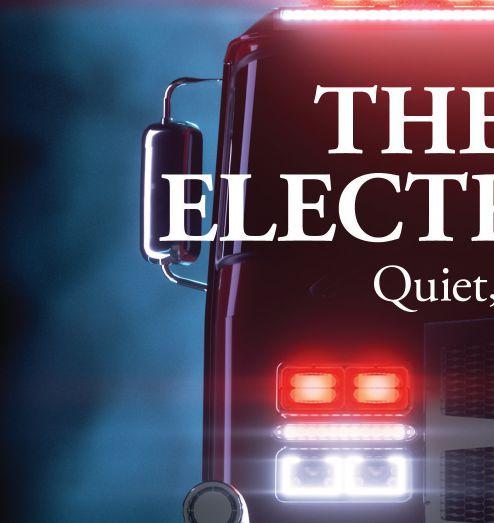
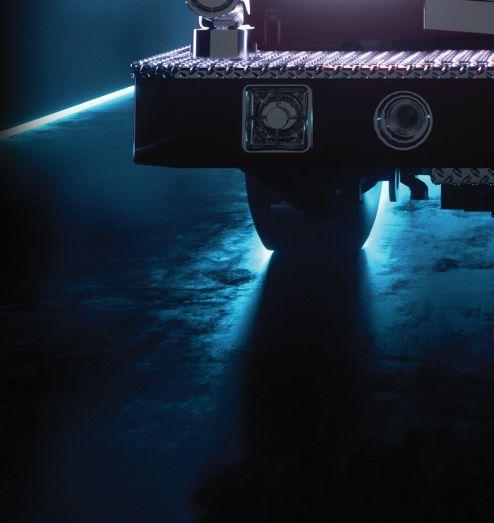
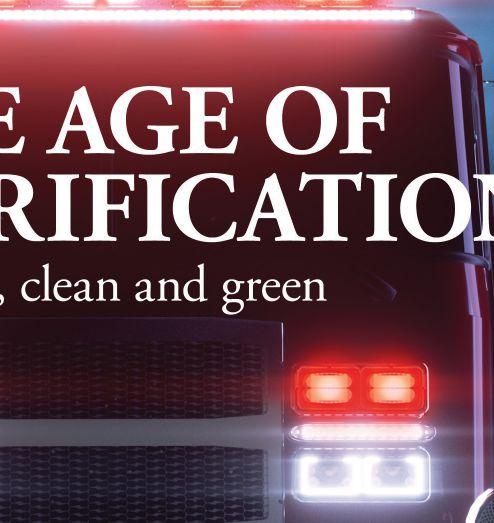
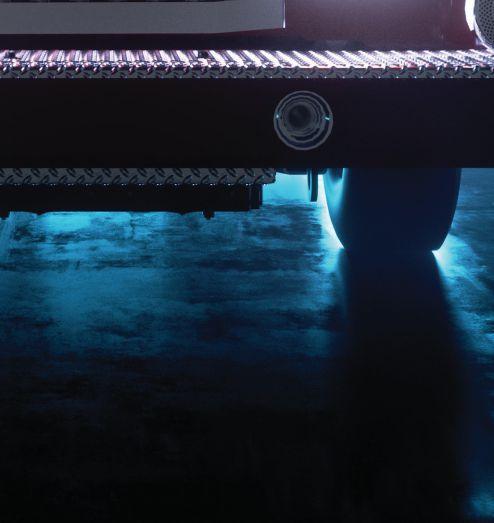




























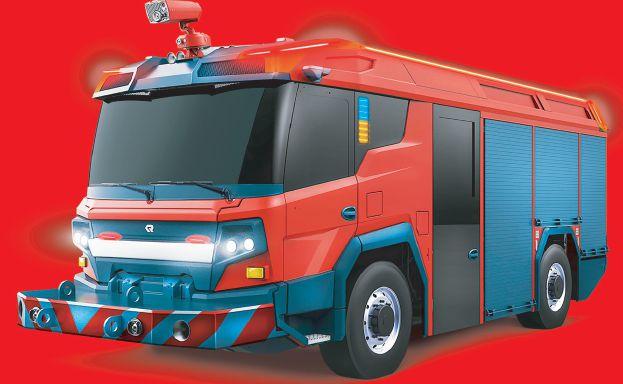
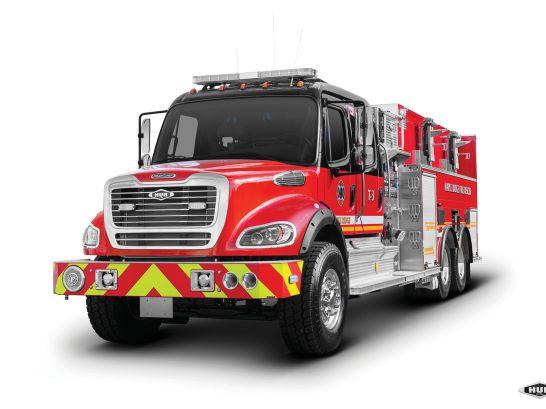
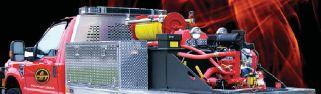
We’re charged up for the future as we introduce a revolutionary, new electric fire apparatus. As a true all-electric fire truck, fire departments can drive and pump on electric power only—a first in North America. Developed with technology partner Emergency One Group LTD in Scotland—maker of the world’s first EV fire truck, our new electric fire truck is set to change the future of firefighting. The new electric fire truck arrives on the scene in 2022. Contact your E-ONE, KME, Ferrara, or Spartan ER dealer to pre-order or schedule an exclusive virtual session with our engineers today. gy




Turn to page 10 for a special section on electric fire trucks. Articles by Chris Dennis and Laura Aiken
Recruit, justify budgets and showcase your level of service. By Kirk
Hughes
Creating a common operating picture in crisis with emergency management software. By Laura
Aiken
Consideration of individual and household factors is critical to reducing First Nation fire risk, research shows.
By Len Garis and Mandy Desautels
Ideas for better interagency communication and interoperability among first responders.
By Kaitlin Secord
Using TI as another “tool in the box” can greatly aid search team
By Manfred Kihn

BY LAURA AIKEN Editor laiken@annexbusinessmedia.com
hen I was a journalism student 20 years ago, fuel cell technology was a buzzy topic of conversation in the automotive world. Ferrari obsessed, I initially wanted to become an automotive journalist and wrote a lengthy school assignment on powering cars with hydrogen. I was totally fascinated imagining a fuel cell future, and the Toyota Mirai is one such hydrogen fuel cell electric vehicle produced today (though hydrogen fueling stations remain in short supply).



I still don’t have a Ferrari and I ended up starting out as a golf writer (talk about a lucky break, being a golf lover too), but I kept an eye over the ensuing years on the shifting of these green gears. In late October, General Motors announced plans to install 4,000 charging stations that will recharge any brand of electric vehicle to increase infrastructure in Canada. The B.C. govenrment is handing out rebates to builders who add charging stations to apartment and condo dwellings. Petro Canada is boasting of Canada’s first electric highway consisting of charging stations every 250 km or less from Halifax to Victoria.


geting a global goal of 100 per cent of its vehicles sourcing running on a renewable source by 2035.
The automotive industries are converging on an electric future with emissions free vehicles on the road en masse, and it feels like a very real, tangible and significant step forward for the planet.





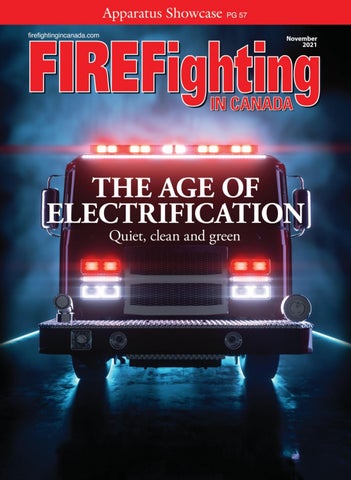
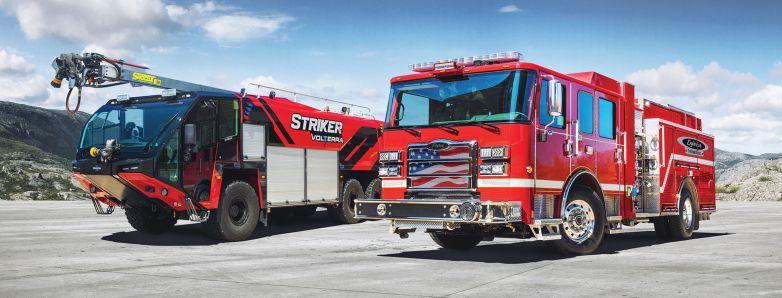
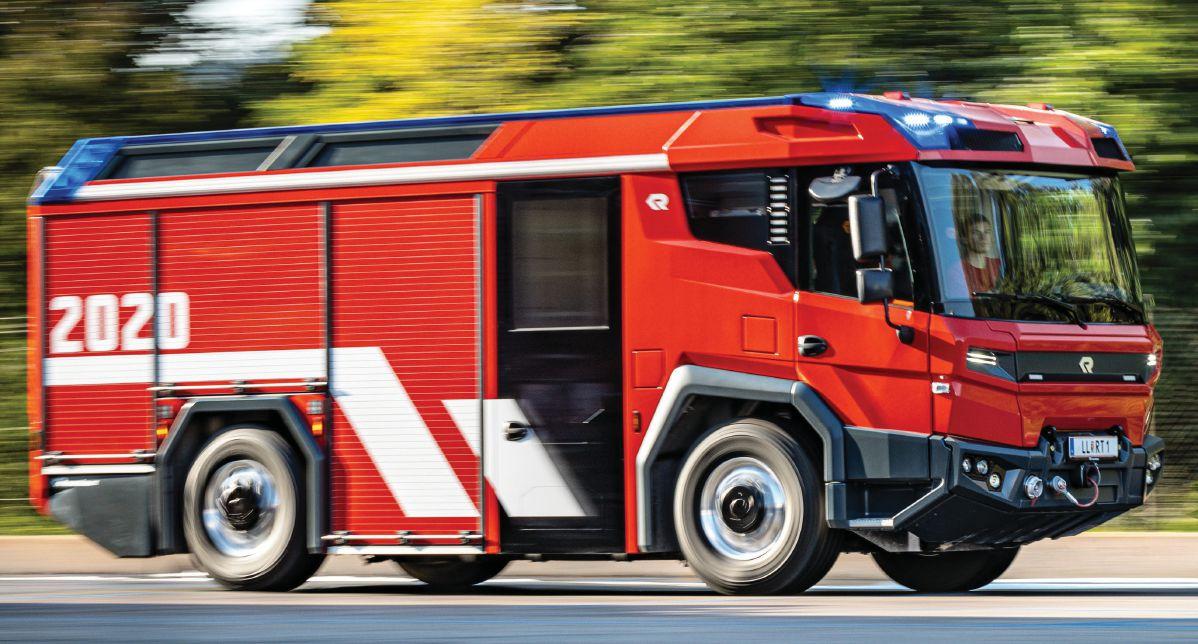
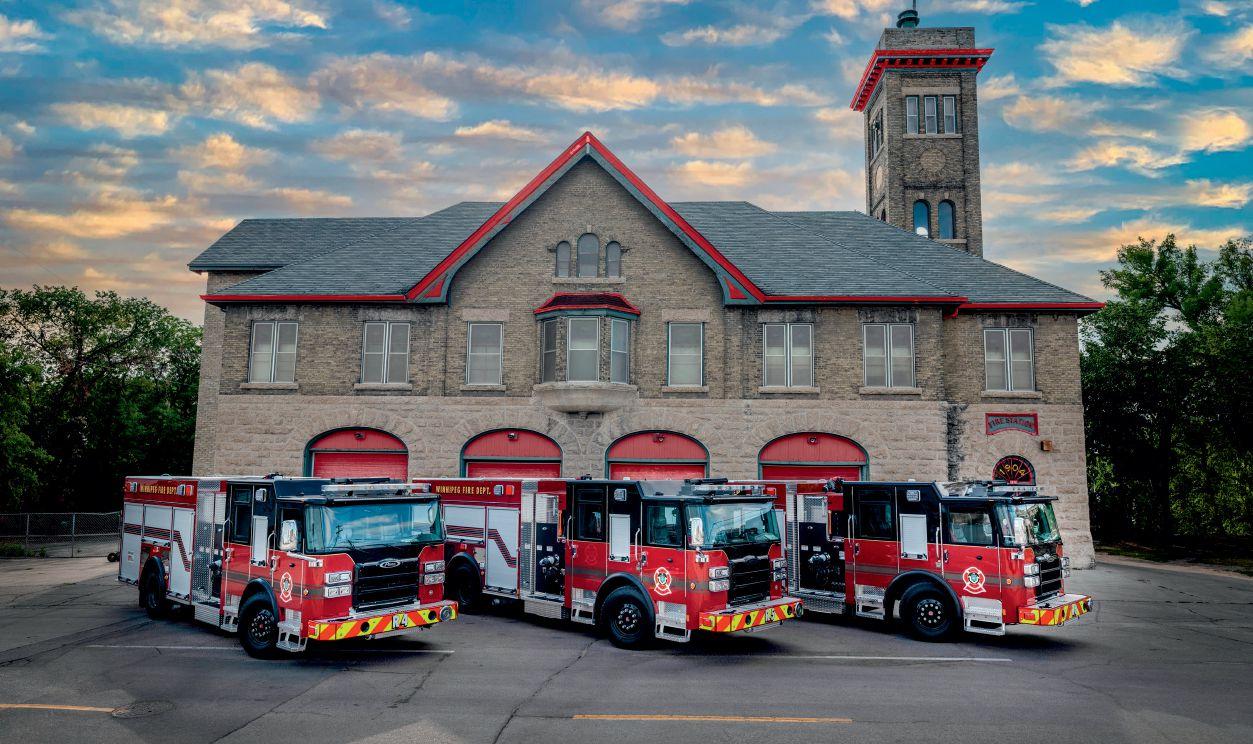
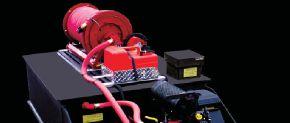
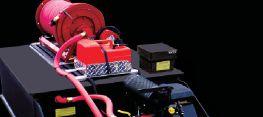
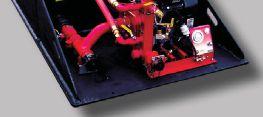
Here’s a sneak peak at the fully electric truck by REV Fire Group (E-ONE, KME, Ferrara, Spartan Emergency Response). See page 10 for our clean and green section.
Now, there will be three fire apparatus manufacturers — Rosenbauer, Pierce Manufacturing and REV Fire Group — with electric fire trucks seving the North American market.
Electric fire trucks are what is most novel, but this focus is not meant to overlook the number of idle reduction and idle mitigation technologies on the market that can be adapted to existing fleets for departments looking to reduce their carbon footprint and create fewer unhealthy fumes.
The options for reducing greenhouse gas emissions are growing and showcasing humanity’s capacity for truly inspired innovation in the face of climate change.
ESTABLISHED 1957
NOVEMBER 2021
VOL. 65 NO. 7
Reader Service
Print and digital subscription inquiries or changes, please contact Beata Olechnowicz, Audience Development Manager Tel: (416) 510-5182
Fax: (416) 510-6875
Email: bolechnowicz@annexbusinessmedia.com
Mail: 111 Gordon Baker Rd., Suite 400, Toronto, ON M2H 3R1
EDITOR LAURA AIKEN laiken@annexbusinessmedia.com 416-522-1595
ASSOCIATE EDITOR KAITLIN SECORD ksecord@annexbusinessmedia.com 416-435-1779
PUBLISHER ADAM SZPAKOWSKI aszpakowski@annexbusinessmedia.com 289-221-6605
ACCOUNT MANAGER JANICE EATON jeatoni@annexbusinessmedia.com 416-527-0191
ACCOUNT COORDINATOR CATHERINE GILES cgiles@annexbusinessmedia.com 416-510-5232
MEDIA DESIGNER ALISON KEBA akeba@annexbusinessmedia.com
GROUP PUBLISHER PAUL GROSSINGER pgrossinger@annexbusinessmedia.com
COO SCOTT JAMIESON sjamieson@annexbusinessmedia.com
PUBLICATION MAIL AGREEMENT #40065710 RETURN UNDELIVERABLE CANADIAN ADDRESSES TO CIRCULATION DEPT. P.O. Box 530, SIMCOE, ON N3Y 4N5 e-mail: subscribe@firefightingincanada.com
Printed in Canada ISSN 0015–2595
What people drive everyday is a big part of mainstreaming new technologies. The electric race in the domestic North American market is tight, with Ford and General Motors in a battery-arms race to meet President Joe Biden’s desired deadline for half of all new cars in America to be battery powered by 2030. GM’s tar-


SUBSCRIPTION RATES
Canada – 1 Year - $25.50 (GST - #867172652RT0001) USA – 1 Year $58.50 (CDN)
Annex Privacy Officer
Privacy@annexbusinessmedia.com Tel: 800-668-2374
Occasionally, Fire Fighting in Canada will mail information on behalf of industry-related groups whose products and services we believe may be of interest to you. If you prefer not to receive this information, please contact our circulation department in any of the four ways listed above.
No part of the editorial content of this publication may be reprinted without the publisher’s written permission ©2021 Annex Business Media. All rights reserved. Opinions expressed in this magazine are not necessarily those of the editor or the publisher. No liability is assumed for errors or omissions.
All advertising is subject to the publisher’s approval. Such approval does not imply any endorsement of the products or services advertised. Publisher reserves the right to refuse advertising that does not meet the standards of the publication.
www.firefightingincanada.com


Since 1866, Rosenbauerhasbeen called to fight fire. Creating alegacy wasmerely a bonus. What began 150 years ago as one man’s fight with fire has grown into the largest fire truck, apparatus, and emergency response vehicle manufacturer in the world. At 900 strong, Rosenbauer America is still family-owned today. A proud family of innovators and inventors dedicated to the craft. In one united effort to continueoneman’s mission.
The Rosenbauer RT (Revolutionary Technology) fire truck has evolved combustability into electricity. And that’s only the start of what makes it revolutionary. This isn’t a fire truck redesign, it’s a reinvention. Every square inch reimagined. Safe. Maneuverable. Agile. High torque. Incredible acceleration. Low center of gravity for unprecedented corneringand high driving stability. All-wheel steering for optimal turning radius. Equipped with its own communication system continuously feedingnecessary data like incident reports and receives video feeds from various sources, or building blueprints. Wireless operator’s panel. Optional onboard drones provide aerial photo-based analysis. Nearly silent, stress-reducing onsite operation. Nearly emission-free power. Reduced brake wear. Minimized brake dust. Minimized body roll. Every RT innovation answers an existing need now and for the future. And now defines the future. As a family-owned company, it’s personal.Soif it has an “R” on it, you have our word on it.




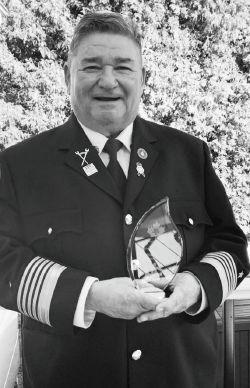
The Canadian Association of Fire Chief’s (CAFC) annual FireRescue conference took place virtually on Sept. 13 and 14.
The first day of the conference started off with the annual general meeting (AGM). CAFC president, Fire Chief John McKearney, spoke on updates within the association, a new board of directors was elected and several policy resolutions were passed on issues related to fire prevention, building codes, sprinklers, and human factors.
The AGM went on to feature a keynote presentation on balance versus flow by Georgette Reed, the health and wellness coordinator for Edmonton Fire Rescue, former Olympian,
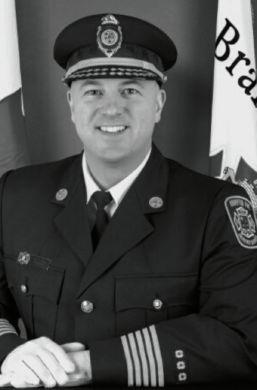
CHRISTIAN SCHMIDT has been promoted to fire chief of the Winnipeg Fire Paramedic Service. Holding the position of deputy fire chief for the last eight years, Schmidt has nearly 30 years of experience in emergency services in Manitoba. He holds a degree in criminology and a master’s in municipal leadership. In Ontario, a year-long search
has come to an end for Six Nations Fire and Emergency Services as they announce the hire of ASHLEY RUSSELLTAYLOR as permanent fire chief. Previously filling the role of deputy fire chief for the Chippewas of Nawash Fire and Emergency Services, Russell-Taylor has been a firefighter for a number of years in Ohsweken, Ont.
and world champion coach. Reed explained the importance of the mind/ body connection and a flow energy framework. Flow creates the willingness and power for change. Reed said, “It’s not about the future being inevitable, it’s about it being inventible.”
The second major session of the day, was designed to help fire departments understand their role in Truth and Reconciliation. The session was led in collaboration with the National Indigenous Fire Safety Council. Chair of the Truth and Reconciliation Commission, the Hon. Murray Sinclair, opened the session commending the fire sector for its respect for life and the steps necessary to create a “collaborative story between Indigenous and Western ways.” As part of the National Day of Truth and Reconciliation, a recording of this sessions was made available to all members of the fire service at cafc.ca.
The third session of the day focused on the results of the Great Canadian Volunteer Firefighter Census conducted by the CAFC in 2021. The census was conducted to understand the new demographics of this important subsector and also to seek guidance on the evolving definition of volunteer firefighter. (For more details on the census, turn to Fire Chief Vince MacKenzie’s Volunteer Vision column on page 78).
The session ended with awards. CAFC Fire Researcher of the Year went to Kelly Schwartz from the University of Calgary, who lead research on exploring the effects of occupational stress on firefighters and their families. The Fire Researcher of the Year Award was launched as a means of
CONTINUED ON PAGE 56
MARIANO PERINI has been appointed Clarington’s director of emergency and fire services and fire chief in Ontario. Perini is a graduate of the Ontario Fire College and holds a diploma in fire studies. Formerly the acting fire chief for Whitby Fire and Emergency Services, Perini has 32 years of experience in public service, starting in 1991 with the Durham Regional Police Services.
KALPANA RAJGOPALAN is the new deputy fire chief for the Oakville Fire Department in Ontario. With more than 15 years of experience in leadership and emergency management, Rajgopalan comes into this new role from her previous position as associate director for Toronto Public Health.
EVERETT COOKE is the new fire chief in St. Albert, Alta. Previously
The Ontario Association of Fire Chief’s (OAFC) annual conference and trade show took place this past Sept. 21 to 23. The virtual event hosted a number of panels and conversations on important industry topics like decontamination, cancer preventative strategies, mental health and resiliency, government relations, and a look at how the COVID-19 response is driving change within the fire service.
Day one started off with a keynote presentation from Samantha Weeks, a retired colonel with the United States Air Force. Weeks spoke on trust and teamwork, the importance of building lasting mentor/mentee relationships and the impact lasting partnerships can have. She encouraged attendees to advocate for minorities and teach majorities how to grow their perspective through the mentorship process.
The Ontario chiefs panel and vendor discussion featured Fire Chief Bill Boyes from Brampton, Fire Chief David Cunliffe from Hamilton, Fire Chief Jason Whiteley from North Bay, Mary-Ann Kotylak, Purchasing Manager for North Bay, and Rob Anselmi, Division Chief and Equipment and Asset Management for Toronto.
The panel, moderated by Deputy Chief Rob Grimwood of Mississauga Fire and Rescue
Services, covered green initiatives and modernizing operations, including improvements to communications for the up-and-coming Next Generation 9-1-1 telecommunications system. Conversation around Brampton’s first fully electric fire truck sparked plenty of discussion around the future of fire apparatus and climate change.
The trade show, which ran all through day one, was held on exVo, a simulation platform that allowed visitors to virtually travel the showroom floor and meet, interact, and view vendor videos.
Day two of the conference started off with a presentation by Crystal D’Cunha, the founder of INSIDE View. D’Cunha spoke on diversity and how to create it through removing barriers. She emphasized the importance of learning from the past to gain the confidence to act.
Jon Pegg, Ontario’s Fire Marshall, gave an update on the future of training since the closure of the Ontario Fire College campus in Gravenhurst, new pilot initiatives for academic standards and evaluation, NFPA 1006, and FAS recruitment.
Joe Rogers, CEO of Skid Row, spoke to attendees about optimal health performance and stress recovery while Gregory J. Stulen, senior associate at Pathway Group, spoke on gov-
ernment relations.
Jim Burneka wrapped up day two with his presentation on ‘The 25 Live’. The presentation included 25 cancer prevention tips/steps that can be taken to reduce the risk of occupational cancers and answered the question of why these changes need to take place, and how to realistically implement them.
The third day of OAFC 2021 featured a morning session delivered by Matthew Pegg, fire chief and incident commander of Toronto’s COVID-19 response. Pegg shared his thoughts on how COVID-19 will drive change for Ontario’s fire service, including the now higher profile nature of the job and the increased expectations that go along with it.
Ali W. Rothrock from First Responders Care shared a moving story of resilience in action, followed by Laura King, the NFPA’s public education representative in Canada, who spoke on community risk reduction and assessments.
The theme of equity, diversity and inclusion (EDI) carried into the final presentations of the conference, with a talk from Celina Caesar Chavannes on the shortcomings of traditional EDI. Tiana Field-Ridley spoke about mental health and practical support strategies.
The virtual event also included time for networking with fellow
chiefs and industry vendors, all in all creating a social, informative, and successful event for the association, sponsors, and attendees.
“With this event cancelled in 2020, we have missed all the networking and learning it has afforded us over the years, and the association didn’t want to go another year without the opportunity to visit with exhibitors and network,” OAFC president Chief Mark MacDonald stated. “While many of us attend virtual meetings every day, we wanted to bring a unique experience to the fire service. Our staff worked tirelessly to find virtual platforms that would give both vendors and attendees an experience that felt as close as possible to an in-person event.”
MacDonald noted the appreciation for all those who supported and attended the conference and trade show. “We continue to be indebted to our sponsors, exhibitors and members who continue to support the organization, and the learning and networking opportunities we continue to provide.”
MacDonald shared that events have been planned for in-person in 2022, starting with the OAFC Hicks Morley 2022 Labour Relations Seminar on Jan. 18 to 20 at the Marriott Downtown CF Toronto Eaton Centre. Visit www.oafc.on.ca/events for more information.
serving as chief in Beaumont, Alta., for four years, and County of Grand Prairie, Alta., Cooke has worked in the fire service for 20 years. He was involved in the successful expansion of the County of Grand Prairie from a volunteer service to a full-time composite one.
CYNTHIA ROSS TUSTIN retired
from her role as fire chief for Essa Township in Ontario after almost eight years with the volunteer fire department. Ross Tustin was the first female fire chief to lead a department in Ontario, as well as the first female elected as president of the Ontario Association of Fire Chiefs.
Fire Chief MARK PANKHURST of Ontario’s Kawartha Lakes
Fire Department announced his retirement. With more than 28 years of experience in the fire service, Pankhurst was a career firefighter and volunteer in Little Britain, playing an instrumental role in advocating for the Ford government’s passing of legislation for protection of double hatter firefighters in Ontario.
Fire chief MIKE MCKINLAY retired after 34 years with the fire department in Duncan, B.C. Having served 13 years as fire chief, McKinlay led the department through complex changes to the fire service, including the COVID-19 pandemic and the ongoing opioid crisis. He followed in the footsteps of his great grandfather and great uncles, some of the first fire chiefs in Duncan.
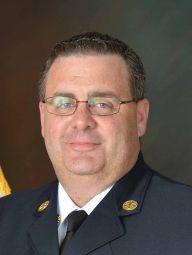
BY MATTHEW PEGG Fire Chief and General Manager — Emergency Management, Incident Commander, COVID-19 Response, Toronto
oming out of high school, I went to work as an apprentice mechanic at Gary’s Service and Towing in Keswick, Ont. This was also the home of both P&P Performance and Custom Engine Service. It was while working here that I would also begin my career as a volunteer firefighter, opening the door to my career in the fire service shortly after earning my mechanic’s licences.
Working in this busy, modern and well-equipped shop was an amazing experience. I had the opportunity to work on some extraordinary high-performance machines, including drag cars, race boats and street rods. Anyone who has ever been around these high-performance vehicles knows that regardless of the brand, configuration or set-up, they all have a few things in common. They are almost always loud; and for the enthusiast, the louder the better. To this day, the unmistakable sound of a nitrous-injected street rod or all three supercharged big block engines coming to life in an offshore race boat is the stuff dreams are made of.
But as my experience grew, and I learned more as a technician, I began to understand that the amount of noise a performance vehicle made was not actually connected to how well it performed under pressure.
Many times, I would watch these impressive looking and sounding machines fail to actually perform at the track or on the water. Sure, they sounded great and turned many heads, but only until the crowd saw them race for the first time as it became clear that they weren’t actually powerful and fast – they were simply loud.
I have met many leaders like this as well. Those who talk the talk, look impressive and who move through their careers making a ton of initially-impressive sounding noise. Leaders like this can amass a following, albeit short-lived, as they project themselves as being the real deal and the ones to watch. In reality, they tend to be distracting and even intimidating to those around them, as the noise and general chaos they create can easily overpower everything and everyone around them.
go about their work quietly and efficiently, with impressive results seemingly appearing out of nowhere.
Above all else, the best leaders instill a sense of calm in everyone around them. When they walk into a room, the level of anxiety reduces. Their calm, focused attention is palpable and inspires confidence in others. In other words, high performance leaders achieve demonstrable results, absent of the tornado of chaos that surrounds those who tend to best resemble the Looney Tunes’ Tasmanian Devil.
We have all met, observed and likely worked for people in leadership positions who seem to bring 25 litres of gasoline to every small problem “fire” they encounter, almost immediately turning even the smallest of issues into a loud, chaotic, multiple-alarm event. Only after they escalate the situation, oftentimes simply to enhance their personal visibility, do they actually begin to address and resolve the issue at hand. What could have been calmly and efficiently addressed, managed and resolved in the first place now requires much more effort, many more people and a much heavier lift to achieve the same result.
I chose my words very carefully above when I referenced “people in leadership positions,” as there is a profound difference between
In leadership, just as with high-performance machines, actual performance is not related to the amount of noise and chaos produced. ‘‘ ’’
In leadership, just as with high-performance machines, actual performance is not related to the amount of noise and chaos produced. In fact, the best and highest-performance leaders amongst us generally
Matthew Pegg is the chief with Toronto Fire Services, having previously served in Georgina, Ajax and Brampton, Ont. He is currently the incident commander for Toronto’s COVID-19 response. Contact Matthew at matthew.pegg@toronto.ca and follow him on Twitter at @ ChiefPeggTFS.
people in leadership positions and leaders. Please allow me to be very clear about one thing – I am not suggesting that leaders don’t make mistakes. Every leader makes mistakes. But the best leaders are extremely conscious of their own actions and behaviour, and especially aware of their impact on the people around them. Real leaders learn from mistakes and commit to not making the same mistake again.
There is an incredible need for calm, consistent, competent and reliable leadership today, a need that is only going to grow moving forward. Those of us privileged to hold leadership roles, and those who aspire to in the future, must remember that achieving performance and producing noise are two very different things. High performance doesn’t need to be loud. We only need to watch a Tesla efficiently blast from 0 to 100 kilometres per hour in less than 3 seconds, and in complete silence, to know how true this is.
CUSTOM-OUTFITTED TRUCKS BUILT SINCE 1983 TO THE VERY HIGHEST STANDARDS – YOURS !
Each Canadian fire department faces its own unique operational challenges. Our customer experience is centered around listening to those opportunities and sharing our rich and diverse repertoire of solutions. Relying on our experienced team of technical advisors and on-staff firefighters, MAXIMETAL can help you take your truck from a brain-storm of ideas to your ideal in-service piece of equipment, proudly built in Canada. Our satisfied departments range from the smallest fire halls to some of North America’s largest fleets. Visit our web site today and contact us to begin planning your next fire apparatus.


By CHRIS DENNIS
The time has come. The age of electric fire trucks is now in our backyards. There is excitement, curiosity, doubt, as well as the naysayers. Whether we like it or not, we all know it’s the way of the future.
Let’s define all electric and hybrid, as both are available in the Class 7 and 8 heavy truck market, as well as in custom built fire trucks. An electric car or battery electric car is a vehicle that is propelled by one or more electric motors using energy stored in rechargeable batteries. To compare it to an internal combustion engine vehicle, electric cars are quieter, have no exhaust emissions, and lower emissions overall. The all-electrical vehicle has a battery life and run time as well. This means the batteries must be recharged to allow this type of vehicle to sustain a driving distance or have a means of regenerating power to charge batteries while driving. This can be done stationary at charging stations. Some manufactures are able to recharge batteries with every brake pedal application. Amazing!
The hybrid electric vehicle is a type of vehicle that combines a conventional internal combustion engine with an electric propulsion system. The electric powertrain is intended to achieve better fuel economy than a conventional vehicle as well as better performance and greenhouse gas reductions. The electric side of the vehicles are being recharged by the internal combustion fuel-fed engine while driving as well as when braking.
The same technology has been used in hybrid function commercial trucks for some time now. Groups such as Kenworth, Peterbilt and Mack Volvo have all been hard at work developing hybrid trucks for some time now.
For electric fire trucks, we are living through the greatest leaps in battery technology. However, an electric fire truck design was first patented in 1885 by Schuyler Wheeler. He removed the steam powered driven unit to the fire pump and created an electric one, though horses where still used to for transportation. The first modern-day fully electric fire truck in the world was introduced by Emergency-One on a Volvo chassis. It was called E1 EVO and is located in the UK.
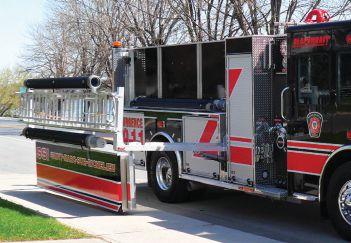
To an observer such as myself, the fire truck builders have been treating this all-electric version of a fire truck like the space race. European and North American fire truck builders all want their trucks to be the first and be effective. The key question for fire departments are asking is, will it work? In June we learned the City of Brampton purchased the province’s first electric fire truck, a Rosenbauer RT zero emission pumper that will replace a fuel powered fire truck. The truck is expected to be in service in early 2023. The Rosenbauer RT (pictured above, with RT standing for Revolutionary Technology) was showcased in in Vancouver back in January 2020.
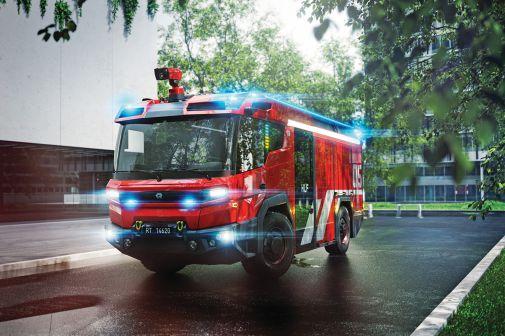
The Rosenbauer RT’s innovation has an eye for detail and ergonomics, carrying a price tag not that far off from a diesel pumper in the same class. The appearance is space age and European in style. Rosenbauer is reporting eight hours of electric operational time on a full charge. The apparatus carries an on-board diesel generator called a back up range extender to recharge the batteries while in service to enable it to run much longer. The plug-in feature at the fire station can take the place of the exhaust capture system and ventilation system needed to remove exhaust gases. Since the range extender engine is only needed to recharge batteries, it shuts down and then only electric’s in play.
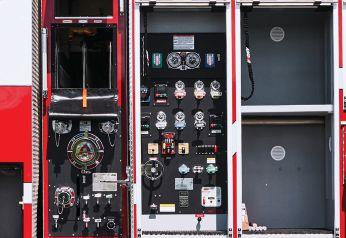
REV Fire Group (E-One, Spartan, Smeal, ER, KME and Ferrara) recently issued information on their all electric fire truck. With the E1 EVO technology, I am sure this North American designed electric fire truck will be another great contender in the market. The batteries are laid down between the frame rails moving a heavy component to the lowest centre point of the truck. It is available in pumper form as well. The look is one that we traditional folks in the fire service can recognize. The battery technology packs 316 KW of automotive power to move this beast. A Cummins range extender diesel generator is designed to help to recharge batteries on the move as well. Locally, used parts are reporting that REV’s truck will make for easy repairs after sales as well, as it’s not completely proprietary. REV Group says the EFT will meet NFPA and ULC standards while pumping in fully electric mode. The range extender engine in this truck would be needed when flowing at full KPA for long periods of time to replenish batteries.
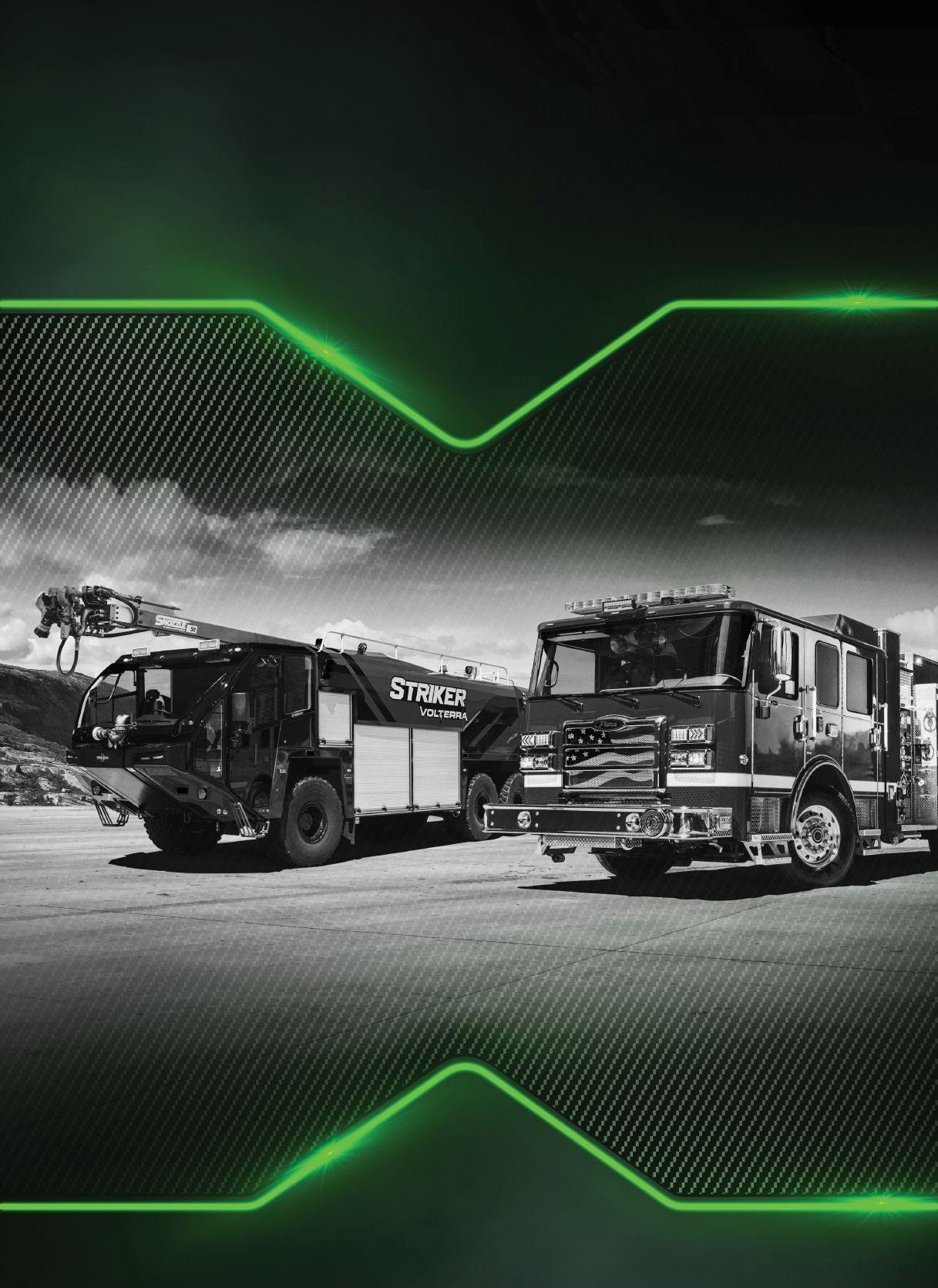
Pierce also introduced the Pierce Enforcer Volterra pumper. This is the first in service electric fire truck in America. Madison County took delivery of this truck and have reported great success so far. Its internal combustion engine coupled with the electric motor provides the electrical power this hybrid style truck requires for continuous pumping.
BY

Sit back, or be the first like Madison in the U.S. or Brampton in Ontario, but either way look hard at what is coming.
Vaughan Fire and Rescue Service, where I work, has always been a proactive leader in new technology. We, like many other municipalities, want to do what’s best for the environment. The electric fire truck is here to stay and I predict it will only be a matter of time before the electric truck will be all you can get.
I would like to share some data that is only based on the passenger car side of the business since the large truck, especially fire department apparatus, are only now creating all electric vehicles and data is limited and mostly European at this time. This information was gathered from a post I read on Facebook from a municipality in Canada.
A Tesla household requires 75 amp service to correctly and effectively recharge a Tesla. The average household is 100 amp service. On a street of about 25 homes, the electrical infrastructure would be unable to carry more than three houses with electric vehicles. This would overload the system. If your car was charging and you wanted to cook dinner with the oven and stove and do a load of laundry in the dryer all at the same time, the odds are you would have to wait until the car was charged or you would not be able to go back out to get more sheets for the dryer. If even half the homes have electric vehicles, the system would be greatly over loaded. So while the electrical officials are promoting this electrical propulsion idea and installing more windmills and solar cells, the problem for the subdivision electrical grid will not be revealed until we are so far down the dead end road that we will have no choice but to pay more money to have the electrical grid updated to be able to charge these vehicles. An average cost per kilowatt pending on season is $1.63 per kwh and 16 kwh x 1.63 per kwh equals $26.08 to charge the battery. The $26.08 per charge divided by 40 km equals 1.99 per km to operate. Compare that to a gasoline vehicle of about the same size (not a diesel) getting about 13.5 litres per kilometer. At $1.32 per litre divided by 40 km that would equal about .33 cents per km. These are some numbers to consider and additional food for thought.
My two cents? Electric vehicles are a great thing. But consider that the emergency vehicle technician will require a whole new level of training. With this future of electric fire trucks comes a future of EVTs that are specialized in one more area of expertise. Better start thinking now about how that is going to look in your own fire department. It’s already hard to get technicians in this trade. Make it attractive with purpose and they will come. There is no life like it, no job like it, no better form of work satisfaction than knowing that what you have fixed or designed or built is helping keep your city or township safe when all the chips are down and first responders are needed. Without the technicians, these trucks don’t roll.
Be safe my friends, and remember, “rubber side down.”
Chris Dennis is the chief mechanical officer for Vaughan Fire & Rescue Service in Ontario. He can be reached at Chris.Dennis@vaughan.ca.


After decades of R&D, the future of green apparatus is decidedly on board with batteries.
By LAURA AIKEN
Afire truck is like an elite athlete: performance and maximum uptime are paramount. Downtime has a high cost. There’s a lot of tinkering to ensure the mind and machinations are simpatico. They are both entities with a mission, a job to do. But unlike athletes, traditional apparatus have been consuming a rather dirty petroleum based diet. Technology has reached a turning point that’s made it practical for fire trucks to starting eating clean and green.
Improvements in battery technology have been the game changer that vehicle makers are uniting towards. The industry on wheels has long been looking seriously at many alternatives to the combustion engine and their petroleum fuels that belch vast swaths of CO2 from their underbellies.
To consider how mainstream batteries are poised to become, consider that while Tesla and Prius are commonly entrenched names in electric cars and hybrids, Ford recently announced an $11.4 billion plan to create three factories that will make batteries and another plant to make an F-series of electric pick-up trucks with an eye on 40 per cent electric vehicle sales globally by 2030. That’s only eight years away. General Motors has set a global sales target of 100 per cent emissions free vehicles by 2035.
Commercial fleets and city buses have played a part in paving the way for larger vehicles and now three fire truck manufacturers are leading the charge to the electrification of fire apparatus in North America. The Rosenbauer RT was the recipient of a prestigious Red Dot Design Award and toured its design in 2020. The REV Fire Group (E-ONE, KME, Ferrara, Spartan Emergency Response) and Pierce Manufacturing have designed their own
unique electric fire trucks and the options are looking more plentiful than ever.
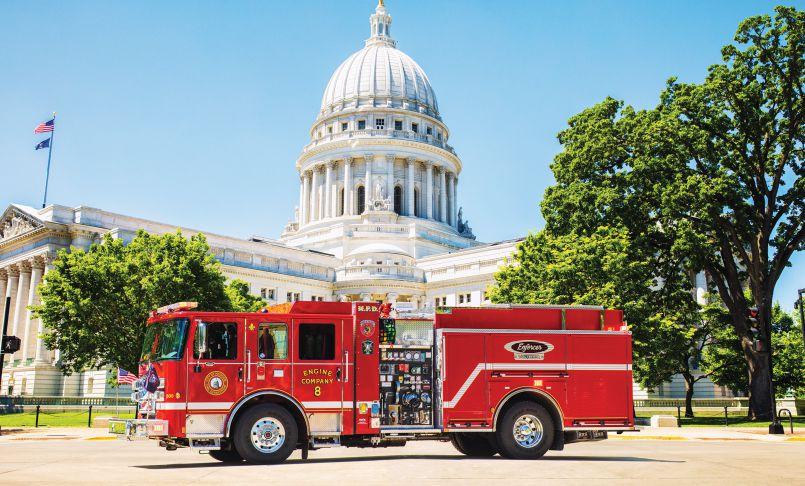
Pierce Manufacturing has a zero-emissions fire truck in service in North America with the placement of its Enforcer Volterra pumper in Madison, Wis. The Volterra runs on a patented Oshkosh parallel electric drive-train. This parallel system runs in place of the Allison transmission that would typically be on the truck, explained Mike Feduniw, an apparatus specialist with Commercial Emergency Equipment, Canada’s largest dealer for Pierce. This drive-train is the secret sauce that allowed Pierce to build a configurable North American style fire truck with a North American range of products, but still operate on strictly electric power while being an overall hybrid model. This means the
truck can run on electric, run on diesel, or run on a combination of the two. There is, as there is on all electric fire trucks, a small diesel engine on board. The electric motor is part of the parallel system. Pierce integrated a high capacity lithium ion battery system into the chassis, so there are lead acid batteries on one side of the chassis and lithium ion batteries on the other. The lead acid batteries are dedicated to the starting procedures and components that run while driving. The lithium ions are set up through a battery management system that was developed in-house through Pierce’s existing commands technology. The lithium ions provide total voltage to all systems when the truck is shut down, which avoids depleting the lead acid battery power.
The battery capacity is dependent on application, said Feduniw, lasting from “155 kilowatt hours up to an infinite number of hours as long as we can store that
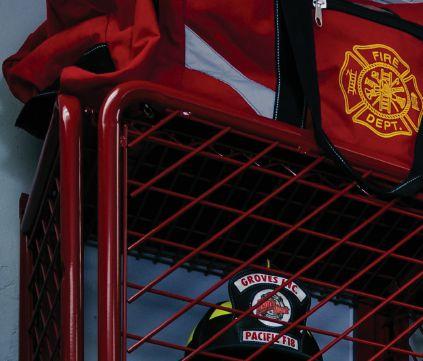
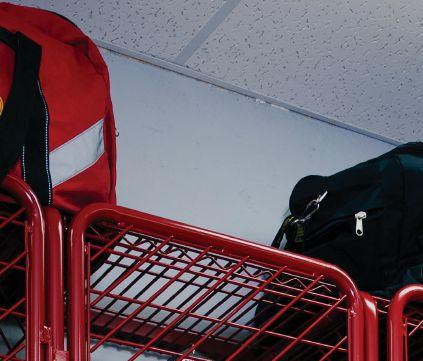
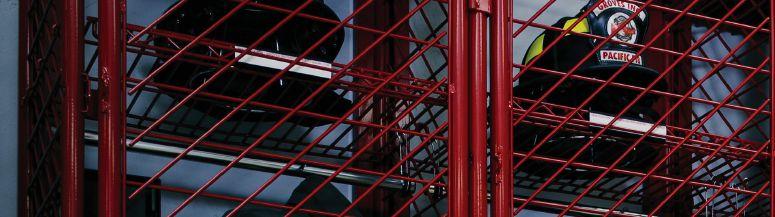
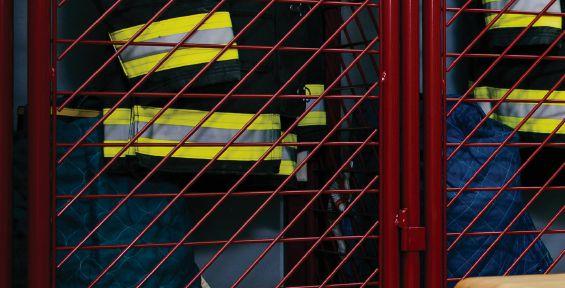



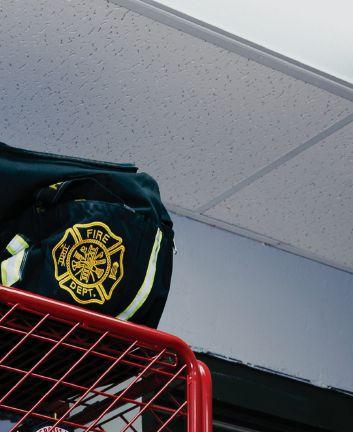
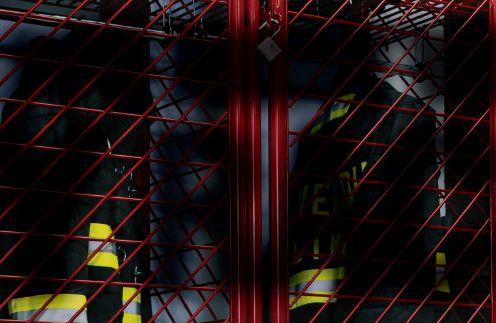

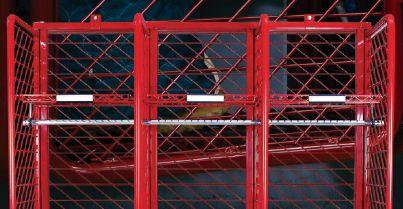
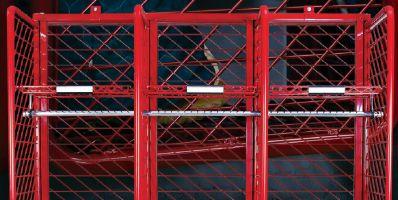
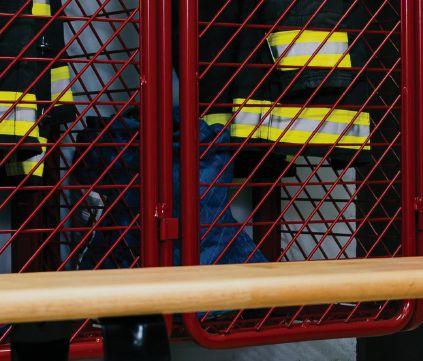



Designed for maximum air circulation, the Wall Mounted Red Racks help PPE and gear dry faster and last longer. They create optimal organisation which helps shave precious your community better!




Available in 45.72 cm, 50.80 cm, and 60.96 cm section units
amount of energy on board.” The truck will switch automatically and start the diesel engine on its own, if required, which disengages the electric motor completely.
“That’s the parallel drive magic,” he added, sharing that the prototype in Madison has run about 1000 calls and only run the diesel engine a handful of times.
And the less the diesel engine runs, so it follows, the longer interval between oil changes, a service that’s one of the maintenance differentials between electric and traditional fire trucks. Feduniw said the numbers aren’t in yet, but the observation is significant increases in uptime and decreases in maintenance costs.
The Volterra is an intelligent truck, calibrating functions such as heating, air conditioning and engine temperature to stay in a stable range despite the weather. The question of how electric fire trucks fare in a Canadian climate is the biggest question of concern Feduniw fields, and the answer for Pierce lies in the ability of Pierce’s technologies to talk to one another.
While there is a lot of fancy footwork happening inside the Volterra fire truck, the goal is for fire departments to see little that is different from what they’re used to.
“We want to make it as easy as possible for fire departments to integrate this new
technology in their fleets. We’ve got so many of the things we need to worry about on a scene, the truck really shouldn’t be one of them – just need the infrastructure at the station to charge it up.”
Brampton fire department became the the first in Ontario to sign up to put the electric Rosenbauer RT in its fleet. Brian Innis, president of ResQTech Systems, who distribute Rosenbauer’s electric hybrid in Ontario, explained that it’s “more than just an electric fire truck, it’s a totally new concept.”
Ergonomics played a significant role in the creation of the Rosenbauer RT, which stands for Revolutionary Technology. Kyle Innis, ResQTech’s vice-president, pointed to the diverse workforce in fire departments and how features such as all air suspension ensure everyone reaches the top of the compartments as well as providing flexibility in operations. The Hendrickson air suspension can be lowered to a mere 6.9 inches or raised as high as 18.5 inches, providing ease of access for the crew and adaptability in situations such as flooding. The crew have a variety of seating configurations to allow for face-to-face discussions from all positions during planning or debrief. The driver and officer seat face forward but rotate inward
creating a central command area with a 20-inch screen in the centre dash. Volva Penta, a subsidiary of the Volvo Group, is the partner on the electric power train side.
There has been also been a great deal of focus put on driving dynamics and vehicle stability. Conventionally, fire trucks have the water tank and hose up high and thus have a higher centre of gravity. The RT is designed to equalize the weight between the front and rear axle while also centralizing and lowering the weight to improve capabilities and safety. It makes for an improved driving experience, said Innis.
“The only learning curve I’d say is the enhanced driving capabilities available to you,” shared ResQTech’s president. “The all-wheel steering and having control over independent axles — right now, if you were to cut across the lanes of the 401, you’d only have your front wheels turned towards that way. Now you can actually turn the front and rear and drive diagonally. It makes it a little bit easier to enter into tough positions, as well as exit from those conditions.”
When you climb in, that engine tunnel is no longer there, creating a large, flexible interior. And, like all the electrics, it will be a quiet ride without the sound of the engine, reducing the noise at the scene for people in distress.






















Pricewise, departments can expect perhaps 30 per cent more cost than a traditional fire truck, but should also factor in cost of over the life of the apparatus. The apparatus is no longer reliant on a combustible engine, using on board batteries and a range extender to handle a multitude of situations.
The two batteries on board give a driving range of about 129 kilometers, after which you’ll be depleted to the 35 per cent level and the range extender will kick in, giving you an additional 499 kilometers.
Charging is one concern for potential electric vehicle owners, power being another. The Innis’ said you’re not giving anything up power-wise and the acceleration and power can be even greater than with a combustible engine. The apparatus on battery alone goes zero to 60 in 30 seconds.
ResQTech’s leaders said the RT concept will eventually be developed through all types of apparatus, and the roads will one day see electric aerials and rescues too.
The REV Fire Group (E-ONE, KME, Ferrara, Spartan Emergency Response) recently introduced their fully electric North American designed fire apparatus to the market called the VECTOR. Roger Lackore, senior director of product development at REV Group, spent over a year leading the development team in partnership with Emergency One Group in Scotland, who successfully delivered a fully electric fire apparatus for the London Fire Brigade in the UK (ZEPA-Zero Emission Pumping Appliance). The first REV Group apparatus (pilot/test) is in final stage of completion and will undergo comprehensive testing before its unveiling at FDIC in April 2022.
REV Group’s approach to the fully electric fire apparatus has been to have significant kilowatt power through the batteries, six large ones to be precise, aboard with the intention on having the apparatus always operate solely on electric power, to and from the response as well as pumping on all electric power on scene, unless there was a very specific situation such as a major fire that called for lengthy continuous long term pumping where an optional on board EPA approved 6.9L Cummins diesel engine is installed to recharge the batteries.
“The trucking industry have been developing green trucks for a long time,” he
noted, but there were plenty of challenges to shifting away from tradition. Diesel suited fire apparatus well; diesel “ticks a lot of boxes” in terms of availability and the fact that it is less flammable than gasoline. Now, the energy you can get out of a lithium battery has improved every year for past decade or two, he said, making their use more practical.
That being said, times aren’t at the point where you can just go out and buy an electric fire truck and park it in the station. You’re going to need the right infrastructure and potentially a utility upgrade to make it practical, said Lackore, including investing in DC fast charging stations.
John Witt, president of Safetek Profire, a key dealer for Rev Group in the Canadian
There are compromises and trade-offs and we all have to work together on that.”
Witt points to many benefits beyond contributing to a reduction in green house gas emissions, such as the elimination of diesel smoke that will make for a healthier environment at the fire station and on scene for all. In addition, there is also far less noise level generally, making for a significantly quieter apparatus on scene and during pumping operations.
From a design perspective, REV Group’s apparatus has kept the midship pump, hose bed, water/foam tank(s) ladder complement/location, and the equipment storage capability design of the apparatus the same. The componentry is off the shelf and in current use in urban transit buses and
Technology has reached a turning point that’s made it practical for fire trucks to starting eating clean and green.
market, and who has been consulting with the REV Group on integrating this technology into the fire service, said that “Canadian cities are initiating climate emergency policies, with so far over 500 municipalities and districts doing so. We know of cities that are building new or rebuilding existing fire stations for the future and are going to integrate the power system as well as other improvements to achieve a net zero emission rating. But there’s no miracle fire apparatus, currently. This is just another positive way we can do to make our planet greener by reducing green house gases. There’s no sort of illusion this is the be all end all; it’s a work in progress and I see almost daily articles on batteries and drive system components tailored to the electrification concept as well as other benefits such as reduction in moving parts and components thereby reducing PM servicing and other costs savings such as fuel and regen, oil changes, etcetra.”
“Departments interested in the technology should understand that it’s new technology and they are early adopters,” said Lackore. “Purchasers must have the mindset of being willing and interested in being part of a new solution, while also realizing that the manufacturers working on this are also new adopters. It’s really a partnership.
delivery trucks and is not proprietary, so REV dealers are prepared to service what they sell and have the warranties to back it up, said Witt. One thing is for certain, the move to battery power is going to produce a quantity of design specific batteries. Lackore said that the batteries can be recycled, though the technologies and uses for them are not at a mature state and there is still plenty of research going on. REV Group has also addressed the Canadian climate. Lackore explained: “Just like you cool an engine with a radiator and a liquid coolant. Same thing with the batteries. You run liquid coolant through the batteries too, but in cold weather you’re running warm coolant through them and in warm weather you’re running cold coolant through them, to stabilize the temperature essentially.”
Currently the technology is best suited for urban response situations, consisting of short distance responses where you are back to the fire station regularly, as well as in an area with a good hydrant pressure system and a stable electric infrastructure in the fire station.
The foundation for an electrically driven world is well underway. Technologies will continue to improve batteries and tackle the new demands on the grid, making for an interesting road ahead.

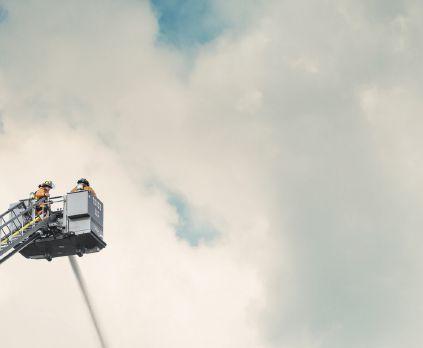




How to get social media helping you recruit, justify budgets and showcase your level of service
By KIRK HUGHES
TOP An effective social media presence requires designating someone to approve, control and monitor the content that will go out on the various platforms.
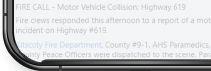
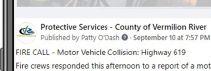
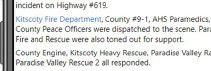
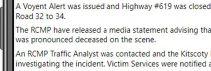
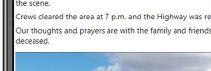
RIGHT Here are a variety of examples of different kinds of posts you can publish to showcase your department.
Ashrinking volunteer base, tighter budgets and an increased workload have become a constant for many fire stations across Canada. It’s no surprise the cohesion of volunteers has taken a beating. One thing that is often overlooked by fire departments is the increased and effective use of social media platforms to address some of the barriers being faced by the fire service and help to highlight the hard work and dedication that crews display on a regular basis. By reaching a wider audience through subscribers and followers, the fire service receives virtual free publicity and a dedicated medium to share their message.
A successful social media platform is
based on a variety of best practices that, if properly used, can create a powerful tool to increase recruiting, justify budget increases and showcase the level of service provided. The following tips are designed to assist a fire service in creating, or revamping, their social media outreach.
The first step is to designate someone to approve, control and monitor the content being added. A single point of contact ensures standardization of the messages being posted, as well as ensures nothing that violates the ethos of a department is added. It is best to have a tech-savvy, highly articulate firefighter assigned to this role. Having a back-up person is advisable in the event that the primary person is unable to manage the platforms (holidays, sickness) as








this will prevent the page from going stale. In the fickle world of social media attention span, a page without a steady posting rate often gets relegated to the bottom of a news feed before being un-liked and un-followed. Having designated people allows crews to send photos and content to one source, that can edit and filter out details, ensuring that what is posted is socially acceptable, as well as geared towards a civilian market. Use of “firefighter talk” nomenclature often confuses those without a first responder background, and that stifles the intended target for the post – the public.
Speaking of the public, it is advisable that guidelines are created by executive officers that deal with what is permissible to share and what is considered too sensitive to post. These guidelines should align with any provincial regulations involving information and privacy. Common sense should prevail, so posting of accident scenes with carnage or crumbled vehicles without proper notification of involved families is a recipe for disaster, and unhappy subscribers will comment on the post. The goal is to promote the service, not bring additional headaches. Having flexible but defined guidelines is a preferable way to ensure the message is received appropriately by its intended audience.
Once a designated person has been selected and guiding principles adopted, it’s time to move towards posting criteria. The most common types of posts are often a mixture of informative, educational, and engaging, the core of any good post is the ability to dis-


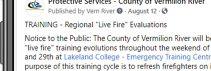
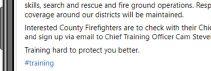




seminate the message to the reader without overshadowing the message with improper tone, off-putting language or anything that could be perceived as unprofessional. The page represents the service, and it, like the service, is always under scrutiny.
Informative posts are best described as those that highlight the working environment crews are responding to. Posts about structure fires, motor vehicle collisions and noteworthy events fall under this category. The public wants to know why lights and sirens screamed by their house, and they will hunt that information down online in order to satisfy their curiosity. Being the source of that information will make the page popular, while also being able to debunk any misinformation and allow the designated person to control the message, which could be very important in high-risk scenarios like train derailments or large mass casualty events.
Educational postings can include some components of a response, such as a kitchen fire being used as a good example of how to prevent a stove fire, however, standalone messaging has its place. Often an educational post ties in with the themes promoted by the fire service. Fire Prevention Week is a fine example of a good starting point for a “media blitz”, and smoke alarm testing when the clocks change is an old standby. Posting an educational message allows a fire service to bring an issue to the forefront, provide tips on how to mitigate it, and stir up awareness of an important safety topic. In a changing society, this is often the best way to introduce a topic to the public







before building on it.
Engaging the public is a by-product of the first two posting criteria, but more can be done to highlight the service and further the reach of a particular cause. Of importance to fire departments are the three issues mentioned in the beginning of this article, summarized as recruiting, budgets and public awareness. Community engagement serves to showcase the work crews do outside of regular responses, or that work which is above the call of duty. These are the “feel good stories” that are often downplayed by firefighters or overlooked by traditional media outlets. Firefighters are traditionally community minded individuals; they don’t shy away from hard work and they do whatever is necessary to get things done. Advertising that work is a key piece to ensuring a captivating page. School events, parades, boot drives, all show the community how vested the fire service is in the places they serve. Use that to raise the profile of the department.
Now that posting criteria has been established, the next step involves the boring part, but be forewarned, failure to adhere to this step will result in posts being overlooked or downright passed by. That step is formatting. Yep, the dull paperwork monster rears its ugly head. A poorly written post, with bad spacing and misspelled words is guaranteed to be forgotten. The public doesn’t share things they have to explain, and they certainly, rarely, share post that make them look foolish. Careless use of wording will, not only sink a post, but
it’ll also open the comment section up to lots of corrections, which will devalue the message of the original note and bring criticism to the page. After all, isn’t the purpose of using social media platforms to highlight the service, not undermine it? Here are some formatting tips: Create a simple title for the post. If it’s a fire call, that’s how it’s labelled. Follow it with a brief description of the event, not too much information (privacy rules), and always add a photo to garner interest. Keep the post short and to the point, no one reads lengthy posts. As a general rule, keep it under 200 words. Hashtags are okay at the end and linking to a company website or media outlet for “more information” is acceptable. A good post has a clear start and end line. Another key factor is the addition of photos and videos to a post. This will draw the interest of the scroller and enhance the likelihood of it being shared, thus generating interest, likes and followers. This increases the reach of the page and allows a fire service to spread their message out to the public. Ideally, the increased attention may generate potential recruits (especially if a post ends with a suggestion to the reader to consider joining) and bring awareness to the valuable work the service does to such people as councillors, administration and most importantly, rate payers. A common comment when a social media platform is well run is, “I didn’t know that the fire department was as busy as it is” or “I can’t believe how much work is involved in being a firefighter”. Those are statements that prove the page is working, that the message is being spread. A good photo, or video, really helps the public “see” what the post is giving context too. A piece of advice: Always depict a firefighter working or a vehicle in action, avoid posting anything controversial, and certainly shy away from posting firefighters without proper gear, doing something not in line with their training or acting in an unprofessional manner. Crews on-scene should be encouraged to capture photos if able and submit them for review to the designated person. That way photos can be reviewed, cropped, or edited prior to posting. Remember, a good sense of humour is important on the internet but be careful on how it is delivered and when. Solid photos and videos explain more than words ever could, so ensuring they represent the service is something to always keep in the forefront.
Once all that has been complete, it’s time for the post to be published. This is where the hard part begins. Every post should be monitored for comments, direct messages or anything that may require interaction between the page and a subscriber. Sometimes, traditional media may contact the page administrator to further a story or get more details. That’s a good thing. Being able to respond to those messages in a suitable time frame reinforces how important the page is to the department, and that customer service is paramount to the page.
Social media is a double-edged sword and requires skilled administrators to ensure the purpose of the page remains on track and the message is delivered. A well-run page will bring in recruits, raise awareness amongst the public and shine a well-deserved spotlight on our firefighters.
Kirk Hughes is the director of Protective Services and the fire chief for the County of Vermilion River in Alberta, Canada. Kirk previously served in the Royal Canadian Mounted Police as well as several fire services across Ontario, Manitoba, the NWT and Alberta. His Facebook page is can be found at Protective Services – County of Vermilion River.



BY MARK VAN DER FEYST
One of the basic fire ground operations that is completed at every structure fire is a search. The search is where we address the life safety priority on the fire scene for the occupants of the structure. Within the search operation, we have a primary and secondary search that is to be completed before we can declare an “all clear” for the entire structure.
The primary search is going to be conducted first with the secondary search being done to follow up the primary search. As basic as this may sound and as simple as it may seem for understanding, it is good to differentiate between the two so that the operation for each is carried out as required.
The primary search is an organized search but with the focus being on key areas where occupants will be found commonly when trying to escape. It is a quick search racing against time – time of the fire growing in size and the time available for the occupants to survive being exposed to the toxic effects of the smoke and unburned particles of combustion. The quicker they are found, the quicker they will be removed from the environment and have access to medical attention. The secondary search is a much slower search where time is not a factor. This type of search is looking at every spot in the building to ensure that no one was missed during the primary search.
Our focus is going to be on the primary search and more importantly on the floor of the structure. The floor is where we are going to find our occupants with the exception of the bed (including bunk beds) and bathtub. The common locations of where we are going to find our occupants in a structure fire will be at the fire location, exit points such as at the window, doors, hallway, stairs, and based on time of day, in their beds.
With knowing these common locations, when an occupant succumbs to the effects of the products of combustion, they are going to fall on the floor – this is where we are going to find them the majority of the time. So, in light if this, we need to cater the search to always focus on the floor for the search firefighter. The lead firefighter will focus on building orientation and leading the search on.
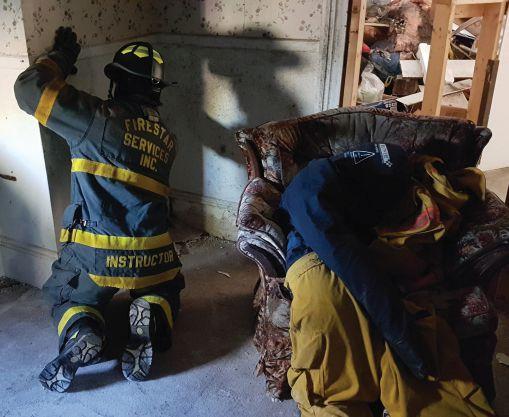
In Photo 1, we see an example of the common search conducted by some firefighters – the wall patter. The lead firefighter as mentioned needs to maintain building orientation and to do this will need to have one hand on the wall with the other hand on the haligan to lead. The one hand on the wall will be sweeping the wall high and low. The search firefighter will be searching




PULL THE PIN AND TOSS IT IN





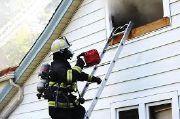







off the lead firefighter and will need to focus on the floor. Photo 1 shows how a search team can waste their time by feeling up the wall instead of focusing on the floor – the wall is not where we are going to locate occupants.
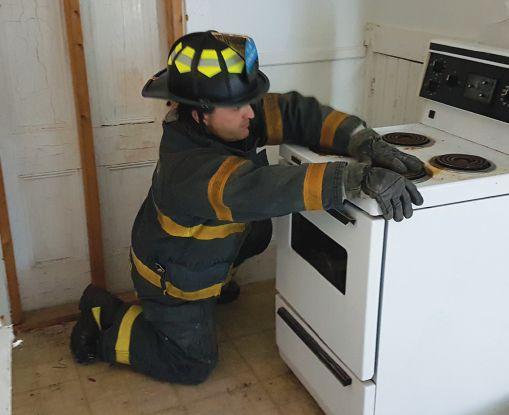
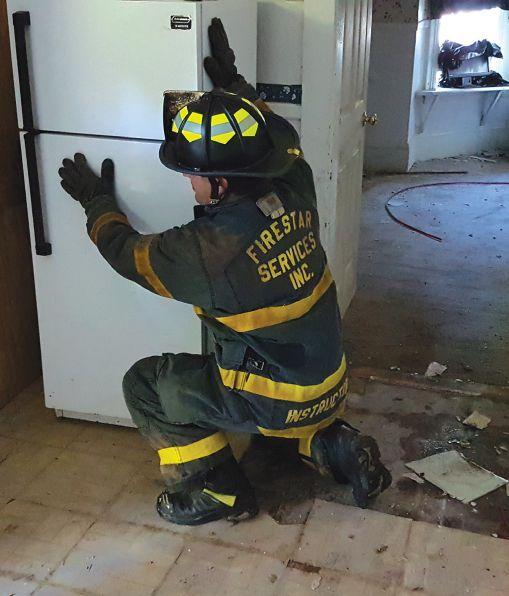
In Photo 2 we see another example of a common search mistake – searching on top of furniture and/or appliances. Many firefighters when they encounter an appliance or a piece of furniture like a table or side table, they feel the need to search the top of it. As mentioned previously, we are fighting against time when doing a primary search and taking the time to search or sweep the top of the table or the stove is a waste of time. It is not just a sweep that occurs usually, but rather a patting and feeling around on top of the appliance and furniture. Much time is wasted by “feeling” or “patting” the tops of appliances and tables. The occupants inside the structure are not going to be on top of the stove or table, they are going to be on the floor.
Photo 3 shows another example of a common search mistake – searching in and around appliances and furniture. In this syndrome, the search firefighter takes the time to search behind the appliance or piece of furniture like a sofa, the sides of the appliance or furniture where it rests against a wall and in the case of the fridge, search up it to the top. Searching around the appliance on the floor area in front of it is where we want to focus – it is on the floor area that we will locate the occupant. As mentioned in the previous point, much time is wasted searching behind – occupants will not be located behind a fridge or a sofa unless they are put there on purpose, and this would constitute a crime scene.
The only time that a search firefighter will search up a piece of furniture is when they are in a bedroom and feel the legs of a bunk bed or when in the bedroom, feel no bed present. This should clue in the search firefighter that there is a bunk bed and that needs to be swept on top to ensure no one is present. The same is to be done with a normal bed or sofa couch – sweep the top in one pass to ensure no one is present. Do not take to much time to “pat” the top of the bed or sofa.
To help curtail these practices and to develop the proper practice of focusing on the floor, training is what is needed. Practice on a regular basis is what will help to build the muscle memory to focus on the floor. Any access to an acquired structure or a
fixed facility will work – just make sure to transform it into a real search environment with realistic furnishings and items on the floor like carpet or clothes on the floor.

Mark van der Feyst has been in the fire service since 1999 and is currently a firefighter with the FGFD. He is an international instructor teaching in Canada, the United States, FDIC and India. He is a local level suppression instructor for the Pennsylvania State Fire Academy and the lead author of Fire Engineering’s Residential Fire Rescue book and other DVDs. He can be contacted at Mark@FireStarTraining.com.
•Reliable performance
•Designed for durability
•Clean and seamless dispatch
•Soft and safe nozzle release
•Easy reconnect




BY LAURA KING NFPA Public-Education Rep Canada
f you’re a chief, deputy, fire prevention officer, or fire and life safety educator, chances are you’ve jumped (or been pushed) onto the CRR bandwagon.
Community risk reduction is the fire-service equivalent of TikTok – everyone’s doing it but few excel at it, and even fewer use it to its full potential.
Some Canadian fire departments have embraced CRR to the extent that the fire prevention and public education division is now called the CRR division. Which is great, but only if those departments have changed their strategies and tactics and are actually doing CRR rather than simply using new words for an old process.
What is CRR, how does it work, and why should your department implement community risk reduction?
There are lots of reasons, but essentially, reducing risk in your municipality is far too important and significant an undertaking for a fire department to tackle alone. The CRR process, outlined in NFPA 1300, Standard on Community Risk Assessment and Community Risk Reduction Plan Development, is a simple, collaborative, step-by-step guide to CRR. The standard is written with community partners in mind – it’s not a technical document – so everyone can work from the same set of instructions. CRR is not complex, but it’s a thorough process that is best undertaken with community partners who have expertise in areas specific to identified risks and target audiences.
CRR requires data, analysis, strategic planning, program development and implementation, communication, and evaluation – a big ask for a fire department no matter how large or sophisticated – but feasible with community partners.
In more detail, community risk reduction involves
• identifying a lead person or organization (not necessarily the fire department!)
• choosing CRR committee members
• conducting a community risk assessment to identify problems and prioritize risks
• figuring out the behaviour that causes or increases the risk (if applicable)
• determining the root cause of the behaviour, for example, removing a smoke alarm because it keeps chirping may be the result of lack of ability to read instructions
• identifying strategic partners
• establishing goals and objectives
Laura King is the NFPA’s public-education representative in Canada; she was the editor of Fire Fighting in Canada and Canadian Firefighter from 2007 to 2017. Contact Laura at lking@canada.nfpa. org. Follow her on Twitter at @LauraKingNFPA.
• creating a timeline for implementation
• evaluating risk based the 5 Es – education, enforcement, economic incentives, engineering, and emergency response
• involving community partners who can reach the target audience(s)
• identifying the assets or attributes that the partners bring to the table
• developing a strategy, programs, and messages to target and, ultimately, change the identified behaviour
• creating and implementing programs based on the 5 Es
• communicating and marketing the CRR plan
• measuring program output and success
• evaluating programs based on the results of the data
• modifying programs as risks are mitigated or new risks are identified.
In Canada, many municipalities pay significant amounts of money to have consultants undertake community risk assessments – the first and most important step in CRR – and, subsequently, master fire plans. Sometimes, the results of the CRAs make their way into master fire plans, which, in my observation, rarely mention the 5 Es, program development, partnerships, root cause, or evaluation. In my experience, master fire plans are not community risk reduction plans.
A true community risk reduction plan identifies risks, outlines a system to find out why those risks exist, and defines a process to mitigate those risk through programs based on the five Es.
NFPA defines CRR as an all-hazards approach. According to the standard, it’s “a process to identify and prioritize local risks followed by the integrated and strategic investment of resources to reduce their occurrence and impact.”
CRR is not a new concept; long before NFPA 1300 was released in 2020, CRR was outlined in NFPA 1730, 1035, and 1452.
You can find 1300 at www.nfpa.org/1300 and you can learn more about CRR at www.nfpa.org/CRR
Now, the elephant in the room. CRR requires culture change. Community risk reduction necessitates that fire departments do some serious navel gazing and ask why certain training or response activities are funded and provided. If the answer is ‘Because we’ve always done it that way,’ but there’s no data that identifies a risk to support a particular response or pub-ed program, then the organization is not employing CRR.
Under CRR, programs include goals to be achieved through the elimination of specific risks.
Ultimately, from a fire department perspective, the point of CRR is to identify and determine the services to be provided to a community based on identified risks, and to maximize resources, budgets, training, personnel and, most critically, firefighter safety.
The bandwagon is parked out front.
































































By LAURA AIKEN
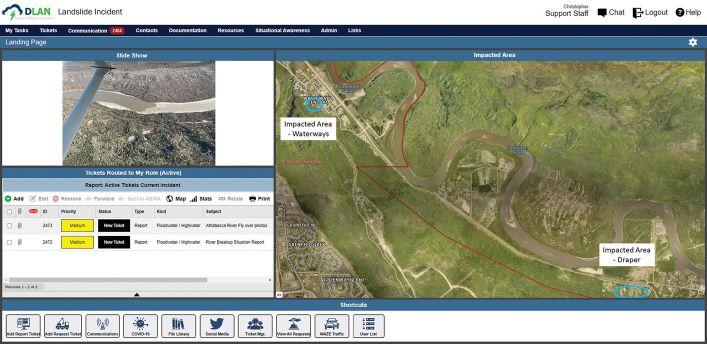
Scott Davis first became aware of the DisasterLAN (DLAN) emergency software during the Toronto 2015 Pan-Am Games. Davis, now vice-president of Community Disaster Response in Ontario, was in emergency management with Peel region public health in Ontario at the time, and was impressed by its capabilities.
Davis then moved to Kingston to be the manager for the office of emergency management and a chief officer with Kingston Fire and Rescue. He said he found the virtual disaster response system to be lacking and decided to replace it with DLAN because of his experience in Peel. Davis worked with Buffalo computer graphics and FutureShield, the sole Canadian distributor of DLAN, to tailor DLAN into the incident management system that he said Ontario’s emergency management office was aspiring to follow. The system proved itself during large-scale events.
“I can remember one incident that we had a severe snowstorm, to the point where we were shutting down snow plows. I was at the Emergency Operations Centre, but I could post the situation reports for senior leadership to be able to understand what was going on. And, in fact, the CAO participated from his home because he was snowed in,” he said. “We went through a number of different incidents that I use DisasterLAN for, including a mass vehicle collision on highway 401 involving about 26 vehicles and hazardous materials. I was able to keep track of what was going on and provide the incident management team with updates throughout the disaster. They could just log in and see the same picture, the common operating picture, that I was seeing.”
In Kingston, Davis also put the system to work in helping prepare for the last Tragically
Hip concert in 2016 by providing situational awareness to the different agencies, including police, fire, EMS and Public Works.
Davis then took on the role of director of emergency management for the Regional Municipality of Wood Buffalo in Alberta, Canada’s second largest regional government, where wildfires are a primary concern. He also held a chief officer role with the region’s emergency services. He began implementing a basic DisasterLAN system at the beginning of the COVID-19 pandemic that could help the incident management team get up and running quickly, and over the last year has expanded the system to accommodate the all-hazards response required of today’s fire service.
DisasterLAN also helped address council’s strategic objective of engaging rural municipalities and Indigenous partners in emergency management, while also considering compatibilities in communicating with provincial partners.
When it came to training, he says he adopted a “crawl, walk, run” methodology, keeping in mind that members of incident management teams and emergency management leadership don’t do emergencies
every day.
“In Alberta, under the local authority and emergency management regulation, there’s a move to change from the terminology of Emergency Operations Centre to Emergency Coordination Centre, or ECC. And I really like that because it takes away that idea that the EOC is the one that’s making the decisions and running the incident when really the EOC’s purpose is to support the incident command post. I like this ECC concept of coordination and how it relates to Disaster LAN. It’s a coordination tool to bring all the partners together.”
In practice, DLAN brings together facets such as command, operations, planning, logistics, finance, and administration so that everyone can track the movements of the operation and know their specific accountability, all while being able to make requests to each other through tickets and offer the flexibility to work through any level of incident.
“Whether it’s a designated emergency manager, or whether it’s a volunteer fire chief that does emergency management off the side of their desk, the main benefit is what we call that common operating picture.”
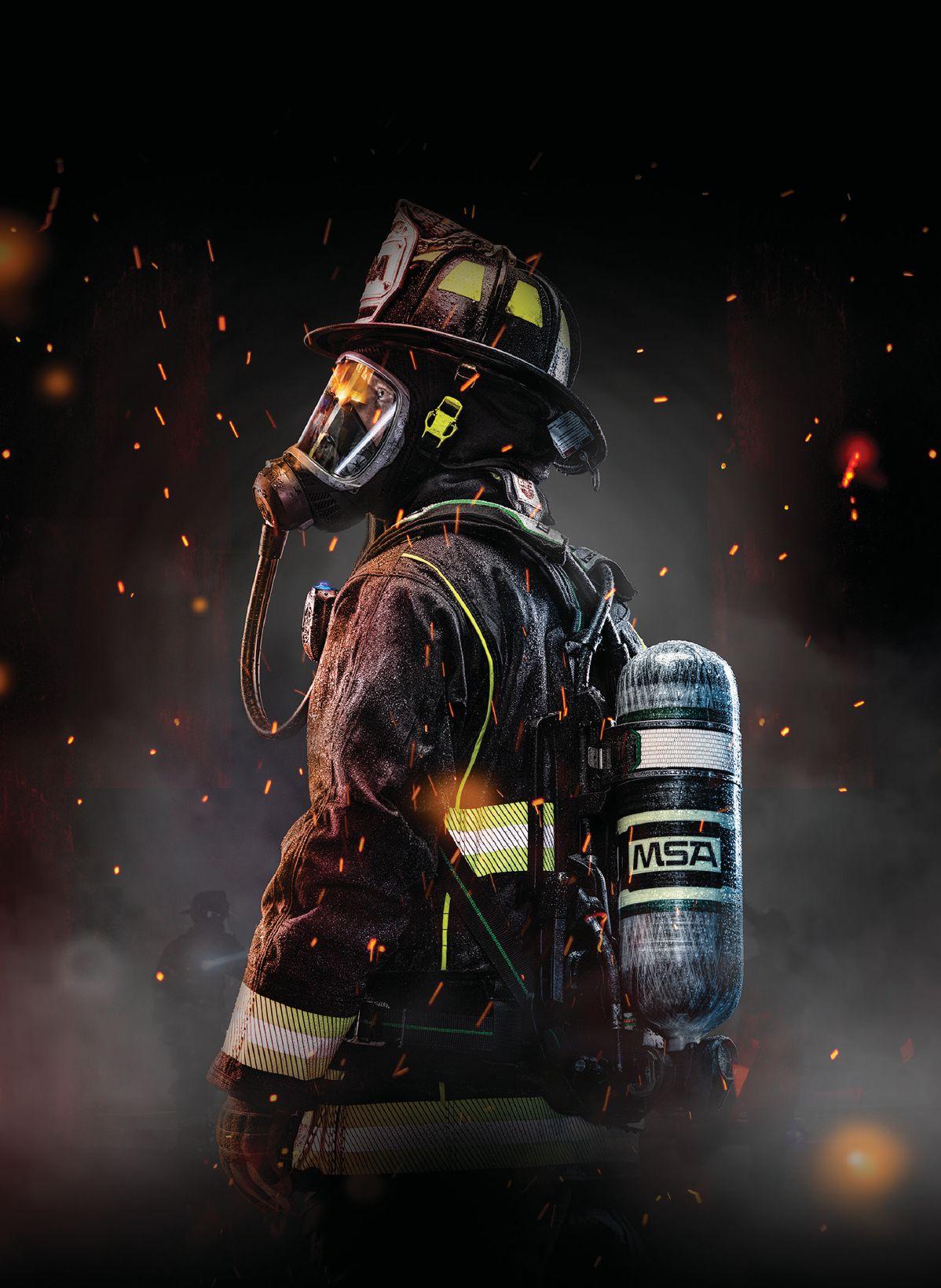
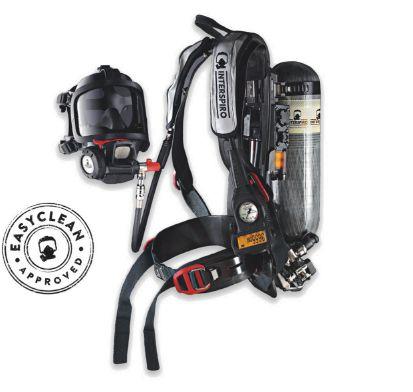
To learn more about the MSA G1 SCBA and experience it for yourself, request an in-person or virtual demo by visiting msafire.com/g1demo.

BY TINA SARYEDDINE Executive Director
Canadian Association of Fire Chiefs
any roads are paved with good intentions. We see this in the country’s building and fire code development process. The process has many positive attributes. However, these same attributes can also translate into unintended challenges. In this article, I look at a few of them as we anticipate the release of the 2020 codes and the next one in 2025.
Building and fire codes fall under provincial jurisdiction. Historically, this was delegated to the municipalities, which created enormous variation. As such, in 1937 the Federal Department of Finance asked the National Research Council to establish the foundations for what is now the Canadian Council on Building and Fire Codes. This council provided a model code that could be tailored to provincial needs. Efforts are now underway to further establish a coordinated provincial/territorial/national code development system.
Today’s codes are intended to ensure health, safety, accessibility and the protection of buildings from fire or structural damage. Recently, these codes have become objective-based, which helps industry and regulators determine the minimum performance that must be achieved. The IAFF and the CAFC have called for one of the objectives in the code to include firefighter safety. The rationale is that a building can be safe until it is compromised, at which time first responders will need to enter.
A firefighter safety objective would ensure that the building is designed to be ready for emergency, in other words, that first responders can save life and property. The 2020 codes won’t achieve a firefighter safety objective. They will make explicit that first responders are included when the code references safety of persons. This is not the clarity that is really needed. What is needed is some minimum standard of safety during emergency response. Perhaps a better term for this objective would have been a “firefighting safety” objective as the safety of the firefighter is surrounded by many other issues involving the public and property.
involving these new materials and construction types without anyone having checked to ensure that fire departments have the information, training, equipment and capacity that is necessary. Unfortunately, no one is required to check if there is capacity to respond to emergencies involving code innovations.
On the positive side, however, another great attribute of the codes process is that it is evidence informed. This means that it should be less subject to undue influence by special interest groups since research is required to advance a code change. In other words, you have to “prove your point” in order to make it. You can’t just pay your way through.
The problem of course is that while you can’t use funds to buy a code change, you can use funds to generate the research you need to make your case. Organizations that do not have this capacity, like fire departments, are at a severe disadvantage. This is one of the reasons that the CAFC has called on the Codes Commission to rethink its process.
Consider that the Codes Commission has representatives from many industries that stand to benefit from their code proposals. By contrast the first responder community has no market benefit from the
What is needed is some minimum standard of safety during emergency response.
materials introduced. It doesn’t benefit by lower costs or higher profits. It simply must respond to whatever is the standard of the day.
There is another problem that comes from not having a firefighting safety objective in the code. Without a firefighter safety objective in the code, it is possible that multiple code changes will bring multiple levels of innovation. Innovation is a wonderful thing. However, it has to be introduced responsibly. Imagine several industries introducing multiple innovations and the fire sector left to respond to emergencies
Tina Saryeddine, PhD, MHA, CHE, is the executive director of the Canadian Association of Fire Chiefs where she works with the CAFC’s Building Codes Committee. The CAFC’s Building Codes Committee will be welcoming new members in 2022. Visit www.cafc.ca for more details.
The question is, therefore, should the fire sector be required to submit code changes that have the same level of research as a product that an industry member wishes to bring to market? Should the fire sectors votes have no more weight than any other industry member? Importantly, should the Codes Commission require a full analysis on the capacity of the fire sector to respond in the case of an emergency using the innovation?
Fortunately, the codes process is beginning to open up to these issues. Recently, the Canadian Home Builders Association expressed concerns that there was not sufficient consideration of the system impacts of new Emergency Efficiency clauses. An appeals process was leveraged for the first time to look at this issue. We’d like to see this type of consideration to system issues for the other changes such as Encapsulated Mass Timber construction, which is expected to be in the 2020 codes, and the Mass Timber Construction expected in 2025.
Check out Fire Fighting in Canada’s user-friendly Buyers Guide to search for a wide variety of companies serving Canada’s fire departments.









Consideration of individual and household factors is critical to reducing First Nation fire risk, research shows
By LEN GARIS AND MANDY DESAUTELS
TOP Four provinces had notably higher percentages of highrisk areas and numbers of First Nations people at risk: Alberta (12 per cent, 39,685 people), Manitoba (7.69 per cent, 33,720 people), Quebec (7.32 per cent, 37,025 people) and Saskatchewan (5.19 per cent, 38,395 people)
Increasing evidence is highlighting the importance of closely assessing an area’s residents and their housing situation when planning fire-prevention programs for First Nation and other high-risk communities in Canada.
The study “Moving from Risk Assessment to Risk Reduction: An Analysis of Fire-related Risk Factors in First Nation/ Indian Band or Tribal Council Areas across Canada,” by the University of the Fraser Valley (UFV) in British Columbia, identifies nine individual and household-level variables that contribute to fire risk, associated injury, and death in First Nations communities
across Canada.
The August 2020 study by Spencer Huesken, RuoYu Xiao, Charles Jennings, and Martha Dow demonstrated a relationship between fire risk and variables such as housing condition, how many people live in a home and for how long, whether occupants rent or own, their age and employment status, and whether they are lone parents. The study determined that 166,740 Indigenous people across the country were living in areas with high fire risk.
“This is important research, given the lack of on-reserve fire data that exists and the well-documented heightened risk of
















fire-related injuries and death among Indigenous people in Canada,” said Blaine Wiggins, executive director for the Aboriginal Firefighters Association of Canada (AFAC), which represents regional Indigenous emergency and fire service organizations across the country. “The work provides potentially life-saving insights into the complex combination of factors that contribute to increased fire risk for Indigenous people.”
The research was conducted by the UFV’s Community Health and Social Innovation Hub to help AFAC develop evidence-based approaches to residential fire risk reduction in First Nation on-reserve communities across the country.
The disproportionately higher risk of fire death and injury for Indigenous people has been documented in Canada for many years, including research in 2007 by the Canada Mortgage and Housing Corporation and, more recently, a 2021 Statistics Canada study (reported in Fire Fighting in Canada in June 2021) that showed Indigenous people in Canada are five times more likely to die from a fire than the general population. The risk increases to 10 times if individuals live on reserve and 17 times if they are Inuit.
Seeking to clarify the contributing factors for this higher risk, the UFV study used data from Statistics Canada’s 2016 Census Aboriginal Community Portraits – which represents 624 First Nation/Indian Band or Tribal Council areas with almost 660,000 Indigenous residents across Canada – along with earlier fire risk reduction research that included a 2012 Journal of Safety Research article on the impact of the City of Surrey, B.C.’s HomeSafe fire-prevention program in high-risk neighbourhoods.
In their 2012 journal article “Reduced frequency and severity of residential fires following delivery of fire prevention education by on-duty fire fighters,” authors Joseph Clare, Len Garis, Darryl Plecas and Charles Jennings showed that the Surrey neighbourhoods with the highest fire risk had proportionately more residents under age six, residents aged 65 and over, short-term occupants (people who move frequently), unemployed people, and lone-parent families.
To these factors, AFAC added four housing-related variables that have been found to be related to higher fire risk and fire-related injury and death: households requiring major repairs, crowding (more than one person per room), high-occupancy (five or more people), and rental households.
After these nine variables were applied to the Census data for First Nation/Indian Band or Tribal Council areas, the raw values for each factor were converted into standardized scores that were used to assess each area’s level of risk. A geospatial mapping process was then used to create maps for each province identifying at-risk populations and areas.
The analysis found that across Canada, 166,740 Indigenous people live in high-risk First Nation/Indian Band or Tribal Council areas with at least seven of the nine contributing risk factors. Of these, 148,825 – 89 per cent – were centralized in four provinces: Alberta, Manitoba, Quebec, and Saskatchewan. Other general findings include:
• Across the country, 3.37 per cent of First Nation/Indian Band or Tribal Council areas were high risk (seven or more factors), with results varying widely province to province.
• Four provinces had notably higher percentages of high-risk areas and numbers of people at risk: Alberta (12 per cent, 39,685 peo-
ple), Manitoba (7.69 per cent, 33,720 people), Quebec (7.32 per cent, 37,025 people) and Saskatchewan (5.19 per cent, 38,395 people).
• Ontario, British Columbia, and Nova Scotia each had only one area with seven or more risk factors. This equated to 6,595 people in Nova Scotia, 5,320 in Ontario and 6,000 in B.C.
• In Ontario, 0.8 per cent of First Nation/Indian Band or Tribal Council areas were high risk (5,320 people) while in B.C., 0.52 per cent were high risk (6,000 people). No high-risk areas were identified in Northwest Territories, New Brunswick, Newfoundland and Labrador, Prince Edward Island, the Yukon and Nunavut.
Observations from provincial or territory breakdowns demonstrate the broad diversity in conditions and risk factors. For example, the age 65-plus risk factor appeared in only 14 communities across Canada; of these, 11 were in B.C. Factors involving rental households, lone parents and unemployed individuals also tended to reflect local conditions; rental housing was flagged in the Northwest Territories, Nova Scotia, New Brunswick, and B.C.; lone parent households in Nova Scotia; and unemployment in New Brunswick, Newfoundland, and Labrador. However, housing risk factors related to major repairs needed, high occupancy and crowding were present to some degree across the country, and particularly in Alberta, Manitoba, Quebec, and Saskatchewan.
It should be noted that only Indigenous communities included in the 2016 census were part of the analysis. Fourteen communities were not enumerated (four in Quebec, eight in Ontario, one in Alberta and one in B.C.) and the census subdivisions omitted some additional B.C. areas that were not affiliated with a Tribal Council and therefore did not have the necessary community-level data.
Even so, the findings point to potential priority areas in communities for further fire-prevention investigation and initiatives, as well as the need for a customized approach that reflects local conditions. As well, by exposing the state of housing in First Nation communities, the research bolsters the National Collaborating Centre for Aboriginal Health’s call for action to address the “unsuitable, substandard and overcrowded state of the vast majority of Indigenous homes” in Canada in its 2017 fact sheet Housing as a social determinant of First Nations, Inuit, and Métis Health.
“The analysis has provided a framework for AFAC’s work to reduce fire risk at First Nations communities and develop more nuanced and effective interventions through an evidence-based approach,” Wiggins said. “This study has also set the stage for the continued and deeper research into fire risk factors that will allow us to enhance our efforts to protect Indigenous populations, which now include the development of approximately 80 programs and services.”
The report also has broad implications for community fire risk reduction in Canada, given that the identified risk factors have proven to be generally related to high fire risk in vulnerable communities and populations.
“Moving from Risk Assessment to Risk Reduction: An Analysis of Fire-related Risk Factors in First Nation/Indian Band or Tribal Council Areas across Canada,” can be viewed at www.indigenousfiresafety.ca/moving-from-risk-assessment-to-risk-reduction. For additional information, contact Len Garis at Len.Garis@indigenousfiresafety.ca.


BY RICHARD HOY President Catax Canada
rom Canada’s west coast to the prairies, this year has been a particularly devastating year for wildfires. Public attitudes towards the environment have shifted dramatically and more people, have come to expect that wildfires will become a regular occurrence.
Our firefighters have always been an important part of our community and some businesses are looking at new ways to keep them better protected. Creating a role for private companies is crucial to ensuring that Canada is at the forefront of modern technology and we are seeing both new and augmented systems that can help firefighters to detect and track fires, and also to identify the fires that could cause the most damage.
Public-private partnerships are made even more attractive when you look at the various tax incentives available to companies driving innovation in Canada. Scientific Research & Experimental Development tax credits — or ‘SR&ED’ for short — are there for the taking. The reality, though, is that too often companies are developing technology but are allowing these incentives to go unclaimed.
SR&ED is a tax incentive administered by the Canada Revenue Agency (CRA). It is claimed by professionals in a wide range of industries and the benefits can sometimes be worth hundreds of thousands of dollars.
The type of work encountered by fire fighting professionals that could be eligible is varied. It ranges from advances in fire fighting agents, such as gels, wetting agents and protein foam to fire sensors, detection and also forced ventilation techniques in building structures.
as tackling wildfires.
• Are there scientific or technological uncertainties in products you are looking to create?
• Every aspect of fire fighting is difficult but would other people deem the solution or product you’re creating to be obvious? If not, it could well qualify for SR&ED.
At its core, firefighters around the world have to be innovative, because it is an area which has to adapt to the challenges that face the modern world. The recently developed Canadian invention — the Multi-Purpose Device that allows firefighters to change from lowering to raising without changing hardware in a rope system — is a great example of a piece of technology that could be eligible for tax incentives.
When tackling wildfires, there have been drones developed that collect infrared fire data and images to show the extent of the problem and which areas need particular attention from those trying to control the blaze.
Figuring out how much these tax incentives are worth will depend on the structure of your organization, as well as the province in which you are based. ‘‘ ’’
Not all R&D qualifies for SR&ED tax incentives. Depending on the size of your organization or the budget of your innovation project, it may be worth speaking to a specialist tax advisor before making a claim. The good news is that SR&ED can be claimed for up to 18 months after the tax year in which the work took place.
If you are an enterprise working to drive innovation in fire fighting and perhaps developing products or equipment used in the home or by firefighters themselves, these are the things to consider if you think your work might quality:
• Assess whether or not the work you are doing will develop technical knowledge in the industry or work towards a common goal, such
Richard Hoy is President of specialist tax consultancy Catax Canada, based in Vancouver. You can reach him at Richard.Hoy@catax.com.
Figuring out how much these tax incentives are worth will depend on the structure of your organization, as well as the province in which you are based. In general though, you can claim up to 41.5 per cent of expenses directly attributed to innovation. This figure is made up of a combination of federal and provincial innovation credits.
The incentive for a private business is received as a cash payment and, for publicly-traded companies, it is a credit to be offset against outstanding taxes. Most expenses linked to the R&D you may be carrying out will attract tax incentives. This extends to materials, salaries, and other staff expenses, as well as third party contractor services.
Ultimately, SR&ED is one of the most generous tax incentives for innovation in the world and it is certainly justified that those working in some of the most challenging circumstances are given equipment that reflects the innovative technology that Canada produces.
By KAITLIN SECORD
Current interagency communication techniques are like a step stool in your tool kit, infrequently used, but important and helpful when the time comes. While there are workarounds to it, like standing on your toes, and stretching to reach, nothing quite beats the real thing.
Equipment and strategies of interagency communication are currently “only used in moments of need, rather than a system that is ingrained into the public safety space,” said Michael Akpata, applied solutions manager at Mutualink and former first responder. It should be “something that people automatically expect it to be there, as opposed to being surprised when it is.”
Interagency communication and interoperability go hand in hand. In regards to public safety, interagency communication is the ability of two or more agencies to understand each other’s communications, and interoperability is the technological ability to exchange information.
“You cannot talk about one without the other.” Akpata said. “While technology has made it easier than using a PA system, there is a barrier in lingo and terminology.”
As a way to fill the void in communication systems, Calgary’s assistant deputy chief, Scott Cowan, encourages municipalities and agencies to participate in training sessions.
During the Canadian Association
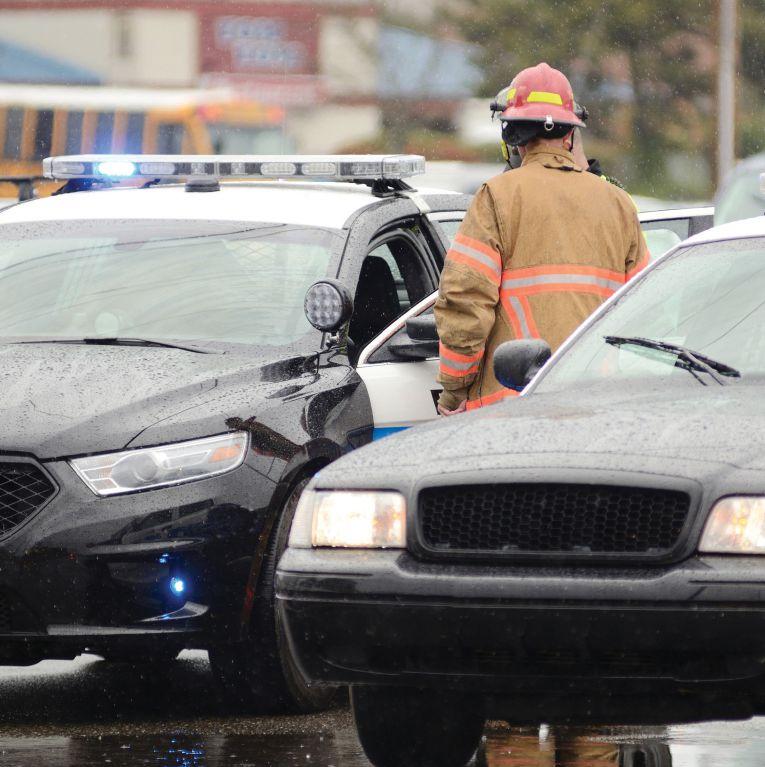
Technology
of Fire Chiefs’ Fire-Rescue 2021 conference, Cowan gave a presentation on how Calgary’s first responders have joined together to create a course that encourages learning how to work together effectively.
By creating a training course for incident command staff from each agency – fire, police, EMS and 911 — the departments were able to better understand and learn from each other’s perspectives.
Using multi-agency exercises and referencing actual incidents helped Calgary’s
first responders to gauge three key principles when it comes to interoperability; co-location, coordination and communication/ common operating picture.
Co-location refers to getting commanders from each agency to a “single, safe location near the scene” where operations and planning can be hosted. Having a “home-base” established lets people know where to turn when new information is received or required and allows for coordination among all agencies on scene.
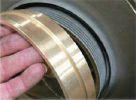
OUR REVERSE FLOW WEAR RINGS
Restrict recirculation and improve overall efficiency and longevity of the wear ring.
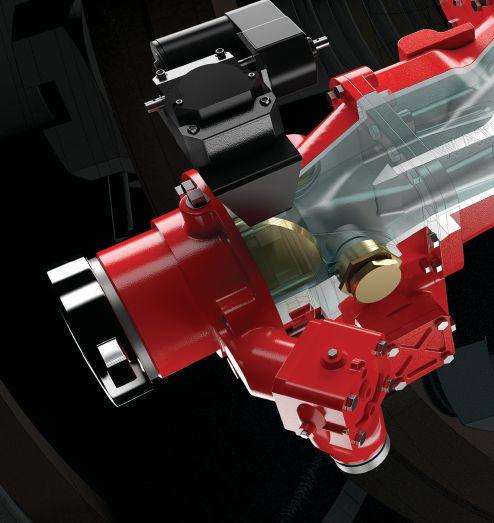
SEPARABLE IMPELLER SHAFT
Allows the pump transmission to be separated from the pump and removed from the apparatus. The pump remains mounted in the apparatus and can be easily repaired minimizing downtime.
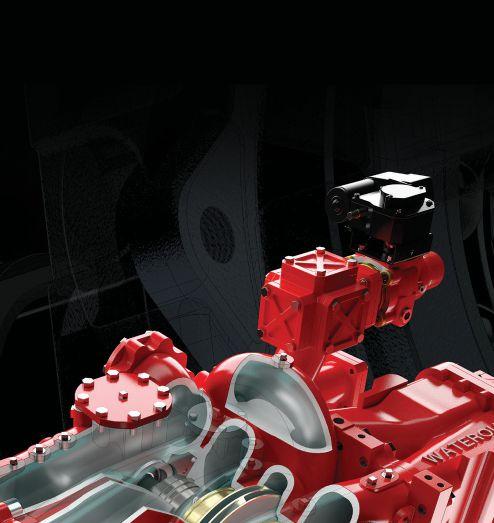
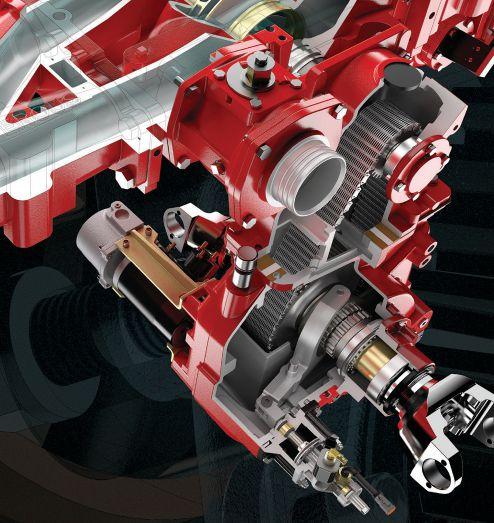
CHAIN DRIVE
TRANSMISSION – Transfers power more efficiently than gear-driven transmissions by having more points of contact between the chain and rotating sprockets.
“Silent” chain drive makes our transmission the quietest in the industry.

FLAME-PLATED IMPELLER

PERFORMANCE – Bronze impellers are flame-plated with tungsten carbide, creating an ultra-hard surface resistant to wear.





In the largest cities across the world, Waterous pumps never fall short. Cast and made in America, our pumps feature industry exclusive innovations. These innovations, along with the Waterous University library of support, help keep your pump running strong and your fire team serving the community.




Coordination and communication go hand-in-hand – understanding each agency’s objectives and associated risks will help to prevent miscommunication and encourage shared situational awareness. Sharing standard best practices can also help each agency to function within their own parameters without interfering with others.
Radio interoperability is another substantial obstacle for emergency service workers. As a key part of communications systems, this workaround could be considered one of the most important.
In his presentation, Cowan suggests obtaining support from an EOC during large multi-agency responses. This can help teams to coordinate with on-scene incident commanders while preventing further distraction, which in turn lets first responders do their job. Emergency management agencies are useful in establishing these centres, which can aid in things like managing and sharing information and establishing response priorities when resources are overwhelmed or in short supply.
Interagency radio channels are a method in practice that work. While there is room for improvement, these channels allow responding teams to communicate, for the most part. Jurisdictional and regional hiccups are common, with some agencies unable to tune into particular channels.
Joint risk assessment is another primary component when practicing interoperability. Cowan describes the five key components to the process as situational awareness, hazard/ risk assessment (established through coordination and communication), hazard control, decision point and evaluate.
This process is key to ensuring that all agencies can see the risks of an incident through the lenses of all the other response agencies. It is only through understanding the risk from each other’s perspectives that responders can control these hazards and work towards incident mitigation.
“Many emergency responders use past experience to categorize situations initially.” Cowan said. Having the experiences of EMS, fire, and police come together in one place is an extremely powerful way to build joint situational awareness. It helps to decipher if there is a clear baseline of what needs to be communicated, and to who.
By actively practicing joint situational
awareness, joint risk assessment and weekly multi-agency radio testing, Calgary’s first responders “are more successful at working as a team” Cowan said.
Akpata suggests using debriefs after real incidents as a way to work on interagency communication as well.
Fire Chief John McKearney, Canadian Association of Fire Chiefs president and director of fire services in Whistler, B.C., stresses the importance of interagency communication during interprovincial events and large-scale events like 9/11.
“Being able to communicate effectively before, during and even after events was, and still is crucial for everyone.” McKearney said. “First responders gaining
data communications network” that would allow emergency responders and public safety personnel to communicate not only during emergency situations, but also during day-to-day operations.
Overall takeaways from the report were that a dedicated network, such as PSBN, is not the most affordable cost structure for an interagency communications platform. Even while maximizing existing infrastructure, PSBN would need to leverage more resources in coverage, sustainability and use of spectrum.
These have long been the issues associated with establishing a dedicated network for first responders and public safety personnel.
By creating a training course for incident command staff from each agency – fire, police, EMS and 911 — the departments were able to better understand and learn from each other’s perspectives.
intel to things like terrorist threats allow us to be of real service in situations such as 9/11.”
With frustration and miscommunication being the last things wanted on scene, some agencies have turned to using smart devices as a workaround. Different radio channels and compatibilities can make it challenging to keep track of who knows what information. Ever changing phone numbers and job status, due to promotions, retirements and relocations, “can make it even more of a headache to track people down,” Akpata said
In an already chaotic situation, organizations are turning to open source chat apps. Everyone involved in and on the scene are added to a chat and information is shared here.
“The problem with these is that you are now becoming the monetized thing, you are trusting a security system that was not designed for this sort of confidential use. Leaks happen all the time, the worstcase scenario would be information ending up on social media because of an insecure platform.” said Akpata.
In 2019, Public Safety Canada published a progress report for the Public Safety Broadband Network, PSBN. The PSBN is a “secure, high-speed wireless
The Canadian Radio-television and Telecommunications Commission is set to launch a new way for the public to communicate with first responders. NextGeneration 9-1-1 is intended to expand the details provided to responders about an emergency. Whether a picture of the fire they are reporting or providing medical details, NG 9-1-1 is set to be rolled out over the coming years.
“For Canadian cities with large numbers of people whose first language is not English or French, Next-Generation 9-1-1 will help them help themselves and first responders.” Akpata said.
By March 1, 2022, all telecommunications providers will be updating their networks in anticipation for NG 9-1-1. “There’s an emphasis on working as a team, and the more information first responders receive beforehand, the more they’ll be able to coordinate before even arriving on the scene.”
Whether NG 9-1-1, whiteboard session or workarounds, “first responders need support in communication.” Akpata said, “and it needs to be a team effort, if I adopt the technology and you don’t, I can’t talk to you. I may be able to talk to my people more effectively, but we still have the same problem.”
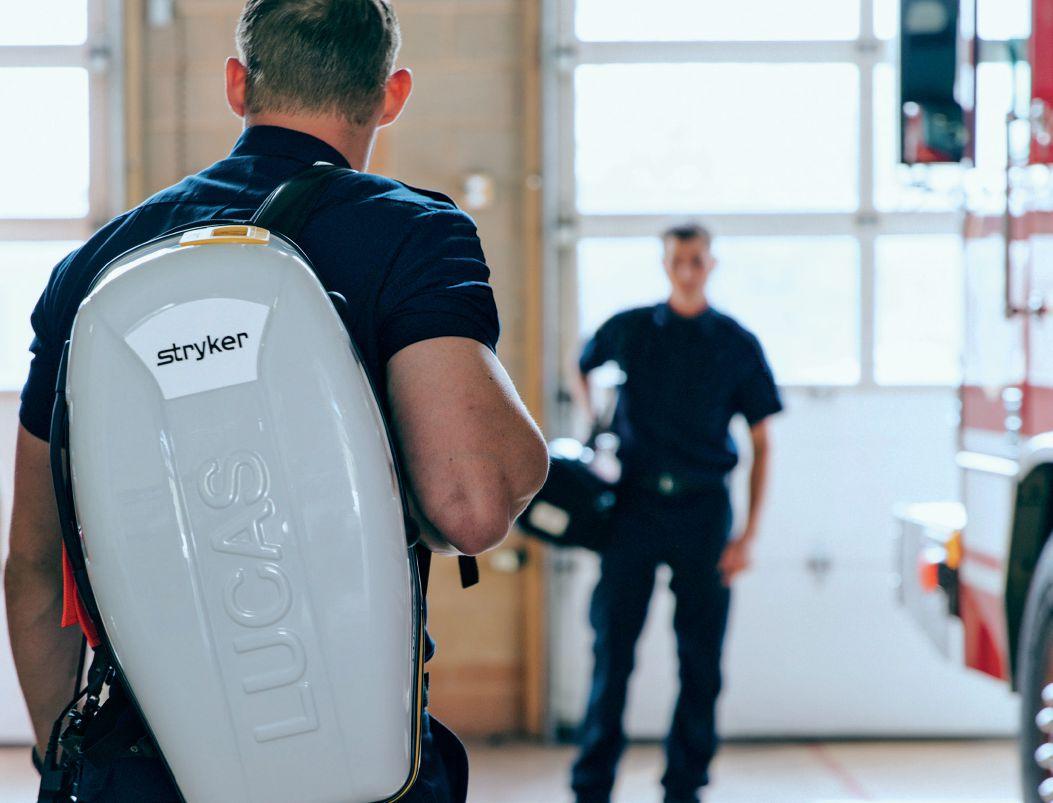

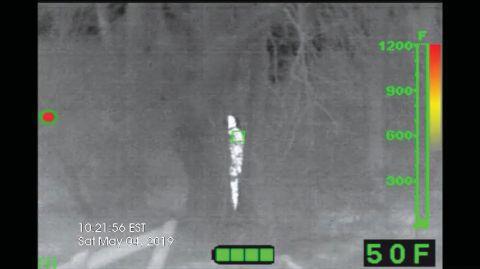
imagers
By MANFRED KIHN
TOP A thermal imager can help aid agencies beyond fire, such as law enforcement and ground search and rescue organizations looking for lost victims.
RIGHT Thermal imager in action for a ground search and rescue operation.
For years, the fire services have been using thermal imaging (TI) to search for victims within structure fires that they have responded to. On some occasions, they are called upon to aid in the search for victims lost in the outdoors. But as the writer of this article, I see the potential for this technology to be used much more than just the fire services.
‘Thermal Imaging Multi-Agency Expansion and Utilization’ is quite the title, but if you ask me, there are other agencies out there that could greatly benefit from the use of TI technology. I am referring to agencies such as law enforcement and ground
search and rescue (GSAR) organizations.
Just to quickly recap, TI is the detection of infrared radiation, which we call “heat”, and it will show up on the imager display as white, cooler objects will show up as black and everything else in the display screen will show up as gray, this is what we call black, white and grey scale.
Many GSAR organizations realize the value of using a TI during their search operations and have either received grants or raised funds to purchase their own TI equipment, although others may still need to rely on loaners from their local fire department. While handheld TIs are frequently used on the ground searches, they can also be used in




airborne search operations if the aircraft does not have any mounted FLIR (Forward Looking Infrared) equipment.
When handheld thermal imagers are used in an aircraft, it is important for searchers to remember that a TI cannot see through the plexiglass windows, so make sure the window will slide open. In addition, many other of the same principles we in the fire service know about thermal imaging technologies will apply in GSAR applications, such as the various emissivity of items you may see through a thermal imager during a search. For instance, GSAR organizations using a TI during a search must understand that items other than humans may hold and emit heat at various temperatures. During searches, rocks or trees heated by the sun may emit heat that could resemble items or people. In fact, the images shown on a TI screen are showing temperature relative to other surrounding items in the scene. It’s important to understand how to interpret the items viewed on the TI screen, just as we interpret the visuals in the fire service during overhaul.
Unfortunately, it happens every year for a missing hiker, hunter, an avid outdoor enthusiast even a small child or a confused elderly person goes missing in an area. The search efforts are led by local law enforcement, which provides their own resources of manpower, K9 units and air support. If the situation becomes critical due to weather or medical conditions additional resources are sometimes called upon such as GSAR teams and even members from the local community not to mention firefighters and paramedics.
Ground searches take time and are exhaustive depending on the terrain such as steep and rocky hills, heavy foliage and bodies of water which will now require additional resources from dive teams.
Using TI as another “tool in the box” can greatly aid search team members by allowing them to cover more ground at a faster pace and much safer for them especially in treacherous terrain.
Using TI as another “tool in the box” can greatly aid search team members by allowing them to cover more ground at a faster pace and much safer for them especially in treacherous terrain. Any TI used can detect from three feet to infinity but realistically up to three to four football fields in length depending on the surrounding background and temperature. We have four seasons: spring, summer, fall and winter, and with each of these gives us a change in temperature. As I said earlier, a TI detects heat, so on a fall day with cooler temperatures you would detect a person who is wandering around and generating more heat at a greater distance. But on a hot sunny day and a victim resting at the base of a tree may not be seen from as far away. Elevation works best if that is possible to work from as you can cover a greater area of coverage from a single standpoint location. Remember, you are looking for only one thing, a heat signature, which could be a hand or a foot if you are not lucky to see the entire victim due to location.
A simple trick that I learned a long time ago is that when you find something of interest do not take your eyes off of it. If you do you will have to take the time to look for it again…keep your eyes focused on the target, then direct foot resources to that location guiding them with simple directions until they are on site. Remember that the terrain may be extremely rough and they may not be able to see the victim due to ground cover, but you still can! The same idea goes for airborne TI searches as they direct ground resources, same thought process.
Some quick tips to remember:
1. Look for anything that doesn’t belong.
2. Continuously scan up and down and sideways.
3. Use elevation if you can.
4. Thermal imagers are not limited. They can be used in daytime and nighttime conditions.
5. If you are not sure, check it out!
Like any piece of equipment used, training and practice are key to its success. The next time a ground search and rescue is required for a missing person in your area, I hope that the Authority Having Jurisdiction (AHJ) will consider the use of thermal imaging technology as another “tool in the box” and a valued resource.
Until next time stay safe and train often.
Manfred Kihn is a 19-year veteran of the fire service, having served as an ambulance officer, emergency services specialist, firefighter, captain, and fire chief. He has been a member of Bullard’s Emergency Responder team since 2005 and is the company’s fire training specialist for thermal imaging technology. He is certified through the Law Enforcement Thermographers’ Association (LETA) as a thermal imaging instructor and is a recipient of the Ontario Medal for Firefighters Bravery. If you have questions about thermal imaging, you can e-mail him at manfred_kihn@bullard.com.
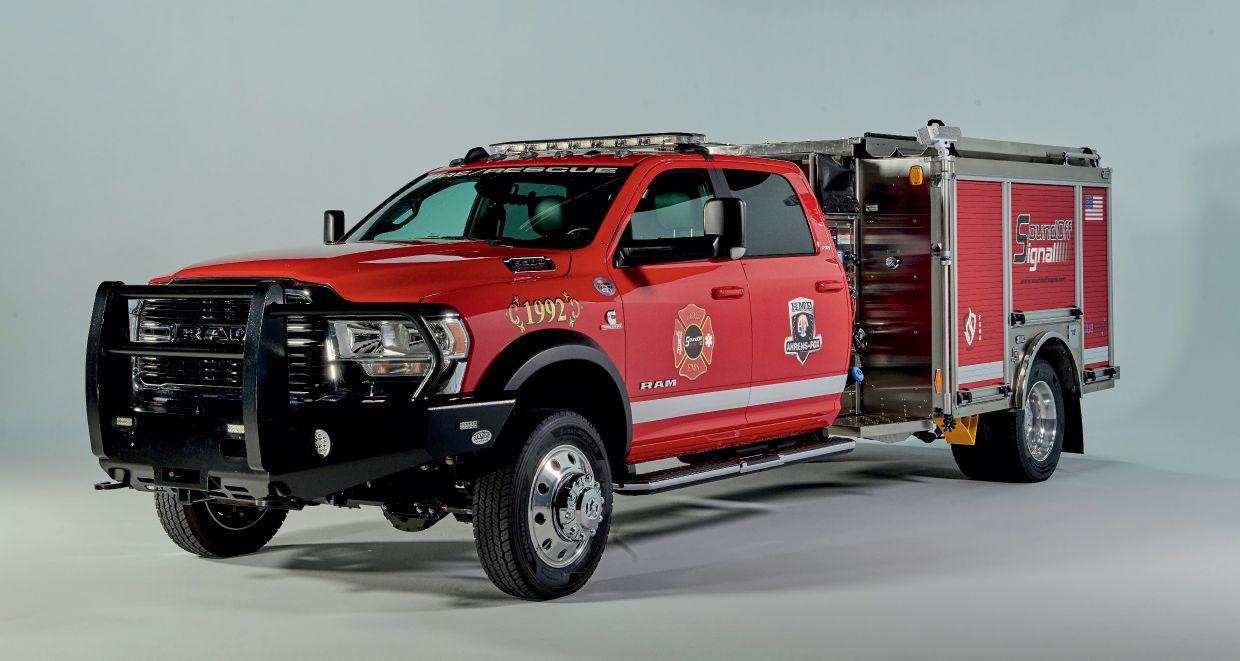
Innovative lighting and control systems that stand up to heat, force and pressure.
To learn more about our products and experience them for yourself, scan the QR code to talk to our sales team in your area.

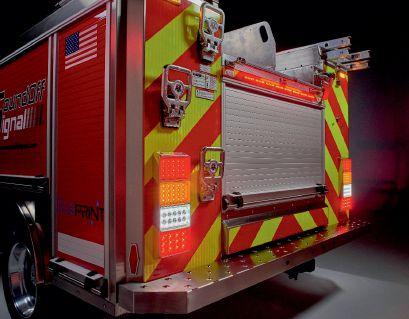
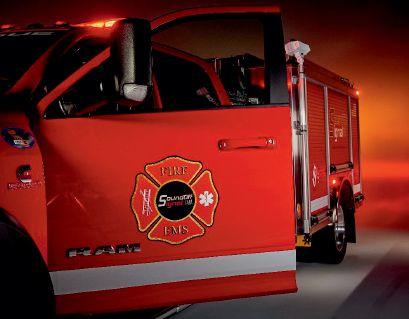








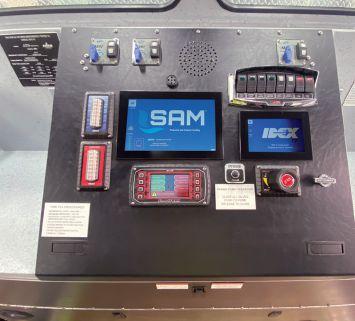
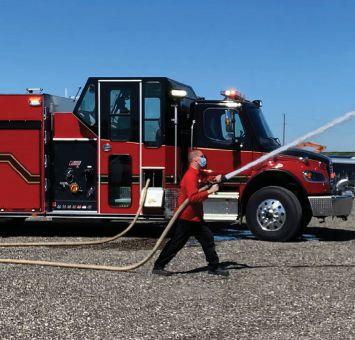
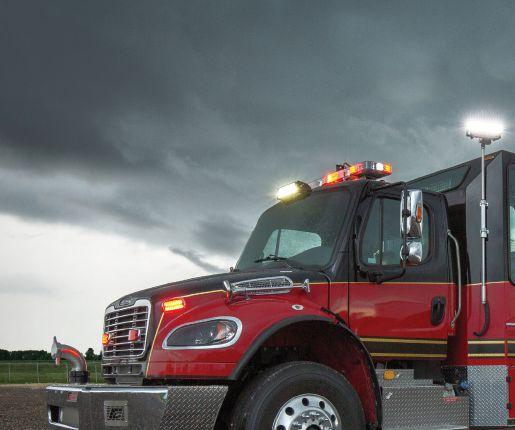

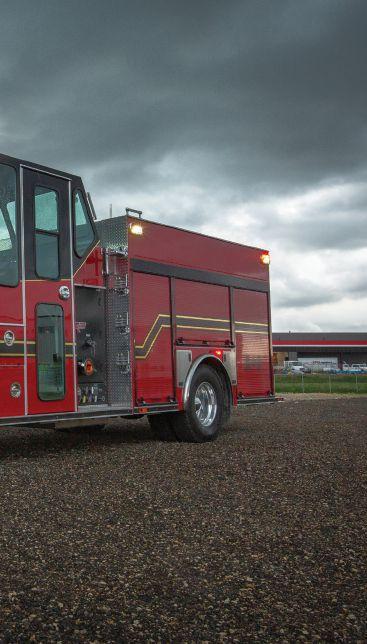




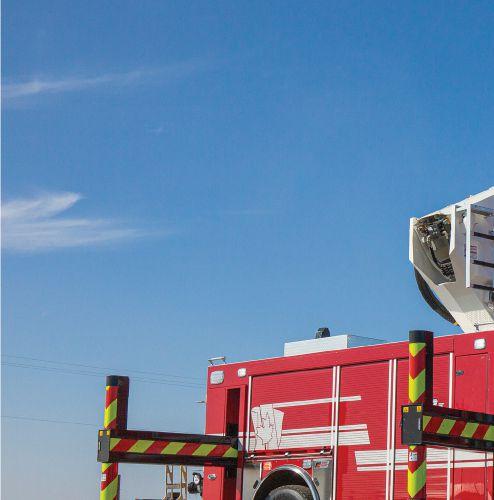

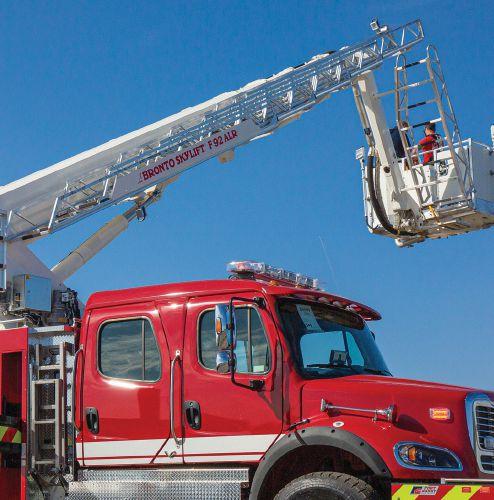


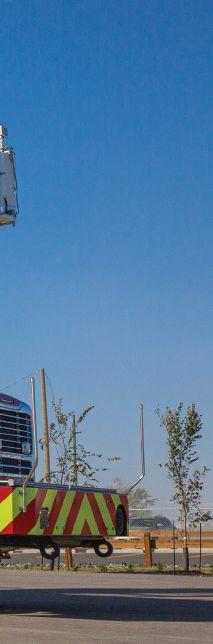

By JONATHAN GRIFFIN
As wildfire fronts advance through landscapes or communities on the ground, they also attack from above, launching volleys of glowing embers into the air. Also known as firebrands, these specks of burning debris can glide for up to 40 kilometers (approximately 24 miles) before landing and can cause up to 90 per cent of home and business fires during wildfires.
Guidance on fending off ember attacks is sparse, largely because so little is known about embers’ behavior. But a new instrument, dubbed an emberometer, could offer a glimpse at their true nature. In a paper published in Experiments in Fluids, researchers at the National Institute of Standards and Technology (NIST) showcase the tool’s ability to characterize the size and trajectory of embers, which may provide insights into their level of threat. With NIST’s new tool, fire engineers may be better equipped to protect buildings from embers and could produce data to support cost-effective guidance in building codes.
The dangerous conditions in which embers arise and their seemingly random nature have made measuring them an uphill battle. One go-to approach has been to collect embers from water-filled pans, which allows researchers to count and size up embers after a fire has gone out, but it paints far from a complete picture of what happens during ember exposures, where structures are swarmed by flaming debris.
Because embers act so erratically, measuring how their behavior changes from one second to the next while they are still air-
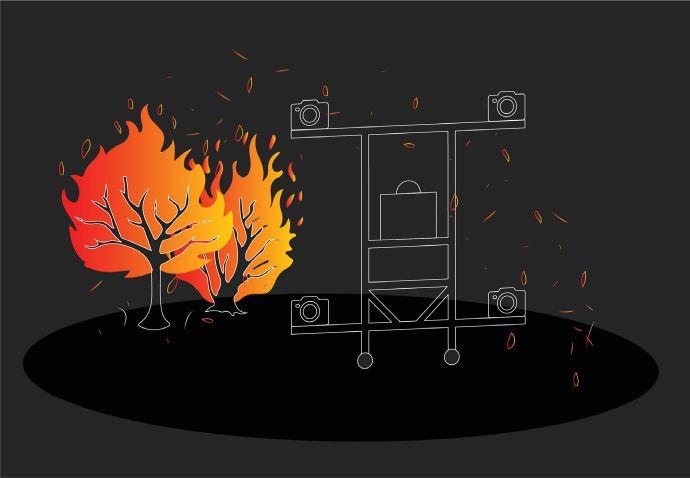
The details of how wildfire-spreading embers behave have largely been shrouded in mystery, so guidance on protecting buildings from them is thin. But NIST’s new emberometer, which can track and size up the elusive particles, may shed some much needed light on the issue and help lay the foundation for cost-effective guidelines in building codes.
borne is crucial. NIST combustion specialist Nicolas Bouvet and his colleagues built the new instrument to do just that.
The emberometer is composed of a metal stand, shaped like a capital H on its side, with point-and-shoot digital cameras attached to the end of each of its four arms. The researchers designed it to be operated from more than a kilometer away and embedded its electronic components in fireproof materials to make the system deployable in fiery conditions.
Through a method known as particle tracking velocimetry, the emberometer uses
data from its four perspectives to trace the path of brightly lit objects (such as embers) as they pass through a 2-cubic-meter (more than 70-cubic-foot) box-shaped space in front of the device. The system also captures the silhouettes of each ember from four different angles and merges the perspectives to digitally reconstruct their 3D shapes.
The emberometer made short work of the initial experiments, some of which tested the device’s ability to track burning wooden sticks fastened to the end of a rotating metal arm, and to estimate the sizes of small plastic spheres the researchers
dropped in front of the cameras, Bouvet said. With the simple tests behind them, the researchers’ next move was to find out if the device could put numbers to real embers.
In NIST’s National Fire Research Laboratory — a space where experiments involving intense flames can be carried out safely — the authors set up the emberometer downwind of a firebrand generator capable of producing showers of embers at a larger scale.
In less than a minute, the emberometer observed hundreds of embers zip by at speeds varying from tens to hundreds of centimeters per second. The tool tracked the moving particles and reproduced their forms in 3D, as before. The researchers checked the emberometer’s sizing work by collecting embers that had fallen into water-filled pans during the experiment and comparing the doused pieces of wood to their digital counterparts.
“The emberometer compares very well to what is directly being collected in the water pans,” said Bouvet. “I’m very confident for the tracking, and for the sizing we’re satisfied.”
Because of the amount and complexity of data captured by the emberometer, com-
paring different ember exposures could be a challenge, even if the data is accurate. The researchers’ solution is a visual aid called a firebrand rose, which summarizes the traits of an exposure by packaging information on the number and orientation of embers through space and time into one graph.
The potential benefits of the emberometer are multifold. Engineers could add depth to the shallow pool of data on real ember exposures by taking the tool outdoors and also use it to ensure that embers produced in the lab match field measurements.
Ultimately, ember exposures more true to life could lead to better research into ember-proof materials, potentially leading to better protection for structures during wildfires.
More outdoor research could make mitigation efforts more cost-effective as well, if researchers using emberometers tie ember threat levels to environmental conditions, such as the intensity of drought or wind. That data could inform new building codes and standards that offer fire safety professionals guidance on selecting a degree of protection appropriate for the surrounding conditions.
“We want to be able to look at the fuel
Turnout gear is designed to protect, but it should also be equipped with the features and maneuverability firefighters need to run, jump, bend, lift and perform when seconds count.
Lakeland B2™ Turnout Gear offers all of the features you want, at a price you’ll love, including:
• Ergonomic Pleated Back and Shoulders
• LazerMax™ Trim for High Visibility
• Easy Grip™ DRD
• Set-In Pleated Ergonomically Curved Sleeves
• 7” Black Kevlar® Thumb hole Wristers
type, topography and weather, and have an idea of how serious an ember exposure might be for a structure,” Bouvet said. “Building codes can use that information to advise you on how to harden your structure. If you’re somewhere in the middle of a grass field, it’s not going to be the same as if you’re surrounded by tall trees.”
The NIST team’s next step is to give its system a touch of artificial intelligence. Because the device only has four eyes, it cannot always make out every detail of an object’s shape. But with machine learning, the emberometer could fill in blind spots, improving its size reconstruction measurements.
Soon after, the researchers plan to testdrive the emberometer in the great outdoors, where it can face embers born out of real — albeit controlled — wildland fires. By learning lessons in the field, the team could further tighten its design, readying the emberometer for widespread use.
Full paper: N. Bouvet, E.D. Link and S.A. Fink. A new approach to characterize firebrand showers using advanced 3D imaging techniques. Experiments in Fluids. Published online Aug. 11, 2021. DOI: 10.1007/s00348-021-03277-6
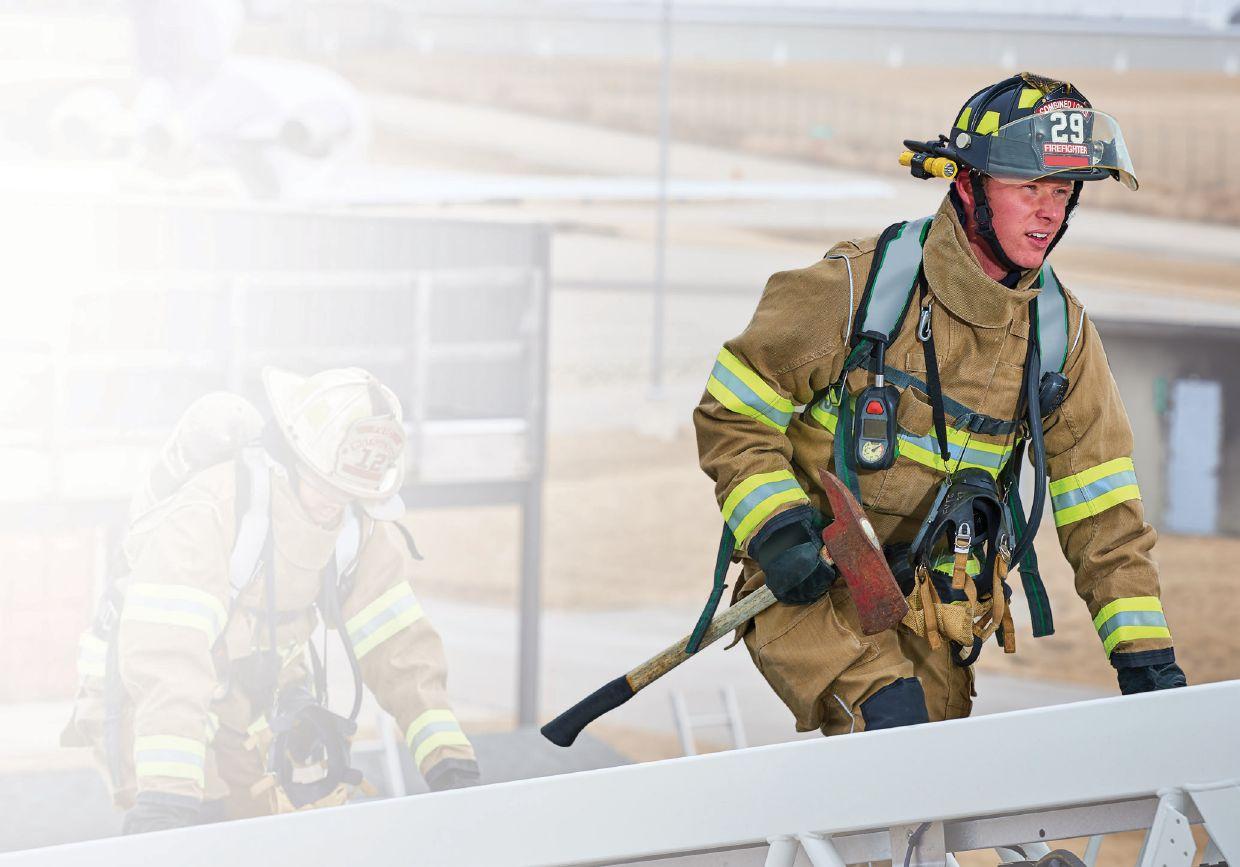



Coordinating Ventilation: Supporting Extinguishment and Survivability
$79.50 Item # 1593704377
Ventilation can make or break the outcome of a fire. Ensuring its success requires a knowledge of how it works and what precautions must be taken.errors and conflicts, and produce a greater quality standard.

Working with Giants
$99.50 Item # 1593704346

John Norman, author of the best-selling Fire Officer’s Handbook of Tactics and Fire Department Special Operations, brings his own remarkable story to life in this new highly anticipated memoir. This book is a celebration of the best in public service, the sacrifices and triumphs, and the people who were there.
Drawn by Fire 2022 Calendar from Paul Combs
$27.00 Item # 1593704421
Paul Combs is a classically trained artist, awardwinning illustrator, and firefighter/EMT. This unlikely combination has made Paul one of the most compelling and distinctive illustrators today. A perennial favourite, order your 2022 calendar today!






FROM NFPA
NFPA 20
Installation of Stationary Fire Pumps for Fire Protection
$99.90 Item # 2022
The 2022 edition of NFPA 20 has been revised to clarify an array of requirements and applications, further establishing best practices to ensure state-of-the-art fire protection. New requirements added in the 2022 edition address a number of recent advancements in the field of stationary pumps for fire protection.
NFPA 72

$161.35 Item # 7222




National Fire Alarm and Signaling Code
Expanded and updated for 2022, NFPA 72 reflects the latest technologies, applications, and research on the use and installation of fire alarm and emergency communications systems. It presents the most advanced provisions ever developed for the application, installation, location, performance, and inspection, testing, and maintenance (ITM) of fire alarm and emergency communications systems, including mass notification systems (MNS).
NFPA 1140
Standard for Wildland Fire Protection
$99.90 Item # 114022
NFPA 1140 is a consolidation of four previous NFPA standards (1051, 1141, 1143, 1144). These documents have been integrated into a single wildland fire safety standard in an effort to increase usability, reduce errors and conflicts, and produce a greater quality standard.




By ED BROUWER
This issue’s topic is ‘venting’. Now, don’t set this aside because you think you know this subject already. I hope to get you to see the need to understand this topic both from a fire behaviour and a human behaviour perspective.
In a nutshell, ventilation is the planned, coordinated and systematic removal of pressure, heat, gases and smoke. This can occur as a natural result during a fire, or it can be produced by mechanical means such as from positive pressure (PPV fans) or negative pressure (ejectors/extractors). When other types of ventilation are unavailable, hydraulic ventilation is a viable option.
Simply stated, ventilation is the movement of air from high pressure to lower pressure.
There are three reasons we perform ventilation: life safety, incident stabilization and property conservation. Let’s look at why.
Life safety: Improve the chances for fire victim survival, improve interior visibility, and improve firefighter efficiency.
Incident stabilization: Reduce interior heat levels, decrease rate of fire spread and reduce potential for extreme fire behaviour.
Property conservation: Reduce smoke damage.
There are two types of ventilation, horizontal and vertical. These can both be extremely dangerous if not performed properly. To be successful in venting, there are several subjects your members will need to understand, including fire behaviour, fire streams, and ground ladders, just to name a few.
A key and often overlooked point is that you need to know where the seat of the fire is before making an opening in the fire compartment.
On a personal note, it concerns me that paid-on-call/volunteer departments practice ‘opening the roof’. Mechanical vertical ventilation is a dangerous operation. With the low number of structure fires per year that would require cutting holes in the roof (one or two per decade), why are we putting firefighters at such an extreme risk? In my 31 years as a firefighter, I never had to cut a hole in the roof to ventilate a burning structure.
Don’t take my word for it, there are many “close call” videos to prove my point at how dangerous this operation is. And should you want to see what happens when ventilation goes wrong, just type in “ventilation goes wrong” in your search bar.
Let’s also talk a little about backdrafts, or smoke explosions. These may happen if the fire becomes severely limited in oxygen. The goal of venting in those cases is to remove as much heat and smoke from the structure as possible before introducing any new oxygen.
If you think it is worth the risk to make a rescue attempt, please consider, in a fire where the conditions are right for a backdraft to occur, there is absolutely no chance of finding anyone alive in the building.
The biggest danger, by far, is that of a backdraft and so the risk must be eliminated before firefighters can move on to other fire ground priorities. Consider as well that the main building may be ventilated, but there could be individual compartments in that building primed for a backdraft or smoke explosion. As a sidenote, a vehicle fire may also end up being a backdraft situation.
In a backdraft, a fire burning in a confined area consumes all the oxygen, and flames are no longer visible. As temperatures increase, the gases expand, and pressure builds. Any opening that allows oxygen to enter the space will result in the explosion of the pressurized gases.
When our kids were very young and we asked them about where they’d like to go for dinner, they usually said, “Anywhere but that ABC place.” When asked why, the answer was always, “Dad, ABC — Already Been Chewed — eww!” Training is kind of like that, instructors often do all the work (chewing) for the members. Why not divide into small groups and just ask questions? I have had great success in dividing our firefighters into three or four groups and assigning a different topic to each group, asking them to put together a 10-minute lesson on their topic. Try questions like: What is positive ventilation? What are the signs of flashover? Your members may very well surprise you.
Fire behaviour can also help us understand human behaviour. I’m sure you see the importance of proper venting as it pertains to fire behavior, but have you ever considered the role and importance of venting when it pertains to human behaviour? We are witnessing unprecedented polarization in our country, resulting in extreme divisions, angry public demonstrations, and violent acts of racism. This pandemic has changed our country. It feels like we are on the verge of civil unrest.
I believe that much of the negative reaction is due to the fact that people feel like they have no voice. Could it be we have thousands of people walking in “pre-backdraft” mind sets? Like a fire starving for oxygen, people are desperate to be heard. Many are fed up with hearing about COVID. Social media and the daily news are overwhelmingly consumed with the pandemic, vaccines, mandates, passports, etc. The danger, of course, is when people are that primed to explode, it only takes a wrong look, a misunderstood word, or going the wrong way down an aisle in Wal-Mart to detonate. (My cart was once rammed by an irate elderly man because I was going the wrong way).
We have no control over the whole nation, but you have some control of your firehouse. Please be sensitive to each of your members. Each one is important; be sure they know that. Each member’s voice should be valued whether they agree with you or not. Safe venting can save your fire department from exploding or imploding. Many first responders are near their breaking point. Make every effort to give them opportunities to rehab mentally. Provide opportunities for your members to ask questions or express their concerns and fears. And, NO, you do not have to have an answer. Just provide a safe venting opportunity. Positive ventilation versus negative ventilation.
Another key point is that you don’t need to “vent” the whole department at once. Sometimes safe venting can be done one to one over a coffee. Do not over complicate it.
I’m not trying to lay more on you, but we are talking trainer to trainer in this article so let me first say to you: Please look after yourself and your family. Secondly, it is no secret, but sometimes your role as a trainer is more like a mediator between the firefighters on the floor and those in the administrative roles. Please do not go it alone. Get some help from outside your department. I have been in that position more than once and hated every minute of it. In one situation I was way too inexperienced and too slow (or prideful) at getting outside help. There were clear divisions between members, and because voices were silenced, polarization grew until a wrong word caused that department to implode. It took years for those wounds to heal. When a firehouse implodes, it doesn’t happen overnight. Those fires have been smoldering for a long time. Thankfully the other situation ended positively, for we were able to “vent” safely and the department was the better for it.
Until next time remember to train like lives depend on it because they certainly do.
Ed Brouwer is the chief instructor for Canwest Fire in Osoyoos, B.C., retired deputy chief training officer for Greenwood Fire and Rescue, a fire warden, wildland urban interface fire-suppression instructor and ordained disaster-response chaplain. Contact aka-opa@hotmail.com.














CONTINUED FROM PAGE 6
connecting Canada’s fire service leaders with the research community.
Fire Chief Bill Boyes of the Brampton, Ont., was awarded Career Fire Chief of the Year. Brampton Fire and Emergency Services was also honoured with the Proud Practices in Equity, Diversity and Inclusion award, which recognizes practices already in effect across Canada, in an attempt to facilitate shared learning.
Fire Chief Arnold Lazare was honoured with the Volunteer Fire Chief of the Year. Serving as chief for the Kahnawàke Fire Brigade for 17 years, Lazare is also a member of the Aboriginal Fire Fighters Association of Canada, the Indigenous Fire Marshal Service, and the National Indigenous Fire Safety Council.
Day two of Fire-Rescue focused on mental health support for firefighters, the socio-economic impact of fire prevention, business strategy and wellness and incident command.
Kathryn Sinden, a professor at Lakehead University, spoke on the evidence for mental health support for firefighters during the COVID-19 pandemic and beyond. Psychologist Larry Iverson spoke to attendees about compassion fatigue.

Kris Kennett and Avril McDonald of Feel Brave carried on the conversation of mental health and wellness. They talked about their experience with suicide and loss within the New Zealand fire services.
Business strategy was the next topic of discussion. Dave Waterhouse, an acting division chief at the Montreal fire department, reported on the findings of a research study on the socio-economic impact of fire in Quebec, and Scott Ramey, a division chief in Halifax, covered using aggregate data to drive quality improvement in fire service.
The theme of working together to achieve success was prevalent throughout the final presentations of the conference. University of Toronto professor David Frost touched on how physical exercise can help to improve both your psychological and social well-being, while having your interests and choices supported by the department is crucial. Scott Cowan, assistant deputy chief in Calgary wrapped up the conference with his talk on interoperability.
Fire-Rescue 2021 was conglomeration of important topics for fire services across Canada, stimulating conversation on subjects like mental health and suicide and covering how to best serve communities through research and communication. The association said it hopes to reconvene in person in 2022.












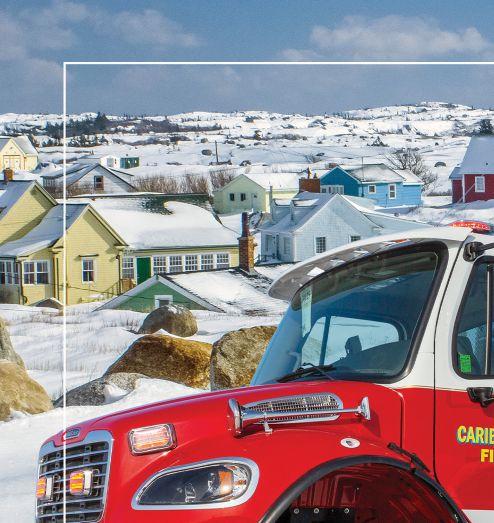
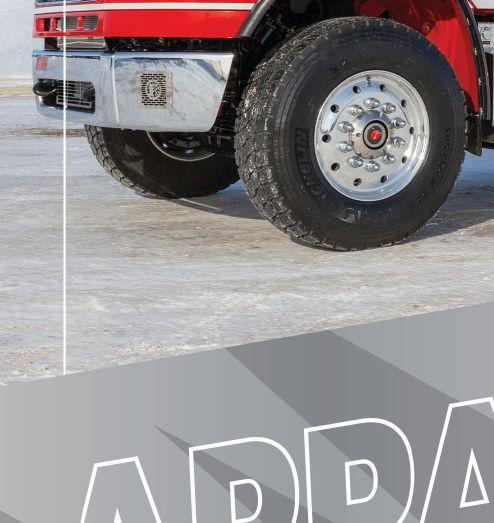
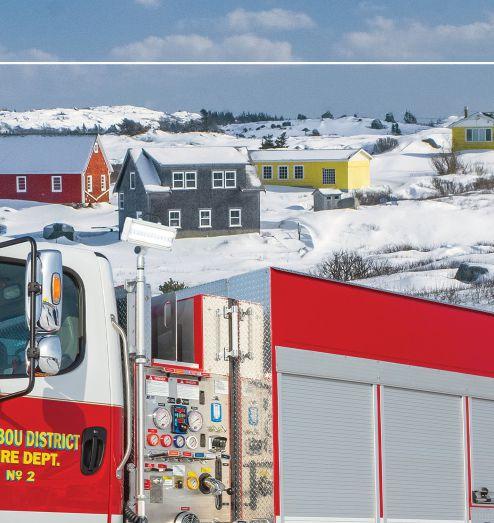


1200° DARCH FIRE INC
9-402 Harmony RD
Ayr ON N0B 1E0
Tel: 800-254-2049
Toll free: 800-254-2049
Fax: 519-622-7705
Company Email: info@1200-degrees.com Web: www.1200-degrees.com
“1200° is your full service, specialized vehicle dealership.
We have a complete line of solutions for your department from Apparatus sales, Equipment Sales to Parts and Service.
1200° offers exclusive premium brands and sets itself apart from others by offering the highest level of customer service in the industry today.
We take great pride in offering the very best care to our clients throughout the sales process and beyond. We provide expert advice during the buying process, from consultations, spec development to committee presentations and anything in between, our customers are presented with the highest quality products and our customer care is second to none.
Working with 1200° means having a single point of contact for all your departments needs.
1200° will take care of everything for our clients so they can focus on what’s important…. Helping people.”
A.J. STONE COMPANY LTD.
62 Bradwick Dr. Vaughan ON L4K 1K8
Tel: 416-785-3752
Toll free: 800-205-3473
Fax: 416-781-2827
Company Email: order@ajstone.com Web: www.ajstone.com
A.J. Stone has proudly served the needs of the First Responder Services of Ontario since 1972 by featuring quality products, knowledgeable sales team, and training support.
A.J. Stone supplies equipment from MSA, Task Force Tips, LION Protects, Paratech Rescue, FireBull, Enforcer, Genesis Rescue Systems, Streamlight, Innotex Bunker Gear, ProTech Gloves, Safe-T-System, CET and much more!
We service what we sell!

251 Queen St. S., Ste. 512 Mississauga ON L5M 1L7
Tel: 905-826-6682
Toll free: 866-735-1480
Fax: 866-511-6904
Company Email: info@airmation.ca Web: www.airmation.ca
Air Technology Solutions is dedicated to our Clients, offering updated, timely, full service Indoor Air Quality (IAQ) solutions. Air quality concerns are mitigated using a unique combination of professional indoor air quality assessment coupled with solutions. Off the shelf or customized site specific air cleaning equipment is available to resolve IAQ issues. Our technical experts review client requirements and budgetary availability. The finest appropriate air cleaning systems are provided. Air Technology Solutions is a leader in Diesel Exhaust Remediation and is the ONLY environmental tested and proven filtration system to exceed standards: NFPA, NIOSH, OSHA and ASHRAE. Building and facility managers, business owners, contractors, architects, and engineers have been working with Air Technology Solutions since 1986 to resolve IAQ needs. Employee and personnel safety and health are key issues. Breathing safe air in the workplace is of utmost importance. We provide global customized solutions to control contaminants, pollutants and odours in your facility. We look forward to servicing your requirements.
AIR VACUUM CORPORATION
PO Box 517
Dover NH 03821
Tel: 603-743-4332
Toll free: 800-540-7264
Fax: 603-743-3111
Company Email: sales@airvacuumcorporation.com Web: www.airvac911.com
Breathe Clean Air with AIRVAC 911®
Control the spread of hazardous contaminants in your station. The AIRVAC 911® Engine Exhaust Removal System protects 100% of the bay area by constantly monitoring and removing exhaust and particulate matter from your station without interfering with daily operations. No hoses, hook-ups or vehicle connections. No building modifications, no ducting and no outside exhausting. AIRVAC 911® is 100% automatic.
• Address Hot Zones within your station
• Remove off-gassing of turnout gear, hoses and parked vehicles
• Counter off-gassing of secondary pollutants
• Remove engine exhaust that re-enters the building
• Half the cost of hose systems
• Energy efficient LEED/green design
• NFPA 1500/OSHA/GSA compliant
For a free quote:
www.airvac911.com
sales@airvacuumcorporation.com
800-540-7264
ARÉO-FEU
5205, J.-Armand Bombardier
Longueuil QC J3Z 1G4
Tel: 450-651-2240
Toll free: 800-469-1963
Fax: 450-651-1970
Company Email: info@areo-feu.com
Web: http://www.areo-fire.com
Aréo-Feu – Where Equipment Matches Courage
For more than 55 years, three generations of knowledge have succeeded to make Aréo-Feu the number one reference for the supply and service of equipment in the fire industry, in public safety or in civil protection.
Our favourable purchasing power allows us to maintain an important inventory of products that have state-ofthe-art technology. Committed to building very good business relationships with our partners, we encourage the constant update and development of our team’s expertise.
Our daily goal is the complete satisfaction of our customers!
Multiple suppliers with whom we have a durable relationship for the benefit of our customers.
Official distributor of: MSA/Globe, Innotex, Rosenbauer, Protek, Elkhart Brass, Genesis Rescue Systems, Streamlight, Res-Q-Jack, Petzl, Husky, Solberg, TechTrade, Unifire, CET Fire pump, All American hose, OHD, Harrington Inc., LavXel, Kochek CO. Inc, Lakeland, Tohatsu, Waterous, ect.

M/A - 927A Goldstream Ave. Langford BC V9B 2Y2
Tel: 778.404.7385 ext.3
Company Email: chris@protectapump.com Web: www.ProtectaPump.com
BearsPaw ProtectaPump, a 100% Canadian Company focused on liquid / solids ‘Separation’ and Isolation technology. Our patented ‘BearsPaw Suction Separators’ ensure a consistent flow of clean water to both Truck* mounted (*4”, 5” & 6”) and Portable** pumps (**2”, 2.5” & 3“- built-in foot-valve) during drafting operations in challenging environments. The Fire Ceptor with ‘V-Guard’ delivers ‘pump safe’ water from natural water sources in as low as (6”8”), while placed in sand, gravel, or weeds! This phenomenal ‘suction separator’ vastly outperforms any low-level suction ‘strainer’ for protecting a pump from ingestion of solids. Note: no flotation or suspension required.
This ‘Made in Canada’ product reduces downtime, repair costs, extends pump life, increases performance flows, and reliability when needed most. With our 100% satisfaction guarantee, confidently try it with immediate benefits for the Firefighters, as they risk their lives to protect people and property.
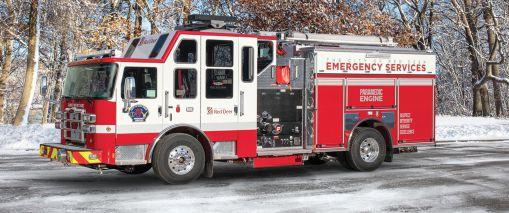
Built on a Pierce Enforcer single axle chassis and powered by a DDC DD13 505 HP engine, apparatus features include a Husky 12 foam system, Waterous 1,750 GPM pump, and the capacity to hold 600 gallons of water.
DEPARTMENT: Red Deer, Alberta
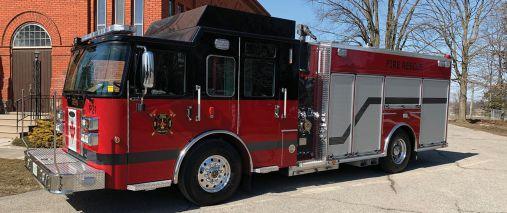
This MaxiSaber pumper is an exclusive product partnership between Pierce Manufacturing and Maxi Metal Inc. The Pierce Saber chassis is powered by a Cummins L9 450 HP engine. It features a Hale DSD150 1500 GMP pump and holds 1,000 gallons of water.
DEPARTMENT: Township of Guelph/Eramosa, Ontario
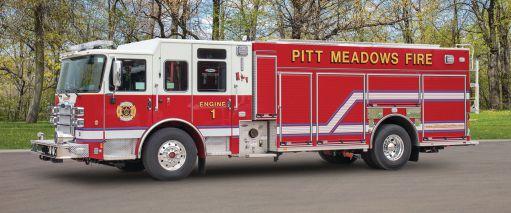
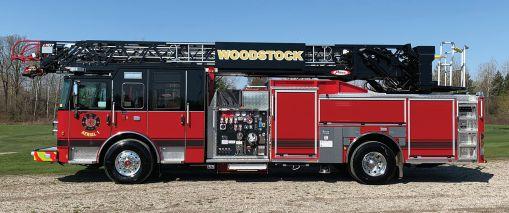
Built on a Pierce Enforcer chassis with an Oshkosh TAK-4 independent front axle, and powered by a Cummins L9 450 HP engine, the Ascendant HD Ladder has an overall reach of 107’ vertically and 100’ horizontally. Other features include a Husky 3 foam system, a Waterous 2,000 GPM pump and it holds 500 gallons of water.
DEPARTMENT: Woodstock, Ontario
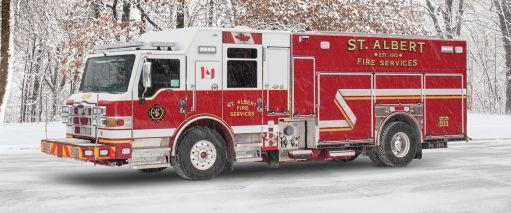
a Pierce Velocity with
pump, a Husky 12 foam system and can hold 750 gallons of water.
DEPARTMENT: St. Albert, Alberta
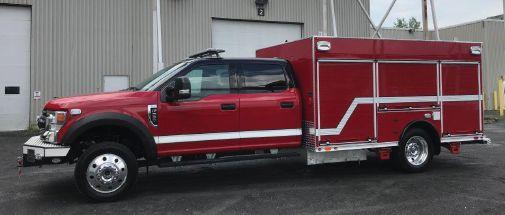
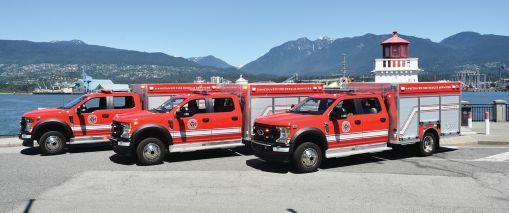
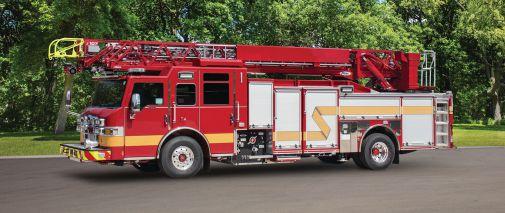
Built on a Ford F550 Super Duty XL chassis with trailer brake control, these light rescue apparatuses feature 7.3L V8 engines, 10’ non-walk-in bodies, heated gear and
and
141 Junny Road
Angier NC 27501
Tel: 416-436-4910
Company Email: mike.calderone@bulldoghose.com
Web: www.bulldoghose.com
BullDog Hose Company, a division of Puck Enterprises, is proud to be a leading fire hose manufacturer in the North America. From Hi-Combat® II, Firepower® II, Hi-Vol®, Redchfief, and Ultima(TM), our dedication has positioned us as the premier in fire hose products. The BullDog name stands for high performance, durability, safety and quality, with American-made products that are built to last.
2465 Cawthra Rd., Unit 114
Mississauga ON L5A 3P2
Tel: 905-949-2741
Toll free: 800-265-0182
Fax: 905-272-1866
Company Email: info@cdnsafety.com
Web: http://www.cdnsafety.com
We supply Industrial and Fire SCBA’s, SCBA Decon Washer, Thermal Cameras, CAF Systems, Fall Protection, Bunker Gear, Fire and Rescue and Ballistic helmets, Fire Hose, Communications Equipment, Nozzles, Fittings, Hazmat Suits, Ventilation Fans, Gas Detectors, Confined Space Rescue Equipment, Water and Ice Rescue equipment, Industrial and Municipal Safety and Lone Worker Protection systems.
CET FIRE PUMPS MFG.
75, Hector, C.P. 90
Pierreville QC J0G 1J0
Tel: 450-568-2719
Toll free: 888-844-2285
Fax: 450-568-2613
Company Email: sales@fire-pump.com
Web: www.fire-pump.com No Hydrants, No Problem!
CET Manufactures Portable Pumps, Skid Units, Brush Trucks, Glider Kits, Foam Trailers, Water Tanks, and UTV Fire Units to help you fight fire where static water sources may be your only option.
The Flow Starts Here!

301 Matheson Blvd West Mississauga ON L5R 3G3
Tel: 877-755-5302
Toll free: 877-755-5302
Company Email: info@coinamatic.com
Web: www.coinamatic.com
591 Chester Road
Delta BC V3M 6G7
Tel: 877-443-2626
Toll free: 800-665-6126
Company Email: cfeduniw@comtruck.ca, jzimmerman@comtruck.ca
Web: www.comemerg.ca
Commercial Emergency Equipment Co is Canada’s largest dealer for Pierce Manufacturing Inc, Maxi Metal, and Oshkosh Airport Products. We provide sales, parts, and service of all makes of fire trucks, and support to our customers through our nationwide branch network. Commercial Emergency Equipment Co. strives to exceed customer expectations in everything we deliver. With over 70 years in the truck equipment industry, we take pride in a proven track record of providing expert truck equipment solutions, top quality products, and first-class service to our customers.
We are a sole-source service provider with mobile EVT’S, on-call 24/7, throughout our nationwide branch network. We offer inspections, preventative maintenance, mobile pump testing, and foam system calibration, as well as comprehensive apparatus training on operation and maintenance.
We inventory an extensive stock of OEM and aftermarket parts, tools, and equipment ensuring quick delivery and reduced downtime to our customers. Our service technicians undergo continuous training and testing to ensure that the latest technology and innovation is applied to the service of your equipment. When you need prompt, honest, and reliable service, you can count on us to support you.
BC, AB, SK, MB, ON, NT, NU, YT

CSE INCENDIE ET SÉCURITÉ INC.



38 Thibault St., Box 1089
Pierreville QC J0G 1J0
Tel: 450-568-7020
Fax: 450-568-3049
Company Email: mthibault@thibaultfiretrucks.com
Web: www.thibaultfiretrucks.com
We are a Canadian based company and we manufacture a full line of fire apparatus which includes aerial ladders, pumpers, tankers, rescue units and vacuum tankers. We provide parts and other related products.
Coinamatic Commercial Laundry provides a complete range of commercial laundry equipment for your on premise laundry operations as well as cleaning cabinets for in house laundering of turn out gear. Effective cleaning and decontamination can be an important safety and cost benefit for the department. We have a complete inventory of parts for most makes and models of equipment. Coupled with our qualified service teams, Coinamatic provides end to end solutions that meet your requirements!

3842 Redman Dr. Fort Collins CO 80524
Tel: 970-297-7036
Toll free: 800-797-7974
Company Email: amys@commandlight.com
Command Light has helped departments elevate their scene lighting for more than 50 years, first with the company’s invention of its hydraulically operated fire truck light tower in the 1970s and then the advent of our electric-powered light tower in the 1990s. Today, as a leader among emergency vehicle lighting manufacturers, Command Light continues to forge the way in fire truck scene lights, adding a lineup of Traffic Flow Boards to keep roadway responders safe during an era of distracted drivers.
5651 Chemin St-Francois
St. Laurent QC H4S 1W6
Tel: 514-737-2280
Toll free: 866-737-2280
Fax: 514-737-2751
Company Email: info@cseis.com
Web: www.cseis.com
We supply Industrial and Fire, SCBA’S, SCBA Decon Washers, Gear Extractors and Dryers, Thermal Cameras, CAF Systems, Fall Protection, Bunker Gear, Fire, Rescue and Ballistic Helmets, Fire Hose, Communications Equipment, Nozzles, Fittings, Hazmat Suits, Ventilation Fans, Gas Detectors, Confined Space Rescue Equipment, High Angle Rescue Equipment, Ice and Water rescue equipment, Boots and Gloves. Everything for Fire Fighting, EMS, Law Enforcement, Industrial and Municipal Safety and Lone Worker Protection Systems.
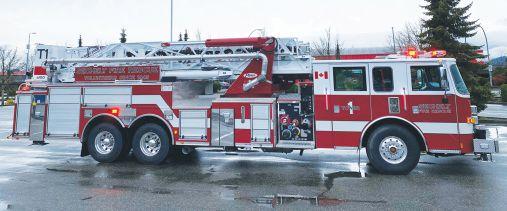
Built on a Pierce Arrow XT chassis, this 100’ Ascendant aerial tower is powered by a DDC DD13 505 HP engine. The apparatus has a 100’ vertical reach and 93’ horizontal reach. Other features include a Waterous S100 2,000 GPM pump, and the truck holds 300 gallons of water.
DEPARTMENT: Sechelt, British Columbia
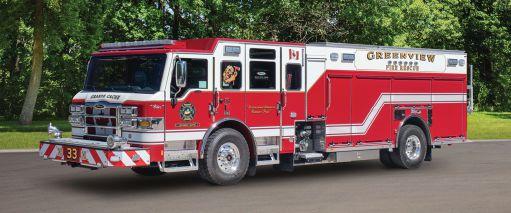
Built on a Pierce Velocity chassis and powered by a Detroit DD13 525 HP engine, this pumper features a Pierce 1,500 GPM pump, a Husky 12 foam system and holds 750 gallons of water.
DEPARTMENT: MD of Greenview/Grande Cache, Alberta
Winnipeg Paramedic Services welcomed 10 new pumpers to their fleet. Built on Pierce Enforcer with Oshkosh TA4-K chassis and powered by Cummins L9 450 HP engines, these pumpers feature Pierce Idle Reduction Technology, Hale QMAX-XS-175 1,750 GPM pumps, Husky 3 foam systems and each holds 500 gallons of water.
DEPARTMENT: Winnipeg Fire Paramedic Service, Manitoba
on a
Built on Pierce Saber chassis, and powered by a Cummins L9 450 HP engine, this MaxiSaber apparatus features a Husky 3, single agent foam system, a Hale DSD 1,500 GPM pump, and holds 1000 gallons of water and 50 gallons of foam.
DEPARTMENT: County of Grande Prairie, Alberta
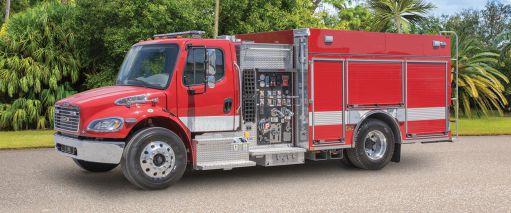
Built on a Freightliner M2-106 chassis and powered by a Cummins B6.7 360 HP engine, this BXP pumper also features a Hale 1,250 GPM pump, a Husky 3 foam system and holds 1,000 gallons of water.
DEPARTMENT: Quinte West, Ontario
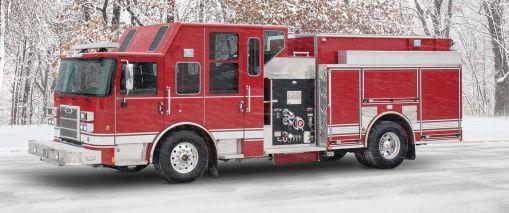
Built on a Pierce Saber TME chassis and powered by a Cummins L9 450 HP engine, features on this apparatus include a Husky 3 foam system, a Waterous 1,500 GPM pump and a water tank capacity of 1000 gallons.
DEPARTMENT: Wasaga Beach, Ontario
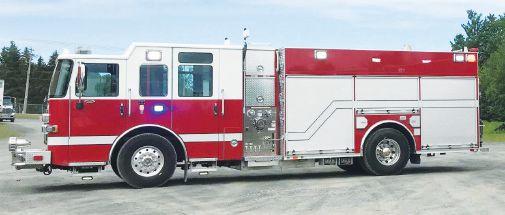
a
DEPARTMENT: Chatham-Kent, Ontario

D&R ELECTRONICS CO. LTD.
8820 George Bolton Parkway
Bolton ON L7E 2Y4
Tel: 905-951-9997
Toll free: 800-538-7338
Company Email: michael@dandrelectronics.com
Web: www.dandrelectronics.com
D&R Electronics offers emergency vehicle fleets with creative equipment solutions such as complex systems using mobile phones for desktop computing in vehicles to In-Vehicle Laptop/Tablet Mounting Solutions, In-Vehicle Printers and Printer Mounts, Equipment Consoles, Interior/Exterior LED Area/Scene/ Work lighting, SAE Certified/NFPA Compliant LED Emergency Lighting, LED Traffic Director Kits, Basic and Fully Programmable Siren/Light Control Systems, Programmable Power Management Systems, Battery Protection Modules, Equipment Storage Solutions
D&R Electronics is an ISO 9001:2015 Registered company that has been proudly designing and manufacturing quality emergency vehicle equipment in Canada since 1976.
SAFETY CANADA LTD.
2425 Skymark Ave., Unit 1
Mississauga ON L4W 4Y6
Tel: 905-212-6600
Toll free: 877-372-4371
Fax: 905-212-6602
Company Email: susan.yu@draeger.com
Web: www.draeger.com/en-us_ca/Safety/Firefighting
Contact us at +1 877-372-4371 to learn more about SCBA, live fire training system, fixed gas and flame detector, mobile gas detector, thermal imaging camera, drugs and alcohol testing equipment and the rest of our portfolio.
Product services and technical training courses are offered at our Mississauga, Ontario and Edmonton, Alberta locations throughout the year. Arrange for service of your SCBA and gas detector now.
1601 S.W. 37th Ave.
Ocala FL 34474
Tel: 352-237-1122
Fax: 352-237-1151
275 Clarence Street
Brampton ON L6W 3R3
Tel: 905-453-3473
Fax: 905-456-3477
Company Email: sales@dependable.ca
Web: www.dependable.ca
Dependable Emergency Vehicles builds high-quality, cost-effective emergency vehicles that have been proven in the emergency response industry for over 40 years. Our attention to detail, innovative design, and engineering concepts allow us to manufacture emergency vehicles to your specifications. We manufacture pumpers, rescue-pumpers, walk-in & walk-around rescues, tankers, hazmat, command units, and other specialized fire apparatus at our production facility in Brampton, Ont. Dependable is also the Canadian dealer for HME Ahrens-Fox fire apparatus. Our 40,000 sq. ft. facility includes multiple vehicle bays, state-of-the-art sandblasting & paint facilities, indoor pump testing bays, and a full-service repair shop for body work and refurbishment, on all makes and models. Our apparatus showroom, located across the street from our production facility, provides a comfortable environment for our customers to view and get a hands-on experience with our stock apparatus on display.
Company Email: info@e-one.com Web: www.e-one.com
E-ONE. STRENGTH THROUGH EXCELLENCE.
E-ONE, a full spectrum builder of fire apparatus, is the pioneer and recognized leader in extruded aluminum and stainless-steel construction. With their advanced engineering, fully integrated manufacturing and highly engaged dealer network, the proud customer focused E-ONE team delivers strength through excellence.
For more than 47 years, E-ONE has been the cuttingedge builder of:
• Aerial ladders and platforms
• Custom and commercial pumpers and tankers
• Rescues of all sizes
• Industrial trucks
• Aircraft rescue firefighting vehicles
INNOVATION EVERY DAY: Leading the way with advanced engineering and innovative design, E-ONE is an industry leader in product innovations, new technologies and exceeding customer expectations. Recent product advancements include the 100” wide Cyclone Cab, HR 100 aluminum aerial ladder, Active Air Purification System, Air Transportable ARFF vehicles, AXIS Smart Truck technology, the ECO IDLE-TEC idle mitigation system and clean cab options.
E-ONE’S SUPERIOR AERIAL DNA: The DNA of E-ONE aerials consist of a unique design that gives E-ONE the advantage of stability and brute strength. The welded extruded aluminum construction will never rust or need repainting, resulting in a lower cost of ownership. Key design features include a 2.5 to 1 structural safety factor, crisscross under-slung jacks, integral torque box chassis, and the strongest cab in the industry.
SAFEST CAB IN THE INDUSTRY: Keep your crew safe with the cab that withstands over 5 times the static roof load and over twice the frontal impact required by NFPA 1901. The structural roll cage type design provides maximum protection and comfort for firefighters.
INTEGRAL TORQUE BOX CHASSIS: The integral torque box chassis is a unique design that provides a solid foundation and low center of gravity for the truck. This provides outstanding stability and strength, with the same 2.5 to 1 structural safety factor as the aerial device.
For further information on E-ONE apparatus or to find an E-ONE dealer near you, visit e-one.com
Darch Fire (Member of 1200 Degrees)
9-402 Harmony Road, Ayr, Ontario N0B 1E0
800-254-2049
Territory: Ontario
FireTek Emergency Vehicles LTD
30686-A Matsqui Place Abbotsford, BC V2T 6L4
Territories: Alberta, Saskatchewan, Nunavut, British Columbia, Northwest Territories
Keewatin Truck Service
610 Keewatin St., Winnipeg, MB R2X 2R9
Phone 204-633-2700
Territory: Manitoba
Techno Feu Apparatus Maintenance (Member of 1200 Degrees)
105 Route Marie-Victorin Saint-Francois-Du-Lac, PQ J0G 1M0
Territories: Quebec, Atlantic Canada

FERRARA FIRE APPARATUS, INC.
27855 James Chapel Rd., PO Box 249 Holden LA 70744
Tel: 225-567-7100
Toll free: 800-443-9006
Fax: 225-567-7675
Company Email: info@ferrarafire.com Web: www.ferrarafire.com
Take command with Ferrara
Ferrara Fire Apparatus is a premier manufacturer of fire trucks and emergency response vehicles offering a full line of pumpers, aerials, industrial, wildland, and rescue apparatus. Working hands-on with both municipal and industrial fire departments, the Ferrara team thrives on understanding response needs to custom design fire apparatus that will stand the test of time.
Taking crew safety and apparatus durability very seriously, Ferrara uses a fine-tuned construction process and heavy duty materials to build the strongest fire trucks in the industry. We offer a custom chassis product line that exceeds minimum requirements making them the safest available. With its extra-heavyduty construction, you can take command with Ferrara.
For more information on Ferrara apparatus or to find a Ferrara dealer near you, visit ferrarafire.com
FIRETEK EMERGENCY VEHICLES
30686-A Matsqui Pl. Abbotsford BC V2T6L4 833-347-3835 www.firetek.ca
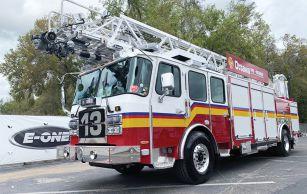
The Ottawa Fire Department has taken delivery of an E-ONE CR 137 aerial.
Manufactured on a Cyclone chassis with a Cummins X15 505 HP engine, this aerial is equipped with 6000 LPM pump with all electric valves and enclosed pump panels, 1135 L water tank, and an extruded aluminum body with raised rear perimeter and angled corners for improved maneuverability. It includes a SideStacker hosebed and storage for 158 feet of ground ladders.
DEPARTMENT: Ottawa Fire Department, Ontario
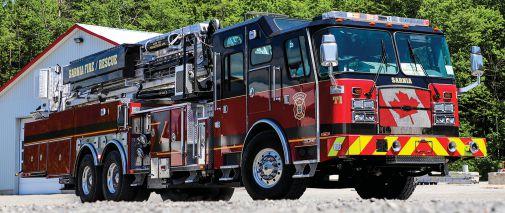
Sarnia Fire Rescue Services has taken delivery of an E-ONE HP 95 mid-mount platform. Manufactured on a Cyclone chassis with Cummins X12 500 HP engine and powered by Allison 4000 EVS transmission, this platform is equipped with a Hale 8FG 8,000 LPM single stage pump, 1135 L of water storage, and a Sidestacker hosebed.
DEPARTMENT: Sarnia Fire Rescue Services, Ontario
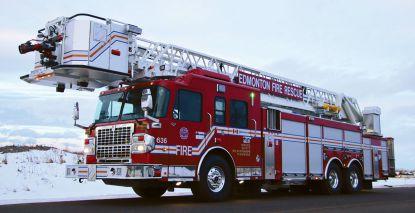
Edmonton Fire Rescue Services has placed a new Smeal 100’ Rear Mount Platform in service that is built on a Spartan Gladiator LFD Chassis with a 10” raised roof and Cummins X15 600 hp engine. Featuring a Hale Qmax 2250 gpm pump, 300 gallon tank, and 60 gallon foam cell, this platform offers generous work space in the basket and a 1250 lb dry, 500 lb wet tip load.
DEPARTMENT: Edmonton Fire Rescue Services, Alberta
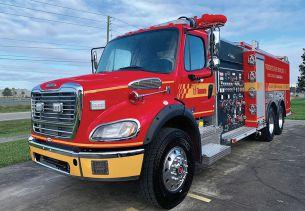
Manufactured on a Freightliner M2 112 2-door 6x4 chassis with an extruded aluminum body, this industrial pumper features large diameter plumbing, 12,000 LPM pumping capacity and 2,030 gallon tank for Class B foam. It is equipped with a Waterous CRU 12,000 LPM industrial rated pump, three 2” foam tank outlets and one 6’ deck gun discharge with Williams Hydro Foam Ranger 3 nozzle with automatic self-educting feature.
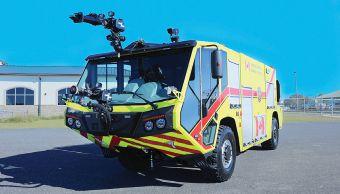
generators and winterization packages for plumbing.
DEPARTMENT: Public Works and Government Services Canada on behalf of the Department of National Defence Canada
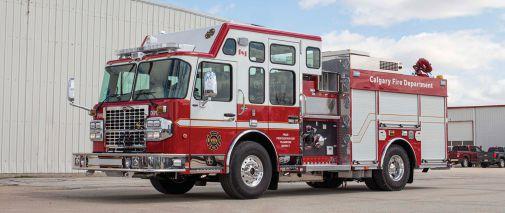
on a Spartan Gladiator MFD
with a 24” raised roof and powered by an Allison 4000 EVS transmission, Calgary’s new pumpers put the operator and the pump panel controls inside the custom cab with an unobstructed and clear view of the scene. Features include a Waterous CMU 2000 GPM pump, 550 IG tank, Waterous Eclipse with Aquis 3 foam system, and SG-09 auxiliary power unit.
DEPARTMENT: Calgary Fire Department, Alberta
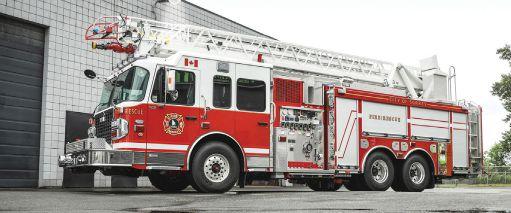
600 IG tank, 25 IG foam cell, and SG-09 auxiliary power unit.
DEPARTMENT: Surrey Fire Service, British Columbia
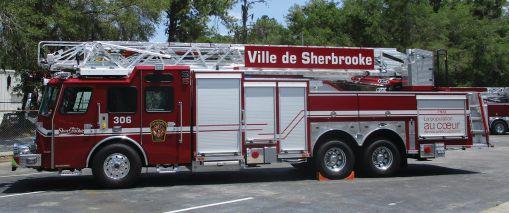

20 Hereford Street
Brampton ON L6Y 0M1
Tel: 905-488-7283
Fax: 905-793-9798
FIRE FIGHTING IN CANADA/CANADIAN FIREFIGHTER
PO Box 530, 105 Donly Dr. S. Simcoe ON N3Y 4N5
Tel: 289-221-6605
Fax: 888-404-1129
Company Email: aszpakowski@annexbusinessmedia. com
Web: www.firefightingincanada.com
Canada’s National Fire Publication since 1957.
FIREHALL BOOKSTORE
PO Box 530, 105 Donly Drive S. Simcoe ON N3Y 4N5
Tel: 877-267-3473
Fax: 877-624-1940
Company Email: info@firehallbookstore.com
Web: www.firehallbookstore.com
The Firehall Bookstore provides training & public education materials to the Canadian Fire Service industry and its professionals. A one-stop-shop for books, DVDs, codes and standards, and fire prevention and education materials for community outreach. Product lines include NFPA, IFSTA, Jones & Bartlett, PennWell, Action Training Systems, Brady, and Emergency Film Group. Exclusive fire department pricing on First Alert alarms.
Company Email: firedepartment@lcwa.com
Web: www.firstalert.ca
First Alert is the most trusted brand in fire safety and the leading manufacturer of smoke alarms, carbon monoxide alarms, fire extinguishers, escape ladders and other home safety products to protect what matters most. To see the full range of home safety products, visit www.firstalert.ca.


LTD.
RR 2, 53 Bergen Cutoff Rd.
Winnipeg MB R3C 2E6
Tel: 204-594-3473
Toll free: 800-565-3473
Fax: 204-694-3230
Company Email: brian nash, bnash@fgft.ca
Web: www.fgft.com
PO Box 530, 105 Donly Dr. S. Simcoe ON N3Y 4N5
Tel: 289-221-6605
Fax: 888-404-1129
Company Email: aszpakowski@annexbusinessmedia.com Web: www.firehall.com
Firehall.com provides an excellent forum for exchange among firefighters and others involved in the fire service. Advertising options include banner ads and e-blasts and offer extensive exposure to the rank and file.
Fort Garry Fire Trucks is Canada’s oldest and largest manufacturer of high-quality fire apparatus offering a complete line of quality pumpers, tankers, rescues, aerial devices, and custom-designed and engineered specialized units. With headquarters based in Winnipeg, Manitoba, Canada, our customers emanate from cities, towns, and municipalities throughout Canada, the U.S., and abroad with the harshest weather, climates, and terrain. We boast one of the largest fire apparatus engineering departments amongst our competitors, devoted to the design and production of equipment for the most extreme conditions in the world. We are a Bronto Skylift articulated aerial platform dealer, as well as the exclusive Canadian distributor of Sutphen Corporation aerial ladders and platforms. We truly build “One Tough Truck” and boast over 100 years of quality.
COAST TO COAST SALES AND SERVICE NETWORK:
• Brian Nash — Vice President – Sales – bnash@ fgft.ca
Toll-Free: 1-800-565-3473 (ext. 3471) Cell: 204981-7845
• Gwen Graham — Service & Warranty – graham@ fgft.ca
Toll-Free: 1-800-565-3473 Direct Phone: 204-5942026
REGIONAL SALES REPRESENTATIVES:
• Atlantic Canada — Adam Baldwin – abaldwin@fgft.ca
Toll-Free: 1-800-565-3473 (ext. 2006); Cell: 902-888-9806
• Eastern Ontario & Quebec — Peter Somerton –psomerton@fgft.ca
Toll-Free: 1-800-565-3473 (ext. 2005); Cell: 613-859-5747
• Central Ontario — Chris Pilek – cpilek@fgft.ca
Toll-Free: 1-800-565-3473 (ext. 3481); Cell: 204-296-1915
• Northern Ontario — Bob Lock – block@fgft.ca
Toll-Free: 1-800-565-3473 (ext. 2004); Cell: 705-665-2195
• Manitoba & Saskatchewan — Lance Spencer –lspencer@fgft.ca
Toll-Free: 1-800-565-3473 (ext. 3475); Cell: 204995-3895
• Alberta — Taylor Young – tyoung@fgft.ca
Toll-Free: 1-800-565-3473 (ext. 3466); Cell: 204298-9923
• British Columbia — Al Anderson & Bryan Anderson –Fire Power Emergency Apparatus – alan@firepowerplus.com or bryan@firepowerplus.com
Phone: 1-250-668-2673 or 1-250-327-1904
• Canadian Northern Territories — Rick Penner –rpenner@fgft.ca
Toll-Free: 1-800-565-3473 (ext. 2024); Cell: 204594-1300
• United States (West) — Lloyd Hamilton – US Fire Equipment – lloyd@usfireequipment.com; Phone: 253-863-1301
• United States (East) — Philip Vander Molen – Vander Molen Fire Apparatus – vmfire@verizon.net; Phone: 315-952-7787
FSI® NORTH AMERICA, A DIVISION OF FIRE SAFETY INTERNATIONAL INC.®
311 Abbe Rd.
Sheffield Lake OH 44054
Tel: 440-949-2400
Fax: 440-949-2900
Company Email: sales@fsinorth.com Web: www.fsinorth.com
FSI North America® is a Full line supplier of mobile, portable and fixed hazmat decon shower systems. Shower Systems include traditional water/solution based decon, electrostatic equipment only decon, and Far UVC 222nm Disinfection.
FSI® TEAS® (Temporary Emergency Air Shelters) shelter systems, offered in among the world’s largest range of size and configurations, serve for Command, Isolation, Field Hospitals/Alternate Care from 10-1,000 beds, Sleeping, Fire Fighter Rehab, Temporary Morgues, and so on.
FSI® offers a complete range of Isolation Chambers, Rooms, Shelters, and Beds/Chairs systems.
FSI® also offers a complete range of sizes and configurations of Trailer Systems, Rescue Boats, Smoke Ejectors, and EMS supplies such as the FSI Transporter Disposable Backboards, Triage Tape Systems, FSI Medical Field Cots, and Mortuary supplies such as body bags.
HOLMATRO, INC.
505 McCormick Dr. Glen Burnie MD 21061
Tel: 410-768-9662
Fax: 410-768-4878
Company Email: info-usa@holmatro.com Web: www.holmatro.com
Holmatro hydraulic equipment and system solutions are predominantly used in rescue, special tactics and industrial applications around the world. These types of applications demand reliable and safe tools under all circumstances.
RESCUE PUMPER - SAM SYSTEM | FORT GARRY FIRE TRUCKS
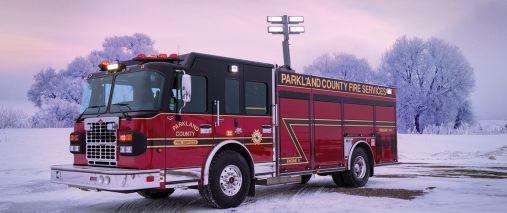
This emergency rescue pumper is built on a Spartan Metro Star 10-inch raised roof chassis and is powered by a Cummins L9 380 HP diesel engine and an Allison 3000 EVS transmission. This 5083-salt water marine grade aluminum unit features the SAM integrated total water control system and Hale Midship QMAX-XS 1500 pump, 800 IG tank, Command Light, and a Hale Class A foam proportioning system.
DEPARTMENT: Parkland County, Alberta
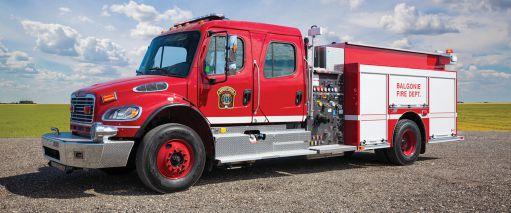
This Crusader pumper is built on a Freightliner M2 106 crew cab chassis that is powered by a Cummins L9 330 HP diesel engine and an Allison 3000 EVS transmission. This 5052 marine grade formed aluminum unit features a Darley midship PSM1500 pump, a poly 800 IG tank, and a Zico electric fold down ladder rack.
DEPARTMENT: Balgonie, Saskatchewan
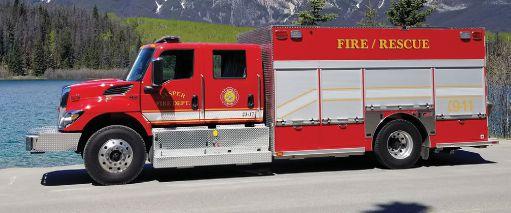
This 16-ft walk around rescue is built on an International HV507 crew cab chassis that is powered by a Cummins L9 350 HP diesel engine and an Allison 3000 EVS transmission. This 5083-salt water marine grade aluminum rescue features a Darley Fast Attack skid unit, 300 IG water tank, rooftop coffin compartments, and a Command Light.
DEPARTMENT: Jasper, Alberta
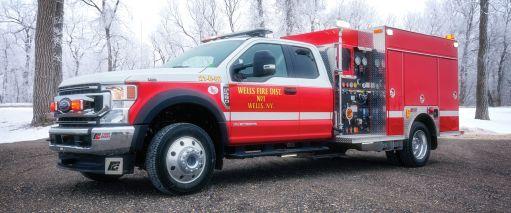
This 25-foot mini pumper is built on a Ford F550 4x4 super cab chassis with a 6.7L V8 diesel engine. This 5083 salt-water marine grade mini pumper features a Hale DSD1250 Midship pump and over 140 cubic feet of compartment space.
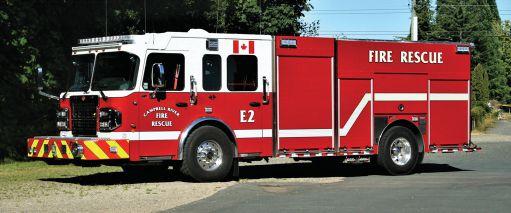
This MXV-X pumper is built on a Spartan Metro Star 10-inch raised roof chassis that is powered by a Cummins L9 450 HP diesel engine and an Allison 3000 EVS transmission. This full framed 5083 salt water marine grade aluminum unit features two Whelen Pioneer LED work lights, slide out and swing out tool boards.
DEPARTMENT: Campbell River, British Columbia
This SPH 100 aerial platform is built on a Sutphen TSAL45 – 56 inch flat roof chassis that is powered by a Cummins X12 500 HP diesel engine and an Allison 4000 EVS transmission. This stainless-steel unit features a Hale QMAX-2000 GMP pump, 300 USG poly tank, and two Akron 3482 Stream Master2 electric 1250 GPM monitors with Akron nozzles.
DEPARTMENT: Owen Sound, Ontario
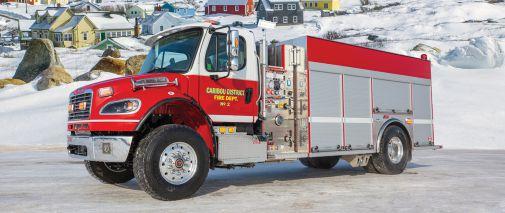
This pumper tanker is built on a Freightliner M2 106 crew cab chassis with a Cummins L9 350 HP diesel engine and an Allison 3000 EVS transmission. This 5083 salt-water marine grade aluminum pumper tanker features a Waterous CXPA750 PTO pump and a 1500 IG water tank.
DEPARTMENT: Caribou District, Nova Scotia
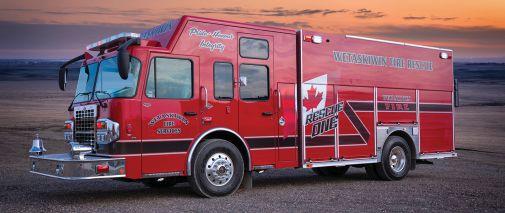
York
HUB FIRE ENGINES & EQUIPMENT LTD.
3175 McCallum Rd.
Abbotsford BC V2S 7W5
Tel: 604-859-3124
Toll free: 888-611-2896
Fax: 604-859-5821
Company Email: info@hubfire.com
Web: http://www.hubfire.com
Hub is Canada’s oldest fire apparatus manufacturer with a full parts inventory, collision repair, factory service department and on site mobile service. Contact our design department to help you with your next truck purchase. We will even help write your next RFP document.
HUSKY PORTABLE CONTAINMENT
7202 SE International Ct.
Bartlesville OK 74006
Tel: 918-798-4415
Toll free: 800-260-9950
Fax: 918-333-2004
Company Email: sales@huskyportable.com
Web: www.huskyportable.com
Husky Portable Containment is a manufacturer of firefighting and environmental safety products. We specialize in portable water tanks used in water shuttle operations. We also manufacture salvage covers, hose bed covers, staging mats, strainers, decontamination pools and showers, bladder tanks and spill containment berms.
INDUSTRIES LAFLEUR INC.
2359, Boul. Fiset
Sorel-Tracy QC J3P 5K2
Tel: 450-743-3918
Fax: 450-743-3906
Company Email: pierrethibault@industrieslafleur.com
Web: www.industrieslafleur.com
Fire rescue trucks (walk-in and non walk-in rescue trucks)
Custom truck bodies
High quality since 1969
ISO 9001
CWB 47.1 & 47.2

INNOTEX®
275 Gouin St.
Richmond QC J0B 2H0
Tel: 819-826-5971
Toll free: 888-821-3121
Fax: 819-826-5195
Company Email: lou.lopez@innotexprotection.com
Web: http://www.innotexprotection.com
INNOTEX® specializes in the development, the manufacturing and the distribution of protective gear for firefighters all over the world including some of the largest fire departments in Canada, the United States and abroad, in addition to the military. Recognized for its outstanding quality and patented features, INNOTEX delivers the most comfortable, durable and innovative gear such as hoods, gloves and turnouts.
KME
One Industrial Complex
Nesquehoning PA 18240-1499
Tel: 570-669-5132
Fax: 570-669-5124
Company Email: kme@kovatch.com
Web: www.kmefire.com
KME is Engineered to Serve!
KME is a manufacturer of high quality, custom fire apparatus serving communities across North America. Choose from a wide range of products that includes Aerials, Pumpers, Tankers, Rescues and Wildland or Urban Interface vehicles. Additionally, KME products are supported by our authorized sales and service dealers including these in Canada:
1200°
105, route Marie-Victorin
St-Francois-du-Lac, Quebec JOG 1MO 888-568-2777
FIRETEK EMERGENCY VEHICLES LTD.
30686-A Matsqui Place Abbotsford, BC V2T 6L4 866-723-3835
METZ FIRE & RESCUE
3-304 Stone Road W #325 Guelph, Ontario N1G4W4 519-763-9955


MAXIMETAL INC.
9345, 25e Ave
Saint-Georges, QC G6A 1L1
Tel: 418-228-6637
Toll free: 800-510-6337
Fax: 418-228-0493


Company Email: maximetal@maximetal.ca Web: www.maximetal.com
MAXIMETAL is a dynamic, innovative Canadian company with 38 years of experience designing and manufacturing optimized intervention vehicles. Our high-quality, custom-built Maxi fire trucks are found serving fire departments in from coast to coast, including some of Canada’s biggest fire fleets including Montreal, Quebec City, County of Grande Prairie and Chatham-Kent. In 2015 Pierce Manufacturing, the world leader in fire truck manufacturing, chose MAXIMETAL as their exclusive partner to build the MAXI Saber® custom line of fire trucks for the Canadian market. Now represented across the nation by the industry’s strongest dealer network, you can rest assured that you will have an experienced partner not just in designing and building your project, but supporting you long term after the sale.

MEIKO CLEAN SOLUTIONS CANADA
6855 Glen Erin Drive, Suite 7 Mississauga ON L5N 1P6
Tel: 416-817-8518
Toll free: 800-868-3840
Company Email: info@meiko.ca
Web: www.meiko.ca
Contamination is real, and it’s dangerous. MEIKO has almost 100 years of professional cleaning, disinfection and warewashing experience. DECON machines combine time, temperature and chemomechanical action to provide exceptional cleaning and decontamination for self-contained breathing apparatus (SCBA), PPE as well as other firefighting and HAZ-MAT related equipment and gear. DECON Series equipment washers get gear clean like you’ve never seen. Clean you can see. Clean you can smell. Clean you can trust. And every DECON wash provides the same consistently high level of clean. For more information, contact info@meiko.ca.
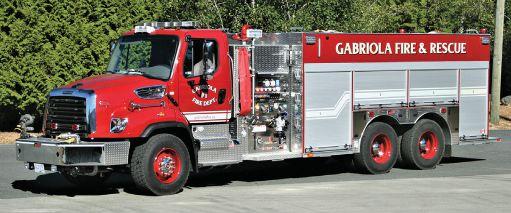
This pumper tanker is built on a Freightliner 114 6x4 regular cab chassis with a Cummins X12 455 HP diesel engine and an Allison 4000 EVS transmission. This 5083salt water marine grade aluminum tanker features a Waterous PTO CXPA1250 pump, a 2000 IG tank, a FoamPro 2001 Class A 40 IG single internal foam tank, and an Akron Apollo rooftop monitor.
DEPARTMENT: Gabriola, British Columbia
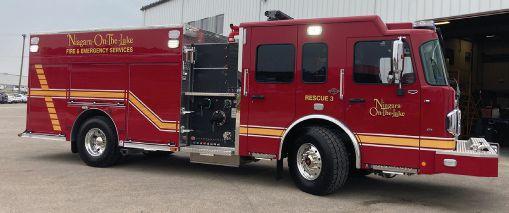
This emergency rescue pumper is built on a Spartan Metro Star 10-inch raised roof chassis with a Cummins L9 450 HP diesel engine and an Allison 3000 EVS transmission. This 5083-salt water marine grade aluminum pumper features a Waterous Midship CX1500 pump, a 1000 IG tank, a rooftop Elkhart Vulcan Direct Mount monitor, and a FoamPro 2001 – Class A foam proportioning system.
DEPARTMENT: Niagara-on-the-Lake, Ontario
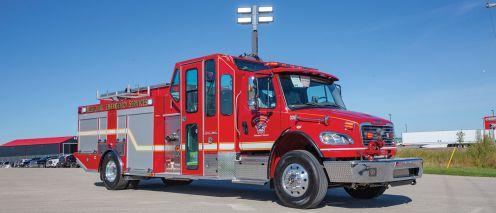
This Crusader pumper 4-man crown is built on a Freightliner M2 106 chassis and is powered by a Cummins L9 360 HP diesel engine and an Allison 3000 EVS transmission. This 5052-marine grade formed aluminum unit features a Darley PTO PSP1250 pump, 900 IG tank, rooftop Akron Deck Master monitor, and a FoamPro 2001 – Class A/B foam proportioning system.
DEPARTMENT: Regional Municipality of Wood Buffalo, Alberta
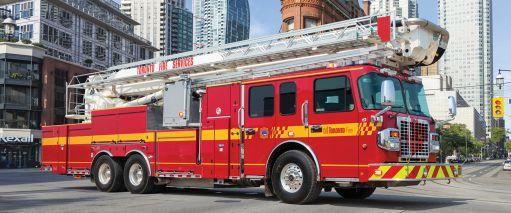
This Bronto Skylift features a 116-foot articulated ladder platform built on a Spartan Gladiator chassis with a Cummins X15 585 HP diesel engine and an Allison 4000 EVS transmission. This 5083-salt water marine grade aluminum aerial ladder truck features a Hale Midship RME2-2000 pump, a 300 IG tank, and FoamPro 2002 – Class A foam proportioning system.
DEPARTMENT: Toronto, Ontario
DRY SIDE TANKERS & ONE ER PUMPER | FORT GARRY FIRE TRUCKS
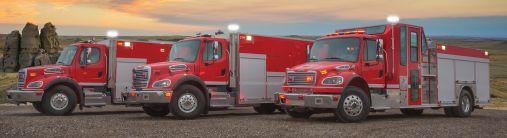
These two dry side tankers are built on Freightliner M2-112 chassis with Cummins L9 450 HP diesel engines and Allison 3000 EVS transmissions. The 5083-salt water marine grade aluminum tankers feature Hale PTO RSD1250 pumps, 2700 IG tanks, rooftop TFT Hurricane monitors, and FoamPro 2001 – Class A foam proportioning systems. The single emergency rescue pumper 4-man crown is also built on a Freightliner M2-106 chassis with a Cummins L9 350 HP diesel engine and an Allison 3000 EVS transmission. This 5083-salt water marine grade aluminum pumper features a Hale DSD 1250 pump, an 800 IG tank, rooftop TFT Hurricane monitor, and a FoamPro 2001 – Class A foam proportioning system.
DEPARTMENT: Red Deer, Alberta
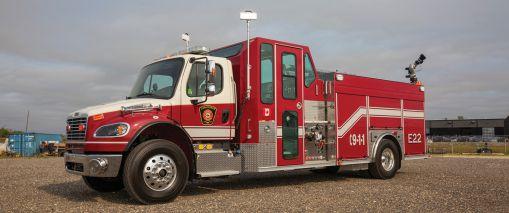
This emergency rescue pumper 4-man crown is built on a Freightliner M2 106 4x2 chassis with a Cummins L9 350 HP diesel engine and an Allison 3000 EVS transmission. This 5083-salt water marine grade aluminum pumper features a Waterous PTO CXPA1500 pump, 1000 IG tank, and a Waterous Aquis 3 – Class A foam proportioning system.
DEPARTMENT: Coalhurst, Alberta
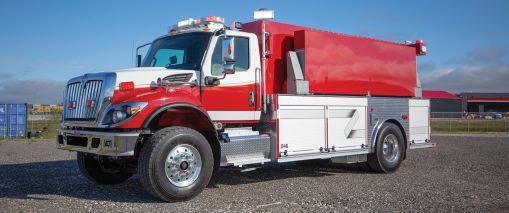
HP
and an
an International
marine grade tanker features a Hale PTO MBP1000 pump, a 2000 IG tank, a Whelen Emergency Lights and Scene Light package, two Zico hydraulic porta-tank racks with covers and two 2500 IG Husky Porta-tanks.
DEPARTMENT: Central Saanich, British Columbia
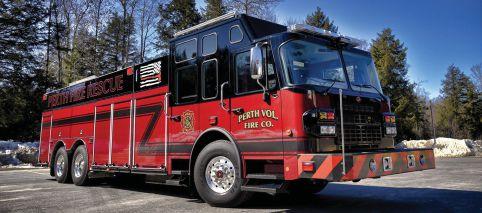
40-foot

MERCEDES TEXTILES LTD.
Montreal QC
Tel: 514-335-4337
Fax: 514-335-9633
Company Email: sales@mercedestextiles.com
Web: www.mercedestextiles.com
For over 45 years, Mercedes Textiles has proudly delivered the most innovative and reliable water delivery systems to the firefighting community. From hoses & couplings to portable pumps, municipal to forestry, we put our technology where your courage is.
FIRE HOSE & COUPLINGS:
• KrakenEXO® – The most advanced UL-listed attack fire hose on the market – weighs less, kinks less, flows more water, beats the heat
• MegaFlo® Breather – Large volume attack & supply hose designed for fastest deployment, easiest recovery & best packability
• Highwater Hose Inc. – We offer of a wide range of rubber-covered lightweight, lay-flat & industrial hoses via our partner brand
• Many hoses available with iReflect® & WAYOUT® couplings and iDentify® Coding System – all manufactured under one roof, customized to your specifications, & NFPA 1961 compliant
• Best warranty on the market: 2-year All Hazards, 10-year manufacturing defects & Lifetime against delamination (2-10-L)
POWERFUL FIRE PUMPS:
We are a leading manufacturer of high pressure, lightweight, portable fire pumps for forestry & municipal fire applications. When you need water, we deliver.
OUR DISTRIBUTORS:
www.martinsfireandsafety.com – NL www.cummings.ca – NS, NB, PEI www.larsenal.ca – QC www.municipalequipment.ca – S/S.E. ONT www.transcanadasafety.ca – N/N.C. ONT www.spi-s.com – N/N.W. ONT www.realsafety.ca – MB www.wfrfire.com – BC,AB,SK,YT,NWT

METALFAB LTD.
847 Central St.
Centreville NB E7K 2E8
Tel: 506-276-1024
Toll free: 800-561-0012
Fax: 506-276-3648
Company Email: info@metalfabfiretrucks.com Web: www.metalfabfiretrucks.com
For over 50 years, owners of Metalfab Fire Trucks know that each purchase is a 20 year partnership of protection for themselves and their communities. Metalfab is an Atlantic Canadian manufacturer of custom engineered Fire Trucks built to the requirements of each customer. Metalfab serves fire departments across Canada and the Eastern US.
3-304 Stone Rd. W.
Guelph ON N1G 4W4
Tel: 519-829-9149
Fax: 519-763-6682
Company Email: john@metzfirerescue.com Web: www.metzfirerescue.com
Canadian dealer for KME Fire Apparatus. Specializing in custom and commercial pumpers, aerial, rescue, tankers and wildland units.

5865 McLaughlin Road Unit 1
Mississauga ON L5R 1B8
Tel: 866-332-2611
Company Email: serviceca@nederman.com Web: www.nederman.com
With 75+ years of experience and well over 100,000 installations, Nederman offers diesel exhaust extraction systems designed specifically for emergency and fire vehicles. From the planning and design stage to installation, commissioning and maintenance support Nederman is your clean air partner.
ONTARIO FIRE TRUCK INC.
1397 Old Hwy 99
Dundas ON L9H5E3
Tel: 905-628-3324
Toll free: 800-474-6698
Company Email: sales@ontariofiretruck.com
Web: ontariofiretruck.com
Ontario Fire Truck Inc. is Ontario’s first choice for Fire Apparatus Service & Sales. We are your first and only call for Fire Apparatus Service, Sales & Testing! We offer you the finest repairs in the industry; we offer a 24 hour, 7 days a week service. All of our service staff is fully licensed Class “A” & “T” both provincially and EVT certified. We are fully insured and have over 30 years experience to provide the best service at your location. Our fully stocked mobile service trucks travel all over Ontario! Why take your truck anywhere, we come to you for both Service and Testing!
Our Sales staff has over 60 years combined experience in the fire industry, we offer only the finest Seagrave fire apparatus, and Our Company believes only the best will do! We are the authorized sales and Service Company for Seagrave fire apparatus and equipment companies. “The bitterness of poor quality remains, long after the sweetness of low price is forgotten”
PO Box 2017 Appleton WI 54912-2017
Tel: 920-832-3000
Web: www.piercemfg.com
Pierce Manufacturing: Perform. Like No Other.
NFPA
c/o Firehall Bookstore, PO Box 530, 105 Donly Dr. S.
Simcoe ON N3Y 4N5
Tel: 877-267-3473
Fax: 877-624-1940
Company Email: info@firehallbookstore.com Web: www.firehallbookstore.com
Canadian distributor for NFPA standards, memberships, fire safety week and other public education items, as well as Sparky products.
It’s more than a tagline. It’s a lifeline extended to every firefighter served, and the expectation of every person and product at Pierce Manufacturing Inc. Behind the design of every highly customized and engineered pumper, aerial, tanker and rescue unit is a team of professionals whose mission is to build a truck, exactly how it’s ordered. The Pierce team pours everything they have into making sure a fire truck is ready to perform.
Pierce heavily invests in product development and programs that advance firefighter safety, education and performance. Performance-driven design means that Pierce is continually evolving to provide firefighters with industry-leading advancements and unmatched innovation. As a subsidiary of Oshkosh Corporation (NYSE: OSK), the experienced team has access to an arsenal of cutting-edge technologies and revolutionary processes that have contributed to the development of six custom chassis and best-in-class innovations. Innovations include the Volterra(TM) platform of electric vehicles, Ascendant Class of Aerials®, Pierce Ultimate Configuration (PUC(TM)), Command Zone(TM), Idle Reduction Technology, TAK-4® Independent Suspension and Husky(TM) Foam Systems to name a few.
Commitment to performance extends beyond Pierce’s factory walls and into the communities served. A significant part of the Pierce legacy involves giving back to the community and the fire industry. Partnerships include the Firefighter Cancer Support Network, the National Fallen Firefighters Foundation, and Volunteer & Combination Officers Section of the IAFC.
See the Pierce difference for yourself at piercemfg.com.
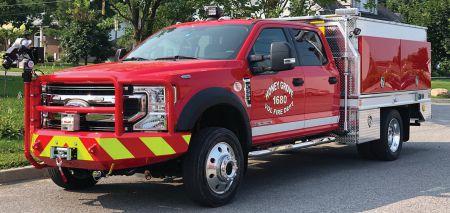
Built on a F-550 chassis with a Super Duty crew cab and a 330 HP 6.7L V8 diesel engine. Features include a fully customable aluminum compartments with painted liftup doors, heavy duty front bumper, 300 USG CET tank with 10 gallon integrated foam cell and a CET PFP-25hpDSL-MR mid-range pump that can be used to operate the fog bumper nozzle and front bumper turret.
DEPARTMENT: Honey Grove, Kentucky
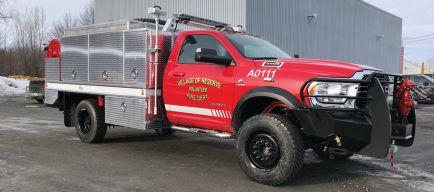
Built on a Ram 5500 chassis with a Super Duty regular cab and a 410 HP 6.4L V8 diesel engine. This truck was converted to super single wheels using a 3-1/2’’ lifting kit. Features include aluminum compartments with lift-up doors, heavy duty front bumper and 400 USG CET tank with 20 gallon integrated foam cell and a CET PFP-25hpDSLMR mid-range pump that can be used to operate the fog bumper nozzle and front bumper turret.
DEPARTMENT: Village of Reserve Volunteer Fire Department, New Mexico
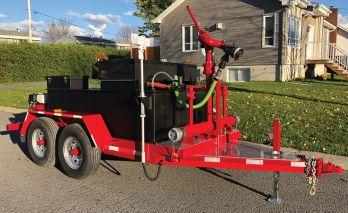
This CET 500 USG foam trailer was built with a heavy-duty steel trailer and dual axles. It accommodates a custom CET 500 USG foam tank made of copolymer polypropylene. The UV and chemical resistant foam tank is equipped with a Honda transfer pump and water manifold with two 4’’ Storz inlets, one Akron Apollo monitor and two pre-connect hose trays.
DEPARTMENT: Westford, Massachusetts
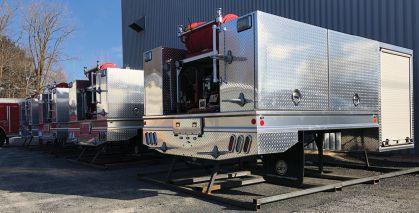
The CET Glider kit is intended for the customer who wants to complete the body installation themselves or using a local outfitting shop. Those units were built for a F-550 or Ram 5500 with 60’ CA. All compartments are aluminum with a full-size transverse compartment in L1-R1. In the back, the unit is equipped with 410 USG CET tank with 25 gallon integrated foam cell with a CET PFP-23hpVGD-MR mid-range pump.
DEPARTMENT: Wildfire Defense Systems, Montana
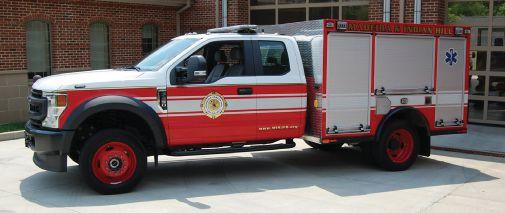
Built on a F-450 chassis with a Super Duty super cab and a 350 HP 7.3L V8 gas engine, the body is completely made from copolymer polypropylene, which is more resistant to impact than an aluminum polybody. It’s covered by a limited lifetime warranty and will never corrode or rust. Fully open side-to-side transverse L1-R1 compartment with dual direction slide-out tray.
DEPARTMENT: Madeira Indian Hill, Ohio
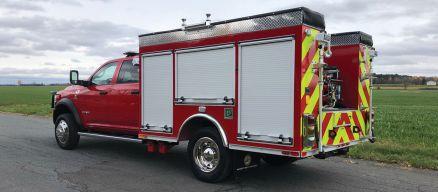
Built on a Ram 5500 chassis with a Super Duty regular cab and a 410 HP 6.4L V8 diesel engine. The side-pack body is completely made from copolymer polypropylene. More resistant to impact than aluminum polybody, it’s covered by a limited lifetime warranty and will never corrode or rust. Features include side-to-side transverse L1-R1 compartment and a 300 USG CET tank with 10 gallon integrated foam cell and a CET PFP-25hpDSL-MR mid-range pump.
DEPARTMENT: New Vineyard, Maine
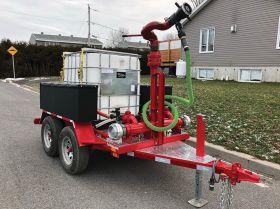
This CET single tote foam trailer was built with a heavy-duty steel trailer and dual axles. It accommodates a standard 275 gallon foam tote that is fully removable using quick connections. It comes with a 4” water manifold with 4” Storz inlets and two pre-connect hose trays that can accommodate 150’ of 4” hose that are installed above the wheel wells.
DEPARTMENT: Alabama Power Barry Steam Plant, Alabama
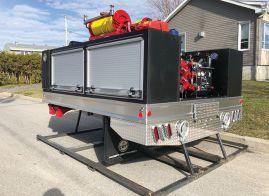
The CET Glider kit is intended for the customer who wants to complete the body installation themselves or using a local outfitting shop. These units were built for a F-550 or Ram 5500 with 60’ CA. All compartments were built with copolymer polypropylene with aluminum roll-up doors. It is more resistant to impact than aluminum and will never corrode or rust. In the back, the unit was equipped with a high-quality CET PFP-25hpDSL-MR mid-range pump package with 400 USG water tank.
DEPARTMENT: Hollywood Heights Fire Department, Illinois
5 Corporate Dr.
Cranbury NJ 08512
Tel: 609-395-3500
Toll free: 800-644-0911
Fax: 609-655-0569
Company Email: cleanair@plymovent.com
Web: www.plymovent.com/us
Since 1975, we have made it our business to ensure clean air in fire stations. We provide high-quality products to protect firefighters and others from exposure to hazardous diesel exhaust. Our source capture and removal systems are the recommended method for controlling exhaust emissions at your station. Breathe clean air at work with Plymovent. #hookupthehose
Head Office: 6415 Golden West Ave.
Red Deer AB T4P 3X2
Tel: 403-347-7045
Toll free: 800-494-4210
Fax: 403-347-7049
Company Email: info@rockymountainphoenix.com Web: www.rockymountainphoenix.com
BRANCHES:
103-2285 Queen St. Abbotsford, BC V2T 6T3
Tel: 604-864-7303 | Fax: 604-864-4938 | Toll Free: 1-888-815-0500
320 Logan Rd. Bridgewater, NS B4V 3J8
Tel: 902-298-0415 | Toll Free: 1-844-530-4003
Rocky Mountain Phoenix is a leader in the supply of vehicle solutions, products and services to the emergency response and fire combat industry. Your complete source for MSA SCBA, Thermal Imaging, Protective Clothing, Suppression Tools and Equipment. Visit our online catalogue at www. rockymountainphoenix.com

1775 Meyerside Drive, Unit 11-12
Mississauga ON L5T 1E2
Tel: 905-564-7900
Toll free: 877-572-0040
Company Email: sales@firetrucks.ca | parts@ firetrucks.ca | service@firetrucks.ca Web: www.firetrucks.ca
At Safetek Profire, we are driven to serve those who keep our communities safe. Founded on our belief of delivering product and service excellence, our focus on supporting firefighters in performing their jobs safely is a constant priority. Core to our mission is putting our customers first by continuously challenging ourselves to break the mold of traditional customer service and recognizing that “Good Isn’t Good Enough.”
As the dealer of Bronto, E-ONE, EVI, Ferrara, KME, Ladder Tower, Metalfab, Smeal, Spartan, SVI and US Fire Pump*, we strive to introduce our customers to a new way of thinking about solutions to their challenges and problems. Our commitment to providing lifetime support through our parts and service departments are what pioneered us to be leaders in our industry, and support you in doing what you do best - serving your communities.
* Not all brands are available in all regions.

1800 Bonhill Road
Mississauga ON L5T 1C8
Tel: 905-364-5843
Fax: 905-364-7822
Company Email: seatsinfo@seatscanada.com Web: www.seatscanada.com
We offer a complete line of quality Emergency Vehicle seating for driver, officer, crew, wall mount and jump seats. Engineered for comfort and safety, these seats have easy exit flip-up split headrest and are manufactured in a wide variety of covering material.

3900 Central Parkway
Hudsonville MI 49426
Tel: 616-896-7100
Toll free: 800-338-7337
Fax: 616-896-1226
Company Email: customerservice@soundoffsignal.com Web: www.soundoffsignal.com
With over 29 years in the industry, SoundOff Signal is a world-class manufacturer of vehicle lighting and control systems. We create intelligent, efficient safety solutions that work together seamlessly to improve vehicle visibility when it is needed most. We commit to creating value for our customers and employees through strategic focus on innovation and quality.
1541 Reynolds Rd.
Charlotte MI 48813
Tel: 517-543-6400
Fax: 517-543-7728
Company Email: matt.creech@spartanchassis.com
Web: www.spartanchassis.com
Spartan Emergency Response (Spartan ER) is a leading designer, manufacturer and distributor of custom emergency response vehicles, cabs and chassis. Driven by a commitment to quality and innovation, Spartan and its portfolio of brands Spartan Fire Chassis, Smeal, and Ladder Tower (LT) offer a broad range of apparatus to meet your departments specific needs and requirements.
Spartan has a rich history in fire apparatus manufacturing with over 250 years of combined experience. Fire Truck design, development, manufacturing and after the sale support have always been at the heart of the company and continues today.
At Spartan, we work with you from the start to translate your truck’s specs into a design that gives you the right mix of safety, speed, agility, ergonomics, and serviceability that will last for the long haul.
FireTek Emergency Vehicles LTD
30686-A Matsqui Place
Abbotsford, BC V2T 6L4
Territories: Alberta, Saskatchewan, Nunavut, British Columbia, Northwest Territories
STARFIELD LION
23 Benton Road
Toronto ON M6M 3G2
Tel: 416-789-4354
Toll free: 800-473-5553
Fax: 416-789-5475
Company Email: infostarfield-lion@lionprotects.com
Web: www.starfieldlion.com
Starfield Lion has a legacy and ongoing vision of introducing PPE that is designed to ensure the health, safety and performance of the first responders who serve our communities. Your safety is our top priority. Your needs drive our innovations, we listen and develop the solution.
PUMPER/ TANKER | HUB FIRE
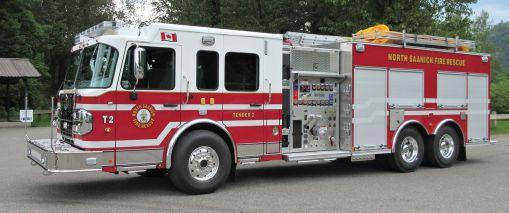
Built on a Spartan Metro Star with a Cummins L9 450 HP engine and Allison EVS 3000 transmission, this apparatus includes a Hale QMax-XS pump rated at 1,750 IGPM, FoamPro 2001 foam system, 2,000 IG water tank and a 30 IG foam tank, Elkhart electric valves, etched and colourized diagrammatic pump operator panel, Newton electric dump valve, EMS cabinet, Zico overhead ladder and portable tank storage racks.
DEPARTMENT: North Saanich Fire Rescue, British Columbia
MAXIMETAL PARAGON-TITAN PUMPER-TANKER | COMMERCIAL EMERGENCY EQUIPMENT
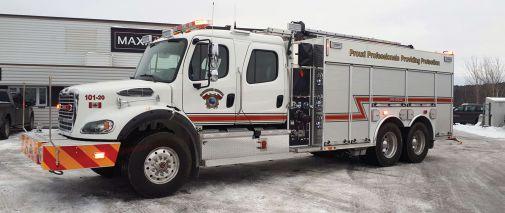
This 2500-IG pumper-tanker was built on a Freightliner 4-door M2-112 chassis with a 450 HP engine. The apparatus is equipped with a 1250 IGPM pump mounted in the Maxi PARAGON pumphouse, FoamPro 2002, the TITAN system for ladders, suction tubes and a portable tank.
DEPARTMENT: Clearwater Regional Fire Rescue Services, Alberta
MAXIMETAL PARAGON-TME PUMPER | COMMERCIAL EMERGENCY EQUIPMENT
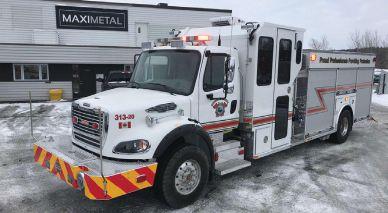
This 750-IG top-mount-enclosed pumper, built on a Freightliner 2-door M2-112 chassis with a 450 HP engine is equipped with a 1250 IGPM pump mounted in the Maxi PARAGON pumphouse. Features include FoamPro 2002, enclosed crew cab for 3 additional firefighters and an EMS cabinet.
DEPARTMENT: Clearwater Regional Fire Rescue Services, Alberta
MAXIMETAL PIC-TANKER | COMMERCIAL EMERGENCY EQUIPMENT
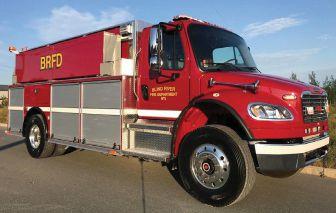
This Maxi 2000-IG PIC tanker is only 27’ 8” long with a 200-inch wheelbase. This truck is built on a Freightliner 2-door M2-106 chassis and has a 360 HP engine. Features include a 1050 IGPM pump mounted in the forward compartment, transverse speedlays at the pump panel and hydraulic rack for the portable tank.
DEPARTMENT: Blind River Fire Department, Ontario
PUMPER/ RESCUE | HUB FIRE
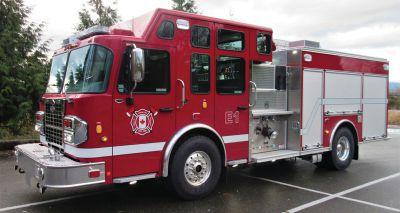
Built on a Spartan Metro Star with a Cummins L9 450 HP engine and Allison EVS 3000 transmission, this apparatus includes a Hale QMax-XS pump rated at 1,500 IGPM, FoamPro 2001 foam system, Akron Deckmaster Monitor, Akron Valves, Checkerplate hosebed covers, 950 IG water tank and a 20 IG foam tank, roof compartments, and a Zico overhead ladder rack.
DEPARTMENT: Charlie Lake Fire Rescue, British Columbia
MAXIMETAL PIC-TANKER | COMMERCIAL EMERGENCY EQUIPMENT
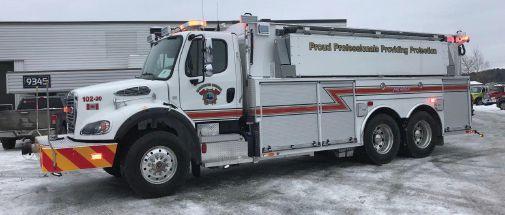
This Maxi 3000-IG PIC tanker was built on a Freightliner 2-door M2-112 chassis with 450 HP engine equipped with a 1050 IGPM pump mounted in the forward compartment and a bumper monitor.
DEPARTMENT: Clearwater Regional Fire Rescue Services, Alberta
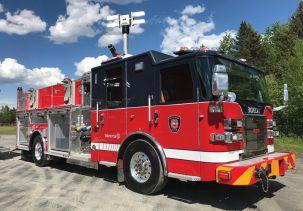
This MAXI Saber 440-IG custom pumper apparatus was built on a Pierce custom chassis with a 450 HP engine, and is equipped with a 6000 LPM midship pump, Hale Smartfoam foam system, New-York-style low hosebed, hydraulic ladder rack and a Will-Burt light tower. (21 of 35 trucks delivered)
DEPARTMENT: SIM (Montreal Fire Department), Quebec
MAXIMETAL PIC-TANKER | COMMERCIAL EMERGENCY EQUIPMENT
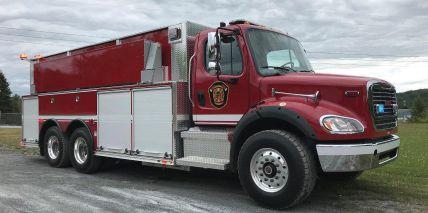
only
built on a Freightliner 2-door M2-112
a
and has a 450 HP
truck
a 1050 IGPM pump mounted in the forward compartment, features include transverse speedlays at the pump panel and hydraulic rack for the portable
DEPARTMENT: North Grenville Fire Service, Ontario

2 Medicorum Place
Waterdown ON L8B 1W2
Tel: 800-668-8323
Toll free: 800-668-8323
Fax: 877-247-7925
Company Email: emergencycare_canada@stryker.com
Web: www.strykeremergencycare.com/products/emsmilitary
Stryker is one of the world’s leading medical technology companies and, together with our customers, we are driven to make healthcare better. We offer medical products and services across several divisions that help improve patient and hospital outcomes, including automated external defibrillators (LIFEPAK CR2 Defibrillator) and mechanical CPR devices (LUCAS 3 Chest Compression System).
Our Canadian division was incorporated in 1990 and provides products and services that add value to the efforts of medical professionals and aid in the delivery of quality health care to Canadians. We have an energetic and committed team supporting customers across the country including direct sales and service for Atlantic Canada. Our Canadian office is headquartered in Waterdown, Ontario.
3842 Redman Dr. Fort Collins CO 80524
Tel: 970-297-7100
Toll free: 888-784-1112
Fax: 970-297-7099
Company Email: info@svitrucks.com
Web: www.svitrucks.com
SVI Trucks, a Super Vacuum Manufacturing Company located in Fort Collins, Colo., builds custom fire apparatus, including rescue trucks, hazmat units, command vehicles, fire engines, tanker trucks, law enforcement vehicles and more. To see SVI’s full fleet, visit svitrucks.com. To browse drawings, features and specifications of a truck, visit SVI’s Apparatus pages and click on any truck image.
TECHNO FEU - 1200°
105 Route Marie-Victorin
Saint-François-du-Lac QC J0G 1M0
Tel: 450-568-2777
Toll free: 888-568-2777
6450 Eiterman Road
Dublin OH 43016
Tel: 800-726-7030
Web: www.sutphen.com
As a family-owned and operated business of over 130 years, Sutphen Corporation’s mission is to build the safest, most reliable fire apparatus in the world through innovation and customer focus.
Fax: 450-658-0211
Company Email: info@1200-degres.com
Web: www.1200-degres.com
Distributors of E-ONE fire trucks for Eastern Ontario, Quebec and Atlantic Canada, Techno Feu enjoys a reputation that goes beyond the brand it sells.
Our experienced sales team is able to understand our clients’ needs and guide them towards their best possible option.
Our service center is the largest in Eastern Canada and our parts department stocks over $1M in inventory, meaning that your truck is out of our repair shop and back in service faster.
We provide peace of mind so you can focus on doing your job: saving lives.
WATERAX INC.
6635 Henri-Bourassa W.
Montreal QC H4R 1E1
Tel: 514-637-1818
Toll free: 855-616-1818
Company Email: info@waterax.com
Web: www.waterax.com
Trusted by wildland firefighters around the world, WATERAX sets the industry standard by developing innovative, portable fire pumps and water-handling equipment designed to withstand demanding applications and rugged environments. With a timetested legacy of reliability, WATERAX carries on its mission to place powerful, precision engineered pumps into the hands of the men and women who need to move water to protect our forests and most cherished natural resources from the ravages of wildfires!
WATEROUS COMPANY
125 Hardman Ave. S.
South St. Paul MN 55075
Tel: 651-450-5000
Fax: 651-450-5090
Company Email: info@waterousco.com
Web: www.waterousco.com
C.H. Waterous started Waterous Engine Works Company in 1844 in Brampton, Ontario and then expanded to South St. Paul, Minnesota in 1886. Since then, Waterous has been the leader in the manufacturing of fire pumps for our everyday heroes. At Waterous, we have been and always will be firefighters.

ZIAMATIC CORP. (ZICO)
10 West College Ave., PO Box 337
Yardley PA 19067-8337
Tel: 215-493-3618
Toll free: 800-711-3473
Fax: 866-493-1401
Company Email: sales@ziamatic.com
Web: www.ziamatic.com
For over 50 years, Ziamatic Corp. has provided first responders with the tools and equipment they need to make their jobs safer, easier, and more efficient every day. If you want quality, you want ZICO.
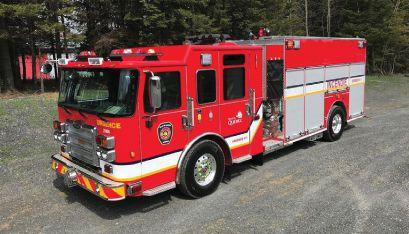
This MAXI Enforcer 672-IG custom pumper apparatus built on a Pierce custom chassis with a 450 HP engine is equipped with a 1250 IGPM pump mounted in the Maxi PARAGON pumphouse. Features include FoamPro 3012 A & B foam system, a hydraulic generator, booster reel and Command Light light tower.
DEPARTMENT: SPCIQ (Québec City Fire Department), Quebec
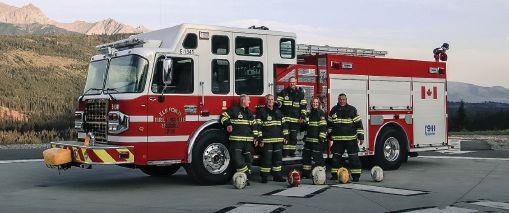
Where “wilderness” remains core to community tradition, Elkford Fire Rescue welcomed this fire truck featuring a Spartan Metro Star chassis with a Cummins ISL 9 450 HP engine powered by an Allison EVS 3000 transmission. A Waterous CS-1500 single stage pump, 835 IG water, 20 IG foam with a FoamPro 2002 single agent foam system serves nearly 3,000 residents.
DEPARTMENT: Elkford Fire Rescue, British Columbia
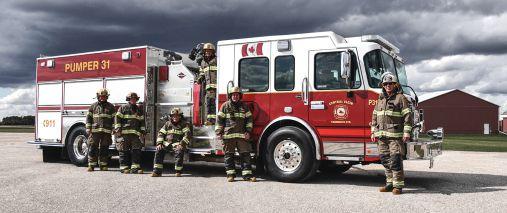
Central Elgin Fire Rescue Services introduced a new member to their fleet featuring a Spartan Gladiator chassis with a Cummins L9 450 HP engine powered by an Allison 3000 EVS transmission. Over 12,000 residents are served by a Hale QMAX-2000 single stage pump, 1250 IG water, 30 IG foam with a Hale/Class 1 SmartFOAM Ultraview 2.1 foam system.
DEPARTMENT: Central Elgin Fire Rescue Services, Ontario
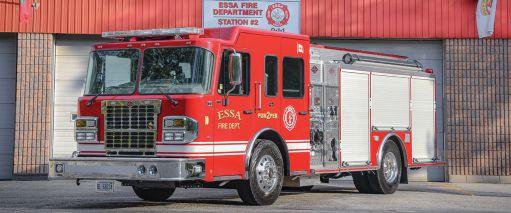
This Spartan Metro Star chassis with a Cummins L9 380 HP engine powered by an Allison 3000 EVS transmission is now home to a place “Where Town and Country Meet”. Features include a Hale DSD-1500 single stage pump, 840 IG water, and is pre-plumbed for future foam.
DEPARTMENT: Township of Essa Fire Department, Ontario
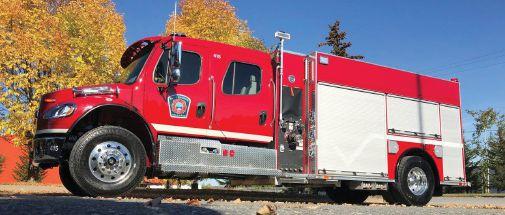
This Maxi 1400-IG pumper-tanker was built on a Freightliner M2-106, 4-door chassis with 360 HP engine and is equipped with a 1050 IGPM pump mounted in the Maxi PARAGON pumphouse, FoamPro 2001, the TITAN system for ladders, suction tubes and a portable tank.
DEPARTMENT: SSI Vallée de la Rouge, Quebec
SPARTAN ER REAR MOUNT CUSTOM PUMPERS |
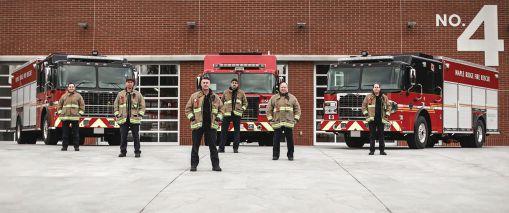
Situated in the diverse natural setting of Maple Ridge, the department introduced two Spartan ER rear mount custom pumpers. Manufactured on a Spartan Gladiator chassis with Cummins X12 500 HP engines and powered by Allison 4000 EVS transmissions, these pumpers feature Hale RME-2250 single stage pumps, 500 IG water, two 25 IG foam tanks with two FoamPro 2001 foam systems.
DEPARTMENT: Maple Ridge Fire & Rescue Services, British Columbia
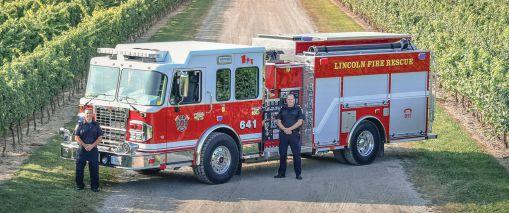
Serving in the heart of the Niagara Region, Lincoln Fire Rescue welcomed another Smeal side mount custom pumper to their department. Built on a Spartan Metro Star chassis with a Cummins L9 450 HP engine powered by an Allison 3000 EVS transmission. Featuring a Waterous CSU-2000 single stage pump, 840 IG water, and 25 IG foam with a FoamPro 2001 single agent foam system.
DEPARTMENT: Lincoln Fire Rescue, Ontario
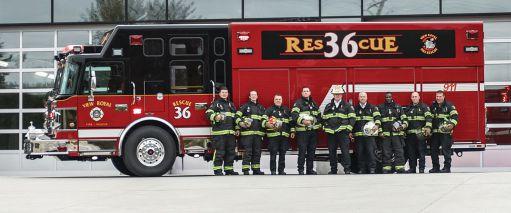
Committed to providing the highest level of service, View Royal Fire Rescue upgraded their fleet with this Spartan Metro Star chassis with a Cummins L9 450 HP engine powered by an Allison EVS 3000 transmission. Firefighter safety was front of mind and was designed with a traffic flow board to mitigate distracted drivers.
DEPARTMENT: View Royal Fire Rescue, British Columbia
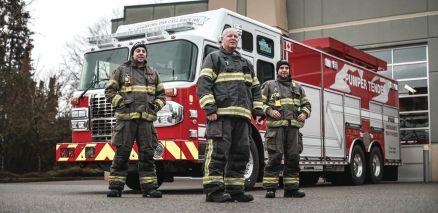
Serving a community of more than 6,000 residents, Northern Rockies Fire Rescue welcomed this Spartan Gladiator chassis with a Cummins X15 600 HP engine powered by an Allison EVS 4500 transmission. This tanker/pumper is equipped with a Waterous CSU-2250 single stage pump, 2700 IG water, two 50 IG foam and a Waterous Eclipse 200 CFM CAFS dual agent foam system.
DEPARTMENT: Northern Rockies Fire Rescue, British Columbia
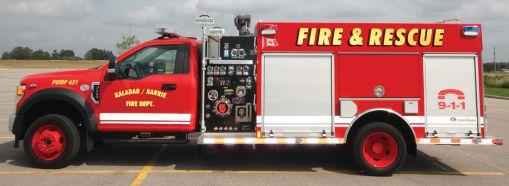
Built on a Ford F550 2-door chassis with a 330 HP engine and Torqshift 10-speed transmission, this Rosenbauer FX body has a Hale DSD 1050 IGPM pump, FRC TGA 300 pressure governor, 319 G water tank, Cobra EXM monitor with wireless remote, Whelen lighting package including scene lighting, FRC Spectra telescopic lights, enclosed ladders, suction hose and aluminum hosebed covers.
DEPARTMENT: Addington Highlands, Ontario
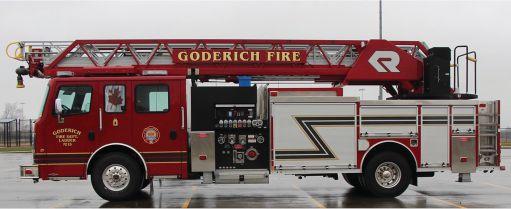
Built on a Commander 4000 chassis with a 11” raised roof and 60” cab and powered by a Cummins L9 450 HP engine and Allison EVS 3000 transmission, this Rosenbauer FX body has a Rosenbauer N 1500 GPM pump, FRC TGA 300 pressure governor, 300 G water tank, 100-foot four section Smart aerial with wireless controls, galvanized frame, outriggers, torque box and aerial with one (1) Elkhart Cobra monitor.
DEPARTMENT: Town of Goderich, Ontario
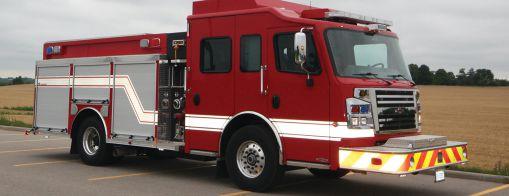
Built on a Commander 4000 chassis with a 11” raised roof and 60” cab and powered by a Cummins L9 400 HP engine and Allison EVS 3000 transmission, this Rosenbauer FX body has a Waterous CXVK PTO 5000 LPM pump, Pump Boss 400 pressure governor, 500 IG water tank, gated intakes, FoamPro 2002 foam system, Whelen emergency warning light package and scene lighting, FRC Evolution LED brow light, aluminum hosebed covers, enclosed ladder and suction hose storage.
DEPARTMENT: City of Waterloo, Ontario
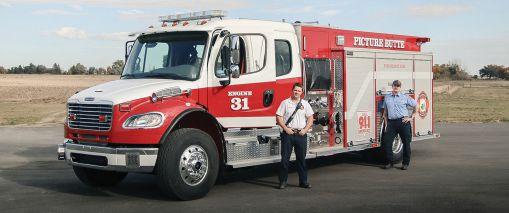
In the “picture perfect” community of Picture Butte, the department accepted delivery of this pumper built on a Freightliner M2 106 chassis with a Cummins L9 350 HP engine powered by an Allison EVS 3000 transmission. This truck features a Hale RSD1250, 740 IG water, 35 IG foam tank with a FoamPro 2001 single agent foam system, and was proudly built in Canada.
DEPARTMENT: Picture Butte Emergency Services, Alberta
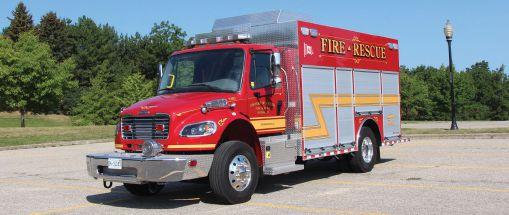
Built on a Freightliner M2-106 2-door chassis with a Cummins L9 330 HP engine and Allison EVS 3000 transmission, this Rosenbauer FX body has a Whelen lighting package including scene lighting and traffic advisor, Federal Signal Q2B siren, Command Light tower complete with Spectra LED lights. The walk-in portion includes bench seating with compartment storage.
DEPARTMENT: Township of Norwich, Ontario
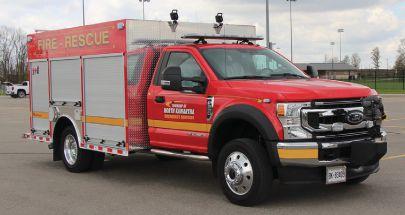
Built on a Ford F550 2-door chassis with a 330 HP engine and Torqshift 10-speed transmission, this Rosenbauer FX body has a Rosenbuaer NH 1000 GPM pump, FRC TGA 400 pressure governor, 300 G water tank, front bumper mounted Elkhart Sidewinder monitor, Fix Mix HP Foam System, FoamPro LP foam system, Whelen lighting package including scene lighting and enclosed ladders storage.
DEPARTMENT: North Kawartha, Ontario
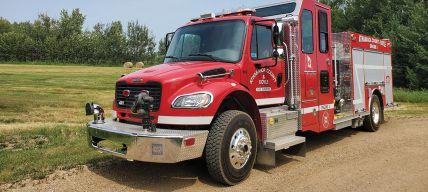
Built on a 2020 Freightliner cab and chassis, this top mount enclosed pumper with a Rosenbauer 1/8” aluminum CT body includes a Rosenbauer NH 1250 IGPM dual pressure fire pump, 900 IG water tank and 16 IG foam cell, Rosenbauer FIXMIX high pressure foam system, Fire Research TurboFoam - normal pressure foam system, Elkhart Sidewinder front bumper monitor, 1” high pressure booster reel with electric rewind Hannay reel and 130-degree Fire Research in View True sight camera system.
DEPARTMENT: Boyle Fire Services, Athabasca County
TOP MOUNT ENCLOSED PUMPER | ROCKY MOUNTAIN PHOENIX
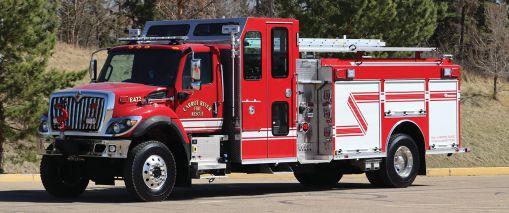
Built on a 2020 International 4 X 4 HV 507 cab and chassis, this top mount enclosed pumper with a Rosenbauer FX 3/16” aluminum body includes a Waterous CXK PTO drive fire pump with pump and roll capability, Elkhart Sidewinder bumper turret, booster reel with a 150’ Hose, FoamPro 1600 foam system, UPF Poly Tank 800 IG W/ 20 IG foam cell, Rosenbauer EZ Climb access ladder and Rosenbauer hydraulic ladder rack.
DEPARTMENT: Town of Carrot River Fire Rescue, Saskatchewan
| ROCKY MOUNTAIN PHOENIX
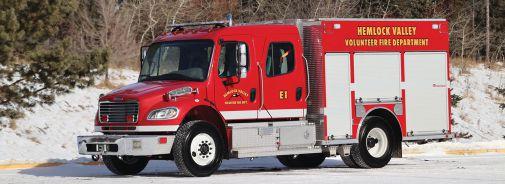
Built on a Freightliner M2 106 cab and chassis with a 330 HP Cummins L9 engine and a Rosenbauer FX 1/8” aluminum body, this pumper includes a Rosenbauer 1050 IGPM NH dual pressure fire pump with pump and roll capability, Rosenbauer high pressure FIXMIX foam system, a high-pressure booster reel with a 150’ hose, FoamPro 1600 Class A foam system, 500-G water tank with 30-G foam cell, Whelen warning light package, aluminum hosebed covers and a 16” front bumper extension with 12,000lb Warn winch.
DEPARTMENT: Hemlock Valley Fire Department, Fraser Valley Regional District, British Columbia
COYOTE REAR MOUNT PUMPER | ROCKY MOUNTAIN PHOENIX
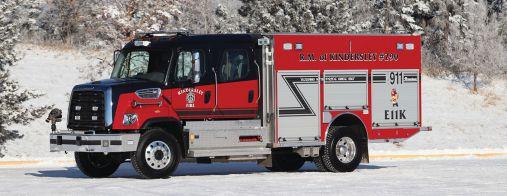
Built on a Freightliner 108 SD 4x4 cab and chassis with a Cummins L9 400 HP engine and a Rosenbauer FX 3/16” aluminum body, this pumper features a Rosenbauer NH 5000 LPM dual pressure pump with pump and roll capability, rear mounted pump design with Elkhart handwheel valve controls, Rosenbauer FIXMIX high pressure foam system, FoamPro 1600 Class A foam system, dual high-pressure booster reels, Elkhart Sidewinder front bumper turret, ground sweep nozzles with a 750-G water tank and 20-G foam cell.
DEPARTMENT: Kindersley Fire Department, Saskatchewan
PUMPER | ROCKY MOUNTAIN PHOENIX
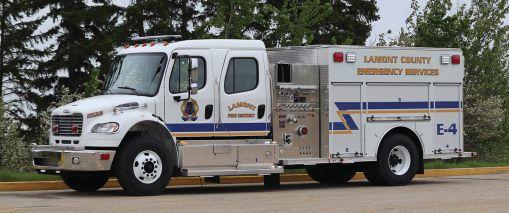
Built on a 2021 Commercial Freightliner M2-106 4-door cab and chassis with a Rosenbauer 1/8” FX aluminum body, this pumper includes a 840 IGPM Waterous fire pump, 1000 IG water tank and 15 IG foam cell, Whelen warning and scene light package, Fire Research PBA-400 pressure governor, Rosenbauer EZ-Climb ladder, Whelen Electric Siren and Control and AMDOR roll up doors.
DEPARTMENT: Lamont County Emergency Services, Alberta
TOP MOUNT ENCLOSED PUMPER | ROCKY MOUNTAIN PHOENIX
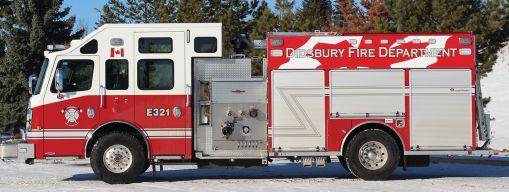
Built on a Rosenbauer Commander custom Chassis with 24” raised roof and powered by a Cummins L9 450 HP engine and an Allison EVS 3000 transmission, this truck features a Rosenbauer FX 1/8” aluminum body, Rosenbauer N Pump 6000Lpm, 1500G water tank with 50-G foam tank, left, right and rear traffic advisors, 5” intake front bumper with 90-degree swivel, 1250 GPM TFT Hurricane remote controlled monitor, FoamPro 2002 foam system and Rosenbauer hydraulic ladder rack.
DEPARTMENT: Didsbury Fire Department, Alberta
TOP MOUNT ENCLOSED PUMPER | ROCKY MOUNTAIN PHOENIX
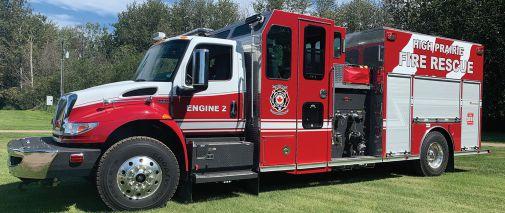
Built on a Commercial International MV607 4-door cab and chassis with a Rosenbauer 3/16” aluminum CT Body, this pumper includes a Rosenbauer NH 1250 GPM dual pressure fire pump, 745 IG water tank with a 25 IG Class A foam tank, Rosenbauer FIXMIX foam system, with high pressure side, a high pressure 1” booster reel, FoamPro 1600 foam system with normal pressure side.
DEPARTMENT: High Prairie Fire Department, Alberta
4 PUMPERS | ROCKY MOUNTAIN PHOENIX
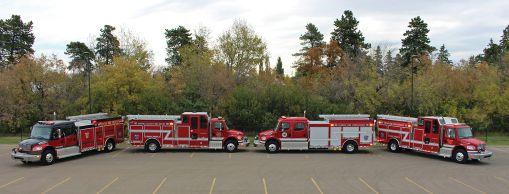
These Rosenbauer top mount enclosed pumpers (2) and Rosenbauer side mount pumpers (2) feature Rosenbauer FX 3/16 aluminum bodies. Additional features include Rosenbauer NH 5000PLm pump and roll, Class A FoamPro foam systems, Rosenbauer FIXMIX foam systems, Xantrex 1800 w inverter with 30 amp transfer switch, 900 IG water tank, Rosenbauer EZ-climb ladder and hydraulic ladder rack.
DEPARTMENT: Acme Fire Rescue, Torrington Fire Dept., Carbon Fire Dept. & Trochu Fire Dept., Kneehill County, Alberta
COYOTE FX REAR MOUNT URBAN INTERFACE PUMPER | ROCKY MOUNTAIN PHOENIX
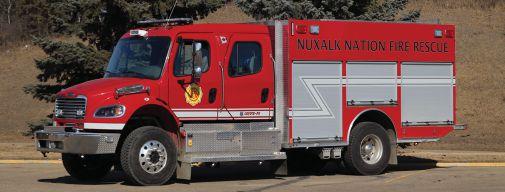
Built on a 2020 Freightliner M2 106 crew cab and chassis with a Cummins L9 330 HP engine and Allison 3500 EVS automatic transmission, features include a Rosenbauer NH-5000 dual pressure fire pump with PTO pump and roll capability, 750 IG water tank with a 20 IG Class “A” foam cell and a Rosenbauer FIXMIX high pressure foam system, Whelen LED warning light package and TFT Tornado front bumper monitor. An Akron 3440 Deck Master with remote controls was added to provide master stream capability.
DEPARTMENT: Nuxalk First Nation, Vancouver Island, BC
RESCUE TRUCK WITH CREW/ COMMAND AREA | ROCKY MOUNTAIN PHOENIX
Built on a 2020 Freightliner M2 106 chassis with a Cummins L9 350 HP engine and Allison 3000 EVS transmission, features include a Rosenbauer 3/16 aluminum body and crew/ command area with four SCBA seats and IMMI Smart Doc SCBA brackets. Rosenbauer’s swing out stair system allows easy access into the crew/command area with a “wall to wall” flat floor. This rescue also has coffin storage compartments, an Onan 25kW PTO generator, Command Light tower, 200’ cord reel and various onboard receptacles. A 12,000lb Warn winch is mounted in the 12” extended front bumper.
DEPARTMENT: Town of Moosomin, Saskatchewan
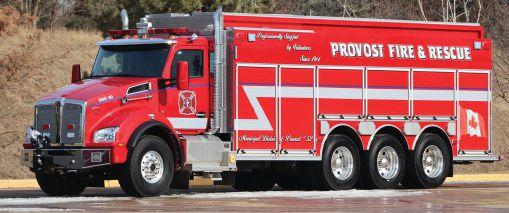
Built on a Kenworth T880 Chassis with a Cummins X15 600 HP engine and Allison 4500 EVS transmission. Additional features include a Rosenbauer NH 1250 GPM dual pressure fire pump, 4800-G water tank, TFT Tornado front pumper turret, front and rear ground sweeps, rear Newton Electric dump valve, Rosenbauer FIXMIX HP foam system and a FoamPro 1600 foam system.
DEPARTMENT: M.D. of Provost Fire and Rescue, Alberta
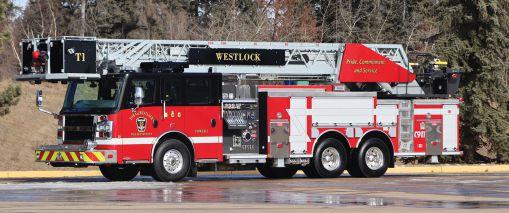
This104’ Cobra platform is built on a Rosenbauer Commander cab and chassis and Rosenbauer 1/8” FX aluminum body construction with a Cummins X12 500 HP engine and Allison 4000 EVS transmission. Additional features include a Waterous 1250 GPM fire pump, 400 IG water tank, Rosenbauer Smart Aerial Technology with joystick controls and wireless remote for aerial operations.
DEPARTMENT: Town of Westlock Fire and Emergency Services, Alberta
Built on Freightliner M2-106 single axle cab and chassis with a Cummins L9 350 HP engine and Allison EVS 3000 transmission. Additional features include a 1000 IG water tank, Rosenbauer 1/8” CT modular aluminum body, Arctic insulation package and ladder, suction and pike pole storage in an enclosed tunnel with aluminum access door and Whelen LED warning and scene light package.
DEPARTMENT: Tulita Fire Department, Northwest Territories
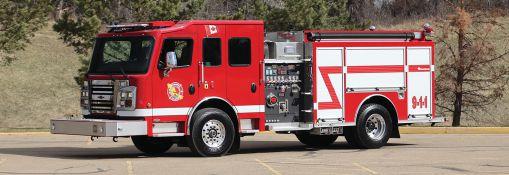
Built on a Rosenbauer Warrior Custom cab and chassis with a 54” cab with 8” raised roof and Rosenbauer CT Modular 1/8” aluminum body, additional features include hot dip galvanized frame rails and galvanized body subframe, Waterous 1250 GPM single stage pump with flame plated impeller hubs, Rosenbauer MaxForce bumper with 24” extension and 1.5” discharge, Hosewell, Akron 3440 remote control deck gun with panel and corded remote controls, 1000 gallon poly tank, 20 gallon foam cell and FoamPro 1600 Class A system.
DEPARTMENT: Pender Island Fire Department, Capital Regional District, British Columbia
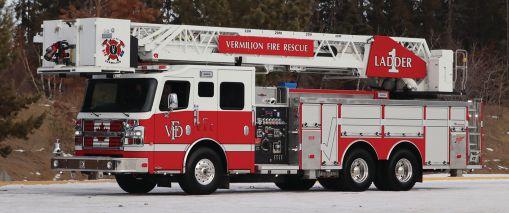
This 104’ Cobra platform is built on a Rosenbauer Commander cab and chassis and Rosenbauer 1/8” FX aluminum body construction with a Cummins X12 500 HP engine and Allison 4000 EVS transmission. Additional features include a Waterous 1250 GPM fire pump, 400 IG water tank, self-levelling outriggers, Rosenbauer Smart Aerial Technology with joystick controls and wireless remote for aerial operations.
DEPARTMENT: Town of Vermilion Fire Department, Alberta
COYOTE REAR MOUNT PUMPER | ROCKY MOUNTAIN PHOENIX
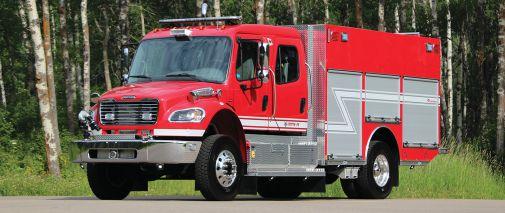
Built on a 2020 Freightliner M2 106 crew cab and chassis with a Cummins L9 330 HP engine and Allison 3500 EVS automatic transmission, features include a Rosenbauer NH-5000 dual pressure fire pump with PTO pump and roll capability, a 750 IG water tank with a 20 IG Class “A” foam cell and a Rosenbauer FIXMIX high pressure foam system, Whelen LED warning light package and TFT Tornado front bumper monitor.
DEPARTMENT: Benito Fire Department, Manitoba
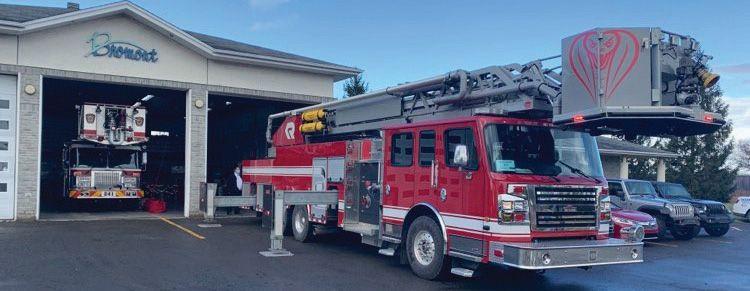
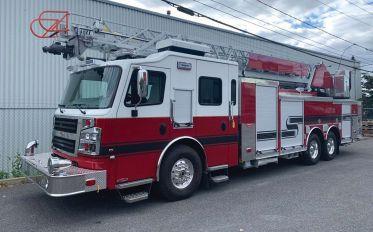
DEPARTMENT:
BY VINCE MACKENZIE Fire Chief Grand Falls-Windsor Newfoundland and Labrador
had the privilege to be involved with the Canadian Association of Fire Chiefs (CAFC) Great Canadian Volunteer Firefighter Census this past summer. Our CAFC Answer the Call committee of firefighters serving from across the country commissioned the census as a fresh new jumping off point and a tool to have a full understanding of the strength and makeup of volunteer fire services across this country. The census day was April 30 and we asked volunteer fire departments to provide data based on that day specifically in the life of their department.
The results are in from the 1143 volunteer and composite fire departments who sent in data. Of these, 54 per cent were totally volunteer and 46 per cent were composite fire departments comprising of some full-time or part-time paid staff. Our survey revealed, to no-one’s surprise, that the number of volunteer firefighters in Canada have declined. What we didn’t know was by how much. It was once reported in 2016 that there were 126,000 volunteer firefighters in our country. If those numbers were accurate, the current data measured a decline in that there are just 99,919 volunteer firefighters determined this year. If those numbers are correct, we have potentially lost onefifth of the volunteer base in just five years.
The survey reported that there are approximately 11,000 female volunteers in our fire departments, making up 11 per cent of our volunteer fire fighting workforce, indicating that we have a way to go to increase gender diversity in our fire service and we would be wise to target this demographic for continued recruiting success.
The census showed that 32 per cent of Canada’s volunteer fire service is over the age of 50. We found that 31,500 members are in that age bracket. So along with the aging population as a whole, and speaking to generation gaps, we have an aging fire service as well. This highlights recruitment challenges ahead to find younger volunteers in decades ahead to fill the spots.
in larger urban centres.
In relation attendance, 75 per cent of firefighters meet the call and training attendance expectations of their respective fire department. Sadly, it shows that 25 per cent don’t meet attendance requirements and therefore grows the challenge of staffing engagement when the workforce we have suffers with too little time available to fully participate.
There were many other data sets in the survey conducted. Some included the definition of a volunteer firefighter and the types of services now provided by volunteer and composite departments other than fire fighting. The vacancy rate of fire fighting positions not recruited in departments was also measured. Moving forward there is still much work to be done; I have highlighted only a few statistics, more data was collected, but to highlight it all in one page column is difficult. Watch for future issues and we will openly communicate all the data on the CAFC website.
The CAFC will to repeat the census in 2022 to improve the response rate and to monitor current data. Please ensure your fire department is counted on Census day 2022. CAFC will also be rein-
The cost efficient volunteer fire service is declining while being expected to expand specialized emergency services in our communities. ‘‘ ’’
The total number of organized fire departments in Canada is down from 3500 in 2016 to 3200 in this year. This is probably due to regionalization of departments and I’m sure in some cases smaller departments cease to exist or had gotten swallowed up by larger composite full-time services and morphed into full time career departments
Vince MacKenzie is the fire chief in Grand Falls-Windsor, N.L. He is an executive member of the Canadian Association of Fire Chiefs and the past president of the Newfoundland and Labrador Association of Fire Services. Email Vince at firechief@townofgfw.com and follow him on Twitter at @FirechiefVince.
vigorating the Answer the Call recruitment program and campaign to assist departments in recruitment efforts.
In summary, the lessons of this story have to be for our three levels of government to be aware of some sobering facts. The cost efficient volunteer fire service is declining while being expected to expand specialized emergency services in our communities. Even greater support of Canada’s fire services in general has to be a focus of this newly elected federal government. The enhanced safety of citizens, firefighters, and the environment depend on all our greater advocacy not only in reactive fire protection but in proactive public education, emergency preparedness and management, and the effect of climate. Coming from PAST NORMAL we tend to call this a NEW NORMAL, I believe we are in the NOW NORMAL. The numbers and data have proven it.
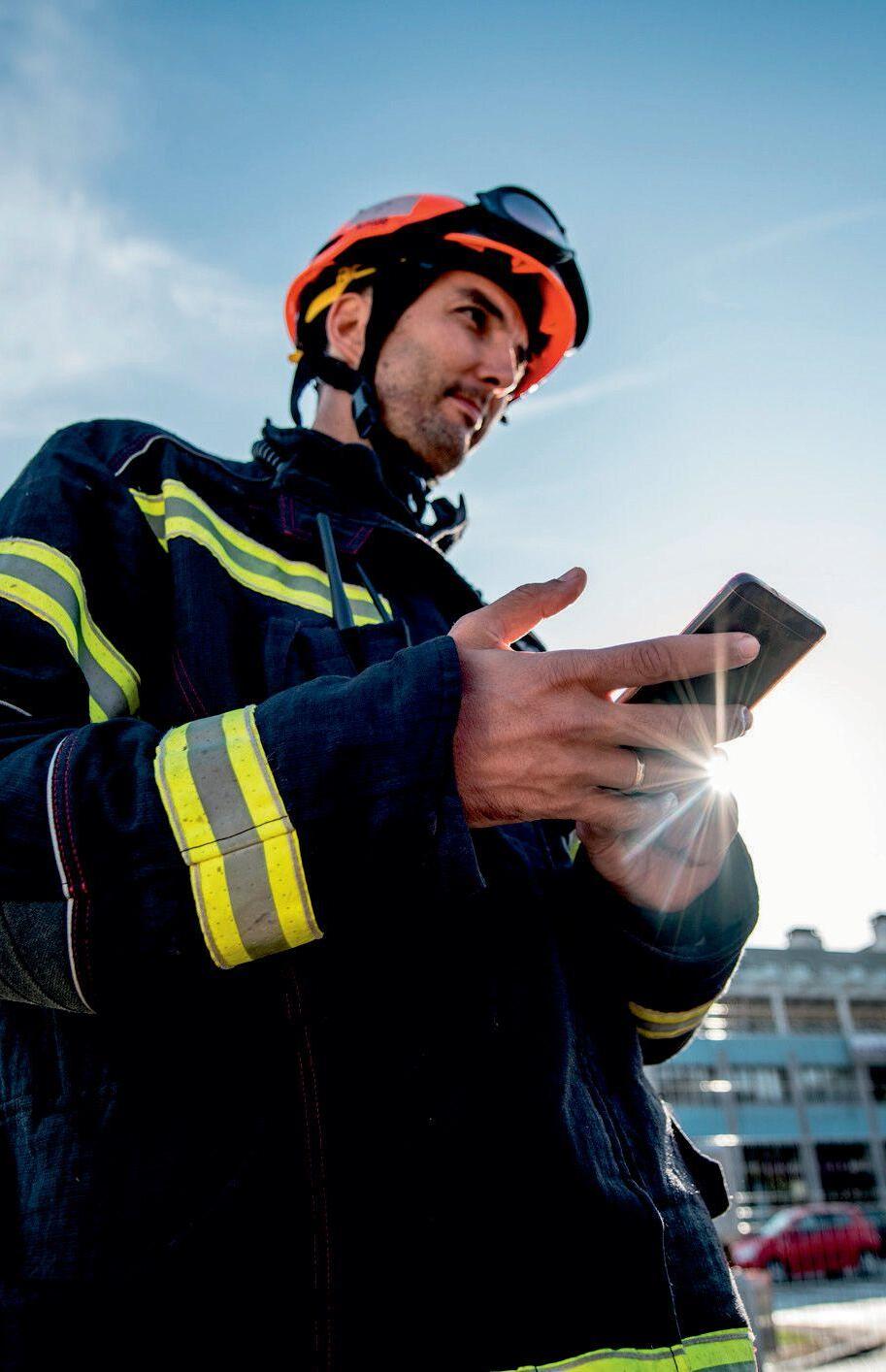
We pondered for a long time why this critical sector has lagged behind when it comes to digitization and automation of processes. We saw the same manual routines, and random inefficient document management everywhere. –So we decided to do something about it.
Now, we have made professional applications as user-friendly and efficient as entertainment apps.
Cubit Fire is an ‘end to end’ solution for fire inspections and related processes. Developed in close cooperation with fire departments.
Cubit Fire integrates with the rest of your eco-system and offers unparalleled user experience and performance.
In October our associates will start reaching out to you. Take our call and we will donate 25 dollars to our friends at Firefighter Cancer Support.
Cubit Fire – Developed in close cooperation with ire ighters






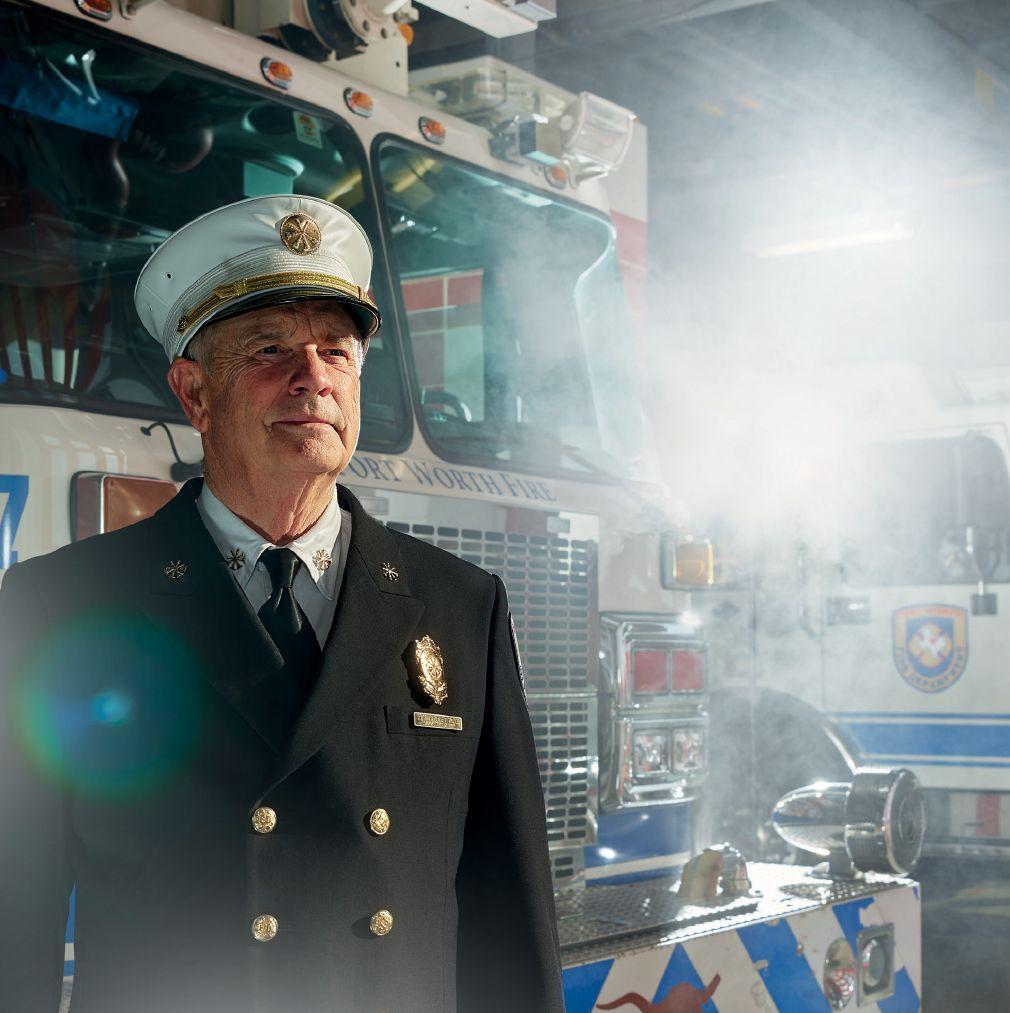









Working under pressure, in a race against the clock, first responders need equipment they can fully rely on. It is for these men and women that we have developed our new Pentheon Series: High-tech rescue tools that are miles ahead of all other equipment on the market, cordless and hose tools alike.



Only the Holmatro Pentheon Series offers you the unrestrained performance, unparalleled speed and ultimate control you’ve never experienced before.