WE INNOVATE EVERY DAY. e-one.com
WE INNOVATE EVERY DAY. e-one.com

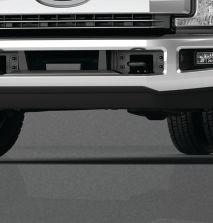
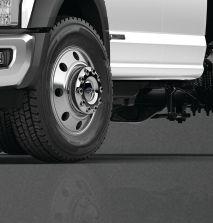
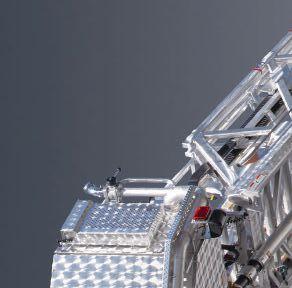
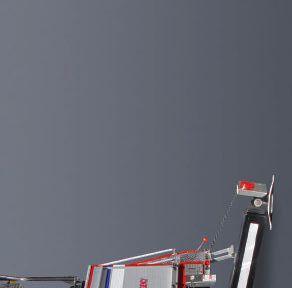
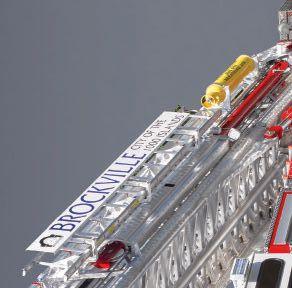
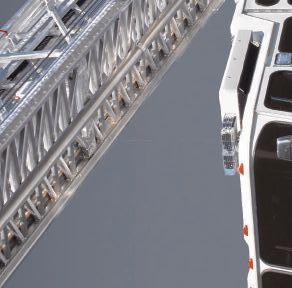
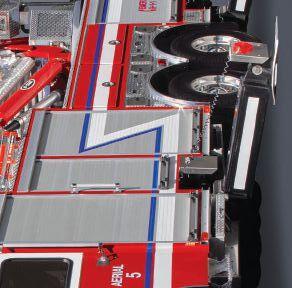
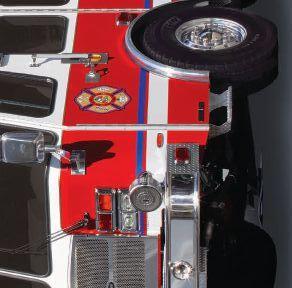
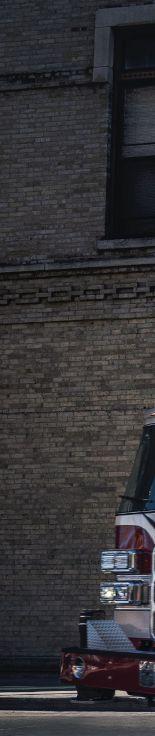
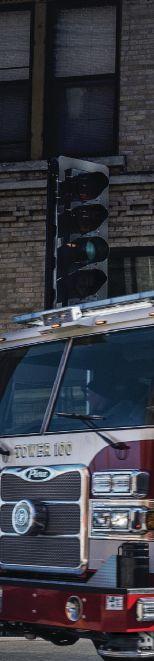
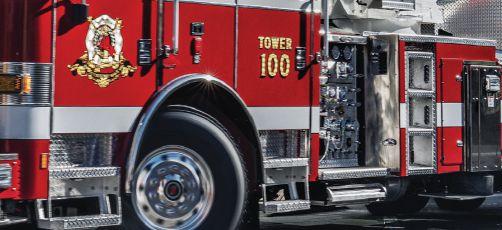
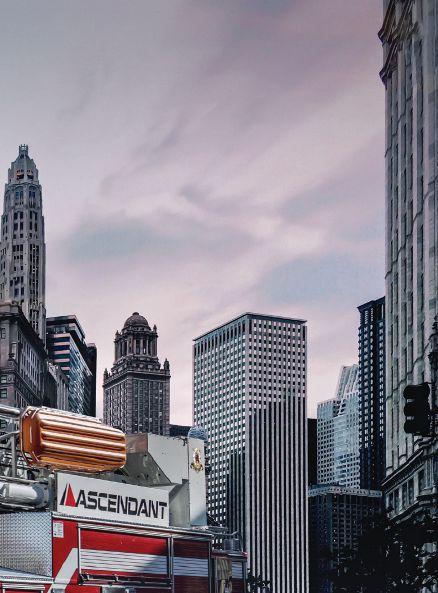
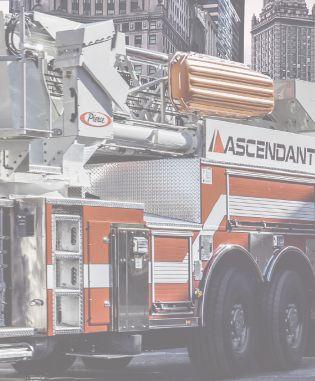
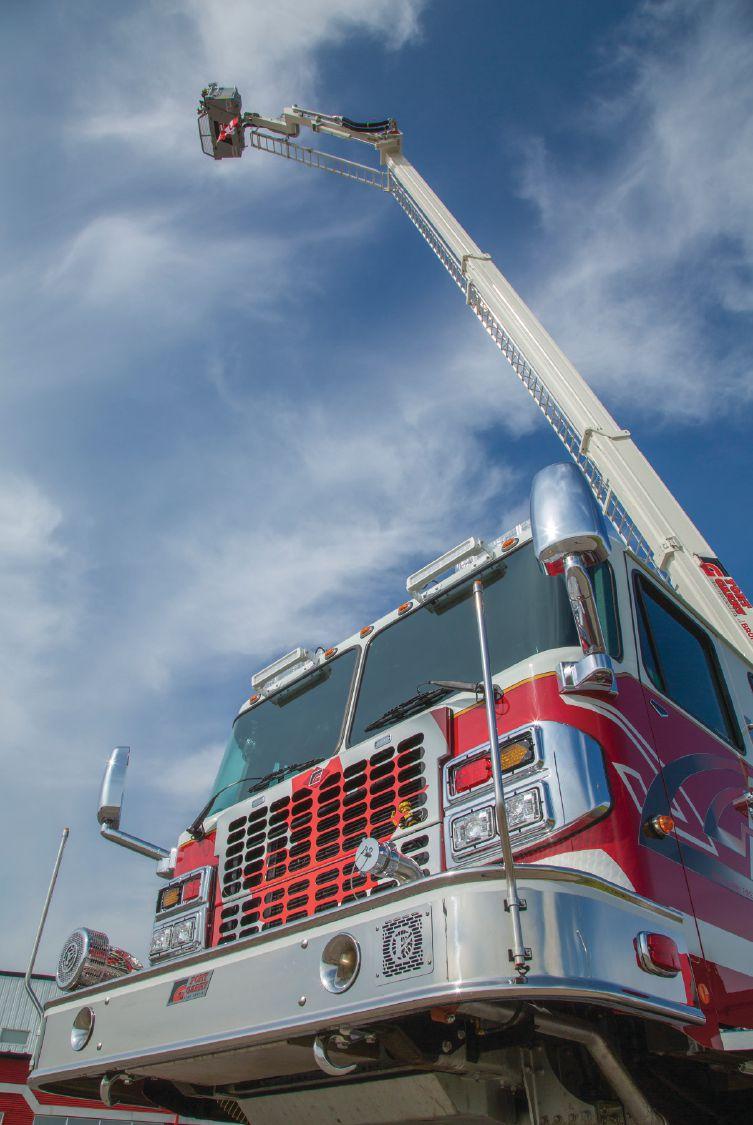
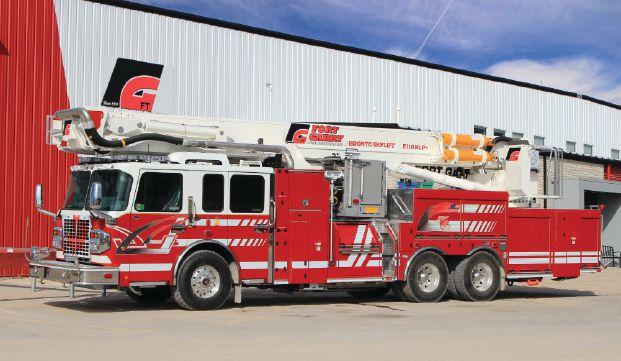
The E-ONE HP 100 Platform looks like a rock solid beast. And it acts like one too. This aerial, with a 2.5 to 1 structural safety factor is 25% stronger than NFPA requires. But this rig isn’t just a powerhouse, it’s also versatile. With crisscross under-slung outriggers that deploy to a tight 15’6” spread, the HP 100 Platform can go where other aerials can’t. Whatever the job calls for, the E-ONE HP 100 Platform is up to the task!
For more info, please visit: e-one-aerials.com/hp-100-platform-truck


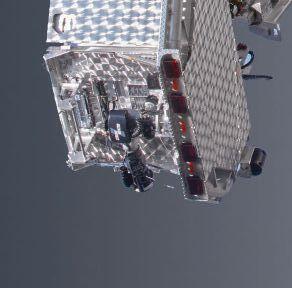
RESCUE STYLE COMPARTMENTS
2.5 TO 1 STRUCTURAL SAFETY FACTOR CRISSCROSS UNDER-SLUNG OUTRIGGERS DEPLOY IN UNDER 45 SECONDS






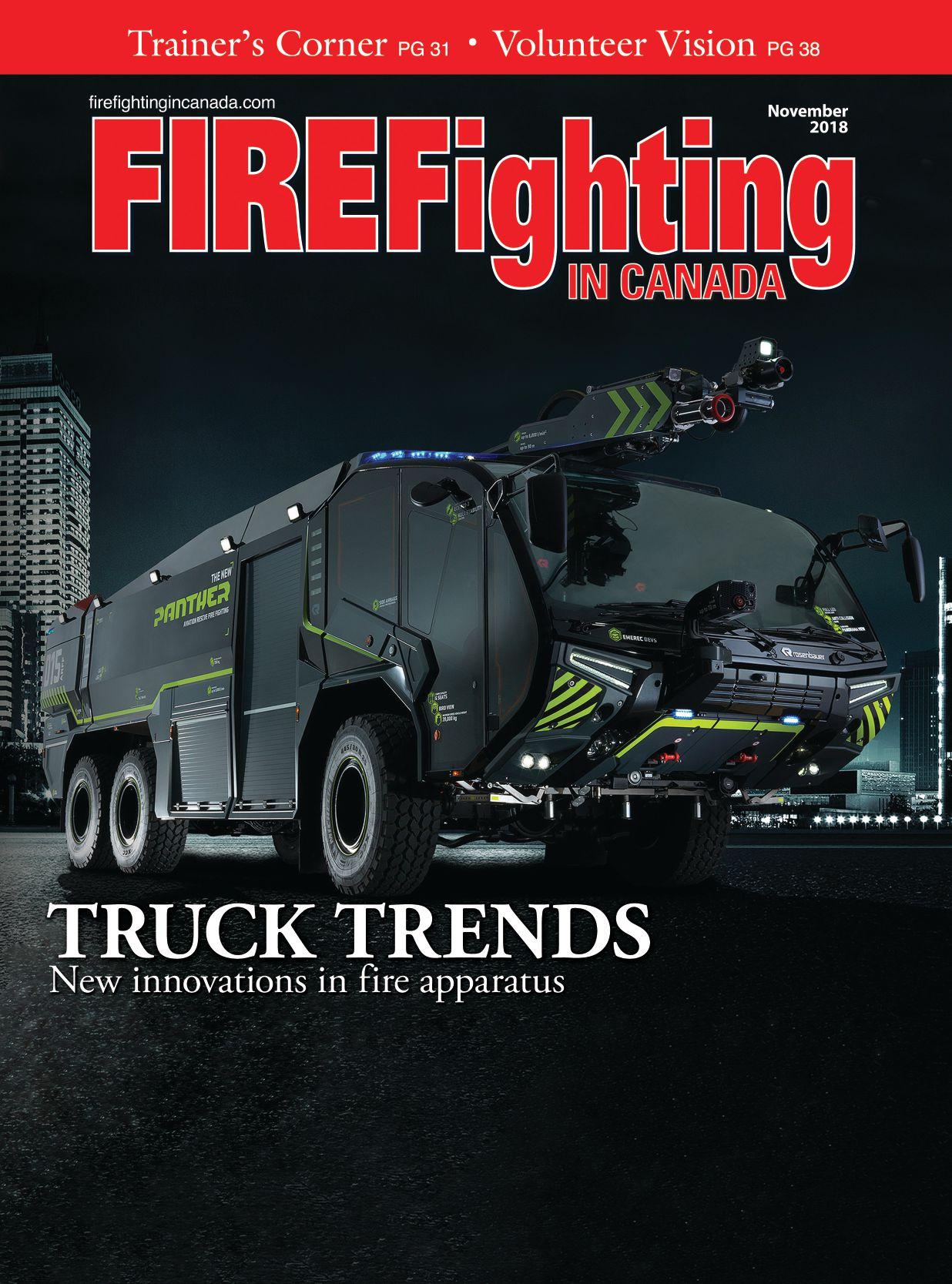
Manufacturers are constantly developing new fire service apparatus and equipment and tweaking their technologies to help firefighters who are on the front lines.
The Canadian Association of Fire Chiefs held its annual conference in Ottawa recently. The event enabled fire service leaders to connect on issues of national importance.
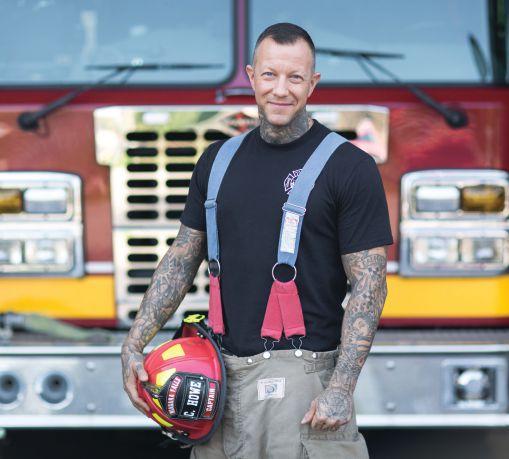
Eight years ago, Christopher Howe, an acting captain with the Niagara Falls Fire Department, was addicted to alcohol and drugs, but he sought help and is now recovered and intent on helping others in the same predicament.
BY GRANT CAMERON Editor gcameron@annexbusinessmedia.com
he #MeToo movement against sexual harassment and assault is gaining traction around the world – and rightfully so.
Icons of sport and music, high-profile figures in the entertainment and media industries and, of course, politicians have been called out for their behaviour.
No vocation, it appears, is untouchable, including the fire service, as was noted by speakers during a session on the issue at a Canadian Association of Fire Chiefs Conference in Ottawa recently.


John Saunders, a partner at Hicks Morley Hamilton Stewart Storie LLP in Toronto, and Karen Gordon, a communications consultant who specializes in labour, crisis and legal issues, spoke candidly about the issue during a session on #MeToo and the Fire Service, and their message was crystal clear: The fire service is not immune and chiefs and departments must be ready to deal with it.

raise awareness in the workplace, provide training and encourage people to come forward if there’s a problem, and act promptly if a problem is brought to light.
Couldn’t agree more.
Fire departments need good policies that spell out specifically what entails sexual harassment and they must be enforced.



See story on page 8.
Saunders candidly warned that behaviour allowed by fire departments in the past is no longer acceptable and also that departments should now have policies in place to ensure that everyone knows sexual harassment won’t be tolerated in their departments and that the rules will be enforced.
Simply put, fire chiefs and department leaders must show they’re doing everything in their power to ensure that anyone who engages in sexual harassment of a co-worker will run into a heap of trouble.
Saunders noted that fire chiefs need to
For the record, sexual harassment includes conduct of a sexual nature or course of vexatious comment or conduct that is known or ought reasonably to be known to be unwelcome on the basis of sex, sexual orientation or gender identity.
As Saunders so rightly pointed out, it will be a judge or HR tribunal that rules on a case.
Fire departments must therefore ensure that any type of sexual harassment is forbidden. Arguably, an accusation against a fire department is more serious than it might be for other organizations because the fire service is expected to be above that kind of behaviour. I can’t imagine anything worse for a fire department than having a #MeToo issue come to the forefront.
Saunders made a very good point in his remarks, noting that a policy is only good if it’s enforced by the department.
“If the fire goes south, you’re responsible at the end of the day,” he told the session. “The same thing happens for this situation.”
Sounds like sage advice.

ESTABLISHED 1957 NOVEMBER 2018 VOL. 62 NO. 7
EDITOR GRANT CAMERON gcameron@annexbusinessmedia.com 416-522-1595
ASSOCIATE EDITOR JAYSON KOBLUN jkoblun@annexbusinessmedia.com 519-410-0600
ASSOCIATE PUBLISHER ADAM SZPAKOWSKI aszpakowski@annexbusinessmedia.com 289-221-6605
SALES KORY PEARN kpearn@annexbusinessmedia.com 519-902-8574
ACCOUNT COORDINATOR WENDY SERRAO wserrao@annexbusinessmedia.com 416-510-5232
MEDIA DESIGNER BROOKE SHAW bshaw@annexbusinessmedia.com
GROUP PUBLISHER MARTIN MCANULTY fire@annexbusinessmedia.com
PRESIDENT & CEO MIKE FREDERICKS
PUBLICATION MAIL AGREEMENT #40065710
RETURN UNDELIVERABLE CANADIAN ADDRESSES TO CIRCULATION DEPT.
P.O. Box 530, SIMCOE, ON N3Y 4N5 e-mail: subscribe@firefightingincanada.com
Printed in Canada ISSN 0015–2595
CIRCULATION e-mail: bolechnowicz@annexbusinessmedia.com
Tel: 416-442-5600 ext. 3543 Fax: 416-510-6875 or 416-442-2191
Mail: 111 Gordon Baker Rd., Suite 400, Toronto, ON M2H 3R1
SUBSCRIPTION RATES Canada – 1 Year - $25.00 (GST - #867172652RT0001)
USA – 1 Year $44.00 USD
Annex Privacy Officer Privacy@annexbusinessmedia.com
Tel: 800-668-2374
Occasionally, Fire Fighting in Canada will mail information on behalf of industry-related groups whose products and services we believe may be of interest to you. If you prefer not to receive this information, please contact our circulation department in any of the four ways listed above.
No part of the editorial content of this publication may be reprinted without the publisher’s written permission ©2018 Annex Publishing and Printing Inc. All rights reserved. Opinions expressed in this magazine are not necessarily those of the editor or the publisher. No liability is assumed for errors or omissions.
All advertising is subject to the publisher’s approval. Such approval does not imply any endorsement of the products or services advertised. Publisher reserves the right to refuse advertising that does not meet the standards of the publication. www.firefightingincanada.com



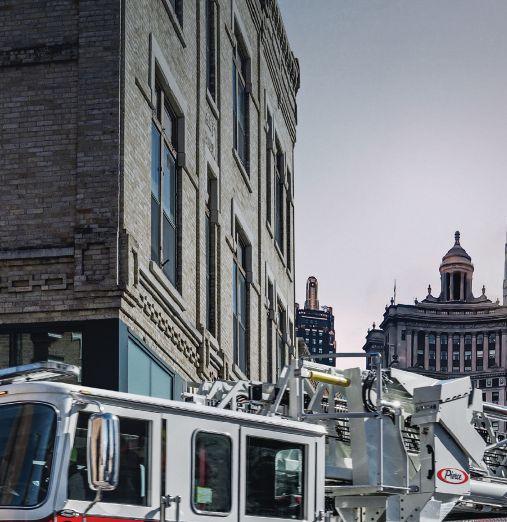







Overall height: 10’ 8”
Rear overhang: 160”
Turning radius: 35’
Overall length: less than 42’
Wheelbase: 252”









Gender equity is still a challenge for women in the fire and police service, says Nina Vaughan, a retired Calgary Police Service superintendent and founding member and chair of Alberta Women in Policing.
“Structurally there’s a lot of changes we need to make in the emergency services to change this,” she said Sept. 17 at a session on gender equity at Fire-Rescue Canada 2018, a conference of the Canadian Association of Fire Chiefs held in Ottawa.
Vaughan, who spent 29 years in policing and did undercover and detective work, told the session that there are still barriers to diversity within emergency services and more work needs to be done to change that
She said there are still unconscious biases at play, subtle yet obvious, that have been ingrained into people from the day they were born and affect how women are viewed in emergency services and how decisions are made at work.
Vaughan shared the story of what happened to her over the years as a female member of the police force.
When she joined, she had to wear men’s pants because they didn’t have pants for women, she said. Males on the
JEFF MUSSER, who has more than 20 years experience with the Exeter, Ont., station and serves as district chief for Exeter, was recently appointed acting fire chief of the South Huron department in light of former chief Andrew Baird’s departure for Leamington to serve as that community’s fire
force would also think nothing of putting her in a hold and forcing her to get out of it. They’d also hang bras everywhere. One time an officer said he just couldn’t work with her.
Vaughan said when she was promoted others figured it was because she was a woman or she’d slept with somebody. While undercover, her role was usually to act as the girlfriend of another officer.
Vaughan said she “went through a system of defeminization” because she wasn’t able to act like a woman.
After her stint undercover, she was told by HR that she had a reputation as a party girl although the men got away with it. She was told she could bounce back if she flew under the radar for a bit.
“My reputation took a hit that would take years to recover,” she said.
When she became a sergeant, the mail traits she’d embraced started to work against her, as she developed a reputation of being too rough around the edges.
At meetings, meanwhile, Vaughan said she was often ignored and talked down to.
Later in her career, Vaughan was put in charge of the employee services division of the police force and
chief. Baird’s last day with the South Huron department was Aug. 22. The South Huron Fire Department consists of stations in Exeter, Huron Park and Dashwood.

The City of Ottawa has named KIM AYOTTE its new fire chief. The official announcement was made at the end of August. Ayotte had been
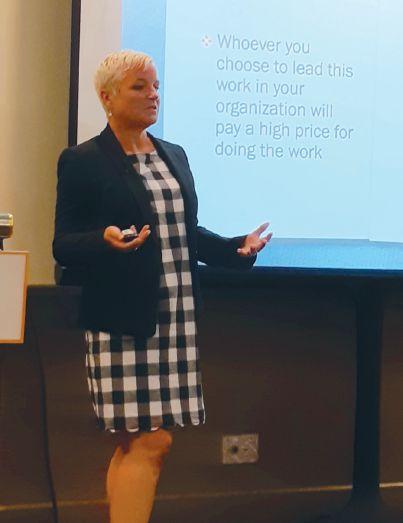
spearheaded efforts to support diversity, equity inclusion and engagement throughout the service.
filling the position in an interim role since former chief Gerry Pingitore retired in April. In a tweet Pingitore described his successor as, “the perfect choice and fit for a world-class, innovative, inclusive fire service.”
During his 15 years in Ottawa, Ayotte has held every major deputy chief position, and is also designated an executive chief fire officer by the Canadian Association of Fire Chiefs.

The township of Southwold, Ont., appointed JEFF MCARTHUR as its new fire chief. Previously the training officer with Southwold, McArthur has dedicated more than 14 years to Southwold Fire Services and has completed numerous certifications and training courses to prepare him for the chief role. He was also the
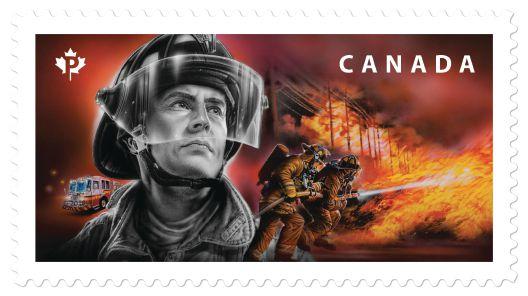
Canada Post has unveiled a new stamp that honours the country’s firefighters for saving lives and protecting property and the environment with their skills and courage.
The stamp is the fourth of five that were unveiled recently to reflect Canada’s gratitude for all emergency responders.
The stamp was unveiled in Halifax with the participation of Halifax Regional Fire & Emergency Services, Canada’s oldest firefighting department, established in 1754.
Canada Post and the stamp designers consulted with the Canadian Association of Fire Chiefs, whose members represent about 3,500 departments,
to ensure the stamp accurately represents firefighters.
Canada Post said in a statement that few emergencies trigger such an immediate sense of threat as a fire breaking out in homes or communities, or being injured and trapped in a vehicle after a serious collision.
In situations that might make most people panic, firefighters arrive well equipped and trained to intervene as a cohesive team, the statement said.
“Able to respond to emergencies at a moment’s notice, firefighters do much more than fight fires and rescue victims from burning buildings,” stated Canada Post. “They also provide emergency
The #MeToo movement might seem to be a high-profile Hollywood-specific issue, but it’s gaining momentum and is something fire chiefs and departments must be prepared to deal with in future.
That was one of the messages delivered in a session at Fire-Rescue Canada 2018, a five-day conference of the Canadian Association of Fire Chiefs held Sept. 16 to 19 at
the Westin Hotel in Ottawa.
“It really is the worst public relations crisis you’re going to face if a MeToo issue hits your department,” Karen Gordon, a communications consultant who specializes in labour, crisis and legal issues, said at the conference.
Regardless of the motives or authenticity of a MeToo accusation, if one occurs it is a very serious issue, she said.
medical services and perform difficult technical rescues and extractions.
“They respond to vehicle collisions, overdoses, hazardous-material emergencies and other life-threatening events. As
“I can’t stress the seriousness of a MeToo situation.”
Gordon said an accusation is also more serious for fire chiefs and departments than it might be for other organizations because they are expected to be above that kind of behaviour.
“There’s a very high trust level in our society, so when an accusation is made it’s really, really difficult.”
John Saunders, partner at Hicks Morley Hamilton
well, they make Canada safer by educating people about fire prevention, investigating fires and enforcing fire codes.”
The stamps are available for purchase on canadapost.ca and at postal outlets across Canada.
Stewart Storie LLP, said it’s essential that chiefs also enforce policies, ensure everyone knows sexual harassment won’t be tolerated in their departments, and encourage people to come forward.
“At the end of the day you have to own it and you want to be the person who’s championing it in your department,” he said.
“Prevention and education is the way you will stop it from happening.”
fire chief for the municipality of Brooke-Alvinston, Ont., and has demonstrated positive leadership and effective communication in this role.
BRYAN KIRK, assistant chief with the Burnaby Fire Department, retired earlier this year after more than 36 years into his firefighting career
and months away from his 60th birthday. Kirk said that the time had come for him to move on.
WAYNE GALLANT, who served as fire chief of the Miminegash Fire Department in P.E.I. for the last six years, has retired after putting in 45 years of service with the department. Gallant received presentations from the Community of Miminegash, the provincial and federal
governments and from the fire department at an appreciation night. He told his community that he didn’t join the service to put in as many years as possible, he joined to be a firefighter and he enjoyed doing it.
GERRY HUGET of Regina, Sask., passed away peacefully on

Sunday, Sept. 16, 2018 at the age of 69 years. Gerry served in the Regina Fire Department for 26 years before retiring in 2004. He was passionate and dedicated to his work and brothers of Local 181, and served as president from 1996 to 2013. Gerry will be sadly missed by all he worked with over the years in the department.
Manufacturers are tweaking truck technologies and making improvements to their equipment
By JAYSON KOBLUN
Technologies in the fire service are always evolving and manufacturers are constantly researching and developing fire service innovations, often based on the input of firefighters who are on the front line.
They’re also developing apparatus that addresses community-specific needs. Like firefighters, vehicles in a department must be equipped and come fully-stocked to handle all types of scenarios.
Take several of North America’s apparatus and equipment manufacturers, for example. All of them have been tirelessly seeking to improve on their technologies and equipment to continue providing Canadian fire departments what they need to be the best they can be.
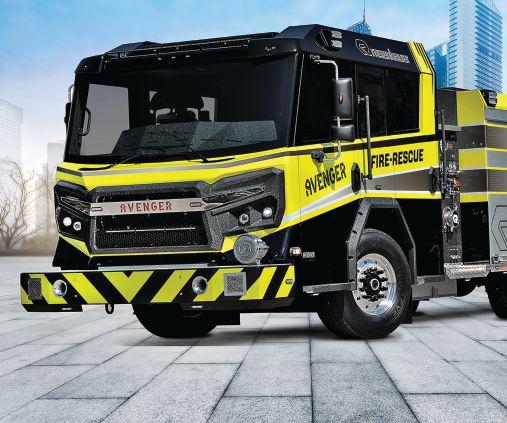
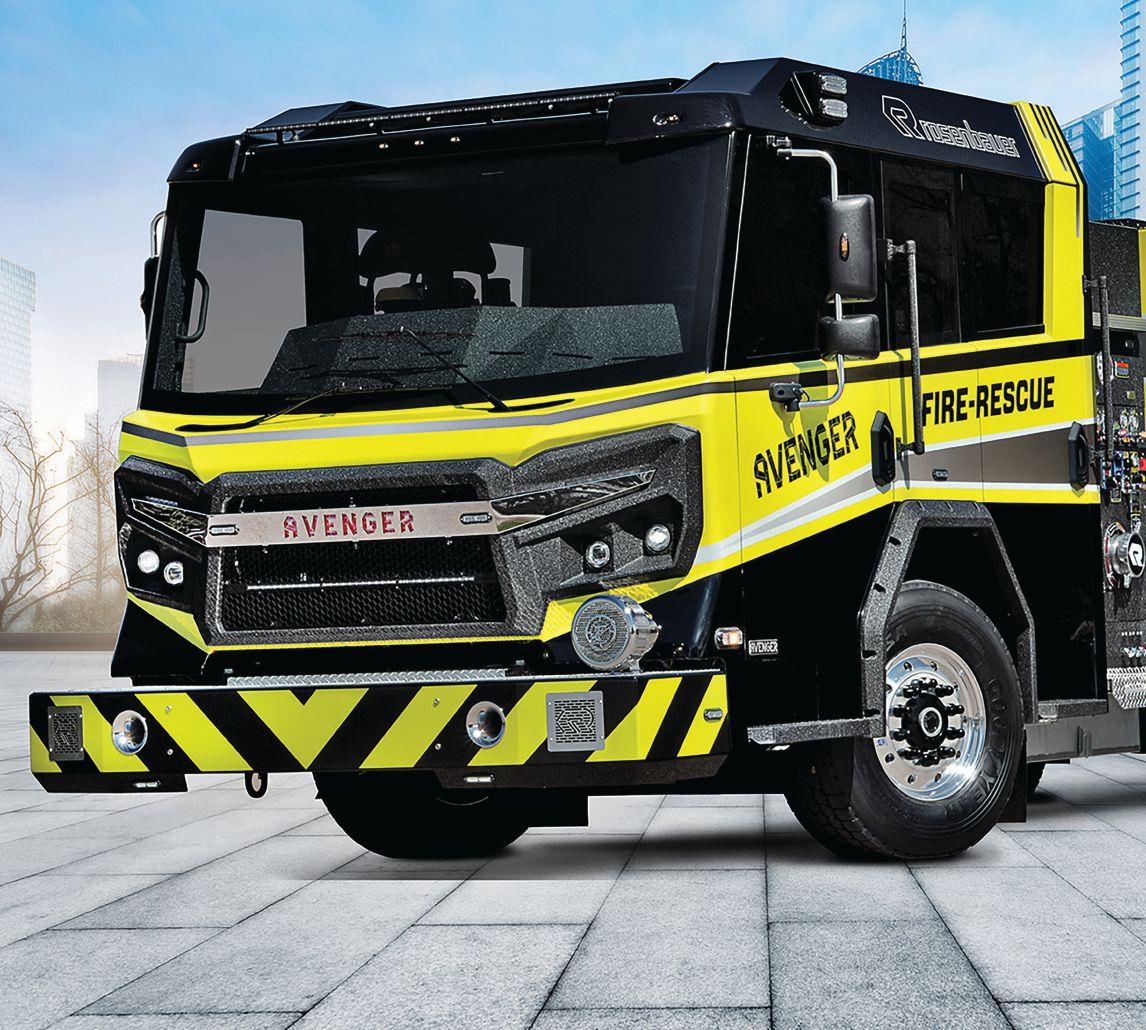
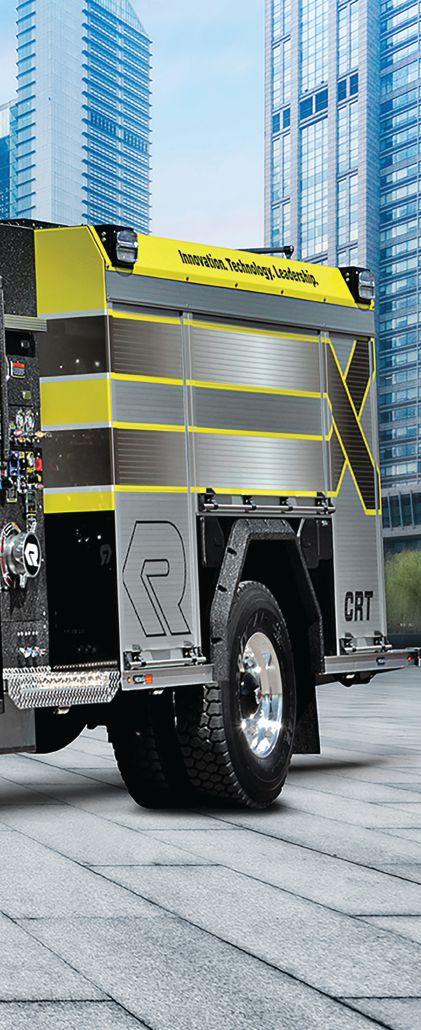
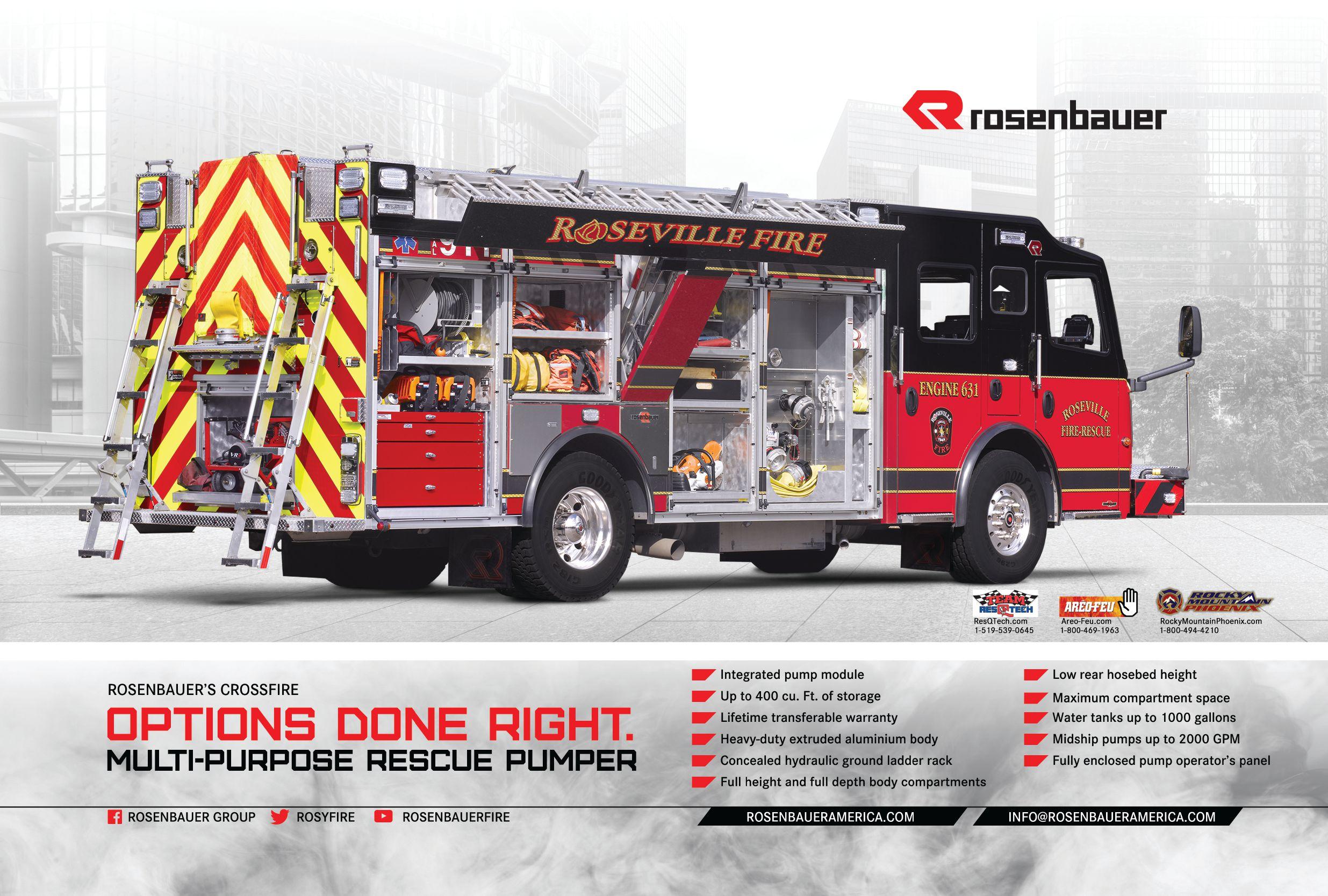
Fire truck apparatus and emergency response vehicle manufacturer Rosenbauer America introduced a new fire chassis last year, named the Avenger. It is a chassis designed around firefighter needs, safety and durability, but one that is also outfitted to help people when arriving on a scene.
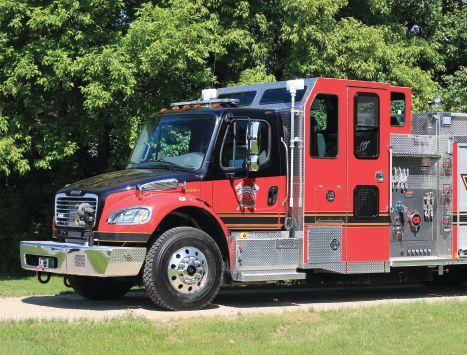
“The aggressive new look, inside and out, is a fierce competitor,” said Louise Jacques, marketing co-ordinator for Rocky Mountain Phoenix, in a release.
Jacques spoke with Rosenbauer about the new apparatus body.
“The infinitely adjustable crew seating allows for an easily configured crew area, with the ability to add and remove seats to meet the fire department’s changing needs,” she said.
Jacques added that the extreme-duty interior has no plastic and features an aluminum rear wall and aluminum dash and engine tunnel for durability.
She commented on the ride and handling, improved driver’s area, industry-leading hip room for the driver and officer and said the new Avenger interior is comfortable while also providing safety.
The Avenger is available in Rosenbauer apparatus bodies, EXT, FX, CT and CRT, which are custom-built to a fire department’s unique specifications.
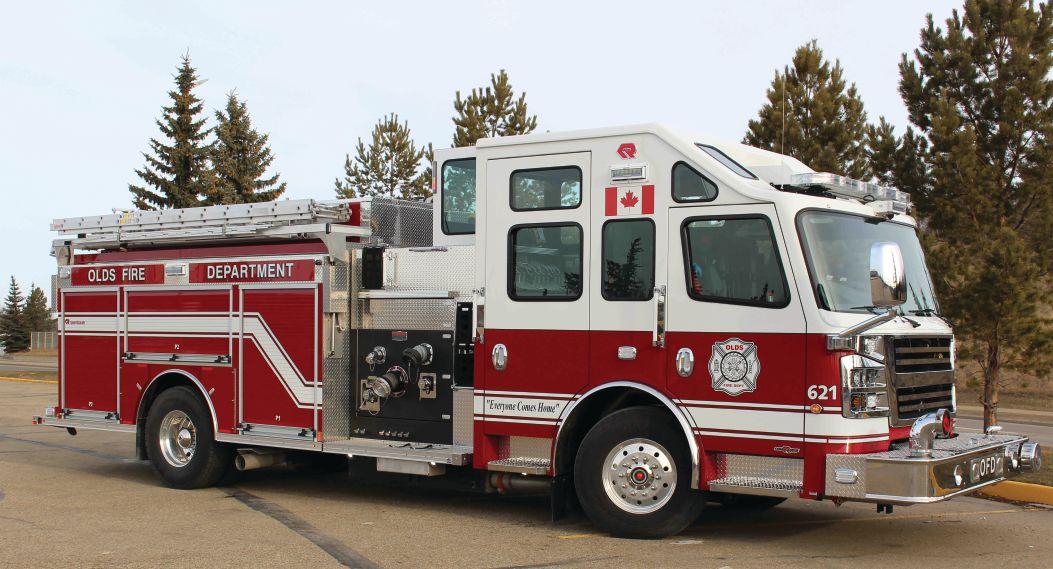
The Guelph Fire Department recently added a new $740,000 pumper from Rosenbauer America called the Avenger. The truck looks like something from the Transformer film series by the same name.
The futuristic-looking truck is already getting some looks. It has a sleek look, comes with a tighter steering radius and is shorter from front to back.
The Avenger truck has a 360-degree camera system, 20 to 25 per cent more storage space, and enables the department to get into smaller areas within the community which are becoming more common due to intensification. It can hold an extra 1,000 litres of water compared to other pumper trucks.
Several other fire apparatus manufacturers continue to make waves in the industry.
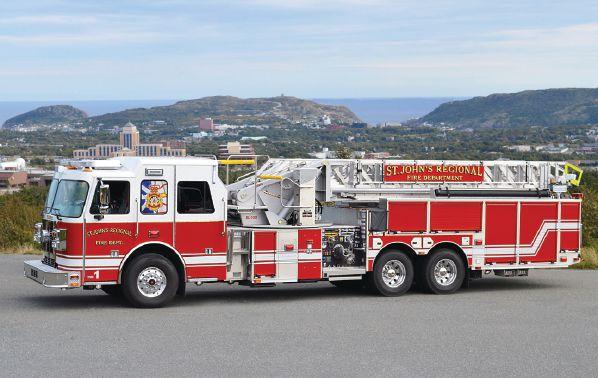
One of those is Fort Garry Fire Trucks (FGFT). The company has been developing its new Bronto F 116RLP+ demo unit for the past several months. FGFT is a North American distributor, providing sales, service and parts of Bronto Skylift aerial platforms.
Bronto Skylift has been in operation since the 1950s and develops truck-mounted, hydraulic platforms. Both Bronto and FGFT state on their websites they engineer equipment for extreme conditions.
FGFT’s Bronto Skylift demo unit incorporates technology in truck-mounted, articulating aerial rescue and firefighting devices with the custom fire apparatus cab and chassis, the Spartan Gladiator. It also has an updated protection system and the company’s heavy-duty extruded tube 5083H-321 saltwater, marine-grade aluminum body.
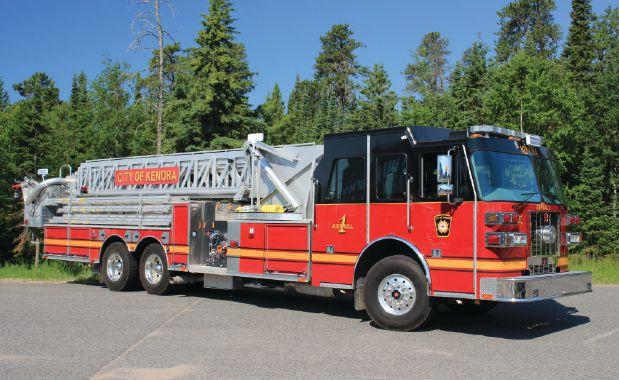
Rosenbauer America introduced the option of aerial outrigger operation with a wireless radio remote control this year. The new feature allows the operator to operate the outriggers, aerial and water monitor from more than 300 feet away.
The wireless radio remote control has soft-touch controls. An aerial information screen provides information on items such
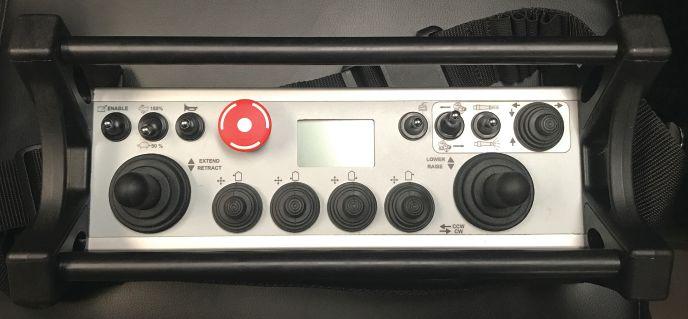
as remaining extension, aerial angle, aerial rotation, load gauge, breathing air and battery life, and has an auto-bedding function and emergency stop and is water resistant.
The wireless radio remote control option allows one firefighter to safely set up the aerial quickly, making tactical rescue and water suppression safer and faster.
Another new industry item comes from Velvac, a truck-vision systems manufacturer that recently introduced the Hyperion, its first dual-blindspot detection system. The Hyperion uses computer vision algorithms that detect vehicles based on size and shape, providing an extremely accurate blindspot detection system.
Higher-resolution cameras integrated within the Velvac mirrors provide object detection, lane change assistance and blindspot detection.
A visual blindspot icon located in the mirror glass alerts drivers. The Hyperion also provides blindspot elimination with adjacent lane monitor display.
Orlaco, a specialist in camera and monitor systems for various vehicle applications, including emergency vehicles, introduced an intelligent camera system to replace mirrors on trucks.
While the system has not yet been approved under Federal Motor Vehicle Safety Standards,
indicative
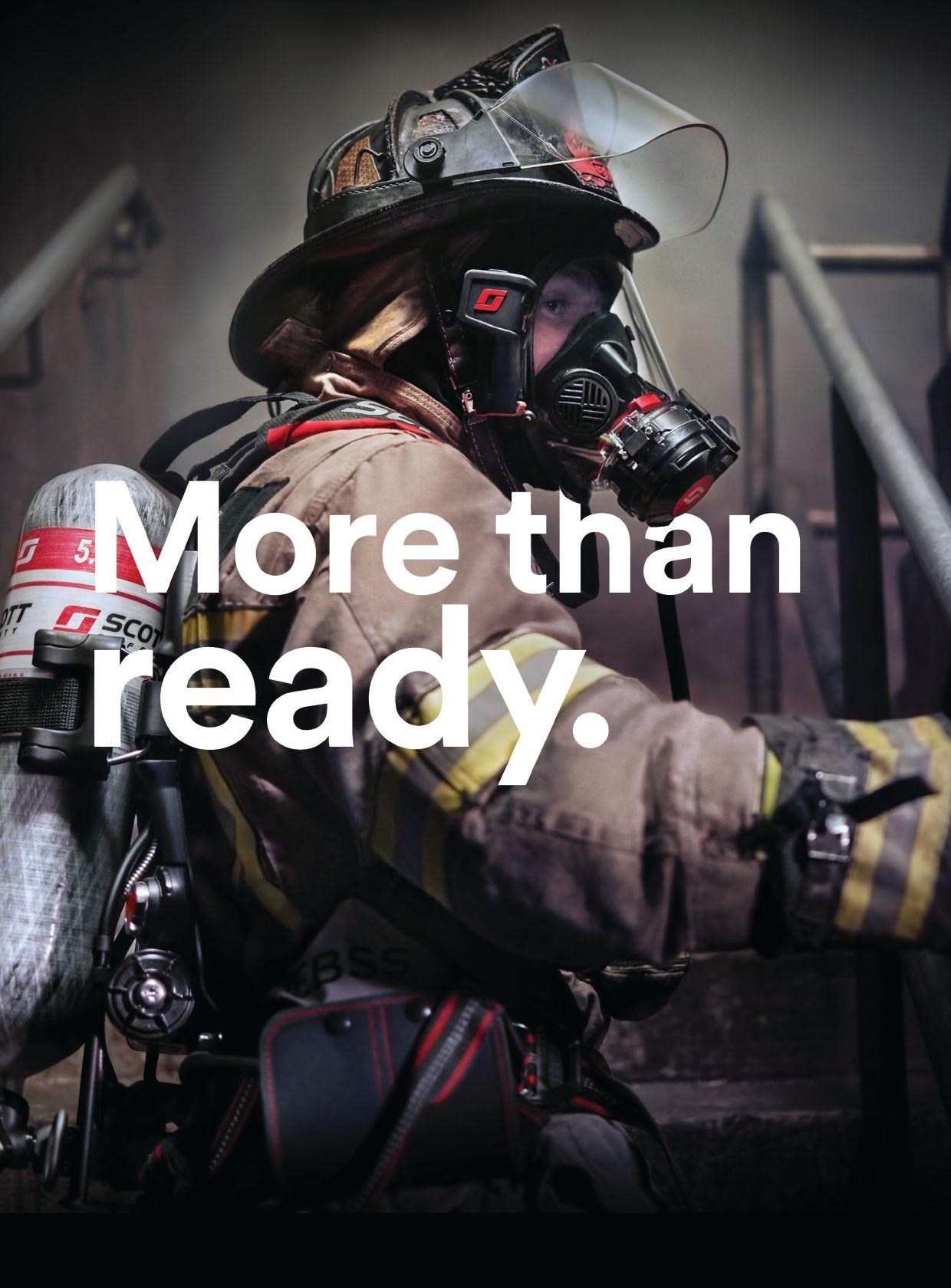
Total confidence. It’s the feeling you get when you can trust your protective equipment to perform day in and day out—and it’s what you can always expect from 3M™ Scott™ Fire & Safety. We’ll never stop improving and innovating new ways to help protect you, so you can get the job done and bring everyone home safely.

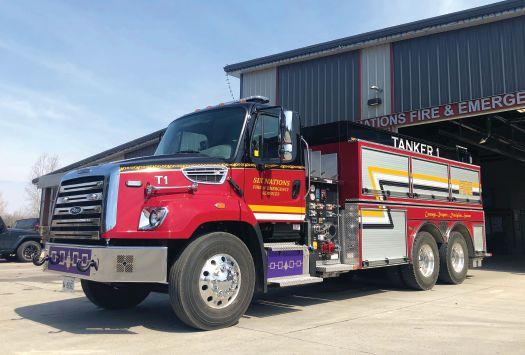
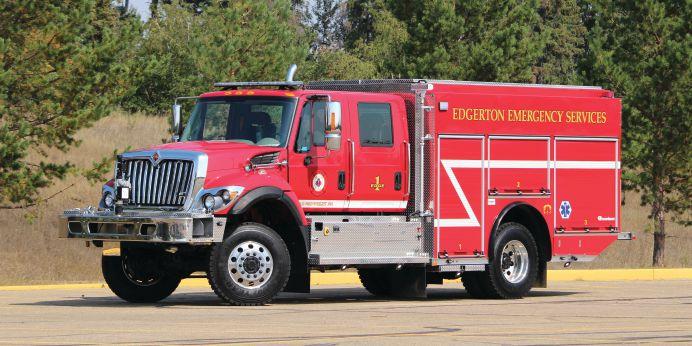
This tanker was delivered to Six Nations Fire & Emergency Services in April, making it the department’s 14th truck. The truck is detailed with cultural symbols and the Six Nations flag.
of the future and what fire departments might see on future generations of trucks.
The Orlaco MirrorEye provides clear vision of all traffic in the vicinity, a larger field of view and an automated panning function. Two high-definition cameras placed on either side of the cabin provide the driver an optimum view of others on the road alongside the truck or at an acute angle behind the truck through a split-screen monitor placed in the window sill.
The MirrorEye increases vision when a driver needs it with a night-vision function that provides a better view of surrounding traffic at night. The automated panning function automatically adjusts the cameras when turning or reversing, providing drivers with superior visibility. The MirrorEye also eliminates the need to adjust mirrors to reduce glare at sunrise or sunset.
The MirrorEye improves aerodynamics, reduces fuel costs, removes blind spots, and provides an expanded view, making mirrorless trucks possible in the very near future.
As important as it is to focus on new features and updated technologies for trucks, design and overall aesthetic can come into play too.
Seeing new deliveries with artwork, logos or decals on them is not a new trend. Almost every fire truck comes decorated with a department’s specific emblem or logo on it.
The team at Six Nations Fire & Emergency Services in Ontario took the opportunity to display its culture by having its Confederacy flag added to its trucks.
The department’s tanker was designed with Six Nations traditions in mind when it was delivered earlier this year. The purple and white flag on the front and sides of the truck is known as the Confederacy flag and is a symbol of the Six Nations traditional government. The truck featured other cultural aspects in the form of patterns and designs such as small intricately detailed images in yellow and black trim around the entire truck.
“It’s a really nice truck that we wanted to showcase cultural aspects of our own within its design,” Assistant Fire Chief Crystal Farmer said earlier this year when the truck was delivered.
These innovations and advancements in technology, combined with familiar and new apparatus, provide firefighters the trucks they need to serve their departments and communities with a focus on safety, functionality and durability.




By GRANT CAMERON
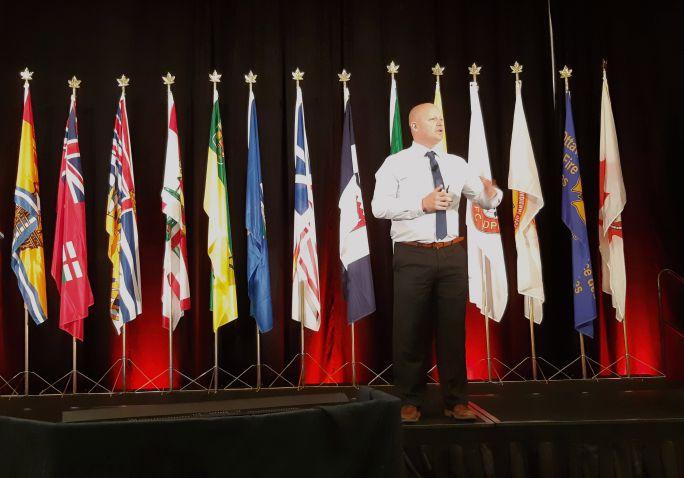
The Canadian Association of Fire Chiefs (CAFC) held its Fire-Rescue Canada 2018 conference Sept. 16 to 19 in Ottawa, with a series of speakers, sessions and lightning talks to educate fire service leaders.
Edmonton Fire Rescue Chief Ken Block, who was re-elected as CAFC president, said in remarks to open the conference that it’s always a pleasure to see representatives from across the country at the event because it enables them to connect on issues of national importance to the fire service.
“It warms my heart, the vision and the mission of the CAFC,” he said. “We are connecting together and uniting for causes of the fire service.”
Block noted that the conference enables fire service leaders to get together annually to network and learn more about issues of importance and understand what the CAFC is doing at the federal level so they can report back to their departments and spread the message to their crews.
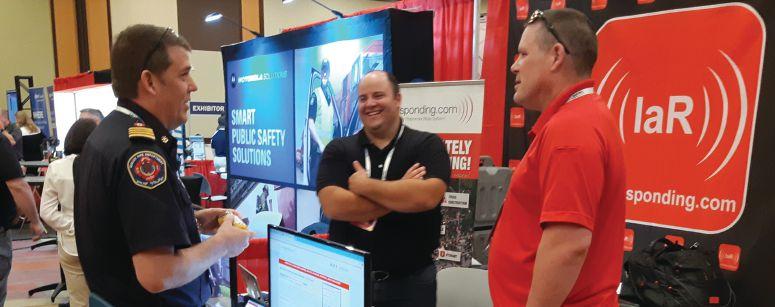
The four-day event, held at the Westin Hotel, featured myriad speakers and a trade show with booths from about 50 exhibitors.
In one session, Red Deer Emergency Services Deputy Chief Tyler Pelke gave an inspiring story about adversity, resiliency and forgiveness. One night, at age 14, his friend was murdered while he was sexually assaulted. His attacker slit his throat, set him on fire and left him to die, but Pelke survived. He told the compelling story and how he later confronted his attacker in prison and found peace.
Lawyer John Saunders, a partner at Hicks Morley Hamilton Stewart Storie LLP, and communications consultant Karen Gordon offered a stark assessment of how the MeToo movement could affect the fire service and what chiefs and fire departments need to do to avoid problems.
In another session, Calgary Police Service Superintendent Nina Vaughan, a vocal proponent of equity and inclusiveness in policing, spoke about the importance of gender equity in the fire rescue services and how unconscious biases can be dangerous because they affect the decisions that are made by leaders. Vaughan, who is a founding member and chair of Alberta Women in Policing, talked about her own experiences and what steps fire chiefs must take to bring about change in their departments.
Meanwhile, Christopher Howe, an Acting Captain in the Niagara Falls Fire Department, gave an overview of his personal struggles with alcohol and drugs and how he overcame obstacles to become sober and lead a better life. He offered a raw, no-holds-barred, emotional
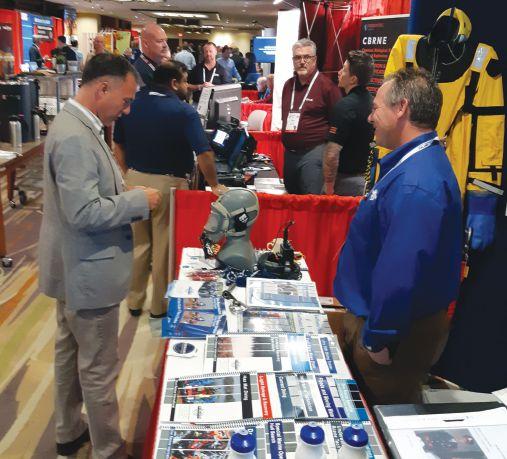
A trade show was held at the Fire-Rescue Canada 2018 conference Sept. 16 to 19 in Ottawa.
account of his battle.
The CAFC also had business to take care of at the conference. A town hall was held during one of the morning sessions and various committees reported on their activities and plans for the future.
The CAFC has plenty of items on the agenda for the coming year. For example, the association is preparing to provide input on how details of the Memorial Grant Program for First Responders are fleshed out. The program provides $300,000 to the spouses, children and family of firefighters, police officers and paramedics who lose their lives as a result of carrying out their work duties.
Calgary Fire Department Deputy Chief Laurie VandeSchoot of the CAFC’s diversity and inclusion committee, said in remarks at the town hall that another challenge is how to increase diversity of the fire service.
The CAFC committee is starting to collect some inclusion-friendly practices for departments and will be focusing on how to get more women and Indigenous people into the fire service.
Another major focus area of the CAFC in the years ahead will be to bring more members into the association and expand its reach. Board members are looking at what must be done to make that happen.
President Block noted at the town hall meeting that the CAFC understands the importance of relationships and that any organization is only as strong as the membership that stands behind it.
“We need to bring as many members as we can under the CAFC tent,” he said, noting that momentum is growing. “If we can broaden our base it will only allow us to do more and become more effective.”
By GRANT CAMERON
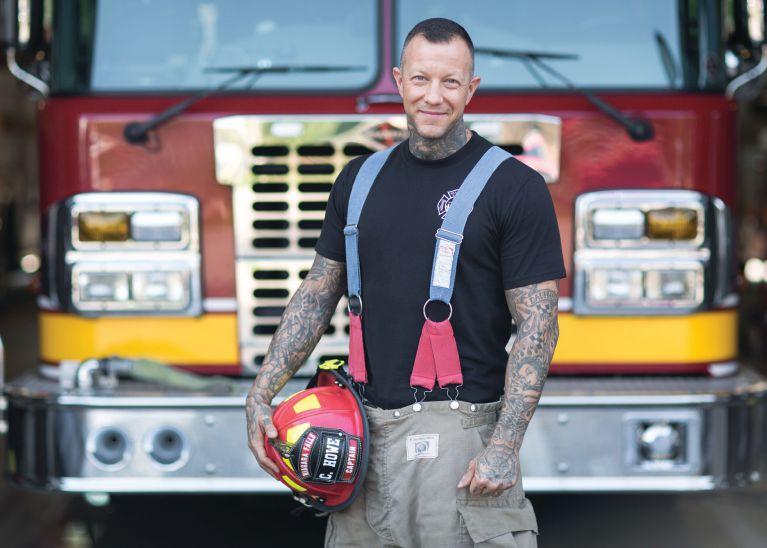
Eight years ago, Christopher Howe hit rock bottom.
He was addicted to alcohol and drugs. He felt alone, desperate, helpless. He also thought about suicide.
“I was in a deep, dark hole,” he said matter-of-factly in a presentation at Fire Rescue Canada 2018, the national conference of the Canadian Association of Fire Chiefs, held Sept. 16 to 19 at the Westin Hotel in Ottawa.
“My heavy drinking experiences ended up looking like blackouts. When I went out with the guys at work, I never knew what I was going to do.”
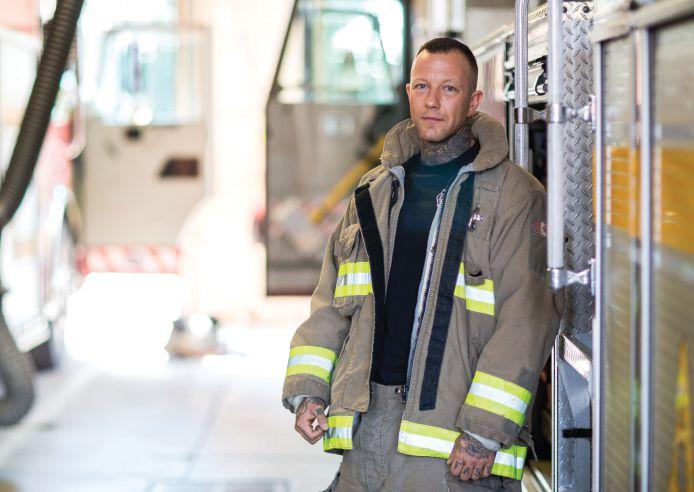
Howe, now an acting captain in the Niagara Falls Fire Department, was at the conference to provide a personal, no-holdsbarred account of his battles with mental health, alcoholism, drug addiction and his journey to recovery. He hopes that his experience and story of recovery will help others in a similar predicament and raise awareness in the fire service community about the true nature of the diseases.
He spoke to an audience at a breakout session at the conference called Unmasked: A personal journey through mental health and addiction in the fire service. His account was straightforward and unabashed.
“I suffered from mental health issues from an early age,” he explained. “When I took my first drink, all my issues were washed away. I found a lot of acceptance through alcohol and drugs. I knew myself I was an alcoholic and had been dealing with
it for quite some time. I was living a bit of a double life.”
He often felt depressed, anxious and fearful. When that happened, he’d turn to the bottle or drugs. It started when he was 13 or 14, just after he began high school.
“I chased that feeling for a lot of years. Even though the attention I was getting wasn’t the right kind of attention, I took a shine to it and kept chasing that feeling, and that feeling like I belonged somewhere.”
The drugs, specifically cocaine, allowed him to overcome his mental health issues. When he drank, he did it to excess.
“I don’t know what it’s like to drink and not black out. Even with my first experience with alcohol it was almost instinctual that I drink until something in my brain shuts off.
“Blackouts became a regular thing and I enjoyed it for a long time because I wasn’t responsible for the things I did or said.”
Eventually his addictions took their toll.
Howe said he became anxious and jittery from alcohol and drug abuse. He was ashamed and disgusted with himself.
“I was just trying to live this double life and keep the secret.”
At work, he was moody. He lived in constant fear of being found out. At home, he’d think about killing himself.
Eventually, he stopped hanging out with the guys from work.
“I lost the respect of a lot of guys in my crew and in my department for actions and reactions. When I was sober, I didn’t want to be sober and I was very reactive. I was volatile. I was like Dr. Jekyll and Mr. Hyde and that’s not the way you’re supposed to treat your co-workers or your family.”
At one point, he took all the mirrors out of his house because he didn’t want to face up to what he was doing.
“I was treating my body very poorly, but I actually despised my body and what I’d
become. Over the years of drinking and using, things got progressively worse.”
While on the booze and drugs, he didn’t sleep.
“I didn’t want to see what I’d become so I took the mirrors off the walls and nobody was allowed to come in and see what was going on.
“Internally I was suffering so badly, but I had nowhere to go for this,” he recounted.
Howe told the audience that firefighters aren’t supposed to show weakness, which made it more difficult to ask for help.
“I didn’t want to show it to the guys at work,” he said. “I wanted to show the guys at work I could be a heavy drinker.”
Firefighters are supposed to be strong, said Howe.
“The stigma of asking for help in our line of work keeps a lot of us sick.”
Howe simply wanted to walk the line and be the life of the party. He said he knew people were talking about him, about the amount of time he took off sick, but he couldn’t admit it was a problem.
“The emotional turmoil and feelings of guilt, shame and remorse I felt, I couldn’t admit to anybody because I didn’t want to feel weak.”
He told the audience he became isolated and, at work, would joke to make everything seem like it was okay.
More and more, the minor calls that didn’t bother his co-workers began taking their toll on him.
“I kept it in and stuffed it down like I thought I was supposed to do. That compounds the problem and makes it a lot worse.”
He tried suicide three times, mostly as a cry for help, and was considering a fourth attempt when it hit him.
He’d sat down with a paper and pen and was writing out the ways he could take his own life. He wanted to do it in a way that wouldn’t hurt and as he was writing it struck him.
“It was the most terrifying moment of my life,” he said, recalling how he got hit by a wave of emotions and decided he could no longer go on that way.
“In my mind, I don’t know that I truly wanted to die, but I knew I couldn’t live the way I was living any more. I needed to change and that was the easiest way out at the time. Up until that point, I wasn’t truly willing to ask for help and mean it.”
In that moment, he began to think about recovery rooms at hospitals where people were glad just to be alive.
He put the pen down and sought help.
“I finally reached up for help and when I did there were thousands of hands to help me out of the hole.”
He started going to recovery meetings, used his benefit program at work and met with his doctor, a psychologist and psychiatrist, and talked to colleagues.
That was eight years ago – the day his journey to recovery began. It was the last time he took a drink or drugs.
He made the decision to turn his life around and rebuild himself by getting in shape and meeting new friends.
He also went to work and told his co-workers he had a problem.
“I expected for everyone to shake their head and say, ‘You’re a failure,’ but I found I had support around me. I was so scared to admit this one simple thing. It was the hardest thing to do – admit to everyone at work I had a problem.”
Everybody was supportive.
“Everybody had a piece of helping me get up to par where I needed to be and that process of showing some humility and asking for help brought me a lot of kinship as well as a little bit of respect.”
He said his co-workers came together and helped him.
Today, Howe talks to people in his profession about his journey in hopes of encouraging others in a similar predicament to seek help.
“I feel I’ve got a lot more confidence in my skills and myself. I’m definitely a more productive firefighter as well as just a person in general.
“A big thing for me now is that I have the capacity to help others and that’s a big thing for me, so I want to be a resource to people I work with.”
Howe said firefighters should reach out if they need help.
“I don’t think enough people are speaking up about this. We’re supposed to be a family, so why aren’t we treating each other like that?”
During the breakout session, Howe said he believes the fire service needs to get people talking and thinking about addiction problems.
“The first step is that by admitting you have a problem you’re showing a great deal of strength and fortitude by asking for help, and that’s the only thing that you have to do alone. Once you ask for help, you’ll have help and allies and an abundance of people who will help you with your recovery.
“The main message is that you don’t have to live this way any longer. There’s much more to life and all you have to do is reach out for that help. It’s the hardest thing to do, but it’s the only thing you have to do alone.”
Howe said firefighters need to talk about lasting problems they might have as a result of the work they do.
“The more dialogue that we can have that’s not surface level and is emotional, the healthier we’re going to be.”
These days, when his crew returns from a call, Howe said he makes it a point to ask if everybody’s okay.
“To check in with each other is imperative to a healthy lifestyle at work,” he said.
Editor’s Note: Christopher Howe shared his story in a podcast with Fire Fighting in Canada editor Grant Cameron. The podcast is at www.firefightingincanada.com/ podcasts. You can find Chris on Instagram at www.instagram.com/_chris_howe_/.

By GRANT CAMERON
It was Nov. 17, 1990, a night that Tyler Pelke, deputy chief at Red Deer Emergency Service, will never forget.
He was 14 at the time and his friend, Curtis Klassen, a year older, was at his house in Altona, a quiet Mennonite community in southern Manitoba.
Tyler and Curtis were good friends. Both were hockey goalies. They played on the same team. Curtis made him laugh. Tyler dreamed of playing in the NHL.
There was a knock at the back door and Tyler went to see who it was. There was no cause for alarm as Altona was a town where nobody locked their doors at night.
At the door was Earl Giesbrecht, somebody Tyler knew but had been warned to avoid. Earl, then 17, was dressed in black and had a duffle bag.
Tyler asked what was in the bag and Earl said, “Those are the tricks of the trade.”
In the bag were rubber gloves, tape and tools to break into houses. Earl then pulled out a .357 Magnum, showed it to Tyler then put it back in the bag.
Later, around 2:30 a.m., Earl went into the kitchen, pointed a gun at Tyler and told him to bind Curtis with the tape which he did.
Earl then bound Tyler and took Curtis into another room.
Earl returned and sexually molested Tyler. He eventually told Tyler that his friend was dead. Then, without warning, he slit Tyler’s throat with a kitchen knife, poured liquid on him, set him on fire and left him to die.
Miraculously, Tyler survived the ordeal and later joined the fire service.
He told his dramatic story Sept. 17 at Fire Rescue Canada 2018, the national conference of the Canadian Association of Fire Chiefs. The audience was riveted as Tyler spoke for roughly an hour about the adversity he faced, his resilience and the power of forgiveness and how understanding your purpose in life is key to dealing with misfortune.
Tyler still recalls seeing blood everywhere that day. His assailant put a blanket over him, doused it with gas and set him on fire,
I remember telling myself, ‘This is it.’ I never thought I’d see my family again.
- TYLER PELKE
he told the conference.
“I remember telling myself, ‘This is it,’” Tyler says. “I never thought I’d see my family again. His idea was to kill us both and torch the house.”
Somehow, Tyler got out the front door and ran to a neighbour’s house.
“Every time I tried to talk, air just came out. I didn’t think I was going to make it.”
Tyler was taken to hospital in an ambulance.
“The last thing I remember was looking at the docs and I thought, ‘I’m just gonna have a nap.’”
When he awoke, Tyler was told he had third-degree burns over 25 per cent of his body. He needed hundreds of stitches to close the wound in his throat. He was on a ventilator for two weeks.
“I was 10 seconds away from being gone,” he recalls.
Tyler had setbacks. A tube had to be put into his trachea because his windpipe nearly collapsed. And there were skin grafts to undergo.
While Tyler survived that horrble night,
his friend, Curtis, did not.
Their assailant was convicted of first-degree murder and attempted murder and handed a life sentence with no chance of parole for 25 years.
Though traumatic, Tyler refuses to be imprisoned by his past.
At the CAFC conference, he told the audience how he confronted his attacker in prison 10 years later and found purpose in life through his journey of forgiveness.
Tyler now uses his experience to let others know they can overcome adversity.
He was featured on the Biography Channel series called, “I Survived,” and now speaks to audiences about the power of forgiveness. He strives to inspire those around him to make every day count.
What helped Tyler get through his ordeal was having social supports, mental toughness, defining his purpose, realizing that some things can’t be controlled, and focusing on helping others. He refused to let an event or circumstance define him and he pressed to understand his purpose in life.
“At some point I had to pick up my boot-
straps and figure out where I was going in life,” he says.
Tyler says helping others has been a big part of his healing proces.
“Adversity is going to hit us,” he says, “and the waves are gonna come. What we can do is make sure they don’t hit us so hard.
“I encourage you to live your life so peo ple see that anything is possible.”
Tyler says people are willing to listen and help, but it’s also important for victims to find resilience and a purpose because that will give them hope.
“Having purpose is one of the most important pieces in my life.”
Following his ordeal, Tyler says a nurse gave him some tough love and told him he’s not a victim. That changed his attitude. He took the advice.
“We can act and respond in spite of the conditions we face,” he says.
Tyler says a key to recovery is realizing that people can’t always control their circum stances, but they can recover.
“There’s things that happen. You can’t control everything.”
As part of his recovery, Tyler decided that he had to forgive. So, he went to see his attacker in prison.
He told the conference that he didn’t want to be angry and he wanted to live life with a purpose.
Now, he concentrates on helping others.
“When you start helping others you see how much you have to offer,. It’s so import ant to take a look and see where you come from. We can take that and have empathy for the people around us.”
Tyler says one of the best things he did was join the fire service.
He got into the fire service 25 years ago and has since continued to rise within the ranks. His goal is to continue helping others.
He believes that’s important because there are firefighters in departments who are suffer ing from mental health issues.
He’s committed to supporting those peo ple – because others supported him when he went through his ordeal.
Tyler now strives to inspire those around him to turn negatives into positives.
“I’ve fallen into a life of learning and resil ience,” he says.
“My job is simply to inspire you to contin ue to pursue professional resilience.
“I truly believe that if we continue to lead from the heart and gut and continue to care for people, we will continue on the journey of resilience.”
By CHRIS DENNIS
Hope everyone had a great, safe and healthy summer. The long, cold winter is now just around the corner. With that in mind, I’d like to take the opportunity to write about preparing for the cold weather.
If you live in a house on a lot, that usually means preparing and storing items for the winter, like lawn furniture, patio items, umbrellas, the lawnmower, gas-power trimmer, garden hose, sprinklers and all other warm-weather-related items so they are good to go again in the spring.
Gas-powered equipment on our fire trucks must also be prepared for the cold months and terrible weather.
The summer fuel that you have been using from the pumps should be replaced with winter fuel. Octane and additives in the summer gas do not like cold temperatures.
This, in turn, holds true from winter gasoline into the summer months. Pour what residual four-stroke fuels you have on the trucks, saws and generators, etc. into the gasoline-powered vehicles in the fleet. Once the portable fuel cans and gas-powered equipment are clear of summer fuel then add some fuel stabilizer to the gas cans and in the tools themselves. Pour a thimble-full into the tools and/ or follow manufacturers’ suggested rules for adding stabilizer to their products. Now, top up the gas cans and tools with fresh fuel for the winter.
If you are a busy station and go through a lot of remote gas, don’t worry about the time that the fuel sits in the equipment and in the cans. It will not have time to separate. If the gas cans and tools sit at the ready most of the time, then be sure to exercise them as often as possible. You may even have to drain out the gas in the tool and cans again partway through the winter and replace with fresh gas.
Fuel stabilizer does just that. It stabilizes the gas and boosts octane and prevents the gas from separating. This is a common issue with winter gasoline or gas with methanol in it. Check the company you gas-up with and see what is in the gasoline it pumps during winter operations
Cars and trucks going up and down the road go through gas quickly, so the chance of separating is small to none unless you vacation for most of the winter.
Two-stroke engines and fuel mixtures need the same attention. Disposal of pre-mixed fuel is a bit more difficult. If you are using a store-bought, over-the-counter, de-cantered, two-stroke product then no worries. Depending on which product it is, the shelf life of a closed container could be up to five years while opened containers in use can last up to two years on the shelf. A couple of name-brands that I am familiar with are TruFuel and a STIHL product called MotoMix.
If you do these relatively inexpensive and non-time-consuming
At Motion Canada, we supply everything First Responders need – including solutions. Our experts have worked as First Responders and are knowledgeable about the latest industry trends. All of your First
Your employees risk their lives daily. We supply them with the highest-quality products on the market, including Morning Pride, Industrial Scientific, Scott Safety, and Solberg Foam
SOLUTIONS 24/7/365
You need the right gear and parts to solve problems and mitigate disasters. We have service centres across the country staffed with experts who have worked as First Responders.
Firefighting doesn’t have to have a big impact on the environment. We sell biodegradable foams, which are gone from the environment in only 42 days.
duties to the gasoline and your gas-powered equipment, they won’t let you down this winter.
I would also suggest checking the air filters and changing the sparkplugs, if this has not been done. An average filter costs $6 to $15, depending on the manufacturer, and sparkplugs start at approximately $3 and go up from there.
In Vaughan, we do not use iridium or high-end sparkplugs. However, the better the plug the less often you need to remove and replace it. That being said, why would you not go that way? My reasoning is that if you never have to take something out to inspect it or clean it, how will you know a potential problem is looming?
Changing engine oil and filters is also important. If your equipment has a gasoline shutoff, turn it off as well. This will prevent engine oil crankcase gasoline contamination. When left on all the time, there is a higher risk of gasoline bypassing in the carburetor and running into the crankcase. This will ruin engine oil and possibly prevent the engine from starting and possibly backfiring. Gasoline-contaminated oil takes the lubricity out of the oil, damaging moving engine parts due to poor lubrication.
If the apparatus has an enclosed Canadian fire pump heating package, make sure the heat pans are on. If the truck was not built with this feature, you may possibly want to investigate having it installed. The underside of the fire pump is encapsulated and a remote heater is added into the pumphouse module to keep the fire pump warm. The heater is hooked up in-line with the fire truck cab heater system coolant lines. Assuming the truck has this feature, don’t forget to make sure the heaters installed work and there are no leaks.
Pressure-test the cooling system and check for all anti-freeze leaks and repair if needed. If a top-up is required, do not add 100-per-cent concentrated anti-freeze. Pre-mix it 50/50. Be sure not to mix long-life pink anti-freeze with any other. One-hundredper-cent-concentrated anti-freeze will eventually plug up the cooling system then contaminate it as well and allow the engine to overheat. If the pumphouse heater is on a thermostat, set it to max and/or just turn the blower switch on and leave it on all winter.
Depending on road de-icing products in your province, corrosion may not be a problem. In Vaughan, it will corrode the seat base inside the cab if I leave it on long enough. The brine in our municipality continues to work away at ruining electrical items long into the nice weather. The heater-blower motors are not protected inside the pumphouse from the elements. Be sure to turn them on before it’s cold. Be sure fire pump drains are free and working correctly. Make a mental note of how well they function so, in the dead of winter, they are not forced open. Better to leave a frozen drain shut than force it open.
Empty each compartment one by one. Then, using a mild soap and water solution, clean them out to have a fresh start for the winter. Do not power wash, especially if there are electrical wires in these compartments. Look at the kits in each compartment. The door seals, whether they’re roll-up or swing, can be cleaned and sprayed with a dry silicone, making them slippery and soft. Lubricate all D-handle latches or locking-latching mechanisms. Repair any damages to the compartment doors. If drain holes are not in the compartment, a shop-vac is handy.
‘‘ ’’
Don’t forget to check the cab and pay attention to all lighting, especially the lenses. If they are cracked or show signs of problems, make repairs.
If the truck is an aerial, clean and lubricate the ladder as per OEM recommendations, and do that again in the spring. We don’t pay much attention to aluminum and steel aerial ladders, but a dirty ladder will fail and let you down, making for an expensive repair.
In Vaughan, our crews do the job. We have had ladders refurbished over the years and have been told by the manufacturers that they are still in great shape 10 to 15 years after they’ve been purchased. It’s worth the maintenance. All ground ladders should be removed, cleaned and inspected.
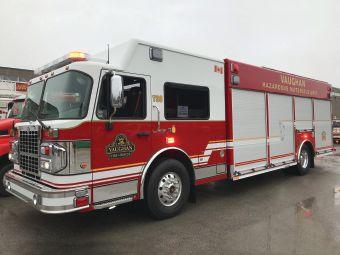
Next, lift the cab or tilt the hood and check the anti-freeze condition and strength. A sample of coolant can be taken to a local repair shop to be tested while you wait.
Check the belts, engine oil, power-steering transmission oil level if the vehicle is automatic, and air filter. It’s best to remove it and inspect. We recently replaced an air filter that was only six months old. It got wet, allowing the element to separate and tear open. So, even if a replacement date was recent, give it a check.
Add fluids as required or change outright. A volunteer fire station we look after for repairs, changes the engine oil and filters, including fuel filters, on its trucks once a year no matter what.
Don’t forget to check the cab and pay attention to all lighting, especially the lenses. If they are cracked or show signs of problems, make repairs. Once water gets into them, even LED lights, all warranties are off and the light will fail. The cost of LED lights is super-expensive. At times, it’s cheaper to buy the whole light rather than just the lenses. The lenses do break, however, usually from being hit by a wash brush or from over-tightening. Once the truck is back on the road, the lenses vibrate and twist and crack.
It’s a simple thing, but dealing with corroded wiring sooner rather than later will save you big money and possibly downtime.
Cab doors, latches and window cranks should be lubricated with light oil. Lube everything from the outside door handles and latches to natter bolts. Use dry silicone spray and don’t forget the window channels.
It costs approximately $30,000 to have a custom fire truck painted correctly, with a three-to-five-year warranty. Waxing will slow down the chances of having to paint a truck before it’s retired.
Enjoy the winter and all that goes with it. And remember to stay safe and keep the rubber side down.
Chris Dennis is chief mechanical officer for Vaughan Fire & Rescue Service in Ontario. He can be reached at Chris.Dennis@vaughan.ca.


BY DON JOLLEY Fire chief, Pitt Meadows, B.C.
he Canadian demographic landscape is extremely diverse, with many languages, cultures, beliefs and values. Yet overwhelmingly, both career and volunteer firefighters are generally white males. As fire service leaders, we need to work much harder to alter this prototype.
In the past 10 years, there have been many examples where the lack of cultural and gender diversity and acceptance has resulted in negative headlines for the fire service. Stories, and even convictions, related to harassment, bullying, sexual misconduct and unfair hiring and promotional practices abound.
We have all seen them, maybe even been part of one. Some departments are moving forward positively, but why are the vast majority struggling to recruit and retain a diverse personnel base?
Colin Powell, the highly respected American general, once observed of interviewers that they, “think they’re being progressive by not mentioning in their stories that I’m black. I tell them, ‘Don’t stop now. If I shot somebody you’d mention it.’” This environment exists within our country and profession as well.
There have been many articles written, describing the lack of active, culturally diverse recruiting practices and the creation of gender-neutral fire hall environments. There has even been a strong push over the past couple of years regarding acceptance of LGBTQQIP2SAA brothers and sisters.
As writer of the Leading Edge column, I consider myself progressive. Yet, I didn’t know what this acronym stood for. That is embarrassing. Did you?
By the way, it stands for lesbian, gay, bisexual, transgender, questioning, queer, intersex, pansexual, two-spirit (2S), androgynous, and asexual.
of Management, notes that organizations of all types need to “pay attention to the ways that current systems, policies and practices unintentionally create tailwinds for some (white, straight males) and headwinds for others (underrepresented groups),” and to, “look at how bias is embedded in practices and come up with innovative solutions to change those practices.”
This is prevalent everywhere, and especially in the fire service.
Fire service recruiting and evaluation is a problem. Often, departments use testing and hiring practices that are targeted toward historical and specific stereotypes such as size, strength and endurance. That needs to stop. We must recognize the many modern expectations of the fire service, with actual firefighting being a rare occurrence. EMS, prevention, education, confined space, technical rescue and leadership can all use, or even demand, different attributes than the traditional stereotypes.
EMS is a huge part of the modern fire service. The overwhelming majority of female patients, especially from foreign cultures, prefer a female first responder attending to them, especially if there’s physical contact. In some cultures, such as with the Sikh religion, it is unac-
As a leader, you must quickly and systematically remove gender and culture bias from every aspect of your operation. ‘‘
As chiefs, we are not well-informed as a whole, and I dare say that most of us don’t want to be. That needs to change – quickly and comprehensively.
A big factor not often recognized is that there is a stigma surrounding the fire service within segments of our communities that we are not breaking down.
We must stop trying to force potential applicants into our traditional “box.” Rather, we must allow them to transform the fire service to fit the modern cultural and political landscape that is now our country.
Sarah Kaplan, a distinguished professor at the Rotman School
Don Jolley is the fire chief for the City of Pitt Meadows, B.C., and the first vice-president of the Fire Chiefs’ Association of British Columbia. Contact Don at djolley@pittmeadows.bc.ca.
ceptable for a non-family male to have physical contact with a female without permission.
The list of new realities is long, yet we often do not target recruiting for them.
The fire service needs to quickly follow the police and EMS example for recruiting and recognize that a diversity of skillsets on a crew is much more valuable than four of the same. The fear of culture change is exactly why we are being forced there. Society now demands the change with the #MeToo movement being the latest example.
As a leader, you must quickly and systematically remove gender and culture bias from every aspect of your operation and reject the lingering excuse of the need for “fit.” It is an excuse for poor leadership. Make the job appealing to all. Make it attainable to all. Embrace difference for the innovative potential it offers and be proud when it does.
By ED BROUWER
I’m sure many of you will agree that experience is the best teacher. Good or bad, we learn from our experiences. It might just be me, but I am seeing more and more white-haired firefighters in my first responder’s circle.
My concern rises regarding those trainers coming down the trail behind us.
Have we shared enough of our experiences?
Have we provided ample opportunities of experience during our practice sessions?
There is a huge difference between training others on book learning and fire ground experience. Good training officers don’t just happen along.
Our departments would be wise to have a succession program for all officers.
There is a three-fold journey each successful training officer goes on. It is a journey that involves teaching, coaching and mentoring.
• Teaching: Teachers help you build skill sets.
• Coaching: Coaches boost confidence to improve your performance.
• Mentoring: Mentors can show you the way because they’ve been there.
Experience is the best teacher, and certainly involves far more than just fire-related skillsets. It teaches us about people – how they learn differently, how they interact differently, and how some can be a pain in the neck.
Experience also teaches us that you will not always please everyone – and that some practices are talked about for weeks while others are forgotten on the drive home.
An old Danish proverb states, “Experience is the best teacher, but the tuition is high.”
To be a successful trainer, you must always be learning, continually honing your skills.
Read firefighter training manuals, watch training videos, attend workshops and training conferences, think outside the box – but keep everything based on and framed in by NFPA 1001.
The other day, I had some work done on my F350. When I received my receipt, I noticed a note in the center of the page that read, “Thank you for your business. If we removed your wheels today, they have been torqued to manufacturer’s specs and should be re-torqued after 100 km.”
This, of course, is a “cover your butt” statement for the auto service. However, it is of paramount importance if there ever was an issue. It is the same with your training information. It must be based on and com-
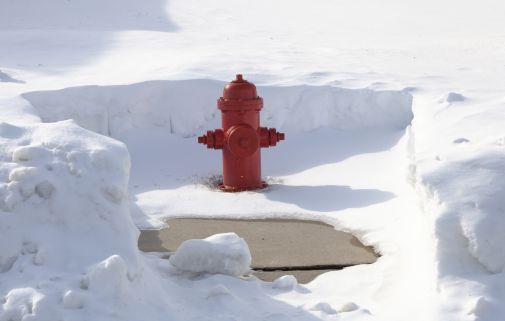
Fire hydrants can be covered with snow after a winter storm. Departments should routinely check to make sure that hydrants are easily accessible after severe storms.
pliant with NFPA 1001.
We are not asking you to reinvent the wheel. Work at being creative in your delivery and develop your own unique style.
During my three decades of fire service training, I have gravitated towards hands-on training, more so than just lecturing. My three go-to methods are:
• Scenarios: A description of what could possibly happen.
• Drills: The method and the way things are done.
• Evolutions: The gradual development of something, especially from a simple to a more complex form.
One thing I like about evolutions is that, in most cases, they develop in ways that bring out your weak or problem areas. And, it’s far better to deal with these at a practice than the real thing. Try not to over-plan your evolutions. Let them play out.
The “bonus” that comes from evolutions is the natural occurrence of “pre-planning.” The approach of winter is a good time to put this into practice. Following is a collection of suggestions regarding cold-weather fire ground operations that have worked for other departments:
• Apparatus maintenance is crucial. Make sure that tire chains or other traction devices are available for all first-in units.
• Carry a supply of salt, sand or oil-dry to enhance footing and reduce the possibility of falls.
• If hose lines are going into a long standby mode, partially open the control valves, as this will allow water to flow and prevent freezing.
• During heavy snowfalls, apparatus may be forced to operate at a greater distance from the fire building. Extra lengths of attack
line should be added to pre-connects to compensate for that additional stretch.
• Ensure that extra turnout gear is available, especially gloves. It’s recommended that firefighters wear layered clothing.
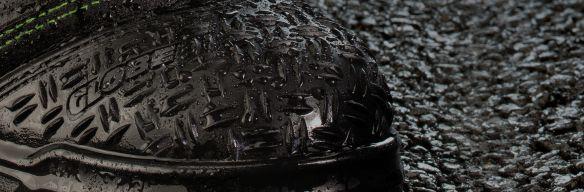
• Bunker boots and winter roof conditions can quickly add up to an accident. Some soles become hard in cold weather, while others can be worn smooth and really should be replaced. Both cases can pre-
vent them from having good traction, especially on ice and slippery surfaces. Removable traction grips are available to fit bunker boots.
• Fire hydrants near roadways can be covered with plowed snow. Departments should ensure hydrants are accessible after severe storms before they freeze by routinely checking on them and clearing snow from them. Attaching flags








or another marking device that sticks up in the air can also make it easier to spot a snow-covered hydrant during the wintertime.
• Small, handheld propane torches can help free frozen hydrant caps or hose couplings during cold weather.
• A spray bottle full of antifreeze can help free frozen caps or couplings. During winter months, try spraying this on port cap threads to keep them from freezing ahead of time.
• Vehicles that are mechanically marginal in good weather are almost guaranteed to fail when the weather turns cold, so get them checked out.
• Severe cold will significantly reduce battery capacity. Check all batteries, handlights, PASS alarms and radios.
• If you have tire chains, make sure everyone knows how to install them and how to drive with them once they’re on. If you use Insta-chains, make sure they engage and disengage properly. You should also check your tandem axle differential lock-ups, if you have them.
• Some departments have found some success with plug-in, battery-trickle chargers and engine pre-heaters to help in those bitter-cold, start-and-go scenarios where heavy engine wear and poor performance can be a problem.
• Winter’s cold can also cause problems with SCBA, foam concentrate and water fire extinguishers. When it’s bitter cold out there in the winter, consider moving some equipment to the heated cab, if room permits.
Finally, don’t forget to review the procedures for dealing with hypothermia and frostbite – not just for the public, but for your fellow firefighters.
Whether working in desert heat – or arctic cold, firefighter safety is paramount.
Remember, train like your life depends on it because it does.
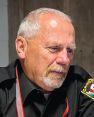

Ed Brouwer is the chief instructor for Canwest Fire in Osoyoos, B.C., deputy chief training officer for Greenwood Fire and Rescue, a fire warden, wildland urban interface firesuppression instructor and ordained disasterresponse chaplain. Contact Ed at aka-opa@ hotmail.com.














































































BY MATT PEGG Fire chief, Toronto
Irecently had the opportunity to visit the Henry Ford Museum of Innovation in Dearborn, Mich. I must admit that I didn’t really know what to expect, but suffice to say that I assumed that we would be looking at a collection of antique cars and trucks.
Without any doubt, there is an impressive collection of automotive history in the museum. But what surprised me was the jaw-dropping collection of history found there, including everything from the first McDonald’s neon sign to the largest steam locomotive I have ever seen.
Another thing struck me when I was touring the museum. There is a quote from Mr. Ford that was as true in the early industrial revolution as it is today. He said, “You can’t build a reputation on what you are going to do.”
In today’s world of instant-access media and virtually unlimited access to information, opinion and fact, the importance of reputation for leaders has never been higher. Dictionary.com defines reputation as “the estimation in which a person or thing is held, especially by the community or public generally.”
To both current and aspiring leaders, reputation management is crucial. Regardless of who you are, your reputation will always arrive in the room before you do. This has been true for fire service leaders. The reputation of a leader, whether referring to a company officer or to the fire chief, will be sitting in the fire station long before she or he arrives in person.
In my experience, reputation is the result of two factors: behaviour and results. This creates an interesting situation for leaders because both of these factors are within our personal control.
The way in which you behave has an immediate and lasting impact on your personal reputation. For example, how do you react to problems and issues that arise?
aspects of your reputation. Likewise, your results have an irrevocable impact on your reputation.
Firstly, do you actually have demonstrated results that can be verified by those who worked with you, or are you in the habit of taking credit for the achievements of others?
Are you regarded as a problem-solver or are you a problem finder who is skilled at pointing out the flaws and issues around you without actually taking steps to resolve them, clear roadblocks and make things better? Are you the first person to put your hand up to join or lead a team, take on a project or go the extra mile, or are you a person who complains about all that is wrong without getting involved in the solution?
Is your career history matched and aligned with obvious results that have been achieved under your leadership and as a result of your hard work or are you someone who can only attempt to define your results by reminding people of the titles and positions that you have held?
Henry Ford aptly explained that reputation will never be based on what the leader intends to do. Rather, reputation is built on what we actually achieve and how we actually behave. In today’s social media and high-speed information world, reputation is even more important and fragile than ever before.
Regardless of who you are, your reputation will always arrive in the room before you do. ‘‘ ’’
Are you calm and focused or are you someone who becomes angry and allows their emotions to overcome you? Do you tell everyone what you think they want to hear or do you tell the truth and admit when you don’t know the answer? Are you consistent and predictable or are you a Dr. Jekyll and Mr. Hyde leader such that your people never really know who is going to walk into the room?
Does your personal conduct and behaviour match the expectations that you set for your people or are you an example of the, “Do as I say, not as I do,” management style? The answer to each of these questions, and many more like them, quickly defines the behavioural
Matthew Pegg is the chief with Toronto Fire Services, having previously served in Georgina, Ajax and Brampton, Ont. Contact Matthew at matthew.pegg@toronto.ca
An entire career’s worth of reputation can be destroyed with one inappropriate tweet, one inappropriate comment or one bad decision. Likewise, a leader’s reputation can instantly be destroyed when their behaviour becomes misaligned with who they espouse to be, both on social media and otherwise.
As leaders, we are accountable for what we say, what we do, how we behave and what we achieve. As a leader progresses through the ranks and moves up in an organizational structure, the requirement for obvious competency, inspiringly appropriate behaviour and demonstrated results increases with every promotion.
Each and every one of us owns a reputation that arrives in the room long before we do. For leaders, this combination of behaviour and results can be either empowering and foundational or problematic and limiting.
Fortunately, the choice is ours.
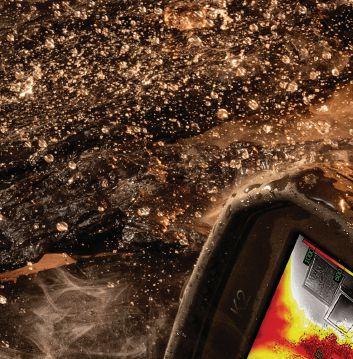
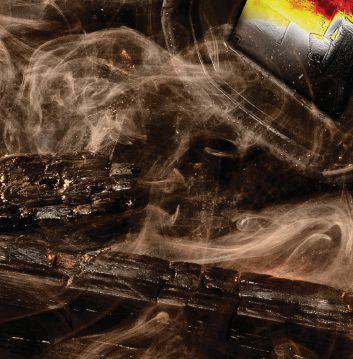
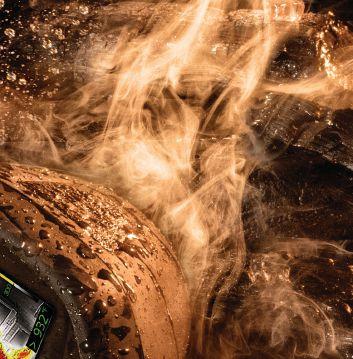
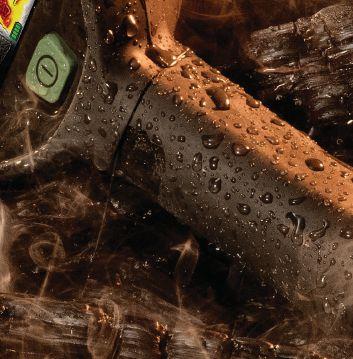







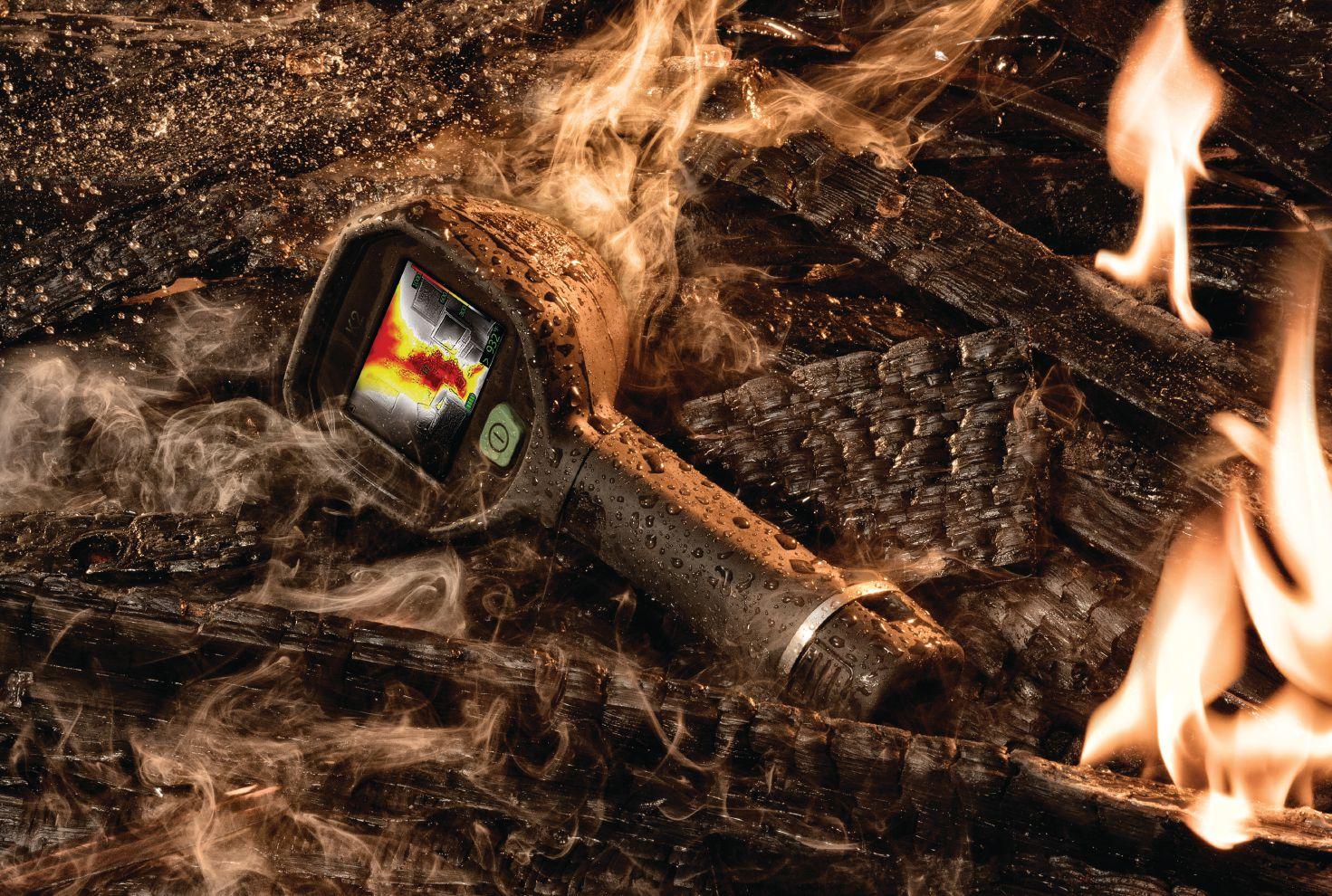
STRUCTURE CONSUMED, RESCUE MADE, LIFE SAVED, TIC RECOVERED – Fully Operational and Ready for Action
Ceiling collapsing, carpet melting, and the scene deteriorating around them — two firefighters battled their way through a burning home, searching for a woman trapped somewhere on the second floor. With grit and the help of their FLIR K2 thermal imaging camera, they found her. But by then, the flames had trapped all three in a bedroom — the closed door, already engulfed in flames. The firefighters dropped the K2 to free their hands for an escape, leaving it to burn with the structure.
And yet…
Not only did the woman and the crew survive, so did the K2. Read this remarkable story to learn how the crew — and the K2 — escaped harm.





BY VINCE MACKENZIE Fire chief, Grand Falls - Windsor, N.L.
want to write about “vision.” It’s a word that appears in the title of this column every edition. But do we really stop to think what vision means in our volunteer and composite firefighting world?
The fire departments that we are members of were born out of necessity and need. Somewhere in the early life of your community, probably after a tragic or catastrophic fire, a group of individuals formed a fire department in your community. Was that visionary?
Your fire department’s beginning may have been a well-thought-out and planned project by a government body like a community council. On the other hand, it may have been some small group of folks who started a primitive organization with basic equipment and it grew from there after experiencing a fire in a community.
The role that your own fire department evolved into has surely met the constant ebb and flow of change over the years of its existence. Those evolutionary changes took place for a multitude of reasons, stemming from recovery from a tragedy, municipal responsibility, all the way up to a sudden windfall of funding allowing a department to grow and take on more services for its community.
All positive changes have certainly been applauded and praised, but in some cases the more unpopular ones have been lamented. Just sit around the fire station table some day and listen to the stories from your older colleagues. Hear the tone in their voices as they speak to your history as a department. Nevertheless, your fire department grew to where it is today.
Returning to my main point, the one word that never seemed to be deliberately used is vison. It seems like all our growth has somehow found its way without a plan by some visionary person or group.
In the fire service, it seems we’ve always been reactive in our formative years to meet a need within a community, fulfill it, and stay status quo until something happens to change it.
function and he called me a visionary person for today’s fire service. I was very uncomfortable with the label. I did not feel worthy of it. But, it got me thinking as to why such a label was used. It was almost as if someone called me a derogatory word - and I didn’t deserve that term either.
The statement caused me to look back over my fire service career and I started to realise that some of the tasks I was doing as part of the volunteer job were somewhat visionary. I started to think of the team of firefighters I have worked with over the years, in my own department and around my province and country, and realized that all firefighters are most certainly visionary people. It’s not just a label for a select few.
Vision is something that, I think, is a trait of everyone who steps into a fire station. While some folks are more future-thinking than others, everyone has a vision for themselves, their fire department and their community. We just don’t formally think about it at the time we enroll in a fire department.
In studying formal leadership, you learn that vision is a prime quality of a good leader. It was only at that point that I started to pay attention to the word and process. As you start formal leadership training, vision emerges as one of the traits that all good leaders must possess, and I think we all do.
The process then leads us to collaborate and compare one person’s
What truly keeps volunteer fire departments strong and healthy is strong, positive vision by all.
vision to another. This is where we see motives and aspirations come from within our membership.
I remember as a young firefighter I was always full of vigor to train and get the job done. I was a firefighter first, answering the calls and enjoying it all. I still do. I was never called a visionary. Nor, did I consider myself as one.
I have been writing these columns for nearly a decade, and even then I’ve never considered myself a visionary person.
Recently, I was introduced by a respected colleague at a speaking
Vince MacKenzie is the fire chief in Grand Falls-Windsor, N.L. He is an executive member of the Canadian Association of Fire Chiefs and past president of the Newfoundland and Labrador Association of Fire Services. Email Vince at firechief@townofgfw.com and follow him on Twitter at @FirechiefVince.
Volunteer and composite fire departments are usually much less structured, in that ideas from the membership are usually collaborative because when you are not paying someone to do a job, dictating to volunteer professionals takes a lot of buy-in to the vision of an organization.
So, what is your vision for your fire service? First of all, I encourage you to try a simple test. Ask yourself if your vision is positive, or if it’s a vision where, down the road, you and your department will be a threatened one or negative in nature.
What truly keeps volunteer fire departments strong and healthy is strong, positive vision by all. Sure, we will have many challenges to face in the future, but if our vision becomes clouded we will not be able to see a bright future. Work on, and continually improve, your forward-thinking vision. It is crucial to our fire service.
BY DAVE BALDING Fire
chief, Golden, B.C.
feel a surge of pride every time I don my fire service uniform in preparation for another day working at the job I love.
I’m so very fortunate to work in this profession – and the significance of the Maltese cross bugles on the fire department collar insignia is not lost on me.
These are more than simple adornments or jewellery. Whether career, paid, on-call or volunteer, members of the fire service operate in an environment steeped in tradition.
There is, of course, that well-worn adage that the fire service is “100 years of tradition unimpeded by progress,” – a statement I vehemently disagree with and will challenge anyone on. Today’s fire service not only continues to be progressive in an operational and technical sense, it is also evolving culturally.
That is a delicate balance, as I believe our traditions that are so vital to our pride and identity must be retained.
How do we achieve this?
I believe time spent with new recruits explaining the elements of our history and traditions is a key first step. It’s incumbent on us to ensure all of our members have an appreciation and respect for the uniform, and all of its regalia and meaning.
The firefighter bell ceremony, a moving custom by which we honour fallen firefighters, is another tradition borne out of fire-service history. Red fire trucks, Dalmatians, and pushing new apparatus into the fire hall are further examples.
Educating your firefighters about the meaning of these traditions will ensure they remain relevant and meaningful.
Every one of our departments also has local traditions which serve to enrich the environment that is the fire department and how they serve their communities. Whether it’s Santa runs, polar bear swims, Thanksgiving dinners, or a yearly barbecue at the fire chief’s house, these events are a win for our members, departments and residents alike.
significant endeavour for a small department, I believe we reap rewards when our members wear their uniforms with pride.
This extends to the department. Even our t-shirts are worn with pride. Our members are conscientious of how and where they wear them. They’re worn often – a sign they are proud of their department. What do they have to be proud of? We boast a vibrant training regime which results in highly competent firefighters. We have quality, well-maintained equipment that looks great as the rigs are kept shining.
Firefighting is a proud and noble profession, one that contributes in no small way to the immense sense of pride we all feel.
Pride needs to be continually fostered and grown, so encourage your firefighters to show their pride in their department and the entire fire service.
Discipline is the third part of this trifecta. It takes on many forms and is an absolute must for successful firefighters, meaningful training, effective emergency responses and the well-being of the department as a whole.
It starts with individual firefighters. Each one of us must continually exercise discipline in our personal and firefighting lives.
Health and wellness, punctuality and commitment to the organization are some components of personal discipline. This personal discipline manifests itself in driven, committed members that perform
It’s incumbent on us to ensure all of our members have an appreciation and respect for the uniform. ‘‘ ’’
to their fullest for your department.
Some traditions get left behind, perhaps rightly so. The notion of achieving a tactical goal at all costs, the philosophy of accepting death and injury as a given in our profession is thankfully fading. It is rightfully being replaced with a culture of health and safety.
As leaders, we set the tone for our departments in myriad ways. Instilling pride is a critical one that has many facets. Dress and deportment are important. I issue station wear, replete with rank insignia to my firefighters. Tunics and dress pants come a little later. While this is a
Dave Balding joined the fire service in 1985 and is now fire chief in Golden, B.C. Contact Dave at david.balding@golden.ca and follow him on Twitter at @FireChiefDaveB.
The fire service is, by necessity, a quasi-military organization. That is evident in its rank structure, uniforms and day-to-day operations. This discipline is not only part of our culture, but an absolute requirement for meaningful meetings, safe and effective training and successful incident responses.
I believe we owe it to those who came before us and to those who succeed us to safeguard the traditions and rich history of the fire service as we create new customs.
I’m incredibly proud of my engagement with the fire service, Golden Fire Rescue and the two departments I was privileged to be a part of before that. Why? It’s largely due to mentors that explained why we do what we do, instilling pride in me and my department, along with strong leaders who ensured the right kind of discipline was in place.
BY GORD SCHREINER Fire chief, Comox, B.C.
ar too often, we hear stories of vehicle accidents involving firefighters responding to emergencies in fire apparatus or in their own vehicles. This is an area where we, as an industry, can do much better.
I am not talking about the cases where others hit us. I am talking about the times we are driving too aggressively and not driving defensively enough. We need to make sure that every time we drive we get there safely.
We need to drive like our family is with us, because they often are. If not your immediate family, you probably have your fire family with you. If you are driving alone, your family (both immediate and fire) are still with you, as they are certainly impacted if you have an accident.
We know that by providing quick service we can have a positive impact on the outcome of an emergency.
This quickness should not, in any way, compromise the safety of our firefighters, citizens or ourselves. Train your firefighters how to improve response times without increasing driving speed and compromising safety.
Typically, a response can be broken down as follows, with volunteer responders starting at step 1 and career firefighters starting at step 3:
1. Preparation at home or work (volunteer firefighter).
2. Responding to the fire station (volunteer firefighter).
3. Getting your personal protective equipment on in the fire station.
4. Responding in the fire apparatus.
5. Doing all the things right once you arrive at the scene.
■ PREPARATION AT HOME OR WORK
Significant time can be saved at home or work by ensuring you are ready to respond to an incident. Items listed below can assist in saving time. When these things are not done, an individual and team response time can be greatly increased.
• Have appropriate clothing ready.
• Place your vehicle keys in the same spot all the time.
• Keep your pager close at hand so you hear the call.
• Back your vehicle into your driveway.
1. Responding to the fire station in your vehicle:
Safe and defensive driving is the only way to drive. You are no good if you have an accident on the way to a call. In fact, you could greatly impact the ability of the department to deliver important services to customers, as you will not arrive at the station and the department might have to respond to assist you. Knowing the best driving route to the station at certain times of the day is one way to get there quicker.
2. Getting your personal protective equipment on at the station:
Significant time can be saved once in the fire station. You can save additional time by ensuring you have put your PPE away properly and that you have all of it ready to use. You can save time by ensuring you can quickly don your PPE. More time can be saved by getting on the appropriate response vehicle safely and securing your seatbelt and equipment.
3. Responding in the fire apparatus:
Again, safe and defensive driving is the only way to go. Know where you are going and plan your route to save time. Do not drive aggressively to save time. It has been proven many times that little time is saved by speeding or driving aggressively. A firefighter can easily save one to two minutes just by knowing where he or she is going and
We need to drive like our family is with us, because they often are.
planning the best route to get there.
• Prepare your vehicle in cold weather (heater, cover, windshield, garage).
A firefighter can easily save one to two minutes just by getting out of his or her house or workplace quicker.
Gord Schreiner joined the fire service in 1975 and is a full-time fire chief in Comox, B.C., where he also manages the Comox Fire Training Centre. Contact Gord at firehall@comox.ca and follow him on Twitter at @comoxfire.
4. Doing all the things right once you arrive at the scene: This is where significant time can be saved. If you are able to quickly, properly and effectively perform the many important tasks required you will be much more efficient. This is where training really kicks in. How quickly can you don your SCBA, pull a pre-connect or throw up a ladder to rescue a young child? All these skills need to be practised again and again. One stumble can cost a lot of time and maybe even a life. However, if all goes smoothly, lives can be saved. Firefighters can easily save one to two minutes by ensuring they are well trained.
When you add this all up, we can save between four to eight minutes of response time without speeding or driving aggressively and we can do so without increasing risk to ourselves or others.
So, it really is a no-brainer. Do not speed or drive aggressively.
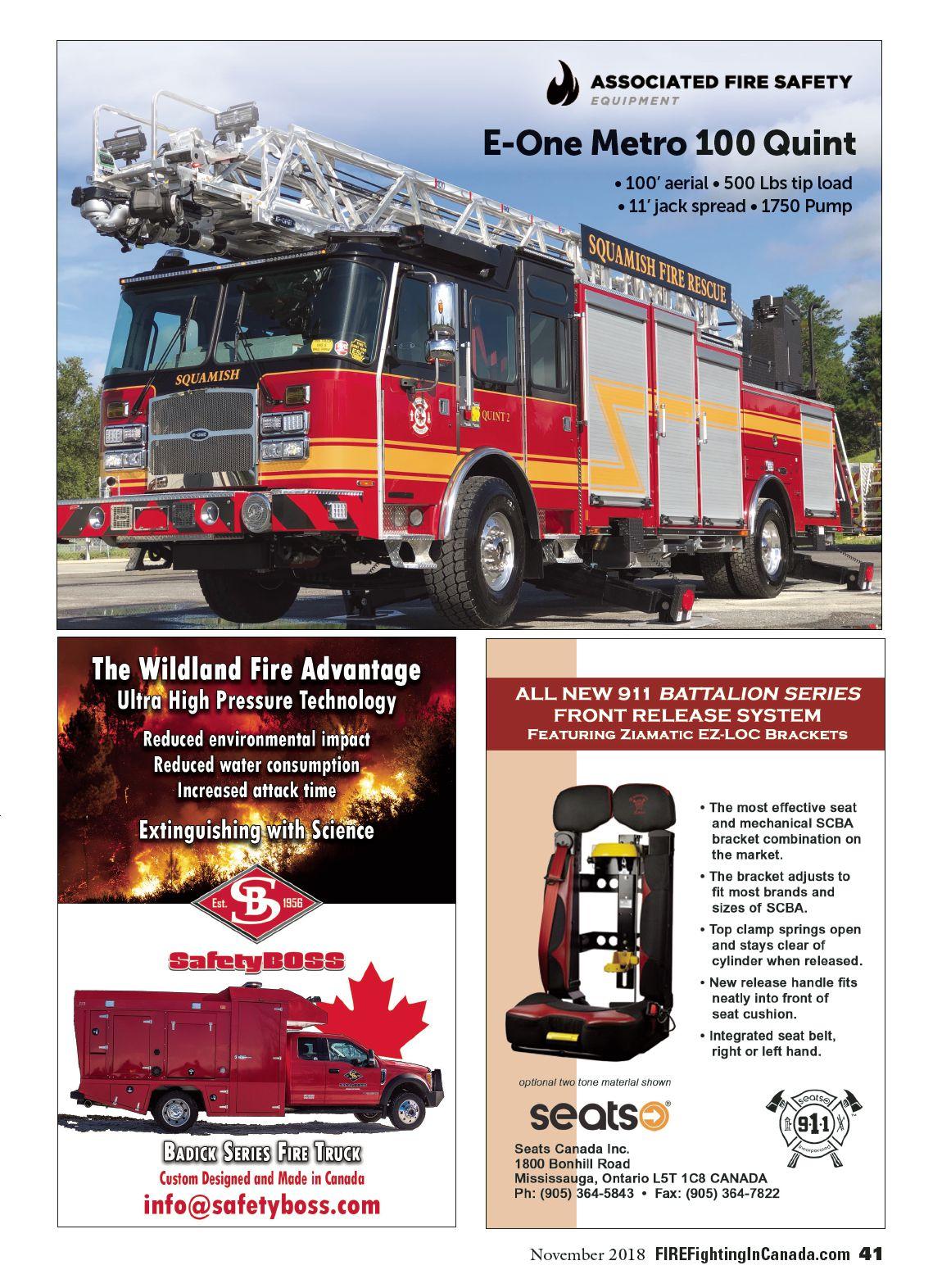
By KEN GILL
The Oak Bay Fire Department is sharing this article written by the late Ken Gill, who was a retired firefighter and served as volunteer chaplain with Oak Bay and Esquimalt Fire Departments on Vancouver Island. He succumbed to post-traumatic stress disorder this past spring. Gill was a pillar of support for the health and well-being of the Oak Bay fire community in Greater Victoria. His many contributions made lasting impacts on all those who had the opportunity to know him. His article showcases the importance of a fire chaplain’s role in supporting the health and well-being of firefighters and their families.
Many proactive fire departments are implementing holistic support initiatives and health and wellness programs. These programs are designed to educate, promote and encourage the health and well-being of firefighters which, in-turn, directly and indirectly impacts his or her home and family life. The goal of an effective health and wellness program is to build a firefighter’s resiliency, improve health outcomes and enhance their overall quality of life.
The Oak Bay Fire Department is one such proactive department. Early in 2014, the department, under the leadership of Fire Chief Dave Cockle, founded a customized health and wellness program based on the Fire Service Joint Labour Management Wellness Fitness Initiative principles. One of the key strategic building blocks of the program was to take a holistic and preventative approach in supporting the overall health and well-being of each firefighter (body, mind and spir-
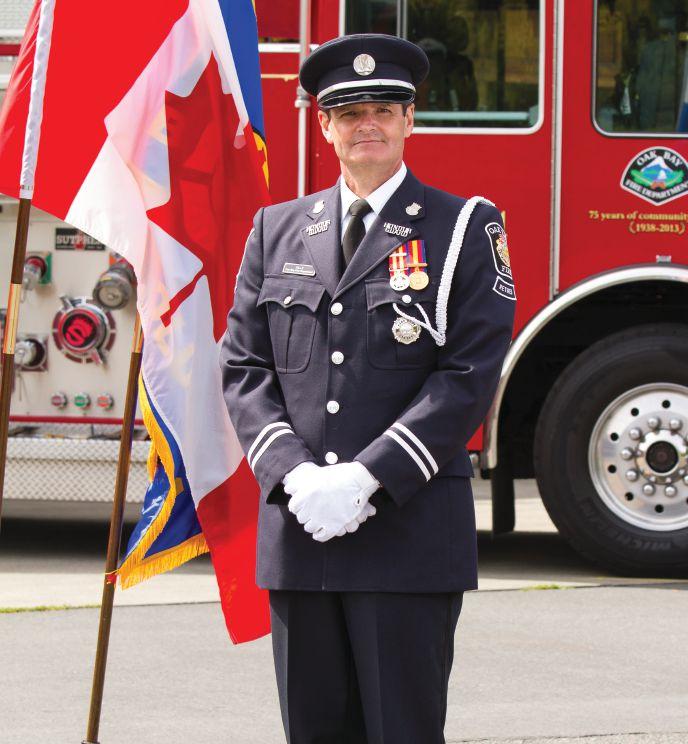
it). From the earliest planning stages, Fire Chief Cockle recognized and promoted the value of having a fire chaplain within the department.
As Fire Chief Cockle has stated, “The chaplaincy program supports the health and wellness of our firefighters and their families by reducing the insular paramilitary structure of the department to accommodate and support the human aspects of the fire service through spiritual and emotional care.”
There are a variety of health and wellness program models. However, each of these models target and aim to support three specific elements of the person: Body: involving one’s physical needs, health and nutrition
Mind: involving one’s social, emotional and mental health
Spirit: involving the human spirit (as opposed to our physical bodies)
A healthy spirit integrates and affects all three elements. A healthy spirit helps us to maintain our health, cope with illnesses, traumas, losses and other life transitions.
The spiritual component of health and wellness is where we encounter our faith and belief systems. All of us have a faith or belief in someone or something. This faith is what gives us intrinsic value and meaning and can be defined as having a complete trust or confidence in someone or something such as God, humanity or nature. Faith is a crucial part of spiritual health and is also the core of hope. Hope is the expectation of a positive, desirable future that gives us all the motivation to continue living.
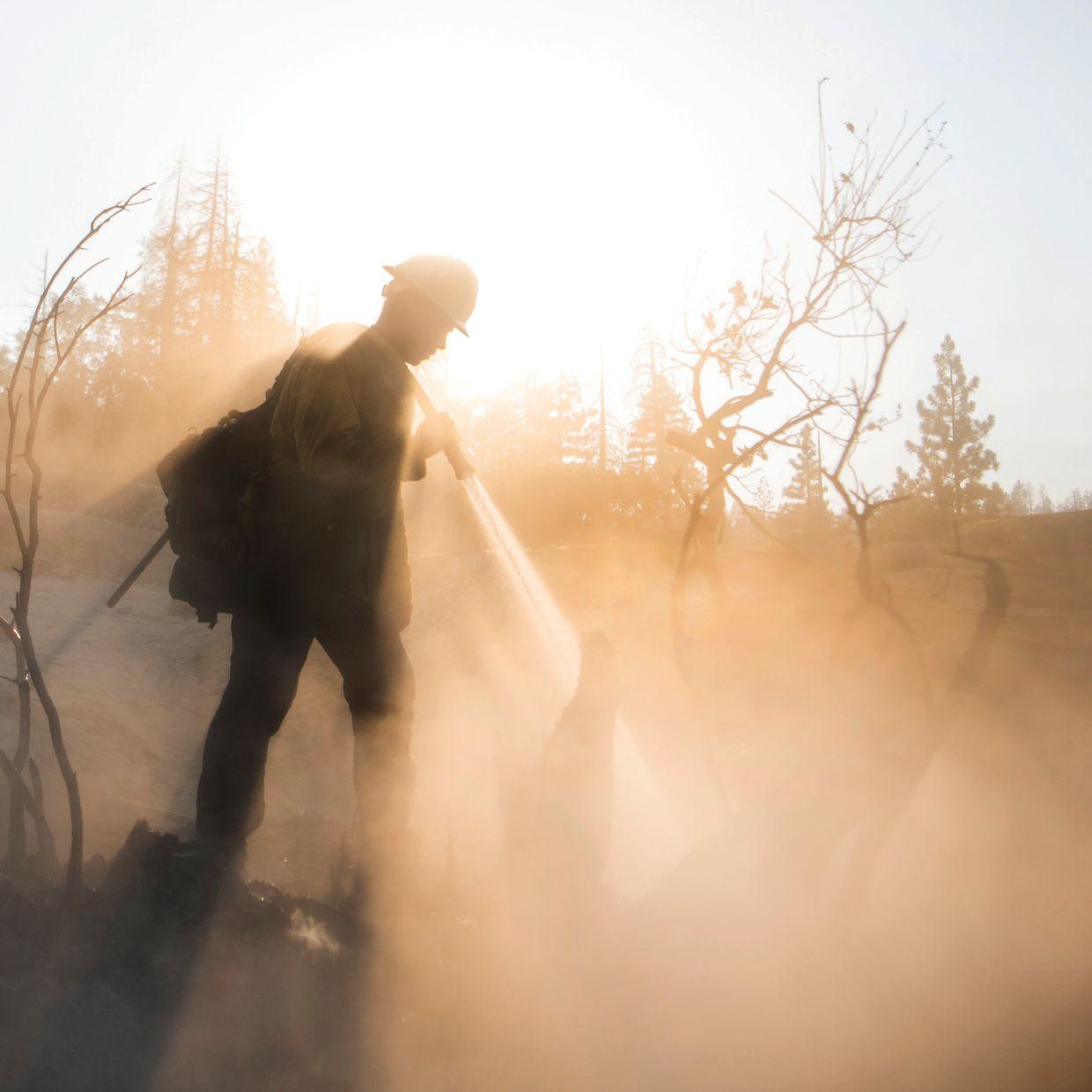
’’
Chaplains will support and serve the needs of all members in their departments regardless of their beliefs or religious backgrounds.
- KEN GILL
■ WHAT IS SPIRITUAL CARE?
All people have spiritual needs and many have religious or faithbased needs. The chaplain strives to support and care for the spiritual and religious needs of his or her department members and their families. As firefighters face trauma, troubling situations or their own mortality, healthy spiritual practices may help many find peace and develop resiliency, allowing them to move forward.
Simply stated, the chaplain is one who takes on the role of providing spiritual care as part of an overall holistic support system for those in the fire service and their families.
■ WHAT ARE SOME OF THESE SPIRITUAL NEEDS?
Spiritual needs and concerns usually relate to what we call the big questions of life. These questions can include:
• Why is this happening?
• Why is it happening to me?
• What does it all mean?
• How do I make sense of everything?
• How do I feel about changes in my life?
• What gives me comfort and hope?
• What do I call good in my life? What do I call bad?
• What am I grateful for?
• What do I trust? Who do I trust?
• Who loves me and is loved by me, no matter what?
• What or who, other than myself, do I believe is important in my life?
Some people find meaning, comfort, hope, goodness and community through their beliefs, faith and/or religious community and practices. Some people do not.
Regardless of whether religious faith is a part of a person’s life or not, spiritual concerns are still very important.
■ THE CHAPLAIN’S ROLE
The chaplain’s role is to provide a supportive, caring and compassionate service of spiritual care as a component of a holistic health and wellness program. The chaplain is committed to supporting firefighters and their families in order to help them experience and maintain spiritual wellness and wholeness
The chaplain’s principal goal is to simply be a presence, offering support by meeting people where they are at and offering encouragement, compassion and care during whatever life challenge or situation they are in. The chaplain serves those who serve with spiritual support. The chaplaincy is not about making
people feel good, or being a nice person, or a helpful person, or even a good person. Chaplaincy is about being a strong spiritual presence in difficult circumstances and situations.
The fire department chaplain may come from a variety of backgrounds. Chaplains may be a clergyperson (ordained minister serving a church congregation), or a layperson (a non-ordained church person), or someone with specialized knowledge or training in chaplaincy. The chaplain may also be an active or retired firefighter who takes on the role of providing spiritual care and support for his or her department. Many chaplains volunteer their time to serve the needs of departments in their community. Some may receive expense reimbursement or raise funding from their local church or other groups. Others might be paid part-time or full-time by the fire department. The chaplaincy model may be as varied as the fire departments. While chaplains come from their own faith backgrounds and have their own beliefs, they do not serve to convert or attempt to convert anyone from one religion, belief or opinion to another. Chaplains will support and serve the needs of all members in their departments regardless of their beliefs or religious backgrounds. A chaplain will always respect a person’s spiritual ideas, values and perspectives. Acceptance is fundamental and chaplains are committed to care for, and support, everyone with respect and sensitivity.
Some of the duties a fire chaplain may perform include:
• Conducting and/or assisting with fire department funerals or memorial services.
• Caring for injured or sick personnel and families and doing hospital visits.
• Involvement with CISM teams/training.
• Offering support and assistance at emergency incidents.
• Acting as a liaison with local clergy, churches or faith groups.
• Facilitating invocations/prayers at ceremonies and special events.
• Educating fire service personnel and families in areas of spiritual and emotional wellness.
• Acting as a confidential listening ear to personnel and family members.
• Recommending resources for personnel and family members who are seeking assistance for counselling or other wellness initiatives.
• Being available as a resource to the fire chief, member association or union.
The first crucial step when considering a chaplaincy program is to determine if the department wants the program. This may require education and investigation into what a chaplaincy program is and what a chaplain may offer to the members.
As Fire Chief Cockle has stated, “We incorporated the chaplaincy service into the department to fill an evident void, to fulfill the humanity of the fire service. The department was lacking that key tie between what we do and see every day and the reality of everyday life as a human being.”
The next step in the process is to select a candidate to be the department chaplain. Before embarking on the search for a chaplain, it is important to understand what the department expects to accomplish from a chaplaincy program. It is recommended that these expectations be put in writing, as they will need to be discussed with any prospective chaplain.
It is also extremely important to identify the qualities that a department is looking for in a chaplain. Personal suitability, approachability and the personality of the chaplain will all influence the acceptance and effectiveness of the program.
When looking for potential candidates for your chaplaincy program, it may be helpful to consider some of the following:
• Contact other fire departments, emergency services and any chaplains currently serving within your area.
• Investigate fire chaplain organizations or associations such as the Federation of Fire Chaplains or, as in British Columbia, the B.C. Association of Fire Chaplains.
• Look within your own department for a clergyperson or layperson.
• Enquire through churches in your area or ministerial alliance.
• Consider anyone who is effectively able to relate, without reservation, to all denominations and beliefs.
Not everyone is suitable to serve as a fire department chaplain, just as not everyone is suited to be a firefighter. Take time to interview and investigate any potential candidate. Have them visit the stations and meet the firefighters. Look at, and consider, all feedback from firefighters, as to whether the candidate would be able to build confidential and supportive relationships with them.
An effective fire chaplain will have much more to offer a department than just a well-meaning minister or firefighter trying to make a difference. Chaplains may come from a variety of backgrounds, professional training or experiences, but they will all need to approach the chaplaincy as a special calling to serve others in crucial and critical situations.
Chaplains will require specialized training and need to possess specific service strengths. Service strengths would include strong listening skills, empathy, patience and understanding. Training in grief and loss counselling, crisis intervention and pastoral care is crucial, as this is where the chaplain supports people in their pain, loss and anxiety, along with their triumphs, joys and victories. Firefighters that the chaplain serves are very special people engaged in a highly skilled, demanding and often dangerous profession. It is a tremendous responsibility and privilege to serve and support them.
The right chaplain will be able to provide a department with a vital service and make a significant and complementary addition to any holistic health and wellness program. Most importantly, a chaplain will offer purposeful presence, committed caring and confidential support.
If you are considering a chaplaincy program for your department, contact your local provincial chaplaincy for your area. The chaplaincy will have a wealth of information to share.
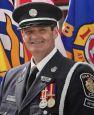
The late Ken Gill was a retired Oak Bay firefighter and served as a volunteer chaplain with Oak Bay and Esquimalt Fire Departments on Vancouver Island.


BY SHAYNE MINTZ Canadian regional director, NFPA
any of us assume Canada is a peaceful, law-abiding nation free from violence and hostile events that seem to plague many others around the globe.
I know that’s what I thought until recently where, in the wake of several tragic multi-fatal shootings and hostile events, it caused me to look more closely into the Canadian experience with regard to mass casualty incidents.
Did you know that since 1967 there have been approximately 215 people killed in almost 40 hostile events, and since December of 2011, 58 people have been killed in 12 multiple death events over that time?
What’s more disconcerting is the growth and frequency with which these events have been occurring. Since April 2014, 47 people have been murdered in nine of those events.
While the numbers aren’t as dramatic as in other countries, it still begs the question of: How prepared is our collective first-responder community to help themselves and the public in dealing with mass shootings and/or hostile events?
During active shooter or hostile events, time is of the essence and the number of variables, personnel and logistics quickly escalates and, if first responders and other agencies are not working together, they can be quickly overwhelmed and valuable time can be lost and possibly additional life. Preparing for and responding to these events must be in an integrated and well-rehearsed approach.
I believe there are many in the responder community who understand the need for planning and preparation for these types of events and have been thinking about undertaking such an exercise, but don’t know how to go about the process and/or deciding who should be involved and how to get them to the table.
The standard was developed to help communities deal with the fast-growing number of mass casualty incidents that continue to occur throughout the world. Serving as the first of its kind, NFPA 3000 provides a holistic approach to unified command, planning, response and recovery guidance, as well as civilian and responder safety considerations.
Some have asked why NFPA would be the organization to develop such a standard. Well, since its inception, the NFPA has been a go-to organization for facilitating a respected consensus-based process that has produced some of the most widely-used codes and standards in the world, including more than 100 that impact first responders.
Following some recent major active shooter/hostile events, the first responder community sought out the NFPA to develop a standard to help authorities come together and create a well-defined, cohesive plan that works to minimize harm and maximize resiliency.
NFPA’s purview goes far beyond just fire-safety efforts to address new hazards with professionals in public safety, emergency management, community risk, engineering, chemical and other industries, healthcare, manufacturing, research, government and the built environment.
NFPA 3000 helps entire communities organize, manage, communicate and sustain an active shooter/hostile event preparedness,
The premise is that all community stakeholders will come together and plan, respond and recover together. ‘‘ ’’
This past May, NFPA released NFPA 3000 – Standard for an Active Shooter and Hostile Events Response, or ASHER for short. This standard is the world’s first active shooter/hostile event standard targeting whole community planning, response and recovery. This standard is not fire-centric and was developed with insight and participation from the entire responder community, including law enforcement, fire, EMS, medical providers, facility managers, private industry, and other federal law enforcement resources.
Shayne Mintz has more than 35 years of experience in the fire service, having completed his career as chief of the Burlington Fire Department in Ontario. He is now the Canadian regional director for the National Fire Protection Association (NFPA). Contact Shayne at canada@nfpa.org and follow him on Twitter at @ShayneMintz.
response and recovery program. In addition to the standard, NFPA is offering an online training series that consists of three courses – a downloadable checklist; a readiness assessment document; and a fact sheet for authorities to learn more about establishing a proactive, collaborative active shooter/hostile event program.
Whether it’s a city manager, a facility or building manager, police, fire, EMS first responders, a local hospital, concerned parent, school principal, or an emergency room doctor, each has a role to play in implementing this new standard.
The premise is that all community stakeholders will come together and plan, respond and recover together.
For more information about NFPA 3000 go to https://www. nfpa.org/nfpa3000, and if you would like a presentation on the standard and its contents please feel free to get in touch with me at Canada@nfpa.org or 705 812-2924.
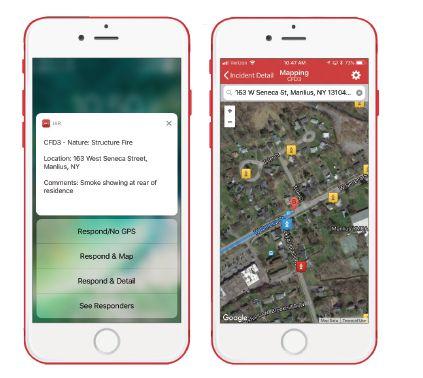



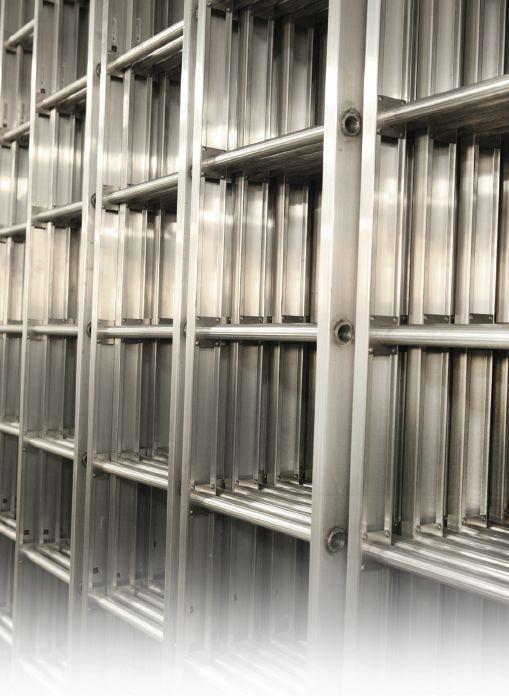
BY MARK VAN DER FEYST
Ventilation saws are a great tool to use when cutting open a roof or the side of a gable end for vertical ventilation. They speed up the process, allowing for quicker evacuation of hot gases, smoke and unburned particles of combustion. They are also very useful for other special operations such as helping an RIT create an enlarged opening for extrication of a mayday firefighter. Using a ventilation saw requires training on the finer details of how it performs, how to use it correctly and how to optimize it for peak performance.
There are ventilation saws that are manufactured specifically for the fire service and differ greatly from a regular chainsaw used for household or commercial use. The one area where there is a major difference is the type of chain that is used. On a fire service ventilation saw, a specially designed chain called a “bullet chain” is used in place of a regular chain. The bullet chain has a beefier look to it and also has different cutting properties built into it.
The bullet chain needs to be pushed in as opposed to being pulled into the material. The bullet chain produces a fine sawdust as opposed to wood chips that are produced from a regular chain. This is also another way of telling if the ventilation saw has a regular chain or a bullet chain.
The bullet chain will cut through all types of materials when operated at a consistent speed. The speed needed to cut through three inches of material, be it wood, shingles, insulation, plastic or metal pipe, nails or wire, is 74 feet per second. This speed allows the chain to drive through the material. To achieve 74 feet per second, the ventilation saw needs to operate at 10,200 revolutions-per-minute consistently. When the speed drops to 73 feet per second, chain chatter is then created where the chain is bouncing off the material because it does not have the speed or power to cut into and through it. Chain chatter can lead to kickback. The bullet chain has been designed so that it will not produce kickback.
Another distinct feature on a fire service ventilation saw is the exhaust and intake ports. The intake port of the ventilation saw is very distinctive, as it has a black foam cover around the filter. The air intake has been moved to be on top of the saw because it helps with the increase in performance speed and allows the saw to work in environments that are smoke-filled. The air is drawn in from behind the firefighter where it is cooler and cleaner than the air in front of the firefighter. The exhaust port is also on top which blows smoke and heat away from the saw. The exhaust port works in conjunction with the black plate on the front of the saw body to deflect heat and debris up and away.
The ventilation saw also has a depth gauge attached around the bar of the saw, allowing a firefighter to adjust the depth of the cut. This gauge works well when knowledge of a roof’s thickness is known. This can be accomplished by cutting an inspection hole with the gauge set back all the way.
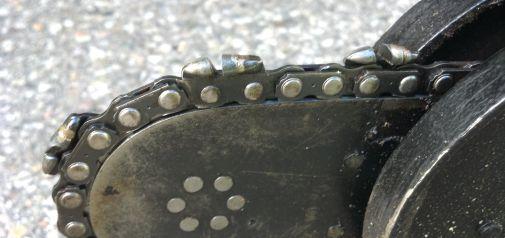
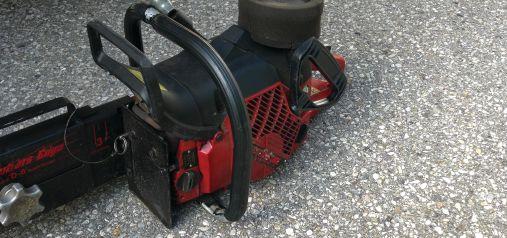
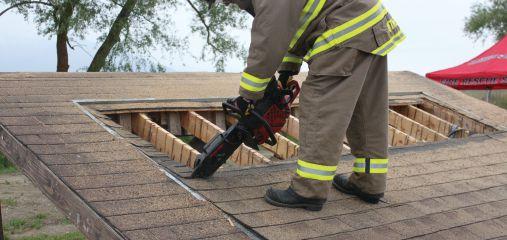
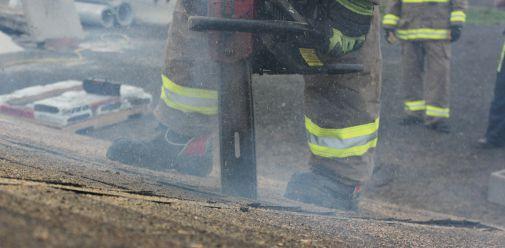
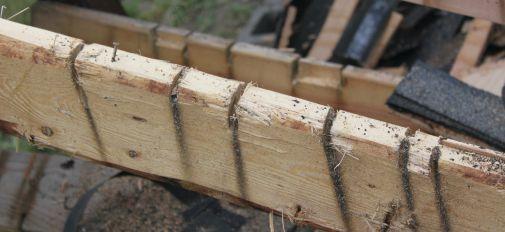
An inspection hole is made by cutting a small triangle in the area of where a vertical vent opening will be made. The triangle cut can be the width of the chain bar and can be made by plunging the blade of the saw straight into a roof in a three-sided fashion.
Remember to operate the saw at full throttle in order to ensure its optimal performance. When the saw is operating at half throttle or thereabouts, the chain will not work as it is intended to and the saw engine will be working a lot harder.
Once the thickness can be observed, the gauge can then be set to cut the roof’s material without cutting the roof joists all the way through. But what if the depth gauge malfunctions? What happens if the silver knob that tightens the gauge becomes loose, falls off or the depth gauge is missing? This can become reality, as vital parts of equipment/tools will sometimes be lost during operation. The saw can still be used to cut the roof without cutting the roof joists all the way through. This is where positioning of the saw while cutting comes into play along with the bullet chain being used in tandem.
A firefighter can hold the ventilation saw vertically as opposed to being on an angle. The vertical position allows the chain on the saw to come into complete contact with the roof joist. The depth of the joist comes into complete full-surface contact with the chain. For example, if the roof joist is two-by-eight inches, then a full 7.5 inches of the wood joist will come into contact with the chain.
Remember that the bullet chain needs to be pushed into the material and will want to repel itself from the material naturally. When the saw is being moved across the roof line during the cut, as it comes into contact with the roof joist, the operator will feel the saw resisting the joist, allowing him or her to bring the saw up to roll over the joist and then plunge it back down. When the saw is on an angle without the depth gauge, the operator will not feel the resistance of the joist and will be more prone to cut all the way through it.
The bullet chain on the saw might make black marks when it comes into contact with a roof joist and might also make a small notch when it rolls over the joist, but it will not compromise the joist as much as it would be if it was cut almost all the way through.
A ventilation saw might look like a regular chain saw, but in many ways the two are completely different, requiring the end user to be familiar with the differences and its performance. Training will accomplish this.

Mark van der Feyst has been a member of the fire service since 1999 and is a full-time firefighter in Ontario. Mark teaches in Canada, United States and India, and is a FDIC Instructor. He is the lead author of the Residential Fire Rescue book. Email Mark at Mark@ FireStarTraining.com.
On-the-job experience, smoke alarms and sprinklers have more impact on firefighter safety than a structure’s height or construction material, according to a study of newly available, Canada-wide fire statistics.
The fledgling National Fire Incident Database (NFID), a project of the Canadian Association of Fire Chiefs and the Council of Canadian Fire Marshals and Fire Commissioners, supported by Statistics Canada, has provided unprecedented data on the impact of the built environment on firefighter injuries and death (referred to as “casualties” in this article).
A group of researchers and academics at the B.C. Injury Research and Prevention Unit (BCIRPU) and University of the Fraser Valley (UFV) synthesized 10 years of Canadian fire statistics from the NFID and other sources, reporting their results in the May 2018 study Examining the Relationship between Firefighter Injuries and Fatalities in the Built Environment: A case for reducing the risk to firefighters through adequate firefighting experience, working smoke alarms and sprinkler coverage in buildings, by Alex Zheng, Andy Jiang, Fahra Rajabali, Kate Turcotte, Len Garis and Ian Pike.
Of note was the discovery that building height or construction material – long thought to be key determinants of firefighter safety –mattered less than the firefighters’ experience, as well as the presence of automatic detection and extinguishment devices such as smoke alarms and sprinklers.
“These revelations are a testament to the importance of maintaining and sharing fire data, to ensure decisions are based on evidence rather than assumptions,” said lead author Zheng, a BCIRPU biostatistician and researcher. “As the NFID grows more robust, it will help Canada’s fire service become more strategic and focus on what matters. In this case, the data has provided a roadmap for reducing firefighter casualties.”
The purpose of the study was to describe structure-related injuries and deaths directly affecting firefighters over a 10-year period. The authors reviewed data from 177,626 fires (72 per cent of those residential) that took place between 2005 and 2014 in B.C., Alberta, Saskatchewan, Manitoba and Ontario, and correlated it with statistics from the Association of Worker Compensation Boards of Canada (AWCBC) and Workers’ Compensation Board of British Columbia (WorkSafeBC).
During the study timeframe and in those same provinces, there were 11,100 firefighter work-related time-loss and fatality claims, with structure-related firefighter casualties making up 20.4 per cent of total workplace casualties and 23.4 per cent of all traumatic casualties.
Key findings from the data review:
• Civilian casualty rates were higher than those for firefighters. However, while firefighter casualties in general did not tend to
Data shows that experience, alarms and sprinklers are key to firefighter well-being
By LEN GARIS AND IAN PIKE
PHOTO CREDIT: KEN WIEDEMANN
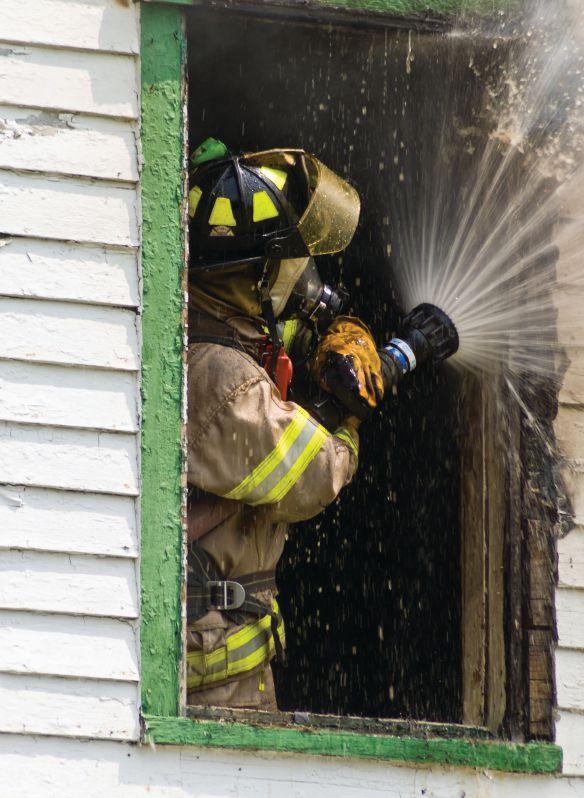
be as serious as those to civilians, firefighters were much more likely to be injured by physical causes such as falls.
• Firefighters had reduced casualty rates when automatic fire detection system, fire detection devices, and automatic extinguishing equipment were present (between 34.3 and 38.8 per cent)
• Whether or not the fire was initially detected by a fire-safety device reduced the odds of a firefighter casualty by 61.2 per cent.
• Firefighting experience reduced the odds of serious casualty in firefighters by 0.3 per cent for every five years of experience.
• Fire spread increased the incidence of firefighter casualty, but
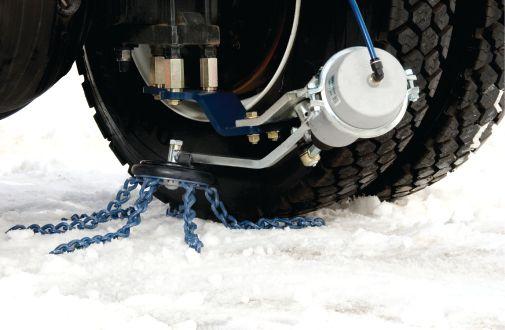
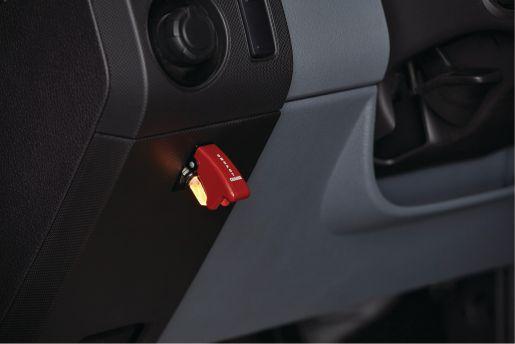





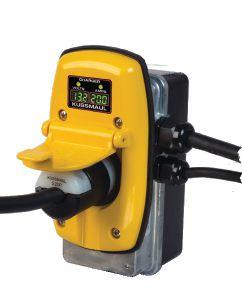


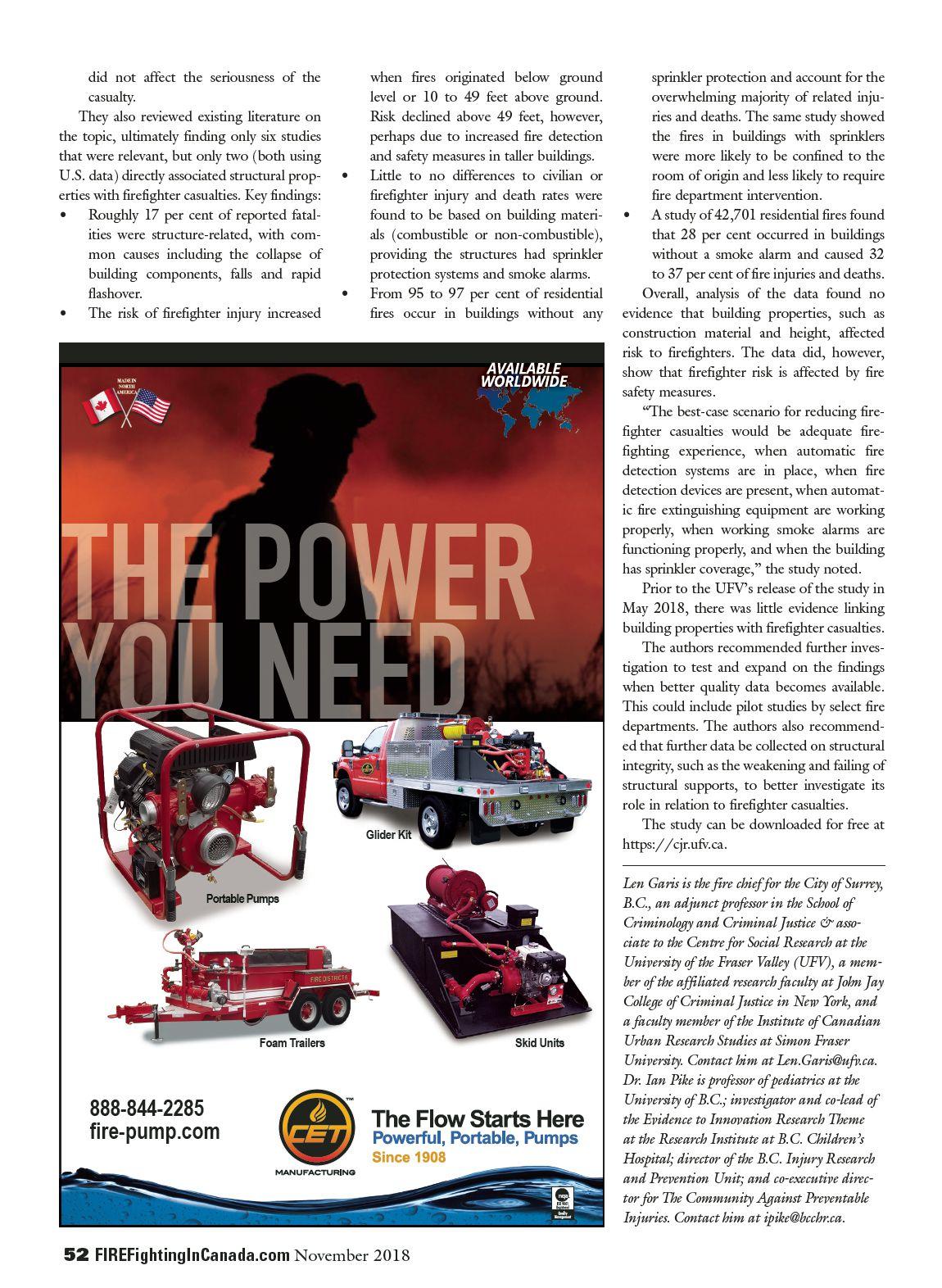
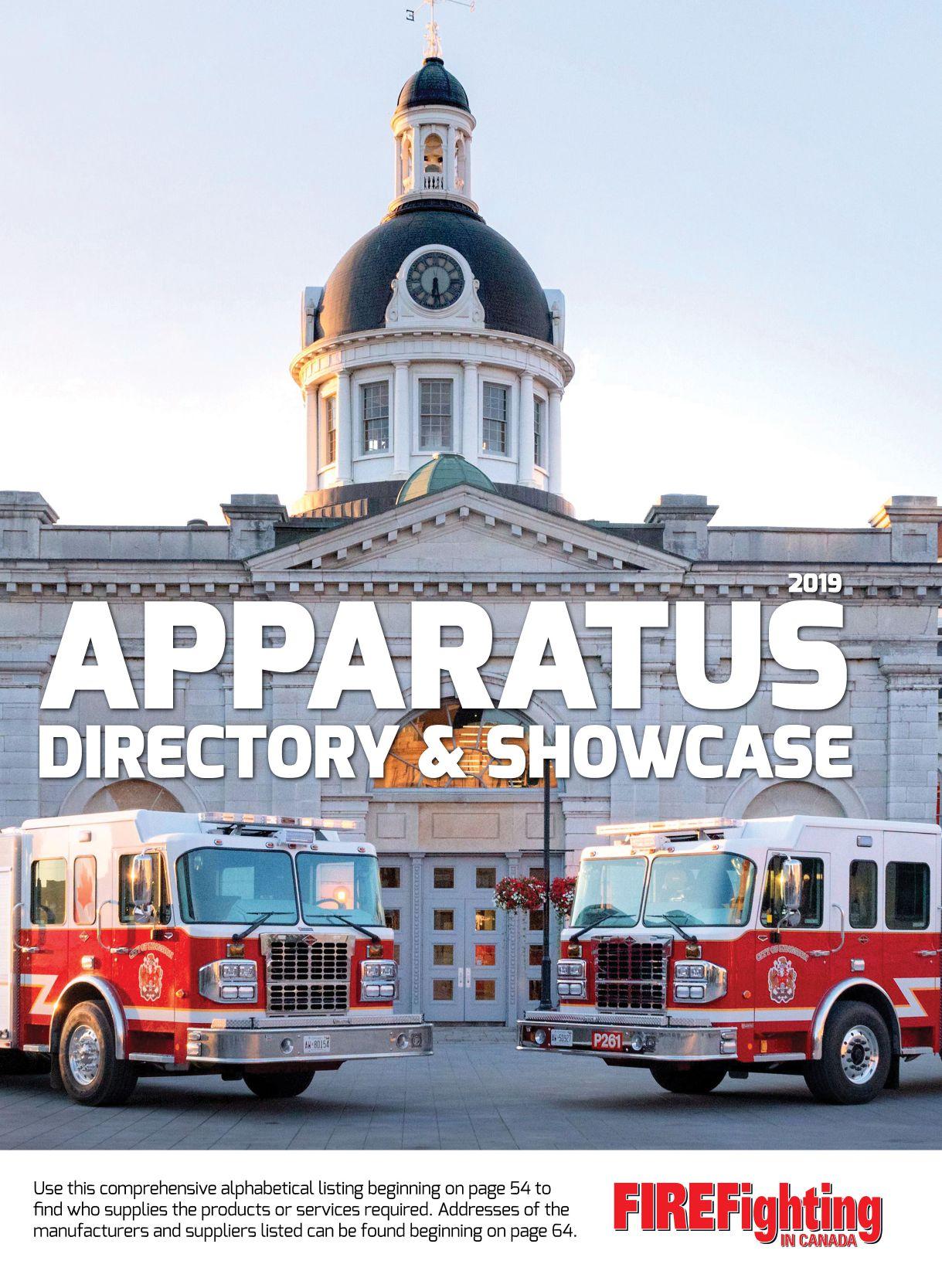
AN ALPHABETICAL LISTING OF MANUFACTURERS, SUPPLIERS AND DEALERS OF APPARATUS AND COMPONENTS TO THE CANADIAN FIRE SERVICE.

1200 Degrees - DARCH FIRE
9-402 Harmony Rd., Ayr, ON, N0B 1E0
Tel: 519-622-6110
Fax: 519-622-7705
Toll Free: 1-800-254-2049
Email: jflariviere@1200-degres.com
Web: www.1200-degrees.com
John Darch
Darch Fire has been servicing the Ontario Emergency Service Industr y since 1993!
Acquired by 1200-Degrees, Darch Fire represents E-One Fire Trucks in Southern Ontario and the Near North. We are dedicated to providing the best firefighting equipment including Holmatro Rescue Tools. We also partner with Cosmas Boots, Dräger, Akron Brass, Flir Cameras, Geargrid Corporation, Key Hose, Blowhard Fans, and Southcombe Brother Gloves. Our EVT certified service technicians work alongside with the parts department to ensure each service request is completed on time and above our customer’s expectation. Darch Fire employees work as a team and take pride in assisting our customers in any way possible


A.J. STONE COMPANY LTD.

62 Bradwick Dr., Vaughan, ON, L4K 1K8
Tel: 416-785-3752
Fax: 416-781-2827
Toll Free: 1-800-205-3473
Email: order@ajstone.com
Web: www.ajstone.com
Lindsay, Joyce, Connor
A.J. Stone has proudly served the needs of the First Responder Services of Ontario since 1972 by featuring quality products, knowledgeable sales team, and training support.
A.J. Stone supplies equipment from MSA, Genesis Rescue Systems, BullEx/Lion Protects, Task Force Tips, Paratech Rescue, FireAde, Enforcer, Streamlight, Innotex Bunker Gear, ProTech Gloves, Safe-T-System, CET and much more!
We service what we sell!
AIR TECHNOLOGY SOLUTIONS CANADA INC.
251 Queen St. S., Ste. 512, Mississauga, ON, L5M 1L7
Tel: 905-826-6682
Fax: 866-511-6904
Toll Free: 1-866-735-1480
Email: r.weber@airmation.ca
Web: www.airmation.ca
Randall Weber, VP Marketing & Sales, Canada Air Technology Solutions is dedicated to our Clients, offering updated, timely, full service Indoor Air Quality (IAQ) solutions. Air quality concerns are mitigated using a unique combination of professional indoor air quality assessment coupled with solutions. Off the shelf or customized site specific air cleaning equipment is available to resolve IAQ issues. Our technical experts review client requirements and budgetary availability. The finest appropriate air cleaning systems are provided. Air Technology Solutions is a leader in Diesel Exhaust Remediation and is the ONLY environmental tested and proven filtration system to exceed standards: NFPA, NIOSH, OSHA and ASHRAE Building and facility managers, business owners, contractors, architects, and engineers have been working with Air Technology Solutions since 1986 to resolve IAQ needs. Employee and personnel safety and health are key issues. Breathing safe air in the workplace is of utmost importance We provide global customized solutions to control contaminants, pollutants and odours in your facility. We look forward to servicing your requirements

106 - 3070 Norland Ave, Burnaby, BC V5B 3A6
Tel: 604-320-3303
Fax: 604-320-3303
Toll Free: 1-888-320-3303
Email: sales@associatedfiresafety.com
info@associatedfiresafety.com
Web: www.associatedfiresafety.com
Ian Manly
Associated Fire and Safety carries firefighting equipment, law enforcement uniforms, turn out gear, and more. We are a distributor of quality fire and safety equipment in Canada.
AIR VACUUM CORPORATION
PO Box 517, Dover, NH, 03821
Tel: 603-743-4332
Fax: 603-743-3111
Toll Free: 1-800-540-7264
Email: sales@airvacuumcor poration.com
Web: www.airvac911.com
Thomas Vitko and John Koris, Regional Sales Managers
Breathe Clean Air with AIRVAC 911®
The AIRVAC 911® Engine Exhaust Removal System protects your first responders from cancer-causing gases and particulate without interfering with daily operations. No hoses, hook-ups or vehicle connections. No building modifications, no ducting and no outside exhausting. AIRVAC 911® is 100% automatic and specifically designed to:
• Protect 100% of the bay area(s)
• Eliminate hot zones within your station
• Remove off-gassing of turnout gear, hoses and parked vehicles
• Remove engine exhaust that re-enters the building
• Half the cost of hose systems
• Energy efficient LEED/green design
• Made in USA
• NFPA 1500/OSHA/GSA compliant
For a free quote: www.airvac911.com
sales@airvacuumcorporation.com 800-540-7264
BECOMING A FIREFIGHTER
PO Box 530, 105 Donly Drive S., Simcoe, ON, N3Y 4N5
Tel: 416-510-5232
Fax: 866-810-8111
Toll Free: 1-888-599-2228 ext. 235
Email: wserrao@annexbusinessmedia.com
Web: www.becomingafirefighter.com
Wendy Serrao, Account Coordinator
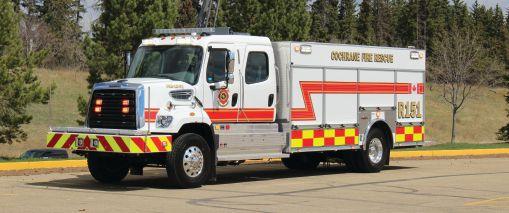
Built on a Freightliner 108SC 4x4 chassis and powered by a Cummins L-9 400 HP engine; this unit with an Allison 3000 EVS Automatic Transmission has a 275 Amp Alternator, 2010 Emissions Engine with DPF and DEF, ABS, Rosenbauer N45 1250 US GPM (1050 IGPM) (4730 LPM) PTO driven pump, 500 US Gallon water tank (1893L), 30 US Gallon Class A Foam Tank (114L), FRC TGA300 Pressure Governor.
DEPARTMENT: Cochrane, Alta.
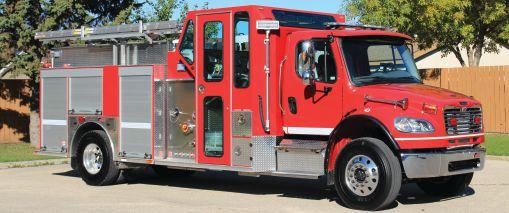
This MXV 4 Man Crown is built on a Freightliner M2 chassis and is powered by a Cummins 350 HP engine. This 5083 salt water marine grade aluminum unit features a Darley PSP 1250 pump, Co-Poly 1000 IG tank, and a Foam Pro 2001–Class A foam proportioning and foam refill system.
DEPARTMENT: Manitouwadge, Ont.
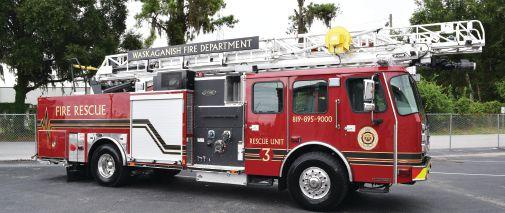
Built on an E-ONE Typhoon chassis and powered by a Cummins L9 450 HP engine, EVS 3000 transmission, and EZ TRAC 20,000 lb hydraulic drive front axle, this HP 75 aerial features a welded extruded aluminum ladder with 550-pound tip load and 2.5 to 1 structural safety factor, 1893 litre (500 gallon) water tank, and a Hale QMAX 6000 LPM (1500 GPM) single stage pump.
DEPARTMENT: Waskaganish Fire Department, Cree Nation Nemaska
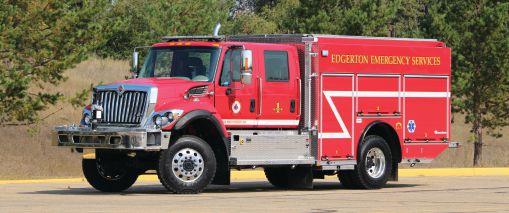
This unit sits on an International 7400 4x4 chassis with an Allison 3000 EVS automatic transmission and comes with an ABS system and electronic stability control. The truck is powered by a Cummins L9-350 HP engine. It also has a Rosenbauer NH-1250GPM PTO Driven Pump with dual pressure and comes with a 1000-gallon water tank and an FRC Pump Boss 400 pressure governor.
DEPARTMENT: Edgerton, Alta.
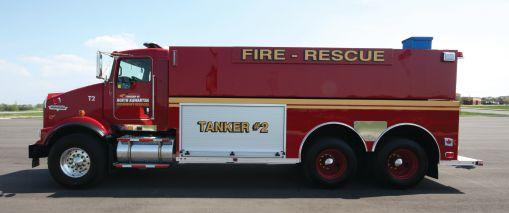
This Rosenbauer Wetside Tanker has a department supplied Kenworth chassis, 3000 imperial gallon water tank, rear swivel dump, two Firemans Friend direct tank fill connection, portable pump storage with connection and Fire Research LED scene lights.
DEPARTMENT: Township of North Kawartha, Ont.
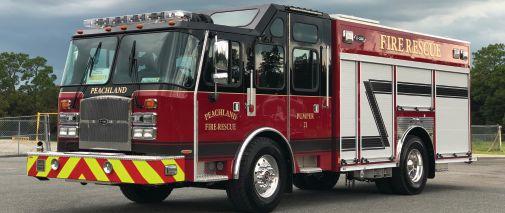
Built on an E-One Typhoon Chassis; this unit is powered by an ISL9 450 HP engine and Allison 3000 transmission. This rear mount pumper features a fully extruded cab and body, a HALE RSD 1500 GPM pump–770 gallons of water and 30 gallons of foam.
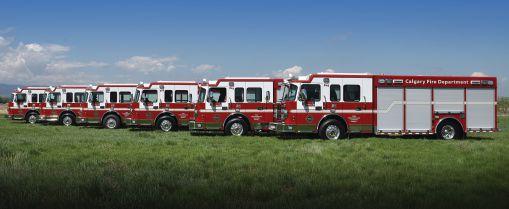
a
is powered by a Cummins L9 450 HP engine and has an Allison EVSP-3000 transmission. The unit has a Command Light CL615A 9000W Light Tower, Onan 30kW PTO Generator and features ROM Roll-Up Doors, four Holmatro 100’ Core Reels mounted on a 1000lbs On Scene slide out tray in the rear compartment, and one DOT 6000 PSI Air Storage Cylinder.
DEPARTMENT: Calgary, Alta.
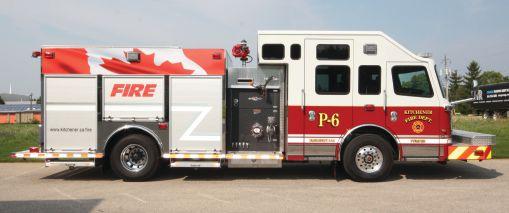
new Rosenbauer
a

C-MAX FIRE SOLUTIONS
3040 Sawmill Rd., St. Jacobs, ON, N0B 2N0
Tel: 519-664-3796
Fax: 519-664-3624
Toll Free: 1-844-GET-CMAX
Email: fireinfo@c-max.ca
Web: www.c-max.ca
Kathy Brookes, Manager
Canadian family owned and operated business that offers a higher standard of service and sales for all your Fire Apparatus needs. C-Max Fire Solutions offers 24 Hour service from EVT Technicians with fully stocked service trucks. We offer Pump testing and repairs to all makes and models. We offer ground ladder testing as per NFPA 1932. We are also Ontario’s Factory Sales and Service Centre for KME Fire Apparatus.
CANADIAN SAFETY EQUIPMENT INC.
2465 Cawthra Rd., Unit 114, Mississauga, ON, L5A 3P2
Tel: 905-949-2741
Fax: 905-272-1866
Toll Free: 1-800-265-0182
Email: ross@cdnsafety.com
Web: www.cdnsafety.com
Ross Humphry, Scott Gamble, John Donovan
We supply Industrial and Fire,SCBA’s, Thermal Cameras, Auto Extrication, CAF Systems, Fall Protection, Bunker Gear, Fire Hose, Communications Equipment, Nozzles, Fittings, Hazmat Suits, Ventilation Fans, Gas Detectors, Confined Space Rescue Equipment, High Angle Rescue Equipment, Boots and Gloves. Everything for Fire Fighting, EMS, Law Enforcement, Industrial and Municipal Safety and Lone Worker Protection systems..

5651 Ste-Francois, St. Laurent H4S1W6
Tel: 514-737-2280
Fax: 514-737-2751
Toll Free: 1-866-737-2280
Web: www.cseis.com
Richard Abraham, Genevieve Poirier, Patrick Lambert We supply Industrial and Fire,SCBA’s, Thermal Cameras, Auto Extrication, CAF Systems, Fall Protection, Bunker Gear, Fire Hose, Communications Equipment, Nozzles, Fittings, Hazmat Suits, Ventilation Fans, Gas Detectors, Confined Space Rescue Equipment, High Angle Rescue Equipment, Boots and Gloves. Everything for Fire Fighting, EMS, Law Enforcement, Industrial and Municipal Safety and Lone Worker Protection systems..
1601 S.W. 37th Ave., Ocala, FL, 34474
Tel: 352-237-1122
Fax: 352-237-1151
Email : info@e-one.com
Web: www.e-one.com
CANADIAN DEALERS
Associated Fire Safety Equipment
106-3070 Norland Ave., Burnaby, BC V5B 3A6 Phone: 604-320-3303
Territory: British Columbia, Yukon
Darch Fire
9-402 Harmony Road, Ayr Ontario N0B 1E0
Phone 800-254-2049
Territory: Ontario
Keewatin Truck Service
610 Keewatin St., Winnipeg, MB R2X 2R9 Phone: 204-633-2700
Territory: Manitoba, Ontario
Techno Feu Apparatus Maintenance
105 Marie-Victorin, St. Francois-Du-Lac, QC J0G 1M0
Phone: 450-568-2777
Territory: Quebec, Atlantic Canada
PO Box 530, 105 Donly Drive South, Simcoe, ON, N3Y 4N5
Tel: 1-877-267-3473
Fax: 1-877-624-1940
Toll Free: 1-877-267-3473
Email: info@firehallbookstore.com
Web: www.firehallbookstore.com
Becky Atkinson
The Firehall Bookstore provides training & public education materials to the Canadian Fire Service industry and its professionals. A one-stop-shop for books, DVDs, codes and standards, and fire prevention and education materials for community outreach. Product lines include NFPA, IFSTA, PennWell, Action Training Systems, Jones & Bartlett, Brady, and Emergency Film Group.
CET FIRE PUMPS MFG.
75, rue Hector, C.P. 90, Pierreville, QC, J0G 1J0
Tel: 450-568-2719
Fax: 450-568-2613
Toll Free: 1-888-844-2285
Email: service@firepump.com
Web: www.fire-pump.com
Stephan Thibault
DEMAND QUALITY!
Portable Pumps, Skid Units, CAFS, Foam Trailer, Glider Kit, Water Tank, Brush Truck and Fire Apparatus. A Century of Engineering for the Bravest!
PO Box 530, 105 Donly Dr. S., Simcoe, ON, N3Y 4N5
Tel: 1-800-265-2827
Fax: 888-404-1129
Toll Free: 1-888-599-2228 ext. 252
Email: mmcanulty@annexweb.com
Web: www.firefightingincanada.com
Canada’s National Fire Publication since 1957
Martin McAnulty, Publisher, Adam Szpakowski, Associate Publisher
FIREHALL.COM
PO Box 530, 105 Donly Dr. S., Simcoe, ON, N3Y 4N5
Tel: 888-599-2228 Ext. 253
Fax: 888-404-1129
Toll Free: 1-888-599-2228 ext. 253
Web: www.firehall.com
Adam Szpakowski, Associate Publisher
Firehall.com provides an excellent forum for exchange among firefighters and others involved in the fire service. Advertising options include banner ads and e-blasts and offer extensive exposure to the rank and file.
34 Torlake Cres., Toronto, ON, M8Z 1B3
Tel: 416-251-3552
Fax: 416-253-0437
Toll Free: 1-888-731-7377
Email: Brian@fireservicemanagement.com
Web: www.fireservicemanagement.com
Brian Sparfel, Mark Christie
Canada’s Premier facility dedicated exclusively to providing the best in bunker gear cleaning, assessing, decontamination and repair. NFPA 1851:2014 compliant, ISO 9001: 2015 registered, UL verified for all fabric repairs and all moisture barrier repairs.
Locations: Calgary, Toronto, Detroit.
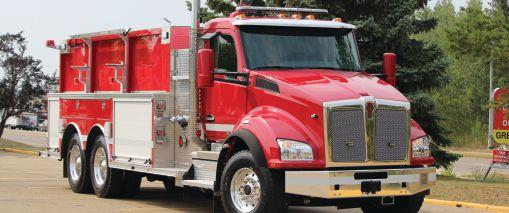
This new unit is sits on a Kenworth T880 chassis and is powered by a Cummins ISX 15L 505 HP engine with 1850 ft/lb torque and has an Allison 4500 EVS Automatic Transmission. The truck has ABS, ESC, traction control, 3000 US Gallon Water Tank with 36 US Gal. Foam Tank and an FRC Pump Boss 400 Series Pressure Governor. It also has a Rosenbauer 10” Quick Dump Chute.
DEPARTMENT: Mackenzie County/La Crete Mackenzie County, Alta.
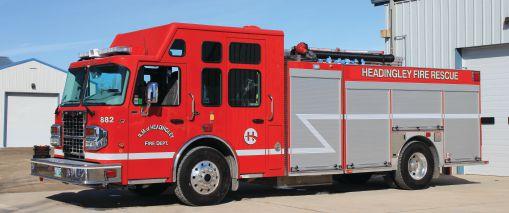
This emergency rescue pumper is built on a Spartan Metro Star LFD chassis that is powered by a Cummins L9 450 HP engine and an Allison 3000 EVS transmission. This 5083 salt water marine grade aluminum unit features a Hale QMAX 1750 pump, Poly 800 IG tank, and a Foam Pro 2001 Class A foam proportioning and foam refill system.
DEPARTMENT: Headingley Fire Department, Man.
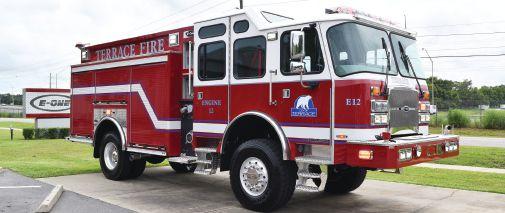
Built on an E-ONE Typhoon chassis and powered by a Cummins L9 450 HP engine and EVS3000 transmission; this Custom 4X4 eMAX Rescue Pumper features a 2839 litre (750 gallon) water tank and 114 litre (30 gallon) integral foam tank and an E-ONE 6000 LPM (1500 GPM) single stage pump.
DEPARTMENT: Terrace Fire Department, Terrace, B.C.
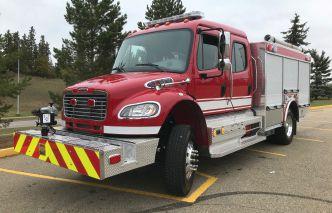
This new unit sits on a Freightliner M2 106 4x4 Chassis and is powered by a Cummins L9 350 HP engine with 1000 ft. lbs. of torque. The truck has an Allison 3000 EVS Automatic Transmission with PTO Provision and a 275 Amp Alternator. It comes with a Rosenbauer NH45–1250 GPM PTO Driven Fire Pump with Dual Pressure and Pump and Roll Capability.
DEPARTMENT: Legacy/Lashburn department, Sask.
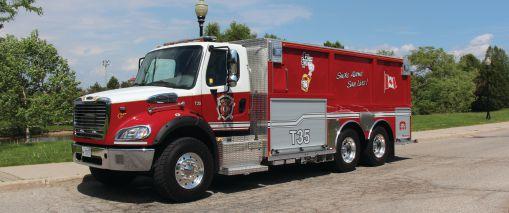
This Rosenbauer Tanker sits on a Freightliner M2-112 two door chassis and is powered by a Cummins L9 400 HP with an Allison EVS 3000 Transmission. It boasts a Rosenbauer FX Body, Darley HM 500 GPM Pump, 2500 Gallon Water Tank, FRC Scene Lighting, Innovative Controls Water Tank Level Display and has three Monster Slave Displays. The tanker also has an Enclosed Folding Tank
DEPARTMENT: Township of Wilmot, Ont.
AERIAL | ASSOCIATED FIRE SAFETY
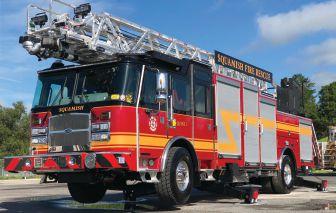
Built on an E-One Cyclone Chassis, this unit is powered by an ISX 15 500 HP engine and Allison 4000 transmission and transmission retarder. This Metro 100 Quint features a 100’ aerial on a single axle with a 500 lbs wet or dry tip load and a very narrow 11’ overall jack spread. This unit is equipped with a 1750 GPM S100 Waterous pump and Akron Stream Master 2 monitor coupled with a Saber Master nozzle.
DEPARTMENT: Squamish Fire Rescue, B.C.
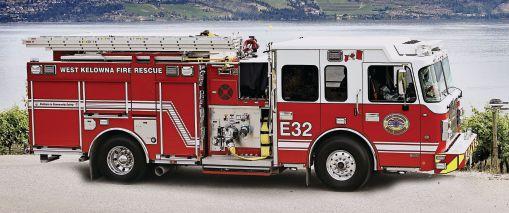
This custom side mount pumper is built on a Spartan Gladiator Chassis and is powered by a Cummins ISX15 550 HP engine and an Allison EVS-400 transmission. This Waterous CSUC20 2250 GPM pumper offers 500 Imp. Gal./50 Imp. Gal., with CAFS, PTO, Waterous, 200-P, 200 CFM Advantus 6 Single System, Class A foam and a Deck Gun, Electric, Akron Deck Master 3440 Monitor.
DEPARTMENT: West Kelowna Fire Rescue, B.C.
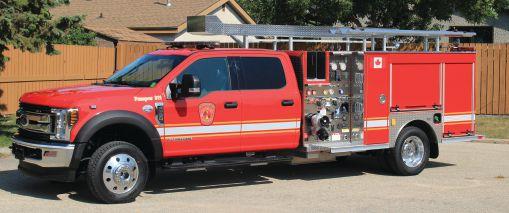
This full framed mini pumper is built on a Ford F550 Four Door chassis that is powered by a Ford Powerstroke 6.7L V8 Turbo Diesel/330HP engine and a Ford 5 speed automatic transmission. This 5083 salt water marine grade aluminum mini pumper features a Darley LSM750 pump, Poly 300 IG tank and a Foam Pro 1600 Class A foam proportioning and foam refill system.
DEPARTMENT: South Frontenac Fire & Rescue, Ont.

FORT GARRY FIRE TRUCKS LTD.
RR 2, 53 Bergen Cutoff Rd., Winnipeg, MB, R3C 2E6
Tel: 204-594-3473
Fax: 204-694-3230
Toll Free: 1-800-565-3473
Email: bnash@fgft.ca
Web: www.fgft.com
Brian Nash
Fort Garry Fire Trucks is Canada’s oldest and largest manufacturer of high quality fire apparatus offering a complete line of quality Pumpers, Tankers, Rescues, Aerial Devices, and Custom Designed & Engineered Specialized Units. Worldwide mobile service by EVT certified technicians and fully stocked part sales for all brands.
COAST TO COAST SALES AND SERVICE NETWORK:
• Brian Nash – Vice President- Sales
- bnash@fgft.ca
Toll Free: 1-800-565-3473 (ext. 3471)
Cell: 204-981-7845
• Ron Lavallee – Service Manager
– rlavallee@fgft.ca
Toll Free: 1-800-565-3473 (ext. 3478)
Cell: 204-791-1167
• Atlantic Canada – Adam Baldwin
– abaldwin@fgft.ca
Toll Free: 1-800-565-3473 (ext. 2006)
Cell: 902-888-9806
• Eastern Ontario – Peter Somerton
– psomerton@fgft.ca
Toll Free: 1-800-565-3473 (ext. 2005)
• Central Ontario - Graeme Cross - gcross@fgft.ca
Toll Free: 1-800-565-3473 (ext. 2001)
* Western Ontario – Bob Lock – block@fgft.ca
Toll Free: 1-800-565-3473 (ext. 2004)
• Manitoba/Sask – Lance Spencer - lspencer@fgft.ca
Toll Free: 1-800-565-3473 (ext. 3475)
• Alberta – Taylor Young - tyoung@fgft.ca
Toll Free: 1-800-565-3473 (ext. 3020)
• British Columbia – Al Anderson & Bryan Anderson –Fire Power Emergency Apparatus
- alan@firepowerplus.com or bryan@firepowerplus.com
Phone: 1-250-668-2673 or 1-250-327-1904
• North West Territories – Rick Penner
- rpenner@fgft.ca
Toll Free: 1-800-565-3473 (ext. 2024)
• Nunavut Territory – Ron Lavallee - rlavallee@fgft.ca
Toll Free: 1-800-565-3473 (ext. 3478)
• Yukon Territory/Export Sales – Steven Suchessuche@fgft.ca
Toll Free: 1-800-565-3473 (ext. 3472)
176, 2833 Broadmoor Bvld., Sherwood Park, AB, T8H 2H3
Tel: 780-467-7234
Toll Free: 1-844-FLASH-44 (844-352-7444)
Email: info@flashfiresafety.com
Web: www.FlashFireSafety.com
Authorized Waterax Distributer
• We stock the largest selection of Waterax products across Canada
• Waterax pump repairs
• Wildfire Tools, Hoses & Accessories
• Portable Wildland Fire Suppression equipment
• FlameOut Fire Suppressant Foam
• Sprinkler Systems
12 rue Willard, East Angus, QC, J0B 1R0
Tel: 1-888-832-4310
Fax: 819-832-4340
Toll Free: 1-888-832-4310
Email: almacrae@mercedestextiles.com
Web: www.highwaterhose.com
Dave Pritchard, President, W. S. (Scott) Fraser, Allan MacRae, VP Canadian Sales, Claude Berube, Sales Canadian Sales / Quebec and Maritimes
Worldwide supplier of a wide range of rubber covered and lightweight, layflat fire and industrial hoses.
A New Evolution in Fire Fighting:
• Deluge™ - Designed for high volume water supply where excellent friction loss, packability and cold temperature flexibility are critical.
• X-Stream® Plus - Designed for aggressive interior attack where excellent abrasion and cut resistance are essential and where color-coded attack lines are crucial.
• Available with the iReflect® and iDentify® Coding System
OUR CANADIAN DISTRIBUTORS
• www.martinsfiresafety.com - NL
• www.cumings.ca - NS, NB, PEI
• www.l’arsenal.ca - QC
• www.municipalequipment.ca - S./S.E. ONT
• www.spi-s.com - N./N.W. ONT
• www.realsafety.ca - MB
• www.wfrfire.com - BC, AB, SK, YT, NWT
INDUSTRIES LAFLEUR INC.
2359, Boul. Fiset, Sorel-Tracy, QC, J3P 5K2
Tel: 450-743-3918
Fax: 450-743-3906
Email: pierrethibault@industrieslafleur.com
Web: www.industrieslafleur.com
Pierre Thibault
Rescue units (walk-in and non walk-in rescue trucks)
Custom truck bodies


MERCEDES TEXTILES LTD.
5838 Cypihot, St. Laurent, QC, H4S 1Y5
Tel: 514-335-4337
Fax: 514-335-9633
Email: almacrae@mercedestextiles.com
Web: www.mercedestextiles.com
Allan MacRae, VP Sales
For the last 40 years, Mercedes Textiles is proud to have delivered the most innovative and reliable water delivery systems to the firefighting community. No matter if it is fire hoses, portable fire pumps, hose couplings, or entire water delivery systems, we have one driving force in mind: engineer the best and safest products for the brave firefighters who rush into danger every day. We don’t settle for second best and we never will. When a firefighter carries Mercedes Textiles products, he carries the 40 years of trust that goes with it.
We are innovators. We are trailblazers. We are 40 years strong.
FIRE HOSE: Innovation Delivered
• KrakenEXO® - The most advanced attack fire hose on the market - weighs less, kinks less, flows more water
• Highly visible WAYOUT® Couplings - Designed for improved “firefighter safety” during interior suppression
• iDENTIFY® Coding System - Recessed zone on hose couplings (patent pending) designed to receive and protect identification markings and decals from abrasion damage
• Innovative iReflect® - Lock Lever Storz couplings, designed to greatly assist firefighters during LDH deployment and retrieval applications
• Unique Mertex lining yields an extremely low friction loss, for maximum flow and superior adhesion for long life
• Most products feature our 2-10-L warranty (“2 year All Hazards”, “10 year against manufacturing defects” and “Lifetime against delamination”)
PORTABLE FIRE PUMPS:
We are a leading manufacturer of high pressure, lightweight, portable fire pumps for forestry and municipal fire department applications
OUR CANADIAN DISTRIBUTORS:
•www.brekir.com - NL
•www.cumings.ca - NS,NB,PEI
•www.l’arsenal.ca - QC
•www.municipalequipment.ca - S/S.E.ONT •www.spi-s.com - N/N.W.ONT •www.realsafety.ca - MB
•www.wfrfire.com - BC,AB,SK,YT,NWT
METZ FIRE AND RESCUE
3-304 Stone Rd. W., Guelph, ON, N1G 4W4
Tel: 519-829-9149
Fax: 519-763-6682
Web: www.metzfirerescue.com
John Metz
Canadian dealer for KME Fire Apparatus. Specializing in custom and commercial pumpers, aerial, rescue, tankers and wildland units.
TENDER | ROCKY MOUNTAIN
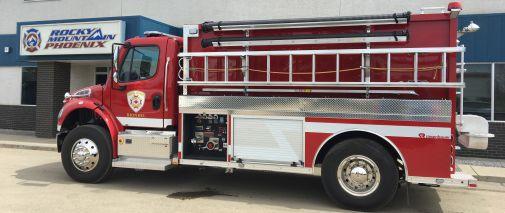
This new Freightliner M2 106 sits on a Cummins L9 300 HP engine with 860lb-ft torque and has an Allison 3000 EVS automatic transmission. The truck also features ABS, Auxiliary Exhaust Brake–VGT ON/OFF dash switch, Cruise Control, 275 Amp Alternator, 2010 Emissions Engine with DPF and DEF, 14,700lb Front Axle, 26,000lb Rear Axle, Darley HM Pump, 500 GPM, PTO Drive Pump and more.
DEPARTMENT: Kootenay Fire Department, B.C.
PUMPER | FORT GARRY
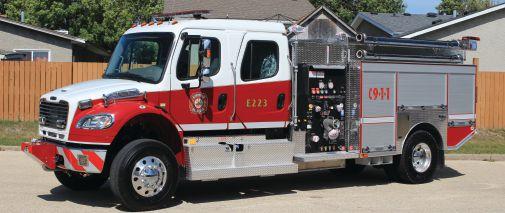
This full framed Wildland MXV Pumper is built on a Freightliner Four Door chassis; powered by a Cummins L9 350 HP engine and an Allison 3000 EVS transmission. This 5083 salt water marine grade aluminum MXV pumper features a Darley PSP1250 pump, Poly 1000 IG tank, Foam Pro 1600 Class A foam proportioning and foam refill system, ground nozzles, front bumper turret, hose reel, FRC LED SceneLights, and morw DEPARTMENT: Melfort District Rural Fire Fighting Dept., Sask.
PUMPER | ASSOCIATED FIRE SAFETY
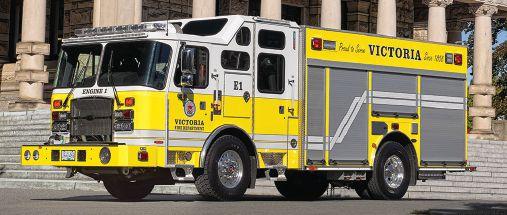
on an E-One
an ISL9 450 HP engine and
a fully extruded cab and body, a Waterous S100 1500 GPM pump, 550 Gallons of water and 30 Gallons of foam. DEPARTMENT: Victoria, B.C.
AERIAL | E-ONE
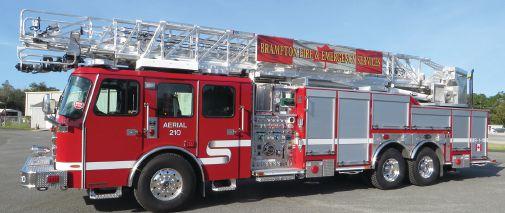
on an E-ONE Cyclone chassis and powered by a Cummins ISX 12 500 HP engine with EVS 4000 transmission, this CR 100 aerial features a welded extruded aluminum ladder with 750-pound tip load and 2.5 to 1
LPM (1250 GPM) pump.
DEPARTMENT: Brampton Fire & Emergency Services, Brampton, Ont.
AERIAL | FORT GARRY
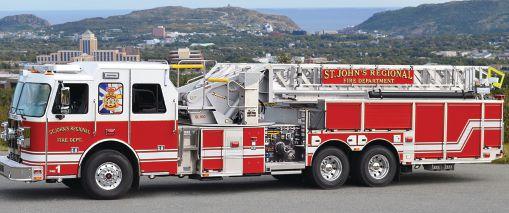
This Sutphen Aerial SL100 is built on a Sutphen TSAL4K/62” 10” RR chassis with a Cummins ISX 12 500 HP engine and an Allison EVS 4000 transmission. This stainless steel aerial features a Hale QMax 2000 USGPM/1750 IGPM pump, UPF 300 USG/240 IG – Foam 20 USG/16 IG tank, and a Foam Pro 2002 – Class A foam proportioning and foam refill system.
DEPARTMENT: St. John’s Regional Fire Department, N.L.
TANKER | RESQTECH/ROSENBAUER
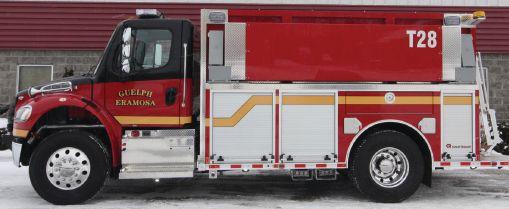
This Rosenbauer Tanker sits on a Freightliner M2-106 2-door chassis and is powered by a Cummins L9 350 HP, Allison EVS 3000 Transmission, and has a Rosenbauer FX Body, Darley HM 500 GPM Pump, FRC TGA 300 Pressure Governor, 1800 Imperial Gallon Water Tank, Whelen M9 Scene Lighting, Elkhart Sidewinder EXM Front Bumper Monitor with In-Cab Controls, Innovative Controls Water and more.
DEPARTMENT: Township of Guelph/Eramosa, Ont.
PUMPER | SAFETEK
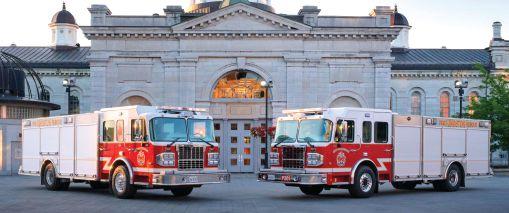
Built on a Spartan Metro Star chassis; these two custom stainless steel pumper rescue trucks are powered by a Cummins L9 400HP engine with an Allison EVS-3000 transmission. The trucks offer Waterous CSUC20 1750 GPM, 500 Imp. Gal./25 Imp. Gal., FoamPro 1600, Will-Burt Light Tower, Akron DeckMaster Electric, Akron Akromatic, Harrison 10kW Generator and a SabreVent Compartment Blower System.
DEPARTMENT: Kingston Fire and Rescue, Ont.
PUMPER/RESCUE | FORT GARRY

This pumper/rescue is built on a Spartan Gladiator chassis with a Cummins ISX12 500 HP engine and an Allison 4000 EVS transmission. This 5083 salt-water marine grade aluminum pumper/rescue features a Waterous CSU2000 pump, Co-Poly 600 imperial gallon water & 42 imperial gallon foam cell tank, Waterous Acquis 6 Class A foam proportioning and foam refill system.
DEPARTMENT: Campbell River, B.C.
c/o Firehall Bookstore, PO Box 530, 105 Donly Dr. S., Simcoe, ON, N3Y 4N5
Tel: 1-877-267-3473
Fax: 1-877-624-1940
Email: info@firehallbookstore.com
Web: www.firehallbookstore.com
Becky Atkinson Canadian distributor for NFPA products.
PO Box 2017, Appleton, WI, 54912-2017
Tel: 920-832-3231
Fax: 920-832-3084
Email: Ellen.Beardsley-Wildeman@etkg.com Web: www.piercemfg.com
Ellen Beardsley-Wildeman
Pierce Manufacturing Inc., an Oshkosh Corporation [NYSE: OSK] company, is the leading North American manufacturer of custom fire apparatus. Products include custom and commercial pumpers, aerials, rescue trucks, wildland trucks, mini pumpers, elliptical tankers, and homeland security apparatus. In addition, Pierce designs its own foam systems and was the first company to introduce frontal airbags and the Side Roll Protection system to fire apparatus. To learn more about Pierce, visit www.piercemfg.com.
Head Office: 6415 Golden West Ave., Red Deer, AB, T4P 3X2
Tel: 403-347-7045
Fax: 403-347-7049
Toll Free: 1-800-494-4210
Email: info@rockymountainphoenix.com
Web: www.rockymountainphoenix.com
BRANCHES:
103-2285 Queen St., Abbotsford, BC V2T 6T3
Tel: 604-864-7303 Fax: 604-864-4938
Toll Free: 1-888-815-0500
320 Logan Rd., Bridgewater, NS B4V 3J8
Tel: 902-298-0415 Toll Free: 1-844-530-4003
Rocky Mountain Phoenix is a leader in the supply of vehicle solutions, products and services to the emergency response and fire combat industry. Your complete source for Rosenbauer apparatus, MSA SCBA, Thermal Imaging, Protective Clothing, Suppression Tools and Equipment. Visit our online catalogue at www.rockymountainphoenix.com
SAFEDESIGN
LTD.
34 Torlake Crescent, Toronto, ON, M8Z 1B3
Tel: 416-253-9122
Fax: 416-253-0437
Toll Free: 1-877-253-9122
Email: markc@safedesign.com
Web: www.safedesign.com
189 Bysham Park Dr., Woodstock, ON, N4T 1P1
Tel: 519-539-0645
Fax: 519-539-0646
Toll Free: 1-800-363-7370
Email: kinnis@resqtech.com
Web: www.resqtech.com
Kyle Innis
ResQtech Systems, Inc. has served the fire industry since 1985 and is dedicated to providing firefighters with innovative products and solutions. ResQtech Systems is the exclusive fire apparatus dealer for Rosenbauer and Hackney emergency vehicles in Ontario and offer a full line of emergency equipment which includes the Rosenbauer Heros-Titan Helmet, Junkyard Dogg Struts, Interspiro Breathing Apparatus, Phoschek Firefighting Foam, Vindicator Nozzles and much more. In addition to the extensive product line, ResQtech has service technicians for your apparatus and emergency equipment needs, available at our in house facilities or on the road.
Mark Christie - Sales & Marketing Manager Specialists in Firefighters Protective Clothing. Complete line of Thermal Protective PPE. Globe Firefighters Suits & Globe Footgear, Shelby ‘Firewall’ Gloves, Black Diamond Footwear, PGI Cobra Hoods & Wildland Clothing, Workrite Stationwear, Horace Small Uniforms & Stationwear, Firefighters Helmets, Cairns Protective Clothing. Topps Safety Apparel, Stationwear., Responder Wipes and AEGIS® AntiMicrobial Shield

SAFETEK EMERGENCY VEHICLES LTD.
1775 Meyerside Drive, Unit 11-12, Mississauga, ON, L5T 1E2
Tel: (905) 564-7900
Fax: (905) 564-7904
Toll Free: 1-877-572-0040
30686-A Matsqui Place, Abbotsford, BC V2T 6L4
Tel: 604-504-4590
Fax: 604-504-2415
Toll Free: 1-866-723-3835
Email: sales@firetrucks.ca | parts@firetrucks.ca | service@firetrucks.ca
Web: www.firetrucks.ca
Safetek Emergency Vehicles is Canada’s single-source provider for Spartan ® and Smeal ® & SVI fire-rescue vehicles, parts and service.
We offer the industry’s largest portfolio of fire rescue vehicles and we stock over $2 million in parts from 300 OEM approved vendors from our service locations in Ontario, Alberta and British Columbia. Our certified mobile EVTs are also available for service where and when it’s most convenient for you.
To learn more about the Safetek Advantage, contact us at sales@firetrucks.ca.

SEATS CANADA INC.
1800 Bonhill Road, Mississauga, ON, L5T 1C8
Tel: 905-364-5843
Fax: 905-364-7822
Email: hasan@seatscanada.com
Web: www.seatscanada.com
Hasan Mohammed
We offer a complete line of quality Emergency Vehicle seating for driver, officer, crew, wall mount and jump seats. Engineered for comfort and safety, these seats have easy exit flip-up split headrest and are manufactured in a wide variety of covering material.

SECURITRIM 2002 INC.
9200, 5e Avenue, St-Georges, QC, G5Y2A9
Tel: 4182264961
Fax: 418-221-6147
Toll Free: 1-888-666-4961
Email: info@securitrim.com
Web: www.securitrim.com
Nathalie Drouin, Yves Bourgault
Securitrim 2002 is a specialized supplier of both 3M and Orafol microprismatic reflective sheeting for commercial and emergency vehicle graphics.
Securitrim 2002 is marketing ChekR Points for installation over diamond checker plate. Microprismatic custom made one piece pre-striping is now available in easy to install, excellent for full rear coverage.
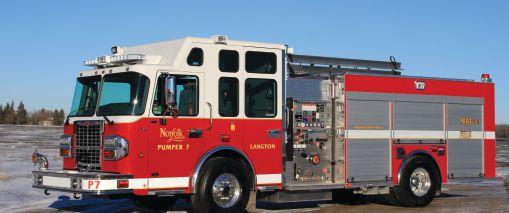
This pumper is built on a Spartan Metro Star 4 door chassis with a Cummins L9 380HP engine and an Allison 3000 EVS transmission. This 5083 salt-water marine grade aluminum pumper features a Hale APS 500PTO pump, Co-Poly 800 imperial gallon tank, and a Foam Pro 2002 - Class A foam proportioning and foam refill system.
DEPARTMENT: Norfolk County, Ont.
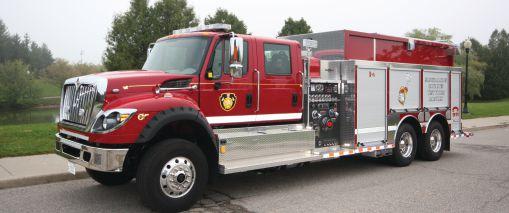
This new Rosenbauer pumper/tanker sits on an International 7600 four-door chassis, and is powered by a Navistar 410 HP engine and has an Allison EVS 4000 Transmission. The new truck features a Rosenbauer FX Body, Rosenbauer N 1050 IGPM Pump, FRC TGA 300 Pressure Governor, 2800 Gallon Water Tank, Foam Pro 1600 Foam System, 30 Gallon Foam Tank, FRC Scene Lighting and more.
DEPARTMENT: Township of Alnwick Haldimand, Ont. RESCUE |
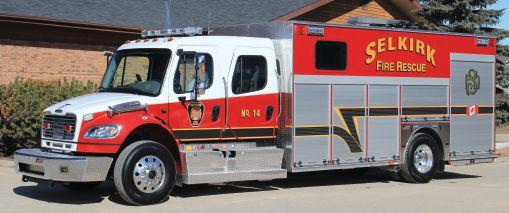
This 20ft Walk-in Command Rescue is built on a Freightliner M2-106 four-door chassis with a Cummins L9 300 HP engine and an Allison 3000 EVS transmission. This 5083 salt water marine grade aluminum rescue features a Whelen Emergency & Scene light package. CL Series Command Light with green strobe and back lighting, Winco 25kW PTO generator, and Zone Defence back-up camera with side cameras tied to signal lights.
DEPARTMENT: Selkirk Fire & Rescue, Man.
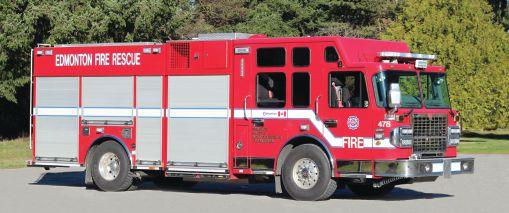
These custom side mount Pumpers (Multi-Unit) sit on a Spartan Gladiator chassis and are powered by a Cummins ISL9 450 HP engine with an Allison EVSP-3000R transmission. The trucks offer Darley EM, Two-Stage, 7000LPM, 400 Imp. Gal / 40 Imp. Gal, FoamPro, 2002 Command Light Knight Series, LED, Akron Deck Master 3440, Green Power Idle Reduction Technology and more.
DEPARTMENT: Edmonton Fire Rescue Services, Alta.
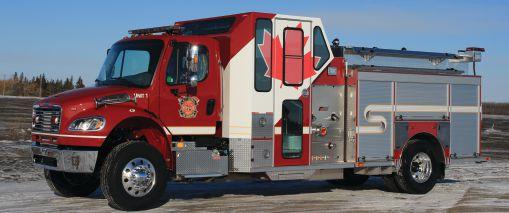
This 4 Man Crown MXV is built on a Freightliner M2 106 4x4 chassis with a Cummins L9 300 HP engine and an Allison 3000 EVS transmission. This 5083 salt-water marine grade aluminum vehicle features a Hale DSD 1250 pump, Co-Poly 1000 IG tank, and a Foam Pro 1600 foam proportioning and foam refill system.
DEPARTMENT: South East Whiteshell Fire Rescue, Man.
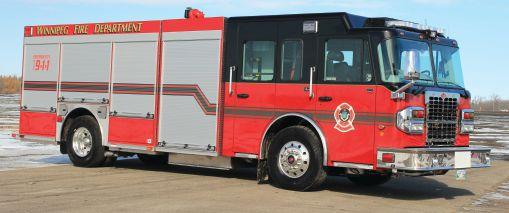
This rescue pumper is built on a Spartan Metro Star chassis with a Cummins 380 HP engine and an Allison 3000 EVS transmission. This 5083 salt-water marine grade aluminum rescue pumper features a Hale QMax 1750 pump, Poly 600 IG tank, and a Foam Pro 2001 foam proportioning and foam refill system.
DEPARTMENT: Winnipeg Fire Department, Man.
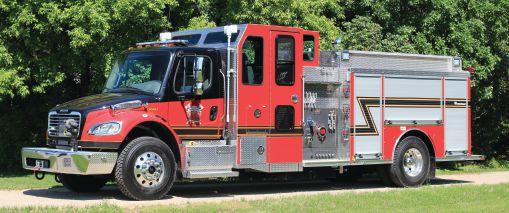
This newly delivered Rosenbauer top mount enclosed pumper sits on a Freightliner M2 106 chassis and has a Cummins L9 350 HP engine with 1000 lb-ft torque and an Allison 3000 EVS Automatic Transmission. The truck features ABS, Seat Belt Monitoring System, Aux Brake – (Turbo Brake), 320 Amp Alternator, 2010 Emissions Engine with DPF (Diesel Particulate Filter), and a 50 Gallon (227L) Fuel Tank.
DEPARTMENT: Potash Corp (Rocanville), Sask.
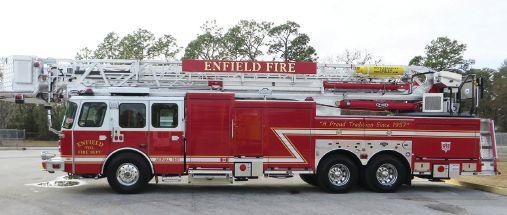
Built on an E-ONE Cyclone chassis and powered by a Cummins ISX 12 500 HP engine with EVS4000 transmission, this HP 100 platform features a welded aluminum aerial providing a 100’ vertical reach with a 2.5 to 1 structural safety factor, a 1136 litre (300 gallon) water
and
(2000 GPM) single stage pump.
DEPARTMENT: Enfield Volunteer Fire Department, N.S.

111 Spartan Cr., Pointe Clair, QC, H9R 3R4
Tel : 514 630 8931
Fax:514 630 8931
Email: kojex@sympatico.ca
Web: www.portable-fire-pumps.com
Ken Matsumoto
We offer a complete line of reliable high volume high performance reliable portable pumps with over 8 models including water-cooled and air-cooled systems. To insure the best quality, our pumps undergo extensive testing before leaving the production facilities. Also, the inspection and maintenance process are quick and easy due to a one-touch removable outer cover.

100 Courtland Ave., Concord, ON, L4K 3T6
Tel: 866-660-2282 Ext. 251
Fax: 905-660-2268
Toll Free: 1-866-660-2282 Ext. 251
Email: brucem@sparklesolutions.ca
Web: www.sparklesolutions.ca
Sparkle Solutions
Bruce Miller, 647-308-2625
We are the industry leader in supplying Complete Laundering Solutions for personal protection equipment.
Complete firefighter protection: . When our Ram ExpressDry Gear Dryers are used as a team with our Continental ExpressWash Gear Washers,and our One Stop Gear Detergent, firefighters can feel secure knowing they are able to properly clean and dry their equipment.

1689 Cliveden Ave., Delta, BC, V3M 6V5
Tel: 604-278-3221
Fax: 604-278-7812
Toll Free: 1-800-931-3221
Email: Mark.Hansen@survitecgroup.com
Web: www.dbcmarine.com
Mark Hansen
Survitec Group is a world leader in the supply and manufacturing of safety equipment for search and rescue and marine safety professionals.
WATERAX INC.
6635 Henri-Bourassa W., Montreal, QC, H4R 1E1
Tel: 514-637-1818
Toll Free: 1-855-616-1818
Email: ggerbasi@waterax.com
Web: www.waterax.com
Gabriella Gerbasi
Trusted by wildland firefighters around the world, WATERAX sets the industry standard by developing innovative, portable fire pumps and water-handling equipment designed to withstand demanding applications and rugged environments. With a timetested legacy of reliability, WATERAX carries on its mission to place powerful, precision engineered pumps into the hands of the men and women who protect our forests and most cherished natural resources from the ravages of wildfires!
6450 Eiterman Rd., Dublin, OH, 43016
Tel: 614-296-5090
Fax: 614-889-0874
Toll Free: 1-800-848-5860
Email: djs@sutphencorp.com
Web: www.sutphen.com
Dan Sutphen

3670 Odyssey Drive, Unit 1 Mississauga, ON L5M 0Y9
Tel: 905-564-3570
Fax: 1-800-463-3569
Toll Free: 1-800-263-7639
Email: marketing@toacanada.com
Web: TOAcanada.com
Rico Lucia, General Manager
23 Benton Road, Toronto, ON, M6M 3G2
Tel: 416-789-4354
Fax: 416-789-5475
Toll Free: 1-800-473-5553
Email: RKalenuik@lionprotects.com
Web: www.starfieldlion.com
George HajNasr
Metro Accounts Manager
Rob Hosselet, Distribution Sales Manager; Rosanne Kalenuik, Director of Customer Sales and Support. Starfield Lion has a legacy and ongoing vision of introducing PPE that is designed to ensure the health, safety and performance of the first responders who serve our communities. Your safety is our top priority. Your needs drive our innovations, we listen and develop the solution.
TOA Corporation was founded in Kobe, Japan in 1934 and is the leading commercial audio, professional sound, and security product manufacturer in the world. TOA products range from digital amplifiers and speakers, to mixers, wireless microphone systems and digital processors used in sound reinforcement, to integrated VOIP intercom and emergency paging and voice evacuation systems for security and communications.
TOA Canada Corporation was formed in 1990 as a complete sound solutions provider, specializing in commercial audio, including, public address, voice communications, voice evacuation and emergency paging requirements. TOA Canada Corporation offers complete solutions for all corporate and commercial audio communications and intercom requirements. TOA Canada Corporation provides regional sales, technical support and warehousing from one convenient location.

WATEROUS COMPANY
125 Hardman Ave. S., South St. Paul, MN, 55075
Tel: 651-450-5000
Fax: 651-450-5090
Email: mdseverin@waterousco.com
Web: www.waterousco.com
Jim Fazekas, National Sales Mgr., USA and Canada Since 1886 Waterous Company has been manufacturing fire pumps and accessories in the USA. Waterous - Then, Now, Always, Made in America.
ZIAMATIC CORP. (ZICO)
10 West College Ave., PO Box 337, Yardley, PA, 19067-8337
Tel: 215-493-3618
Fax: 866-493-1401
Toll Free: 1-800-711-3473
Email: sales@ziamatic.com Web: www.ziamatic.com
Mike Adams, Vice President - Sales
Ziamatic Corp. (ZICO) was founded in 1958 with the intention of providing the men and women of the fire services industry with products that make their profession safer and easier. Over 50 years later those ideas still stand – innovative, quality products at an affordable price. If you want quality, you want ZICO.
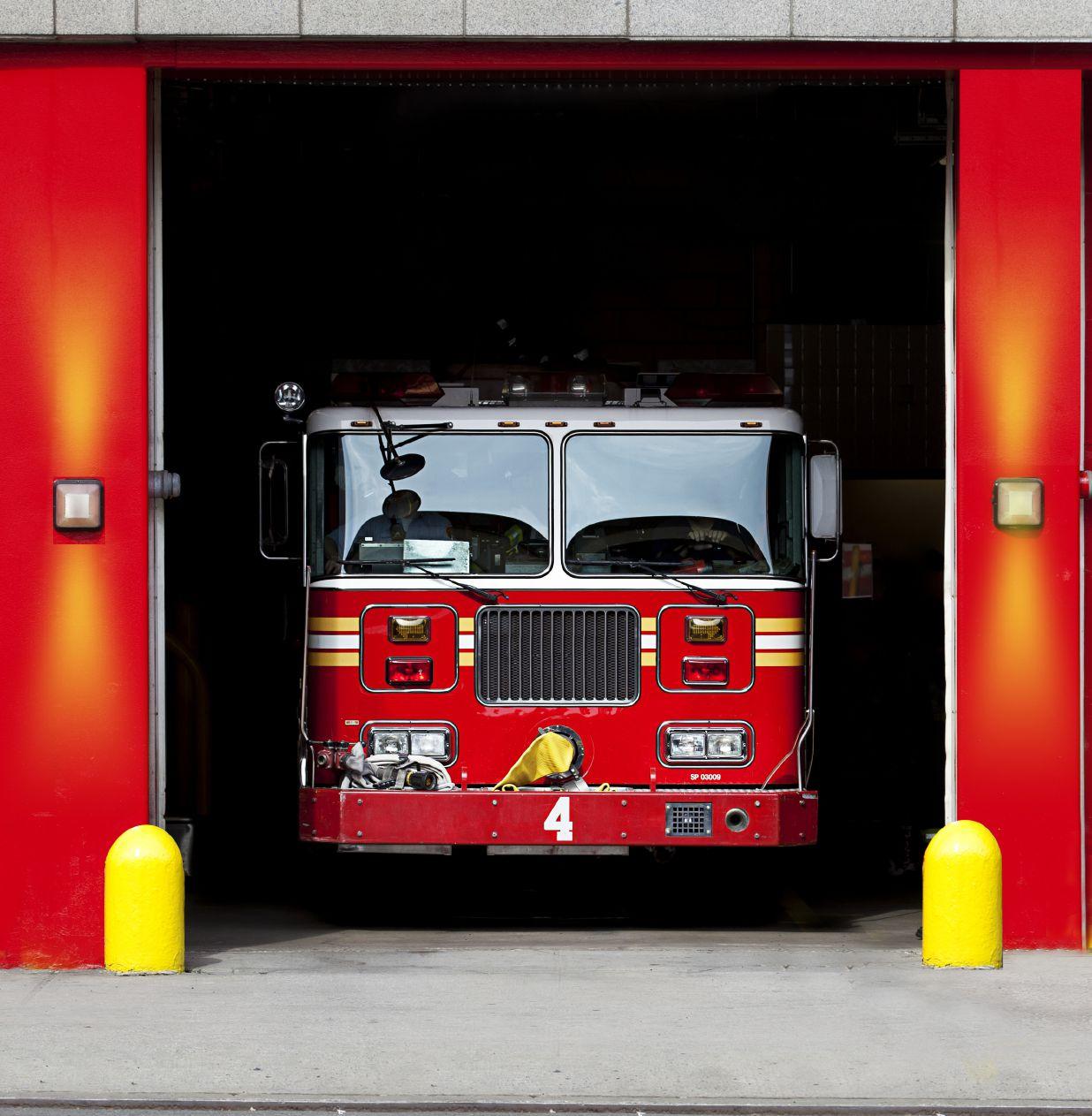
ALL INFORMATION contained in this apparatus directory, both product and company listings, is for the exclusive use of the purchaser and is to be used solely by the purchaser. None of the information included in this directory may be used to create, in whole or in part, any mailing list or other data compilation, in written or electronic form, that is to be sold or otherwise distributed to any third party. The purchaser may not include directory information as part of their own marketing materials. Failure to comply with these restrictions will constitute violations both of this agreement and the copyright laws of Canada. Purchase and use of this directory constitute acceptance of the restrictions set forth herein. Although Fire Fighting In Canada magazine makes every effort to ensure the accuracy of information contained in this directory, it must rely on others over whom it has no control for certain information. Purchaser acknowledges that Fire Fighting In Canada magazine and its publishers cannot and do not guarantee or warrant that the information in the directory is complete, correct or current. Additions or corrections are invited at any time. For more information on appearing in a future edition of the directory, please contact the publisher at 1-888-599-2228 ext. 252. W
ADAPTERS
1200 Degrees - Darch Fire
C-Max Fire Solutions
Canadian Safety Eqpt.
Carl Thibault Fire Trucks
Cse Incendie Et Sécurité Inc.
Fort Garry Fire Trucks Ltd.
Kochek Canada
Mercedes Textiles
Metz Fire And Rescue
Resqtech Systems Inc.
Safetek Emergency Vehicles
Task Force Tips
AERIAL REPAIRS
1200 Degrees - Darch Fire,
C-Max Fire Solutions
Carl Thibault Fire Trucks
Cet Fire Pumps Mfg.
E-One, Inc.
Fort Garry Fire Trucks Ltd.
Metz Fire And Rescue
Resqtech Systems Inc.
Rocky Mountain Phoenix
Safetek Emergency Vehicles
Sutphen Fire Trucks
AERIAL TESTING
C-Max Fire Solutions
Carl Thibault Fire Trucks
Cet Fire Pumps Mfg.
Fort Garry Fire Trucks Ltd.
Metz Fire And Rescue
Rocky Mountain Phoenix
AERIALS
C-Max Fire Solutions
Carl Thibault Fire Trucks
Cet Fire Pumps Mfg.
E-One, Inc.
Fort Garry Fire Trucks Ltd.
Metz Fire And Rescue
Resqtech Systems Inc.
Rocky Mountain Phoenix
AIRBAGS
1200 Degrees - Darch Fire
Canadian Safety Eqpt.
Cse Incendie Et Sécurité Inc.
AIRPORT CRASH TRUCKS
C-Max Fire Solutions
E-One, Inc.
Fort Garry Fire Trucks Ltd.
Metz Fire And Rescue
Resqtech Systems Inc.
Rocky Mountain Phoenix
ALTERNATORS
C-Max Fire Solutions
Rocky Mountain Phoenix
AMBULANCES
Rocky Mountain Phoenix
Ziamatic Corp. (Zico)
AXLES
C-Max Fire Solutions
Fort Garry Fire Trucks Ltd.
BACK-UP ALARMS
1200 Degrees - Darch Fire
C-Max Fire Solutions
Carl Thibault Fire Trucks
Cse Incendie Et Sécurité Inc.
Fort Garry Fire Trucks Ltd.
Rocky Mountain Phoenix
BELLS
1200 Degrees - Darch Fire
C-Max Fire Solutions
Fort Garry Fire Trucks Ltd.
Resqtech Systems Inc.
Rocky Mountain Phoenix
BOATS
A.J. Stone Company Ltd.
Canadian Safety Eqpt.
Cse Incendie Et Sécurité Inc.
FSI® NA
Rocky Mountain Phoenix
BRAKES
1200 Degrees - Darch Fire
C-Max Fire Solutions
Fort Garry Fire Trucks Ltd.
Resqtech Systems Inc.
BRUSH TRUCKS
1200 Degrees - Darch Fire
A.J. Stone Company Ltd.
Cet Fire Pumps Mfg.
Fort Garry Fire Trucks Ltd.
Metz Fire And Rescue
Pierce
Resqtech Systems Inc.
Rocky Mountain Phoenix
Safetek Emergency Vehicles
Ziamatic Corp. (Zico)
CARGO SLIDES/TRAYS
1200 Degrees - Darch Fire
Carl Thibault Fire Trucks
Rocky Mountain Phoenix
Safetek Emergency Vehicles
Securitrim
CASES - WATERPROOF
1200 Degrees - Darch Fire
A.J. Stone Company Ltd.
Canadian Safety Eqpt.
Cse Incendie Et Sécurité Inc.
Rocky Mountain Phoenix
CHASSIS
1200 Degrees - Darch Fire
C-Max Fire Solutions
Fort Garry Fire Trucks Ltd.
Resqtech Systems Inc.
Rocky Mountain Phoenix
Safetek Emergency Vehicles
Sutphen Fire Trucks
COMMAND POSTS (MOBILE)
1200 Degrees - Darch Fire
A.J. Stone Company Ltd.
Canadian Safety Eqpt.
Carl Thibault Fire Trucks
Cse Incendie Et Sécurité Inc.
Fort Garry Fire Trucks Ltd.
FSI® NA
Metz Fire And Rescue
Resqtech Systems Inc.
Rocky Mountain Phoenix
Safetek Emergency Vehicles
Sutphen Fire Trucks
COMMUNICATIONS
EQUIPMENT (ON-BOARD)
1200 Degrees - Darch Fire
Canadian Safety Eqpt.
Cse Incendie Et Sécurité Inc.
Rocky Mountain Phoenix
COMPARTMENT DOORS
1200 Degrees - Darch Fire
C-Max Fire Solutions
Carl Thibault Fire Trucks
Fort Garry Fire Trucks Ltd.
Resqtech Systems Inc.
Rocky Mountain Phoenix
COMPARTMENT FLOORING
1200 Degrees - Darch Fire
C-Max Fire Solutions
Carl Thibault Fire Trucks
Fort Garry Fire Trucks Ltd.
Resqtech Systems Inc.
Rocky Mountain Phoenix
COMPARTMENT LIGHTING
1200 Degrees - Darch Fire
C-Max Fire Solutions
Carl Thibault Fire Trucks
Fort Garry Fire Trucks Ltd.
Metz Fire And Rescue
Rocky Mountain Phoenix
COMPRESSED AIR FOAM SYSTEMS
1200 Degrees - Darch Fire
A.J. Stone Company Ltd.
Canadian Safety Eqpt.
Carl Thibault Fire Trucks
Cet Fire Pumps Mfg.
Cse Incendie Et Sécurité Inc.
Fort Garry Fire Trucks Ltd.
Metz Fire And Rescue
Rocky Mountain Phoenix
Sutphen Fire Trucks
Waterous Company
COMPRESSORS
1200 Degrees - Darch Fire
A.J. Stone Company Ltd.
C-Max Fire Solutions
Canadian Safety Eqpt.
Cse Incendie Et Sécurité Inc.
Draeger Safety Canada Ltd.
Fort Garry Fire Trucks Ltd.
Rocky Mountain Phoenix
Sutphen Fire Trucks
COMPUTER MOUNTS
1200 Degrees - Darch Fire
Resqtech Systems Inc.
Rocky Mountain Phoenix
CORROSION CONTROL
C-Max Fire Solutions
Fort Garry Fire Trucks Ltd.
CRIBBING
1200 Degrees - Darch Fire
A.J. Stone Company Ltd.
C-Max Fire Solutions
Carl Thibault Fire Trucks
Resqtech Systems Inc.
Rocky Mountain Phoenix
DECK MATTING
1200 Degrees - Darch Fire
A.J. Stone Company Ltd.
C-Max Fire Solutions
Carl Thibault Fire Trucks
Fort Garry Fire Trucks Ltd.
Rocky Mountain Phoenix
DECK MONITORS
1200 Degrees - Darch Fire
A.J. Stone Company Ltd.
C-Max Fire Solutions
Canadian Safety Eqpt.
Carl Thibault Fire Trucks
Cse Incendie Et Sécurité Inc.
Fort Garry Fire Trucks Ltd.
Resqtech Systems Inc.
Rocky Mountain Phoenix
DECONTAMINATION SYSTEMS
1200 Degrees - Darch Fire
A.J. Stone Company Ltd.
Canadian Safety Eqpt.
Cse Incendie Et Sécurité Inc.
FSI® NA
Rocky Mountain Phoenix
DETECTION SYSTEMS
1200 Degrees - Darch Fire
Canadian Safety Eqpt.
Cse Incendie Et Sécurité Inc.
Draeger Safety Canada Ltd.
DOCK LIGHTS
A.J. Stone Company Ltd.
Fort Garry Fire Trucks Ltd.
DRY CHEMICAL SYSTEMS
A.J. Stone Company Ltd.
Fort Garry Fire Trucks Ltd.
Rocky Mountain Phoenix
DUMP VALVES
A.J. Stone Company Ltd.
C-Max Fire Solutions
Canadian Safety Eqpt.
Carl Thibault Fire Trucks
Cse Incendie Et Sécurité Inc.
Fort Garry Fire Trucks Ltd.
Metz Fire And Rescue
Resqtech Systems Inc.
Rocky Mountain Phoenix
Ziamatic Corp. (Zico)
ELECTRIC THROTTLES
1200 Degrees - Darch Fire
C-Max Fire Solutions
Carl Thibault Fire Trucks
Fort Garry Fire Trucks Ltd.
Metz Fire And Rescue
Rocky Mountain Phoenix
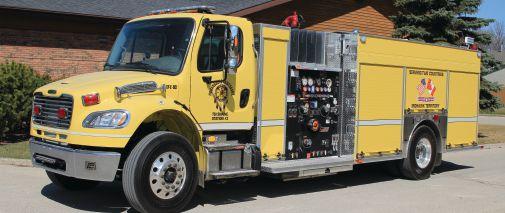
This pumper ER is built on a Freightliner M2 106 chassis with a Cummins L9 350 HP engine and an Allison 3000 EVS transmission. This 5083 salt-water marine grade aluminum pumper features a Hale Midship 1250 pump, Polypropylene 800 IG tank, and a Foam Pro 2001 – Class A foam proportioning and foam refill system.
DEPARTMENT: Akwesasne, Que.
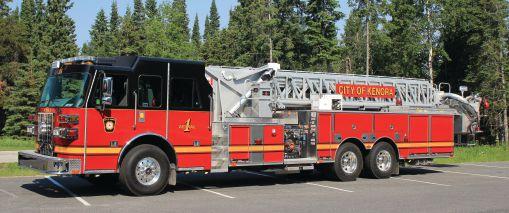
This Sutphen Aerial TS90 is built on a Sutphen 62” Cab/10” RR TSAL4K chassis with a Cummins ISL9/450 HP engine and an Allison EVS 3000 transmission. This stainless steel aerial features a Hale QMax 1500 GPM/1250 IGPM pump, and Co-Poly 300 USG/240 IG tank.
DEPARTMENT: Kenora Fire & Emergency Services, Ont.
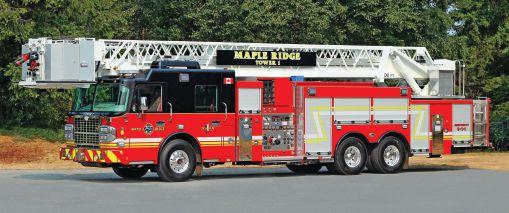
This newly delivered custom 100’ rear mount aerial platform unit sits on a Spartan Gladiator chassis and is powered by a Cummins X15 565 HP engine and has an Allison EVS-4000 transmission. The unit also features Hale Qmax 2250 GPM, 250 Imp. Gal/25 Imp.Gal, two FoamPro 2001 Systems, an electric deck gun with Akron Akromatic 2000 GPM Monitor with Handheld Wireless Remote.
DEPARTMENT: Maple Ridge Fire & Rescue, B.C.
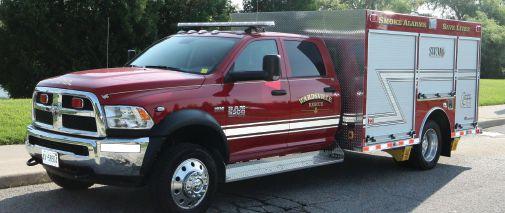
This Rosenbauer Mini Rescue features Dodge 5500 HD Four Door Chassis, 6.8L Hemi V8 410 HP, 6 Speed Transmission, Rosenbauer FX Body, Fire Research Scene Lighting, Whelen LED Emergency Warning Package, Storage for Four SCBA’s and Twenty-Four Cylinders.
DEPARTMENT: Municipality of Southwest Middlesex, Ont.
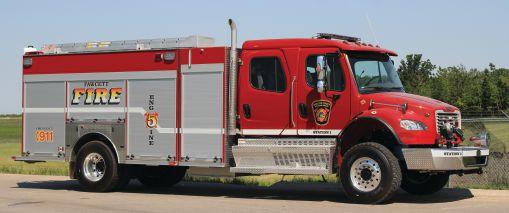
This pumper is built on a Freightliner M2 106 chassis that is powered by a Cummins L9 350 HP engine and an Allison 3000 EVS transmission. This 5083 salt water marine grade aluminum pumper features a Darley PSP 1250 pump, Poly 1000 IG tank, and Foam Pro 2001 Class A foam proportioning and foam refill system.
DEPARTMENT: Westlock County, Alta.
|
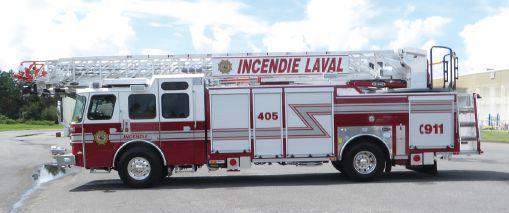
Built on an E-ONE Cyclone chassis and powered by a Cummins ISX12 450 HP engine with EVS 4000 transmission, this Metro 100 aerial features a welded extruded aluminum 110’ ladder with waterway to 87’, a 2.5 to 1 structural safety factor and jack spread of only 11’, and advanced aerial control system.
DEPARTMENT: Ville De Laval, Que.
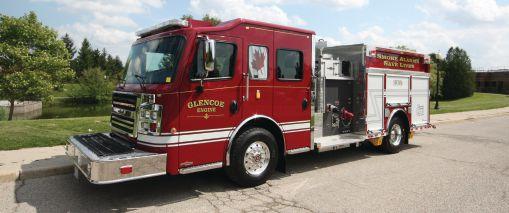
This Rosenbauer top mount pumper sits on a Commander chassis and boasts an 11” Raised Roof, 60” Cab, Cummins ISL 380 HP, Allison EVS 3000 Transmission, Driver and Officer Vista Screen, Rosenbauer FX Body, Rosenbauer N 5000 LPM, FRC TGA 300 Pressure Governor, 1000 Imperial Gallon Tank, Turbo Foam System, 30 Gallon Foam Tank and Whelen M9V2 Warning Light/Scene Lights.
DEPARTMENT: Municipality of Southwest Middlesex, Ont.
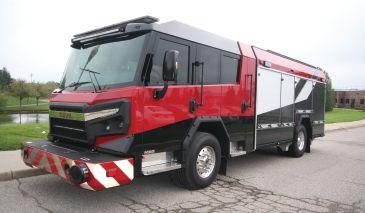
an Avenger
and features an 11”
70” Cab, Cummins ISL 450 HP, Allison EVS 3000 Transmission, Galvanized Frame, Driver Vista Screen, Rosenbauer EXT Body, Safe Steps, Rosenbauer N 1500 GPM Pump, FRC TGA 400 Governor, 750 Gallon Water Tank, Turbofoam TFC300 System, and a 30 Gallon Tank.
DEPARTMENT: City of Guelph, Ont.
ELECTRICAL SERVICE/ REPAIR
C-Max Fire Solutions
Carl Thibault Fire Trucks
Fort Garry Fire Trucks Ltd.
Metz Fire And Rescue
Rocky Mountain Phoenix
Safetek Emergency Vehicles
ENGINE GOVERNOR SYSTEMS
1200 Degrees - Darch Fire
C-Max Fire Solutions
Carl Thibault Fire Trucks
Fort Garry Fire Trucks Ltd.
Resqtech Systems Inc.
Rocky Mountain Phoenix
ENGINES
Resqtech Systems Inc.
EXHAUST EXTRACTION
Air Technology Solutions
Canada Inc.
FITTINGS
1200 Degrees - Darch Fire
A.J. Stone Company Ltd.
C-Max Fire Solutions
Canadian Safety Eqpt.
Carl Thibault Fire Trucks
Cse Incendie Et Sécurité Inc.
Fort Garry Fire Trucks Ltd.
Resqtech Systems Inc.
Rocky Mountain Phoenix
FLOORING (NON-SKID)
1200 Degrees - Darch Fire
A.J. Stone Company Ltd.
FLOWMETERS
1200 Degrees - Darch Fire
A.J. Stone Company Ltd.
C-Max Fire Solutions
Canadian Safety Eqpt.
Carl Thibault Fire Trucks
Cse Incendie Et Sécurité Inc.
Fort Garry Fire Trucks Ltd.
Resqtech Systems Inc.
Rocky Mountain Phoenix
FOAM SYSTEMS
1200 Degrees - Darch Fire
A.J. Stone Company Ltd.
C-Max Fire Solutions
Canadian Safety Eqpt.
Carl Thibault Fire Trucks
Cet Fire Pumps Mfg.
Cse Incendie Et Sécurité Inc.
Fort Garry Fire Trucks Ltd.
Mercedes Textiles
Pierce
Resqtech Systems Inc.
Waterous Company
FRAME REPAIRS
C-Max Fire Solutions
Carl Thibault Fire Trucks
Fort Garry Fire Trucks Ltd.
GENERATORS
1200 Degrees - Darch Fire
A.J. Stone Company Ltd.
Carl Thibault Fire Trucks
Fort Garry Fire Trucks Ltd.
Resqtech Systems Inc.
Rocky Mountain Phoenix
Sutphen Fire Trucks
GROUND LADDER INSPECTIONS
Cet Fire Pumps Mfg.
Rocky Mountain Phoenix
HAZARDOUS MATERIALS UNITS
1200 Degrees - Darch Fire
Canadian Safety Eqpt.
Carl Thibault Fire Trucks
Cse Incendie Et Sécurité Inc.
Metz Fire And Rescue
Rocky Mountain Phoenix
HEADSETS
1200 Degrees - Darch Fire
A.J. Stone Company Ltd.
Canadian Safety Eqpt.
Cse Incendie Et Sécurité Inc.
Fort Garry Fire Trucks Ltd.
Resqtech Systems Inc.
Rocky Mountain Phoenix
HORNS
1200 Degrees - Darch Fire
A.J. Stone Company Ltd.
C-Max Fire Solutions
Canadian Safety Eqpt.
Carl Thibault Fire Trucks
Cse Incendie Et Sécurité Inc.
Fort Garry Fire Trucks Ltd.
Resqtech Systems Inc.
Rocky Mountain Phoenix
HOSES & ACCESSORIES
1200 Degrees - Darch Fire
A.J. Stone Company Ltd.
C-Max Fire Solutions
Canadian Safety Eqpt.
Carl Thibault Fire Trucks
Cse Incendie Et Sécurité Inc.
Fort Garry Fire Trucks Ltd.
Mercedes Textiles
Resqtech Systems Inc.
Rocky Mountain Phoenix
Safetek Emergency Vehicles
Ziamatic Corp. (Zico)
INDUSTRIAL TRUCKS
(IN-PLANT)
1200 Degrees - Darch Fire
Cet Fire Pumps Mfg.
E-One, Inc.
Pierce
Rocky Mountain Phoenix
Safetek Emergency Vehicles
Sutphen Fire Trucks
INSTRUMENT PANELS
C-Max Fire Solutions
Canadian Safety Eqpt.
Carl Thibault Fire Trucks
Cse Incendie Et Sécurité Inc.
Rocky Mountain Phoenix
INTERCOMS
1200 Degrees - Darch Fire
A.J. Stone Company Ltd.
C-Max Fire Solutions
Carl Thibault Fire Trucks
Fort Garry Fire Trucks Ltd.
Safetek Emergency Vehicles
INTERFACE VEHICLES
1200 Degrees - Darch Fire
Fort Garry Fire Trucks Ltd.
Rocky Mountain Phoenix
Safetek Emergency Vehicles
LADDER ACCESS SYSTEM
1200 Degrees - Darch Fire
A.J. Stone Company Ltd.
C-Max Fire Solutions
Canadian Safety Eqpt.
Carl Thibault Fire Trucks
Cse Incendie Et Sécurité Inc.
Fort Garry Fire Trucks Ltd.
Safetek Emergency Vehicles
Ziamatic Corp. (Zico)
LDH HARDWARE
1200 Degrees - Darch Fire
A.J. Stone Company Ltd.
C-Max Fire Solutions
Fort Garry Fire Trucks Ltd.
Metz Fire And Rescue
Rocky Mountain Phoenix
LEASE/PURCHASE
FINANCING
A.J. Stone Company Ltd.
E-One, Inc.
Fort Garry Fire Trucks Ltd.
Rocky Mountain Phoenix
Safetek Emergency Vehicles
LIGHT CONTROL SYSTEMS
1200 Degrees - Darch Fire
A.J. Stone Company Ltd.
C-Max Fire Solutions
Carl Thibault Fire Trucks
Fort Garry Fire Trucks Ltd.
Resqtech Systems Inc.
Rocky Mountain Phoenix
LIGHTS - BARS/STROBES
1200 Degrees - Darch Fire
A.J. Stone Company Ltd.
C-Max Fire Solutions
Canadian Safety Eqpt.
Carl Thibault Fire Trucks
Cse Incendie Et Sécurité Inc.
Fort Garry Fire Trucks Ltd.
Resqtech Systems Inc.
Rocky Mountain Phoenix
LIGHTS - FLOOD
1200 Degrees - Darch Fire
A.J. Stone Company Ltd.
C-Max Fire Solutions
Canadian Safety Eqpt.
Carl Thibault Fire Trucks
Cse Incendie Et Sécurité Inc.
Fort Garry Fire Trucks Ltd.
Resqtech Systems Inc.
Rocky Mountain Phoenix
LIGHTS - WARNING
1200 Degrees - Darch Fire
A.J. Stone Company Ltd.
C-Max Fire Solutions
Canadian Safety Eqpt.
Carl Thibault Fire Trucks
Cse Incendie Et Sécurité Inc.
Fort Garry Fire Trucks Ltd.
Resqtech Systems Inc.
Rocky Mountain Phoenix
MASTS, TELESCOPING
1200 Degrees - Darch Fire
A.J. Stone Company Ltd.
C-Max Fire Solutions
Canadian Safety Eqpt.
Carl Thibault Fire Trucks
Cse Incendie Et Sécurité Inc.
Fort Garry Fire Trucks Ltd.
Resqtech Systems Inc.
Rocky Mountain Phoenix
Safetek Emergency Vehicles
MINI-PUMPERS
1200 Degrees - Darch Fire
A.J. Stone Company Ltd.
C-Max Fire Solutions
Carl Thibault Fire Trucks
Cet Fire Pumps Mfg.
Fort Garry Fire Trucks Ltd.
Metz Fire And Rescue
Pierce
Resqtech Systems Inc.
Rocky Mountain Phoenix
Safetek Emergency Vehicles
Sutphen Fire Trucks
MONITORS
1200 Degrees - Darch Fire
A.J. Stone Company Ltd.
C-Max Fire Solutions
Canadian Safety Eqpt.
Carl Thibault Fire Trucks
Cse Incendie Et Sécurité Inc.
Fort Garry Fire Trucks Ltd.
Resqtech Systems Inc.
Rocky Mountain Phoenix
N.D.T. INSPECTIONS
C-Max Fire Solutions
Carl Thibault Fire Trucks
Cet Fire Pumps Mfg.
Rocky Mountain Phoenix
Safetek Emergency Vehicles
PIPED-IN WATERWAYS
Carl Thibault Fire Trucks
Fort Garry Fire Trucks Ltd.
Rocky Mountain Phoenix
Safetek Emergency Vehicles
PORTABLE EXTINGUISHERS
A.J. Stone Company Ltd.
C-Max Fire Solutions
Canadian Safety Eqpt.
Carl Thibault Fire Trucks
Cse Incendie Et Sécurité Inc.
Fort Garry Fire Trucks Ltd.
Resqtech Systems Inc.
Rocky Mountain Phoenix
PORTABLE MONITORS
1200 Degrees - Darch Fire
A.J. Stone Company Ltd.
C-Max Fire Solutions
Canadian Safety Eqpt.
Carl Thibault Fire Trucks
Cse Incendie Et Sécurité Inc.
Draeger Safety Canada Ltd.
Fort Garry Fire Trucks Ltd.
Resqtech Systems Inc.
Rocky Mountain Phoenix
PUMP ACCESSORIES
1200 Degrees - Darch Fire
A.J. Stone Company Ltd.
C-Max Fire Solutions
Canadian Safety Eqpt.
Carl Thibault Fire Trucks
Cse Incendie Et Sécurité Inc.
Fort Garry Fire Trucks Ltd.
Metz Fire And Rescue
Rocky Mountain Phoenix
Sutphen Fire Trucks
Waterax
Waterous Company
PUMP SERVICE & TESTING
1200 Degrees - Darch Fire
C-Max Fire Solutions
Carl Thibault Fire Trucks
Fort Garry Fire Trucks Ltd.
Metz Fire And Rescue
Rocky Mountain Phoenix
Safetek Emergency Vehicles
PUMPERS
1200 Degrees - Darch Fire
A.J. Stone Company Ltd.
C-Max Fire Solutions
Carl Thibault Fire Trucks
E-One, Inc.
Fort Garry Fire Trucks Ltd.
Pierce
Resqtech Systems Inc.
Rocky Mountain Phoenix
Safetek Emergency Vehicles
Sutphen Fire Trucks
PUMPS
1200 Degrees - Darch Fire
A.J. Stone Company Ltd.
C-Max Fire Solutions
Canadian Safety Eqpt.
Carl Thibault Fire Trucks
Cet Fire Pumps Mfg.
Cse Incendie Et Sécurité Inc.
Fort Garry Fire Trucks Ltd.
Resqtech Systems Inc.
Rocky Mountain Phoenix
Safetek Emergency Vehicles
Sutphen Fire Trucks
Waterax
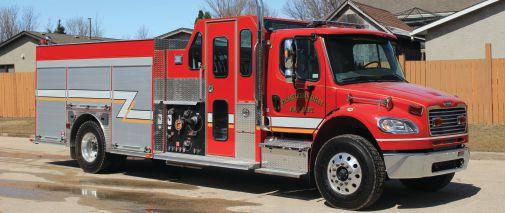
This pumper is built on a Freightliner M2 106 chassis with a Cummins L9350 HP engine and an Allison 3000 EVS transmission. This 5083 salt-water marine grade aluminum pumper features a Waterous CS 1250 pump, a Poly 800 IG tank, and a Foam Pro 1600 foam proportioning and foam refill system.
DEPARTMENT: Elizabethtown – Kitley, Ont.
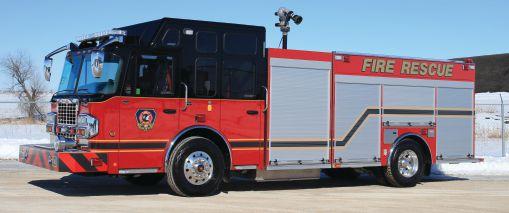
This pumper is built on a Spartan Metro Star 4 door 20ft raised roof chassis with a Cummins L9 450HP engine and an Allison 3000 EVS transmission. This 5083 salt-water marine grade aluminum pumper features a Hale DSD 1500 pump, Co-Poly 800 imperial gallon tank, and a Foam Pro 2001 - Class A foam proportioning and foam refill system.
DEPARTMENT: County of Grande Prairie, Alta.
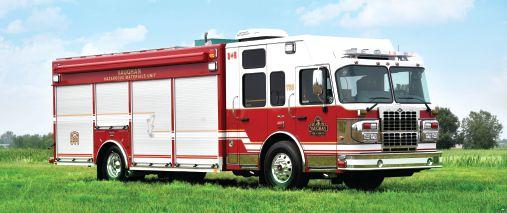
This SVI Trucks Inc. Custom Hazmat Unit sits on a Spartan Metro Star chassis and has a Cummins L9 380HP engine with an Allison EVS-3000 transmission. The unit also features a Command Light KL450A-LF Light Tower, Onan 12kW Diesel Generator, OnScene Solutions LED Compartment Lights, Whelen LED Warning Light Package, Hannay Electric Cable Reel With Power Rewind and four Rooftop Storage.
DEPARTMENT: Vaughan Fire and Rescue Service, Ont.
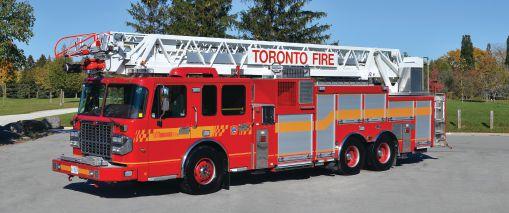
These Smeal Holding LLC Custom 32M/105’ Rear Mount Aerial Ladder units sit on a Spartan Gladiator chassis and are powered by a Cummins ISX15 550 HP engine with an Allison EVSP-4000 transmission. The trucks boast Waterous CSUC20-2250 GPM, 500 Imp. Gal, Akron StreamMaster II 3480, Akron 1577 Nozzle and Green Power Idle Reduction Technology and an Ergonomic Hose Load (EHL).
DEPARTMENT: Toronto Fire Services, Ont.
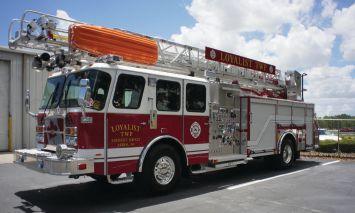
Built on an E-ONE Typhoon chassis and powered by a Cummins L9 450 HP engine and EVS3000 transmission, this HP 78 aerial features a welded extruded aluminum ladder with a 750-pound tip load and 2.5 to 1 structural safety factor, a 1779 litre (470 gallon) water tank, 114 litre (30 gallon) integral foam tank and a Hale QMAX 8000 LPM (2000 GPM) single stage pump.
DEPARTMENT: Loyalist Township Emergency Services, Odessa, Ont.
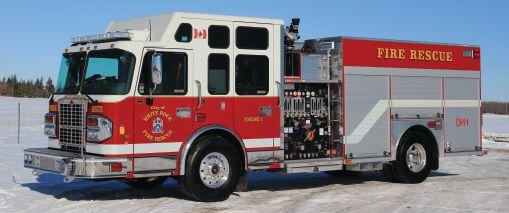
This pumper is built on a Spartan Metro Star chassis with a Cummins L9 400 HP engine and an Allison EVS 3000 transmission. This 5083 salt-water marine grade aluminum pumper features a Hale QMax 150 USGPM/1500 IGPM pump, Co-Poly 720 USG/600 IG tank, and a Waterous Aquis 3 – Class A foam proportioning and foam refill system.
DEPARTMENT: White Rock Fire & Rescue, B.C.
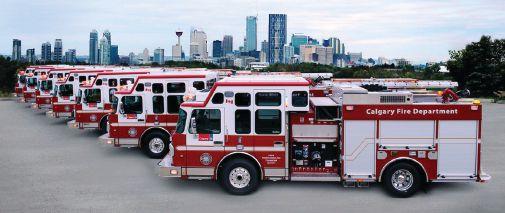
These Smeal Holding LLC, Custom Top Mount Enclosed Pumpers sit on a Spartan Gladiator chassis and are powered by a Cummins ISX 12 500HP engine with an Allison EVS-4000 transmission. The unit features Waterous CMUC20C-2000 GPM, 550 Imp. Gal/30 Imp. Gal, Waterous Eclipse CAFS with Advantus 3 Single Foam System, Single Flush System with Off Board Pick-Up.
DEPARTMENT: Calgary Fire Department, Ont.
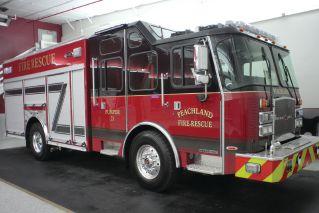
Built on an E-One Typhoon Chassis, this unit is powered by an ISL9 450 HP engine and Allison 3000 transmission. This rear mount pumper features a fully extruded cab and body, a HALE RSD 1500 GPM pump, 770 Gallons of water and 30 Gallons of foam. Department Peachland Fire Rescue.
DEPARTMENT: Peachland Fire Rescue, B.C.
PUMPS, PORTABLE
1200 Degrees - Darch Fire
A.J. Stone Company Ltd.
C-Max Fire Solutions
Canadian Safety Eqpt.
Carl Thibault Fire Trucks
Cet Fire Pumps Mfg.
Cse Incendie Et Sécurité Inc.
Fort Garry Fire Trucks Ltd.
Mercedes Textiles
Metz Fire And Rescue
Resqtech Systems Inc.
Rocky Mountain Phoenix
Waterax
Waterous Company
W.S. Darley & Co.
REELS, ELECTRICAL
1200 Degrees - Darch Fire
A.J. Stone Company Ltd.
C-Max Fire Solutions
Canadian Safety Eqpt.
Carl Thibault Fire Trucks
Cet Fire Pumps Mfg.
Cse Incendie Et Sécurité Inc.
Fort Garry Fire Trucks Ltd.
Metz Fire And Rescue
Resqtech Systems Inc.
Rocky Mountain Phoenix
REELS, HOSE
1200 Degrees - Darch Fire
A.J. Stone Company Ltd.
C-Max Fire Solutions
Canadian Safety Eqpt.
Carl Thibault Fire Trucks
Cet Fire Pumps Mfg.
Cse Incendie Et Sécurité Inc.
Fort Garry Fire Trucks Ltd.
Mercedes Textiles
Metz Fire And Rescue
Resqtech Systems Inc.
Rocky Mountain Phoenix
REFLECTIVE TAPE & MARKINGS
A.J. Stone Company Ltd.
C-Max Fire Solutions
Carl Thibault Fire Trucks
Fort Garry Fire Trucks Ltd.
Resqtech Systems Inc.
Rocky Mountain Phoenix
Securitrim
REFURBISHING
C-Max Fire Solutions
Carl Thibault Fire Trucks
Cet Fire Pumps Mfg.
E-One, Inc.
Fort Garry Fire Trucks Ltd.
Resqtech Systems Inc.
Rocky Mountain Phoenix
Safetek Emergency Vehicles
RESCUES
1200-Darch Fire
A.J. Stone Company Ltd.
Carl Thibault Fire Trucks
Cet Fire Pumps Mfg.
E-One, Inc.
Fort Garry Fire Trucks Ltd.
Metz Fire And Rescue
Pierce
Resqtech Systems Inc.
Rocky Mountain Phoenix
Safetek Emergency Vehicles
Sutphen Fire Trucks
ROLL-UP DOORS
1200 Degrees - Darch Fire
C-Max Fire Solutions
Carl Thibault Fire Trucks
Fort Garry Fire Trucks Ltd.
Metz Fire And Rescue
Resqtech Systems Inc.
SALVAGE TRUCKS
1200-Darch Fire
Fort Garry Fire Trucks Ltd.
Rocky Mountain Phoenix
Safetek Emergency Vehicles
SCBA BRACKETS
1200 Degrees - Darch Fire
A.J. Stone Company Ltd.
C-Max Fire Solutions
Canadian Safety Eqpt.
Carl Thibault Fire Trucks
Cse Incendie Et Sécurité Inc.
Draeger Safety Canada Ltd.
Fort Garry Fire Trucks Ltd.
Metz Fire And Rescue
Resqtech Systems Inc.
Rocky Mountain Phoenix
Ziamatic Corp. (Zico)
SEATING
1200 Degrees - Darch Fire
A.J. Stone Company Ltd.
Carl Thibault Fire Trucks
Fort Garry Fire Trucks Ltd.
Rocky Mountain Phoenix
Seats Canada Inc.
Ziamatic Corp. (Zico)
SIRENS
1200 Degrees - DARCH FIRE
A.J. Stone Company Ltd.
C-Max Fire Solutions
Canadian Safety Eqpt.
Carl Thibault Fire Trucks
Cse Incendie Et Sécurité Inc.
Fort Garry Fire Trucks Ltd.
Resqtech Systems Inc.
Rocky Mountain Phoenix
SKID UNITS
1200-Darch Fire
A.J. Stone Company Ltd.
C-Max Fire Solutions
Canadian Safety Eqpt.
Carl Thibault Fire Trucks
Cet Fire Pumps Mfg.
Cse Incendie Et Sécurité Inc.
E-One, Inc.
Fort Garry Fire Trucks Ltd.
Metz Fire And Rescue
Resqtech Systems Inc.
Rocky Mountain Phoenix
Safetek Emergency Vehicles
SPEAKERS
1200 Degrees - Darch Fire
A.J. Stone Company Ltd.
C-Max Fire Solutions
Carl Thibault Fire Trucks
Fort Garry Fire Trucks Ltd.
Resqtech Systems Inc.
Rocky Mountain Phoenix
SPEAKERS
WARNING SYSTEMS
Resqtech Systems Inc.
STEP CHOCKS
1200 Degrees - Darch Fire
A.J. Stone Company Ltd.
C-Max Fire Solutions
Canadian Safety Eqpt.
Carl Thibault Fire Trucks
Cse Incendie Et Sécurité Inc.
Fort Garry Fire Trucks Ltd.
Resqtech Systems Inc.
Rocky Mountain Phoenix
STOP & GO LIGHTS
1200 Degrees - Darch Fire
Carl Thibault Fire Trucks
Rocky Mountain Phoenix
STRAINERS
1200 Degrees - Darch Fire
A.J. Stone Company Ltd.
C-Max Fire Solutions
Canadian Safety Eqpt.
Carl Thibault Fire Trucks
Cse Incendie Et Sécurité Inc.
Fort Garry Fire Trucks Ltd.
Resqtech Systems Inc.
Rocky Mountain Phoenix
Ziamatic Corp. (Zico)
TANKERS
1200 Degrees - Darch Fire
A.J. Stone Company Ltd.
C-Max Fire Solutions
Carl Thibault Fire Trucks
Cet Fire Pumps Mfg.
E-One, Inc.
Fort Garry Fire Trucks Ltd.
Pierce
Resqtech Systems Inc.
Rocky Mountain Phoenix
Safetek Emergency Vehicles
Sutphen Fire Trucks
TANKS
A.J. Stone Company Ltd.
C-Max Fire Solutions
Carl Thibault Fire Trucks
Cet Fire Pumps Mfg.
Fort Garry Fire Trucks Ltd.
FSI® NA
Resqtech Systems Inc.
Rocky Mountain Phoenix
Sutphen Fire Trucks
TIRE CHAINS - AUTOMATIC
1200 Degrees - Darch Fire
Carl Thibault Fire Trucks
Cet Fire Pumps Mfg.
Fort Garry Fire Trucks Ltd.
Resqtech Systems Inc.
Rocky Mountain Phoenix
TIRES
Resqtech Systems Inc.
TRAILERS
FSI® NA
Rocky Mountain Phoenix
Safetek Emergency Vehicles
TRANSMISSIONS
Resqtech Systems Inc.
TRUCK FINISHES (PAINTS)
Resqtech Systems Inc.
TRUCK SERVICE & REPAIR
1200 Degrees - Darch Fire
C-Max Fire Solutions
Carl Thibault Fire Trucks
Fort Garry Fire Trucks Ltd.
Rocky Mountain Phoenix
Safetek Emergency Vehicles
Sutphen Fire Trucks
TURRETS - BUMPER
1200 Degrees - Darch Fire
A.J. Stone Company Ltd.
C-Max Fire Solutions
Fort Garry Fire Trucks Ltd.
Resqtech Systems Inc.
Rocky Mountain Phoenix
TURRETS - ROOF
A.J. Stone Company Ltd.
C-Max Fire Solutions
Fort Garry Fire Trucks Ltd.
Resqtech Systems Inc.
Rocky Mountain Phoenix
USED APPARATUS
A.J. Stone Company Ltd.
Cet Fire Pumps Mfg.
Fort Garry Fire Trucks Ltd.
Resqtech Systems Inc.
Rocky Mountain Phoenix
Safetek Emergency Vehicles
Sutphen Fire Trucks
VALVES
1200 Degrees - Darch Fire
A.J. Stone Company Ltd.
C-Max Fire Solutions
Canadian Safety Eqpt.
Carl Thibault Fire Trucks
Cse Incendie Et Sécurité Inc.
Fort Garry Fire Trucks Ltd.
Rocky Mountain Phoenix
Waterous Company
VEHICLE ACCESSORIES
1200 Degrees - Darch Fire
A.J. Stone Company Ltd.
C-Max Fire Solutions
Carl Thibault Fire Trucks
Fort Garry Fire Trucks Ltd.
Rocky Mountain Phoenix
Safetek Emergency Vehicles
Securitrim
Ziamatic Corp. (Zico)
VEHICLE CONSOLES
1200 Degrees - Darch Fire
C-Max Fire Solutions
Carl Thibault Fire Trucks
Fort Garry Fire Trucks Ltd.
Safetek Emergency Vehicles
VEHICLE UPFITTING
C-Max Fire Solutions
Rocky Mountain Phoenix
Safetek Emergency Vehicles
WATER/FOAM AIRCRAFT
Resqtech Systems Inc.
Waterous Company
WELDERS
C-Max Fire Solutions
Carl Thibault Fire Trucks
WHEEL CHOCKS
1200 Degrees - Darch Fire
A.J. Stone Company Ltd.
C-Max Fire Solutions
Canadian Safety Eqpt.
Carl Thibault Fire Trucks
Cse Incendie Et Sécurité Inc.
Fort Garry Fire Trucks Ltd.
Resqtech Systems Inc.
Rocky Mountain Phoenix
Ziamatic Corp. (Zico)
WINCHES
A.J. Stone Company Ltd.
C-Max Fire Solutions
Canadian Safety Eqpt.
Carl Thibault Fire Trucks
Cse Incendie Et Sécurité Inc.
Fort Garry Fire Trucks Ltd.
Resqtech Systems Inc.
Rocky Mountain Phoenix
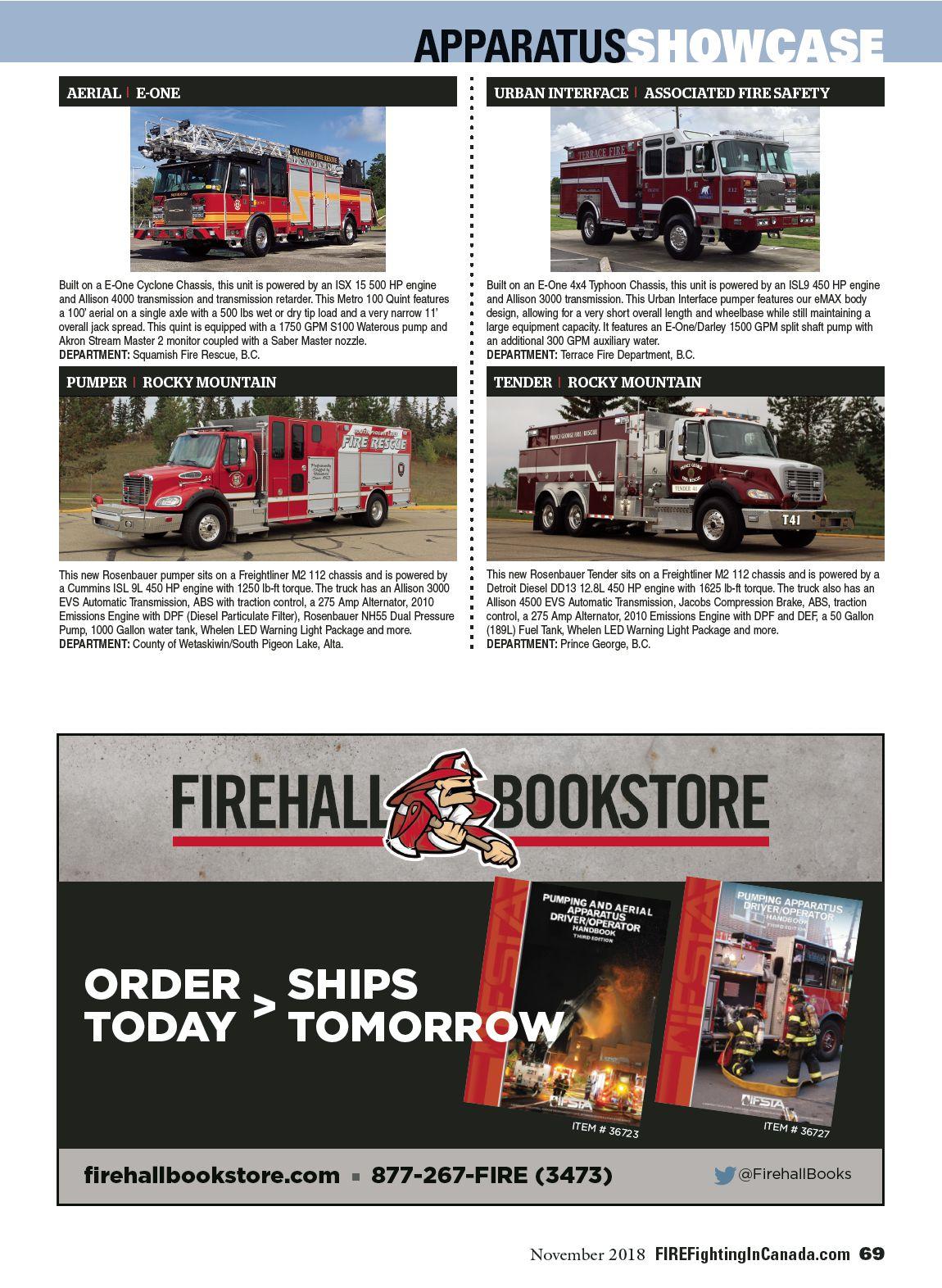
By GRANT CAMERON
Fire chiefs and those aspiring to move up the ladder to become leaders of departments must be fully dedicated to the profession, embrace change and demonstrate a commitment to lifelong learning, says Lyle Quan, an emergency services and risk management principal at LPQ Solutions in Guelph.
“Being a fire chief or a chief officer isn’t easy and getting there can be a challenge,” he told personnel attending a webinar in August entitled Marketing Yourself as a Fire Chief - Present and Future. The event was sponsored by A.J. Stone Company Ltd. and hosted by Fire Fghting in Canada
During the hour-long webinar, Quan, retired fire chief of Waterloo Fire Rescue in Ontario, provided some insight for those in the service who are looking to become chiefs as well as those who are already leaders on what they should be doing to ensure they are best positioned to lead their fire departments.
Quan has been in the field of emergency services for more than 30 years and is working on an executive development program for the Ontario Fire College (OFC). He has a Bachelor of Business in Emergency Services and Bachelor of Education and has helped many in a teaching capacity through his posts as an instructor at the OFC, Emergency Management Ontario and other schools and offices.
He said when teaching at the OFC senior officers often ask him how they can better present themselves to CAOs, and younger officers question what they should be doing to take the next step.
First, he said, those aspiring to lead should ask whether they’re merely interested or fully committed to being at the helm because “when you’re interested in doing something, you do it only when it’s convenient,” but “when you’re committed to something, you accept no excuses, only results.”
When a CAO or council is looking to hire a fire chief, they look for recruits that have a solid record of growth in career development, stability within their field, and demonstrated commitment to learning, said Quan, in addition to an understanding of strategic planning.
Quan, who is on a number of recruitment boards for fire chiefs, said that some job postings have caveats, noting that firefighting experience is preferred, but not essential, so they’re seeking other skills.
The concept of lifelong learning is important, he said, and CAOs and councils are looking for candidates who are taking courses and looking at opportunities.
In other words, he said, they are looking for candidates who have not stagnated and are looking forward and for a chance to grow.
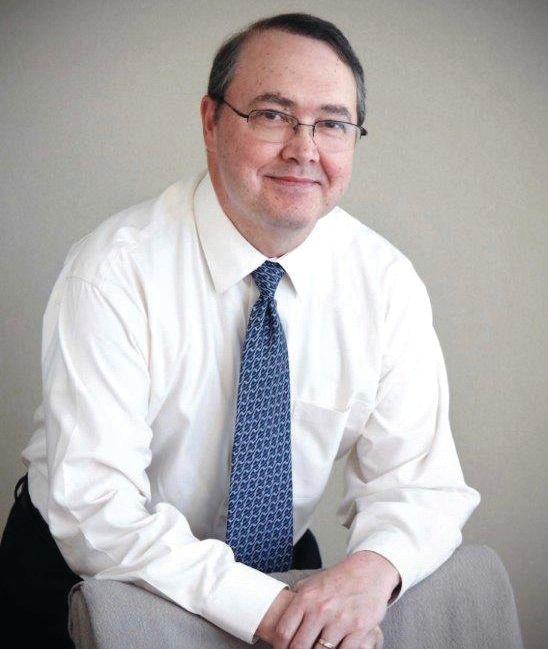
These days, he said, candidates also need to have a strong track record in human resource management and financial experience such as working on budgets and request for proposals (RFPs).
“I find it quite surprising how many fire chiefs are struggling in dealing with budgets and RFPs and proposals. So, what’s the answer? Taking courses and networking with fire chiefs around you and building those credentials so that when you do go to that big interview for chief or deputy fire chief you can show this solid record of growth, that you’ve embraced lifelong learning, that you’re strategic thinking in nature.”
To be a chief officer, he said, candidates must alos have strong ethical standards, be honest and able to successfully manage and embrace change because it’s unavoidable.
Quan said that he often asks candidates how they’ve effected change in an organization and is surprised many are stumped at the question.
If they have nothing to say in response, he said, the city manager will not have confidence that the candidate should be considered for the position because they didn’t go above and beyond in the past.
So, he said, when candidates are being interviewed they should think about how they changed the status quo, perhaps when they were a platoon chief at a fire service.
Candidates should be able to show what they’ve done lately and why they’re worth the investment, Quan said.


























When you and your equipment are at their best, there are no doubts when the call comes. Maximum condence is the all-new Super Duty® Chassis Cab. The military-grade aluminum alloy^ body let engineers upgrade the frame, driveline, suspension and brakes. Ford Commercial Vehicle specialists have the uptting and modifying expertise to make sure your Super Duty® is ready for duty. We’ll stop at nothing to make equipping your team easier. FORD.CA/BUILTFORBUSINESS