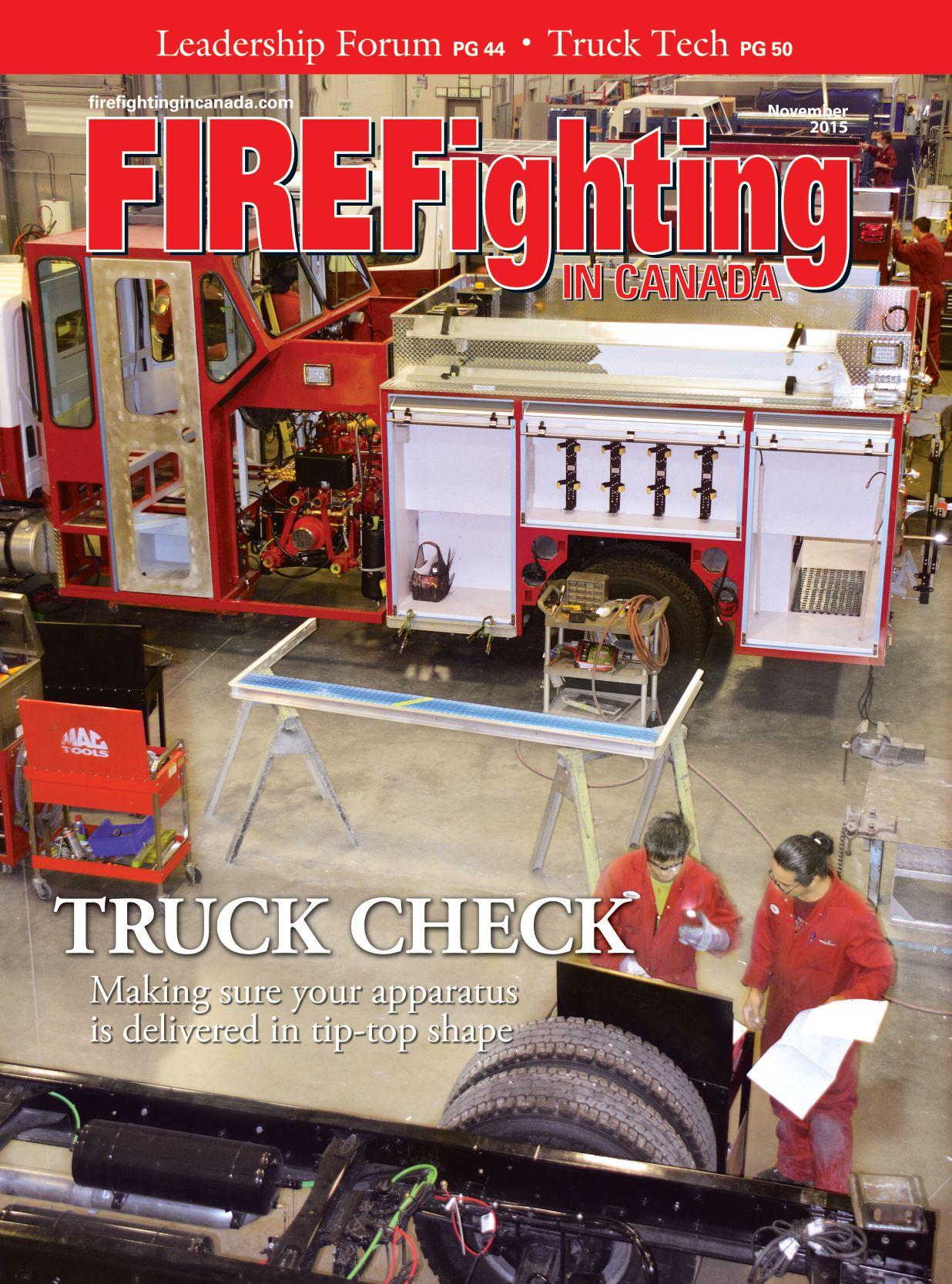

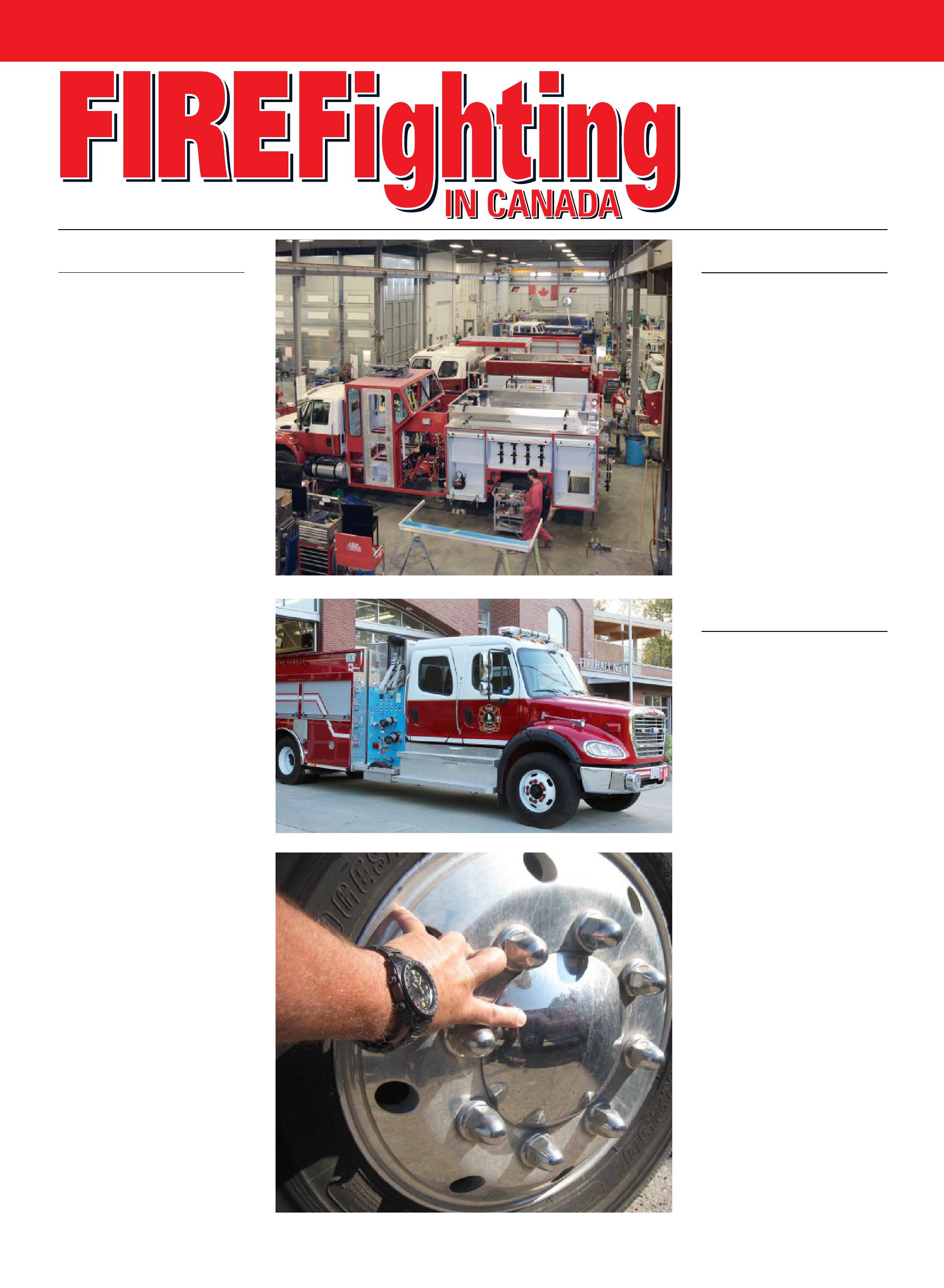
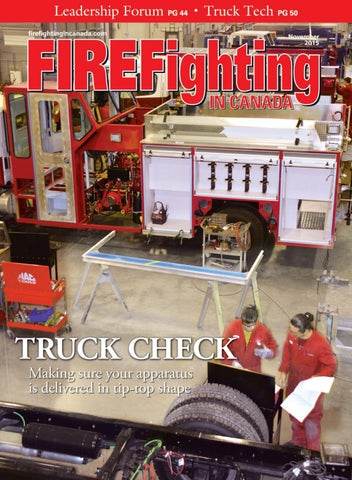
There’s a lot that goes into buying a truck, not the least of which is money. Learn ways to help ensure that your new fire truck is delivered in good shape with no mechanical or technical problems.
By Maria Church
18 PREPARING FOR DISASTER
Natural disasters are often followed by concerns that people will get sick because of contaminated water or food. The Surrey Fire Service in British Columbia took a giant step forward in post-disaster preparation with the purchase of three new tenders, each capable of providing on-the-spot potable water. By Dave Baird
30 PARTNERING TO REDUCE LOSS
A partnership between the public-safety division of Regina Fire & Protective Services and a family advocacy agency has helped to reduce the number of child-caused fires in the city.
By Maria Church
BY LAURA KING Editor lking@annexweb.com
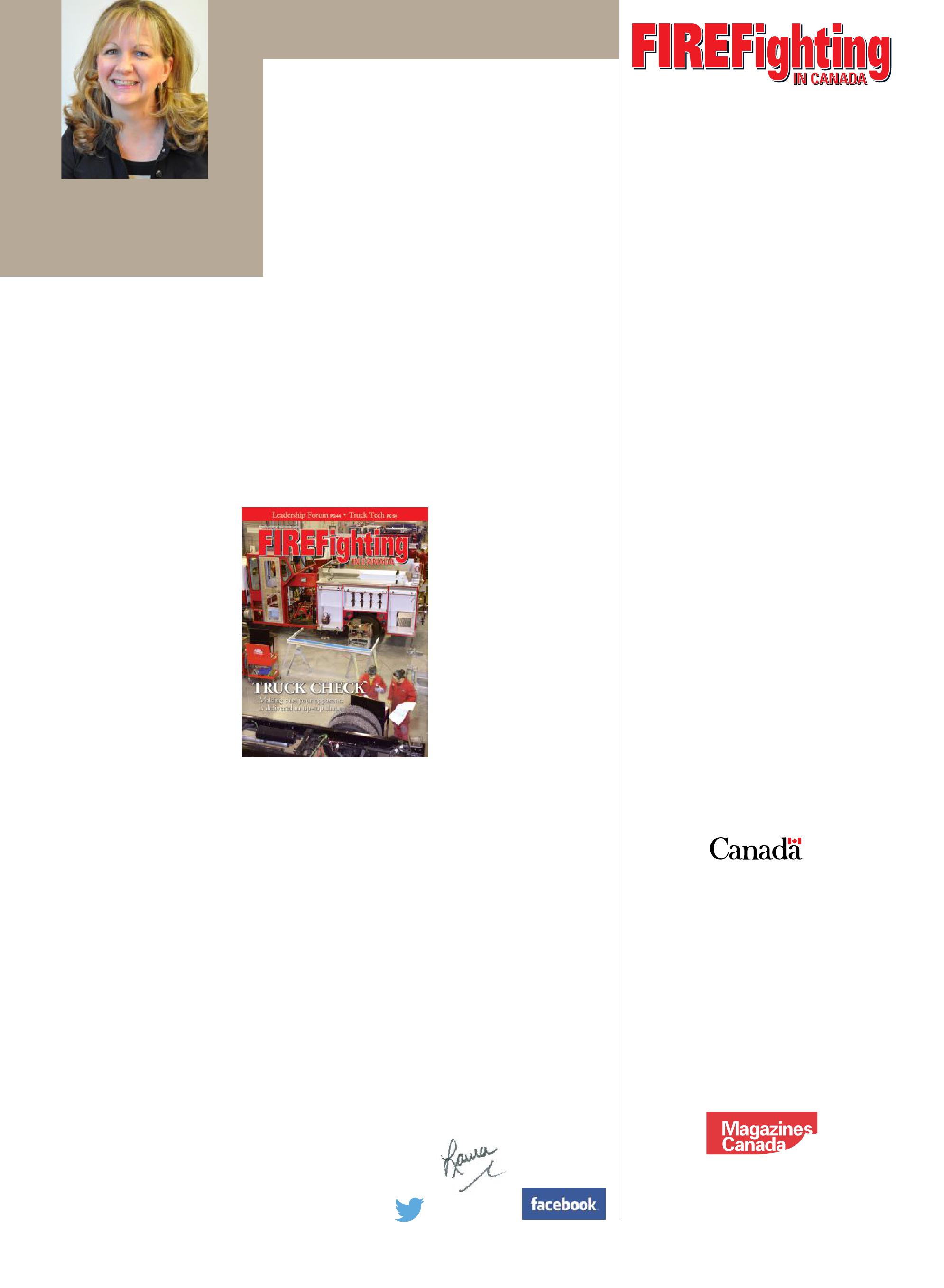
’ve mentioned before that when I first became editor and was trying to get my head around standards, acronyms and the politics of fire, I’d ask a simple question just to get people talking: “How may trucks do you have?” I still ask.
Not once in nine years have those five words failed me; the question always elicits a fascinating response – much more than the number of pumpers, tankers, aerials or rescues in the bay. I have learned from the respondents about their departments, their members, their calls, their councils and mayors, their communities, their challenges.
I have also learned about trucks – manufacturers, dealers, costs, components and features, and the pride that those who spec the apparatuses have in the finished products.
I’ve spent countless hours on trade-show floors with Asphodel, Arnprior, Dependable, Eastway, E-One, Fort Garry, Hub, Metalfab, Midwest, Pierce, Rosenbauer, Smeal and Spartan asking why particular models work for certain departments, climbing ladders to look at hose beds, opening compartments to see how tools are stored, going up in buckets – sometimes to take photos but also to experience advancements in lift technology.
industrial and military.
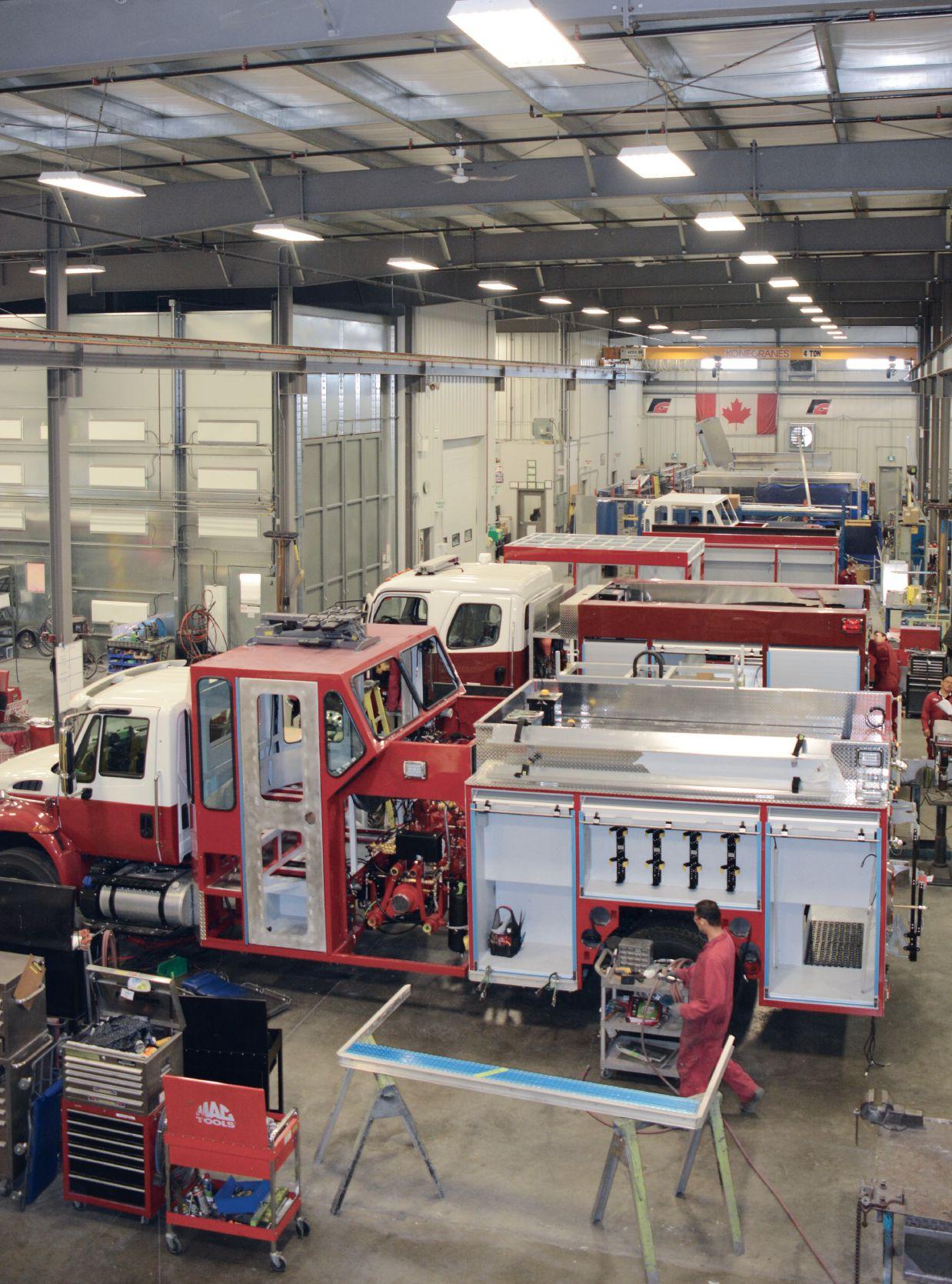
Based in the City of Opportunity – as Winterpeg bills itself – where the weather is sometimes despicable and the concrete (not asphalt) roads are washboard-like for much of the year, FGFT knows its market and how to build trucks that can survive the Canadian climate.
Doing so costs money – undercoatings and lined wheel wells, protected wiring, finished and painted seams that will prolong a truck’s lifespan and save repair and maintenance dollars.
ESTABLISHED 1957 NOVEMBER 2015 VOL. 59 NO. 7
EDITOR LAURA KING lking@annexweb.com 289-259-8077
ASSISTANT EDITOR MARIA CHURCH mchurch@annexweb.com 519-429-5184
NATIONAL SALES MANAGER ADAM SZPAKOWSKI aszpakowski@annexweb.com 289-221-6605
SALES KORY PEARN kpearn@annexweb.com 519-902-8574
ACCOUNT COORDINATOR BARB COMER bcomer@annexweb.com 519-429-5176 888-599-2228 ext. 235
MEDIA DESIGNER GERRY WIEBE gwiebe@annexweb.com
CIRCULATION MANAGER BEATA OLECHNOWICZ bolechnowicz@annexbizmedia.com, 416-442-5600 ext 3543
GROUP PUBLISHER MARTIN MCANULTY fire@annexweb.com
DIRECTOR OF SOUL/COO SUE FREDERICKS
PUBLICATION MAIL AGREEMENT #40065710 Printed in Canada ISSN 0015-2595
CIRCULATION email: asingh@annexbizmedia.com
Fort Garry Fire Trucks in Winnipeg produces about 100 trucks a year. Working closely with your truck builder is crucial to ensure a top-notch product.
Not all truck builders are so client conscious – particularly in challenging economic circumstances –and not all manufacturers understand the severity of a Canadian Prairie winter and the damage that six months of snow, sleet and salt can do to a fire truck.
This isn’t an ad for Fort Garry or a knock against any other manufacturer; it’s a prologue to our story on page 10 about how to get a truck that meets your needs, will arrive fully functional and thoroughly inspected, stand up to regional weather conditions, and won’t cost you money after it is delivered – other than for fuel and preventative maintenance.
Tel: 416-510-5189
Fax: 416-510-5170
Mail: 80 Valleybrook Drive, Toronto, ON M3B 2S9
SUBSCRIPTION RATES
Canada – 1 Year - $24.00 (with GST $25.20, with HST/QST $27.12) (GST - #867172652RT0001)
USA – 1 Year $40.00 USD
We acknowledge the [financial] support of the Government of Canada.
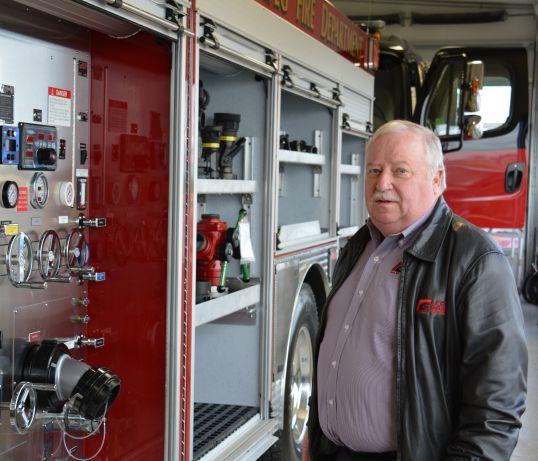
In October, in Winnipeg, I spent an afternoon at the Fort Garry Fire Trucks (FGFT) plant with president Rick Suche. FGFT makes 38 models and offers a remarkable 6,000 options. It builds about 100 trucks a year of the 600 or so manufactured for Canadian departments – municipal,
FGFT knows chiefs are restricted by budgets, policies and RFPs. It also knows what -40 C for three straight weeks in February feels like. So, how many trucks do you have?
Occasionally, Fire Fighting in Canada will mail information on behalf of industry-related groups whose products and services we believe may be of interest to you. If you prefer not to receive this information, please contact our circulation department in any of the four ways listed above.
No part of the editorial content of this publication may be reprinted without the publisher’s written permission ©2015 Annex Publishing and Printing Inc. All rights reserved. Opinions expressed in this magazine are not necessarily those of the editor or the publisher. No liability is assumed for errors or omissions.
All advertising is subject to the publisher’s approval. Such approval does not imply any endorsement of the products or services advertised. Publisher reserves the right to refuse advertising that does not meet the standards of the publication. www.firefightingincanada.com
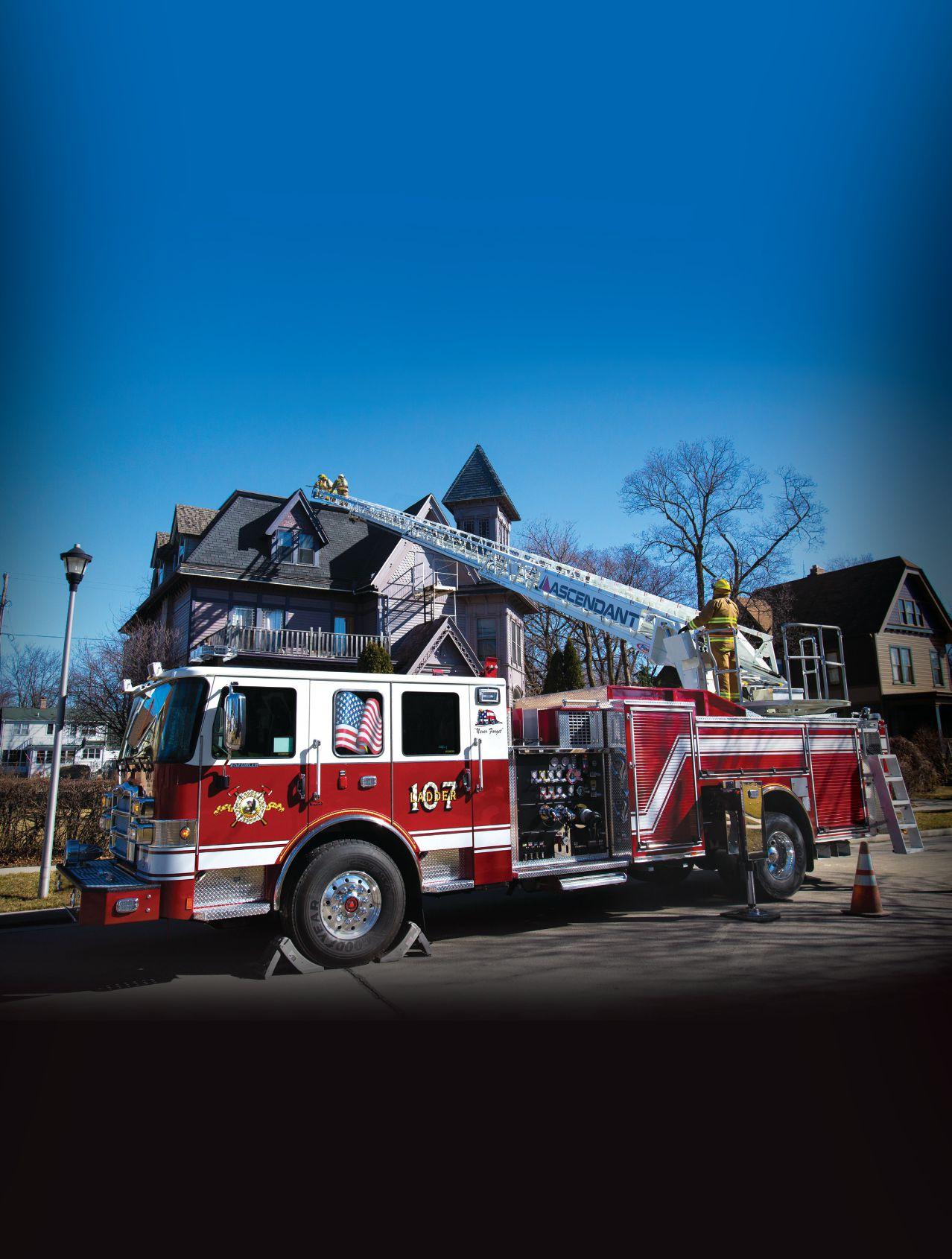
107' VERTICAL • 100' HORIZONTAL 750 lb TIP LOAD • 500 GALLONS ALL ON A SINGLE REAR AXLE
Refuse to compromise. The new Ascendant ™ 107' Heavy-Duty steel aerial ladder is engineered to give you more capabilities with no sacrifice in water capacity, performance or safety.

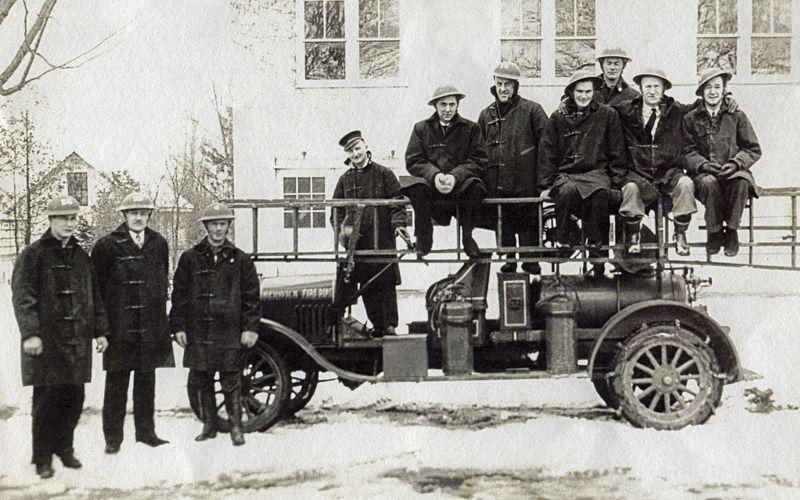
Members of the Berwick & District Volunteer Fire Department in Nova Scotia stand proudly by the department’s first motorized truck, a Model T, bought in 1924. The truck is now on display at the hall.
Fire Chief Laurie Saunders, a 37-year veteran and 10-year chief of the Berwick & District Volunteer Fire Department in Nova Scotia, has a few ideas as to why recruitment numbers are relativity high for his fire department.
“It’s always been part of the backbone of the community,” Saunders said.
“There is a lot of pride within the members prior and the present members.
“Most people, they talk to

GHISLAIN PIGEON was appointed fire chief for Brockville Fire Department in Ontario on Sept. 1. Pigeon’s 35-year career in fire includes 15 years as chief in Hawkesbury, Ont., and 10 years serving as a director for the Ontario Association of Fire Chiefs.
CHRISTOPHER CLEAVE became fire chief for the Ripley-Huron Fire Department in Ontario on Sept. 14. Cleave has 18 years of fire service including chief positions for Smoky River Fire and Rescue in Alberta and Pouce Coupe Volunteer Fire Department in British Columbia.
JIM JESSOP is the new deputy chief for Toronto Fire Services in charge of fire prevention and public education. Jessop
the other firefighters so they have a pretty good idea before they even apply,” he said.
The Berwick department turned 100 this year, on Jan. 20 to be exact, and its 50 or so members proudly celebrated the anniversary by swapping stories at a wellattended banquet.
The department can trace its roots to 1915 when a group of concerned Berwick townsfolk met and pledged to spend no more than $100 toward fire equipment to keep the community safe.
“It started off with just buckets and ladders,” Saunders said.
In 1924 the department proudly purchased its first motorized truck. That truck was restored several years ago and is now displayed at the hall.
Today, Berwick Fire serves about 7,000 people in about
began his career as a firefighter in Toronto and previously served as deputy chief in Niagara Falls, Ont., and London, Ont. Jessop was Ontario’s fire marshal and chief of emergency management prior to his appointment to Toronto in September.
RYAN EDGAR is the new deputy chief in Port Hope, Ont. Edgar
160 kilometres squared, and averages 120 calls per year.
The fire station, which was rebuilt in 2008, is a part of the Berwick town hall and houses two pumpers, two tankers, a heavy rescue, a light rescue and a personnel carrier.
The department’s membership includes four women and, this year, two under-19 participants of a long-running junior program.
Nova Scotia Fire Marshal Harold Pothier and local chiefs attended the 100th anniversary banquet in January to help celebrate the thriving department.
“We’re definitely proud of it,” Saunders said. “Our veterans are just as active as our young people and we have two or three functions a year and they all sit down and swap stories. Everyone has a story.”
– Maria Church
was a police officer with the Durham Regional Police Service before he began in his role with the Port Hope Fire Department on June 26. The 37-year-old started in the fire service as a volunteer with the Scugog Fire Department in 1996.
GORD STILWELL has been promoted to deputy chief of Norfolk County Fire and Rescue Services in Ontario in charge of training. A firefighter for Norfolk
An Ontario city is testing an early-warning system that allows in-transit emergency vehicles to broadcast a warning to nearby cell phones.
Emergency services in Belleville launched a pilot program in late August using the BRAKERS Early Warning System, invented by local entrepreneur Tim Newman.
The system software works through cell phones using a downloaded app. Approaching emergency vehicles select a message that broadcasts to app users within a few hundred metres.
“It’s an audible, verbal message, with the segment of a siren to begin with,” Newman explained. “They can choose whatever message is appropriate to the situation.”
Belleville Fire & Emergency Services and local police are participating in the pilot.
Fire Chief Mark MacDonald confirmed seven of the department’s vehicles have the app – four frontline trucks and three squad vehicles. Volunteer firefighters were also encouraged to download the app for use during emergency calls.
“The nav systems in
for more than 19 years, Stilwell served as district chief before his promotion in July.
Fire Fighting in Canada columnist DOUG TENNANT retired as chief of the Deep River Fire Department in Ontario on Sept. 30. Tennant joined the fire service as a volunteer in 1978 and has served several communities as a
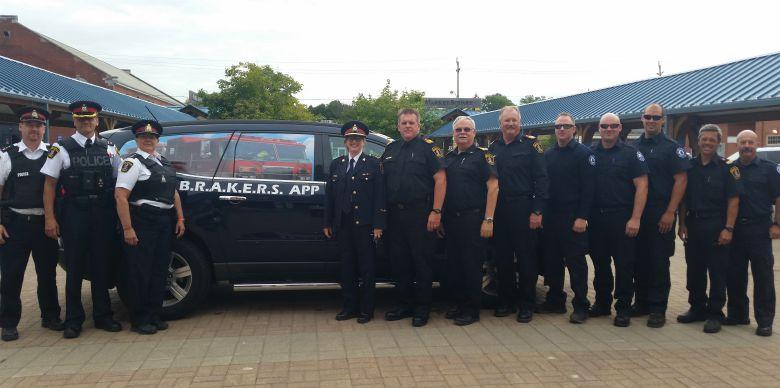
Police and firefighters in Belleville, Ont., at the pilot launch for the BRAKERS system in August. The app-based software broadcasts a message to nearby cellphones, such as, “Pull over for emergency vehicles.”
vehicles are all blue-toothed and programed for this kind of information input,” MacDonald said, “so it seems like a very logical step to say, ‘How about letting people know that emergency responders are coming.’”
The BRAKERS system is user-friendly for vehicle operators, MacDonald said, who are used to adjusting emergency lighting and task lighting when they get to a scene.
A programmable message –such as, “Volunteer firefighter approaching, please permit them to pass” – broadcasts on
a loop with the press of a button.
The challenge, Newman said, is in convincing people to download the free app, and soliciting feedback. By mid-October, the combined downloads were approaching 1,000.
“I have several different marking things in mind to get people more involved,” Newman said.
MacDonald, too, said it’s hard to gauge success of the system without hearing firsthand accounts from app users.
In his view, the warning system holds the most
potential for volunteer firefighters who often get tied in traffic when responding in their personal vehicles.
“The green lights have been in place for 25 years and people are still asking, “What are those green lights?’”
MacDonald said. “We’re hoping with this app it might bring an awareness level to people and make them think of it.”
The pilot in Belleville runs until Jan. 1.
Find more information about BRAKERS at www. brakers.net – Maria Church
fire-prevention officer, as a chief officer and as a manager with the Office of the Fire Marshal. Tennant is past president of the Ontario Municipal Management Institute and served on the board of the Ontario Association of Fire Chiefs for eight years.
RONALD DENSMORE retired in March as chief of the Noel and District Fire Department in Nova Scotia after more than 31 years of service, 10 spent as chief.
RHEAUME
CHAPUT, fire chief in Kingston, Ont., retired Aug. 31 after 33 years in the service. Chaput began his firefighting career in Pembroke, Ont., when he was 29 years old. He was chief in Pembroke, and in Belleville, Ont., before moving to Kingston in 2013. Chaput has been involved in various capacities with Fire Prevention Canada, the Fire Marshal’s
Public Fire Safety Council and the Canadian Association of Fire Chiefs.

CYRIL G.W. PENNELL, a 33-year volunteer firefighter and former fire chief with the Rocky Harbour Volunteer Fire Department in Newfoundland, died on May 29 at 64 years old.
For three years, Deputy Chief Dave Lane has helped hundreds of firefighters from Ontario and beyond partake in high quality, specialized training – for free.
Lane is a deputy with the Toronto Pearson Fire and Emergency Services and an instructor at the Fire and Emergency Services Training Institute – better known as FESTI. Lane is also one of several minds behind a threeyear-old partnership with Fire Fighting in Canada to host the annual Firefighter Training Day.
“It’s become a huge success,” Lane said. “After the first year, once we were able to pull that off with everybody’s support and help, it’s just grown from there.”
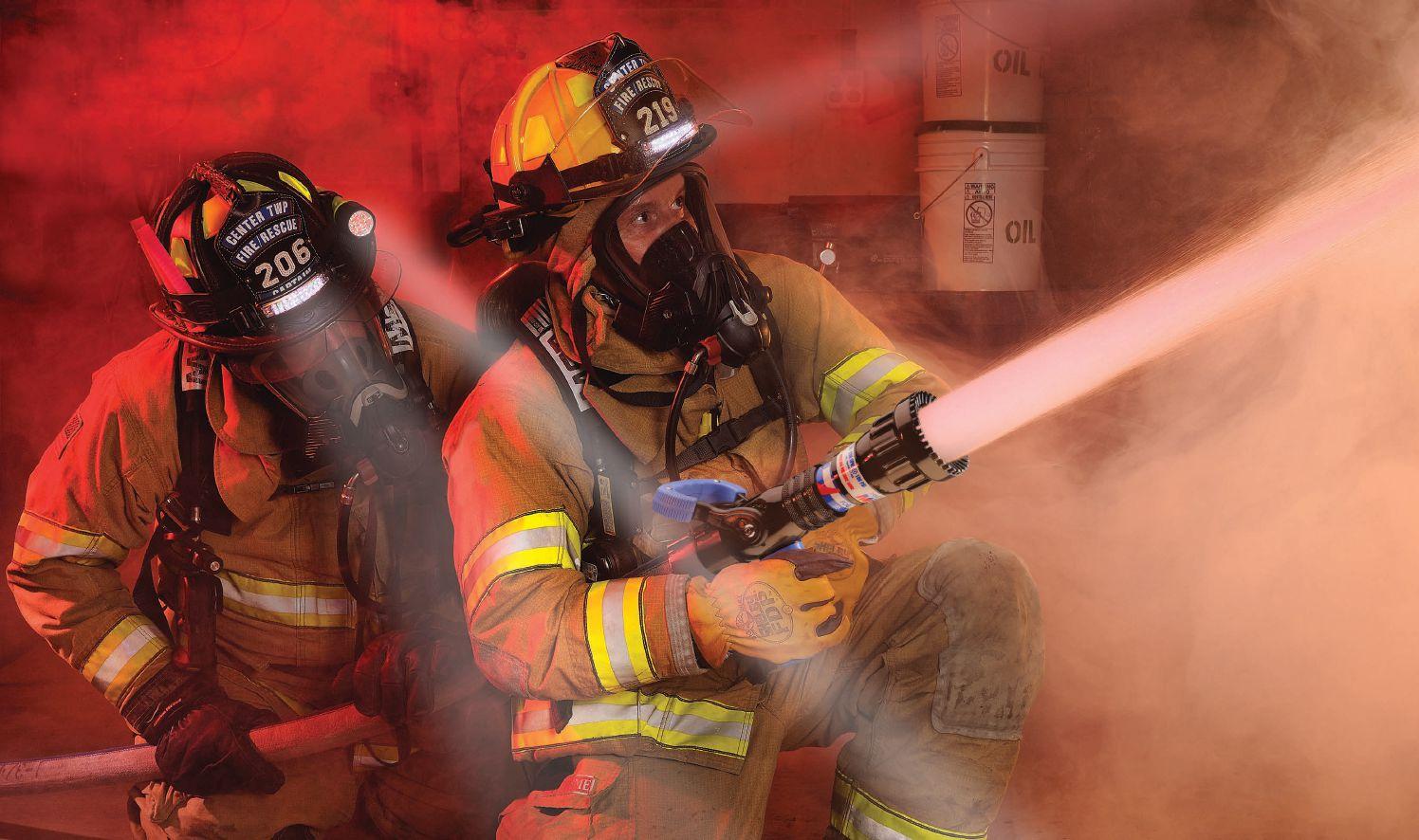
On Sept. 26, about 120 mostly volunteer firefighters took part in one of six handson training courses offered at the 2015 Firefighter Training Day: firefighter survival, auto extrication, live-fire rescue, aircraft rescue fire fighting, patient packaging and triage,
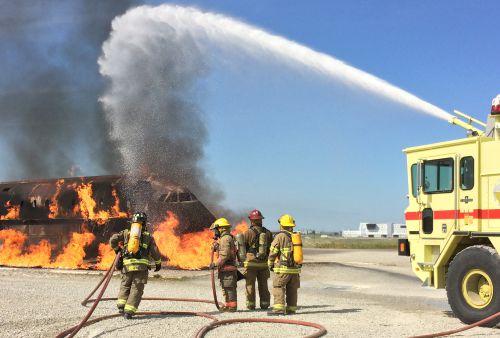
Firefighters prepare to advance water to the aircraft training mockup at the Fire and Emergency Services Training Institute as part of an aircraft rescue exercise during Fire Fighting in Canada’s annual training day held on Sept. 26.
and, new this year, introduction to incident management systems.
All courses were free for participants because of sponsorship by M&L Supply, Scott Safety, Fort Garry Fire Trucks and Canadian Safety Equipment.
FESTI, which is located next to Toronto Pearson International Airport, has 48,000 square metres of
training area that includes aircraft training mock-ups, an auto-extrication area, rescue tower and burn building.
The ARFF program, aircraft rescue fire fighting, which is lead by Capt. Dan Beaudoin, is one of the big draws for firefighters from smaller municipalities, Lane said.
Eight firefighters chose to forgo the sunshine and instead
sat in on the classroom session introduction to incident management systems, led by Ontario Association of Fire Chiefs program manager Brad Bigrigg. The session included a discussion of recommendations from the inquiry into the Elliot Lake mall collapse.
Back outside, patient packaging and triage instructor Capt. Theresa Marinier trained participants using realistic scenarios, including a motorcycle crash and a masscasualty incident; both were played out by volunteers from FESTI’s pre-service classes.
In the auto-ex area, members of Mississauga Fire Extrication Team, the 2015 champions of the North American Vehicle Rescue Challenge, helped lead the evolutions with instructor Capt. Marcel LaCapruccia. The quality of the trainers, some of whom volunteer their time, are what make Firefighter Training Day the success it is, Lane said.
– Maria Church
Long before departments from across Quebec responded to the Lac-Megantic train derailment, Fire Chief Daniel Brazeau had been working with the province to secure funding for training for the province’s 18,000 part-time firefighters.
In December 2014, Brazeau’s work – and that of many others –paid off; $19 million over five years.
Brazeau, the full-time chief of the career department in D’Autray (which includes nine departments) was honoured in September by his peers at the
Canadian Association of Fire Chiefs conference in Victoria for his myriad achievements as a long-time fire chief and two-time president of the Association des chefs en securite due Quebec.
Brazeau and Chief Ted Bryan of the 82-member volunteer Ontanabee-South Monaghan Fire Department in Ontario were recognized for their passion and commitment to their departments, to fire fighting and, also, to training.
Bryan takes a hands-on approach: he is a certified
master trainer and lead instructor with the Eastern Ontario Emergency Training Academy in Norwood.
Brazeau has worked with municipalities in Quebec and encouraged investment in firefighter training and better regional response and coverage.
Brazeau’s department was the first in Quebec in which all firefighters completed 375 hours of training to receive a fire-safety diploma.
Brazeau joined the fire service in 1980 and became chief in the Town of Lanoraie
in 1985. In 1996 he became chief in Lavaltrie, and in 2004 was made chief in D’Autray; there, he amalgamated nine departments in the county municipality into a regional fire service with 135 firefighters.
Brazeau sits on several provincial committees, is the emergency co-ordinator and an instructor and examiner for the National School of Quebec Firefighters.
Chief Bryan joined the fire service in 1975 and became chief in 1998.
– Laura King

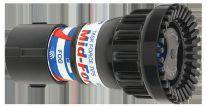
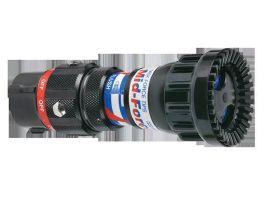
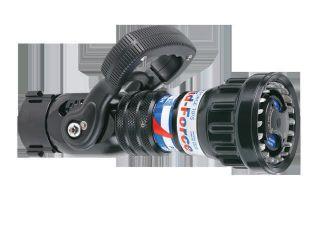

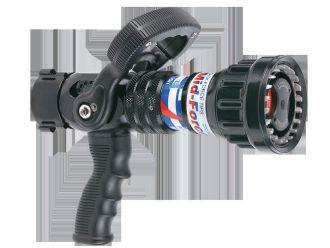
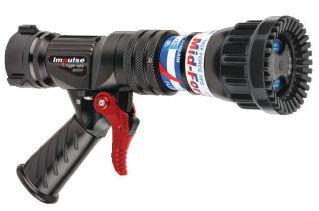
TFT’s Mid-Force dual pressure automatic nozzle offers you a choice of maximum flow, or maximum reach and penetration from a single nozzle.
The low pressure mode provides target fire flows with greatly reduced nozzle reaction, and the integrated slide valve produces a turbulence free straight stream, even when gated.
Your choice of molded rubber or stainless steel spinning fog teeth.
To learn more about how you can dramatically improve your initial attack flow operations automatically, contact your local TFT dealer today.

By MARIA CHURCH
LEFT Fort Garry Fire Trucks, based in Winnipeg, builds about 100 trucks a year and is well-versed in the options that suit the Canadian climate.
ABOVE FGFT president Rick Suche in the plant’s inspection room, which is filled with natural light for optimum viewing.
Imagine you just bought the perfect fire truck. Now, close your eyes for 10 seconds and really picture it.
What did it look like? What colour was it? What kind of engine? What features or equipment does it carry? How much did it cost?
So much goes into buying the perfect fire truck, not the least of which is a large quantity of money. It’s a happy moment for the crew when the truck finally rolls out and parks in the bay, ready for its first response.
But imagine that within the first few days, even hours, your perfect truck’s engine light turns on, the pump breaks, and the fuel gauge, radio, ignition shift switch and driver’s side lock all stop working.
That is what happened to a department in Nova Scotia a few years ago. A refurbished truck purchased from an out-of-province company arrived at the station unfit for the road.
“We noticed right away that there was stuff that was suppose to be on the truck that wasn’t on the truck,” recalls Dale Pettipas, who was on the truck-buying committee and is now chief of the department.
Thousands of dollars in repairs later, and no word from the company to cover the cost, the matter ended up in small-claims court. Despite winning the case, then Fire Chief Jamie Davidson said he doesn’t expect to ever see the money.
“With the cost of the lawyers and the stuff that we’d have to do,” he said, “we had to cut our losses.”
Can a department avoid those costly situations?
Do: Start by researching.
Victor MacPherson, who is a 15-year emergency-vehicle technician for the City of Vaughan, Ont., and a volunteer district chief in Adjala-Tosorontio, Ont., said the first step in his research is to determine budget and needs.
“You have to go to council. You have to find out: what do you have to spend and what are your limitations?” MacPherson said.
From there, he said, “Google is your best friend. Online it’s amazing what you can find.”
MacPherson recommends looking at top-of-the-line and middleof-the-road products, but steering clear of junk that you might regret down the road.
Peter Lewko was behind truck purchases for the Town of Caledon Fire and Emergency Services in Ontario for about six years and is now retired. He suggests learning about and keeping tabs on manufacturers to know what products they offer from what suppliers.
“It can be a puzzle,” Lewko said, “and depending on who your manufacturer is they may have a huge range of suppliers and can offer you different products or they may be very restrictive.”
Brian Nash, national sales manager for Winnipeg-based Fort Garry Fire Trucks, recommends that researchers narrow in on manufacturers’ certifications and liability coverage.
“Are you dealing with a company that has certified engineers on staff, liability insurance, national safety marks? These are all things they should be looking for in a manufacturer,” Nash said.
Do: Take all opportunities to visit suppliers and manufacturers.
Even if you are not in the market for a new truck, meeting suppliers face to face to learn about new-product development helps to get the pulse of the industry, Lewko said.
Arrange tours of manufacturer facilities, he said, ideally with the chief or deputy, the member in charge of purchasing and a mechanical staffer. While its good to have more than one opinion, it’s also easy to have too many opinions, Lewko said, so limit the group to three.
If the manufacturer is footing the bill for the tour, be careful not to commit to a product beforehand.
“The manufacturer has to realize that you may or may not be purchasing from them,” Lewko said. “Don’t be pushed into something.”
Another option is trade shows. Fort Garry will visit between 25 and 30 trade shows across Canada each year.
“Most of our suppliers are present there as well,” Nash said. “So we can point people in the right direction; for more detailed info go see that guy in the Foam Pro booth or that person in the Federal Signal lighting booth.”
For smaller departments that don’t have the funds for travel to trade shows or manufacturing sites, Pettipas suggests staying local; it might up the price, but it will lower the risk if you can monitor the truck through the stages of manufacturing.
Don’t: Discount purchasing history.
Bear in mind, Lewko said, that a relationship and history with a specific dealer or manufacturer has value. It’s hard to fix a dollar figure on receiving immediate mechanical or parts service when a truck goes down.
Sticking with the same manufacturer also means having the same product line and parts supply, he said, which builds familiarity for the firefighters, training officers and mechanical staff.
“To bring something new in has a cost to it because now you have to re-train your trainers, firefighters and mechanics, you may have
BY
to buy specific diagnostic tools for that product and you will most likely have to stock different parts,” Lewko said.
Pino Natale, owner of Dependable Truck & Tank based in Brampton, Ont., who worked with Lewko, agreed with his emphasis on the benefits of purchasing history.
Once Dependable establishes a relationship with a department, Natale said, his staff can standardize future units to suit needs or likes.
“It’s especially helpful for volunteer departments, because it could be anyone on that truck at any time,” Natale said. “Even at different stations, if they need to operate the pump they are familiar with the trucks.”
Do: Turn to other departments.
Other fire departments are invaluable information resources. Don’t hesitate to reach out, MacPherson said, which can be as simple as asking the manufacturer for contact information from a recent delivery and calling up the chief.
“Ask them: are they happy with the truck? What’s the warranty like? What’s the repair like? What’s the availability of parts like? Any issues?”
Don’t: Ignore licensing, registration and traffic acts.
Research includes looking into licensing and registration, paperwork that Lewko said is all too often ignored until an apparatus is involved in a collision.
“All of a sudden everything comes into play and the ministry is inspecting the vehicle, the OPP are checking driver records and all of this kind of stuff,” he said. “If you don’t have those enforcements in play then you can run into trouble.”
As well, the federal government and provinces all have acts that regulate the standards on the road, including for municipal vehicles. In Ontario it’s the Highway Traffic Act from the Ministry of Transportation.
MacPherson said a chief must sign off on a vehicle that doesn’t meet the standards in the act, such as weight, and faces consequences if that vehicle is involved in an accident.
That said, most, if not all manufacturers build to provincial standards, but make sure it’s written in the contract.
Do: Decide between RFP and tender.
A department next determines whether the specifications for the apparatus will be released to the dealers and manufacturers as a request for proposal (RFP) or a tender.
“An RFP allows the purchaser to entertain suggestions from the manufacturer,” Lewko said. “We used the RFP process with some restrictions built into the document.”
When you score the RFP, the purchasing power is most often the biggest piece of the pie, he said.
“Even though a supplier may score very high with regards to the specs that we want –it’s the engine we want, it’s the transmission
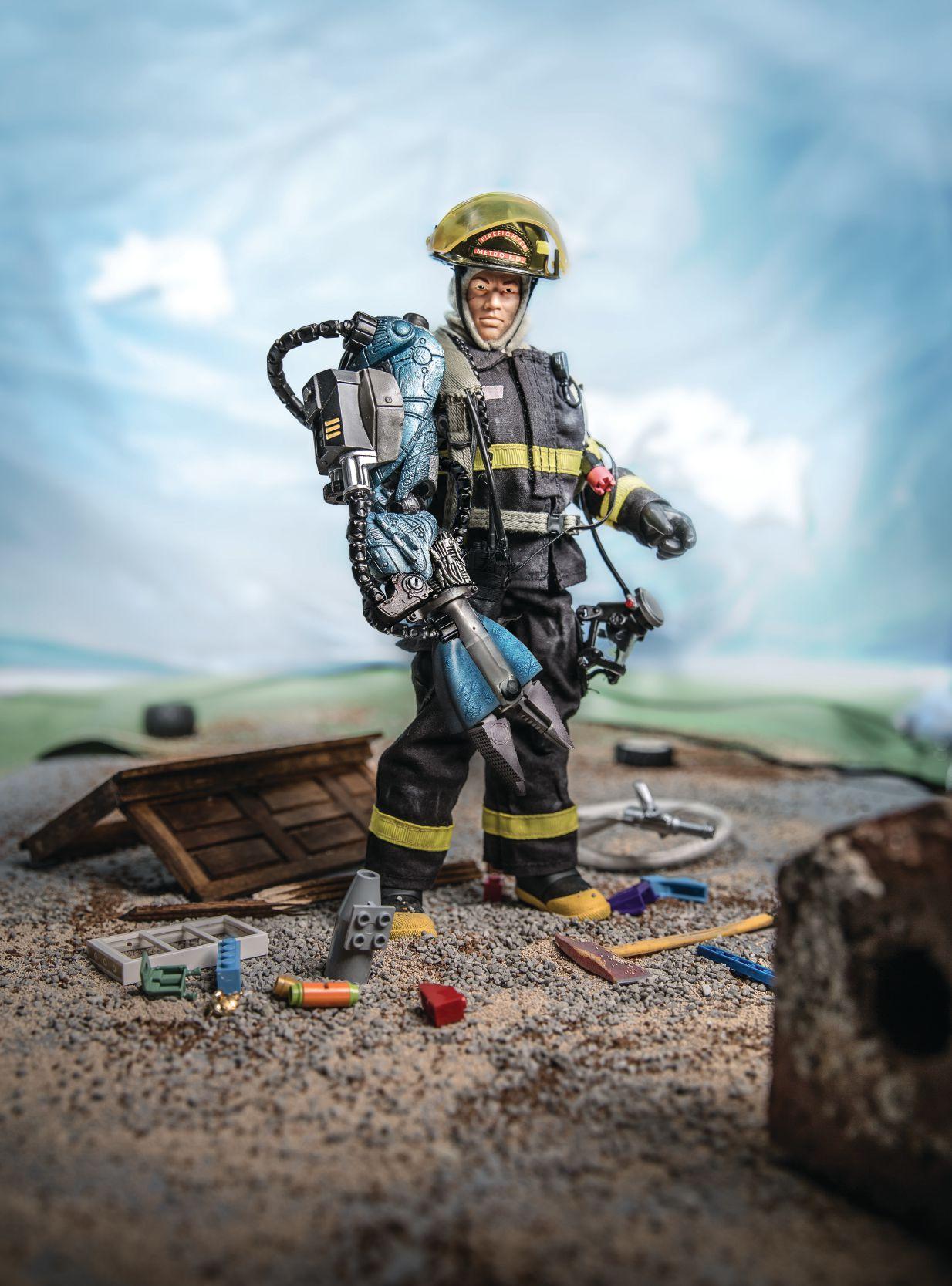






Every hero needs to arm himself properly. And if you’re a fire ghter in a tactical rescue or rapid intervention team, the StrongArmTM from Hurst Jaws of Life® can help you do just that. It provides you one powerful, yet portable tool that can cut, lift, spread and replace crowbars, wire cutters, axes, and so much more. Just make sure wherever you go, you have your StrongArm. For more info, go to jawso ife.com.


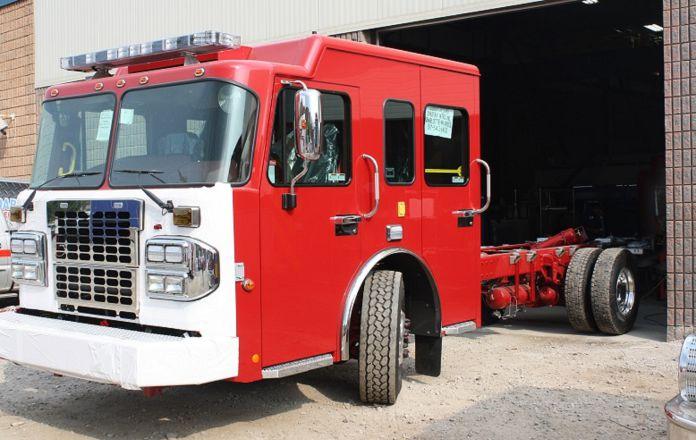
Ontario-based Dependable Emergency Vehicles recently began a mandatory photo-inspection program. The company now sends pictures of every stage of the production process to the customer to review, which saves time and money for both parties.
we want and it’s the chassis we want from company A – company B comes meets the specs with different products and comes in with a really low purchasing price,” Lewko said. “The municipality’s purchasing process, through the scoring of the documents, may then dictate that you purchase the apparatus from company B.”
A tender, which is legally binding, allows departments to specify exactly what they are looking for, but it means that lowest bid wins, which can be at the expense of quality, MacPherson said.
Manufacturers such as Fort Garry don’t usually care one way or the other, Nash said, but an RFP gives everyone more flexibility.
“A request for proposal or request for quotation gives the hammer to the fire department because they can see the end price and the specification, but they can pick up the phone and negotiate,” Nash said.
Do: Require a pre-construction meeting.
When buying new, a meeting, face to face with manufacturer representatives is the best way to avoid any miscommunication or misinterpretation, Lewko said.
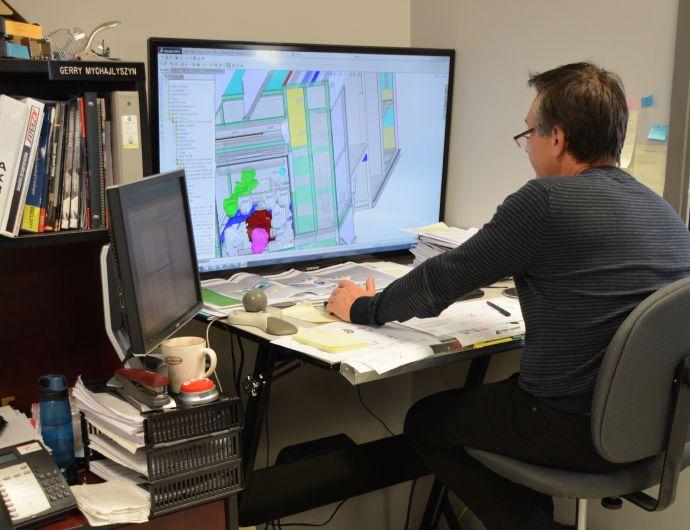
“A pre-construction meeting would be scheduled once the award was given,” he said, “then we would meet with the manufacturer’s staff and go through the specs, line by line, and the drawings to make sure that what we wanted was what the manufacturer was willing to deliver.”
For Fort Garry, Nash said, the pre-construction meeting is more important than a final inspection; so if a purchaser has funds for
just one trip, sooner is better than later.
“If everyone isn’t on the same page before you build the trick, you’re going to have a lousy final inspection because there is probably going to be something missing; and this all costs money,” Nash said.
Buying used or refurbished typically won’t involve a pre-construction meeting, but Davidson recommends asking for plenty of pictures, or better yet visiting the manufacturer, before signing the purchasing agreement.
Do: Spec inspection requirements.
Lewko said his RFPs would include at least four inspections of the truck: a chassis inspection, a fire-body inspection, pre-paint inspection and a final inspection.
“We also required one of us to be present during the pump test,” he said. “And we were very specific that it had to be ULC (Underwriters’ Laboratories of Canada) tested and to have their ULC plate attached to the pump panel of the apparatus.”
Finding issues during the inspections, or parts of the truck that won’t meet your needs, is part of the manufacturing process, Lewko said.
Caledon’s past practice was to charge the costs of those inspections to the dealer or manufacturer, he said, but the municipality recently chose to absorb those costs in order to make the bidding process more fair.
A few months ago Dependable began a mandatory photo-inspection program. The company now sends pictures of every stage of production to customers for review.
“It actually is a life saver for both parties,” Natale said. “Chiefs know this project, and

when we’re building 20 at a time, there could be a little slip up and a chief can point out: ‘I didn’t ask for this, or it’s missing this.’ ”
Don’t: Accept a third-party inspection, unless trusted.
Some trucks, such as those purchased from international companies, require testing to Canadian safety standards, which could mean extra money and time before the truck is ready to hit the road.
To avoid miscommunication, MacPherson suggests writing in requirements for NFPA standards and ULC testing.
For used vehicles, he said, it’s a good idea to require a trusted third-party inspection to have everything tested. If the manufacture doesn’t agree, it’s a red flag.
The NFPA has guidelines for apparatus specifications as well as refurbished vehicles.
Don’t: Opt for a general inspection.
During each buyer inspection, go through the spec line-by-line, Lewko said. “Make sure that everything you want is there.”
Having mechanical staff there is essential if you are not well versed in truck mechanics.
“It could be little things,” Lewko said, “like the way some of the wiring is run throughout the fire body; it may be too close to something and over time could rub through, or something like that.”
Those changes can be easily made in the manufacturing process, he said, but if you wait until the truck is in service and find things wrong, it’s more difficult and more money to fix.
When a used or refurbished truck arrives, Pettipas said, make sure you are ready to inspect it then and there.
“Take somebody who might have more experience running a truck or from a bigger department or mechanically inclined and can inspect the truck,” he said.
Do: hold back payment.
Lewko said his hold back was at least 50 per cent until delivery, or at least certain stages of the manufacturing process. If the truck arrived and was not what the manufacturer promised, he said, he wouldn’t hesitate to hold back payment.
MacPherson said it is common to agree on penalties in the purchasing contract for not meeting requirements, such as a deduction in cost for every month the truck is not delivered past the pre-determined deadline. But it must be written in the contract to be official.
Smaller departments should also consider hold backs on used vehicles of at least 10 to 15 per cent, Davidson said. His department did hold back $7,000 when the vehicle arrived at the station and was visibly unfit for the road, but it was a split-second decision. And the $7,000 was less than half of what the repairs eventually cost.
“I believe it was around $16,000 to $17,000 to get it on the road,” Davidson said, “We couldn’t even get the company to give us a bill of sale. We ended up going to court to prove the truck belonged to us.”
The hold back should have been written into the purchasing contract, he said, especially because they are a small department must take the manufacturer’s word for the truck’s condition.
Pettipas has similar regret, but is also resigned.
“I don’t know if there is any way you can be sure you’re not going to get into the situation like we got into because you can only go by what the company tells you,” he said.
As MacPherson said, sometimes it boils down to buyer beware.
“If you don’t have a good feeling about it, there is a reason why,” he said.
“Just be cautious,” Pettipas said.
West Coast fire department plans for post-quake scenario with tenders for potable water
By DAVE BAIRD
Scientists believe that it’s not a matter of if but when the next major earthquake will hit the coast of British Columbia; some say the earth will rip open like a zipper. The City of Surrey – nestled in the regional area of Metro Vancouver on Canada’s west coast – is perched on top a major fault line that has built up pressure over 300 to 500 years. According to a Canadian Press story in January, seismologists predict the odds are about one in 10 that the earth will buckle and let go some time in the next 50 years.
Nothing can truly stop a natural disaster, but we can learn what to look out for and how to protect ourselves as best as we can; preparation is key.
The Surrey Fire Service has been preparing for the aftermath of a natural disaster since the development of its emergency planning program in 1994. By the very nature of being a fire department, its primary concern is the potential for multiple fires throughout the city post disaster.
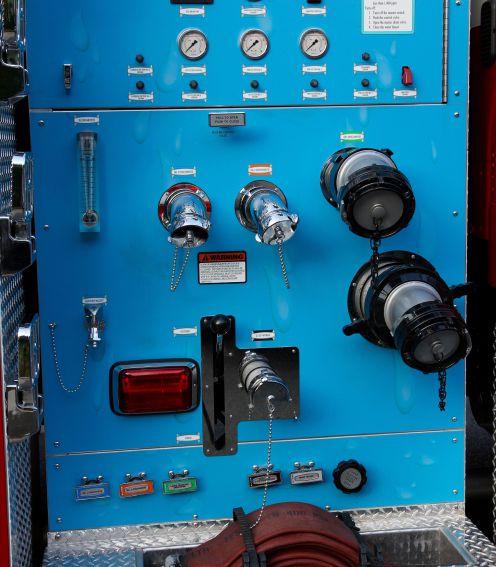
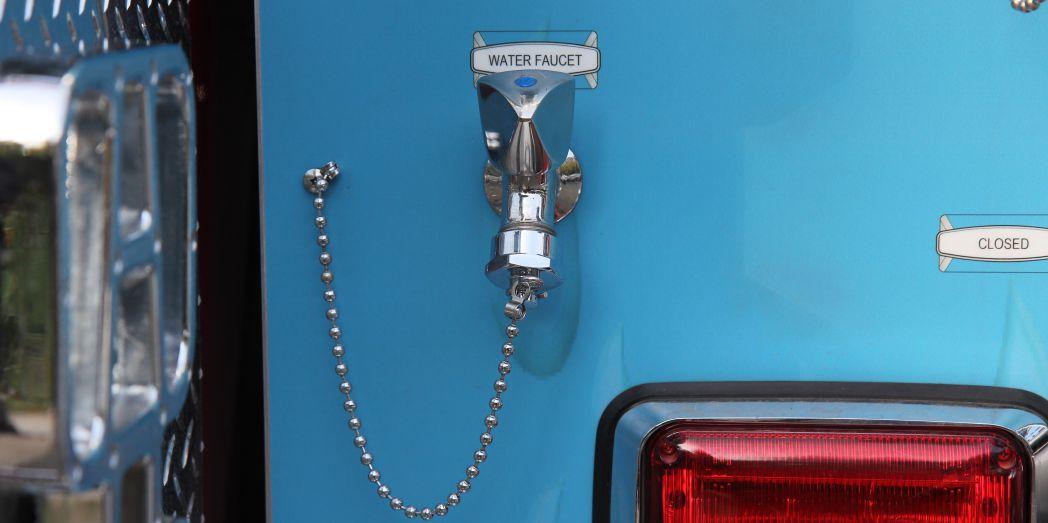
ABOVE The tenders feature Darley Purifire four-stage integrated water purification systems, which filter biological and chemical contaminations.
Identifying water sources for suppression was easy – the city has water bodies on three of its sides, and multiple lakes, ponds and rivers within. Moving water to the fire scenes was recognized as more of a challenge. To overcome transportation problems, in 2008 the city stored 3,048 metres (10,000 feet) of 100-millimetre (four-inch) Stortz hose in a portable-on-demand (POD) container. The POD container sits ready to transport and create an above-ground water main to anywhere in the city in the fastest time possible. This was the extent of Surrey’s water-management measures until the opportunity to produce potable water was considered.
Recently the Surrey Fire Service took
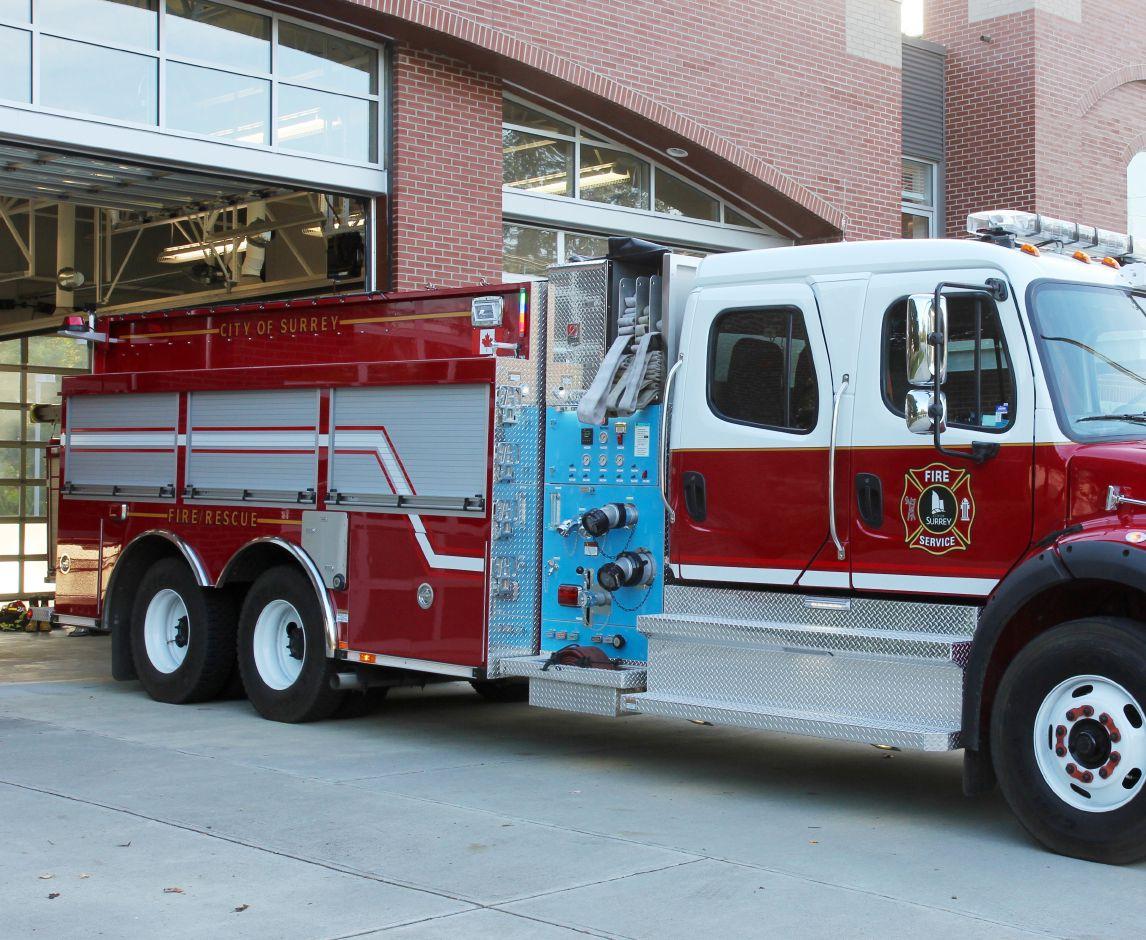
a giant step forward in post-disaster preparation with the purchase of three new tenders, each capable of carrying 2,000 imperial gallons. While tenders –used to transport large volumes of water to fire-related emergencies in rural areas within the city – are not a new concept, Surrey’s new tenders are capable of providing on-the-spot potable drinking water.
“When we have the major earthquake and there are water main breaks and (Metro Vancouver) water is cut off in certain areas, there will be no potable water other than what you’ve got in a storage capacity or what we can draw from lakes, ponds, pools, or any other suitable body of water,” said Surrey Deputy Chief Dan Barnscher, who is the city’s emergency planner. In the critical time immediately after a natural disaster, potable water will be in high demand and short supply until services are restored.
In 2005, Hurricane Katrina slammed into the south coast of Louisiana and caused severe destruction along the Gulf Coast from central Florida to Texas. Much of the damage was in New Orleans where the storm surged into the city. Infrastructure was wiped out and the community was left with a major water shortage that caused public health concerns. The water left behind from the storm was dirty and unfit to drink.
Natural disasters are often followed by concerns that people will get sick because of contaminated water or food. Potable water and food must be brought in to the devastated area while water-filtration plants are repaired and power is restored; this takes time.
The Surrey Fire Service is one of the first departments in Canada to have the ability to provide its citizens with a supply of immediate drinking water in the event of a disruption in potable water distribution, or, worse yet, a complete water-main failure resulting from a natural or mancaused disaster.
In July, the department added three new 2,000 imperial gallon tenders to its fleet featuring the Darley Purifire fourstage integrated water purification system.
The Purifire system uses sediment filters, carbon filters, UV and ozone devices
to remove biological and chemical contaminations from fresh water sources, and guarantee the best purification ability and safety to human health. The system – which
was added to for an additional $25,000 per truck – is capable of filtering 2,273 litres per hour, or 54,553 litres per day, for a threetruck total of 163,659litres of potable water per day, provided there is a constant supply from a fresh water source. Simply drop the hose into any body of fresh water and flick a switch to activate the purification system.
“This is something we hope we never have to use,” Barnscher said, “but it’s such an inexpensive expenditure over the lifespan of the vehicles.
“All it takes is one incident where there’s a major water-line disruption and our citizens could find themselves in a desperate situation. We will provide on-site water purification, and then pump it out of a hose that’s drinkable, what better method is there than that?”
Surrey fire crews have considered the logistics of water management if the task of creating purified potable water becomes reality; they know that the process used to move the water from the source to the purification tenders will depend on the extent of the disaster. The purification process draws water from the water tank, so the tank must be kept topped up for as long as potable water is required.
Access to the water source could be a challenge. Portable water pumps, 3,048 metres (10,000 feet) of 100-millimetre (four-inch) Stortz hose, fire trucks, and water-purification capability are tools potentially needed to produce potable water in a
post-disaster scenario.
Ideally, the tenders that are equipped with the water-purification systems would position themselves next to the water source; however, it is more likely that other fire trucks with tanks will shuttle the water to the purifying apparatus in order to provide purified water to publicly accessible positions throughout the city. While Surrey’s tenders are equipped to draft through their main water pump, we anticipate that portable gas-powered pumps will be used to transfer the water from the various water sources to the tank, where it will then be transported to the tenders by trucks or Stortz hose.
There are many aspects to consider in preparation for a natural disaster; the ability to make potable water for the Surrey citizens is just one component of the big picture. Potable-water producing fire trucks give the Surrey Fire Service a powerful tool to assist people in the event of a natural disaster. It is in everyone’s best interest to be prepared.

Acting Capt. Dave Baird has worked in the suppression division of the Surrey Fire Service for more than 21 years. He also instructs for the Justice Institute of BC. In 2012 and 2013 he was a committee member for the validation of the IFSTA Aerial Operators Handbook. He can be reached at DCBaird@surrey.ca

By ED BROUWER
The summer’s wildfire season in British Columbia’s Southern Interior was unprecedented: multiple fires started in our drought-ravaged area and kept us busy well into September. By Oct. 1, we had not had any significant rainfall.
The Sidley Mountain interface fire (two kilometres from my ranch near Osoyoos, B.C.) started just over the border in Washington on Aug. 13. It was a fast wind-driven fire and within a short time crews deployed to protect the ranches along the border. The Anarchist Mountain Volunteer Fire Department and the BC Wildfire Service responded. Evacuation alerts were issued. The fire crossed the border midday and we hit it hard with both ground and air support. Eighteen long hours later, we had a good handle on the Canadian side. A few of us laid more than 3,050 metres (10,000) feet of 1 1/2inch hose that stretched into Washington, where it is believed the fire started by lightning.
The Rock Creek interface fire began around the same time. Rock Creek is just 24 kilometres east of Sidley Mountain. When the Regional District of Kootenay Boundary completed an assessment of damage in the area, it confirmed that 30 homes and an additional 15 structures were damaged or destroyed in the wildfire. The cause is under investigation, but humans are suspected. This fire moved so fast very few people, if any, had time to evacuate with personal items.
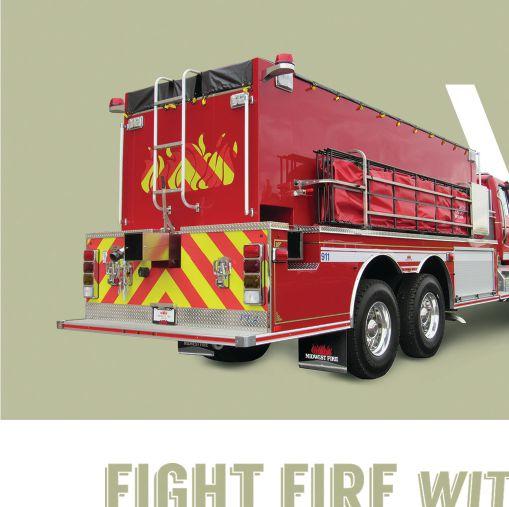
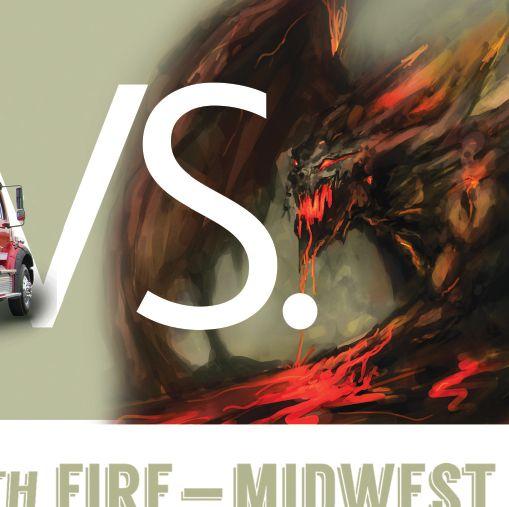
Both the Midway and Greenwood volunteer fire departments spent countless hours on the Rock Creek fire. Then, as resources were stretched to meet those fire dragons, two other interface fires broke out in Oliver and Osoyoos: Testalinden Creek and Wilson’s Mountain. Smoke from within the Testalinden Creek fire perimeter was still visible Oct. 1. The exact cause has not yet been determined.
Just a few kilometers to the south of us, multiple wildfires began on June 28. As of Sept. 3, as many as 3,000 firefighters had deployed against fires that burned more than 900,000 acres (3,600 square kilometres) of land.
For the first time in Washington’s history, officials asked residents to volunteer to help fight the wildfires. The tragic loss of three firefighters added to the despair. Tom Zbyszewski, 20, Andrew Zajac, 26, and Richard Wheeler, 31, died when their brush truck crashed down a 40-foot embankment as they tried to escape a fast-growing wildfire.
One of my young crew members and I attended the memorial held for the three Washington firefighters on Aug. 30 in Wenatchee (three hours south of us); we felt it was important to show our support. En route we drove through the blackened countryside for more than 100 kilometres, and passed two incident bases and three fire camps. We encountered more than 65 fire engines and brush trucks still working the remaining fires. We were pretty emotional before we even got to the memorial.
On the way home we discussed how fortunate we have been this
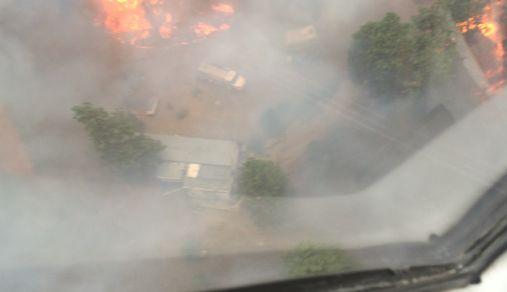
A helicopter blows smoke clear for a fire engine to navigate an escape route after conditions rapidly changed on the ground. Structural triage can help firefighters determine if conditions are too hazardous to risk fighting the fire.
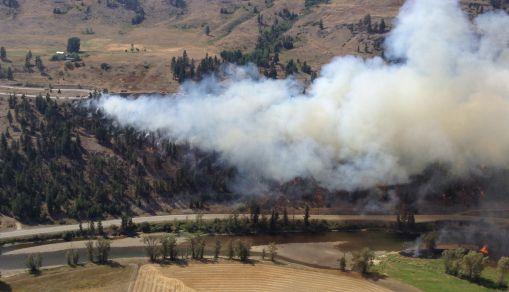
The Rock Creek interface fire consumes an area of brush close to homes and a highway in British Columbia’s Southern Interior. Thirty homes and an additional 15 structures were damaged or destroyed in the fire.
fire season. But sometimes I think it is blind luck.
I heard of several crews that were burned over in wildland situations, but because no one was hurt, the incidents were not talked about. Several structural firefighters who were doing evacuations found themselves completed surrounded by flames after the winds changed. They narrowly escaped death because a helicopter blew the smoke clear so they could see their way out.
Many firefighters were hailed as hometown heroes this summer. The problem with this unwanted title is that it creates an unrealistic expectation for firefighters to rush into every emergency incident no



matter how hazardous or ill-prepared they are for the situation. That is just wrong.
I’m sorry to say this, but firefighters still don’t understand structural triage. Firefighters must be trained (given permission) to writeoff a house if it meets a certain hazard criteria.
I realize that you will be reading this sometime in November, but I really need you to write a note to self: “Priority training objective for spring 2016 – structural triage.”
One way for us firefighters to deal with structural triage is to stay emotionally detached. Houses need to be viewed as fuel rather than homes. Walking away is difficult, especially when the house is owned by another firefighter, family or friend. Exceptions to triage guidelines – e.g. a local politician’s home (it does happen!) – should never compromise firefighter safety. A house is FUEL!
The word triage is French, meaning to sort. In the process, homes are classified as savable or write-offs. A home is classified as a write-off if it is already burning when the firefighters arrive, or when it is not safe for the firefighters to stay and fight the fire.
Houses are typically triaged based on the intensity of the fire, the proximity of vegetation, the flammability of the house and firefighter safety. Houses with cedar siding and roofs, wooden porches and vegetation growing close to the house are more likely to be written off.
firefighters to fight the fire. Come on guys; think before you commit to sending that shiny red truck up the driveway.
Firefighters must be trained to evaluate the survival chances of structures threatened by wildfire. At a higher level, incident commanders must understand how much risk is acceptable for their crews.
During a major interface fire, there are far more homes that need protection than there are fire department resources to protect them. While dealing with a rapidly escalating wildland/urban interface situation, firefighters may have to triage houses similar to the way a medic assesses mass casualties on the battlefield.
A medic’s efforts must be concentrated on those who stand a reasonable chance of survival. People who are essentially hopeless will be passed over in order to save those who can be saved with the available time and resources.
This philosophy applies to houses exactly as it does to victims: if firefighters do not stand a reasonable chance of saving the house, they must move on.
Sending in a single firefighter or backing an apparatus down a long driveway is time-consuming. We should not take the chance of getting to a house only to find there is no way to turn around. Our first priority is to get in and out safely. Pre-planning works!
Do not chance getting stranded! You, your crew and your apparatus will become a liability rather than a much-needed asset.
Time is crucial and resources are limited during a wildfire. Depending on the situation, firefighters may have to pre-identify


homes that cannot be saved. Have your members do area familiarization in the spring to prepare. Write pre-plans for your interface area and identify the wildfire hazard zones.
Talk with homeowners and educate them about their own particular hazards. Show them the places around the house where leaves have collected – areas where thousands of sparks will collect. Woodpiles stacked against buildings, open decks, unscreened eave vents, combustible debris scattered around the property and abandoned vehicles are all areas of concern.
Tactfully tell homeowners (and yes, you can) that firefighters will do what they can, but if there is too much to do in the few minutes before the fire arrives, they will not be able to safely defend their homes and will be forced to move on.
Nine wildland/urban interface situations to watch for:
1. Wooden construction and wood shake roofs
2. Poor access and narrow, congested oneway roads
3. Inadequate water supply
4. Natural fuels closer than nine metres (30 feet) to structures
5. Extreme fire behaviour
6. Strong winds
7. Need to evacuate the public
8. Structures located in narrow canyons or on steep slopes near fuels that easily ignite
9. Inadequate bridge-load limits
As always, train as though lives depend on it, because they do. If you need more info regarding structural triage shoot me an email.

Ed Brouwer is the chief instructor for Canwest Fire in Osoyoos, B.C., and training officer for Greenwood Fire and Rescue. He is also a fire warden with the B.C. Ministry of Forests, a wildland urban interface fire-suppression instructor/evaluator and an ordained disaster-response chaplain. Ed has written Trainer’s Corner for 14 of his 27 years in the fire service. Contact Ed at ebrouwer@canwestfire.org

BY
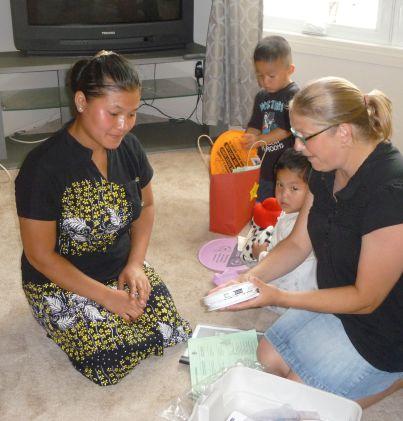
TOP Regina Fire & Protective Services and KidsFirst Regina jointly host a fire-safety carnival and picnic at the fire station. The event, held twice a year, helps the department build relationships with families.
RIGHT A KidsFirst Regina home visitor coaches a family on smoke alarm safety, one component of the fire-safety curriculum that resulted from a partnership between KidsFirst and Regina Fire.
By MARIA CHURCH
Apartnership between Regina Fire & Protective Services and a family-advocacy agency has helped to reduce the number of child-caused fires in the city.
A group called KidsFirst Regina approached Regina Fire more than 10 years ago to see if the two agencies could partner in their public-education efforts. KidsFirst is a community organization that provides voluntary services to families with young children.
Since the partnership formed in 2003, child-caused fires have decreased
significantly. Between 1995 and 2003 there were 253 fires in Regina caused by children, which resulted in two fatalities and $4.1 million in damages. Between 2004 and 2012 there were just 46 child-caused fires, with one-quarter of the damages – just over $1 million – and no fatalities.
Angela Prawzick, a public education officer with Regina Fire, said working with a community-based organization that is trusted by its clients is the ideal way for the department to reach an at-risk population.
“The partnership with KidsFirst,” Prawzick said, “provided Regina Fire with the opportunity to extend its outreach to
The partnership with KidsFirst provided Regina Fire with the opportunity to extend its outreach to the community far more effectively than would have been possible working alone.
- Angela Prawzick, Regina Fire
the community far more effectively than would have been possible working alone.
“Not only did we reach our goal in reducing child-caused fires,” she said, “but we’ve seen an overall drop in all unintentional fires.”
In the early 2000s, children playing with matches or lighters was the leading cause of fires in Regina. The majority of these fires occurred in neighbourhoods that are the focus of KidsFirst’s programming.
KidsFirst Regina’s program manager Heidi Fisher-Phillips approached the department after a fire in 2003 killed a young mother. Fire investigators later determined careless smoking caused the fire.
“Fire had been a huge concern in the neighbourhoods that we work in for many years,” Fisher-Phillips said. “But that particular fire was a fatality so it really caught everybody’s attention.”
Not long into discussions between Fisher-Phillips and department staff in charge of public education, a partnership was formed with the goal of reducing unintentional fires by targeting at-risk families.
Discussion eventually yielded a working group of eight members: two from Regina Fire – Prawzick and her colleague Candace Liskowich – and six from KidsFirst and its partnering organizations.
The first step for the group, Prawzick said, was to set objectives: decrease the number of child-caused fires, motivate and support KidsFirst staff in providing fire-safety education to their family clients, and empower families to take a proactive role in their own fire safety.
The working group then set out to create unique fire-safety resources and tools for KidsFirst staff members to pass on to parents, such as activity books, stickers, videos and games.
A training workshop was designed to introduce staff to the tools and give them an overview of fire hazards and risks in Regina, specifically risks for child-caused fires, and a crash course on fire safety.
Heather Sinclair-Birns, KidsFirst Regina’s lead on the partnership, said the agency’s home-visitation program provided the integral means by which fire safety messaging reached its target audience.
“Through the home visitation program,” she said, “KidsFirst staff members work with families in their homes – usually once or twice a week – to strengthen child growth and development, enhance positive-parenting skills and improve housing and life safety.”
During home visits KidsFirst staff typically go through a homesafety checklist to point out risks such as mold, leaking water, working appliances and safety in the neighbourhood. With the integration of the fire-safety mandate, the checklist also includes the importance of
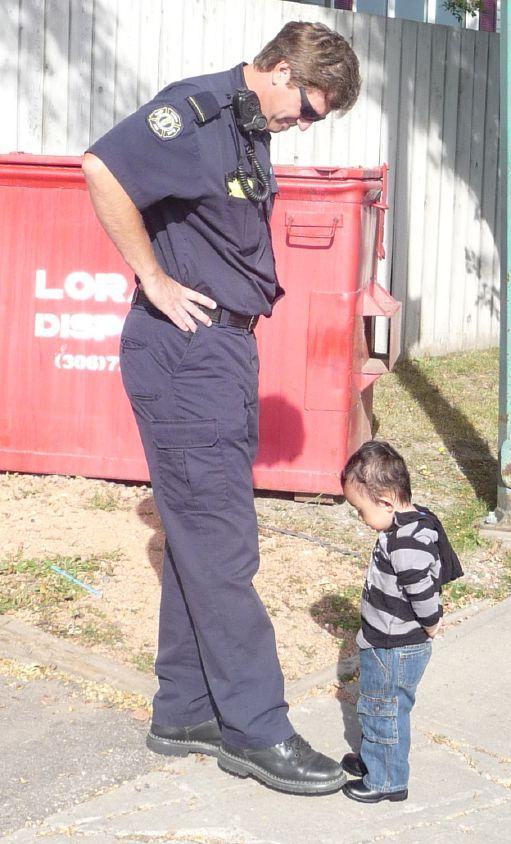
regular smoke-alarm checks and developing a family fire-escape plan.
During other family visits, staff may discuss nutrition and its impact on child development. During the discussion, the visitor slips in tips about cooking fire safety, such as the importance of staying in the kitchen when cooking, keeping the stovetop clear of combustible materials and keeping a child-free zone around the stove.
“Home visitors also use teachable moments,” Sinclair-Birns said. “If they see a lighter left on the table, they will use that opportunity to suggest a safer place to keep that lighter.”
It’s through these interactions, she said, that families see the benefits of fire safety and how it empowers them to keep their families safe. This learning can be passed on to future generations in the family.
“The stories of real fires in Regina – one of the tools developed for the home visitors – really hits home with the families,” Sinclair-Birns said. “They can relate to these fires, some of which have occurred in their own community.”
Families are signed up for the home-visitation program for up to five years; during that time, Sinclair-Birns said, the home visitors build strong relationships with their families.
Those relationships, Liskowich said, are invaluable to Regina Fire.
“The relationship that KidsFirst has with these families is irreplaceable,” she said. “They trust them, they know that they are looking out for their best interests.”
KidsFirst Regina is administered through a provincial health authority – the Regina Qu’Appelle Health Region. The KidsFirst program is a joint initiative of provincial departments and community agencies, and funded through the federal government.
Fisher-Phillips said similar programming exists in all other provinces and territories, and often includes home visitation.
“Home visiting is becoming a common form of providing services across Canada,” Fisher-Phillips said. “Our partnership has worked very well because both the fire service and KidsFirst were very interested in it, but absolutely any program can share fire prevention or some kind of fire information through home visiting.”
Even if a health organization doesn’t use home visitations, she said, fire messaging can be integrated into almost all programs that are reaching youth and families.
“Lots of health programs do community fairs where they bring resources out and the community comes out and meets them and learns about what they do – things like health fairs, teddy bear picnics, those kids of things,” Fisher-Phillips said.
Both KidsFirst Regina and Regina Fire & Protective Services are committed to continuing the program indefinitely. Fire safety was formally integrated into KidsFirst’s curriculum in 2010 and is updated yearly to reflect new messaging from the department, such as that year’s Fire Prevention Week theme.
In addition to the home visitation +program, the working group designed support activities to reach an even wider audience of families. Twice a year the agencies work together to throw a fire-safety carnival and picnic held at the fire station. Surveys completed by families who attend the fire-safety carnival indicate that their fire-safety knowledge is above that of the general population.
“These families knew when they last tested their smoke alarms, and they knew why,” Liskowich said. “And they had a fire-escape plan because their home visitor did one with them. It was pretty remarkable.”
According to the surveys, the families are also practising stop, drop and roll, and playing games such as pretending there is a fire in order to practise their escape plan.
Liskowich said three or four years into the program they compared results from the KidsFirst survey to a similar survey handed out at a public Fire Prevention Week event.
“We tabulated the answers and found the KidsFirst families know way more than the public,” she said. “We now know that fire safety is being introduced into the most vulnerable fire risk population that we have in our city.”
Now, more than 10 years into the partnership, Liskowich said there is a level of trust and familiarity among the department members, KidsFirst staff and the families. Ultimately, she said, that trust has substantially increased life safety for Regina’s most vulnerable residents.
“It went above and beyond our expectations,” Liskowich said.


BY SHAYNE MINTZ NFPA Canadian regional director
ave you ever had a question about standards or best practices and didn’t know who to ask? Or have you wanted to find a safe place to ask about challenges other fire services may have experienced meeting a standard – without being judged or feeling silly?
The NFPA’s new Xchange application offers that safe place – an online forum through which fire-service personnel can pose questions and find answers. Xchange was unveiled by our new president, Jim Pauley, at the NFPA Conference and Exposition in Chicago in June.
This new NFPA online community lets anyone in the fire service connect with NFPA technical staff, explore content, share ideas, ask questions and network with professionals worldwide. In addition, users can set up private chat areas with invitation-only access. NFPA members can also access a private members-only section to search and submit technical standards questions.
Over this past year, NFPA leadership, senior management and staff established a new strategic plan and modernized our mission and vision to be more in line with future challenges – how to stay abreast of change and be responsive to the needs of our users.
Throughout that process, NFPA leadership focused on improving our standards, products and member or stakeholder experiences, and building stronger relationships with our organization. The Xchange is one of the many ways we are pursuing our vision to be the leading global advocate for the elimination of death, injury and losses due to fire, and executing our mission: to help our stakeholders save lives and reduce loss with information, knowledge and passion.
could be helpful.
How can you get on board? Just visit www.nfpa.org/xchange. If you’re a first time visitor to the Xchange web page (or the free access page – which provides free access to all our codes and standards) you will be asked to register before proceeding to the content. There is no cost to register, so you can simply fill in your information and then continue to the Xchange page.
Registered users can then create profiles and begin exploring what others have posted and post their own content. NFPA staff liaisons and subject-matter experts will monitor the commentary and correct inaccuracies, so you can be assured that the content you’re reading is accurate and current.
The forum includes a search function to find specific content or other posts about your topic. The website allows for online discussions so users can get the information they want or need as soon as possible. Xchange is still new but aims to involve members, engage users and attract viewers by presenting relevant, timely content that promotes collaboration and interaction between our stakeholders and staff.
You can test-drive Xchange; visit once a week or so to see how,
Xchange provides the NFPA with truly interactive relationships with users.
More and more people are venturing online to find information and answers; Xchange is designed to help the NFPA meet this demand. Traditionally, the NFPA’s online presence has involved one-way communication – from us to you – but with an increased social-media presence we’ve begun to make our communication strategy a two-way street. Xchange provides the NFPA with truly interactive relationships with users. Our intent is to make Xchange the primary location for all our content that attracts, engages, or gets our users involved.
Once users sign in for the first time, they can interact directly with NFPA experts. Users can post their own content, ask questions, and share their expertise by answering other users’ questions or queries. If you’ve got a problem or issue, there’s probably someone else out there who has had a similar experience or has found a solution that
Shayne Mintz is the Canadian Regional Director for the National Fire Protection Association (NFPA). Contact Shayne at smintz@nfpa. org, and follow him on Twitter at @ShayneMintz
or if, your colleagues plan to implement NFPA 1730, the new Fire Prevention Deployment Standard, follow the progress in British Columbia – which is moving toward allowing local communities to opt-in to local sprinkler bylaws – or, see how your peers are dealing with energized photo-voltaics, green roofs and the continuing movement toward electrical storage systems in commercial and domestic applications. Research on something as obscure as tire replacement on fire apparatus, handling a large-scale train derailment, or comprehensive medical programs and how medical requirements differ between new candidates and incumbent firefighters.
Better yet, set up a push notification so you can be automatically alerted to activities that relate to your topics of interest. The subjects can be endless and if you can’t find anything on your subject already – feel free to start the conversation.

■ Four (4) Adjustable Compartment Shelves
■ 26”/13.5” Deep Compartments
■ Undercoated Body
■ LED Lighting
■ Aluminum Extruded Body – 5083 Saltwater Marine Grade
■ 20 Year Body Warranty
■ Darley, Waterous or Hale Pumps
■ Side Control, Top Mount or Top Mount Enclosed
■ 1000 IG Booster Tank
■ Fold Down Ladder Rack
■ ULC or NFPA Tested & Certified
■ Custom Options Available
■ Aluminum Extruded Body – 5083
Saltwater Marine
Grade
■ 20 Year Body
Warranty
■ Darley, Waterous or Hale Pumps
■ Side Control, Top Mount or Top Mount Enclosed
■ 600/800 IG Booster Tank
■ Enclosed Ladder, Pike Pole & Suction Hose
Storage
■ ULC or NFPA Tested & Certified
■ Custom Options
Available
■ Four (4) Adjustable Compartment Shelves
■ Full Height Compartments
■ Undercoated Body
■ LED Lighting
BY MARK VAN DER FEYST
The final part of this series on the basic skills of engine companies to get water to and on the fire focuses on the process by which water is sent to the nozzle from the truck. Two key people involved in this step of the process are the pump operator/driver and the nozzle person. Good communication between these two firefighters is paramount in to avoid interruption of suppression activities.
Parts 1 and 2 of this series (which can be read at firefighteringincanada.com/training/fire-ground) covered the steps necessary to secure the water supply, pull off the preconnect hand line and advance the preconnect to the structure’s front door. These are basic skills, but are vital to execute with proficiency in order to prevent the interruption of suppression efforts.
At this point in the operation, the pump operator can easily send water to the nozzle from the onboard water tank. The goal is to get water as quickly as possible to the nozzle for a fast attack or an aggressive interior attack.
Every fire truck that is equipped with a pump and hose will have an onboard water supply; the volume of water supply available depends on departmental specifications. Typically the supply is about 500 gallons, which is enough water for firefighters to initiate an interior attack with a 38- or 45-milimetre (1 1/2-inch or 1 3/4-inch) hand line.
A 65-milimetre (2 1/2-inch) hand line can also be used with the onboard water supply, but it will not last as long as the smaller hand line.
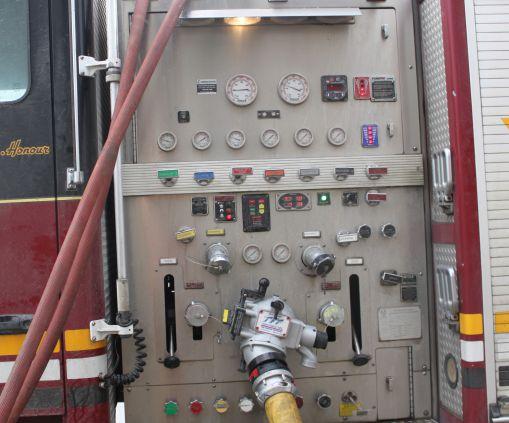
The pump panel (see photo 1) of a fire truck can look confusing to those who are not familiar with it, but with lots of practice and hands-on training, firefighters will learn that it is simple to operate. No matter what type of fire truck you are using, the principles of operating a pump are the same even if the layout of gauges, buttons and levers is different.
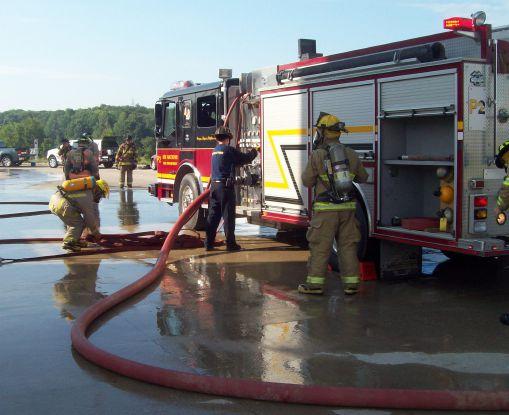
The pump operator (see photo 2) sends water to the pump from the onboard water tank by opening the tank-to-pump valve located on the panel. Once water has entered into the pump, the corresponding valve for the hand line is opened when requested by the nozzle person.
Once the hose has been flaked out and is ready to be charged, the nozzle person informs the pump operator by radio, yelling or using hand gestures to indicate that it is time to send the water. A commonly used gesture is one hand raised in the air with the index finger pointing up and the whole hand moving in a circular fashion.
Once the hand line is charged, the pump operator increases the pump pressure in the hand line as required for interior fire-suppression activities. The pump operator dictates pump pressure by hydraulic calculations done on the spot. These numbers are usually pre-determined based on the preconnected hand lines. For example, a 60-metre (200-foot) 1 3/4-inch hand line with an automatic combination nozzle might use a pump pressure set between 900 and 1,000 kilopascals (130 to 140 pounds per square inch).
Once there is water flowing with adequate pump pressure, the pump operator sets up the water supply so that the water can continue to flow when the water in the tank starts to run low.
Depending on the type of water supply being used – hydrant or draft operation – the pump operator will either be able to accomplish the next steps himself or will need help from another firefighter to complete the task.
If a hydrant supply is being used, the pump operator can complete the water set up to the fire truck pump intake by grabbing the large-diameter hose off the back of the truck and connecting it into the

intake valve. If the hydrant was properly secured, then this is the only step necessary for the pump operator to complete the water set up.
Once connected to the pump intake, the operator then signals to the hydrant person to send water.
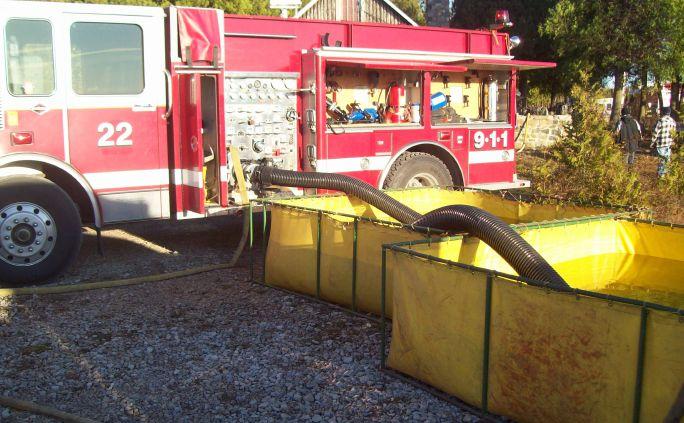
If a portable water tank and rural water operations are being used (see photo 3), firefighters must pull the water tank off the truck (whether it is on the same truck or on a different truck) and open it up beside the pump panel. The ideal area is flat ground with a tarp spread out.
The hard suction hose is then connected from the intake of the pump going into the water tank, with a suction device of some sort attached to the other end. For a water tank set up, this device is usually a flat, pancake-style, but a floating style can also be used. Once the water tank is set up with the hard suction hose in place, water can be dumped into it from the tenders on site.
At this point, the hand lines are charged and flowing water, the water supply is established, and the pump operator is now keeping an eye on the operation of the pump to make sure nothing goes awry.
Mark van der Feyst has been in the fire service since 1999 and is a full-time firefighter in Ontario. Mark teaches in Canada, the United States and India. He is a local-level suppression instructor for the Pennsylvania State Fire Academy and an Instructor for the Justice Institute of BC. He is also the lead author of Pennwell’s Residential Fire Rescue book. Mark@FireStarTraining.com

BY BILL BOYES Deputy chief, Barrie, Ont.
efining the steps necessary to get a chief’s position is more of an art than an exact science and depends greatly on your background, fire-service tenure and ultimate career goals. There are various chief-officer portfolios to consider (administrative-focused, operations-focused or staff division-focused) along with the numerous career paths that can be taken. This column is but one piece of advice for those who want to climb the fire-service career ladder.
While there have been significant changes in the area of career development within the Canadian fire service since I began my journey about 10 years ago, a part of the framework that I used is still relevant, especially given the transition to the NFPA standards in Ontario and across Canada. The United States Fire Administration’s national professional development model (NPDM) is an excellent tool that can be tailored to fit your career goals, tenure and background. The NPDM couples incremental building of formal education with fire service-specific training/education using NFPA 1021: Standard for Fire Officer Professional Qualifications. It is important to recognize that NFPA 1021 is not a substitute for formal education, rather it should be thought of as a supplement. Credentials held by many of our United States counterparts are evidence of how this model has helped professionalize the fire service.
Many disagree on the type of formal education into which aspiring chief officers should invest their finite time and resources. There is an overwhelming array of post-secondary programs available and firefighters have only so much time to dedicate toward their career ambitions.
Understand that there is no prescribed and definitive career path, but a degree in the social sciences is certainly a safe choice. Public administration, business, economics or political science are safe choices that enable you to employ your previous fire-service experience and knowledge in an academic context. This knowledge can then be transferred back into your fire-service career.
non-prescriptive career path exposes aspiring chief officers to a range of disciplines and it allows those currently in the fire service to take advantage of their past educational experiences. It is easy to see how chief officers can benefit from exposure to political science, business, public administration, leadership, psychology, human-resources management, statistics, research methods, and so on. I could list almost all of the 60 university courses I have taken and explain how certain aspects, at some time or another, are useful to a chief officer.
Too often I hear firefighters argue that what they learn in academic settings is not applicable to the real world and in particular, the fire service. In my opinion, that is a very naive and myopic way of thinking. Yes, some topics are not easily transferred to a fire-service setting; however, the critical thinking employed to understand academic topics and the ability to devise an answer or a report are extremely valuable skills when moving into primarily administrative roles.
I found the best way to add value to my post-secondary courses was to tailor my research papers and assignments (when possible) to problems or concerns in the fire service. My master’s and undergraduate theses were tremendous learning opportunities – I completed
Understand that there is no prescribed and definitive career path, but a degree in the social sciences is certainly a safe choice. ‘‘ ’’
The lack of a defined career path to a chief officer’s position is by no means detrimental to the fire service. My approach to post-secondary education was to diversify as much as possible in order to garner a range of knowledge and skills across disciplines. I completed a bachelor of commerce undergraduate degree and then a master’s degree in public policy and administration. Now I am working on a PhD in human resources management.
While there are advantages and disadvantages to every approach, a
Bill Boyes is the deputy chief for Barrie Fire and Emergency Services in Ontario. Contact him at Bill.Boyes@barrie.ca
large-scale research projects (100-page, or more, reports) that examined topics such as chief officer-leadership development and fire-based EMS. Yearly term papers presented additional opportunities to look at other important and relevant fire-service issues. Within my PhD program, I try to balance the academic requirements of PhD coursework and eventually the dissertation with fire-service research in areas that may benefit our industry in some way. This strategy allows me to build an academic skill set, deepen my understanding of relevant fire-service issues and learn transferable skills that I can apply to my current and future positions.
In coming columns, I will discuss the challenges and unexpected situations that I have faced as a newly promoted chief officer, and alternative career-development opportunities outside of formal postsecondary education.
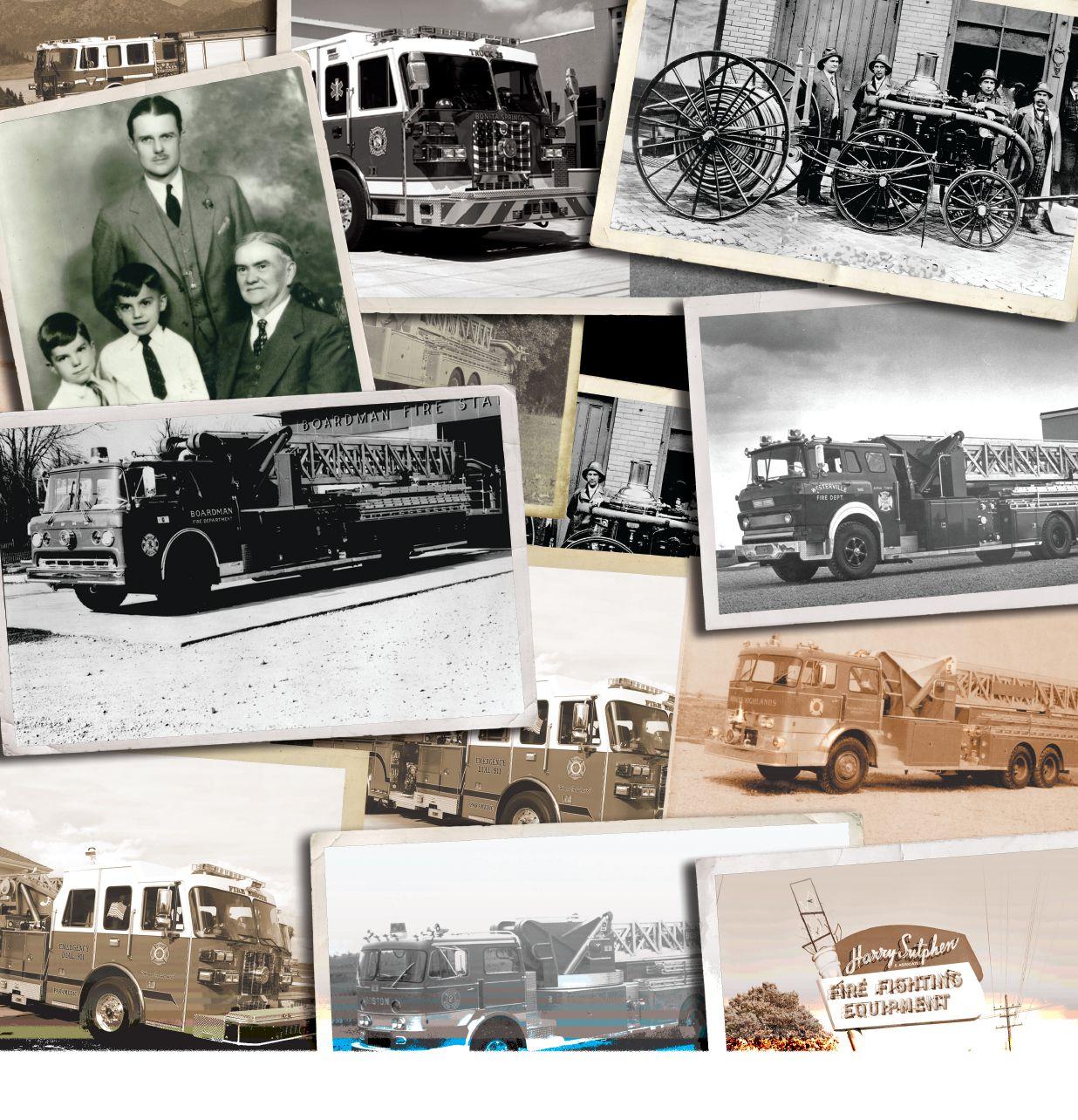















Experience and Focus are what set Sutphen apart from the competition. 125 years of experience go into each apparatus that we build, and our Company focus is to build the safest and most effective product available. In those 125 years, technology has evolved and improvements have been made, but the Sutphen philosophy remains unchanged. Quality, craftsmanship, and family values have been our passion for over a century. It is what we do, and nobody can do it better. Come, see, believe… Experience Sutphen and join us in 2015 as we celebrate 125 years of continuous family ownership!
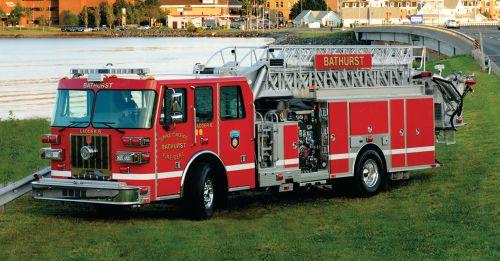
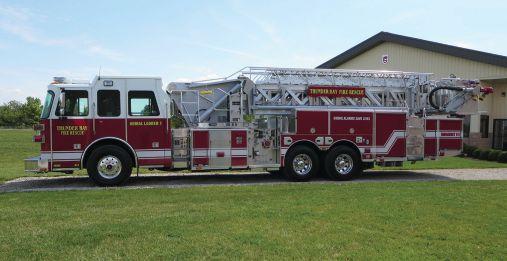
For more information on Sutphen products, or to find your local dealer, please visit www.FGFT.com. Or www.Sutphen.com
You can also reach our sales office at 800-726-7030 or by email at Sutphen@sutphencorp.com

BY DAVE BALDING Fire chief Golden, B.C.
he National Fire Protection Association (NFPA) reports that responding to and retuning from emergency incidents in fire trucks continues to be a significant cause of firefighter deaths and injuries: this may be the most easily preventable cause of harm to our members. There are many steps we can take before turning a wheel to help ensure everyone goes to incidents and comes home safely in our rigs; as chief officers, it’s our responsibility to ensure they do. Training drivers is critical. Compared to passenger vehicles, fire-service vehicles have higher centres of gravity, greater stopping distances, larger turning radii and myriad controls. For a novice apparatus driver, a rig is a huge step from a compact car, so driving training programs need to be progressive; start training on the smallest truck you have.
Going over the department’s operating guidelines and policies about driving fire trucks is a great place to start. Guidelines should also reviewed periodically by all apparatus drivers. Before moving the apparatus, ensure the new driver is familiar with the location and operation of every control on the truck. Some devices, such as emergency lights and siren, might be best operated by the passenger. If your department conducts its own driver training, NFPA 1002 is a great resource for training and assessing drivers.
Many departments require applicants or new operators to furnish a driver’s record or abstract. I recommend doing this annually to ensure only those with safe driving habits operate the trucks.
Gone are the days when apparatus maintenance could be carried out by a mechanically inclined firefighter; today’s trucks are highly complex vehicles that require skilled technicians to keep them performing reliably and safely. Keep up with both preventative and corrective maintenance and maintain accurate records of all work done. Provincial regulations require regular inspections. I look for a facility that will dig deep to find any potential problems with our trucks. Why? Because I want the vehicles that our members ride in to be as safe as possible. In keeping with provincial requirements, our department conducts post-trip inspections every time the truck returns to the hall and pre-trip inspections before every non-emergency run.
so a truck that is marginally overweight on delivery will be even more so later. Have your trucks weighed, either at a commercial scale or by inviting government vehicle inspectors to your hall with portable scales. If there is no way to redistribute or reduce loading on your rigs, put the applicable overweight permits in place. Vehicles converted for fire-department use are also a concern; these are typically tenders that may have transported fuel or milk in previous lives. While cost effective, these trucks can be top heavy without adequate baffling, or there may be other safety considerations associated with them.
There have been tremendous improvements in apparatus emergency lighting. LED lights are not only highly visible, but also draw a fraction of the electrical power of their predecessors. Upgrade or add lighting to an older truck to make it more visible.
Many mishaps occur when reversing fire trucks – try to avoid doing so. When you must back up, use a spotter. An extra set of eyes can save embarrassment and possibly even a life. Ensure the spotter can see the operator in the mirror, otherwise the driver can’t see the spotter. Create standard hand signals to be used by all members.
NFPA 1901 advises against wearing helmets while travelling in
Going over the department’s operating guidelines and policies about driving fire trucks is a great place to start. ‘‘ ’’
fire trucks as they interfere with the protection provided by headrests. Helmets and any other equipment in the cab of the truck must be stowed so as not to become a projectile in the event of a collision.
Most of us live in areas with snowy conditions at least a few weeks every year. If you’re lucky enough to have a first- and second-line engine, it is a good practice to have chains installed on one of the two.
When it comes to design and construction, I don’t believe in building new fire trucks that are delivered overweight. Some trucks carry additional equipment and, therefore, extra weight, over their lifespans,
Dave Balding joined the fire service in 1985 and is now fire chief in Golden, B.C. Contact Dave at dave.balding@golden.ca and follow him on Twitter at @FireChiefDaveB
Sadly, firefighters have been injured, or worse, responding to fire halls in their private vehicles. At emergency scenes our actions are driven by our training, not by adrenaline. The same needs to happen when getting there and going home.
Before and after the response, diligence in driver training, trip inspections, vehicle maintenance, certifications, and ensuring sound practices are followed in your department all go along way to ensure everyone gets to and comes home from every incident safely.


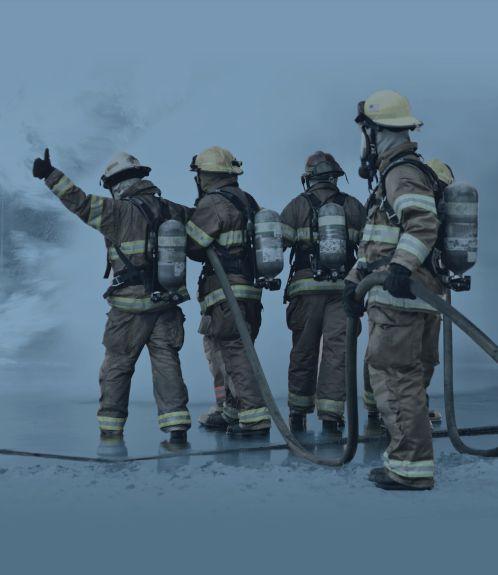
For your cleaning, decontamination, inspection, testing, repair and record keeping of your firefighter’s protective clothing... we have you covered!
24/7 access to FIRETRACK®, the online data base that provides you with complete details of your C&M Program with FSM. We do the work for you!
ETL Verified ISO 9001 Registered Fast turnaround
Complete Bunker Gear Rental Program – Toronto Location

Ontario (Toronto) 1-888-731-7377

Toronto-based Safety IQ has introduced the Saver emergency breath system, a personal fire-evacuation device that helps reduce smoke inhalation. The Saver system uses a triple filter technology that filters smoke and toxic chemical substances, including carbon monoxide, to allow a person to breathe clean air for up to five minutes. The small device is easy to store and takes just five seconds to activate. Learn more at www.mysafetyiq.com
Rescue 42 introduced its new PodRunner storage and transportation line at FDIC in Indianapolis in April. The PodRunner system allows emergency response personnel to quickly and easily deliver and store heavy or bulky equipment. The unit consists of a narrow pod securely attached to a scissor-lift chassis with all-terrain tires that mount on standard two-inch trailer hitches. The new line includes the Cargo-Pod, Workstation Pod, and Hydrant-Pod. Custom configurations are available. Find out more at www.rescue42.com
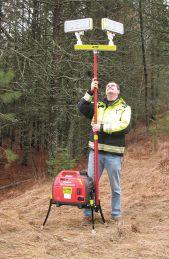
Ventry Solutions has introduced a portable, two-headed LED scene light system that can improve scene safety by rapidly lighting an entire area. Available on an extra-tall telescoping pole, the Lentry lights are powered by a fuel-efficient generator that is capable of providing eight to 10 hours of light per tank. The two-headed lights provide 56,000 lumens for exceptional brightness, and use just 660 watts. Each light head pivots 180-degrees forward and back. Go to www.ventry.com to learn more.
Western Canada (Calgary) 1-403-279-5095
Mid-West USA (Detroit, MI) 1-866-877-6688
Canada’s railways are behind a new invitation-only app that gives first responders realtime information about the contents of rail cars involved in an emergency. The AskRail app was developed by the Association of American Railroads and its members, including CN and CP, and allows users to quickly search the rail car’s ID to determine its contents and view company contact information. The app is available in Canada in English and a French-language version is expected later this year. Learn more and request the app at www.askrail.us.




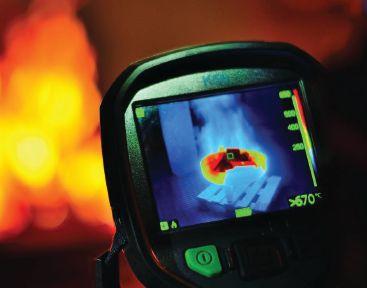
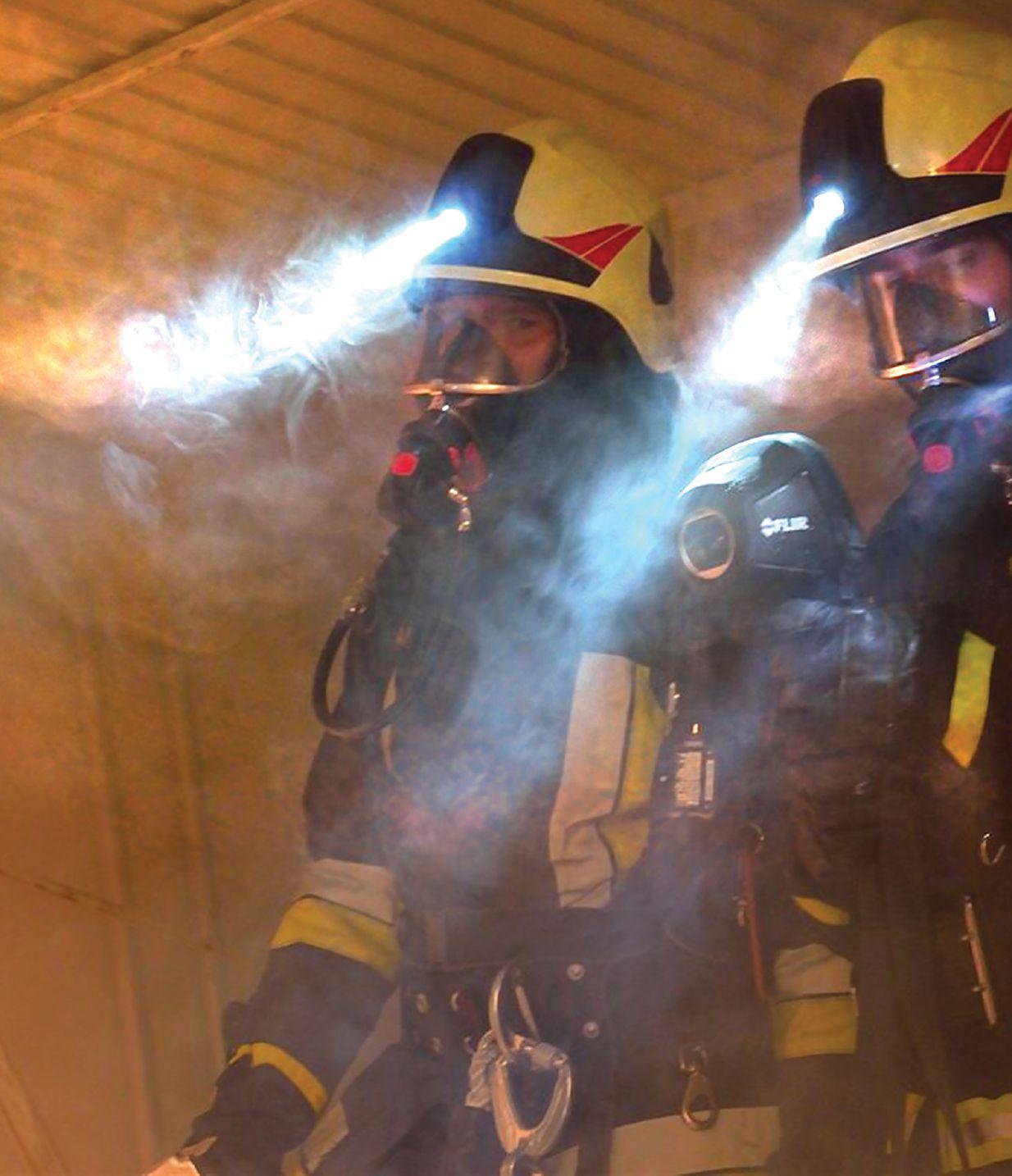





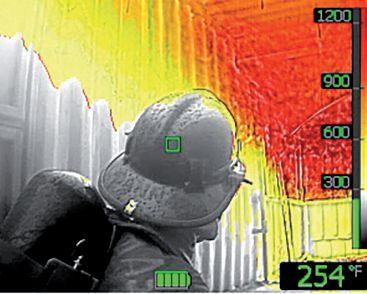
By CHRIS DENNIS
Firefighters are a mechanic’s first line of preventative maintenance in the field. Firefighters driving each day have the responsibility to not only get on scene safely and do what they were trained to do, but to also keep a constant vigil on the rig. Report anything that does not feel, look, smell or sound right. If you are unsure about something, ask other firefighters for their opinions.
There is a certain part of that rig that goes unnoticed during regular maintenance: the wheel-end bearings.
Photo 1 is an example of a tapered bearing assembly and wheel seal. They are mounted and then rotate on a spindle or axis. Front and rear axles as well as tag and pusher axles all have some kind of bearing that rotates around a fixed axis. Tag and pusher axles are additional axles in front of or behind the set of drive axles, depending on the truck design.
Fire departments across Canada, whether they have a dedicated apparatus-repair division or not, at times neglect to check wheel-end bearings (wheel bearings); usually it is because they rarely fail. But, as with wheels falling off vehicles many years ago, maintenance programs and inspection guidelines change to correct problems.
We now know that tires can fall off due to incorrect tightening sequences, incorrect torques or a lack of retorques (this should be done after a wheel was removed and/or replaced and the vehicle has gone 100 kilometres). So take a few minutes now and make a note to have wheel-bearing inspection added to your maintenance-inspection sheet. A note can also be added to the firefighter truck check sheet. Let me explain.
Wheel bearings on most class-8 rigs have wet wheel-end bearings. This means the style of bearing is lubricated and kept cool continuously while swimming in oil. In years gone by, and in some cases still today, some manufacturers packed wheel bearings with grease. Check with the original equipment manufacturer (OEM) to see if the wheel bearings are wet or packed.
Unlike wheel nuts, it is difficult to detect early wheel-bearing failure. You can put your hands and fingers on a wheel nut and feel it is loose. Wheel-nut indicators mounted on the nut are an easy way to determine if there is damage or if it is coming loose. We even have low tire-pressure monitors built into the rim and tire assembly, and on the end of the tire valve stem. Knowing when a wheel bearing is damaged is not so easy.
Let’s get our bearings.
Unlike a wheel nut, you can’t see a bearing. Photo 2 shows a steer axle end bearing hubcap, also known as a hub oiler or wheel-end cap. Photo 3 is of a drive axle. Behind the round cap with all the small bolts is the axle end or drive axle (not the drive shaft). Inside the drive axle is the wheel-end bearing. In photo 4,
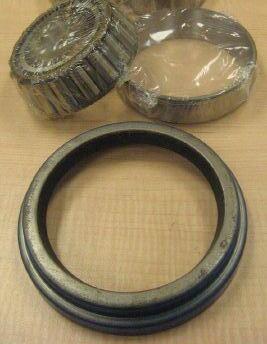
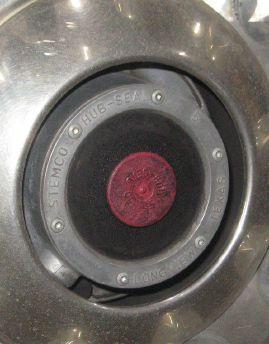
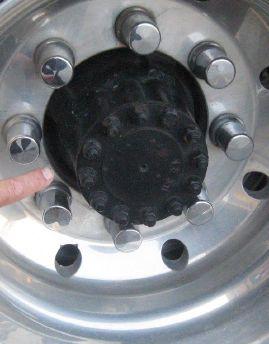
A tapered bearing assembly and wheel seal is mounted to rotate on a spindle or axis.
A steer axle end bearing hubcap, also known as a hub oiler or wheel-end cap, has a see-through window and a coloured cap.
Behind the round cap with all the small bolts is the axle end or drive axle (not the drive shaft), and inside the drive axle is the wheel-end bearing.


a chrome cover over the wheel assembly needs to be removed to expose the hub oiler cap.
There are a number of ways to check if the bearing is in OK shape. The first method can be done at the fire station by a firefighter. The easiest bearing to check is the steer axle, tags or pusher axles. We will assume there are no fancy chrome wheel coverings to deal with during these inspections. Chrome hubcaps should be removed by qualified professionals so that there is no personal injury or property damage.
The front hub oiler, as in photo 2, has a see-through front window, usually with a coloured plug stuck into the middle of it. The window should have a line showing if the oil level is low or full (see photo 5). If the level is low, it usually means something may be going wrong in the wheel end.
If the oil level is low on a brand-new truck that has never had its tires removed, I recommend a further inspection by a certified emergency vehicle technician.
The tire is installed on the rim or wheel, and is bolted to a hub end that may have the wheel nuts on it if it is equipped with drum front brakes. If the disc brakes are on the steer axle then the wheel is bolted to the brake rotors with wheel nuts. The rotors are attached to hubs that are mounted on spindles or solid axis and secured by wheel-end bearings. If the oil level is low, you know something is wrong.
Now look on the back side of the tire and wheel assembly. If the back of the tire is covered in oil or a puddle has formed on the floor, take the truck out of service. The back side of the bearing hub that holds the oil is leaking, and a broken seal cannot be ignored; it’s like driving your car without engine oil. A car will only go so far without its internal functions well lubricated and cool. The heat becomes so intense between the moving parts (friction) that the bearings will seize and the engine will stop running. As we say in the mechanical world, a leg will jump out of bed.
The wheel bearing is the same. No lubricant means more friction and more heat, and then catastrophic failure. In this case the leg out of bed is the wheel and tire assembly coming off the spindle end.
Another warning sign is if you can hardly see the full- and low-level lines because the oil is so black (see photo 2). The coloured plug in the middle of the window has two functions: to fill the oil level up and to allow heated gases to escape. Remove this plug gently and look inside the hole to gauge the oil level. If the level is OK, forward a note to the next in command of fleet maintenance to explain that an oil and possible bearing service may be required. Use the oil that the OEM recommends or one similar to it.
If the oil appears overfull, the hub oiler may have been topped up by another crew or excessive moisture may have built up with heat and condensation and mixed with the oil. The coloured cap has a microscopic pin hole in it that allows just vapours to escape. If the hole is plugged up or freezes, the super-heated oil gases will have nowhere to go; they will leak out of the cap plug or the window to the housing mount, or worse, blow out a wheel seal.
Another way to perform preventative wheel-bearing maintenance is possible when the tires come off for replacement or
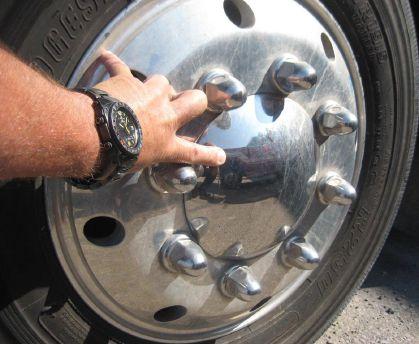
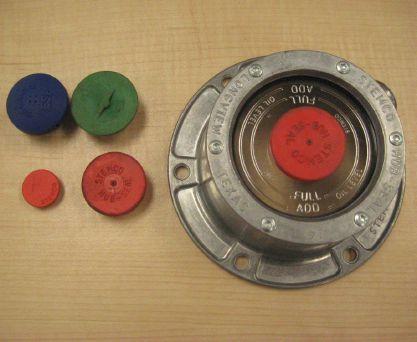
repair. Tire technicians may be able to advise you of problems when they remove the wheels. Excessive play in a bearing is only noticeable when the load is off (the truck is jacked up).
Ask the tire tech to let you know if he or she sees any signs of oil leak traces on the tires or feels any excessive wheel-end play. The rear drives have axle shafts in place of hub oilers, but wheel seals are also found on the inside of the rear drive axle hubs. A firefighter can check for leaks in the wheel seals by visually examining under the chassis. If you are unsure ask a buddy for another opinion. The rear axles are also vented to let heated gases out. These vents are a little more complicated so it’s a good idea to leave this part to a certified licensed mechanic.
Share your story with others if you have ever experienced wheel-bearing failure. Personal experiences – as with talking about a bad fire or how you helped save a cardiac patient – go a long way to helping others learn. My own story is quick.
As a mechanic for more than 35 years now, I have seen a few things – some funny some very sad. Have you ever been driving and heard what sounds like the drone from an airplane engine? You may even have felt the vibration in your hands on the steering wheel. If you have, as I have, it could have been a wheel bearing failing. Get it looked as soon as possible no matter what.
Big rigs or fire trucks won’t have warning sounds; there is just too much weight, too much road noise and too many other distractions. The best practice is visual inspections, so be sure your maintenance program includes wheel bearings.
Never lose your bearings when on the road and remember, my friends, rubber side down.
Chris Dennis is the chief mechanical officer for Vaughan Fire & Rescue Service in Ontario. He can be reached at Chris.Dennis@vaughan.ca

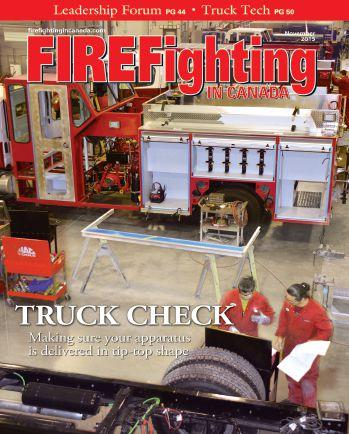

BY LYLE QUAN
While instructing a fire officer program at the Ontario Fire College, I noticed a shift occurring in the field of leadership. This shift is a change in mentality from leading to survive (in some cases) to a true interest in being more proactive and looking to the future. I find this not only reassuring – confirming that our industry is in good hands – but also exciting. The focus is changing to look at the big picture – how departments can work together and with other organizations to make all services offered to their communities better than ever.
Two books I’m recommending provide innovative concepts of leadership, whether you are the head of a large multi-billion dollar corporation, or a fire officer with a career or volunteer department. One thing is for sure – it’s what you do in a leadership position that matters. These books will give you some solid concepts and processes to embrace and apply.
The first book, The Strategist by Cynthia A. Montgomery, will make you think about how leadership and strategic thinking are inseparable. The author writes, “What’s been forgotten is that strategy is not a destination or a solution. It’s not a problem to be solved and settled. It’s a journey. It needs continuous, not intermittent, leadership. It needs a strategist.” This quote sums up what we all talk about: learning as a lifelong journey. Shouldn’t leadership be the same – a lifelong journey?
The book takes readers through some exercises to find out if they are strategists and to find out their types of leadership. The key is to begin with a purpose. Understand what your goals are and what the organization needs; make that your purpose. Then turn your purpose into reality. All the planning and talking in the world won’t get you there if you don’t have a solid strategy. Over the years, I have seen and heard of many programs that failed because the leaders were either unable to keep the goals of the organizations vibrant and in the forefront for all to embrace, or failed to have personal investments in the initiatives. Montgomery’s book ends with a chapter on the “essential strategist”. This chapter lists the key qualities that a strategist should have, such as being a fire starter. As a leader you need to ignite the fire of excitement in your team. Learn how to stay agile so you can adjust if or
when it is required. And most of all get your team on board.
As a final note in the book, the author explains that the choice is all yours. Will you be a strategist and lead with a focus on the future? What type of leader will you be? The Strategist is a great book that I found easy yet exciting to read. I highly recommend this book.
The second book What Matters Now by Gary Hamel complements what Montgomery writes in The Strategist. Both books grabbed my attention right from the first chapter. Hamel writes, “If you are a leader at any level in any organization, you are a steward of careers, capabilities, resources, the environment, and organizational values.” Chief officers are all of these and maybe even more. The key message here is that you own and wear the organization, whether you want to or not.
Hamel takes the reader through several chapters relating to innovation. He suggests leaders learn how to adapt and be adaptable. Have a passion for what you do, he writes, and demonstrate that passion to your staff. And finally, demonstrate your ideology by supporting the organization’s goals and your team/staffs goals. Allow staff to take the lead when they can. Turn the organization structure upside down like an inverted pyramid so the leader supports the team.
Turn the organization structure upside down like an inverted pyramid so the leader supports the team. ‘‘ ’’
Lyle Quan is the retired fire chief of Waterloo Fire Rescue in Ontario. He has a business degree in emergency services and a degree in adult education. Lyle also works with fire services throughout North America to assess and develop service improvements and master planning. Email him at lpqsolutions@bell.net and follow Lyle on Twitter at @LyleQuan
A question the author asks his readers caught my attention and should catch yours also: “What are the fundamental, make or break issues that will determine whether your organization thrives or dives in the years ahead?” Does this relate to the fire service? You bet it does. The fire service is under great pressure these days to be as cost effective as possible, and in some communities that means reducing staff levels. If you as a chief officer and leader are unable to look into the future by working with what you know today and what you think may be coming down the pipe tomorrow, then you will be one of those organizations that dives instead thrives in the challenging years ahead.
The Strategist by Cynthia A. Montgomery, published in 2012 by Harper Collins, and What Matters Now by Gary Hamel published in 2012 by Jossey-Bass, can both be purchased through firehallbookstore.com
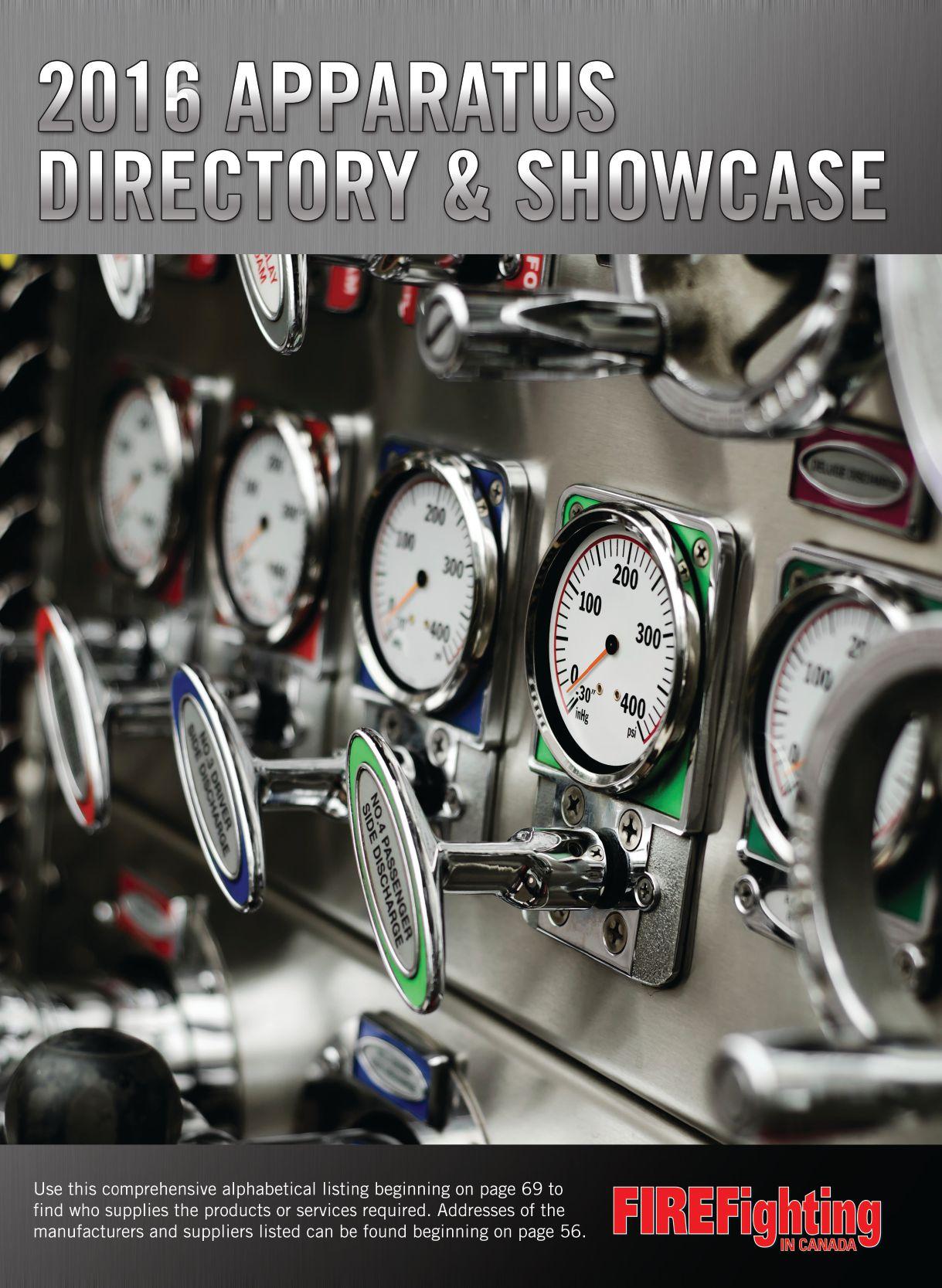
1200° EQUIPMENT AN EVOLUTION OF BOIVIN & GAUVIN INC.
1416 Père Chaumonot, l’Ancienne-Lorette, QC G2E 1P9
Tel: 418-872-6552
Fax: 418-872-5499
Toll Free: 1-800-463-1590
email: info@1200-degres.com
website: www.1200-degres.com
M. Jean-Francois Picard
We’re here for the heroes who protect us.By the excellent quality of our products and the specialized expertise of our employees, we ensure protection and optimum performance for all fire emergency responders.Concerned about the quality of its products and service, 1200° group formed by companies Techno Feu Inc. and Boivin & Gauvin Inc., is the best distributor of equipment and fire engines in Quebec and Eastern Canada. Over the years we have gained invaluable expertise.
A.J. STONE COMPANY LTD.
62 Bradwick Dr., Vaughan, ON L4K 1K8
Tel: 416-785-3752
Fax: 416-781-2827
Toll Free: 1-800-205-3473
email: firesafety@ajstone.com website: www.ajstone.com
Joyce, Dan, Robin, Jared
A.J. Stone Co. Ltd. has proudly served the needs of the Fire/Rescue and First Responder Services of Canada since 1972, featuring quality products, knowledgeable sales reps, and training support. A.J. Stone supplies equipment from MSA, TNT Rescue, Paratech Rescue, Akron, Kochek, Argo Vehicles, FireAde 2000, Streamlight, Innotex Bunker Gear, ProTech Gloves, E.S. Safety Systems, CET, Fort Garry Fire Trucks, and much more. We service what we sell!
251 Queen St. S., Ste. 512, Mississauga, ON L5M 1L7
Tel: 905-826-6682
Fax: 866-511-6904
Toll Free: 1-866-735-1480
email: info@airmation.ca
website: www.airmation.ca
Randall Weber, VP Marketing & Sales, Canada Air Technology Solutions is dedicated to our Clients, offering updated, timely, full service Indoor Air Quality (IAQ) solutions. Air quality concerns are mitigated using a unique combination of professional indoor air quality assessment coupled with solutions. Off the shelf or customized site specific air cleaning equipment is available to resolve IAQ issues. Our technical experts review client requirements and budgetary availability. The finest appropriate air cleaning systems are provided. Air Technology Solutions is a leader in Diesel Exhaust Remediation. Building and facility managers, business owners, contractors, architects, and engineers have been working with Air Technology Solutions since 1986 to resolve IAQ needs. Employee and personnel safety and health are key issues. Breathing safe air in the workplace is of utmost importance.We provide global customized solutions to control contaminants, pollutants and odours in your facility. We look forward to servicing your requirements.
AIR VACUUM CORPORATION
PO Box 517, Dover, NH 03821
Tel: 603-743-4332
Fax: 603-743-3111
Toll Free: 1-800-540-7264
email: sales@airvacuumcorporation.com website: www.airvac911.com
Thomas Vitko, Regional Sales Manager, John Koris The AIRVAC 911® exhaust removal system is a hosefree, fully automatic filtration system that addresses both the gasses and particulate emitted from diesel engines. The AIRVAC 911® system is100% effective for a clean and safe environment. For a free quote visit www.airvac911.com or call 1-800-540-7264.
AKRON BRASS COMPANY
343 Venture Blvd., Wooster, OH 44691
Tel: 330-264-5678
Fax: 330-264-2944
email: srobertson@akronbrass.com
website: www.akronbrass.com
Steve Robertson
Akron Brass Company is a leading global manufacturer of high performance firefighting products engineered and tested for superior fire suppression and emergency response. Products include nozzles, monitors, valves, scene and vehicle lighting, vehicle electronics, reels, hand tools, engineered solutions, and other firefighting equipment.
Head Office: 5205 J.A. Bombardier
Longueuil, QC J3Z 1G4
Tel: 450-651-2240
Fax: 450-651-1970
email: info@areo-fire.com
website: www.areo-fire.com
Dominic Miller (Technical support for fire trucks and sales of Rosenbauer trucks & Daniel Renaud (Sales Director)
Where Equipment Matches Courage
Committed to meeting our customers’ needs, we are proud to offer a wide range of top-of-the-line tools, clothing and accessories for fire fighting and emergency interventions and fire trucks. For almost 50 years, we have continued to add new, high-quality products so that you can find everything you require under one roof.
New online purchasing website at www.aero-fire.com
Major product lines: MSA, HURST, CET Fire Pump, Kochek, Red Head, AWG, Protek, Elkhart, NAFH, Leader Group, Maxxera, RES-Q-JACK, Streamlight, Ergodyne, Mustang, Moditech, FRC, FoamPro, Innotex, Koehler Bright Star, Hale, Waterous and Rosenbauer.
Repair services on: SCBA, extrication tools, gas detection, portable pump, pumper trucks, aerial ladder, etc.
Authorized parts and service center for: Hale, Waterous, Darley, Koehler.
Areo-Fire now has a Canadian distribution network which supplies products such as Cosmas fire boots, Acton fire boots, Protek Nozzles, Rabbit P-555 portable pump and Maxxera’s hose reel and unroller.
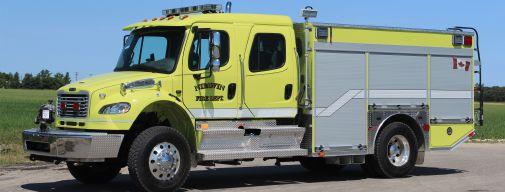
Build on a Freightliner M2-106 chassis and powered by a 350-hp Cummins ISL engine and an Allison EVS 3000 transmission, this unit features a 1,250-gpm Darley mump, a FoamPro 2002 foam system, a 1,200-gallon tank, TFT Tornado turret, FRC LED scene lights, Whelen LED warning package, Whelen lights system, Zone Defense camera, Tundra HD2500 inverter, TFT ABS1 PIR valve, KZCO valve controllers, and a frontbumper trash line.
DEPARTMENT: Nipawin Fire Department, Saskatchewan
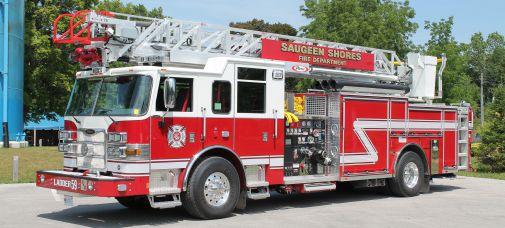
Built on an Arrow XT chassis and powered by a 500-hp Detroit DD13 engine and an Allison 4000 EVS transmission, the unit is equipped with a 2,000-gpm Waterous CSU pump, a Pierce Husky 3 foam system, a 500-gallon poly water tank and 75-foot HAL HD ladder.
DEPARTMENT: Saugeen Shores Fire Department, Ontario
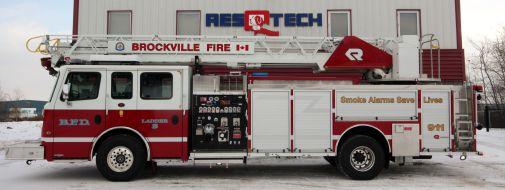
Built on a flat-roof Commander 3000 chassis and powered by a 450-hp Cummins ISL engine and an Allison EVS 3000 transmission, this unit features a 1,500-gpm Waterous CXYC pump, a 400-gallon water tank, a FoamPro 2001 system, 20-gallon foam tank, Whelen lighting package, FRC TGA 300 governor, Akron electric monitor and back-up camera system.
DEPARTMENT: Brockville Fire Department, Ontario
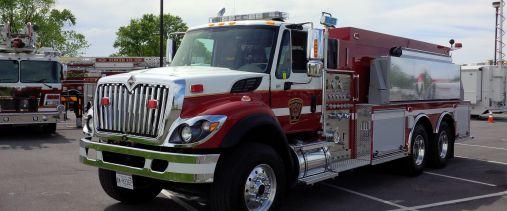
a
a
a
Built on Freightliner M2-112 chassis and powered by 450-hp Detroit DD13 engines and Allison 4000 EVS transmissions, these units feature 1,000-gpm Darley LSP pumps, 4,000-gallon poly water tanks, two side and one rear stainless steel Newton 10-inch square dump valves with 36-inch telescoping chutes, stainless steel Tip-Down portable tank carriers, and six Whelen scene lights.
DEPARTMENT: Lovelock Volunteer Fire Department, Nevada
PUMPER | CARRIER CENTRES EMERGENCY VEHICLES/E-ONE
Built on an E-One Typhoon chassis and powered by a 450-hp Cummins engine and an Allison transmission, this unit is equipped with a 6,000-lpm Waterous pump, 600-gallon water tank, stainless steel body, roll-out tool boards, power-operated aluminum hosebed covers, enclosed pump operator’s panel and enclosed transverse preconnects.
DEPARTMENT: Toronto Fire Services, Ontario
Built on an International 7400 chassis and powered by a 330-hp Maxxforce 9 engine and a 3500 Allison EVS transmission, this unit is equipped with a 5,000-lpm Rosenbauer NH55 pump, Rosenbauer Ez Foam and Fix Mix foam systems, 550-gallon water tank and 30-gallon foam tank, Firemans Friend swivel dump, Whelen lighting system, FRC LED scene lights, and full-width hosebed covers with coffin compartments, enclosed ladder and suction hose storage compartments.
DEPARTMENT: Fox Creek Fire Department, Alberta
and
a
10 Didak Dr., Arnprior, ON K7S 0C3
Tel: 613-623-3434
Fax: 613-622-4009
email: gcross@arnpriorfiretrucks.net
website: www.arnpriorfiretrucks.net
Graeme Cross
Although Arnprior Fire Trucks is a new name, we are the same team of Builders and Engineers that produced quality and pride into fire trucks built under two previous fire apparatus companies in the Ottawa Valley. AFT is 100% Canadian owned and operated based in a state-of-the-art manufacturing facility in Arnprior, Ontario.
PO Box 530, 105 Donly Drive S., Simcoe, ON N3Y 4N5
Tel: 519-429-3966
Fax: 1-866-810-8111
Toll Free: 1-888-599-2228 ext. 235 email: bcomer@annexweb.com
website: www.becomingafirefighter.com
Barb Comer, Acount Co-Ordinator
3044 Sawmill Rd., St. Jacobs, ON N0B 2N0
Tel: 519-664-3796
Fax: 519-664-3624
Toll Free: 1-844-GET-CMAX email: fireinfo@c-max.ca
website: www.c-max.ca
Kathy Brookes, Manager
Canadian family owned and operated business that offers a higher standard of service and sales for all your Fire Apparatus needs. C-Max Fire Solutions offers 24 Hour service from EVT Technicians with fully stocked service trucks. We offer Pump testing and repairs to all makes and models. We offer ground ladder testing as per NFPA 1932. We are also Ontario’s Factory Sales and Service Centre for KME Fire Apparatus.

2465 Cawthra Rd., Unit 114, Mississauga, ON L5A 3P2
Tel: 905-949-2741
Fax: 905-272-1866
Toll Free: 1-800-265-0182
email: info@cdnsafety.com website: www.cdnsafety.com
Ross Humphry, Nick Desmier, Scott Gamble, Chris Hamilton, Steve Shelton, Mark Kentfield, Mike
Robinson
We supply SCBA’s, Thermal Cameras, Auto Extrication, CAF Systems, Fall Protection, Bunker Gear, Fire Hose, Communications Equipment, Nozzles, Fittings, Hazmat Suits, Ventilation Fans, Gas Detectors, Confined Space Rescue Equipment, High Angle Rescue Equipment, Boots and Gloves. Everything for Fire Fighting and Confined Space Rescue.
75, rue Hector, C.P. 90, Pierreville, QC J0G 1J0
Tel: 450-568-2719
Fax: 450-568-2613
Toll Free: 1-888-844-2285
email: sales@fire-pump.com
website: www.fire-pump.com
Stephan Thibault DEMAND QUALITY!
Portable Pumps, Skid Units, CAFS, Foam Trailer, Glider Kit, Water Tank, Brush Truck and Fire Apparatus.A Century of Engineering for the Bravest!

5990 Vanden Abeele, St. Laurent, QC H4S 1R9
Tel: 514-737-2280
Fax: 514-737-2751
Toll Free: 1-866-737-2280
email: info@cseis.com
website: www.cseis.com
6 Edmondson Street, Brantford, ON N3R 7J3
Tel: 1-866-896-3588
Fax: 519-752-0370
Toll Free: 1-866-896-3588
email: toddfinnie@carriercenters.ca website: www.carriercenters.ca
Todd Finnie
Carrier Centers Fire and Emergency Group offers fire truck and emergency vehicle sales, service and parts…give us a call today…our committed team is ready to help you in any way that we can.If you are looking for a new pumper, tanker, rescue or aerial truck, Carrier Centers can help. Representing E-One and Metalfab, Carrier Centers offers the broadest product offering in the market. Carrier Centers can also assist you with used truck purchases for your department.The Service and Parts Team can help you with keeping your mission critical fleet on the road. We offer full service for your trucks including NFPA pump and ground ladder testing, pump overhauls, collision repair and truck refurbishment. We offer a full range of parts to keep your trucks in top working form. Carrier Centers Fire and Emergency Group partners with you to help keep your personnel safe while they keep your community safe.
Richard Abraham, Mike Heering, Brad Bowen
We supply SCBAs, Thermal Imaging Cameras, Auto Extrication Tools, CAF Systems foam, Bunker Gear, Fire Hose and accessories, nozzles, fall protection communications equipment, fittings, hazmat suits, ventilation fans, rescue saws, ice and water rescue gear, high angle rescue gear, boots, helmets and gloves.
CUTTERS EDGE
PO Box 846, 3855 23rd Street, Baker City, OR 97814
Tel: 541-524-9999
Fax: 541-524-9996
Toll Free: 1-800-433-3716
email: info@cuttersedge.com website: www.cuttersedge.com
Thomas Ruzich
Manufacturers of NEXT GENERATION
TECHNOLOGY including: MULTI-CUT® Fire Rescue Saws with BULLET® CHAIN, H Series Rotary Rescue Saws with Black Diamond Blade and optional BULLETBLADE® plus CE94 Concrete Cutting Chainsaw with Diamond Chain. Fully equipped Field Kits are available for all 3 models.
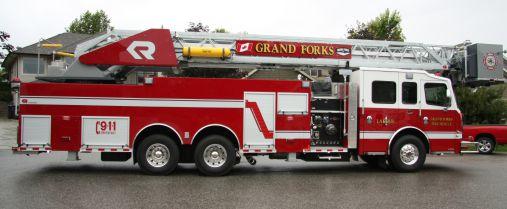
This 101-foot unit is built on a Rosenbauer Commander 4000 chassis and powered by a 500-hp Cummins ISX engine and an Allison 4000 EVS transmission. It is equipped with a 1,500-igpm Waterous pump, a FoamPro 2002 foam system, a 500-igallon water tank and 30-igallon foam tank, an 8-KW Onan hydraulic generator, electrolysis corrosion control, Federal Signal lighting system, and 360-degree LED ground lighting.
DEPARTMENT: Grand Forks Fire Rescue, British Columbia
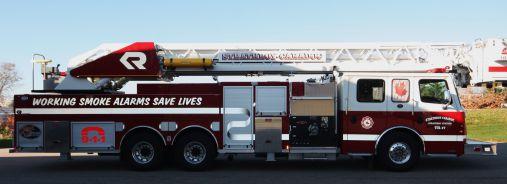
Built on a Commander 4000 chassis and Rosenbauer FX body and powered by a 500-hp Cummins ISX engine and an Allison EVS 4000 transmission, this unit features a 2,000-gpm Waterous CSUC20 pump, 500-gallon water tank, FoamPro 1600 system, 30-gallon foam tank, Greenstar idle reduction system, FRC TGA 300 governor, EZ load hosebed, wireless platform remote, Smart aerial screens, Akron 2000 GPM monitor, aerial command seat and joystick platform controls.
DEPARTMENT: Strathroy-Caradoc Fire Department, Ontario
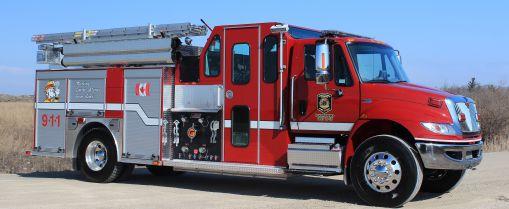
Built on an International 4400 chassis and powered by a Maxxforce 9 engine and an automatic transmission, this unit is equipped with a 1,250-gpm Waterous pump, a FoamPro 1600 system, an 800-igallon tank, Akron Apollo monitor, Federal Signal backup camera and FRC LED 900-Q65 scene lights.
DEPARTMENT: Temiskaming Shores Fire Department, Ontario
TANKER | DARCH FIRE/PIERCE MANUFACTURING PUMPER | ROCKY MOUNTAIN PHOENIX/ROSENBAUER
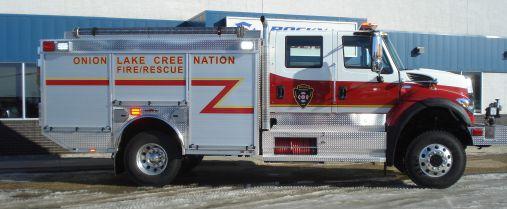
Built on an International 7400 chassis and powered by a 330-hp Maxxforce 9 engine and an Allison 4000 EVS transmission, this unit is equipped with a 5,000-lpm Rosenbauer NH55 pump, Rosenbauer EZ foam and Fix Mix foam systems, a 750-gallon water tank and 30-gallon foam tank with Firemans Friend direct fill, a TFT Tornado bumper turret, and a Whelen light system with Whelen 900 LED scene lights.
DEPARTMENT: Onion Lake Cree Nation Fire Rescue, Saskatchewan
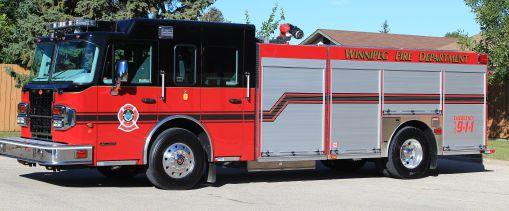
This unit is built on a Spartan MetroStar chassis and powered by a 380-hp Cummins ISL9 engine and an Allison 3000 EVS transmission. It features a 1,750-gpm Hale QMax pump, a FoamPro 2002 foam system, a 600-igallon copoly water tank, heated fresh-air intake, APS protection system airbags, 12-V LED command light, Akron Stream Master III monitor, internal ladder storage, and removable trays.
DEPARTMENT: Winnipeg Fire Paramedic Service, Manitoba
DEPARTMENT: Imperial Oil Sarnia Refinery, Ontario PLATFORM | RESQTECH/ROSENBAUER
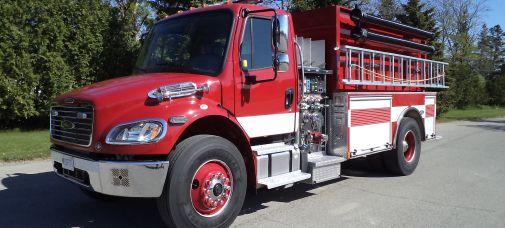
Built on a Freightliner M2-106 chassis and powered by a 360-hp Cummins engine and an Allison 3000 EVS transmission, this unit is equipped with a 1,000-gpm Hale MBP-100 PTO pump, and a 2,100-gallon poly water tank.
DEPARTMENT: Quinte West Fire and Emergency Services, Ontario
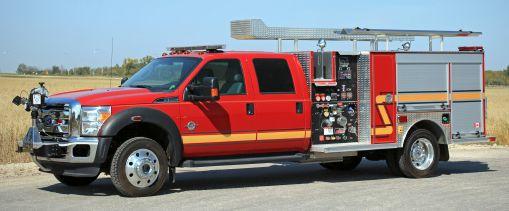
Built on a Ford chassis and powered by a 300-hp Ford engine and torqueshift transmission, this unit is equipped with a Darley HM350 pump, FoamPro 1600 foam system, a 300-igallon copoly water tank and 15-igallon integral foam cell, a front bumper turret, and pump-and-roll capability.
DEPARTMENT: Pine Creek First Nation Volunteer Fire Department, Manitoba
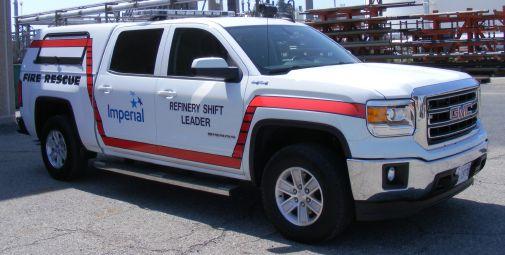
Built on a GMC pickup, this command unit features rear cap, full warning light system and a rear roll-out tray.
9-402 Harmony Rd., Ayr, ON N0B 1E0
Tel: 519-622-6110
Fax: 519-622-7705
Toll Free: 1-800-254-2049
email: sales@darchfire.com
website: www.darchfire.com
John Darch
Susan Miller and John Darch own and have operated Darch Fire Inc. since 1993. Darch Fire Inc. partners with leading industry manufacturers including Pierce Manufacturing, Holmatro, Draeger, Elkhart, Geargrid, Key Fire Hose, Blowhard Fans, Southcombe Gloves as well as many, many more to provide you the best products available. The parts department at Darch has all the everyday and hard to find parts needed to keep your emergency vehicles in top form. Darch Fire’s professional mobile fleet service team are fully licensed and EVT certified technicians and are ready to respond to all your fire truck maintenance and service needs including pump testing and scheduled fleet service.
PO Box 530, 105 Donly Dr. S., Simcoe, ON N3Y 4N5
Tel: 519-429-5178
Fax: 888-404-1129
Toll Free: 1-888-599-2228 ext. 252
email: fire@annexweb.com website: www.firefightingincanada.com
Publisher, Martin McAnulty
Advertising Manager, Adam Szpakowski Editor, Laura King
34 Torlake Cres., Toronto, ON M8Z 1B3
Tel: 416-251-3552
Fax: 416-253-0437
Toll Free: 1-888-731-7377
email: tanja@fireservicemanagement.com
website: www.fireservicemanagement.com
Peter Hill, Tanja Wleklinski
Canada’s Premier facility dedicated exclusively to providing the best in bunker gear cleaning, assessing, decontamination and repair. NFPA 1851:2014 compliant, ISO 9001: 2008 registered, ETL verified for all fabric repairs and all moisture barrier repairs. Locations: Calgary, Toronto, Detroit.
PO Box 530, 105 Donly Drive S., Simcoe, ON N3Y 4N5
Tel: 519-429-3006
Fax: 1-877-624-1940
Toll Free: 1-877-267-3473
email: firehallbookstore@annexweb.com
website: www.firehallbookstore.com
Becky Atkinson
1601 S.W. 37th Ave., Ocala, FL 34474
Tel: 352-237-1122
Fax: 352-237-1151
email: info@e-one.com
website: www.e-one.com
CANADIAN DEALERS
Carrier Emergency Equipment
6 Edmondson St., Brantford, ON N3T 5N3
Phone: 519-752-5431
Territory: Ontario, Atlantic Provinces
First Truck Specialty Vehicles
18688 96th Avenue Surrey, BC V4N 3P9
Phone: 604-888-1424
Territory: British Columbia, Alberta, Yukon, Northwest Territories
Techno Feu Apparatus Maintenance
105 Marie-Victorin, St. Francois-Du-Lac, PQ J0G 1M0
Phone: 450-568-2777
Territory: Quebec
Canadian distributors for education and training products. Product lines include NFPA, IFSTA, PennWell, Brady, Action Training, Emergency Film Group & Jones & Bartlett.
53 Bergen Cutoff Rd., Winnipeg, MB R3C 2E6
Tel: 204-594-3473
Fax: 204-694-3230
Toll Free: 1-800-565-3473
email: bnash@fgft.ca website: www.fgft.com
Brian Nash- National Sales Manager
Fort Garry Fire Trucks offers a complete line of Quality Fire Apparatus, including Pumpers, Tankers, Rescues and Aerial Ladders.
PO Box 530, 105 Donly Dr. S., Simcoe, ON N3Y 4N5
Fax: 1-888-404-1129
Toll Free: 1-888-599-2228 ext. 253 email: aszpakowski@annexweb.com website: www.firehall.com
Adam Szpakowski, Advertising Manager Firehall.com provides an excellent forum for exchange among firefighters and others involved in the fire service. Advertising options include banner ads and e-blasts and offer extensive exposure to the rank and file.
37 Loudon Rd., Pittsfield, NH 03263
Tel: 603-435-8323
Fax: 603-435-6388
Toll Free: 1-800-232-8323
email: info@globefiresuits.com
website: www.globeturnoutgear.com
Stephanie McQuade
Fighting fires is demanding, physical work requiring maximum athletic performance. The fact is, if you want to perform like an athlete, your equipment has to enhance your performance. Your gear should move the way your body does, without restriction. And, of course, it must protect you. It’s more than turnout gear. It’s athletic gear for firefighters. You can learn more about Globe gear by visiting www.globeturnoutgear. com. But the website only tells part of the story. You have to try on the gear, and experience firsthand the difference wearing athletic gear for firefighters can make.
TANKER | CARRIER CENTRES EMERGENCY VEHICLES/ METALFAB FIRETRUCKS
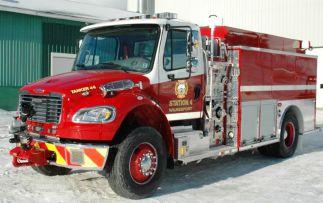
Built on a Freightliner M2 106 two-door chassis, this unit is equipped with a Hale AP420 pump with pump-in-motion capability, a 1,500-gallon poly water tank, an extruded aluminum body, front-bumper mounted TFT remote-controlled monitor, swivel rear dump, and aluminum hosebed covers.
DEPARTMENT: St. Clair Township Fire Department, Ontario
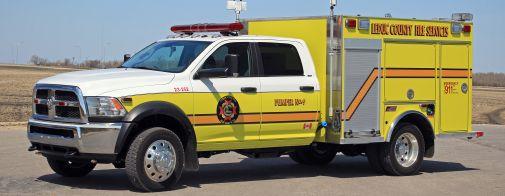
Built on a 2014 Dodge 5500 crew cab chassis and powered by a Cummins 6.7L diesel engine and an Aisin transmission, this unit is equipped with a Darley Mustang 150/60 CAFS, a FoamPro 1600 foam system, a 200-igallon propoly water tank and a 10-igallon foam tank, two Darley autovalve mix points, ground nozzles, cab console, rear cab storage, floor dry compartments, Federal Signal emergency warning package, FRC Spectra 20,000-lumen LED flood lights, and FRC LED 900-Q65 scene lights.
DEPARTMENT: Leduc Fire Services, Alberta
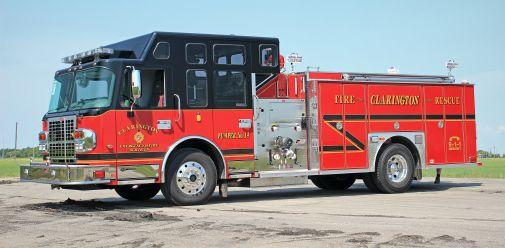
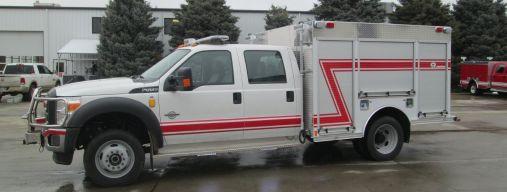
TANKER | ROCKY MOUNTAIN PHOENIX/ROSENBAUER
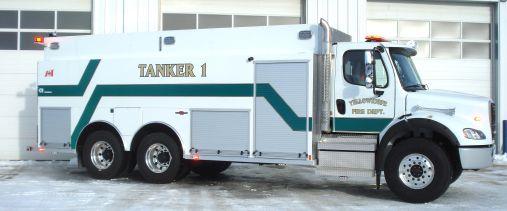
Built on a Freightliner M2 112 chassis and powered by a 370-hp Detroit DD13 engine and an Allison 3000 EVS transmission, this unit is equipped with a 1,900-lip Darley HM pump, a 3,000-gallon water tank with 4-inch rear direct fill, three electric-controlled dump chutes with cameras viewed in cab, a Whelen lighting system, Whelen M9 scene lights and a FRC Evolution brow light.
DEPARTMENT: Yellowknife Fire Department, Northwest Territories
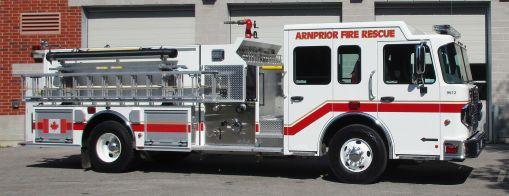
Built on a Spartan Metro Star X chassis and powered by a 380-hp Cummins ISL90 engine and an Allison 3000 EVS transmission, this unit features a 5,000-lpm Hale DSD pump, 850-imperial-gallon poly water tank, electric ladder lift, cross-console pump and custom interior console.
DEPARTMENT: Arnprior Fire Department, Ontario
TANKER PUMPER | DARCH FIRE/PIERCE
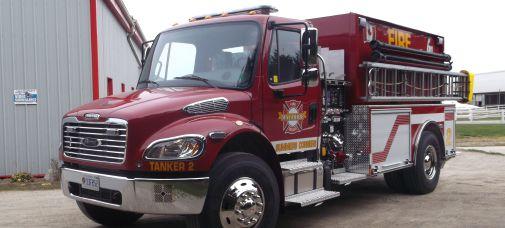
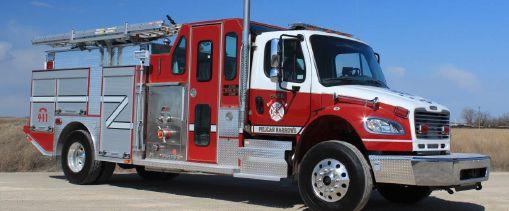
HASTINGS BRASS FOUNDRY LTD.
236 Clark Dr., Vancouver, BC V5L 3H3
Tel: 604-253-2811
Fax: 604-253-3133
Toll Free: 1-800-653-2811
email: hasbra@telus.net
website: www.hasbra.com
Robert Worner, Sales Mgr.
HASBRA FIREFIGHTING EQUIPMENT - Serving the Firefighting Community Through Quality Distributors Since 1916. ISO 9001-2008
3131 Autumn Hill Crescent, Burlington, ON L7M 1Z3
Tel: 416-948-6124
Fax: 905-592-1999
Cell: 416-948-6124
email: lkenyon@kochek.com
website: www.kochek.com
Laura Kenyon, Regional Sales Manager
275 Gouin St., Richmond, QC J0B 2H0
Tel: 819-826-5971
Fax: 819-826-5195
Toll Free: 1-888-821-3121
email: info@innotexprotection.com website: www.innotexprotection.com
Ralph Briggs, ralph.briggs@innotexprotection.com (226-791-8275)
INNOTEX® has over 40 years of experience in development, manufacturing and distribution of fire retardant protective clothing. The quality and innovation of its products and services has enabled INNOTEX® to become one of the leading North American manufacturers of NFPA 1971 certified Turnout Gear, Gloves and Hoods with clients in over 60 countries.

JORDAIR COMPRESSORS INC.
205-6901 72 St., Delta, BC V4G 0A2
Tel: 604-940-8101
Fax: 604-940-8131
Toll Free: 1-800-940-8101
email: info@jordair.ca
website: www.jordair.ca
Shane Gilmore - Inside Sales
Jordair offers a diverse range of standard and engineered compressed air and gas systems for specialized applications. All Jordair compressors are provided with a 24 month warranty. All units are standard with load cycle counters for the final oil and water separators. Bauer and Jordair provide safe, reliable products backed by over 40 years of breathing air compressor expertise. Jordair is CRN registered in all provinces across Canada and CSA certified.
At Kochek, we take pride in manufacturing only the finest quality strainers, fittings, adapters, suction hose systems and other specialty equipment to meet a wide variety of water transfer needs. Our Canadian warehouse is now well stocked to expedite shipments across the country. Laura Kenyon looks forward to the opportunity to assist your industry or fire department in protecting the lives and homes in your community. For more information about Kochek products contact Laura and please remember to check our website regularly for new information being added to help you in your fight against fires.
14935 County Road 2, PO Box 269, Ingleside, ON K0C 1M0
Tel: 1-866-445-3473
Fax: 613-537-9449
Toll Free: 1-866-445-3473
email: markp@mnlsupply.com
website: www.mnlsupply.com
Mark Prendergast, President
HOW CAN WE HELP MAKE YOUR JOB EASIER
CHIEF? How’s this - 10 Sales People (combined sales backgrounds of 197 years, as well as combined firefighting backgrounds of 329 years). When equipment is damaged in hostile environments we have 4 Factory Certified Technicians (combined service background of 53 years, combined Firefighter background of 108 years) to get you up and running. CHIEF ARE YOU STILL THINKING?
MERCEDES TEXTILES LIMITED
5838 Cypihot, Ville St. Laurent, QC H4S 1Y5
Tel: 514-335-4337
Fax: 514-335-9633
email: info@mercedestextiles.com
website: www.mercedestextiles.com
Robert L. Richardson, President, W.S. (Scott) Fraser, Canadian Sales, Claude Berube, Quebec Sales
More than Just a Fire Hose and Pump
ManufacturerBacked by over 35 years of manufacturing firefighting innovation, Mercedes Textiles Limited provides premium fluid delivery systems worldwide. These include municipal, forestry, industrial and cabinet, fire hoses and fire pumps, snowmaking and high water hoses and firefighting supplies.
FIRE HOSE: Innovation Delivered
• KrakenEXO®, the most advanced attack fire hose on the market - weighs less, kinks less, and flows more water
• Highly visible WAYOUT® couplings, designed for improved “firefighter safety” during interior suppression
• iDENTIFY™ Coding System - Recessed zone on hose couplings (patent pending) designed to receive and protect identification markings and decals from abrasion damage
• Innovative iREFLECT® Lock Lever Storz couplings, designed to greatly assist firefighters during LDH deployment and retrieval applications
• UniqueMertex® lining yields an extremely low friction loss, for maximum flow and superior adhesion for long life
• Features our Mercedes Textiles Limited 2-10-L warranty (“2 year All Hazards”, “10 year against manufacturing defects” and “Lifetime against delamination”)
PORTABLE FIRE PUMPS:
• A leading manufacturer of high pressure, lightweight, portable fire pumps for forestry and municipal fire department applications
OUR CANADIAN DISTRIBUTORS
• www.brenkir.com – NL
• www.cumings.ca – NS, NB, PEI
• www.l’arsenal.ca – QC
• www.municipalequipment.ca – S./S.E. ONT
• www.spi-s.com – N./N.W. ONT
• www.realsafety.ca – MB
• www.wfrfire.com – BC, AB, SK, YT, NWT
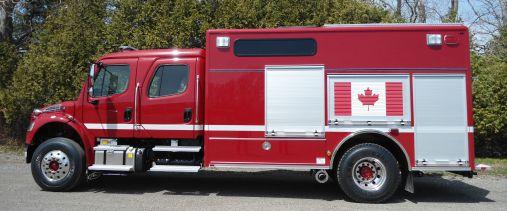
This walk-in rescue unit is built on a Freightliner chassis and powered by a 360-hp Cummins engine and an Allison 3000 EVS transmission.
DEPARTMENT: Walkerton Fire Department, Ontario
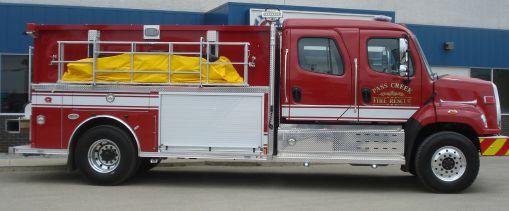
Built on a Freightliner chassis and powered by a 400-hp Cummins ISL engine and an Allison 3000 EVS transmission, this unit is equipped with a 425-igpm Waterous pump, a 1,500-igallon tank with swivel dump, a Code 3 V-link audible warning package and lighting system, Whelen M-9 body mounted lights, and two Akron Scene Star push up telelights.
DEPARTMENT: Pass Creek Fire Department, British Columbia
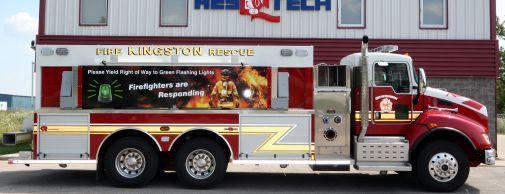
Built on a Kenworth T400 chassis and Rosenbauer FX body, multiplexed with driver’s vista screen, and powered by a 380-hp PACCAR PX-9 engine and an Allison 3000 transmission, this unit features an 840-igpm Hale QPAK pump, 2,500 imperial-gallon water tank, automatic primer, FRC TGA 300 governor, two Fireman’s Friend direct tank fills, electrically-operated swivel dump and folding tank storage, Whelen LED lighting package, LED scene lights and an EZ Climb ladder.
DEPARTMENT: Kingston Fire and Rescue, Ontario
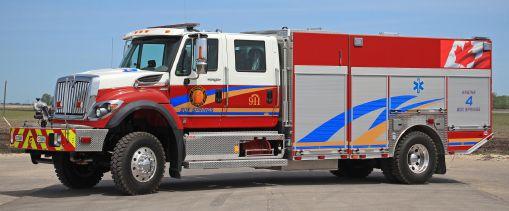
This unit is built on an International 7400 chassis and powered by a 350-hp Maxxforce 10 engine and an Allison 3500 EVS transmission. It features a 1,000-gpm Waterous CXVK pump and CPK-3 high-pressure pump-and-roll secondary pump, FoamPro 2002 foam system, 1,000-igallon copoly water tank and 40-igallon foam tank, full-depth compartments, grass nozzles, foam capable hose reels, a Zico overhead ladder rack, and LED lighting.
DEPARTMENT: Cypress County Emergency Services, Alberta
EMERGENCY RESCUE PUMPER | FORT GARRY FIRE TRUCKS
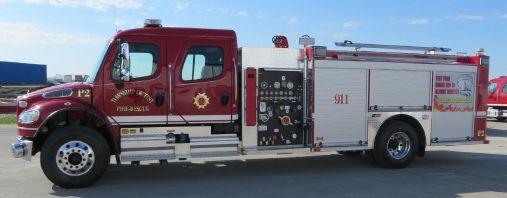
Built on a Freightliner M2 chassis and powered by a 350-hp Cummins ISC engine and an Allison 3000 EVS transmission, this unit features a 1,500-gpm Waterous CSU pump, and an 800-igallon water tank.
DEPARTMENT: Township of Tiny Fire Rescue, Ontario
AERIAL LADDER | CARRIER CENTRES EMERGENCY VEHICLES/E-ONE
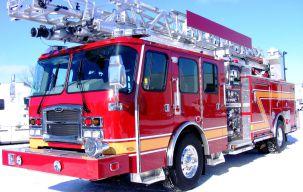
Built on an E-One Typhoon chassis long cab and powered by a 450-hp ISL engine and an Allison transmission, this unit is equipped with a 2,000-gpm Waterous pump, 500-gallon water tank, 78-foot aluminum aerial ladder, 8-KW Harrison hydraulic generator, 1,000-gpm TFT Monsoon radio-controlled monitor, full ground ladder compliment, cord reels, 120-v lights and LED ladder-climbing lights.
DEPARTMENT: Niagara Falls Fire Department, Ontario
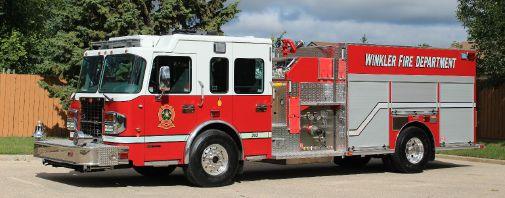
This unit is built on a Spartan Metrostar MFD chassis with a 10-inch raised roof and powered by a 400-hp Cummins ISL 9 engine and an Allison 3000 EVS transmission. It features a 1,250-igpm Darley pump, FoamPro 2001 foam system, 800-igallon water tank, 20,000-lumens command light, and Akron Apollo monitor.
DEPARTMENT: Winkler Fire Department, Manitoba
TANKER | CARRIER CENTRES EMERGENCY VEHICLES/ E-ONE
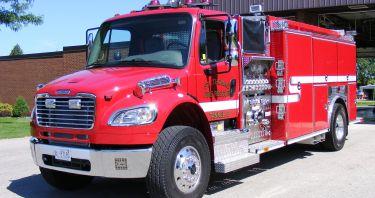
Built on a Freightliner 2-door commercial chassis and powered by a 330-hp Cummins engine and an Allison transmission, this unit features a 5,000-gpm Hale pump, a 1,500-gallon water tank, an on-board portable generator, electrical receptacles and aluminum hosebed covers.
DEPARTMENT: St. Thomas Fire Department, Ontario
847 Central St., Centreville, NB E7K 2E8
Tel: 506-276-4551
Fax: 506-276-3648
Toll Free: 1-800-561-0012
email: info@metalfabfiretrucks.com
website: www.metalfabfiretrucks.com
Ryan A. Stacey, Sales & Marketing Manager
Metalfab is a Canadian Manufacturer of customized Fire Apparatus. Our product line includes Pumpers, Tankers, Walk in Rescues, Walk Around Rescues, Mini Pumpers and other Fire Department Vehicles.
3-304 Stone Rd. W., Guelph, ON N1G 4W4
Tel: 519-763-9955
Fax: 519-763-6682
email: john@metzfirerescue.com
website: www.metzfirerescue.com
John Metz
Canadian dealer for KME Fire Apparatus. Specializing in custom and commercial pumpers, aerial, rescue, tankers and wildland units.
6625 Kestrel Rd., Mississauga, ON L5T 1P4
Tel: 647-460-0888, 647-460-0888 (Cell) email: joe@mississaugabus.com website: www.mississaugabus.com
Joe Stevens
Our group of companies provide sales, service and parts to the fire apparatus industry. As the HMEAhrens Fox dealer for Canada, we can provide various types of fire apparatus, with either custom or commercial chassis. We can build new or have a wide variety of demo trucks available. Our business also provides mechanical repairs and our warranty repair facility for the majority of the components running your apparatus. We also offer mechanical refurbishing of the powertrain/drivetrain systems, multiplexing troubleshooting, HVAC repair and offer mobile repair services. We sell a wide range of components for the operation of the apparatus; gauges, matting, pump/ valve, engine, axle parts, etc.
PO Box 2017, Appleton, WI 54912-2017
Tel: 920-832-3231
Fax: 920-832-3084
website: www.piercemfg.com
Pierce Manufacturing Inc., an Oshkosh Corporation [NYSE: OSK] company, is the leading North American manufacturer of custom fire apparatus. Products include custom and commercial pumpers, aerials, rescue trucks, wildland trucks, mini pumpers, elliptical tankers, and homeland security apparatus. In addition, Pierce designs its own foam systems and was the first company to introduce frontal airbags and the Side Roll Protection system to fire apparatus. To learn more about Pierce, visit www.piercemfg.com.
c/o Firehall BookStore, PO Box 530, 105 Donly Dr. S., Simcoe, ON N3Y 4N5
Fax: 1-877-624-1940
Toll Free: 1-877-267-FIRE (3473)
email: firehallbookstore@annexweb.com
website: www.firehallbookstore.com
Canadian distributor for NFPA products.
PO Box 524, 901 Commerce Road, Luverne, MN 56156
Tel: 507-283-9141
Fax: 507-283-9142
Toll Free: 1-800-344-2059
email: info@midwestfire.com website: www.MidwestFire.com
Sarah Atchison
Since 1987 Midwest Fire Equipment & Repair Company has worked alongside firefighters designing and manufacturing high-quality, multi-purpose, customized, cost effective products that save lives and protect property. Midwest Fire has delivered more than 650 trucks to departments throughout North America and we are proud of the high percentage of repeat and multi-truck customers we have developed. Midwest Fire is a small team of skilled professionals that are committed to building trucks to serve you and your community for decades. Fight Fire with Fire –Midwest Fire.
555 Lordship Blvd., Stratford, CT
06615-7124
Tel: 203-377-0777
Fax: 203-380-0441
Toll Free: 1-800-766-7768
email: onspot@onspot.com
website: www.onspot.com
Eric Jones, VP Sales & Mktg.
This system permanently fastens to the vehicle’s rear suspension and allows the operator to engage and disengage tire chains at the flip of a dashboard switch without stopping, to enhance traction and braking in forward or reverse.
189 Bysham Park Dr., Woodstock, ON N4T 1P1
Tel: 519-539-0645
Fax: 519-539-0646
Toll Free: 1-800-363-7370
email: resqtech@resqtech.com
website: www.resqtech.com
Brian Innis
ResQtech Systems, Inc. has served the fire industry since 1985 and is dedicated to providing firefighters with innovative products and solutions. ResQtech Systems is the exclusive fire apparatus dealer for Rosenbauer and Hackney emergency vehicles in Ontario and offer a full line of emergency equipment which includes the Rosenbauer Heros-XT Helmet, Junkyard Dogg Struts, Interspiro Breathing Apparatus, Phoschek Firefighting Foam, Vindicator Nozzles and much more. In addition to the extensive product line, ResQtech has service technicians for your apparatus and emergency equipment needs, available at our in house facilities or on the road.
EMERGENCY RESCUE PUMPER | FORT GARRY FIRE TRUCKS
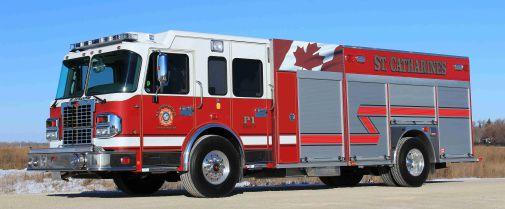
Built on a Spartan MetroStar chassis and powered by a 400-hp Cummins ISL engine and an Allison 3000 EVS transmission, this unit is equipped with a 1,250-gpm Waterous CS pump, a FoamPro 2001 A/B foam system, and a 600-igallon copoly water tank.
DEPARTMENT: St. Catharines Fire and Emergency Services, Ontario
AERIAL LADDER | CARRIER CENTRES EMERGENCY VEHICLES/E-ONE
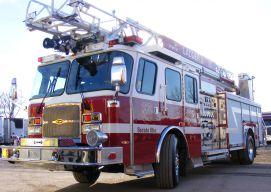
This unit is built on an E-One Cyclone II chassis and powered by a 500-hp Cummins engine and an Allison transmission. It features an 8,000-lpm Hale water pump, Williams Hot Shot II foam system, 500-gallon foam tank, 78-foot aluminum aerial ladder, and 1,250-gpm TFT Monsoon remote-controlled monitor.
DEPARTMENT: Imperial Oil Sarnia Refinery, Ontario
FIRE TRUCKS
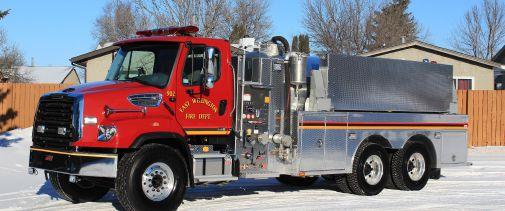
Built on a Freightliner 114SD chassis and powered by a 450-hp Cummins ISL engine and an Allison 3000 EVS transmission, this unit features a 500-gpm Darley HM pump, a 2,500-igallon elliptical water tank, and a Series 5 vacuum pump.
DEPARTMENT: East Wellington Fire Department, British Columbia
RESCUE PUMPER | CARRIER CENTRES EMERGENCY VEHICLES/E-ONE
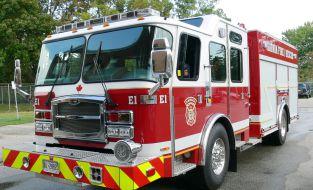
Built on an E-One Typhoon chassis long cab and powered by a 450-hp Cummins engine and an Allison transmission, this unit features a 6,000-lpm E-One eMax pump, 780-gallon water tank, FoamPro 2002 foam system with a 40-gallon foam tank, Akron Apollo monitor and coffin compartments.
DEPARTMENT: Sarnia Fire Rescue Services, Ontario
MINI PUMPER | RESQTECH/ROSENBAUER
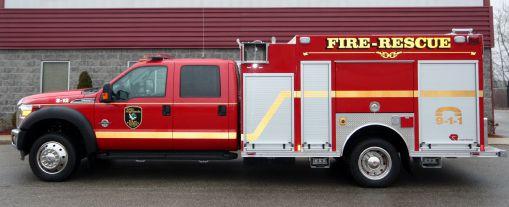
Built on a Ford F550 XLT chassis and Rosenbauer FX body, this unit features a 350-gpm Darley HM pump, 300-gallon water tank, FRC TGA 300 pressure governor, FoamPro 1600 system, 30-gallon foam tank, booster reel with nozzle, automatic primer, pump and roll capability, Federal Signal LED lighting package, LED scene lights, Will-Burt Night Scan 1.8-300 light tower, and 9,000-pound portable winch with receiver.
DEPARTMENT: Municipality of Grey Highlands Fire Department, Ontario
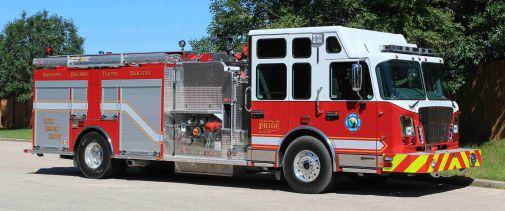
Built on a Spartan Gladiator chassis and powered by a 500-hp Cummins ISX engine and an Allison 4000 EVS transmission, this unit is equipped with a 1,750-igpm Waterous CSU pump, a Waterous Eclipse CAFS with Advantus 6, and a 1,250-igallon copoly water tank.
DEPARTMENT: Quesnel Volunteer Fire Department, British Columbia
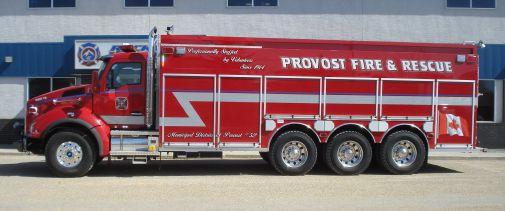
This unit is built on a Kenworth T880 chassis and powered by a 600-hp Cummins ISX 15-L engine and an Allison 4500 EVS transmission. It features a 4,000-lpm Rosenbauer NH40 pump, a Rosenbauer Fix Mix and FoamPro 1600 foam systems, 4,800-gallon water tank and 30-gallon foam tank with Firemans Friend direct fill, a TFT Tornado bumper turret, a Whelen lighting system and FRC Q65 scene lights and Evolution brow light.
DEPARTMENT: MD of Provost Fire and Rescue, Alberta
| FORT GARRY FIRE TRUCKS
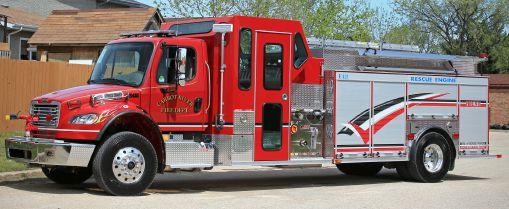
Built on a Freightliner chassis and powered by a 350-hp Cummins ISL engine and an Allison 3000 EVS transmission, this unit is equipped with a 1,250-gpm Waterous CXVPA pump, Aquis 2.5 One Step CAFS, 1,000-igallon copoly water tank, Zico overhead
and
Head Office: 6415 Golden West Ave., Red Deer, AB T4P 3X2
Tel: 403-347-7045
Fax: 403-347-7049
Toll Free: 1-800-494-4210
email: info@rockymountainphoenix.com
website: www.rockymountainphoenix.com
BRANCHES:
103-2285 Queen St., Abbotsford, BC V2T 6T3
Tel: 604-864-7303
Fax: 604-864-4938
Toll Free: 1-888-815-0500
320 Logan Rd., Bridgewater, NS B4V 3J8
Tel: 902-298-0415
Toll Free: 1-844-530-4003
BC Service Center: 103-81 Golden Dr., Coquitlam, BC
Tel: 604-226-8707
Toll Free: 1-844-552-8668
Rocky Mountain Phoenix is a leader in the supply of vehicle solutions, products and services to the emergency response and fire combat industry.Your complete source for MSA SCBA, Thermal Imaging, Protective Clothing, Suppression Tools and Equipment. Visit our online catalogue at www.rockymountainphoenix.com
30686A Matsqui Place, Abbotsford, BC V2T 6L4
Tel: 1-866-723-3835
Fax: 604-850-2397
Toll Free: 1-866-723-3835
email: sales@firetrucks.ca
website: www.firetrucks.ca
Safetek is Canada’s leading provider of firefighting and rescue apparatus, equipment parts and service. We represent some of the most recognizable and wellknown brands including Smeal Fire Apparatus, SVI Trucks, US Tanker, Ladder Tower Company and Danko Emergency Equipment. We develop targeted solutions to meet our customer’s needs and to help make their fleets exceptional by providing a wide range of services to support our customers – from the time a new fire-rescue vehicle is delivered to the customer until it is retired from service.
At Safetek we’ve got you covered with the industry’s best service and warranty program. Our service includes everything you need to keep vehicles safe and in great condition, from annual inspections to 24 hour assistance. We also stock and distribute both genuine OEM and aftermarket parts and in most cases we can have “The part you need when you need it” within 24-48 hours.
9200 - 5E ave., Ville Saint-Georges, QC G5Y 2A9
Tel: 418-226-4961
Fax: 418-221-6147
Toll Free: 1-888-666-4961
email: info@securitrim.ca
website: www.securitrim.com
Nathalie Drouin or David Russell
Securitrim 2002 is a specialized supplier of both 3M and Reflexite microprismatic reflective sheeting for commercial and emergency vehicle graphics. Brighter graphics enhance motorist safety and is now mandated by law for Fire apparatus. Securitrim 2002 is marketing
for installation over diamond checker plate. Microprismatic custom made one piece pre-striping is now available in easy to install sheets, excellent for full rear coverage.Now available are SEPANS, with 5X the reflective power of cones! Designed specifically for EMERGENCY RESPONSE INTERVENTIONS, SEPANS have proven to be the highest performing EMERGENCY INCIDENT TRAFFIC MANAGEMENT SYSTEM on the market.
34 Torlake Crescent, Toronto, ON M8Z 1B3
Tel: 416-253-9122
Fax: 416-253-0437
Toll Free: 1-877-253-9122
email: sales@safedesign.com website: www.safedesign.com
Don King, Vice-President/Sales Specialists in Firefighters Protective Clothing. Complete line of Thermal Protective PPE. Globe Firefighters Suits, Shelby ‘Firewall’ Gloves, Globe EMS Lifeline, Black Diamond Footwear, PGI Cobra Hoods & Wildland Clothing, Workrite Stationwear, Firefighters Helmets, Cairns Protective Clothing. Globe Footgear, Globe USAR Clothing/Tech Rescue, Topps Safety Apparel, Stationwear.
• Exclusive Dealer Network Coast to Coast.
1800 Bonhill Road, Mississauga, ON L5T 1C8
Tel: 905-364-5843
Fax: 905-364-7822
email: seatsinfo@seatscanada.com
website: www.seatscanada.com
Hasan Mohammed
We offer a complete line of quality Emergency Vehicle seating for driver, officer, crew, wall mount and jump seats. Engineered for comfort and safety, these seats have easy exit flip-up split headrest and are manufactured in a wide variety of covering material.
23 Benton Road, Toronto, ON M6M 3G2
Tel: 416-789-4354
Fax: 416-789-5475
Toll Free: 1-800-473-5553
website: www.starfieldlion.com
Rob Hosselet, National Sales Manager; Rosanne Kalenuik, Director of Customer Sales and Support. Starfield Lion has a legacy and ongoing vision of introducing PPE that is designed to ensure the health, safety and performance of the first responders who serve our communities. Your safety is our top priority. Your needs drive our innovations, we listen and develop the solution.
RESCUE | CARRIER CENTRES EMERGENCY VEHICLES/ E-ONE
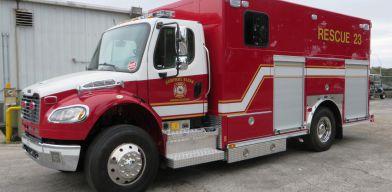
This unit is built on a Freightliner chassis and powered by a 330-hp Cummins engine and Allison transmission. It features a walk-in rescue body, seating for six firefighters, hydraulic hoseline reels, roll-out tool boards, a 20-KW Onan generator and a light tower.
DEPARTMENT: Central Elgin Fire Rescue, Ontario
PUMPER TANKER | FORT GARRY FIRE TRUCKS
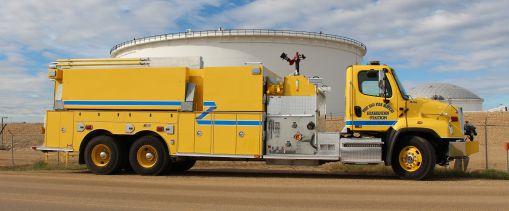
Built on a Freightliner 114SD chassis and powered by a 450-hp Detroit DD13 engine and an Allison 4500 EVS transmission, this unit is equipped with a 1,750-gpm Darley LDM pump, a Fire Research MFA200 Dual foam system, a 3,000-igallon water tank, and an auxiliary pump-and-roll HSP 350 Darley pump.
DEPARTMENT: Hughenden Fire Department, Alberta
MINI PUMPER | ROCKY MOUNTAIN PHOENIX/ ROSENBAUER
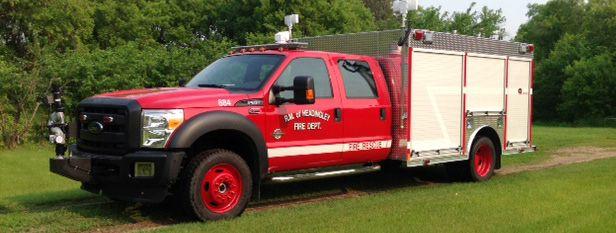
Built on a Ford F550 four-door 4X4 chassis, this quick-response unit is equipped with a 225-gpm Darley pump, a Darley Fast Foam system, a TFT W/Ultimate 125 nozzle, a 300-gallon water tank and 30-gallon foam tank, Federal Signal lighting package and FRC Q65 scene lighting.
DEPARTMENT: RM of Headingly Fire Department, Manitoba
PUMPER | DARCH FIRE/PIERCE MANUFACTURING
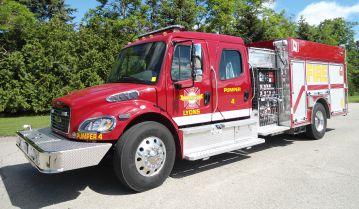
This unit is built on a Freightliner M2-106 chassis and powered by a 360-hp Cummins engine and an Allison 3000 EVS transmission. It features a 1,250-gpm Hale Q Flow pump, a Pre Plumbed foam system, 1,000-gallon poly water tank and enclosed ladder.
DEPARTMENT: Malahide Fire Services, Ontario

3701 Innovation Way, Valparaiso, IN 46383-9327
Tel: 219-462-6161
Fax: 219-464-7155
Toll Free: 1-800-348-2686
email: sales@tft.com website: www.tft.com
Rod Carringer, VP of Sales and Marketing; Jim Menkee, National Sales Mgr.; Brian Podsiadlik, Cdn. Mgr.
Please contact our local authorized Distributor for all your fire suppression needs: Wholesale Fire & Rescue Ltd., -800-561-0400 (Western Canada)
ABC Fire & Safety, -800-665-1250 (Manitoba & Saskatchewan)
SPI Health & Safety, - 800-329-6378 (Northwestern Ontario)
M&L Supply, - 613-537-9559 (Ontario) L’Arsenal, -819-474-2111 (Quebec)
MICMAC Fire & Safety Source - 800-667-3030 (Atlantic Provinces)
We go the extra mile to give you personalized service that is second to none. Technical assistance is available 24/7 from knowledgeable staff with many years of fire service experience. If you should require service or repair of a product, we maintain a 24 hour in house turn-a-round on all equipment. Providing the best service to our customers is not just a goal, it’s our way of doing business every day. E-mail: sales@tft.com Website: www.tft.com
Toll Free: +1-800-348-2686
219 Main St., PO Box 559, Langham, SK S0K 2L0
Tel: 306-283-4496
Fax: 306-283-4456
Toll Free: 1-800-71RESCU
email: trans.care@sasktel.net
website: www.trans-carerescue.com
Bill McCombs

5746 Finch Ave., Unit 2, Scarborough, ON M1B 5R2
Tel: 416-335-0514
Fax: 416-335-0515
email: unifoam@total.net
website: www.total.net/~unifoam
George Vestergom Jr.
Manufacture and development of fire fighting foams - Alcohol Resistant, AFFF, Class A, Training Foams as well as Wetting Agents, Foam Control Agents and Fluorosurfactants.

125 Hardman Ave. S., South St. Paul, MN 55075
Tel: 651-450-5000
Fax: 651-450-5090
email: jafazekas@waterousco.com
website: www.waterousco.com
Jim Fazekas
10 West College Ave., PO Box 337, Yardley, PA
19067-8337
Tel: 215-493-3618
Fax: 866-493-1401
Toll Free: 1-800-711-3473
email: sales@ziamatic.com
website: www.ziamatic.com
Mike Adams, Vice President - Sales
Ziamatic Corp. (ZICO) was founded in 1958 with the intention of providing the men and women of the fire services industry with products that make their profession safer and easier. Over 50 years later those ideas still stand – innovative, quality products at an affordable price. If you want quality, you want ZICO.
ALL INFORMATION contained in this apparatus directory, both product and company listings, is for the exclusive use of the purchaser and is to be used solely by the purchaser. None of the information included in this directory may be used to create, in whole or in part, any mailing list or other data compilation, in written or electronic form, that is to be sold or otherwise distributed to any third party. The purchaser may not include directory information as part of their own marketing materials. Failure to comply with these restrictions will constitute violations both of this agreement and the copyright laws of Canada. Purchase and use of this directory constitute acceptance of the restrictions set forth herein.
Although Fire Fighting In Canada magazine makes every effort to ensure the accuracy of information contained in this directory, it must rely on others over whom it has no control for certain information. Purchaser acknowledges that Fire Fighting In Canada magazine and its publishers cannot and do not guarantee or warrant that the information in the directory is complete, correct or current. Additions or corrections are invited at any time.
For more information on appearing in a future edition of the directory, please contact the publisher at 1-888-599-2228 ext. 252.
ADAPTERS
1200° Equipment
A.J. Stone
Akron Brass Company
Aréo-Fire
C-Max
Canadian Safety Eqpt.
Carrier Centers
CSE Incendie
Darch Fire
Fort Garry
Kochek Co., Inc.
M&L Supply
Mercedes Textiles
Metalfab
Metz Fire
ResQtech Systems
Rocky Mountain Phoenix
Safetek Emergency
Task Force Tips
AERIAL REPAIRS
Aréo-Fire
C-Max
Carrier Centers
CET Fire Pumps
Darch Fire
E-One, Inc.
Fort Garry
Metz Fire
ResQtech Systems
Rocky Mountain Phoenix
Safetek Emergency
AERIAL TESTING
Aréo-Fire
C-Max
Carrier Centers
CET Fire Pumps
Fort Garry
Metz Fire
Rocky Mountain Phoenix
Safetek Emergency
AERIALS
A.J. Stone
Aréo-Fire
C-Max
Carrier Centers
CET Fire Pumps
Darch Fire
E-One, Inc.
Fort Garry
Metz Fire
Mississauga Fire Apparatus
Pierce Manufacturing
ResQtech Systems
Rocky Mountain Phoenix
Safetek Emergency
Aréo-Fire
Carrier Centers
E-One, Inc.
Fort Garry
Metz Fire
ResQtech Systems
Rocky Mountain Phoenix
Safetek Emergency
ALTERNATORS
C-Max
Carrier Centers
Darch Fire
Rocky Mountain Phoenix
Safetek Emergency
AMBULANCES
Carrier Centers
Rocky Mountain Phoenix
Safetek Emergency
Ziamatic Corp. (ZICO)
AXLES
C-Max
Carrier Centers
Fort Garry
M&L Supply
Mississauga Fire Apparatus
Rocky Mountain Phoenix
Safetek Emergency
BACK-UP ALARMS
C-Max
Carrier Centers
Darch Fire
Fort Garry
Metalfab
Rocky Mountain Phoenix
Safetek Emergency
BATTERIES
Carrier Centers
Safetek Emergency
BELLS
C-Max
Carrier Centers
Darch Fire
Fort Garry
Metalfab
ResQtech Systems
Rocky Mountain Phoenix
BOATS
A.J. Stone
Canadian Safety Eqpt.
CSE Incendie
M&L Supply
Rocky Mountain Phoenix
BRAKES
C-Max
Carrier Centers
Darch Fire
Fort Garry
Mississauga Fire Apparatus
ResQtech Systems
BRUSH TRUCKS
A.J. Stone
Carrier Centers
CET Fire Pumps
Darch Fire
Fort Garry
Metalfab
Metz Fire
Midwest Fire
Mississauga Fire Apparatus
Pierce Manufacturing
ResQtech Systems
Rocky Mountain Phoenix
Safetek Emergency
Ziamatic Corp. (ZICO)
BUNKER GEAR
A.J. Stone
Canadian Safety Eqpt.
FireService Mgmt.
Globe Mfg.
Innotex
M&L Supply
ResQtech Systems
Rocky Mountain Phoenix
Safedesign Apparel
Starfield - Lion
CARGO SLIDES/TRAYS
Carrier Centers
Darch Fire
Metalfab
Rocky Mountain Phoenix
Safetek Emergency
CASES – WATERPROOF
A.J. Stone
Canadian Safety Eqpt.
CSE Incendie
Darch Fire
M&L Supply
Rocky Mountain Phoenix
CHASSIS
C-Max
Carrier Centers
Darch Fire
Fort Garry
Metalfab
ResQtech Systems
Rocky Mountain Phoenix
Safetek Emergency
CO2 SYSTEMS
M&L Supply
COMMAND POSTS –MOBILE
A.J. Stone
Aréo-Fire
Canadian Safety Eqpt.
Carrier Centers
CSE Incendie
Darch Fire
Fort Garry
Metalfab
Metz Fire
ResQtech Systems
Rocky Mountain Phoenix
Safetek Emergency
COMMERCIAL LAUNDRY EQUIPMENT
A.J. Stone
COMMUNICATIONS
EQUIPMENT – ON-BOARD
Aréo-Fire
Canadian Safety Eqpt.
CSE Incendie
Darch Fire
Metalfab
ResQtech Systems
Rocky Mountain Phoenix
Safetek Emergency
COMPARTMENT DOORS
C-Max
Carrier Centers
Darch Fire
Fort Garry
Metalfab
ResQtech Systems
Rocky Mountain Phoenix
Safetek Emergency
COMPARTMENT FLOORING
Aréo-Fire
C-Max
Carrier Centers
Darch Fire
Fort Garry
Metalfab
Mississauga Fire Apparatus
ResQtech Systems
Rocky Mountain Phoenix
Safetek Emergency
COMPARTMENT LIGHTING
C-Max
Canadian Safety Eqpt.
Carrier Centers
CSE Incendie
Darch Fire
Fort Garry
Metalfab
Metz Fire
Rocky Mountain Phoenix
Safetek Emergency
COMPRESSED AIR FOAM SYSTEMS
A.J. Stone
Aréo-Fire
C-Max
Canadian Safety Eqpt.
CET Fire Pumps
CSE Incendie
Darch Fire
Fort Garry
M&L Supply
Metalfab
Metz Fire
Rocky Mountain Phoenix
Safetek Emergency
Waterous
COMPRESSORS
A.J. Stone
Aréo-Fire
C-Max
Canadian Safety Eqpt.
CSE Incendie
Fort Garry
Jordair Compressors
M&L Supply
Metalfab
Rocky Mountain Phoenix
Safetek Emergency
COMPUTER MOUNTS
Carrier Centers
Darch Fire
M&L Supply
Metalfab
ResQtech Systems
Rocky Mountain Phoenix
Safetek Emergency
COMPUTER SOFTWARE
M&L Supply
COMPUTERS – APPARATUS MOUNTED
Rocky Mountain Phoenix
Safetek Emergency
CONSULTING – VEHICLE INSPECTION
C-Max
Darch Fire
Metalfab
Rocky Mountain Phoenix
Safetek Emergency
CORROSION CONTROL
C-Max
Fort Garry
Metalfab
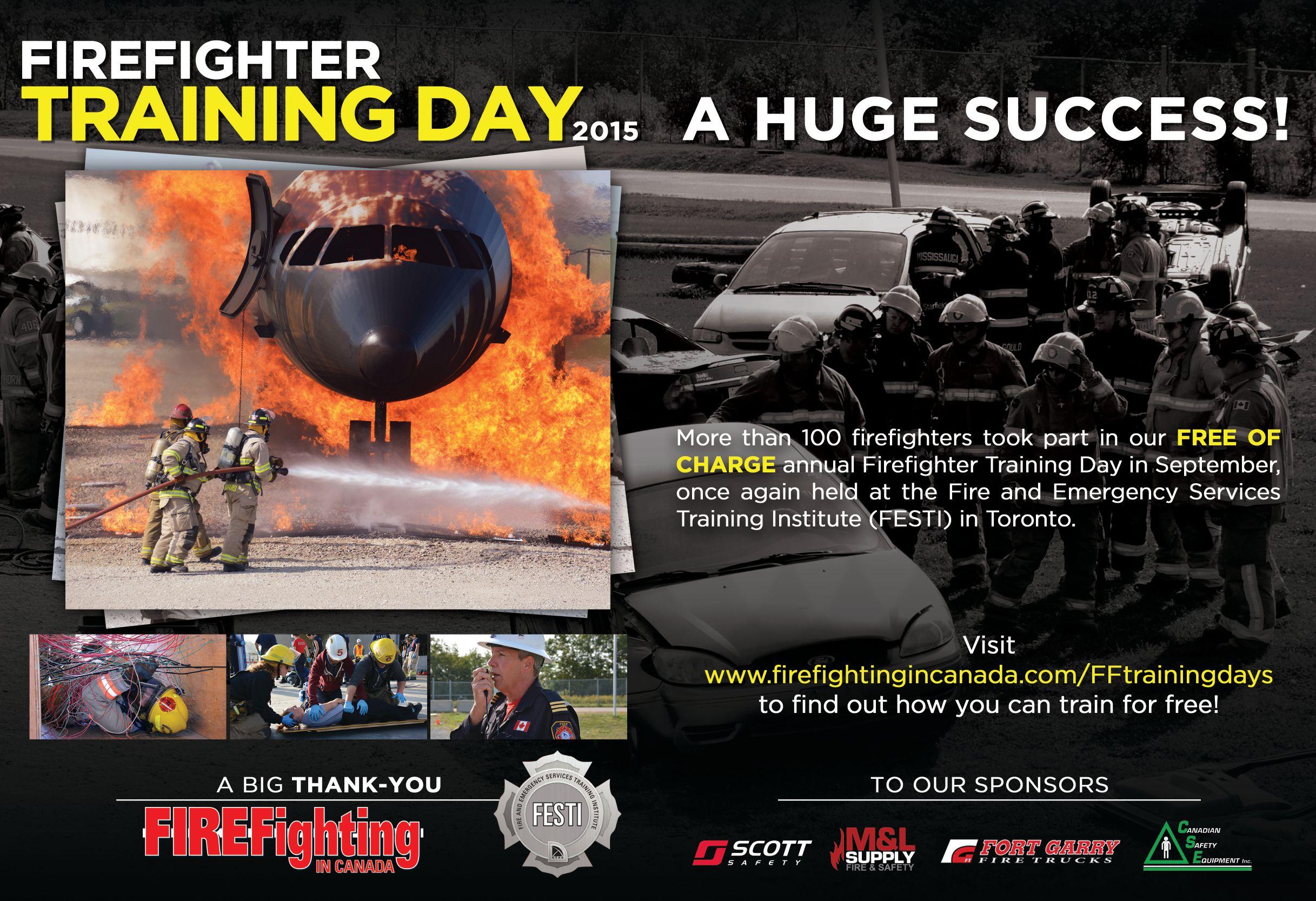
A.J. Stone
C-Max
Canadian Safety Eqpt.
CSE Incendie
Darch Fire
M&L Supply
Metalfab
Mississauga Fire Apparatus
ResQtech Systems
Rocky Mountain Phoenix
Trans-Care
DECK MATTING
A.J. Stone
C-Max
Darch Fire
Fort Garry
M&L Supply
Metalfab
Mississauga Fire Apparatus
Rocky Mountain Phoenix
Safetek Emergency
DECK MONITORS
A.J. Stone
Akron Brass Company
C-Max
Canadian Safety Eqpt.
CSE Incendie
Darch Fire
Fort Garry
M&L Supply
Metalfab
ResQtech Systems
Rocky Mountain Phoenix
Safetek Emergency
Task Force Tips
DECONTAMINATION SYSTEMS
A.J. Stone
Canadian Safety Eqpt.
CSE Incendie
Darch Fire
M&L Supply
Rocky Mountain Phoenix
DETECTION SYSTEMS
A.J. Stone
Canadian Safety Eqpt.
CSE Incendie
M&L Supply
DOCK LIGHTS
1200° Equipment
A.J. Stone
Canadian Safety Eqpt.
CSE Incendie
Fort Garry
M&L Supply
Safetek Emergency
DRY CHEMICAL SYSTEMS
A.J. Stone
Canadian Safety Eqpt.
CSE Incendie
Fort Garry
M&L Supply
Metalfab
Rocky Mountain Phoenix
DUMP VALVES
A.J. Stone
Aréo-Fire
C-Max
Canadian Safety Eqpt.
Carrier Centers
CSE Incendie
Darch Fire
Fort Garry
M&L Supply
Metalfab
Metz Fire
ResQtech Systems
Rocky Mountain Phoenix
Safetek Emergency
Ziamatic Corp. (ZICO)
ELECTRIC THROTTLES
Aréo-Fire
C-Max
Carrier Centers
Fort Garry
M&L Supply
Metalfab
Metz Fire
Rocky Mountain Phoenix
Safetek Emergency
ELECTRICAL SERVICE/ REPAIR
C-Max
Carrier Centers
Fort Garry
M&L Supply
Metalfab
Metz Fire
Mississauga Fire Apparatus
Rocky Mountain Phoenix
Safetek Emergency
ENGINE BRAKE
C-Max
Carrier Centers
Darch Fire
Fort Garry
M&L Supply
Mississauga Fire Apparatus
ResQtech Systems
ENGINE GOVERNOR
SYSTEMS
C-Max
Carrier Centers
Darch Fire
Fort Garry
M&L Supply
Metalfab
ResQtech Systems
Rocky Mountain Phoenix
Safetek Emergency
ENGINES
Carrier Centers
Metalfab
Mississauga Fire Apparatus
EXHAUST EXTRACTION
Air Technology
Air Vacuum
FITTINGS
1200° Equipment
A.J. Stone
Akron Brass Company
Aréo-Fire
C-Max
Canadian Safety Eqpt.
Carrier Centers
CSE Incendie
Darch Fire
Fort Garry
Kochek Co., Inc.
M&L Supply
Metalfab
ResQtech Systems
Rocky Mountain Phoenix
Safetek Emergency
Task Force Tips
FLOORING – NON-SKID
A.J. Stone
Darch Fire
Mississauga Fire Apparatus
Safetek Emergency
FLOWMETERS
1200° Equipment
A.J. Stone
Aréo-Fire
C-Max
Canadian Safety Eqpt.
Carrier Centers
CSE Incendie
Darch Fire
Fort Garry
M&L Supply
Metalfab
ResQtech Systems
Rocky Mountain Phoenix
Safetek Emergency
FOAM SYSTEMS
1200° Equipment
A.J. Stone
Aréo-Fire
C-Max
Canadian Safety Eqpt.
Carrier Centers
CET Fire Pumps
CSE Incendie
Darch Fire
Fort Garry
M&L Supply
Mercedes Textiles
Metalfab
Pierce Manufacturing
ResQtech Systems
Rocky Mountain Phoenix
Safetek Emergency
Unifoam Co.
Waterous
FRAME REPAIRS
C-Max
Carrier Centers
Fort Garry
M&L Supply
GENERATOR GOVERNOR SYSTEMS
Canadian Safety Eqpt.
CSE Incendie
Fort Garry
M&L Supply
Metalfab
ResQtech Systems
Safetek Emergency
GENERATORS
A.J. Stone
Canadian Safety Eqpt.
CSE Incendie
Darch Fire
Fort Garry
M&L Supply
Metalfab
ResQtech Systems
Rocky Mountain Phoenix
Safetek Emergency
GROUND LADDER
INSPECTIONS
C-Max
Carrier Centers
CET Fire Pumps
M&L Supply
Metalfab
Rocky Mountain Phoenix
Safetek Emergency
HAZARDOUS MATERIALS UNITS
Aréo-Fire
Carrier Centers
Darch Fire
M&L Supply
Metalfab
Metz Fire
Rocky Mountain Phoenix
Safetek Emergency
HEADSETS
A.J. Stone
Canadian Safety Eqpt.
CSE Incendie
Darch Fire
Fort Garry
M&L Supply
Metalfab
ResQtech Systems
Rocky Mountain Phoenix
Safetek Emergency
HORNS
A.J. Stone
C-Max
Carrier Centers
Darch Fire
Fort Garry
M&L Supply
Metalfab
ResQtech Systems
Rocky Mountain Phoenix
Safetek Emergency
HOSES & ACCESSORIES
1200° Equipment
A.J. Stone
Aréo-Fire
C-Max
Canadian Safety Eqpt.
CSE Incendie
Darch Fire
Fort Garry
Hastings Brass
Kochek Co., Inc.
M&L Supply
Mercedes Textiles
Metalfab
ResQtech Systems
Rocky Mountain Phoenix
Safetek Emergency
Ziamatic Corp. (ZICO)
INDUSTRIAL TRUCKS –IN-PLANT
Carrier Centers
CET Fire Pumps
Darch Fire
E-One, Inc.
Metalfab
Pierce Manufacturing
Rocky Mountain Phoenix
Safetek Emergency
INSTRUMENT PANELS
Aréo-Fire
C-Max
Canadian Safety Eqpt.
Carrier Centers
CSE Incendie
M&L Supply
Metalfab
Rocky Mountain Phoenix
Safetek Emergency
INTERCOMS
A.J. Stone
C-Max
Darch Fire
Fort Garry
M&L Supply
Metalfab
Rocky Mountain Phoenix
Safetek Emergency
INTERFACE VEHICLES
Carrier Centers
Darch Fire
Fort Garry
Metalfab
Rocky Mountain Phoenix
Safetek Emergency
LADDER ACCESS SYSTEM
1200° Equipment
A.J. Stone
C-Max
Canadian Safety Eqpt.
CSE Incendie
Darch Fire
Fort Garry
Metalfab
Safetek Emergency
Ziamatic Corp. (ZICO)
LDH HARDWARE
A.J. Stone
C-Max
Darch Fire
Fort Garry
Kochek Co., Inc.
M&L Supply
Mercedes Textiles
Metalfab
Metz Fire
Rocky Mountain Phoenix
Safetek Emergency
Task Force Tips
LEASE/PURCHASE FINANCING
A.J. Stone
Carrier Centers
E-One, Inc.
Fort Garry
M&L Supply
Rocky Mountain Phoenix
Safetek Emergency
LIGHT CONTROL SYSTEMS
1200° Equipment
A.J. Stone
Akron Brass Company
Aréo-Fire
C-Max
Canadian Safety Eqpt.
Carrier Centers
CSE Incendie
Darch Fire
Fort Garry
M&L Supply
Metalfab
ResQtech Systems
Rocky Mountain Phoenix
Safetek Emergency Trans-Care
LIGHTS – BARS/STROBES
1200° Equipment
A.J. Stone
Akron Brass Company
Aréo-Fire
C-Max
Canadian Safety Eqpt.
Carrier Centers
CSE Incendie
Darch Fire
Fort Garry
M&L Supply
Metalfab
ResQtech Systems
Rocky Mountain Phoenix
Safetek Emergency Trans-Care
LIGHTS – FLOOD
1200° Equipment
A.J. Stone
Akron Brass Company
Aréo-Fire
C-Max
Canadian Safety Eqpt.
Carrier Centers
CSE Incendie
Darch Fire
Fort Garry
M&L Supply
Metalfab
ResQtech Systems
Rocky Mountain Phoenix
Safetek Emergency
Securitrim 2002 Trans-Care
LIGHTS – WARNING
1200° Equipment
A.J. Stone
Akron Brass Company
Aréo-Fire
C-Max
Canadian Safety Eqpt.
Carrier Centers
CSE Incendie
Darch Fire
Fort Garry
M&L Supply
Metalfab
ResQtech Systems
Rocky Mountain Phoenix
Safetek Emergency
Trans-Care
MASTS – TELESCOPING
A.J. Stone
Aréo-Fire
C-Max
Carrier Centers
Darch Fire
Fort Garry
M&L Supply
Metalfab
Mississauga Fire Apparatus
ResQtech Systems
Rocky Mountain Phoenix
Carrier Centers
CET Fire Pumps
Darch Fire
Fort Garry
M&L Supply
Metalfab
Metz Fire
Mississauga Fire Apparatus
Pierce Manufacturing
ResQtech Systems
Rocky Mountain Phoenix
Safetek Emergency
MONITORS
1200° Equipment
A.J. Stone
Aréo-Fire
C-Max
Canadian Safety Eqpt.
CSE Incendie
Darch Fire
Fort Garry
M&L Supply
Metalfab
ResQtech Systems
Rocky Mountain Phoenix
Safetek Emergency
Task Force Tips
N.D.T. INSPECTIONS
C-Max
CET Fire Pumps
Rocky Mountain Phoenix
Safetek Emergency
NOZZLES
1200° Equipment
A.J. Stone
Akron Brass Company
Canadian Safety Eqpt.
Darch Fire
Hastings Brass
M&L Supply
Metalfab
ResQtech Systems
Rocky Mountain Phoenix Task Force Tips
PEDESTALS – COMPUTER & RADIO
Darch Fire
Metalfab
Rocky Mountain Phoenix
PIPED-IN WATERWAYS
Fort Garry
M&L Supply
Rocky Mountain Phoenix
Safetek Emergency
PORTABLE EXTINGUISHERS
1200° Equipment
A.J. Stone
Aréo-Fire
C-Max
Canadian Safety Eqpt.
CSE Incendie
Fort Garry
M&L Supply
Metalfab
ResQtech Systems
Rocky Mountain Phoenix
Canadian Safety Eqpt.
Darch Fire
M&L Supply
ResQtech Systems
Rocky Mountain Phoenix Task Force Tips
PORTABLE MONITORS
1200° Equipment
A.J. Stone
Akron Brass Company
Aréo-Fire
C-Max
Canadian Safety Eqpt.
CSE Incendie
Darch Fire
Fort Garry
M&L Supply
Metalfab
ResQtech Systems
Rocky Mountain Phoenix
Safetek Emergency Task Force Tips
PUMP ACCESSORIES
1200° Equipment
A.J. Stone
Aréo-Fire
C-Max
Carrier Centers
Darch Fire
Fort Garry
M&L Supply
Metalfab
Metz Fire
Rocky Mountain Phoenix
Safetek Emergency
Waterous
PUMP SERVICE & TESTING
1200° Equipment
Aréo-Fire
C-Max
Carrier Centers
Darch Fire
Fort Garry
Metalfab
Metz Fire
Midwest Fire
Rocky Mountain Phoenix
Safetek Emergency
PUMPERS
A.J. Stone
Aréo-Fire
Arnprior Fire Trucks
Canadian Safety Eqpt.
Carrier Centers
CSE Incendie
Darch Fire
E-One, Inc.
Fort Garry
M&L Supply
Metalfab
Metz Fire
Mississauga Fire Apparatus
Pierce Manufacturing
ResQtech Systems
Rocky Mountain Phoenix
Safetek Emergency
PUMPS – PORTABLE
CET Fire Pumps
CSE Incendie
Darch Fire
Fort Garry
M&L Supply
Mercedes Textiles
Metalfab
Metz Fire
ResQtech Systems
Rocky Mountain Phoenix
Safetek Emergency
Waterous
PUMPS
1200° Equipment
A.J. Stone
Aréo-Fire
C-Max
Canadian Safety Eqpt.
Carrier Centers
CSE Incendie
Darch Fire
Fort Garry
M&L Supply
Metalfab
ResQtech Systems
Rocky Mountain Phoenix
Safetek Emergency
Waterous
REELS – ELECTRICAL
1200° Equipment
A.J. Stone
Akron Brass Company
Aréo-Fire
C-Max
Canadian Safety Eqpt.
Carrier Centers
CET Fire Pumps
CSE Incendie
Fort Garry
Metalfab
Metz Fire
ResQtech Systems
Rocky Mountain Phoenix
Safetek Emergency
REELS – HOSE
1200° Equipment
A.J. Stone
Akron Brass Company
Aréo-Fire
C-Max
Canadian Safety Eqpt.
Carrier Centers
CET Fire Pumps
CSE Incendie
Fort Garry
M&L Supply
Mercedes Textiles
Metalfab
Metz Fire
ResQtech Systems
Rocky Mountain Phoenix
Safetek Emergency
REFLECTIVE TAPE & MARKINGS
1200° Equipment
A.J. Stone
Aréo-Fire
C-Max
Rocky Mountain Phoenix
Safetek Emergency
Securitrim 2002
REFURBISHING
1200° Equipment
C-Max
Carrier Centers
CET Fire Pumps
E-One, Inc.
Fort Garry
Metalfab
Metz Fire
Mississauga Fire Apparatus
ResQtech Systems
Rocky Mountain Phoenix
Safetek Emergency
RESCUE TOOLS
1200° Equipment
A.J. Stone
Canadian Safety Eqpt.
Darch Fire
RESCUES
1200° Equipment
A.J. Stone
Aréo-Fire
Arnprior Fire Trucks
C-Max
Carrier Centers
CET Fire Pumps
Darch Fire
E-One, Inc.
Fort Garry
M&L Supply
Metalfab
Metz Fire
Mississauga Fire Apparatus
Pierce Manufacturing
ResQtech Systems
Rocky Mountain Phoenix
Safetek Emergency
Trans-Care
ROLL-UP DOORS
C-Max
Carrier Centers
Darch Fire
Fort Garry
M&L Supply
Metalfab
Metz Fire
ResQtech Systems
Rocky Mountain Phoenix
Safetek Emergency
SALVAGE TRUCKS
Darch Fire
Fort Garry
Metalfab
Rocky Mountain Phoenix
Safetek Emergency
SAWS
1200° Equipment
A.J. Stone
Canadian Safety Eqpt.
Darch Fire
M&L Supply
ResQtech Systems
Rocky Mountain Phoenix
Safetek Emergency
MINI-PUMPERS
A.J. Stone
Aréo-Fire
Safetek Emergency
PORTABLE FOAM UNITS
1200° Equipment
A.J. Stone
1200° Equipment
A.J. Stone
Aréo-Fire
C-Max
Canadian Safety Eqpt.
Carrier Centers
Canadian Safety Eqpt.
CSE Incendie
Fort Garry
M&L Supply
Metalfab
ResQtech Systems
SCBA BRACKETS
1200° Equipment
A.J. Stone
Aréo-Fire
C-Max
Canadian Safety Eqpt.
Carrier Centers
CSE Incendie
Darch Fire
Fort Garry
M&L Supply
Metalfab
Metz Fire
ResQtech Systems
Rocky Mountain Phoenix
Safetek Emergency
Trans-Care
Ziamatic Corp. (ZICO)
SEATING
A.J. Stone
Aréo-Fire
C-Max
Canadian Safety Eqpt.
Carrier Centers
CSE Incendie
Darch Fire
Fort Garry
M&L Supply
Metalfab
ResQtech Systems
Rocky Mountain Phoenix
Safetek Emergency
Seats Canada
Ziamatic Corp. (ZICO)
SIRENS
1200° Equipment
A.J. Stone
Aréo-Fire
C-Max
Canadian Safety Eqpt.
Carrier Centers
CSE Incendie
Darch Fire
Fort Garry
M&L Supply
Metalfab
ResQtech Systems
Rocky Mountain Phoenix
Safetek Emergency
Trans-Care
SKID UNITS
1200° Equipment
A.J. Stone
Aréo-Fire
C-Max
Canadian Safety Eqpt.
Carrier Centers
CET Fire Pumps
Darch Fire
E-One, Inc.
Fort Garry
M&L Supply
Metalfab
Metz Fire
ResQtech Systems
Rocky Mountain Phoenix
Safetek Emergency
SPEAKERS
A.J. Stone
C-Max
Carrier Centers
Darch Fire
Fort Garry
M&L Supply
Metalfab
ResQtech Systems
Rocky Mountain Phoenix
Safetek Emergency
SPEAKERS – EARLY
WARNING SYSTEMS
M&L Supply
ResQtech Systems
Rocky Mountain Phoenix
Safetek Emergency
STEP CHOCKS
A.J. Stone
Aréo-Fire
C-Max
Canadian Safety Eqpt.
CSE Incendie
Darch Fire
Fort Garry
M&L Supply
Metalfab
ResQtech Systems
Rocky Mountain Phoenix
Safetek Emergency
Trans-Care
STOP & GO LIGHTS
Aréo-Fire
Canadian Safety Eqpt.
CSE Incendie
Rocky Mountain Phoenix
Safetek Emergency
STRAINERS
1200° Equipment
A.J. Stone
Aréo-Fire
C-Max
Canadian Safety Eqpt.
Carrier Centers
CSE Incendie
Darch Fire
Fort Garry
Kochek Co., Inc.
M&L Supply
Metalfab
ResQtech Systems
Rocky Mountain Phoenix
Safetek Emergency
Task Force Tips
Ziamatic Corp. (ZICO)
SUSPENSION SYSTEMS
Carrier Centers
TANKERS
A.J. Stone
Aréo-Fire
Arnprior Fire Trucks
Carrier Centers
CET Fire Pumps
Darch Fire
E-One, Inc.
Fort Garry
M&L Supply
Metalfab
Midwest Fire
Mississauga Fire Apparatus
Pierce Manufacturing
ResQtech Systems
Rocky Mountain Phoenix
Safetek Emergency
TANKS
1200° Equipment
A.J. Stone
Aréo-Fire
C-Max
Canadian Safety Eqpt.
Carrier Centers
CET Fire Pumps
CSE Incendie
Fort Garry
M&L Supply
Metalfab
ResQtech Systems
Rocky Mountain Phoenix
TIRE CHAINS – AUTOMATIC
Carrier Centers
Darch Fire
Fort Garry
Metalfab
Onspot
ResQtech Systems
Rocky Mountain Phoenix
TIRES
Carrier Centers
ResQtech Systems
TOOL MOUNTS
1200° Equipment
A.J. Stone
Carrier Centers
Darch Fire
TRAILERS
A.J. Stone
Aréo-Fire
Carrier Centers
Jordair Compressors
M&L Supply
Metalfab
Rocky Mountain Phoenix
Safetek Emergency
TRAINING & EDUCATION
A.J. Stone
Fire Fighting In Canada
Firehall BookStore
NFPA
TRANSMISSIONS
Carrier Centers
Mississauga Fire Apparatus
TRUCKS FINISHES – PAINTS
Carrier Centers
Metalfab
Safetek Emergency
TRUCK SERVICE & REPAIR
Aréo-Fire
C-Max
Carrier Centers
Darch Fire
Fort Garry
Metalfab
Mississauga Fire Apparatus
Rocky Mountain Phoenix
Safetek Emergency
TURRETS – BUMPER
A.J. Stone
Akron Brass Company
C-Max
Canadian Safety Eqpt.
CSE Incendie
Darch Fire
Fort Garry
M&L Supply
Metalfab
ResQtech Systems
Rocky Mountain Phoenix
Safetek Emergency
TURRETS – ROOF
A.J. Stone
Akron Brass Company
C-Max
Canadian Safety Eqpt.
CSE Incendie
Fort Garry
M&L Supply
Metalfab
ResQtech Systems
Rocky Mountain Phoenix
Safetek Emergency
USED APPARATUS
A.J. Stone
Aréo-Fire
Canadian Safety Eqpt.
Carrier Centers
CET Fire Pumps
Darch Fire
Fort Garry
Metalfab
ResQtech Systems
Rocky Mountain Phoenix
Safetek Emergency
VALVES
1200° Equipment
A.J. Stone
Akron Brass Company
Aréo-Fire
C-Max
Canadian Safety Eqpt.
Carrier Centers
CSE Incendie
Darch Fire
Fort Garry
Kochek Co., Inc.
M&L Supply
Metalfab
Rocky Mountain Phoenix
Safetek Emergency
Task Force Tips
Waterous
VEHICLE ACCESSORIES
A.J. Stone
Aréo-Fire
C-Max
Carrier Centers
Darch Fire
Fort Garry
Metalfab
Rocky Mountain Phoenix
Safetek Emergency
Securitrim 2002
Ziamatic Corp. (ZICO)
VEHICLE CONSOLES
C-Max
Carrier Centers
Darch Fire
Fort Garry
Metalfab
Rocky Mountain Phoenix
Safetek Emergency
Trans-Care
VEHICLE UPFITTING
C-Max
Carrier Centers
M&L Supply
Metalfab
Rocky Mountain Phoenix
Safetek Emergency
WATER/FOAM AIRCRAFT
1200° Equipment
Aréo-Fire
M&L Supply
ResQtech Systems
Rocky Mountain Phoenix
Safetek Emergency
Waterous
WELDERS
C-Max
Metalfab
WHEEL CHOCKS
A.J. Stone
Aréo-Fire
C-Max
Canadian Safety Eqpt.
CSE Incendie
Darch Fire
Fort Garry
Kochek Co., Inc.
M&L Supply
Metalfab
ResQtech Systems
Rocky Mountain Phoenix
Safetek Emergency
Ziamatic Corp. (ZICO)
WINCHES
A.J. Stone
C-Max
Fort Garry
M&L Supply
Metalfab
ResQtech Systems
Rocky Mountain Phoenix
Safetek Emergency
BY DOUG TENNANT
Aleader knows that it’s the people – the firefighters in all branches of a department – who make a fire service creative, adaptable and responsive in saving lives, preventing injuries and reducing property damage. Three lines of defence – public education, prevention and emergency response – against the ravages of fire are the raison d’etre for any fire service. Those defences are effective solely due to the interaction of firefighters, usually working as a team, with the public. A fire service cannot stand still, relying on the adage that we are successful because we are the fire service and everyone loves us. Firefighters must remain diligent and constantly strive to find creative and innovative ways to reduce injuries and death due to fire. The only safe fire is the one that does not start in the first place.
Recent headlines show that more and more municipalities of all sizes are reducing the number of firefighters in an effort to address gaps in budgetary funding while maintaining an effective emergency response. While this measure may be an obvious short-term method to cut costs, what about the long-term effectiveness of your department? What about new ways to educate and prevent fires before they happen? How is education and prevention to be funded and who is responsible for creating and implementing programs? The fire service must establish or enhance a culture of creativity to find new ways and means to address the continuing risk of fire in our communities. How can we be adaptive to the public’s demand for fiscal accountability and also be creative in reducing – heck I will say it – eliminating fires caused by human behaviour?
In a recent Irish Times article, Gareth Jones, a human-resources consultant and researcher, states that, “Creativity increases with diversity and declines with sameness. You need to code diversity into your DNA. You need not only to recruit for diversity, you need to embrace it.”
white male firefighter could be seen to limit, if not inhibit creativeness within a fire service. It would seem that diversity in recruitment, once again, could provide an immense opportunity for the fire service to not only be seen doing the right thing by reflecting the communities they serve, but also becoming more creative and successful using the three lines of defence in the fight against fire and other emergencies.
Enhancing diversity within the fire service means not only recruiting visible minorities (what does that really mean?), but also hiring from the perspective of ageism, physical and mental/cognitive abilities, and of course (you knew it was coming) gender.
Addressing the disparity of gender in the fire service is a pressing issue for chief officers who are determined to increase creativity within their departments. Recruitment must not only focus on the traditional binary concept of gender (stereotypically based upon sex) but also means hiring firefighters who are transgendered, gender-neutral, two spirited, and so on. Indeed, there are many, many forms of gender. The concept of gender in society and obviously in the fire station can be a complicated, but not insurmountable issue.
Fire-service leaders should become more aware of gender
Leaders need to be actively teasing out more creative, adaptive ideas and logistical means from their firefighters. ‘‘ ’’
Fire-service leaders need to be aware of the growing discontent by the public and politicians who focus solely on the fiscal bottom line. Leaders need to be actively teasing out more creative, adaptive ideas and logistical means from their firefighters to continue to reduce the impact of fires in our communities. To do that I believe fire service leaders need to focus more than ever on who they recruit into their departments.
As Jones suggests, the fire service needs to embrace diversity in the membership and move away from sameness. The stereotypical
Doug Tennant is the retired fire chief in Deep River, Ont. Contact him at dougietennant@gmail.com
diversity, research how it or the lack of it impacts the fire service, and ultimately come to appreciate how acting on that knowledge could enhance the creativity and responsiveness of departments.
The resources are out there for information linking diversity and the fire service. Not too long ago I attended a workshop that was designed to promote and increase awareness of the benefits of diversity (gender and visible minorities) in the Canadian fire service. There are lots of local, provincial and national groups and organizations in which chief officers can participate to get more information about the positive benefits of diversity.
The gender of the person behind the mask, the fire-code inspection report or leading a public-education session on smoke alarms does not matter. What matters is doing everything you can to be more creative in improving public safety within your community.

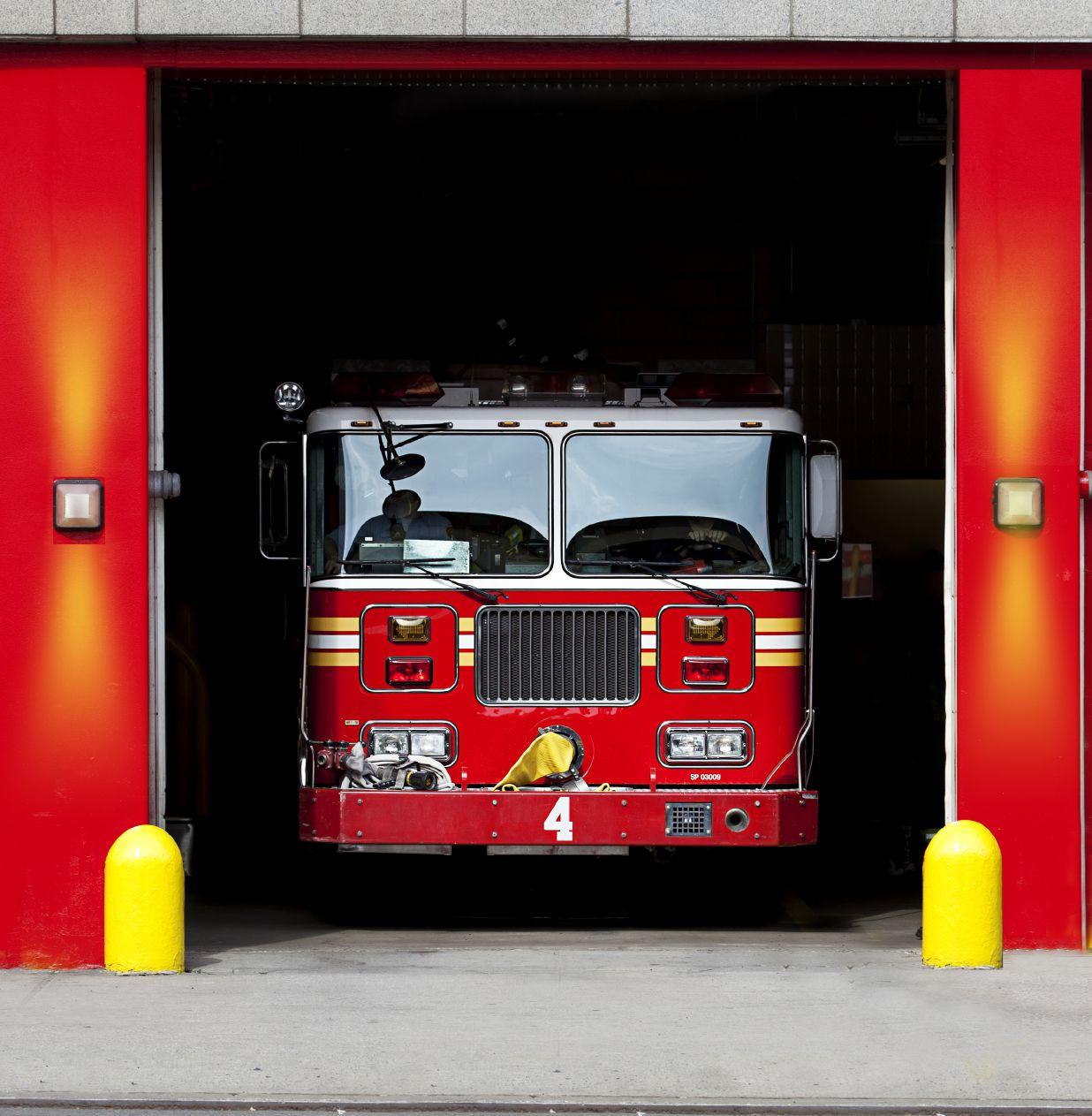
BY VINCE MACKENZIE Fire chief, Grand Falls - Windsor, N.L.
he recruitment and retention of volunteer firefighters is critical to the successful and efficient operation of a volunteer or composite fire department. Effective fire departments require ample personnel to safely and efficiently perform their duties, but recruiting for a fire department is not just about having the numbers to fill the ranks. Once recruited, volunteer firefighters should have long careers, full of commitments, sacrifices, duties and responsibilities.
Unfortunately, it is becoming more challenging to recruit, train and effectively retain firefighters across Canada. Some recruits leave after just a short time with the department, which creates a revolving-door effect.
It is no wonder fire departments struggle given the variables and factors affecting recruitment and retention, such as changing demographics and lifestyles in our communities. But it’s not just the fire service that is seeing a drop in volunteerism; all community and service organizations are experiencing challenges to their very existence.
Most fire chiefs should understand what is going on in their respective fire departments, but do they?
A department’s image within a community is one aspect of recruitment that is often overlooked. In my view, there are two reasons to explain why image is ignored.
Perhaps we have become so secure in what we perceive as our community reputations that our collective complacency hinders our ability to recruit. We feel that our organizations are noble and honourable, so we assume anyone in a community with half a heart would answer the call to become a firefighter. These departments are then shocked when very few come to volunteer.
Nothing portrays the image of your fire department to potential recruits more than the climate and atmosphere created from within. Existing members in the fire department are one of your biggest marketing tools. But marketing works both ways; if members have bad attitudes, their demeanours can negatively affect recruitment.
Is your department so rooted in policy and tradition that the doors are closed to potential recruits? I am not talking about gender or race, I am talking about personalities and leadership skills of your present membership. I have seen this happen in departments –a large recruitment crisis occurs that requires change and the entire old guard leaves. Only then does the department transform into something better than ever before.
Does your department experience frequent turnovers? Is it possible that when new firefighters experience the atmosphere in your fire station that some choose to renege? Perhaps the recruits were not told what to expect up front, or maybe the department does not exemplify a good organization. If you think one of those is true, your department needs an adjustment.
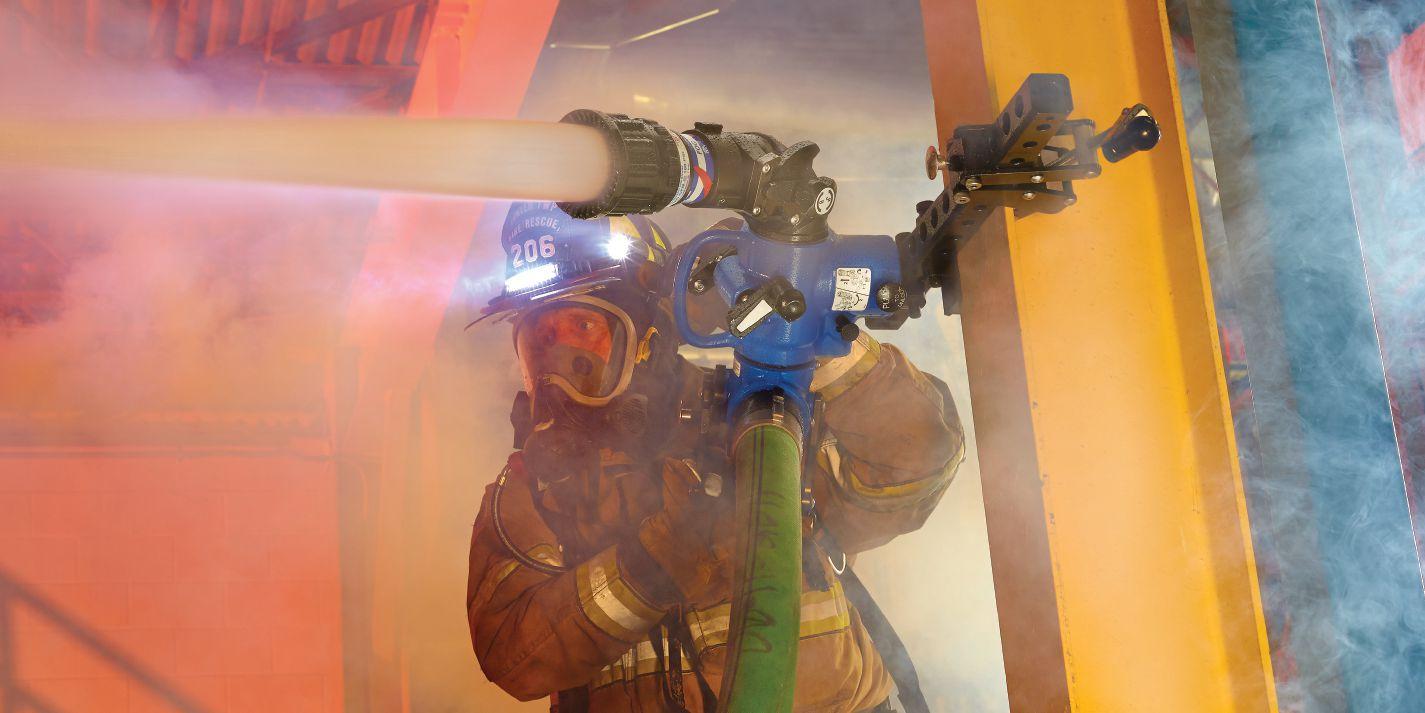
I often say that no one jumps aboard a sinking ship. With this
Right the ship from within before you expect potential sailors to jump on board. ‘‘ ’’
Another possibility is that some of our fire departments have struggled with recruitment so long that low numbers are the new norm and accepted as part of a beat-down organization. With poor outlooks, chiefs might not feel motivated to critically examine their own operations and make tough changes away from local tradition.
Volunteer fire services need to stop and look inward from time to time. Is behaviour, policy, reputation or public image getting in the way of your recruitment efforts? Are fire chiefs publically protesting that no one wants to join their organizations, claiming that everyone in town is too busy, or the new generation doesn’t have the same values?
Vince MacKenzie is the fire chief in Grand Falls-Windsor, N.L. Email him at firechief@townofgfw.com and follow him on Twitter at @FirechiefVince
in mind, it is important for fire departments to be strong, virtuous organizations, rooted deep in training and professionalism. Potential recruits who are willing to serve for the right reasons seek out disciplined organizations; and when they find them, they typically stay for long careers and contribute passionately.
Cultures take a long time to develop and are also slow to deteriorate. Creating a positive culture within your department sets the foundation for successful recruitment and retention. Right the ship from within before you expect potential sailors to jump on board.
While most Canadian towns have other external recruitment challenges, we must also look at ourselves critically from time to time. Before decrying the lack of personnel in your fire department, examine whether the message and reputation of your fire department is inviting to potential volunteers.
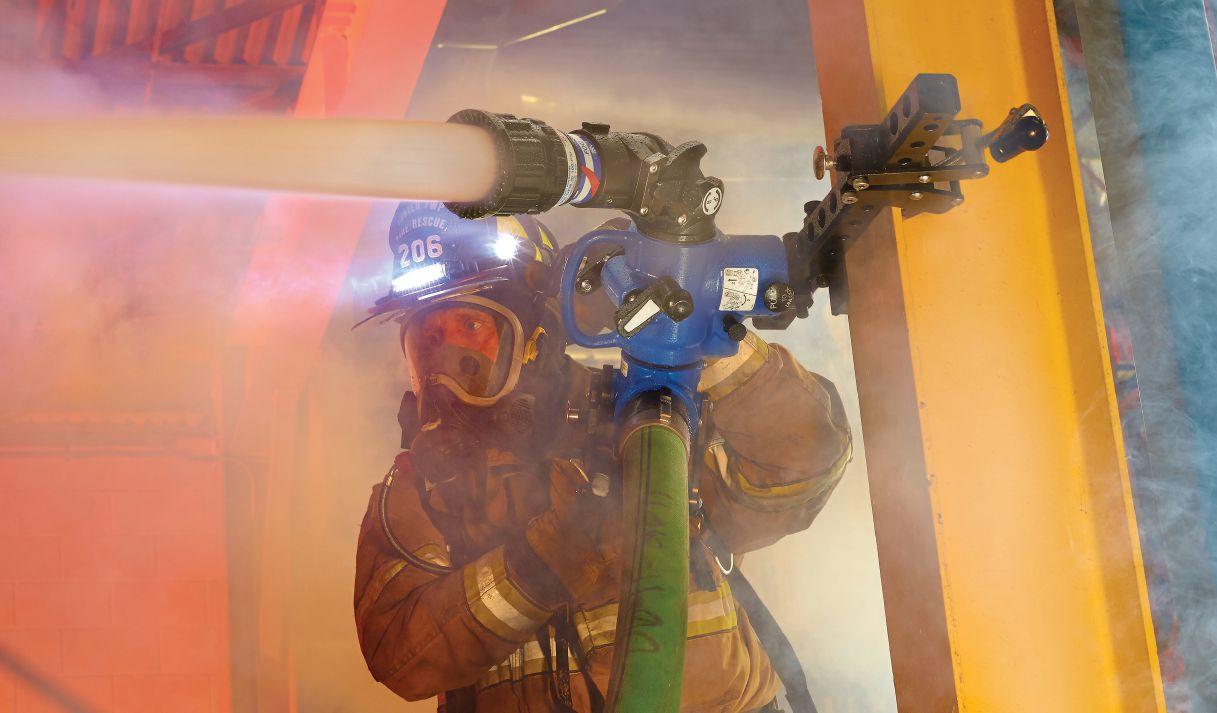
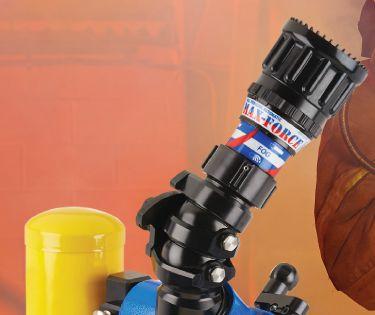
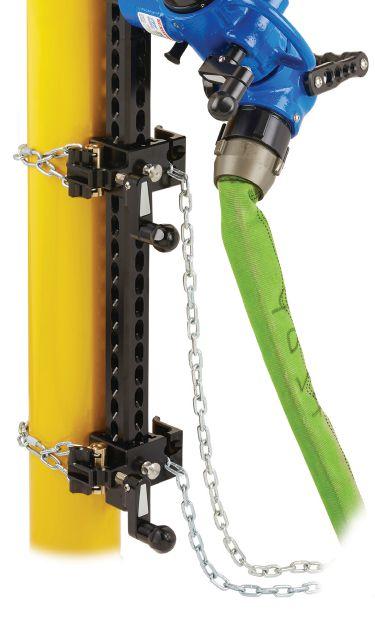
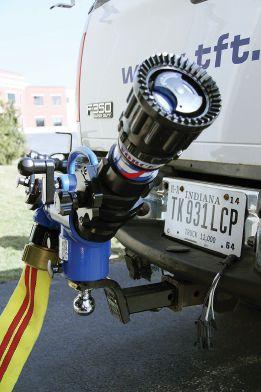
The Hemisphere is a versatile, lightweight, and quick to deploy portable monitor that gives the user the ability to quickly establish water flow in locations that ground monitors cannot.
Since the Hemisphere doesn’t rely on gravity for stability, it can be pointed horizontal and down, in addition to up.
The rotating, swiveling waterway, allows the stream to be pointed in virtually any direction, within a hemispherical range without interrupting water flow.
To learn more about how you can provide maximum performance and safety to limited staff during initial attack operations, contact your local TFT dealer today.