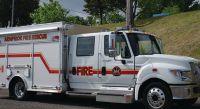
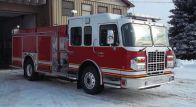
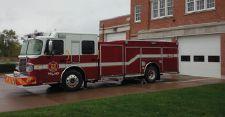
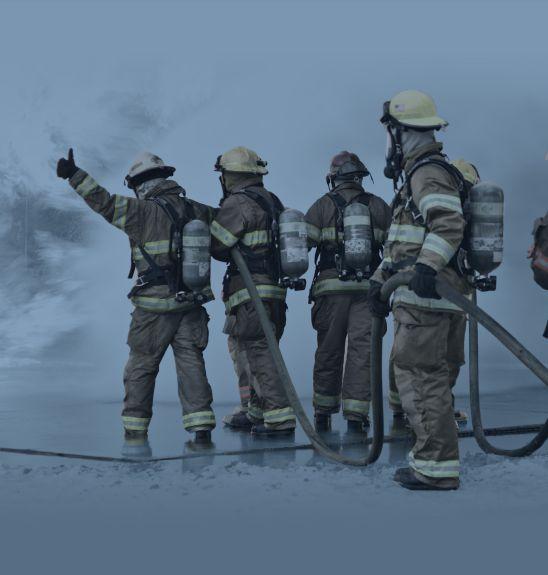
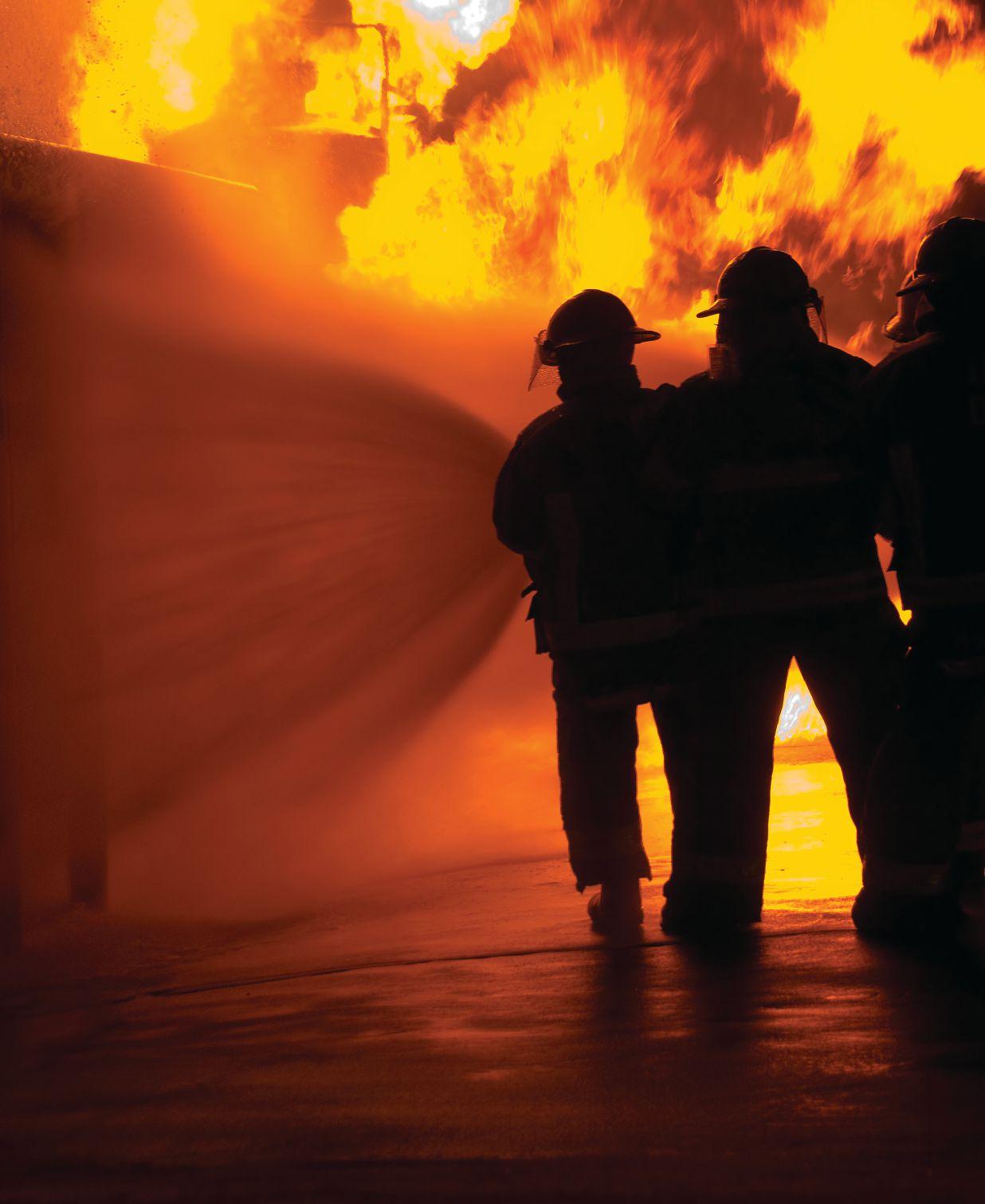
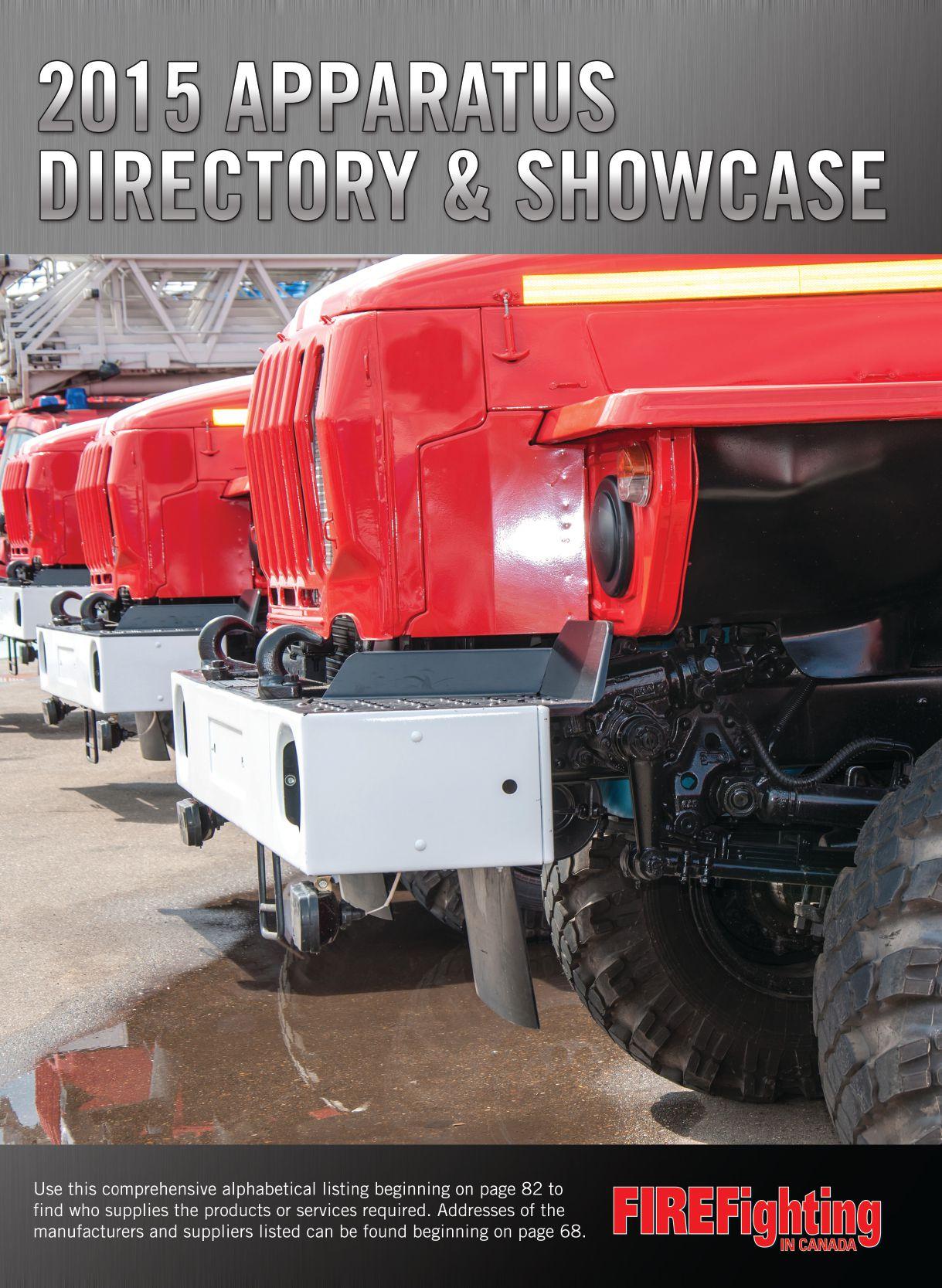
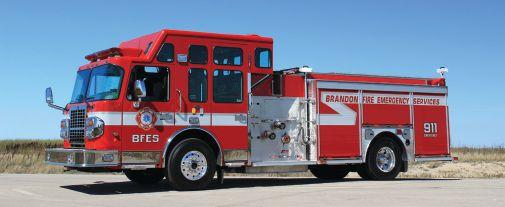
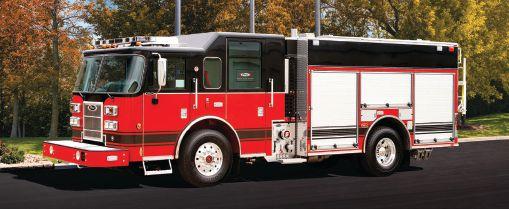
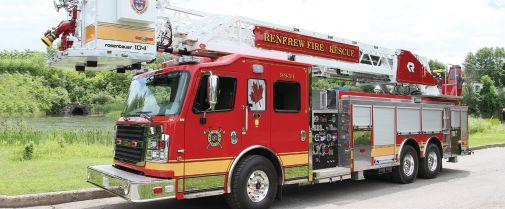
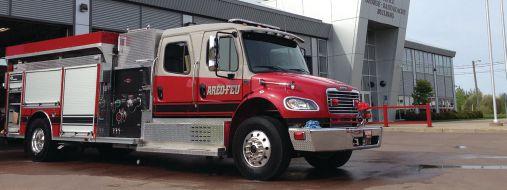
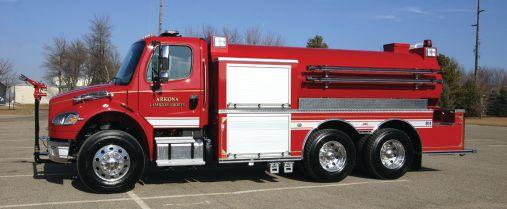
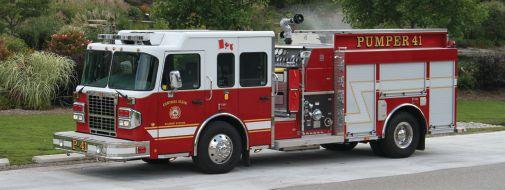
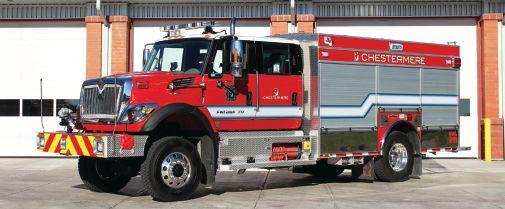
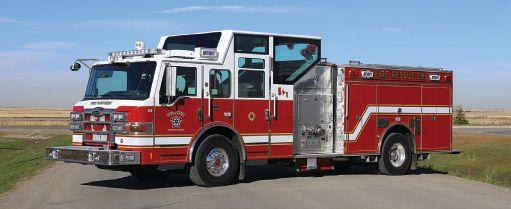
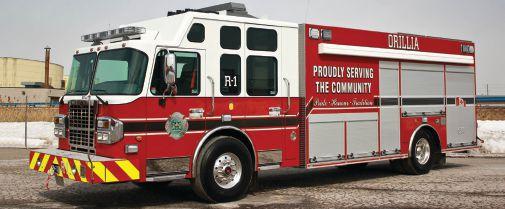
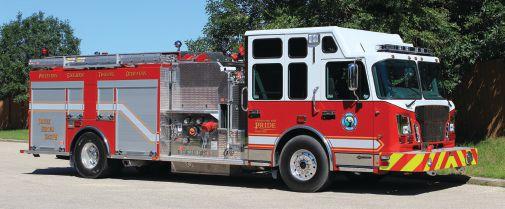
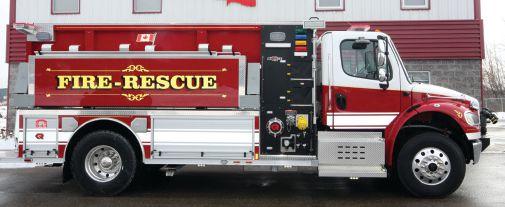
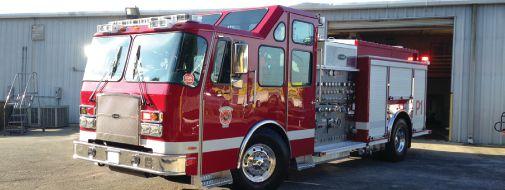
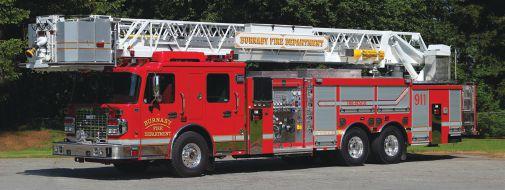
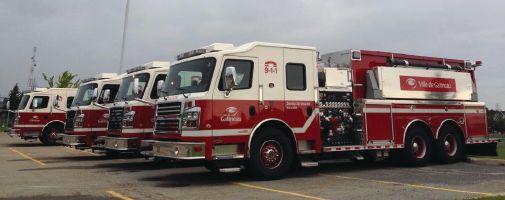
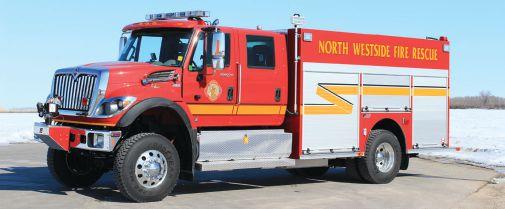
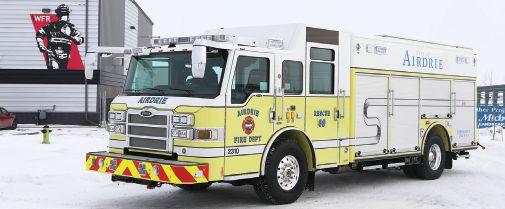
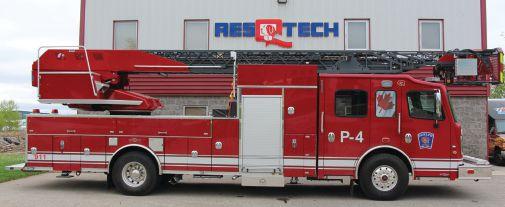
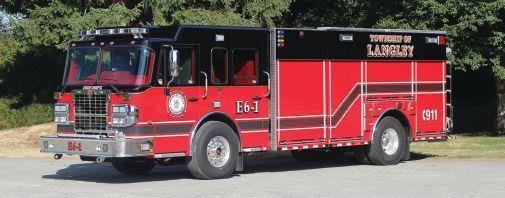
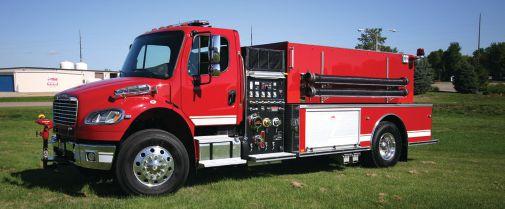
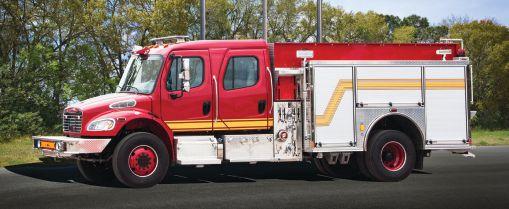
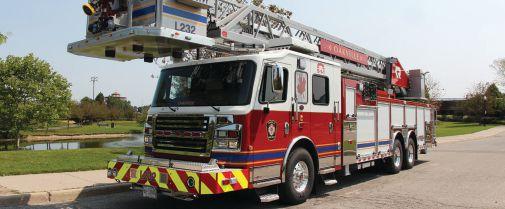
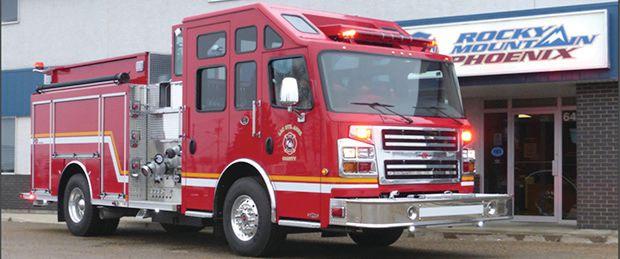
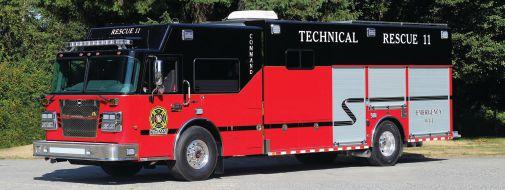
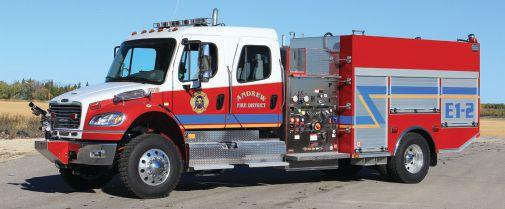
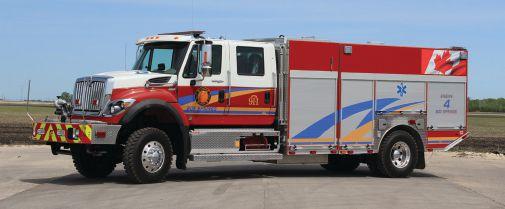
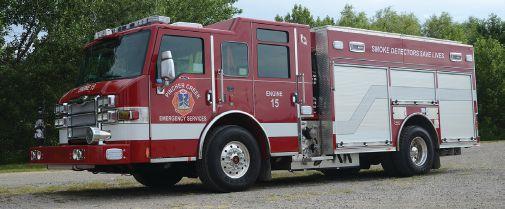
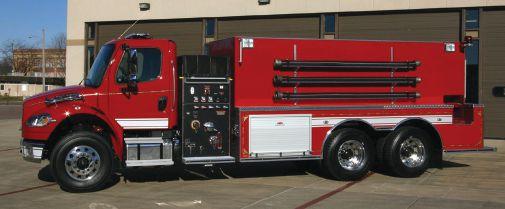
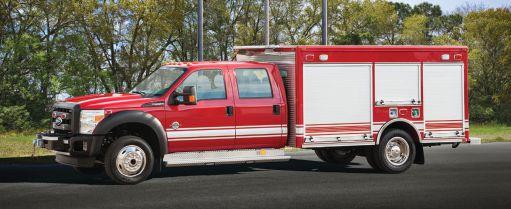
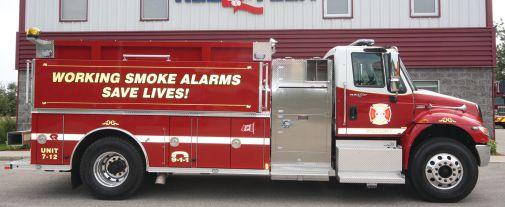
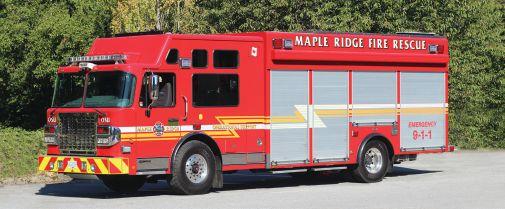
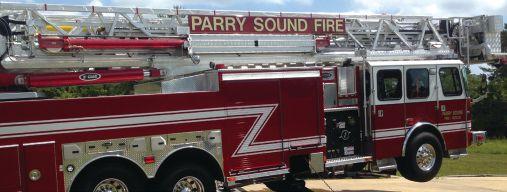
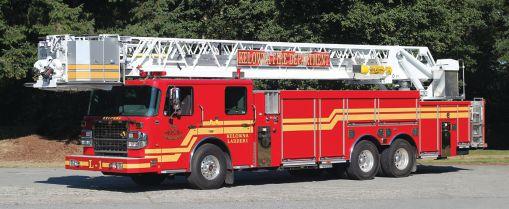
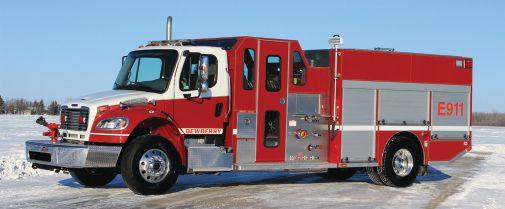
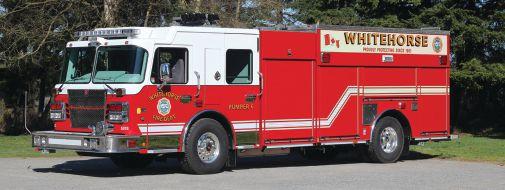
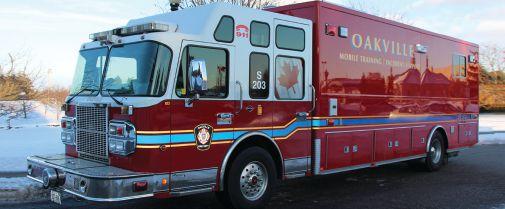
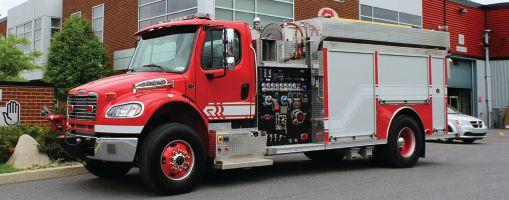
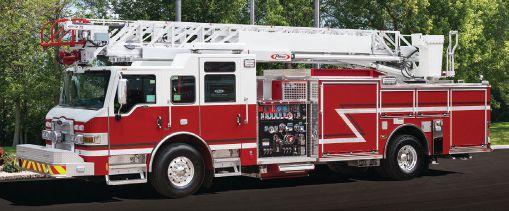
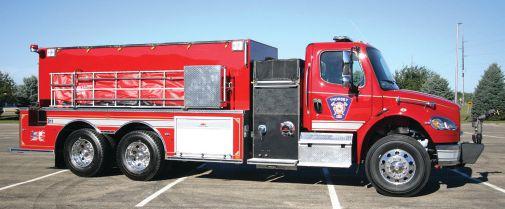
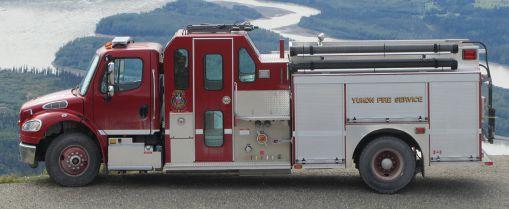
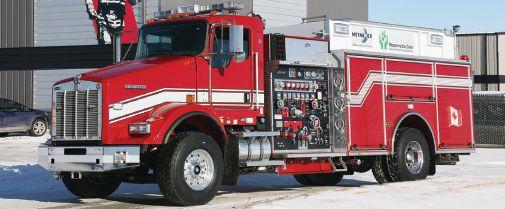
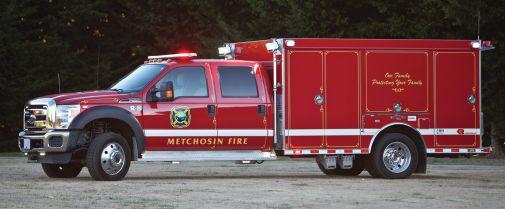
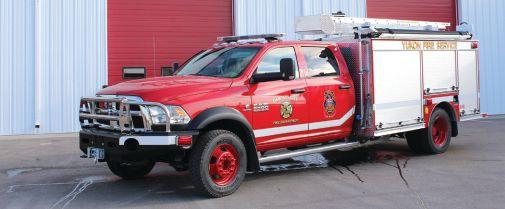
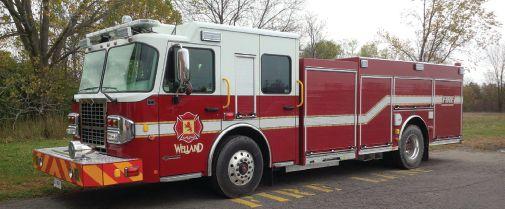
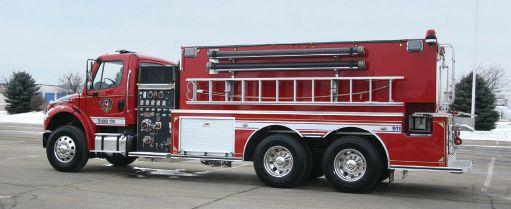
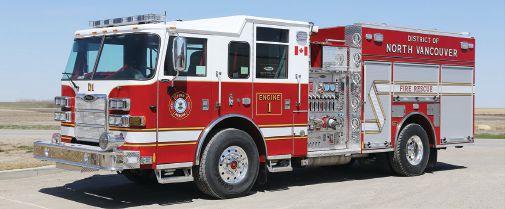
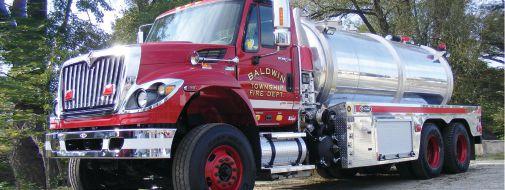
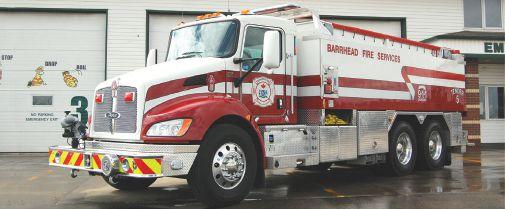
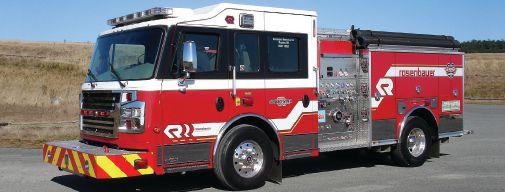
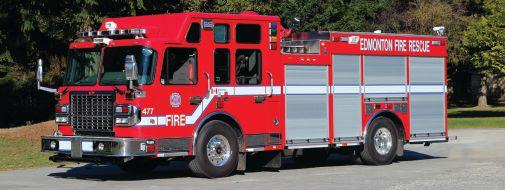
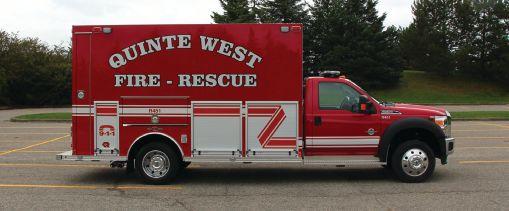
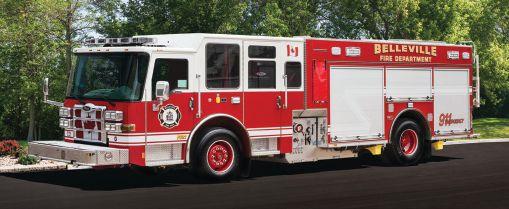
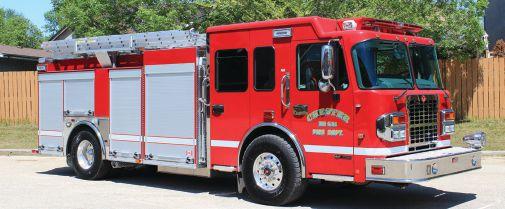
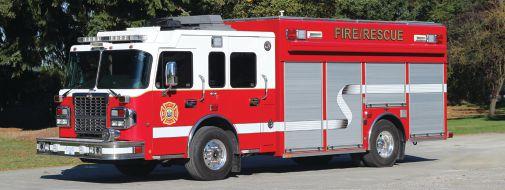
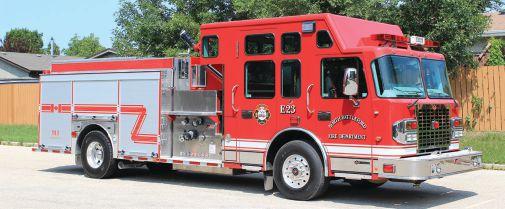
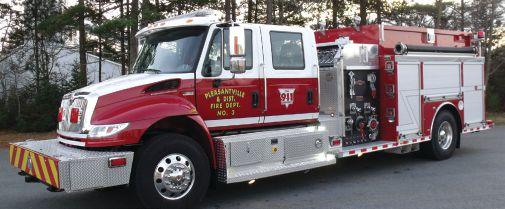
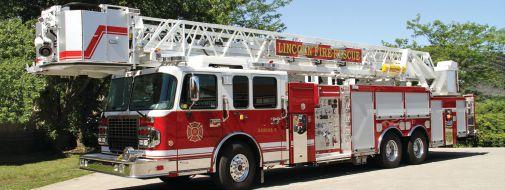
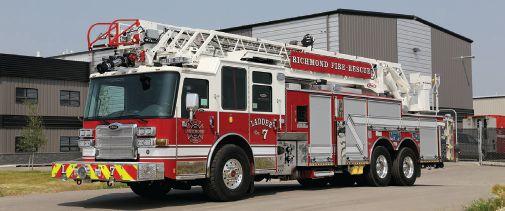
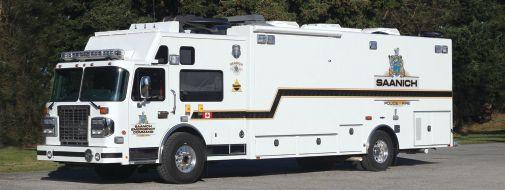
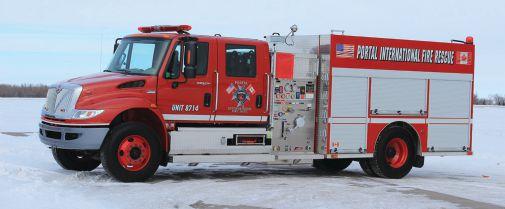
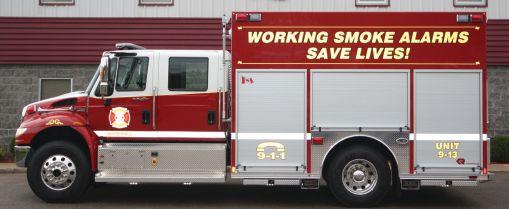
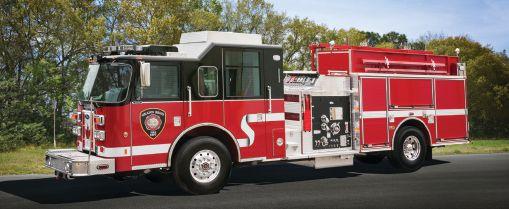
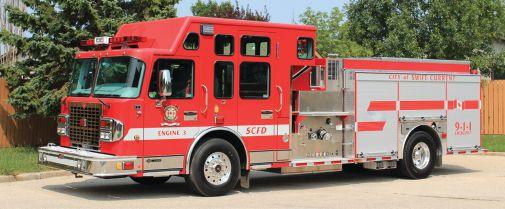
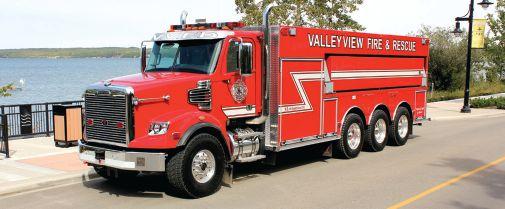
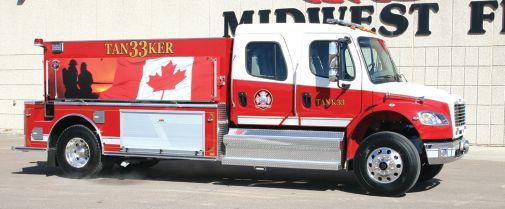
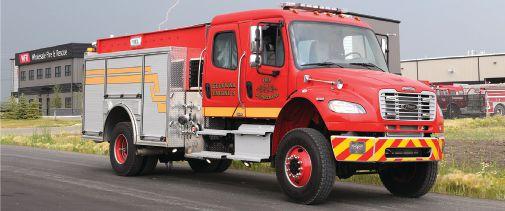
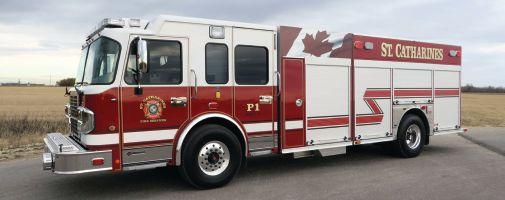
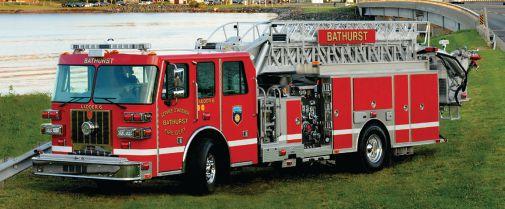
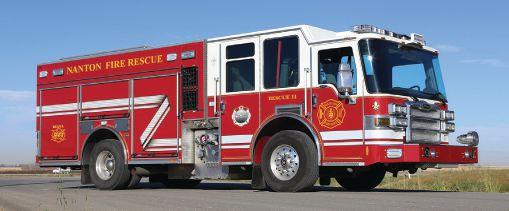
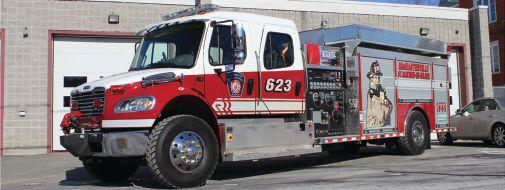
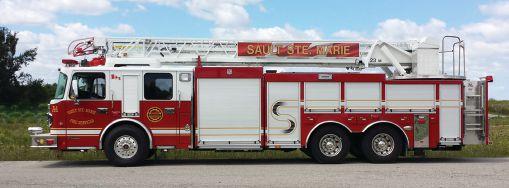
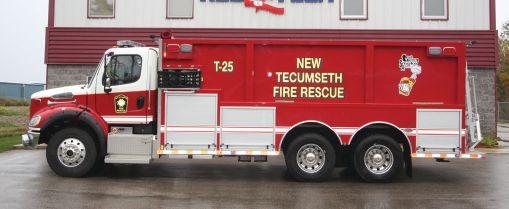
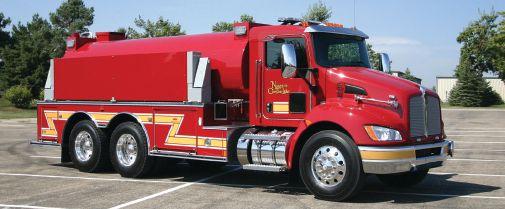
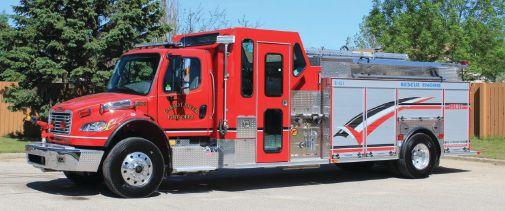
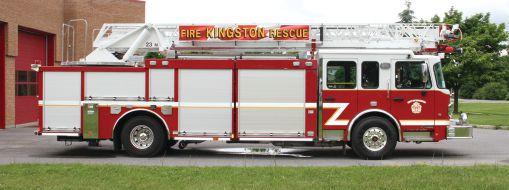
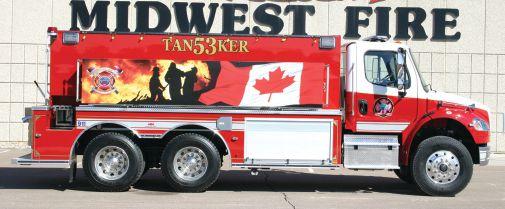
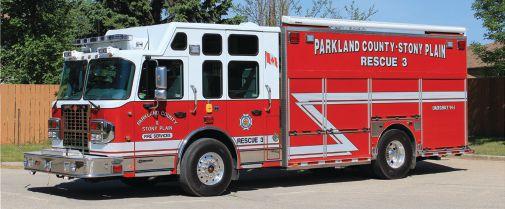
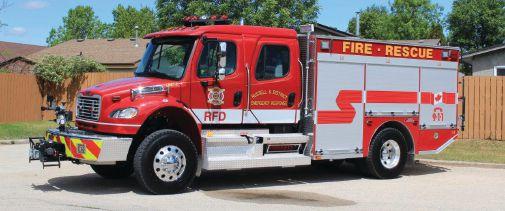
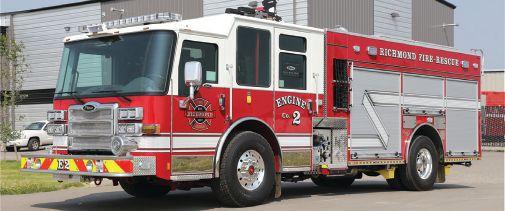
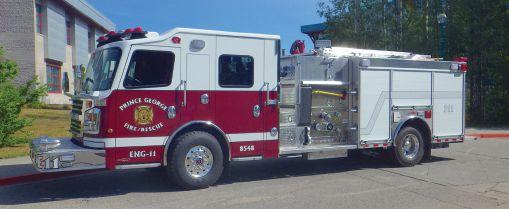
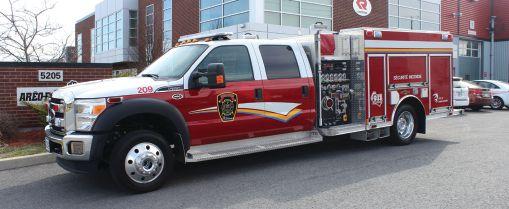
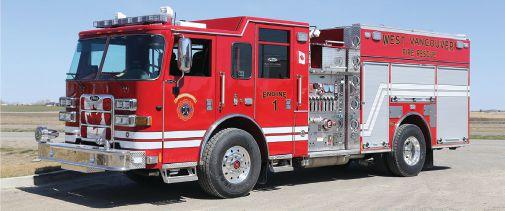
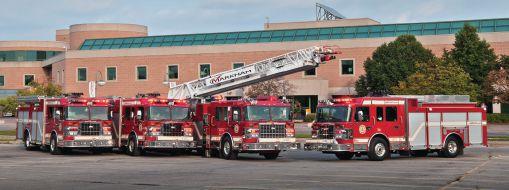
Truck makers unveiled their newest designs and technology at the FDIC trade show in Indianapolis in April, where the focus was on comfort, safety and the environment. By Laura King
22
EFFICIENCY IN DESIGN
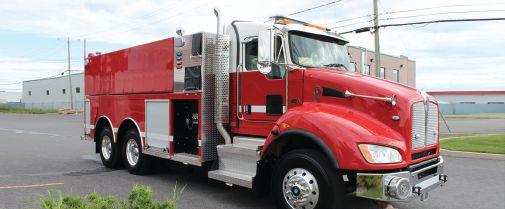
The Carrot River Fire Department in Saskatchewan worked with Winnipeg-based Fort Garry Fire Trucks to build a pumper-tanker hybrid that includes Waterous’ new OneStep compressed-air foam system. By Olivia D’Orazio 52 CONTAINER CONUNDRUM
The line-of-duty death of a volunteer firefighter in Enderby, B.C., after a shipping container exploded, was a wake-up call for the fire service to investigate possible hazards of shipping containers and work toward federal and provincial regulations. By Don Delcourt 62 DATA COLLECTION
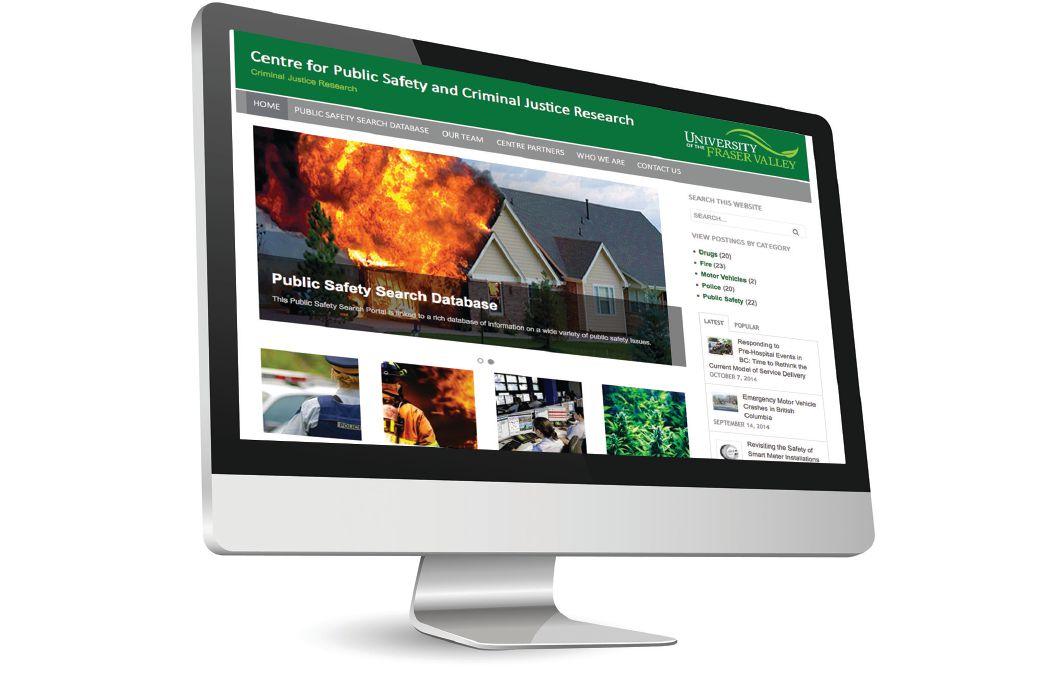
Fire-service decision makers can now access a database of information about public safety through a new search portal created by the University of the Fraser Valley in British Columbia. By Irwin Cohen and Len Garis
BY LAURA KING Editor lking@annexweb.com
Closure after 844 days?
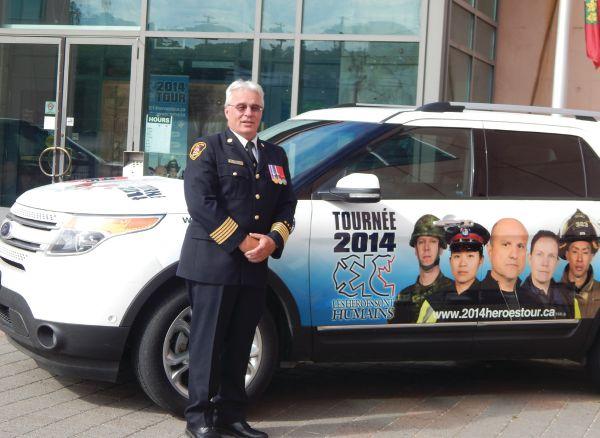
here’s a brief story on page 8 about the Heroes are Human PTSD tour, and a photo of Elliot Lake Fire Chief Paul Officer, smiling, with the tour vehicle.
As we were putting this apparatus issue of the magazine to bed on the Friday before Thanksgiving, I was multi-tasking, writing about trucks and green technology (see page 10), but also making sure I had my files in order to head to Elliot Lake after the long weekend, a day in advance of the release of the report from the inquiry into the mall collapse in that northern Ontario city and the emergency response to it.
The Algo Centre mall collapsed on June 23, 2012. The inquiry ran for seven months in 2013, from March 4 through Oct. 9. A two-day roundtable with stakeholders followed in Ottawa. The report was released Oct. 15 – this year. That’s 844 days.
we’ve kept in touch through Facebook since we met at the inquiry in August 2013; his motorcycle ride around the spectacular Cabot Trail in the Cape Breton Highlands National Park over the summer was, no doubt, therapeutic. (Going around the trail – as we say, counter-clockwise, of course, for the best views of the green hills, blue sky and boisterous Atlantic Ocean – is perhaps world’s best therapy for all that ails us!)
ESTABLISHED 1957
November 2014 VOL. 58 NO. 7
EDITOR LAURA KING lking@annexweb.com 289-259-8077
ASSISTANT EDITOR MARIA CHURCH mchurch@annexweb.com 519-429-5184
PRESIDENT MIKE FREDERICKS mfredericks@annexweb.com
PUBLICATION MAIL AGREEMENT #40065710 RETURN UNDELIVERABLE CANADIAN ADDRESSES TO CIRCULATION DEPT.
ON THE COVER
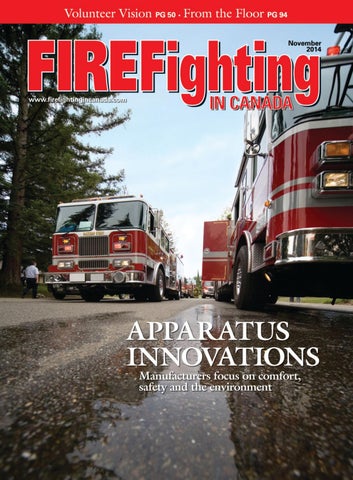
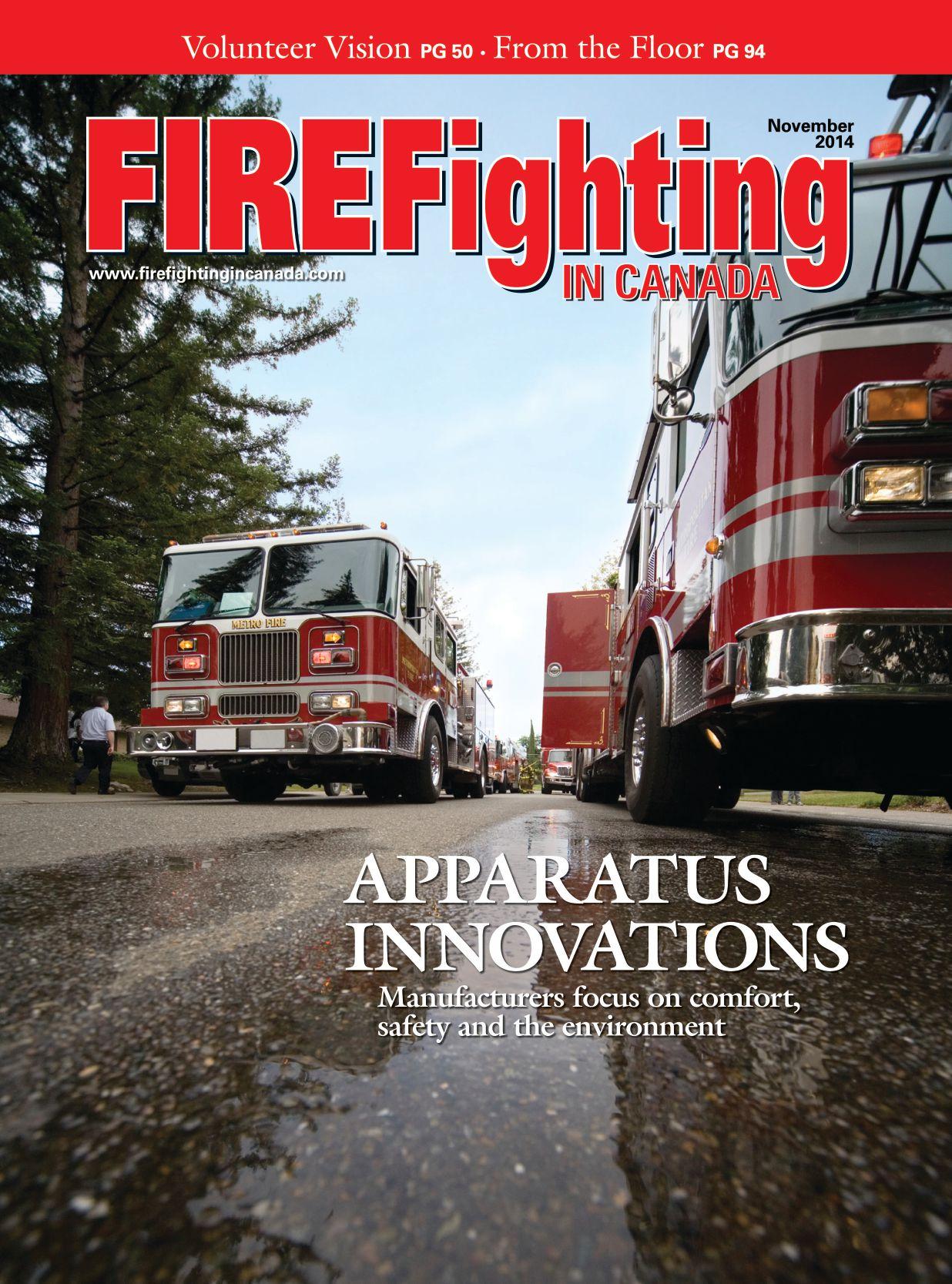
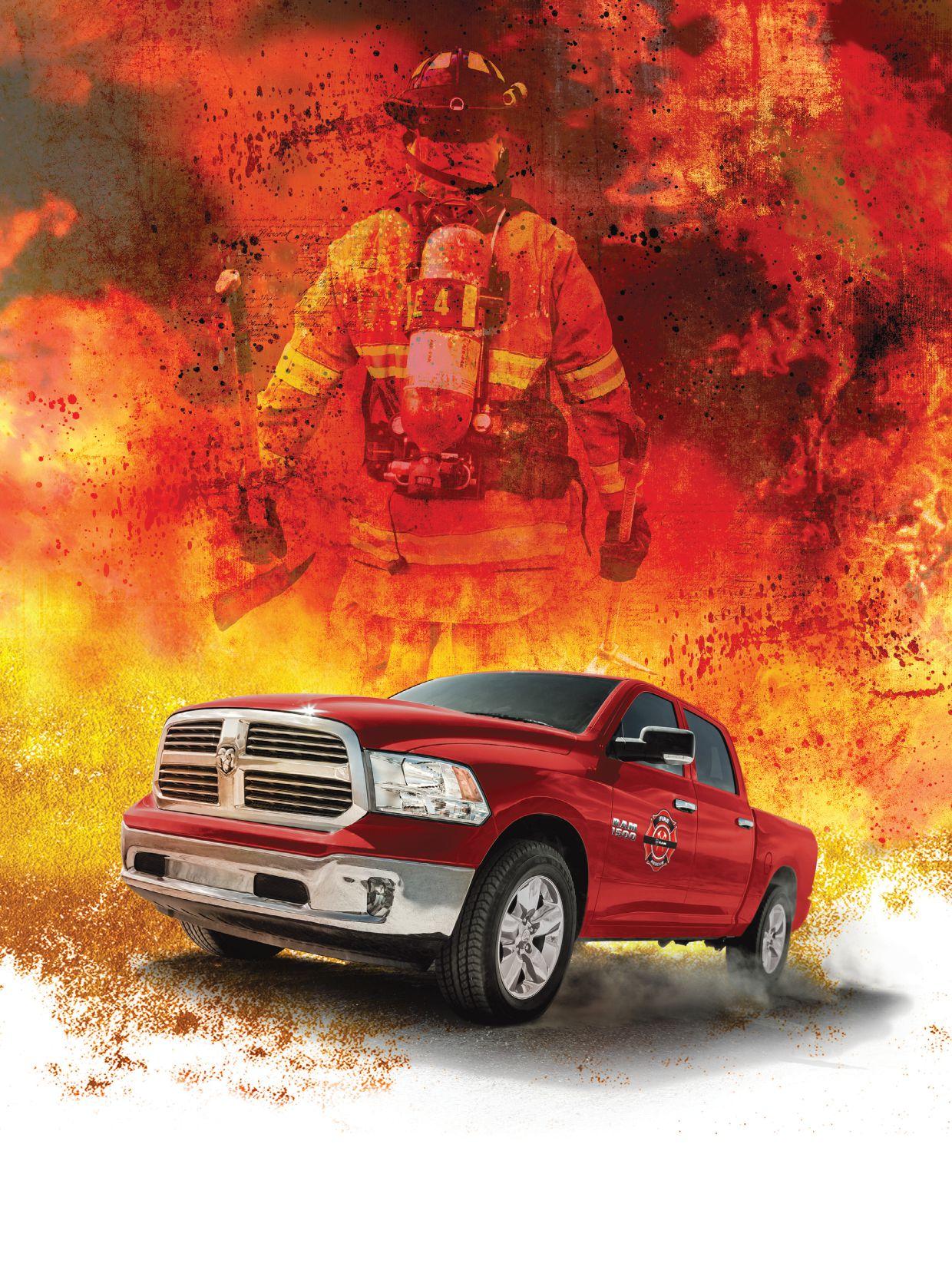
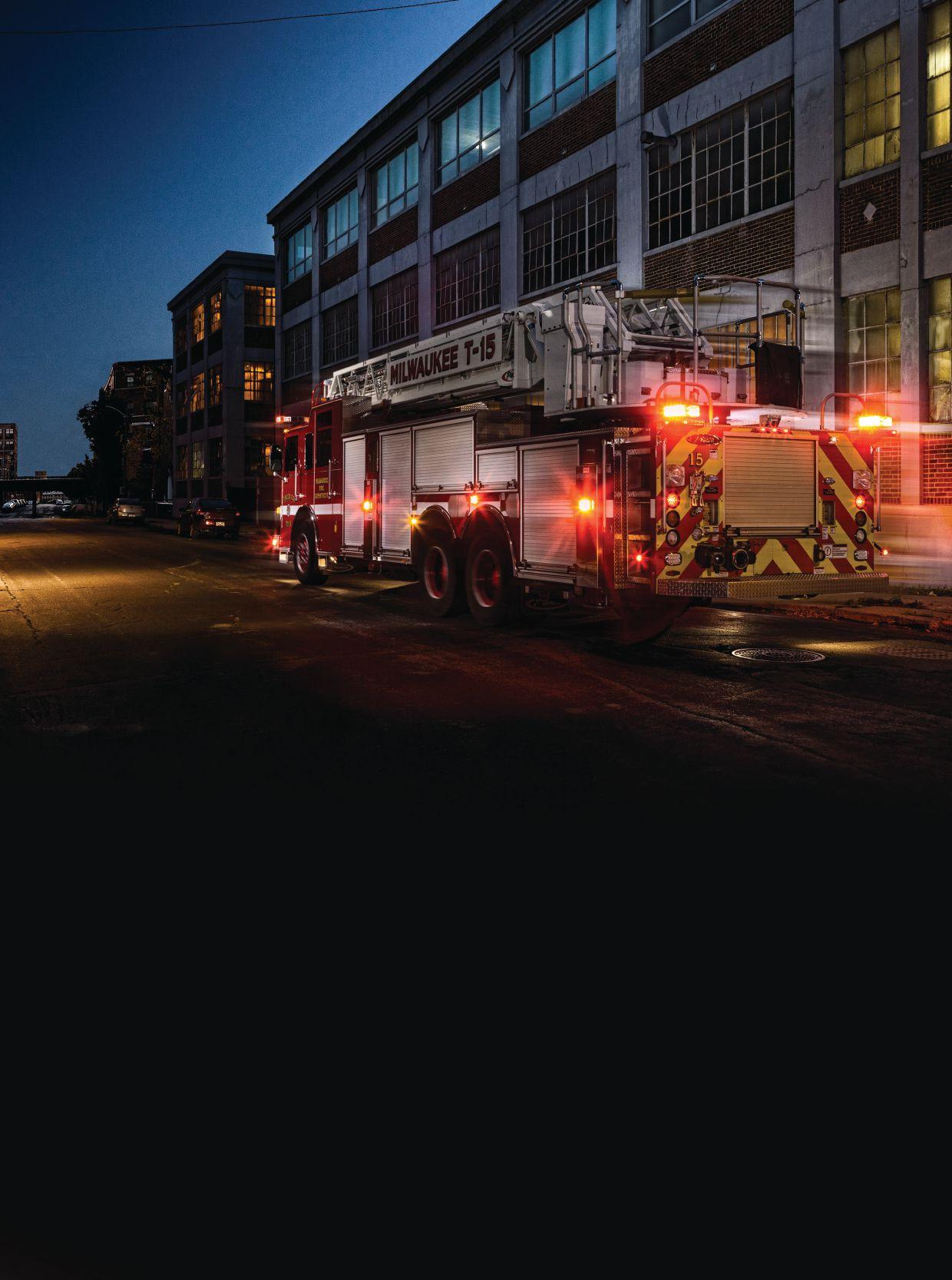
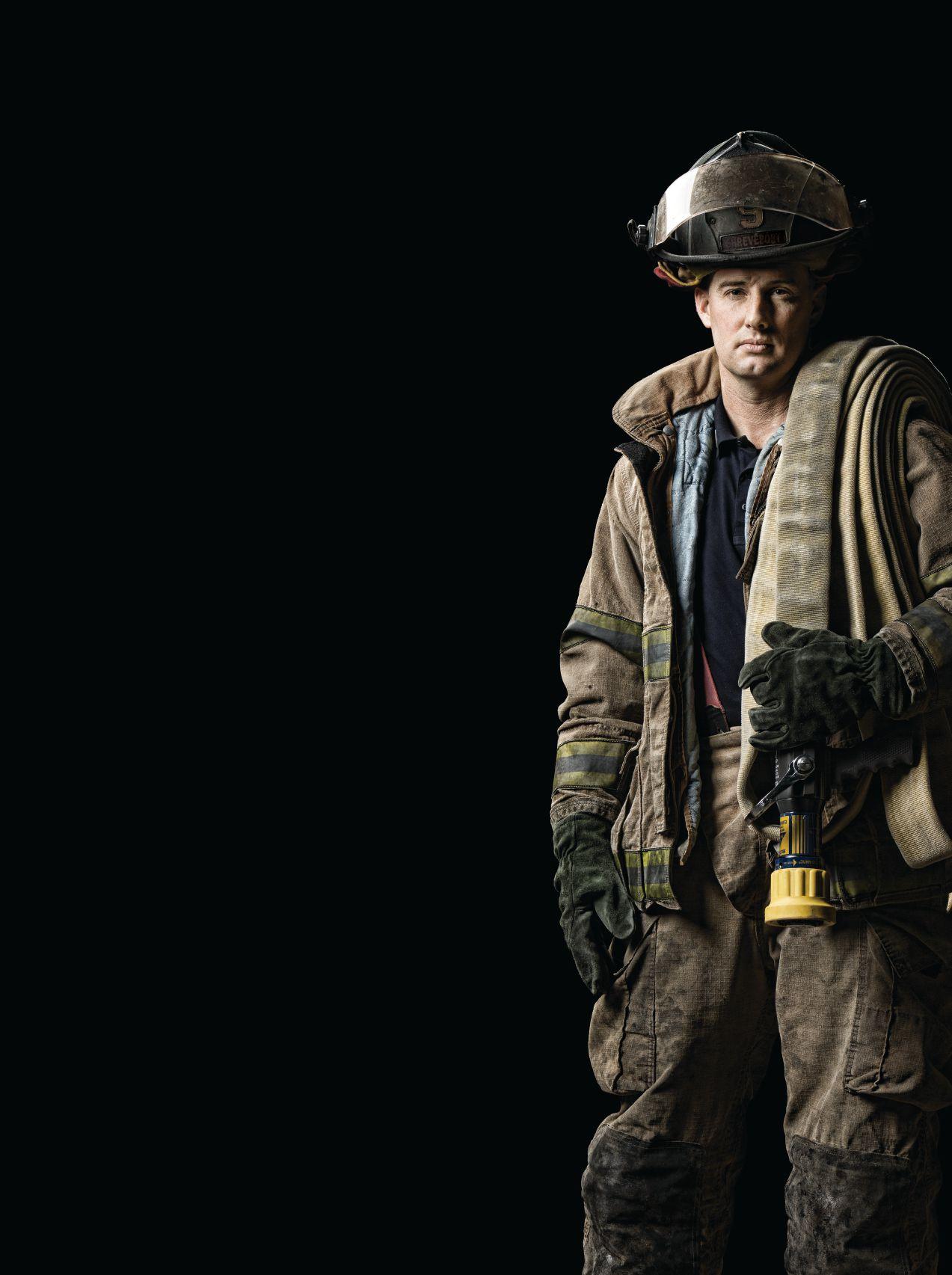
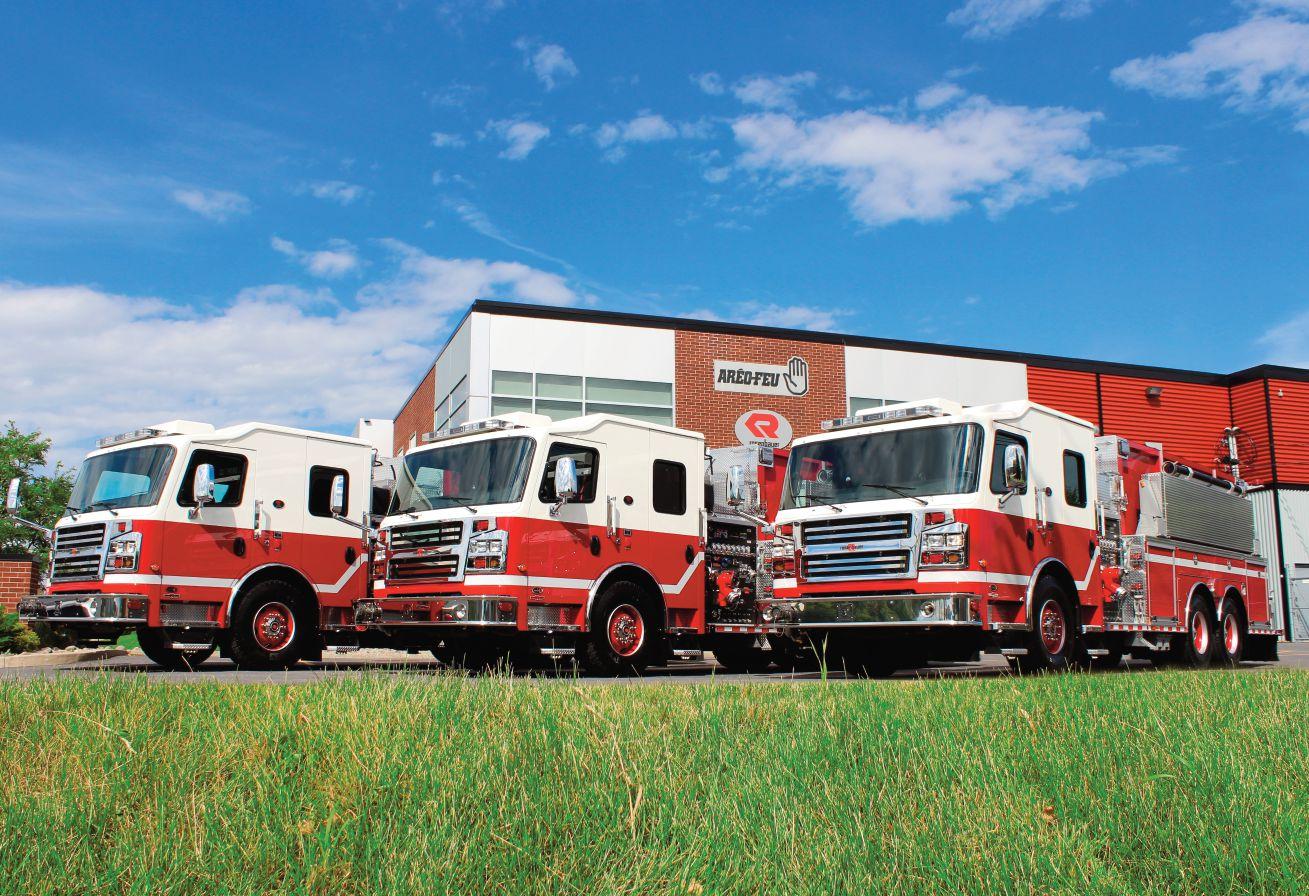
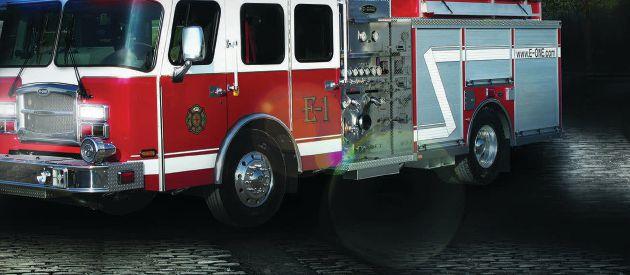
Truck makers unveiled their well-kept secrets at FDIC in Indianapolis. See story page 10.
Eight-hundred and forty-four days – many of them spent of waiting and wondering and stressed, particularly Chief Officer, who had been a building inspector in Elliot Lake before he became fire chief, and captains John Thomas and Darren Connors, who were among the first on the scene of the incident that killed two women and weighed heavily on a community in which everyone knows everyone else.
All three testified at the inquiry – Officer twice, once about his dealings with the mall and its owners in his former job, and again, over several days (due to interruptions ranging from his own much-needed vacation time to Ontario Provincial Police schedules), as the fire chief and incident commander.
Capt. Thomas is a fellow Cape Bretoner;
I remember approaching Thomas at the end of his second day of testimony on Aug. 20, 2013. He was in uniform, standing hand-in-hand with his wife. As I walked toward him, his wife stepped protectively in front of him, trying to shield him from yet another aggressive reporter.
“It’s OK,” he said. And extended his hand to shake mine, smiling under his trademark handlebar moustache.
Thomas was plain-spoken on the stand – none of the acronym-laden gobbledygook that came from the bureaucrats and managers. And he was thoroughly professional.
I don’t know if Thomas or Capt. Connors were at the Heroes are Human PTSD tour stop in Elliot Lake in June; that decision is personal and I would never ask.
I know Paul Officer was there.
Let’s hope that by the time you read this in November there will have been some closure to the tragedy that was caused by greed and negligence, not by the emergency response.
P.O. Box 530, SIMCOE, ON N3Y 4N5 email: subscribe@firefightingincanada.com Printed in Canada ISSN 0015–2595
Canada – 1 Year - $24.00 (with GST $25.20, with HST/QST $27.12) (GST - #867172652RT0001)
USA – 1 Year $40.00 USD
We acknowledge the financial support of the Government of Canada.
Occasionally, Fire Fighting in Canada will mail information on behalf of industry-related groups whose products and services we believe may be of interest to you. If you prefer not to receive this information, please contact our circulation department in any of the four ways listed above.
All advertising is subject to the publisher’s approval. Such approval does not imply any endorsement of the products or services advertised. Publisher reserves the right to refuse advertising that does not meet the standards of the publication. www.firefightingincanada.com
The new 2015 Ram 1500 is the truck Firefighters, EMS and First Responders rely on in the toughest situations. The Special Service* Vehicle features a mighty 5.7L HEMI® V8 with FuelSaver MDS and VVT Technology offers 395 hp and 407 lb-ft torque. And its part-time four-wheel-drive system, Electronic Stability Control, 17-inch steel wheels and 6-speed automatic transmission delivers great power without compromising efficiency. The 2015 Ram 1500 – strong, smart, and versatile, like the heroes that drive them.
STATIONtoSTATION
ACROSS CANADA: Regional news briefs
Thunder Bay hall location improves response times
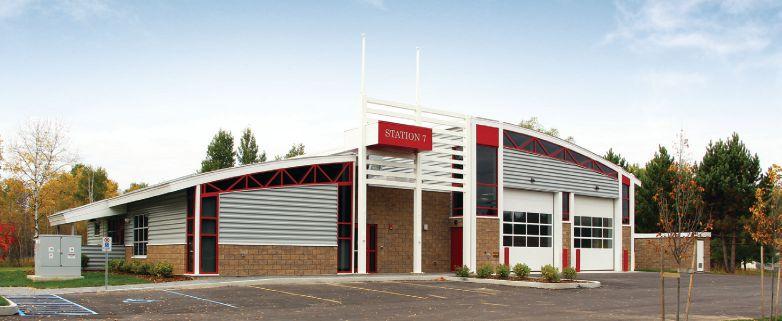
The new Station 7 in Thunder Bay replaces a building acquired when the cities of Fort William, Port Arthur and the townships of Neebing and McIntyre amalgamated in 1970. The new building opened Oct. 2.
A little more than year after workers broke ground on the new Thunder Bay Fire Rescue Station 7, the state-of-the-art hall opened on Oct. 2.
Thunder Bay Fire Rescue had commissioned the new hall to replace a building acquired as a fire station in the 1970 amalgamation of four communities that created the City of Thunder Bay.
The new station is the second stage of a six-project
plan to improve the facilities, infrastructure and response times for fire and EMS services in the community. The next project is the relocation of aging Station 6, which no longer accommodates modern fire apparatuses. That move will provide additional six-minute coverage to the recently developed southwest portion of The City of Thunder Bay.
Other projects include
THE BRASS POLE
Promotions & Appointments
DAVID SPEED became fire chief in Whitby, Ont., on Oct. 1, returning to the municipality for which he previously served as chief fire prevention officer. Speed had been deputy chief in Oshawa before his appointment. He began his career as a firefighter with Markham Fire and Emergency Services in 1995.
GEORGE CLANCY was promoted to fire chief of Leduc Fire Services in Alberta on Sept. 18. Clancy started with the department in 1990 as a volunteer firefighter and has been the deputy chief for the past nine years. In 2013, he was awarded the City of Leduc’s Excellence in Leadership Award.
three additional EMS facilities that will be attached to existing fire stations, and the conversion of the old Station 6 to an EMS station when the new Station 6 is commissioned near the end of this year.
With council support of the strategic master fire plan and the co-operation of Superior North Emergency Medical Services, the community gets better response time for both fire and EMS services.
MICHAEL ROZARIO is the new deputy fire chief of the Georgina Fire Department in Ontario. Formerly the deputy fire chief for the Town of Bradford West Gwillimbury, Rozario began his career as a volunteer firefighter with the Town of WhichurchStouffville in 1999. Rozario is enrolled in the public adminis-
The new Station 7 is a very modern facility built for function and safety. More glass increases the natural light available during the day, which reduces electricity demands, and the appealing architecture blends in with the residential neighbourhood in which the new station is situated.
The vestibules of the new station features areas of refuge for the public that can be locked with touch of a so-called panic button inside the vestibule; there is also the ability to summon help from inside.
The building projects, when completed, will be the largest capital renewal ever undertaken by Thunder Bay Fire Rescue and reflect the co-operation between fire and EMS to provide improved service to the community.
Thunder Bay Fire Rescue has eight fire stations and a training centre complex serving a population of 110,000.
– Chief John Hay
tration program at Ryerson University and the fire service administration program at Dalhousie University.
Mississauga, Ont., welcomed JAMIE ZIMMERMAN as a division chief of fire prevention and life safety on Oct. 20. Zimmerman had been the deputy chief of Waterloo Fire Rescue
Firefighters train for free
For Sandy Hill, a volunteer firefighter from Nova Scotia, the opportunity to train for aircraft rescue fire fighting is rare.
“We definitely do training at home, but to be able to get to a mock tarmac, see the heat inside of the fuselage and experience that, is very exhilarating,” she said.
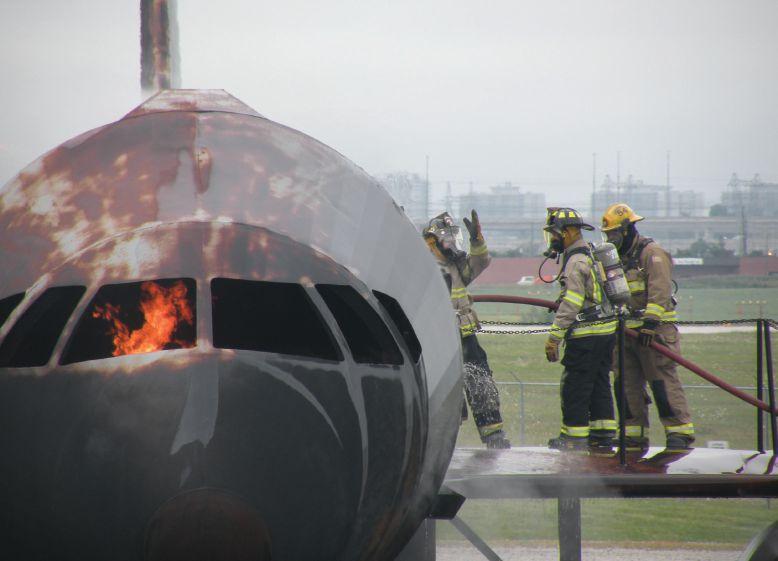
Hill was given that rare opportunity in September when she, along with 131 other firefighters, took part in the third annual Firefighter Training Day hosted by Fire Fighting in Canada at the Fire and Emergency Services Training Institute (FESTI) in Toronto. The day-long event on Sept. 13 was free for all participants thanks to sponsors Scott Safety, M&L Supply, Canadian Safety Equipment and Fort Garry Fire Trucks.
This year’s trainees were divided into six hands-on training courses – firefighter survival, auto extrication, command and control, live fire, aircraft rescue, and patient packaging and triage.
The specialized training was an opportunity for career and volunteer firefighters to hone
Firefighters enter the aircraft training mockup at the Fire and Emergency Services Training Institute as part of an exercise in aircraft rescue fire fighting during Fire Fighting in Canada’s annual Firefighter Training Day held on Sept. 13.
their skills and, for some, to use training equipment not readily available in their regions.
Hill, a volunteer firefighter in Canning, N.S., for the past six years, was one of 14 participants in the aircraft-rescue course and said her goal was to train in a scenario outside of structural fire fighting.
“Using the vantage point of the crash trucks, using turrets, (and), rather than on the ground, seeing it from a different perspective was really, really exciting,” Hill said.
The firefighters were spread out across FESTI’s expansive
practical training area, which includes a confined-spaces building, rescue tower, burn building, aircraft training mockups and auto-extrication area.
Instructors were invited from six different departments to guide the trainees through various drills and scenarios, some to build-up practical skills such as egress in the firefighter survival course and stabilization techniques in auto ex, and some theoretical such as those taught in patient packaging and triage or command and control.
But you can’t beat the aircraft rescue course for visual
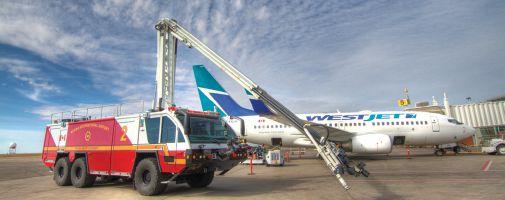
drama. Again and again, firefighters seated in pumper tankers or advancing from the ground, doused the massive, propane-fueled flames of the aircraft training mockups.
“My favourite part was probably climbing up on the wing to do the fire attack because it’s not something you do every day,” said Victoria Mckee, a volunteer firefighter with the Halifax Regional Municipality, after aircraft rescue course wrapped up.
“It was an absolutely fantastic course; I would recommend it to everybody.”
– Maria Church
BY
before his appointment to Mississauga Fire and Emergency Services. His 30 years of service experience includes fire and explosion investigation and fire inspection.
JEFF WEBER has been appointed deputy fire chief for the Barrie Fire and Emergency Service in Ontario in charge of fire prevention. Weber served as deputy chief for Burlington
and Kitchener before his appointment to Barrie on Aug. 25.
Retirements
Fire Chief STEVE COOKE retired from the Central Huron Fire Department on April 30 after serving 32 years with the volunteer department. He became deputy chief in 1993 and chief in 2003.
Last Alarm
KEVIN JAMES, a volunteer firefighter with the Southwold Township Fire Department in Ontario, died on July 25 at the age of 49 after a battle with occupational-related cancer. James was a firefighter with Southwold for 12 years and was with the South West Oxford
fire department prior to that.
CHRIS JOHNSON, an instructor at the Ontario Fire College, died from esophageal cancer at 39 years old. Johnson was a firefighter for more than 15 years and served in various positions before becoming the youngest of six fire instructors at the college. He was diagnosed in June 2013 and fought the aggressive disease just over a year.
PHOTO
MARIA CHURCH
STATIONtoSTATION
ACROSS CANADA: Regional news briefs
Chiefs recognized for commitments to learning
Fire chiefs Gerald Jones of Petitcodiac, N.B., and Gordon Routley of Montreal couldn’t be more different.
Jones is the volunteer chief of a small department, and a champion of fundraising to equip his department; he worked for CN Rail for 33 years.
Routley is a career firefighter and officer with international experience and an academic pedigree.
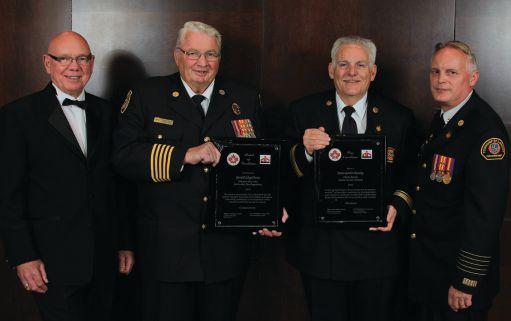
Both, however, are respected by their colleagues, so much so that they were nominated for, and chosen to receive, the Canadian Association of Fire Chiefs award of excellence at the annual conference in September in Ottawa.
Jones has been a firefighter for 46 years and chief since 1996; he is known around town and among his members
for his commitment to fundraising and training.
“He recently set up the opportunity for members to train in forest-firefighting techniques and wherever possible, he tries to use real situations, like mock evacuations and controlled burns,” said the nomination.
Jones’ commitment to the community extends beyond the fire department; he helped raise $16,000 for the food bank.
“He is the stimulus behind and the main author of the Southern Valley mutual-aid plan and received the Queen’s Diamond Jubilee Medal to recognize his commitment and dedication,” the nomination said.
Routlege is well known in North America as the lead investigator for the 2007 Sofa Super Store fire in Charletson,
N.C., in which seven firefighters died.
“He has resolved to deliver the report findings to any fire-service group . . . and to date has delivered the threehour class more than 80 times,” the nomination said.
Routlege had chaired NFPA and IAFC committees; his remarkable 50 years of service include time with the Phoenix Fire Department, which, of course, developed the fire ground command system.
– Laura King
Post-traumatic stress awareness tour visits Elliot Lake
Vince Savoia is Canada’s most vocal proponent of post-traumatic stress awareness.
The former EMS worker was diagnosed with PTSD in 1998, 10 years after he was called to an incident and found Tema Conter murdered in her bed.
Savoia founded the Tema Conter foundation in 2001 and in May began a three-month, 48-city tour to promote awareness of post-traumatic stress disorder; the cross-Canada trek was called the Heroes are Human PTSD tour.
Savoia said he wanted the tour to stop in Elliot Lake, Ont., where in 2012 a mall collapse killed two women and
affected first responders and myriad townspeople.
“Because of what happened two years ago,” Savoia told the Elliot Lake Standard in June. “We felt that it was a town we needed to visit.”
At least one Elliot Lake firefighter was diagnosed with PTSD following the Algo Centre collapse. Chief Paul Officer and captains John Thomas and Darren Connors testified at the inquiry into the collapse in 2013. Inquiry commissioner Paul Belanger’s report on the inquiry and his recommendations were released Oct. 15 in Elliot Lake.
– Laura King
Fire chiefs Gerald Jones of Petitcodiac, N.B., and Gordon Routley of Montreal with their chief-of-the-year awards presented by Jim MacLeod of Fire Underwriter Survey (left) and CAFC past-president Stephen Gamble.
Elliot Lake Fire Chief Paul Officer with the Heroes Are Human tour vehicle in June 2014.
PHOTO BY ROB EVANS
PHOTO BY ISAAC BELISLE
AP INNO
AP P ARATUS INNOVATIONS
Manufacturers focus on comfort, safety and the environment
By LAURA KING
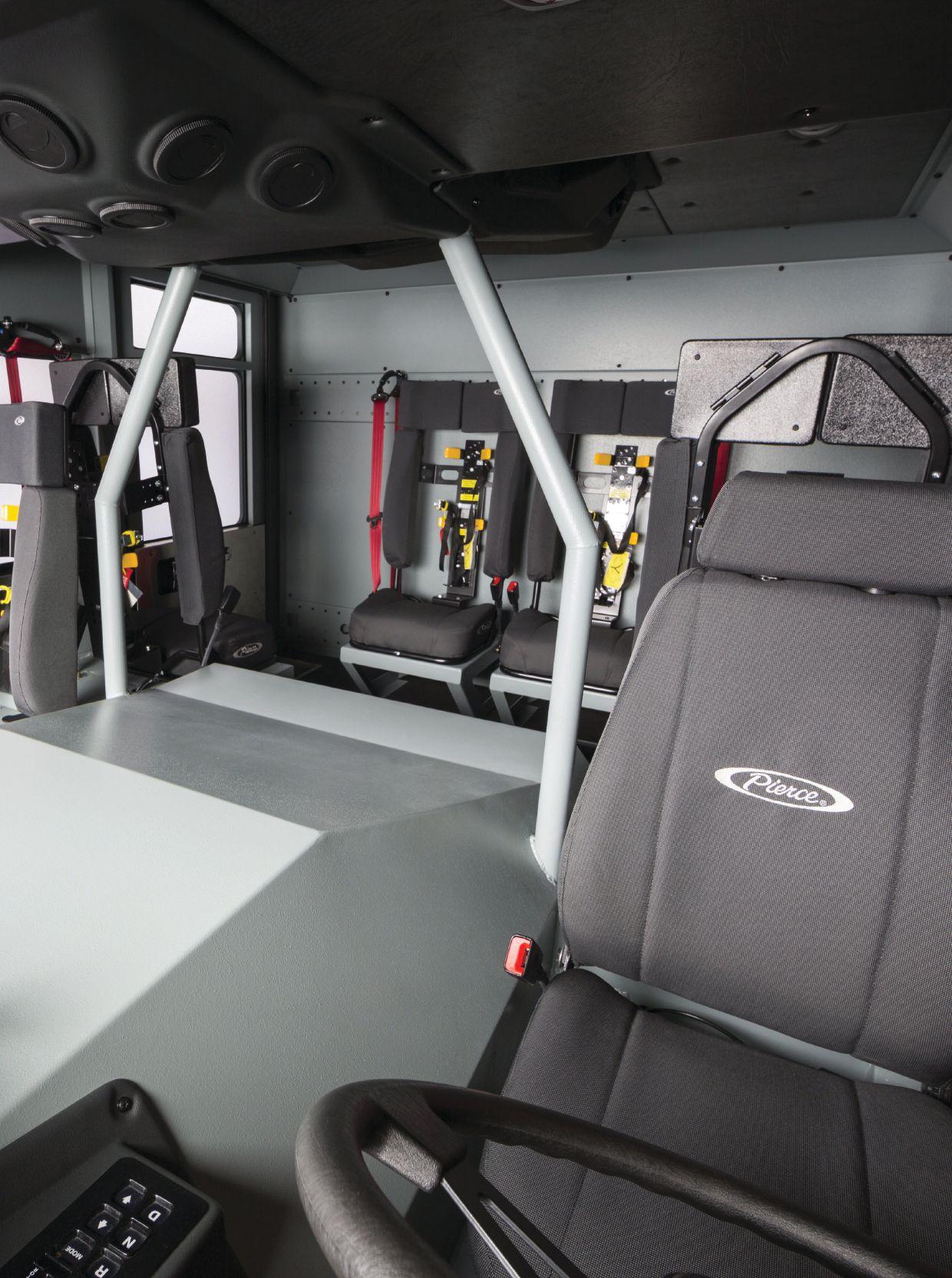
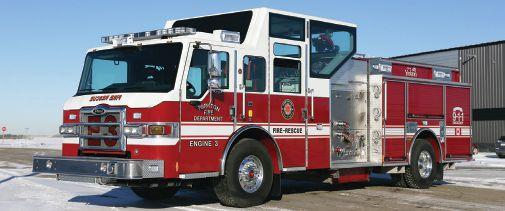
LEFT Pierce’s new Sabre and Enforcer chassis and cabs offer more hip room for the driver and officer due to a reduction in the size of the engine tunnel.
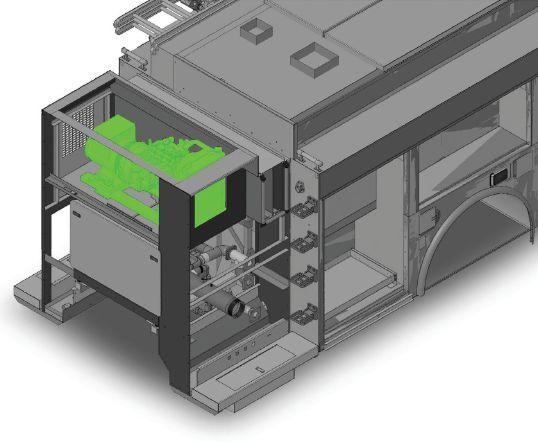
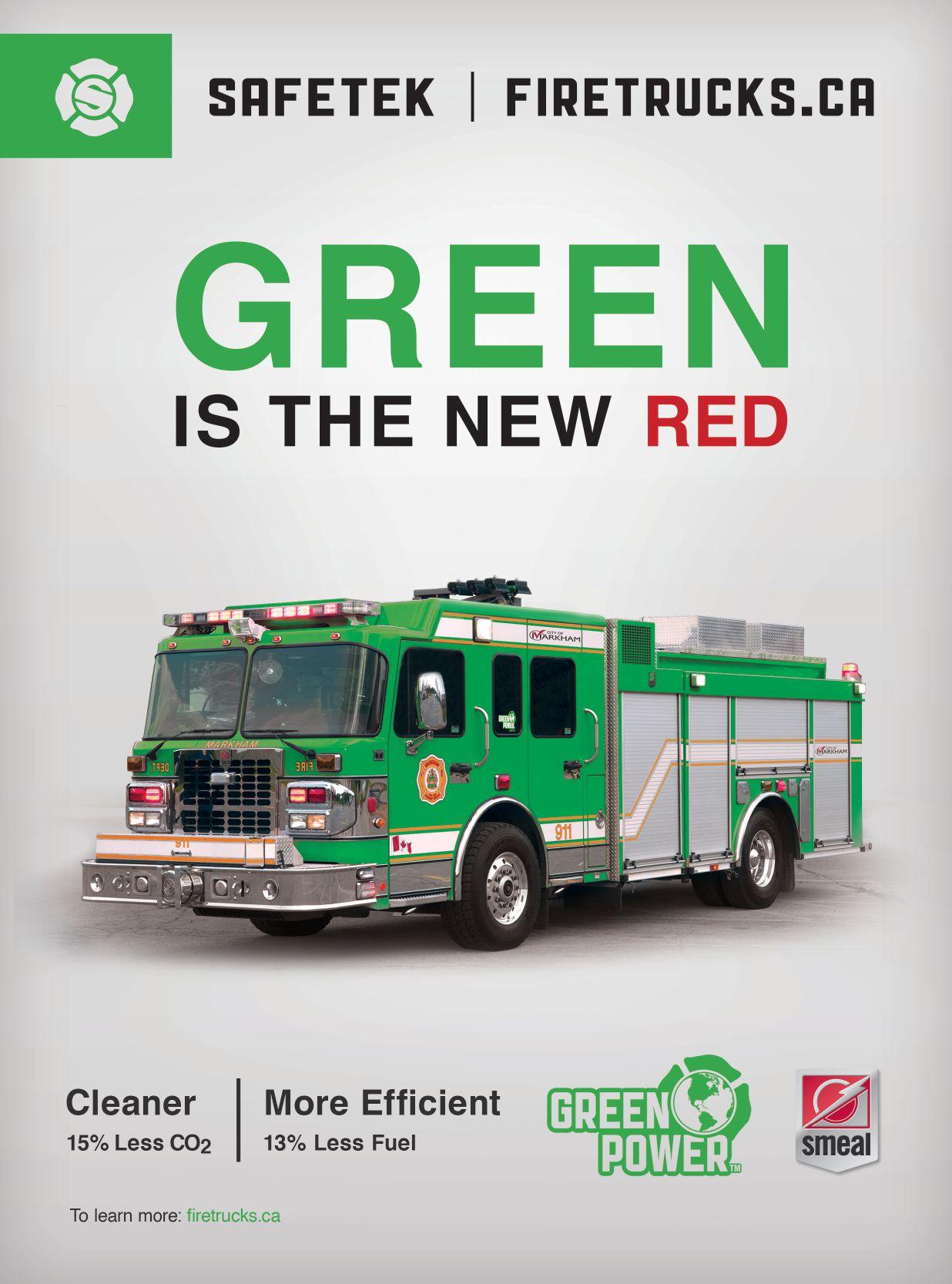
ABOVE Safetek’s GreenPower technology is catching on with larger Canadian departments that respond often to medical calls and idle the engine. The auxiliary power unit runs the truck, saving on fuel and reducing emissions.
You’re buying a new truck. What details are important to you? Do the features and creature comforts that concern you matter to the manufacturers? Are the manufacturers listening to their clients?
You be the judge.
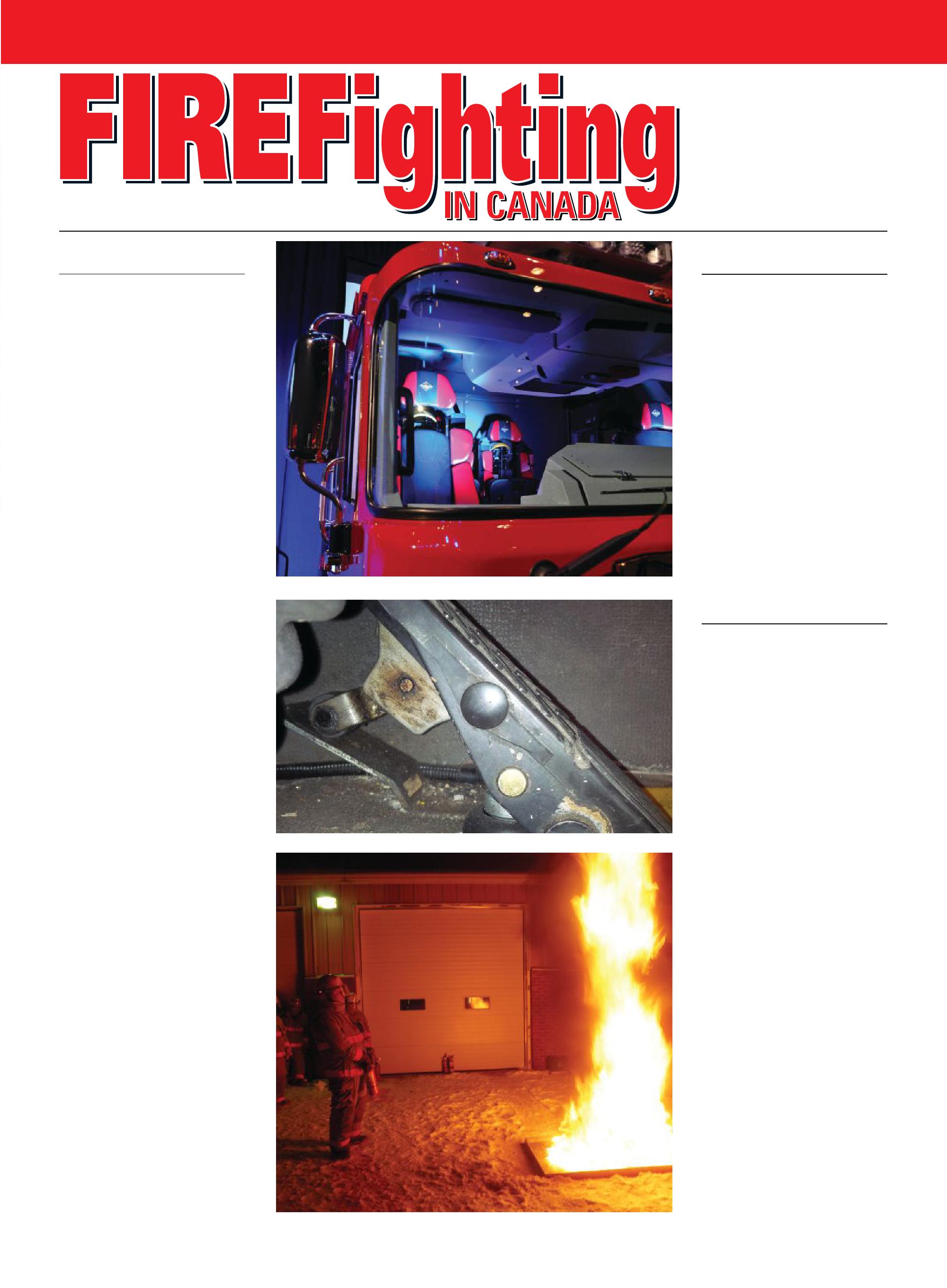
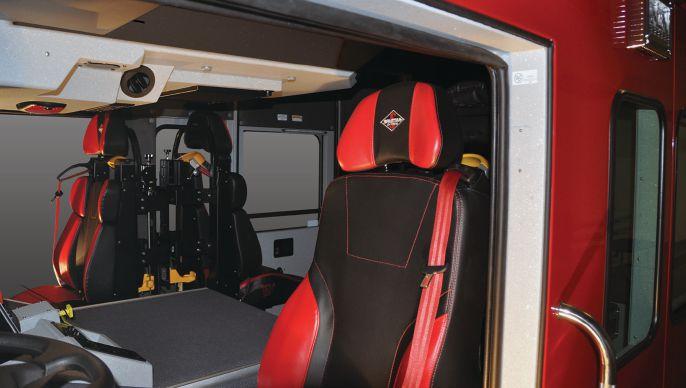
In April, at FDIC in Indianapolis, Spartan Chassis unveiled its new, roomier truck body. Why the extra space? So firefighters wearing bunker gear have more room to move and are more comfortable – and safer – when they’re seated and responding to calls.
The specifics were kept secret until the FDIC trade show, when Spartan’s re-engineered chassis with quiet-cab technology – and what it calls next-generation seats – was revealed.
Essentially, without increasing the 251-centimetre (99-inch) width of the Gladiator cab, Spartan’s engineers made more hip room for firefighters wearing their gear.
In addition, the seat cushions are better – the foam is a higher quality – the lumbar support has been improved, the weight distribution is more even, vibration has been reduced by 50 per cent, the shoulder harness is more easily accessible, there’s an E-Z Release SCBA system, the seat fabric reduces blood-born pathogen exposure, and the cab is less noisy (a 45-per-cent reduction in sound at 72 kilometres an hour – 45 miles per hour – with the windows up), which makes communication easier.
The particulars?
• The cab volume has been increased by 5,827 cubic inches – which Spartan cleverly put into perspective at FDIC by piling up 118 12-ounce cans of beer, which, of course, take up 5,827 cubic inches of space, or fill about 95 litres;
• a 10-per-cent increase in hip room on the driver’s side of the engine tunnel;
• increase in hip room between the captain’s side door and the side of the engine tunnel;
• a 6.6-per-cent reduction in the height of the engine tunnel;
• a 3.8-per-cent increase in leg room for the two centre forward-facing crew members;
• a 55-centimetre (22-inch) base seat cushion and back cushion.
Spartan’s dealers in Canada are Dependable, in Brampton, Ont., and Vimar in Alberta.
QUALITY
Like Spartan, Pierce kept its truck news guarded until FDIC, where the Appleton, Wis., manufacturer displayed its new Saber and Enforcer custom chassis.
Pierce, too, has made more room in the cab – the smaller engine tunnel is lower and more contoured, which increases elbow and hip room for drivers and officers and improves visibility in the cab.
A cool new feature: the patent-pending adjustable rear wall allows firefighters in the forward-facing seats to move the seats in three-inch increments.
“As your department’s needs change,” the company says on its website, “now you have the ability to adjust the seating to match.”
Ergonomics are better; there are fewer trip hazards (streamlined, lower steps, for example) and a single, bonded windshield with no centre post for better visibility.
Pierce had originally planned to release only the Saber but at FDIC surprised even those (reporters – included!) who had an early heads up on the Saber and also unveiled the Enforcer – a retired but popular cab and chassis.
Pierce representatives said the Enforcer provides more options than the base Saber.
Pierce has four dealers in Canada: Darch in Ontario; WFR in western Canada and the territories; L’Arsenal in Quebec and MicMac Safety Source in Halifax.
*
Safetek is approaching its truck-buying customers differently – confident that its GreenPower idle-reduction technology appeals to municipalities with an environmental conscience.
“There was a common thought,” said
Safetek vice-president Wayne Stevens, “that there’s nothing you can do on the fire side to support your community’s green initiatives.”
Fire trucks, after all, idle while the pump runs, producing environmentally unfriendly emissions.
That thinking, Stevens said, is dated.
Indeed, Rosenbauer introduced its Green Star idle-reduction technology in 2009 and many other manufacturers, including Spartan, offer auxiliary power units that run the trucks when they’re parked on scene but not pumping water.
The Kelowna Fire Department in British Columbia uses Rosenbauer’s Green Star trucks, as does the Quatsino First Nation; Accede Energy Services and Oilfield Paramedics Inc., both in Alberta, also have Green Star apparatuses.
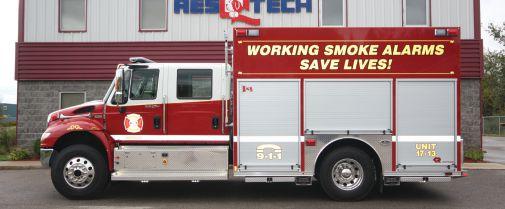
Rosenbauer’s trucks are sold in Canada through Rocky Mountain Phoenix, Res Q Tech and Aero Feu. The company says green technology is catching on.
“More municipalities are requesting green products and that has some impact on the increase in popularity,” said Scott Oyen, Rosenbauer’s vice-president of sales.
“Green Star has seen a consistent and steady rise in popularity since the introduction. Many departments will wait to incorporate new technology for a few years to allow time for the technology to prove itself and they are now purchasing.”
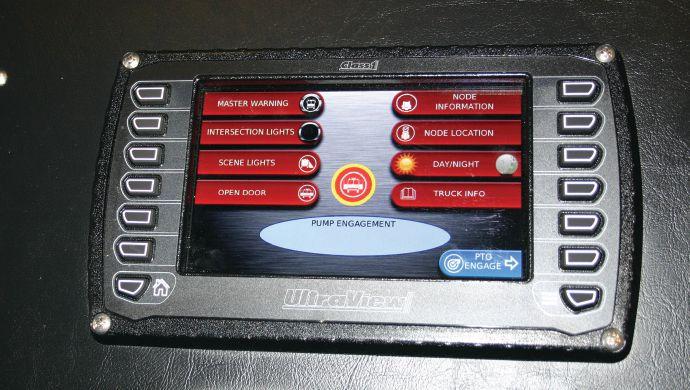
This year, Rosenbauer incorporated a colour display with its APU so users can monitor battery condition, an Hourmetre for the diesel APU and a timer to let the deriver know when the truck’s main engine will shut down.
In 2015, the company said, it will start
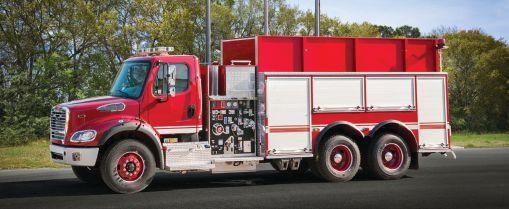
Midwest Fire introduced its multiplexing system at FDIC in Indianapolis in April. Midwest offers the diagnostics system on all its tankers and pumper-tankers.
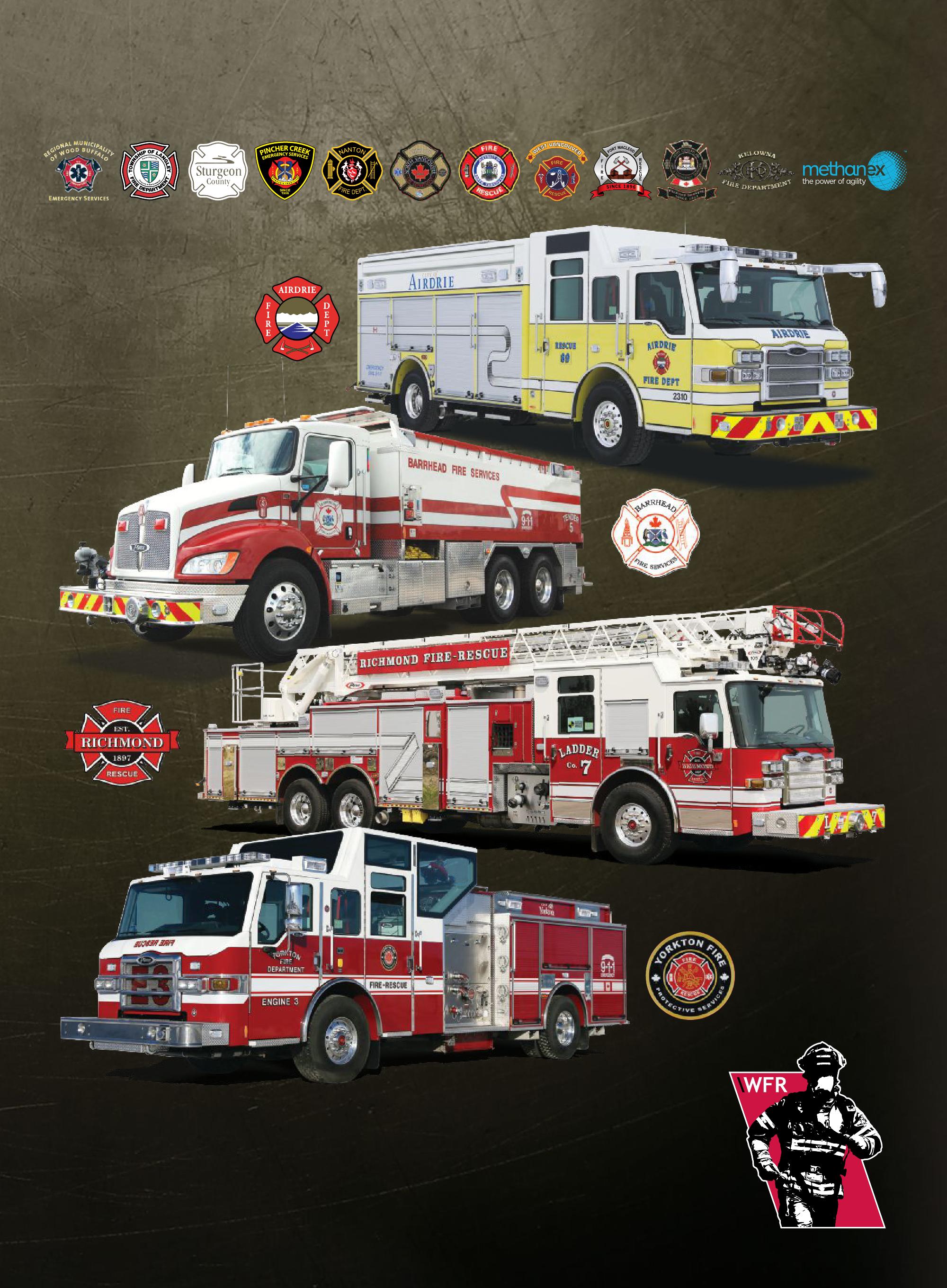
Airdrie Fire Dept.
Barrhead Fire Services
Yorkton Fire Protective Services
Richmond Fire Rescue
ON SOLID FOOTING FOR 25 YEARS
Improve your performance. Globe boots are flexible like your feet, grip like no other and feel broken in right out of the box. Contact Safedesign to get Globe footgear. Internationally recognized PPE specialists.
Revisions to Spartan’s Gladiator chassis includes more width in the cab and more creature comforts including more leg room for forward-facing crew members and better seat cushions.
building a 7.9 kW diesel APU using the same 1,800 r.p.m. Kubota diesel engine that will occupy less space than the current 7.9 kW diesel APU.
Safetek’s GreenPower technology is similarly gaining market traction now that metro departments such as Toronto are ordering multiple trucks, Stevens said.
The system is similar to that used by airlines and some commercial trucking companies; when an aircraft sits on the runway, the auxiliary power unit – or APU – engages, so there’s no need to run the engines.
“The thought was that in the majority of larger fire departments, where most of the calls are medical, they’re not engaging the fire pump so the main engine doesn’t need to be running.
“So what if there was similar technology so that when the trucks get to the call, the main engine shuts down and the auxiliary engages, and that eliminates the need to run the main chassis engine?”
The main engine, Stevens said, will burn almost four liters (one gallon) of fuel per hour of idle time, versus less than one litre (one quart) of fuel per hour to run the auxiliary power unit.
“So fuel consumption is way down and we’re seeing customers who are seeing significant savings on their fuel bills – up to 20 per cent.”
In addition, there is less wear and tear on the large engine, which means less maintenance and therefore lower operational costs.
“So we’re seeing customers who are saving tens of thousands of dollars a year.”
Safetek, which has offices in Abbotsford, B.C., and Mississauga, Ont., and is the Canadian dealer for Smeal Fire Apparatus,
has sold six GreenPower truck to Toronto and the city has three more on order; Markham, Ont., has ordered two. Sault Ste. Marie, Ont., has one GreenPower truck; Vaughan, Ont., has two on order; Surrey, B.C., has ordered three; and Port Moody, B.C., has had one truck for two years.
“Now, the technology is becoming known because we’ve got those early adopters,” Steven said, “and now the departments are calling us.”
The system is all automatic, Stevens said.
“The driver doesn’t even have to shut down the main engine. When the department gets to a call and the driver puts the park brake on, if he does not engage the fire pump, then the system will automatically shut down the main chassis engine and start the auxiliary engines. So the engineer can get out and do what he would normally do.”
But is GreenPower practical given the cost?
“It’s an option,” Stevens said. “In the larger, busier fire departments that’s where you start to see the savings; the busier you are running medial calls the more you will save because the truck is idling more often. If a department already has a generator speced out on a truck, the cost increase from the generator to our APU – which will also act as the generator – is about $15,000 to $20,000.
“So when we look at $15,000 and you’re saving on fuel – the return on investment can be achieved in as few as five or six years – and you add the improved maintenance costs on top of that, and if the department keeps the trucks for 10 to 15 years, they’re realizing significant savings over the life of that apparatus, in addition the green initiative.”
The technology can be used in any truck. Toronto’s GreenPower trucks are aerials; Markham has a pumper, and Safetek has quoted and specified GreenPower for its rescue trucks.
Smeal developed the technology and sold its first trucks to the fire department in Charlotte, N.C., which helped to improve the idle-reduction system.
“Canada,” Stevens said, “is very receptive to this technology –even more so than in the United States.”
For most fire departments, the technology is still new. But Stevens said Safetek believes municipalities will embrace GreenPower once there’s more evidence of the cost savings.
“All firefighters are from Missouri – the show-me state,” Stevens said. “Your nice glossy brochure is great, but they want to talk to someone who’s running this technology. We’ve got the early adopters – Toronto, for example – so if departments don’t believe what we say, they can call our customers and talk to them. That’s the biggest validation of any technology, those early adopters who continue to order the trucks.” * * *
Midwest Fire showed off its multiplexing system at FDIC in Indianapolis. Multiplexing is not new to fire trucks – many manufactures have offered it for a while, some since 2002 – but Midwest now installs the system in all its tankers and pumper-tankers; and, it says, multiplexing adds more options with little expense.
Mutliplexing is basically a durable wiring system that allows the truck driver to controls lights; the system also performs diagnostics.
“Not only will multiplexing add a layer of customization, but it also adds a greater level of serviceability,” the company says.
Arnprior Fire Trucks Corp.
“The beauty of the multiplexing capabilities on the service side is the ease of computer interface. We can have a customer plug in their apparatus to a computer and we can remotely diagnose any lighting issues and reprogram features that will help customers without the expense or delay of bringing a technician to the apparatus or bringing the apparatus to us.”
Midwest is based in Luverne, Minn.
* * *
Florida-based E-One was, you might say, on a bit of a quest. After months of what it calls in-the-field customer research, E-One debuted its redesigned custom cab at FDIC.
The new Quest cab has better ergonomics, visibility, storage, lighting and more available options.
Lower and wider cab steps – a change that many manufacturers are implementing – allow for easier, smoother egress.
There’s more viewing area; E-One has lowered the centre console and raised the overhead console to improve sightlines on the already large, 3,728-square-inch, two-piece windshield.
There’s also more legroom, extra storage under the rear-facing crew seats and space for USB ports and a 12-volt outlet.
Options include power or manual windows, locks and pedals, customizable buttons on the steering wheel, cab-corner or westcoast style mirror placement, and two front grill designs.
In addition, E-One says its red ambient lighting throughout the cab improves visibility for the crew without distracting the driver.
BY KEVIN FOSTER Fire chief, Midland, Ont.
DSTRAIGHTTALK
A strategic approach to truck buying
epartments use different methods to tackle the apparatus-design process.
By this point in the year, many departments are well into, or perhaps have completed, the budget process for 2015, while others are gearing up for it. Either way, I expect now that this edition has landed on your desk, lunchroom, coffee table or other reading place, it will provide some inspiration to those who are in the market for apparatuses in the coming year or two. Seeing what other departments have just received and from whom is a good place to start, but not all departments have the financial resources to buy new trucks. And if you do, do you really need what the department in the next community or region just got?
Years ago, as a new fire chief, the department for which I worked found itself with multiple trucks that failed safety inspections and another that had a catastrophic pump failure. All these issues occurred within months of each other, resulting in almost a complete fleet turnover. When I was with another department, there was a solid replacement program supported by financial reserves, so we simply designed the vehicles, went through the tender process and ordered the trucks. Somewhere in the middle of those two extremes is the need to replace numerous apparatus but also time to space out the purchases.
Although each truck-buying situation has a different set of circumstances, the starting point is essentially the same: a review of the needs of the department, the community and the overall municipal state of affairs.
vehicle of choice. Neither is wrong if it best suits the situation.
Typically, a fire truck is purchased with an anticipated service life. That projected service life differs from community to community, but I am relatively confident in saying that, regardless of the replacement schedule for an apparatus, the community in which it is in service will change significantly between apparatus purchases. It is not always effective to replace a rescue with a rescue; perhaps a rescue pumper would be a more effective use of resources. Also, consider what might complement a neighbouring community. Working co-operatively could effectively provide service to both areas. For example, if two neighbouring, urban-type communities have aerial apparatuses, wouldn’t it be beneficial for both communities if one is a platform and the other a ladder? Perhaps the departments would find situations in which one is more effective than the other.
Compromises may be necessary to balance all of the factors that are in play when considering an apparatus acquisition. But there is one matter that cannot be compromised: firefighter safety. Apparatus construction, testing, and maintenance codes and standards are developed with the intent to eliminate or mitigate firefighter injuries and
Be proud to safely and efficiently use whatever apparatuses you have to protect your community…’’
Of course, the analysis may not always go in that order. The available financial resources may limit purchasing options. Having faced this situation, I used a number of strategies to combat the circumstances, including scaling back the size of apparatuses combined with a revised dispatching model, long-term financing, short-term financing, refurbishing aging trucks and buying used vehicles, just to name a few. Typically, regardless of the chosen strategy, some individuals in the department will need some time to become comfortable with and supportive of the approach.
Understanding the geography of the community, the building stock and associated risks and the department’s operating procedures help to determine the types of features required or not required on the apparatus. For example, two similar departments may be considering buying tanker trucks; one may use a porta-a-tank water-supply system, thus preferring a water tender while the other relays water from its delivery tanker to the fire line pumper, so a pumper/tanker may be the
Kevin Foster is the fire chief in Midland, Ont. Contact him at kfoster@ midland.ca and follow him on Twitter at @midlanddfsem
fatalities. This translates into improved safety for other drivers on the road. One of the leading causes of firefighter injuries and fatalities is vehicle crashes and the majority are apparatus incidents.
Don’t measure your department by whether it has the newest trucks, by the amount of chrome, or whether you have the most technologically advanced unit available. Be proud to safely and efficiently use whatever apparatuses you have to protect your community and your fellow firefighters.
***
I wrote this while thinking of former St. Catharines, Ont., Fire Chief Mark Mehlenbacher, who passed away in July, having lost his battle with cancer. I first met Mark when I was buying a used truck from his department. I could always call on Mark for advice or an opinion; he willingly shared his experiences, whether they were good, bad or ugly, whenever it would help. I am honoured to have known him as a colleague and friend.
Efficiency in design
Chief and truck builder work together to develop a multi-purpose vehicle that does more with less
By OLIVIA D’ORAZIO
Lance Spencer, a regional account manager for Fort Garry Fire Trucks, says there has been a definite shift in the trend in trucks toward multi-purpose vehicles – apparatuses that combine pumpers, tankers and more in one unit. These all-inone trucks alleviate the need for sizeable budgets and provide fire departments with everything they need to function efficiently.
“With shrinking budgets, people want the most they can get [out of a truck],” Spencer said. “Carrot River is a perfect example of that.”
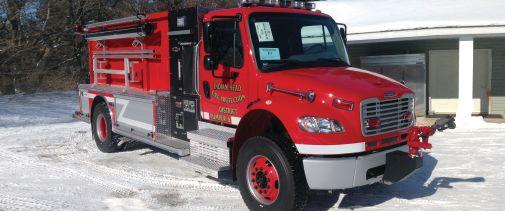
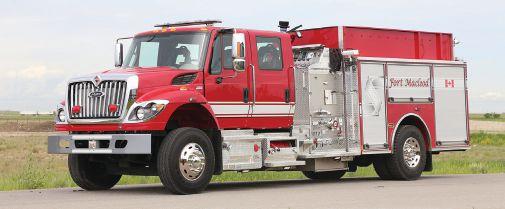
Carrot River, Sask., is a five-hour drive north of Regina and is located in the southeastern corner of the Rural Municipality (RM) of Moose Range. The Carrot River department – which operates out of one fire hall with 16 volunteer firefighters, two volunteer medical first responders, and a fire chief, deputy chief and assistant deputy chief/fire inspector on retainer – covers a 3,108-square kilometre area that comprises 36 smaller townships and settlements, as well as Moose Range, and a combined population of about 2,150 people. The department also has six trucks – all but two of which were manufactured in the early ’90s or earlier. With efficiency in mind, Carrot River Fire Chief Scott Debienne worked with Winnipeg-based Fort Garry to build a pumper-tanker hybrid that replaces three of the department’s out-of-date
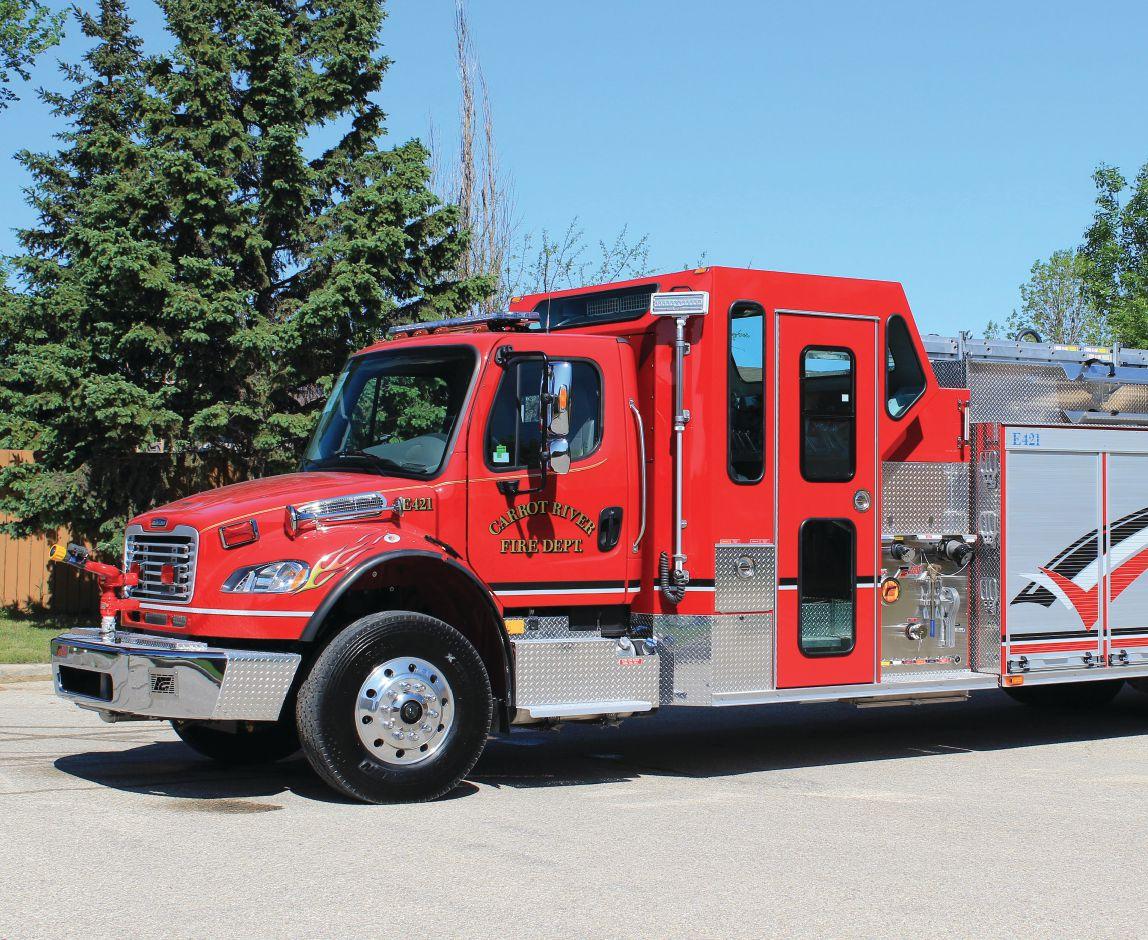
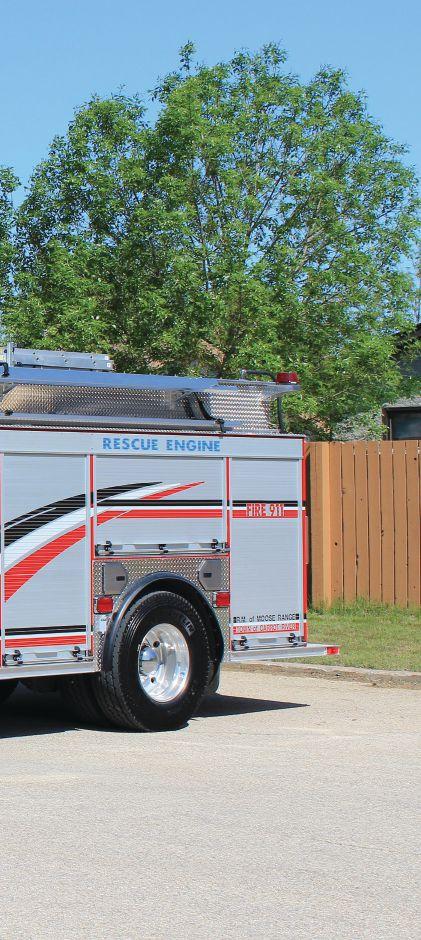
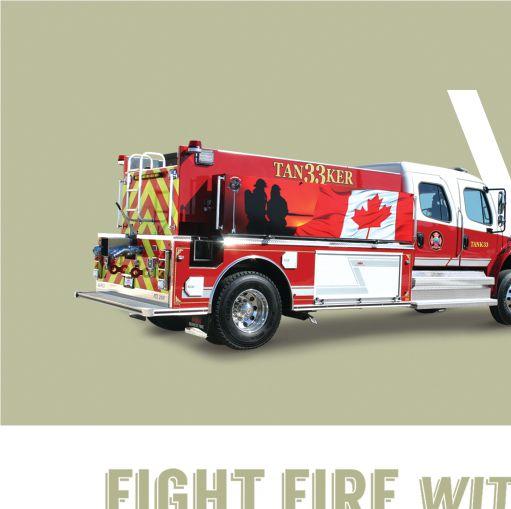
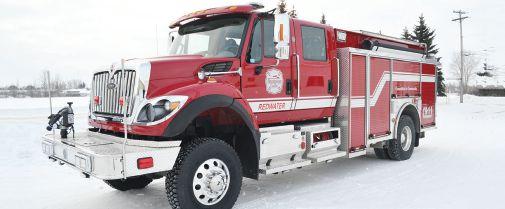
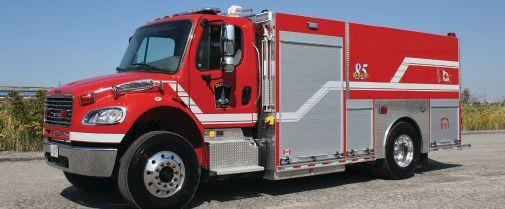
LEFT The Carrot River Fire Department
worked with Fort Garry Fire Trucks and Waterous to build a multi-purpose fire truck with Canada’s first CAFS.
ABOVE Carrot River, Sask., is locoated 380 kilometres (236 miles) north of Regina.
Debienne, a 25-year fire-service veteran who was promoted to chief in January, was looking to replace the department’s 1982 GMC 1,200-gallon tanker. During his preliminary research, he realized that two of the department’s other front-line apparatuses – a 1982 Spartan pumper and a 1992 Fort Garry pumper – were also out of date. The cost of a new tanker would be about $200,000, while a new pumper, which the department also needed, would cost between $300,000 and $350,000 –price tags that the Town of Carrot River was not likely to approve.
“We decided to join forces [with the RM of Moose Range] and put together a tanker/pump for the town and the RM, essentially joining the RM and the town fire
departments under one,” Debienne said.
The result is a truck that fits the needs of a department that responds to myriad calls – everything from forest fires to industrial blazes, multi-vehicle collisions and urban house fires. Built on a Freightliner M2-106 chassis, the truck is powered by a 350-horsepower Cummins ISL engine and an Allison 3000 EVS automatic transmission. It has a 1,500-gallon water tank for rural firefighting operations and it has a 1,250-gpm pump for in-town calls.
The truck also has a total of eight large compartments for storage and a bumper turret for fighting wildfires. With its fourman crown, the truck can bring a total of six firefighters – plus 1,500 gallons of water, a 1,250-gpm pump, various rescue tools and more – to the scene in one apparatus.
“It, in essence, replaces three units, putting two of our old units as support vehicles,” Debienne said. “Instead of spending $800,000, we [spent] a little over half that.”
Spencer understood Debienne’s situation; the tight budget, the need to do more with less.
“Most rural fire departments have the same frustration,” Spencer said. “There’s not a lot of money to spend and everything else comes first.
“Chief Debienne worked hard so that council had an easy decision to make. He had a truck in mind and did all his homework.”
Spencer said Debienne knew the department needed “big water” for industrial fires – the town is home to forestry, horticulture and machinery plants – and recognized that a Class-A foam system and a compressed-air foam system (CAFS) would be useful to his department.
“It was good timing,” Spencer said, “because our Waterous representative was up at the time [that Debienne was developing the truck].”
That St. Paul, Minn.-based Waterous rep, Gregg Geske – who is the foam and CAFS product manager at Waterous – recommended the company’s new OneStep CAFS. It didn’t take much convincing: Debienne’s new truck is the first fire apparatus in North America to feature the device.
Waterous’ OneStep takes the guess work out of CAFS operations, automatically mixing the foam solution and air so that firefighters don’t need to look at gauges or calculate
proper air-to-foam solution ratios.
“It makes CAFS much easier to operate,” Spencer said. “You just need to hit a button and it’s ready to go.”
The CAFS doesn’t just sound good on paper; Debienne said the device can knock down a fire faster and with less damage than typical water-only methods.
“The CAFS can take the capabilities of water and make it somewhere between four and 10 times [more effective],” he said.
“Now, with the CAFS, this truck can put out a fire that would have taken 15,000 gallons of water with just the 1,500 gallons that are on the truck.”
With this new CAFS, Debienne says the department in Carrot River will likely spend fewer hours on scene; CAFS injects compressed air into the foam solution, causing it to bubble and cool the fire faster, Spencer says. Both CAFS and water as extinguishing agents are effective, but water takes longer and a lot more of it is needed to completely extinguish a fire.
Residents whose homes are affected by fire will incur less property damage, not only from the fire itself, which should spread less since it can be extinguished faster, but also as a result of less water run-off.
The CAFS will also make for a safer fire ground for firefighters. Since it takes less time to knock down a blaze, Geske said firefighters will spend less time in a hazardous fire- and smoke-filled environments.
“A lot of fire departments are purchasing a CAFS because of the benefits,” Geske said. “But some of the problems – it’s difficult to operate, you have to decide how far to open the valve, you have to bring up the pressure, but you have to control the pressure of the water . . . Those difficulties are what we’re addressing with this system.”
The CAF system has pre-engineered and pre-defined settings that control the water pressure and mix the foam and air to the perfect solution-to-water ratio.
“The entire system is pre-engineered so that [pump operators] don’t have to think about it,” Geske said. “It’s all about ease of operability.”
That ease of use also translates to fast, effective and safe firefighting operations, Geske said. Operators aren’t wasting valuable time on the fire ground trying to calculate the best foam ratio or the proper pump pressure – and they’re not wasting even more time troubleshooting when their calculations aren’t correct.
“It’s a more efficient use of the tools that firefighters have at their disposal,” Spencer said.
Chief officers should keep that efficiency in mind when shopping for a new truck – and the new features that come with it. Spencer said these new technologies can result in a bit of sticker shock –Waterous’ new CAFS can be $30,000 more than traditional CAFS, depending on the size of tank and type of foam – but a balance between the budget and the best tools to keep firefighters and citizens safe is key.
“Sure, (the OneStep CAFS) is more expensive up front,” Spencer said, “but the benefits and long-term value make it a wise investment.”
Spencer also said more and more fire departments are choosing to trade off on the number of trucks in the apparatus bays so that the trucks that are there can be outfitted with new, efficient technologies.
“We’re seeing more and more that fire departments are going for the multi-purpose vehicle, as opposed to two or three trucks,” he said.
Ultimately, Spencer said, chiefs understand what the department truly needs in a fire apparatus. Bringing that list of needs – and that list of wants – to the manufacturer will help truck builders to better equip firefighters with the most efficient tools for the job.
LEARN MORE ABOUT OUR LIVE FIRE TRAINING SYSTEMS AT WWW.DRAEGER.COM/FIRETRAINING STAY ONE STEP AHEAD OF EVERY FIRE WITH OUR LIVE FIRE TRAINING SYSTEMS.
Dräger can help you build the confidence and skills you need to fight fires safely and effectively. That’s because we offer a full range of Class A (wood-fueled) and Class B (propane-fueled) live fire training systems: from the Swede Survival system that teaches the warning signs of flashover, to portable systems that make live fire training convenient and affordable. Essential tools for essential training.
TRUCKTECH Adjusting to brake checks
By CHRIS DENNIS
Air brakes are typically found on heavy trucks, trailers and buses and are made up of several components which, when assembled, work together. It’s important for function and safety to correctly and frequently maintain the air-brake systems on our fire trucks.
Every airbrake system includes service brakes, parking brakes, a brake pedal, an air compressor and air tanks. The system needs a supply of air created by the air compressor, which can either be remote-mounted and belt-driven off the engine’s front pulley system, or bolted down onto the engine and driven directly off a set of gears located at the back or font of the engine, depending on the engine make and application.
The compressor supplies air to storage tanks to be used by the control system; this is the working side of the brake. The compressor also sends air to the auxiliary air system – an NFPA requirement based on the fact that air horns use large volumes of air. If this system were not in place, the control system would quickly be out of air.
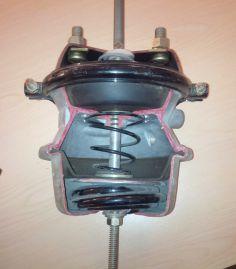
The parking-brake system (see photo 1), whether a drum brake or a disk brake, is designed to be induced by a spring when applied. A sudden loss of air pressure would result in full spring-brake pressure immediately. The air side is used to release the park-brake side. When the air system is compromised and air is going into the brake chambers, the spring takes over and applies the brakes. When this happens, the brakes cannot be disengaged until the air system is corrected or a tool is used to manually release the parking brake’s spring internally.
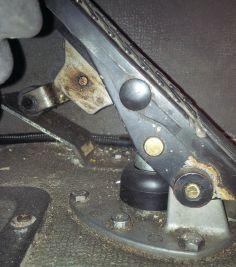
The service brakes are the ones the driver activates with foot pressure applied to the brake pedal. This action slows the vehicle and eventually stops it (see photo 2). Today’s air-brake system works between 100 and 130 pounds per square inch (690-896 kilopascals). This is the amount or air pressure built up by the air compressor.
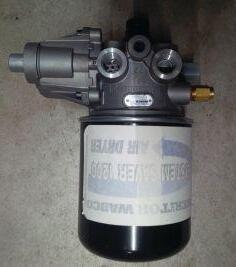
The air compressor (see photo 3) is driven by the engine, either by crankshaft pulley via a belt or directly from the engine’s timing gears. The compressor is lubricated and cooled by the engine’s lubrication and cooling systems. Compressed air is created in the compressor then sent to the air dryer where moisture and oil impurities are removed. The air dryer may include a safety valve and a smaller purge reservoir (see photo 4).
The compressed air is then moved from the dryer to a reservoir called the wet tank. From this tank the air is distributed through a four-way protection valve into the front and rear brake-circuit air tanks, the parking-brake tank, and the auxiliary air-supply tank.
The control system is further divided into two service-brake circuits: the parking-brake circuit and (if equipped) the truck and trailer-brake circuit. This dual-brake circuit is further split into front- and rear-wheel circuits, which receive compressed air from their individual reservoirs for added safety in case of an air leak. The service brakes are applied by means of a brake-pedal air valve that regulates both
A parking brake, shown released with the heavy spring collapsed, is controlled using air pressure.
A service brake is controlled with foot pressure applied to the pedal brake, shown, to slow the vehicle and bring it to a stop.
A common air dryer removes moisture and oil impurities in the compressed air used for the airbrake system.
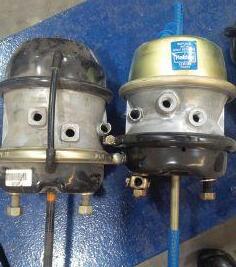
Brake chambers are made of different sizes. The size determines the correct brake stroke adjustment for long-stroke and short-stroke chambers.
PHOTO 2
PHOTO 3
PHOTO 4
PHOTO 1
PHOTOS BY CHRIS DENNIS
You protect the public
Let us heLp protect you
For your cleaning, decontamination, inspection, testing, repair and record keeping of your firefighter’s protective clothing... we have you covered!
• 24/7 access to Firetrack®, the online data base that provides you with complete details of your C&M Program with FSM. We do the work for you!
• ETL Verified
• ISO 9001 Registered
• Fast turnaround
• Complete Bunker Gear Rental Program – Toronto Location
Ontario (toronto) 1-888-731-7377
circuits. The parking brake is an air-operated spring brake, applied by spring force in the spring-brake cylinder and released by compressed air via a hand-control valve.
All fire-truck drivers must be certified by their provincial departments of motor vehicles. This certification means the driver completed a written and practical driving test and should know the names of parts, what they look like and how they work. Every province provides a driver’s handbook on air brakes, available through the local motor-vehicle licensing office or on the Internet. Be sure the Internet version is specific to your province.
I have worked with many volunteer departments on driver training and I have noticed that not all departments complete hands-on brake checks. Oftentimes, circle checks are done and equipment is checked regularly, but not all departments have their drivers complete brake-adjustment checks. Doing these checks does not mean a driver must adjust the brakes each time; it means he or she completes a visual inspection to make sure the brakes are adjusted correctly for the brake system on each truck. It also means identifying brake-chamber sizes, long- or short-stroke chambers, auto or manual slack adjusters, and learning how to complete a brake stroke check.
A department may have a licenced truck technician come in once a month to complete this inspection as well, and perform preventative maintenance adjustments as needed. A department may also train all its drivers how to inspect and complete a mark and measure of brake stroke. I will be blunt and I mean no disrespect: if your department is doing a mark and measure inspection (hands-on), well done. How else, as a driver, are you going to know if the brakes are adjusted properly or if they were broken the last time the truck was out? If you’re not checking for adjustments, at least post-trip, then how will you know if the truck is safe to drive next time? There are brake-adjustment indicators that can be installed to give the driver a visual check and determine if brake stroke is correct. Again, if the driver cannot mark and measure as well as see the installed visual indicators, how will he or she know they are in adjustment? In my opinion, if the driver is certified to drive with airbrakes, he or she has to know how to mark and measure. Give drivers the tools and knowledge to know that, with the licences they hold, they must be able to know what is happening – not as a mechanic, but as a certified driver.
Brake chambers are made in different sizes and the size is what signifies the correct brake-stroke adjustment (see photo 5). The top chamber is long stroke; you can see the square shape where the airline would go in. The bottom chamber is short stroke; the shape where the airline goes in is round.
The following information is a condensed version of a Vaughan Fire & Rescue Service lesson plan.
The type of brake chamber, in terms of its size, is determined by using a caliper or a tool (a Chamber Mate, for example) to measure the outside diameter. The type of brake chamber, in terms of its stroke, is determined by looking for visual identifiers. The absence of a recognizable long-stroke marking requires the inspector to deem the brake chamber to be a standard type – or short-stroke chamber –and not a long-stroke type.
Western canada (calgary) 1-403-279-5095
Mid-West USa (Detroit, Mi) 1-866-877-6688
All stroke markings placed on a brake chamber by the manufacturer refer to the rated stroke of the chamber. Rated stroke is a design feature and is generally one-half inch (13 millimetres) greater than the brake-adjustment limit of a chamber.
There are three different methods for identifying long-stroke brake chambers. Many chambers use all three of these identifiers,
but just two of the three are required. Look carefully, though, as it is always possible that one or more of these identification tags has detached from the chamber.
1. Service instructions embossed or stamped onto the chamber.
Identification and service data: many long-stroke brake chambers have identification and service data stamped, cast or embossed onto the metal parts of a brake chamber. Others are provided with an adhesive data label. The data provided often identifies the type of brake chamber and may also include the rated stroke. For example the letter L and LS following the size (12 through 30) are often (but not always) used to identify long-stroke chambers. Other alpha-numeric codes are also used to identify chamber type.
2. Tags showing the rated stroke of the chamber. These tags are trapezoid-shaped with information embossed on the surface.
Many manufacturers of long-stroke chambers identify them by installing a tag in the shape of a trapezoid that shows the rated stroke for the chamber. These tags can be any colour and be made of any suitable material; they are usually installed near the air fitting or a clamp bolt. Information listed on the tag may also be repeated on the chamber itself.
3. Square-shaped air ports or a square-shaped embossment around the air port.
Most long-stroke brake chamber manufacturers identify the chamber by using square-shaped ports where the air fittings connect, or emboss the pressure cap section of the chamber housing with a square shape. In many cases the square shape has rounded corners. Any indication of the square shape is an acceptable identifier of a long-stroke chamber.
Note that there are two sizes of type-20 and type-24 these two long-stroke chambers and the rated stroke for these chambers can be either 2.5 inches or three inches. Confirm that the chamber is correctly identified.
Whenever the square embossment is 0.5 inches high, it indicates a stroke of three inches, having a brake-adjustment limit of 2.5 inches.
Some methods are not accepted as identifiers of long-stroke brake chambers.
1. The measurement of the thickness of the chamber cannot be used to identify a long-stroke chamber.
2. The interior design of the chamber differs among manufacturers. Exterior brake-chamber dimensions do not reliably identify the rated stroke. Rated strokes can even differ between chambers with similar exterior dimensions from the same manufacturer.
3. A square hole at the point at which the pushrod enters the brake chamber is not an indicator of a long-stroke brake chamber. The hole is sometimes square in order to allow the pushrod yoke to pass through the housing.
4. The colour of the trapezoidal tag does not indicate a particular rated stroke.
We must ensure that what we are measuring is correct. If our brake chambers do not match up, we risk improper adjustment, and, given the right circumstances, the brakes will not react correctly.
Chris Dennis is the chief mechanical officer for Vaughan Fire & Rescue Services in Ontario. He can be reached at Chris.Dennis@vaughan.ca
A CERTI-FIRE KNOWS FIRE ALARM TECH.
In the same way star athletes are a select few who know how to use every muscle in their body to win, a Certi-Fire designated electrician is one of the few qualified in all aspects of fire alarm technology.
A Certi-Fire electrician has successfully completed an intensive, four level certification program acceptable to the Ontario Fire Marshal. It guarantees the expertise required to assess your needs, install the correct technology, and maintain and monitor your fire alarm system. It’s one-stop fire alarm security and peace of mind.
TRAINER’SCORNER
Tactics for fighting a chimney fire
By ED BROUWER
If the effects of the approaching cooler weather stay true to our country’s history, there will soon be an increase in fire calls. Most residential fires in Canada occur during the winter. This is also true of fire fatalities. Sadly, more people are likely to perish due to an accidental home fire during the holiday season than any other time of the year.
There are three major causes of residential fires during the winter. Two of the three will come as no surprise: chimneys and candles. The third cause is clogged dryer vents. In fact, according to the NFPA, the number of dryer-vent fires has exceeded chimney fires since 2005, and most dryer-vent fires occur in January. Some researchers list dryer-vent fires as the No. 1 cause of residential fires.
As for candles, we all love the warmth and ambiance they provide, but it is easy to forget that a candle is an open flame that can reach 1400 C. Most candle-caused fires start in the bedroom, except during the holidays when decorative candles are involved.
The most common cause of chimney fires is the ignition of creosote in the flue. Creosote forms primarily due to the use of unseasoned or green wood in the fireplace. There are other factors that can lead to creosote buildup, such as failure to maintain a proper temperature inside the flue, burning wet wood, or failure to clean the chimney regularly.
Fires in masonry chimneys can burn to a temperature of 1093 C. These fires can damage the masonry material, which can then provide an opening for fire to escape into voids of combustible components such as the inner walls or attic space.
There are several indicators of a working chimney fire:
• Sparks or flames exiting the top of the chimney
• A whistling or buzzing sound in the chimney
• A back flow of smoke through the heating device into the structure
• Discoloration on the walls adjacent to the chimney
• Smoke emanating from the cracks in the wall or electrical outlets near the chimney
The minimum response to a chimney fire should be one engine company, one ladder company and an EMS unit. The engine company is required for fire extinguishment and the ladder company is required to supply tarps, ventilation fans, overhaul tools and ladders. Smaller volunteer departments may have all of this equipment on the engine, however, they still need EMS on site due to the fact that firefighters are working on the roof, often in freezing or otherwise inclement weather.
The potential for injuries at a chimney fire may be greater than previously thought. NFPA 1500 Standard on Fire Department Occupational Safety and Health Program requires an EMS unit on fire responses.
The following tactics should be considered when establishing
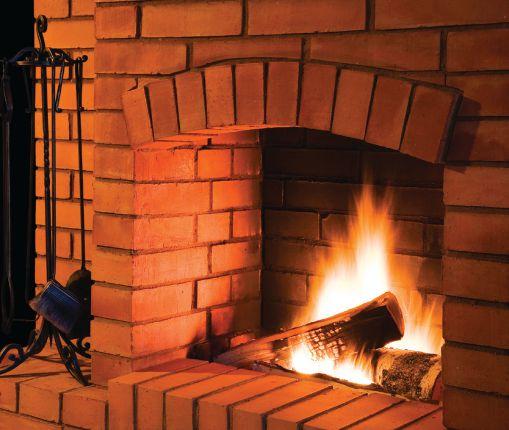
Fires in masonry chimneys can burn to a temperature of 1093 C, which can damage the chimney material and allow the fire to spread to the inner walls or attic.
With the holiday season approaching, expect an increase in fire calls due to candle-caused fires.
standard operating guidelines for chimney fires:
• Establish command upon arrival; safety officer and RIT should be assigned.
• Conduct an exterior size-up and look for signs of a chimney fire.
• Call for resources to ensure safe operations.
• Gain entry; search for and remove victims; wear full PPE and SCBA; monitor oxygen levels and ensure adequate ventilation. Consistently monitor oxygen levels for carbon monoxide (CO). Chimney fires can cause the flue to fail allowing CO to escape into the walls, ceilings, attics and other voids.
• Perform horizontal ventilation if needed. Positive-pressure ventilation is the method of choice in these situations. The ventilation exit point should be as close to the heating device as possible, thereby minimizing the spread of smoke within the structure.
• Advance a hoseline to the front door as a precaution.
• Spread a runner or salvage cover on route to the stove or fireplace. Not only does a salvage cover catch any ashes or embers that may fall, when and if the wood is removed from the firebox it also keeps bunker boots from tracking dirt onto the carpet. Plastic tarps fail quickly when they come in contact with fire embers, so consider fire-resistant cloth tarps.
• Stop the flow of oxygen to the flue. Reducing the oxygen flow to the flue decreases the intensity of the fire in the flue and in some cases will extinguish it completely. This step may not be possible on open fireplaces.
• Extinguish the fire in the firebox. Before you put the fire out, consider using the fire in the firebox to your advantage. Sometimes a mere cup of water applied onto the burning fuel will cause the resulting steam to travel up the chimney and extinguish the flue fire. Multipurpose dry-chemical agents will put out the fire in the firebox, but will not usually extinguish anything further up. Only remove fuel from the firebox if it has been extinguished and if absolutely necessary (there are very few good reasons to take this step).
• Ladder the roof. If an aerial device is used, it should be extended to the chimney opening. If ground ladders are used, a wall or extension ladder should be placed at a good roof entry point, and a roof ladder should be extended to the roofline adjacent to the chimney. If the roof is covered with combustible material, a charged hoseline should be advanced onto the roof as soon as the ladders are in place. Do not place the ladder or secure the ladder to the chimney. Cautiously remove the chimney cap, bird screens, or spark arrestors with a hand tool. All firefighters on the roof should be wearing full PPE, including SCBA.
• Each of our trucks has a chimney kit consisting of a mirror, a length of chain (4.5 metres), and a chimney bomb (zipper-seal bags containing dry-chemical powder), and a small fire-place shovel, all placed inside a metal bucket.
• Inspect the chimney using the mirror. If there is fire, drop the chimney bombs down. When the chimney bomb reaches the firebox, the bag will burst and the normal draft will carry the powder up to extinguish the creosote. (Be
sure to communicate your actions to the interior team).
• Slowly lower the chimney chain from the top of the flue to the firebox. Spin the chain to knock the creosote from the walls onto the firebox where it can be extinguished with water or a dry-chemical extinguisher. There is some opposition to putting water down the chimney based on the fear that the water may rapidly cool the flue causing it to fracture. These fractures may then go undetected and future use of the chimney may result in products of combustion being released into the walls or attic. The key is in the amount of water used and how it is applied. There are special nozzles (six liters per minute) designed to apply water inside the chimney.
• Check the clean-out box. This is perhaps the most overlooked step. Clean-out boxes can be found both inside and outside the house. The boxes are usually covered by a 20-by-20-centimetre metal plate with two handle tabs on it, mounted on the wall in line with the chimney. There may be more than one – I once found three. After locating the box, use a small shovel and a metal pail to clean out the burning embers. Once this is done, you can place a small, handled mirror into the box to look up into the flue. You should be able to see if there is still a fire in the flue.
• Check for fire extension. Look for obvious signs of fire extension beyond the chimney. All roof, attic and wall areas near the chimney and heating devices should be checked for the following signs of fire extension: discoloration or blistering of surface materials; hot-to-touch areas; smoke coming from cracks, electrical outlets, light fixtures, eaves or roof coverings; visible glowing embers. This is a great time to use a thermal imaging camera or heat sensors if your department has them. Be sure to check each floor. If the fire extends beyond the chimney, treat it as a structure fire.
• Before leaving the scene, inform the resident that the chimney must be inspected by a certified chimney inspector before it is used again. Our department has forms made up that clearly lay this out for the resident. We get them to sign and date it and leave them with a copy. We also inform our dispatch that the resident has been advised.
• Check the CO levels one more time before terminating the incident.
The previous tactics can be customized for use with a dryer-vent fire.
Thank you for your continued efforts to make sure all our firefighters get home safely after each call. Please drop me a line if your department has any hints for dealing with dryer-vent fires. There is very little information available in print, so your input would be invaluable.
Stay safe and remember to train as if their lives depend on it.
Ed Brouwer is the chief instructor for Canwest Fire in Osoyoos, B.C., and Greenwood Fire and Rescue. The 25-year veteran of the fire service is also a fire warden with the B.C. Ministry of Forests, a wildland urban interface fire-suppression instructor/ evaluator and an ordained disaster-response chaplain. Contact Ed at ebrouwer@canwestfire.org
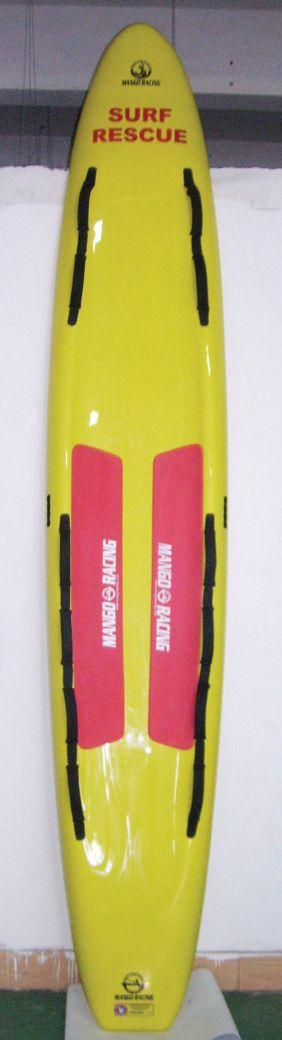
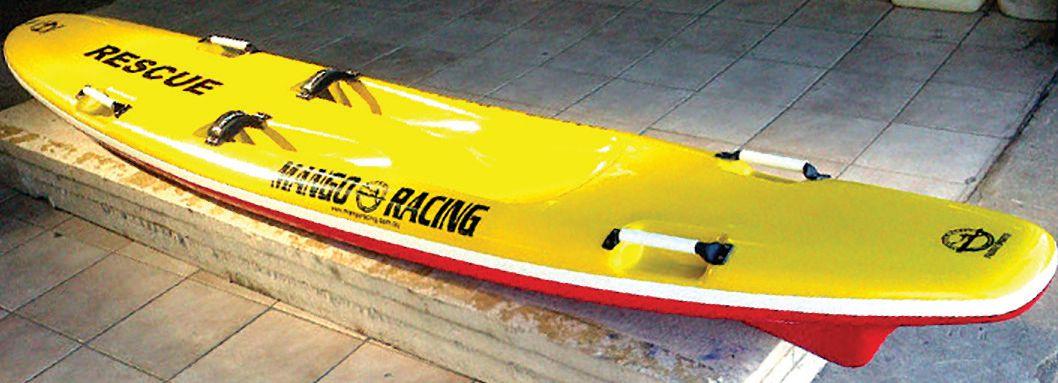
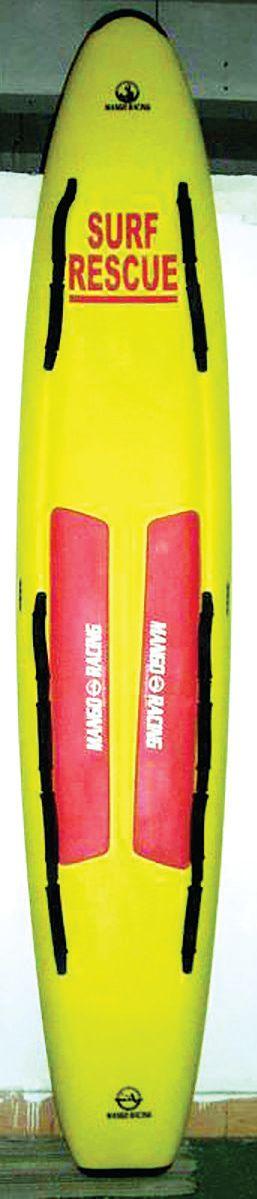
• Water safety rescue boards, rescue skis & paddles (measurements 10’ 6” X 24” X 6).
• Highly visible, in the roughest, turbulent, dangerous water conditions.
• Used in single & mass rescues in the surf, raging rivers, floods, waterfalls.
• Rescue animals / pets and objects.
Email Mango on mango@mangoracing.com for more information
BACKtoBASICS
Using portable extinguishers
By MARK VAN DER FEYST
The portable fire extinguisher is one of the most undervalued tools in the fire service. Every fire truck is equipped with at least one of these devices, and many trucks carry a variety of extinguishers.
Portable extinguishers are usually found at constructions sites and at several locations in industrial buildings. The industrial units vary in size according to need and application, from 10-pound units to extinguishers that require a wheel cart to move around.
Municipal firefighters do not often encounter the large, wheeled extinguishers, but it is important to know the types of extinguishers and their uses; it is important, however, for all firefighters to be proficient in the use of 10-pound, 20-pound and even 30-pound extinguishers.
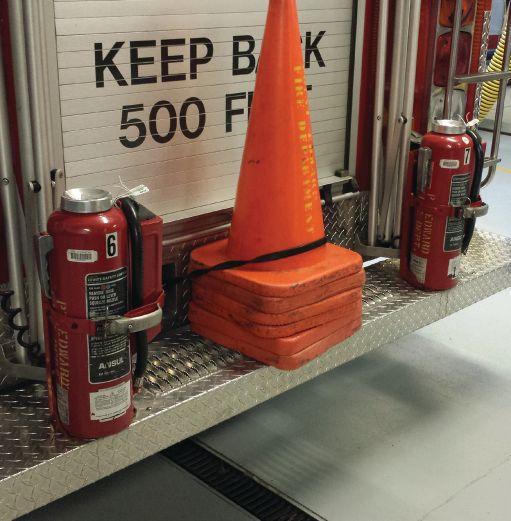
The majority of portable fire extinguishers found on trucks are dry-chemical ABC multipurpose devices (see photo 1). These are great tools for suppressing Class-A, Class-B or even Class-C fires, inside or outside a dwelling. These small extinguishers are good tools to carry into calls for smoke in a building, a pot on the stove, an alarm sounding with nothing showing, or calls at which there may be a small fire that would require a quick and easy knockdown.
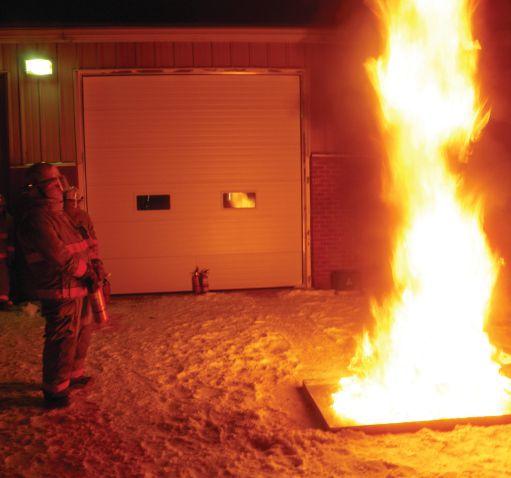
The downside to dry-chemical extinguishers is that they are messy when discharged and leave a chemical spill to be cleaned up by the resident or building owner after the small fire has been suppressed. This factor should be considered when deciding between a dry-chemical extinguisher or a water can. On a Class-B fire (see photo 2) or a Class-C fire, a dry-chemical extinguisher is the choice tool for suppression, but for a Class-A fire, a firefighter can choose to use a dry-chemical extinguisher or a water can.
A dry-chemical extinguisher does not provide cooling – only suppression. The extinguisher’s chemicals work by altering a fire’s chemical makeup in order to break the chain reaction and stop the flames from spreading, but they do not cool down the material that is already burning.
I responded to a call in which a sofa chair that was on fire in a room was treated with a dry-chemical extinguisher. The fire was suppressed, but the contents of the room were still hot and I could hear the sizzling as we waited for a hoseline to be brought in. Water was still needed to cool off the objects and prevent re-ignition. This is a scenario in which a 2 1/2-gallon water extinguisher comes into play.
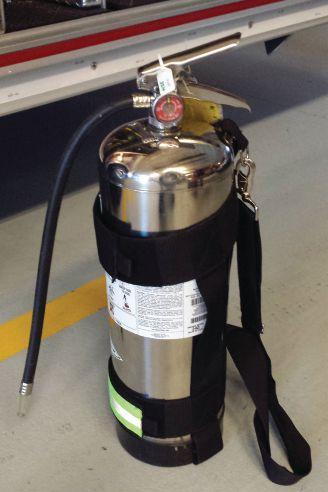
On a dedicated truck company, a water extinguisher or water can is considered standard equipment (see photo 3). When a search team enters a structure, one member is usually assigned to bring along the water can. This allows the interior crew members to conduct a search; if they come across the fire, they can control it or knock it down enough to keep it in check.
Photo 1: The majority of portable fire extinguishers found on apparatuses are dry-chemical ABC multipurpose devices.
Photo 2: On Class-B or C fires (flammable liquid and gas) a drychemical extinguisher is the choice tool to use.
PHOTOS BY MARK VAN
DER FEYST
Now the fire in question here is going to be a fire that can be controlled by a 2 1/2-gallon water can – we are looking at a fire in a bedroom and coming out into the hallway and making its way down the hallway. The water can has enough water in it to be able to knock back the fire in the hallway and keep the fire in the bedroom. This is where the search team can close the door to contain the fire while the search is completed.
A hoseline is necessary for any medium to large fire, but for a small fire in a room or building, the water extinguisher is all that’s needed. Once a small fire is knocked down, the burning item can be taken outside and hosed off further. A water extinguisher cools off both the item and the area around the item that was burning. This suppression tactic achieves two things: fire suppression and cooling. The water can is also good for overhaul operations since it is mobile enough to be brought into small areas, or to cool down or soak hidden fires in small, confined spots. With a dry-chemical extinguisher, a firefighter cannot control the pattern that the nozzle discharges; it will discharge the powder in a straight, stream-style fashion, eventually dissipating into a dust cloud. By contrast, a firefighter can manipulate the nozzle discharge pattern on a water can by using a finger or thumb (see photo 4). As with a garden hose with no nozzle, the firefighter can create a straight stream,
a broken pattern, or a fog stream. This option allows the firefighter to apply the water in a way that is beneficial to the operation. The firefighter can also bank the water stream off of other objects to achieve an indirect attack.
The 2 1/2-gallon water can may be a bit bulky and awkward to carry, but with practice and use, familiarity with the weight, size and height of the water can will become second nature. Knowing how long it takes to apply 2 1/2 gallons of water is also useful and will come with practice or training with the device.
The next time you get a call for a small fire, a pot on the stove, or an investigation, remember to bring along a portable fire extinguisher. A well-prepared firefighter carries the extinguisher in one hand and a hand tool in the other.
Mark van der Feyst has been in the fire service since 1999 and is a fulltime firefighter in Ontario. Mark instructs in Canada, the United States and India and is a local-level suppression instructor for the Pennsylvania State Fire Academy and an instructor for the Justice Institute of BC. He is also the lead Author of Pennwell’s Residential Fire Rescue book. Email Mark at Mark@FireStarTraining.com
Photo 3: A water extinguisher or water can is considered standard equipment on a dedicated truck company.
Photo 4: A firefighter can control nozzle discharge pattern of a water extinguisher by using a finger or thumb.
Container conundrum
Fire service wants code amendments to improve safety
By DON DELCOURT
Editor’s note: Firefighter Daniel Botkin was killed after responding to a call at a log cabin manufacturing facility in Enderby, B.C., in 2011. A shipping container on the property – the kind transported on ships, trains and trucks and used all over Canada for storage and other purposes – was exposed to the on-site fire. During overhaul, the container exploded and the doors blew off; one struck and killed Botkin. As Don Delcourt writes, British Columbia’s fire service wants changes made to the structure of the containers and regulations that govern how containers are used and stored.
Atragic event on Dec. 29, 2011, mobilized the British Columbia fire service to find out more about the dangers of shipping containers. Now, after two investigations and a lot of research, the province’s fire chiefs want to make the fire service aware of the possible hazards of containers and work to ensure that Ottawa and the provinces regulate their use.
The line-of-duty death of Capt. Daniel Botkin, a volunteer firefighter in Enderby, B.C., was a wake-up call. Until members of the Fire Chiefs Association of BC (FCABC) started digging for more information about shipping containers, the general perception was that because the boxes are structurally strong – built like tanks – they posed no fire risk.
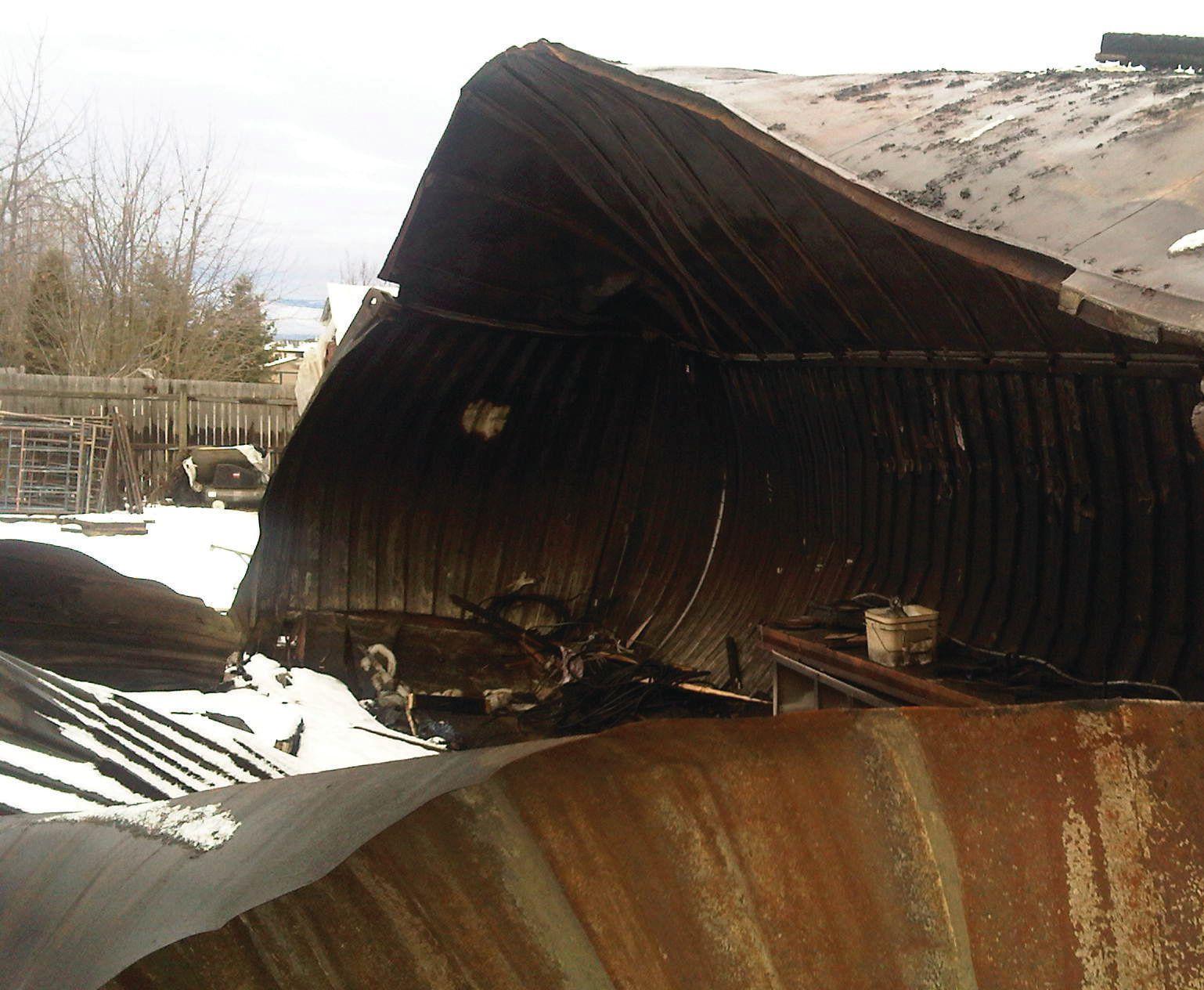
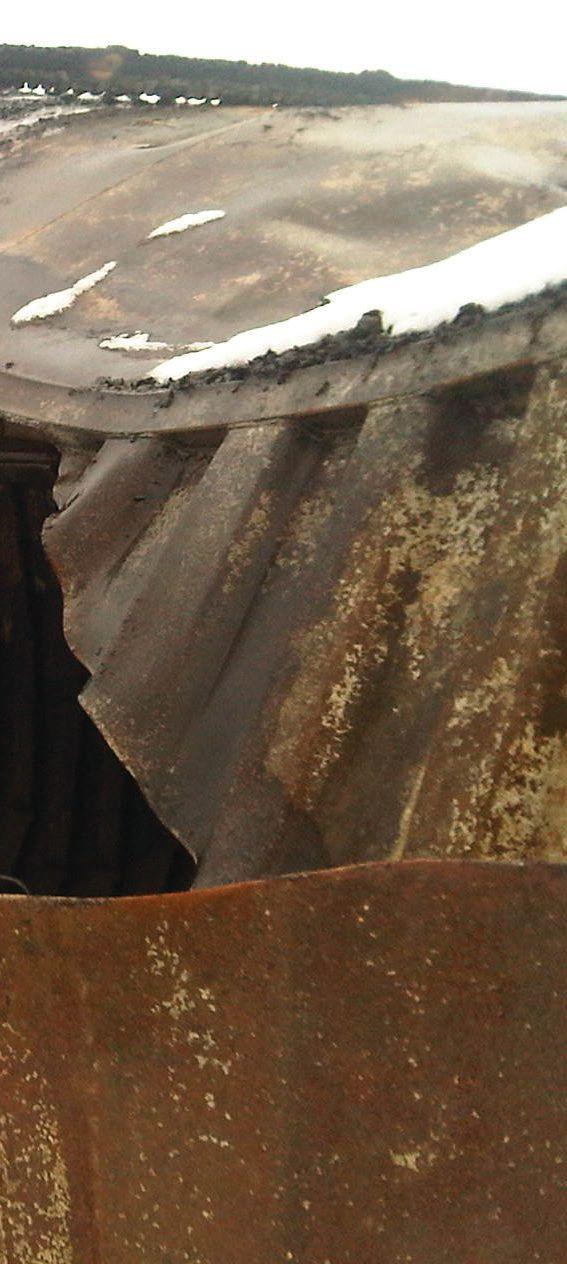
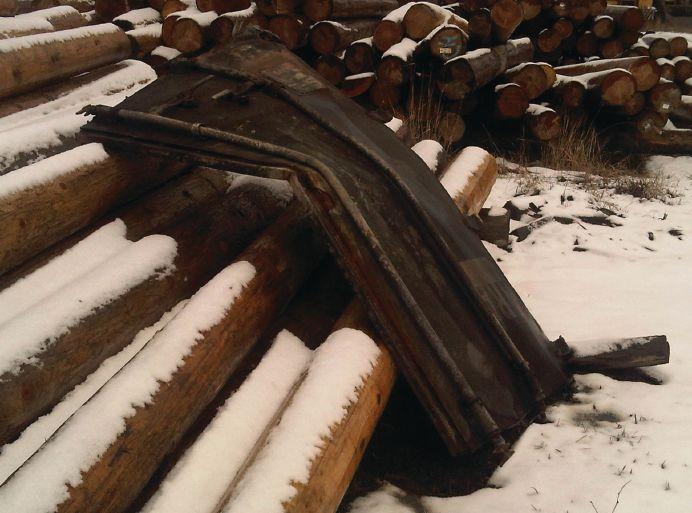
LEFT When a shipping container exploded in Enderby, B.C, in 2011, it tore the steel container roof, sheared the eight steel door hinges, and folded the two 113-kilogram doors in the centre and ejected them from the door assembly. Firefighter Daniel Botkin was killed when one of the doors struck him.
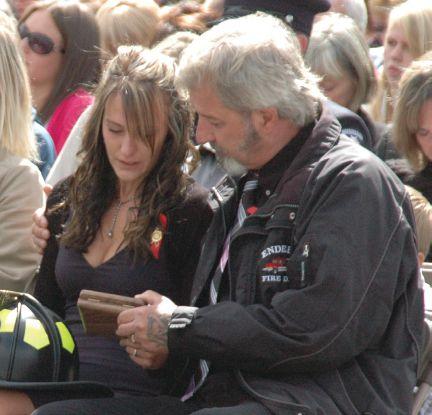
ABOVE Capt. Daniel Botkin’s widow Miranda Hansma (left), and his father, Doug, accept a helmet in his name at the Canadian Fallen Fire Fighters memorial service in Ottawa in June 2012.
But the investigations into Botkin’s death concluded that the exposure fire at the log cabin manufacturing site caused small volumes of flammable liquids inside the container to pyrolize, forming explosive vapour mixtures that detonated with sufficient force to cause the container to rupture or explode. The lack of any significant venting and the general conditions of the outside of the unexposed sides of the shipping container gave the firefighters no sign that there were hazardous conditions within the shipping container, until it failed.
The investigations and reports into Botkin’s death by the BC Office of the Fire Commissioner and WorkSafeBC concluded that the presence of as little as half a litre of methyl hydrate or one litre of mixed chainsaw fuel, along with the exposure fire, caused the incident.
The detonation tore the steel container
roof along most of the 12 metre length of the container facing the exposure fire, sheared the eight steel door hinges, and folded the two 113-kilogram doors in the centre and ejected them from the door assembly.
One of the doors struck Botkin and landed 41 metres southwest of the container. The other door was found 54 metres northwest of the container.
The WorkSafeBC report and the FCABC position paper (available at FCABC.ca) provides more detail on the specifics of the incident; the WorkSafeBC site (WorkSafeBC.com) has a copy of the detailed investigation and an excellent slideshow/animation of the incident.
On April 23, 2013, in Saanich, there was another shipping-container incident at a construction site. A leaking propane barbecue stored in a secure shipping container exploded at the start of the workday when the electrical supplies for the containers were connected. Parts of the container roof landed about 200 metres away, the walls were flattened and the adjacent containers were heavily damaged. Luckily no one was seriously injured in this incident.
After these incidents, a fire chief in one of British Columbia’s smaller communities had his staff try to determine the shipping-container risk in his area. Staff found seven properties on which there were shipping containers used for storage; four contained significant volumes of flammable liquids or flammable compressed gases.
There seems to be a perception that shipping containers are a good place in which to store equipment and fuels because they are strong and secure. The research found that besides conventional storage, containers are being used:
• to store fireworks
• to store flammable gases and liquids at construction sites
• as first-aid buildings at construction sites (with supplies of antiseptic alcohol or oxygen bottles inside)
PHOTO COURTESY OF BC HYDRO
PHOTO BY LAURA KING
Duo-Safety Ladder Corp.
•
• by hobbyists to recharge hunting ammunition
• as electrical rooms or electrical vaults at construction sites (with the accompanying arc blast risk)
But with the right fire conditions, structural strength and a tight, secure, enclosure can make shipping containers dangerous to the fire service and the public.
Surplus shipping containers – or intermodal shipping containers (which means the containers can be moved from one mode of transportation) – are readily available for rent or purchase and are affordable for use for storage; they are available in a range of sizes from sizes from 1.5 metres to 16 metres in length.
Containers are designed to be strong; they can be stacked up to nine high on ships and can carry up to 32,200 kilograms of cargo. The side walls are designed to withstand shifting loads up to 60 per cent of the permitted load and the doors are designed to withstand loads up to 40 per cent of the permitted load. The containers are designed to withstand drop tests and are secure from theft and weather due to a tight structure and gasketed doors.
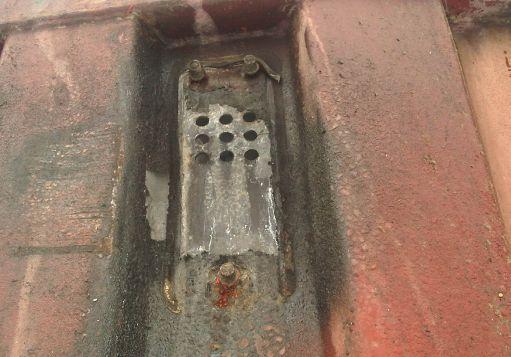
The only venting in shipping containers are groups of nine small holes – of between three millimetres and six millimetres – in the corners that act as air-equalization vents so that the container does not bulge or cave in during changes in ambient temperatures (plus or minus 20 C to 30 C). The holes are protected by external covers that prevent the entry of water. The small size of the holes and the external cover make them a poor indicator of the internal conditions of the containers.
The FCABC’s research and analysis of the fire hazards of shipping containers looked at available fire testing, the impacts of typical fuels commonly found in containers, the impact of ignition sources and the current governance for shipping containers.
A 1977 United States Coast Guard report on the Fire Performance of Intermodal Shipping Containers indicated that the small venting area of the air-compensating vents of a closed container caused internal slow growth fires to vitrify or smother themselves.
The report also found that an exposure fire could increase the internal temperature of a container to 230 C in four to nine minutes, and the ignition or charring of Class-A fuels within five minutes. These tests showed that an exposure fire could raise the internal temperatures quickly and could easily reach the auto-ignition temperature of gasoline.
The fuel analysis of the Enderby incident showed that methanol had a vapour density at normal conditions of 1.1 compared to the 1.0 for air. With the higher air temperature at the top of the container where the methanol was stored, the methanol vapour could have been buoyant. Methanol has a flammable range of between six per cent and 36.5 per cent compared to 1.4 per cent to 7.6 per cent for gasoline. The analysis showed the conditions for the ignition and detonation of the gasoline and methanol were plausible. Some rough calculations of the maximum unvented pressure in the container were done during the analysis and the half litre of methanol and the one litre of gasoline could have created internal pressure of greater than 700 kilopascals or 100 pounds per square inch.
The research also indicated that some jurisdictions in Canada, the United States, New Zealand and Australia had recognized these fire-safety issues associated with shipping containers and had put in place bylaws or other regulations for use of containers.
In most of the jurisdictions reviewed, the key governance measure was to define and declare shipping containers as buildings;
The fire service wants codes amended to require better ventilation in shipping containers that are used as buildings or storage facilities. The only venting in containers are groups of nine small holes, which are covered to prevent water from entering – shown here with the vent cover ripped off from the explosion.
therefore, when they are used for purposes other than the transport of goods, they can be regulated.
Once containers are regulated, then their location, use and contents can be dealt with to help ensure fire safety for the public and firefighters.
In Canada there is no national standard that controls or defines shipping containers as buildings when they are not being used to transport of goods, but Saskatchewan and Ontario have their own regulations.
In Saskatchewan, under Bulletin A19 Saskatchewan Building Standards Advisory, a shipping container is considered a building when it: is no longer used for the shipping of freight, is placed on a property either temporarily or permanently, and is used for any shelter or occupancy.
In 2002, an Ontario court determined that a shipping container used for the storage of goods on a private property in Mississauga was a building based on the Ontario Building Code. Subsequent Building Code Commission hearings have ruled similarly.
In British Columbia, a shipping container is defined as a building only if it is on a foundation and has been modified with, for example, conventional doors, windows or an electrical supply.
The FCABC has concluded that in order to improve the fire safety of shipping containers, the fire service must work to change legislation to
• Regulate the use of containers – The FCABC believes that amendments are required to national and provincial codes that will allow local governments and fire services to regulate the uses of shipping containers when they are not being used to transport goods. Code changes must include the way the containers are used, where they can be used and what can safely be stored inside. The FCABC has included a sample bylaw template in its position paper for local government to use as a tool to regulate the use of containers. In June, the FCABC passed a motion to ask the Canadian Association of Fire Chiefs to work on an initiative to improve awareness of the fire-safety hazards of shipping containers and to have changes made to the National Building Code and fire codes to recognize the possible hazards that shipping container can create for the public and firefighters when they are used
as buildings. In September, the CAFC passed the resolution recommended by the FCABC.
• Weaken the structure to allow for earlier structural failure – One of the major concerns with shipping containers is that they are so internally strong that pressure builds to a high level before the containers rupture. These higher pressures can then cause components such as doors and roof sections to become dangerous projectiles. The presence of small volumes of flammable liquids that are below the regulated volumes in the fire codes can cause a container to rupture and expose the public or firefighters to harm. The solution is to install secure openings (i.e. roll-up doors) that weaken the containers to allow them to vent any internal pressure before rupturing.
• Ensure containers are properly vented – In the Enderby incident, it was difficult during the nighttime fire attack to see indications of smoke pushing out of the container’s small air-compensating vents; therefore, the firefighters were not aware of the conditions within the container. Provision of larger highand low-level vents will provide cross ventilation of a container and will allow responders to see indications of smoke pushing from a
container that is exposed to a fire.
• Educate departments about incident safety – Fire departments should consider the formulation of standard operating procedures to ensure that the lessons learned from the Enderby LODD become part of the their tactics. The incident size-up should consider the impact that an exposure fire can have on a shipping container, what exclusion and hot zones should be used, and the best fire-attack strategies.
The FCABC position paper, draft bylaw and standard operating procedures (on our website – fcabc.ca) provide some of the details that fire departments may want to use.
Shipping containers are very useful as structures or buildings, but the tragic loss of Capt. Botkin showed that when a series of unforeseen conditions occur, containers can be a hazard. In order to prevent similar incidents, the fire service must work to communicate to our own members the potential fire hazards of shipping containers and change the way that containers are regulated.
Don Delcourt is the industrial director for the Fire Chiefs Association of BC and the BC Hydro and Power Authority Fire Marshal. The 33-year veteran of the industrial fire service is also chair of the IEEE Substation Fire Protection working group and the chair of the ASTTBC Certification Board for Fire Protection Technicians in BC. Contact Don at don@enfireintel.com
The left door of the shipping container was blown off from the explosion and found more than 40 metres away.
BY VINCE MACKENZIE Fire chief
Grand Falls-Windsor, N.L.
IUsing a digital volunteer in an emergency
t is common in smaller communities that the volunteer fire department is the only available emergency agency. Most of Canada’s smaller communities have fire stations, but they don’t always have police stations or medical centres. Therefore, when a major emergency incident or disaster strikes these communities, it is the volunteer fire departments that respond.
Unlike in larger cities with emergency-management offices and full-time staff, rural, large-scale disasters are usually dealt with by the members of the volunteer department. The rural fire chief or senior fire officer is thrust into the role of disaster operations commander, or, in times of non-emergency, the role of emergency operations co-ordinators and planners. This can certainly be a challenging role to be thrust into without preparation.
I would like to focus on one element of emergency planning: communication. When the emergency is over and evaluation and inquiry begins, communication is commonly identified as a key factor in the success or failure of disaster operations.
Emergency management communication includes directing emergency responders, sharing public information, and gathering data about the emergency. Therefore, the fire chief needs to know how to receive credible information and how to communicate to the public effectively.
I think we can all agree that forms of communication have changed dramatically in the last five years with the growth of social media. In order to effectively communicate in today’s world, emergency planners now have to consider a social-media component to the emergency-operations plan.
Reports from the public also generally come with photos that cannot be ignored by emergency operations centres. The challenge for local emergency managers is to capture that information to assist in a manner that is credible and timely.
I learned a new term during a recent session on media training: the digital volunteer. It’s a relatively new concept as applied to emergency management, but I believe it will soon become a familiar term.
The digital volunteer is a person who emergency managers identify to help monitor social media platforms for relevant information and data during emergencies. Digital volunteers are not actively engaged in the emergency operations centre, but are engaged with the public information officer to alert those in charge when significant messaging is trending. Digital volunteers are, in essence, social-media savvy spectators recruited to help filter the barrage of information. If you spend any time on social media, you can probably think of a few of those people now. During almost every emergency, people emerge online to provide information to the public through posts on social media, as though they were officials themselves.
We all know someone who is tuned into the event for whatever
Digital volunteers are, in essence, social-media savvy spectators recruited to help filter the barrage of information. ‘‘ ’’
Credible information now comes in many forms from the public. It used to be that everyone phoned into the emergency services to report issues, but today, many people who witness the incidents use social media to inform everyone. While most social media information is credible, some is tainted with opinion and rumors that will quickly spread to the public. The deluge of tweets and posts lends itself to misinformation because the public can receive information as quickly as the officials handling the situation. Unfortunately, the constant monitoring of crucial information can rapidly overload a conventional public information officer or media centre.
Vince MacKenzie is the fire chief in Grand Falls-Windsor, N.L. He is the president of the Newfoundland and Labrador Association of Fire Service and an executive member of the Canadian Association of Fire Chiefs. Email him at firechief@grandfallswindsor.com and follow him on Twitter at @FirechiefVince
reason. Many times these people are actively engaged in the situation and can be a valuable resource to assist with analyzing the volume of information. Enlisting these digital volunteers to filter and inform the emergency operations centre of trending issues or damaging rumors will be very helpful to overall communication. We should not turn away from these opportunities that can help us navigate the changing world of emergency management. So why not write this concept into our emergency planning?
This fall, I will participate in an exercise on the concept of the digital volunteer at an emergency management conference in Nova Scotia. I am excited to find out what the organizers have in store for us. While the concept of the digital volunteer is relatively new, I see great value in it as a tool to help fire departments keep on top of today’s busy communication world.
BY TERRY GERVAIS AND BONNIE BOOMHOWER
IGUESTCOLUMN
The healing power of the fire-service family
t was a phone call that all chiefs dread: a firefighter had collapsed while getting on a truck to respond to an emergency call, was being rushed to hospital in serious condition and may not make it.
Twenty-year-old Jessica Boomhower was at the Greater Napanee Emergency Services headquarters station on June 25 waiting to complete a classification exam with other probationary firefighters when a call came in for a car fire. While getting on the truck to respond, Jessica felt ill and had to be helped off the truck. The crew began to provide medical attention to Jessica but quickly realized that something was seriously wrong. Capt. Matt Westhead, who is a paramedic, recognized signs of a brain injury and updated the paramedics who arrived to take Jessica to Lennox & Addington Memorial Hospital, where she was assessed and immediately transferred to the Kingston General Hospital. Jessica was unconscious and not breathing on her own.
As I drove to the hospital many thoughts ran through my head. How this could happen to such a young person? How is the crew doing? Is the fire-service chaplain available? One other thing weighed heavily on my mind: how would our department handle another tragedy? On one weekend in 2010, two highway crashes killed the wife of one firefighter and seriously injured several other firefighters and their family members; we had also endured the sudden death of the two-year-old son of one of our firefighters. Several months earlier, longtime Fire Chief George Hanmore had died of cancer.
When I got to the hospital I was met by Assistant Chief John Koeing who updated me about the status of our firefighter: Jessica had a bleed in her brain. I then met with Jessica’s parents, Bonnie and Dale, who are both firefighters with our department; they were surrounded by other family members, friends and firefighters. This situation was very serious and I will never forget the words from the surgeon who had performed emergency surgery to relieve pressure on Jessica’s brain: “She will be lucky to live through the night.” These words tore at the hearts of everyone in the room, including me; after all, Jessica is one of my firefighters, a member of my second family, a family member for whom I was supposed to be responsible, and protect.
and her family well. People in the community of Greater Napanee held fundraisers to help the family, and fire departments sent donations – from British Columbia to Newfoundland and as far away as Texas.
I have always believed in the fire-department family. For us in Greater Napanee, as we once again faced potential tragedy, it was heartwarming to witness members of the fire service come together to help out one of their own, even one they didn’t know. Words will never be enough to thank members of the Canadian fire service for what they have done for Jessica, her family and the Greater Napanee Emergency Services. * * *
I have been a firefighter for a little more than seven years, as has Jessica’s father, Dale. And Jessica has been a firefighter for a little more than a year. I was not surprised by the support our department has given us, or by the support from our neighboring departments: we have always felt part of one big extended family. But the outpouring of love and support from firefighters across Canada and globally has been incredible.
Jessica has received messages from across the United States and the
‘‘ ’’
As I drove to the hospital many thoughts ran through my head. How this could happen to such a young person?
United Kingdom, and from Australia and Spain. She has received a few very special gifts from Chicago Fire Ladder 13 Company and a care package from Texas, among others.
Over the next couple of weeks, Jessica remained unconscious and in critical condition, but during this time the remarkable started to happen: the Boomhower family and the fire-department family started receiving calls, cards, tweets and Facebook messages wishing Jessica
Terry Gervais is the general manager/fire chief for the Greater Napanee Emergency Services. Contact him at tgervais@greaternapanee.com. Volunteer firefighter Bonnie Boomhower is Jessica’s mom.
We couldn’t be more proud that we are from Greater Napanee; we couldn’t be more proud to serve a community than we are to serve Greater Napanee. But also we couldn’t be more proud to say we are members of the fire-service family.
This experience has taught us to believe in miracles, and the miracle stared with the medical treatment Jessica received from the firefighters, paramedics, doctors, nurses and surgeons. They saved her life.
We are happy to report that Jessica is doing very well – she aced her classification exam, and although she has a long road ahead of her, this young, strong woman can succeed with the continued support of her family and the fire-department family.
BY LES KARPLUK AND LYLE QUAN
FWho is responsible for building firefighter talent?
ire-service leaders have many responsibilities; developing talent in the fire hall is a responsibility that chiefs should take seriously given that one day all chief officers will move on to retirement or other opportunities. Leaving a solid foundation of internal talent is paramount to the stability and growth of the organization.
The level of talent demonstrated within the fire station is a good indication of the organization’s leadership. When firefighter talent appears absent or is lacking, it’s a strong indication that the leadership has either stalled out or, in some cases, is unable to keep up with the growth of the department. In cases such as these, the fire chief and senior officers need to regroup and change things.
There are various views on the subject of talent development, but one thing is certain: every fire department has talent, and it must be developed, otherwise the future looks grim and the community loses respect for the department.
Firefighter talent is a commodity that increases in value as it develops. This commodity improves the fire department, enhances public safety, increases firefighter professionalism and boosts morale, which is why talent development must be the focus of all fire-service leaders, regardless of the size of the department.
Many readers might believe that, by default, it is the fire chief’s responsibility to build department talent; we agree to a point, but only to a point.
Yes, it is the responsibility of the fire chief to acquire the resources to develop firefighter talent, and this is typically accomplished at budget time by presenting a carefully laid-out plan that identifies the short-, medium- and long-range goals for talent development. But, for the most part, this is where the chief’s job ends. Now it’s time for the real talent-builders to roll up their sleeves and do what is needed. In our opinion, the real talent-builders are the frontline officers. Let us explain.
and minimize their weaknesses, which is, ultimately, building talent. Frontline officers are also in the best position to mentor and coach firefighters and to encourage them when they get stuck in a rut.
Building talent requires frontline supervisors to understand the importance of firefighter talent; they must lead by example and set the bar high for not only firefighters, but also for themselves. In other words, the frontline supervisors must continually take steps to better themselves. To lead by example, these officers must be the example; when it comes to training and education, frontline officers should be the first to sign up for the course. We cannot expect others to buy into talent development if the frontline supervisor doesn’t buy into it.
Building talent rests on the shoulders of every firefighter in the department; it’s a team effort. Who determines firefighters’ attitude toward building their own talent? You guessed it: the firefighters. Firefighters must value talent development and be active supporters of meeting department and/or industry standards. Firefighters may need to juggle their vacation periods to accommodate training, attend seminars on a weekend, or spend time doing homework in order to build their own talent. They need to have some investment in the game.
Building talent rests on the shoulders of every firefighter in the department; it’s a team effort. ‘‘ ’’
Who is in the best position to know the skills, competencies, personalities and experiences of firefighters? The frontline supervisors. And who is in the best position to lead by example and set the bar high for talent development? The frontline supervisors. Frontline officers have more face time with the firefighters and therefore they are in a better position to understand individual strengths and weaknesses. Frontline officers can determine ways to best use firefighters’ strengths
Les Karpluk is the retired fire chief of the Prince Albert Fire Department in Saskatchewan. Lyle Quan is the retired fire chief of Waterloo Fire Rescue in Ontario. Contact Les at Genesis2020solutions@sasktel.net and Lyle at lpqsolutions@bell.net. Follow Les on Twitter at @GenesisLes and Lyle at @LyleQuan
Building department talent can be a challenge as firefighters likely have their own opinions regarding talent-building priorities. Regardless of what comes first or what comes second, successful leaders realize it takes the combined effort of every person in the department to develop this precious commodity.
Basketball star Michael Jordan summarized this team effort quite nicely: “There are plenty of teams in every sport that have great players and never win titles. Most of the time, those players aren’t willing to sacrifice for the greater good of the team. The funny thing is, in the end, their unwillingness to sacrifice only makes individual goals more difficult to achieve. One thing I believe to the fullest is that if you think and achieve as a team, the individual accolades will take care of themselves. Talent wins games, but teamwork and intelligence win championships.”
It isn’t a matter of wanting to build department talent; rather, it is a matter of making it happen. We recommend you take steps to make it happen sooner rather than later.
BY DAVE BALDING Fire chief Fraser Lake, B.C.
CFIRELINES
A scientific approach to fighting fires
hange is something progressive fire-service leaders must embrace to help keep firefighters safe and do the best job they can to protect their communities. It’s time; time to change the strategies and tactics used to fight fires in today’s buildings, loaded with highly combustible content.
We know that fires are hotter and burn faster than ever before. So why do we use techniques taught 25 years ago to fight fires in buildings made of – and full of – different and more combustible materials?
Furnishings made of composite materials, coupled with elements of modern, lightweight building construction are game changers. Response times were once predicated on the estimated burn time a compartment could withstand before the effects of fire made it untenable for occupants and the building’s structural integrity. Today’s quicker, hotter fires have an enormous impact on responders.
Using yesterday’s response tactics on today’s buildings – according to significant research and field trials from organizations such as the National Institute for Science and Technology and Underwriters’ Laboratories – is not only ineffective, it is also dangerous.
The standard approach of entering through the front door using an offensive (interior) attack is a perfect example: buildings and contents now reach flashover potential much faster than they did a generation ago – up to eight times faster. When firefighters arrive at what was once considered a routine fire, they now see a lot of black smoke – flammable products of combustion. This fire may well be vent driven by the time firefighters are on scene. Firefighters must now be aware of the combustion air that’s allowed into the structure, which may come from uncontrolled venting due to broken windows, or failure to manage entry points after the suppression crew gained entry.
crews in this hostile environment. Essentially, a transitional attack is early application of water through an existing opening using a straight stream into the fire compartment. This cools flammable products of combustion in the room, buying a little time for the attack crew, and avoiding flashover as responders introduce air to the fire upon entry.
The pneumonic SLICE-RS has been coined to provide some guidance with these concepts.
Size-up: this starts pre-incident and during an alarm includes, as always, the establishment of incident command, a 360-degree scene assessment, and much more.
Locate the fire: determine exactly where in the building the fire is located. This information will drive decisions made in the next step.
Isolate and control the flow path: restricting openings such as doors to unaffected areas is the simplest way to manage the flow path.
Cool the fire: direct a straight or solid stream into the fire compartment for a few seconds from the exterior of the building before crews enter. This cools the superheated fire gasses.
Extinguish the fire: a well-co-ordinated attack with ventilation is critical as the time between ventilation and flashover in today’s fires is
The adage ‘we’ve always done it that way’ has no place in fire fighting. ‘‘ ’’
Perhaps the biggest change in the way firefighters think of and manage structure fires is awareness and management of flow path. Simply put, the flow path is the movement of heat, smoke and fire gasses to areas of lower pressure. Knowing and controlling the flow path accomplishes two goals; it improves occupant survivability and it helps direct the fire away from unaffected parts of the structure.
We now know the old belief that an exterior attack pushes fire further into a building isn’t true. In fact, a transitional attack has been proven to be a great way to buy a little time for interior-suppression
Dave Balding, a 29-year veteran of the fire service, is the fire chief and emergency co-ordinator for the Village of Fraser Lake in British Columbia’s Central Interior. Contact Dave at dbalding@fraserlake.ca and follow him on Twitter at @FraserLakeFire
much shorter than in older buildings with familiar fuels.
Rescue: information gathered during size-up will determine where rescue fits into the process; confirmed or possible occupants makes rescue a higher priority.
Salvage: this step, like rescue, occurs at anytime during the response. It can be achieved with salvage covers or simply by closing doors during operations.
As fuel loads, structures and the fires within them have changed, so must we in the fire service. The adage “we’ve always done it that way” has no place in fire fighting. I am not suggesting that everything the fire service knew and practised has gone by the wayside; in fact, many aspects of SLICE-RS should be very familiar to firefighters. This is simply a guide for first-in engine companies that reflects today’s techniques for today’s fires. Firefighters must keep doing what works, discard what doesn’t work, and be prepared to embrace new practices that are backed up by fire science and research.
BY TOM BREMNER Fire chief, Salt Spring Island, B.C.
TOpening up about mental health in our halls
here are many components to good health. Maybe now – given the volume of recent suicides among first responders – is a good time to be open about how long we have been fooling each other and letting personal dislikes, jealously, personal attacks or negative actions keep us from being healthy.
Have we created an ill work environment?
We hear about mental illness and we understand that the cost of ignoring it can be high. No matter what the issue or challenge, we need to be there for each other.
We boast to our communities that as first responders we are protectors and caregivers, but sometimes we overlook the most important people around us – our own fellow firefighters and our companions with whom we spend time every day.
A personal tragedy in the mid ’90s changed my world forever. It has taken lots of communication, and strength and focus every day since then, to keep my personal health from crashing. I know many of you are in the same state. If it were not for my true friends, supporters, colleagues and professional help, I may not have the opportunity to write this column.
In a matter of minutes (or less) our world can be rocked; we never know when that could happen. We need to open up about the realities of our jobs or volunteer commitments or whatever connections you have to the first-responder business. Yes, you might get a few weird looks, or become red-faced the first time you open up about the internal darkness that you have experienced at some point in your life. However, remember what the alternative could be if you do not open up to someone. We all share in the cost if we do not start helping each other.
weakness will limit opportunities or promotions. Finding a trustworthy person and process is paramount.
If you have taken a positive approach toward mental illness, well done! If not, try connecting with someone who has.
We have created a very tense, and in some cases a non-respectful, mistrusting culture that we have to change. Let’s agree to take the first steps toward being a healthier organization. If we do not take control of our own health and wellness we, and the future generations, will be the losers. Let’s find ways to start being internally honest, rebuild trust and connect openly.
Living a life or going to a job that is painful every day is sad and very unfortunate. In many cases, those who struggle inside cannot find a way to get out of, or change, the way they feel. There are success stories; we just have to be strong enough to ask, be supported and know that we can trust the process. Without this support we have destroyed or lost our greatest asset – a team of caring and honest people.
The world is changing quickly and the support process needs to modernize. Creating professional partnerships and safe spaces
A personal tragedy in the mid ’90s changed my world forever. ‘‘ ’’
Getting to know each other in a positive manner without crossing personal lines is critical. Leadership, caring and trust go a long way. Being that person with whom people can connect and chat openly might be all an affected firefighter needs. We all have heard that sometimes the best help is just to listen, no advice required; just be there and open our ears and minds.
If we do not connect and open up about this unhealthy darkness we will pay a huge price personally and organizationally (we already have, haven’t we?). If we are willing to take the first step and start talking about mental-health issues, it might surprise us and our teams how much talking can help.
Maybe we hide our realities out of fear that showing personal
Tom Bremner is the fire chief for Salt Spring Island, B.C. Contact him at tbremner@saltspringfire.com
saves many lives; failing to do so causes loss of life. Take the challenge. Start building partnerships and start the discussions at the next crew, officer or department meeting about how mental illness is creating a sad history for us. We can make a difference but we need to adjust our personal beliefs and fears.
It is time to talk, and talk honestly. We are looked upon as one of the strongest, most caring organizations within our communities. Let’s make sure we deal with our problems head-on. If we all commit to this we can say that from coast to coast we are a team, building a success story that will keep the process rolling in a healthier way.
Our mental health affects every aspect of our lives so let’s value it and take care of it.
This topic will not go away. To be fearful or punished for asking for help is wrong. It’s up to all of us to take that breath and think how we address the demons inside so many first responders. Take whatever steps are necessary to help to create healthy minds, healthier lifestyles, less stress, and fewer pains and fears.
BY GORD SCHREINER Fire chief, Comox, B.C.
IRehab for firefighters, by firefighters
recently had the honour of visiting the Canadian Fallen Firefighter Monument in Ottawa. I must say I was overwelmed and filled with emotions. My passion has always been about trying to prevent (#stopbad) firefighters from getting hurt or killed in the line of duty.
In April 2006, a visiting 52-year-old firefighter suffered a fatal heart attack while attending a live-fire training exercise at our fire training centre. For us, in Comox, this changed everything.
Before this tragic event we treated our firefighters as most other fire departments did. We worked them hard and gave them a water break every once in a while. Now we have a very formal firefighter-rehab policy. Now, at our training centre, students are assessed before they start training and if they don’t meet some very strick medical protocols they are not allowed to participate in the training. We find that about one in 10 students does not meet the accepted medical standards. During training, students are constantly assessed and if they fall outside of acceptable limits their training ends at that time, for that day. Also, all of our Comox firefighters have their blood pressure checked before our weekely training sessions. Anyone with a pressure above our acceptable standard (160/100) does not participate in strenous physical activities.
On our fire ground, we have adopted a simlar approach; after approximately 30 minutes of strenous work, the firefighters are sent to a rehab area and rehabilited and assessed; if they fall outside of these acceptable limits they are not allowed to continue with their strenous duties (regardless of how bad the fire is). Rehab is now a function of every emergency and training incident we run.
‘‘
during and after. This simple little step can greatly increase your firefighters’ safety. A complete rehab program should include medical monitoring during all incidents. This is a function we have taken on at the fire department operational level. Many fire departments use their local EMS service to provide this function, but we wanted to take our program to the next level. Because we are a small community, we can not always get EMS to attend our incidents; and if we do, they might leave with a patient from the incident, a firefighter needing advanced medical attention, or leave to go to another incident. EMS personnel often leave scenes while we are still doing mop-up or salvage, but rehab is just as important at this time and having our own program ensures that rehab is present and active. We include this very important function with our staging area and management; rehab is run by firefighters, for firefighters – that way we control it, but we still request that EMS stand by in case a firefighter requires more advance treatment.
This kind of rehab program, of course, takes additional resources which could be provided using mutual aid or other members who may no longer be fit enough to provide suppression duties.
Rehab is now a function of every emergency and training incident we run.’’
We researched what others were doing and put together a rehab program that works for us. Our program includes the basics, such as hydration and foods, and also includes medical monitoring of pulse, blood pressure, temperature, oxygen and carbon-monoxide saturations. Added equipment includes misting fans, rehab chairs, core-cooler vests, automatic blood-pressure cuffs, CO/Ox meters, coolers, and towels. We also added more drinks and food on our fire trucks.
We have also put water bottles in the cabs of our fire apparatuses so our firefighters can hydrate on the way to incidents as well as
Gord Schreiner joined the fire service in 1975 and is a full-time fire chief in Comox, B.C., where he also manages the Comox Fire Training Centre. Contact him at firehall@comox.ca and follow him on Twitter at @comoxfire
We have also added a whole new focus to firefighter fitness. Not only do our firefighters and their families get free fitiness passes at our community fitness centre, but we have also added a firefighter-only fitness centre at our fire station that is accessible 24 hours a day. In addition, we have added fitness to our regular practice schedule; an entire company of firefighters can go to the fitness centre during a practice session.
We have seen some of our firefighters change their diets and increase their fitness because they want to ensure they can pass the rehab protocols and, more importantly, stay alive.
Fire fighting is an extremely challenging job. Firefighters (including chief officers) need to be in very good physical and mental condition to preform their duties.
We are happy to share any and all of the rehab protocols that we have put together.
P.S. This 57-year-old chief is heading to the gym right now!
Data collection
New tool provides access to evidenced-based research
By IRWIN COHEN AND LEN GARIS
As budgets grow leaner and public expectations continue to rise, decision makers in the public service are increasingly seeking hard data to make sound and justifiable decisions.
The University of the Fraser Valley in British Columbia has launched a public safety search database to provide access to thousands of reports, articles, books, legislation, and other data from Canada and around the world.
This trend toward evidence-based decision making is turning administrators into researchers. Those delving into public-safety topics can now access an extensive database of information about fire, police, drugs, and public safety through a new search portal created by the University of the Fraser Valley (UFV) in British Columbia.
Available on the UFV’s Centre for Public Safety and Criminal Justice Research new website, http://cjr.ufv.ca, the portal provides access to thousands of reports, articles, books, legislation, and other data from Canada and around the world collected by the centre’s public-safety search database.
The concept for the project was born
at a meeting of Defence Research and Development Canada’s Centre for Security Science (CSS) about two years ago. At that time, the Canadian public-safety experts and administrators involved in the CSS identified a lack of public access to the public-safety data needed to support evidence-based decision making.
This gap had also been noted by British Columbia’s Fire Services Liaison Group, which represents all British Columbia fire-service agencies, in its 2009 report to the provincial government entitled Public Safety in British Columbia: Transforming the Fire/Rescue Service. The report had called on the provincial government to establish a mechanism for the collection of data, trends and best practices in order to support effective decision making and improved service delivery by fire departments.
The UFV’s Centre for Public Safety and Criminal Justice Research took on the chal-
lenge of developing the database and portal, which went live Aug. 1.
The project dovetails with the centre’s commitment to increase the knowledge of those working in public safety and to sharing best practices and research. The centre regularly provides its research and consulting expertise to criminal-justice agencies, governments, public-safety agencies, and community organizations on issues related to improving the efficiency and effectiveness of public-safety operations and proposed initiatives.
According to the authors of a recent manual on the subject, it is worth expending the effort to collect the evidence needed for sound decisions – particularly difficult ones that may need to be justified with taxpayers or superiors.
“Evidence-based decision making is one of the more effective tools you can use to rationalize why a particular approach or program option was chosen,” says The Right Decision: Evidence-based Decision Making for Fire Service Professionals, published in 2013 by Paul Maxim, Len Garis and Darryl Plecas and available on the centre website.
The authors say that policies and strate-
gies based on evidence often produce better results, which can increase decision makers’ creditability and support for their departments. On the other hand, policies and programs not guided by sound evidence frequently cost too much, waste resources or simply yield poor or unknown results. Additionally, a lack of compelling evidence may result in a funding request being turned down.
Good decision making, the authors say, needs to be informed as much as possible by evidence, research, and sound information.
“We make and justify evidence-based decisions by referencing independently supported and verifiable facts,” the authors say. “This approach helps ensure the decisions we make are sound and defensible. Used effectively, evidence-based approaches can help you produce the results for which you are searching.”
With this in mind, the new search portal is an essential tool for decision makers seeking independent, verifiable evidence on which to base decisions related to public safety.
Searches of the Public Safety Search Database can be initiated through the link in the top navigation bar on the website.
The portal’s user-friendly search functions offer a variety of filters to allow users to quickly hone in on the information they require.
Basic searches can be conducted by keyword, title, or author, or by using advanced options, such as Boolean searches – e.g. using “and” between words to combine all terms (house and fire), using “or” between words to view results with at least one of the terms (college or university), and using “not” in front of a word you wish to exclude from the search (fires not house).
All entries include author and publisher details, and some can be read online for free. Users of the portal can filter their search results by publication date, source type (electronic resources, academic journals, books, reports and ebooks), subject, publisher, publication, language, location,
and content provider.
As an example, a basic keyword search for “house fire” on the portal brings up 271 entries, including 210 electronic resources, four academic journals, two books, two reports and one ebook.
Digging deeper into one of the entries –Experimental Results of a Residential House Tire Test on Tenability: Temperature, Smoke and Gas Analyses – leads to a summary page including publisher and author information, the document type, index terms, a link to the web address to obtain the study, and other details.
In another example, a basic keyword search for “marijuana” finds 932 entries. From there, an advanced search can be conducted using various search terms or phrases, or by limiting the results by publication date, author, language, availability and peer review.
Clicking the peer-reviewed option reduces the results to 208, for example, while adding the search term “Alberta” narrows the results to three entries.
Alternatively, limiting the source types to academic journals brings up 236 results.
The database will continue to grow over time as new research becomes available.
In addition to using the portal, visitors to http://cjr.ufv.ca can peruse dozens of research reports that have been produced by the centre on a wide range of fire, police, drugs, and public safety topics. Recent reports address topics as varied as the safety of smart-meter installations, a risk-based framework for scheduling fire-safety inspections, intermodal shipping-container safety, police-based crime reduction, and the nature and extent of marijuana possession in British Columbia.
Plans are in the works to add reports from other agencies, institutions, and organizations to the website, and to allow other researchers to submit their reports to be published by the centre and available to the public on the website.
Len Garis is the Fire Chief for the City of Surrey, B.C., past president of the Fire Chiefs’ Association of BC, an adjunct professor in the School of Criminology and Criminal Justice at the University of the Fraser Valley, research professor at John Jay College of Criminal Justice / The Regenhard Centre for Emergency Response Studies New York and a member of the Institute of Canadian Urban Research Studies, Simon Fraser University. Contact him at len. garis@ufv.ca
Dr. Irwin M. Cohen is an associate professor in the School of Criminology and Criminal Justice at the University of the Fraser Valley, the holder of the University Senior Research Chair, RCMP for Crime Reduction, and the director of the Centre for Public Safety and Criminal Justice Research. Contact him at irwin.cohen@ufv.ca or follow him on Twitter @irwinMcohen.
MANUFACTURERS’ DIRECTORY
AN ALPHABETICAL LISTING OF MANUFACTURERS, SUPPLIERS AND DEALERS OF APPARATUS AND COMPONENTS TO THE CANADIAN FIRE SERVICE.
A.J. Stone Co. Ltd. has proudly served the needs of the Fire/Rescue and First Responder Services of Canada since 1972, featuring quality products, knowledgeable sales reps, and training support.
A.J. Stone supplies equipment from MSA, TNT Rescue, Paratech Rescue, Akron, Kochek, Angus Fire, Marsars Ice/Water Rescue, Innotex Bunker Gear, Pro-Tech Gloves, E.S. Safety Systems, CET, Fort Garry Fire Trucks, and much more. We service what we sell!
The AIRVAC 911® exhaust removal system is a hosefree, fully automatic filtration system that addresses both the gasses and particulate emitted from diesel engines. The AIRVAC 911® system is 100% effective for a clean and safe environment. For a free quote visit www.airvac911.com or call 1-800-540-7264.
AKRON BRASS COMPANY
343 Venture Blvd., Wooster, OH 44691
Tel: 330-264-5678 Fax: 330-264-2944
ARÉO-FEU/AREO-FIRE LTD.
Head Office: 5205 J.A. Bombardier Longueuil, QC J3Z 1G4
Randall Weber, VP Marketing & Sales, Canada Air Technology Solutions is dedicated to our Clients, offering updated, timely, full service Indoor Air Quality (IAQ) solutions. Air quality concerns are mitigated using a unique combination of professional indoor air quality assessment coupled with solutions. Off the shelf or customized site specific air cleaning equipment is available to resolve IAQ issues. Our technical experts review client requirements and budgetary availability. The finest appropriate air cleaning systems are provided. Air Technology Solutions is a leader in Diesel Exhaust Remediation. Building and facility managers, business owners, contractors, architects, and engineers have been working with Air Technology Solutions since 1986 to resolve IAQ needs. Employee and personnel safety and health are key issues. Breathing safe air in the workplace is of utmost importance. We provide global customized solutions to control contaminants, pollutants and odours in your facility. We look forward to servicing your requirements.
Akron Brass Company is a leading global manufacturer of high performance firefighting products engineered and tested for superior fire suppression and emergency response. Products include nozzles, monitors, valves, scene and vehicle lighting, vehicle electronics, reels, hand tools, engineered solutions, and other firefighting equipment.
At Areo-Fire we are committed to meeting our customers needs and we are proud to offer a wide range of top-of-the-line equipment, clothing and accessories for firefighting and emergency interventions, public safety and fire trucks. We have been in business for more than 50 years and today, the 3rd generation of the company has continued to add new, high-quality products so that you can find everything you require under one roof. Through the years, we have acquired a solid reputation based on the high level of satisfaction of our clientele. Considered as one of the best distribution models in the fire service industry, we partnered with some of the maor product and truck manufacturers such as: Rosenbauer, MSA, Hurst, CET Fire Pump, Cosmas, Innotex, Protek, PETZL, NAFH, Groupe Leader, Maxxera, Res-Q-Jack, Streamlight, Ergodyne, Techtrade, Solberg, Mustang, Ansul, Foampro, Koehler Bright Sar, Hale, Waterous, and many more.
Areo-Fire is also a Canadian agency which supplies and stocks products such as: Cosmas fire boots, Leader Group products (FANS, SEARCH & RESCUE, TRAINING), Acton Fire boots, Protek Nozzles, Rabbit P-555 portable pumps and Maxxera’s hose reels and unrollers. Snagger tools.
We are currently looking for distributors, please contact us.
Although Arnprior Fire Trucks is a new name, we are the same team of Builders and Engineers that produced quality and pride into fire trucks built under two previous fire apparatus companies in the Ottawa Valley. AFT is 100% Canadian owned and operated based in a state-of-the-art manufacturing facility in Arnprior, Ontario.
PUMPER | FORT GARRY FIRE TRUCKS
APPARATUSSHOWCASE
Built on a Spartan Metro Star chassis and powered by an Allison 3000 EVS transmission and a 450-hp Cummins ISL 9 engine, this unit is equipped with a 1,250-gpm Darley LDM pump, a Foam Pro 2002 A&B foam system, and a 500-gallon Pro Poly water tank.
DEPARTMENT: Brandon Fire and Emergency Services, Manitoba
PUMPER | DARCH FIRE/PIERCE MANUFACTURING
Built on a Saber chassis and powered by a 450-hp Cummins engine and an Allison transmission, this unit features a 1,500-gpm Pierce PUC pump with a Husky foam system and a 1,000-gallon water tank.
DEPARTMENT: Woodstock Fire Department, Ontario
Built on a Commander 4000 chassis and powered by a 500-hp Cummins ISX engine and an Allison EVS 4000 transmission, this unit features a 1,300-gpm Hale QFLO pump, a 300-gallon water tank, an Elkhart Scorpion RF monitor, platform collision protection sensors, a Smart Power generator and a 200-foot electric cord reel.
DEPARTMENT: Town of Renfrew Fire Department, Ontario
PUMPER/TANKER |
This unit is built on a Freightliner M2-106 chassis and powered by an Allison 3000 EVS transmission and a 350-hp Cummins engine. It features a 1,250-gpm Rosenbauer pump, a Rosenbauer EZ-Foam system, a 1,500-gallon poly water tank, a GREENSTAR idle-reduction system, and a high-pressure, 200-foot hose reel.
DEPARTMENT: Pontiac Fire Department, Québec
PUMPER/TANKER | MIDWEST FIRE
This unit is built on a Freightliner M2 106 chassis and powered by an Allison 3000 EVS transmission and a 350-hp Cummins ISC engine. It features a Hale HP 300X pump, a 3,000-gallon AR Polypropylene water tank, three Newton dump valves, a Whelen lighting package, and a Sidewinder remote control monitor.
DEPARTMENT: Arkona Fire Department, Ontario
PUMPER | SAFETEK EMERGENCY VEHICLES LTD./SMEAL FIRE APPARATUS CO.
Built on a Spartan Metro Star custom chassis and powered by an Allison 3000 EVS transmission and a 380-hp Cummins ISL9 engine, this unit features a 1,050-gpm Waterous pump, a Foam Pro 2001 system, an 800-gallon UPF water tank, an enclosed ladder, and a Smeal custom top-mount.
DEPARTMENT: Central Elgin Fire Department, Ontario
Built on a 4X4 7400 International chassis and powered by an Allison EVS-3000 transmission and a 330-hp MaxxForce 9 engine, this unit features a 1,000-gpm Rosenbauer NH 1000 pump with a 500-gallon tank, a Rosenbauer FixMix Foam Pro system and an extruded aluminum body.
DEPARTMENT: Chestermere Fire Services, Alberta
This unit features a 2,000-gpm Waterous pump, a FoamPro 2001 foam system, a 500-gallon poly water tank, TAK-4 independent front suspension, a Will-Burt Night Scan light tower, Pierce Command Zone multiplex system, a top-mount enclosed style pumphouse and a back-up camera. It is built on a Velocity chassis, and powered by an Allison 4000 EVS transmission and a 500-hp Cummins ISX12 engine.
DEPARTMENT: Regional Municipality of Wood Buffalo Fire and Emergency Services, Alberta
ASPHODEL FIRE TRUCKS LTD.
1525 County Rd. 42, Norwood, ON K0L 2V0
Tel: 705-639-2052 Fax: 705-639-2992
Toll Free: 1-877-639-2052
e-mail: sales@aftl.ca
website: www.aftl.ca
Jeff McNiece, Paul Bitten, Morley Kosmack, Sales Jacques F. Perreault
We build pumpers, tankers, rescues, rapid response and mini-pumper vehicles designed for need, built for your budget. Custom manufacturing of quality emergency and specialty vehicles for police, fire, EMS and industry. “If you can dream it up - we can build it”
BECOMING A FIREFIGHTER
PO Box 530, 105 Donly Drive S., Simcoe, ON N3Y 4N5
Canadian family owned and operated business that offers a higher standard of service and sales for all your Fire Apparatus needs. C-Max Fire Solutions offers 24 Hour service from EVT Technicians with fully stocked service trucks. We offer Pump testing and repairs to all makes and models. We offer ground ladder testing as per NFPA 1932. We are also Ontario’s Factory Sales and Service Centre for KME Fire Apparatus.
CANADIAN SAFETY EQUIPMENT INC.
2465 Cawthra Rd., Unit 114, Mississauga, ON L5A 3P2
Tel: 905-949-2741 Fax: 905-272-1866
Toll Free: 1-800-265-0182
e-mail: info@cdnsafety.com
website: www.cdnsafety.com
Ross Humphry, Nick Desmier, Scott Gamble, Chris Hamilton, Steve Shelton, Mark Kentfield, Mike Robinson
We supply SCBA’s, Thermal Cameras, Auto Extrication, CAF Systems, Fall Protection, Bunker Gear, Fire Hose, Communications Equipment, Nozzles, Fittings, Hazmat Suits, Ventilation Fans, Gas Detectors, Confined Space Rescue Equipment, High Angle Rescue Equipment, Boots and Gloves. Everything for Fire Fighting and Confined Space Rescue.
Carrier Centers Emergency Vehicles Division is proud to be the E-ONE fire apparatus dealer for Ontario. When you need full-service for all makes and models of mission critical vehicles including parts, mobile on-site pump testing, ground ladder testing, aerial inspections, refurbishing, collision repair and more, make Carrier Centers your first choice to help your department keep your community safe. For sales, parts, and service inquiries please call 1-866-8963588. For information regarding additional offerings including heavy trucks, walk-in vans, lease and rental, reefers and air conditioning, and body shop services, visit us online at www.carriercenters.ca
CET FIRE PUMPS MFG.
75, rue Hector, C.P. 90, Pierreville, QC J0G 1J0
Tel: 450-568-2719 Fax: 450-568-2613
Toll Free: 1-888-844-2285
e-mail: sales@fire-pump.com
website: www.fire-pump.com
Stephan Thibault
Accept Only The Best
Portable Pumps, Skid Units, CAFS, Foam Trailer, Glider Kit, Water Tank, Brush Truck and Fire Apparatus.
A Century of Engineering for the Bravest!
CSE INCENDIE ET SÉCURITÉ
5990 Vanden Abeele, St. Laurent, QC H4S 1R9
Tel: 514-737-2280 Fax: 514-737-2751
Toll Free: 1-866-737-2280
e-mail: info@cseis.com
website: www.cseis.com
Richard Abraham, Mike Heering, Brad Bowen
We supply SCBAs, Thermal Imaging Cameras, Auto Extrication Tools, CAF Systems foam, Bunker Gear, Fire Hose and accessories, nozzles, fall protection communications equipment, fittings, hazmat suits, ventilation fans, rescue saws, ice and water rescue gear, high angle rescue gear, boots, helmets and gloves.
The goal at Darch is to provide the best fire and first responder vehicles, equipment and technical service so that emergency services personnel can work safely and protect the citizens of their community. Darch partners with leading industry manufacturers including Pierce Manufacturing, Holmatro, Draeger, Elkhart, Geargrid, Key Fire Hose, Blowhard Fans and Code 3 as well as many, many more. The parts department at Darch has all of the everyday and hard to find parts needed to keep your emergency vehicles in top form. Darch’s professional fleet service team with fully licensed and EVT master certified technicians is ready to respond to all of your fire truck maintenance and service needs including pump testing and scheduled fleet service.
APPARATUSSHOWCASE
Built on a Spartan Metro Star chassis and powered by a 380-hp Cummins ISL9 engine and an Allison 3000 EVS transmission, this unit features a 1,250-gpm Hale Q-FLO Plus pump, a Foam Pro 2002 system, and a 800-gallon Polyproylene water tank.
DEPARTMENT: Perth Fire Department, Ontario
Built on an Arrow XT chassis and powered by an Allison 3000 EVS transmission and a 450-hp Cummins ISL9 engine, this unit features a 1,500-gpm Pierce PUC pump, a Husky 12 Dual Agent foam system, a 500-gallon poly water tank, 1,500-gpm high-flow aerial waterway, a TFT RC Monsoon monitor with a 1,250-gpm nozzle, TAK-4 independent front suspension, a Pierce Command Zone multiplex system, and a 22.9 metre (75-foot) ladder.
DEPARTMENT: Township of Langley Fire Department, British Columbia
Whelen LED and Command Light packages, a Harrison Hydaulic generator, and a Command Desk.
DEPARTMENT: Orillia Fire Department, Ontario
This unit is built on a Freightliner M2-106 chassis and powered by a 345-hp Cummins ISL engine and an Allison EVS 3000 transmission. It features a 1,050-gpm Rosenbauer NH55 pump, a 1,500-gallon water tank, a 20-gallon foam tank, a front Elkhart Sidewinder monitor, a swivel dump with electric valve, two Speedlays with removable trays, a rear traffic advisor and an EZ Climb ladder.
DEPARTMENT: Town of Renfrew Fire Department, Ontario
Built on a Cyclone II custom chassis and powered by a 450-hp Cummins ISL engine and an Allison EV3000 transmission, this unit features a 2,100-gpm Hale QMax pump with a Hot Shot II foam system, a 1,030-gallon water tank, a TFT Monsoon monitor and a rear TFT Hurricane.
This unit features a 1,250-gpm Waterous pump, a Husky 3 foam system, a 1,000-gallon poly water tank, cold weather package with pump enclosure and hot water heater, TFT Tornado remote control monitor, and pump-in-motion capability. It is built on an IHC 7400 chassis and powered by an Allison 3500 EVS transmission and a 330-hp MaxxForce 9 engine.
DEPARTMENT: Redwater Fire Department, Alberta
DEPARTMENT:
Built on a Spartan Metro Star chassis and powered by a 450-hp Cummins ISL9 engine and an Allison 3000 EVS transmission, this unit features
Built on a Spartan Gladiator chassis and powered by a 500-hp Cummins ISX engine and an Allison 4000 EVS transmission, this unit features a Waterous CSU1500 pump, a Waterous Eclipse CAFS, a Waterous Advantous 6.0 foam system, and a 1,250-gallon Copoly water tank.
DEPARTMENT: Quesnel Volunteer Fire Department, British Columbia
This unit is built on a Spartan Gladiator custom chassis and powered by an Allison 4000 EVS transmission and a 600-hp Cummins ISX16 engine. It features a 2,250-gpm Hale 8FK pump, a Foam Pro 2002 system, a 250-gallon UPF water tank, and a Smeal custom rear-mount 100-foot aerial platform with a steel ladder.
Burnaby Fire Department, British Columbia
DEPENDABLE EMERGENCY VEHICLES
275 Clarence St., Brampton, ON L6W 3R3
Tel: 905-453-6724 Fax: 905-453-7716
Toll Free: 1-800-268-0871
e-mail: sales@dependable.ca
website: www.dependable.ca
Pino Natale
Design & manufacture custom fire pumpers, rescues, tankers, aerials, haz-mat, air-lighting units, minis, EMS & police support vehicles & equipment. Collision and restoration estimates, complete on-site vehicle collision and restoration, large custom paint shop. Apparatus repairs and MTO certification. Spartan Dealer, Freightliner, Sterling, International, Kenworth, Peterbilt, Mack, Ford, General Motors chassis. Sales. Service and parts for Hale, Darley and Waterous pumps. Extensive parts inventory. Sales and repairs of all makes of Emergency lighting, hose, nozzles and fire related equipment. Friendly, courteous and knowledgeable one stop shopping for fire apparatus and related equipment since 1975.
CANADIAN DEALER FOR:
Spartan ERV, A Spartan Company
907 7th Avenue North, Brandon, SD 57005
Tel: 605-582-4000 Fax: 605-582-4001
website: www.spartanerv.com
E-ONE,
INC.
1601 S.W. 37th Ave., Ocala, FL 34474
Tel: 352-237-1122 Fax: 352-237-1151
e-mail: info@e-one.com website: www.e-one.com
CANADIAN DEALERS
Carrier Emergency Equipment
6 Edmondson St., Brantford, ON N3T 5N3
Phone: 519-752-5431
Territory: Ontario, Atlantic Provinces
First Truck Specialty Vehicles
18688 96th Avenue Surrey, BC V4N 3P9
Phone: 604-888-1424
Territory: British Columbia, Alberta, Yukon, Northwest Territories
Techno Feu Apparatus Maintenance
105 Marie-Victorin, St. Francois-Du-Lac, PQ J0G 1M0 Phone: 450-568-2777
Canada’s Premier facility dedicated exclusively to providing the best in bunker gear cleaning, assessing, decontamination and repair. NFPA 1851:2008 compliant, ISO 9001: 2008 registered, ETL verified for all fabric repairs and all moisture barrier repairs. Locations: Calgary, Toronto, Detroit.
FIREHALL BOOKSTORE
PO Box 530, 105 Donly Drive S., Simcoe, ON N3Y 4N5
Tel: 519-429-3006 Fax: 1-877-624-1940
Toll Free: 1-877-267-3473
e-mail: firehallbookstore@annexweb.com
website: www.firehallbookstore.com
Becky Atkinson
Canadian distributors for education and training products.
Product lines include NFPA, IFSTA, PennWell, Brady, Action Training, Emergency Film Group & Jones & Bartlett.
FORT GARRY FIRE TRUCKS LTD.
53 Bergen Cutoff Rd., Winnipeg, MB R3C 2E6
Tel: 204-594-3473 Fax: 204-694-3230
Toll Free: 1-800-565-3473
e-mail: bnash@fgft.ca
website: www.fgft.com
Brian Nash – National Sales Manager
Fort Garry Fire Trucks offers a complete line of Quality Fire Apparatus, including Pumpers, Tankers, Rescues and Aerial Ladders.
Catherine Connolly, Advertising Manager Firehall.com provides an excellent forum for exchange among firefighters and others involved in the fire service. Advertising options include banner ads and e-blasts and offer extensive exposure to the rank and file.
Problem: Your current turnout gear restricts your performance. It’s physiology. When you move your arms to work in front of you or raise them up to work above you, you need more length across your back and more length under your arms or else your movements will be restricted. Our AXTION™ back with full-length expansion pleats and AXTION™ sleeve with pleats and darts on the front and back of each sleeve allows unrestricted movement with or without an SCBA and produces minimum coat rise when you reach up. Globe Firefighter Suits - Turning out the world’s best.
This unit is built on a Rosenbauer Commander chassis and powered by a 450-hp Cummins engine and an Allison 4000 EVS transmission. It features a 1,250-gpm HALE DSD 1500 pump, a FoamPro 2002 foam system, a 2,000-gallon water tank, ZICO folding water tank support, and OnSpot traction system.
DEPARTMENT: Gatineau Fire Department, Québec
This unit is built on a 4X4 International 7500 chassis and powered by a 330-hp MaxxForce 10 engine and an Allison 3000 EVS transmission. It features a 1,250-gpm Darley PSP pump, a Foam Pro 2001 foam system, an 800-gallon Pro Poly water tank, a Federal Signal camera system, and FireCom wireless headsets.
DEPARTMENT: North Westside Fire Rescue, British Columbia
This unit is built on a Velocity chassis and powered by an Allison 3000 EVS transmission and a 450-hp Cummins ISL9 engine. It features roof top hatch compartments and a recessed rooftop walkway, TAK-4 independent front suspension, Pierce Command Zone multiplex system, recessed electric awning, a Command Light tower, Onspot tire chain system, and an extended front bumper with lift and tow package and centre tool tray.
DEPARTMENT: Airdrie Fire Department, Alberta
Built on a Commander 4000 chassis and powered by a 450-hp Cummins ISL engine and an Allison EVS 3000 transmission, this unit features a 1,500-gpm Hale DSD pump, a 300-gallon water tank, a 20-gallon foam tank with a Foam Pro system, an Elkhart Cobra EXM monitor, LED ladder lighting, an Onan generator and a 200-foot electric cord reel.
DEPARTMENT: Guelph Fire Department, Ontario
This unit is built on a Spartan Metro Star custom chassis and powered by an Allison 3000 EVS transmission and a 400-hp Cummins ISL9 engine. It features a 1,250-gpm Hale Q-Max pump, a 1,500-gallon UPF water tank, and Uni-body aluminum construction.
DEPARTMENT: Township of Langley Fire Department, British Columbia
This unit was built on a Freightliner M2-106 Chassis, and is powered by an Allison EVS3000 transmission and a Cummins ISL engine. It features a 1,250-gpm Rosenbauer NH55 pump, a Rosenbauer FixMix HP foam system, a 1,500-gallon water tank, pump and roll capability, and a formed extruded aluminum body with a swing-down ladder rack.
DEPARTMENT: Indian Head Fire Department, Saskatchewan
This unit features a 1,250-gpm Darley PSP pump, a 2,000-gallon APR Polypropylene water tank, a rear SS Newton dump valve, a Sidewinder manual monitor, and a Whelen light package. It is built on a Freightliner M2106 chassis and powered by an Allison 3000 EVS transmission and a 300-hp Cummins ISC engine.
DEPARTMENT: Athabasca County Fire Department, Alberta
unit is
on a 4-door
a
DEPARTMENT: Moonbeam Fire Department, Ontario
and a
This
built
Freightliner chassis and is powered by a 360-hp Cummins engine. It features
1,250-gpm Waterous pump, a Husky foam system
1,000-gallon water tank.
HASTINGS BRASS FOUNDRY LTD.
236 Clark Dr., Vancouver, BC V5L 3H3
Tel: 604-253-2811 Fax: 604-253-3133
e-mail: hasbra@telus.net
website: www.hasbra.com
Robert Worner, Sales Mgr.
HASBRA FIREFIGHTING EQUIPMENT - Serving the Firefighting Community Through Quality Distributors Since 1916. ISO 9001-2008
Ralph Briggs, Regional Sales Manager - Canada (226-791-8275)
INNOTEX® is a North American leader in the development, manufacturing and distribution of high quality Turnout Gear, Gloves and Hoods certified to NFPA 1971.
The legacy of Angus Fire goes back over 200 years. Tradition, combined with innovation has allowed Angus to become the world leader in the manufacture of fire fighting equipment.
Canada’s first choice in high quality hoses and foam products, the Angus Fire brand offers performance second-to-none, while Kidde Canada’s sales and technical support team ensure the legendary Angus Fire service level is maintained to the highest industry standards.
LEVITT-SAFETY LIMITED
2872 Bristol Circle, Oakville, ON L6H 5T5
Tel: 905-829-3668 Fax: 905-829-2919
Toll Free: 1-888-453-8488
website: www.levitt-safety.com
Maureen McGillis
Levitt-Safety has over 75 years of experience and expertise in the fire and safety industry. We offer a wide variety of products and services emphasizing our unwavering commitment to the protection of fire fighters. Depend on us to ensure your department stays safe and efficient.
Proudly Canadian, Jordair is an ISO 9001-2008 accredited company founded in 1972 which offers a diverse range of standard and engineered compressed air and gas systems for specialized applications. Jordair has supplied over 5,000 breathing air and gas compressors to a variety of Canadian and global clients and is the exclusive Canadian agent for Bauer Kompressoren GmbH of Munich, Germany. Our products set the industry standard in safety and reliability. Jordair and Bauer provide safe, reliable products backed by over 40 years of breathing air compressor expertise and our compressor systems are the number one choice for the Fire Departments, Diving and the Military in Canada.
KOCHEK CO., INC.
3131 Autumn Hill Crescent, Burlington, ON L7M 1Z3 Tel: 416-948-6124 Fax: 905-592-1999 Cell: 416-948-6124
e-mail: lkenyon@kochek.com
website: www.kochek.com
Laura Kenyon, Regional Sales Manager
At Kochek, we take pride in manufacturing only the finest quality strainers, fittings, adapters, suction hose systems and other specialty equipment to meet a wide variety of water transfer needs. Our Canadian warehouse is now well stocked to expedite shipments across the country. Laura Kenyon looks forward to the opportunity to assist your industry or fire department in protecting the lives and homes in your community. For more information about Kochek products contact Laura and please remember to check our website regularly for new information being added to help you in your fight against fires.
M&L SUPPLY
14935 County Road 2, PO Box 269, Ingleside, ON K0C 1M0
How’s this - 10 Sales People (combined sales backgrounds of 185 years, as well as combined firefighting backgrounds of 315 years).
When equipment is damaged in hostile environments we have 4 Factory Certified Technicians (combined service background of 49 years, combined Firefighter background of 102 years) to get you up and running. CHIEF ARE YOU STILL THINKING?
PLATFORM | RESQTECH/ROSENBAUER
APPARATUSSHOWCASE
Built on a Commander 4000 chassis and powered by a 500-hp Cummins ISX engine and an Allison EVS 4000 transmission, this unit features a 2,100-gpm Hale QMAX pump, a 500-gallon water tank, a 50-gallon foam tank with a Foam Pro system, an EZ Load hosebed, a wireless aerial remote, platform collision protection sensors, an Elkhart Scorpion RF monitor, a Harrison generator and a 200-foot electric cord reel.
DEPARTMENT: Town of Oakville Fire Department, Ontario
|
Built on a 4-door Rosenbauer Commander 3000 chassis and powered by an Allison EVS-3000 transmission and a 350-hp Cummins ISL engine, this unit features a 5,000lpm Darley PSP PTO top-mount pump, a FoamPro 1600 foam system, a 900-gallon water tank and a Rosenbauer Centurion body.
This unit is built on a Spartan Gladiator custom chassis and powered by an Allison 4000 EVS transmission and a 550-hp Cummins ISX15 engine. It features a walk-in heavy rescue custom aluminum body.
DEPARTMENT: Kitimat Fire and Rescue Services, British Columbia
Built on a 4X4 Freightliner M2 chassis and powered by a 3000 EVS transmission and a 350-hp Cummins ISL engine, this
features a 1,250-gpm/1,050-gpm Waterous pump, a Pneumax 140 CFM CAFS, a Foam Pro 2002 foam system, a 500-gallon Poly water
|
This unit is built on a 4X4 International 7400 chassis and powered by a 3500 EVS transmission and a 330-hp MaxxForce engine. It features a 1,000-gpm Waterous pump and 500-gpm CPK3 high pressure pump, a FoamPro 2002 foam system, a 1,000-gallon Poly water tank, Hella LED lighting, and a PPV BlowHard fan.
DEPARTMENT: Cypress County Fire and Rescue Services, Alberta
Built on a Impel chassis and powered by an Allison 3000 EVS transmission and a 450hp Cummins ISL9 engine, this unit features a 1,500-gpm Pierce PUC pump, a Husky 12 foam system, a 1,00-gallon poly water tank, TAK-4 independent front suspension, a Pierce Command Zone multiplex system, and Stationary and Advanced Pump and Roll pump modes.
DEPARTMENT: Pincher Creek Emergency Services, Alberta
Built on a
DEPARTMENT: Worlsey Fire Department, Alberta
Freightliner M2106 chassis and powered by an Allison 3000 EVS transmission and a 350-hp Cummins ISC engine, this unit features a 500-gpm Darley HM pump, a 3,000-gallon APR Polypropylene water tank, three Newton dump valves, and a Whelen light package.
unit
tank, and Akron electric valves with KZ Dial-a-Matic controls.
DEPARTMENT: Lamont County Emergency Services, Alberta
This unit is built on a Ford F-550 4-door chassis and powered by a Ford V8 diesel engine with an automatic transmission. It features tools boards, roll-out trays, shelving and Stokes stretcher storage.
DEPARTMENT: Minden Hills Fire Rescue, Ontario
MERCEDES TEXTILES LIMITED
5838 Cypihot, Ville St. Laurent, QC H4S 1Y5 Tel: 514-335-4337 Fax: 514-335-9633
Robert L. Richardson, President, W.S. (Scott) Fraser, Canadian Sales, Claude Berube, Quebec Sales
Celebrating over 35 years of manfacturing firefighting innovation, Mercedes Textiles Limited is widely recognized as the world’s leader of municipal, forestry, snowmaking and industrial fluid delivery systems and specialty equipment.
FIRE HOSE:
Innovation Delivered
• KrakenEXO®, the most advanced attack fire hose on the market - weighs less, kinks less, and flows more water
• Highly visible WAYOUT® couplings, designed for improved “firefighter safety” during interior suppression.
• iDENTIFY® Coding System - Recessed zone on hose couplings (patent pending) designed to receive and protect identification markings and decals from abrasion damage
• Innovative iREFLECT® Lock Lever Storz couplings, designed to greatly assist firefighters during LDH deployment and retrieval applications.
• UniqueMertex® lining yields an extremely low friction loss, for maximum flow and superior adhesion for long life
• Features our Mercedes Textiles Limited 2-10-L warranty (“2 year All Hazards”, “10 year against manufacturing defects” and “Lifetime against delamination”)
PORTABLE FIRE PUMPS:
• A leading manufacturer of high pressure, lightweight, portable fire pumps for forestry and municipal fire department applications.
OUR CANADIAN DISTRIBUTORS
• www.brenkir.com – NL
• www.cumings.ca – NS, NB, PEI
• www.l’arsenal.ca – QC
• www.municipalequipment.ca – S./S.E. ONT
• www.spi-s.com – N./N.W. ONT
• www.realsafety.ca – MB
• www.wfrfire.com – BC, AB, SK, YT, NWT
METALFAB LTD.
847 Central St., Centreville, NB E7K 2E8
Tel: 506-276-4551 Fax: 506-276-3648
Toll Free: 1-800-561-0012
e-mail: rastacey@metalfabfiretrucks.com
website: www.metalfabfiretrucks.com
Ryan A. Stacey, CET
Canadian manufacturer of customized Fire Department Pumpers, Tankers and Rescues.
METZ FIRE AND RESCUE
3-304 Stone Rd. W., Guelph ON N1G 4W4
Tel: 519-763-9955 Fax: 519-763-6682
e-mail: john@metzfirerescue.com
website: www.metzfirerescue.com
John Metz
Canadian dealer for KME Fire Apparatus. Specializing in custom and commercial pumpers, aerial, rescue, tankers and wildland units.
MIDWEST FIRE
PO Box 524, 901 Commerce Road, Luverne, MN 56156
Tel: 507-283-9141 Fax: 507-293-9142
Toll Free: 1-800-344-2059
e-mail: bjmwf@iw.net
website: www.MidwestFire.com
Brett Jensen
Midwest Fire has been manufacturing high-quality fire tankers, tanker-pumpers, quick attacks and brush trucks since 1987. We work directly with our customers, never through dealers, to keep costs down and communication consistent during the entire sales and manufacturing process. By creating long-term relationships with our customers, we are able to help devise state-of-the-art approaches to meet each department’s needs. We take pride in our work and our ability to produce some of the most innovative fire apparatus on the market
ONSPOT AUTOMATIC TIRE CHAINS
555 Lordship Blvd., Stratford, CT 06615-7124
Tel: 203-377-0777 Fax: 203-380-0441
Toll Free: 1-800-766-7768
e-mail: onspot@onspot.com
website: www.onspot.com
Patrick D. Freyer, President
This system permanently fastens to the vehicle’s rear suspension and allows the operator to engage and disengage tire chains at the flip of a dashboard switch without stopping, to enhance traction and braking in forward or reverse.
PIERCE MANUFACTURING
PO Box 2017, Appleton, WI 54912-2017
Tel: 920-832-3231 Fax: 920-832-3084
website: www.piercemfg.com
Pierce Manufacturing Inc., an Oshkosh Corporation [NYSE: OSK] company, is the leading North American manufacturer of custom fire apparatus. Products include custom and commercial pumpers, aerials, rescue trucks, wildland trucks, mini pumpers, elliptical tankers, and homeland security apparatus. In addition, Pierce designs its own foam systems and was the first company to introduce frontal airbags and the Side Roll Protection system to fire apparatus. To learn more about Pierce, visit www.piercemfg.com.
POWERFLARE CORP.
NFPA
c/o Firehall BookStore, PO Box 530, 105 Donly Dr. S., Simcoe, ON N3Y 4N5
Tom Richards, Vice President, Distribution Services
Portable LED emergency lights. 10 user selectable flash patterns. Rugged, waterproof, floats, can be run over. LED’s - red, blue, red/blue combination, amber, red/amber combination, green, white, infrared. Battery or rechargeable versions. Weight - 7 ounces. Used by hundreds of fire departments in the U.S. and around the world.
APPARATUSSHOWCASE
Built on a Velocity chassis and powered by an Allison 4000 EVS transmission and a 500hp Cummins ISX engine, this unit features a 1,750-gpm Waterous CSU pump, a Husky 12 foam system, a 750-gallon poly water tank, TAK-4 independent front suspension, Pierce Command Zone advanced electronics and control system, top-mount pumphouse, and a TFT remote control Extend-a-Gun and Hurricane RC electric monitor. DEPARTMENT: Yorkton Fire Protective Services, Saskatchewan
Built on a 2-door extended Freightliner chassis and powered by a 330-hp Cummins engine, this unit features a 500-gpm Waterous pump and a 1,800-gallon tank.
DEPARTMENT: Ripley-Huron Fire Department, Ontario
Built on an International 4400 WorkStar chassis and powered by a MaxxForce 9 engine and an Allison EVS 3000 transmission, this unit features a 500-gpm Darley pump, a pump compartment heater, upper suction hose storage, two crosslays, a rear Fireman’s Friend tank fill, a rear swivel dump, and fold-down portable tank storage.
DEPARTMENT: Municipality of Chatham-Kent Fire Department, Ontario
This unit is built on an E-One chassis and powered by a 500-hp Cummins ISX engine and an Allison EVS4000 transmission. It features a 2,000-gpm Hale QMax pump, a 100-foot aluminum ladder, an Akron 1,250-gpm monitor, a Smart Power generator and a six-man cab.
DEPARTMENT: Parry Sound Fire Department, Ontario
This unit is built on a Spartan Gladiator custom chassis and powered by an Allison 4000 EVS transmission and a 500-hp Cummins ISX12 engine. It features a 1,750-gpm Hale Q-Max pump, a Foam Pro 2002 system, a 300-gallon UPF water tank, and a Smeal custom 100-foot aerial ladder platform with a steel ladder.
DEPARTMENT: Kelowna Fire Department, British Columbia
This unit features a 625-gpm Rosenbauer pump with automatic primer, a 2,500-gallon water tank, and a direct drive PTO capability. It is built on a Kenworth T-400 chassis and powered by a 380-hp Paccar PX-9 engine and an Allison 3000 EVS transmission.
DEPARTMENT: Saint-Jacques-Le-Mineur Fire Department, Québec
This unit is built on a Spartan Gladiator custom chassis and powered by an
PUMPER | FORT GARRY
TRUCKS
RESQTECH SYSTEMS INC
189 Bysham Park Drive, Woodstock, ON N4T 1P1
Tel: 519-539-0645 Fax: 519-539-0646
Toll Free: 1-800-363-7370
e-mail: resqtech@resqtech.com
website: www.resqtech.com
Brian Innis
ResQtech Systems, Inc. has served the fire industry since 1985 and is dedicated to providing firefighters with innovative products and solutions. ResQtech Systems is the exclusive fire apparatus dealer for Rosenbauer and Hackney emergency vehicles in Ontario and offer a full line of emergency equipment which includes the Rosenbauer Heros-XT Helmet, Junkyard Dogg Struts, Interspiro Breathing Apparatus, Phoschek Firefighting Foam, Vindicator Nozzles and much more. In addition to the extensive product line, ResQtech has service technicians for your apparatus and emergency equipment needs, available at our in house facilities or on the road.
ROCKY MOUNTAIN PHOENIX
Head Office: 6415 Golden West Ave., Red Deer, AB T4P 3X2
103-81 Golden Dr., Coquitlam, BC Tel: 604-226-8707
Rocky Mountain Phoenix is a leader in the supply of vehicle solutions, products and services to the emergency response and fire combat industry. Your complete source for MSA SCBA, Thermal Imaging, Protective Clothing, Suppression Tools and Equipment. Visit our online catalogue at www.rockymountainphoenix.com
RICHARDS-WILCOX CANADA
5100 Timberlea Blvd., Mississauga, ON L4W 2S5
Tel: 416-712-2700
e-mail: bill.brodie@rwdoors.com
website: www.rwdoors.com
Bill Brodie
In business since 1912, Richards-Wilcox was the first company in Canada to introduce sectional overhead doors and establish nationwide distribution channels. Today, RW has a complete range of sectional overhead doors including “Thermatite, Alumatite, Polytite and Slidetite” Series of Doors for any commercial/industrial application. For more information visit www.rwdoors.com
Safetek is Canada’s leading provider of firefighting and rescue apparatus, parts and service. We represent some of the most recognizable and well-known brands including Smeal Fire Apparatus, SVI Trucks, US Tanker, Ladder Tower Company and Danko Emergency Equipment. We develop targeted solutions to meet our customer’s needs and to help make their fleets exceptional by providing a wide range of services to support our customers – from the time a new fire-rescue vehicle is delivered to the customer until it is retired from service.
At Safetek we’ve got you covered with the industry’s best service and warranty program. Our service includes eveything you need to keep vehicles safe and in great condition, from annual inspections to 24 hour assistance. We also stock and distribute both genuine OEM and aftermarket parts and in most cases we can have “The part you need when you need it” within 24-48 hours.
We offer a complete line of quality Emergency Vehicle seating for driver, officer, crew, wall mount and jump seats. Engineered for comfort and safety, these seats have easy exit flip-up split headrest and are manufactured in a wide variety of covering material.
Securitrim 2002 is a specialized supplier of both 3M and Reflexite microprismatic reflective sheeting for commercial and emergency vehicle graphics. Brighter graphics enhance motorist safety and is now mandated by law for Fire apparatus. Securitrim 2002 is marketing
RCHEKpoints
for installation over diamond checker plate. Microprismatic custom made one piece pre-striping is now available in easy to install sheets, excellent for full rear coverage.
APPARATUSSHOWCASE
Built on a Smeal Sirius custom chassis and powered by an Allison 4000 EVS transmission and a 500-hp Cummins ISX12 engine, this unit features a 1,500-gpm Waterous pump, an 800-gallon UPF water tank, and a Smeal custom side-mount pumper aluminum body.
DEPARTMENT: Whitehorse Fire Department, Yukon
This unit is built on a Spartan Diamond chassis with Pinched Frame modification, and powered by a 400-hp Cummins ISL engine and an Allison 3000 transmission. It features an interior classroom with fold-up tables, a kitchenette, a roof-mounted HVAC unit, remote control electric awning, a PTO generator and a rear traffic advisor.
DEPARTMENT: Town of Oakville Fire Department, Ontario
Built on a Freightliner M2-106 chassis and powered by a 330-hp Cummins engine and an Allison 3000 EVS transmission, this unit features a Rosenbauer pump, a 1,500-gallon water tank, a FoamPro 2001 system, a quick rear swivel dump, a front monitor and hose reel, and direct drive PTO.
DEPARTMENT: Bouchette Fire Department, Québec
This unit features a 1,000-gpm Darley pump, a 3000-gallon APR Polyproplene water tank, an All-Poly body, three SS Newton dump valves, a Whelen LED light package, and Elkhart EXM Sidewinder monitor. It is built on a Freightliner M2106 chassis and powered by an Allison 3000 EVS transmission and a 350-hp Cummins ISL engine.
DEPARTMENT: Thorsby Fire Department, Alberta
Built on a Freightliner M2 chassis and powered by an Allison 3000 EVS transmission and a 350-hp Cummins ISL engine, this unit features a 1,250-gpm Darley LDM pump, a 1,000-gallon Pro Poly water tank, a Duo Safety extension ladder, and Command lights.
DEPARTMENT: Golden Horn Fire Department, Yukon
Built on a Kenworth T-800 chassis and powered by a 450-hp Cummins IS engine and an Allison 4000 EVS transmission, this unit features a 2,000-gpm Waterous CSU pump, a 750-gallon poly water tank, a Husky 60 foam system, a cold-climate package and hot water heater, and a deluge riser with a TFT Monsoon 2,000-gpm remote control monitor.
DEPARTMENT: Methanex, Alberta
This unit is built on an Impel chassis and powered by a 450-hp Cummins engine. It features a 23-metre (75-foot) aerial ladder, a 2,000-gpm pump and a 500-gallon water tank.
DEPARTMENT: Kitchener Fire Department, Ontario
Built on a 4X4 4-door Ford chassis and powered by a Ford F550 6.7-litre diesel engine, this unit features a 900-gallon water tank, a Rosenbauer formed and extruded aluminum body and SCBA wheel-well storage.
DEPARTMENT: Metchosin Fire Department, British Columbia
SPECTRUM NASCO
150 Pony Drive, Newmarket, ON L3Y 7B6
Tel: 905-898-0031 ext. 4918 Fax: 905-898-0035
Toll Free: 1-800-668-0600 ext. 4918
e-mail: shaywood@spectrumed.com
website: www.healthcare.spectrum-nasco.ca
Stacey Haywood, Health Care Catalogue Director Spectrum Nasco is pleased to provide Firefighters with quality training aides for the important work that you do. We manufacture high quality manikins for use in simulation, from Rescue Randy, to water rescue manikins to the new high functioning SMART (Scenario-Based Medically Advanced Resuscitation Trainer) STAT manikin that can run completely wireless through a battery pack in the leg. The trainer runs the scenarios through an iPad and can run up to 6 manikins at one time. The SMART STAT is economically priced and is approximately one third of the price of comparable manikins on the market.
Please contact Stacey Haywood for more information.
We go the extra mile to give you personalized service that is second to none. Technical assistance is available 24/7 from knowledgeable staff with many years of fire service experience. If you should require service or repair of a product, we maintain a 24 hour in house turn-a-round on all equipment.
Rob Hosselet, National Sales Manager; Scott Coleman, Regional Sales Mgr., Western Canada; Rosanne Kalenuik, Director of Customer Sales and Service.
Starfield LION makes sure you’re ready for what’s next. We are an established company with extensive experience in fulfilling a wide range of protective clothing and services for numerous commercial and government clients.
Our ISO 9001-Certified Toronto manufacturing complex is equipped to manufacture turnout gear, station uniforms and wildlands clothing that meet NFPA standards. We also offer in-house repair and other support services that help fire departments meet NFPA 1851.
Are you ready for action?
Providing the best service to our customers is not just a goal, it’s our way of doing business every day.
e-mail: sales@tft.com website: www.tft.com
Toll Free: +1-800-348-2686
UNIFOAM COMPANY LIMITED
5746 Finch Ave., Unit 2, Scarborough, ON M1B 5R2 Tel: 416-335-0514 Fax: 416-335-0515
Manufacture and development of fire fighting foams - Alcohol Resistant, AFFF, Class A, Training Foams as well as Wetting Agents, Foam Control Agents and Fluorosurfactants.
WATEROUS COMPANY
125 Hardman Ave. S., South St. Paul, MN 55075 Tel: 651-450-5000 Fax: 651-450-5090
Jim Fazekas, National Sales Mgr., USA and Canada Waterous leads the way in the fire pump suppression industry. With bold new products that will change the way we fight fires. With a full range of fire pumps, foam and CAFSystems, Portable Pumps and Pump Modules, Waterous has the fire fighting solution for any type of fire.
WFR WHOLESALE FIRE & RESCUE LTD.
240136 Frontier Cr., Rocky View County, AB T1X 0R4 Tel: 403-279-0400 Fax: 403-279-0549
Mathew Conte, Don Higgins, Scott Argent, Scott Ingram
WFR Wholesale Fire & Rescue Ltd. is Western Canada’s one stop shop for firefighting equipment. WFR has been delivering service and quality products to our customer for 28 years. We understand your needs and challenges and endeavor to continue our history of supplying our customers the best products and unquestionable service and support. WFR’s extensive product line comes from trusted partners such as Task Force Tips, Fire-Dex, Bullard, Genesis Rescue Systems, Mercedes Textiles, Highwater Hose, Scott Safety and Pierce Manufacturing.
ZIAMATIC CORP. (ZICO)
10 West College Ave., PO Box 337, Yardley, PA 19067-8337
Mike Adams, Vice President - Sales Ziamatic Corp. (ZICO) was founded in 1958 with the intention of providing the men and women of the fire services industry with products that make their profession safer and easier. Over 50 years later those ideas still stand – innovative, quality products at an affordable price. If you want quality, you want ZICO.
PUMPER | FORT GARRY FIRE TRUCKS
APPARATUSSHOWCASE
Built on a Dodge 5500 chassis and powered by an Aisin HD transmission and a 325-hp Cummins 6.7L engine, this unit features a 750-gpm Waterous pump, a Waterous 150 CAFS, a Waterous Aquis 2.5 foam system, a 300-gallon Pro Poly water tank, Spectra tetescopic lights, and a Federal Signal backup camera.
DEPARTMENT: Dawson City Fire Department, Yukon
PUMPER | ARNPRIOR FIRE TRUCKS CORP.
This unit is built on a Spartan Metro Star chassis, and powered by a 450-hp Cummins ISL9 engine and an Allison 3000 EVS transmission. It features a 1,500-gpm Hale QMAX pump, a Foam Pro 3012 system, and a 525-gallon Polyproylene water tank.
DEPARTMENT: Welland Fire and Emergency Services, Ontario
PUMPER/TANKER | MIDWEST FIRE
Built on a Freightliner M2106 chassis and powered by an Allison 3000 EVS transmission and a 350-hp Cummins ISC engine, this unit features a 1,000-gpm Darley LSP pump, a 3,000-gallon APR Polyproylene water tank, Unity deck lights, and All-Poly body, and three SS Newton dump valves.
DEPARTMENT: County of Grand Prairie Fire Service, Alberta
| WFR WHOLESALE FIRE & RESCUE/PIERCE
This unit is built on an Arrow XT chassis and powered by an Allison 4000 EVS transmission and a 500-hp Detroit DD13 diesel engine. It features a 2,000-gpm Waterous CSU pump, a Husky 3 foam system, a 400-gallon poly water tank, TAK-4 independent front suspension, frontal impact protection, Pierce Command Zone advanced electronics and control system, Onspot automatic chain system, and a side-control style pumphouse.
DEPARTMENT: District of North Vancouver Fire Rescue, British Columbia
This unit is built on an International 7400 chassis and powered by a 330-hp MaxxForce engine and an Allison EVS3000 transmission. It features a PM100 vacuum pump, a Hale AP50 water pump, a 3,000-gallon water tank, four water gauges and a TPG Plus governor.
DEPARTMENT: Baldwin Township, Ontario
TANKER | WFR WHOLESALE FIRE & RESCUE/PIERCE
This unit features a 500-gpm Darley pump, a 3,000-gallon poly wetside-style water tank, Safety Vision DS, PS, and rearview cameras, Fireman Friend direct tank fill with Storz adaptor, a cold weather package and hot water heater, rear dump valve with swivel chute and telescopic extension, and stationary and pump-in-motion modes. It is built on a Kenworth T370 chassis and powered by an Allison 3000 EVS transmission and a 380-hp Paccar PX-9 engine.
Built on a Rosenbauer COMMANDER chassis and powered by a 450-hp Cummins engine and an Allison 3000 EVS transmission, this unit features direct drive PTO, a 1,250-gpm Rosenbauer pump, a Rosenbauer EZ-Foam system, a 1,500-gallon water tank, a quick rear-swivel dump, a front bumper gated intake, and a rear Rosenbauer ladder.
DEPARTMENT: St-Leonard Fire Department, New Brunswick
| SAFETEK EMERGENCY VEHICLES LTD./SMEAL FIRE APPARATUS CO.
This unit is built on a Spartan Gladiator custom chassis and powered by an Allison 4000 EVS P-R transmission and a 500-hp Cummins ISX12 engine. It features a 1,850-gpm Hale Q-Max pump, a Foam Pro 2002 system, a 400-gallon UPF water tank, and a Smeal custom side-mount pumper aluminum body.
DEPARTMENT: Edmonton Fire Rescue, Alberta
APPARATUS DIRECTORY RESTRICTIONS ON USE
ALL INFORMATION contained in this apparatus directory, both product and company listings, is for the exclusive use of the purchaser and is to be used solely by the purchaser. None of the information included in this directory may be used to create, in whole or in part, any mailing list or other data compilation, in written or electronic form, that is to be sold or otherwise distributed to any third party. The purchaser may not include directory information as part of their own marketing materials. Failure to comply with these restrictions will constitute violations both of this agreement and the copyright laws of Canada. Purchase and use of this directory constitute acceptance of the restrictions set forth herein.
Although Fire Fighting In Canada magazine makes every effort to ensure the accuracy of information contained in this directory, it must rely on others over whom it has no control for certain information. Purchaser acknowledges that Fire Fighting In Canada magazine and its publishers cannot and do not guarantee or warrant that the information in the directory is complete, correct or current. Additions or corrections are invited at any time.
For more information on appearing in a future edition of the directory, please contact the publisher at 1-888-599-2228 ext. 252 W
ADAPTERS
A.J. Stone
Akron Brass Company
Aréo-Fire
C-Max
Canadian Safety Eqpt.
CSE Incendie
Darch Fire
Dependable
Fort Garry
Hastings Brass
Kidde Canada - Angus Fire
Kochek Co., Inc.
Levitt-Safety
M&L Supply
Mercedes Textiles
Metalfab
Metz Fire
ResQtech Systems
Rocky Mountain Phoenix
Safetek Emergency
Task Force Tips
WFR Wholesale
AERIAL REPAIRS
Aréo-Fire
C-Max
Carrier Centers
CET Fire Pumps
Darch Fire
Dependable
E-One, Inc.
Fort Garry
Metz Fire
ResQtech Systems
Rocky Mountain Phoenix
Safetek Emergency
WFR Wholesale
AERIAL TESTING
Aréo-Fire
C-Max
Carrier Centers
CET Fire Pumps
Darch Fire
Dependable
Fort Garry
Metz Fire
Rocky Mountain Phoenix
Safetek Emergency
WFR Wholesale
AERIALS
Aréo-Fire
C-Max
Carrier Centers
CET Fire Pumps
Darch Fire
Dependable
E-One, Inc.
Fort Garry
Metz Fire
Pierce Manufacturing
ResQtech Systems
Rocky Mountain Phoenix
Safetek Emergency
WFR Wholesale
AIRPORT CRASH TRUCKS
Carrier Centers
Dependable
E-One, Inc.
Fort Garry
Metz Fire
ResQtech Systems
Rocky Mountain Phoenix
Safetek Emergency
ALTERNATORS
C-Max
Darch Fire
Metalfab
Rocky Mountain Phoenix
Safetek Emergency
AMBULANCES
Darch Fire
Dependable
Rocky Mountain Phoenix
Safetek Emergency
Ziamatic Corp. (ZICO)
AXLES
C-Max
Darch Fire
Dependable
Fort Garry
M&L Supply
Rocky Mountain Phoenix
Safetek Emergency
BACK-UP ALARMS
C-Max
Darch Fire
Dependable
Fort Garry
Metalfab
Rocky Mountain Phoenix
Safetek Emergency
WFR Wholesale
BATTERIES
Darch Fire
Safetek Emergency
BAY DOORS
Rirchards-Wilcox Canada
BELLS
C-Max
Darch Fire
Dependable
Fort Garry
ResQtech Systems
Rocky Mountain Phoenix
BOATS
A.J. Stone
Canadian Safety Eqpt.
CSE Incendie
Darch Fire
M&L Supply
Rocky Mountain Phoenix
BRAKES
C-Max
Darch Fire
Fort Garry
ResQtech Systems
BRUSH
TRUCKS
A.J. Stone
Asphodel Fire Trucks
CET Fire Pumps
Darch Fire
Dependable
Fort Garry
Metalfab
Metz Fire
Pierce Manufacturing
ResQtech Systems
Rocky Mountain Phoenix
Safetek Emergency
WFR Wholesale
Ziamatic Corp. (ZICO)
BUNKER GEAR
A.J. Stone
Canadian Safety Eqpt.
FireService Mgmt.
Globe Mfg.
Innotex
Levitt-Safety
M&L Supply
ResQtech Systems
Rocky Mountain Phoenix
Safedesign Apparel
Starfield - Lion
WFR Wholesale
CARGO SLIDES/TRAYS
Darch Fire
Metalfab
Rocky Mountain Phoenix
Safetek Emergency
CASES – WATERPROOF
A.J. Stone
Canadian Safety Eqpt.
CSE Incendie
Darch Fire
Levitt-Safety
M&L Supply
Rocky Mountain Phoenix
CHASSIS
Asphodel Fire Trucks
C-Max
Carrier Centers
Darch Fire
Dependable
Fort Garry
Metalfab
ResQtech Systems
Rocky Mountain Phoenix
Safetek Emergency
WFR Wholesale
CO2 SYSTEMS
Kidde Canada - Angus Fire
M&L Supply
COMMAND POSTS –MOBILE
A.J. Stone
Aréo-Fire
Asphodel Fire Trucks
Canadian Safety Eqpt.
Carrier Centers
CSE Incendie
Darch Fire
Dependable
Fort Garry
Metalfab
Metz Fire
ResQtech Systems
Rocky Mountain Phoenix
Safetek Emergency
WFR Wholesale
COMMERCIAL LAUNDRY
EQUIPMENT
A.J. Stone
COMMUNICATIONS
EQUIPMENT – ON-BOARD
Aréo-Fire
Asphodel Fire Trucks
Canadian Safety Eqpt.
CSE Incendie
ResQtech Systems
Rocky Mountain Phoenix
Safetek Emergency
WFR Wholesale
COMPARTMENT DOORS
Asphodel Fire Trucks
C-Max
Darch Fire
Dependable
Fort Garry
Metalfab
ResQtech Systems
Rocky Mountain Phoenix
Safetek Emergency
WFR Wholesale
COMPARTMENT FLOORING
Aréo-Fire
Asphodel Fire Trucks
C-Max
Darch Fire
Dependable
Fort Garry
Metalfab
ResQtech Systems
Rocky Mountain Phoenix
Safetek Emergency
COMPARTMENT LIGHTING
C-Max
Canadian Safety Eqpt.
CSE Incendie
Darch Fire
Dependable
Fort Garry
Metalfab
Metz Fire
Rocky Mountain Phoenix
Safetek Emergency
WFR Wholesale
COMPRESSED AIR FOAM SYSTEMS
A.J. Stone
Aréo-Fire
Asphodel Fire Trucks
C-Max
Canadian Safety Eqpt.
CET Fire Pumps
CSE Incendie
Darch Fire
Dependable
Fort Garry
Levitt-Safety
M&L Supply
Metalfab
Metz Fire
Rocky Mountain Phoenix
Safetek Emergency
Waterous
WFR Wholesale
COMPRESSORS
A.J. Stone
Aréo-Fire
C-Max
Canadian Safety Eqpt.
CSE Incendie
Darch Fire
Dependable
Fort Garry
Jordair Compressors
Levitt-Safety
M&L Supply
Metalfab
Rocky Mountain Phoenix
Safetek Emergency
WFR Wholesale
COMPUTER MOUNTS
Darch Fire
Dependable
M&L Supply
ResQtech Systems
Rocky Mountain Phoenix
Safetek Emergency
WFR Wholesale
COMPUTER SOFTWARE
M&L Supply
COMPUTERS – APPARATUS MOUNTED
Rocky Mountain Phoenix
Safetek Emergency
WFR Wholesale
APPARATUSSHOWCASE
Built on an Arrow XT chassis and powered by an Allison 4000 EVS transmission and a 500-hp Detroit diesel engine, this unit features a 2,000-gpm Waterous CSU pump, a Husky 3 foam system, a 400-gallon poly ywater tank, TAK-4 independent front suspension, Pierce Command Zone advanced electronics and control system, Onspot automatic chain system, and a Will-Burt Night Scan Chief light tower.
DEPARTMENT: North Vancouver City Fire Department, British Columbia
Built on a Ford F-550 chassis, this unit features a Rosenbauer extruded aluminum body, interior SCBA and helmet storage, a refrigerator, rear heater and air conditioning, exterior receptacles, DC to AC inverter, compartment cylinder storage and Whelen LED lighting.
DEPARTMENT: Quinte West Fire and Emergency Services, Ontario
Built on a Dash CF chassis and powered by a 450-hp Cummins engine, this unit features a 1,500-gpm Pierce PUC pump, a 620-gallon water tank, a Husky foam system, a Wilburt night scan light tower and a 6-kw Harrison generator.
DEPARTMENT: Belleville Fire
This unit is built on a Spartan Metro Star custom chassis and powered by an Allison 3000 EVS transmission and a 400-hp Cummins ISL9 engine. It features a walk-around heavy rescue custom aluminum body.
DEPARTMENT: New Westminster Fire and Rescue Services, British Columbia
This unit is built on a Spartan Gladiator chassis and powered by an Allison 3000 EVS transmission and a 450-hp Cummins ISL engine. It features a 1,250-gpm Hale pump, a Foam Pro 2002 foam system, a 600-gallon Poly water tank, a Command Light KL, a Harrison generator, Hannay cord reels, and a Whelen emergency light package.
DEPARTMENT: North Battleford Fire Department, Saskatchewan
and Emergency Services, Ontario
This unit is built on a 2-wheel drive, 4-door International 4400 chassis, and powered by a 330-hp MaxxForce 9 engine and an Allison EVS-3000 transmission. It features a 5,000-lpm Hale QMax pum, a FoamPro 2001 foam system, a 1,000-gallon water tank, a Rosenbauer formed and extruded aluminum body, a Zico ladder rack, On-Spot tire chains, wheel-well SCBA bottle storage, and a Warn winch.
DEPARTMENT: Pleasantville and District Fire Department, Nova Scotia
Built on a Spartan Metro Star chassis and powered by an Allison 3000 EVS transmission and a 450-hp Cummins ISL9 engine, this unit features a 1,500-gpm Hale QMax pump, a Foam Pro 2002 foam system, an 800-gallon
CONSULTING – VEHICLE
INSPECTION
Asphodel Fire Trucks
C-Max
Rocky Mountain Phoenix
Safetek Emergency
CORROSION CONTROL
Asphodel Fire Trucks
C-Max
Fort Garry
CRIBBING
A.J. Stone
Asphodel Fire Trucks
C-Max
Canadian Safety Eqpt.
CSE Incendie
Darch Fire
Dependable
M&L Supply
ResQtech Systems
Rocky Mountain Phoenix
WFR Wholesale
DECK MATTING
A.J. Stone
Asphodel Fire Trucks
C-Max
Darch Fire
Dependable
Fort Garry
M&L Supply
Metalfab
Rocky Mountain Phoenix
Safetek Emergency
WFR Wholesale
DECK MONITORS
A.J. Stone
Akron Brass Company
Asphodel Fire Trucks
C-Max
Canadian Safety Eqpt.
CSE Incendie
Darch Fire
Dependable
Fort Garry
M&L Supply
Metalfab
ResQtech Systems
Rocky Mountain Phoenix
Safetek Emergency
Task Force Tips
WFR Wholesale
DECONTAMINATION SYSTEMS
A.J. Stone
Asphodel Fire Trucks
Canadian Safety Eqpt.
CSE Incendie
Darch Fire
Kidde Canada - Angus Fire
M&L Supply
Rocky Mountain Phoenix
Safetek Emergency
DETECTION SYSTEMS
A.J. Stone
Canadian Safety Eqpt.
CSE Incendie
M&L Supply
DOCK LIGHTS
A.J. Stone
Canadian Safety Eqpt.
CSE Incendie
Fort Garry
M&L Supply
Safetek Emergency
DRY CHEMICAL SYSTEMS
A.J. Stone
Canadian Safety Eqpt.
CSE Incendie
Fort Garry
Kidde Canada - Angus Fire
Levitt-Safety
M&L Supply
Rocky Mountain Phoenix
WFR Wholesale
DUMP VALVES
A.J. Stone
Aréo-Fire
Asphodel Fire Trucks
C-Max
Canadian Safety Eqpt.
CSE Incendie
Darch Fire
Dependable
Fort Garry
M&L Supply
Metalfab
Metz Fire
ResQtech Systems
Rocky Mountain Phoenix
Safetek Emergency
WFR Wholesale
Ziamatic Corp. (ZICO)
ELECTRIC THROTTLES
Aréo-Fire
C-Max
Darch Fire
Dependable
Fort Garry
M&L Supply
Metalfab
Metz Fire
Rocky Mountain Phoenix
Safetek Emergency
WFR Wholesale
ELECTRICAL SERVICE/ REPAIR
Asphodel Fire Trucks
C-Max
Carrier Centers
Darch Fire
Dependable
Fort Garry
M&L Supply
Metz Fire
Rocky Mountain Phoenix
Safetek Emergency
WFR Wholesale
ENGINE BRAKE
Asphodel Fire Trucks
C-Max
Darch Fire
Fort Garry
M&L Supply
ResQtech Systems
ENGINE GOVERNOR SYSTEMS
C-Max
Darch Fire
Fort Garry
M&L Supply
Metalfab
ResQtech Systems
Rocky Mountain Phoenix
Safetek Emergency
WFR Wholesale
ENGINES
Carrier Centers
EXHAUST EXTRACTION
Air Technology
Air Vacuum
Asphodel Fire Trucks
FITTINGS
A.J. Stone
Akron Brass Company
Aréo-Fire
Asphodel Fire Trucks
C-Max
Canadian Safety Eqpt.
CSE Incendie
Darch Fire
Dependable
Fort Garry
Hastings Brass
Kidde Canada - Angus Fire
Kochek Co., Inc.
M&L Supply
Metalfab
ResQtech Systems
Rocky Mountain Phoenix
Safetek Emergency
Task Force Tips
WFR Wholesale
FLOORING – NON-SKID
A.J. Stone
Darch Fire
Dependable
Metalfab
Safetek Emergency
APPARATUSSHOWCASE
This unit is built on a Spartan Metro Star custom chassis and powered by an Allison 3000-R EVS transmission and a 400-hp Cummins ISL9 engine. It features a 1,850-gpm Hale Q-Max pump, a Foam Pro 2002 system, a 500-gallon UPF water tank, and a Smeal custom 55-foot rear-mount aerial ladder Quint.
DEPARTMENT: Pickering Fire Services, Ontario
This unit is built on a Freightliner M2-106 2-door chassis and powered by a 330-hp Cummins engine and an Allison 3000 EVS transmission. It features a SMARTCAB option, four SCBA-equpied seats, a 1,050-gpm Rosenbauer NH55 pump, a Rosenbauer EZ-Foam system, a 1,500-gallon UPF water tank, a front monitor, and a GREENSTAR idle-reduction system.
DEPARTMENT: Eastman Fire Department, Québec
Built on a Dash CF chassis and powered by a 500-hp Detroit diesel engine with REPTO and a Allison 4000 EVS transmission, this unit features a 1,500-gpm Pierce PUC pump, a Husky 12 foam system, a 400-gallon poly water tank, TAK-4 independent front suspension, Pierce Command Zone advanced electronics and control system, a Pierce rear-view camera, and a TFT Monsoon electric monitor and nozzle.
DEPARTMENT: Richmond Fire Rescue, British Columbia
This unit is built on a Spartan Gladiator custom chassis and powered by an Allison 3000 EVS transmission and a 450-hp Cummins ISL9 engine. It features three slide-outs, nine computer workstations, a smart board, an AMX audio/video source
Built on an International 4400 chassis and powered by an Allison 3000 EVS transmission and a 300-hp MaxxForce engine, this unit features a 1,000-gpm Hale MBP pump, a Hale Foam Logix 2.1 foam system, and a 1,000-gallon Copoly water tank.
DEPARTMENT: Portal Fire Department, Saskatchewan
Built on an International 4400 chassis and powered by a 330-hp MaxxForce 9 engine and an Allison EVS 3000 transmission, this unit features a refrigerator, interior body heating, Whelen LED lighting, a Yamaha generator, storage and lighting.
DEPARTMENT: Municipality of Chatham-Kent Fire Department, Bothwell Station, Ontario
Built on a Pierce Saber chassis
DEPARTMENT: Grand Bend Fire Department, Ontario
and powered by a 400-hp Cummins engine, this unit features a top-mount pump operator’s panel, a 1,250-gpm Waterous pump, a 1,000-gallon tank, a Husky foam system and a hydraulic rack ladder storage.
routing system, automatic leveling jacks, a Bosch camera, and Agile Mesh.
DEPARTMENT: Saanich Fire Department, British Columbia
Built on a Freightliner M2-106 chassis and powered by a 350-hp Cummins ISL9 engine and an Allison 3000 EVS transmission, this unit features a 750-gpm Hale pump and a 2,100-gallon water tank.
DEPARTMENT: Paisley Fire Department, Ontario
FLOWMETERS
A.J. Stone
Aréo-Fire
C-Max
Canadian Safety Eqpt.
CSE Incendie
Darch Fire
Dependable
Fort Garry
M&L Supply
Metalfab
ResQtech Systems
Rocky Mountain Phoenix
Safetek Emergency
WFR Wholesale
FOAM SYSTEMS
A.J. Stone
Aréo-Fire
Asphodel Fire Trucks
C-Max
Canadian Safety Eqpt.
CET Fire Pumps
CSE Incendie
Darch Fire
Dependable
Fort Garry
Kidde Canada - Angus Fire
Levitt-Safety
M&L Supply
Mercedes Textiles
Metalfab
Pierce Manufacturing
ResQtech Systems
Rocky Mountain Phoenix
Safetek Emergency
Unifoam Co.
Waterous
WFR Wholesale
FRAME REPAIRS
C-Max
Carrier Centers
Dependable
Fort Garry
M&L Supply
GENERATOR GOVERNOR SYSTEMS
Canadian Safety Eqpt.
CSE Incendie
Dependable
Fort Garry
M&L Supply
Metalfab
ResQtech Systems
Safetek Emergency
GENERATORS
A.J. Stone
Asphodel Fire Trucks
Canadian Safety Eqpt.
CSE Incendie
Darch Fire
Dependable
Fort Garry
M&L Supply
Metalfab
ResQtech Systems
Rocky Mountain Phoenix
Safetek Emergency
WFR Wholesale
GROUND LADDER
INSPECTIONS
C-Max
CET Fire Pumps
Dependable
M&L Supply
Rocky Mountain Phoenix
Safetek Emergency
WFR Wholesale
HAZARDOUS MATERIALS
UNITS
Aréo-Fire
Asphodel Fire Trucks
Darch Fire
Dependable
M&L Supply
Metz Fire
PowerFlare
Rocky Mountain Phoenix
Safetek Emergency
WFR Wholesale
HEADSETS
A.J. Stone
Asphodel Fire Trucks
Canadian Safety Eqpt.
CSE Incendie
Darch Fire
Fort Garry
Levitt-Safety
M&L Supply
ResQtech Systems
Rocky Mountain Phoenix
Safetek Emergency
WFR Wholesale
HORNS
A.J. Stone
C-Max
Darch Fire
Dependable
Fort Garry
M&L Supply
ResQtech Systems
Rocky Mountain Phoenix
Safetek Emergency
HOSES & ACCESSORIES
A.J. Stone
Aréo-Fire
Asphodel Fire Trucks
C-Max
Canadian Safety Eqpt.
CSE Incendie
Darch Fire
Dependable
Fort Garry
Kidde Canada - Angus Fire
Kochek Co., Inc.
Levitt-Safety
M&L Supply
Mercedes Textiles
ResQtech Systems
Rocky Mountain Phoenix
Safetek Emergency
WFR Wholesale
Ziamatic Corp. (ZICO)
INDUSTRIAL TRUCKS –IN-PLANT
Asphodel Fire Trucks
CET Fire Pumps
Darch Fire
Dependable
E-One, Inc.
Pierce Manufacturing
Rocky Mountain Phoenix
Safetek Emergency
WFR Wholesale
INSTRUMENT PANELS
Aréo-Fire
Asphodel Fire Trucks
C-Max
Canadian Safety Eqpt.
CSE Incendie
Darch Fire
M&L Supply
Rocky Mountain Phoenix
Safetek Emergency
INTERCOMS
A.J. Stone
Asphodel Fire Trucks
C-Max
Darch Fire
Fort Garry
M&L Supply
Rocky Mountain Phoenix
Safetek Emergency
WFR Wholesale
INTERFACE VEHICLES
Asphodel Fire Trucks
Darch Fire
Fort Garry
Metalfab
Rocky Mountain Phoenix
Safetek Emergency
WFR Wholesale
LADDER ACCESS SYSTEM
A.J. Stone
Asphodel Fire Trucks
C-Max
Canadian Safety Eqpt.
CSE Incendie
Dependable
Fort Garry
Metalfab
Safetek Emergency
WFR Wholesale
Ziamatic Corp. (ZICO)
LDH HARDWARE
A.J. Stone
Asphodel Fire Trucks
C-Max
Darch Fire
Fort Garry
Hastings Brass
Kidde Canada - Angus Fire
Kochek Co., Inc.
M&L Supply
Mercedes Textiles
Metz Fire
Rocky Mountain Phoenix
Safetek Emergency
Task Force Tips
WFR Wholesale
LEASE/PURCHASE FINANCING
A.J. Stone
Asphodel Fire Trucks
Carrier Centers
Darch Fire
Dependable
E-One, Inc.
Fort Garry
M&L Supply
Rocky Mountain Phoenix
Safetek Emergency
WFR Wholesale
LIGHT CONTROL SYSTEMS
A.J. Stone
Akron Brass Company
Aréo-Fire
Asphodel Fire Trucks
C-Max
Canadian Safety Eqpt.
CSE Incendie
Darch Fire
Dependable
Fort Garry
M&L Supply
Metalfab
ResQtech Systems
Rocky Mountain Phoenix
Safetek Emergency
WFR Wholesale
LIGHTS – BARS/STROBES
A.J. Stone
Akron Brass Company
Aréo-Fire
Asphodel Fire Trucks
C-Max
Canadian Safety Eqpt.
Carrier Centers
CSE Incendie
Darch Fire
Dependable
Fort Garry
M&L Supply
Metalfab
ResQtech Systems
Rocky Mountain Phoenix
Safetek Emergency
WFR Wholesale
LIGHTS – FLOOD
A.J. Stone
Akron Brass Company
Aréo-Fire
Asphodel Fire Trucks
C-Max
Canadian Safety Eqpt.
CSE Incendie
Darch Fire
Dependable
Fort Garry
M&L Supply
Metalfab
ResQtech Systems
Rocky Mountain Phoenix
Safetek Emergency
WFR Wholesale
LIGHTS – WARNING
A.J. Stone
Akron Brass Company
Aréo-Fire
Asphodel Fire Trucks
C-Max
Canadian Safety Eqpt.
CSE Incendie
Darch Fire
Dependable
Fort Garry
M&L Supply
Metalfab
PowerFlare
ResQtech Systems
Rocky Mountain Phoenix
Safetek Emergency
WFR Wholesale
MASTS – TELESCOPING
A.J. Stone
Aréo-Fire
Asphodel Fire Trucks
C-Max
Darch Fire
Dependable
Fort Garry
M&L Supply
Metalfab
ResQtech Systems
Rocky Mountain Phoenix
Safetek Emergency
WFR Wholesale
MINI-PUMPERS
A.J. Stone
Aréo-Fire
Asphodel Fire Trucks
Carrier Centers
CET Fire Pumps
Darch Fire
Dependable
Fort Garry
M&L Supply
Pierce Manufacturing
ResQtech Systems
Rocky Mountain Phoenix
Safetek Emergency
WFR Wholesale
MONITORS
A.J. Stone
Aréo-Fire
Asphodel Fire Trucks
C-Max
Canadian Safety Eqpt.
CSE Incendie
Darch Fire
Dependable
Fort Garry
Kidde Canada - Angus Fire
Levitt-Safety
M&L Supply
Metalfab
ResQtech Systems
Rocky Mountain Phoenix
Safetek Emergency
Task Force Tips
WFR Wholesale
N.D.T. INSPECTIONS
C-Max
CET Fire Pumps
Rocky Mountain Phoenix
Safetek Emergency
NOZZLES
A.J. Stone
Akron Brass Company
Asphodel Fire Trucks
Canadian Safety Eqpt.
Darch Fire
Dependable
Hastings Brass
Levitt-Safety
M&L Supply
Metalfab
ResQtech Systems
Rocky Mountain Phoenix
Task Force Tips
WFR Wholesale
PEDESTALS – COMPUTER & RADIO
Asphodel Fire Trucks
Darch Fire
Rocky Mountain Phoenix
PIPED-IN WATERWAYS
Asphodel Fire Trucks
Darch Fire
Dependable
Fort Garry
M&L Supply
Rocky Mountain Phoenix
Safetek Emergency
PORTABLE EXTINGUISHERS
A.J. Stone
Aréo-Fire
Asphodel Fire Trucks
C-Max
Canadian Safety Eqpt.
CSE Incendie
Dependable
Fort Garry
Kidde Canada - Angus Fire
Levitt-Safety
M&L Supply
ResQtech Systems
Rocky Mountain Phoenix
Safetek Emergency
PORTABLE FOAM UNITS
A.J. Stone
WFR Wholesale
Metalfab
Metz Fire
Canadian Safety Eqpt.
APPARATUSSHOWCASE
This unit is built on a 2-door tandem axle Freightliner chassis and powered by a 400-hp Cummins engine. It features a 1,250-gpm Waterous pump and a 3,000-gallon water tank.
DEPARTMENT: Tyendinaga Fire Department, Ontario
This unit features a 1,250-gpm Hale pump, a Foam Pro 2002 foam system, a 600-gallon Poly water tank, a Command Light KL, a FireCom system, and a Harrison generator. It is built on a Spartan Gladiator chassis and powered by an Allison 3000 EVS transmission and a 450-hp Cummins ISL engine.
DEPARTMENT: Swift Current Fire Department, Saskatchewan
Built on a Freightliner Cornado chassis and powered by a 550-hp Cummins ISX engine, this unit features a 500-gpm Darley HM 500 pump, a 4,800-gallon
DEPARTMENT:
This unit is built on a Freightliner M2-106 chassis, and powered by an Allison 3000 EVS transmission and a 330-hp Cummins ISL engine. It features a 1,250-gpm Waterous CXVPA pump, a Husky 3 foam system, a 750-gallon poly water tank, a Zone Defense rear-view camera, a cold climate package and hot water heater, and an Onspot automatic tire chain system.
DEPARTMENT: Kelowna Fire Department, British Columbia
This unit is built on a Freightliner M2-106 chassis and powered by an Allison 3000 EVS transmission and a 300-hp Cummins ISB 6.7 engine.
DEPARTMENT: Vancouver Police Department, British Columbia
water tank, and a Rosenbauer FX formed and extruded aluminum body.
Municipal District of Greenview, Valleyview Fire Department, Alberta
This unit is built on a Spartan Metro Star chassis and powered by a 400-hp Cummins ISL engine and an Allison 3000 EVS transmission. It features a 1,250-gpm Waterous CS pump, a Foam Pro 2001 system, a 600-gallon Copoly water tank, electric cord and hydraulic reels, a Command Light, coffin compartments, power venting and an officer’s compartment.
DEPARTMENT: St. Catharines Fire and Rescue, Ontario
This unit is built on a Freightliner M2106 chassis and powered by an Allison 3000 EVS transmission and a 350-hp Cummins ISL engine. It features a 2,000-gallon APR Polypropylene water tank, an All-Poly body, a Powercall Siren, and three SS Newton dump valves.
DEPARTMENT: Clearview Fire and Emergency Services, Ontario
Built on a Sutphen SP-70 chassis and powered by a 450-hp Cumminis ISL 9 engine and an Allison 3000 EVS transmission, this unit features a 1,500-gpm Waterous CSU pump, a 500-gallon Poly water tank, OnSpot tire chains, an EMS cabinet, a Voyager 3 camera system, and a Whelen emergency warning package.
DEPARTMENT: Bathurst Fire Department, New Brunswick
PUMPER | FORT GARRY FIRE TRUCKS
MOBILE COMMAND | SAFETEK EMERGENCY VEHICLES LTD./SVI TRUCKS
TANKER | ROCKY MOUNTAIN PHOENIX/ROSENBAUER
PUMPER | FORT GARRY FIRE TRUCKS
TANKER | MIDWEST FIRE RESCUE | FORT GARRY FIRE TRUCKS
Darch Fire
Dependable
M&L Supply
ResQtech Systems
Rocky Mountain Phoenix
Task Force Tips
WFR Wholesale
PORTABLE MONITORS
A.J. Stone
Akron Brass Company
Aréo-Fire
Asphodel Fire Trucks
C-Max
Canadian Safety Eqpt.
CSE Incendie
Darch Fire
Dependable
Fort Garry
Kidde Canada - Angus Fire
Levitt-Safety
M&L Supply
Metalfab
ResQtech Systems
Rocky Mountain Phoenix
Safetek Emergency
Task Force Tips
WFR Wholesale
PUMP ACCESSORIES
A.J. Stone
Aréo-Fire
Asphodel Fire Trucks
C-Max
Darch Fire
Dependable
Fort Garry
M&L Supply
Metalfab
Metz Fire
Rocky Mountain Phoenix
Safetek Emergency
Waterous
WFR Wholesale
PUMP
SERVICE & TESTING
Aréo-Fire
Asphodel Fire Trucks
C-Max
Carrier Centers
Darch Fire
Dependable
Fort Garry
Metalfab
Metz Fire
Midwest Fire
Rocky Mountain Phoenix
Safetek Emergency
WFR Wholesale
PUMPERS
A.J. Stone
Aréo-Fire
Arnprior Fire Trucks
Asphodel Fire Trucks
Canadian Safety Eqpt.
Carrier Centers
CSE Incendie
Darch Fire
Dependable
E-One, Inc.
Fort Garry
M&L Supply
Metalfab
Metz Fire
Midwest Fire
Pierce Manufacturing
ResQtech Systems
Rocky Mountain Phoenix
Safetek Emergency
PUMPS – PORTABLE
A.J. Stone
Aréo-Fire
Asphodel Fire Trucks
C-Max
Canadian Safety Eqpt.
Carrier Centers
CET Fire Pumps
CSE Incendie
Darch Fire
Dependable
Fort Garry
Kidde Canada - Angus Fire
M&L Supply
Mercedes Textiles
Metalfab
Metz Fire
ResQtech Systems
Rocky Mountain Phoenix
Safetek Emergency
Waterous
WFR Wholesale
PUMPS
A.J. Stone
Aréo-Fire
Asphodel Fire Trucks
C-Max
Canadian Safety Eqpt.
Carrier Centers
CSE Incendie
Darch Fire
Dependable
Fort Garry
M&L Supply
Metalfab
ResQtech Systems
Rocky Mountain Phoenix
Safetek Emergency
Waterous
WFR Wholesale
REELS – ELECTRICAL
A.J. Stone
Akron Brass Company
Aréo-Fire
Asphodel Fire Trucks
C-Max
Canadian Safety Eqpt.
CET Fire Pumps
CSE Incendie
Darch Fire
Dependable
Fort Garry
Metalfab
Metz Fire
ResQtech Systems
Rocky Mountain Phoenix
Safetek Emergency
WFR Wholesale
REELS – HOSE
A.J. Stone
Akron Brass Company
Aréo-Fire
Asphodel Fire Trucks
C-Max
Canadian Safety Eqpt.
CET Fire Pumps
CSE Incendie
Darch Fire
Dependable
Fort Garry
Kidde Canada - Angus Fire
Levitt-Safety
M&L Supply
Mercedes Textiles
Metalfab
Metz Fire
ResQtech Systems
REFLECTIVE TAPE & MARKINGS
A.J. Stone
Aréo-Fire
Asphodel Fire Trucks
C-Max
Canadian Safety Eqpt.
CSE Incendie
Darch Fire
Dependable
Fort Garry
Levitt-Safety
M&L Supply
Metalfab
ResQtech Systems
Rocky Mountain Phoenix
Safetek Emergency
Securitrim 2002
REFURBISHING
Asphodel Fire Trucks
C-Max
Carrier Centers
CET Fire Pumps
Darch Fire
Dependable
E-One, Inc.
Fort Garry
Metalfab
Metz Fire
ResQtech Systems
Rocky Mountain Phoenix
Safetek Emergency
WFR Wholesale
RESCUE TOOLS
A.J. Stone
Canadian Safety Eqpt.
Darch Fire
RESCUES
A.J. Stone
Arnprior Fire Trucks
Asphodel Fire Trucks
C-Max
CET Fire Pumps
Darch Fire
Dependable
E-One, Inc.
Fort Garry
M&L Supply
Metalfab
Metz Fire
Pierce Manufacturing
PowerFlare
ResQtech Systems
Rocky Mountain Phoenix
Safetek Emergency
WFR Wholesale
ROLL-UP DOORS
Asphodel Fire Trucks
C-Max
Darch Fire
Dependable
Fort Garry
M&L Supply
Metalfab
Metz Fire
ResQtech Systems
Rocky Mountain Phoenix
Safetek Emergency
WFR Wholesale
SALVAGE TRUCKS
Asphodel Fire Trucks
Darch Fire
Dependable
Fort Garry
Metalfab
Rocky Mountain Phoenix
SAWS
A.J. Stone
Canadian Safety Eqpt.
Darch Fire
M&L Supply
ResQtech Systems
Rocky Mountain Phoenix
WFR Wholesale
SCBA BRACKETS
A.J. Stone
Aréo-Fire
Asphodel Fire Trucks
C-Max
Canadian Safety Eqpt.
CSE Incendie
Darch Fire
Dependable
Fort Garry
M&L Supply
Metalfab
Metz Fire
ResQtech Systems
Rocky Mountain Phoenix
Safetek Emergency
WFR Wholesale
Ziamatic Corp. (ZICO)
SEATING
A.J. Stone
Aréo-Fire
Asphodel Fire Trucks
C-Max
Canadian Safety Eqpt.
CSE Incendie
Darch Fire
Dependable
Fort Garry
M&L Supply
ResQtech Systems
Rocky Mountain Phoenix
Safetek Emergency
Seats Canada
WFR Wholesale
Ziamatic Corp. (ZICO)
SIRENS
A.J. Stone
Aréo-Fire
Asphodel Fire Trucks
C-Max
Canadian Safety Eqpt.
CSE Incendie
Darch Fire
Dependable
Fort Garry
M&L Supply
Metalfab
ResQtech Systems
Rocky Mountain Phoenix
Safetek Emergency
WFR Wholesale
SKID UNITS
A.J. Stone
Aréo-Fire
Asphodel Fire Trucks
C-Max
Canadian Safety Eqpt.
Carrier Centers
CET Fire Pumps
Darch Fire
Dependable
E-One, Inc.
Fort Garry
M&L Supply
Metalfab
Metz Fire
ResQtech Systems
Rocky Mountain Phoenix
SPEAKERS
A.J. Stone
Asphodel Fire Trucks
C-Max
Darch Fire
Dependable
Fort Garry
M&L Supply
Metalfab
ResQtech Systems
Rocky Mountain Phoenix
Safetek Emergency
WFR Wholesale
SPEAKERS – EARLY
WARNING SYSTEMS
Darch Fire
M&L Supply
ResQtech Systems
Rocky Mountain Phoenix
Safetek Emergency
WFR Wholesale
STEP CHOCKS
A.J. Stone
Aréo-Fire
Asphodel Fire Trucks
C-Max
Canadian Safety Eqpt.
CSE Incendie
Darch Fire
Dependable
Fort Garry
M&L Supply
ResQtech Systems
Rocky Mountain Phoenix
Safetek Emergency
WFR Wholesale
STOP & GO LIGHTS
Aréo-Fire
Asphodel Fire Trucks
Canadian Safety Eqpt.
CSE Incendie
Darch Fire
Dependable
Rocky Mountain Phoenix
Safetek Emergency
WFR Wholesale
STRAINERS
A.J. Stone
Aréo-Fire
Asphodel Fire Trucks
C-Max
Canadian Safety Eqpt.
CSE Incendie
Darch Fire
Dependable
Fort Garry
Hastings Brass
Kidde Canada - Angus Fire
Kochek Co., Inc.
M&L Supply
Metalfab
ResQtech Systems
Rocky Mountain Phoenix
Safetek Emergency
Task Force Tips
WFR Wholesale
Ziamatic Corp. (ZICO)
SUSPENSION SYSTEMS
Carrier Centers
TANKERS
A.J. Stone
Arnprior Fire Trucks
Asphodel Fire Trucks
WFR Wholesale
Rocky Mountain Phoenix
Safetek Emergency
WFR Wholesale
Safetek Emergency
WFR Wholesale
Safetek Emergency
WFR Wholesale
Carrier Centers
CET Fire Pumps
Darch Fire
APPARATUSSHOWCASE
Built on a Dash CF chassis and powered by an Allison 3000 EVS transmission and a 450-hp Cummins ISL9 engine, this unit features a 1,500-gpm Pierce PUC pump, a Husky 3 foam system, a 500-gallon poly water tank, TAK-4 independent front suspension, Pierce Command Zone advanced electronics and control, a TFT extend-a-gun, and a TFT Hurricane remote control monitor and nozzle.
DEPARTMENT: Nanton Fire Department, Alberta
Built on a Freightliner M2-106 chassis and powered by a 350-hp Cummins ISL engine and an Allison transmission, this unit features a 1,050-gpm Rosenbauer pump, a Rosenbauer FIX-Mix foam system, a 1,500-gallon UPF water tank, direct drive PTO, a front monitor and high-pressure hose reel, and a GREENSTAR idle-reduction system.
DEPARTMENT: McMasterville Fire Department, Québec
This unit is built on a Spartan Metro Star custom chassis and powered by an Allison 3000 EVS transmission and a 450-hp Cummins ISL9 engine. It features a 1,850-gpm Hale Q-Max pump, a 500-gallon UPF water tank, an EHL Hose Bed and SG-09 system, and a Smeal custom 75-foot rear-mount aerial ladder Quint.
DEPARTMENT: Sault Ste. Marie Fire Services, Ontario
unit is
and an Allison
a
and
a
This unit is built on a Kenworth T-300 chassis and powered by an Allison 3000 EVS transmission and a 380-hp PACCAR PX-9 engine. It features a Darley 2BE18V pump, a 3,000-gallon APR Polyproylene water tank, an aluminum body, Zico portable tank carrier, three SS Newton dump valves, and Whelen M9 scene lights.
DEPARTMENT: Niagara on the Lake Fire and Emergency Services, Ontario
This unit features a 1,250-gpm Waterous pump, a Waterous Aquis 2.5 foam system, a One Step CAFS, a 1,500-gallon ProPoly water tank, a deck gun, a bumper turret, LED light package, and pump-and-roll capability. It is built on a Freightliner M2-106 chassis and powered by an Allison 3000 EVS transmission and a 350-hp Cummins ISL engine.
DEPARTMENT: Carrot River Fire Department, Saskatchewan
This unit is built on an IHC 7400 chassis and powered by an Allison 3000 EVS transmission and a 330-hp MaxxForce 9 engine. It features a 1,000-gpm Waterous pump, a Husky 3 foam system, a Pierce rear-view camera, a cold climate package and hot water heater, TFT Hurricane monitor on a deluge riser, and pump-in-motion capability.
DEPARTMENT: Fort Macleod Fire Department, Alberta
by a
Waterous
pump, a pump compartment heater, a FRC TGA 300 governor, a 2,500-gallon water tank, a rear traffic advisor, two crosslays, a rear Fireman’s Friend tank fill and a rear swivel dump.
New
This
built on
Freightliner M2 chassis
powered
Cummins ISL 9 engine
EVS 3000 transmission. It features
750-gpm
CXVK
DEPARTMENT:
Tecumseth Fire Rescue, Ontario
This unit is built on a Rosenbauer Panther chassis and powered by a 665-hp Detroit engine and a 6-speed Twin-Disc transmission. It features a 1,850-gpm Rosenbauer R600 pump, a Rosenbauer Foamatic foam system, a 3,000-gallon water tank with 500-gallon foam, a Stinger high-reach extendable turret with piercing nozzle, and a generator.
APPARATUSSHOWCASE
Built on an International 4400 chassis and powered by a 330-hp MaxxForce 9 engine and an Allison EVS 3000 transmission, this unit features a refrigerator, interior body heating, Whelen LED lighting, a Yamaha generator, storage and lighting.
DEPARTMENT: Municipality of Chatham-Kent Fire Department, Merlin Station, Ontario
This unit is built on a Spartan Metro Sar custom chassis and powered by an Allison 3000 EVS transmission and a 450-hp Cummins ISL9 engine. It features a 1,580-gpm Hale pump, a 250-gallon UPF water tank, and a Smeal custom 75-foot rear-mount aerial steel ladder.
DEPARTMENT: Kingston Fire and Rescue, Ontario
This unit is built on a Freightliner M2106 chassis and powered by an Allison 3000 EVS transmission and a 350-hp Cummins ISL engine. It features a 3,000-gallon APR Polypropylene water tank, an All-Poly body, a Powercall Siren, and three SS Newton dump valves.
DEPARTMENT: Clearview Fire and Emergency Services, Ontario
Built on a Freightliner M2-106 chassis and powered by an Allison 3000 EVS transmission and a Cummins ISL 350-hp engine, this unit features a 1,000-gallon Poly tank, a rear-mount 1,050-gpm high-pressure Darley pump, a TFT Tornado HP turret, two HP Akron hose reels and two front bumper discharges.
DEAPRTMENT: Town of Russell Fire Department, Manitoba
Built on a Dash CF chassis and powered by an Allison 3000 EVS transmission and a 450-hp Cummins ISL9 engine, this unit features a 1,500-gpm Pierce PUC pump, a Husky 12 foam system, a 500-gallon poly water tank, TAK-4 independent front suspension, Pierce Command Zone advanced electronics and control system, a Pierce rearview camera, and TFT Hurricane electric control monitor and nozzle.
DEPARTMENT: Richmond Fire Rescue, British Columbia
This unit is built on a Rosenbauer Commander 4000 chassis and powered by an Allison EVS-3000 transmission and a 370-hp Cummins ISL engine. It features a 1,500-igpm Hale QMax pump, a FoamPro 1600 foam system, a 420-imperial-gallon water tank, a Rosenbauer EXT heavy duty extruded aluminum body, a Rosenbauer Lo-Pro hydraulic ladder rack, Rosenbauer valve controls, an Akron Apollo 3 hi-riser monitor.
DEPARTMENT: Prince George Fire Rescue, British Columbia
This unit is built on a Spartan Metro Star chassis and powered by an Allison 3000 EVS transmission and a 450-hp Cummins ISL9 engine. It features an upper walkway with compartments, a lower compartment with
APPARATUSSHOWCASE
PUMPER | WFR WHOLESALE FIRE & RESCUE/PIERCE AERIAL AND PUMPERS | SAFETEK EMERGENCY VEHICLES LTD./SMEAL FIRE APPARATUS CO.
APPARATUSSHOWCASE
This unit is built on an Arrow XT chassis and powered by an Allison 4000 EVS transmission and a 500-hp Detroit diesel engine. It features a 2,000-gpm Waterous CSU pump, a Husky 3 foam system, a 400-gallon poly water tanker, TAK-4 independent front suspension, frontal-impact protection, Pierce Command Zone advanced electronics and control, and an Onspot automatic chain system.
DEPARTMENT: West Vancouver Fire Rescue, British Columbia
Dependable
E-One, Inc.
Fort Garry
M&L Supply
Metalfab
Midwest Fire
Pierce Manufacturing
ResQtech Systems
Rocky Mountain Phoenix
Safetek Emergency
WFR Wholesale
TANKS
A.J. Stone
Aréo-Fire
Asphodel Fire Trucks
C-Max
Canadian Safety Eqpt.
CET Fire Pumps
CSE Incendie
Darch Fire
Dependable
Fort Garry
M&L Supply
Metalfab
ResQtech Systems
Rocky Mountain Phoenix
Safetek Emergency
WFR Wholesale
TIRE CHAINS – AUTOMATIC
Asphodel Fire Trucks
Carrier Centers
Darch Fire
Dependable
Fort Garry
Metalfab
Onspot
ResQtech Systems
Rocky Mountain Phoenix
Safetek Emergency
WFR Wholesale
TIRES
ResQtech Systems
TRAILERS
Aréo-Fire
Darch Fire
Dependable
Jordair Compressors
M&L Supply
Rocky Mountain Phoenix
Safetek Emergency
WFR Wholesale
TRAINING & EDUCATION
A.J. Stone
Fire Fighting In Canada
Firehall BookStore
NFPA
PowerFlare
Spectrum Nasco
TRANSMISSIONS
Carrier Centers
TRUCK FINISHES – PAINTS
Asphodel Fire Trucks
Dependable
Safetek Emergency
TRUCK SERVICE & REPAIR
Aréo-Fire
Asphodel Fire Trucks
C-Max
Carrier Centers
Darch Fire
Dependable
Fort Garry
Metalfab
Rocky Mountain Phoenix
Safetek Emergency
WFR Wholesale
TURRETS – BUMPER
A.J. Stone
Akron Brass Company
C-Max
Canadian Safety Eqpt.
CSE Incendie
Darch Fire
Fort Garry
Kidde Canada - Angus Fire
M&L Supply
Metalfab
ResQtech Systems
Rocky Mountain Phoenix
Safetek Emergency
WFR Wholesale
TURRETS – ROOF
A.J. Stone
Akron Brass Company
C-Max
Canadian Safety Eqpt.
CSE Incendie
Darch Fire
Fort Garry
Kidde Canada - Angus Fire
M&L Supply
This aerial unit is built on a Spartan Gladiator chassis and powered by an Allison 4000 EVS transmission and a 550-hp Cummins ISX engine. The pumpers are built on Spartan Metro Star chassis and powered by Allison EVS 3000 transmissions and 450-hp Cummins ISL engines. All units feature a 2,000-gpm Hale Q-Max pump, a 500-gallon Poly water tank, a Foam Pro 2002 system, and GREEN POWER technology.
DEPARTMENT: Markham Fire and Emergency Services, Ontario
Metalfab
ResQtech Systems
Rocky Mountain Phoenix
Safetek Emergency
WFR Wholesale
USED APPARATUS
A.J. Stone
Aréo-Fire
Asphodel Fire Trucks
Canadian Safety Eqpt.
Carrier Centers
CET Fire Pumps
Darch Fire
Dependable
Fort Garry
Metalfab
ResQtech Systems
Rocky Mountain Phoenix
Safetek Emergency
WFR Wholesale
VALVES
A.J. Stone
Akron Brass Company
Aréo-Fire
C-Max
Canadian Safety Eqpt.
Carrier Centers
CSE Incendie
Darch Fire
Dependable
Fort Garry
Hastings Brass
Kidde Canada - Angus Fire
Kochek Co., Inc.
M&L Supply
Metalfab
Rocky Mountain Phoenix
Safetek Emergency
Task Force Tips
Waterous
WFR Wholesale
VEHICLE ACCESSORIES
A.J. Stone
Aréo-Fire
Asphodel Fire Trucks
C-Max
Carrier Centers
Darch Fire
Dependable
Fort Garry
Metalfab
Rocky Mountain Phoenix
Safetek Emergency
WFR Wholesale
Ziamatic Corp. (ZICO)
VEHICLE CONSOLES
Asphodel Fire Trucks
C-Max
Darch Fire
Dependable
Fort Garry
Metalfab
Rocky Mountain Phoenix
Safetek Emergency
WFR Wholesale
VEHICLE UPFITTING
Asphodel Fire Trucks
C-Max
Darch Fire
Dependable
M&L Supply
Metalfab
Rocky Mountain Phoenix
Safetek Emergency
WFR Wholesale
WATER/FOAM AIRCRAFT
Aréo-Fire
Dependable
M&L Supply
ResQtech Systems
Rocky Mountain Phoenix
Safetek Emergency
Waterous
WELDERS
C-Max
WHEEL CHOCKS
A.J. Stone
Aréo-Fire
Asphodel Fire Trucks
C-Max
Canadian Safety Eqpt.
CSE Incendie
Darch Fire
Dependable
Fort Garry
Hastings Brass
Kochek Co., Inc.
Levitt-Safety
M&L Supply
Metalfab
ResQtech Systems
Rocky Mountain Phoenix
Safetek Emergency
WFR Wholesale
Ziamatic Corp. (ZICO)
WINCHES
A.J. Stone
Asphodel Fire Trucks
C-Max
Darch Fire
Dependable
Fort Garry
M&L Supply
Metalfab
ResQtech Systems
Rocky Mountain Phoenix
Safetek Emergency
WFR Wholesale
BY JAY SHAW
FROM THEFLOOR
Automated response makes firefighters obsolete
Ihave seen the future and it is scary. My timelines may be out but, basically, here’s what’s happening.
In late 2015 the Internet of Things (IoT) will become a mainstream ideology and, by about 2017, we will start to see the first real applications of its use. The IoT is based on connectivity among things – devices, systems and services – that will result in automation in almost all fields.
Already, our phones talk to our cars and you can program your house to a device and change your thermostat from the gym. When machines can communicate, we start to see applications where humans are no longer required.
Imagine a mirror with a sensor that picks up your facial expressions and learns your moods to reflect the type of advertising you’d like to see; this is about to happen through Winnipeg-based Advolve Media. Add sensor technology that scans your body for non-evasive blood-sugar monitoring (which already exists), temperature and heart rate; all picked up by cameras and mirrors in your house.
By 2018, medic-alert companies will provide this technology. Computers will send you a text telling you grandma got out of bed at 6:40 a.m. for a washroom visit and some toast, the water pressure changed for 15 seconds, and the fridge door was opened.
Our routines will be watched and monitored and the information sold to the highest bidder, likely Facebook and Google, which will introduce life monitors in public places, with heat scanners (which are in airports already) and body sensors.
Smart houses will be connected to technology that links to emergency services if temperatures or carbon monoxide levels increase. Commercial buildings will be required to have advanced IoT to reduce false alarms, while residential applications stall due to privacy concerns until the government takes over Google and Facebook and mandates new technology by 2025.
While responding apparatuses roll from fire halls, sensors in trucks and on street lights pick up the speed and co-ordinates, inform the officer that he or she will be first in and IC for a 1,400-square-foot bungalow. Life-monitoring sensors detect a 165-pound man with high carbon monoxide levels lying on the basement stairs, which are located on your map. The house has received an emergency tone from dispatch unlocking all doors and windows. The smart house offers to power down and release pressurized gas as soon as dispatch gives the signal. When you arrive, your smart SCBA screen shows the floor plan inside your face piece and the location of the victim. The rescue happens in less than one minute.
By 2023, the infrastructure planning for cities will take into account reduced false alarms and medical calls as smart-home technol-
Fire and EMS will be so proactive that resources will flow to prevention.
Because you emit a signal from your phone, your home-monitoring system will alert your family when you faint from the flu before 911 is automatically called. Your spouse won’t have to worry about the kids; the system will send them texts telling them to contact grandma, who was also notified. The paramedics, who have been fully integrated with the health-care system, dial into the health computer system and book you an appointment while arranging for your car to be towed.
Your fridge will sense bacteria in your produce and alert you to increase your oven temperature to 400 F. Your stove received the message even before you were alerted, adjusted the cooking time, and texts you that dinner will be ready in 12 minutes.
Insurance companies by 2020 offer discounts for cities that buy into automaticity programming and support it with prevention technology such as new dry-gas pressurized fire-suppression systems.
Jay Shaw is Firefighter and primary-care paramedic with the City of Winnipeg. Contact him at jayshaw@mts.net and on Twitter @disasterbucket
ogy will have been embraced.
All functions of the IoT can be controlled with the new generation iPhone 12, which is free as long as you agree to terms and conditions.
Fire and EMS will be so proactive that resources will flow to prevention. The issue will be dealing with those who do not conform to monitoring and are classified as Risk-Off Grid (ROG), pronounced rogue. Eighty-five per cent of civilians will be monitored and captured at least 40 times a day.
Vancouver will be the first city to mandate these changes with small communities holding on to cultural norms of the early 2000s. Red Deer, Alta., will form non-tech zones where off-grid citizens are welcome to live, as long as they follow conventional rules before the Charter of Technology and the new Privacy Act were enacted in 2028. That happens to be the year I retire from the fire service at the age of 59. If you think what I’m saying is crazy, ask your kids to go one day with out Internet. While you debate the future of the fire service I’m going to the dog park and I’m not bringing my phone. I am off the grid and going rogue.
2000 GPM Where You Want It!
The Monsoon RC is designed for 12 or 24 VDC operation, comes with factory installed control panel mounted on the monitor for horizontal rotation, elevation, nozzle pattern, programmable PARK and Oscillate. The Monsoon RC is capable of flowing 8000 l/min while maintaining a FULL 450° horizontal rotation. Electric drives and control box are waterproof.
• Maximum Operating Pressure 200 psi
• Only 15 lbs friction loss at 2000 gpm
• Field Changeable Stops
Monsoon Remote Controlled and Manual Monitor
PROTECTOR
STATION MONITOR
• Full 360° Rotational Ability
• Maximum Operating Pressure Of 200 psi
• Optional ON/OFF Valve With Position Indicator
• Lever-action Rotation Lock Is Fast and Positive
• Outlet Available With Various 2.5” Male Threads
• Requires No Grease Application or Other Maintenance 1250