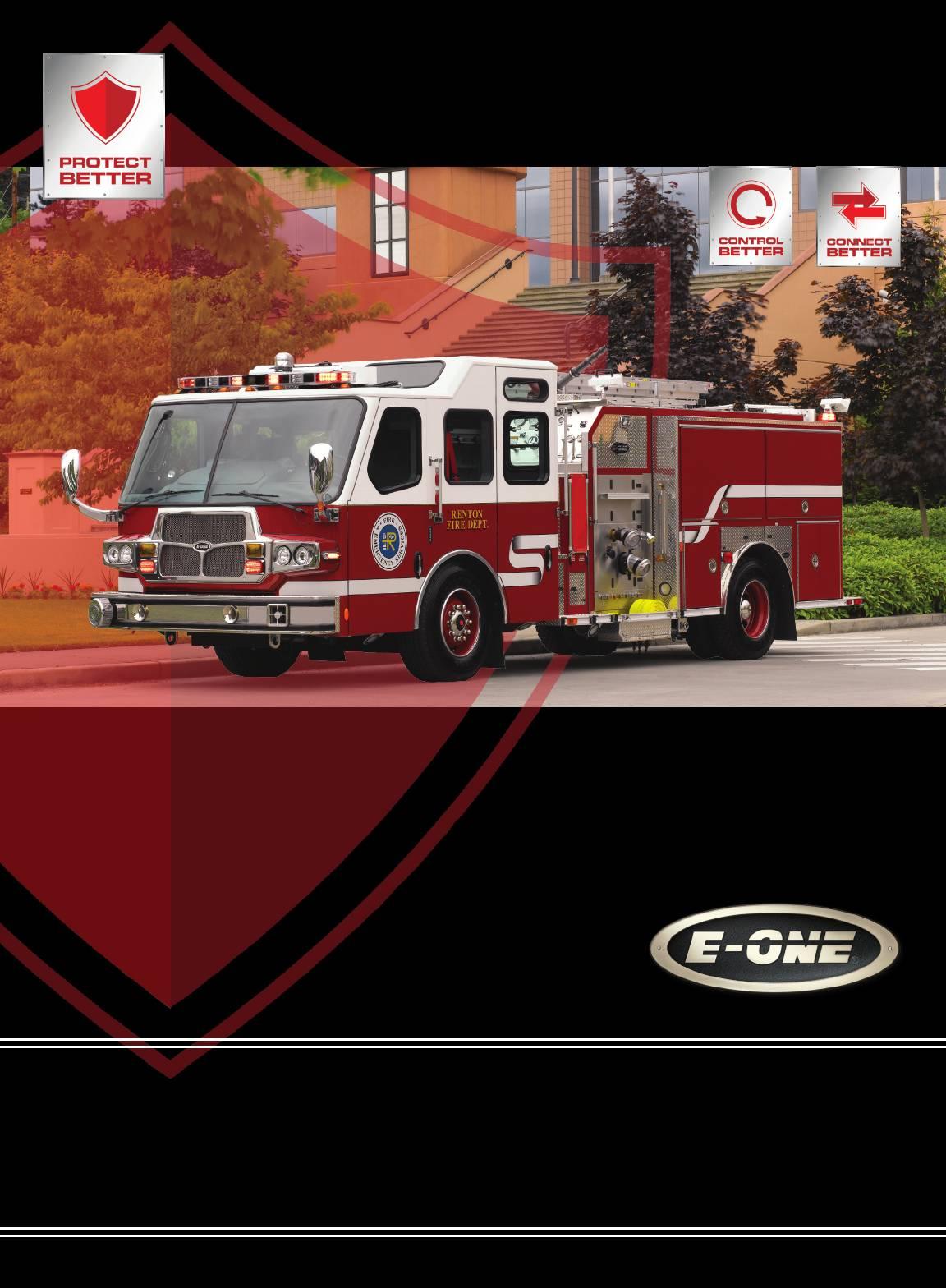
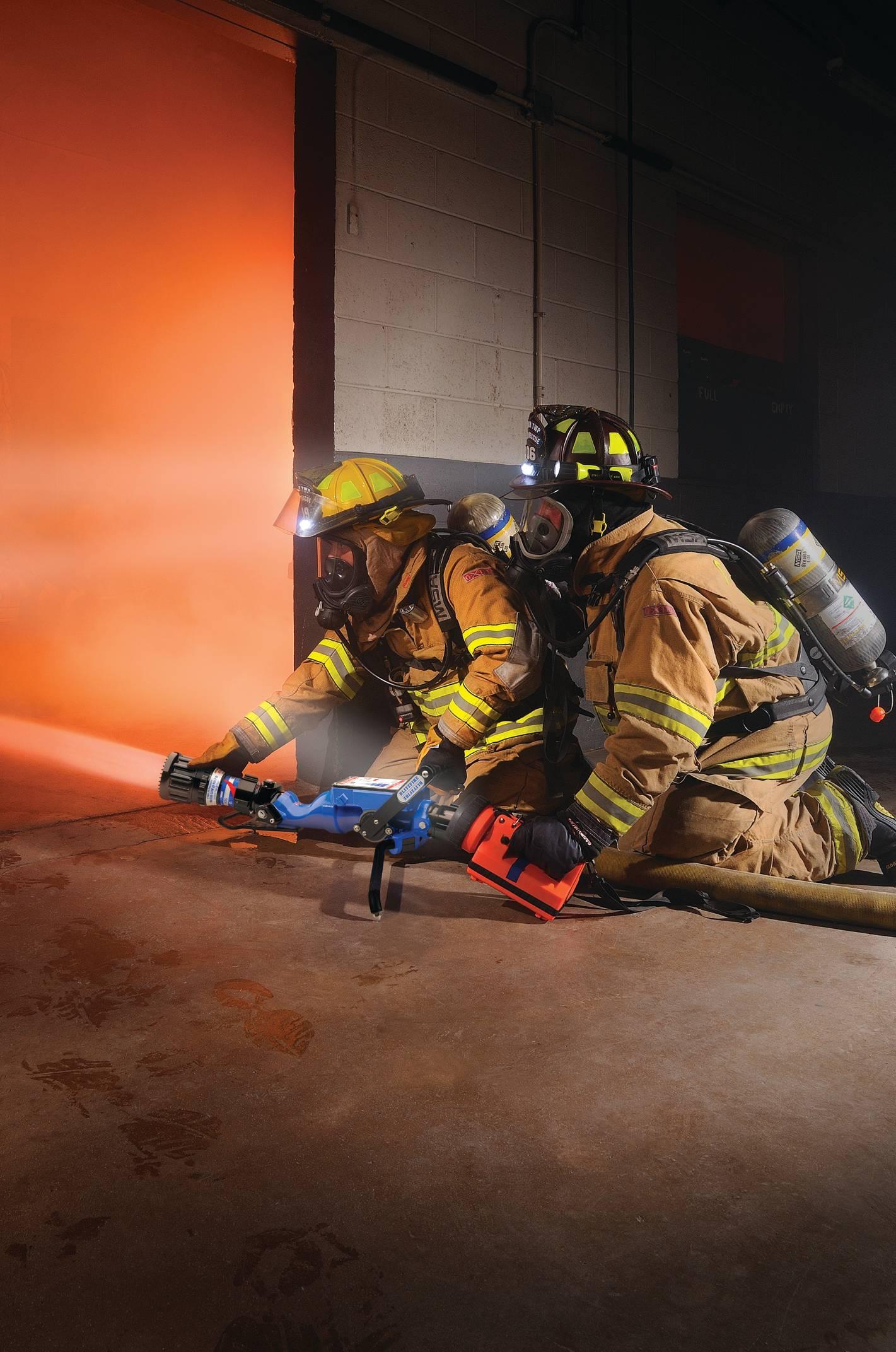
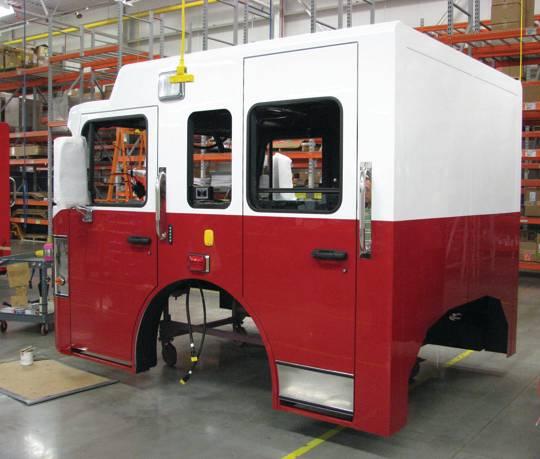
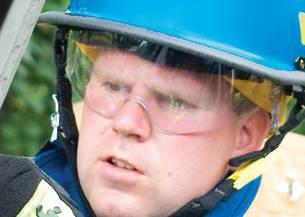
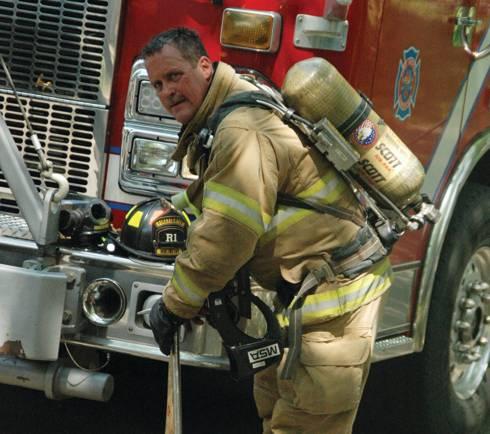
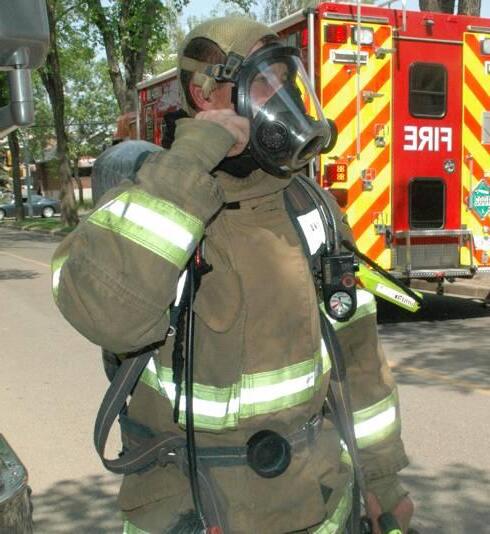
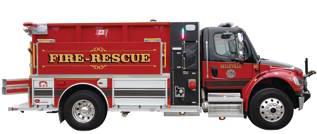
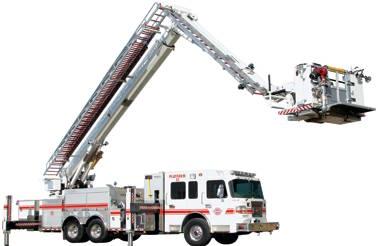
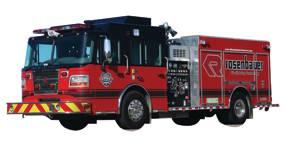
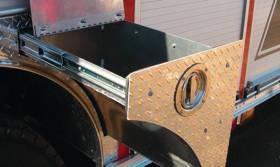
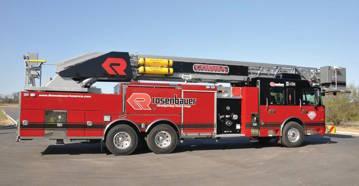
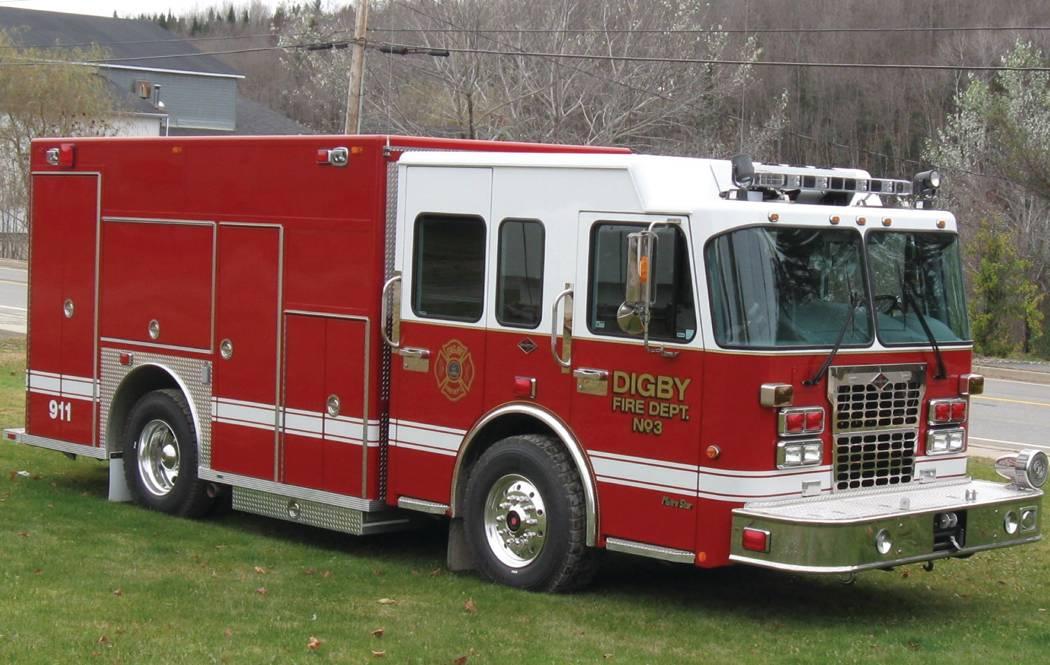
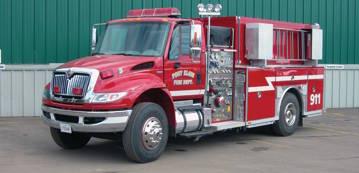
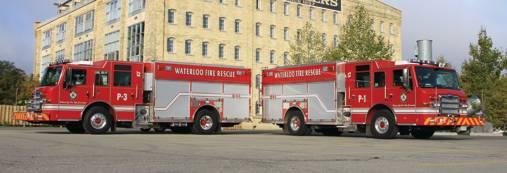
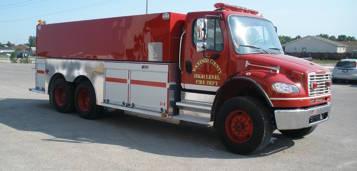
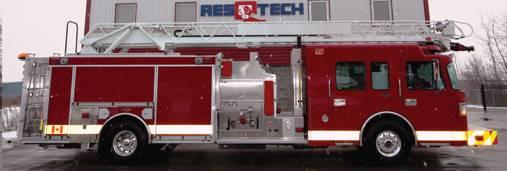
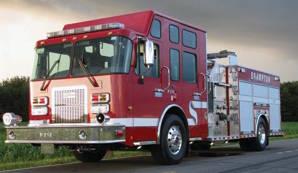
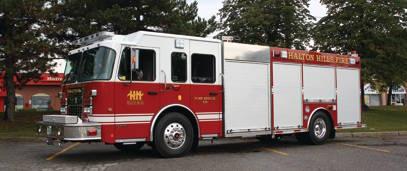
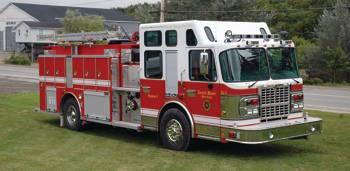
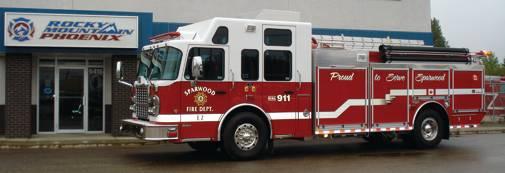
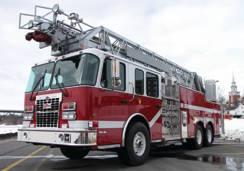
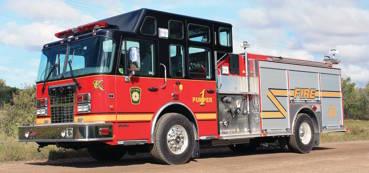
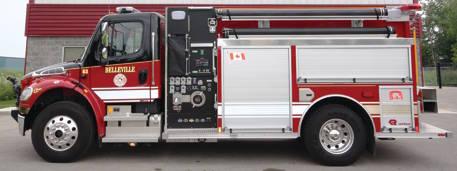
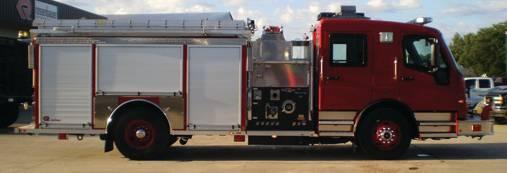
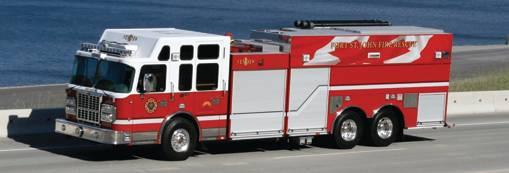
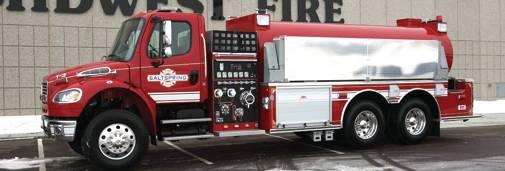
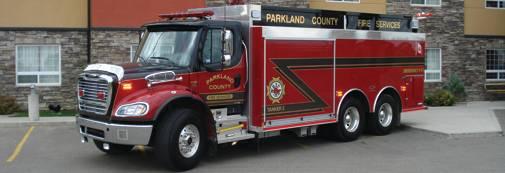
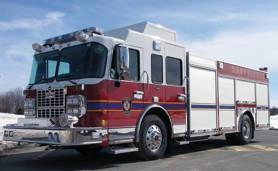
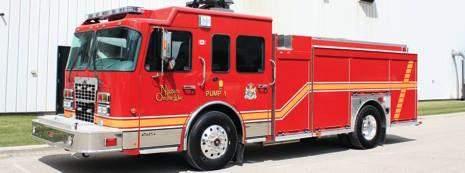
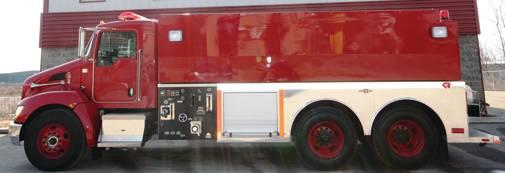
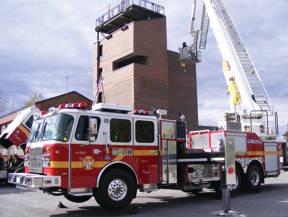
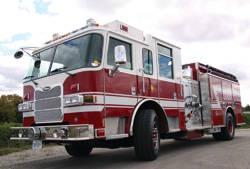
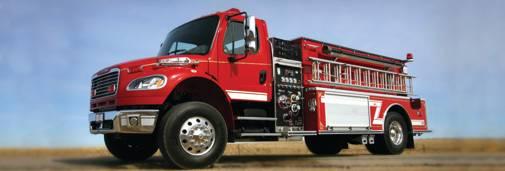
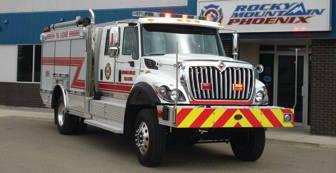
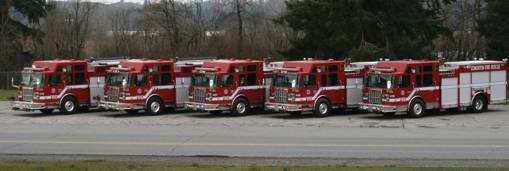
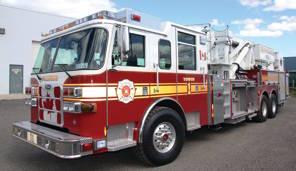
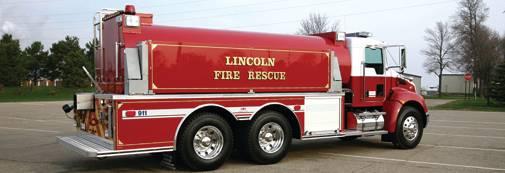
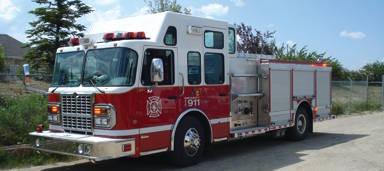
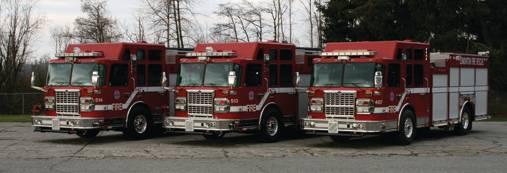
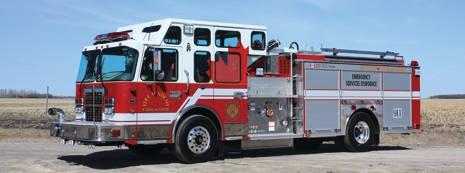
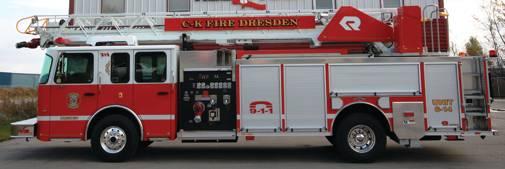
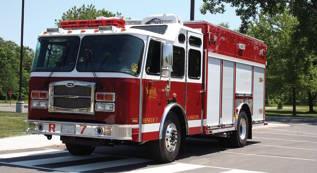
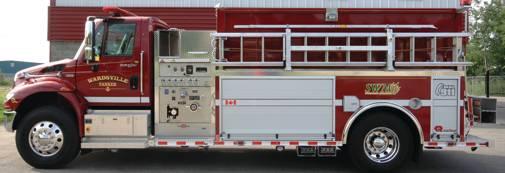
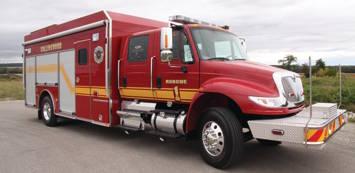
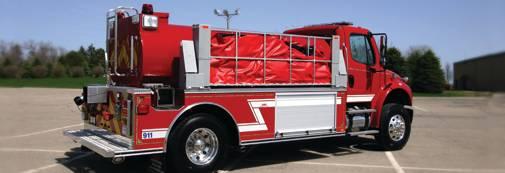
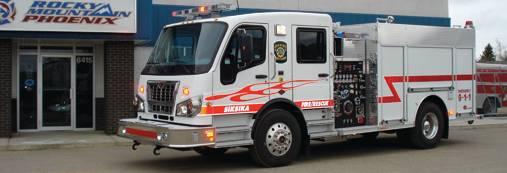
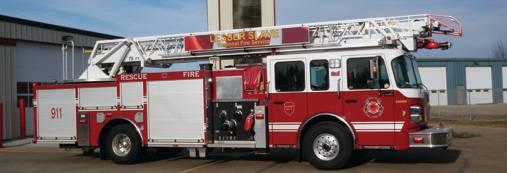
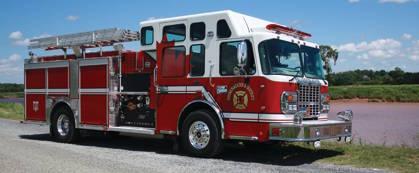
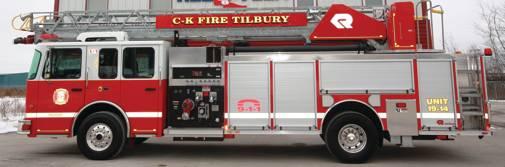
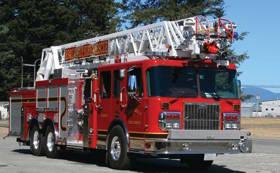
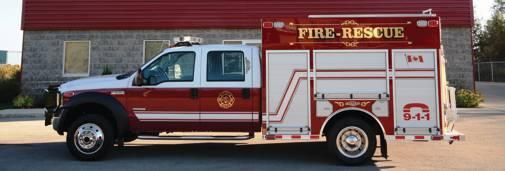
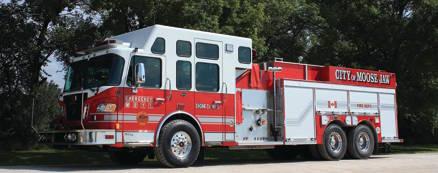
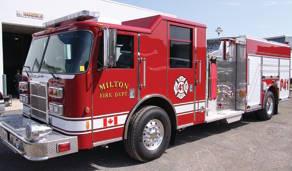
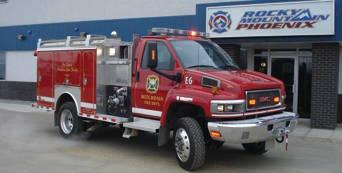
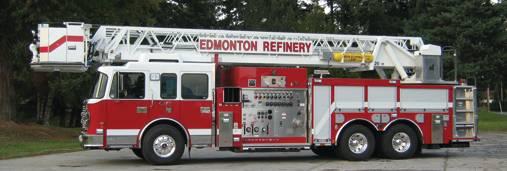
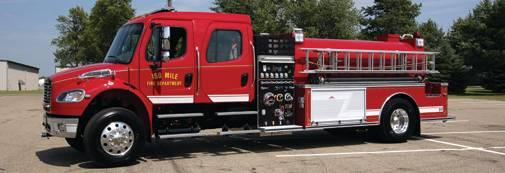
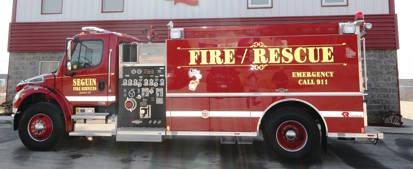
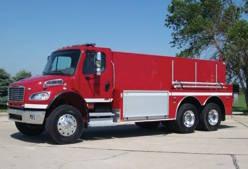
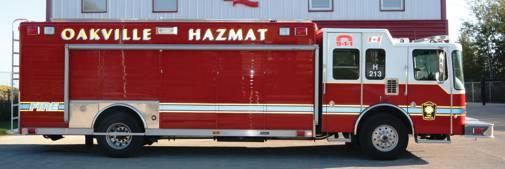
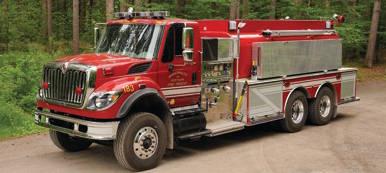
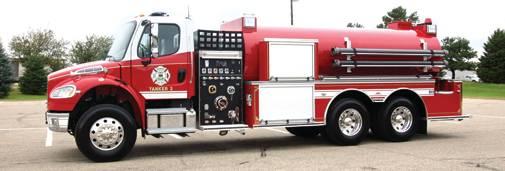
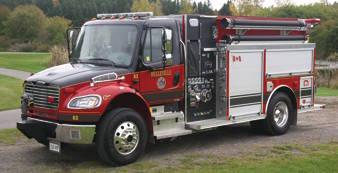
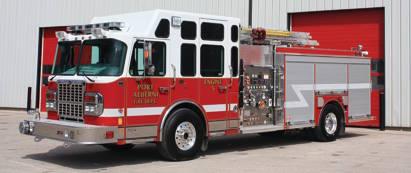
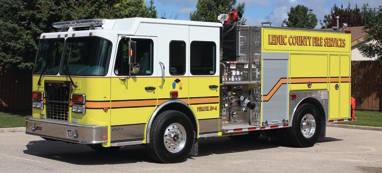
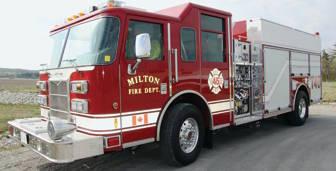
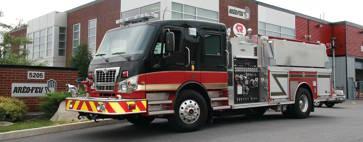
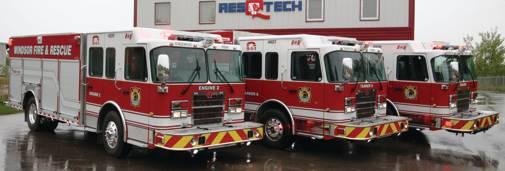
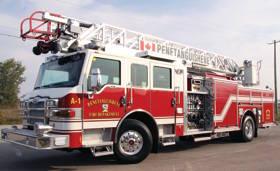
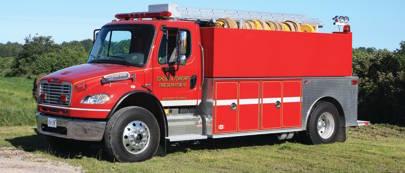
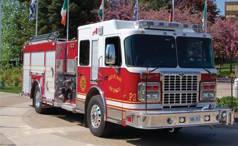
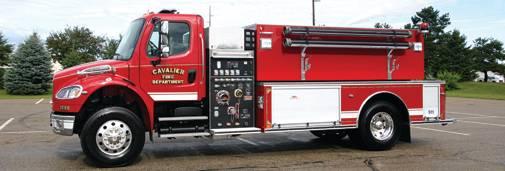
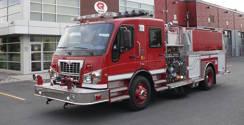
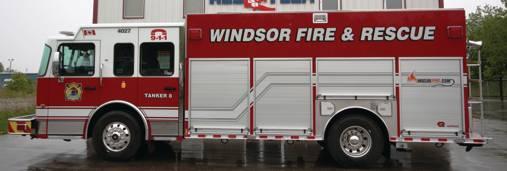
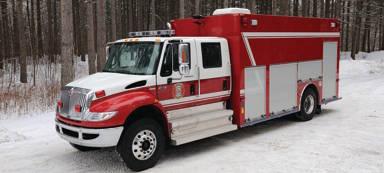
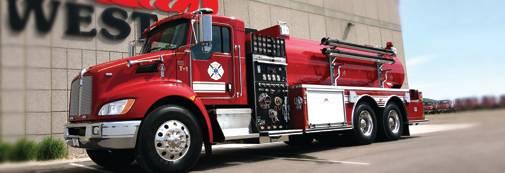
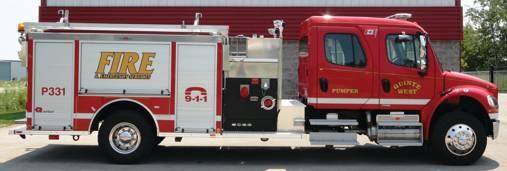
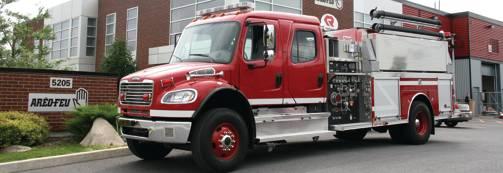
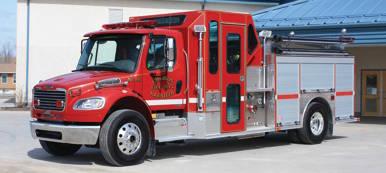
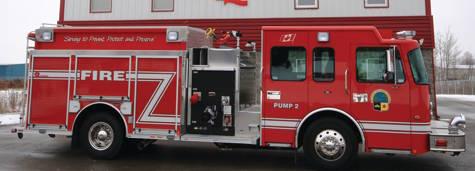
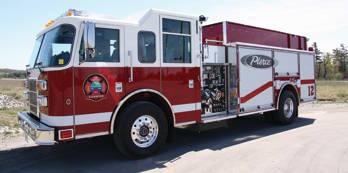
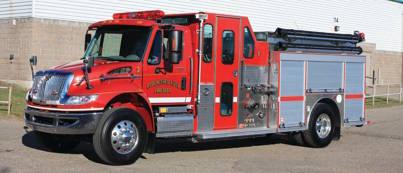
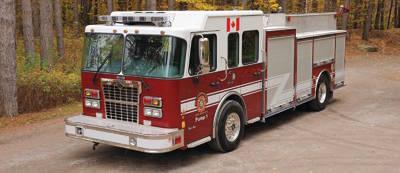
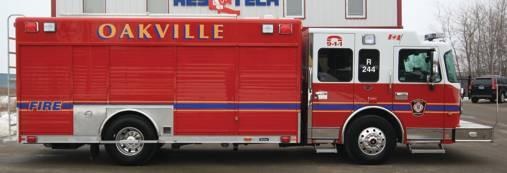
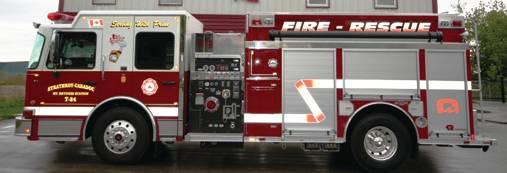
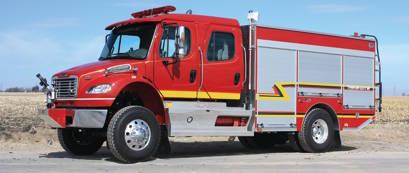
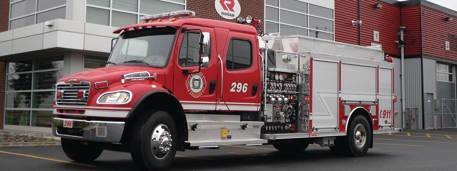
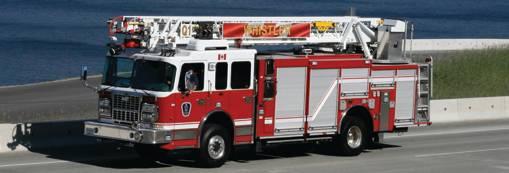
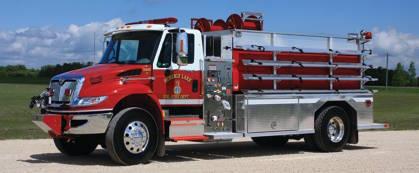
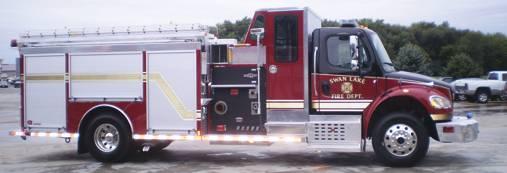
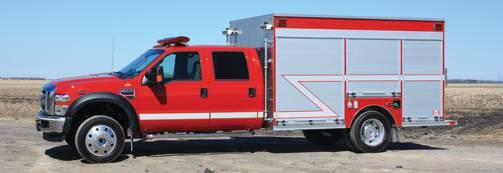
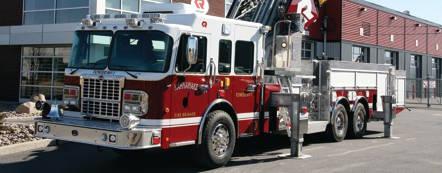
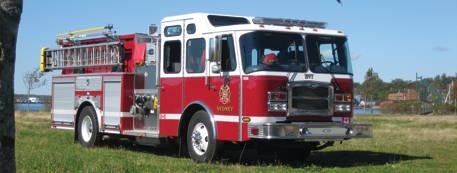
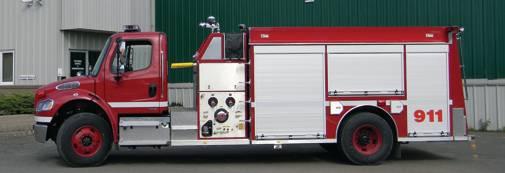
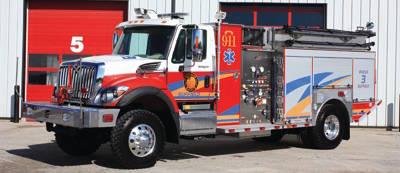
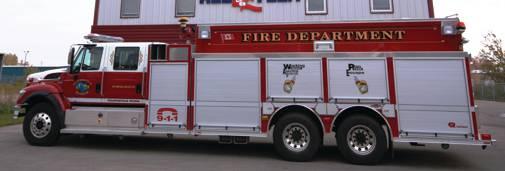
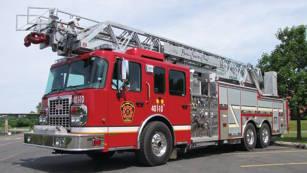
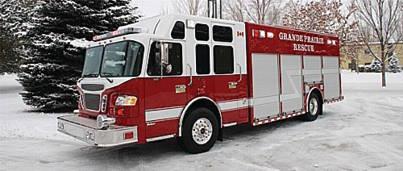
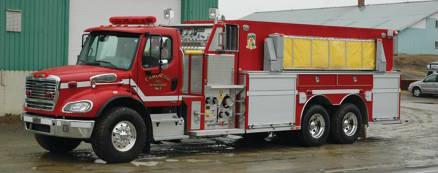
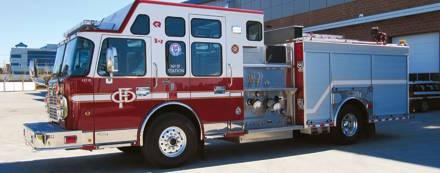
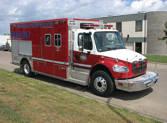
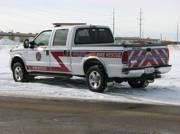
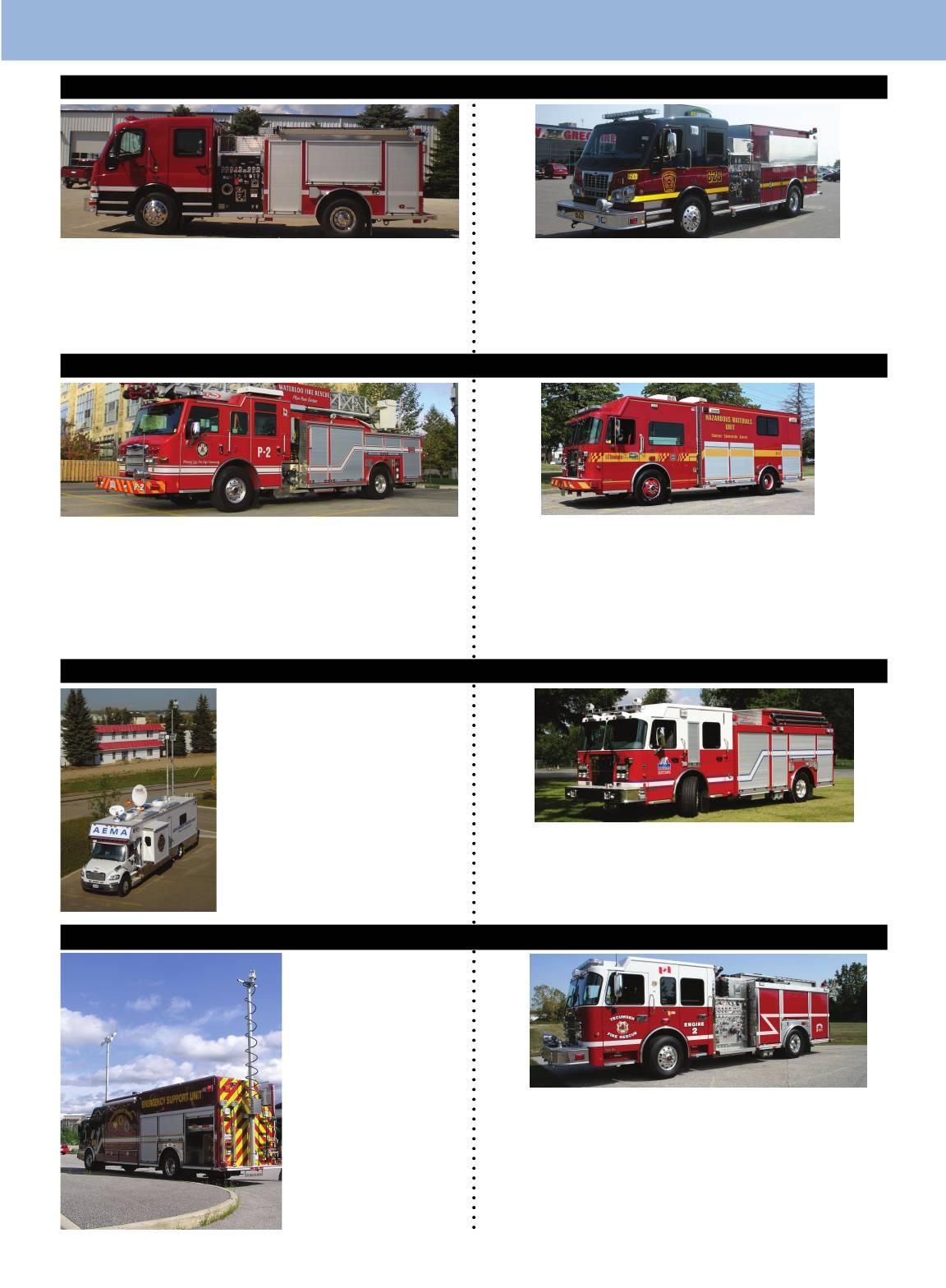
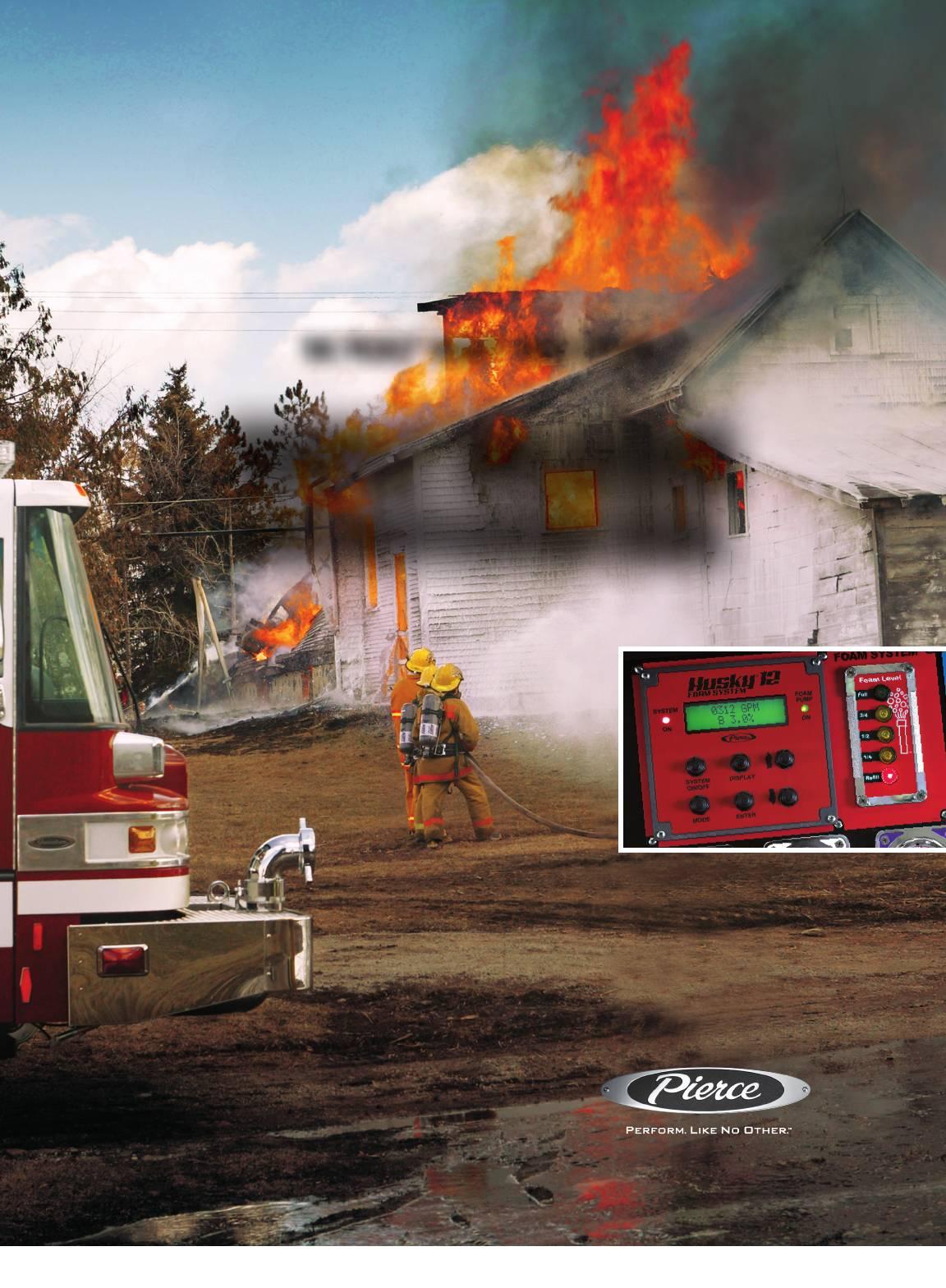
How can you protect against what you can’t see? The short answer - you can’t. That’s why we engineered The E-ONE Quest chassis with the best visibility in the industry. An expansive windshield and massive wipers provide best-in-class front visibility while the front cab-corner mirrors offer maximum side visibility. Plus, the ergonomically placed controls are easy to find, helping you keep your eyes on the road. Because when it comes to protecting your crew and all those that cross your path, shouldn’t you see what’s coming?
Learn how to Protect Better at E-ONE.com.
For more information, contact your nearest dealer:
Carrier Emergency Equipment
6 Edmondson Street
Brantford, ON N3T 5N3
Phone: 519-752-5431
Territory: Ontario; Atlantic Provinces
First Truck Specialty Vehicles
18688 96th Avenue
Surrey, BC Canada V4N 3P9
Phone: 604-888-1424
Territory: Manitoba; British Columbia, Alberta, Yukon, Northwest Territory
When lives are in the balance and seconds count.
Techno Feu Apparatus Maintenance
1 05 Marie -Victorin
St. Francois-Du-Lac, PQ J0G 1M0
Phone: 450-568-2777
Territory: Quebec
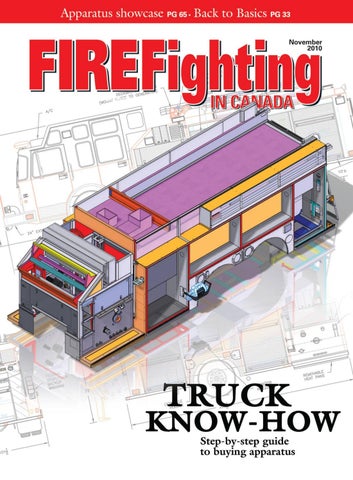
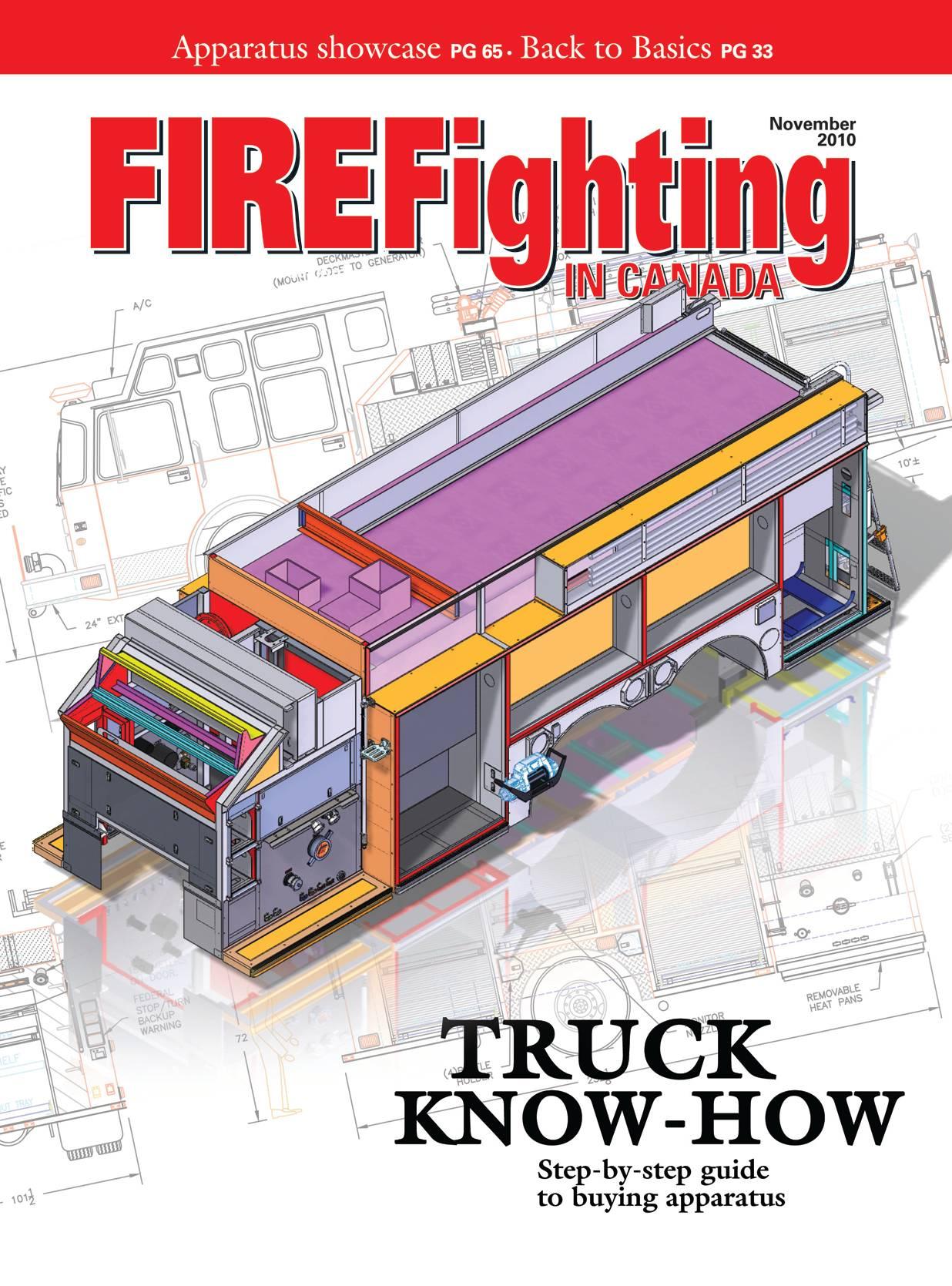
Buying a fire truck is complicated. Truck Tech columnist Chris Dennis walks us through the process.
KNOW YOUR AUDIENCE
Public speakers - and fire chiefs – must know their audience. Barb and Bill Johnston explain.
DISSECTING DWELLING INSURANCE
The cost of insurance may vary based on the fire insurance grade. Michael Currie, director of the Fire Underwriters Survey, reports.
30 MARKETING 101
Many Canadian fire departments have embraced social media as an effective and efficient tool. By Sarah McGoldrick.
40 STREAMLINED RESPONSE
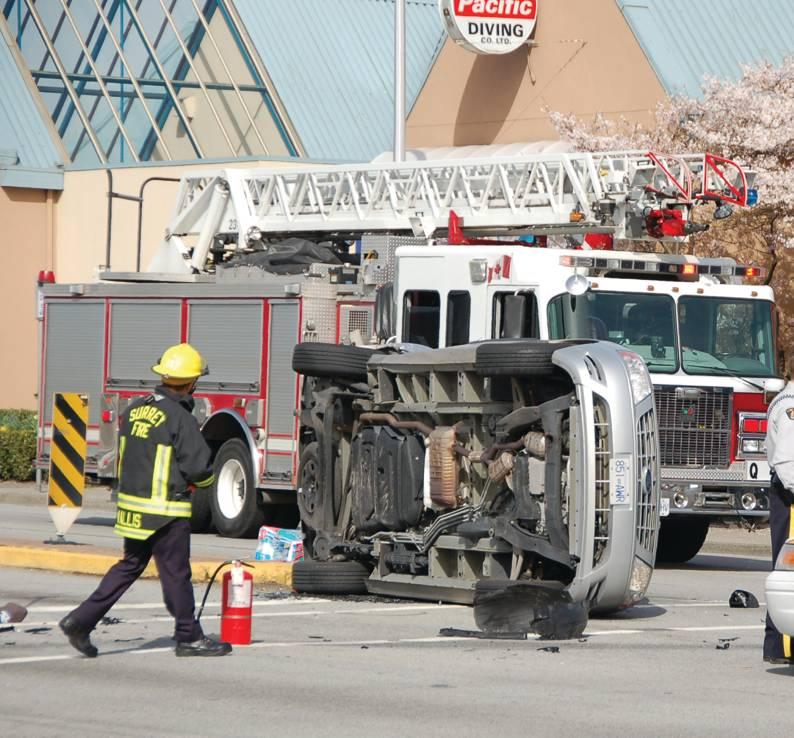
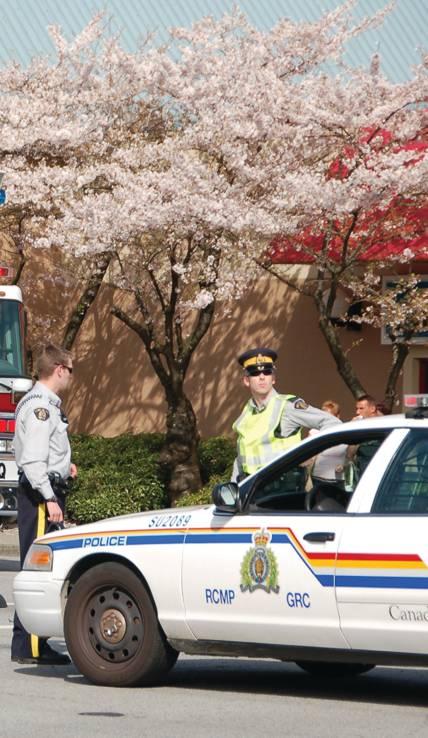
A joint initiative in Surrey, B.C., has improved the use of resources at collision scenes. Surrey Fire Chief Len Garis and Fraser MacRae, chief superintendent, Surrey RCMP, explain.
44 BUILT TO STANDARD
New regulations for rescue vehicles improve safety. By Rosie Lombardi.
52 MOVING FORWARD
Q and A with CAFC president Rob Simonds. By Laura King.
B Y La UR a K I n G Editor lking@annexweb.com
tLessons from Goldfeder comment
he night before this column was due I spoke about our magazines and websites to the members of the Huron County Mutual Aid Association in Gorrie, Ont., a beautiful spot in Howick Township in midwestern Ontario.
There are no restaurants in Gorrie, so when I offered by phone the week before to take Chief Bill Doig and Deputy Chief Dale Edgar out for dinner before the meeting they chuckled and arranged an alternative plan – a lovely supper at the chief’s home, prepared by Chief Doig’s wife, Shirley, who had also that day cooked two enormous roasts of beef for the mutual-aid meeting – above and beyond, for sure!
The 50 or so firefighters and chief officers at the mutual-aid meeting were engaging and insightful when asked for feedback about Fire Fighting in Canada and I left with some great ideas for the magazine. Although I was the guest speaker for the evening, members of the Huron County MutualAid Association taught me far more than I taught them. Stay with me – there’s a point to this.
Two days earlier, I had been in Rama, Ont., where Loveland-Symmes, Ohio, Deputy Chief Billy Goldfeder gave his Not Everyone Goes Home presentation to about 500 firefighters from the Simcoe County Mutual-Aid Association.
If you’ve seen Goldfeder’s presentation you know that he talks about mutual aid in his neck of the woods and mentions several times that the departments in the Loveland-Symmes region send five – yes, five – chiefs to every incident at which there is smoke or fire. Each chief has a role – the first in becomes the incident
commander, the second chief looks after accountability, the third arriving chief takes the Charlie side of the building, the fourth in looks after RIT and the last arriving chief is the safety officer. In Goldfeder’s words, there are no egos. If a chief from a nearby community happens to get to an incident in another area first, he becomes the incident commander. Why is this relevant? Over dinner in Gorrie, I heard the story of the Gorrie Fire Department, its near demise and the gumption of those who fought to keep it. (See Station to Station on page 7.) The passion and commitment of the 23 volunteer firefighters and chief officers in Gorrie is abundantly obvious, even after a less-than-amicable split from their previous governing fire board and a sometimes strained relationship with the departments in the mutual-aid area as a result of amalgamation.
PRESIDEnt MiKE FREDERiCKS mfredericks@annexweb.com
PUBLiCATiON MAiL AGREEMENT #40065710 RETURN UNDELiVERABLE CANADiAN ADDRESSES TO CiRCULATiON DEPT.
P.O. Box 530, SiMCOE, ON N3y 4N5 e-mail: lmorrison@annexweb.com
Printed in Canada iSSN 0015–2595
CIRCULatIon e-mail: lmorrison@annexweb.com
Tel: 866-790-6070 ext. 206
Fax: 877-624-1940
Mail: P.O. Box 530 Simcoe, ON N3y 4N5
SUBSCRIPtIon RatES
Canada – 1 year - $24.00 (with GST $25.20, with hST/QST $27.12) (GST - #867172652RT0001)
USA – 1 year $40.00 USD
We acknowledge the financial support of the Government of Canada, through the Publications Assistance Program and the Canada Magazine Fund, toward our mailing and editorial cost. Nous reconnaissons l’aide financiere accordee par le gouvernement du Canada pour nos coults d’envoie postal et nos coutl redactionnels par l’entremise du Programme d’aide aux publications et du Fonds du Canda pour les magazines.
I’ve heard stories about mutual-aid partnerships that work well and those that don’t because some chiefs want to be the head honcho at every incident and don’t respect the training and abilities of chiefs in the surrounding mutual-aid communities.
Mutual aid is necessary in most parts of Canada. Doing mutual aid properly – with clearly outlined roles for all responders – is important. Leaving egos at home is critical. They have the right attitude in Loveland-Symmes, Ohio, and in Gorrie, Ont. Do you? ON THE COVER Truck know-how. See page 10.
Occasionally, Fire Fighting in Canada will mail information on behalf of industry-related groups whose products and services we believe may be of interest to you. if you prefer not to receive this information, please contact our circulation department in any of the four ways listed above.
All advertising is subject to the publisher’s approval. Such approval does not imply any endorsement of the products or services advertised. Publisher reserves the right to refuse advertising that does not meet the standards of the publication. www.firefightingincanada.com
Photo
statIontostatIon
across canada: Regional news briefs
Red Knights host P.E.I. firefighters trade show
Although Sunday, Oct. 3, was a nice day for a ride, members of the Red Knights Motorcycle Club (RKMC) P.E.I. Chapter 1, spent the day hosting firefighters from across Prince Edward Island.
Each year the P.E.I. Firefighters Association holds a trade show along with its annual general meeting. In the past, this show and meeting has been hosted by fire departments across the island. For 2010, RKMC partnered with the association to be the host
“department.” For the first time, this event was held at the P.E.I. Firefighters Association’s fire school.
The trade show included displays by 20 vendors and organizations, completely filling the truck bays and part of the training area. About 70 firefighters and chiefs attended.
RKMC brought in eight speakers. The theme of this year’s sessions was Partners For Life and focused on the organizations with which the fire service partners. Sessions were
held by ground search and rescue, the hazardous materials team, the RCMP and EMS.
The partnership RKMC forged with the firefighters association was designed to provide the Red Knights with an opportunity to be more visible in the fire service.
Chapter 1 on P.E.I. was created just a few years ago and many island firefighters are not aware of the organization.
Hosting the association’s meeting was viewed as an opportunity to reach out to the 1,000
firefighters on P.E.I.
Another objective was to see how well the chapter could run an event as practice for hosting the Red Knights International convention in P.E.I. in 2014. By all accounts, the members of Chapter 1 hosted a successful trade show and annual meeting. With the time left before a few hundred Red Knights come to P.E.I. in 2014, the team is working to organize an event that will raise the bar for hosting firefighters.
-Scott Ryan
the brass pole:
promotions & appointments
Dr. JoE CLaRE has joined the Surrey Fire Service in British Columbia as a strategic planning analyst. Reporting to the fire chief, Clare is responsible for conducting research, analyzing statistics and making recommendations to Surrey Fire management, city management and city council to enhance fire safety. Clare has
extensive experience writing manuscripts and stakeholderfocused reports.
tERRY REE, a retired member of Prince George Fire Rescue
Services in British Columbia, assumed the role of fire service advisor for the northern region effective Sept. 1. Ree brings 30 years of experience in the fire service to the position, having served the citizens of Prince George as an officer, an inspector and an acting chief fire prevention officer. Ree is an experienced fire investigator, has served as a LAFC for many years and has been involved in numerous public education activities.
RICK oWEnS, most recently the operations deputy chief for Vernon Fire Rescue Services in B.C., assumed the position of fire service advisor for the Thompson Okanagan Region effective Sept 1. Owens has been in the B.C. fire service for more than 30 years, having begun his career with the Terrace Fire Department. he brings a wealth of experience in many facets of the fire service, particularly in fire investigation, emergency
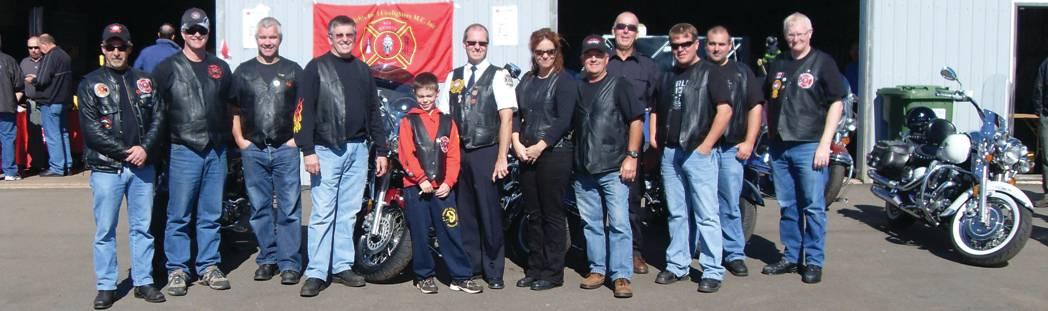
The Red Knights Motorcycle Club (RKMC) P.E.I. Chapter 1 hosted the P.E.I. Firefighters Association’s annual general meeting and trade show in October as practice for the 2014 Red Knights International convention. Thanks to the vendors and the sponsors, RKMC PEI 1 exceeded its fundraising goal and donated $500 back to the P.E.I. Firefighters Association.
Firefighters win battle over station
Firefighters in the Township of Howick, Ont., are a proud group. When the Wingham and Area Fire Board was dissolved in 2009, the subsequent North Huron Fire Department opted to close the station in Gorrie (one of three urban communities in Howick Township), and sell fireprotection service to Howick Township from Wingham, a 20-minute drive west.
But Howick Township firefighters fought to keep the Gorrie station and convinced council that it was in the best interest of taxpayers to do so.
“Council decided that stepping back 27 years wasn’t
in its, or the taxpayers’, best interest and made a decision to purchase everything and keep the fire department,” says Deputy Chief Dale Edgar. The Gorrie station was re-named the Howick station to better reflect its service area.
Today, Howick has 23 dedicated volunteers under the direction of Fire Chief Bill
Doig, who was station chief under the board and was promoted to chief when Howick Township took over.
The department has three captains, all promoted from firefighters and all with more than 15 years’ experience.
Huron County is nestled along the southeast shore of Lake Huron and is the most
agriculturally productive county in Ontario.
For more than 20 years, firefighters in Howick Township have held spring and fall breakfasts to raise money for equipment, hospitals and charities. They routinely feed between 700 and 800 people.
-Laura King
Honour House for first responders opens this month
The Honour House Society in Vancouver expected to open its one-of-a-kind hostel for armed forces personnel and first responders on Nov. 11 after four years of fundraising and hard work.
The concept of Honour House was developed when it became apparent that there was a gaping hole in the level of support available for the families of armed forces personnel who were sent to Vancouver for medical
treatment. The constant hazards faced by civilian first responders place them and their families in similar situations.
The Honour House Society moved to fill this void by supporting transition programs and providing temporary accommodation for armed forces personnel and their families and has extended use of its programs and facilities to first responders in the police, fire and ambulance services.
The society’s largest initiative was the purchase of a property at 509 St. George St. in New Westminster, B.C., as a hostel to be made available, without charge, to families of its supported groups. The house has been significantly renovated into a 10-bedroom, fully accessible facility with shared living space within a home-like environment.
The project, once complete, will provide a home-like and supportive environment
for families
Honour House is supported by several significant Canadian patrons and advisors including Gen. Rick Hillier (patron), Capt. Trevor Green (honourary patron) and The Globe and Mail’s Christie Blatchford (advisor).
Donations to Honour House can be made through www.honourhouse.ca.
-Chief Tim Armstrong, New Westminster Fire & Rescue Services
management and fire prevention. Owens was a very active member of the Fire Chiefs’ Association of B.C., serving in several executive positions.
DaRRELL GREEn will become fire service advisor for the south east region of B.C. effective Oct. 4 following his retirement from the Kitimat Fire Department. Green has been in the fire service for more than 27 years, most recently as a captain. he has experi-
ence in fire investigations, fire inspections and public education. he is a member of the Fire Prevention Officers’ Association of B.C., serving as a zone director. Green was also involved in the Kemano Live Fire Training project.
One of the longest-serving and most popular captains with halifax Regional Fire & Emergency Service, FRED RoUt,
worked his last shift May 26. Rout joined the old halifax Fire Department in 1974. it is people like Rout who remember how far the fire service has come in a generation. interviewed following his retirement, Rout remembered feeling like a millionaire with his starting salary of $6,500 a year.
Platoon Chief (retired) ED
suddenly at his home near Whitehorse, yukon, on June 10. he was a member of the Whitehorse Fire Department for more than 25 years before retiring in 1998. After he retired, Schiffkorn joined the Marsh Lake Fire and Rescue Service as a volunteer firefighter; he was an active member for 12 years. With more than 40 years in the fire service in yukon, Schiffkorn was a founding member of the Association of yukon Fire Chiefs.
SCHIFFKoRn passed away
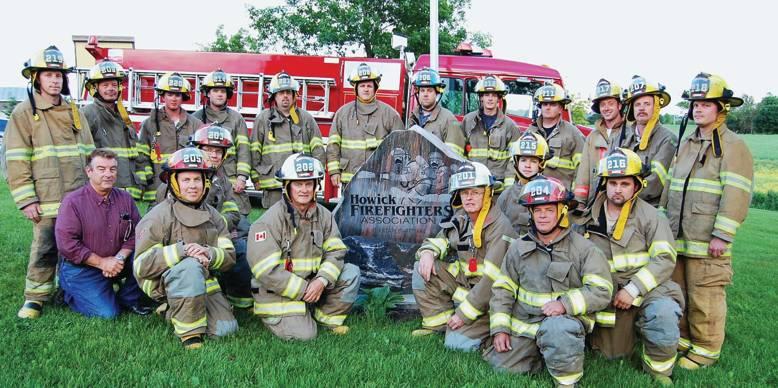
Members of the Howick Firefighters Association, who fought to keep their station after a reorganization in 2009.
Photo
statIontostatIon
across canada: Regional news briefs
Online hub for first responders launched
The Canadian Association of Fire Chiefs recently began to develop the Partnership Towards Safer Communities online community. This national initiative to promote public safety in communities across Canada has been many years in the making. However, a recent commitment of support from Public Safety Canada meant that the CAFC could finally put this important public safety initiative into operation.
The CAFC has championed the PTSC idea for a decade but it wasn’t until the emergence of social media technology that a cost-effective, community building mechanism could be implemented. The PTSC online community targets
emergency management and business continuity professionals across Canada and provides benefits to PTSC members such as:
• Access to a network of Canadian emergency management, business continuity and critical infrastructure protection officials, professionals, academics, and suppliers;
• Forums for sharing emergency-management related challenges and best practices and for collaboration on projects of mutual interest. (blogs, discussion forums and knowledge-based wikis);
• Accreditation sources for emergency management programs that meet or exceed standards and to
recognize individuals for their contributions to the emergency management profession;
• Job forums and career development resources to help members find qualified employees and employment opportunities;
• Training and continuing education resources.
The CAFC’s interest in this project goes back to the 1984 industrial disaster in Bhopal, India, and the idea that
Rocky View station to open in September
Rocky View Country, Alta. – One of Canada’s fastest growing fire departments took steps to grow even more with a groundbreaking ceremony at the end of July for its newest fire station.
The new facility, being built just west of the Calgary city limits, will be 10,000 square feet and eventually house a crew of six firefighters and possibly an ambulance from Alberta Health Services.
The new building will provide the County’s fire services team with a state-ofthe-art training and emergency response facility. “The planning that has brought Station No. 74 to this stage has been an enormous undertaking and a collaborative effort involving many officials, groups and individuals,” said Rocky View County Fire Chief Wayne Brown. “The Calgary Fire Department has been instru-
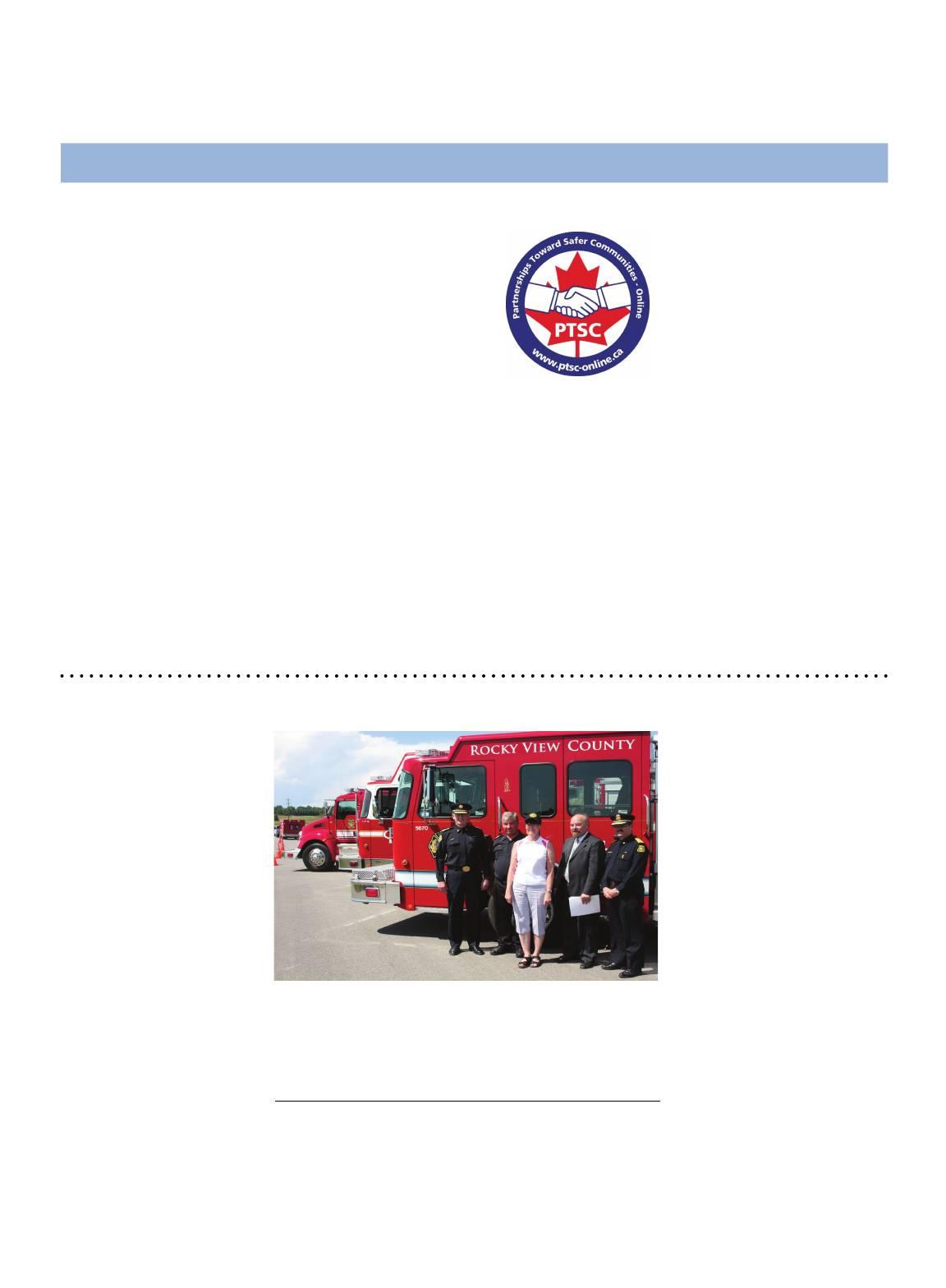
The municipal district of Rocky View, broke ground on July 28 for a new fire station. Rocky View County Fire Chief Wayne Brown, Redwood Meadows Chief Ed Bowen, Reeve Lois Habberfield, Elbow Valley Resident’s Club President Martin Kratz and Calgary Chief Bruce Burrell pose next to Engine 74, which operates out of Calgary’s Station 33. The pump crew from Rocky View will move into their new station in September.
mental in helping us meet our incrementally growing emergency service needs.”
Until May of this year, Calgary or Redwood Meadows had responded outside of their communi-
ties to help protect Rocky View County residents as there were no county fire crews in the area. Since May, Rocky View County’s Engine 74 crew has been living and working beside firefighters
community-based public safety needs informed and accredited private- and public-sector emergency management and business continuity professionals within the community. Don Warden, then-president of the CAFC, championed the development of the PTSC beginning with the key acquisition of the intellectual property rights to the concept when the Major Industrial Accidents Council of Canada abandoned the initiative 10 years ago. Now, Warden is executive director of the CAFC and the PTSC has become a reality through his perseverance. To learn more about the PTSC online community and to get involved, visit www.ptsc-online.ca
-Edward Myers
from Calgary in that city’s Station 33 on the western edge of Calgary. County and city firefighters will continue to work side by side until the new station is complete in September 2011.
Engine 74’s new, $2.5-million home is being funded by the Alberta government. The province’s Municipal Sustainability Initiative (MSI) grant is a commitment to provide significant longterm funding to enhance municipal sustainability and to enable municipalities to meet the demands of growth. Municipalities determine projects and activities to be funded by MSI based on local priorities with the general criteria set out in the program guidelines and are encouraged to take a longterm approach to planning for capital projects.
-Rob Evans
truck know-how
know-how
Step-by-step guide to buying fire apparatus and understanding the process from beginning to end
By ChriS DenniS
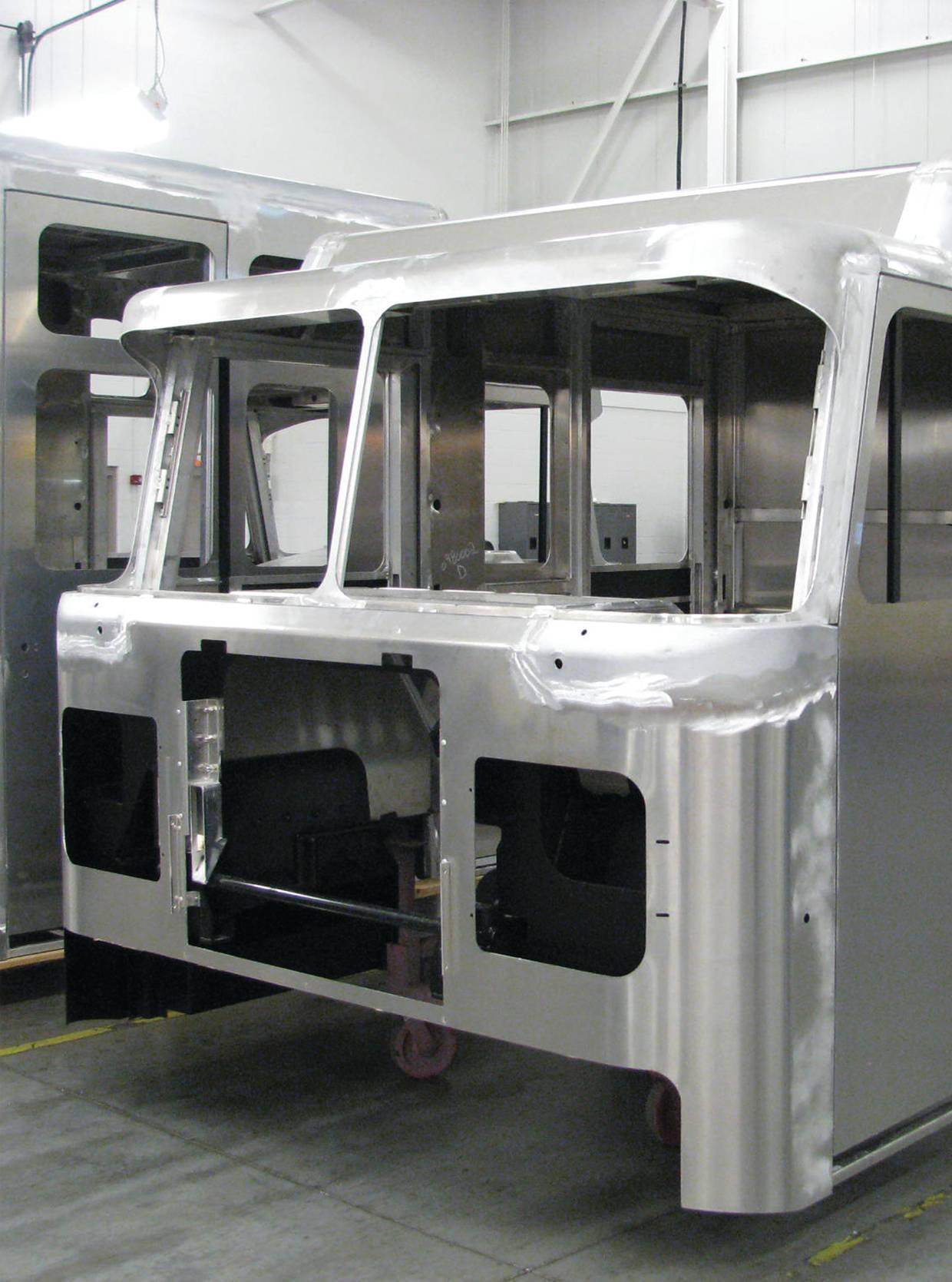
left: Buying a fire apparatus is a complicated procedure that often takes longer than anticipated from raw chassis to finished product. I nset: Dozens of decisions about details and particulars must be made during the building process.
In September’s Truck Tech column we discussed the fact the cost of fire trucks has increased by about $46,000 since 2006 due to new emissions standards and other criteria. Now, I want to help shed some light on the process of buying a truck, from the time the fire chief gets approval from council to when the new apparatus rolls through the bay door and onto the floor in your fire station.
Buying a fire truck – and doing it properly – takes time and experience. Some fire departments establish truck-building committees; others depend on a few experienced personnel who know what is best and base their decisions on some of the following:
• The community’s needs. Is your jurisdiction a concrete jungle in suburbia with lots of hydrants or a rural setup with few or no hydrants? Are there highrise buildings? Your apparatus purchase is critically important. The new truck will become your legacy and your community’s safety depends on fire apparatus reliability and performance. Fire department morale and efficiency are riding on the design and construction of the next generation of emergency vehicles that you specify and purchase. Mistakes could be costly and embarrassing. Drafting professional fire apparatus specifications is key to assuring that your municipality will get performance on which you would proudly stake your professional reputation.
• The fire department itself. You want emergency services vehicles that are right for your job. This truck is going to be the best truck yet for your department, with state-of-the-art equipment that will assist with saving life and property and keep firefighters safe. Or at least we hope so. Consider the oft-told (and true!) story of a shiny new truck that arrived at a station but was too tall to get through the apparatus bay door. Don’t let it happen to you.
• Make sure the truck isn’t so large that you can’t get it down every street and across every bridge in your community. What good is a fire truck if you can’t get it to the scene? Whether the truck has one drive axle or multiple axles, the infrastructure must be able to support the weight as the truck goes over the roadways.
The purchase process works in a couple of different ways; it can go out for tender, as per a spec you have put together, or there can be a request for proposals. Whatever you decide, be sure you do not overbuild the truck.
■ IS IT HERE YET?
So, it’s time to build the fire truck. Wait! Have the crews heard that the department has been given the OK to buy a new truck? If so, be prepared for an onslaught similar to that parents hear while on a family vacation in the custom cruiser – Are we there yet? Are we there yet? – only you hear, Is it here yet? Is it here yet?
Depending on the manufacturer, or what kind of truck you are building, timelines for construction from the time the purchase order is created to initiate the new build to when the truck arrives at the station, will vary. For this exercise, we will keep it simple: a custom, four-door cab, a pump body with a booster
Photo
tank, a foam system and storage compartments. Putting this build on paper requires time and a quiet place. The process is underway.
It takes an average of two weeks to build a truck on paper. Then, the truck goes out to tender, in most cases for 30 days. The dealer that is awarded the build is notified and authorization is given.
A custom cab is built to suit the fire department’s requirements as per the department’s specifications, so the department will meet with the selling dealer to discuss the build in detail. This is called a pre-construction meeting. If the dealer is local, this meeting may take just a week to put together. If the dealer is out of province, and if air travel is required, scheduling a time to meet could take another week, so we will say two weeks to final a pre-con meeting.
The frame rails, suspension, cab, drive line, engine, transmission, wiring harness, interior, glass and paint all now have to be put together. Each manufacturer builds at a different pace but, on average, it takes two to three weeks to create a fully functional driving cab and chassis.
■ ASSEMBLY LINE
Scheduling the truck to go onto the assembly line is another matter to be taken into consideration. The wait for assembly depends on how busy the chassis builder is; we will say five weeks from when the order was placed to when the first bolt is put into the truck.
Let’s look how much time this has taken so far:
• Two weeks to spec;
• Four weeks for the tender process;
• Two weeks to arrange and complete out of town pre-con meeting;
• Five weeks to schedule a position on the assembly line;
• Three weeks to assemble cab and chassi;
• Total: Sixteen weeks, or four months.
If the custom cab builder is also the body builder, the timeline will be greatly reduced as everything is done under one roof. A few examples of custom cab and body builders are Pierce, KME and Ferrera. If we look only at the time to build the unit it may take just 90 days, again, depending on specifications and the manufacturer.
In our example, the cab is a separate entity from the body so the build time is slightly longer. Once the chassis has arrived at the body builder, the rough and unfinished body is assembled on the chassis. Even with modules, this takes about two to three weeks. Then, the fire department is invited back to the body builder to perform pre-paint inspection on the body portion of the apparatus. This takes a day to do but may take longer if flights are involved.
By this time, a few months have passed since the tender was awarded. If the department decides it wants to add a few things to the pump body, a change order is created and authorized by the department and the truck goes back into the assembly.
About two weeks later, if all has gone well, the department goes back to the apparatus body builder and performs a final inspection. This inspection must be thorough. Anything missed here cannot be done after the department takes delivery without it costing money, as you will sign off on this new truck and indicate that everything has been done to specification, down to every stainless steel screw and every measurement of material. You will check that instruments are in the correct measurement –imperial or metric – that all NFPA requirements and UL or ULC
Continued on page 60
• Now meets NFPA 1500 Standard on Fire Department Occupational Safety and Health Program primary eye protection requirements
• Now also meets ANSI.Z87.1 Standard on Eye and Face Protection as a primary eye protection spectacle
• Continues to meet NFPA 1971 Standard on Protective Ensembles for Structural Fire Fighting and Proximity Fire Fighting ( clear and amber lenses
corner
Just checking . . .
By ED BROUWER
Ihave been a longtime advocate of hands-on training but there are times when a review of firefighting theory is of benefit. Even the best training officers can get into a rut when it comes to scheduling the training topics. You and your training program may benefit from a review to determine what information your members have retained. Over the past decade I have formulated several reviews and generally try to use them twice a year. Below is a basic review – with the answers at the end – that I encourage you to customize for your department. Have fun with it and remember that although some of your members have been out of school for more than a few years they may still fear exams!
1. There are at least eight factors that limit duration of the air supply (SCBA). List four.
2. How may ventilation prevent a backdraft situation from occurring?
• Cooling the trapped hot gases and smoke.
• Releasing the trapped hot gases and smoke.
• Smothering the trapped hot gases and smoke.
• Interrupting the chain of the fire.
3. Before you use SCBA, name four things you should check in your pre-use inspection.
4. Name three types of tools used in forcible entry.
5. List five warning signs of backdraft that you might see from outside a building.
6. There are several classes of fire; place the correct class beside the corresponding compound.
• Magnesium
• Wood
• Plastic
• Acetylene
• Overloaded electrical conductors
• Propane
7. What type of fuel is the most dangerous?
a. Gaseous b. Solid
c. Liquid d. Viscous
8. You are the first to arrive on scene. What three things should be reported to dispatch?
9. What is a thermal layer?
10. What is the main hazard to disturbing the thermal layer?
11. What type of fuels cannot be easily extinguished by chemical flame inhibition?
a. Low flashpoint liquids and flammable gases
b. Solid fuels
c. Smoldering fuels
d. High flashpoint liquids
12. For what fire class would cooling or quenching by water or wet water foams be the most appropriate extinguishment method?
a. Class A b. Class B
c. Class C d. Class D
13. Name the stages of a fire and give a brief description of each.
Above: Name four things you should check before you use your SCBA. Below: When donning the face piece, the straps should be tightened by pulling them which way?
Photos by Laura k in G
Bachelor of Applied Business:
Emergency Services
Firefighter
Emergency Services Technology
Now offering...
Emergency Medical Technician
Paramedic
Client: Colleen Symes
Department: Corp Marketing
Code: 10_4662_CdnFirefighterEMSQuarterly
Paper: Canadian Quarterly and EMS Quarterly
Size: 1/2 Page – 7” x 5”
Run Date: October 2010 edition
Process Colour Cost:
Go Beyond The Standard 1081 PLUS
tRaInER’Scorner
14. What colour smoke is usually given off by liquid fuels?
a. Dense black b. Yellow-brown
c. Pale grey d. White
15. List the water requirement (gallons per minute) and hose size for a 25-foot by 48-foot building?
16. The wide brim on a firefighter’s helmet is designed to:
a. Vent smoke away from eyes and nose; b. Block ultraviolet rays;
c. Protect ears and neck from hot water and embers;
d. Protect from facial burns.
17. When donning the face piece, the straps should be tightened by pulling them:
a. Outward and to the sides;
b. Simultaneously to the rear;
c. Downward and back;
d. Simultaneously to the front.
18. List five potential hazards that could be found in a vehicle fire.
■ ANSWERS:
1. Physical condition of firefighter, the degree of physical exertion, condition of apparatus, emotional stability of firefighter, cylinder pressure at start, face seal, previous experience and training, excessive talking.
2. b. Releasing the trapped hot gases and smoke.
3. Air pressure in tank; straps extended; low pressure warning device; personal gauge matches tank pressure.
19. Draw the fire triangle, label each side correctly and briefly explain its purpose.
20. What tool is an all-round tool for forcing a door?
a. Pry axe b. Fire axe
c. Halligan tool d. Jack all
21. How much water pressure (in psi) is lost per vertical foot of elevation gained in an elevated hose lay?
22. In MVI and forcible entry there are two laws that each firefighter should remember. What are they?
23. Define the term flashover.
24. Name two types of vehicle fire attack methods?
25. Which of the following methods of heat transfer is the major source of fire spread to exposures?
a. Conduction
b. Radiation
c. Convection
d. Induction
20. c. Halligan tool
21. 0.5 psi
22. “Try before you pry” – if one tool (method) does not work, try another.
23. Simultaneous ignition of all contents in a fire compartment.
24. Three-man team; five-man team.
25. b. Radiation
Get 1081 certification with a PLUS. You’ll train and test for certification, PLUS you’ll spend an extra day on site training with live fire evolutions. You not only learn how, you learn why. Advanced Exterior Industrial Fire Brigade Member certification available late spring 2011.
15. 120 gallons per minute; one 2-1/2 or two 1-1/2.
16. c. Protect ears and neck from hot water and embers.
17. b. Simultaneously to the rear.
18. Unknowns, plastics, fluids, air bags, ammunition, tires exploding, bumpers / air shocks / drive shaft.
19. Fuel. Heat. Oxygen.
Each question is worth four points. At the bottom of the “Just checking” sheet – (that terminology might be a little more palpable for your crews than “Review test”), I placed this scoring information.
0-25 – Gee, I hope your partner did better.
26-50 – I told you practices were important!
51-75 – Not too bad for a rookie!
76-100 – This was probably way too easy. I let my students know they shouldn’t be too discouraged about their scores or lack thereof. I encouraged them to use this exercise to determine areas in which they need to improve!
Stay safe, and remember to train like their lives depend on it, because they do.
Ed Brouwer is the chief instructor for Canwest Fire in Osoyoos, B.C., and the training officer for West Boundary Highway Rescue. The 20-year veteran of the fire service is also a fire warden with the B.C. Ministry of Forests, a wildland interface fire suppression instructor/evaluator and a fire-service chaplain. Contact Ed at ed@thefire.ca
Photo:
know your audience
how to bring council to your side of the table by focusing on people and the way they process what you tell them
By BarB anD Bill JohnSton
In the September issue of Fire Fighting in Canada we outlined the four instinctive human behaviours that make up the D.I.S.C. pattern:
D - Dominant (outgoing and task oriented)
I – Instinctive (outgoing and people oriented)
S – Steady (reserved and people oriented)
C – Cautious (reserved and task oriented)
Now, we’re going to help you use your newfound understanding of how those behaviour types deal with people – from fellow firefighters and council members to the mayor and CFO. Let’s use fire-service icon, deputy chief and renowned speaker Billy Goldfeder as an example of someone who has plenty of natural people skills. Although as fire chiefs your jobs require you to have impeccable people skills, some of you may find this a challenge because your style is different than Goldfeder’s. Indeed, many people think personality types like Goldfeder are simply salesmen who use their personality strengths to sell their messages. The truth is that you too are selling; you are selling the importance of your team, the need for newer, better equipment, the safety of the community, the opportunity for politicians to align themselves with the positive public perception of the fire department. The good news is that anyone can learn the skills necessary to work with the people who influence the fire department.
Good public speakers say they have to know their audience to be effective. It’s the same for fire chiefs. Chiefs have to know and understand their municipal politicians. Who are they? What are their interests? What are their hot buttons? These questions are paramount to effective communication. If you try only to push your own agenda then you will meet resistance. Respecting your audience by doing your homework will open their ears to your message.
How do you start on this path of improved communication and how does the D.I.S.C. system of behaviour patterns help?
First, review each council member and prepare a folder for each. Which members are outgoing and which are reserved? Who is task or people oriented? Asking and answering those two questions will reveal the councillors’ basic personality styles.
Now that you have identified the basic personality style for each council member,
you can start adding additional information: What did the councillors campaign on? What promises did they make? Did any of the promises or issues have a direct or potential effect on your department?
An easy way to find out more about these individuals is to invite them to the station for a tour. If you are lobbying for newer or additional equipment it might be wise to have councillors feel and touch the current equipment and meet the men and women who
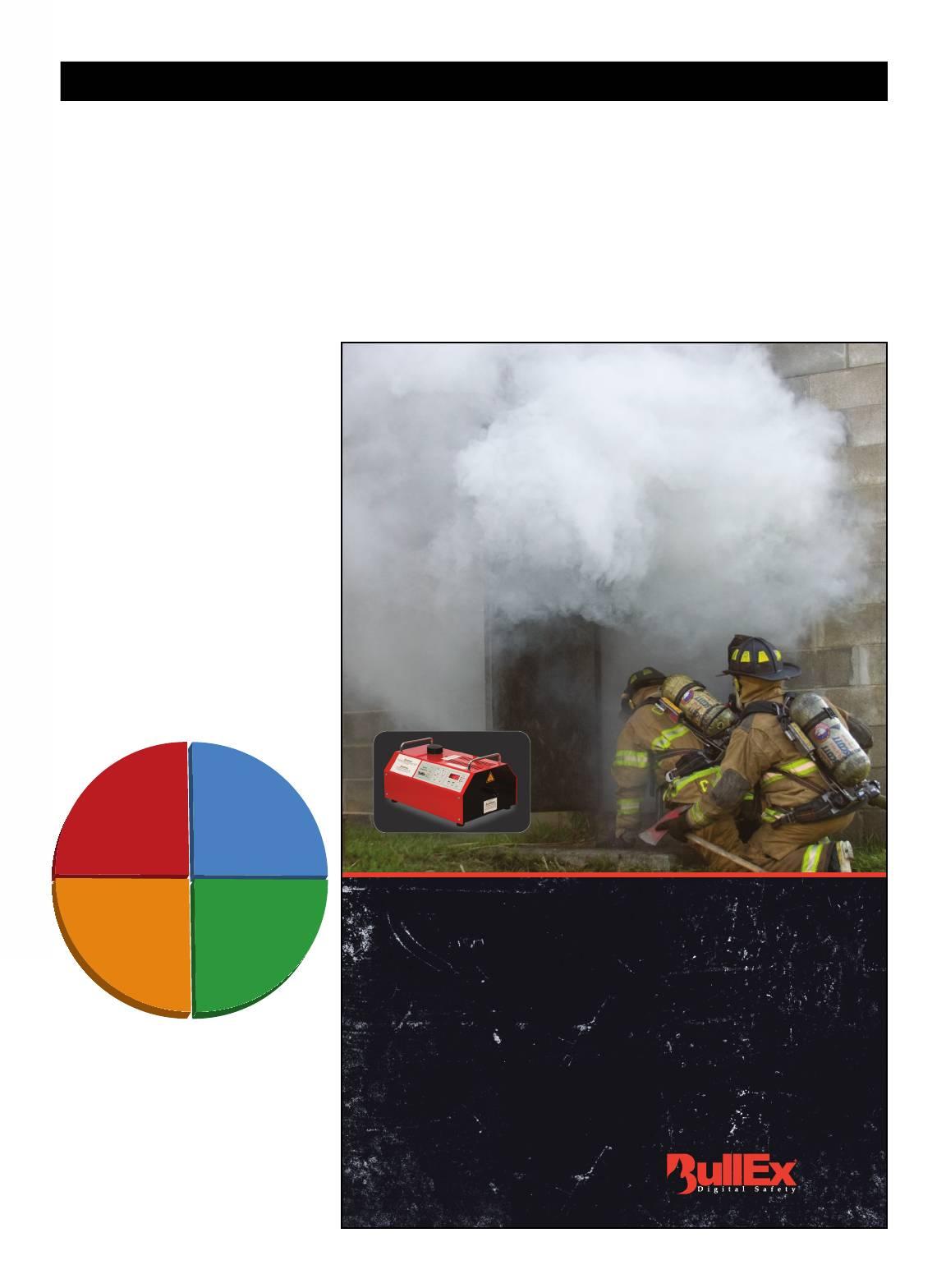
Smoke Generators were designed with one goal in mind: to create the most realistic fire training smoke possible. BullEx Smoke Generators saturate your training environment with dense heavy smoke in minutes, without recharging or reheating. Search and rescue, ventilation and PPV training can be replicated again and again, allowing every member of your department to participate in the training necessary to keep them alive on the fireground. To see the Smoke Generators in action, check out our videos at www.bullexsafety.com.
For more information, call your local Globe dealer or Safedesign
British Colum B ia and a l B erta Guillevin
Coquitlam, British Columbia 800-667-3362
Calgary, Alberta 800-661-9227
Campbell River, British Columbia 250-287-2186
Edmonton, Alberta 800-222-6473
Fort St. John, British Columbia 250-785-3375
Kamloops, British Columbia 250-374-0044
Nanaimo, British Columbia 250-758-3362
Prince George, British Columbia 250-960-4300
Trail, British Columbia 250-364-2526
Que B e C H.Q. Distribution LaSalle, Quebec 800-905-0821
atlanti C provin C es K & D Pratt Ltd. St. John's, Newfoundland 800-563-9595
Dartmouth, Nova Scotia 800-567-1955
Saint John, New Brunswick 800-567-1955
m anito B a and s askatC hewan Trak Ventures 204-724-2281
risk their lives with it on every call. Do this individually, with each councillor, to ensure one-on-one conversations. If you show respect for their offices, chances are the councillors will gain respect for you and your office. The best-case scenario is to have councillors ride along on a call, even a false alarm – let them feel the frustration and the adrenalin rush of being ready to answer a call only to have it be a false alarm. Councillors will then better relate to your team. They will also see firsthand the shape of your ageing equipment. Some of you may have already done this kind of ride-along as part of a new council member’s orientation but how long ago was it? Perhaps it is time for a refresher course.
Now that you’ve done your homework and you know the players, how do you effectively guide them to your side of the table? People work in patterns; if you relate to their individual patterns you will increase your chance of winning their support. Let’s say you’re trying to convince council to replace your department’s 10-year-old bunker gear. Ideally, your presentation to council would include elements that appeal to the four different personality types as follows.
• People who exhibit D-style personalities (outgoing and task oriented) look for action and results. The bottom line for this personality style: no fluff – they will not relate to it. They want to know the facts and how the facts affect the bottom line. When requesting buy in, ask them what they think, not how they feel. Be direct: Ideally, provide them with choices within acceptable boundaries. For example, replace all of the bunker gear this year or 50 per cent this year and 50 per cent over the next two years. These types of people want control; give it to them within acceptable parameters to meet your goals. Depending on the circumstances, one strategy is to provide two separate documents or presentations to D-style personalities, each one slightly different, and allow D-style councillors to choose the one they like. This tends to prevent a lot of conflict and discussion.
• People whose personalities are I style (outgoing and people oriented) look more for the people side of things: How will this issue affect people? Is there a fun side to this issue? This personality type appreciates lots of visuals; for example, pictures of your firefighters in their worn bunker gear. These folks are generally visual learners so show them the emotional side of the issue. Take them along for a product inspection at the manufacturer if possible. They will love the road trip and you get an opportunity to build a rapport. Rather than asking these types of people what they think, ask them how they feel about the fact that firefighters in
their community are using old, worn-out bunker gear that doesn’t meet NFPA standards.
• S-style personalities (reserved and people oriented) look at how the team will be affected by the issue. Again, emotion is a key element to this personality style. Most people have S-style personality characteristics, so it’s likely that S-style personalities make up a considerable part of any audience. Also remember that this personality style is reserved and forms part of the silent majority; if you have these people in your camp their numbers can be effective – just remember that they may not be vocally supportive in a council meeting. When asking for input from this group be sure to ask how they feel – not what they think – about the issue. That is why it is important to get their buy in before the presentation.
• The other half of that silent majority is the C style (reserved and task oriented). These are the fact finders of the group. It is critical to give this personality type the data before you meet with them or make a presentation to them because they need a lot of time to process information. In short, C-style personalities like to think about things before making a comment. Usually they prefer to speak quietly to you in private rather than in an open meeting, so giving them information in advance gives them time to process the details and an opportunity to ask questions in private. People who exhibit this personality type do not want the spotlight; they want to quietly work in the background, looking at the facts and analyzing your numbers and details. This group needs to be asked what they think – not how they feel – about an issue. To help you gauge your effectiveness in dealing with council members, ask for feedback on your presentation. Councillors will be surprised and they will see this as a positive step.
Whatever your council members’ personality style, remember that like most of us, they operate in their own little worlds. Also consider that most people do not have the knowledge about personality styles that you now possess. Recognizing the differences in personality styles and understanding how to communicate with those different personalities can help you resolve many of the people challenges in your community meetings.
Next time, we will delve further into written and personal communications.
Bill and Barb Johnston own and manage The Centre For Applied Human Dynamics (www. dynamics4u.com). They have written two books, Vacation Without Frustration and DISCover Your Communication Style. E-mail them at bjohnston@dynamics4u.com
dissecting dwelling insurance
Comparing fire protection capacity against calculated risk level determines benchmarks for protection capacities
By MiChael r. Currie
Editor’s note: Parts 1 and 2 in our occasional series on insurance grading in Canada ran in the February and September issues of Fire Fighting in Canada and can be found on our website – www.firefightingincanada.com (click on past issues).
many Canadian property owners are under the impression that there is a single standardized formula for fire protection. They believe no matter where they buy a home, there is a standardized level of response from the nearest fire department. Homeowners are often surprised to find many fire departments do not necessarily cross jurisdictional borders. They are also surprised to discover the cost of insurance may vary greatly from one property to the next, based on the community’s fire insurance grade.
The system of fire insurance grading used in personal lines insurance is the Dwelling Protection Grade (DPG) system – an appropriate name, as personal lines insurers insure only detached dwellings (including duplexes). The system uses a scale of one to five, in which one represents the maximum possible credit for fire protection programs, and five represents an unrecognized level of protection or no protection at all.
■ HOW DPGs ARE DETERMINED
Similar to fire insurance grades for commercial lines insurance (explained in part two in September), the fire insurance grades for personal lines insurance are determined based on the capacity of the community to respond with a reasonable minimum amount of resources (within a specified time frame) for the level of risk being considered. The greatest difference in the systems is in the quantification of the level of risk. In the commercial lines grading system, the level of risk is specifically determined for the built environment within that community, whereas the personal lines system considers a single level of risk to reasonably represent all detached dwellings.
This logic was reasonable when developed, but it may be less reasonable now as there is increasing variability in the size and degree of exposure. Additionally, new lightweight construction elements burn faster and, as such, the response timeframes may no longer be appropriate. The standard is being reviewed, and modifications may be forthcoming.
DPGs are typically applied to each fire station, but may, in some cases, be applied to an entire community (where a homogenous level of protection is provided). To determine the DPG of a fire station, the four main areas considered are fire department, water supplies, emergency communications and fire prevention. The specific requirements associated with each dwelling protection grade are published on the Fire Underwriters Survey website at www.
fireunderwriters.ca.
To be recognized for fire insurance grading, there are specific minimum requirements for each DPG. While meeting the minimum requirements will result in the applicable fire insurance grade being applied, achieving this does not imply that a reasonable or adequate level of fire protection exists. One of the most common misconceptions around the DPG system is that the minimum requirements are a prescription for the amount of fire protection that a community should have. This is definitely not the case.
The table below provides a better representation of how the fire insurance grades are developed, and what they represent. If we consider the level of fire risk to be constant (as mentioned, this may not be true) for detached dwellings, and we quantify the response time, thereby making it a constant also, we can define terms for a reasonable and adequate level of response for a fully involved structure fire.
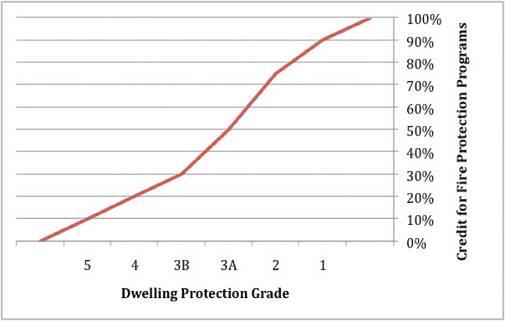
Figure 1. Dwelling protection grades and credit for fire protection programs
The system of fire insurance grading used in personal lines uses a scale of one to five; one represents the maximum possible credit for fire protection programs and five represents an unrecognized level of protection or no protection at all.
Photo by Laura k in G
The community is then measured against this benchmark, and the amount of credit received for fire protection programs is correlated with a fire insurance grade.
The system is not intended to be prescriptive; rather it is intended to encourage ongoing development of fire protection programs in communities. As communities grow and develop fire protection programs, additional credit is received and fire insurance grades improve.
The fundamental concept within fire insurance grading is the comparison of fire protection capacity against the calculated risk level
(in terms of required fire flows). The initial calculation of risk in terms of required fire flows gives a benchmark that fire protection capacities can be measured against.
■ HOW THE INSURANCE COMMUNITY USES DWELLING PROTECTION GRADES
Each insurance company has its own methods of determining property insurance rates, but the majority of insurers use similar systems based on several criteria, including distances from risks to fire halls and hydrants and fire insurance grades.
Although the DPGs are separated into six levels, many insurers simplify these into three tiers – protected, semi-protected and unprotected.
Note that DPG 4 is treated differently from insurer to insurer based on case-specific relevant conditions. Most insurers interpret DPG 4 as either semi or unprotected.
An equivalency to 3A status may be granted to communities without hydranted water supplies that achieve superior tanker shuttle service accreditation through the Fire Underwriters Survey. Further information about superior tanker shuttle service accreditation is available at the Fire Underwriters Survey website at www.fireunderwriters.ca, and will be the topic of a future article.
■ RESPONSE DISTANCES
Fire Underwriters Survey uses eight kilometres by road as the maximum distance for coverage for personal lines insured properties. Some insurers specializing in rural risks may extend credit for fire stations with recognized fire insurance grades to distances beyond the recommended maximum.
Continued on page 62
•
Sidewinder Jack System
•
•
•
• Manual Operation
Interspiro “Team Talk”
Communication Capability
Up to 4 Users can Speak
Simultaneously
Built in Voice Protection Unit
Operate on Multiple Channels
marketing 101 how to make social media work for your department
By Sarah MCGolDriCk
lots of workplaces discourage employees from using Facebook when they’re on the job. Many Canadian fire departments, on the other hand, have embraced social media as an effective and efficient tool to communicate with residents, raise money, launch recruitment drives and spread information about local emergencies.
What’s more, tech-savvy generation Xers and generation Yers who grew up with computers and are intimately familiar with Facebook are becoming the social media experts within their departments, helping officers and chiefs learn the ropes of YouTube, Twitter or LinkedIn.
If your department is considering using social media but isn’t sure where to start, here are some success stories and some advice for making sure your venture into social media achieves your goals without any of the typical social media blunders.
The Calgary Fire Department created a Facebook page for recruitment (search Calgary Fire Department – Recruitment) that explains how to prepare for interviews. The fire departments in Nova Scotia’s Yarmouth County (search Yarmouth County Fire Departments) use Facebook to provide information about upcoming meetings, share photos and connect with residents. Some fire departments even post procedure manuals and training videos on social media sites.
The Baie Verte Fire Deptartment in Newfoundland created a Facebook page after its hall was destroyed by a fire in February (search Support The Baie Verte Volunteer Fire Department). The community of about 1,200 people has rallied around the department; residents used the page to make online donations through PayPal, follow the campaign’s success and share information about future fundraising efforts such as community breakfasts and a recycling blitz.
A fire department, a mutual aid group or a firefighters’ association can set up a Facebook page or group for its members and/or people in the community to join. The group administrator (usually a member of the department or association) can send
Fire departments and mutual-aid associations across Canada are using social media to raise money for equipment and awareness of fire-prevention and public education.
messages about events or incidents to everyone who has signed up to be a member of that Facebook group.
■ WHY SOCIAL MEDIA?
More than 150 million people use Facebook to communicate. In fact, its search tool is now more popular than Google. The popular YouTube video Social Media Revolution (search for Social Media Revolution in the YouTube search bar) says more than 30 per cent of the world’s population is under 30 years old, that Facebook tops Google for weekly traffic in the U.S. and that social media has overtaken pornography as the No. 1 activity on the web. The video also claims that 80 per cent of companies use social media for recruitment, that generations X and Y consider e-mail passé, that 60 million status updates happen on Facebook daily and that we will no longer search for products and services, they will find us via social media.
Accounts on most social media sites are free to set up and operate. They are also an effective way to communicate because they are so easily accessible through computers and smartphones. This ability to do things remotely can save departments time and money.
One of the biggest uses of social media for fire department is community outreach – helping the public better understand fire safety and the role of the fire department.
This year, Forest Service British Columbia (FSBC) set up a Facebook page to keep residents up to date on the status of forest fires in its area. Contact information and links to the Ministry of Forests and Range were provided for residents to help in preventing and reporting fires. Road closure information, videos and campfire information was also provided. The service was monitored by FSBC and a clear moderation policy was outlined, preventing the posting of abusive or indecent material.
■ COMMUNITY SUPPORT
In Newfoundland, the Burlington Volunteer Fire Department (search Burlington Volunteer Fire Department) successfully used social media to raise money. Two years ago the department was in desperate need of a new equipment carrier. The $104,000-vehicle is critical to ensuring the safety of Burlington’s 400 residents, and the neighbouring community of Smith’s Harbour, which the department also serves.
These communities are nestled along the northeast shore of Newfoundland, beside the coves of the Atlantic Ocean. Firefighting presents many unique challenges due to the rocky and rugged nature of the landscape. Getting the equipment where it needs to be safely is paramount to effectively serving the community.
Just as important was community support to raise funds to buy the truck. To make sure everyone in the community understood the need and was able to communicate support, the fire department quickly set to work implementing its Facebook fundraising campaign.
“Everyone is on Facebook for everything,” says Burlington Deputy Chief Nelson Matthews, who was among the campaign co-ordinators. He notes that with little government assistance, it was necessary for the department to find new ways to communicate with the community and raise much-needed funds. “There really isn’t any outside assistance for us. The fire department has to raise its own money,” says Matthews.
Matthews says the Facebook page was instrumental in raising awareness about the need of the department and the response was excellent. The department used the Facebook page to inform the community about fundraising events and the campaign progress.
In just a few months, the community had successfully raised the money it needed to buy the new truck. When the campaign was over, residents continued to use the page to share their congratulations and offer the fire department continued support.
“Congrats on the new truck!! May she never leave the garage!!!! And lets hope it sees less work than the old one!” writes a resident on the department’s Facebook wall.
With the success of the fundraising campaign, the department then effectively used Facebook to engage the community in education programs and as a place where the community could celebrate the department’s 25th anniversary.
■ SOPs
Social media is easy to use, but experts say departments and associations should take some precautions.
Consultants suggest that organizations such as fire departments create social media plans to ensure proper use of Facebook, YouTube, Twitter and LinkedIn. These plans may include information about appropriate content, user and administrative rights and office protocol. These guidelines can ensure the quality and relevance of information. It is important to be inclusive when creating policies and to work with your department to create an open dialogue and ensure everyone understands the rules. This will create an environment in which members are more apt to participate.
Martha Jack, head consultant at eConverse Social Media Consulting in Fergus, Ont., says municipalities must become more adaptable to social media and its impact on communication.
“I think municipalities are really missing the boat with social media, it’s a great opportunity to listen to what the public has to say and build relationships with them,” she says.
She adds there are many ways organizations can easily incorporate social media into their communication strategies to find out which tools and resources work best for each individual group.
“One of the best ways to try out social media is to do something internally, such as a group page for just your employees. This allows you to get a good handle of the type of content, the time commitment and potential issues that may come up, before you go public,” she says.
She says departments that are just starting out should create a strategic social media plan with clear goals and objectives, such as a timeline, resource implications, suggested platforms and a social media policy.
In an effort to ensure clear communication and content, Jack suggests that orga-
Social media experts advise fire departments to create a social media policy to avoid pitfalls
nizations identify a social media spokesperson. This controls where the information is being delivered and addresses feedback in a timely manner.
Identifying the most effective platform, whether it’s Facebook, Twitter, LinkedIn or YouTube, will help to reach your audience and address issues such as how your social media plan will work in a crisis or emergency situation.
Jack says there are a few simple steps departments should take to understand how to apply social media to their broader communication strategy.
• Decide what constitutes personal information within social media. Is your organization sharing only information or is it also sharing photos and video? Can members of the social media group also post their personal information?
• Establish how this information can be used and who has access to it. Develop privacy settings and make sure your participants know how to use them.
• Use social networking platforms that are reputable and gain a good understanding of their privacy policies.
Jacks notes that fire departments may want to create their own social media policies to outline what information can be shared, including identifying details such as locations and dates.
The adaptability of social media to media platforms such as video and photos has allowed departments and associations to share important information with communities in a cost-effective way. This makes social media an ideal solution for departments with limited communication budgets and those looking for new ways to communicate with the public.
Sarah McGoldrick is a writer and public relations consultant based in Fergus, Ont.
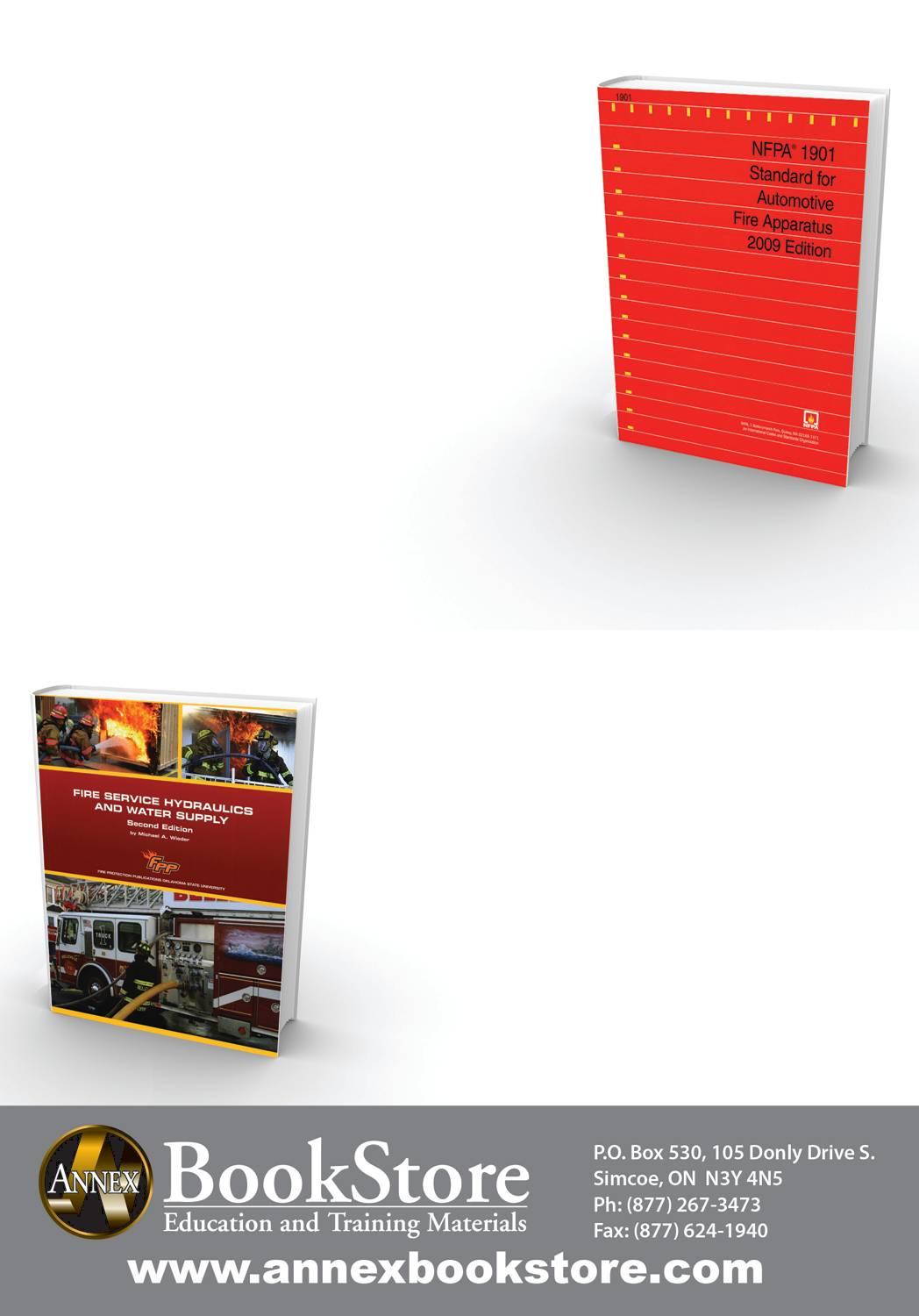
1901: Automotive Fire Apparatus, 2009 Edition
Item#: 190109 I Price: $52.25
Updated to provide better safety and effectiveness of fire apparatus, the 2009 NFPA 1901 defines the requirements for new automotive fire apparatus designed to be used under emergency conditions for transporting personnel and equipment, and to support the suppression of fires and mitigation of other hazardous situations. This important Standard covers everything from pumpers to aerial fire apparatus to special service apparatus, such as rescue vehicles and hazmat vehicles, as well as quints and mobile foam apparatus.
Changes and additions to the 2009 NFPA 1901 include added miscellaneous equipment requirements for each type of apparatus, plus:
• New requirements for vehicle stability and maximum top speed for heavier fire apparatus
• New defined length of seatbelts, requirements for how to measure them, and a new required warning device for seatbelt use
• Requirement that vehicle data recorders capture vehicle speed, acceleration/ deceleration, engine speed, engine throttle position, ABS event, seat occupied and seatbelt status, master warning device switch position, and date/time
• Rule that cabs on apparatus with GVWR over 26,000 lb. must meet one of two sets of standards on occupant protection during crashes
• More specific requirements for retro-reflective striping
• Other changes involving hose storage areas, and control of aerial devices
• A new chapter provides requirements for trailers used under emergency response conditions
Fire Service Hydraulics and Water Supply, Second Edition
Item#: 36724 I Price: $77.00
The ability to find a sufficient water supply and use it effectively to control a fire remains one of the most basic functions of the fire service.
This text provides detailed information on the principles of water and its movement, determining accurate discharge pressures and fire flows, the types of apparatus and pumps used to move water, and effective means for supporting fixed fire protections systems.
This second edition has been redesigned to include up-to-date photos and illustrations. This manual was written to meet all of the FESHE model course objectives for the fire protection hydraulics course.
BaCKtoBaSICS
Rescue for unconscious victims
BY MARK VAN DER FEYST
In September we looked at the challenge of getting a fire victim from the floor to the window sill and out onto the ladder. We noted the physical exertion it takes to get the victim out of the structure and the fact that for some firefighters performing this type of rescue, this will be the fatigue point because the task is so physically demanding. Several factors work against rescuers and must be considered when attempting to move a fire victim.
SIzE AND WEIGHT OF VICTIM
The size and weight of the victim dictates how quickly and easily we can remove him from the structure. Obviously, it is easier to move infants, toddlers, children and seniors than larger adults. During training, we tend to use manikins that are relatively light, usually between 110 and 140 pounds, and we have conditioned ourselves to handle these weights. We need to train and condition ourselves to move victims who weigh closer to 200 pounds and more. Adding extra weight to the training manikin helps with this.
The size of the fire victim also matters. Moving an adult who weighs roughly 200 pounds but is lean and fit is different from moving a shorter person who is overweight. It is difficult to move obese people around corners, through doorways, around furniture or up and down stairs.
STRENGTH OF THE FIREFIGHTERS
The strength of the firefighters attempting to move the victim also makes a difference. Usually, two firefighters conduct the search and removal of the victim; one removes the victim and the other leads the way out. But, depending on the size of the victim, both firefighters may be needed to perform the rescue and removing the victim can deplete the firefighters’ energy levels. It is important for all firefighters to maintain a significant level of fitness – including strength training – so they are not caught off-guard when it’s time to remove a victim. Strength and technique are needed to overcome all the potential factors that can work against rescuers when trying to remove a victim. Training with heavy manikins, with firefighters in full PPE including SCBA, is a good start.
FLOOR SURFACE CONDITIONS
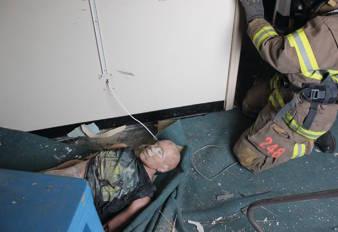
Training environments, whether a fixed facility or an acquired structure, usually feature smooth, slippery surfaces made of concrete, vinyl, hardwood or ceramic tile. Rarely do we encounter rough surfaces that produce lots of friction and resistance, such as carpet or rough, wooden floors. Moving a fire manikin on a smooth surface is relatively easy. If a victim is found in bed, a sheet can be wrapped around the victim and used to glide him over the floor.
In a structural fire environment, however, moving the victim to the window or exit can be more difficult due to the floor covering. The floor may also be littered with debris, such as clothing, which increases the amount of resistance. We need to train and practise moving fire victims (manikins) on different types of floor surfaces. Outfitting a training building with carpets and putting clothing on the floor enhances our skills.
A slippery floor surface helps with the removal of a victim
Photos by Mark van D er Feyst
A hallway showing carpet from the bedrooms. This will slow down the removal process.
BaCKtoBaSICS
THE VICTIM’S CLOTHING
Clothing itself can also help rescuers remove the victim. For the most part, a fire victim’s clothing cannot be counted on as a drag device. For example, at a 2 a.m. residential fire, a victim’s clothing can range from a T-shirt and shorts to nothing at all. Rescuing a victim wearing little or no clothing is more difficult than rescuing a clothed person; Victims will be sweaty as they are exposed to the heat and fire conditions and dragging or removing a person who is sweaty and unconscious is like trying to drag a bag of cement with Vaseline all over it. While it’s easier to drag a clothed victim the clothing can hinder create friction and resistance.
Realistic training conditions: A manikin will be dragged along a carpeted surface, slowing down the removal time.
■ HEAT/FIRE CONDITIONS
Fire conditions dictate rescuers’ actions. A fully developed structure fire with flames visible from every window does not permit us to affect a rescue. Reading the conditions is an important step in determining whether a rescue is an option. While inside the structure, careful attention to the conditions around the immediate area is vital. Conditions can change in seconds and firefighters inside must be able to read the conditions. It may take time to locate the victim inside the structure; conditions will have been changing the entire time. If conditions are deteriorating, rescuers may have to leave the victim and get out. Knowing when to leave the structure is vital to firefighter safety. If conditions have reached a point where the search crew has to get out, the victim – who has no protection from PPE and SCBA – will not survive.
■ DISTANCE FROM LOCATION FOUND TO WINDOW
When the victim has been located, a quick removal needs to be initiated. The distance from the victim’s location to the exit points determines next steps. Search teams often begin their searches at the front door but rescuers do not want to drag a victim all the way back to the front door if they do not have to. Using a window in the room where the victim was found reduces travel time. In a typical bedroom, the distance from the bed to the window is about five feet and this allows for a quick removal. In some cases, the victim may be found in a hallway or other location with no nearby windows and rescuers will have to travel to an exit point.
Using realistic approaches in training helps to overcome the factors mentioned above. Setting up training facilities with different floor surfaces, using heavier manikins, adding size to the manikins, and clothing on the floor and furniture around which to navigate, duplicates conditions that will be encountered at 2 a.m. when you have to search for and remove a fire victim.
Mark van der Feyst is an 11-year veteran of the fire service working for the City of Woodstock Fire Department in Ontario. He teaches in Canada, the United States and India. He is a local level suppression instructor for the Pennsylvania State Fire Academy, an instructor for the Justice Institute of BC and a professor of fire science for Lambton College. Contact him at Mark@FireStarTraining.com
BY L ES Ka RPLUK Fire Chief, Prince a lbert, Sask. an D LYLE Q U an Fire Chief, Waterloo, o nt.
ILEaDERSHIPforum
Human relations in your department
n September we identified the role of vertical and horizontal relationships and how these relationships impact your department. Noted author Stephen Covey states, “The most important ingredient we put into any relationship is not what we say or what we do, but what we are.” Recognizing that effective human relations are critical to productivity in a fire station and key ingredients for career success, we will examine why firefighters and chief officers must understand their importance.
According to Elwood Chapman in his 1997 book Your Attitude is Showing: A Primer on Human Relations, human relations is knowing how to handle difficult problems, learning to work well with others, dealing with conflict effectively, understanding how you communicate with others, restoring damaged relationships and maintaining healthy relationships with co-workers. At first glance, it appears that getting along with others is the essence of human relations. However, human relations are more complex than that; your career success depends on understanding all that human relations encompass.
Working relationships exist among all employees in the fire department. Human relations involves building and maintaining relationships horizontally and vertically in good and poor working conditions. Building strong and effective relationships contributes to the interpersonal influence attributed to successful fire-service leaders. Interpersonal influence stresses the so-called we component of a relationship, which builds trust and strengthens the team’s foundation. There are times when this we component is challenged, for instance, when conflict occurs between two or more members. It is easy for members to nurture the hurt caused by the conflict and to create a toxic working environment, which directly impacts human relations in the department through a spill-over effect. In other words, the negative aspect affects how you deal with others and how they may deal with you. There is no doubt that at some time in your career you have steered clear of someone at work because you didn’t want to deal with the attitude you were seeing and/or feeling. So, never assume that what you do and how you are doing it is not seen and felt by others around you. The leaders in the department must understand and appreciate that effective human relations are critical for department success. As such, we need to strive to resolve those strained relationships.
relationships is the lasting effect they can have on an organization. To use an analogy, just because a skunk has left the building doesn’t mean the effects of its visit won’t linger. As the leader, you need to do whatever damage control is required to eradicate the situation. In the world of relationships, the toxic environment that was created needs to be dealt with and this can take time. Patience and consistent support is crucial to building positive relationships. Remember, it took time for most of these negative relationships to develop and they will not disappear overnight. This is why it is critical that fire-service leaders fully understand vertical and horizontal relationships. If the fire chief is the only individual working to eradicate the skunk smell in the department then the smell will linger for a long time.
Human relations requires that two parties realize and understand the importance of eradicating a negative situation. We used the skunk analogy for a reason: When effective human relations are lacking in a department, it stinks. The department cannot function at a basic level of productivity because sooner or later morale will end up in the sewer. When morale is low, firefighters look to the chief for positive change but let’s not forget that (as we have noted in many of our columns) this is a team concern, and a team effort is required to get things back on track.
h uman relations requires that two parties realize and understand the importance of eradicating a negative situation. ‘‘ ’’
It’s only when we, as chief officers, take full responsibility for what is happening that things will change. Don’t be a finger pointer or lay the blame on others. It’s true that you may not have been the cause of the toxic situation but you can be the catalyst for positive change.
Another issue to recognize when dealing with good or bad
Les Karpluk is the fire chief of the Prince Albert Fire Department in Saskatchewan. Lyle Quan is the chief of the Waterloo Fire Department in Ontario. Both are graduates of the Lakeland College Bachelor of Business in Emergency Services and Dalhousie University’s Fire Administration Program.
We believe that leadership exists at all levels – it’s not the amount of gold on your shoulder that makes you a leader, it’s how you walk the talk. It can be easy to go with the flow; instead, try to identify what is right and follow that path. The right path may not be the easiest path to take, but if you follow it, you will be pleasantly surprised with the outcome.
One final thought: Think back to when you started in the fire service – who did you look up to and want to emulate? Was it the class clown who was always trying to be the centre of attention or was it the firefighter, captain or chief officer who did what needed to be done, not for the attention, but because it was the right thing?
In tHE watchroom
■ RESCUE DUMMY INTERACTS WITH FIRST RESPONDERS
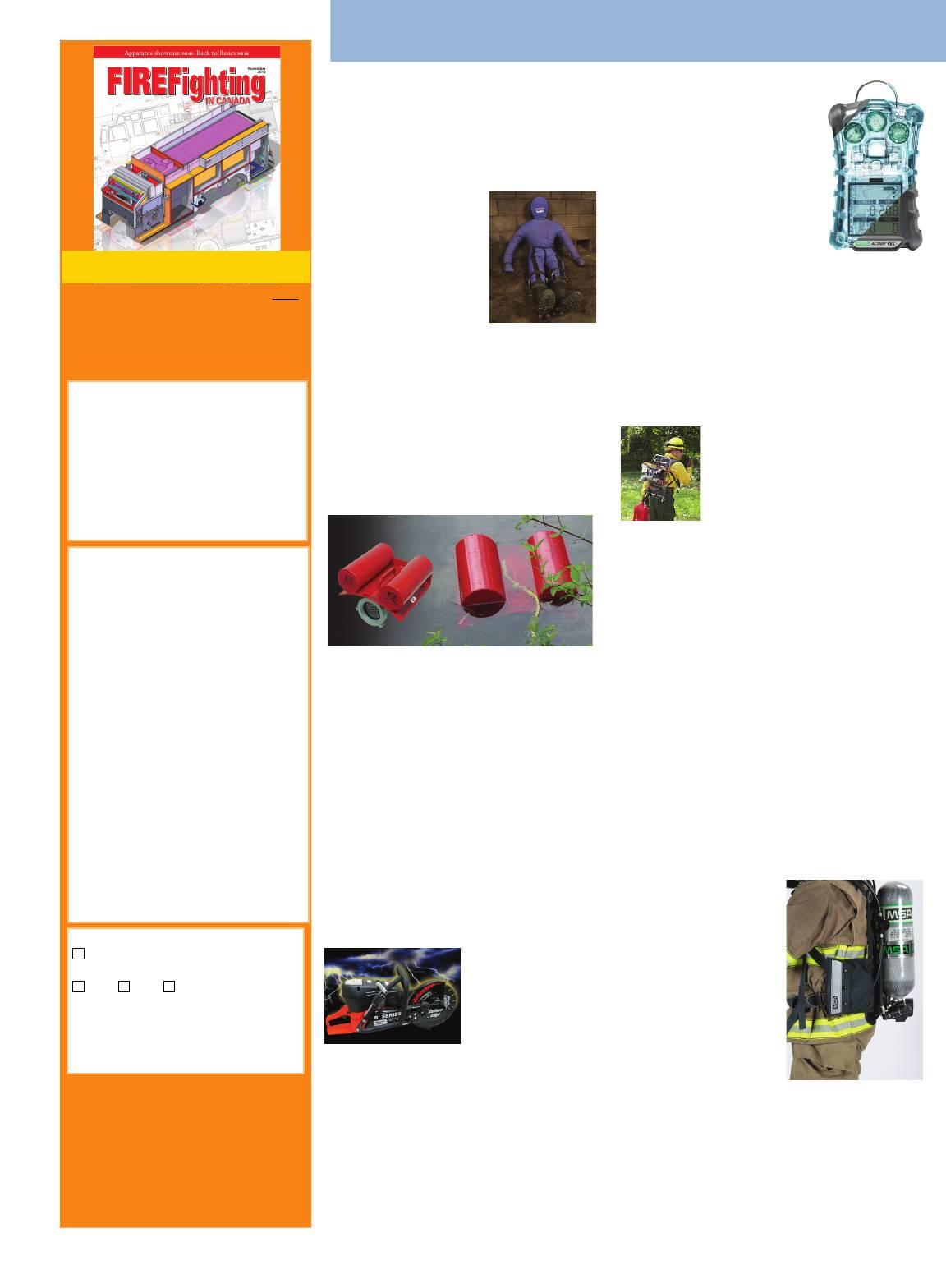
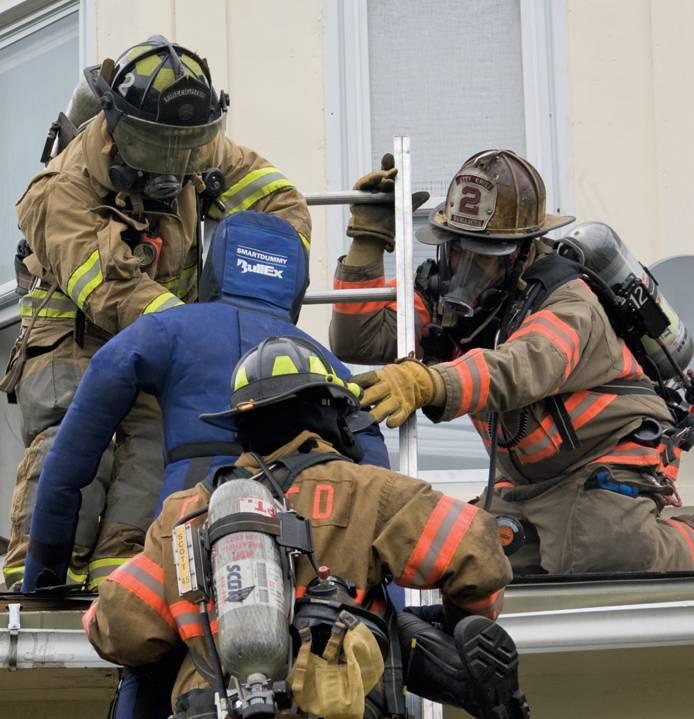
The SmartDummy Rescue Manikin from BullEx is designed to withstand intense fire training and interact with rescuers. Constructed with a heavyduty canvas material, the rescue dummy features an interactive voice box, and listens for firefighters and calls out for help. The voice box is built into the head of the SmartDummy for ease of access and programming. The SmartDummy is built to handle fire/rescue, confined space retrieval, pole-top extrication, building collapse scenarios, rope rescue, ladder carry-down drills and vehicle extrication. For more information visit www.bullexsafety.com.
■ ALUMINUM STRAINER FEATURES SELF-LEVELLING FLOAT SYSTEM
Kochek Company’s new all-aluminum strainer features a unique self-levelling float system that makes drafting possible under almost any condition. The high-intake ratio allows for maximum volume flow rates while the vortex shield protects against whirlpooling. The strainer is available with threaded, Storz or camlock connections in a range of sizes. For details visit www.kochek.com.
■ RESCUE SAW OFFERS MORE POWERFUL ENGINE
Cutters Edge new generation rescue saw features a more-powerful 80.7 cc engine, a four-stage filtration system and non-slip rubber handle to assure high performance, all-position cutting and safety. Additional features include a self-adjusting blade guard and a choice of Cutters Edge blades. The CE807R is available in a 12-piece sawing kit in a protective aluminum case. For more information visit www.cuttersedge.com.
■ GAS DETECTOR OFFERS FOUR-YEAR SENSOR LIFE
The Altair 4X Multigas Detector is driven by MSA XCell sensor technology for combustible gas, O2, H2S and CO and offers a standard three-year warranty, four-year sensor life,
increased stability and a less than 60-second span calibration time. The Altair 4X is compatible with the Altair 4 Galaxy test stand and can be outfitted with MotionAlert and InstantAlert features. For more information visit www.msanet.com.
■ PORTABLE PUMP DELIVERS WATER TO REMOTE LOCATIONS
Hale has improved its Fyr Pak backpackmounted water pump for wildland and forest fires. This portable centrifugal pump is mounted on a padded adjustable backpack frame and weighs less than 34 pounds, making it easier for firefighters to reach and navigate a variety of rural terrains. The pump was developed to reduce response time to forest and other ruralarea fires to mitigate risk of firefighter injury or damage to land and wildlife in the region. The portable pump can collect water from any water source, including streams, ponds, draft, relay or a port-a-tank. The unit comes with engine over-speed protection. The Fyr Pak’s frame is 25 inches long and 13 inches wide to provide sufficient comfort and clearance for firefighters’ head gear. For more information visit www.haleproducts.com.
■ ExTENDAIRE II SYSTEM HAS INTEGRATED RESCUE HOSE
MSA’s ExtendAire II is an emergency breathing supply system (EBSS) option that uses intermediate pressure air to provide firefighters with another level of emergency air. This system allows firefighters to quickly and easily connect to and breathe from a fellow firefighter’s air cylinder. ExtendAire System II is tightly integrated with SCBA to provide unrestricted mobility as well as easy access during critical situations. The system uses a quick connect system with check valves to help ensure that both recipient and donor are not exposed to ambient air. The ExtendAire II System offers an integrated rescue hose to be used with the PR14 FirstStage Regulator with both male and female quick connect fittings. A waist pouch houses the hose and manifold that integrates with the carrier and harness assembly to avoid snagging and accidental opening. The ExtendAire II System also connects to the ExtendAire I System for additional connection locations. For more information visit www.msafire.com.
streamlined response
Surrey’s joint MVa initiative improves use of fire, police resources at collision scenes and saves time, money
By len GariS and FraSer MaCrae
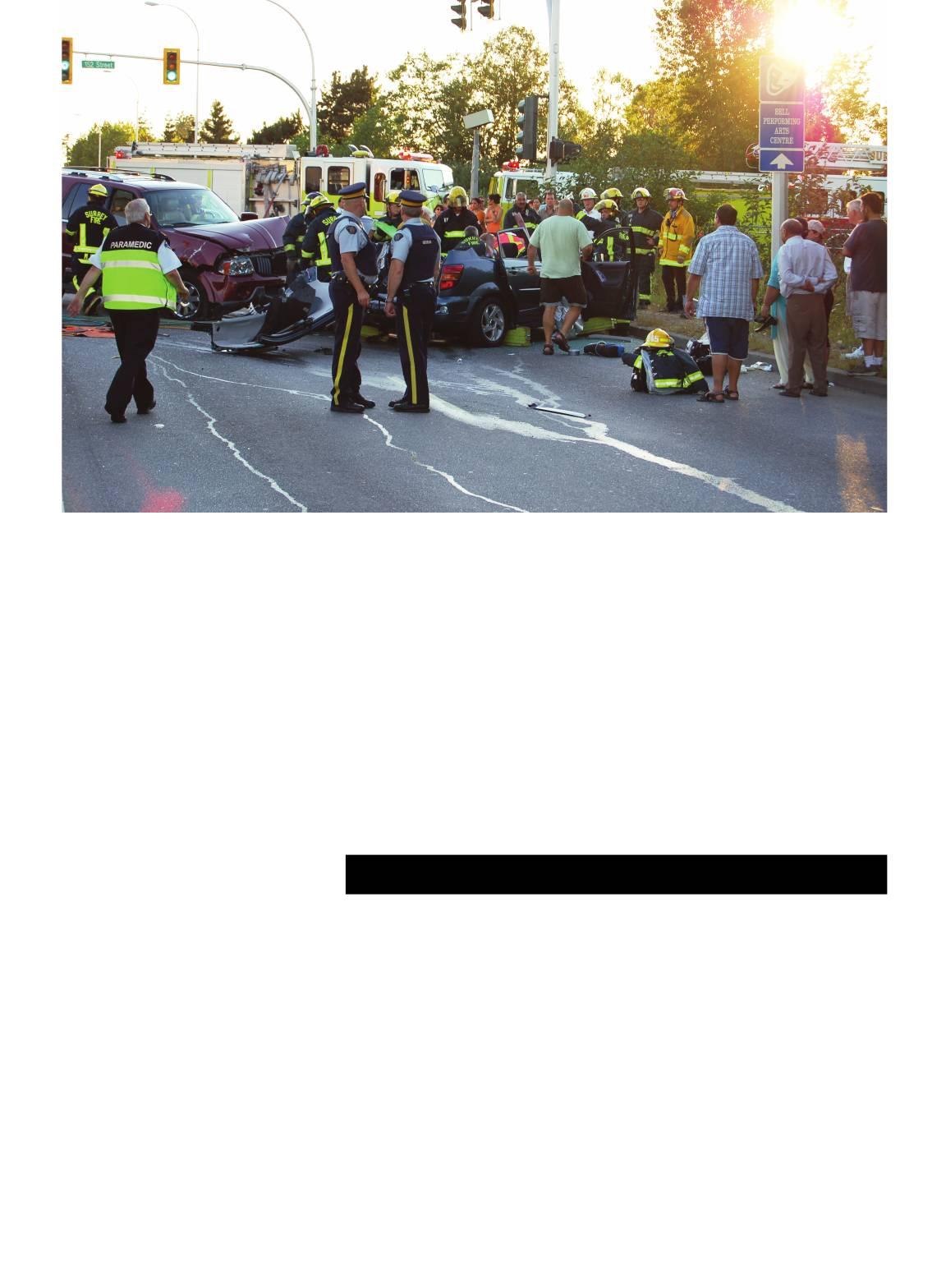
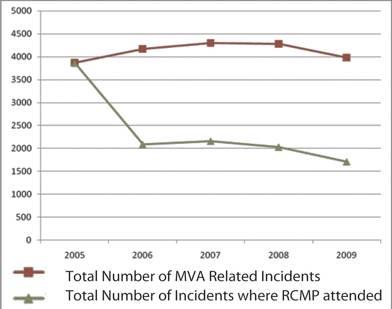
Response duplication has been reduced by 60 per cent under the new partnership between Surrey Fire and RCMP.
apartnership between the fire and police services in one British Columbia city is improving the response to motor vehicle accidents (MVAs)while freeing up resources.
Implemented in 2005, the joint initiative by Surrey Fire Service and Surrey RCMP has reduced response duplication by an average of 60 per cent, by streamlining response protocols and handing over some scene management capacity to fire crews.
One of the main results is that RCMP are no longer attending minor fender benders that used to eat up significant time and resources, while fire crews no longer have to wait for the RCMP to arrive to start
clearing the scene.
“We can get multiple MVAs during the day at rush hour, and so the assistance of the fire department has been immeasurable,” said Cathie Matthews, manager of Surrey RCMP’s operational communications centre.
About 4,000 MVAs occur in Surrey each year, including those involving injuries or fatalities and those involving only property damage.
While the fire service responds to both categories of MVAs, RCMP protocol requires the RCMP to respond to all injury accidents and only those property damage incidents in which there is a suspicion of criminality (impaired driving or assault, for
Photo courtesy s urrey Lea D er
CANADIAN BUILT CUSTOM TRUCKS
—THINK QUALITY—
Compared to poly, our aluminum tanks are:
• 7 times stronger
• Less Brittle at –40 ˚C
• Faster Dumping (no honeycomb reinforcement)
• Safer: Lower Center of Gravity
How many liquid haulers do you see on the highway using square plastic tanks? NONE.
• Able to handle Higher Fill Pressure and Flow Rates
• Easier to Maintain
• Easier to Retrofit
2011 International 7600 Tanker: AVAILABLE IMMEDIATELY
BRAND NEW, NFPA Compliant, 430hp, Automatic, 18k Front, 46k Rear, Aluminum Wheels, Engine Brake, 3000 USgal Aluminum Tank, 10” Newton dump with 180 swivel and extending chute, LED Emergency lighting, Charger and Compressor with Autoeject, 3M Striping, Manual Porta-Tank rack. Various Pumps available.
2011 International 4400 Tanker: AVAILABLE IMMEDIATELY
BRAND NEW, NFPA Compliant, 330hp, Automatic, 14k Front, 24k Rear, Aluminum Wheels, Exhaust Brake, 2000 USgal Aluminum Tank, 10” Newton dump with 180 swivel and extending chute, LED Emergency Lighting, Charger and Compressor with Autoeject, 3M Striping, Manual Porta-Tank rack. Various Pumps available.
example) or significant traffic control issues.
However, prior to the initiative, Surrey RCMP frequently responded to calls that did not fit these criteria, and often spent 30 to 45 minutes processing the scene.
Because scene management was strictly a police responsibility at the time, the responding fire crews had to wait for police to arrive before taking any action such as requesting tow trucks, clearing the roadway, directing traffic, facilitating the transfer of insurance documents or leaving the scene. In some cases, the crews waited for more than 25 minutes for police to arrive.
tatives sat down to address the inefficiencies caused by the response procedures. The new protocol they developed empowered fire officers to assess and manage the scene of noninjury/property damage MVAs.
Fire officers arriving first at an MVA are now assigned responsibility for determining if police involvement or attendance is required.
This was even the case during minor collisions in which there was clearly no injury or criminal reason for the police to attend. Because many drivers still have the misconception that they must wait for police to arrive to move their vehicles, the resulting traffic tie-ups could be significant.
In 2005, Surrey police and fire represen-
RCMP are still called to MVAs in cases involving an injury or death, a criminal offence, individuals who insist on police attendance, individuals from outside the region, violation of a person’s rights, traffic control issues, or an emergency/city vehicle. However, all other incidents can now be managed by fire crews.
When the new protocol was established, training was provided to fire personnel to prepare them for the new responsibilities. The RCMP were initially involved in establishing the training parameters – including scene assessment and preserving evidence – but now MVA scene assessment and management
RCMP now attend about 40 per cent of all MVAs in Surrey.
is part of the training Surrey Fire Service provides its members.
The result of the initiative has been more efficient use of fire and police resources, as indicated by Surrey MVA statistics from 2006 to 2009.
RCMP now attend about 40 per cent of all MVAs in Surrey. The reduced attendance is saving the RCMP at least 900 hours a year, and this estimate does not include the time officers had previously spent at MVA scenes conducting interviews and writing reports.
The initiative has also reduced the time fire crews spend responding to MVAs, freeing them up for other priorities.
“If the RCMP aren’t needed, we’re able to more efficiently clear the scenes – tow trucks can be called, we can push the cars off the road, tell people to exchange information and go on their way,” noted Surrey Deputy Fire Chief Jon Caviglia. “It makes sense that we’re no longer duplicating services, and it makes sense that those resources can be allocated elsewhere.”
Another benefit of the new protocol is that Surrey’s MVAs are cleared more quickly and have less impact on the community and other motorists.
“At times, one could expect to have up to five emergency vehicles, including fire, police and ambulance, at a minor motor vehicle incident,” said Surrey Deputy Fire
Chief Karen Fry. “This partnership not only reduces traffic congestion, it also reduces the carbon footprint in our city.”
The initiative was possible because of the strong relationship between Surrey’s fire and police departments, and their shared interest in finding innovative ways to improve efficiency and serve the community better.
“It’s all about making the right decisions to manage our resources by allocating only the responders required at an emergency incident,” Fry said. “Our goal is to provide the best and most efficient response of resources to emergency incidents in the City of Surrey, and this model saves our partner agency – the RCMP – time to respond to more critical incidents.”
Matthews noted that the strategic placement of fire department infrastructure throughout the community is another reason it makes sense for fire crews to manage MVAs that don’t require RCMP involvement. Some of the RCMP zones cover large areas, which means the closest patrol car may be a considerable distance from an MVA scene.
“The partnership is one that needs to be maintained and developed,” Matthews said. “I think the fire department can be of greater assistance to us because of their location and availability. I’d like to see the partnership grow even further.”
the SmartDummy talkS Back. [
Photo courtesy s urrey
built to standard
new regulations for rescue vehicles create headaches for departments but improve firefighter safety
By roSie loMBarDi
top : Metalfab Ltd. of Centreville, N.B., was the first Canadian manufacturer to build a special service vehicle to ULC standards. This truck was delivered to Digby, N.S.
the Office of the Fire Marshal in New Brunswick is sounding alarms about rescue vehicles that don’t conform to standards developed by the Underwriters Laboratories of Canada (ULC).
Smaller, cash-strapped fire departments in towns and rural areas often use rescue vehicles that have been retrofitted for firefighting duty, says Gordon Green, president of Metalfab Ltd., a truck manufacturer based in Centreville, N.B.
“Many of these departments use second-hand vehicles that were designed as delivery vans or for other purposes,” Green says. “Since they have an unknown pedigree, how do we know if these trucks
meet safety standards?”
The New Brunswick fire marshal recently issued a recommendation to restrict the number of firefighters who can travel in rescue vehicles in the province, says Oromocto Fire Chief Jody Price, president of the New Brunswick Association of Fire Chiefs.
“Concerns were raised about moving firefighters in the back of rescue vehicles that didn’t meet ULC standards,” he says. “The province has moved to correct this by stopping transportation of people in the backs of rescue trucks.”
Although there are many rescue vehicles that don’t meet ULC standards across Canada, New Brunswick is the first province to make a move to mandate a solution.
Photo courtesy Meta LF ab
However, other provinces are eyeing the issue and may follow suit. The Canadian Association of Fire Chiefs (CAFC) didn’t have a position on this issue when we enquired but it was on the agenda for an upcoming board of directors meeting.
■ YET MORE ISSUES
New Brunswick’s new rules will help reduce the fatalities in motor vehicle accidents involving firefighters, as they restrict riders to the safer, front parts of rescue vehicles that don’t meet ULC standards, says Price. “We know from stats that 25 per cent of firefighters who die in the line of duty are killed in vehicle accidents responding to or returning from the fire. That’s a high rate, so we should do everything in our power to ensure the vehicles they use are as safe as possible and meet standards.”
ULC safety standards are mandated for pumpers and tankers but not rescue vehicles, Price says. “That’s sad, as we move more people in the back of rescue trucks than pumpers and tankers in our volunteer department. There’s no rollover protection or guarantee people will be safe in the backs of those things. Equipment put in the back is often not fastened down, so if you get into a rollover situation, equipment rolls and strikes firefighters.”
However, these concerns are addressed in the ULC’s new program for rescue vehicles, so rescue trucks built to its standard can put many people in the back safely, he adds.
Unfortunately, many rescue trucks don’t meet ULC standards, says Price. “Many fire departments have rescue trucks they bought and repurposed in recent years, and they’ll probably be in their fleets for the next 20 years before they’re replaced. But you can only move two people in those. So we’re stuck with this problem for some time.”
Although New Brunswick’s new mandate is a welcome boost to safety, the rule is creating other issues. “The solution the province jumped in with was not to put anyone in the back of the truck, and just put everyone in the front cab, which is typically tested for safety by most manufacturers,” says Price. “But this restricts the number of people you can transport, and some departments were transporting up to eight people in the back. If the vehicle meets ULC standards, then they can continue to do that, because the back box part of the rescue truck will have rollover and crash protection, same as the cab.”
Responding to a major incident in New Brunswick can be a logistical headache, especially with volunteer firefighters, who may need to drive to the scene in their own vehicles. “It’s an issue when you get a big number of people who need to be moved all at once,” says Price. “You can only fit a maximum of two people in pumpers and tankers, so the rescue truck has been the vehicle for moving people until now because it had the most seating.”
■
SSV MANUFACTURERS WEIGH IN
Special service vehicle (SSV) manufacturers are also sounding alarms about retrofitted rescue vehicles.
Vehicles that are repurposed for fire fighting may not be customized properly, which makes them difficult to maintain, says Green. “For example, if all the wires used are the same colour, no one can figure out later how it was all done if something has to be fixed.”
The average cube van is designed with a carrying capacity for general freight, but this may not be sufficient for rescue purposes, says Green. “The rescue truck needs to carry additional lighting, rescue tools, pumps and a bunch of guys sitting in the back.”
The ULC has had safety standards in place for rescue vehicles for years governing weight, wiring and other safety aspects, but until recently, it didn’t have a comprehensive program for testing to ensure vehicles meet the standards. Although pumpers and tankers have been safety tested for years by the ULC, there wasn’t enough demand for testing rescue vehicles, Green says.
“Over the past couple of years, we, along with other manufacturers, have pushed for testing. We’ve seen too many trucks out there that are overloaded, have insufficient lighting and are unsafe. The ULC
Continued on page 51
B Y SEan t R a CEY Canadian Regional Manager, n FPa
cGetting our acts together on electric car technology
anadian advocacy groups hope that one in every 20 new cars sold in Canada in the next decade will be electrically powered. Their target is to get 500,000 highway-capable, plug-in vehicles onto Canadian roads by 2018. This is in addition to the anticipated even larger numbers of hybrid vehicles. Last year in the United States, President Obama pledged that one million plug-in, hybrid, electric vehicles would be on the road by 2015, and championed a US$2.4billion initiative to accelerate electrical vehicle research and development efforts. These vehicles will represent a new slate of challenges for rescuers when responding to incidents on the road and in home fires. Will our first responders be prepared for the transition?
To ease Canada’s path to this objective, several federal government departments have funded the Electrical Vehicle Technology Roadmap project. This roadmap has identified technological hurdles in order to redirect federal funds to overcome them. The initiative appears to be about removing technological roadblocks and developing educational and public relations programs that increase awareness of the benefits of electric vehicles; however, this roadmap does not identify the need to train first responders on the issues that may arise from this new technology. The Canadian fire service needs to get ramped up now.
These electrical vehicle (EV) concepts will create new hazards for the fire service, including increased risk of electrocution and risks posed by high-voltage, quick-charge stations and hydrogen generators in homes and communities. Because of these concerns, the NFPA has launched the U.S. Emergency Responder Safety Training for Advanced Electric Drive Vehicles. This project will develop and implement an emergency response training program focused on advanced electrical vehicles, including plug-in hybrid EVs, EVs and fuel cell vehicles. The three-year project, funded by a US$4.4 million grant from the U.S. Department of Energy, will develop a website that will include training programs, simulations and videos. Classroom courses will also be developed, with webinars and handbooks as possible spinoffs. The NFPA anticipates completing many first responder training courses for the project in 2011. The status of this project and many useful tools are already available on the NFPA website dedicated to the project, www.evsafetytraining.org.
to safely deal with any new hazards or vehicle extrication techniques that may be required.
Ideally, practical training courses should be rolled out at training centres across North America.
Yet to be determined is how much of the information may be available to Canadians because of restrictions placed on the NFPA by the grant. It is believed that although Canadians may have access to the Internet materials, funding for training centres may be out of the question.
The good news is that the development of training tools and other materials is well underway by the NFPA. To assist in the development of the program, the NFPA has assembled a technical advisory panel. The panel includes representatives of the IAFF and IAFC with whom Canadian fire-service members have established relationships. But the better news is that the sole Canadian on the panel is John Cunningham, representing the National Association of Fire Training Directors. Cunningham is executive director of the Nova Scotia Firefighters School and his presence on the panel should ensure that Canadian first responder concerns are incorporated into the training.
i deally, practical training courses should be rolled out at training centres across n orth a merica.
’’
The NFPA’s goal is to create the premier portal through which first responders can access education and safety information about all aspects of advanced electrical vehicles. The aim is for widely accessible training programs so that first responders can be assured that they can handle whatever circumstance may surface, and that they are prepared
Sean Tracey, P.Eng., MIFireE, is the Canadian regional manager of the National Fire Protection Association International and formerly the Canadian Armed Forces fire marshal. Contact him at stracey@nfpa.org
We need to look at how first responders will roll out practical training across Canada, including the translation of materials into French. As mentioned, it is not likely that this will be funded by U.S. taxpayers. We therefore must look at approaching the Canadian government to fund this initiative. A modest estimate of the cost to roll out the train-the-trainer might be $500 per registrant for a two-day course. With 3,700 fire departments in Canada, this cost will easily exceed $2 million, without the consideration of French translation and travel expenses. Although this amount sounds daunting, it would represent a levy of just $4 per EV in Canada – and this is with the materials already being developed by the NFPA.
The Canadian fire service needs to prepare now for the technological challenges of electrical vehicles. We need to be a participant on the Electrical Vehicle Technology Roadmap to ensure that funding is available to train the trainers on these added risks.
Continued from page 47
responded to our lobbying and went ahead with its program. This independent, third-party testing protects both customers and manufacturers.”
However, the ULC doesn’t test retrofitted trucks, just new ones. “The ULC won’t test and certify these – but there’s nothing stopping firefighting departments from applying ULC standards in their specs to ensure their existing trucks are safe.”
Metalfab is the first fire truck manufacturer in Canada to produce ULC-listed rescue vehicles that are tested and approved. The company started working on a ULC plan for special service vehicles early in 2009 after New Brunswick raised questions about their safety, says Green.
“I knew that Metalfab vehicles were safe but we were unintentionally lumped in with others that were not. We decided to provide ULC listing for these smaller vehicles in the same way we do with larger fire trucks. Now we would like to see the fire marshal consider including ULC listing as a requirement when bids for these vehicles are requested. As well, we have begun meetings with fire chiefs and others to explain the benefits of ULC listing.”
Green says the insurance industry has been informed of the ULC listing and is supportive since all fire vehicles face higher-than-average accident rates due to the role these vehicles fulfil.
There are different price points for ULC-listed rescue vehicles, which are often custom built with different features to suit different firefighting operations, he says. “For about $100,000, we offer trucks with a oneton chassis and walkaround body, so you can have two guys in the cab and some equipment in the back. For $500,000, you can get a custom cab with a 120-volt generating system, telescoping floodlights and an air system.”
Surreyfiresafety jul09CFF.pdf 1 25/01/10 1:34 PM
Although the costs of ULC testing are buried in the overall price, there may be issues with manufacturers who don’t specialize in firefighting vehicles, warns Green. “Our equipment was already built to ULC standards, so testing it won’t make a big difference in price. But there may be issues with manufacturers who only build the occasional SSV as a fill-in for another production line – they might charge more.”
Response from Green’s firefighting customers has been positive. “Everyone’s quite interested in our ULC-listed SSVs. Some are actively adding ULC to their specs. We see ULC listing as a win-win for all – it ensures manufacturers aren’t cutting corners, and we have a growing safety standard that will get updated every few years.”
Metalfab is the first manufacturer in Canada to produce ULC-listed rescue Vehicles that are tested and approved.
Photo
moving forward
CaFC president outlines membership challenges, priorities and need to understand the federal bureaucracy
By laura kinG
CAFC president Rob Simonds addresses delegates at the closing banquet of the annual conference in Saint John in September. Simonds spoke passionately about the CAFC’s obligation to the members of the Canadian fire service and the need to build the association through increased memberships from the volunteer sector.
saint John Fire Chief Rob Simonds is the new president of the Canadian Association of Fire Chiefs. FFIC editor Laura King sat down with Simonds in Saint John, N.B., in September following the Canadian Association of Fire Chiefs conference to discuss next steps for the CAFC.
Q: Let’s talk about priorities. The CAFC has just launched the website Givefirefighterscredit.com – what is the plan for lobbying Ottawa to win a tax credit for volunteer firefighters?
A. I think it’s important that our members know there’s a strong effort being made to represent their interest; some-
times when individual fire chiefs across the country think of the CAFC they may not understand the importance or the relevance to them. When you have fire chiefs from Ottawa, Toronto, Montreal, Edmonton and Calgary knocking on the doors of the members of Parliament, for the specific purpose of securing tax relief for our volunteers, that’s evidence of the commitment that exists to respond to the needs of the entire fire service in Canada, not just those in urban areas.
I think the CAFC has a broad appeal – we don’t just address the issues of those large urban departments but also the towns and villages, and it’s important for them to know – the other fire chiefs across the
Photo by r ob e vans
SIZE MATTERS ! New 2186 MULTI-CUTTM Rescue Saw
With more power than any other Fire Rescue chainsaw available and up to a 24" bar and the D-10 Guard/Depth Gauge for safety, speed and ease of use. Equipped with the BULLET® Chain that cuts safer, faster and longer than any other carbide chain made.
Gas Powered Concrete Rescue Saw
Cuts reinforced concrete up to 16-inches thick in minutes with the GCP SealPro® Diamond Chain and powerful 101cc engine. It’s fully portable, operates in any position and just one water hose needed for dust-free cutting in rescue situations.
The New Generation Rotary Saw is Here !
Rotary Rescue Saw
The CE807R Rotary Rescue Saw has a new, more powerful 80.7cc engine and a non-slip rubber Full-Wrap Handle for all position cutting. A new 4-Stage Air Filtration System, incorporating a High Performance K&N Filter as its third stage assures outstanding performance in all cutting conditions. Fully-equipped Sawing Kit is available plus Black Lightning and Black Star Diamond Cutting Blades.
country who are currently not members of our association – that we are very committed to achieving that goal. We recognize their challenges with respect to recruitment and retention and when we surveyed our members, in particular our volunteer chiefs, we were advised that securing tax relief would enable them to negate some of the recruitment and retention issues they currently have, so I think that’s a very important consideration.
The other is that we recognize that in order to be effective in advancing the interests of the Canadian fire service we need to have effective relations with government. And we feel we have a responsibility to government – in particular for federal issues – to be a friend to government and be able to advise and clarify for what the issues of interest are to the Canadian fire service. So, we definitely have an advocacy role and that advocacy role includes articulating what those concerns are.
In fairness to government, there are so many competing demands so when you look at the issues such as health care, education, an aging population, infrastructure, deficits and so forth, as stewards of public safety we have a responsibility to ensure that public safety and security considerations are on the radar of the federal government. So, in that regard we need to ensure – not just the CAFC but col-
lectively all fire chiefs across the country – that the fire service continues to have relevance within our municipal, provincial and federal governments.
In terms of priorities, obviously we need to build on the foundations that have been placed by some of our predecessors and we need to start achieving some of these goals. We have become much more focused in our approach, and whether it’s working with lobby groups such as Summa who can explain to us the nuances of working with government so we have an understanding of what government needs in order to justify their support of some of our issues – that’s going to be very important.
We know that in talking to various members of Parliament that, in some cases, they thought the legislation had already been passed in support of tax relief for volunteers, and in other cases we have broad party support, so with those types of dynamics we recognize that we need to become re-engaged and re-focused on that consideration.
Q. There’s been lots of talk this week about the CAFC and advocacy. The CAFC does its government relations week in Ottawa once a year – how might that change so that the CAFC has a more effective voice? What are the next steps?
A. What we’re trying to do – and another theme we’ve heard this week whether listening to Gen. Rick Hillier or [Atlanta Fire] Chief Kelvin Cochrane – was the importance of relationship building. Certainly it’s important for government to know who we are as individuals and what our collective interests are – and [Calgary] Chief [Bruce] Burrell did an excellent job of initiating the contact with those federal departments – it will be our objective to have more sustained contact with government so that we are not simply the once-a-year visitors. We will continue to have dialogue with Ottawa, understand what they need, because from a government’s perspective quite often it’s quantitative – they need to understand the numbers, they need to be able to understand what they’re going to achieve, and how they’re going to measure it, and we have a responsibility to articulate that to government, it can’t be simply anecdotal – that we think that something will be beneficial – hence our efforts to conduct a national survey. Having more of a sustained presence in Ottawa and meeting regularly with those key departments will be a key consideration.
The inter-relatedness among federal departments is very significant, so rather than simply focusing our efforts with Public Safety Canada, some of our interests also lie with Industry Canada; some of them lie with the finance department and some with Health Canada, and so by that inter-dependency that exists within the federal bureaucracy there will be a common thread and they will col-
lectively understand what our interests are and how we can support the federal government, because whether it’s our role, for example, in the Consumer Products Act, and in terms of our feedback as a valued stakeholder, it’s important for government so they understand the consequences if we’re not being vigilant in terms of monitoring the products that are brought into this country.
So, sometimes there is a misunderstanding in that perhaps the politicians and bureaucrats have a very narrow view of what our contribution can be in support of the federal government when in fact it’s much broader than that. It is simply not just talking about response considerations or public education considerations because, as your readership would know, we are much more than suppression and hazmat and EMS; we provide some very value-added services to our communities and I think that on a go-forward basis we need to do a better job of communicating that to the federal government so that they understand just how valuable our contribution is to the safety and security of Canadians.
Q. You mentioned a national survey. Can you elaborate?
A. When we met with Finance Minister Jim Flaherty with respect to our need to secure tax relief for our volunteer firefighters, he asked a number of questions and he was looking for some quantitative analysis in terms of, for example, what percentage of the Canadian fire service receives honourariums, how much are those honourariums, how many volunteer firefighters use their own vehicles to respond, the average budget for departments and how do we really know that if we introduced tax relief for volunteers it is going to address the issues with respect to recruitment and retention.
We had a responsibility as a result of having those questions put to us, so, in response, we conducted a national survey to glean that information and we recognize that in our role as advocates we need to be able to justify to government why we are seeking changes or support for a particular initiative.
Q. The Ontario Association of Fire Chiefs has been working hard on the issue of residential sprinklers and Niagara Falls Deputy Chief Jim Jessop spoke passionately about that this week. Where does the CAFC stand on the issues of sprinklers and code enforcement and how is it going attempt to move those issues forward?
A. We have a committee that is focused on looking at code reviews. We are trying to work with the National Research Council in terms of the new building codes for this country and that’s one of our challenges – trying to ensure that as the codes are moving into their next generation they are taking into consideration the safety of firefighters and not simply the occupants of the home.
We are attempting to communicate our interests, whether it’s advancing residential sprinklers or looking at some of the lightweight construction techniques that are being used today, so the NRC and those who develop the codes will understand the issues.
We need to alert them to some of the concerns with respect to the fire service and to urge them to take a critical look at those to ensure that the standards are more robust than they are.
Q. What specifically are you doing to address the issue of residential sprinklers?
A. Because of lightweight frame construction and the fire loads that are being blended into some of the new home construction, we see the use of residential sprinklers as being beneficial from a citizens’ safety and firefighter safety perspective, and so we’ve been advocating for residential sprinklers and recognizing that that’s a key element in terms of having a comprehensive fire protection capacity within a community.
Q There’s been a push on to increase membership in the CAFC and obviously that relates to funding – if the CAFC has more members it is better funded and therefore better able to hire consultants to lobby government. One of the issues that has come up this week is opposition by CAFC members to the use of telemarketing to fund raise. Can you address that issue?
A. Certainly. We’re not insensitive to the views of many members of the fire service who do not embrace the use of telemarketing and we understand that. It’s a bit of a challenge in that we need to have sufficient funding in order to be able to have effective lobbying to the federal government and other agencies to be able to advance the interests of the Canadian fire service, but we’re dependent on that funding.
Currently, we have approximately 1,000 members of our association and as a result of that we have limited capabilities and, by extension, we need to look at other funding sources, so we have looked at telemarketing.
Our goal is to reduce our dependence on telemarketing and one of the ways we can do that is by having a greater number of members. So, tonight at the closing banquet, you’re going to hear me talk about the relevance of the CAFC and why it’s important to support it.
We need to have ambassadors within the fire service of Canada for the CAFC. Some view us as being an old boys club or a bunch of fat cats; we are the antitheses of that. We have new members joining our board on a regular basis – I’m a relative newcomer to the organization – and we have a very passionate group of individuals who are absolutely committed to the safety and security of our citizens. And that’s what drives us. Tonight, for example, we have more than 40 delegates
here from the province of New Brunswick at this conference, which we are thrilled to have, but more important than their attendance is that we need them as members of the CAFC and we are hoping that by attending this conference and having an opportunity to learn more about what we’re doing, what the priorities are and recognizing how genuine that effort is, that they will become ambassadors for the CAFC and they will encourage other members of their home communities to join the CAFC.
This is about ensuring that we can properly address the interests of the Canadian fire service and even with 1,000 members and the
board of directors from each province and territory, we know that we’ve got strong cross representation of the Canadian fire service so that we’re able to speak with a degree of unanimity.
At this conference we have added a seat to our board from the Aboriginal Firefighters Association of Canada; that’s significant because it demonstrates that we want to be inclusive in our efforts.
For years people have maybe viewed the CAFC as being more for the career chiefs and, clearly, when you look at our membership –the numbers of volunteer and composite and career chiefs – it’s a very healthy blend.
B Y t IM BECKE tt Fire Chief, Kitchener, o nt.
IMany voices, one message from Canada’s fire services
s the Canadian fire service so fragmented that we are unable to make the changes we need? The consensus seems to be yes, the fire service is divided, with multiple stakeholders singing from different and sometimes conflicting song sheets.
Many in the Canadian fire service say we need one voice, when, in fact, we need the several voices we have. What we really need is a more co-ordinated effort to advocate our issues to all levels of government: several voices but one song sheet.
Years ago, our neighbours to the south secured federal funding for the American fire service through a white paper titled “America’s Burning.” The paper made it clear that there was a national problem with public safety – a problem that couldn’t be fixed locally. The identification of public safety as a national issue brought federal government involvement to the forefront. This resulted in the establishment of the U.S. Fire Administration to co-ordinate fire efforts across the country, the introduction of fire service grants to bolster resources, and assurance that needs and issues that were identified would be resolved.
Since then, the Congressional Fire Committee has been established with joint chairs from both federal parties and a large contingent of members of Congress who sit as one to oversee the committee.
As well, the Congressional Fire Services Institute (CFSI) was established in 1989 as a non-profit, non-partisan policy institute that includes all key fireservice stakeholders. CFSI’s mandate is to educate members of Congress about the needs and challenges of America’s fire and emergency services, enabling the federal government to provide the types of training and funding required by first responders. It publishes white papers for Congress in which it shares the consensus of the fire service on federal fire programs and legislation. Membership in this group includes but is not limited to the International Association of Fire Chiefs, the International Association of Fire Fighters, manufacturers and suppliers, fire sprinkler associations and fire-service publications. I had an opportunity to sit as a guest at one of its board meetings in Washington. At this meeting, stakeholders came together to discuss common issues and plans were established to move forward with their advocacy.
and often mistake the issues presented. This is because we are singing from a different song sheet. If we bring all stakeholders to one table with a similar vision, things can change.
The question, then, becomes, Is Canada burning? Probably not to the same extent as America was but we don’t know the scope of the problem because limited national statistics prohibit us from painting an accurate picture. Recent data collected by the Canadian Government Affairs Committee of FEMSA for Ontario indicate that there is about $414 million in direct property loss as a result of roughly 28,600 fires annually. Sixty-eight per cent of personal protective equipment is older than 10 years and roughly 42 per cent of all fire trucks are at least 15 years old, with one in six being more than 20 years old. Annually, fire deaths average around 100 and civilian injuries average 862. What would this look like compounded across the country? Unfortunately, the only national statistics available were produced in 2002 by the provincial fire marshals and fire commissioners.
The following is an excerpt from “America’s Burning,” outlining the striking aspect of the U.S. fire problem:
“Destructive fire takes a huge toll in lives, injuries and property losses, yet there is no need to accept those losses with resignation.
Many in the Canadian fire service say we need one voice, when, in fact, we need the several voices we have. ‘‘ ’’
Back home, there is no Canadian fire-service administration. We have limited access to grant money and there is limited co-ordination with regard to fire safety, interoperability and national statistics.
Several stakeholders have their own positions and are pressing government for action but many of these fire-service groups are fragmented from each other. When fire-service representatives speak with politicians, the politicians are often confused about whom we represent
Tim Beckett is the fire chief in Kitchener, Ont., and the president of the Ontario Association of Fire Chiefs. Contact him at Tim.Beckett@ Kitchener.ca
There are many measures – often very simple precautions – that can be taken to reduce those losses significantly.”
There is a strong need for the Canadian fire service to have a common and consistent voice with government. Our public safety concerns are a national issue. There is a need for a co-ordinated effort, through which groups and individuals check their egos at the door and tackle the issues as a whole. Stakeholders must come together, use synergies and collaborate to move the issues forward.
We need to examine federal funding for equipment and programming, interoperability issues, deployment of tactical teams – both federally and internationally – public education and fire prevention initiatives.
Several voices singing from one song sheet will make the fire service stronger and ensure continued public safety. It’s time to show leadership; it’s time to come together.
B Y t o M DES o RCY Fire Chief, Hope, B.C.
VoLUntEERVIsIon
The secret life of a Canadian fire chief
It’s sometimes beyond belief – amazing, in fact – that some Canadian fire chiefs are being questioned for their validity. When faced with budget cuts, it seems increasingly easier to chop or eliminate something that conceivably serves no purpose, or at least one that requires full-time remuneration.
What is even more amazing is that, believe it or not, there are people out there who think we don’t do anything at all.
All this time you’ve been going about your fire career as the seemingly beloved fire chief who can do no wrong in the eyes of the adoring public, but the eyes are focusing more clearly these days and the pressure is on. So, why not uncover this entire charade, blow the lid off the secret world of the career chief of a volunteer fire department.
Let’s go inside and reveal the real truth, like the days you leave the office at the usual quitting time, only to be paged to a motor vehicle incident, one with a vehicle on fire and a person trapped inside, at dinnertime. That takes up four hours, plenty of time to get back home and relax just in time for bed because, oh, right, you still have to go to the office in the morning.
The customers who pay the freight might believe you turn the pager off and head to bed but you can’t do that, can you? So you place that little black box beside the bed and try to go to sleep with the knowledge that it will probably go off – BEEP, BEEP, BEEP – waking you at least four hours before you would normally get up. It may not be an actual call out, just your dispatcher confirming that a particular event is outside of your area or some other call along those lines, and there’s therefore no real evidence in the community the next morning that you were working while the taxpayers slept. You go back to bed and try to sleep, comforted only by the satisfaction that the volunteers weren’t yanked out of bed for that call.
manager on call 24/7. It’s a world that few outside the fire service ever see. The bitter truth is that we work for the ratepayers and when people seemingly perform jobs for free, they’re noble heroes, but when someone pays your way, you’d better double the return on their investment so they can feel they’ve got good value.
So, what is the solution?
Well, if you’re like me, you compile a list of those who think you lead a plush, white-shirt, 8:30-4:30 existence, just so you can call them from the side of the highway at 3 a.m. and let them know what you’re up to. OK, my tongue was planted in my cheek when I wrote that and I don’t really do that, but there are times when I’d like to.
When I read in the news recently about career chiefs, in particular of volunteer departments, being questioned about their decisions, it actually made me feel good – I was happy that I wasn’t alone in a world I’ve lived in for more than 10 years.
My career in the fire service began as a volunteer fire chief tasked with amalgamating three area fire departments into one. When it came time to make it a full-time position the cries began:
t hen there are the times when the neighbour calls your house to say he thinks he has a fire but doesn’t want to call 911 and bother everyone. ‘‘ ’’
Then there are the times when the neighbour calls your house to say he thinks he has a fire but doesn’t want to call 911 and bother everyone. It’s truly small town stuff, but it happens.
Then, there is always my personal favourite – when staff in the municipal office get excited because it’s Friday!
Does this sound familiar? It’s the world of an emergency
Tom DeSorcy became the first paid firefighter in his hometown of Hope, B.C., when he became fire chief in 2000. Originally a radio broadcaster, Tom’s voice could be heard in the early 1990s across Canada as one of the hosts of Country Coast to Coast. DeSorcy is married with two children, aged 28 and 20, and enjoys curling and golf. He is also active with the Fire Chiefs’ Association of B.C., and chairs the communications and conference committees. Contact him at TDeSorcy@hope.ca
our community was too small to need, let alone afford, a paid fire chief. After all, what needs to be done? Go to the odd fire, put the wet stuff on the red stuff and go home.
Few people realize that it’s chiefs like us who organize the training, plan the budgets, educate the community, perform the inspections, investigate the fires and take the heat if ever anything goes wrong. Managing a volunteer department is not simply being the boss. If the fire department were a business, how long do you think you could operate if you had 35 employees but had only six who show up for work each day – maybe – and if each day you didn’t know which of the 35 you were going to get?
So what’s the solution? I’ve said it before and I’ll say it again. Show people what you do. Bring your volunteers into your administrative world beyond the operation. Let them be the ambassadors to the community.
Sorry to blow your cover, but someone had to say something.
Offering: A 2 course certificate in incident command for experienced incident commanders. Please contact our office for more information.
Are you looking to take on more responsibility in your Department? Trying to round out your technical ability with leadership skills? Preparing to advance your career?
At Dalhousie University we offer a three course program, the “Certificate in Fire Service Leadership” to career and volunteer fire officers.The 3 courses Station Officer: Dealing with People,Station Officer:Dealing with New Operations and The Environment of the Fire Station are all offered in each of our 3 terms, September, January and April. The program can be completed in one year.
For more information and a program brochure please contact:
Gwen Doary,Program Manager
Dalhousie University Fire Management Certificate Programs 201-1535 Dresden Row,Halifax,Nova Scotia B3J 3T1 Tel:(902) 494-8838 • Fax:(902) 494-2598 • E-mail:Gwen.Doar y@Dal.Ca
You will also find the information in our brochures or at the following internet address:Web site:http://collegeofcontinuinged.dal.ca
Continued from page 12
certifications have been met, that pump configurations – including something as small as chains and caps – are all accounted for. And all this takes time. One final truck inspection should take eight hours to complete correctly at the body builder.
At the end of the day, some changes are made, some corrections are written down and, in a few more days, the truck is delivered to the department. Here’s an updated look at the time after the first 16 weeks:
• Two weeks pre-paint inspection;
• Two weeks to paint and add change orders;
• Total: Twenty weeks, or five months.
In my experience, six to eight months is an average from beginning to end based on this chassis and apparatus build. A standard NFPA-compliant fire truck may take three to four months. This number may differ with each builder.
Once the truck arrives, the atmosphere changes around the station and everyone wants to know when it will be in service. The old truck is safe but beyond its life cycle. If the truck was spec’d and built with body graphics complete, communications installed (i.e. radio), and all other creature comforts your department uses – such as mounting brackets for tools and heavy hydraulics set up – you may think the truck is ready for service. No it is not. This truck is so far advanced from the old one that the firefighters need to be trained. Bringing people in to train the trainer works but that costs money, so that may not be feasible with overtime constraints. That means it may take a week or two to do hands-on training with four platoons. And, if your department has a mechanical division, it will want to become familiar with new technology such as regeneration, computer diagnostics and electronic pump controls, and this can take another couple of days.
Building a custom fire truck is complicated. But it’s worth the wait if you do the necessary research and ask all the right questions.
(To see the September column on the cost of fire apparatus go to www.firefightingincanada.com and click on past issues, then Fire Fighting in Canada, then September, then Truck Tech.)
Dennis is the chief mechanical officer for Vaughan Fire & Rescue Service in Ontario.
Duo-Safety Ladder Corp.
Chris
It takes about five months to build a truck from start to finish.
Photo by c hris Dennis
InDUStRY news
■ LOWRY BECOMES DIRECTOR OF SALES FOR EASTWAY
Ottawa – Bill Lowry has been named director of sales for Eastway Emergency Vehicles.
“Bill’s knowledge of the fire truck industry is second to none,” said Eastway president Neil Greene. “This expansion to our sales team further strengthens our ability to meet the needs of our customers.”
Lowry founded Almonte Fire Trucks Ltd. in 1978 and recently retired from Seagrave Canada as sales manager. He served as chief of the Almonte Ramsay and Mississippi Mills fire departments for 25 years of his 34-year firefighting career.
Based in Ottawa and founded in 1968, Eastway manufactures a fire apparatus for the North American and export market. For more information visit www.eastway911.com.
■ R-O-M NAMES NEW PRESIDENT
Belton, Mo. – Jeff Hupke has been named president of R-O-M Corporation, Kansas City-based manufacturer of products for the fire service, food distribution and building security industries. Hupke joined R-O-M as CFO in 2005 and assumed the additional role of COO in 2007. Hupke will oversee a 20-member internal and external sales and marketing staff. He will also be in charge of manufacturing, quality, engineering, human resources, material management and information technology.
R-O-M Corporation product line includes R-O-M roll-up doors for emergency apparatus and service vehicles and LED lighting for emergency vehicle compartments and refrigerated trailers. For more information visit www.romcorp.com.
■
GLOBE PARTNERING TO BUILD ELECTRONICS SYSTEM
Pittsfield, N.H. – Globe Manufacturing Company it is teaming up with Zephyr Technology Corporation and TRX Systems, Inc. to develop and build an integrated bodyworn electronics system for firefighters and first responders.
“Globe has been engaged in multiple university and government research and development projects since 2006 with the goal of fielding a useful tool to help firefighters and first responders address the questions, ‘Where am I’ and ‘How am I’,” said Mark Mordecai, director of business development for Globe.
The system is expected to be immediately useful for workplace assessment, training, rehab, incident command, hazmat, SWAT and RIT operations.
Zephyr Technology delivers real-time physiological status monitoring solutions
including sensors, wireless transmission and remote displays and analysis. Globe will be incorporating this technology into base-layer shirts that would be flame-resistant, moisture wicking and comfortable to wear throughout a 24-hour shift in place of a cotton T-shirt.
TRX Systems delivers infrastructure-free location and tracking for personnel in areas where reliable GPS is unavailable using a body-worn tracking unit and a mobile command station. Globe will be integrating this technology into turnout gear so that the firefighter can just suit up and go.
The Globe body-worn electronics system
will integrate both technologies by using a common short-range transmission protocol, a data channel available on most currently installed and new communications radios, and a unified graphical user interface for monitoring both physiology and location/ tracking. The system will feature an open architecture so that other sensor-based technologies can be integrated in the future.
Beta field-testing of the new Globe system will start in early 2011 with commercial deployment slated for early 2012.
For more information visit www.globefiresuits.com.
Nothing Dumps Faster! Ask for it by name.
Rely on A.H. Stock Manufacturing, the original manufacturer of the Kwik-Dump Water Valve.
Over 40,000 in use. We’ve been in business for over sixty years, so you can depend on us. That’s why Newton Kwik-Dump Valves can be trusted to get your tanker emptied and on its way FAST. Standard length, Mild Steel and Stainless Steel are in-stock. Need special length valves? Call us and it’s as good as done! Don’t accept look-alikes. Ask for us by name. For prompt, timely delivery, call us today.
Continued from page 26
■ UPDATING THE DPG SYSTEM
One of the greatest challenges for fire departments is maintaining roster levels to ensure that a minimum reasonable number of trained and equipped firefighters will be available to respond to fires in a timely manner. Changes are being considered with respect to how this is measured, the objectives that should be met and the recognized methods that can be used to meet the objectives.
Recently, terms of reference have been
developed to clarify the DPG criteria. These have been published on the Fire Underwriters Survey website.
Updated GIS fire insurance grade maps are being created to clarify the grades for the insurers, and data is being collected from communities across Canada to facilitate this. Fire insurance grade maps are also useful to community stakeholders and fire departments, and may be very useful in strategic planning.
■ HOW DO COMMUNITIES BENEFIT?
When communities first develop, and throughout the stages of growth, the DPGs
GLOBAL CONNECTIONS
provide a standardized framework that communities can use to plan their fire protection services to develop with the community. This is extremely important, as communities that strategically plan the location of fire stations will ensure that the maximum cost benefit for property owners is received through reduced insurance premiums.
The reduction in insurance premiums is very significant to owners of property insured under personal lines. Properties in communities with DPGs that correlate to protected status can receive as much as a 70 per cent reduction in annual insurance premiums compared to communities with unprotected status.
The DPG system encourages communities to invest in water supply systems that are designed for fire fighting purposes and fire fighting equipment, apparatus and training programs that are recognized for fire insurance grading purposes. This can be a strong leverage tool in a fire department’s arsenal for positively influencing change. Numerous Canadian communities have shaped their investment in fire protection programs to strategically optimize the benefit to the constituents of the community.
The intent of the fire insurance grading program has always been to encourage sound investment in fire protection. The DPG system helps communities from the earliest stage of development to achieve recognition and the greatest cost benefit for their constituents.
Michael Currie is the director of Fire Underwriters Survey for western Canada and can be reached at michael.currie@scm.ca or 1-800-665-5661.
Photo by Laura k in G
ManuFacturers’ Directory
An AlphAbeticAl listing of mAnufActurers, suppliers And deAlers of AppArAtus And components to the cAnAdiAn fire service.
bill stone, debbie stone, mike stone, Joyce, tyler
A.J. stone co. ltd. has proudly served the needs of the fire/rescue and first responder services of canada since 1972, featuring quality products, knowledgeable sales reps, and training support.A.J. stone supplies equipment from msA, tnt rescue, paratech rescue, Akron, Kochek, Angus fire, marsars ice/Water rescue, innotex bunker gear, glove corp., Airboss, luminite, e s safety systems, cet and much more. We service what we sell!
AKRON BRASS COMPANY
343 venture blvd., Wooster, oh 44691
tel: 330-264-5678 fax: 330-264-2944
toll free: 1-800-228-1161 mailbox 3517
e-mail: srobertson@akronbrass.com
website: www.akronbrass.com
steve robertson, p eng., director of canadian sales and business developmentcell phone: 519-670-4564 district managers: eastern canada - normand gareau; central canada - ray thompson; Western canada - Jeff french; customer service representative michael Kling, 330-287-7071, mkling@ akronbrass.com; director of canadian sales, steve robertson, srobertson@akronbrass.com
AIR TECHNOLOGY SOLUTIONS CANADA INC.
251 Queen st. s., ste. 512, mississauga, on l5m 1l7
tel: 905-826-6682 fax: 866-511-6904
toll free: 1-866-735-1480
e-mail: info@airmation.ca
website: www.airmation.ca
randall Weber, vp marketing & sales, canada Air technology solutions is dedicated to our clients, offering updated, timely, full service indoor Air Quality (iAQ) solutions. Air quality concerns are mitigated using a unique combination of professional indoor air quality assessment coupled with solutions. off the shelf or customized site specific air cleaning equipment is available to resolve iAQ issues. our technical experts review client requirements and budgetary availability. the finest appropriate air cleaning systems are provided. Air technology solutions is a leader in diesel exhaust remediation. building and facility managers, business owners, contractors, architects, and engineers have been working with Air technology solutions since 1986 to resolve iAQ needs. employee and personnel safety and health are key issues. breathing safe air in the workplace is of utmost importance.We provide global customized solutions to control contaminants, pollutants and odours in your facility. We look forward to servicing your requirements.
Quality manufacturing of fire pumpers, tankers and rescue units. commercial and custom chassis. serving all of maritime provinces, Quebec, northern u s. state and ontario. manufacturer of poly tanks, Water, foam and misc.
ANNEX BookStore, a division of Annex Publishing & Printing Inc. po box 530, 105 donly drive s., simcoe, on n3Y 4n5 tel: 519-429-3006 fax: 1-877-624-1940 toll free: 1-877-267-3473
e-mail: bookstore@annexweb.com website: www.annexbookstore.com becky Atkinson canadian distributors for nfpA, ifstA, pennwell, brady and Action training products.
American rescue technology offers a complete line of genesis® hydraulic rescue tools, matjack air bags and first responder® self contained rescue tools. see our complete line of boron capable cutters at www.genesisrescue.com
ARÉO-FEU/AREO-FIRE LTD.
head office: 5205 J.A. bombardier longueuil, Qc J3Z 1g4 tel: 450-651-2240 fax: 450-651-1970 toll free: 1-866-426-9991 (ontario) e-mail: info@areo-fire.com website: www.areo-fire.com tim rafter, 613-662-3253, (eastern + central ontario), daniel Kyrodrin, (inside sales), Joel Jobin (sales director) committed to meeting our customers’ needs, we are proud to offer a wide range of top-of-the-line tools, clothing and accessories for fire fighting and emergency intervention. for over 40 years, we have continued to add new, high-quality products so that you can find everything you require under one roof. new toll free line for the province of ontario: 1-866-426-9991repair services on: scbA, gas detection, portable pump, pumper trucks, aerial ladder, etc.
Authorized parts and service center for: hale, Waterous, darley, Koehler major product lines: msA, cet fire pump, KocheK, red heAd, AWg, proteK, nAfh, supervAc, leAder fAn, hAnsen enterprise, resQ-JAcK, streAmlight, sAvoX, ergodYne, mustAng, frc, foAmpro, nAutic & Art. rosenbauer (eastern ontario), hAiX, innoteX (eastern ontario), sAles, rosborough boAt, supervAc, Koehler bright stAr, hAle, WAterous
A side-mount pumper, this unit is built on an international chassis and powered by a 300-hp dt-540 engine and Allison 3000 evs transmission. With an aluminum body, this unit features a W.s darley ldm-1050 igpm pump, foampro 2001 class A foam system and 1,100-gallon A.e m. polypropylene booster tank.
DEPARTMENT: port elgin fire department, new brunswick
built on a pierce impel chassis, this puc pumper is powered by a cummins isl 425-hp engine and Allison 3000 transmission and is equipped with a pierce 1,500-gpm pump, husky 12 foam system and 750-gallon water tank. other features include a harrison six-kilowatt generator, Wilburt night scan light and cord reel.
DEPARTMENT: Waterloo fire and rescue, ontario
this tanker is built on a freightliner m2 chassis and powered by a 330-hp cummins isc diesel engine and Allison 3000 evs transmission. it is equipped with a darley hm500-420 pump and 2,500-gallon water tank.
DEPARTMENT: mackenzie regional emergency services, Alberta
this viper 65-foot, two-section aerial is built on a spartan gladiator elfd chassis complete with a 10-inch raised roof. this unit is powered by a detroit diesel series 60 engine and Allison 4000 evs transmission with a hale QmAX single stage 1,250-gpm pump and dual 25-gallon tank foampro 2002 foam system with hale e-Z fill 500-gallon water tank. other features include an Akron streammaster electric monitor, six-kilowatt onan generator, air conditioning and a topmount control panel.
DEPARTMENT: cambridge fire department, ontario
aPPaRatUSshowcase
this rescue pumper is built on a spartan metro star chassis and powered by a cummins isl 370-hp engine and Allison 3000 evs transmission. the unit is equipped with a hale QmAX 15023l, 1,250-igpm pump, foam pro 2001 foam system and 500-ig ultra poly water tank. Additional features include an onan 15rbAb generator/shadow light tour sl445rt
DEPARTMENT: brampton fire and emergency services, ontario
built on a spartan metro star chassis and powered by a cummins isl 425-hp engine and Allison 3000 evp transmission, this custom bodied unit features a Qflo plus 500m-2 5,001 1pm pump, foam logix 3.3 foam system and 2,725-litre ultra poly water tank. other features include a class 1 electrical system, harrison mAs eight-kilowatt generator, Amdor roll-up doors with lumabar, Whelen light package, ladder storage inside body through rear roll-up door, hannay power cable reels, and frc floodlight tripod poles and extend-a poles.
DEPARTMENT: halton hills fire and emergency services, ontario
built on a spartan gladiator chassis and powered by a cummins isl 425-hp engine and Allison 3000 evs transmission, this unit features a hale QmAX 1,250-gpm pump, foampro 2001 foam system and 1,000-gallon polypropylene water tank. other options include a Zico horizontal access system ladder, eight-kilowatt hydraulic generator and command light Kl450.
DEPARTMENT: north river fire department, prince edward island
built on a spartan gladiator chassis, this side-mount pumper is powered by a cummins isl 425-hp engine and Allison 3000 evs transmission. features include a 1,050-gpm Waterous csu pump, foampro 2001 dual foam system and 1,000-gallon water tank. options include a 15-kilowatt onan hydraulic generator and command light light tower.
DEPARTMENT: sparwood fire department, british columbia
■ TANKER – FORT GARRY FIRE TRUCKS ■ PUMPER – METALFAB
ASPHODEL FIRE TRUCKS LTD.
1525 county rd. 42, norwood, on K0l 2v0
tel: 705-639-2052 fax: 705-639-2992
toll free: 1-877-639-2052
e-mail: sales@aftl.ca website: www.aftl.ca
Jeff mcniece, paul bitten, sales We build pumpers, tankers, rescues, rapid response and mini-pumper vehicles designed for need, built for your budget. custom manufacturing of quality emergency and specialty vehicles for police, fire, ems and industry. “if you can dream it up - we can build it”
C-MAX FIRE SOLUTIONS
3044 sawmill rd., st. Jacobs, on n0b 2n0 tel: 519-664-3796 fax: 519-664-3624
e-mail: fireinfo@c-max.ca website: www.c-max.ca
clare Weber, president; Kathy falkenberg, sales & service
canadian family owned and operated business that offers a higher standard of service and sales for all your fire Apparatus needs. c-max fire solutions offers 24 hour service from evt technicians with fully stocked service trucks. We offer pump testing and repairs to all makes and models. We offer ground ladder testing as per nfpA 1932. We are also ontario’s factory sales and service centre for Kme fire Apparatus.
CANADIAN SAFETY EQUIPMENT INC.
2465 cawthra rd., unit 114, mississauga, on l5A 3p2 tel: 905-949-2741 fax: 905-272-1866
ross humphry, rory hunt, steve rittenhouse, scott gamble, chris hamilton
We supply scbA’s, thermal cameras, Auto extrication, cAf systems, fall protection, bunker gear, fire hose, communications equipment, nozzles, fittings, hazmat suits, ventilation fans, gas detectors, confined space rescue equipment, high Angle rescue equipment, boots and gloves. everything for fire fighting and confined space rescue.
CET FIRE PUMPS MFG.
75, rue hector, c p. 90, pierreville, Qc J0g 1J0 tel: 450-568-2719 fax: 450-568-2613
toll free: 1-888-844-2285
e-mail: sthibault@fire-pump.com
website: www.fire-pump.com
stephan thibault
Accept only the bestportable pumps, skid units, cAfs, foam trailer, glider Kit, Water tank, brush truck and fire Apparatus.A century of engineering for the bravest!
carl thibault, maricarl thibault, mathieu gélinas We are a canadian based company and we manufacture a full line of fire apparatus which includes aerial ladders, pumpers, tankers and rescue units. We provide parts and other related products.
red cross offers practical solutions to suit your department’s specific needs for first Aid and cpr training. training includes standard first Aid, first responder, emergency medical responder, o2 and Wilderness first Aid.red cross can provide in-house options for first Aid training or direct delivery, providing further flexibility and savings. training with another agency? We can transfer your instructors through an easy conversion course!
carrier centers is proud to be the e-one fire apparatus dealer for ontario and Atlantic canada. When you need full-service for all makes and models of mission critical vehicles including parts, pump and aerial testing, refurbishing, collision repair and more, make carrier centers your first choice to help your department keep your community safe. for sales, parts, and service inquiries please call 1-866-896-3588. for information regarding additional offerings including heavy trucks, walk-in vans, lease and rental, reefers and air conditioning, and body shop services, visit us online at www.carriercenters.ca
circul-Air corp. has been manufacturing hose washers, hose and turnout gear dryers and hose storage racks for 70 years.
CODE 4 FIRE & RESCUE INC.
26 oneida street, p o box 1297 hagersville on n0A 1h0 tel: 905-768-9254 (hagersville) fax: 705-487-1517
toll free: 1-800-387-2286
e-mail: chris@code4.com or linda-nbbpai@nbnet.nb.ca
website: www.code4.com
chris christie, linda patterson
please call linda at 1-800-665-4900 for all your “hurst’’ extrication needs! service, sales and training. proudly serving those Who serve others
built on a spartan metro star chassis, this vulcan aerial ladder quint is powered by a cummins isl 425-hp engine and Allison 3000 evs transmission. other features include a hale QmAX 150-23l, 1,250-igpm pump, ultra poly 300-ig water tank and vulcan galvanized 100-foot, foursection, rear-mount ladder.
DEPARTMENT: Kawartha lakes fire and rescue service, ontario
built on a spartan metrostar chassis and powered by a 360-hp cummins isc diesel engine and an Allison 3000 evs transmission, this unit is equipped with a 1,050-gpm Waterous cs pump, dual 20-gallon tank foampro 2001 foam system and an 800-gallon water tank. other features include a 12-volt tft hurricane.
DEPARTMENT: Kenora fire and emergency services, ontario
built on a freightliner m2 chassis and powered by a cummins isc engine and Allison 3000 evs transmission, this unit features a rosenbauer nh 55 1,050-gpm pump, 1,500-gallon water tank and 20-gallon rosenbauer fix mix foam system. other options include a rosenbauer automatic primer, portable tank storage, sidewinder eXm cab controlled monitor, rosenbauer e-Z climb ladder, air conditioning and rosenbauer rear swivel dump.
DEPARTMENT: belleville fire department, ontario
built on a spartan furion chassis and powered by a 360-hp cummins isc engine and Allison 3000 evp transmission, this unit features a 1,250-gpm rosenbauer nh55 pump and 1,200-gallon water tank.
DEPARTMENT: shannon volunteer fire department, Quebec
built on a spartan gladiator chassis and powered by a 500-hp cummins ism engine and Allison 4000 evp transmission, this unit is equipped with a 1,500-gpm Waterous csu series pump, foampro foam system and 2,500-gallon upf water tank. other options include a stainless steel body on galvanized subframe and extreme cold weather prep.
DEPARTMENT: fort st. John fire department, british columbia
built on a 2010 freightliner m2-106 chassis and powered by a 330-hp cummins isc engine and Allison 3000 evs transmission, this unit features a galvanneal body, hale mbp 1000 pump and 3,000-gallon poly-elliptical water tank. other options include rear 10-inch steel newton dump valves, led warning lights, 3,000-gallon folding tank with power-assisted, tip-down carrier and curb side high side compartments.
DEPARTMENT: salt spring island fire department, british columbia
this unit was built on a freightliner m2-112 chassis and is powered by a 410-hp mercedes mbe4000 engine and Allison evs 4000 p transmission. features include a darley psp 3,000-lpm pump and 3,000-gallon upf poly water tank. other options include three electric dump chutes and enclosed portable tank storage.
DEPARTMENT: parkland county fire service, Alberta
this rear-mount platform unit is built on a spartan gladiator chassis and powered by a 515-hp detroit series 60 diesel engine and Allison 4000 evpr transmission. equipped with a 7,000-lpm hale Qmax single-stage pump and 1,135-litre upf water tank, other options include a 105-foot rear-mount platform ladder, Akron electric valves and visionmark pump panel.
DEPARTMENT: edmonton fire rescue services, Alberta
COINAMATIC COMMERCIAL LAUNDRY
301 matheson blvd. W., mississauga, on l5r 3g3
tel: 905-755-1946 fax: 905-755-8885
toll free: 1-800-361-2646
e-mail: cmartini@coinamatic.com
website: www.coinamatic.com
carlo martini
coinamatic commercial laundry is a leader in the industry providing sales and service to fire halls across canada. ccl has a complete line of commercial laundry equipment available and is the exclusive canadian distributor of ipso laundry equipment designed to meet tough nfpA standards. Ask us about enviro3matic, our advanced laundry oxidation system designed to kill bacteria and viruses, while saving on utility costs!
John darch, susan miller, todd finnie ignite the pAssion, creAte the confidence darch fire is the premier dealer for fire and emergency vehicles and equipment in ontario. darch fire is the ontario dealer for pierce manufacturing. the pierce product line includes pumpers, rescues, aerials, tankers and specialized response vehicles. darch fire is also the dealer in ontario for holmatro rescue tools. darch fire provides sales, service, parts and support for the holmatro line of products. other product lines available include fire hose, foam, self contained cAfs systems, nozzles, monitors, hand tools, porta-tanks, flashlights, equipment mounting brackets, etc. You can trust the darch fire fleet services team to keep your fire apparatus up and running and well maintained. in-house and mobile service available. the parts team at darch fire can access most parts for most makes and models of fire apparatus in service today.
COMMAND LIGHT
1303 e. 11th st., loveland, co 80537
fax: 970-667-4296
toll free: 1-800-797-7974
e-mail: info@commandlight.com
website: www.commandlight.com
mike Anderson
command light manufactures elevating, lighting towers that have been tested to -40º and to 90 mph wind. command light . . . see what you’ve been missing.
D&R ELECTRONICS CO. LTD.
8820 george bolton parkway, bolton, on l7e 2Y4 tel: 905-951-9997 fax: 905-951-0019
toll free: 1-800-538-7338
e-mail: michael@dandrelectronics.com
website: www.dandrelectronics.com
michael lucarelli, colin bennett
d&r electronics is a iso 9001: 2008 registered canadian designer/manufacturer/installer of vehicle equipment such as: consoles, computer mounts, docking stations and related equipment for the mobile office, high-intensity led vehicle safety lighting, basic and electronic light/siren control systems, vehicle mounted traffic control devices and custom equipment storage solutions for vans, pick up trucks, service trucks and mobile command units. d&r electronics is a pAnAsonic Authorized toughbooK product line vendor and also a (vor) vendor of record with the ontario ministry of health land Ambulance branch meaning that we offer a complete line of provincially compliant equipment for use on (erv’s) emergency response vehicles. We manufacture a complete line of products that are nfpA 1901 compliant.
e-mail: sales@dependable.ca website: www.dependable.ca pino natale, director
design & manufacture custom fire pumpers, rescues, tankers, aerials, haz-mat, air-lighting units, minis, ems & police support vehicles & equipment. collision and restoration estimates, complete on-site vehicle collision and restoration, large custom paint shop. Apparatus repairs and mto certification. spartan dealer, freightliner, sterling, international, Kenworth, peterbilt, mack, ford, general motors chassis. sales. service and parts for hale, darley and Waterous pumps. extensive parts inventory. sales and repairs of all makes of emergency lighting, hose, nozzles and fire related equipment. friendly, courteous and knowledgeable one stop shopping for fire apparatus and related equipment since 1975.
neil greene, bill lowry, greg rivers eastway emergency vehicles designs and manufactures fire Apparatus for both major urban centers and small volunteer fire departments. each unit is built with the same attention to detail, ensuring quality, strength and durability.complete product lines of pumpers, tankers, rescue, Wildland and hazmat vehicles is available. design work is done using 3d solid modeling. All manufacturing is done at our ottawa facility. ulc certified annual pump tests. used fire trucks are available, each with factory certification and warranty. collision repairs and refurbs are performed with quick turn around, thus minimizing vehicle down time. financing is available with competitive rates and flexible payment terms. eastway emergency vehicles is proud to be celebrating 41 years as a 100% canadian family owned and operated business.
built on a spartan gladiator chassis, this rescue pumper is powered by a cummins isl 400-hp engine and Allison 3000 evp transmission. this unit features a hale QmAX 150-23l, 1,250-igpm pump and 750-ig ultra poly water tank and foam pro 2002 foam system. other options include a harrison 10-kilowatt generator and command light cl611.
DEPARTMENT: oakville fire department, ontario
this pumper is built on a spartan metrostar chassis and powered by a 330-hp cummins isc diesel engine and an Allison 3000 evs transmission. it is equipped with a 1,050-gpm Waterous cs pump and an 800-gallon water tank, and features a harrison eight-kilowatt generator.
DEPARTMENT: niagara-on-the-lake fire department, ontario
this Wetside tanker is built on a Kenworth t 300 chassis and powered by a cummins isc engine and Allison 3000 evs transmission. this unit also features a darley hm 500-gpm singlestage pump and 3,000-gallon water tank. other options include a rosenbauer rear swivel dump, rosenbauer e-Z climb rear ladder and air conditioning.
DEPARTMENT: county of brant fire department, ontario
built on an e-one cyclone 11 chassis and powered by a 500-hp cummins ism engine and Allison 4000 transmission, this unit is equipped with a 2,000-gpm Waterous pump and 300-gallon poly water tank. other options include a 134-foot bronto platform, an Akron sabremaster 1,000 gpm monitor and an onan 15-kilowatt hydraulic generator. this truck is dedicated to the memory of capt. maynard mcewan.
DEPARTMENT: ottawa fire services, ontario
aPPaRatUSshowcase
this stainless-steel body unit was built on a pierce Arrow Xt chassis and is powered by a detroit diesel 470-hp engine and Allison transmission. this pumper also features a hale 1,500-gpm pump and a husky 12 foam system with an 850-gallon water tank. other options include an ems compartment in the cab, driver’s side ladder storage and Q-siren.
DEPARTMENT: greater sudbury fire services, ontario
this unit is built on a 2010 freightliner m2-106 chassis and powered by a 330-hp cummins isc engine and Allison 3000 evs transmission. equipped with a darley lsp 750 pump and 2,000-gallon poly “t” style water tank, other options include rear 10-inch newton dump valves, full-width hose bed above the tank and 2,100-gallon folding tank with tip-down carrier.
DEPARTMENT: Whiteshell laboratories Atomic energy of canada, manitoba
built on an international 7400 chassis and powered by a 330-hp maxxforce 9 engine and Allison evs 3000 transmission, this unit features a 4,000-lpm rosenbauer nh40 pump and rosenbauer fixmix high pressure foam system and a foampro 2001 low-pressure foam system. other features include a 750-gallon water tank, pump and roll, front bumper turret and ground sweep nozzles.
DEPARTMENT: county of thorhild emergency services, Alberta
this custom stainless steel side-mount pumper is built on a spartan metro star chassis and powered by a 515-hp detroit series 60 diesel engine and Allison 4000 evpr transmission. it features a 7,000-lpm hale Qmax single-stage pump and 1,818-litre upf water tank. other options include Akron electric valves and visionmark pump panel. eleven units were delivered.
DEPARTMENT: edmonton fire rescue services, Alberta
fantraxx manufactures a specialty line of air moving products for use by fire departments, utility companies and related industries. fantraxx products include positive pressure blowers, utility fans, confined space ventilators and related equipment.
FIREHALL.COM
po box 530, 105 donly dr. s., simcoe, on n3Y 4n5 fax: 1-888-404-1129
catherine connolly, Advertising manager firehall.com provides an excellent forum for exchange among firefighters and others involved in the fire service. Advertising options include banner ads and e-blasts and offer extensive exposure to the rank and file.
fort garry fire trucks offers a complete line of Quality fire Apparatus, including pumpers, tankers, rescues and Aerial ladders.
FSI® NORTH AMERICA, A Division of Fire Safety International Inc.®
311 Abbe road, sheffield lake, oh 44054
FIRE FIGHTING IN CANADA/CANADIAN FIREFIGHTER/EMS QUARTERLY
po box 530, 105 donly dr. s., simcoe, on n3Y 4n5
tel: 519-429-5178 fax: 888-404-1129
toll free: 1-888-599-2228 ext. 252
e-mail: fire@annexweb.com
website: www.firefightingincanada.com
publisher, martin mcAnulty
Advertising manager, catherine connolly editor, laura King
FIREFORCE APPARATUS LTD.
1681 chestnut st., suite 400, vancouver, bc v6J 4m6
toll free: 1-888-802-0848
e-mail: info@fireforce.ca
website: www.fireforce.ca
tony Jumeau
design and manufacturing of quality emergency apparatus, trailers and pods. Also representing AsAp compact emergency vehicles, nor-e expandable multipurpose trailers, hmA high pressure solutions, darley equipment and much, much more!! We deliver turn key solutions!!
canada’s premier facility dedicated exclusively to providing the best in bunker gear cleaning, assessing, decontamination and repair. nfpA 1851: 2008 compliant, iso 9001: 2000 registered, etl verified for all fabric repairs and all moisture barrier repairs.locations: calgary, toronto, detroit, montreal.
full line supplier of mobile, portable & fixed hazmat decon showers, shelters, field hospitals, surge capacity systems and accessories. Also offer rescue boats, ppv fans, and ems supplies such as the fsi transporter disposable backboards, triage tape, fsi medical ‘field cots’ and mortuary supplies. Ask us about our new line of “blast mitigation” products.
GEORGIAN FIREGEAR SERVICE
28 currie st., unit 1, barrie, on l4m 5n4 tel: 705-737-1796 fax: 705-737-4265
toll free: 1-888-834-7343
e-mail: firegearservice@rogers.com
ryan sekleski
15 years of quality nfpA 1851 compliant bunker gear maintenance in central ontario. factory trained and/ or approved by all major bunker gear manufacturers. computerized tracking and reports available. fully verified for all fabrics and moisture barriers under 2008 version of nfpA 1851.
showcase
built on a pierce Arrow Xt chassis and powered by a cummins 500-hp engine and Allison transmission, this unit features a Waterous 2,000-gpm pump, husky12 foam system and 300-gallon water tank. other options include a 95-foot mid-mount platform, onan 10-kilowatt generator and frc 1,000-watt lights.
DEPARTMENT: collingwood fire department, ontario
built on a 2010 Kenworth t-300 chassis and powered by a 360-hp paccar pX-8 engine and Allison 3000 evs transmission, this unit is equipped with a darley 2be 18bs pump and 3,000-gallon poly-elliptical water tank. other options include 10-inch stainless steel newton dump valves, 3,300-gallon folding tank with power-assisted, tip-down carrier and led warning lights.
DEPARTMENT: lincoln fire and rescue, ontario
built on a spartan gladiator chassis, this top-mount enclosed pumper is powered by a 360hp cummins isc engine and Allison evs 3000 transmission. this unit features a 6,000-lpm Waterous csu pump, foampro 2001 foam system and 500-gallon upf poly water tank. other options include a fully enclosed top-mount pump operator’s panel.
DEPARTMENT: camrose fire department, Alberta
built on a spartan metro star chassis and powered by a detroit series 60 diesel engine and Allison 4000 evpr transmission, this cutom stainless steel side-mount unit features a 7,000-lpm hale Qmax single-stage pump and 4,546-litre upf water tank. other options include Akron electric valves and visionmark pump panel.
DEPARTMENT: edmonton fire rescue services, Alberta
built on a spartan metrostar chassis and powered by a 330-hp cummins isc diesel engine and an Allison 3000 evs transmission, this unit is equipped with a 1,250-gpm Waterous csv pump, dual 25-gallon tank foampro 2001 foam system and an 800-gallon water tank. other options include a harrison eight-kilowatt hydro generator.
DEPARTMENT: cfb borden, ontario
built on a spartan metro star mfd chassis complete with a 10-inch raised roof, this viper model, 75-foot aerial is powered by a cummins isl 400-hp engine and Allison 3000 evp transmission. features include a darley psm 1500 1,250-gpm single-stage pump, 500-gallon water tank with an Akron streammaster aerial monitor and air conditioning.
DEPARTMENT: chatham-Kent fire department, dresden station, ontario
this walk-around rescue unit is built on an e-one cyclone 11 chassis and powered by a 330-hp cummins isc engine and Allison 3000 transmission.it is equipped with an onan generator.
DEPARTMENT: norfolk county fire and rescue services, ontario
this central pumper was built on an international chassis and powered by a maxxforce 9 330-hp engine and Allison 3000 evs transmission. features include a hale Ap 500-gpm single-stage pump, 1,000-gallon water tank, eZ-climb rosenbauer ladder, rear fold-down enclosed porta-tank storage, fold-down ladder rack and air conditioning.
DEPARTMENT: Wardsville fire department, ontario
GLOBE MANUFACTURING COMPANY, LLC
37 loudon rd., pittsfield, nh 03263
tel: 603-435-8323 fax: 603-435-6388
toll free: 1-800-232-8323
e-mail: info@globefiresuits.com
website: www.globefiresuits.com
stephanie mcQuade
problem: Your current turnout gear restricts your performance. it’s physiology. When you move your arms to work in front of you or raise them up to work above you, you need more length across your back and more length under your arms or else your movements will be restricted. our AXtion™ back with full-length expansion pleats and AXtion™ sleeve with pleats and darts on the front and back of each sleeve allows unrestricted movement with or without an scbA and produces minimum coat rise when you reach up. globe firefighter suits - turning out the world’s best.
innoteX® inc. is a north American leader in the development, manufacturing and distribution of high quality firefighter suits. innoteX®; protection through innovation™.
HASTINGS
BRASS FOUNDRY LTD.
236 clark dr., vancouver, bc v5l 3h3
tel: 604-253-2811 fax: 604-253-3133
toll free: 1-800-653-2811
e-mail: hasbra@telus.net
website: www.hasbra.com
robert Worner
hAsbrA firefighting eQuipment - serving the firefighting community through Quality distributors since 1916. iso 9001-2000
JUSTICE INSTITUTE OF BRITISH COLUMBIA –
Fire & Safety Division
715 mcbride blvd., new Westminster, bc v3l 5t4 tel: 604-528-5590 fax: 604-528-5660
toll free: 1-877-528-5591
e-mail: mjackson@jibc.ca
website: www.jibc.ca/fire
michelle Jackson, mjackson@jibc.ca
the Jibc is a world leader in education and training. renowned for our hands-on, simulation-based educational approach, we offer courses and programs ranging from firefighter pre-employment training to a bachelor of fire and safety studies. let us help you take your career to a new level!
K&d pratt represents numerous manufacturers and suppliers operating in all facets of the fire industry and delivers products, services and training that meet the needs of industrial, municipal and offshore clients in many varied and diverse situations. the products available include: • municipal and industrial fire response vehicles • self-contained breathing Apparatus - supply and certified repair • Workplace preparation products • fire fighting and rescue equipment • municipal and industrial fire hose • forest fire fighting equipment • breathing
Air compressors • interior hose cabinets and Accessories • complete line of fire fighting protective equipment • engineered and preengineered fire control system design and installation fully supported with our on-site technical and services division.
HOTSHOT FIRE TRUCKS LTD.
po box 2728, stony plain, Ab t7Z 1Y2 tel: 780-823-0063
e-mail: hotshotfire@xplornet.com
website: www.hotshotfiretrucks.com
gary hovdebo
manufacturer of hotshot fire trucks service and repair shop for all makes of fire truck pumpers. mobile service, repair, testing and consulting in Western canada and territories.
Agents and tech support for firedos foam systems.
KIDDE CANADA INC. – Angus Fire Division
340 four valley drive, vaughan, on l4K 5Z1 tel: 905-695-6060 fax: 905-660-4670 toll free: 1-800-667-0423
website: www.kiddecanada.com
contact us: Western canada sales – gary darling ext 6261 (gary.darling@kiddecanada.com), ontario, manitoba & Atlantic sales – Jeremy laviolette ext 6075 (Jeremy.laviolette@kiddecanada.com), Quebec sales – marcel demers ext 6264 (marcel.demers@kiddecanada.com), business support and information – mike calderone ext 6070 (mike.calderone@kiddecanada.com), inside sales & customer service – barry coldwell ext 6245 (barry.coldwell@kiddecanada,com). the legacy of Angus fire goes back over 200 years. tradition, combined with innovation has allowed Angus to become the world leader in the manufacture of fire fighting equipment.canada’s first choice in high quality hoses and foam products, the Angus fire brand offers performance second-to-none, while Kidde canada’s sales and technical support team ensure the legendary Angus fire service level is maintained to the highest industry standards.
aPPaRatUSshowcase
this rescue unit was built on an international chassis and is powered by a 330-hp maxxforce 9 engine and Allison transmission. other features include a command module, slide-out trays, back-up camera and onan generator.
DEPARTMENT: collingwood fire department, ontario
this ptX-2000 model is built on a freightliner m2-106 chassis and powered by a 300-hp cummins isc engine and Allison 3000 evs transmission. this unit is equipped with a darley 2be 18bs pump and 2,000-gallon poly-elliptical water tank, and features rear 10-inch stainless steel newton dump valves, 2,100-gallon folding tank with power-assisted, tip-down carrier and led warning lights.
DEPARTMENT: beausejour brokenhead fire department, manitoba
this side-mount pumper was built on a spartan furion chassis and is powered by a 360-hp cummins isc engine and Allison evs 3000 transmission and features a 4,000-lpm darley ldm pump and frc Atp foam system. this unit also includes a 1,000-gallon upf poly water tank, centurion modular aluminum body, honda portable generator and frc optimum telelights.
DEPARTMENT: siksika nation fire and rescue, Alberta
this custom body unit is built on a spartan gladiator chassis and powered by a 425-hp cummins isl engine and Allison 3000 evp transmission. it is equipped with a 1,500-gpm hale Qmax single-stage pump and 400-gallon upf water tank. other features include a 75-foot, rearmount aerial ladder and a smeal ehl hosebed.
DEPARTMENT: lesser slave lake regional fire service, Alberta
this unit is built on a spartan gladiator tme chassis and is powered by a 400-hp cummins isl diesel engine and an Allison 3000 evs transmission. it is equipped with a 1,250-gpm Waterous csv 1500 pump, 50-gallon foampro 2002 foam system and an 800-gallon water tank. other options include a 12-volt foam power fill system and a harrison eight-kilowatt hydro generator.
DEPARTMENT: shubenacadie and district volunteer fire brigade, nova scotia
this viper 75-foot aerial is built on a spartan metro star mfd chassis complete with a 10-inch raised roof and powered by a cummins isl 400-hp engine and Allison 3000 evp transmission. this air-conditioned unit features a hale dsd 150 1500 single-stage 1,250-gpm pump, 500-gallon water tank and Akron streammaster aerial monitor.
DEPARTMENT: chatham-Kent fire department, tilbury station, ontario
built on a spartan gladiator chassis and powered by a 500-hp cummins ism engine and Allison 4000 evp transmission, this unit is equipped with 400-gpm hale Qmax single-stage pump, foampro foam system and 400-gallon formed aluminum on galvanized steel frame water tank. other options include a 105-foot, rear-mount aerial ladder and overboard foam pickup.
DEPARTMENT: esquimalt fire department, british columbia
built on a f550 ford four-door chassis with diesel engine and automatic transmission, this mini-rescue features a rosenbauer ultra high-pressure foam system, 6,500-watt raven enginemounted generator, 4,500-watt command light tower, 12,000-pound Warn winch complete with brush guard, 200-foot electric reel, stokes basket storage and rosenbauer eZ-climb ladder rear.
DEPARTMENT: demo
KOCHEK CO., INC.
3131 Autumn hill crescent, burlington, on l7m 1Z3
tel: 416-948-6124 fax: 905-592-1999
cell: 416-948-6124
e-mail: lkenyon@kochek.com
website: www.kochek.com
laura Kenyon, regional sales manager
At Kochek, we take pride in manufacturing only the finest quality strainers, fittings, adapters, suction hose systems and other specialty equipment to meet a wide variety of water transfer needs. our canadian warehouse is now well stocked to expedite shipments across the country. laura Kenyon looks forward to the opportunity to assist your industry or fire department in protecting the lives and homes in your community. for more information about Kochek products contact laura.
KS SIRENS INC.
1978 Windsor road, Kelowna, bc v1Y 4r5
tel: 250-712-1127 fax: 888-456-1677
toll free: 1-800-456-0811
e-mail: firemed@kssirens.com
website: www.kssirens.com
selina stephens
specializing in custom fire and medical patches, pins, reflective custom tees, insignias, medical and fire bags, retirement awards and first aid gifts and collectibles.
M&L SUPPLY
14935 county road 2, po box 269, ingleside, on K0c 1m0 tel: 1-866-445-3473 fax: 613-537-9449 toll free: 1-866-445-3473
e-mail: markp@mnlsupply.com
website: www.mnlsupply.com
mark prendergast, president
At m&l supply, fire & safety, we pride ourselves in being able to offer our customers top quality products and exceptional customer service. We are a team of 10 sales representatives knowledgeable about the equipment we sell and experienced in their use in real life situations.As part of our commitment to customer service, m&l supply is proud to offer 3 certified technicians for the service and repair of Amkus extrication equipment and task force tips nozzles as well as a mobile service for scott Airpaks®. We are also pleased to provide quantitative fit testing to assist departments in meeting the requirements of their individual respiratory protection programs.check us out on the web at www.mnlsupply.com and find out what we can do for you.
METALFAB LTD.
847 central st., centreville, nb e7K 2e8 tel: 506-276-4551 fax: 506-276-3648
toll free: 1-800-561-0012
e-mail: rastacey@metalfabfiretrucks.com
website: www.metalfabfiretrucks.com
ryan A. stacey, cet, sales & marketing manager manufacturer of fire department pumpers, tankers and rescue vehicles. serving all of canada and the northern new england states.
levitt-safety has over 75 years of experience and expertise in the fire and safety industry. We offer a wide variety of products and services emphasizing our unwavering commitment to the protection of fire fighters. depend on us to ensure your department stays safe and efficient.
paul campbell, government of canada inside/outside sales; roland leblanc, Walter Wilson, outside sales, ns; emile o’brien, Andre grandmaison, carla & Jim brown, outside sales, nb; steve collette, outside sales, pe, ns; dwayne Young, doug Wilson, inside sales; henk engels, steve rogers, pierce fire Apparatus specialists; bernie ryan, shipping/ receiving; denis Ward, branch mgr., nl; Jim peddle, inside/outside sales, nl; rick dehann, inside sales & service specialist for holmatro & scott health & safety, nl; trent maclean, Andre grandmaison, sales & service specialists for holmatro & scott health & safety for ns, nb, pe
micmac fire & safety ltd. has been located in burnside industrial park in dartmouth, nova scotia since 1984. We provide products to fire departments, hazmat teams, government, ems and police departments, etc. We presently have a staff of over 20 people and service all of Atlantic canada. most of our knowledgeable representatives have over 25 years experience in the fire & safety business.
MIDWEST FIRE
po box 524, 901 commerce road, luverne, mn 56156
tel: 507-283-9141
toll free: 1-800-344-2059
e-mail: tlmwf@iw.net
website: www.midwestfire.com
tom leckband
midwest fire specializes in manufacturing tankers (tenders) and tanker-pumpers for fire departments world-wide. We are based in luverne, mn - the heart of the midwest and north America. since 1987, we’ve been in the business of serving one specific purpose: moving water for fire fighters like you. We don’t claim to be all things to all people, but we are proud of the reputation we’ve built by our commitment to being the best in everything that we do. midwest fire – We specialize in moving water.
built on a spartan gladiator chassis and powered by a 500-hp cummins ism diesel engine and an Allison 4000 evs transmission, this unit is equipped with a 50-gallon foampro 2002 foam system, 1,050-gpm darley ldm 1250 pump and 2,000-gallon water tank. other options include an Akron deckmaster, 12-volt Akron firefox bumper turret and darley hm500 pto auxiliary pump for pump-and-roll operations.
DEPARTMENT: moose Jaw fire department, saskatchewan
this pumper unit was built on a pierce contender chassis and is powered by a cummins 425-hp engine and Allison transmission. the unit also features a Waterous 1,250-gpm pump, husky 12 foam system and 750-gallon water tank. other options include a top-mount pump panel and rescue tool hose reels.
DEPARTMENT: milton fire department, ontario
built on a gmc 5500 chassis, this side-mount pumper unit is powered by a 300-hp gmc duramax engine and Allison 1000 transmission. features include a 500-gpm darley hm pump, foampro 1600 foam system and 300-gallon upf poly water tank.
DEPARTMENT: metchosin fire department, british columbia
this custom unit was built on a spartan gladiator chassis and powered by a 500-hp cummins ism engine and Allison 4000 evs transmission and features a foampro foam system and 400-gallon upf water tank. other features include a 85-foot, rear-mount platform ladder.
DEPARTMENT: petro canada edmonton refinery, Alberta
aPPaRatUSshowcase
this ptX 2000 model is built on a 2010 freightliner m2-106 chassis and powered by a 300-hp cummins isc engine and Allison 3000 evs transmission. features include a darley lsp 750 pump and 2,000-gallon poly-elliptical water tank with side and rear 10-inch newton dump valves, 2,100-gallon folding tank and led warning lights.
DEPARTMENT: cariboo regional district, 150 mile volunteer fire department, british columbia
built on a freightliner m2-106 chassis and powered by a cummins isc 330-hp engine and Allison 3000 evs transmission, this unit features a darley psm 5,000-lpm single-stage pump and a 1,500-gallon water tank. other options include a 10-inch newton rear dump and four-inch fireman’s friend tank fill.
DEPARTMENT: seguin fire services, ontario
built on a freightliner chassis and powered by a 330-hp engine and Allison 3000 evs transmission, this unit features a 3,000-gallon porta-tank water tank and danko triple dump valves and diesel pump.
DEPARTMENT: barrie fire and emergency service, british columbia
this non-walk-in rescue unit was built on an hme mfd chassis and powered by a cummins isc 300-hp engine and Allison 3000 evp transmission. features include air conditioning, vista screen displays, aluminum extruded body, fold-down compartment steps, speedi-dry hopper, rear command centre in cab, 20-kilowatt pto generator and a Willburt nightscan 5400 power light tower.
DEPARTMENT: oakville fire department, ontario
MINE SAFETY APPLIANCES COMPANY
5535 eglinton Ave. W., ste. 222, toronto, on m9c 5K5
tel: 416-620-2533 fax: 416-620-9697
toll free: 1-800-msA-2222
e-mail: info@msanet.com website: www.msafire.com
Kerin sparks established in 1914, msA is a global leader in the development, manufacture and supply of sophisticated safety products that protect people’s health and safety. sophisticated safety products typically integrate any combination of electronics, mechanical systems and advanced materials to protect users against hazardous or life-threatening situations. the company’s comprehensive line of products is used by workers around the world in the fire service, homeland security, construction and other industries, as well as the military. principal products include self-contained breathing apparatus, gas masks, gas detection instruments, head protection, respirators and thermal imaging cameras. the company also provides a broad range of consumer and contractor safety products through retail channels. these products are marketed and sold under the msA safety Works brand. msA has annual sales of approximately $914 million, manufacturing operations throughout the united states and europe, and more than 40 international locations. Additional information is available on the company’s Website at www.msanet.com.
NFPA
c/o Annex bookstore, po box 530, 105 donly dr. s., simcoe, on n3Y 4n5 tel: 519-429-3006 fax: 1-877-624-1940 toll free: 1-877-267-3473
2b - 33790 industrial Ave., Abbotsford, bc v2s 7t9
tel: 780-818-1620 fax: 604-850-5062
toll free: 1-877-432-7286
e-mail: mike@nmlonline.ca
website: www.nicholsonmechanical.com
brett chessa, mike Zygmunt
milnor’s gear guardian Washer is made specifically for firefighter’s turnout gear. commercial laundry equipment sales, service, parts, remanufactured equipment and laundry design.
NORTHLINE COUPLING SYSTEMS
6350-4/5 netherhart road, mississauga, on l5t 1b8 fax: 905-564-8822
toll free: 1-800-786-9697
e-mail: info@northlinecplgs.com
website: www.northlinecplgs.com
dean lester
northline’s strong core of experienced people will respond to customer needs and understand the market that we provide our product to. northline is a canadian based manufacturing facility offering: ldh hardware, suction hose, strainers, storz adapters, threaded fittings and dry fire hydrant products. please contact us with questions that you may have. We value your commitment to northline products and look forward to working with you.
patrick d freyer, president this system permanently fastens to the vehicle’s rear suspension and allows the operator to engage and disengage tire chains at the flip of a dashboard switch without stopping, to enhance traction and braking in forward or reverse.
ONTARIO FIRE TRUCK INC.
1397 old hwy. 99, dundas, on l9h 5e3 tel: 905-628-3324, cell: 905-577-3471
fax: 905-627-0521 toll free: 1-800-474-6698
e-mail: sales@ontariofiretruck.com
website: www.ontariofiretruck.com
Wayne robillard, earl lewis, Jason lewis, Jacqueline robillard
ontario fire truck inc. is ontario’s first choice for fire Apparatus service & sales. We are your first and only call for fire Apparatus service, sales & testing! We offer you the finest repairs in the industry; we offer a 24 hour, 7 days a week service. All of our service staff is fully licensed class “A” & “t” both provincially and evt certified. We are fully insured and have over 30 years experience combined to provide the best service at your location. our fully stocked mobile service trucks travel all over ontario! Why take your truck anywhere, we come to you for both service and testing! “You’re test site or our mobile pump test trailer” our sales staff has over 60 years combined experience in the fire industry, we offer only the finest fire apparatus, and our company believes only the best will do! We are the authorized sales and service company for many fire apparatus and equipment companies. “the bitterness of poor quality remains, long after the sweetness of low price is forgotten”
PIERCE MANUFACTURING
po box 2017, Appleton, Wi 54912-2017
tel: 920-832-3231 fax: 920-832-3084
website: www.piercemfg.com
pierce manufacturing inc., a subsidiary of oshkosh truck corporation (nYse: osK), is the leading north American manufacturer of custom fire apparatus. products include custom and commercial pumpers, aerials, rescue trucks, wildland trucks, mini-pumpers, elliptical tankers, and homeland security apparatus. in addition, pierce designs its own foam systems and was the first company to introduce the side roll protection™ system to fire apparatus. to learn more about pierce, visit http://www.piercemfg.com
aPPaRatUSshowcase
this unit is built on an international 7600 chassis and powered by a cummins 410-hp engine and Allison 4500 evs transmission with a hale Qflo+ 5,000-lpm pump and hale foamlogix foam system. the tanker pumper includes an aluminum semi-oval 2,500 gallon water tank and features fixed and extendable scene lights, fold down porta-tank rack, fold-down ladder rack, traffic advisory bar, Amdor roll-up doors, Whelen led emergency lighting, 5,000-watt honda generator and electric cord reel.
DEPARTMENT: municipality of port hope fire and emergency services, ontario
the ptX 3000 model, this unit is built on a 2011 freightliner m2-106 chassis and powered by a 330-hp cummins isc engine and Allison 3000 evs transmission. features include a hale Q-flo 1000 pump and 3,000-gallon poly-elliptical water tank, galvanneal body, side and rear 10-inch newton dump valves, 3,000-gallon folding tank and led warning lights.
DEPARTMENT: grimsby fire department, ontario
built on a freightliner m2-106 chassis and powered by a 300-hp cummins isc engine and Allison 3000 evs transmission, this unit features a 1,250-gpm rosenbauer nh55 pump and 1,250-gallon water tank.
DEPARTMENT: belleville fire department, ontario
built on a spartan gladiator chassis and powered by a 500-hp cummins ism diesel engine and Allison 4000 evs transmission, this unit is equipped with a 1,750-gpm Waterous csv pump, a 20-gallon foampro 2002 foam system and a 750-gallon water tank. other features include a 12-volt Akron deckmaster and harrison eight-kilowatt hydro generator.
DEPARTMENT: port Alberni fire department, british columbia
this unit is built on a spartan metro star chassis and powered by a 360-hp cummins isc diesel engine and an Allison 3000 evs transmission. it is equipped with a 1,050-gpm darley psp 1250 pump, a foampro 2001 foam system and 1,000-gallon water tank and features side and rear operator panels.
DEPARTMENT: leduc county fire services, Alberta
built on a pierce contender chassis and powered by a cummins 425-hp engine and Allison transmission, this unit features a Waterous 1,250 gpm pump, husky 12 foam system and 1,800-gallon water tank. other options include a Q-siren and hatch components.
DEPARTMENT: milton fire department, ontario
this centurion model is built on a spartan furion chassis and powered by a 360-hp cummins isc diesel engine and an Allison 3000 evs series transmission. it is equipped with a 1,050gpm@150 psi rosenbauer nh 55 pump and 80-gpm@600 psi mid-ship pump, 20-gallon rosenbauer fix-mix foam system, and 1,500-gallon poly water tank with rear swivel dump chute. other options include three-quarters height on the left side with electric portable tank rack and full height on right side with electric overhead ground ladder and pike poles rack, 12 scbA compartments over the wheel wells and all Whelen led warning lights and telescopic lights.
DEPARTMENT: demo
this centurion rear pumper was built on spartan metro star mfd chassis complete with 10-inch raised roof and powered by cummins isl 400-hp engine and Allison 3000 evp transmission. the unit included a Waterous cXK single-stage pump, 50-gallon foampro 2002 foam system and 730-gallon water tank. other features include enclosed driver’s-side pump panel, Akron electric valves, onan 10-kilowatt pto generator, 200-foot electric cord reel, hydraulic hosebed covers, dual vista screen displays, bostrom secureAll seats, centurion stainless steel body and air conditioning. two units were delivered.
DEPARTMENT: Windsor fire and rescue services, ontario
■ PUMPER – FORT GARRY FIRE TRUCKS
■ PUMPER – RESqTECH/ROSENBAUER
POWERFLARE CORP.
6475 camden Ave., ste. 103, san Jose, cA 95120 tel: 408-323-2379 fax: 408-268-5431
toll free: 1-877-256-6907
e-mail: tom@pfdistributioncenter.com
website: www.pfdistributioncenter.com
tom richards, vice president, distribution services portable led emergency lights. 10 user selectable flash patterns. rugged, waterproof, floats, can be run over. led’s - red, blue, red/blue combination, amber, red/amber combination, green, white, infrared. battery or rechargeable versions. Weight - 7 ounces. used by hundreds of fire departments in the u s. and around the world.
RESQTECH SYSTEMS INC.
189 bysham park drive, Woodstock, on n4t 1p1
tel: 519-539-0645 fax: 519-539-0646
toll free: 1-800-363-7370
e-mail: resqtech@resqtech.com
website: www.resqtech.com
brian innis
resQtech’s mission from the outset has been to provide QuAlitY products to the fire industry backed by QuAlitY people providing QuAlitY service. utilizing 22 years of knowledge and experience in the fire industry, resQtech is able to provide its customers with a complete line of firefighting solutions that meet their every need.
Your complete source for msA scbA, thermal imaging, protective clothing, suppression tools and equipment. visit our online catalogue at www.rockymountainphoenix.com
RUD CHAIN INC.
840 n. 20th Ave., hiawatha, iA 52233 tel: 319-294-0001 fax: 319-294-0003
toll free: 1-800-553-7993
e-mail: rick.ransom@rudchain.com
website: www.rudchain.com
rick ransom, rotogrip product manager rud chain, inc. manufactures rotogrip® Automatic snow chain system, especially suited for emergency vehicles. rotogrip® features a proven universal mounting system designed for a wide range of vehicles and suspensions, providing excellent traction on snow and icy roads in forward and reverse, at low speeds (up to 30-mph). the driver can engage the tire chains with just a flip-of-a-switch.
SAFEDESIGN APPAREL LTD.
ROCKY MOUNTAIN PHOENIX
6415 golden West Ave., red deer, Ab t4p 3X2
tel: 403-347-7045 fax: 403-347-7049
toll free: 1-800-494-4210
e-mail: info@rockymountainphoenix.com
website: www.rockymountainphoenix.com
howard bradley, carey feduniw operates out of an eight bay 20,000 sq. ft. facility with full parts, equipment and service.
e-mail: sales@safedesign.com website: www.safedesign.com don King, vice-president/sales specialists in firefighters protective clothing. complete line of thermal protective ppe globe firefighters suits, shelby ‘firewall’ gloves, globe ems lifeline, black diamond footwear, pgi cobra hoods & Wildland clothing, Workrite stationwear, firefighters helmets, cairns protective clothing. globe footgear, globe usAr clothing/tech rescue. • exclusive dealer network coast to coast.
SAFETEK EMERGENCY VEHICLES
1775 meyerside drive, unit 11, mississauga, on l5t 1e2 tel: 905-564-7900 fax: 905-464-7904
toll free: 1-866-sAfeteK (723-3835)
e-mail: bdunn@safetekev.com
website: www.safetekev.com
brian dunn
safetek emergency vehicles specializes in emergency vehicle service, maintenance, electrical installations, apparatus refurbishment, custom fabrication, and much more. We service all makes and models of fire and emergency apparatus.our evt certified technicians are trained and equipped to handle any repairs, maintenance, and refurb projects that you need, and our experienced crews work with a focus on both speed and quality; meaning that your apparatus spends less time in repair, and more time in front-line service.
brian dunn, ontario; John Witt, corporate office serving canada’s emergency services coast to coast With A complete line of fire, rescue, Ambulance and specialty emergency vehicles for fire, ems and police Agencies.
Western cAnAdA:30686-A matsqui place, Abbotsford, bc v2t 6l4 tel: 604-504-4590 fax: 604-850-2397
contact: John Witt (president); eAstern cAnAdA:1775 meyerside dr., units 11 & 12, mississauga, on l5t 1e2 tel: 905-564-7900, toll free: 1-877-572-0040, fax: 905-564-7904 contact: brian dunn
built on a pierce impel chassis and powered by a cummins 425-hp engine and Allison chassis, this aerial also features a Waterous 1,750-gpm pump, foam pro 1600 foam system, 500-gallon water tank and 75-foot ladder. other options include front air bags, side roll protection, tire blowout protection and tAK-4.
DEPARTMENT: penetanguishene fire department, ontario
built on a freightliner m2 chassis and powered by a 330-hp cummins isc diesel engine and an Allison 3000 evs transmission, this unit is equipped with a 1,500-gallon water tank.
DEPARTMENT: echo bay volunteer fire department, ontario
these two identical custom units are built on a spartan custom diamond cab, complete with 10-inch raised roof, and powered by a 400-hp cummins engine and Allison 300 transmission with Jake brake. the units are equipped with 1,750-gpm hale Qmax pump with 750 gallons of water controlled by an frc pump boss featuring Akron valves with 2- 2–1/2-inch rear discharges and the smeal exclusive ehl high-volume hose system extending from the rear. other options include a full nfpA ladder complement, harrison 3,000-kilowatt generator, all Whelen emergency lighting package and hurst hydraulic tools mounted on custom brackets deployed from the rear.
DEPARTMENT: sault ste. marie fire services, ontario
this unit is built on a dodge 5500 4x4 chassis and is powered by a cummins diesel engine and an Allison transmission and includes a darley fast Attack 2 pump and a 400-gallon water tank. this unit is equipped with a chemguard 3000 Wp foam generator and 12-volt Akron firefox bumper turret.
DEPARTMENT: government of saskatchewan
aPPaRatUSshowcase
built on an international 7600 chassis and powered by a maxx force 11 390-hp engine and Allison 4000 evs transmission, this unit features an aluminum semi-oval 3,000 gallon water tank. other options include two electric porta-tank racks, three portable gas pumps, Whelen led emergency lighting, rear electric dump with swivel and chute, traffic advisory bar and rear scene lights.
DEPARTMENT: Algonquin highlands fire department, ontario
A pt2 2000 model, this unit is built on a freightliner m2-106 chassis and powered by a 300-hp cummins isc engine and Allison 3000 evs transmission. it features a darley lsp 1000 pump, 2,000-gallon poly “t” style water tank and galvanneal body.
DEPARTMENT: cavalier Air force station fire department, north dakota
built on a spartan furion chassis and powered by a 360-hp cummins diesel engine and Allison 3000 evs transmission, this unit features a 1,020-gpm@150 psi rosenbauer nh 55 pump and 80-gpm@600 psi mid-ship pump, 20-gallon foampro 2002 series foam system and 40-gallon rosenbauer fix-mix foam system, and 1,000-gallon poly water tank with rear dump chute. other options include three-quarters height on left side with electric portable tank rack and full height on right side with electric overhead ground ladder and pike poles rack, 12 scbA compartments over wheel wells, all Whelen led warning lights and a 6.5-kilowatt honda generator with light tower and telescopic lights.
DEPARTMENT: shannon volunteer fire department, Quebec
this centurion rear pumper/tanker was built on a spartan metro star mfd chassis complete with 10-inch raised roof and powered by cummins isl 400-hp engine and Allison 3000 evp transmission. the unit included a Waterous cXK single-stage pump, 50-gallon foampro 3012 foam system and 1,000-gallon water tank. other features include enclosed driver’s-side pump panel, Akron electric valves, onan 10-kilowatt pto generator, 200-foot electric cord reel, hydraulic hosebed covers, dual vista screen displays, bostrom secureAll seats, centurion stainless steel body and air conditioning.
DEPARTMENT: Windsor fire and rescue services, ontario
SAFETY SOURCE LTD.
518 st. mary’s st., unit 1, fredericton, nb e3A 8h5
scott scbA sales and service, snap-tite hose, poK firefighting equipment, starfield-lion clothing, isg thermal imaging cameras, last chance rescue filters, Zoll defibrilators, super vac ventilation equipment, tuff bult cAfs check out our new website or call and request a copy of our 260 page full colour catalogue. opened our second branch in november 2009 in halifax.
We offer a complete line of quality emergency vehicle seating for driver, officer, crew, wall mount and jump seats. engineered for comfort and safety, these seats have easy exit flip-up split headrest and are manufactured in a wide variety of covering material.
SECURITRIM 2002 INC.
129 25, 46th Ave., ville de saint-georges, Qc g5Y 5b9
tel: 418-226-4961 fax: 418-228-9550
toll free: 1-888-666-4961
e-mail: info@securitrim.ca
website: www.securitrim.com
david russell
securitrim 2002 is a specialized supplier of both 3m and reflexite microprismatic reflective sheeting for commercial and emergency vehicle graphics. brighter graphics enhance motorist safety and is now mandated by law for fire apparatus. securitrim 2002 is marketing for installation over diamond checker plate.
STABILITY DYNAMICS
(A Division of Team Eagle Ltd.)
10 trent dr., po box 670, campbellford, on K0l 1l0 tel: 705-653-0775 fax: 705-653-4732
stability dynamics produces vehicle rollover warning and data recording devices for operator training, operator awareness and vehicle monitoring applications. our mission is to help drivers operate safely through the implementation of our products in emergency fire Apparatus.
robert hosselet, national sales manager; francesca solano, marketing & merchandising co-ordinator; rosanne Kalenuik, Administrative manager. fire fighter and emergency responder protective clothing: • proudly canadian made • compliant with nfpA, cgsb standards for firefighter clothing. We build: * bunker gear * fire retardant station clothing * coveralls * Wildland fire fighting garments and much more. for information on availability or to obtain our full-line catalogue, please contact us today at 1-800-473-5553
SUTPHEN CORPORATION
po box 158, Amlin, oh 43002
tel: 614-889-1005 fax: 614-889-0874
toll free: 1-800-726-7030
e-mail: sutphen@sutphencorp.com website: www.sutphen.com dan sutphen
SVI TRUCKS
1511 e. 11th st., loveland, co 80537
tel: 970-667-5146 fax: 970-667-3343
toll free: 1-888-784-1112
e-mail: bobs@svitrucks.com
website: www.svitrucks.com
robert sorensen
svi trucks is the fire and police industry’s premier builder of custom rescue, haz-mat, Air/light, command/communications, bomb/swat vehicles, and now fire rescue boats. built on custom or commercial cab/chassis. svi trucks “limited only by Your imagination”.
TASK FORCE TIPS, INC.
3701 innovation Way, valparaiso, in 46383-9327
tel: 219-462-6161 fax: 219-464-7155
toll free: 1-800-348-2686
e-mail: sales@tft.com
website: www.tft.com
rod carringer, vp of sales and marketing; Jim menkee, national sales mgr.; brian podsiadlik, cdn. mgr.
We go the extra mile to give you personalized service that is second to none. technical assistance is available when you need it, from knowledgeable staff with many years of fire service experience. our helpful sales staff stands ready to assist you, whether it’s simply to accept your order, quote pricing, or to answer your questions. if it’s service or repair parts that you need, our service department will help you get to the root of your problem and offer the best solution to meet your needs with 24 hour turn around on all equipment sent back for service. providing the best service to our customers is not just a goal, it’s our way of doing business every day here at task force tips. please contact our local authorized distributor for all your fire suppression needs: K & d pratt, ltd. (maritime and Atlantic) 800-563-9595; Abc fire and safety (Winnipeg, mb) 800-665-1250 ; boivin & gauvin inc. (l’Ancienne-lorette, Qc) 800-463-1590; m & l fire & safety (ingleside, on) 886-445-3473; superior safety (thunder bay, on) 800-465-6822; Wholesale fire & rescue (bc, Ab, sK, Yt, nWt, nt) 800-561-0400
ULTRA POLY
35 rue henri st., saint-Antoine, nb e4v 1g9 tel: 506-525-2410 fax: 506-525-2443 Jean-marc goguen plastic, water & foam tanks.
UNIFOAM COMPANY LIMITED
5746 finch Ave., unit 2, scarborough, on m1b 5r2 tel: 416-335-0514 fax: 416-335-0515 e-mail: unifoam@total.net website: www.total.net/~unifoam george vestergom Jr.
manufacture and development of fire fighting foams - Alcohol resistant, Afff, class A, training foams as well as Wetting Agents, foam control Agents and fluorosurfactants.
this custom walk-in rescue unit is built on an international 4400 crew cab chassis and powered by a maxx force 9 300-hp engine and Allison 3000 evs transmission. other features include a walk-in rescue body with rear entry, Whelen led emergency lights, traffic advisory bar, side scene lights, portable generator, telescoping scene lights, interior compartments, lighting and seating, body air conditioning and heat.
DEPARTMENT: chatham-Kent fire department, ontario
this ptX 3000 model is built on a 2010 Kenworth t-300 chassis and powered by a 360-hp paccar pX-8 engine and Allison 3000 evs transmission. other features include a darley lsp 750 pump and 3,000-gallon poly-elliptical water tank. options include side and rear 10-inch newton dump valves, 3,000 gallon folding tank in an enclosed tank carrier and led warning lights.
DEPARTMENT: big falls fire department, minnesota
built on a freightliner m2-106 chassis and powered by a cummins isc-300 engine and Allison 3000 evs transmission, this unit features a Waterous cXvc20 1,050-gpm single-stage pump, 20-gallon foampro 1600 foam system, 1,000-gallon water tank, hydraulic ladder rack and air conditioning.
DEPARTMENT: Quinte West fire department, ontario
built on a freightliner m2 chassis and powered by a 330-hp cummins isc diesel engine and Allison 3000 evs transmission, this unit is equipped with a 1,050-gpm Waterous cs mid-ship pump complete with injection foam system. other features include a 16-gallon foampro 2001 series foam system, and 1,500-gallon poly water tank with rear swivel dump. other options include a three-quarters height on left side complete with Zico folding tank rack and hi-side compartment on right side complete with electro-hydraulic ladder rack, 12 scbA compartments over wheel wells and all Whelen led warning lights.
DEPARTMENT: Wabush mines sept-Îles, Quebec
aPPaRatUSshowcase
built on a freightliner m2 chassis and powered by a 300-hp cummins isc diesel engine and an Allison 3000 evs transmission, this unit is equipped with a 840-gpm darley ldm pump and 20-gallon foampro 1600 foam system with a 1,000-gallon water tank. the body type is a mXv 4 man crown.
DEPARTMENT: emerson fire department, manitoba
this unit is built on a spartan metro star chassis and powered by a cummins isc 330-hp engine and Allison 3000 evp transmission with a Waterous csuc10 5,000-lpm pump, 20-gallon foampro 2001 foam system and 1,000-gallon water tank. other features include a Yamaha 5200 generator, two wireless go lights, two frc telescopic lights and an frc focus brow light. this pumper also includes air conditioning and a top-mount pump panel.
DEPARTMENT: fort erie fire department, ontario
built on a pierce contender chassis and powered by a cummins 425-hp engine and Allison transmission, this unit features a Waterous 1,250-gpm pump with 1,800-gallon water tank and husky 12 foam system. other options include a rescue tool hose reel, traffic advisor and Amdor compartment lights.
DEPARTMENT: clearview fire department, ontario
this pumper is built on an international 4400 chassis and is powered by a 300-hp maxx force dt diesel engine and an Allison 3500 evs transmission. it is equipped with a 1,050-gpm darley psp pump, foampro 1600 foam system and a 1,000-gallon water tank.
DEPARTMENT: roblin/shell river fire and rescue, manitoba
WATEROUS COMPANY
125 hardman Ave. s., south st. paul, mn 55075 tel: 651-450-5000 fax: 651-450-5090
e-mail: pumpsales@waterousco.com
website: www.waterousco.com
Jim fazekas, gregg geske, Jay rought, Ken lopas manufacturer of fire pumps and compressed air foam systems.
WFR WHOLESALE FIRE & RESCUE LTD.
8030, 11500-35th street s e., calgary, Ab t2Z 3W4 tel: 403-279-0400 fax: 403-279-0549
toll free: 1-800-561-0400
toll free fax: 1-888-279-1966
e-mail: sales04@wfrfire.com
website: www.wfrfire.com
James gibson, mark richardson
Wfr is a stocking warehouse distributor as well as a manufacturer of a complete line of fire and rescue equipment, supplying Western canadian fire departments with a full line of equipment for all their needs. We are the exclusive distributor of the pierce line of fire trucks for Western canada.
ZIAMATIC CORP. (ZICO)
10 West college Ave., po box 337, Yardley, pA 19067-8337
tel: 215-493-3618 fax: 1-866-493-1401
toll free: 1-800-711-3473
e-mail: sales@ziamatic.com
website: www.ziamatic.com
mike Adams, vice president - sales Ziamatic corp. (Zico) was founded in 1958 with the intention of providing the men and women of the fire services industry with products that make their profession safer and easier. over 50 years later Zico remains a leader in scbA bracket and ladder rack technology.
APPARATUS DIRECTORY RESTRICTIONS ON USE
All informAtion contained in this apparatus directory, both product and company listings, is for the exclusive use of the purchaser and is to be used solely by the purchaser. none of the information included in this directory may be used to create, in whole or in part, any mailing list or other data compilation, in written or electronic form, that is to be sold or otherwise distributed to any third party. the purchaser may not include directory information as part of their own marketing materials. failure to comply with these restrictions will constitute violations both of this agreement and the copyright laws of canada. purchase and use of this directory constitute acceptance of the restrictions set forth herein.
Although Fire Fighting In Canada magazine makes every effort to ensure the accuracy of information contained in this directory, it must rely on others over whom it has no control for certain information. purchaser acknowledges that Fire Fighting In Canada magazine and its publishers cannot and do not guarantee or warrant that the information in the directory is complete, correct or current. Additions or corrections are invited at any time. for more information on appearing in a future edition of the directory, please contact the publisher at 1-888-599-2228 ext. 252. W
ADAPTERS
A.J. stone
Allain eqpt. mfg.
Aréo-fire
c-max
canadian safety eqpt.
darch fire dependable
eastway emergency fireforce fort garry
hastings brass
K&d pratt
Kidde canada - Angus fire
Kochek co., inc.
levitt-safety
m&l supply
micmac fire
northline coupling
ontario fire
resQtech systems
rocky mountain phoenix
profire emergency
safetek emergency safety source
task force tips
Wfr Wholesale
AERIAL REPAIRS
Aréo-fire
c-max
carl thibault emergency carrier centers
cet fire pumps
darch fire dependable
e-one, inc.
fort garry
ontario fire
resQtech systems
rocky mountain phoenix
profire emergency
safetek emergency
Wfr Wholesale
AERIAL TESTING
Aréo-fire c-max carrier centers cet fire pumps dependable fort garry
K&d pratt
resQtech systems
rocky mountain phoenix profire emergency
safetek emergency
Wfr Wholesale
AERIALS
A.J. stone
Allain eqpt. mfg. Aréo-fire c-max carl thibault emergency carrier centers
cet fire pumps darch fire dependable e-one, inc. fireforce first specialty fort garry
K&d pratt
micmac fire ontario fire pierce manufacturing
resQtech systems
rocky mountain phoenix profire emergency
safetek emergency safety source
sutphen corp.
Wfr Wholesale
AIRPORT CRASH TRUCKS
Asphodel fire trucks
carrier centers dependable
e-one, inc.
eastway emergency
hotshot fire trucks
K&d pratt
micmac fire
ontario fire
resQtech systems
rocky mountain phoenix
profire emergency
safetek emergency
safety source stability dynamics
ALTERNATORS
A.J. stone
Allain eqpt. mfg.
c-max
darch fire
metalfab
ontario fire
rocky mountain phoenix
profire emergency
safetek emergency
AMBULANCES
darch fire dependable
K&d pratt
ontario fire
resQtech systems
rocky mountain phoenix
profire emergency
safetek emergency
Ziamatic corp. (Zico)
AXLES
c-max
darch fire
dependable
fireforce
fort garry
m&l supply
rocky mountain phoenix
profire emergency
safetek emergency
BACK-UP ALARMS
A.J. stone
Allain eqpt. mfg.
c-max
d&r electronics
darch fire dependable
eastway emergency
fort garry
K&d pratt
metalfab
ontario fire
resQtech systems
rocky mountain phoenix
profire emergency
safetek emergency safety source
Wfr Wholesale
BATTERIES
A.J. stone
d&r electronics
darch fire profire emergency
safetek emergency safety source
BELLS
c-max
darch fire dependable
eastway emergency
fort garry
K&d pratt
Ks sirens inc. ontario fire
resQtech systems
rocky mountain phoenix safety source
BOATS
canadian safety eqpt. fireforce
fsi n.A.
m&l supply
micmac fire
rocky mountain phoenix
profire emergency
safety source
svi trucks
BRAKES
c-max
darch fire fort garry
BRUSH TRUCKS
A.J. stone
Allain eqpt. mfg.
Asphodel fire trucks
cet fire pumps
darch fire dependable
eastway emergency fireforce first specialty fort garry
K&d pratt
metalfab micmac fire
ontario fire
resQtech systems
rocky mountain phoenix
profire emergency
safetek emergency safety source
Wfr Wholesale
Ziamatic corp. (Zico)
BUNKER GEAR
canadian safety eqpt. fireservice mgmt.
georgian firegear
globe mfg.
innotex
levitt-safety
m&l supply
micmac fire
rocky mountain phoenix
safedesign Apparel
built on a spartan metro star chassis, this unit is powered by a cummins isc 360-hp engine and Allison 3000 evs transmission. this pumper features a 3,000-lpm hale Qflo+ pump, hale foamlogix foam system and a poly 700+30+30 gallon water tank. other options include an enclosed pump panel, two speedlays with trays, electric ladder rack, Whelen led emergency lighting, 5,000-watt honda generator, electric cord reel, enclosed hsh and pike pole storage and two telescoping scene lights.
DEPARTMENT: st. catharines fire department, ontario
this rescue unit is built on a spartan gladiator mfd chassis and powered by a cummins isl 400-hp engine and Allison 3000 evp transmission. other features include air conditioning, vista screen displays, aluminum extruded body, fold-down compartment steps, speedi dry hopper, 20-kilowatt pto generator and a Willburt nightscan 5400 power light tower.
DEPARTMENT: oakville fire department, ontario
built on a spartan gladiator chassis with 20-inch raised roof and lfd cab and powered by a 500-hp cummins ism engine and Allison 4000 transmission and retarder, this svi heavy rescue unit has a multi-plexed cab and back-up camera. this unit is also equipped with on scene full extension roll-out trays and on scene strip led compartment lighting. other options include two hurst hydraulic power units feeding two spreaders, two cutter and four rams, ramsey 9000 portable winch, onan 30-kilowatt generator, command light cl 615 light tower and 20-gallon 3-hp utility air compressor feeding air reels. All emergency lighting is Whelen. this unit was specially designed to meet the needs of the pickering community and the nuclear plant.
DEPARTMENT: city of pickering fire services, ontario
built on a spartan metro star sfd chassis complete with a 10-inch raised roof and powered by a cummins isc engine and Allison 3000 transmission, this unit features a Waterous cXpA 1,050-gpm single-stage pump, 20-gallon foampro 1600 foam system and 2,000-gallon water tank. other options include 10-inch electrically operated side dumps, 10-inch manual rear dump, hydraulic hosebed covers, hydraulic ladder rack, thru-the-tank porta-tank storage, eZ-climb rosenbauer ladder rear, air conditioning and vista screen display.
DEPARTMENT: strathroy-caradoc fire department, ontario
aPPaRatUSshowcase
this terminator model rear-mount pumper was built on a freightliner m2-106 chassis and is powered by a 330-hp cummins isc diesel engine and an Allison 3000 evs transmission. featuring a 1,050-gpm darley psrh1250 pump, a 25-gallon foampro 2002 high-pressure foam system and a 1,000-gallon water tank, this unit is also equipped with a tft tornado 12-volt bumper turret. options include ground sweep nozzles, internal ladder and suction hose storage and two hose reels built into the chassis steps.
DEPARTMENT: office of the fire marshal/ontario fire college, ontario
built on a freightliner m2 chassis and powered by a 330-hp cummins isc diesel engine and Allison 3000 evs transmission, this centurion series unit is equipped with a 1,050-gpm (at 150 psi) rosenbauer nh 55 high-pressure pump and 80-gpm (at 600 psi) mid-ship pump. this unit also features a 40-gallon foampro 1600 series class A foam system, 1,000-gallon poly water tank with Zico ladder rack and four scbA compartments over the wheels. other options include all code 3 led warning lights and a five-kilowatt honda generator with telescopic lights.
DEPARTMENT: sécurité incendie de sept-Îles service d’incendie
this custom 4x4, 75-foot aerial unit is built on a spartan gladiator chassis and powered by a 435-hp cummins ism engine and Allison 4000 evs transmission. it features a 2,250-gpm hale Qmax single-system pump, foampro foam system and 249-gallon upf water tank.
DEPARTMENT: Whistler fire and rescue services, british columbia
built on an international chassis and powered by a 330-hp maxx force 9 engine and an Allison 3000 evs transmission, this tanker features a 420-gpm darley hm pump and a 1,700-gallon water tank.
DEPARTMENT: moberley lake fire department, british columbia
safety source
starfield - lion
Wfr Wholesale
CANTEEN fireforce
CARGO SLIDES/TRAYS
d&r electronics
darch fire
eastway emergency fireforce
ontario fire profire emergency
safetek emergency
CASES – WATERPROOF
A.J. stone
canadian safety eqpt.
darch fire
levitt-safety
m&l supply
micmac fire
ontario fire
resQtech systems
rocky mountain phoenix safety source
CHASSIS
A.J. stone
Allain eqpt. mfg.
Asphodel fire trucks
c-max carrier centers
darch fire dependable
eastway emergency fireforce
first specialty
fort garry
metalfab
micmac fire
ontario fire
resQtech systems
rocky mountain phoenix profire emergency
safetek emergency
sutphen corp.
Wfr Wholesale
CO2 SYSTEMS
fireforce
K&d pratt
Kidde canada - Angus fire
m&l supply
resQtech systems
COMMAND POSTS –MOBILE
Allain eqpt. mfg.
Aréo-fire
Asphodel fire trucks
canadian safety eqpt. carrier centers
d&r electronics
darch fire dependable
eastway emergency fireforce
first specialty fort garry
fsi n.A.
K&d pratt
metalfab
micmac fire
ontario fire
resQtech systems
rocky mountain phoenix profire emergency
safetek emergency
safety source
svi trucks
Wfr Wholesale
COMMUNICATIONS
EQUIPMENT – ON-BOARD
Aréo-fire
Asphodel fire trucks
canadian safety eqpt.
K&d pratt
mine safety Appliances
ontario fire
resQtech systems
rocky mountain phoenix
profire emergency
safetek emergency
safety source stability dynamics
Wfr Wholesale
COMPARTMENT DOORS
Allain eqpt. mfg.
Asphodel fire trucks c-max
d&r electronics
darch fire dependable
eastway emergency fireforce
fort garry
K&d pratt
metalfab
ontario fire
resQtech systems
rocky mountain phoenix
profire emergency
safetek emergency safety source
Wfr Wholesale
COMPARTMENT FLOORING
A.J. stone
Allain eqpt. mfg.
Aréo-fire
Asphodel fire trucks
c-max
darch fire dependable
eastway emergency fireforce
fort garry
K&d pratt metalfab ontario fire
resQtech systems
rocky mountain phoenix profire emergency
safetek emergency safety source
COMPARTMENT LIGHTING
Allain eqpt. mfg.
canadian safety eqpt.
d&r electronics
darch fire dependable
eastway emergency fireforce
ontario fire
rocky mountain phoenix
profire emergency
safetek emergency safety source
COMPRESSED AIR FOAM SYSTEMS
A.J. stone
Allain eqpt. mfg.
Aréo-fire
Asphodel fire trucks
c-max
canadian safety eqpt.
carl thibault emergency
cet fire pumps
darch fire dependable
eastway emergency fireforce
ontario fire
resQtech systems
rocky mountain phoenix
profire emergency
safetek emergency
safety source
Waterous
Wfr Wholesale
COMPRESSORS
A.J. stone
Allain eqpt. mfg.
Aréo-fire
c-max
canadian safety eqpt.
darch fire
dependable
eastway emergency
fireforce
K&d pratt
levitt-safety
m&l supply
metalfab
micmac fire
ontario fire
resQtech systems
rocky mountain phoenix
profire emergency
safetek emergency
safety source
Wfr Wholesale
COMPUTER MOUNTS
d&r electronics
darch fire
dependable
fireforce
m&l supply
ontario fire
resQtech systems
rocky mountain phoenix
profire emergency
safetek emergency
Wfr Wholesale
COMPUTER SOFTWARE
m&l supply
Wfr Wholesale
COMPUTERS – APPARATUS MOUNTED
Allain eqpt. mfg.
d&r electronics
ontario fire
resQtech systems
rocky mountain phoenix
profire emergency
safetek emergency
Wfr Wholesale
CONSULTING – VEHICLE
INSPECTION
Asphodel fire trucks
c-max
carrier centers
fireforce
ontario fire
resQtech systems
rocky mountain phoenix
profire emergency
safetek emergency
CORROSION CONTROL
Asphodel fire trucks
c-max
fort garry
CRIBBING
A.J. stone
Allain eqpt. mfg.
Asphodel fire trucks
c-max
canadian safety eqpt.
DECK MATTING
A.J. stone
Allain eqpt. mfg.
Asphodel fire trucks
c-max
darch fire dependable
eastway emergency fireforce
fort garry
K&d pratt
m&l supply metalfab ontario fire resQtech systems
rocky mountain phoenix profire emergency
safetek emergency
safety source
Wfr Wholesale
DECK MONITORS
A.J. stone
Akron brass company
Allain eqpt. mfg.
Asphodel fire trucks
c-max
canadian safety eqpt. darch fire dependable eastway emergency fireforce
fort garry
K&d pratt
m&l supply metalfab micmac fire ontario fire
resQtech systems
rocky mountain phoenix profire emergency
safetek emergency safety source task force tips
Wfr Wholesale
DECONTAMINATION SYSTEMS
A.J. stone
Asphodel fire trucks canadian safety eqpt. darch fire fireforce fsi n.A.
K&d pratt
Kidde canada - Angus fire
m&l supply micmac fire nicholson mechanical resQtech systems
Asphodel fire trucks c-max canadian safety eqpt. carl thibault emergency carrier centers cet fire pumps darch fire dependable eastway emergency fireforce fort garry
Asphodel fire trucks carrier centers darch fire dependable eastway emergency fireforce
fort garry
K&d pratt
metalfab micmac fire onspot ontario fire
resQtech systems
safetek emergency
Wfr Wholesale
TIRES
fireforce ontario fire
TRAILERS
Allain eqpt. mfg.
Aréo-fire
darch fire
dependable fireforce
fsi n.A.
K&d pratt
m&l supply
ontario fire
resQtech systems
rocky mountain phoenix profire emergency
safetek emergency
Wfr Wholesale
TRAINING & EDUCATION
Annex bookstore
canadian red cross
eastway emergency fire fighting in canada fireforce
Justice institute of b c nfpA
TRANSMISSIONS
Allain eqpt. mfg.
carrier centers
TRUCK FINISHES – PAINTS
Allain eqpt. mfg.
Asphodel fire trucks
carrier centers dependable
eastway emergency fireforce
profire emergency
safetek emergency
TRUCK SERVICE & REPAIR
A.J. stone
Allain eqpt. mfg.
Aréo-fire
Asphodel fire trucks
c-max
carrier centers
darch fire dependable
eastway emergency fireforce
fort garry
hotshot fire trucks
metalfab
micmac fire
ontario fire
resQtech systems
rocky mountain phoenix
profire emergency
safetek emergency
Wfr Wholesale
TURRETS – BUMPER
A.J. stone
Akron brass company
Allain eqpt. mfg.
c-max
canadian safety eqpt.
darch fire
eastway emergency
fireforce
fort garry
K&d pratt
Kidde canada - Angus fire
m&l supply
metalfab
ontario fire
resQtech systems
rocky mountain phoenix
profire emergency
safetek emergency
safety source
safety source
Wfr Wholesale
Kochek co., inc.
m&l supply
metalfab
rocky mountain phoenix
rud chain inc.
profire emergency
Wfr Wholesale
TURRETS – ROOF
A.J. stone
Akron brass company
Allain eqpt. mfg.
c-max
canadian safety eqpt.
darch fire
eastway emergency fireforce
fort garry
K&d pratt
Kidde canada - Angus fire
m&l supply metalfab
ontario fire
resQtech systems
rocky mountain phoenix
profire emergency
safetek emergency safety source
Wfr Wholesale
USED APPARATUS
A.J. stone
Allain eqpt. mfg.
Asphodel fire trucks
canadian safety eqpt. carrier centers
cet fire pumps
darch fire
dependable
eastway emergency fireforce
first specialty fort garry
hotshot fire trucks
K&d pratt
metalfab
ontario fire
resQtech systems
rocky mountain phoenix
profire emergency
safetek emergency
safety source
Wfr Wholesale
VALVES
A.J. stone
Akron brass company
Allain eqpt. mfg.
Aréo-fire
c-max
canadian safety eqpt.
carrier centers
darch fire
dependable
eastway emergency fireforce
fort garry
hastings brass
K&d pratt
Kidde canada - Angus fire
Kochek co., inc.
m&l supply
metalfab
micmac fire
northline coupling
ontario fire
resQtech systems
rocky mountain phoenix
profire emergency
safetek emergency
safety source
task force tips
Waterous
Wfr Wholesale
VEHICLE ACCESSORIES
A.J. stone
Allain eqpt. mfg.
Aréo-fire
Asphodel fire trucks
c-max
carrier centers
d&r electronics
darch fire
dependable
eastway emergency
fireforce
first specialty
fort garry
K&d pratt
metalfab
micmac fire
ontario fire
resQtech systems
rocky mountain phoenix
rud chain inc.
profire emergency
safetek emergency
safety source
Wfr Wholesale
Ziamatic corp. (Zico)
VEHICLE CONSOLES
Allain eqpt. mfg.
Asphodel fire trucks
c-max
d&r electronics
darch fire
dependable
fireforce
fort garry
metalfab
ontario fire
resQtech systems
rocky mountain phoenix
profire emergency
safetek emergency
Wfr Wholesale
VEHICLE UPFITTING
Allain eqpt. mfg.
aPPaRatUSshowcase
built on a freightliner m2-106 chassis, this pumper is powered by a 330-hp cummins isc engine and Allison 3000 evs transmission. this unit is equipped with a 1,250-gpm rosenbauer nh55 pump and 1,200-gallon water tank.
DEPARTMENT: swan lake fire department, manitoba
this rescue unit was built on a ford f450 chassis and powered by a cummins diesel engine and Allison transmission.
DEPARTMENT: dewberry fire and rescue, Alberta
Asphodel fire trucks
c-max
d&r electronics
darch fire
dependable fireforce
hotshot fire trucks
m&l supply
metalfab
ontario fire
resQtech systems
rocky mountain phoenix
profire emergency
safetek emergency
Wfr Wholesale
WATER/FOAM AIRCRAFT
Aréo-fire dependable
K&d pratt
m&l supply
resQtech systems
rocky mountain phoenix
profire emergency
safetek emergency safety source
WELDERS
Allain eqpt. mfg.
c-max
eastway emergency
resQtech systems
WHEEL CHOCKS
A.J. stone
Allain eqpt. mfg.
Aréo-fire c-max
canadian safety eqpt.
darch fire dependable
eastway emergency
fireforce
fort garry
hastings brass
K&d pratt
Kochek co., inc.
levitt-safety
m&l supply
metalfab
micmac fire
ontario fire
resQtech systems
rocky mountain phoenix
profire emergency
safetek emergency
safety source
Wfr Wholesale
Ziamatic corp. (Zico)
WINCHES
A.J. stone
Allain eqpt. mfg.
Asphodel fire trucks
c-max
d&r electronics
darch fire dependable
eastway emergency
fireforce
fort garry
K&d pratt
m&l supply
metalfab
ontario fire
resQtech systems
rocky mountain phoenix
profire emergency
safetek emergency
Wfr Wholesale
built on a spartan gladiator chassis and powered by a 500-hp cummins isl engine and Allison 4000 evs transmission, this mid-mounted platform unit is equipped with a 750-gpm hale Q-two mid-ship pump, 3.3 hale foam logix 25-gallon foam system and 250-gallon poly water tank. other options include roll-up and hinged doors, all Whelen led warning lights complete with Weldon multiplex system and a 100-foot galvanized aerial ladder platform with “smart Aerial” option.
DEPARTMENT: Kahnawake fire brigade, Quebec
built on an e-one typhoon chassis and powered by a 330-hp cummins engine and Allison 3000 transmission, this unit is equipped with a 1,250-gpm hale pump and 970-gallon poly water tank.
DEPARTMENT: cape breton regional municipality fire and emergency service, nova scotia
this aluminum body, top-mount pumper is built on a 2009 freightliner 106 m2 chassis and powered by an isc-cummins 330-hp engine and Allison 3000 evs transmission. this pumper is equipped with a 1050-gpm W.s darley ldm pump, foampro 2001 class A foam system and A.e m polypropylene 1,100-gallon booster water tank.
DEPARTMENT: richibouctou village fire department, new brunswick
this custom heavy rescue unit is built on a spartan gladiator chassis and powered by a 500-hp cummins ism engine and Allison 4000 evp transmission.
DEPARTMENT: fort st. John fire department, british columbia
built on an international 7400 4x4 chassis and powered by a 300-hp maxxforce dt engine and an Allison 3500 evs transmission, this unit is equipped with an 840-gpm Waterous cspA pump, a 20-gallon foampro 2002 foam system and a 1,000-gallon water tank. other options include a 12-volt Akron firefox bumper turret.
DEPARTMENT: cypress county fire rescue, Alberta
built on an international 7400 chassis and powered by a maxxforce 9 engine and Allison 3000 evs transmission, this unit features a Waterous cXpA 1,250 single-stage pump, a 50-gallon foampro 1600 foam system and a 2,500-gallon water tank. other options include air conditioning, smart power 10-kilowatt generator and hydraulic aluminum hosebed covers.
DEPARTMENT: bayham fire department, ontario
aPPaRatUSshowcase
built on a spartan gladiator chassis, this vulcan aerial ladder quint is powered by a cummins ism 500-hp engine and Allison 4000 evs transmission. this unit features a hale QmAX 15023l, 1,250-igpm pump, foam pro 2002 ig foam system, an ultra poly 400-ig water tank and a 109-foot, four-section vulcan galvanized rear-mount ladder.
DEPARTMENT: service d’incendie de baie-saint-paul, Quebec
this custom heavy rescue unit is built on a spartan gladiator chassis and powered by a 400-hp cummins ism engine and Allison 3000 evsp transmission.
DEPARTMENT: grand prairie fire department, Alberta
this unit is built on a freightliner m2 112 chassis and powered by an mbe 4000 410-hp engine and Allison 4000 evs transmission. this pumper features a hale rsd 1,050-gpm pump and foampro 2001 foam system with a 2,500-gallon polypropylene water tank. other options include an extruded aluminum body, newton dump valve with rotating valve chute and electric Zico portable tank rack.
DEPARTMENT: camlachie fire department, ontario
this pumper was built on a spartan gladiator chassis and is powered by a detroit series 60 515-hp engine and Allison evs 4000 transmission. this unit features a Waterous csu 7,000-lpm pump, Waterous eclipse cAfs, and Waterous Advantus 3 foam system. other features include a 550-gallon upf poly water tank and general heavy extruded aluminum body. options include a fully multiplexed, remote-controlled traffic board, remote deck monitor. this pumper was one of a 17-truck order.
DEPARTMENT: calgary fire department, calgary
this pumper is built on a spartan furion chassis and is powered by a 360-hp cummins isc engine and Allison 3000 evp transmission. this unit is equipped with a 1,500-gpm Waterous cXvc20 pump and a 1,000-gallon water tank.
DEPARTMENT: riverport and district volunteer fire department, nova scotia
this aerial is built on a pierce impel chassis and powered by a cummins isl 425-hp engine and Allison 3000 transmission. features include a pierce 1,500-gpm pump, husky 12 foam system, 750-gallon water tank and 75-foot ladder.
DEPARTMENT: Waterloo fire and rescue, ontario
this centurion series unit is built on a spartan furion chassis and powered by a 360-hp cummins isc diesel engine and Allison 3000 evs transmission. equipped with a 625-gpm Waterous cs mid-ship pump and 1,500-gallon poly water tank with rear dump chute, other options include three-quarters height on both sides with portable tank compartment, manual drop-down ground ladder rack and all Whelen led warning lights.
DEPARTMENT: service de sécurité incendie chambly-carignan, Quebec
this command unit was built on a freightliner m2-106 chassis and powered by a 330-hp cummins isc engine and Allison evs 3000 transmission. features include four work stations, conference room, lavatory, galley, satellite communications and television, infrared camera, video camera, weather station and awning. this was one of two units delivered.
DEPARTMENT: Alberta emergency management Agency, Alberta
this custom hazmat unit is built on a spartan metro star chassis and powered by a cummins isl 370-hp engine and Allison 3000 evs transmission. features include an awning, frc floodlights, Weldon scene lights and light package, Amdor roll-up doors with lumabar, Akron utility reels and an onan generator.
DEPARTMENT: toronto fire service, ontario
this unit is built on an e-one cyclone 11 chassis and powered by a 425-hp cummins isl engine and Allison 3000 transmission. other options include a walk-in body, six-bottle Asme 6,000-psi cascade system with bauer cfs2 2 bottle refill station and ladder slide for communications centre.
DEPARTMENT: rama emergency services, ontario
built on a spartan metro star chassis and powered by a 425-hp cummins engine and Allison 3000evp transmission, this unit is equipped with a 1,500-gpm Waterous csu single-stage pump and 800-gallon water tank. other options include a Weldon v-mux ergonomic hose loader.
DEPARTMENT: city of terrace fire department, Alberta
this custom stainless steel unit is built on a spartan metro star chassis and powered by a 425-hp cummins isl diesel engine and Allison 3000 evs transmission. it’s equipped with a 1,250-gpm Waterous csc10 pump and foampro foam system with 1,000-gallon water tank. other options include an onan 12,000-watt hydraulic generator, painted rom roll-up doors and foampro power refill system.
DEPARTMENT: tecumseh fire rescue service, ontario
■ COMMAND UNIT – ROCKY
Where’s the IAFF in volunteer movement?
In February 2009 I wrote about an emerging trend of unionization of volunteer/paid-on-call firefighters. At that time, the Retail, Wholesale and Department Store Union was attempting to organize the paid-on-call firefighters of Sudbury, Ont. I am not aware of any change in the status of that situation since I wrote of it 17 months ago, but the RWDSU has since made inroads into the ranks of Ontario’s firefighters.
In the last few months, the paid-on-call firefighters of Petawawa and Georgian Bluffs joined RWDSU Local 431. That local was established in 2009 as a dedicated RWDSU local for paid-on-call firefighters in Ontario. Now comes the news that the firefighters of the Rural Municipality of Springfield in Manitoba have been granted the right to unionize by the Manitoba Labour Board. In this case, the firefighters would be under the banner of the Manitoba Government and General Employees’ Union.
Paid-on-call firefighters are petitioning for and being granted the right to organize for the purposes of collective bargaining. So far, several groups of firefighters have taken courageous first steps, with partnerships with sympathetic unions; in the case of the RWDSU, I would say a sympathetic, entrepreneurial and ambitious union. None of those adjectives is meant to be critical. The RWDSU, whose members are primarily employed in the private sector, is definitely thinking and acting outside the box by organizing firefighters. Part of any union’s mandate is to seek to increase membership and it is seizing the opportunity. More on that in a minute.
As to why these paid-on-call firefighters are organizing, various reasons are given that point squarely at the issue of respect. Allowing for some subjective rhetoric, reasons given on the Local 431 website and in Manitoba media reports include: being tired of second-class treatment; changes being made to our employment without consultation; lack of input into procedures; not having a voice in the workplace; not being listened to; and needing more protection. Many of these would require a degree of local familiarity to fully appreciate, but the underlying issue of respect is clear.
that Occupational Health and Safety legislation would already have required the employer to provide personal protective equipment wherever there are risks that cannot be adequately controlled in other ways. In fairness, entrenching a boot allowance doesn’t mean that the firefighters were not previously given proper PPE, it just stands out as an example of the importance of a formalized collective agreement. Hypothetically, the town may not have technically been responsible for supplying PPE if the firefighters were not legally considered to be employees. Now that question has been resolved.
One unresolved issue was whether the Springfield firefighters would have the right to strike. This was a concern attributed to a municipal official in one media report. Allowing for differences in provincial legislation, there may, in fact, be an issue here that needs clarification. In separate decisions, the Ontario Labour Relations Board had previously determined that the volunteer firefighters in Leamington met the definition of part-time firefighters under Ontario’s Fire Protection and Prevention Act (FPPA), whereas the volunteer firefighters of Hamilton did not. Factors considered in those decisions included whether firefighters were scheduled for regular shifts, whether attendance at emergencies or training sessions
Part of any union’s mandate is to seek to increase membership and the firefighters are seizing the opportunity.
Along with the respect that will hopefully grow out of the new workplace relationships between union locals and employers, additional improvements are already in place in the Petawawa contract. Items such as seniority protections, a grievance procedure, regular labour/ management meetings, clothing allowances and leaves of absence are included in one of the contracts, along with a one-time boot allowance of $120. I find that last one interesting, since one would have thought
Retired District Chief Peter Sells writes, speaks and consults on fire service management and professional development across North America and internationally. He holds a B.Sc. from the University of Toronto and an MBA from the University of Windsor.
was mandatory and whether the rates of remuneration were nominal in comparison to full-time employees. One implication of the decisions was that the Leamington firefighters were prohibited under the FPPA from having the right to strike and the Hamilton group had no such restriction.
The bottom line is that a comprehensive employment contract or collective agreement, negotiated in good faith, is the only way to ensure that all rights and obligations are defined and guaranteed. Then everyone can get down to the business of fire protection.
One further point: Outside of municipal amalgamations such as in Halifax, Ottawa or Hamilton, where rural volunteers have come under an urban umbrella, the International Association of Fire Fighters has not made any attempt (at least not publicly) to represent the concerns of volunteer, part-time or paid-on-call firefighters. These groups make up the majority of firefighters in Canada, and could benefit from proper representation.