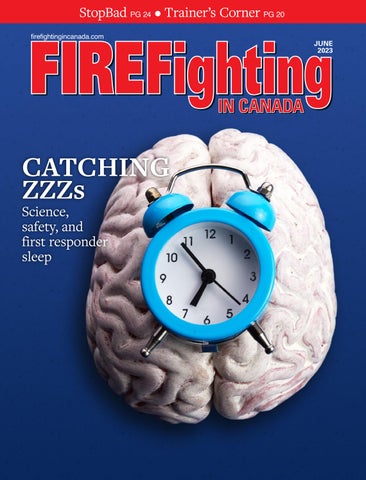

CATCHING ZZZs
Science, safety, and first responder sleep
MOBILE PUMP TESTING CONDUCTED AT YOUR LOCATION BY CERTIFIED
EMERGENCY VEHICLE TECHNICIANS TO NFPA 1911 AVAILABLE ACROSS CANADA. COMMERCIAL EMERGENCY EQUIPMENT
•
•
•
•
•
Sleep
By Julie Fitz-Gerald
New report on First Nations fire data reveals
By Len Garis and Mandy
Desautels.
26 DO YOU MAINTAIN YOUR TI?
Troubleshooting and tips for keeping your thermal imager in proper working order.
By Manfred Kihn


BY LAURA AIKEN Editor laiken@annexbusinessmedia.com
S
COMMENT
The sleep games
leep. How can something so essential be so darn elusive? And, why is it one of the easiest things to forego when we need to squeeze more time out of a day? How long can we go without it?
In 1963, 17-year-old Randy Gardner set a world record for staying awake a whopping 11 days and 25 minutes. The Guinness Book of World Records later got rid of the category. It was too dangerous, cited an article on sleep by the Cleveland Clinic, a non-profit academic medical centre. The same article paralleled 24 hours without sleep as comparably physically impaired to a blood alcohol content of 0.1 per cent (the legal limit in Canada is 0.08). After 36 hours, the internal chaos becomes severe: hormone imbalances, slowed metabolism, mood swings, and appetite and body temperature fluctuations. At 72 hours, you’re basically looking at a form of torture used around the world. These are acute short-term effects that will be resolved once you do sleep. Chronic sleep deprivation, defined as lack of sleep for three months or more, is another story. That raises your risk of Type 2 diabetes, a weakened immune system, high blood pressure, stroke, cardiac event, and depression, along with other maladies.

patterns in a 24-hour period that humans have adapted to. Biphasic sleep is a pattern where you sleep in two main sections of the day/night instead of one. Biphasic has been theorized to have been the norm in the pre-industrial era of natural light only. It is thought people would sleep for several hours at the onset of dark, wake around midnight, tend to duties, then go back to sleep for a second phase. Biphasic sleep was common in cultures around the world. It seems counter-intuitive in modern dialogue to break up sleep this way, but research into the pros and cons continues.
ESTABLISHED 1957 JUNE 2023 VOL. 67 NO. 4
Reader Service
Print and digital subscription inquiries or changes, please contact Angelita Potal, Customer Service Tel: (416) 510-5113 Fax: (416) 510-6875 Email: apotal@annexbusinessmedia.com Mail: 111 Gordon Baker Rd., Suite 400, Toronto, ON M2H 3R1
EDITOR LAURA AIKEN laiken@annexbusinessmedia.com 416-522-1595
ASSOCIATE EDITOR ELENA DE LUIGI edeluigi@annexbusinessmedia.com 416-510-5143
PUBLISHER ADAM SZPAKOWSKI aszpakowski@annexbusinessmedia.com 289-221-6605
ACCOUNT COORDINATOR CATHERINE GILES cgiles@annexbusinessmedia.com 416-510-5232
BRAND MANAGER PAULA INGLIS pinglis@annexbusinessmedia.com 437.774.7961
AUDIENCE DEVELOPMENT MANAGER BEATA OLECHNOWICZ bolechnowicz@annexbusinessmedia.com 416-510-5182
MEDIA DESIGNER EMILY SUN esun@annexbusinessmedia.com
GROUP PUBLISHER PAUL GROSSINGER fire@annexbusinessmedia.com
Find yourself staring at the clock trying to sleep?
Turn to page 10 for tips on implementing good sleep habits.
Sleep is a fascinating and frustrating facet of our lives. In offering an article in this edition on sleep research and strategies for better sleep, we make no claim to easy answers; simply a refresher and invitation to self-reflect on the current state of your sleep. How well we sleep is like water in a well, rising and falling with the changes of our life. Sometimes the influences are out of our control and sometimes we are the catalyst for short-shrifting ourselves of it. No matter the circumstance, thinking about how good it feels to wake up rested and refreshed — and what a difference it makes to our mood and performance that day — is always a good reminder to pay attention to the quality of our sleep.
PRESIDENT/COO SCOTT JAMIESON sjamieson@annexbusinessmedia.com
PUBLICATION MAIL AGREEMENT #40065710 RETURN UNDELIVERABLE CANADIAN ADDRESSES TO CIRCULATION DEPT.
P.O. Box 530, SIMCOE, ON N3Y 4N5 e-mail: subscribe@firefightingincanada.com Printed in Canada ISSN 0015–2595
Now, we all know we’re not supposed to skip out on sleep on purpose (though doing so is often a crutch to more time for the busy). Trying to sleep and being unable to is the flip side; one experienced by many in the fire service adapting to the disruptions caused by shift work, calls in the night and stress. Sleep is not straightforward either. There are different

SUBSCRIPTION RATES
Canada – 1 Year - $25.50 (GST - #867172652RT0001) USA – 1 Year $58.50 (CDN)
Annex Privacy Officer Privacy@annexbusinessmedia.com Tel: 800-668-2374
Occasionally, Fire Fighting in Canada will mail information on behalf of industry-related groups whose products and services we believe may be of interest to you. If you prefer not to receive this information, please contact our circulation department in any of the four ways listed above.
No part of the editorial content of this publication may be reprinted without the publisher’s written permission ©2023 Annex Business Media. All rights reserved. Opinions expressed in this magazine are not necessarily those of the editor or the publisher. No liability is assumed for errors or omissions.
All advertising is subject to the publisher’s approval. Such approval does not imply any endorsement of the products or services advertised. Publisher reserves the right to refuse advertising that does not meet the standards of the publication. www.firefightingincanada.com
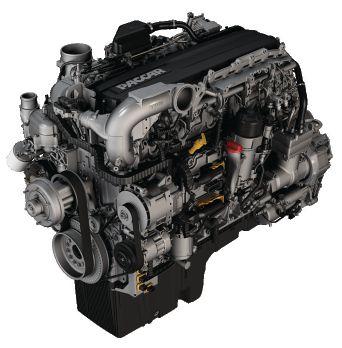
PIERCE + PACCAR MX-13
YOU GO THE DISTANCE FOR EACH PERSON YOU SERVE. SO SHOULD YOUR ENGINE. THE PROVEN PERFORMANCE OF THE PACCAR MX-13 ENGINE BRINGS MORE POWER AND PUNCH TO THE FIGHT, WITHOUT TAKING MORE ENERGY OR EFFORT FROM YOU. - EXTENDED SERVICE & MAINTENANCE INTERVALS - EXCEPTIONAL OUT-OF-THE-GATE RESPONSE - OPTIMIZED FUEL ECONOMY
EXCLUSIVE PERFORMANCE FOR ENFORCER ™ AND VELOCITY ® CUSTOM CHASSIS.
piercemfg.com/paccar
STATIONtoSTATION
ACROSS CANADA:
Regional news briefs
Firefighters question Alberta cuts to aerial attack teams as province battles blazes
Former members of an elite Alberta wildfire-fighting crew say government budget cuts have left the province battling its current blazes short-handed.
“We could have been difference-makers,” said Jordan Erlandson, a former member of Alberta’s Rapattack team.
Those firefighters were trained to rappel from helicopters to get at wildfires while they still only covered a few hectares. When one storm sparked several fires, they could extinguish them before they merged. They also cleared landing spaces for other helicopters to bring in crews and gear.
That program once had 63 firefighters stationed around the province, including at Edson, Fox Creek and Lac La Biche – communities now threatened by one of the busiest early fire seasons in provincial history.
But that program was cut in 2019 by the United Conservatives.
“They told us the program had been eliminated,” said former member Adam Clyne. “They just said budget.”
The saving was $1.4 million. The province’s wildfire budget for 2019 was about $117 million.
At the time, Devin Dreeshen, then minister of agriculture and forestry, said those firefighters spend only two per cent of the time rappelling from helicopters, and spend the rest of the time fighting wildfires on the ground. That figure is based on the number of times rappelling skills were used in the average of more than 1,400 fires in Alberta from 2014 to 2018.
Dreeshen said at that time those figures suggest the rapattackers’ skills are better used from the ground.
However, documents obtained under Freedom of Information legislation and supplied to The Canadian Press suggest Dreeshen underplayed the importance of an aerial attack.
THE FIRE HALL BULLETIN
Promotions and
appointments
The District of Sooke in British Columbia hired WAYNE KENNEDY as its new deputy fire chief and emergency program manager. With more than 26 years of experience in fire services, Kennedy began his career in 1997 with the District of North Vancouver Fire and Rescue
Service. He was promoted to assistant chief of operations in 2009 and then deputy fire chief of operations in 2013.

DAVE SPEED is the new fire chief and director of emergency and fire services in Clarington, Ont. He began his career in emergency services in 1995 with Markham
Those documents, from internal government communications, suggest that rappel crews were called out about 100 times annually between 2014 and 2018. They were forced to actually rappel into a fire about 23 times a year.
“This is an assessment of wildfires that rappel crews were deployed to that there were no other feasible means of getting to,” said one email from a government forester.
Government spokeswoman Leanne Niblock said Alberta has other ways to get at remote fires, including exiting a hovering helicopter and walking in from the nearest road.
“We continue to do all we can to fight these fires, and keep Albertans and their property and homes safe,” she said in an email.
Alberta had initially planned to replace the Rapattack crews by dangling firefighters beneath flying helicopters and depositing them at the fire site. Transport Canada blocked that plan, saying it was too dangerous.
The Alberta documents acknowledge that beating through the bush to get to hot spots and clear landing pads would cost time.
“These activities can be performed by other trained crews by landing or driving to a nearby spot and driving in,” says a note from a government forester. “Clearly this will take additional time.”
Erlandson pointed out rappel crews sometimes jump many times into the same fire as part of a large campaign. He estimates teams jumped up 20 times per fire and probably closer to 100 times on the fire that levelled parts of Fort McMurray in 2016.
As well, rappelling in remains one of the fastest and safest ways to get into thick bush, muskeg and dense forest. It also allows firefighters to get right to work instead of slogging overland with heavy equipment. – Bob Weber, Canadian Press, first published May 9
Fire and Emergency Services and joined Whitby as that town’s chief fire prevention officer in 2006.
MIKE HICKEY is the new fire chief in Whitby, Ont. With more than 24 years of experience with Whitby Fire, Hickey was promoted to deputy fire chief in March 2021, and has served as acting fire chief for several months over the past year.
BRADLEY MILTON is the new fire chief for The Edson Fire Department in Alberta. He has nearly 20 years of experience in emergency services and spent many years as a Canadian Forces Firefighter in Edmonton, Cold Lake, Alta., Halifax, and Trenton, Ont.
Annual OAFC conference and trade show rings in May
The Ontario Association of Fire Chiefs (OAFC) held its annual conference and trade show from May 4 to 6 at the International Centre. Over 300 people attended, and more than 160 booths spanned the 200,000 sq. ft. trade show floor.
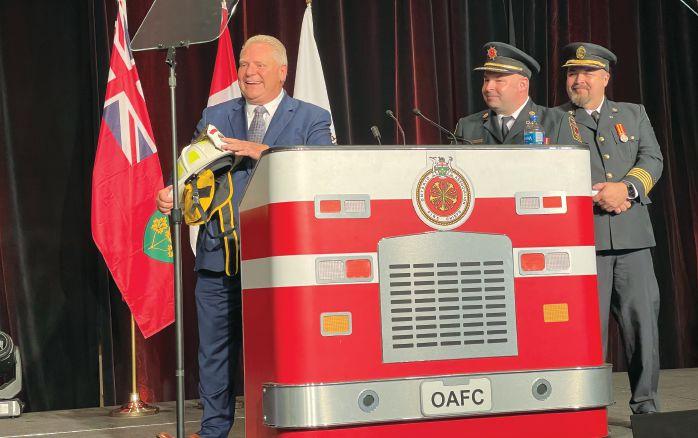
Ontario Premier Doug Ford made a special appearance on May 5 to present his government’s efforts in support of the provincial fire service on multiple fronts, and spent time walking the trade show floor to meet with exhibitors and attendees. The OAFC presented Premier Ford with a white helmet and challenge coin as the association and provincial government continue to strengthen their relationship.
Premier Ford’s message to the fire chiefs recapped the progress made in instituting mandatory certification for the safety of all firefighters in the province, expanded pancreatic and thyroid cancer coverage that is retroactive to 1960, support measures for local fire departments providing services on crown land, $208 million in funding for Next Gen 9-1-1, and $9.6 million for the Runnymede First Responders Wellness Centre.
For the conference portion, hot topics included lithium-ion batteries, First Nations sacred/ceremonial fires, the provincial transition to MPDS and simultaneous notification systems for medical calls, supply chain and purchasing tips, and recruitment strategies.
Friday’s keynote, sponsored by the Canadian Automatic Sprinkler Association (CASA), was Adam Timm, consultant and founder of The Healthy Dispatcher. He was a 911 operator, dispatcher and trainer for the Los Angeles Police Department for 10 years. His talk focused on leadership and the cycle
Retirements
Fire Chief JOHN KLIE retired After 48 years of service. Klie started his career in Kitimat, B.C. in 1975, and spent 36 years there before moving to Terrace, B.C. in 2011.
In Nova Scotia, Cape Breton Regional Fire & Emergency Service’s Deputy Fire Chief
PHOTO BY ELENA DE LUIGI
of dissatisfaction that can occur within the membership. The next generation is looking for a feeling or “vibe” in their workplace, he said. Timm posed the question: What story does your agency tell?
He defined leadership as the capacity to translate vision into reality, and ended his presentation with these tips to be part of the changes you’d like to see: set expectations, invite commitment, measure progress, provide feedback, link to consequences and evaluate effectiveness.
On Saturday, former NHL goalie Corey Hirsch shared his journey with OCD, depression and anxiety. Hirsch is an Olympic silver medalist who was the goaltender for Canada in the 1994 Olympics, and recounted the moment Peter Forsberg evaded him in a
GILBERT MACINTYRE retired
April 1. Deputy MacIntyre retired after 34 years of service, the last 12 as deputy chief for the Sydney Fire Department.
Deputy Fire Chief PAT ROWE retired after 40 years of service with the Fort Simpson Volunteer Fire and Ambulance Department in the Northwest Territories. He became chief in the early 1990s
shoot-out to give Sweden the gold. Hirsch’s struggles with mental health came at a time when there was a lot of stigma, particularly in the locker room of professional hockey. This keynote was sponsored by U.A. Local 853 Sprinkler Fitters Ontario.
The Awards Banquet, sponsored by A.J. Stone, recognized several outstanding chiefs. The Alf Stone award went to Bracebridge Fire Chief Murray Medley. The OAFC-VFIS Volunteer Firefighter Recruitment and Retention Award was given to Jay Plato, fire chief for Niagara-on-the-Lake. The Bill Williams Humanitarian Award went to Deputy Chief Richard ‘Rick’ Caddick, Quinte West Fire Rescue. Jana Gillis also received a special President’s Award for her many years of service.
and was the chief for nearly 20 years before stepping back to the deputy chief role in 2013 due to a battle with brain cancer.
Deputy Fire Chief JEFF ADAMS retired. He began his career as an auxiliary firefighter in 1994 with the Abbotsford Fire Rescue Service in British Columbia before joining the career ranks six years later.
Last Alarm
Prince Edward County (Ret.) Fire Chief GEORGE PETTINGILL passed away in April. He began his fire fighting career as a volunteer in 1979. In 1998, he was appointed the first fire chief in Prince Edward County. He retired in 2006.
Doug Ford receives his white helmet as he stands alongside OAFC president Deputy Chief Rob Grimwood (L) and vice president Fire Chief Jeremy Parkin.
STATIONtoSTATION
BRIGADE NEWS: From departments across Canada
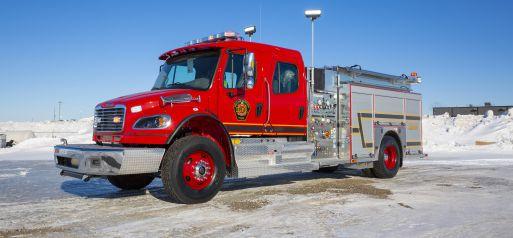
Wakaw/Hoodoo Fire and Rescue in Saskatchewan has taken delivery of an MXV pumper from Fort Garry Fire Trucks. Manufactured on a Freightliner chassis with a stainless steel Waterous PTO CSPA 1250 pump, this vehicle features a Cummins LP 330 HP engine, Allison 3000 EVS transmission, Whelen emergency and scene light package, Waterous Aquis 1.5 Class A foam system, Xantrex 12V 3000 inverter, Amdor roll-up doors and a CoPoly 800 IG tank.
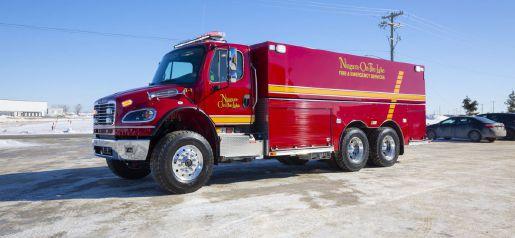
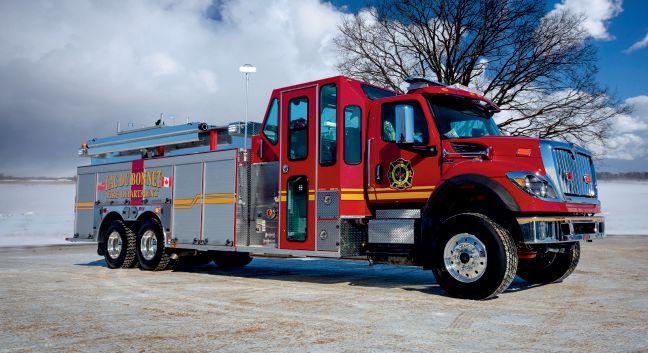
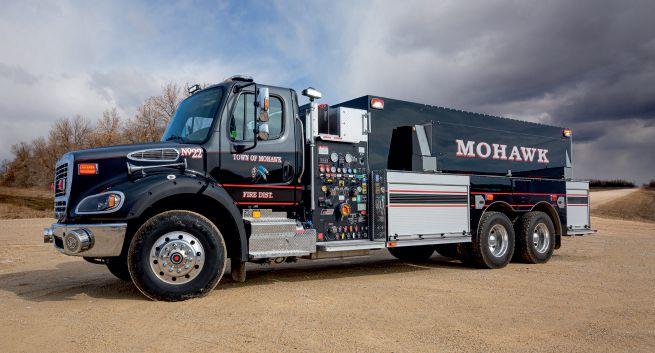
Niagara-on-the-Lake Fire & Emergency Services in Ontario took delivery of a fire tanker from Fort Garry Fire Trucks. Manufactured on a Freightliner chassis with a CET PFP-20HPHND-1D pump, features include a Whelen dynamic variable intensity night time mode with optional sync, Fireman Friend external tank fill, Zico hydraulic and a portatank rack with an aluminum painted cover.
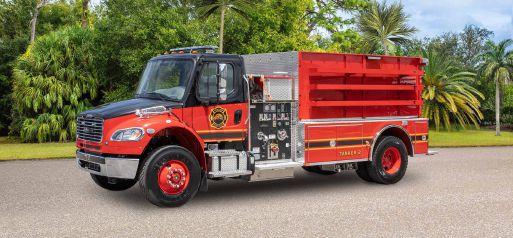
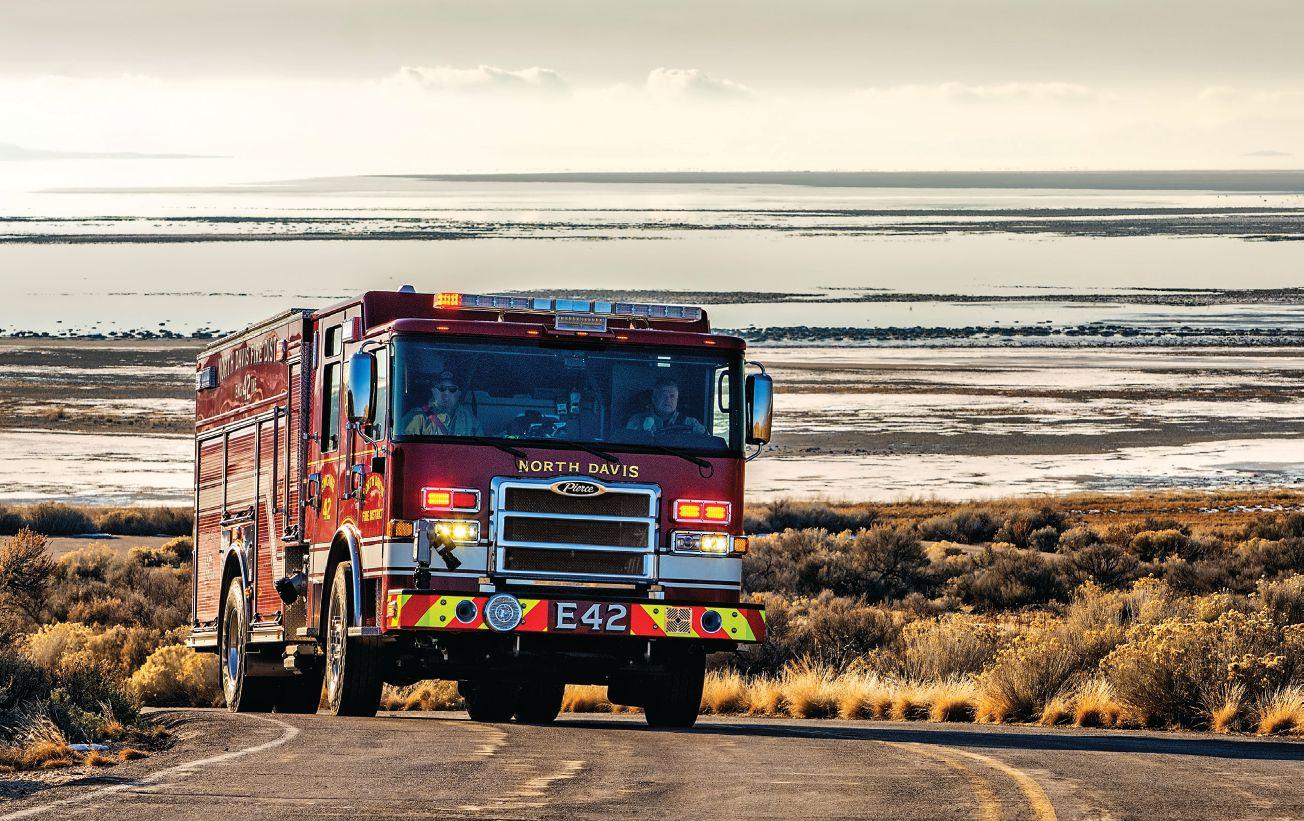
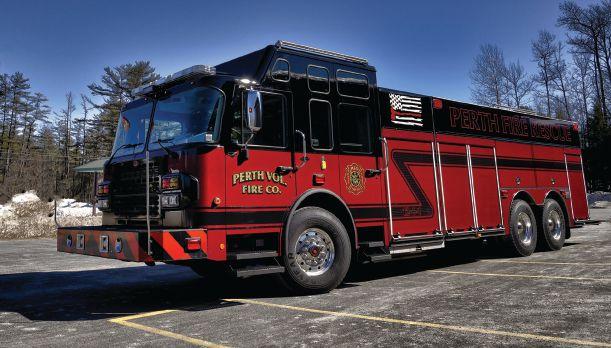
French River Fire Department in Ontario took delivery of a dry side tanker from Commercial Emergency Equipment. Manufactured on a Pierce Freightliner chassis with a Hale 500 GPM midship pump, this vehicle features a Cummins L9 330 HP engine, and a hard-wired electrical system.
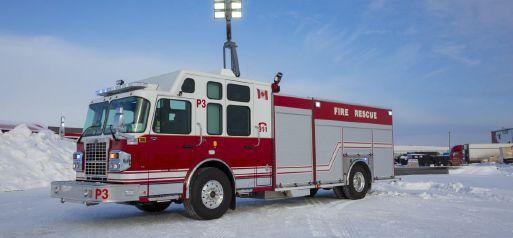
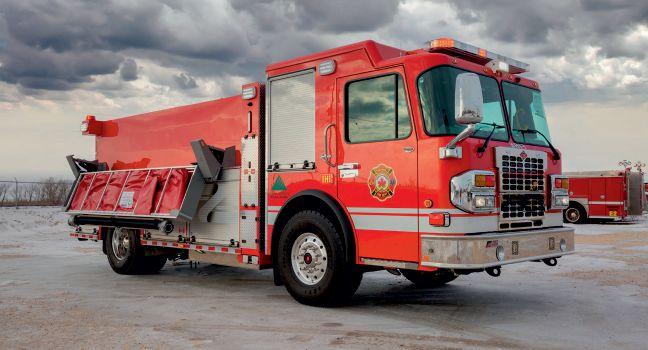
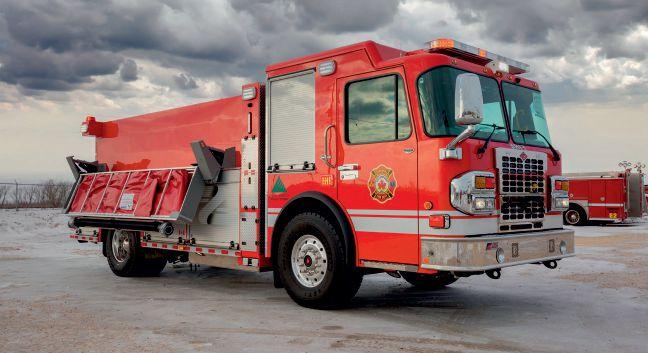
Cornwall Fire Service in Ontario took delivery of an emergency rescue pumper from Fort Garry Fire Trucks. Manufactured on a Spartan Metro Star chassis with a Hale QFLO 1250 pump, features include a Whelen emergency and scene light package, Command Light KL-415D- CH, Amdor roll up doors, FGFT hard hose bed covers, coffin boxes, a back-up camera, SlideMaster roll-out and tip down trays, and FGFT pull out tool boards.
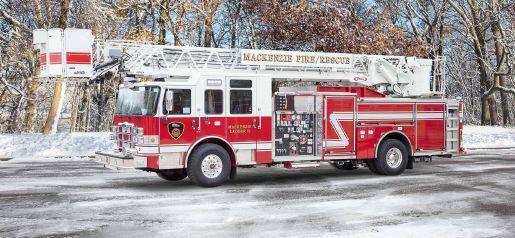
The District of Mackenzie Fire Rescue Department in British Columbia has taken delivery of an emergency rescue vehicle from Commercial Emergency Equipment. Manufactured on a Pierce Enforcer chassis with a Waterous 2000 GPM midship pump, this vehicle features a heavy-duty aerial platform body, 450hp, a Husky 12 foam system, TAK-4 independent front suspension and a 500-gallon tank.
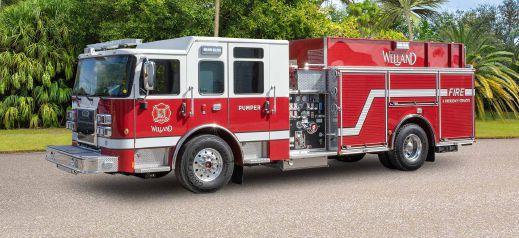
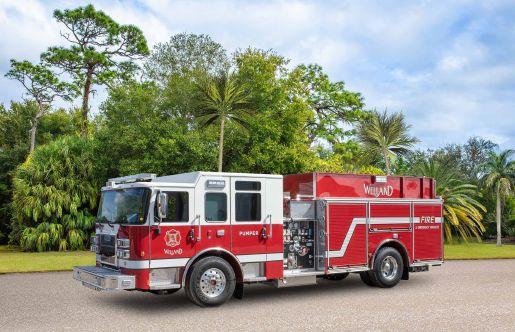
Welland Fire & Emergency Services in Ontario has taken delivery of a pumper from Commercial Emergency Equipment. Manufactured on a Pierce Saber chassis with a Waterous 1500 GPM midship pump, this vehicle features Cummins L9 450 HP engine, a hard wired electrical system, Husky 3 foam system, Leaf front suspension, spring rear suspension, and a 1000-gallon tank.
NIAGARA-ON-THE-LAKE FIRE & EMERGENCY SERVICES
WAKAW/HOODOO FIRE AND RESCUE
FRENCH RIVER FIRE DEPARTMENT
CORNWALL FIRE SERVICE
DISTRICT OF MACKENZIE FIRE RESCUE DEPARTMENT
WELLAND FIRE & EMERGENCY SERVICES









Catching ZZZs
Sleep disorders and what you can do about it
By JULIE FITZ-GERALD
Chasing sleep – many first responders find themselves on this frustrating hamster wheel and are desperately looking for the exit. A shift finishes up, they drive home and attempt to wind down, only to lay in bed staring at the ceiling.
Getting a restful sleep can be complicated for a whole host of reasons, as a study in the Journal of Global Health (JGH) reported in October 2022. In the study, Prevalence of Sleep Disorders Among First Responders for Medical Emergencies: A Meta-analysis, the authors searched four research databases (Web of Science, Psych Info, CINAHL and PubMed) and ultimately focused on 28 studies that included 100,080 first responders. Interestingly, the JGH study represents the first meta-analysis used to explore and estimate the prevalence of sleep disorders among first responders for medical emergencies – and the findings are telling.
The report’s conclusions paint a picture that many first responders know all too well. It found “a substantially high prevalence of sleep disorders including SWD (shift work disorder), OSA (obstructive sleep apnea), insomnia, and EDS (excessive daytime sleepiness) among first responders for medical emergencies.” The results showed that prevalence rates for sleep disorders among the 100,080 first responders in the study were 31 per cent for SWD, 30 per cent for OSA, 28 per cent for insomnia, 28 per cent for EDS, two per cent for restless leg syndrome and one per cent for narcolepsy. Moreover, the study found that anxiety, cardiovascular disease (CVD), diabetes mellitus (DM), depression, gastroesophageal reflux disorder (GERD) and post-traumatic stress disorder (PTSD) were all associated with OSA.
The study’s authors recommend that “early assessment and management of sleep disorders among first responders is necessary to promote good, quality sleep to help prevent anxiety, depression, CVD, DM, GERD, and PTSD.”
Beverley David, founder of Your Psychology Centre in Uxbridge, Ont., has dedicated much of her career to understanding how sleep disorders and sleep disruptions affect people. David holds a doctorate in sleep research (insomnia) from Loughborough University in the United Kingdom, where she developed and delivered the Sleep Management in Primary Care and the advance Supervision of Sleep Management in Primary Care curriculum. David also co-authored Cognitive Behavioural Therapy for Insomnia (CBT-I) self-help booklets and was the principal researcher for a randomised control trial looking at the efficacy and

effectiveness of self-help CBT-I. Suffice it to say, she is an expert in addressing sleep issues and sleep management.
She explains that the reason why first responders are prone to sleep disorders is multi-faceted and the impacts are wide-ranging, including biological, psychological and social. “First, there’s going to be shift work and that can impede their sleep. Then there’s the job – there’s often trauma that makes it hard to leave work behind and that’s going to interfere with sleep. Unfortunately, when you put those two things together – poor sleep and the vocation – it can lead to more drug and alcohol dependency, which then further impacts our sleep. Once we’re in that spot, then our decision-making is affected,” David said.
She notes that sleep is important for our prefrontal cortex, which is in charge of executive functioning. “Planning, timetabling, impulse control – deciding whether you’re going to work out, deciding whether you’re going to have a drink, deciding if you’re going to go to the party or stay home. Wellness starts to be impacted (the timing of our food, the timing of our choices) and once that goes out of synch, it affects our body’s clock, because it all relies on that circadian rhythm. It’s a very multi-faceted problem.”
Once a person is in this cascade of compounding sleep issues, the impacts can become widespread. “When executive functioning is impacted, we will be more impatient, more irritable. There’s a greater report in mood disorder, anxiety, depression, feeling scattered and our relationships will suffer. There are cardiovascular implications and metabolic implications with glucose control which often makes us gain weight. Then there are social impacts. Our relationships are impacted. Are we going out and socializing? Are we spending time with the kids and family? The answer is probably no and that’s a massive protective
Shift work, trauma and drug or alcohol use are all common factors in sleep difficulties for first responders.

factor,” David explains.
The ripple effects are far-reaching, usually showing up on the job. David notes that the firefighters she sees often report that they feel sleepy, fatigued, lack energy and have trouble making quick decisions. All of these can hinder a firefighter’s performance when out on a call or performing duties at the station. Fortunately, she said there is plenty that firefighters can do to improve their sleep, with the first step being education. “They have to believe that sleep is pivotal to their wellness, and they need to prioritize it. For a lot of us, it’s the first thing we sacrifice, and we have to move away from that,” she said.
STRATEGIES FOR BETTER SLEEP
David suggests that getting family members on board is a crucial step to improving sleep patterns, especially when coming off of shiftwork. She said hanging a “Do Not Disturb” sign on the door can be a good reminder for everyone in the house. Soundproofing the bedroom is another tactic that works well, in addition to keeping the room dark by using blackout curtains, ensuring the air is cool and using an eye mask and earplugs. David explains that when coming home in the morning after working a night shift, it’s important to mimic a nighttime routine. Wear sunglasses on the drive to limit your sunlight exposure and when you arrive home, begin a wind-down routine, eat something light and pay attention to your sleep cues (like yawning, tired eyes) to follow restfulness to sleep.
Being aware of shift patterns and avoiding overtime shifts that will throw off your established schedule is another strategy David encourages. She notes that too many rotations can create the feeling of jet lag and really set you back.
“Keep an eye on your psychology. Ask yourself, ‘Am I getting enough time to myself? Do I have enough joy? How’s my anxiety? Am I moving and eating and sleeping well?’ Don’t miss out on the things that give you quality of life.”
Perhaps one of the most effective strategies to combat sleep issues is a well-timed nap. “The nap is very powerful,” said David. She notes that setting an alarm for 20 minutes and seeing if you wake up feeling rested or groggy can help determine how long you should nap for. “You want to find that sweet spot. If you practice napping, you become good at it. Olympic athletes are good at sleeping on the go, taking that power nap and then waking up feeling super-charged. If there’s a
time in your work shift where you’ve done your station duties, perhaps you can plan a little nap. Have some breakfast, work out and then you’ll be ready. Really, sleep is the only answer to sleep deprivation. Microsleeps are when our bodies take sleep [for seconds rather than minutes] whether we like it or not, and it can cause ‘vacant driving’ and zoning out, which can be very dangerous.”
As for supplementing with melatonin – the hormone that’s primarily responsible for regulating the body’s circadian rhythm to manage natural sleep cycles – David suggests that firefighters first try the behavioural strategies mentioned above. She cautions that taking a melatonin supplement should only be done under the guidance of a doctor due to the various strengths its offered in.
Her final recommendation for firefighters struggling to find restful sleep is to keep a sleep diary. “Record how often you wake up feeling groggy and unsatisfied. Keep track of what your daily function looks like. If you’re struggling to see any change even after adding in these behavioural strategies we’ve talked about, then you should go to your doctor. A sleep study might be needed,” David said.
She notes that severe daytime sleepiness, including the propensity to fall asleep at social events, in the car or when conversing with someone, is something that should be discussed with a doctor.
A firefighter’s job is rife with adrenaline, dealing with traumatic events and making split-second decisions to save lives – day in and day out. Attaining restful sleep is a balancing act to be sure, but it’s one that can be achieved with the right supports and strategies in place.
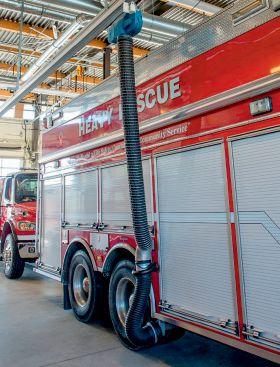
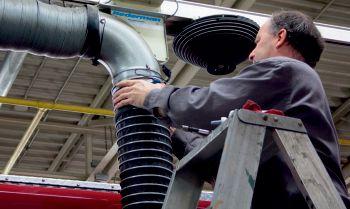
Exhaust Extraction
Factory Trained Technicians

Julie Fitz-Gerald is a freelance writer and author living in Uxbridge, Ont.
BACKtoBASICS
Garage fires, Part 4
By MARK VAN DER FEYST
We have come to the last part of our look at garage fires and the hidden dangers that are associated with them. In our last chapter on this topic, we are going to examine the hidden dangers that exist both below and above the garage.
Let’s look at the dangers that may be lying below the garage. In this area, we have two options that can be found – a full basement or a crawl space. Not many garages will have a crawl space but the few that do will have one for utility purposes. Under the garage floor will be the utilities for the garage such as plumbing lines for water and sewage. There will be an access hatch or panel allowing a person to enter the crawl space for various reasons.
For a full basement under a garage, this will be a unique or custom-built type of garage. A full basement allows the homeowner to use that space for many reasons such as storage, a shop, or for other reasons. Usually there will also be utilities that will be running under the floor of the garage serving the basement and garage area itself. Access to this area will be by stairs inside or outside the garage. With a full basement or a crawl space, the floor of the garage will be or should be strong enough to support the weight of vehicles parked on it. This will most likely be concrete but there have been times where wooden planks are used.
The majority of garages will not have a basement or a crawl space, but the ones that do will be a matter of knowing your response areas and the types of houses that are built therein. This will involve pre-planning when responding to medicals, general assistance calls or carbon monoxide (CO) calls. Sometimes CO calls are the result of a vehicle being started inside a garage and left running. This is when the opportunity to check out the garage is available.
With dangers above the garage, there are a couple of them. The one category is with an apartment or an office space. In Photo 1 you will see an example of a garage with an office space above it – this is based on a home business or a business owner renting this type of building for their specific purpose. With an office space, the “office” type of furniture as well as other business items will be found above the garage, which may lead to significant weight or deadload.
The garage specifically built for a business will hopefully be designed and built for such a purpose, incorporating the required structural components to accommodate this. If this is a retro fit building or a homeowner who converted this into an office above the garage, the required structural components may not be there.
In Photo 2, you will see an example of an apartment or room used for recreational purposes for the homeowner. These are quite popular in many types of residential houses – whether attached or detached. In the photo, we have an example of the garage being attached by a raised walkway from the upper room of the garage to the upper level of the
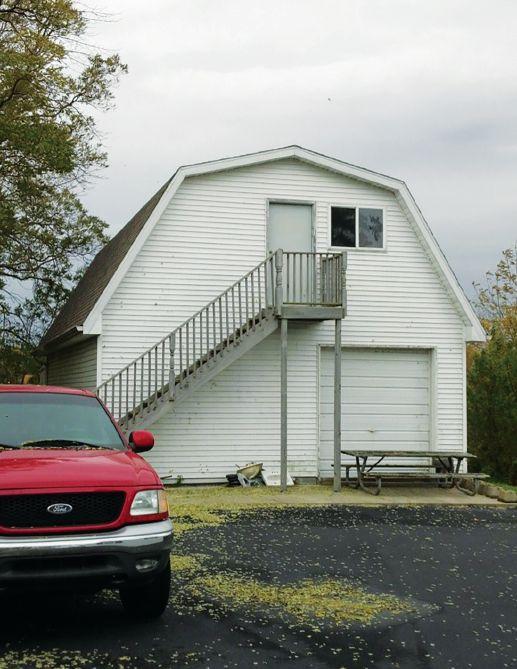
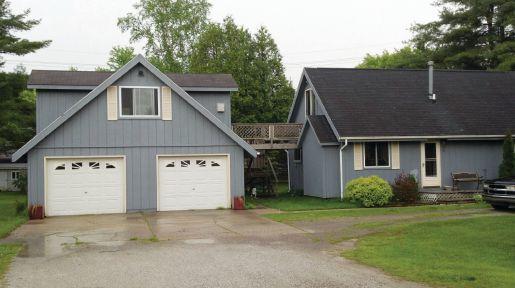
Photo 1: An example of a garage with an office space above it.
PHOTOS BY MARK VAN DER FEYST
Photo 2: An example of an apartment or room used for recreational purposes.

residential house. This may be done for a few reasons, but one to consider is for building code exemption. If the newly built garage is attached to the current existing house, there are exemptions in place that allow the home owner to save money and not have to adhere to current building code requirements because it is a renovation.
The fuel load or deadload of the contents above the garage will be unknown since there will be no limitations as to what can be up there. If this is an apartment, the perspective must be that there is a whole “house” sitting above the garage. Everything that will be in a residential house will be found in the above garage apartment.
So, with a car fire below the apartment, the level of danger of the floor or ceiling supports collapsing will be high, taking into account the deadload sitting above. The opposite is true for an apartment fire. With entry being made to suppress the fire, there is a “basement” that lies below the apartment. This area has to be considered in the tactical approach, and if there is a breach in the apartment floor, the firefighter(s) will fall through to the garage below.
The other danger that may be above the garage will be utility systems. One type is solar panels affixed to the roof. Depending on the type of house and the garage that is either attached or detached, the number of solar panels will be dictated. These can be on all sides of the roof, two sides or just one. For example, on a ranch or bungalow-style house where the roof is common and consistent for both the house and the garage, solar panels can
be affixed to the roof all the way from one end to the other including the garage.
Another utility system that may be found are water heating tubes used for pools. This is where the water from the pool is pumped through the tubes resting on the roof as a way to heat the water up using the sun, then pumping it back into the pool. Usually, these tubes are located on one side where the exposure to the sun is the greatest.
As you drive around the response district
garages are located within the area and what dangers you can identify that are readily visible to you. You may be surprised as to what you will find.
Mark van der Feyst has been in the fire service since 1999 and is currently a firefighter with the FGFD. Mark is an international instructor teaching in Canada, U.S. FDIC and India. He is the lead author of Fire Engineering’s Residential Fire Rescue & Tactical Firefighter books. Contact him


Photo 3: An example of a garage with solar panels affixed to the roof.
BY CHRIS HARROW Director of Fire Services
Town of Minto and Township of Wellington North, Ontario
TLEADERSHIPFORUM
Self-care and generating positive thoughts
here have been many articles written on self-care and the importance of leaders ensuring they are taking care of themselves first and foremost. I have always shied away from writing an article on this topic because of the repetitive nature of so many previous articles. But I have also avoided writing about it because self-care was something I always avoided and did not want to take seriously. Maybe because of old age, or from observations I have made from the staff I inherited in my role as interim CAO, but I genuinely believe that self-care is an important issue we leaders need to make a priority and become really good at.
Experts have harped on it for years: How can you take care of the others on your team if you don’t take care of yourself? We all know it is true. Even the best debaters can’t argue against this. However, why can’t we convince ourselves to make this a priority and start taking of ourselves first? Is it because it is too hard to schedule time for yourself and start an exercise program or better eating habits? If this was a new fire fighting skill, we as an industry would be all over it and wouldn’t stop until we had become really good at it. We would form teams on our department to purchase the right equipment and research the best teaching methods on how to master the new skill. Would the same tactics not work for teaching everyone about self-care and how to learn the skills needed to become better at it?
It is very hard for most people to be self-reflective and dig deep inside their own lifestyles to come up with ways to help. It is not in our nature as leaders to be greedy and take time for ourselves to look after our mind and body. We are too busy working extra hours and striving to make it easier for those around us to function. For a lot of people, it is uncomfortable to be self-critical and make appropriate changes that could help improve themselves. But striving to be healthy and energetic each day is the one controllable factor we can change to prepare ourselves to face these enormous issues every day.
won’t dwell on them. Everyone knows what they have to do to change their lifestyles to improve their health in different ways.
The portion of the seminar that really resonated with me had to do with another one of the five ways — create positive thoughts. The leader of the seminar spoke about how it is natural for our brains to always go to a negative thought automatically. The brain remembers negative events much easier than it does positive thoughts. A brain that has suffered through a negative event will always be on the look out for that event to occur again, so it will be hypervigilant to be ready for another occurrence. It takes genuine effort to override the thought and make it a positive thought.
I talked afterwards with various staff and that portion resonated with them. They consciously tried to think of a positive event that had occurred recently with them (within the past 24 hours) and it was way harder to think of one. They could come up with many negative events right off the top of their heads. It was a very unscientific method of proving what we had just learnt. It takes a concerted effort to override the brain’s tendency to defer to the negative side.
This newfound knowledge has shown me that changing your outlook
‘‘ ’’
The brain remembers negative events much easier than it does positive thoughts.
I recently took a “lunch and learn” about resiliency and how to take care of yourself to become more resilient. The speaker talked about five ways to help you be resilient and make you become more in control of your mind and body. Self-care was a large component of being resilient. We talked about the usual methods of self-care, like getting more sleep, more exercise and eating better. I could write about these for a while, but
Chris Harrow is the director of fire services for the Town of Minto and Township of Wellington North in Ontario. He is a graduate from fire programs at Lakeland College and Dalhousie University and holds a graduate certificate in Advanced Care Paramedics from Conestoga College. He can be reached at c.harrow@mintofiredept.on.ca.
on life and certain situations can be as difficult as starting a new diet or an exercise program to lose weight. It seems pretty easy on the surface to find the positive in each situation, but in fact it is a difficult to skill to master. Every leader should take the time to learn more about the ways to train your brain to allow positivity to override the negativity.
I know that another article telling you to ensure you take care of yourself before you ever endeavour to take care of others is extremely redundant. But if you just take an hour here and there to familiarize yourself with different self-care methods and ideas, you will be pleasantly surprised how easy you can come up with something that will work for you. Self-care is the one thing in life that is guaranteed to improve you and how you feel about yourself. Not many other things can have that guarantee. You wouldn’t hesitate to encourage your firefighters to do it, so why not you?














BY LAURA KING
NFPA Regional Director Canada
ASteps to Safety reduces risk for older adults
re there older adults in your community who are at risk of falls and fires?
Of course, there are. In fact, in a few years, even the youngest baby boomers will be 65 and at a higher risk than younger people of dying in a fire or ending up in long-term care after slipping in the bathroom.
The good news is that baby boomers are a healthier generation than their parents and grandparents – is 70 is the new 50? – and therefore are likely to live longer than their ancestors. But with age – even healthy aging – comes challenges, including mobility, an abundance of outdated belongings, inside and outdoor maintenance, cognitive ability, and the effects of medication.
Remarkably, the number of older adults in Canada is expected to double to 11 million by 2042.
The anticipated increase in the population of older adults and the corresponding risk data are jarring. According to the NFPA, StatsCan, and a 2019 study by Len Garis and colleagues at the University of the Fraser Valley, adults 65 and older are 2.5 times more likely to die in a structure fire than their younger counterparts. People 85 and older are 3.4 times more likely to perish in a fire, and fire fatalities among older adults are likely to increase to between 90 and 140 in the next 25 years, from an average of 50 a year today.
Why is this important to fire departments?
Lift assists. Falls with injury. Unattended cooking. The effects of medication on balance, cognition, and alertness. Maintaining and testing smoke alarms. Being able to hear smoke alarms. Having a home fire escape plan. Knowing how to shelter in place. Keeping exits clear of belongings.
A fall can lead to fear of another fall, which causes people to stay home, move less and lose the ability to clean and maintain their homes, thereby creating fall hazards and increasing fuel load.
implement other fire and fall-prevention measures. Partnerships with agencies and organizations that work with or support older adults – such as Meals on Wheels and local seniors’ centres or clubs – are critical to the success of Steps to Safety.
According to the 2019 University of the Fraser Valley study Fire Risk in Senior Population, fire departments and community partners must redouble efforts to ensure older adults who live at home are equipped with working smoke alarms on every level of their homes, outside all sleeping areas, and in all bedrooms.
“Without a focused effort to ensure senior residents have the appropriate operational safety equipment,” the study says, “the annual fire-related death rate of seniors is expected to climb to between 90 and 140 fatalities in the next 25 years.”
Installing working smoke alarms according to NFPA and Canadian codes will reduce fatalities, the study says.
“A reduction of fire fatalities among seniors is expected if those seniors are in 100% compliance of having a working smoke alarm. With this assumption, the expected fire-related deaths could be reduced to be between 60 and 90 fatalities per year in the next 25 years.”
NFPA’s new Steps to Safety program reinforces independence, collaboration, engagement, and empowerment. ‘‘ ’’
In Canada, 95 per cent of older adults live independently, and most want to, but support is necessary to ensure safety.
The NFPA’s new Steps to Safety Prevent Fire and Falls at Home program reinforces independence, collaboration, engagement, and empowerment. An online training module at www.nfpa.org/stepstosafety and other free-to-download resources provide fire departments and community partners with tools to help older adults live safely.
It’s almost impossible for fire departments to reach older adults who live at home to ensure they have working smoke alarms, cook safely, and
Laura King is the NFPA regional director for Canada. Contact her at lking@ nfpa.org.
The study also recommends that policy makers should improve access to working smoke alarms by providing them as a part of public health care coverage and services.
Steps to Safety includes videos, fall and fire-prevention messages, group presentations and PowerPoints, a turnkey toolkit for program providers, and the online learning module.
To reinforce the training and bring together fire departments and community organizations, I’m happy to conduct Steps to Safety sessions in your community.
BY JOHN LIADIS Fire Chief Clearwater County, Alberta
TGenerational change in the fire service
oday’s fire service looks a little different than from when most of us started, specifically around the ages of officers within the service. Observations of many emergency services, from fire to police and EMS, suggest that the supervisors, captains and chiefs are younger than those who typically assumed those roles in the past.
Leadership can come in all different types of packages in today’s modern service. If we take a moment and look at the topic from a 30,000-foot approach, we can see that leadership starts from the bottom up and top down. This holds true if we are doing our jobs correctly, no matter what colour your helmet is or how many bars are on your epaulets. We are seeing a wide range of membership who have entered the fire service across the country, with individuals ranging from their late twenties to forties and more, sometimes. So, if you’re a baby boomer, generation X or generation Y/millennial, you may work alongside one of the others in this category that may be a leader in your department.
The times of seniority being one of the main qualifications, or only qualifications, required to fulfill a position of leadership or a chief officer role has changed in today’s service model. If we look at Alberta’s Occupational Health & Safety Act, the definition of a competent person is “competent” in relation to being adequately qualified, suitably trained and with sufficient experience to safely perform work without supervision or with only a minimal degree of supervision (Chapter O-2.2, s. 1). This may vary from province to province, but human resource teams and recruiting agencies have factored that into the application process and each department has their own specific needs and wants when it comes to hiring chief officer staff. This is where we start to see a younger demographic come into many new leadership positions because of specific background in the service and life experience.
nity. Understanding that as a major focus point, it is evident the best leaders are those who have built strong relationships within the service and outside of it. Networking, personal growth and professional growth are all attributes these leaders must posses, and it is an ever-learning journey. Just because your classified as a leader doesn’t always mean you’re a leader. You must always ask yourself the question: “Would I want to work for me?” Becoming proficient in having a positive leadership style in where you’re always learning and truly listening to your firefighters in your service and acting accordingly on best practice and industry standards is important. Technology and training today have changed and progressed leaps and bounds from years past. This has allowed for so much growth in the fire service in a very positive way. Social media is a huge contributor to that. Being able to jump on Facebook or Instagram and see the latest trends and techniques for operations driven tactics is one area of rapid growth. There are also so many leadership and professional development style courses and programs out there that are allowing the younger officers to be able to grow and add to their mental toolbox. Being able to be brought up “old school” and taught “new school” is almost the best of both worlds if you can harness both perspectives.
Without a doubt, experience is still key, but it needs to be supported by education, training, and credentials for the individual to be deemed competent. ‘‘ ’’
Without a doubt, experience is still key, but it needs to be supported by education, training, and credentials for the individual to be deemed competent. This goes the same way for us all when we get onto the job as rookie recruits. Training proves basic skills, but competency is proven with years of experience and a reputation that has been earned. This is a firm belief of mine. With that being said, what makes a strong leader?
After many conversations with other firefighters and officers across the country, one of the most common themes is having a chief officer who has the best interest of the firefighters at heart. A person the team trusts to go to bat for them and represent what’s right for the department and commu-
With almost 20 years in emergency services, Chief John Liadis and his team currently lead a progressive composite department in Central Alberta
Today’s generation of officers are a being built quickly as times are changing. With retirement being a major factor, the baby boomers and even some of the generation before are reaching an age in where retirement has happened or about to happen. This is a factor in both the paid-on call and career fire services across the country. For a modern fire service to operate today, it takes a team of people that have a diverse skill set and a chief who has a mix of skills, experience, and education to lead that department into the future. With times changing, the fire service needs to catch up and we are doing a good job at setting the bar. Lastly, we need to maintain that standard and change, to always keep that open mindset of learning daily, building relationships, focusing on the job, and paying it forward.
Data for saving lives
New report on Indigenous fire data reveals gaps and opportunities
By LEN GARIS and MANDY DESAUTELS
An organization dedicated to improving fire outcomes for Indigenous people in Canada has released a new report with recommendations for improving data collection and reducing fire risk in First Nations – timely information given the recent spate of tragic fires in Canada.
Commissioned by the National Indigenous Fire Safety Council (NIFSC), the report assesses the fire data collection techniques of the National Incident Reporting System, Home Safety Assessments and Fire Department Assessments related to Indigenous people on and off reserve, while also reviewing the available data pulled from those sources. Relevant Canadian Census data and fire safety findings from Canadian and international research was also included.
Entitled “National Indigenous Fire Safety Data Collection Evaluation: Review of Existing Practice and Recommendations for the Future,” the independent evaluation was carried out by Dr. Joe Clare, associate professor at the University of Western Australia, a published fire researcher and analyst who previously worked in Canada.
“The recent house fatal fire in First Nations communities in Ontario are a stark and tragic example of what the statistics tell us: People living on First Nations reserves are 10 times more likely to die from fires than the general population,” said Blaine Wiggins, senior director of the Indigenous Fire Marshals Service, which delivers services through NIFSC. “We must act to reduce these preventable deaths and injuries. The intent of this research project is to illustrate the gaps in existing data collection systems and identify improvements, while also highlighting evidence-based fire-prevention approaches that can make a difference right now.”
The report was completed in March 2023, in the aftermath of three high-profile fatal
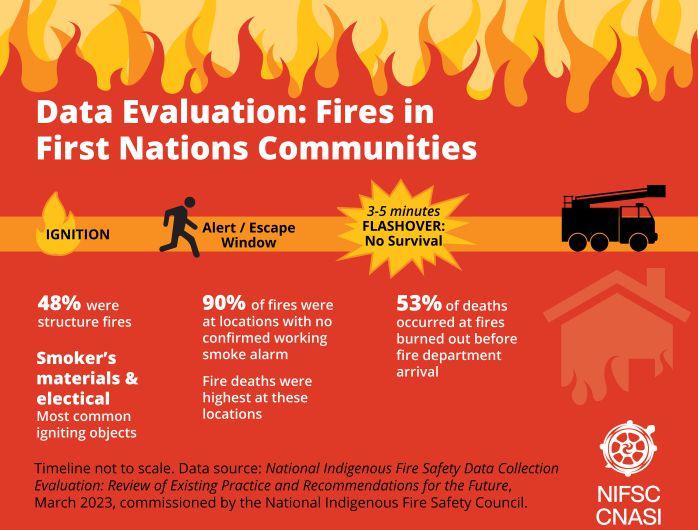
house fires in First Nations communities in Canada: a March 2023 fire in the Skwah First Nation in Chilliwack, B.C., that claimed two lives, a February 2023 fire in the Pikangikum First Nation in northwest Ontario that claimed three lives including an eight-yearold girl, and a January 2023 fire in the Cree community of Peawanuck, Ont., that claimed the life of a 10-year-old girl.
A year earlier, a house fire in January 2022 at the Sandy Lake First Nation in northern Ontario claimed the lives of three children between ages four and nine, and a February 2022 fire at the Siksika Nation in southern Alberta claimed three lives including a sixyear-old boy.
These incidents reveal the real-life impact of the higher fire risk faced by Indigenous people in Canada. Census data from 2016 to 2021 showed Indigenous respondents were more likely to be affected by indicators of higher fire risk, including crowded dwellings in need of repair, low-income households,
children under age six, and one or more unemployed family members. A 2021 analysis of Vital Statistics data demonstrated Indigenous people in Canada are five times more likely to die from a fire than the general population – increasing to 10 times if they live on reserve and 17 times if they are Inuit. Other related research is noted in the NIFSC report.
RECOMMENDATIONS FOR IMPROVED DATA COLLECTION
Some common issues emerged during the review of the three data reporting platforms, including a lack of consistency in how information is collected and what details are reported. The report also noted that the voluntary reporting of data to the National Incident Report System (NIRS) tends to lead to over-reporting of the higher-profile fatal fires and under-reporting of other fires.
Recommendations specific to NIRS data collection included:
• Aligning NIRS data collection forms
with other reporting forms used in Canada;
• Increasing the range of variables captured; and
• Improving NIRS training to minimize the volume of missed responses.
The report also considered fire-related data in the Home Safety Assessment (HSA) database, also populated by voluntary submissions. Recommendations included:
• Ensuring all HSA reporting entities use a consistent reporting structure; and
• Aggregating community-based findings to highlight high-risk issues that need immediate action, such as a lack of smoke alarms or fire safety plans.
For data collected through Fire Department Assessment (FSA) audits, recommendations included:
• Implementing a risk-based approach to prioritize First Nations communities; and
• Targeting FSA audit performance on life safety, occupational health and document management – the factors most likely to have an immediate impact on reducing fire casualties and the least dependent on suppression infrastructure and equipment.
• Common recommendations for all three platforms were:
• Developing sustainable, partnership-based strategies to improve fire reporting by First Nations communities; and
• Committing to undertaking evaluations of process and impact for any changes made.
RECOMMENDATIONS FOR IMPROVED FIRE OUTCOMES
Of note from the NIRS data, more than half of the reported fatalities took place at fires that had burned out before the fire department had arrived. Also noteworthy was the fact that working smoke alarms were present at less than 10 per cent of the reported residential fires, and that fire-related deaths were highest in locations with no smoke alarm.
Other significant findings included:
• The most frequent reported room of origin was the kitchen, followed by living room;
• The most frequent reported igniting objects were matches, smoker’s materials and electrical sources; and
• The highest percentage of reported acts or omissions were suspicious fires, followed by human error (with the latter connected to most of the reported injuries).
Considering these results in the context of existing research and fire data, the report pointed to the unequivocal evidence that working smoke alarms reduce fire frequency, spread and related deaths.
It also noted that while fire departments are an important aspect of fire safety, the priority for remote First Nations communities should be on home and life safety systems such as smoke alarms, carbon monoxide alarms and residential sprinklers. All of these are proven, effective fire prevention strategies that can be implemented in a timelier manner given the remoteness of the communities and the high costs and resource demands associated with fire departments.
Key recommendations for improving outcomes included:
• A targeted, research-based strategy for increasing the coverage of smoke alarms;
• Targeted, research-based educational campaigns to reduce preventable fires from cooking, smoking and inappropriate use of heating equipment – using a range of delivery strategies and
scheduled refreshers to prevent knowledge wear-off;
• Examination of the extent of suspicious fires in vacant and abandoned buildings and implement a targeted prevention strategy if necessary; and
• A risk-based strategy to prioritize installation of home and life safety systems – including smoke alarms, carbon monoxide alarms and residential sprinklers – in high-risk First Nations communities.
IMPLEMENTING EVIDENCE-BASED CHANGE
The report concludes with guidance on effectively implementing and evaluating evidence-based change, including:
• Be clear about the problems you want to address and develop targeted, problem-specific strategies;
• Develop sustainable strategies that increase partnerships with other service providers, such as police, health, child and family services, and the First Nations themselves; and
• Evaluate the effectiveness of any change, both in terms of the process and the impact, to identify areas for improvement.
“The recommendations in this report point the way to improved fire incident data collection that will benefit not only First Nations communities but all Canadians,” Wiggins said.
Len Garis is director of research for the National Indigenous Fire Safety Council, and Fire Chief (ret) for the City of Surrey, B.C. Contact him at Len. Garis@indigenousfiresafety.ca. Mandy Desautels is the director of strategic initiatives at the National Indigenous Fire Safety Council. Contact her at mandy.desautels@indigenousfiresafety.ca.



TRAINER’SCORNER
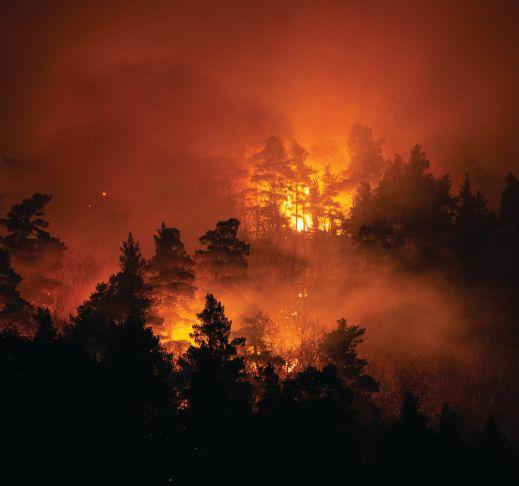
Safety review: fighting wildfires
By ED BROUWER
Although we have already entered the 2023 wildland fire season, it is never too late to review firefighter safety. Rather than subjecting your fellow firefighters to a ton of verbiage, try this method of review.
Divide your members into four groups. Give each group a workstation (table and chairs), lots of paper and pens to take notes and any wildland suppression instructional manuals you may have at the fire hall. If your hall has internet service, allow groups to search the web for additional information.
Beforehand, make up four question sheets using the following outlines. The objective is to have each group research their particular set of questions. They will then take those questions and answers and put together a 10-minute presentation to be shared with the whole group.
GROUP 1
1. What are the three elements of the Wildland Fire Triangle?
2. List three factors about weather that can influence fire behaviour.
3. What is Candling?
4. What is referred to as the 30/30 cross concept?
5. What are the Six Rankings of Fire Intensity?
6. What does the acronym LCES stand for?
7. Describe “Lookouts” in the LCES System of Safe Work Procedures.
8. Describe how a wildfire can create its own weather system.
GROUP 2
1. List the three methods of attack used in Wildland Fire Suppression.
2. Write a short description of each attack method.
3. List the three types of fuel.
4. What are ladder fuels? Why are they dangerous?
5. How do the four levels of fuel affect fire behaviour?
6. What does the acronym LCES stand for?
7. Describe “Communications” in the LCES System of Safe Work Procedures (include calling a Mayday).
8. When troubleshooting a water pump, what does the acronym GAS stand for?
GROUP 3
1. What are the three elements of the Wildland Fire Triangle?
2. List three factors about topography that can influence fire behavior.
3. List some examples of dangerous topography.
4. List six things that should be discussed during crew briefing.
5. What are five basic fireline hazards?
6. What does the acronym LCES stand for?
7. Describe “Escape Routes” in the LCES System of Safe Work Procedures.
8. What are the two ways wildland fires spread?
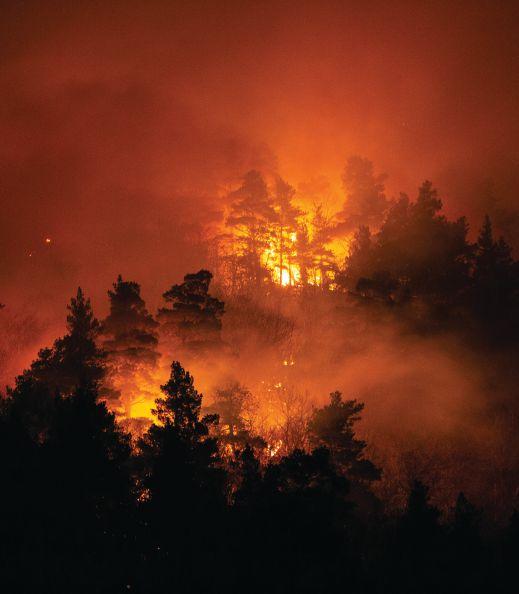
There are three key factors that influence fire behaviour: Weather, fuel, and topography.
GROUP 4
1. What are the three elements of the Wildland Fire Triangle?
2. List three factors about fuel that can influence fire behaviour.
3. What is a crown fire?
4. What is a hot spot?
5. What should you do if you discover a hot spot?
6. List several unsafe personal behaviours.
7. What does the acronym LCES stand for?
8. Describe “Safety Zones” in the LCES System of Safe Work Procedures. These eight questions should keep them busy enough without overwhelming them. And when each group has presented their findings, most of the basics will have been covered.
As the training officer, you may need to refresh your understanding of the questions so you can keep your members on the right track.
Review your Safe Work Directives regarding Dangerous Trees, Fire Behavior Advisories and Red Flag Warnings, Heavy Equipment and Aerial Support.

PHOTO CREDIT: SHUANL/ISTOCK
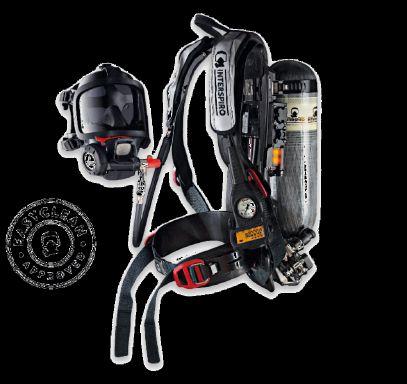
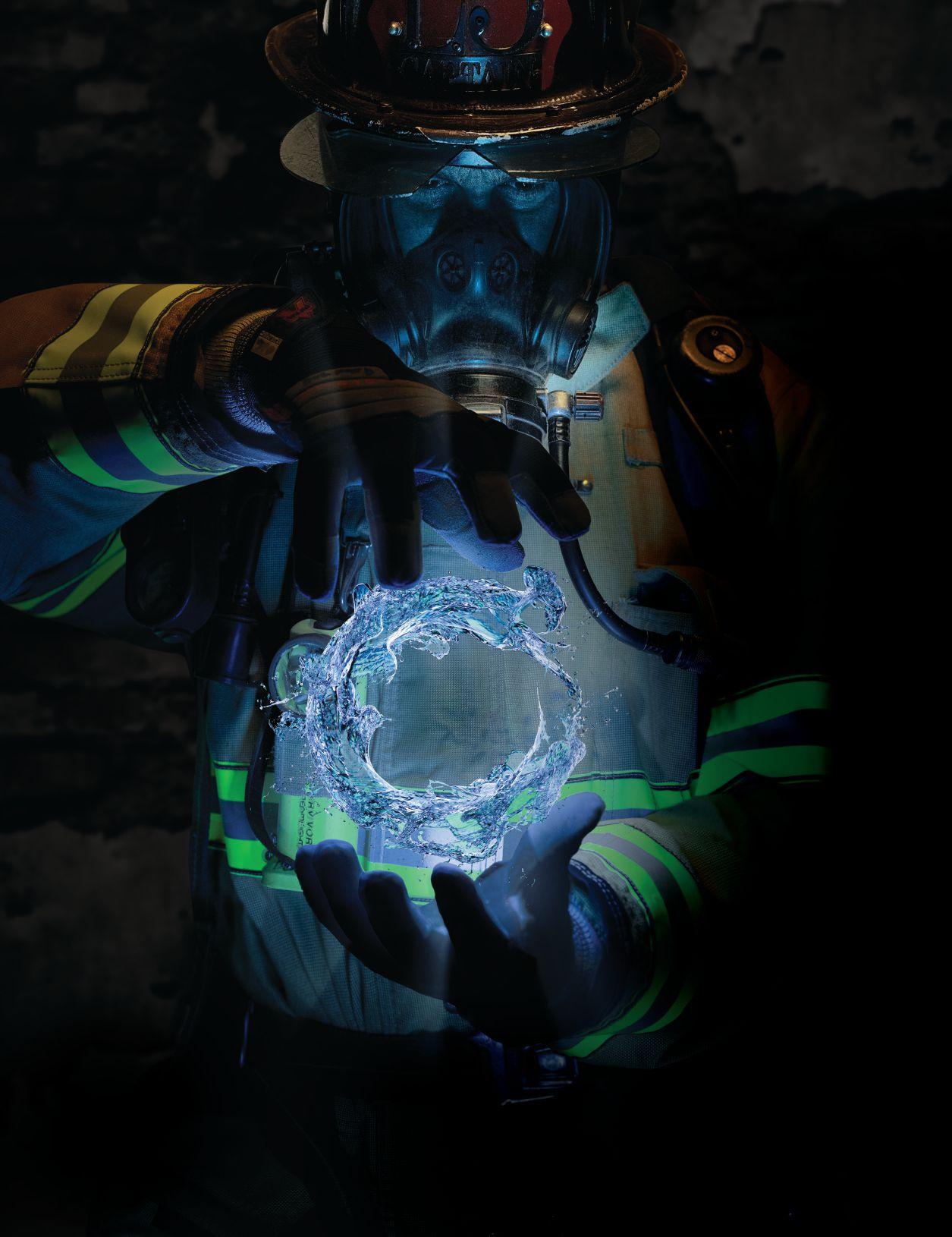
CANADIAN SAFETY EQUIPMENT IS PROUD TO BE A DISTRIBUTOR FOR THE INTERSPIRO RESPIRATORY PROTECTION LINE. THEIR STATE OF THE ART S9 INCURVE IS ONE OF THE MOST COMFORTABLE SCBAs YOU WILL EVER WEAR.
GIVE US A CALL AT 0182 OR EMAIL US AT INFO@CDNSAFETY.
No company has a richer history in respiratory protection than . Their innovations have become industry standards, time and
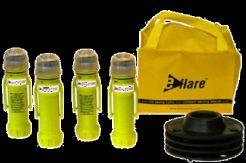
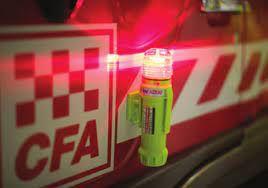
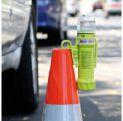
EFLARE electronic road flares are intrinsically safe, waterproof and nontoxic. Designed to warn workers of dangerous areas. Sets up in seconds
FIREFIGHTER DECON AND PROTECTION
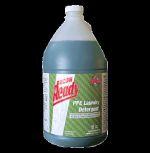
Decon Ready™ PPE
Laundry Detergent
Decon Ready™ is a laundry detergent made for firefighters to remove dirt, oil, soot, grease, and other hydrocarbon contaminants from Turnout Gear & PPE

EV FIRE ISOLATOR
FIRE ISOLATOR is a concept for isolating and fighting EV car fires based on best practices and live testing In general, there is not one single solution to extinguish or control EV car fires, as all firefighters who have dealt with these types of car fires will be able to confirm Effectively isolating and fighting EV car fires takes several different methods because of the lithium -ion batteries on board of EV cars The EV car may need to end up submerged in water in a container, but with the FIRE ISOLATOR concept, there is a lot that can be done beforehand to minimize the damages Fighting EV car fires with the Fire Isolator concept has been thoroughly tested and proven to be effective
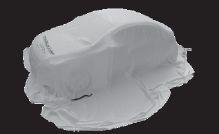
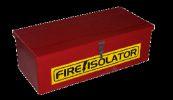
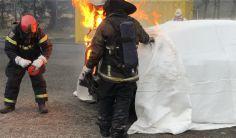
The Fire Isolator blanket when used with the Flame Guard Fire grenade is a n Excellent method of getting an EV fire under control. The blanket can be washed and reused a number of times.
The Solo SCBA Decon/Washing machine was designed and built for one purpose only…to protect Fire Fighters from Cancer causing agents found in the Smoke and residue left on their SCBAs. As an added bonus it can clean Gloves, boots and Helmets. In addition, it substantially lowers the time spent decontaminating firefighter equipment.

Decon Ready™ Skin Cleanser Decon Ready™ Skin Cleanser is a foaming soap designed to help firefighters safely lift toxins away from their skin after the job or handling dirty gear.
Decon Ready™ PPE & Multi-Surface Cleaner
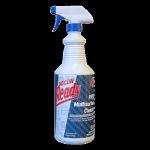
Decon Ready™ PPE & Multi-Surface Cleaner removes hydrocarbons, soot, grease, oil, cancer causing metal oxides, plastics, chemicals and other toxins.
RESPONDER WIPES
Responder Wipes are specifically designed to help remove carcinogens and contaminants from the skin.

Qualified by MSA for cleaning the G1 SCBA.
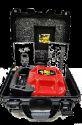

WASH/DECON TWO SCBAs IN 8 minutes


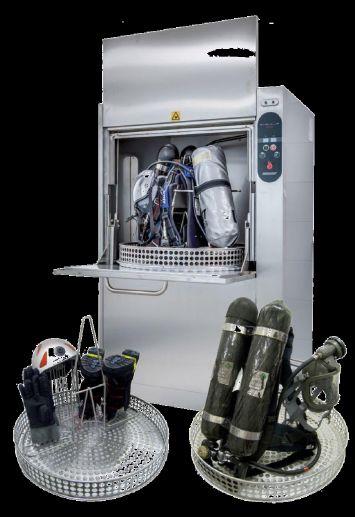
IN ONE HOUR YOU CAN CLEAN/DECON:
-14 SCBAs W/MASKS and CYLINDERS
ü REDUCED HEALTH RISK
ü SAVES TIME 2/PKS IN 8 MIN ü EASY TO USE

IN ONE HOUR YOU CAN CLEAN/DECON:
• 30 HELMETS
• 60 PAIRS OF GLOVES
• 20 PAIRS OF BOOTS
• Double the above numbers with a second rack
Low Power use. Minimal moving parts. Low maintenance costs

TRAINER’SCORNER
I thought it may help if I shared a few personal fire line memories.
It was Aug. 16 at 11:00 am. We were dispatched to a lightning strike. Although an MOF initial attack crew, two helicopters and three CL 415 air tankers had been actioning the fire since early morning, the fire seemed to be gaining momentum. In a typical fire season, a lightning strike is not a “big” deal, however there was nothing typical about this fire season. After three years of unusually dry weather, British Columbia was ready to explode.
There are three key factors that influence fire behaviour: Weather, fuel, and topography. Any one of these factors at their extreme can cause erratic fire behaviour. When, as in our case, all three were at their extreme ends, you get erratic, unpredictable conflagrations, and far too often unforgettable fire behaviour.
There had not been any significant rainfall for several months. The winds were in excess of 60 km/h, the temperature was over 30 C and the RH below 30 per cent (30/30 cross). If this occurs on the fire line, you can expect extreme fire behavior.
The initial fire spread is influenced by wind speed and wind direction. Rate of spread was in excess of 50 miles per minute. The wind picked up at 12:30, driving spot fires ahead of the main fire. This fire would grow to over 1000 hectares by the next day.
The fuel moisture content in all three classes, or layers, of forest fuel — fine fuel (surface), duff [five to10 cm deep) and deep duff [10 to 20 cm deep) — were at the absolute extremes. All indicators pointed to rapid spread rates, intense fires, and extensive involvement of the fuel layer.
The duff layer, which rests on top of the soil layer, was two to three feet deep in places. The fire simply burned under the retardant that had been dropped.
You may remember that for every 25 degrees increase of slope the rate of spread doubles. The fuel is preheated and ignites more rapidly.
The direction a slope faces is called aspect. South aspect slopes, such as in this park, produce low fuel moisture contents, finer fuels and a have greater rate of spread and/or ignition.
We also had to deal with kilometres of canyons, valleys, and rock bluffs. Squally Point has the unique distinction of being the place where winds split. A portion flows along the lake toward the city of Kelowna, the other portion flows along the lake towards the town of Naramata. This factor would often drive the fire in two directions at the same time. If that wasn’t bad enough, Wild Horse Canyon, which cuts across Okanagan Mountain Park, has openings on both sides of Squally Point.
All these things caused erratic gusting winds, changing direction and force. Circular winds caused dust devils that were at times 100 metres in the air.
We discovered that these high winds caused spotting up to 3.2 kilometers ahead of the fire. The high winds drove the fire over the guards with such intensity that it devoured our bladders, hose lines and medivac kits. Over the next few days, we would find out exactly just how vicious this fire dragon was going to be. In one day, it grew from 2,000 hectares to more than 11,000. Fire fighting conditions were the worst fire officials had ever seen.
On Aug. 21 the fire made a run towards Kelowna. Fire apparatus from all over British Columbia and Alberta converged on Kelowna in an attempt to stop this dragon. In spite of the unprecedented and valiant efforts of those on the fire ground, over 250 homes were destroyed.
Much of the manpower and equipment was released around Sept. 20. More than 30 days had passed since we were dispatched to that single tree lightning strike, now 25,600 hectares were burned, 238 homes were lost or destroyed, 12 wooden trestles in Myra Canyon were vaporized and decks on two steel trestles burned. Evacuees numbered 27,050 plus 4,050 re-evacuated. The maximum resources used at one point were 700 personnel, 250 pieces of heavy equipment, and 20 helicopters.
A few notes regarding LCES: The acronym LCES stands for Lookouts, Communications, Escape routes and Safety zones. These elements form a safety system used by wildland firefighters to protect themselves from entrapment and other fire line hazards. LCES was developed by Paul Gleason as a direct response to the tragic loss of life on wildland fire and to condense The Ten Standard Firefighting orders and Eighteen Watchout Situations along with other checklists into an easily remembered acronym.
Lookouts: Lookouts should be experienced firefighters that can continually size-up a fire. More than one Lookout may be required. They need to be set up at good vantage points. They must have updated knowledge of crew locations, escape routes and safety zones. It is also of great importance that they understand trigger issues (when to call for a retreat or evacuation of crews.
Communications: Radio frequencies must be confirmed. Check in times should
be established at the crew safety briefing. Firefighters must remain in constant communications with the entire fire line organization and ensure that all information is understood and passed on. They are responsible to warn other firefighters of identified fire hazards. Firefighters should not be working alone or out of earshot of other crew members.
Escape routes: These must be scouted out, tested and timed (escape time versus ROS). They should be flagged (for night and day). We flagged on the left of the trail going to the fire so that “Right” would indicate the flight direction. Park apparatus prepared for quick escape. The effectiveness of escape routes changes continuously, due to fire behaviour. The most common escape route is the fire line. There must always be more than one escape route that leads to an effective safety zone. A single escape route may be cut off.
Safety zones: These are planned locations where firefighters, threatened by fire hazards, may find adequate refuge from danger. The effectiveness of a safety zone is dependent on its ability to allow all firefighters to shelter from heat, smoke, rolling debris, falling timber, snags, etc. The burned area (the black) may be the best and simplest, but also consider water sources, clear cuts, or roads. Safety zones are NOT upslope, not in the smoke and not in heavy fuels. And DO NOT use caves as the oxygen could be sucked out by the fire.
A number of years ago the letter ‘A’ was added, making it LACES. The “A” stood for
anchor points.
Anchor points: These are designed to minimize the chance of being outflanked by a fire while line is being constructed. An anchor point is a barrier, such as a road, river, or area without fire fuels from which to start building a fire break or line. We covered this point by having a second crew cut line in the opposite direction. We would begin at the back and work the opposite flanks heading toward the head.
Regarding your personal comfort, have a “Go Bag”. Go to each fire expecting a lengthy day. A backpack with overnight provisions is highly recommended. A warm jacket, extra socks, any personal medications, toilet paper, a few power bars and power drinks are recommended. You may never have to use these items, but I can’t tell you how many wildfires we went to as a volunteer fire department in the middle of the day that lasted well into the next day. There is always a chance with wildfires that the incident could turn into multiple days or weeks. Be prepared.
Until next time please stay safe out there, and remember to train like lives depend on it, because it most certainly does! 4-9-4 Ed Brouwer
Ed Brouwer is the chief instructor for Canwest Fire in Osoyoos, B.C., retired deputy chief training officer for Greenwood Fire and Rescue, a fire warden, wildland urban interface fire-suppression instructor and ordained disaster-response chaplain. Contact aka-opa@hotmail.com.

BY GORD SCHREINER Fire Chief Comox,
B.C.
OSTOPBAD
Call Signs for Life
f all the articles I have written, “Call Signs for Life” has gotten the most direct interest with dozens of departments reaching out to me to learn more about this very simple but effecitve system.
We all know the fire service is constantly changing. Forty years ago we had no portable radios. When we sent a team into a burning structure, we could not contact them other than by yelling to them. Today we would not think of sending a team into a burning structure without a portable radio. Today’s modern fire services has portable radios for every member of the team. Teams may have two to four portable radios, depending on their size. This change alone suggests that we should use a call sign system that allows us (if needed) to talk to the individual members of that team. Consider what happens when one member of your team gets separtated from the rest of the team. How do we call that one member? Yes, we could call them by name, which should work, however we could have more than one firefighter with the same name. Or, in the case of a mutual aid firefighter, not know how to pronouce the name. Also, once we use the real name the confidentiality is gone. If that firefighter is lost or trapped and we use the real name on the radio, it is likely that many others outside of your department will know right away via scanners.
Some departments use their engine company assignments as their call sign when operating on the fireground. So Engine #1 remains Engine #1 when they are doing an interior attack or search. In this example, if we needed two teams (assuming a four-person engine company), from Engine #1 we would further split them into Engine #1 Alpha and Engine #1 Bravo (or something like this). This again does not give us individual call signs and does not take advantage of having more than one radio on that team. If one member from Engine #1 Alpha get separated from the others, it becomes very difficult to communicate with that one member without using real names.
to remember what his latest call sign was and try to not respond to a call sign that the firefighter may have used at a previous incident or earlier at the same incident.
Now, how about a call sign system where you are assigned a call sign when you join the department and use the same one for your entire career? The same call sign at every incident doing any task is much safer and more effective. We don’t change the names of our rigs when they are assigned to a different task, so we should do the same for our teams. Firefighters and incident commanders have enough to think about without having to remember or create a different call sign for every task they do, or when they ride on a different engine.
Call signs for life works extremely well. If firefighters are working on tasks like traffic, their individual call sign would be used. When they are working in teams, the team leader’s call sign is used to contact the team. After calling a team lead and getting no response, the IC can always try another member on that team. If a member of the team gets separated, that firefighter can contact command using their individual call sign. The system is simple and works great. It makes sense and it is safer and more effective. No, you don’t need to remember everyone’s call sign, just your
The same call sign at every incident doing any task is much safer and more effective. ‘‘ ’’
Some departments use task-orientated call signs. An interior attack team would likely be called “Attack 1” and an interior search team would be called “Search 1” and so on. Again, this does not take advantage of more than one radio on that team. Also, using these types of systems can lead to many other problems. Using tasks as call signs, a firefighter might have his call sign changed several times during the same incident and will likely have a different call sign at his next incident. The firefighter needs
Gord Schreiner joined the fire service in 1975 and is a full-time fire chief in Comox, B.C., where he also manages the Comox Fire Training Centre. He has delivered countless presentations in fire stations all over Canada and is available to assist your department in many areas. Contact Gord at firehall@ comox.ca.
own. Passport tags include the firefighter’s name and their call sign number. Firefighters love this system as it makes their jobs easier and safer.
In our case, we have displayed the individual call signs on everyone’s personal protective equipment, kind of like putting numbers on your rigs for easier indentification. Individual call signs are on helmet patches, decals on the rear of helmets and velcro on the jackets and pants. We can see your call sign, you can see your call sign. You never forget your call sign!
Call signs for life can make your fireground safer and more effective, and it allows command to think more about strategy and tactics rather than what calls signs to assign in-coming teams. What will be your call sign at the next incident you attend? If you are using call signs for life, you would know right now!
Do you maintain your TI?
By MANFRED KIHN
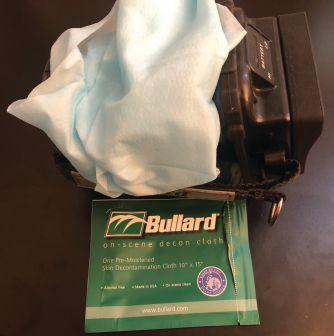
Training firefighters in how to effectively use thermal imaging (TI) technology is extremely rewarding. During these trainings, I ask to use the department’s TI to help me teach the class about the benefits of thermal imaging. This gives me an opportunity to examine it. Often, I am handed a TI that needs at least a good wipe down. Sometimes there is a TI that is so filthy that it requires a considerable amount of time to get it back to its original condition. This scenario recently took place at one of my TI training courses.
A fire chief wanted me to inspect his TI, which was not performing like it used to. It was clear to me that the performance issues cited by the chief were due to firefighter neglect, though certainly not intentional. This crew never thought about cleaning the TI after each call, but consider that the soot, carbon, and grime that you wash off you and your gear after a call is embedded into your TI. After every call, you need to clean and check your TI, so it is ready for the next one.
BASIC MAINTENANCE
A TI is the most overlooked tool when daily and weekly checks are performed at the
TI Maintenance Plan
Daily or after
each use:
• Ensure unit is working properly.
• Insert fully charged battery.
• If necessary, recharge the previous battery.
• Verify all battery chargers are functioning properly.
• Verify that there are no signs of cracking or tearing on any of the rubber pieces and buttons on the unit.
• Using a damp cloth, clean off large pieces of debris.
station. Have you ever cleaned the lens or display cover of your TI? On some TI’s you can easily unscrew the display cover and wipe the soot and dirt from it? Do you check your TIs battery life? Checks should be performed daily or weekly on your fire apparatus to be sure every feature is performing correctly. You always check your SCBA before and after each use. So why not your TI? Here is a TI maintenance plan for keeping this tool on-call and ready to deliver the best service in the most critical situations.
Weekly:
• Clean lens with soft cloth and mild cleaner.
• Clean LCD display cover with soft cloth and mild cleaner.
• Verify all straps are in usable condition and properly secured.
• Check for cracks, holes or other damage to the unit’s outer shell.
• Verify the batteries do not show physical signs of damage.

First, always inspect the outside of the TI for damage and cleanliness. Keeping your TI clean means the surface of your TI should look shiny. The reason is not because you want to show off your TI, but because the shinier the TI surface the more radiant heat the imager will reflect rather than absorb. Excessive soot buildup will lead to higher absorption of radiant heat and will affect how long the TI may run in extremely hot environments. All you need to clean your TI is soap and water. Any dish detergent you have at the station will clean your TI. If you have stubborn stains, an isopropyl alcohol is a good option for eliminating those stains. Never use straight bleach or hydrocarbon-based solvents on your TI because these products can damage the housing or rubber seals.
Next, visually inspect it for cracks in the outer shell and any separation of external components. It is also important to inspect all rubber or neoprene, checking for pliability, crumbling, tears, or other visible damage. Cracks, separations, or damaged seals are common causes for water intrusion into the TI. All TIs are IP67 rated (waterproof for 30-minute immersions in three feet of water) or better, but water intrusion is a concern because it can lead to costly repairs.
Monthly:
• Check tightness of all external screws, especially those connecting the LCD display cover. Do not overtighten.
• Cycle each battery fully. This is accomplished by using a conditioner or by fully charging and draining the battery. Ensure that one battery is always fully charged for use at an incident.
• Using a damp cloth and mild cleaner, clean the outer shell of the unit.
• Verify that the battery contacts on the unit are corrosion-free.
• Verify the battery chargers are corrosion-free on all primary contacts.
Using a cleaning wipe is a quick way to decon an imager while on scene.


Third, look at the lens or window at the front of your TI. It is very important that the lens or window remains clean and free from dirt so the image quality is not affected. The fire chief who said his imager was not performing well had stains on his TI’s lens, which directly affected his image quality. This buildup can reduce the amount of thermal energy getting into the imager, reducing overall picture quality as well as creating a blurry appearance of the image. Cleaning this area of the imager is not easy so if you are having image quality issues call your manufacturer to ask which cleaners to use. In severe cases, replacing the lens may be your only option.
Once you have cleaned and inspected your TI, it is important to perform battery checks on your unit to ensure that, when needed, your battery life is full. TIs all come with different battery technologies ranging from nickel metal hydride, lithium ion and lithium iron phosphate. Batteries in certain TIs can run seven to eight hours. When researching this, determine initial operating runtimes and the number of cycles for which thermal imager batteries are rated. Batteries with higher cycle life ratings will, under typical conditions, last longer.
The potential lifespan of your TI batteries will depend on your preventative maintenance plan and how often the TI is used in the field. If you use your TI multiple times a day, the life of your batteries may average about one year. If you use it only a few times a month, you may not need to replace batteries for two or three years. How often a TI is used, what kind of temperature extremes the TI and its batteries see, and how batteries are charged and maintained, will all impact battery performance. At least once a month be sure to verify that the battery contacts on the batteries and the TI are free from corrosion. Also, be sure to check that the battery chargers are corrosion free on all contacts and are operating correctly.
Lastly, be sure to turn on and check your TI weekly. You want to be sure your TI is in focus. Focal distance for most of this is approximately three feet to infinity. If an object 10 to 15 feet away appears blurry, then it is possible that the focus needs to be adjusted. This is rare, but it can happen. Next, check the image for clarity. Here you are looking to see if there is any noise in the image. The noise looks like background static. It is typically fixed and does not change location as the imager moves. Temperature measurement should also be checked. Does the color activate as expected? Does the imager shift from high gain to low gain appropriately? You can evaluate temperature measurement by pointing your TI at a gas stove or gill. If you have other features on your TI or attached accessories, check these as well. Your TI is exposed to the harshest environments, which can result in gaskets or screws coming loose. Soot, carbon, and dirt commonly build up on the imager, its display cover, lens, or lens window which can impact performance.
Spending a little time each week maintaining your TI will ensure that it stays operational and productive. Check with your TI’s manufacturer for specific maintenance recommendations. If your thermal imager shows signs of damage or is not functioning properly, make arrangements for proper servicing. Your TI is a life-saving tool that needs to function properly when called on. Until next time, stay safe and practice often!
Manfred Kihn is a 19-year veteran of the fire service. He is Bullard’s fire training specialist for thermal imaging technology. He is certified through the Law Enforcement Thermographers’ Association as a thermal imaging instructor and is a recipient of the Ontario Medal for Firefighters Bravery. You can e-mail him at manfred_kihn@bullard.com.

YOUR HEADQUARTERS FOR TRAINING & PUBLIC EDUCATION MATERIALS
Command Presence: Increase your Influence
$67.00 | Item # 1593705817
This must-read book by Frank Ricci is about hard calls and hard fights; hard wins, and hard losses with lessons that you can apply to your leadership style. “Frank Ricci brilliantly yet simply explores the critical tenants of leadership, duty, and accountability using his own real-world experience in the field and as a leader” —E. Garrett Bewkes IV, Publisher, National Review
Editor’s Opinion
$93.15 | Item # 1593705893
An homage to Bobby Halton, Editor in Memoriam of Fire Engineering Magazine Take a look at Halton’s unique perspective on everything from social media, to the importance of spending time together as a company, and the importance of educating not only the men and women in the fire service, but also our communities and the next generation of firefighters.
Hazardous Materials: Awareness and Operations, Fourth Ed.
$147.90 | Item # 1284264074
Provides fire fighters and first responders with these essential skills to recognize an incident involving hazardous materials or weapons of mass destruction (WMD) and enables them to keep themselves and others safe while mitigating potentially deadly incidents. Revised and updated to meet new NFPA 470 standards, the fourth edition of Hazardous Materials: Awareness and Operations delivers high quality content developed, and peer reviewed, by experts in the field.




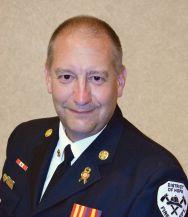
BY TOM DESORCY (Ret.) Fire Chief Hope, B.C.
TVOLUNTEER VISION
Under pressure
he fire service in Canada is under a great deal of pressure to recruit and replace an aging membership. Then again, pressure is part of the service: firefighters in general face pressure everyday. And, as people begin to demand more and more from their local fire service, the pressure outside the organization increases.
Let’s talk about recruiting new members, for example. We encourage or even sell people on becoming members. However, we, as a brand, should also be attractive on our own so people seek us out. What should be the balance of time that you spend on attracting people versus just fielding applications? It’s getting tougher to find people that want to commit to the pressure of being in a volunteer fire department (not to mention volunteering anywhere these days). This is where I would try to shift the focus and put pressure on the organization to become a stepping stone into a fire service career.
This will come as no surprise to anyone, but the volunteer fire service has changed. No longer are we that little community group that people joined to simply belong and give back to their community. More and more, the pressures of response are upon us, and to our credit, we have simply gotten better at what we do. With more and more emphasis on better training, we can only hope that more people begin to see the value in getting involved.
When you consider that volunteers are 85 per cent of the Canadian fire service, it makes perfect sense that someone will want to be involved at our level, particularly if they want to move forward as a career fire fighter.
With that being considered, we offer a lot to a prospective member. One of the key benefits of the fire service when it comes to volunteers, is the fact that in a smaller department, you really get to know each other. This goes beyond the individual volunteer members and extends to their families. They become part of our fire family and especially if you’re the leader, you often become part of their family. There was a time in a small town where you quite often knew everybody. However, as communities grow, those days are largely behind us. Applicants may not know the makeup of the department or its people, so a two-way relationship is important from the beginning.
This relationship also needs to extend to the members and the more you get to know each other, the faster you alleviate the pressures that come with trying to fit in. The camaraderie and sense of belonging needs to be immediate from the beginning.
From the moment a person submits their application, and long before we’d accept them into the department, I’d begin this conversation around pressure. There is no use in taking people through a long and arduous process for something they’re simply not ready for. One might think that joining a volunteer fire department is really nothing earth shattering as it’s just another way they can help in their community. Not anymore.
Here’s a simple benchmark to consider. Something that I think puts it all into perspective. The moment that the decision is made, and the individual is accepted for membership in the fire department, is the very moment they become a hero to kids. How poignant is that? Think about it. When you are welcomed aboard, you’re a firefighter. Simple as that. Kids don’t know that you’re new or probationary and they don’t care. You’re a firefighter. How’s that for pressure?
Show up at an emergency scene as a passenger in an engine still wearing a recruit colour helmet. We know your limitations, but the end user
Don’t fear pressure, it can be your friend. It will test you and help remind you that you know what you’re doing. ‘‘ ’’
doesn’t and again, in their eyes, you’re a firefighter. They expect you to be like all the others. They look to you to help them. Pressure. As a leader in that engine, you must account for the new member while dealing with the incident as a first responder. Even more pressure.
One of my favourite conversations with an applicant is about pressure.
Tom DeSorcy joined the fire service in 1983 and became the first paid firefighter in his hometown of Hope, B.C., when he became fire chief in 2000, retiring in 2023. DeSorcy is married with children and grandchildren. He is equally at home at a bonspiel, on the golf course, or in the kitchen, and continues to enjoy his connections to the fire service. E-mail Tom at tdesorcy@telus.net and watch for him on social media.
It all comes down to perceptions. The end user of our service doesn’t care who you are or what you do for a living. They don’t even care that you’re a volunteer. They need help, and you are the person that is there to help them. Pressure lies with the individual, the department and the fire service overall.
That’s why it’s important to get out in front of it at the beginning. Don’t fear pressure, it can be your friend. It will test you and help remind you that you know what you’re doing. Those that feel pressure are into the game and right now, the Canadian fire service needs everyone to play.

BME Fire Trucks, North America’s leading wildland apparatus manufacturer, has awarded the exclusive dealership territory for its emergency apparatus in Canada to Commercial Emergency Equipment. Commercial and BME have begun working hand-in-hand to bring the extensive line of BME Fire Truck apparatus to Canada’s first responders. Contact an Apparatus Specialist today to start building your next wildland truck.