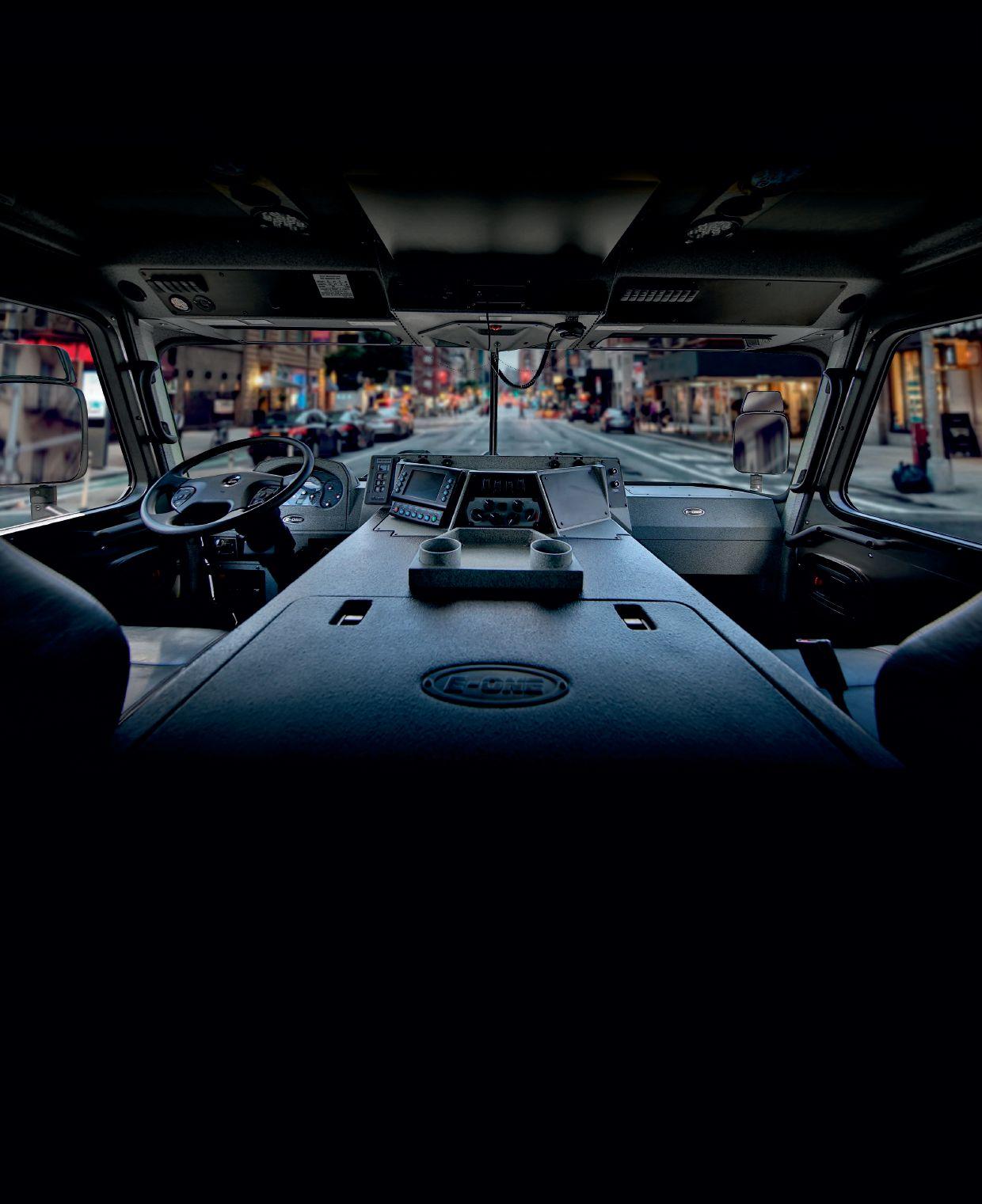
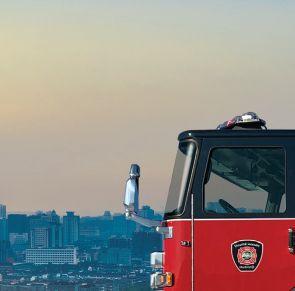
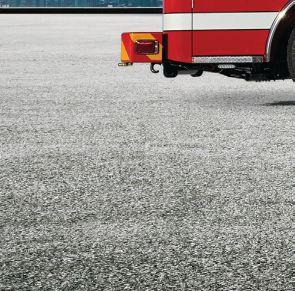
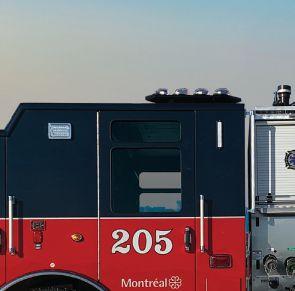
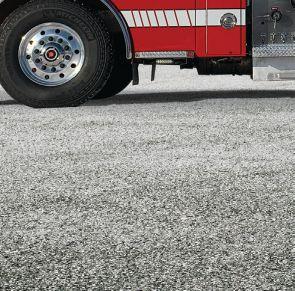
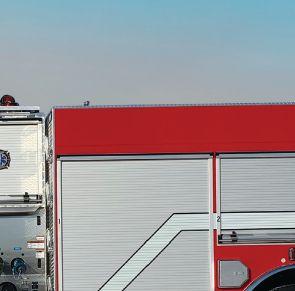
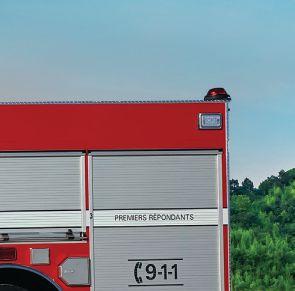
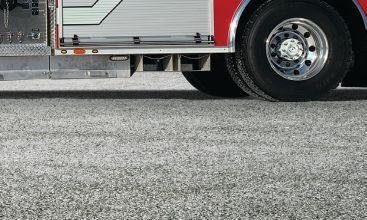
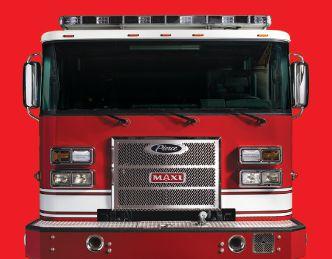
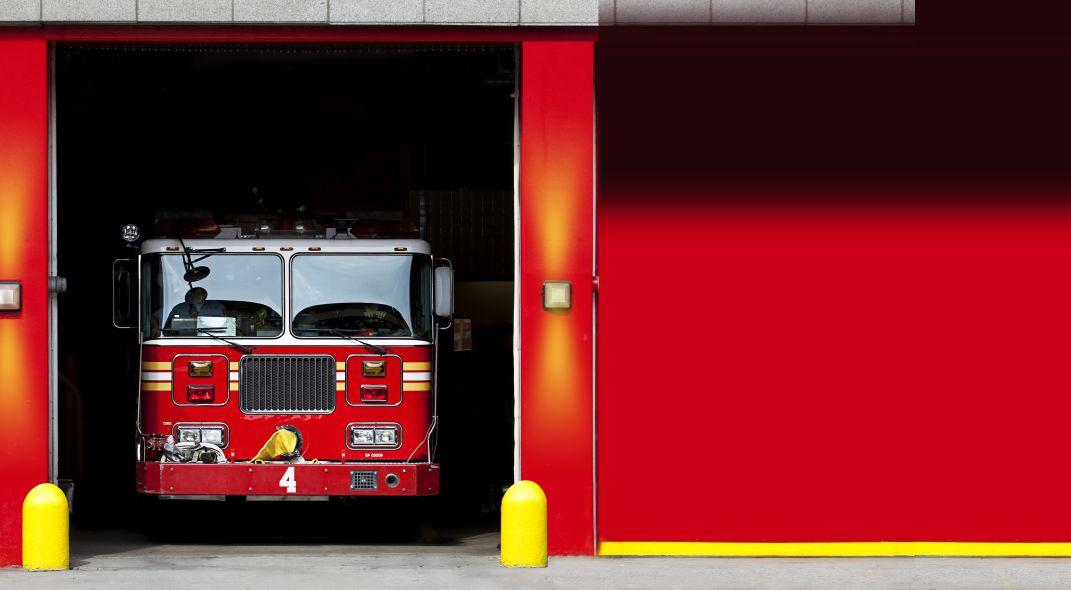
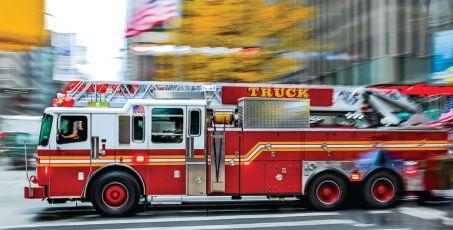
The E-ONE® Cyclone cab is bigger and better than ever before, featuring updates and refinements suggested by firefighters just like you. The 100” wide cab provides more space for your crew with a generous 27” between door and engine cover for both driver and officer. The Cyclone is available in five cab lengths with a flat roof (low or 4” raised) or one of four raised “vista” roof designs that include the 4” raised front roof. The Cyclone cab provides excellent visibility for driver and crew with its low profile dash, one piece door glass and a reduced profile interior A/C system. Like all E-ONE aluminum cabs, this one is built with heavy wall extrusions and 3/16” plate for floor, roof, walls and doors for maximum strength and durability.
INCREASED VISIBILITY THIN PROFILE AC SYSTEM
STRONGEST CAB IN THE INDUSTRY
EASY EGRESS NEW FRONT STYLING
100” WIDE DESIGN PROVIDES MORE INTERIOR SPACE
10 IS YOUR DEPARTMENT READY?
As an officer or firefighter, are you aware of the types of industry in your surrounding area? It’s critical, as a municipal department, to be prepared for industrial response.
By John Liadis
20 FIRE RISK FOR INDIGENOUS PEOPLE
Here are the details and key findings of a recent study on the heightened fire risk affecting Canada’s Indigenous people. By Len Garis and Mandy Desautels
22 THERMAL IMAGING: THESE HAVE BEEN CHALLENGING TIMES
Part 4 of our thermal imaging series provides important key tips for using your thermal imager. By
Manfred Kihn
26 UNDERSTANDING STOICISM
Part 1 in this three-part series looks at understanding the philosophy behind developing a positive cognitive lifestyle with a focus on behaviour. By Nick Halmasy
28 MENTAL HEALTH MAYDAY
How to develop a mental health mayday SOP for your family. By Patrick J. Kenny
BY LAURA AIKEN Editor laiken@annexbusinessmedia.com
I
COMMENT
Equity, diversity and inclusion
n March, the EDI Celebration Series kicked off in conversation with Vancouver’s Fire Chief Karen Fry. Since then, the second episode aired with Susan Henry, chief of the Calgary Emergency Management Agency, and Sherry Colford, fire chief for St. John’s Regional Fire Department. This eight-part webinar series, which focuses on women as one aspect of equity, diversity and inclusion in the fire service, is a program of the Canadian Association of Fire Chiefs in collaboration with Fire Fighting in Canada through a generous grant from the Motorola Solutions Foundation. As host, this series has given me the driver’s seat on a most wonderful road trip of insights. It’s been a superlative bonus that the conversations have also been such great fun. There is a lot to learn from people if you ask the right questions.
Toronto-based data and consulting firm, shared its initial batch of 80 Diversiocertified Canadian companies that are using its AI-powered certificate program. The city of Toronto is among the inaugural batch. In the realm of media, the Institute of Communication Agencies (ICA) formed a partnership with Bell Media to run the first-ever IDEA competition, which will award $1 million worth of media inventory across Bell’s platforms to one marketing campaign that shows a clear message of diversity and inclusion.
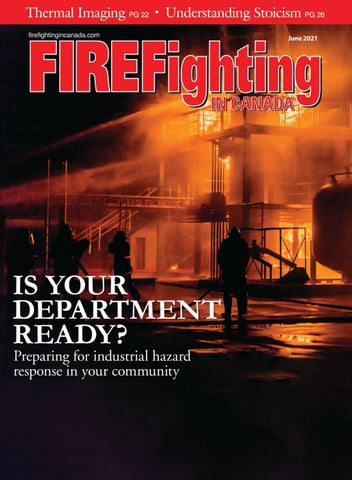
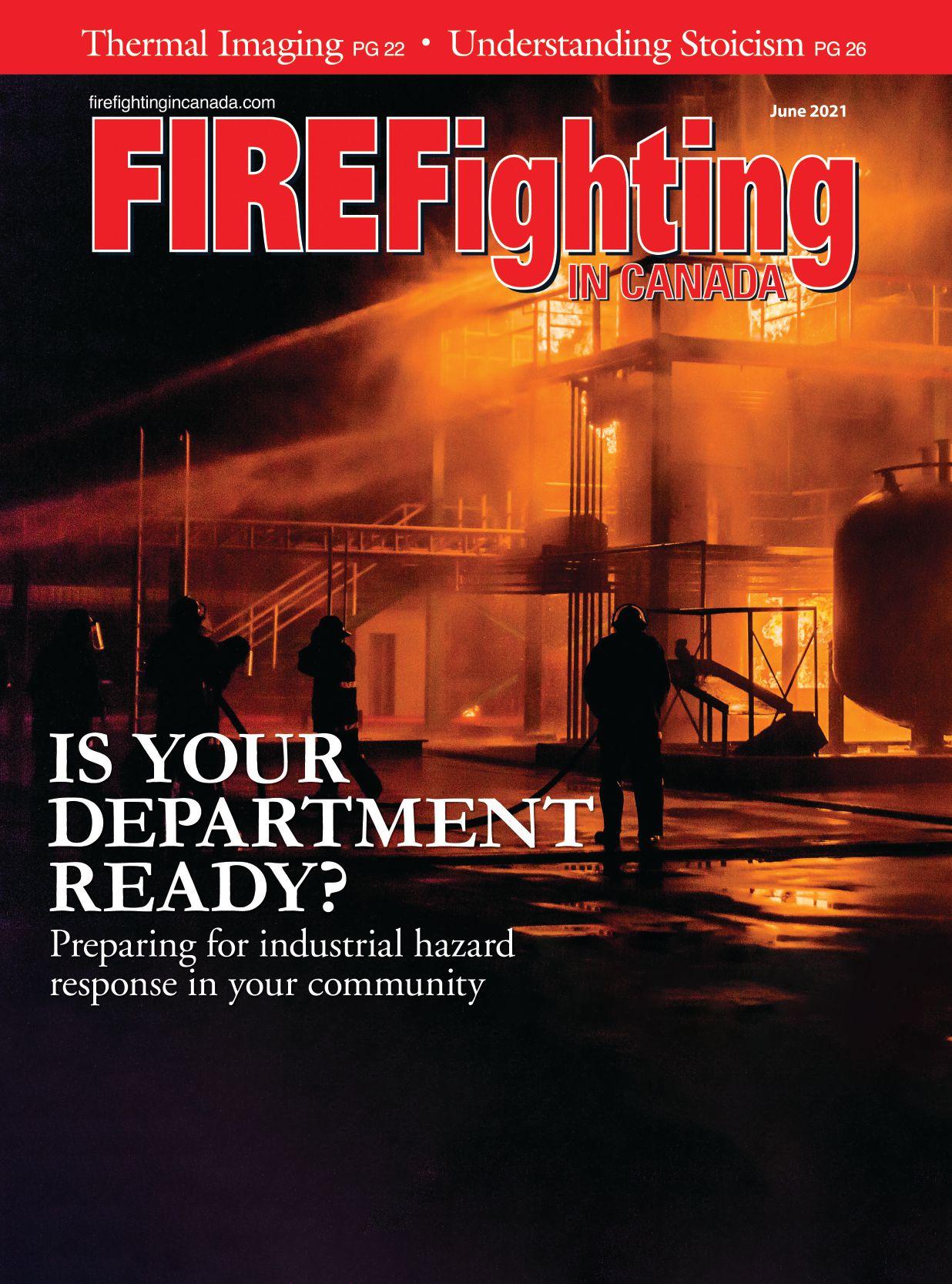
ON THE COVER
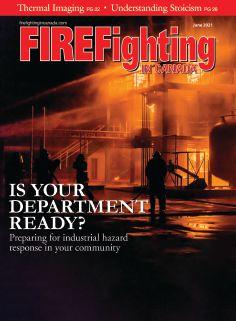
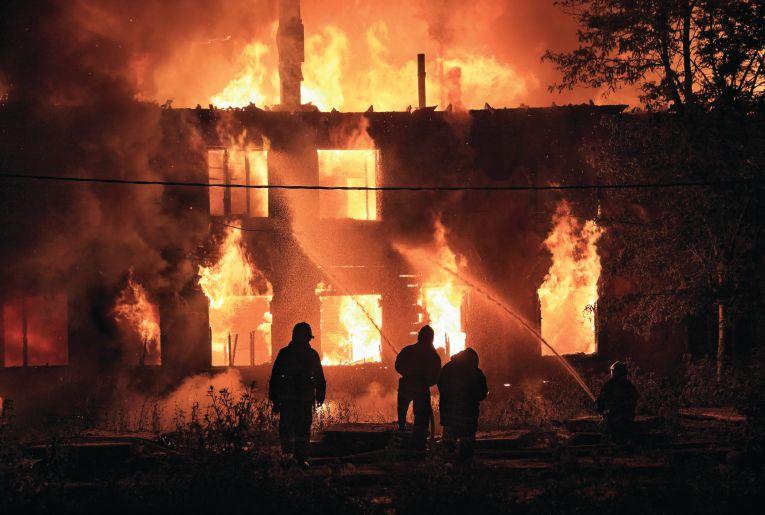
There are many different industrial hazards to be prepared for. Here are tips for how to ensure your municipal department has prepared the most effective response. Page 10.
Building a more equitable, diverse and inclusive fire service has become a top priority for many departments. Big city chiefs that have stepped into roles during the pandemic, such as Fry and Edmonton’s Joe Zatylny, have made their commitment to this topic clear, even amongst the formidable turmoil of COVID19. The May Fire Fighting in Canada: The Podcast featured Tim Wilkinson, fire chief for Richmond Fire-Rescue, a department that went from public controversy to a leading example of inclusion done right. I’m sure it is on the radar for many fire chiefs managing fire departments, big and small. There are many different approaches to this challenge. For example, Diversio, a
Municipalities and businesses are hiring chief diversity officers and forming diversity committees. The challenge is pressing, multi-faceted and it requires more work than simply hiring more of any one under-represented facet of the population. Diversity and inclusion are about more than numbers; it’s also about cultural change and become a welcoming workplace for all.
Micro changes become macro overhauls. History teaches us this. As we journey through this landmark moment in time, I am betting it will be reflected upon by our future scholars as the period when a significant shift happened in the diverse and inclusive nature of workplaces in the West.
ESTABLISHED 1957 JUNE 2021 VOL. 65 NO. 4
Reader Service
Print and digital subscription inquiries or changes, please contact Beata Olechnowicz, Audience Development Manager
Tel: (416) 510-5182
Fax: (416) 510-6875
Email: bolechnowicz@annexbusinessmedia.com
Mail: 111 Gordon Baker Rd., Suite 400, Toronto, ON M2H 3R1
EDITOR LAURA AIKEN laiken@annexbusinessmedia.com 416-522-1595
ASSOCIATE EDITOR MAZ ATTA matta@annexbusinessmedia.com 416-435-1779
PUBLISHER ADAM SZPAKOWSKI aszpakowski@annexbusinessmedia.com 289-221-6605
Occasionally, Fire Fighting in Canada will mail information on behalf of industry-related groups whose products and services we believe may be of interest to you. If you prefer not to receive this information, please contact our circulation department in any of the four ways listed above.
All advertising is subject to the publisher’s approval. Such approval does not imply any endorsement of the products or services advertised. Publisher reserves the right to refuse advertising that does not meet the standards of the publication.
PHOTO BY ZONETEEN/ADOBE STOCK
STATIONtoSTATION
ACROSS CANADA: Regional news briefs
New analysis finds firefighters reach 86 per cent of the maximum safe heart rate during simulated tasks
Firewell, a national team of researchers aiming to improve firefighters’ health and safety, conducted a systematic review of 10 Canadian studies on the physiological demands of simulated fire fighting tasks.
The review sought to measure levels of physical exertion in Canadian fire fighting to help assess the physical fitness standards that firefighters need to meet. The study’s author’s looked to measure these results to aid in improving task performance and decreasing injury risks.
Researchers found that, on average, the heart rate reached during simulated fire fighting tasks was 86 per cent of the maximum safe heart rate. The study’s authors also found that firefighters had to use 65 per cent of their maximum oxygen capacity to do the simulated fire fighting tasks.
Goris Nazari, lead author of the review, completed
this study as part of his PhD research alongside Joy MacDermid, co-founder of Firewell. Nazari said it is necessary to measure simulated tasks to get a clearer understanding of firefighters’ physiological responses. He talked about some of the simulated tasks he measured, such as a hose drag, a ladder climb and crawling into a semi-collapsed
THE FIRE HALL BULLETIN
Promotions & appointments
JO ZAMBITO is the new fire chief of the Niagara Falls Fire Department in Ontario. Zambito will step into the role of outgoing Fire Chief Jim Boutilier, who recently announced his retirement following 31 years of service with the city. Zambito was hired as the city’s deputy fire chief of operations in 2016,
coordinating and overseeing the suppression and training divisions, and assuming the responsibilities of the fire chief/ CEMC in the chief’s absence.
JASON PILLON is the new deputy chief for Essex Fire and Rescue Services in Ontario. Pillon has been employed with the town since 1997 when he became a volunteer firefighter. Since then, he has climbed the
building to rescue a dummy.
“We knew that measuring physiological responses during actual fire fighting tasks was going to be super dangerous, so we went on simulated tasks. Simulated tasks are the same tasks, but in a safe and controlled environment.”
The study cited research by The National Fire Protection Association, which indicated
ranks through several positions, including captain and battalion chief. He most recently served as assistant deputy fire chief, a role he started in 2015.
JARED CAYLEY is the new fire chief of Gravenhurst Fire Department in Ontario. Cayley will step into the role of outgoing Fire Chief Larry Brassard, effective May 3. Cayley holds
that, in the past five years, about 42 per cent of on-duty mortality within American firefighters was due to sudden cardiac arrest.
Nazari said this research helped them understand reallife fire fighting situations, but they are only an estimate of physiological responses that occur when actually fire fighting. He said the simulated tasks are at least difficult and this is a point he can move forward from.
Following this study, Nazari said he would like to implement wireless monitoring devices, which are still being tested, that measure firefighters’ physiological responses while doing actual tasks on the field.
“It’s like a t-shirt that athletes put on, but with heart rate monitoring embedded in it. That will offer us continuous, wireless monitoring of their heart rates.” – Maz Atta
a certified municipal manager III from the Ontario Municipal Management Institute (OMMI) with enhancements in fire prevention, fire training, fire suppression, and fire service.
TODD MCKONE is the new fire chief in the town of Aylmer, Ont. McKone has more than 26 years of experi-
Simulated fire fighting tasks can be quite difficult, but they only estimate results of real fire fighting tasks.
Millions for addiction and mental health in B.C.’s budget for ‘unprecedented need’
British Columbia’s finance minister says the government is making the largest investment in mental health and addictions in the province’s history as part of Budget 2021.
Selina Robinson said the budget includes $500 million over three years to expand youth mental health programs, add 195 treatment and recovery beds for substance users and expand programs that respond to the overdose crisis.
“We are taking action to help end the tragedy playing out in communities around British Columbia,’’ Robinson said Tuesday. “Our plan meets the unprecedented need with a historic response.’’
That includes $330 million for treatment and recovery services for substance users, $152 million of which is dedicated to opioid treatment.
Emergency overdose prevention supports introduced during the pandemic will become permanent, such as the operation of new supervised consumption sites, Assertive Community Treatment teams and additional nursing supports, she said.
In the five years since B.C. declared a public health emergency in the overdose crisis, more than 7,000 people have died, including record numbers during the COVID-19 pandemic.
Forced isolation of the pandemic and disruption of illicit drug supply chains only made the problem worse with 1,176 illicit drug overdoses recorded in 2020.
Leslie McBain of Moms Stop the Harm said the announcement is positive, but a
ence in emergency services. He was previously the emergency management coordinator for Perth County and St. Mary’s. Before that role, he served as full-time deputy station chief, fire prevention officer, and fire investigator for the Perth East Fire Department for five years.
Retirements
DAN HERBACK retired as fire
First responders have faced a devastating number of overdose calls during the pandemic.
safer drug supply is needed to stop more deaths.
“Treatment and recovery is excellent, funding harm reduction efforts is wonderful too, but let’s stop people dying in the first place,’’ she said.
The budget includes $75 million over three years to improve access to mental health services, $53 million to expand early psychosis interventions, $14 million for the First Nations Health Authority and $8 million for eating disorder care and suicide prevention services.
Jonny Morris, CEO of the Canadian Mental Health Association, B.C. division, said it was “striking’’ to see such a large investment in addictions and mental health.
He said he was pleased to see some funds dedicated to suicide prevention and early psychosis interventions.
However, it falls short of the $2-billion investment over four years called for by the association, Morris said.
The closer the government gets to equalizing mental health and substance
chief of Ontario’s Pembroke Fire Department. Herback started with Pembroke as a volunteer firefighter in 1990 and was hired full-time at the level of Class 4 in 1992. He worked his way up through the ranks, eventually achieving the position of fire chief, a rank he has held since 2008.
SAM TAYLOR retired on March 3 from the Aylmer Fire
use spending with physical health care, the better it will be, he said.
“In the end we pay for it anyway through other parts of the system,’’ he said.
Morris said he hopes the funding is followed with years of sustained investment.
“We’re going to need to keep our foot on the pedal here going forward.’’
Chief coroner Lisa Lapointe and provincial health officer Dr. Bonnie Henry said moves to decriminalize possession of drugs, increase safe drug supplies and provide recovery programs are important steps, but more must be done.
The budget also targets support for children and youth with $97 million to quadruple the number of integrated child and youth support teams and expand other services like school-based programs.
“We are investing in our youth, so that small problems don’t grow larger,’’ Robinson said in her budget speech.
The funding for youth will also see the number of Foundry Centres across the province grow from 11 locations to 23 by 2024. The centres offer a one-stop shop for young people to access mental health care, substance use services, primary care, social services and peer support.
The mental health and addictions funding supports the province’s 10-year Pathways to Hope strategy for care, Robinson says. The plan aims to move from a crisis-response approach to a system based on wellness promotion, prevention and early intervention.
– Amy Smart/Canadian Press
Department in Ontario after a 35-year career in the fire service.
He began his career in 1986 as a volunteer firefighter in Port Burwell, later serving the Municipality of Bayham as fire chief until 2005 when he joined the Aylmer Fire Department as their first fulltime fire chief.
Last alarm
TERRY JOSEPH SAELENS, retired fire chief of Tillsonburg Fire Service in Ontario, passed away on Feb. 14. He began his fire service career at the age of 19 as a rookie firefighter. He worked with the Tillsonburg fire department for 47 years. Saelens was instrumental in organizing and running the JTAG fire school.
PHOTO CREDIT: DRAWLAB19/ADOBE STOCK
STATIONtoSTATION
BRIGADE NEWS: From departments across Canada
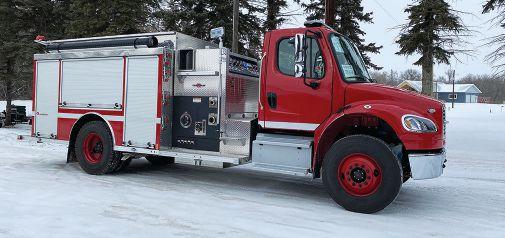
Rocky Mountain Phoenix delivered this new top mount pumper to the Balcarres Fire Department in Saskatchewan. Manufactured by Rosenbauer, this pumper is equipped with a Cummins ISC 8.3L
300 HP engine and Allison 3000 EVS automatic transmission. It sits on a Freightliner M2 106 chassis, also featuring a 275-amp alternator and a 2010 emissions engine with a diesel particulate filter and diesel exhaust fluid.
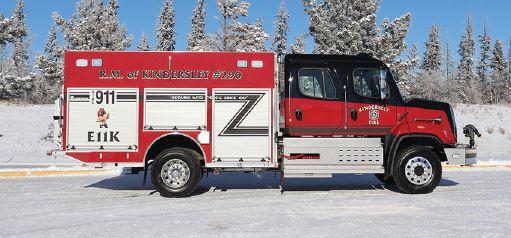
Kindersley Fire Rescue in Saskatchewan received this rear mount pumper from Rocky Mountain Phoenix. Manufactured by Rosenbauer, the pumper is equipped with a Cummins L9 400 HP torque engine and Allison 3000 EVS automatic transmission. It sits on a 2021 Freightliner 108 SD crew cab chassis, and features a 20 IG Class “A” foam tank, FRC TGA400 pressure governor and two electric rewind booster hose reels.
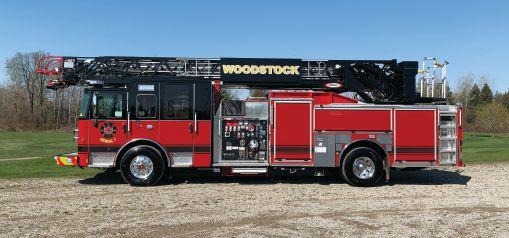
Ontario’s Woodstock Fire and Emergency Services received this Ascendant 75’ HD Ladder from Commercial Emergency Equipment. Manufactured by Pierce, it’s equipped with a Cummins L9 450 HP engine and sits on an Enforcer chassis. It also features a Husky 3 foam system, Waterous 2,000 GPM pump and holds 500 USG of water.
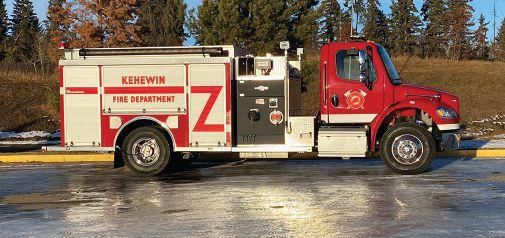
Kehewin Cree Nation in Alberta received this Rosenbauer pumper from Rocky Mountain Phoenix. Equipped with a Cummins 9L 300 HP engine and Allison 3000 EVS automatic transmission, this pumper sits on a Freightliner M2 106 chassis. It features a 1000 G water tank with a 20 G foam tank, InControl 300 pressure governor, and a Darley PSM 5000 LPM split-shaft fire pump.
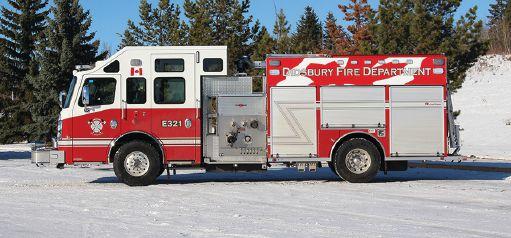
Rocky Mountain Phoenix delivered this Rosenbauer tanker to Didsbury Fire Department in Alberta. The tanker sits on a Freightliner 114SD chassis, and is equipped with an Allison 4500 EVS automatic transmission and a Detroit Diesel 12.8L 505 HP torque engine. It features a 48,000 lb rear tandem axle, front bumper TFT Tornado monitor with position indicator in the cab and a Waterous overheat protection manager.
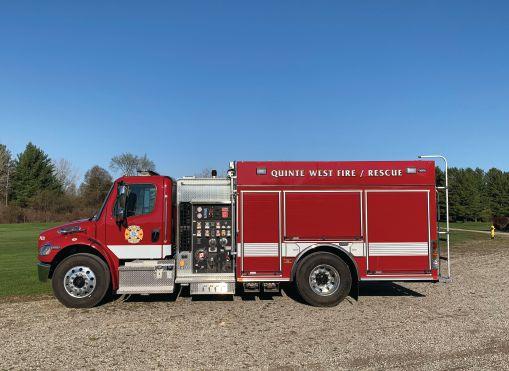
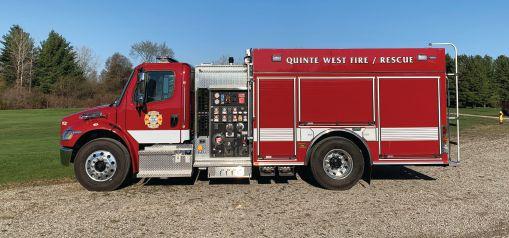
Commercial Truck Equipment delivered this pumper to Quinte West Fire and Emergency Services in Ontario. Manufactured by Pierce, this pumper is equipped with a Cummins B6.7 360 HP engine. It sits on a Freightliner M2-106 single rear axle chassis. The pumper also comes with a Husky 3 foam system, Hale 1,250 GPM pump and holds 1,000 USG of water
BALCARRES FIRE DEPARTMENT WOODSTOCK
KEHEWIN CREE NATION
IS YOUR DEPARTMENT READY? Preparing for industrial hazard response in your community
By JOHN LIADIS
As we grow in the fire service from first responders into officers, our dynamic perspective on situational awareness and preparedness changes. We start to evaluate risk on a new level and grow within our profession. We understand our surrounding areas as best we can, so that we can serve our community to the best of our abilities. One of those major responsibilities is working with our crews to understand the industrial hazards in our immediate response area and any potential mutual aid areas. As an officer or firefighter, are you aware of the types of industry in your surrounding area? How could your department play an integral role in supporting a major incident there?
Many communities live close to various types of industry, such as oil and gas, mining, pulp and paper, steel, nuclear power plants, chemical facilities, waste water treatment facilities, airports and many more. It is paramount that emergency service departments are able to respond effectively. This also applies to on-site industrial emergency response teams (ERT), as they have the responsibility of protecting people, property and stakeholders, alongside assisting in response efforts with the local responding agencies. As health, safety and emergency responses play an integral role in industry, there are more industrial ERTs with specific first-hand operations knowledge that can aid in response efforts. These industrial ERTs usually have a strong understanding of the specific hazards within their workplaces, know how to mitigate the hazard and what would typically be required in response efforts.
Industrial fire fighting can be challenging for municipal departments as there is a heightened risk associated with unknown factors, such as hazardous materials and access and egress routes. The way fires are
fought within an industrial setting differs on tactics and approach from a typical residential structure. One of the most valuable tools available for both industrial and municipal responders is to have prior knowledge and preparations in place. Having the ability to research the risk and prepare for the response in advance is one of the best common practices for many industrial departments and is typically mandated by internal policies. The key advantage of the industrial response teams is that they are subject-matter experts on the hazards in their own backyard. As firefighters on the municipal side, this can be an opportunity to take advantage of a very valuable resource.
Having the ability to build a pre-incident plan with the industrial emergency response teams will aid in understanding the capabilities of each responding agency and where
there may be further assistance required from a private contractor neighbouring a municipality or department. Knowing what resources are readily available, what can be requested, and the time delay associated with those alternative resources is extremely important. Knowing what additional equipment, tools, and apparatus the industrial response teams have will help build the strength of the initial response and form the foundation around the pre-incident plan. Knowing the level of training, the command structure and standard operating guidelines of each department on both the municipal and industrial side will further build on this foundation. The levels of ERT training may meet the current NFPA standard and could even exceed them. Areas of expertise may include, but not limited to, NFPA 1006, NFPA 1072 and NFPA 1081. In some cases,
there is a higher level of response and training within industrial ERTs when compared with neighbouring municipal departments. Service agreements can be established where an industrial ERT may be requested to assist a municipal department during a unique or major emergency. In some well-developed industrial parks, there are programs already in place across the country, where systems for mutual aid and resources for each agency are documented and easily accessed by the on-scene incident commander. This serves a very effective purpose and reduces time when it comes to requesting assistance from outside agencies.
Creating a joint training venture may open doors to many avenues for municipal departments and industrial ERTs. It can create a positive learning experience where career or volunteer firefighters can share their tactics, training and knowledge with the industrial ERTs cross-training, so that if an emergency arises, there is a cohesive plan in place. Participation in tabletop exercises and mock scenarios will strengthen relationships between agencies and create opportunities for growth. This training gives both types
of departments the opportunity to highlight deficiencies and create corrective actions to enhance response effectiveness. Working partnerships within the industrial community can also generate growth opportunity within municipal departments. It can initiate joint training sessions and open the door to
Creating a joint training venture may open doors to many avenues for municipal departments and industrial ERTs.
potential donations that can provide access to funding, tools, and increased effectiveness of unified command through shared knowledge and training. Knowledge and growth within a department is the foundation for safe and effective professional level of response. Here is a quick self-checklist for any
officer or firefighter with industrial facilities within their response areas to reference:
• What are the immediate hazards associated with each industrial facility?
• What resources are required to respond?
• Does the industrial facility have an ERT?What level of service is required from each responding agency?
• Are there any pre-incident response plans?
• What are the safe zone distances if it is a hazmat incident?
• Will there be a need for evacuation of nearby homes and shelters in place orders? These questions will make for good conversation on a training day, test your knowledge, and build up the newer firefighter’s mental toolbox while sharpening the mindset of senior firefighters and officers. Preplanning and training are always key to a successful, safe and efficient response.
John Liadis currently serves as an emergency response coordinator and fire chief at one of North America’s largest gold mining operations. Liadis is also a volunteer firefighter for Timmins, Ont..
Ladder Dating: The summary BACKtoBASICS
BY MARK VAN DER FEYST
For the last 11 issues, we have focused our attention on ground ladders with the intent of getting to know the ground ladder all the more, hence why the title of the series is Ladder Dating. In my introduction to this topic, I used the analogy of dating a person before marriage as being akin to the firefighter’s role in getting to know the ground ladder.
The ground ladder has proven to be a valuable tool on the fire ground with its quickness for deployment, effectiveness for rescues (both civilian and firefighter), and for gaining access. We can see in the past how the ground ladder has performed well for rescues. On Sept. 23, 2019, seven rescues were made during a three-alarm fire at a nursing home in Lehigh County, Pa.
As we come to the end of our series, I want to recap all that we have looked at in the last 11 issues, sort of a “Coles Notes” version of ladder dating. The main intent of this series is to arm the training firefighter or officer with the proper information and skill set to instruct their department’s personnel or fellow crew members on using the ground ladder.
The angle of the ground ladder was the first look at the series with a focus on not needing the exact 75 degrees for the ladder when it is raised against a building. Having a less intrusive angle, such as 65, 60 or 55 degrees, will still accomplish the same result of gaining access or performing a rescue, except without the time taken to ensure that we have the perfect climbing angle. The less intrusive angle will assist with firefighter survival during ladder bailouts, should it be required or performed. The ladder is tested to withstand the weight of a firefighter and civilian or two firefighters on a horizontal plane. Having the ladder against the building at a less intrusive angle will work.
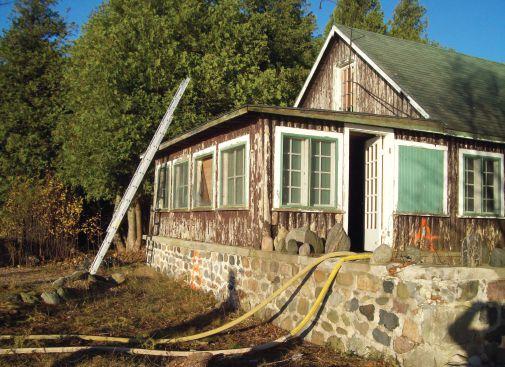
The placement of the ladder tip was explored with the message of always laddering the building with the tip of the ladder at, or below, the windowsill. The best position that a ground ladder should be set to is with the ladder tip at the bottom of the windowsill – all the time, every time. There are two main reasons for laddering a building: access and egress. The access portion involves the rescue of the occupants from inside the building, venting a window, and spraying water into the building. The egress portion involves firefighters needing to get out of the building quickly. Having the ladder tip at the windowsill allows all the functions of access and egress to be performed.
Ladder extension limitations involves knowing ladder math, common ladder lengths and what they can reach. A 24-foot ladder will reach the third-story window, while a 35-foot ladder will reach the fourth-story window. A 14-foot roof ladder is the same length as a 24-foot ladder bedded. A two-section 28-foot extension ladder is 16-feet bedded, while a two-section 35-foot extension ladder is 18-feet bedded.
We also looked at the halyard of the ground ladder and the role it plays with the ladder being tied off. The main reason behind not tying off the halyard after extending it is for immediate rescue purposes. If the ladder is being extended for other reasons, such as ventilation or gaining access to an upper portion of the building, and time is available to do this, then certainly tie it off, if required. But, the ground ladder can sit there with the halyard untied and it will still work. For multiple rescues at different points of the building with the same ground ladder, having the halyard untied will allow for quick extension, making the rescue, then lowering to move to the next spot on the building.
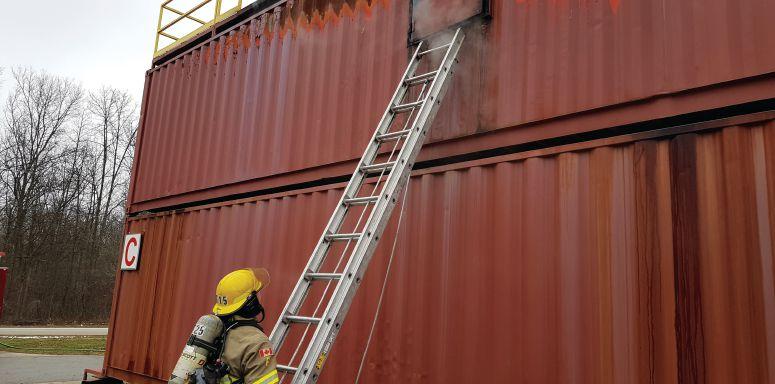
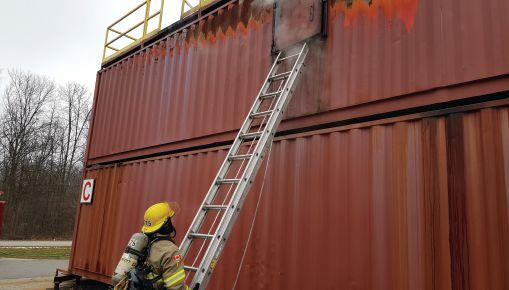
Photo 1: The ground ladder has been proven to be a valuable tool on the fire ground with its quickness for deployment, effectiveness for rescues (both civilian and firefighter), and gaining access.
PHOTOS BY MARK VAN DER FEYST
Photo 2: Having a good number of rungs above the roof line will also assist with getting off and getting back on easily.
BACKtoBASICS
Being familiar with the weight and feel of the ground ladder is how a firefighter develops muscle memory. The ladder will weigh differently based on the construction type of the ladder, be it solid beam or truss. The weight and feel of a ground ladder can be rooted into the firefighter’s being so that whenever they grab that ladder, it will not be a surprise to them as to how much it weighs or how it feels when trying to raise it into position.
Heeling the ground ladder is best from the front as opposed to from the rear of the ladder. At the front, the firefighter can observe more of what is going on, can assist the firefighter on the ladder, and will be out of the way should anything fall.
One firefighter can be effective using the high shoulder carry and ladder throw. The firefighter can easily throw the ladder up against the building from this position and also bring it back down in the same fashion. Having the ladder marked in the middle is one key aspect, as well as becoming familiar with the weight and feel of the ladder.
Working on the ladder can be done in one of three ways: heel-toe method, the knee method and the tool method.
Working on the ladder can be done in one of three ways: heel-toe method, the knee method and the tool method. These three options alleviate the need to use the dreaded leg lock when working on the ladder. Each of the three options allows the firefighter to be secured against the ladder while being able to get off the ladder easily at the same time.
Whenever getting on or off the ground ladder, the firefighter always wants to maintain positive control. This involves using both hands and being situationally aware. Having a good number of rungs above the roof line will also assist with getting off and getting back on easily.
The focus of the series was to explore what one firefighter can do on the fire ground with respect to ground ladders, but there is also a time when two firefighters will be needed to carry, raise and work on the ground ladder. Carrying a 35-foot three-section ladder or carrying two ground ladders at the same time is where two sets of hands will be needed and used efficiently.
I hope that this series assists you in going back to the ground ladder as a viable tool, not just a tool on the truck. As mentioned a few times in our series, practice with the ground ladder will make the firefighter more effective and efficient.
Mark van der Feyst has been in the fire service since 1999 and is currently a firefighter with the FGFD. He is an international instructor teaching in Canada, the United States, FDIC and India. He is a local level suppression instructor for the Pennsylvania State Fire Academy and the lead author of Fire Engineering’s Residential Fire Rescue book and other DVDs. He can be contacted at Mark@FireStarTraining.com.
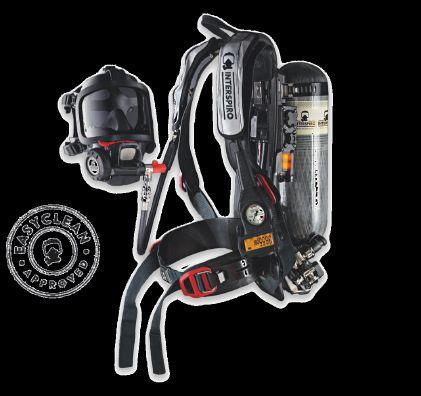
CANADIAN SAFETY EQUIPMENT IS PROUD TO BE A DISTRIBUTOR FOR THE INTERSPIRO RESPIRATORY PROTECTION LINE. THEIR STATE OF THE ART S9 S ONE OF THE MOST COMFORTABLE SCBAs YOU WILL EVER WEAR.
GIVE US A CALL AT 0182 OR EMAIL US AT INFO@CDNSAFETY.
No company has a richer history in respiratory protection than innovations have time and
F11 DRAGONFLY
COMPACT
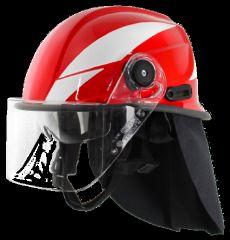
STRUCTURAL FIRE HELMET
MORE COMPACT MORE COMFORT BETTER PROTECTION
ü KEVLAR REINFORCED SHELL
ü Extremely comfortable
ü Lightweight and Compact
ü Internal drop down eye protection
ü External detachable face shield
ü Optional Earmuff clips and earmuffs
ü Custom logo available
ü Also suitable for Auto Extrication, Confined space, High
ü Angle Rescue, etc.
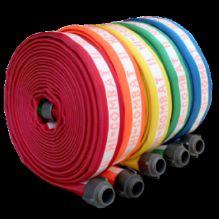
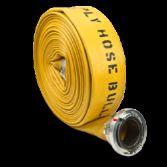
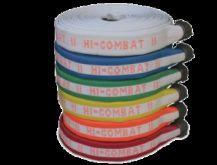
BullDog Hose Company (formerly ANGUS hose) proudly designs and manufactures industry-leading firehoses that are unmatched in quality and performance. Hundreds of North American fire departments depend on BullDog to get the job done safely and efficiently.
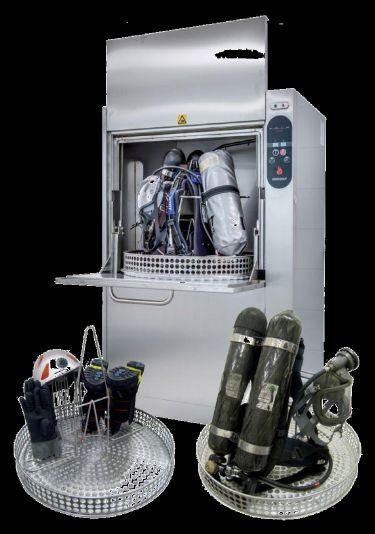
Using a Solo Rescue® heavy duty SCBA washing machine helps avoid exposing the crew to combustion gases, soot particles, toxins and carcinogens released in the maintenance and hand cleaning processes and also substantially lowers the time spent decontaminating firefighter equipment
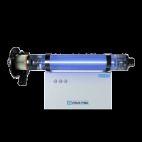
The new JORDAIR BVIRUS FREE™ breathing air filtration system (patent-pending) inactivates up to 99.9% of viruses including corona viruses, bacteria and molds at the air intake section of your JORDAIR breathing-aircompressor.
A COMPRESSOR FOR EVERY FIRE, BREATHING AIR and INDUSTRIAL APPLICATION
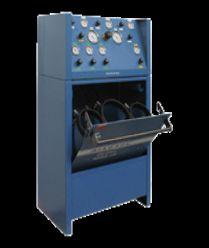
WASH/DECON TWO SCBAs IN 8 minutes
IN ONE HOUR YOU CAN CLEAN/DECON:
-14 SCBAs W/MASKS and CYLINDERS
ü REDUCED HEALTH RISK ü SAVES TIME 2/PKS IN 8 MIN ü EASY TO USE
IN ONE HOUR YOU CAN CLEAN/DECON:
• 30 HELMETS
• 60 PAIRS OF GOVES
• 20 PAIRS OF BOOTS
• Double the above numbers with a second rack
BY CHRIS HARROW Director of Fire Services
Minto and Wellington North
Ontario
RLEADERSHIPFORUM
Dealing with hate
emember the old adage your parents taught you: “If you don’t have anything nice to say, then don’t say anything at all.” Most people have heard this saying, but don’t really abide by it. Throw in the fact that we are in a prolonged pandemic event, and a large majority are not holding back on what they say or who it’s directed to. Anyone in a highly influential position dealing with the pandemic knows exactly what I am talking about and has felt the wrath of the words being directed towards them. After a while, it starts to wear on an individual and can drastically affect their mental health.
I was so disappointed recently when I was attending a meeting involving public health officials. Many of them started to share tales of unbelievably nasty voicemails left for them and brutal emails sent. All for just trying to do their job. It really made me wonder, why would anyone ever want to pursue a career in any of those professions in the future with the vitriol of the public always hanging over their head? How are these people handling the awful environment they are working in?
There is no doubt that everyone is getting frustrated and tired of the pandemic and its restrictions. This is causing people to take their frustrations out on those who are looking out for the safety of all Canadians, including some fire service personnel.
As leaders, we need to learn how to deal with the negativity from the people we serve. For the most part, we deal with negative comments frequently around budgets, staffing, salaries…pretty much anything to do with money. However, the pandemic negativity is a whole new level. No one in the fire department or public health was probably prepared to face this level of hate.
A huge part of leadership is recognizing not only the dedication of your staff, but the “over-dedication.” The ability to force people to take time off and step away to repair their mind is hard to do. However, it is absolutely necessary. It doesn’t matter what your status or profile is within this pandemic, you can’t function at a high level for a such a long time.
As leaders, we also need to ensure a positive environment is created within our organizations to try and combat the constant negativity. The number one thing I have found helpful in staying positive during the pandemic is staying off of social media content that you know is going to be hurtful and negative. There is nothing good that will come out of reading much of the negative content that is there. Don’t be drawn into taking a quick look to see what the public is saying, deep down hoping there will be a good word in there. People are getting tired and are drawn to the content on social media that backs their frame of mind where they want all of this to be over.
Staying off of sites created by citizen groups or other influential groups in your community is not a bad thing. If there happens to be a legitimate complaint on the site about your organization, it will get
As leaders, we also need to ensure a positive environment is created within our organizations to try and combat the constant negativity. ‘‘ ’’
Fire fighting, for the most part, is a well-loved profession. However, with more senior fire officials taking roles in the vaccine roll-outs and the pandemic in general, we are not immune to backlash from the public. Senior fire service personnel and our allies at public health need to ensure they have good coping mechanisms to help deal with the constant flow of negative comments being received. The group needs to find time to use their coping mechanisms and help themselves, but there are those who are so dedicated to the public they serve to the extent that vacation time and time off are not being used.
Chris Harrow is the director of fire services for the Town of Minto and Township of Wellington North in Ontario. He is a graduate from fire programs at Lakeland College and Dalhousie University and holds a graduate certificate in Advanced Care Paramedics from Conestoga College. He can be reached at c.harrow@mintofiredept.on.ca
to you eventually through the proper means. Many peers I have talked to have been infuriated with content they read online. When I ask why they even read it, they say it is their job to know what people are saying about their organization. While I agree it is part of a leader’s job to know this, it is also your job to get it from reliable sources. Do not subject yourself to unnecessary stress you can’t control.
Now is the time in this crisis to ensure we are looking out for one another, including all of our partners. Everyone on the front lines needs to bond together and support one another. Sending one kind message to a group you are working with can go a long way because it is something we don’t see much of these days. Go out of your way and show leadership by spreading kindness and positivity. You will be surprised how well it will work. It will not only make the person receiving the message feel good, but it will make you feel okay too.
BY GORD SCHREINER Fire Chief Comox British Columbia
TSTOPBAD
Pandemic or not, continue to improve yourself
he best firefighters spend very little time laying around doing nothing. They are constantly trying to improve themselves. They are constantly maintaining, enhancing their training, and keeping up with the latest trends.
We are fortunate that the fire service is full of great firefighters. You only need to watch one to see how much effort they put into their profession. The one thing they all have in common is their desire to continue to improve themselves. The fire service needs more great firefighters to ensure we continue to provide outstanding services, keep ourselves safe, and continue to enjoy the good reputation we have.
Want to be a great firefighter or fire officer? It all begins with you. Only you can make the change, for better or worse. Others can make suggestions or help you, but you must do it. Find yourself a good role model, or mentor, and observe what they do to be successful. One thing about great firefighters is they love to help others. They will eagerly assist you in becoming better. You can continue to make a positive difference in the fire service and the lives of others. Do not blame others for your shortcomings or failures. Do not make excuses; just get out and do it. I chuckle when someone tells me they are going to change. You do not have to tell me or anyone else — just show us. You are responsible for you. Look in the mirror and do what you need to do to move forward. Becoming a better ‘you’ is a lifelong journey, it never ends. It takes a constant effort. The people who understand this work hard every day to become better. You need to make sacrifices, lots of them. You need to put others first. You need to do more and expect less. You need to step up and do the right things to become a better version of yourself.
expectation of receiving anything. Great firefighters treat others better than they expect to be treated. Great firefighters are humble.
Great firefighters look after themselves. Move your body more, exercise is key to a healthy body. A fitter you will have more energy to become even better. Ensure you keep your mind healthy too. In our profession, we see many bad things. Take time off. We need to take time for our families and ourselves to balance the bad with the good.
As we age, eating properly is even more important as our bodies have a harder time dealing with the things we put in it, including excessive calories. The old adage of you are what you eat is true. Eat good to be good. Eat great to be great.
Be a safer you. As I age, I have become more cautious. It might be because it takes a lot longer for me to heal, or perhaps because I have learned a few hard lessons along the way. When working around my home, I am working and thinking safer now. I even drive much better than I used to. I take less chances and have more patience, even driving to a Code 3. I know that I cannot help if I do not get there safely. I also know I do not want to harm anyone in any way. I drive defensively and I leave my phone alone. I hope others will watch and learn from
Want to be a great firefighter or fire officer? It all begins with you!
It starts with you being nice to everyone you meet, especially to those of lesser fortune. Even on some days when you do not feel like being nice, lift others up and do not put others down. Do not criticize others. This is even more important during this very challenging pandemic.
I have had the pleasure of meeting and working with many great firefighters in my life. Watching and learning from others over the years has made me a better person and firefighter. It is very clear to me that I am in charge of who I am. I can learn from others and become a better me. I can choose to be a nice person or not. I have noticed that great firefighters seek opportunities to help others without the
Gord Schreiner joined the fire service in 1975 and is a full-time fire chief in Comox, B.C., where he also manages the Comox Fire Training Centre. Contact him at firehall@comox.ca and follow him on Twitter at @comoxfire
my better behaviour. I am becoming a better me.
Of course, I have always tried to make great fire ground decisions, but I can honestly say that, today, I make even better decisions as experience and learning from others has taught me a lot. When in doubt, I always lean towards the safety of our firefighters. I know I cannot save what is already lost, and I certainly do not want to be responsible for hurting someone. I wear my PPE more often now and make sure those around me are doing likewise. I want to be a great example for our team. I am open to criticism, and I feel I can learn and improve from this. I seek the input of others to help me adjust my sails.
Try new things to open your mind to change. Turn off the TV and social media. Reading further helps you expand your mind and makes it easier for you to accept change
Train, train and train some more. In the fire service, we must be training all the time. Lives depend on us doing our jobs correctly.
Inside every one of us is a great firefighter. Work hard to let your great firefighter out. Also, get off the couch and work on you!
OUR MISSION HAS ALWAYS BEEN SUSTAINABILITY. OF PEOPLE, PROPERTY, AND PLANET.
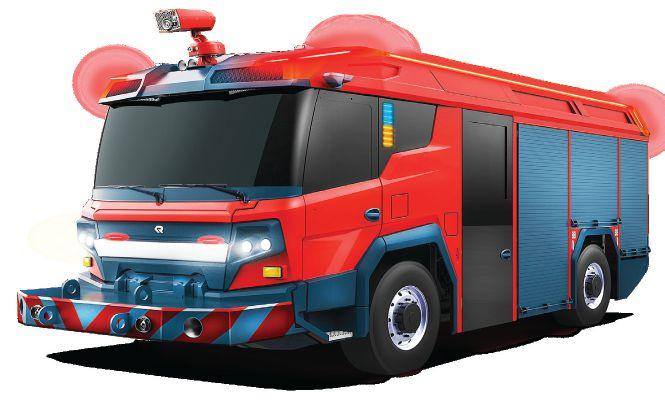
Since 1866, Rosenbauer has been called to fight fire. Creating a legacy was merely a bonus. What began 150 years ago as one man’s fight with fire has grown into the largest fire truck, apparatus, and emergency response vehicle manufacturer in the world. At 900 strong, Rosenbauer America is still family-owned today. A proud family of innovators and inventors dedicated to the craft. In one united effort to continue one man’s mission.
Sustainability has emerged as a new standard in how municipalities, governments, corporations and society are measured. The Rosenbauer RT (Revolutionary Technology) electric fire truck is the answer to that call. And a standard by which we at Rosenbauer judge ourselves as we innovate and invent the future of fire fighting. Putting water to flame has always been the objective. Now, we’re putting green on red in pursuit of a cleaner and more impactful way forward. The RT’s nearly emission-free power is only the beginning of a long list of revolutionary features, making it the most progressive and ambitious firefighting apparatus ever built. It’s the future right here, right now. Every innovation answers a need. The RT was engineered because the planet couldn’t wait. Despite a nearly silent operation, the RT screams intelligence and hollers efficiency. As a family-owned company, it’s personal. So if it has an “R” on it, you have our word on it. rosenbaueramerica.com.
Fire risk for Indigenous people
Here are the details and key findings of the most recent study on the heightened fire risk for Canada’s Indigenous people.
By LEN GARIS and MANDY DESAUTELS
Anew Statistics Canada study has exposed a disturbing heightened fire risk for Canada’s Indigenous people, pointing to the need for improved fire reporting and prevention to protect vulnerable individuals and communities.
Overall, Indigenous people in Canada are five times more likely to die from a fire than the general population, and that risk increases to 10 times if they live on reserve and 17 times if they are Inuit, according to the March 2021 report, commissioned by the National Indigenous Fire Safety Council (NIFSC) Project and funded by Indigenous Services Canada.
“This is disturbing data. We hope to learn more as we approach Stats Canada to investigate the Canadian Coroner and Medical Examiner Database to garner a deeper understanding into the circumstances around the deaths,” said executive director Blaine Wiggins. “We need this information to be culturally sensitive, while we hone our prevention and education programming to address this disproportionate mortality and morbidity risk.”
The report, entitled “Mortality and morbidity related to fire, burns and carbon monoxide poisoning among First Nations people, Métis and Inuit: Findings from the 2011 Canadian Census Health and Environment Cohort,” was authored by Mohan B. Kumar of Statistics Canada’s Centre for Indigenous Statistics and Partnerships and can be found on the NIFSC website at www.indigenousfiresafety.ca/mortality-and-morbidity-report-2021.
Research revealed significantly higher rates of fire-related death, injury, and hospitalization rates across the board for all Indigenous people, particularly among Inuit people and those living on reserve. It also pointed to the lack of building or fire codes
on First Nation reserves and the need for improved fire incident reporting.
The NIFSC Project commissioned this work to help fill the large gap in the reporting of fire incidents, deaths, and injuries for Indigenous people and communities, and to provide information that will support the development of effective prevention and protection measures. The study is believed to be the first in Canada to use a single data source and methodology to examine the rates of mortality and morbidity among First Nations, Métis, and Inuit populations. It then compared these three populations with the general population nationally and regionally.
■ KEY FINDINGS
Using data, including the 2011 Canadian Census and 2011-2018 Canadian Vital Statistics database, Statistics Canada examined age-standardized mortality and hospitalization rates related to fire, burns and carbon monoxide poisoning among First Nations, Métis and Inuit people in Canada as compared to the general population.
The key findings are as follows:
• The fire-related death rate was 1.6 for First Nations, 0.6 for Métis and 5.3 for Inuit people per 100,000 person-years, compared to 0.3 among non-Indigenous people, which is an increased risk of five, two and 17 times, respectively.
• The fire-related death rate for First Nations people living on reserve was 3.2 per 100,000 person-years. This figure is over 10 times the rate of 0.3 among non-Indigenous people.
• The burn-related death rate was one death per 100,000 person-years for First Nations people, which is five times the rate of 0.2 among non-Indigenous people.
• The hospitalization rate for fire injuries was 7.5 for First Nations, 2.8 for Métis
and 8.8 for Inuit people per 100,000 person-years, compared to 1.7 among non-Indigenous people, which is an increased risk of four, 1.5 and five times, respectively.
• The hospitalization rate for burns was 13.9 for First Nations, five for Métis and 13.5 for Inuit people per 100,000 person-years, compared to 4.3 among non-Indigenous people. This is an increased risk of three, 1.2 and three times, respectively.
• The carbon monoxide death rate as 0.5 for First Nations, 0.7 for Métis and 0.6 for Inuit people per 100,000 person-years, similar to the 0.6 among non-Indigenous people.
• Building and structural fires were four times more likely to be the cause of death than other types of fires such as ignition of highly flammable materials, forest fires, camp fires, intentional self-harm or assault.
• Indigenous males suffered statistically more fire-related deaths, burns and hospitalizations than Indigenous women.
■ ISSUES EMERGING FROM THE STUDY
The research shows that many of the factors affecting fire risk for Indigenous people have also been linked with increased fire risk in the general population. For example, the social determinants leading to higher fire deaths and injury for Indigenous people included poverty, inadequate housing and lack of working smoke alarms. As well, previous analysis dating back to 2001 looked at fire-related deaths among Status Indigenous people in B.C. has suggested an association with lit cigarettes or use of electric heaters near flammable materials, use of faulty electric heaters, unattended cooking oil on stoves and alcohol consumption.
Notable considerations specific to
Indigenous populations, according to the report, include underfunding for fire services in Indigenous communities resulting in a lack of fire halls and fire fighting equipment, as well as a lack of legislation mandating compliance with building and fire codes on reserves.
While the new research has helped to coalesce existing data, it reveals significant deficiencies in the comprehensive reporting, collection and analysis of fire mortality and morbidity among Indigenous people at a national level. Many previous data collection efforts focused on individual or a few jurisdictions; information specific to Métis and Inuit populations in particular is lacking. Carbon monoxide data is also limited.
While the new research has helped to coalesce existing data, it reveals significant deficiencies in the comprehensive reporting, collection and analysis of fire mortality and morbidity among Indigenous people at a national level.
“The increased fire risk for Indigenous people is concerning and challenging; however, we have launched just under 80 programs and services with a proven track record of addressing these issues with non-Indigenous and other vulnerable populations,” Wiggins said. “We hope to see sharp declines in mortality and morbidity as our program and services take hold.”
In the last year, the NIFSC Project has launched dozens of programs that provide evidence-based fire and life safety training and education to more than 650 First Nations communities in Canada. The project, which does not provide funding to communities, but rather offers free fire and life safety training and education programs, seeks to build on-reserve capacity in a variety of areas previously not available to First Nations communities. These include community fire safety, governance support, infrastructure and engineering support, fire department management and operations, and fire investigation services.
To help address the data gaps related to fire incidents on reserves and support effective long-term decision making, the NIFSC Project is also developing a National Incident Reporting System and encouraging First Nations communities to report fire incidents.
Additionally, the Aboriginal Firefighters Association of Canada, NIFSC’s parent organization, is advocating for the development of a national First Nations Fire Protection Act and is offering to work with First Nations leadership as a technical resource.
The hope is that by providing Indigenous communities with the same level of fire and life safety service as non-Indigenous communities, their death and injury rates will begin to align with that of the general population.
Wiggins noted that the increased fire risk for Indigenous people should be of prime concern to all fire chiefs across the country.
“A large proportion of Indigenous people live off-reserve and in our communities, and yet their risk is much higher than that of their neighbours. This report is a wake-up call that much more can be done
to protect Indigenous people from fire death and injury, wherever they happen to live,” Wiggins said.
“The job of the fire service is to protect all people, including the most vulnerable. We need to make an effort to understand the unique circumstances surrounding the increased risk for Indigenous people and adapt our prevention and protection measures accordingly.”
Information on the NIFSC Project can be found at www.indigenousfiresafety.ca. Download and learn more about the study at www. indigenousfiresafety.ca/mortality-and-morbidity-report-2021. For additional information, contact Len Garis at Len.Garis@indigenousfiresafety.ca.
Len Garis, director of research for the National Indigenous Fire Safety Council, a senior advisor for the Centre for Social Data Insights and Innovation at Statistics Canada, Fire Chief (ret) for the City of Surrey, B.C., associate scientist emeritus , B.C. Injury Research and Prevention “Unit, an adjunct professor” in the School of Criminology and Criminal Justice and associate to the Centre for Social Research at the University of the Fraser Valley (UFV), and a member of the Affiliated Research Faculty at John Jay College of Criminal Justice in New York. Contact him at Len.Garis@indigenousfiresafety.ca. Mandy Desautels is the director of strategic initiatives at the Aboriginal Firefighters Association of Canada. She holds a B.Sc. in global resource systems from the University of British Columbia and a master’s of healthcare administration from University of British Columbia. Prior to joining the NIFSC Project, she worked for BC Emergency Health Services and prominent NGOs. Contact her at MandyD@afac-apac.ca.
These have been challenging times
By MANFRED KIHN
S
ometimes, in challenging situations, training can be the first area to be neglected. With the social distancing rules in place, some fire departments have continued with their drills and some have been hesitant of bringing extra crews together in person, while others have halted all training until further notice.
If your training schedule has been disrupted, let’s use this time as a refresher. I’ve pulled together the most easily forgotten thermal imaging tips. Let’s dive in!
Keep your vision. Wipe both the display and front germanium lens on your thermal imager (TI) often during fire attack/suppression. Dirt, carbon and fogging inhibit the ability for heat to pass through the lens to the detector, lowering the level of heat detail on the monitor. This can limit your information and may impact proper image interpretation.
Know what’s normal? We all understand that a thermal imager tells us what is hot and what is not. But, if we don’t benchmark what “normal” looks like, how do we know what is not comparatively normal? For instance, a structure in the heat of summer will look completely different in the cold of winter. Both appear as “normal” heat images based on the emissivity of the building construction materials, temperature, and sun exposure. Knowing what to look for that is not normal takes practice.
Look behind you. When entering an unknown structure using a thermal imager, it’s important to also turn and look back, even though you are using a TI. As you move through a structure passing through multiple doors, the landscape looks different behind you. Occasionally, take a look at your potential exit course so you can paint the image in your mind.
Beware of reflections. Modern day kitchens are a potential room full of reflective surfaces. Stainless appliances, granite counters, high gloss wood cabinets, and marble/ceramic floors can all give false
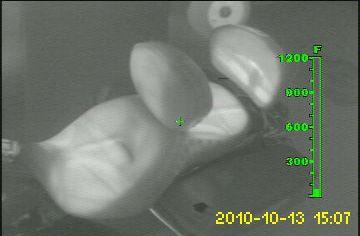
By using a thermal imager, look at all seats, front and back, on downed motorcycles to ensure for accountability against ejected victims.
impressions. One of the most common rooms for fire can also be offering the most reflective and possibly misleading images. If you think that you are looking at yourself through the lens of a TI, then that is your reflection. Just to confirm, give a little wave. That is you waving at yourself!
Share what you see. Paint verbal images for the rest of your crew as you use thermal imaging. Remember, you may have the benefit of a strong visual through your TI, but often, your crew following behind will be blind in the current conditions. Giving good verbal descriptions of room layouts and contents will improve the ability for the entire crew to move more effectively through unknown structures.
Don’t forget the floor. Sounding the floor is still required, even when you’re using thermal imaging. Did you know that liquids on a floor will often appear the same as a hole in the floor to a TI? The imager will identify a difference in the floor area. Increase your safety by combing your visual cues with basic fire fighting tactics to better identify floor stability.
Play hide and seek in the woods. This is a great training activity while social distancing. Do you understand the limits as well as the advantages of grid/distance detection that a TI offers? Having a cooler background while looking for a victim that is generating more heat will be seen for a greater distance. The opposite occurs when
you have a warmer background and a victim not generating much heat, who will only be detected at a shorter distance. Learn what you can see or not see and understand the relationship of distance and body heat.
Hazard checks. At MVCs with rollover vehicles, be sure to use a TI to check for any potential hazards, such as downed power lines and fuel spills. Touching undetected hot wires would be a fatal mistake!
Victim check. By using a TI, look at all seats, front and back, including child carrying seats for heat signatures during MVC rollovers or downed motorcycles. That will ensure for accountability against ejected victims.
Keep batteries in top condition. Battery maintenance on your thermal imager is vital. You can maintain your batteries by draining and recharging on a schedule. Double check with your crew if you aren’t actively implementing a battery maintenance schedule. Here’s my favorite tip: every time “C” shift works on Friday, have them drain the battery, replace it with a spare, and recharge the other.
Grab the TI on every call. There may be some calls where a thermal imager doesn’t seem like a great fit. However, it can provide a benefit in many circumstances. For instance, even when working in confined spaces.
Thermal imagers are only as effective as the end-user’s interpretation or misinterpretation of the image. To an inexperienced eye, the best technology can be useless or possibly fatal. Training during these unprecedented times is equally important as the message is clear: Practice, practice, practice.
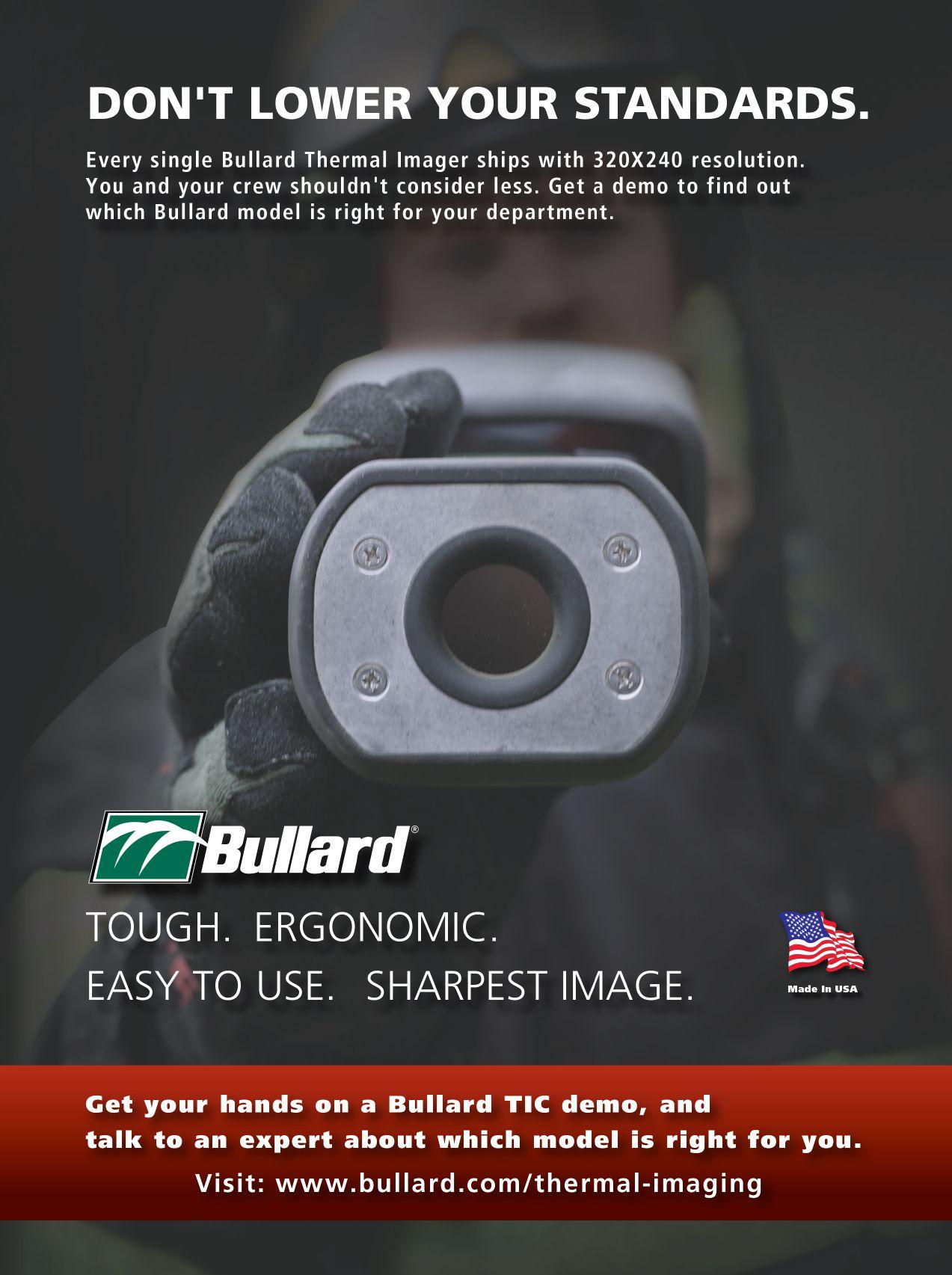
Manfred Kihn is a 19-year veteran of the fire service, having served as an ambulance officer, emergency services specialist, firefighter, captain and fire chief. A member of Bullard’s Emergency Responder team since 2005, he is the company’s fire training specialist for thermal imaging technology. E-mail him at manfred_kihn@bullard.com.
PHOTO CREDIT: BULLARD
TRAINER’SCORNER Teaching not only what went right, but what went wrong
By ED BROUWER
In this edition of Trainer’s Corner, I’d like to share an exercise that may prove valuable for you and your crew.
For this exercise, you will need a roof ladder with adjustable hooks (a picture of one will do if you don’t have access to one), a flip board (or large pieces of paper), a marker, paper and pens or pencils for each member.
Set the ladder up against a wall or lay it on the ground, whichever works for you. Ask your members to take a good look at the ladder. Then, instruct your members they have five minutes to quickly come up with 10 things you can do with that ladder. Have them write down any applications they can think of using the paper and writing tools supplied. They should not share their thoughts or converse with others in the group.
Try not to give any hints as to possible suggestions. Let each firefighter figure it out for themselves.
For your information, there are more things you can do with a roof ladder than climb up or down. We have used roof ladders with tarps in salvage and overhaul, for negative ventilation fan support, and the rescuing of a downed firefighter through a narrow opening, just to name a few.
Note: This really isn’t about the ladder as much as it is about getting your members to think outside-the-box.
When the time is up, call the group together to do some brainstorming. Give a marker to anyone in the group and ask them to write one idea on the flip chart. When they have successfully written out one suggestion, ask them to explain their answer. When they are finished, instruct them to give the marker to someone else in the group. That person then does the same thing, writing down their suggestion and explaining their answer.
What went right and what went wrong? Taking the time to go over an exam one-on-one with a firefighter trainee builds trust and improves learning.
No duplicate answers are allowed unless the person answering can give a different reason for the duplicate answer. Continue through the whole group until you have exhausted all possible responses.
The objective of this simple lesson is to get your members to have an inductive moment, or as I refer to it, an “aha” moment. Hopefully, you will hear a few comments like, “I never thought of that,” when new ideas are presented.
Wouldn’t it be something if your members actually recognized that they had something to contribute to your instructional conversations? Oh, if we would only listen.
At times, instructors are so bent on getting the lesson done that they don’t allow time for their students to digest what they are learning. It seems we are on a mission to check the ‘boxes’.
Let me ask you a question: Have you ever taken a course where the instructor tries to help you by telling you the material
will be on the exam? The problem with that is, human nature being what it is (prone to laziness), we lock on to those 20 or so points that are “on the exam”, and do not really give our full attention to the whole subject matter.
It seems it is all about passing this course to move on to the next. Before you think I’m exaggerating, think about how we mark exams. Most use an answer key. You simply lay the key over the student’s exam answer sheet. The coloured-in dots that match are marked correct, while those that don’t are marked wrong.
The students get their marks, but seldom (unless they ask) do they know which questions they got wrong. We have taught our students to ignore the 25 per cent they got wrong and focus only on the 75 per cent passing grade.
My practice was to go over each exam individually. It took more time, but it produced some positive results. Sitting down
with each firefighter trainee, I could show them the question they had trouble answering. Sometimes they would share how they read the question wrong or were confused as to which of the multiple-choice answers were “most right” (you must admit, some multiple-choice answers leave a lot to be desired). The key here was that showing them the question they got wrong opened an opportunity for dialogue. It also showed the trainee that I, as an instructor, thought of them to be important enough to spend time with. I guess I was a pain for my teachers, but I considered it important to know what I got wrong.
As a side note, while I was marking exams using answer keys, I found multiple mistakes. That means if the person marking is just looking for a filled-in circle rather than actually reading the question and answer, it is possible to mark correct answers as wrong.
Too often we get exactly what we ask for. If all you expect from your students is to check the box, you will end up with firefighters that do not know enough of the subject to make logical decisions when it matters most.
The firefighter instruction course is made up of more than a dozen subjects, everything from orientation to survival. Each of these subjects are made up of multiple core skills. Take your time instructing each core skill. Firefighter training is not a race, it’s more like a marathon.
One final point: If your members have come to know that you are willing to meet with them one-on-one to discuss training matters, they will also trust you with their ideas or suggestions. That, my friend, is a much bigger deal than it sounds. In fact, that confidence that you
build in the trainee, considering the hour in which we live, could become a life saver. Many first responders are struggling under the mental impact of this pandemic. Unfortunately, not all of them have someone to talk to about it.
We are just now beginning to see the mental impact of COVID19. It is speculated that the impact of this pandemic could claim more lives than the virus itself. Even as I write this in B.C. in May, our province is going into yet another lockdown and enforcing travel restrictions that allow essential travel only. Many first responders are not just reaching their limits, they have blown past them. The true impact of all of this will not be seen until the pandemic ends. However, if we wait until then to do something, it’ll be too late.
I am humbled by this opportunity to contribute nationally to the Canadian fire services through my Trainer’s Corner column, which has been publishing for 20 years now. Know that I also wear my chaplain’s hat during these unprecedented times and pray for all our first responders.
Stay safe out there, and as always remember to train like lives depend on it, because they do.
Ed Brouwer is the chief instructor for Canwest Fire in Osoyoos, B.C., retired deputy chief training officer for Greenwood Fire and Rescue, a fire warden, wildland urban interface fire-suppression instructor and ordained disaster-response chaplain. Contact Ed at aka-opa@hotmail.com.
Understanding Stoicism
The philosophy behind developing a positive cognitive lifestyle
By NICK HALMASY
I’ve played guitar, rather spuriously, for the better part of my adult life. Introduced to music at a young age, I still own, and sometimes play, the few guitars that I have. There is a marked decrease, however, in the skills and songs that I used to know. I guess, in some instances, if you don’t use it, you do lose it.
Why, we may wonder, do we continuously practice our first aid and defib? Or, even though it’s superiorly boring in relation to, say, forcible entry, do we continue to practice pump operations? You got it, after all, right? What more can we learn?
In clinical practice, we are teaching “skills and tools” for individuals struggling with mental health. This, in fact, is often the preamble to selling someone on entering into therapy, isn’t it? “This is hard, and will be hard, but at the end we hope you have the skills and tools…” is the script for any structured therapy process.
I say it and my colleagues say it. I’ve come to understand that we are underselling the resources that we have at hand. In fact, it’s also the way you have been introduced to mental health, mental wellness, and mental health programs and trainings. Skills and mental tools is accurate but what about practice makes perfect?
Cognitive Behavioural Therapy (CBT) is the largest, most well-researched, reliable and valid approach to mental health that we have. Almost any “new” approach comes reliably from the philosophy of CBT and its approach to treating mental health. And, there is a reason for that. It was one of the first psychotherapies that treated the holistic individual, in understanding that there are three components to mental wellness to be addressed: emotional, cognitive and behavioural. These interplay with each other.
None is a standalone, and there is no linear process. Just like basic fire chemistry, you need a few components to start a fire, but to keep it going, or to grow it, we need a continuous interplay of the components.
But, like playing guitar, defib, or pump ops, skills and tools are susceptible to metaphoric rusting. Imagine, for instance, if all we needed was a single CPR course and and we never looked at those processes again. We roll up on a VSA. Can you imagine you would be adept? No, which is why we’re put through the ringer a couple times a year.
What does this have to do with anything? Well, I’m attempting to change the conversation of mental wellness to capture this deeper understanding. This will be a three-part series on developing a “cognitive lifestyle” that works to prevent the rusting of those skills and tools you develop. We’ll have a mixture of areas that inform this process, including research, clinical skills and philosophy. This article will explore the behavioural side, the next will look at the emotional realm and lastly, we’ll venture into the cognitive.
Firstly, we should ask ourselves whether the concept of cognitive lifestyle is a “new” idea or not. I certainly haven’t heard it spoken about in this way before on any recent medium, be it news or otherwise. It isn’t new, though. In fact, it’s pretty darn old. Thousands of years old.
In the days of the toga being a pretty stellar wardrobe option, philosophy was at its pinnacle. And, back then anyways, philosophy was more than bearded men smoking pipes and pondering the universe — it was a way of life and being. Philosophy was often conducted in the gymnasium, where sedentary life was unvirtuous and its interests were vast. There are plenty of different, interesting philosophies to look at, but only one concerns our present day problem. Stoicism.
Now, before we dive too deep, let’s face the biggest misconception to this word. You likely understand, as I did, Stoicism to be the emotionless approach to things. To be stoic is to wear problems and issues free from any
Cognitive Behavioural Therapy, or CBT, is the most valid, well-research approach we have.
emotion at all (I argue this is impossible, but regardless, this is what we see this as). In fact, our beloved ideal of the salty firefighter presents us with just that frame. The problem is that this has been a major misconception of the Stoic philosophy.
“Their goal wasn’t to banish emotion but to minimize the number of negative emotions,” writes William B. Irvine in his book The Stoic Challenge. Compare that with a modern-day CBT slogan: “CBT is based on the concept that your thoughts, feelings, physical sensations and actions are interconnected, and that negative thoughts and feelings can trap you in a vicious cycle.” (This was taken from the National Health Service in the UK, where they have had a long publicly funded CBT program with huge success.) Oh, and we now have such a program too, at least in Ontario. If you are interested, look up Ontario’s Structured Psychotherapy Program. It’s free.
Now that that’s out of the way, let’s get down to why the marriage of a lifestyle-like approach like Stoicism combined with a tried and true therapeutic approach is highly likely to provide you with the lasting and necessary cognitive muscle memory to continue to thrive and grow in your career. What might our first step be?
■ THE BEHAVIOURAL
The emotional and cognitive facets will need their own space, so we’ll start with the least intensive, though still important component. We don’t often think of our behaviour as being an important component to our mental health, but we should (go back to see what I wrote on exercise and the prevention of PTSD in the March 2018 edition of Fire Fighting in Canada). It is, however, integral to our mental health for various reasons, the largest being that our behaviour may actually make us sicker.
In treatment for almost all kinds of mental health, we help people to identify what they are avoiding. Now, this may seem obvious, but it isn’t always. Avoidance takes on many different forms. For instance, seeking reassurance about something is a form of avoidance, especially when you know know you are doing something correctly, but feel compelled to “double check”. Over time, this can sensitize us to the uncomfortable feeling of doubt, lower our threshold for tolerance, and produce reassurance seeking more often and more quicker. Accumulating over time, this develops into a difficult-to-overcome habit of avoiding uncomfortable situations, and this then starts to generalize.
You see, the thing that you may avoid isn’t actually the source of your suffering, it is the emotional experience that we have attached to that thing.
Avoidance of triggers to a traumatic event is a component of the diagnosis of PTSD, but is also a common trait in anxiety, generally. Looking at this from a strictly CBT lens, we would address the underlying avoidance (i.e. asking you to confront otherwise objectively safe situations). This is known clinically as exposure, which is a skill you would practice until your distress came down and the new learning about that situation was ingrained. The downside is that after treatment is done, we can quickly become complacent and begin to fall back into these old behavioural habits. I call this the antibiotic effect. The Stoic requests that we consistently engage in these things, as a matter of daily habit.
You see, the thing that you may avoid isn’t actually the source of your suffering, it is the emotional experience that we have attached to that thing. We call these emotionally driven behaviours. They are
important in understanding and overcoming the fears that we experience, be it from trauma or anxiety, or on the other end, where we may find that we are just beginning to develop these unhelpful habits. Recognize that the emotions you are experiencing may not be telling you the truth about the reality (dangerous situation versus objectively safe situations). The Stoic understands that “we don’t react to events; we react to our judgments about them, and the judgments are up to us,” as eloquently stated by the philosopher Ward Farnsworth.
We don’t need to pray for constant tragedy to befall us regularly in order to practice either. Practice requires us to focus on the small events, building confidence and trust in our abilities in an effort to be able to use them on the big events. One interesting behavioural solution was proposed by Donald Roberston, author of How to Think like a Roman Emperor, in an interview on UpTalk podcast. Robertson suggested that we act as if the troubling event occurred a year ago. We are providing a distance that time provides, but using our agency to expedite the process. Behaviourally, we are challenging ourselves to act (and think, because we can’t be without it) as if you are not tackling the hard thing for the first time, but instead tackling it for the hundredth time, and how you may act and approach those situations. Experience, especially when performed from a positive, adaptive angle, is a great teacher.
We’ve broken down the misconceptions that may lay between an understanding and open mind with regards to an ancient way of living, combined it with its modern analogue, and examined why it makes more sense in the long run to view any mental wellness approach to be one of a cognitive lifestyle change, versus the collection of tools to be employed at sporadic and periodic points of time.
Here’s your homework:
1. Pay attention to your behaviour. Do you avoid unknown callers, certain work-related tasks, certain conversations, different issues, old locations of calls, etc.?
2. If you are struggling with motivation, plan out specific behaviours on a weekly schedule and follow that plan, not your mood. Pay attention to your motivation changes.
3. Do something uncomfortable. Put yourself in that situation. Pay attention to what you learn about it.
4. Track all of this for reflection.
Nick Halmasy is a registered psychotherapist who spent a decade in the fire service. He is the founder of After the Call, an organization that provides first responders with mental health information. Contact him at nhalmasy@afterthecall.org.
•
•
•
•
•
Mental health mayday
Mental health mayday procedures should include your family.
By PATRICK J. KENNY
One of the fire service mantras is “leave no one behind.” The objective is if a fellow firefighter is in trouble and calls a mayday to be rescued, we recognize the danger, provide the resources, and support actions that save that individual. However, despite reviewing statistics from various sources that appear to indicate firefighter suicides are higher annually than line of duty deaths, mayday calls aren’t used when addressing our mental health. It’s time we expand the scope of a mayday call to include when our mental health is in jeopardy.
We have a specific fire department mayday standard operating procedure (SOP). I’m proposing creating a mental health mayday SOP that extends to both our professional family and personal family (significant other, children, mom, dad, brothers, sisters, etc.).
As with any good procedure, let’s identify the problem first. As leaders at any level in our organization, we can fail to recognize the impact of our personnel’s various traumas, whether at work, home, or both, on their mental health. Those traumas also impact their family. When you raise your right hand and take the oath to assume your chosen vocation as a fire service member, your family is taking the oath also.
The concern about the mental health of a firefighter, regardless of rank, has become even more prominent in the past year due to the pandemic and the heightened anxiety level. No longer when you respond to an emergency are you endangering only
your well-being, but now there is a potential that you might bring a lethal disease home that could impact your family too.
■ MENTAL HEALTH CHALLENGES FOR FIRST RESPONDERS AND THEIR FAMILIES
If I asked you as a firefighter: “Do you share with your family something as simple as feeling agitated about the way a call went or feeling sad about the outcome?” Most will answer “no.” Why? They have an attitude that their family “didn’t sign up for this, so I will spare them the pain.”
The next time you think you’re alone with the impact of a trauma, realize that your entire family rides the seat with you.
That attitude and associated actions aim to protect their family from the devastation they had witnessed and the related feelings (i.e., sadness, helplessness, anxiety), while very noble, that doesn’t work.
When you walk in the door to your home, the first ones to know that you have been impacted by something are your significant other and your children. The problem is they don’t know what happened. Thus, they may assume your negative attitude is a direct result of something they did, so they shoulder the blame.
Now, I’m not advocating walking in the door and sharing the most gruesome details of a call. I am talking about sharing the fact that something impacted you that hit you square in your compassionate heart.
I am a proponent of creating a family mental health mayday SOP. This procedure recognizes that your family is impacted by what you are exposed to as a firefighter,
When you get home, your spouse and children are the first people to see the impacts of your day.
identifies action items to be taken, and provides accessible resources to address the exposure to make you a stronger family.
The family mental health mayday SOP accomplishes two things. One, it takes the burden off you of portraying a superhero in front of your family. Two, it takes your family off the emotional hook and clarifies that the issue(s) you are dealing with has nothing to do with them.
By showing your vulnerability, that you are not some superhero, you are reflecting strength, not weakness.
■ FAMILY MENTAL HEALTH MAYDAY SOP IN ACTION
The most obvious example I can share of a family mental health mayday SOP is from one young lieutenant who approached me after I did one of my son Sean’s mental health presentations. The lieutenant had gone through a difficult six months experiencing two sudden infant death calls and he had to put his dad in a nursing home.
I don’t need to be a psychologist to know that somebody who experienced those three things in six months has been impacted and needs follow-up, even if it’s just to confirm what they’re feeling is normal.
He found himself self-medicating with alcohol. After his significant other challenged him, he went for counseling. The counselor encouraged him to share with his family when he felt anxious, depressed, etc.
He decided to develop his own family mental health mayday SOP to make his mental state transparent for his family. It clearly defined actions to take when a threatening situation was imminent, this time to their relationship. The procedure involved two ping pong paddles, one green and one red he mounted inside his hallway by the front door of his home.
RED PADDLE
If he had a troubling day for whatever reason, bad calls, lack of sleep, etc., upon entering his home, he grabbed the red paddle. That paddle indicated he was troubled, but it was nobody’s fault in their household. He was good with all; he just needed 30 minutes of alone time to reset and become their husband/dad.
■ GREEN PADDLE
If, on the other hand, he had a good day previously, he grabbed the green paddle. That paddle indicated it was okay to go to the waterpark or maybe buy a new couch. After a short amount of time, he learned not to grab the green paddle too often, or he might have to take out a second mortgage!
He told me that “procedure” continued for about a month, and then everybody knew when he walked in the door if it was a red or green paddle morning.
Your procedure to convey your pain doesn’t have to be complicated. However, like any other safety procedure, it must be clearly communicated.
Here are the top three mandatory components of your family mental health mayday procedure:
1. Significant other: Stay connected to your spouse/significant other during traumatic times. This can be as simple as scheduling regular date nights to have quality time together. Communicate your feelings openly and honestly and expect the same in return. Like in any well-developed SOP, communication and teamwork
are everything, and you must work at them continually.
2. Family: The next time you think you’re alone with the impact of trauma, realize that your entire family rides the seat with you. It’s essential to communicate with them for the integrity of your mental health and theirs. That communication fortifies all the relationships needed for a strong family. Don’t be afraid that your family will lose respect for you because you show that you are human. Look at it instead as an opportunity to role model that it’s okay to call a mayday and ask for help when you need it. Allow yourself to be vulnerable by being honest.
3. Resources: Know what mental health resources are available for both you and your family. It is not a matter of if, but when, you or a family member may need mental health assistance. Whether peer support, an employee assistance program, chaplain or vetted psychologist, know how to contact them and what they can provide.
The components covered are critical to strong family relationships. So go home and, with your family, develop your own family mental health mayday SOP.
Patrick J. Kenny has been a member of the fire service for 38 years, a chief officer for over 25 years, and the author of the international bestseller TAKING THE CAPE OFF How to Lead Through Mental Illness, Unimaginable Grief and Loss. He has presented in multiple countries on Mayday for Mental Health® and written articles on mental health, leadership, fire safety, and fire code challenges. Learn more at https://patrickjkenny.com/.
BY TOM DESORCY Fire Chief Hope British Columbia
TVOLUNTEERVISION
Building unburnable bridges
he other day, I heard someone say “don’t burn your bridges,” a phrase that at first conjures up what I consider to be obvious. You shouldn’t destroy the path you used to get to where you’re going, as you may need to use it again to get back to where you came from. This is a common metaphor often referred to if someone, for example, quits a job and bad mouths their organization on the way out the door. Chances are you’re going to run into those folks again somewhere down the road and the bridge will be gone.
From a leadership perspective, this phrase makes me think well beyond that. First, let’s consider the bridge itself, the actual structure built with the intent to take you from one point to another. Usually this is done to cross over an obstacle and it’s often a shorter, easier path to travel. A bridge is a complicated structure. Sure, you could place a log across a creek and walk over it, but over time that simple walkway will likely need an upgrade. Soon it will become used by others and the needs of these others will likely prompt a redesign. Build something for one person and everyone will want to use it. In hindsight, you should have built it right, for many purposes, from the very beginning.
So, how does this metaphor apply to the fire service? If there are bridges to burn they have to exist in the first place. Life is a journey and the fire department, for many of us, is a big part of that. As I have travelled my way through this service in the last 35 plus years, I can’t help but look back at those bridges I’ve crossed to get to where I wanted to go, and more so, the input I had in creating or building those very paths to my destinations.
reach to some is easily attainable with the right approach.
When I began as a new fire chief, I thought I was fortunate as I was the local person. I grew up in the community. I was one of the volunteer firefighters and everybody knew who I was. As their new leader they would have no issue in following me wherever I chose to take them. Well, for anyone stepping into a leadership role, and for the first time at that, one of the hardest roads to the top is through the often rough terrain of a veteran team. Those are the members that back your vision 90 per cent. The problem is the 10 per cent that’s stuck in the ways of the past that will always hold you back, and if you’re packing anything that resembles change, it will be a hard ride.
For many this will be a gap that will forever widen and, at times, may seem insurmountable. Delivering new ideas down the same path will never be well received. The veteran members have seen it all before and will quickly send you back down the same road you came in on. Some chiefs will continue this pursuit and choose to take the long way around, perhaps hoping that the problems will be gone when they finally get to them.
In order to be successful, you really need to bridge a gap like this. How you do it, however, will set the tone for the future. Now is not
People will always appreciate a good bridge, especially when they feel you’ve built it just for them. ‘‘ ’’
Now, I would be remiss if I didn’t credit this entire idea to a friend of mine that I met over 20 years ago. Murray Johnson is retired as a volunteer fire chief in British Columbia, and he and I were both attending our very first fire chiefs’ conference at the time we met. As it turned out, we had a lot of things in common, and in particular, we were both builders of bridges. And not just in our fire departments because in Murray’s case, as an engineer, it was literally his profession and to this the simple fact that almost any gap can be spanned through engineering and design still makes incredible sense. I couldn’t help but think that the same holds true in the fire service. What may seem out of
Tom DeSorcy became the first paid firefighter in his hometown of Hope, B.C., when he became fire chief in 2000. Originally a radio broadcaster, Tom’s voice could be heard in the early 1990s across Canada as one of the hosts of Country Coast to Coast. Tom is very active with the Fire Chiefs’ Association of British Columbia as communications director and conference committee chair. Contact Tom at TDeSorcy@hope.ca and follow him on Twitter at @HopeFireDept.
the time for a one-pass crossing. Now is the time to build a strong and solid connection to the other side since you may need to go back and forth several times in order to get your ideas and points across. This is the opportunity to bring change even if it takes several trips because you will be rewarded in the end.
Strong leaders will not stop there. They won’t just build one bridge but several at a time and often in what seems to be many directions, all, however, ending up in the same place. Yes, the destination may be the same, but you’re giving everyone alternative routes to travel. Some routes may take a little bit longer to get there, but you always know where you want to be in the end.
People will always appreciate a good bridge, especially when they feel you’ve built it just for them. They were on one side and you, on the other, reached out to deliver. Whether it’s a message, an idea or a new way of thinking, what you build will remain standing forever, will become your legacy — something that will never burn down.
The new face of firefighting.
MARK-3®
When you need to move water, ask for the MARK-3® pump.
When you’re in the field, you know there’s no room for compromise. The iconic MARK-3® portable fire pump has been trusted by generations of wildland firefighters since the 1960s.
“It is a great product with a really solid history of being dependable under harsh conditions.”