
DYNAMIC TEACHING
Why flipping the classroom makes a difference
Jennifer Delaney
Richard Hynes

BY LAURA AIKEN Editor laiken@annexbusinessmedia.com
I COMMENT
Innovation abounds
n late January, the World Health Organization said the coronavirus remained a global health emergency. But, as we know from surveying our lives and workplaces, Canada is in a markedly different phase of the pandemic than it was a year ago. Coronavirus is no longer the top billing in conversation, but that has not meant a monotonous return to the way things were; life is different in significant ways, like our newfound integration of video calling and hybrid workplaces.
In the fire service, I’ve had more chiefs and members reaching out to share innovative ideas from their departments than in any other year I recall since joining Fire Fighting in Canada. This doesn’t mean innovation wasn’t always happening, there just seems to be a remarkable enthusiasm, perhaps a Roaring 20s effect of emerging from the pandemic, that seems to have new ways of doings things on the radar.
munity risk assessment and reduction plan. We released a podcast in February with Burlington Fire Chief Karen Roche on Multi-Mini-Interviews as part of the hiring process. Fire Fighting in Canada’s role as a conduit for this exchange of ideas is one I am very proud to be part of.

ON THE COVER
Flipping the classroom allows students to drive their own education. An active learning enviornment lends itself to the dynamic career of fire fighting.
Story on page 8.
In this edition, we’re featuring flipping the classroom as a technique to bring to fire instruction, and a new program at Canadore college in North Bay to train emergency vehicle technicians. In the week I write this, I’m working on a story about a one-of-a-kind in-house built com-
This edition also delves into peat fire fighting courtesy of Gavin Parker, an Australian acting commander, who reached out to me wanting to share techniques with our Canadian audience. Richard Hynes, a fire captain with Conception Bay South in Newfoundland and Labrador, has shared his department’s strategies for decon and cancer prevention. And of course, February features our annual Buyers Guide. There is no shortage of great content and valuable resources for you in this first issue of 2023.
Canada’s fire service is evolving, modernizing and most certainly changing, but not in all ways. The spirit of best practice collaboration is one of the greatest aspects to witness. Please continue to reach out to me anytime to share what your departments are doing to better this essential and amazing emergency service.

ESTABLISHED 1957
FEBRUARY 2023
VOL. 67 NO. 1
Reader Service
Print and digital subscription inquiries or changes, please contact Angelita Potal, Customer Service
Tel: (416) 510-5113
Fax: (416) 510-6875
Email: apotal@annexbusinessmedia.com
Mail: 111 Gordon Baker Rd., Suite 400, Toronto, ON M2H 3R1
EDITOR LAURA AIKEN laiken@annexbusinessmedia.com 416-522-1595
ASSOCIATE EDITOR KAITLIN SECORD ksecord@annexbusinessmedia.com 416-435-1779
PUBLISHER ADAM SZPAKOWSKI aszpakowski@annexbusinessmedia.com 289-221-6605
BRAND DEVELOPMENT MANAGER PAULA INGLIS pinglis@annexbusinessmedia.com 437-774-7961
ACCOUNT COORDINATOR CATHERINE GILES cgiles@annexbusinessmedia.com 416-510-5232
AUDIENCE DEVELOPMENT MANAGER BEATA OLECHNOWICZ bolechnowicz@annexbusinessmedia.com 416-510-5182
MEDIA DESIGNER ALISON KEBA akeba@annexbusinessmedia.com
GROUP PUBLISHER PAUL GROSSINGER fire@annexbusinessmedia.com
PRESIDENT/COO SCOTT JAMIESON sjamieson@annexbusinessmedia.com
PUBLICATION MAIL AGREEMENT #40065710 RETURN UNDELIVERABLE CANADIAN ADDRESSES TO CIRCULATION DEPT.
P.O. Box 530, SIMCOE, ON N3Y 4N5 e-mail: subscribe@firefightingincanada.com Printed in Canada ISSN 0015–2595
SUBSCRIPTION RATES
Canada – 1 Year - $25.50 (GST - #867172652RT0001) USA – 1 Year $58.50 (CDN)
Annex Privacy Officer Privacy@annexbusinessmedia.com Tel: 800-668-2374
Occasionally, Fire Fighting in Canada will mail information on behalf of industry-related groups whose products and services we believe may be of interest to you. If you prefer not to receive this information, please contact our circulation department in any of the four ways listed above.
No part of the editorial content of this publication may be reprinted without the publisher’s written permission ©2023 Annex Business Media. All rights reserved. Opinions expressed in this magazine are not necessarily those of the editor or the publisher. No liability is assumed for errors or omissions.
All advertising is subject to the publisher’s approval. Such approval does not imply any endorsement of the products or services advertised. Publisher reserves the right to refuse advertising that does not meet the standards of the publication.
DYNAMIC TEACHING Why flipping the classroom makes a difference




STATIONtoSTATION
ACROSS CANADA: Regional news briefs
New study assesses effectiveness of decon to reduce exposure to PAHs
A new study based on live fire training shows skin decontamination methods vary in their effectiveness to reduce internal PAHs in firefighters.
From the Journal of Occupational and Environmental Hygiene, the study, called “Effectiveness of dermal cleaning interventions for reducing firefighter’s exposures to polycyclic aromatic hydrocarbons (PAHs) and genotoxins” investigated which method of dermal cleaning PAHs would be most effective out of four post-fire cleansing methods. The methods included one of two commercial wipes, detergent and water and a control group where no dermal cleaning was conducted.
“Firefighters are exposed to PAHs through their skin, post-exposure removal of dermally deposited PAHs could potentially reduce overall exposure and internal dose,” the study reported.
Researchers recruited firefighters from the Ottawa Fire Service and the Canadian Armed Forces to participate in the study. Sampling was conducted during particle board training fires in modified shipping containers. Samples were collected from 88 firefighters – six female, 82 male – during 21 training fires held on eight days between October 2018 and November 2019.
On the day of sampling, firefighters were randomly assigned a postdecontamination method. Skin wipe, air and urine samples were taken before and after each fire as a method of control and analysis.
The sampling process saw instructors near the fire at one end of the shipping container, controlling the fire’s growth. The other firefighters were in groups of six to eight in the same container, applying water on the fire with a nozzle.
Activity, fuel load, and conditions were identical for all fires to ensure
THE FIRE HALL BULLETIN
Promotions & appointments
KENT READMAN is the new fire chief for the Huron East and North Huron fire departments in Ontario. Readman has over 20 years of volunteer fire fighting experience and has been a chief with the city of Kenora for the last five years. He was a previ -
ously a member of the North Huron Fire Department until 2015. He is also a director on the OAFC Board.
The City of Charlottetown announced TIM MAMYE as their new fire chief. Mamye has been acting chief with the city since March 2022. He has served with the Canadian Armed Forces, and
equivalent exposure.
Skin wipe samples results saw participants who used detergent remove the most PAHs, deeming it the most effective in terms of this study. Data showed decreases in all 14 individuals’ PAHs with reportable levels observed, 10 of them decreased significantly and 6 significantly lower than the control group.
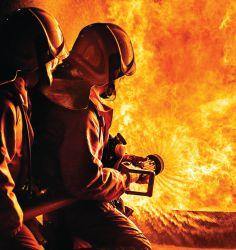
Firefighters were in groups of six to eight in the same container, applying water on the fire with a nozzle.
Researchers noted that this could be attributed to one of three factors: to the concoction, the vehicle (wash cloth) or the familiarity of the process being most effective.
Air samples of PAH air concentrations during fires provided a snapshot of the environment firefighters were exposed to during the training exercises. Twenty-seven personal air samples were collected. The average duration of these samples was 43.9 minutes. Researchers reported higher proportions of possible carcinogenic PAHs (77 per cent versus 51 per cent). Researchers explained the difference could be due to “a result of fuel difference.”
“A study by Banks et al. (2021) that presented data indicating higher proportions of possible and probable carcinogenic PAHs in personal air from fires with different fuels, calculated using their reported data.”
Urine analysis found that post-fire dermal decontamination efforts occured too late to completely prevent absorption into the body.
Researchers suggest that future studies should focus on “preventing initial exposure through improved compliances in use and quality of personal protective equipment to prevent a combustion by-product onto skin.”
the 12 Wing Shearwater Fire Department prior to his return to Charlottetown in 2011, where he took on the role of deputy chief.
In Ontario, RICHARD RENAUD is the town of Penetanguishene and the town of Midland’s new director of emergency services and fire chief. Renaud has
over 30 years of public service experience. He started his career in emergency services in 1989 and joined the fire service in 1995.
Retirements
In January, RICK DELORIE retired from his role as fire chief with
2023 OAFC Labour Relations Seminar draws on mental health, labour updates and more
The Ontario Association of Fire Chiefs (OAFC) in partnership with Hick Morley, hosted their annual Labour Relations Seminar from Jan. 25 to 26 at the Marriott hotel downtown Toronto.
Fire chiefs from across Canada convened to hear from inspiring keynote speakers, Hicks Morley’s legal experts, and chief officers about important updates and insights on topics like training and certification, mental health, fire safety, EDI, off-duty conduct and more.
Opening remarks from OAFC president Deputy Chief Robert Grimwood took a look into the OAFC’s strategic plan and government relations priorities for 2023, including further enhancing firefighter safety and training. Grimwood’s presentation was followed up by an update from the Ontario Fire Marshal’s office. Fire Marshal Jon Pegg addressed Ontario’s 2022 fire fatalities and stressed the importance of messaging around working smoke alarms. Ontario saw 133 fire-related deaths in 2022, with many investigations finding non-funcational smoke alarms.
He also spoke about third-party trainer regulations and vetting applications.
The next presentation was by keynote speaker Dr. Samantha Nutt. Dr. Nutt is an awardwinning humanitarian and founder of War Child Canada and USA. Dr. Nutt shared her experiences in leadership as a woman. Her advice? Seek a mentor at every age and stage of your career and, if no one is listening, don’t shout – change the message. She reminded the audience that a leader’s role is to create in-roads for future generations. Following the day one keynote were the urban, suburban/rural breakout sessions, which covered attendance management, mental health resiliency, and retention.
The first day wrapped up with the top 10 legal challenges of the year presented by Hicks Morley, hot topics in WSIB, a session on off-duty conduct, and human rights do’s and don’ts.
Day two of the seminar kicked off with the ask-thearbitrator session with arbitrator Matt Wilson. The session transitioned into a bargaining update panel where Hicks Morley lawyers gave an update
on recent collective bargaining decisions, highlighting trends in wages, benefits, and collective agreements as well as advice about inflation. The day also saw a discussion on the issues of vaccinations. The takeaway from this session was that termination is no longer deemed reasonable, and unpaid leave is now a more reasonable approach when it comes to unvaccinated employees.
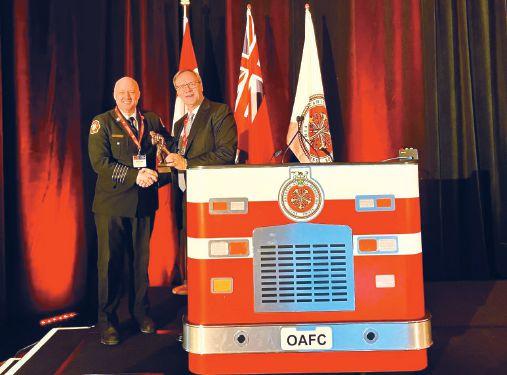
Hicks Morley presented the Fire Chief of the Year award to Markham Fire Chief Adam Grant.
Up next was day two keynote Olympic gold medalist Jennifer Botterill. Botterill’s spoke about her journey to joining Canada’s Olympic hockey team and the lessons she learned along the way. She talked about sustaining high performance, how to deal with pressure and expectations, and the importance of trusting yourself. She shared that teamwork is all about making
other people better because you’re there. Botterill brought her Olympic medals for attendees to see afterwards.
Day two wrapped up with a panel discussion on special services. Ontario Fire Marshal Jon Pegg, Toronto Fire Chief Matthew Pegg, Innisfil/ Bradford Fire Chief Brent Thomas, and Assistant Deputy Chief Craig Lawrence of Sudbury conversed about special technical rescues and the seriousness of having and understanding your mutual aid agreements. The takeaway from this session was to train for the services your department provides and arrange for someone else to cover the services you don’t.
This year marked another successful annual Labour Relations Seminar for the OAFC and Hicks Morley.
the Wellesley Fire Department in Ontario after 30 years with the departments. DeLorie began his career with the department after graduating from Wellesley High, and served as chief of the department for 14 years.
Fire Chief DAVE LANG of Ontario’s Ajax Fire and Emergency Services retired in
November 2022. Lang joined the department in 1984, starting as a firefighter. He moved up the ranks to acting chief, platoon chief, deputy chief and then fire chief.
Fire Chief STEPHEN GAMBLE retired from his role with the Township of Langley, B.C., in
December 2022. Gamble has 45 years of fire experience. He entered the service in 1978 as a volunteer firefighter with the city of Port Coquitlam and was hired on as full-time in 1980. He moved up in ranks and held positions like emergency preparedness coordinator and fire chief before moving to Langley in 2011.
Last alarm
Assistant Chief GORD JONES passed away on Nov. 12, 2022. Jones was a member of the Beaver Creek Volunteer Fire Service in B.C., since its inception and was an active member for 45 years.
Hicks Morley presented the Fire Chief of the Year award to Markham Fire Chief Adam Grant.
Dynamic teaching and flipping the classroom
Creating a dynamic learning environment is not as hard as you think, it is sometimes the small things that make the big difference.
By JENNIFER DELANEY
Teaching in the fire service happens on many levels, in many classrooms, and with all kinds of students. With certification to NFPA standards looming in the future, there is likely to be more teaching than ever in fire departments across the province of Ontario to ensure we all can be successful. Did you know that we don’t have to do this using an online ‘death by PowerPoint’ method?
Many different teaching strategies have come to the forefront in recent years. Terms like flipping the classroom or learner centered training are what is being broadly used in classroom education. The fire service is a unique classroom because we regularly teach, review and update skills. We work in a very dynamic environment that constantly changes.
Your goal is to guide the learning by letting the students tell you what they know and then create methods where they can apply that knowledge: scenarios, exercises, discussions. The engagement of the students is much better because they are part of the conversation and part of the lesson.
They may have their devices out, but it is to look something up or to answer a question using a group platform like Kahoot or Quizlet or Mentimeter Gamification to validate learning is another great way to get the attention of the learners and have them show you what they have learned. Technology is not the enemy, nor is it the teacher, it is merely another tool for us to use.
Creating a dynamic learning environment is not as hard as you think.
It is sometimes the small things that make the big difference.
I remember taking the trainer facilitator course, which is what the Ontario Fire College taught to those wanting to teach before the adoption of the NFPA standards. An idea my instructor spoke of comes back to me often when I am organizing training. He explained that a visual demonstration is often a better example of theory than a conversation. It is definitely more memorable. We were discussing incident command and the challenge for both the IC and the crews in explaining things in a way that the other could picture in their mind.
My final presentation was on communication and the importance of using language everyone understands to paint that picture. I had a practical exercise to help re-enforce concise language and using common terms. I had put the IC in a different room and his crew at the front in the classroom, where the remaining firefighters could see them respond to the communication.
The IC had to provide direction on how to make a peanut butter sandwich using the radio to communicate instructions. The crew was armed with bread in its bag, peanut butter in its jar, and a knife. The two parties confirmed what resources were available. I am sure you can imagine the reaction of the class when the IC stated that the first step was to put the peanut butter on the bread, and the crew members took the jar and put it on the loaf of bread!
Sometimes describing things to others based on what you see in your mind is not as simple as it seems. We all make assumptions about what others know. They

A visual demonstration is often a better example of theory than a conversation.
all laughed, and the next groups got better and better with their language, breaking down the communication and instructions into small steps, and being concise in their instructions without making assumptions.
When I teach NFPA 1041 Fire Instructor 1, I start the conversation asking the class to tell me about their favourite teacher or coach. This conversation produces some great traits we collect on the board/ flip chart. My next question is why they like learning something new. The answer to this question is often the same: to help me do my job, to keep me safe, and sometimes because I was told to/ have to. I then ask them to tell me the things they don’t like about learning or taking a course. Answers include presentations/slide shows
that don’t directly relate, all the unlikely scenarios used to qualify that the student knows what to do, and often they mention all the sitting in a class and just listening.
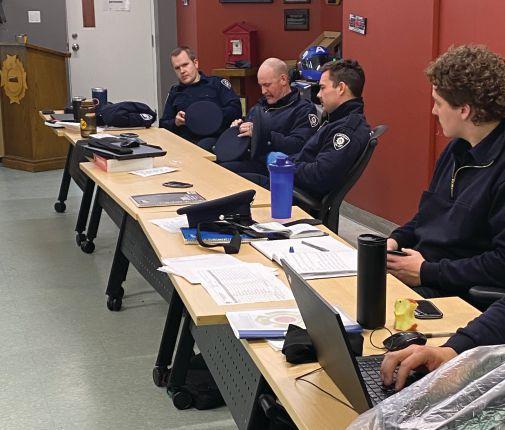
The students will comment it is ironic that we take people that generally move around a lot doing their work, and then we sit them in a classroom for days at a time to learn something that, when you do it, is very dynamic.
Flipping your classroom and creating that positive environment can be done a few ways.
One method you can use is to break the class into groups and have each one assigned to a different topic or skill. They can develop the knowledge the student must have; the skill they can demonstrate

at the end of the training, and the steps they can take to get there. Is it going to be instructor led in a step by step process or from watching, and then doing? What should they read or review first? What equipment or tools and what space will they need? This makes your students think about the steps involved in learning for their topic. It makes them consider what is related; both big picture and small steps.
The next part of this step is to have these groups present their topic. They can share their plan with the class or you can have them deliver their training with one of the other groups. Depending on time and how simple the skill is, you may find this is the best way for them to consider all the steps. It often doesn’t quite go as well as they expect, and they only learn this by doing things according to their plan! This type of teaching has the student far more involved in what they learn and more engaged as a learner. They will also have a far greater sense of how things are connected and can then apply that knowledge in new situations because they understand how to use what they learned.
Another way to flip the classroom is to provide them with media/research/ NIST reports on historical fire events that were game changers for us as an industry and have them present to their class about why this event has taught us so much. I am a firm believer that you need to understand where we came from to know the importance of why we do things that way now.
The Brett Tarver, Worchester Six, Dennis Redman or Billy Wilkins all changed the way we performed things as firefighters, or inspected buildings as fire inspectors/ for a preplan, and/or reviewed their fire safety plans.
With this method, you are helping the student drive their own learning. This method creates an active learning environment that is much more memorable and impactful to the student. They have a sense of satisfaction because the knowledge they have was validated.
Be that dynamic instructor and work with your students on the best way to make the learning work for everyone! We all want to come away from the classroom or course feeling energized and ready to take on the next challenge.
Jennifer Delaney is platoon training instructor with London Fire Department in Ontario.
PHOTO: JENNIFER DELANEY

Decon in the fire service
At one time, a dirty, contaminated helmet was considered a trophy. So what changed?
By RICHARD HYNES
ITOP The more we practice and enforce SOG’s, the faster we will adapt to the new normal.
n today’s fire service culture, cancer is just as commonly discussed around the kitchen table as our grocery list for the day. We are seeing the effect cancer is having on firefighters globally, as well as in our own departments.
What we’ve learned is that there is undisputable evidence about the link between fire fighting and cancer. In 2021, the Centers for Disease Control (CDC) identified fire fighting as an inherently dangerous occupation, with cancer now becoming the leading cause of death among firefighters.
THE NEED FOR DECON
In recent years, National Institute for
Occupational Safety and Health (NIOSH) conducted two large studies focused on firefighter cancer. They concluded that firefighters face a nine per cent increase in cancer diagnoses, and a 14 per cent increase in cancer-related deaths, compared to the general population.
Firefighting is proven to be a dangerous job yet, without hesitation, we continue to perform our duties selflessly. While this hasn’t changed, what has is the culture surrounding contaminated PPE.
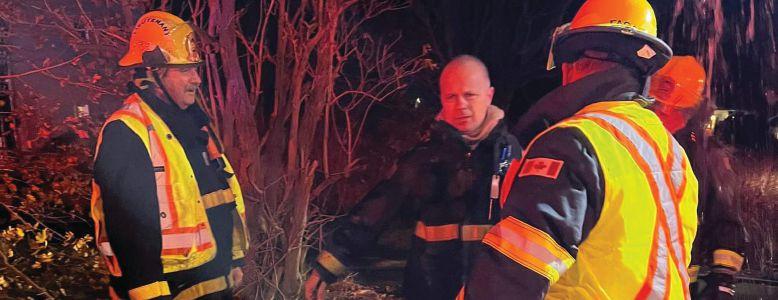
At one time, a dirty, contaminated helmet was considered a trophy. In the past, we would commonly stand around after a hard battle with fire chatting with our brothers and sisters with whom we haven’t seen in a while. So, what has changed?
PHOTOS: RICHARD HYNES

NO HYDRANTS, NO PROBLEM
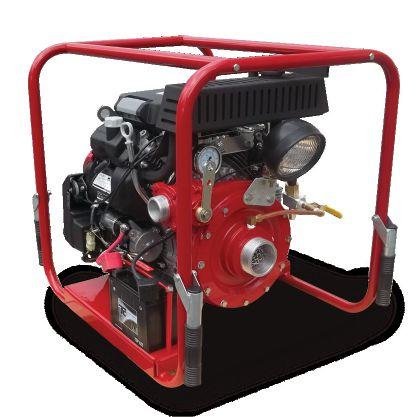
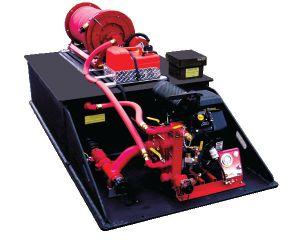
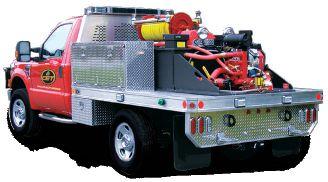
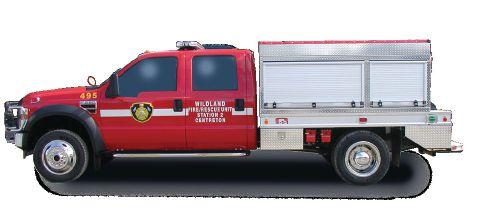
CET manufactures portable pumps, skid units, brush trucks and more to allow fire departments to Adapt, Improvise & Extinguish fire in almost any scenario where hydrants are scarce and static water resources maybe all you have to work with. CET- Providing fire ground solutions since 1908.
1 2 3 4
Portable Pumps (PFP-20hp-HND-MR Shown)
50+ models to choose from for both fire attack & resupply operations from static water sources like lakes, rivers, ponds and pools
Skid Units (Attack Pack Shown)
State-of-the-art custom designs & components –yet affordable!
Glider Kits
Arrives Completely pre-assembled, pre-plumbed, pre-wired and pre-tested ! Simply mount to your chassis, connect electrical and go fight fire!
Brush Trucks (Custom Built)
Solid/Affordable/Practical
Now, that time immediately after fire fighting has been identified as the most crucial for decontamination. The first hour after loss stop is now considered an opportunity to help prevent firefighter cancer. “Shower within the hour” is considered a best practice to reduce exposure to the products of unburned combustion. Does the evidence change our minds individually and will it change the culture of the fire service as we know it? As fire officers, are we disciplining ourselves to automatically activate on scene decontamination?
HOW DO WE ADOPT DECON?
It’s crucial for the fire service and our members to educate about safe work practices. Effectively training our members will promote a safety culture that cultivates sound work practices. Sound work practices are designed to reduce exposures to hazardous agents, which will be key to reducing occupational illnesses, including cancer.
Our training should emphasize the proper use and care of PPE and turnout gear. Additionally, training that increases cancer awareness and physical well-being may encourage firefighters to adopt those safer work practices that lower their exposures to these cancer-causing chemicals. The more we practice and enforce SOG’s, the faster we will adapt to the new normal, which includes the use of cancer screening tools.
So, what can your department do in the battle against cancer while under budgetary restraints:
• Unscented wipes for the most vulnerable parts of our body after a fire.
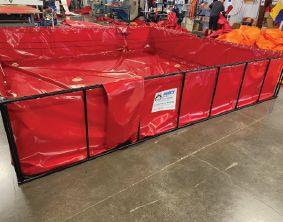

• Garden hose, bucket, brush and soap. These tools will help remove heavy contaminates from PPE and tools. This will help reduce cross contamination during gear doffing and placement into disposable bags for transportation to the firehouse.
• Development of sound SOGs that will be enforced through the chain of command.
• Shower within the hour
These simple, cost-effective initiatives are a start, and will certainly assist in the fight against occupational cancer.
DECON IN CONCEPTION BAY SOUTH FIRE DEPARTMENT
So how has the Conception Bay South Fire Department responded to the evidence of

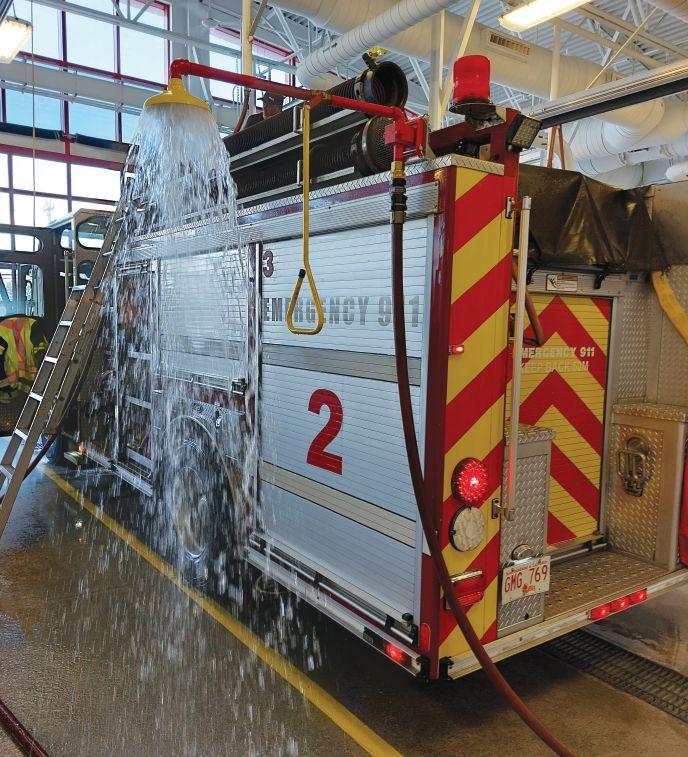
Apparatus mounted decontamination shower are used for on scene decontamination.
occupational cancer in fire fighting over the last two years? Our management team has been proactive in reviewing and addressing the latest statistical evidence on firefighter occupational cancers. This prompted our team to identify areas of improvement, add required resources and training, and implement safe work practices. This has ultimately created a culture shift in our fight against job related illness.
Listed below are some operational changes that have been made.
• Creation of new policy for on scene decontamination, transportation, and laundering of PPE.
• Water proof decontamination bags were purchased for all members for a second set of clean clothing, including gloves and flash hoods.
• Apparatus mounted decontamination shower was purchased for on scene decontamination.
• Our decontamination buckets are equipped with heavy duty industrial bags for soiled gear, decontamination wipes
“Sound work practices are designed to reduce exposures to hazardous agents, which will be key to reducing occupational illnesses, including cancer.”
for the neck and face, liquid soap, and large brushes.
• Distribution of new particulate blocking flash hoods for all members.
• Development of a decontamination manual which provides a detailed process of our department’s expectations following firefighting duties.
• New bunker gear has been upgraded to a particulate and petroleum blocking technology.
• A second set of soft goods for fire helmets was purchased for all members of our department. The evidence is on the table, and now is the time for change. Firefighters today are exposed to more harmful chemicals
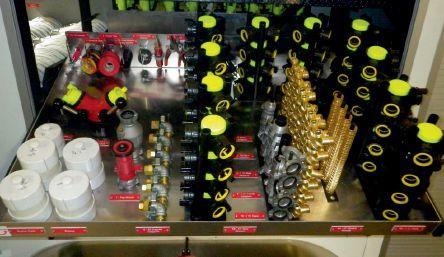
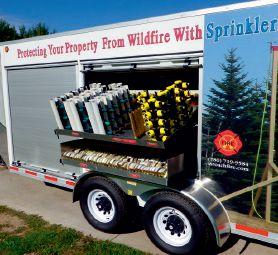
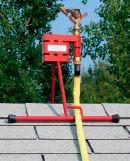
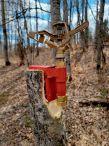
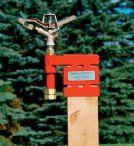
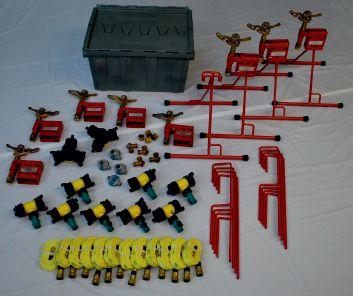
Wildfire Sprinkler Kits & Sprinkler Trailers



and carcinogens than ever before. Unfortunately, we cannot eliminate all the hazards of fire fighting, but we can minimize their impact on us. It’s important to focus on areas that can be controlled or managed, such as the decontamination of gear and clean-up of equipment and personnel after the fire is extinguished. This should be at the forefront of every firefighters’ mind while performing their duties.
Richard Hynes has 17 years in the fire service currently holding the rank of fire captain with the Conception Bay South Fire Department. Capt. Hynes also serves as a firefighter with the St John’s Regional Fire Department.

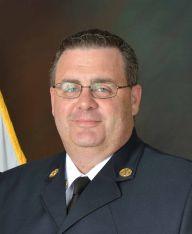
BY MATTHEW PEGG Fire Chief Toronto
HLEADERSHIPFORUM
Making it look easy
ave you ever watched someone do something that appeared automatic and even easy?
Think about first learning to drive a car, when everything required conscious, planned and carefully thought-out actions and effort. Nothing was smooth, and most manoeuvres were both awkward and exaggerated. However, as your competence and experience grew, things became easier, smoother, and more natural looking and feeling. Now, as an experienced driver, you seldom need to consciously think about driving your vehicle at all. It now seems to come naturally to you.
I often have the opportunity to be on scene and observe our teams perform incredibly complex and demanding operations, often making it look easy. I remember standing alongside a large and gathering crowd as one of our technical rescue experts began their descent from a construction tower crane with a rescued patient in hand, quickly completing the complicated high-angle rescue safely and efficiently. This professional and the entire team made it all look easy.
Likewise, I am always amazed by the ability of our emergency vehicle technicians to service, repair and maintain the most technologically advanced and complex heavy apparatus like it is second nature to them. Equally impressive is seeing fire prevention officers inspect and enforce the fire code in some of the world’s tallest and most complex buildings; seeing fire investigators accurately determine the origin and cause of fires; and listening to the calm, efficient voices of our emergency call-takers and dispatchers as they process and dispatch incoming emergency calls only to then support the incident command process throughout the incident.
As leaders, we have the privilege of having a front row seat when members of our teams make hard, complex, challenging, and difficult work look “easy”. Unfortunately, leaders can mistake the apparent ease that people display during these complex operations as the achievement being something that really doesn’t require much effort or expertise at all.
and competent at a particular function, that it looks easy, effortless, and as though anyone could do it. This is the highest level of competence, found only in those who have practiced and refined their skills to such a high level that they don’t even need to consciously think about what they are doing. Sports are filled with these examples, with highlight reels celebrating these extraordinary and incredible results.
If you’ve ever watched a professional golfer hit shots, only to then head out on your local golf course to replicate their golf swing, you know exactly what I am speaking about. They make it look easy, but only because of the thousands of hours of practice, learning, honing and perfecting that they have invested when there was no one there to watch. Of course, these players have significant raw talent. But practice, hard work and experience are the only things that will ever convert raw talent into demonstrated ability, in anyone.
The very best leaders among us know, respect, and go out of their way to acknowledge that when someone makes something look easy, they are actually giving us a small glimpse into how hard they have worked to be able to deliver those results at that level.
As leaders, never underestimate the impact you will have when you
Making something look easy is the outward expression and application of the highest level of ability, which is often referred to as unconscious competence. ‘‘ ’’
go out of your way to identify, acknowledge, and appreciate the incredible results that are being delivered around you each day. The best leaders are energized and excited by the opportunity to celebrate the achievements of those around them.
There is an important leadership truth to be found here; something that the worst leaders never understand, and the best leaders never forget. The easier something looks to those observing, the harder someone has worked to be able to deliver it with such apparent ease. Making something look easy is the outward expression and application of the highest level of ability, which is often referred to as unconscious competence.
Unconscious competence is found in people who are so proficient
Matthew Pegg is the chief with Toronto Fire Services, having previously served in Georgina, Ajax and Brampton, Ont. Contact Matthew at matthew. pegg@toronto.ca and follow him on Twitter at @ChiefPeggTFS.
Unfortunately, publicly acknowledging the results of your team will often result in criticism from the weak leaders around you. Weak leaders feel threatened when this happens and often attempt to boost their own egos by criticizing the achievements of others or by declaring the accomplishments of others as being “easy” or insignificant. Unfortunately, ego and self-awareness will never co-exist, so they are generally oblivious to their own behaviour and to how it makes them look.
Take the time to celebrate those around you, especially those who make it look easy, and let them know that you appreciate how hard they have worked to be able to perform at that level.
That’s what leaders do.
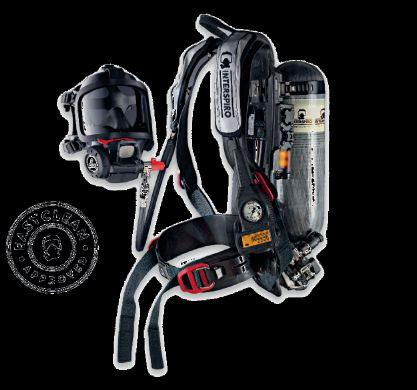


CANADIAN SAFETY EQUIPMENT IS PROUD TO BE A DISTRIBUTOR FOR THE INTERSPIRO RESPIRATORY PROTECTION LINE. THEIR STATE OF THE ART S9 INCURVE IS ONE OF THE MOST COMFORTABLE SCBAs YOU WILL EVER WEAR.
GIVE US A CALL AT 0182 OR EMAIL US AT INFO@CDNSAFETY.
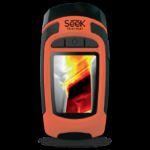
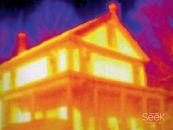
RevealFirePRO
MONITOR HAZARDOUS ENVIRONMENTS
INSPECT MECHANICAL & ELECTRICAL EQUIP SEARCH AND RESCUE FIND HOTSPOTS
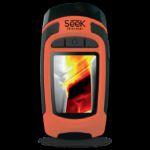
ü Durable, All-in-One Device

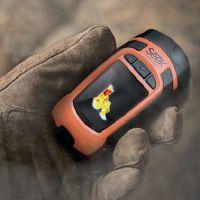
ü Save images to a 4GB internal hard drive
ü 320 x 240 thermal sensor
ü Direct temperature readout
ü -40F to +625F
No company has a richer history in respiratory protection than . Their innovations have become industry standards, time and

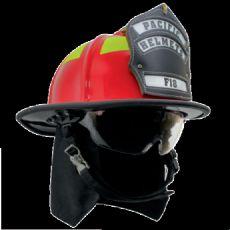
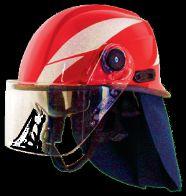
THE SAFEST, MOST COMFORTABLE STRUCTURAL FIRE FIGHTING HELMETS YOU WILL EVER WEAR.
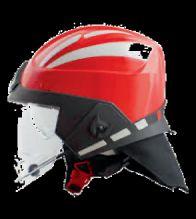


NFPA APPROVED STRUCTURAL FIRE HELMETS
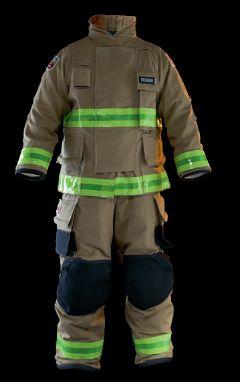

As the ONLY gear in the industry utilizing Active Posture Design, these turnouts are built to achieve a fit that conforms to you! To get the lightest, most breathable, and most flexible gear in the fire service, pair FXR turnouts with our exclusive TECGEN71 outer shell for increased weight reduction.
ü High resolution thermal sensor
ü 4 hours on a single charge
ü Made in the USA
ü IP67 approved

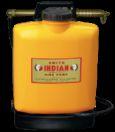
Wildland warriors have been depending on Smith Indian fire pumps on the fire line for over 80 years. Designed to help firefighters battle forest, brush, and rubbish fires, the performance of these pumps is legendary. Our Indian fire pumps offer 100% brass wands and nozzle. The dual nozzle changes quickly from stream to spray without the need for tools. The shoulder harness offers the best in comfort with a center cinch to distribute weight comfortably and the military spec shoulder straps will not rot or mildew while in service. All Smith Indian fire pump tanks are proudly MADE in the USA and approved by the U.S. Forestry Service.
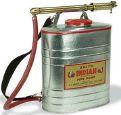
THE ORIGINAL


LOW – MEDIUM – HIGH PRESSURE AIR BAGS


FXR Custom Turnouts
Canadore rolling out EVT training
This partnership program hopes to foster the training and development of more emergency vehicle technicians.
By LAURA AIKEN
Canadore College, based at North Bay, Ont., is looking to help alleviate the shortage of emergency vehicle technicians (EVT) and maintenance challenges facing departments through an EVT training program now being offered in partnership with the Fire Department Safety Officers Association (FDSOA). The next week of classes starts March 27.
Jason Whiteley, the fire chief in North Bay, was involved in coordinating the partnership with Canadore, and North Bay serves as a partner itself to the training. He sees a need to address the shortage of EVTs as being critical on two key fronts. One, the chief needs to account for the liability of a down truck. If the vehicle attends a significant incident, hasn’t been maintained and a catastrophic failure ensues, there could be litigious consequences for the municipality.
Terry Stewart, vice-chairman for the FDSOA, said there is a “huge liability crisis right now. The fire service is in a bit of a crisis with getting new trucks — likely take up to a couple years coming out of covid with manufacturing troubles and parts supply problems — we don’t have trainedup technicians and we’re back to extreme maintenance as that new replacement truck isn’t going to come when its due.”
Two, but by no means secondary, the safety of firefighters is paramount. The vehicle they respond in needs to be “roadworthy and fit for duty.” A brake or steering failure could result in a tragic accident. Firefighters need to have confidence in their equipment and the mechanics servicing it, Whiteley said, and that can easily be lost if there is a malfunction due to a lack of adherence to maintenance standards. The fire service
does a great job of keeping vehicles shined up and looking great, he said, but a 20-yearold vehicle is still that old and it’s going to get “old-age-creep,” thus becoming more prone to a possible failure.
Rich Marinucci, executive director for the FDSOA, notes that training is expensive, but not training is even more expensive when it comes to making mistakes.
“If something goes wrong and you can’t demonstrate that you were the right person to perform that service, and you didn’t do it to acceptable standards, you’re going to have some explaining to do, regardless of the outcome, but that’s even irrelevant to how we look at it from a fire department safety officer’s perspective. We can’t start our job unless we get to the scene safely.”
Whiteley said he is fortunate to have a great fleet division with very good, competent technicians, but knows that is
not the case for many small departments who won’t have a fleet department or fleet technicians and must get their service elsewhere nearby by someone who may be able to fix the truck, but may be lacking in experience with the electronics, hydraulics, pump and NFPA standards.
“NFPA changes their standards every four years, and we need to keep up with how the technology is changing. A 2023 truck is going to look awfully different than a 20-year-old truck.”
John Ouellette, fleet manager for the City of North Bay, said the key need for technicians is in the specialized training, especially from Original Equipment Manufacturers (OEMs) or NFPA. Training is critical because these are very specialized pieces of equipment and NFPA standards are very precise.
“This project we have with Canadore,
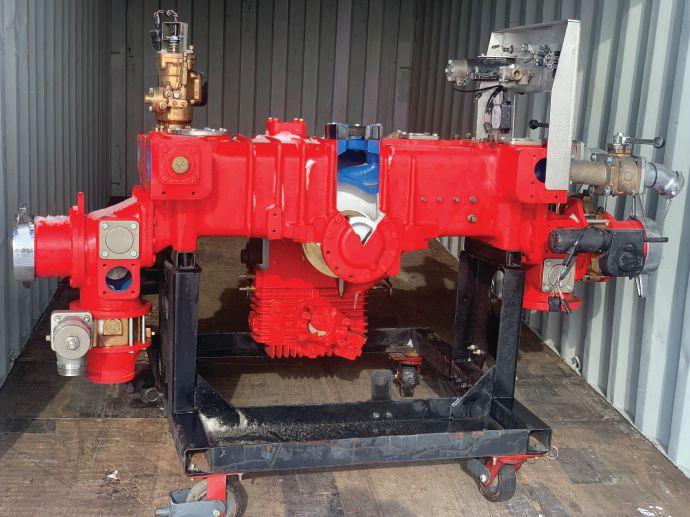
Fire pump prop that is used for teaching.
I think it will be a really good microcredential for training young apprentices and younger mechanics so they move up in the trade. That’s where our partnership with Canadore comes in as a specialist for training. And now you have electric vehicles coming that are critical response vehicles… they are very specialized that’s why the training is so critical.”
He emphasized that North Bay has a great relationship with the OEM, but it’s six hours away and time is of the essence. Distance to an OEM is very likely a challenge for lots of rural communities across Canada. He noted that when you are in northern areas, bringing a vehicle to an OEM could be a 10 to 12 hour drive with a significant travel cost to consider.
TRAINING AT CANADORE
Stewart said the program Canadore is offering was developed six years ago in conjunction with the EVT Certification Commission and he sits on their testing board. Canadore has become a testing site, and Stewart noted that is not an easy feat.
“This program is not any different anywhere in North America. I travel around to deliver classes and find there is a huge disconnect between operators, operations, fire and fleet. There always seems to be a little bit of a bantering in there.”
The four-day classes offered at Canadore through the college’s Industry Liaison Canadore Continuing Education and Corporate Training department, cover F1 to F6 levels of training plus M-1 and M-2 management level courses. A fifth day is required for testing. During the week of March 27, Canadore will offer Level 1 EVT, which covers F-1 (maintenance, inspection and testing of fire apparatus 1) and F-2 (design and performance standards of fire apparatus). Both are designed to meet the standards of NFPA 1911. These classes are not just for technicians, but also helpful for spec writers buying fire vehicles and fleet managers looking for a better understanding of what the back end looks like. As the cohort builds, the next levels described will be offered.
Level 2 EVT covers F-3, fire pumps and accessories as set out in NFPA standards 1901 and 1911. This class covers all makes and models of pumps and includes a hands-on experience combined with theory portion. Level 3 EVT covers F-4, fire apparatus electrical systems to provide a clear understanding of electricity as they
relate to fire apparatus and ambulances. Level 4 EVT covers F-5, aerial fire apparatus as prescribed in NFPA 1901 and 1911 and focuses on understanding how to create a sound maintenance and testing program. Level 5 EVT covers F-6, Allison automatic transmissions, including servicing, maintenance, diagnostics and troubleshooting.
Whiteley said there needs to be a bigger awareness on the importance of EVTs and the training the FDSOA is providing.
“By teaming them [the FDSOA] up with an institution of higher education with a great reputation and motor coach mechanic program, they can continue to help develop that curriculum for the electric vehicles and everything else that’s changing. Giving credence to this program with a microcertification is significant and there is an extreme shortage of trades people. For some reason we’ve become a society that’s turned its back on the importance and job security of trades.”
Donald Kerr, industry liaison for Canadore, said there are lot of people coming to Canadore that have degrees but not the practical skills to apply in the job market. His conversations with people lead him to believe that many aren’t making the investments in apprentices that they need
to. There has been talk of the EVT shortage for a while, and concerns about investing in training and then having the technician poached by someone else also remains, but Kerr noted that this concern over poaching is only so high because of the shortage. He sees a demonstrated widespread need for training in the fact that the March course registration is coming from unexpected places like southwestern Ontario all the way to as far flung as the Yukon.
Kerr said Canadore seeks to build its internal capacity with local trainers in North Bay to be able to offer an EVT course three to four times a year. In becoming a regular delivery agent for this training, he said people will know what to expect and can plan and budget for it. The school has preferred hotel rates and the possibility of offering student residences depending on the time of year to keep the training economical in tight budgetary times. They also offer economical catered food service.
The partnership between Canadore, the FDSOA and North Bay is a new addition to the training scene that hopes to alleviate the shortage of EVTs, a real and pressing challenge impacting the Canadian fire service nationwide.
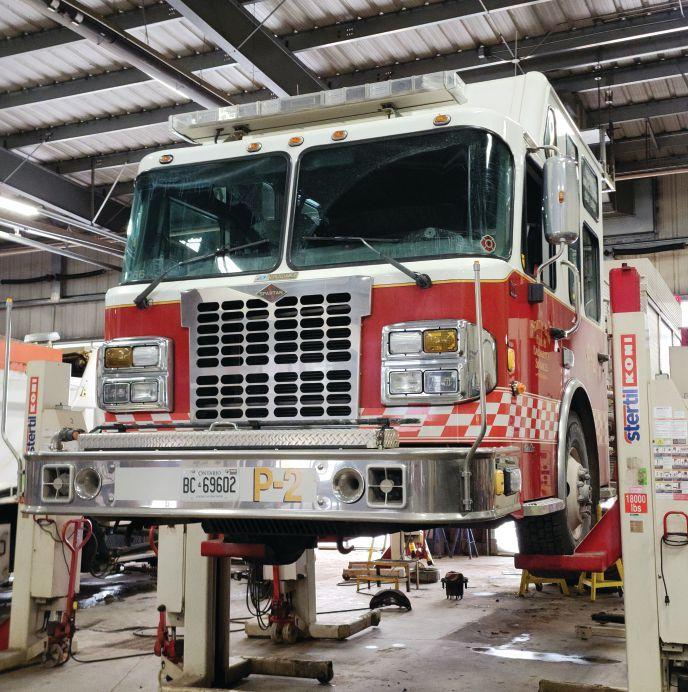
Fire truck on a lift.

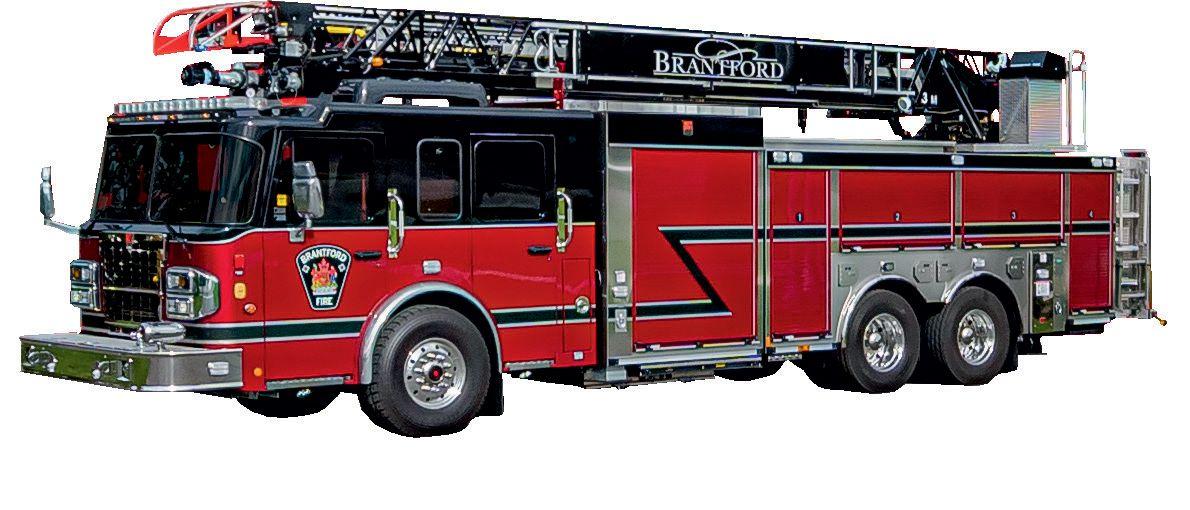
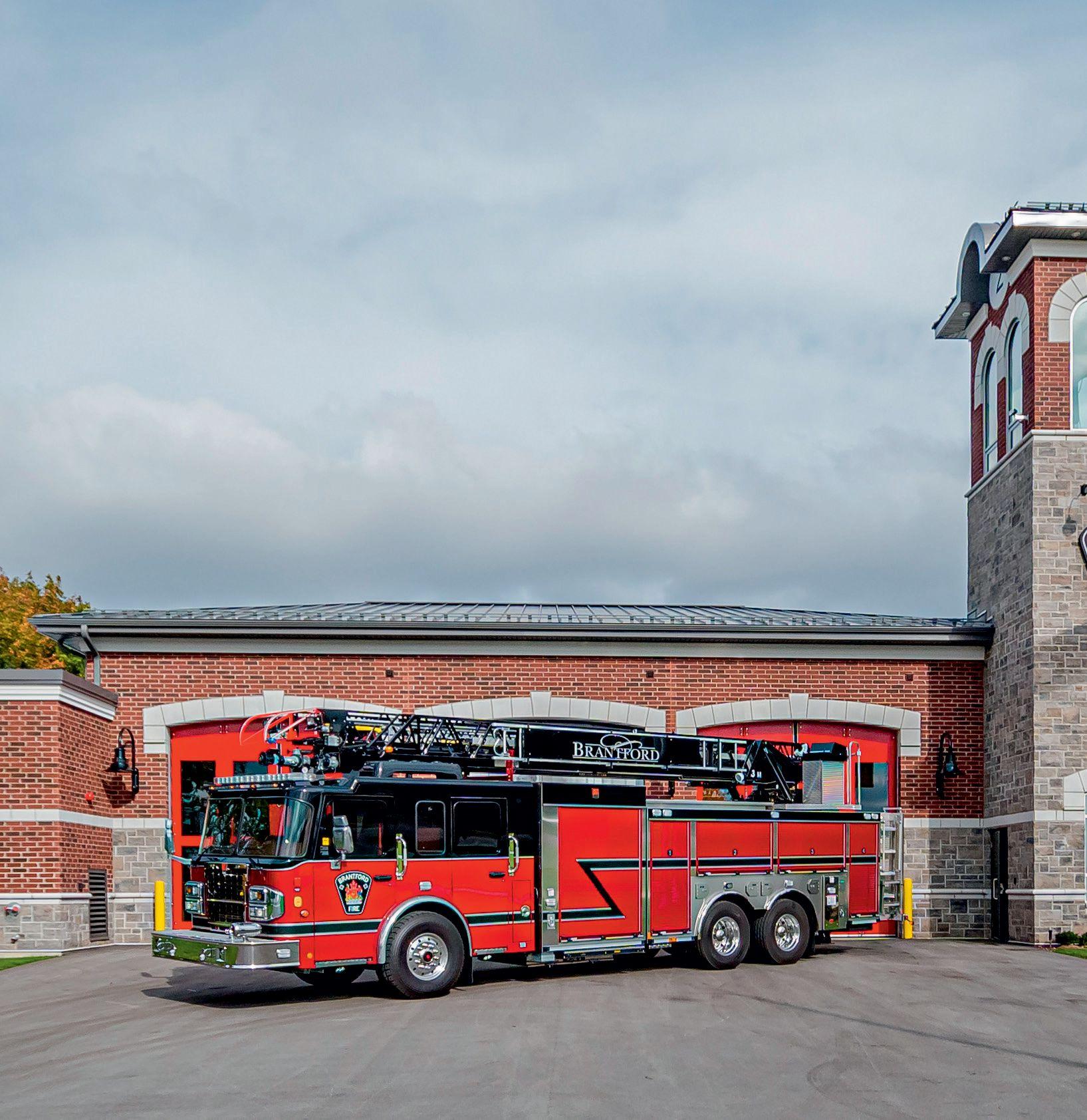

With strategic specialization and flexible solutions, Spartan ER is a proud full-line manufacturer of fire apparatus built on Spartan Fire Chassis—with expertise in aerials and steel ladders. Spartan ER intentionally engineers and builds on the legacies that firefighters trust. With their ergonomic innovations and interdisciplinary collaboration, Spartan ER offers fire crews only the best of the best.
Discover how Spartan ER puts first responders first. Visit spartaner.com
Authorized Dealer

BACKtoBASICS
Garage fires, part 1
BY MARK VAN DER FEYST
As we begin a new year, we are going to begin a new mini-series for Back to Basics. The topic of garage fires is often overlooked in terms of strategy and tactics, but their inclusion is very important.
Most residential structures will have a garage of some sort whether it is attached or detached. There are a few different factors that will dictate the type of garage that will be built for a residential building.
The one factor will be the type of house that is built. Many garages will be designed and built to match or blend into the current structure. Another factor is the lay of the land or topography. The topography will dictate where the garage can be located to provide


easy vehicle access.
The last factor will be the needs of the homeowner. Based on they want the garage to be used for will dictate how large it will be, the style of it, the spot where it will be located, and whether it will have any utilities included inside of it.
Depending upon the location in the country, there will also be a “local” type of garage or style of garage that will be common throughout. Not every structure will have the exact same style of garage, but there will be the one or two styles that will be commonly used. This will ring true with mass housing developments where a few hundred homes are being built in one sub-division. The home builder will use a repeat design or style of garage for the houses that


Photo 1: Some one-story homes will have a carport only.
Photo 2: A garage located in the front of the house.
Photo 3: A garage in front but extended out from the house.
Photo 4: An example of a side located garage.
PHOTOS BY MARK VAN DER FEYST

are being built.
With the style of residential structure comes the location of where the garage will be. For a one-story house, like a ranch or bungalow style house, if it is attached to the structure, the garage will be located at either end of the house.
If the garage is a detached style, it can be located in the front, on the side or in the rear of the house. It will just depend upon where the access is given for a vehicle to drive up to it as well as the size of the land it sits on.
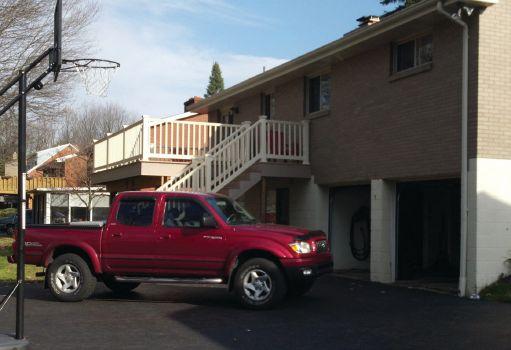
Some one-story homes will have a carport only. As you will see in Photo 1, this style of home is from a certain era of home construction where this was a common style of house being built. Some homeowners will convert the carport into an enclosed room to be a part of the house or they will close in the side and the rear of the carport to make it more like a garage.
With a two-story house, you will find the garages located in the front or on the side of the house. In Photo 2, you will see an
Photo 5: The garage can be located in the rear of the house forming part of the basement.
Photo 6: The foundation basement contains a two-car garage.
BACKtoBASICS
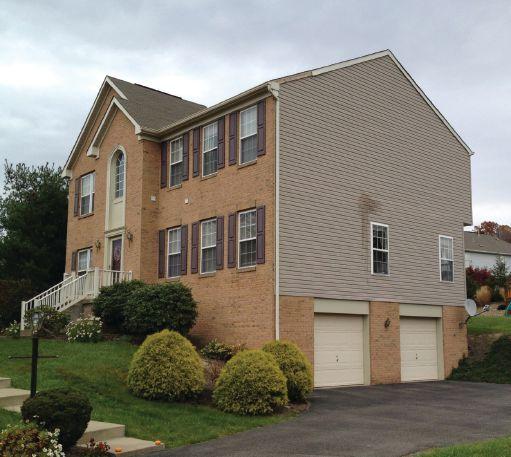
example of a garage located in the front of the house whereas in Photo 3, it is in front but extended out from the house. In Photo 4, you will see an example of a side located garage. These doors face away from the house, but they can also face towards the front of the house as well.
We mentioned the topography of the land dictating the style or location of the garage and in some locations, this is very prevalent. The garage can be located in the rear of the house forming part of the basement. In Photo 5, you will see an example of a house that has this layout. This house is a single-story home, and the founda-
tion basement contains a two-car garage. In Photo 6, you will see the same thing but with a two-story house. The obvious danger here is when a call comes in for a vehicle fire in a garage, it means the house is too.
In Photo 7, we have another example of the garage in the basement but on the side of the house. In all three photos, you will see that the topography of the land allows for this type of house to be built in this style. The house may stand taller above the ground because of the hill top type of land allowing for the garage to be located in the basement.
This style of house is very common in this certain area of the country and is done so for the land being used but also for the aesthetics of the house – having the garage hidden removes any eye sores from the neighborhood.
We are also going to find standalone temporary garages or garage kits that can be erected by the homeowner. These kits can be located anywhere on the property making access to them difficult. They can be either a temporary or a permanent type of structure. Even though the intent may be a temporary building being erected, most homeowners are going to keep this as a permanent structure to be used.
The danger with these types of garages is that there are not codes to follow with the construction of them in terms of structural stability.
As you drive around in your response districts, take a look and notice what type of garages are present within the community. You may be surprised at what you will find. Next month, we will look at the different dangers of the garages based upon the location and style.
Mark van der Feyst has been in the fire service since 1999 and is currently a firefighter with the FGFD. Mark is an international instructor teaching in Canada, U.S. FDIC and India. He is the lead author of Fire Engineering’s Residential Fire Rescue & Tactical Firefighter books. Contact him at Mark@FireStarTraining.com

Photo 7: An example of the garage in the basement but on the side of the house.


Strategies and tactics for peat fires
A unique suppression challenge
By GAVIN PARKER
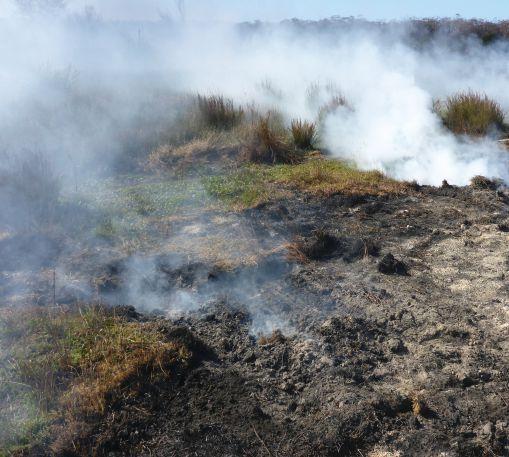
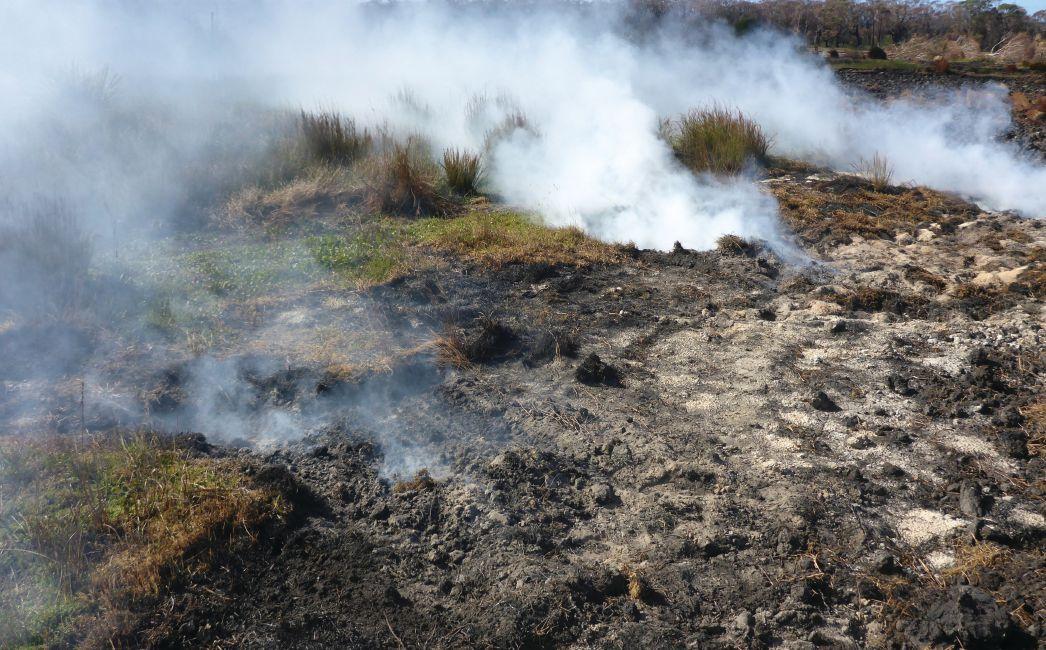
Unlike forest and grassfires, peat fires can spread slowly for days, weeks and even months. They smoulder at a lower temperature with little flame, producing large quantities of smoke and greenhouse gasses. For suppression, they provide unique planning, logistical and operational challenges in a demanding environment.
METHODS FOR PROTECTION OF ASSETS, CONTAINING AND EXTINGUISHING
Influencing the depth of burning and fire spread is fuel moisture, further drying by the fire, oxygen, the type and density of fuel. Burning may continue until inert minerals or deeper levels with a higher fuel moisture are reached. In some cases, fuels
or soils may also become hydrophobic, repelling water.
Several options can be used to reduce smoke and particulate emissions, protection of assets, containment and extinguishment. One or a combination of methods such as cooling, increasing fuel moisture, restricting oxygen and in some instances removing or separating the burning fuel from the unburnt may need consideration.
STRATEGIES AND TACTICS
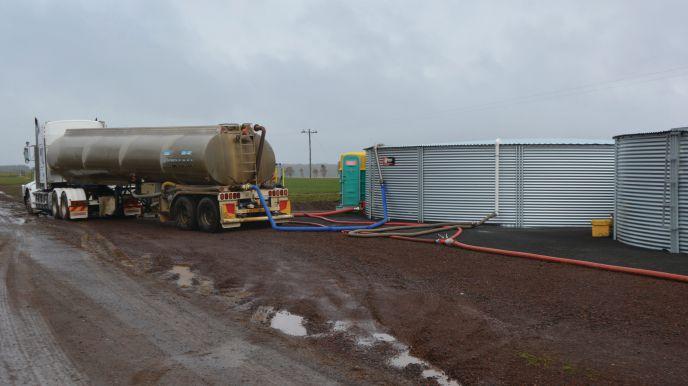
Peat fires may require different methods, equipment and machinery than what is typically used for surface fuels; this also includes the supply and delivery of water. Water can reduce dust and smoke, increase fuel moisture, contain and extinguish the fire. Peat can require large volumes of water adding to logistical
TOP Peat fire burning in open farmland.



COMING MARCH 2023


Fire Protection Handbook, 21st Edition
Item #FPH23
NFPA® has released its 21st edition of the Fire Protection Handbook (FPH) - a comprehensive, one-of-a-kind reference guide of fire and life safety prevention and protection information for students and professionals across a wide range of industries worldwide. The new edition reflects the very latest fire protection and fire safety information, research and data, emerging technologies, and safety practices. The last edition was published in 2008.
Professionals including engineers, designers, building managers, fire prevention managers, fire service members, insurance agents, inspectors, students, and other individuals who have responsibilities related to fire prevention and protection can use the Fire Protection Handbook to get the answers they need to their fire protection questions.






and operational demands. Water can be obtained from a variety of sources such as, rivers, dams, lakes or wells. Transfer to and around the site can be by traditional fire service equipment, large and small diameter hoses and pumps. Large capacity agricultural, hose reels, irrigation pipes and pumps can also be utilized.
Machinery and hand tools can be utilised to remove hazards, surface fuels, protect assets, contain and extinguish the fire by accessing, separating or removing fuels. They can also increase safety, efficiency and the effectiveness of works and water used. Consider practices and procedures used for land management and peat restoration for efficiency and reducing post fire rehabilitation.
Machinery should have enclosed cabins with dust filtration, roll-over protective or falling-object protective structure (ROPS/FOPS) as per agency requirements. Consider low ground pressure equipment, and accessories such as “swamp/access mats” that can be used by excavators operating on soft ground. A recovery plan for bogged equipment may also need consideration.
Use an “anchor point” to prevent fire escape. All work should be checked visually and with a thermal imaging camera if available and monitored. Objectives and strategies may include one or a number of methods or tactics, these can include, but are not limited to the following: Returning and retaining moisture on the site: Blocking drains or damming areas in conjunction with the direct/indirect application or redirection of water can increase fuel moisture.
Direct and indirect application of water: This can restore moisture levels, reduce dust and extinguish the fire. The effectiveness will be dependent on quantity and depth to extinguish the fuels. This can be used on shallow burning material with direct water application using a straight jet/ spray, or lancing probes for deeper material. The use of hand tools or machinery can assist in water penetration and mixing. Methods can also include the use of sprays, sprinklers, ground monitors, and even open hose lines. These can remain in place unattended, then redeployed as needed reducing firefighter exposure to dust, ash and smoke.
Aircraft: In remote or inaccessible areas, aircraft can be used to deliver water, foam or retardant to prevent surface fires spreading to peat areas until ground resources are in place.
Reducing the supply of oxygen to the fire: Hot spots can be capped by applying water and working it into the ash, char and peat to form a “mud slurry”, which will cool, adding fuel moisture and increasing fuel density.
Class A foam or compressed air foam system (CAFS) may cool and reduce oxygen. It can also suppress smoke and dust emissions, providing a safer working environment for other strategies and tactics used.
Capping small areas or “hot spots” using inert material such as clay or compressing soils with a machine can be problematic
long term unless moisture levels are also returned.
Removing and clearing surface vegetation: This can improve access and reduce hazards such as trees falling. It may be necessary for any of the strategies and tactics used. It can prevent surface fire spread and allow penetration of extinguishing mediums. This can be achieved using a combination of hand tools, machinery and powered equipment such as chain saws.
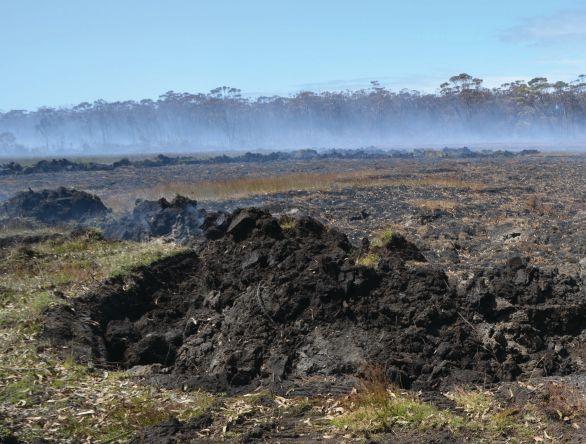
Removing burning material: This involves digging out all burning peat and adjoining margins of unburnt material, then relocating it to a non-combustible surface such as clay/sand, or a suitable container. The material can then be broken up and spread out until extinguished, with water also used if available. This tactic may be
Water cartage using road tankers, filling ‘temporary” steel panel water tanks erected on the site.
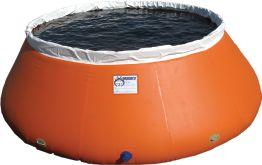
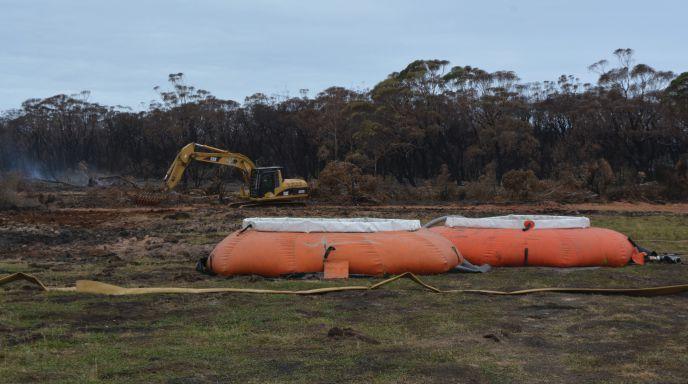
Two collar tanks erected on the site, with an excavator working in the background.
suitable for extinguishing small areas, particularly if little or no water is available.
Separating burning materials by cutting a clean edge to the lateral margins of the fire : On shallow burning edges the fire can be contained using machinery or hand tools to dig at the fires edge, separating the burning peat from adjacent unburnt material. As its dug, both burnt and unburnt “spoil” can be placed back onto the burnt area to reduce the risk of fire spread with the application of water to dampen the material. The damp unburnt fuel removed from the edge and under the burning peat can also assist in raising the overall moisture. Following extinguishment, the spoil can then be pulled back into position while dampened again if required.
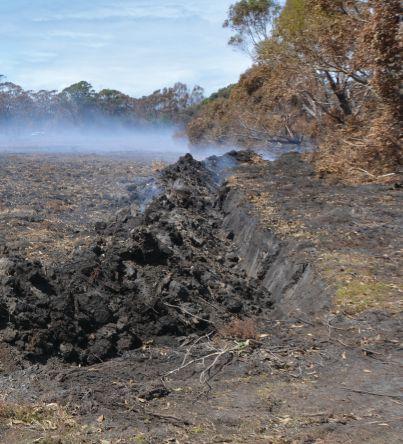
Trenches: When dug to the depth of the underlying mineral material they provide a barrier in the fuel to prevent fire spread. Alternatively, if the mineral level is out of reach; deeper, very damp unburnt peat could perform the same function. In some cases, if sufficient water is available, the trench could be filled or partially filled to form a “moat” around the fire.
These techniques can be problematic. If filled with water, a trench will require a significant supply and may have to be continually maintained. If left dry, it may drain water from the surrounding area, further reducing fuel moisture and promote fire intensity.
Trenches and spoil piles can restrict access and may create a safety hazard, requiring an exclusion zone. Works may also have to
comply with regulatory codes of practices for excavation work.
Utilising hand tools or machinery to rip or rake through shallow burning material: It can be effective to break up the burning material to allow water penetration. Equipment with a rake, toothed bucket, or ripping attachment can be used. For small areas, suitable hand tools may be appropriate.
Opening up deep-seated fire: An excavator can be used to

dig to or below the burning material and surrounding margins while applying water. As the material is broken up the water will be able to penetrate, cool and extinguish the fire, if sufficient water is available and
applied it may also form a “mud slurry’.
Ripping a narrow line on the fires edge: By using a ripping attachment to the depth and edge of the burning peat, water should then be able to penetrate, extinguish and return moisture with minimal disturbance. The main disadvantage with this method is the extinguished line will be narrow and may require monitoring and follow-up work. Once complete the spoil can be spread back into place and monitored.
Allow the fire to continue burning until it reaches damp fuel or inert materials: Once the fire edge has been contained or extinguished, any remaining unburnt islands and the continued downward burning within the perimeter may eventually stop when it either reaches the deeper inert mineral layers, or peat fuel is too damp to sustain combustion. This will require an assessment to evaluate burning potential.
Any planning to allow fuels to simply burn itself out should consider the short
and long-term environmental impact with further peat loss, the release of smoke and other greenhouse gases into the atmosphere, the impact on soil and water quality and potential for further fire spread.
CONCLUSION
Peat fire behaviour is much different to surface fires as much of what is burning may be unseen and unknown.
They may require some unique control options compared with surface fires. A size-up and full appreciation will enable planners to formulate a course of action with clear objectives, strategies and tactics. This and an ongoing evaluation are important in developing and implementing a plan that is safe, effective and efficient.
The views expressed are that of the author and may not be that of CFA or FRV.
Gavin Parker is a senior station officer with Fire Rescue Victoria (FRV), Australia, who started his his firefighting career with Country Fire Authority (CFA) - Victoria in 1995.
Peat burning edge cut to prevent fire spread

BY LAURA KING NFPA regional director Canada
TConsolidating NFPA standards
hree years ago, NFPA’s Standards Council undertook the facilitation of a process to streamline standards that apply to emergency response and responder safety (ERRS).
Details of the consolidation process have been available since early 2020, on the individual web pages for each affected standard, in blogs, NFPA newsletters and other correspondence, and on NFPA’s social media platforms. The consolidation process was recommended by the technical committees that develop and revise the standards, and approved by the Standards Council in April 2019.
The process began in 2020 and was to be complete by 2025 but is ahead of schedule.
Now that many of the consolidated standards are available on the NFPA website, through the National Fire Code Subscription Service (NFCSS), and at NFPA LiNK, there are questions about the impact of the changes on those who use the standards.
The short answer: the “old” standards exist under the same names/numbers within the new, consolidated standards, and there is no impact on fire department operations.
For training providers, there are some administrative changes: curriculums and job performance requirements will need to be updated to ensure they align with chapter numbers in the new standards, but there are no changes to the JPRs themselves. (Note that on Jan. 1, Pro Board issued agency compliance dates for the consolidated standards. Pro Board is separate from NFPA and sets its own policies.)
Nothing changes for fire department personnel certified to an NFPA professional-qualification standard. For example, NFPA 1035 Fire and Life Safety Educator, is still NFPA 1035, but it now exists as chapters nine through 14 in the new NFPA 1030, Standard for Professional Qualifications for Fire Prevention Program Positions. Fire and life safety educators will continue to take the 1035 course (Levels I, II and III) and attain certification through Pro Board to NFPA 1035. There are no changes to the job performance requirements. Public information officer is a separate chapter in the 1030 standard, as is juvenile fire setter – but both are still part of NFPA 1035. Instructors will need to update course/curriculum outlines and JPRs to match the new chapter numbers.
NFPA 1031 (inspector / plans examiner).
NFPA 1010, Standard for Firefighter, Fire Apparatus Driver/ Operator, Airport Firefighter, and Marine Firefighting for LandBased Firefighters Professional Qualifications, consolidates NFPA 1001, 1002, 1003 and 1005. The process is exactly as outlined above for NFPA 1035: separate chapters within the consolidated standard and no changes to the JPRs other than chapter numbers.
Public comment on the second draft of NFPA 1010 closed Jan. 4, and the second draft will be posted Oct. 4. Anyone can view the proposed new standard and public input on the second draft by going to www.nfpa.org/1010, clicking Next Edition and then View Public Comment. The standard is more than halfway through the revision cycle but there’s still opportunity for input; anyone who disagrees with any part of the proposed standard, or wants to suggest a change or improvement, can submit a NITMAM – notice of intention to make a motion – after the second draft is posted.
It’s worth noting that the 1010 firefighter professional qualifications committee is chaired by John Cunningham, executive director
The best way to keep apprised of changes to NFPA standards is to engage in the process; sign up to receive e-alerts, and apply to sit on the technical committees. ‘‘ ’’
of the Nova Scotia Firefighters School. Cunningham is well versed in the professional qualifications process and has long represented Canadian interests and concerns on NFPA standards committees.
The rationale for the consolidation process is to better serve stakeholders and create efficiencies for the more than 2,000 volunteer members of the technical committee.
The new 1030 standard also includes separate chapters for NFPA 1037 (fire marshal – the U.S. definition, not the Canadian one), and
Laura King is the regional director for NFPA in Canada. Contact her at lking@nfpa.org and follow her on Twitter @LauraKingNFPA.
Custom revision cycles are being developed for the ERRS standards. Check the document information page for the standard(s) by going to www.nfpa.org/ and putting the number of the standard after the slash (/), for example, www.nfpa.org/1010.
For more about consolidation, visit https://www.nfpa.org/ Codes-and-Standards/Resources/Standards-in-action/EmergencyResponse-and-Responder-Safety-Project or listen to the NFPA Podcast from November 2021, titled One standard.

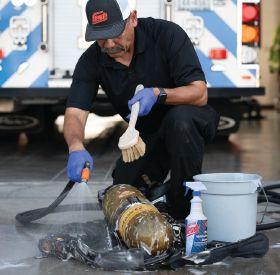

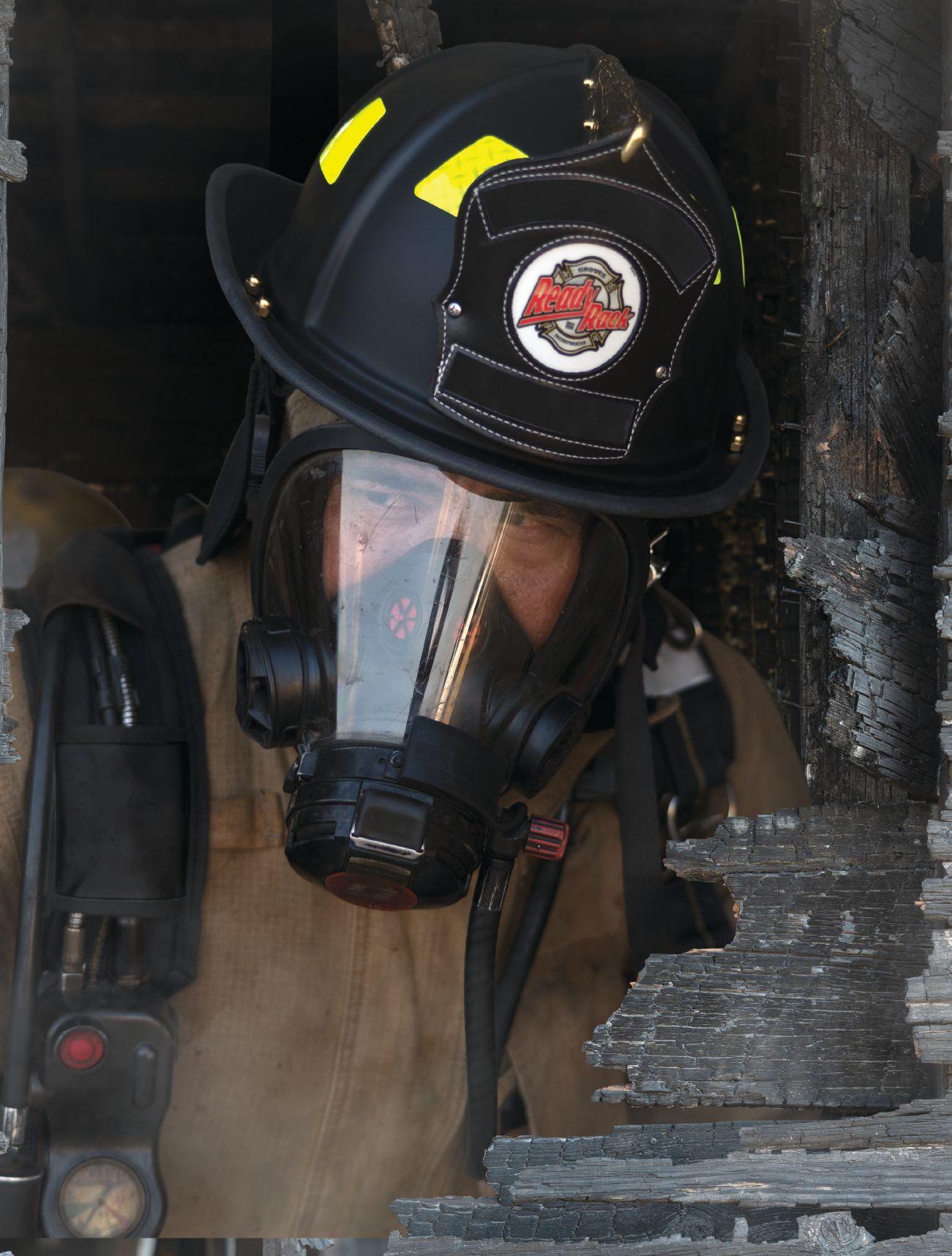
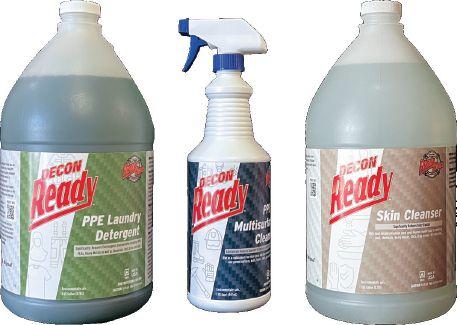
Conventional detergents are designed to remove visible dirt and grime so your gear looks clean. What about the hazards entangled in your gear that you can’t see? Decon Ready™ solutions are formulated with science-based technology to go beyond cleaning by significantly reducing carcinogenic contaminants including VOCs, PAHs, and heavy metals. Decon Ready™ products ensure gear remains service-worthy while also improving the health and wellness of firefighters and first responders.
Building resilient minds
Developing psychological strength in firefighters across Canada
By JOEL JOHNSON
Firefighters are subject to some of the greatest psychosocial risks of any profession. Many will experience some level of trauma throughout their careers, but all it takes is one call to dramatically shift the tide between the ability to cope and the descent into anxiety, despair, and depression. It is often those experiences that involve a child, a threat to one’s own life or completed suicides that is the unexpected breaking point. This is what 27-year veteran firefighter, Dave Gillespie of Peterborough, Ont., discovered after a particularly traumatic call.
Gillespie recalls a failed rescue attempt of a child. After the event, Dave would replay the scene in his mind for days on end and when he could no longer sleep at night, Dave used wine as his coping strategy. After months of struggling, it was his peers who Dave reached out to for help.
Today, Dave’s health is back on track. With the support and encouragement of his peers, Dave eventually sought out professional help but notes he wishes he had reached out earlier. This is one of the reasons he became a peer instructor for the Resilient Minds program – to promote the importance of early intervention.
Resilient Minds is a peer-to-peer taught program co-designed by Canadian Mental Health Association Vancouver-Fraser Branch (CMHA) and firefighters in response to the concerning experiences and stress-related injuries observed within fire services.
“I want to ensure that other firefighters and first responders develop the psychological strength to weather the ups and downs of the career,” said Gillespie. “Firefighters like me need to have the resources available to them, rather than looking to substance use or even suicide.”
A study by the Ruderman Family Foundation found that PTSD and depression can be almost five times hight among firefighters than the general public.
GREATER RISK OF PSYCHOLOGICAL INJURY
According to the Centre for Suicide Prevention, first responders— firefighters, paramedics, police—are considered to be at greater risk for acute stress disorder (ASD) and post-traumatic stress disorder (PTSD) than most other occupations. This is because their everyday duties routinely encounter “traumatic stressors” (Haugen, 2012, p.370).
A study conducted in 2017 by the Ruderman Family Foundation found that PTSD and depression can be almost five times higher among firefighters and police officers than the general public, and that more firefighters died by suicide than in the line of duty.
At the time the Resilient Minds program was developed, 78 per cent of first responders had not received basic resiliency training making this program a priority to get into the hands (and minds) of firefighters.
“Firefighters are in desperate need of skills to safeguard their psychological health that aren’t taught as part of their technical training,” says Leanne MacLeod, National Manager of Resilient Minds. “This skill deficit contributes to a high rate of suicide among firefighters; 30 per cent higher than the general population.”
BUILDING PSYCHOLOGICAL STRENGTH
Resilient Minds engages and informs firefighters in four crucial
Traumatic experiences cannot be removed from the first responder role, but having strategies in their toolkit means the impact will lessen.

areas relevant to their work: trauma, psychological distress, trauma-informed responses and exploring resilience, personal well-being, reconnection and post-traumatic growth.
“CMHA is dedicated to building resilient fire teams and services,” says MacLeod. “We aim to educate, empower and equip firefighters with the necessary skills and resources to grow and maintain psychological wellness.”
Not only that, but MacLeod and the CMHA believe in inspiring firefighters to recognize and respond to psychological injuries and trauma in the workplace, and importantly, promote a shift to a supportive and mentally fit culture.
The program has supported thousands of firefighters across Canada, including for wildland firefighters. Today, through funding by the Public Health Agency of Canada, Resilient Minds has been adapted for Indigenous fire services and translated for Francophone firefighters which is set to launch in spring of 2023.
Traumatic experiences cannot be removed from the first responder role, but having the knowledge, education, coping
strategies and resiliency in their toolkit means the challenges many will face, along with their families and loved ones, will lessen. This is what MacLeod, Gillepsie and other peer instructors hear from those who have taken the course. By developing a resilience plan now, participants find it is easier to work through traumatic experiences when they face them, and help their colleagues when they see them struggle.
“As a mental health trainer in the fire service for the last 20 years, Resilient
Minds is the first program I’ve seen that addresses proactive resilience and care for my peers,” states Gillespie. “Not only that, but it also helps with what to say to citizens during a difficult call, and provides us with specific tools for self-care.”
Joel Johnson is a veteran first responder from Toronto. His research examines the impact of vicarious trauma through imagery in media. Joel now provides his knowledge and expertise to advocate for the psychological health of first responders.
PHOTO: © BIGBAMBI.CA / ADOBE STOCK
Fine-tuning fire prevention
Review of 30 years of fire prevention research reveals successful approaches for Indigenous population.
By SAMAR AL-HAJJ, LEN GARIS, COLLEEN PAWLIUK, EDIRIWEERA DESAPRIYA and IAN PIKE
Published in April 2022 in the International Journal of Environmental Research and Public Health, the article entitled “Interventions for Preventing Residential Fires in Vulnerable Neighbourhoods and Indigenous Communities: A Systematic Review of the Evidence” reviewed thousands of studies and research conducted since 1990 on residential fire prevention in order to identify the characteristics of interventions with success in mitigating fire incidents among vulnerable population groups.
The article was commissioned by the National Indigenous Fire Safety Council, and funded by Indigenous Services Canada, a project by the Aboriginal Firefighters Association of Canada (AFAC), and produced by the British Columbia Injury Research and Prevention Unit.
“A significant body of research from around the world exists on fire-prevention interventions targeting vulnerable communities,” said Blaine Wiggins, executive director for AFAC, which represents regional Indigenous emergency and fire service organizations across the country. “Understanding not only what works, but what doesn’t, will help us create and deliver more effective fire-prevention programs and reduce the high toll of fires on Indigenous communities in Canada.”
A DEEP DIVE INTO THE RESEARCH
The article builds on the 2009 literature review “Proving that Fire Education Works” by TriData Corporation that considered 20 years of international fire prevention research and produced insights that led to the widespread deployment of successful fire-prevention efforts, such as targeted smoke alarm giveaways and public education
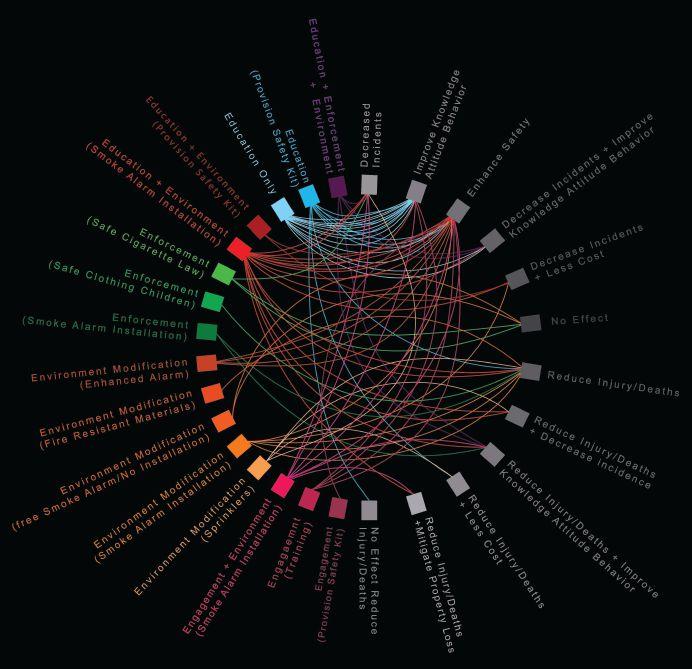
Chord chart links each of the 4E’s interventions with its measured outcome(s) as reported in the included studies.
in high-risk neighbourhoods.
The new review included reports published around the world after 1990 on any type of intervention designed to reduce the risk and frequency of residential fires and fire-related injuries. Researchers categorized studies through the lens of the 4Es of injury prevention approaches: education (intended to change behaviours), enforcement (legislation, policies, regulations and standards), engineering (products that create a safer environment), and engagement (engagement stakeholders in a process of systematic change and safety promotion).
The search for eligible studies also included “grey literature” – non-academic but relevant published and unpublished literature from Indigenous organizational websites and other sources. Authors extracted data from these sources in consultation with experts in the field. Articles were included in the review if the fire intervention demonstrated an impact on the following five outcomes: Improvement of knowledge, attitudes and behaviours (KAB); reduction of residential fires risk, incidence and frequency; decline in injuries, hospitalizations and death rates; enhanced



















safety related to infrastructure damage and fire suppression; and lower costs for healthcare needs and response.
Eighty-one articles were chosen for the review. Of these selected titles, 42 originated in the United States, 14 from the United Kingdom, eight from Canada, seven from Australia, four from Sweden, two from New Zealand and one each from Japan, Germany, France and Iran.
When classified through the 4Es approach, the selected studies broke down as follows:
• Education (30 per cent of interventions): Twenty-three studies adopted educational interventions, mainly related to smoke alarms and fire escape plans, and targeted to at-risk groups. Materials were shared in a variety of settings, implemented by firefighters, community leaders and volunteers.
• Engineered/environmental (20 per cent): Sixteen of the studies modified the existing environment, including smoke alarm giveaway and installation programs, sprinkler inspections, and fire-resistant clothing and furniture.
• Enforcement (eight per cent): Six studies assessed fire safety laws and regulations, including mandatory smoke alarm installation.
• Engagement (six per cent): Five studies proposed interventions where participates interacted with community members.
• Combined approaches: A number of studies combined interventions, including education and environmental (21 per cent), engagement and environmental (nine per cent) and education, engineering and enforcement (six per cent).
THEMES ARISING FROM SUCCESSFUL INTERVENTIONS
At a high level, the review revealed the value of hands-on safety training and reinforcement, culturally-appropriate programming, and the combination of both environmental and educational approaches in reducing fire incidents and associated injuries and death.
Key insights included:
• Engaging household members in hands-on safety training was effective in enhancing household knowledge, fire safety practices.
• Effective outcomes were obtained when multi-faceted fire safety interventions were adopted.
• Among adults and elderly people, educational interventions are only effective in reducing fire incidence and injuries if they include regular follow-ups and reinforcement of safety concepts.
• In vulnerable neighbourhoods, the most effective environmental modifications were smoke alarm giveaway programs that involved home visits to install, check batteries and provide information – but even these had a limited long-term effect without follow-up.
• In terms of enforcement, mandatory smoke alarm installation was shown to reduce fire incidents and related injury and death, while fire-resistant clothing legislation showed some success in reducing child injury rates.
• Tailored, culturally appropriate intervention programs involving interaction with community leaders and other trusted personnel were successful in engaging targeted populations and improving

knowledge and fire safety behaviour.
Overall, environmental modifications and education intervention programs proved to be the most cost-effective interventions and – with appropriate deployment and follow-up – may have strong relevance for Indigenous and other vulnerable communities in Canada.
Another outcome of the study was to highlight the lack of fire prevention evidence gathered from within Indigenous communities. The use of grey literature provided researchers with a more complete picture of fire-prevention challenges facing this population group.
Based on an assessment of the data, recommendations noted in the report included:
• Development of evidence-based programs, based on this new research, as a step toward reducing the greater risk of fires and fire-related injury and death among Indigenous people.
• Designing future fire interventions that include multiple approaches, including
pub. ed. campaigns, inspections, fire alarm installation and timely battery change reminders, and legislation.
• Emphasize culture and context when developing interventions for a targeted population group.
• Incorporate long-term, multi-dimensional evaluations of inventions over subsequent months and years to accurately measure outcomes and create actionable next steps.
LOOKING AHEAD
The insights provide guidance for fire service professionals seeking to apply an evidencebased and culturally appropriate approach to fire prevention in Indigenous communities.
“Social determinants are built into this approach – it’s about the people, the places they live and the treatments that are going to solve the problem,” Wiggins noted.
As a result of the limited Indigenousspecific research available, it should be noted that the paper focuses on First Nations populations living on reserves. However,
the authors believe that the fire prevention recommendations in the report have broad relevance to all Indigenous and vulnerable populations.
In future research, the AFAC aspires to expand beyond this population group to seek insights about Inuit and Metis people and First Nations off-reserve residents through new forms of data collection, different sources, and targeted research questions.
Len Garis is director of research for the National Indigenous Fire Safety Council and associate scientist emeritus with the B.C. Injury Research and Prevention Unit.
Mandy Desautels is the director of strategic initiatives at the Aboriginal Firefighters Association of Canada (AFAC).
Samar Al-Hajj is the founding director for the Middle East and North Africa Program for Advanced Injury Research.
Ian Pike is the director of the British Columbia Injury Research and Prevention Unit and co-executive director for the Community Against Preventable Injuries.

TRAINER’SCORNER
Live fire kit workshop
By ED BROUWER

Ithought we’d start the new year off on a bit of a lighter note with a couple of training tips that made my job as an instructor a whole lot easier.
Consider instituting a mentoring program. Much like a big brother or big sister program, pairing up a veteran firefighter with a newbie firefighter will benefit both parties and helps build comradery and confidence. It should also lighten your load.
A good thing to keep in mind when planning your practice nights is that learning is optimized when students are actively engaged in learning. Research I’ve reviewed shows that most of us remember:
• 10 per cent of what we read (taking turns reading training material)
• 20 per cent of what we hear (lecture)
• 30 per cent of what we see (video)
• 50 per cent of what we both see and hear (power point and lecture)
• 70 per cent of what we have discussed with others (brain storming)
• 80 per cent of what we have experienced personally (hands on)
• 95 per cent of what we teach someone else (helping instruct)
Another important consideration that plays a big part in learning styles is gender. Listening to parents interacting with their children you will most likely hear a mom say, “Listen to me, and I will tell you how to do this.” Whereas a dad will most likely say, “Watch me, and I will show you how to do this.” Finding the balance between spoken instructions and demonstration is the key. The Three “D” system (describe, demonstrate, do) seems to work well.
One of my favorite training sessions for this time of year involves live fire. Well, don’t get too excited, the flames are on candles. Nevertheless, the session is hands-on and provides many opportunities for firefighters to get engaged.
This practice works best with small groups of four to five firefighters with each group at a workstation.
Each workstation should be equipped with the following: a bottle of water, a few sheets of paper, and a live fire kit.
Live fire kits include several candles (the large emergency type), a few books of matches, several short pieces of metal rod (like eight-inch sections of metal coat hanger), several eye droppers, several long wooden matches, aluminum foil or a pie plate.
Once your practice is concluded, save all the fire kit props. I have kept enough props for 20 firefighters in small case for over 25 years. It is a quick go-to tool for those rare occasions you have nothing prepared.
Before letting your students play with fire, take a few minutes to set the stage by sharing the following:
“Tonight, we are going to experiment with candles. We will try and repeat some of the experiments created by the nineteenth century scientist, Michael Faraday. Faraday said, “the candles’ flame provides most of the essential features of natural fires and a diffusion flame. There is no better, there is no more open door by which you can enter the study of natural philosophy than by considering the physical phenomena of a candle.”
These demonstrations illustrate the basic principles of flames.
PHOTO: © STEVEN / ADOBE STOCK
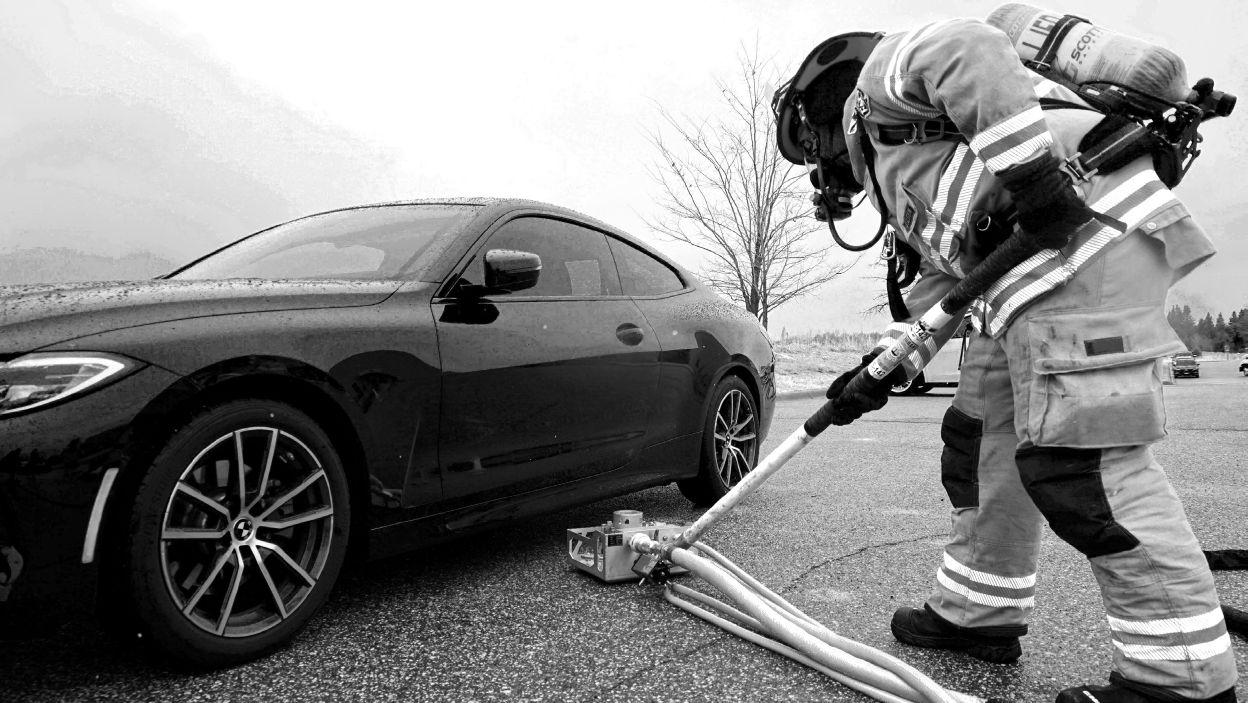
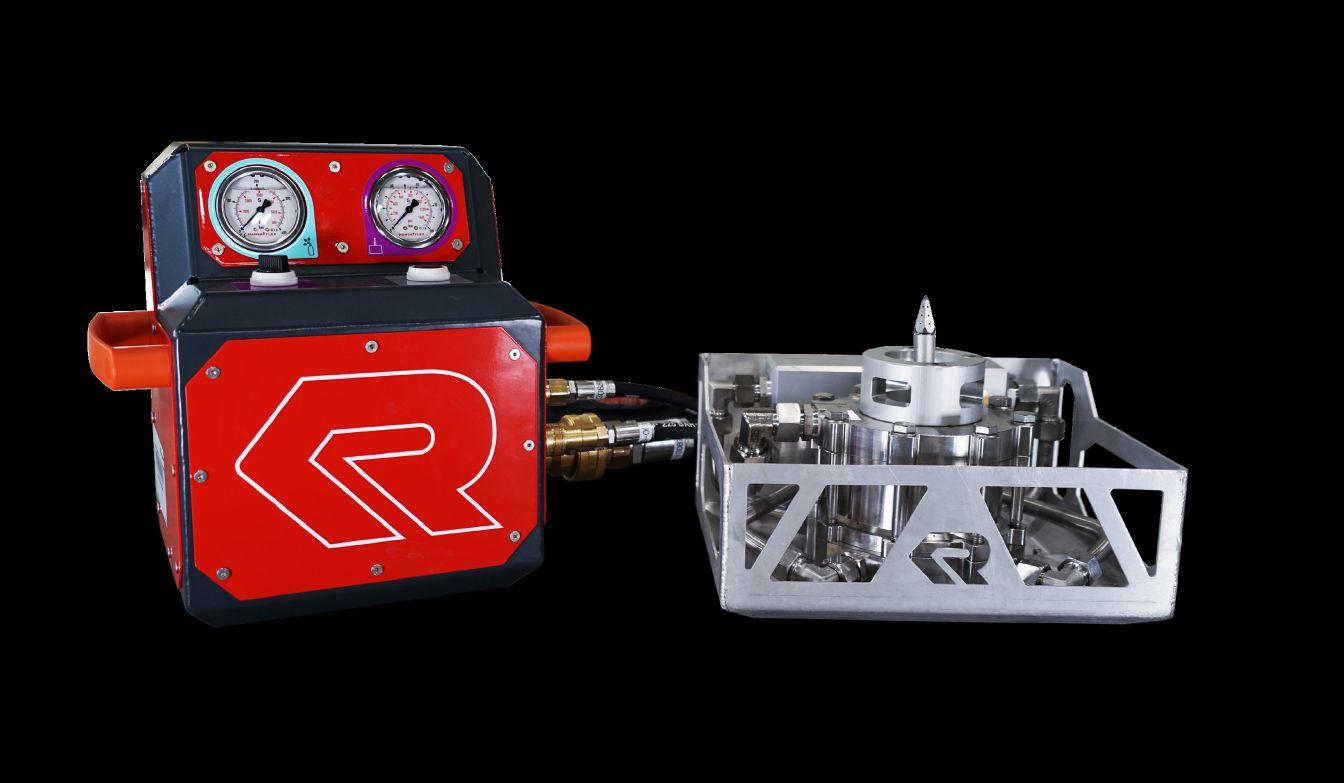
The call is coming when you will face an electric vehicle (EV) battery fire. Maybe you already have and experienced dousing an EV in more than 8,000 gallons of water and being on scene for four hours or more. There is a better way. Developed over six years in partnership with leading automotive companies the Rosenbauer battery extinguishing system technology (BEST) does the job with a fraction of the water and within an hour or less. When positioned beneath the vehicle, the piercing unit punctures the battery pack and halts thermal runaway by injecting cooling water around the battery cells at just eight gallons per minute. What was a resource-intensive call for service is now simple, safe, and efficient.





TRAINER’SCORNER
These experiments were presented at the Royal Institution in London as a science show. Known as the Christmas lectures, they are remarkable in their simplicity, yet powerful in their illustration of the basic principles of flames.
GETTING STARTED
Instruct each group to lay out the items in their live fire kits. Then lay out a sheet of aluminum foil (or a pie plate) and then light the candle. Once the candle is lit, let hot wax drip onto the foil (making a little puddle) then set the candle upright on that hot wax.
Now have each group take a few moments and observe the processes that created the sustained flame. Encourage them to discuss their findings amongst themselves, writing down what they feel to be relevant points.
After a few minutes, ask groups to share their findings. They should have noted several things. The yellow and blue zones constitute the flame. The blue zone indicates premixed flame (the fuel and oxidizer are mixed before reaching the flame). The yellow zone indi-
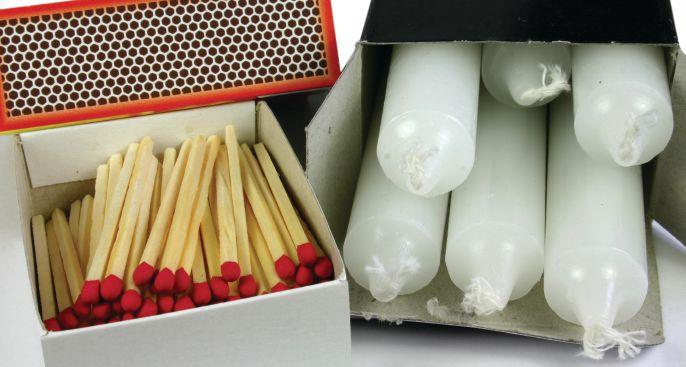
cates a diffusion flame, only fuel is supplied. The oxidizer is supplied from the ambient air and the mixing and combustion reactions take place together. Diffusion flame temperatures are lower than premixed flames because incomplete combustion releases less heat.
If the response is slow, you can ask some leading questions such as:
• What is the purpose of the wick?
• Why is the wick curved at the tip?
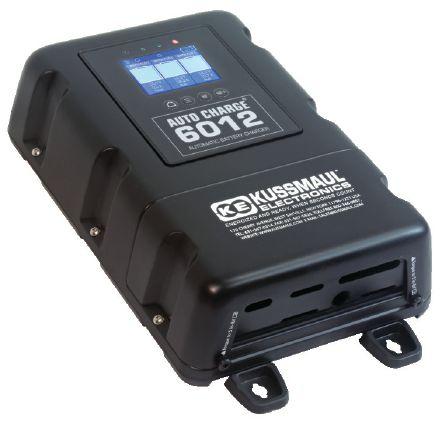
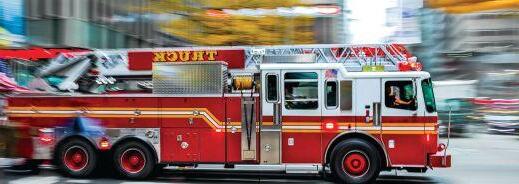
• What is burning?
Just so you can be the smartest one in the room, I will tell you that the wick is designed to curve so that the flame “clips” off the wick and limits its height. The wick stays basically the same length throughout the life of that candle.

HERE IS HOW IT WORKS
The heat of the flame melts the wax; the melt soaks the wick (by capillary action) and supplies the fuel gas to diffuse into the luminous zone where it finds oxygen having diffused from the other side.
If you look closely, you will see the flame is hollow.
Get each group to experiment with the candle regarding the three methods of heat transfer. Take one of the long wooden match sticks (unlit) and slowly bring it to the side of the candle flame (do not touch the flame). Take note how long you can hold it there before the match head ignites. Now take a new match slowly bring the match head down onto the candle flame. Take note how quickly the match head ignites. You’ve just demonstrated the difference between radiation and convection.
Before putting the long matches away, take one and light it. What happens when the match head is straight up? What happens when you hold the match at a 45-degree angle? And what about when the match head pointing almost straight down? We call that rate of spread.
By holding one end of the small metal rod with your fingers and placing the other end into the flame you can quickly come to under-
stand conduction. (The law of hot to cold)
Now take a sheet of white paper, hold it flat and drag it slowly through the flame (cut right through the flame). Be careful not to let the paper ignite. What is collected on the paper?
Now look at the paper, you should see some dark circles. These are unburned fuels in the form of soot, that were collecting in the smoke because you were “cutting the flame” and not allowing a clean burn. The reason the circles are darker around the edges and almost clear in the center shows the candle flame is hollow.
If you need to, relight the candle. Now insert a glass eye dropper into the hollow area around the wick. Extract the air next to the wick, you should see a white/light grey smoke filling the tube. Squirt this white gas across the top of the flame. It should ignite and look a bit like a small flame thrower. Try it a few times.
Have each group relight their candles. You will need them again in a moment, but first getting back to the last experiment ask each group to answer the following questions.
•What was gathered into the tube?
•What happened when you squirted those gases into the flame?
•What does that tell us about the hollow area around the wick?
When you have concluded that discussion, have each group gently blow out one of their candles. Have them describe the colour and character of the smoke that comes from the wick.
Have them pay close attention to your instructions; get one person
Duo-Safety Ladder Corp.
in the group to light a match, have another gently blow out the candle flame on another candle. Bring the lit match into the white smoke (do not touch the wick) the flame should jump though the smoke to the wick – relighting the candle.
Not just a great party trick but understanding these results could be life-saving information.
The unburned fuels in the white / cold smoke readily ignite as a heat source is introduced. Consider that for many years we were told that “white” smoke was not dangerous. It is important to realize that smoke can be ignited after collecting away from the point of origin.
Cold white/grey smoke can be ignited if the conditions are right, and that result can be devastating.
There is more information to gain from using the simple candle, but for now this will give you lots of material for both hands on and brainstorming. I hope these experiments will be great conversation starters for your members.
Until next issue – remember to train like lives depend on it because it does. I beg you… let no firefighter’s ghost say his/her training let them down. 4-9-4 Ed Brouwer.
Ed Brouwer is the chief instructor for Canwest Fire in Osoyoos, B.C., retired deputy chief training officer for Greenwood Fire and Rescue, a fire warden, wildland urban interface fire-suppression instructor and ordained disasterresponse chaplain. Contact aka-opa@hotmail.com.
2023 BUYERS GUIDE
NAMES, ADDRESSES & CONTACT NUMBERS OF MANUFACTURERS, DISTRIBUTORS, DEALERS AND AGENTS
A.J. STONE COMPANY LTD.
62 Bradwick Dr. Vaughan ON L4K 1K8
Tel: 416-785-3752
Toll free: 800-205-3473
Fax: 416-781-2827
Company Email: order@ajstone.com Web: www.ajstone.com
A.J. Stone has proudly served the needs of the First Responder Services of Ontario since 1972 by featuring quality products, knowledgeable sales team, and training support.
A.J. Stone supplies equipment from MSA, Task Force Tips, LION Protects, Paratech Rescue, FireBull, Enforcer, Genesis Rescue Systems, Streamlight, Innotex Bunker Gear, ProTech Gloves, Safe-T-System, CET and much more! We service what we sell!
A.S. ROACH FIRE SERVICES LTD
26-53106 Range Road 14 Parkland county AB T7Y2T3
Tel: 780-719-9584
Company Email: albert@asroachfire.com Web: www.asroachfire.com
Manufacturer of the Elevated Sprinkler Mount system wildfire protection sprinklers. Sprinkler Kits and Sprinkler Trailers.

AIR TECHNOLOGY SOLUTIONS CANADA INC.
251 Queen St. S., Ste. 512
Mississauga ON L5M 1L7
Tel: 905-826-6682
Toll free: 866-735-1480
Fax: 866-511-6904
Company Email: info@airmation.ca Web: www.airmation.ca
Air Technology Solutions is dedicated to our Clients, offering updated, timely, full service Indoor Air Quality (IAQ) solutions. Air quality concerns are mitigated
using a unique combination of professional indoor air quality assessment coupled with solutions. Off the shelf or customized site specific air cleaning equipment is available to resolve IAQ issues. Our technical experts review client requirements and budgetary availability. The finest appropriate air cleaning systems are provided. Air Technology Solutions is a leader in Diesel Exhaust Remediation and is the ONLY environmental tested and proven filtration system to exceed standards: NFPA, NIOSH, OSHA and ASHRAE. Building and facility managers, business owners, contractors, architects, and engineers have been working with Air Technology Solutions since 1986 to resolve IAQ needs. Employee and personnel safety and health are key issues. Breathing safe air in the workplace is of utmost importance. We provide global customized solutions to control contaminants, pollutants and odours in your facility. We look forward to servicing your requirements.
AIR VACUUM CORPORATION
PO Box 517
Dover NH 03821
Tel: 603-743-4332
Toll free: 800-540-7264
Fax: 603-743-3111
Company Email: sales@airvacuumcorporation.com
Web: www.airvac911.com
Breathe Clean Air with AIRVAC 911®
Control the spread of hazardous contaminants in your station. The AIRVAC 911® Engine Exhaust Removal System protects 100% of the bay area by constantly monitoring and removing exhaust and particulate matter from your station without interfering with daily operations. No hoses, hook-ups or vehicle connections. No building modifications, no ducting and no outside exhausting. AIRVAC 911® is 100% automatic.
- Address Hot Zones within your station
- Remove off-gassing of turnout gear, hoses and parked vehicles
- Counter off-gassing of secondary pollutants
- Remove engine exhaust that re-enters the building
- Half the cost of hose systems
- Energy efficient LEED/green design
- NFPA 1500/OSHA/GSA compliant
For a free quote:
www.airvac911.com
sales@airvacuumcorporation.com 800-540-7264
AKRON BRASS COMPANY
343 Venture Blvd.
Wooster OH 44691
Tel: 330-264-5678
Company Email: akroncare@idexcorp.com
Web: www.akronbrass.com
Akron Brass Company is a leading global manufacturer of high performance firefighting products engineered and tested for superior fire suppression and emergency response. Products include nozzles, monitors, valves, scene and vehicle lighting, vehicle electronics, reels, hand tools, engineered solutions, and other firefighting equipment. Leading the industry for over 95 years!
BEARSPAW PROTECTAPUMP
A-927 Goldstream Ave
Victoria British Columbia V9B 2Y2
Tel: 778-404-7385
Company Email: info@protectapump.com
Web: protectapump.com
Home of the BearsPaw Suction Separators. The Fire Ceptor series is dedicated to making it EASY TO DRAFT FROM NATURAL SOURCES OF WATER IN LESS THAN A FOOT: Wetlands - Creeks - Lakes - Rivers and the Ocean.
Our patented technology is SUPERIOR TO STRAINERS’ and allows firefighters to safely draft from water sources that previously could not be used. Made in Canada - offers 100% pump, nozzle & sprinkler PROTECTION. Satisfaction Guaranteed Sounds unbelievable? We can prove it! Visit ProtectaPump.com and see the Fire Ceptor in action. SAFE as a Dry Hydrant but PORTABLE.
Starfield LION’s CenterCut™ Bunker Gear Liner System for Drier, Cooler, Lighter and...Safer Gear.
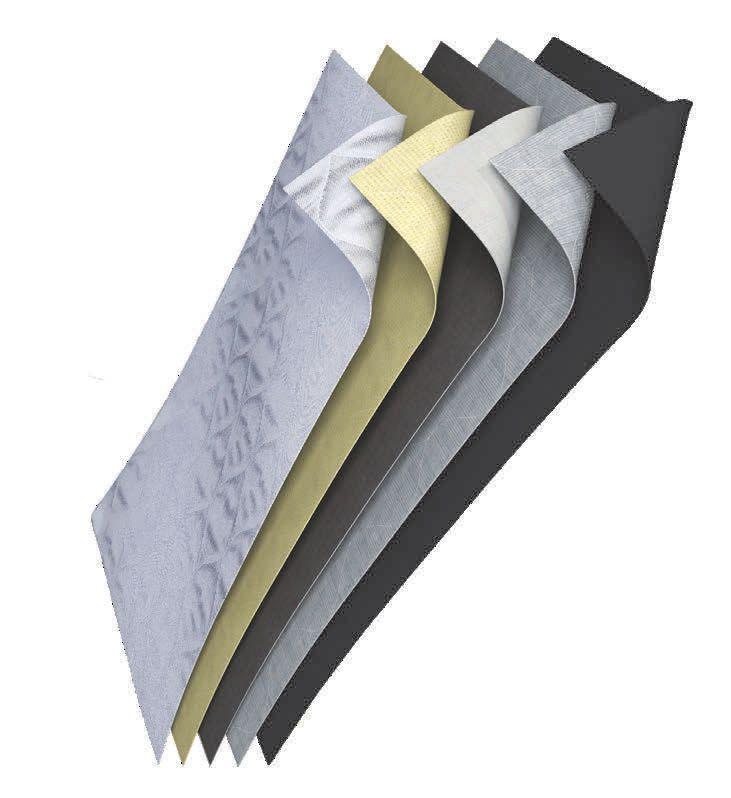
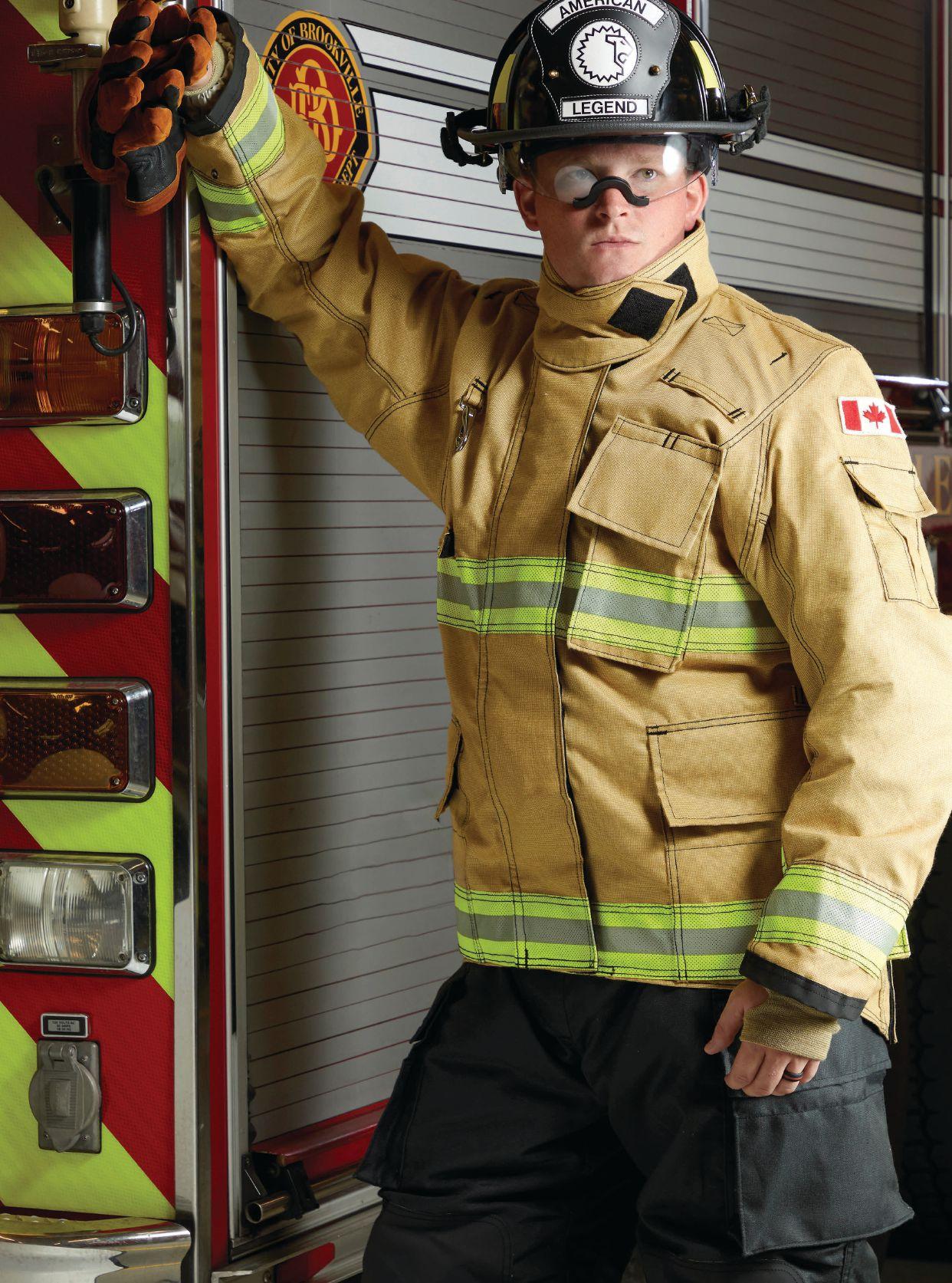
Starfield LION Flame Fighter™ Bunker Gear
2023 BUYERS GUIDE
CANADIAN SAFETY EQUIPMENT INC.
#3 - 2865 Argentia Rd.
Mississauga ON L5N 8G6
Tel: 905-826-2740
Toll free: 800-265-0182
Fax: 905-272-1866
Company Email: info@cdnsafety.com Web: http://www.cdnsafety.com
We supply Industrial and Fire SCBA’s, SCBA Decon Washer, Thermal Cameras, CAF Systems, Fall Protection, Bunker Gear, Fire and Rescue and Ballistic helmets, Fire Hose, Communications Equipment, Nozzles, Fittings, Hazmat Suits, Ventilation Fans, Gas Detectors, Confined Space Rescue Equipment, Water and Ice Rescue equipment, Industrial and Municipal Safety and Lone Worker Protection systems.

COINAMATIC COMMERCIAL LAUNDRY
301 Matheson Blvd West Mississauga ON L5R 3G3
Tel: 877-755-5302
Toll free: 877-755-5302
Company Email: info@coinamatic.com Web: www.coinamatic.com
Coinamatic Commercial Laundry provides a complete range of commercial laundry equipment for your on premise laundry operations as well as cleaning cabinets for in house laundering of turn out gear. Effective cleaning and decontamination can be an important safety and cost benefit for the department. We have a complete inventory of parts for most makes and models of equipment. Coupled with our qualified service teams, Coinamatic provides end to end solutions that meet your requirements!
Hazmat Suits, Ventilation Fans, Gas Detectors, Confined Space Rescue Equipment, High Angle Rescue Equipment, Ice and Water rescue equipment, Boots and Gloves. Everything for Fire Fighting, EMS, Law Enforcement, Industrial and Municipal Safety and Lone Worker Protection Systems.

D&R ELECTRONICS CO. LTD.
8820 George Bolton Parkway
Bolton ON L7E 2Y4
Tel: 905-951-9997
Toll free: 800-538-7338
Company Email: michael@dandrelectronics.com
Web: www.dandrelectronics.com
D&R Electronics offers emergency vehicle fleets with creative equipment solutions such as complex systems using mobile phones for desktop computing in vehicles to In-Vehicle Laptop/Tablet Mounting Solutions, In-Vehicle Printers and Printer Mounts, Equipment Consoles, Interior/Exterior LED Area/ Scene/Work lighting, SAE Certified/NFPA Compliant LED Emergency Lighting, LED Traffic Director Kits, Basic and Fully Programmable Siren/Light Control Systems, Programmable Power Management Systems, Battery Protection Modules, Equipment Storage Solutions





CARL THIBAULT FIRE TRUCKS INC.
38 Thibault St.
Pierreville QC J0G 1J0
Tel: 450-568-7020
Fax: 450-568-3049
Company Email: mthibault@thibaultfiretrucks.com
Web: www.thibaultfiretrucks.com
We are a Canadian based company and we manufacture a full line of fire apparatus which includes aerial ladders, pumpers, tankers, rescue units and vacuum tankers. We provide parts and other related products.
COMMERCIAL EMERGENCY EQUIPMENT CO.
591 Chester Road
Delta BC V3M 6G7
Tel: 877-443-2626
Toll free: 800-665-6126
Company Email: marketing@comtruck.ca Web: www.comemerg.ca
Commercial Emergency Equipment is Canada’s largest dealer for Pierce Manufacturing, MaxiMetal, BME Fire Trucks, Oshkosh Snow Products, and Oshkosh Airport Products. We provide sales, parts, and service for all makes of fire apparatus, and support our customers through our nationwide branch network.
Commercial Emergency Equipment Co. strives to exceed customer expectations in everything we deliver. With over 75 years in the truck equipment industry, we take pride in a proven track record of providing expert truck equipment solutions, top quality products, and first-class service to our customers.
We are a sole-source service provider with 24/7 mobile Emergency Vehicle Technicians, offering inspections, preventative maintenance, mobile pump testing, foam system calibration, aerial maintenance, as well as comprehensive apparatus training. We warehouse an extensive inventory of OEM and aftermarket parts, tools, and equipment ensuring quick delivery and reduced downtime to our customers.
CET FIRE PUMPS MFG.
75 Hector St.
Pierreville QC J0G 1J0
Tel: 450-568-2719
Toll free: 888-844-2285
Fax: 450-568-2613
Company Email: sales@fire-pump.com Web: www.fire-pump.com
No Hydrants, No Problem!
CET Manufactures Portable Pumps, Skid Units, Brush Trucks, Glider Kits, Foam Trailers, Water Tanks, and UTV Fire Units to help you fight fire where static water sources may be your only option. The Flow Starts Here!

CSE INCENDIE ET SÉCURITÉ INC.
5651 Chemin St-Francois
St. Laurent QC H4S 1W6
Tel: 514-737-2280
Toll free: 866-737-2280
Fax: 514-737-2751
Company Email: info@cseis.com
Web: www.cseis.com
We supply Industrial and Fire, SCBA’S, SCBA Decon Washers, Gear Extractors and Dryers, Thermal Cameras, CAF Systems, Fall Protection, Bunker Gear, Fire, Rescue and Ballistic Helmets, Fire Hose, Communications Equipment, Nozzles, Fittings,
D&R Electronics is an ISO 9001 Registered company that has been proudly designing and manufacturing emergency vehicle equipment in Canada since 1976.
DARLEY
325 Spring Lake Drive
Itasca IL 60143
Tel: 715-456-9390
Toll free: 800-634-7812
Company Email: jasondarley@darley.com
Web: www.darley.com
You serve others. We serve you.
Founded in 1908, Darley provides the highest quality pump, technology, and equipment solutions for first responders around the world. With origins in Midwest manufacturing, Darley offers a complete line of unmanned systems, immersive training technology, equipment and pumps. More information is available at www.darley.com.
DEPENDABLE EMERGENCY VEHICLES
275 Clarence Street
Brampton ON L6W 3R3
Tel: 905-453-3473
Fax: 905-456-3477
Company Email: sales@dependable.ca
Web: www.dependable.ca
Dependable Emergency Vehicles builds highquality, cost-effective emergency vehicles that have been proven in the emergency response industry for over 45 years. Our attention to detail, and innovative design and engineering concepts, allows us to manufacture emergency vehicles to your specifications.
We manufacture pumpers, rescue-pumpers, walk-in & walk-around rescues, tankers, hazmat, command units, and other specialized fire apparatus at our production facility in Brampton, Ont. Dependable is also an Ontario dealer for KME fire apparatus.
Our 40,000 sq. ft. facility includes multiple vehicle bays, state-of-the-art sandblasting & paint facilities, indoor pump testing bays, and a full-service repair shop for body work and refurbishment, on all makes and models. Our apparatus showroom, located across the street from our production facility, provides a comfortable environment for our customers to view and get a hands-on experience with our emergency vehicles on display.
DRAEGER SAFETY CANADA LTD.
2425 Skymark Ave., Unit 1
Mississauga ON L4W 4Y6
Tel: 905-212-6600
Toll free: 877-372-4371
Fax: 905-212-6602
Company Email: susan.yu@draeger.com
Web: www.draeger.com/en-us_ca/Safety/Firefighting
Contact us at +1 877-372-4371 to learn more about SCBA, live fire training system, fixed gas and flame detector, mobile gas detector, thermal imaging camera, drugs and alcohol testing equipment and the rest of our portfolio.
Product services and technical training courses are offered at our Mississauga, Ontario and Edmonton, Alberta locations throughout the year. Arrange for service of your SCBA and gas detector now.
2023 BUYERS GUIDE
E-ONE
1601 S.W. 37th Ave.
Ocala FL 34474
Tel: 352-237-1122
Fax: 352-237-1151
Company Email: info@e-one.com Web: www.e-one.com
E-ONE. STRENGTH THROUGH EXCELLENCE.
E-ONE, a full spectrum builder of fire apparatus, is the pioneer and recognized leader in extruded aluminum and stainless-steel construction. With their advanced engineering, fully integrated manufacturing and highly engaged dealer network, the proud customer focused E-ONE team delivers strength through excellence.
For more than 48 years, E-ONE has been the cuttingedge builder of:
- Aerial ladders and platforms
- Custom and commercial pumpers and tankers
- Rescues of all sizes
- Industrial trucks
- Aircraft rescue firefighting vehicles
INNOVATION EVERY DAY: Leading the way with advanced engineering and innovative design, E-ONE is an industry leader in product innovations, new technologies and exceeding customer expectations. Recent product advancements include the Vector, the first North American style fully electric fire truck. With 327 kWh of proven automotive-grade batteries, Vector delivers the longest electric pumping duration in the industry. Other recent advancements include the 100” wide Cyclone Cab, HR 100 aluminum aerial ladder, short jack for HP 100 Platform, Active Air Purification System, Air Transportable ARFF vehicles, AXIS Smart Truck technology, the ECO IDLE-TEC idle mitigation system and clean cab options.
E-ONE’S SUPERIOR AERIAL DNA: The DNA of E-ONE aerials consist of a unique design that gives E-ONE the advantage of stability and brute strength. The welded extruded aluminum construction will never rust or need repainting, resulting in a lower cost of ownership. Key design features include a 2.5 to 1 structural safety factor, crisscross under-slung jacks, integral torque box chassis, and the strongest cab in the industry.
SAFEST CAB IN THE INDUSTRY: Keep your crew safe with the cab that withstands over 5 times the static roof load and over twice the frontal impact required by NFPA 1901. The structural roll cage type design provides maximum protection and comfort for firefighters.
INTEGRAL TORQUE BOX CHASSIS: The integral torque box chassis is a unique design that provides a solid foundation and low center of gravity for the truck. This provides outstanding stability and strength, with the same 2.5 to 1 structural safety factor as the aerial device.
For further information on E-ONE apparatus or to find an E-ONE dealer near you, visit e-one.com
Darch Fire (Member of 1200 Degrees)
9-402 Harmony Road, Ayr, Ontario N0B 1E0
800-254-2049
Territory: Ontario
FireTek Emergency Vehicles LTD
30686-A Matsqui Place
Abbotsford, BC V2T 6L4
Territories: Alberta, Saskatchewan, Nunavut, British Columbia, Northwest Territories
Keewatin Truck Service
610 Keewatin St., Winnipeg, MB R2X 2R9
Phone 204-633-2700
Territory: Manitoba
Techno Feu Apparatus Maintenance
(Member of 1200 Degrees)
105 Route Marie-Victorin Saint-Francois-Du-Lac, PQ J0G 1M0
Territories: Quebec, Atlantic Canada
EV-X
Box 4347
Banff AB AB T1L 1E7
Tel: 403-760-1240
Company Email: kpatterson@ev-x.ca
Web: ev-x.ca
We provide training for first and second responders for Electric Vehicle extrication and fire Incidence.
FIRE FIGHTING IN CANADA /CANADIAN FIREFIGHTER
PO Box 530, 105 Donly Dr. S. Simcoe ON N3Y 4N5
Tel: 289-221-6605
Fax: 888-404-1129
Company Email: aszpakowski@annexbusinessmedia.com
Web: www.firefightingincanada.com
Canada’s National Fire Publication since 1957.
FIREHALL BOOKSTORE
PO Box 530, 105 Donly Drive S. Simcoe ON N3Y 4N5
Tel: 877-267-3473
Fax: 877-624-1940
Company Email: info@firehallbookstore.com
Web: www.firehallbookstore.com
Firehall Bookstore provides training & public education materials to the Canadian Fire Service industry and its professionals. Your headquarters for textbooks, DVDs, NFPA codes and standards, and fire safety & prevention educational materials for community outreach.
Products include: NFPA, IFSTA, Jones & Bartlett, Fire Engineering Books, Action Training Systems and Pearson/Brady as well as our Firehall Mall section offering gloves, lights, tools and accessories from A.J. Stone and ResQTech.
2023 BUYERS GUIDE
FORT GARRY FIRE TRUCKS LTD.
FIREHALL.COM
PO Box 530, 105 Donly Dr. S. Simcoe ON N3Y 4N5
Tel: 289-221-6605
Fax: 888-404-1129
Company Email: aszpakowski@annexbusinessmedia.com
Web: www.firehall.com
Firehall.com provides an excellent forum for exchange among firefighters and others involved in the fire service. Advertising options include banner ads and e-blasts and offer extensive exposure to the rank and file.
FIRESERVICE MANAGEMENT LTD.
34 Torlake Cres.
Toronto ON M8Z 1B3
Tel: 416-251-3552
Toll free: 888-731-7377
Fax: 416-253-0437
Company Email: brian@fireservicemanagement.com
Web: http://www.fireservicemanagement.com
We Clean, Test, Customize, Rent and Repair YOUR Gear. Canada’s premier facility dedicated exclusively to providing the best in bunkergear cleaning, decontamination, inspection and repair. We are NFPA 1851 compliant and UL verified for all cleaning and repairs to all materials including moisture barriers. We stock materials and trim for every brand. We’re a certified ISP so we can rebuild damaged components or add pockets and other features to suit your needs. We also offer FireTrack software to help you track your inventory and inspection history. Call us today to see how we can help your department.
FIRESERVICE MANAGEMENT TORONTO
34 Torlake Crescent Toronto, Ontario M8Z 1B3
TOLL FREE: 888.731.7377
FIRESERVICE MANAGEMENT CALGARY Unit 22, 2305
52 Avenue S.E., Calgary, AB T2C 4X7
Phone: 403.287.0155
RR 2, 53 Bergen Cutoff Rd. Winnipeg MB R3C 2E6
Tel: 204-594-3473
Toll free: 800-565-3473
Fax: 204-694-3230
Company Email: brian nash, bnash@fgft.ca
Web: www.fgft.com
Fort Garry Fire Trucks is Canada’s oldest and largest manufacturer of high-quality fire apparatus offering a complete line of quality pumpers, tankers, rescues, aerial devices, and custom-designed and engineered specialized units. With headquarters based in Winnipeg, Manitoba, Canada, our customers emanate from cities, towns, and municipalities throughout Canada, the U.S., and abroad with the harshest weather, climates, and terrain. We boast one of the largest fire apparatus engineering departments amongst our competitors, devoted to the design and production of equipment for the most extreme conditions in the world. We are a Bronto Skylift articulated aerial platform dealer, as well as the exclusive Canadian distributor of Sutphen Corporation aerial ladders and platforms. We truly build “One Tough Truck” and boast over 100 years of quality.
COAST TO COAST SALES AND SERVICE NETWORK:
Brian Nash - Vice President - Sales - bnash@fgft.ca
Toll-Free: 1-800-565-3473 (ext. 3471) Cell: 204981-7845
Chad Kamminga - Service & Warranty –ckamminga@fgft.ca
Toll-Free: 1-800-565-3473 Direct Phone: 204-594-3478
REGIONAL SALES REPRESENTATIVES:
Atlantic Canada - Adam Baldwin – abaldwin@fgft.ca
Toll-Free: 1-800-565-3473 (ext. 2006); Cell: 902888-9806
Eastern Ontario & Quebec - Peter Somerton –psomerton@fgft.ca
Toll-Free: 1-800-565-3473 (ext. 2005); Cell: 613859-5747
Central Ontario - Chris Pilek – cpilek@fgft.ca
Toll-Free: 1-800-565-3473 (ext. 3481); Cell: 204296-1915
Northern Ontario - Bob Lock – block@fgft.ca
Toll-Free: 1-800-565-3473 (ext. 2004); Cell: 705665-2195
Manitoba & Saskatchewan - Lance Spencer –lspencer@fgft.ca
Toll-Free: 1-800-565-3473 (ext. 3475); Cell: 204995-3895
Alberta - Taylor Young – tyoung@fgft.ca
Toll-Free: 1-800-565-3473 (ext. 3466); Cell: 204298-9923
British Columbia - Al Anderson & Bryan Anderson – Fire Power Emergency Apparatus – alan@ firepowerplus.com or bryan@firepowerplus.com
Phone: 1-250-668-2673 or 1-250-327-1904
Northwest Territories - Rick Penner – rpenner@fgft.ca
Toll-Free: 1-800-565-3473 (ext. 2024); Cell: 204981-5118
Nunavut & Aboriginal/Northern Sales Manager - Ron Lavallee – rlavallee@fgft.ca
Toll-Free: 1-800-565-3473; Cell: 204-791-1167
Yukon - Gil Bradet – Nordique Fire Protection sales@nordiquefire.ca; Phone: 867-334-6603
United States (West) - Lloyd Hamilton – US Fire Equipment lloyd@usfireequipment.com; Phone: 253-863-1301
United States (East) - Philip Vander Molen – Vander Molen Fire Apparatus vmfire@verizon.net; Phone: 315-952-7787
FP2 (INGENIOUS SOFTWARE)
2514 - 9th Avenue
Castlegar BC V1N 2Y8
Tel: 250-352-9495
Company Email: fp2@fp2.ca Web: www.fp2.ca
Fight Fires, Not Paperwork. Hundreds of Canadian Fire Departments use FP2 to manage all aspects of their operations. FP2 is powerful, flexible software with modular design that ensures you only buy what you need. New features include Web-Based Incident reports, pre-plans from your tablet and coming sooninspections on your phone. Our unique Compensation Reports can even run payroll for you! Contact us for a customized consultation and estimate.
FSI® NORTH AMERICA, A DIVISION OF FIRE SAFETY INTERNATIONAL INC.®
311 Abbe Rd. Sheffield Lake OH 44054
Tel: 440-949-2400
Fax: 440-949-2900
Company Email: sales@fsinorth.com Web: www.fsinorth.com
FSI – Celebrating 25 years of serving the Life Safety Market worldwide 1997 – 2022
FSI North America® is a Full line supplier of mobile, portable and fixed hazmat decon shower systems. Shower Systems include traditional water/solution based decon, electrostatic equipment only decon, and Far UVC 222nm Disinfection.
FSI® TEAS® (Temporary Emergency Air Shelters) shelter systems, offered in among the world’s largest range of size and configurations, serve for Command, Isolation, Field Hospitals/Alternate Care from 10-1,000 beds, Sleeping, Fire Fighter Rehab, Temporary Morgues, and so on.
FSI® offers a complete range of Isolation Chambers, Rooms, Shelters, and Beds/Chairs systems.
FSI® also offers a complete range of sizes and configurations of Trailer Systems, Rescue Boats, Smoke Ejectors, and EMS supplies such as the FSI Transporter Disposable Backboards, Triage Tape Systems, FSI Medical Field Cots, and Mortuary supplies such as body bags.
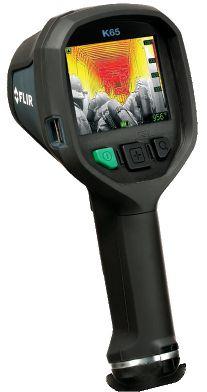
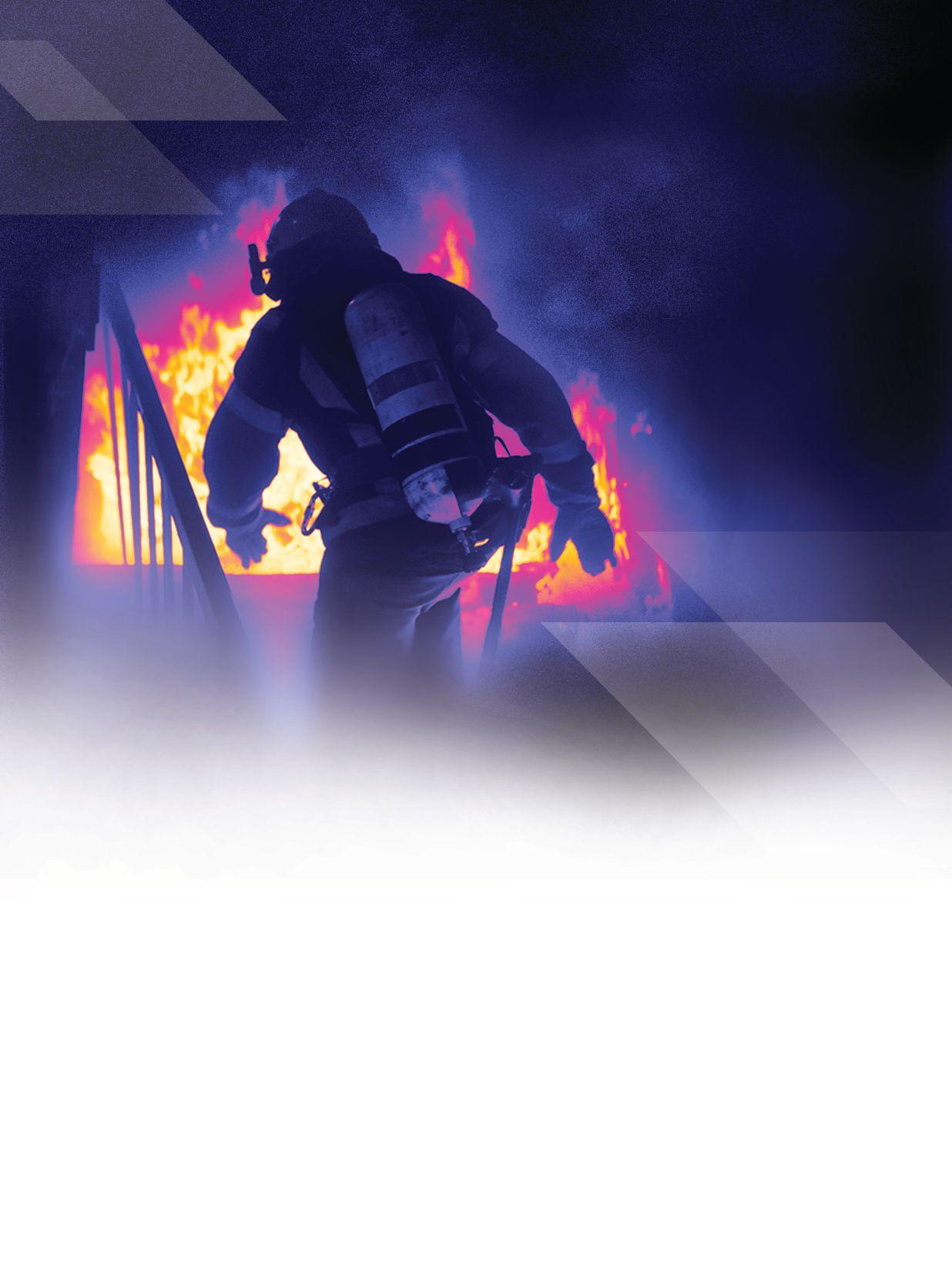
2023 BUYERS GUIDE
HALE PRODUCTS INC.
607 NW 27th Ave.
Ocala FL 34475
Tel: 352-629-5020
Toll free: 800-533-3569
Company Email: halecustomerservice@idexcorp.com
Web: www.haleproducts.com
Hale Products, Inc. is a part of the IDEX Fire & Safety Group. Together, these companies make an impressive arsenal of firefighting products and underscore our commitment to be the global leader in fire suppression solutions.
HIGHWATER HOSE INC.
12 rue Willard
East Angus QC J0B 1R0
Tel: 888-832-4310
Toll free: 888-832-4310
Fax: 819-832-4340
Company Email: sfraser@mercedestextiles.com
Web: www.highwaterhose.com
Worldwide supplier of a wide range of rubber covered and lightweight, layflat fire and industrial hoses.
A NEW EVOLUTION IN FIRE FIGHTING:
- Deluge™ - Designed for high volume water supply where excellent friction loss, packability and cold temperature flexibility are critical.
- X-Stream® Plus - Designed for aggressive interior attack where excellent abrasion and cut resistance are essential and where color-coded attack lines are crucial.
- Available with iReflect®, WAYOUT® Couplings and iDentify® Coding System
OUR CANADIAN DISTRIBUTORS
- martinsfiresafety.com - NL
- indsales.ca - Labrador
- cumings.ca - NS, NB, PEI
- seaboardindustrial.ca - Cape Breton
- larsenal.ca - QC
- municipalequipment.ca - S./S.E. ONT
- transcanadasafety.ca - N./N.C. ONT
- soucisalosafety.com – N./N.C. ONT
- realsafety.ca - MB
- wfrfire.com - BC, AB, SK, YT, NWT
HOLMATRO, INC.
505 McCormick Dr. Glen Burnie MD 21061
Tel: 410-768-9662
Fax: 410-768-4878
Company Email: info-usa@holmatro.com Web: www.holmatro.com
Holmatro is the world’s leading rescue equipment supplier. Our equipment is used by first responders around the world in rescue, special tactics and industrial applications. With two high-tech production plants in North America and Netherlands, we maintain the strictest quality, safety and performance standards in the market.
At Holmatro, we are dedicated to developing innovative tools using leading technology. Our Pentheon Series is the newest line of battery powered equipment that offers users the unrestrained performance, unparalleled speed and ultimate control you have never experienced before. And with battery management made easy, you are always rescue ready! To see our newest products, schedule a demo and request more information, visit holmatro.com. You can count on us, for life.
HURST JAWS OF LIFE
711 North Post Road
Shelby NC 28150
Tel: 704-487-6961
Company Email: contacthurst@idexcorp.com
Web: www.jawsoflife.com
HURST is the only manufacturer of the Jaws of Life® brand. There is no equal to saving lives. The company’s commitment to research and development and dedication to quality engineering and manufacturing has resulted in a line of innovative products known for outstanding safety, durability and performance. HURST Jaws of Life Inc. is a unit of IDEX Corporation, an applied solutions company. For more information about HURST Jaws of Life, please visit www.jawsoflife.com.
HUSKY PORTABLE CONTAINMENT
7202 SE International Ct. Bartlesville OK 74006
Tel: 918-798-4415
Toll free: 800-260-9950
Fax: 918-333-2004
Company Email: sales@huskyportable.com Web: www.huskyportable.com
Husky Portable Containment is a manufacturer of firefighting and environmental safety products. We specialize in portable water tanks used in water shuttle operations. We also manufacture salvage covers, hose bed covers, staging mats, strainers, decontamination pools and showers, bladder tanks and spill containment berms.
IamResponding is the leading provider of mobile dispatch alerting, delivering dispatch alerts (CAD feeds and live audio) to the mobile devices of more than 400,000 emergency service providers. IaR lets your teams know immediately about the incident, shows them where to go, and lets them know what they will encounter when they get there.
Used by more than 9,000 departments and specialty teams, IamResponding includes a full suite of functions, including: supplemental dispatch notifications via push notification (including CAD and live audio notifications right to your mobile devices), text message and email; Google Mapping of incident locations, with turn by turn navigation to the scene; hydrant and water source mapping and management; mobile pre-plans, scheduling, mass messaging, records management; incident reporting; training records; and so much more!
Try a FREE 60-day trial!

ICONIC X
1250 Franklin Blvd Unit 3a
Cambridge ON N1R 8B7
Tel: 877-890-9142
Toll free: 877-890-9142
Company Email: sales@iconicmetalgear.com
Web: iconic-x.com
Made in Canada. Iconic X designs and manufactures the highest quality aluminum pickup truck packs for First Response/EMS vehicles. Each truck pack is made to order and tailored to the truck it’s ordered for. From the start, we partner you with a dedicated Iconic X product expert who will help configure your truck pack and storage compartments specifically for the needs of your unit/department. This provides maximum efficiency and storage for your team’s lifesaving equipment. No wasted space. Our products are built from 1/8-inch fully-welded aluminum and are the most durable and secure on the market. They’re built to last through years of abuse, multiple truck cycles, and will never rust. Contact us to view our full product line, learn more, and get a quote.
IDEX FIRE & SAFETY
711 N. Post Rd.
Shelby NC 28150
Tel: 800-537-2659
Company Email: contacthurst@idexcorp.com
Web: www.idexfiresafety.com
IDEX Fire & Safety brings trusted brands together to deliver innovation in both customer experience and integrated solutions that revolutionize performance and technology to make the fire ground and rescue scene safer to save lives.
IAMRESPONDING.COM
PO Box 93
Dewitt NY 13214
Tel: 315-701-1372
Toll free: 877-509-0381
Company Email: sales@emergencysmc.com Web: www.IamResponding.com
2023 BUYERS GUIDE
INDUSTRIES LAFLEUR INC.
2359 Fiset Blvd
Sorel-Tracy QC J3P 5K2
Tel: 450-743-3918
Fax: 450-743-3906
Company Email: pierrethibault@industrieslafleur.com
Web: www.industrieslafleur.com
Fire rescue trucks (walk-in and non walk-in rescue trucks)
Custom truck bodies
High quality since 1969
ISO 9001
CWB 47.1 & 47.2
KOCHEK CANADA
62 Bradwick Dr., Vaughan ON L4K 1K8
Tel: 416-602-0404
Company Email: sales@kochekcanada.com
Web: www.kochek.com sales@kochekcanada.com
Robin Lewis, Customer Service laura@kochekcanada.com
Laura Kenyon, Regional Director
KUSSMAUL ELECTRONICS
170 Cherry Avenue
West Sayville NY 11796
Tel: 631-567-0314
Toll free: 800-346-0857
Fax: 631-567-5826
Company Email: sales@kussmaul.com Web: www.kussmaul.com
Kussmaul Electronics has focused on servicing emergency vehicles, specialty vehicles and vans for over 50 years, always with the commitment to deliver high quality products and the best of the customer service experience. All products are proudly manufactured in the USA. Home of the Auto Eject.
MAXIMETAL INC.
9345, 25e Ave
Saint-Georges, QC G6A 1L1
Tel: 418-228-6637
Toll free: 800-510-6337
Fax: 418-228-0493
Company Email: maximetal@maximetal.ca Web: www.maximetal.com
MAXIMETAL, an Oshkosh Corporation company, is a dynamic, innovative company with 40 years’ experience designing and building optimized intervention vehicles for Fire & Emergency as well as Power & Utility customers. OUR MISSION: To support those who keep our families safe and comfortable by designing and building vehicles that stand out for their quality and ingenuity.
MEIKO CLEAN SOLUTIONS CANADA INC.
P.O. Box 21138, Meadowvale Postal Outlet
Mississauga ON L5N 6A2
Tel: 800-55-MEIKO
Toll free: 800-55-MEIKO
Company Email: info@meiko.ca
Web: www.meiko.ca/en_us
Breathe easy with DECON Equipment Washers, the simple solution for complex cleaning and decontamination of SCBA and other firefighting and HAZ-MAT gear. These specialized equipment washers provide exceptional cleaning that helps protect firefighters from residual fire-related toxins. And they provide the same high level of protection every time, for clean you can trust.

MERCEDES TEXTILES LTD.
Montreal QC
Tel: 514-335-4337
Fax: 514-335-9633
Company Email: sales@mercedestextiles.com
Web: www.mercedestextiles.com
For over 45 years, Mercedes Textiles has proudly delivered the most innovative and reliable water delivery systems to the firefighting community. From hoses & couplings to portable pumps, municipal to forestry, we put our technology where your courage is.
FIRE HOSE & COUPLINGS:
- KrakenEXO® – The most advanced UL-listed attack fire hose on the market – weighs less, kinks less, flows more water, beats the heat
- MegaFlo® Breather – Large volume attack & supply hose designed for fastest deployment, easiest recovery & best packability
- Highwater Hose Inc. – We offer of a wide range of rubber-covered lightweight, lay-flat & industrial hoses via our partner brand
- Many hoses available with iReflect® & WAYOUT® couplings and iDentify® Coding System – all manufactured under one roof, customized to your specifications, & NFPA 1961 compliant
- Best warranty on the market: 2-year All Hazards, 10-year manufacturing defects & Lifetime against delamination (2-10-L)
POWERFUL FIRE PUMPS: We are a leading manufacturer of high pressure, lightweight, portable fire pumps for forestry & municipal fire applications. When you need water, we deliver.
OUR DISTRIBUTORS:
www.martinsfireandsafety.com – NL
www.indsales.ca – Labrador
www.cummings.ca – NS, NB, PEI
www.seaboardindustrial.ca – Cape Breton
www.larsenal.ca – QC
www.municipalequipment.ca – S/S.E. ONT www.transcanadasafety.ca – N/N.C. ONT www.soucisalosafety.com – N/N.C. ONT
www.realsafety.ca – MB
www.wfrfire.com – BC,AB,SK,YT,NWT
METZ FIRE AND RESCUE
3-304 Stone Rd. W.
Guelph ON N1G 4W4
Tel: 519-829-9149
Fax: 519-763-6682
Company Email: john@metzfirerescue.com Web: www.metzfirerescue.com
Canadian dealer for KME Fire Apparatus. Specializing in custom and commercial pumpers, aerial, rescue, tankers and wildland units.
NATIONAL FITTINGS CANADA INC
449 Gowland Crescent
Milton ON L9T 4B9
Tel: 905-805-9611
Company Email: info@nationalfittingscanada.com Web: www.nationalfittingscanada.com
National Fittings Canada stocks and supplies
Canada’s top selling Hydrant Gate Valves, Threaded Fittings & Elbows, Hydrant Diffusers, Ball Valves, Industrial Nozzles, Wrenches & Spanners, Storz Adapters, Storz Caps, Municipal & Industrial Brass Fittings, Brass Caps, Brass Plugs and Brass Wyes. Ask us about our new line of Fire Department Hi Visibility Reflective Soft Goods. We now stock top quality Hi Vis Reflective Fire Department Duffle Bags, Backpacks, Mask Bags and Fire Department Gear Bags that have been supplied to local fire departments across the country.
We are here to provide the Municipal Fire Service with the best quality products, fast shipping leadtime at a competitive price from our 3rd party logistics warehouse located in Ontario. Please inquire if you are interested in becoming a distributor and join Canada’s quickest growing municipal fire equipment supplier. Contact Dean Lester by email at dlester@nationalfittingscanada. com or call at 905-805-9611.
2023 BUYERS GUIDE

NEDERMAN CANADA
5865 McLaughlin Road Unit 1
Mississauga ON L5R 1B8
Tel: 866-332-2611
Company Email: customerservice.ca@nederman.com
Web: www.nederman.com
With 75+ years of experience and well over 100,000 installations, Nederman offers diesel exhaust extraction systems designed specifically for emergency and fire vehicles. From the planning and design stage to installation, commissioning and maintenance support Nederman is your clean air partner.
Nederman Magna Systems reliably capture 100% of dangerous diesel exhaust emissions with source capture technology that prevents fumes from traveling throughout the station. Exhaust fumes are removed right at the tailpipe – the most efficient method. Our system design supports ergonomic attachments and quick-release when speed is required for fast station exits. Magna Systems have no coiled hoses or loops and saves space between trucks.
Nederman’s wide variety of product solutions are trusted at thousands of fire stations around the world with high quality construction and exceptional performance that maximized protection.
ONTARIO FIRE TRUCK INC.
1397 Old Hwy 99
Dundas ON L9H 5E3
Tel: 905-628-3324
Toll free: 800-474-6698
Company Email: sales@ontariofiretruck.com Web: ontariofiretruck.com
Ontario Fire Truck Inc. is Ontario’s first choice for Fire Apparatus Service & Sales. We are your first and only call for Fire Apparatus Service, Sales & Testing! We offer you the finest repairs in the industry; we offer a 24 hour, 7 days a week service. All of our service staff is fully licensed Class “A” & “T” both provincially and EVT certified. We are fully insured and have over 30 years experience to provide the best service at your location. Our fully stocked mobile service trucks travel all over Ontario! Why take your truck anywhere, we come to you for both Service and Testing! Our Sales staff has over 60 years combined experience in the fire industry, we offer only the finest Seagrave fire apparatus, and Our Company believes only the best will do! We are the authorized sales and Service Company for Seagrave fire apparatus and equipment companies.
“The bitterness of poor quality remains, long after the sweetness of low price is forgotten”
Commitment to performance extends beyond Pierce’s factory walls and into the communities served. A significant part of the Pierce legacy involves giving back to the community and the fire industry. Partnerships include the Firefighter Cancer Support Network, the National Fallen Firefighters Foundation, and Volunteer & Combination Officers Section of the IAFC.
See the Pierce difference for yourself at piercemfg.com.
PLYMOVENT
5655 Kennedy Road, Unit 1 Mississauga ON L4Z 3E1
Tel: 800-465-0327
Company Email: david.k@plymovent.com Web: www.plymovent.com
Since 1975, we have made it our business to ensure clean air in fire stations. We provide high-quality products to protect firefighters and others from exposure to hazardous diesel exhaust. Our source capture and removal systems are the recommended method for controlling exhaust emissions at your station. Breathe clean air at work with Plymovent. #hookupthehose
RES-Q-JACK, INC.
1580 Lake St Elmira NY 14901
Tel: 607-739-1209
Toll free: 800-466-9626
Fax: 607-739-4583
NFPA
c/o Firehall Bookstore, PO Box 530, 105 Donly Dr. S. Simcoe ON N3Y 4N5
Tel: 877-267-3473
Fax: 877-624-1940
Company Email: info@firehallbookstore.com
Web: www.firehallbookstore.com
Canadian distributor for NFPA standards, memberships, Fire Prevention Week™, Sparky the Fire Dog® and other public education items.

OMEGA COMMUNICATIONS LTD.
110 - 3677 Highway 97N
Kelowna BC V1X 5C3
Tel: 250-860-8016
Toll free: 888-860-8016
Fax: 250-860-7477
Company Email: warrens@omegacom.ca Web: www.omegacom.ca
Since 1976 Omega Communications has been providing PAGERS, TWO-WAY RADIOS and DISPATCH CONSOLE solutions to Fire Services across Canada.
PIERCE MANUFACTURING INC.
PO Box 2017
Appleton WI 54912-2017
Tel: 920-832-3000
Web: www.piercemfg.com
Pierce Manufacturing: Perform. Like No Other. It’s more than a tagline. It’s a lifeline extended to every firefighter served, and the expectation of every person and product at Pierce Manufacturing Inc. Behind the design of every highly customized and engineered pumper, aerial, tanker and rescue unit is a team of professionals whose mission is to build a truck, exactly how it’s ordered. The Pierce team pours everything they have into making sure a fire truck is ready to perform.
Pierce heavily invests in product development and programs to advance firefighter safety, education and performance. Performance-driven design means Pierce is continually evolving to provide firefighters with industry-leading advancements and unmatched innovation. As a subsidiary of Oshkosh Corporation (NYSE: OSK), the experienced team has access to an arsenal of cutting-edge technologies and revolutionary processes which have contributed to the development of six custom chassis and best-inclass innovations. Innovations include the Volterra™ platform of electric vehicles, Ascendant Class of Aerials®, Pierce Ultimate Configuration (PUC™), Command Zone™, Idle Reduction Technology, TAK4® Independent Suspension and Husky™ Foam Systems to name a few.
Company Email: info@res-q-jack.com Web: www.res-q-jack.com
Res-Q-Jack is the innovator in vehicle stabilization and lifting struts for extrication located in Elmira, NY. We strive to provide high quality, easy-to-use and reliable products that are always up to face any challenge. With advanced training included with any purchase of a kit, we want you to be ready and confident for any scene you might come across in the real world.

2023 BUYERS GUIDE
ROCKY MOUNTAIN PHOENIX
Head Office: 6415 Golden West Ave.
Red Deer AB T4P 3X2
Tel: 403-347-7045
Toll free: 800-494-4210
Fax: 403-347-7049
Company Email: info@rockymountainphoenix.com
Web: www.rockymountainphoenix.com
Rocky Mountain Phoenix is your one-stop-shop for top-of-the-line innovative fire truck and fire equipment products and services. We offer a comprehensive line of emergency apparatus and emergency equipment, brands you know and trust; Rosenbauer, MSA, Innotex, CET Fire Pumps, HURST Jaws of Life, Akron Brass, Haix, Key Hose, MSA Cairns, Task Force Tips, Ready Rack, Firecraft and many more.
We service what we sell. We provide 24/7 service for all your emergency fire apparatus and fire equipment through our Shop Service and Mobile Service. Annual fire pump testing, fire truck and fire equipment service and repairs for British Columbia, Alberta, Saskatchewan, Manitoba, Nova Scotia, PEI and all of Canada’s Arctic.
Visit Us: https://www.rockymountainphoenix.com
BRANCHES:
103-2285 Queen St.
Abbotsford, BC V2T 6T3
Tel: 604-864-7303 | Fax: 604-864-4938 | Toll Free: 1-888-815-0500
320 Logan Rd. Bridgewater, NS B4V 3J8
Tel: 902-298-0415 | Toll Free: 1-844-530-4003
ROLLNRACK, LLC
PO Box 328
Mukwonago WI 53149
Tel: 262-565-7833
Fax: 262-363-2034
Company Email: javier@rollnrack.com
Web: www.rollnrack.com
The RollNRack System is customizable for your firefighters. Streamline hose management with a priority on safety and efficiency. Use the RollNRack or GO-Pack (collapsible unit) to load hose. The Power Roller can drain and roll a 100’ length of LDH in 30 seconds. LDH rolls are rocked into or out of unit. Hose rolls are loaded with two firefighters onto stationary rigs. No one rides on moving rigs when loading. Our Efficiency Package saves you money. The FASTBACK will roll up either hand lines or forestry hose. The RollNRack System improves your firefighter’s lives immediately. MADE IN THE USA.
SAFEDESIGN APPAREL LTD.
34 Torlake Crescent
Toronto ON M8Z 1B3
Tel: 416-253-9122
Toll free: 877-253-9122
Fax: 416-253-0437
Company Email: sales@safedesign.com
Web: http://www.safedesign.com
Specialists in Firefighters’ Protective Clothing. From Helmets to Bunkergear to Boots and Stationwear, we’ve got you covered from head to toe. Our team is knowledgeable and trained to ensure a proper and professional fit. Our brands: Globe Bunkergear, Hoods and the amazing Globe Boots, Cairns Helmets, Shelby ‘Firewall’ Gloves, PGI Hoods including the BarriAire Particulate Blocking Hood, PGI Wildland clothing, Black Diamond Footwear, Workrite Stationwear and Horace Small Uniforms.
If you would like to hear from a rep in your area please call us today – 416-253-9122
SANI GEAR INC.
545 Trillium Dr, Unit 4
Kitchener ON N2R 1J4
Tel: 519-893-1235
Toll free: 888-660-1840
Company Email: firesafe@sanigear.ca
Web: http://www.sanigear.ca
Sani Gear Inc. is a verified ISP (Independent Service Provider) located in Kitchener, ON, and in Gatineau, QC. Sani Gear completes advanced cleaning, hydrostatic testing, advanced inspections, and full repair services, using all NFPA compliant materials. All services provided meet NFPA 1851 - 2020 edition, and are recognized by all manufacturers as a warranty center in Canada. Established in 2003, we have gained the trust of all departments from small volunteer services to large full time services. We pride ourselves on providing the same level of service to all of our customers no matter the size of department.

SPARKLE SOLUTIONS
100 Courtland Ave.
Concord ON L4K 3T6
Tel: 866-660-2282
Toll free: 866-660-2282
Fax: 905-660-2268
Company Email: brucem@sparklesolutions.ca
Web: www.sparklesolutions.ca
We are the industry leader in supplying Complete Laundering Solutions for personal protection equipment. Complete firefighter protection: Turn Out Gear extractors , dryers plus Gear cleaning detergents. When our Ram ExpressDry Gear Dryers and our Continental ExpressWash Gear extractors, are combined with our ALL IN ONE gear detergent includes HYGEIO with COVID disinfectant and smart surface 10 wash or 30 day continued mechanical protection.. Also available through AJ Stone.
SSI FIRE SOLUTIONS
230 Herzberg Road, Kanata, Ont. K2k 2a1 Kanata ON K2K 2A1
Tel: 613-913-3276
Company Email: peterha@ssicanada.com
Web: www.ssifiresolutions.com
We are a Distributor/Manufacturer of Environmentally Friendly Fire Suppression Solutions primarily for Special Hazard or Remote Access Requirements including Data and Communication Facilities, Energy Generation and Storage Solutions along with Marine applications. Our product line also includes the Portable Fire Suppression Tool (FST) designed to be used by Firefighters, Police, Military and other first responders. We Distribute through authorized distribution partners across Canada

STARFIELD LION
23 Benton Road
SEATS CANADA INC.
1800 Bonhill Road
Mississauga ON L5T 1C8
Tel: 905-364-5843
Fax: 905-364-7822
Company Email: seatsinfo@seatscanada.com
Web: www.seatscanada.com
We offer a complete line of quality Emergency Vehicle seating for driver, officer, crew, wall mount and jump seats. Engineered for comfort and safety, these seats have easy exit flip-up split headrest and are manufactured in a wide variety of covering material.
Toronto ON M6M 3G2
Tel: 416-789-4354
Toll free: 800-473-5553
Fax: 416-789-5475
Company Email: starfieldcustomersupport@ lionprotects.com
Web: www.starfieldlion.com
Starfield Lion has a legacy and ongoing vision of introducing PPE that is designed to ensure the health, safety and performance of the first responders who serve our communities. Your safety is our top priority. Your needs drive our innovations, we listen and develop the solution.
SUTPHEN CORPORATION
6450 Eiterman Road
Dublin OH 43016
Tel: 800-726-7030
Company Email: sutphen@sutphencorp.com
Web: www.sutphen.com
As a family-owned and operated business of over 130 years, Sutphen Corporation’s mission is to build the safest, most reliable fire apparatus in the world through innovation and customer focus.

VECTOR SOLUTIONS
10805 Rancho Bernardo Rd, Suite 200 San Diego CA 92127
Tel: 519-820-7751
Toll free: 877-944-6372
Fax: 858-487-8762
Company Email: judy.smith@vectorsolutions.com
Web: www.vectorsolutions.com
Vector Solutions delivers the industry’s most comprehensive suite of software for operational readiness. The full suite of technology includes tools for managing training, operations, assets, and staffing. With Vector Solutions you can track Fire and EMS training requirements, compliance tasks, mandatory inspections, controlled substances, employee scheduling, and much more. Find us online at www.vectorsolutions.com/fire.
WATERAX INC.
6635 Henri-Bourassa W.
Montreal QC H4R 1E1
Tel: 514-637-1818
Toll free: 855-616-1818
Company Email: info@waterax.com Web: www.waterax.com
Trusted by wildland firefighters around the world, WATERAX sets the industry standard by developing innovative, portable fire pumps and water-handling equipment designed to withstand demanding applications and rugged environments. With a timetested legacy of reliability, WATERAX carries on its mission to place powerful, precision engineered pumps into the hands of the men and women who need to move water to protect our forests and most cherished natural resources from the ravages of wildfires!
WATEROUS COMPANY
125 Hardman Ave. S.
South St. Paul MN 55075
Tel: 651-450-5000
Fax: 651-450-5090
Company Email: info@waterousco.com
Web: www.waterousco.com
C.H. Waterous started Waterous Engine Works Company in 1844 in Brantford, Ontario and then expanded to South St. Paul, Minnesota in 1886. Since then, Waterous has been the leader in the manufacturing of fire pumps for our everyday heroes. At Waterous, we have been and always will be firefighters.
WFR WHOLESALE
FIRE & RESCUE LTD.
240136 Frontier Cres.
Rocky View County AB T1X 0R4
Tel: 403-279-0400
Toll free: 800-561-0400
Fax: 800-561-0400
Company Email: sales@wfrfire.com
Web: www.wfrfire.com
WFR Wholesale Fire & Rescue is Canada’s equipment destination for fire & rescue equipment. This family owned and operated business has been serving firefighters since 1986 and endeavours to continue our history of supplying you our best products and unquestionable service and support.
ZIAMATIC CORP. (ZICO)
10 West College Ave., PO Box 337 Yardley PA 19067-8337
Tel: 215-493-3618
Toll free: 800-711-3473
Fax: 866-493-1401
Company Email: sales@ziamatic.com
Web: www.ziamatic.com
For over 50 years, Ziamatic Corp. has provided first responders with the tools and equipment they need to make their jobs safer, easier, and more efficient every day. If you want quality, you want ZICO.
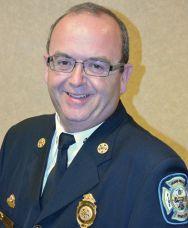
BY VINCE MACKENZIE Fire Chief Grand Falls-Windsor, N.L.
IVOLUNTEERVISION
Reflecting on the fire service
t’s ironic that I am writing this column on the 40th anniversary of the day I first joined my fire department as a volunteer. The time has passed so fast that I cannot help but reflect upon the past four decades of my fire fighting career, of which I am still active. I’ve also been set in the reminiscing mood because just last week, my co-columnist, and good friend Tom DeSorcy of Hope, B.C., officially retired as fire chief.
For those of you that have been around more than 10 years, let’s reflect on where the fire service is today, especially around the current atmosphere of volunteerism across our country. All first responder professions seem to be in some major turmoil as we come out of the pandemic, coupled with our baby boomer population taking on retirement, it seems a lot has changed. But deeper reflection also reminds that the very foundation of why we exist is still there and will always be. To protect lives and property that are threatened in our community has always been why we do what we do. That has not changed, but the systems in which we try to accomplish our missions are constantly evolving.
This past year has seen some important headlines around our Canadian fire services. The Great Canadian Firefighter survey has shown that volunteer firefighters are in decline in this country. In the broader scope, some the volume of our volunteer firefighters has given way to part time and full-time services. That is a natural progression as larger communities have grown and therefore, some of our volunteer numbers have fallen to full-time staffed departments. That is certainly good but unfortunately most of suburban and rural Canada will not see the explosive growth that makes full-time fire services affordable. Those declining numbers of volunteers to staff rural departments is very concerning indeed.
is minutes away. Working smoke alarms, that are appropriately placed in multiple locations, will always be critical to human survival in Canadian homes. This is always the foundation of occupant fire protection. That also must be met with a public that is educated to how to react to fire in the home, heeding the early warning that smoke alarms provide and escaping. The response time from a fire station is essentially secondary when smoke alarms work properly to alert occupants to call the fire department in the first place.
Unfortunately, this documentary focused on volunteer fire departments exclusively because typically in those communities, there is a rural and distance component coupled with a lower population density to recruit volunteers.
My point is that even after my 40 years in the fire service, working smoke alarms will always be paramount to the protection of life, hands down. The public can get fixated that departments will save them but we all know effective fire protection starts with the citizen in prevention.
I’d like to finish off this edition in tribute to my esteemed now retired fire chief colleague Tom DeSorcy. I would be remiss if I didn’t take this chance to wish him great success in his fire chief retirement, and also
Protecting lives and property in our community has not changed, but the systems we try to accomplish that in, have. ‘‘ ’’
I do wish to comment on a recent news documentary sounding the alarm of declining volunteer fire services, attributing deaths to only slower response times of rural fire departments. Nowhere in that documentary was the mention of working smoke alarms and home fire escape planning. There is no way to attribute a guarantee that full-time fire services will save lives because of faster response times. If that was the case, there would be no fire deaths ever in our cities.
We all know that home fires occur at deadly speed and the fire department will be very challenged to save someone that is truly trapped as undetected fires take place in their homes, even if a fully staffed station
Vince MacKenzie is the fire chief in Grand Falls-Windsor, N.L. He is an executive member of the Canadian Association of Fire Chiefs and the current president of the Maritime Fire Chiefs Association. Email Vince at firechief@ townofgfw.com and follow him on Twitter at @FirechiefVince.
thank him for his knowledge, insight and passion he has shared over the years through Volunteer Vision.
Together, we have tag-teamed this column since 2010.
He and I both now have over 40 years behind us in Canada’s fire services on opposite sides of the country. This has taught me through friendship that Canada’s fire service is indeed the same from coast to coast. Fire department challenges are no different and we have certainly addressed 90 per cent of the topics somewhere in the last decade of Volunteer Vision columns. We both joined our fire departments as true volunteers and now full-time chiefs of the same volunteer fire department we originally signed on to.
Change we have seen, we literally lived and influenced it. We deserve to be proud of it but also knowing that we are merely building blocks of a service that we pass on to others someday.
Fire chiefs across Canada rely on the most innovative rescue tools. It is for these men and women that we have developed our new Pentheon Series: High-tech rescue tools that are ahead of all other equipment on the market, cordless and hose tools alike. Only the Holmatro Pentheon Series offers you the unrestrained performance, unparalleled speed and ultimate control you’ve never experienced before.
LEARN MORE AT HOLMATRO.COM/PENTHEON
ST. JOHN’S, NEWFOUNDLAND AND LABRADOR
CHARLOTTETOWN, PRINCE EDWARD ISLAND
HALIFAX, NOVA SCOTIA
FREDERICTON, NEW BRUNSWICK
QUÉBEC CITY, QUÉBEC OTTAWA, ONTARIO
TORONTO, ONTARIO
WINNIPEG, MANITOBA REGINA, SASKATCHEWAN EDMONTON, ALBERTA
VICTORIA, BRITISH COLUMBIA
IQALUIT, NUNAVUT
YELLOWKNIFE, NORTHWEST TERRITORIES
WHITEHORSE, YUKON