Canada - 1 Year $36.75 (includes GST) $39.55 includes HST/QST
U.S.A. - 1 Year $50.00 (in US dollars)
Occasionally, Fenestration Review will mail information on behalf of industryrelated groups whose products and services we believe may be of interest to you. If you prefer not to receive this information, please contact our circulation department in any of the four ways listed above.
www.fenestrationreview.com
3
9
5
FABRICATING SOLUTIONS
Fenestration Canada’s Fabricator’s Council meets with a full agenda.
8
VIDEO WRAP-UP
Fenestration Review editor
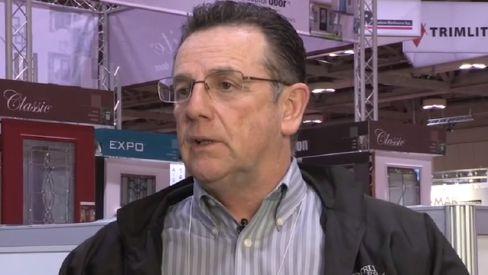
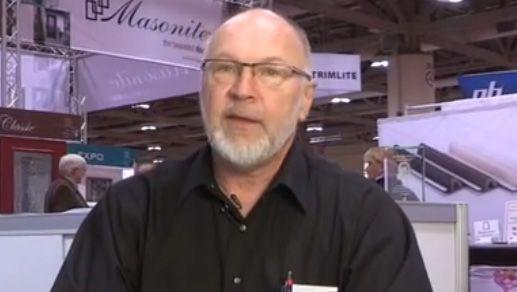
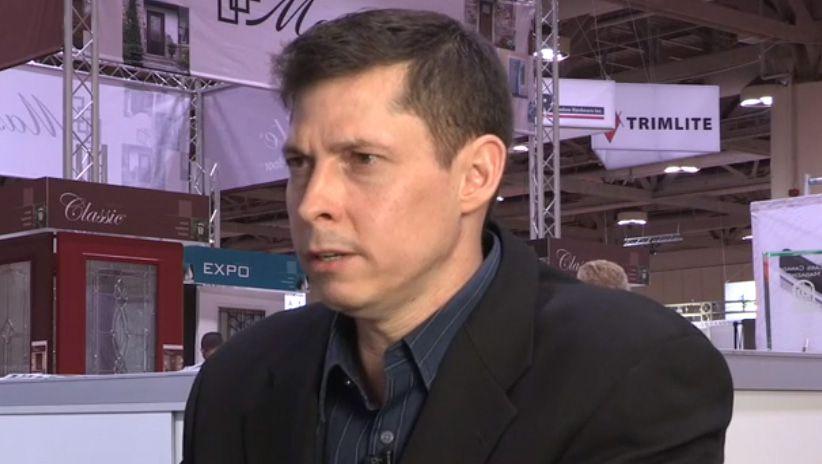
Patrick Flannery interviews key show participants on NAFS, company news and tall tales from yesteryear.
6 ONE QUESTION, ONE ANSWER
An innovative meeting format yields big benefits for test lab customers.
9
SCREENCO AND MENNIE TEAM UP FOR CHARITY
Once again, two Windoor exhibitors go the extra mile for Nellie’s Women and Children’s Shelter.
10
ON THE FLOOR
A look at some of the innovative products on display at Windoor 2014.
4
WINDOOR GETS SERIOUS Important conversations take centre stage at Windoor 2014.your company.
7
SMOKE SIGNALS
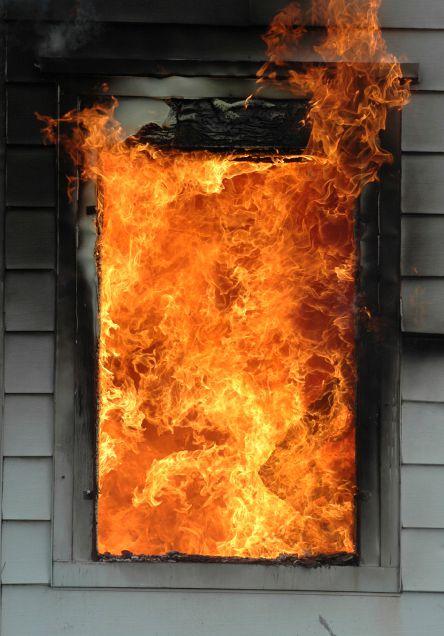
Is PVC really flammable? An industry group aims to change the way vinyl is treated in Canada.
WINDOOR GETS SERIOUS
Big industry changes discussed at Canada’s window and door show.
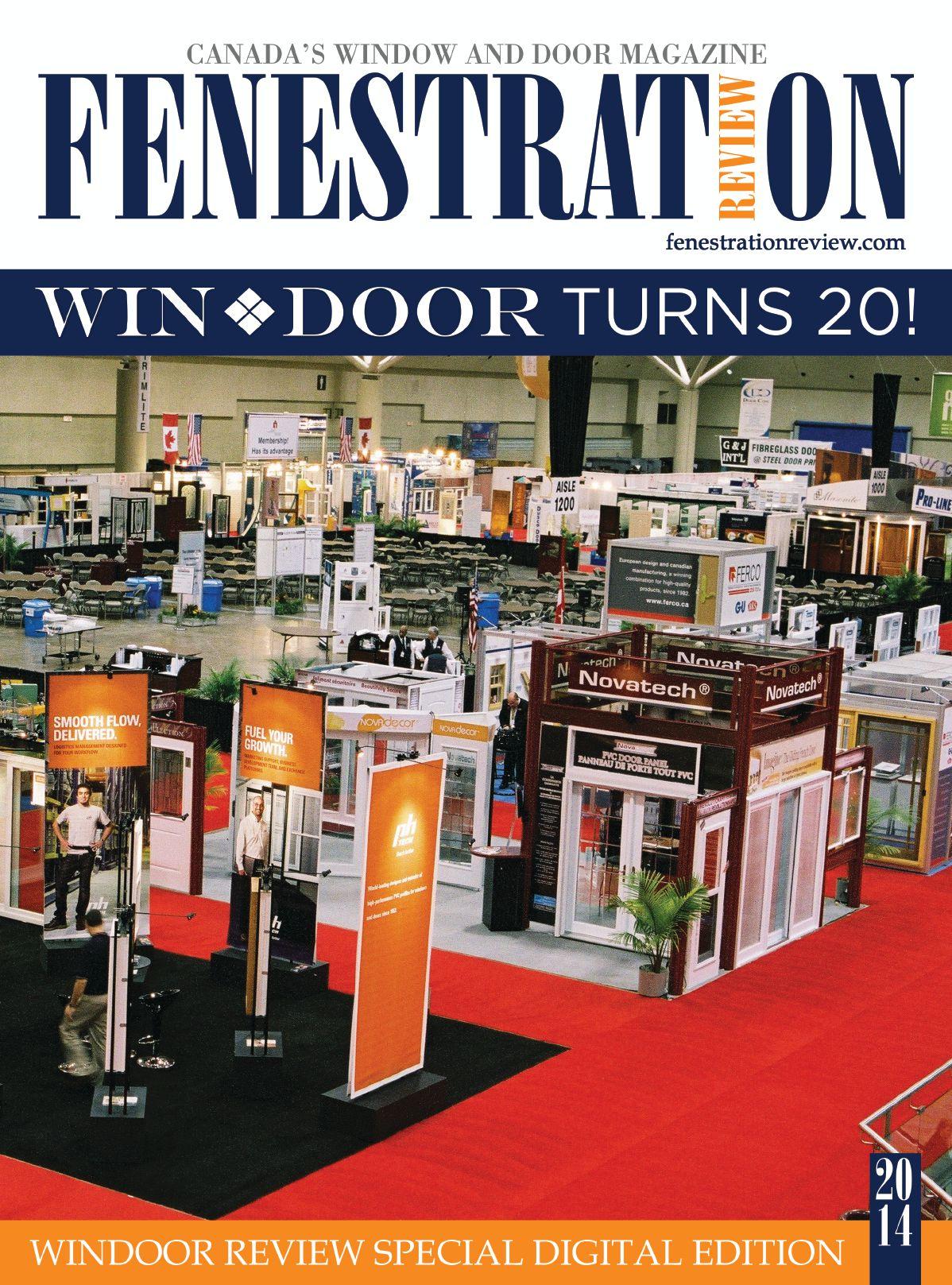
The first storms of winter dropped six feet of snow on nearby Buffalo, N.Y., but even the threat of being trapped in Pearson Airport couldn’t keep fenestration professionals away from the critical conversations at Windoor 2014. Windoor, Canada’s trade show for the window and door industry, took place on November 18 through 20 at the Metro Toronto Convention Centre in downtown Toronto. The show welcomed 2,618 window and door fabricators and dealers from across North America to three days of education and networking. 130 industry suppliers packed the show floor. Canada’s window and door association, Fenestration Canada, held important meetings and learning seminars.
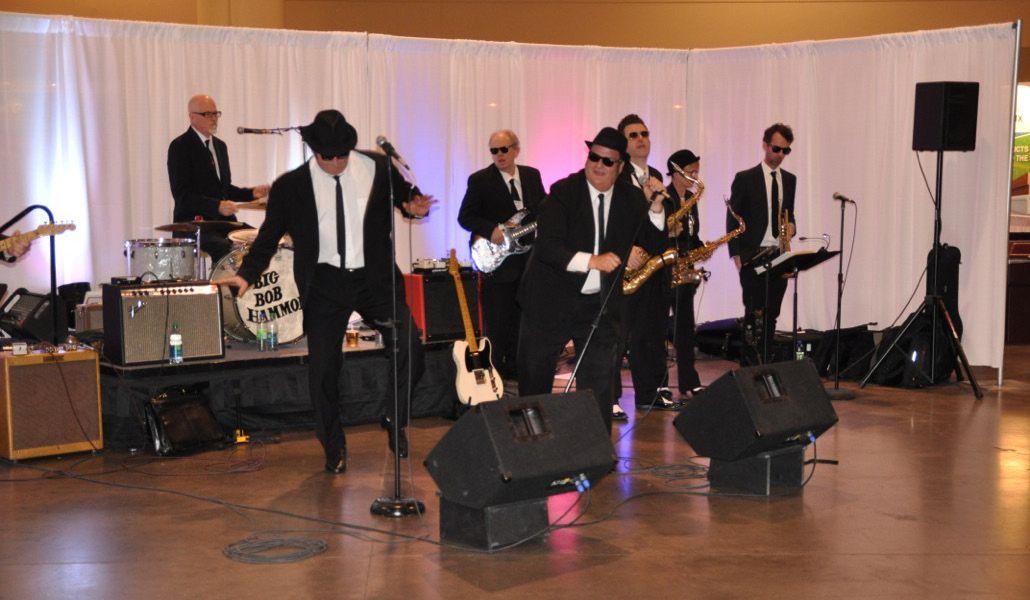
The big story at Windoor 2015 was the celebration of the show’s 20th anniversary. Fenestration Canada handed out special awards to the five exhibitors who had exhibited at every show since the first one: Amesbury Truth, Novatech, the Insulating Glass Manufacturers Alliance, Trimlite and Royal. The party included a performance by the Blus Brothers blues band. Windoor founder Jim Parker was on hand to see his baby all grown up.
“There was nothing back in those days,” remembers Jim Parker, Windoor founder. “CWDMA [the Canadian Window and Door Manufacturers Association] would have one seminar, a guest speaker talk about economy or something, that was about it. That part of the indus-
SKIP MACLEAN OF TRU-TECH DOORS, FENESTRATION CANADA PRESIDENT, TALKS ABOUT WHAT THE ASSOCIATION HAS BEEN UP TO, PLANS FOR FUTURE WINDOORS AND AGMS, THE FABRICATORS COUNCIL AND MORE.
try has changed dramatically and the scary part for the window and door industry, the small guys, is the cost of testing and labeling. And that is why they come here.”
“I personally believe that the trade and exhibition market is evolving,” said Skip Maclean of Tru-Tech Doors, Fenestration Canada president. “It is very important that Fenestration Canada and the Windoor committee understand these changes. We have some very astute folks and that is why the education program is becoming a more and more vital part of the show itself.”
Education seminars brought window and door fabricators and dealers up to speed on the latest codes and standards, especially the new North American Fenestration Standard for air and water ingress. This big change to how doors are approved is causing problems in some part of the country, but Windoor is one place the industry can go for solutions.
Windoor 2015 returns to the Metro Toronto Convention Centre Nov. 3 to 5, 2015. Maclean is promising an exciting new approach for Windoor’s 21st edition. “Next year, I want a whole fresh show,” he said. “I want some upbeat, I want some pizzazz. It was heartily endorsed and there are some great people involved. I think what you are going to see is a whole fresh show next year.”
ThINgs yeT TO cOme special edition
Technical committee offers a glimpse into the future of codes and standards.
Robert Jutras of Air-Ins and Jean Marois of Royal Building Products co-chaired a meeting of Fenestration Canada’s Technical Committee before Windoor opened on Nov. 18. As the Technical Committee is often involved with helping codes and standards officials to develop new documents, the committee often provides a preview of what may be coming up in future revisions. For instance, the Technical Committee information handout included a draft of proposed performance requirements for exterior folding doors called BFD Folding Doors.
Jutras noted that the American Architectural Manufacturers Association had held its A440 meeting the day before, making it easier for the committee to address the topics covered at that meeting.
The committee heard that the North American Fenestration Standard Phase 2 mullion guidelines have been published and are available for members to download from the Fenestration Canada website.
NAFS developers are still struggling with the question of how to address water ingress through door hardware. Many hardware devices will leak under air/water pressure testing, though this is almost never a problem under normal weather conditions in real installations. Pre-hangers do not want to be responsible for ensuring NAFS compliance for hardware as it is frequently sourced by the builder or homeowner separately from the door system itself. Hardware is often covered in tests now, and the committee is seeking changes to CSA stan-
Al JAugelis of RDH gR oup explAins f enestRAtion CAnADA’s nAfs mullion gui D elines An D H ow fAb R i CAto R s CAn sAve money on testing.
dards that will make this option official. It is also looking at a change to NAFS that will allow covered hardware in tests if the hardware can be shown to meet the structural requirements under AAMA 930.
The committee heard that the CSA is working on its requirements for doors that are protected from the elements by roof overhang. The committee is also commenting on National Building Code revisions to definitions for limited water doors and what constitutes and interior or exterior space.
Jeff Baker, Fenestration Canada technical consultant, showed a draft of a Frequently Asked Questions document on NAFS that will be posted on the Fenestration Canada website.
Al Jaugelis reported on the activities of a task group formed to identify challenges for Canadian manufacturers migrating from NAFS 08 to NAFS-17, with a view to developing workshops to help educate them about the new round of changes.
The Technical Committee also heard about a potential future issue with trickle vents. These are not envisioned in the standard, but may become more common as European designs are imported. They may also fail pressurized air/ water tests while not presenting a real leaking problem in the real world.
The Technical Committee will have its next full meeting at the Fenestration Canada AGM in Vancouver, June 3, 2015.
FABRICATING SOLUTIONS SPECIAL EDITION
A chance for fabricators to vent and collaborate.
GREG DICKIE OF ATLANTIC WINDOWS TALKS ABOUT THE FABRICATOR’S COUNCIL AND THE NEW ENERGY IT IS BRINGING TO FENESTRATION CANADA’S MANUFACTURERS.
The Fenestration Canada Fabricators Council met on Nov. 18, chaired by Lisa Bergeron of Jeld-Wen. About 16 fabricators were in attendance at this special closed meeting for window and door fabricators only.
Much of the discussion centred on training for window and door installers, with Dave Mitten of the Siding and Window Dealers Association of Canada updating the group on the Fenestration Installation Technician test and SAWDAC’s installer training program. FIT offers window and door installers an opportunity to gain certification by the CSA by writing a trade knowledge test. Several challenges remain for the FIT regime, which has seen some popularity at a recent testing in Quebec but less interest elsewhere in the country. Suggestions included simplifying the testing process and breaking it down into component modules that could be completed in shorter sessions and online. Some felt the certification needs more promotion and a higher profile. A shorter, simplified version of the certification for framers who do not seek full accreditation as a fenestration installer was also recommended. In general, it was acknowledged that there is too little incentive for fenestration installers to seek certification in most Canadian markets today.
The committee also heard about proposed revisions to AAMA 440.4 installation standard. Sweeping changes to the existing standard are being proposed, touching anchorage, window and door replacement and rough opening preparation, integral nail flanges, accessory nailing flanges, indirect anchorage, jamb extensions,
wood sub-frames, drywall, foam, wall or roof assemblies with two planes of protection, flashing, drainage, exterior sills and sashing, head flashing and shimming, to name just some. It was mentioned that with six-storey wood construction becoming acceptable, some of these methods may even become relevant to high-rise construction.
Terry Adamson of Westeck Windows and Doors updated the Council on the ongoing challenges in B.C. with NAFS implementation and enforcement. Widespread education efforts have raised awareness of NAFS references in the building codes, but inspectors in different jurisdictions remain confused and divided on what is required and how to identify a compliant product. High turnover in municipal staff and B.C.’s highly decentralized system for regulating construction have contributed to the problems. Fenestration BC has formed a committee to try to work with enforcement offices jurisdiction by jurisdiction. Adamson pointed to even stricter standards that may be coming to B.C., such as a 1.4 U-value standard for single family windows and doors and netzero housing by 2020.
Bergeron closed the meeting by affirming and clarifying that the Fabricator’s Council is for those companies identified in their Fenestration Canada membership as being fabricators as opposed to suppliers or testing/certification organizations.
ONE QUESTION, ONE ANSWER
Innovative survey promises to help fabricators and labs work together.
TODD HASSMAN OF EVERGREEN ENERGY ILLUSTRATES THE PROBLEMS THAT ARE CREATED WHEN CODES AND STANDARDS ARE UNEVENLY APPLIED.
The Fenestration Canada Fabricators Council launched an interesting new initiative last year that lead to an extraordinary meeting at Windoor with potentially long-term ramifications for the industry. Morgan Hanam, a retired testing consultant from Enermodal, surveyed 15 Canadian test labs and three North American certification agencies to get answers to commonly asked questions about NAFS requirements and testing protocols. The Council then held a special meeting at Windoor to present the survey results to the labs and agencies and discuss the answers where there was disagreement.
The survey got different answers on many questions. Areas that led to some different interpretations of the regulations included covering door hardware during air/water tests; allowing sealant around doors during testing; whether to test brick mould when it is typically
part of the door system; and what constitutes standard environmental conditions in a test lab chamber. The group was able to achieve consensus on almost all the questions by the end of the session.
The results were presented in a workshop moderated by Hanam, Fabricators Council chair Lisa Bergeron and Fenestration Canada first vice-president Greg Dickie. All 15 test labs were in attendance, plus representatives from the AAMA, WDMA and CSA. The meeting was open to all Windoor attendees, but only test lab and agency representatives were allowed to comment and ask questions. Some U.S. labs joined the conference over the phone.
Results of the survey will be made available to Fenestration Canada members on fenestrationcanada.ca.
SMOKE SIGNAL
A change may be coming to vinyl’s status as a combustible building product.
In a special meeting arranged by Al Jaugelis of RDH Group, a full room of Windoor attendees heard about plans by the National Research Council, with the assistance of Sereca Fire Consulting, to research the performance of vinyl fenestration products in building fires. If the research shows, as it is expected to, that vinyl does not perform significantly worse than aluminum in fire conditions, changes to the National Building Code may be proposed that would allow vinyl to be used as an exterior construction material on Part 3 (high-rise and large commercial) buildings without the significant restraints in place now.
Peter Senez of Sereca started the meeting by describing the severe restraints on the use of PVC window frames now. Part 3 buildings must be made from non-combustible materials, defined as materials that can pass a CAN/ ULC-S114 test for combustibility. PVC always fails an S114 test, which is designed to measure the amount of heat a material gives off when it is set on fire. Senez noted that vinyl windows are allowed in Part 3, but must be separated by at least one meter of non-combustible construction all around and cannot constitute more than 40 per cent of the wall face.
Senez then went on to explain that the current code standard is very old, dating back to the very first national building codes in 1937 with few updates since. The concern at that time was to prevent conflagrations in urban centres caused by the spread of fire along building faces and from building to building through combustion of material on the exterior facade. The codes have not been updated to consider modern composite materials, nor the existence of mandatory sprinkler systems. Senez said his anecdotal experience in researching building fires suggests that vinyl does not perform any worse than aluminum in terms of spreading fire or maintaining structural integrity, and may be better in many cases. He showed photos to this effect.
Next up was Phillip Rizcallah of the National Research Council, explaining the five-year cycle for updating the National Building Code and the process Fenestration Canada and other industry groups would have to follow in
order to get a change made. Rizcallah estimated it might cost the industry between $300,000 and $500,000 to do the research and make the necessary presentations, but there may be government funding available to assist the effort. The soonest a change to the NBC could be made would be 2020, however once the changes are approved companies could apply for immediate exemptions for their products.
Many attendees seemed energized by the possibility of having vinyl declared non-combustible and a small group led by Robert Jutras of Air-Ins committed on the spot to work together to organize Fenestration Canada’s efforts to aid the process.
Celebrating 20 years
SPECIAL EDITION
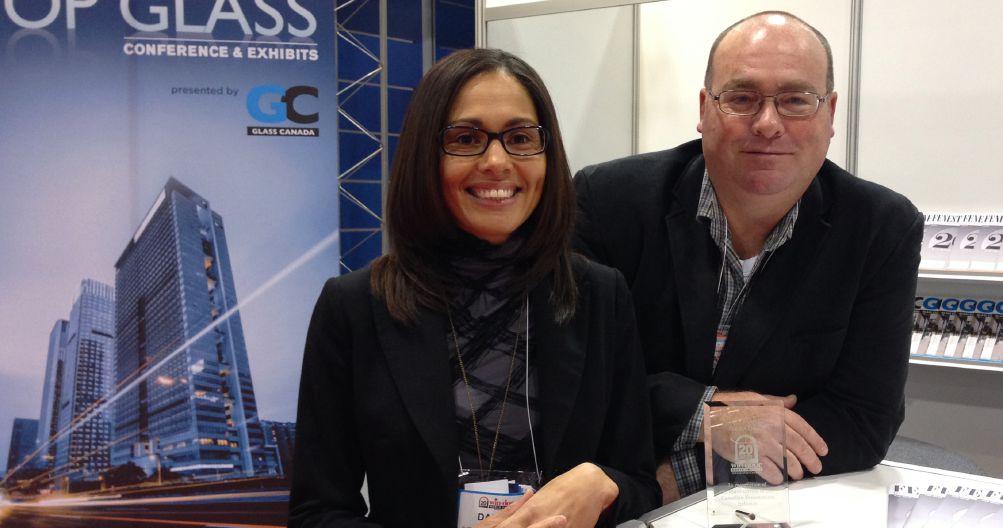
FENESTRATION REVIEW WAS RECOGNIZED BY WINDOOR FOR ITS ONGOING SUPPORT. ACCEPTING THE AWARD WERE DANIELLE LABRIE, SALES MANAGER, AND PATRICK FLANNERY, EDITOR.
DAVID MITTEN OF SAWDAC TALKS ABOUT INSTALLER TRAINING AND THE ASSOCIATION’S NEW RELATIONSHIP WITH FENESTRATION REVIEW.
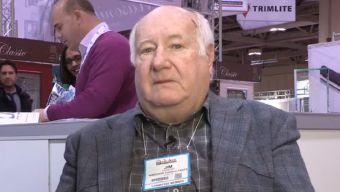
JIM PARKER, WINDOOR FOUNDER, REFLECTS ON THE SHOW’S ORIGINS AND GROWTH OVER 20 YEARS.
MIKE BRUNO, PRESIDENT OF EVERLAST, EXPLAINS HIS COMPANY’S DECISION TO EXIT THE INSULATING GLASS BUSINESS.
SCREENCO AND MENNIE TEAM UP FOR CHARITY
Screenco Manufacturing and Mennie Canada hosted their second annual Charity Party Night on Wednesday evening after the Windoor show floor closed. The event hosted over 120 people including the companies’ customers and suppliers and raised funds for Nellie’s Women and Children’s Shelter in downtown Toronto. There was blackjack, poker and roulette as well as arcade games like air hockey and fousball. Guests opened their wallets for chips and played to lose. The grand raffle prize was an iPad mini won by Pollard Windows President Karen Pollard-Josling. Over $13,000 was raised for the shelter for the second year in a row. Julia Robinson of Nellie’s spoke about how the money benefits the women and children who visit the shelter by providing them with not only essentials like shelter and food, but also social support to help them get educated, find jobs and transition them back to building a life for themselves and their children.
ON THE FLOOR
MADE FOR CANADA
8quanex.com
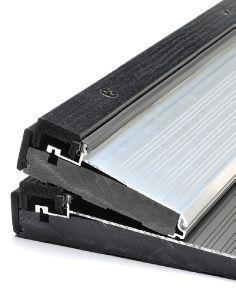
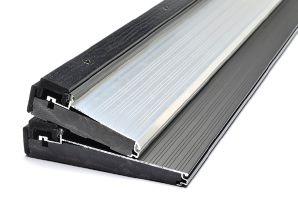
To help increase energy efficiency and align with the changing needs of entry door producers and installers, Quanex Building Products has expanded its line of thresholds to help customers achieve their performance, installation and budgetary goals. The 5C Can-Am Sill is designed for high-end applications in Canada that require the very best performance and long-term durability. The 5C sill is adaptable, allowing the installer to expanded or contract widths, virtually eliminating air and water infiltration. “Our 5C sill is made specifically to meet the demands of the Canadian market,” says Jim Meeks of Quanex Building Products. “We designed the 5C sill for simplified installation, while meeting all the performance requirements of our customers, including eliminating air and water infiltration, resisting weathering, and providing a long-lasting natural appearance.” In addition to the 5C Can-Am sill, Quanex offers the 5Y High-Performance Threshold, incorporating patented ImperiSeal technology, eliminating any chance of water intrusion through the threshold. Also, the 5H HybridTechnology Threshold, providing balance between economy and performance, and the Imperial 5E Rail Over Dam Threshold, ideal for secondary doorways, such as garage entrances.
NEW DOOR OPTIONS
8thermatru.com
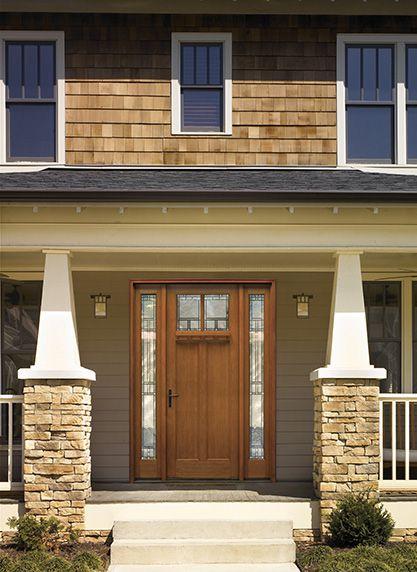
For more than 50 years ThermaTru has specialized in providing aesthetically-pleasing, awardwinning door options and entrance solutions from a single supplier. In 2014, Therma-Tru launched an assortment of new doors, features and glass styles aimed at providing builders and remodelers with enhanced options for increasing their business. On-trend new door styles encouraged Therma-Tru to expand the Fiber-Classic Mahogany Collection to satisfy homeowners. New doors and sidelites include deep mahogany graining and highdefinition panel embossments that are designed to complement rich wood tones in the home’s interior, extending the hardwood look to entry, patio, house-to-garage and service doors. The expansion also introduces the mahogany grain to the Therma-Tru vented sidelite offering. Launched in 2013, the Pulse series of contemporary doors now adds a mahogany-grained fiberglass option along with a new Echo design option for doors and sidelites. Delivering clean lines and crisp right angles, Pulse meets new construction and remodeling market
needs for homeowners seeking modern and eclectic entrances. The new mahogany-grained fiberglass offering joins the original oakgrained fiberglass, smooth fiberglass and steel product line options. New configurations within the Echo design provide a total of 12 new door styles and four new sidelite choices available in a variety of glass designs and material offerings. Pulse doors and sidelites are available in six-foot, eight-inch and eight-foot heights. Available in full- and halflite styles, low-E internal blinds provide both energy efficiency and privacy to home entrances. Cordless operation allows homeowners to control the desired level of light and privacy with the simplicity of a single handle. Blinds are enclosed between glass and remain dust-free for homeowner convenience.
GREAT SPACE
8 quanex.com
Backed by 35 years of expertise in warm edge technology, Quanex offers spacer solutions for every insulating glass need. Quanex’s flexible, non-metal-based spacer technology in the Super Spacer and Duralite lines continues to bring cutting-edge technology into energy-efficient window designs.
“The last 35 years have brought much advancement in IG systems,” said George Wilson, general manager of Insulating Glass Systems at Quanex Building Products. “And our Super Spacer and Duralite lines are leading the way within the fenestration industry. It’s another way we are dedicated to making our customers’ businesses better.”
Quanex’s Super Spacer line gives manufacturers a premium energyefficient and sustainable solution for insulating glass units. A true dual-seal warm edge spacer line, Super Spacer products use a highperformance acrylic adhesive for its
structural seal, backed by a moisture vapour seal. Quanex’s Duralite line offers manufacturers a quality singleseal spacer solution for high-volume production of dual- and triple-pane insulating glass units. Used in a onestep sealing process, Duralite spacers provide improved condensation resistance and a warmer edge of glass temperature.
GORGEOUS GLASS
8 thermatru.com
Available for Therma-Tru’s FiberClassic Mahogany and Oak Collections, Smooth-Star, Profiles and Traditions doors, the camber top glass shape combines the beauty and natural light of glass with the sense of security that comes with the privacy of a solid-panel door at an exceptional value. Designed as a solution for budget-conscious homeowners, the camber top is designed to complement wood-grained, stainable and smooth, paintable doors for broad appeal. The decorative glass designs of Maple Park, Saratoga, Wellesley and Concorde are available in a variety of caming options to suit many esthetics. Four privacy glass designs are also available for the camber top, as well as low-E and clear glass. Divided lite options include grilles between glass in five colours (white, almond, bronze, tan and stone), as well as fixed grille configurations. More than 400 different Simulated Divided Lite configurations are now available with the addition of new grid patterns designed to pair with privacy, low-E and clear glass, as well as flush-glazed products. SDLs are also designed to be layered over GBGs to create a more authentic divided lite look. Made of durable composite material, wood-grained and smoothtextured SDLs can be stained and painted to complement doors and sidelites, enhancing the overall look of Colonial and Craftsman style homes. Available in the Fiber-Classic
ON THE FLOOR
Mahogany and Oak Collections, Smooth-Star, Profiles and Traditions product lines. The Therma-Tru Grilles Between Glass portfolio has expanded to create up to 3,000 different configurations with the addition of new colours, shapes and grid patterns. The easy-to-maintain divided lite option complements a variety of home styles including Traditional-, Craftsman- and Prairie-inspired looks while meeting homeowner desires by coordinating with window grid patterns and colors. GBGs can be customized with contour or flat bars and five colour options (white, almond, bronze, tan and stone) to complement both wood-grained, stainable and smooth, paintable doors and sidelites. Grilles are thermally sealed between two panes of tempered glass and are available in the Fiber-Classic Mahogany and Oak Collections, Smooth-Star, Profiles and Traditions product lines.
STREAMLINING SALES
8 wtsparadigm.com
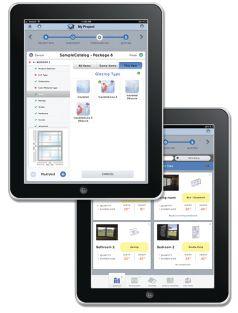
As an established leader in configuration, quoting and ordering technology for the building products industry, WTS Paradigm continues to improve upon CenterPoint, the configurator that manufacturers, dealers, retailers, lumberyards, distributors, and contractors trust to build and quote complex building products. WTS Paradigm has collaborated with customers and
end-users to take the configurator and make it even better. By using CenterPoint, we see reduced catalogue maintenance of 25-30 per cent by leveraging multiple sales channels, decreasing time to market and enriching the end-user selling experience across selling channels. Our easy-to-use interface helps endusers spend less time creating a quote and more time selling. WTS Paradigm offers harp industry focus, the ability to scale products, increased speed to quote, a strong dealer presence and one catalogue everywhere. On display at Windoor will be the mobile iPad selling solution, TouchQuote. TouchQuote enables end-users to quickly configure products, compile alternate quotes, collect the signature and seal the deal.
3D PRINTERS
8 proto3000.com
3D printers are becoming the new standard in product development and manufacturing. Imagine production without the oppressive costs and time requirements of tooling. Users can make changes quickly and affordably at any stage in the production cycle. Create low–volume assembly fixtures and jigs directly from CAD data. Additive manufacturing is where the world is going, and the truly transformative 3D production systems from Proto3000 can help you get there.