P.O. 111 Gordon Baker Rd., Suite 400, Toronto, ON M2H 3R1 subscribe@glasscanadamag.com
Printed in Canada, All rights reserved. Editorial material is copyrighted. Permission to reprint may be granted on request.
ISSN 0843-7041
CIRCULATION
email:
asingh@annexbusinessmedia.com
Tel: 416.510.5189
Fax: 416.510.6875 or 416.442.2191
Mail: 111 Gordon Baker Rd., Suite 400, Toronto, ON M2H 3R1
SUBSCRIPTION RATES
Canada - 1 Year $21.50 (plus applicable taxes)
U.S.A. - 1 Year $38.00 (in US dollars) Foreign – 1 Year $43.50
ANNEX PRIVACY OFFICER
Privacy@annexbusinessmedia.com
Tel: 800.668.2374
Occasionally, Fenestration Review will mail information on behalf of industry-related groups whose products and services we believe may be of interest to you. If you prefer not to receive this information, please contact our circulation department in any of the four ways listed above.
www.fenestrationreview.com
NAFS components don’t add up to a NAFS door 12
12
TEK TALK
04
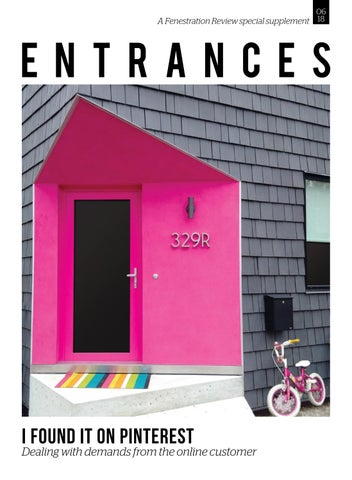
I FOUND IT ON PINTREST
Changing trends in doors are bringing customers into your showrooms with more crazy ideas than ever before. Entrances went across the country to ask door dealers what they are hearing and how they are reacting.
10
SHOWCASE
Top suppliers to Canada’s door industry shared some of their latest product innovations.
14
DOORKNOCKING
Ryan Dudeck, former president of Winnipeg’s Paramount Windows and Doors, tells us what he really thinks about what’s going on in the business these days. 04 10 14
TRENDS
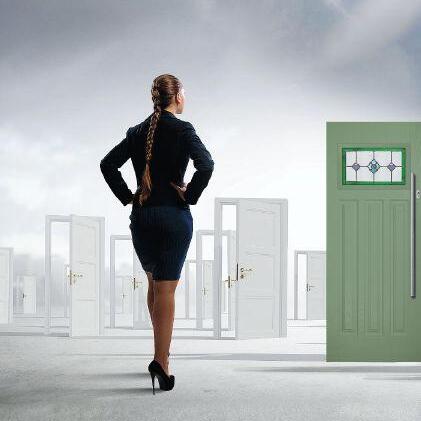
I saw this door on PintErest…
Meeting the challenges of the internet-powered door customer.
By Treena Hein
As you might know firsthand, we now live in the age of the internet-savvy consumer – those who research every corner of the internet for ideas and solutions for everything from home renovations to healthcare. But if you ask door-makers (or doctors, veterinarians, farmers and many more, for that matter) whether internet browsing on sites like Houzz or Pinterest can be a case of too much of a good thing, the answer will likely be a resounding yes.
Serving customers that have seen ‘the perfect door’ online before they present themselves at your place of business can be rife with difficulty. These customers can be dead set on the specific door they want, and they even often have a photo of it on their mobile device in order to show you exactly what they’re after. One of the top challenges in these situations, notes Cynthia Wood, sales and customer service manager at Maritime Door and Window in Moncton, New
Brunswick, is trying to explain that the product desired will just not perform adequately in the Canadian environment. “They might be looking at photos from California and many doors that meet code there will not meet code in our cold, wet conditions,” she says. “Even though we tell this to the customers, they often don’t care or don’t think they care at the time because they have their heart set on something specific. The fear here [for us] is when the product fails, as it inevitably will, you run the risk of damaging your reputation, but if you don’t [somehow meet their needs], then you run the risk of them shopping elsewhere.”
Another problem with customers seeking the door of their dreams is that the door in question simply won’t work in particular dwellings. “The door might be too large for the opening,” says Wood, “or even if it will fit, it will be too heavy or thick to install.” She adds that in addition, the door might also “simply be something that isn’t available from anyone in the area.”
And, even if the ‘internet door’ is are able to handle the Canadian climate and is possible to install, it may be out of a customer’s price range. “They’ll frequently be looking at something custom-made and not realize the
quality and cost will be quite different from an off-the-rack product,” says Wood. “These products are super costly so there is some shock and negative feelings about ‘gouging,’ especially when they have already priced a ‘normal’ door for the same hole.” She adds that making custom doors requires quite a bit of time, “and you have to try to explain that as well.”
Zane Yaniw, procurement manager at Supreme Windows in Calgary, Alberta, confirms that he often sees these issues of sticker shock and unhappiness with extended lead times for special order products. “They’ll go to other cheaper suppliers and then to us, so we get the difficult orders and try to make it work,” he explains. He notes that the cost to produce a door that provides the look that a customer is after but also meets Canadian regulations can indeed be very high, at least $60 000. Yaniw says that while doors for existing homes in renovations that don’t require a permit can involve much more flexibility with regulations, but that new construction is very strict.
Yaniw has also seen many a customer who have gone on the internet and found an off-the-rack door they really love, but once they are told it’s not available in Canada, they have a hard time believing it. “They really don’t
accept that news,” he says. “They’ve looked at our website and seen our list of suppliers and they’ll say ‘your supplier offers it, so you can get it,’ and we have to tell them that these companies just won’t ship some products to Canada. They just won’t. It’s deflating for them.”
At Westeck Windows in Chilliwack BC, John Neal reports that customers generally come in with door ideas and not demands for doors they’ve seen online. “From time to time, we have requests for a specific door style but then we can talk them into a different style,” says the firm’s vice president of manu-
facturing. “As long as we are informed and know our products, this works. We feel that when we specify back to the customer what he or she should have, as the designers, we typically have fewer issues and customer complaints. This has been a sales tactic that has worked the best. If you allow a customer to pick from 100 options, it just creates confusion and opens the possibility for communication error.”
In Wood’s view, the worst aspect of being approached for internet dream doors can come after the door is ordered, finished and in-
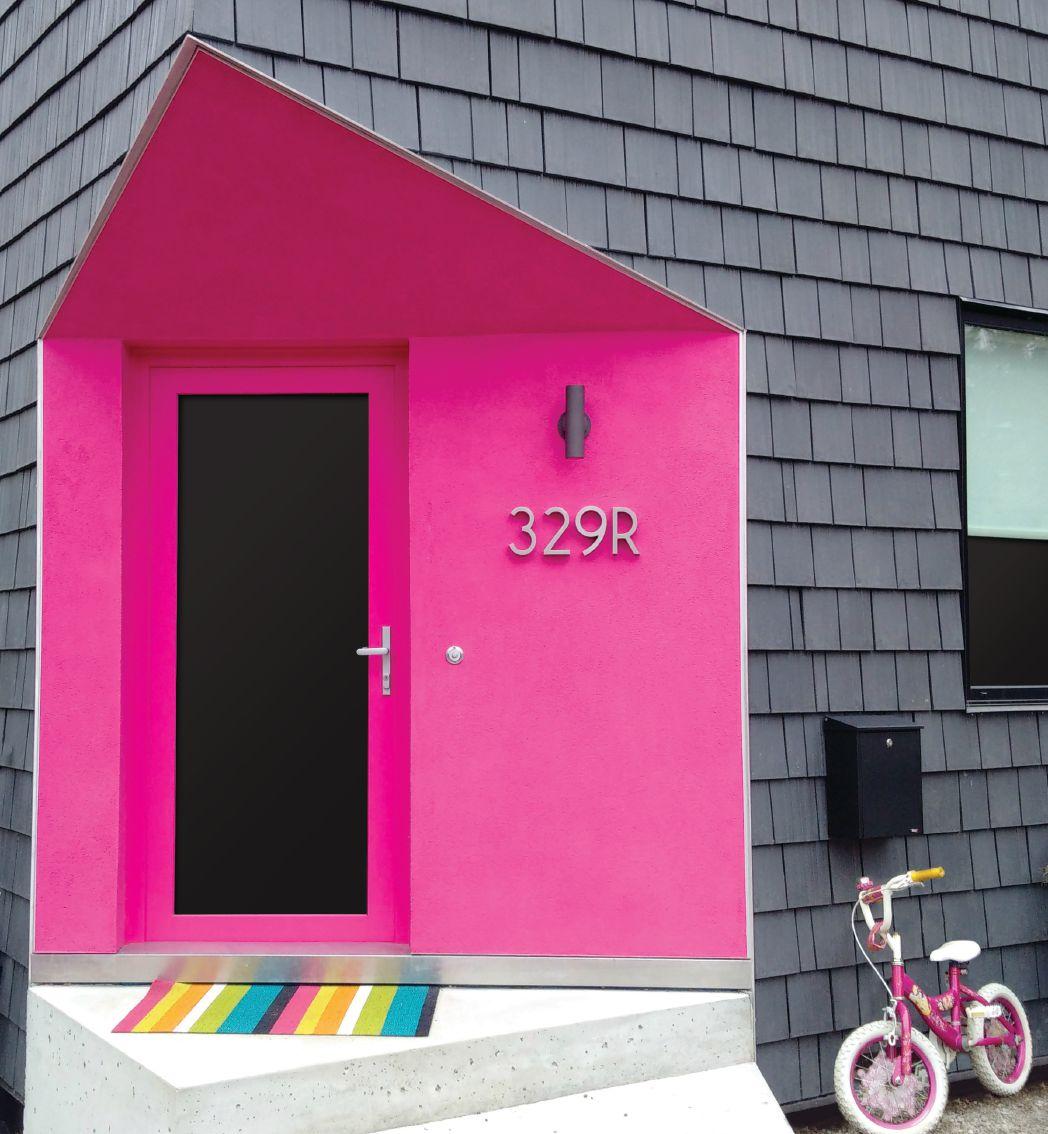
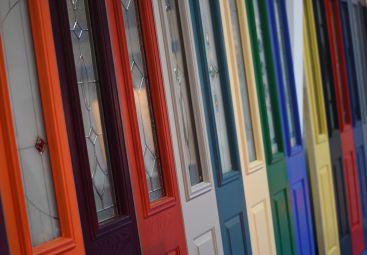
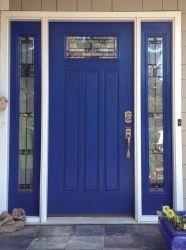
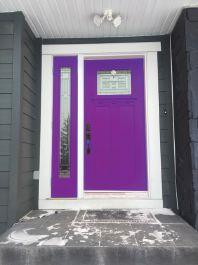
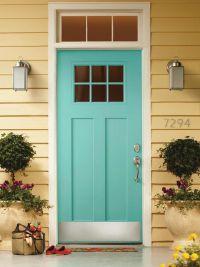
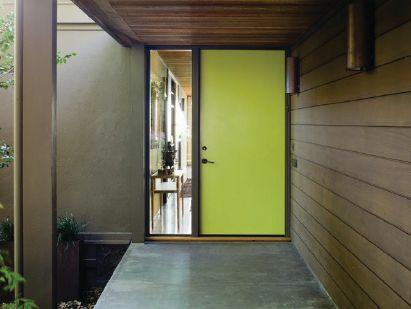
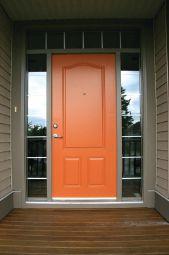
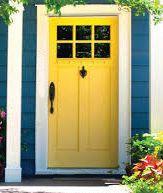
stalled. “It isn’t what they thought or they don’t like it as much as they thought they would,” she says. “We are limited by how much we can show in the showroom and we can’t prebuild every idea a customer has, so sometimes it is all done off graphics or photos and reality is not always as good as it looks on Pintrest. This is especially true with some of the colours people ask us to paint doors. It may look neat on a colour chip but that doesn’t mean it will look great as your front door. Crazy colours for the front door is really popular right now.” (See sidebar for other current door trends.)
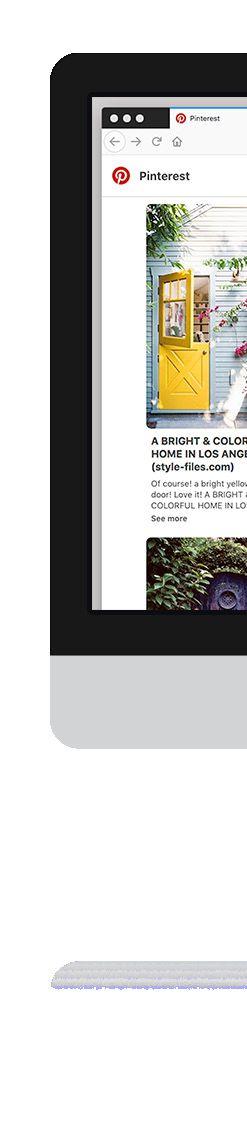
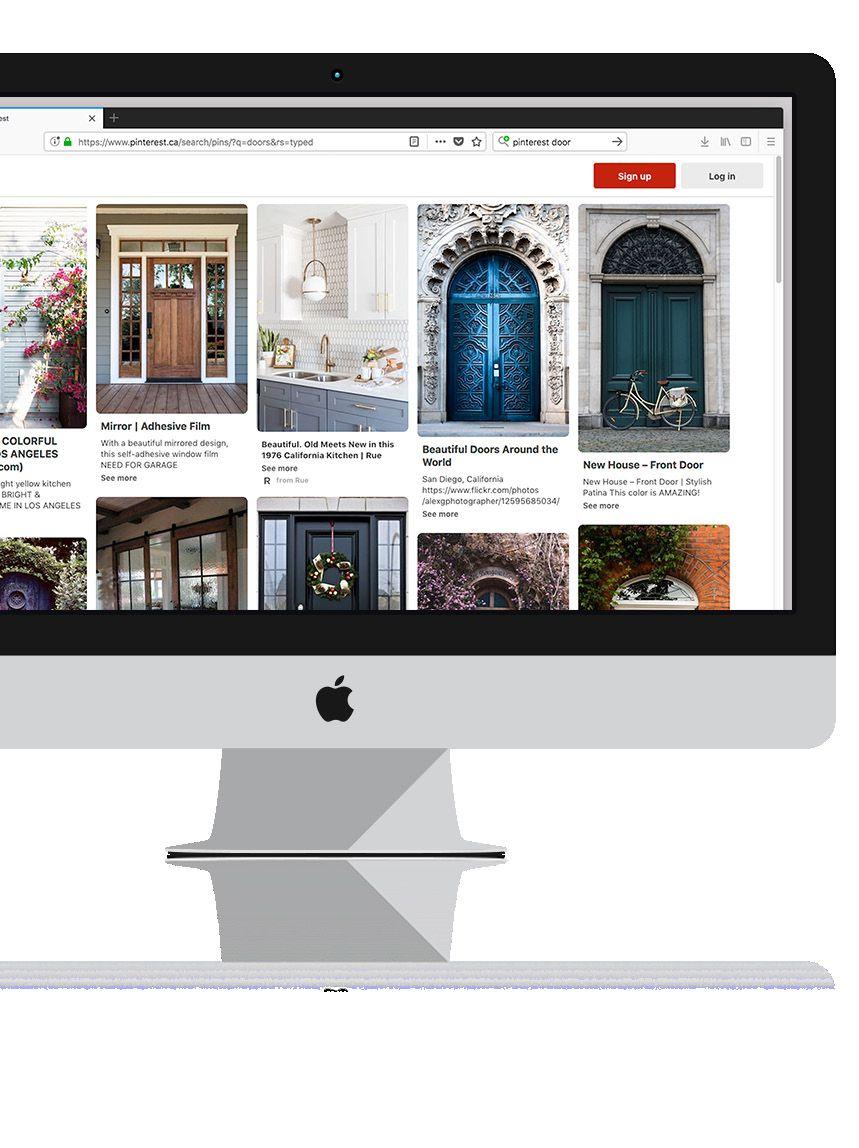
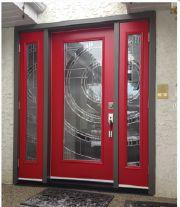
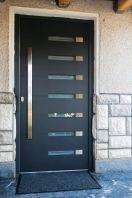
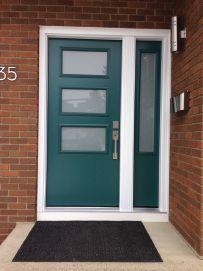
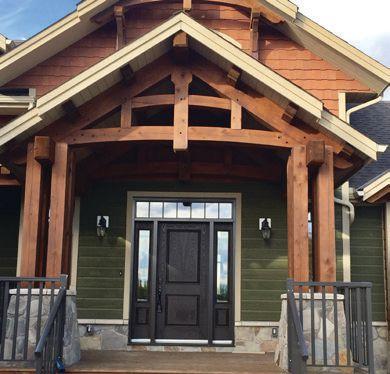
This is what your customer sees when she searches “doors” on Pintrest. What, you can’t deliver a replica of a medieval cathedral door that meets code?
Technical challenges
Besides sales challenges, there can also be thorny difficulties on the technical side for custom orders that spring from internet inspiration. In new home construction, Yaniw says it can be difficult to maintain North American Fenestration Standard, Energy Star and building zone regulations. “In the renovation sphere, the challenges are the lead times,” he notes. “There are also special handling requirements for product size and finishes.” Some new training has been required at Supreme Windows to meet these challenges, and the firm has also added the capacity to install multi-point locks.
Maritime Window and Door is another door maker that has added an in-house set-up for multipoint locks so that it can accommodate taller doors without a longer lead time. In addition, they’ve added an eight-foot patio in their showroom so customers can understand the weight and see what these doors look “in the flesh” compared to a traditional patio door. “The same goes for the glazed doors,” says Wood. “We really work hard to discourage accordion doors but we have been talked into selling a few that were between sunrooms and houses. There are more and more people requesting monster combinations and there is a real struggle to get them to site and installed because of the size and weight. We frequently have to ship things without glass in them and have even had to hire a crane truck to deliver and off-load doors.”
She adds that on the repair side, accordion doors are a challenge to fix because the knowledge just isn’t there. “Lastly, doors with the glass glazed in are really costly to replace if the seal in the glass fails,” she notes, “or it gets scratched or broken.”
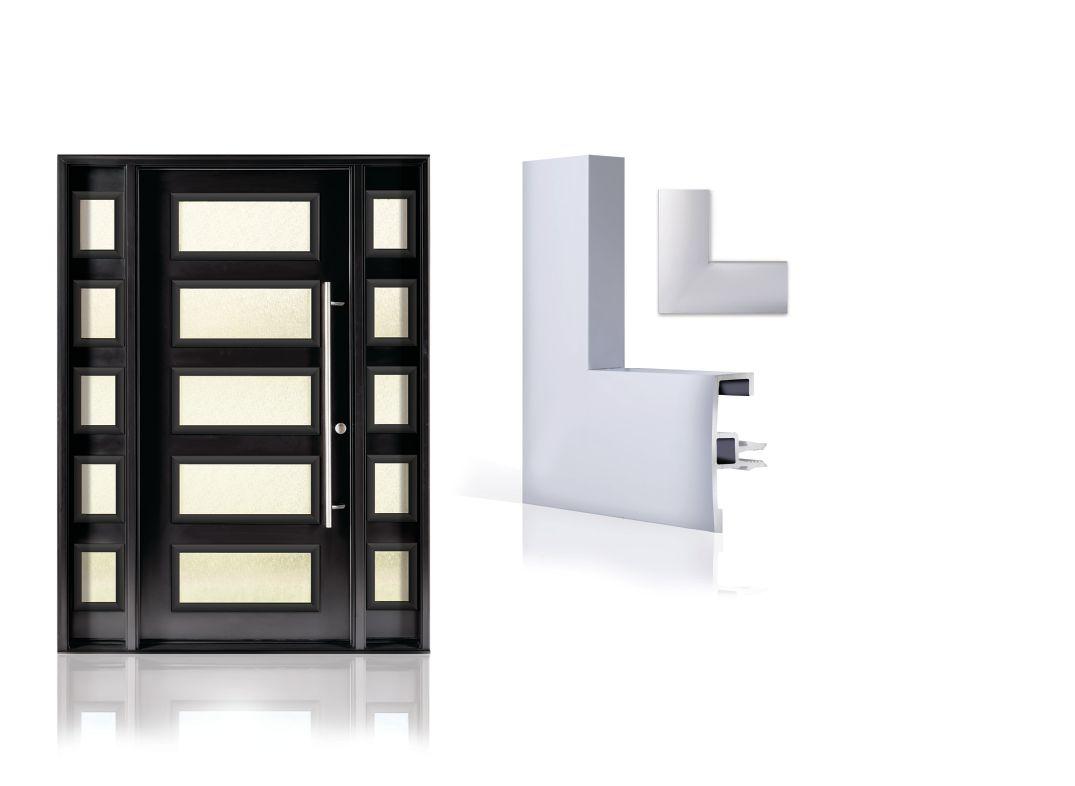
Introducing Elton’s Slimline Aluminum Contemporary Door Lite Frame.
The new Elton Slimline Contemporary door lite surround features an aluminum exterior and interior frame profile combined with a thermally broken unique PVC screw fastening system. There are no visible screw caps or screw strips to interrupt the clean lines of the glass frame and panel.
Big patio doors with slim, modern frames are all the rage. But they are heavy, and meeting provincial energy requirements could be a challenge.
Top door products
All-vinyl system evw.ca
The Dr. Hahn door system from Euro Vinyl Windows is an all-vinyl door system based on the tilt and turn platform. It includes hefty steel reinforcing, a full perimeter gasket system on the frame and sash, multipoint locks on the full height of the door, face-mounted Dr.Hahn hinges and any colour and size requested. The door does not come in standard dimensions – each one is made-to-order and looks flawless. It carries a sleek overlap sash that covers the frame and the gap between frame and slab. It’s a full glass door with an 1
3/8-inch-deep triple glazing cavity.
Shadows as design odl.com
The new Dialogue door glass line from ODL includes two new designs, Repartee and Whisper. Repartee’s frosted layers combine with a geometric grid of shapes to create lively interaction that changes depending on the vantage point and the amount of light. This design plays with both movement and opacity. Whisper features scrolled patterns that introduce the refined and graceful qualities of calligraphy to door glass. A
play between frosted and clear glass layers creates gentle, quiet movement. Dialogue layered glass uses ceramic frit patterns across three layers of glass to create captivating patterns that change based on light and vantage point. Six dynamic patterns are available in all with varying levels of privacy. Daylight shining through the glass layers creates a unique design element in cast shadows.
Can handle the big ones rotonorthamerica.com
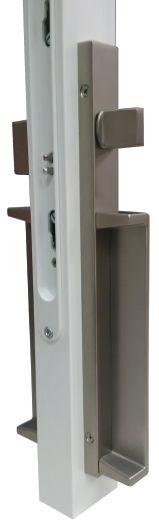
The new RotoFasco Secura 9100 sliding patio door handle features a contemporary design that will offer esthetic appeal for customers who desire a modern look. The sleek design of the thumb turn
above the lever offers readyaccess to lock and unlock the door, and the 13-inch-long handle will support the growing height and width of patio doors. The 9100 handle is available in a wide array of colour options, including corrosion-resistant powder coat and satin nickel architectural finishes.
Focused on comfort fentro.com
Siegenia hardware solutions combine intelligent product details with numerous options for saving both time and costs during the production process. In Canada, Siegenia products are distributed by Manitobabased Fentro Technologies.
From esthetics and design through safety and protection
up to indoor air quality, spaciousness and ease of use, the consistent implementation of different aspects of room comfort is always the focus of any development of new window, door and comfort systems at Siegenia. To do this, this owner-operated company, now managed by the fourth generation, not only relies on close cooperation with its customers but also on a distinct system concept and a holistically conceived interplay of solutions which reconciles innovative technology and economical fabrication with high-end user benefit. Siegenia Group’s products largely focus on safety and security with lines focusing on standard and electronic locking for external doors, automatic closers and locks, mobile systems for home automation and intruder protection to name a few. With such other products as wall and window ventilators, home comfort is also a priority.
Product protection lamatek.com
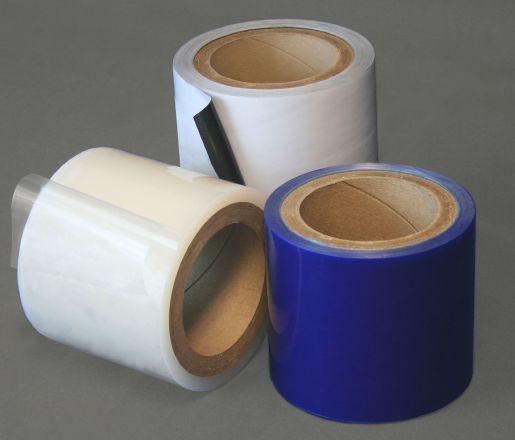
Lamatek has introduced Protek surface protection film to safeguard glossy and semimatte surfaces against dust, scrapes, surface contaminants and ultraviolet for up to six months. New masking films protect bare metals, pre-coated metals, aluminum profiles, glass and more during production, installation, shipping, and handling. Protek surface protection films use high tack, residue-free adhesives that remove cleanly even after extended outdoor aging. Lamatek carries a range of Protek films designed to offer varying levels of UV resistance on window and door profiles, appliances, cladding board, glass and mirrors, architectural metals and aluminum extrusions. As a custom converter and fabricator, Lamatek can slit rolls of film to specified widths for indoor and outdoor protection on a variety of components.
Simplified installation lauren.com
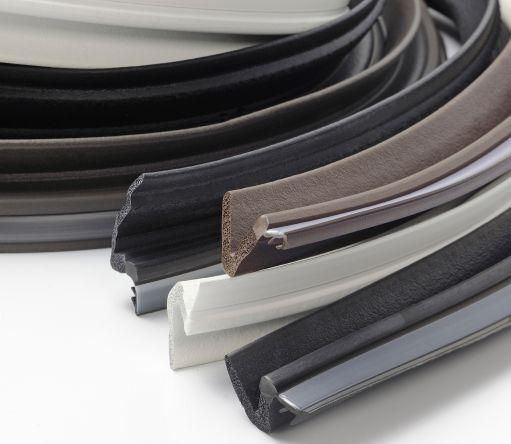
Lauren door seals offer easier installation and improved performance. In window and door sealing systems, corners are often the area most susceptible to leaks. Lauren Manufacturing has engineered continuous seals to overcome this challenge. Available in custom or standard profiles, these seals are designed with the flexibility to wrap a corner with compression proper ties that require minimal closing force. As an added benefit, customers are able to im prove installation by eliminating cuts or splices during assembly. Lauren’s door seal offers an example of how manufacturers can simplify installation while achieving higher sealing performance. This continuous corner seal has a rigid support for easy kerf insertion and a leak-proof design. The door seal can be used on all pertinent sides of the door: header, hinge and strike side. Manufactured from closed-cell sponge EPDM, the door seal will not absorb or wick water and exhibits excellent weather, ozone and ultraviolet resistance. The EPDM material is stable in high and low temperatures, which allows it to maintain excellent compression set properties in all weather conditions. A low-friction coating is applied to the surface to ensure minimal coefficient of friction and provide protection against abrasion. Lauren’s standard door seals are available in
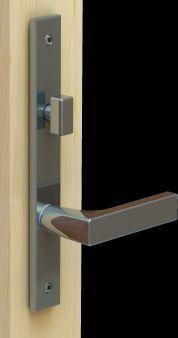
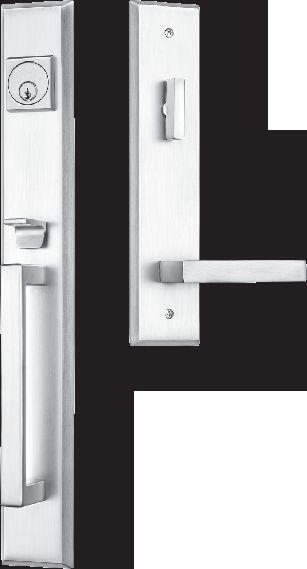
thumb turn is located above the handle to allow for easy access to the key cylinder and can also be inverted for European-style locking. Extended bosses on the interior escutcheons enhance the handle’s stability and the straight-line design makes it easy to grasp. The handle set is available in both plated and painted finishes and is compatible with vinyl, composite, aluminum and wood doors. The Sentry 45.63 incorporates elegant, modern, and contemporary styling and homeowners can carry the look throughout the home with many contemporary products now available from AmesburyTruth.
Hurricane survivor ferco.ca
Homeowner safety is Ferco’s priority with the
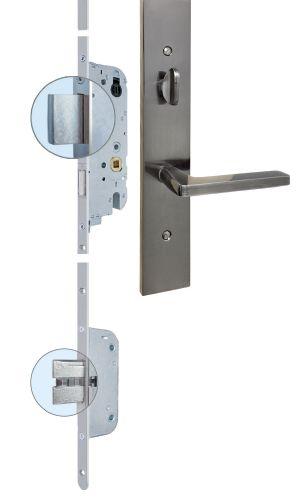
new G-U Secury automatic multipoint door lock. Featuring European technology with North American intuitive operation, the multipoint lock comes with a new Roma handle and 55-millimeter plate. The G-U Secury has survived Hurricane Irma, a Category Five storm, for real-life, maximized testing in the field.
Local availability regalead.com
RegaLead has supported its expansion into Canada by extending its range of door lites, with 13 new designs available in a range of standard sizes. The new designs have been designed specifically for the Canadian and North American market, reflecting styles and trends popular here. RegaLead’s door lites offer a wide range of choices with a number of different decorative features, such as etching, lead, bevels and jewels, and colour. With
so many doors using the same basic slab designs, decorative glass is one area where companies can differentiate and offer something different. With more than 30 years of decorative glass experience in the U.K. and with an already strong export operation to Canada, last year RegaLead opened its first overseas subsidiary in Vaughan, Ont. As well as door lites and decorative glass, RegaLead also supplies its ColorSpray colour-coating system. Their new facility in Vaughan allows it to carry the full range, in stock, for delivery across Canada and the U.S.
ENTER YOUR ELEMENT
With a focus on quality, Tru Tech Doors began a relentless mission to manufacture the finest doors and doorlites possible. A product whose features and attention to detail are clearly visible against the competition.
Your door is a system
NAFS components don’t add up to a NAFS door
According to Al Jaugelis, senior fenestration specialist at RDH Building Science in Vancouver, one of the main struggles pre-hangers have when dealing with the North American Fenestration Standard for air/water/structural performance of doors is understanding that lab testing evaluates doors as a system, but the test does not qualify the individual components. In fact, the tests don’t necessarily tell us anything about the individual components of a door – the hardware, the gasket, the weatherstrip, the door lite, etc. – they only tell you whether the fabricated door, as an assembled product, passed the test. A test failure could be due to a component or it could be due to fabrication quality. Or to a combination of both.
This matters because door pre-hangers have to offer doors in multiple configurations with multiple options to satisfy all the various consumer demands out there. When individual door components are substituted, or matched with different components than those tested, a previously tested door may no longer perform.
Some of the confusion has been driven by component suppliers advertising “NAFS-compliant” door components. While these components may have been successfully used in a NAFS-tested door
system, Jaugelis says it is not possible to predict whether assembling a door from a collection of “NAFS tested” components, would pass a future test. In the lab, your workmanship is as important as your components.
It is not hard to see why this is the case. In NAFS testing, a door product is set up in a lab and blasted with air and water at ever-increasing levels of pressure, measured in pascals. The testers then note the level at which air and/or water start to penetrate some part of the door system. This is usually going to happen at the various interfaces between the door frame and the door slab, so the way they
are fit together and sealed is as important as the properties of the component itself. You can use great components, but if they are not assembled together with the correct tolerances and sealants, the test will reflect it. So when we hear that a component is “NAFS-compliant,” we should be cautious. Most manufacturers fail their first few NAFS tests, even with the right components, because of fabrication tolerances and workmanship issues.
J.F. Kogovsek of Maxam Marketing (a fenestration consultant) is a member of the task group reviewing Fenestration Canada’s guide to component substitution in
Canada’s codes won’t let builders install leaky doors any more. It’s important to understand how NAFS requires you to test your products.
So when we hear that a component is “NAFS-compliant,” our next question needs to be what product it was tested in.
hinged doors. He says there are three ways to build a door and achieve NAFS compliance.
1
Make the door however you want with whatever components you want and test it. A successful test will only qualify the door with the same components you tested, but may allow for some substitution of components as permitted under AAMA or Fenestration Canada side-hinged door component substitution guidelines.
2
Build the door using only components that have been successfully NAFS tested together, such as those offered by a door system supplier, and substitute only components authorized by that supplier.
3
Jaugelis suggests that prehangers begin by reviewing their product offering with a test lab or a competent consultant, including all the door slab, door lite, frame, threshold, and hardware
options you offer. On reviewing the properties and test information available for the components, they will help you to determine the minimum number of tests required to qualify the majority of your product offering to ensure the products you sell don’t fail in the field.
NAFS is a code requirement across Canada and some insurance companies and warranty providers are making builders do on-site testing to make sure products comply. Plus, rumours continue to swirl that governments may soon mandate product certification prior to sale – and meeting the NAFS standard would almost certainly be part of that.
It’s Time for Something
Different...
Stand Out from the Crowd with Outstanding European Designs
By Ryan Dudeck
Grand plans wanted
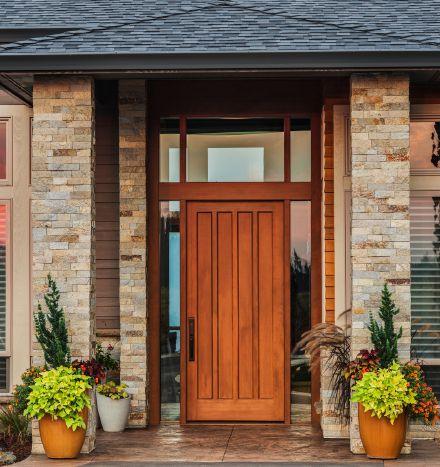
Home designs should include an impressive entrance right from the start.
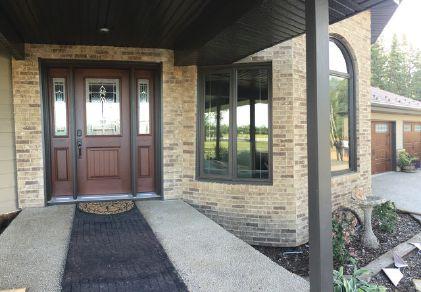
When did an entry door go from being the focal point of the house to being just another opening to fill? Houses used to be designed around the front entry so that when you drove down the street your house would have that “wow” factor because of the front entry. Now homeowners would rather have a larger closet or garage than a grand entry. Usually the front door design gets lost in the infinite decisions that homeowners must make when building a house, not to mention the budget. Fenestration products seem to always take a backseat to the likes of stone countertops, cabinets, flooring and lighting.
As codes have changed and heightened over the past 10 years, so much stress has been put on door pre-hangers. We have to make sure products pass all the test requirements, so we can sell a properly labelled door. What has been completely forgotten is the actual design of the door frame when it comes to adding aftermarket products like storm doors and roll screens. Homeowners think it is as easy as buying a storm door and then hanging it, but quickly realize there is nowhere to attach the door. Did the builder or pre-hanger tell the homeowner this as they were building the house?
Now fast-forward three or five years after the house is build and
The days when houses were designed around the front entry are gone, but could return.
Usually the first words out of the homeowner’s mouth is, “Why did the builder pick this door for us?”
the homeowner hates their front door. They hate the design, functionality and, most likely, the security of it. So they call in a professional for some advice on what they can do with their less-thangrand front entry. The professional sits the homeowner down and asks them what they want to see in a front door. Out comes the homeowner’s tablet with some pictures they found on the internet of beautiful front entries and quickly they are informed that either they have chosen a door that exceeds their budget or there is no possible way that an eight-foot door fits into their existing opening. Usually the first words out of the homeowner’s mouth is, “Why did the builder pick this door for us?” Now it is time to start telling the homeowner about options and what can be done and what cannot be done with their new door. First it is design – do they want a door
with a side lite (if there is room) or two side lites? Maybe they had two side lites and now they want one or they had a double door and want a door with two side lites. Next you must talk about panel types: steel or fiberglass and, if they want fiberglass, is it smooth or textured? Now you need to talk about the dreaded word “colour” and if they want to paint or stain it themselves. Most homeowners want a plug-and-play system where everything is done and finished and when the cheque is handed over. After the dreaded colour conversation comes door lite glass and what design and size they want. Giving the homeowner more than 40 or 50 designs is a recipe for disaster. Finally, we need to bring up the conversation of hardware. We all know that is another easy decision, but you can also throw in the possibility the homeowner wants multipoint hardware to make that entry extremely secure.
In a matter of minutes, the homeowner has been given millions of different possibilities for their new grand front entry. Then comes the bad news that their new front door will cost them between $3,000 and $10,000 installed. Why did this happen and who is to blame? Is it the pre-hanger? We can be so concerned with meeting the codes that the end user is not thought of. On top of that, manufacturers can be so concerned to maintain the builder’s business that we keep thinning the product to keep costs under control. Is it the homebuilder? They are trying to build as much house as they can with the budget they have been given. No matter who is to blame, it is the homeowner who is not happy with their less-than-grand entry system and the homeowner who chooses to put out the funds to truly get something grand.