The broiler breeding innov t ator. Market leadeer r i in research and dev e elopment. Cutting- edge progress in performance, welfare e and d sustaina n bility. Our innovations will strengthen your success. Let us show you at aviagen.com
by Brett Ruffell
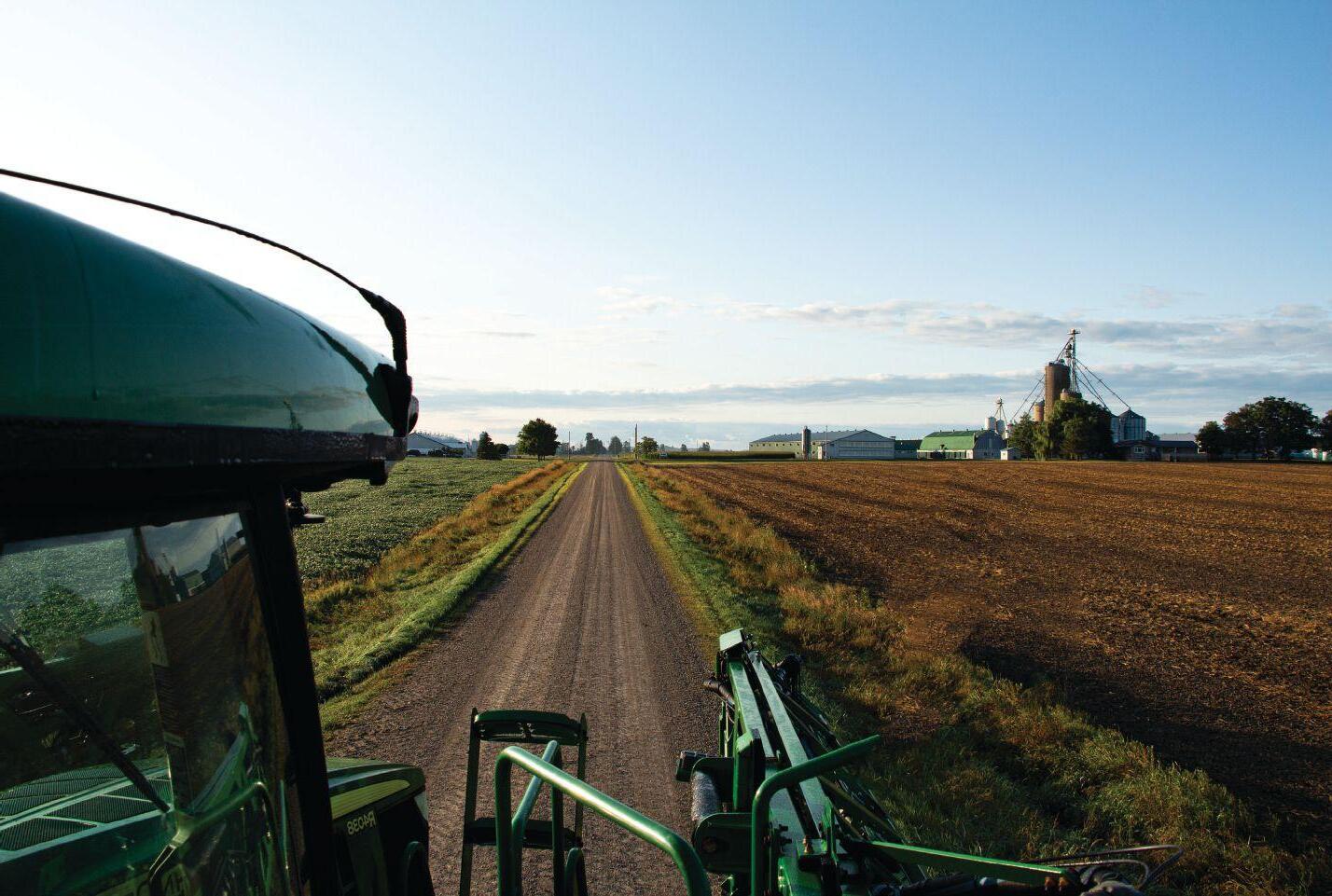
Poultry farming on virtual display
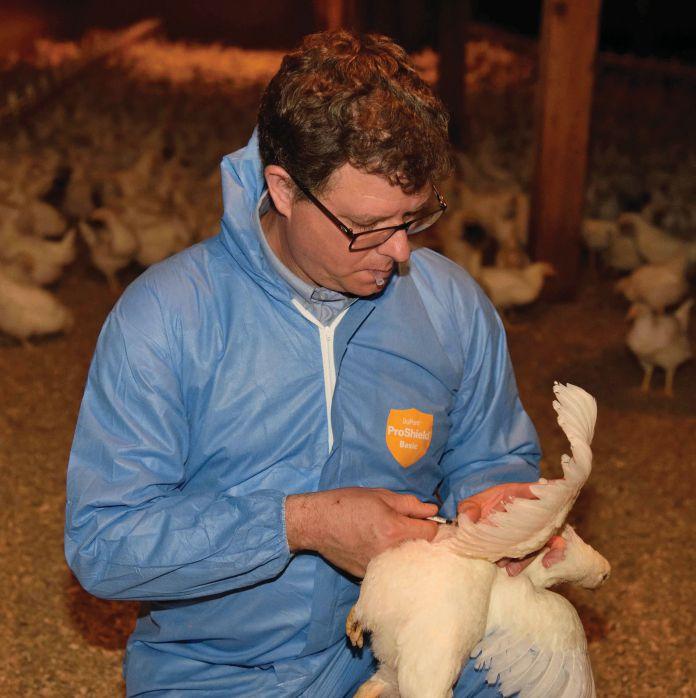
One of my favourite parts of this job –something I’ve missed out on since the pandemic started –is visiting farms. Barn tours are also a great way to connect the public with their food and those who produce it.
Unfortunately, doing this in person is often difficult. But new resources produced by Farm & Food Care Ontario allow Canadians to immerse themselves in the poultry farming experience from the comfort of their home.
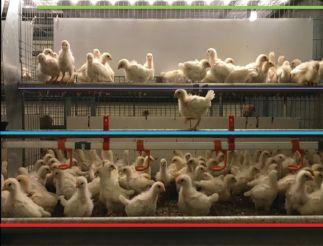
The organization, which is dedicated to building public trust and confidence in food and farming, added three new installments of its Virtual Farm Tours – including ones filmed at chicken and turkey barns – to FarmFood360.ca late last year.
Farm & Food Care Ontario originally launched the program in 2007 to educate the public and show that producers had nothing to hide and were actually proud of their stories. It then revamped it in 2017 when it launched FarmFood360.ca and started using 360° cameras and virtual reality technology.
Its latest videos are the first ones filmed at chicken and turkey barns using these enhanced capabilities. They were recorded last summer and join 15 other farm and food processing tours already on the site.
Browsers can access the tours on tablets and desktop computers, as well as through mobile phones and virtual reality devices. There are also an additional 12 traditionally shot videos that supplement the 360° feature tours. Those include interviews with the farm families, explanations on where their animals live and what they eat and conversations about their day to day chores on the farm. Veterinarians, nutritionists and other experts join the farm families in explaining their roles in caring for animals on these farms.
One of the new tours takes
“You’re showing them how we actually farm. The videos dispel a lot of the myths and untruths.”
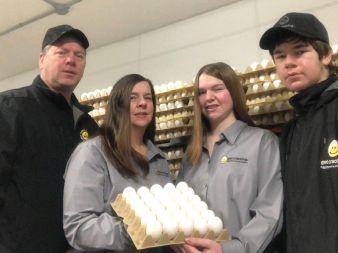
people through Bardon Poultry, a broiler barn in New Tecumseth, Ont., run by Donna and Barry Jebb. Videos explain what chickens eat, how they’re cared for and highlights a special program called CFO Cares Farmers to Food Banks that encourages farmers to donate fresh meat to local food banks.
In the turkey tour, producers Clair and Kathryn Doan of Doan Turkey Farms in Norwich, Ont., take guests through both their poult and
grow-out barns. They talk about their life as a farm family and the daily routine on their farm.
Both the Doans and Jebbs say initiatives like Virtual Farm Tours are useful for clearing up the many myths that exist around poultry farming. “I think there’s a misconception around what a farm or barn environment looks like for turkey production,” Clair Doan says. “And so, they see our facilities are curtain sided, naturally ventilated barns with ample access to fresh air, water and feed. It’s important that we influence that conversation as opposed to somebody else influencing it.”
Donna Jebb agrees. “You’re showing them how we actually farm. We don’t have them in cages. We don’t force feed them. The videos dispel a lot of the myths and untruths.”
In 2020, FarmFood360.ca received 2.95 million-page views – a 1,000 per cent yearover-year increase. Now, Farm & Food Care Ontario is working on a resource to help teachers incorporate the website’s material in classrooms.
While Kelly Daynard, executive director of Farm & Food Care Ontario, is pleased with the latest virtual tours, she’s excited to get back to hosting on-farm events.
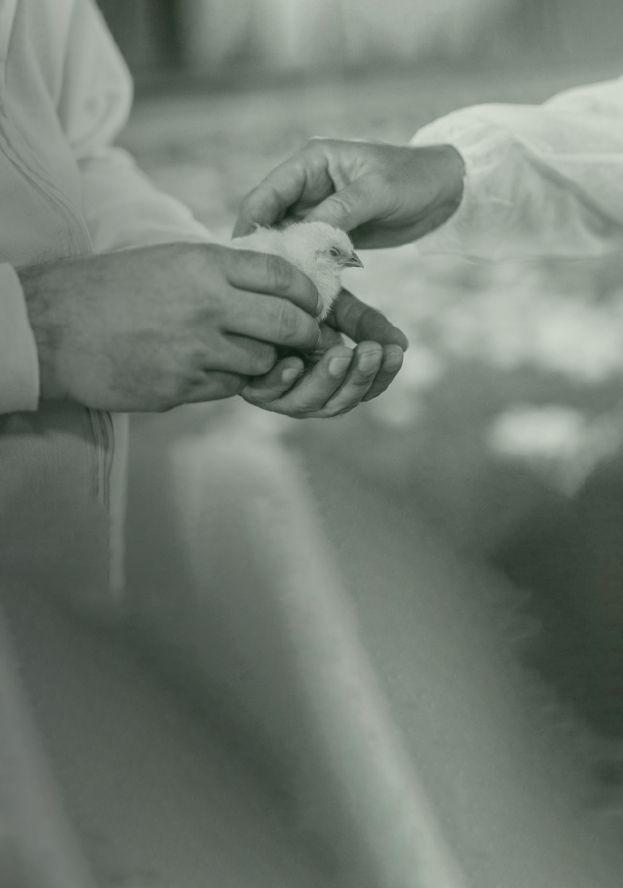
“When you see someone hold a newly hatched chick for the first time, there’s that look of awe and magic for them. Those moments make my career and you’ll never replace that.”
canadianpoultrymag.com
Reader Service
Print and digital subscription inquires or changes, please contact Anita Madden, Audience Development Manager Tel: (416) 510-5183 Fax: (416) 510-6875
Email: amadden@annexbusinessmedia.com
Mail: 111 Gordon Baker Rd., Suite 400, Toronto, ON M2H 3R1
COO Scott Jamieson sjamieson@annexbusinessmedia.com
PUBLICATION MAIL AGREEMENT #40065710
Printed in Canada ISSN 1703-2911
Subscription Rates Canada – 1 Year $32.50 (plus applicable taxes) USA – 1 Year $91.50 CDN Foreign – 1 Year $103.50 CDN GST - #867172652RT0001
Occasionally, Canadian Poultry Magazine will mail information on behalf of industry-related groups whose products and services we believe may be of interest to you. If you prefer not to receive this information, please contact our circulation department in any of the four ways listed above.
When you choose to install the LUBING 4023 Maximum Flow, All-Stainless Nipple with 360 degree action, you choose a real winner! It is constructed 100% from high grade, precision machined, stainless steel and is virtually indestructible.
Glass-Pac Canada
St. Jacobs, Ontario
Tel: (519) 664.3811
Fax: (519) 664.3003
Carstairs, Alberta
Tel: (403) 337-3767
Fax: (403) 337-3590
This nipple is designed to be used with our one-arm LitterGard cup and has a wide range of flow that can be adjusted down for small 4 lbs. birds or adjusted up to over 100 ml for large 9.5 lbs. birds. You can decide the flow you want! Combine this nipple with our 28 mm (1.10-in) drinker pipe, the largest on the market, and you have the water volume you need 24/7.
Join the club of thousands of growers that have enjoyed the longevity and performance of this nipple/cup combination that has been proven time and time again for well over 20 years.
Got Lubing? You can’t afford not to!
Les Equipments Avipor
Cowansville, Quebec
Tel: (450) 263.6222
Fax: (450) 263.9021
Specht-Canada Inc.
Stony Plain, Alberta
Tel: (780) 963.4795
Fax: (780) 963.5034
What’s Hatching
Ontario ramping up farm inspections to ensure COVID compliance
The Ontario government is committing hundreds of inspectors to focus efforts on curbing COVID-19 transmission at farms and greenhouses across the province. Labour Minister Monte McNaughton and Agriculture Minister Ernie Hardeman made the announcement in late January, following a growing season in Windsor-Essex that featured more than 1,000 COVID-19 cases, a handful of hospitalizations and two worker deaths.
Cobb appoints interim president
An experienced leader in the poultry breeding industry has been appointed to the role of interim president of Cobb. Stan Reid, current vice president of North and South America, is assuming the leadership position vacated by Joel Sappenfield, who recently left the company. Reid has almost 40 years of experience in the industry and has been at Cobb for 20 years in a variety of roles. Reid has been in his current role since 2015, which also included overseeing global marketing for Cobb.
Germany approves draft law to end mass culling of male chicks
Germany is expected to become the first country to ban mass culling of male chicks in the poultry industry, the government said after approving a draft law ending the controversial practice. The measure passed by the cabinet envisages a ban on mass chick killing from 2022 in “a significant step forward for animal welfare”, the agriculture minister, Julia Klöckner, said in a January statement.
Poultry virus continues its spread through Niagara
Since an outbreak of Infectious Laryngotracheitis (ILT) at an unidentified Smithville poultry farm last December, the virus –which is only experienced by poultry, cannot be transferred to humans and does not affect food safety – has spread to an additional six farms in Niagara, bringing the total farms involved to seven.
A Jan. 25 notice from the Feather Board Command Centre (FBCC) said one of the latest outbreaks occurred close to the original outbreak, but another is “some 15 km southeastward.”
As a result, the FBCC has again expanded its biosecurity advisory area, which now spreads from Stoney Creek and Vineland in its northernmost reaches, down toward Wainfleet and Dunnville at its southernmost reaches.
Tom Baker, a veterinarian and FBCC incident commander, has previously said it’s not known how the virus originated in Niagara, but that it can travel on dust particles blown by wind and
spread from one farm to another without any direct contact.
“We have approached (Ontario Ministry of Agriculture, Food and Rural Affairs) for some support on this endeavour,” Baker said in January.
Agriculture ministry spokesperson, Christa Roettele, confirmed in an email the ministry has “several team members” working on the outbreak.
Veterinary epidemiologists use the virus’ sequenced genetic info, along with information collected from farms, to try to understand how and why a virus is spreading, Roettele’s email read.
“We want to understand where it came from and how it’s moving,” Baker said.
Over 72,000 broiler chickens are affected between the most recent outbreaks at farms six and seven. At least 187,128 birds have been affected by the virus’ spread since December.
For more on recent ILT outbreaks, see page 34.
Tom Baker, a veterinarian and FBCC incident commander, says the origins of the Niagara, Ont., outbreak are still unknown.
187K is the approximate number of birds that have been affected by the virus’ spread in the region since December.
Egg Farmers of Ontario appoints general manager
Egg Farmers of Ontario (EFO) recently announced that Ryan Brown will assume the position of general manager effective March 1, 2021.
Brown has a broad range of experience with Ontario agricultural groups, having most recently served as general manager of Turkey Farmers of Ontario (TFO) since 2016.
He held the position of vice president operations with Grain Farmers of Ontario between 2010 and 2016 and was Ontario Corn Producers’ general manager between 2006 and 2010.
His educational background includes an Honours B.Sc. Agriculture and a Masters of Business Administration, both from the University of Guelph.
“Egg Farmers of Ontario is looking forward to Ryan leading our staff operations and is confident he is in the best position to continue to strengthen and improve our administration in the future,” says EFO chair Scott Helps.
“Ryan brings a wealth of progressive management
experience and strong background developed over many years in senior positions with organizations working for Ontario’s farmers.”
Brown takes over for Bill Mitchell, who’s served as interim general manager since July 1, 2020. That’s when long-time general manager Harry Pelissero stepped down.
In a parting note, Pelissero –who served in the role for more than 17 years – wrote, “I have appreciated the opportunity to serve and want to thank the board and the staff at EFO for the many memories and friendships which have developed over the years. I look forward to assisting in whatever way possible to make sure the infrastructure is in place for a successful EFO.”
Helps thanked Pelissero for his contributions in a statement. “His leadership, dedication and passion have helped make EFO what it is today,” the chairman wrote.
In terms of Mitchell, he will now be resuming his role as director of public affairs starting in March.
Coming Events
MARCH
MAR. 3
PIP Innovation Showcase Webinar Series poultryinnovationpartnership.ca
MAR. 10
PIC HR Day, Webinar poultryindustrycouncil.ca
MAR. 17
BCPS Webinar Series: Brooding and Coccidiosis Prevention bcpoultrysymposium.com
PIP Innovation Showcase Webinar Series poultryinnovationpartnership.ca
APR. 7-8
Virtual National Poultry Show poultryindustrycouncil.ca
APR. 14
PIC’s Ag Lenders Webinar poultryindustrycouncil.ca
APR. 21
BCPS Webinar Series bcpoultrysymposium.com
MAY
MAY 5
PIP Innovation Showcase Webinar Series poultryinnovationpartnership.ca
MAY 6
PIC’s Research Impacts Webinar poultryindustrycouncil.ca
MAY 19
BCPS Webinar Series bcpoultrysymposium.com
Ryan Brown most recently served as general manager of Turkey Farmers of Ontario before joining Egg Farmers of Ontario.
Long-time EFO general manager Harry Pelissero, pictured first on the left at an educational event, stepped down last July.
Egg Farmers of Canada recognized as a Top Employer
Egg Farmers of Canada (EFC) was recently named one of the National Capital Region’s Top Employers for the ninth consecutive year. This award recognizes employers in the Ottawa-Gatineau region and their exceptional workplaces.
Wellness activities, in-house training and tools that help staff maintain strong connections and collaborate across disciplines are some of the reasons why the organization was recognized as a top employer.
A custom method for onboarding new staff, personalized professional development opportunities and its approach to leadership development are just a few of the other reasons why EFC was honoured.
Meanwhile, in response to the COVID-19 pandemic, the organization embraced a remote work model, launching virtual lunch and learn sessions and a curated resource centre to further support employees.
“Supporting our team is always our first priority,” says EFC CEO Tim Lambert. “With that, our dedicated team is able to con-
tinue their essential role of overseeing Canada’s egg supply. I am particularly proud of how our team has adapted and responded.”
Based in Ottawa, EFC’s close to 60-person team oversees national programs and standards, contributes to managing educational programs for farmers and manages innovative research and development programs.
The team also plays a key role in promoting egg consumption in Canada and championing sustainable agriculture, helping put egg farming at the forefront of this important movement.
This latest recognition is among a series of honours that reaffirm EFC’s commitment to its people.
Late last year, Waterstone Human Capital named EFC one of Canada’s Most Admired Corporate Cultures for the third time, with the organization holding the award since 2014. The organization has also received recognition as an employer that supports and nurtures young people at the start of their careers.
Egg Farmers of Canada CEO Tim Lambert says he’s particularly proud of how his team has adapted and responded to the pandemic. 9 is the number of years straight Egg Farmers of Canada has been recognized as one of Ottawa’s Top Employers.
Chore-Time announces new engineering manager
Michael Orgill has been promoted to engineering manager for Chore-Time, according to Jeff Miller, vice president and general manager of the CTB Inc. business unit. Orgill’s new duties include leading a team of engineers and support staff responsible for product and design engineering. Prior to his promotion, Orgill held the position of Chore-Time product engineer for 12 years, most recently serving a lead role for the company’s line of poultry watering products.
CHEP announces donation to Food Banks Canada
In February, the Canadian Hatching Egg Producers (CHEP) announced a $50,000 donation to Food Banks Canada to support food banks nationwide. This follows an initial $20,000 donation CHEP made in 2020 to support food banks amid COVID-19 pandemic response efforts across Canada. Food banks have been put under enormous pressure during the pandemic while their operational capacity has been strained.
Cobb publishes new Broiler Breeder Management Guide
The new Cobb Broiler Breeder Management Guide includes expanded, updated, and newly added technical expertise in broiler breeder production management to help customers succeed. The company’s latest recommendations in the influential handbook are intended to help support more yield, better feed conversion, and healthy flocks for customers. To access this and other Cobb resources, cobb-vantress.com/resource.
Mental health isn’t something we talk about. to ignore
It’s time to start changing the way we talk about farmers and farming. To recognize that just like anyone else, sometimes we might need a little help dealing with issues like stress, anxiety, and depression. That’s why the Do More Agriculture Foundation is here, ready to provide access to mental health resources like counselling, training and education, tailored specifically to the needs of Canadian farmers and their families.
LRIC Update
By Lilian Schaer, Livestock Research Innovation Corporation
poultry industry. Visit www.livestockresearch.ca or follow @LivestockInnov on Twitter.
Advancing research and innovation
The threat of a long-overdue global pandemic used to keep him up at night, says Shayan Sharif, associate dean of research and graduate studies at the Ontario Veterinary College and a professor in the University of Guelph’s Department of Pathobiology.
And then COVID-19 happened. It laid bare the fragilities of the global agrifood system. It also underscored the realities of what is needed to better protect both humans and livestock against future pandemic threats.
“We’ve learned that pandemics tend to be highly unpredictable – we don’t know when or why they happen,” Sharif says. “But pigs and poultry are the two main species I continue to worry about as potential hosts for viruses.”
The world needs to strengthen its focus on protecting the health and wellbeing of livestock and poultry – a key food
source for billions of people around the world. After all, it’s not a question of whether there will be another pandemic but rather when, Sharif believes.
Key in making this happen is a better system for predicting the emergence of diseases. This would allow the industry to both safeguard public health and prevent outbreaks of ailments like Newcastle disease or avian influenza, for example.
That requires a combination of people and infrastructure to drive and implement innovation, including highly trained scientists, research support staff and students. Attracting and keeping those human resources means training and research opportunities as well as the laboratories and facilities to support their work.
According to Sharif, to be ready for future pandemics or outbreaks of viruses significant to livestock, a level three biocontainment facility and animal holding and isolation fa-
cilities for vaccine trials are absolutely critical.
Those types of facilities exist at the Canadian Science Centre for Human and Animal Health in Manitoba and at the University of Saskatchewan’s Vaccine and Infectious Disease Organization (VIDO), but Sharif notes another key learning from COVID-19 has been the need for redundancy in the system to maintain surge capacity.
“What we are talking about really is to create something that would let us complement their work and be collaborative,” he says, adding that facilities for production research are also needed.
For more than four decades, those facilities have been at the University of Guelph’s Arkell Research Station. That said, they’re badly in need of modernization in order to facilitate research that reflects modern poultry production and can drive innovation using emerging fields like big data.
The industry has made great strides in how poultry research is conducted over the last decade, particularly in greater collaboration across universities. That’s according to Bruce Roberts, executive director of the Canadian Poultry Research Council, who says a key driver behind that evolution is the increasingly complex nature of poultry research. But that increasing complexity also underscores the need for updating poultry research facilities and increasing their capacity.
“The advances in what we are researching are not being met by a corresponding advance in the facilities; and even before COVID-19, those facilities were stretched to the limit,” he says. “We have projects that were approved but were delayed for 18 to 24 months because there was no facility available to do the work.”
Both Roberts and Sharif see a need for a cooperative effort between industry, government and universities to expand Canada’s poultry innovation ecosystem, one that would also encompass knowledge mobilization – the final step of moving research outcomes into on-farm application.
“Infrastructure and people are the two main elements of innovation and although pandemics come and go, we also need to think about the sustainability of our system and how we can be competitive,” believes Sharif. “If Canada wants to be competitive in the future and have safe, wholesome, secure food, we need to remain collaborative in order to become competitive.”
Livestock Research Innovation Corporation (LRIC) fosters research collaboration and drives innovation in the livestock and
Shayan Sharif (standing) believes Canada needs to invest more in livestock research and innovation for a number of reasons.
World of Water
By Mary K. Foy
What’s new with water
Modern commercial poultry is often cited as beginning about 100 years ago with a small flock of 500 birds in the U.S. state of Delaware. Who would think that after a century of raising commercial poultry we would still be learning from the birds themselves what helps them thrive?
Our advancement in technology and the increasing ability to control and monitor the birds’ environment allows us to dig deeper than ever before into what helps them perform. Out of the hundreds of research projects done every year, there are a few that still provide insight into the drinking habits of the modern bird.
Let us focus on the beginning: brooding.
Warm or cool?
Most of us were taught that when preparing for the arrival of chicks or pullets we are to fill the water lines with fresh, clean water a few days before the flock’s arrival then allow it to warm up along with the barn and litter. The theory is that since chicks are unable to regulate their own body temperature those first days, having water that does not chill them is ideal.
However, there is another school of thought that a cool drink of water is much more enticing than a warm one and that cooler water will increase water consumption, a goal for which we strive since it goes hand in hand with increased feed consumption.
This alternative school of thought was the subject of research by Christopher Eagleson, Susan Watkins, Tyler Clark, Malea Frank and Antonio Beitia at the University of Arkansas.
They gave one-day-old broilers free access to water that was either 4.44°C (40°F), 21.11°C (70°F) or 37.78°C (100°F). They found that the chicks that received the warmest water were significantly lighter than the chicks in the other groups
on day 14, weighing in at 463 g (1.02 lb) compared to 501 g (1.10 lb) for the other two groups. Perhaps a cool drink of water is not only refreshing to us, but is also a cool respite for a chick.
Cyclical activity
Another interesting study that shed light on water usage by chicks was done by Brian Fairchild, Mike Czarick and PhD student Connie Mou at the University of Georgia. The researchers focused on both the circadian (24 hour) cycle and the activity cycle of chicks their first week of life.
The group observed that chicks have a strong circadian (24 hour) rhythm during the first week of brooding, even when there is continuous light. This pattern did decrease as the chicks aged.
However, along with this natural circadian rhythm, the chicks also exhibited a strong but shorter activity cycle. A few hours after placement, they began to eat and drink all at the same time followed by a period of rest. The cycles tended to last between 30 and 60 minutes and grew stronger as their first week of growth
progressed.
The Georgia research group described it as a wave of chicks that come to then leave the feed and water lines.
In the first full day, the wave only lasted about 30 minutes, with water consumption increasing by three or four-fold over a 15-minute period, then decreasing the same amount the next 15 minutes. By the end of the week, there was a seven-fold variation in water usage from the lowest point to the highest peak that tended to progress through 45-minute cycles.
Even though this pattern tends to decrease over the life of the flock (probably due to the fact that space at the feed and water lines becomes limited), it is important to note that this cyclical activity behaviour will cause a larger demand (up to a seven-fold increase) on the drinking system at one time. It benefits our birds and, thus, ourselves to ensure that our drinking water systems are in optimum working order to facilitate this natural cyclical flock activity.
Perhaps nature still has a thing or two to teach us.
Mary K. Foy is the director of technical services for Proxy-Clean Products. The U.S. company’s cleaning solution is used in Canada as part of the Water Smart Program developed by Weeden Environments and Jefo Inc.
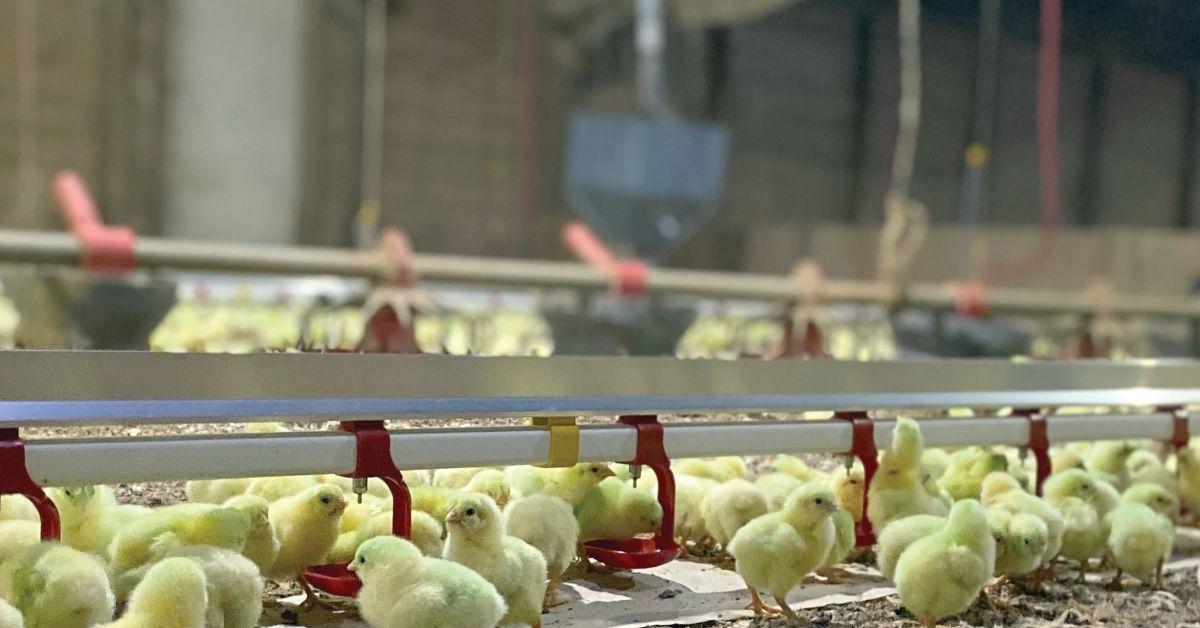
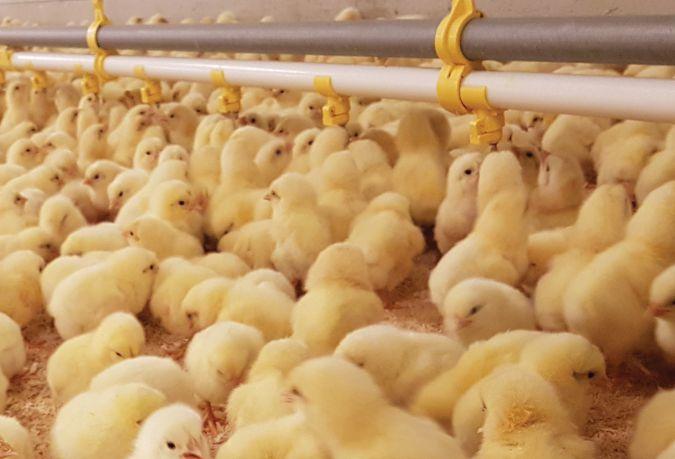
There is a school of thought that a cool drink of water is much more enticing to chicks than a warm one.
A global concern
Canadian poultry industry on guard as HPAI outbreaks spread across Europe and Asia.
By Treena Hein
In recent months, the European poultry industry has been dealing with significant outbreaks of highly pathogenic avian influenza (HPAI). Outbreaks have also been recently reported across Asia and elsewhere. The Canadian poultry sector is watching closely. That’s because in 2014 and 2015 numerous AI outbreaks in Europe and Asia preceded infections on chicken farms, first in B.C. and then across Canada and North America.
“The main AI virus circulating is H5N8, although H5N5 and the potentially zoonotic (transmissible to humans) H5N1 have occasionally been found in these recent cases,” says Tom Baker, incident commander at the Feather Board Command Centre in Ontario. “Apparently, the virus found in Japan and Korea is more similar to the one that was circulating in early 2020 in Europe than to the current European strain. This means that there are two distinct H5N8 HPAI epidemics in eastern Asia and Europe.”
Right now, AI has been recently diagnosed in 19 European countries. In France, AI outbreaks since November have climbed to 264, resulting in the culling of 1.1 million birds, mostly in foie gras ducks in the Landes Region. Last
week, authorities in Japan culled the country’s largest flock to be affected by HPAI at 1.1 million chickens.
Overall, Baker notes that from last fall to last January, more than 500 new cases of HPAI in domestic poultry have occurred globally. Approximately 35 million domesticated birds have either died from the disease or been culled.
“Farms across the globe are intensifying their biosecurity measures,” he observes. “Most countries with AI are depopulating infected flocks and creating surveillance zones and some are culling all birds within three kilometres. Everywhere, we have seen the value of robust wild bird surveillance systems in assessing risk to commercial flocks. The typical scenario we are seeing around the world is first detection in wild birds, then free-range and backyard flocks and then commercial flock outbreaks.”
B.C. acts
To protect producers in B.C. from HPAI outbreaks, in December the province’s poultry industry changed its biosecurity status. This involves the biosecurity colour committee providing a recommendation to the B.C. Poultry Association (BCPA), which then provides a recommendation to the four poultry boards that producers move – in this case – from green to yellow biosecurity status.
B.C. Chicken Marketing Board director Ray Nickel, who is also the information officer for the B.C. Poultry Association Emergency Operations Centre (BCPA-EOC), explains that during a yellow alert, restrictions are in place such as farm gates staying closed at all
times (except when a vehicle must pass through). If a case of HPAI is suspected in B.C., the province will move to red status. “It’s a significant step up where we go into a complete lockdown,” Nickel says.
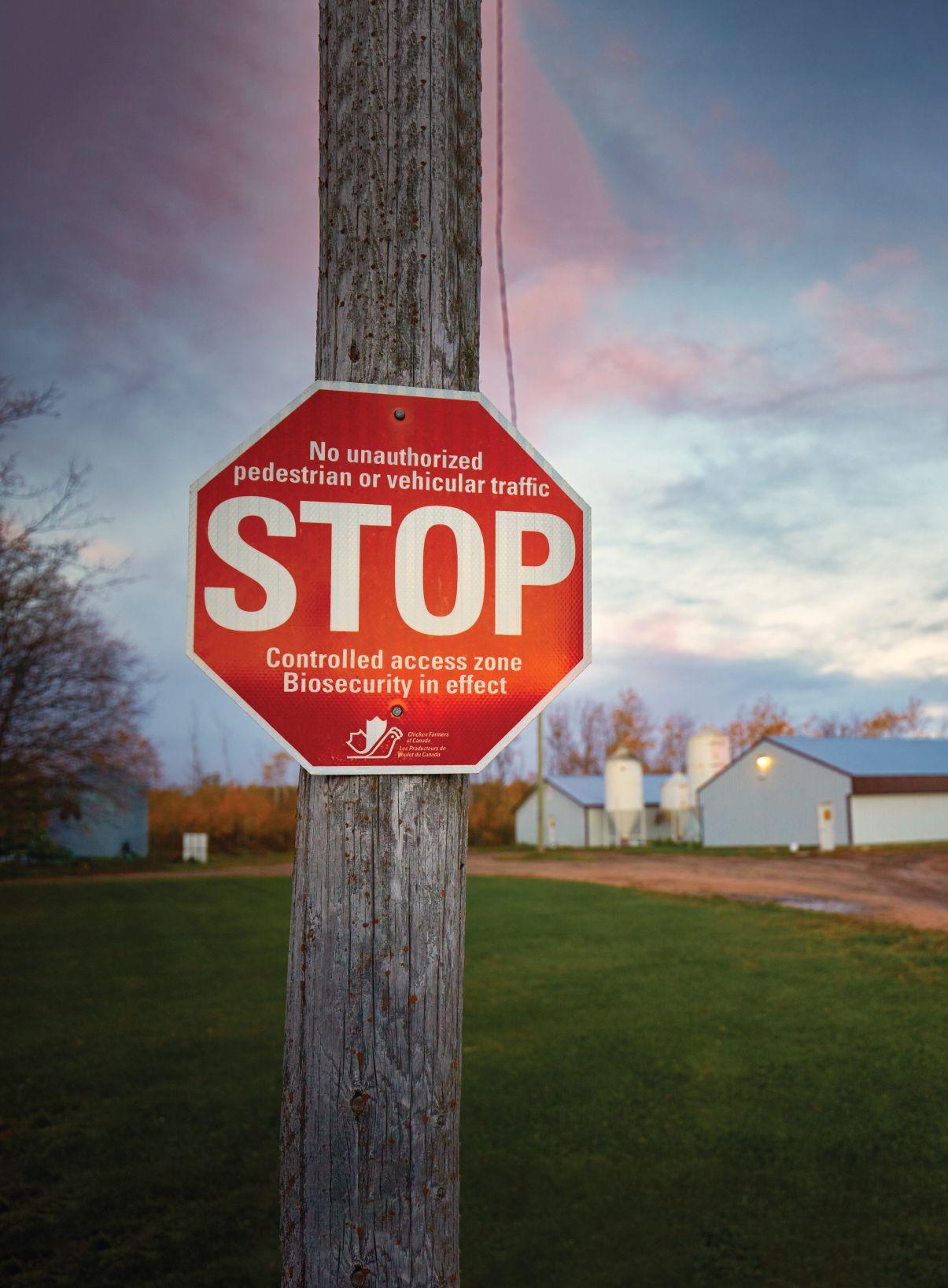
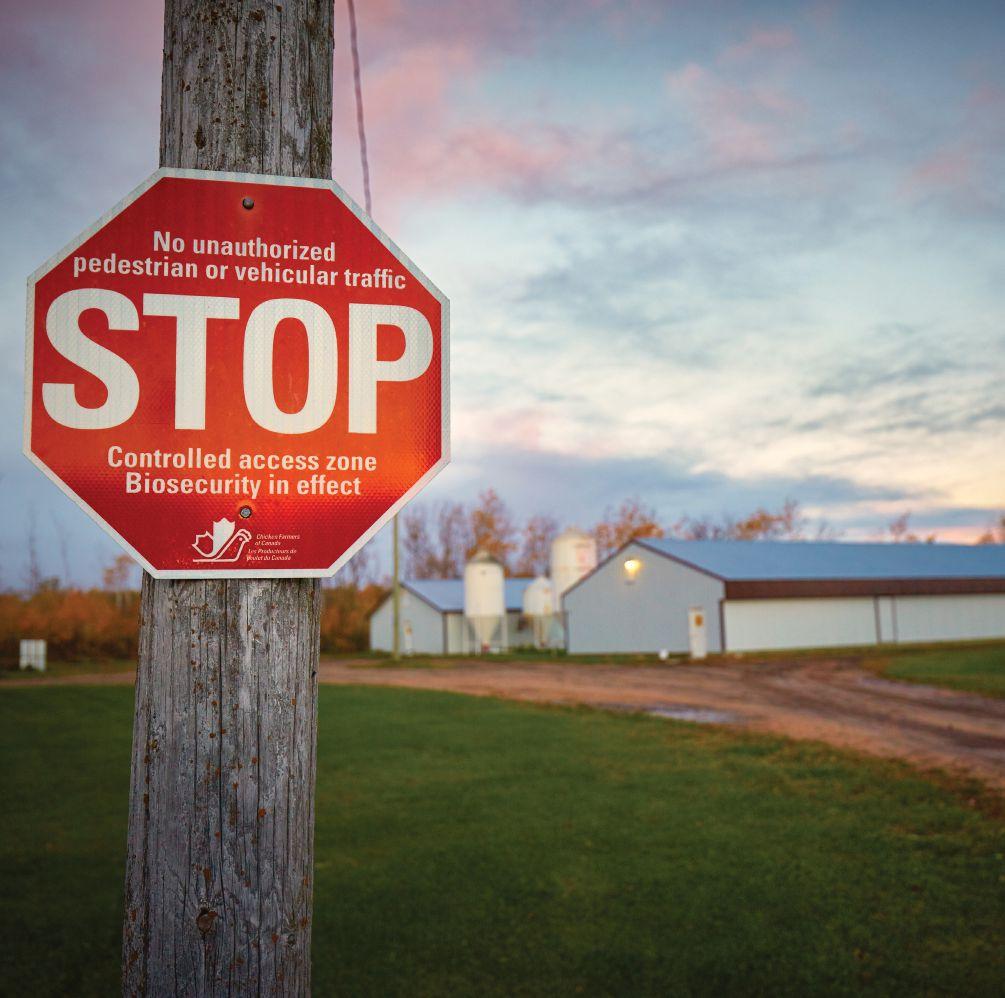
“We lock our gates at all times. We inform all allied trades and others associated with the farm that we are in a state of enhanced biosecurity. We implement a vehicle wash station where we must remove all organic debris with a pressure washer. We also must disinfect tires, wheel wells, undercarriage of vehicles, floor mats, pedals, steering wheel and door handles. In addition, we make sure garbage bins and dumpers are moved outside of the controlled access zone and reduce pickups as much as possible.”
Nickel adds that there has been a mandatory biosecurity program in place in B.C. since 2006 and producers have continuously demonstrated strong commitment to it. EOC section chiefs meet monthly with the B.C. Ministry of Agriculture and Canadian Food Inspection Agency (CFIA) officials and preparations have been made, due to the COVID-19 pandemic, to create a virtual incident command centre that will be used if needed.
BCPA has also developed an emergency response plan in reaction to past AI outbreaks.
BCPA chair Steve Heppel says the EOC and the rapid response committee have also been working together with the B.C. Ministry of Agriculture and CFIA to develop procedures and teams. And right now, all procedures must be modified to meet pandemic restrictions. He adds that a rapid and coordinated approach to containing AI is dependent upon poultry produ -
cers, allied trade and association staff being able to participate in the process.
“We’ve been advised by several health experts that our involvement in an AI outbreak will hinge upon individual producers having gotten their annual flu shot,” he says. So, in October, the BCPA urged all B.C. poultry producers and their families to get the shot (free of charge for this group) so that they can work if necessary on an AI rapid-response team. These teams, which can help with euthanasia, surveillance and more, are under CFIA jurisdiction and all members must have the shot – and immunity is only achieved two weeks afterwards.
Vet perspective
Neil Ambrose, director of veterinary services at Sunrise Farms (which has operations in Alberta, B.C., Manitoba and Ontario), believes that the security of barns is critical for the prevention of AI outbreaks in Canada. “My rule is that what is inside the barn stays inside and what’s outside hopefully stays there,” he says. “We should not allow poultry outside unprotected at this time of year. If birds must [be outside], they should be in protected, covered and secure areas only.”
Ambrose adds, “B.C. has a separate audited biosecurity program for the regulated poultry sector. This is a good addition to national
agency programs, as it just heightens awareness of biosecurity adherence.”
While Ambrose feels Canada’s poultry industry has “definitely come a long way from the dark days of 2004” in terms of AI emergency planning and knowledge, he thinks there should be more focus on prevention – on watching migratory wild birds, for example, who are the primary transmitters of the virus.
“We should be closely monitoring the movements of these birds and where they overwinter,” he says. “To me, this is a big red flag and what I watch for in the Fraser Valley each fall/winter. If I see thousands and thousands of wild
Recent AI outbreaks by the numbers
Here are some facts and figures related to the recent avian influenza outbreaks that have spread across Asia and Europe.
19 is the number of European countries AI has recently been diagnosed in.
26 is the number of AI outbreaks that have occurred in France since last November.
1.1M is the number of birds the French have culled during these outbreaks, mostly in foie gras ducks in the Landes Region.
1.1M is also the size of the largest chicken flock Japan culled in response to a recent HPAI outbreak.
500 is the number of new cases of HPAI in domestic poultry that have occurred globally between fall 2020 and January 2021.
35M is the global number of domesticated birds that have either died from HPAI or been culled because of it between last fall and this past January.
In December, B.C.’s poultry industry elevated its biosecurity status from green to yellow to protect producers from HPAI outbreaks.
birds sitting in a corn stubble field, that’s a concern.”
In Ambrose’s view, the poultry sectors should also work more closely with the dairy and crop farming sector to encourage or require corn stubble fields to be ploughed under or reseeded with ground cover as soon as the fall crop is harvested. “Birds flying overhead look to places to feed and rest,” he asserts. “If we make the environment less welcoming for them to stop next to our poultry barns, surely this would help.”
Ambrose also feels that, although difficult to verify, airflow into barns is a potential means of introducing AI. However, he says that improvements in ventilation systems in recent years (continu-
ous side-wall air intake vents evolving into advanced tunnel ventilation systems) now provide much-improved barn air quality.
“In addition, what may have historically been open-sided barns such as those seen in the turkey
sector are now enclosed with screens or netting,” Ambrose says.
“Also, the planting of trees around air intake vents acts as a natural filter and a windbreak when barns are exposed to the likelihood of wind transmission.”
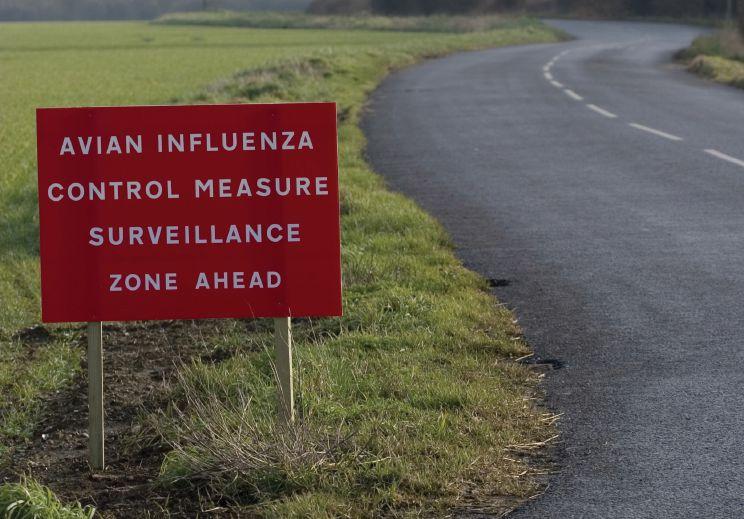
Countries with avian influenza outbreaks are creating surveillance zones, depopulating infected flocks and even culling all birds within a three-kilometre radius.
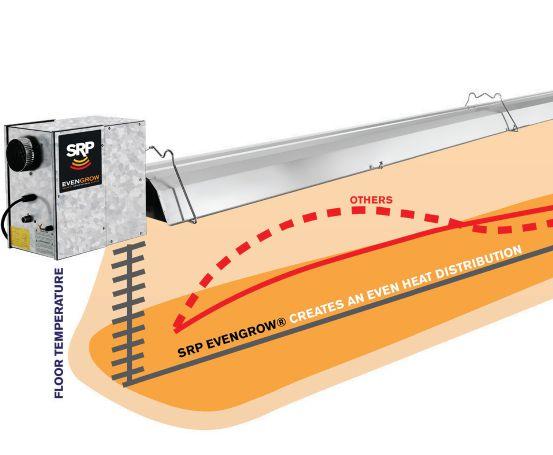
The SRP EVENGROW® ultimate heater offers the best premium features available in the poultry industry for optimum production and greater return on investment.
• Low clearances above – minimal convective heat loss – safe for plastic drop ceiling
• Nickel plated “Jet Stream” burner cup
• High efficiency
• Maximum energy is delivered to the floor
• Optional energy efficient side reflectors
• Optional “Flapper” to prevent cold air infiltration
Model ALTX
ModelALTX
ROOM TO THRIVE
Comparing aviary systems for pullet development.
By Jane Robinson
Research has already confirmed that laying hens headed for open-concept aviary systems perform better when they are raised in the same type of environment. But there are many different designs that offer different types of space where birds spend their first few weeks. So, how does aviary design make a difference to young pullets for the lifelong health of hens?
University of Guelph’s Tina Widowski and her MSc student Amanda Pufall recently took a closer look at the impact of different rearing environments on pullets. They compared locomotion and musculoskeletal development of pullets reared in three styles of aviaries on commercial farms across Canada.
“We know we need to rear birds differently when they are destined for aviaries. They need to learn to negotiate the new space with confidence and strong bones and muscles,” says Widowski, who is the Egg Farmers of Canada Chair in Poultry Welfare at the University of Guelph.
The on-farm research was conducted in 2018 and 2019 on 15 commercial poultry operations in Ontario and Alberta. Producers who were already using non-caged aviary systems were enlisted to be part of this practical research to build more knowledge to help producers.
“We wanted to see if all the rearing aviaries offered the same benefit for the birds, as we know the first few weeks are important for the young pullets to learn how to negotiate the aviary system, and build bone strength and overall physical fitness,” Widowski says.
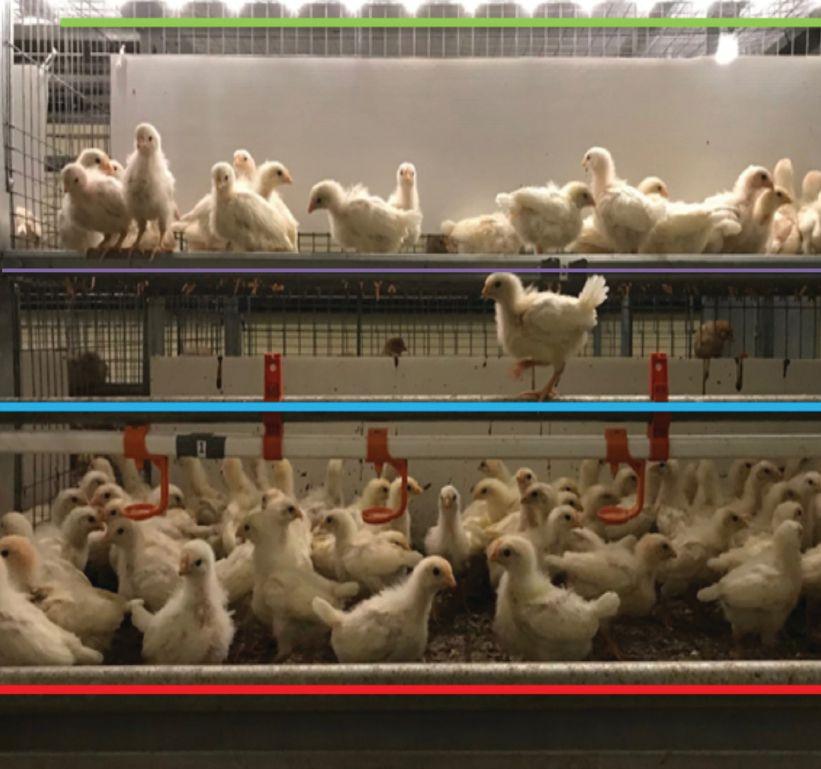
THREE STYLES FOR BROODING
Participating farms included five flocks with each of the three aviary styles studied – varying in the amount of vertical and horizontal movement available to pullets during the brooding period. All styles included a closed confinement area where pullets spent the brooding period, before opening up to more space through the rest of the rearing period.
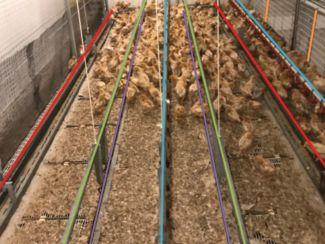
Style one was the most confined during brooding – birds were housed in compartments with perches and the least amount of vertical space available for movement. The brooding compartment in style two offered a taller space with more perches at different levels and a fixed height elevated platform at the back. Style three offered the most space and perches in both the brooding compartment and when the aviary was opened up. White and brown flocks were represented in the study.
Pufall made three visits to each farm –
when birds were still in the brooding compartment, in the middle of the rearing period, and a final visit when pullets were 16 to 17 weeks of age. The researchers videotaped bird activity and analyzed it for all types of locomotion.
“We were looking to see if the different systems changed the amount of locomotion the birds were performing,” Widowski says. “We look at all types of locomotion – jumping up, jumping down, flying, walking, running, standing and sitting.”
At the second and third farm visits, the scientists examined muscles and bones for strength and size, post mortem.
MOTION AND MUSCLES
Not surprisingly, birds moved around the most in aviary systems with the least amount of confinement. “Birds in the most open concept style (three) moved
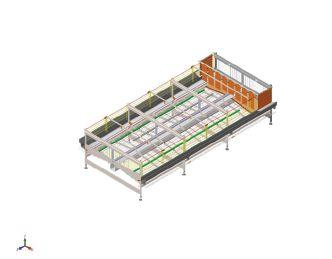
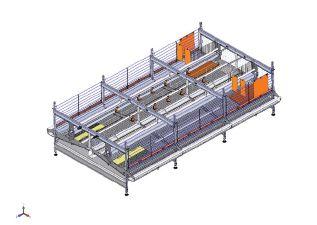
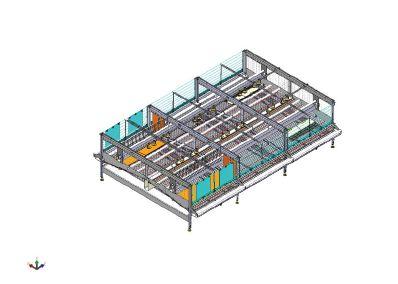
Pullets were reared in three styles of aviary: Style one, two and three. Each style involved a closed confinement area during the brooding period. Red lines are feeder perches. Blue lines are drink perches. Green lines are additional perches (style three). And the purple line is additional platform (style two).
CP_ADM-Wisium_Febmar21_CSA.indd 1
A head start for broiler chickens
HP AviStart is our specialty soy protein for chicken starter feed, designed to optimize young chicks’ genetic potential for growth from the very first stage.
The feed e ciency of HP AviStart has proven superior to soybean meal, and the highly digestible protein in HP AviStart helps to optimize feed intake of your chicks.
Use HP AviStart to give your chicks the best start in life, and improve your return on investment.
more, doing more running, wing flapping and ‘aerial transitions’ with little flights using their wings to move between vertical levels,” Widowski says. There were also significant differences between white and brown birds. White pullets performed more jumping and generally used their wings more to move between levels.”
When analyzing muscle and bone development, the differences in aviary styles showed up in leg strength but not in muscle weight. “We had hypothesized
that giving birds more opportunity for exercise from day one would result in stronger leg bones, and we saw consistently larger and stronger leg bones in pullets raised in the most open concept style three, followed by style two.”
Pullets with the space to perform more vertical transitions had the strongest leg bones. “We know white strains tend to use vertical space better, and they had proportionally heavier pectoral muscles, lighter leg muscles and larger keels than brown strains,” Widowski says.
“These results indicate that the style of aviary and strain of pullet do impact locomotion and musculoskeletal characteristics, which may impact their long-term success in an adult aviary,” Pufall says.
ON-FARM RESEARCH
A larger part of this pullet research includes comparing aviary-rearing systems in a lab setting. And while results from this commercial work can’t be statistically compared to ongoing lab research that Widowski has underway, she knows it’s important to look at pullet development in both settings. “The commercial setting involves thousands of birds, compared to a few hundred in a lab setting, and that probably impacts the interactions between birds,” Widowski says.
Field research also provides a critical link with commercial operations – the chance to share information and gather input and feedback from producers. “Working directly with producers was a wonderful experience and a great way to engage producers directly in research,” Pufall says. “They could see the differences first hand and understand how our research might be applicable directly to their farm.”
This research is funded by the Canadian Poultry Research Council as part of the Poultry Science Cluster, which is supported by Agriculture and Agri-Food Canada as part of the Canadian Agricultural Partnership, a federal-provincial-territorial initiative. Additional funding was received from Egg Farmers of Canada and Egg Farmers of Alberta.
Laryngotracheitis control: combination of strict biosecurity and vaccination strategies
Dr. Diane Brodeur DMV - Poultry Technical Services Manager, Ceva Animal Health
Infectious laryngotracheitis (ILT) is a highly contagious disease caused by a virus that affects the upper respiratory tract of broiler chickens, layers and breeders. The virus can cause both severe and mild disease. Clinical manifestations in mild forms include conjunctivitis, whereas more severe forms may include birds coughing blood from tracheal epithelial cell hemorrhage. The disease can affect birds of all ages and stages of production. Disease loss in affected flocks may be severe due to lowered production (both egg and meat), as well as death loss.
In 2018, Quebec province experienced a large ILT outbreak in Lanaudière region. A risk zone of more than 100 km2, containing 11 infected production sites and nearly 60 uninfected sites, as well as enhanced vaccination and biosecurity measures, had to be put in place to control the disease.
The EQCMA, a Quebec Poultry Disease Control Team, is a partnership of the provincial poultry sector that coordinates, together with members of the industry and government authorities in animal health, prevention, control and eradication activities for certain poultry diseases, including ILT.
BIOSECURITY MEASURES
With each outbreak, EQCMA intervenes in a concerted sectoral approach to control the disease as quickly as possible and to eradicate the virus from infected farms. As a first step, the infected site is self-quarantined and enhanced biosecurity measures are required from the producer and all suppliers of products and services to that site.
As the period between the introduction of the virus in birds and the manifestation of the disease can be 6-12 days, the virus can spread to several other farms even before the diagnosis is made at the infected site. Biosecurity is therefore important at all times and the first line of defense. And birds which recover from the disease may continue to shed the virus for prolonged periods of time.
Control measures on the shipment of infected birds to the slaughtering plant and the disposal of used litter are key elements which greatly increase the chances of success of the intervention strategy. The same risk factor links these two activities, namely the dispersion of significant amounts of contaminated dust in the air.
In an effort to reduce the risks associated with manure management, the virus can be eliminated by heating the manure in the barn to 100 ° F (37 ° C) for 100 hours and storing it on site before spreading. Regarding the exit of birds from sites in the risk area, the EQCMA recommends that the birds be directed to the nearest slaughterhouse. Trucks are invited to take a specific route with a minimum of poultry farms in order to minimize the risk of contamination during transport. As poultry farms located less than 300 meters from the public road are more at risk, driving slowly near these farms is recommended.
The sources of ILT virus are: (a) clinically affected chickens, (b) chickens which are latent carriers of infection, and (c) fomites and poultry farm personnel contaminated with ILT virus. Carrier birds are birds that carry the virus, but show no clinical signs. Backyard flocks near commercial poultry operations can be a source of latent ILT virus.
Strict biosecurity at the entrance to each barn should emphasize the change of footwear and clothing by the producer, his employees and all visitors.
Each new outbreak of LTI has its own particularities and brings its share of challenges and new learning. Experience and knowledge from the 2018 episode in Quebec was put to good use at the start of the year 2019, as part of a new outbreak of LTI, in the Montérégie region. To better control the outbreak, EQCMA implemented a more aggressive regional strategy, with a larger geographic area from the second reported case. The strategy appeared to have paid off, as there has been only 2 cases.
VACCINATION STRATEGIES
There are currently two types of ILT vaccines and they are normally used in association with strong biosecurity measures.
ILT Live attenuated vaccines
Traditionally there have been two sources of live attenuated ILT vaccines.
- CEO Vaccines: The vaccine strain is attenuated by passages in chicken embryonated eggs (CEO). Although spray application can be done, vaccine is generally administered by drinking water (DW).The DW administration of CEO vaccine showed to be safer and more efficacious(quicker infection) than spray application.
- TCO Vaccines: The vaccine strain is attenuated by passages in tissue culture (TCO). Since TCO vaccines are highly attenuated they are safer than CEO vaccines but they are less protective and less immunogenic if compared to CEO vaccines. The TCO vaccine is only recommended for eye drop vaccination.
Replication and transmission
Both CEO and TCO vaccines actively replicate in the conjunctiva, trachea and nasal epithelium and are easily transmitted from bird to bird in presence of unvaccinated contact birds(rolling infection). Onset of virus replication and transmission is faster and abundant in CEO strain if compared to the TCO strain.
Latent infection and regain of virulence
The reversion to virulence is a critical issue for live attenuated ILT virus vaccines, in particular CEO vaccines. These vaccines generate long term infections with the potential for subsequent virus spread after reactivation.
The reactivation of ILT virus after a period of latencyis usually triggered by environmental stress, such as moving chickens to new housing or the start of lay. This reactivation can lead to shedding of the virus, and cause horizontal transmission to naïve chickens and possible outbreak.
The problem can be severe if vaccination practices were inadequate (uneven vaccine distribution).
For these reasons, some countries/states don’t allow the use of CEO vaccines or require approval before their use.
Protection efficacy
A variety of immune responses are generated by the immune system following infection by ILT virus. CEO vaccines produce cell mediated immune response in the trachea that prevents viral replication upon challenge.
ILT Vector Vaccines
In recent years, another option for ILT virus vaccination has been the vector vaccines.
ILT vector vaccines are constructed by inserting one or two ILT virus genes into a vector virus, which can be the Herpes Marek virus (HVT) or Fowl pox vector virus (FPV). The HVT-LT and FPVLT viral vector vaccines are bivalent vaccines that induce protective immunity against ILT and Marek’s disease or avian pox, respectively
The HVT-LT vaccines are administered either in ovo or subcutaneously at day of age to broilers, breeders and table egg layers, whereas the FPV-LT + AE is administered during the rearing period of breeders and table egg layers by wing web application.
A major benefit of the use of the vectored vaccines over the CEO vaccines is the safety aspect and the application method where individual birds are vaccinated either at the hatchery (HVT in ovo or s.c.) or at the farm (FPV w.w.), improving the vaccine take.
Safety
Vectored ILT vaccines do not revert to virulence and no bird-to-bird transmission can occur like the CEO vaccines since there are only one or two genes of ILT virus inserted in the vector virus.
Protection
A variety of immune responses are generated by the immune system following infection by ILT virus. Vector ILT virus vaccines are capable of eliciting both cell mediated and humoral (antibodies) immune responses. The latter, seems to be the main response after vaccination. Vector vaccines can prevent symptoms and reduce mortality after a field ILT infection, but it does not completely prevent replication of challenge ILT virus in trachea.
As mentioned above, Individual vaccination is one of the key benefits of a vector vaccine, however all the vaccination protocols for vaccine preparation and application must be followed to ensure that each bird will receive a full dose.
Administration of vector ILT virus vaccines at fractions of the full dose can be very detrimental to ILT protection. Co-administration of other HVT vector vaccines (e.g. HVT-IBD) can also affect ILT protection of HVT-LT vaccines. The same way pre-existing immunity to FPV may compromise efficacy of the following FPVLT (+ AE) vaccination.
Vaccines combination
Experimentally, vector ILT virus vaccine(s) administered prior to the inoculation of a CEO vaccine, markedly reduced viral detection following CEO vaccination, indicating that prior in ovo or
day of age vaccination with these vector vaccines induced immunity that reduced CEO viral replication.
This is a significant finding because shedding of ILT live attenuated vaccines following inoculation is a recognized safety concern as mentioned earlier. This combination of different types of vaccine could be adopted for long living bird and/or in regions of big challenge.
Conclusions
- For control of an ILT outbreak, the most effective approach is a co-ordinated effort to obtain a rapid diagnosis, institute a vaccination program and prevent further virus spread.
- The commercially available vaccines have their pros and cons and the selection of which vaccination program to be implemented should be decided taking into account different risk factors specific to the farm: type(s) of bird on site, mixed-age or single-age production site, slaughter age, field ILT pressure, biosecurity practices.
- Vector ILT vaccines are safe and efficacious but the vaccination strategy (with or without live-attenuated vaccine) will depend on the level of field challenge.
- Vaccination in the event of an outbreak needs to both limit virus spread and shorten duration of the disease. The strategy may be to start vaccinating with CEO and use vector vaccines to transition out of CEO in subsequent flocks.
- Biosecurity is the first line of defense in the prevention of ILT virus infection.
Infectious Laryngotracheitis
Innovation on display
Poultry technologies win big at European livestock trade fairs.
By Melanie Epp
Last year was a big year for poultry innovations. Even though the in-person editions of European livestock trade fairs Space and EuroTier were cancelled, the organizers still presented awards for outstanding innovations. In September, Space presented several Innov’Space awards to poultry innovations. What’s more, two of the seven silver EuroTier 2021 were presented to poultry innovations at a virtual preview event in late November. Here’s a look at some of the standouts.
Space award winners
Each year, European livestock producers gather in Rennes, France, to check out the latest innovations for their sector. This year, like many in-person events, Space was cancelled. The organizers had put much effort into selecting the Innov’Space award winners, so they decided to present them in a virtual event in late September.
Mule duck in-ovo sexing
Manufacturer: Orvia
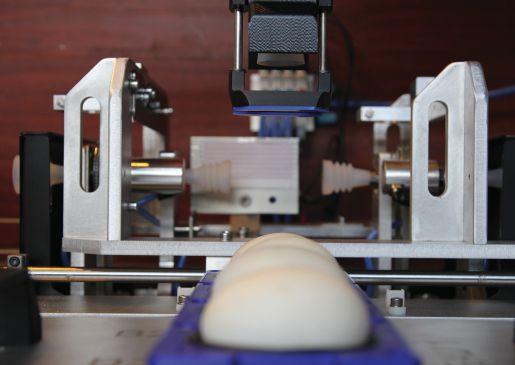
As an active part of the foie gras value chain, Orvia has been involved with in-ovo sexing research since 2010. As a result, the French company developed the SOC machine, which allows producers to distinguish males from females through the colour of their eyes. Females have red eyes, while males have black eyes. The non-invasive procedure is quick, reliable and done at the embryonic stage through the shell without impacting its integrity. Using advanced optics technology, SOC is 95 per cent reliable. Orvia received the most prestigious award, three stars, for this innovation. It was the one three-star award given in 2020.
In-ovo sexing for Muscovy and mule ducks
Manufacturer: Grimaud Frères
In an effort to improve animal welfare in the sector, Grimaud Frères developed a method for in-ovo sexing that can detect
Even though the in-person editions of European livestock trade fairs Space and EuroTier were cancelled, the organizers still presented awards for outstanding innovations.
the sex at the embryonic stage. The French company’s Lunix technology uses spectrometry analysis to analyze embryo sex on the ninth day of incubation, explained Julien LeBlond, marketing and communication director. The process is non-invasive and does not impact the integrity of the egg.
LeBlond says their aim is to improve the overall sustainability of the sector by considering societal expectations. “The main expectation of our sector is to put an end to the crushing of female ducklings that have no breeding outlet,” he said.
Only males are raised in the mule duck sector, and only 50 per cent of females in the Muscovy duck sector.
The Lunix process separates the males from the females. The males are incubated until the end of their incubation period; only females with a breeding outlet are incubated.
Grimaud Frères received two stars for Lunix.
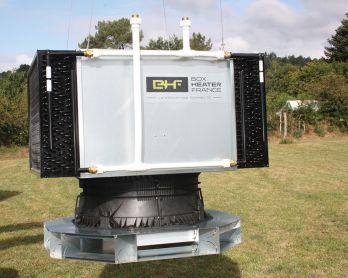
Poultry hot water heater BHW 77
Manufacturer: Box Heater France
Specifically designed for farms, Box Heater France’s (BHF) hot water air heater uses vertically mounted water coils, which prevent the accumulation of dust. The design, which sets water coils far enough
apart to avoid dust accumulation between the fins, is also protected from corrosion. According to the company, the oversized water coil guarantees a high blowing temperature. For example, with an 80/60 water regime and a 35°C air intake, the temperature of the supply air is 60.5°C.
HEAD S U P!™
SYSTEMS OPERATE AT DIFFERENT HEIGHTS TO PROMOTE EFFICIENT NO -SPILL DRINKING
Dedicated FEMALE dr inker system with Big Z g S hielded D r inkers.
Dedicated MALE drinker system with Big Z D r inkers
HEADS UP DRINKING™ ta kes into account what broile r breeders have to do in order to drink - namely, lift their heads and let g ravit y do its wor k .
By incorporating gender specific drinker lines and gende r specific Big Z Drinkers, water spillage is eliminated as the drinkers are positioned at the proper height for both males and females. The advantage with no-spill drinking is a healthy, ammonia free and a more productive breeder environment.
Benefits of Zi gg ity’s Broiler Breeder Concept include :
• Dramatically improved male uniformit y, livabilit y and p erformance
• D ry slats and litter means virtua lly no amm i onia r l ele ase
• Imp roved bird welfare
• More hatching eggs and improved hatchabilit y
• No bacteria-laden catch cups
The Poultry Watering Specialists
The heater’s air diffusion is adjustable in all directions. It has two flaps, one on top and one on the bottom, placed in the eight air outlets.
Because it was designed for use in the barn, BHF used a low-speed fan to limit noise. The fan does not emit CO 2 or humidity in the barn.
BHF received two stars for their hot water air heater.
Conveyor scraper for aviaries
Manufacturer: AR-TEKH
French company AR-TEKH developed a horizontal alternative manure scraper for aviaries. Owner Loïc Gouret said he developed the innovation when he had to replace his own defective scraper. In Europe, available scrapers use a butterfly wing design. Often, the scraper gets stuck with manure and eventually stops altogether.
The scraper consists of a drawer with a horizontal tipping shutter that closes when it moves forward and opens when it backs up. Unlike the butterfly scrapers, the ARTEKH model is operational as soon as it advances without requiring a significant distance of opening.
Learn more about Ziggit y’s exclusive HEADS - UP™ breeder watering system at ziggity.com/HeadsUp
Gouret said his model makes several improvements over traditional scrapers. It uses a new drive unit with a strong chain that is able to support 2,000 kg-traction power and moved by a strong gear motor. The connection between scrapers is rigid, and scrapers can be easily removed or replaced without the use of a tool.
AR-TEKH received one star for its conveyor scraper.
Box Heater France’s hot water air heater uses vertically mounted water coils, which prevent the accumulation of dust.
We’re looking for six women making a difference to Canada’s agriculture industry. Whether actively farming, providing agronomy or animal health services to farm operations, or leading research, marketing or sales teams, we want to honour women who are driving the future of Canadian agriculture.
Technology
Inedia xenosensor
Manufacturer: Biodevas Laboratories
Feed contamination by mycotoxins is a major issue that impacts livestock performance. To address this problem, Biodevas Laboratories developed Inedia, a 100 per cent natural phytogenic additive that manages mycotoxins by raising the tolerance thresholds of animals through the stimulation of the xenobiotic metabolism.
Entirely assimilated by the organism, Inedia maintains zootechnical performances in the presence of mycotoxins through a combination of two actions. It manages oxidative stress by inducing the stimulation of endogenous antioxidant enzymes that are required to maintain the structural integrity of the digestive and hepatic systems. And it stimulates and produces the enzymes involved in the metabolism of xenobiotics.
CEO François Blua was pleased by the recognition. “This award underlines what Biodevas Laboratoires proves can happen every day, the possibility for farmers to combine both economic and ecological performances,” he said.
Inedia is currently being registered in Canada.
EuroTier award winners
Every second year in November, producers head to Hanover, Germany, for EuroTier. It is the largest trade event for livestock production in the world. The in-person event was cancelled and replaced by a virtual event, which will take place February 9 to 12. EuroTier announced its innovation award winners at a preview event in November. Two of the eight awards went to innovations for the poultry sector.
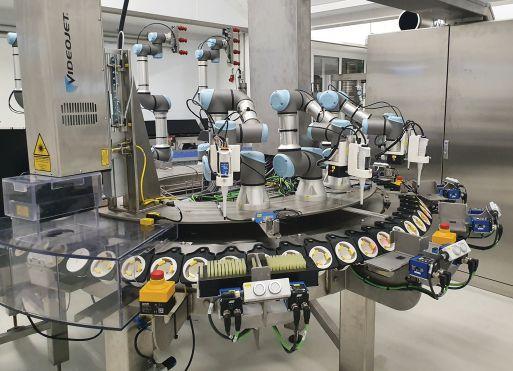
SELEGGT Circulus
Manufacturer: Respeggt GmbH In-ovo sex determination is regarded as a possible alternative to culling
day-old male chicks. Previous detection methods, including the SELEGGT Acus sampling system, were only partially automated and came with risks. Injuring the allantoic membrane with the sampling needle, for instance, reduced hatching rate, and the capacity of a single sampling unit was low – around 600 eggs per hour.
SELEGGT Circulus system is being hailed as a significant leap forward, as it is fully automatic and the allantoic fluid samples are generated in a non-invasive way. Cleaning the sampling needles is, therefore, no longer necessary, and the sampling time has been reduced to just one second per egg. In a three-shift operation with 20 hours of operation per day, one SELEGGT Circulus sampling unit has a weekly capacity of 360,000 hatching eggs.
SELEGGT Circulus received a silver innovation award.
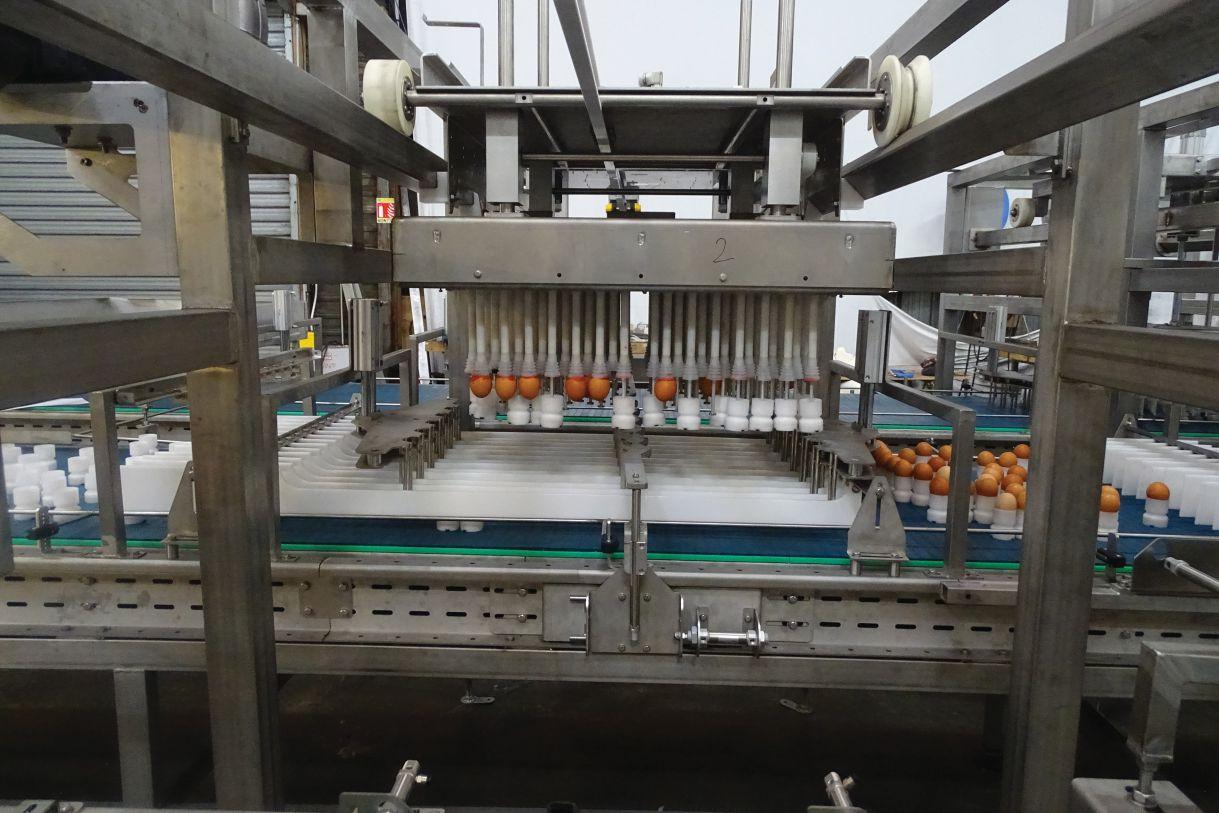
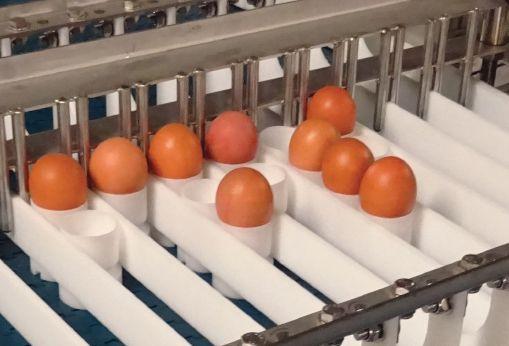
On tray orderly egg refilling system
Manufacturer: NECTRA
When hatching eggs from broiler parent livestock farms are delivered to central hatcheries, before being placed in the incubator they are sorted according to quality and weight. Eggs that are not positioned with the blunt end up have to be turned in the tray. This leads to a high number of incompletely filled trays that have to be manually refilled. Often, the eggs are transported on conveyors where they sometimes come into contact, resulting in damaged shells.
In this new system by NECTRA, the eggs are transferred from the delivery trays to egg-moving cups that move freely on a transport conveyor. Here, the eggs are automatically and individually sorted according to quality and weight, and turned if they are positioned incorrectly. The freely moving cups are backed up for transfer to the hatching trays. Unoccupied cups are removed, and the remaining,
filled cups are transferred to the hatching trays.
The system significantly reduces the likelihood of damaged eggshells and automates the hatching tray filling process. It also lightens the overall workload and improves hatchery efficiency.
NECTRA won a silver innovation award for its egg refilling system.
SELEGGT Circulus is a non-invasive, fully automated in-ovo sex determination system.
The new on tray orderly egg refilling system from NECTRA significantly reduces the likelihood of damaged eggshells and automates the hatching tray filling process.
Orvia’s SOC is an in-ovo sexing technology for the duck industry.
PHOTO: NECTRA, SELEGGT, ORVIA
Building hen resilience
Researchers find hens in enriched housing less stressed.
By Lilian Schaer
It is widely accepted amongst scientists that people who live what is considered a happy life – enough to eat and drink, stable relationships, satisfying work – are generally better at handling stressful events thrown their way. Conversely, if life is difficult, stressful events will be harder to handle and will have a more profound negative impact.
A growing body of research is showing the same to be true in lab animals, according to behavioural biologist Georgia Mason, a professor at the University of Guelph’s Integrative Biology Department and Director of the Campbell Centre for the Study of Animal Welfare.
Studies have shown that rats and mice housed in groups, in enriched cages with running wheels where they can run, dig, climb, and explore are braver and calmer when they’re subjected to experimental stresses like loud sounds, predator odour or bright lights.
“In my lab we’re interested in long-term housing conditions: What does it mean to have a good life? It’s more than having food and water. It’s having things like social contact, safety and opportunities to forage and explore. When we can provide that, it looks as though we can give animals a double benefit by also making them better able to handle things like transport or going to the vet,” Mason says.
“You can make resilient animals through genetic selection or through
early experience involving good parental care, but it looks as though giving them a satisfying home is also important,” she adds.
Some of the scientist’s most recent research has shown this to be true of poultry as well, specifically laying hens, where she and her team looked at how the birds react to two different types of acute or sudden stress.
According to Mason, mammals and birds have common responses to stress controlled by the nervous system. One includes rapid breathing, increase in heart rate, dry mouth and pupil dilation, which is the “fight or flight” response felt during fear. Another is the “startle reflex”.
“The startle reflex is if you jump out of your skin. It’s a primitive response when we startle and our hands and necks jerk
and we blink,” Mason explains, adding that this also happens to birds. “If you’re anxious or nervous, you startle much more readily, and the size of this reflex can tell you about the underlying state of animals too.”
Responses to stress
Ninety-six ISA Brown hens were part of the study in two separate cohorts of 48 birds, bought five months apart from commercial suppliers at 18 weeks of age and moved into their experimental control or enriched pens four weeks later. Mason and her PhD student Misha Ross then assessed “fight or flight” and startle responses by scaring hens in two different ways.
Birds in the study were taken out of their pens, put onto a force plate into a
Enriched pens were three by four metres with different perches, two types of dust baths, a heat lamp for sunbathing, grass and a belt feeder providing a steady supply of treats.
dark chamber and startled with a camera flash. Their peak response, a jump, happened at 100 milliseconds after they were startled and the birds were back to normal in half a second.
What the research team observed is that the force of this jump was much higher in birds living in non-enriched environments. The startle reflex magnitude was reduced by over 80 per cent in hens with enriched housing, Mason notes.
In the second trial, hens were taken out of their cages, restrained in a jacket, and scared with a suddenly opening umbrella. In frightening situations, blood is shunted to the heart and muscles to prepare for escape as part of the “fight or flight” response and as a side effect. Skin cools down as that blood is moved away. In humans, this often manifests itself as “going white with shock”.
The researchers used a thermal camera to photograph the hens before and after they were scared. This allowed the researchers to observe their immediate response and any corresponding changes in temperature of the exposed skin on their combs.
All the hens showed transient cooling of their combs, but it was quite a bit stronger in hens with non-enriched housing, which showed cooling of three to four degrees, than those with enriched housing, whose temperature dropped by only two degrees.
“This gave us two separate measures to show that enriched hens are less reactive, less perturbed and less upset,” she says, adding all challenges happened outside of the pen so their decreased reaction was not as a result of being “distracted” by the enrichment options in their housing.
Roadmap for on-farm use
Mason cautions that the housing systems used in the study are not practical for commercial egg farm settings: Control pens were two metres square with
Control pens were two metres square with bedding and perches.
“You can make resilient animals through genetic selection, but it looks as though giving them a satisfying home is also important.”
bedding and perches and enriched pens were three by four metres with different perches, two types of dust baths, a heat lamp for sunbathing, grass and a belt feeder providing a steady supply of treats.
Mason’s work was focused on proof of concept and answering fundamental questions about animal housing, and she hopes other livestock and poultry researchers will translate this into practical applications for on-farm use.
For farmers, the takeaway from this work is that modifying housing can help hens deal with challenges outside of their cages. This could lessen the stress of things that happen to them outside of their normal environment, like transport, for example.
Work Mason has done with farmed mink showed similar results. Giving them a ball to chase or a plastic hanging sign to chew reduced some abnormal behaviour and increased fertility with fewer animals barren and farmers reported the animals were less likely to shriek when handled and were calmer when around people.
Another potential benefit, although not something Mason herself has researched in poultry, is that animals and people who are less stressed are also more resilient from a health perspective, which is of particular importance as the industry is actively working to reduce antibiotic use to keep animals healthy.
“Welfare can have knock-on benefits; if you can produce animals that are more bullet proof all around, it’s helpful to the farm,” she believes.
This project was funded by the University of Guelph’s Food from Thought program, as well as a Natural Science and Engineering Research Council (NSERC) Discovery Grant and an NSERC scholarship to Misha Ross.
C ANADIA N POULTRY INDU D S T R Y
• Get insights, knowledge and inspiration from international keynote speakers and local industry experts.
• Have fun and connect with colleagues during the industry trivia night.
• Save your spot and join leading industry colleagues to learn about what’s new, what’s innovative and what will help move your business forward this year!
Unlocking new pathways
Metabolomics is a promising field of poultry research that could improve production and bird health.
By Lilian Schaer
An emerging field of research could help the poultry industry fine-tune nutrition programs through science to emphasize bird health, production and feed efficiency.
Metabolomics is the study of the changes in metabolites produced by microbes and poultry in response to changes in their microbiome. (This field is also applicable to people and other livestock.)
The microbiome represents all the microbes – bacteria, fungi, protozoa and viruses – that live on and in an organism. It is essential for development, immunity and nutrition. Globally, scientists are increasingly paying attention to the microbiome and the role it plays in both animal and human health.
It was advances in the field of genomics, such as the sequencing of human, animal and plant genomes, that are helping drive research in the “omics” fields, influencing everything from the search for genetic
markers to development of personalized nutrition and medical care.
Metabolomics uses advanced analytical chemistry techniques and differs from the other “omics” fields by focusing on molecules, which are smaller than most proteins, DNA and other cellular macromolecules.
LEADER IN THE FIELD
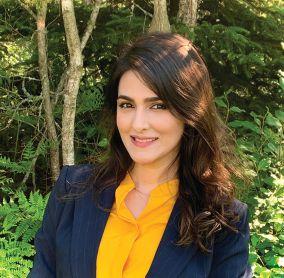
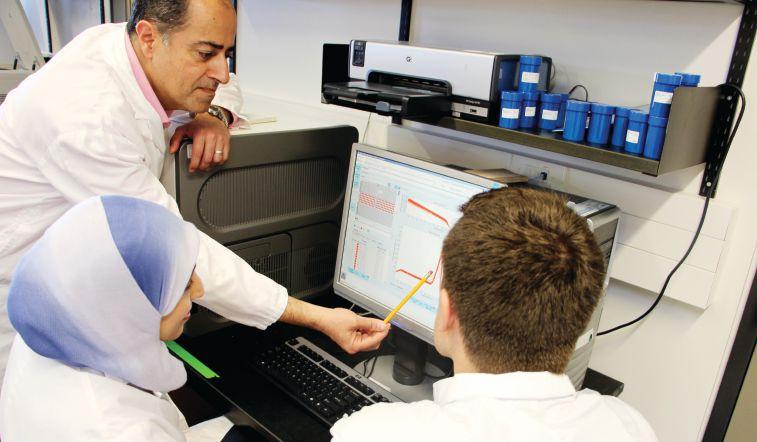
Shima Borzouie is a PhD student at the Atlantic Poultry Research Institute in Nova Scotia, working with Leslie MacLaren and Bruce Rathgeber from Dalhousie University’s Department of Animal Science and Aquaculture.
Her current research focuses on identifying metabolomic markers for health in laying hens. She is rapidly becoming one of the leading poultry scientists working in this emerging field, which holds significant promise for the industry.
“Metabolomics can be used in the poultry industry to look at the impacts of diets,
drugs, or infections on poultry health, welfare and productivity,” Borzouie explains, adding this approach also offers the potential to investigate and evaluate metabolic variations caused by environmental conditions or genetic mutation.
“Metabolic studies can also be a useful framework for research into meat quality, egg quality and productivity,” she says.
After completing an undergraduate degree in plant science at the University of Tehran in Iran, Borzouie went to the University of Alberta to do her master’s degree. That’s where she began working on the Alberta Food Metabolome Project in the Metabolomics Innovation Centre under David Wishart.
She helped identify and quantify the chemical constituents in a large number of Alberta-grown fruits, vegetables, cereals and meat products to create a fully web accessible food composition database – the Alberta Food Composition Database (AFCDB). Chemical constituents are what
Metabolomics could help the poultry industry fine-tune nutrition programs.
give foods their flavour, colour, taste, texture and aroma.
“We believe it is one of the most comprehensive food ingredient databases available,” she says. “I was lucky to start work in such a large and interesting project.”
She began her PhD at Dalhousie in the metabolomics field after her husband, Younes Miar, joined the university’s faculty in 2016 as an assistant professor of animal genomics and Industry Research Chair in Mink Genomics at Dalhousie University.
Through her research, she is trying to gain an understanding of how the metabolic impacts prebiotic seaweed supplements, heat stress and genetic strain interact in the blood to affect laying hen health. She’s doing that using a combination of blood chemistry, hematology (the study of the physiology of blood), hen performance and their metabolic profiles.
GARNERING PRAISE
And her results are garnering attention. In 2019, she was recognized with the “Best Poster Award” out of 203 participants at the 70th annual meeting of the European Federation of Animal Science held in Ghent, Belgium.
The project included long and shortterm trials. In the short-term trial, white (Lohman LSL-Lite) and brown (Lohman Brown-Lite) laying hens had their rations supplemented with red seaweed Chondrus crispus at three per cent for 21 days.
In the long-term trial, the same bird strains received diets supplemented with either three per cent Chondrus crispus or half a per cent of brown seaweed Ascophyllum nodosum for 41 weeks, ending with a four-week heat-stress or control period.
In both trials, control groups received non-supplemented rations. Blood samples were collected and put through metabolomic, hematologic and biochemical analysis. Approximately 60 compounds were tested for blood sample, and Borzouie also analyzed production data and white blood cell data.
Overall, results showed that the white laying hens produced more eggs and had better feed efficiency with the seaweed supplementation and were less susceptible to the negative impacts of heat stress.
• Exacon’s brand name since 1987
• Available in sizes 12” to 60”
• White or Black polyethylene flush mount housings
• Designed to meet the rigorous demands of farm/agricultural ventilation
• Energy efficient Multifan, MFlex or North American motors
• Fiberglass housings available in 50” and 60” diameter
TPI WALL AND CEILING INLETS
• TPI is a well known manufacturer of high quality polyurethane inlets
• High quality and high insulation value results in precise manufacturing delivering high tolerance for better ventilation control
• Wall inlets, ceiling inlets and tunnel inlets
• TPI wind hoods and wind hoods with built-in light trap also available
PUR AG AIR FILTRATION SYSTEM
• High quality L7 Pathogen barrier filter with prefilter significantly reduces the chance of air transmitted diseases. (ie bird flu and other influenza viruses)
• Clarcor provides a complete system such as filter housing frame designed for eaves and side air inlets
• This system makes installation of filters easy and practical plus reduces the risk of non-filtered air from entering the building
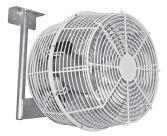
GREENBREEZE BASKET FAN
• Designed for more air flow and consistent pattern
• Precise guard spacing reduces air restriction
• Easy to open front guard allows easy cleaning
• Includes hanging bracket to allow direction adjustment
• Variable speed, efficient motor 115/230v
GENIUS I-TOUCH VENTILATION CONTROL
• The well known and proven Genius control line is now available as a Touchscreen interface Navigates like an I-Pad by simply touching, swiping or dragging on a 7” or 10” touch screen
• Available with up to 8 variable stages and between 15 to 30 on/off relays
• A slave is available to expand to 50 on/off relays
Many options including light control, bird scales, perch scales and bin scales Built-in wifi allows easy access to the internet for managing, viewing and recording history on FarmQuest website
LIGHT TRAP/DARK OUT
• High light reduction
• Low resistance to air flow
• Simple Installation
• Easy to clean
• Uses P.v.c. snap release spacers
“Seaweed supplementation increased the feed efficiency in the short term, providing further evidence of its suitability for use in laying hens,” she says. “We also found no negative impacts on overall bird performance from the longer-term supplementation with the seaweed prebiotic.”
NEXT STEPS
She’s now working on more samples from the same trials, looking at how the hens’ intestinal cells respond to prebiotic supplementation as indicators for overall gut and bird health. Part of that work includes studying the changes in the sample metabolites and looking at how biomarkers with links to the intestinal system could reveal new ways that prebiotics could be used to positively impact bird health.
“We’re in the middle of this work with poultry but I hope it can be used in the future for other work, including in human medicine,” she says. “This is a very promising field. The application of metabolomics in human science is much more advanced, but we are trying to show we can apply it to animal science and for the benefit of animal health as well.”
Borzouie’s work is supported by the Atlantic Poultry Research Institute, with funding from Egg Farmers of Nova Scotia, Egg Farmers of New Brunswick, Egg Farmers of Canada and the Atlantic Agriculture Research and Innovation Initiative. Acadian Seaplants Limited contributed seaweed supplements for the animal trials.
Shima Borzouie, a PhD student at the Atlantic Poultry Research Institute in Nova Scotia, is rapidly becoming one of the leading poultry scientists working in the metabolomics field.
ILT outbreaks hit Ontario region
What is being done to contain them and what farmers need to know.
By Treena Hein
While infectious laryngotracheitis (ILT) is usually a backyard flock problem, outbreaks occasionally occur on commercial poultry farms in various provinces. Currently, Ontario is dealing with a small epidemic in the western Niagara region.
ILT is an acute herpes virus respiratory tract infection of chickens and pheasants that may result in severe production losses. The virus causes infected birds to suffer from shortness of breath, coughing and crackling in the lungs, with possible blood or mucus present. There is no specific treatment for birds and this disease is not contagious to humans.
Tom Baker, incident commander at the Feather Board Command Centre (FBCC) in Ontario, explains that in early December, a vaccine strain of ILT (more on that later) was diagnosed in a broiler chicken farm in the Smithville area of Niagara, an area of intense poultry production. FBCC notified all poultry farmers as well as small flock growers that a Biosecurity Advisory Area (BAA) of 10 kilometres was being established and that heightened biosecurity was critical. All surviving birds were sent to processing.
Over the course of December, two more broiler flocks and a layer flock, all within three kilometres, were diagnosed with the disease. On January 15, a fifth flock was
diagnosed, this time a pullet flock on the southeast edge of the Niagara BAA. The BAA was consequently expanded.
To control the spread of the ILT virus, producers must complete a prescribed litter heating protocol, remove and store manure on site, clean and disinfect, and implement a two-to-three-week fallow period. New chicks are being vaccinated at the hatchery.
By late January, newly vaccinated chicks had been placed at the three broiler farms diagnosed in December and mortalities
had returned to normal in the layer and pullet flocks. Heightened biosecurity, completion of ILT response protocols, careful monitoring of flock health and rapid reporting throughout the expanded BAA remain paramount in controlling the further spreads of this disease.
“During 2020 as a whole, there were also 13 small flocks diagnosed with ILT, more than double Ontario’s average annual number,” Baker reports. “Similar trends were reported in small flocks in Saskatchewan, Alberta and B.C.”
Daniel Venne, co-director of the Canadian Association of Poultry Veterinarians, says the industry needs to reflect on how to properly carry out ILT vaccinations.a
Spread, detection and diagnosis
Infection usually occurs through the air, but virus entry can also occur through contact of the eyes or ingestion. Mechanical transmission can occur via contaminated equipment, clothing, boots, dead stock and litter. Sanitation procedures, which include disinfection of equipment, boots and clothing and proper disposal of litter and carcasses, are essential components of ILT control.
“It is also critical that aerosol transmission, especially during the transport of litter, be prevented,” states Daniel Venne, co-director of the Canadian Association of Poultry Veterinarians, director of poultry health at Quebec-based poultry company Couvoir Scott and recent recipient of the Canadian Veterinary Medical Association’s Industry Award.
As explained in a May 2020 article in Veterinary Quarterly, ILT in chickens can be tentatively diagnosed based on clinical signs such as conjunctivitis, gasping, laboured breathing, open mouth or extended-head respiration and expectoration of bloody mucous. “Suspected cases are subjected to lab diagnosis by conventional and molecular diagnostic tests,” state the authors, a team of scientists in India. Other respiratory diseases exhibiting similar clinical disease must be differentiated from ILT, they add. Lesions induced by ILT spread over the whole length of trachea and resemble lesions induced by the fowlpox virus, but tracheal
lesions in mild or low virulent forms of ILT are similar to those caused by avian influenza, infectious bronchitis or Newcastle.
A tough disease to control
Like other herpesviruses (in humans, the cold sore virus, for example), the ILT virus can go dormant in chickens but can be reactivated whenever they undergo stress. As a result, they still shed the virus into the environment and potentially spread it. This makes eradication of the disease difficult.
And while vaccination for ILT has been in place almost for 100 years, the practice itself carries the potential to cause ILT. Thus, it’s paramount that it be carried out correctly. Experts, therefore, strongly recommend veterinary supervision when producers decide to vaccinate, according to the ILT factsheet from the Ontario Ministry of Agriculture, Food and Rural Affairs.
The factsheet authors add that, “Since both natural infection and vaccination have been shown to produce carrier birds, it’s extremely important that susceptible chicken flocks are not exposed to vaccinated or previously infected chickens. Mixing of birds should only be done when a complete history of the birds is available, and when it’s absolutely certain a potential ILT carrier is not present.”
Effective vaccination
ILT was first detected in 1925 in the U.S. and vaccination has been intensively used since then to prevent the disease. However, it must be carried out correctly, and Venne explains that “there’s a lot of reflection” that needs to be done about how.
ILT vaccination can work, but as he explains, it’s very complex. In Quebec, for example, if broiler chicks are vaccinated (not a standard procedure, as the vaccine is expensive), a recombinant vaccine is given at a day old. Recombinant vaccines involve the use of DNA that encodes a viral or bacterial antigen.
However, in areas where there is some ILT infection, a live vaccine can be given to broilers, pullets or layers that have arrived unvaccinated from the hatchery at or after 17 days of age. Between two and 17 days of age, chicks have maternal antibodies in their systems that can render the vaccine ineffective. Live attenuated vaccines contain a small amount of the weakened live virus or bacteria. In the case of ILT, they can be of chicken embryo origin or tissue culture origin, called CEO or TCO for short.
However, Venne explains that vaccination at 17 days doesn’t work with the current required withdrawal period of 21 days. “These days, we slaughter broilers as young as 31 days, and the withdrawal period, therefore, needs to be reduced by eight days for that scenario,” he notes. “This has occurred in other countries and this is a big issue in Canada. If we’re going antibiotic-free in broiler production, vaccination is one of the most important tools we have, and so the withdrawal time needs to be shortened.”
Venne wants farmers to watch for ILT if their birds are stressed, but reminds them that symptoms won’t show up right away. He adds that older birds kept in backyard flocks for many years can be carriers without symptoms. But if stressed, these birds can shed the virus and infect younger birds. Thus, he implores backyard flock owners to be educated and watchful.
Barn Spotlight
R&B McIntosh Egg Farms Ltd.
Location
Seaforth, Ont.
Sector
Layers and pullets
The business
The McIntosh family has layers and grows their own pullets. They purchased the business in 2013. The farm is owned and operated by Ross and Barbara McIntosh.
The need
For a number of years, the egg producers owned extra quota that they weren’t using. They had three conventional barns and were waiting to build a new facility until they felt the business case made sense. Then, everything came together. Egg demand looked strong. They had the manure and crop space. They had the manpower. And they found expanding would fit well with their pullet cycle and growth time. They moved forward.
The barn
Working with Clark Ag Systems, the McIntoshs built a new enriched barn, which they opened last June. The facility, which includes five rows of a four-tier Tecno Enriched Plus 94 System, can house 30,600 birds. They liked that it has nests at both ends of each unit. They also liked that it includes multiple shorter perches running back to front rather than one long perch running the length of each unit. “I believe that helps spread the birds out better when they’re perching,” Ross says, adding, “The birds have more freedom to move around in this system.”
PHOTO: ROSS MCINTOSH
One of the most appealing factors about the enriched system to the McIntoshs was it has nesting areas at both ends of each unit. In contrast, some other systems have only one nesting area in each unit.
The perches run back to front and the CBM Lighting allows for control of the white and red intensity.
From left to right: Spouses Ross and Barbara McIntosh with daughter Kirsten and son Dugald.
FARMER RESOURCE PORTAL
Helpful information p on antibiotic reduction and pathogen control on farm g
Chicken Farmers of Canada has put together information and resources specifically for farmers. The resources include articles and videos providing detail on management tips.
You can now access the Farmer Resource Portal through the chickenfarmers website under ‘On-Farm Food Safety’ section. You will find updated information on AMU strategy, brooding, feed and water management, flock and environmental monitoring, and necrotic enteritis and coccidiosis.