FOOD BEVERAGE


As we prepare to publish this issue of Food & Beverage Engineering & Maintenance, the Trump administration is following through on its threat to impose tariffs of 25 per cent on steel exports and 10 per cent on aluminum exports from Canada, Mexico and the European Union.
Canada is countering with duties of up to $16.6 billion, starting on Canada Day, on some steel and aluminum products and other goods from the United States.
But a trade spat between the U.S. and Canada cannot be good for anyone in the long run.
The move could cost the Canadian economy around US$3.2 billion a year, which means Canadians will pay more for such things as pop cans, beer kegs, refrigerators and cars.
Canada, the biggest supplier of steel and aluminum to the U.S., exported $24.1 billion worth of steel and aluminum to the U.S. in 2017, with the vast majority of that coming from Ontario and Quebec.
The knock-on effects of tariffs have been protested on both sides of the border. In the U.S., major consumers of aluminum raised the flag on the unintended negative effects of import
restrictions on downstream U.S. manufacturers, such as food and beverage companies that package products in aluminum cans and bottles.
A 10 per cent tariff on aluminum would cost beer and beverage producers $256.3 million, a 20 per cent tariff would cost $512.5 million and a 30 per cent tariff would run $768.8 million, claims a protest letter addressed to the U.S. president. Signatories united against tariffs included PepsiCo, Coca-Cola, Beer Institute, Molson Coors, Heineken USA and Dr Pepper Snapple.
At a granular level, it’s not clear how the crossborder fallout might affect integration of the manufacturing supply chain, and we’ll have to wait and see what the impact will be on recent investments, such as those made by the Coca-Cola Company in Ontario.
In March, Coca-Cola announced that a prominent Canadian businessman and philanthropist, Larry Tanenbaum O.C. and former NBA player and current president and CEO of Kansas City-based Heartland Coca-Cola Bottling Company, Junior Bridgeman, have signed a non-binding Letter of Intent to acquire the company’s Canadian bottling and distribution business, Coca-Cola Refreshments

Canada. And in June Coca-Cola Canada announced an $85-millon investment to build a new production facility in Peterborough, Ont. Coca-Cola hopes to foster new market opportunities by tapping into the growth potential of Canada’s agriculture and food industry.
At a macrolevel, the direct impact of the tariffs on the U.S. economy may be relatively small, say analysts, but for affected regions that impose equivalent tariffs, trade anxiety serves to “amplify the estimated drag on output and lift consumer price inflation.” The bigger issue is the erosion of the Canada-U.S. trade relationship, and there is a chance of “a more outsized negative impact” on economic activity if the imposition of these tariffs “dents confidence” and, by extension, results in the cancellation of new investment in our region.
Rehana Begg, Editor
Food
rbegg@annexbusinessmedia.com www.mromagazine.com












Canadian food manufacturers are keeping a close eye on food safety and NAFTA impact.
BY JOHN CARNEVALE
On the world food manufacturing industry stage, food safety has always been a primary concern. Canada’s Safe Food for Canadians Act, adopted in 2012, maintains a quality oversight over foods traded inter-provincially and internationally.
During NAFTA 2.0 talks held in Ottawa in 2017, a “joint risk assessment organization” between Canada and the U.S. was proposed for food safety. An eight-page discussion paper, Risk and Reward: Food Safety and NAFTA 2.0, by Rory McAlpine
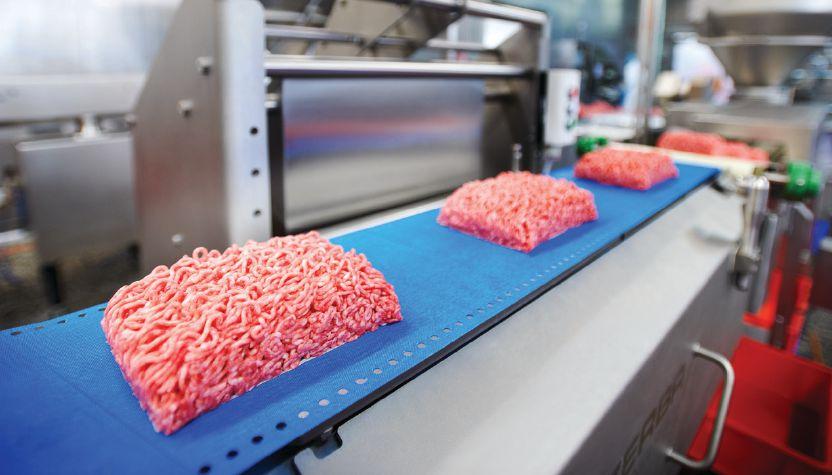
A Canada-U.S. risk assessment organization would validate food safety best practices at all levels, from production to distribution.
and Mike Robach, outlined a bilateral commitment. McAlpine is the senior vice president for government relations at Toronto-based Maple Leaf Foods Inc., and Robach is vice president for corporate food safety and regulatory affairs at Minneapolis, MN
Cargill Inc.
This Canada-U.S. proposal would jointly:
• assess and prevent emerging foodborne threats (microbiological, chemical and physical including, where relevant, those linked to animal and plant health);
• recommend food safety risk thresholds for pathogens, chemical residues, allergens, etc.;
• conduct risk-assessment modelling for various pathogen-food combinations and potential interventions;
• approve food safety interventions, technologies and analytical test methods;
• validate food safety best practices at all levels of food production, processing, distribution and preparation;
• share and interpret food safety testing and surveillance data gathered across North America and globally;
• examine emerging risks, establish relationships between prevalence and levels of contamination and update risk assessment models accordingly;
• recommend innovative, outcomebased food safety inspection practices and compliance promotion strategies;
• help the International Food Protection Training Institute and Safe Food Canada to build a North American competence-based learning framework for standardized, certified food safety education and training;
• build harmonized systems for traceability of meat, poultry and other food products throughout the supply chain, from origin to consumer.
In 2016, the Canadian Food Inspection Agency (CFIA) and the Department of Health Canada (Health Canada) signed an agreement with the U.S. Food and Drug Administration (FDA) recognizing each other’s food safety systems as comparable. Within the United States, under their own passage of the Food Safety Modernization Act (FSMA) in 2011, brands and their suppliers are still struggling to meet the demands of that regulation. Often, the need for high-speed processing and efficiency are at odds with sanitation guidelines and inspections.
Understanding how the law applies to equipment design and purchase considerations is vital to the success of any OEM. Some of the rules put in place by the FSMA
have only just been finalized, so implementation and compliance are a concern. Furthermore, 2017 marks the full first year of compliance for many U.S. food manufacturers.
Although the regulatory environment of Canada is not as micro-encompassing as the U.S., reviewing the standard and challenges set forth there may offer a cautionary tale. Some manufacturers in Canada have begun to implement FSMA compliant standards, since pundits predict Safe Foods for Canadians Act will eventually have similar requirements as FSMA.
An understanding of the FSMA rules and guidelines may provide a roadmap in Canadian production.
The FSMA has rules and guidelines in place for nearly every step involved in the harvesting and production of food. For instance, OEMs involved in dealing with fresh fruit and vegetable companies, small farms and foreign suppliers should pay particular attention to new regulations, as handling and processing equipment are drastically affected by the FSMA.
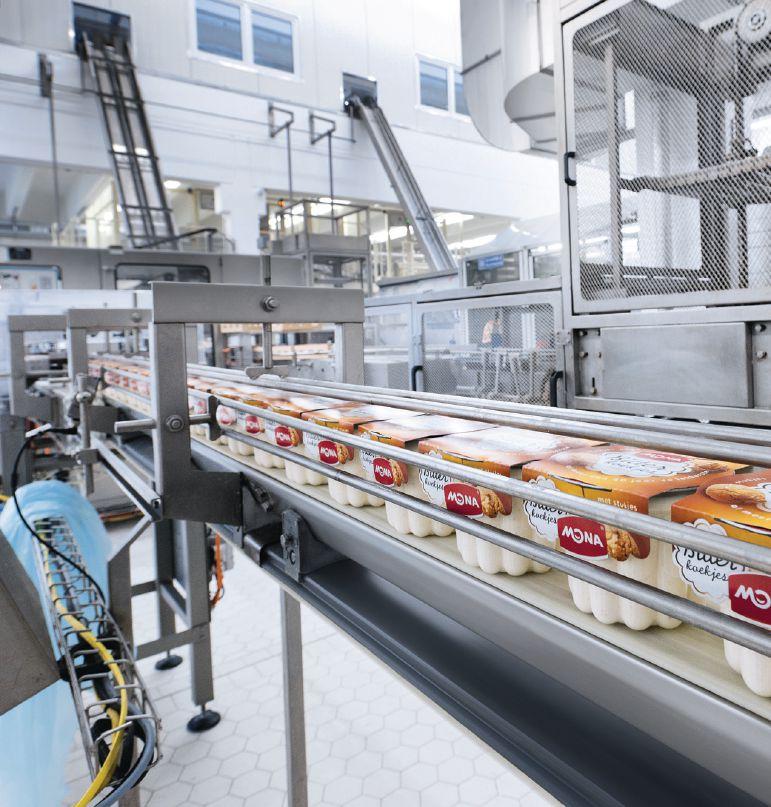
As U.S. food manufacturers work to meet demand, compliance to the Food Safety Modernization Act remains a concern.
While not directly under the authority of the FSMA, U.S. OEMs are still a part of compliance. For example, if a food manufacturer has a product recalled, the FDA will cite the brand, which requires the food manufacturer to examine the machine that created the contamination and recall.
Most Canadian companies use Hazard Analysis and Critical Control Points (HACCP) as a part of their design principles. As a result, many OEMs do not anticipate major changes or large orders of new equipment because of their progressive approach and best practices.
Consider the regular cleaning and sanitizing process a food manufacturer goes through. Because equipment cannot operate while being cleaned, it must shut down. Many manufacturers used to clean equipment approximately every 24 hours, but now the FSMA requires science-backed processes and proof that cleaning operations are effective, which could necessitate more regular wash-downs.
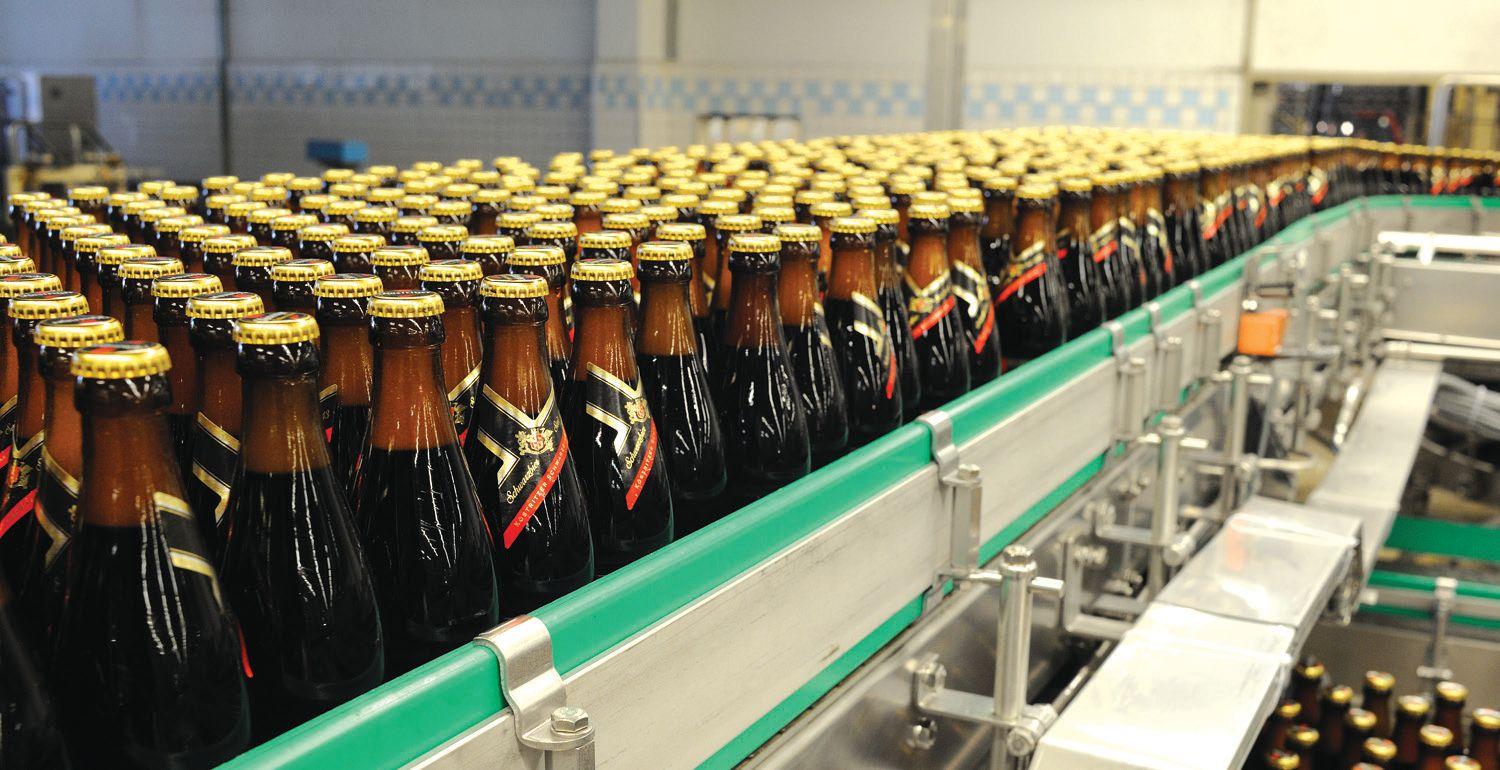
Compliant cleaning means disassembling equipment, and then cleaning and sanitizing every part, gasket and knob.
Also, cleaning occurs for a number of reasons when lines are switched, including meat to non-meat foods, different species of animals, processing common allergens and different spices and seasonings. Specialty manufacturers, non-GMO and organic labels may customize their production lines even further. Cleaning takes an immense amount of time
out of the day that could otherwise be used for production.
Compliant cleaning is not just wiping down a stainless-steel surface. Workers must disassemble equipment, and every part, gasket and knob must be thoroughly cleaned and sanitized. The easier an OEM’s equipment facilitates this process, the more marketable it is to brands.
Equipment that self-cleans with programmable and customizable options is another time and laboursaving option OEMs can implement. The jets of super-hot, chemical filled water are a concern in a different way as well. Consider that food manufacturers often use chemicals like bleach, powerful detergents, ammonia, phosphates, acids and
PHOTO: RITTAL
alkalis to clean equipment.
That same sensitive electronic equipment that allows food companies to collect all the required data by the FSMA, and allows equipment to link and work together, faces its own set of concerns. Ideally, control panels should be easy to hose down, but this is likely unrealistic. Instead, the panels should make it easy to shield sensitive electronics from such conditions and then make it easy to spot that they need special cleaning. This could mean bright, visible covers, loud verbal notifications and alarms, and frequent reminders.
While wet cleaning may seem more obvious, that is not all there is to it. Before food manufacturers even reach that step, they must remove large debris, soils and the like.
Beyond hot water cleaning, the FDA has a long list of chemicals approved to sanitize equipment. These chemicals include iodine, calcium hypochlorite, ammonium chloride, ethyl alcohol, isopropyl alcohol and sodium dichloroisocyanurate. Equipment should withstand
repeated use of these chemicals.
What you are doing as an OEM should line up with FSMA requirements and your customers’ operations to best suit their needs.
Drying time is another concern. Once the equipment is clean, how quickly can it get back up and running? If it takes hours to dry and is out of operation, that is valuable production time wasted.
Fruit and vegetable companies are likely to require the most investment in new equipment and should be an area of focus for OEMs in equipment design. The FSMA applies many new standards to the harvesting, handling and processing of fresh produce. OEMs should keep this in mind when designing equipment for this subset of the food industry.
One important development in fruit and vegetable processing is the introduction of new rules governing water quality standards. These regulations mandate no detectable
generic E. coli in water that could end up on produce. This includes water for hand washing during and after harvesting, water used to wash surfaces that touch food and water used to irrigate sprouts.
All of these new regulations mean more testing, which means demand for testing equipment, but also possible production delays.
Equipment should reduce contaminants through enhanced filters and metal detectors. Because the FSMA changes food safety from reactive to proactive, thorough data collection should capture information from critical control points and from the preventative controls the FDA has outlined, while also keeping track of performance.
For Canadian production, both OEMs and food manufacturers need to remember that many newer food safety regulations such as the U.S. FSMA are proactive, not reactive. The processes, practices and equipment that ensures food contamination
does not happen, and that the food supply is safe from farm to table, requires co-ordination and communication at every step of the process. OEMs can provide a key resource through sanitation-focused products, interconnected data-driven processes and consultations. Responsible global food production is a goal without boundaries. Forecasting the convergence of productivity and compliance will enable equipment manufacturers to deliver highly marketable products that futureproof brands against regulations and improve their bottom lines.
John Carnevale is Rittal Corporation’s Market Manager for the Food & Beverage industry. Carnevale Bachelor’s Degree in Electrical Engineering is from Marquette University. For the past decade, Carnevale has been helping OEMs, machine builders and control panels builders with the installation and cabling of automation equipment. He understands their unique challenges within the food and beverage industry. For more information, visit www.rittal.ca.
What should be the role of reactive maintenance in your overall maintenance strategy?
BY BRYAN CHRISTIANSEN
When it comes to choosing a maintenance strategy for your assets, it would be somewhat myopic to assume a rigid one-size-fits-all approach. Historically, businesses have relied more on reactive maintenance (also called runto-failure or breakdown maintenance).
However, to keep up with the market and the competition, more and more organizations are turning to proactive maintenance strategies for help.
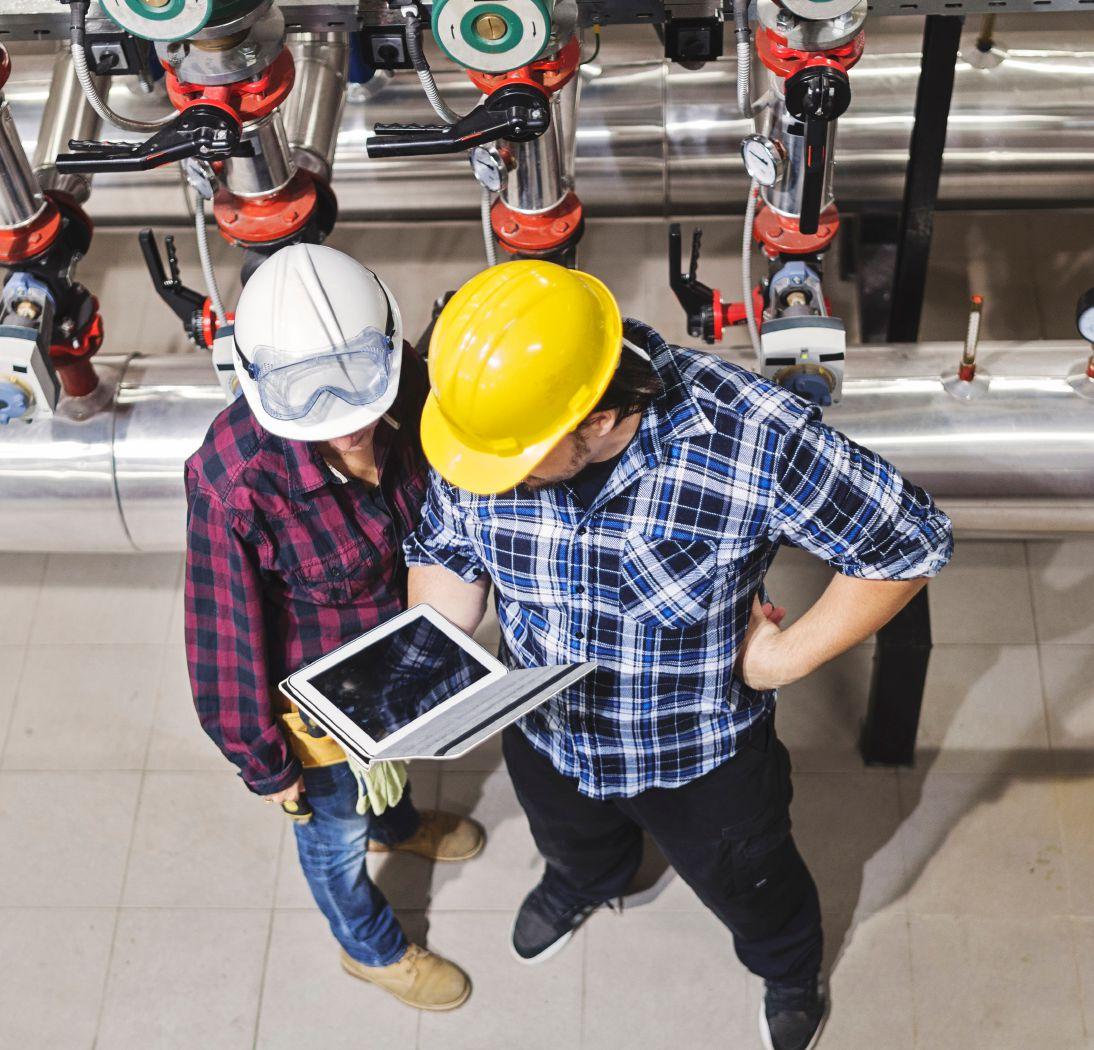
But implementing proactive maintenance strategy doesn’t mean that you can completely forget on reactive maintenance.
Sounds confusing? Let’s discuss this into more details.
First, we need to distinguish planned from unplanned reactive maintenance.
Planned reactive maintenance refers to a strategy where you have a preventive maintenance plan in place but intentionally decide to exempt some equipment from the plan – usually to save cost or time (for example, you have an old piece of equipment that you plan to replace when the next breakdown occurs). In these cases, you are basically expecting a breakdown and are ready to deal with it as soon as it happens.
That’s a completely different scenario from unplanned reactive maintenance that happens because there is no proactive strategy in the first place.
In its most basic form, reactive maintenance simply says, “if it isn’t broken, don’t fix it.” Following are a few highlights of the pros and cons of this strategy.
Pros
• Reactive maintenance requires no initial cost and less planning when compared to preventive maintenance. You simply let the asset run until it breaks down.
• It requires less standby manpower. There is no need for frequent inspections and staff to carry out these inspections. You could even choose to completely outsource reactive maintenance and thereby not need to include that skill set on your payroll.
• It can prove more cost effective for equipment that are not critical for overall service delivery and have minimal impact on your operations.
Cons
• It’s hard to create an accurate budget for reactive maintenance.
• Relying on reactive maintenance often results in unplanned downtime, which can completely jeopardize production schedules. The spillover effect of this includes disruption of the supply chain and possibly reduced profits.
• Poor time management. Production can lose a lot of time unnecessarily when a critical asset breaks down because it was not placed on a servicing schedule. The time spent trying to diagnose
and fix the problem could have been better used on other tasks.
• Labour and spare parts may not be available in the first place, causing even more delays, downtime and losses.
• It poses a safety risk when maintenance personnel are under pressure to fix the problem as fast as possible.
• Continuous reactive maintenance will keep your team distracted and disorganized and can lead to


a pileup of unfinished work. For example, it could affect their availability to focus on other planned activities.
Owing to the many downsides of reactive maintenance, many organizations will choose to move from reactive maintenance and implement preventive maintenance. But that does not mean your business can completely eliminate all instances of reactive maintenance. On the contrary, situations will arise that demand some reactive maintenance. For one thing, in spite of thorough planning and best efforts, the potential for mechanical and electrical items to break down or malfunction still exists. The probability increases when you
have a considerable asset base of complex and sensitive equipment or older assets. Sometimes, a machine can shut down just hours or a few days after routine maintenance was carried out on it. In such cases, making provision for the processes and resources for quick reactive intervention can save the day.
Still, an operation is never immune to external forces beyond its control, especially unplanned factors, such as extreme weather. Severe flooding, heavy winds, excessive snow or heat are just a few elements that can cause asset damage that will trigger reactive maintenance. In such cases, a prior decision to completely disregard reactive maintenance would mean that your business lacks the ability to recover fast in an emergency.
Other cases where a reactive approach is useful include: where you intend replacing equipment (due to age), where the asset is not part of a critical system, or where the cost of routine servicing may not be worth the effort and man-hours in the long term.
In essence, you can’t predict to 100 per cent certainty how your daily operations will go, neither can you tell exactly when equipment failure will occur. Therefore, reactive maintenance will occur periodically but, ideally, you will have set procedures in place to deal with it efficiently.
We have already established that reactive maintenance can play an important role in a maintenance strategy. You will need to factor in reactive maintenance for emergencies and situations beyond your control but it should not be the focus of your entire operations and maintenance plan. Doing that is shortsighted and may not be sustainable considering modern-day best practices. Therefore, it should be “reserved” for certain circumstances such as the ones described in the previous section.
For assets that are critical to production, quality, safety and service delivery, a proactive approach is better so it’s advisable you opt for a planned maintenance strategy. Such a strategy can include elements of routine maintenance, preventive maintenance, predictive maintenance and RCM, depending on how complex your operations are. Planned maintenance will maximize your assets’ lifecycle and minimize cost in the long term.
Bryan Christiansen is founder and CEO at Limble CMMS. Limble is a mobile first, modern, and easy to use CMMS software. We help take the stress and chaos out of maintenance by helping managers organize, automate and streamline their maintenance operations.
Grease and bearings are key ingredients in food and beverage manufacturing.
NSK has developed the first 100 per cent food-derived grease lubricant,
he food and beverage sector is the second-largest manufacturing sector in Canada. The importance of food safety means special machine and component requirements are necessary to maximize performance and assure overall food safety. According to the Government of Canada, the food and beverage processing industry invests roughly $2 billion annually in capital expenditure, with nearly 80 per cent of the total invested in machinery and equipment. Not only must the equipment be safe and sanitary, it must operate with precision and speed. The industry encounters various conditions including hot, cold and damp environments, which must always be clean. Plants must run with equipment that does not create contamination and can resist corrosion while also offering proper lubrication. Problems with food contamination can seriously damage the trust of the public, which means manufacturers seek safe and reliable machines that are also easy to maintain. Bearings need to be resistant to wash-downs, resist rust and be able to retain lubrication in order to avoid contamination in the surrounding environments. Special greases have also been designed to assure safety in food and beverage applications.
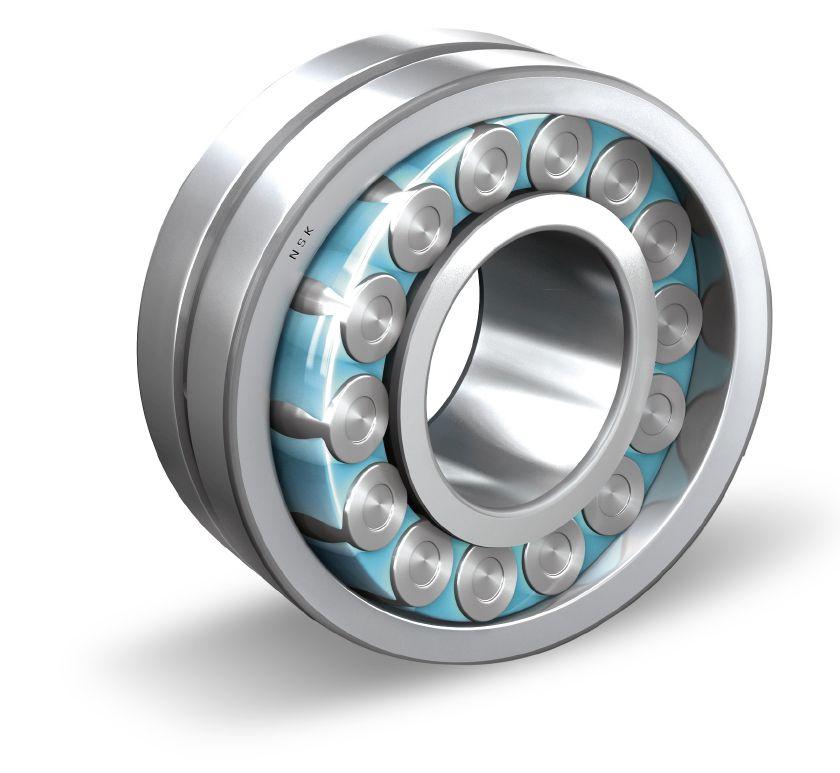
H3G. H3G grease is certified NSF (National Sanitation Foundation) in category H3 (lubricants intended for food contact). It offers low torque, excellent water resistance and minimal leakage in environments where machine is exposed to water. It can be used in up to 90°C. For highheat applications up to 230°C, NSK has KPM grease, providing an estimated life of five times longer than commercially available fluorine greases. LG3 and LGU grease have lower dust emissions than fluorine, with over ten-times longer life. In addition to grease chosen, sealing options are also available to assure any grease chosen is retained in the bearings. DDU, double contact seal, is an excellent choice for food and beverage applications. Engineers and machine repair crew could also consider an NSK patented Molded-Oil bearing that is lubricated with a porous synthetic resin. Molded-Oil grease is suitable for corrosive and dustcontaminated environments. It is a consistent supply of lubricant
within the rolling element surface, and it does not require re-greasing. In fact, the material prevents leakage from the bearing. These stainless steel bearings have been specifically developed for situations requiring high levels of hygiene and sanitary lubrication consistent with food and beverage industries.
For linear applications, NSK K1 Lubrication Units provide the same continuous flow of lubricant on the rail with little risk of contaminating food operations.
While quality lubricants keep the insides of the bearings running smoothly and efficiently, the product material must also offer specific qualities for food and beverage applications. Bearings must be robust and rust resilient, made of corrosion-resistant stainless steel. Applications in food and beverage are subjected to frequent wash-down. Look for stainless steel bearings that offer a corrosion
resistance above the qualities of SUS440C, with equivalent hardness. In salt-water spray testing the ES1 bearing resisted corrosion and lasted longer than standard bearings. Special coatings can also be beneficial to bearings. They offer corrosion resistance with sterilizing liquids, such as sodium hydrochlorite and oxonia.
Everything needs to run smoothly and efficiently from one process to the next. NSK mounted units offer stainless steel inserts that can be supplied in either white thermoplastic housings or stainless housings. They are
lubricated with Mobil grease FM 222, a USDA approved NSF H1 food-grade lubricant. This grease has excellent moisture resistant properties and rust inhibitors to provide maximum protection during wash down.
For beverage processing the condition needs are similar. Ease of maintenance, continuous lubrication and water-resistant material are a must. NSK’s waterproof Megatorque Motor offers exceptional performance for these applications. NSK Megatorque Motors offer highly accurate positioning in transportation equipment. With their high
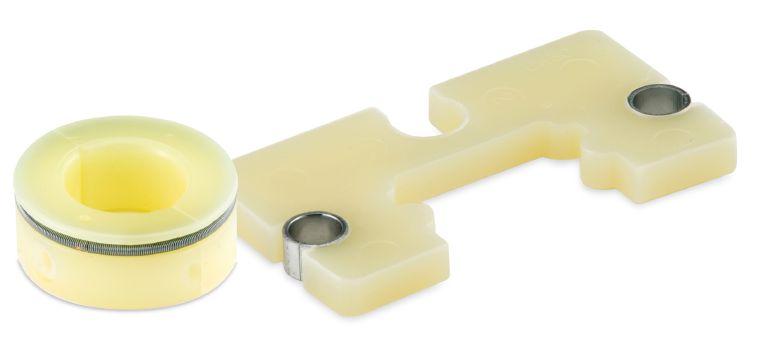
accuracy, high torque, light weight and compact size, direct drive motors improve productivity.
Questions that food and beverage engineers constantly ask when it comes to bearings are: how can my bearings guarantee outstanding performance and withstand corrosion despite having to put up with high temperatures, water and chemicals? How can I prevent food contamination safely and reliably? Through which means can I achieve a relatively maintenance-free operation and save on money? Specialty bearings with quality materials and coatings are needed to help combat many of the challenges found on food and beverage manufacturing. NSK Aqua-Bearings offer a self-lubricating fluororesin and offer five times the corrosion resistance than conventional resin bearings in strong acid environments. Bearing manufacturers should work closely with engineers to help them answer these questions and to
offer solutions to production process problems. We can measure and monitor efficiency and, where necessary, propose alternative products and lubricants.
The importance of selecting the right bearing and lubrication was highlighted with an NSK customer producing and bottling milk. The customer was experiencing regular bearing failure on their conveyor at their milk processing plant, and due to the application and area in which the bearings reside, they were quite difficult to get to and lubricate. With much hassle, the customer had to replace the bearings every 10 weeks, resulting in downtime of three hours during each bearing change. NSK reviewed the bearing application and recommended that stainless steel bearing inserts fitted with Molded-Oil would offer better service life. In addition, it was suggested that they combine these with the additional benefits
of Silver-Lube polymer housings to provide the Life-Lube combination.
After the recommendations were put in place, tested bearings showed that bearing life was extended from 10 weeks to over one year, which also resulted in cost savings of more than $14,000 for the customer.
In another case, a premium snack processing company was experiencing frequent bearing failures on a potato wash application. Failures were causing significant downtime and reduced production. NSK conducted a bearing failure analysis revealing ingress of contamination leading to bearing damage and significant bearing life reduction.
NSK was asked for a solution to improve service life. A test with new Molded-Oil ball bearings resulted in an increase of bearing life from four months to more than eight months.
The customer increased productivity and reduced maintenance costs,
including no further requirements for re-lubrication because of the bearings’ self-lubricating properties. Total cost savings for the company was $23,725.
Bearing failures have the potential to shut down entire processing lines and bearing manufacturers have worked tirelessly to address all the specific challenges of the food and beverage sector. Companies have to assess the needs of their equipment and work with bearing manufacturers to find the products and tools to help keep their machines up and running as efficiently as possible. While issues of contamination, corrosion and lubrication are not unique to the food and beverage sector, the importance of hygiene and the type of products they produce demand strict requirements. Advancements in bearing technology and design have helped the industry address these issues. This article was submitted by NSK. For more information, visit www. nskamericas.com.

Energy Management, Sustainability and Innovation and Automation have been key focuses of dialogue this spring in manufacturing facilities across the Country.
EMC reinstalled its partnership with NRCAN and CIPEC and, this year, welcomed 424 participants from across Canada and as far away as Amman, Jordan, to Energy Summit 2018! The two-day forum engaged participants on many levels on all things related to energy and sustainability.
While the topic of energy is a journey that some companies were just beginning, many had made significant inroads. For the most part, participants expressed that they were continually searching for ways in which to improve their energy management and sustainability initiatives.
Similarly, keynote presentations echoed the idea that we need to continue building a culture of energy efficiency.
In addition to workshops and panel discussions, plant tours were provided on the second day of the summit. This year, my group had the opportunity to visit with Lynch Fluid Controls (www.lynch.ca) in Mississauga. While there, we learned about their company and philosophy on energy management and sustainability. Seeing up close how a manufacturer is working on this element of its business and witnessing a company’s passion for going green cannot be anything but contagious. The president, Ernie Lynch, shared his perspectives on sustainability, not only at work but on their farm as well. Ernie, together with his team – all equally driven – provided
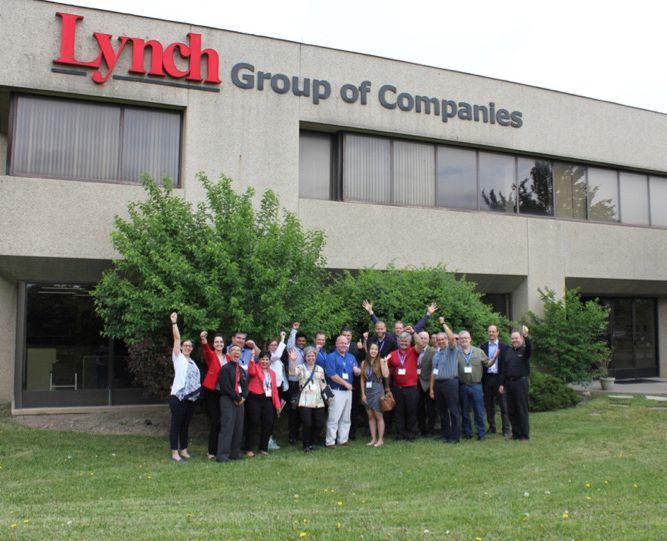
Energy management and sustainability were on the menu at the Lynch Fluid Controls plant tour.
an interesting overview and tour of each department of their facility.
I strongly believe that plant tours can provide a wealth of inspiration – whether from learning from one company’s commitment to a cause, recognition of potential opportunities for improvement in our own organization, or the chance to understand product and processes and connect further on B2B potential. The tour at Lynch was all of that and more. From an energy management and sustainability side of things, we learned about their use of robotics and reverse osmosis system to wash parts, LED lighting paired with skylights to illuminate the manufacturing areas as well as the implementation of a green roof to reduce rainwater runoff and lend to oxygen production. The roof on their second facility had just been covered
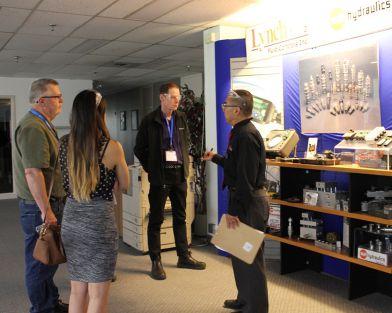
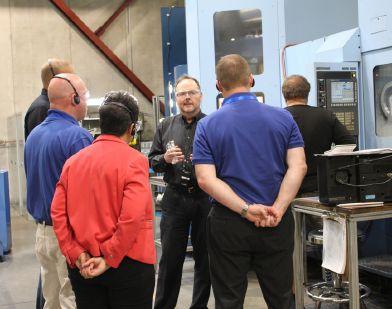
EMC’s Energy Summit 2018 honoured companies that make significant inroads in energy efficiency and environmental stewardship.
with a membrane of thick white film to help mitigate heat loss/recovery.
Future plans include the acquisition of a solar hot-water heating system for the facility’s parts washers. They compost at work, grow herbs and tomatoes in a hydroponic garden in their lobby (which employees can use in lunches as they wish), encourage
riding bikes to work and readily help those interested in purchasing an electric vehicle with a subsidy.
The biggest takeaway from this tour was witnessing the enthusiasm and commitment the team at Lynch has for managing energy and sustainability projects. The culture is vibrant and people there are excited
about where their journey has brought them and what the future holds in store! And, like any continuous improvement initiative, this too is a path that never ends.
Energy Summit 2018 once again honoured companies that have made significant inroads in energy efficiency and environmental stewardship through the CIPEC (Canadian Industry Partnership for Energy Conservation) Leadership Awards. Representing the Food and Beverage Sector, a very special congratulations goes to EMC Member Creemore Springs Brewery Limited, located in Creemore, Ont., for achieving the award for “Integrated Energy Efficiency Strategy.”
One of this year’s keynote speakers mentioned that “energy isn’t necessarily sexy,” but we are making inroads and, this year, forums such as
the EMC NRCAN CIPEC Energy Summit 2018 are up by 100 participants at events across Canada. Energy management is a topic that attracts more and more attention in the manufacturing community. Now, with our refreshed commitment, we will continue to engage our members in ways that build our cultures on the value and importance of energy efficiency and management, clean growth, environmental stewardship and sustainability – inevitably, helping manufacturers across Canada increase profitability and competitiveness and, with that, endless possibility!
EMC (Excellence in Manufacturing Consortium) is a not-for-profit association of Manufacturers of all sizes and sectors
from across Canada with a focus on enabling competitiveness in industry. Peer networking, best practices, plant tours and value-added programs and service providers impacting several aspects of business provide benefit to members.
How do you get involved? If you are interested in learning more about EMC (Excellence in Manufacturing Consortium) and the Food Sector Initiative, please feel free to touch base with Bren de Leeuw, Director – Field Operations Canada and EMC Food, Beverage and Bio Sector Program (bdeleeuw@emccanada.org) anytime!