Debbie Smith dsmith@annexbusinessmedia.com (416) 510-5107
MEDIA DESIGNER
Lisa Zambri
CIRCULATION MANAGER
Beata Olechnowicz bolechnowicz@ annexbusinessmedia.com GROUP PUBLISHER
Paul Grossinger pgrossinger@ annexbusinessmedia.com (416) 564-2513 PRESIDENT & CEO
Scott Jamieson sjamieson@ annexbusinessmedia.com
PRESIDENT
JP Giroux • jp.giroux@emccanada.org
VICE PRESIDENT AND GENERAL MANAGER
Amanda Doman • adoman@emccanada.org
VICE PRESIDENT, MANUFACTURING SECTOR PERFORMANCE
Scott McNeil-Smith • smcneilsmith@emccanada.org
MARKETING & COMMUNICATIONS MANAGER
Tiffany Robbins • trobbins@emccanada.org
Know the signs and risks of fatigue in the
CANADA’S MANUFACTURING
Insights from EMC’s 2026 Workpulse Survey.
CUT DOWNTIME,
Lean strategies for streamlining preventative maintenance.
As physical and digital systems converge, maintenance professionals face new challenges and opportunities.
Is AI-driven predictive maintenance the future of food and beverage?
Earlier this month, the Advanced Design and Manufacturing Expo in Toronto brought together professionals from across Canada’s manufacturing sector to showcase the latest trends and technologies in design, automation and more. I spent day two on the show floor, where I attended a presentation by Yun Yao, CEO and co-founder of Soralink, on the potential of AI-driven predictive maintenance in the food and beverage manufacturing industry.
Yao’s talk addressed familiar challenges in food and beverage manufacturing—unexpected downtime, regulatory pressure, seasonal variability and complex equipment. To tackle these, she outlined a four-step predictive maintenance framework powered by AI: set clear goals, collect targeted sensor data, analyze it with machine learning to detect anomalies, and deliver actionable insights to maintenance teams, refining recommendations with human feedback.
The proof was in the pudding. Yao backed her method with case studies from food and beverage facilities, where AI-driven predictive maintenance programs led to reduced downtime and cost savings. In one example, a facility reported a 30 per cent reduction in downtime and a 25 per cent drop in maintenance costs. Product quality also improved thanks to fewer production interruptions.
Despite these results, Yao acknowledged that adoption isn’t always straightforward. A major barrier, she said, is lack of buy-in from within the
organization. “Top management didn’t believe in it and people on the floor didn’t want anything to do with it,” she explained, noting that some projects failed for this reason alone.
That surprised me. If the benefits are proven, why the pushback? And so, I asked her directly: If it’s so effective, why isn’t everyone doing it?
Her answer was simple: “The biggest factor is fear of change.” For many organizations, adopting new technology means rethinking established routines and investing in new skills—an undertaking that can be daunting, even when the payoff is clear.
It reminded me that while technology can offer solutions, it’s people who decide whether those solutions take root. Predictive maintenance using AI may start with data, but like most things in life, its success ultimately depends on mindset. Fear of the unknown has always been the quietest barrier to progress—and perhaps the hardest to break. But as predictive maintenance continues to evolve and prove its worth, hesitation may become its own form of risk.
Kirstyn Brown kbrown@annexbusinessmedia.com
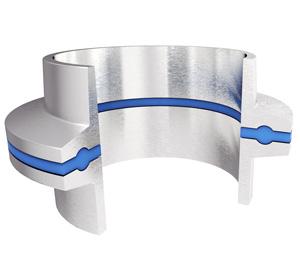
Food & Beverage Components provide superior performance and reliability for design engineers. Offering a wide range of seal styles and elastomers, we not only meet stringent government regulations but also surpass industry standards for processing operations.
NEWS
KRAFT HEINZ ANNOUNCES SPLIT
A decade after their merger, Kraft Heinz has announced plans to separate into two standalone businesses. In a statement released Sept. 2, the company said the split will result in two new entities: Global Taste Elevation Co., which will include brands such as Heinz, Philadelphia and Kraft Mac & Cheese; and North American
Grocery Co., which will house Oscar Mayer, Kraft Singles and Lunchables. Final names for both companies will be determined at a later date.
“Kraft Heinz’s brands are iconic and beloved, but the complexity of our current structure makes it challenging to allocate capital effectively, prioritize initiatives and drive scale in our most promising areas,” said Miguel Patricio, Executive Chair of the Board. “By separating into two companies, we can allocate the right level of attention and resources to un-
lock the potential of each brand and drive better performance and longterm shareholder value.”
The decision follows a strategic review conducted in May 2025.
“The Board’s unanimous decision to separate into two independent companies came after careful consideration and a comprehensive evaluation of our options,” said Jack Pope, Lead Director of the Board. “We strongly believe that increased focus will translate into
better performance and value creation for shareholders.”
The transaction is expected to close in the second half of 2026.
Carlos Abrams-Rivera will remain CEO of Kraft Heinz and will lead North American Grocery Co. following the separation. The board is reportedly working with an executive search firm to identify a CEO for Global Taste Elevation Co.
Kraft Heinz said it has no plans to change its current headquarters in Chicago and Pittsburgh.
CHAPMAN’S INVESTS $200M IN ONTARIO FACILITY
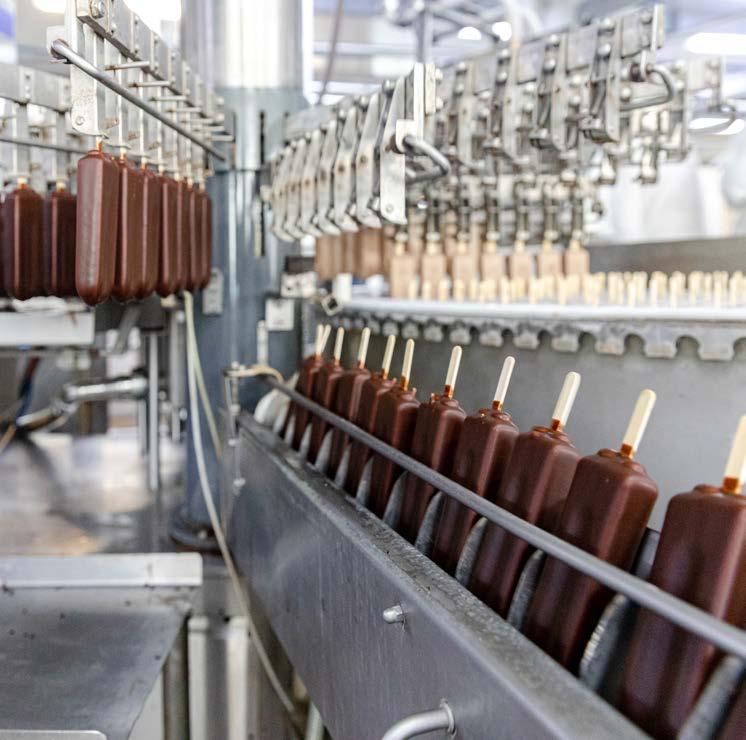
Chapman’s, Canada’s largest independent ice cream manufacturer, is investing more than $200 million to expand its operations in Markdale, Ont., according to a press release from the provincial government. The project includes the construction of a new 175,000-square-foot production facility and is expected
to create 200 new jobs. In the statement, the government announced it is supporting the expansion with $27 million in funding through the Invest Ontario Fund. The new facility aims to increase Chapman’s production capacity, support product de-
velopment and help the company meet growing domestic demand while pursuing international market opportunities, the government says.
Chapman’s currently employs more than 800 people and produces over 200 products using Canadian milk and cream. With the expansion, its provincial workforce is expected to exceed 1,000 employees.
According to the government, the investment aligns with efforts to grow Ontario’s food manufacturing sector, which contributes over $51 billion to the province’s GDP and supports one in nine jobs. The announcement also references broader goals to strengthen domestic supply chains and reduce reliance on imported goods, particularly in response to trade pressures, particularly U.S. tariffs.
NORTERA EXPANDING QUEBEC PLANT
Nortera, a processor and marketer of canned and frozen vegetables, announced a five-year $28 million investment to optimize its Saint-Denis-surRichelieu plant.
The Saint-Denis-sur-Richelieu plant specializes in vegetable and legume caning and the preparation of soups and sauces. With this project, Nortera plans to expand the plant’s capacity from 6 million to 10.6 million case equivalents.
“This major investment marks an important step for Nortera and for Canada’s entire agri-food sector. We are committed to offering a sustainable future for our Canadian producers and growers while continuing to showcase their expertise and the quality of locally grown vegetables,” said Hugo Boisvert, CEO of Nortera. “The Saint-Denis-sur-Richelieu plant will become a key site in our Canadian industrial network, equipped with modern equipment and enhanced production capacity.”
Nortera also announced that its Saint-Césaire plant is set to close by
late January 2026. This transition will eliminate approximately 100 positions at Saint-Césaire, and create approximately 70 jobs at the Saint-Denis-sur-Richelieu plant, according to the company.
LASSONDE INDUSTRIES INSTALLS
NEW PRODUCTION LINE
Lassonde Industries Inc. has inaugurated its first fruit concentrate ‘bagin-a-box’ production line, installed in one of its Rougemont, Que., plants.
According to the company, the new line produces a format that includes a flexible inner bag designed to hold fruit concentrates. These formats are reportedly ideal for a range of commercial and institutional clients, including quick-service restaurants, convenience stores, manufacturers such as microbreweries, distilleries and caterers, as well as other foodservice operators across North America.
Representing an investment of more than $10 million, the project is a milestone in Lassonde’s attempts at further growth, the company says.
“This new line enables us to respond
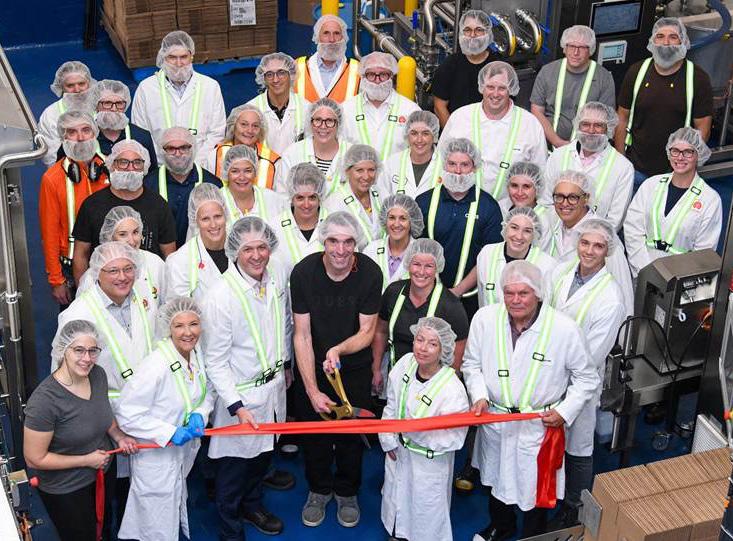
Lassonde inaugurated its first bag-in-a-box production line, September 30, 2025, in Rougemont, Quebec.
more quickly, with greater precision, to the needs of our current and future commercial, industrial and institutional clients,” says Vince Timpano, Chief Executive Officer of Lassonde.
“It offers an assortment of packaging formats that our clients have asked for and a solution that will help them deliver more value to their own customers.”
TRADE DISRUPTIONS
STIFLE GROWTH FOR CANADIAN FOOD AND BEVERAGE MANUFACTURERS
BY FARM CREDIT CANADA
The Canadian food and beverage manufacturing sector has faced slower-than-expected growth in the first half of 2025, with sales and margins experiencing pressure given the challenging trade and economic environment. According to Farm Credit Canada’s (FCC) Food and Beverage Report mid-year update, the sector saw a modest sales increase of 0.8 per cent in the first half of the year, but this momentum is not expected to hold, with a projected 0.3 per cent decline in the second half.
After a promising start to 2025, food and beverage manufacturers are beginning to feel the pinch of trade disruptions. FCC Economics now forecasts overall sales growth for 2025 to be restricted to just 0.2 per cent, down from the April projection of 0.6 per cent. If this holds, it will mark the
lowest annual growth for the sector since 2005.
While the vast majority of Cana-
dian food and beverage products continue to enter the U.S. market
tariff-free, it’s far from business as
usual for Canadian exporters. Canadian businesses must ensure thorough documentation to demonstrate
compliance with CUSMA regulations, adding complexity to the trade landscape. As a result, overall food exports to the U.S. are down in 2025 and uncertainty is hurting businesses investments.
Much of the sales growth seen so far is price-driven: sales are slowly trending up because of price increases, while the volume of goods sold is declining. Sectors with higher reliance on export markets faced more headwinds than those selling primarily into the domestic market. For example, dairy products and meat product manufacturing showed positive sales early in the year while grain and oilseed milling faced significant challenges early on due to tariffs and biofuel policy uncertainty.
“The first half of 2025 has been a test of resilience for our industry,” said Amanda Norris, FCC senior economist. “Despite the challenges, we have seen some sectors show remarkable strength, driven by sales diversification.”
There is cautious optimism for 2026, with expectations of stabilizing
{
“Looking ahead to 2026, we are optimistic about the potential for recovery,”
or even falling input prices, particularly for grains and oilseeds. The job vacancy rate in food and beverage manufacturing fell to 2.8 per cent in the second quarter of 2025, the lowest for the same period since 2015, indicating a larger pool of available workers.
There is also one potential bright spot so far this year and that is an uptick in per capita Canadian household expenditure on food and nonalcoholic beverages in both the first and second quarter of 2025. This is a positive de velopment given the earlier concern that slower popula tion growth would cap de mand for food and beverages. A continued strong demand for non-alcoholic beverages including energy drinks with new flavour profiles and func
tional ingredients is a longer-term trend and that momentum is expected to continue into 2026.
“Looking ahead to 2026, we are optimistic about the potential for recovery,” said Norris. “A modest rebound in sales, paired with stabilizing or even falling input prices are positive signs that we can build on to drive growth and profitability.”
Building a stronger Canadian economy can open up interprovincial trade opportunities for food and beverage and capitalize on Canadians’ appetite for domestic products, as mentioned in an FCC report titled The $12-billion trade shift: Canada’s opportunity to diversify food exports beyond the U.S.
DANGERS OF FATIGUE
By addressing potential hazards and risks, employers can help workers stay alert.
BY CANADIAN CENTRE FOR OCCUPATIONAL HEALTH AND SAFETY (CCOHS)
The state of feeling extremely tired or weary due to working long hours, not getting enough sleep, or prolonged periods of stress or anxiety, fatigue is a workplace hazard that employers should be concerned about.
It may come as a surprise, but fatigue can be considered a form of impairment—one that can be dangerous for not only the worker, but also for other employees and even members of the public.
In fact, research has shown that the number of hours awake can be
similar to blood alcohol levels. One study found that 17 hours awake is equivalent to a blood alcohol content of 0.05, and 24 hours awake is equivalent to a blood alcohol content of 0.10 (which is above the legal driving limit of 0.08 in Canada).
Other studies have shown that workers who have slept for less than five hours before work or have been awake for more than 16 hours have a significantly higher chance of making mistakes at work because of fatigue.
While it can be difficult to isolate WAKE UP TO THE
the effect of fatigue on incident and injury rate, by understanding it as a workplace hazard and having a plan to address it you can help create an environment that keeps everyone alert and safe on the job.
Here are a few tips to help fight fatigue in your workplace:
Assess the risks. Take a thorough look at your workplace and identify tasks, objects, situations and processes that have an increased risk of causing harm due to fatigue. Once you’ve identified fatigue as a hazard, you can evaluate how likely and severe the risks are and then decide how to effectively eliminate or control the harm.
Know the signs of fatigue. Train workers to recognize symptoms such as: weariness, sleepiness, irritability, being mentally or physically tired and reduced alertness, concentration and memory. Workers should also know how to recognize less obvious symptoms such as: reduced ability to be productive, lack of motivation, depression, headaches and increased
susceptibility to illness. What’s more, feelings like giddiness, boredom, loss of appetite and digestive issues may also be signs of fatigue.
Control the hazards. Implement control measures to address these hazards, such as changing how or when work is performed. Have policies in place related to service hour maximums to ensure sufficient time is scheduled between shifts for rest and recovery, proper shift rotation patters, extended workdays and adequate break periods. At minimum, the legal requirements in your jurisdiction for hours of rest, working hours and break period should be followed.
Wake up the workspace. The work environment should be designed with appropriate lighting, temperature and noise levels. Fatigue may be increased by long, repetitive and monotonous tasks, or tasks that must be sustained for long periods of time, so it’s important to offer a variety of tasks throughout the workday.
Plan shift schedules. If possible,
optimize the shift schedule by establishing the length of the rotation period and direction of rotation of shifts. For example, it’s best to create a schedule for shift workers that rotate forward, allowing them to go from a day shift to afternoon shift and then into night shift. This rotation is easier on the body and helps to build a routine.
If you can, make adjustments. If the job allows for it, try to adjust the work plan for the day. The most demanding and high-risk tasks should be avoided towards the end of the shift or between certain hours (such as between midnight and 6 a.m.) when workers may be less alert. Promote a good sleep routine. There is no one way to get good sleep—what works for one person may not work for another. But general tips include going to bed and getting up at the same time every day, limiting screen time before sleep, exercising regularly and using your bed primarily just for sleeping instead of activities like watching
television. Not tired? Don’t force it. Do something quiet instead, like reading a book.
Provide support. Encourage employees to speak up if they’re experiencing any symptoms of fatigue that may affect their ability to do their jobs safely. Workplaces can also provide mental health services, such as employee assistance programs (EAP), as well as healthy lifestyle campaigns, such as encouraging good sleep routines, healthier eating and drinking habits and physical activity.
The Canadian Centre for Occupational Health and Safety (CCOHS) promotes the total well-being — physical, psychosocial, and mental health — of workers in Canada by providing information, advice, education and management systems and solutions that support the prevention of injury and illness. Visit www.ccohs.ca for more safety tips.
This article was originally published in the Spring 2024 issue of MRO.
CANADA’S MANUFACTURING WORKFORCE:
CAUTIOUS STABILITY, PERSISTENT STRAIN
Data and insights from EMC’s 2025 Workforce Pulse survey.
BY EXCELLENCE IN MANUFACTURING CONSORTIUM (EMC) INSIDE THE 2025 WORKFORCE PULSE FINDINGS
EMC’s latest Workforce Pulse report captures the voices of more than 800 Canadian manufacturers, offering a timely snapshot of workforce conditions in summer 2025. The findings reveal cautious stability in employment outlooks, with over 80 per cent of employers maintaining or expanding staffing, but also highlight structural shortages in skilled trades, technical specialists and frontline roles. Tariff pressures and supply chain disruptions are amplifying these challenges, underscoring the urgent need for targeted workforce strategies and training pipelines to support competitiveness.
If there’s one word to describe Canada’s manufacturing sector right now, it’s resilient.
After years of economic whiplash— tariffs, supply chain disruptions, inflation and shifting global demand— manufacturers across the country are proving their staying power.
According to the new 2025 Workforce Pulse, more than 80 per cent of employers plan to maintain or expand staffing in the months ahead. It’s an encouraging sign for an industry that employs more than 1.5 million Canadians. But beneath that stability
lies a more complex reality: companies are holding steady by working harder, planning shorter term, and stretching their existing teams to the limit.
The Workforce Pulse is a first-of-itskind initiative, led by 14 national sectoral and workforce development organizations and funded by the Future Skills Centre. Among the more than 2,100 employers surveyed, 816 represented the manufacturing sector.
The results offer a snapshot of employer sentiment from July and August 2025, a moment when many were juggling cautious optimism with practical concern.
Most manufacturers expect to keep their workforce stable. Only about one in ten foresee cuts over the next 90 days. But 35 per cent report being understaffed, and the same longstanding issues continue to top the list: shortages in skilled trades, technical specialists, supervisors and frontline production staff.
“Stability in staffing levels is encouraging,” says Jean-Pierre (JP) Giroux, President of the Excellence in Manufacturing Consortium (EMC). “But
what we’re really seeing is the strain beneath that stability. Manufacturers are holding steady, but often by stretching existing teams to the limit.
The real challenge is how we rebuild the talent pipelines that keep production and innovation moving.”
BENEATH STABILITY, A STRETCHED SYSTEM
The data suggests a delicate balance. Manufacturers are managing to stay afloat, and even grow, but the system is showing signs of strain.
Turnover remains high, hiring pipelines are thin and uncertainty continues to shape decision-making. Many employers say they’re hiring reactively, filling immediate gaps rather than planning strategically for the future.
A big part of that uncertainty stems from global trade pressures. Tariff-driven volatility is now the leading source of workforce uncertainty among manufacturing employers. As
costs and timelines fluctuate, companies hesitate to make long-term commitments, especially in capital investments or workforce expansion.
The Workforce Pulse findings paint a clear picture: Canada’s manufactur-
and supervisors remain the hardest roles to fill and the shortage spans regions, company sizes and subsectors. Smaller firms, which make up the vast majority of the manufacturing landscape, feel the pinch most acutely.
facturing Sector Performance at EMC.
“We’re not just seeing short-term hiring challenges, we’re seeing structural gaps that affect productivity, innovation, and competitiveness. The real opportunity lies in how we use this data to align training, workforce planning, and policy decisions to support long-term growth.”
That’s precisely what the Workforce Pulse was designed to do. By gathering rapid-response intelligence directly from employers, the initiative helps industry, policymakers, and educators align around real-world challenges.
ent industries are responding to shared economic pressures. Manufacturing, as it turns out, sits near the top in both tariff exposure and talent shortages.
“Manufacturers are proving remarkably adaptive,” adds McNeil-Smith.
“Even in a challenging environment, they’re investing in people, efficiency and innovation. That’s the message we need to tell, not just where the gaps are, but how the sector is responding and evolving.”
Many manufacturers are already taking matters into their own hands: strengthening in-house training, investing in apprenticeship programs, and rethinking how to retain and motivate their existing workforce.
TARIFFS, TRADE AND TURBULENCE
The manufacturing sector’s heavy reliance on international trade makes it especially sensitive to tariffs and policy shifts. Over half of manufacturing respondents reported that U.S. tariffs and Canada’s retaliatory measures have directly disrupted their operations.
The consequences are real: rising input costs, deferred investments and reduced ability to forecast staffing needs. In contrast to less exposed sectors, manufacturers are feeling these ripple effects more deeply and more persistently.
es in isolation,” says Giroux. “It takes collaboration between industry, educators, and government to build responsive training systems and modernize how we think about manufacturing careers. That’s the path to a stronger, more resilient sector.”
That collaboration extends to sharing success stories and best practices. Across EMC’s network, manufacturers are learning from one another, adapting processes, exploring automation, and finding new ways to integrate training directly into production environments.
Percentage of manufacturers in the Food & Beverage sector who indicated they did not have enough staff to meet their current needs. Frontline workers, along with trades and technical positions, are in high demand.
It’s a partnership-based approach: sector organizations share the same seven core questions, collecting comparable insights that reveal how differ-
The Workforce Pulse found that retention and productivity improvements are now among employers’ top priorities. Supervisory training and leadership development, in particular, are gaining traction as companies recognize that the strength of their middle management often determines how well they weather uncertainty.
Despite this, the Workforce Pulse findings suggest a remarkable degree of resilience. Most employers are still hiring, or at least maintaining staff levels, because they know demand for Canadian-made goods remains strong, both domestically and abroad.
For EMC, the message is clear: collaboration is the key to competitiveness. The Workforce Pulse isn’t just another survey; it’s a tool for collective problem-solving.
“We can’t tackle workforce challeng-
For Canada’s manufacturing sector, the intelligence provided by the Workforce Pulse survey couldn’t come at a better time. The workforce may be stretched, but it’s also proving that resilience isn’t just about surviving disruption, it’s about shaping what comes next.
Through initiatives like Workforce Pulse, EMC continues to provide manufacturers with the intelligence, resources and networks needed to strengthen Canada’s manufacturing workforce and competitiveness.
CUT DOWNTIME, NOT CORNERS
Lean strategies for streamlining preventive maintenance, and improving asset reliability, without compromising safety or standards.
BY HOLLY BLAIR, P.ENG
In manufacturing operations, preventative maintenance (PM) is an essential practice for keeping things running smoothly. Yet, many manufacturing companies struggle to execute PMs efficiently. It’s common to see technicians wasting valuable time searching for tools, waiting for permits or spare parts or navigating disorganized maintenance procedures.
These inefficiencies directly impact productivity, profitability and equipment availability. Applying simple Lean tools can help manufacturers cut waste and boost equipment reliability, resulting in less downtime and
more productive maintenance teams.
DOWNTIME: THE EIGHT WASTES OF LEAN IN MAINTENANCE
Lean categorizes process waste into eight buckets, using the acronym DOWNTIME. Some examples include:
Defects: Incorrect lubrication, missed inspection points or bad data that triggers rework or early failures.
Overproduction: Servicing components more often than risk demands, like performing filter changes “just in case”.
Waiting: Technicians standing around, waiting while production
releases the equipment for maintenance, waiting for work permits or waiting for parts to be kitted.
Non-utilized talent: Skilled tradespeople stuck on data entry duty or endless tool hunts instead of performing diagnostics.
Transportation: Unnecessary movement of parts, tools or paperwork between the storeroom, the shop and the production line.
Inventory: Overstocked spare parts that tie up cash, or stock-outs that trigger emergency purchases.
Motion: Excessive walking, bending and reaching because tools aren’t located at the point of use.
Excess processing: Duplicate data entry into the ERP system, redundant reviews and writing reports that nobody reads.
BUILDING A PREVENTIVE MAINTENANCE
PROCESS MAP
Choose one high-impact PM – typically a recurring PM activity for a critical asset executed by multiple trades and that requires a planned shutdown. Next, assemble a cross-functional
team that includes the maintenance planner, tradesmen, maintenance engineer, production supervisor, stores clerk and a safety representative. Gather the team and watch or review the current state PM process, documenting each step and every delay.
1. Work-order creation – ERP system trigger, review, priority assignment
6. Testing & restart – Function checks, sign offs, hand off to production
7. Close-out – Data entry, parts reconciliation For each activity, capture the following data:
• Touch Time: Total minutes of handson Value Added work
• Wait Time: Total minutes of unproductive Non-Value Added wait time
• Elapsed Time: Total duration of the work including wait time
• Resources: List the people, parts, tools, and data systems used for each process step
• Handoffs & Approvals: Capture
who signs what and when
Use sticky notes and markers to create a process map of your PM activities, then overlay the process wastes you’ve identified. Use the data you collected to calculate a baseline wrench-time ratio, the total amount of time spent on value added maintenance activities divided by the total
amount of time the PM took to complete. World-class wrench time ratios are in the range of 60 per cent to 70 per cent, with most plants discovering that they’re operating below 30 per cent through this exercise.
Once you’ve captured the current state PM process and identified the process wastes, look for opportunities to apply Lean tools and concepts to eliminate process waste, reduce wait times, and increase productivity and reduce downtime.
LEAN TOOLS TO STREAMLINE PMS
1. 5S & point-of-use storage
Implement 5S in the maintenance shop and create mobile PM carts with all required parts, tools and consumables. Shadow boards, labelled drawers and colour-coded tools eliminate wasted time searching for items.
2. Standard work & visual checklists
Document every PM task with photos and target execution times. Host digital checklists on tablets so tech-
nicians can record readings, attach images and close work orders in the ERP system in real time, eliminating duplicate data entry.
3. Kanban for critical spares
Set visible minimum and maximum inventory levels for spare parts. Kanban cards or RFID tags trigger automatic replenishment in your ERP system. This reduces both stock-outs and excess inventory.
4. SMED thinking for PM
Apply SMED (single-minute exchange of die) principles to streamline the preventive maintenance activities. Classify each process step as Internal Activities (must be done while the equipment is shutdown) or External Activities (could be completed before or after the machine is shutdown). Then, work to minimize the amount and duration of the Internal Activities to reduce PM downtime.
5. Total productive maintenance (TPM)
Train operators to conduct basic daily inspections and lubrication tasks. This allows the maintenance team to focus on more advanced diagnostics
like vibration analysis, thermography and oil analysis – shifting from calendar-based PMs to condition-based maintenance.
6. Kaizen events
Each month or quarter, target a wasteheavy PM and run a Kaizen Event. Define the problems, analyze root causes, test Lean process improvements and create or update standard work processes to sustain improvements.
7. Data-driven decision making
Display wrench-time ratios, schedule compliance metrics and breakdown hours on a maintenance visual board. Celebrate wins and use the data to prioritize the next opportunities.
CASE STUDY: STREAMLINING PMS AT A MID-SIZE PLASTICS PLANT
A mid-size plastics plant applied Lean tools to reduce preventive maintenance downtime for its quarterly extruder gearbox overhaul PM.
Current State:
Planned downtime: 12 hours
Value added work time: 4.2 hours
(35 per cent Wrench-Time)
Process waste identified: 60 minutes searching for a calibrated torque wrench, 90 minutes waiting for hotwork permits, redundant lubrication already completed by operators.
Lean process improvement actions:
• Setup a mobile job cart specifically for the extruder gearbox overhaul with all required tools, materials, and consumables
• Installed a pre-authorized permit board for PM work orders
• Eliminated duplicate lubrication activities
Results:
The PM window shrank by 35 per cent to 7.8 hours, and the wrench-time ratio increased to 54 per cent. These actions resulted in an annualized production gain worth $180,000.
SUSTAINING THE GAINS
Locking in maintenance improvements demands more than a single, great Kaizen event. Each new best practice needs to be captured as stan-
Wrench-Time Ratio
The percentage of time during a PM that technicians spend on direct, value-added work versus the total time spent executing the PM Increase from baseline to a world-class target of 60% to 70%
Schedule Compliance The percentage of planned PM tasks completed within their scheduled timeframe
Increase from baseline to a world-class target of ≥ 90%
dard work, so those procedures survive shift changes and staff turnover.
MTBF (Mean Time Between Failures)
The average operating time an asset runs before an unplanned failure occurs
MTTR (Mean Time to Repair)The average elapsed time needed to restore a failed asset to full operation
OEE (Overall Equipment Effectiveness)
A composite metric (Availability x Performance x Quality) that quantifies how much of scheduled production time is truly productive
Inventory Turns The number of times maintenance spare parts inventory is consumed and replenished in a year
Emergency Work Order Percentage
The percentage of maintenance work orders for unplanned, reactive repairs over a week
Create a scorecard like this one to track small, meaningful metrics.
Increase from baseline as much as possible
Reduce from baseline to a world-class target of ≤ 5 hours for most assets
Increase from baseline to a world-class target of ≥ 85%
Post key metrics like as wrench-time ratio, schedule compliance and the emergency work orders percentage on a visual board, then review the metrics in brief huddles each shift. Equip tradespeople with PM audit checklists to verify tool availability, kit accuracy and permit readiness in real time, while supervisors highlight and celebrate compliance to reinforce the desired behaviors. When visual controls, accountability routine, and data-driven adjustments work in concert, the hard-won productivity gains stick around and deliver significant improvements in equipment availability.
Reduce from baseline to a world-class target of 2 to 3 turns per year
Reduce from baseline to a world-class target of ≤ 5%
Holly Blair, P.Eng, is a Chemical Engineer, Lean Six Sigma Master Black Belt and founder of Engineering Possibilities, which helps manufacturing operations and rapidly growing small businesses with Lean Transformation. She is the author of Lean Transformation for Small and Mid-Size Manufacturers: A Practical Guide to Efficiency, Profitability, and Sustainable Growth.
ENTERING THE PHYGITAL ERA
As physical and digital systems converge, maintenance professionals face new opportunities for efficiency— and new challenges in workforce development and cybersecurity.
BY ELLIE GABEL
The once-distinct divide between physical and digital spaces is narrowing, introducing both opportunities and challenges for maintenance and repair professional. Increasingly, the workforce is encountering “phygital convergence”—the merging of physical and digital technologies in industrial environments. In maintenance and asset management, this means using digital tools such as IoT sensors, artificial intelligence and augmented reality to complement traditional hands-on approaches. These technological advancements come with several benefits. First, they make it easier to monitor equipment
remotely and predict future breakdowns. For instance, in a food and beverage facility, IoT sensors can immediately alert maintenance workers to a temperature fluctuation in a refrigeration unit or a hydraulic leak in a bottling line via their mobile phone. With enough data, they can practice predictive maintenance, aiming to prevent downtime and extend equipment life spans.
Then there’s the benefit of versatility. Since solutions like IoT and AI are versatile, they can be applied any-
where, from supply room shelves to the inside of fleet vehicles. Professionals can mitigate supply chain risks and prevent stockouts by increasing visibility into inventory management and parts ordering. It can also save costs in downtime. Phygital convergence enables indepth, real-time condition monitoring, which can improve the speed and accuracy of repairs. A predictive approach may also simplify related processes because it is easier to schedule around.
CHALLENGES ON THE PATH TO CONVERGENCE
However, there are potential downsides. These tools, while efficient and cost saving, automate a core segment of MRO. As a result, job requirements in maintenance are evolving—potentially faster than the digital skills of workers.
In fact, recent research from KnowMeQ, conducted through the NGen Future Ready program, highlights a significant skills gap in Canada’s manufacturing workforce. Many employees lack the foundational reading, numeracy and digital skills needed for today’s industrial roles. These findings align with broader research around digital skills in the Canadian workforce. According to The Conference Board of Canada, just 30 per cent of working adults have suitable digital competency skills. Experts expect this number to drop to 23 per cent by 2028 as technology evolves.
Data privacy and security are also ongoing concerns. The trade-off may seem fair, but the rising costs associ-
ated with incident response make cybersecurity a priority. In Canada, the average breach causes nearly $7 million in losses, higher than the global average. Detection totals $470,000, while post-incident recovery costs around $270,000.
Additionally, some business owners see phygital convergence as a highrisk investment because technology evolves rapidly, so their allnew tech stack and onboarding programs may quickly become outdated. Moreover, they must have a scalable network infrastructure, replace legacy devices, ensure tools remain synchronized and regularly validate data authenticity.
BUILDING THE BRIDGE BETWEEN PHYSICAL AND DIGITAL
Harmonizing disparate systems to establish an interoperable, fully functional bridge between the physical and digital realms will take time and money. Developing and imple-
menting a solution before emerging technologies like 5G and edge computing render today’s tools obsolete is something manufacturers will need to consideration.
As phygital convergence continues to reshape maintenance and asset management, success will depend on more than just adopting new technologies. It will require investing in
workforce development, building secure and scalable digital infrastructures and aligning innovation with practical on-the-ground realities. For food and beverage manufacturers and other industrial sectors alike, the goal isn’t to replace the physical with the digital — it’s to connect them seamlessly, creating smarter more resilient operations for the future.