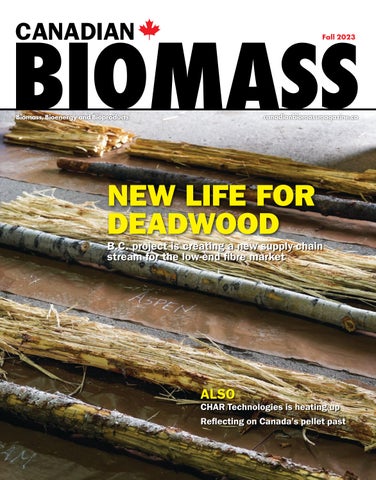
B.C. project is creating a new supply-chain stream for the low-end fibre market
CHAR Technologies is heating up Reflecting on Canada’s pellet past
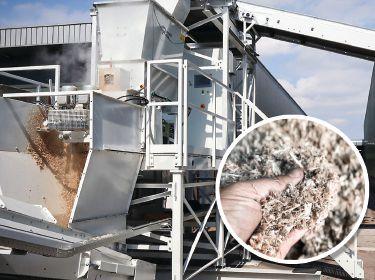
B.C.’s Deadwood Innovations in partnership with Nak’azdli Development Corporation has developed an innovative process that converts low-grade timber and low-value lumber into a wood product that can be used as a substitute for lumber and timber.
14
Heating up
Andrew White, CHAR Technologies co-founder and CEO, shares a behindthe-scenes look at their growing list of projects and agreements, and to hear his thoughts on the biocarbon market.
16 Pellet past and future
The Wood Pellet Association of Canada paid tribute to the 25th anniversary of the world’s first pellet shipment, and pondered the next 25 years for the industry, at their annual conference in Ottawa.
18
Moving the masses
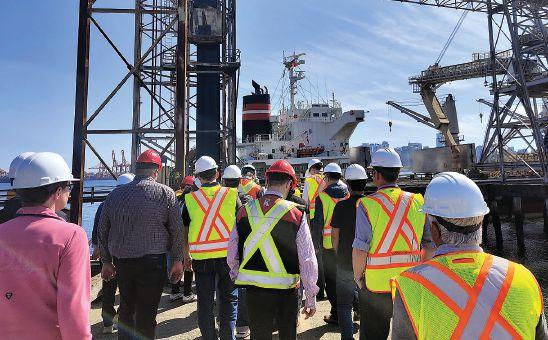
An overview of large-scale biomass handling and storage solutions to meet booming industrial demands.
TShow us Canada’s best
Introducing the Canadian Biomass Awards
his year Canadian Biomass turns 15.
I’ve had the privilege of writing for this publication for a good chunk of those years. When our team sat down this year to reflect on ways to recognize the anniversary, one option stood out: awards.
It’s time, Canada.
We are beyond proud to announce we’ve officially launched the Canadian Biomass Awards program dedicated to celebrating outstanding individuals, companies and communities working passionately to advance biomass solutions across the country.
It’s time to raise our glasses to those who have made considerable contributions to support biofuels, bioenergy and bioproducts adoption and progress in our communities.
Thought Leader of the Year – This individual is mobilizing knowledge within Canada’s biomass industry by advancing, circulating, and advising on new, progressive research. This individual is passionate about improving the industry, regularly engages with the public, and works to bring solutions to market.
Lifetime Achievement
We’ll be presenting five awards: Champion of the Year – This individual demonstrates exceptional advocacy and leadership to advance Canada’s bioeconomy. They champion biomass projects and solutions, engage with policy and decision makers, and celebrate industry successes.
Company of the Year – This company has taken remarkable strides in recent years to bring innovative products and solutions to the Canadian market. The award is open to bioenergy, bioproducts and biofuels companies, as well as biomass equipment suppliers and consultants.
Community Project of the Year – This award is given to an outstanding community biomass project in Canada brought online with in the last three years. It is open to bioheat, biofuels and bioproducts projects from municipal and Indigenous communities, community groups, and associations.
– This individual has dedicated their career to innovating, improving and accelerating biomass in Canada. This individual has made outstanding contributions to the industry, and demonstrated leadership, mentorship, and volunteerism throughout their career.
Nominations are now open for all five awards and details on the submission process and the nomination forms can be found on our website.
We’ve assembled a roster of current and past Canadian Biomass editors – including our launch editor Scott Jamieson – to form the awards judge panel. Other judges are Ellen Cools, Andrew Snook and Andrew Macklin, each of whom spent a portion of their careers helming this magazine.
We’re excited to see what nominations come in from readers across the country. Spare no detail – we want to heap praise on these deserving individuals, companies, and communities.
Winners will be featured in the Spring 2024 issue, and celebrated in an online ceremony and forum. •
Volume 23 No.4
Reader Service Print and digital subscription inquiries or changes, please contact Angelita Potal, Customer Service Ph: (416) 510-5113 Fax: (416) 510-6875 Email: apotal@annexbusinessmedia.com Mail: 111 Gordon Baker Rd., Suite 400 Toronto, ON M2H 3R1
Managing Editor - Maria Church Ph: (226) 931-1396 mchurch@annexbusinessmedia.com
Contributors - Gordon Murray, Catherine Nutting, Qingcen Cai, Percy Guichon, Joanne Turnell, and Camille Saltman.
Group Publisher - Anne Beswick abeswick@annexbusinessmedia.com Ph: (416) 410-5248 Mobile: 416-277-8428
Western Sales Manager - Tim Shaddick twshaddick@gmail.com Ph: (604) 264-1158 Fax: (604) 264-1367
Audience Development Manager - Serina Dingeldein Ph: (416) 510-5124 sdingeldein@annexbusinessmedia.com
Media Designer - Graham Jeffrey
President/COO - Scott Jamieson
Canadian Biomass is published four times a year: Winter, Spring, Summer and Fall. Published and printed by Annex Business Media.
Publication Mail Agreement # 40065710
Printed in Canada ISSN 2290-3097
Subscription Rates: Canada - 1 Yr $57.00; 2 Yr $102.00 Single Copy - $9.00 (Canadian prices do not include applicable taxes) USA – 1 Yr $121.50 CDN; Foreign – 1 Yr $138.00 CDN
All advertising is subject to the publisher’s approval. Such approval does not imply any endorsement of the products or services advertised. Publisher reserves the right to refuse advertising that does not meet the standards of the publication.
CFIA CERTIFIES SUSTANE TECHNOLOGIES’ GROBOOST
FERTILIZER
Sustane Technologies announced they have achieved a first Canadian Food Inspection Agency (CFIA) certification for their organic GroBoost Fertilizer.
Sustane’s GroBoost is produced with lower carbon intensity than traditional chemical fertilizers, improves soil health, and significantly mitigates chemical fertilizer run-off in fields, the company said.
“This certification is significant, and we are confident in saying that this could in fact represent a new category of fertilizers,” Sustane CEO Peter Vinall said in a news release. “We are not only organic, but we are leading the way to re-use society’s so-called waste in the highest and best way possible.”
FRANCE TO CONVERT 2 POWER PLANTS TO BIOMASS
The French government says two of its coal-fired power plants will be converted to biomass by 2027.
The two plants – with a combined capacity of 1.8 GW –were originally slated for closure as part of the effort to phaseout coal. The government, reacting to energy supply challenges last year, allowed coal use to continue.
French President Emmanuel Macron said in a video interview in late September the plants will be converted to biomass, Argus Media reported.
FutureMetrics published an analysis and dashboard estimating the potential pellet fuel demand from the new plants. With typical assumptions on capacity factors, plant efficiencies, co-firing ratios, and pellet fuel energy content, the annual demand is about 4.78 million tonnes per year.
CANADA UNVEILS CARBON MANAGEMENT STRATEGY
Canada has published its strategy for managing carbon in the path to a net-zero economy.
Jonathan Wilkinson, Canada’s minister of energy and natural resources, released the strategy at the International Energy Agency in Paris on Sept. 27.
The strategy identifies five pathways for carbon management:
1. Decarbonizing heavy industry
2. Low-carbon hydrogen production
3. Low-carbon dispatchable power
Sustane’s demonstration plant in Chester, N.S., is co-located on a landfill and diverts 90-plus per cent of waste entering the site. The facility uses low-pressure and low-heat processes to produce biomass pellets, synthetic diesel and recyclable material.
FEDS
EARMARK
$2M FOR BIOPRODUCTS RESEARCH, SCALE-UP IN NOVA SCOTIA
Ottawa is contributing $2 million to the Verschuren Centre, Cotex Technologies and Dispersa to support bioproducts advancement in Nova Scotia.
The projects include an investment of $1 million to the Verschuren Centre through the Canada Coal Transition Initiative – Infrastructure Fund, which will help the research centre expand its industrial bioprocessing facility and increase its bioreactor capacity by 15 times.
Two $500,000 contributions through ACOA’s Regional Economic Growth through Innovation – Business Scale-up and Productivity program will go to Cortex and Dispersa.
Cotex is preparing to begin production and field trials of its biodegradable polymer coating for controlled-release fertilizer in a 2,000-square foot facility in North Sydney.
Montreal-based Dispersa is expanding to the Verschuren Centre to scale-up production its first biosurfactant product,
4. CO2-based industries
5. Carbon removal
In a news release, Wilkinson called carbon management technologies an important part of how Canada can decarbonize its heavy industries.
“The International Energy Agency, the IPCC and other experts have been clear about the need for countries to rapidly develop and deploy carbon management technologies, and Canada is leading the way,” he said.
Canada has an estimated 570 carbon management projects in operation or development, five of which are world-first largescale projects, the release noted.
Sustane Technologies’ 40,000-square-foot pilot plant in Nova Scotia. Photo courtesy Sustane Technologies.
OTTAWA INVESTS $5.3M IN BIOFUELNET CANADA TO ADVANCE
AG BIOMASS
Ottawa has earmarked up to $5.3 million for BioFuelNet (BFN) Canada to help develop agricultural biomass supply chains, technologies and products that will grow Canada’s bioeconomy.
The investment was made under the AgriScience Program –Clusters Component, part of the Sustainable Canadian Agricultural Partnership. BioFuelNet Canada’s Biomass Cluster will use the funding for research activities under three themes: biomass production, biomass feedstock supply chains, and biomass utilization.
The cluster’s research activities will include growth of biomass crops on marginal lands, the development of microbial biostimulants, and various conversion technologies.
BioFuelNet CEO Donald Smith said they plan to allocate funds to top laboratories across Canada, co-ordinating their efforts to drive growth in Canada’s bioeconomy.
JAPAN APPROVES SBP CERTIFICATION FOR IMPORTED WOODY BIOMASS
The Japanese government has recognized the Sustainable Biomass Program (SBP) certification for woody biomass. SBP said in a news release the government found SBP meets the requirements necessary for confirming both the life-cycle
CANADA HOSTS 14TH MEETING OF ISO/TC238 ON SOLID BIOFUELS
HEADING GOES HERE
Thirty delegates from 11 countries met in Vancouver from May 8-11, 2023.
The Ontario government on March 28 announced a $682,529 investment in six economic development projects in Hearst, Ont., including $35,808 for wood pellet producer I.C.S. (Lacroix) Lumber.
TCanada plays a leadership role in the development of solid biofuels standards. Thanks to Canada’s efforts, modifications to wood chip fuel standards were made to better reflect the designs of modern combustion and gasification equipment readily available in the marketplace.
The funds will help I.C.S. (Lacroix) purchase new equipment that will help it increase its production capacity and expand operations.
According to Statistics Canada, in 2015, Canadian industrial bioproducts producers used 22 million metric tonnes of biomass, of which 57 per cent was forestry biomass and 43 per cent agricultural biomass. The majority of the agricultural biomass was grain and oilseeds.
greenhouse gas emissions of imported woody biomass under Japan’s Feed-in Tariff (FIT)/Feed-in Premium (FIP) System for Renewable Energy, and the legality and sustainability of imported wood in line with guidelines set under the Clean Wood Act.
SBP has drafted an instruction document for certificate holders to meet the Japanese requirements, and to allow SBP-certified biomass to be imported and used by Japanese power generators. The document is expected to be finalized by the end of the year.
“Through the collaborative partnerships we are announcing today, our government is ensuring Hearst’s economy continues to grow,” said Greg Rickford, Ontario Minister of Northern Development, Mines, Natural Resources and Forestry, in a statement. “By investing in projects from varied sectors, we are promoting a more diverse, dynamic and innovative economic climate.”
Several ISO standards were adopted as Canadian standards to enable provincial regulators to easily incorporate them into regulations, guidelines and/or individual site permits.
Canada’s is leading a task group to consider expanding the scope of ISO/TC238 to include biocarbon for metallurgical and other industrial applications, in addition to heat and power applications.
I.C.S. (Lacroix) produces premium wood pellets under the LacWood brand.
Another task group, also led by Canada, is developing an ISO Technical Report on Implementation of ISO standards for characterisation of wood chip fuel – Essential information for producers and users.
In addition to the working group and plenary meetings, delegates toured the facilities at UBC Biomass and Bioenergy Research Group, and visited the Fibreco Export Inc. biomass handling terminals. divert food waste and reduce pollution, as well as the reliance on fossil fuels, through the creation of biodegradable products that are economical and versatile for use across numerous industries.
Read the full article at: tinyurl.com/bdhz3f6x.
Desperation – the mother of creativity
DHow one man’s vision turned wood pellets from niche to mainstream to a global powerhouse in the fight against climate change
By Gordon Murray
o you know it’s been 25 years since our first shipment of pellets from Canada? What might have seemed like a pipe dream is very much a reality. Today, Canada’s pellet sector is a global powerhouse not just in producing pellets but in the global fight against climate change. We’ve taken what was niche and moved mainstream.
And so, how did we get here? While it’s the collective efforts of companies, employees, suppliers, customers and others, it all started as the brainchild of one man. John Swaan; also known as the “godfather” of the pellet sector.
It began with John’s idea of taking the wood waste residues from Northern B.C. sawmills and, instead of burning the shavings and sawdust in beehive burners (as was standard practice at the time), turning them into wood pellets. He planned to sell them in the growing Seattle market.
By 1994, as Pacific Bioenergy, he negotiated a partnership with the Carrier Group to build one of Canada’s first stand-alone wood pellet plants. Unfortunately, when the plant opened, the heating pellet market in Seattle crashed. John negotiated a verbal commitment from a
big box store for 15,000 tons of bagged product a year, but it fell through and now he had 9,000 tons of bagged product in the plant’s yard with no home for it.
As the saying goes, necessity may be
Making the shift from oil and coal-based heat and electricity to wood pellets in Canada will take three simple steps: the right policies, strong incentives and effective communications.
the mother of invention, but desperation is the mother of creativity. With 9,000 tons of pellets, John began looking for options.
He identified Sweden as a potential market for his pellets. But there were a few logistical challenges to work out ... like a train, a vessel, a port … and how to get the pellets from Prince George to Sweden.
Using his connections, John found an unused conveyance system and terminal in Prince Rupert. The company had
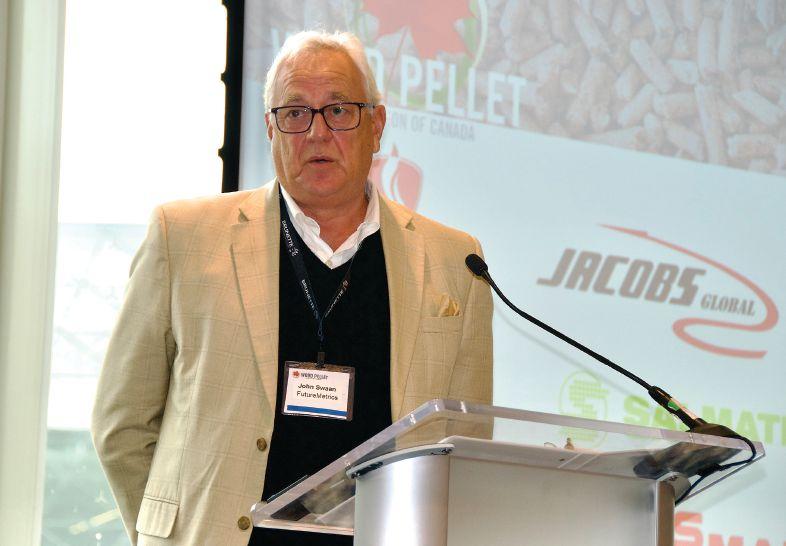
John Swaan, also known as the “godfather” of the pellet sector, was recognized for his role in the birth of the industry at the 2023 Wood Pellet Association of Canada conference in Ottawa in September. Photo: Annex Business Media.
WPAC is committed to being among the most inclusive and successful trade associations by actively seeking diversity across the industry.
storage at the terminal, but only 6,0007,000 tons, so almost 10,000 tons had to be stored in rail cars. So John contacted CN Rail, who had a rail line to Prince Rupert. He negotiated a rate agreement and monthly lease with terms that were good by today’s standards. Working with a Swedish Canadian, Staffan Melin, they were able to convince an Asian shipping company to take on a bulk cargo of wood pellets. At the time, no one had moved wood pellets this way. The fact is that John risked everything to send a single shipment to Sweden.
“If it weren’t for John – his determination and his knowledge and expertise – we wouldn’t be where we are today,” says Vaughan Bassett, past president of the Wood Pellet Association of Canada (WPAC) and senior vice-president sales and logistics at Drax PLC. “He didn’t launch just a vessel, he launched a new sector, one that has gained global support as a clean, renewable and responsible source of energy and is making a positive difference in our forests, our communities and in the fight against climate change.”
The fact is John’s expertise is hard won and a combination of many tough lessons along the way that have been forged out of determination in the face of desperation; these lessons have helped to create and support the multibillion-dollar wood pellet industry we all know today.
We recently paid tribute to John at our annual WPAC Conference, Sept. 19-20 in Ottawa. But with a conference theme of “Biomass is Mainstream: The Next 25 Years: Opportunity & Innovation,” we didn’t just look back, we looked forward.
The next generation of products will shift traditional views of wood pellets. That means giving Canadians more choices when it comes to renewable energy; in Europe it means taking the wins we’ve seen on the commercial and residential side to more industrial heat and displacing
the reliance on Russian natural gas; and in the United States, it’s flying planes with sustainable aviation fuels and globally supporting the transition to green hydrogen and ammonia. In Europe and Japan, we can turn older coal plants into co-firing so they, too, can benefit from the flexibility that wood pellets provide.
While our export markets will always be important, we are turning our focus to here at home to provide a responsible solution to local energy needs where coal, oil and other fossil fuels are still being used. Making the shift from oil and coalbased heat and electricity to wood pellets in Canada will take three simple steps: the right policies, strong incentives and effective communications. In Canada’s North and the Maritimes, there is already a shift to renewable energy for both commercial and home applications. We need to continue to support this evolution by working together with governments and agencies to encourage biomass use.
With all these opportunities, our ability to meet the growing demand for wood pellets will require stable access to fibre, ongoing investment, a strong logistics network, the right equipment, safe workplaces and the right people. Our people are the foundation of our success. WPAC is committed to being among the most inclusive and successful trade associations by actively seeking diversity across the industry.
The Canadian wood pellet industry has a critical role to play in the global fight against climate change. I look forward to seeing what ingenuity the Canadian biomass industry brings over the next 25 years. With the planet getting hotter and climate disasters worsening, if there ever was a time to be creative, it’s now. •
Gordon Murray is the executive director of the Wood Pellet Association of Canada.
Green Hog Fuel Results
Green Pulp Chip Results
New life for Deadwood
B.C. project is creating a new supply-chain stream for the low-end fibre market
By Catherine Nutting and Qingcen Cai
The Deadwood project in B.C. is an exciting, innovative manufacturing venture that entails a business partnership between Nak’azdli Development Corporation and Deadwood Innovations Ltd., aiming to revolutionize the forest sector.
They have developed an innovative process that converts low-grade timber and low-value lumber into a wood product that can be used as a substitute for lumber and timber in various applications.
The Deadwood project uses a hydro-thermal chemi-mechanical process that imparts strength and stability into the fibre. Engineering work is currently underway to scale-up from a pilot plant to a 30,000 cubic metre per-year commercial operation, in order to demonstrate the feasibility and commercial potential of this process. The pilot plant equipment was manufactured in Fort St. James, B.C.
With support from programs such as the B.C. Ministry of Forest’s Indigenous Forest Bioeconomy Program and the federal government’s Investments in Forest Industry Transformation program, this project is aligned with many of the priorities of different levels of government: supporting Indigenous leadership in the forest sector, reducing carbon emissions through its sequestration in wood products, and moving from high-volume to high-value.
THE CHALLENGE
The forest sector faces challenges with efficiently utilizing low-grade timber and yielding higher prices from lumber due to natural disturbances in our forests. Extending the useful life of wood products contributes to a circular economy. Additionally, the project aims to mitigate climate change by storing carbon that would
“The technology unlocks value that has always been present, but the current commercial suite of technologies is not able to do so.”
- Owen Miller, Deadwood Innovations
otherwise be released through burning or short-lived paper products, and by utilizing low-value logs and beetle-killed or fire-damaged trees.
The targeted log feedstock is not suitable for existing sawmilling technologies, and is currently being used for pulp or pellets, or is left in slash piles. Traditional lumber production heavily relies on highgrade logs and sawlogs, limiting the utilization of low-grade logs, deciduous logs, and broken lumber. Additionally, the natural variability and defects in lumber can present challenges in terms of consistency and quality.
The Deadwood technology provides a way to turn large amounts of underutilized fibre into saleable products.
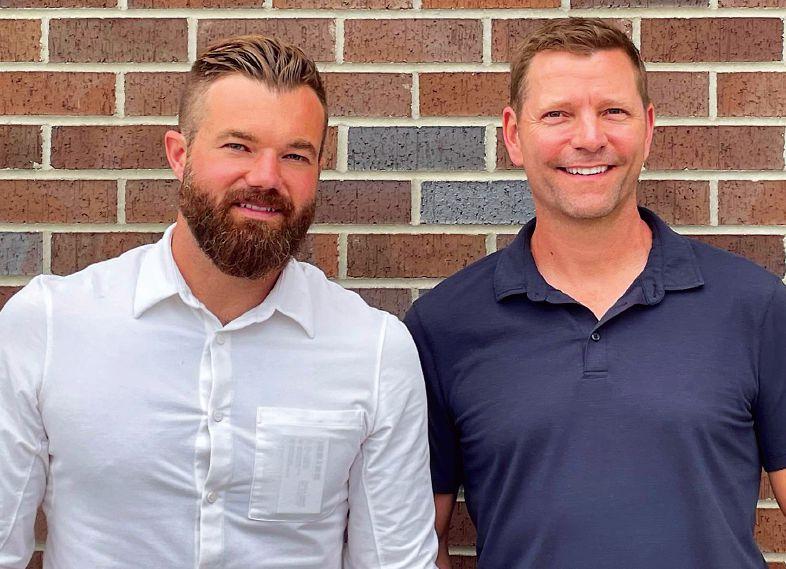
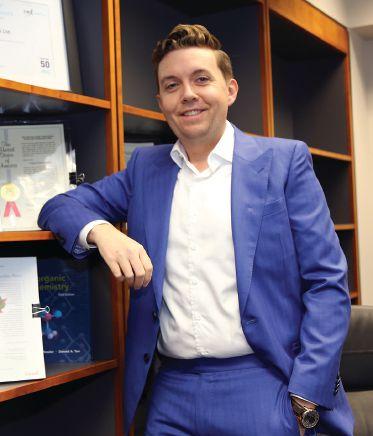
Owen Miller, left, is the president of Deadwood Innovations and John-Paul (JP) Wenger is the CEO of Nak’azdli Development Corporation. Photo courtesy Deadwood Innovations.
“The technology presents an additional supply-chain stream for the current lowend off-spec fibre market,” says Owen Miller, president of Deadwood Innovations.
THE PROCESS
The province supported Nak’azdli Whut’en First Nation’s priorities in the natural resource sector through a multiphased bioeconomy project. This entailed supporting a partnership between Nak’azdli Development Corporation and Deadwood Innovations Ltd. to commercialize this novel forest bioproduct.
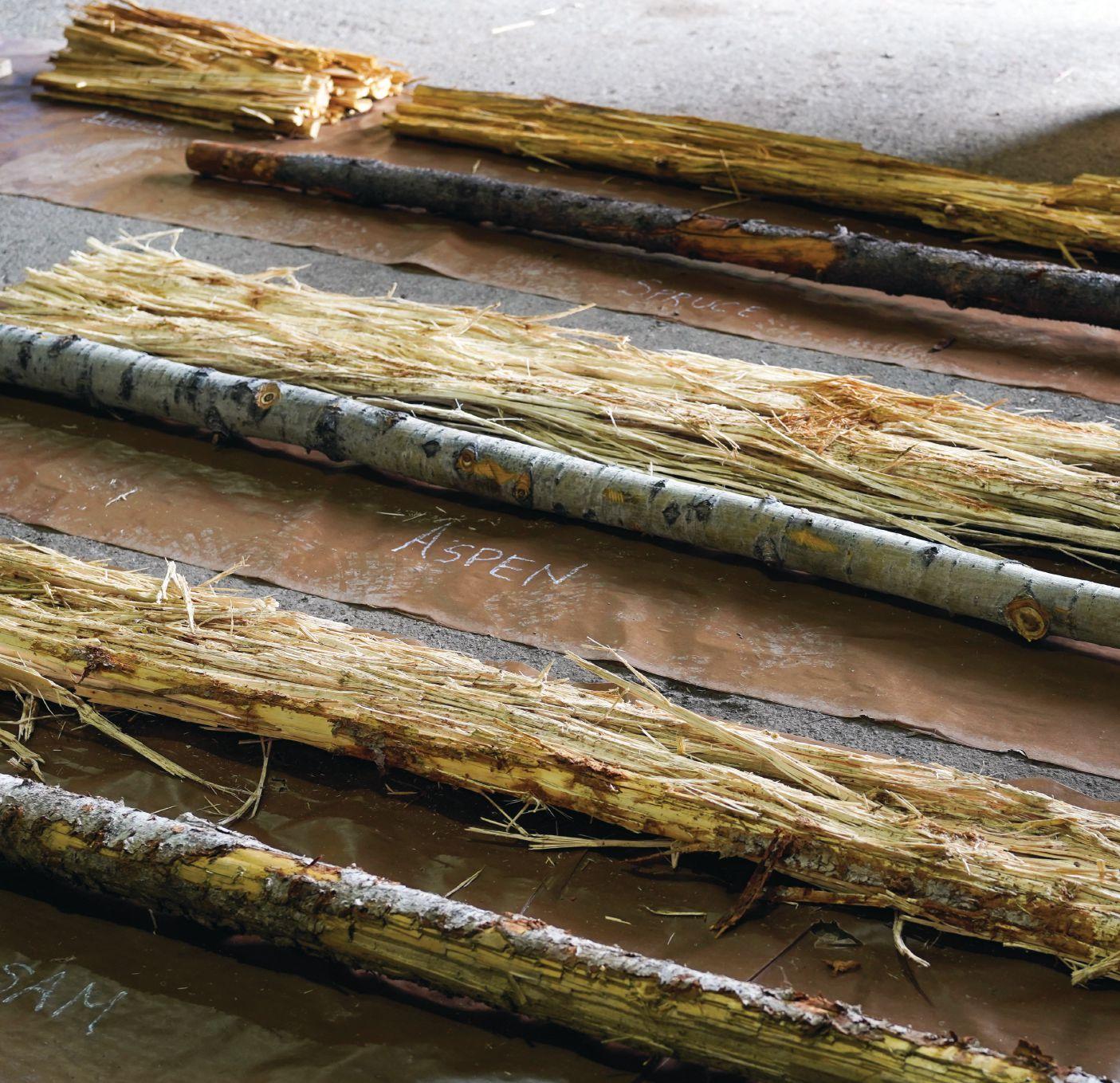
Deadwood’s proprietary technology converts low-grade timber into densified engineered cants, and low-value lumber into densified engineered lumber that substitutes for traditional lumber. The engineered wood products have properties comparable to hardwoods. The advantages of their product include the ability to use various feedstock sources, producing consistently stable, strong products, promoting circular economy practices, and storing carbon.
“The technology unlocks value that has always been present, but the current commercial suite of technologies is not able to do so,” Miller says.
The system manufactures engineered ood products using a feedstock of coniferous timber, damaged by wildfire or beetle
infestation, as well as underutilized deciduous species. The process starts with dead timber that has dried in the field, or deciduous stands that are not economical for conventional lumber production at current
standards due to pocket rot in the tree.
Logs are scanned and sorted by species, moisture content, and condition, and are then transferred to infeed. After debarking, the logs are densified and stabilized in a unique process that leverages and combines engineering principles from various manufacturing processes. The lumber upgrading process is similar but does not require debarking.
The resulting manufactured wood can range in density from that of a softwood to that of a hardwood simply through the pressing mechanism and lignocellulose reactions, not through the addition of resins. As the Deadwood partners explain, “A wide variety of dimensions and densities are attainable using our unique pressing process.”
The upgrading process that transforms low-quality fibre into a novel wood product has evolved through research and development and has been optimized for accelerated commercialization. Patents are pending for the inventions of the system.
Combustible Dust Specialists
Allied brings 49 years experience to help you meet current NFPA Standards with: system design/documentation, spark detection, isolation, grounding, PLC, venting, blast path management, clean-up systems and duct audits — CWB certified and member SMACNA. Sawmill – Biomass – Boardplants – Pulp & Paper – Power Generation – Mining 49 years of Industrial Air Systems www.alliedblower.com
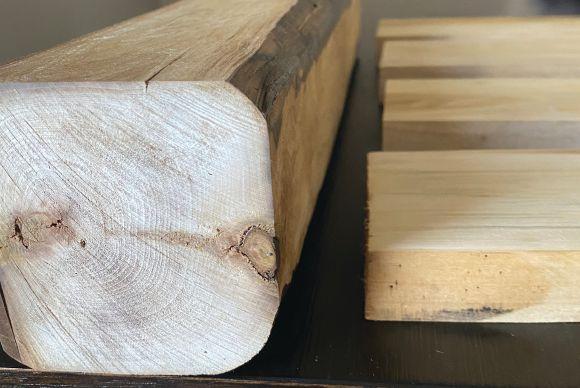
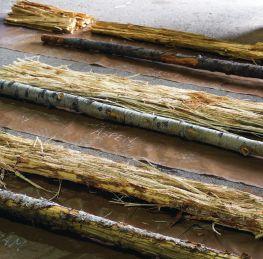
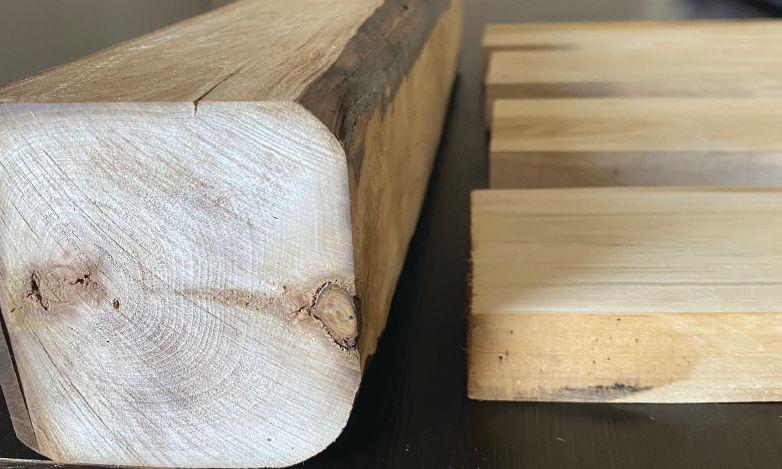
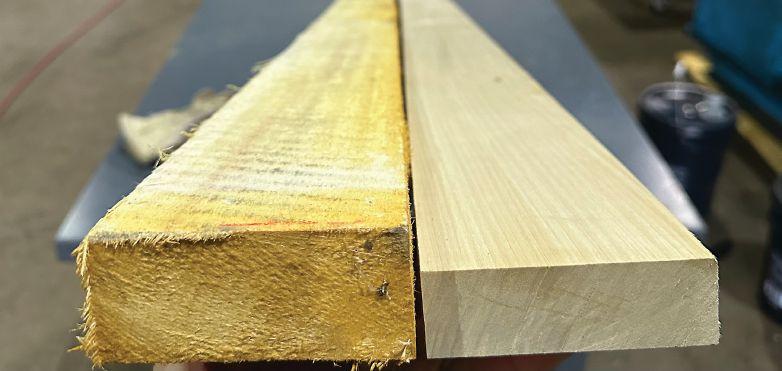
Densified aspen cant end view and densified aspen lumber. Photo courtesy Deadwood Innovations.
The current pilot phase is being carried out on the Nak’azdli Reserve and will be completed in Spring 2024.
In addition to the current engineering phase of the project, as part of its carbon offset program, Deadwood is also gathering data, quantifying environmental benefits, and estimating sequestered emissions.
THE PARTNERSHIP
At the heart of the venture is the vibrant partnership between Nak’azdli Development Corporation, the economic arm of the Nak’azdli Whut’en, and Deadwood Innovations. Nak’azdli Development Corp has a 20 per cent equity in the intellectual property company, and 51 per cent equity in the first commercial operating company. Nak’azdli members have board positions for governance representation, and defined rights for facility management and priority staffing.
The pilot plant is located on the former Tl’oh Forest Products site in Nak’azdli. The first commercial facility is currently being developed at the same location.
The project’s success depends upon the partnership that is at its core. The co-founders place great value on taking time to build up understanding and trust. In 2019, Deadwood Innovations was a new venture that had created preliminary samples.
Miller talks about how groundbreaking it was for Nak’azdli to support a forestry-technology start-up, and about how crucial that was to the project.
“Nak’azdli leadership and its members deserve recognition for their willingness to accept and manage risks in efforts to support a start-up in an emerging technological risk-averse sector. Piloting and research and development in resource manufacturing is very capital-intensive, and it can be challenging to determine product-market fit. Nak’azdli’s support demonstrates actionable reconciliation and leadership,” he says.
Miller advises that a partnership can go far when it is anchored in both trust and aligned intentions. Success comes through a shared focus on a co-developed strategy. He believes in the importance of engaging early, often, and transparently, with a development corporation board, and Chief and council, in a solution-focused attitude.
“Be honest about risks, challenges, and successes,” he says.
NEXT STEPS
The expected outcomes include the production of consistent, stronger, and stabilized engineered wood products, the promotion of a circular economy by extending product lifespan, and the storage of carbon within long-lived timber products. Furthermore, the project aligns with provincial priorities by supporting Indigenous partnership and economic development, advancing the bioeconomy pathway, and fostering forest industry diversification through value-added products.
Deadwood plans to develop a feedstock in the form of a blank or billet, suitable for
a line of structural, industrial, decorative, and furniture products. A customer feedback and acquisition process has begun.
Deadwood Innovations is currently developing product specifications through collaborative testing at the University of Northern British Columbia’s Wood Innovation Research Lab. As the company explains, “The initial marketing strategy is to develop a line of products and get them into the hands of customers prior to commercial sanction.”
Initial target segments include using upgraded deciduous and coniferous lumber and timbers for building components such as nail- or dowel-laminated timber panels, decorative facades, and high-end furniture. Post-commercialization, industrial segments such as rail ties, and certified structural components, such as glue-laminated beams, are growth opportunities.
The carbon storage will translate into additional incentives. There is an urgent need to reduce carbon emissions and to promote circular economy practices in the community and in the province. The target log feedstock is not suitable for existing sawmilling technologies, and is currently being used for pulping or pellets.
“Deadwood is introducing a margin-added carbon storage technology that introduces an alternative to large-scale fiber combustion emissions intensive processes,” Miller explains.
Commercialization of the Deadwood project stands to provide diverse employment. The technology requires primarily in-house operations and training, and can be retrofitted into existing operating or shuttered sawmills.
Nak’azdli-Whut’en Chief Aileen Prince sums up the widespread enthusiasm for the project. “Successful commercialization of this project will stabilize and strengthen our economy, community, and environmental stewardship,” she says.•
Catherine Nutting is an Indigenous bioeconomy policy analyst and Qingcen Cai is the Indigenous bioeconomy program lead with the Innovation, Bioeconomy and Indigenous Opportunities Branch of the B.C. Ministry of Forests.
A comparison of aspen lumber before (input) and after (densified). Photo courtesy Deadwood Innovations
IRoad to reconciliation
Equity, empowerment, and collaborative progress
By Percy Guichon
n the context of Truth and Reconciliation, the journey toward equity and empowerment is a winding road, mixed with challenges, yet marked by significant progress. I have witnessed both the strides and the obstacles that define this path. As an individual who has been to a residential school, previously was an elected Chief in my community, and am currently a councillor, I am deeply engaged with balancing my personal experiences while harnessing a progressive business perspective. From my role as an executive director of the Central Chilcotin Rehabilitation Ltd. (CCR), my beliefs have been reiterated that reconciliation is not just about acknowledging the past; it’s about reshaping the present and future to embrace the ideals of unity, opportunity, and collaboration.
One significant arena of progress lies in our interactions with governmental entities. The evolution is palpable – supportive local forest districts extending direct contracts that bypass the traditional bidding processes, and organizations like the Forest Enhancement Society of British Columbia (FESBC) supporting us through the aftermath of forest fires and mountain pine beetle infestations. These examples acknowledge that we have the ability to complete complex forestry advancements paired with our traditional and cultural practices within our territory. However, it’s imperative to acknowledge that despite these steps forward and gestures of good faith, a broader transformation is still required.
A multitude of governmental agencies exist. Some show commendable co-operation and confidence in our pursuits, while others lag behind unable to
reconcile with the Truth and Reconciliation protocols. A fundamental shift is necessary, a new approach that aligns governmental initiatives with the very fundamental principles of reconciliation.
Education and understanding are the key drivers of this transformation. There is a promising movement as certain agencies recognize the need to partner with Indigenous companies and to work collaboratively to harness and support our economic ambitions. Yet, in some cases, opportunities remain elusive due to lack of capacity, resource availability, or even preconceived notions that limit access. The offer of forest licenses, for instance, can be a gesture of goodwill, but it requires substantive follow-through to truly empower communities. Here, the challenge is not just economic – it’s about dismantling boundaries that perpetuate imbalances, creating a level playing field for Indigenous peoples to participate fully in resource management.
My personal journey underscores the urgency toward the need to make a change in this industry. My own experience of being taken from my mother at the age of seven to attend a residential school echoes the broader themes of disempowerment, cultural loss, and generational trauma. This trauma reverberates in the lives of many survivors I’ve encountered, some battling addiction and hardship. Today, more than ever, the reconciliation we seek is not merely economic – it’s about creating safe spaces, restoring dignity, and ensuring no one is left behind. We stand at a crossroads where the government’s commitment to helping remote communities must be translated into tangible change on
every level, where collaboration supersedes isolation, and where the collective well-being of our youth and communities becomes a shared mission.
Through my involvement with CCR, I’ve witnessed positive change. Collaborations with Natural Resources Canada, local forest districts, and FESBC not only bring economic progress, but also help uplift the community as a whole, demonstrating that progress is attainable when there’s a genuine willingness to reconcile, trust, and recognize the competence that we have. These alliances are not just business transactions, they are a testament to the spirit of unity driving our shared objectives. I view CCR as a beacon of progress. It is an illustration of how to approach business with Indigenous communities. It should be a standard practice that we continually improve upon.
In this pursuit, it’s crucial for institutions, organizations, and government agencies to dismantle silos and operate in tandem. My message, on this National Day for Truth and Reconciliation is clear: don’t just acknowledge us. Engage with us. Listen to our voices, understand our needs, and work alongside us to shape a future where opportunities are not selective, but equitable. I urge everyone involved to continue this transformative journey, to bridge the gap between past and present, and to embrace the unifying force of reconciliation—a force that, when harnessed, can propel us all toward a brighter, more just future. •
Percy Guichon is the executive director of Central Chilcotin Rehabilitation Ltd. (CCR) and councillor of Tŝideldel First Nation.
Heating up: Q&A with CHAR Technologies CEO Andrew White
By Maria Church
Ontario’s CHAR Technologies has been making headlines this year with a flood of new projects and investments in the Canadian cleantech market.
The company is pioneering high-temperature pyrolysis to turn wood waste into renewable natural gas (RNG) and biocarbon in the form of biochar and biocoal. In July, CHAR announced a $6.6-million investment and annual biocarbon purchase agreement with global steel and mining company ArcelorMittal.
Canadian Biomass caught up with Andrew White, CHAR co-founder and CEO, for a behind the scenes look at their growing list of projects and agreements, and to hear White’s thoughts on the biocarbon market.
CB: Canadian Biomass first profiled CHAR in 2019 and much has happened for the company since then. What has that rapid progress looked like on your end?
Andrew: It’s been an evolution, certainly. Now is when a lot of the hard work over the last four years is finally coming to fruition. Besides surviving the pandemic –which was interesting for everybody – we now have this condensed process where we’ve been able to start communicating with the market with what we’re doing and how we’re doing it.
In the background, we had our project planned for Thorold, and we had some initial progress on our other projects like Lake Nipigon, Kirkland Lake and Saint-Félicien. And we’ve been able to announce our funding package from the province and federal government for Thorold. A lot of that development work, funding work, strategic partnerships, have all come together here, relatively speak-
Andrew White, CEO of CHAR Technologies
ing, in a very short amount of time. But we’ve been working with a lot of these partners for years.
CB: How has the company evolved over the last few years?
A big move was our London facility to Thorold at the end of last year. We were producing carbon the second week of November ’22 in London, and the second week of January ’23 we were making it in Thorold. And we lost a week for Christmas. It was a great testament to the benefits of our modular technology. When we look at our future projects, that’s how we want to approach them – to be able to deploy fairly quickly by following this modularity approach.
Our plant when it was in London could input 500 kilograms per hour of material. The scaled-up version under construction in Thorold can input 3.5 tonnes per hour.
In 2019 we had started the transition to really recognize that the value for CHAR,
the value for our shareholders and stakeholders, is in our involvement in owning the infrastructure. A build-own-operate model that is focused on RNG and biocarbon production. We’re still doing both, and we’re being selective with partners to build projects for them. Really getting into the RNG component of it, we’re now going to be deploying it in Thorold in the coming summer ’24.
We just announced the ArcelorMittal investment. To look behind the curtain a bit, we’ve been working with ArcelorMittal Dofasco in Hamilton for some years now, and there was a huge amount of due diligence involved. We went deep on the technology, deep on the business case with a third-party consultant, just to validate that, yes, the technology works, and the business case works, and this makes a lot of sense.
ArcelorMittal Dofasco then agreed to buy our production from our Thorold facility. We’re excited that not only did ArcelorMittal invest, ArcelorMittal Dofasco signed up to be our guaranteed customer. I think that’s excellent validation for all the work that’s gone on in the background.
CB: At what stage are CHAR’s projects announced across Canada?
[Lake Nipigon, Ont.:] We went up and we met with Lake Nipigon Forest Management Inc. group, which is a consortium of four First Nations groups who control the harvesting of about one million hectares of productive forest around the Lake Nipigon shore. We have the MOU in place as to what a JV [joint venture] structure would look like and now were working through the definitive agreement. We looked at a couple site options. And we want to get moving on the engineering de-
sign work and permitting work that will allow us to get started on some of the civil work by next construction season.
[Kirkland Lake, Ont.:] We’re moving along nicely. We’ve been working with the town on getting some of the infrastructure connections sorted out for the site we’ve identified and optioned. We’re looking to add to feedstock partners to work with and to bring into the project. We’re progressing that one fairly nicely. Key is getting the infrastructure sorted out.
[Saint-Félicien, Que.:] We’re part of a larger overall project where the city is progressing on a hot-water loop from a co-gen facility. The CVB (centre de valorisation de la biomasse), which includes the MRC Domain-du-Roy (regional government), are going to install a grinder and a dryer using the waste heat from the city’s hot-water loop, and we’re the off-taker of that dried and ground biomass. We’ve now engaged with a Quebec permitting consultancy so our permitting group at CHAR, Altech, is engaging with them to make sure everything is meeting the requirements.
[Terrace, B.C.:] We had identified sites and partners and the like, but the project development was put on a hold while we were waiting for funding approval from the Clean Fuels Fund. We’re ecstatic that it was approved. We think it will make a big difference to have other groups look at feasibility studies, not just us, in the Clean Fuels program. Now we’re able to re-engage in that project, finding the sites that are available, reengage on discussing
partnership opportunities, and doing some preliminary engineering work and permitting work. It’s certainly earlier stage than the other three.
CB: How has the biochar/biocarbon market developed since 2019?
In our view, what we call biocarbon is the generic ‘anything that’s carbon that comes out of a thermochemical process’ – but not everyone agrees with this nomenclature. That’s one of the issues, what do we call everything? But we call it a biocarbon and the subsets for us are biochar and biocoal. For us, biocoal is high-quality, metallurgical coal replacement material.
On the biochar side, certainly the voluntary carbon credits through the Verras, the Puro.earths, have changed the opportunities on how to add value to biochar. To get the required value by the truckload and to get people – especially in the agricultural community – to buy it, is challenging. That said, deriving a second revenue stream through carbon credits is great, and really changes the overall economics of
biochar. Because of how traceable those carbon credits are, they will continue to hold their value.
On the biocoal side, there is clearly an increasing need for decarbonizing heavy industry. And the steel makers, the smelters, they want to make this transition as well. The acceptance of biocoal has now really accelerated. Generally, there is an understanding that it can be even higher quality than metallurgical coal. End-users need to work with suppliers to really understand what biocoal’s qualities are so that it can be used as a drop-in coal replacement. We’re really seeing that acceptance.
CB: What’s your take on Canada’s policy environment for biomass cleantech companies?
For us specifically, because we are also in the RNG space, what we have seen right from the provincial levels is a view that RNG can come from anything as long as it’s renewable and creates methane. We’re not limited to an anaerobic digestor processing dairy manure to make valuable RNG. Biomass can be in there.
On the biocoal side, it’s interesting, because we’re more keen on the chemistry aspect of replacing metallurgical coal, versus replacing thermal coal. So, it’s not just a fuel, it’s a chemical addition, or reductant, which means we have to look at the GHG emissions in a slightly different method. I’m encouraged that the direction of a lot of policy is looking at carbon intensity [CI] versus technology type. Does the fuel emit a certain amount of CO2 or did it have a negative effect? If you’re more negative in CI score, then you should get a higher value for that material, similar to the Low Carbon Fuels Standard, but applied more broadly.
I think there is a good amount of government support. I do want to see where the production tax credits and investment tax credits in Canada wind up. That was a big element of the Inflation Reduction Act in the U.S. and it could play a big role here, especially getting over the commercialization hurdle. They can help de-risk a project to find funding sources. I’m optimistic – and I think I have to be! – about where we’ll wind up there. •
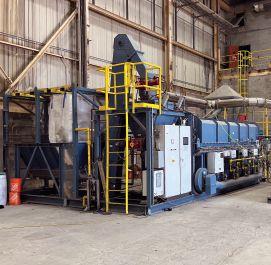
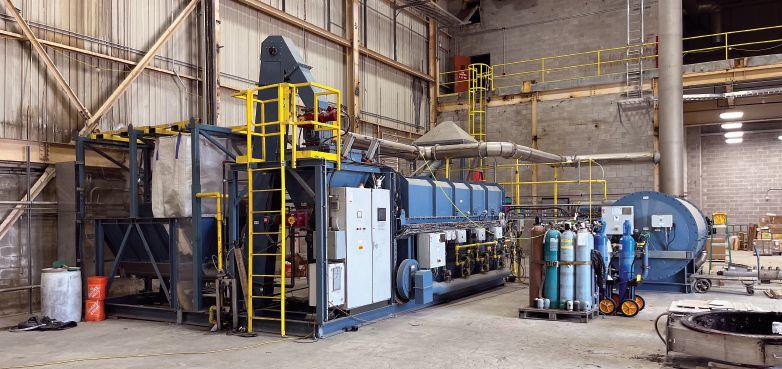
CHAR’s proprietary pyrolysis system that transforms organic waste into biocarbon.
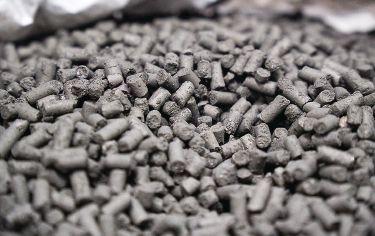
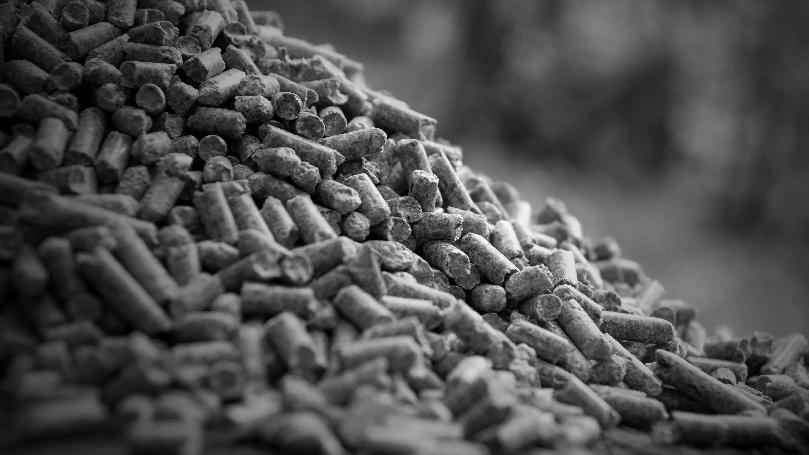
CHAR’s pelletized biocarbon that will be used by ArcelorMittal in replacement of coal.
Past and future
Wood Pellet Association of Canada conference paid tribute to industry origins
By Maria Church
The Wood Pellet Association of Canada’s annual conference began with an unusually sentimental note this year: a tribute to the “godfather of wood pellets,” John Swaan.
This year marks a quarter century since Swaan orchestrated the world’s first bulk shipment of wood pellets from his B.C. pellet mill to a customer overseas. In opening remarks to the conference, association past-president and senior Drax executive Vaughan Bassett shared a summary of Swaan’s industry origin story, first told by FutureMetrics’ Hannah Campbell.
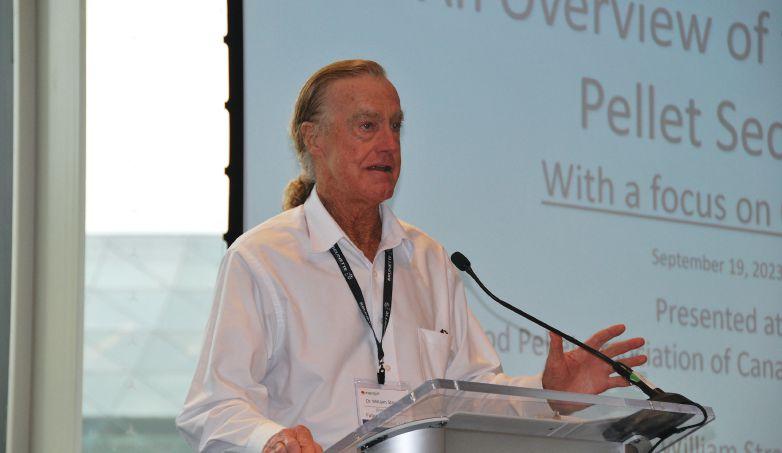
The story was followed by a tribute video in which WPAC executive director Gordon Murray, along with a handful of other partners and friends, shared their thoughts on John’s pioneering role in the pellet industry. An emotional Swaan took to the podium to express his thanks.
“It’s an honour to be singled out,” he told the conference crowd. “It took a village… I’m very proud to be involved in helping seed some milestones that have come along.”
Twenty-five years later and the pellet industry is thriving coast to coast in Canada, providing a market for low value sawmill and forestry residuals.
MARKETS AND PRICES
FutureMetrics’ president William Strauss and Arugs Media’s Erisa Senerdem took to the stage to share the global outlook for pellet markets and prices.
A “mystifying” low domestic demand for bioenergy means Canada still exports more than 90 per cent of the pellets it produces, Strauss said. In 2022, exports reached 3.5 million tonnes, representing a steady growth of the industry. For the first time, Canada’s exports to Japan surpassed its exports to the U.K., with a notable dip in U.K. imports from Canada.
“We expect imports in Japan to continue to grow, potentially doubling in the next four to five years,” Strauss said.
U.S. exports grew significantly last year, up to nine million tonnes, he said. Much of that is going to the U.K., but market share is gaining in Japan as well.
“We expect imports in Japan to continue to grow, potentially doubling in the next four to five years.” - William Strauss, FutureMetrics
Senerdem, editor of biomass markets for Argus, shared global spot prices trends and demand predictions, noting this year European price volatility eased, reducing wood pellets price advantage over alternative heating fuels. She said they expect to see similar competition with gas and oil over the winter, but pellets may see another advantage by next summer.
DRAX MEETING DEMAND
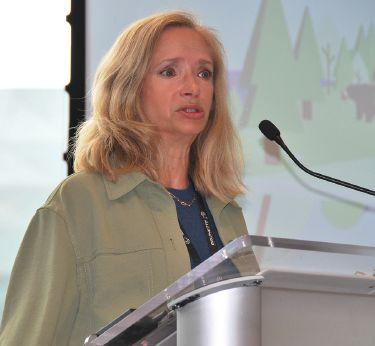
Andrea Johnston, senior vice-president, North America Development for Drax Group, explained that uncertainty in B.C. continues to impact the level of sawmill investment in the province. “We suspect capital allocation will be limited while we deal with the level of uncertainty,” she said. With fewer operating mills, Drax’s B.C. plants will see more uncertainty in terms of residual streams.
“We need both federal and provincial government support through tax incentives
FutureMetrics’ president William Strauss.
and grants,” to offset price fluctuations and uncertainty, Johnston said. The challenge for pellet plants now is accessing the “uneconomic” fibre in the bush.
Speaking on a panel on the next generation of biomass, Bassett outlined Drax’s plans to be carbon negative by 2030 through bioenergy carbon capture and storage (BECCS). The company expects its BECCS operations to be reducing emissions by 14 million tonnes a year – eight million as carbon removal at the Drax Power Station in the U.K., and six million at two BECCS plants in the U.S. South.
The company is targeting final investment decision in 2016 for the two U.S. plants, with operations beginning in 2030. They are evaluating another nine sites for BECCS, each of which would create 5,000 permanent jobs, Bassett said.
LOOKING TO AUSTRIA
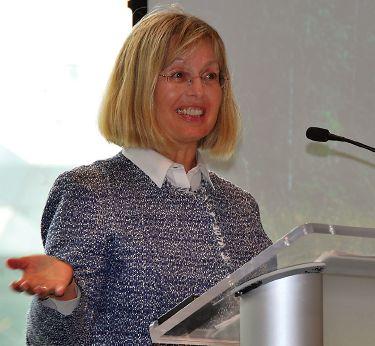
Christiane Egger, deputy manager of OÖ Energiesparverband – the regional energy agency of Upper Austria – joined WPAC’s conference to share about the agency’s bioheat success over the past few years. More than 1/3 of heating in Upper Austria is bioenergy and many of the world’s biomass boiler manufacturers are from Austria.
The Austrian province saw a significant increase in boiler installations since the pandemic, Egger said, spurred on by factors including Europe’s focus on climate neutrality by moving away from fossil fuels, downtime during the pandemic that encouraged old heating system conversions, and the war in Ukraine and resulting energy crisis in Europe.
Egger says the agency’s strategy to promote bioheat involves “carrots, sticks and tambourines, and a skateboard.” The carrots are incentives through subsidies and grants, the sticks are regulations and legislation, and the tambourines are education and information campaigns. The skateboard was a newer addition to their strategy and represents innovation to speed up the adoption of biomass as rollercoaster of the energy transition continues, she said.
PROMOTING DIVERSITY
Panelists speaking on the pellet industry’s investment in people and communities
through diversity drew parallels between safety and diversity, equity and inclusion (DEI). Julie Griffiths with Shaw Renewables, who heads up WPAC’s Safety Committee, first made the connection when asked what diversity means to her: “I think we need to look at it like we look at safety,” she said, “there is no end point.”
As with safety lessons, Griffiths said, there is always more to learn and draw from when it comes to DEI in a workplace. Inspiration begins with the leaders like herself who should hold themselves accountable and be transparent about challenges like conscious and unconscious biases, and then seek feedback from employees, she said.
Mark Puglas, director of Indigenous engagement and partnerships at Drax, continued the safety comparison, noting that, similar to a safety culture, employees should feel free to speak up if they see something wrong. Building a culture that respects diversity includes engaging with the workforce to show supervisors and crew that the company is accountable, he said.
Kayleigh Rayner-Brown, director of Obex Risk, offered a pathway for pellet companies that draws from the engineering world: plan, do, check, act. Establish the plan to build DEI into the business, execute the plan, check in with employees, and then integrate the actions into the company. It’s not enough to be aware of diversity, equity and inclusion challenges in our industry and in the workforce, Rayner-Brown said, there needs to be actions.
WARNING AND INSPIRATION
Keynote speaker Bruce Lourie, president of the Ivey Foundation and climate policy expert, wrapped up WPAC’s 2023 conference with an honest review of Canada’s emissions targets versus results. Among the G7 countries, Canada is well behind counterparts with oil and gas largely exported and those emissions “owned” by us.
“We have to do more than we’ve committed, and we have to get done what we’ve committed to,” Lourie said. He introduced the concept of “pathways” to achieve net zero, and cautioned against dead-end pathways that serve only to shave emissions off on a high-emitting solution.
Narrative, Lourie said, is a component of all pathways. For the pellet industry, he suggested that policy makers and the public will be more convinced by the importance of the industry to jobs, health, and family, rather than emissions reduction. “That’s what people really care about,” he said, “it’s an economic and community story.”
Lourie self-identified as having more wood-burning appliances than the average Canadian, and suggested bioheat is a story of families gathering around a wood stove, warming their hands. “Nobody is gathering around a heat pump,” he said. •
Find session presentations at the conference website, wpac-agm.pellet. org, and save the date for WPAC Conference 2024 on Sept. 17-18 in Victoria.
Andrea Johnston, senior vice-president, North America Development for Drax Group.
Christiane Egger, deputy manager of OÖ Energiesparverband –the regional energy agency of Upper Austria.
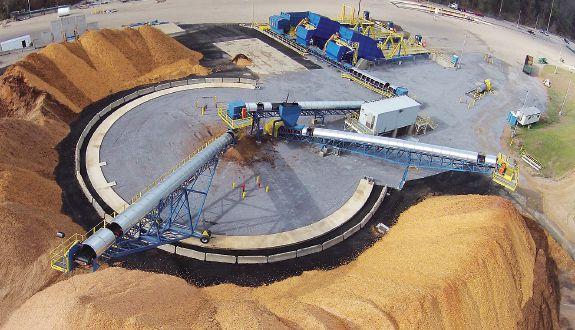
Moving the masses
Handling and storage solutions to meet booming industrial demands
By Joanne Turnell
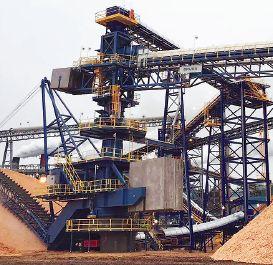
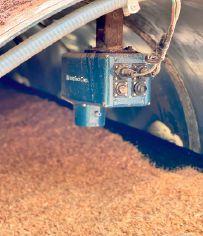
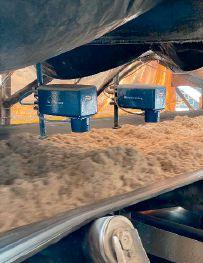
Biomass, the collective term for organic material used as fuel in power generation, is increasingly becoming mainstream. In Liverpool, England, two Bruks Siwertell multi-fuel screwtype unloaders serve Associated British Ports’ Immingham Renewable Fuels Terminal. The ST 790-D-type units are used for unloading imported biomass pellets to fuel the nearby Drax power station, which supplies between seven and eight per cent of the UK’s electricity demand. Managing the huge volumes of organic material required for these booming industries requires an expert touch, not only to ensure the quality of the material, but also the safety of the storage pile and its efficient management as it travels along the processing line with dust-free and cold weather-contained conveying solutions.
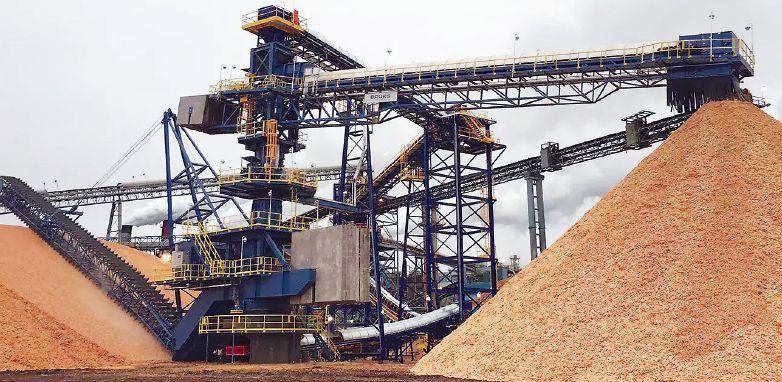
All these elements are tied up in each other, and automation is proving to be the solution. A popular choice is a fully automated woodyard which includes full automated stacker reclaimers. Woodyards can expertly manage vast, neat swathes of wood chips and various other materials.
At the recently shuttered Domtar Espanola, Ont., facilities, Bruks cold weather stacker reclaimers were installed in 1997 by the Spanish River Pulp & Paper Company, (acquired by Domtar in 1998). The mill produced 69,000 tons of over 200 different grades of technical and specialty paper every year, including northern bleached softwood kraft pulp. A 280,000-ton annual capacity fibre line was fed a mix of aspen, maple and birch hardwood chips, and meeting this appetite for more than 25 years, was cold weather stacker reclaimers. The two fully automated circular systems, with a beam length of 41.5m, operated almost con-
tinuously, even in the harshest winters, with minimal operator intervention and downtime.
INTELLIGENT TECHNOLOGY
Fully automated full circle stacker reclaimers can lay down successive layers of material in a continuous 360-degree rotational pattern using a stacking conveyor that pivots through a complete circle. At ground level, a reclaim bridge moves into the pile with a harrow simultaneously agitating and fluidizing the material on its reclaiming face. A large diameter screw catches all the falling material and transfers it to the center where it drops onto the reclaim belt. This passes under the pile and emerges beyond its edge, leaving the base undisturbed. A firstin first-out (FIFO) mechanism can ensure the oldest material in the pile is always reclaimed first and is blended reduce any variation to a minimum.
Automation has brought considerable benefits to woodyards. Fully automated stacker reclaimers minimize the number of personnel-hours required for daily
operations, delivering significant cost savings. They have a unique design that improves inventory control, as well as maintaining consistent quality.
Automated systems also have a fraction of the carbon footprint of a manually managed pile and offer much improved emissions control. These environmental gains stem from eliminating the continuous use of diesel-powered machines used to manage the piles. Fugitive dust emissions are also reduced in comparison to them, as the gentle nature of circular blending bed stacker reclaimers mean that they do not stir up fines and dust.
BIOENERGY GROWTH
With biomass demand increasing worldwide, getting the highest possible energy content for the end user requires every stage of the biomass production process to be handled with care.
At the U.S. Greenwood Colombo Energy plant in South Carolina – owned and operated by the world’s largest producer of industrial wood pellets, Enviva – several Bruks systems are in operation. The
A Bruks circular overpile stacker reclaimer. Photos courtesy Bruks Siwertell.
site has undergone a number of modernizations since opening in 2016, including the adoption of a fully automated woodyard.
The plant either takes delivery of pre-processed wood chips via its two back-on truck dumpers, or takes delivery of full logs which are then processed in a drum chipper to turn them into chips. All wood chips are stacked and stored using a circular blending bed stacker reclaimer. The entire wood-processing and handling operation delivers a very efficient system that benefits from all the advantages of automation, ensuring the plant’s highest yields.
Enviva Biomass also operates a Bruks circular blending bed stacker reclaimer at its Green Circle Bio Energy Inc plant in Cottondale, Fla. It began operations in 2008 and, with the help of its fully automated woodyard, has gone from an annual green wood chip processing capacity of 500,000 metric tons to three million.
SUSTAINABLE STEPS
Mills, pellet plants and power-generation facilities all operate on tightly controlled schedules with very little downtime. Woodyards and all their constitute components should deliver their contents day-in, day-out with the same levels of efficiency, reliability, and material consistency.
Storing and reclaiming organic biomass materials such as wood chips, bark or sawdust is a specialist task. Stacker reclaimers are a combination of technologies that pile and then retrieve dry bulk materials for onward conveying in a very efficient, controlled way. They also blend material, which is particularly important for organic commodities to reduce fibre losses from microbial action and heat build-up in the pile. Stacker reclaimers can form linear, semi-circular and fully circular piles in a range of sizes and capacities.
Varying moisture contents and differences in densities, fibre properties and calorific values are just some of the considerations. Also, most forms of biomass are very dusty, prone to catch fire or in fact self-ignite, and will freeze as well.
Degrading biomass during storage leads to several unfavorable outcomes including greenhouse gas (GHG) emissions,
feedstock/energy losses, and economic losses. Optimization of biomass storage along the supply chain for the reduction of these negative effects using a FIFO storage method is essential to improve bioenergy as a renewable and profitable energy source.
The overall effect of the biological, chemical and physical reactions, which occur in dormant biomass piles, leads to a succession of microorganisms as pile temperatures increase, which in turn releases GHG emissions, such as CO2, CH4 and CO, into the atmosphere.
In a FIFO system, the oldest product is reclaimed and processed first, before newer material. Using older material first helps ensure the material a processor utilizes is consistent and keeps your pile moving.
As the global demand for renewable energy intensifies, biofuel plants are being developed and promise the potential of consigning fossil fuels to the past. Part of this increasing commercialization is the growing importance of proven, reliable wood processing technology and biomass storage.
Joanne Turnell has been in the biomass and wood processing industry for more than 25 years, and is the capital sales representative for Bruks Siwertell in Canada. Joanne.turnell@bruks-siwertell.com
Automated storage systems reduce fugitive dust emissions, and lower the carbon footprint of an operation.
New Products
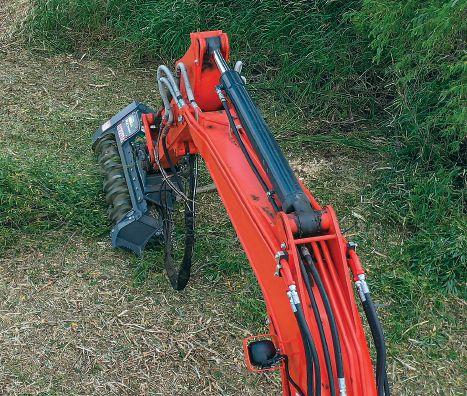
LOFTNESS INTRODUCES TILT HITCH FOR EXCAVATOR MULCHING HEADS
A new Tilt Hitch is available for 20 and 30 Series Battle Ax excavator mulching heads from Loftness. It allows operators to hydraulically tilt the mulching head on the boom for greater versatility and enhanced productivity on the jobsite. When equipped with the Tilt Hitch, a mulching head can be tilted up to 45 degrees to the left or right, offering one of the highest ranges of motion in the industry. Other advantages include a light weight and low cost, thanks to its practical, simplistic design.
Tilting the mulching head allows an operator to fully expose the knives when cutting into trees. Additionally, trees can be held in place for faster mulching performance by tilting and positioning the head so that the shear bar rests against the tree to prevent it from wobbling. When ground mulching, the head can also be tilted in a way to keep material from ejecting out the back or to help pick material off the ground for further processing. www.loftness.com
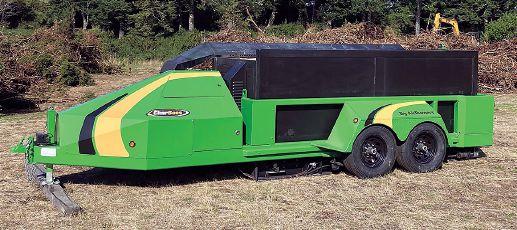
AIR BURNERS LAUNCHES NEW SELF-CONTAINED CHARBOSS BURNER SYSTEM
CharBoss, the world’s first mobile onsite biochar production system, has arrived. Air Burners partnered with the USDA Forest Service to boost the environmentally-friendly technology while adding power and speed to the new self-contained CharBoss. The fully assembled above-ground air curtain burner system is an advanced pollution-control device scientifically proven to eliminate wood waste 40 times faster than open burning and significantly reduces particulate matter, like black carbon smoke, to help mitigate climate change.
The CharBoss accepts whole trees, logs, root balls, slash piles, invasive shrubs, and other unwanted biomass debris. It burns one ton per hour, leaving behind 20 per cent biochar, a valuable carbon-rich residual to sell or return to the soil. The towable CharBoss is ideal for hard-to-reach remote areas, like forest thinning, land clearing, and disaster cleanup. www.airburners.com
NEW FAE BL1/SSL MULCHER FOR SKID STEERS STARTING AT 45 HP
FAE introduces a new forestry mulcher for small skid steers: the BL1/SSL/VT for vehicles from 45 to 65 hp, which can shred vegetation, shrubs, and trees up to 10 cm/4 inches in diameter.
It can be used for vegetation maintenance along roadsides, railroad tracks, the banks of canals, rivers, lakes, managing and protecting wildlife habitats, maintaining vineyards and orchards, commercial and residential green areas and sports grounds.
The head it designed for high productivity, durability, and easy maintenance. The BL1/SSL/VT’s Variable Torque (VT) piston engine boosts mulcher performance compared to a fixed-cylinder engine, increasing torque when an extra boost of power is needed and minimizing rotor stalling. In the field, the mulcher always operates with the maximum torque needed, for exceptional performance while optimizing fuel consumption. www.fae-group.com
NEW WOOD FIBER MACHINE FROM PREMIER TECH ACCELERATES SUBSTRATE PRODUCTION
The BPE Series Wood Fiber Machine is a compact, robust and energy-efficient equipment that allows for on-site production of wood fibre. The patented technology applies high pressure to the raw materials, generating heat above 100 C, which produces and sanitizes fibre, meeting RHP standards.
With a production capacity of up to 12 cubic metres per hour, and an expansion ratio of up to 1:3, it consumes 30 per cent less energy per cubic metre produced than typical refiners, resulting in significant cost savings. Various wood by-products can be used, including white softwood chips, forest residue, and compost wood. The produced fibre maintains its volume when mixed and has excellent water dispersion capacity for root development. www.ptchronos.com
CONVEYOR WEAR LINER ENGINEERED TO PROTECT CHUTES, EXTEND SKIRT LIFE
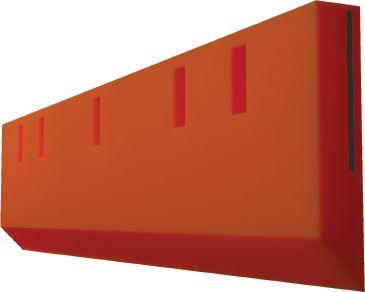
Martin Engineering has introduced a new standard in wear liner technology. The Manufactured Canoe Liner is made from durable urethane molded around a rugged steel plate to absorb impact and abrasion from the punishing bulk handling environment. With the protective plate integrated directly into the urethane liner, the design delivers superior shielding of the skirt sealing system and chute wall from heavy, fast-moving cargo. The result is extended equipment life, longer periods of dust and spillage control, improved safety and less maintenance, reducing the overall cost of operation. www.martin-eng.com
REMBE Q-BALL E GUARANTEES
MAXIMUM VENTING EFFICIENCY WITH MINIMUM WEIGHT
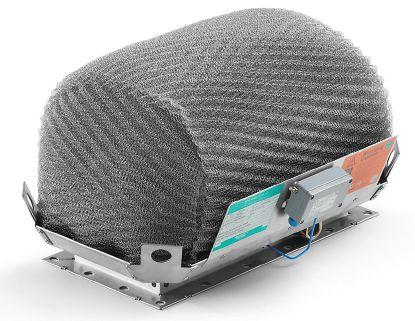
Flameless venting is a solution that is both, economical and effective. Manufacturers in just about every industry use varying flameless venting technologies depending on particular applications and requirements. The Q-Ball E presents yet another option with unique features to safely protect against the potential damage resulting from a combustible dust explosion.
With the Q-Ball E, a unique flame quenching filter is used to efficiently cool down flames. This prevents flames from escaping and minimizes the effects of the explosion pressure to an insignificant level. The typical increase in pressure and noise that accompanies an explosion within a building is reduced to an almost imperceptible minimum. Furthermore, the flame quenching filter acts as a particulate retention device so no hot embers are released into the surrounding area, thus protecting both employees and machinery.
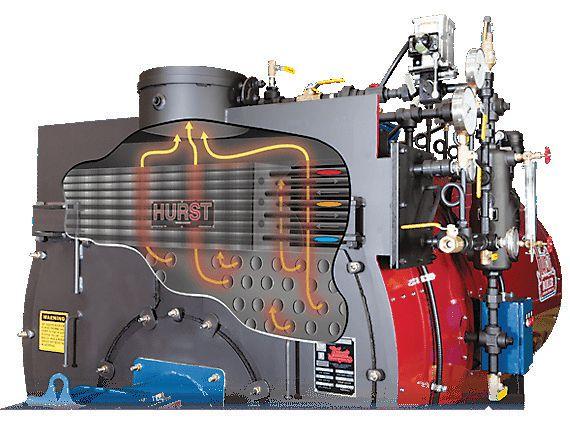
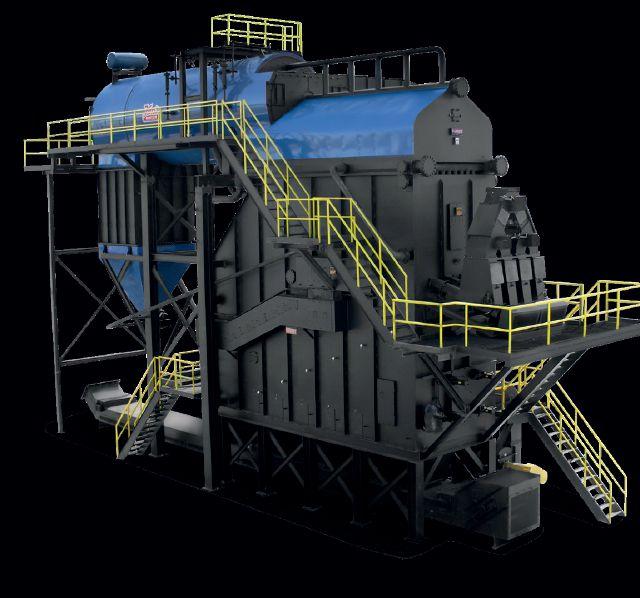
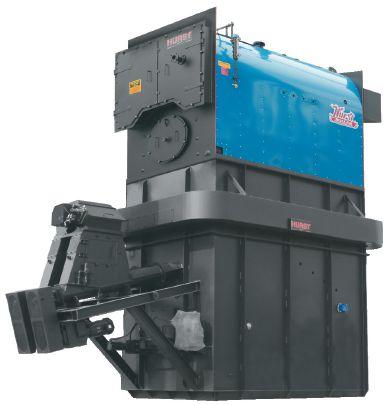
The Hurst internal stack economizer is a factory-optional device that is designed to increase the operating efficiency of a boiler, cutting down on its operational costs over the lifetime of the boiler. Boilers operate by heating water to make steam, and using that steam for heating, processing or power generation. For the most part, a boiler is fairly efficient, but some heat loss may occur when the flu gasses resulting from combustion are vented. The spent gases after combustion are quite hot, often very hot, and when they are simply vented out the exhaust stack, this represents lost heat for the boiler system.
The Hurst stack economizer acts as a waste heat recovery device, ensuring that this available heat does not go unused. Instead, the heat is recovered to essentially preheat the boiler’s makeup water. www.hurstboiler.com
CPM UNVEILS ITS PELLET MILL PM9950 CONCEPT MODEL AND CUSTOMER PORTAL
CPM showcased new technology at the 2023 LIGNA industrial trade fair in Hannover, Germany, from May 15-19.
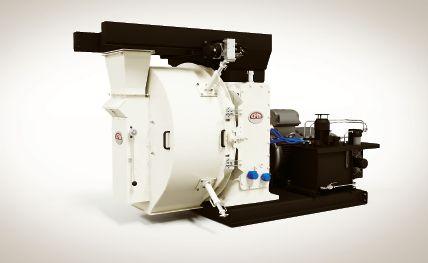
CPM’s pellet Mill PM9950 concept model for the biomass production industry, specifically designed for high throughput at more than 10 tons per hour capacity on softwood. The new mill can handle the toughest industrial applications, from processing softwood like spruce and southern yellow pine as well as other woods including a combination of wood species.
Pellet Mill PM9950 will come equipped with oil lubricated rollers, which are designed to cope with high loads, extend bearing life and maximize uptime. CPM has been developing pellet mills since 1883, and pellet mills for the biomass industry for the last 30 years. The Pellet Mill PM9950 will be made available to customers in late 2024.
CPM’s new customer service portal, myCPM.com, offers simple click-to-order parts buying for CPM machines, together with order tracking, service requests and maintenance history – in one centralized, easy-to-use space. myCPM.com provides a personalized view of equipment owned by the customer, with relevant parts manuals automatically updated to reflect changes to customer equipment. www.cpm.net
Bio-investment needed
AFinancing Canada’s transition from a
hydrocarbons
to a carbohydrates economy
By Camille Saltman
rtificial intelligence, for all its potential benefits, is gobbling up investment dollars while reducing jobs, consuming vast amounts of electricity, and increasing carbon emissions. In contrast, encouraging investment in advanced biobased composites made from Canada’s agricultural resources would have the polar opposite impact.
While our friends to the south have struggled to enact national legislation, Canada has been legally cultivating hemp for decades for plant-based protein. The leftover stalk contains some of the strongest natural fibres on earth. If properly refined, it can be manufactured into composites for the automotive, marine, wind energy, and consumer products industries and more.
Hemp bio-composites offer a tremendous market opportunity. They are less expensive, lighter, stronger, and far more sustainable than the glass reinforced plastics and timber products they replace.
Major corporations globally are seeking to integrate more sustainable materials into their end products. These companies are actively partnering with innovation companies like ours to support development of natural fibre bio-materials. In INCA’s case, we’ve developed patented bio-composites for automotive interiors, cores of wind turbine blades and boat hulls, recreational vehicle sidewalls and bioplastics.
There are plenty of market drivers. The EV transition in the transportation industry makes light weighting vital. The shortages and skyrocketing prices of rain forest plywood and balsa wood are forcing manufacturers to seek alternatives. Plastics waste is a global crisis. In fact Canada and the EU have already banned single use plastics.
From farm to factory floor the potential economic benefits of this expanding indus-
try are astronomical. When farmers sell their hemp seed to processors and simultaneously sell their waste to companies like INCA, this dual revenue stream will make hemp one of the most profitable crops in the Prairie. When fibre processing and composites manufacturing are performed domestically, hundreds of good paying jobs are created. It’s a win-win for all of us.
At the nascent stage this sector does receive a great deal of public support through NSERC Discovery Grants, IRAP, Sustainable Development Technology Canada, and SR&ED tax incentives. Canadian early stage venture capital funds are also stepping up including The51 Food & Ag Tech Fund, Conexus Venture Capital, Tallgrass Ventures, Pangaea Ventures and Natural Products Canada.
The result? Canada is developing a rich ecosystem of early stage bio-material researchers and raw material processors. At the other end of the spectrum, once a company is well into revenues, private equity and commercial banks can provide financing along with government organizations like Emissions Reduction Alberta, Export Canada, AFSC, Farm Credit Canada, and the Strategic Innovation Fund.
Unfortunately, pre-revenue companies, even those with developed products and customer traction, currently face huge barriers to entry. Often these are large projects that involve a capital intensive manufacturing facility with a long build-out timeline. Venture and private equity investors have scaled back investment radically in 2023 due to economic uncertainty, sharply higher interest rates, an IPO drought and the failure of Silicon Valley bank. Unfortunately, current government funding programs are also not designed for this type of pre-revenue deal. BDC Sustainability
Venture Fund, Climate Tech Fund II, and the Industrial Innovation Venture Fund shy away from asset-heavy projects and invest instead in digital technologies requiring small capital infusions and pre-manufacturing stage innovation.
All these factors are hindering growth of projects that could have a transformative impact on the Canadian economy. But is it realistic to expect Canada could play a leadership role in bio-composites?
France, by comparison is a world leader in growing hemp and flax to manufacture natural fibre composites for the European automotive market. They took an early lead in this space thanks to their robust ecosystem of automotive, truck, building and construction, electronics, consumer goods, wind energy, aerospace and marine manufacturers.
Canada has the opportunity to play a similar role in North America with our 20-year head start growing hemp, our climate, and investment to date in agriculture, genetics, fibre processing, and advanced manufacturing.
To promote this sector new types of financial support will be needed, such as backstop agreements to enable companies to secure capital commitments from a broader range of investors including family offices and corporate venture arms. It’s time for government and industry to capitalize on this opportunity before it slips through our fingers. •
Camille Saltman is chief marketing and sustainability officer of INCA Renewtech, and the co-author of “Turning Biomass into Business”, a chapter of BioProducts: Green Materials for a Circular and Sustainable Economy, published by De Gruyter.
AWARDS
Solid Fuel Combustion
WOOD FIRED BURNERS
for High Temperature Batch & Continuous Lumber
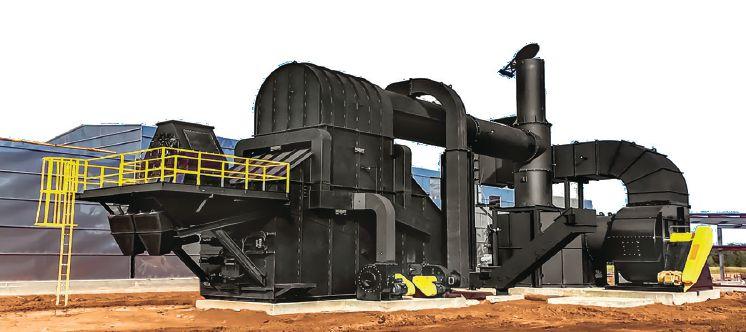
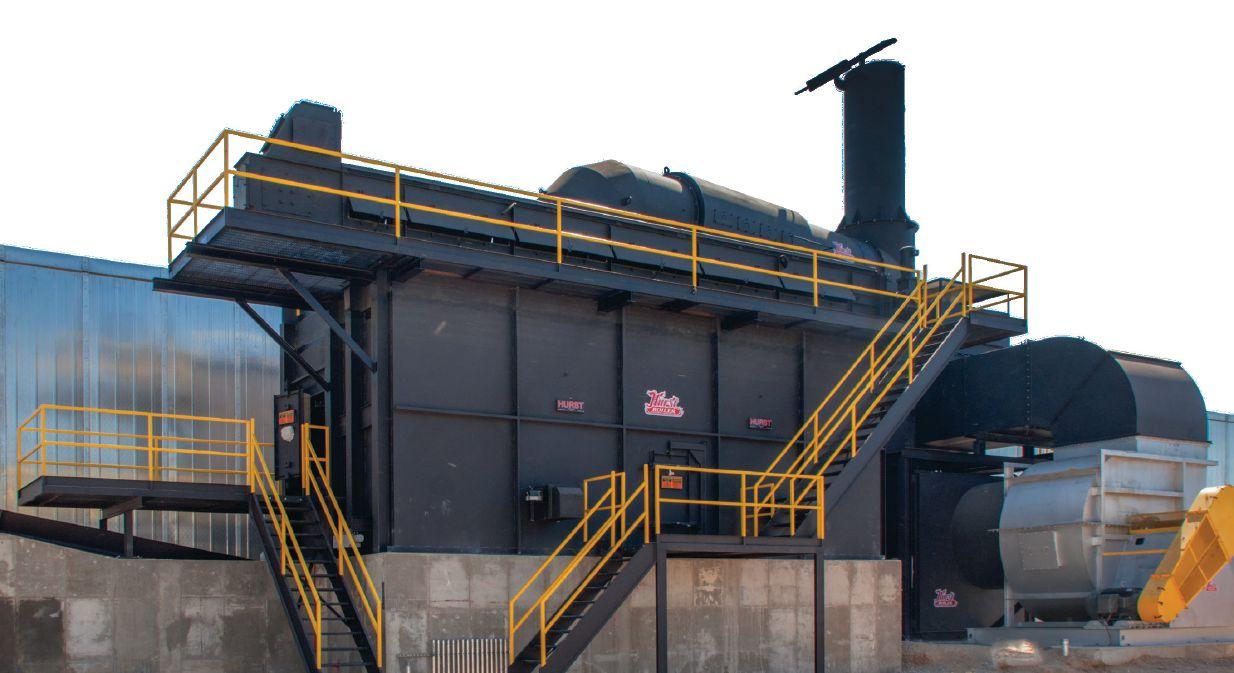
Hurst offers a full line of biomass combustion systems backed with fifty years of innovative clean-burn design. Diverse in every way with multi-fuel blending capability. Hurst stokers utilize hundreds of common and abundant solid biomass fuels.