Inside Ontario’s first energy wood chip production and storage facility
Inside Ontario’s first energy wood chip production and storage facility












Celebrating 100 years in the business, Viessmann has been providing homeowners with industry-leading heating solutions for generations.
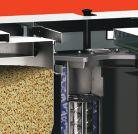
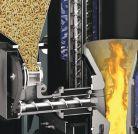
The Vitoligno 300-C wood pellet-fired boiler is a modern, compact and fully-automatic heating solution for residential and light commercial applications.
High efficiency up to 85%
Environmentally-friendly, carbon neutral heating
Easy conversion from automatic to manual fuel feed
Easy to obtain, locally and sustainably sourced wood fuel
WINNER of the 2015 German Design Award
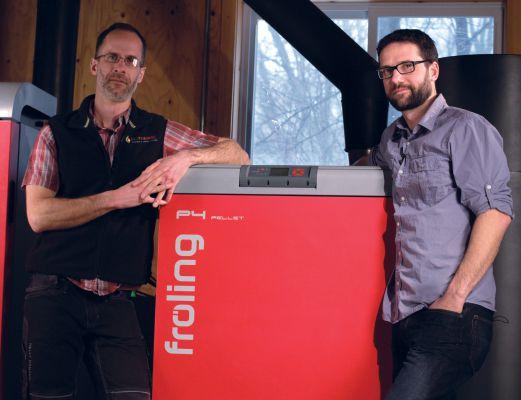
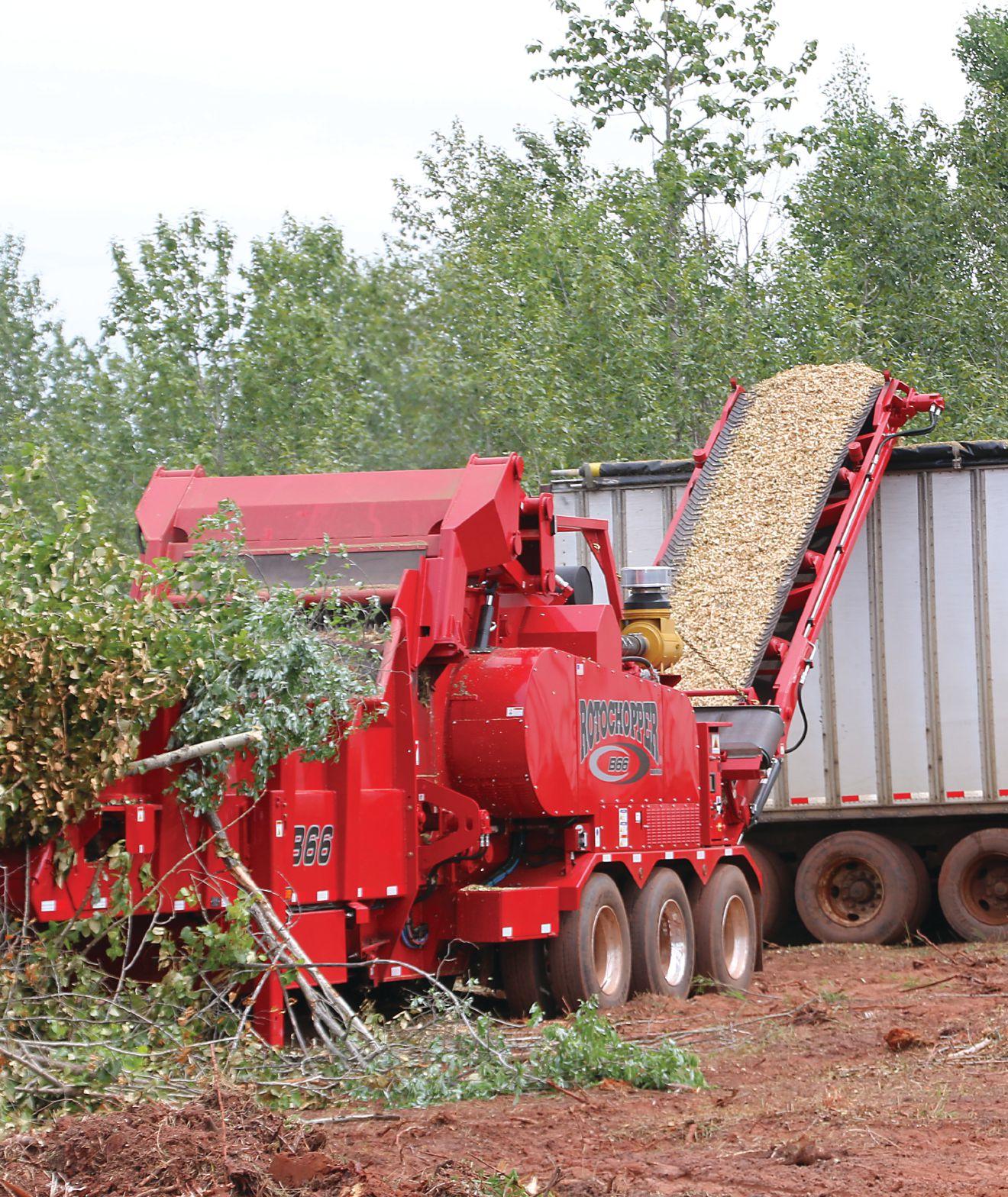
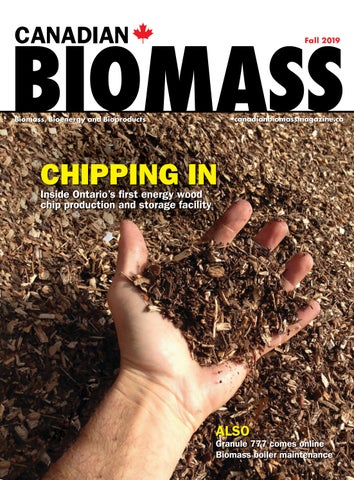
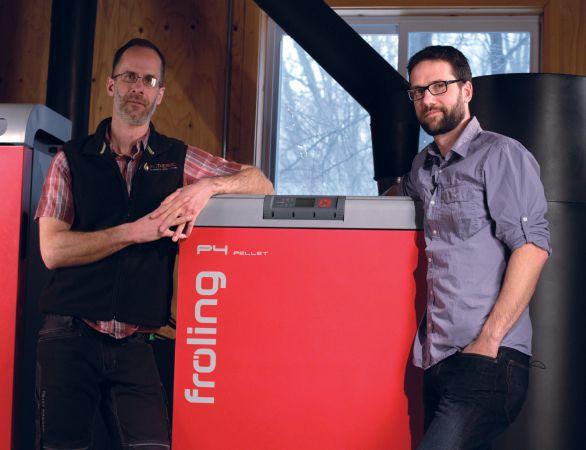
Biothermic Renewable Energy Systems recently built Ontario’s first energy wood chip production and storage facility. Owners Mike and Vince Rutter provide turnkey installations of wood heating systems and educate the public about the benefits of using wood chips for heating.
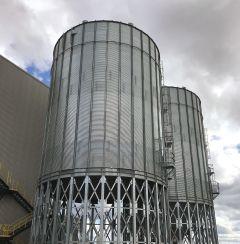
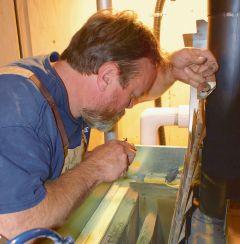
Granule 777 is Eastern Canada’s newest – and largest – pellet plant. The facility came online in September and has a production capacity of 210,000 tonnes per year.
Canadian Biomass spoke with three biomass boiler experts to learn some best practices and tips for proper boiler maintenance.
CSA released a guide for Canadian wood chip fuel in May 2019. Sebnem Madrali and Jaime Fernandez explain how the guide came to be, its scope and how it can help build confidence in an emerging market.
Canadian Biomass’ annual Pellet Gear Buyers Guide rounds up suppliers of pellet production equipment.
A landfill near Prince George, B.C., is finding new ways to harness the power of household waste. The Foothills Boulevard Regional Landfill has partnered with FortisBC to produce RNG.
“We looked at diffrent options, and the industrial wood pellet business was a market that was of a growing nature...”

chool strike for climate.” In August 2018, Greta Thunberg began protesting for stronger action on global warming, holding up a sign in Swedish with those words written on it. That sign and her actions have sparked an international movement, with millions of people participating in climate strikes in cities across the world, including Toronto, Montreal, Ottawa and Vancouver.
Climate change is obvi ously not a new issue. But people are paying more at tention to it than ever be fore, including government officials. It is one of the main issues in the upcom ing federal election, with multiple parties pledging to reduce greenhouse gas emissions and develop a low-carbon economy.
This presents potential opportunities for our industry. In fact, the theme of this year’s annual Wood Pellet Association of Canada Conference and AGM, which took place in Ottawa from Sept. 21-23, was leading Canada’s low-carbon economy.
In her opening remarks at the conference, Beth MacNeil, assistant deputy minister with the Canadian Forest Service, said, “Forests will continue to play an important role in our future as we transition to a low-carbon economy… The fact that so many of you are here to discuss challenges and opportunities in bioeconomy shows the commitment of the wood pellet sector.”
The federal government has supported pellet producers’ efforts to transition to a low-carbon economy through several programs, such as the Investments in Forest Industry Transformation (IFIT) program, added Jeff Waring, director gen-
eral of the Trade Economics and Industry Branch, Canadian Forest Service. Read more about the conference on page 6. Support through the IFIT program also helped Barrette-Chapais sawmill build a new 210,000 tonne pellet plant, Granule 777, in Quebec. The plant, which opened in September, is one of Canada’s largest industrial pellet plants. On page 14, Yann Sellin, Granule 777’s general manager, explains how the plant will help Barrette-Chapais sawmill maintain their 450 employees and recover residuals from the mill, as well as the challenges they overcame in building a new plant in such a harsh climate.
It’s not just pellet producers who are supporting a low-carbon economy. There are several new bioheat projects that will help reduce greenhouse gas emissions and waste. On page 10, Meagan Ross writes about Biothermic Renewable Energy Systems, which recently began operating Ontario’s first wood fuel facility for processing and storing wood chips, and the impact wood chips can have on building Canada’s renewable energy sector.
It’s clear that Canada’s growing bioeconomy has a large role to play in the fight against climate change. Stories like these make me optimistic about the future, and I look forward to sharing more in upcoming issues of the magazine. •
Ellen Cools, Associate Editor

Volume 19 No. 4
Editor - Maria Church (226) 931-1396 mchurch@annexbusinessmedia.com
Associate Editor - Ellen Cools (416) 510-6766 ecools@annexbusinessmedia.com
Contributors - Gordon Murray, Meagan Ross, Sebnem Madrali, Jaime Fernandez, Donald Smith
Account Coordinator - Stephanie DeFields Ph: (519) 429-5196 sdefields@annexbusinessmedia.com
National Sales Manager - Ross Anderson (on leave)
National Sales Manager - Rebecca Lewis Ph: (519) 429-5196 rlewis@annexbusinessmedia.com
Quebec Sales - Josée Crevier Ph: (514) 425-0025 Fax: (514) 425-0068 jcrevier@annexbusinessmedia.com
Western Sales Manager - Tim Shaddick tootall1@shaw.ca Ph: (604) 264-1158 Fax: (604) 264-1367
Media Designer - Alison Keba
Circulation Manager – Jay Doshi jdoshi@annexbusinessmedia.com Ph: (416) 442-5600 ext. 5124
Group Publisher - Todd Humber thumber@annexbusinessmedia.com
COO Scott Jamieson
President/CEO Mike Fredericks
Canadian Biomass is published four times a year: Winter, Spring, Summer and Fall. Published and printed by Annex Business Media.
Publication Mail Agreement # 40065710 Printed in Canada ISSN 2290-3097
Subscription Rates: Canada - 1 Yr $57.00; 2 Yr $102.00 Single Copy - $9.00 (Canadian prices do not include applicable taxes) USA – 1 Yr $93.50 US; Foreign – 1 Yr $106.00 US
CIRCULATION
mchana@annexbusinessmedia.com Tel: (416) 510-5109 Fax: (416) 510-6875 or (416) 442-2191 111 Gordon Baker Rd., Suite 400, Toronto, ON M2H 3R1
Annex Privacy Officer Privacy@annexbusinessmedia.com Tel: 800-668-2374
Occasionally, Canadian Biomass magazine will mail information on behalf of industry-related groups whose products and services we believe may be of interest to you. If you prefer not to receive this information, please contact our circulation department in any of the four ways listed above. No part of the editorial content of this publication may be reprinted without the publisher’s written permission ©2019 Annex Business Media, All rights reserved. Opinions expressed in this magazine are not necessarily those of the editor or publisher. No liability is assumed for errors or omissions. All advertising is subject to the publisher’s approval. Such approval does not imply any endorsement of the products or services advertised. Publisher reserves the right to refuse advertising that does not meet the standards of the publication.
www.canadianbiomassmagazine.ca

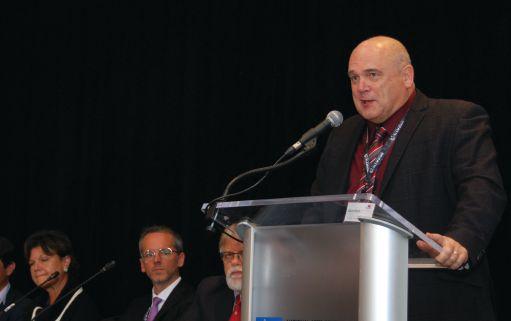
With new pellet plants coming online, potentially favourable government policies in the pipeline, and growing demand for wood pellets, Canada’s pellet sector is poised to contribute to the global low-carbon economy. But, as speakers at the Wood Pellet Association of Canada (WPAC) conference reminded us, there are several uncertainties that will dictate the sector’s growth.
The annual WPAC conference and AGM took place from Sept. 21-23 in Ottawa and brought together around 200 attendees, including pellet producers, government officials, and other stakeholders.
In her opening remarks, Beth MacNeil, assistant deputy minister with the Canadian Forest Service, picked up on WPAC’s 2019 conference theme of leading Canada’s low-carbon economy. “Forests will continue to play an important role in our future as we transition to a low-carbon economy...The fact that so many of you are here to discuss challenges and
opportunities in bioeconomy shows the commitment of the wood pellet sector,” she said.
In a session on industry working with government,
Jeff Waring, director general of the Trade Economics and Industry Branch, Canadian Forest Service added that the government supports pellet producers – directly or indirectly – through multiple programs, several of which have been used by WPAC members to install new technology or develop new global markets.
Yann Sellin, general manager of Granule 777, shared his company’s experience working with the government to help launch the brand-new plant owned by Barrette-Chapais sawmill. Support from the Investments in Forest Industry Transformation program was the final trigger for company to launch the pellet project, Sellin said.
Several pellet heating projects were highlighted during the conference as evidence of the growing interest in wood heat
as a low-carbon, cost-effective energy source.
P.E.I. has a remarkable number of successful bioheat projects, largely thanks to its chief boiler inspector, Steven Townsend. Townsend led the charge to adjust the provincial regulations to accept European boilers standards, which means high-quality European-manufactured wood boilers can be approved and installed in municipal and commercial buildings. The province has 23 operating biomass plants, with six more coming online in 2020.
In his presentation on Canada’s proposed Clean Fuel Standard, TorchLight Bioresources managing director, Jamie Stephen, explained how changing the proposed regulation to allow for end-use fuel switching could increase domestic pellet demand by
850-900,000 tonnes.
Global market demand for wood pellets is continuing to rise, as experts have long predicted, although uncertainty remains a concern, multiple speakers shared.
Hawkins Wright is predicting EU and UK utilities will increase industrial wood pellet consumption by five million tonnes a year over the next two years, associate director Fiona Matthews shared with the audience. Globally, demand is expected to rise by 4.2 million tonnes in 2019, and 4.3 million tonnes in 2020. To meet that demand, pellet production capacity needs to grow by at least 14 million tonnes. “We think the supply chain is completely unprepared to meet this new demand,” Matthews said.
Read the full article at canadianbiomassmagazine.ca.
The federal government is helping fund the University of Waterloo’s development of thin structured wood-plastic composites.
Natural Resources Canada’s Clean Growth Program is providing $800,000 to the Ontario university to advance the project, which aims to convert forestry waste materials into bio-products for use in construction, automotive and packing applications.
Tizazu Mekonnen, associate professor of chemical engineering at the University of Waterloo, said they are
grateful for the federal support.
“In a world where the dynamic challenges of the plastic industry are associated with severe environmental pollution, resource scarcity or depletion concerns and the health and safety risk of some plastics and additives are testing the earth’s limits and our standards for human well-being, it is crucial that government supports research and development efforts in a way that provides sustainable solutions and local resource utilization and avoids health and safety, and pollution concerns,” he said in the release.
Ottawa has announced new funding to support the expansion of the University of British Columbia’s (UBC) Bioenergy Research and Demonstration Facility.
Environment minister Catherine McKenna announced $7.6 million from the Low Carbon Economy Fund will go towards the biomass expansion project, stating in a press release the investment is helping position Canada for success in the
Pinnacle Renewable Energy’s $30-million upgrade plans at its Williams Lake, B.C., pellet plant received the green light from the local city council in August.
The council unanimously approved the company’s request to upgrade the plant and increase pellet production.
The upgrades include new fibre drying and air filtration equipment, which will allow the facility to process forest residuals.
“This strategic investment will enhance the operating flexibility of the Williams Lake and Meadowbank facilities and position Pinnacle to adapt to cyclical changes in wood fibre supply within the B.C. interior. Further, the equipment, technology and infrastructure improvements will result in improved facility operating efficiencies, lower emissions, local employment opportunities and greater overall facility safety,” the company stated in its Q2 report.
The federal government has announced a combined $4.7-million investment in Toronto-based Woodland Biofuels to support technology development and the commercial scale up of its cellulosic ethanol facility.
Natural Resources Canada’s Investments in Forest Industry Transformation program is supplying $1.9 million for Woodland Biofuels to develop its waste-to-biofuel technology that uses wood and agricultural waste.
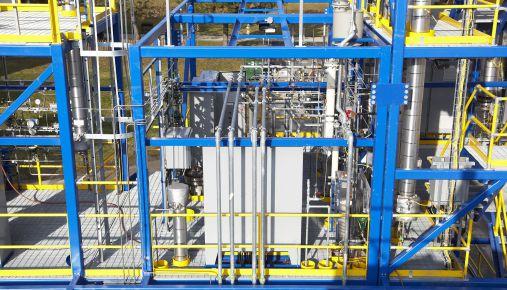
Another $2.8-million investment funded by Natural Resources Canada’s Clean Growth Program is supporting the commercial scale-up of Woodland Biofuel’s cellulosic ethanol demonstration plant, located at the Bioindustrial Innovation Centre in Sarnia, Ont. The plant produces ethanol from forestry residuals and construction and demolition wood waste.
Woodland CEO Greg Nuttall said in a government news release the investment is evidence that Canada is leading the world
$26-trillion global market for clean solutions.
The $20.4-million expansion will allow the facility, located on UBC’s Vancouver campus, to provide up to 70 per cent of the campus’ annual heating needs, up significantly from its current 25-32 per cent. The facility houses both a thermal system and a combined heat and power demonstration system and is fuelled by locally sourced wood residuals.
According to a news release from Environment and Climate Change Canada, the project has “potential for replicability” in other colleges and universities to replace fossil fuels in existing district heating systems.
Sainc Energy Limited, a London-based developer of biomass refineries, has entered into a definitive supply contract for 180,000 tonnes per annum of local olive tree prunings for its planned advanced bio-refinery at Villaralto, in Cordoba Province, Andalusia, Spain.
The biorefinery will produce second generation (2G) ethanol alongside so-called crude lignin oil (CLO). The CLO will be purchased by Vertoro, a Dutch startup, which also developed the underlying technology. For the ethanol off take, it is currently in discussions with BP, Shell and Total.
Relevant permits are presently being processed and evaluated by local experts and authorities. Potential financial closure partners are a Spanish bank and a Chinese project developer.
The bio-refinery is expected to go into production by Q3 2022.
in reducing fuel costs and fighting climate change.
“Woodland’s process not only reduces GHG emissions by up to 92 per cent, it produces fuel at a lower cost than making gasoline from oil,” Nuttall said. “The funding being provided by the Canadian government is expected to enable Woodland’s first commercial plant, which we anticipate will be built right here in Sarnia. I’d like to thank the Canadian government and the Western Sarnia-Lambton Research Park for their essential support in making this happen.”

SWPAC argues for end-use fuel switching under proposed CFS regulations
By Gordon Murray
ince 2017, the Canadian government has been developing the Clean Fuel Standard (CFS), a low carbon fuel standard-type policy, to reduce the lifecycle carbon intensity of fuels and energy used in Canada. The CFS aims to achieve 30 million tonnes carbon dioxide equivalent (CO2e) of annual reductions in GHG emissions by 2030.
The CFS regulations will cover all fossil fuels used in Canada but will set separate requirements for fuels based upon their state of matter: liquid, gaseous, or solid. The CFS is being developed in a phased approach. Regulations for the liquid fossil fuel class are currently under development, with draft regulations planned for publication by early 2020.
Together with other energy stakeholders, WPAC has been providing input to Environment and Climate Change Canada (ECCC) as it works to design and shape the CFS. In June 2019, ECCC released the federal government’s proposed regulatory approach for liquid fuels.
The CFS will set performance standards for liquid fossil fuels based upon their lifecycle carbon intensity (CI). Each liquid fossil fuel will be assigned a target carbon intensity to be expressed in grams of CO2 equivalent per megajoule of fuel energy (g CO2e/MJ). Obligated parties – finished fossil fuel producers and importers – must reduce the carbon intensity of fuel over time. For example, ECCC proposes a heating oil 2016 baseline CI of 84 g CO2e/MJ must be reduced to 80.4 g CO2e/MJ by 2022 and to 74.0 g CO2e/MJ by 2030.
Under the ECCC proposed regulations, obligated parties would have three ways to comply with the CFS:
1. By reducing the carbon intensity of the
fossil fuels they supply;
2. By blending lower CI fuels, such as liquid biofuels, with fossil fuels; or
3. By fuel switching in the transportation sector (e.g., replacing internal combustion vehicles with electric or hydrogen-powered vehicles).
The CFS would establish a compliance credit trading system whereby obligated parties could purchase compliance credits from credit generators (e.g., electric vehicle manufacturers) or other obligated parties. At the end of the year, they would need to show that their compliance credits result in a CI of the fuel they supplied equal to or better than the regulatory requirements, or else pay a significant fine.
Upon review of ECCC’s proposed regulatory approach, WPAC is seriously concerned that the government will not allow end-use fuel switching in the buildings/stationary fuel use sector. We believe that it is unfair for ECCC to recognize fuel switching from gasoline to electricity or hydrogen in transportation, but not to recognize switching from heating oil to solid biofuels.
To this end, I wrote to ECCC describing WPAC’s position on the current CFS regulatory design, recommending how the regulations could be modified. I, along with technical and policy consultant Dr. Jamie Stephen of TorchLight Bioresources, met with ECCC representatives in Ottawa on Aug. 21, 2019. WPAC made the following arguments:
• One of the CFS’ primary objectives is low-cost compliance. By prohibiting recognition of fuel switching for stationary applications, ECCC will actually increase the cost of CFS compliance, exclude the forest sector from participation in the short-term, and inhibit investment in
wood pellet and chip boilers.
• Canada consumes approximately three billion litres of heating oil per year. The majority of heating oil is consumed in rural and Atlantic Canada. Rural and Atlantic Canada have among the lowest per capita income in Canada. ECCC’s proposed regulatory approach will make CFS compliance for these low-income areas significantly more expensive than for those living in cities.
• Under ECCC’s proposed regulatory approach, the principal mechanism for ensuring compliance from heating oil suppliers will be to blend renewable diesel with heating oil. The 2030 target of 74 g CO2e/MJ is less than heating oil combustion emissions, meaning upstream efficiency improvements will be insufficient. The only heating oil-miscible fuel that can also be stored outside in winter is renewable diesel. Renewable diesel is currently trading for $2.00-$2.50 per litre in the U.S. An 18 per cent renewable diesel blend rate – the required rate to meet the 74 g CO2e/MJ target – would increase heating costs by 33 per cent. In addition to a 15 per cent increase associated with the carbon levy, real heating costs will increase by 50 per cent.
• Renewable diesel, at $2.00-$2.50 per litre, has a useful heat fuel cost of $65$82 per gigajoule (GJ). In contrast, wood pellets, at $300-$350 per tonne for residential sales, have a useful heat fuel cost of $20-24 per GJ. Wood pellets also have half the carbon intensity of default renewable diesel (29 g CO2e/MJ). Wood chips are half the carbon intensity of wood pellets. This means, on an implied carbon price basis and assuming wholesale $0.75 per litre for heating oil, blending renewable diesel with heating oil has a fuel cost of $630 to $884 per
tonne CO2e. Switching from heating oil to wood pellets has a fuel cost of -$7 to -$49 per tonne CO2e. But pellet boiler penetration of Canada’s heat market is low. A CFS with a provision for end-use fuel switching in liquid class stationary applications would drive adoption of pellet boilers, thereby lowering fuel and delivered heat costs.
• Despite large investments in lignocellulosic liquid transportation biofuels, all technologies are still pre-commercial. Co-processing pyrolysis oil or biocrude at a meaningful volume will not occur before 2030. Canada’s forest sector represents over 75 per cent of annually available biomass resources and its exclusion from participation in the liquids class, which ECCC seeks to account for over 75 per cent of GHG reductions under the CFS, will increase the cost of compliance. Domestic lipid and starch supplies are limited, so excluding forest feedstocks will lead to more renewable fuel imports to Canada, contradicting ECCC’s goal of attracting investment.
• ECCC’s proposed regulatory approach is in apparent conflict with the govern-
ment’s objective of phasing out diesel and heating oil in rural and remote communities. Under Clean Energy for Rural Remote Communites, $55 million is allocated to bioheat. It is contradictory for the government to support bioheat displacement of heating oil with one policy, only to exclude it from another policy.
• Since the government has made eliminating diesel and heating oil consumption in remote communities a priority, it is difficult to understand why ECCC would decide to exclude these fuels from CFS compliance. The exclusion misses two important points.
1. In most remote communities, electricity generated by diesel is already subsidized by grid-connected electricity rate payers in the province, the provincial/territorial government, and/or the federal government. Excluding remote community diesel under the CFS reinforces the status-quo of energy insecurity. Many remote communities have opportunities for bioheat or biomass combined heat-and-power. The CFS is a chance to encourage local distribution companies to engage with res-

idents to pursue these opportunities.
2. Remote communities are already pursuing bioheat development because of potential cost savings. The CFS could accelerate this switch to renewable, low-carbon wood fuel resources. The Northwest Territories is a major bioheat hub. It is not logical to exclude regions that are ideal for switching to low-carbon fuels under the CFS.
ECCC has made a significant effort to design a compliance credit creation mechanism for electric and hydrogen fuel cell vehicles. Companies such as U.S.-based Tesla will generate and sell credits, which will allow them to offer their vehicles for less. This will completely change Canada’s energy market dynamics.
It is only fair for the Canadian wood pellet industry to expect the same policy development effort. Permitting end-use fuel switching in stationary liquid class applications under the CFS is not asking for special treatment – it is asking for the same treatment afforded foreign electric vehicle manufacturers. •
by Meagan Ross
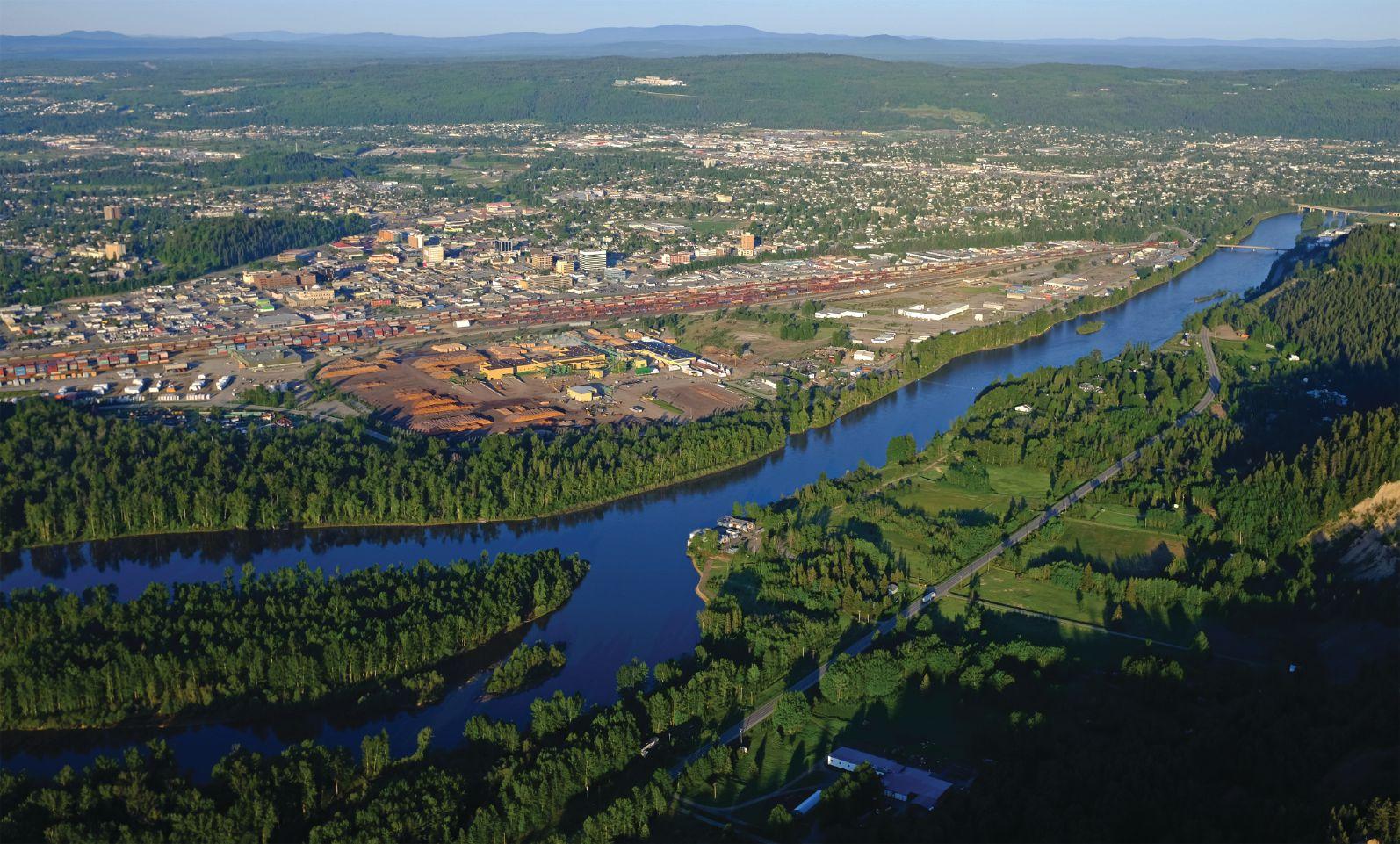
Vince Rutter is clearly in the right line of work. “I like to grow things,” he says when asked about his penchant for starting businesses. In fact, he and his brother, Mike, recently started a new business, Biothermic Renewable Energy Systems, and built Ontario’s first energy wood chip production and storage facility.
But this isn’t Vince’s first foray into the forest products sector. After graduating from Lakehead University’s Forestry program in Thunder Bay, Ont., he worked for a local forestry company before striking out on his own in 2005, creating Rutter Urban Forestry (RUF). Through RUF, he shares his passion for good tree care, providing clients with treatments to keep trees healthy, and educating people on the benefits of urban forests and environments. RUF also produces waste-wood chips from their tree care work.
After building RUF for 10 years, a local opportunity with Confederation College arose, which helped launch Biothermic. Biothermic offers in-demand expert wood heating knowledge and experience, wholesale mechanical distribution, complete design support and turnkey installations of wood heating systems for commercial, institutional and residential customers.
Biothermic took off after the Rutters met with staff at the college’s Bioenergy Learning and Research Centre, where two Fröling 500 kW heating units had been installed to heat the main campus buildings, along with a 150 kW research boiler, a 15 kW pellet boiler and a 30 kW firewood boiler, all made by Fröling.
According to Rutter, smaller modern biomass boilers, such as the ones the college installed, present a challenge since they require a refined type of wood chip not available from typical forestry companies. In this case, the college also wanted to burn low grade waste-wood products, which are in ample supply from urban forests, RUF’s area of expertise.
Thus, the college’s new heating system highlighted the natural synergy between RUF and Biothermic: RUF needed to divert its waste-wood chips and Biothermic needed a reliable wood chip supply in order for clients to install wood chip heating systems. The success of the college’s biomass boilers relied on the stable supply of fuel created through this partnership.
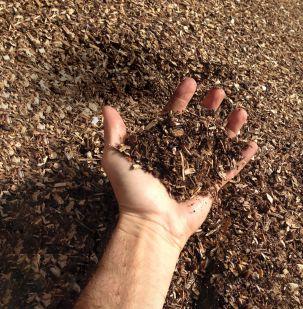
This past year, Biothermic capitalized on this partnership and built Ontario’s first energy wood chip production and storage facility in Thunder Bay. The new 5,000 square-foot facility, which took about one month to build, provides 200,000 cubic metres of storage space, and can reliably produce and store graded fuel at less than 30 per cent moisture content (MC). The chips from RUF are screened and dried at Biothermic’s new facility until they reach the P45 W30 grade, making them compatible with many
European-made wood chippers.
When asked what prompted the ambitious project, Vince explains that it was essential to have the infrastructure in place in order to build capacity – the facility had to be built and functioning in order to attract clients to wood heating. But without a reliable source of fuel, he would be hard pressed to convince institutions and businesses to convert.
To help make the new wood processing facility a reality, the Centre for Research and Innovation in the Bio-Economy (CRIBE), an independent non-profit corporation that supports the development and commercialization of innovative use of forest biomass in Canada, awarded Biothermic a $168,500 grant.
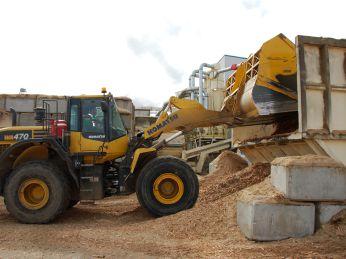
Typically, wood chips come from sawmill or forest operation residues, but the urban forest is also an important source. Usually urban wood waste is used for compost or mulch, or dumped in a landfill. But almost all of Biothermic’s chips are used for energy.
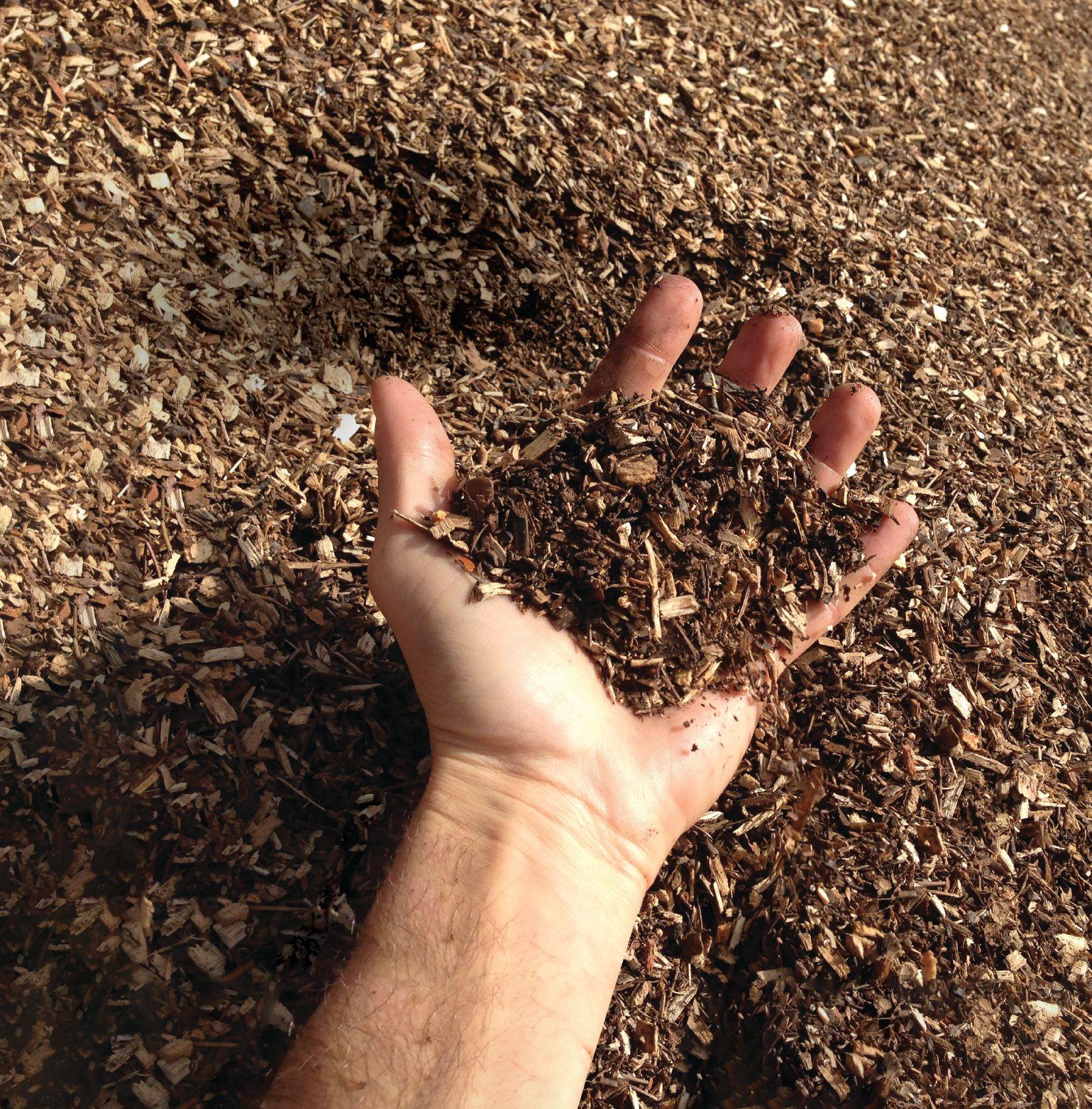
Modern wood heating systems need relatively uniform wood chips to be compatible with small-scale boilers, which enable them to flow through augers. Biothermic produces heating chips that meet ISA/CSA 17225-4 standards, a requirement for small-scale chip heating.
The process for producing these heating chips is fairly
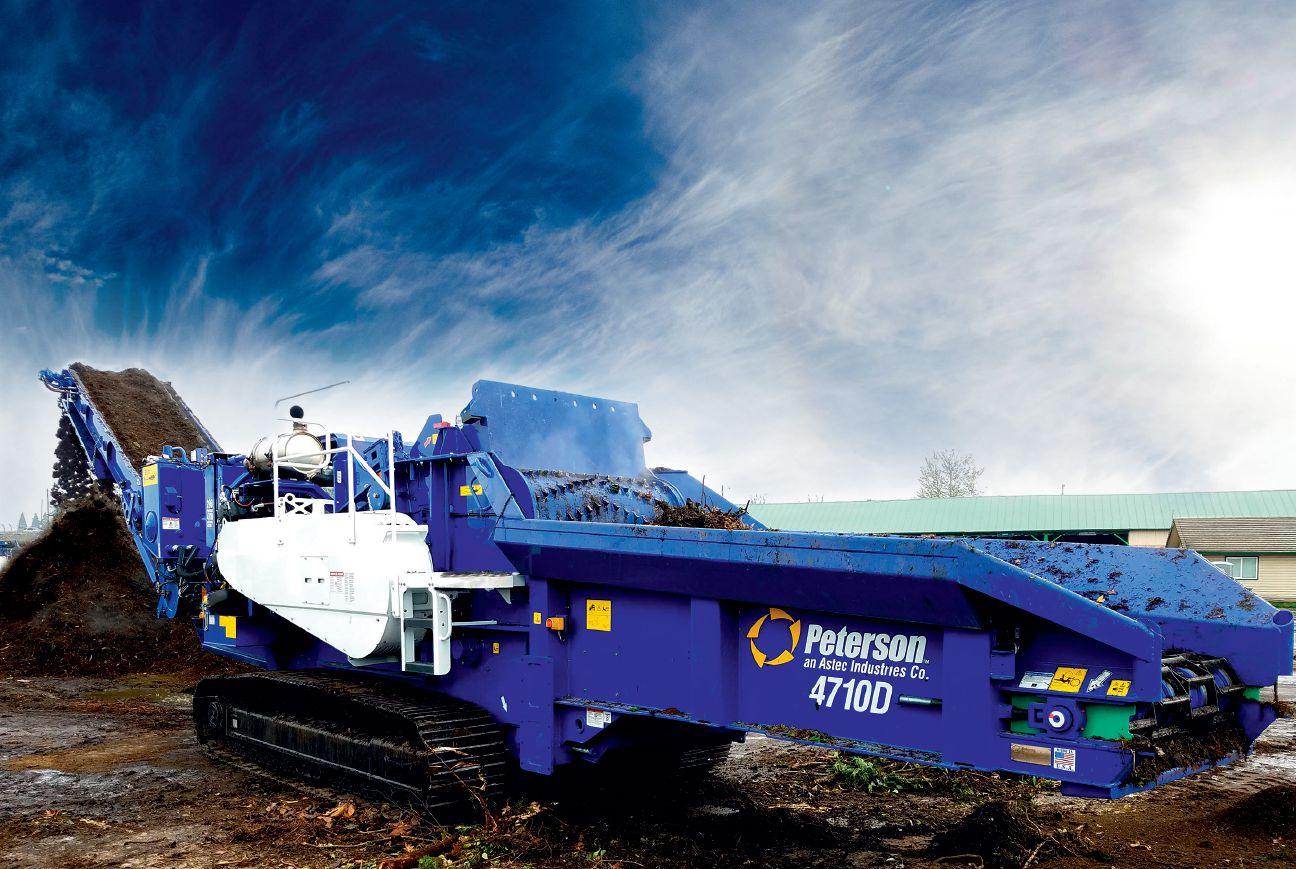
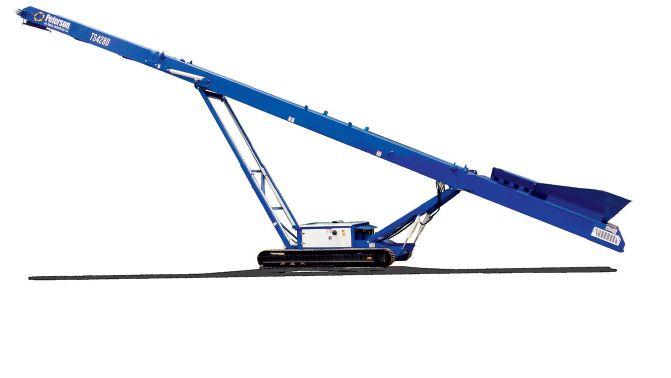
AT PETERSON WE NEVER STOP DEVELOPING THE ULTIMATE INDUSTRY LEADING EQUIPMENT.
For over 35 years, we’ve built our business around building the most productive mobile chipping and grinding machines in the industry. Day after day, we partner with our customers by giving them the best tools for the job and exceptional support when they need us.
Visit us at www.petersoncorp.com today and see why Peterson is the industry leader for disc and drum chippers, horizontal grinders, blower trucks, screens and stacking conveyors.
Get the right sized product, sort it out, and stack it higher with Peterson!
Let us know how we can help grow your business!

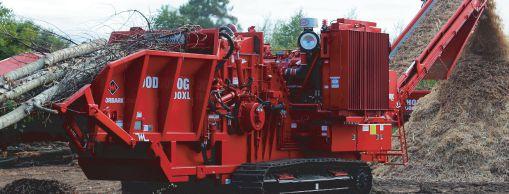
straightforward. Chips arrive at Biorthermic’s Thunder Bay facility from RUF’s tree care trucks. They are then put into a three-deck screening plant, which removes the large pieces and the small particles, as well as dust.
The screener, manufactured by Assinck, cost about $130,000, but required some modifications to handle wood chips instead of aggregate. The screen oscillated vertically, rather than horizontally (which is typically preferred), but still effectively creates P45grade fuel. Since wood chips are more difficult to move in bulk than sand or gravel, Biothermic installed an agitator and adjusted screen sizes to find the best flow for highest productivity, Vince explains.
This process only works for chipped wood, not ground wood products, he adds. It is intended to process materials from smaller hand-fed wood chippers (eight to 22 inches in diameter).
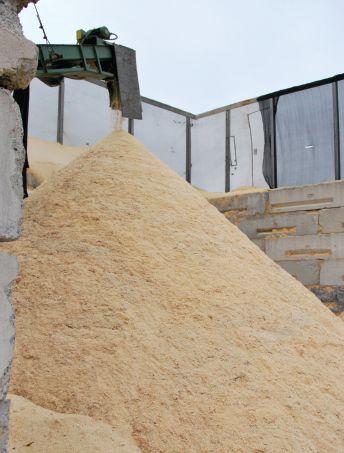
The green wood chips that Biothermic receives from RUF have a MC of 50 per cent or higher, and need to be dried to 35 per cent or less to be used for heating. At Biothermic, this is done organically in a storage tent – the natural process of decomposition creates heat and dries the wood chips to 20 to 25 per cent MC.
Vince notes that the risk of combustion is extremely low as pile sizes are kept to a minimum and pile heating ceases as MC drops below 30 per cent. Biothermic manages combustion risk by ensuring piles are not more than approximately five metres high and green chips are not compacted. Interior pile temperatures are consistently in the low 40 C range. As the MC of a pile drops, temperatures drop and, consequently, combustion risk also drops. Studies have shown that combustion risk increases with higher pile sizes, compacted piles (such as when a bulldozer is used to manage a pile) and where poplar bark content is high. In reality, the biggest risk is from cigarette butts from property neighbours, Vince says.
The tent in which the chips are stored covers 10,000 square feet of pavement. It was supplied by Winkler Structures and is a double truss canvas tent anchored on two rows of two feet tall concrete lock blocks. The cost to erect the tent and pave the ground was approximately $150,000. Only chips of the desired size (45 to 50 millimetres) are put into the tent.
Critically, Vince says, the processing plant
and storage facility gives Biothermic and its customers enough room to accumulate chips in the spring, summer and fall for use for the entire winter heating season.
Biothermic can ship fuel anywhere in Northern Ontario, Vince says. But providing clients outside of Thunder Bay with wood chips is limited by hauling distance. For wood chip heating systems that are further away, Biothermic can supply a wood chipper made by Pezzolato of Italy, which circumvents the need for a screener and storage facility. However, Vince acknowledges that the wood chipper does not work for urban waste wood, as fibre can come from multiple companies with multiple chipper types, which would require a screener.
Vince believes it is always better to keep fuel local to reduce shipping costs and keep local jobs, so this business model has limited regional reach, but serves as a learning tool and a model for other provinces.
The Thunder Bay facility also allows regional projects to use Biothermic as a secondary source of wood chip fuel if they have trouble sourcing it another way.
While Vince and Mike are certainly excited about what they’ve accomplished so far through Biothermic, their eyes really light up when they talk about the opportunities that modern wood heating offers Canadians.
Canada has the most sustainably managed forest resources per capita of any country and is an international leader in sustainable forestry, but, by all measures, has not yet realized the economic and environmental potential of this renewable resource, Vince says. Fossil fuels continue to be the favoured fuel source for heating.
When they started Biothermic, the Rutters looked to the European market for inspiration. Europeans have been realizing the benefits of wood fuel heating systems for decades. Their success is proof that using wood to meet Canada’s energy needs is a viable option.
“Canada is a cold country, with vast forests and no technological barriers when it comes to heating with wood,” Vince says. He believes that heating with wood is “the right thing to do.” The advantages to using wood for heating seem obvious: it offers individuals and corporations the opportunity to reduce greenhouse gas (GHG) emissions and save money
compared to using fossil fuels, all while building a local workforce to keep money in Canada – a triple bottom line.
And word is spreading about these heating systems. As a result of its collaboration with Confederation College, Biothermic has installed a 150 kW Froling wood chip system at a local greenhouse to eliminate propane consumption and extend the typically short growing season in the North.
This heating season will also see three Ontario First Nations installing identical systems with a Pezzolato chipper supplied by Biothermic. These remote communities, surrounded by productive forests, have a keen interest in learning how to decrease their reliance on fossil fuels with selfsustaining systems like the ones Biothermic offer, Vince explains. These five systems translate to over two MW of wood chip heating in Northwestern Ontario.
But there are still multiple hurdles in making the switch to wood heating on a larger scale, such as lack of public knowledge and capacity building.
The Rutters acknowledge that small-scale biomass companies encounter the “chicken and egg” dilemma: start-ups need an anchor client or a critical mass of smaller clients to justify investments in feedstock supply and infrastructure, but they also need an existing supply and infrastructure for clients to confidently invest in wood heating systems. Still, they hope that other companies will take the business model they have created and replicate it throughout North America to build a renewable energy sector that rivals the one in Europe.
Moreover, Vince believes that with more confidence in the technology and education about the benefits of wood chip heating, businesses, institutions and homeowners will embrace wood as the right choice for heating. For projects like Biothermic’s energy chip production and storage facility to materialize, and to create more jobs and increase energy affordably and sustainably, “brave ambassadors are needed; people who are willing to take a small risk and have a passion for renewable energy to show others that wood as an energy source really is a win-win,” he says. •
Meagan Ross is the communications advisor for Biothermic Renewable Energy Systems.



by Ellen Cools
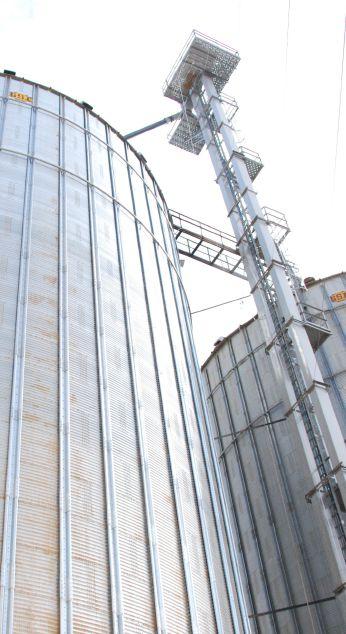
Chapais, Que., is now home to the biggest wood pellet plant in Eastern Canada, Granule 777. The $70-million plant, built by Barrette-Chapais sawmill, began operating in September and has a total production capacity of 210,000 tonnes per year.
Yann Sellin, Granule 777’s general manager, tells Canadian Biomass that it is one of the largest industrial pellet plants in Canada, after Pinnacle Renewable Energy’s Burns Lake and Entwistle plants.
But why did Barrette-Chapais decide to build their own industrial pellet plant?
There are a couple of different reasons, Sellin explains. The company wanted to use as much of the fibre coming into the Barrette-Chapais sawmill as possible. The mill processes close to one million cubic metres of wood on an annual basis, making it one of the largest in Quebec. It consequently produces a lot of sawdust, shavings, bark and chips. In order to control profitability in changing market conditions, the mill realized these residuals needed to be recovered.
“Throughout the many years that the sawmill has been operating, demand and prices for our core product have been fluctuating significantly, and to create an alternative to such a market situation, we decided to build the pellet plant,” Sellin elaborates.
The plant can use any of the fibres coming from the sawmill, and has the potential to consume some harvesting residuals. “In the future, we might start contemplating going into the bush to harvest some biomass fibre, bush grinds or things like that, for quality,” Sellin explains. “But in the first year of operation, it’s not in the short-term plan.”
The company’s main reason for building the pellet plant was to help maintain and secure the sawmill’s 450 employees for the long term.
“We looked at different options, and
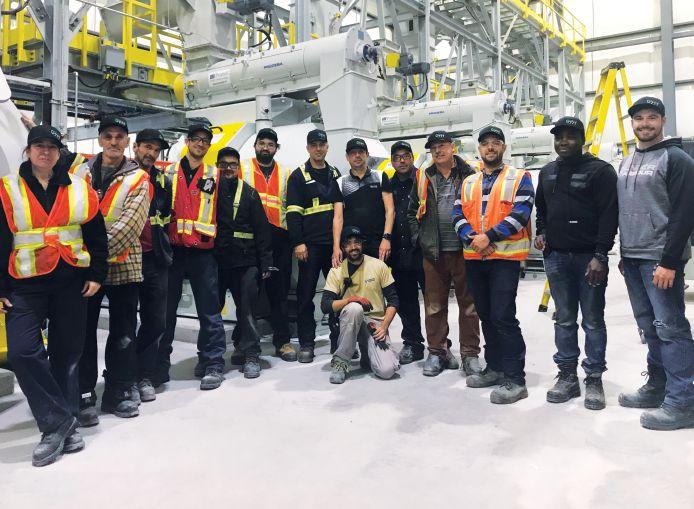
the industrial wood pellet business was a market that was of a growing nature, and we could see that there was a significant future for that product,” Sellin says.
The plant itself was constructed in less than a year, with the building completed before the end of 2018, and equipment installed in 2019. The construction process was fairly smooth, Sellin says.
“We didn’t have any major delays, which is quite surprising because we are in a very harsh environment in terms of climate,” he explains. “We did a fast-tracked installation process and design throughout the project because we had to pour concrete and it’s nearly impossible to do so after the end of November in Chapais until mid-April.”
The harsh conditions in northern Quebec also played a role in the plant’s design, which is small despite producing such a large quantity of wood pellets.
“It’s very compact, due to the -45 C
conditions in northern Quebec,” Sellin explains. “We tried to minimize the size of the building and maximize the heat exchange from building to building to minimize the cost of heating.”
The challenges brought by winter in Quebec are familiar to employees at Barrette-Chapais – the sawmill has been operating for more than 40 years. Consequently, Sellin and his team knew what to be aware of when it came to specifications for Granule 777’s equipment.
“People have a very good understanding of the challenges winter brings. For example, all the devices have been designed and rated to operate at -40 C, and not the regular -20,” Sellin explains. “Some parts of the equipment are also insulated differently than what you would find in any other pellet facility.”
Inside, the pellet plant is set up in a fairly simple way, Sellin says. Three pneumatic
conveying systems bring the three main residuals – sawdust, shavings and chips –from the sawmill. Front-end loaders then feed the different materials from various locations in the plant.
“Sawdust and chips go into the green area, where we have green hammer mills. From the green hammer mills they go to the dryer drum, and from the dryer drum to the dry hammer mills,” Sellin explains. “At that stage, we incorporate some shavings that are already dry into the process.”
The materials then go into the pellet mills, followed by a cooler underneath it, and a screen underneath that.
The green hammer mills come from Bruks Klockner, while Promill provided the dry hammer mill and the pellet mills. German company Geleen provided the counterflow cooler while TSI supplied all of the drying elements, including the furnace and dryer drum.
The TSI drying system consists of a 30m2 grate area heat energy system and a dryer system centered around a 14x80 foot long dryer drum, explains Zlatko Savovic, sales director for TSI. The dryer
system uses four high-efficiency cyclones, underneath which there is a dedicated machined type airlock.
To prevent pitch buildup, the dryer system’s gas ductwork and exhaust stack are ‘double-ducted,’ which in turn reduces downtime for cleaning maintenance and the chance of fire
“The heat energy system comprises a large u-turn secondary combustion chamber that removes most of the sparks from entering the dryer system and it also reduces the amount of ash entering the dryer system, thus providing the client with low pellet ash content,” Savovic adds.
Once the material has gone through the cooler, it goes outside into two different holding silos, and then to Barrette-Chapais’ shipping silo at the Port of Grande-Anse, in Quebec.
“It’s a very common, usual pellet design,” Sellin says. This was done on purpose. Granule 777 asked Prodesa to handle the engineering, design, and procurement of the equipment, and to supervise the installation because of their expertise in the industry.

“I think most of the manufacturers we have chosen are the best in all of their areas,” he adds. “Klockner for the green hammer mill are very good, a well-reputed brand. Same thing for Promill on the press.”
The pellet plant is fully automated, so there are very few operators compared to the amount of machinery operated. “Everything is computer-operated, PLC [programmable logic controller] driven, and one operator can power stop or accelerate all the equipment and machinery in the power plant,” Sellin explains.
Even so, an additional 40-60 jobs have been created from the new operation, including in transportation and at the company’s storage facility at the Port of Grande-Anse.
When asked about safety, Sellin says it’s the most important aspect of operating the plant.
“The first thing I’m reminding our employees of is that we are producing fuel, not wood,” he says. “The aim of that product is to burn and to generate


• The Circular Bioeconomy: The Way Forward
• Opportunity Knocks: Investing in the New Bioeconomy
• The Critical Role of Governments in Developing the Bioeconomy
• Accelerating the National Bioeconomy Strategy
PLUS:
Half-Day Workshops on Energy, Fuels, Bio-Based Materials and Community Bioeconomy
Industry Tours to Regional
Facilities Demonstrating the Circular Bioeconomy in Action
Full-Day Pre-Conference
Wood Products Safety Summit
by Ellen Cools
Whether you run a large-scale industrial operation, a school, an office building or you’re a homeowner, if you’re using a biomass boiler, proper maintenance is critical. Canadian Biomass spoke to three biomass boiler experts to learn some of the best practices and tips for boiler maintenance.
Our three experts – Fink Machine’s manager of business development David Dubois; THS Distribution’s owner and CEO Stephen Hayes; and Hurst Boiler’s director of marketing Jeff Hurst – all agree that proactive maintenance is the best practice when it comes to boiler maintenance.
“Most of the time the issue is that the boiler hasn’t been watched and it just gets dirty,” Hayes says. “I think that’s one of the hardest things for people to get used to. People think they can turn the heat on and walk away and not do anything about it.”
“The most successful operations have taken a look at all of the moving parts conveying fuel, water and ashes from their machine and realize the importance of welltrained operators, and a thorough proactive maintenance program,” Hurst adds.
A typical maintenance schedule varies based on the boiler make and model, and how much fuel it burns. Advancing technology has made it easier to monitor consumption and other factors. THS Distribution, for example, distributes boilers with an online component, allowing owners to monitor their performance.
In general, maintenance can be broken down into daily, weekly, quarterly, and yearly checks.
On a daily basis, operators should do an overview of the boiler and look for any signs of obvious problems or dust that needs to be cleaned, Dubois says.
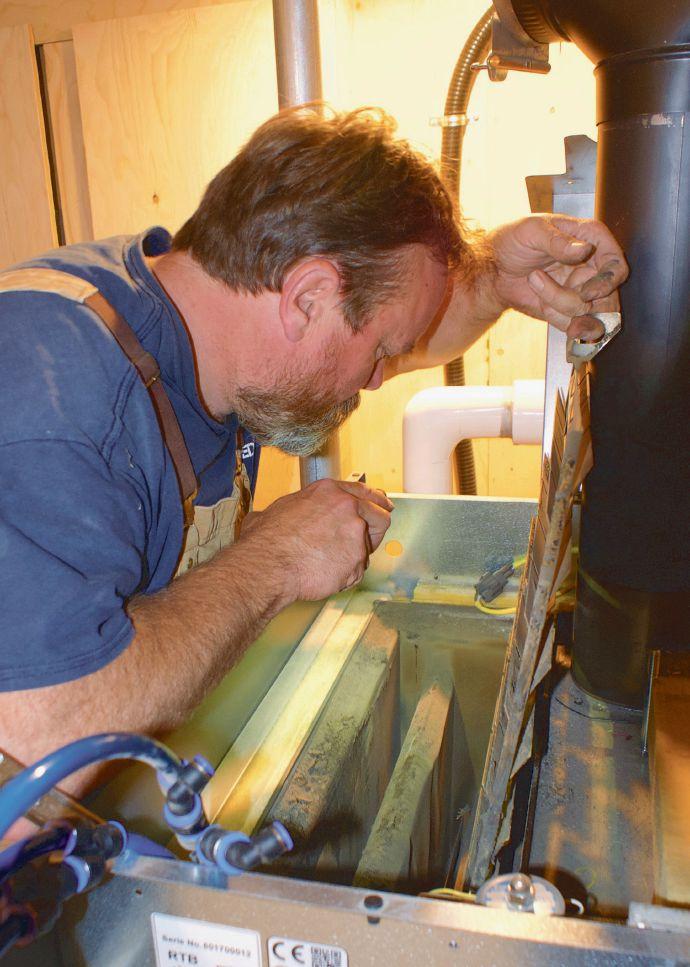
Operators should also check if the fuel is within specification. Depending on how the fuel looks, a quick scrape of the fuel box while it’s running might be needed.
On a weekly basis, look to see if there are any light barriers, lenses or dust
building up that needs a quick cleaning, Dubois advises.
Every three months or after burning 30 tonnes of fuel, Dubois says operators should shut down the boiler to do a deeper cleaning – clean various sensors, empty the
ash, and check systems for signs of wear.
Over the life of a boiler, operators may need to change the fire brick inside the boiler because it is consumable. “Typically, it’s in the order of every five to 10 years, depending on what you’re using for fuel, how much contamination and how much they break down,” Dubois advises.
“On a yearly basis, if we assume it’s a spring shutdown, you’re going to want to run your fuel supply as empty as possible so you don’t have any fuel left in storage,” he adds. “Particularly with pellets, if you don’t have a super clean or super waterproof fuel storage for your pellets and you get even a little bit of water in there, left for a long time, it can actually turn the pellets into a solid mass similar to concrete that needs to be removed.”
Operators should also look at greasing bearings and any moving components. If the boiler has an air cleaning system, operators should do maintenance on the air compressor and check the air filters.
Hayes also recommends cleaning the chimney, plus removing and scraping the interior burner grate to make sure it’s clean.
“Check your ports, and then inspect the interior of the boiler, the burning chamber, with a flashlight to make sure there’s no build up,” he says. “Then you check the back of the boiler where the distribution chambers are, where you’ve got reflectors that slow down the movement of air so they absorb into the steel. If you remove those, you shake the grates off, check for any condensation or anything that’s not right with a flashlight down inside the chambers, and close it all up again.
“When I say check it with a flashlight, it is very important to make sure that there is no condensate inside your boiler, unless it’s made for it, because that’s what will destroy the interior of the boiler,” he emphasizes.
Once the boiler is ready to start back up operators should bleed any air out of the system, check for leaks, and make sure all sensors, fans, pumps and motors are operating correctly, DuBois says.
When it comes to shutdowns, these should be planned, Hurst advises.
In an ideal situation, “the shutdowns
have a diligently prepared set of separate tasks that use dedicated crews and contractors that are scheduled to avoid working at the same place at the same time,” Hurst explains. “These shutdowns are measured in hours, not days.”
Archiving equipment data files is important in order to know all of the particulars of your equipment. Hurst recommends keeping a list of each piece of equipment, keeping anticipated wear items on hand, and having a supplier and a back-up for all parts.
“Motors, belts, chains, Vari-hertz drive units, etc., – all of these could have local suppliers that will be glad to help out,” he elaborates. “Proprietary items that could be unique to just the manufacturer may need to be on the shelf as well.”
A parts inventory requires a substantial investment, but it’s better than finding out a necessary part is on backorder, he says.
Dubois’ top tip for boiler maintenance is a good documentation program. Keeping track of any changes to the machine while



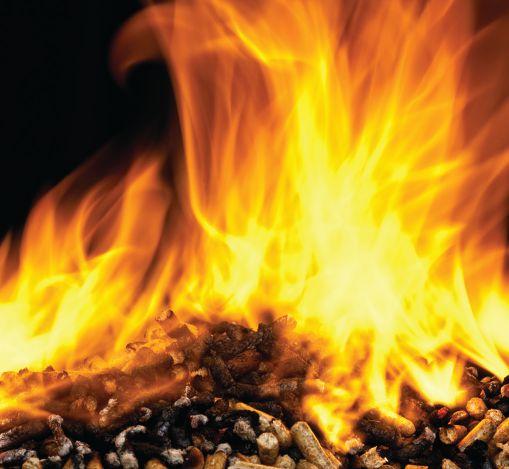
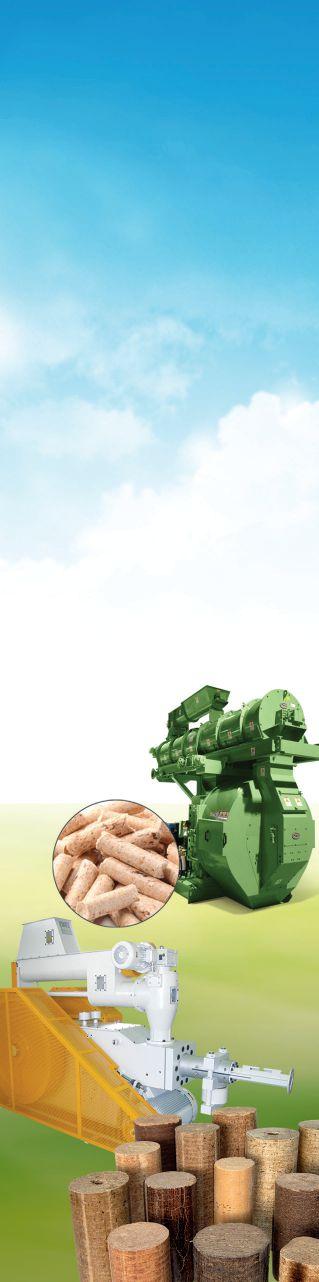
Every year, millions of tons of industrial waste are turned into millions of dollars of reusable materials. CPM and Di Più Systems help make that happen.
We’ve joined forces to bring you the world’s best mechanical and hydraulic briquetting technology.
Together, we’re taking the fossil out of fuel.
going through maintenance checklists allows operators to see problems that might be developing.
“Sometimes these problems are slow to happen, but there are signs that something might be starting to go,” he elaborates. “If you’ve got this background for reference and documentation, that’s going to be key.”
“Diligent, legible log sheets should be a central part of the operator’s tasks,” Hurst adds. He recommends keeping an inspection checklist that determines how the operator’s time is used. “The operator should also be under continual development with a program of education and review, and there should be drills of what to do in case of certain scenarios.”
Additionally, keeping records and reports of outages and planned shutdown executions will be helpful in planning future shutdowns. Operators should keep a written plan for work to be done during outages and workarounds for work done while online, Hurst says.
Properly recording maintenance, scheduled downtimes and evaluating the machine’s performance is key to avoiding common failures. Hurst, Dubois and Hayes agree – failures are often easily avoided.
The better the fuel quality, the less maintenance boilers require. This can mean the difference between doing maintenance once every three or four weeks versus once every three or four days, Dubois says.
“One of the big challenges that we see a lot of the time with clients is they get really focused on the price of their fuel, and they’ll try to get as cheap, low-rate fuel as possible that might not meet the required fuel specifications, and the result is that
they end up doing way more maintenance on their boilers,” he says.
Hayes agrees, and has experienced firsthand the issues low-quality fuel creates. Typically, he checks his clients’ boilers when he delivers new fuel, three tonnes at a time. But once, when his supplier provided him a bad batch of pellets, he was cleaning out the boilers’ burners once every week. He suggests operators and homeowners make sure their fuel is coming from a reputable pellet or wood chip manufacturer.
One of the main causes of downtime, Hurst adds, is oversize, inappropriate fuel, which can be full of dirt and metal. For most large-scale operations, fuel is generated on-site, but “if supplied by a contractor, they will need to get rid of some ‘junk,’” Hurst explains. “Plan ahead for immediate rejection of out-of-spec fuel.”
There are other benefits to proper maintenance, too, which might not automatically come to mind.
Biomass boilers are often installed in remote locations far away from technicians who can service the machines. “So, properly maintaining your boilers and avoiding downtime is going to be critical, because it can be even worse by the time you factor in someone having to hop on a flight for two or three hours just to get there,” explains Dubois. It’s not just the cost of downtime and the cost of the service call – it’s also the cost of the travel.
While the initial workload may seem daunting, consistent and well-documented maintenance reduces the amount of maintenance necessary in the long run. The benefits far outweigh the costs. •
By Sebnem Madrali and Jaime Fernandez
Anew CSA SPE 2254:19 Guide to Wood Chip fuel: Characteristics, supply, storage and procurement was published in May 2019. This first edition of the guide was developed under the CSA banner with technical guidance from Natural Resources Canada (NRCan) and industry stakeholders. It aims to build confidence in an emerging market by linking players in the wood chip fuel supply chain and to become a communication tool by bringing common terminology and language to the marketplace. It can be purchased at store.csagroup.org.
Wood chips are well suited to meet energy needs for space heating and hot water in buildings, communities, or campuses, and displace conventional fossil fuels. As a renewable, locally available low-carbon fuel source, wood chips are also a less costly option compared to fossil fuels. According to NRCan’s Canadian Bioheat survey results, the biomass heating sector in Canada’s commercial and institutional market has been demonstrating strong growth over the last two decades: 400 plus bioheat installations in 2018 compared to 66 in 2011 and only five in 2000 (see Figure 1). Almost half of the existing bioheat installations are using wood chips as their primary fuel.
Wood chip fuel supply chains can be complex. At present, wood chip production is closely linked to forest operations and businesses such as loggers, land clearers, sawmills, urban wood/tree services, woodland management services and waste wood recycling operations. The practices and techniques used in the current supply chain are geared towards meeting the needs and product specifications of traditional forest products. While
widely used in Europe, wood chip fuel is a fairly new product in Canada. Wood chip fuel quality and consistency varies depending on the wood chips’ origin and sources, processes used in preparation, handling and storage practices.
Buyers and users do not think about the quality of heating oil or gas when purchasing because strict standards are in place to ensure these fuels are consistent. Until recently there were no wood chip fuel standards in Canada. In 2015, CSA adopted a series of solid biofuels standards, known as CAN/CSA-ISO 17225 series. These voluntary fuel standards are developed for residential, commercial, public, community and industrial energy applications. The CAN/CSA-ISO 17225-4 standard classifies two grades of wood chips and provides information on the attributes and quality characteristics of wood chips, including origin, particle size, moisture content, ash content,
bulk density, etc. Grade A wood chips are suitable for smaller energy systems used in schools and public and commercial buildings. Grade B wood chips are better suited for larger systems typical of commercial greenhouses and district energy systems.
Market confidence for wood chip fuel in a growing energy market can be enhanced by better-informed and knowledgeable players who use a standardized technical language. If producers know what fuel quality specifications are expected from wood chip fuel, they can modify and adjust their processes. End users who better understand the supply chain and fuel quality parameters can communicate more effectively with suppliers and procure wood chips appropriate to the specifications of their energy systems.
The guide applies to small to medi-
um-scale heating facilities typical in commercial and institutional buildings (approximately from 75 kW to 1.5 MW) and larger scale facilities such as light industrial sites and district heating (up to 5 MW).
The intended audience for this guide includes:
• those involved in producing and supplying wood chips, including aggregators, sawmills, loggers, urban tree services, woodland management services, value-added wood processors, and flooring manufacturers;
• project developers, including equipment manufacturers, engineering professionals, architects, planning and procurement officers; and
• end-users including facilities managers, maintenance staff and those responsible for the purchase of fuel and operation of biomass systems. It can also be used as a basic source of information on wood chip fuel for regulatory agencies.
As a complete knowledge tool for all players in Canada’s wood chip fuel supply chain, the key features of the guide are:
• Practical description of key characteristics of wood chip fuel – provides practical information on the classification of wood chips based on CAN/CSA-ISO 17225-4 and critical fuel properties.
• General description of current feedstock and supply of wood chip fuel – provides details on typical sources of wood chips and practical information on the impact of sources on grading wood chip fuel.
• Recommendations and best practice guidance on wood chip fuel storage and safety for producers – provides practical information on factors affecting fuel quality during storage and recommends outdoor storage in order to maintain the wood chips’ integrity and minimize potential hazards.
• Recommendations for end users on fuel procurement and storage practices – summarizes key aspects of wood chip procurement and storage practices at end user sites in order to minimize
equipment failures due to poor and inconsistent fuel quality, based on best practices, guides and lessons learned.
• Case studies – provides real-life examples of how Canadian producers are perfecting their processes and practices to produce and supply quality and consistent wood chips.
The development and publication of the new Wood Chip Guide was completed by the technical sub-committee (under the CSA Solid Biofuels TC) led by CanmetENERGY Ottawa (NRCan), M. Douek Consulting, Fink Machine Inc., Ecostrat Inc., Biofuels Consulting, Biothermic Wood Energy Systems Inc., CSA Group, and with funding from NRCan Energy Innovation Program. The authors gratefully acknowledge the financial support from NRCan and in-kind contributions from the lead organisations and other volunteers. •
Sebnem Madrali is a senior research engineer with CanmetENERGY Ottawa, Natural Resources Canada. Jaime Fernandez is a project manager, Fuels and Appliances, CSA Group.
Welcome to the 2019 Canadian Biomass Pellet Gear Buyers Guide
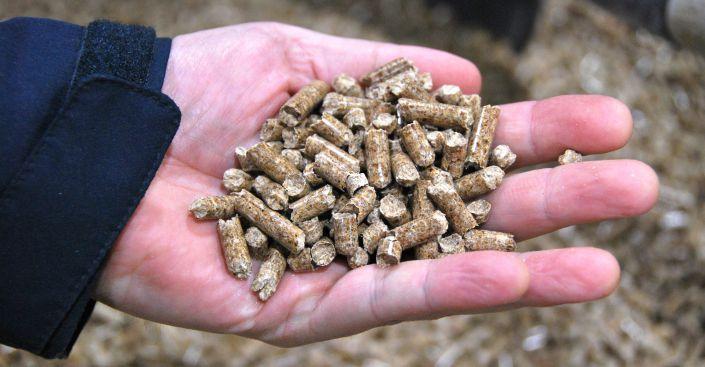
The following information has been compiled to provide readers interested in developing or updating a wood pellet manufacturing facility with a reference tool of the major manufacturers and service providers for this industry in Canada. From fibre to pellet, the listing is a comprehensive source for equipment involved in the
pelletizing process.
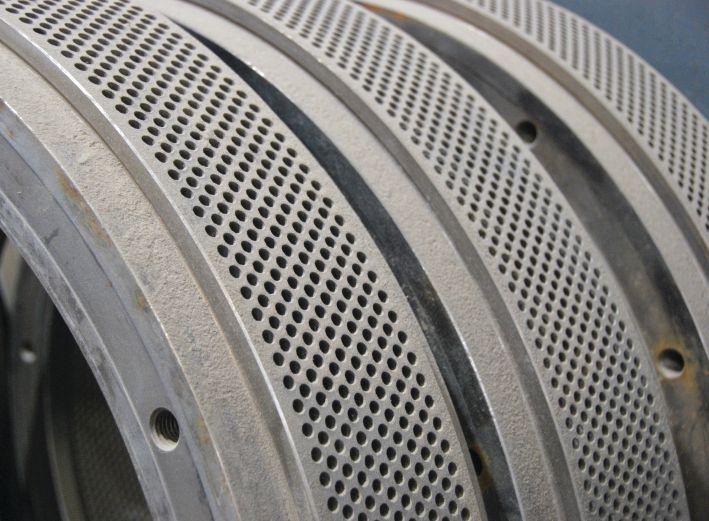
The Canadian Biomass Pellet Gear Buyers Guide is organized into two sections. The first section is an alphabetical listing of companies that provide the relevant products or services for each of the following categories: dryers, pneumatic conveying, hammermills, pellet mills, screens and coolers, fire/spark
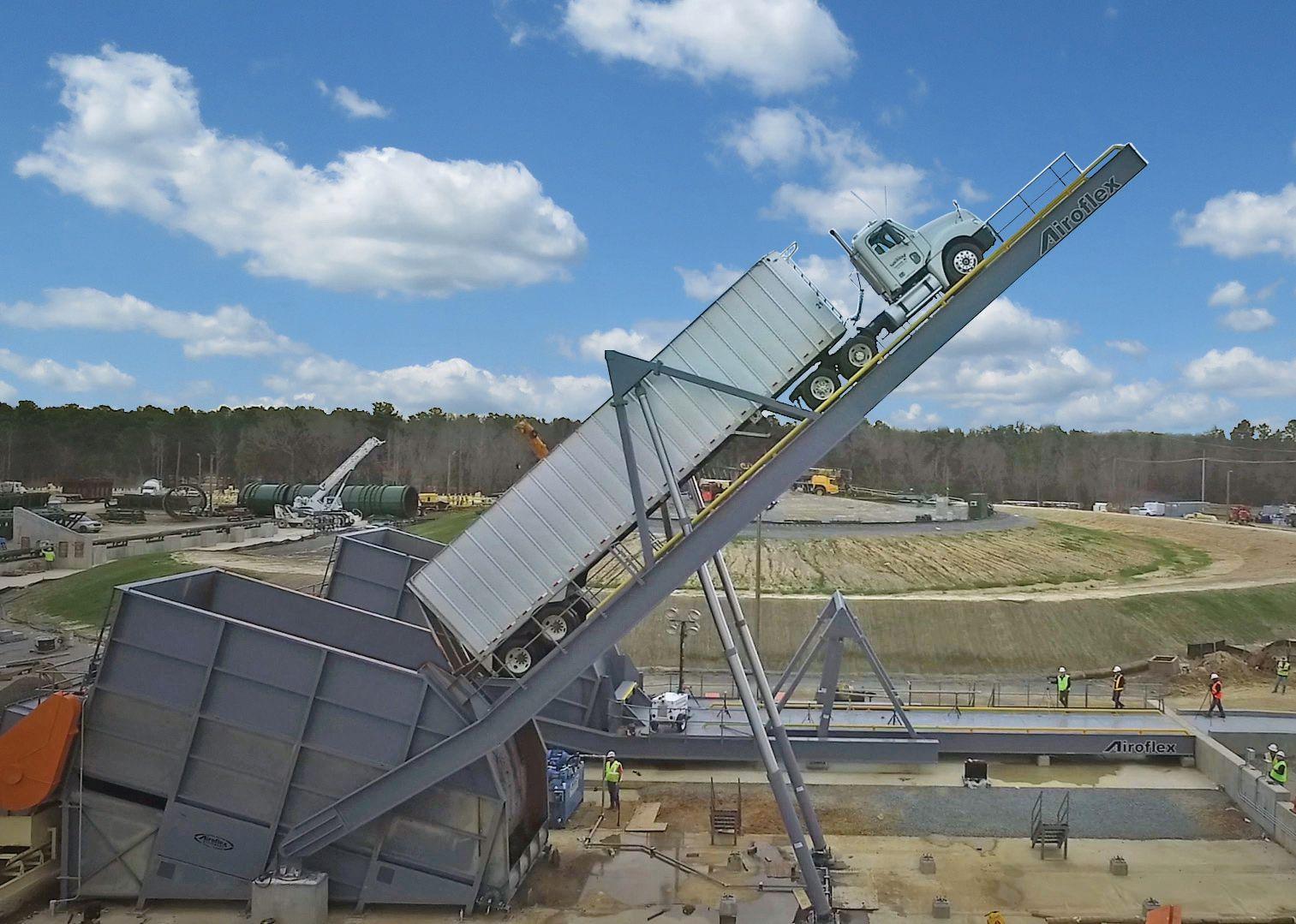
detection and suppression technology, bagging and palletizing, dies and rolls, quality control equipment and services, building contractors and engineering firms, Canadian ports for pellet exports, truck dumpers and moisture analyzers. The second section is an alphabetical listing of all the companies, with contact information for each. •
Altentech
Amandus Kahl
Andritz
Anhydro
Baker-Rullman
Bruks Siwertell
Büttner
Certified Labs
Dieffenbacher
Earth Care Products
Energy Unlimited
GEA CANADA
Jiansu Yongli
Kesco
Münch-Edelstahl
Muyang
Player Design
Saimatec Engineering
Siempelkamp
Silvana Import Trading
Solagen
Stela
Swiss Combi
Thompson
TSI
Uzelac - Duske
Drying Systems
Allied Blower
Amandus Kahl
Baum Pneumatics
Certified Labs
Clarke’s Industries
Concept-Air
Fox Venturi
Jeffrey Rader - Terra Source
Coperion K-Tron
Kesco
Koger Air Corporation
Rodrigue Métal
Silvana Import Trading
Walinga
HAMMERMILLS
Amandus Kahl
Andritz
Bliss Industries
Bruks Siwertell
Brunette Industries
Buskirk Engineering
Certified Labs
CPM Global Biomass Group
CSE Bliss Manufacturing LLC
Dieffenbacher
Gemco Energy
Jeffrey Rader/ Pennsylvania Crusher
Kesco
La Meccanica
Münch-Edelstahl
Schutte-Buffalo Hammermill
Silvana Import Trading
West Salem
Amandus Kahl
Andritz
Astec
Bliss Industries
Buskirk Engineering
Certified Labs
CPM Global Biomass Group
Dieffenbacher
La Meccanica
Münch-Edelstahl
Pelleting Technology Nederland
Salmatec GmbH
Silvana Import Trading
SCREENS & COOLERS
Amandus Kahl
Andritz
Baum Pneumatics
Bliss Industries
BM&M Screening Solutions
Bruks Siwertell
Brunette Industries
Buskirk Engineering
Certified Labs
CPM Global Biomass Group
CSE Bliss Manufacturing LLC
Dieffenbacher
Jeffrey Rader - Terra Source
Kesco
La Meccanica
Law-Marot
Münch-Edelstahl
Pelleting Technology Nederland
Vibroscreen
Silvana Import Trading
West Salem
FIRE/SPARK DETECTION & SUPPRESSION
Allied Blower
Amandus Kahl
Clarke’s Industries
Concept-Air
CV Technology
F.E. Moran
Fenwal-IEP Technologies
Fike
Firefly
Flamex
Grecon
Kesco
Rodrigue Métal
Silvana Import Trading
BAGGING & PALLETIZING
Amandus Kahl
Balcan
Bulldog Bag
Certified Labs
Creative Packaging Inc.
Hamer
Möllers North America Inc.
Polypro Solutions
Premier Tech
Primary Packaging
Rethceif Packaging
Silvana Import Trading
Trinity Packaging
DIES & ROLLS
Amandus Kahl
Certified Labs
CPM Global Biomass Group
Dorssers
La Meccanica
Münch-Edelstahl
Silvana Import Trading
QUALITY CONTROL EQUIPMENT & SERVICES
Amandus Kahl
Biomass Energy Lab
Domosystem
Electromatic Equipment
Grecon
Kesco
Münch-Edelstahl
Twin Ports Testing
Silvana Import Trading
ENGINEERING & CONSTRUCTION SERVICES
Andritz
Buskirk Engineering
DelTech
Dieffenbacher North America, Inc
Earth Care Products
Energy Unlimited
Kesco
Mid-South Engineering Stolberg Group
Process and Storage Solutions
Solagen
TS Manufacturing
PORTS
Belledune
Halifax
Montreal
Prince Rupert
TRUCK DUMPERS
Airoflex
American International TN, LLC.
BID Canada Ltd.
Bruks Siwertell
Phelps Industries
Wolf Material Handling Systems
MOISTURE ANALYZERS
MoistTech
TEWS of America Corp.
Doescher Microwave System GmbH
GreCon, Inc.
AIROFLEX EQUIPMENT www.airoflex.com 563-264-8066
ALLIED BLOWER www.alliedblower.com 604-930-7000
ALTENTECH BIOVERTIDRYERS www.altentech.com 604-568-9848
AMANDUS KAHL GMBH & CO. KG www.akahl.de 905-778-0073 (Sarj Equipment, Canada)
AMERICAN INTERNATIONAL TN, LLC. www.americaninternationaltnllc.com 731-229-0023
ANDRITZ GROUP www.andritz.com 457-216-0300
ANHYDRO INC. (SPX FLOW TECHNOLOGY) www.spx.com/en/anhydro/ 704-752-4400
ASTEC www.astecinc.com 423-867-4210
BAKER-RULLMAN www.baker-rullman.com 920-261-8107
BALCAN www.balcan.com 1-877-422-5226
BAUM PNEUMATICS INC. www.baumpneumatics.com 604-945-4507
BID CANADA LTD. www.bidcanadaltd.com (506) 328-4381
BIOMASS ENERGY LAB www.biomassenergylab.com 218-461-2579
BLISS INDUSTRIES, LLC www.bliss-industries.com 580-765-7787
BM&M SCREENING SOLUTIONS www.bmandm.com 1-800-663-0323
BRUKS SIWERTELL www.bruks-siwertell.com 770-849-0100
BRUNETTE INDUSTRIES LTD. www.brunettemc.com 604-522-3977
BULLDOG BAG LTD. www.bulldogbag.com 1-800-665-1944
BUSKIRK ENGINEERING www.buskirkeng.com 260-622-5550
BÜTTNER
www.buettner-energy-dryer.com 704-522-0234
CERTIFIED LABS www.certifiedlabs.com 905-691-0492
CLARKE’S INDUSTRIES, INC. www.clarkes-ind.com 541-343-3395
CONCEPT-AIR www.concept-air.ca 1-866-644-0041
COPERION K-TRON www.coperion.com 785-825-1611
CPM GLOBAL BIOMASS GROUP www.cpm.net 1-800-428-0846
CREATIVE PACKAGING INC. cp22243.tripod.com/baggingsystems 423-825-5311
CSE BLISS MANUFACTURING LLC WWW.CSEBLISS.COM 580-749-4895
CV TECHNOLOGY, INC. www.cvtechnology.com 561-694-9588
DELTECH www.deltech.ca 1-800-736-7733
DIEFFENBACHER NORTH AMERICA, INC www.dieffenbacher.com/en 519-979-6937
DOESCHER MICROWAVE SYSTEM GMBH www.moisturemeter.eu 510-420-1716
DOMOSYSTEM www.domosystem.fr +33(0)1 45 87 22 99
DORSSERS INC. www.dorssers.com 519-676-8113
EARTH CARE PRODUCTS, INC. www.ecpisystems.com 620-331-0090
ELECTROMATIC EQUIPMENT COMPANY INC. www.checkline.com 1-800-645-4330
ENERGY UNLIMITED INC. energyunlimitedinc.com 608-935-9119
F.E. MORAN SPECIAL HAZARD SYSTEMS www.femoranshs.com 847-849-8720
FENWAL-IEP TECHNOLOGIES www.ieptechnologies.com 855-793-8407
FIKE CORPORATION www.fike.com 816-229-3405
FIREFLY AB www.firefly.se +46 (0)8 449 25 00
FLAMEX, INC. www.sparkdetection.com 336-299-2933
FOX VENTURI www.foxvalve.com 973-328-1011
GEA CANADA www.gea.com 819-477-7444
GEMCO ENERGY www.agicogroup.com 0086-372-5965148
GRECON, INC. www.grecon-us.com 503-641-7731
HAMER LLC www.hamerinc.com 763-231-0100
HANSENTEK www.hansentek.com 905-607-5780
JEFFREY RADER – TERRA SOURCE www.terrasource.com 514-822-2660
KESCO, INC. www.kescosolutions.com 803-802-1718
KOGER AIR CORPORATION www.kogerair.com 800-368-2096
LA MECCANICA SRL DI REFFO www.lameccanica.it +39 049 941 9000
LAW-MAROT www.lmmequip.com 800-461-6276
MID-SOUTH ENGINEERING STOLBERG GROUP www.mseco.com/stolberg 604-273-1915
MOISTTECH www.moisttech.com 941-229-8099
MÖLLERS NORTH AMERICA INC.
www.mollersna.com
616-942-6504
MÜNCH-EDELSTAHL GMBH
www.muench-edelstahl-gmbh.de/en +49 02103 58996
PELLETING TECHNOLOGY NETHERLANDS www.ptn.nl +31 (0)73 54 984 72
PHELPS INDUSTRIAL www.phelpsindustries.com 501-375-1141
PLAYER DESIGN, INC. www.playerdesign.net 207-764-6811
POLYPRO SOLUTIONS www.polyprosolutions.ca 514-730-2433
PORT METRO VANCOUVER
www.portmetrovancouver.com 604-665-9000
PORT OF BELLEDUNE
www.portofbelledune.ca 506-522-1200
PORT OF HALIFAX www.portofhalifax.ca 902-426-8222
PORT OF MONTREAL www.port-montreal.com 514-283-7011
PORT OF QUEBEC www.portquebec.ca 418-648-3640
PORT OF TROIS-RIVIÉRES www.porttr.com 819-378-2887
PORT SAGUENAY www.portsaguenay.ca 418-697-0250
PREMIER TECH CHRONOS
www.ptchronos.com 418-868-8324
PRIMARY PACKAGING
www.primarypackaging.com 800-774-2247
PRINCE RUPERT PORT AUTHORITY
www.rupertport.com 250-627-8899
PROCESS AND STORAGE SOLUTIONS www.processandstorage.com 256-638-1838
RETHCEIF PACKAGING www.rethceif.com 866-298-1876
RODRIGUE MÉTAL LTÉE www.rodriguemetal.com 418-839-0400 ext. 231
SAIMATEC ENGINEERING www.saimatec.fi +358-40 0252326
SALMATEC GMBH www.salmatec.de/en 49 4172 98 97-0
SCHUTTE-BUFFALO HAMMERMILL, LLC www.hammermills.com 716-855-1555
SIEMPELKAMP ENERGY SYSTEMS GMBH www.siempelkamp.com 770-424-4141
SILVANA IMPORT TRADING INC. www.silvanatrading.com 514-939-3523
SOLAGEN INC. www.solageninc.com 503-366-4210
STELA LAXHUBER GMBH www.stela.de +49(0)8724-899-0
SWISS COMBI www.swisscombi.ch +41 56 616 60 30
TEWS OF AMERICA CORP. www.tews-of-america.com 919-240-4425
THOMPSON DEHYDRATING www.thompsondryers.com 785-272-7722
TIMBER PRODUCTS INSPECTION www.tpinspection.com 770-922-8000
TRINITY PACKAGING www.trinitypackagingsupply.com 856-520-8332
TS MANUFACTURING www.tsman.com 705-324-3762
TSI DRYERS www.tsi-inc.net 425-771-1190
TWIN PORTS TESTING INC. www.twinportstesting.com 715-392-7114
UZELAC www.uzelacind.com 414-529-0240
VIBROSCREEN www.vibroscreen.ca 819-362-8871
WALINGA www.walinga.com 519-824-8520
WEST SALEM MACHINERY CO. www.westsalem.com 877-420-3208
WOLF MATERIAL HANDLING SYSTEMS www.wolfmhs.com 763-576-9040

By Maria Church
Aregional landfill just outside of Prince George, B.C., that sees around 73,000 tonnes of household and construction waste in a year, is finding new ways to harness the power of trash.
The Regional District of FraserFort George owns and operates the Foothills Boulevard Regional Landfill and is partnering with provincial utility FortisBC to produce Renewable Natural Gas (RNG) – a purified biomethane –for the province’s gas grid. The project will have the capacity to produce up to 100,000 gigajoules of RNG annually, enough to heat up to 1,100 homes on 100 per cent RNG.
Canadian Biomass visited the landfill in June to learn how the site captures biogas generated from decomposing garbage.
Petra Wildauer is the general manager of environmental services for the Foothills Boulevard Regional Landfill. She says the landfill has been collecting biogas since 2002 when the system was installed voluntarily in order to reduce the environmental impact and support the long-term goal of attracting beneficial use alternatives.
“The regional board, from the time of approving the installation of the landfill gas collection system, has always kept the utilization of the landfill gas in mind,” Wildauer says.
The landfill collects biogas from 16 vertical wells staggered throughout an area of the landfill that underwent final closure, meaning it’s no longer actively used for landfilling waste. Final closure is a regulatory requirement of all landfills in British Columbia to create a closed-lid system that encapsulates the garbage and supports emission reduction.
Within the landfill, vertical gas wells are uniformly installed to different depths, determined by the height of garbage and
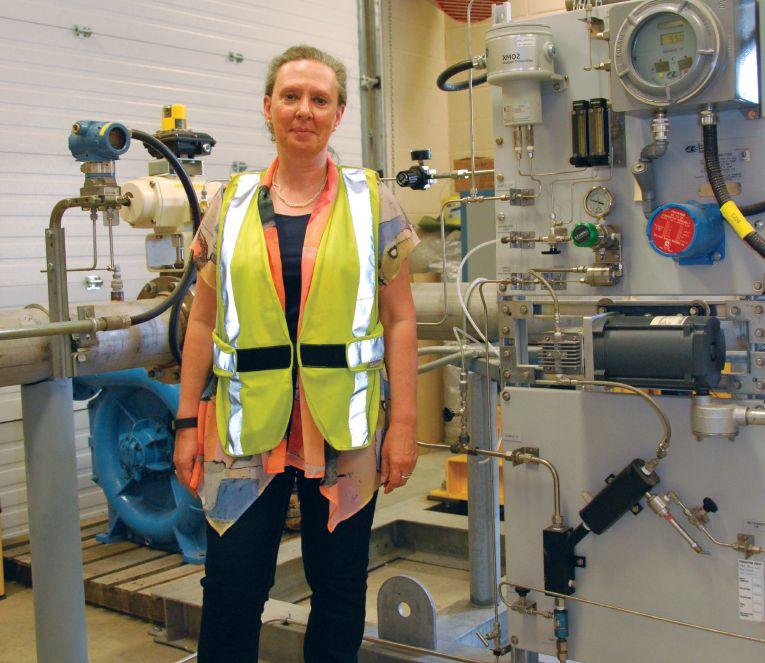
estimated availability of landfill gas. A blower pulls the gas from the wells to the collection header.
“Landfill gas is created from the decomposing waste. The gas itself is roughly half methane and half carbon dioxide. The rate of collection from the individual wells is monitored and continuously adjusted to ensure the best quality and quantity of gas being produced,” Wildauer explains.
The collection system vacuum pulls biogas through an extensive highdensity polyethylene piping system to the abstraction plant, where the biogas is combusted in an enclosed flare up
to 1000 C with a 98 per cent methanedestruction efficiency
While the majority of the gas produced by decomposing garbage is biomethane, other minor components are produced as well, such as sulphur, which must be removed before the biogas can enter the natural gas grid. The Foothills Boulevard Regional Landfill restricts what type of waste it accepts in order to minimize those additional undesirable components in the biogas.
Another unwanted component in biogas is condensate – the liquid formed
when landfill gas cools down. It is removed and collected in condensate traps located within low points within the collections system.
The entire biogas collection and burn-off system was a turn-key project built by JZHC (John Zink Hamworthy Combustion) in 2002. The collection system infrastructure and computer software used provides continuous information on landfill gas quality and quantity.
There are eight vertical wells and three horizontal wells in other areas of the landfill. This network of gas wells provides a total biogas flow of 256 cubic feet per minute or 435 cubic metres per hour.
“Approximately 250 cubic feet is the standard to run any engine, so we are at that threshold of making it work for any utilization,” Wildauer says.
FortisBC has five active RNG suppliers across the province, from Delta to Salmon Arm. The Prince George site would be their most northern.
The utility first entered the RNG game nearly a decade ago when it began accepting biomethane from Fraser Valley Biogas in Abbotsford, B.C., in 2010. Fraser Valley Biogas was the first agricultural biogas operation in the province, and the first biogas plant in Canada to produce and inject RNG into a gas pipeline.
Scott Gramm, manager of Renewable Natural Gas for FortisBC, was there from the beginning, working with Fraser Valley Biogas and the subsequent four suppliers in the province.
“We want to do what’s right for our customers and we also want to align with government policy – those are the two primary reasons for us to work with RNG,” Gramm says.
Two other landfills supply biogas to FortisBC: Salmon Arm Landfill in Salmon Arm, B.C., and Glenmore Landfill in Kelowna, B.C. FortisBC’s role with the landfill suppliers is to install and operate upgrading equipment on site. That equipment purifies the biomethane from the landfill, bringing it up to spec for injection into the natural gas pipeline.
“The way you can think of it conceptually is like a water filter. You have water that’s kind of murky and
dirty, you put it in a filter and it comes out clear. That’s essentially the step we’re doing for this biogas at landfills,” Gramm says. “When you remove the gas that isn’t useful, you’re essentially increasing the energy content per volume.”
The upgrading equipment first removes contaminants such as hydrogen sulphides and volatile organic compounds from the breakdown of plastics and soaps, leaving carbon dioxide, nitrogen, oxygen and methane. A second, two-step process removes nitrogen, oxygen and carbon dioxide, leaving only methane for injection into the FortisBC pipeline.
“For both Salmon Arm and Glenmore, we use pressure swing adsorption, leaving a purified gas. We odourize it with something called a mercaptan, which is really just for safety so that if there is a leak it’s obvious to detect,” Gramm says.
The bulk of the project’s $8-million capital investment is coming from FortisBC. The upgrading plants are designed to operate unmanned.
“On our side, we will be making sure our equipment matches the needs of FortisBC for transferring our gas,” Wildauer says.
Requirements from the landfill include new insulated piping to the FortisBC facility, emergency shutoff valves, as well as upgrades to measurement devices to determine how much gas is flowing into
FortisBC’s equipment.
“You always need redundancy for landfill gas. Our flare will be replaced eventually by a smaller flare that can handle less volume. Should either plant go down we can move back to flaring to reduce our emissions footprint,” Wildauer says.
If approved, construction for the project is set for spring next year, with the first RNG anticipated to enter the grid in late 2020.
In late 2018, the B.C. government released a policy document called CleanBC that outlines renewable energy targets for 2030. One target is a 15 per cent renewable gas standard for B.C.’s natural gas system.
With the Foothills Boulevard Regional Landfill online next year, FortisBC will be around one per cent RNG. “If we want to get to the 15 per cent, we’re going to have to consider different sources of gas,” Gramm says. “That includes potentially wood waste-derived renewable natural gas, and we’re considering things like hydrogen in the long run. These are all possibilities.”
FortisBC is continually on the hunt for new RNG projects with low-carbon intensity, for $30 a gigajoule or less, ideally within B.C., Gramm says. “If you have a project that fits, then reach out to us. We’re willing to talk to you.” •


By Dr. Donald Smith, director and CEO, BioFuelNet Canada
According to the Bioeconomy Council, bioeconomy is defined as the knowledge-based production and use of biological resources to provide products, processes and services in all economic sectors within the frame of a sustainable economic system.
It is a new paradigm focused on sustainably using biological resources (agricultural residues and biological wastes) to produce food, energy and bioproducts. Canada is a steward of biological resources. Considering agricultural residues and the major crops grown in the country, including cereals, oilseeds and pulses, up to 48 million dry tonnes per year of agricultural residues could be available, providing enough feedstock to make renewable fuels that could reduce Canadian greenhouse gas (GHG) emissions by 50 megatonnes (MT) of CO2 equivalent per year (eq./y.).
The Biomass Canada Research Cluster aims to fit aspects of Canadian agriculture into the growing bioeconomy by utilizing the unexploited potential stored in millions of tonnes of residual materials. It will improve agricultural producers’ incomes by adding value to agricultural wastes and production from marginal lands, reduce production costs and increase yields for biofuels and associated high-value bioproducts by improving the processes and technologies involved in their production. It will also improve the Canadian agricultural sector’s overall sustainability by reducing GHG emissions and helping Canadian crop production systems adapt to climate change.
This cluster will also investigate economic aspects of marginal land, as well as determine the actual production costs and
value of specific energy crops and crop residues through field demonstrations. The total value of the cluster is $12.8 million over five years (2018-2023), thanks to funds from the Canadian Agricultural Partnership and other partners.
Overall, the Biomass Canada Research Cluster aims to improve the bio-based economy by developing and using cutting-edge technologies and market opportunities for biomass, bioenergy and bioproducts, benefitting agricultural producers across Canada, including in the northern regions.
The expected outcomes from this cluster fall into four general areas:
1. Increased knowledge about utilizing crop residues and other agricultural production that currently have no purpose, such as greenhouse biomass waste, for combined heat and power generation, and improved techniques for using this in northern-Canadian locations.
2. Increased understanding of biomass crop yield and supply, as well as improved technologies and processes for converting biomass to various bioproducts, including biofuels and associated high-value bioproducts.
3. Better knowledge of business models and supply chain logistics for biomass and bioproducts.
4. Increased knowledge and technology transfer to agricultural operators who wish to engage in biomass value chains.
Expanding Canada’s bioeconomy can also help address challenges associated with employment and industrial activity in the nation’s resource-dependent communities. Employment in the agricultural sector has dropped by over 10 per cent since this century began.
Canada has about nine million hectares of marginal lands suitable for biofuel crops, such as switchgrass, miscanthus or coppiced poplar, which could generate up to $400 per hectare in additional revenues and reduce GHG emissions by another 29 MT CO2 eq./y. This cluster will investigate the economic aspects of marginal land and determine the actual production costs and value of specific energy crops and residues through field demonstrations. The investigations will help drive effective biomass production, increasing profits from food commodities and increasing marginal lands. By way of an example, the cluster will further develop signal molecules produced by microbes in the plant microbiome, which have been proven to dramatically help plants deal with stress. These signal compounds help with stresses including drought, high temperature and salinity, conditions likely to become more prevalent as climate change conditions develop. Consequently, these microbes have the potential to develop more climate change-resilient agricultural systems.
To fully establish the Canadian bioeconomy, we need to develop a good understanding of each component involved in energy crop production on Canada’s marginal lands, including area, costs and benefits of production, and the environmental impacts of the resultant land use change.
Overall, the Biomass Canada Research Cluster will play a key role in integrating the Canadian agricultural sector into the developing Canadian bioeconomy, establishing flourishing labour markets, contributing to reductions in GHG emissions and creating a more sustainable and climate change resilient agricultural sector. •