6 WEST TECH REPORT Orpyx tech helps those with Diabetes
7 THINK GREEN EEE firms must know about plastic registry In every issue
5 NEWSWATCH
19 NEW PRODUCTS
20 SUPPLY SIDE
21 AD INDEX
22 DEV BOARDS
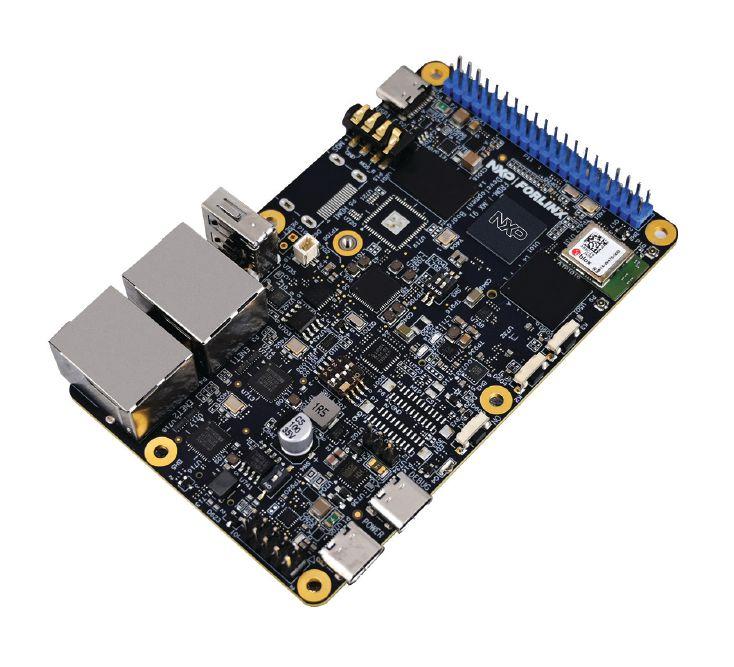
NXP FRDM i.MX 91 dev board
8 DRESSING SMART IN SPACE
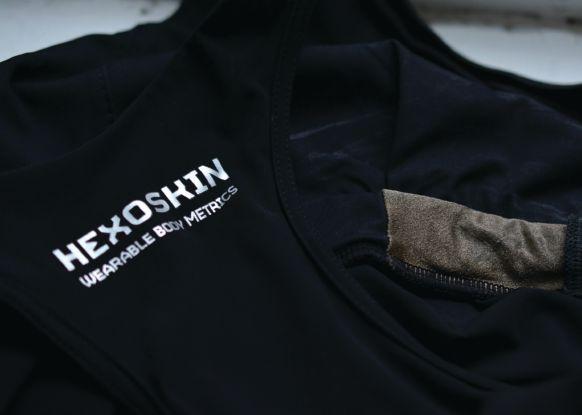
Hexoskin’s high tech garments include textile sensors that deliver precise measurements.
10 SEMI INDUSTRIAL REVOLUTION
Field Programmable Gate Arrays help industrial spaces overcome common challenges.
12 THIS TECH IS SIC
Silicon carbide is enhancing efficiency, supporting decarbonization across industries.
14 QUANTUM COMPUTING ADVANCES
Cryptographic systems are becoming increasingly relevant.
• Wirewound RF chip inductors as small as 01005 size • Shielded power inductors as thin as 0.5 mm • Coupled inductors as small as 2.2 x 1.5 mm for LED display drivers
Home sewn innovation in smart clothing sector
Canada is quietly emerging as a global force in the development of wearable technology, a sector where electronics, textiles and data converge to create products that are not only innovative, but also deeply human-centric. From health monitoring smart shirts to vision-enhancing wearables and AI-powered undergarments, Canadian companies are shooting for the moon – literally in some cases.
Take for example Hexoskin, a Montreal-based pioneer of smart clothing for health and space applications. Hexoskin’s garments, embedded with medical-grade sensors, capture real-time biometric data such as heart rate, breathing rate and sleep quality. The company’s latest milestone—a contract with the Canadian Space Agency to develop the Astroskin Bio-Monitor for the Gateway lunar space station—cements its reputation as a leader in high-performance wearables. Designed for both astronauts and earth-based clinical settings, Hexoskin’s platform is a powerful example of how wearable tech can bridge the gap between scientific research and real-world healthcare solutions.
Sharing the truly wearable fabric design space are players such as Myant, headquartered in Mississauga, whose Skiin brand aims to make connected clothing part of everyday life. With textile computing integrated directly into garments, Myant is developing products that track temperature, stress, posture and even electrocardiogram (ECG) readings. Their work is opening doors to new possibilities in remote healthcare, fitness tracking,
and elder care—areas that are increasingly important as our population ages and demand grows for decentralized monitoring solutions.
In Vancouver, Form Swim is taking wearables into the water with its augmented reality swim goggles. Form’s smart goggles provide real-time performance metrics—such as stroke rate, split times and distance—right in the swimmer’s line of sight. Designed by engineers with backgrounds in AR, wearable design and competitive swimming, the product fills a niche long underserved by traditional fitness trackers. For athletes and coaches alike, the technology enables a new level of data-driven performance feedback that’s non-intrusive and intuitive.
Texavie, based in Quebec, is another compelling player in this space, blending smart textiles with AI-driven data analytics.The company focuses on occupational health and safety applications, creating clothing that can detect fatigue, posture changes, or hazardous exposure in industrial and military environments. Texavie’s solutions offer real-time alerts and long-term trend analysis, which are crucial for preventing workplace injuries and optimizing workforce health.
Toronto’s iMerciv adds yet another layer to the Canadian wearable story. Its flagship product, the BuzzClip, is an ultrasonic mobility aid designed for individuals with visual impairments. Clipped to the collar or shirt, the BuzzClip detects obstacles and vibrates to warn the user, offering a discreet and effective solution for safe navigation. This socially conscious innovation showcases how wearables can dramatically improve quality of life by extending users’ awareness beyond their natural senses.
Then there’s OMSignal, another Montreal-based innovator that made early waves with its biometric compression shirts. With a focus on fitness and health tracking, OMSignal integrates sensors directly into fabric to monitor heart rate, breathing and movement. While its consumer-facing products gained early attention, OMSignal has increasingly pivoted toward enterprise and healthcare applications, highlighting the sector’s shift toward clinical-grade wearables.
What ties all these Canadian companies together is a clear understanding that wearables aren’t just gadgets—they’re personal interfaces. This demands engineering excellence, of course, but also a holistic view of human physiology, usability and trust. Whether it’s for professional athletes, factory workers, astronauts, or seniors, Canada’ collective engineering prowess is helping to build accurate, comfortable and secure wearable systems.
Our advantage in this space lies not only in its technical talent and research ecosystem, but also in its culture of collaboration between academia, healthcare and industry. As sensor technologies shrink, connectivity improves and machine learning becomes embedded into devices. Canada’s tech landscape is well-positioned to lead the next generation of smart apparel and assistive tech.
Editor’s Note: This month’s cover story dives deeper into Hexoskin’s Astroskin project and the company’s journey from a research startup to a space-age health-tech powerhouse. Turn to page 8 for the full interview with co-founder Pierre-Alexandre Fournier.
STEPHEN LAW Editor slaw@ept.ca
Canada’s information leader for electronic engineers and designers
MAY/JUNE 2025
Volume 47, Number 3
READER SERVICE
Print and digital subscription inquiries or changes, please contact Angelita Potal Tel: (416) 510-5113 Fax: (416) 510-6875
Email: apotal@annexbusinessmedia.com
Mail: 111 Gordon Baker Rd., Suite 400 Toronto, ON M2H 3R1
EDITOR Stephen Law slaw@ept.ca · (416) 510-5208
WEST COAST CORRESPONDENT Mike Straus · mike@brandgesture.ca
MEDIA DESIGNER Lisa Zambri lzambri@annexbusinessmedia.com
AUDIENCE DEVELOPMENT MANAGER Anita Madden amadden@annexbusinessmedia.com (416) 510-5183
GROUP PUBLISHER Paul Grossinger pgrossinger@annexbusinessmedia.com
CEO Scott Jamieson sjamieson@annesbusinessmedia.com
EP&T is published eight times per year by ANNEX BUSINESS MEDIA 111 Gordon Baker Road, Suite 400 Toronto, ON M2H 3R1 Tel (416) 442-5600 Fax (416) 510-5134 annexbusinessmedia.com
SUBSCRIPTION RATES
Canada – $59.67 one year; $95.88 two years USA – $136.68 (CAD) per year International – $187.17 (CAD) per year Single copy – Canada $15.00
ISSN 0708-4366 (print) ISSN 1923-3701 (digital)
PUB. MAIL AGREEMENT NO. 40065710 Return undeliverable Canadian addresses to: EP&T Circulation Department, 111 Gordon Baker Rd. Suite 400, Toronto, ON M2H 3R1
FEDS INVEST $8M IN TELEDYNE TO ADVANCE CHIP INDUSTRY
In an effort to increase Canada’s semiconductor production capacity and efficiency, the Federal Government invested $8 million from the Strategic Innovation Fund (SIF) toward a $42 million project to upgrade equipment at the Teledyne MEMS facility in Bromont QC.
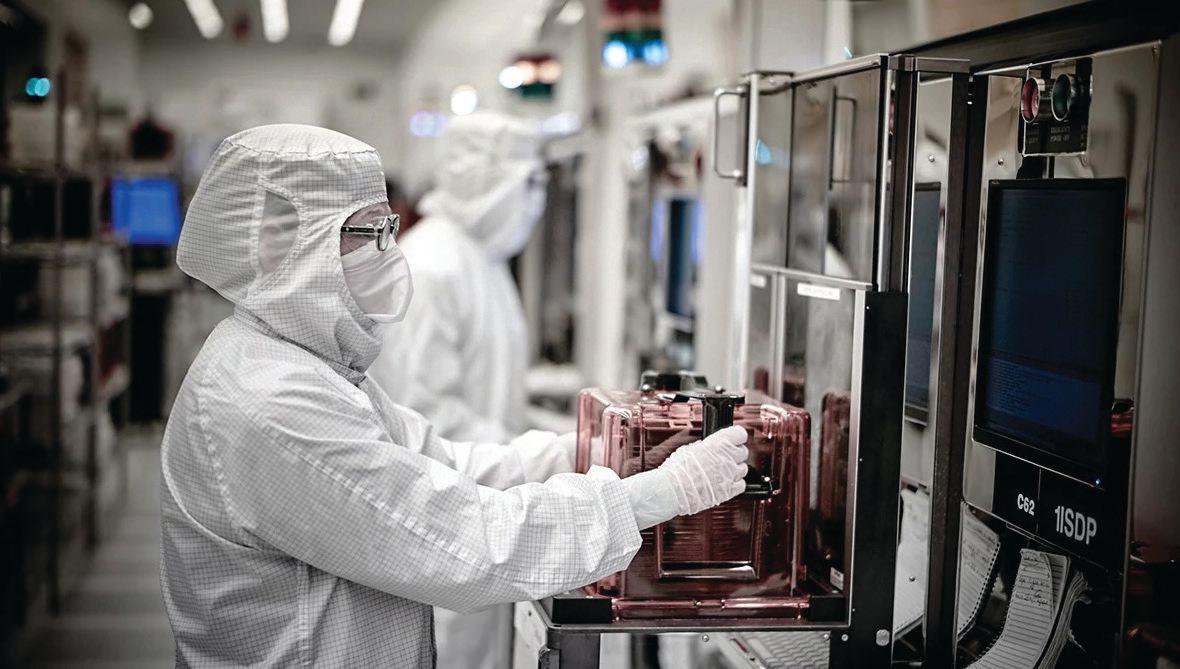
The funding will help Teledyne develop next gen image sensors and expand chip making capabilities. The 200mm wafer equipment will produce 1.8 times the number of chips that are produced compared to the 150mm wafer size, resulting in a 40% improvement in productivity and efficiency, according to Sébastien Michel, VP and GM of Teledyne MEMS.
“This new tooling will also be the cornerstone for the development of intelligent image sensor technologies in synergy with our advanced micro-fabrication (MEMS) technologies. This cutting-edge technology will enhance our competitiveness and ensure the growth,” said Michel.
MOBILE TECH
MWC25 SUCCESS RESONATES
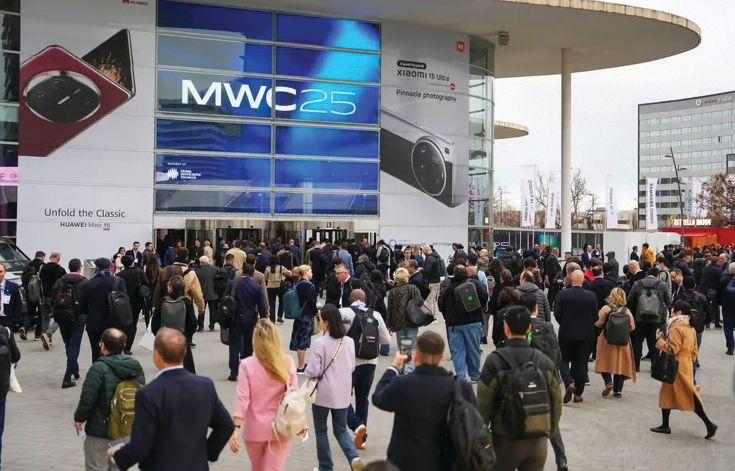
MWC25 Barcelona welcomed 109,000 attendees during a busy week of industry-shaping launches and impactful collaboration, shining a spotlight on advanced mobile technology and AI.
In keynotes and across the stages and speaker spaces, some of today’s most influential minds debated technology’s role in redefining society, business and culture, with its opportunities and challenges.
“MWC is where industries meet, and this year’s event showed just how fast technology is reshaping the world around us,” said John Hoffman, CEO of GSMA. “From AI-powered networks to the future of smart mobility, the discussions held here will set the tone for the year ahead. It sparks real change, and I can’t wait to see where this momentum takes us next.”
The GSMA Ministerial Programme convened 188 delegations from 148 countries and 40 intergovernmental organisations, 66 ministers, and 111 heads of regulatory authorities.
Teledyne MEMS facility in Bromont will use Fed Government funding to develop next gen image sensors.
MDA SPACE TO ACQUIRE SATIXFY
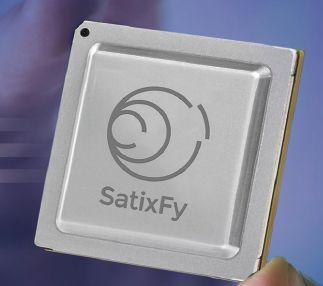
Global space industry player MDA Space Ltd. has acquired semiconductor and satellite communication solutions firm SatixFy Ltd. The deal is expected to further enhance the end-to-end satellite systems offering of MDA as demand for next gen digital satellite communications accelerates.
Founded in 2012, SatixFy serves the space and the satellite communications value chain. The technology tries to enable satellite broadband and direct-to-device constellations with its radiation hardened digital beamformers enabling them to generate hundreds of beams.
TELECOM
TELUS, NVIDIA TO BUILD AI FACTORY IN QUEBEC
Canadian telecommunications giant Telus and U.S. AI chip heavyweight Nvidia have announced plans to build what they call a “sovereign AI factory” in eastern Quebec. Both firms announced that they will
provide Canadian businesses and researchers with the supercomputers and software they need to train and run AI programs while keeping their data within the country’s borders.
Telus aims to deploy Nvidia’s latest-generation AI chips at its data centre in Rimouski, Que., by this summer, with plans to expand at its Kamloops, B.C., facility once the initial capacity is exhausted.
ENGINEERING
ZENATECH EXPANDS ZENADRONE’S TEAM
ZenaDrone, BC-based specialists in AI drones, is expanding its team of engineers, technicians and R&D staff by adding 35 new hires to meet production line and capability requirements for the manufacturing of its products.
“As we transition from the prototype stages to full-scale production, we are adding qualified engineering talent to accelerate full-scale manufacturing,” said CEO Shaun Passley. capacity by adding these resources is a critical step in delivering our drones to market efficiently while meeting our monthly production goals,” said CEO Shaun Passley, Ph.D.
SPACE TECH
Calgary doctor plays footsy with medical technology
BY MIKE STRAUS, WEST TECH
CORRESPONDENT
Recognizing that people living with diabetes and peripheral neuropathy should really take better care for their feet, Dr. Breanne Everett set out to ensure that. Everett founded Orpyx Medical Technologies Inc., a Calgary-based firm that specializes in personalized remote healthcare transforming limb care for people living with diabetes.
Diabetes requires care for multiple disease-related conditions. One of these conditions, diabetic foot ulcers, is a burdensome problem that costs the medical system significant resources while affecting patients’ quality of life. This is one problem Everett couldn’t ignore – even as a medical student.
“Breanne was doing her residency when she came up with the idea for Orpyx,” says Orpyx senior vice-president of research and development Travis Stevens. “She was a plastic surgery resident, and in Alberta, plastic surgeons are involved in wound care management. During her residency, Breanne saw a lot of people with diabetes suffering from complications resulting from neuropathy in the foot, which ultimately leads to the formation of pressure wounds.”
Secondary nervous system
Dr. Everett realized that her patients were developing wounds on their feet because they couldn’t feel pressure. So, what if she could develop a piece of technology that acts as a secondary nervous system?
After some encouragement from her residency program director, Dr. Everett took a leave of absence from her medical residency, pursued an MBA degree, and started Orpyx.
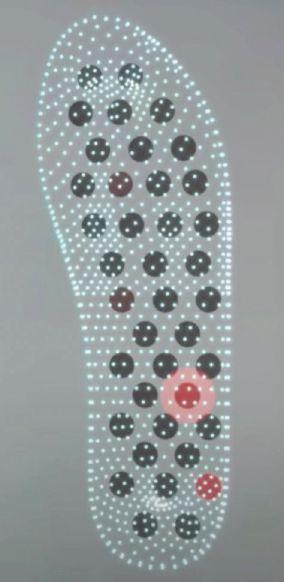
Orpyx’s main product is the Orpyx Sensory Insole system, a set of shoe inserts that use electronic sensors to collect data
relating to pressure, temperature, motion, and steps. The technology is designed to prevent the development of diabetic foot ulcers, which often result in amputation. The Orpyx Sensory Insole system detects high-pressure events and monitors temperature underfoot so patients can make changes before foot complications occur.
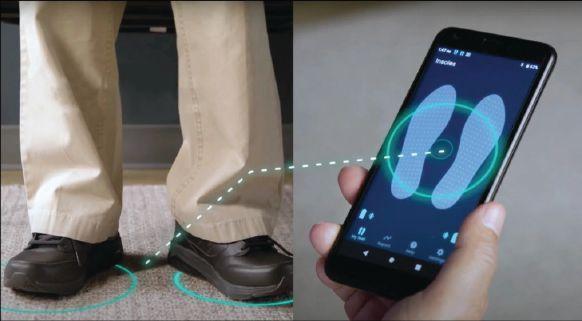
The sensory insoles come with a companion mobile app for patients. The Orpyx App alerts patients when sustained plantar pressure occurs and guides patients to offload the pressure on their feet in a healthier way, usually accomplished with simple activity and movement. This mobile app also records temperature, pressure, and motion data from the insoles, which is then sent to Orpyx’s cloud-based backend database. Orpyx’s onstaff nurse practitioners examine the data for incident signals, either escalating the matter to the patient’s physician or contacting the patient directly.
This remote foot monitoring
technology is also available to contract research organizations, enabling CRO staff to monitor movement patterns and plantar pressure data. CROs can use the technology to automatically and continuously collect real-world data, which reduces study team burden and participant fatigue.
“The insole system collects data from people in a seamless way,” Stevens says. “One of the benefits we offer is that the technology itself is potentially applicable to other areas of study, if you want to look at those data streams under the foot. We have a complete backend system where the insole data is aggregated and can be analyzed for a wide range of purposes – from foot ulcer prevention to gait and activity tracking.”
Integrate multiple data streams
Stevens says that Orpyx is now focused on owning the space related to diabetic foot ulcer prevention. The company is also looking at something they call diabetes healthspan extension (DHE); they’re examining other ways to improve quality of life for people living with diabetes. Orpyx’s technology is designed to collect data, integrate multiple data streams, and optimize
the patient’s healthspan.
“We want to help people live healthy lives with chronic conditions through the power of technology,” Stevens explains. “Our key value proposition right now is around the data we collect and where that goes, but we think there’s tons of ability to integrate other data streams so we can provide a comprehensive solution for remote patient monitoring for people living with diabetes.”
Speed commercial efforts
Stevens says the company and its founder, Dr. Everett, have had tremendous support from entrepreneurs in Alberta. He notes that there’s a lot of talent in Western Canada, and a lot of entrepreneurial spirit – spirit that Orpyx embodies.
Orpyx has recently raised CA$26.9 million in growth capital, led by Perceptive Advisors, LLC which invests in life sciences companies. The funding allows Orpyx to accelerate its commercial efforts in delivering life-changing solutions for preventing debilitating foot complications for those living with diabetes and neuropathy.
Mike Straus is EP&T’s West Coast correspondent. mike@brandgesture.ca https://www.orpyx.com
Sensory insoles (left) come with a companion mobile app (above) that alerts patients when sustained plantar pressure occurs.
Canada plastic registry
What EEE firms must know before the 2025 deadline
BY AURY HATHOUT, ENVIROPASS EXPERTISE INC.
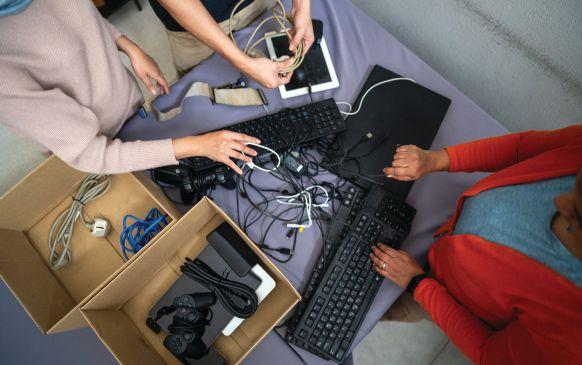
If your company manufactures, imports, sells, or distributes electronic or electrical equipment (EEE) in Canada, here is a new regulation on the horizon that you can’t afford to ignore: the Canada Plastic Registry. This mandatory reporting initiative aims to track and reduce plastic waste, and EEE producers are squarely in its scope.
With the first reporting deadline set for September 29, 2025, now is the time to get familiar with your obligations—especially if your products contain plastic components, housings, cables, or packaging. This article breaks down the scope, compliance steps, and timeline so you can act with confidence and stay ahead of the curve.
What is this registry?
Launched under the Canadian Environmental Protection Act (CEPA), the Plastic Registry is a federal tool designed to collect detailed data from companies introducing plastic into the Canadian market. For the electronics sector, that includes:
• Consumer, professional, and industrial electronics
• Appliances (large & small)
• Networking equipment
• Power tools
• Any other electrical or electronic device with plastic parts or packaging
The goal is to track plastic across its entire lifecycle, from production and use to end-oflife disposal, reuse, or recycling. This information will feed into Canada’s Zero Plastic Waste Agenda, supporting policy-making and encourage more sustainable design and biz practices.
Does this apply to you?
If your company is involved in the production, import, sale, or distribution of EEE products, there’s a high chance you’re
considered a “producer” under the Plastic Registry framework. That includes:
• Brand owners selling under their name in Canada
• Importers bringing electronics or their components into the country
• Distributors and retailers, including online platforms, if no brand owner or importer is identified
• Franchise operators or license holders of electronic brands
• And manufacturers. Therefore, if you sell products that contain plastic—such as internal or external plastic components, wires, coatings, protective shells, or packaging—you may have a legal obligation to report under the new rules.
What to report?
As part of the Plastic Registry, companies must submit annual data for a wide range of plastic-containing EEE products and their packaging. For each product category, you must report:
• Plastic-type or polymer (e.g., ABS, PVC, PET, etc.)
• Total weight of plastic placed on the Canadian market (in tonnes)
• Recycled content in the product, if any Plastic found in cords, cables, device housings, internal parts, insulation, protective foam, or clamshell packaging are all accounted for. Importantly, even if you don’t produce the plastic yourself, you are still responsible for reporting it if your company introduces the EEE product into the Canadian market.
How to comply: Steps
1. IdentifyYour Role as a Producer Determine whether your business qualifies as a “producer” under the regulation. If you are a brand owner, importer, or first seller of electronics in Canada, you’re likely required to report.
2. Start Collecting Data on Your Products
This includes information about:
• Product weights and packaging specs
• Types of plastic used in each item (including flame-retardant plastics, cables, and enclosures)
• Recycled content percentages
• Sales or distribution data
• You may need to coordinate with your supply chain for accurate material breakdowns.
3.Track End-of-Life Information Though challenging, the Registry also requires you to
report what happens to your plastic waste. If you participate in take-back programs or work with Producer Responsibility Organizations (PROs), they may be able to help you gather this data.
4. Register on the Government’s Reporting Platform Environment and Climate Change Canada (ECCC) offers an online portal where you can submit your data.
5. Submit Your First Report by September 29, 2025 Your 2025 report will reflect activities from the 2024 calendar year. That means you should already be tracking data to avoid delays or gaps. Indeed, missing the deadline—or submitting incomplete data—could lead to non-compliance under CEPA.
Why it matters
Electronics and electrical equipment account for significant volumes of complex plastics, many of which are hard to recycle and contribute to persistent environmental waste. The Plastic Registry is designed to hold producers accountable and drive innovation in eco-design and circular business models.
Complying with the Plastic Registry also helps you:
• Show enviro leadership
• Demonstrate transparency to customers and investors
• Prepare for similar EPR and plastics reporting rules in other jurisdictions (EU and U.S.)
• Gain insights into your plastic footprint to support greener product development
For electronics OEMs, the Canada Plastic Registry isn’t just another regulatory hoop—it’s a chance to lead the way toward more sustainable product lifecycles. Compliance experts can assist you in building an efficient reporting system and ensuring that your plastic reporting is accurate, timely, and stress-free. https://getenviropass.com/
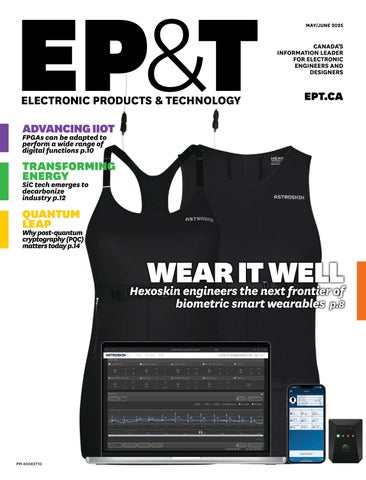
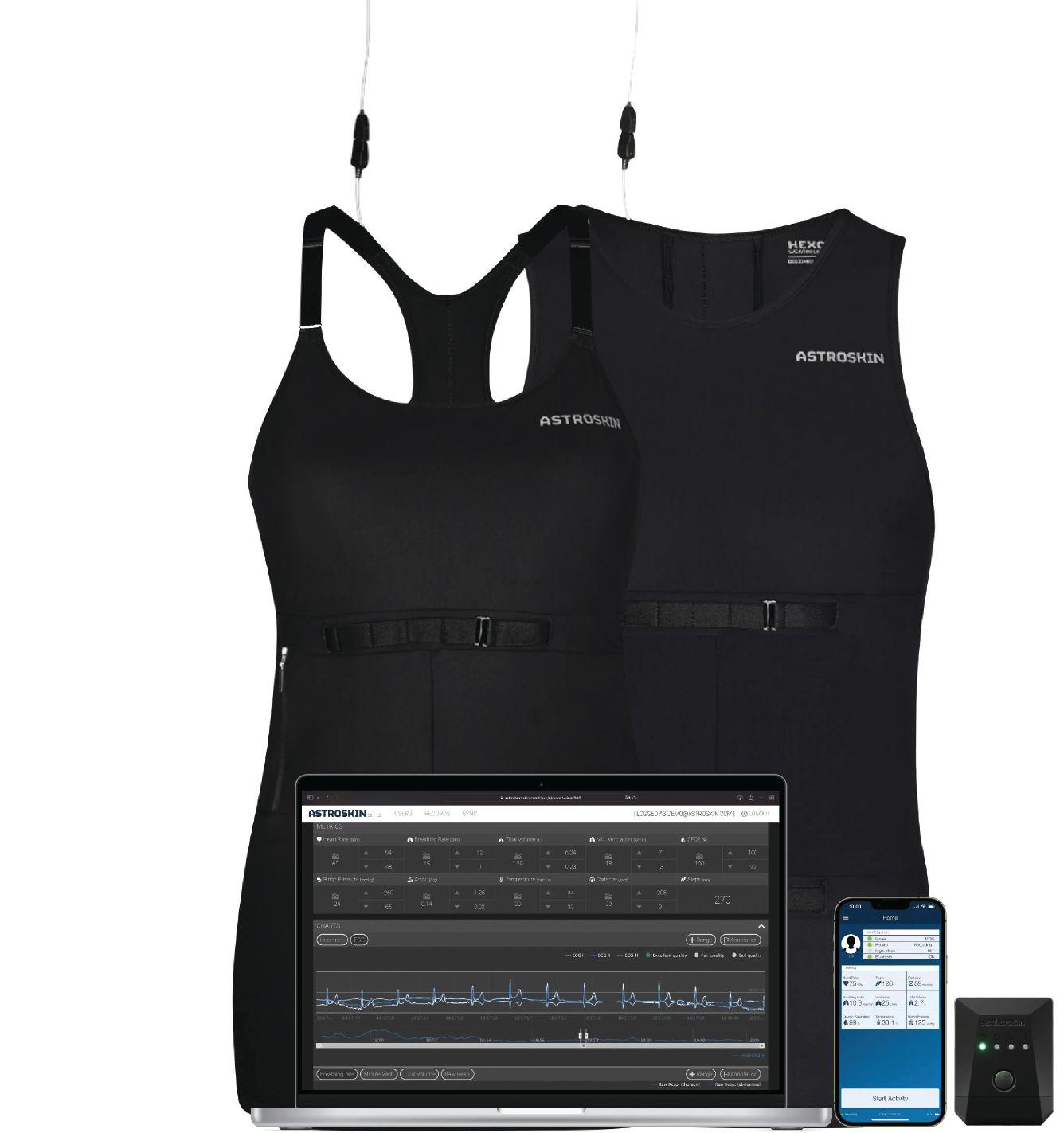
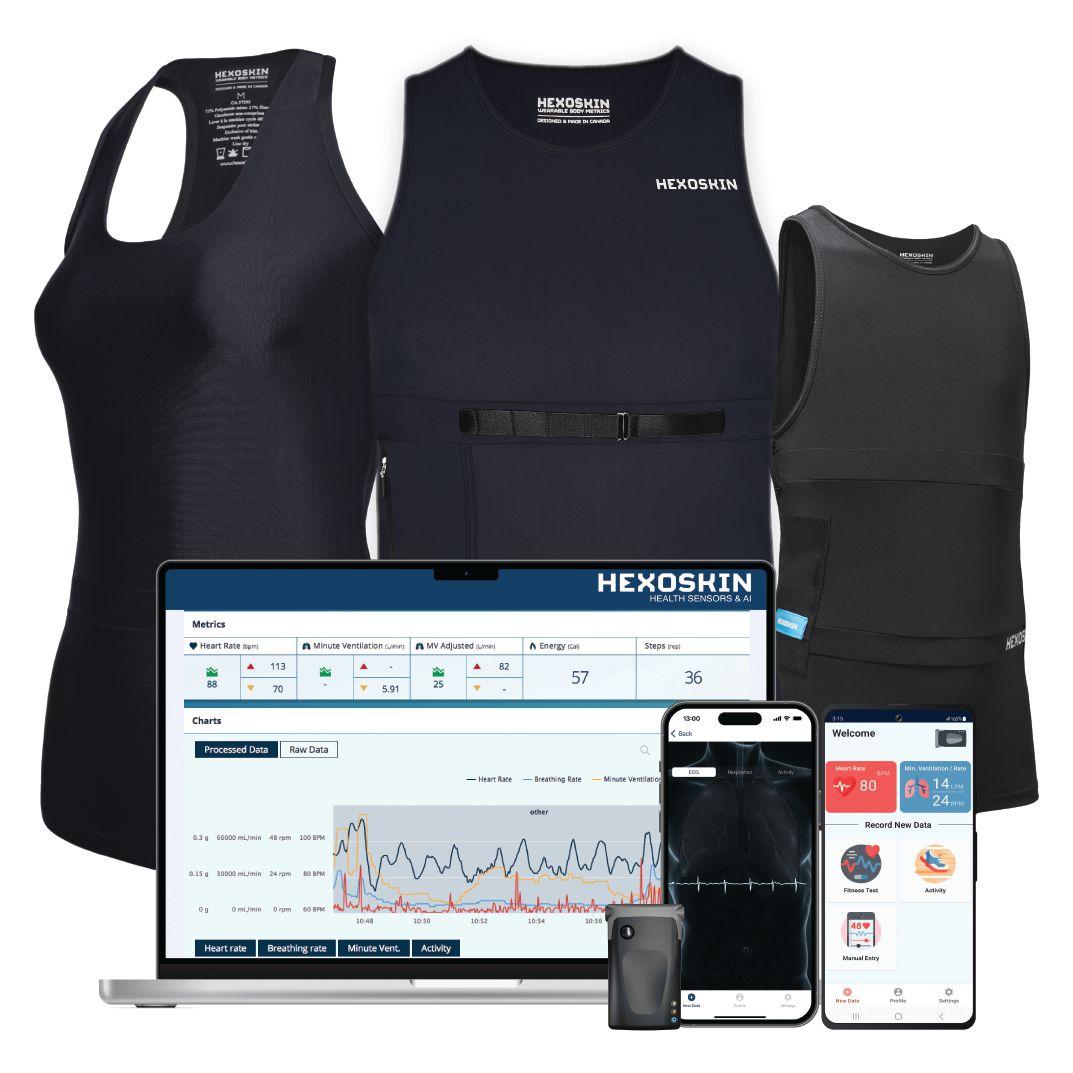
Smart garments are now part of the Canadian Space Agency’s Astroskin bio-monitor program.
Hexoskin engineers the next frontier of biometric wearables
BY STEPHEN LAW, EDITOR – EP&T
For over a decade, Montreal-based Hexoskin has been quietly redefining how physiological data is collected, processed and analyzed - one sensor-embedded shirt at a time. At the helm is Pierre-Alexandre Fournier, CEO and co-founder, who has overseen the development of a wearable biometric platform that combines
textile-embedded sensors, edge computing, and wireless connectivity to deliver continuous, real-time health monitoring. Originally designed for clinical and performance applications, Hexoskin’s smart garments are now part of the Canadian Space Agency’s Astroskin Bio-Monitor program, headed for deployment aboard the Gateway lunar space station. Fournier and
his vast engineering team have faced challenges of designing medical-grade electronics for low-power operation, robust data integrity and extreme environments - both terrestrial and extraterrestrial.
Early stages of development
In the early stages of developing this technology, Fournier and
co-founder Jean-François Roy, decided to adopt the strategy of steering their products towards the wellness arena, instead of venturing into the medical device world.
“We realized 10 to 15 years ago the healthcare industry was not ready for connected devices. Besides, you are required to go through all the legal ramifications and certifications when creating
Photo: Hexoskin
The Astroskin monitor is currently in four clinical trials in space, studying the accelerated aging effect of microgravity on human physiology
a medical device,” said Fournier. “Our products operate more like a scientific instrument that our customers use for research. The common denominator amongst our users is that they have a question they need answered in their field.”
Hexoskin operates as a fully integrated data company - from the hardware to the application layer, where it delivers specific services to its clients, depending on what they’re looking for in terms of diagnosis or in terms of tracking people’s health. From the physical side, Astroskin puts its focus on cardiac and respiratory activity. Thus, the product line features a form factor that covers the upper body very well.
Breathable, washable, form-fitting
“The first form factor for the product wasn’t clothing at all. We’ve tried different form factors - different devices like straps and adhesives that you can place on the body. Then we settled on garments, because we felt like it was the most natural way to wear sensors for vital signs,” noted Fournier.
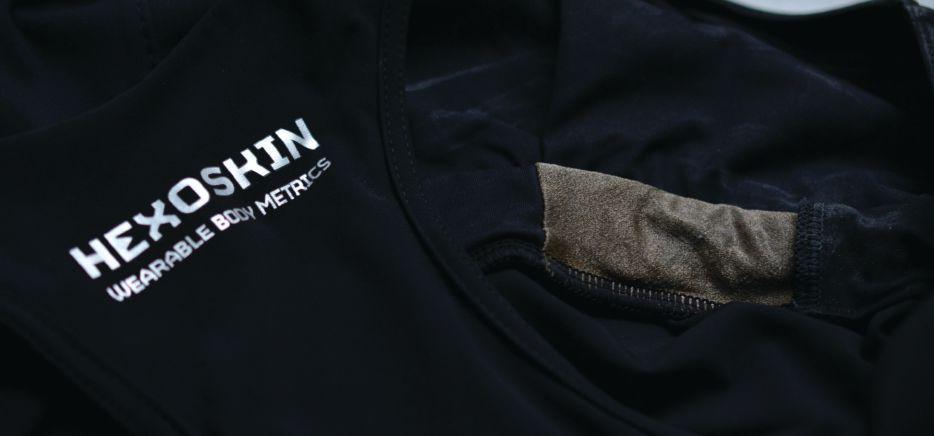
Astroskin is a modular, wearable health monitoring system designed to collect continuous physiological data in extreme, zero-gravity environments. The platform integrates textile-based biometric sensors with low-power embedded electronics and a wireless data acquisition module, enabling real-time monitoring of vital signs in space and remote terrestrial environments. Built from breathable, washable, form-fitting textile, the fabric is embedded with ECG electrodes, respiratory inductance sensors, and a 3-axis accelerometer. It also ensures consistent skin contact and sensor placement for accurate data acquisition during movement.
“Our concept was to deliver
this technology to the end-user in the most invisible and seamless way possible. We thought, well, people are already getting dressed - so we’re just going to use the clothes they have, and we’re going to hide sensors inside them,” Fournier said.
The biometric module has a compact, detachable electronic unit that powers the system. It captures and processes data including: Heart rate and ECG waveform; breathing rate and tidal volume; skin temperature; blood oxygen saturation (via optional SpO₂ sensor); physical activity and posture via IMU. The data is stored locally and transmitted wirelessly via Bluetooth or other protocols.
“We’ve been developing the Astroskin technology since 2011, and it’s been funded from the start by the Canadian Space Agency (CSA),” Fournier stated. “This is a great example where the aerospace industry invests in a project, but it also has a lot of benefits for other applications – unrelated to the aerospace industry.”
The CSA recently awarded a contract to Hexoskin to develop and adapt the Astroskin
Bio-Monitor crew physiological monitoring system for Gateway, a space station that will orbit the Moon at a distance of about 340,000 kilometers from Earth.This is significantly farther than the International Space Station (ISS), which orbits Earth at a distance of approximately 400 kilometers. The first two elements of Gateway – the Power and Propulsion Element (PPE) and the Habitation and Logistics Outpost (HALO) – are set to launch together in 2027.
“So, the time that the astronauts will spend in that space station will be the closest thing to a trip to Mars that we’ve ever done,” Fourier added.
The Astroskin Bio-Monitor has been in operation on the International Space Station (ISS) since January 2019, and it is currently used in four clinical trials in space focused on studying the cardiorespiratory system and the accelerated aging effect of microgravity on human physiology.
Equipped with a companion app and API for data visualization and remote access, Astroskin is supporting edge computing for preliminary data processing and compression. The product is also compatible with AI and machine learning models for predictive health analytics.
“We’ve had to deal with a lot of red tape in designing this product for use in space. We’ve had to do a lot of testing at the Johnson
Hexoskin supports edge computing for preliminary data processing.
Space Center (NASA facility) in Houston, to ensure everything conforms with the environment up there. They are always very concerned about space crew safety.”
Fournier points out that electronic devices operate differently in space and you cannot rely on natural air movement to cool off your products, because there is no gravity.
Good headstart with space technology
The private sector in spaceflight has seen rapid growth over the past two decades, with a mix of startups, established aerospace firms, and tech giants entering the arena. This bodes well for Hexoskin, as it has a decent headstart in space tech.
“I think at some point in our lifetime we’re going to see a world where there are many space stations and most will be occupied by civilians,” said Fournier. “They’re going to be manufacturing pharmaceutical products and other products that are small and expensive and benefit from microgravity manufacturing. Some will be responsible for assembling other space stations or spacecraft in space or refueling satellites or maintaining satellites and other spacecrafts.”
Fournier anticipates that robots and probes will play a major role in future space endeavours, however – “There are a lot of cases where you benefit from having a human in the loop,” he added.
Fournier and his team have spent the past 15 years building out their tech infrastructure, including its sensors and database, while connecting with a large community of scientists and professionals around the platform.
“Moving forward, we are very focused on different applications for our technology. And, it’s very exciting, because there are hundreds of applications for it, such as niche medical conditions,” Fournier noted. “At some point we’ll be in 15, 20, 50 different sub-markets of healthcare and clinical research.”
How FPGAs should advance industrial IoT
More attention needed on the
hardware
and
software components
that make these advancements possible
BY KARL WACHSWENDER, PRINCIPAL SYSTEM ARCHITECT, INDUSTRIAL, LATTICE SEMICONDUCTOR
The fourth industrial revolution, also called Industry 4.0, refers to the drastic increase in advanced technologies and automation within manufacturing and other Industrial sectors, such as transportation and logistics. It’s fundamentally reshaping core processes by redistributing tasks between humans and machines — optimizing efficiency across every area, from production to supply chain management to forecasting. Much of this progress is due to the convergence of cutting-edge technologies in cloud computing, artificial intelligence (AI), and Internet of Things (IoT) making Industrial settings smarter and safer.
However, these aren’t the only innovations with a role to play in the industry’s next era. As manufacturers lean into these transformative domains, more attention also needs to be paid to the hardware and software components that make these advancements possible. For example, with billions of IoT sensors now being deployed and these devices handling increasingly complex processing tasks, they require more progressive underlying technologies.
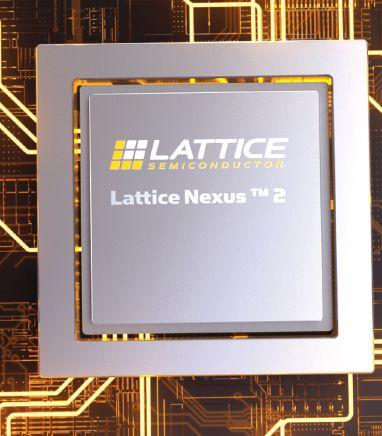
Field Programmable Gate Arrays (FPGAs) — flexible semiconductors that can be adapted to perform a wide range of digital functions — are one such technology. They will become indispensable to system designers in this sector going forward, helping them overcome common challenges and maximize productivity and performance.
Explosion of sensors & edge devices
The crux of Industry 4.0 is enhancing how humans and machines interact with each other and their
environments. In other words, it promotes seamless, sophisticated ecosystems that collect, analyze, and activate on data to streamline operations. To meet this need, manufacturers are investing more heavily in Industrial IoT (IIoT) devices to create highly connected, data-driven environments. In fact, the U.S. IIoT market size was valued at approximately 108 billion in 2023 and is expected to reach some 358 billion by 2030.
Sensors are at the heart of these ecosystems, collecting critical environmental data and operating in harmony with other devices like Edge gateways and actuators. In a smart factory, temperature or vibration sensors may be attached to machines to gauge if they are working properly and make automated adjustments in real time, even flagging when maintenance is needed. Or camera sensors may be used to visually inspect
Designers need to ensure that all of their IoT devices can communicate seemlessly with both workers and one another. FPGAs need to work with both legacy and modern equipment.
assembly lines or monitor equipment, analyzing data for quality control or predictive maintenance.
Of course, not all IIoT devices perform Edge or AI computing, but a growing number do. While some of the more basic sensors simply collect data and pass this raw information along to the central compute engine, an increasing number of Edge devices are now operating close to these sensors to process some or all of the data locally, often including AI analytics, for faster insights and actions. Where the data is processed varies based on the application’s needs and whether it is being used to carry out real-time processes or inform longer-term decision-making.
How FPGAs address challenges in IIoT ecosystems
As the demand for IIoT increases, so does the complexity of managing
aspects like investment costs, connectivity, data privacy and security, integration with legacy systems, data management, and skills management — to name a few. Luckily, FPGAs offer a solution to the primary challenges designers face in effectively managing these networks:
Connectivity: “Connected” is the key theme of IIoT, so designers need to ensure that all of their devices can communicate seamlessly with both workers and one another. FPGAs support advanced connectivity through their diverse input/outputs (I/Os), giving them the ability to interface with different types of sensors and communication protocols simultaneously. This also allows FPGAs to work with both legacy and modern equipment. Additionally, FPGAs can act as bridges between different communication standards and protocols, ensuring seamless data transfer and integration across various systems, whether it be customer-specific, standard, or emerging interfaces.
Data privacy and security: IIoT networks are susceptible to cybersecurity threats, so securing sensitive data and processes must be a top priority. FPGAs enhance the security of these ecosystems by serving as the Hardware Root of Trust (HRoT) for devices, providing a foundation for their secure operations. They can also implement a variety of custom security features, such as encryption, authentication, and real-time monitoring.
Data management: The data moving through IIoT systems is abundant and diverse. There are multitudes of devices, each handling different types of data and computing. Not only do FPGAs support both single- and multi-model sensor data processing, but they can perform sensor fusion to improve contextual insights at the Edge. Moreover, FPGAs can execute multiple tasks at once, including AI functions, and dynamically switch their workloads to fit different contexts.
358 billion
IIoT market size was valued at approximately 108 billion in 2023 and is expected to reach some 358 billion by 2030
Bright future in manufacturing
Above and beyond these benefits, FPGAs also offer the agility system designers need to keep up with the shifting Industrial landscape. For example, they can reprogram FPGAs — even after they’ve been deployed in the field — to serve different functions or push out updates, without needing to change the underlying hardware.
As IIoT ecosystems continue to expand, we can expect to see more developers utilizing FPGAs to overcome the obstacles associated with implementing and scaling these networks. The result will be more seamless data-sharing between workers and machines, helping the Industrial sector strike the right balance between human tasks and automation. https://www.latticesemi.com/
Karl Wachswender is principal system architect - industrialat Lattice Semiconductor Corp., Oregon-based specialists in the design and manufacturing of low power field-programmable gate arrays (FPGAs).
CONNECT TECHNOLOGY WITH CONFIDENCE
Exploring how silicon carbide is transforming energy systems
BY MICHAEL WILLIAMS, DIRECTOR OF MARKETING FOR INDUSTRIAL AND INFRASTRUCTURE AT INFINEON TECHNOLOGIES AG AND SHAWN LUKE, TECHNICAL MARKETING ENGINEER AT DIGIKEY
Silicon carbide (SiC) has become a cornerstone for enhancing efficiency and supporting decarbonization across industries. It’s an enabler for advanced power systems, addressing growing global demands in renewable energy, electric vehicles (EVs), data centers and grid infrastructure. SiC technology has advantages over traditional silicon devices, especially in power conversion efficiency and thermally sensitive situations. Its overall impact in the electronics and power industries can lead to greater profit-
The introduction of SiC created a shift toward driving efficiency , enabling reductions in energy losses across multiple conversion stages.
ability and sustainability.
Experts from two industry-leading semiconductor companies – Michael Williams, director of marketing for industrial and infrastructure at Infineon Technologies and Shawn Luke, technical marketing engineer at DigiKey – share their thoughts on how SiC technology has impacted the market and what’s next.
Shifting power consumption
“In the past, most power consumption was tied to some type of motor control such as industrial automation
applications and factories, rail transportation, moving pumps for wastewater treatment or fluids like oil in pipelines,” said Williams. “With the introduction of silicon carbide, there was a shift toward driving efficiency in the marketplace, enabling reductions in energy losses across multiple conversion stages, supporting high-demand applications.”
This shift focused on decarbonization and the development of new generations of renewable technology, including renewable energy systems, EV infrastructure and data centers. It
Photo: Oselote / iStock / Getty Images
also improved power conversion efficiency from around 95% to 98.5%, a significant shift that has lowered energy losses, reduced heat generation and minimized cooling requirements.
Grid infrastructure
Simply transferring power from the grid or a high-voltage power line into a data center can result in a 5-6% loss in power as it travels through several layers of conversion. Data centers alone are estimated to account for 3% of global energy consumption today, projected to rise to 4% by 2030 (Data Centre Magazine, 2022), with no expectations of slowing down. SiC comes into play for datacenter power infrastructure, driving efficiency and system cost in grid-scale energy storage and solar central inverters. The combined solution enables future datacenters to work in a microgrid environment, reducing loading on the already strained U.S. grid.
“With the electrification of automobiles, we’re seeing many reference designs come out with bi-directional charging and advanced power electronics, meaning they’re charging during non-peak times and putting power back into the grid for peak times,” said Luke.
SiC, as a wide-bandgap technology, supports higher voltage handling and faster switching speeds in applications like EV charging. This has enabled a complete transformation of the global grid infrastructure while reducing system complexity and overall costs.
Designing with SiC technology
SiC technology addresses efficiency well, but there are times when a designer needs a small product, which is when wide bandgap (WBG) or silicon (Si) devices are used.
“Just as a designer has three technologies to choose from, they also have three fundamental design considerations. Do I make my product cost-effective; do I make my product compact; or do I make my product efficient?” explains Williams. “Choosing any two of these priorities allows a
designer to choose Si solutions. However, designing for all three of these considerations requires wide bandgap devices. The key driver for compact products is increasing the switching frequency to reduce the size of the magnetics and capacitance in the system.”
Because of the WBG capability in SiC technology, voltage levels can be higher, which has enabled the next generation of technology implementation. The challenge is that SiC is a complex material to work with given it’s a significantly stiffer base material than traditional silicon.
Power cycling is a key factor in package development, as it puts strain on the interconnection between the SiC die and its leadframe or substrate, potentially leading to premature device failure. Developing new interconnection technologies to improve the power cycling performance of future SiC devices is important in addressing the future requirements of a decarbonized grid.
“Applications now utilize much higher power cycling than the motor-drive applications of the past,” said Williams. “Infineon has been focused on developing our .XT technology, an advanced interconnection technology proven to increase power cycling performance >22 times versus standard soft solder techniques. This technology development enables higher power density, improved thermal performance, and maximum system lifetime, enabling the shift to more renewable energy sources.”
Power conversion market innovations
One area these experts are excited about is the decarbonization of the grid, which involves transitioning away from fossil fuel power plants (like coal and oil).
“Decarbonization can happen both at the macro level with changes power
“Enablers like SiC are helping us get closer to microgrids more than ever before, localizing power sources for less conversion and loss.”
-Shawn Luke, technical marketing manager at DigiKey
companies are making to switch to wind, solar and hydropower, but also at the consumer level through EVs and the like,” said Luke. “Enablers like SiC are helping us get closer to microgrids more than ever before, localizing power sources for less conversion and loss, aiding in decarbonization.”
Another innovation they see as having a strong impact on the power sector is the implementation of solid-state transformers. These can greatly enhance the infrastructure of the power grid, reducing the size, installation time and overall complexity of the utility site. Deploying solid-state transformers enables modular, high-voltage systems and microgrid solutions, leading to more sustainable power distribution.
What’s next?
With new technology rolling out constantly, SiC is predicted to have a lasting presence.
“Infineon experts predict silicon power switching devices will continue to dominate the market for the remainder of the decade,” said Williams. “We have a unique position in the market by offering all three switching technologies: silicon, silicon carbide and gallium nitride and see no threat from wide bandgap power devices reducing the total market size.”
Companies like Infineon are investing in scaling manufacturing to increase capacity and developing solutions that improve power efficiency while reducing the cost of SiC technology. Innovations such as modular microgrids, distributed dc networks, and fusion reactors are on the horizon, with SiC at the core of these advancements.
Through a strong partnership with its global distributor, DigiKey, the rapid deployment of new technologies through a no-minimum-order and high-availability distribution model, designers and engineers are well-positioned to run with all that is next.
For more information on power solutions, visit DigiKey.ca.
Michael Williams
Shawn Luke
How post-quantum cryptography can overcome technical constraints and regulatory fragmentation
JOPPE W. BOS, CRYPTOGRAPHER & TECHNICAL DIRECTOR, COMPETENCE
CENTER FOR CRYPTOGRAPHY AND SECURITY AT NXP
As quantum computing moves from theoretical promise to practical potential, the threat it poses to today’s cryptographic systems is becoming increasingly relevant. While a large-scale, fault-tolerant quantum computer may still be years away, its eventual arrival could render the digital foundations of our economy obsolete overnight – breaking widely used cryptographic algorithms like RSA and ECC in a matter of hours.
Nowhere is this more critical than in embedded systems and industrial IoT, where device longevity, limited memory, and update paths make proactive cryptographic planning a necessity. With global migration timelines already in motion and a fragmented regulatory landscape taking shape, we need to act now.
Why post-quantum cryptography (PQC) matters today
Conventional cryptography protects everything from web browsing to firmware updates, but most of these protections rely on public key schemes that are vulnerable to quantum algorithms. Key-exchange and digital signatures – the bedrock of secure updates and secure authentication – are particularly at risk.
For example, malicious actors today could be harvesting and storing encrypted
communications ready for future quantum decryption capabilities. That puts a huge range of sensitive internet connection data squarely in the danger zone. But also consider long-lifespan systems such as cars, industrial controllers, and smart meters –devices that may remain in operation well into the next decade: imagine a situation in which a bad actor can forge a digital signature with a quantum computer and then push updates to vehicles – the security as well as safety implications are significant.
For manufacturers of embedded systems and IoT devices, the natural next question is “when
will quantum computing be a threat”. However, that needs to shift to: “when are the new security standards available and when do regulations require us to be ready”. Because in many regions the new PQC standards are already here.
Leading agencies – including NIST (U.S.A.), BSI (Germany), and ANSSI (France) – have already published detailed guidance on PQC migration . NIST’s latest draft, IR 8547, outlines a clear path: by 2025, start migrating; by 2030–2035, classical algorithms like RSA and ECC must be deprecated entirely. For automotive sectors and critical
infrastructure, where device lifecycles exceed a decade, this has immediate design implications.
Even regions yet to finalize national mandates are aligning behind the same principle: begin adopting PQC where systems must remain secure for years to come. That includes TLS 1.3, secure firmware updates, and digital signatures for boot-time authentication – use cases deeply embedded in IoT and industrial workflows.
Fragmented standards, complex decisions
While the direction is clear, the roadmap is not. The
fragmentation of PQC standards is currently one of the biggest challenges. The U.S.A. NIST process has produced several algorithm families – ML-KEM (Kyber), ML-DSA (Dilithium), SLH-DSA (SPHINCS+), and others – designed for different cryptographic functions. Internationally, things fragment even further.
Countries including China, India, and South Korea are advancing their own PQC competitions. Meanwhile, Europe, among others, is pushing to expand the ISO standard set beyond the initial NIST recommendations. It’s likely we’ll have at least a dozen, perhaps two dozen, standards by the time these different countries settle on standards – each with varying performance, memory, and security trade-offs. Some schemes (like stateful hashbased signatures) are suitable only for narrow use cases such as software signing. Others face performance or memory hurdles that make them unsuitable for ultra-constrained embedded systems.
For product designers and architects, this raises key questions. Which algorithms should be supported now? How do we ensure interoperability with future ecosystems? What if the chosen algorithm is deprecated or fractured by regional regulation?
Countries including China, India, and South Korea are advancing their own PQC competitions. Meanwhile, Europe, among others, is pushing to expand the ISO standard set beyond the initial NIST recommendations. It’s likely we’ll have at least a dozen, perhaps two dozen, standards by the time these different countries settle on standards – each with varying performance, memory, and security trade-offs. Some schemes (like stateful hash-based signatures)
are suitable only for narrow use cases such as software signing. Others face performance or memory hurdles that make them unsuitable for ultra-constrained embedded systems.
For product designers and architects, this raises key questions. Which algorithms should be supported now? How do we ensure interoperability with future ecosystems? What if the chosen algorithm is deprecated or fractured by regional regulation?
The need for agility
Cryptographic agility is one response to this uncertainty, building systems that can support multiple algorithms and be seamlessly updated over time. In theory, this makes it easier to pivot as standards evolve. In practice, however, it’s far from simple – especially in memory-constrained embedded devices.
Agility requires flexible firmware architectures, well-defined update mechanisms, and robust key management. It also introduces new risks including expanded attack surfaces, version mismatches, and the operational burden of managing multiple cryptographic backends. Agility isn’t just a software problem, either; hardware constraints including RAM, flash, and compute capability often limit whether agility can even be implemented in the first place.
Hybrid schemes, with traditional and quantum-safe algorithms used in parallel, offer a useful middle ground during transition. They enable gradual migration while preserving backward compatibility, and several national standards recommend this approach in the interim. But hybrid modes can be compute-intensive, which again raises concerns for embedded platforms with limited resources where multiple keys need to be stored.
PQC migration will naturally look different depending on sector, geography and device type. Some devices can absorb new crypto with a firmware patch, while other will require hardware refresh cycles.
The technical constraints facing PQC
The technical reality of PQC is that quantum-safe cryptographic primitives – the fundamental building blocks – are simply larger. Public keys, ciphertexts, and digital signatures can be an order of magnitude bigger than their classical counterparts. While this is manageable for cloud-based systems or modern laptops, it might be a showstopper for legacy microcontrollers and memory-tight devices common in industrial IoT.
Many embedded systems operate with just 8–16 KB of RAM, for example. Meanwhile, standard implementations of PQC algorithms like ML-DSA or ML-KEM, which in academic scenarios can be very effective, can require upwards of 50 KB for signing or verification alone. Industry leaders are focused on tackling this by reducing memory footprints.While this can come at a cost of performance, the RAM savings more than make up for it. For example, a PQC algorithm running on 5KB might perform 3.2x slower than a 50KB alternative, but the RAM requirements are 10x smaller. What’s more, for device categories, slower operations can be partially offset by hardware acceleration.
Firmware updateability is another issue. Not all deployed devices can accept security updates, and among those that can, not all have the necessary storage headroom or cryptographic infrastructure to support PQC upgrades. For some, end-of-life replacement may be the only viable option.
Prioritize where it matters most
Given these limitations, migration needs to be strategic. Security architects must start by identifying the most critical functions, where quantum threats intersect with long-term data confidentiality, authentication, and integrity.
Top priority use cases for embedded and IoT systems include:
• Secure Boot: Ensuring the authenticity of firmware at
• TLS Connections: Protecting in-transit data with forward secrecy
• Device Attestation: Verifying device identity and integrity These high-impact areas are often the foundation for broader trust architectures and making them PQC-ready creates a secure base for future evolution.
PQC migration will naturally look different depending on sector, geography, and device type. Some devices can absorb new crypto with a firmware patch, while others will require hardware refresh cycles that take years. In some cases, pre-shared symmetric keys with post-quantum security may be a temporary bridge.
Regardless of the path, the takeaway is clear – begin planning for a quantum-safe era now. Build cryptographic agility into designs. Monitor evolving standards. Start with hybrid schemes where feasible. And above all, focus on the use cases that must endure into the 2030s and beyond.
Begin with the end in mind
Quantum computing may not be here yet, but the time to build post-quantum readiness has begun. Regulators are setting deadlines. Standards are evolving, and adversaries aren’t waiting to harvest today’s data for tomorrow’s decryption.
For developers and decision-makers, there’s a critical need to design for cryptographic longevity, even in systems with constrained resources. By acting now, and prioritizing high-impact use cases, implementing hybrid and agile architectures, and preparing update paths, organizations can ensure their products remain secure long into the quantum age.
https://www.nxp.com/
Joppe W. Bos is a cryptographic researcher in the competence center crypto & security at NXP Semiconductors, Belgium. www.nxp.com
Navigating the global stage
Trade Commissioner offers insights for Canadian tech start-ups
It’s never easy for technology startups. There are so many landmines to navigate - particularly once the tech innovation or device has been commercialized and poised to take the world by storm. With heightened attention being given to semiconductor development in Canada, we thought it would timely to hear from trade experts as it relates to Canadian-based firms interested in expanding globally.
For this article, EP&T sits down with Waqas Yousafzai, an Ontario Trade Commissioner, based in Toronto. Yousafzai currently works with Global Affairs Canada, where he specializes in promoting and fostering global trade opportunities within the semiconductor, cybersecurity and enterprise software sectors.
Introduction to TCS
The Trade Commissioner Service (TCS), part of Global Affairs Canada, has been helping Canadian companies, including those in electronics and semiconductors, expand globally for over 125 years. With a network of 160+ offices worldwide, TCS supports businesses in accessing new markets and enhancing competitiveness, leveraging Canada’s 15 free trade agreements covering 51 countries and 1.5 billion consumers. I am one of 1,400 trade professionals supporting Canadian exporters and innovators in their international business development efforts.
TCS provides tailored market insights, business connections, and support for navigating foreign markets. We help identify export opportunities, foster partnerships, and overcome trade barriers. Our four key services include: preparing companies for international markets, assessing market potential through intelligence, advising on market strategies, and finding qualified contacts while resolving business challenges.
TCS helps with market entry and expansion by providing tailored market intelligence, identifying opportunities, and connecting you with potential partners that help drive business results (Sales, R&D, etc.) Our on-the-ground expertise also assists in navigating local and regional regulatory requirements and developing effective market entry strategies to venture into and succeed in global markets. Our extensive network of global offices supports Canada’s hardware and electronics companies in building business relationships and addressing challenges, ensuring a smoother entry into new markets.
Global partnerships
TCS organizes trade missions, B2B matchmaking events, webinars/information sessions, and physical presence at international trade shows like Hannover Meese, Electronica and Mobile World Congress. These help companies network, showcase products, and build relationships with local customers and partners. Additionally, we provide logistical and export assistance to eligible clients, that helps guide them through documentation, customs regulations, supply chain challenges, packaging requirements, and other market-specific idiosyncrasies. With TCS support, a Canadian company can confidently enter and grow in new markets. This is in addition to behind the scenes work that advocate on industry’s behalf by addressing trade barriers, such as tariffs or non-tariff obstacles, and resolving market access issues with foreign governments before and as they arise.
TCS provides guidance on tariffs, duties, and trade agreements, helping Canadian businesses understand and navigate barriers like quotas or trade restrictions. Trade Commissioners around the world also assist companies in understanding foreign regulations, licensing, and import/export requirements, and help advocate for regulatory changes when necessary. Protection of intellectual property is a major area of interest for trade
professionals, and we offer advice on protecting intellectual property (IP) abroad, helping businesses navigate local IP laws and resolve disputes. For market entry, TCS supports businesses with strategies, partner identification, and networking to overcome barriers and expand internationally. We also advocate for companies by engaging with foreign governments to address trade barriers and leverage trade agreements. Lastly, TCS offers workshops, webinars, and reports as resources to help Canadian businesses.
Trade missions and eventsv
TCS organizes various trade missions and industry events that have benefited Canadian electronics companies over the decades. For example, the Consumer Electronics Show (CES) in Las Vegas offers Canadian firms the opportunity to showcase their innovations on a global stage, connect with industry leaders, and explore new partnerships. Another event is HANNOVER MESSE 2025, where Canada was Partner Country.
Funding support
TCS provides several funding programs to support Canadian businesses in expanding internationally. Two key programs are CIIP (Canada International Innovation Program) and CanExport. The Canada International Innovation Program (CIIP) is designed to
help eligible small and medium-sized enterprises (SMEs) in the technology and innovation sectors access international markets. CIIP provides funding to support businesses as they participate in global innovation projects, collaborate with foreign partners, and advance their products or services. CIIP focuses on specific emerging markets where there are strong opportunities for Canadian businesses to collaborate on innovation, including Brazil, Mexico, South Africa, South Korea, Israel, among others. The CanExport Program provides financial assistance to help Canadian companies, especially SMEs, explore new export markets and increase their international sales. CanExport offers grants to eligible companies for market research, promotional activities, and participation in trade missions or international trade shows. This program helps businesses diversify their export markets, mitigate risks, and gain exposure to international opportunities, supporting their global expansion efforts. Both CIIP and CanExport are designed to ease the financial burden of expanding into new international markets, providing Canadian businesses with the resources and support needed to succeed globally.
Getting started with TCS TCS services are free, but eligibility criteria must be met to receive support from a Trade Commissioner. To understand your options, contact the Trade Commissioner in your province or territory. Ontario businesses should reach out to the regional office in their area. With 13 offices across Canada, TCS covers all provinces and territories, each focusing on different economic sectors. Many Trade Commissioners, like Yousafzai, are very active on social media, including LinkedIn, and can often be found at industry-specific conferences, trade shows, and meetings. We engage with key stakeholders, including governments, industry associations, academia, and, most importantly, innovative businesses, which are the backbone of our economy.
Advice for engineers and designers
For Canadian knowledge workers, understanding your unique value proposition (UVP) is crucial to standing out in the global marketplace. By leveraging specialized skills, deep expertise, or innovative approaches, you can differentiate yourself and add significant value. This might
include a unique methodology, in-depth knowledge of a specific field, cost competitiveness, or the ability to effectively leverage intellectual property. Identifying your UVP and aligning it with a gap or business challenge in your target market is a recipe for success.
Positioning your solutions to address specific needs, or offering more efficient, sustainable, or cost-effective alternatives, can help you quickly unlock new markets. It’s equally important to be able to clearly communicate your vision and UVP to a Trade Commissioner, so they can recognize opportunities within their networks. International trade is a collaborative effort, and the clearer your UVP is the more effective you will be in your international business development efforts.
Waqas Yousafzai is a Toronto-based Trade Commissioner at Global Affairs Canada’s Ontario Regional Office. https://www.tradecommissioner.gc.ca/ Free Trade Agreements page: https://www. tradecommissioner.gc.ca/fta-ale-canada. aspx?lang=eng
Are you Export Ready? A Quiz: https://www. tradecommissioner.gc.ca/quiz.aspx?lang=eng
YOUR DEFENSE AGAINST COMPONENT OBSOLESCENCE.
Are you struggling with obsolescence or supply chain disruptions?
As an original manufacturer stocking distributor, with over 15 billion devices in stock encompassing more than 200,000-part numbers, Rochester provides the world’s most extensive range of end-of-life (EOL) semiconductors and the broadest range of active semiconductors to keep businesses moving.
MODULAR MASS INTERCONNECT SOLUTION TESTS PCBS
ODU USA
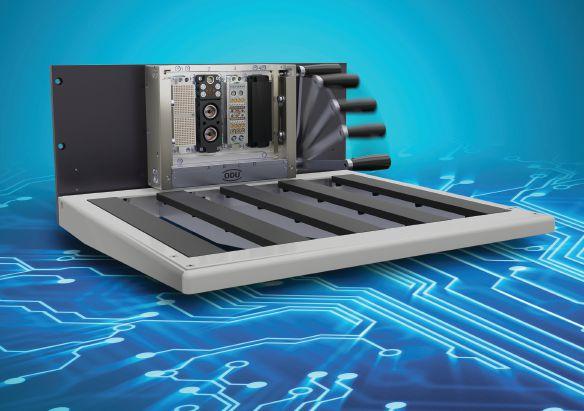
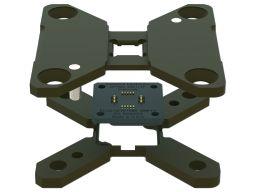
ODU-MAC Black-Line modular mass interconnect solution is for testing pcbs and electronically assembled units, serving as an interface between the device under test and test instruments. This mass interconnect interface delivers high configurability with ODU-MAC Blue-Line modules, allowing for a more compact design with high contact density. Additionally, the Compact Class enables direct connection of ODU-MAC Rapid connectors to the interface, enhancing efficiency and adaptability.
https://odu-interconnect.com
TACTILE SWITCHES DELIVER SOFT SOUND FEEDBACK
LITTELFUSE
KSC XA Series Soft Sound Tactile Switches serves as a key solution for applications requiring quiet, reliable tactile feedback. Designed for surface-mount technology (SMT) applications, devices deliver a soft sound for a quieter user experience, an extended cage for potting compatibility and a high actuation force option for precise, deliberate operation. Provides an IP67 rating for protection against dust and moisture and a robust hard actuator design.
Keystone Electronics complete line of LED Spacer Mounts for T-1 and T-1 ¾ LEDs including universal, self-aligning and cost saving, self-retaining configurations. Engineered to reduce assembly cost and ensure consistently uniform and perpendicular LED mounting. Devices provide internal retaining teeth to hold and secure LED leads onto spacer prior to pcb assembly. No special tools are necessary to pre-assemble LED to spacer. Products eliminate the possibility of shorting LED leads by separating and retaining component leads while inserting into pcb.
PRISMATIC SUPERCAPACITORS DELIVER THICKNESS OF 0.4MM
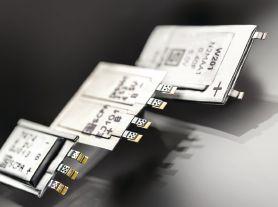
SCPA, SCPB, SCPC Prismatic Supercapacitors have a thickness of 0.4mm and combine certain properties of rechargeable batteries with those of capacitors, as they can store enormous amounts of energy this way and release it again very
quickly. Compared to rechargeable batteries of the same weight, supercapacitors have about 10% of the energy density. However, their power density is around 10X to 100X greater. Devices are suitable for demanding applications that require high capacitance in the most compact dimensions.
MEDICAL GRADE, DUAL CURABLE ADHESIVE DELIVERS RAPID FIXTURING WITH LED
MASTER BOND
and delivers maximum results. Product has a flexible upgrade concept to rapidly scale up and adapt to your requirements.
https://www.rohde-schwarz. com/us/products/test-and-measurement/analyzers/network-analyzers/znb3000-launch_258011. html
ATE TEST CONTACTORS CONFIGURE QUICKLY IRONWOOD ELECTRONICS
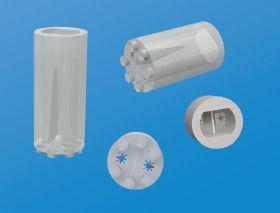
Raptor line of ATE test contactors are configured as quickly replaceable cartridges, a first for ATE applications. The cartridges utilize firm’s proprietary lamination technology for increased precision, enhanced
LED415DC90Med one component, dual cure adhesive system designed for high-speed manufacturing of medical electronic devices, cures rapidly without oxygen inhibition upon exposure to
405nm LED light, followed by a short 30-45 minute heat cure at 90-95°C, making it suitable for bonding heat sensitive components. Device passes ISO 10993-5 requirements for non-cytotoxicity and resists common medical sterilants, including glutaraldehyde, peracetic acid, ethylene oxide, and gamma radiation.
https://www.masterbond.com/ tds/led415dc90
VNA DELIVERS 9KHZ TO 26.5GHZ FREQUENCIES
ROHDE
& SCHWARZ
R&S ZNB3000 vector network analyzers (VNA) provide frequency ranges from 9 kHz to 4.5 GHz, 9 GHz, 20 GHz and 26.5 GHz, and are suitable for applications in the communications, aerospace and defense industries. High-volume production of RF components and short ramp-up times is the environment where this unit shines
convenience and increased Mean Time Between Assist (MTBA). PicoRaptor high-performance rigid contact pins provide both high bandwidth and high insertion count. A single P elastomer is utilized for consistent contact force between the load board and the DUT, while permiting slight wiping action.
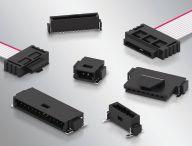
Kontrol range of industrial board-toboard interconnects (BBi) includes single row connectors and cables to the 1.27mm pitch (0.05”) connectors. Product range has been created to bridge the gap between high-end connectors and established pin header and socket solutions. Range includes 49 new products – 21 SMT connectors and 28 double-ended cable assemblies – with pin-count options of 2, 3, 4, 6, 8, 10 and 12.
https://www.harwin.com/ bbi-range/kontrol
10 TO 50W INDUSTRIAL POWER SUPPLY
INCREASES SYSTEM FLEXIBILITY
TDK-LAMBDA
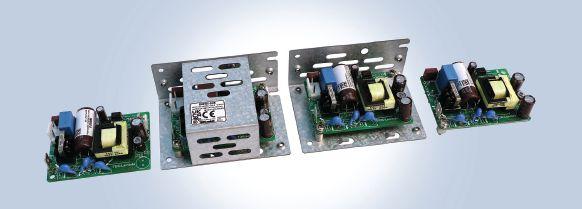
ZWS-C series of 10, 15, 30, and 50W rated industrial ac-dc power supplies is available in four additional options: a metal L-bracket (with or without a cover), pins for pcb mounting, and two-sided board coating for all voltage and power levels. These options can provide additional operator protection, lower the cost of wiring harnesses, or reduce the impact of dust and contamination in harsh environments. With electrolytic capacitor lifetimes of up to 15
years, the products can be used in factory automation, robotics, semiconductor fabrication manufacturing, and test and measurement equipment.
EASY TO USE DIGITAL MULTIMETER BOOSTS RELIABILITY, EASE OF USE
SP INTERNATIONAL
TECPEL DMM-139 digital multimeter provides high reliability, modern design, ease of use and overall functionality. The complete series is
equipped with a true-rms measurement function (T RMS), as well as an NCV function (non-contact voltage detection) equipped for non-contact voltage detection. Unit features VFD and capacitance measurement up to 100MF, while delivering a clamp connection for up to 60A ac/dc (pliers not included). Unit delivers non-contact voltage test with Singal and LED display, along with temperature measurement up to 1000°C.
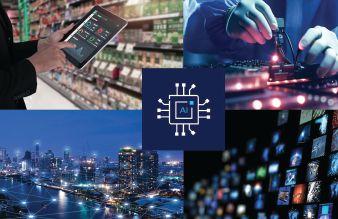
Open Edge Platform initiatives help streamline and speed up AI adoption at the edge across industries such as retail, manufacturing, smart cities and media and entertainment by simplifying integration with existing infrastructure.
With more than 100,000 real-world edge implementations with partners, many leveraging AI today, Intel understands the unique challenges of edge AI. These challenges vary significantly by industry, with each having distinct performance and power needs.
PLATFORM ACCELERATES AI AT THE EDGE THROUGH AN OPEN ECOSYSTEM INTEL
AI Edge Systems, Edge AI Suites and
DSM EXPANDS ITS ELECTRONICS MANUFACTURING SPACE
Dynamic Source Manufacturing Inc. (DSM), a Calgary-based provider of advanced electronics manufacturing solutions, has expanded its Canadian operations to meet a heightened demand for North American-based production. As companies increasingly seek nearshore manufacturing solutions to mitigate supply chain risks and costs, DSM is responding with greater capacity, investment in cutting-edge technology, and streamlined operational efficiency to help customers tackle cost pressures, tariff impacts, and global disruptions head-on.
“DSM’s expanded space is a direct response to the evolving needs of our customers,” says Duane Macauley, president and CEO at DSM. “This growth means more capacity, greater efficiency, and enhanced opportunities for our customers to succeed. We remain steadfast in our commitment to being a trusted partner and industry leader in the electronics manufacturing sector.”
DSM’s expanded facility will enable scaling opportunities in its SMT and pcb assembly capabilities, increasing production power and flexibility for both current and future customers. The new space also strengthens DSM’s capacity to deliver box
build and final assembly services including functional testing, electro-mechanical assembly, protective coatings, and custom cable and harness assembly.
TEST
EMERSON UPDATES FLAGSHIP SOFTWARE AT NI CONNECT
Emerson revealed several software announcements, including its anticipated Nigel AI Advisor for LabVIEW and TestStand at the annual NI Connect conference in Fort Worth TX this April. A single intelligence trained across the NI software suite and built on Emerson’s secure cloud network, the Nigel AI Advisor is able to analyze code, offer suggestions for changes, and allow users to ask questions in plain language to surface the correct tools across more than 700 functions more quickly. The new feature will be integrated into LabVIEW and TestStand by July 2025 and will be included into most existing licenses providing significant new functionality at no extra cost.
“We’ve been working on integrating AI and machine learning
into our software for many years now,” said Austin Hill, section manager of test software at Emerson. “Our users will see a clear difference from general purpose AI assistants due to the test specific expertise with which we have trained the Nigel AI Advisor. We expect to see a step change in productivity for our users from this release, and this is just the beginning – Nigel will just keep getting smarter and better in years to come.”
electronic systems design process.”
At the conference, Emerson also announced the upcoming release of a new, broad base version of SystemLink software, which allows test managers to centralize data and tools in a single platform for greater orchestration and efficiency. It will be available later in 2025 to a larger number of users than ever before. The company also unveiled other LabVIEW features, including improved debugging workflow for wires and probes, support for .NET 8.0 and Python 3.12, better VI comparison, connectivity to Docker containers, and the expansion of its free LabVIEW Community Edition to macOS to better serve university students.
ACQUISITIONS
SIEMENS ACQUIRES DOWNSTREAM TECHNOLOGIES
Siemens Digital Industries Software has acquired DownStream Technologies, providers of manufacturing data preparation solutions for printed circuit board (pcb) design. “The move is a significant step for Siemens EDA in the mid-sized pcb market, offering improved time to market, quality, and cost efficiency,” said Mike Ellow, CEO, Siemens. “Integrating DownStream enables Siemens EDA to provide comprehensive and advanced manufacturing data preparation solution, helping to ensure a smooth transition from design to production within a fully digitalized and scalable
Founded in 2002 and based in Marlborough, MA, DownStream Technologies has a widely adopted CAM350 suite of tools that enables customers to visualize, verify and automatically prepare pcb design data for fabrication.
RT PRIME INDUSTRIES GROUP ACQUIRES LEISTER BLAKE ENTERPRISES
RT Prime Industries Group Ltd., a Victoria B.C.-based manufacturer of engineered custom machine parts and components, has acquired Leister Blake Enterprises Ltd. (LBE), providers of manufacturing solutions for 35 years, specializing in compression molding, injection molding, small metal stamping, custom LCDs & zebra strips and warehousing to help on time customer deliveries.
A highly regarded company with 35 years of industry expertise, LBE is based in Port Coquitlam B.C. This strategic acquisition marks a major milestone in RT Prime’s growth, strengthening its service offerings and expanding its footprint with a new office and warehouse in Vancouver.
“This acquisition reinforces our commitment to delivering top-tier manufacturing, engineering, and supply chain solutions,” said Ray Cao, president at RT Prime.
“LBE has built a strong reputation over the past three decades, and we are excited to integrate its expertise into our operations, ensuring continuity for existing customers while offering enhanced capabilities.”
TO ADVERTISE in an upcoming issue of EP&T, contact Joanna Malivoire, Brand Manager, jmalivoire@ept.ca | direct 416-881-0731.
DEVELOPMENT BOARDS
Dev Board: A gateway to industrial and IoT innovation
VENDOR: NXP
FRDM I.MX 91 DEVELOPMENT BOARD
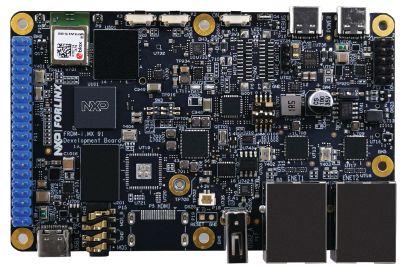
The FRDM i.MX 91 development board is built around the i.MX 91 applications processor, and is designed to accelerate industrial and IoT development, offering a cost-effective, secure and connectivity-rich platform.
Embedded systems are evolving rapidly and driving demand for smarter, more efficient and secure solutions across industries. The FRDM development platform has been a game-changer for developers looking to prototype, test and deploy embedded applications with ease.
Built around the i.MX 91 applications processor, this dev board provides a cost-effective, secure and connectivity-rich platform.
The FRDM i.MX 91 innovation platform combines:
• Optimized performance for edge computing
• Robust industrial connectivity
Advanced security with NXP’s EdgeLock
Secure Enclave
Developer-friendly design for rapid prototyping
• Suitable for developing advanced industrial automation systems, smart city infrastructure or next-gen IoT devices.
FEATURES
Optimized Performance for Edge Computing
The i.MX 91 processor features a single-core Arm Cortex-A55 CPU, delivering the perfect balance of performance and power efficiency. With advanced power management and integrated security, the FRDM i.MX 91 is built to handle demanding workloads while minimizing energy consumption—ideal for battery-operated and energy-sensitive applications.
Achieve Power Efficiency with PMIC
The FRDM i.MX 91 has an onboard NXP PMIC PF9453, designed and optimized specifically for i.MX 91 applications processors. It provides power supply solutions for IoT devices, smart appliances and portable applications where size and efficiency are critical. They are designed to extend battery life, reduce power dissipation and minimize electromagnetic interference (EMC).
Robust Industrial Connectivity
The FRDM i.MX 91 also includes an onboard u-blox Wi-Fi module powered by NXP’s IW610 Wi-Fi 6 Tri-Radio solution. This module features:
• Bluetooth LE with long-range and high-speed data rates (up to 2 Mbps).
• Zigbee, IEEE 802.15.4 enables Thread, Zigbee and Matter.
In addition to wireless connectivity, the FRDM i.MX 91 provides extensive wired interfaces:
Dual Gigabit Ethernet for low-latency, high-speed industrial networking. CAN FD, I3C, UART and SPI for seamless communication with industrial devices and sensors. With these capabilities, the FRDM i.MX 91 makes integrating wired and wireless connectivity effortless.
FRDM i.MX 91 board is designed to simplify and accelerate development, featuring:
Modular form factor for easy prototyping and expansion.
• Comprehensive software support, including Yocto Linux and Debian
• Seamless integration with NXP’s Yocto build system.
• This design allows developers to focus on innovation, not infrastructure, making the FRDM i.MX 91 board the perfect tool for fast-tracked product development.