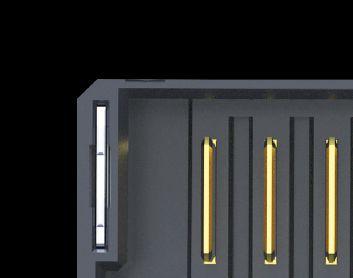
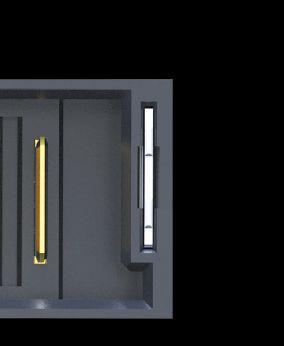
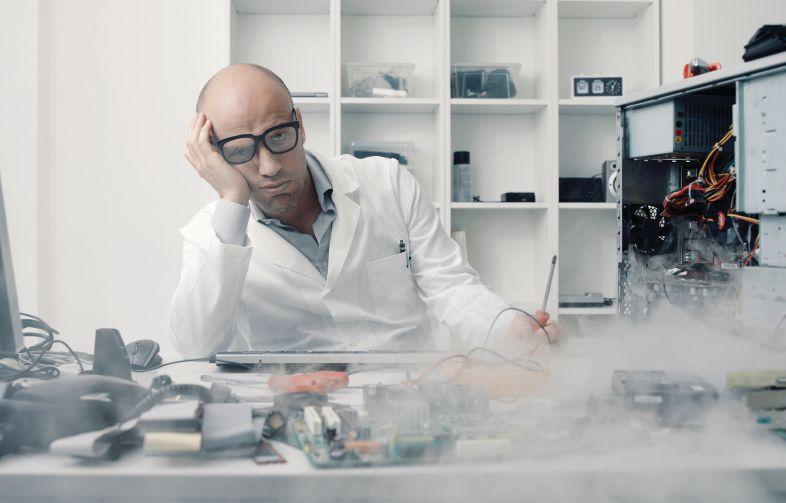
Considerations when designing HVCs in EVs and renewable energy systems p.14
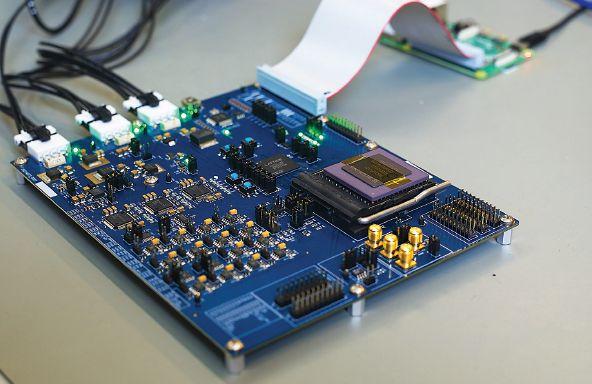
PROCESSING IT
Blumind rethinks semiconductor space with analog chip p.22
AI OVERLOAD
Engineers dealing with rapid cycles & unrealistic expectations p.24
A generational change is on the horizon for interconnect components p.10
10 INTERCONNECT IN FLIGHT
Fiber optic connections reach new heights via aerospace innovation.
14 PIVOTAL ENGINEERING CHALLENGE
7 THINK GREEN New substrate reduces E-waste
Designing with high voltage contactors in EVs and renewable energy systems.
22 BLUMIND WANTS TO BLOW YOUR MIND
Toronto-based processor developers tackle monster power demands of data centres.
24 ROI PRESSURE IS REAL
Engineering teams face mounting pressure to produce AI proofs of concept at unprecedented speeds.
•
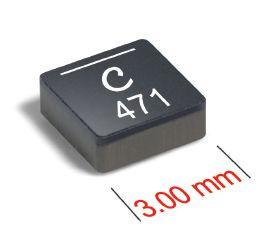
• Wide inductance range from 0.082 to 1.8 µH
• Industry-leading 80 V voltage rating — suitable for wide VIN DC-DC converters
Tariff talk unsettles industry
Canadian winters are hard enough to get through unscathed, let alone having to deal with the unsettling thought of forthcoming tariffs imposed upon us by political leaders to the south. When it comes to doing business in tech circles, Canada’s semiconductor and hardware design sectors have long operated within the larger North American market. A highly integrated supply chain, proximity to U.S. customers, and access to global markets have allowed Canuck firms to develop world-class expertise in semiconductor research, chip design, and advanced hardware manufacturing. However, recent U.S. trade policies—including tariffs on Chinese semiconductors and other electronic hardware—are creating both challenges and opportunities at home.
The U.S. has imposed multiple rounds of tariffs on China under Section 301 of the Trade Act of 1974, citing national security concerns and the need to counter alleged unfair trade practices. These tariffs, covering semiconductor components and pcbs, have had a ripple effect across North America, including Canada.
For Canadian firms, the most immediate impact is cost escalation, as many manufacturers source raw materials and components from China, either directly or through U.S. distributors. When these components are subjected to tariffs, the increased costs are often passed along the supply chain. This has led to higher procurement expenses for Canadian hardware designers and system integrators who rely on components that now carry an added financial burden. Even when sourcing through the U.S., tariffs inflate costs, making it harder to remain competitive.
Furthermore, the uncertainty surrounding trade policies has disrupted supply chains. Many Canadian firms must navigate an increasingly complex web of import restrictions, compliance regulations, and shifting supplier relationships. Delays in sourcing materials, increased customs scrutiny, and the unpredictability of future tariff measures add layers of complexity to what was once a streamlined supply chain.
Reshoring and diversification?
Despite these challenges, the shifting trade landscape presents an opportunity for Canada to strengthen its domestic industry.The ongoing realignment of semiconductor supply chains—spurred by tariffs and geopolitical tensions—has fueled discussions about reshoring and nearshoring critical manufacturing capabilities.
The U.S. CHIPS and Science Act, which includes significant investments to bolster semiconductor manufacturing in North America, may offer Canadian companies new partnership opportunities. However, Canada must proactively secure its position within this ecosystem. Government initiatives like Canada’s Semiconductor Council (CSC) and investments in domestic semiconductor R&D could help firms pivot away from reliance on imports and instead build stronger localized partnerships.
Additionally, the push for diversification has led some companies here to explore alternative suppliers outside of China. Countries such as Taiwan, South Korea and Vietnam are emerging as alternative sources. While these shifts require investment in new supplier relationships, they could ultimately enhance supply chain resilience.
Policy & industry collaboration
The Canadian government has a role to play in mitigating the
impact of U.S. tariffs on the domestic industry. Strategic investments in semiconductor fabrication, expanded incentives for chip design firms and increased collaboration with allies like the U.S. and the European Union are necessary steps toward reducing dependence on volatile global supply chains.
“Semiconductors are everywhere. From appliances to cars to datacentres, computer chips power our world. Tariffs on semiconductors essentially put a 25% tax on the engines that drive our digital lives,” according to Gordon Harling, president and CEO of CMC Microsystems, a Canadian notfor-profit with a mandate to provide infrastructure for R&D in semiconductor technologies. “We’ve seen this scenario play out before. The U.S. Commerce Department investigated the impacts of tariffs on the automotive sector imposed by President Trump during his first term and found that they actually weakened the domestic industrial base. Semiconductors will be no different,” Harling stated in a submission to EP&T.
Canadian electronics firms must adopt proactive strategies to navigate the tariff landscape. This includes diversifying supplier networks, leveraging domestic R&D tax credits, and forming alliances with U.S. and international partners to ensure a more stable supply chain. The key to thriving in this new environment lies in agility— adapting to global trade realities while pushing forward with cutting-edge research, design, and manufacturing capabilities. By doing so, Canada can withstand the incoming tsunami of disruption.
STEPHEN LAW Editor slaw@ept.ca
MARCH/APRIL 2025
Volume 47, Number 2
READER SERVICE
Print and digital subscription inquiries or changes, please contact Angelita Potal Tel: (416) 510-5113 Fax: (416) 510-6875
Email: apotal@annexbusinessmedia.com
Mail: 111 Gordon Baker Rd., Suite 400 Toronto, ON M2H 3R1
EDITOR Stephen Law slaw@ept.ca · (416) 510-5208
WEST COAST CORRESPONDENT
Mike Straus · mike@brandgesture.ca
ACCOUNT MANAGER Joanna Malivoire jmalivoire@ept.ca · direct (866) 868-7089
MEDIA DESIGNER Graham Jeffrey gjeffrey@annexbusinessmedia.com
AUDIENCE DEVELOPMENT MANAGER Anita Madden amadden@annexbusinessmedia.com (416) 510-5183
GROUP PUBLISHER Paul Grossinger pgrossinger@annexbusinessmedia.com
CEO Scott Jamieson sjamieson@annesbusinessmedia.com
EP&T is published eight times per year by ANNEX BUSINESS MEDIA 111 Gordon Baker Road, Suite 400 Toronto, ON M2H 3R1 Tel (416) 442-5600 Fax (416) 510-5134 annexbusinessmedia.com
SUBSCRIPTION RATES
Canada – $59.67 one year; $95.88 two years
USA – $136.68 (CAD) per year
International – $187.17 (CAD) per year Single copy – Canada $15.00
ISSN 0708-4366 (print) ISSN 1923-3701 (digital)
PUB. MAIL AGREEMENT NO. 40065710 Return undeliverable Canadian addresses to: EP&T Circulation Department, 111 Gordon Baker Rd. Suite 400, Toronto, ON M2H 3R1
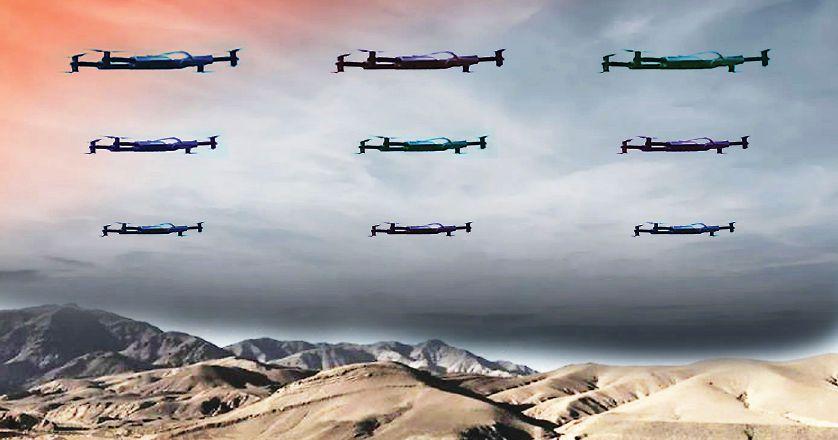
SPIDER VISION SENSORS COLLABORATES WITH SUNTEK GLOBAL
Spider Vision Sensors, a Vancouver-based developer of AI drone, Drone-as-a-Service (DaaS), enterprise SaaS and quantum computing solutions, is collaborating with Taiwan-based certified electronics manufacturer, Suntek Global, to apply for the company’s first Blue UAS (Unmanned Aerial System) certified IQ Nano drone sensor for use by US Defense branches.
A drone sensor is a device onboard a drone that collects data, such as cameras for imaging, LiDAR for mapping, or infrared sensors for thermal detection. Military and Defense departments use small autonomous indoor drones for various applications such as inventory management, indoor building reconnaissance, search and rescue, training simulations, and explosives detection.
AUTOMOTIVE
LEDDARTECH LANDS OEM DESIGN WIN
LeddarTech Holdings Inc., a Quebec City-based automotive software firm that provides patented disruptive AI-based low-level sensor fusion and perception technology called LeddarVision, achieved a major milestone by landing one of the world’s leading commercial vehicle OEMs as a user. The automotive OEM, unnamed by LeddarTech, selected LeddarVision for its advanced driver assistance system (ADAS) program in 2028 model year vehicles.
LeddarVision was selected for this mainstream commercial vehicle platform after a comprehensive evaluation by the customer of the leading solutions available in the market.
AEROSPACE
FTG TO SUPPLY COCKPIT ASSEMBLIES FOR DE HAVILLAND CANADAIR 515
Firan Technology Group Corp. has been selected by De Havilland Aircraft of Canada Ltd. to provide updated cockpit control assemblies for the new De Havilland Canadair 515 (DHC515) aerial firefighting aircraft. The design, development, and production of these critical assemblies will be
Vancouver-based Spider Vision Sensors is collaborating with Suntek Global to apply for the firm’s Blue UAS certified IQ Nano drone sensor - for use by US Defense branches.
Source: Spider Vision Sensors
conducted at FTG’s Aerospace Toronto facility.
The DHC-515 is a next-generation amphibious aircraft designed specifically for aerial firefighting operations. FTG’s control panel assemblies (CPA) play a crucial role as they provide the interface for pilots to control various aspects of flight.
TELECOM
SPIRE GLOBAL CANADA NETS $72M CONTRACT
Spire Global Canada, was assigned a Can$72 million contract, by the Government of Canada. Spire will design and develop a dedicated satellite constellation to monitor all active wildfires in Canada from space as part of Canada’s WildFireSat mission.
The firm will partner with OroraTech, a leader in space-based thermal intelligence, to develop the payloads for the satellite constellation.
DEFENCE
MILITARY TO BUILD ELECTRONIC WARFARE COMPOUND IN KINGSTON
The Canadian Department of Defence is investing in the construction of a new electronic warfare facility at Canadian Forces Base in Kingston.
The new $98 million facility will consolidate units across CFB Kingston into one secure compound, providing the necessary space to support operations and increase collaboration between regimental squadrons. The two-story multipurpose building will include new classrooms and administrative spaces that will allow the regiment to more effectively train personnel and plan for operations.
The new facility is expected to be operational in 2028 and will increase the Regiment’s ability to support electronic warfare personnel and capabilities, provide support to deployed
electronic warfare forces and manage and maintain the unit’s material assets.
SEMICONDUCTORS
INTEL APPOINTS GENERAL MANAGER FOR CANADA
Intel Corp. has appointed Asma Aziz to the position of general manager for Intel Canada. As a tech industry veteran, Aziz brings years of international experience fulfilling various senior marketing and sales positions. With a five-country career spanning across Asia and Americas at Intel, she brings a proven track record of driving business growth strategies, fostering high-performance motivated teams, forging impactful partnerships and delivering results.
PCB
BITTELE LAUNCHES PCB FACILITY IN MALAYSIA
Continuing the expansion of its global footprint, Toronto-based Bittele Electronics has added its latest production facility in Malaysia, which includes three assembly lines. Consistent with its policy of remaining competitive in face of changing global trade conditions, Bittele can now specifically offer US-based clients, a manufacturing option unaffected by tariffs recently announced on goods and services originating from Canada and China. Bittele boards assembled in Malaysia follow the same strict quality standards our clients are accustomed to, and cater to the same client needs - from prototypes to low and mid-volume production, according to Bittele CEO Ben Yang. The pcb boards are subject to such quality control procedures as Automated Optical Inspection (AOI) to X-ray inspection for BGA and QFN components, to functional testing and in-circuit testing (ICT).
Visit ept.ca for the latest new products, news and industry events.
Into the deep
FORM Swim develops smart goggles for elite swimmers
BY MIKE STRAUS, WEST TECH CORRESPONDENT
Elite competitive swimmers require a diverse range of information to optimize their performance. But gathering that information during a swim race is challenging. Whether it’s directional headings, heart rate, swim time, or stroke rate, swimmers traditionally had no means of analyzing their data – either during or after a swim.
For FORM Swim CEO Dan Eisenhardt, a Danish competitive swimmer, these pain points were strong enough that he decided to do something about it.
“In 2008, Dan was doing an integrated Master’s program at the UBC Sauder School of Business,” says the firm’s director of media relations William Parry. “It was a program that paired two engineering students with two business students, and they were tasked with coming up with a new kind of innovation. Dan was looking over at the UBC swimming pool and thinking, ‘let’s try to make swimming goggles with a display built into them.’”
After passing their program, the four Masters students shifted their attention to whether smart swim goggles could be a viable business. At the time, however, technological limitations held them back. The componentry was too large, and building smart swim goggles the way they wanted to would’ve infringed on existing patents. Thus, they shifted their attention to skiing and snowboarding goggles, and Recon Instruments was born.
Partnering
“Recon Instruments sold ski goggles with a display built into the bottom right-hand corner,” Parry explains. “The display would show things like speed, altitude and maps – you could even use it to change the music on your phone or answer a call. Then they did a second version of the ski goggles in 2012, partnering with Oakley.”
Recon Instruments was acquired by Intel in 2015, after the company had built smart devices for cycling and running applications. Parry notes
that this was all happening amidst the backdrop of Google having introduced Google Glass; the augmented reality space was quite hot at the time. After a year at Intel, Eisenhardt decided to step away and carve out the opportunity to work on smart swim goggles, the product he had always wanted to make. Incorporated in 2016, the company launched its first product in 2019.
“We had a great initial few months before COVID hit,” Parry notes. “After that, we shifted to creating open-water features. Although pools were off-limits for most of the world during that time, we figured we could develop open-water swimming functionality. We’ve since introduced guided workouts and virtual coaching, which uses the display and your head position to understand your technique in the pool. The virtual coaching feature can give you real-time feedback to help you improve your technique.”
Fraught with design challenges
FORM Swim introduced Smart Swim 2, its second version of its swim goggles, in April 2024. Smart Swim 2 integrates a heart rate monitor for the first time, while also introducing a new open-water navigation assistant called SwimStraight. FORM Swim’s premium subscription features include guided workouts and digital coaching.
Parry explains that the process of building smart swim goggles was fraught with challenges. First and foremost, electronics and water aren’t often a winning combination. Furthermore, augmented reality wearables need to fit into the paradigms that consumers are already familiar with in order to achieve commercialization. For FORM Swim, that meant creating waterproof smart goggles that don’t increase drag or pull away from the face, with a miniaturized display and battery. Parry says that the design process was very iterative, and the manufacturing process involved the significant challenge of finding a contract manufacturer that could consistently produce high-quality product. Having conquered those challenges, though, FORM Swim reached the point of commercialization.
“We wanted to make it as simple as possible to get up and running,” Parry says. “The goggles have two buttons: The front button, which selects you into menus, and the back button, which rotates you through menus. Prior to your first swim, you’ll set up the displays and metrics you want to see in the companion app. We have three modes: Pool swim, open water swim, and swim spa. Once you’re in the pool, you select the pool length, and then you simply press Start and go.”
Vancouver-based FORM Swim has developed Smart Swim 2 goggles, which tracks the swimmer’s body metrics while in the pool.
As soon as the user pushes off from the wall, the smart goggles will show the data and dashboard configuration the user had previously chosen using the companion app. The goggles’ onboard motion sensors automatically register turns and stops without the user needing to touch the goggles. Post-swim, the user can review their swim in the companion app to assess their statistics and improve their technique.
“If you’re swimming at an elite level and wearing non-smart goggles, then your performance will be gatekept with your coach,” Parry notes. “You won’t have any kind of feedback based on what you’re doing in the water at the time. But the addition of data as you swim means you can attribute what you’re feeling in the water to what the data is saying.This is particularly interesting with regards to adding heart rate to Smart Swim 2.”
An elite swimmer could be told to do intervals of 100 metres at maximum effort, and may think that what they do is their maximum effort, but with Smart Swim 2, the swimmer can view their heart rate data and establish their Zone 5 heart rate threshold. Instead of guessing at their heart rate, the swimmer can know what their heart rate is and therefore how much effort they’re putting into the swim.
“Obviously, tracking metrics like distance per stroke would help people at the elite level,” Parry says. “The goggles also have features for any level of swimmer, like swim workouts and training plans.”
FORM Swim is in the process of iterating on its software to bring new features to users, while also planning out continual hardware refreshes. Parry says that the firm is successful because it stays ahead of the competition and continues to lead the way.
Mike Straus is EP&T’s West Coast correspondent. mike@brandgesture.ca
Substrate material helps combat e-waste
A new kind of flexible substrate material developed at MIT, the University of Utah and Meta has the potential to enable not only the recycling of materials and components at the end of a device’s useful life, but also the scalable manufacture of more complex multilayered circuits than existing substrates provide.
The development of this new material was described in the journal RSC: Applied Polymers, in a paper by MIT Professor Thomas J. Wallin, University of Utah Professor Chen Wang and seven others.
“We recognize that electronic waste is an ongoing global crisis that’s only going to get worse as we continue to build more devices for IoT, and as the rest of the world develops,” said Wallin.To date, much academic research on this front has aimed at developing alternatives to conventional substrates for flexible electronics, which primarily use a polymer called Kapton, a trade name for polyimide.
Most such research has focused on entirely different polymer materials, but “that really ignores the commercial side of it, as to why people chose the materials they did to begin
A flexible material developed by researchers could serve as the substrate for multilayered circuits and help combat e-waste.
with,” Wallin said. Incorporated into most electronic devices, Kapton has many advantages, including good thermal and insulating properties and availability of source materials. “It’s a classic material, but it has not been updated for three or four decades,” added Wang. However, it’s also virtually impossible to melt or dissolve Kapton, so it can’t be reprocessed. The same properties also make it harder to manufacture the circuits into advanced architectures, such as multilayered electronics. The alternative material that the
team developed, is a form of polyimide and therefore should be easily compatible with existing manufacturing infrastructure. It is a light-cured polymer that can operate at room temperature.
The new material could serve as the substrate for multilayered circuits, which provides a way of greatly increasing the number of components that can be packed into a small form factor. Previously, since the Kapton substrate doesn’t melt easily, the layers had to be glued together, which adds steps and costs to the process.The fact that the new material can be processed at low-temperature while also hardening very quickly on demand could open up possibilities for new multilayer devices, Wang said.
As for recyclability, the team introduced sub-units into the polymer backbone that can be rapidly dissolved away by an alcohol and catalyst solution. Then, precious metals used in the circuits, as well as entire microchips, can be recovered from the solution and reused for new devices. The polymer was designed with ester groups in the backbone, unlike traditional Kapton.
24_014632_EPT_MAR_APR_CN Mod: January 16, 2025 11:11 AM Print: 01/28/25 page 1 v2.5
How Connectors Enable the AI Revolution
(Source: saicle / stock.adobe.com; generated with AI)
Artificial intelligence (AI) is commonly described as computer programming trained to sense or learn about its environment from data, act accordingly, and then adapt its behavior based on the results. This has led to another innovation called machine learning (ML), in which the system's performance improves over time as it recognizes patterns from data and learns better ways to analyze them. The more data the system is exposed to, the more accurate its predictions will be.
AI and ML are already working behind the scenes in many industries, analyzing vast amounts of data to recognize patterns and suggest courses of action. We see the benefits of these advances in a wide array of applications, from demand planning and understanding customer behavior to rapid image recognition for the latest safety systems.
Regardless of the application, AI systems have several features in common. The first is impressive computing power—the “brains” behind the intelligence. AI systems employ powerful processors that consume large amounts of energy to sift through the vast amount of data they are presented with.
Another feature of AI systems is the data. With such an emphasis on the computing power behind AI, the humble connector be overlooked.
Still, the infrastructure that supports AI relies upon the ability to transmit and receive a tremendous amount of information without error. With connectors playing an integral role in signal integrity (SI), power supply, and thermal management, let’s take a closer look at how these components factor into the AI revolution.
Signal Integrity
SI describes the quality of electrical signals transmitted through connectors and over cables, and as data speeds increase, it has grown in importance. Many factors affect SI, including the external environment's electromagnetic interference (EMI). Because these factors have the potential to cause interference from crosstalk, the cables, connectors, and printed circuit board (PCB) traces through which the signal travels must affect the signal as little as possible. The latest connectors feature reduced pin spacings, small sizes, and low profiles to make them suitable to handle SI for the latest handheld devices.
Manufacturers are developing new methods of connecting processors to minimize signal loss, especially in the data-hungry world of AI. In particular, the losses generated by high-speed signals passing through PCBs are very high, and in some cases, conventional PCB-mounted
connectors are giving way to more advanced technologies.
Some designers are returning to the wires and cables that PCBs were introduced to replace decades ago. By mounting the cable as close as possible to the processor, the signals pass through cables in order to bypass the need for PCBs. Direct attach cables (DACs) transmit data with fewer losses over greater distances between servers in the latest data center.
Some manufacturers are introducing active solutions to boost the signal over longer distances with active electrical cables (AECs). These use active devices known as retimers, which recondition the data signal as it travels through the AEC on the way in and out. The retimer of an AEC creates a cleaner signal, removing noise and amplifying the signal to minimize losses. The drawback is that these active devices require power.
The Problem of Power
Power is one of the greatest concerns for AI system designers. The data center is home to many powerful processors, consuming vast amounts of energy, and connectors are essential for ensuring power integrity (PI), which aims to provide power to the system within acceptable limits. This means minimizing the voltage fluctuation across the consumer despite the fluctuating current demanded by the consumer. The cabling and connectors over which power is transmitted also significantly impact the PI of a power network.
Power connectors for data centers must be chosen with care. Should connectors feature fewer, larger contacts, or will a larger number of smaller pins be better? There is no single rule that is true for all applications. Some applications use unregulated input voltages where the system can tolerate greater AC fluctuations so that a single larger blade-type contact will be more suitable. A larger contact will be able to carry higher currents at greater voltages. However, once the power supply has been regulated, the problem of AC fluctuation becomes more important. In this case, the inductance of the connector will be lower if smaller contacts are
used, connecting several in parallel to reduce the current transmitted through each.
Reducing Heat Through Smart Design
With such power demands on data centers in the growing age of AI, heat becomes another issue to address. Power connectors must play a role in thermal management. Every electrical circuit has resistance. The value may be small, but when passing power through that circuit, any resistance causes some of the energy to be converted into heat. With enough power, this can cause a rise in the temperature of the connector and, therefore, everything else around it.
When added to the heat generated by powerful processors, the challenge of removing excess heat becomes significant. Manufacturers are playing a key role in thermal management by incorporating smart design features into connectors. Some connectors, especially those intended for board-to-board applications within server cabinets, incorporate cavities to allow air to flow over and through them. Other connectors use high-conductivity alloys in the design of their power contacts, reducing contact resistance and allowing more energy delivery with a lower overall temperature rise.
Conclusion
Artificial intelligence and machine learning systems are changing how we handle data, but they cannot exist without robust and capable infrastructure to deliver data and power while removing heat. Although the connector may appear trivial initially, a poorly designed connector can make or break even the most advanced artificial intelligence systems.
Mouser Electronics offers a wide array of industrial automation products, catering to the diverse needs of our customers.
To find out more, go to: mou.sr/resources-connectors
Fiber optic connections take flight via aerospace innovation
A
generational change is on the horizon for interconnect component sector
BY OSU USA
The continuous evolution of aircraft includes not only essential features, such as engine, fuselage and wing technology, but also subsystems and their connections. Fiber optics has become one of the key technologies for data transmission in aircraft. It’s clear advantages over conventional data transmission based on copper conductors make it the suitable connection medium and allow for the seamless integration of current innovations.
This article examines the impending generational shift in connection technology toward fiber optic systems and the new solutions offered
by the market.
On December 17, 1903, a pioneer managed to make a very short flight that would nevertheless change everything. The flight had ended after only 12 seconds after traveling 37 meters. The Wright Flyer was the first powered plane to make the first flight and marked a milestone in the development of aviation. The plane, made mainly of wood and fabric, was
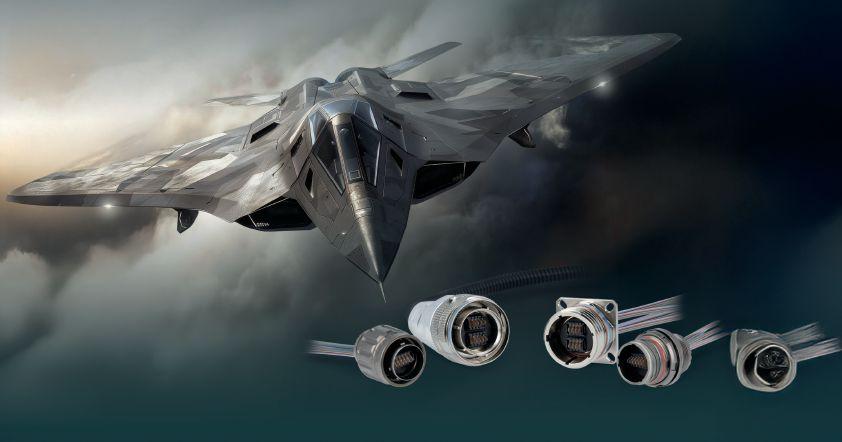
New technology solutions in the interconnect market is causing a generational shift toward fiber optic systems. In particular - data transmission in aircraft
equipped with a specially designed 12-hp gasoline engine that powered two propellers. Today, modern planes such as the F-35 can achieve a top speed 178 times higher, weighing about 50 times more.
In just 120 years, through continuous innovation, man has developed a new means of transportation that has become indispensable today. Both in the private sector, to fly on vacations with passenger planes, in commercial applications, to speed up the transport of goods over long distances thanks to cargo planes, and in the military, where aviation holds a key importance in ensuring tactical and logistical superiority over the enemy. Especially in the recent past, technological progress has been moving and developing at an increasing pace. Quantum computing, artificial intelligence (AI) and augmented reality (AR) are paving the way for new possibilities in the field of unmanned aerial vehicles (UAVs). Electronic and optronic navigation support systems, such as AI-supported assistance systems, phased-array radar systems, or heads-up displays (HUDs), are now a key component of modern combat aircraft, along with camouflage, communication, and weapon targeting systems. The rapid transition from the fifth to the sixth generation of
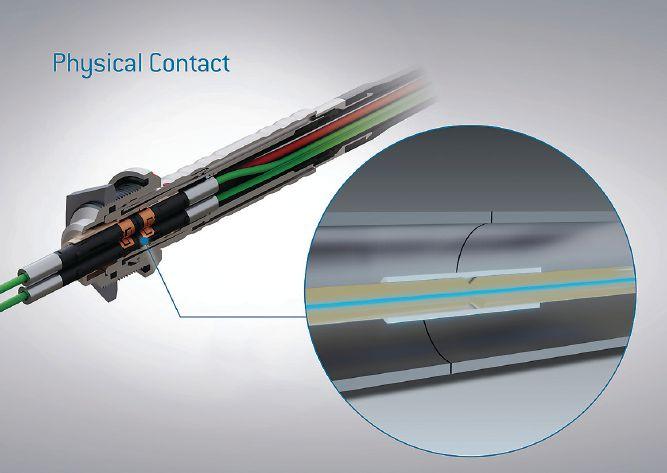
The physical contact interface (PC) has enhanced transmission properties, but requires complex maintenance.
fighter aircraft also puts a strain on suppliers of individual components and accelerates the pace of technical competition.
Mission information system environment: Current standards & solutions
Connectivity solutions in aircraft play a crucial role, as they have a significant impact on the performance of integrated systems. Data collected from sensors must be transmitted and processed in real time to provide pilots with a reliable basis for split-second decision making. Conventional copper cables are not a viable option in this context, as they do not achieve the data rates and low latencies required by modern electronic systems. They also do not contribute to the reduction of aircraft weight, another feature nowadays increasingly sought after by designers. On the other hand, more advanced fiber-optic connections are a valid response to these requirements and offer the optimal technology for extreme application needs.
Military aircraft are usually equipped with so-called ‘mission computers’, which serve as a central interface and link individual subsystems together. The collected data are read and evaluated after use. Peripheral systems are usually connected to the mission computer via circular connectors. Within the system, direct connection of PCBs is made by so-called backplane connectors. Optical transceivers are used to convert the signals and connected via cables to the electronic boards.
For connecting optical fibers, physical contact technology (PC) connectors have been established in the market for decades. Such connectors are characterized by enhanced light signal transmission properties, especially low insertion loss. The two fiber ends are polished with special tools and precisely coupled by the connector bodies. Physical contact of the surfaces, however, quickly
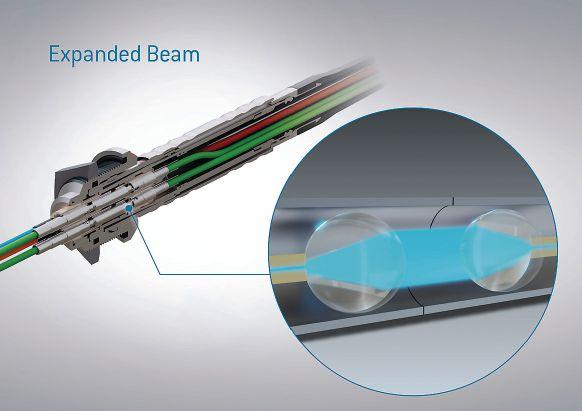
Expanded Beam interface technology has robust properties and insensitivity to environmental dirt (low maintenance), but also lower transmission performance than PC.
leads to the first signs of wear, especially in high vibration environments, causing deterioration of transmission values.
The greatest danger, however, is contamination of the fiber-optic surfaces by dust particles, which can interfere with the sensitive light path and thus significantly impair signal quality or, in the worst case, damage the connection to the point of rendering it unusable. Thorough cleaning with special tools is therefore essential at every engagement cycle. All this results in high maintenance costs and short contact life.
Expanded Beam optical interface technology offers a way to transmit data through a low-maintenance interface.
The lens technology offers consistently good signal quality for higher coupling cycles and is less prone to dust contamination. The light signal is expanded through an output lens from the first optical fiber and then, after passing through a short gap in free air, is collimated again through a second input lens and fed into the second optical fiber.
Unfortunately, this technology cannot provide the same excellent transmission properties as physical contact (PC) connections. In addition, the size of the lens also results in a larger connector footprint, and
interface allows up to 12 optical fibers to be connected in an extremely compact space, but still using expansion lenses and beam collimation as in expanded beam technology. Due to the free-air coupling, the interface is immune to the presence of dust in the environment and the fiber surfaces are not likely to scratch each other under strong vibrations. Any need for replacement or cleaning of the end surfaces is thus reduced to a minimum, if not eliminated. Integrated into robust connectors, Expanded Beam Performance technology offers the optimal solution for data transmission in harsh environments.
this can be a limitation for connection interfaces that require the passage of several fibers in a small area.
Because of the increasing number of connections needed in modern aircraft, PC technology has emerged as the preferred technology. Due to their size advantages MT ferrules became more and more popular during the last two decades. Commercially available connectors with MT ferrules got standardized, e.g. VITA 66 for backplane and VITA 87 for circular connectors. Both of them combine several MT interfaces to maximize this effect in the smallest possible installation space. However, with only a few hundred mating cycles, these interfaces have a short service life, which is often insufficient to cover the long period of operation of the aircraft on which they are installed. In addition, expensive replacement is accompanied by high maintenance costs for each coupling cycle.
Expanded Beam Performance
With Expanded Beam Performance, a technology that combines durability and dust resistance with excellent transmission properties is finally available. The complex design of the Expanded Beam Performance
The size and shape of the inserts that make up the Expanded Beam Performance mating interface allow several contact elements to be amalgamated into a very small space, which means that the improved transmission properties can be scaled to larger connection systems. The design follows the principle of modularity, considering the installation space requirements of the multi-fiber connector.
Even existing, market-established technologies undergo a generational change from time to time.
The latest development in fiber-optic contact technology, called Expanded Beam Performance, enables reliable data transmission in the harshest environmental conditions. It offers the best transmission performance ever achieved in such critical conditions at significantly lower maintenance costs than the technology in use today. Thus, the reliability of Expanded Beam Technology today can finally supplant physical contact technology in any operating environment without any disadvantage in terms of data transmission performance.
This article was written and submitted by ODU USA Inc., designers and manufacturers of connector systems and cable assemblies. These products are used in a variety of industries, including automotive, medical, military and industrial.
https://odu-connectors.com/us
With a strong legacy of excellence and innovation, the LEMO Group is a global leader in providing highperformance custom interconnect solutions. From the depth of the oceans to the far reaches of outer space, no matter how harsh the environment may be, our connectors and cable solutions are chosen, wherever connections are too critical, precious, or vital to fail. Offering over 90,000 product combinations that continue to grow through custom specific designs, our subsidiaries and 20 distributors have
built a global network of strong, dedicated local resources with unmatched technical expertise and understanding of customer requirements. Thanks to our global network, we serve more than 150,000 customers in over 80 countries worldwide. All our staff of 2000 people are united to accomplish the same mission: to guarantee to our customers interconnect solutions that exceed their current requirements and anticipate their future expectations.
One-to-One local engineering expertise and technical support for system integration
Strong supply chain and global distribution network Custom interconnect solutions for specific project requirements including rapid prototyping Certified interconnect solutions in compliance with industry standards
Vertical integration ensuring reliable, highquality interconnect solutions and sustained availability
LEMO Solution Portfolio
ORIGINALS
REDEL
OPTIMA
SUPREME
SPECIALTIES
CABLES
SERVICES
Many standard features include:
• Solder, crimp or print contacts (straight or elbow)
• Multipole types from 2 to 114 contacts
• Temperature range: -55 C to 250 C
• Mating Cycles: >5000
• High packing density for space savings
• Multiple key options to avoid cross mating of similar connectors
• 360° screening for full EMC shielding
• High Speed: up to 10 Gb/s
• Watertight connections IP 68 rated
• Pressure rated from 30 Bars to 120 Bar (special assembly needed).
LEMO products are designed and manufactured according to rigorous and controlled processes. Inspection and traceability of products are systematically ensured in compliance with our standards. LEMO’s commitment to quality excellence of interconnect solutions has been recognized within the industry.
Reliable connections when failure is not an option
For over 75 years, we have been there for you to provide solutions wherever your connections are too precious to fail. We look forward to keeping innovation alive for you, with you.
Core considerations when designing high-voltage contactors for EVs & renewables
BY DANIE KURNIAWAN, TDK ELECTRONICS
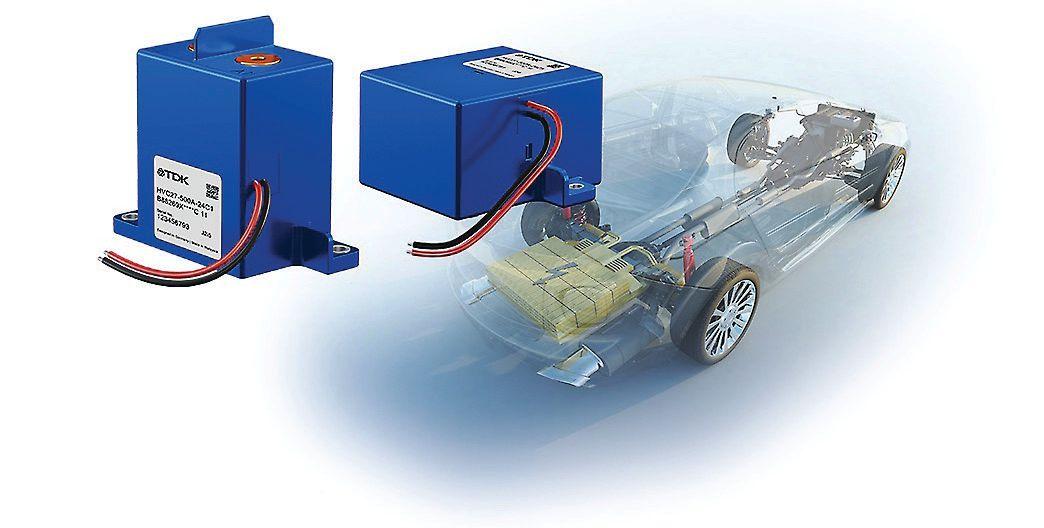
As the demand for high-voltage dc applications grows, particularly in electric vehicles (EVs) and renewable energy systems, designing reliable and high-performance high-voltage contactors (HVC) has become a pivotal engineering challenge. Moving to high-power, high-density dc energy systems brings specific design requirements focused on performance, reliability, and safety under extreme operational conditions.
This article outlines the core considerations for HVC design in these applications and highlights the importance of robust switching solutions to meet modern industry standards.
Why HVCs are essential
High voltage contactors are crucial components in EVs and renewable energy systems, where they must provide safe, efficient switching under high power loads. For EVs, HVCs play a vital role in the battery management system (BMS), ensuring batteries are disconnected under fault conditions to prevent potential hazards. Similarly, reliable switching is necessary for maintaining stability and safety during load changes and energy redistribution in renewable energy storage systems.
High-power devices, like those in EVs and renewable energy systems, must meet stringent requirements for reliability and longevity. The unique demands of dc systems and the challenges associated with high-voltage applications necessitate contactors that can handle these stresses while minimizing wear and extending service life.
Basics of dc switching and arcing
In dc applications, whenever a high-power device, such as a motor or energy storage system, is turned off under load, the switch, relay, or contactor goes from a closed to an open state. This action initiates an electrical arc, known as a “break arc,” between the contact points of the switch. Unlike ac systems, where the natural zero-crossing of current and voltage assists in extinguishing arcs, dc circuits lack this feature. As a result, extraordinary measures must be applied to bring the current to
zero and suppress the arc.
The break arc is a high-energy event, often reaching temperatures over 5000K, which can melt and degrade metallic contact materials. This material can then deposit onto surrounding areas, accelerating contact degradation, and the evaporated metal vapor reduces insulation, shortening the overall service life of the contactor. This long-term cycling process increases contact resistance, resulting in more severe energy handling by the contactors. Effective arc suppression is essential for reliable high-voltage dc switching, especially in applications where frequent operation under load is expected.
Why reliability testing is critical
High-voltage contactors operate under extreme conditions, exposing them to significant thermal, electrical, and mechanical stress. Rigorous testing is necessary to ensure contactors can withstand the harsh operating environments typically in EVs and renewable energy systems.
Key Testing Parameters
Reliability testing focuses on critical areas:
• Thermal Testing: Assesses the contactor’s ability to handle the high temperatures that break arcs generate.
• Mechanical Testing: Verifies durability, particularly under cycle conditions.
• Environmental Testing: Ensures components can operate reliably under adverse environmental factors.
Certifications and Standards
Industry certifications, such as UL, IEC, and ISO, serve as benchmarks for safety and reliability. Compliance with these standards ensures that contactors can operate safely and efficiently in high-power applications, making them essential reference points for engineers designing HVC systems.
Addressing market trends
As EVs and renewable energy applications evolve, the demand for high-voltage systems has increased. The need for power-dense, high-voltage components capable of handling larger energy loads without failure is more pressing than ever. High-capacity lithium-ion batteries, now competitive with internal combustion engines, have mainly driven this demand. However, these batteries require complex BMSs for maximum efficiency and reliable safety due to their potential failure modes, such as over-temperature or external impacts.
Today’s high-voltage contactors are designed to meet rigorous performance standards while balancing the constraints of size, weight, and safety. Innovations in materials and power
electronics and advancements in switching technology continue to shape the HVC landscape. The introduction of gas-filled contactors, which provide superior arc suppression capabilities, has significantly enhanced safety and performance in high-stress applications.
The functionality of high voltage contactors
Contactors are vital in connecting and disconnecting high-voltage circuits in EVs and renewable energy systems. In these settings, they act as both control mechanisms and safety devices, preventing overloads and protecting the system in case of a malfunction.
Normal vs. gas-filled contactors
High-voltage contactors come in two main types:
1. Normal Contactors: Widely used in general applications but may lack robustness for high-stress environments.
2. Gas-Filled Contactors: These effectively suppress arcing using a gas-filled chamber. By limiting the destructive effects of arcing, gas-filled contactors reduce wear and allow for safer, faster disconnections, especially under high loads.
3. The faster the arc is extinguished, the less heat is generated on the contact terminals of the contactors. This in turn means that those contacts are less likely to stick. Gasfilled contactors are particularly beneficial in applications requiring frequent operations under load, increasing reliability and extending the component’s service life.
Selecting the right contactor
When choosing high-voltage contactors for EVs and renewable energy applications, several considerations come into play:
• Operational Speed: Rapid response times are crucial for safe circuit disconnections, especially in emergencies.
• Reliability and Durability: Given the challenging environments, contactors must consistently perform over extended periods without degradation.
• Robustness and Safety Ratings: High safety ratings and robustness against electrical, thermal, and environmental stresses are essential.
Standards and compliance
Compliance with industry standards such as ISO/IEC is vital for ensuring quality and
safety in high-voltage systems. These certifications guarantee that the chosen contactors can meet the performance and safety requirements essential for these applications.
Fast & safe disconnections under load
High voltage systems inherently bring substantial safety challenges and contactors must operate effectively to mitigate potential hazards. The ability to quickly disconnect high-voltage circuits under load is especially critical where power densities are high. Contactors with arc-suppressing technologies prevent thermal, mechanical, and electrical damage that would otherwise shorten their lifespan and reduce overall safety.
Designing HVCs in this space requires careful performance, reliability and safety considerations. From understanding the destructive nature of break arcs in dc switching to selecting the appropriate gas-filled or normal contactors based on application needs, engineers must consider each factor’s impact on system integrity.
TDK Electronics is a manufacturer of electronic components, modules, and systems. www.tdk-electronics.tdk.com/
CONNECT TECHNOLOGY WITH CONFIDENCE
Steady growth anticipated in high-speed connectivity
Molex study shows cross-industry collaborations and supply optionality continue to streamline design flexibility
Molex, a global electronics leader and connectivity innovator, predicts an uptick in reliable, durable, high-speed interconnects over the next 12-to-18 months as the impact of generative artificial intelligence (AI), machine learning (ML) and cloud solutions intensifies across every sector, including data centers, automotive, consumer electronics and medical technology.
Increased collaboration among electronics product designers, manufacturing engineers and supply chain specialists also will be needed to address ever-increasing requirements for innovations in thermal and power management, material science, and battery technology, among other pressing priorities.
Growing demand for data
“We anticipate a consistent rise in connectivity-related solutions in 2025 that will drive advancements in hyperscale data centers and software-defined vehicles while reducing obstacles and barriers for smaller, yet more powerful consumer and MedTech devices,” said Mike Deppe, VP of global product development, Molex. “The growing demand for data and instant access to information will continue to create both opportunities and challenges in connectivity, which we are prepared to address on behalf of our customers, suppliers and technology partners worldwide.”
Top 10 connectivity solutions
1. Continued use of highspeed optical transceivers for hyperscale data centres
The rapid adoption of generative AI is escalating demand for massive processing and capacity scaling in hyperscale data centers. In response,
A constant rise in connectivity related solutions is anticipated for this year, driving advancements in hyperscale data centres and software defined vehicles.
operators are increasing their use of high-speed optical transceivers for both inter- and intra-rack connectivity to offer additional port density, greater signal integrity and reduced power consumption.
With deployments of 224 Gbps PAM-4 interconnects growing and the path to 448 Gbps PAM-4 coming into view, it is clear that air-cooled data center solutions are reaching operational limits. This reality is driving the emergence of new thermal-management solutions, including liquid cooling solutions, such as direct-to-chip and immersion cooling. Molex is working closely with customers, power-ecosystem partners and groups like OCP to speed development of next-gen cooling technologies and standards.
3. Momentum in 48-Volt systems propels advancements in automotive functionality
By quadrupling system voltage, 48V technology boosts electric turbocharging, regenerative braking, infotainment systems, and battery preconditioning for auxiliary charging. The delivery of higher current and voltage also is crucial to increasing power efficiencies in sensors, actuators and control units needed for advanced driver assistance systems (ADAS).
4. Power systems remain one of the biggest product design engineering challenges
Unrelenting demand to balance power capacity, functional safety, efficiency, and cost and performance monitoring is driving aggressive investment and innovation in battery technology, along with solutions designed to reduce signal and power interference.
Vehicle architecture development will align with different driving preferences and experiences worldwide. North American OEMs will advance software-driven architecture
5.Slow pace of 5G rollouts will continue to stall as consumers await ‘killer apps’ The arrival of Meta’s Orion illuminates the future of AR glasses but will take time to drive 5G momentum. As “killer apps” emerge, the pace of 5G rollouts will gain speed accordingly amid rising requirements for high-speed wireless connectivity, along with the need for small, dense connectors, such as the millions of miniaturized connectors Molex supplies to leading mobile device manufacturers.
6. Convergence of ruggedized, miniaturized connectors will fuel crossindustry innovations
Use of compact, durable connectors with a pitch of 2.54mm or less will dominate in electric vehicles and zonal architectures while gaining major traction in other areas, including consumer electronics, medical devices, industrial automation and smart agriculture. Blending the best of miniaturization and ruggedization improves space efficiency, signal integrity and thermal management.
7. Advancements in material science balance strength, weight and sustainability
The use of digital twins, AI and material databases will continue to play ever-increasing roles in material characterization, processing innovation, selection, application engineering and testing. Expect more material science breakthroughs in building miniaturized connectors, especially in balancing strength, weight, conductivity, chemical resistance, sustainability, the use of bio-based materials, and more.
8. Mass customization and consumerization of the automotive experience varies by market Vehicle architecture development will align with different driving preferences and experiences worldwide. In China’s dynamic market, ongoing experimentations will drive innovation while the European market, led by German automakers, considers a mix of technologies. American OEMs will advance
software-driven architectures, particularly in passenger and sport utility vehicles.
9. Cross-Industry collaborations to thrive as design engineers tap different experiences
Continued cross-industry collaborations are expected to increase at an accelerated pace as design engineers leverage expertise in hyperscale data centers to address concerns and challenges in power and thermal management, sensor fusion and signal integrity in automotive and consumer electronics.
10. Ongoing supply chain volatility requires inventory rebalancing Operationalizing intelligence and data to gain faster, more precise access to real-time insights will lead to better forecasting and risk management, with a shift toward predictive, scenario-based supply chain planning and faster, more adaptive decision making.
Molex is a global provider of electronic connector and interconnect devices, serving automotive, data centre, healthcare, industrial automation, 5G and Cloud. www.gridraster.com
LEARN MORE
samtec.com/mpower
Supporting up to 18 Amps per blade in an extremely small, 2.00 mm pitch form factor, Samtec's mPOWER® offers incredible design flexibility and space savings — without compromising power output.
The surface mount connector system is available in variety of stack heights, allowing for easy implementation into both new and existing architectures.
Discrete wire assemblies support cable-to-board and cable-to-cable applications, simplifying board layouts while delivering power directly to active components in the system.
Contact canada@samtec.com to learn more, or to discuss your high-power system application.
Blumind reimagines AI processing with breakthrough analog chip
Developers tackle monster power demands of processing neural networks
BY STEPHEN LAW, EDITOR EP&T
Toronto-based Blumind Inc. is making waves in the semiconductor world with a bold new approach to artificial intelligence (AI) processing.
The startup has developed a processor designed using analog neural networks —a departure from traditional Von Neumann-based architectures that dominate today’s AI workloads. By leveraging analog computation, Blumind’s chip development promises significant gains in efficiency, speed and power consumption, offering
a compelling alternative for AI-driven applications ranging from edge devices to large-scale data centres.
Could this Canadian innovation redefine the way AI models are trained and deployed? Well, based on recent achievements of the firm’s co-founder Niraj Mathur, Blumind is on the fasttrack. While actively working on commercializing its computing solutions, the firm has developed an all-analog AI neural network architecture that delivers efficient power consumption without compromising performance.
Their expertise is implemented using standard cost-effective CMOS semiconductor process technology, enabling reliable and mass producible AI applications across various industries.
Seeds for Blumind were planted in 2018, as Mathur was working as VP of marketing at Rambus Inc., a Silicon Valley based chip firm. He was building data centre solutions, and more specifically networking chips and IP cores - that go into semiconductors, for these types of applications.
“At that time, I was noticing the demand for bandwidth in these data centres was rising exponentially, and that was surprising to me. This was driven by the deluge of data consumed by servers in data centres. As I was probing around a bit on this - it turns out that more and more data was running between computers, driven by a new workload called machine learning. It needed to ingest a lot of data to train neural network models and coordinate processing
across many different compute elements in the data centre.”
At this time, Mathur was itching to launch a start-up of his own. It’s also when he crossed paths with Blumind co-founder John Gosson, who presently holds the title of chief technology officer. The two shared their ‘aha moment’ while dissecting the accelerated demands in this design space.
Brainstorming
“John’s a unique person. He’s a physicist at heart, but he’s also an expert in semiconductor devices, analog design and machine learning data science,” Mathur said. “He described how he came up with this new way of doing machine learning operations, using a brand-new architecture that he had devised. And, it really struck me as game changing.”
Blumind was founded in January of 2020, as the duo showcased its foundational technology to prospective customers, while engaging with the market to see what appetite there would
Niraj Matahur is co-founder and CEO of Blumind, Toronto-based developers of breakthrough analog chip technology. Source: EP&T
Blumind has developed the BM210 device for always-on video and image classification applications.
Photo: EP&T; Blumind
be for it. Roger Levinson, a trusteed colleague and semiconductor executive also joined the mission and halfway through 2021, the firm had received its first VC round of funding – and they’ve been moving forward since.
“We kind of congealed around this idea of building the world’s most efficient AI processor,” said Mathur. “Our biggest strategy is solving a customer problem. I know it seems obvious, but it’s very easy to lose sight of this, especially when you’re building a heavily technology-based product.”
Customer is always right
Mathur stressed that his team has always kept close contact its with customers from day one. This would help identify where the end-user pain points are, which is essential in project development.
“This has been very central to our approach - especially being a startup with limited resources and funding. You can’t make mistakes.You can’t go off on a tangent and spend a bunch of money and time building something that that that holds no value in the market. Everything we do has to be backed by end-users,” explained Mathur, who is just now heading towards product commercialization after four years of innovating.
In the semiconductor world, building a new innovative product and bringing it to high volume production takes three to five years, according to Mathur. The company is preparing to launch production chips in 2025, with plans to scale their analog architecture for applications requiring larger models, such as vision convolutional neural networks (CNNs) and eventually gigabit-sized small language models (SLMs). Blumind aims to achieve 1000 TOPS/W performance, emphasizing the potential of analog-first, multi-die solutions.
Blumind’s initial products include the BM110 neural network processor, optimized for always-on audio and time-series data applications, followed by the BM210, designed for always-on video and image classification applications. These products are part of their strategy to bring analog computing to the edge AI space, targeting battery-powered sensors and devices that are energy or thermally constrained.
When developing this technology, Mathur says it was important to
build something phenomenal from an architecture perspective, but easily adaptable when in production.
“Our end-product must be able to be produced in millions and billions of units – rather quickly.We don’t want to design something that is priced out of many applications. In fact, we want to do the exact opposite. We want to use existing semiconductor process technologies, so that our product remains affordable and available to everyone so that it can be used in everything,” Mathur said.
By using the same processes that digital chips leverage to build in high volume, Mathur found a way to use this device in a clever way.
“In a digital computer these devices are used as binary elements - just switches, (ones and zeros), and you have a logic built from these core binary elements. With our architecture, we extract the full capability of these devices, which can do way more than that,” he enthused. “We can store multilevel values and do multilevel arithmetic using a single transistor device, which really has not been commercialized before. This is one of the things that gives us a massive advantage over the status quo digital chips.”
Applications
Because of the value proposition of Blumind’s technology, Mathur says the most obvious uses include applications that are energy and/or thermally constrained.
“That fact drew us closer to the ‘edge’, where devices are battery-operated and they have to literally carry their own energy. Devices that operate with ‘always on’ AI are continuously crunching data. Therefore, you want to be very cognizant of how
much battery you’re consuming with it. This is where we’re focused today,” said Mathur.
In its nascent steps forward, Blumind will target consumer wearable device applications, such as smart glasses, watches and IOT devices that you can apply to monitor things.
“The first chip we’re building really takes time series sensor data directly and processes it using a recurrent normal network and ‘can-do’ classification based on that neural network and the input data,” stated Mathur. “Then we have a multi-year road map to scale up the technology with logical steps to target various different markets and larger models.”
Infrastructure
While acknowledging that Canada has a long history of advanced development in the semiconductor field, Mathur says the country continues to make strides with the ecosystem and its importance for our economy. He gave a particular salute to advancements made on home turf in the artificial intelligence arena, led by the ‘Godfathers of AI’ Geoffrey Hinton and Yoshua Bengio.
“Our academic institutions remain very strong. There are some amazing professors doing great research right here - at universities like Waterloo, UofT, etc. And, they’re generating a lot of great talent,” said Mathur, who began his career in tech working at Nortel Networks in Kanata, ON.
Mathur noted that while there is plenty of early-stage support for tech start-ups in Canada, one phase that could use some improvement seems to be within the medium range. Tech start-ups seem to find it easier to access a healthy groundswell of assistance and attention via a bevy of incubator and accelerator hubs, coupled with plenty of provincial and federal level funding programs. The same simply can’t be said for firms taking their next big step.
“We really struggle in that space, so a lot of companies get acquired, before they reach their full potential, or they go out of business,” noted Mathur. “There’s a big capital gap there once you get to the position of needing tens of millions of dollars. Especially in this deep tech world, that is hard to come by in Canada. So, we’ve got to work better on commercializing the great technology that we have.”
Blumind is preparing to move its analog AI chip into high volume production in 2025.
ROI pressure is real, but AI burnout doesn’t
have to be
How engineering leaders can drive sustainable success amongst their teams
BY QAISER HABIB, HEAD OF CANADA ENGINEERING, SNOWFLAKE
An engineering team huddles around their screens, racing to deploy their third AI-powered feature this month. The CEO wants results by quarter’s end, the CFO needs ROI metrics, and the team is feeling the squeeze. This scenario is playing out in engineering departments worldwide as companies pivot from AI experimentation to monetization.
A 2024 report by MIT Technology Review, in partnership with Snowflake, revealed that 72% of global executives prioritized AI for efficiency gains. Now, less than a year later, the narrative is evolving—CFOs are moving beyond efficiency to demand tangible proof of AI’s value.
This shift has intensified the pressure on engineering teams.They are tasked with transforming AI proofs of concept into production, validating AI investments, and upholding code quality and security—all at unprecedented speeds. The result? A growing but often underestimated challenge: AI burnout.
Tackling this challenge involves balancing the rapid implementation of AI and demand for ROI with sustainable practices. In this article, we’ll explore how engineering leaders can prioritize high-impact projects, set achievable timelines, and create upskilling opportunities to mitigate AI burnout and boost productivity.
Fast tracks & tough targets
As engineers, we are accustomed to navigating fast-paced environments and emerging technologies. We thrive on problem-solving and the desire to create impactful solutions and opportunities to push technological boundaries.
However, in our current era of AI where the C-Suite is expecting measurable returns, the pressure manifests in very real ways. Engineering teams are being asked to integrate LLMs into existing applications quickly while simultaneously maintaining current systems and security protocols. Senior engineers might find themselves context-switching between fine-tuning AI models, reviewing production code, and training junior team
members on new AI tools—all while racing to meet deployment targets.
The impact of this pressure on an organization is tangible: quality reviews get rushed, technical debt accumulates, and the innovative thinking that drives breakthrough solutions gets stifled by the constant race to deliver.
Failure to mitigate this pressure will put engineering teams on the road to AI burnout, leading to potential high turnover rates and compromised quality at a time when there is less tolerance for hallucinations.
Reframing AI priorities for success
To set teams up for success in today’s environment, engineering leaders are in a unique position to guide their reports in shifting focus from building ‘AI for AI’s sake’ to zeroing in on identifying specific, high-value problems where AI can deliver measurable results and move beyond proofs of concept to full production systems that address real-world challenges.
For example, we’re seeing engineering teams tackling supply chain volatility in the manufacturing sector by building AI systems
that synchronize production schedules with real-time supplier delivery data and component inventory levels. These systems can analyze historical patterns, current supplier lead times, and market conditions to automatically adjust production plans and reorder points. This cuts excess inventory costs, minimizes production delays, and optimizes working capital, enabling manufacturers to improve supply chain operations.
To reframe AI priorities for high-value projects, leaders can:
• Develop a framework to assess project value by evaluating three key factors: business impact, feasibility, and alignment with team strengths. For example, when building Snowflake Cortex, we prioritized resources based on where we could deliver immediate value to customers. This led us to focus first on key features such as out-ofthe-box models, custom models, and the ability to integrate Cortex functions into queries. By launching these capabilities early, customers could see instant ROI.
• ecalibrate timelines by setting deadlines that include experimentation and iteration.
By building in these buffer periods, it also allows for regular assessment of progress and adjustments based on team capacity and outcomes.
• Mark incremental wins by breaking projects into smaller, meaningful milestones to maintain the team’s momentum and alleviate pressure. Along with this, implementing shorter feedback loops is another way teams can address challenges early, ensuring smoother progression.
Engineering a competitive edge
Empowering engineering teams to deliver value-driven AI demands a relentless commitment to upskilling. It equips engineers—from electronics engineers and designers to software, systems, security engineers, and others—with the technical expertise required to integrate AI into production systems quickly. It also helps them stay ahead of emerging tools and frameworks, reducing the fear and pressure of working with unfamiliar technologies so teams can focus on driving high ROI projects.
According to the Organisation for Economic Co-operation and Development’s Job Creation and Local Economic Development 2024 report, 45% of all occupations are exposed to generative AI, meaning at least 20% of job tasks can potentially be performed 50% faster using AI. For tech roles, the percentage is even higher: i.e. 87% of programming jobs are reported to be exposed to generative AI.
This may sound daunting, but let’s take a deeper look. AI excels at generating code, but the designs, blueprints, strategic thinking, and intricate “brain surgery” coding still rely heavily on engineers. Concerns about AI replacing engineers apply more to those who haven’t yet cultivated a deep skill set. And this is where upskilling can play a pivotal role and actually work in favour of engineers, freeing up time and bandwidth to accelerate the learning curve and focus on measurable results.
For example, software engineers can upskill in a number of ways, such as learning how to use Python for AI and ML projects, prompt engineering, and automating routine tasks. These skills enable them to leverage AI technologies to deepen specialization, tackle high-value projects, and gain a competitive advantage.
Leaders have the ability to facilitate upskilling by investing in and championing certification programs and professional development initiatives. Accessibility is essential, and there is a growing trend towards providing free, widely available educational platforms like MIT OpenCourseWare
(OCW) or Stanford Online.
At Snowflake, our approach to upskilling is practical and immediate. We recently launched the One Million Minds + One Platform program, a $20 million global initiative to upskill one million people by 2029. As part of this program, Snowflake is also working with multiple educational institutions, including the University of Waterloo, NorQuest College, and others on AI
research, classroom integration, and student project support to help build the next generation of AI professionals in Canada. Now is the time for leaders to take action and reimagine the way AI projects are approached.
Qaiser Habib is head of Canada engineering at Toronto-based Snowflake. https://www.snowflake.com/en/
To Be Reliable
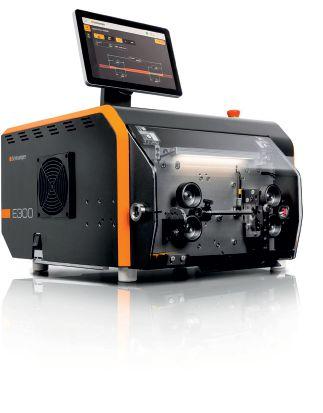
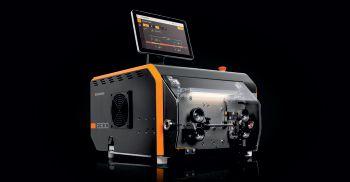
Cut & Strip Family E300
Transform Your Cable Processing
Experience unparalleled reliability and ease of use with the high-performance E300. Designed to handle a variety of wires, cables, and insulation materials with precision, the E300 ensures top-quality results. Seamlessly integrate the E300 with a wide range of peripherals to create an automatic processing line, boosting efficiency and performance.
Processes conductor cross sections from 0.05 to 10 mm² (36 to 8 AWG)
Intuitive interface simplifies job creation and setup
Quick software-assisted troubleshooting
Programmable clamping axis for greater accuracy
Two-in-one quick-change feeding unit, including a short piece kit for processing short cables
Wire Solutions for a Connected World
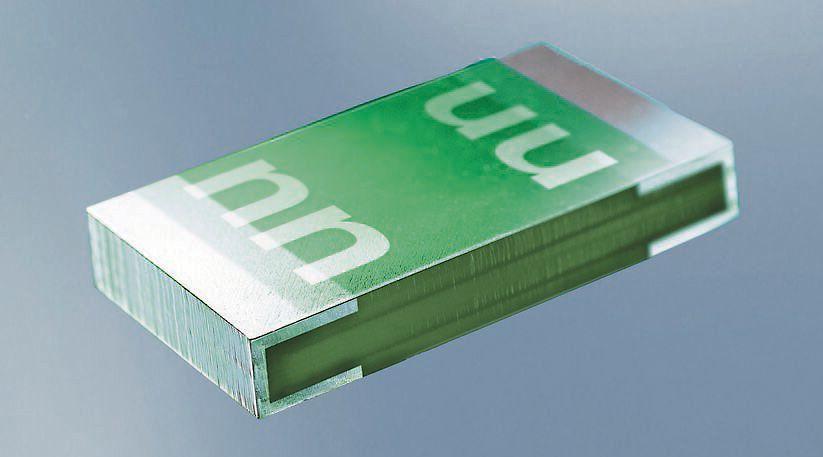
ULTRA-COMPACT SMT FUSE COMES IN 1206
SIZE SCHURTER
UST 1206 SMT chip fuse in 1206 format is ultra-compact and powerful with rated currents of up to 35A. Device is suitable for surface mounting with its ‘slowblow’ characteristic, delivering a high melting integral I2t. Fuse does not trip immediately at inrush current peaks higher than the rated current, which is important in industrial designs. https://www.schurter.com/en/ datasheet/UST_1206
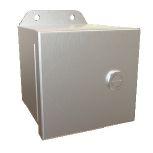
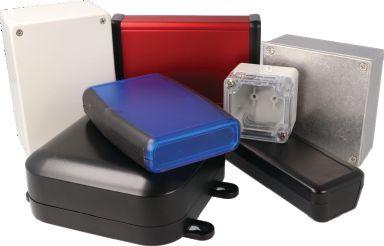
IP68 1550ZF range flanged versions join all 18 sizes of firm’s 1550Z
rugged thick wall heavy duty die-cast enclosure family. Product is spot-welded to the base to provide a strong and smooth mounting plate for use when the units are secured to a surface. The 18 sizes range from 50mm x 45mm x 30mm to 223mm x 147mm x 83 mm, with the lids thickness ranging from 5mm to 33mm in depth depending. https://www. hammfg.com/electronics/ small-case/diecast/1550zf
SMT LOW PROFILE EDGE CONNECTORS PASS SIGNALS OR POWER
EMX
ENTERPRISES
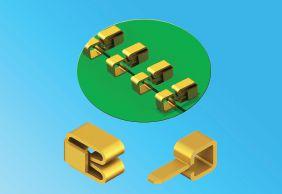
Keystone Electronics series of SMT pcb connectors are designed to pass signals or power across pcbs. Quick and easy set-up, these space-saving devices feature a horizontal orientation - making them suitable as parallel boardto-board or board-to-component alternatives for power or signal
transferring. Products are designed to provide improved low profile circuit linkage and minimal footprint for high-density, high current pcb packages on power and aluminum backplanes.
https://www.emx.ca/
MICRO-INCH SIZE CHIP INDUCTOR AMONG TINIEST IN CLASS
MURATA MANUFACTURING
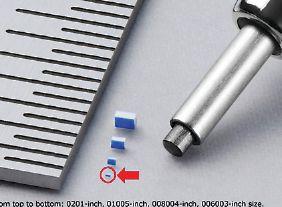
Smallest class 006003-inch size
(0.16 mm x 0.08 mm) chip inductor represents a volume reduction of approximately 75%
compared to the smallest 008004-inch size (0.25 mm × 0.125 mm) product. Device provides enhanced functionality and miniaturization, suitable for use in a wide array of designs, including smartphones. https://www.murata.com/news/ capacitor/ceramiccapacitor/2024/0919
DATA
ACQUISITION STREAMLINES TESTING FOR ENTRY-LEVEL ETHERNET SYSTEMS EMERSON
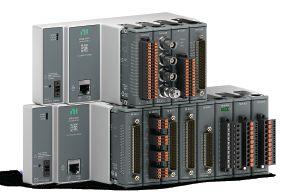
NI cDAQ-9187and cDAQ-9183 Ethernet chassis and NI 9204 input module joins firm’s data acquisition (DAQ) lineup. Along
with a GitHub repository for NI FlexLogger DAQ software plug-ins, solutions provide cost-effective options for deploying high-performance test and measurement systems over Ethernet. Both chassis are the first entry-level Ethernet solutions in the NI CompactDAQ family of hardware, and are specifically designed for electrical and sensor measurements over Ethernet-supported distances. https://www.ni.com/en/shop/ compactdaq.html
THERMALLY CONDUCTIVE, FLOWABLE EPOXY MEETS NASA LOW OUTGASSING SPECS MASTER BOND
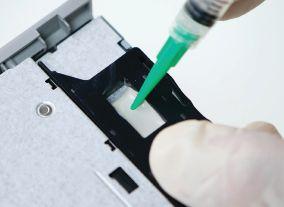
EP53TC two-component epoxy is designed for bonding, sealing, coating and small potting applications where efficient heat dissipation is crucial. Epoxy is formulated with a specialty filler with a particle size ranging from 5 to 30 microns. It is a flowable system with a mixed viscosity of 45,000-65,000 cps at room temperature. This filler size and its relatively flowable viscosity
enable epoxy to fill small voids making it suitable for heat dissipation. Product meets ASTM E595 NASA low outgassing specifications and provides reliable electrical insulation with a volume resistivity greater than 1014 ohm-cm.
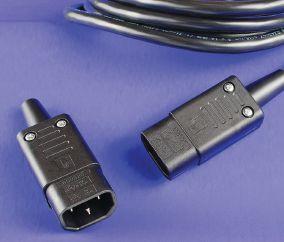
REWIRABLE SHEET E PLUG CONNECTOR COMES WITH STRAIGHT CABLE MOUNT CONFIGURATION INTERPOWER
IEC 60320 rewirable Sheet E plug connector comes in a straight cable mount configuration initially offered in black. Device has obtained Japanese PSE approval, along with other safety agency approvals such as cULus, VDE, and
CCC. Product’s part number 83032000, replaces part 83011060. Sheet E compatible wire sizes in North America are 18, 16, and 14 AWG (SV/SJ types); in Europe and China, 0.75 mm² and 1.0 mm² (H05VV-F/RVV EU); also in Europe, 0.75 mm² and 1.0 mm² (H05RN-F EU); and in Japan 1.25 mm² (VCTF). The rewirable Sheet E plug connector carries a UL 94 V-0 flammability rating.
Visit ept.ca for the latest new products, news and industry events.
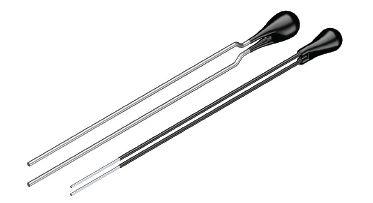
PB-FREE NTC THERMISTORS
SERVE WIDE RANGE OF AUTOMOTIVE, INDUSTRIAL APPLICATIONS
TDK CORP.
L862 (B57862L) NTC thermistors with bendable wires and the L871 (B57871L) lead spacing NTC thermistors can be used in a wide range of automotive and industrial applications. Both series are Pb-free and can measure temperatures between -40°C and +155°C with a tolerance of ±1% and ±3% respectively. At
room temperature, their maximum power dissipation is 60mW. Both series are available with different rated resistances between 1k Ω and 100k Ω and different R/T characteristics. www.tdk-electronics.tdk.com/en/ntc
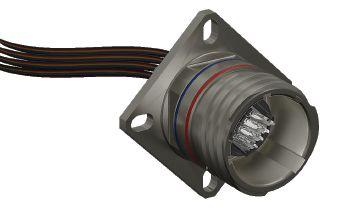
CIRCULAR CONNECTORS
COMPLY WITH VITA 95 STANDARDS
ODU USA
TACTICS series circular connectors comply with VITA 95 standards, combining the proven design of the MIL-DTL-38999, Series lll connectors with the innovative Expanded
Beam Performance technology. Based on the upcoming VITA 95 standard, devices meet all the requirements for demanding use in military aviation. The lens-based data transmission permits the connections to perform robust, improved transmission properties. Products are available in four shell sizes for up to 96 fibers. Devices deliver reliable data transmission with the self-locking mechanism. https://odu-aerospace.com/products/ odu-tactics/
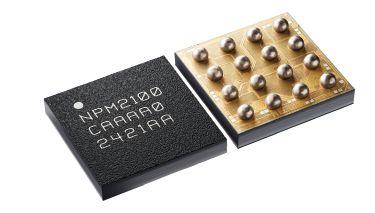
POWER MANAGEMENT IC EXTENDS BATTERY LIFE OF BLUETOOTH PRODUCTS
NORDIC SEMICONDUCTOR
nPM2100 Power Management IC (PMICs) prolongs the operating time per battery for primary (non-rechargeable) battery applications by managing energy resources using an ultra-efficient boost regulator and a wide range of energy-saving features. Device is suitable for wireless mice and keyboards, consumer asset tracking,
remote controls and body-worn medical designs. Device’s boost regulator and energy-saving features include primary-cell fuel gauging, addressing power management inefficiencies, while also ensuring that all the battery’s stored energy is used before the cell is thrown away.
https://www.nordicsemi.com/Products
Provider of hi-rel microelectronic products Micross, has acquired Integra Technologies, an OSAT post-processing provider.
ACQUISITION
MICROSS ACQUIRES INTEGRA TECH
Micross Components Inc., a leading provider of high-reliability microelectronic product and service solutions for aerospace, defense, space, medical and industrial applications and a portfolio company of Behrman Capital, closed the acquisition of Integra Technologies, an Outsourced Semiconductor Assembly and Test (OSAT) post-processing provider focused on high-reliability applications and end markets, headquartered in Wichita, Kansas.
The acquisition of Integra further positions Micross as a leader in United States-based OSAT services and further broadens Micross’ portfolio of high-reliability microelectronic services and products. Integra Technologies is a leading U.S.-based provider of comprehensive semiconductor assembly, testing, and qualification services.
SMART DEVICES
COMPLYING WITH EU’S CYBER ACT
Last year, the European Union (EU) introduced a new regulation that will affect all manufacturers who supply connected electronic products
Martin’s lengthy career includes key leadership roles at B&R Automation, Murrelektronik, and Phoenix Contact, where his strategic vision and dynamic leadership consistently delivered outstanding results. Renowned for his ability to transform challenges into opportunities, he has played a pivotal role in fostering business growth and operational excellence throughout his career.
Markham ON-based Weidmuller Canada is confident his leadership will usher in a new era of success, particularly in ad-
Enersys, Mean Well, Panasonic Energy, Power Sonic, Varta, and Vox Power.
Sager’s investment in the latest testing and packaging equipment, along with its strong internal engineering team comprised of electrical, mechanical, and manufacturing engineers has been the foundation of its successful value-add program.
SEMICONDUCTORS
INTEL UNVEILS AI, NETWORKING SOLUTIONS
to EU countries: the EU Cyber Resilience Act (CRA). The CRA makes manufacturers responsible for the cybersecurity of their products, not just at the point of sale but throughout the entire product lifecycle. Once the CRA takes effect, selling smart connected devices without regular cyber resilience testing will be illegal in Europe. Violations could result in fines of up to €15 million ($16.75 million) or 2.5% of annual global turnover, whichever is higher.
Jan Wendenburg, CEO of ONEKEY, stated: “At ONEKEY, we are fully prepared to test internet-connected electronic products for compliance with EU cybersecurity regulations before they enter the European Union market. Products that fail to meet the CRA requirements will not be eligible for the CE mark, which is mandatory for sale within the EU.”
APPOINTMENT
WEIDMULLER CANADA APPOINTS MANAGING DIRECTOR
Weidmüller Group has appointed Gary Martins as the new managing director for Canada, bringing 28 years of experience in the automation industry to his new post.
Gary Martins appointed managing director for Weidmuller Canada.
vancing the company’s position within the industrial connectivity market.
“Gary’s visionary approach and unwavering commitment to excellence are exactly what we need to expand our business and enhance our market presence in Canada. We are thrilled to have him on board,” said Dr. Christian von Toll, chief sales officer of Weidmüller Group.
DISTRIBUTION
SAGER CERTIFIED AS VALUE-ADD RESELLER FOR EBM-PAPST, SANYO DENKI
Leading North American distributor Sager Electronics has been designated as a factory-certified value-add reseller for ebm-papst and Sanyo Denki, as both firms join Sager’s value-add reseller roster of power and battery manufacturers, including Advanced Energy,
To address the challenges faced by enterprises modernizing infrastructure to meet the demands of next-gen workloads like AI, Intel has launched its Xeon 6 processors with Performance-cores (P-cores). The processors provide high-end performance for a broad set of data centre and network infrastructure workloads and best-in-class efficiency to create an upgraded server consolidation opportunity.
“We are intensely focused on bringing cutting-edge leadership products to market that solve our customers’ greatest challenges and help drive the growth of their business,” said Michelle Johnston Holthaus, interim co-CEO of Intel and CEO of Intel Products. “The Xeon 6 family delivers the industry’s best CPU for AI and groundbreaking features for networking, while simultaneously driving efficiency and bringing down the total cost of ownership.”
• The Intel Xeon 6700/6500 series processor with P-cores is a suitable CPU for modern data centres, offering balance between performance and energy efficiency. Device delivers an average of 1.4x better performance than the previous generation across a wide range of enterprise workloads.
• Intel Xeon 6 for network and edge is a SoC designed for high performance and power efficiency. It leverages firm’s builtin accelerators for virtualized radio access networks (vRAN), media, AI and network security, addressing demand for network & edge solutions.
PRODUCT SOURCE GUIDE
DEVELOPMENT BOARDS
Add On Board is efficient, low-cost
VENDOR: MICROCHIP TECHNOLOGY
RNWF02 ADD ON BOARD
Microchip Technology RNWF02 Add On Board is an efficient, low-cost development platform for evaluating and demonstrating the features and functionalities of the RNWF02PC Low-Power Wi-Fi module. This plug-in board complies with the mikroBUS standard and includes an onboard MCP2200 USB-to-UART Converter, enabling out-of-the-box evaluation. The signals required for the control interface are connected to the onboard connectors of the Add On Board for flexibility and rapid prototyping. The Add-On Board can be plugged easily into the host board and controlled by the host Microcontroller Unit (MCU) with AT commands through UART.
The RNWF02 Add-on Board offers:
An easy-to-use platform to speed up design concepts to market with:
mikroBUS add-on board header for integration with RTOS and Linux host boards
• USB Type-C interface for immediate evaluation and development on PC
• Bluetooth coexistence support with PTA Support for microcontroller (MCU) integration with MPLAB X Tools and MPLAB Harmony v3 Example Applications
• Small, low-cost form factor
The RNWF02 Bluetooth LE module supports a wide range of applications including: