Burnaby’s CCI takes printed circuit board assembly to next level p.7
INTEL INSIDE
Chip maker goes deep with Q&A on CPUs for AI and 5G p.12
AC / DC
What to consider when selecting a modern power supply p.16
the P.Eng hiring pipeline broken?
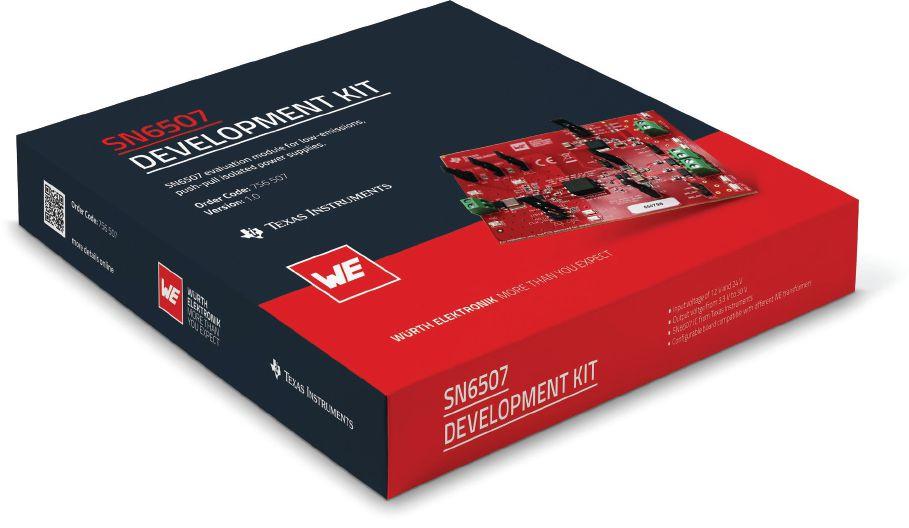
Wurth Elektronik SN6507 dev kit JULY/AUGUST
Mercury Systems delivers insights on future Radio Frequency technology in wireless space.
7 TURNAROUND KINGS (& QUEENS)
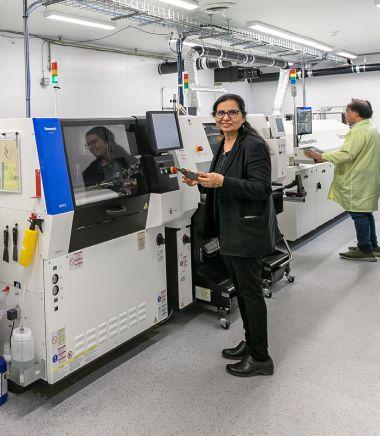
The customer comes first at Canadian Circuits Inc. pcb board shop in Burnaby B.C.
12
16
PROCESSING IT
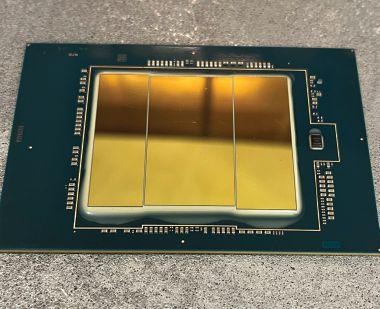
We go Q&A deep with Intel — one of the world’s largest computing processor makers.
MORE THAN VOLTS & AMPS
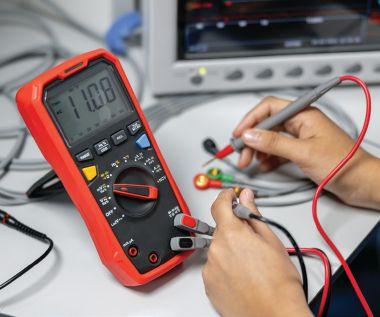
Mastering the nuances of modern ac-dc power supply selection.
The talent crisis in Canada
Is our engineering pipeline broken?
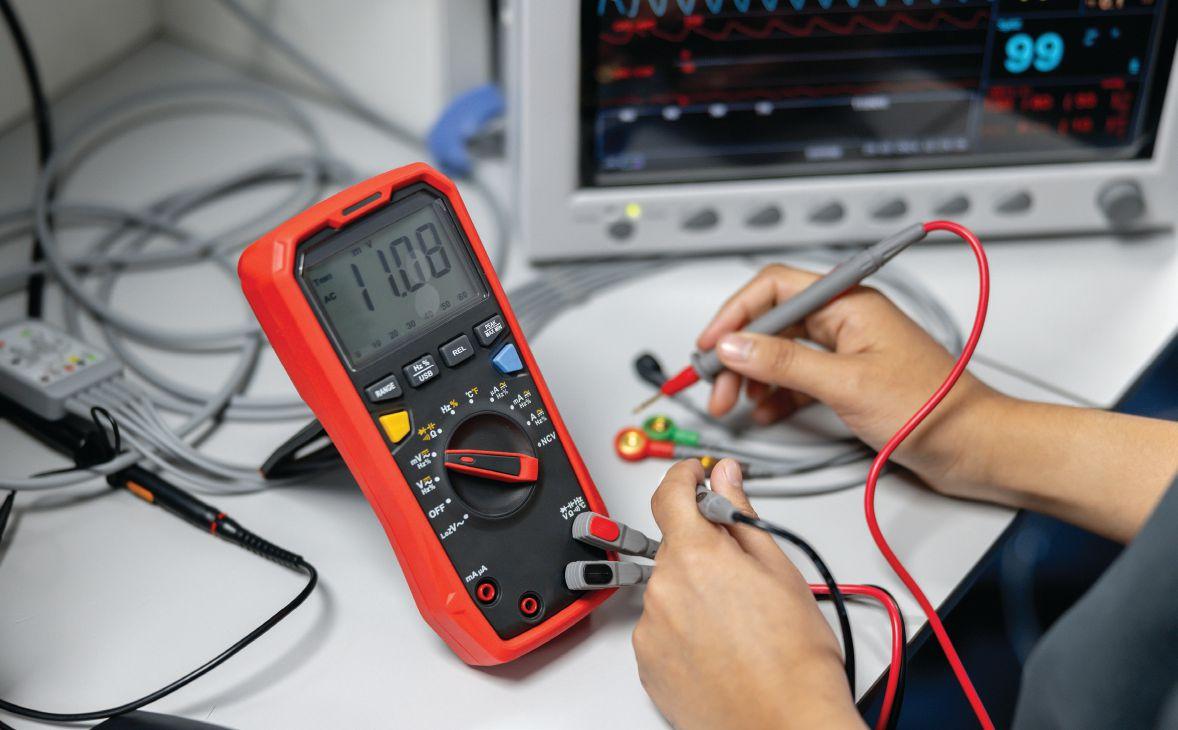
Walk through the floor of any Canadian electronics design firm or attend any EPTECH trade show and you’ll hear a common refrain: “We can’t find enough skilled engineers.” It’s not a passing complaint—it’s a red flag that the country’s electronics engineering talent pipeline is showing serious signs of strain.
Despite growing demand for high-tech innovation—from wireless infrastructure and embedded systems to medical wearables and electric vehicle platforms—Canada is not producing enough qualified designers to keep pace. And without bold, coordinated action across academia, government and industry, the situation may get worse before it gets better.
The reality is stark: enrollment in traditional electronics engineering programs has been stagnating or even declining at many Canadian universities. According to Engineers Canada, while total undergraduate engineering enrollment has increased in recent years, disciplines like electrical and computer engineering have not seen the same growth as newer, trendier fields like software or biomedical engineering.
This talent gap comes at the worst possible time.With the rapid expansion of 5G, AI hardware, robotics, smart grid infrastructure, and the Internet of Things (IoT), Canada’s electronics sector is under pressure to design, build, and maintain increasingly complex systems. Add in new growth opportunities tied to government investments in domestic semiconductor capabilities,
and we have a perfect storm: high demand, low supply.
Brain drain to USA
A complicating factor is the ever-present brain drain to the United States. Canadian grads often head south for higher-paying roles, more established tech hubs, and better access to venture capital.While some return later in their careers, others are lost to the Canadian innovation ecosystem for good.
Even those who stay find themselves pulled toward software development or data science roles, lured by the current AI and fintech boom. Hardware-centric roles—especially in analog, RF, or embedded design—can feel less glamorous, even though they remain absolutely critical to product development. This skills mismatch leaves many Canadian firms scrambling to fill roles or relying on overseas contractors for specialized expertise.
To address the electronics talent crisis, we need more than just good intentions—we need strategy and investment.
First, industry must do a better job of telling its story. Careers in electronics design and embedded systems can be dynamic, creative, and purpose-driven. Whether it’s building a next-gen pacemaker, enabling lunar missions through Canadian Space Agency partnerships, or advancing green energy systems, young engineers must see these roles as high-impact and forward-looking.
Second , government and academic institutions must update their programs and incentives. Scholarships and co-op placements should prioritize in-demand technical fields, while universities must work more
closely with industry to ensure their curricula reflects real-world needs. Offering more hands-on experience with tools like printed circuit board layout, FPGA programming, and RF circuit design will better prepare students for industry roles.
Third, we need to invest in upskilling and reskilling. Mid-career professionals in adjacent fields—such as mechanical or mechatronics engineering—can often be retrained for electronics roles. Similarly, international talent pools should be embraced and integrated more effectively through faster credential recognition and onboarding programs tailored to Canadian standards.
Collaboration is key
If Canada hopes to compete in emerging areas like 6G, autonomous systems and advanced medical technologies, we must treat the electronics talent gap as a national priority—not just an HR challenge. The federal and provincial governments have begun to invest in reshoring semiconductor manufacturing and AI infrastructure, but without a corresponding effort to develop and retain homegrown talent, these investments risk falling short of their potential. We need a talent development strategy that brings together universities, colleges, startups and large employers in coordinated action.
The bottom line? Canada’s future in electronics engineering is not guaranteed—it must be built, brick by brick, by the very professionals we’re struggling to train and retain today. If we fail to repair the pipeline, the rest of the system won’t hold. Now is the time to act.
STEPHEN LAW Editor slaw@ept.ca
Canada’s information leader for electronic engineers and designers
JULY/AUGUST 2025
Volume 47, Number 4
READER SERVICE
Print and digital subscription inquiries or changes, please contact Angelita Potal Tel: (416) 510-5113 Fax: (416) 510-6875
Email: apotal@annexbusinessmedia.com
Mail: 111 Gordon Baker Rd., Suite 400 Toronto, ON M2H 3R1
MEDIA DESIGNER Lisa Zambri lzambri@annexbusinessmedia.com
AUDIENCE DEVELOPMENT MANAGER Anita Madden amadden@annexbusinessmedia.com (416) 510-5183
GROUP PUBLISHER Paul Grossinger pgrossinger@annexbusinessmedia.com
CEO Scott Jamieson sjamieson@annesbusinessmedia.com
EP&T is published eight times per year by ANNEX BUSINESS MEDIA 111 Gordon Baker Road, Suite 400 Toronto, ON M2H 3R1 Tel (416) 442-5600 Fax (416) 510-5134 annexbusinessmedia.com
SUBSCRIPTION RATES Canada – $59.67 one year; $95.88 two years USA – $136.68 (CAD) per year International – $187.17 (CAD) per year Single copy – Canada $15.00
ISSN 0708-4366 (print)
ISSN 1923-3701 (digital)
PUB. MAIL AGREEMENT NO. 40065710 Return undeliverable Canadian addresses to: EP&T Circulation Department, 111 Gordon Baker Rd. Suite 400, Toronto, ON M2H 3R1
Expansion plans for MiQro Innovation Collaborative Centre (C2MI) facilities in Bromont QC will be dedicated to quantum superconductive chips manufacturing. The hub’s state-of-the art manufacturing capabilities include prototype to low volume production, which are essential to be a key player at the forefront of an emerging field like quantum computing & sensors.
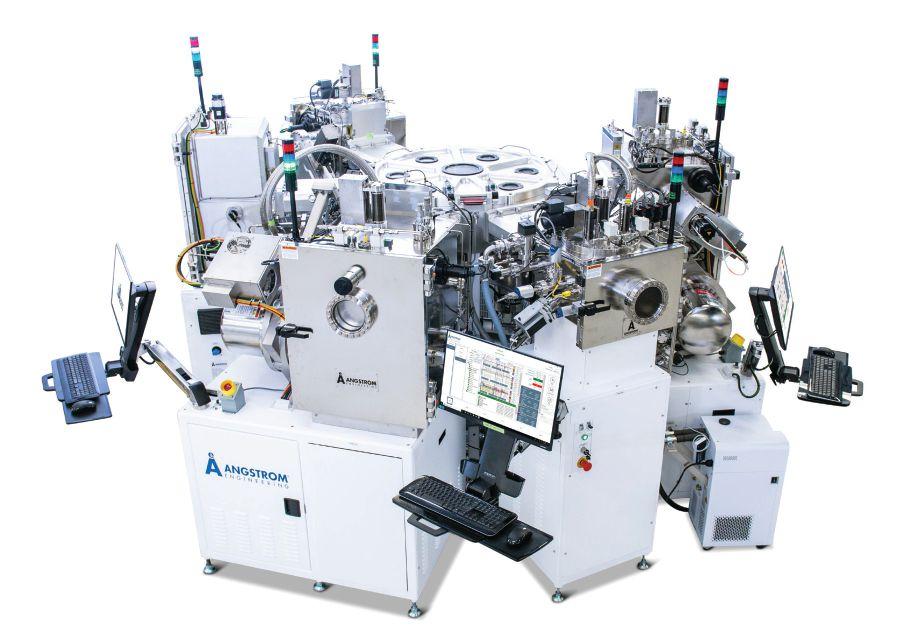
C2MI also acquired a specialized, automated Advanced Quantum Cluster PVD System from Angstrom Engineering, which will serve as the centerpiece of the quantum superconductive chips manufacturing facilities.
“The PVD System is the cornerstone of our mission to lead innovation in superconducting quantum chips manufacturing,” said Marie-Josée Turgeon, C2MI’s CEO. “By integrating this equipment into our quantum facility, we are creating unparalleled opportunities for innovation while enabling next-gen quantum technologies.”
VENTURELAB HOSTS G7 SEMI FORUM
Representatives from G7 nations convened in Toronto this June to discuss international collaboration and priorities for the future of semiconductors. ventureLAB, a Markham-based hub for hardware and semiconductors hosted the G7 Semiconductor Stakeholder Forum, welcoming senior leaders from government, industry and academia.
The gathering marked a pivotal moment in the ongoing efforts to develop secure, resilient semiconductor supply chains and accelerate economic growth through shared innovation.
The stakeholder forum was led by Innovation, Science and Economic Development Canada (ISED) with support from the National Research Council of Canada (NRC) and Global Affairs Canada (GAC) and included delegates from each of the G7 nations. These forums were initiated under Italy’s 2024 G7 Presidency, to strengthen collaboration on shared innovation and technology priorities among G7 countries.
C2MI will expand its Bromont facility to include production of quantum superconductive chips.
HARLING RECOGNIZED FOR CHIP LEADERSHIP
After a year capped by the delivery of one of the most significant federal investments in the semiconductor sector in a generation, FABrIC, Gordon Harling, president and CEO of CMC Microsystems has been named Executive of the Year at the 2025 Semiconductor Achievement Awards. Presented by Canada’s Semiconductor Council, the award, recognizing outstanding leadership, strategic vision and lasting contributions to Canada’s semiconductor ecosystem was presented at an awards dinner following the CHIPS NORTH Executive Summit.
SD MEMORY CARDS HIT 25TH ANNIVERSARY
SD Association (SDA) marks the 25th anniversary of the venerable SD memory card launched in 2000 and its long history of improving the lives of billions of people globally in numerous ways. Throughout the last 25 years, SD and microSD memory cards have sold more than 12 billion cards and evolved by offering massive storage capacities and lightning fast speeds, meeting industry needs. SD memory cards remain the most used removable storage card for consumer electronic devices.
ARTIFICIAL INTELLIGENCE
ventureLAB hosted a G7 Semiconductor Stakeholder Forum in Toronto this June. The event included leaders from government, industry and academia.
Over the past 44+ years, Gordon has worked at some of the industry’s most storied companies: Mitel, NovAtel, DALSA. His entrepreneurial streak found expression as founder and CEO of several start-ups, including Goal Semiconductor, Elliptic Technologies, WideSail Technologies and Innotime Technologies. A senior role in Economic Development reinforced a cool pragmatism that grounds formidable strategic insight.
U OF WATERLOO AND BASF PARTNER ON AI
BASF and the University of Waterloo’s Data and Artificial Intelligence Institute (Waterloo.AI) are joining forces to advance AI applications through a three-year collaborative research agreement. This partnership is designed to facilitate knowledge sharing and develop advanced AI systems to drive operational excellence, enhance customer value and streamline processes.
As part of BASF’s commitment to harnessing value and unlocking new potential through AI innovation, the partnership will leverage novel root cause analysis, forecasting and optimization methodologies, while integrating advanced graph structures and language and data models to deliver granular, real-time insights in complex situations.
Surrey pcb maker marks 32 years in business
Canadian Circuits specializes in rapid-assembly of printed circuit boards
BY MIKE STRAUS, WEST COAST CORRESPONDENT
Printed circuit boards (pcb) are a vital necessity for technology companies of all stripes. For most hardware tech companies, pcb suppliers ship quickly. What they don’t take into consideration is that the actual assembly often takes a minimum of 10 days. That’s where the husband-and-wife team Praveen and Pam Arya stepped up back in 1993 – setting out to manufacture and ship pcbs in less time, serving as a one-stop shop for customers.
“We both worked for pcb companies in Vancouver before starting Canadian Circuits Inc. (CCI),” Pam says. “Our vision was to do something different. Most of our customers were saying that if we could do assembly, they wouldn’t have to go elsewhere. I kept bringing information to Praveen about how we could see success by providing assembly services.”
Pam and Praveen started CCI with the vision to produce boards overnight. Pcb production, Praveen says, shouldn’t take more than 16 hours – so why are other companies spending three weeks making boards?
Faster production
“Producing boards faster is actually cheaper,” Praveen says. “I had proposed to my manager at the time (at my previous employer) that we try this, and he said he liked the idea, but didn’t want to pay for it. When we started CCI, we saw tremendous success.”
Praveen says his customers were scrambling for assembly services, so the company quickly pivoted to manufacturing the boards in 24 hours and assembling them in another 24 hours – going from raw materials to finished product in just 48 hours.
This fast-turnaround vision was a unique idea at the time, but realizing it would require
substantial investments in various types of new equipment.
Pam says that for the last 30 years, CCI has been not only improving upon its existing equipment, but adding new equipment to stay competitive.
The company works with a consultant once per year to learn about new technology.
“We’re able to do very hightech circuit boards here, but when it came to assembly, we almost started to lose business because customers wanted shops that could take care of everything,” Pam says. “Many customers came to us because they wanted to do the pcb and assembly at the same time, so we needed to be able to cater to them. It’s also an advantage for us, because we can buy the parts immediately while making the pcb. That way, the pcb can be ready in just a few days, and we
can have an assembly machine already programmed.”
Pam says the company only takes on projects they can commit to finishing on time. She cites the example of a rapid-turnaround printed circuit board made for Starfish Medical, a company that manufactured ventilators during the COVID-19 pandemic.
Medical demand surged
In 2020, COVID-19 cases surged in Canada, with critically ill patients overwhelming hospitals; many of these patients required ventilators to survive.
Starfish Medical, a medical equipment engineering company with plants in Victoria, Toronto, and California, led a consortium of manufacturers tasked with designing and delivering an ICU ventilator in six months. Traditionally, designing an ICU ventilator can take up to
10 years, so speed was critical.
CCI was contracted to manufacture pcb assemblies destined for the ventilators, with the goal of creating a working prototype on the first try. The project was urgent, so CCI manufactured and assembled the boards in three days, including the weekend, and flew it out on a helijet to the customer. The pcbs were found to be in perfect working order, all while beating the required timeline.
The company has also manufactured pcbs for the 2010 Vancouver Olympics and for a bionic leg made by Bionic Power.
“Bionic Power had been dealing with another company, and they had a quality issue,” Pam says. “We were able to perform a DFM analysis for their design and provide recommendations.”
Praveen says the biggest challenges in building CCI have been sourcing team members. Building a team with the same vision, dream, and objective in mind has been a struggle, but the company has succeeded over the past 30 years by having the right employees in the right places.
The couple has found the secret to success as a husbandand-wife team in the technology industry: Demarcation. While Pam focuses on the sales side of the business, Praveen handles the technology side. CCI has also learned to evolve alongside its customers; 30 years ago, designs were quite simple, but now they’re very complex. With 30 people on staff now, the company’s future is in continuing to meet customer needs.
“We’ll continue to build whatever our customers need,” Pam says. “Technology is advancing fast, and if you don’t keep up, you don’t grow as a company.”
www.canadiancircuits.com
Mike Straus is EP&T’s West Coast correspondent. mike@brandgesture.ca
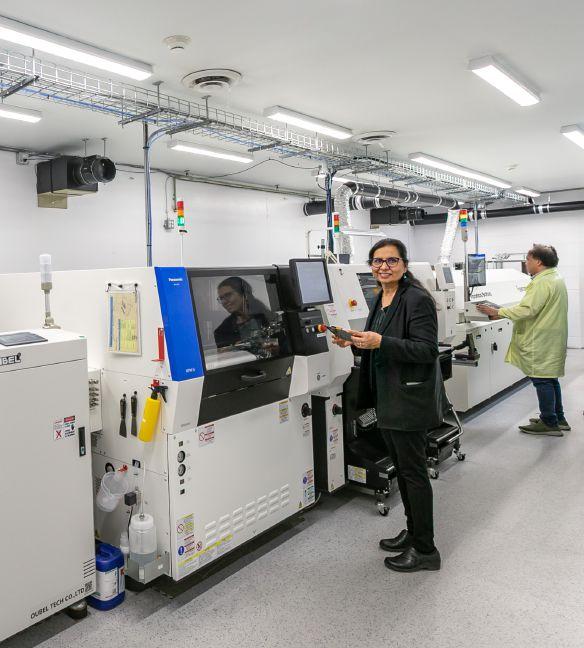
Pam Arya poses inside CCI’s pcb production facility in Burnaby B.C.
The future of RF tech for wireless telecom
BY DARREN HINTZE, MERCURY SYSTEMS
Radio frequency (RF) technology has fundamentally reshaped numerous industries, from wireless communications to military operations. As demands for adaptable, efficient, and cost-effective systems grow, the development of RF front-end technology continues to take center stage. This article explores the evolution of RF technology, differentiation of RF requirements for wireless communication and spectrum analysis platforms, technology challenges and leading design strategies.
Evolution of RF front-end tech
The RF front-end has experienced rapid innovation, driven by emerging applications in broadband systems and the increasing necessity for flexible solutions. Historically, the development of RF front ends was marked by incremental gains in performance. Heterodyne architectures dominated early designs, offering benefits in frequency translation and selectivity.
However, evolving operational demands have accelerated the shift toward direct RF digitization, where RF signals are converted to digital data without intermediate frequency stages. Superheterodyne designs are thus favored for cost-sensitive applications that benefit from their refined balance of performance and affordability.
RF evolution has also been influenced by multi-channel
applications, including both coherent direction-finding systems and spectrum analysis tools. Early solutions prioritized multi-channel receive designs—typically for interference detection and direction finding—but newer needs emphasize single-channel transmit/receive modules, suited to applications like expendables and compact systems operating in resource-constrained environments. Technologies like tunable filters, beamforming, and wide-band amplifiers have become essential as systems adopt broader frequency ranges and higher spectral efficiency.
The push toward higher operational frequencies, particularly into millimeter-wave bands, reflects the growing demand for increased bandwidth and capability. For commercial wireless systems, this evolution aligns with the proliferation of 5G and its emphasis on multi-gigabit throughput. Meanwhile, emerging SIGINT and EW scenarios demand innovations capable of adapting to broad, unpredictable spectrums.
RF for electronic warfare
While RF technology serves both wireless communications and EW systems, the requirements of each context vary significantly. Wireless systems, including 5G and IoT, prioritize spectrum efficiency, reliability, and high data throughput reliability. These systems are bound to commercial and civilian communication regulatory standards,
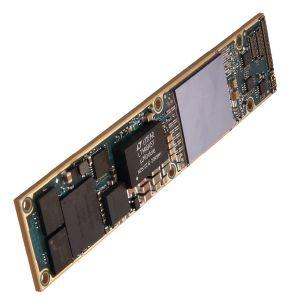
Future Mercury Systems’ designs integrate RF front ends with digital signal processing to reduce size, recurring cost, and deployment time.
Pictured is a stackable, multi-function circuit card solution.
requiring fine-tuned RF front-end components that support multi-band operation with minimal distortion or energy. Designs favor high power efficiency, continuous broadband coverage and cost-efficient flexible designs that can scale easily across millions of consumer devices.
In contrast, electronic warfare (EW) systems require robust, adaptable RF technologies capable of operating in hostile environments. These systems require frequency agility, real-time tuning, sensitivity, interference resilience, and survivability under high-power conditions. Wide-band tunable architectures, high dynamic range amplifiers, and advanced signal processing are just a few examples of the technologies that differentiate EW from wireless systems. Expendables like drones must balance performance with affordability, necessitating innovative approaches to RF design that won’t sacrifice mission success.
Extreme SWaP-C mandates
One of the most significant trends in RF technology is the growing emphasis on extreme SWaP-C requirements. This evolution is largely spurred by the adoption of modern platforms such as drones, expendable assets, and mobile devices. Designers must integrate multiple functions into smaller, lighter, and more energy-efficient packages without compromising performance or reliability. System costs extend beyond
Photo:
cost efficiency necessitates streamlined designs. These single-purpose designs can be optimized for specific operational scenarios but lack versatility. Conversely, flexible architectures, which allow for programmable tunability and adaptable frequency ranges, offer greater longevity and versatility. These designs are relevant for environments that require multi-band operability or frequent updates for new signal profiles.
Monolithic microwave integrated circuits (MMICs)
instance—these not only amplify signals but also address high-frequency losses by integrating programmable gains and digital tuning capabilities. Programmability is also being integrated into amplifiers, enabling users to bypass or optimize amplification stages as needed.
Programmable amplifiers and filters can adapt to varying frequency bands, providing both performance and greater flexibility to address evolving threats or operational requirements. Such innovations minimize component redundancy and enable simplified system architectures.
Multi-Chip Modules (MCMs)
When MMICs alone cannot deliver the required functionality, Multi-Chip Modules (MCMs) bridge the gap. By packaging several MMICs and other components into a single unit, MCMs reduce overall system size, improve performance, and simplify integration into broader systems. Amplifiers with flat gain curves, tunable filtering solutions, and preselectors in packages as small as 6mm have become hallmarks of next-generation designs. These components handle multiple tasks, such as amplification, tuning, and switching, which are traditionally segregated across discrete components.
speed and insertion loss.
Tunable and adaptive filter solutions enhance the overall flexibility of RF systems and can be integrated with MMIC-based designs, ensuring seamless adaptability in multi-mission systems. Digitally tunable filters, analog tunable filters and switch filter banks offer distinct capabilities based on system needs:
Digitally Tunable Filters combine flexibility with high-Q, creating stepped filtering precision for broad system compatibility.
Analog Tunable Filters maximize continuous tuning options with slightly reduced Q factors, ideal for dynamic frequency responses.
Switch Filter Banks provide fixed filtering options with minimal insertion loss, optimal for high-Q, high-fidelity front ends.
Future trends
Silicon photonics, higher-order beamforming, and quantum-assisted signal processing advancements promise enormous improvements in bandwidth, energy efficiency, and spectral agility. Meanwhile, trends like direct RF architectures and expanded aperture frequencies signal a shift to even more compact and efficient next-generation solutions.
individual components—they encompass power consumption, manufacturability, and scalability. Modern RF systems need to address more than just one-time operational needs; expendables often require modularity and scalability to be rapidly redeployed for emerging frequencies or unforeseen signal engagements. Modular designs and scalable manufacturing processes are critical to addressing these new SWaP-C constraints.
Fixed vs flexible architectures
There are two primary approaches to RF front-end design—fixed functionality and flexible, reusable platforms. Fixed architectures work well for ultra-specific, high-volume applications where
A key to meeting modern RF demands is the increasing reliance on MMICs. These integrated circuits add new dimensions to traditional components by packing complex RF functionalities—such as amplification, filtering, and signal switching—into a compact package. MMICs reduce board complexity, lower manufacturing costs, and enable devices to function with greater efficiency.
Flexible design processes expedite production for high-volume applications, ensuring the development of purpose-built components while future-proofing legacy systems. Adoption of modularity also aligns with the broader move to direct RF digitization, offering a pathway for commercial and military-grade technologies to overlap efficiently.
Take equalizing amplifiers, for
Tuners and filters
Tuner modules serve as complete front-end solutions between the antenna and ADC (Analog-to-Digital Converter). These modules are controlled via simple SPI commands, making them adaptable for various platforms, including drones, rack-mounted systems, and mobile vehicles.
Filters are another critical component in modern RF systems, playing a key role in mitigating interference and enhancing system responsiveness. For wireless communication, digitally tunable filters enable seamless operation across multiple standard bands, while analog tunable filters provide greater frequency resolution for EW applications. Future advancements are expected to improve tuning
Current MMIC products often operate in the 1 to 6 GHz range, but new developments are pushing boundaries into 50 GHz and above.
By leveraging software-defined platforms and closely collaboration between industry and end-users, both military and civil industries can achieve cost savings and faster adaptation cycles. This alignment also benefits supply chain continuity, ensuring long-term support for evolving RF systems. From low-cost drones to scalable communications networks, RF design sits at the nexus of enabling next-generation connectivity.
www.mrcy.com
Darren Hintze is senior principal account manager at Mercury Systems, manufacturers of open architecture computer hardware and software products for aerospace and defense.
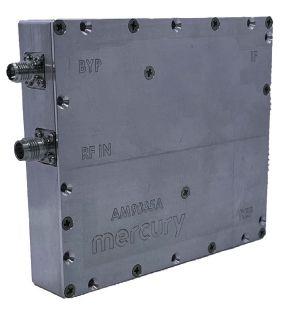
Mercury Systems’ AM9035 tuner module operates up to 44 GHz, representing a step toward the next frontier of direct RF system.
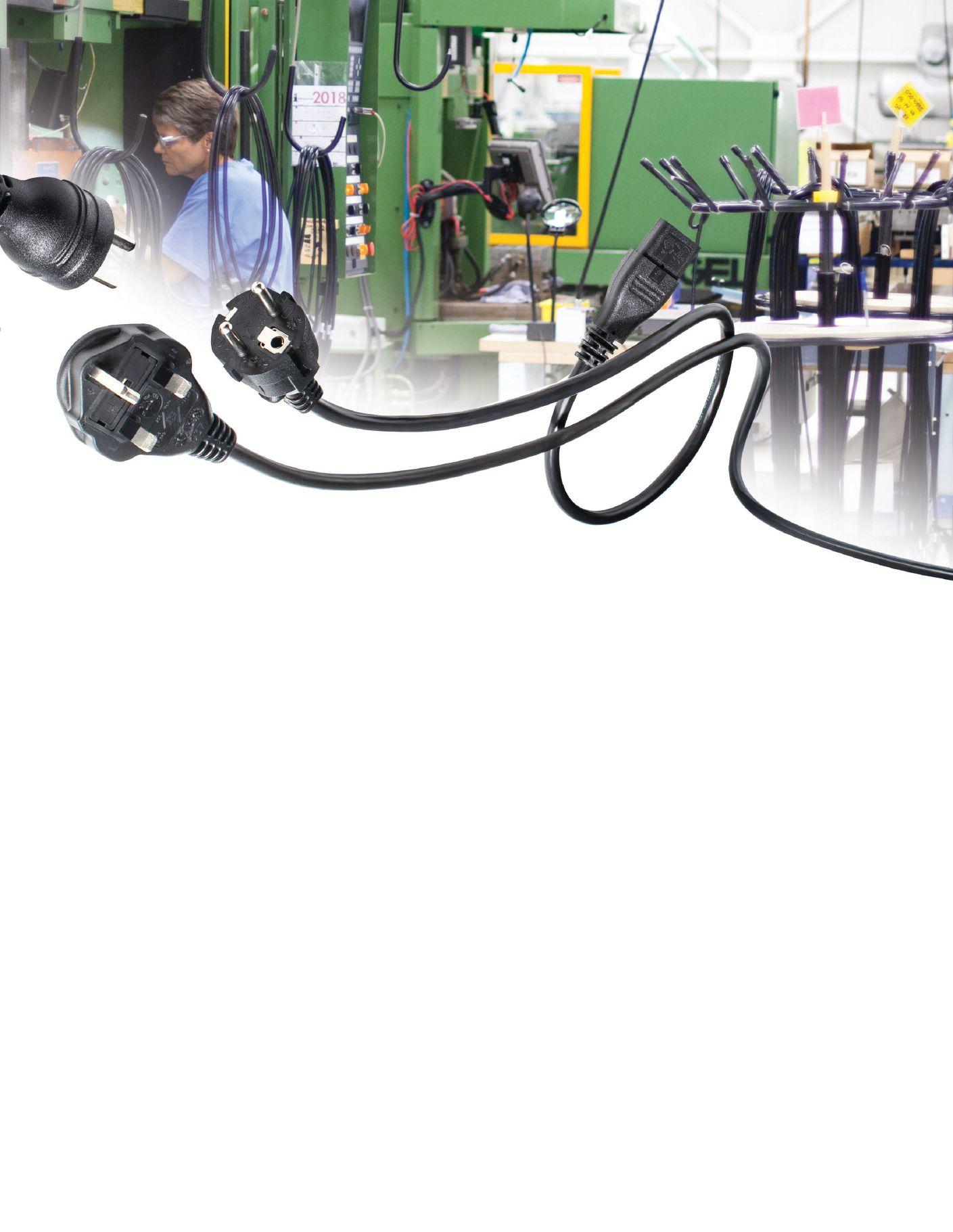
Interpower® Cords:
1-Week
Products
No matter what continent or country you live in, Interpower North American (NEMA) and international power cords and cord sets provide the correct country-specific amperages and voltages you can use right out of the box—no reconfiguration is needed.
Interpower’s industry-unique, 1-week U.S. lead time in combination with no minimum orders, same-day shipping on stocked products, and blanket and scheduled orders up to 365 days separate Interpower from any other cord maker. And their quick-change molding process allows them to make cords for multiple countries in one week’s time.
“It’s common for us to change out 40 molds per week,” said Interpower’s Vice President of Manufacturing and Logistics, Mike Boyle. “We can do this because of our customized quick-change mold process using spring-loaded washers and quick-disconnect water lines. Other molders may have to unbolt the entire mold, which is a far more labor-intensive and time-consuming process.
“Our quick-change mold process plays a major role in offering our unique 1-week lead times on custom orders, and same day shipping on in-stock products. By changing molds and colors on the fly, we can keep diversifying our product line.”
Cords Your Way
Interpower cord sets are manufactured in the U.S.A., specifically in Lamoni and Oskaloosa, Iowa, and ship straight from the factory. Want them hanked, coiled, tied, bagged and individually boxed? Need 1-D or QR barcodes for easier warehousing? Customized lengths, colors, packaging and labeling are also available— mark your cords with specialized labels such as “IT,” “Operating Room 1,” “Shipping & Receiving.”
Add scheduled or blanket ordering and your cords will arrive the exact day, week, or month you need them to arrive within one calendar year—lock in your price for 365 days! That way your cords will arrive at scheduled intervals throughout a calendar year at the price you’ve already locked in.
All Interpower cords and components are manufactured in accordance with Interpower ’s product quality plan: hipot testing, continuity testing, and ground testing with multiple inspections. All Interpower cords, cord sets, and components are tested and retested until surpassing all worldwide agency standards—not just UL, VDE, and IEC standards, but country-specific standards worldwide. Interpower—The powerhouse in power cord manufacturing.
• 1-week U.S. lead times
• Same-day shipping on stocked products
• Scheduled & blanket orders available
• No minimum orders
From security and CPUs to AI and 5G
Intel delivers insights with Q&A interview
BY STEPHEN LAW, EDITOR, EP&T
As one of the world’s largest semiconductor manufacturers, renowned for helping shape the digital age with its broad portfolio of technologies, including microprocessors, chipsets and system-on-chip solutions, Intel Corp. has experienced plenty of ups and downs in the chip space over the past few years.
Most recently, the Santa Clara CAbased firm has intensified its focus on artificial intelligence, edge computing, and next-gen connectivity, while expanding its global manufacturing footprint to enhance supply chain resilience. Earlier this year, EP&T Magazine was invited as a media guest of Intel Corp. to attend Mobile World Congress 2025 in Barcelona. While on-site, EP&T had the opportunity to engage with multiple Intel spokespersons on a range of topics spanning semiconductors, AI, network infrastructure and edge computing.
The following Q&A captures key insights shared by multiple Intel representatives during and after the MWC25 event. As a result, each of
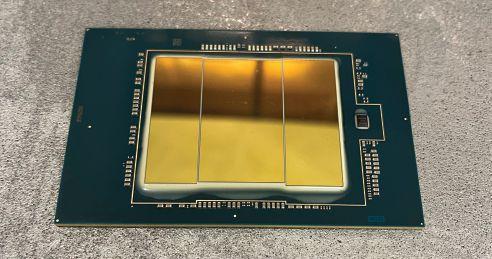
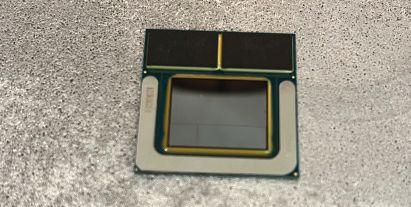
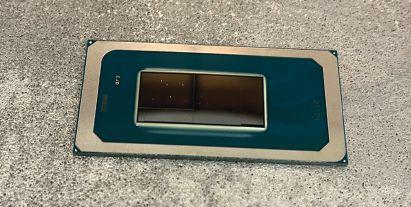
Almost every commercial virtual radio access network (vRAN) deployment runs on Intel Xeon technology (below).
the responses have been attributed to an Intel spokesperson.
Q: What has been Intel’s strategy and major moves in AI and Edge computing. At MWC 2025, Intel unveiled significant updates to our Xeon 6 processors, marking a big leap towards fully integrating AI at the hardware level, complete with supporting software and an open eco-system.
As AI becomes an essential part of enterprise innovation and a ‘must have’ for competitive advantage, companies across various sectors – like retail, manufacturing, healthcare, telecom, media, entertainment, infrastructure, and more – are increasingly looking to integrate AI into their preexisting IT systems in space-constrained, low-power, and cost-efficient environments.This also often requires local data processing, whether in retail points-of-sale, cellular sites, or greenhouse sensors.
Based on over 100,000 real-word Edge implementations with our partners, Intel introduced three complementary offerings that address the unique challenges of Edge computing.
The first element is AI Edge Systems, with new additions to our Xeon 6 family of processors along with Core Ultra and other hardware. Those provide OEMs and ODMs access to standardized blueprints, benchmarks, and verification tools to easily configure systems to meet the performance and power consumption needs of different use cases, whether it is vision AI or Gen AI.
The second element, known as Edge AI Suites, addresses the software needs to deploy AI Edge solutions. These are open, industry-specific AI software development kits (SDKs) for independent software vendors (ISVs), system integrators, and solutions builders. These suites simplify the creation of custom AI solutions for various industries by providing curated reference applications, sample code, and benchmarks to accelerate application development. Currently, we offer four suites optimized for retail, manufacturing, smart cities, and media and entertainment.
The third element is called Open Edge Platform. In essence, it is a modular, open-source platform that simplifies the development, deployment, and management of edge and AI applications at scale. With cloudlike simplicity, this platform allows ISVs, solution builders, and operating system vendors to integrate and remotely manage software components efficiently and leverage performance optimizations from Intel’s latest software advancements.
Q: How are security features evolving across Intel’s product lines?
Intel has prioritized security for many years. In the late 1990s, we started implementing Security Development Lifecycle (SDL) practices, which rely on thorough research to guide the development process, embedding security and privacy principles at every step. Hardware security took on renewed importance in 2017, based on revolutionary security findings felt across the industry. With each new platform release, Intel continues to introduce advanced security features to meet ever-changing cybersecurity challenges.
Intel technology supports zero-trust cloud security with hardware-enabled capabilities, optimized software, and developer tools that can strengthen third-party security solutions. Further, Intel partners with cloud service providers, security software vendors, and systems integrators to build powerful, effective security solutions for a broad variety of computing environments and usage models worldwide.
Data centre infrastructure, as well as devices at the edge, are one of the most important investments an organization can make.
As data generation surges at the
network edge, security remains a critical focus. The Intel Xeon 6 SoC and our vPRO platforms rise to this challenge with advanced security features that enable more secure, zero-trust connections across the entire IT infrastructure.
Q: How is Intel optimizing its latest CPUs for AI acceleration?
Intel continues to push the boundaries of AI performance and power efficiency for both businesses and consumers, setting new standards in personal computing and bringing AI capabilities to the edge, data centres, and cloud technologies.
Earlier this year, Intel introduced new and more powerful Intel Core Ultra processors including the H and HX series, now available also on commercial laptops and workstations. Intel is on a mission to improve its line up of processors with every generation, boosting performance while making them more energy efficient.
Q: How does Intel define an AI PC, and what role do your processors play in making it a reality?
Publicly available, internet-based generative AI tools depend on the extensive processing power of large data centres.When users input their information, it is sent to the cloud and incorporated into the learning model. In contrast, AI PCs can process data directly on the computer, eliminating the need for internet connectivity and ensuring data is securely handled locally, away from third-party access. This local processing not only mitigates security and privacy risks but also reduces potential latency issues associated with cloud-based AI services.
For businesses aiming to excel in the AI era, our new processors deliver significant performance improvements, increased efficiency, and strong security and management features to help modernize IT infrastructures.
Q: How are you evolving the vPRO security platform to satisfy remote and hybrid workforces?
Intel is evolving its vPro platform
to better address the needs of remote and hybrid workforces by significantly simplifying its deployment and management. Historically, vPro required dedicated on-site hardware servers for IT management, hindering wider adoption.
The new SaaS offers improvements in a few key areas. Firstly, the new model simplifies the setup of the vPRO onboarding process from 24 steps to only six, significantly reducing deployment time.
Additionally, this cloud-based platform allows businesses both small and large to manage a fleet of devices from anywhere, using a single interface. This makes vPRO accessible to organizations that previously lacked the resources for dedicated server infrastructure.
Furthermore, the simplified IT management allows for quicker remediation of security issues, as some of our clients experienced and leveraged during the CrowdStrike outage. Thanks to the vPro platforms, our clients were able to recover quickly with minimal downtime, highlighting the platform’s value in maintaining business continuity.
Q: How does vPRO help mitigate AI-powered cybersecurity threats?
Intel vPro helps mitigate emerging AI-powered cybersecurity threats through several key features and strategies embedded in its hardware-based security and manageability system.
The most notable feature is the built-in hardware security. Intel vPro integrates security features directly into the hardware, providing a robust defense against attacks that software-only solutions might miss. This includes protections against firmware-level threats, which are increasingly targeted by sophisticated cyberattacks.
Another powerful element that makes vPRO more resilient to security threats is its advanced remote management capabilities. The platform allows IT administrators to remotely manage and secure devices, even when they are powered off or outside
the corporate firewall. This capability is crucial for quickly addressing security incidents across a distributed workforce.
Going forward, Intel plans to integrate vPro with popular management tools like Microsoft Intune and add cloud-native integrations to enhance the ability of organizations to monitor, detect, and respond to threats using their existing security infrastructure.
Q. What role do Intel’s latest processors play in optimizing network and telecom infrastructure (5G and edge computing)? Intel’s latest Xeon 6 System on Chip (SOC) processors play a significant role in optimizing telecom infrastructure. This is achieved in a few ways.
The new CPUs enhance vRAN capacity by offering more than twice the virtualized radio access network capacity compared to previous generations, improving the ability of networks to connect mobile devices efficiently.
Additionally, the processors include onboard Ethernet controllers, media acceleration, and AI acceleration capabilities, which streamline operations and reduce the need for additional hardware components. By allowing up to 72 cores in a single rack, the processors also enable operators to consolidate their hardware needs from two servers down to one, resulting in cost savings.
The new processors deliver up to 14 times the media transcoding capabilities of previous offerings, supporting efficient handling of media-rich applications at the edge while boasting a 70 per cent improvement in performance per watt. This improvement helps reduce energy consumption and lower the total cost of ownership for telecom operators.
Q: With the convergence of AI and 5G, how is Intel helping telcos deploy more intelligent networks?
Intel is empowering telecom companies to deploy more intelligent networks at the convergence of AI and 5G through a multi-pronged approach, including advanced silicon, strategic partnerships, and a focus on sustainability. The
company is working with leading telecom companies around the world, Canada included, to upscale their networks.
Some examples on the collaboration with telecom companies include AT&T, that, partnered with Intel and Ericsson, is building a highly open and programmable RAN network using Xeon 6, enabling seamless AI advancements through software updates.
The collaboration with Vodafone is another example of how Intel supports the virtualization of 5G core and RAN, enabling more flexible and scalable networks. Vodafone’s OpenRAN deployments, built on Intel Xeon, demonstrate the competitiveness of this approach against legacy RAN. Ericsson, a key partner, is industrializing Open RAN and AI RAN innovations with Xeon 6, achieving its first Cloud RAN call on the platform.
Other operators like TELUS, Rakuten Mobile, Reliance Jio, and SK Telecom are also leveraging Intel Xeon for smarter, more flexible networks.
Q: What do you see as the next industry shifts in 2-3 years?
In the next couple of years, AI will continue to be integrated into various sectors, driving innovation and efficiency. This includes advancements in AI-powered automation, enhanced human-AI collaboration, and the development of new AI applications. By embracing AI-driven system design, Intel is set to accelerate development of full-stack solutions and purpose-built silicon tailored for specific needs, like innovative architectures and essential workflows.
With the rise of edge computing, we foresee more robust AI capabilities being deployed closer to data sources. This shift will improve real-time decision-making and reduce latency, benefiting industries like healthcare, smart cities, and industrial automation. IT architectures are also expected to be significantly different, evolving from a traditional application-focused approach to new multiagent architectures. www.intel.com
Beyond volts and amps
Mastering the nuances of modern ac-dc power supply selection
BY JIM BENEKE, VICE-PRESIDENT TRIA (AN AVNET
COMPANY)
Selecting the right acdc power supply for a project is a critical decision that goes far beyond simply matching voltage and current ratings. As power supply technology advances, engineers must navigate an increasingly complex landscape of specifications, features, and trade-offs. There are multiple nuanced considerations that can make or break a power supply selection, including often-overlooked aspects that can significantly impact system performance and reliability. One of the most common pitfalls in power supply selection is misinterpreting or overlooking crucial
information in datasheets. The following factors are just some of those that are often overlooked or misunderstood.
Load regulation
Load regulation specifications indicate how well a power supply maintains its output voltage as the load current varies. While many engineers focus solely on the percentage value, it’s essential to understand the conditions under which this specification is measured. Some manufacturers may specify load regulation under narrow conditions that don’t reflect real-world usage.
For instance, a power supply might boast tight load regulation
of ±1% from 10% to 100% load. However, if your application requires operation below 10% load, you may encounter unexpected voltage variations. Always check the full load range over which the regulation is specified and ensure it aligns with your application’s needs.
Minimum load requirements
Many switched-mode power supplies require a minimum load to maintain proper regulation. Operating below this threshold can lead to increased output ripple, poor transient response, or even overvoltage conditions. This requirement is often buried in the fine print of datasheets or
application notes.
When selecting a power supply, carefully consider your system’s minimum load conditions, especially during startup or low-power modes. If your application can’t guarantee the minimum load, you may need to add a dummy load resistor or choose a different power supply designed for noload operation.
Inrush current limiting
Inrush current is the instantaneous peak current drawn by a power supply when it’s first turned on. This current can be significantly higher than the steady-state input current, potentially tripping upstream circuit
breakers or damaging input rectifiers. Datasheets usually specify the inrush current value. However, the duration of this inrush current is equally important, but often less prominent. Furthermore, the ambient temperature and input voltage at which the inrush current is specified are critical. To mitigate this issue, choose power supplies with softstart circuits or NTC thermistors to limit inrush current.
Hold-up time
Hold-up time is the amount of time the power supply can maintain its output voltage within regulation limits after a loss of input power. It’s crucial for applications where brief power interruptions are common. Datasheets typically specify hold-up time in milliseconds; however, they often do not specify the conditions under which this hold-up time is achieved. The hold-up time is highly dependent on the load current and the input voltage prior to the power loss. Therefore, it’s essential to verify that the hold-up time is adequate for the application. Adding an external bulk capacitance at the power supply’s output may provide sufficient mitigation of the problem, but for critical applications, an uninterruptible power supply (UPS) may be the only secure option.
Consider selecting power supplies with a margin below the required EMI limits to accommodate system-level interactions and pay close attention to pcb layout and component placement around the power supply.
Output ripple & noise (EMI)
Output ripple and noise refer to the unwanted AC voltage components superimposed on the DC output voltage. Excessive ripple and noise (EMI) can cause problems for sensitive analog circuits. Datasheets specify ripple and noise in mV peak-to-peak or mV RMS. However, the measurement bandwidth is critical, as ripple and noise are often specified over a limited bandwidth. Also, the measurement method and probe placement can significantly
affect test results. It’s important to ensure that the measurement bandwidth is appropriate for the application’s sensitivity to noise and that the noise specifications are understood across the full load range of the power supply, not just at maximum load. Additional output filtering in the form of LC filters or ferrite beads may be useful, and good board design should minimize ground loops and keep sensitive circuits away from noisy components.
Power density: The race to shrink
One of the most significant trends in ac-dc power supplies is the relentless push towards higher power density. Modern designs have the potential to now achieve power densities of 10s of W/in³. This increase in power density is enabled by several factors. Wide-bandgap materials, such as Gallium Nitride (GaN) and Silicon Carbide (SiC), enable higher switching frequencies, smaller filter components (inductors and capacitors), and lower losses. Novel cooling techniques and materials allow for more efficient heat dissipation in compact designs, and circuit techniques like resonant converters reduce switching losses and allow for smaller magnetic components.
While high power density can be attractive for space-constrained designs, it’s crucial to consider the trade-offs. Extremely compact power supplies may have reduced thermal margins, potentially impacting reliability in high-temperature environments or requiring additional cooling measures.
Use cases: Real-world impact
To illustrate the importance of these nuanced considerations, let’s examine four potential scenarios:
Example 1: The overheating server power supply
A server manufacturer selected a high-density ac-dc power supply based primarily on its 95% efficiency rating at full load. However, in real-world usage, the servers often operated at 3040% load, where the efficiency
When selecting a power supply, carefully consider your system’s minimum load conditions, especially during start-up or low-power modes.
dropped to 88%. The reduced efficiency at lower loads, combined with the compact design’s limited thermal headroom, led to overheating issues and premature failures in data centre deployments.
Lesson: Always evaluate power supply performance across the entire expected operating range, not just at full load or best-case scenarios.
Example 2: The mysterious EMI problem
An industrial control system passed EMI testing during development but experienced intermittent communication errors in the field. An investigation revealed that the AC-DC power supply, although compliant at full load, generated significant EMI when operating at light loads during system idle states. This EMI was coupling into sensitive analog circuits, causing data corruption.
Lesson: Consider EMI performance across all operating modes and be aware that light load conditions can sometimes produce worse EMI than full load.
Example 3: The unexpected startup failure
An embedded system in a vehicle was experiencing intermittent startup failures in cold weather. The selected power supply met the system’s voltage and current requirements, but the high inrush current at cold temperatures tripped the vehicle’s main fuse, preventing the system from powering on.
Lesson: Always consider inrush current, especially at extreme temperatures, and ensure the upstream protection devices can handle it.
Example 4: The data loss catastrophe
A data logging system in a remote location was experiencing data loss during brief power outages. The power supply’s
datasheet claimed a 20ms holdup time, which seemed adequate. However, the system was often operating at a lower input voltage due to voltage drops in the long power cable. At this lower voltage, the holdup time was significantly reduced, leading to data loss during even brief power interruptions.
Lesson: Verify holdup time at the minimum expected input voltage and maximum load current.
A holistic approach
Selecting the right ac-dc power supply requires looking beyond basic voltage and current ratings. By understanding the nuances of load regulation, minimum load requirements, power density trade-offs, digital control capabilities and EMI considerations, engineers can make more informed decisions that lead to better-performing and more reliable systems.
As power supply technology continues to advance, staying informed about these evolving factors is crucial. Always thoroughly review datasheets, ask manufacturers for detailed performance data across various operating conditions, and, when possible, conduct hands-on testing in conditions that closely match your specific application.
Remember, the best power supply on paper may not always be the best choice for your specific application. A holistic approach that considers all aspects of performance, reliability, and system integration will lead to optimal power supply selections, ultimately resulting in more successful products.
www.tria-technologies.com
Jim Beneke has more than 39 years of experience in technology management, business and strategy development, technical marketing, research and development and design engineering.
SINGLE OUTPUT, GENERAL-PURPOSE POWER SUPPLIES ARE COMPACT
TDK-LAMBDA
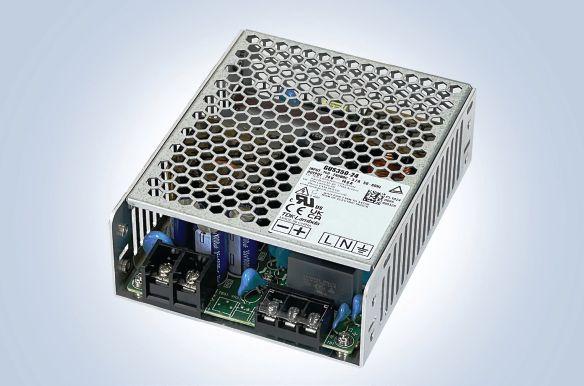
GUS350 series of compact, single output general-purpose power supplies are rated at 350W with 12, 24, 36 and 48V outputs. The convection-cooled unit is available with output voltage adjustment
function, remote on-off, and DIN-rail mounting bracket options. Product series provides a higher grade of construction without impacting cost. Models measure 101.6 x 41 x 127mm (W x H x D) and have an operating temperature from -20 to +70°C, with a 3-year warranty.
https://product.tdk.com/en/ power/gus
CHIP FERRITE BEADS DELIVER WIDE BAND NOISE SUPPRESSION
MURATA
BLM15VM series of automotive-compliant chip ferrite beads deliver wide-band noise suppression of high-frequency (5.9GHz) 5G vehicle-to-everything (5G-V2X) applications that exhibit high impedance. Even at 5.9GHz, the chip ferrite beads within the series will typically attain impedance values of 1000 . Device improves reception sensitivity in V2X communication in the 5.9GHz bands for autonomous driving and stable operation of dedicated short-range communication (DSRC) based control systems, operating in the 5.8GHz band, for improved road safety.
3-PHASE FREQUENCY CONVERTERS DELIVER 1KVA SINE WAVE OUTPUT VOLTAGE
ABSOPULSE ELECTRONICS
FTP 1K-F7W series frequency converters use microprocessor controlled high frequency pulse width modulation (PWM) technology to convert an ac-input of 115Vac or 230Vac and frequency of 47…410Hz to the required 3-phase ac-output voltage and frequency. Converters also accept a universal ac-input of 95-264Vac. Standard ac-output options include 208Vrms (L-L) 3-phase continuous at 60Hz or 400Hz, or 380Vrms or 400Vrms (L-L) 3-phase continuous at 50Hz or 60Hz. Phase-to-neutral voltages
115Vrms, 220Vrms or 240Vrms are also possible.
https://absopulse.com/
CABLE ASSEMBLIES RESIDE UNDER IC COOLING HARDWARE SAMTEC
Si-Fly LP low-profile cable assemblies provide low 4.35mm mated height allowing side-to-side, front-to-back or belly-to-belly pcb mounting near the IC package, with secure placement under heat sinks or other cooling hardware where z-axis height is limited. Cable assembly provides 112Gbps PAM4 channel rate in a 2-row, 16-pair design with aggregate data rates of 896Gbps (x8 bi-directional) or 1.79 Tbps (x16 uni-directional) and is PCIe 6.0/CXL 3.2 capable. Routing signals from the chip through high-density, high-performance Flyover cable reduces thermal challenges, simplifies board layout.
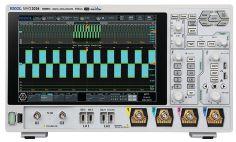
MHO2000 series four-channel high-resolution mixed signal digital oscilloscopes, based on the Centaurus platform, provides 12-bit resolution (up to 16-bit in high-res mode), bandwidths up to 350MHz, 4 analog channels and 16 digital channels for debugging with an optional probe. 200MHz MHO2024 and the 350MHz MHO2034 oscilloscopes are designed with 2GSa/s sampling rate all channels at 12-bit vertical resolution, with a waveform capture rate of up to 1,000,000 wfms/s.
https://eu.rigol.com/eu/ products/detail/MHO2000
SOLAR MIDGET FUSE HOLDERS SERVE PV SYSTEMS
EMX ENTERPRISES
Keystone Electronics series of pcb & SMT mounted fuse holders are intended specifically for photovoltaic (PV) systems. Devices are exclusively designed to accommodate Solar (SPF) 5AG Midget Fuses (10x38mm). Rated for up to 30 Amps, 500Vdc, the holders, in conjunction with the SPF fuses, are a cost-effective solution to safely protect PV modules and their conductors from reverse overcurrent conditions. An optional holder cover (Catalog #3576C) is also offered.
https://www.emx.ca/
SERDES COMPLIANCE TEST SOFTWARE ENABLES DEPLOYMENT OF AUTONOMOUS VEHICLE TECH
TELEDYNE LECROY
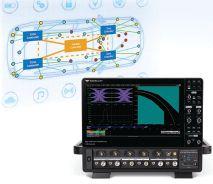
QPHY2-ASA compliance test software for the Automotive Serdes Alliance (ASA) Motion Link (ML) v1.1 specification –one of several new automotive serializer/deserializer (SerDes) in-vehicle network standards targeted at the data transfer needs of highly autonomous vehicles. Benefiting from firm’s extensive and early ASA ML standards committee and plugfest involvement, the compliance test software anticipates testing requirements based on what ASA member companies are in the process of finalizing and is available early in the ASA ML v1.1 adoption curve. https://www.teledynelecroy.com/qualiphy-compliance
HYPER LOW CABLE SERVES 224 GBPS PAM4 SYSTEMS
SAMTEC
Eye Speed Hyper Low
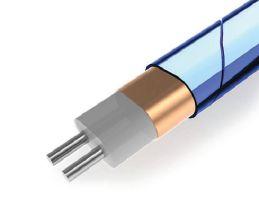
Skew Twinax cable is optimized for 224Gbps PAM4 applications. Product is currently available in 32 AWG for inside-the-box cable solutions, with 27 AWG in development for longer reach cabled backplane systems. Skew is a major design concern for 224 Gbps PAM4, manifesting as delay differences within a differential pair (due to physical and electrical construction in the channel). Tightly coupled, twinax cable is co-extruded with drainless shield construction, providing improved skew performance (as well as impedance and insertion loss stability) even under realistic bending conditions.
https://www.samtec.com/solutions/eyespeed/
PNEUMATIC LID FOR ADJUSTABLE CONTROL OF SOCKET FORCE
IRONWOOD ELECTRONICS
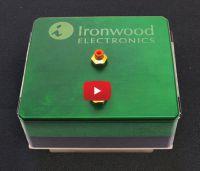
Pnuematic lids are a new option for controlling socket contact force. Improved option for maintaining reliable force for applications in temperature cycling, high contact force and/or
for sensitive devices. The option is available for any new custom or existing sockets.
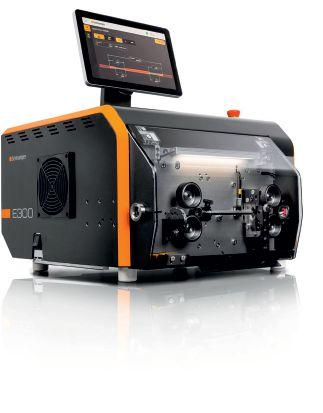
Experience unparalleled reliability and ease of use with the high-performance E300. Designed to handle a variety of wires, cables, and insulation materials with precision, the E300 ensures top-quality results. Seamlessly integrate the E300 with a wide range of peripherals to create an automatic processing line, boosting efficiency and performance.
Processes conductor cross sections from 0.05 to 10 mm² (36 to 8 AWG)
Intuitive interface simplifies job creation and setup
Two-in-one quick-change feeding unit, including a short piece kit for processing short cables
Wire Solutions for a Connected World
DISTRIBUTION
DIGIKEY UNVEILS PRIVATE-LABELED PRODUCT LINE
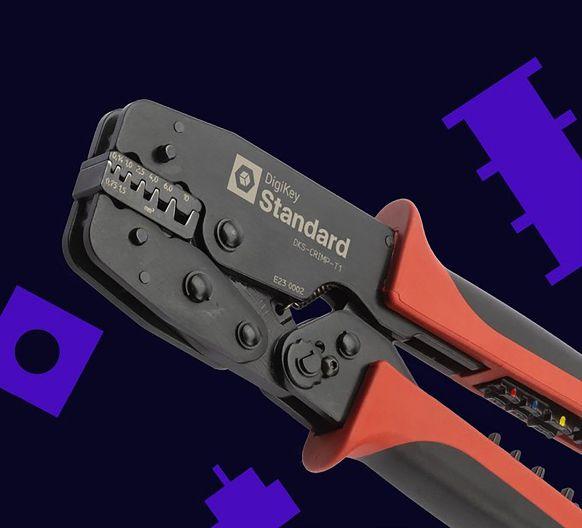
DigiKey has rolled-out an exclusive, private-labeled product line, DigiKey Standard, that features quality engineering products designed to deliver dependable solutions and tools for everyday designing and building needs.
DigiKey Standard is a curated portfolio of essential products engineers have come to expect from the DigiKey brand. After launching the first product in 2022, the portfolio now consists of a range of workbench staples, from kits and soldering stations to power solutions and precision tools. The products are handpicked to support electrical engineering and manufacturing projects of all sizes.
“With DigiKey Standard, we’ve thoughtfully built a product portfolio that supports the everyday efforts and innovation of engineers, designers and makers,” said Missy Hall, vice president of new market development at DigiKey. “This launch reflects our long-standing commitment to provide the electrical engineering industry with the top components and tools from a brand they know and trust.”
MANUFACTURING
KAYNES TECHNOLOGY ACQUIRES AUGUST ELECTRONICS
August Electronics Inc., a Calgary-based provider of end-to-end electronics manufacturing services, has been acquired by Kaynes Canada Limited, a wholly owned stepdown subsidiary of Kaynes Technology India Ltd., a leading Electronics System Design & Manufacturing (ESDM) company headquartered in India.
This acquisition marks a new chapter for August Electronics, as it is now positioned as a globally connected electronics company headquartered in Canada — with expanded capabilities and reach to support customers at every stage. As part of the transition, co-founders Jack Francis (president) and Peter Wilson will step away from their roles. Tanya Korenda will remain in her leadership position, ensuring continuity
and stability as the company enters this exciting new chapter. August Electronics will continue to operate with its existing team, structure, and the same strong commitment to quality, partnership, and customer service.
“There is a tremendous alignment between August and Kaynes in terms of culture, capabilities, and customer focus,” said Tanya Korenda, CEO of August Electronics. “We are extremely excited about this opportunity to join forces and leverage the global scale, engineering strength, and complementary capabilities that Kaynes brings.”
BAILEY ELECTRONICS BREAKS GROUND ON BC FACILITY
Bailey International’s electronics division, formerly known as Sure Grip Controls, a provider of custom control solutions, has broken ground on its new facility in Victoria, B.C.The project aims to bring the division’s operations under one roof, a move expected to improve efficiency and foster innovation in the heavy equipment industry. The new facility is scheduled for completion by December 2026.
“This groundbreaking marks an exciting chapter for Bailey,” said Darren Lockyer, vice president of Bailey’s electronics division. “This new facility represents our vision for the future. By ultimately uniting our teams under one roof, we will be better positioned to develop the customized control solutions our customers rely on.”
Bailey Electronics designs and manufactures custom controls for heavy equipment in agriculture, construction, forestry and transportation. The company uses lean manufacturing methods and emphasizes engineering to meet industry safety and performance standards.
ANNIVERSARY WEIDMÜLLER CELEBRATES 50 YEARS IN CANADA
The year 2025 is significant for Weidmüller as the
German-based manufacturer of industrial connectivity and automation solutions celebrates 50 years of operations in Canada – as well as its 175th global anniversary.
Weidmuller Canada’s journey began in 1975, as Weidmuller Terminations Ltd., operating from a modest, warehouse-style office.
The company initially focused on supplying the renowned SAK Series Terminal Blocks and DIN Rail, laying the groundwork for a legacy of reliability and innovation. A major milestone came on May 12, 1986, with the ground-breaking ceremony at 10 Spy Court, Markham, a site that proudly remains Canadian headquarters to this day.
TEST
ACA TMETRIX PARTNERS WITH TELEDYNE LECROY
ACA TMetrix Inc., Toronto-based distributor of test and measurement instruments and design tools in Canada, inked a new partnership with Teledyne LeCroy, global provider of oscilloscopes, protocol analyzers and related test solutions. Under this collaboration, ACA TMetrix Inc. will distribute Teledyne LeCroy’s vast products’ portfolio—including oscilloscopes, waveform generators, multimeters, and more—to customers throughout Canada.
“We are excited to partner with Teledyne LeCroy and bring their market-leading test and measurement solutions to Canadian engineers and innovators,” said Patrick Leung, Vice President & General Manager at ACA TMetrix Inc. “This partnership aligns perfectly with our mission to provide cutting-edge tools and expert support.”
PRODUCT SOURCE GUIDE
DEVELOPMENT BOARDS
Dev kit’s versatile boards and 16 transformer samples deliver design flexibility for industrial, medical projects
VENDOR: WÜRTH ELEKTRONIK
SN6507 DEVELOPMENT KIT
SN6507 Development Kit
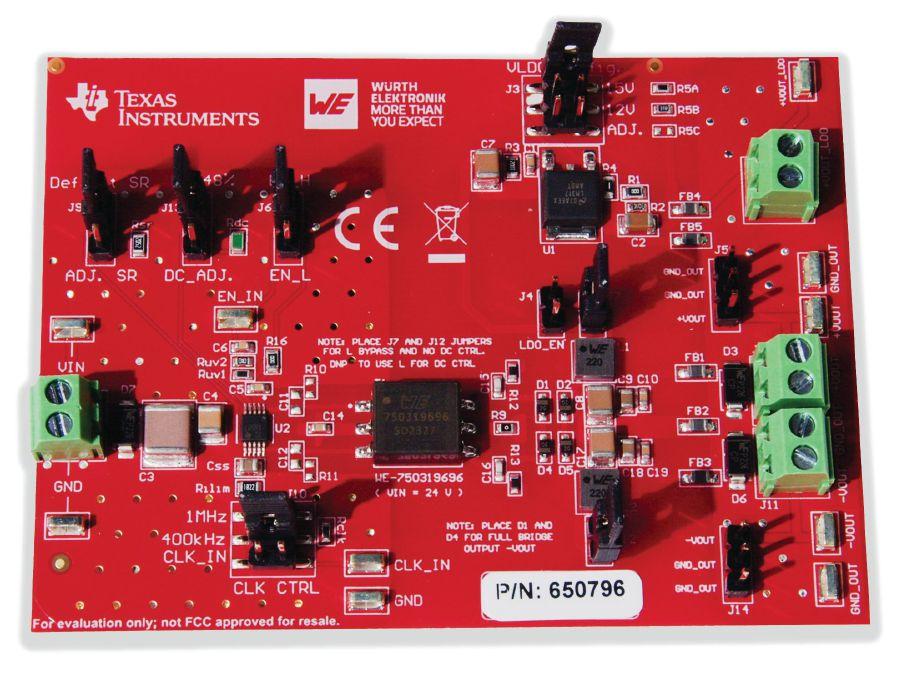
[756507], featuring the Texas Instruments (TI) SN6507EVM, is designed to help engineers evaluate the performance of TI’s SN6507 transformer driver for isolated power supplies, featuring Würth Elektronik’s WE-PPTI transformer line.
The development kit includes two versatile boards and 16 transformer samples, offering design flexibility for various industrial and medical applications.
What’s included
This comprehensive solution is equipped with a fixed board [650796] offering 24Vin-15Vout configuration, optimized with the WE-PPTI transformer [750319696] for a streamlined design.
The Dev Kit also includes a configurable board [650700] which enables engineers to evaluate different transformers and specifications to meet diverse application needs. As well, the SN6507 kit includes 16 transformer samples, which provide flexibility and customization options during development.
Applications
This kit is tailored for applications such as motor drives, isolated power supplies for communication protocols (CAN, RS-485, RS-422, RS-232, SPI, I2C), medical instruments, solar inverters, and automation systems. With full EMI compliance to CISPR32 standards, the boards deliver optimal performance in demanding industrial and medical environments, ensuring reliability and efficiency.
The fixed and configurable designs allow engineers to adapt and innovate for a wide range of use cases, making the kit an essential tool for design and testing.
Engineers and developers can take advantage of this all-in-one solution to simplify their evaluation processes and accelerate their project timelines.
and medical
This kit is tailored for such applications as motor drives, isolated power supplies for communication protocols, medical instruments, solar inverters and automation systems.
The dev kit includes two versatile boards and 16 transformer samples, offering design flexibility for various industrial
applications.
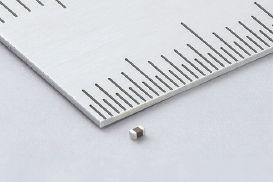
With a maximum height of just 0.28 mm, our new 0201HT Series is the industry’s lowest-profile wirewound chip inductor, also featuring a tiny 0.58 x 0.46 mm footprint. It offers up to 70 % higher Q and lower DCR than similarly-sized thin-film chip inductors and is optimized for high frequency impedance matching in applications such as cell phones, wearable devices,
WiFi, Bluetooth, GPS and LTE/5G IoT networks.
The 0201HT provides SRF as high as 36 GHz and is available in 14 inductance values from 0.5 to 13 nH.
Find out why this tiny part stands so tall. Download the datasheet and order your free samples today at www.coilcraft.com.