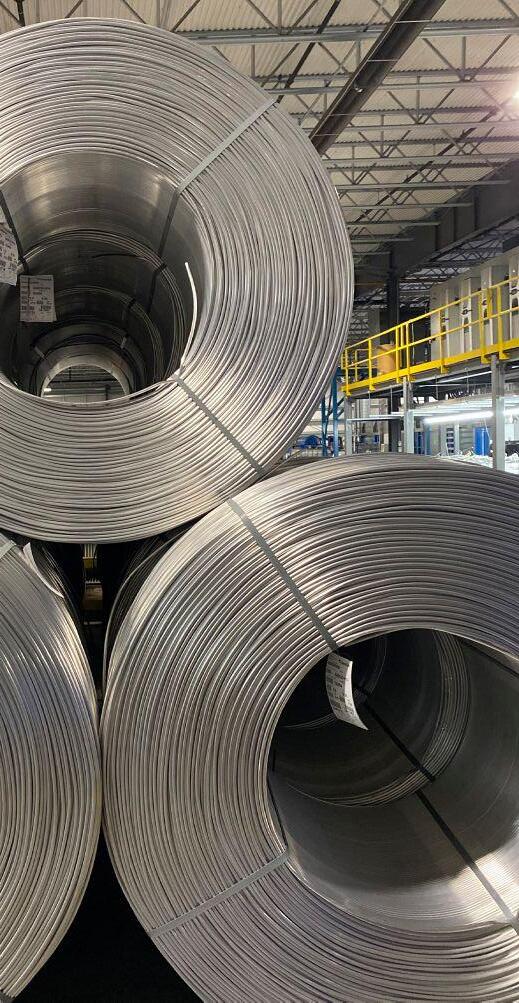
This 8000 series conductor-grade aluminum rod (99.5% pure aluminum, 0.5% alloy) was produced in Canada with clean hydroelectricity. Once drawn into various input wire sizes, it will be stranded into different conductor types.
ductivity as its copper equivalent. What is overlooked by IACS is that, because aluminum is 1/3 the density of copper, the larger aluminum volume weighs only half as much as its copper equivalent! There are different ways of looking at metals’ conductivity. In 1900, before the volume conductivity standard for copper was created, Nikola Tesla recognized that the combination of aluminum’s high conductivity and light weight would result in an electrical conductor that was su-
perior to copper (Telluride Daily Journal, November 5, 1900).
So why didn’t aluminum become “The Metal of Electrification”?
Tesla’s pronouncements in 1900 were based solely upon fundamental material properties— not availability. In those early years, thousands of tons of copper were readily available, whereas only insignificant amounts of aluminum (ounces and pounds) existed in the market.
Quite simply, only copper was available in sufficient quantities to construct our electrical systems at the time electrification was occurring.
Looking at the molecular level
Atomic structure is helpful when explaining weight’s role in electrical conductivity. Valence electrons—those in the outermost orbit of an atom—provide electrical conductivity. Protons and neutrons, which weigh thousands of times more than electrons, have absolutely no role in conductivity. They just add weight.
Copper has one valence electron while aluminum has three valence electrons. However, copper also boasts 29 protons as compared to aluminum’s 13, and 35 neutrons compared to aluminum’s 14. Copper is the heavier atom.
The volume conductivity standard needs to be updated to account for weight; only then can it present a clear picture of copper’s and aluminum’s respective conductivities. A new standard incorporating both weight and volume could, for historical continuity, retain copper’s conductivity at 100%. However, because aluminum weighs only half as much as its copper equivalent, its weight conductivity is 200%.
Value proposition
At the time of writing, the price of copper was around $4.00/ lb while aluminum came in at
around $1.00/lb, which means $1-worth of aluminum can provide the electrical conductance of $8-worth of copper.
As a conductivity standard, IACS is sorely outdated, as it misleads users into thinking aluminum is not as good of an electrical conductor as copper. When you consider weight, the reality is just the opposite: conductivity per pound (200%) and conductivity per dollar (800%) are hidden by the omission of weight in the International Annealed Copper Standard.
It is important to note that the price of metals varies daily with global supply and demand. The physical properties of metals are constant, however, defined by their atomic structures.
Many people fall into the trap of thinking “If you pay less, you get less”, but the opposite is true when it comes to aluminum conductivity.
According to the International Energy Forum (January 2024):
The energy transition is expected to drive up demand for copper dramatically in the coming years. Demand could double to 50 million metric tonnes by 2035 [...] This would be no cause for concern, except S&P Global also predict that copper supply will be unable to keep up with demand from as early as 2025.
A revised International Annealed Copper Standard that encompasses both volume and weight conductivities could help to avoid projected copper shortages.
As we embark upon this latest surge in the electrification of everything, we’re going to need a lot of conductors. We can ill afford to be misguided by an outdated standard that hides electrical capability and value by omitting weight considerations.
Peter Pollak is retired from the Aluminum Association Inc., where he was responsible for Product Standards and Electrical Services activities for nearly 35 years.
THE ESTIMATOR
JOHN F. WIESEL AND JOHN M. WIESEL
How does your business “measure up”?
How do your estimates “measure up”? When the final numbers roll in, do you find yourself coming up short more often than not? Maybe a bit over?
Just as you count and measure everything in your takeoffs, you should also take measure of your electrical contracting business and its capabilities (and future possibilities!) before you commit to submitting a bid for work.
What do we mean by this? Before you count a single device or measure any cable run, you should assess the likelihood of actually winning the work. Then, if you do, consider whether this success aligns with your business and its goals.
So despite being rushed to get a quote out the door, take a few moments to consider things like:
• Is this an existing client with whom you have a great relationship, or an unknown prospect with whom a working relationship might be the result?
• Is the work located in your current market, involving the type of construction with which you are familiar, or are you trying to break into something (or some place) new?
• Are all the specified products available through your distribution and vendor network? If not, will you be able to get reliable pricing elsewhere, and is there a risk of your quote being disqualified?
Whenever you quote a job in your current market that involves familiar work for a stable client—using your trusted distribution and vendor network—the odds of you winning the work are substantially increased.
However, those odds start stacking against you when you step away from predictable work and geography, start using untested suppliers, and navigate a prospect with whom you’ve not had any dealings.
Also consider the number of bidders; the more bidders, the less likely you are to get the project, especially when one or more of your competitors are already “locked in” with the general or project owner.
We are by no means suggesting that you shouldn’t try to win that work. While fraught with a host of unknowns, new kinds of work for new clients could lead to exciting opportunities, expansion into new markets, a whole new network of trusted suppliers, increased purchasing power, and so on.
But simply spitting out as many bids as possible does not necessarily lead to lots of work and piles of cash!
So before you sharpen your pencil or jump into your estimating software, take a little time to get your business’s measure. Where are you strong, and where are you weak? Where is your business now, and where do you want to take it?
Your final estimate, then, is the culmination of all of these considerations and, whatever your answer, it’s the right one... because it’s your business, and you decide its destiny.
John F. Wiesel is the president of Suderman Estimating Systems Inc., and has been estimating and teaching estimating since the early 1980s. John M. Wiesel is a Red Seal construction electrician, spending over 20 years in industry before joining Suderman as a principal.
CALENDAR
EDIST
Electricity Distributors Association
January 14-16, Markham, Ont. eda-on.ca/events/edist
EHRC Awards of Excellence
Electricity Human Resources Canada
February 20, Toronto ehrc.ca
Electrical Safety Workshop
IEEE Industry Applications Society
March 3-7, Jacksonville, Fla. electricalsafetyworkshop.com
Work Truck Week
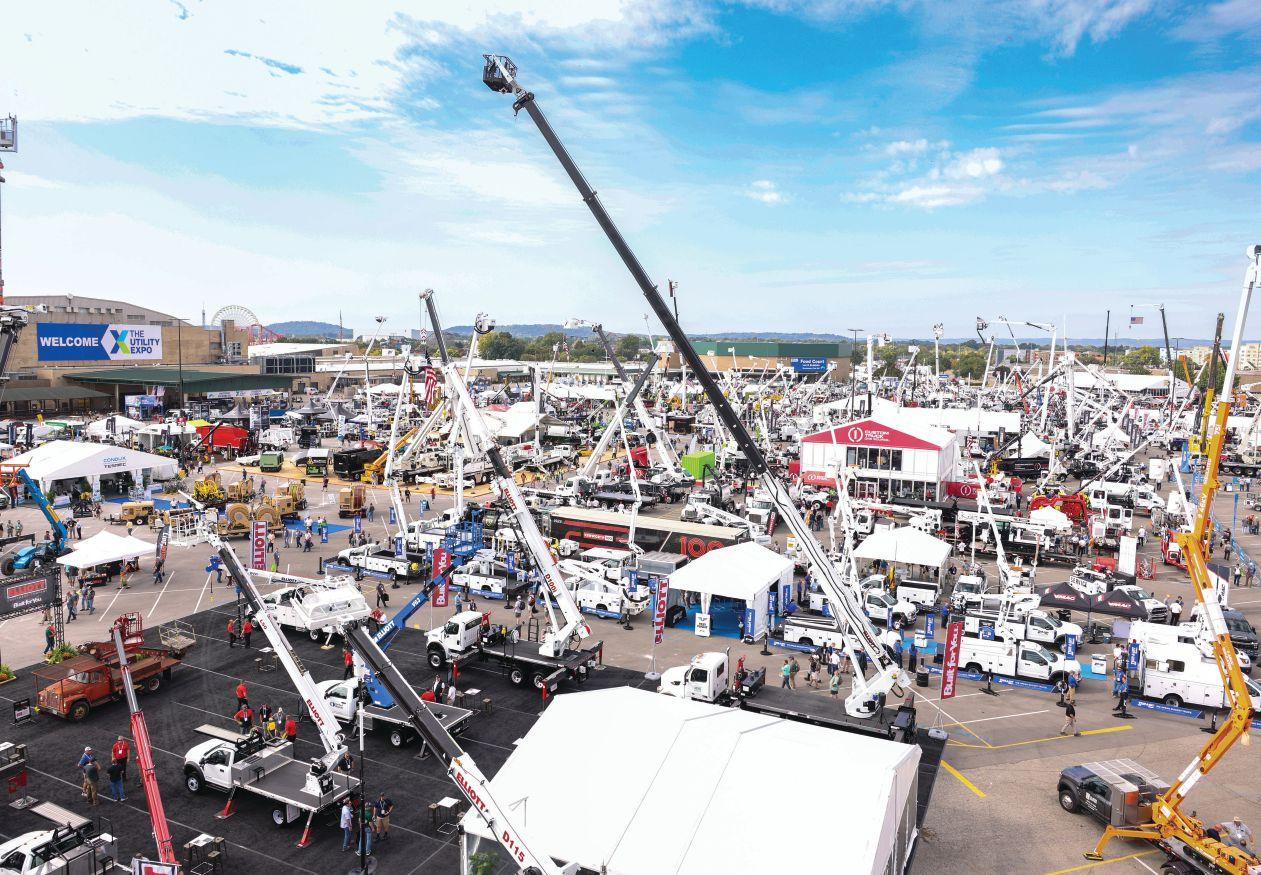
March 4-7, Indianapolis, Ind. worktruckweek.com
LEDucation Tradeshow
Designers Lighting Forum of New York
March 18-19, New York, N.Y. leducation.org
MCEE
April 24-25, Montreal mcee.ca
LightFair
May 4-8, Las Vegas lightfair.us.messefrankfurt.com
ECAA Annual Conference
Electrical Contractors Assoc. Alberta
May 22-25, Edmonton ecaa.ab.ca
EFC Annual Industry Conference
Electro-Federation Canada
May 27-29, Niagara Falls, Ont. electrofed.com
EASA Convention & Solutions Expo
Electrical Apparatus Service Association
July 19-22, Nashville, Tenn. easa.com/convention
ECAO Annual Industry Conference
Electrical Contractors Assoc. Ontario
September 12-15, Chicago, Ill. ecao.org
Got an event to share? Email the editor at acapkun@ebmag.com. Meantime, scroll through Electrical Business Magazine’s online industry calendar at ebmag.com/events for direct links to these events (and others).
Source: BC Electrical Association
BC Electrical Association has appointed Will Davis as its new president & CEO, replacing outgoing leader Barbette Igonia, who is retiring after a career with BCEA spanning over 30 years. Davis has decades of experience in executive business ownership, says BCEA, and will bring “a structured approach to developing strategic plans and leading teams to achieve optimal results [...]”
Source: File photo
Jennifer Eastman has joined AD Electrical (Canada) as director, Member Engagement. With over 35 years of experience in electrical manufacturing and distribution, she has worked for companies such as Legrand Wattstopper, Philips/Signify Lighting, RC Lighting, and CSC Lighting.
MILESTONE 20 YEARS
Source: Supplied
Anthony Capkun • Electrical Business Magazine
Annex Business Media extends a heartfelt congratulations to Anthony, who started as editor of this magazine on September 4, 2004. He has witnessed a lot of transformation in the Electrical sector in those years, and can’t wait to see what comes next!
Source: CNW Group/Electrical Safety Authority
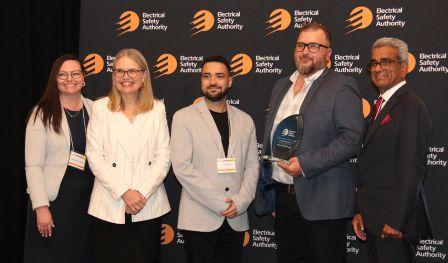
Arjan Arenja is the new chair of the board of Ontario’s Electrical Safety Authority, succeeding Christopher Hopper—the first licensed electrical contractor to serve as chair. Jeff Scott, vice-president at Smith and Long, joined the board to represent the Licensed Electrical Contractor community. He is a Red Seal 309A Construction and Maintenance Electrician, and has contributed to various industry boards and committees. Christopher Fluit, senior vice-president and general manager at Eaton Canada, joined the ESA board to represent the manufacturing industry. Cara Clairman, Plug ’n Drive president and CEO, joined the board as consumer representative.
CHILDREN’S VILLAGES, DEFECT CORRECTIONS, Road Safety and more at Ontario Electrical Safety Awards
BY ANTHONY CAPKUN
While Ontario’s Electrical Safety Authority’s annual meeting in September could be appreciated for its fiscal year updates and annual report from the public safety officer, let’s be honest... the excitement revolved around meeting the honorees of ESA’s 2024 Ontario Electrical Safety Awards. Congratulations to these safety champs!
PUC Services Inc. is recognized under the Worker Safety category (2024).
Worker Safety
PUC Services Inc. was recognized for its commitment to educating distracted drivers about the importance of staying cautious near road work zones to ensure the safety of workers. PUC’s Road Safety Video Campaign is a series of personalized videos that share stories and messages from road workers to highlight real dangers, underscoring the need for driver attentiveness. The campaign features messages from the City of Sault Ste. Marie, the local construction association, and first responders.
Sarah McLeod, vicepresident, People, Culture & Brand, accepts the award on behalf of PUC Services Inc.
Powerline Safety
Bluewater Power, Hydro One, and London Hydro were collectively recognized for successfully transporting enormous beer tanks—each over 33 metres long and 6.62 metres wide—from Sarnia Harbour to the Labatt Brewery in London.
This project employed best practices to safely hoist, cut and reconnect powerlines, minimizing power disruptions along the route, and keeping the public in affected areas well-informed.
(This project was also recognized with a Public Relations Excellence Award from Electricity Distributors Association earlier this year.)
Allan Van Damme, vice-president, Engineering & Construction, accepts the award on behalf of London Hydro.
Eden Ratcliffe, superintendent, Distribution Lines, accepts the award on behalf of Hydro One.
Photos:
A. Capkun
Bluewater Power, Hydro One, and London Hydro are recognized under the Powerline Safety category (2024).
Public Safety Officer
Special Recognition Award
Ottawa Community Housing was recognized for its commitment to improving workplace safety and creating electrically safe spaces for over 32,000 tenants. In 2023, it achieved zero open defects on two separate occasions, reduced the average defect correction time from 240.9 days to 12.4 days, and lowered the monthly defect count from 10,000 to fewer than 100. The organization achieved this by incorporating an ESA inspection program through the Continuous Safety Services program into its annual home assessments.
Consumer & Home Safety
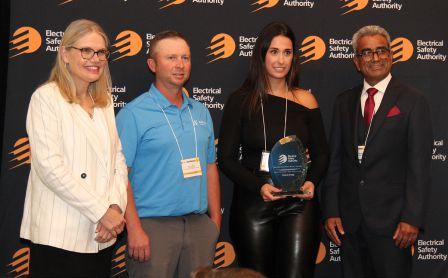
Elexicon Energy was recognized for its contributions to the Children’s Safety Village of Durham Region and in Belleville. Elexicon donates electrical equipment, conducts informative sessions, and provides financial support to both villages. Through this initiative, the utility helps children explore electrical equipment in a safe environment, and learn about powerline and home electrical safety.
Ottawa Community Housing receives ESA public safety officer’s Special Recognition Award (2024).
Mellon
Licensed Electrical Contractor Recognition
Elexicon Energy is recognized under the Consumer & Home Safety category (2024).
Mellon Inc. was recognized for its commitment to employee safety and well-being. In addition to continuous safety training and educational initiatives, it promotes a strong safety culture through a robust incident reporting system, well-defined safety policies, strong mentorship, and field-based coaching. Mellon has also recently started promoting psychological safety as a foundational aspect of work.
(Mellon Inc. was recognized with an R. Hugh Carroll Safety Award from Electrical Contractors Association of Ontario back in June.)
Established in 2010, ESA’s annual safety awards recognize “exemplary electrical safety leadership” in the Province of Ontario.
As an administrative authority acting on behalf of the Government of Ontario, ESA is responsible for administering specific regulations related to the Ontario Electrical Safety Code, the licensing of electrical contractors and master electricians, electricity distribution system safety, and electrical product safety.
Jeff Lavelle, field supervisor, Health and Safety, accepts the award on behalf of Elexicon Energy.
Robert Sokolowski, manager, Preventative Maintenance and Programs, accepts the award on behalf of Ottawa Community Housing.
Inc. receives ESA’s Licensed Electrical Contractor Recognition (2024).
Pat Robb, staff engineer, accepts the award on behalf of Mellon Inc.
CLASSIFICATION FOR LESSER-KNOWN HAZARDOUS AREAS
Sawmills, distilleries, cannabis... all require special attention
BY ALLAN BOZEK, P.ENG.
When we think about Area Classification, our minds automatically turn to thoughts of massive oil & gas facilities, maybe a mining operation, etc. But hazardous locations are more prevalent than you may think... just consider the last time you filled up at a gas station!
Because it is so essential, hazardous area classification is rarely overlooked in something like a modern petrochemical facility. But the picture is quite different when we get into some smaller industrial operations where, because a hazardous location may constitute such a small portion of the overall process, area classification is regularly overlooked.
The need for classification
You need to have three things to create fire or combustion: oxygen (or oxidizing agent), a fuel source, and heat (ignition source). In the context of hazardous area classification, we’re focused on the fuel part of the triangle, trying to determine whether a hazard exists. This could come in the form of a flammable gas, combustible dust, ignitable fiber, and so on.
From this information we can determine the appropriate equipment certifications and wiring methods for the application (all of which is covered in the Canadian Electrical Code-Part I,
Section 18). With this knowledge, people can also define safe work practices for that particular area. We are obligated by code (and, therefore, by law) to provide a classification design for facilities that contain any of these hazards. When we fail to do so, the results can be catastrophic.
Explosive dust hazards are real
When it comes to the “fire triangle” above and combustible dust applications, you also need dispersion and confinement to create an explosion, which is just what we saw in January 2012 at the Babine Forest Products sawmill in Burns Lake, B.C.
A large fireball burst through the roof at the northeast side of the mill, while the explosion travelled east-to-west through the operating and basement levels. Fire spread throughout the premises, completely destroying the mill. Two workers were killed in the explosion and 20 others were injured (some quite severely).
The resulting investigation found that wood dust in the air and accumulations of wood dust on elevated surfaces were of sufficient concentration to explode (dispersion). Ignition occurred when wood dust from beneath a conveyor migrated into the confined area within the motor-reducer V-belt guard (confine-
Hazardous locations are covered in Section 18 of the Canadian Electrical Code
ment). The dust was compacted and subjected to near-constant friction from the rotating belts and sheaves. It caught fire and ignited the airborne wood dust that was prevalent throughout the area.
The subsequent investigation cited numerous underlying factors that led to this tragedy:
• Ineffective wood dust control measures.
• Ineffective inspection and maintenance system.
• An environment that was dry with low humidity. This condition was exacerbated by very dry beetle-killed wood, which contributed to very dry, fine combustible dust migrating throughout the facility.
• Inadequate supervision of clean-up and maintenance staff. Accumulations of
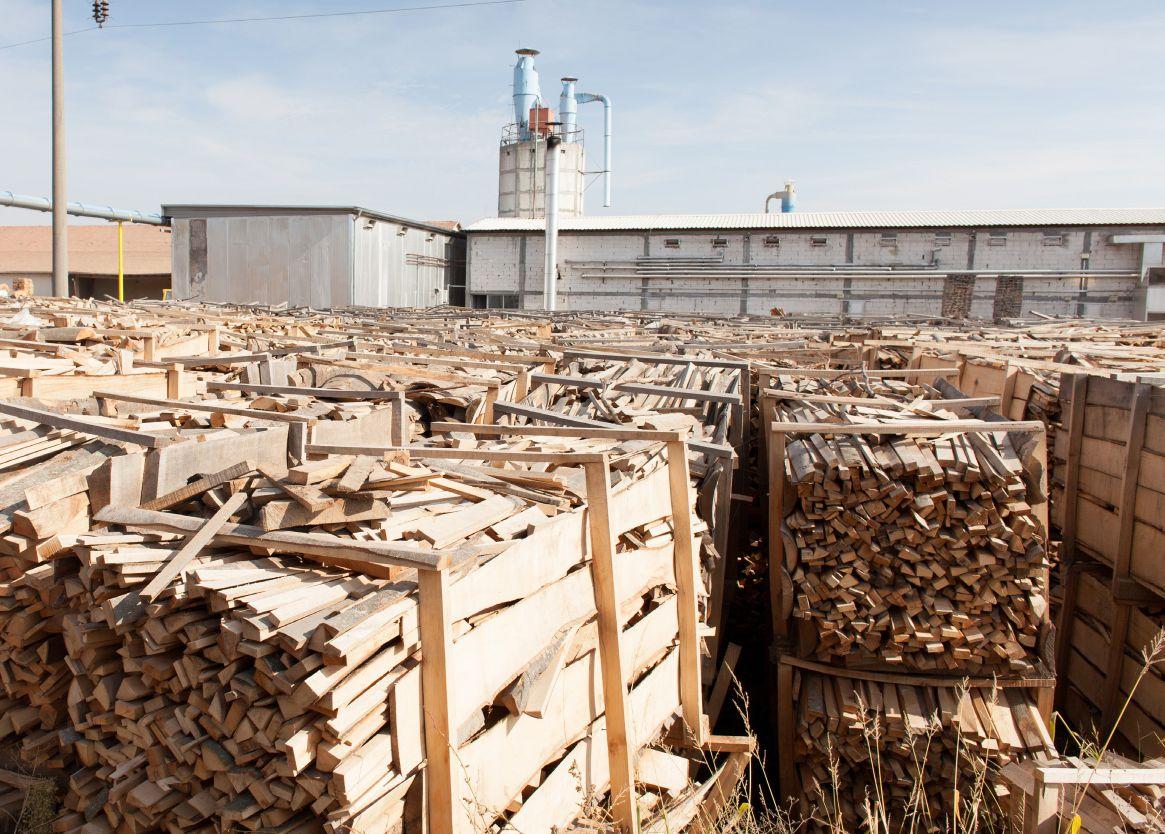
Dry dispersed fuel, poor housekeeping, and confinement all contributed to sawmill explosions in Burns Lake and Prince George.
OF SAWMILL USED FOR ILLUSTRATIVE PURPOSES
wood waste before the explosion, and the poor condition of some of the electrical equipment inspected after the incident, indicate that supervisors were not effectively or adequately monitoring the work that was being done.
Just a few months later, at the Lakeland Mills sawmill in Prince George, B.C., a near-perfect replica of the Burns Lake incident occurred. In that event, over 20 workers were injured, two of which died as a result of their injuries.
The culprit, again, was combustible wood dust. And, again, the resulting investigation uncovered ineffective dust control measures, problems with waste conveyor configurations, and inadequate supervision of clean-up and maintenance staff.
Both cases highlight how proper hazardous area classification would have helped define safe work practices for clean-up and maintenance staff. Had the dust been properly mitigated through inspection and cleaning, the fuel part of the triangle would have disappeared, and the events themselves likely would never have occurred.
Please pass the sugar... no, don’t!
You may be surprised to learn that food processing facilities are not immune to combustible dust hazards. A particularly horrific tragedy occurred at the
Sugar refinery in Port Wentworth, Ga., in February 2008.
In that event, a series of sugar dust explosions occurred, with the first occurring in the conveyor belt located beneath the sugar silos. The facility had recently enclosed the conveyor belt for operational reasons, but this then allowed dust to accumulate within the enclosed space, thereby creating an explosive atmosphere. An unknown source ignited the sugar dust, which caused an explosion that propagated throughout the facility, resulting in multiple secondary dust explosions.
Tragically, the event caused 14 deaths and injury to 38 others (including 14 with serious and life-threatening burns).
Like the sawmills above, this facility did not pay a whole lot of attention to good housekeeping. Recommendations from various expert bodies following the incident hone in on incorporating combustible dust hazard awareness into employee and company training programs.
For its part, Imperial Sugar Company turned to NFPA standards to improve the next facility, including (among others) NFPA 499 “Recommended practice for the classification of combustible dusts and hazardous (classified) locations for electrical installations in chemical process areas”, NFPA Handbook “Electrical installations in hazardous
Imperial
PHOTO
locations”, and NFPA 70 Article 500 “Hazardous (classified) locations”.
This event was so catastrophic that the Occupational Safety and Health Administration began clamping down on facilities in which combustible dusts were involved. It also prompted an education program for industry.
Housekeeping to the rescue
When dealing with combustible dust hazards, the first line of defence is a good housekeeping policy that is followed. For the most part, this policy will have a huge impact on the area classification design for the equipment in a food processing facility. With a clean, well-maintained environment, it is very possible that the majority of your equipment can be designated non-hazardous— from a certification perspective. However, when combustible dusts are present and allowed to accumulate on surfaces—especially elevated surfaces—it changes the area classification, and drives you toward equipment that needs to be certified for the location.
When dealing with combustible dust hazards, the first line of defence is a good housekeeping policy that is followed.
Not just about dusts
In all cases, the design of a food production facility has to be coordinated with the classification design.
We know that alcohol is flammable (fuel), and distilleries themselves can be viewed as smallscale refineries. We want to keep those facilities and their workers safe from harm. When a distillery worker opens a vessel, there could be a release of flammable material. And, if there’s an ignition source
in the area, we could be looking at an explosion or fire.
In my experience, these kinds of situations are too often overlooked. The distillery owner goes ahead and purchases basic equipment, not realizing they’re dealing with a hazardous location. Then they discover the equipment they purchased is wrong for the classified area—a very expensive oversight!
Consider microbreweries: again, how many of them incorporate area classification in the design? The owners construct the brewery, have all of the equipment installed, and then the electrical inspector comes along and asks for their classification documents. And they will not get the connection permit until the inspector is satisfied the hazards have been addressed.
Doobie doobie doo
Now here’s a brand new industry that’s had some hazardous location-related incidents: cannabis processing.
You may be thinking: how can there be a hazardous area classification that relates to cannabis? Well, a lot of these cannabis processors are extracting THC or CBD oils from the marijuana plant, and they use flammable solvents to extract these chemicals. From there, the oils are further distilled and refined. These facilities are starting to sound a lot like the distillery
example above.
And because this is such a new industry, there are a lot of new players involved who likely don’t understand the hazards involved. Not surprisingly, we’ve had incidents.
An explosion in Santa Fe, Az., left two workers in critical condition. It was actually the second explosion causing injury at the same plant in the last five years. The explosion occurred in the immediate vicinity of the company’s chemical extraction equipment.
What makes these cannabis facilities particularly interesting from an area classification standpoint is that they go from a laboratory-type environment (which is a unique classification unto itself) to a production environment, as in the examples above, but without changing the equipment.
So they may scale-up their lab equipment for production, but that may not be suitable for production operations. The last thing you want is a whole bunch of glass containers in production where you would normally use, say, stainless steel, which is more robust and better at containing flammable materials.
Integrated design approach
As soon as you have a certain activities within a classified area, they trigger a number of occupational health and safety considerations.
PHOTO OF SUGAR REFINERY USED FOR ILLUSTRATIVE PURPOSES
Something as important as area classification cannot be done in a silo, as it involves numerous other disciplines that are typically outside the realm of Electrical. For example, the actual process of classification design has nothing to do with electricity and everything to do with chemical processes, mechanical containment, ventilation, etc.
Once completed, that area classification becomes a very important document. Engineers will use this information when purchasing equipment, but also to determine how to design the space in which that equipment will be situated, and its positioning within the space. The equipment supplier needs this information because it will impact the components they use.
Of course, electricians need this information to determine the appropriate wiring methods. For
EXTRACTION USED FOR ILLUSTRATIVE PURPOSES. SOURCE: QUALITY STOCK ARTS/ADOBE STOCK
that, we turn to the CE Code-Part I, Section 18, which deals exclusively with hazardous locations. If an installer doesn’t know how an area is classified, it’s going to lead to problems: especially when the inspector comes along and asks for documentation. No documentation? Inspector goes home!
Area classification needs to be done in a sequential fashion to avoid these types of situations.
With respect to area classi-
fication, you need to know the Zone or Division classification, as this directly impacts the type of equipment that’s suitable for the area. You need to know the extent of the area (i.e. where does it start and stop), as this will determine the equipment that needs to be classified versus non-hazardous-rated equipment.
There are other considerations, too, like auto-ignition temperatures but... suffice to say, don’t wait until the last minute. Get everyone involved—the earlier the better!
Allan Bozek, P.Eng., is the general manager and principal instructor at EngWorks, a provider of consulting engineering expertise and training in hazardous locations. He is a registered Professional Engineer in several provinces, and is also a Canadian interprovincially certified journeyman electrician. A recognized expert in the field, Bozek has been involved in developing CSA and IEC standards, and is IECEx COPC-certified for Units Ex 001 and Ex 002 in Hazardous Locations.
PHOTO OF CBD OIL
ELECTRIC VEHICLES
USER SAFETY, DATA INTEGRITY, GRID STABILITY...
Electric vehicle charger security really matters
BY GLYNN BARNARD
As electric vehicles become increasingly mainstream, the infrastructure supporting them— particularly EV chargers—is rapidly expanding. A recent article on charging network growth shows a 33% increase in 12 months (Electric Autonomy Canada).
With this growth comes the need to pay increased attention toward ensuring a secure end-to-end experience for drivers and site hosts alike. Like any connected device, chargers are vulnerable to a range of cyber threats that could compromise user safety, data integrity, and even the broader electricity grid.
Charger security matters
More than just power outlets, EV chargers are sophisticated devices that communicate with vehicles, centralized charging station management systems (CSMSs), and payment processors. As interconnected devices, any vulnerability in the charging ecosystem can be exploited to cause significant harm (NIST Computer Security Resource Center). Their security is crucial for several reasons:
Data protection: Chargers handle sensitive information, such as vehicle identification numbers (VINs), payment details and, in some instances, user credentials and certificates. Protecting this data is essential for preventing fraud and identity theft (International Association of Privacy Professionals).
Vehicle safety: Considering that most automakers provide some level of autonomy in their EV offerings, it isn’t outside the realm of possibility that an attacker could compromise a vehicle and take over its driver-assist features through a compromised EV charger (Manufacturing.net).
Grid stability: Outside of acts of nature, our electrical grid has been highly resilient for many years. But with EVs and the connected charging infrastructure that supports them, IEEE has begun raising the alarm about the risks posed by improperly secured equipment. A coordinated attack on multiple chargers could trigger a catastrophic grid disruption.
User trust: Range anxiety used to be an important impediment to greater EV adoption, but a recent Forbes article points out that cybersecurity could be the next big blocker. Trust in charging infrastructure is critical, and security breaches could undermine confidence in the technology, further slowing down adoption rates and harming the industry’s growth.
Potential security risks
As connected devices that handle sensitive data, there is an inherent risk of attack and compromise when EV chargers are improperly secured (Radware). Some of the potential risks include:
Man-in-the-middle attacks: When communications between the charger, vehicle, and CSMS are intercepted, a hacker could steal the VIN, login credentials or payment information. This could lead to energy theft, unauthorized billing, credit card fraud, or a malicious compromise of the network, vehicle, or grid.
Malicious firmware: Without secure firmware update processes, attackers could install malicious code on the charger, potentially spreading it to other connected vehicles or, to take things a step further, to the broader charging network.
Physical tampering: Unauthorized access to the physical components of a charger could lead to energy theft, damage to vehicles, or grid disruptions.
Common attack vectors
Bad actors with malicious intent have a number of tactics they can use to steal information and compromise systems. By protecting against the following common attack vectors, EV charger security can be maximized to reduce the risks:
Unsafe devices: Chargers that employ consumer or enthusiast components (e.g. Raspberry Pi) may not meet enterprise security standards, and are more vulnerable to data extraction. With relatively ease, bad actors can access
Like any connected device, EV chargers are vulnerable to a range of cyber threats. In this photo, however, ChargeLab CTO Ehsan Mokhtari (left) and chief software architect Cedric Shui (right) are working on migrating an Enel X Way charger, installed at a Toronto condominium.
stored data. Unsafe devices can also present an increased attack surface due to extra, unnecessary code that introduces vulnerabilities attackers can exploit.
Port scans: Attackers often use port scans to find vulnerabilities in devices. Unpatched devices with open ports are particularly susceptible.
Unpatched security issues: Connected devices are often left in the field for years without any updates, making them easy targets. Without regular security patches, they pose a long-term risk.
Application and ecosystem vulnerabilities: Even when a charger is secure, vulnerabilities in associated web applications can expose the system to attack. Things like insecure APIs (application programming interfaces) and unauthenticated endpoints can lead to:
• Unauthorized access to user accounts.
• Exposure of sensitive user data.
• Unauthorized control over charger operations, such as stopping and starting charge sessions, or using the device as part of a botnet in a Distributed Denial of Service (DDoS) attack.
What does a secure EV charger look like?
An EV charger must meet high standards for both physical and digital security. According to NIST’s Computer Security Resource Center, some ways to achieve this ideal state include:
• Tamperproof design, including detection capabilities to enable an immediate response to unauthorized access.
• Energy theft detection.
• Firmware signing: Secure boot ensures a device’s firmware and operating system are authenticated against a known secure key (placed on the device at the time of manufacture) each time the charger is rebooted. This ensures that only authorized firmware is installed on the charger.
• Input validation and API security to ensure any inputs to the CSMS are within expected ranges, and that APIs are secured against unauthorized access.
• Over-the-air (OTA) updates, which allow manufacturers to push security patches and software updates securely and efficiently without relying on users or technicians.
• Robust certificate-based authentication establishes trust between devices and systems.
• Firmware practices that ensure updates are securely signed and delivered, preventing unauthorized firmware from being distributed.
• Enterprise-grade connectivity modules, such as Wi-Fi, mobile networks, and Bluetooth, rather than consumer-grade or hobbyist components.
• Ongoing security testing and code reviews to identify and address any vulnerabilities promptly.
The future of EV charger security
As the adoption of EVs continues to grow, the importance of secure charging infrastructure is critical (EPRI Journal). Future developments in charger security will likely include more advanced encryption techniques, AI-driven threat detection, and stricter regulatory standards. Manufacturers and operators who prioritize security not only protect their users, but play a key role in the continued growth of the electric vehicle market.
Glynn Barnard is the security architect at ChargeLab, a hardware-agnostic software platform for managing electric vehicle chargers. A seasoned information security professional, Barnard has held roles in various industries, including biotechnology, enterprise cybersecurity, telecom, and cloud backups. This article is based on the ChargeLab.co blog “Why electric vehicle charger security matters”, republished with permission.
A STANDARDIZED APPROACH TO MAINTAINING EV CHARGING PORTS
BY THEO BRILLHART
Electric vehicles are a cleaner, greener alternative to gas-guzzling cars and trucks. They’re also increasingly popular with consumers: today, there are millions of EVs on the road. We’re also seeing an uptick in EV charging ports, making it easier for drivers to stay on the road.
As more drivers go electric, maintaining EV charging stations is turning into a mission-critical operation. Maintenance teams need to develop a standardized approach for keeping them up and running.
Standards in EV infrastructure EV charging systems fall under the rubric of international standards (IEC 61851-1 and ISO 15118) that define requirements for interoperability and safety. The standards set straightforward
expectations for operability: consumers should be able to rely on charging stations to be safe, predictable, and reliable.
The standards also emphasize interoperability: all EVs should be able to use any charging port, no matter the brand or company (within the limitations of the vehicle connectors, that is). The CharIn E.V. organization has done a great job of this by defining the CCS (combined charging system) connectors that are the current standard across public charging locations. Soon, Tesla-style connectors are likely to be just as prevalent.
Depending on your contract and your funding, you may need to document your maintenance processes to demonstrate compliance with international standards and local codes.
The key steps to successful maintenance
Customers expect safe, functional charging ports that work quickly and
reliably. How can maintenance teams help deliver on those expectations? It’s as simple as following these steps.
Step #1: Keep up with routine maintenance tasks
Keeping EV charging ports well-maintained starts with the basics, like regularly changing filters and cleaning connection points. Ensure the ports are clean, dry, and free of contaminants that could potentially lead to insulation faults.
During routine maintenance, you should also check connection points to make sure the fasteners are tight and, in some cases, verifying specific torque requirements. Crews should inspect wires and cables to check for signs of corrosion or excess wear and tear, vandalism, or abuse.
We have found that the average routine maintenance interval to be six months, although reactive maintenance (i.e. repairs) may occur more frequently
Customers expect safe, functional charging ports that work quickly and reliably. Maintenance teams can help deliver on those expectations.
and/or off-cycle. The device does need to be taken offline (disconnected from power) when inspecting internal highenergy connection points, like busbars.
Step #2: Conduct regular safety and functionality tests
Routine maintenance checks should cover two areas: safety and operability. Is the charger successfully transferring energy to vehicles? Is it doing so safely and securely?
For safety purposes, it’s important to ensure the charging port never transfers energy until both ends of the charging process are in the right state and securely connected to each other. It’s also crucial to make sure that energy from the charging port shuts off automatically in the event of a ground fault error. These tests are typically conducted
online (not disconnected), and are typically part of routine maintenance, as well as following any reactive maintenance. Insulation and isolation tests, and certainly functional tests, must be conducted while the charger is in working condition.
Step #3: Crews should use quality equipment
Let’s be clear: EV charging ports can be dangerous when not correctly maintained, and maintaining them can be a dangerous endeavour. That’s why it’s so important to use the quality equipment that keeps workers safe by not exposing them to any more hazard than what is strictly necessary, enabling them to perform their tasks so that charging ports remain in optimal condition.
The best EV charging station analyzers act as multi-purpose screening tools, checking on safety and performance, and make it easy to document test results to show compliance. Should you come
across a complex electrical fault, you may need additional, tools like an industrial multimeter and/or thermal camera.
The benefits of routine maintenance
Routine maintenance is one of the best ways to ensure that your EV charging ports stay operational and safe. Following the standardized approach I’ve outlined is also one of the best ways to stay ahead of major issues that could bring down ports and require expensive repairs.
There are a number of different ways that a charging station can fail or become unsafe, which is why routine inspections are a key element of EV charging maintenance. Like any other preventive maintenance task, they keep you a few steps ahead of possible downtime.
Theo Brillhart is technology director at Fluke, specializing in research and innovation, new product and platform design, and the development of national and international standards for almost 30 years.
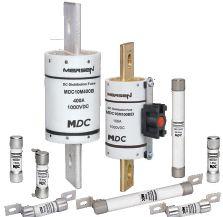
FUSE SOLUTIONS FOR YOUR DC APPLICATIONS
MDC DC Distribution Fuse Series
• MDC fuses are full-range fuses capable of safely interrupting currents ranging from 200% of nameplate current rating up to their maximum interrupting rating.
• MDC fuses can be used to protect the branch which includes the DC cabling and bus, along with any specific pieces of equipment.
• Applications include DC auxiliary circuits, electrical energy storage (EES), battery module protection, EV charging, critical power, and UPS.
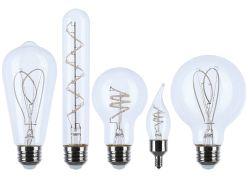
Satco Nuvo Reminiscent grey filament lamps
Reminiscent is a new collection of grey filament lamps that combine the look of traditional incandescents lamps with the benefits of LED. The 2700K lamps are suitable for applications ranging from living rooms and hotels to upscale restaurants and lounges. Featuring loop, spiral, and straight filaments, the collection is designed in a variety of shapes, as well as blunt and flame-tip candelabras. Additionally, the clear glass and a 93 CRI promise exceptional colour accuracy (satco.com).
Source: Satco Nuvo
Phase EV 48A Level 2 charging station
Ledvance’s 48A Level 2 EV charging station provides 11.5 kW power output (max.), or about 42 miles of range per hour of charge. It comes with an SAE J1772 charging connector and 25 feet of cable. The station comes complete in a IP65 NEMA 4X enclosure, built-in Wi-Fi and Bluetooth connectivity. It can be used as a plug-andplay device, or monitored and controlled using a free Sylvania app (phaseev.ledvance.com).
Source: Ledvance
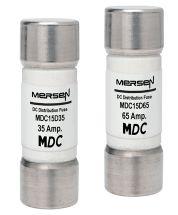
Mersen MDC15D series fuses for EV charging
The latest addition to Mersen’s MDC DC distribution fuse family is the MDC15D series, which offers 1500VDC protection up to 65A in a 20×65-mm ferrule mount design. The MDC15D series is ideal for both AC and DC electric vehicle charging applications, and also helps protect cabling and busbar. They open safely at both low and high fault currents (ep-ca.mersen.com).
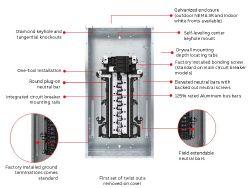
ReliaHome residential load centres
ABB’s residential portfolio includes redesigned load centres that promise an easy installation. Sporting ReliaLock connection technology, the load centres feature elevated neutral bars, backed-out neutral screws, and 100%-neutral terminations to create an organized, accessible wiring space. Diamond key knockouts, self-levelling centre keyhole mounting, and ground bars for main lug and convertible main are included to simplify installation. (new.abb.com/ca).
Source: ABB
Professional labels using just your voice
The BradyVoice labelling assistant—a recent addition to Brady’s Express Labels mobile app—is a voice-activated tool that allows you to create professional labels
Source: Mersen
using just your voice. Dictate text onto blank or wrap labels; the software features quick-formatting options, intuitive voice recognition, and automatic sizing to streamline labelling tasks. Future updates will include additional features (bradycanada.ca).
Source: Brady Canada
Cat 6A copper shielded system for all fire ratings
Leviton’s Atlas-X1 FDT Millennium Cat 6A copper shielded system features the company’s next-gen cable, which is named “FDT” for “foil reduced diameter technology”. This means the cable delivers the smallest outside diameter F/UTP Cat 6A-rated cable on the market, says Leviton, adding the solution is available in all fire safety ratings: plenum, riser, CPR, LSZH (leviton.com).
Source: Leviton
Tierra compact ingrades
Hydrel’s Tierra IGF is a family of compact ingrades. At 4.4 in. and 6.38 in. in diameter, the family is available in static white or Quad Tech RGBW, and delivers up to 2414 lumens. Designed with corrosion-resistant materials, Tierra ingrades are rated IP68 and are available in three door materials (brass, brushed aluminum, stainless steel) and 10 finishes (hydrel.acuitybrands.com).
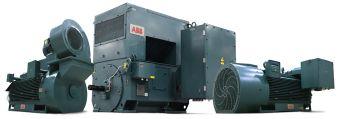
ABB’s engineered-to-order series of Reliance legacy motors is designed for both end users and OEMs who require large motors (e.g. power generation, mining, oil and gas) that are tailored to their specific applications. ABB says these motors meet global standards but can be adapted to meet local regulations. They can also be configured to NEMA Premium energy efficiency standards or better (new.abb.com/ca).
Source: ABB
We offer multiple solutions to more effectively seal around pipes, conduits and cables that reduce installation time and workmanship errors.
Whether you need to meet CEC codes for sealing conduit/raceways, increase electrical reliability, storm hardening of your system, or manage how cables and pipes enter structures, we have the solution for you.
SureSeT for primary MV switchgear applications
Schneider Electric’s SureSeT medium-voltage switchgear offering includes the EvoPacT circuit breaker, and offers remote access for monitoring, prediction, and documentation. Embedded sensors detect problems earlier and predict potential issues based on real-time asset insights. Part of the EcoStruxure platform, the switchgear is 25% smaller than standard designs, says Schneider, and is built to last through 30,000 operations.
Source: Schneider Electric
IPEX repair kit for conduit and ducts
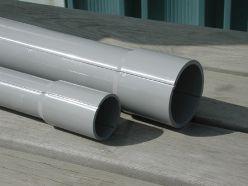
IPEX’s EPR repair kit is used to repair broken or damaged PVC conduit and ducts. With an interlocking joint design, the kit’s two half-shell pieces seamlessly close around the installed wire and cable, ensuring a watertight seal. When used with the appropriate adapter, these kits are compatible with rigid PVC and DB-II (ipexna.com).
Source: IPEX
ADVERTISER INDEX
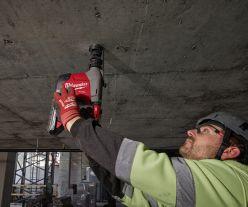
This rotary hammer with integrated dust extraction and anti-vibration system is optimized for ceiling drilling. The tool promises less user fatigue, and features Autopulse filter cleaning. A new side handle allows for better body posture during drilling, and can be inserted on either side of the tool (milwaukeetool.ca).
Source: Milwaukee Tool
Milwaukee M18 Fuel hammer for ceilings
TACKLE THE CODE CONUNDRUM IF YOU DARE!
Welcome to the newest round of questions that test your knowledge of the CE Code-Part I. Answers will appear in the February 2025 edition of Electrical Business Magazine, and online at EBMag.com under Features.
QUESTION 1
How many standard 15A duplex receptacles can be installed on a general-purpose branch circuit, fed from a standard 15A circuit breaker?
a) 8 c) 12
b) 10 d) unlimited
QUESTION 2
What is the minimum size grounding conductor required for client’s a 45-kVA 600-120/208 Δ/Y transformer with 60A primary overcurrent HRC fuses, connected to a 200A 4-wire splitter?
a) #6CU c) #3CU
b) #4AL d) None of the above
QUESTION 3
What is the minimum height from the floor for a receptacle that is intended to connect to an emergency battery pack with two lamps for illuminating the area upon loss of power?
a) 2.5 m c) 1.7 m
b) 3 m d) 1.5 m
ANSWERS
Electrical Business, September 2024 ed.
QUESTION 1
Conductors for equipotential bonding shall be permitted to be installed as open wiring, provided that they are adequately secured.
a) True. Rule 10-702(1).
QUESTION 2
What is the maximum mounting height of the overcurrent device handle on a panelboard in a dwelling unit?
c) 1.7 m. Rule 26-600(2).
QUESTION 3
For a mobile home, the minimum permitted size conductor for the power supply cord is:
c) #6 AWG. Rule 70-108(4)(a).
How did YOU do?
3 • Seasoned journeyman 1 • Apprentice
2 • Need refresher training 0 • Just here for fun
2-Part Foam Conduit Sealant
• Holds 22 ft. (6.7 m) of water head pressure and up to 90 ft. (27m) surges
• Rodent-resistant formula with a bittering agent additive
• Can seal conduits of all sizes and is re-enterable
• Use with a wide range of cable jacket and conduit materials
• Meets Canadian Electrical Code requirements
DAVID PILON
Code changes to pools, tubs, and spas
The 2024 edition of the CE Code-Part I contains a few changes to pools, hot tubs, and spas. While seemingly minor, these changes could cause concern if you’re not aware of them.
There is now a requirement for equipotential bonding around the edges of pools. While this “job” is typically carried out by the reinforcing steel, pool installations that don’t contain any rebar do not have anything to carry out this important work.
The 2024 code addresses this shortfall with a few new requirements and some new terms.
In the Appendix B Note, we learn that Rule 68-058 refers to conductive surfaces around a new item called “pool deck and other perimeter surfaces”. (While the intent is clear, it may not be immediately obvious from reading the Rule—which may require a bit more work at the committee level.)
That said, be sure to explore the nuances of Rule 68-058 with your authority having jurisdiction, because some of the surfaces listed in Appendix B include wood, wood plastic composites, plastic, fiberglass, and fiberglass composites. (I assume rubber tiles and decking would also be included in this list.)
When reinforcing steel is present, it must be bonded in four locations around the perimeter. When there is no reinforcing steel, then equipotential bonding will have to be achieved by constructing a copper grid.
The layout of the grid is specified as 300 x 300 mm, with 100 mm tolerance. The grid must be installed below grade at a depth of 100 to 150 mm, and must extend 1500 mm (1.5 m) beyond the pool shell. All well and good, although it increases the electrical contractor’s responsibility in
locations where no concrete deck is being installed and the ground is not isolated from the pool.
The CE Code 2024 edition contains a few changes to pools, hot tubs, and spas that could cause concern... if you’re not aware of them
The next items of concern: hot tubs and spas. The 2024 edition of the code now requires an equipotential bonding ring around the hot tub or spa to be installed between 450 mm and 600 mm from the inside edge of the equipment. This ring is to be installed at a depth of 100 mm to 150 mm, just as with the pool’s equipotential bonding grid.
There is nothing to worry about when the hot tub is situated on and accessed from a non-conductive deck, but what happens when the tub is situated on the ground and then has a deck built around it? Or a fence?
I know questions like these will start coming in, if they haven’t already.
The CE Code 2024 also contains a change/update to overhead wiring and the requirement for a disconnecting means outside. Initially, there was confusion as to whether the code demanded zero wiring above a pool... how, then, do you wire for lighting in an indoor pool facility?
This was clarified in the 2021 edition (yes to lighting), with 2024’s Rule 68-054 adjusting the voltage from 750 to 1000.
Always consult your Authority Having Jurisdiction for more specific interpretations
We should be concerned about possible shock at the installation itself i.e. contact with the spa water and the earth, or a conductive surface. However, when users or the installation itself are located in such a way as to eliminate that possibility, then the possibility of shock should not exist.
There is also now a requirement that the hot tub or spa be equipped with a disconnect located outside for use by maintenance personnel. This disconnect shall be at least 1.5 metres from the tub when it is GFI protected or suitably cut-off, or 3 metres from the tub when it is the GFI protection. Either way, it must be readily accessible and lockable if not within sight.
Ensure your installations are built safe from the start, and this will ensure the safe use of that pool, hot tub or spa for years to come.
David Pilon is manager, Electrical Inspections, at Technical Safety Authority, Saskatchewan (TSASK). He can be reached at david.pilon@tsask.ca.
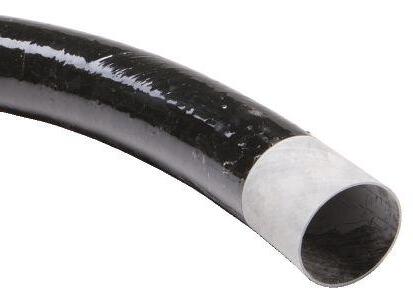
CHAMPION DUCT® SOLVES
UTILITIES CHALLENGES
No burn-through eliminates elbow repairs
Lower material and installation costs
Fault resistance makes repairing cables easy
Durable and corrosion-resistant for project longevity