Find your recipe for a
Visit eggs.ca to get inspired with dishes that bring the whole family together. Happy holidays from Egg Farmers of Canada!
Trouvez votre recette du merry holiday temps des f êtes
Pour des recettes inspirantes qui rassembleront toute la famille, visitez lesoeufs.ca. Les Producteurs d’œufs du Canada vous souhaitent de joyeuses fêtes!

COLUMNS
A feel-good story for the holidays 27 | Guts of Growth
Why winning water matters
Embracing new benchmarks
Two years ago, B.C. became the first province to introduce standards for free-range layers. Here’s how producers have fared thus far.

by Brett Ruffell
A milestone in cracking hunger
It’s been another interesting year! I’d like to end 2019 off by highlighting an inspiring story where poultry farmers have made a difference in the lives of those less fortunate. This year, Egg Farmers of Canada (EFC) celebrated five years of collaborating with Heart of Africa, a humanitarian initiative based in Eswatini (known as Swaziland until last year), Africa.
Founded by Ontarians Janine and Ian Maxwell in 2009, they used the charity to convert 2,500 acres of vacant land into a mixed farm and economic development initiative called Project Canaan.
There are a wide range of things happening at the site, including producing food to feed orphaned children from a network of churches and schools. That part underscores a big issue in Eswatini. The country is one of the hardest hit by HIV/AIDS and, as a result, there are more than 200,000 orphans in the country of just over a million people.
Alarmed by these struggles and inspired by the Maxwell’s efforts, EFC entered the picture in 2014. That’s when the board started raising money to add an egg farm to the site.
EFC designed and built the barn and the first flock was placed in January 2016. Since then, the collaboration has taken off. The egg farm has doubled production from
2,500 to 5,000. The eggs it produces supplement 665,000 meals per year in the local community. To date, the farm has fed over five million eggs.
Project Canaan has also become the largest employer in the region and has grown from caring for 100 orphans to over 250 through. “So, it’s been an amazing story,” says EFC CEO Tim Lambert.
He attributes much of that success to their efforts to teach management practices to the egg farm’s team of four. In the first few years, EFC sent over Canadian egg farmers for two to four weeks at a time to teach the local farm
“Our production levels and mortality are all within what you’d expect to see on a Canadian farm.”
workers how to care for the birds, produce quality eggs, maintain biosecurity and check for diseases.
“They absolutely know what they’re doing now and do an excellent job caring for the birds,” Lambert says. “Our production levels and mortality are all within what you’d expect to see on a Canadian farm.”
Another key to the egg farm’s success was that they leveraged innovation to overcome challenges the local environment presented. One of
those challenges EFC encountered was they had to hard cook the eggs. That’s because many of the schools and churches in Project Canaan’s network lacked cooking facilities. And even if they had them the local roads were too rough to transport the eggs without breaking them.
They also lacked proper refrigeration. This meant they had to find a way to preserve the eggs once they were cooked. For that they turned to Belgian food scientist Fabian De Meester. He provided a simple technology that, with a little water, formed a protective coating to preserve the eggs. “We did trials holding eggs at 30°C for 30 days with zero spoilage and no refrigeration,” Lambert says.
Another challenge, unsurprisingly given the recent years long draught, was around water. But the team had another solution for that.
On Project Canaan’s 2,500 acres are springs in the mountains. Previously, they’d dug boreholes to access this resource. But recently they developed a better solution. Lambert and co. raised close to $1 million to build a pipeline to conveniently bring water in from the springs.
“We are now completely water secure on the entire project,” Lambert says, noting, “In Africa, to be water secure is a huge accomplishment.”
It’s a truly inspiring story! Did you and your family do anything special to give back to your community this past year? I’d love to hear your stories, too. Until next year, happy holidays!
canadianpoultrymag.com
Editor Brett Ruffell bruffell@annexbusinessmedia.com 226-971-2133
National Account Manager
Catherine Connolly cconnolly@annexbusinessmedia.com 888-599-2228 ext 231 Cell: 289-921-6520
Account Manager
Wendy Serrao wserrao@annexbusinessmedia.com 416-510-6842
Account Coordinator
Alice Chen achen@annexbusinessmedia.com 416-510-5217
Media Designer
Curtis Martin
Circulation Manager
Anita Madden amadden@annexbusinessmedia.com 416-442-5600 ext 3596
VP Production/Group Publisher
Diane Kleer dkleer@annexbusinessmedia.com
COO Scott Jamieson
PUBLICATION MAIL AGREEMENT #40065710
Printed in Canada ISSN 1703-2911
Circulation email: rthava@annexbusinessmedia.com Tel: 416-442-5600 ext 3555 Fax: 416-510-6875 or 416-442-2191
Mail: 111 Gordon Baker Rd., Suite 400, Toronto, ON M2H 3R1
Subscription Rates
Canada – 1 Year $32.50 (plus applicable taxes)
USA – 1 Year $70.50 USD Foreign – 1 Year $79.50 USD
GST - #867172652RT0001
Occasionally, Canadian Poultry Magazine will mail information on behalf of industry-related groups whose products and services we believe may be of interest to you. If you prefer not to receive this information, please contact our circulation department in any of the four ways listed above.
Annex Privacy Officer privacy@annexbusinessmedia.com Tel: 800-668-2374
No part of the editorial content of this publication may be reprinted without the publisher’s written permission. ©2019 Annex Publishing & Printing Inc. All rights reserved. Opinions expressed in this magazine are not necessarily those of the editor or the publisher. No liability is assumed for errors or omissions. All advertising is subject to the publisher’s approval. Such approval does not imply any endorsement of the products or services advertised. Publisher reserves the right to refuse advertising that does not meet the standards of the publication.










Matters. Size


U p g ra d i n g t
Upgrading to Bigger drinking water lines in mega houses can improve water consumption and yield much Bigger profits!
water consumption and much profits! waterconsumptionandyieldmuchBiggerprofits!
s mega
Size Matters when it comes to drinking systems in mega houses. The increased demand for water in these houses requires a system capable of delivering a larger volume of water to the birds. LUBING’s 28mm large pipe is ideal for mega houses because it holds nearly Two Times the amount of water than standard 3/4-in round pipe.
Did you know that water is the most critical factor in weight gain of your birds? Why use a system that will restrict water consumption?
Get a leg up on your production and talk to us about using our large 28mm pipe on your next project.
Got LUBING? You can’t afford not to!

St. Jacobs, Ontario
Tel: (519) 664.3811
Fax: (519) 664.3003 Carstairs, Alberta
Tel: (403) 337-3767
28mm (1.1-in) pipe 0.043 gal/ft
Our drinker pipe 3/4-in pipe 0.023 gal/ft
Their drinker pipe
www.lubingusa.com info@lubingusa.com (423) 709-1000 Glass-Pac Canada





Fax: (403) 337-3590
ww.lubingusa.cominfo@lubingusa.com (423)709-1000



What’s Hatching
FCL adopts EQA certification mark
In October, Egg Farmers of Canada announced it is partnering with Federated Co-operatives Limited (FCL) to launch the Egg Quality Assurance (EQA) certification mark on select egg cartons in CO-OP Food Stores in Western Canada. The EQA certification mark quickly showcases to customers that their eggs are produced locally by Canadian farmers upholding world leading animal welfare and food safety standards.
Mounties charge four people after protest at Alberta turkey farm
A protest at an Alberta turkey farm in September has resulted in criminal charges against four people. Dozens of activists from Western Canada converged on the Jumbo Valley Hutterite turkey farm near Fort Macleod, Alta. on September 2 to protest what they called inhumane treatment of the animals. Several people entered the property and staged a sit-in, but they left peacefully after Mounties were called. Three adults and a 16-year-old girl are charged with break and enter to commit mischief.
Ontario to roll out animal cruelty enforcement squad in January
A specialized team of provincial inspectors would enforce animal cruelty laws in Ontario under new legislation introduced in late October. Solicitor General Sylvia Jones says the team would be composed of about 100 inspectors, but she won’t say how much the new system would cost. Jones says the bill – dubbed the Provincial Animal Welfare Services Act – would also include stiffer penalties for cruelty offencess.

Poultry Industry Council announces new executive director
In November, the board of directors of the Poultry Industry Council (PIC) announced that Ashley Honsberger is the organization’s new executive director effective December 2, 2019.
Honsberger replaces Keith Robbins, who served in the role for six years before leaving in September for another position.
Honsberger, who replaces Keith Robbins at PIC, has worked extensively in the agriculture sector with experience in delivering training and learning events for Ontario farm and agri-food processing businesses.
She brings a diverse background that includes experience in capacity building, program development and delivery, family enterprise advising, and non-profit management from her most recent position as executive director at the Agri-food Management Institute (AMI).
“Ashley’s experience and passion will be a great addition to our organization,” says Ed Verkley, chair of PIC’s board.
“Her demonstrated ability to build relationships and develop
programs with a broad range of stakeholders will support PIC’s vision to be the preferred provider of education extension services and knowledge transfer to support a strong, successful and sustainable poultry industry.”
“I am incredibly excited to be joining the PIC team, as I value their commitment to serving the poultry sector with the information and resources they need on an ongoing basis,” Honsberger says.
“I look forward to continuing the work of bringing our stakeholders and members together to ensure the sector stays ahead of the curve by being proactive and remaining informed.”
Honsberger holds a Master’s degree in Capacity Development and Extension from the University of Guelph and an Honours Bachelor of Arts in English Language and Literature, Minor in Peace and Conflict Studies from the University of Waterloo.
Ashley Honsberger’s most recent position was executive director at the Agri-food Management Institutes.
5 questions with CAHI’s outgoing president Jean Szkotnicki
Growing up in Newmarket, Ont., Jean Szkotnicki had a passion for horses. That led to a passion for agriculture. Now, after leading the Canadian Animal Health Institute (CAHI) for three decades, she’s transitioning into retirement. We asked her five questions.
Tell us about your background. After finishing a master’s degree in meat science, I worked at the Ontario Cattlemen’s Association for nine years and was lucky to have wonderful mentors, in particular Graeme Hedley, Charlie Gracey and Carolyn McDonell. In my role with CAHI, it has been so enriching to work and collaborate with professionals in various sectors to the benefit of human, animal and environmental health.
What are you proudest of?
I am also proud to have been able to work with a talented team of pharmaceutical industry technical people in collaboration with Veterinary Drugs Directorate (VDD) personnel so that the VDD is now one of the most competitive regulatory agencies globally. It is a dynamic, positive change from where we were in the late 1990s. After many years of advocacy and collaboration, new regulation was implemented in 2018 to remove gaps that permitted the importation and use of animal health drugs not approved by Health Canada. No other developed countries in the world had such gaps, which posed a risk to animal and human health as well as trade in food products. The gaps did not support good stewardship of antimicrobials. Policy was also introduced to have veterinary oversight of over 340 antimicrobials.
I was inducted into the Agricultural Hall of Fame in 2017 largely due to leadership in initiating regulatory and policy changes to enhance antimicrobial stewardship. I know the success is not mine alone but owned by many others who collaborated across the industry and government.
What are your thoughts on Canada’s poultry industry?
I think the poultry sector’s antimicrobial reduction strategy has a marketing focus that is at the expense of bird welfare. Increased disease in birds could also potentially result in increased human health risks and increased environmental impacts. There needs to be balance as we move forward.
Any advice for your successor? CAHI is comprised of skilled professionals able to provide excellent input on new initiatives that positively impact veterinary medicine and companion/ production animal well-being. Member advice is a wonderful resource. It is my experience that no one person owns a success. Reaching out to people to collaborate and share ideas is very important to building positive outcomes.
What will you do in retirement? Having very recently lost my husband, what is next is evolving day by day to some extent. With retirement, I find so much of our identity is wrapped up in the work we do. I am not ready to stop fully so will continue to serve on several boards and likely do some consulting work. I hope to give more time to riding and showing my horses and enjoying farm life, while fitting in some travel.

Coming Events
DECEMBER 2019
DEC 4
PIC Producer Update Belleville, Ont. poultryindustrycouncil.ca
DEC 11
PIC Producer Update Brodhagen, Ont. Poultryindustrycouncil
JANUARY 2020
JAN 15
Eastern Ontario Poultry Conference St. Isidore, Ont. poultryindustrycouncil.ca
JAN. 20
PIC’s Science in the Pub Guelph, Ont. poultryindustrycouncil.ca
JAN. 28-30
FarmTech Edmonton, Alta. farmtechconference.com
JAN. 28-30
International Production and Processing Expo Atlanta, Ga. ippexpo.com
JAN. 29-30
Precision Agriculture Conference and Ag Technology Showcase London, Ont. farms.com/precision-agriculture/ conferences
JAN. 30-FEB. 1
Pacific Agriculture Show Abbotsford, B.C. agricultureshow.net
Jean Szkotnicki led the Canadian Animal Health Institute for almost three decades.
What’s Hatching
Poultry Service Person of the Year announced
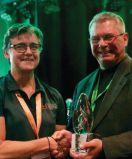
Dr. Nancy Fischer is the 2019 recipient of the Poultry Service Industry Award, in recognition of her outstanding contributions to the Canadian poultry industry. Fisher accepted the award at the Poultry Service Industry Workshop (PSIW) in early October.
“I am very pleased and humbled to receive this award,” says Fischer, a nutritionist at Country Junction Feeds, working with poultry, swine and other species, who is well known and respected across the industry. “I am fortunate to work with a great team and with an excellent network of partners, customers and colleagues across the industry.
“It’s very rewarding and I’m proud to have help contributed to and champion the success of Canadian poultry. We have a great industry poultry business here with a strong history and a bright future.
I’m proud of the progress we have made together as an industry and excited for the next chapters to come. Thank you to everyone.”
The Poultry Service Industry Award is presented annually at the PSIW. The nominee must be a service person who has supported the poultry industry and has demonstrated a high level of skill and knowledge in the industry.
“I have been honoured to work with Nancy for over 17 years and she is very deserving of this award,” says Darrell Kimmel, manager of Country Junction Feeds, who made the award presentation at PSIW.
“Nancy started her dedication to the poultry industry back in the early 2000s when she
received her Ph.D. at the University of Saskatchewan. Since that time Nancy has not taken her foot off the pedal and has pushed herself and many of us to look at better ways and changes to support and grow our poultry industry.”
Fischer was nominated for the award by Poultry Partners and Nutrition Partners, who are a key partner of Country Junction Feeds, noting, “She has a true passion for the industry and does a lot to promote it,” serving with numerous programs and boards ranging from classroom agriculture programs to major industry bodies such as the Animal Nutrition Association of Canada and the Poultry Science Association.
Away from work, in her spare time, Fisher is a dedicated mother of three busy children teenagers that take her and her husband Al to hockey, figure skating, football games, baseball and golf. “It’s not uncommon to see Nancy strap on the hockey skates to play a game or two herself,” Kimmel says. Nancy also coaches hockey and power skating.
“Nancy, you are a dedicated and valuable member of our Country Junction Feeds team and on behalf of myself and our management and staff we want to congratulate you on this award,” Kimmel says. “Thank you for all that you have done for the poultry industry.”
The PSIW where Fisher received her award is held each October in Banff, Alta. Recognized as a leading poultry workshop, it features the latest research and insights from vets and other experts.
Alltech Canada introduces new beak-conditioning aid
Alltech Canada has introduced ChikPek, a new innovative beak-conditioning aid, featuring palatable and durable qualities that can be introduced throughout any stage of poultry production. ChikPek’s unique formulation diverts the birds’ instinctive pecking behaviour onto the block, maintaining the welfare of the birds. The block is non-medicated, and the non-toxic ingredients and nutrients used in ChikPek are safe to feed to all life stages of poultry and do not interfere with a flock’s regular nutrition program.
Cobb-Vantress initiative addresses food security
A new collaborative research and development project between Cobb-Vantress and The Roslin Institute brought scientists and industry experts together to address food security needs on an international scale. In the study released recently in Proceedings of the National Academy of Sciences of the United States of America (PNAS), researchers shared how they applied novel genome technologies to ensure future biodiversity and meet the growing global demand for animal protein.
Maple Leaf Foods now carbon neutral
Maple Leaf Foods Inc. has reduced its emissions and invested in environmental projects to become carbon neutral in an effort to be the world’s most sustainable protein company and meet consumer demand for corporate responsibility on climate change. The company announced in November that it believes it is the first major food company in the world to be carbon neutral. Since 2015, the company has made significant strides in cutting its environmental footprint in half by 2025.
Dr. Nancy Fisher receives the Poultry Service Industry Award from Darrel Kimmel.
The Poultry Service Industry Award is presented annually to knowledgeable service people who have supported the poultry industry.
The future of breeding
A look at emerging traits, techniques and technologies that will have a lasting impact.
By Treena Hein
In the November issue of Canadian Poultry, we highlighted some of the latest chicken and turkey breeds. In this the second part of our twopart series, we focus on what’s to come. What traits will be increasingly important and why? How will gene editing change poultry breeding? What other new technologies are coming into use, and what difference will they make?
Broilers
Companies have been adding more traits to broiler breeding programs for some time. Experts expect that to continue, according to industry insiders like Trevor Gies, senior marketing manager for North America at Cobb-Vantress. “One trait that we have been selecting for many years is meat quality, which has become a hot topic,” he notes. Meat quality can include many parameters, including appearance, texture, flavour, safety, nutrient content and availability, ease of preparation, qual-
ity retention and more.
Anne-Marie Neeteson, Aviagen’s vice president, welfare and compliance, and Santiago Avendano, the company’s genetics director, also believe companies will continue to add more broiler traits.
“Breeding goals have expanded vastly in the last three decades, combining productivity and biological efficiency with liveability, robustness, adaptability, reproduction and welfare, and this process is not expected to stop but to continue even further,” they explain in a paper called “Breeding the Chicken of the Future”, which they wrote for the 11th Asian Pacific Poultry Conference in 2018. “An increased ability to change and adapt as a response to current and future changes in global trends will be needed, which in plain words just means more balanced progress across more traits,” they wrote.
Companies will be required to continuously invest in R&D, they say, to understand the genetic basis of novel traits and
correlations in genes, as well as trade-offs between new and existing traits with regard to breeding goals.
Neeteson and Avendano also note that consumer values are shifting, and that breeding must address this reality. They point out that other researchers have identified evolving drivers in consumer purchase decisions, which include health and wellness, safety, social impact and more. The increased importance of these drivers “makes transparency through the whole product supply chain a requirement, as…consumers want to know more about their food, where it comes from and how it is produced,” they state. “Breeders contribute to the required transparency throughout the industry by informing the wider society of the improvements being made through selective balanced breeding and subscribing ISO certifications and to codes of good practice.”
Paul van Boekholt, manager of global marketing at Hubbard, agrees that for
Breeding companies continue to leverage technologies to improve accuracy, efficiency and animal welfare.

Breeding for the future: a quick summary
• Gene editing is considered to be genetic modification (GMO) in Europe and is not expected at this time to be used in poultry breeding in the foreseeable future.
• Genomics (the study of DNA and its function, typically combined with livestock performance and pedigree information) will increase accuracy of selection.
• Other new technologies will increase breeding accuracy, provide the collection of more and more accurate data and increase the health and welfare of breeding flocks.

both conventional and premium markets worldwide, producers can expect further improvements in broilers. Specifically, he foresees better feed efficiency, robustness, meat yield and quality, productivity of the females, fertility of the males and growth rate, as well as the ability of broilers to adapt to diverse conditions.
As to how much demand there will be for traits associated with heavier broiler weights, Aviagen marketing communications manager Wendy Parker notes that will depend on how the markets evolve.
“But any increase in weights will have to be balanced by improvements in the metabolic and skeletal support and robustness of the bird,” she explains.
Van Boekholt points out that the use of new technologies will continue to contribute to further improved accuracy of broiler breeding measurements and predictions.
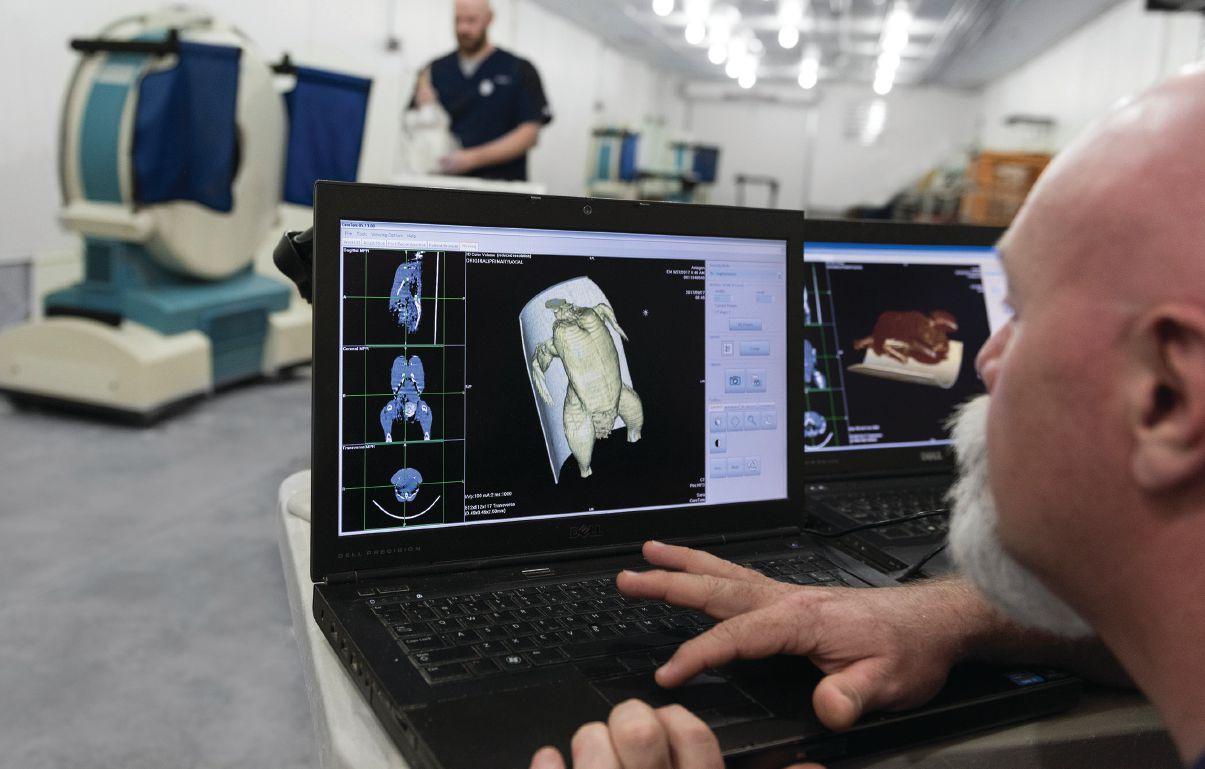
“An example of the latest technologies is advanced 3D imaging to improve selection for skeletal health, meat yield and quality,” he explains. “Also, Lifetime Feed Conversion Ratio (LFCR) technol-
ogy is being implemented, a modern method to observe FCR and feeding behaviour.”
Breeders will use genomics (the study of DNA and its function, typically combined in breeding with livestock performance and pedigree information) to increase their accuracy of selection in all traits. That said, Neeteson and Avendano note that it is especially important in traits in which there is limited information at the time of selection.
“There is no doubt that genomics information will contribute significantly to genetic potential,” they state, “which will be expressed in the wide range of production environments worldwide.”
Turkeys
Turkey breeding, in the view of Sandi Hofmann, marketing and administration director at Aviagen Turkeys, will also benefit from genomics and other advancements in the effort to produce healthy and robust birds. Echoing Neeteson and Avendano, she notes that selection of more difficult traits with increasing accuracy will become a
reality.
“The future of genomics will include identifying single nucleotide pairs associated with immune function,” Hofmann explains, “that may contribute to robustness and even disease resistance.”
These types of traits have lower heritability, she says, because there are low incidences of health challenges within turkey pedigree populations.
New measurement technologies continue to aid breeders, she notes, by making data collection faster (and, therefore, allowing for more data to be gathered) and more accurate (for example, weigh scale measurements automatically stored in computer systems).
New technologies also allow breeding that’s less stressful for birds, Hofmann notes, such as platform scales and FCR stations that allow the birds the full use of their pen and to be kept within a flock. “A variety of different equipment is used,” Hofmann says, “and we often look to human medicine for equipment to use on our turkeys, such as lixiscopes, ultrasounds and oximeters.”
The robotic equipment in Hy-Line’s in-house molecular laboratory is used to incorporate genomics and study the firm’s pedigree lines at a DNA level.

Chris Bill
+1(519) 587-2667
http://meller.ca/
826 Nanticoke Rd, Jarvis ON N0A 1J0, Canada
We are proud to announce a partnership that combines 83 years of industry experience, to bring North American engineering and manufacturing with localized service and expertise to Canada, from coast to coast.
Offering Complete Solutions to Poultry Producers with Enriched and Cage Free Systems, and Broiler equipment to meet your specific need.
Your North American Poultry Equipment Manufacturer!
Layers
Hendrix Genetics product manager Teun van de Braak says the company’s breeders are using vision and robotics to measure egg quality in a way that’s extremely detailed and also fully automated – and, therefore, completely objective. “In the past, we did egg scoring/grading with human beings, but it is challenging to get exactly the same way of looking at eggs and egg quality when you work with so many people in so many breeding centres,” he explains.
Regarding gene editing, van de Braak says Hendrix is following its development. However, he notes that the company is in Europe, and on that continent gene editing is still considered to be GMO. “We do not expect to use it in the coming years,” he notes. “Maybe in the long term it can be implemented. Mostly, disease resistance and in-ovo sexing is of interest for
this technology. For other traits, not too much, as current technologies are working very well and are trusted by the public. Transparency in what you do is very, very important.”
Similarly, Hy-Line International global marketing manager Brittney Roorda notes that while gene editing is “an interesting technology,” it will “have difficulty
gaining traction as the primary breeders avoid GMO technology in breeding layers due to a lack of acceptance around the world.” Hy-Line already fully incorporates molecular genetics technology in all of its layer breeding lines, and Roorda says her firm will continue to make genetic progress in the future by identifying the genes that guide beneficial traits.
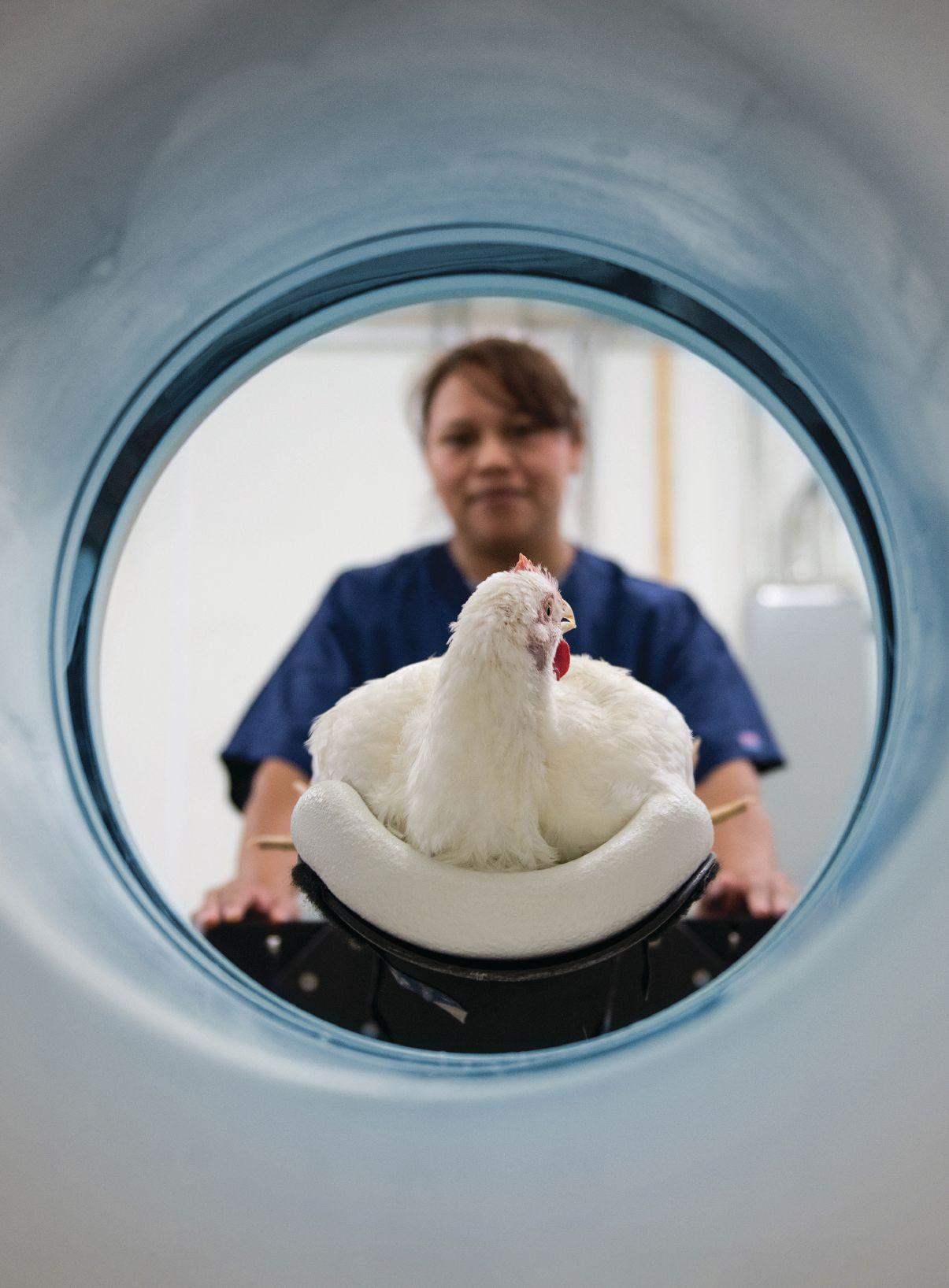
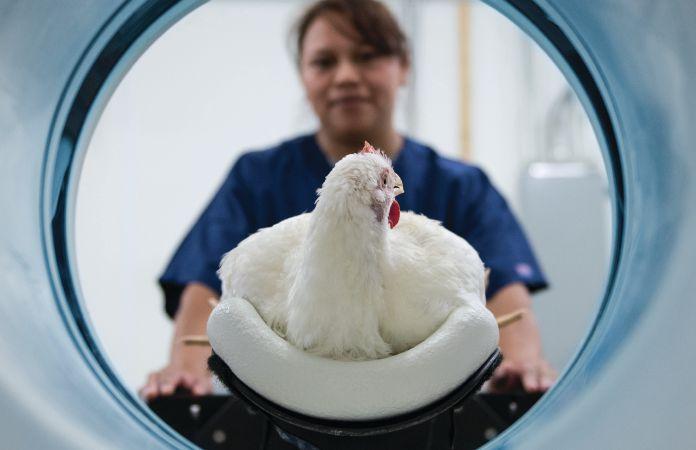
Breeding companies are adapting technologies from the human medical field like CT scanners to improve the health, longevity and wellbeing of birds.
THAT’S JUST GOOD CHICKEN MATH
It’s simple arithmechick, whether you raise 4,000 chicks or 4 million. Victrio® is a preservative-free, antibiotic-free way to jump-start your chicks’ immune systems, preparing them to fight E. coli the natural way. Administered in-ovo at the hatchery, Victrio significantly reduces post-hatch mortality due to E. coli infection and supports your RWA production goals.
Ask your hatchery for Victrio chicks today. Learn more at Victrio.ca.


Insights on phytase supplementation
New research finds it could lower feed costs, increase nutrient efficiency in layers.
By Lilian Schaer
Aresearch study completed at the University of Alberta (U of A) has found that supplementing laying hen diets with the high phytate-degrading phytase Buttiauxella sp. could lead to lower feed costs and increased overall nutrient efficiency.
Phytase releases calcium and phosphorus from ingredients in a bird’s diet that already contain those two minerals, which means the amount of calcium and phosphorus in the diet can be reduced.
“Over the years, phytases have become more effective in terms of the amount of phosphorus they can liberate, and more thermo-tolerant to handle pelleting better – this is not new, but part of the evaluation of the changing landscape of phytase use in poultry nutrition,” says Dr. Doug Korver of the Department of Agricultural, Food and Nutritional Science, who worked on the research, adding that laying hens have fairly unique calcium and phosphorus requirements that change over time.
To date, there had been little research done into the long-term impacts of phytase on calcium and phosphorus metabolism across the full length of the laying cycle. Most existing research focused only on short periods of production or involved broilers and not laying hens.
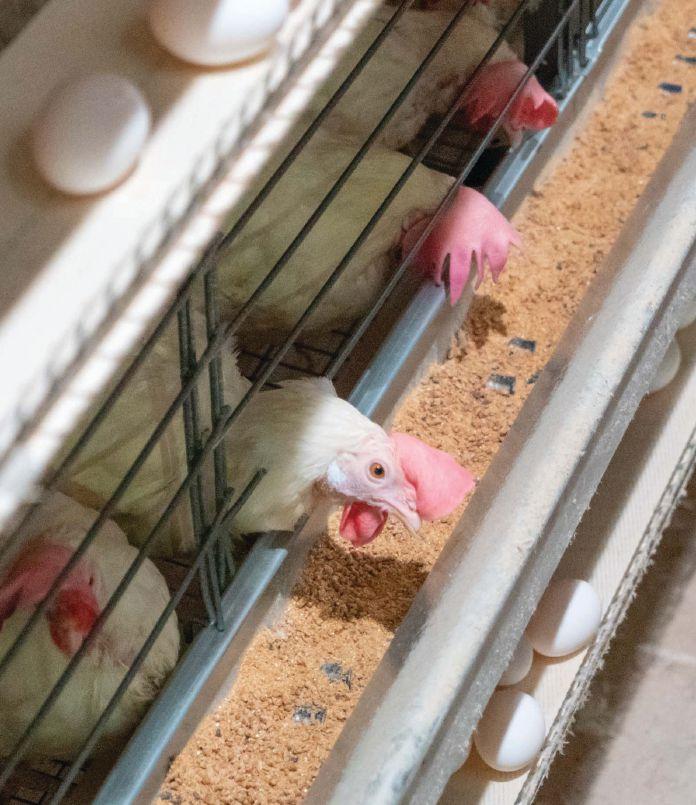
Korver and his team conducted the study on behalf of DuPont Animal Nutrition. According to poultry scientist Dr. Abiodun Bello, who took part in the research while at U of A and now works for DuPont, the company wanted to take a close look at the effectiveness of Buttiauxella sp. phytase on the longterm effects of productivity performance, eggshell quality and bone
development of laying hens.
Typical for a phytase study, this trial included: A positive control group with normal calcium and phosphorus levels that followed primary breeder recommendations but no phytase; a negative control group with reduced calcium and phosphorus levels; and a negative control group with 300 FTU (phytase units) per kilogram added phytase.
University of Alberta researchers conducted the study on behalf of DuPont Animal Nutrition.
“We can probably go even lower in calcium and phosphorus.”
Researchers studied a total of 456 Lohmann LSL Lite white laying hens from the U of A flock from 27 to 70 weeks of age. They measured egg production, body weight, feed intake, feed conversion ratio and eggshell quality from 30 to 70 weeks of age. The team also tracked apparent digestibility of phosphorus and calcium and bone quality at 32, 48 and 70 weeks of age.
“What we found is that management guides recommend far more calcium and phosphorus than a bird actually requires, so the negative control group still had plenty of calcium and phosphorus and we didn’t see a reduction in performance,” Korver says. “We did see a very minor reduction in bone quality but not enough to affect health.”
“Our conclusion is that we can probably go even lower in calcium and phosphorus in commercial laying hen diets because we are feeding more than they need, and we can go even further if we add phytase,” he adds.
Not only would this reduce feed costs for producers –phosphorus is not an inexpensive additive – but there are environmental benefits as well stemming from lower phosphorus levels in poultry manure. That’s because birds absorb only the minerals and nutrients they need and excrete the rest.
According to Korver, there is also evidence that exces -
sive phosphorus levels affect egg shell quality. As the industry moves to ever-longer production cycles, one of the limiting factors is declining shell quality as birds approach the end of production, which he believes could be addressed by feeding lower levels of calcium. Here too, those levels could potentially be dropped even further by adding phytase.
“The cost [of adding phytase] is much less than adding phosphorus in broilers. It’s a minor cost to add the phytase; you save money by not including inorganic phosphates,” he says.
According to Bello, researchers conducted a follow-up study with lower amounts of dietary calcium and phosphorus than in Korver’s work at U of A. This trial showed that using Buttiauxella sp. phytase at 300 to 600 FTU per kilogram resulted in higher reductions of available phosphorus and calcium, but without any detrimental effects on egg productivity, eggshell and bone quality traits.
The key takeaway for producers?
Although researchers need to conduct more work to determine what the optimal levels of calcium and phosphorus would be in laying hen diets, using Buttiauxella sp. phytase in laying hen diets can lower feed costs and increase overall bird nutrient efficiency.

Making a splash
As producers reduce their use of antibiotics, water management innovations are increasingly important.
By Melanie Epp
For years, producers have focused much of their attention on poultry nutrition. They’ve paid little attention to water and its role in bird development. Experts, though, say that water management and cleanliness is the next big issue, especially as producers focus on reducing their use of antibiotics. In recent years, this trend has surfaced in the form of new technology and can be seen in everything from cleaning and disinfection products to flushing systems to water distribution in drinking lines.
New technologies to control water pressure
Impacted by feeding times and lighting programs, a poultry flock’s need for water changes throughout the day, as well as throughout the different stages of growth. This change in demand can impact water pressure, a challenge that producers have in the past managed manually. Two systems promise to make this task easier, though.
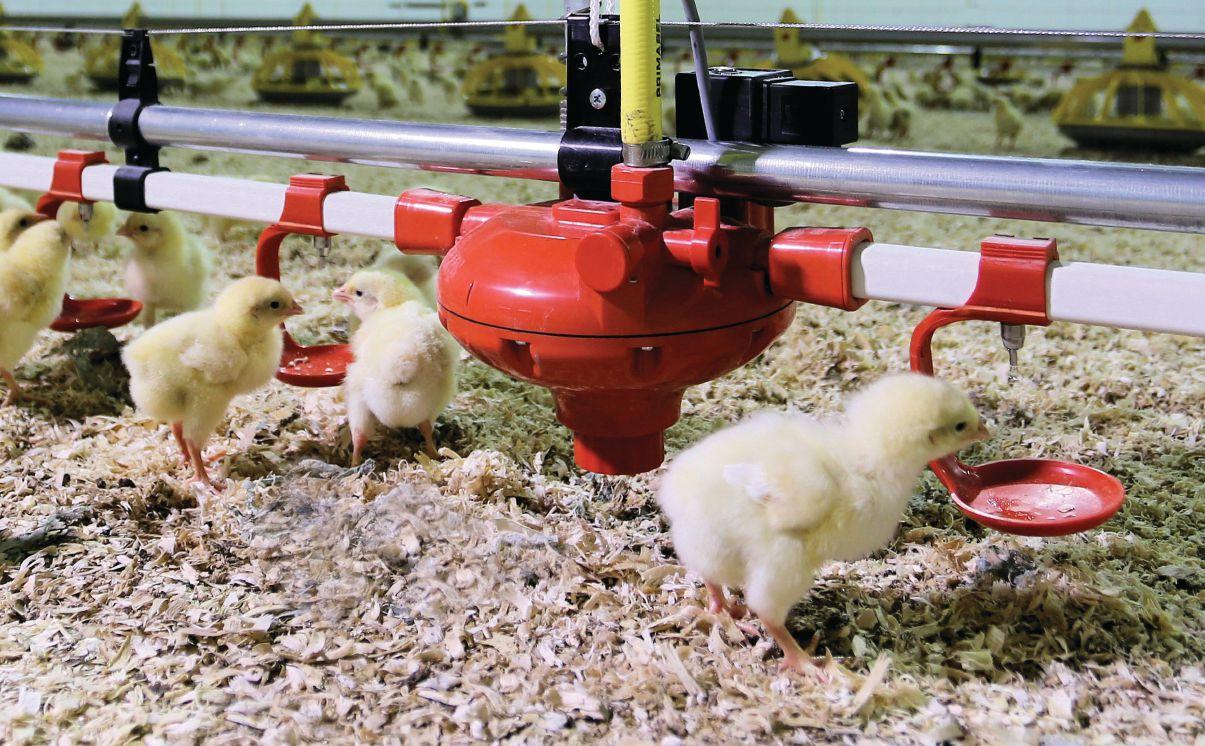
Water on Demand by Plasson allows producers to control and manage water pressure on all drinking lines throughout the house from one central point. By changing just two parts of the Plasson Line Pressure Regulator, all pressure regulators are converted into pressure reducers. From one central location, producers can manage water pressure in all the drinker lines by using a minimum of two pre-set Pressure Regulators (one for low-medium pressure, and another for high pressure). The result is uniform pressure throughout the entire nipple system at all times.
Keith Gladfelter, North American division manager for Plasson products at Diversified, has been selling Water on Demand for over eight years. While most systems have been installed in the U.S., they’re slowly making their way into Canadian poultry houses. The draw for American producers is water’s impact on weight gain. Daily growth averages are extremely important to U.S. poultry producers, Gladfelter says.
In Canada, where there’s less emphasis on average daily growth, producers are more attracted to Water on Demand’s other benefits, namely lower relative humidity, which has been shown to be 10 to 20 per cent lower in the Water on Demand houses as compared to regular houses.
The advantages of the Water on Demand system are greater in winter when moisture problems are more prominent, Gladfelter says. Other benefits include improved foot health and energy savings from limiting the use of ventilation to dry the house. Drier floors are thought to lower ammonia levels.
But the biggest benefit is simplicity. Instead of having to adjust column pressure at twice, if not three times a week, producers can now set pressure in a control room as needed. Where producers use lighting programs, the system allows for increased water volumes to be delivered during the peak water consumption periods. This is especially important in the first hour of lighting where 17 to 19 per
Impex’s I-Flush is an automatic flushing system for drinking lines that are used in both floor and caged drinking systems.



Technology
cent of consumption occurs. In fact, Gladfelter says, 28 to 40 per cent of daily water consumption takes place in just two hours, the first and last of the day.
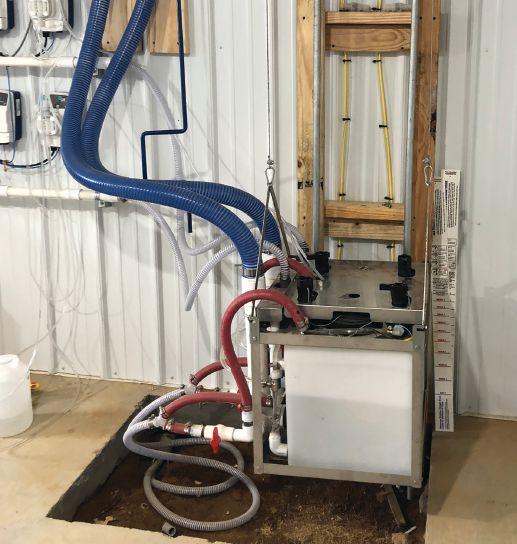
A second system, this one by LUBING, also promises to improve water pressure and distribution. Like Water on Demand, LUBING’s GravityPlus Water Supply Control System is a means for water distribution that allows producers to control water pressure in an entire poultry house from a single point. But that’s about where the similarities end. Rather than using pressure regulators, GravityPlus uses gravity to maintain pressure. Producers can adjust water pressure in all drinker lines quickly and accurately adjusted simply by turning a winch.
Chris Hawk, LUBING vice president, explains. “The tank level always matches the water level in the drinking lines,” he says. “To adjust the pressure in the house, you move the tank up and down. We hold the water level constant in the tank, and it transfers the water to the drinking lines using gravity.
“You could compare it to a siphon,” he adds. “It’s like a multi-point siphon system.” Because the system is based on gravity, there is no calibration required.
It is designed to supply a tremendous amount of water with very little restriction, Hawk says. Under high demand there is very little drop in pressure.
“When the birds hit the lines very hard, say when the feed turns on and they all go to the drinkers, we don’t see a pressure drop,” he says. “We don’t have to compensate. The system is so open to flow that it can handle high demand with little variation.”
LUBING’s GravityPlus Water Supply Control System has multiple parts. On the end of each drinker line, there is a flush breather. The water line comes from the ceiling and connects directly to the drinker line. Water runs to the drop lines via a trunk line, which is bracketed to the ceiling. The trunk line (and anything above the water line) is under negative pressure, which actually eliminates the risk of water leaks.
“What we have is the potential for air to get back inside of the system,” Hawk ex-
plains, “since it’s inverse of what’s normal.”
An AirBox situated on the ceiling at the highest point in the barn acts as a safety mechanism to remove excess air from the system if it’s ever introduced.
In the control room, there will be two tanks, one for the front half of the house and one for the back half. The tanks have a float valve that holds the water constant, so as the birds drink, the water flows from the tank to the drinking lines automatically. As the tank level drops, the float valve turns on and refills it, holding the tank constant. If you want to change the water pressure in the entire house, there’s a winch system included with the tank to move the tank up or down to match the desired level.
LUBING also offers an add-on component, a recirculation system, made possible by the fact that the system doesn’t use regulators.
“We’re looking at different things we can do with that,” Hawk says. “Whether it be UV sanitation, water filtration – maybe we do a temperature-based control system where the temperature and the lines, whenever the full system starts to get to warm, we can actually add fill water to keep the temperature regulated.
“It also gives us an opportunity to make sure that the medication and vaccinations are distributed evenly throughout the entire house,” he adds. “You can run this system without disrupting any water supply to the birds or changing the pressure.”
Flushing system improves water hygiene
Another recently launched innovation is I-Flush by Dutch company Impex. I-Flush is an automatic flushing system for drinking lines that are used in both floor and caged drinking systems. The I-Flush total hygiene solution consists of a computer, which controls the entire flushing system by processing information received from the various sensors, a pressure regulator, the I-Flow end air outlet set and drainage.
The I-Flow pressure regulator also has a manual flush option. To automatically flush the drinking lines, an optional actuator can be connected to the built-in solenoid valve on top of the pressure regula-



Technology
tor. The solenoid valve is built in the pressure regulator, so there is no interference with other parts of the drinking system and optimal flushing system operation is guaranteed.
The Impex I-Flush system can be expanded to include a biofilm sensor and a temperature sensor. The biofilm sensor, which is mounted to the drinking water lines, detects dirty water and biofilm. Using an LED light, the sensor detects the cloudiness. When the preset maximum level is exceeded, the lines are automatically flushed.
Similarly, the temperature sensor measures the temperature of the water in the drinking line. The sensor is placed approximately two-thirds of the way from the start of the drinking lines. The sensor measures the temperature and sends this information to the I-Control flush computer. When the preset maximal temperature is reached or the temperature difference between the water supply line and the drinking line is too high, the drinking lines will be automatically flushed.
Impex I-Flush can be used with any type of drinking line.
While not a lot of producers choose to flush their lines, Impex area manager Remco Heijman says, they are increasing in popularity as producers shift their focus to water quality.
One of the advantages of the system is its flexibility, Heijman says. In broilers, for instance, producers can intensify flushing in the beginning of the growth cycle, and decrease flushing frequency as the birds develop.
“In the first few days, the small birds don’t drink so much,” he says. “Water gets very warm because of the climate of the house, especially in the first few days. Later when the birds are bigger and drink more, flushing is less needed.”
While regular flushing can improve water quality, to kill harmful bacteria disinfection is necessary, says Anno Bylsma of Bylsma Imports. The Alberta-based company offers a new product called Hydrocare, a disinfectant that removes biofilm from drinking lines.
Biofilm is caused by organic components in the drinking water and the addition of medicines, vaccines, feed supplements through the drinking water, Bylsma explains. Microorganisms live in the biofilm, which helps protect them from disinfectants.
“By removing this biofilm with Hydrocare, you remove 99 per cent of all organisms, and they have no chance to protect themselves against disinfectants,” Bylsma says.
Water sanitation program
Weeden Environments, an Ontario-based full-service poultry equipment company, offers its own water sanitation program across Canada with its distribution partner, Jefo, called the WaterSmart Program.
“With the removal of antibiotics, we have a little more exposure to bacterial challenge in water,” company president Kevin Weeden says.
“Water quality has become absolutely critical now,” he continues. “The probiotics we’re using today instead of antibiotics, a lot of them have carriers that are sugar based or whey based
and they provide a nice food source for bacteria in the water.”
Weeden specialists first test water for pH and scale-causing minerals. Following that they remove biofilm from the lines. Their product of choice is Proxy-Clean, a stabilized hydrogen peroxide product. Weeden Environments is the Canadian Manufacturers representative for Proxy-Clean.
After biofilm has been removed, Weeden then recommends removing mineral scaling by lowering the pH for 24 hours using Jefacid, a blended acid. After the water lines are cleaned, growers then sanitize the water using their preferred water sanitation program. The “Water Smart Program” recommends acidification for effective chlorination to provide ongoing water sanitation.
Sprinkler system cools birds, not barn
Weeden Environments also has several North American patents on a cooling system that’s used across the U.S. and Canada. Nearly all barns in the U.S. are tunnel ventilated and utilize a cool cell, which is an evaporative cooling system designed to lower temperature in the barn. While the system effectively cools the barn, it also increases humidity and uses a lot of water.
Weeden sprinklers, on the other hand, use surface wetting to cool poultry as long as possible before the cool cell comes on. The system uses a larger droplet size, making it a sprinkler system, not a mister.
“The concept is that these droplets hit the birds, but don’t increase the humidity inside the barn,” Weeden says. “We don’t change the humidity because the droplets hit the birds. The droplets cause the birds to stand up, releasing captured heat, and then we blow air across the birds to cool the chickens themselves. We’re providing artificial perspiration.”
One of the advantages of the system is that it cuts water use by as much as 50 per cent, Weeden says.
“In the last five years, we’ve done over 1,000 barns in the U.S. where they’re incorporating our system in conjunction with the cool cell with the purpose of saving water, maintaining humidity and cooling the birds during heat stress,” he says.
Approximately, 300 poultry houses in Canada have been fitted with Weeden sprinkler systems.
LUBING’s GravityPlus uses gravity to control water pressure.





Embracing new standards
Two years ago, B.C. became the first province to introduce operating procedures for free-range layers. Here’s how producers have fared.
By Mark Cardwell
It’s been two years since B.C. became the first province in Canada to introduce standard operating procedures for free-range birds. And though the new rules haven’t led to a run on free-range eggs in the marketplace, producers and officials with the province’s egg marketing board believe they’ve helped to ensure a brighter future for the specialty production type.
“I can’t say that people have been rushing out to buy free-range eggs since [the SOPs] were introduced in 2017,” says Mark Siemens, a third-generation free-range and organic egg producer in Abbottsford in the Fraser River Valley, 60 km east of Vancouver.
“But it’s helped us protect the consumer demand for free-range eggs that is there and which continues to grow. We didn’t want to see any production inconsistencies that would put risk losing people’s trust in our product.”
The new rules were developed by animal care specialists and a committee of B.C. organic and free-range egg producers who meshed their own best-practice standards with those of producers in Europe and elsewhere.
The standards require that free-range hens have access to an outdoor range for
at least 120 days a year for a minimum of six hours a day.
Producers must also keep detailed and up-to-date records with the number of days and hours their hens have access to outdoor ranges when the temperature is between 15 and 30°C. Ranges must also be grass covered and free of debris and
features like food dishes, which can attract wildlife.
Certified free-range egg producers who stop their birds from going outdoors must get letters from veterinarians explaining the reasons for the restrictions. Valid reasons range from the presence of illnesses in flocks that could be potentially
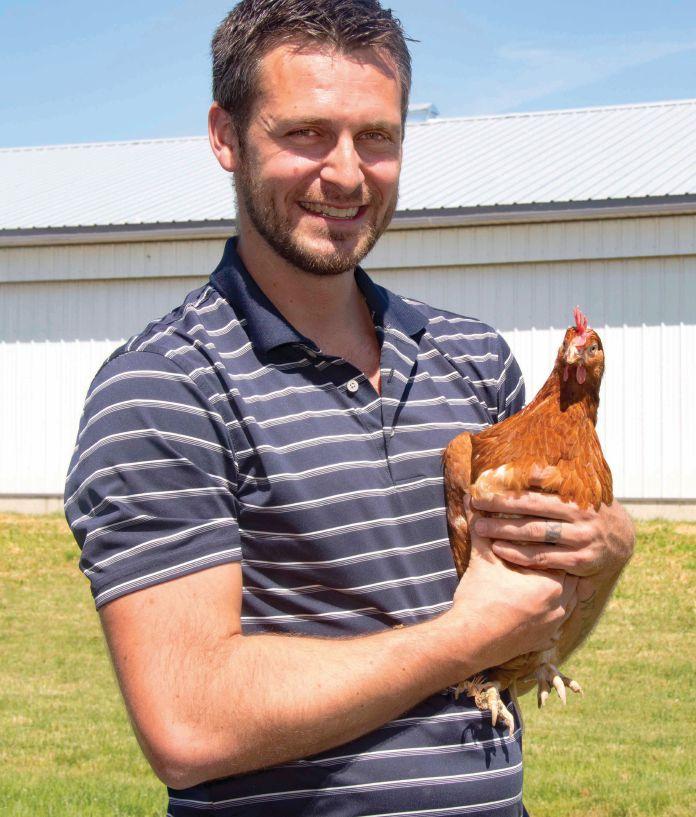
Mark Siemens, a free-range and organic egg producer, says that while adhering to the new requirements has been challenging it’s important for protecting consumer demand.
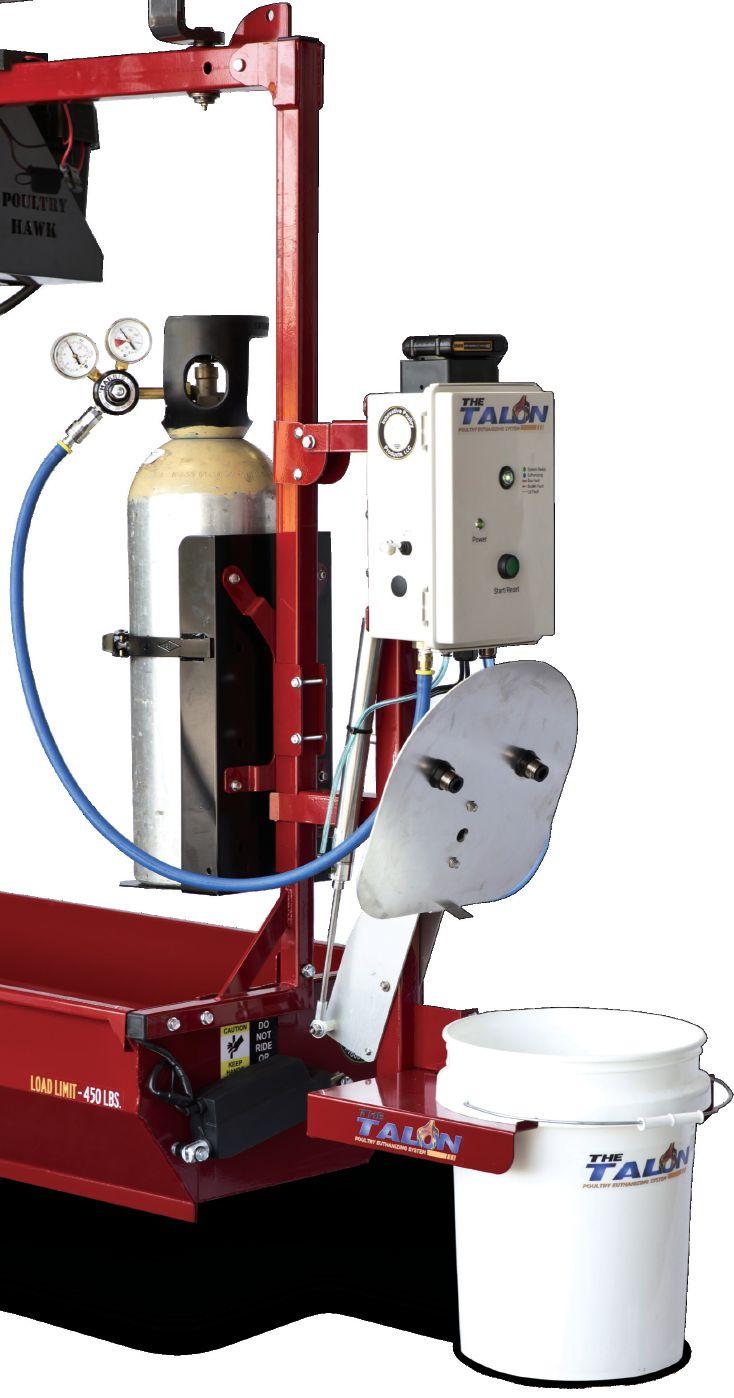


Humane. Quick. Final.
The Talon™ is a user friendly and effective way to euthanize poultry using CO 2. Collect a few culls in the bucket, place the bucket in the holder, press the button and let the Talon™ run its cycle. With the Talon™, you not only have an easy way to euthanize, but you can also enjoy the peace of mind that you are using an approved method of animal welfare.
Talon Features:
• Portability—one unit can be used for multiple sites.
• Powered by Dewalt 20V battery
• Mount to a wall or pair it with a Poultry Hawk™ trolley system
• Simple push button operation
• Monitoring sensors & indicator lights to ensure proper operation
• Uses common 20lb. CO2 bottle



transmitted to neighbouring farms to public orders to keep birds inside if and when the risk of potentially devastating diseases like avian influenza is detected.
“Standards were really important to bring in because we’ve told people how our farmers manage their free-range operations and that the birds were going outside during the day and that they were free-range birds,” says Katie Lowe, executive director of B.C. Egg.
“But we didn’t have an auditing program to back that claim up. Now we have one that requires producers to keep a lot of documentation so that we can prove their birds are going outside for a minimum of six hours a day. Now we have those minimum standards to fall back on and we can guarantee that.”
Lowe, who is a certified animal welfare expert, says producers have had little
problem adhering to the new free-range egg rules.
The operating procedures are add-ons to standards contained in both national and provincial codes of practice for the care and handling of pullets and laying hens and are fully explained in a 45-page specialty egg production manual published in 2017.
“Because it’s an audited program, if a producer is not following the standards we can enforce them,” Lowe says. “We haven’t had to do that. Any producer who is doing free-range is on board with the requirements that we have. It’s more ensuing that producers are aware of all the requirements of the program and that they’ve got their documentation up.”
Industry snapshot
According to an infographic on B.C.
SEE THE DIFFERENCE FOR YOURSELF


Egg’s website that shows the numbers of birds and flocks in each of the five egg production types – conventional, enriched, free-run, free-range and organic – there are currently 38 flocks and some 280,000 free-range birds in the province.
The vast majority of that production is being done by roughly a dozen producers in B.C.’s Lower Mainland area. Freerange eggs account for just over eight per cent of total egg production by roughly 120 producers across B.C.
According to Lowe, debunked fears over cholesterol and the growing popularity of eggs as highly affordable nutritional powerhouses have been fueling sales in every production category. “In last four years, overall demand has increased by 20 per cent,” Lowe says.
She adds that while classic white eggs continue to dominate B.C.’s egg market,


there is steady and growing demand for specialty products in a province where people put a premium on healthy eating and living.
“Some consumers will continue to buy the classic white egg because those hens are well cared for and it’s an inexpensive source of protein,” Lowe says. “Other people, depending on their values, when they’re going to buy eggs they want to know the hens that produce the eggs have access to outside.
“It really just depends on the consumer and we find that in B.C., our consumers really like these specialty products, whether it be free-run, free-range or organic,” she adds.
“I think what we’re seeing is a consumer that wants a lot of choice, and we want to provide the consumer with that choice at the marketplace.”
Producer perspective
For producers, the biggest challenges with the new free-range rules have been ensuring compliance with the requirements of the program and keeping related documentation in order.
“Nobody I know likes added paperwork,” quips Siemens, who converted his family’s operation to free-range and organic in 2015

– a time when he says annual sales of free-range egg sales were growing from five to eight per cent a year, a pace that since slowed to half that rate.
In addition to the need to renovate barns to create door openings, among other things, Siemens says sending free-range birds outdoors raises the risk of disease and adds to labour needs and costs.
There is also the danger of predation from hungry eagles when B.C.’s salmon run ends. “Birds that are outside are also eating grass and not eating as much feed indoors,” Siemens adds. “That can impact animal growth and egg shell quality.”
He says the high cost of farmland in B.C.’s Lower Mainland – up to $130,000 an acre – would also be cause for reflection by perspective producers in need of pasture to become free-range certified.
“There is a small premium for free-range eggs but it’s not much,” Siemens says. “Still, the sector is doing well and the new rules have created a level playing field for producers and consumers, who know what they’re getting.”
Scott Janzen, another third-generation poultry producer in Abbottsford who added free-range to his free-run and conventional productions in 2014, says he is optimistic about the continued growth in demand for free-range eggs.
“As farmers, we have to produce what the public wants,” says Janzen, who worked in retail in Abbotsford and returned to the farm a decade ago to raise his family. “You can’t over-produce something if it’s not going to sell – it just doesn’t make sense. That’s just Business 101.
“But as sales grow so does our market, and sales of free-range eggs are continuing to grow so things are looking good,” he says.
Producer Scott Janzen says he is optimistic about the continued growth in demand for free-range eggs in B.C.

Guts of Growth
By Dr. Kayla Price
Why winning water maters
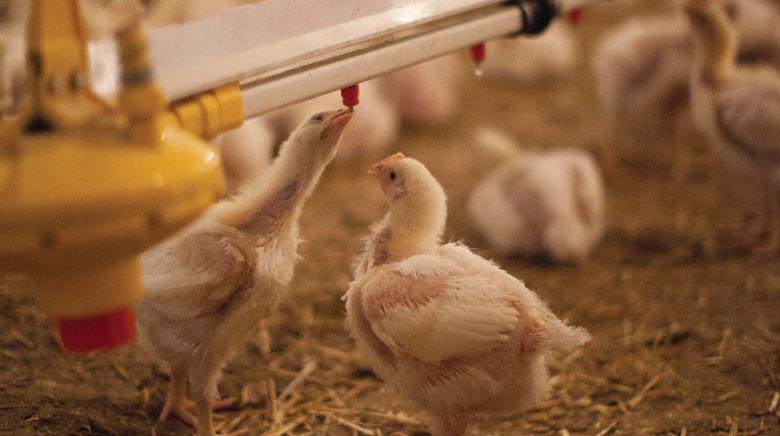
Water is one of those forgotten nutrients in poultry production. It’s always there but is usually hidden in the water lines and drinkers. As a result, many producers are overlooking this important nutrient.
Ignoring the water quality and flow in your barn can be harmful to the health of your flock and, ultimately, your bottom line. Water makes up approximately 55 to 75 per cent of a bird’s body and around 65 per cent of the egg. Therefore, water plays an important role in the bird; especially in metabolism, chemical process of life and nutrition.
Water has many key roles in the body that include helping with nutrient transport, enzymatic and chemical reactions, temperature regulation as well as lubrication for joints and organs. In broilers, the bird consumes around 1.6-2.0 as much water as feed on a weight comparison basis; this number can
change depending on the age of the bird, environmental temperature and health status.
Water to feed consumption is different in layers, breeders and turkeys. That said, generally a healthy bird consumes more water than feed. On the farm, water consumption helps drive feed consumption and vice versa. Consequently, water quality and how the bird has access to water are one of the many critical components to support bird health.
The focus of this article will be on water quality, but the birds must be able to access the water (e.g., enough drinkers per bird, appropriate height, no air blocks) in order to benefit from the water at all.
Water quality is a term that covers several factors such as organic matter and mineral content. These factors can have an impact on other aspects such as the pH of the water, how cloudy the water is, biofilm formation and the colour of the water.
In poultry production, there
Water quality is an important insurance policy for the health of the flock.
is often the case where one water source can supply many birds. In this situation, if the water is not of high quality it can have a negative impact on the entire flock.
pH level
The pH of the water line is the measure of acidity (pH 0 to 6) or alkalinity (pH 8 and above) of the water. A pH above eight means that the water has high alkalinity and often has higher calcium and magnesium levels. The higher alkaline water could negatively impact how water sanitizers work (e.g., chlorine), lead to a bitter and undesirable taste of the water and often require more product to lower the pH of the water.
There are different opinions as to what is an acceptable pH of the water line and, depending on what the goal is for the flock, this may vary. Generally, chlor-
ine works best at a pH around 6. Birds can tolerate pH levels between four and eight, but often a pH around 6 is acceptable.
Very low pH levels that are acidic (below 5) can be corrosive and turn the birds away from the water. Nevertheless, some producers have been successful using lower pH levels (e.g., pH 4 to 5) throughout the flock as one method to help control bacteria growth.
Mineral content
An important role of water is the capability to act as a universal solvent, meaning it can readily dissolve other substances. A good example is how minerals readily dissolve in water. All water available for drinking will have some amount of mineral dissolved in the water and often these minerals are within acceptable ranges. However, minerals may be present at levels outside acceptable ranges or at levels that interact with other minerals, vitamins and medications.
In some situations, birds can tolerate the levels of minerals in the water. However, in situations where water consumption increases, such as during heat stress, the bird consumes more of these minerals and a tolerated level could become a problem. In other situations, mineral residues may slowly build-up in different areas along the water line system. Therefore, it does not present as an immediate issue but could slowly impact water flow and, eventually, water access.
When minerals are present at levels that cause issues, they can be related to equipment failure, poor performance or encourage the presence of certain bacteria and fungi. Bicarbonate, sulfates
Dr. Kayla Price is poultry technical manager for Alltech Canada and is an expert in poultry intestinal health.
Guts of Growth
and calcium carbonate for the alkalinity value and high levels (e.g., 300 mg/L alkalinity) can be associated with a bitter taste of the water, more basic pH levels.
Calcium and magnesium predominantly relate to the hardness of the water and can cause scaling if at higher levels (e.g., 110 mg/L for calcium) and can interfere with the effectiveness of soap, disinfectants and some water medications. Magnesium can cause flushing in birds if there are sulfate levels of 50mg/L or more. Iron and manganese can also contribute to the hardness of the water.
Higher iron levels (e.g., around 0.3 mg/L) can lead to scale build-ups in the water line but, more importantly, can act as food for iron-loving bacteria such as E. coli and Pseudomonas. Sodium and chloride react together to form salt. Alone, sodium and chloride levels need to be 150 mg/L each to be considered high, but together you only need 14 mg/L of chloride with 50 mg/L sodium to potentially have issues such as loose droppings, intestinal issues and encouraging growth of Enterococci bacteria.
In broiler breeders and layers, high sodium chloride levels (e.g. 200 mg/L or more) have been shown to lead to negative impacts on shell quality, hatchability and embryo survivability. Loose droppings, intestinal issues and encouraging certain bacterial growth can also appear if sulphate levels are 50 mg/L or more with higher sodium levels.
Sulphate levels, alone, around 200 to 250 mg/L can lead to wet droppings and encourage growth of sulfur-loving bacteria such as
Campylobacter, Pseudomonas and Salmonella. High levels of sulphates in the water interfere with copper absorption. Sulfur-loving bacteria eat the sulfate and turn it into hydrogen sulfide which can gas off in the water and lead to air locks.
If hydrogen sulfide is formed, then when a test is done the actual level of sulfates may be underestimated if most of the sulfate has been eaten and changed form. Copper can be found in water due to corrosion of pipes or fittings or it can also be added as an antibiotic alternative.
High copper levels (e.g., 0.6 mg/L or more) can cause oral lesions or gizzard erosion similar to what can be seen in some high mycotoxin challenges. In older barns where lead or other heavy metals were used in pipes, fittings or sodder this heavy metal can get into the water. Higher levels of lead (e.g. 0.05 mg/L) can lead to weak bones and fertility issue whereas other heavy metals can lead to growth issues as well as lower egg production and embryo survivability.
In barns where galvanized metal was used the zinc levels may be higher (e.g., 1.5 mg/L) and have an impact on growth. Fluoride is another compound that is found in water. At high levels (e.g., over 40 mg/L), fluoride has been associated with skeletal issues, such as soft bones. While it is important to monitor all mineral levels, it is critical to pay attention to those minerals that can lead to wet droppings as well as encourage scale and bacterial growth.
Organic matter
When water has dissolved other compon-
ents, such as minerals, it can provide the ideal condition for pathogens to multiply and survive. These pathogens can include viruses, bacteria, parasites and fungi. Some of these pathogens multiply quickly at alkaline pH levels (e.g., above pH 8); whereas, others multiply quickly at acidic pH levels (e.g., 5 or below).
When water is tested, it is often examined for bacteria and bacteria indicators such as coliforms, nitrates/nitrate nitrogen and nitrites. Coliforms are a group of bacteria that are found in the environment. Total coliforms represent all coliforms present in soil, water, human or animal waste whereas fecal coliforms represent a subset of total coliforms that are present in the intestine and feces of many animals.
Within this coliform test there can also be tests for bacteria like E. coli and Pseudomonas. While not all coliforms are bad, some can become an issue when present at higher levels and can be enough of an intestinal irritant to lead to other issues.
Additionally, some within the coliform group can be bad and cause direct issues. Regardless, coliforms in the water system suggest contamination and can turn birds off drinking water as well as carry pathogens. The ideal level for coliforms is 0 CFU/mL. If levels are higher than biofilms can start to develop over time and become an issue.
Nitrate and nitrate nitrogen are terms are used interchangeably despite the values representing slightly different concepts. Nitrate indicates the amount actual nitrate (NO3) in the water while nitrate nitrogen
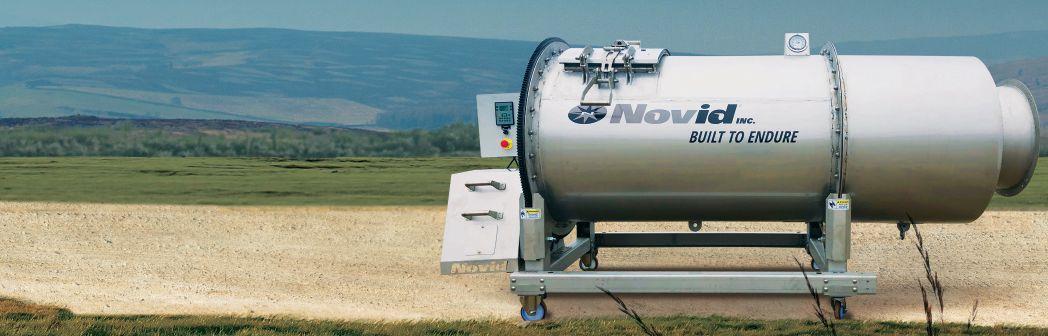
Stainless Steel Compost systems
Engineered for facilities with lower volumes Adaptable to lengths up to 22’ 47–142 lb/day capacity (22–65 kg)
PLC controlled system
Batch or Continuous Flow operation 4' and 5' diameter models also available


indicates the percentage of nitrogen contribution to the formation nitrate. Nitrite (NO2) is the more toxic form of nitrate. Both nitrate and nitrite are indicators of bacterial contamination. In humans, nitrate nitrogen levels are considered safe at 10 mg/L. In poultry, various research has suggested that broilers can tolerate low levels of nitrate nitrogen (e.g., below three to five mg/L), broiler breeders can tolerate moderate levels of nitrate nitrogen (e.g., below 10 to 11 mg/L) and layers have been shown to


tolerate higher levels of nitrate nitrogen.
However, in all cases the levels of nitrate nitrogen that caused an issue may be impacted by water pH levels, bacterial levels and even indirectly with higher water temperatures.
Nitrate nitrogen has been found to have an impact on vitamin A absorption, growth, hen day egg production, fertile hatchability. In mammals, nitrate nitrogen has been found to lower protection against respiratory and gastrointestinal infections. Nitrate can also be transformed into nitrite by intestinal bacteria. If nitrite passes into the bloodstream it can reduce the oxygen-carrying capacity of red blood cells.
Using additives in the water
In many situations different products can be administered through the waterline. These products can include: vitamins, electrolytes, acidifiers, flavours, and medications. These products can all be used effectively, but the efficiency of their use is dependent on the quality of the water and possible interactions with other water line additives. A good water line cleaning program that includes flushing the water lines can help to properly use water line additive products.
Conclusion
Since water is an important nutrient for birds, providing good quality water is vital for their health. Poor water quality interferes with digestion, has negative impacts on intestinal health and bird performance, reduces effectiveness of water-administered vaccines and may create equipment issues that can decrease access to water.
In order to ensure water quality, it is key to have an effective and consistent waterline cleaning program. It should consist of a two-part protocol. Firstly, the water lines need to be descaled and cleaned thoroughly between flocks. Secondly, there should be a sanitation program for when the flock is in the barn and consistent monitoring of water quality and quantity during the duration of the flock. Water quality is an important insurance policy for the health of the flock and should be a part of the team management strategy.
Wishing you the very best of the holidays. From our families to yours.

CPRC Update
By the Canadian Poultry Research Council
The Canadian Poultry Research Council, its board of directors and member organizations support and enhance Canada’s poultry sector through research and related activities. For more details, visit cp-rc.ca.
Update on past scholarship recipients
The Canadian Poultry Research Council (CPRC) began its annual Postgraduate Poultry Scholarship Program in 2006. Postgraduate students who are studying aspects of poultry science at a Canadian university are eligible to apply.
CPRC would like to highlight two previous recipients of the poultry scholarship to illustrate their continued involvement within the poultry industry.
The first CPRC scholarship was awarded to Dr. Mohamed Faizal Abdul Careem during his Ph.D. program at the Ontario Veterinary College at the University of Guelph (U of G). He received a prestigious Canada Graduate Scholarship from Natural Sciences and Engineering Council of Canada (NSERC) along with the CPRC scholarship.
On completion of his Ph.D. degree in the field of poultry host-viral interactions, he was awarded a Canadian Institutes of Health Research Fellowship to conduct postdoctoral research on innate immune responses generated against mucosal viral infections at McMaster University’s Center for Gene Therapeutics.
He joined the University of Calgary (U of C) Faculty of Veterinary Medicine in 2010 following two years of postdoctoral studies. He holds a position as an associate professor (virology). His research focuses on epidemiology, pathogenesis and control of avian viral infections that are important for public health and the poultry industry. Recently, Careem was appointed as the head of the Department of Ecosystem and Public Health.
He is a productive poultry researcher with a total of 56 peer-reviewed published manuscripts in addition to delivering more than 75 conference presentations. His current research is funded by Alberta Agriculture and

Forestry (AAF), CPRC, NSERC, Egg Farmers of Canada (EFC), Egg Farmers of Alberta (EFA), Agriculture and Agri Food Canada (AAFC) and U of C internal sources.
Careem is, additionally, a diplomate of American College of Poultry Veterinarians (obtained in 2007) and American College of Veterinary Microbiologists (obtained in 2012).
He is also an associate editor of the Canadian Journal of Veterinary Research , a section editor of the Journal of Veterinary Diagnostic Investigation s and an advisory board member of the Archives of Virology
The seventh CPRC scholarship was awarded to Dr. Kayla Price in 2013 during her Ph.D. program at U of G. On completion of her Ph.D. degree in 2015, which focused on the environmental influence on live coccidiosis vaccine success in chickens, she accepted a position with Alltech Canada, where she is currently the Canadian poultry technical and research manager.
In this role, she provides technical and sales support, as well as being
responsible for research and regulatory issues. While working with Alltech, she has continued her passion for poultry intestinal health and has broadened her knowledge to cover all types of poultry production.
She has worked to share her knowledge of intestinal health and management of birds within the poultry industry. Price has been invited to speak and present on many topics at various national and global conferences and has authored articles for internal use as well as external trade publications.
As a part of her research role, she is an adjunct professor with the Ontario Agriculture College at U of G and has served as an advisory committee member for M.Sc. and Ph.D. students.
Price is also an active member of several industry committees, such as the Poultry Science Association Foundation, the Animal Nutrition Committee of Canada and the Poultry Service Industry Workshop. She is a strong advocate for the poultry industry and believes that it is ever-changing and strives to share this enthusiasm with others.
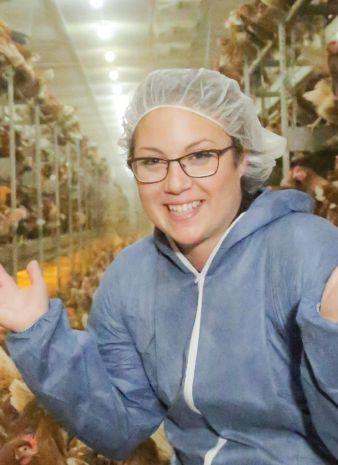
Dr. Mohamed Faizal Abdul Careem (left) and Dr. Kayla Price are past recipients of the CPRC scholarship.






Burnbrae Farms
The business
Founded by the Hudson family in 1891, Burnbrae Farms has egg grading, breaking and farming operations in five provinces. Ownership is now in the sixth generation.
The strategy
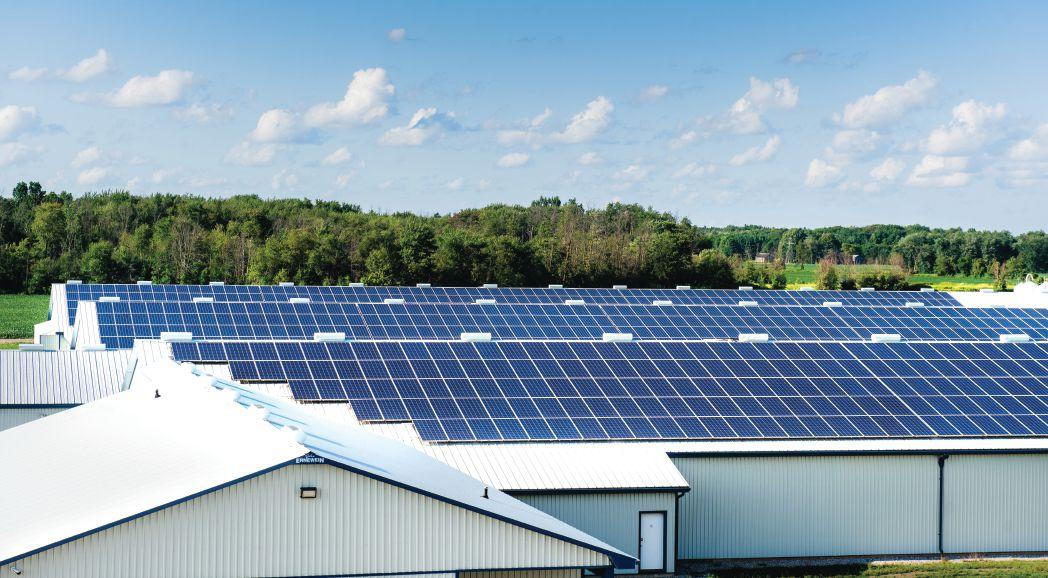
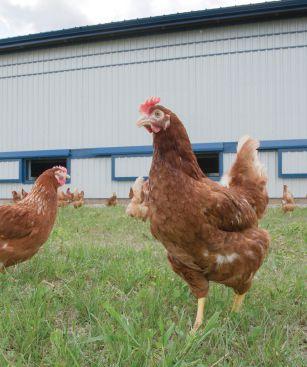
Burnbrae recently wrapped up three years of construction on a new farm in Oxford Country. It is the largest solar-powered egg layer farm in Canada, producing more energy than it uses and sharing surplus power with an adjoining Burnbrae farm. It is part of the company’s mission to reduce greenhouse emissions by five per cent by 2020. The farm consists of four brand new barns: one pullet barn; one free-run layer barn; and two free-range layer barns.
The barn
The barns feature high-efficiency variable-frequency motors, LED lighting and modified tunnel ventilation systems to ensure they use as little electricity as possible. “On average, over 20 per cent of the energy produced is shared with the farm next door,” notes Sue Hudson, Burnbrae’s director of communications and digital marketing. The farm has a back-up generator and lithium battery storage for nighttime and cloudy daytime periods. “There is also a back-up propane hot water heat source that will be used if necessary,” Hudson explains. “All other sources of energy are supplied through the batteries powered by the solar panels.”.
LOCATION
Oxford County, Ont
SECTOR Layers
TOP: Burnbrae placed solar panels on the roofs of three of the four new barns..
ABOVE: The new farm includes a pullet barn, a free-run layer barn and two free-range layer barns.
Canadian Chicken Farmers DELIVER ON PUBLIC TRUST









Canadians want Canadian chicken – They want it, because they know it stands for excellence in food safety, excellence in animal care, and a commitment to excellence in all aspects of sustainability.
As farmers, you deliver on this – you help to create and maintain public trust in our product. The standards we uphold each day have an impact, and absolutely drive the credibility that chicken farmers have with consumers.
Thank you.