Get into the holiday spirit with the latest and greatest festive recipes. Visit eggs.ca and eggcentric.tv for more.
SEASON’S GREETINGS!
Entrez dans l’esprit des fêtes avec de formidables nouvelles recettes festives. Visitez lesoeufs.ca et eggcentric.tv pour consulter celles-ci.
JOYEUSES FÊTES!
Infectious bronchitis
overview of recent incidence and tips for producers by Treena Hein
FROM THE EDITOR
BY BRETT RUFFELL
U.S. drops a bombshell
It had already been a rough year for supply management. Maxime Bernier, in his bid to become the next leader of the federal Conservatives, made phasing out the system one of the pillars of his campaign. Ending it would mean big savings for consumers at the grocery store, the Quebec MP claimed.
A chorus of pundits followed with columns supporting his pledge. When U.S. President Donald Trump called the system unfair, Bernier welcomed his comments. “Mr. President, you’re right: Supply management is unfair,” began an op-ed he wrote for The Globe and Mail. Affected industries breathed a sigh of relief when Andrew Scheer, a staunch supporter of fair farm pricing, edged out Bernier to lead the party. Many say it was the efforts of supply managed farmers that did him in.
But then in October during NAFTA renegotiations the U.S. dropped a bombshell. The Americans demanded Canada phase out supply management for dairy, poultry and eggs over 10 years. Canadian negotiators were reportedly caught off guard. While President Trump had criticized the system, most thought the U.S. would settle for greater access to these markets.
What to make of it? Mike Dungate, Chicken Farmers of Canada’s executive director, wonders if it’s simply a negotiating tactic. “Is it just designed to blame Canada and Mexico and walk away from NAFTA,” he ponders, “or is it outrageous enough to get us to bite and move the yardstick across the broader negotiation?” Another option Dungate suggests is that President Trump is just posturing for his base.
Robin Horel, president of the Canadian Poultry & Egg Processors Council, stresses that scrapping the system is against
the American poultry industry’s own interests. He says, depending on the sector, anywhere from five to 20 per cent of his members’ annual production is imported from U.S. businesses.
“They don’t want to dismantle poultry supply management – it gives them a very good market to sell into,” Horel says. “They don’t want to kill the goose that laid the golden egg.” Indeed, while The Donald loves to rail against trade imbalances, the U.S. enjoys a healthy poultry surplus with Canada – $300 million for chicken alone.
It’s highly improbable that the Liberals will concede to this demand. Federal Agriculture Minister Lawrence MacAulay immediately dismissed it as “a nonstarter”. Still, some suggest sacrificing supply management to gain concessions from the Americans in other sectors like softwood lumber. What’s more, an Angus Reid survey of Canadians found 45 per cent support using it as a bargaining chip in NAFTA renegotiations as a last resort.
In the unlikely event that Canada agrees to phase out supply management, what would change? Horel says it would mean the end of small, family run farms. “There’d be fewer, bigger farms – that would be the trade off,” he says. We asked numerous other experts to envision a world without supply management. Their responses, which you can read starting on page 34, together form a powerful case for keeping the system in tact for good.
However things unfold as NAFTA talks continue into next year, we’ll keep you updated, albeit with a fresh look. Indeed, we’re finally getting a makeover. Watch for the first redesigned issue in January, with exciting new features to boot. Until then, happy holidays! n
Occasionally, Canadian Poultry Magazine will mail information on behalf of industry-related groups whose products and services we believe may be of interest to you. If you prefer not to receive this information, please contact our circulation department in any of the four ways listed above.
With nearly 70 years of experience and more than 3 billion birds around the world drinking from a Lubing system on a daily basis, Lubing has established a rock solid position as a global leader developing innovative products for poultry production.
Our Tradition of Innovation keeps us at the forefront of the industry by continually offering cutting-edge technology that helps producers gain every possible advantage in production to maximize profits.
Got Lubing? You can’t afford not to. Contact us to find out how we can help improve your bottom line.
A Alberta back in national chicken quota system WHAT’S HATCHING HATCHING
fter eight years of discussions and negotiations, a new Federal Provincial Agreement for Chicken (FPA) has been reached. On Oct. 31st, Farm Products Council of Canada determined that Governorin-Council approval was not required for the new FPA, thus bringing the process to a close.
All federal and provincial signatories support the new allocation methodology. What’s more, it delivers on the requirements of the Farm Products Agencies Act for Chicken Farmers of Canada (CFC) to take comparative advantage into account when allocating production growth.
In a press release, CFC chair Benoît Fontaine said the
agreement increases certainty for all industry stakeholders. “With it, we have the tools we need to grow, develop and thrive,” Fontaine explained. “This FPA marks our industry’s total commitment to a dynamic and always evolving supply management system for chicken.”
The Canadian chicken industry welcomed Alberta Chicken Producers back into the agreement. The province had withdrawn from the FPA in 2013, but continued to work with the national organization on developing a more modern allocation system.
“We’re excited to have all our provinces back on board,” Fontaine proclaimed. “Our focus on responding quickly to the changing demands of consumers in every province, and to meeting all our challenges, are among the many reasons we are a Canadian success story.”
CFC executive director Michael Laliberté also welcomed the new deal. “The agreement provides strength to the Canadian chicken industry and shows that we can work together to evolve our supply management system for the benefit of all,” Laliberté said.
In a statement, CFC stressed that the new agreement is vital to the Canadian chicken industry’s continued strategic growth.
“Consumer demand is rarely static. It changes as a result of demographic shifts, immigration from countries with different food preferences and new science related to health and nutrition.
“The active support and participation of the federal and provincial governments enhances the nation’s international trade position, backing Canada’s right to use the marketing systems of its choice.”
CFC chair Benoît Fontaine says the agreement gives all stakeholders added certainty.
U.S. demands end to supply management
NORTH AMERICA
The United States lit a fuse on one of Canada’s most politically explosive trade issues, asking in ongoing NAFTA talks for an end to the supply management system for dairy, chicken, eggs and turkey within the next decade.
The U.S. has adopted a
BC
highly aggressive posture on virtually all the key issues expected to arise in the current NAFTA talks: it has asked to erect trade barriers in its own politically sensitive sectors, while eliminating them north of the border.
The demand to end supply management, which Canadian government officials dismissed as a non-starter, came near the end of a weeklong round where American negotiators dropped one bombshell demand after another. This has led many to question
Egg introduces standards for free-range eggs
BRITISH COLUMBIA
In October, B.C. became the first province in Canada to set standards for free-range birds. The new standards state that hens must have access to the range at least 120 days a year – and a day is a minimum of six hours. Farmers must also document the number of days and hours a day hens have access to the outdoors.
“B.C. farmers have always given their free-range hens
access to the outdoors on a regular basis; however, we did not have a verification system in place,” Katie Lowe, executive director of BC Egg, said in a press release. “These new standards mean that farmers have to document outdoor access and we will audit them to ensure they are meeting these basic standards.”
The standards, which were developed with the assistance of animal care specialists and farmers, state that hens must
whether the U.S. goal is to actually reach a deal or to blow up NAFTA altogether.
The Canadian Press reported that the request caught some on the Canadian side off-guard, since they hadn’t expected the highly contentious issue to arise at that stage.
The report also said the supply management request came with an initial phase-in period of five per cent more market access per year, leading to total duty-free, quota-free trade in protected supply-managed areas within 10 years.
be given outdoor access when the temperature is between 15°C and 30°C.
When farmers restrict outside access, they must have a letter from a vet stating why. A common reason might be an illness in the flock that could be passed on to neighbouring farms if the hens were outside. Similarly, if B.C.’s chief veterinarian determines that the risk of a disease like avian influenza is too high, she may require that hens be kept inside.
The standards also dictate that the range must have grass, be free from debris and not have anything that can attract wildlife like food dishes. These standards are in addition to the standards outlined in the new Code of Practice of Care and Handling of Laying Hens.
“We are very proud to be the first in Canada to set these standards and make them mandatory for all free-range farmers in B.C.,” Lowe concluded. “Our farmers want to provide the best possible care for their hens and they know these standards will help them do just that.”
COMING EVENTS
JANUARY 2018
Jan. 22, 2018
PIC Science in the Pub Guelph, Ont. poultryindustrycouncil.ca
Jan. 25, 2018
PIC Eastern Ontario Poultry Conference St. Isidore, Ont. poultryindustrycouncil.ca
Jan. 25-27, 2018
Pacific Agriculture Show
Abbotsford, B.C. agricultureshow.net
Jan. 29-30, 2018
International Poultry Scientific Forum Atlanta, Ga. ippexpo.com/ipsf
Jan. 30-Feb. 1, 2018
International Production and Processing Expo Atlanta, Ga. ippexpo.com
FEBRUARY 2018
Feb. 7, 2018
PIC Poultry Producer Update
Jordan, Ont. poultryindustrycouncil.ca
Feb. 14, 2018
PIC Poultry Producer Update
Clifford, Ont. poultryindustrycouncil.ca
Feb. 21, 2018
PIC Poultry Producer Update
Mount Brydges, Ont. poultryindustrycouncil.ca
Feb. 21-24, 2018
National Turkey Federation Annual Convention
San Diego, Calif. eatturkey.com
WHAT’S HATCHING HATCHING
McDonald’s new chicken policies
McDonald’s unveiled new policies this fall aimed at sourcing chickens raised with improved welfare outcomes. The company vowed to fully implement the following eight commitments in several major global markets, including Canada, by 2024.
1. Improved farm-level welfare outcomes: Set targets, measure performance and report on key farm-level welfare outcomes.
2. Innovative on-farm animal health and welfare monitoring technologies: Work with partners to develop on-farm monitoring systems to automate the gathering of key animal health and welfare indicators, including behavioural measures. Once established, these technologies will highlight potential areas for improvement in real time.
3. Natural behaviour: Require chickens to be raised in housing environments that promote natural behaviours like perching and dust bathing.
4. Commercial trials on production inputs: Conduct commercial trials across select markets in partnership with large global chicken suppliers to study the effect that various production parameters have on key welfare outcomes within large-scale commercial conditions. These trials will measure the effects of inputs such as lighting, stocking density (space allowance) and genetics. This will enable the company to identify best practices that support improved farm welfare outcomes in specific climates across the globe.
5. Stunning: In the U.S. and Canada, transition to sourcing chickens that have been stunned by the use of Controlled Atmospheric Stunning (CAS), a method that is approved by the U.S. Department of Agriculture (USDA) and the Canadian Food Inspection Agency (CFIA).
6. Accountability: Establish third-party audits to ensure suppliers’ farms are in compliance with McDonald’s new chicken welfare standards.
7. Feasibility study: Complete an assessment by the end of 2018 to measure the feasibility of extending these commitments to the remaining global markets where McDonald’s operates.
8. McDonald’s Advisory Council for Chicken Sustainability: Establish a global advisory council focused on sustainability, with participation from academics, scientists, suppliers, industry experts, animal welfare advocates and environmentalists.
Poultry Industry Council: CELEBRATING 20 YEARS OF SERVICE TO THE INDUSTRY
Tell us about the Poultry Industry Council’s early days. “There were two organizations at the time. The Poultry Council had a poultry health meeting every fall and also ran the annual poultry show. The Poultry Industry Centre focused on research and education. As I was close to the animal health pharmaceutical sector, when they were lining up potential directors for the board of the Centre, John Hoover asked if I would stand for election and I got elected. It was totally chance and a great experience. I remember at the first meeting I asked about the difference between the two organizations and that question seemed to come up fairly often. Eventually, a merger was organized. I was involved in amalgamation and elected as first chair.
Maurice Smith is a poultry vet and was the first Poultry Industry Council chair.
In the early times of PIC, we got different grant proposals that we would look at for merit and give the scientists as much financial support as we could. For some projects we couldn’t give a lot of money, but we were able to support the first project for some researchers. There was always a great momentum and energy and enthusiasm at the meetings. We all wanted to do the right thing – to do more with the resources we had. It was always positive. I attended the annual PIC meeting in early November this year, and it was still positive. Everyone pulls together and all ideas are shared and discussed to help the industry.”
What do you see ahead for Canada’s poultry industry?
“Things are moving so quickly in society and many changes will occur. It is uncertain what will happen with NAFTA and supply management. In years to come, biosecurity will be more important, as will good communication. Diagnostics are excellent now and we need to continue to support that. I know that the future is bright, as there are a lot of very talented young people coming into the industry. It’s a beautiful thing.”
Cover Story The genetic revolution A look back and what’s next.
by Karen Dallimore
The red junglefowl was first domesticated about 7,000 years ago. This small, colourful bird is the wild ancestor of our domestic chickens. While they are both omnivores, both dust bathe and both have males that like to cock-adoodle-doo, when it comes to meat and egg production our modern commercial bird bears little resemblance.
Teun van de Braak is a laying hen geneticist with Hendrix Genetics in The Netherlands. As a recent guest lecturer at the University of Guelph, van de Braak described the road taken to developing our modern version of the laying hen. He also glimpsed to the future.
A BIT OF HISTORY
GENETICS EDUCATOR
Teun van de Braak, a laying hen geneticist with Hendrix Genetics in The Netherlands, was recently a guest lecturer at the University of Guelph.
Chickens were originally domesticated for cock fighting, said van de Braak. We actually went wrong right at the beginning by selecting for aggression. For the most part their breeding was more about ornamentation than production, with chateau owners claiming bragging rights about having the most beautiful birds. A lot of diversity was achieved during this time but egg production remained a seasonal consideration.
Under the influence of Mendelian genetic theories from the mid-1800s, scientists at the turn of the century were taking new interest in poultry breeding, exploring inheritance characteristics of traits such as feather colouring, comb shape and skeletal defects. Poultry breeding at this time was focused on exploring the process of heredity. In the 1930s, as beauty began to separate from utility, poultry breeding pioneers such as Don Shaver and JJ Warren began developing today’s production lines.
After World War II there was a huge shift from small scale, multi-species farming to specialized, one-species farms. There were big changes to housing as well, which signaled the start of modern production. These changes affected all livestock with a rapid shift from dualpurpose to single purpose breeds.
In the past relatively short 50 years we have seen an 11 kg turkey now take half the time to produce as it did in 1960. Laying hens that used to give 230 brown eggs per hen in 1960 now give 410 eggs, producing 5,000 eggs per ton of feed then compared to 9,500 eggs per ton of feed now. Better housing systems, better management and better genetics have all played a role.
PHENOTYPE VS. GENOTYPE
On the genetics side, this increase in efficiency and meat production has mainly been done with phenotypic selection, said van de Braak, where what you see is what you get. We’ve used the diversity available with natural selection to develop purpose-created birds. But when you are selecting based on phenotype – basically on looks and performance records – how do you know you’re producing the best bird? Genetic advances rely on comparing production between generations using information from progeny records. That takes time.
In the 1960s, breeding was done by obvious selection of traits – the rooster looked nice and the hen laid a measurable number of eggs. Lots of family information was available. By the 1980s, geneticists had estimated breeding values known as BLUP (Best Linear Unbiased Prediction) as a tool, utilizing the power of computers to analyze data.
By the turn of the century, genomic selection was able to offer a better insight into the genetic potential of a bird’s DNA profile, supporting breeding decisions especially where two or more lines may have similar genetics and appearance.
If you’re breeding with proven sires it takes the length of the production cycle to measure outcomes. But now with genomics –the sequencing and analysis of the genetics of the bird – that wait time has been greatly decreased and more accurate selection decisions can be made. Genomics also allows the verification of parentage, reducing inevitable human error by using the right eggs.
BREEDING GOALS
At some point the birds are at the full limit of their production – the genetics are at a maximum. To make gains it is necessary to have variation, but at a certain point there is little variation left. With laying hens, for example, the only way to get more eggs now is to increase the length of the laying cycle. Breeding goals are changing for laying hens from an emphasis on production and parent stock efficiency to product quality and, more recently, to the health and welfare of the bird. In that regard, van de Braak sees huge potential for the future.
Over the last 30 years, the trend of changing cages to aviaries in Europe has led to a demand for different birds. Breeding for caged birds allowed a focus on efficiency of production, using minimal input for maximum output. But you cannot put a bird that was bred to be kept in cage conditions and expect it to be able to go outside. In alternative housing systems, the birds may require more energy for maintenance, needing to be a little
more robust and eat more. “It’s all there,” van de Braak said. “It’s all in their DNA.” Hendrix keeps many pure lines to ensure that there is a lot of genetic variation from which to choose. If there was only one trait to change, the progress would be fast. But their breeding program needs to take 35 traits or more into account and many of those traits are negatively correlated.
BREEDING FOR ANIMAL WELFARE
When breeding for animal welfare, geneticists need to ask, what are the risks of going in a certain direction? How fast should they go? How do the selected traits balance with economic traits? How will phenotypes be measured? How will breeding goals be defined? Hendrix’s “social breeding program” has brought continued progress to their lines. The goal is to identify friendly families with good production and monitor their reaction to the stresses of production such as higher light intensity. To select and mate those families will result in hens with improved feather cover and less mortalities.
In layers, the selection pressure has been increased for these social traits and others. Feather cover tells you something about feather pecking, van de Braak explained. It is also an indicator of stress since birds tend to jump on top of each other if they are stressed or scared, causing a lot of feather damage. Mortality due to cannibalism is higher now with birds being kept with intact beaks compared to flocks that previously underwent beak treatment. Other breeding goals now include selection for E. coli resistance, reduced keel bone damage and improved gut health.
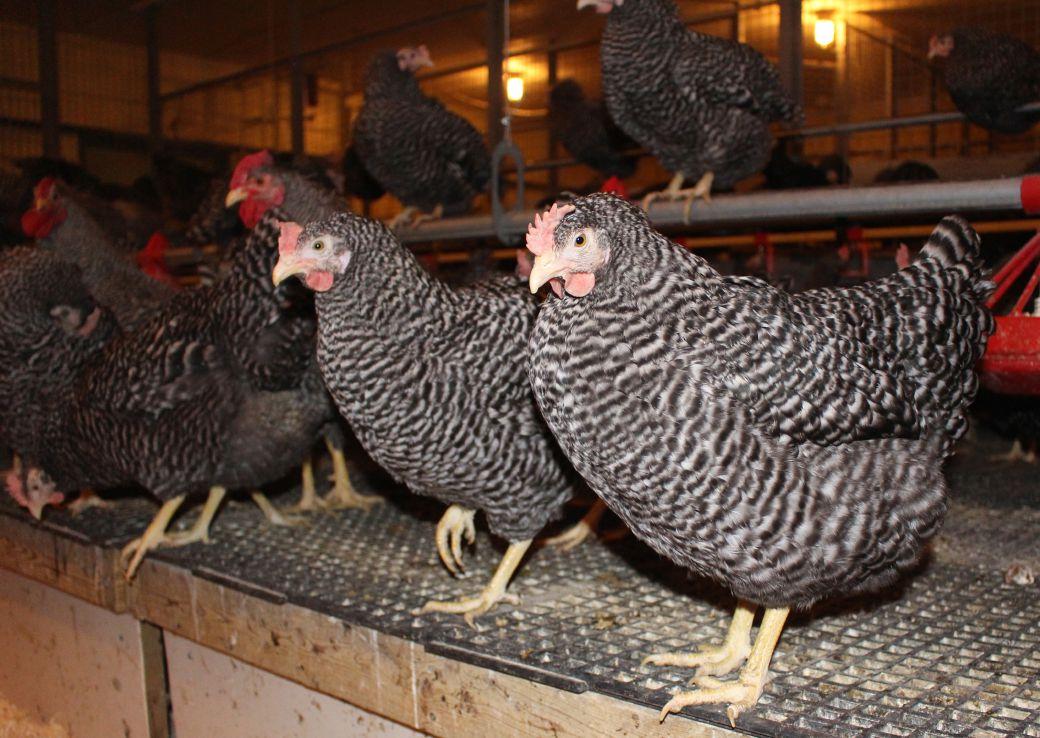
The genetic preservation flock at the University of Guelph includes Columbian Barred Rock (pictured above), Shaver White Leghorn, Rhode Island Red, Plymouth as well as the Smoky Joe, Fatty Liver and Feather Pecker lines.
Cover Story
FUTURE PLANS
As Hendrix-Genetics looks to the future, the challenge remains, how to feed the world while maintaining respect for the animals? Van de Braak says they are shifting towards group housing systems at their research and development facilities, which means finding new ways of collecting data on individual birds.
The company is also maintaining a large gene pool to ensure genetic diversity. At times it goes back to developing traditional poultry that includes coloured turkeys and more efficient dualpurpose chickens like the ISA Dual, which provides a two kg male at 10 weeks of age and 250 eggs at 70 weeks, mostly for niche markets and developing countries.
There can be a downside to big gains too, van de Braak said. “It wasn’t always hallelujah.” Broiler birds grow too fast and have become more sensitive to Marek’s disease, while the progress that has created efficient superbirds of one sex has resulted in the other sex not being as useful: what is their fate? These are concerns we must address in our breeding programs, van de Braak said.
THE PLAYERS
Consolidation is changing the landscape of the poultry breeding
world. There used to be hundreds of breeding companies. Nowadays, Hendrix Genetics is one of only two big players in the world – the other company is the Erich Wesjohann Group.
Hendrix Genetics is one of the world’s largest suppliers of laying hens and turkeys, supplying half of the layer market and 55 to 60 per cent of the world turkey stocks.
“On the one hand, it might have led to less genetic diversity – with all the consolidation (mergers and acquisitions), some of the experimental pure lines are no longer there,” van de Braak said. “On the other hand, combining the genetic lines of the different breeding programs gave opportunities to produce new hybrids.” Some of the new three or four-way hybrid crosses have provided better field results compared to the old crosses. This has led to improved productivity, egg quality and health and welfare in commercial birds.
He pointed out that some of the pure lines were not lost – a few have been donated as heritage lines to universities and research institutes. At the University of Guelph, for example, Don Shaver’s flocks continue to offer their heritage genes at the Arkell Research Station near Guelph, Ont. Initially, in 2003, the heritage lines were maintained by the research station staff under directives from Don Shaver. Soon after, Grégoy Bédécarrats, a professor at the University of Guelph, began supervising breeding and implementing care guidelines.
“Due to budgetary constraints, we needed to find a solution to spread the workload of breeding beyond farm staff,” the professor explained. With the help of Don Shaver, they formed the student-run University of Guelph Poultry Club, which has provided a tremendous opportunity to expose students to poultry science and reintroduce practical application and hands-on training. Through this initiative, the responsibility of care has been progressively transferred to the club, including duties of collection and analyses of egg production and quality data, selection of hens to be used for breeding, performing artificial insemination and participation in the hatch. The University of Guelph poultry club is now in charge of maintaining these birds as pure lines as close to what they were when donated.
To further enhance this experiential learning, Bédécarrats teamed up with the Poultry Industry Council (PIC) to develop a certificate on artificial insemination that would be recognized by the industry, giving club members the opportunity to gain practical knowledge relevant to future employment.
However, the farm staff still performs day-to-day maintenance of these birds, requiring labour, barn space and resources in competition with a full slate of other research activities. “The hope and intent of keeping these lines was that they would be used for research and education,” Bédécarrats said. “Although we cover the education part, little research has been done.”
He said that these genetics could serve to recreate a viable commercial population in the case of a catastrophic event such as a large influenza outbreak, and in a sense they represent Canadian poultry genetic heritage. “The genetics in these birds is very valuable, although not at a commercial level. So the issue is, who will pay to keep the lines alive?” n
Canadians want fresh, high-quality, Canadian chicken and our farmers are proud to raise it to some of the highest standards for food safety, animal care and sustainability.
That’s what “Raised by a Canadian Farmer” means.
Business Succession tips The Sundgaard family farm shares lessons learned.
by Jennifer Paige
Third generation poultry farmer Don Sundgaard says when it comes to succession, be patient, encourage off-farm experiences and welcome both formal and informal discussions.
“Give it some time, but ask questions and have the conversations,” says Sundgaard, who grew up on his family farm on the outskirts of Standard, which sits 90 km east of Calgary.
In 1971, Sundgaard took over the family farm after attending school and working in Calgary and Banff, Alta., for a number of years as an accountant. His father’s health had deteriorated and he could no longer manage the operational demands of the farm.
“We didn’t intend to come back as soon as we did but we received a call and we had to make a decision and it was my long-term intention to be on the farm, so we made the move.”
TIME IS OF THE ESSENCE
Sundgaard says succession planning is a lengthy process that requires consistent communication, including both formal and informal conversations.
Over a number of years, Sundgaard took the family farm from a small operation that required off-farm jobs to a dual-site broiler and grain operation. “We transitioned over a period of time and increased production. We eventually built a few new barns on the existing site and then in 1990 we had the opportunity to buy a small grain farm. We started into the grain production and eventually built another barn on that property in 2006.”
When he took control of farm operations from his father in 1971, production was about 15,000 birds every 14 weeks. “Our production of broilers now is about 75,000 to 80,000 for an eight-day cycle and then we crop about 1,400 acres of wheat, barley, canola and sometimes edible peas,” Sundgaard says.
Over time, Sundgaard adapted the farm to new standards, technologies, innovations and quota requirements.
“Genetics have changed greatly, the mode of operation in the barn is now all computer controlled, where before it was all
manual,” he says. “I remember on cold winter days, when the chicks came in, my father would practically sleep in the barn just to make sure the chicks were comfortable. Now we don’t do that, of course. Things are computer controlled, which is much better for the environment and for the bird.
“Mechanical loading has changed things a whole lot too,” he continues. “We used to carry the birds out, put them on wooden crates and the trucker had a tremendous job loading the crates on the flatbed. Processing was a whole lot different than what it is today as well. Everything is mechanized.”
THE NEXT GENERATION
Along the way, Sundgaard and his wife, Val, raised two daughters and a son. As his son, Trent, made his way through high school he declared that he wanted to stay and work on the farm.
“Trent always wanted to come back to the farm and I always said that he could come back but there are a couple of things that, in my opinion, we needed to do first. We required him to go to school and do some post-secondary education because we knew he would need to know more than I did to make a successful business in the coming years, and we wanted him to work for someone else so that he can see what that is like.”
With Sundgaard’s encouragement, Trent ventured off the farm for a number of educational and worldly experiences. “Trent went to the Northern Alberta Institute of Technology (NAIT) and got his renewable resources degree and then worked on a trout farm in Denmark where they raised small fingerlings in the hatchery for fish. He also worked on a pig farm for a while and then went back to school in Saskatoon and earned an agriculture degree with a specialization in poultry. After that, he went to the Bahamas for two-and-a-half years where he worked
with a company that had five farms and raised 250,000 birds every cycle. That was a good experience for him.”
Trent returned to the family farm in 2000, at which point the family began the process of succession.
“It has certainly been a process and we are not finished with it yet. At this point, the management of the farm is 100 per cent his. However, when anything major comes up, we still talk about it together – if we are going to purchase equipment, change a policy or things to do with insurance coverage, that type of macro decision making,” Sundgaard says. “Eventually, he and his wife will need to make all of the major decisions and we will step out of it and just be there if they need help.”
The Sundgaards have engaged a number of professionals along the way, including accountants and lawyers to draft legal documents. As well, both Don and Trent have actively looked for information and advice.
“Involvement with different professionals is helpful and even attending an open seminar can help to get the conversation started. There is also a lot of reading available. In the past five years there has been a lot of coverage on the issue that can help.”
FAIR VERSUS EQUAL
One of Sundgaard’s biggest challenges throughout the process has been trying to ensure fairness to all of his children.
“We didn’t have the situation that some farmers are faced with, where they have two or three kids that want to come back to the farm. We only had the one child that wanted to come back to the farm so that simplified a few things,” he says. “But it was never our intention to just hand the farm over to our son. I guess to be fair and equal are two different things and so I read a lot about that.” He explains that to transfer the farm over and
give equal shares to all the children makes it almost impossible for whomever is taking over the farm to make it viable and that it needs to be fair on an economic basis as well.
“For example, our land when we started into farming was about $500 an acre and today that same land is worth about $4,000 an acre. Quota has gone from a single digit number on a basis unit to 20 times that now. So, to start off with a farm paying market value for quota, market value for land, you have to have a few suitcases of money to make that work and to finance it all wouldn’t work either. So the financing side is a challenge for sure and that is where guidance from our accountant has helped.”
He adds that it is best to approach the succession issue with an understanding that it is not something that can be solved in a few meetings. “It takes time. It is a process that requires consistent communication and it will require both formal and informal conversations with everyone involved. But, it is better to have the conversations and talk about it than to wait until it becomes an issue or something that needs to get done in a hurry.”
Sundgaard also advocates for getting children involved in the farm operation throughout their childhood so that if one day they have the desire to take control, the learning curve will be lessened and they will have a good understanding of the farming lifestyle. “You need to instill the knowledge and lifestyle in your children, but then let them make the decision to come back to the farm on their own. The child coming back to the farm needs to have a passion and to want to do it in order to make it successful, otherwise it is just a drudgery farm. It is not a nine-to-five job. It is a lifestyle but also a business,” he says. n This story was originally published as part of Succession Planning Week. Visit www.familyfarmsuccession.ca for ongoing updates.
Only Sundgaard’s son, Trent, wanted to come back to the farm, which has helped simplify succession planning.
Health Infectious bronchitis
An overview of recent incidence and tips for producers.
BY TREENA HEIN
The severity of infectious bronchitis has increased significantly, with the current strain of the virus now making its way around Ontario, notes Dr. Mike Petrik, poultry veterinary lead at McKinley Hatchery in St. Mary’s, Ont. Petrik was one of several veterinarians who took part in a roundtable discussion on the topic at the Poultry Industry Council’s Health Day.
“I think the incidence rate is pretty steady, and it’s always something that we’ve had to deal with,” Petrik notes. “I remember we had an outbreak 15 to 20 years ago. It’s been about a year since we’ve first seen a new strain, Delmarva (DMV). It’s not abnormal to get new strains, and different ones become predominant over time and then fade away.”
Infectious bronchitis is a common disease in commercial chicken production, adds Dr. Shahbaz Haq, also a roundtable presenter at the PIC Health Day and owner of Lakeside Poultry Veterinary Services in Stratford, Ont. “Over the time since I moved to Ontario from B.C. four years ago,” he notes, “I have seen it increase in severity from around November 2016.”
While different new vaccines are being investigated for the current DMV strain, Petrik reports that the existing set of strains and vaccines are not well matched. “They aren’t worthless, but the vaccines we have don’t cross-protect as much as we’d like against the strains we are seeing,” the veterinarian explains. “That’s why biosecurity and early detection are also needed.”
Petrik believes we must first be clear
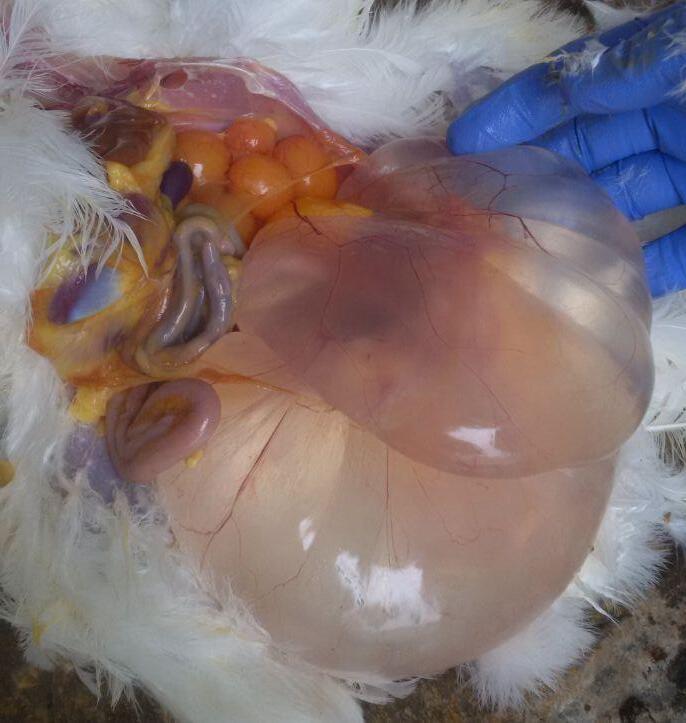
(Top): In some cases, infectious bronchitis can lead to conditions like internal layer syndrome. This picture shows how large the oviduct can be when it fills with fluid as a result of the condition.
(Right): Veterinarian Dr. Shahbaz Haq
that every single farm is a risk factor for spread of the disease. “Are some farmers doing better than others? Absolutely,” he states. “Farmers have to make sure they are doing as much as they can to be as
biosecure as they want to be, and they may need to invest time and energy and money in more resources. Every farmer has to decide how much he or she wants to be protected, but everyone needs to
ALARMING SYNDROME
PHOTO CREDIT: DR. MIKE PETRIK
remember it’s the one thing you can control in preventing this disease from being on your farm.”
Haq agrees, and stresses that compliance with basic biosecurity protocol is more important than adding any new measures. “Farmers already have the knowledge about biosecurity, and the question is, do farmers make sure the proper protocols are being followed every day, day after day,” he asks. Technically, infectious bronchitis could be airborne, he says, but could easily be spread by breaches in biosecurity.
BEYOND BIOSECURITY
In terms of other actions producers should take, Haq cannot stress enough that good basic management matters a great deal for infectious bronchitis, but also in terms of incidence and severity of many other diseases as well. This includes maintaining optimal temperature in the barn according to the age of the birds, proper feed accessibility, adequate lighting, proper litter management, optimum ventilation and supply of good quality water. Even if the focus is only on infectious bronchitis, Haq says that if chicks are in improper temperature in the barn, for example, they will be much more prone to getting this disease. Compromised air quality is a big factor as well in control and prevention. Carbon dioxide and carbon monoxide levels can be high at the brooding stage and later in the cycle, Haq notes, and there can be high levels of ammonia at the floor/bird level from wet litter. Infectious bronchitis becomes quite challenging to control, he adds, in high stocking density flocks and multiage complexes.
Petrik also strongly advises washing poultry barns before disinfection in between flocks. He notes that if you don’t clean before you disinfect, the disinfection process won’t be nearly as effective. Haq echoes the sentiment. “The manure is where the microbes hide on the floor, but they also hide in dust buildup on other flat surfaces in the barn such as,around the fans and so on,” he says. “Dry cleaning is very important and you should
absolutely scrub if you need to.” In addition, proper downtime helps to minimize the infection pressure in the barn.
In terms of early detection, Haq emphasizes to carefully watch for even a slight feed and/or water consumption drop and any other abnormal behaviour because these signs indicate there is a problem, even though no symptoms (including gasping, coughing, sneezing, tracheal rales, nasal discharge and wet eyes) are observable.
KNOWING WHAT’S OUT THERE
Ongoing genetic typing of strains is also critical to management of this disease in Petrik’s view. “In order to get a handle on where this virus is, we need to do lab tests, which costs money,” he notes. “This means some farmers are not following through with testing and that’s a problem. Knowing how many strains there are and which flocks are infected is really important, and what strains are out there is really important. While typing doesn’t help you treat your flock, it is important information that industry groups and vets can use to manage the disease better.” Petrik and other poultry health personnel meet regularly as part of the Ontario Animal Health Network to go over which strains have appeared where, and more.
“Without typing,” Petrik explains, “we don’t know if we’ve got a new strain or an existing strain, and we will then also not know how it’s moving around the province – how much transfer is occurring between flocks. We know how existing strains play out in a flock and react to treatment and we need to know if we’re dealing with them or something new. We can then optimize vaccine programs as well. Without typing, we are blind and can’t break the cycle.”
Petrik says vets and the industry as a whole “are not just wringing our hands – we are working hard at control and prevention of this disease.”
Haq concludes, “It’s everyone’s responsibility to do their part to keep the levels down.” n
Overview of infectious bronchitis in commercial broiler chickens
Clinical Signs of Infectious Bronchitis
• gasping
• coughing
• sneezing
• tracheal rales
• nasal discharge
• wet eyes
Consequences
• high mortality
• underperformance (reduced weight gain)
• high culls
• underweight birds left in the barn by processor
• high condemnation rate at the processing plant
Environmental factors that can make it worse
• cold temperature
• compromised air quality
• improper feed accessibility
• improper water quality and accessibility
• high stocking density
• improper litter management
• dense poultry-populated areas
Control and prevention
• heightened biosecurity
• improving management conditions
• daily pick up and proper composting of mortality
• proper cleaning and disinfection
• proper downtime
• best use of vaccines through adequate testing and typing of virus from all cases
Source: Dr. Shahbaz Haq
Nutrition RWA in the U.K.
How a gut health program is helping producers.
BY TREENA HEIN
It’s well known that one of the keys to successful raised without antibiotics (RWA) production is to manage gut health – and that’s best achieved as early in a bird’s life as possible. Establishing a beneficial and diverse gut microflora is not simple, notes John Cooper, poultry technical manager at Alltech U.K., but it’s very possible when producers follow a properly designed feeding and watering management plan.
“You have a sterile chick arriving at your farm and the fastest-growing organisms in its gut which colonize and consequently set up a certain level of gut health for the rest of that bird’s life,” he explains. “If you can help favourable alternative microbes colonize quickly and discourage the growth of pathogens, you will not only protect the bird from disease and reduce or eliminate the need for antibiotics, but you will give the bird the opportunity to put all of its energy into growth and feed conversion.”
The concept of seeding the gut with poultry-derived favourable bacteria, feeding them to promote their growth and weeding out the pathogens was developed many years ago by Dr. Steve Collett, a professor at the University of Georgia in the U.S. A few years ago, Collett teamed up with Alltech and two U.K. companies, St David’s Poultry and Liquid Mineral Service, to create an official program called Seed Feed Weed (SFW).
SEED
Cooper says that while most of the poultry in the U.K. will eventually be produced using some form of the SFW
The Seed Feed Weed (SFW) system involves seeding the gut with poultry-derived favourable bacteria, feeding them to promote their growth and weeding out the pathogens
program, in both the U.K. and Canada there are currently some limitations on probiotic use (the seed part of SFW).
“This means the major components of the program that can be used right now are feed and weed, with seed used to support good bacteria that are already in the gut,” he explains.
“While poultry producers and hatchery managers in the U.S. have free access to probiotics – and therefore seed is a strong component of the SFW program
there – in Canada (where we call it the Alltech Gut Health Management program), we promote beneficial bacteria as soon as the chick gets to the farm using a variety of alternative technologies including probiotics, which are highly regulated.” Cooper believes, however, that as regulations change, the poultry industry in Canada and the U.K. will be able to fully make use of the seed part of SFW. (He also stresses that weed is 80 per cent of SFW success.)
SEED FEED WEED PROGRAM
Nutrition
Outside of Canada, some companies administer competitive exclusion products consisting of parental caecal bacteria to day-old chicks instead of probiotics. While they work well, Cooper notes that they are both expensive to purchase and administer. “You may be able to know the total bacteria present in these products, but not necessarily all the bacteria present because of the nature of the mixture,” he explains. “With probiotics, you are getting a product where you know what bacteria are present (for example, Lactobacillus species) as well as how many bacteria are contained.”
The U.K. poultry industry is able to use EU-certified probiotics as well as a competitive exclusion product.
FEED
In the feed part of the SFW system, birds are supplied with a unique mixture of organic acids that foster the growth of beneficial gut bacteria. As the acids don’t clean any of the organic matter out of the water and drinking lines, chlorination is also added in the mixture. In the U.K., organic acids and chlorination can be applied in the water system, but in the U.S. and Canada, application is achieved via an in-line system through equipment like proportioners.
“Through reducing the pH of the water, the organic acids (for example, citric acid) may have a negative effect on pathogenic microbes, allowing good ones to flourish,” Cooper explains. “The slightly acidic environment can be offputting for alkaline-loving pathogenic bacteria, and it’s very important to control these bacteria in the intestine, as they can travel to the caeca, and generally being protein-loving, they can establish large populations quickly. This will then cause gas buildup, which in turn causes issues when the bacteria get up further into the gut. You should aim for a water pH of 5 to 6.5 to help prevent colonization of dangerous bacteria.”
WEED
In the weed part of SFW programs in the U.K., Canada and U.S., Alltech employs
Actigen, which is a proprietary technology that the company says builds natural defences of the bird while maintaining gastrointestinal integrity and stability. Again, it’s all about optimizing beneficial microflora and addressing pathogenic microbes.
REFLECTIONS AND OUTLOOK ON SFW USE
Cooper believes that, overall, SFW provides an excellent strategy for companies and farmers to achieve RWA production, but that its use requires a farm management style that’s proactive – a change from what he considers was a reactive farm management culture in the U.K.
He adds that while “SFW is a powerful concept, easy to understand and use, which is essential to its success, we must understand it doesn’t quite happen overnight. You are not only working on gut health but also changing the farm/ barn microflora from an antibiotic load to a probiotic/beneficial bacteria load. But in the grand scheme of things, it’s quite rapid.
“The change in microflora populations that we’ve seen occurring over the first three to five production cycles in the U.K. and Canada after the program has started is incredible. It really does show how the surrounding environment that chicks are placed into impacts the way they grow and their lifetime health and performance. This program sustains gut health through the way it provides chickens with the tools they require to look after and protect themselves from disease challenges.”
Looking forward, Cooper says there may be refinements or advances in SFW ahead. He feels that way due to research going on in the U.S. and beyond into non-feed methods of providing nutrients and probiotics to chicks. Studies looking at providing nutrients and beneficial substances to embryos in hatchery eggs are another indication change lies ahead. n
Production Layers and the future of rearing Exercise critical for pullets.
by Treena Hein
Most animal welfare studies relating to laying hens has focused on adult birds. However, with the alternative housing systems recommended by the new code of practice, researchers are now interested in the pullet rearing environment and how it can affect adults. Studies have found that the conditions chicks and pullets are exposed to early in life can have lifelong effects on the behaviour, health and welfare of laying hens.
First, consider temperament and behavioural tendencies of adult hens and pullets. Along with her colleagues, Dr. Teresa Casey-Trott, a poultry welfare scientist at the University of Guelph in Ontario, notes that the welfare of hens housed in aviaries, free-run systems and enriched cages is higher when the hens are calm and adapt effectively to changes in their environment.
BETTER PREPARED
Researchers have found pullets reared in complex systems are better able to negotiate them. They’ve also found rearing pullets with perches or in aviaries also increases bone health.
Calm and adaptable hens with low fear levels also engage in less feather pecking and cannibalism, and there are fewer flock-scale injuries with these types of hens due to piling and smothering when birds are startled. Hens housed in multi-tier aviaries must also be able to negotiate complex environments with feed, water and nest boxes located on different levels, Casey-Trott notes. Her research has shown that if pullets have been reared in complex systems, they will be able to negotiate them to a stronger degree.
In addition to behaviourally preparing birds for the new housing systems in Canada, researchers have also found that rearing pullets with perches or in aviaries also increases musculoskel-
etal development and various measures of bone strength. Poor skeletal health has been a welfare concern for a long time, as it can lead to fractures, bone deformities, immobility, starvation and more. CaseyTrott notes that providing more opportunities for exercise during the pullet-rearing phase, a period of substantial musculoskeletal growth, offers a proactive approach to reducing osteoporosis by improving bone composition.
A recently published study done by Casey-Trott, D. Korver, M. Guerin, Victoria Sandilands, Stephanie Torrey and Tina Widowski examines just this topic. The team compared two groups of pullets reared in conventional cages and an aviary rearing system from day-old until 16 weeks of age. To measure muscle growth differences and bone quality characteristics, the team compared the keel bone and the muscles and long bones of the wings and legs. They found the length of the keel metasternum, caudal tip cartilage length and overall amount of cartilage was greater in the aviary-reared pullets, and their wing and breast muscle weights were also higher. However, their leg muscle weights were lower. Aviary pullets also had greater total bone density, total cross-sectional area and total bone mineral content in several major bones.
A second study looked at whether exercise during the pullet rearing phase reduces the prevalence of keel-bone damage throughout the adult laying period, as keel-bone fractures and deviations in laying hens are commonly seen in various housing systems. Casey-Trott and her colleagues looked at four comparison pullet groups reared in either conventional cages or an aviary system and then placed into either conventional
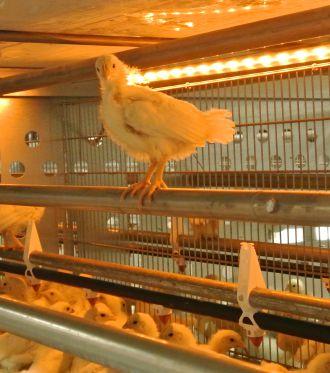
Canada’s updated code of practice recommends that hens housed in aviaries be sourced from similar systems, like this aviary pullet rearing system.
or enriched cages as adults. The researcher says those reared in aviary systems had a lower percentage of keel bone fractures.
HOUSING OPTIONS
Canada’s updated code of practice for the care and handling of laying hens and pullets suggests that hens housed in noncage multi-tier systems or aviaries be sourced from non-cage rearing systems in which pullets had access to perches. The code recommends that producers source pullets that have been reared in similar facilities with similar practices to those that the birds will experience in the layer barn. The aim is to avoid, for example, sourcing pullets reared in cages if you have free-run barn housing.
There are a few different pullet-rearing housing systems on the market today. Some are similar to standard rearing cages but outfitted with perches. As the chicks grow, the front of the cage is opened to allow access to the barn and litter floors.
Other designs offer more vertical space to chicks within the starting cage and include different levels of perches and platforms during the first weeks of life. These cages are also opened as time progresses.
To find out the percentage of pullets being reared in different types of pullet housing in Canada – standard cage, standard cages outfitted with perches, cages where the front of the cage is opened to allow access to the barn and litter floors, designs that offer more vertical space to chicks within the starting cage and include different levels of perches and
“It will be a challenge to try to get pullet farmers to build these systems.”
platforms and opened as time progresses and other options –Canadian Poultry asked Pullet Growers of Canada to weigh in.
Chair Andy DeWeerd suggests that conventional pullet housing is around 85 to 90 per cent, and aviaries and loose housing make up the rest. “In a conventional [pullet] house there are no perches, while aviaries have perches and some loose houses also have perches.”
He says his members are meeting the demand for pullets raised in non-cage systems with perches. That said, “these systems cost more, so [pullet] producers are cautious to build one unless their customers want it.” He adds that there are plenty of pullet barns for non-cage-reared pullets for those producers that wish to follow the code recommendation that producers source pullets that have been reared in similar facilities with similar practices to those that the birds will experience in the layer barn. “But if the need arises we would have to build more.”
DeWeerd notes that the cost of alternate housing systems is much higher than conventional, not only to build but also to run. He concludes, “Being that the pullet industry does not receive their cost of production, it will be a challenge to try to get pullet farmers to build these systems.” n
Consumers Canadians weigh in on food system
Highlights from the 2017 Canadian Centre for Food Integrity Public Trust Research.
BY CRYSTAL MACKAY
Begin with the end in mind. This simple leadership mantra captures the essence of the Canadian Centre for Food Integrity (CCFI) research on understanding Canadians’ expectations regarding trust and transparency in our food and how it’s produced. Before investing millions in changing farm and food production practices or in efforts to communicate with the public, it’s important to have a solid understanding of public perceptions and concerns. To be most effective, this investment should be part of a long-term game plan with proactive, collaborative thinking.
The 2017 CCFI Public Trust Research builds on the benchmark data collected in 2016. It includes trend data from previous waves of our predecessors’ Canadian Farm Issues Studies dating back to 2002. It also incorporates the extensive Consumer Trust research undertaken by The Center for Food Integrity in the U.S. since 2007.
Last year, CCFI tested the peerreviewed and published public trust model. It confirmed shared values are three to five times more effective at earning trust than facts. We also learned there are some serious disconnects between those responsible for important food system aspects, like food safety, and those who are trusted. For example, food companies and government ranked lowest for trust and competence on food safety by the public, yet they were held most
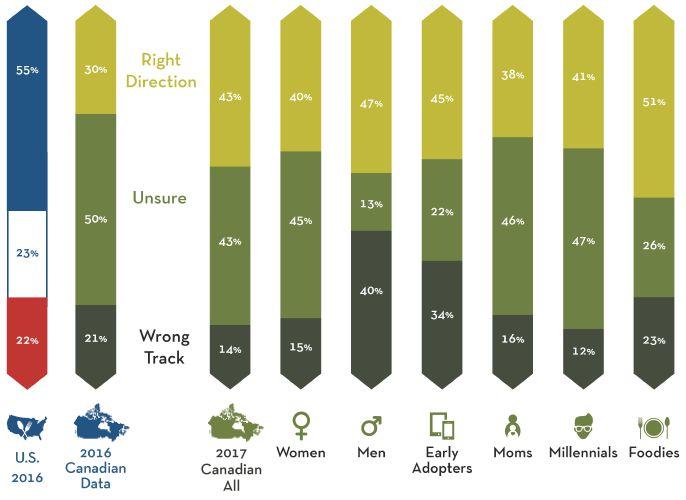
This year’s survey results show a significant increase in the number of Canadian consumers who feel the food system is heading in the right direction.
responsible both for implementation in 2016 and transparency in 2017.
The 2017 CCFI research was chosen around transparency and how it works to earn trust. Is it possible to overcome negative bias and lack of trust with authentic transparency efforts? The U.S. CFI conducted similar work on transparency in 2015, which allows for valuable North American comparisons.
The 2017 web-based study was completed in May and June by 1,307 respondents who reflect the general Canadian consumer population. To provide deeper insights, we segmented the respondents into three groups: moms, millennials and foodies. We also made some extra effort with millennials with additional
work to help answer some questions raised about our up and coming consumers from the 2016 research.
THOUGHTS ON FOOD AND FARMING
Is the food system headed in the right direction? This big picture question helps set the basis for all the more specific research work that follows. Survey results show a significant increase in the number of consumers who feel the food system is heading in the right direction – 43 per cent in 2017 compared to just 30 per cent in 2016. This increase was consistent across all segments – male, female, moms, millennials and foodies.
Consumers
There is also a significant decrease in the number of consumers who feel the food system is heading down the wrong track – only 14 per cent feel this is true compared to 21 per cent in 2016.
In figure 1, note the significant difference between American and Canadian results, the segments and men and women specifically. Think about how best to position your messages and messengers to communicate and connect more effectively in the future.
PUTTING LIFE ISSUES IN PERSPECTIVE
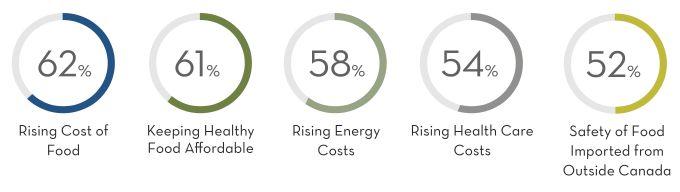
Survey participants were asked to rate their level of concern on several life issues, including broad areas like health care costs, unemployment and food safety. This work is important at the beginning of the research to provide larger context for food system issues. The rising
cost of food and keeping healthy food affordable maintained the top two positions again in 2017. The safety of food imported from outside of Canada made the top five in 2017, while the concern for the economy dropped to sixth.
What does this mean? If you work in the poultry sector, anywhere from a farm to a genetics company, you are in the business of providing healthy, affordable food for Canadians. Think about your messages and positioning of your work with the top concerns shown in figure 2 in mind.
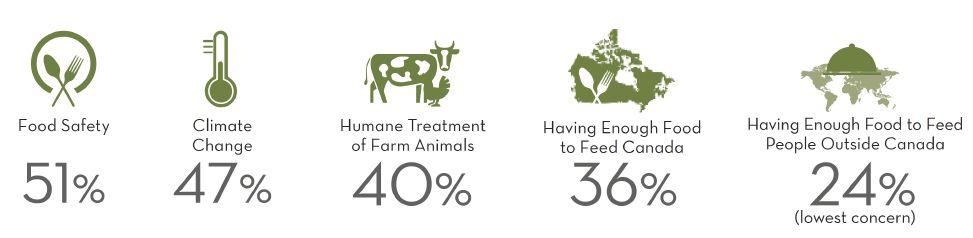
When we looked at other food system issues, the level of concern drops somewhat (see figure 3). This doesn’t mean topics like animal welfare are not important to Canadians when we ask them about it directly. It just provides some valuable context in terms of priorities and levels of concern in the bigger picture.
TREND WATCH ON HOT TOPICS
CCFI tracks consumer attitudes about food system issues over time. This tracking is valuable to determine trends and hot topics. It’s also a valuable tool to evaluate the effectiveness of our efforts to address and reduce the levels of concern. Once again, hormones, pesticides, drug residues and GMOs top the list of issues with the highest levels of concern (see figure 4 online). While 49 per cent feel they trust food produced in Canada more than outside Canada, only 33 per cent trusted the government food inspection system to ensure food safety.
WHAT WE LEARNED AND HOW TO APPLY IT
This research is uniquely designed to be actionable by anyone in the food system – from individual farmers to food retailers and everyone in between. The trend watching is meant to help shift thinking, resources and actions proactively. What’s really important to consumers versus what maybe inflamed in the news, social media or by critics with a specific cause?
1. What you do is important – Rising cost of food and keeping healthy food affordable ranked as the top two concerns for the second year in a row over a long list of others including health care,
FIGURE 2. TOP CONCERNS
Consumers
energy and the economy. This is a really important factor when thinking about ways to most successfully engage with anyone, particularly those who don’t work in food or agriculture. How does what you do and discuss relate to keeping healthy food affordable?
2. Reach the neutral zone – Almost half of our population is unsure about our food system. Concerns on issues such as antibiotics, pesticides and GMOs remained constant in 2017. Our collective existing efforts to move the bar on
these topics haven’t reached the majority who are unsure yet. What can you do to engage on some new channels or with some new thinking to reach those who aren’t sure what to think?
3. Share the love for Canadian foo –Foodies love to share information, more than any other segment – about food, nutrition, cooking and food safety. They also actively seek out information on all things food including specifics like how food processing affects food safety and how food is grown. Others go to them
FIGURE 3. OTHER CONCERNS
for information about food. The research shows foodies are more concerned about most food system issues than other segments, yet are also often more positive. This is a unique opportunity for those working to earn trust – foodies are engaged information seekers and sharers looking for authentic answers to everything food in Canada.
Visit www.foodintegrity.ca or contact CCFI for more detailed insights. n Crystal Mackay is president of the Canadian Centre for Food Integrity.
Housing Enrichments in free-run housing
Details on nests, perches and more.
BY TREENA HEIN
The updated National Farm Animal Care Council code of practice for laying hens contains many specifications for foraging, perches and nests – enrichments that allow the hens to engage in natural behaviours. These enhancements vary to some degree among housing providers. Here’s what some of them offer and why.
CHORE-TIME
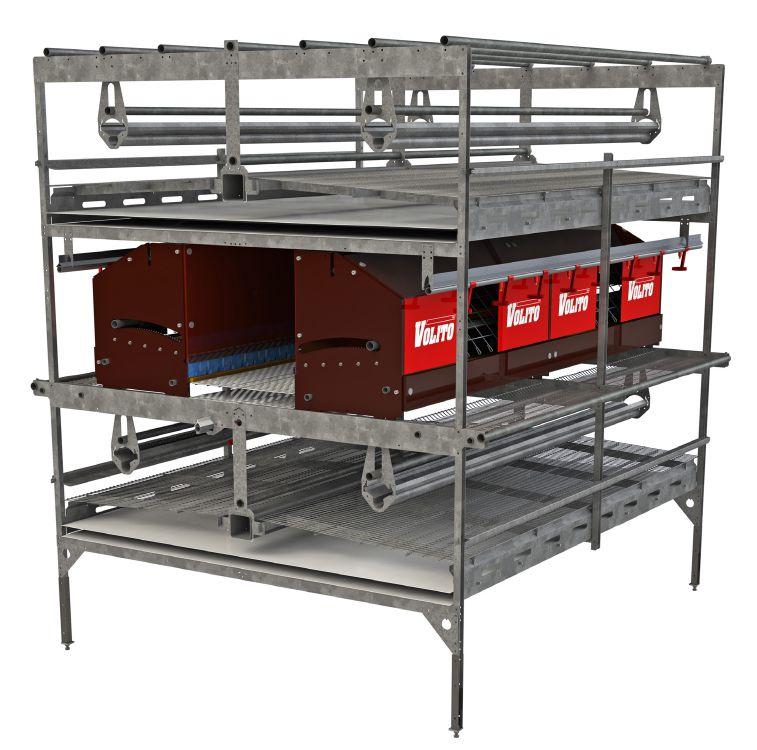
Milford, Ind.-based Chore-Time now sells Volito cage-free housing systems for laying hens in Canada, having recently acquired the Netherlands-based firm. Volito nests are made from film-faced plywood, which product manager Frank Luttels says is more durable and more resistant to moisture, ammonia and disinfectants than plastic. “Wood is also an excellent noise dampener and provides a quiet nesting place,” Luttels explains. “In terms of curtains, our nests have one opening at the front. We did testing and more openings distract the birds and they don’t feel comfortable.”
Every section of the nest has two red flaps and an entrance opening in the middle. If the hens are startled, they can leave the nest over the whole width of the nest section.
Luttels says a red curtain colour is used because the birds seem to show good acceptance to it and it provides some darkness. The nests can be washed wet or dry.
CHORE-TIME PERCH SYSTEM
JANSEN
The company believes in 15 cm of perch per bird so that all birds can perch in the evening and ventilation can be effective.
Meller Poultry Equipment sells Netherlands-based Jansen layer housing systems. Similar to Volito, Jansen nests are made from a plastic-coated plywood. “Wood is a warm material and creates a safe feeling for the bird,” Meller president Chris Bill says. “There are two red curtains per 120 cm opening of each nest.”
He notes there is very little maintenance to the nest itself other than cleaning
of the AstroTurf nest mat between the flock cycles and also cleaning of the nesting equipment itself. Each nest has a false back wall that is used to close the nest, Bill notes, preventing hens from entering during the night. This helps keep the nest clean.
“On behalf of the Board of Directors of Chicken Farmers of Canada, I would like to extend to you our best wishes for a happy holiday season and a peaceful and prosperous New Year.”
« Au nom du Conseil d’administration des Producteurs de poulet du Canada, j’aimerais vous offrir nos meilleurs vœux pour la saison des fêtes et vous souhaiter une nouvelle année paisible et prospère. »
– Benoît Lafontaine Chair, Chicken Farmers of Canada Président, Les Producteurs de poulet du Canada
Housing
systems. In free-run barn systems, Salmet nests are made from galvanized metal sheets to provide good hygiene and also prevent heat accumulation. The bottom is covered with AstroTurf. OES general manager Larissa Leitch says the steel is very unattractive for red-mites compared to wood.
The nests are available in two different depths, with two curtains of yellow tarpaulin. “Between the curtains there is a gap to provide easy access for the birds to the nest whilst allowing for air exchange,” Leitch says. The tarpaulin provides a dark and private nest with what she calls a “very high” acceptance rate. The nest is closed automatically at night by folding up the floor.
FORAGING AREAS, PERCHES AND RAMPS
The foraging or scratch areas offered by all companies are normally concrete with shavings or other materials. Leitch notes that in Salmet’s cage-free layer housing system, the complete floor area underneath the system is accessible and can be used with bedding material for foraging and dust bathing.
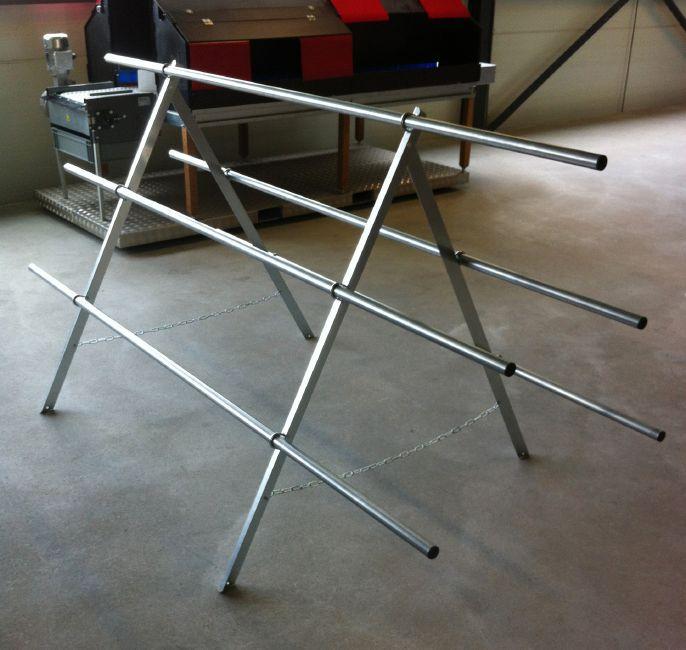
In terms of perches, those Chore-Time offers are made of metal because Luttels says it’s very durable. The design is a round tube-like one, but the company is also testing an oval perch shape, as some scientists are finding this is a better fit for the hens’ feet.
“We also feel strongly that perches should be available in pullet rearing,” Luttels says. “We like to have 15 cm of perch per bird, from week 17, over the slatted areas. When they perch in the evening, they are nicely spread out in the house and you can get good ventilation at that time, and you prevent the birds from smothering on the slats. They can all sleep on a perch if they want.”
Perches are available from Meller in a 25 to 30 mm diameter galvanised tubing material or in a PVC plastic mushroom shape. “Cleaning is minimal,” Bill explains, “as the birds wear off any dirt and dust.” Salmet uses galvanized steel perches in a round shape or a unique five-corner shape. The latter, Leitch says, offers the benefits of a square perch with a big surface that birds can walk on, but that also allows birds to perch comfortably with a shape that supports their feet. Manure is easily removed from the top surface due to the sloped design.
In terms of ramps, Bill says usually none are required in a free-run barn, as the birds at this age can easily jump or fly to feed in the slatted floor area. No ramps are usually provided with Chore-Time systems if the height of the slatted area is less than 50 cm, but Luttels says they are definitely provided if it’s 50 cm or more for brown birds.
Salmet systems for pullets have ramps but systems for layers usually do not. “The distances are close and offer approach elements that birds can easily use to change from one to another level,” Leitch says. However, if customers want ramps in their free-run layer barns, Salmet can provide them. n
Summarized specifications for foraging areas, perches and nests in the new code
All new enriched layer cages must have a minimum of 31 cm2 of flooring space for foraging per 25 birds. For singletier free-run systems, at least 15 per cent of the usable space must be litter, and hens must be provided with at least one foraging site for each 1,500 (e.g., bales of hay or straw, insoluble grit or oat hulls, or other material that provides foraging opportunities). If multiple sites are provided, they must be evenly distributed. In multi-tier systems, at least 33 per cent of the usable space must be litter, except birds up to 24 weeks of age may have a minimum of 15 per cent litter of the useable space.
For older housing systems, the code’s transitional requirements state that previously built enriched cages must have at least 24.8 cm2 per 25 birds in flooring surface for foraging. For single-tier barns in a free-run system that is fully slatted or where less than 15 per cent of useable space is litter, a solid surface area of at least 1.5 m2 for litter or substrate for dust bathing must be provided for each 1,000 hens and at least one foraging site for each 1,500 hens (e.g., bales of hay or straw, insoluble grit or oat hulls or other material). In multi-tier systems, at least 33 per cent of the usable space must be litter, except up to 24 weeks of age it may be reduced to a minimum of 15 per cent.
In terms of perches, for non-cage systems installed prior to April 1, 2017 or in new systems, each hen must be provided with a minimum of 7.6 linear cm of purpose-designed, elevated perch space, positioned to minimize fecal fouling and made of materials that are easily cleaned and do not harbour mites, designed to minimize injury to hens. Various placement positions are also specified.
Both single bird nests and communal nests can be provided. For flocks placed after April 1, 2017 for furnished cages, each hen must be provided with nest space area of a minimum of 40.6 cm2. The nest space must be enclosed on at least three sides to provide privacy and shading.
Where nest curtains are used, they must extend close to the floor, and various positioning requirements are also specified. For flocks placed after January 1, 2020 in non-cage systems installed prior to April 1, 2017, each hen must be provided with a minimum nest space area of 83.2 cm2 per 120 hens. In enriched cages, each hen must be provided with a minimum nest space area of 65 cm2.
Policy A future without supply management
Imagining a world without it provides an even stronger defence.
BY MELANIE EPP
With the North American Free Trade Agreement (NAFTA) renegotiations on the table, there has been much concern that Canada’s supply management system will once again be on the chopping block. According to a recent survey conducted by the Angus Reid Institute, some Canadians think it should be.
The survey asked a representative, randomized sample of more than 3,000 Canadians how they thought Canada should handle the supply management issue during the NAFTA negotiations. While 29 per cent said they are committed to keeping the system in place for Canadian farmers, 26 per cent want to scrap it altogether. Another 45 per cent believe that supply management should be used as a bargaining chip during the trade agreement negotiations.
Interestingly, though, when asked how much they know about supply management, just four per cent said “a lot.” Fifty-eight per cent, however, admitted to knowing nothing about the system at all. Perhaps if they had a better understanding of how supply management works and its benefits to producers and consumers alike, they wouldn’t be so eager to scrap it.
Let’s be clear – supply management is likely here to stay. But with that said, it would be naïve to imagine a future where supply management was an absolute
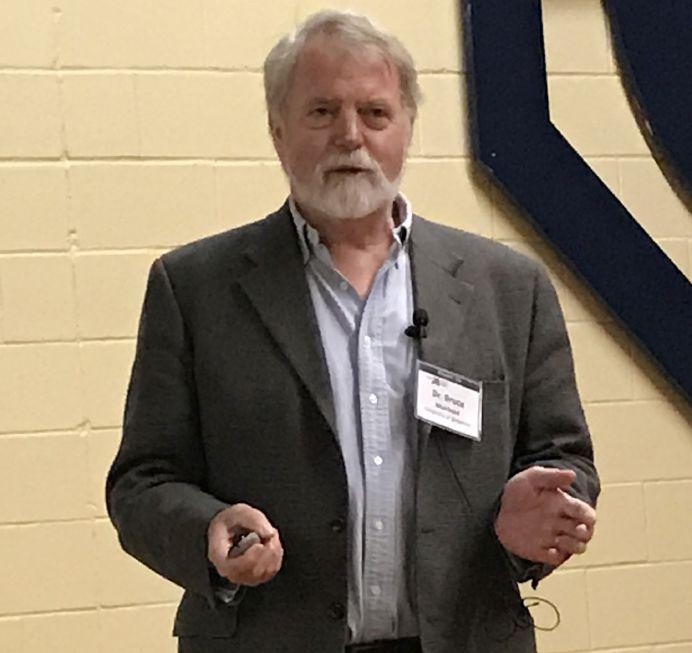
The University of Waterloo’s Bruce Muirhead discussed the positive impacts supply management has had in Canada at the Poultry Industry Council’s Research Day.
certainty. If anything, an imagination of that future provides a stronger defence for keeping supply management in place. We asked five industry experts to explore the idea. Each was clear that they think supply management is here to stay; each shared their view of a world without.
THE PRICE MYTH
Many consumers believe that eliminating supply management will lower costs at
the store level. But Bruce Muirhead, associate vice president of external research at the University of Waterloo, says it won’t. “Consumers think they are going to have low-priced eggs and the cost of living is going to drop,” he says. “It sounds like it’s really great for consumers, but that also doesn’t happen necessarily.”
Yves Leduc, director of policy and international trade for Dairy Farmers of Canada, agrees. “If the prices go up, the processing sector and the retailers will
GLOWING REFLECTIONS
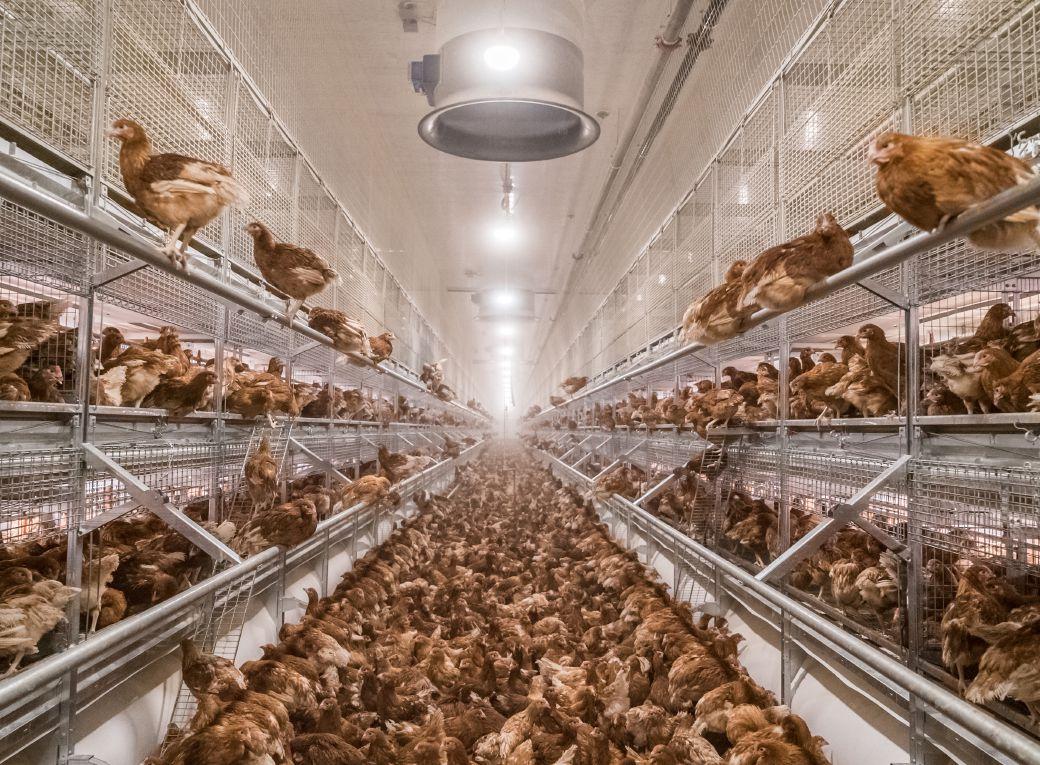
• Nests and aviaries are backed by nearly 30 years of proven cage-free solutions and bird management expertise.
• Patented features include rack-drive expulsion which powers across nest pads for reliable, complete emptying of each nest.
• Slight movement of the expeller also accompanies operation of the egg collection system to protect eggs.
have a tendency to pass on the price to the consumer,” Leduc explains. “But when the prices go down, you’re not likely going to see price reduction equivalent to the reduction of the prices on the world market.”
In fact, Leduc believes that price volatility will likely benefit those who have power in the marketplace, namely processors and retailers, long term. “Farmers themselves, if they are not organized, have little bargaining power in the marketplace,” he says.
Europe, and in particular, Belgium, provides a great example of this. When dairy quota ended in April 2015, milk prices plummeted across the continent. According to Price Observatory, milk prices (for farmers) dropped 33 per cent in Belgium (based on the average price between December 2013 and May 2015). At the supermarket level, though, prices declined by just 10 per cent.
CONSUMER IMPACT
Losing supply management could also mean losing fresh, locally produced eggs, chicken and dairy products. Currently, family farms meet that demand in each and every province across the country. “The benefit of supply management right now – because we have production in all 10 provinces – is that there’s fresh chicken available right across Canada,” Mike Dungate, executive director of Chicken Farmers of Canada, says. “Without supply management, I think the first thing
Policy
“When I attend international egg conferences, Canada is the envy of the world.”
that would happen is those who are the least competitive in Canada would drop off quickly.”
“I’d say we’d probably lose production in six provinces completely,” he continues. “And then you would concentrate the rest of production.”
The repercussions for the egg sector would be similar, Muirhead says. “We’d be inundated with American eggs,” he explains. “American farmers would have to increase production by probably one per cent and they could flood the Canadian market with shell eggs.
“Most Canadians live within 100 km of the American border, so it would be nothing to them to ship eggs from Iowa or Idaho to western Canada, or from New York State to Ontario,” he continues. “They ship eggs farther than that now to other parts of the U.S. So, we would definitely lose.”
GOODBYE, FAMILY FARMS
In recent years, consumers have expressed great concern over the loss of family farms in Canada. Without supply management, an increase in large, concentrated farms, like those found in the U.S., is inevitable, say experts.
Roger Pelissero, chairman of the Egg
Farmers of Canada, compares the demographics of Canadian egg farms to those in the U.S. to further elucidate this point.
“We have over 1,100 egg farms in Canada with an average flock size of about 25,000 birds,” he says. “In the U.S., they have 175 egg companies and their average flock size is 1.5 million birds. Altogether, in the U.S., they have about 330 million laying hens.
“A lot of those farms in the U.S. started as family companies way back in the day,” he continues. “And they’ve grown, and they’ve had to grow due to the economics of it. At times, they’re making very little, if they’re making anything, so they need that scale to try and offset some of their cost. Here in Canada, we have a system that allows farmers to get paid properly for the cost of producing.”
FELT BY COMMUNITIES
Not only would family farms be lost. So too would many rural communities, as family farms support them with local jobs. In Quebec, Dr. Maurice Doyon of Laval University conducted surveys in three villages to find out how supply management affected those living in the communities.
One of the villages was completely surrounded by supply managed farms, cash croppers and hog farmers surrounded another and a mix of both surrounded the third. Doyon interviewed people from all walks of life – from gas station attendees to restaurant workers to mechanics and mayors.
“It was amazing,” he says. “There were machinery guys telling us that if the chicken or egg guy in my area closes, I’m gone. I’m gone because those guys are really important for buying my machinery and keeping me in business.
“The pork or beef guys sometimes do business, but when they’re in a down cycle, those guys just don’t buy anymore,” the
economist continues. “They need to sell all the time in order to have a positive cash flow. They cannot just wait for cycles.”
Doyon says it’s not just the farmers who spend money; it’s the people who visit farms, too. In the village with no supply managed farms, those he interviewed said the farmers – big cash croppers and hog farmers – are so big that they no longer buy local. “They just go directly to the source and that has no impact on the village,” Doyon explains.
He believes that without supply management, many of those villages wouldn’t exist. “We will have a lot fewer farms,” he says. “And there’s a lot of local communities that might just shut down – or they will just be places where people go to sleep.”
WHAT HAPPENED ELSEWHERE
Countries without supply management provide a good example of how a future without it would look for farmers. In the European Union, where milk quota ended in April 2015, dairy farmers are still in recovery. The post-quota years were so bad, in fact, that the European Commission offered farmers subsidies to try to slow milk production. It worked, and prices have since bounced back, but it came with a hefty price tag.
Muirhead believes that if supply management were to go, our system, particularly in eggs, would look very similar to that of Australia, minus the Americans as competitors. Australia, Muirhead says, has three major producers that control about half of the market. Hundreds of smaller producers control another third. The downside to Australia’s system is that they have just two big supermarket chains, Coles and Woolworths.
In Australia, retailers hold an annual auction to determine the price of a dozen eggs for the coming year, Muirhead explains. On the day of the auction, egg farmers sit poised over their keyboards, waiting for the opening bid. “When the retailers finally decide on a number, anyone who is above that bid has one minute to respond,” Muirhead says. “If you don’t respond, good luck finding
Policy
somewhere else to place your eggs.
“It’s a really cutthroat system they have in Australia, and the producer is the one who absolutely has to suffer all of the pain of declining prices,” he adds.
Not all non-supply managed systems suffer, though. New Zealand’s dairy sector, for instance, has been hugely successful without it.
Although it was deregulated, it was done so through the creation of Fonterra, a co-operative that deals with some 90 per cent of the country’s milk supply, Leduc explains.
“The Fonterra model will never work in Canada,” he says. “I would be very, very surprised if the Canadian government was able to force Agropur, Parmalat and Saputo, the three big dairy companies, to merge into one.
“To those who are saying that we should adopt the New Zealand model, there would be major obstacles in being able to do that.”
In the U.S., farmers are supported through the U.S. Farm Bill. In 2008, Pelissero says, the Farm Bill offered support to the tune of $288 billion. In 2014, that number rose to $478 billion.
SOMETHING TO CHERISH
Sometimes, younger farmers think they could do better without supply management, Pelissero says. “But they don’t know the history,” he says. “They don’t recognize the big picture – the world picture – and look at farmers in other parts of the world who are struggling to make returns. And we have farmers here who make a fair return for what they’re doing. It’s a privilege, and not a right,” he continues. “It’s a privilege that we have that other areas of the world don’t have. And I could tell you that when I attend international egg conferences in different parts of the world, Canada is the envy of the world. They think it’s great that we can get a fair return for producing eggs and farmers can make a fair living and not have to worry about any type of government subsidies at all.” n
This story was published as part of Ag150, a celebration of Canadian agriculture. Visit ag150.ca for more.
Many Canadians would lose access to fresh, locally produced poultry products.
Celebrate your holiday tradition with Canadian turkey. Best wishes for the Season and the coming year!
Célébrez les Fêtes selon la tradition avec du dindon canadien. Meilleurs vœux pour la saison des Fêtes et la nouvelle année!
Technology
In ovo sexing innovations
Emerging technologies promise to save costs and improve animal welfare.
BY TREENA HEIN
In the egg business, incubating male eggs and infertile eggs is a colossal waste of resources. Right now, chicks are sexed a few weeks after hatching, and the subsequent slaughter of male chicks is a significant animal welfare concern. The process is also labour intensive. It’s no surprise, then, that technologies are being developed to prevent all of this.
MADE-IN-CANADA SOLUTION
One of these technologies has been developed through research funded by the Ontario Poultry Industry Council and Egg Farmers of Ontario (EFO) over the last six years. The patented scanning technology, called Hypereye, is the brainchild of Dr. Michael Ngadi, a food and bioprocess engineer in the department of bioresource engineering at McGill University.
At full capacity (once the technology is fully operational at the commercial hatchery scale), the scanning system will identify both the gender and fertility of about 50,000 day-old eggs per hour. EFO has stated that there is demand all over the world for this technology, and that the U.S. and various European countries such as Holland and Sweden have already expressed interest in it.
Livestock Research Innovation Corporation is partnering with EFO to bring the technology to market – if all
Pictured is a prototype of Hypereye, a made-in-Canada scanning system that will identify both the gender and fertility of about 50,000 day-old eggs per hour once fully operational.
goes well, in 2018. EFO general manager Harry Pelissero says prototypes are currently being tested in Ontario hatcheries to achieve at a commercial scale the same accuracy and speed that has been achieved in the lab. Commercialization will involve partnering with hatchery
automation companies on installations and is expected to create up to 30 jobs.
HOW IT WORKS
Scanning eggs with Hypereye involves hyperspectral imaging, a process that
HYPEREYE
detects bands of light well beyond what the human eye is capable of discerning. Due to the large amount of information that is instantaneously provided, the technology is perfect for automated situations, from scanning products on an assembly line or large-scale remote sensing applications (see sidebar on page 44).
Technology
More specifically, its Wikipedia entry states that hyperspectral imaging “collects and processes” information from across the electromagnetic spectrum: “certain objects leave unique ‘fingerprints’ in the electromagnetic spectrum. Known as spectral signatures, these ‘fingerprints’ enable identification of the
materials that make up a scanned object.”
Previously in Canadian Poultry, Ngadi explained that the overall Hypereye process involves putting a combination of broad spectral image signatures of a given egg “through a fairly complex mathematical analysis where we are using some deep learning techniques to identify or relate those spectral and image data to the specific attributes that we are looking at – in this case, whether [the egg] is fertile or not and whether [the embryo contained] is male or female.”
HEALTHY RETURN
Pelissero estimates that the cost of Hypereye scanning will be around a nickel per egg, and because it eliminates the need to incubate infertile and male eggs, the technology will cut incubation costs in half and quickly pay for itself. Some of the profits, Pelissero says, will go to EFO in the form of royalties, some to Dr. Ngadi and some to equipment maintenance and an R&D fund.
NEW OPPORTUNITIES
Pelissero stresses that producers should not be worried about any impact on current egg production levels as a result of the implementation of this technology, and that eggs with male embryos could be used in the table or breaker markets, for vaccine production or for the production of anti-depressants.
In 2013, EFO had signed a letter of intent to provide $1 million in R&D funding to United Paragon Associates (UPA) to fund clinical trials of a new antidepressant called Relidep, which uses certain compounds found within eggs.
The company did not pursue a relationship with EFO, but in a 2013 EFO press release, UPA’s president of research and development, George Yeung, said early phase trials “demonstrated tremendous promise, as it may offer improvements over currently available drug treatments… Potentially better efficacy, shorter time-to-clinical-benefit and significantly fewer side effects were observed.” Relidep was subsequently marketed.
2ND EDITION
The full colour photographs make this an invaluable tool for all those for whom a knowledge of poultry anatomy, diseases and other conditions is required.
Following the success of the first edition, this second edition has been extensively updated and augmented, to better reflect the requirements of its readers. The author has replaced a large number of the diagrams with labelled photographs and expanded the anatomy section to allow a clearer and better understanding of the subject.
The diseases of poultry section has also been updated and now includes photographs of some of the conditions following a basic introductory explanation of the disease process and the body’s response. The Parasites section has also been improved by the addition of photographs.
Importantly, the author has added a guide to performing post mortem examinations on suspect birds.
Technology
Stay tuned for developments on Hypereye commercialization in 2018.
GENE EDITING TECHNOLOGY
U.S.-based eggXYt has developed another technology to detect embryo gender (but not fertility or infertility) in eggs through the use of gene editing: making changes to an individual organism’s DNA. The company was founded in mid-2016 by CEO Yehuda Elram and Dr. Dani Offen, head of the department of neuroscience at Tel-Aviv University in Israel.
“We edit the genes of the chicken so male eggs are laid with a biomarker,” Elram explains, “and the female eggs identical to eggs as we know them today. The identifier is bio-luminescent and is detected at the speed of light by seXYt, the optical scanner eggXYt has developed.”
Asked for more specifics about how the gene editing works, Elram explains that it “enables the creation of a ‘super breed’ [of hens] that shall lay detectable eggs.”
The firm plans to develop the technology for turkeys and other livestock applications. As with Hypereye, the cost is on a pay per detection basis, which Elram says translates into “a fraction of the savings eggXYt’s technology enables.” He anticipates approval from the U.S. Food and Drug Administration in 12 to 18 months.
CONSUMER ACCEPTANCE
With public trust in the food system being a very significant issue in the developed world these days, Canadian Poultry asked if Elram foresees consumer concern with eggXYt’s technology. He believes it allows a “safe, fast” way to prevent the slaughter of millions of male chicks.
“With eggXYt’s technology, DNA of the female egg is untouched,” he says. “We believe that food should be evaluated by its safety and nutrition facts. The means to the product are not the focus, unless [these means] themselves are unsafe or unethical.” n
For more on technology, visit canadianpoultrymag.com.
Hyperspectral imaging applications
Increasingly, agricultural drones with multispectral imaging camera sensors are being used to monitor the development and health of crops.
Originally developed for the mining and oil industry to look for new extraction sites, hyperspectral imaging has been applied to everything from military surveillance to research on historical documents to farming. Although the cost of the tech is typically high, it is increasingly used for specific crops and in specific climates for monitoring the development and health of crops.
Furthermore, work is underway to use it to detect the chemical composition of plants, which can be used further to detect their nutrient and water status in irrigated systems. Another agricultural application is the detection of animal proteins in compound feeds to avoid diseases such as BSE (mad cow).
In the food processing sector, hyperspectral imaging and related software enables the identification and removal of defects and foreign material not detectable by the human eye, traditional cameras or various types of optical sorters. Work is also underway to use hyperspectral imaging in potatoes to detect sugar ends, hollow heart and common scab.
In medicine, it is being used for diagnosis of conditions such as retinopathy and macular edema. The technology is also particularly useful in military surveillance.
In addition, soldiers can be exposed to a wide variety of chemical hazards detectable only by hyperspectral imaging technology. The tech is also useful for monitoring of emissions produced by coal and oil-fired power plants, incinerators, cement plants and other types of factories.
Summarized from Wikipedia
Yehuda Elram is founder and CEO of the U.S.based eggXYt, which has developed a technology that uses gene editing to detect an embryo’s gender.
EQUIPMENT FOR SALE
Yamasa 100cs per hr Egg Grader 9 yrs old, all Stainless Steel construction, includes Modern Matic Egg washer ,pre accumulator for inline use, Egg loader,4 automatic packers with Denesters. Domino A200+ inkjet system (for egg coding). Runs perfect, we are upsizing. Available early 2018. Please contact Marcel at 613-806-2847 for viewing or any questions. Can be seen in operation on appointment. Call for pricing
PERSPECTIVES
BY LILIAN SCHAER FOR LRIC
Mental wellness on the barn
Mental wellness is not a topic widely discussed in farming even though there is growing anecdotal evidence of producers that are struggling. That’s why two years ago a Canadian research team led by Andria Jones-Bitton, a professor at the University of Guelph, launched a multi-phase study focused on mental wellness in the Canadian agriculture sector.
The first phase included a literature review and a national survey of over 1,100 farmers from all agricultural sectors. The intention was to establish the prevalence of conditions like depression, anxiety, stress, burnout and resilience – the ability to overcome obstacles and challenges.
“Unfortunately, those data confirmed our suspicions that Canadian farmers are experiencing high levels of stress and depression, and burnout at levels higher than both the general population and other occupations,” Jones-Bitton explains.
That initial work led into phase two, which is currently underway and is exploring this issue in much greater detail. The logistical and financial challenges of face-to-face interviews resulted in an Ontario-focus for the second phase of the research. Jones-Bitton’s PhD student, Briana Hagen, is travelling across the province to meet and speak with farmers one-on-one. The goal is to better understand their experiences with stress and mental wellbeing, the factors contributing to stresses and exploring what help, if any, they are seeking.
“We’re expecting to find some barriers to getting help from living where they do – access to even a family doctor can be poor in rural areas – as well as likely some cultural barriers,” Jones-Bitton says. “Mental well-being wasn’t talked about in previous generations across the board, but even more so in farming communities where you were expected to be tough and strong and silent.”
mental wellness literacy program will be created for the farming community that will include a focus on farm and rural situations and case studies that are common in agriculture. It will also include an online training component for people who can’t take two days away from their farms or jobs to attend a workshop.
“Canadian farmers are experiencing high levels of stress and depression.”
“Our goal is to design a program that can teach farmers, veterinarians, industry representatives, transporters and others involved in ag about mental wellness, such as how to recognize common signs and symptoms of distress, and how to have a conversation with someone if you suspect they are struggling,” she says.
Egg Farmers of Ontario was an early supporter of the second phase of the research. The Ontario Ministry of Agriculture, Food and Rural Affairs (OMAFRA) – University of Guelph Partnership, Ontario Pork, Ontario Sheep Marketing Agency, Ontario Federation of Agriculture and the Canadian Animal Health Coalition are also funding the work.
Data collection should be complete by the end of 2017 and will then be used to develop resources for farmers. A
“There is a lot more talk even now compared to a couple of years ago, and we hope these resources will enable more conversations about wellness on the farm.”
She estimates the mental wellness literacy program and associated resources will be completed, launched and evaluated in early 2019. n
Andria Jones-Bitton, a professor at the University of Guelph, launched a multi-phase study two years ago focused on mental wellness in Canadian agriculture.