In this second story from Iowa, our contributor André Dumont tells us how a farm manager dealt with animal rights activists’ allegations of abuse
By André Dumont
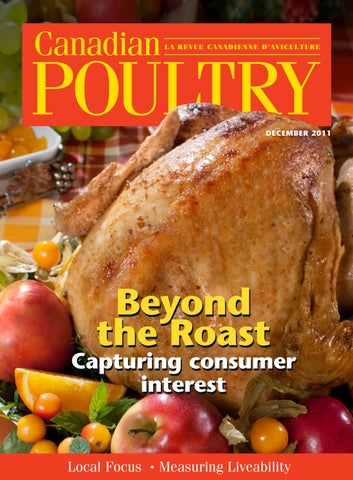
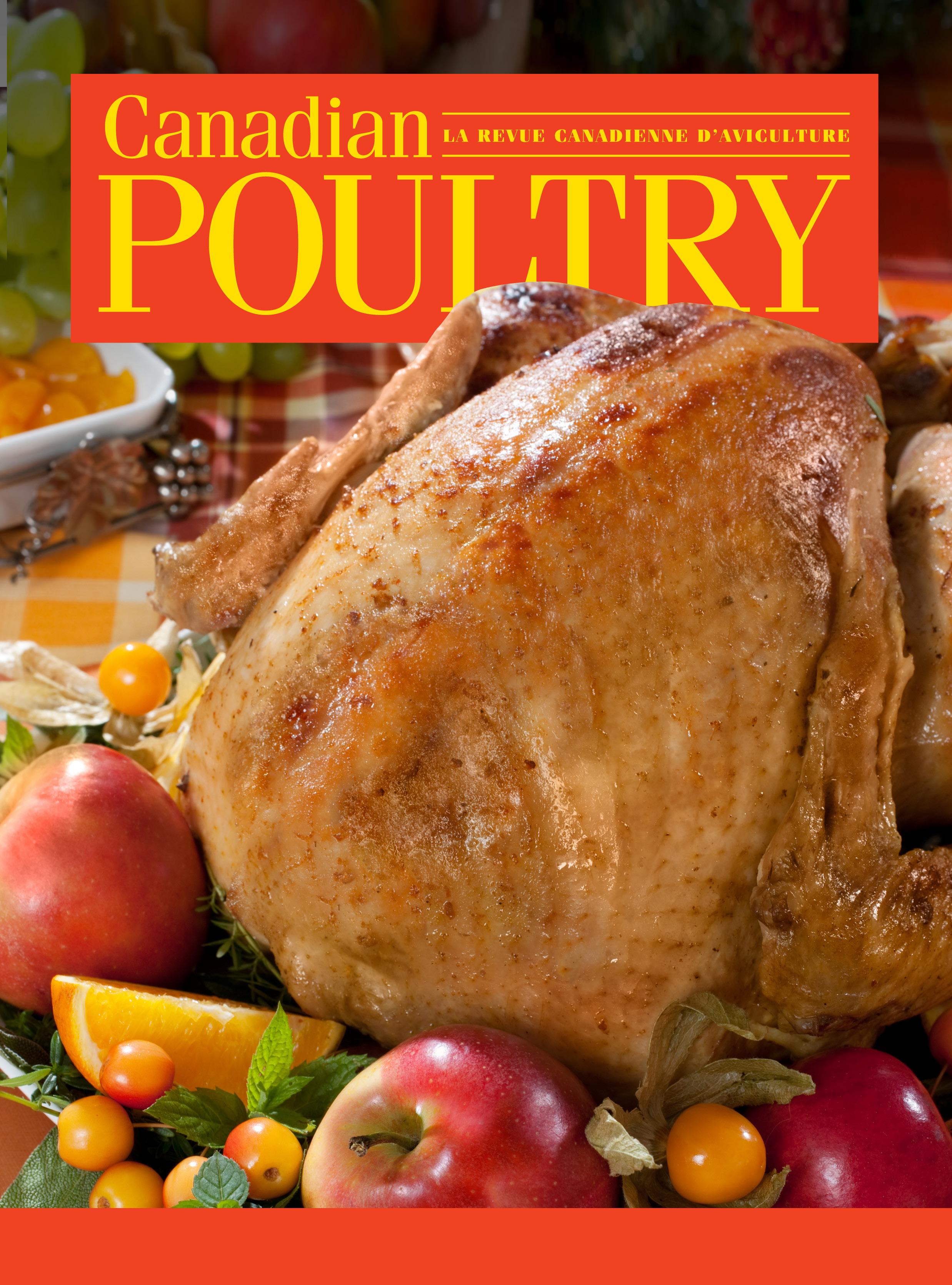
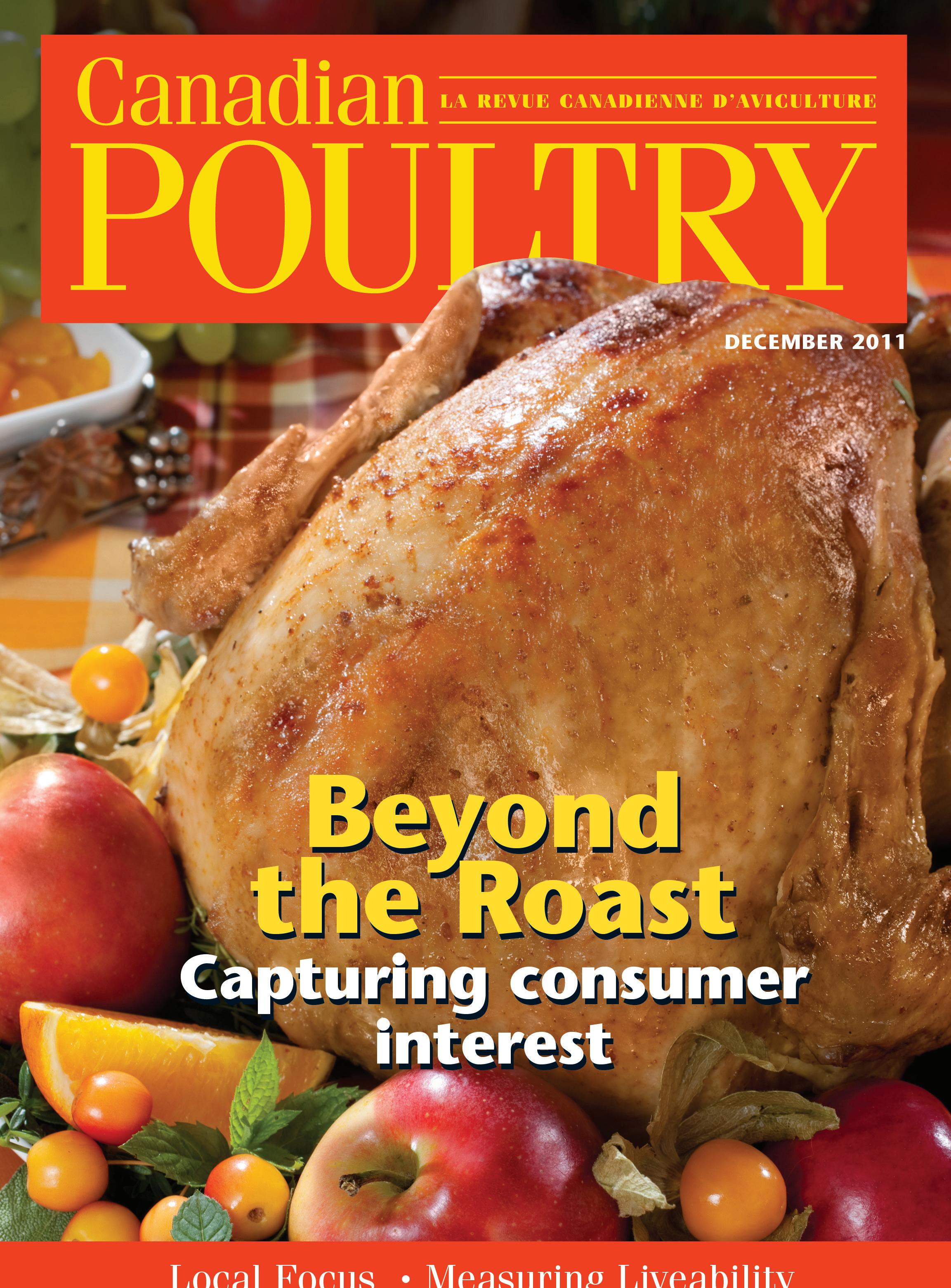
MArketIng: Beyond the roast Canada’s turkey producers are hoping new marketing initiatives and new products will spark consumer interest
By Treena Hein
20
ProDuCtIon: Focusing on Local Lakeview Farms has moved from being one of ontario’s largest turkey producers to placing more emphasis on on-farm processing and local/regional retailing
By Jim Knisley
reseArCh: Cost Calculator university of guelph researchers are trying to help farmers go green without breaking the bank
By Matt McIntosh
MInD over suCCess
emotional Intelligence: the key to personal and professional success
By Pierrette Desrosiers, M.Ps.
Par André Dumont
By Kimberly Sheppard, Research Co-ordinator, and Tim Nelson, Executive Director
E atu RE s
FROM THE EDITOR
By KRIsty nuDDs
health matters
Canada needs to give more attention to farmer health, and not just accidents. While accident prevention is indeed important, health on the farm is not just about accidents. It encompasses fatigue, physical stress, obesity, occupational exposure to hazards, family and social demands, living in a rural area, which demands travelling long distances for health care and social events, and mental stress. Many of these “stressors” lead to chronic health conditions (such as diabetes and heart disease), which a farmer may not be aware he or she has, or may not be managing properly.
the issue of farmer health was the topic of a recent forum, “Better Farmer health, Better Farm Business,” held by the Poultry Industry Council (PIC). the forum addressed the fact that chronic disease and mental stress in farmers do not always receive sufficient attention, and that more data is needed to determine how many farmers are afflicted and how health-care providers in rural communities can tackle these issues.
Dean Anderson, chair of the Canadian Agricultural safety Association (CAsA), says that although the organization can provide data on fatal accidents and major injuries, what is not as easily captured is the number of minor injuries (such as muscle strains) that can lead to chronic problems, and the prevalence of disease.
rural physician Dr. rob Annis, from the north Perth family health team in Listowel, ont., noted that the vast area his Local health Integrated network serves has the highest rate of chronic disease of any area in the province. this area just happens to have the largest concentration of farms in the province.
Is this just a coincidence? It’s hard to say because the data linking type of employment to various health issues is virtually non-existent. But if we look towards data collected by Australia, it’s likely not.
the keynote speaker at the forum was Prof. sue Brumby, a registered nurse from
the Deakin university school of Medicine in Australia. she noted that, in Australia many farms of similar size to those in Canada are family-owned, and located in rural parts of the country. Australian farmers also have higher incidences of diabetes, psychological issues and exposure to occupational hazards than their urban counterparts.
until she helped launch the “sustainable Farm Families” program, Brumby said that the collaboration between health professionals and agriculture was poor. the program addresses health and well-being so that farmers can achieve better health and, consequently, a better business. Participants were assessed for health risks, given training and advice on such topics as exercise, healthy eating, mental health and relaxation. they were responsible for charting their progress in a “learning log.” the program is a collaborative effort between health professionals and local community services, and Brumby said it’s the “magic” of these interrelationships that really makes the program work.
the result? two to three years later, data shows that participants had a significant reduction in the risk factors for disease, and were less stressed and depressed. It’s now known what risk factors are present for farmers and how to mitigate them. this allows for better awareness and training for health professionals serving rural areas.
Could a program like this work in Canada? sure it could, but the usual suspect comes up: who will fund it? And as Dr. Annis noted, our health-care system was not designed to handle chronic disease preventive care, but only acute, immediate problems.
rural health teams are becoming more aware of these issues, and farmers can help themselves by seeking help. But what we really need is someone like sue Brumby, who is dedicated enough to implement, and lead, a collaborative health program that will give us the statistics we need to foster real change. n
December 2011 Vol. 98, No. 12
Editor Kristy Nudds – knudds@annexweb.com
888-599-2228 ext. 266
Associate Editor
Jim Knisley – jknisley@kwic.com
Publisher/Sales Manager
Marilyn White – mwhite@annexweb.com
519-429-5193
888-599-2228 ext 237 • fax: 888-404-1129
Sales Assistant
Mary Burnie – mburnie@annexweb.com 519-429-5175 • 888-599-2228 ext 234
Production Artist
Gerry Wiebe
Group Publisher
Diane Kleer – dkleer@annexweb.com
President Mike Fredericks – mfredericks@annexweb.com
Mailing Address
P.O. Box 530, 105 Donly Dr. S., Simcoe, ON N3Y 4N5
Publication Mail Agreement #40065710
REtuRN uNDEliVERABlE CANADiAN ADDRESSES tO CiRCulAtiON DEPt., P.O. BOx 530, SiMCOE, ON N3Y 4N5.
e-mail: jmatheusik@annexweb.com.
Printed in Canada iSSN 1703-2911
Circulation
e-mail: jmatheusik@annexweb.com
Tel: 866-790-6070 ext 207
Fax: 877-624-1940
Mail: P.O. Box 530, Simcoe, ON N3Y 4N5
Subscription Rates
Canada – 1 Year $ 24.00 (with GSt $25.20, with HSt/QSt $27.12)
GSt – #867172652Rt0001
uSA – 1 Year $ 60.00 uSD
Occasionally, Canadian Poultry Magazine will mail information on behalf of industry-related groups whose products and services we believe may be of interest to you. If you prefer not to receive this information, please contact our circulation department in any of the four ways listed above.
Just add water. EasyLine The recipe for success is Easy:
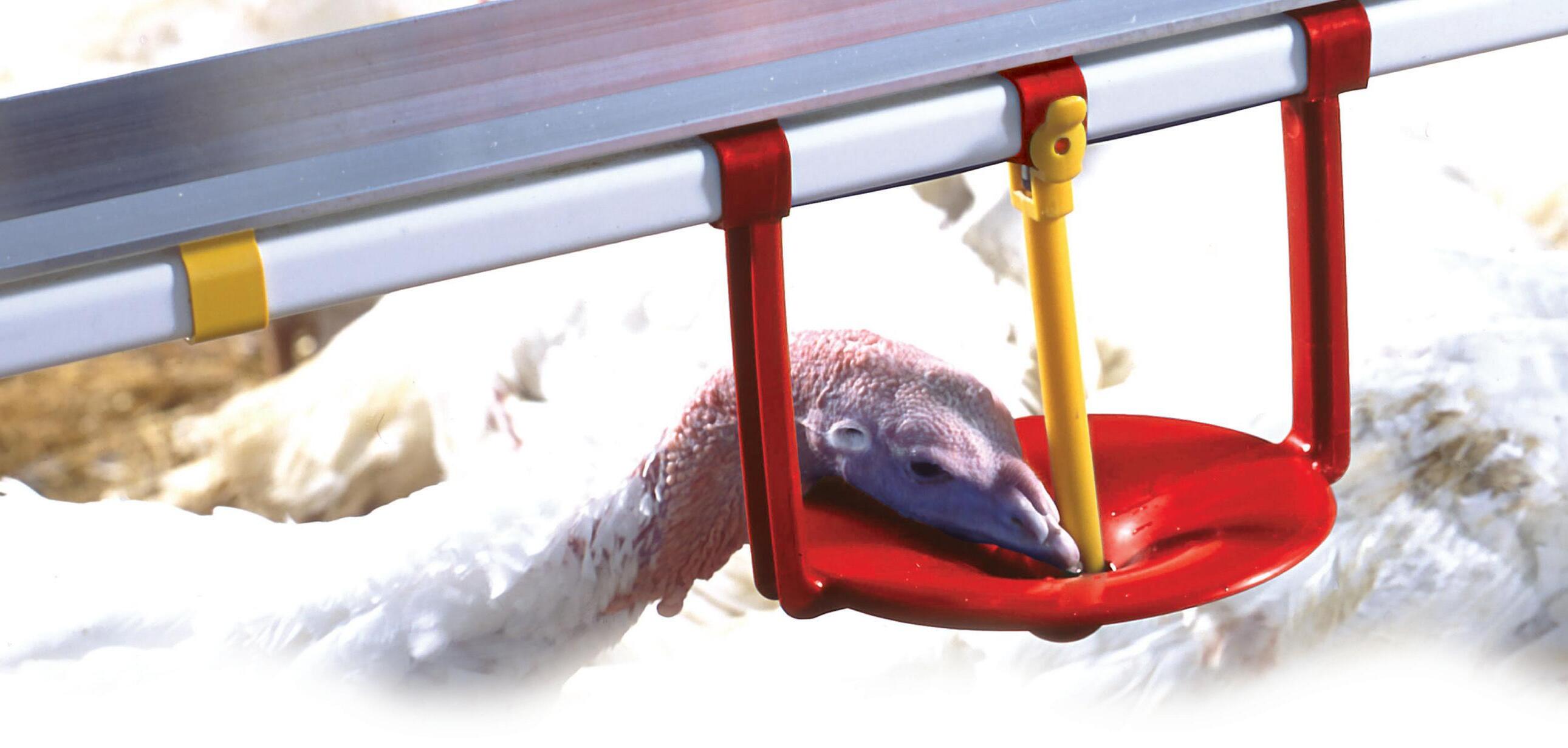
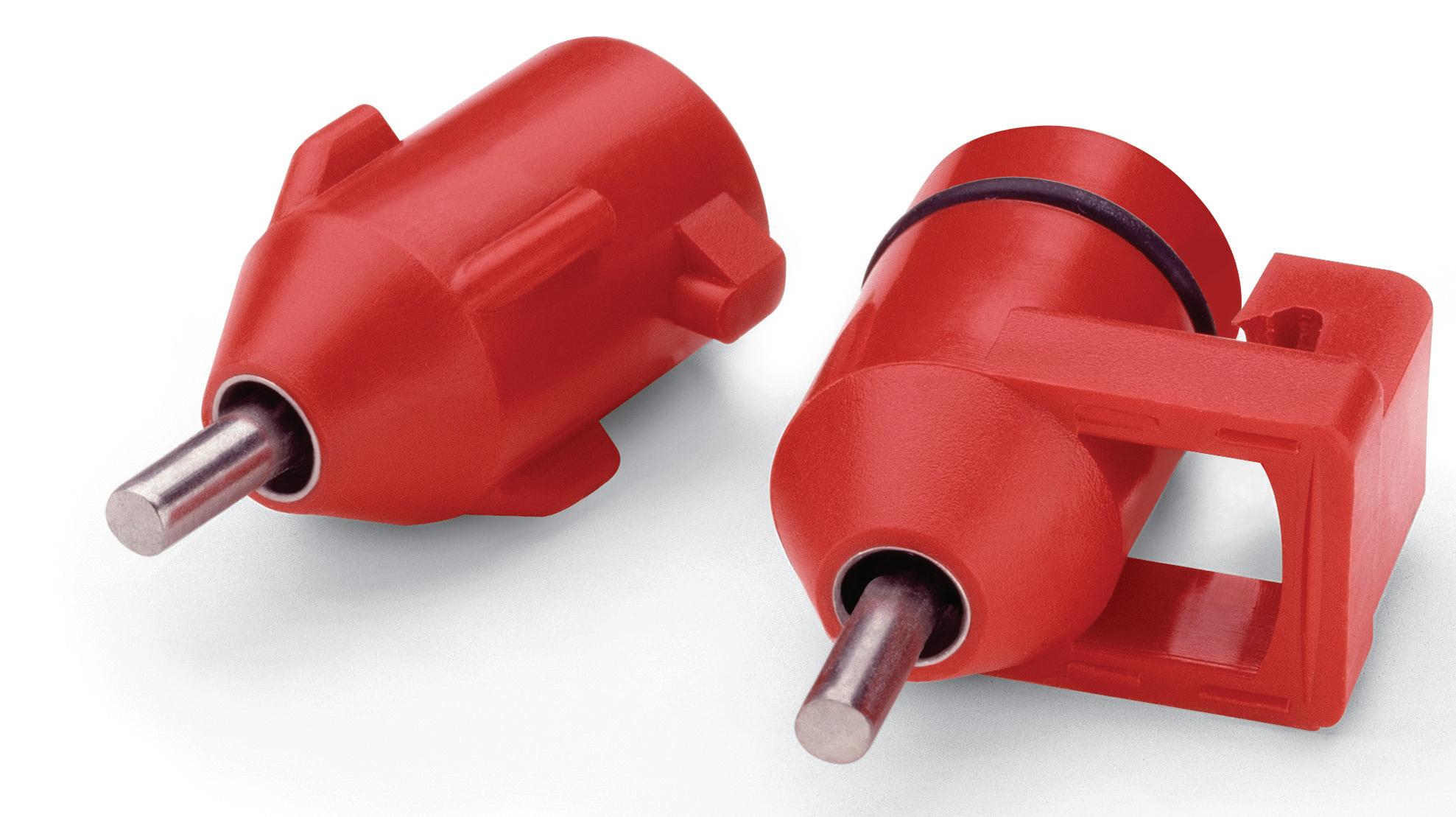
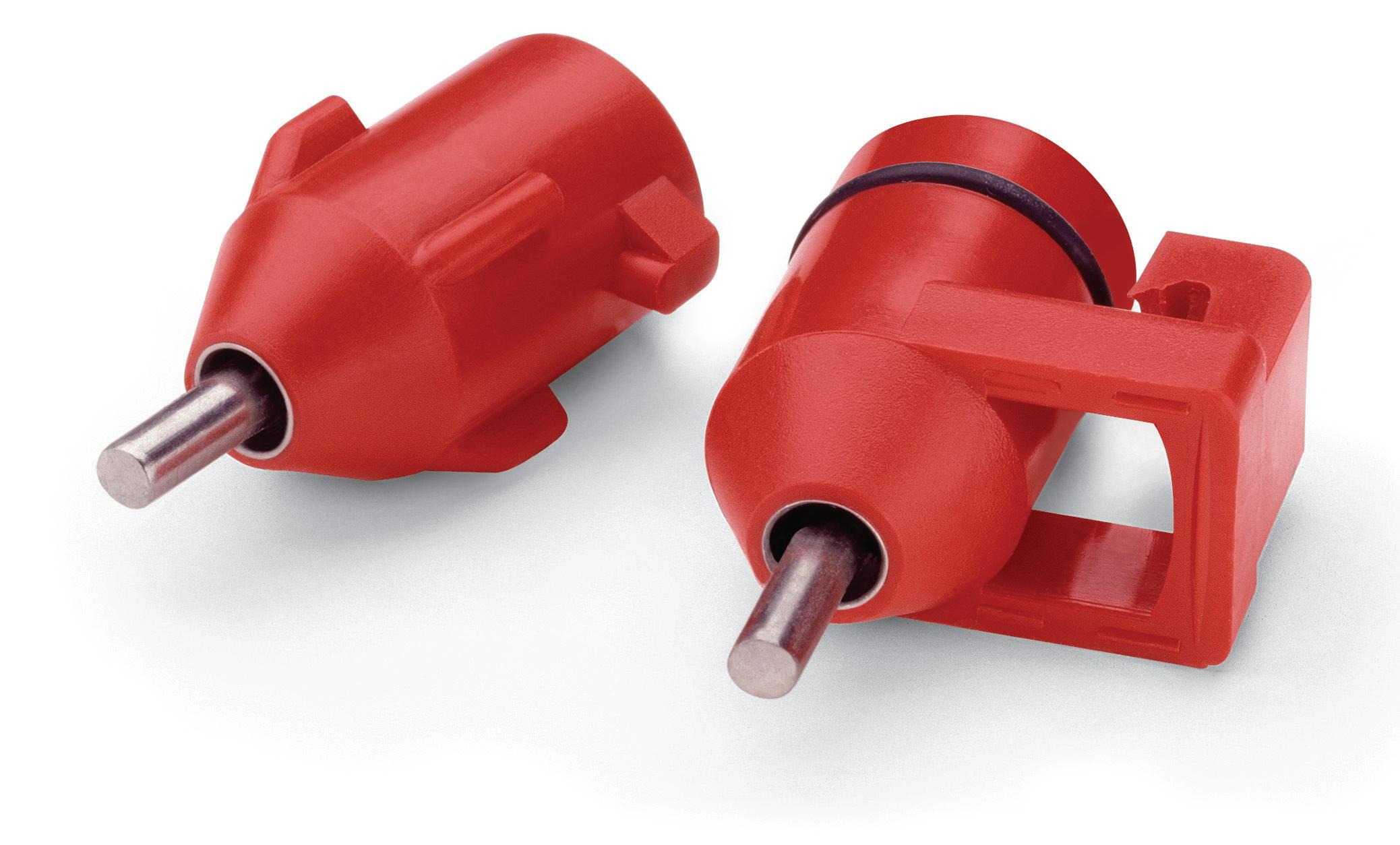
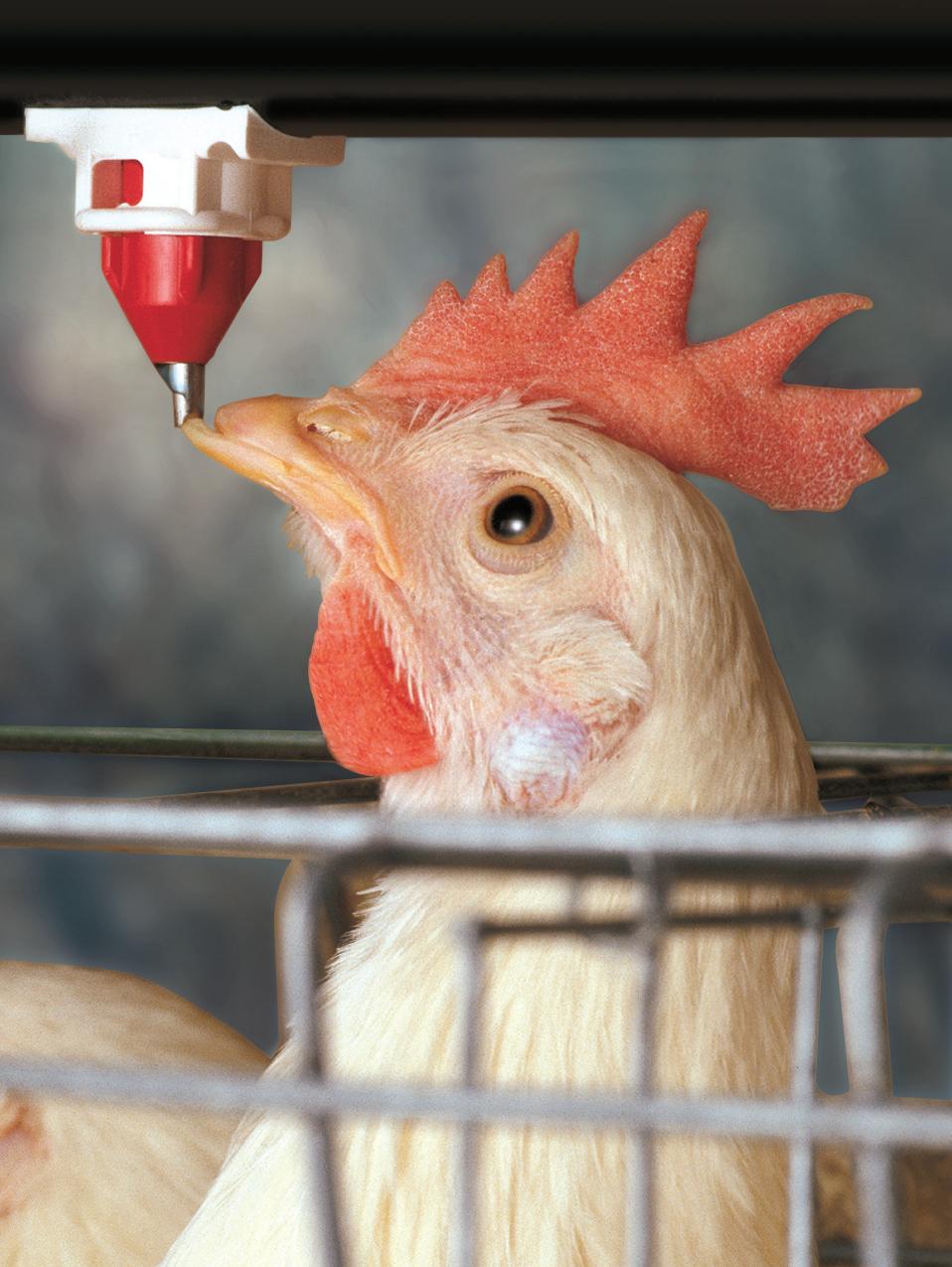
Lubing's EasyLine Nipple Drinking System for turkeys has changed the turkey industry forever. This revolutionary system incorporates a patented pendulum that effectively directs water from the nipple into a self-cleaning drink cup. The low profile cup design allows day-old poults easy access to the water for great starts and has proven to perform with great success delivering water to heavy toms. You too can Live Easy with EasyLine!
For information regarding our cutting-edge products please call us at 423 709.1000, use our toll-free fax line 866 289.3237, write to info@lubingusa.com, or visit our website at www.lubingusa.com
Glass-Pac Canada
St. Jacobs, Ontario
Tel: (519) 664.3811
Fax: (519) 664.3003
Carstairs, Alberta
Tel: (403) 337-3767
Fax: (403) 337-3590
J. Dean Williamson Ltd.
London, Ontario
Tel: (519) 657.5231
Fax: (519) 657.4092
Eliminates routine cleaning
Provides fresher water supply
Improves litter conditions
Enhances air quality Improves bird health
Les Equipments Avipor
Cowansville, Quebec
Tel: (450) 263.6222
Fax: (450) 263.9021
Specht-Canada Inc.
Stony Plain, Alberta
Tel: (780) 963.4795
Fax: (780) 963.5034
Souligny Inducted into Hall of Fame WHaT’S HATCHING HATCHING
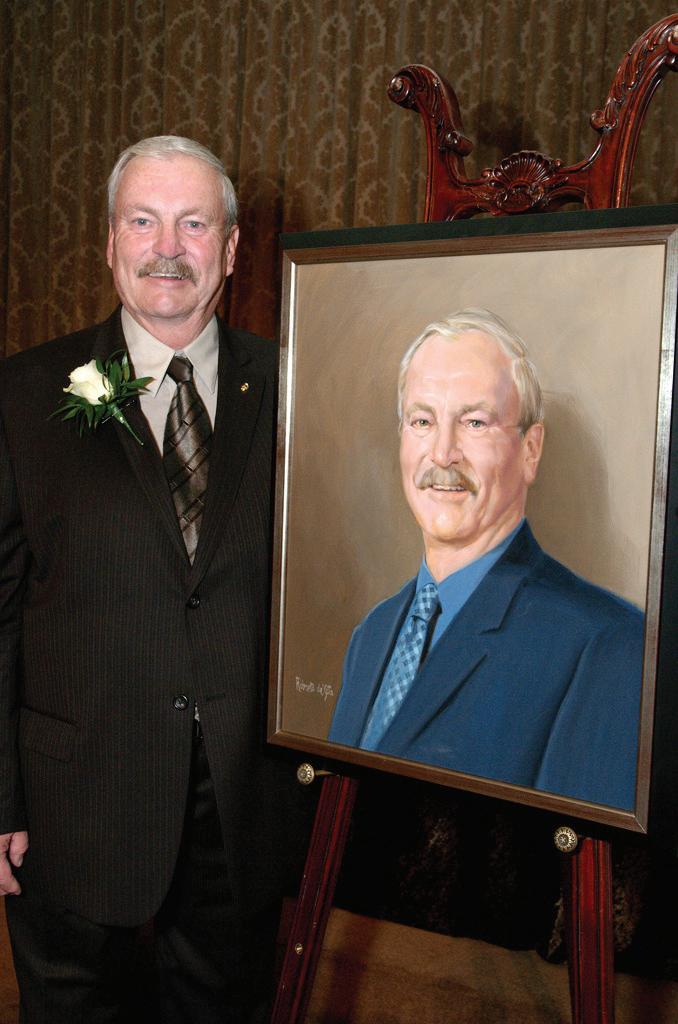
Egg Farmers of Canada (eFC) is celebrating the induction of former Chair Laurent souligny into the Canadian Agriculture hall of Fame. Mr. souligny, 67, was inducted alongside Dr. David Chalack and Mr. Frank stenger during a special awards banquet ceremony at the royal Agricultural Winter Fair in toronto before family, friends and Canadian agriculture leaders.
“It’s fair to say Laurent souligny is one of the greatest leaders in the 40-year history of Canadian egg supply management,” said Peter Clarke, who was elected eFC Chair following Mr. souligny’s retirement this past March. “Laurent brought so much to the job — passion, energy, leadership, vision. But he also brought a human touch, and I think that’s what people
will remember most about his remarkable career at the head of our industry.”
From his home base in eastern ontario, Laurent souligny has been directly involved in agriculture for most of his life. he began as a dairy farmer in 1964 and became a member of the ontario Federation of Agriculture in 1973. After entering the egg industry in the 1980s, his continuous advocacy on behalf of the industry led to his election as Chair of eFC in 1999. In total, Mr. souligny served as a member of the eFC Board of Directors for 24 years.
“I had the distinct honour of working alongside Laurent for eight years,” said Ceo tim Lambert. “I can say with certainty that an individual with truly rare qualities was inducted into the hall of Fame. the Canadian egg industry is that much richer today because of Laurent.”
Mr. souligny represented
egg farmers both in Canada as well as on the international stage, travelling frequently abroad to defend the interests of the sector. As well, his work on disease mitigation helped launch start Clean — stay Clean, the egg industry’s hACCP-based on-farm food safety program. Further, he was instrumental in ensuring egg farmers adequate compensation under the federal health of Animals Act in the event government depopulates a layer flock due to disease.
notably, Mr. souligny also oversaw the creation of eFC’s research Chairs program, which has produced a research Chair in economics at Laval university and a poultry welfare Chair at the university of guelph’s ontario Agriculture College.
Laurent lives with his wife hélène in st. Isidore, ontario, where he and his family run an egg farm and produce various cash crops, including corn, wheat and soy beans.
CBS Inc. Expands Manufacturing
Canadian Bio-systems Inc. (CBs Inc. recently purchased oshawa specialty Products, a major eastern Canada based supplier of registered feed products. the acquisition solidifies
CBs Inc.’s manufacturing and distribution capacity while adding key technologies to the company’s portfolio, president owen Jones said in a company release. It will also further support the company’s customer base in eastern Canada and the north eastern u.s.
In addition to boosting CBs Inc.’s gross manufacturing capacity, the acquisition also brings added fermentation capability. Additional key technologies acquired will strengthen the company’s growing environmental service segment, said Jones.
New Name for OFAC and AGCare
the crop and livestock sectors together.
“farm & Food Care –ontario” has been chosen as the winning entry for the name of the new coalition of the amalgamated ontario Farm Animal Council (oFAC) and Agricultural groups Concerned about resources and the environment (AgCare). Farm & Food Care –ontario is the first coalition of its kind in Canada, bringing
susan Litwin of highgate, ont., submitted the winning entry in the “name our name” contest run by the groups earlier in 2011. her submission was chosen from among 127 entries from across Canada and the united states. Litwin will receive $500 as the top prize.
Crystal Mackay, executive director of oFAC and AgCare,
EFO Wins Marketing Awards
Egg Farmers of ontario (eFo) won three “Best of CAMA” awards and two “Certificates of Merit” for its “Who Made Your eggs today?” campaign at the “Best of CAMA” Awards Banquet held at the rimrock resort hotel in Banff, Alta. the annual awards program from the Canadian Agricultural Marketing Association (CAMA) celebrates excellence in agrimarketing in Canada.
“the response to our ‘Who Made Your eggs today?’ campaign has been tremendous,” said eFo chair Carolynne griffith. “We are honoured to be recognized for a campaign that we are so proud of.”
eFo won for its radio ad series, billboards and transit ads while receiving the “Certificate of Merit” for video and integrated marketing campaign.
At the centre of the multimedia campaign is the website www.eggfarmersofontario. ca to help ontario consumers get to know their local egg farmers. the campaign was inspired by consumer research showing that ontario consumers are curious about the egg farmers who produce one of ontario’s favourite foods.
this is the second time in 2011 that eFo’s “Who Made Your eggs today?” campaign has won prestigious awards. In February, eFo won two golden ArC Awards from the Agricultural relations
said that she is pleased with the choice. said Mackay: “I believe this name will help us build on the solid foundation both groups have established over the last 20 years. It will be a great place to start a conversation with anyone who is interested in finding out more about where their food comes from.”
Farm & Food Care –ontario will be launching operations in January 2012.
COMING EvENTS
JanuaRy
January 24-26, 2012
International Poultry Exposition georgia World Congress Center, Atlanta, ga. For more information, visit: www.ipe11.org
January 26-28, 2012 Pacific Agriculture Show tradex exhibition Centre (Abbotsford Airport), Abbotsford, B.C.
fEBRuaRy
February 7-9, 2012
Canadian International Farm Show toronto International Centre, Mississauga, ont. For more information, visit: www.torontofarmshow.com
MaRCH
march 13-15, 2012
Council (ArC), a national agricultural public relations organization in the united states. established in 1990, the golden ArC Awards recognize the best and brightest in agricultural public relations. eFo is believed to be the first Canadian organization to enter and win a golden ArC Award.
“I would like to thank our staff and agency partners for their hard work, passion and insight,” said eFo general manager harry Pelissero. “And of course none of this would have been possible without the egg farm families who so graciously agreed to be our spokespeople. their stories are what make this campaign a success.”
Midwest Poultry Federation Convention saint Paul river Centre, saint Paul, Minn. For more information, visit: www. midwestpoultry.com
apRIL
april 11-12, 2012
The London Poultry Show
Progress Building, Western Fair entertainment Centre, London, ont. For more information, visit: www. poultryindustrycouncil.ca
May may 8, 2012
PIC Research Day
victoria east golf Club, guelph, ont. For more information, visit: www. poultryindustrycouncil.ca
oNTaRIo
Maple Leaf to Restructure
Maple Leaf Foods is cutting 1,550 jobs, closing plants in four provinces and streamlining distribution as part of a three-year $560-million restructuring plan expected to boost competitiveness and profitability.
HATCHING HATCHING
Maple Leaf will close processing plants in kitchener, hamilton and toronto in ontario; in north Battleford, sask.; Moncton and a small plant in Winnipeg by the end of 2014.
Maple Leaf said it will build a new prepared meats plant in hamilton, ont., and will also invest in plants in Winnipeg, saskatoon and Brampton, ont. the company will also close four of its distribution centres — in Moncton, n.B., Burlington, ont., kitchener, ont., and Coquitlam, B.C. — consolidating distribution for eastern Canada in a new facility in ontario and using an existing facility in saskatoon as its Western Canadian hub.
Vetech acquired by Ceva
Ceva sante Animale recently announced that it has acquired vetech Laboratories, Inc., which produces live coccidiosis vaccines for poultry under the trade name Immucox®.
Ceva sante Animale said in a release that the purchase will allow the company to expand its poultry vaccine range from respiratory to also include intestinal health. Immucox vaccines for breeders, layers, broilers, roasters and turkeys are distributed in over 40 countries worldwide.
JunE
June 10-12, 2012
CPEPC Convention Fairmont le Manoir richelieu, La Malbaie, Charlevoix, Que. For more information, visit: www.cpepc.ca
June 20-22, 2012 Western Canada Farm Progress Show the Co-operator’s Centre, regina, sask.
JuLy
July 9-12, 2012 Poultry Science Association annual meeting the georgia Center, Athens, ga. For more information, visit: www.poultryscience.org
auGust
august 5-9, 2012 XXIV World’s Poultry Congress salvador, Bahia, Brazil. For more information, visit: www.wpc2012.com
Production of Immucox will remain primarily in Canada. Ceva’s u.s. operations can be scaled, and the company plans to deploy certain technologies in the u.s. with this specific virus strain.
Ceva has further expanded its footprint in north America with the acquisition of another Canadian company, CentaurvA Animal health (a division of Centaur Pharmaceuticals Inc.) CentaurvA manufactures and distributes products for small and large animal veterinary practitioners.
We welcome additions to our Coming Events section. To ensure publication at least one month prior to the event, please send your event information at least eight to 12 weeks in advance to: Canadian Poultry, Annex Publishing, P.O. Box 530, 105 Donly Dr. S., Simcoe, ON N3Y 4N5; e-mail knudds@annexweb.com; or fax 519-429-3094.
Issues Common-sense approach
in this second story from iowa, our contributor andré dumont tells us how a farm manager dealt with animal rights activists’ allegations of abuse
B Y A NDR É D UMONT
Do you have activists in Canada?” the question came just as I thought the interview was over.
Andrew kaldenberg had answered all my questions, but he had a lot more to tell. he seemed puzzled that his Canadian guest had not asked about animal welfare advocacy groups.
After answering that farmers in Quebec – where I do most of my agriculture reporting – have not yet had to face such groups, the complex manager at rose Acre Farms’ 1.3-million-layer facility in stuart, Iowa, told me the story of how this location was targeted by activists.
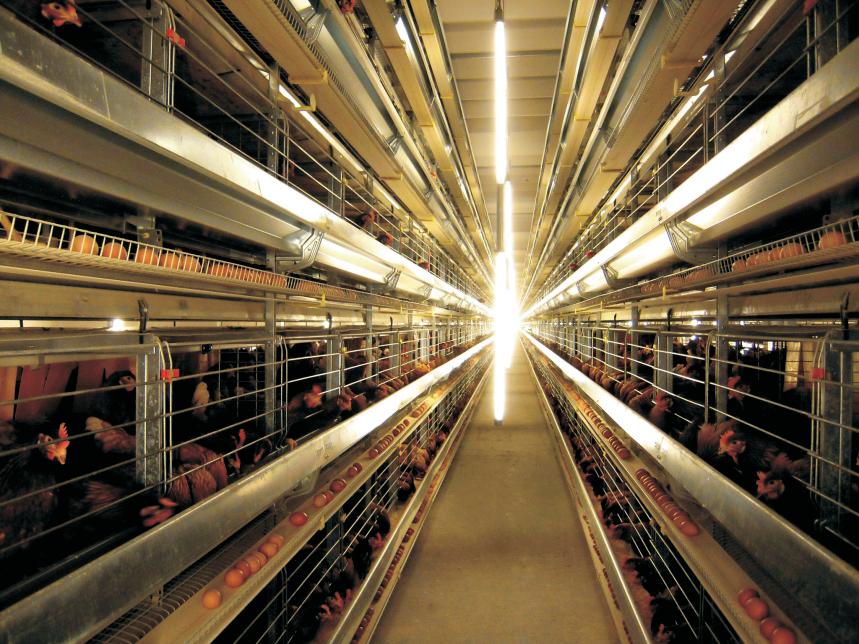
on April 7, 2010, the humane society of the united states (hsus) held a press conference at a downtown Des Moines hotel. Farmer groups and farm press members were kept out. Inside, the hsus revealed shocking footage of alleged mistreatment of layers.
the hsus claimed its “investigator” worked inside four different “factory farms” in Iowa in February and March 2010, revealing a “staggering scope of suffering.”
“this is not a matter of a couple of rotten eggs, but rather standard practices that are simply rotten. As investigation
TaCkLING
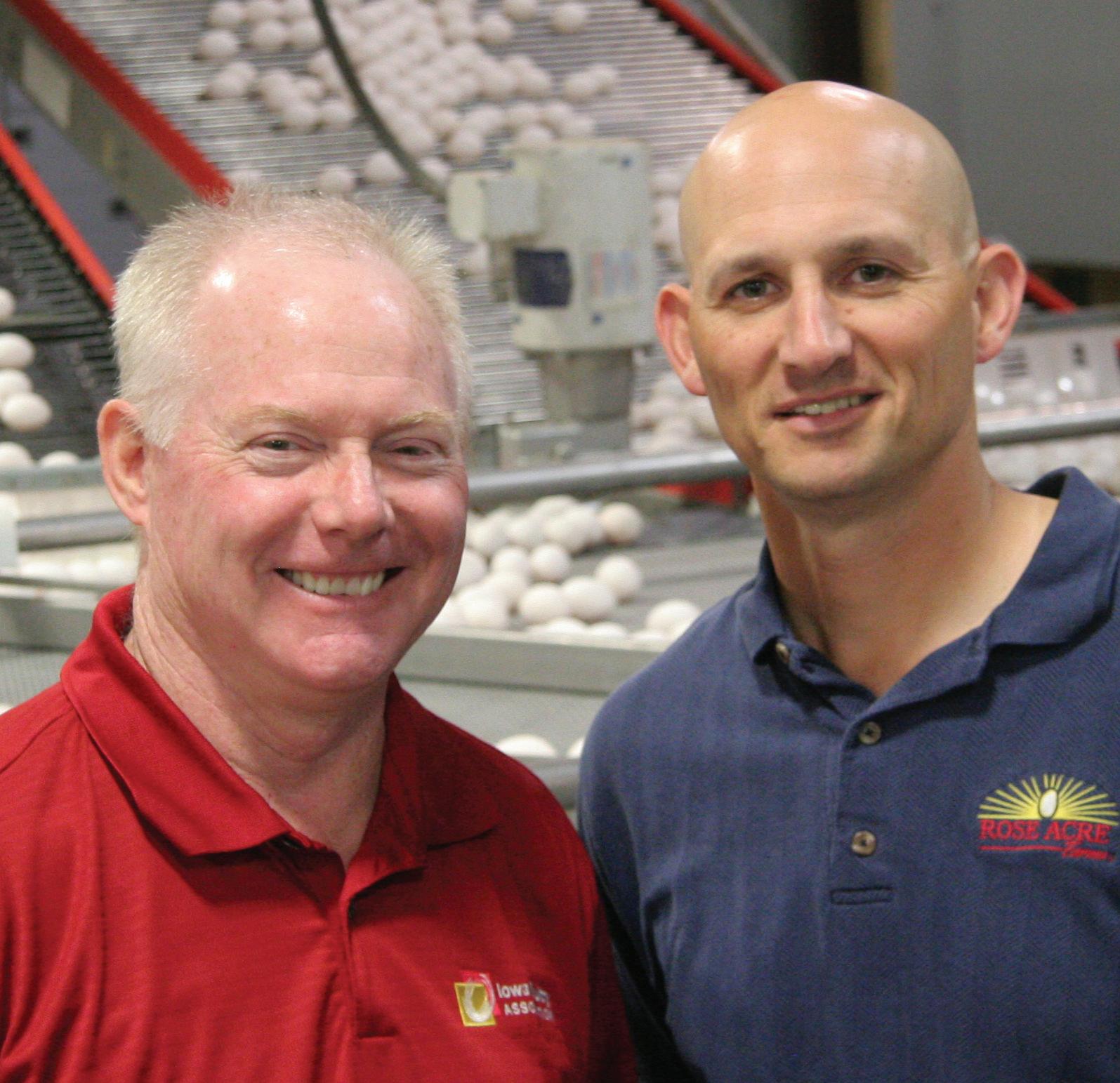
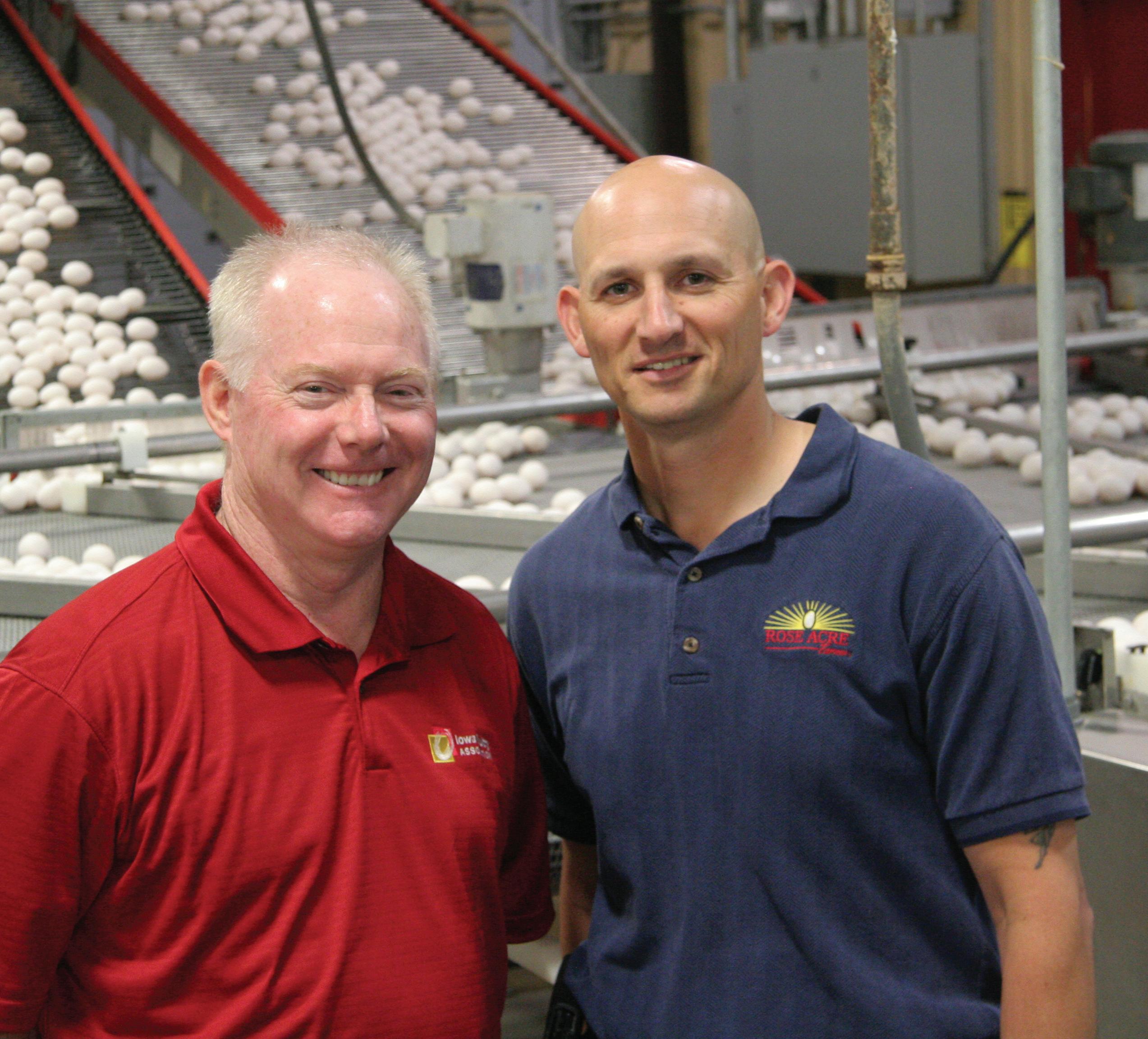
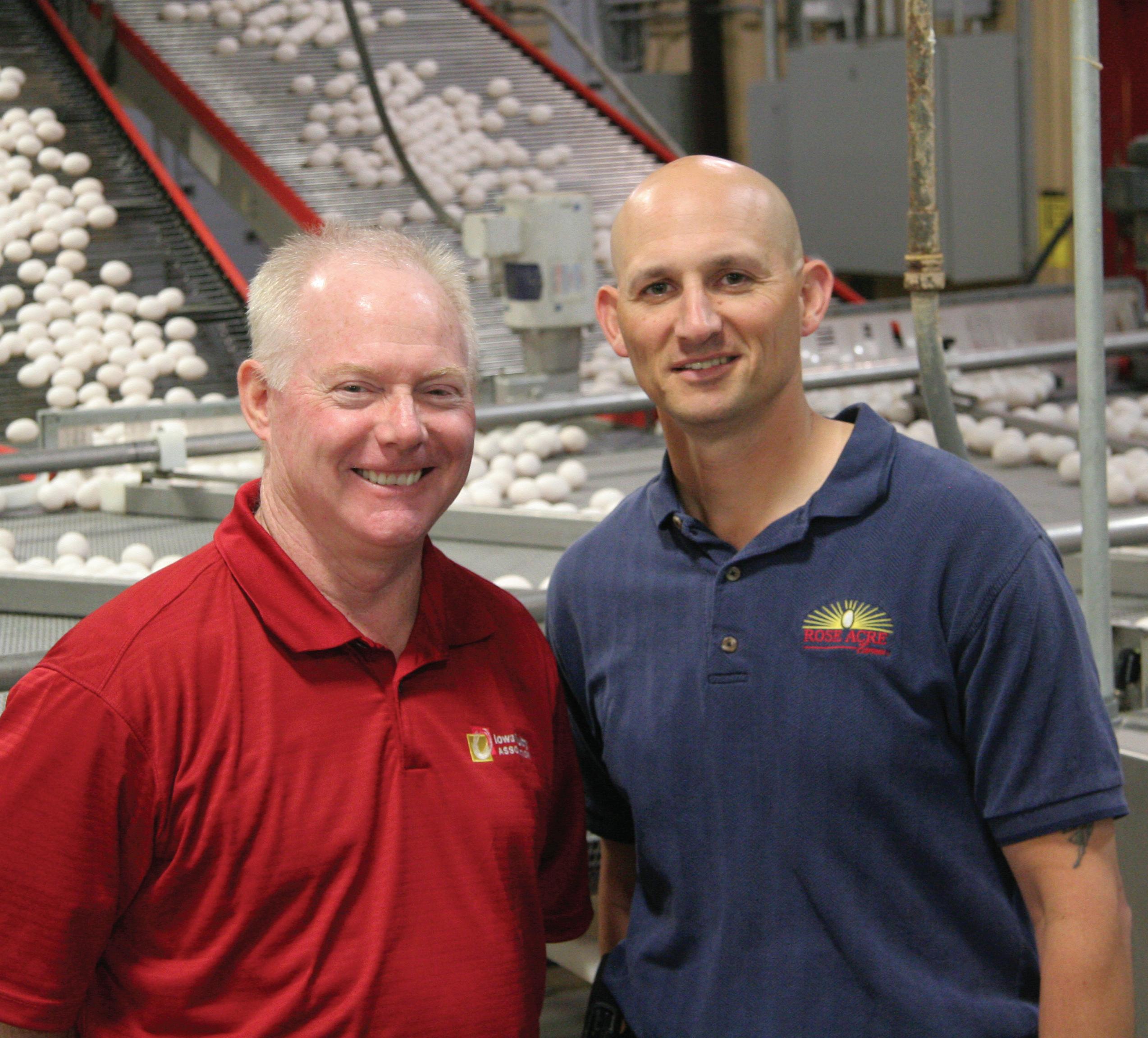
iowa Poultry association executive director Kevin vinchattle (l) and president andrew Kaldenberg countered an attack by the hsus by inviting a tv crew to film operations at rose acre Farms.
after investigation has shown, the cruelty is pervasive throughout the entire battery-cage industry. It’s time for an end to cage confinement of laying hens,” the hsus said.
two hours later, a reporter knocked on the door at rose Acre’s complex in stuart, 40 miles away. kaldenberg welcomed him and claimed the hsus video was staged and largely misrepresentative of practices.
the hsus’s so-called investigator had indeed worked at the stuart complex, three months earlier. “he worked for us
for maybe two weeks. I don’t know if he even collected a paycheque,” kaldenberg said.
What’s for sure is that this person had been hired using someone else’s identification papers. the activist received all proper orientation and training, including how to handle birds. he was required to sign a company statement that makes it mandatory for all employees to immediately report any form of abuse to the birds.
“If that person really thought it was
aCTIVISM
abuse, he violated his sworn oath,” kaldenberg said.
Iowa state law makes animal abuse or neglect illegal, kaldenberg also pointed out. “that person should have called the authorities right away. Instead, it came out at a press conference three months later!”
some of the footage shown did come from the stuart complex, but kaldenberg says it was a bad case of misrepresentation. “they show birds in move-out carts and try to say that’s where they live all the time.”
kaldenberg, who is also the president of the Iowa Poultry Association, toured the reporter around, showing him “the other side of the story.”
kevin vinchattle, the association’s executive director, also participated in countering the hsus’s attack. “If things are not right for these hens, they are not going to lay eggs,” he repeated. “If we don’t produce eggs, we are not going to buy corn, soybean, electricity and everything else we need for egg production. that will affect the livelihood of a lot of people.”
that night, the same reporter showed on tv the very same statement the undercover activist had signed, promising to report any mistreatment of the birds. By welcoming the reporter and demonstrat-
ing that there was nothing to hide, “we killed the story,” kaldenberg said. the way he dealt with the issue was pure common sense and not the result of any media or crisis training from rose Acre Farms, he said.
Changing the law
Activists who target poultry farms and get hired by misrepresenting their identity put at risk the safety of the birds and the livelihood of the farms they target, vinchattle says. “If they are not working with the best interest of the farm and of the birds at heart, they are a huge risk. they may cut corners in a biosecurity practice or never handle the birds properly. I don’t think that is fair to someone like Andrew.”
to prevent more activists from entering their farms undercover, the Iowa Poultry Association suggested the law be changed, making it illegal to film and photograph without consent on a farm, as well as to obtain access to a farm by false pretences. the idea received a warm welcome from Annette sweeney (republican), the chair of the Iowa house of representative’s Agriculture Committee.
the proposed law has garnered significant media coverage, especially the part that makes it illegal to “produce a record
which reproduces an image or sound occurring at the animal facility without the consent of the owner.”
For kaldenberg and vinchattle, however, the most important part of the legislation is about “animal facility fraud.” the proposed law would make it illegal to “obtain access to an animal facility by false pretenses for the purpose of committing an act not authorized by the owner,” and to “make a false statement or representation as part of an application to be employed at the animal facility, if the person knows the statement to be false, and makes the statement with an intent to commit an act not authorized by the owner.”
the bill was passed in the state house of representatives March 17, 2011, and handed over to the state senate. A few amendments were filed and the process has been stalled since June 29. this law was written specifically for agriculture. however, vinchattle says, “If I was in any other industry, I wouldn’t want someone working who is not who he claims to be.”
Whether the law is passed or not, it will not change kaldenberg’s commonsense approach. those who are worried about bird welfare in battery cages may call or show up for a visit to see for themselves. “I welcome activists,” he says. n
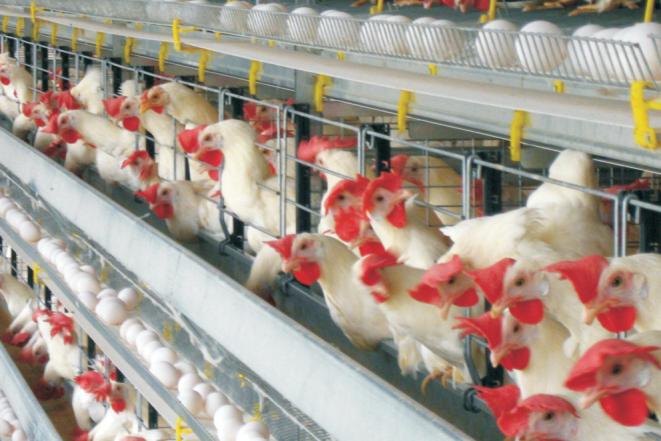
rose acre Farms Was targeted by the hsus, Who had a rePresentative hired under False Pretences in an attemPt to reveal “mistreatment” on the Farm.
CPRC Update National Poultry Research Strategy
The Canadian Poultry research Council, in co-operation with poultry industry stakeholders, has coordinated the development of a national Poultry research strategy. our July 2010 update reported the results of a workshop that brought together approximately 60 representatives from industry, academia and government to examine Canada’s poultry research agenda and discuss issues and opportunities. this workshop was a very important step in the process, and the report, which includes a copy of the draft strategic plan, can be found on our website at www.cp-rc.ca/2010_update/2010_ events.html#2010.
Workshop discussions were based on a draft research strategy that CPrC prepared as a starting point for the workshop sessions. Input from the workshop has been incorporated into a new draft and is being reviewed by industry, researchers and other stakeholders for further comment. the national poultry organizations have had an important influence on the direction of the strategy through their discussions with their members. Although not everyone will agree with all parts of the strategy, we all realize that the final purpose of research is to benefit the end users, whether farmers, processors, consumers or society as a whole. the strategy reflects industry consensus on poultry research priorities.
there are good reasons to develop, and regularly review, a research strategy for the Canadian poultry industry. First, research funding is limited and resources need to be managed carefully to ensure a good return on investment. good planning is important to success and a national Poultry research strategy provides the approach to direct those investments to important areas.
second, a comprehensive national Poultry research strategy development and review process ensures that stakeholders
have an opportunity to provide input on their priorities and concerns. this input is critical to a well-targeted research strategy.
third, a national Poultry research strategy does not just stop at identifying areas of research interest: it also includes approaches to supporting and enhancing our research resources (scientists and facilities) to ensure high-quality and effective results. this part of the strategy includes a focus on supporting and developing future poultry researchers as they progress through their education. We have to create opportunities for students to become poultry researchers by providing programs and infrastructure to attract and support them.
Fourth, a national Poultry research strategy includes methods for moving research results along the research continuum to the end user so that the knowledge developed can be applied to generate benefits. Communication of results is one of the most important and difficult areas of research. results have to be effectively relayed to the correct level of the research chain so that they are acted upon, whether that next step is applied research, innovation or application of results.
Finally, a national Poultry research strategy must be a “living” document, flexible enough to adjust to changes in the environment within which our industry operates. It must be reviewed regularly and CPrC will co-ordinate an annual review of the strategy to determine if it continues to reflect industry research needs. the strategy will be used by many industry stakeholders to enhance the longterm viability of the Canadian poultry sector.
• the strategy document will provide researchers with information on topics that are considered to be important by the whole industry.
• government will be able to design
programs and policies that support industry-identified research priorities.
• Funding organizations will be able to assess new projects and programs in relation to the research priorities identified in the strategy.
• Producers and their organizations, input suppliers, processors and the general public will be able to evaluate poultry research direction in relation to their interests and priorities.
• CPrC will use the document in its research funding activities but it will also provide us with a valuable resource as the organization evolves to fulfil its national mandate of research support, co-ordination and communication. CPrC’s own strategic planning process will be more effective with the national Poultry research strategy as a guide. the national Poultry research strategy will be invaluable in our research planning procedures for the next round of federal government programs, popularly known as growing Forward 2. It is likely that the next program will include research funding, possibly similar to that of the Agriculture and Agri-Food Canada program that supports the existing Poultry research Cluster. the strategy will not only provide information upon which we can develop our research proposal but also will assure federal authorities that the research for which funding is requested is supported by the Canadian poultry industry. A draft of the national Poultry research strategy is available on the CPrC website. n
The membership of the CPRC consists of the Chicken Farmers of Canada, the Canadian Hatching Egg Producers, the Turkey Farmers of Canada, the Egg Farmers of Canada and the Canadian Poultry and Egg Processors’ Council. CPRC’s contact information is available at www.cp-rc.ca.
Marketing Beyond the Roast
canada’s
turkey producers are hoping both new marketing initiatives and new products will capture consumer interest
BY T REENA H EIN
at the same time the food choices of many Canadians are being influenced by the economic downturn, poultry is still a popular choice for families for a variety of reasons, including health and taste. Building on this idea, provincial turkey marketing boards across the country are looking to boost traditional and new turkey products beyond their present sales.
“Although the turkey market has been relatively flat [see sidebar Pg 16], and we’ve been able to maintain our market share, our goal is growth,” says Mark Davies, chair of the turkey Farmers of Canada. “We’re working to get consumers thinking of turkey as an everyday choice, and not just as something to be served at holiday meals three times a year.”
Although some provincial turkey boards have collaborated in the past on various marketing items such as recipe books, each province mainly does its own thing. turkey Farmers of ontario (tFo) recently released a television commercial that they’ve received some very positive feedback about, although the ad was only shown on ontario tv channels for six weeks. “It is, however, on our website and on Youtube, so [all] Canadians could have seen it,” says tFo general manager Janet schlitt. she says it’s too early to tell what the impact of the commercial has had on purchasing habits;
turkey Farmers of canada says growing the market will be achieved by getting consumers to think of turkey as an everyday choice, not just as something to be served at holiday meals three times a year.
tFo may also produce a new commercial in future. As a followup, tFo implemented an on-pack sticker program on fresh tray pack items for approximately one month in hundreds of retail stores across ontario. there was also a $5 rebate program from August to october where consumers had to send in their turkey product receipt and the recipe used. there are many other components to tFo’s current marketing strategy, including a new logo for ontario turkey, and a social media campaign that uses twitter
to post relevant stories, recipes and links. there are guest “tweets” and Facebook posts from emily richards (cookbook author and more) and Leslie gordonChristie (personal trainer and life coach) about health, fitness and food. tFo has created six Youtube cooking videos featuring emily richards, is revamping its consumer site, www.makesitsuper.ca, and also recently hosted a contest on www.savvymom.ca that included ads, articles and recipes to encourage turkey consumption.
GRoWTH WaNTED
One Million Birds. One Conclusion.
Canadian Trial Demonstrates the Performance Improvements of Vaccination with VAXXITEK® HVT + IBD.
In one of the largest Canadian field studies of its kind, more than one million broilers were vaccinated with VAXXITEK® HVT+IBD over four periods from June 2010 to February 2011. 1 At the end of the trial, the conclusion was clear. Vaccination with VAXXITEK HVT+IBD resulted in a substantial improvement, particularly in livability, number of condemnations and profitability.
Here’s what satisfied customers are saying: Learn more about the field studies, visit www. .ca or talk to your veterinarian today.
We started using VAXXITEK shortly after its launch and noted a big improvement in chick quality right from the start. Our customers reported fewer condemns and reduced mortality. Now we have customers asking for VAXXITEK-vaccinated chicks. We’re extremely happy with the results.
“
Ernie Silver, Hatchery Manager, Western Hatchery, Abbotsford, BC
Marketing
ReseaRCh and RepoRt
In March 2011, tFo received a commissioned report by dietician/researcher Jane Dummer entitled “Innovating and improving fresh chilled turkey pieces to appeal to, and remain competitive in, the ontario market.” It includes a look at products currently in ontario and recommendations for new ones. Dummer suggests that a one-kilogram breast (bone in, skin on) could be sold with separate seasoning blends or stuffing (e.g., cranberry, oregano) as a meal kit with preparation instructions and a recipe, and that smaller portions of the full breast could also be offered in a similar fashion. “new, innovative and ethnic flavours and seasonings could be applied to fresh stir-fry pieces for uses in other recipes such as tacos, quesadillas, stews and casseroles,” Dummer asserts. “An interesting concept that could be explored is offering turkey options at the displayand-serve counter. A variety of flavoured schnitzel pieces are a great fit for this concept, where the consumer picks out the number and variety of pieces and the retail employee packages it on site.”
Dummer identified the top five poultry flavour profiles (considering the ethnic population of the toronto area, where flavours were later tested): Asian (ginger, garlic and a low-sodium oyster sauce, or mandarin orange, ginger and green onion), south American-Peruvian (hot red chili and lime or citrus), Indian (medium heat curry blend and/or masala with a roasted flavour), Italian (balsamic fig and oregano or sage) and north American (apple wood smoked maple). these flavour profiles were tested with fresh turkey breast pieces in a formal consumer research taste panel (with Mild Italian and Indian Curry
Turkey
as the top choices), and then tested in a retail environment (Longo’s supermarket) during november and December 2010.
Four flavours of fresh, flavoured turkey pieces were offered at 14.99 per kilogram (approximately $9 to $10 per tray), with no marketing or advertising. the top two flavours purchased were Chili Lime with a 65 per cent uptake rate and Mild Italian with a 62 per cent uptake rate. this was surprising, as Chili Lime was not one of the top two in the original taste panel. An uptake rate of greater than 60 per cent is an acceptable outcome and would be considered a success with respect to the use of no marketing initiatives. Longo’s advertised and sold the top two flavours during spring and summer 2011, and will do the same in 2012.
Les Éleveurs de volailles du Quèbec (evQ, Quebec’s marketing board for chicken and turkey) is also doing a lot of social media and Internet marketing to promote turkey. “We are very active on the Internet,” says evQ marketing and communication director Christian Dauth. “our French-language site (www.ledindon.qc.ca) features recipes, video clips of a chef demonstrating how to prepare turkey dishes, contests and information on how turkey is raised.” Consumers can also sign up for a weekly e-newsletter or visit the evQ Facebook page (it’s only six months old but has over 4,000 fans). “We are also promoting turkey cuts to hospitals, cafeterias, schools and more through a broker,” Dauth says. “In retail outlets, we’re developing with our broker merchandising programs with major supermarket chains. We also book flyer ads, and make recipes and other point-of-sale materials available.” In addition, evQ has a joint marketing program with processors.
Marketing – Past, Present and Future o utlook
B Y vINCE I ACOBUCCI , M AR k ET A NALYST, P OULTRY S ECTION , A GRICULTURE AND A GRI - FOOD C ANADA
Historically, there is a strong correlation between the growth of the canadian population and growth in domestic turkey consumption. it is anticipated that this relationship will continue into the future. canadians consumed 145.5 million kilogram of turkey meat in 2010, which equates to a per capita consumption of 4.3 kilogram. this figure is well within the average range for the past 20 years, during which time per capita consumption fluctuated between 4.1 and 4.5 kilogram. moving forward, it is anticipated that despite higher input costs and the sluggish economy, per capita turkey consumption will continue to trend in this range.
in recent years, however, there have been some changes in the types of turkey products that are consumed and when turkey is consumed. Following the financial crisis in late 2008, many consumers reined in their spending. For turkey, this
resulted in reduced demand for breast meat (white meat) while concurrently increasing the demand for thigh meat (dark meat).
in 2007/2008, 1.2 million kilograms of thigh meat was exported from canada. since 2007/2008, exports of thighs have declined to just a few thousand kilograms per year. this is due to two factors: less thigh meat is being produced as a result of decreased boning activity and domestic demand for this less expensive cut has increased. similar, but less dramatic, changes can also be seen in the movement of turkey wings and drums.
even though higher feed costs have led to higher live prices in recent years, when adjusted for inflation, current live prices are similar to those in 1995 to 2000, and are, in fact, lower than in the 1970s and early 1980s. this was made possible through efficiency, by way of technological advances in breeding and feeding, and the ability of turkey producers to capture these advances in their production practices.
new pRoduCts on the maRket
Maple Leaf offers a variety of Maple Leaf “Prime” turkey products, including thighs, breasts, boneless skinless breasts, breast fillets, breast slices, scallopini, stir-fry pieces, drumsticks, extra-lean ground, extra-lean minced,
sausages (Bavarian, h ot Italian, s weet Italian) and winglets-drumlets. two other products are particularly health-oriented: Breakfast g rill turkey’ n Bacon (turkey combined with bacon) and n atural s elections o ven- r oasted turkey Breast (in prepackaged slices and at the deli coun -
The feed conversion leader.
ter) containing turkey, water, sea salt, vinegar, potato starch, lemon juice concentrate, cane sugar, cultured celery extract and spice.
g ranny’s Poultry Cooperative Inc. in Winnipeg, Man., has launched three new turkey products in the last 18 months. g ranny’s now offers a stuffed turkey breast roast (with traditional stuffing) that is cooked from frozen, and a naturally smoked deli roast for store deli counters, both infused with flax oil (containing heart-healthy omega-3 fatty acids) and carrying “ h ealth Check” approval from the Canadian h eart and s troke Foundation. g ranny’s also offers “ o mega-3” whole birds, which receive flax in their feeding program. “We believe omega-3 fatty-acid content is a good selling point,” says Jason Wortzman, g ranny’s director of marketing and product development and a chef.
Being a co-operative owned by farmers, and the only turkey processor in Manitoba, not to mention supplying about half the s askatchewan market, g ranny’s also produces ground turkey and pieces for retail year-round. “ g round turkey sales have really picked up over the last few years,” says Wortzman. “It’s becoming an identifiable product outside of holiday meal whole birds, and fits well into existing family menu planning, for items like burgers, taco filling and spaghetti sauce. We’re also hoping to add pieces with specialty flavours in the future.” g ranny’s promotes turkey through coupons, in-store features and online advertising. Yorkshire valley Farms, Canada’s largest organic poultry business, will be offering whole organic turkeys this festive season at Loblaws, Longo’s, s obeys, h ighland Farms and several quality independent food retailers in the toronto area.
As Mark Davies, Chair of the turkey Farmers of Canada, says, “It’s a challenging time, but a promising time, for turkey. t here’s a world of opportunity out there for the industry to grasp and that’s exciting.” n
Production
Focusing on Local
With
a generational
shift
underway,
lakeview Farms has moved from being one of ontario’s largest turkey producers to placing more emphasis on on-farm processing and local/ regional retailing
BY J IM kNISLEY
It’s picture postcard perfect. so much so that, a few years ago, local politicians overruled their officials and allowed a second house to be constructed at the far end of the broad, green expanse of lawn.
the politicians were effusive in their praise of the homes, the setting, the maintenance and the overall farm.
one local councillor declared it a showpiece. Another said it was just the type of farm the county was encouraging. It had a retail outlet, a processing facility and turkey barns out back.
they were talking about Lakeview Farms, located just outside Dunnville in haldimand County in southern ontario.
In recent years, haldimand County, like many other municipalities, clambered aboard the local food bandwagon, encouraging farms to value add and consumers and restaurants to buy local.
It is something that John and Pat Deklerk, owners of Lakeview Farms, had been doing and promoting long before there was a bandwagon, a local food movement or a 100-mile diet. Lakeview Farms, located south of hamilton near the north shore of Lake erie is in the process of focusing even more on producing homegrown, home processed and regionally marketed turkey and turkey products.
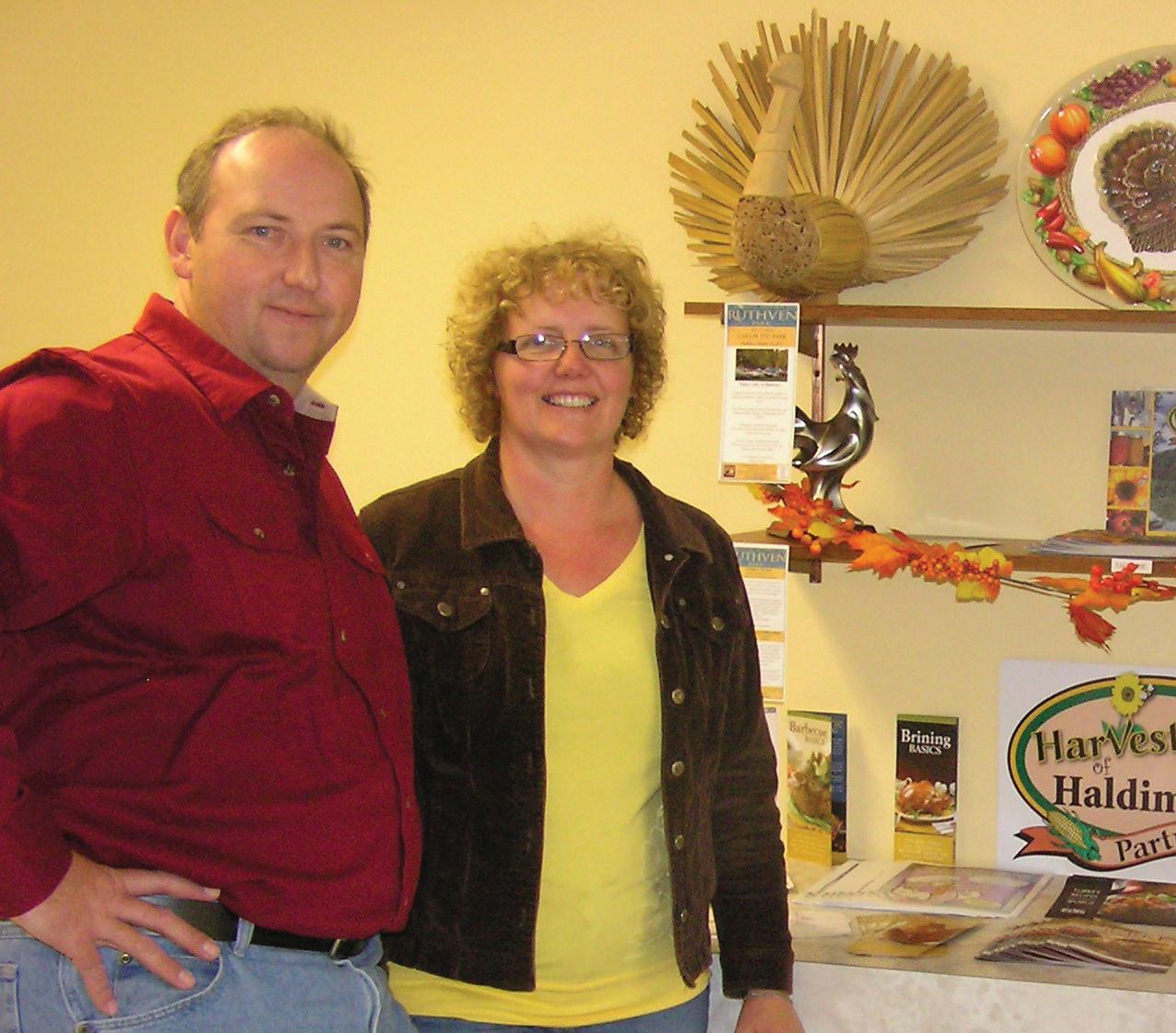
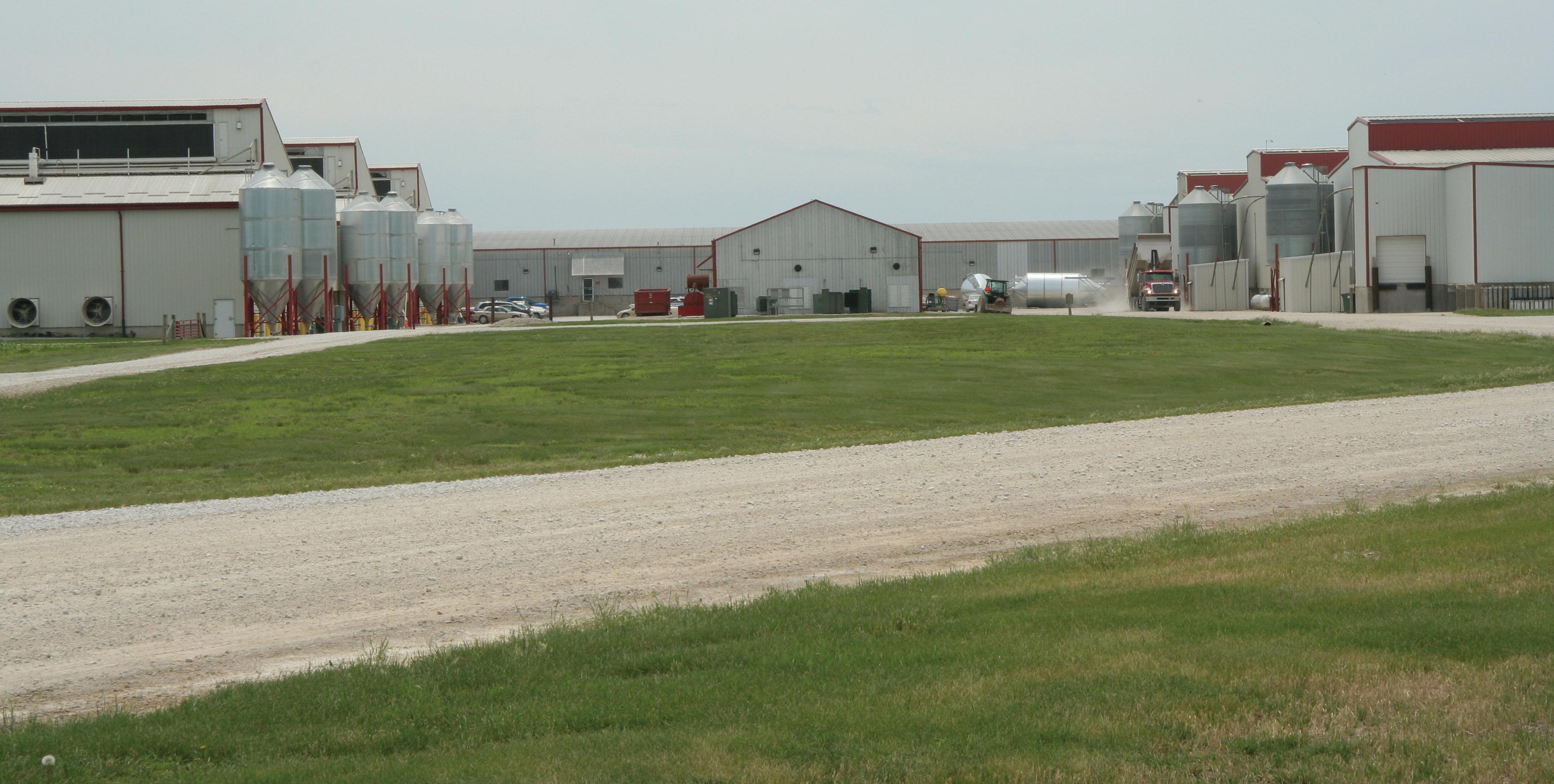
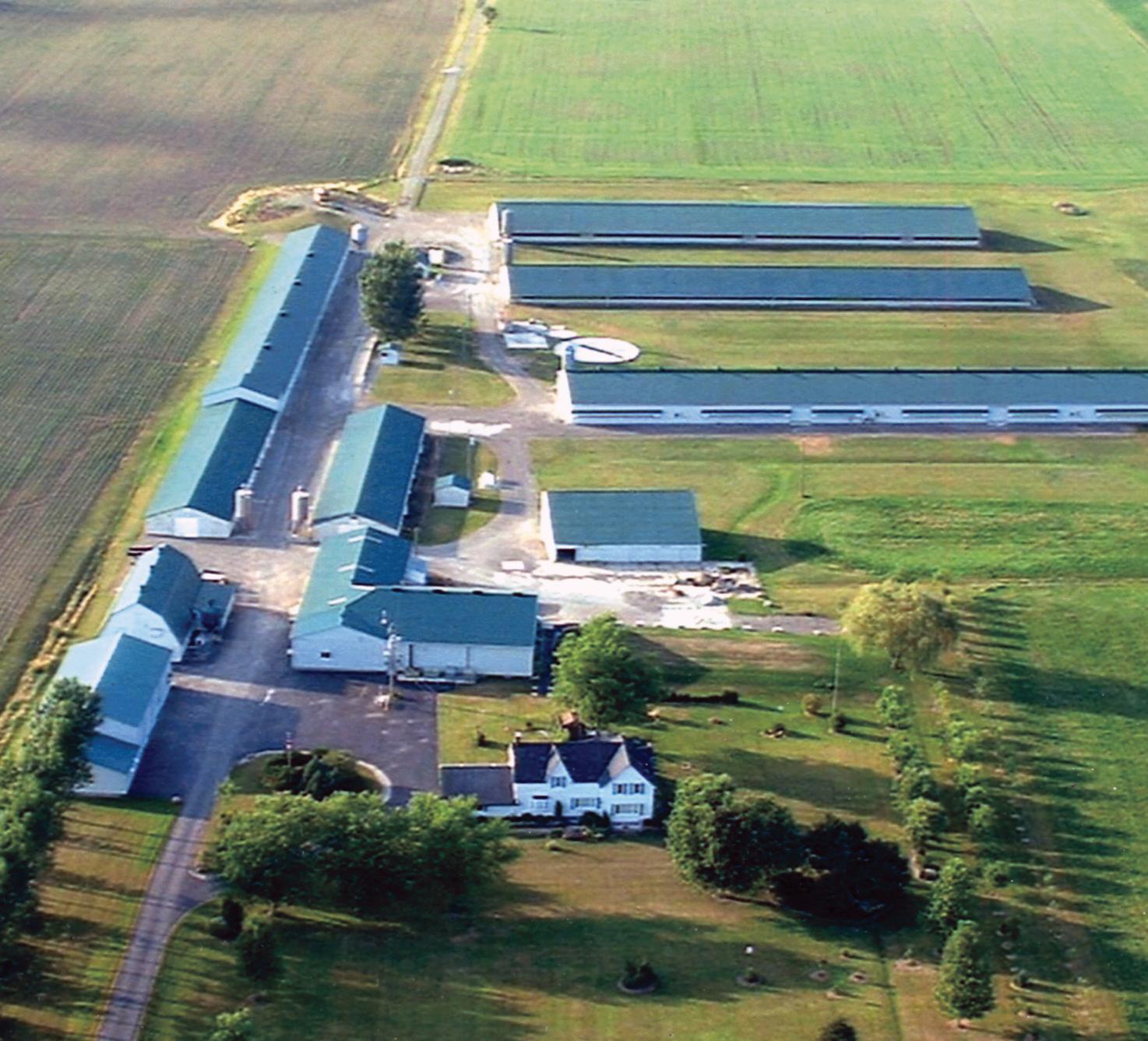
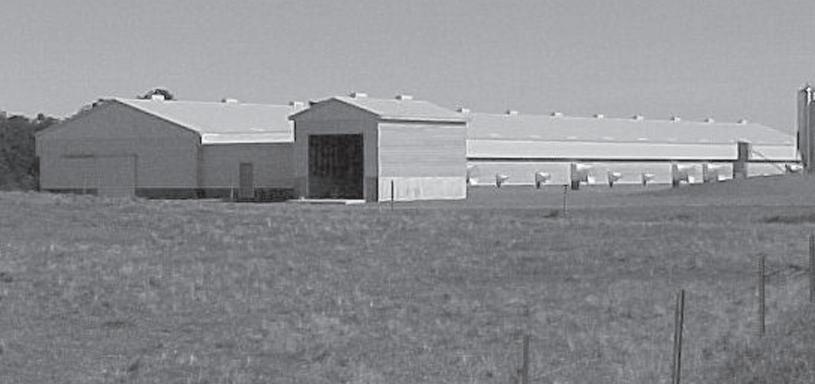
lakeview Farms (above), once one of the largest turkey farms in ontario, now produces 15,000 birds and retails whole turkeys and a wide variety of products out of the on-farm store and to customers in the surrounding area.
With a generational shift underway it has moved from being one of ontario’s largest turkey producers to placing more emphasis on on-farm processing and local/regional retailing.
the farm used to have more than a million pounds of quota. that has been reduced to about 15,000 birds, or enough to supply the processing line, serve its own retail store and satisfy other customers.
the new owners, John and Pat’s daughter Liz and son-in-law Andrew schilstra, are building on a solid base of long-term customers – some of whom now live hundreds of kilometres away
but will pick up a turkey or turkey product whenever they are visiting friends or family in the Dunnville area – and word of mouth.
Capitalizing on schilstra’s processing expertise, it also continues to expand its product line. It isn’t just frozen turkeys. they have introduced a unique product – peameal turkey bacon – that has become very successful and sell turkey pies, turkey rolls and other turkey and poultry products.
When John Deklerk started his turkey operation in 1967 he knew it was something he wanted to do. he had grown up on a dairy farm, tried truck driving for
LaRGE To LoCaL
Breathe easy!
NEW INNOVAX®-ILT VACCINE
helps protect your birds against both Marek’s Disease and Infectious Laryngotracheitis with no risk of spreading ILT.
Innovax-ILT is a brand new kind of vaccine that protects your flocks from both Marek’s Disease and Infectious Laryngotracheitis (ILT). Applied at the hatchery, it makes field vaccination unnecessary. As well, since Innovax-ILT does not induce ILT, potential reactions or house to house spread that may be associated with some other classic live ILT vaccines are virtually non-existent1
Talk to your veterinarian or hatchery today about making Innovax-ILT the cornerstone of a new vaccination program that can improve the overall respiratory health of your flock.
Production
a couple of years and then worked on a turkey farm. he enjoyed it and bought his own farm just before supply management was introduced.
Initially he contracted with ralston Purina to grow turkeys for the company. he soon learned that much of the turkey business revolved around Christmas and thanksgiving.
Believing that more could be done, he evaluated going into processing as well. he started by producing a new York dressed turkey for area butcher shops. “In 1974 I started wholesaling new York dressed turkeys, that’s where the money is made.”
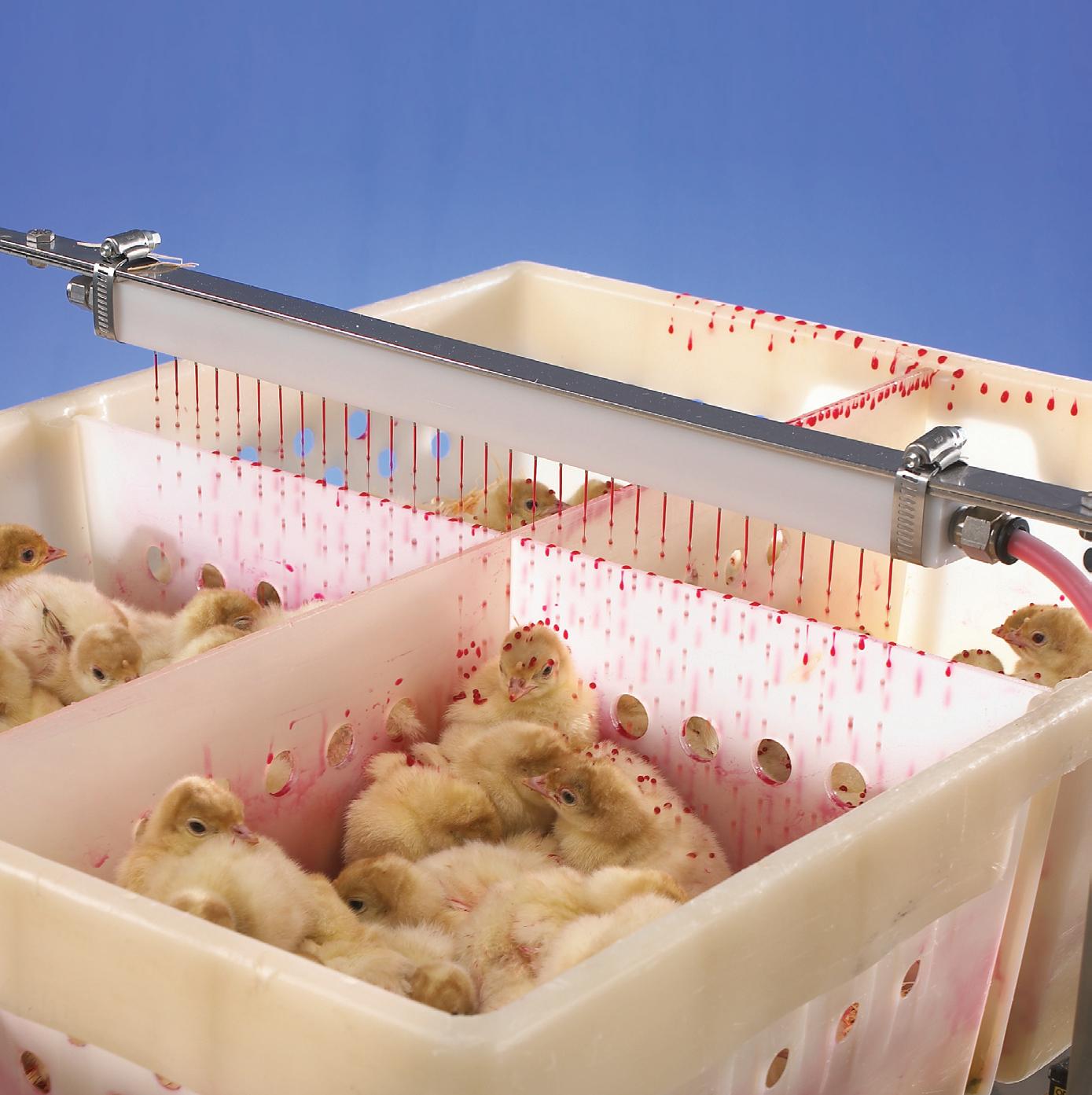
Immucox®. Coccidiosis vaccine via a proprietary gel spray.
then with three partners he opened a processing plant in Mississauga and began turning out everything from turkey burgers to turkey salami to turkey roasts.
As a producer, you know that coccidiosis is endemic in your flock; birds are being challenged and that has a cost—lower feed efficiencies. Expensive medications lose effectiveness as coccidia strains become more resistant, and may not be the answer.
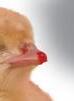
Vaccination is an alternative method of coccidiosis protection that can perform as well as medication without losing sensitivity in disease control. The Immucox gel droplet delivery system provides vaccine to the poults and sees immediate uptake— *we routinely find over 90% beak and tongue coloration within 3 minutes. Because the droplets sit on top of the down, the birds remain dry, stay warm and active, and recover immediately. (can patent pend)
AGRO-DESIGN CONSTRUCTION Ltd.
In the oct. 7, 1983, edition of the Calvinist Contact, Deklerk said: “Four years ago we started with zilch. now it’s 70 to 80 thousand pounds of boneless meat per week.”
“our product is not cheap, but it is high quality,” he said in the article.
In the 1970s he had opened the retail outlet on the farm. the reason for branching out was straightforward – profit. he said the minimally processed new York-style birds brought 40 per cent more than live turkeys and other further processed products added to the bottom line.
Deklerk got 100,000 lb. of quota in 1967 when supply management began. then in 1972, things really changed when the marketing board got pricing power. For farmers that was huge.
“If you did a good job you made a profit.”
Deklerk said supply management did come with production controls, but said, “I’d rather be told what I can produce than work for nothing.” Working for nothing was all too frequent in the days before supply management.
“If it wasn’t for supply management there’d be very few poultry
Continued on page 26
Research Cost Calculator
university of guelph researchers are trying to help farmers go green without breaking the bank
B
Y M ATT M
C I NTOSH
Like other Canadian industries, the agricultural sector is increasingly focused on adopting “green” practices and technologies to create a more sustainable business environment. however, turning an entire operation into an efficient, productive, environmentally friendly machine involves a significant amount of time, capital and expertise.
now, researchers at the university of guelph’s school of engineering have embarked on an ambitious project that could help many farmers “go green” without breaking the bank.
Partnering with the ontario Ministry of Agriculture, Food and rural Affairs (oMAFrA) and the Poultry Industry Council, Prof. Bill van heyst, along with graduate students stephanie shaw and Dan roth, are creating a free computer program they call a Complimentary energy Decision support tool (CeDst) to aid farmers in making more environmentally sound decisions.
More specifically, the software’s goal is to provide easy, immediate access to knowledge about sustainable technologies that are available to farmers, the associated costs, and what technology is best suited to each individual operation.
“We want this program to allow farmers to better direct their capital towards more beneficial green investments, and encourage others to actively pursue environmentally friendly projects,” says shaw. “A free, one-stop educational tool
university of guelph researchers are creating a free computer program they call a complimentary energy decision support tool (cedst) to aid farmers in making more environmentally sound decisions.
for this kind of thing will definitely help.”
CeDst works as a multi-fold calculator. By entering information such as location, the size and type of structures present, and what commodities are being farmed, CeDst compiles potential projects designed to green up the operation. It then provides a list of potential costs associated with those options, as well as the prospective amount the farmer might save by investing in them.
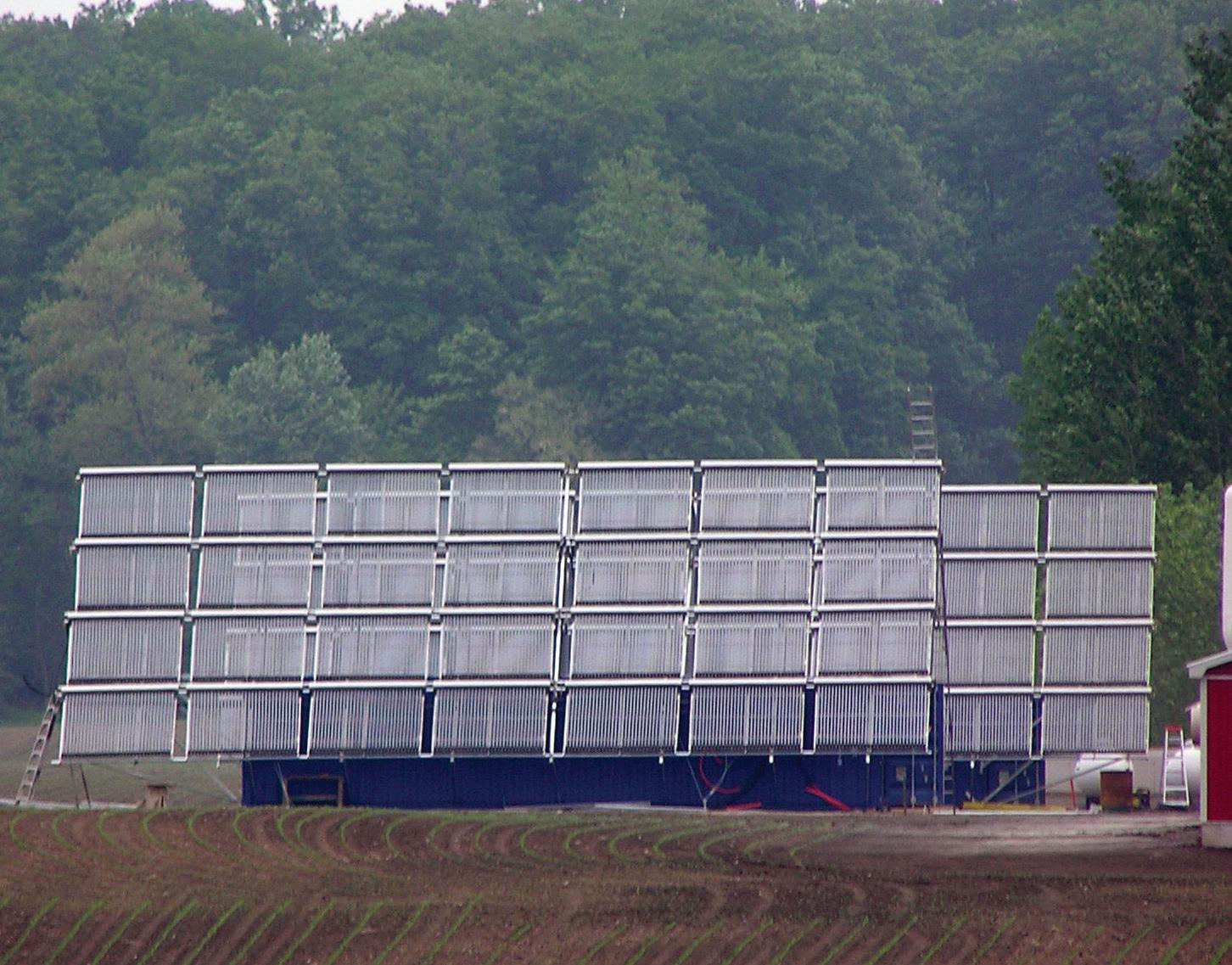
For example, whether producers want to generate their own power via a windmill or solar panels, or simply save a little on heating through better insulation, they can easily compare the price tag, return on investment period and eventual cheque size of all possible options.
In its calculations, CeDst takes into account factors such as current mate-
rial costs, installation and availability of government support for the technology in question.
Ideally, CeDst could also be marketed as a tool for use by non-farmers. the same principles that apply to agriculture for green technology can be applied to other industries as well, and potentially, even homeowners.
“Although the program is being designed specifically with farmers in mind, it could easily be adopted by other groups as a means to save money and the environment,” says shaw. “After all, farmers are not the only ones who could stand to benefit from going green.” n
Matt McIntosh is a student writer with the Students Promoting Academic Research Knowledge (SPARK) program at the University of Guelph
DECISIoN TooL
Midwest Poultry Federation Convention
March 14-15, 2012
March 13 - Pre-Show Events/Welcome Reception Saint Paul RiverCentre, Saint Paul, MN
Registration & Hotel Reservations Open Online December 9!
MPF.Quarter-Page.Vertical.indd 1
Production
Continued from page 22
farms around these days,” he said.
Deklerk also gave back to the supply management system and served on the ontario marketing board for 20 years from 1974 to 1994.
10/20/2011 9:44:26 AM
Working within the system, in 1978, Deklerk started distributing turkey products from processing companies and “it went well.”
In 1988, “we started doing our own processing in Burlington.” In 1992, they sold the Burlington plant and moved the processing to Dunnville
In 1997, schilstra started with the company focusing on the processing side and adding value.
today, Lakeview produces 15,000 birds and retails whole turkeys and a wide variety of products out of the on-farm store and to customers in the surrounding area, including niagara.
“the birds are raised here and sold here,” said schilstra. this fits right in with the shift in consumer attitudes to a preference for healthy, locally produced food.
the processing plant is producing ready to cook turkey products with different flavourings, turkey pies, peameal turkey bacon (which schilstra says is “fantastic,”) turkey rolls and more.
“there are lots of ideas on the processing side,” he said.
A major strength in doing your own processing and retailing comes from knowing your customers. the company doesn’t have salespeople and so customer feedback comes direct to the owners. “We know our market,” he said.
Much of that market has been built by word of mouth. one satisfied customer tells someone and they try the turkey and pass the word along. It has been a successful formula. But Lakeview is now expanding the marketing a bit to see what will work for them.
It also all revolves around family. Deklerk said: “For me,
andreW schilstra and his WiFe liz (leFt) have taKen over the Farm From her Parents, John and Pat deKlerK (right).
Production
it’s nice to see my daughter and her husband take over.”
schilstra added that it’s a “family business.” he Liz and their three children are all involved.
he said, “John had a lot of the work done before I came aboard.”
“But the business does not run on its own and we hope to keep going forward.” n
Survey Says: Consumers Want Local
Canadians are looking to put more locally grown food on the table, a trend that is catching on throughout the year, according to the bank of montreal.
a survey, commissioned by leger marketing, shows the majority of canadians (94 per cent) believe it’s important to support local farmers and buy local on a regular basis.
“canadians understand the significant contribution our farm families, and the agricultural industry as a whole, make to canada’s national economy,” said david rinneard, national manager, agriculture, bmo bank of montreal. “by buying locally, it supports an industry that currently employs one in eight jobs directly and accounts for approximately eight per cent of canada’s total gdP.”
the survey also revealed that canadians try to purchase the following homegrown products always or frequently:
• poultry (77 per cent)
• vegetables (77 per cent)
• beef (75 per cent)
• fruit (70 per cent)
• cheese (70 per cent)
the survey was completed online from June 27 to 30, 2011, using leger marketing’s online panel, legerWeb. a sample of 1,576 canadians, 18 years of age or older, were surveyed.
the bmo survey echoes an earlier report from the guelph Food Panel that found consumers have a positive view of farming in canada and consider that buying local foods supports local farmers and is an important thing to do. eightyeight percent of respondents indicated they agreed with the statement “it is important to support our local farmers.”
meanwhile, in a u.s. study by the Food marketing institute in 2009, consumers cited freshness (82 per cent), support for the local economy (75 per cent), and knowing the source of the product (58 per cent) as reasons for buying local food.
“several studies have identified consumer perceptions of local food, including that local produce is fresher looking and tasting, of higher quality, and a better value for the price,” the report said.
Mind over Success Emotional Intelligence
the key to personal and professional success
B Y P IERRETTE D ESROSIERS , M.P S .
What sets the best leaders apart, in a multinational corporation or in a family farm business?
For a long time, experts thought that success was based on intelligence, also known as “intelligence quotient or IQ,” and technical skills. these two factors play a role in personal and professional success, but they alone cannot explain it. According to Daniel goleman, emotional intelligence and the skills that relate to it (see table) are twice as important as intellectual intelligence and technical skills as a success factor in business success.
what is emotional intelligenCe (ei)?
According to researchers, emotional intelligence is the ability to monitor one’s own and others’ feelings and emotions, to discriminate among them and to use this information to guide one’s thinking and actions. In fact, eI allows us to use our feelings and intelligence to better manage our thoughts and behaviours in order to achieve our desired goals. these are “emotional competencies” – how we manage ourselves – and “social competencies” – how we manage our relationships with others.
For decades, emotions, or feelings, were considered a sign of weakness, especially for managers. on the contrary, far from being a weakness, the use of emotions, along with proper management skills, represents a major success factor of the best managers.
Is it possible to have all of these competencies at a very high level? It seems
that in order to succeed, we do not need to master them all perfectly. however, acquiring or developing these competencies facilitates success.
Why are emotions so important in the workplace? For business managers, the lack of emotional competency in dealing with others weakens their personal performance as well as the performance of their employees. For example, a manager who doesn’t know how to manage his anger and reacts in an impulsive manner will have a very negative impact on his employees’ motivation and on the team spirit. Poor emotional management will also negatively affect decisionmaking. When under the influence of strong emotions, our ability to make the right decisions is very limited because our
judgment is biased and compromised. Furthermore, people who are more competent emotionally are better equipped to sense other people’s emotions, and therefore better able to respond to them. Finally, emotional intelligence allows us to be more creative and to use our emotions to resolve day-to-day problems.
the higher up you are on the ladder, the more complex the job and the responsibilities are, and the more welldeveloped emotional competencies will pay off. Likewise, the poorer they are, the more they are going to hold you back.
If we wish to expand and to continue to perform in agriculture, we must focus on new competencies that were underestimated in the past: emotional competencies. In order to be more efficient,
Pierrette desrosiers says emotional intelligence allows us to use our feelings and intelligence to better manage our thoughts and behaviours in order to achieve our desired goals.
MaNaGING ouR EMoTIoNS
Try it for Free.
We’ll send you sample Ziggity Max8 drinkers for your cage system, so you can see improved commercial layer performance and drier pits for yourself!
We’re making this bold offer because we know the revolutionary Max8 works! A completely new drinker, the Max8 was designed exclusively for layers. It has many unique features that help deliver the water volume layers need without over supply. This results in drier pits, preventing harmful ammonia releases which could hurt egg production and diminish the welfare of your birds. It also helps reduce costly insect and rodent problems.
Max8 drinkers are easy to retrofit on your existing cage system. Contact your Ziggity distributor to arrange for your free Max8 drinker samples.
J-Lock Aktive Max8 easily upgrades most brands of watering systems.
Twin Lock Max8 for Ziggity systems.
Mind over Success
business leaders need to show emotional intelligence. Fortunately, these competencies can be developed. In the end, it seems that we have to take our emotions to the office – or to the barn – after all.
they’Re doing time togetheR
I have addressed thousands of farmers at conferences, most of the time about stress. several have also come to me for consultation. one constant emerges: the difficult situation farming has experienced in the last few years has been particularly hard on couples.
take the example of Carol and Mark (not their real names). In their early 30s, Carol and Mark have been married for more than 10 years and have four children. When they met, Mark promised Carol that the old family home was temporary and that they would build a new one. today, Mark still can’t see his way
peRsonal CompetenCies soCial CompetenCies
• self-awaReness (of feelings, preferences, internal resources and intuitions)
• self-Regulation (of feelings, impulsions and internal resources)
• self-motivation (tendencies that facilitate the achievement of goals)
clear to keep that promise. After a big expansion in their milk production and a few difficult years in hogs, the project just doesn’t seem to be possible.
• empathy (awareness of feelings, needs and worries of others)
• soCial CompetenCies (in order to generate desired responses from others)
Source: Daniel Goleman Continued on page
Carol blames Mark for making his decisions based only on the business. she thinks, because he never talks about it, that the family is not important to him. From his point of view, Mark says he always felt
that a more profitable company would allow the family to realize their dreams. When Mark came to see me, he broke down. he confides in me that he feels enormously incompetent and impotent. “If it weren’t for my kids . . . ,” he says.
Carol has no idea how guilty Mark
1. Pour the milk and chocolate milk into a large saucepan over medium heat. Stir constantly, allowing the milk mixture to heat, but not boil.
2. In a large bowl, beat the eggs and brown sugar until they are well combined and slightly thick. Add half of the milk mixture from the saucepan. Whisk.
3. Pour all of the egg, sugar and milk mixture into the large saucepan with the remaining milk mixture.
4. Reduce heat to low.
5. Slowly and gently add in the Kahlua (optional) and then the cream.
6. Stir continuously until the mixture is thick and coats the back of a spoon. Do not allow the mixture to boil.
7. Remove the saucepan from the heat. Stir in the dark rum (optional), ground cinnamon and ground nutmeg.
8. Cover with plastic wrap and refrigerate until chilled (at least
9. To serve, ladle into individual glasses and garnish with grated chocolate.
Les Questions au pays des activistes
dans ce deuxième reportage en provenance de l’iowa, notre collaborateur andré dumont nous raconte comment le gérant d’un complexe de 1,3 million de pondeuses a vécu un cas « d’infiltration » par un activiste des droits des animaux.
PAR A NDRÉ D UMONT
avez-vous des activistes au Canada? » Andrew k aldenberg avait répondu à toutes mes questions et je croyais l’entrevue terminée. visiblement, il en avait encore beaucoup à dire. Il semblait trouver curieux que son visiteur du Canada ne l’ait pas interrogé sur les groupes de défense du bien-être animal.
Après lui avoir expliqué qu’au Québec, où je réalise la plupart de mes reportages, les producteurs n’ont pas encore été confrontés à de tels groupes, le gérant du complexe de 1,3 million de pondeuses de r ose Acre Farms à s tuart, en Iowa, m’a raconté comment son site a été la cible d’activistes.
Le 7 avril 2010, la h umane s ociety of the u nited s tates ( hsus ) tient une conférence de presse dans un hôtel du centre-ville de Des Moines. Les membres d’associations d’agriculteurs ou de la presse agricoles sont tenus à l’écart. À l’intérieur la hsus révèle des images choc de supposés mauvais traitements envers des poules pondeuses.
La hsu A affirme que son « enquê -
S’aTTaquER aCTIVISME
le directeur général de l’iowa Poultry association, Kevin vinchattle, aux côtés du président de l’association, andrew Kaldenberg, qui est aussi le gérant du complexe de stuart de rose acre Farms, à 40 milles à l’ouest de des moines.
teur » a travaillé dans quatre différentes « fermes-usines » de l’Iowa en janvier et mars 2010, révélant une « souffrance d’une étendue ahurissante. »
« Il ne s’agit pas de quelques oeufs pourris, mais plutôt de pratiques généralisées qui sont simplement pourries. Comme le démontre enquête après enquête, la cruauté est partout dans l’industrie des volailles en cage. Il est temps de mettre fin au confinement en cage des poules pondeuses », a déclaré la hsus.
Deux heures plus tard, un journaliste cogne à la porte chez rose Acre Farms à stuart, à 40 milles du centre-ville de Des
Moines. Andrew kaldenberg l’accueille, puis lui dit que la vidéo de la hsus était un montage qui représentait très mal les pratiques à la ferme.
L’enquêteur de la hsuA avait effectivement travaillé à stuart, trois mois plus tôt. « Il a travaillé peut-être deux semaines. Je ne sais même pas s’il a collecté une paie », m’a confié le gérant du complexe.
Ce qui est certain est que cet individu s’est fait embaucher avec des pièces d’identité qui n’étaient pas les siennes. Il a reçu toute l’orientation et la formation habituelle, en plus d’instructions sur la bonne manipula -
tion des poules. o n a exigé de lui qu’il signe une déclaration qui engage tous les employés de la compagnie à rapporter immédiatement toute forme de mauvais traitements envers les oiseaux.
« si cet individu croyait véritablement qu’il était témoin d’abus, alors il a violé son serment », affirme Andrew kaldenberg. De plus, la loi en Iowa rend illégaux l’abus ou la négligence envers les animaux, fait-il remarquer. « Cet individu aurait dû alerter les autorités immédiatement. Au lieu, c’est sorti à une conférence de presse trois mois plus tard. »
Certaines des images montrées en conférence de presse provenaient effectivement du complexe de stuart, mais Andrew kaldenberg affirme qu’il y a eu fausse représentation. « Ils montrent les poules dans les chariots qu’on utilise pour les déplacer et tentent de faire croire que c’est là-dedans qu’elles vivent. »
Andrew k aldenberg, qui est aussi le président de l’Iowa Poultry Association, a fait visiter la ferme au journaliste, afin de lui montrer les véritables conditions en cage.
k evin vinchattle, le directeur général de l’association, fut aussi appelé à contrer l’attaque de la hsus. « si ces poules n’étaient pas bien, elles ne pondraient pas d’oeufs, a-t-il répété. si nous ne produisons pas d’oeufs, nous n’achetons pas de maïs, soya, électricité et tout ce qui faut pour la production d’oeufs. Cela affecterait le gagne-pain de pas mal de monde. »
Le même soir, ce journaliste a montré à la télévision la déclaration signée par l’enquêteur clandestin, dans laquelle il s’engageait à rapporter tout mauvais traitement des oiseaux.
e n accueillant ce journaliste et en lui démontrant qu’il n’avait rien à cacher, Andrew k aldenberg se targue d’avoir rapidement éteint le feu. s a réaction relevait du gros bon sens et n’était pas dictée par des consignes de son employeur en cas de crise, affirme-t-il.
Continued on page 38
PIC Update
Liveability in Commercial Turkeys
researchers have been studying the genetic basis for traits associated with liveability
B Y T IM N ELSON , Ex ECUTI v E
D IRECTOR , AND kIMBERLY
S HEPPARD , R ESEARCH
C O - ORDINATOR
Fitness traits are of considerable importance for Canadian turkey producers, not only because they are directly related to production and economic profitability, but increasingly because of societal concern about animal welfare. Although poultry breeding programs have succeeded in improving productivity through selecting for higher growth rate and meat yield, successfully selecting for survival and health traits is much more difficult. Despite the importance of fitness in turkey genetic improvement programs, genetic parameters for survival, skeletal and locomotion traits, and associations of these parameters with other economic production traits have rarely been estimated and published in turkeys.
survival is one general measure of an animal’s fitness. In commercial poultry farming, mortality may result from a variety of conditions, including disease, physiological stress and aggressive behaviour. In the simplest selection approach, bird survival is used as an indicator for many underlying health traits to be simultaneously improved. In selective breeding programs, skeletal and locomotion traits are of additional interest as indicator traits for overall bird survival and fitness. some conformation defects have shown a genetic basis and have been connected to survival differences between turkey strains.
Featured Researcher
Dr. Ben Wood hails from australia, where he obtained his degree in veterinary science, followed by a Phd in beef cattle genetics. he is now a quantitative geneticist with hybrid (a hendrix genetics company), and has been adjunct faculty with the university of guelph’s department of animal and Poultry science since 2007. dr. Wood is involved in collaborative research with dr. steve miller (quantitative geneticists and director of the centre for genetic improvement of livestock), dr. cheryl Quentin (postdoctoral researcher at the university of guelph) and dr. stephanie torrey (research scientist in poultry behaviour and welfare with agriculture and agriFood canada). much of his research
is conducted using hybrid pedigree farms historical data or data collected by Phd candidates on farm, two of which dr. Wood supervises. collaborative research projects include effects of genotype and environmental interaction on egg production, ultrasound use for the assessment of breast meat yield, and aspects of feed efficiency measurement and assessment – particularly the use of individual feed intake assessment using radio frequency identification technology. dr. Wood is also investigating the effects of genetics on lowering the environmental impact of poultry production, particularly greenhouse gas emissions (c02 and methane), and genetic control of feather pecking in turkeys.
Drs. Ben Wood (hybrid turkeys), steve Miller and Cheryl Quinton (university of guelph) have been examining the quantitative genetics of specific fitness traits in turkeys and their effects on overall survival and other economically important traits. their main goal is to find optimal selection methods to improve survival and fitness in modern commercial turkey strains. the research team studied production and fitness data from two strains in hybrid turkeys’ nucleus breeding program. Full pedigree and performance records were compiled from approximately 530,000 birds hatched between 2000 and 2008. Performance records included production traits (growth, egg production); survival traits (early- and late-period survival, longevity); and structural fitness traits (walking ability; structures of breast, back, hip, leg, foot and wing; disorders of footpad, skin, head and eye, crop). survival and conformation traits and walking ability were scored.
their findings? Body weights and egg production displayed moderate heritability whereas survival and fitness traits generally showed low heritability. early survival (to three weeks) displayed low heritability, whereas late survival (three to 23 weeks) and longevity (age at death or cull) had low to moderate heritability. Correlation results suggested that early and late survival were likely genetically distinct traits. Leg structure health, hip structure health, foot health and skin health all displayed low
heritability. Crop health displayed moderate heritability.
Correlation results suggest that unchecked selection for growth could reduce survival, walking ability, and hip, leg, footpad and skin health in turkeys. therefore selection for better fitness is necessary to avoid deleterious effects of selection on growth alone. however, selection for increased egg production should not be detrimental to survival, based on correlations.
It was also shown that walking ability is a good indicator of fitness genotype. selecting birds with good walking scores, or integrating these records in estimated breeding value calculation should indirectly improve other fitness traits. the fitness trait parameters found in this study are for two genetically and functionally distinct populations currently used in hybrid turkeys’ breeding program, and account for the particular environment
PIC Update
PIC Update
in which they are reared. therefore, these parameters can be directly used in company genetic evaluations to more accurately select parents with superior fitness genotypes. Continuing this study, hybrid turkeys will be investigating methods to incorporate these results into its commercial multi-trait selection program.
overall, this research contributes to knowledge of the genetic basis of fitness in turkeys and other poultry. these results will help hybrid turkeys and the poultry industry to develop more robust birds, increasing commercial income and profitability while improving animal welfare. For more information on this study, please visit www.poultryindustrycouncil.ca.
PIC Picks
Changing of the Guard at PIC
B Y T IM N ELSON , Ex ECUTI v E D IRECTOR
after many years at the helm ed Mckinlay has stepped down as PIC chairman. Mckinlay has decided not to stand again as chairman and has also stepped down from the PIC board of directors. he made the announcement at the PIC’s annual general meeting, held oct. 4 at kay house in guelph.
Mckinlay, an egg, broiler and pullet producer, is a great proponent of the value of collective investment in research and education and continued to promote this throughout his chairmanship. this was exemplified in his last speech at the PIC meeting, where he said: “By sharing costs the poultry industry is able to provide effective, efficient research and education that provides farmers and other stakeholders with information that prepares them for the future.
“Because of prior investment in research leading to improvements in genetics, management, nutrition, health and welfare, poultry products remain very competitive with other proteins and food choices in the
marketplace. the new information created through the research has been adopted by producers and industry, which has provided huge leaps in productivity and, as a result, sustained wealth.”
Along with his fellow board members, Mckinlay presided over the PIC through some very turbulent times. In 2008 the board recognized that PIC needed to be more proactive in the delivery of research results to producers if producers were expected to continue to support PIC research. the resultant strategy was to include education in the overall mandate of the organization, which had traditionally been to fund research on behalf of all sectors of industry. the PIC has successfully been able to diversify and has provided a variety of targeted educational initiatives over the past two years, with more planned for the next 18 months.
Mckinlay highlighted some of these initiatives: “once again, PIC has very successfully partnered with oMAFrA to deliver the regional producer updates, administer the Biosecurity outreach Program funded through growing Forward, develop the PAACo (Professional Animal Auditor Certification organization) poultry welfare auditing course materials and develop the soon-to-be-released poultry transport decision support booklet ‘should this bird be loaded?’
We have continued to work with the two poultry clubs at the university of guelph, where students and PIC staff have developed a biosecurity video for release in the fall of 2011.
“PIC has also partnered with the university and oMAFrA on a number of educational initiatives funded by the province under the oMAFrA/u of g agreement and has been able to take advantage of various provincial funding opportunities made available through the emergency management and production funds offered by the province through oMAFrA. this year PIC has also been involved as project manager on several initiatives using funds provided by the federal government through the Agricultural Adaptation Council.
We thank all of these partners for their ongoing support.”
Mckinlay’s unassuming, assured guid-
ance will be missed around the PIC board table but he is ably replaced by Dr. helen Ann hudson, who has served on the PIC board for a number of years and at an executive level as chair of the research Committee.
gary Fread replaces Mckinlay on the board as an independent director. Fread will bring another level of knowledge and skills to the board, particularly in relation to how we more successfully integrate our work with other partners along the value chain. he has spent 25 years in senior management positions in food processing and was recently president and Ceo of the guelph Food technology Centre.
PIC also welcomes Don Copland, no stranger to the ontario poultry industry scene. he is a former broiler breeder grower and chicken producer and will be a great asset around the PIC board table, having just completed a stint as chairman of the Poultry research Centre at the university of Alberta, an organization with whom PIC has a long-standing and fruitful relationship.
Copland replaces Bob guy, general, manager of the ontario Broiler hatching egg and Chick Commission (oBheCC) as the oBheCC’s appointed representative. guy has also been a long-standing board member at PIC and shared the tough times and the responsibility of developing a new vision and mission for the organization along with Mckinlay and their fellow board members. Being a senior industry manager, guy had a larger industry perspective, and a strategic and politically astute analysis of issues and how investment in research and education can be best utilized to help manage them.
on behalf of the poultry industry in ontario, the new chairman and board of directors wish to publicly acknowledge Mckinlay and guy’s huge contribution to poultry research and education in this province and thank them for their guidance around the PIC board table.
PIC would also like to take this opportunity to acknowledge and thank all those who have supported us throughout 2011 and offer our very best to you and yours for the festive season and for a prosperous 2012. n
Easy-Opening SPRING-LOCK® Lid
Control Pan Light Draws Birds to Feeder
Les Questions
Continued from page 33
modifieR la loi
Les activistes qui ciblent les fermes avicoles et se font embaucher en mentant sur leur identité mettent à risque la sécurité des poules et le bon fonctionnement des fermes, affirme pour sa part kevin vinchattle. « s’ils ne travaillent pas avec à coeur les meilleurs intérêts des poules et de la ferme, ils représentent un immense risque. Ils pourraient couper les coins ronds sur une consigne de biosécurité et ne jamais manipuler les oiseaux correctement. Je crois que c’est injuste envers des gens comme Andrew. »
Pour prévenir d’autres infiltrations clandestines de la part d’activistes, l’Iowa Poultry Association a suggéré de rendre illégal la prise d’images sur une ferme sans autorisation et d’obtenir accès à une ferme sous de faux prétextes. L’idée a été chaudement accueillie par Annette sweeney (républicaine), la présidente du comité sur l’agriculture de la Chambre des représentants de l’Iowa.
La loi proposée a généré beaucoup de battage médiatique, notamment la section qui rend illégal de (traduction libre) « produire un enregistrement qui reproduise une image ou un son
provenant d’une ferme, sans le consentement du propriétaire. »
Pour mes deux hôtes, cependant, la section la plus importante de ce projet de loi est celle sur la « fraude à l’endroit d’une ferme » (Animal facility fraud). Il deviendrait illégal « d’obtenir accès à une ferme sous de faux prétextes dans le but de commettre un acte non autorisé par le propriétaire » et de « faire une fausse déclaration dans le cadre d’une demande d’emploi sur une ferme, si la personne sait que cette déclaration est fausse et la fait avec l’intention de commettre un acte non autorisé par le propriétaire. »
Le projet de loi a été entériné par la Chambre des représentants le 17 mars 2011, puis transmis au sénat. Quelques amendements ont été ajoutés et le processus est complètement arrêté depuis le 29 juin.
Cette loi a été écrite spécifiquement pour l’agriculture. Cependant, affirme kevin vinchattle, « ii j’étais dans n’importe quelle autre industrie, je ne voudrais pas avoir un travailleur qui n’est qui il prétend être. »
Que ce projet de loi aboutisse ou pas, cela ne changera pas l’approche terre à terre d’Andrew kaldenberg. Ceux qui s’inquiètent du bien-être des poules en cage peuvent se présenter et demander à visiter. « Les activistes sont les bienvenus, » dit-il. n
Continued from page 30
Mind over Success
feels for not being able to meet his wife’s needs and how difficult it is for his self-image. In fact, Mark is depressed; he is suffering and can’t talk about it.
It has been a few years since Carol and Mark really talked, except to criticize each other. they never do anything together and they no longer compliment each other: “they’re doing time together.”
As with a lot of couples who are having problems, they have got into a vicious circle. the more stress they feel, the more they use strategies that have been proven useless. they can no longer meet each other’sneeds and they hurt. they are upset with their partner, and the more upset they get, the more distant they become. the more distant they are, the less they both try to solve their problems, and the less they invest in their relationship, the less they understand each other.
here are the secrets to a happy couple, according to marriage counsellors:
• give each other five positive feedbacks for each criticism. (Couples having problems have an average of five to 10 criticisms for each compliment.)
• Do a fun activity together at least once a week.
• share your thoughts, emotions, fears and hesitations as well
as your dreams. (Problem couples only share put-downs and don’t know what their partner is like on the inside.)
• never argue on the spur of the emotion; wait a few minutes to cool down.
• Accept or tolerate certain faults or habits in your partner and stop expecting them to become what you want them to be.
• Let yourself be influenced by your partner. (When a couple is not willing to share power they have an 81 per cent chance of separating.)
Farmers have invested a lot in our companies over the last few years. unfortunately, for many, it was to the detriment of their physical and psychological health and the health of their relationship or their family. We should never forget that a company having problems causes problems in the couple, and that a couple with problems causes problems in the company too. What if investing in the couple were more profitable than investing in quota? n
Pierrette Desrosriers is a work psychologist, speaker and psychological coach who specializes in helping those working in agriculture. She can be contacted by e-mail at pierrette@pierrettedesrosiers. com or if you would like more information, visit her website at www.pierrettedesrosiers.com.
Advertisers’ Index
ALL THINGS CONSIDERED
By JIM KnIsLEy
allies and Foes
It looks like the era of the Canadian Wheat Board (CWB) is over. the follow-up question – asked by Allan Dawson in the sept. 22 edition of the Manitoba Co-operator –”Is supply Management next?”
Dawson points out that supply management’s critics “are sharpening their knives.” the criticisms from big business, academics and media are long-standing and well known. to date, the federal government has rebuffed them. It stood by supply management during the Doha round of trade talks at the Wto and the federal agriculture minister has been vocal in its defence and support of supply management.
It is most unlikely that gerry ritz or other cabinet members will eat all their recently spoken words.
But that doesn’t mean the threat is gone. the grain farmers that support the CWB were among the few staunch agricultural allies of supply management. When the CWB is gone, allies could be hard to find. today, that likely doesn’t matter. But ritz won’t be around forever. In three or four years the political climate may be different and supply management may have to look long and hard for support.
What is happening to the CWB now may be instructive as to what could face supply management down the road.
the current Conservative government has a majority in Parliament and members from the prime minister on down have long pledged to end the wheat board’s export monopoly by introducing and passing new legislation.
throughout this debate schools of red herrings have been sighted, for example, the idea that the CWB can continue without its export monopoly and the single desk. something called the Canadian Wheat Board might continue, but without the export monopoly and the single desk a new CWB would be entirely different. It would be like passing a law that says in future ants will be called elephants.
was $6.19 and $6.41 respectively. the average price for last crop year was $6.54.
In 2010-2011: Prairie farmers have received $8.42 a bushel for no. 1, 13.5 per cent protein so far. A final payment is still to come. even Canadian Prairie farmers who delivered no. 3 hard red spring wheat with 12 per cent protein in the 2010-2011 crop year have received $6.72 a bushel so far. A no. 3 with less than 12 per cent protein received $6.49 a bushel.
Could any of these Canadian farmers have received a better price from spot u s. elevator prices? Maybe. But they would have to have had near perfect timing.
Dan Morgan, in his classic Merchants of Grain, laid out the situation in 1975. Describing wheat marketing in north Dakota, he wrote, “they [farmers] were gambling all the time.” he described a situation where wheat prices “change rapidly, even crazily.”
“It was,” he wrote, “agricultural roulette.”
Meanwhile, just across the border in Canada, the farmers seemed relaxed. “In the parts of the Canadian Prairies I visited, the Wheat Board was popular – a seemingly permanent institution that is working well.”
Little has changed in the past 35 years except the government. the Americans are still gambling and the wheat board remains popular.
When the CWB is gone, allies could be hard to find.
Meanwhile, on the barley side, the financial story is much the same. Professors Andrew schmitz and troy g. schmitz published a study in January of this year that showed “the introduction of multiple sellers would have resulted in an annual average loss of $107 million in revenue accruing to western Canadian barley farmers.” the numbers are stark. But so is the political reality. Prairie wheat and barley farmers will have marketing freedom. some may do a very good job of timing the market and take a bigger slice of the pie. But it looks like it will be a smaller pie.
the current farmer-elected majority on the CWB’s board of directors has studied the issue and sees no future for the wheat board and price pooling without single-desk control of exports.
Price pooling can mitigate the risks of delivering and selling grain on the wrong day or in the wrong month. For example, the united states Department of Agriculture (usDA) reports that the average wheat price received by u.s. producers of hard red spring wheat was $4.59 us a bushel in June 2010. By May 2011 the price had risen to $8.95. In october and november 2010 (when a lot of farmers would be delivering the recently harvested crop) the price
Meanwhile, the government has dismissed the results of a CWB plebiscite.
In that vote, 62 per cent of wheat producers said they wish to maintain the ability to market wheat through the CWB single-desk system and 51 per cent of barley producers also said they want to keep the CWB.
supporters of supply management should take note. In the case of the CWB, superior returns and the support of a significant majority of wheat producers was not enough to fend off a determined government. Would supply management fare any better? n