TURKEY PRODUCTION: Challenges and opportunities confront turkey producers
By Hafez Mohamed Hafez
MILESTONE: Ferme des Voltigeurs Turns 50
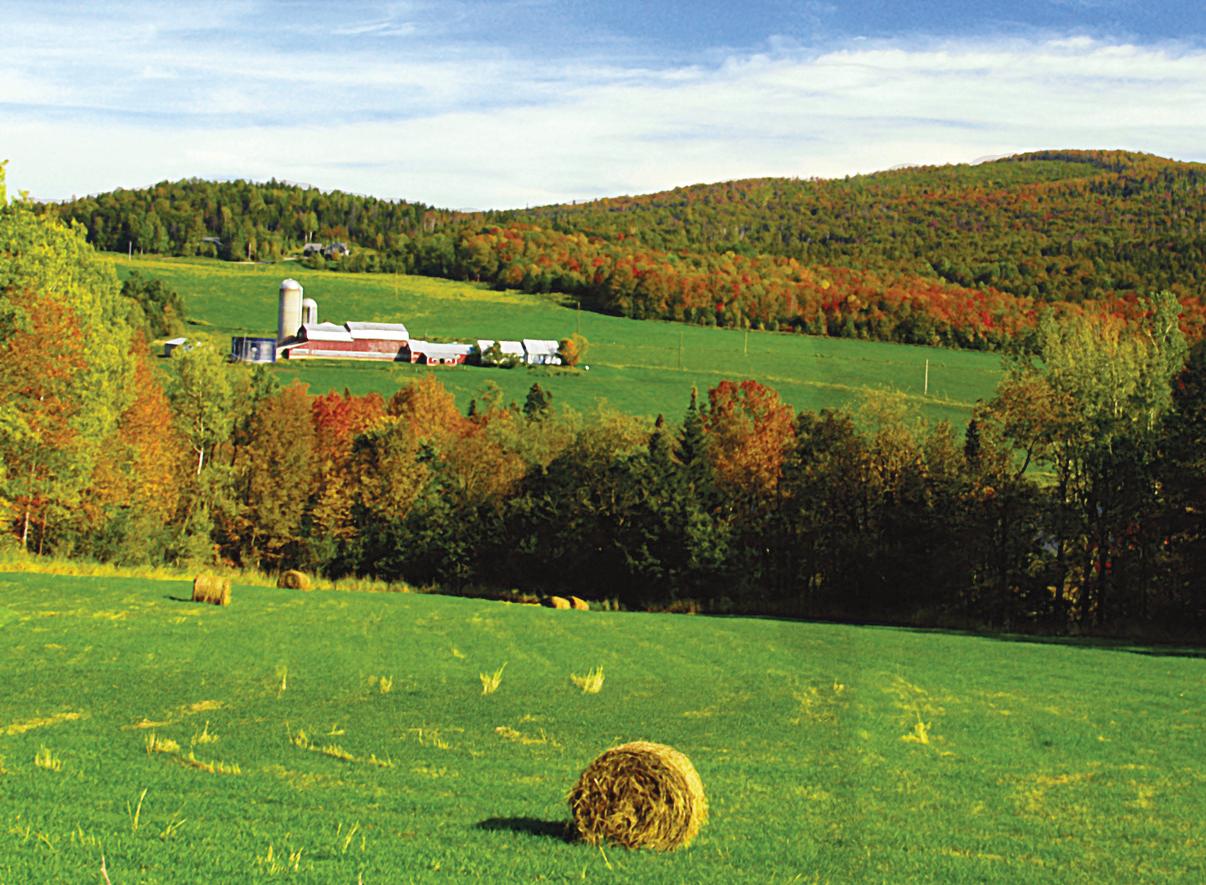
Fifty years down the road, Ferme des Voltigeurs is still a family farm with a spot at the local farmers’ market.
By André Dumont
20
PIC UPDATE: Breeder Aggression and Social Behaviour
Alberta researchers are studying the relationship between female feather coverage and reproductive condition with male mating aggression and social behaviour
By
Tim Nelson, Executive Director and Kimberly Sheppard, Research Co-ordinator
26
BIOSECURITY: The Watchword for B.C.’s Poultry Industry
The B.C. Poultry industry is meeting the challenge of biosecurity head on By the B.C. Poultry Industry Advisory & Management Committee 30
BUSINESS PROFILE: Together for Better Performance
New Company Intervet/Schering-Plough Animal Health supports poultry producers with broad range of products, technical expertise and robust research and development pipeline
By Alan Jakovac
Ferme des Voltigeurs Turns 50
Future Challenges
FROM THE EDITOR
BY KRISTY NUDDS
Call for Leadership
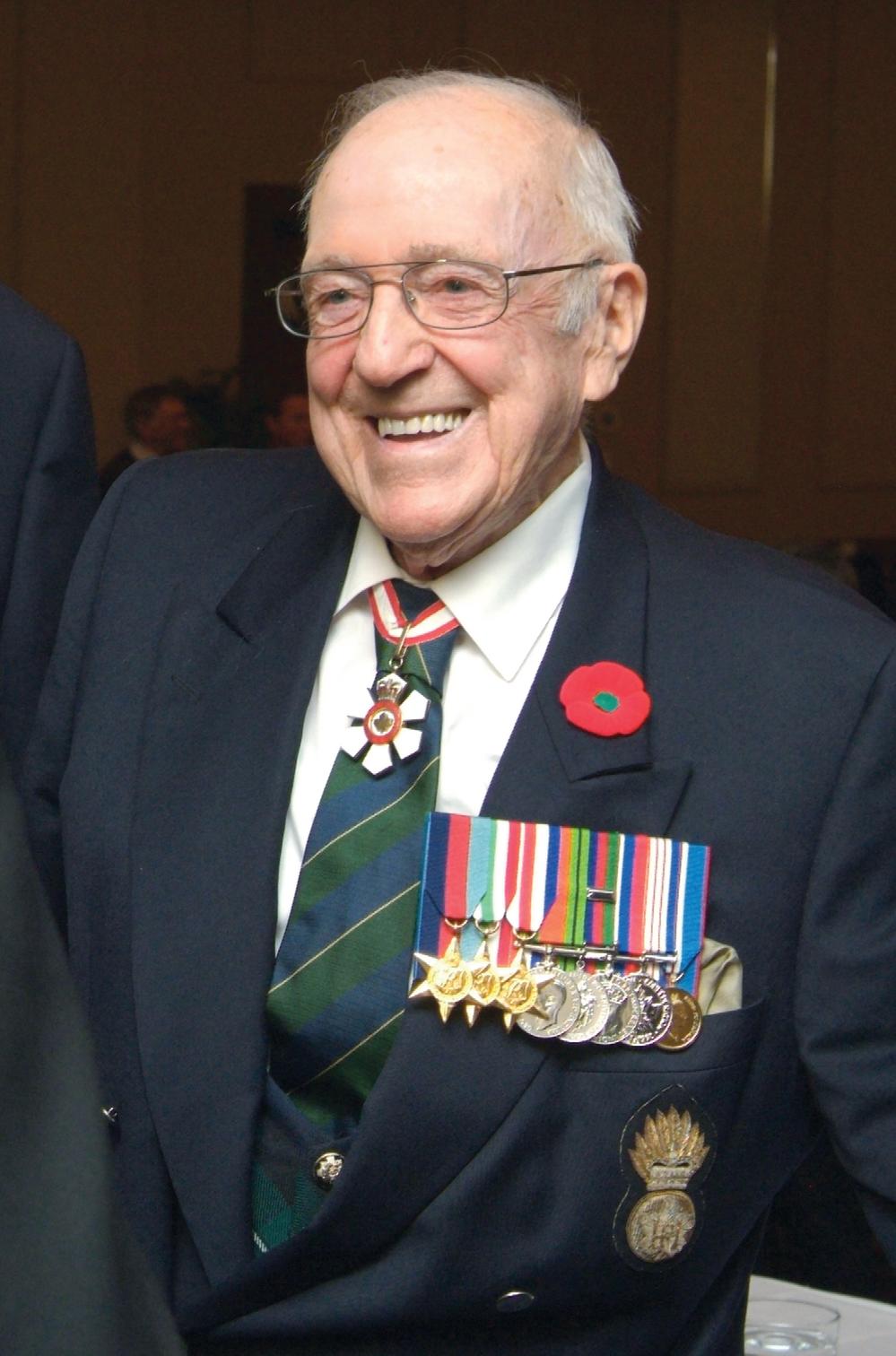
Aself-proclaimed “wandering chicken breeder” in the 1950s and 1960s, Donald McQueen Shaver has seen enormous changes and advancements in the poultry industry in his 88 years.
The keynote speaker at the Inaugural Poultry Innovation Conference (formerly the Poultry Health Conference) hosted by the Poultry Industry Council (PIC), Shaver gave the audience much food for thought.
Shaver noted as he began his speech the challenge of having committed himself to delivering a significant address on the heels of two noteworthy elections in North America, coupled with a near world economic collapse.
However, the timing of his address couldn’t have been more perfect. Who else but someone of his significance, who has been a key player in the development of poultry industries worldwide, could discuss what the poultry industry in Canada (and farmers as individuals) must do in order to remain successful in such turbulent times?
Adding poignancy to his words was the fact that his address was given on Remembrance Day, before (and after) the silent observance of the eleventh hour. As a veteran of the Second World War, Shaver noted that many attendees “cannot really understand how a participant might have his or her life shaped by such an event” and how living and fighting for years so far away from home profoundly influenced the values, attitudes and commitment of those that served.
He spoke of “worrisome issues” – the Canadian poultry industry, international trade, food production and sustainability –with such insight that he simply cannot be ignored.
One of the underlying themes of his address was the need for leadership. Shaver
stated “we desperately need a 21st Century Churchill,” a leader who can lead us through what we and the rest of the world are embarking upon: a second industrial revolution.
To protect our industries and our “way of life,” Shaver stated that we will be required to adjust to an energy-constrained future. He is absolutely right. Saving energy isn’t just about saving money – it’s also about sustainability.
We are heading into what will undoubtedly be a difficult year, caused by a worldwide financial collapse unseen since the Great Depression, it’s important to reflect on how this might change the world as we know it – and how we do business. Our industry has many quiet leaders who have made changes on their own farms or within their business to save resources, money and meet ever-changing consumer demands.
I hope those who attended the conference and heard Shaver’s talk walked away with a sense that although the world seems like a crazy, uncertain place right now, there are tangible solutions (for those of you who were not able to attend the conference, Shaver’s speech will be included in our next issue). It will just take strength on the part of industry to step up to the plate and not be fearful to try new things, discard the current barriers to progress and start to think outside of the box – and recognize the ideas of our “quiet” leaders.
On behalf of Canadian Poultry magazine, I wish you and your families all the best this holiday season. ■
December 2008
Vol. 95, No. 12
Editor
Kristy Nudds – knudds@annexweb.com
888-599-2228 ext. 266
Contributing Editor
Jim Knisley – jimkl@sympatico.ca
Publisher/Sales Manager
Marilyn White – mwhite@annexweb.com 888-599-2228 ext 237 • fax: 888-404-1129
Sales Assistant
Mary Burnie – mburnie@annexweb.com
888-599-2228 ext 234
Production Artist
Brooke Shaw
Editorial Director
Drew McCarthy – dmccarthy@annexweb.com
VP/Group Publisher
Diane Kleer – dkleer@annexweb.com
President Mike Fredericks – mfredericks@annexweb.com
Mailing Address
P.O. Box 530, 105 Donly Dr. S., Simcoe, ON N3Y 4N5
Publication Mail Agreement #40065710
PAP Registration #9850
RETURN UNDELIVERABLE CANADIAN ADDRESSES TO CIRCULATION DEPT., P.O. BOX 530, SIMCOE, ON N3Y 4N5.
e-mail: cnowe@annexweb.com.
Periodicals postage paid at Buffalo NY. USPS 009-324, ISSN 1703-2911. Published monthly by Annex Publishing and Printing Inc. US Office of publication c/of DDM Direct.com, 1223 William St. Buffalo NY 14240. US Postmaster send address change to PO Box 611 Niagara Falls NY 14304.
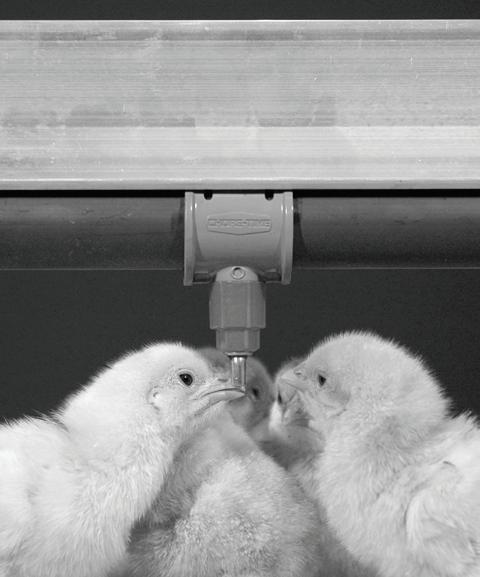
Lubing's all-new EasyLine™ Nipple Drinking System is the breakthrough in turkey drinking technology that turkey growers have long been waiting for. This revolutionary system incorporates a patented pendulum that effectively directs water from the nipple into a self-cleaning drink cup. The low profile cup design allows day-old poults easy access to the water for great starts and has proven to perform with great success delivering water to heavy toms. You too can Live Easy with EasyLine!
Eliminates routine cleaning
Provides fresher water supply
Improves litter conditions
Enhances air quality
Got Lubing? Contact your local Lubing Distributor for more detailed information on the new EasyLine Turkey Drinking System or vist our website at www.lubingusa.com
Glass-Pac Canada
St. Jacobs, Ontario
Tel: (519) 664.3811
Fax: (519) 664.3003
Carstairs, Alberta
Tel: (403) 337-3767
Fax: (403) 337-3590
J. Dean Williamson Ltd.
London, Ontario
Tel: (519) 657.5231
Fax: (519) 657.4092
Improves bird health
Les Equipments Avipor Cowansville, Quebec
Tel: (450) 263.6222
Fax: (450) 263.9021
Fax: (780) 963.5034
WHAT’S HATCHING HATCHING
AI Movement in Migratory Birds
Wild migratory birds may be more important carriers of avian influenza viruses from continent to continent than previously thought, according to new scientific research that has important implications for highly pathogenic avian influenza virus surveillance in North America.
As part of a multi-pronged research effort to understand the role of migratory birds in the transfer of avian influenza viruses between Asia and North America, scientists with the U.S. Geological Survey (USGS), in collaboration with the U.S. Fish and Wildlife Service in Alaska and the University of Tokyo, have found genetic evidence for the movement of Asian forms of avian influenza to Alaska by northern pintail ducks.
In an article recently published in Molecular Ecology,
USGS scientists observed that nearly half of the low pathogenic avian influenza viruses found in wild northern pintail ducks in Alaska contained at least one (of eight) gene segments that were more closely related to Asian than to North American strains of avian influenza.
The role of migratory birds in moving the highly pathogenic virus to other geographic areas has been a subject of debate among scientists. Disagreement has focused on how likely it is for H5N1 to disperse among continents via wild birds.
“Although some previous research has led to speculation that intercontinental transfer of avian influenza viruses from Asia to North America via wild birds is rare, this study challenges that,” said Chris Franson, a research wildlife biologist with the USGS National Wildlife Health Center and co-author of the study.
Scientists with the USGS, in collaboration with the U.S. Fish and Wildlife Service, state agencies, and Alaska native communities, obtained samples from more than 1,400 northern pintails from locations throughout Alaska. Samples containing viruses were then analyzed and compared to virus samples taken from other birds in North America and Eastern Asia where northern pintails are known to winter. Researchers chose northern pintails as the focus of the study because they are fairly common in North America and Asia, they are frequently infected by low pathogenic avian influenza, and they are known to migrate between North America and Asia. None of the samples were found to contain completely Asian-origin viruses and none were highly pathogenic.
To read more, visit: http:// alaska.usgs.gov/science/biology/ avian_influenza/pintail_movements.html
CFO Hires New GM
ONTARIO
Chicken Farmers of Ontario (CFO) welcomed Rob Dougans to the role of chief executive officer and general manager, effective Oct. 6, 2008.
CFO Chair Bill Woods stated in a release that the CFO’s recruitment strategy was to find a proven business leader who can help CFO meet its organizational objectives and deliver value to stakeholders.
Mr. Dougans will apply
over 35 years in the consumer packaged goods industries to leading the development and implementation of strategic and operational solutions to support a sustainable and dynamic chicken industry, according to the CFO.
Prior to joining CFO, Rob operated in senior leadership roles as president and CEO for over 10 years, in public and private companies focused on Canadian and North
American markets. Most recently, he was President and CEO of Associated Brands LP, a leading North American dry blend private label food products company. During his successful food industry career, Rob has worked with some of the largest names in the packaged food industry such as Kraft General Foods, Canada Bread and Dairyworld Foods Limited in roles of increasing responsibility.
Farmland Values Rise Surefoot Slats
- New Ownership
BRITISH COLUMBIA ONTARIO
Marty Zylstra of Surefoot Slat Systems is pleased to announce that Dennis Flokstra of Chilliwack, B.C., has purchased the business. Dennis is well known in the agri-industry in the Fraser Valley, having owned an equipment business for a number of years, and is looking forward to adding the poultry slat industry to his daily schedule.
Zylstra says that he is fully confident that Dennis will continue to offer the poultry industry across Canada and the United States the quality of service and product that customers have come to expect over the previous 12 years. Dennis can be reached at the same toll free number across North America: 1-800-411-1909 or 604-997-SLAT(7528).
Ontario farmland values have jumped substantially in the past six months.
Farm Credit Canada’s Fall 2008 Farmland Values Report says farmland was appraised 4.6 per cent higher in the first half of 2008. That compares to a 1.2 per cent increase in the last six months of 2007.
The growth this year represents the second largest sixmonth increase in farmland values in past 10 years.
Dr. Frank Robinson has accepted the position of interim viceprovost and dean of students for the University of Alberta, effective July 1, 2008. While his research program at the University will be greatly reduced, he will maintain his teaching program in Animal Science 200. The new position will enable Frank to lead the group, which is responsible for many student services on campus. In particular, he will be working to enhance student engagement and improve student retention rates across all faculties. He will continue on the PRC Board for at least one more year.
The upward trend was influenced mostly by commodity prices, which increased substantially in the fall of 2007 and continued to rise into this year.
Farm Credit Canada says the Ontario rate of 4.6 per cent trails the national increase of 5.8 per cent, while Alberta led the way at 6.7 per cent and Prince Edward Island was last, at minus 2.4 per cent.
KL Products is pleased to announce the appointment of Rick Bennett to the position of vicepresident sales and marketing. With over 27 years in the Poultry Industry, Rick is looking forward to introducing robotics to the Meat, Poultry and Food Industry while continuing to service the current hatchery automation and industrial washer market.
Merial Ltd is pleased to announce the appointment of Jérôme Baudon as avian business director, International Region.
RICK BENNETT
JÉROME BAUDON
FRANK ROBINSON
WHAT’S
HATCHING HATCHING
Vets Question Antibiotic Ban
Scientific data does not support a ban on the preventive use of antibiotics in food animals, according to The American Veterinary Medical Association (AVMA).
Dr Lyle P. Vogel, AVMA assistant executive vice president said that evidence suggests that when livestock are not given antimicrobials for prevention of disease - as has happened in Denmark since the 1990s – an increase in illnesses is likely to occur. In some instances, he added, antibiotic resistance in humans is 10 times greater in Denmark than in the U.S. despite the Danish ban.
“Risk assessments demonstrate a very low risk to human health from the use of antimicrobials in food animals, and some models predict an increased human health burden if the use is withdrawn,” Vogel testified. “Non-risk-based bans of approved uses of antimicrobials will negatively impact animal health and welfare without predictably improving public health.” Vogel told the Senate Committee on Health, Education, Labor & Pensions that the Food & Drug Administration’s evaluations of antibiotic use in livestock are more stringent than for human antibiotics.
Listeria Testing Rules Tightened
The Canadian Food Inspection Agency (CFIA) is overhauling its protocols to demand tighter surveillance and greater transparency after the deadly bacteria outbreak at a Maple Leaf Foods plant in Toronto.
New protocols designed to give more protection for consumers will be reviewed by an expert panel of food safety experts early this month, before being approved by CFIA bosses.
The new protocols include: Mandatory testing of plant surfaces such as countertops
JANUARY 2009
January 28-30, 2009
International Poultry Expo/International Feed Expo, Georgia World Congress Center, Atlanta, Ga. Registration now open. For more information, e-mail expogeneralinfo@ poultryegg.org;,visit www.internationalpoultryexposition.com or telephone 770-493-9401.
FEBRUARY 2009
February 3-5, 2009
Canadian International Farm Show, International Centre, Toronto, Ont. For more information, visit www. masterpromotions.ca/canadianfarm-show.asp, telephone 1-888-454-7469 or e-mail: info@masterpromotions.ca.
February 19-20, 2009
and meat slicers by company staff, as well as non-contact surfaces such as walls, ceilings and drains; mandatory testing of ready-to-eat meat products by CFIA inspectors at least three times a year; and food will have to be quarantined and tested for listeria whenever plant surface testing turns up two subsequent positives. In addition, the new rules will also reinstate a rule compelling companies to report a trend of positive listeria findings to government inspectors.
Atlantic Poultry Conference, Old Orchard Inn, Greenwich, N.S. The conference will feature speaker Dr. Temple Grandin and ventilation and alternative energy workshops; additional speakers and topics will be available soon. For more information, contact conference chairs Dr. Bruce Rathgeber, e-mail: brathgeber@ nsac.ca, or Mr. Peter Swetnam, e-mail: pswetnam@xcountry. tv; visit www.nsac.ns.ca/ apri; or write: Atlantic Poultry Conference, 25 River Road, P.O. Box 550, Truro, N.S. B2N 5E3.
We welcome additions to our Coming Events section. To ensure publication at least one month prior to the event, please send your event information at least eight to 12 weeks in advance to: Canadian Poultry, Annex Publishing, P.O. Box 530, 105 Donly Dr. S., Simcoe, Ont. N3Y 4N5; e-mail knudds@ annexweb.com; or fax 519-4293094.
Turkey Production
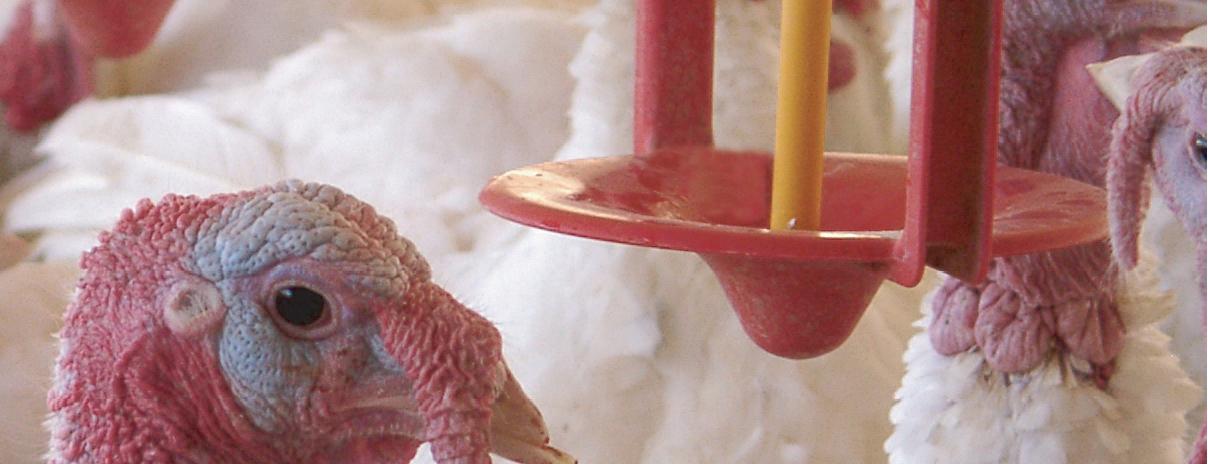
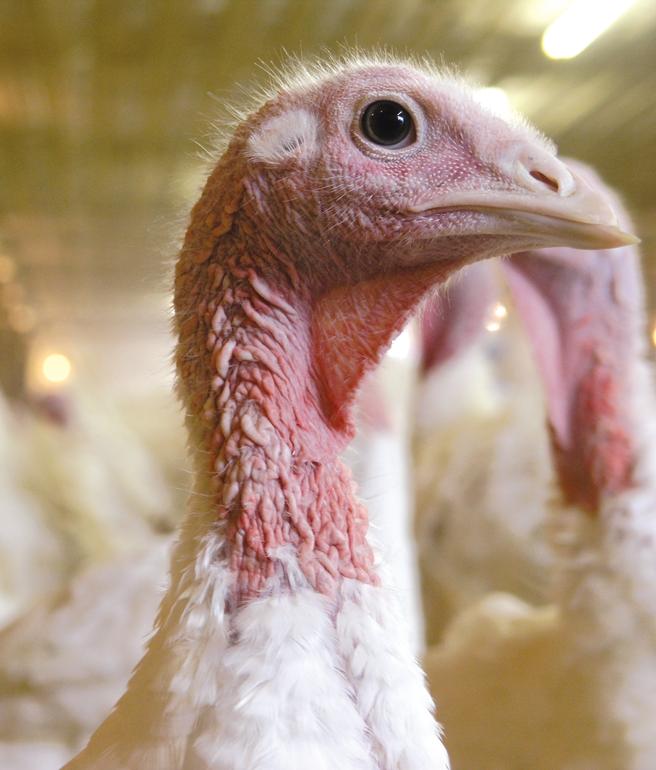
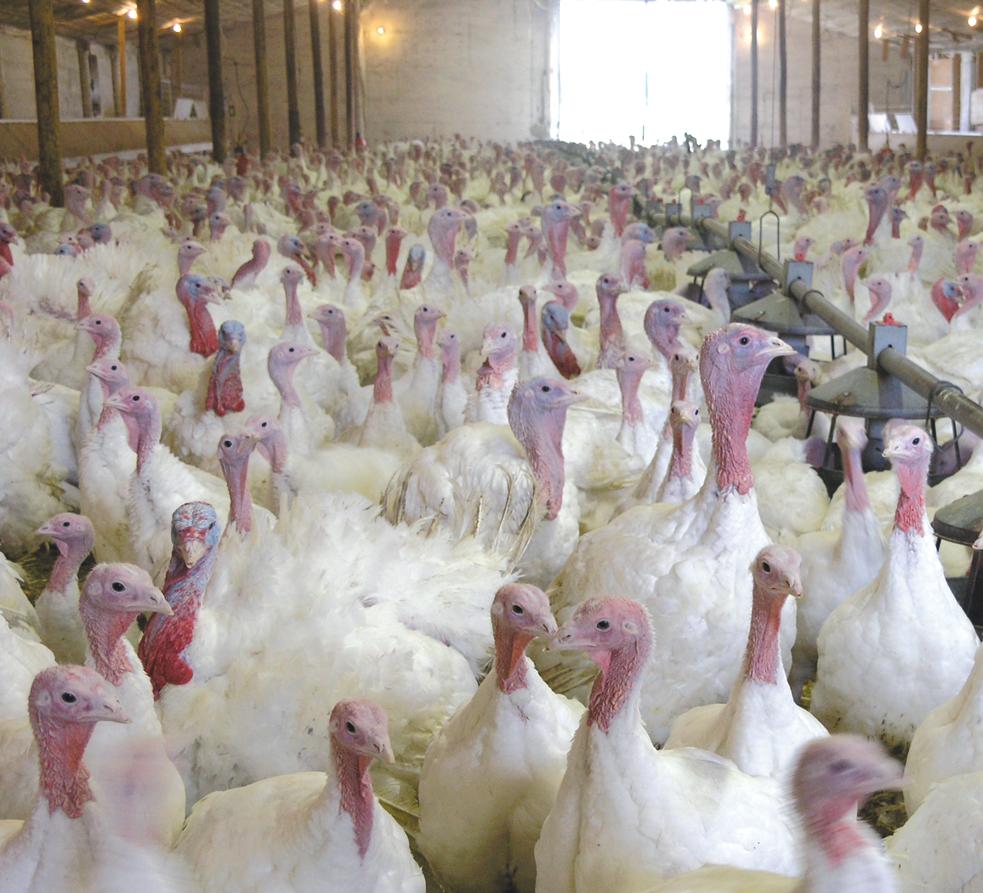
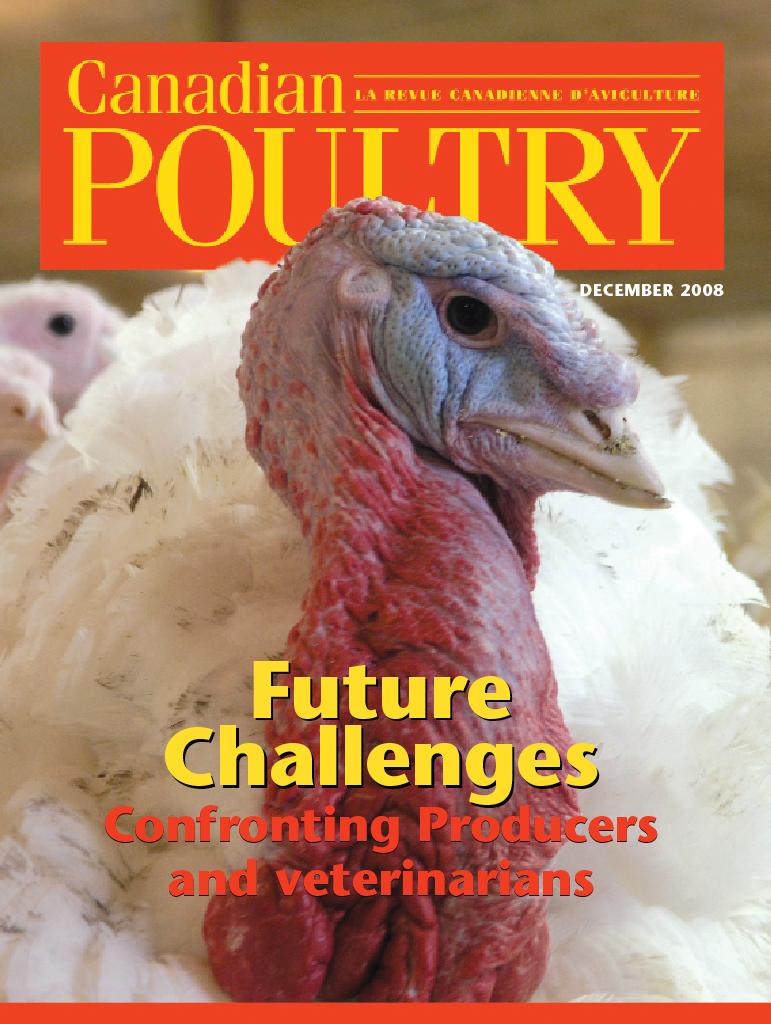
Future Challenges Challenges and opportunities confront turkey producers
by Hafez Mohamed Hafez
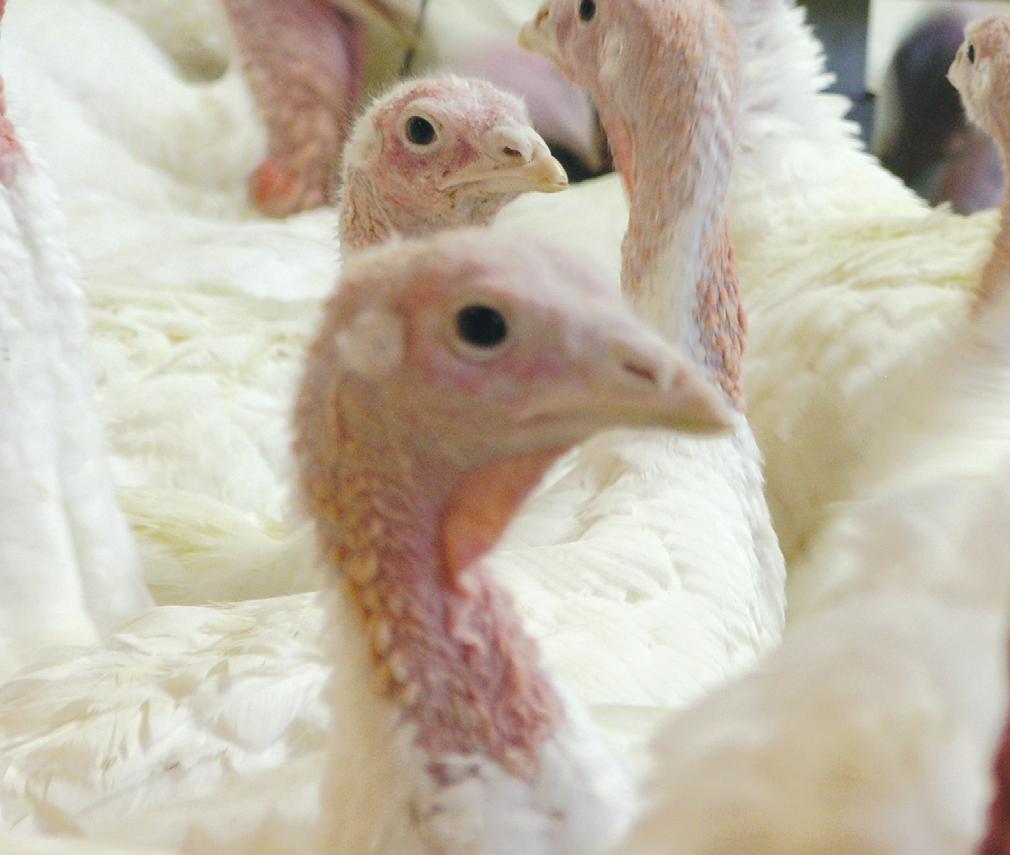
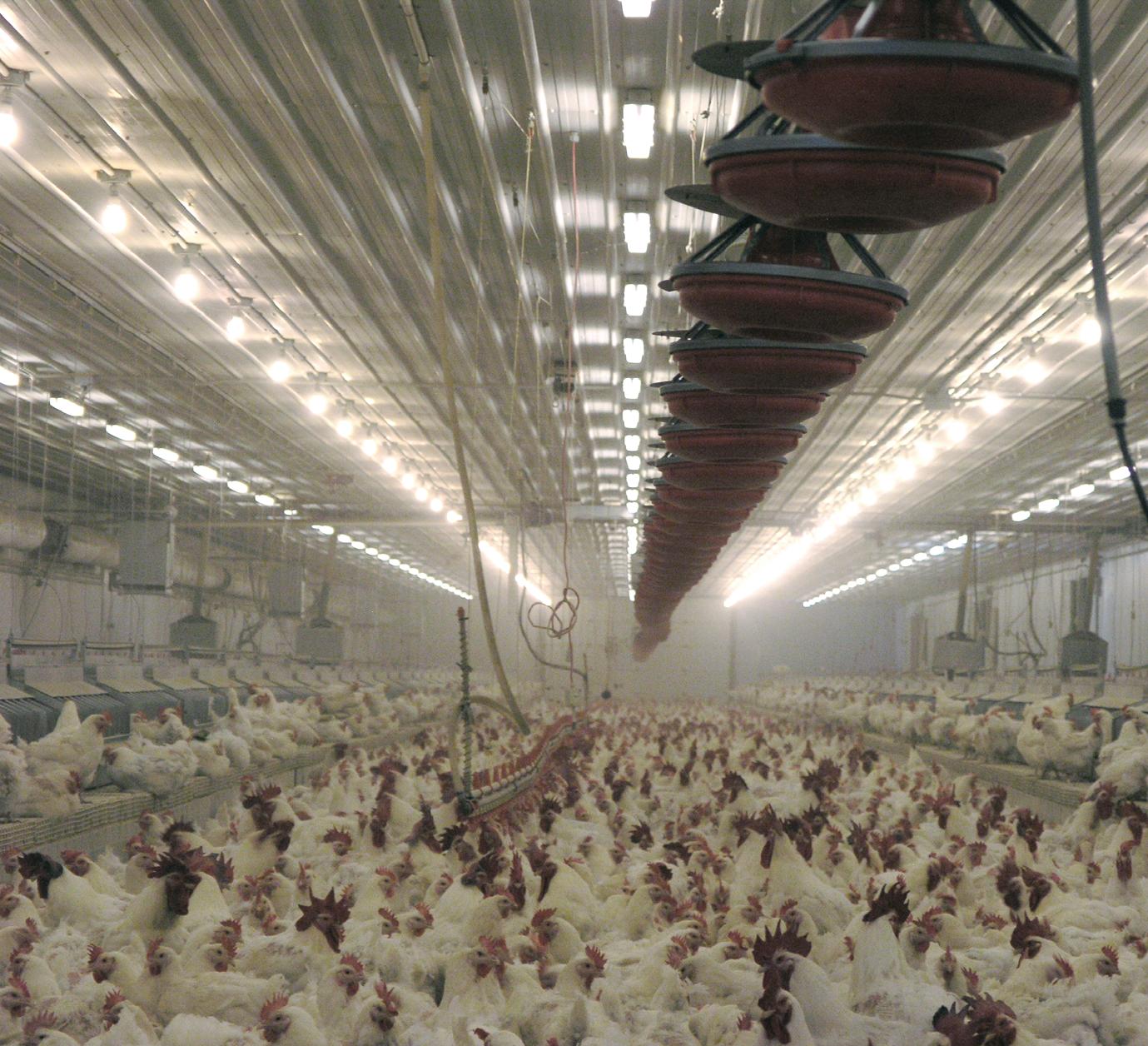
The modern turkey industry, oriented for high production and better quality at low cost, demands continuously efficient and goaloriented health care to prevent the development of disease conditions. The turkey industry and veterinarians currently face new challenges, which include strong global competition, steady increases in the cost of feed,legislation, changes in social, political and consumer perception and demands and the emergence of some diseases.
CHALLENGES
Strong global competition
The European turkey industry is currently under strong global competition. This is accompanied by an economic threat from turkey meat imports, especially from Brazil and Chile, and with the movement of the large producing companies to other countries with lower production costs.
Steadily increasing cost of feed
The major item of meat turkey production cost is the feed. It is a major disadvantage for Europe that it must import soya as a protein source. Turkeys are particularly hard hit because of their high protein requirement. In addition, during the last seven years, the turkey feed context has totally changed. The first change happened at the end of 2000 with the withdrawal of the meat meal and animal fat in the feed. This change happened not long after some Antibiotic Growth Promoters (AGP) had been banned or were not used in the EU, this resulted in a marked increase of the feed conversion rate (FCR) and a dramatic increase in the incidence of dysbacteriosis and necrotic enteritis. In addition, in the future the increase of biofuel and biogas production will reduce the available land for food grains and feed production, which will lead
to a considerable increase of feed costs for animal production.
Legislation
The ban of Dimetridazole and NifursolN, which were used for the prevention of the Blackhead Disease in turkeys, resulted in the emergence of the diseases in layer and turkey flocks in Europe in recent years. Also, for the treatment of turkeys as food-producing animals, only a few authorized pharmaceutical veterinary products are available. Therefore, veterinarians are forced to seek exceptional permissions to administer drugs that are not authorized for use in these animals. In cases of exceptional use of a medicinal product, licensed for another food-producing animal an additional problem is given by the necessity to fix long withdrawal periods on meat (28 days) making it nearly impossible to treat flocks shortly before slaughter. Furthermore, the withdrawal time for same product may vary greatly even within EU-member states.
Social, political and consumer
Currently, there is great concern that serious animal welfare and health problems might have been caused already due to genetic selection practices within the turkey industry.
The fact is that genetic selection practices within the turkey industry have achieved significant progress in terms of growth rate, better feed conversion, better meat yield and low production cost. All the time this was accompanied by continuous improvement in husbandry practices, nutrition, and disease control. The most outstanding and visible change in modern turkeys compared to their ancestors is the rapid growth and the higher percentage of breast muscle.
As a consequence, it is important to understand the relationship between genetic selection pressures and other factors that
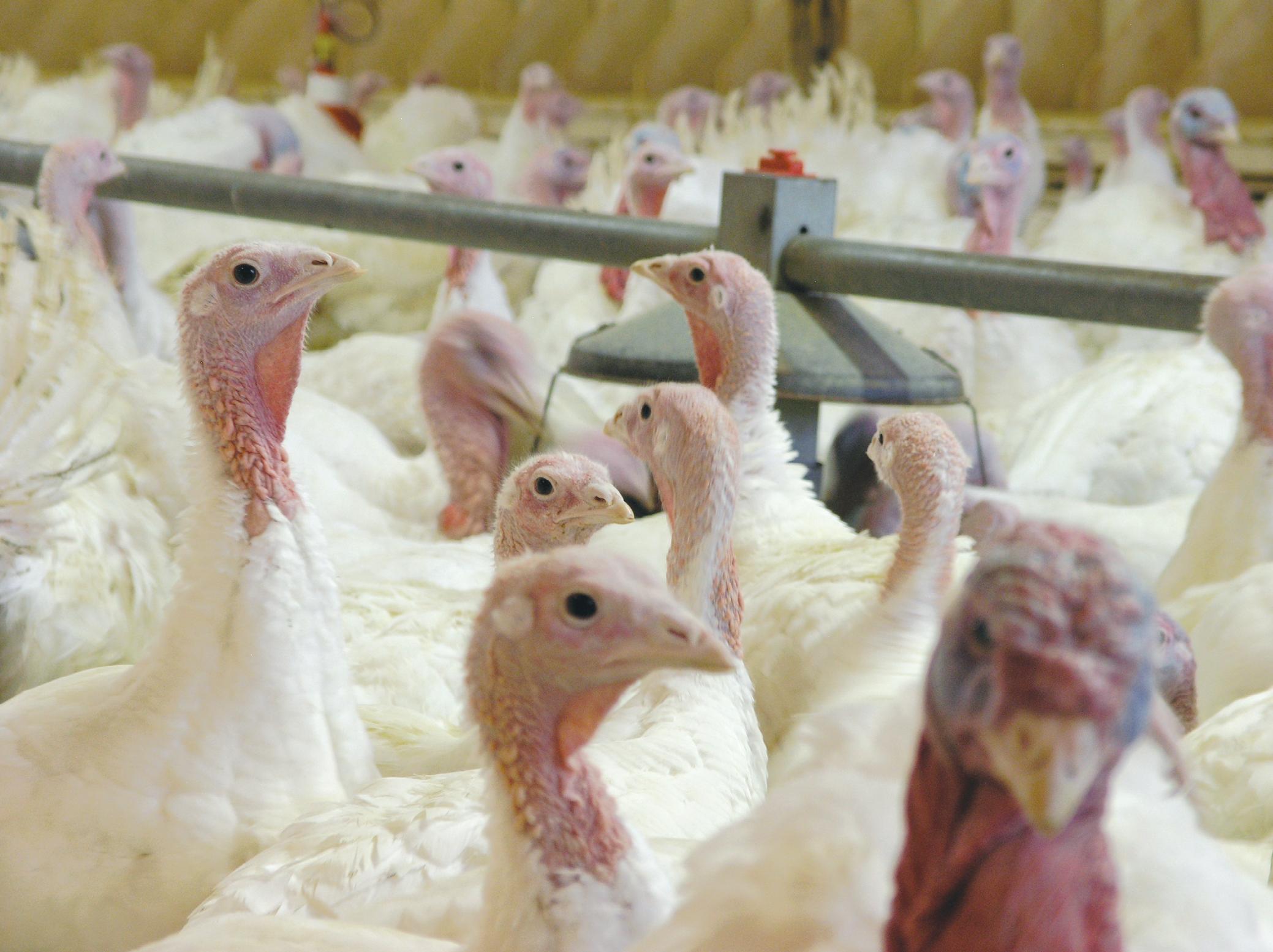
CHALLENGING TIMES
The turkey industry faces global competition, increasing feed costs, and changes in consumer perceptions and demands.
FOOD SAFETY IS ANOTHER CHALLENGE. CONTROLLING FOODBORNE ORGANISMS REQUIRES A BROADER UNDERSTANDING OF HOW MICROBIAL PATHOGENS ENTER AND MOVE THROUGH THE FOOD CHAIN, AS WELL AS THE CONDITIONS THAT PROMOTE OR INHIBIT GROWTH FOR EACH TYPE OF
ORGANISM
may have a subsequent impact on the health conditions. This includes the effects on the growth and development of supporting structures such as bone and blood supply. Compared to traditional lines the highly selected birds have reduced cardiopulmonary capacity in relation to their muscle mass, as the ratio of heart and lung development has strongly decreased in modern turkeys.1,2 This physiological imbalance causes problems such as sudden death syndrome, aortic rupture, deep pectoral myopathy and skeletal disorders, which currently receive a lot of attention as a cause of concern from the animal welfare point of view. They are mostly accompanied by economic losses for turkey meat producers due to mortality, predisposition to cannibalism, retardation of growth, increase of the condemnation rate and downgrading at the processing plant. The most common problems of the musculoskeletal system related to fast growth comprise dyschondroplasia and footpad dermatitis. The incidence and severity of both can be influenced by nutrition and genetic selection.3,4
FOOD SAFETY
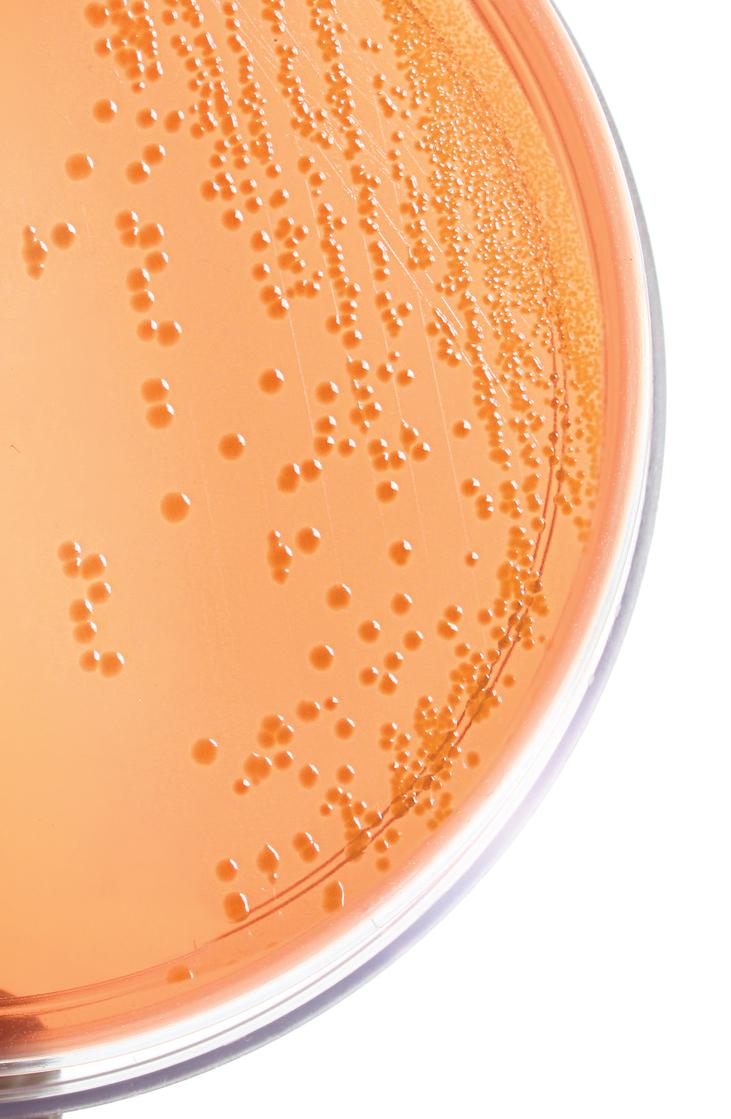
The loss of the consumer’s trust and confidence in the quality and safety of poultry meat is a further challenge. Turkey meat can harbour different foodborne pathogens. Many reports from recent years have shown that different Salmonella serovars and Campylobacter spp. are the most common causes of human foodborne bacterial diseases linked to poultry. In addition, the development of antibiotic resistance in bacteria, which are common in both animals and humans, is an emerging public health hazard. Controlling these foodborne organisms requires a broader understanding of how microbial pathogens enter and move through
the food chain, as well as the conditions that promote or inhibit growth for each type of organism.5
Many different Salmonella serovars have been isolated from turkeys but their exact number is difficult to estimate. Some serovars may be the predominant for a number of years in a region or country and may then disappear to be replaced by another serovar. In 2003, the European Union adopted a Council Regulation 2160/2003/EC on the control of salmonella and other specified foodborne zoonotic agents. This regulation covers the adoption of targets for the reduction of the prevalence of specified zoonoses in animal populations at the level of primary production. Commercial turkeys should be examined with effect from 84 months after the enforcement of this regulation (the year 2010). Fresh poultry meat may not be placed on the market for human consumption when salmonella was detected in 25-gram sample. The criterion laid down does not apply to fresh poultry meat destined for industrial heat treatment or another treatment to eliminate salmonella in accordance with Community legislation on food hygiene. Another problem related to food safety is campylobacter, which is the leading cause of zoonotic enteric infections worldwide. Campylobacter infections in humans are mainly transmitted by contaminated food. No evidence has been found either for vertical transmission or for horizontal transmission from one flock to the next via persistent house contamination.
However, since the organism has been detected in the intestines of most slaughtered turkeys, the major route for campylobacter contamination of poultry appears to be the horizontal transmission from the environment.6 Investigations indicated that the external campylobacter load per chicken is increasing during transport, defeathering and evisceration, and decreasing at the other
Turkey Production
processing steps studied, with an overall reduction of the mean load from production –to consumption of about four to five logs.7 Good hygienic practice protocols should be prepared and strictly followed in all stages of production. Biosecurity should be improved throughout the production chain. Since campylobacter is found in the environment, hygienic barriers should be constructed to keep them outside the house.
EMERGENCE OF SOME DISEASES
Diseases of turkeys remain of major economic importance. Many of these diseases once re-emerging or introduced into a geographic area can explode into an epidemic and may have a significant negative effect on international trade. Respiratory as well as enteric disorders are two important groups of diseases affecting turkeys. They continue to cause high economic losses in many areas of the world due to increased mortality rates, decreased weight gain, increased medication costs, and increased feed conversion rates. The main challenge for veterinarians is the shortage of licensed therapeutic substances and vaccines for turkeys.
Currently avian influenza (AI) attracts a lot of attention worldwide. In the past, outbreaks due to HPAI H5 and H7 viruses were considered rare events in domestic poultry.
However, further outbreaks have occurred since 1999, resulting in several episodes involving many countries. Since December 2003, epidemic influenza due to a highly pathogenic H5N1 virus strain has devastated the poultry industry and recent outbreaks in commercial turkey flocks in some European countries were observed. The continuing spread of H5N1 appears to be related to two factors: spread through movement of poultry (legal as well as illegal) and spread through wild migratory birds. In the EU the diagnosis and control of AI should be carried out in accordance with Council Directive 2005/94/EC.
Although vaccination is an option as a part of AI control, the currently available vaccines seem to induce a higher level of protection in Gallus gallus birds than in turkeys.8,9
CONCLUSION
Turkey diseases and infections are associated with severe economic losses and that is why early recognition and monitoring programs are essential in managing the infections.
Generally, improvements in all aspects of management, biosecurity, education as well as enhancing the awareness of all people involved throughout the poultry production chain are essential. In the long term, development of turkey lines that are genetically resistant to some pathogens should progress. Further attention must be paid to the development of efficient vaccines against bacterial infections in order to reduce the use of antibiotics as well as enhancing the licensing of drugs for veterinary use. ■
Presented at the XXIII World’s Poultry Congress in Brisbane, Australia
REFERENCES
1. Norci, C. and Montella, L. (2003). Turkey welfare: Is it only a management problem? In: Turkey Production: Balance act between consumer protection, animal welfare and economic aspects. (ed. H. M. Hafez), Publisher Ulmer Verlag, Stuttgart, Germany, ISBN:3-8001 -4630 -4, pp.143 -148.
2. Havenstein, G.B., Ferket, P.R., Grimes, J.R., Qureshi, M.A. and Nestor, K.E. (2004). Changes in the Performance of Turkeys 19662003. Proceedings of the 27th Technical Turkey Conference, pp. 11 -18.
3. Farquharson, C. and Jefferies, D. (2000). Chondrocytes and longitudinal bone growth: the development of tibial dyschondroplasia. Poultry Science, 79: 994-1004.
4. Mayne, R.K. (2005). A review of the aetiology and possible causative factors of foot pad dermatitis in growing turkeys and broilers. World’s Poultry Science Journal, 61: 256-267.
5. Hafez, H.M. (1999). Poultry meat and food safety: Pre- and postharvest approaches to reduce food borne pathogens. World’s Poultry Science Journal, 55: 269-280.
6. Hafez, H.M., Schroth, S. Stadler, A. and Schulze, D. (2001). Detection of salmonella, campylobacter and verotoxin producing E. coli in turkey flocks during rearing and processing. Archiv fur Geflugelkunde, 65 :130 ñ136.
7. Anderson, S., Christensen , B.B., Fazil, A., Hartnett, E., Lammerding, A., Nauta, M., Paoli, G. and Rosenquist H. (2003). A draft risk assessment of Campylobacter spp. in broiler chickens. Joint FAO/WHO Activities on Risk Assessment of Microbiological Hazards in Foods.
8. Capua, I. and Marangon, S. (2006) . Control of avian influenza in poultry. Emerg. Infect. Disease, 12: 1319 -1324.
9. Ortali, G. (2006). Vaccination against avian influenza in Italy: field experience in an integrated poultry operation. Proceedings of the 6th International Symposium on Turkey Diseases, Berlin, (ed. H.M. Hafez), Publisher DVG -Service-GmbH, Giessen Germany, ISBN: 3 -939902-04-7, pp. 275 -284.
The holiday season is fast approaching!
CHICKEN FARMERS OF CANADA would like to wish you a very happy holiday season filled with great friends, great times and great food!
Of course, with all the holiday festivities, it’s easy to let your good eating and exercise habits fall by the wayside.
Here are some neat ways you can enjoy the holiday season and keep your good habits:
The holidays offer a great opportunity for you to allow things to go a little astray, as far as eating well is concerned. And frankly, that’s okay, so long as it’s done in moderation. But, if you think and plan a little, you may be able to avoid some (certainly not all, after all these are the holidays!) of the pitfalls we all find ourselves in at this crazy time of year.
First, try eating something before you go to the dinner party and make sure you drink plenty of water. If there’s an open service area, or buffet, try taking only one thing at a time, going back to your place and going back for another choice afterwards (you’ll fill up more quickly). Another tip – if you just have to indulge, make it on something worthwhile, something that you can only get at this time of year – and try to keep your portion size down to just a little more than you are used to. Eat lighter earlier in the day if you have an event coming that night – but don’t skip meals! Share your food with others, too!
Mostly, though, try to stick to these tried and true tips:
•Eat well – and often! Sometimes our busy schedules at this time of year mean that we skip meals and overindulge later at night. Keep healthy snacks at the ready, in an easily accessible place, like at your desk, in your purse or briefcase, or in single serving containers in your fridge. Carrot sticks, nuts, raisins, boiled eggs, or even a small serving of chicken salad will help you get through those times when it’s tempting to stop by the convenience store or drive through window and grab something that may not be the best choice.
• Get some exercise. This one’s a lot easier than it seems. On your holiday shopping trips, park a little further from the door(though always in a well-lit and populated area) and take the stairs instead of the escalator or elevator. Try to speed shop. Remember to wear sensible footwear – those concrete floors can be brutal. Also, think about getting up a little earlier to fit in a quick, brisk walk in the morning. It will do wonders to ease the stress of the holidays! Exercise does wonders for your self –esteem, too. Feeling good about yourself makes the holidays a lot easier.
• Get some rest, too. It’s easy to lose sleep, with all the occasions, the shopping and the general mania that surrounds this time of year. If you’re not on a fixed schedule because you’re off work or something, try to stay in some kind of routine. Take the time you need to relax. Another idea is to start a book you’ve always wanted to read. That sounds crazy, right? But, if you can commit to only reading for 30 minutes before you turn in each night, you can get the time to ‘power down’ and get ready to recharge. Book a massage, take a bath, do anything that gets your mind off the craziness and into a place where you’re ready to sleep. A well-rested person is less likely to succumb to stress hormones and enjoy the holidays, rather than just tolerate them.
Cooking can be relaxing, too! If you’re expecting some visitors, or even if you’re just looking for some great chicken recipes for you and your family – the holidays are a great time for:
•Chicken and Cranberry Wild Rice Casserole (Slow Cooker)
•‘Apple Pie’ Chicken
•Chicken & Roasted Pepper Skewers (Tapas)
•Chicken and Barley Soup
Visit www.chicken.ca and click on our Recipes section for more great ideas.
Happy Holidays!
Wishing you a beautiful Holiday Season and a New Year of Peace and Happiness
From CHICKEN FARMERS OF CANADA Directors and Staff
Milestone Ferme des Voltigeurs Turns 50
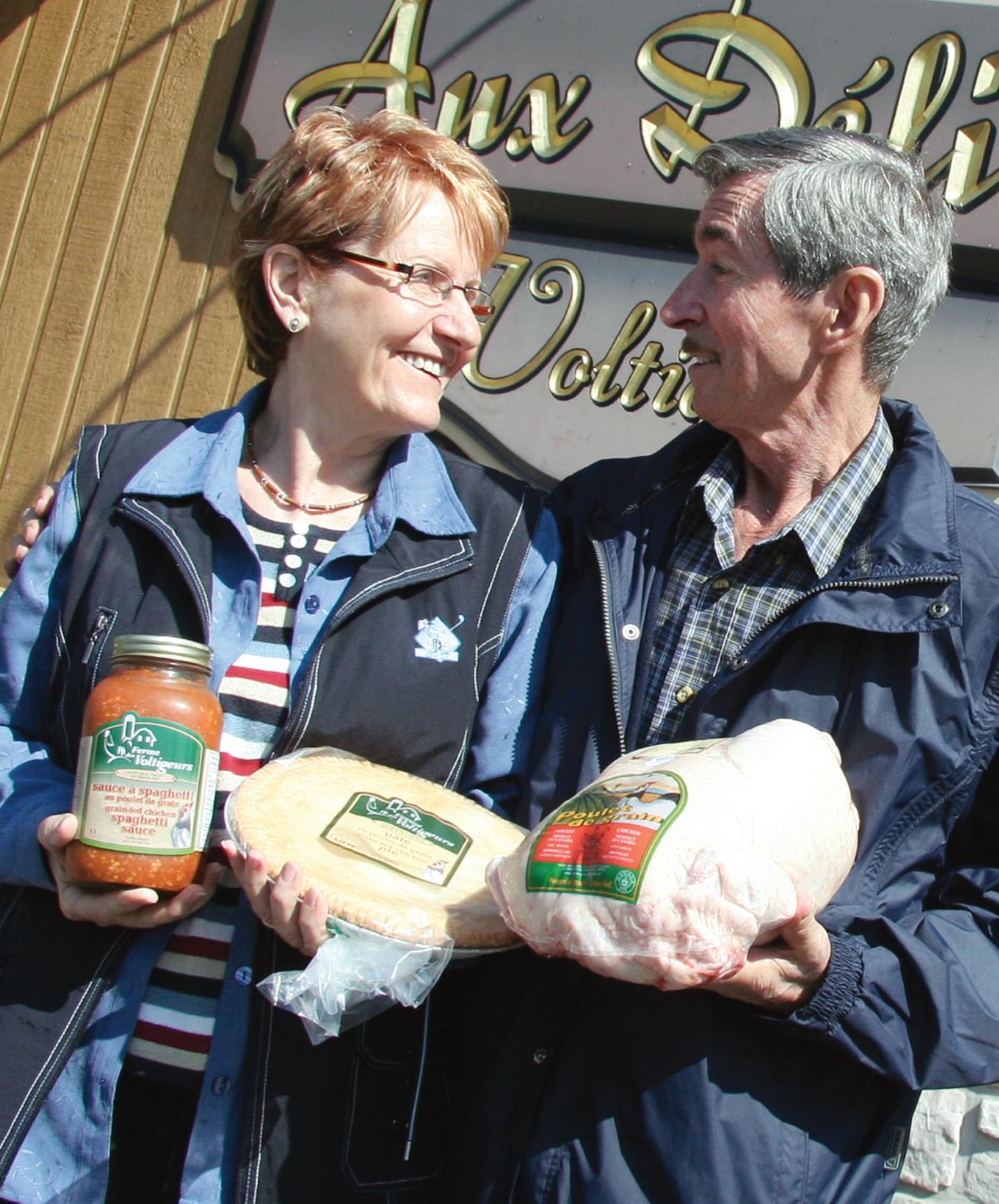
Fifty years down the road, Ferme des Voltigeurs is still a family farm with a spot at the local farmers’ market.
BY ANDRÉ DUMONT
Denise Turcotte was only 17 when she first took care of a stand at the Drummondville Farmers’ Market. She was replacing an aunt who was on a two-month maternity leave. It was such a thrilling experience that a few months later, she was opening her own stand.
So began a great adventure that continues today, 50 years later. Denise Turcotte sold strawberries, raspberries and other produce from the family garden, along with eggs, and chicken she had slaughtered in the barn. That was in 1958, just before she met her future husband Georges Martel, with whom she would found a flourishing poultry business.
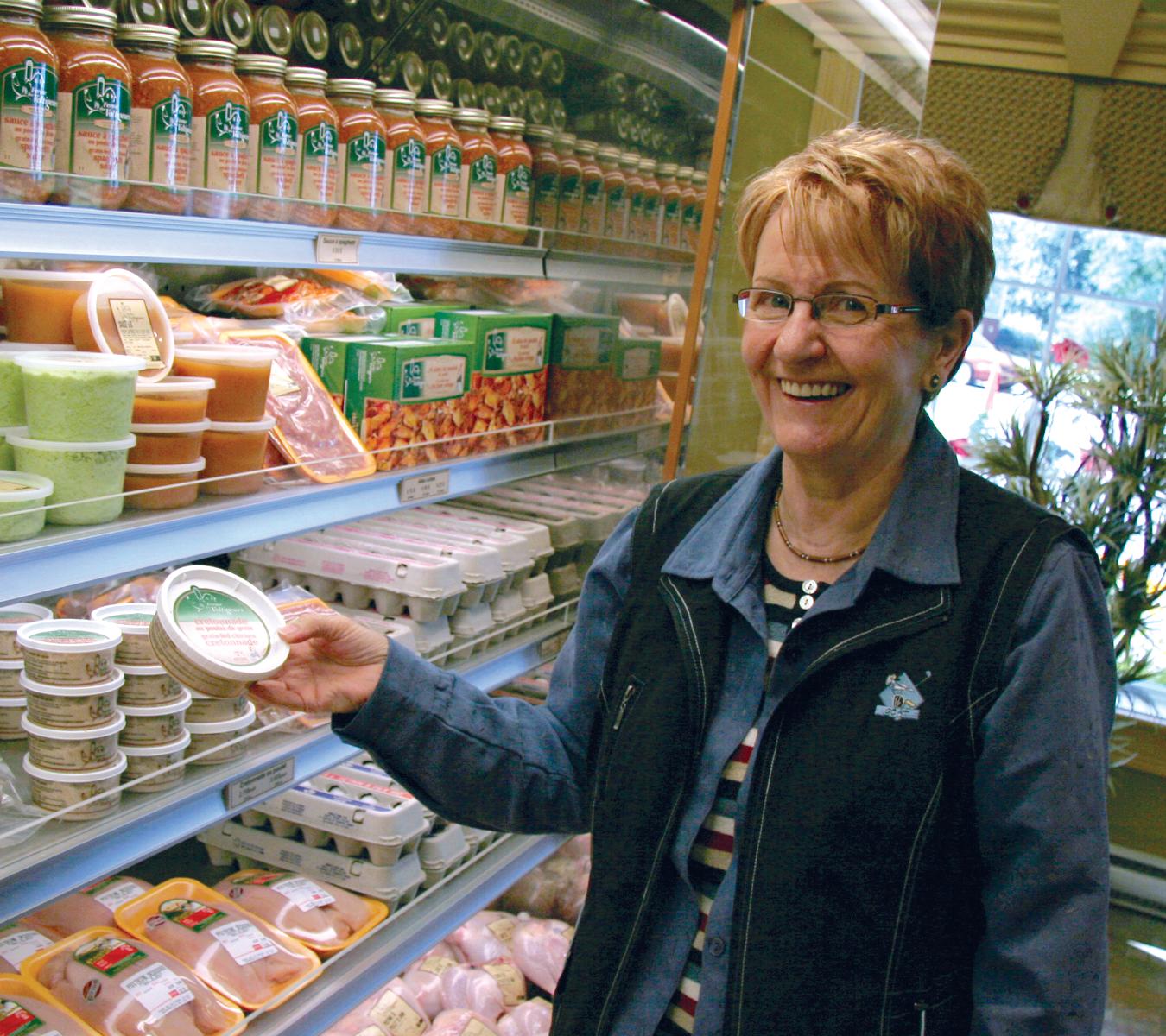
Today, Ferme des Voltigeurs is more than ever a pillar of the Drummondville Farmers’ Market. Its refrigerated counter inside the market hall is nine metres long. Every Friday between 7 a.m. and 7 p.m., at least eight employees serve more than 1,000 customers buying large or small chickens, sausages, marinated cuts, meat pies, cretons and other chicken specialties.
At the St-Charles-de-Drummond farm, Denise and Georges’s four children operate a business that includes chicken production, feed mixing, slaughtering and processing, on-farm sales and province-
AND
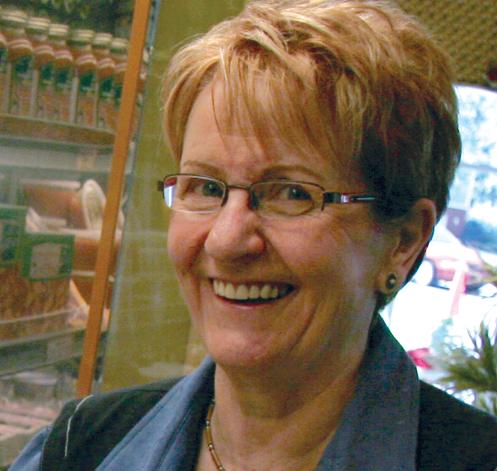
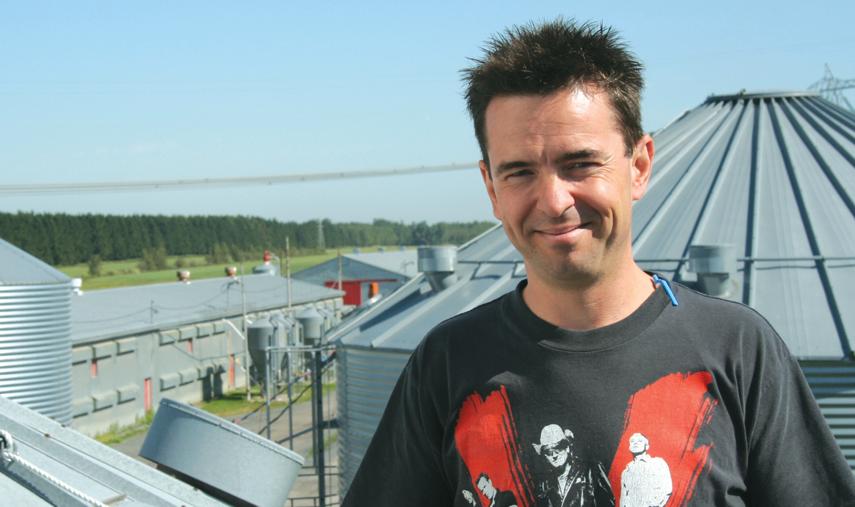
Turcotte and son Bernard (inset) Ferme des Voltigeurs have been part of the Drummondville Farmers’ Market for 50 years.
wide sales through distribution networks.
Poultry production is Bernard’s responsibility. The eldest son, Dominique, is in charge of accounting and management. Georges Jr. takes care of marketing and administration. Their sister Nathalie oversees human resources. “We all joined the farm after our studies, with skills that complemented each other,” Bernard said.
Ferme des Voltigeurs’ slaughterhouse is busy two days per week with 25,000 grain-fed chickens from the farm. They are sold on site and at the market, but mostly in supermarkets and at specialty butcher shops across Quebec. Two to three days a week, generic chicken is slaughtered for other farmers.
The business got its start soon after
Denise
FIFTY
GOING STRONG
Photos by André Dumont
Milestone
Denise Turcotte and Georges Martel have built a poultry operation that has always included direct customer sales. The have now handed their business to their four children.
TDenise and Georges’s marriage in 1963. Georges had been raised on a dairy farm, but had dreamt of breeding chickens. He first took a job in a company that built milk truck tanks.
The couple bought a rural property and built a house, with a room in the basement to slaughter the chickens Denise sold at the market. Towards the end of the ’60s, a small horse stable was moved to the property. It would become the first of several henhouses.
A separate slaughterhouse was built in 1974. It was adapted to provincial regulations in 1979. It is under federal inspection since 2006 and also has a HACCP certificate.
Ferme des Voltigeurs has always purchased chicken from other farmers, whom they trust to raise the grain-fed birds with great care. Its own production is spread over three sites, including rented buildings in Saint-Germain-de-Grantham and henhouses it owns in Saint-Cyrille-deWendover.
In 1985, Ferme des Voltigeurs branded itself as a pioneer of grain-fed chicken production. The grain-fed label has now lost part of its early prestige, so the Martels are now revising their feed procedures in order for their birds to qualify for an allvegetable fed branding.
The farm also claims its chickens contain less fat than those available in most supermarkets. Voltigeur chicken loses less volume during cooking, Bernard says. “Our chicken is a little more
Food safety: a priority
he listeria bacterium outbreak that shook Maple Leaf Foods is cause for concern for all processors, small and big. “It stimulated us to keep a closer watch on our operations and to better educate our staff, especially in the kitchen,” Bernard Martel said.
Ferme des Voltigeurs already followed a strict food safety program. It has both a HACCP supervisor and a quality control supervisor. Employees handling meat are required to sterilize their knives every four or five chickens. Is prevention easier in a small business? It’s hard to say,
but Martel believes having a more personalized relationship with employees does make a difference. “Trainers often only show how things must be done. Here, we take time to explain why each food safety practice is important.”
Ferme des Voltigeurs enjoys an excellent food safety track record. Its E. coli levels are extremely low. It had better stay like this, Martel says, because an outbreak like the one that hit Maple Leaf would probably put a closing chapter on Ferme des Voltigeurs’s story.
Generate New Income Daily
•
•
• Ensure
Milestone
expensive, but when you pull it out of the oven, it hasn’t melted down.”
For more than 15 years the Martels have made it a point to cool their chickens with air instead of water.
Experiments are now underway to achieve a fully antibiotic-free production. “We have tried products from several companies. We have had good and bad results, and we keep trying,” Bernard said.
About 40 per cent of the farm’s birds are now raised without antibiotics. Bernard, his brothers and their sister are convinced they will one day be able to raise all their flocks without antibiotics and market them as such.
Despite the company’s growth, the Drummondville Farmers’ Market has remained a central part of the sales strategy. “It’s a great place to be,” Bernard says. “It gives us direct contact with customers. We get comments and suggestions and we develop our products accordingly.”
Because the farmers’ market is only open one day a week, the Martel family decided to build and operate a meat shop on the farm. The whole assortment of chicken products is now available seven days a week. From whole chickens to spicy wings, cold cuts and spaghetti sauce, the Martels have thought of every chicken product they can sell.
With holidays approaching, the family business is gearing up to offer its own large (20-pound) turkeys.
Turning 50 is one more good reason for Ferme des Voltigeurs to keep focused on its recipe for success. There is no question of giving up on the quality and flexibility offered by on-farm slaughtering. Direct customer sales were there in the start and they are there to stay.
Other Ferme des Voltigeurs shops could be opened and more specialty products will find their way into supermarkets.
By going for all-vegetable fed chicken, with plans to switch in a few years to antibiotic-free production, Ferme des Voltigeurs is doing whatever it takes to remain at the forefront of the poultry industry for another half century. ■
New Products
PolyConversions Adds to Line of
VR™ Protective Wear
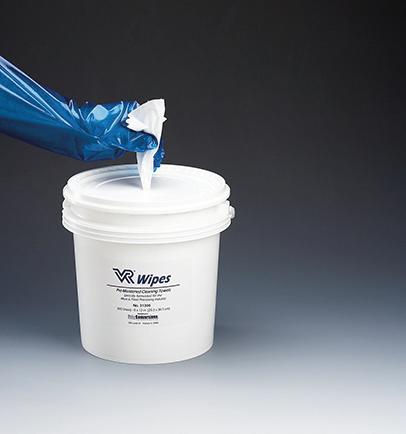
VR™ Wipes
Pre-moistened degreaser towels developed for cleaning and maintaining sanitation in meat plants, food processors, food distribution, restaurants and supermarkets. Engineered to remove fats, greases and oils from food and meat contact surfaces; VR Wipes materially reduce the “bio-load” accumulation on reusable impervious apparel, gloves, cutting tools, instruments, and work surfaces when used in a continual plant-wide cleaning program.
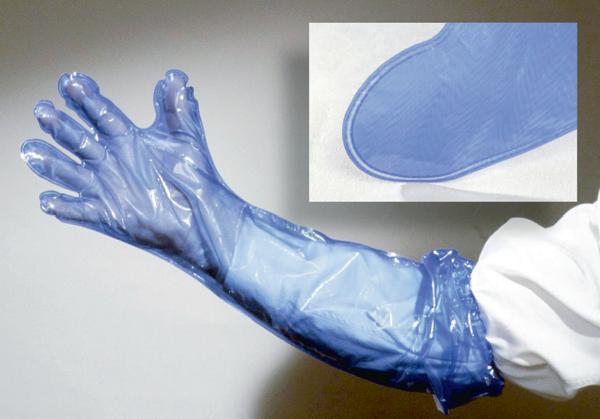
VR™ Lightweight Reusable Disposable Gloves
VR gloves feature an elastic elbow length cuff providing impervious puncture and cold-crack resistant protection. The gloves are lightweight, reusable and disposable. VR gloves have been clinically tested to offer resistance to chemicals such as nitric, sulfuric, hydrochloric, and hydrofluoric acids. Independent tests have demonstrated that the gloves meet Class 100 clean room specifications.
VR™ Grommet Aprons
VR Grommet Aprons are durable and comfortable, offering adjustable ties for the neck and waist. The aprons are odorless, non-toxic and resistant to chemicals, acids, fats and oils. The grommet is also made of the sustainable VR material, and the aprons are available in a variety of colors, lengths and weights.
VR™
Rainwear
Durable VR Rainwear features a three piece detachable hood and offers a comfortable fit with a light-weight design. The suits are odorless, non-toxic and resistant to chemicals, acids, fats and oils. VR Rainwear is environmentally sustainable and contains no toxic substances or plasticizers.
New Fabricated Hammer Mills from Stedman
Stedman introduces a new line of fabricated hammer mills for crushing, grinding and pulverizing. The line includes Type “A”, “B” and “BX” Hammer Mill models and features a more competitive cost and lighter weight than previous Stedman hammer mills that were all cast.
BUYERS GUIDE
Our 2009 Buyers Guide is now available online under digital editions. Our Buyers Guide is the only reference tool to bring the entire Canadian poultry industry together in one directory.
BLOG
Canadian Poultry is pleased to feature Mojtaba Yegani as a blogger on our website. Mojtaba is a veterinarian who worked in the Iranian poultry industry for several years before coming to Canada to study poultry nutrition, earning a MSc. at the University of Guelph and is currently pursuing a PhD under the guidance of Dr. Doug Korver at the University of Alberta. His first blog is entitled “The Future of Poultry Research” and we encourage readers to discuss this important topic online.
E-NEWSLETTER
To sign up for our bimonthly e-newsletter, visit www.canadianpoultrymag.com. Its free!
PIC Update
Breeder Aggression and Social Behaviour
Alberta researchers are studying the relationship between female feather coverage and reproductive condition with male mating aggression and social behaviour
BY TIM NELSON, EXECUTIVE DIRECTOR AND KIMBERLY SHEPPARD, RESEARCH CO-ORDINATOR
Broilers grow faster today than ever before, with increased feed conversion efficiency and increased meat yield. Although genetic selection based on production traits has produced an efficient meat bird, egg production and fertility traits are increasingly difficult to maintain.
Recent research has suggested that there has been an increase in aggressive male behaviour in broiler breeder stocks – at times severe enough to result in hen injury or death. Any aggressive encounter that causes injury or stress is a welfare concern, and stress related to repeated aggressive interactions can cause a corresponding decrease in production. Knowing which factors play into aggressive interactions would provide the industry with new management options toward reducing or eliminating these aggressive interactions, thereby improving both production and hen welfare.
At the end of a production cycle some breeder hens have very poor feather cover while others have excellent cover. Poor feather cover is costly to the hens and
to the producer as it means poor energy utilization and eventually decreased egg production. It is not known if the poor feather cover is due to high mating frequencies, age, normal wear, or aggressive feather pecking. Although high mating frequencies results in higher fertility levels, aggressive encounters may lead to more hens avoiding males and spending time on the slatted areas.
Dr. Rob Renema, together with Erica Holm, and Drs. Frank Robinson and Martin Zuidhof at the University of Alberta have been investigating whether poor feather cover is related to high mating frequency, and if there is a correlation between male or female body weight and aggressive or mating behaviour. They are also interested in the relationship
University of Alberta researchers have investigated whether poor feather cover is related to high mating frequency, and if a correlation between male or female body weight and aggression or mating behaviour exists.
between feather cover and reproductive morphology.
Their findings? Feather cover was found to be a general indicator of mating frequency. Hens played a greater role in reproductive behaviour than expected, with females accepting, avoiding and seeking out males. Results from a concurrent breeder farm trial suggests that an
FRIEND, NOT FOE
La saison des Fêtes arrive à grands pas!
Les Producteurs de poulet du Canada vous souhaitent une saison des Fêtes remplie d’amitié, de plaisir et de bonne bouffe!
On sait que toutes ces célébrations peuvent porter au relâchement des bonnes habitudesd’alimentation et de la bonne forme physique.
Voici des moyens de jouir du temps des Fêtes tout en gardant nos bonnes habitudes :
Durant cette période, il est quand même permis de se repaître de petits caprices alimentaires sansdépasser les bornes. C’est tout à fait acceptable, en autant que ce soit fait en modération. En planifiant d’avance, l’on peut éviter certains des pièges (si pas tous les pièges, car c’est le temps des Fêtes après tout!) qui nous attendent à ce temps-ci de l’année.
D’abord, mangez un peu et buvez beaucoup d’eau avant d’aller au dîner auquel vous êtes invité(e). S’il s’agit d’un service ouvert ou buffet-dégustation, prenez un mets à la fois et retournez à votre place avant d’aller en chercher un autre (vous vous sentirez rempli(e) plus rapidement). Autre conseil – si vous devez satisfaire votre besoin de mets habituellement déconseillés, que ça en vaille la peine en étant quelque chose qui est disponible seulement au temps des Fêtes, et que la portion soit réduite. Le jour d’une soirée spéciale, mangez légèrement mais ne sautez pas de repas! Et, partagez avec les autres!
Surtout, tenez-vous en à ces conseils qui ont fait leurs preuves :
•Mangez bien – et souvent! Parfois nos horaires chargés de ce temps de l’année nous font sauter des repas pour ensuite segaver en veillée. Gardez des collations santé à la portée de la main, dans un endroit accessible comme votre bureau, votre sac à main et votre porte-documents, ou dans des récipients d’une portion dans votre réfrigérateur. Carottes en bâtonnets, noix, raisins, oeufs bouillis, ou même une petite portion de salade de poulet sont quelques exemples de collations qui préviendront le besoin d’arrêter au dépanneur pour ce qui n’est pas toujours le meilleur choix d’aliment.
• Faites de l’exercice. Il est plus facile que vous le croyez d’intégrer l’exercice dans son horaire. Lorsque vous magasinez pourNoël, stationnez plus loin de la porte (à condition que l’endroit soit bien éclairé et qu’il y ait beaucoup de va et vient) et prendre l’escalier au lieu de l’escalier roulant ou de l’ascenseur. Accélérez votre pas en prenant soin de porter des chaussures pratiques car les planchers de ciment donnent mal aux jambes et aux pieds. Vous pourriez peut-être vous éveiller plus tôt le matin pour aller marcher d’un bon pas. Et, ça allégera de beaucoup le stress des Fêtes, sans parler de rehausser l’estime de soi. Quand on se sent bien, la période des Fêtes se passe plus facilement.
•Et n’oubliez pas de vous reposer. Toutes les sorties, le magasinage et la folie furieuse qui nous entoure peuvent entraînerun manque de sommeil. Même si vous n’avez pas d’horaire fixe durant cette période ou que vous êtes en vacance, essayez de maintenir une routine. Prenez du temps de détente. Entamez la lecture d’un livre qui est sur votre liste depuis longtemps. Ce n’est pas le moment choisi, dites-vous? Mais, si vous vous engagez à lire seulement 30 minutes chaque soir avant de vous coucher, ça suffira pour vous calmer et vous préparer à bien dormir et reprendre de l’énergie. Réservez un massage, prenez un bain, n’importe quoi qui vous ralentira et favorisera le sommeil. Une personne bien reposée est moins susceptible aux hormones du stress et plus apte à jouir des Fêtes et non seulement les tolérer.
Cuisiner est aussi une détente! Si vous attendez des invités ou cherchez simplement de bonnes recettes de poulet pour vous-même et votre famille
– c’est le temps propice pour les recettes suivantes :
• Ragoût de poulet et de riz sauvage avec canneberges (mijoteuse)
•Poulet à la saveur de tarte aux pommes
•Brochettes de poulet et poivrons rôtis
• Soupe au poulet et l’orge
Consultez notre site web a www.poulet.ca dans la section des Recettes pour d’autres bonnes idées.
Joyeuses Fêtes!
En vous souhaitant de magnifiques Fêtes et une NouvelleAnnée remplie de Joie et de Paix
Des administrateurs et du personnel des Producteurs de poulet du Canada
PIC Update
important component of female sexual behaviour may be based on when they mature relative to the males, with earlier-maturing hens being more receptive to males throughout lay. It was confirmed that higher incidence of aggressive behaviour leads to increased frequency of hens on the slatted areas.
It was also found that having large males close in weight can lead to increased mating, forced mating, and aggressive behaviour. However, when one dominant male is present, there is less aggression toward the hens than when multiple males are vying for control in a pen. It is suggested that changes to the number of males within a high weight range could help to lower male-to-female aggressive encounters. Behaviourally, having males close in weight may not be an advantage, although this needs to be confirmed in larger group sizes. To read more on this study, please visit www.poultryindustrycouncil.ca
FEATURED RESEARCHERS
Dr. Robert Renema is an assistant professor of Value-Added Poultry Science and part of the Poultry Research Centre. His research interests over the past 17 years have focussed on the optimization of growth and reproductive processes in commercial poultry, and connections between maternal and offspring yield and efficiency traits. His research area has expanded to include work with the production of value-added egg
Dr. Donald McQueen Shaver told attendees of Poultry Industry Council’s Innovation Conference that what is needed today is “Churchillian Leadership.”
High Pressure Processing of Poultry Products
Avian pathogenic E. coli (APEC) are common in barn dust. Following inhalation by chickens, the bacteria are often eliminated by the clearance mechanisms of the respiratory system. However, in the presence of other immune challenges caused by viruses, Mycoplasma, ammonia, or dust, APEC can establish in the respiratory system and disseminate throughout the body. This results in respiratory/septicemic disease. This diseaae occurs commonly in two- to four-weekold broilers and is a leading cause of economic loss. A vaccine against APEC would provide industry with a tool to manage this problem, improving both animal health and profitability.
Dr. Carlton Gyles and graduate student Haitham Ghunaim at the University of Guelph have been investigating four different antigens for their ability to induce protection in broilers against E. coli respiratory/septicemic disease. The researchers injected the antigens into broilers and collected serum
containing the antibodies produced in response. When the antibodies were injected into broiler chickens it was found that antibodies against three of the four antigens tested protected the birds from APEC respiratory challenge. They then tested the three successful antigens further by two methods: i) vaccinating broiler breeders and assessing their chicks for protection after challenge with APEC, and ii) vaccinating broiler chicks and later challenging them with APEC.
Their findings? Vaccinating the broilers breeders did not lead to a protective effect for their chicks in this study. For the directly vaccinated chicks, one antigen (PapG) was effective in eliciting protective antibodies against E. coli. This finding indicates that PapG is a promising vaccine candidate for a vaccine against respiratory/septicemic disease due to E. coli in broilers.
To read more on this study, please visit our website at www.poultryindustrycouncil.ca.
MANSEL GRIFFITHS, UNIVERSITY OF GUELPH
Great Canadian FLY THE COOPGetAway
Canadian “FLY THE COOP” Get Away Contest
Congratulations, you have found Brewster!
Record the page number and issue date where this ad is located on the contest ballot located at the Intervet insert in the centre fold of this magazine. Complete the remainder of the information on the ballot, attach a first class stamp and mail to: Great Canadian “Fly the Coop” Get Away Contest, c/o Canadian Poultry Magazine, Annex Printing and Publishing Inc., P.O. Box 530, 105 Donly Drive South, Simcoe, Ontario, Canada N3Y 4N5. Good Luck!
winners Congratulations
to
our
JULY 2008
Barb Cowan – Auburn, Ontario
AUGUST 2008
Danny Gilbert – Burtts Corner, New Brunswick
SEPTEMBER 2008
Mike B. Hofer
– Hodgeville, Saskatchewan
OCTOBER 2008
John Beischlag – Jarvis, Ontario
PIC UPDATE
and poultry products. By exploring the biology of growth as it relates to nutrient uptake and transfer into muscle or eggs, he hopes to improve the efficiency of poultry product enrichment.
Born in Victoria to Dutch immigrant parents, he eventually settled in Edmonton, where he married Stephanie, a girl with similar roots. Their three kids, although genetically Dutch, don’t speak a word of it – although they’re pretty good at describing how chickens work.
sponsored by Intervet/Schering-Plough Animal Health
John Wilkinson, Minister of Research and Innovation, opened the PIC innovation conference.
PIC PICKS
A time for leadership
It was a good conference – a lot of people, many more than we expected but we packed them all in, fed them all and imparted a lot of knowledge and had a few laughs along the way. I could write about the talks and the presenters but they’re all featured on the PIC website and if anyone wants any of them we’ll be happy to fax and or e-mail them to you.
I wanted to mention something else in PIC’s Picks this month and that was the troubling overtones on the state of the world and the understated but very real call for leadership. It’s not news that we’re in a financial downturn and some aspects of this are particularly worrisome for poultry producers, particularly future feed availability and/or cost as suggested by Steve Leeson. But more generally Dr. Donald Shaver called for the need for some ‘Churchillian’ style leadership, Derek Burleton said that TD numbers hadn’t shown any rationale for the roller coaster ride the stock market was taking rather
PIC UPDATE
blaming flightiness and nervousness of the brokers. (Not dissimilar to sheep in many ways - he didn’t use those words exactly – he’s not a farmer) and Mike Dungate made it clear that the impending call to Ministers to renew WTO talks in December is not about achieving a common goal on world trade (one would imagine almost an impossibility with regime change about to occur in the US) but more about ensuring the longevity of tenure of the current regime at WTO. What is going on in the world? Why has the culture of personality taken over from that square chinned quietly spoken hero, the quiet achiever with the conservative, so probably not popular, but sensible ideas?
It’s not as if those heroes don’t exist, we have a plethora of them in agriculture, farmers who simply get on with the business of producing and marketing wholesome food. And we had quite a few at the Poultry Conference talking quietly and passionately about their work and making suggestions about what we might do to mitigate the impact of the impending recession, about saving energy, being smarter in designing barn ventilation, feeding more specifically to cost, and about where we should invest research funds to make the world a healthier, more sustainable place to live and a safer place to eat. Was anyone outside of Bingemans hearing their message?
We hear a lot about the dearth of leaders in farming and agriculture. There’s no shortage of leaders – they’re there alright, but they’re not tall poppies so we don’t see them. They’re smart sensible people with good ideas for the future of our agricultural industries who won’t stand tall because we’re too eager to shoot them down just as soon as they get up.
The challenge for industry is to develop mechanisms that will allow these quiet achievers to be noticed and their collective opinions and ideas heard, understood and acted upon so that when we leave the Innovation Conference in future years we’re not only enriched by new ideas, we’re also excited by the blueprint for the future being described by our peers. ■
CONSTRUCTION Ltd.
Biosecurity The Watchword for B.C.’s Industry
The B.C. Poultry Association is meeting the challenge of biosecurity head on
BY
THE B.C. POULTRY INDUSTRY ADVISORY & MANAGEMENT COMMITTEE
In spring and summer of 2004, an outbreak of highly pathogenic avian influenza (HPAI) occurred in British Columbia’s Fraser Valley, resulting in a great economic loss to the local poultry industry. To contain and eradicate the virus, 410 commercial farms and 553 backyard flocks were depopulated and millions of birds were destroyed. The true economic cost is unknown but is estimated to be close to $400 million. Every aspect of the industry was affected. It was months before poultry farmers in the Fraser Valley returned to operating at preoutbreak levels.
The B.C. poultry industry was hit hard. The incident provided an immediate opportunity to question how such an outbreak could have happened and find ways to keep it from happening again.
The B.C. Poultry Association (BCPA) was determined to confront the challenge head on. With federal and provincial financial support through the Investment Agriculture Foundation of B.C., the BCPA took on a leadership role to develop a three-part response predicated on enhanced biosecurity protocols, an emergency response management plan, and a risk management strategy. All of these initiatives were developed using a team approach, with industry and federal and provincial government
experts working together. Today, almost five years later, the elements of this ambitious plan are largely in place.
BIOSECURITY PROTOCOLS
According to an interim epidemiology report examining the sources and spread of the 2004 AI outbreak, the Canadian Food Inspection Agency suggested the poultry industry in the Fraser Valley was particularly vulnerable to an outbreak of HPAI because of a number of factors including the lack of standardized biosecurity practices coupled with the high density of poultry farms in the region. That prompted the BCPA and a team of industry and federal and provincial government technical experts, including local private veterinarian practitioners, as well as leading international experts, to develop a comprehensive set of 18 mandatory on-farm biosecurity standards and protocols focusing on farm access, barn
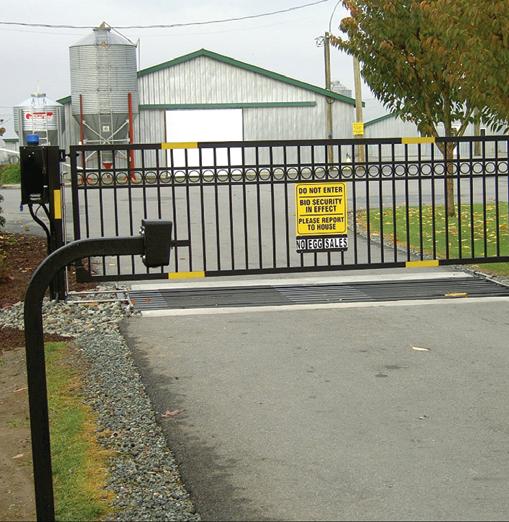
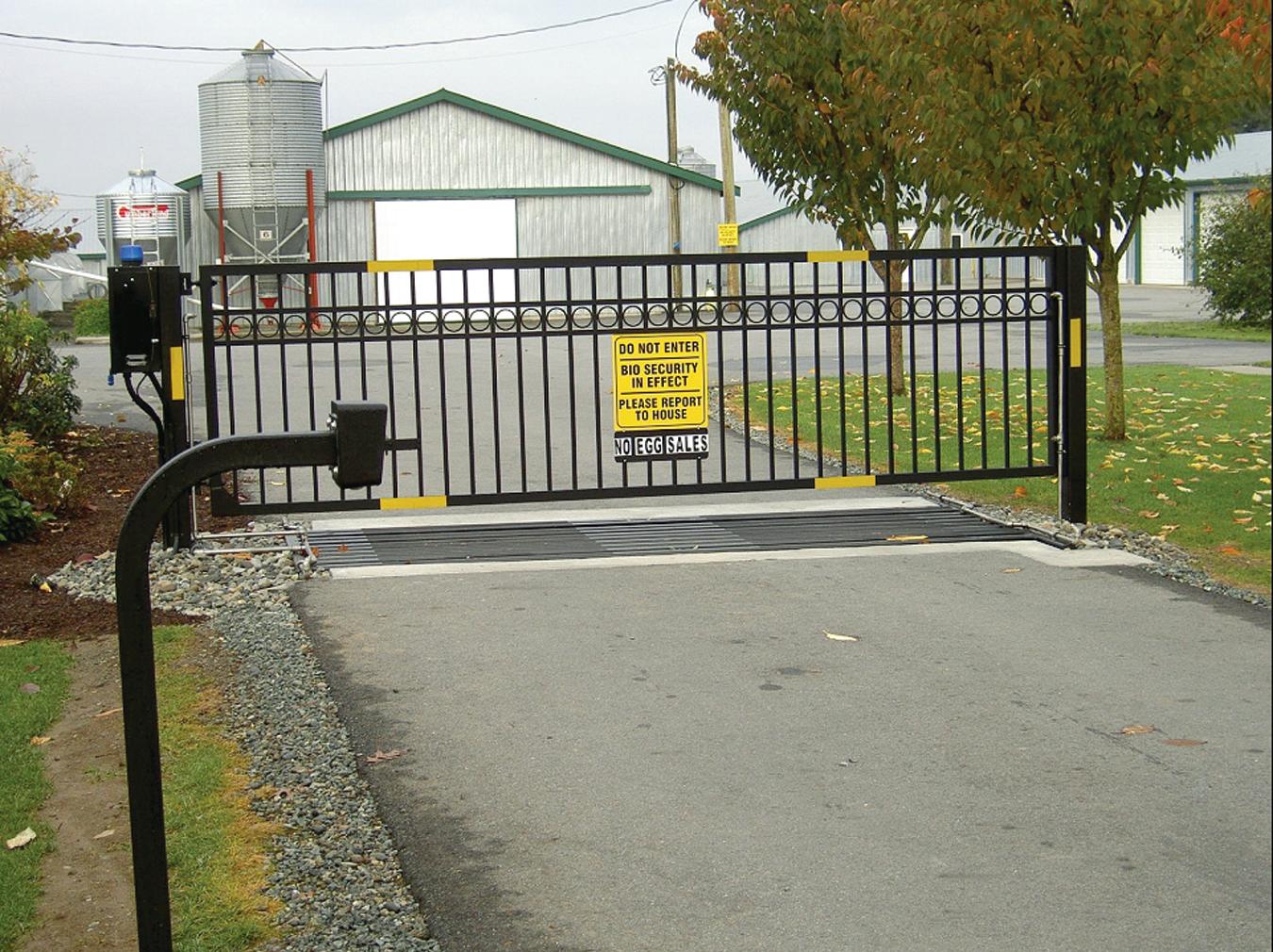
A secure barrier that restricts vehicle entry and approved biosecurity signage that must be clearly displayed at all primary and secondary accesses are just the start for enhanced biosecurity in BC.
access, flock health and farm management. The standards are as follows: A secure barrier that restricts vehicle • entry must be present at all primary and secondary accesses to the Controlled Access Zone.
Approved biosecurity signage must • be clearly displayed at all primary and secondary accesses. All primary accesses to the Controlled • Access Zone must be constructed of hard surface or gravel that prevents any persistent accumulation of pooled water.
Biosecurity
All primary accesses to the Controlled
• Access Zone must have an approved cleaning and decontamination site for vehicles and personnel.
The Controlled Access Zone must be
• maintained clean and free of organic debris at all times.
All poultry barn entrances shall
• remain locked at all times that the barn is unoccupied by farm personnel. Approved restricted access signs shall
• be posted at all barn entrances.
All poultry barns must have an ante-
• room at all primary entrances to allow personnel to comply with the farm biosecurity procedures during entry and exit.
Barn entryways and anterooms must
• be maintained clean and free of debris at all times.
• be maintained.
Individual flock health records must
Wednesday, February 18, 2009
10:00 am General Meeting of APC Committee
PRE-CONFERENCE SEMINAR Salon D
1:30 pm Seminar Registration Refreshments
2:00 Livestock/Poultry Care Seminar & Q&A Temple Grandin – Colorado State University
8:00 Reception “Chicken Roost” Fireside Lounge – Entertainment
Thursday, February 19, 2009
8:00 am Registration & Trade Show Opens Refreshments Sponsor:
8:50 WELCOME Salons A,B,C,D
Bruce Rathgeber – AAFC, APC Coordinator
Peter Swetnam – CPANS, APC Coordinator
9:00 What Agriculture Means to Canada
Jim Dalrymple – Livestock Tech Services
WORKSHOP: Salons A,B,C,D
Controlling Poultry House Environment
Facilitator: Brian Power – ShurGain
9:30 am Ventilation Basics
John Feddes – University of Alberta
10:00 Dealing with Moisture/Ammonia/Heating
Carlyle Bennett – Manitoba Agriculture
10:30 BREAK
11:00 Housing, Environment & Bird Condition
John Feddes – University of Alberta
11:30 Setting Your Controller
Doug Martin – Thevco & Norsol Electronics
12:00pm LUNCHEON: Acadian/Blomidon Rms
Chicken & Turkey Session Salon D
Facilitator: Peter Swetnam – CPANS
1:00 pm Decreasing Chick Size Variability
Martin Zuidhof – Universtiy of Alberta
Poultry mortalities and cull eggs
• must be handled and disposed of in an approved manner.
• must be in place.
An effective pest control program
A management program that pre-
• vents the contamination of feed and water sources must be in place.
All equipment and materials relat-
• ed to the production of poultry that enter or leave the Controlled Access Zone, regardless of size or use, must be clean and decontaminated.
• manure management strategy.
All farms must have a documented
On-farm biosecurity training is
• required for all producers and farm employees.
• on-farm biosecurity must be available.
Standard Operating Procedures for
1:30 Cost Ef cient Feeding Practices
Chet Wiernusz – Cobb-Vantress
2:00 What Do Customers Want?
TBA
Egg & Breeder Session Salons A,B,C
Facilitator: Ted Corkum – ACA Cooperative Ltd.
1:00 pm Eggs: Does Size Matter?
Paul Patterson – Penn State University
1:30 The Future of Cages
Michelle Jendral – NSAC
2:00 Feeding to Reduce Environment Impact
Paul Patterson – Penn State University
2:30 pm BREAK
WORKSHOP: Salons A,B,C,D
Investing in Poultry’s Future
Facilitator: Michelle Jendral – NSAC
3:00 pm Expectations from Restaurants & Retail
Temple Grandin – Colorado State University
4:00 Filling The Poultry Human Resource Gap
Martin Zuidhof – University of Alberta
4:20 The Future of Poultry Research
Helen Anne Hudson -– PIC, CPRC Director
4:40 Prioritization of Poultry’s Future
Cheryl Phillips – AgraPoint
5:15 POULTRY’S FUTURE RECEPTION Fireside Lounge
******* Research Poster Presentations*******
7:00
BANQUET: Meal, Auction & Draws
ENTERTAINMENT: Auctioneer – Jim Taylor
Comedian – Jeff Irwin
After Hours: Fireside Lounge — Cash Bar
An activity logbook for the premises
• that records daily on-farm activities relevant to the biosecurity standard operating procedures must be maintained.
Definition of Controlled Access
• Zone (CAZ) – The area of land and building constituting the premises that is accessed through a secure primary access.
Each biosecurity standard is accompanied by a rationale giving context to the protocol as well as a set of interpretive guidelines that offers producers objective measures against which they can gauge their compliance. A glossary of terms and definitions further contributes to a common understanding of expectations.
These mandatory biosecurity standards have been included in the general orders of the relevant poultry Boards and Commission in B.C. Auditors retained
ATLANTIC POULTRY CONFERENCE 2009
Friday, February 20, 2009
7:00-8:15 am BREAKFAST - Blomidon Room
WORKSHOP: Salons A,B,C,D
Energy Options & Opportunities
Facilitator: Alex Oderkirk – AgraPoint
8:30 Food vs Fuel vs Feed
Douglas Auld – University of Guelph
9:00 Bio-Fuel Options
John Houck – Fox Creek Consulting
9:30 Fuels for Heating Poultry Housing
Tom Costello – University of Arkansas
10:00 BREAK
10:30 Renewable Energy
Mark Richards – Second Source Power
11:00 The Future of Agriculture
Jim Dalrymple – Livestock Tech Services
11:30 CONFERENCE WRAP-UP
Bruce Rathgeber – AAFC, APC Coordinator
Booth Space Registration, 2009 Before Feb
Contacts: Peter Swetnam
E-mail: pswetnam@xcountry.tv Tel: 902-582-7544
Bruce Rathgeber
E-mail: brathgeber@nsac.ca Tel: 902-893-6654
Lyn Cox Email: lcox@nsac.ca Tel: 902-893-6657
by the Boards and Commission visit all regulated poultry farms in the province to ensure compliance. Farms that are not in compliance are advised of the requirements to achieve compliance. When compliance is achieved, the farm is issued a “Certificate of Compliance.”
As of September 2008, most B.C. poultry farms had undergone a biosecurity audit, achieving certification. All regulated producers in the province will be certified by the end of 2008.
THE B.C. POULTRY BIOSECURITY PROGRAM
One of the ways producers have moved towards compliance and certification is by participating in the B.C. Poultry Biosecurity Program. Developed and delivered by the BCPA, the program helps producers identify biosecurity risks
Biosecurity
on their farms and encourages them to adopt practices that minimize the risk of diseases spreading onto or between poultry farms, thereby securing the health of the entire industry.
HOW IT WORKS
Producers attend a workshop or a oneon-one session with a planning advisor. One of the first steps for producers is to conduct a risk assessment of their farm, either by themselves, using a specifically designed planning workbook and reference guide, or with the assistance of their planning advisor (whose services were available free of charge). The assessment identifies strengths and vulnerabilities of each farm. It also identifies any enhanced measures that could further reduce biosecurity risks over and above those needed for protocol compliance.
With the assessment complete, the producer develops an action plan identifying the steps required to achieve compliance and to prioritize action items. Planning advisors are again available to help establish priorities, assist in developing on-farm solutions, and to approve the final biosecurity farm plan.
EMERGENCY RESPONSE PLAN
Even strict biosecurity measures can’t guarantee that infectious disease outbreaks will be prevented. Recognizing this reality, the B.C. poultry industry has taken the additional step of developing an emergency response plan (ERP) designed to rapidly contain and eradicate a possible disease outbreak. The ERP was developed jointly by a team of industry and federal and provincial technical experts.
Central to the plan is the Emergency Response Team, or ERT. Structured according to what’s known as the Incident Command System, the ERT consists of four sections: operations, planning, logistics and finance. This structure is consistent with and links to the B.C. FADES (Foreign Animal Disease Eradication Support) Plan. ERT positions with clearly defined responsibilities and lines of reporting have been identified. Emergency preparedness training has been completed, and the ERT stands ready to put the plan into action in the event of an infectious disease or other emergency that affects the poultry industry.
The ERP itself covers the full range of actions starting with a first response to a possible outbreak, through the declaration of an emergency, incident control and stand down, and recovery, including facilitating economic recovery and re-establishing flock schedules as well as markets. It also makes provisions for an incident review, allowing the ERT to identify any gaps in command or communication, identify other areas needing improvement, and make recommendations for updating the ERP
Continued on page 32
❑ Poultry Producer or Employee
❑ Government, Libraries, Schools, Universities
❑ Hatchery, Hatchery Employees
❑ Fancy or Show Poultry
❑ Wholesale Produce and Processors, Further Processing
❑ Equipment Manufacturers
❑ Drugs, Laboratories, Vaccine Companies, Chemical
❑ Veterinary and Lab Technicians
❑ Feed Manufacturers, Feed Additives, Distributors and their Salespeople
❑ Other (please specify)
Business Profile Together for Better Performance
New Company Intervet/ Schering-Plough Animal Health supports poultry producers with broad range of products, technical expertise and robust research and development pipeline
BY ALAN JAKOVAC
Following the purchase of Intervet’s parent company, Organon BioSciences, by Schering-Plough in November 2007, Intervet and Schering-Plough Animal Health merged to create a global animal health company. The new company, once fully integrated, will draw on global resources to support Canadian animal health, and the poultry industry specifically, with a comprehensive product portfolio, experienced sales and technical support staff, and an extensive research pipeline.
“We’re really excited by this merger because we’re now in a position to offer Canadian poultry producers a business partnership like never before. Producers can draw on our world-leading expertise and poultry product lines to manage their poultry health issues more effectively,” says Rod Thompson, business unit director, Poultry and Swine, Intervet/ScheringPlough Animal Health for the Canadian market. “A big boost to our research and development capabilities also means we will be active in addressing emerging poultry health issues.”
The Intervet/Schering-Plough Animal Health Poultry Team are: from left to right: Paul Young, Rodney Thompson, Joseph Nahas, Stephen Halley, Jean Béliveau, Randy Carrière and Ken Friesen. Inset: Dr. Linnea J. Newman, Intervet/Schering-Plough’s poultry veterinarian.
LEADERS IN DISEASE MANAGEMENT
With its expanded product line, Intervet/ Schering-Plough Animal Health can help Canadian poultry producers protect their business from every major poultry health threat whether they raise breeders, layers, broilers or turkeys.
“The breadth of our product line, plus the expertise of our research and frontline staff, allows Canadian poultry
producers to form a strong partnership with us”, says Dr. Linnea J. Newman, Poultry Veterinarian, Intervet/ScheringPlough Animal Health. “We bring a wide variety of vaccines to the market to improve the health of poultry flocks in a cost-effective way. We are also in the forefront of biological management of poultry intestinal health, helping the
A TEAM EFFORT
Business Profile
industry to meet the demands of their retail customers by reducing the use of in-feed medication.”
The combined portfolio of Intervet/ Schering-Plough Animal Health includes a wide range of vaccines and pharmaceuticals including: COCCIVAC® live coccidiosis vaccines, UNIVAX® live infectious bursal disease (IBD) vaccines, INNOVAX®ILT live vaccine as an aid in the prevention of Marek’s disease and infectious laryngotracheitis, BREEDERVAC-IV-PLUS® and BRON-NEWCAVAC-M® vaccines against Newcastle disease and infectious bronchitis, NUFLOR® Solution against air sacculitis and PARACILLIN® SP for the treatment of infections caused by bacteria susceptible to amoxicillin.
WORKING WITH CANADIAN PRODUCERS
Perhaps the most important offering of the newly formed company is the collective experience and passion of its people. Whether their role is in manufacturing, sales, marketing or R&D, Intervet/ Schering-Plough Animal Health’s people are dedicated to improving animal health, including working with poultry customers to help determine an optimal health plan for their flocks.
“We now cover a broader range of the poultry industry than ever before. Whether they’re raising breeders, layers, broilers or turkeys, Canadian producers can now draw on the shared experience of our people for a solution to their animal health concerns,” says Paul Young, marketing manager, Poultry and Swine, Intervet/Schering-Plough Animal Health for the Canadian market.
In addition to Rod Thompson, Dr. Linnea J. Newman and Paul Young, the Intervet/Schering-Plough Animal Health Poultry Technical Support Team includes dedicated representatives throughout Canada: Randy Carrière in British Columbia and Alberta, Ken Friesen in Saskatchewan and Manitoba, Stephen Halley in Ontario and eastern provinces, and Jean Béliveau and Joseph Nahas in Quebec and New Brunswick.
GLOBAL INNOVATION
One of the most notable outcomes of the merger is the enhanced research and development capabilities of the new company. Intervet/Schering-Plough Animal Health operates in more than 100 countries and
works collaboratively with animal health agencies to promote animal health and to respond to market needs.
The new company’s increased resources also allow it to develop new treatments for emerging disease issues, often as the first “out of the gate” or the first in Canada.
SolarWall
• SolarWall has been installed on hundreds of agricultural and live-stock buildings, reducing heating costs by up to 30%. The system, which uses the sun to pre-heat incoming fresh air, also dramatically improves air quality and decreases humidity. There are many reasons to consider SolarWall for your new or existing buildings:
• SolarWall provides thirty years or more of free heat.
• SolarWall means more fresh air can be brought into the building improving air quality without increasing heating costs.
• SolarWall is maintenance free and has no moving parts.
• SolarWall is cost effective - As of September 1, 2008 there is a federal contribution of $70.00/m2 of solar panel area and a matching $70.00/m2 contribution from the Ontario provincial government.
• SolarWall also contributes to cooling a building in the summer by shading the existing outside wall from the sun.
Call Exacon or an authorized SolarWall dealer near you for additional information and to obtain a free quote.
Business Profile
Exciting new chapter in company’s history
For nearly 30 years, Intervet and Schering-Plough Animal Health have become known as global leaders in animal health. Below are the key steps in the evolution.
Intervet
Year/Acquisition
1980 ICB (U.S.)
1988 Gist-Brocades (Netherlands)
1993 Norbio (Norway)
1998 Ausvac (Australia)
1999 Gellini (Italy)
1999 Hoechst Roussel Vet (Germany)
2000 Bayer Biologicals (U.S.)
2005 AgVax (New Zealand)
2006 Bayer FMD plant (Germany)
Schering-Plough Animal Health
Year/Acquisition
1981 Douglas Industries (U.S.)
1982 Rigaux-Galena (France)
1989 Byk-Gulden (Germany)
1993 Fisons AH (U.K.)
1997 Mallinckrodt Veterinary (U.S.)
2000 Takeda Veterinary (Japan)
2001 Fujisawa Animal Health (Japan)
2002 IQF (Brazil)
2002 Aquaculture Vaccines Ltd. (U.K.)
2007 Intervet/Schering-Plough Animal Health formed upon Schering-Plough’s acquisition of Organon BioSciences ®, TM/MC Trademarks of Intervet/Schering-Plough Animal Health.
This capability was evident recently as circovirus surfaced as a threat to the swine industry in Canada. Intervet/ScheringPlough Animal Health fast-tracked the development of a vaccine to reduce mortality and morbidity and promptly brought CIRCUMVENT®, (the first circovirus
Biosecurity
Continued from page 28
and Biosecurity Standards. To complement the ERP a Premises Identification System has been developed. This system uses GIS mapping techniques and a central database with current information on all regulated poultry farms. Capable people with the right tools following best practices will help ensure the ERT contains any outbreak quickly and efficiently.
RISK MANAGEMENT
In addition to reducing the future risk of disease outbreaks and rapidly
vaccine for use in swine) to Canadian producers.
Intervet/Schering-Plough Animal Health’s research and development capabilities have been used to address emerging poultry health issues as well. Over the past five years, Delaware-type variants
of Infectious Bursal Disease (IBD) have affected Canadian flocks. Intervet/ScheringPlough Animal Health has the only Group 2 Delaware Variant IBD vaccine as well as a unique 2-antigen classic IBD vaccine that demonstrates strong protection against the Delaware variants (Univax-Plus). This commitment to research and development has made Intervet/Schering-Plough Animal Health the leaders, not only in the fight against IBD, but also in biological control of poultry intestinal health, developing new products and new management ideas to help control both coccidiosis and necrotic enteritis.
ONGOING SUPPORT
Intervet/Schering-Plough Animal Health has a strong legacy that goes back nearly 100 years and it will carry that heritage forward to serve the Canadian poultry industry. Its continued commitment to offer the best products, hire the best people and continuously develop new therapies for emerging needs empowers the Canadian poultry producers to improve their business on many levels. ■
Alan Jakovac is an independent communications consultant. He can be contacted at: ajakovac@cogeco.ca
containing any incidents that might occur, the B.C. poultry industry and government partners continue to pursue a number of other measures. A risk analysis of the B.C. poultry industry has been completed, including an examination of current risk factors, existing risk management initiatives, products, and tools, and completion of a gap analysis. Industry and government stakeholders continue to develop and implement risk management options and tools for the poultry industry.
At the end of the day, will it be enough to prevent a repeat of 2004? Maybe not, because when it comes to
biosecurity, there’s no such thing as an absolutely fail-safe strategy. That said, with the help and co-operation of partner agencies and the provincial and federal governments, the B.C. poultry industry is better protected today than ever before, and is ready for the challenges of the future. Additional information on the B.C. Poultry Biosecurity Program and Emergency Response Plan can be found at /www.bcac.bc.ca. For information on federal biosecurity initiatives and resources, visit the CFIA Office of Animal Biosecurity web-link at: www.inspection.gc.ca/english/animal/biosec/biosece.shtml. ■
Conveying Systems
First Choice Bosman
8582 Hwy 23 North Listowel, Ontario N4W 3G6 (519) 291-5012
The Canadian poultry industry invests a considerable amount in research. This investment comes from marketing boards and other industry organizations across the country. As we work towards maximizing the impact of this collective investment, there may be opportunities to improve efficiencies and increase the degree to which industry funds are leveraged with other sources of funding. The Canadian Poultry Research Council (CPRC) recently hosted a workshop to explore these opportunities.
THE IMPORTANCE OF RESEARCH
The workshop started with a presentation on the value of research. Research is critically important to ensure a vibrant, economically viable poultry industry. It is also essential to train our next generation of researchers and industry professionals. However important, it was noted that there has been a decline in government funding for poultry research. There is a finite amount of government money for research in general and the poultry sector must compete with other sectors, from dairy and hogs, to steel manufacturing and mining.
CURRENT FUNDING
One of the goals of the workshop was to get a clear picture of the current level of funding for poultry research in Canada. Prior to the workshop, a survey was sent to all the organizations in Canada that fund poultry research, or have the potential to do so. Not all organizations responded, but the survey tallied more than $1.75 million in annual budgets for poultry research from the private sector, including industry organizations. Public (government) research dollars are far greater than those from the private sector. The exact amount slated for poultry research, however, is not easy to ascertain. Most budgets are for agriculture research in general; the amount of money directed specifically to poultry research depends on which grant applications are approved for funding. The survey suggested that less than five per cent of public funds for agricultural research are directed to poultry research. There is a clear opportunity for the poultry sector to access more of these funds.
OPPORTUNITIES
The workshop group explored potential opportunities to increase the impact of industry’s collective investment in research. There are significant opportunities to “leverage” industry funds with government sources. For example, a research proposal with industry support can be submitted to one of many available government programs for funding and, if approved, will be funded by both industry and government. Taking advantage of this kind of partnership effectively stretches industry dollars for research. The CPRC takes advantage of this opportunity by requiring that a research project secure funding from non-industry sources. Thus far, each industry dollar associated with a CPRC-supported project has been
matched almost two to one by government sources. With a more co-ordinated approach, industry funding for poultry research across Canada can be leverageed to a much greater extent.
THE DAIRY FARMERS’ EXAMPLE
CPRC invited a representative from Dairy Farmers of Canada (DFC) to speak at the workshop. DFC has been very successful in ensuring that each dollar it puts up in support of research is utilized to the greatest extent. The dairy industry collectively decides (with producer input) on research priorities and directs its research investment appropriately. As a result, the industry, through DFC, is able to speak with one voice and has been successful in partnering with government on a number of fronts. As with CPRC, matching funding from other sources is a prerequisite for research funding from DFC. The dairy industry recognizes not only the importance of co-operation with government, but also with the academic community.
THE RESEARCHERS’ PERSPECTIVE
Workshop participants heard from an academic representative. The cost of doing research is steadily increasing, making it increasingly important to make every research dollar count. There may be opportunities for the various funders of poultry research in Canada to work towards a more collaborative approach that will increase efficiencies both in terms of reducing administrative effort and avoiding unnecessary duplication of research. It would be easier, for example, for a researcher to submit one grant application to a consortium of several funders, rather than apply to each funder individually. In addition, funders grouped in a consortium would be able to direct pooled resources towards research of common interest.
NEXT STEPS
After the day’s discussions, workshop participants came to a consensus that CPRC should take on a greater role as the national coordinator and voice for Canadian poultry research. As CPRC further develops its strategic plan, it will consider this recommendation and detail the role it will play in maximizing the Canadian poultry sector’s collective investment in research.
For more details on any CPRC activities, please contact Gord Speksnijder at The Canadian Poultry Research Council, 483 Arkell Road, R.R. #2, Guelph, Ontario, N1H 6H8, phone: (289) 251-2990, fax: (519) 837-3584, email: info@cp-rc.ca, or visit us at www.cp-rc. ca. ■
The membership of the CPRC consists of the Chicken Farmers of Canada, Canadian Hatching Egg Producers, Canadian Turkey Marketing Agency, Egg Farmers of Canada and the Canadian Poultry and Egg Processors’ Council. CPRC’s mission is to address its members’ needs through dynamic leadership in the creation and implementation of programs for poultry research in Canada, which may also include societal concerns.
May the Spirit of the Season Brighten Special Moments Spent with Friends and Family
Puisse l’esprit des Fêtes égayer tous beaux moments passés entre amis et en famille
CLASSIFIEDS BARN WASHING
And Operated
Moba Mopak55 (eggpacker) Six years old, handles 25,000 layers. Please contact: 506-852-1233 or ronaldoabourgeois@hotmail.com
52 ACRE BROILER FARM: 2 Barns. 3 Bdrm home. Driveshed. 16,500 quota. For more details call Jack.
BROILER BREEDER FARM WITH 19010 H.E.M.S.: 1 Barn operation. Vercomatic nests. Plasson & Cumberland Nipple Drinkers. Chain feeders for Hens. Pans for Roosters. Bird scales. Plastic slats. Auto Ventilation from cross to tunnel. Birds out Fall 2008. Back in Feb. 2009. 75 KW Generator. 5 Bdrm brick home. 2nd home on property. Call Jack.
50 ACRE BROILER FARM - 2 BARN OPERATION: Barns have new steel, insulation checked and replaced where necessary. All equipment set for broilers. Barns have new vents and controls. Generator building. 3 bdrm brick bungalow completely updated. Large pond for water. Call Jack.
GRIMSBY AREA: 10 Acres on paved road. 32,000 sq ft of barns with auto generator. 40 x 60 x 2 driveshed used as retail outlet. 3 bdrm century brick home, pool. Call Jack
EXECUTIVE FARM ON 30 ACRES: Brick 4 bdrm, 4 bath home. Hardwood floors and ceramic, full finished basement with 2nd kitchen. 2 car garage-workshop and large barn rented long term at $800.00/month. Paved road. Priced at $599,000.00 Call Jack.
Advertisers’ Index
Direct:
acearle@ripnet.com
Optimizing Chick Production in Broiler Breeders
Managing the broiler breeder is often considered more art than science. Thankfully, the team at the Alberta Poultry Research centre has succeeded in compiling their research efforts into a reference that brings understanding to the art as well as depth to the science. Great graphics and pictures, logical format and the “What does it mean?” section after each article make this valuable resource tool a must have for the broiler breeder production and hatchery managers in the field, and a must read for the aspiring student in the classroom.
ALL THINGS CONSIDERED
BY JIM KNISLEY
Brave New World
For a while I tried to keep track of the crises, figure out how they developed, determine the implications and impacts, and look for a rational way forward.
There are now too many crises to count, too Byzantine in their origins, too interwoven, too global, too profound, too damaging and leading to too many plausible and potentially unpleasant futures.
When Paul Krugman, this year’s Nobel Prize winner for economics, starts quoting William Butler Yeats – “Things fall apart; the centre cannot hold.” – in his New York Times column, the situation is truly grim.
While there is not enough room on this page or even in this entire magazine for a complete list of the things that have fallen apart, a short list is useful.
In no particular order these include: world credit markets, world currencies with the exception of the Japanese yen, world stock markets, commodity markets, consumer demand and consumer confidence, international trade, too many national economies to list separately, insurance companies, pension plans, hedge funds, North American auto companies and on and on and on.
Canada, despite a better-regulated, stronger financial sector than most, faces the loss of full-time, middle-income industrial and service jobs. The Canadian dollar has tanked. Oil prices have fallen off a cliff.
Perhaps the most telling sign is that I was on the road recently and pulled into a Tim Hortons drive-through for a coffee. I’d made this stop dozens of times before and always faced an early morning lineup of cars. This time there was just one car in front of me.
Maybe I read too much into that. One visit to Tim’s doesn’t necessarily indicate anything, but there is a flood of more objective data that indicates consumers are cutting back. They’re holding onto that toonie for a time when they might really need it.
but that may not be enough.
Given the speed at which things fell apart this fall, producers and their marketing boards will have to be prepared for just about anything.
This could be tough and deeply unpopular stuff. Producers want to produce. It’s what they do and they’re good at it.
And if everything were well with the world consumers would want to consume and they have shown that they want to consume what poultry farmers produce. But all is not well with the world. No one knows how bad it may get nor how long it may last.
Uncertainty breeds uncertainty. People may hope for the best, but they are planning for the worst because it is the only sensible thing to do.
This may seem far too speculative to worry about. But in late October the United Kingdom reported a 20 per cent drop in spending on food. It also reported a seven per cent drop in spending on beer. While the drop in spending on food is startling, a drop in British beer consumption is truly shocking. It ranks right up there with Toronto hockey fans finally giving up on the Maple Leafs.
What the British food figures show is that in developed nations a fair bit of spending on food is discretionary. People can and will shift to lower cost alternatives. Many can and will buy less and make better use of it. They can even grow or raise their own.
As shoppers try to reduce their weekly grocery bill, one can envisage an overall drop in meat consumption.
While no one knows what will happen tomorrow, let alone in 2009, poultry producers should be prepared. It is possible that per capita and total consumption of poultry and poultry products could fall in the year ahead. If prices were to be maintained, production would have to fall. While this is unpalatable, the alternatives are worse. Without production control: supplies would exceed consumption, freezers would overflow with birds and then things would get really ugly.
While Canadian poultry producers, unlike our friends to the south, are protected from much of the economic carnage because of supply management, they may not be immune.
As shoppers try to reduce their weekly grocery bill, one can envisage an overall drop in meat consumption. One might also speculate that more meals could be taken at home rather than at fast food restaurants. You might also consider consumer concerns over packaged meats.
The rapid descent of the loonie against the U.S. dollar will offer some additional protection against imports – last year’s worry –
The beauty of supply management is that it allows a fair return to producers in exchange for agreeing to manage supply in good times and bad. It can also be a fragile system if supply isn’t managed.
It wouldn’t take much for the anti-supply management chorus to resume singing and if things are bad enough some powerful people might even listen.
So producers should be prepared. While bad economic times may not necessarily mean quota cuts, they should be prepared to cut production quotas if necessary and show that Yeats’ line doesn’t apply to everything. ■